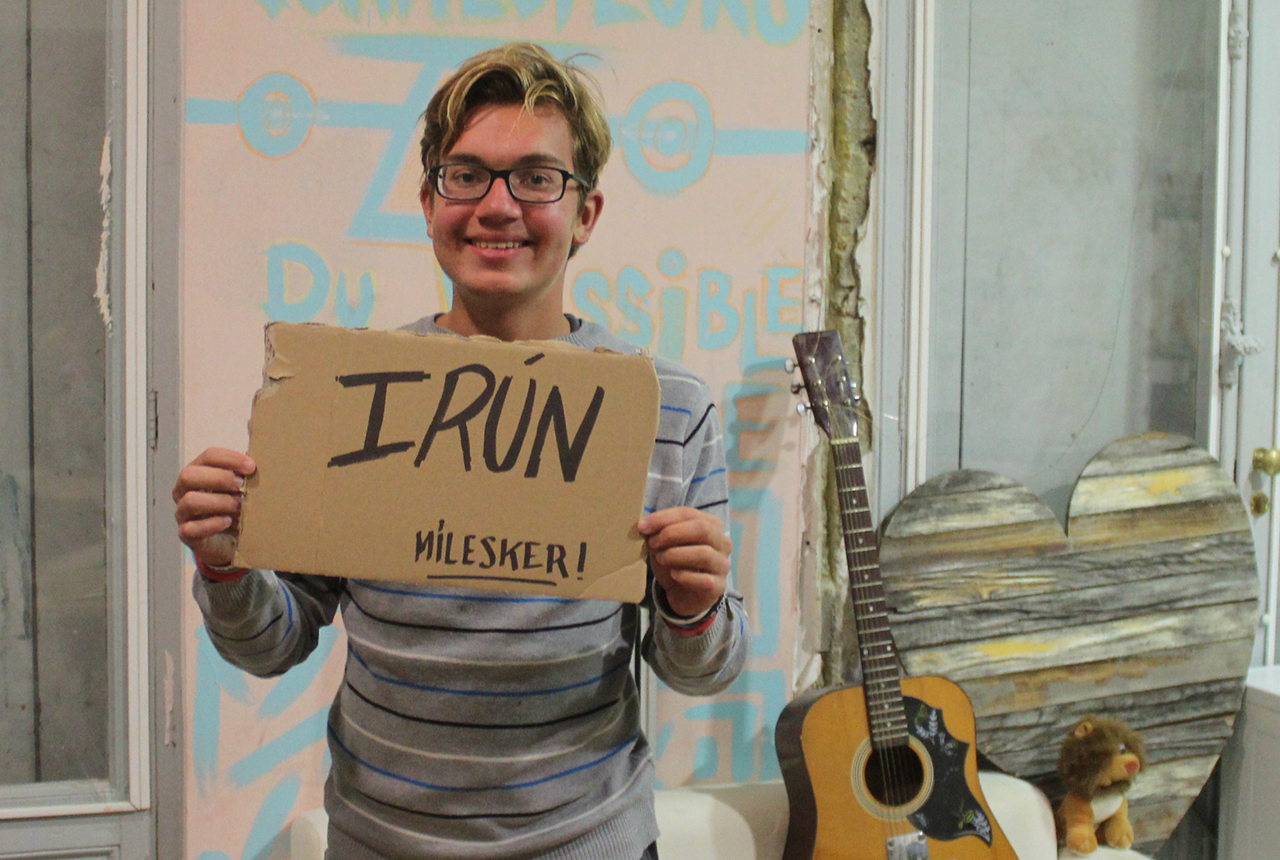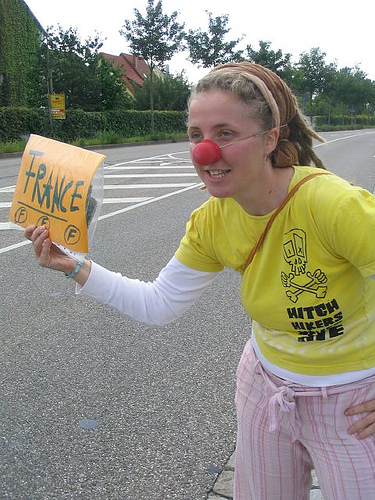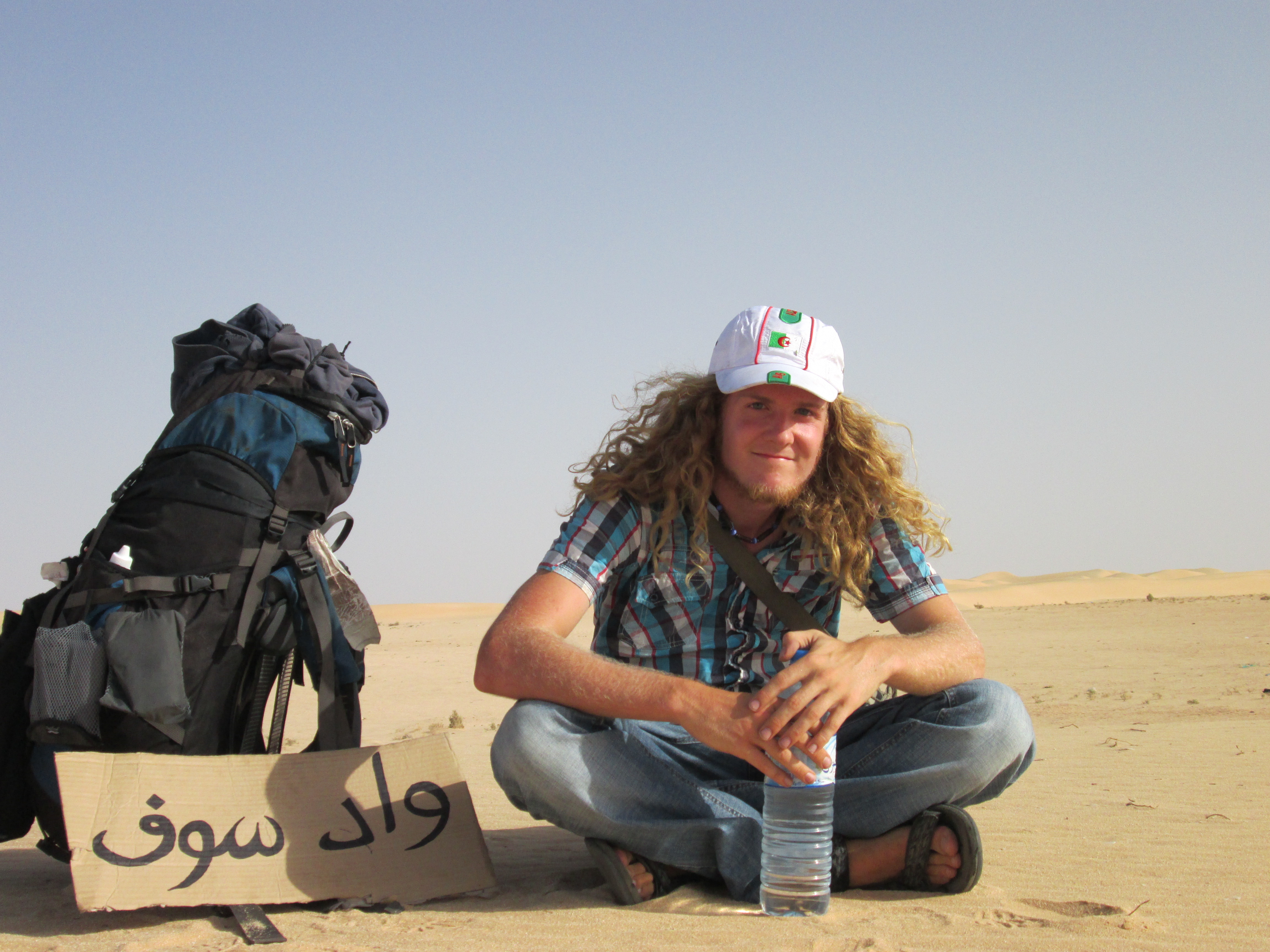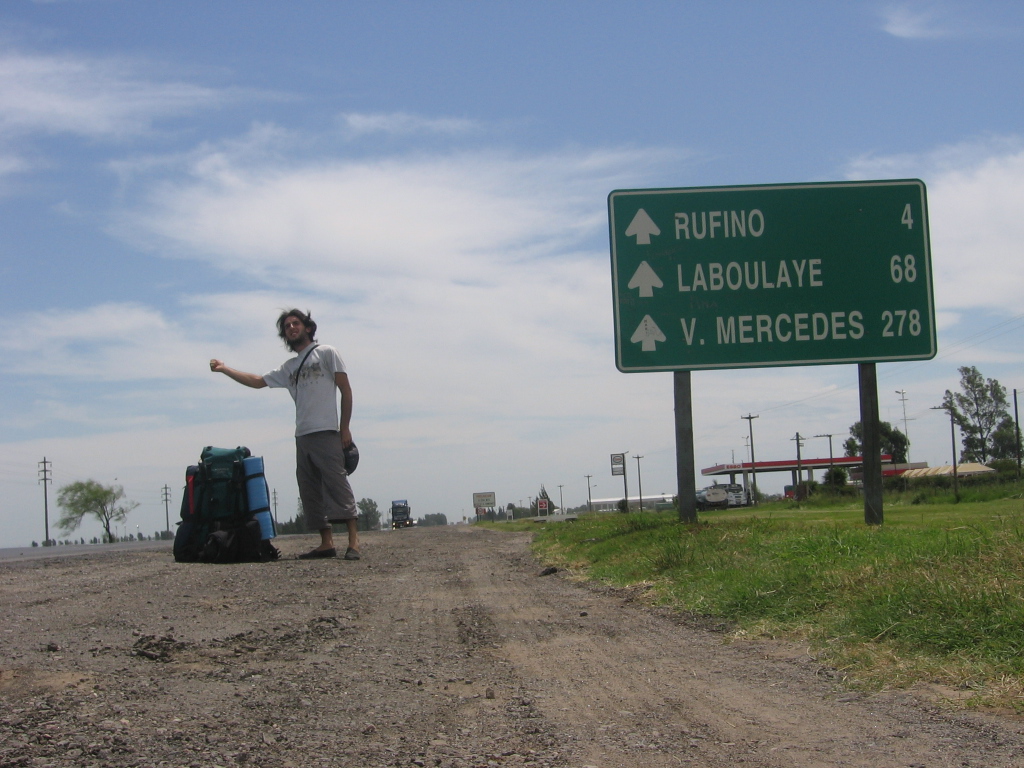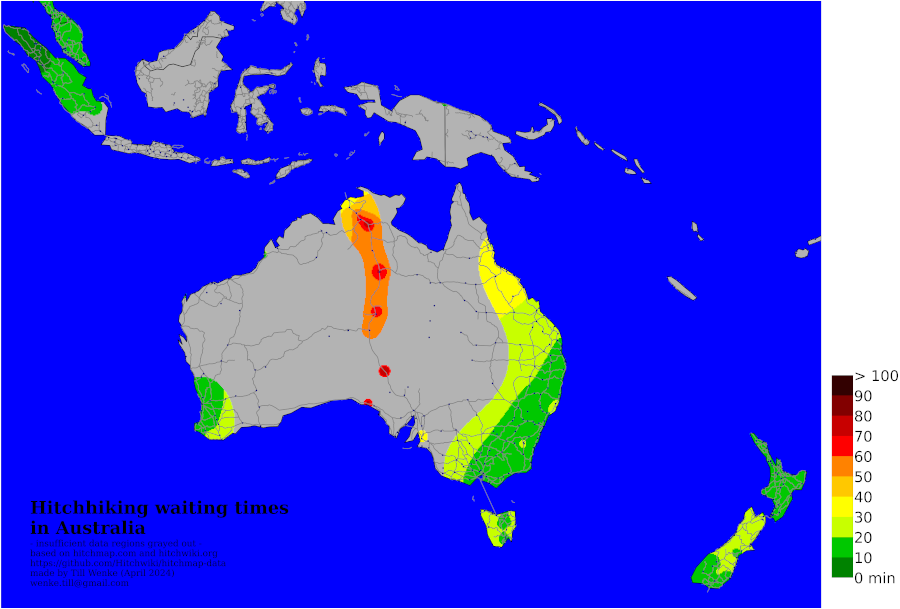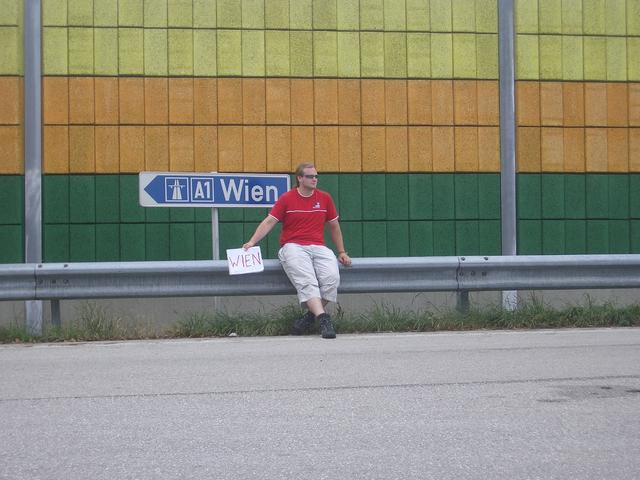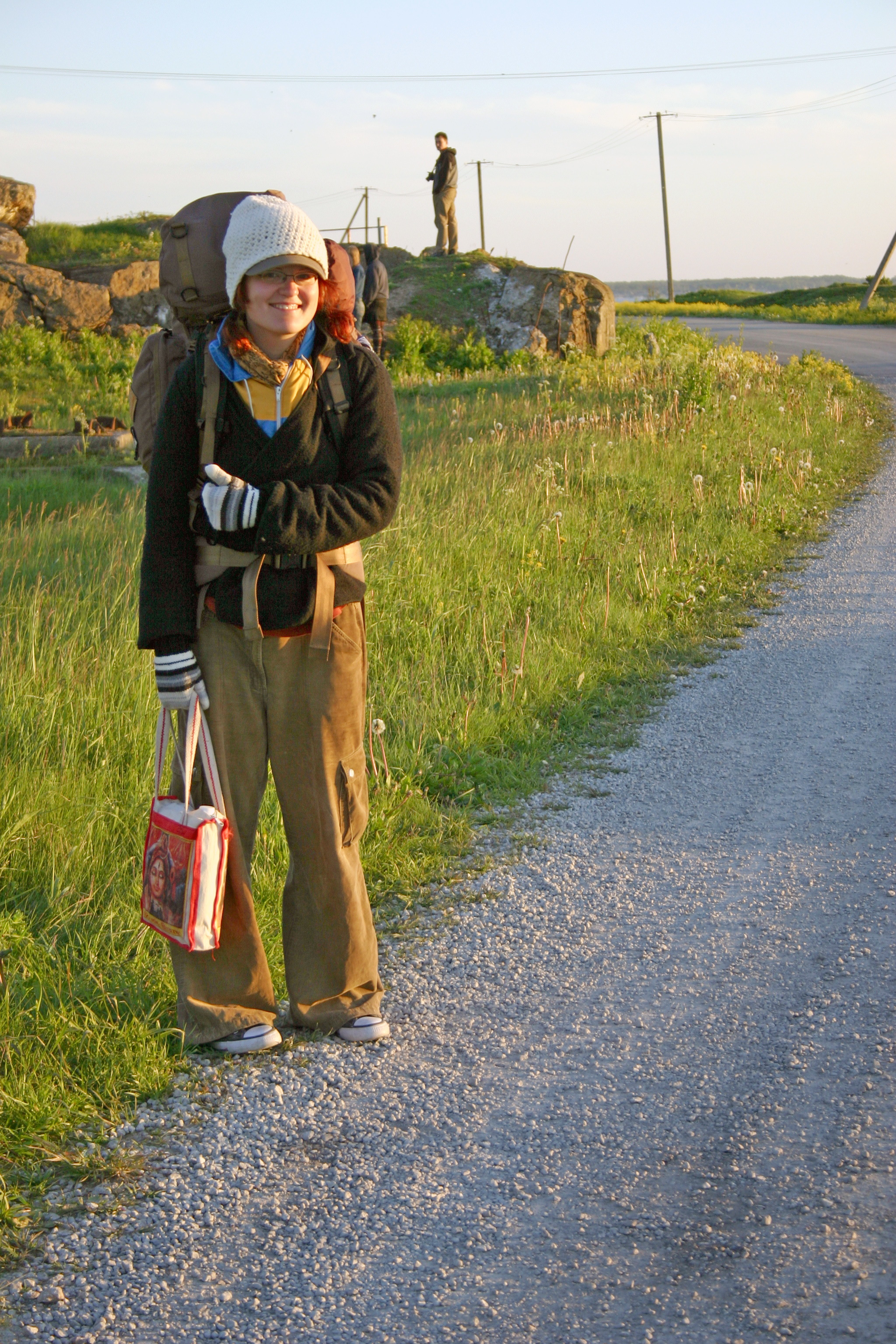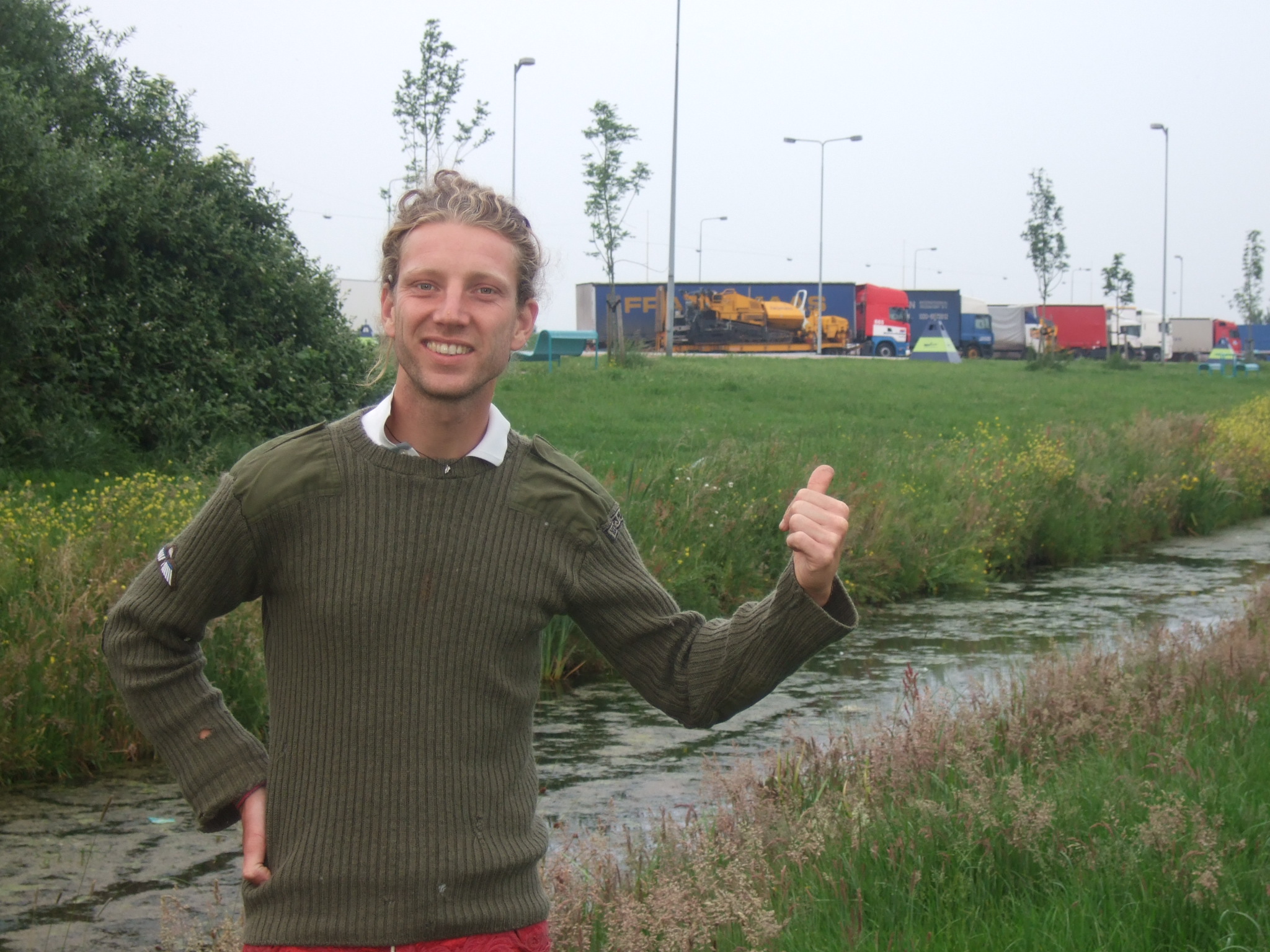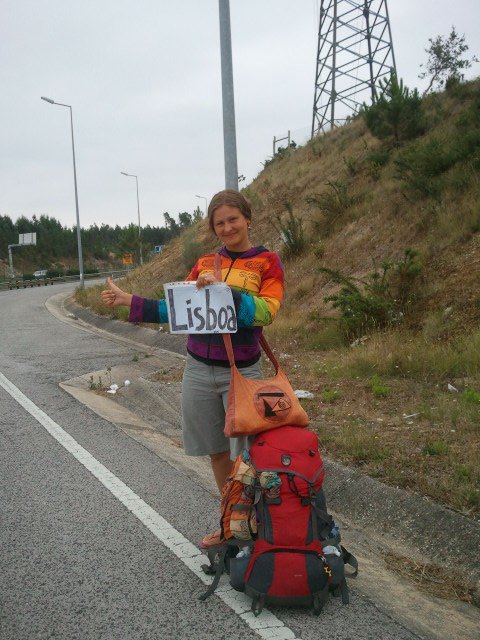
Cover photograph: Roger McLassus · CC BY-SA 3.0 — Hitchhiker in Luxembourg, August 1977 — also used on hitchhiking.org

The Hitchhiker’s Guide to Hitchhiking
Compiled from Hitchwiki, a collaborative guide for hitchhikers. Hitchwiki was originally named Hitchhiker’s Guide to Hitchhiking. This book is not related to Douglas Adams or The Hitchhiker’s Guide to the Galaxy.
More than 1,300 named hitchhikers have edited the pages collected here, plus anonymous edits. That is an estimate from Hitchwiki’s contributor lists for this edition’s chapters, not a headcount of every account on the wiki.
This edition starts with practice (how to hitch anywhere), then a geographic half (each country, with a few cities under the country they belong to), then websites and networks still worth knowing, and ends by sending you out onto the road and back to the wiki. It does not reprint roadside pin lists. Those go stale; use maps.hitchwiki.org and the live wiki.
Hitchhiking is legally grey in some places. Trust your judgement; this book republishes community guides, it is not legal advice.
Hitchhiking
Edit on wikiHitchhiking (also called lifting or thumbing or, universally in several Languages around the world, auto-stop with different pronunciations) is a form of transport, in which the traveller tries to get a lift (a ride) from another traveller, usually a car or truck driver, for free.
Hitchhiking is a very common means of transport in most less affluent countries (although often a form of payment is expected). Hitchhiking is probably as old as the wheel and will probably exist as long as people need to move from one place to another.
There has been surprisingly little scientific research on hitchhiking, so it's really hard to say come up with any hard statements on the rise or demise of hitchhiking. There is a nice community of hitchhikers in Europe, and it seems to be growing. It's sort of going hand in hand with the hospitality exchange movement. Some try to link this to the much larger (and economically highly influential) movement of free software and free information (think GNU/Linux and Wikipedia), and there is huge potential in this sense. If we want it or not, internet will be in people's pockets and most of our locations are already easily tracked. Link this to the potential trust available in online social networks (friends of friends), the rising prices of petrol and the lower need to be in one location and hitchhiking could be just at the start of a global come-back.
People will participate because it's ecological, others because of the economical aspects. Numerous people pick up hitchhikers is means of getting a bit of excitement in their life. For some hitchhiking starts as a form of extremely cheap transport and then it turns into a lifestyle that allows to do amazing and useful things without being trapped in an office 5 days a week. Some people have this idea that hitchhikers are stinky bums. Of course, at (rare) times hitchhikers can be on the road for more than 24 hours and feel the need for a shower, but others are traveling equipped with laptops, mobile phones, a fresh shave and shower and GPS devices.
There are several types of hitchhiking.
- traveling by road motor vehicles: cars, trucks, buses.
- traveling by train, either the risky act of train hopping or, as is sometimes possible, with the permission of the engineer or conductor.
- traveling by ocean vessel, often called boathitching
- traveling by air: planes and helicopters, also called airhitching
Please check Wikipedia's article for more encyclopaedic information about hitchhiking.
The Pros and Cons of Hitch Hiking
Edit on wikiThe Pros and Cons of Hitch Hiking is a "concept album" by English musician Roger Waters, former Pink Floyd musician. Apart from that we might also be able to say something sensible that's actually related to hitchhiking.
Pros of hitchhiking
- Adventure
- Free as in free beer
- Free as in free speech
- It lets to get more in touch with the local culture
- Environmentally friendly. While public transportation is okay, they still put in service more vehicles as more and more passengers show up, on the other hand, travelling by hitchhiking results (almost) no more carbon emission than the car you are getting into will release anyway.
Cons of hitchhiking
- Hard to be sure when you're getting somewhere, although after a couple of years of hitchhiking in a country you'll get a fair good idea about when you can be somewhere.
- It might seem dangerous, although with some precautions hitchhiking is fairly safe.
- Best hitchhiking spots are usually fairly out of city centres, which may require some long walks or gaining a little bit of knowledge about local urban transportation.
- Hitchhiking exposes you more to the extremities of local climate. When you attract a lift at last, you can very well end up cold, thirsty, completely soaked up—either by rain or by your own sweat—or anywhere in between.
- Waiting for a lift can sometimes be quite boring.
- Some drivers are far more talkative than what you would feel yourself comfortable.
- Some drivers are far less talkative than what you would feel yourself comfortable.
- Traveling at night saves a lot of time, but it can be difficult to hitchhike at night.
First time hitchhiking
Edit on wiki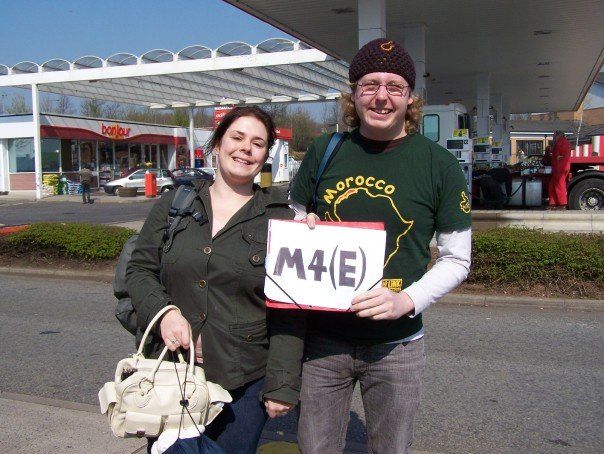 If you've never
hitchhiked before, you have to get over your first time
hitchhiking fear. Every hitchhiker went through this. The first
time, standing on the side of the road, heart pounding.
If you've never
hitchhiked before, you have to get over your first time
hitchhiking fear. Every hitchhiker went through this. The first
time, standing on the side of the road, heart pounding.
To get over this, just do it!
This is, of course, more easily said than done, but you can prepare yourself by buying a map, checking out the Top Tips, other pages on this wiki, and other hitchhiking websites, making sure you know what a good spot means, and that you know some good spots on the trip you're making and taking a look at your appearance to make sure you look like a hitchhiker. You will most often find yourself hitchhiking on highways and from gas stations. Also check What to pack for your trip. Familiarize yourself with the Etiquette.
First time hitchhiking doesn't necessarily mean a short trip -- but starting with a short trip might help you get used to the motions and what to expect. Take a day trip to the next town! This said, don't prepare too much. Decide where you're going, the best road to get there, walk a distance, and at a good spot face the traffic and stick up your thumb. You'll feel like the center of attention at first, but after a while you'll get used to it, and will become more concerned with trying to win a ride than your worries about what you're doing.
It might be nice and less intimidating to do it with a mate for the first time preferably someone who have already done it at least once. That way you will feel safer and you will have someone to pass the time with waiting.
Sometimes it happens that you can wait for quite a long time, due to a variety of possible reasons: Is it a bad spot? Can the driver see you clearly for long enough to make a decision? Can cars stop easily and safely without blocking the traffic? Are the cars going too fast to react? Is it a holiday and all cars are filled up with families? The list of possible reasons is long, but to calm you down there's one universal rule for every hitchhiker out there:
Somewhere out there there is someone who will pick you up. Always!
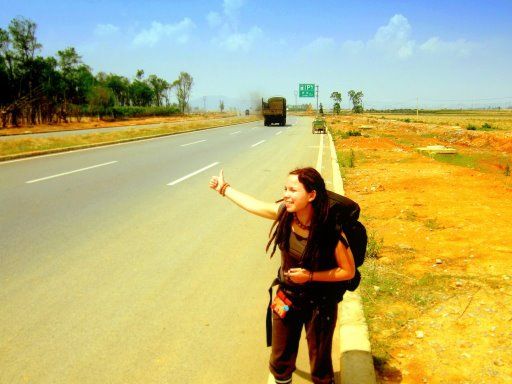
A Step-by-Step Approach
You want to try hitchhiking but never find the courage to do so? Here is an attempt at providing a step-by-step method to overcoming your fears and gaining enough self-confidence to adventure yourself out of your comfort zone.
Mental preparation
- Have you ever hitchhiked at all? What experience do you have that resembles hitchhiking most?
- If not, what prevented you from not doing it?
- What makes you want to hitchhike?
- How do you imagine you first hitchhiking day? What distance would it be? Between where and where? Where would you try to start from? Who would pick you up? Let your imagination run!
Join (more or less) organized events
It can be a good idea to participate in charity hitchhiking events or hitchhiking races. Hitchgathering is a great way to meet other more seasoned hitchhikers.
My first time Hitching
- Till's First time hitchhiking/Till
- Farshnuke's First time hitchhiking/Farshnuke
- Zoe's First time Hitchhiking
- Guaka's First time hitchhiking/Stories#Guaka
- First time hitchhiking/Quarim
- Pnadapand's You Can Do It Too!
- Brackers's First time hitchhiking/Brackers
External Links
- Hitchhikers' guide; a tutorial by Christof Middeke
Where to hitchhike
Edit on wikiA good hitchhiking spot makes hitchhiking safer and easier. Finding a good spot might be tricky, and sometimes knowing the area is an advantage. If you know your route, you might check the best places on this wiki, Hitchwiki Maps or from the internet, including Google Maps, before heading to the road.
- There are some generic hitchhiking places, like petrol stations, bus stops etc. This page attempts to provide an understanding about where you should hitchhike.
-
See also the article on how to pick up hitchhikers.
What the data says
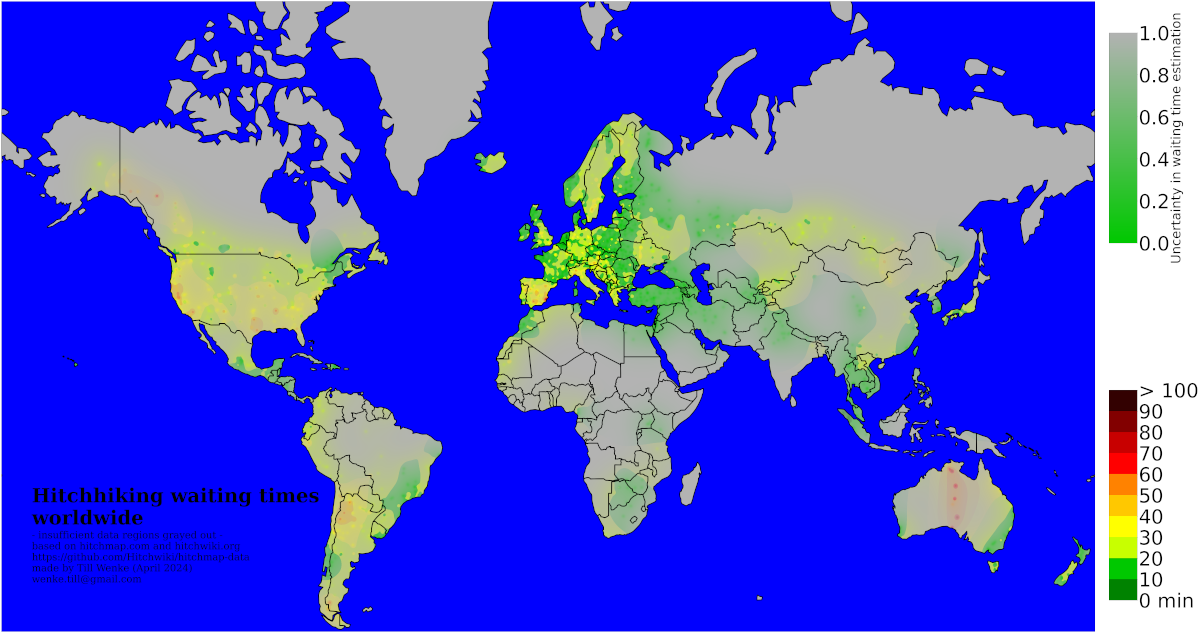
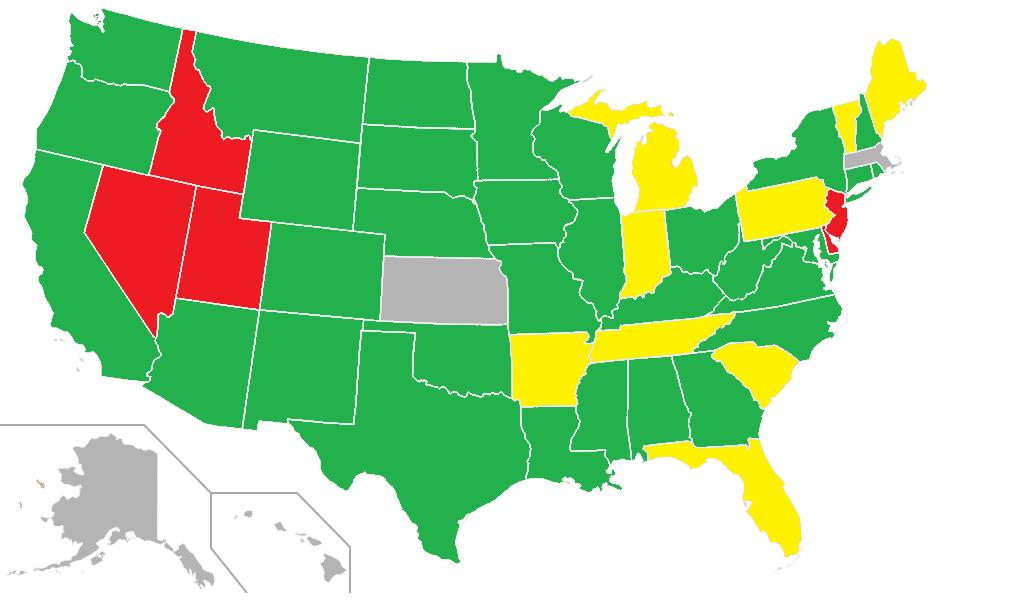
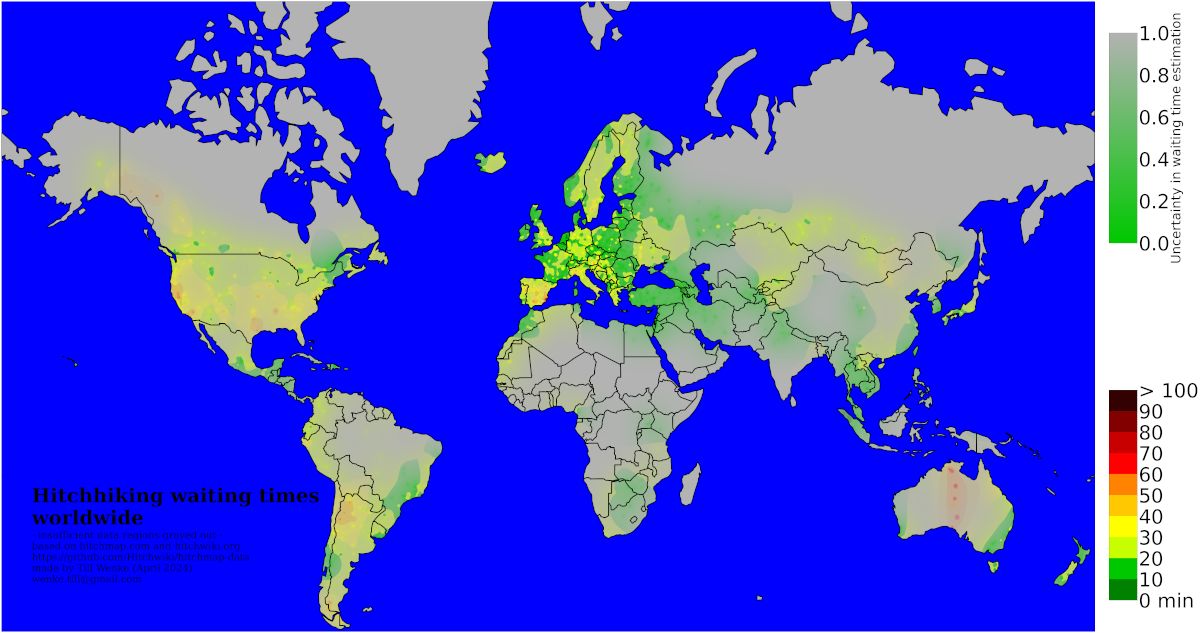
An analysis of 32,475 ride comments on Hitchwiki Maps found that gas stations (2,425 mentions) are by far the most frequently referenced landmark, followed by bus stops (1,732) and roundabouts (1,083). Nearly half of all reported waits (47%) were under 15 minutes, with a median of 20 minutes. Highly-rated spots are most often described as "easy" with short waits, while poorly-rated spots involve waits measured in hours.
The data confirms what experienced hitchhikers already know: gas stations on motorways are the most reliable type of spot. The sections below describe each type in detail.
Bus stops
Bus stops are in some cases the only place to hitchhike legally. This is the case when a driver drops you off in a cross-section of a motorway.
Pros
- It is a safe place to stand.
- It is a safe place for the drivers to stop.
- It is often a dry place in case of wet weather.
Cons
- The drivers might think you are waiting for a bus. You can avoid this by using a big sign.
- In poorer countries those who stop might want money for the ride.
Petrol stations
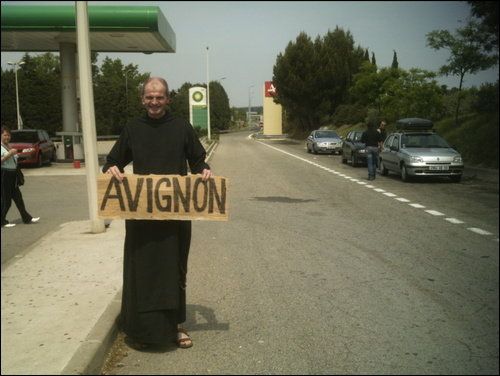 Petrol stations are good places to ask for a ride, especially while
hitchhiking along a motorway.
Petrol stations are good places to ask for a ride, especially while
hitchhiking along a motorway.
Pros
- Almost always a safe and dry place.
- Often marked on maps, and sometimes mentioned on sign posts well in advance, so more forward planning is possible.
- People who stop there might go very far.
- Higher chance of meeting truck drivers, known for traveling the farthest distances.
- You can and should ask for a ride from drivers.
- Be friendly, and always say thanks and so on, even if the driver is going the right direction but doesn't want to take you. If you get annoyed because someone says no, the next person you ask will notice your annoyance and will be less eager to take you.
- Thumbing is easy, as the cars drive slowly.
- Possibly warm.
- Sometimes a convenient (but often expensive) source of (usually bad) food, drinks, maps and toilets.
Cons
- People who stop there might be local and not go very far.
- You miss the cars passing the station.
- Often difficult to access from city centers at the beginning of your journey, so can be bad starting points.
On ramps
On ramps to freeways and interstates are prime realty as long as the driver has room to pull over. A good spot to stand usually is beside the no pedestrians sign.
Make sure that there is lots of room for a car to pull over safely and still allow other cars to pass. A shoulder large enough to safely park a truck is best. It is becoming easier to locate a safe spot by looking at Google Maps or Google Earth before you depart. Google Maps Streetview can be especially useful, in locations where it is available.
In many places in the United States, on ramps are the only legal option for places to thumb. This includes the entire state of Tennessee. In most countries in Europe you can legally hitch on a slip-road leading onto the motorway, as long as you stand in front of the motorway sign.
Toll Booths / Péages
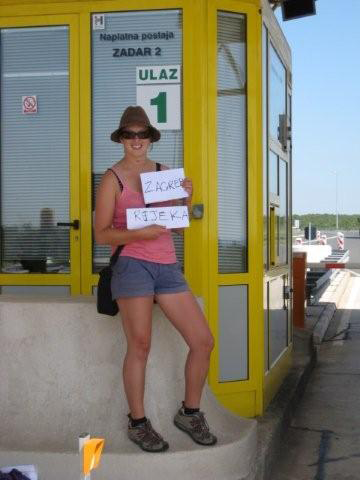
In some countries the motorways or a part of them are toll roads, so the places where drivers stop to pay might be very good spots to get a ride, since all the traffic going your direction can see you. Other type of toll booths is only stopping the traffic joining/leaving the motorway on one particular exit, there the traffic will be much more weak.
Pros
- All the through traffic on the motorway slows down and stops.
- In most cases there is a good visibility and room to pull over.
Cons
- On roads with heavy traffic they are very huge and only the cars from the first lanes can see you (for example on the motorways leaving Paris)
- It might be forbidden for pedestrians (and consequently for hitchers). The way it is enforced (or not enforced) vary greatly though, depending on the country you're in, and even within the same country depending on the network you're on and your particular luck that day. Sometimes the motorway staff can call the police if they see you, other times police passes by and doesn't care.
Truck Stops
Flying J, Pilot, TA and other truck stops can be good hitching spots. Truck stops, like petrol stops are frequented by more than just trucks. This is a good place to get picked up by young folks who are traveling across the country on summer vacation, or by the older crowd who are on a long trip by themselves.
Pros
- Truckers often go long distances
- Truck stops often have cheap food, a lounging area, showers, internet, and restrooms
- Truckers often give you cash or food when they can't offer a ride
Cons
- Generally it is against truck stop policy (though not always enforced) to allow soliciting, including for rides
- It is against the policy for trucking companies in certain countries to have riders because of insurance reasons
Outside of town
Before or after a town is a good place to hitch. Usually where the speed limit changes or main area of businesses and housing ends.
Anywhere cars can pull over safely
- huge parking spaces
Nine times out of ten you can get a ride anywhere there is a parking lot;(i.e. park and ride).
Traffic lights
Traffic light are pretty good spots. All the cars are standing still so you can easily make eye contact with the drivers and signal you want a ride.
Sometimes it's harder for cars to pull over, especially if there is a lot of traffic. Try to get an idea of where cars might be able to pull over safely. Traffic lights right before a highway entrance, which often have a large space on the side of the road, can be good spots as they combine the time drivers spend at the lights with the safety of a large space to stop for you. If you're unfamiliar with the area, try to find a place like this using Google Maps or Google Earth before you depart.
On the road
The countryside, especially where traffic speed is lower than about 60 km/h, can be a good place for hitching. Traffic on minor roads on the countryside can offer great rides to get to the nearest bigger city, or onto the main infrastructure.
Often on bigger roads the slow, local traffic coming from smaller sideroads may provide excellent rides, and it is quite often quite easy to flag those drivers down, as a very personal and direct approach is often possible.
Even national roads (non-motorway) often provide good space along the main flow of traffic, as there are often emergency lanes or so called Mehrzweckstreifen.
Finally, hitchhiking on emergency lanes of motorways can be an option in case of traffic jams. In such situation using a cardboard sign is usually highly effective. It is necessary though to take maximum safety precautions (we suppose you are smart enough to take these precautions), and you should know that hitchhiking on motorways is basically forbidden in most Western countries.
Asking locals about good hitchhiking spots
Asking local people about the best spots to hitchhike from in the area is a great way to save time. They may even give you a lift themselves. Ask them about the generic hitchhiking places mentioned above, and ask them where they have seen any hitchhikers before. Although what they say is not always useful or even truthful, asking several locals and comparing their advice will give you a good impression of the layout of the area.
Leaving the vehicle
When leaving the vehicle, if you are planning to look for another ride immediately after, then make sure you are on or near a hitchhiking spot when you say goodbye to the driver. Try to choose the spot yourself by looking out of the vehicle window - despite their efforts to help, drivers are often very ignorant about what makes a useful hitchhiking spot and their advice can range from brilliant to terrible. Often it's not worth taking the risk.
It is easy to lose hours by making mistakes such as standing on the wrong road, or the wrong side of the road. Make sure you know which road you want to be on, and keep checking the road signs so that you know where you are on your map and where you will leave the vehicle. This is especially important when traveling across cities.
Good times to hitchhike
Edit on wikiThere are good times and less good times to hitchhike. Naturally hitchhiking at night should be discouraged to anyone new to hitchhiking. But there is more to say.
Time of day
Data from over 43,000 logged rides on maps.hitchwiki.org shows that early morning (5–8 AM) has the shortest median wait times — about 15 minutes, versus 20 minutes during the middle of the day. The difference is modest (5 minutes), but starting early also means more daylight hours ahead and less competition from other hitchhikers at popular spots.
Late afternoon (around 3 PM / 15:00) shows a similar dip to the early morning, likely because commuters are heading home.
In short: start early if you can, but don't let the time stop you — the median wait is 15–20 minutes regardless of when you go.
Days of the week
Friday afternoon is definitely the best time for hitchhiking in most western countries. So many people are rushing to visit friends or family for the weekend. Also, everyone is in a great mood, leaving their work behind and looking forward for the weekend, which makes them more likely to pick you up.
Sunday morning until noon seems the worst time to hitchhike in Europe, and many other parts of the "developed" world influenced by Christianity (the US, Oz, Kiwiland and Canadialand come to mind). Cars are full of families, with possibly one grumpy person on the side and not too many working people on the road. It usually gets better in the afternoon, when people are driving back from their weekend trip alone. Sundays during extended weekends due to religious holidays (e.g. Easter) are even worse; make sure to start early enough and reach your destination way before the evening hours, or you'll be stuck by extremely low traffic, esp. along German highways.
On the other hand, on Sunday afternoon and early evening it is possible to catch fast & long lifts since many people visit their family, wife, husband boy/girlfriend who live far away during the weekend and have to return for work on Monday morning.
In Israel people work on Sundays so you'll be fine, but Shabbath is a horrible day for hitchhiking there since religious people are not driving at all (and they're usually quite skilled at picking up hitchhikers).
In many Muslim countries people also work on Sundays, and Friday is the day of the mosque, with considerably less traffic in countries like Jordan.
In a lot of European countries, most of the trucks are not allowed on the highways on Sundays until 22:00. They too are a hitchhiker-fond crowd. Sometimes. However, they all leaving their places at exactly 22:00. So, if you stuck late on a big service area, you can see them as a get-home-insurance. It's surely not a problem to find a truck to any destination if you start asking around at around 21:30.
Time of the year
In general, because of the length of the days and the cold Winter is bad, Autumn is also not that great, especially late Autumn. Spring and Summer are best, especially around the longest day, 21st of June (in the Northern hemisphere of course).
Signs
Edit on wiki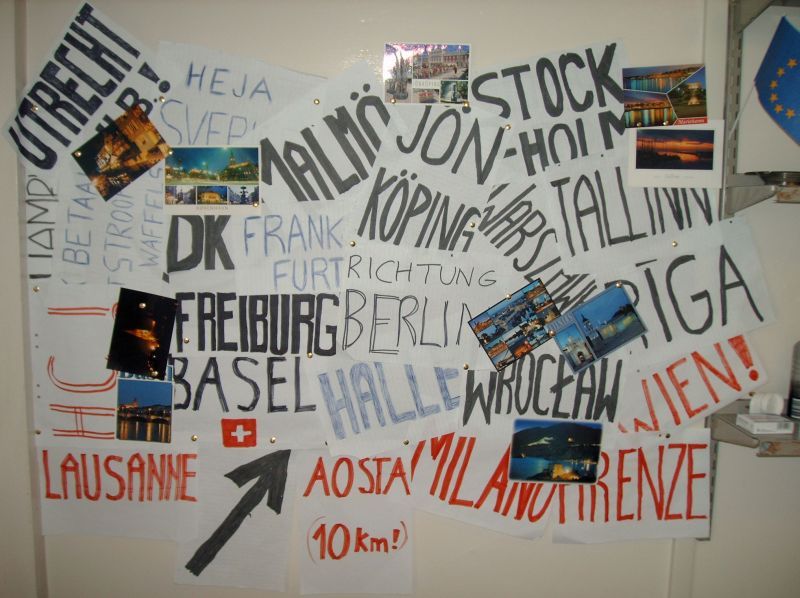
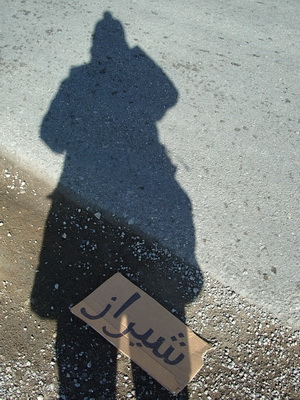
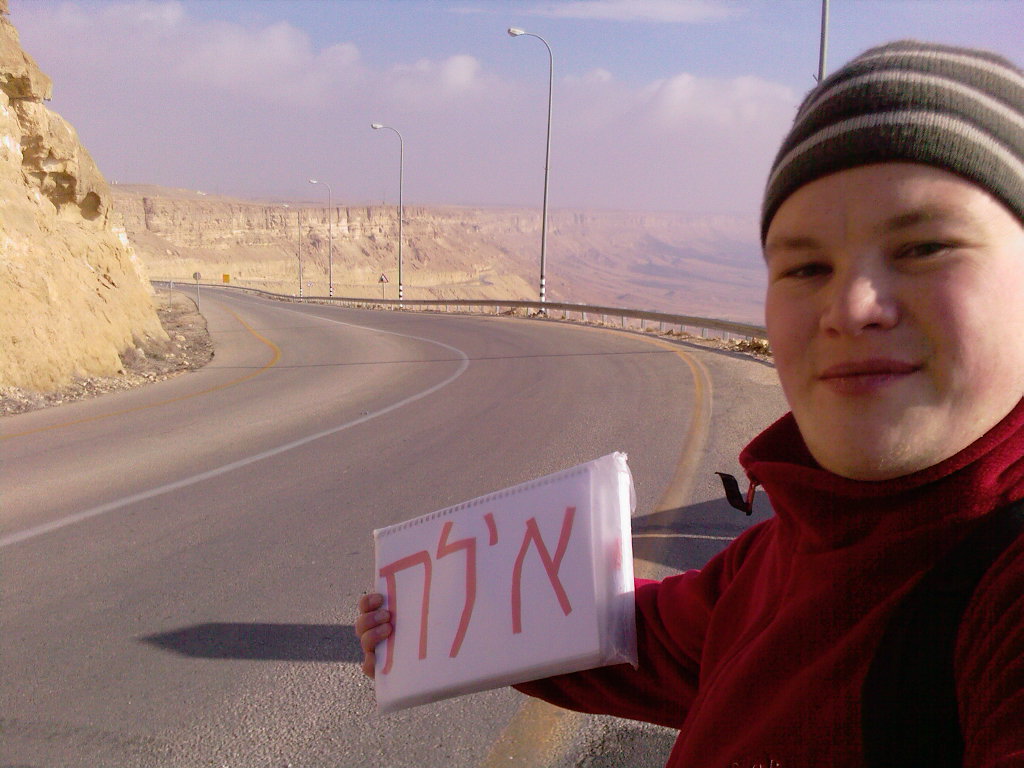
A sign is a tool used by a Hitchhiker to communicate information to drivers. Signs typically - but do not always - directly inform the driver of the hitchhiker's desired destination. Hitchhikers often debate about whether and how to use a sign. This article is meant to compile many of the best tips so you can develop your own technique.
When to not use a sign or not
To use or not to use signs is one of the main points of debate among hitchhikers. There are a lot of factors to consider in whether a sign is a good idea.
- Do you have time and materials to make a good one?
- Are people going to be able to read it?
- Is it going to be easier to just talk to drivers?
Consider this: the driver must read the sign; then he's got to work out if goes in the same direction and finally he's got to decide if he likes your face and if he can stop somewhere... but then he realises that he's already passed you and that he is now 500m away from you... so he will decide to drive on! If you just use your thumb, the driver only has to decide if he likes you and if he can decide to stop sooner.
At petrol stations and rest stops
Some hitchhikers rely on gas stations and rest areas and advise talking directly to people rather than using signs. This can be more effective at big crowded petrol stations, like at petrol stations on motorways in the United Kingdom and Germany. This obviously won't work if you don't have some mastery of the language (perhaps with an intriguing accent). Some hitchhikers think that it's not very likely that holding a sign will help if you can already clearly state where you want to go (and even show it on a map) and that you are hitchhiking.
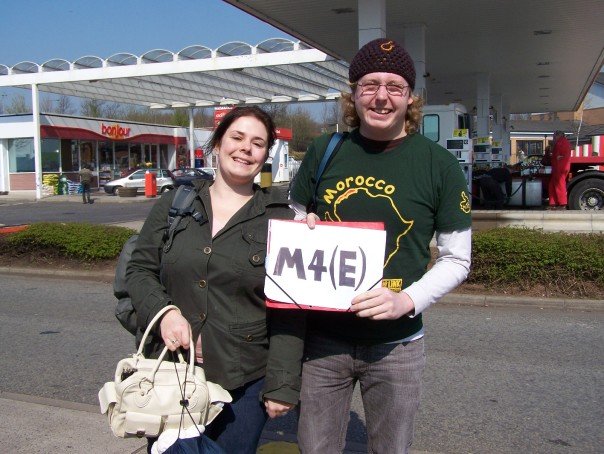
Others use these stops with signs, for example, by hold up a sign near the entrance instead of approaching people. This can be less intrusive and reduce the likelihood of being kicked off property. When using a sign at stops, the techniques from this articl on what to write generally also apply. For more info, see the articles on gas stations and rest areas.
Easier to decline rides
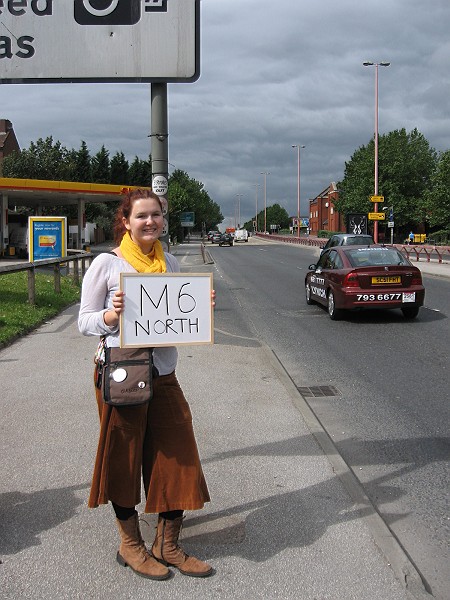
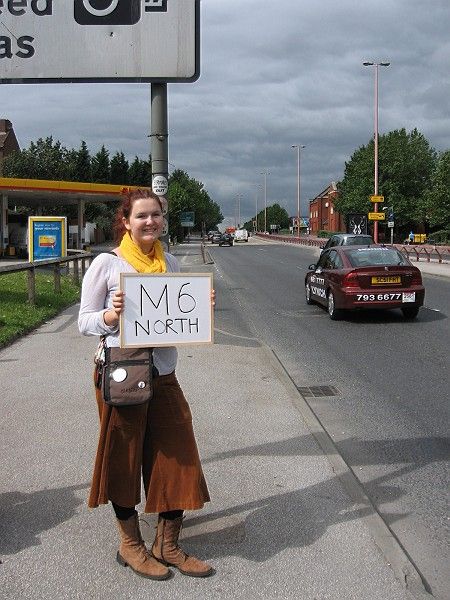
One reason not to take a sign is if you want to have additional leverage in declining offered rides, especially as a woman hitchhiking alone. If someone stops you ask first "where are you going?" Even if they are going exactly where you want to go, if you are not comfortable with them, tell them the ride is not going to work, but thanks anyway. Ditch the sign, they will stop without it. A good compromise is to have a sign with the road name rather than your destination, this allows you to ask which direction the driver will be going.
Packing space
If you are an adept of the ultra light packing philosophy, you might not want to drag along a few extra square feet of cardboard. But then again, you're likely to find discarded cardboard anywhere you go.
With significant local traffic
Sometimes local traffic won't stop for someone travelling a long distance, because they don't realize that every little bit helps. Many hitchhikers abandon signs in these situations. There are, however, various techniques for different types traffic (see What to write).
What to write
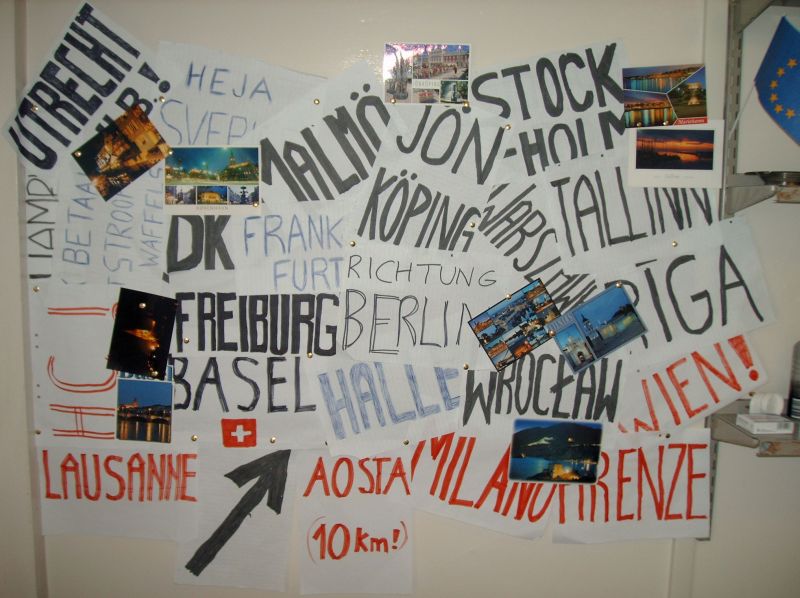
What you write on the sign should depend a lot on what kind of traffic you're seeing. Generally, a good idea is to use the shortest abbreviation for a place that is well known by the most traffic. You can often determine where vehicles are registered by reading license plates.
Your destination
The most obvious thing to write is the place you're going. This is most effective if you're already on a major route there with little local traffic (more drivers traveling long-distance). The place or abbreviation needs to be well-known to the drivers at your location.
A route to your destination
From a branching road, writing the name and possibly direction of the major highway to your destination can be more effective. Sometimes getting to the motorway can be half the battle, but once there, you'll have access to the long-distance traffic you need.
For example, to get to San Francisco from Los Angeles, you first need to get to I-5, which is on the far western side of the city. If you can't find public transportation, hitching with a sign saying "I-5" will be most effective because it will signal to people going to the western side of L.A. as well as long-distance drivers going to San Fran, Sacramento, or San Diego.
A town closer than your destination
This technique is useful for distance travel on highways with lots of local traffic[1]. If you see lots of local license plates for local traffic, with little traffic going all the way to your destination, this is a good technique.
Consider that the drivers are also thinking, "Oh, I'm not going to <destination>. I'm only going to <locality>. I'll let someone else pick him up." The trick here is to write the next locality on the sign. This encourages the local traffic to stop. Even people who are going a few towns further than the place on the sign will now also stop, because they know they can drop you off on the way. Once you mention you are actually going to your destination, drivers typically take you as far as they're going. Since locals are going to be more familiar with how well-known place names are, it's a good idea to ask your driver what's a good town to put on the next sign. Since you'll be making many signs rapidly with this technique, it's a good idea to carry lots of cardboard or a reusable sign.
A city farther than your destination
A similar but less common technique is to put a major, better known city, even though you aren't travelling that far. The conditions required for this to be effective are rare, but not impossible: you must be going to a local place, but going there on a major long-distance thoroughfare. If you become reasonably certain that the traffic is mostly distance and may not be familiar with the town you're going to, switching to a sign for a distant city can be the right move.
Distance
If your direction is clear and you are just seeking to get somewhat further on that road, a sign telling rough (and short) distance is very helpful. "20 km" works the best from User:Duffajfka's experience, you often don't need to write another sign for your next ride and it can get you to surprising places while keeping the confidence aspect in comparison to not having any sign at all. Be aware about the local perception though, for example "KM" means the currency in Bosnia and Herzegovina, a mile is understood as 10 km in the Nordic countries, and around Moscow the number of kilometers is generally understood as one from the centre of Moscow, not from your own location.
Misc stuff
You don't have to write a place on your sign to use a sign effectively.
Your nationality
If you're hitching in a foreign country, it might be a good thing to express your nationality on your sign[2]. Drivers will think you're more interesting, or will feel sorry that someone who lives that far off has to stand by the road in his country. Also, compatriots will be more likely to pick you up.
Funny stuff
You can always put something funny, like "I don't stink" on you're sign, if you're feeling silly. A sign saying "ANYWHERE!" might get people laughing, but might not get you picked up. Sometimes, goofy things you write on your sign can discourage stopping, for example if you're perceived as a drifter or mentally ill.
Nice stuff
Often a big sign just saying please works wonders. People fall for the politeness if you can't get them to stop with a destination sign.
How to write
Visibility is important, because you want the sign to be read from far away. That way, drivers have time to make decisions. Faster traffic requires bigger signs. Keep these things in mind:
Abbreviations
Often, you might use shortcuts because they need way less space on your sign. The sense of this depends on what kinds of shortcuts you use. If you just shorten a long name to a shorter, but still logically understandable one (like "Amsterdam" to "A'dam", for example), this is certainly a good idea. In some countries, you could also use the license plate shortcuts to put on a sign, e.g. Germany or Switzerland. This can also be a disadvantage - sometimes only regional+local people know them, especially if they don't really seem to make sense on the first look (like "HH" for Hamburg).
Airports
Airport abbreviations can also be used in some circumstances. "PHL" makes a great sign to get to Philadelphia, but if you're near the city, people will think you want a lift to the airport. Some airport abbreviations are not widely understood, such as MSY in New Orleans.
Design
- Use contrasting colors: black on brown cardboard is not very good readable for passing drivers, black on white is far more readable
- Use the same font as the route directions for clarity. Orderly signs suggest orderly people - but epic rides won't depend on that!
- Write only the initial letter in capital. The human brain detects a word not only by combining a few letters, but also by recognizing the different ascenders and descenders (the heights of the different words). When writing only in capital letters you lose this advantage. That's why street signs respect the upper and lower case.
- If you're bad in handwriting (like EliasExplores), ask people if they can write signs for you. Workers at petrol stations are often surprisingly good artists.
Sign-making
Reusable signs
Make a sign of a large sheet of brightly colored paper glued to a sheet of cardboard. Cover this with self adhesive transparent book wrap. Now you have a re-usable sign which you can use with a whiteboard marker and clean again with a small towel.
If
you have a chance to plan a long hitchhiking trip in advance, some find
using an erasable white board as a sign to be very useful for making
big, clear and reusable signs. This sign can be used a lot of times
without being cleaned with alcohol, and is resistant to wind and
water.
Another possibility is to make a sign out of two small white boards that children use at school. Just join them with enough string so that you can fold those boards like you would close a book. The benefits compared to a single white board are that this sign takes a smaller place when folded (so it fits better in your bag), and that you can write your destination in advance without it rubs out in your bag.
Reusable sign combined with map
If you're hitch-hiking long routes (e.g. Europe), you can make a reusable sign on bad side (white) of the map. Cover the map with self adhesive tape, and you will have: a waterproof map and reusable sign. For easier cleaning use whiteboard markers.
Waterproof, dust-proof document bags
Make use of waterproof, dust-proof document bags. There you can store many sheets of paper and signs you can reuse. Nothing falls out, you could hang them somewhere and you can use both sides of the folder to have two signs at once. Ortlieb is one company that produces good ones.
Pad of plain A4 paper
Buy a pad of plain A4 paper, and use it inside a waterproof, dust-proof transparent plastic folder that you can find in most stationary shops. When writing, insert something under the page to stop the pen ink (or India ink) running through to the page underneath (a document bag is good for this). With a pad of paper, you can quickly flip through pages to find the sign you need. Also, the pad can be a great souvenir of your journey.
Print your sign
If you have access to a computer with a printer, you can make a quality hitch sign easily then. Since most languages read horizontally, set the page orientation to be landscape but with a size twice long as a normal A4 sheet. For a place name no longer than 9 letters, you can set the font size from 200 to 500 points to fully utilise the page size in one line; longer place names can be wrapped into two lines. Using a tiled printing software, you can print the long page to two sheets. Cut off the short tiling margin of one sheet and glue two sheets together, find a cardboard of same size and use four paper clips to pin the paper onto it, a lightweight wind-resistant hitch sign is ready to use. You don't need a waterproof sign, if you don't hitch in the rain or underwater. The plastic bag idea in previous tips will reduce contrast and introduce reflectivity. In case of that it rains, just wrap your hitch sign with the cling film from kitchen and it will work fine.
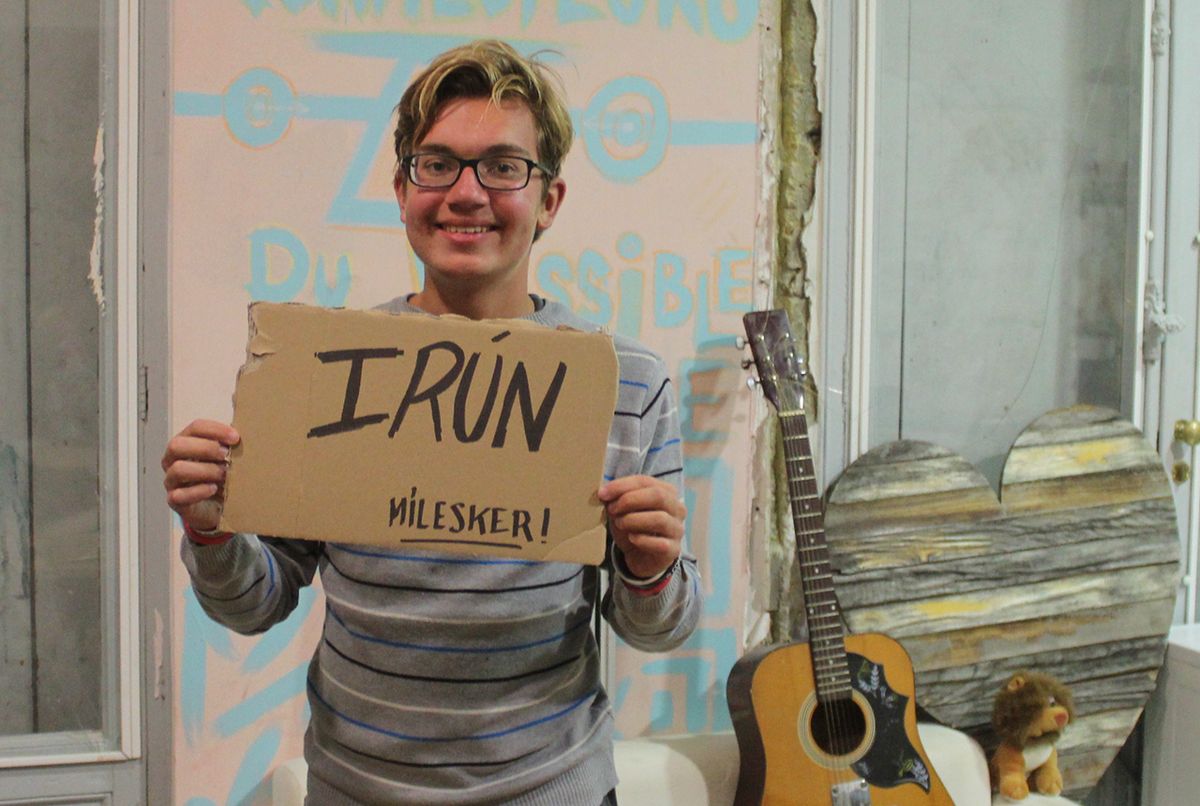
Use scavenged materials
If you already have a lot of baggage you probably don't want to carry around another square meter of waterproofed cardboard in your backpack. Use what you find and what you can put in the next garbage can!
Sign use by country/region
Europe
Germany
The one-, two- or three- letter code on the first part of license plates represents the region where the vehicle is registered... and also widely understood by the average German and used frequently by German hitchhikers on signs. Not every German knows the abbreviation for every locality, but it would be fair to say that the typical German knows all the major German cities as well as the abbreviations in the local region.
For destinations with many foreign drivers it's probably better to write out the full name. For example, there are always plenty of Polish drivers on the way from the Netherlands or Belgium that pass through Berlin, but might not understand what "B" is.
- Here are some examples:
- HH for Hamburg (the first H means Hansestadt)
- B for Berlin
- M for Munich
-
H for Hannover
For more cities and districts check the list at Wikipedia. For more information, see Germany#License_plates.
Ireland
Flying signs for Irish placenames (appears alongside their English placenames on road signs) may net you some success, though this may lead to drivers expecting you to converse in Irish.
Derry/Londonderry
If hitchhiking into Derry/Londonderry, stick with your thumbs. The naming dispute may lead to some tension among you and drivers if you write what they view to be the wrong one.
North America
United States
The two-letter state abbreviations are widely understood across the country. However:
- Some Americans might confuse the the M-states that aren't nearby (MS,ME,MO,MT,MN,MI... it can be confusing.)
- Oklahoma, abbreviated as OK, might be perceived as just saying "OK" if you aren't near it.
- Hawaii is abbreviated as HI, but if you're hitching there you probably don't need a sign. See Hitchhiking a boat.
- "LA", Louisiana can be easily confused with "L.A.", Los Angeles.
Many states are also less-frequently referred-to by a three-, four-, or five-letter abbreviation. They're widely understood too.
- Mass.
- Miss.
- Colo.
- Conn.
- Wyo.
- Cali. or Calif.
- Mich.
- Fla.
- Wash.
- Mont.
- Wisc.
- Ala. or 'Bama
Some long city name abbreviations:
- New York can be "NYC"
- Los Angeles can be "L.A.", but don't get confused with LA, which is ]]Louisiana]]!
- Philadelphia can be "Philly" or "PHL", but don't get confused with the airport. (See the section on Airport abbreviations.)
- Oklahoma City is "OKC".
- Kansas City is "KC".
- San Francisco is "SF".
- New Orleans is "NO" or "NOLA", though these aren't always understood outside the southeast.
The state of Louisiana is "LA" and the city of Los Angeles goes by "L.A.". You can probably see why there are situations where these two should be avoided.
Other tips
Don't leave your sign lying around
Some people argue that leaving your sign lying around on the street gives hitchhiking a bad impression. Make sure to take your sign with you and only dispose it in a garbage can (ideally one for paper and cardboard).
On the other hand side, some hitchhikers make sure to leave their signs behind for following hitchhikers to use or at least to see that they're not alone in the world...
Fixed signs
Also referred to as mobility furniture are used to indicate a official hitchhiking spot and sometimes the destination.
Vive Le Stop and Halt-o-stop build such signs.
File:IMG 5336.jpg | Description of the sign File:Vivelestop movable sign.png | Vive Le Stop movable sign File:Halt-o-stop.png | Halt-o-stop sign

Gallery
***Photos needed***
References
ref 1
I, Dr.Keith developed the technique for using signs with local traffic (I'm probably not the only one) while tramping from Folkestone to Brighton in August 2011. After having no luck with a "Brighton" sign, I started using smaller, more local place names, to great success.
ref 2
Nathan and Bob, who hitched through France had great help writing '2 belges' on their sign. guaka was successful with a sign "from Holland" in both New Zealand and in several parts of the United States, once by a Dutch girl living in Santa Cruz, most people were happy to pick him up just because they thought Holland was cool (oh and one guy was smoking weed in the car).
Appearance
Edit on wiki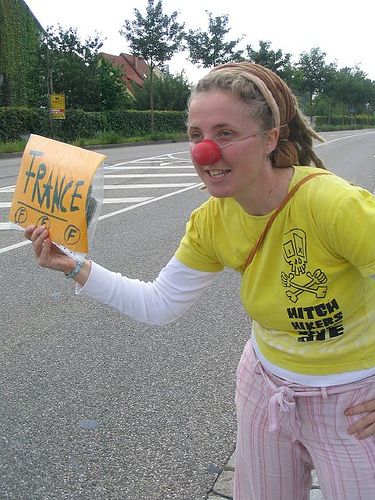 Your appearance
is important when hitchhiking!
Your appearance
is important when hitchhiking!
Putting together an excellent outfit doesn't just change the means by which that other people perceive you, it changes the means by which we experience ourselves. Think for a minute about just how you're feeling when you place on your favorite shirt, as well as exactly that pair of jeans for just right. It changes your entire personality.
Clothes
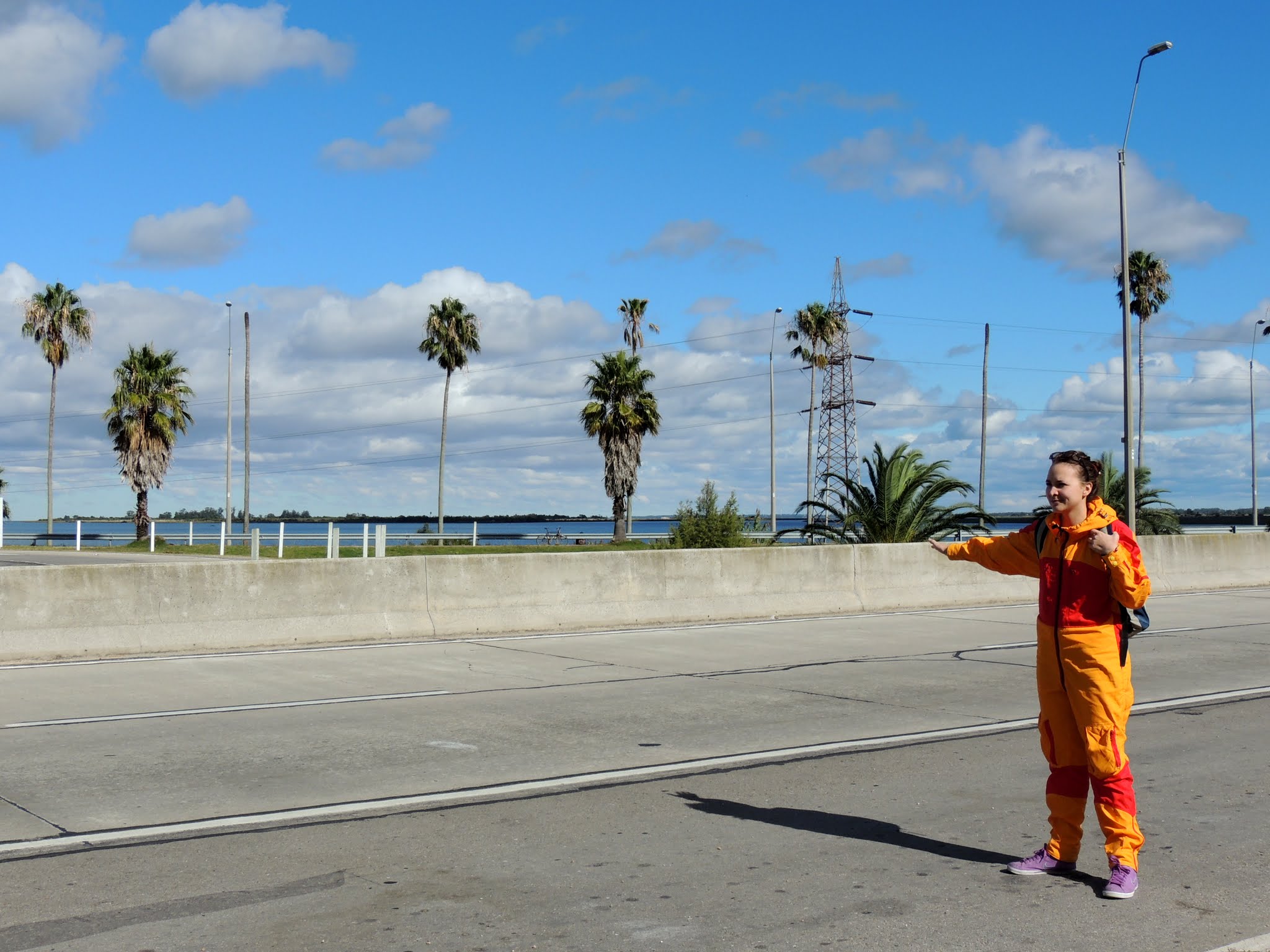
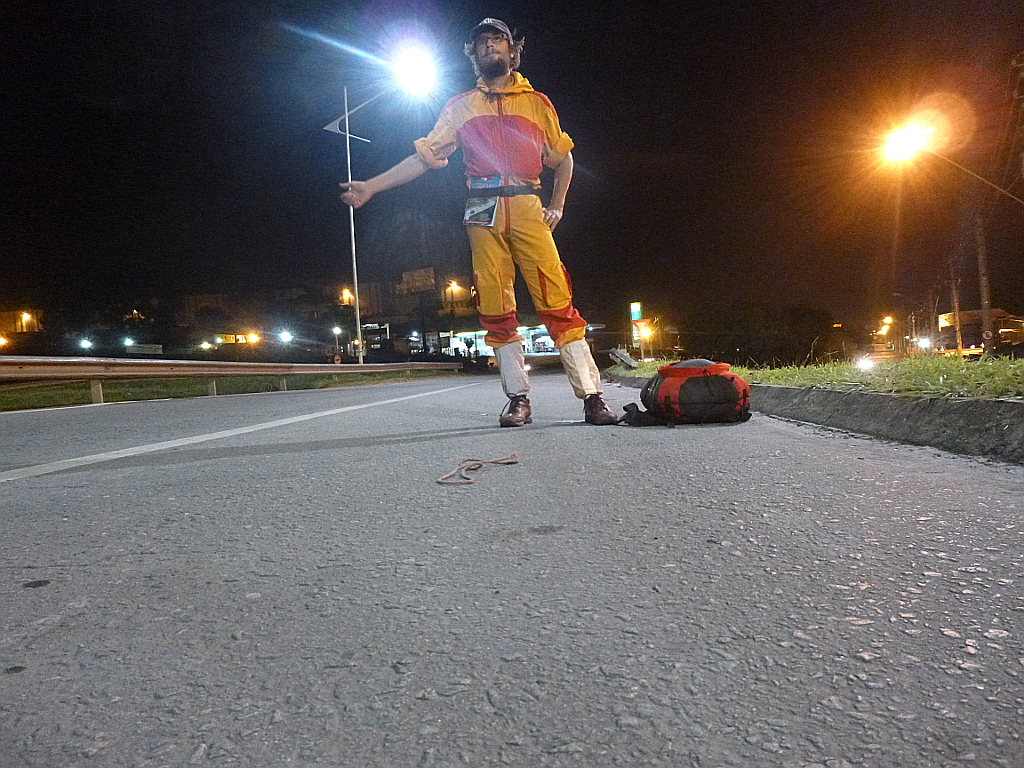
The first and most important details are the clothes you wear. Try to wear bright colored, well visible clothes. This is extremely important during the night or in bad weather, but also during sunshine. A yellow or orange shirt, pullover or jacket works best. If you don't want to spend much money on new gear, a reflective warning vest pulled over your jacket will perfectly do the job. This is also extremely important while walking on a dangerous road trying to find a good spot.
To limit the amount of clothes you take with you; use layers. In the morning you start with several layers, as it gets warmer you take them off and at night you can wear them again. It's great if you can adapt to your driver's air conditioning, or the sudden rain or 4 km tunnel when you're in the back of a pick up truck.
Obviously there is a difference between hitching in Spain in the summer and in Scandinavia during wintertime. Nevertheless, it is often smart to buy some good outdoor stuff. It is light and dries very fast. There is nothing worse than wet jeans or cotton-shirt if it's below 10 °C. Plus, you can wash it and it dries fast. Outdoor wear differs a lot in the degree it adopts smelliness. You can wear some for days without smelling, others stink after two hours hiking.
Hitchhiking is an outdoor sport and it pays off to wear good shoes.
They might not be best for dancing when you reach your destination, but
it is important while walking along the road. At times you might need to
cross rocky areas, puddles, mud, snow etc. Sometimes you have to be
quick and step off the road due to big trucks etc.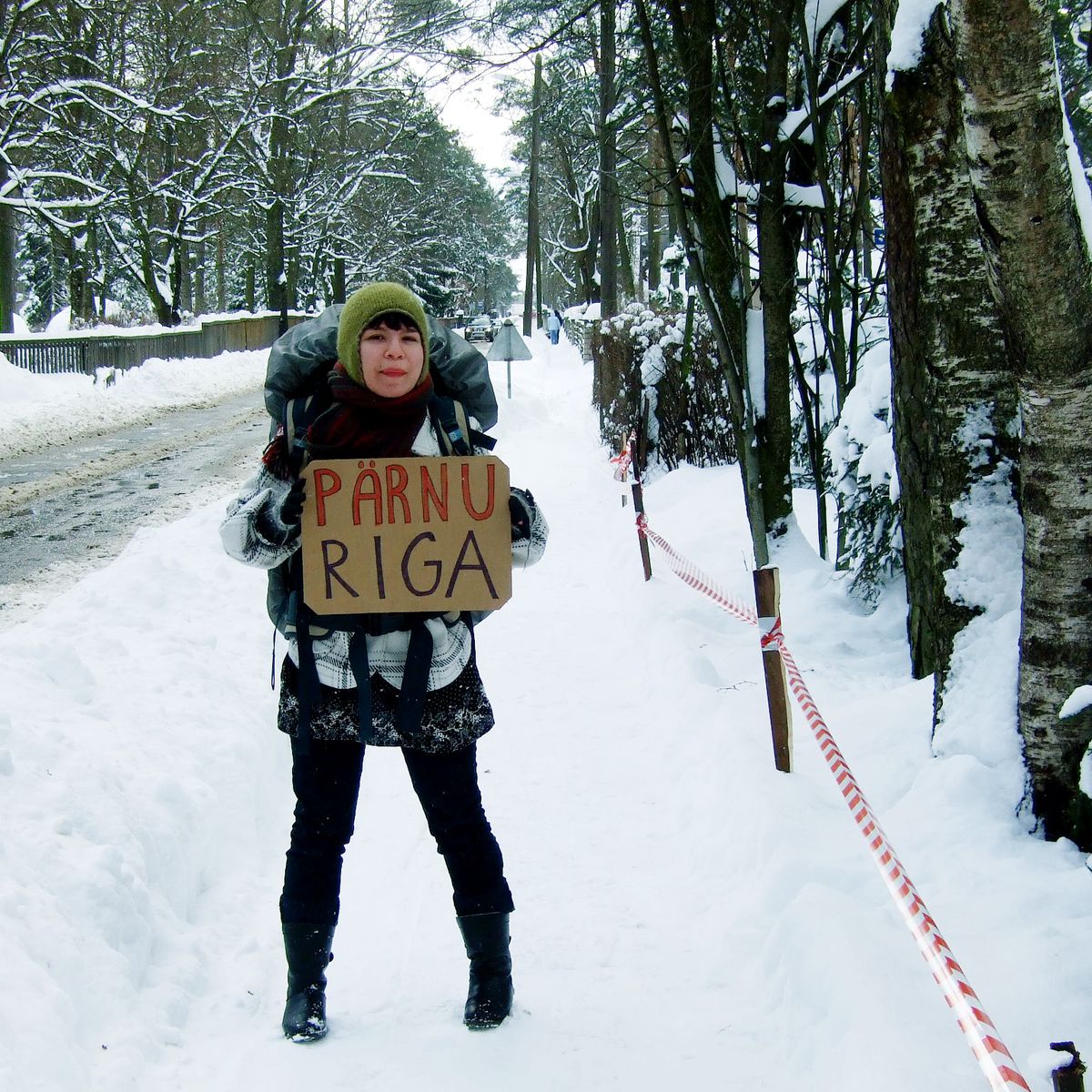
Avoid dark or military clothes, they do not create a lot of trustfulness. Looking too much like a colorful hippie will possibly scare other drivers off. Take off your hat (unless it's a really funny one), don't wear gloves, open your jacket, even though you might freeze. Also helpful are t-shirts that identify you with something, be it a country, a football team or a band - Zenit has been picked up because of his "Switzerland" t-shirt more than once.
Sometimes, your clothes give away that you're a traveller/tourist, because the people on the street where you are usually wearing something else than what you wear. As mentioned above, it might scare people off if it is too extreme, but on the other hand it might also get people interested to look like you've stories to tell.
Looks
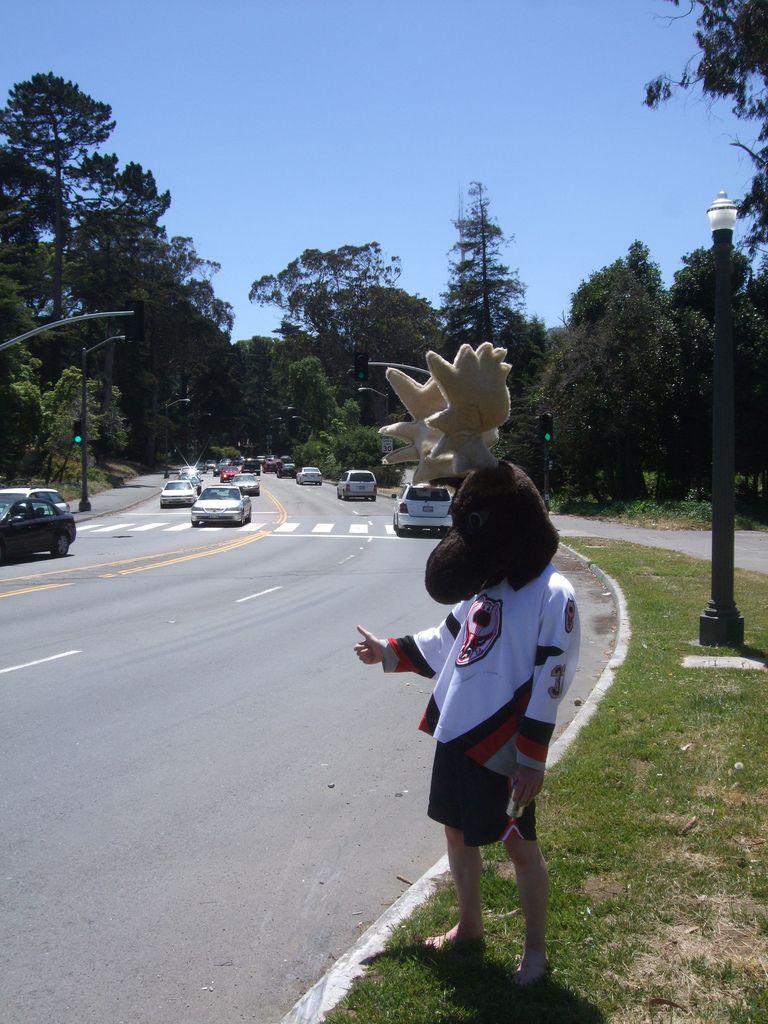
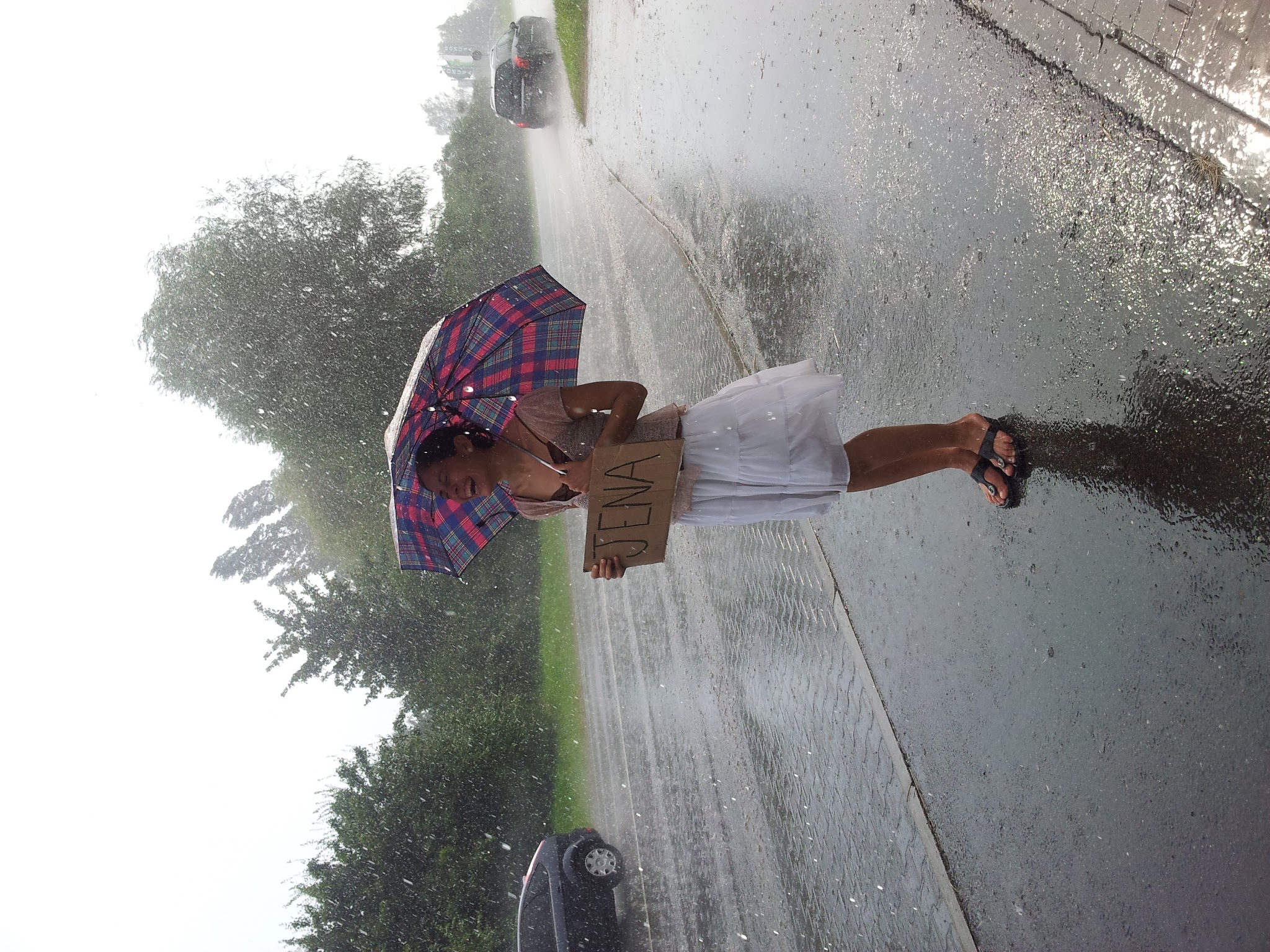
Show both your hands and, if possible, forearms. Don't wear a hat or sunglasses. However, is if it is just too hot and sunny to stand it with no protection choose a hat over sunglasses, as the latter hide your eyes and this makes most people suspicious. Wear a short-brimmed straw hat or a light coloured cap as long as it doesn't hide your face too much. If it is raining, it's better to use an umbrella than a hood.
Your mood is very relevant. So always be happy, or at least pretend to and keep smiling. This will get you a ride much faster, than if you're looking tired and unmotivated.
When hitchhiking in foreign countries it might pay off to look like a foreigner.
Hygiene
You are more likely to be picked up when you look somewhat decent and clean. Wear fast drying, easy to wash clothes, avoid cotton.
Avoid stinking! This might not be the easiest thing while hitchhiking long distance, but remember: You are not the last hitchhiker this driver might pass! Having a stinky passenger in the car will make the driver think twice before picking up someone again. This will make it easier for the whole hitchhiking community! Carry a second set of gear with you, wash your clothes regularly, use fast-drying gear. Some outdoor gear picks up odours faster than others, ask in the store or inform yourself before buying.
Use deodorants. Clean any mud off your shoes before hitchhiking (not in front of the eyes of the driver).
Most service stations on the highway have showers. Use them in the morning if you start your journey after you camped at a service station.
Hygiene can save your health and your life; it can prevent many sicknesses.
Behavior
Look the approaching driver in the eyes! Smile!
If you're likely to be perceived as a woman, don't behave and look too salacious. This might give the wrong impression.
If you've been waiting a long time it might be good to do something funny, like waving at random cars or play some small musical instrument. Hitchhiking a bike or a motorbike will also cheer you up easily—they always look so funny showing that they would love to take you but don't have the space.
Etiquette
Edit on wikiThere are lots of different theories and practices around hitchhiking etiquette and courtesy for your driver. Also, there is some general rules about treating other hitchhikers on the road.
Etiquette on the road
Be courteous: Hollaring at drivers, standing in the road, or just generally being a nuisance can be dangerous and will not only deter drivers from picking you up, it may affect that driver's perception toward hitchhikers in the future.
Keep your cool: It's easy to get frustrated when thumbing, especially when there are plenty of passing drivers going your direction. It is important that you keep rude gestures in your head and objects away from the car. There have been stories of hitchhikers purposefully putting objects in the road to intercept drivers that pass by. For all of us, don't do it.
Etiquette with drivers
Introductions: Some hitchhikers leave it to drivers to offer their names first. Many times they never do. Leading to the situation in which you can occasionally (especially on long rides) hear detailed intimate experiences of someone who you never learn the name of. Other hitchers offer their name when they get into the car as a means to establish a personal relationship between hitchhiker and driver quickly.
Be good conversation: If you share a language with the driver, it often makes sense to try to engage them in casual conversation. Drivers often pick people up to make their rides more interesting. They are doing you a favor picking you up, you can return the favor in part by keeping them engaged. You can ask simple classic conversational questions to get things rolling:
- What kind of work do you do?
- What do you like to do when you are not working?
- Have you ever hitchhiked yourself?
- Why do you pick up hitchhikers?
- Where are you going?
- What are you going to do when you arrive at your destination?
For these answers, it is often useful to ask follow-up questions which are dependent on their answers to these initial questions. It is important to read the attention and mood of your driver. If they are giving short answers or appear disinterested in conversation (especially if it is in a language which is challenging for them) then you don't want to drop your good faith efforts to make conversation.
Tricky conversations
Here are some suggestions for snappy answers to tricky questions.
"I have been convicted of 19 felonies, aren't you
concerned?"
— "Not at all, I've been convicted of 22"
Going out of their way: Sometimes, a hitchhiker will think about asking the driver to go out of their way to drop them off in a better place for a ride or to take you closer to your destination. Again there is no universal answer. If your driver seems hurried and rushed then your request to go out of the their way will likely get turned down. If the driver seems friendly and relaxed then your request has a better chance. Usually, you will have better luck asking them to go out of their way to drop you somewhere IF you have been good company of the ride and they feel like they have some connection to you.
Advice from Drivers: Many times a hitchhiker has spent hours cursing the helpful driver who told them "Oh, I know a great place to hitchhike!" In fact, most drivers don't understand the basics of hitchhiking, that a careful mix of enough traffic, but not too much traffic is desirable. That a place which might look great because it has a good place for cars to stop or for a hiker to ask drivers for a ride, could in fact be a terrible place if it is just before a complex intersection which sends cars off into lots of directions which are not the one you are interested in. Weather, darkness, local friendliness, traffic patterns, good places for cars to stop and more need to be factored into weighing which location is the best. Do not be afraid to tell your driver that they don't know what they are talking about when it comes to good places for rides. You should attempt to do this in as polite a fashion as possible. But since they are dropping you, if you fail to correct them in their mock understanding of a good hitchhiking place, you could spend a lot of time regretting their mistake. While they annoyingly are off to drop another hitcher in a poor place. Alternatively, by asking them all sorts of details about the spot you're about to dropped at, you can minimize the risk of ending up at a dead-end.
Etiquette with hitchhikers
There are some fairly basic rules that are mostly dictated by common sense about how to treat other hitchhikers such as, when you come to a place where there already is a hitchhiker, to stand down the road behind him and not in front of him.
Hitchhiker’s safety
Edit on wikiHitchhiking is usually very safe. The most encountered feelings of unsafety are probably concerning the driver's driving style.
Summary
Here are four quick tips which will make you safer:
- Ask for rides at petrol stations instead of signaling at the roadside.
- Trust your instincts.
- Refuse rides from impaired drivers.
- Know that hitchhiking at night is more dangerous than during the daytime.
- It is good to be insured.
Please read on for many more important tips.
Road Safety
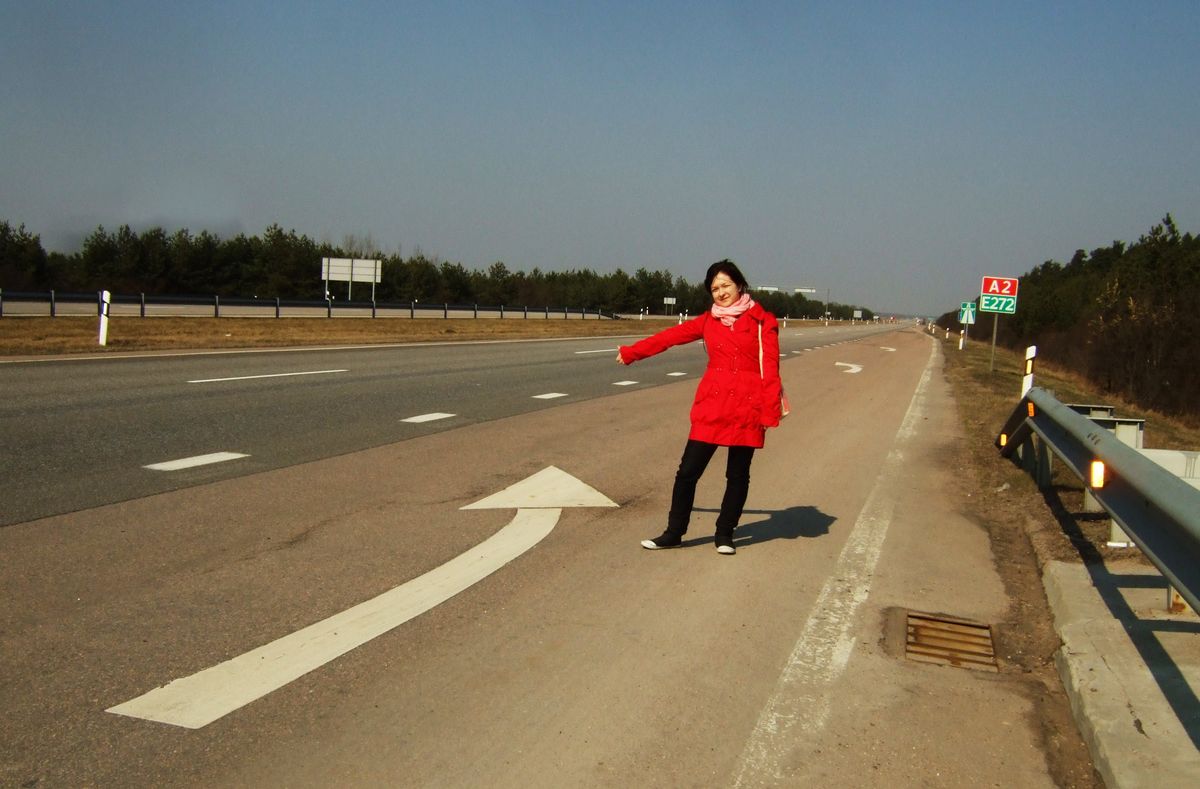
You should make sure you are standing along a safe portion of the road, as far back from the travelled portion of the road as possible (on the unimproved portion of the road shoulder). Make sure that you are visible to drivers from a good distance (100 meters or more is ideal) to allow them time to 1) decide if they want to pick you up and 2) safely pull to the side of the road.
Wear bright, visible clothes, especially while walking on the road! Consider wearing a bright reflecting safety vest. At night time use reflectors and carry a small torch. You can purchase these often at petrol stations and supermarkets. Carry these in your backpack at all times: even if you are not planning to hitchhike during the darkness. Make sure you are visible from both sides. Attach reflectors to your backpack for example.
Sometimes, especially but not exclusively at night, drivers will pick up a hitchhiker because they are tired and sleepy, but must get to their destination on time. Make sure you never fall asleep in someone's car if you are suspecting this might be the case. Even if you can't find a conversation topic, stay alert. If you have a driving licence; you might indicate this to your driver; he or she may be happy to let you drive. See Driving for your driver
Hitchhikers should see themselves as agents of road safety. Only one study has ever been made on the subject of hitchhiking's impact on road safety, and it appears that it has no negative impact, if not positive. It implies that the hitchhiker should stay safe; be sure they can be seen, especially at night; remind the driver of the speed limits; and be willing to cooperate with all professionals of the road.
Awareness
Awareness on the part of a hitchhiker will keep him or her from accepting dangerous rides- for example, a driver travelling under the influence of alcohol or narcotics. Examine the driver and vehicle. If there are signs of intoxication (slurred or erratic speech, no eye contact, open alcohol containers) do NOT get in the vehicle. Refuse the ride.
Talk to the driver before getting in the car! This way you make sure the ride offered is one that you would like to take, and that it will end at a safe spot to stop. Ask the driver before getting in their car: Where are you going? Can you drop me off at a service area or other safe place near your destination? A rhetoric question like "Are you going north" and the driver's reaction can give you some information about him or her. Dropping humour into your brief conversation is a good way of gauging a person's personality as well. Trust your instincts! If you do not feel comfortable accepting the ride, thank the driver and say no. Walk away.
Women hitchhiking
For women, hitchhiking
seems to be riskier. But it is not really. Many men are reporting the
same degree of violation as women. If most reported cases of murder or
rape of hitchhikers involve women hitchhiking alone, it is because men
are less likely to report rapes, and murders are not getting the label
of "hitch-hiking-murders" as often with male victims.
Hitchhiking as a woman can be easier though. Often, women stop for other women or girls. Even families (or other usual-not-hitch-hiker-friendly car owners) stop to "save" women from a situation in which they think she could be in "danger".
Read more at the Hitchwiki page on Female Hitchhikers.
Top tips for safety
- Hitchhiking at night is more dangerous than at daytime.
(Anti) Social tips
- Think positive and you will attract positive.
- If you doubt about the ride offered, turn it down.
- You can also check if the doors open from the inside by pretending not to have closed the door properly.
- Note the vehicle's registration number, or at least the make, model, and colour, etc. You could then SMS this to a friend. You can pretend calling your mum and saying car type, color and licence number aloud. This makes driver believe he is under surveillance.
- It's probably safest to not go with more than one guy in the car.
- It's better to sit in the front of the vehicle.
- If getting in a truck or car driving long-distance, maybe to where you want to go, including sleeping in the truck with the driver. Never tell yes to go all way from the beginning. Say you are going to visit a friend in a city on the way and then when you get a feeling of safety with the driver tell him that you will visit your friend some other time and go all the way now.
- If there are other houses or people in sight, you can wave to them or pretend to say goodbye to a friend. The driver will think that somebody has seen you getting into their car.
- Always trust your instincts. Don't panic!
- Keep up a good conversation with the driver. See etiquette.
- Hitchhike with someone you know. On hitchhike forums such as at you can find other hitchhikers.
- It might a good idea to get yourself some pepper spray, just in case. But it can be illegal to carry in some parts of the world so be aware. Also, it might not be a good idea to use in a closed space as you'd get a good dose of pepper yourself. There are also canisters of pepper gel which emit a stream of gel instead of a spray mist, which could save you in enclosed spaces.
Don't use pepper spray while the car is in motion. Blinding the driver will probably result in a crash.
Stuff safety
- Wear your most valuable small stuff on your body: passport, wallet, money, mobile phone. This way you will keep these items in case you should abandon your bag.
- Remember that your backpack is the last one to enter the car and the first one to leave it. Also avoid putting it into the trunk if you are hiking alone, or if the driver has an opportunity to drive away with your luggage - though sometimes this is simply not an option. It's a good idea to keep the door open while you get your bag from the trunk. It's actually much more likely a hitchhiker forgetting their own bag or other objects than theft. Better take it with you when you go to the rest room as when you come back the car might be gone, even just due to the driver getting told to park somewhere else and now you can't find him anymore, etc.
- Keep your backpack close to you (i.e. on your lap), so you can grab it if you need to get out quickly.
Road safety
- Wear well visible clothes, stand at a safe spot, be careful while walking on the road.
- Aim to leave the vehicle at a safe spot.
- Do not hitchhike on the highways in western countries. People will not notice you, thus they will not pick you up and there have been accidents. It is very dangerous and often illegal, too.
Choose your drivers
It is preferable to choose your drivers. Ask for rides at petrol stations or truck stops. Briefly profile people by their appearance and talk to folks that seem safe/interesting. Appearances do not guarantee safety.
By seeking rides at petrol stations instead of at the roadside, you have more time to talk with drivers and evaluate their character.
It may be unwise to accept rides from drivers who are stressed, angry, or demanding.1 Do not accept rides from drivers who are impaired by alcohol or drugs.
One of the safest ones to get a lift from is the truck drivers. You sit far away from the driver. You are always able to open the door if needed (just don't jump while the truck is moving if you like your life moving again). Big trucks in Western Europe anyway also have a sensor on their trucks that let their boss know exactly where they are. Going off the road or stopping for some minutes and the boss will be all over the case, calling on the phone...
This is not always the case, however. In Australia, truck drivers drive long distances on one lane highways and are often overworked. This can lead to dangerous driving conditions and bad experiences.
Leaving the vehicle early
When you are on the road, if the situation gets bad for whatever reason and you don't want to be in the vehicle, then find a way to leave. Get the driver to leave you at the next good hitchhiking spot (choose it yourself, don't rely on the driver to choose it for you), or in another safe area such as a city where you can contact people you know, use hospitality exchange organisations, or take public transport. Remember that if for whatever reason you are not wearing your seatbelt and the car is moving, the driver can distract or injure you by braking so that you hit your head.
If you feel uncomfortable, remember that you don't have to stay in the vehicle, and you don't owe it to the driver to travel the full distance agreed upon. Good get-out tactics include faking travel sickness, or stating that you've changed your mind and want to do something else. Stay calm and be polite but direct, and most drivers will respect your wishes.
Emergency exit
First of all, don't panic. Still, a situation might occur that you want to get out of the car and the driver does not want to stop. ... Need more info...
- Never use the handbrake. Using it will almost certainly lead to a car crash.
- Cause a (small) accident
- Call emergency number (112 in EU, 911 in US, 000 in Australia, 111
In New Zealand ) Note: it is now possible to text/SMS 911 in the US, and doing so may lower your chances of arousing suspicion.
- Prepare to loosen your seatbelt, and wait until the driver has to stop at a red light or stop sign. When the driver stops the car slide your belt off and open the door in one motion and get you and your pack out before they have any idea what you're doing.
- As an emergency safety precaution, carry a roll of toilet paper and a lighter. In the event that you feel uncomfortable and the driver refuses to stop, light the toilet paper and throw it into the back seat. The smoke and fire will encourage the driver to stop and/or alert other cars on the road.
- A helpful trick if you just have a bad feeling about a ride, but not really a reason to scream for help (yet): Pretend to feel sick and tell your ride to stop immediately because otherwise you might ruin his car... when they stop, jump out of the car with your backpack, tell them not to wait and head away from the road until they're gone.
- From personal experience: Causing a small accident may do more damage than good, since the driver will most likely just speed off, anyway, rather than trying to wait around and get caught by the police. Plus, that gives you a much greater chance of being injured. Remember that no matter where you get taken, you will still have the opportunity to hitchhike out of, and thus get rescued by someone else. Plus, vehicles do require fuel, and eventually run out of it. So, you can at some point find yourself in a (very useful!) petrol station, from where you can: have contact with other people, make phone calls, lock yourself in the bathroom to avoid confrontations, and hitchhike a new ride. Your best bet is to stay calm and confident, no matter the situation.
Hitching in Extreme Climates
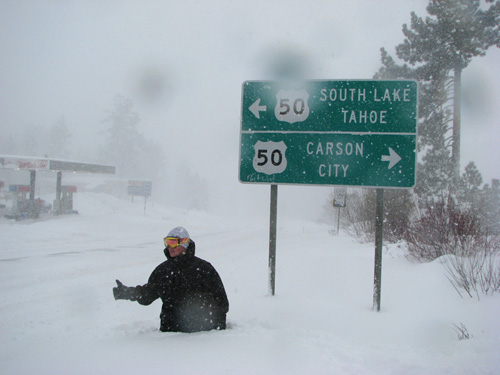
The climate poses an entirely separate danger to hitchhikers. As a hitchhiker you may find yourself in the situation of being stuck in an extremely hot or cold place, both of which are potentially fatal if not dealt with appropriately.
Extreme Cold
: See Winter for more information.
Driving in the cold can be particularly risky, let alone hitchhiking. If travelling a long distance, it is advisable to have a backup plan, to avoid being stuck outside at night. If there is a significant chance of being stuck outdoors for a long time, then you must take precautions. Having plenty of warm clothes, hat, gloves and thick boots are a must for the daytime. If there is a risk of being stuck outside at night, try finding a host, either on the internet prior to leaving, or else at a hostel if there is one. You should bring money with you for emergencies. If you absolutely must sleep outside, then you will need to acquire a heavy sleeping bag - a 5 season sleeping bag is not too expensive. Be sure to set up camp in a covered area - such as in a forest or under a shelter, and make sure it is sheltered from the wind. A gas lamp will also assist in heating you up. You might want to learn how to start a fire
Extreme Heat
The extreme heat poses a great risk of dehydration and sunstroke in the summer months in many countries in the world. You absolutely must bring plenty of drinking water. Try to have no less than 4L of water with you per day. If there is a risk of being stuck in direct sunlight for a long time, bring sunscreen, and perhaps also an umbrella, particularly if there are not many trees around.
War zones and former war zones
Obviously, zones with active conflict are not safe places to hitchhike. But also consider former war zones, and land mines. At times, as a hitchhiker you go to areas that aren't often used by normal travelers or locals, in which case it's important to know if there's any chance of land mines. Especially at night, when looking for a place to camp.
See also Wikivoyage about war zone safety
See also
- Health
- Where to hitchhike
- Picking up hitchhikers, for drivers
- Safety pdf - a project to create a one-page guide to safe hitchhiking
- PDF guide about hitchhiking safety - A complete guidebook about safety, including how to jump from a moving vehicle
- is Hitchhiking safe?
- Is Hitchhiking dangerous for girls? Sharing practical tips on how to stay safe
Even more info
- Bad hitchhiking - Sharing stories? in CouchSurfing group about hitchhiking.
Maps
Edit on wikiHere is the Map of Hitchhiking spots
Maps are essential to hitchhiking. Make sure you always have a good map with you, either on your smartphone of in paper.
In Western Europe and a few other countries it is very important to have a map that shows petrol stations, service areas, toll gates and other important places on the motorways.
Hitchhiking maps
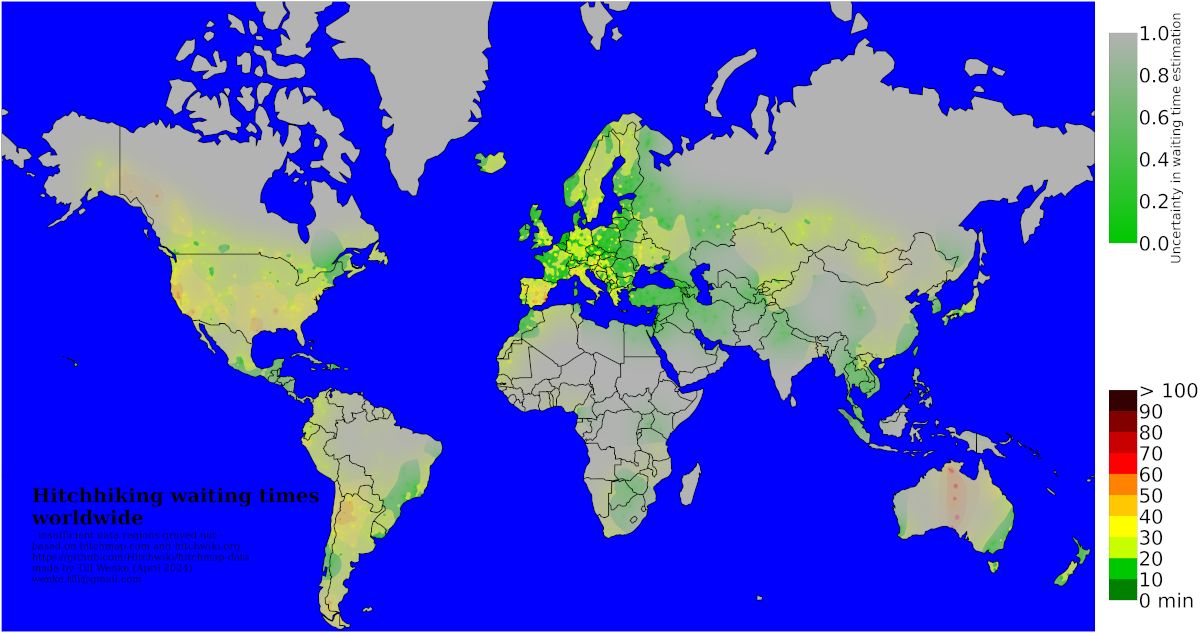
2024
Originally published here by Till Wenke.
Online maps
Hitchhiking
Our's
- maps.hitchwiki.org Hitchwiki's map to find hitchhiking spots and routes - collecting rides since 2006. Can be downloaded as.gpx file for offline use.
Unaffiliated
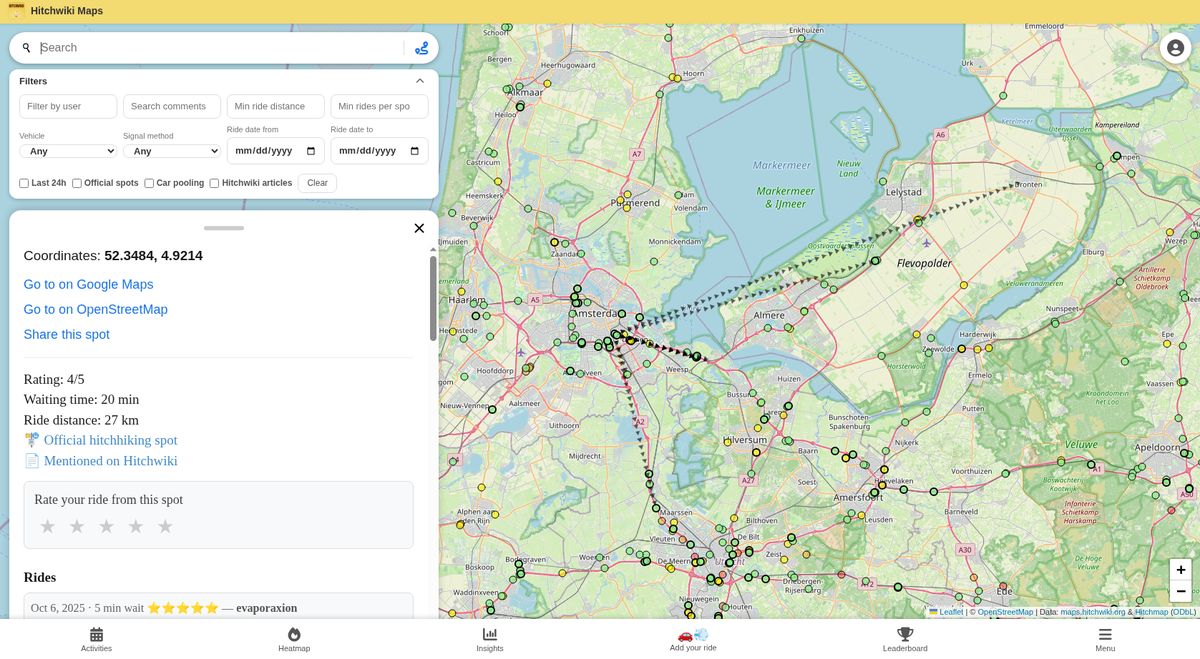
- Hitchmap.com - Wordwide map of hitchhiking spots with waiting times and comments. Can be downloaded as.gpx file for offline use.
!Smartphone running OsmAnd with offline map data and imported location markers from Hitchwiki Maps and campwild. Supermarkets = dumpsters...
Standard maps
- OpenStreetMap Free and open map that is created by volunteers. Can be used online or offline via apps:
- Google Maps StreetView can be good to check for hitchhiking spots. Very limited offlince capability.
- Yahoo Maps
- Bing (Microsoft).
- map24 Map for South America.
Shelters, (Wild)camping
Various free map data sources are available which are useful for the modern hitchhiker. Here is a list of website which provide such data:
- hipipl.com - A convenient interactive map with camping and hitchhiking spots
- refuges.info - wilderness huts database, mostly in France and Alps region
- pyrenees-refuges.com - wilderness huts in Pyrenees mountain range
- sydsverige.dk - shelters in Sweden
- 1 - campsites/shelters/fireplaces in Sweden
- - campsites/shelters/fireplaces in Sweden
- laavu.org - wilderness huts in Finland
- freecampsites.net - worldwide free campsites database
- boudy.info - czech republic and slovakia (mostly) shelters
- tourenwelt.info - worldwide hut data (in german)
- mountain-huts.net - mountain huts in the balkans (Slovenia, Croatia, Bosnia, Serbia, Montenegro, Greece, Macedonia, Bulgaria)
- bivakzone.be - campsites in belgium
- udinaturen.dk - campsites in denmark
- rmk.ee - campsites and huts in estonia
- - free camping in Japan
- hatinosu.net - free camping & hot springs in Japan
- doc.govt.nz - government huts in new zealand
- ifreecamp.com Free campsites in Israel.
- 1nitetent.com People offering a free camping spot. Most ask to be contacted (mail, phone, whatsapp) ahead.
- Shelters in Norway
Hospitality Exchange/Couchsurfing
Nice people offering their home or a spot in the garden. The ones listed here provide a map search that let's you easily for more remote spots or to search e.g. for spots near onramps/highways/etc.
- trustroots.org
- BeWelcome.org
- couchers.org
- warmshowers.org Intended for cyclists, so maybe more for the hitchbikers out there.
- 1nitetent.com People offering a free camping spot. Most ask to be contacted (mail, phone, whatsapp) ahead.
- HiPipl.com
Offline maps
The following maps can be used (at least) partially offline.
Hitchwiki Maps All spots can be downloaded as a.gpx file and imported/viewed in many map apps.
Hitchmap.com All spots can be downloaded as a.gpx file and imported/viewed in many map apps
OpenStreetMap based offline apps allow to pre-download necessary regions and then use for browsing / routing / search without internet connection.
- CoMaps / Organic Maps / Maps.ME - general offline-focused maps great
for traveling, fast, compact map files, don't have all the many
functions of OSMAnd but are easy to use and suitable for 90% of uses
- all of three are based (forked) off Maps.ME which became commercialized and not open-source any more
- CoMaps is the latest addition which is fully open-source, transparent and community-based
- there are Wikipedia articles included for POIs
- there is an optional "outdoor" map layer better suitable for hiking
- its possible to make minor additions and edits to OSM (e.g. add a shop, adjust opening hours, etc.) from within an app even being offline (edits will be uploaded when you're online)
- OSMAnd has a lot of functionality but also a very complicated user
interface and is on a slower side with big map files:
- complete map or road-only map for a city/region/country
- geocoded wikipedia articles (great as a travel guide) for a city/region/country
- wiki voyage data, a non-commercial wiki-style travel guide
- satellite view (selected as overlay map) can't be directly downloaded but will be cached and available for offline use
campwild.com All spots for the selected countries can be downloaded as.gpx or.kml files for use in your map app.
There are a few ways to use Hitchwiki maps and spots offline.
Paper maps and Atlas
Try and find a map that you don't have to open out to one large sheet of paper every time you want to use it; you will be using it often. Book-style maps are best. A lot of times, you'll be okay without owning a map, though, if you use your chances well to have a look at one - petrol and service stations and lifts - and keep in mind all you need to know. It's recommended you have a map that is at least 1:1,000,000 ratio, 1:750,000 is usually good enough. A map with a scale of 1:250.000 will still allow you to recognize enough details to walk somewhere if you get lost. It also helps if petrol stations are marked, and you don't need city maps.
Local Maps
Remember that petrol stations often have maps for sale, including very local ones. If you need to find out the geography of the local area, simply walk into the shop, pick up a local map, study it, get the information you need, then put it back and walk out. Many service stations also have large maps on walls or notice boards. Other local maps can often be found on public transportation stations and on the backside of free-standing advertisements in bigger cities. You can just take a picture of them with a digital camera or smartphone if you need to look something up later; check if the picture is sharp enough.
The following section contains maps for whole continents, series of country maps for a continent and maps that only exist for particular countries.
Europe complete
Recommended
- The Shell Euroatlas is good for Europe, however, it's difficult to find.
- Collins Road Atlas: Europe 200 (1: 1 000 000) is nice and has most petrol stations, even though it is a bit large (A3).
- The Berlitz Europe atlas includes petrol stations and has a ratio of 1:800 000, though many important cities are in the crease of the book and are difficult to read (e.g., Paris, Berlin, etc.).
- A good map I've found (it has petrol/service stations marked and it's really small and handy! just a little bit bigger than a lonely planet guide) is the 1:1.250.000 Atlante Stradale Europa edited by Istituto Geografico De Agostini (ISBN 88-511-0968-0), it's sold in italian book shops but can be found on amazon as well.
- For Western, Northern and Southern Europe: one specific edition of the Marco Polo car map of Europe is great, it doesn't contain too much useless stuff like indices or city maps, and shows petrol stations on highways! Unfortunately guaka^site, wikitalk^ only found this one in Slovakia. This map could also be found in Germany, Czech Republic and Poland - Tom has a copy of both Czech and Polish editions (both editions exactly the same but with different front cover), and he bought these in 2006. They are still the best hitchhiking maps he's seen - hopefully the more modern editions are still as good. The cost was around 10 euro.
- Philip's compact atlas Europe shows service stations in some countries, is pretty compact and was available for 7 euro at the New English Book Store in Amsterdam, in June 2008.
- Falk Europa Transportatlas (2006, ISBN 9789028723115 - sample), European countries at 1: 800 000 in an A4 ring binder. Features service stations. Legend in all European languages and traffic glossary in Europe's main languages. Be advised the atlas weighs significantly more than average: 1,5 kg. You could save about 300 gr if you remove the NL pages Landendocumentatie.

Europe country map series
Recommended
- The Falk Länderkarte series (in German, but can be understood by everyone) is brilliant for individual European countries, with a useful, clever and compact fold-out page system. It is easy to find but only inside of Germany and neighbouring countries. The Falk Reiseatlas Europa 1: 800 000 / 1: 4 500 000 (ISBN 978-3-8279-0434-8) covers the whole Europe for a low price and includes the petrol stations indicated on seperate sides of the road. Falk.de shop
- The Dutch ANWB has quite good European country maps for free (for its members, just ask in the shop some people at the cashpoint if they can take it for you), they also include the motorways to the country from and to the Netherlands.
- The maps by Marco Polo are excellent for Europe. The
1:800,000 ratio version is the best (the name of this map changes in
different countries). It is printed in Germany but is available across
the continent. Pay attention, the 1:2.000.000 version (ISBN
978-3-8297-3704-3) has no petrol/service stations marked!
There is an italian version of this map edit by Studio F.M.B Bologna and the 1:2.000.000 version has the same problem (ISBN 978-88-7775-232-1).
Not recommended
- Michelin Individual Country maps are not the best to use, they do not list the service areas and lots of useful information are absent, the scale ratio is often not good enough.
Europe: particular countries
Belgium
Recommended
- Blay Foldex: France, Atlas routier & touristique 2012: also includes Belgium and Luxemburg, see France.
Not recommended
- Michelin Belgique, Luxembourg 2011: No fuel stations shown. Scale 1:350 000, ISBN 978-2-06-715604-3, paid 7,50 Euro.
France
Recommended
- Grands Itinéraire by Michelin. 1:1,000,000, but featuring all the autoroutes, service areas and Péages plus lots of other roads. You should be able to buy it in most service areas for about EUR 5.50 (July 2009)
- Blay Foldex: France, Atlas routier & touristique 2012 (ISBN 978-2-309-02015-6): France, Belgium and Luxemburg in scale 1:250 000. Fuel stations at the highway are shown including the names. Red cover, format A4, bought at a French fuel station for 9.50 Euro. There is a QR code on the back of this you can scan with Android Smartphone or iDevices to get city maps. if you just want the city maps just scan the code off the atlas in the store.
Germany
Recommended
| Publisher Name Sc | ale Type Price City maps ISBN Comment | ||||||
|---|---|---|---|---|---|---|---|
| ADAC ReiseAtlas D | eutschland Europa 2011/2012 book yes Europ | e 1:4 500 00 | 0, city ma | ps 1:20 000, | lists all t | he Germ | an service stations on the highways. The Europe part is only useful for emergencies, it doesn't have any fuel stations. There might be other versions of this atlas without the names of fuel stations, check before. |
| ARAL Straßen-Atla | s Deutschland & Europa 2012 1:400 000 book | 8.95 Euro y | es Also co | ntains maps | for Austria, | Switze | rland 1:500 000, Belgium, Luxemburg and Netherlands 1:400 000. City maps 1:100 000, Europe map 1:4 000 000 |- valign = "top |
| Tank&Rast Rasthof | restaurants booklet - folding no - Map | of most of t | he country | 's Rasthof | and the info | rmation | about every one of them. Does only contain the ones belonging to the Tank&Rast corporation. |
| Insight Guides Tr | avel Map Germany 1:500 000 folding no Cont | ains all ser | vice stati | ons and rest | areas, also | some n | eighbouring cities (Zurich, Plsen, Strasbourg) |
Luxemburg
Recommended
- Blay Foldex: France, Atlas routier & touristique 2012: also includes Belgium and Luxemburg, see France.
Not recommended
- Michelin Belgique, Luxembourg 2011: No fuel stations shown. Scale 1:350 000, ISBN 978-2-06-715604-3, paid 7,50 Euro.
Netherlands
Recommended
- Falk Nederland Autokaart: scale 1:300 000, lists all service stations with name, good detail. Paid 4,95 Euro at the Netherlands tourist service (marked with VVV in every major city).
Scandinavia
Recommended
- In Finland check for free "roads under construction" maps from gas stations. They cover the whole country.
UK and Ireland
Recommended
- For the United Kingdom and Ireland AA maps are good but can get a bit too large.
Asia
In Taiwan one can navigate by power pole, using the Taiwan Power Company grid. Paper end e-maps incorporating it are available, or one can add it to an existing map.
Mobile phones
On all smartphones, there are mapping applications. Check High-tech hitchhiking for information about using your mobile phone and other devices on the road.
For maps regarding dumpster diving etc. see:.
High-tech hitchhiking
Edit on wikiSmartphones have become such an integral part of most peoples lifes that they can also be very helpful for your hitchhiking -- if you want that.
Apart from smartphones there are a bunch of other niche gadgets that are useful for hitchhiking.
Smartphones
Smartphones can be a very useful tool for hitchhiking. The main specific uses are: maps, hitchhiking spots and communication.
As this is a fast paced market consider other sources apart from this wiki.
Map apps
For hitchhiking offline availability can be crucial for travelling abroad or in places without reception. Public transport navigation is also very useful.
Examples of free offline map apps are (as of 2025):
- CoMaps - free, no ads, privacy-focused, fully open-source, run by a community of volunteers, offline maps navigation and search, outdoor map layer, simple snappy interface (created by ex Organic Maps (OM) volunteers due to issues with governance, transparency and some closed sources in OM; OM is based on Maps.ME)
- OsmAnd - free, offline maps for only 10 countries/states, many features, but very complex and slow interface
- Google maps - detailed maps, satellite pictures, public transport navigation, offline maps possible.
- Apple maps - detailed maps, satellite pictures, public transport navigation, offline maps possible.
- Regional apps - e.g. Yandex or 2gis for central asia
Offline Hitchwiki Maps and Hitchwiki
For offline Hitchhiking Map you can download the information of the spots into a small GPX file and load it into your preferred maps app:
- Hitchhiking Map has a built-in feature to download spots in multiple formats.
- Hitchspots.me generates.kml files for e.g. CoMaps / Organic Maps / Maps.ME. Note: As of 2025 Hitchspots.me doesnt get you the recently added spots.
For an offline version of Hitchwiki.org see:
Dedicated hitchhiking apps
These are apps specifically created for the purposes of hitchhiking:
- Hitchwiki Maps helps you
remember and track your hitchhiking rides and trips and shows you
hitchhiking spots and routes. It runs as a website and also has a
- [Android Play Store App]
| Hitchwiki note: We do not endorse Hitchr as it does not align with How we want to keep Hitchwiki and hitchhiking |
- Hitchr helps you record your rides, keep notes and review your lifetime stats. You can also use it to find good hitchhiking spots (data from Hitchwiki and Hitchmap.com). It can be downloaded via the App Store or Google Play.
Communication
Apps for translation can be immensely useful -- consider downloading needed languages for offline use.
Other things to have on your phone
- Entertainment (audiobooks, ebooks, music)
- Maybe things such as survival books
- Safety-related apps and information
Mobile data abroad
Using internet abroad will be much more expensive than in your home country. It might make sense to get a cheap local sim card, if you stay in a country for a while.
Other devices
Computers
A subnotebook, netbook or ultraportable is a class of laptop computers that are smaller and lighter than typical notebooks. Usually approximately 1 kg / 2 lb - so they are easy to carry along.
Here you can find a comparison of different Web Map Services for your device: Wikipedia
GPS
All smartphones have built-in GPS these days. For more information see GPS devices.
Satellite communicators
For hitchhiking alone through desolate regions satellite communicators (such as the Garmin inReach) can be a an option for an emergency communication/SOS device.
As of 2025 flagship smartphones start to have inbuilt satellite communicators.
E-readers
E-book readers can be useful for killing boredom, especially for long-term or slow-going hitchhiking. Depending on the model can be possible to "hack" the device and use various applications (including map software) with restrictions of slow display.
External links
Long distance hitchhiking
Edit on wikiLong distance hitchhiking can be a lot of fun as well as exhausting. You should probably not embark on a long distance hitching trip if you haven't hitchhiked at least a couple of times before, especially if you're planning to go on your own. If you're with someone else who has plenty of experience: go for it.
With long distance hitchhikers probably mean more than 1 day of traveling. 1000 km in Western Europe doesn't really count as you can probably arrive at night if you're leaving early morning. More trips like from Amsterdam to Istanbul or something.
There are several ways of doing it:
- As fast as possible - in which case you probably want to bring a tent to sleep somewhere close to the road or don't sleep at all - this is very well possible by jumping from service station to service station, under the midnight sun or if you're slightly crazy and equipped with a reflecting vest.
- As convenient as possible - in which case you want to contact friends on the way or find places to stay with through hospitality exchange - or if you have a budget: get a hotel (which can be quite cheap in countries like Syria or China).
Some more tips before leaving:
- check online maps (e.g. Google Maps) for which way traffic goes
- make sure you have some food to start with, at least for the first days
- if you plan on hitchhiking at night, be prepared - and don't do this if it doesn't feel safe
: See also some of the routes that have been documented on Hitchwiki.
Weather
Edit on wikiThe weather is an important factor to keep in mind when hitchhiking.
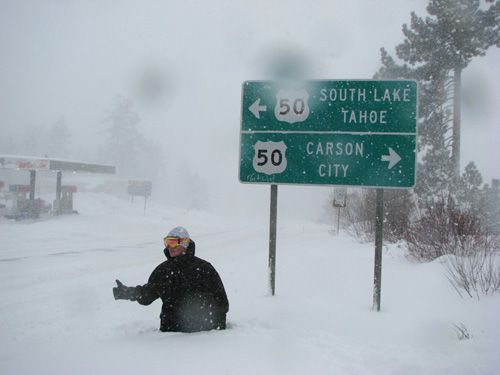
Rain
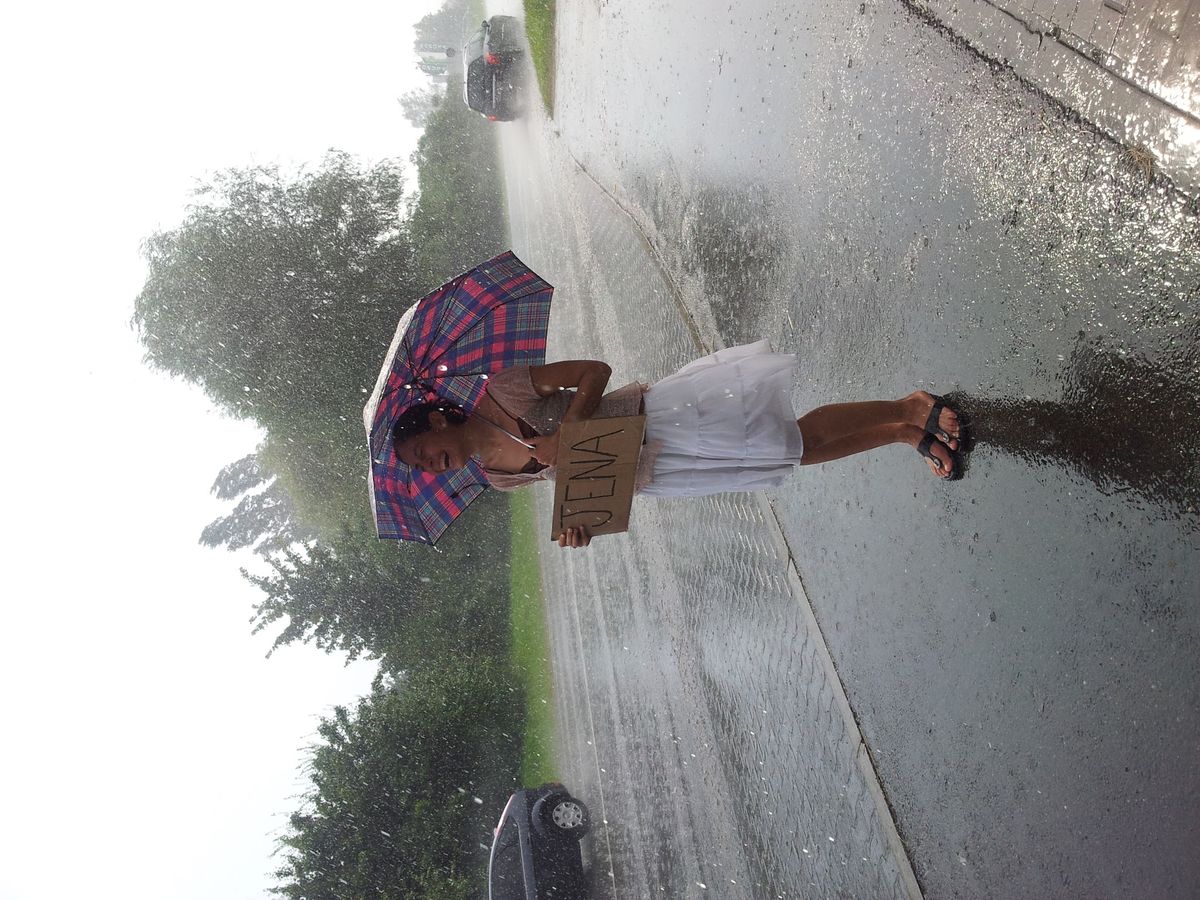
Hitchhiking during strong rain is not very nice, especially when there is a strong wind as well. During light rain hitchhiking is still very doable with just an umbrella to keep you dry. It also catches the attention of drivers.
A general advice is to hitchhike with an umbrella in case of rain. It keeps you dry for a long time. On petrol stations it remains easy to approach drivers to request rides. Statistics say that in the Netherlands - a country generally known for "frequent rain and wetness" - rain is falling 4% of the time. In general people highly exagerate the badness of weather - perhaps just a way to explain themselves why they wish to drive as much as possible by car.
On motorways during rain it is mostly a matter of going from one petrol station to the next and waiting and requesting rides under the roof of the petrol station. Only a strong wind could still make one wet.
When you stand next to the road and it starts raining, your chances that somebody stops quadruple for a couple of minutes until you are wet, and then your chances slide down. Therefore, keep smiling when it starts raining and the first few drops come down.
Take a rain coat when expecting rain, bright yellow is good for visibility. Emergency rain ponchos that can be had for less than 2 euros or some transparent plastic can also do the trick. If it's likely to rain, it can be good to wear dark colour clothing to mask your wetness. Dark grey or black work well. Brown won't do, since it easily shows how wet you are and how much the mess you'll cause in the car, you know not many drivers want more than a few drops of water in their car floor.
Also make sure that your luggage is water proof. If there's a high chance of a lot of rain it's wise to pack stuff individually in plastic bags or zip lock bags (at least for important stuff like your passport).
Thunder
Some have also reported that lightning can actually work in your advantage. Be careful with trees though.
Snow
Hitchhiking during periods with snow cover is all right, provided you wear warm clothes. The visibility of hitchhikers increase during snow cover and drivers are generally more attentive. Take care not to stand on places where ice on the road is a potential danger. Hitchhiking in a curve could become easily very dangerous if a driver starts slipping. Take your responsibility in extreme weather conditions.
Extreme temperatures
During cold winter periods or during warm periods in summer the difference in temperature inside cars and on the street becomes rather big. In summer this is mainly true in countries where many cars are equipped with air conditioning installations. On a longer distance this requires strongness from hitchhikers. During a whole day of hitchhiking - when one gets perhaps ten rides or even more - there is a constant change of temperature on the street and inside the cars. This rhythm might easily lead to a sore troath and coughing - especially when combined with (active or passive) smoking.
Heat
During very warm periods in summer, or in warm exotic countries, one should protect oneself against excessive heat from the sun. Sometimes a place in shadow is not available, and waiting times are not always reliable. A simple cap would help prevent from burning the neck. Also arms and legs can be vulnerable to the heat of the sun. Make sure to take enough water. Also remember sunscreen.
Cold
Be careful, because sometimes a wait of a few hours might be unavoidable, and during cold your fingers may (almost literally) freeze off. This is of course especially true if one gets stuck at night.
Websites
- Forecasts and statistics for every possible city: yr.no ( is in Norwegian )
- Forecasts for Sweden and other Nordic countries: smhi.se (english) is in Swedish but has good info
Winter
Edit on wikiHitchhiking in winter or more generally in cold climates can be more complex but with the right preparation one can secure the comfortability of winter traveling, too. This page will detail how to keep warm when travelling in the cold. Extremely dangerous winter climates such as in Alaska, Canada, Scandinavia, Russia, Mongolia and Northern China should have extra precautions taken before starting out, and should best be avoided unless you really know what you're doing. Without proper equipment or a place to stay prearranged, you might find yourself in very serious trouble if stuck outside at night.
Essential rules
For more advanced, as well as for beginners, there are some essential rules to take care of:
- First and most important: Wear warm clothes and keep your feet warm and dry!
- Limited daylight: In winter, it is usually cold and dark for the most part of a day. For example, there is only 8 hours of sunlight per day in Western Europe on the third week of December, and it's already dark at 5 in the afternoon. If you don't want to find yourself hitchhiking at night (when temperatures drop even further), you have to choose your routes carefully.
- It's good to stick to highway gas stations where you can wait inside, e.g., next to the coffee machine, with a sign of your destination.
- If you know that you won't avoid thumbing on on-ramps, bring a torch to shine light on yourself and your sign. You should also try to stand someplace where there is a lot of light from the streetlights.
- Dry cold air is not as bad as a humid one.
- Some people prefer to dress in layers like an onion to keep themselves warm, and unpack when it is needed. However, some hitchers, for example, alex, prefer not to have lots of layers under the warm jacket as cars are mostly well heated (unless you are in Russia?), and for short rides it is more convenient to be dressed only in 2-3 really warm layers so that you could avoid the hassle of undressing million of layers and then dressing up again.
- Bear in mind that there is snow & ice: drivers might drive more slowly, but also there could be less space to stop than usually
Additional gear for winter
When hitchhiking in winter, temperatures can be very low. In case of longer waiting times, bad weather conditions and other things, please secure yourself with following gear ( in addition to described here => common essentials ):
Boots (keeping your feet warm and dry is extremely important):
- In addition to substantial (leather) boots, appropriate for winter conditions, you can also consider plastic boots and sorel insulated boots (e.g., "Sorel Bighorn", rated to -40 degrees) as possible options.
Base Layers (no cotton):
- Midweight or Expedition-weight thermal underwear top
- Midweight or Expedition-weight thermal underwear bottom
Other Essentials:
- Windproof and waterproof jacket, preferably with a hood (or any warm hat to protect your ears!)
- Midweight or Expedition-weight Insulated fleece gloves or mittens + waterproof overgloves or mittens
- Down sweater
Optional:
- Hand warmers (e.g., "Grabber Mycoal" air-activated warmer) or rechargeable hand warmers
- Insulated water-bottle blanket
- When hitchhiking a lot in the countryside or further from the cities and petrol stations, please consider getting a primus stove.
- Reflective/hi-vis vest for better visibility after nightfall
Traveling through different climate zones
It can be a problem when you travel from warm to cold zones or the other way around (and you like to travel light with little luggage), e.g., from South Iran to Turkey in winter. However, traveling from cold climate zone to a warm one seems to be less of a problem as when you get to the warm zone you can just ship your winter stuff back home. Nevertheless, it does not have to be costly or implies heavy luggage to travel the other way around.
Personal experiences
got long woolen underwear pants and gloves from a driver in Iran before he even had the possibility to buy some (thanks, Ali!); these can be found on most markets during winter time.
I hitchhiked across Canada in the winter from Ottawa to Vancouver. I camped outside a few times. In Manitoba the weather got below -40 C. I couchsurfed in Manitoba to survive that. In Canada there are always shelter in the winter, but they are usually full. That being said you can survive in 24 hour Tim Hortons or McDonlads. In Alberta at the Rockies I camped at -30C, that was the lowest I camped outside and I think that's enough cold for me. You can watch my experience here https://www.youtube.com/watch?v=8tXf6W87_kU
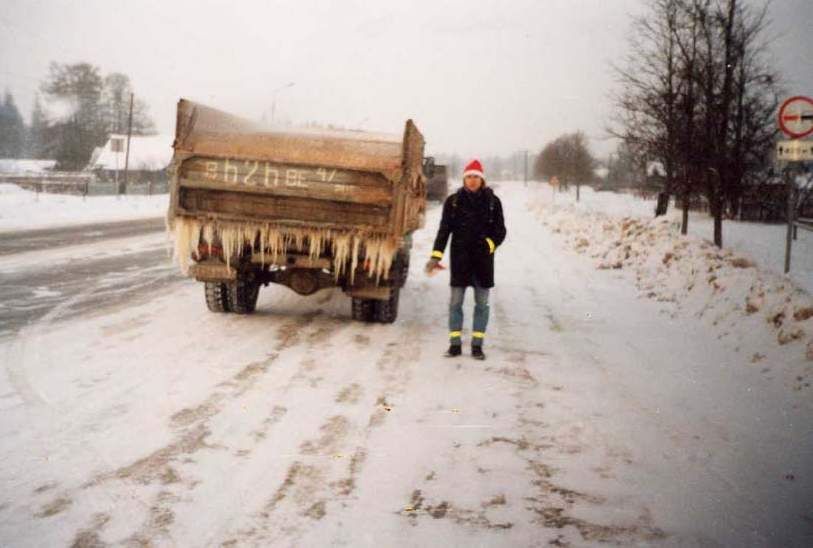
General Advice
If you do not have experience in surviving outside in cold conditions, perhaps hitchhiking isn't the best way to find out what it's like. It is good practice to inform people exactly where you are going, and when you expect to reach your destination. You should also bring money with you; enough to buy food and to afford a hostel, in case things turn bad. Having knowledge of the weather forecast is also advised, so you have awareness of how the weather will be over a longer period of time. Finally, you should have a complete backup plan, in case you are forced to give up. This might include taking public transport or returning home.
Equipment you might need
- Warm clothes
- 5 Season sleeping bag
- Tent
- Gas lamp
- Bivvy bag
Sleeping Outside
You must find an appropriate spot to set up camp. If it is very cold, you probably won't have to worry as much about people or animals disturbing you. You should try to find a spot which is, firstly, sheltered by the wind, and secondly, sheltered from above, such as by trees. Once you have found an optimal spot, you might want to start a fire. This will provide heat and light. You should learn how to start a fire before leaving. I have met some people who have used gas lamps successfully, keeping them inside their tent for extra warmth (not recommended unless the situation is desperate). Once this is done, you can start clearing away snow, if there is any. You should not to use your hands or clothes, try to find an instrument that can clear the snow aside. Piling the snow around to form a wall will provide more insulation.
Once this is done, you can set up your tent and sleeping bag. Put on as many clothes as you can wear. If you have wet clothes on, consider changing out of them if at all possible. Do not expose your skin to the air, if it is extremely cold.
Regarding sleeping bags for extreme winter conditions (below -40C), forget about the manufacture's survival rating or how much money you spent on that Everest Down Sleeping Bag. For guys planning to hitchhike to the North Pole, buy a portable propane heater and drag a sleigh of propane tanks.
Gallery
Image:2001_Hitch-hiking_in_Russia.jpg|Hitchhiking in Russia Image:2002_hitch_hiking_in_Norway.jpg|Hitchhiking in Norway Image:Parnu-riga.jpg|Hitchhiking in Estonia Image:Erzurum.JPG|Early morning and -25°C in Erzurum, one of the coldest places in Turkey; leaving the town towards West. File:Lisa in the Snow.jpeg|Towards Karlsruhe.
Border crossing
Edit on wikiBorder crossings can be good for hitchhiking. Cars have to stop and if you successfully make it to the next country you can easily hitch a ride going far towards your destination. Generally people are much more likely to pick you up after you crossed the border yourself.
In some places, such as some crossings in Turkey and New York State, they don't like people walking across the border. It's mostly better to get a ride across the border and get out there if humanly possible (if there are e.g. money exchange offices).
At all times keep your bag with you when leaving your car. You might be sent back to the country you came for, or other bad scenarios could happen.
If you are entering a country you need a visa for and just plan to transit, it could be wise not to tell your plans to the border guards, but instead tell them you are visiting a city in the country itself.
2010 or before: n0id and M. did tell the border guard when leaving Moldova and entering Ukraine that they were headed for Poland. When asked at which border crossing they would enter Poland they unknowingly told the first which crossed their mind - the one they had taken before. Unfortunately, the border guard put a transit stamp with the name of the border crossing in their passports which later determined which way they had to take.
Phones and other digital devices
It can be a good idea to turn off your phone and other digital devices before crossing borders.
Embassy
Edit on wikiAn Embassy is the representation of a country at the seat of government of another country. The page embassy-finder claims to show a very reliable 'list of embassies and consulates' all over the world.
Hitchhiking at an embassy
You can of course use Embassies for hitchhiking. As you need visa to enter some countries, you have to go to the embassy of the country you want a visa for and make a request for it. Other people also have to. It's your chance to talk to people waiting whether they want to go to the country of your choice and when and arrange a lift there. This seems to be good advice if you try to hitch from Morocco to Mauritania - you can ask at the Mauritanian embassy in Rabat (6, Rue Thami Lamdawar, B.P 207, Souissi/Rabat)
Money
Edit on wikiHitchhiking and Money
Hitchhiking usually implies that no money changes hands, no monetary transactions for the ride.
How to deal with requests for money beforehand
In Western Europe and the United States it's rare that people ask for money. It can happen though, especially in Germany, where carpooling is quite popular. To not shift the perception and demands posed on hitchhiker on society, it can be wise to reject these requests in general. Though in tough circumstances there might not be a better option.
In some countries payment for rides is quite normal, especially for locals. In Romania for example you probably want to ask if the ride is free (E gratis?). In Turkey it's rare, but it happens that drivers want money, just say "yok parra" in such a case.
What to do if a driver requests money unexpectedly
Well then seemingly the only solution is to tell them you have none. Not asking for money beforehand is rude in case there is no social contract in the region that money is expected for hitchhiking. As above, you can decide based on your situation, keeping in mind to not shift the perception and demands posed on hitchhiker on society
What to do if a driver offers money
This happens rather frequently in Europe. Some hitchhikers (such as guaka or quarim) refuse any offers for money from the drivers. Sometimes drivers are insisting, but if you have enough money to go by and you think it's inappropriate to receive money, you could tell them you actually have plenty of work (and income), that you mainly hitchhike for fun, social contact, and ecological reasons. Instead of money drivers very often offer you material things such as food and drinks or will give you a CD, flowers, clothes...you can decide if you want to take it or not, in some countries it is impolite not to take it.
Travelling without Money
There are some people out there who hitch hike LONG distances with no money such as the infamous Tom Thumb, who hitched from England to India with just his rucksack, a clarinet, 2 loafs of bread and GBP 0.00. There are also not so famous hitchers like Aaronishappy who hitched from Norway to Morocco, with just EUR 2 arriving in Norway and his rucksack (and coming back with NKR 20, EUR 5, CHF 4 and GBP 2, which is NKR 20, EUR 5, CHF 4 and GBP 2 more than he had when he left!).
While completely crazy it is certainly possible, but not necessarily fun. You will ask yourself several times a day "what am I going to eat" or "where am I going to sleep", you will regret ever leaving your house, but knowing that no matter how bad things get they can only get better is a certain comfort. Don't forget, though, that while you see all these fancy backpackers with their expensive train tickets and those posh tourists stuffing themselves with cakes at the hotel restaurant, they're only seeing the plastic, fake, tourist side of a country. You in your desperate efforts to survive get to see the entirety of a country, "warts and all"!
How to get stuff when hitchhiking
How do you do it then? The easiest answer is that you don't think about it and just do it. The most comfortable way of survival is to come into contact with people, which works especially well when hitchhiking. The trick here is to score food, money (if you want to accept that), a place to sleep, a map, a joint or whatever else. Often you can get things without resorting to the pity game, but if you really need to, tell them you have no money, but not so bluntly. Be "covert" about it and ask questions such as where you can eat for free, use the internet for free, or "hey, do they have homeless shelters here?" Even if they don't ask why, it will strongly smell like pennylessness. They'll usually be surprised that you really are skint and will be happy to give a hand to the weary poor traveller, usually in the form of money or food. Don't expect a treat every time you hop your jolly arse into that car, however. The trick is to be genuine in expecting nothing, because when you expect nothing, the smallest thing you get will make you happy.
When stuck somewhere, your best bet (better than just keeping on walking...) is talking to people in the street. Talk about travel related things and expand on them (i.e. directions, where to hitch, etc, use your imagination!); be friendly and genuine, and incredible things will happen. If you're travelling in a Muslim country, you can basically disregard all of this, as Muslim hospitality will clothe and feed you without you ever saying a word!
Transportation
Well, as this is a wiki about hitchhiking, we don't really need to elaborate on this.
Food
There are numerous ways of feeding yourself when penniless and travelling. Next to benefiting from people's friendliness, there's dumpster diving (or skipping, in the UK), waiting opposite of outdoor pizzerias and preying on leftover pizza slices.
Accommodation
As for sleeping when you're not invited back, best bring a nice thick sleeping bag and find yourself a good spot to sleep in. In cities, the best spots are industrial zones (although usually a long distance from the centre), upper class neighbourhoods, and of course train stations and airports! Train stations however will often close in the middle of the night to clear the place out of bums like you. Big stations that stay open all night such as Paris and Berlin and airports will often have security walking about to wake you up. If you're stuck in the city centre with no station or access to an industrial zone/posh neighbourhood, your best bet is to keep walking until you reach a quiet area and find a nice alleyway or empty park; but don't sleep bang on in the city centre in clear light as it increases your odds of being robbed by... a lot. You could also go to a homeless shelter, they always provide a bed and usually food. They are everywhere in London and Germany, and quite common elsewhere in the first world. Whether you're inside our outside of cities, motorway bridges provide great shelter, and so does having a tent. A tent can also be useful when you're in a city, because walking around and asking people if you can pitch your tent in their front yard is an amazing pre-stage for being invited back for dinners, showers or even beds, especially if it's rainy out.
More information
- Nomadwiki
- Trashwiki
- Moneyless.org contains some tips about living and traveling without money (or with much less money).
Insurance
Edit on wikiThere are different types of insurance people can have for their vehicle. Often drivers refuse a ride because of insurance reasons. This article should picture the insurance situation in different countries. Also some forwarding agencies do not allow their truckers to pick up hitchhikers because of insurance reasons.
Situation in Germany
The German Kfz-Haftpflichtversicherung which means liability insurance for vehicles is obligatory in Germany. Every person in the vehicle is insured by this. If the passenger hurts somebody (for example a cycling grandmother) by opening the door, the passenger (or his insurance) is responsible for the damage.
Situation in Spain
In Spain trucks cannot pick up hitchhikers any more as of February 2011, presumably for insurance reasons. Insurance reasons are also the favourite excuse for people who are driving company cars.
Situation in the United Kingdom
In the United Kingdom, truckers and generally people driving in company cars very often decline lifts with the reason that they wouldn't be insured in case an accident happens.
Travel insurance
It can be a good idea to get a travel insurance that covers theft and other inconveniences. Some travel insurances totally cover medical issues, others can be combined with a usual medical insurance e.g. to cover transport back home.
Personal experiences
3 times useful December 2010
I would like to say something about travel insurance. I took out travel insurance before I went traveling for now already 2 years. I only pay €140 for one whole year.
Unlucky, I needed to use it already 3 times. When my grandfather died they flew me back for free from Senegal. When I had bus accident, they paid for my 2 weeks hospital in Mali, Business class back to Europe, ambulance from airport to my home (350km), all treatment at home (doctors, kinesics,...) When I had malaria, I went to hospital in Kenya for few days.
I think they spend around €7000 for these 3 cases together. I really support people to think about these kind of travel insurance! It is not a lot of money but if you need it, you are very happy to have it.
Read the small print of the insurance contract very well so you know when they will help you and when not. Like €140 for one year means in my contract, traveling for a maximum of 6 months in a row!! But if you hitchhike it is difficult for them to keep track of you! E.g. if you've already been traveling for 9 months and you need their help, you just tell them you left maybe 2 months ago. No flight tickets that they can check if you hitchhike. They only could know it if they would check my passport or my visa bill, but they don't do that. I used Europ Assistance, but I'm sure there are other similar insurers. Read your contract very well before you start traveling.
Other useful websites
- worldnomads.com - quite expensive
Health
Edit on wikiWhen hitchhiking specific health issues can occur. The most dangerous thing is when your driver is involved in an car accident. Therefore it is a good idea to find a driver who is not drunk, not sleepy and is not going too fast. Also read the safety article.
Immunizations
Depending on the country you are travelling in, specific immunizations can be required. Inform yourself before heading to foreign countries. Some immunizations can make sense anyway (even if you are not hitchhiking).
Hygiene
Most sicknesses, especially diarrhoea, can be prevented with a good hygiene.
If you are not sure about the water situation in a foreign (especially in a poor) country, then don't drink water from the tap. Only drink bottled water or cook, disinfect or filter the water before use. Also for brushing teeth and doing the dishes use only drinking water.
It is important to cook, peal or disinfect food. Don't let flies or insects come to your food. Before eating, wash your hands with soap. Wash your hands as often as possible, but always after the use of a toilet. Try to use disposable towels.
As it is an unwritten law for the honourable hitchhiker: Avoid stinking! It's obvious that you won't be able to take full showers every morning when travelling on an extreme budget (i.e., hitchhiking coupled with wild camping for the night), but even just wetting and rinsing your underarms with soapy water at every opportunity you can get (a fountain with no one around) is surprisingly refreshing and considerably cuts body odour.
Insurance
A health insurance for foreign countries can safe you a lot of trouble. Consider a health insurance which includes a transport back home in an emergency case.
Drugs and Alcohol
Don't drink alcohol or consume drugs while hitchhiking.
Other issues
- Diesel fumes and other vapors from fuel, especially at gas stations.
- Dust, in desert areas and alongside many roads.
- Smoke from the cigarettes your drivers smoke. This is negligible if you smoke yourself of course, though it's also harder to quit smoking when you hitchhike a lot.
- Sunstrokes can occur if one can't take shelter in the shades.
- Through sweating your body looses water and minerals. It's a good idea to drink a lot of water to compensate for dehydration. Don't forget to restore your mineral levels, too. Always keep in mind to obtain some water while in town centres in summers and especially when traversing arid territory, though, as good hitchhiking spots usually tend to be in the middle of nowhere and you really cannot know how long it will take that sweet, air-conditioned car to arrive.
Also don't overestimate these issues. Truck drivers have to deal with diesel fumes most of the time.
Laws
Edit on wikiIn most parts of the world there are no laws against hitchhiking.
However, in some parts in this world it's officially illegal to hitchhike. Practically, in many of these, such as Pennsylvania, it's de facto allowed and no one will be fined. Be cooperative with the police though, since even if you think it's legal, they might fine you for anything they can think of, such as loitering, vagrancy, or just standing in the wrong spot.
See also the list of places in where you have to be more careful.
Police
Edit on wikiUsually you don't have anything to fear from the police when hitchhiking.
Though there are some areas in the world where it's forbidden to hitchhike, such as a couple of states in the USA and according to some cops in Australia it's forbidden in that country as well (but possibly only in their jurisdiction, and only because they say so).
In China the police generally acts really confused but extremely friendly. Sometimes they even offer free bus rides (which are usually shittier than hitchhiking cars though).
In countries with an elaborated system of motorways you should avoid walking on the motorway. If you do, be prepared with some kind of excuse. On the other hand, you can use the police as a means of getting out of shitty spots - if you're stuck on a bad on-ramp, just walk onto the highway and keep walking until the cops show up. In countries like France, this isn't going to take very long while in Sweden you might wait (and try to hitchhike?) several hours. The cops will usually tell you off and take you to the next on-ramp. It's not recommended using this kind of strategy more than once per day/area.
In France it's mostly a bad idea to be on the motorway, but standing close to the Peages is mostly tolerated - unlike in many other countries such as Italy and Spain. However, at times, one can be completely barred from hitching at a péage. When in France, if the Gendarmie are at a péage doing random identification checks, do not get out, continue to the next possible stop and hitch back if necessary. You will not be ticketed but often you will be limited to hitching out of the péage parking lot where not too many cars stop.
Some hitchhikers complain that their identifications are asked by the police while hitchhiking. It can be useful to keep a form of identification in your pocket for the police so as not to aggravate them. Fabzgy blogged about his experiences here and some others added their experiences in the comments. (feel free to submit your experiences)
Highway
Edit on wikiHighways are essential for hitchhiking longer distances.
If you need to travel over long distances, taking the highway will most likely shorten your travel time, and in some places highway hitchhiking might be even inevitable. This can be done either by thumbing at on-ramps (entrances) to the highways, or by a practice of hopping from one petrol station (or service area in general) to another. The latter one is usually rather recommended, since the first one can be unpleasant, expose you to the dangers of over-speeding drivers, and appear being a hopeless position during the night hitchhiking; sometimes legality issues can be brought up if you hitchhike after the sign that marks the beginning of the motorway; however, waiting times, compared to waiting times at the exit of a highway rest area (but not to a practice of asking a driver directly), can arguably be lower. Be aware of highway interchanges where it can be difficult to switch between crossing highways.
So, the best choice, many hitchers would agree, is to hop from one rest area to another where one can ask for a ride talking to people directly while they refuel their cars, of wandering around the area. Some hitchers might find it difficult because it requires some ability of being brave and firm when directly contacting an unknown person; some other travelers appear to love this way of hitchhiking probably because it helps to develop a closer contact with a person while socializing (and because it shortens waiting times, of course).
In most Western countries thumbing directly on the highway is forbidden. In rare occasions, however, you might be forced to. Keep in mind then that it is very unsafe for the driver to stop on a highway, and that your own safety is also in danger. The police might force you to leave the area (or even fine you) although in some very rare cases they might have better things to do and leave you alone.
Exceptions (in following locations to stand on a highway is not a crime):
- most highways in Eastern Europe and in countries of former Soviet Union (like Lithuania, Latvia, etc.)
- China
- Oregon, US
- Morocco and Ireland tolerate hitchhiking on motorways to a certain degree. The risk is yours. (Grégoire was once arrested/offered a lift out of the highway by the Irish police close to Dublin but they were nice to him.)
- add more?
Links
Routing on Hitchwiki Maps can recommend you good spots to get on the highway as well as good rest stations to switch rides.
Expressway
Edit on wikiAn '''''' is usually a road with a standard less than a motorway. This can be narrower lanes, a missing emergency lane or single level crossings. But always on expressways the access for pedestrians and bicycles is forbidden. This include the ramps like the ramps of motorways. Mostly the roads are signed with a blue or green background with a white car on it.
But these roads need not to be a national road, they can be long distance roads, but they can also only short pieces like bypasses.
Toll road
Edit on wiki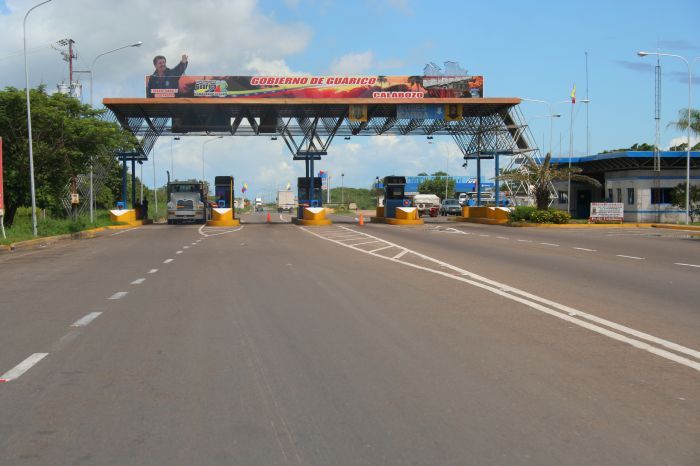
A toll road ( tollway, turnpike, pike, or toll highway) is a road for which a driver pays a fee for use.
The building or facility in which a fee is collected is called a toll station (toll plaza, toll booth, or toll gate). Toll stations can be a good option for hitchhikers to get a ride.
In France and French-speaking countries toll roads are called péage.
Interchange
Edit on wiki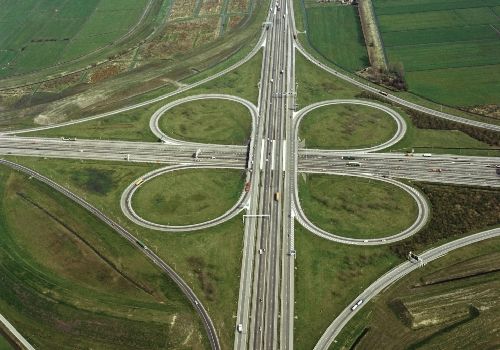
An on a highway is where multiple highways cross. They are useful to change directions but might be difficult to manage as a hitchhiker.
The so-called highway interchanges are usually poorly designed, and in most cases (e.g., in Germany), pedestrians are generally prohibited from lingering there. It sometimes requires a bit of attention and situational awareness—or even adequate communication (sometimes there are language barriers, for example) with the driver—to ensure you aren’t dropped off there by mistake because other options were overlooked.
When are dropped of at a highway rest area before an interchange it might be difficult to find rides that change the direction of the highway you are currently on. Switching rides on a rest area that is not the last before an interchange or choosing a route that avoids interchanges are possible strategies to avoid long waiting times. All which directions of the interchange are favorable can change though depending on how close important cities are places around the interchange.
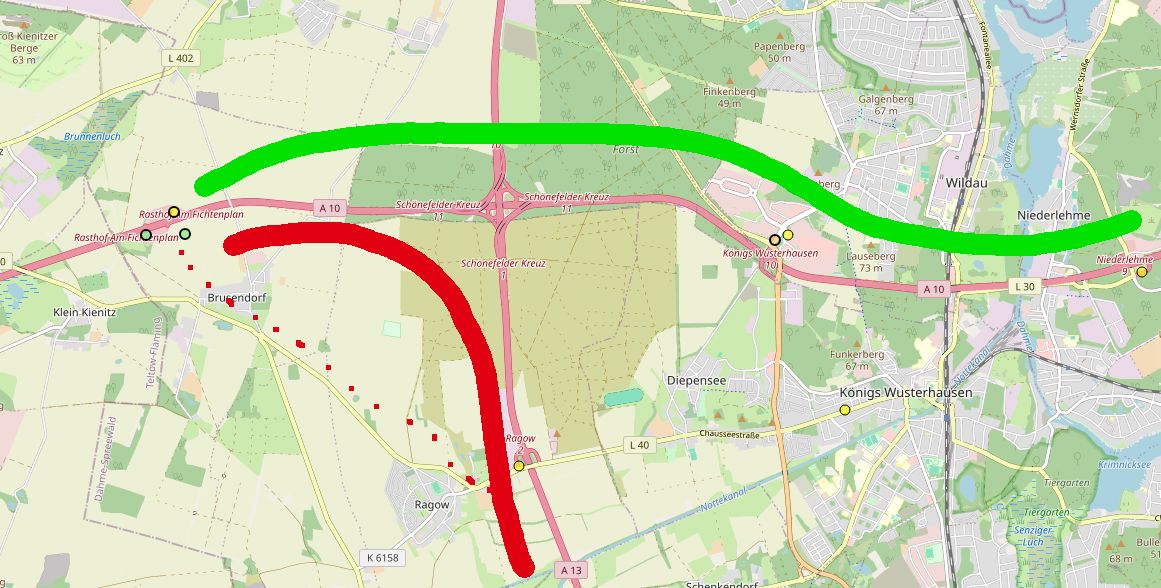
Interchanges where this phenomenon might be in place are:
- Schönefelder Kreuz, Berlin
- Hermsdorfer Kreuz, Jena
- Kreuz Feuchtwangen/Crailsheim
Four-ramp interchange
Edit on wikiA four-ramp interchange is the most common interchange in the United States where a non controlled access highway intersects a controlled access highway: commonly an interstate/turnpike or other type of freeway. Four-ramp interchanges are desirable for hitchikers because they require all traffic attempting to head a given direction on a freeway to enter the freeway on a single ramp. The hitchhiker stands on this ramp and is then exposed to all possible traffic entering the freeway. This is in contrast to a split-traffic interchange which splits traffic entering the freeway into multiple ramps.
On-ramp
Edit on wiki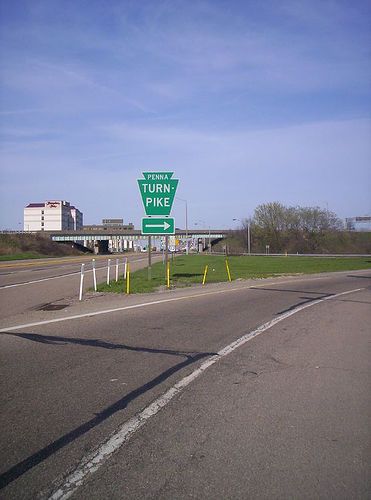
On-ramp is a segment of roadway that directs vehicular traffic from ordinary roads onto a highway (equivalent term in the UK and Ireland is on-slip). On-ramps are very common place to get a ride. However, to avoid legal troubles it is advised to thumb before the motorway sign.
Off-ramp
Edit on wiki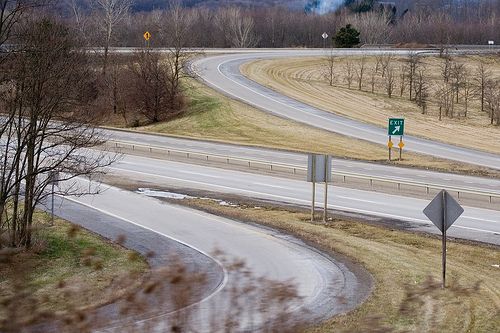 Off-ramp is a segment of roadway that directs vehicular
traffic onto ordinary roads from a freeway (equivalent term in the UK
and Ireland is off-slip).
Off-ramp is a segment of roadway that directs vehicular
traffic onto ordinary roads from a freeway (equivalent term in the UK
and Ireland is off-slip).
Slip road
Edit on wiki
Slip road is a segment of roadway that joins a motorway to ordinary roads (in either direction) on an interchange.
Shoulder
Edit on wiki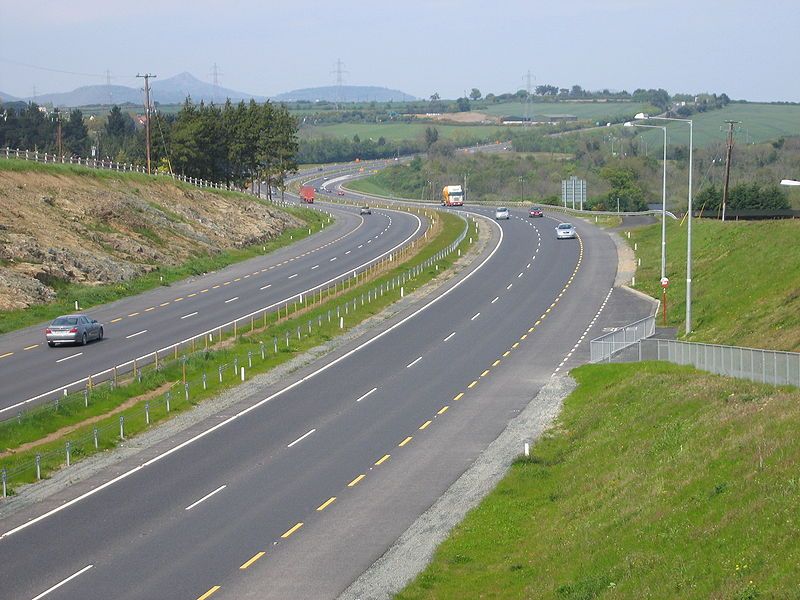 A shoulder (or a hard shoulder) is a
reserved area by the verge of a road or motorway. Generally it is kept
clear of all traffic. In the event of an emergency or breakdown, a
motorist can pull into the hard shoulder to get out of the flow of
traffic and obtain an element of safety. A hard shoulder also allows
some extra flexibility should a motorist need to take evasive action, as
it is a buffer area between the main thoroughfare and the edge of the
road. Emergency vehicles such as ambulances and police cars may also use
the shoulder to bypass traffic congestion. These uses lead to the
alternative names breakdown lane and emergency lane.
A shoulder (or a hard shoulder) is a
reserved area by the verge of a road or motorway. Generally it is kept
clear of all traffic. In the event of an emergency or breakdown, a
motorist can pull into the hard shoulder to get out of the flow of
traffic and obtain an element of safety. A hard shoulder also allows
some extra flexibility should a motorist need to take evasive action, as
it is a buffer area between the main thoroughfare and the edge of the
road. Emergency vehicles such as ambulances and police cars may also use
the shoulder to bypass traffic congestion. These uses lead to the
alternative names breakdown lane and emergency lane.
In some parts of the world, standing on the shoulder of a motorway is forbidden. A list of countries where it is allowed can be found in the article highway. If it is a shoulder where it is legal to stand on, it can be a good spot to hitch a ride. These places can often be found along on-ramps.
See also:
- On-ramp
- Rest area
Gallery
Image:Ramp_os_nahne.jpg|Hard shoulder along an on-ramp in Germany Image:Oldenzaal_ramp.jpg|Hard shoulder along an on-ramp in the Netherlands Image:Trud bulgaria.jpg|Shoulder along a road in Bulgaria
“wikipedia:Shoulder (road)”){.wikilink}
Lay-by
Edit on wikiThe term lay-by is used in the United Kingdom and Ireland to describe a roadside parking or rest area for drivers (equivalent terms in the United States are "turnout" or "pullout"). Lay-bys can be used for hitchhiking purposes, although due to a very few cars actually driving in there, do not expect very fast hitchhiking.
Lay-bys can vary in size from a simple parking bay alongside the carriageway sufficient for one or two cars only, to substantial areas that are separated from the carriageway by verges and can accommodate dozens of vehicles.
They are marked by a rectangular blue sign bearing a white letter P.
At some larger lay-bys mobile catering is provided by vendors operating from converted caravans, trailers or coaches. These facilities generally offer much better value for money than roadside restaurants and therefore tend to be popular with truckers.
Rest areas
Edit on wikiA rest area (or service area (RSA), service station) is a public facility located next to a motorway at which drivers and passengers can rest, eat, or refuel without exiting on to secondary roads. It can be a great place for hitchhiking: you can ask for a ride when drivers re-fill or wander around the area, or you can stand by its exit (that leads to a motorway) and hitchhike there.
Rest areas often serve one direction of a motorway, but often rest areas in both directions of the motorway are situated opposite each other or within a short distance of each other. However, in some countries rest areas serve both sides of the motorway, as the drivers from one side are facilitated with connecting roads. Such rest areas are quite common in the United Kingdom and in Austria and are somewhat less suitable for hitchhiking as the rest areas which are only accessible from one side. There are even some situations, for example in Austria, where rest areas are situated on the junction of two motorways, which are therefore used by traffic going into four directions. This in general is certainly not an advantage when looking for rides on these stations.
Facilities of the rest area may include park-like areas, fuel stations, toilets, and restaurants. Rest areas are common in the United States, Canada, Australia and parts of Europe and Asia.
- Austria: Autobahnstation
- China: Fúwù qū (服务区), Tíngchē qū (停车区)
- Czech Republic: Benzínka
- Denmark: Serviceanlæg, Info-teria, The Danish Road Directorate
- France: Aire de service
- Germany: Raststätte (directly on the Autobahn) and Autohof (somewhat off the Autobahn)
- Hungary: Pihenohely
- Italy: Area Servizio
- Japan: Sābisu eria (サービスエリア), Pākingu eria (パーキングエリア), michi no eki (道の駅)
- Korea: Hyugeso (휴게소)
- Malaysia: R&R (Rest and Recreation)
- Netherlands: verzorgingsplaats - complete list (Both in Dutch)
- Poland: MOP (for Miejsce Obsługi Podróżnych Travellers service centre)
- Slovenia: Počivališče
- United Kingdom: Motorway services or Motorway Services Online
Not all rest areas include petrol stations - this means that the traffic on such rest areas will, in general, be much lower, and one can expect more difficulties when looking for a ride there. For service areas with petrol stations see information here.
Food and Drink
Depending on the country, food at rest areas can be highly overpriced and, in case of pre-prepared food, pretty abysmal. However, many German Raststättes now prepare food (mostly pasta) on the spot and, although still overpriced, it is actually pretty good. In Japan, Korea, and Malaysia the prices might not be much higher and the quality not much poorer than in a city.
Get out of a rest area
It might be necessary to get out of a rest station because it's empty and you think it will be easier to try to hitch on the local roads, because you are really close to your destination, you are on the wrong side of the motorway or you want to camp (see below). Many rest areas are fenced but it is usually possible to get out even in those cases. Many times there are breaks in the fence, you can try to see if there is a way to get out via the entrance or the exit, and of course see whether it's possible to jump over the fence. You can even ask the staff to open the door for you, keeping in mind that in this case you may not be able to re-enter.
Rest areas allowing cross-overs
Although the traffic in both motorway directions remains separated, some rest areas, typically restaurants, serve both sides of a motorway. In those cases both sides of the motorway are connected by a pedestrian-only tunnel, a pedestrian-only bridge or a bridge restaurant, like the huge Dammer Berge bridge restaurant on the A1 in Germany, and on those it's obviously easy to cross the motorway should you need to do so. On others there are sometimes crossings for (official) vehicles that can also be used by pedestrians. On occasion you may have to walk a fair distance to get to the other side of a motorway. Crossing the motorway using a bridge or tunnel is not always possible. In Germany passing to the opposite rest area is often, but not always, possible through so-called "service roads".
Here's a list of links to crossable rest-areas per country:
- Crossable Raststations in Austria
- Crossable Petrol stations and aires de service in Belgium
- Crossable Odmorištes in Croatia
- Crossable Odpočívkas in the Czech Republic
- Crossable Serviceanlægs in Denmark
- Crossable Aires de service in France
- Crossable Raststättes in Germany
- Crossable Area Servizios in Italy
- Crossable aires de service in Luxembourg
- Crossable petrol stations in the Netherlands
- Crossable MOPs in Poland
- Crossable Počivališče's in Slovakia
- Crossable Odpočívadlo's in Slovenia
- Crossable Rastplatser (with petrol station) in Sweden
- Crossable Raststättes in Switzerland
Sleeping
It is possible to sleep at rest areas, but you are advised to keep a low profile, as it may not always be legal to do so. Be aware that those areas that lend themselves to sleeping might also used as public toilets, so a light is a good idea when it's dark.
Also, be aware that rest areas may not be the safest places due to petty crime.
United States
In most states of the United States there are no petrol stations at rest areas. In these states the rest areas are a relatively good option for hitchhiking. In some of them (Ohio?) you will even find free wireless internet. In New Hampshire you can try to hitchhike at the state liquor stores that are very popular because of the state's low (non-existing?) tax on alcohol.
Personal experiences
Kimdime managed to camp in rest areas where there was trees and/or places reasonably hidden.
Prino has slept at many rest areas in many countries of Europe. The key is to disappear when nobody is watching and to avoid the aforementioned "public toilet areas". On one occasion he even managed to sleep right in the middle of a small bed of shrubs on an Italian area Servizio, reasoning that nobody would actually expect anyone to be so bold. However, in general he prefers to sleep in the restaurant, finding either a closed-off section, or a far-away corner. It is both safer and warmer.
Hippietrail has slept right on the benches at the front of several rest areas in Japan with no problems at all.
Toll station
Edit on wiki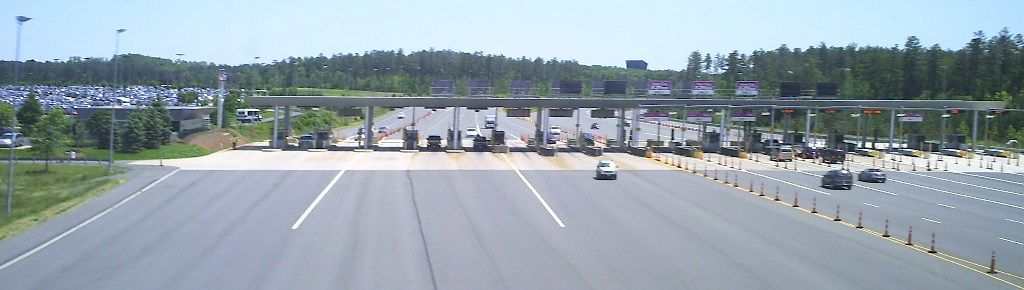 A toll station (toll booth,
toll plaza, or toll gate) is a
building or facility on a toll road in which a fee for using a road is
collected. Toll stations can be a good option for hitchhikers to get a
ride.
A toll station (toll booth,
toll plaza, or toll gate) is a
building or facility on a toll road in which a fee for using a road is
collected. Toll stations can be a good option for hitchhikers to get a
ride.
For more tips on toll station hitchhiking see article on péage (French word for toll road in France and other French speaking countries).
Péage
Edit on wiki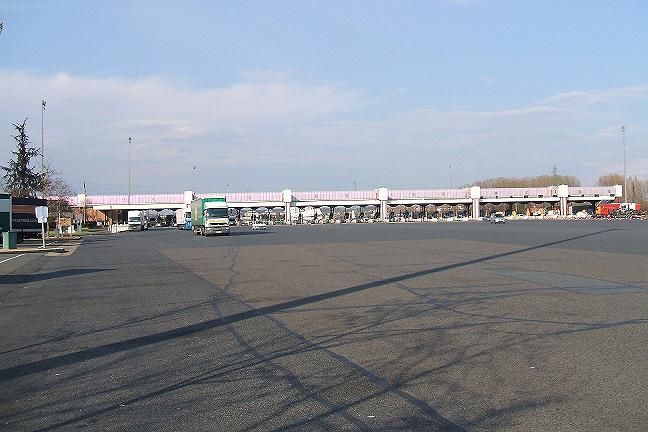
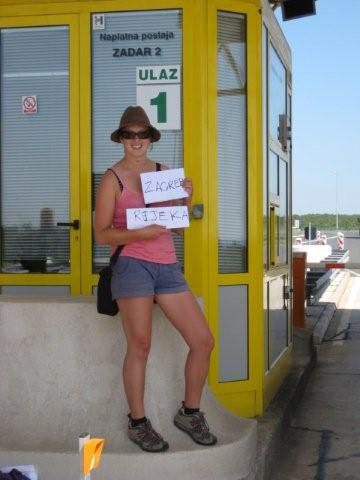 Péage is
a French word for toll road in France and other countries where
French is spoken, such as Morocco. Don't mix up the word with
autoroute which means "motorway" in French and is not
necessarily a toll road. Hitchhikers usually use this word as refering
to toll stations.
Péage is
a French word for toll road in France and other countries where
French is spoken, such as Morocco. Don't mix up the word with
autoroute which means "motorway" in French and is not
necessarily a toll road. Hitchhikers usually use this word as refering
to toll stations.
In France, most of the motorways are toll roads which are the fastest way to hitch across the country. There are two types of toll stations on péages. First, there are big ones where all traffic has to stop to pay a fee (or to get a ticket) – these are barrières de péage and usually they are excellent spots to get a long-distance ride. They are often located near big cities on the autoroute. Another type is a side barrier situated on all exits in the toll part of the motorway. On latter ones traffic is much smaller, therefore one can expect a longer waiting time, although sometimes congested toll stations (the first type) can be a difficult place to hitch from, too, as drivers have to pay a lot of attention to not cause any accidents. Then again, the more cars, the more possible rides, if you manage to show your sign to as many people as possible. Often they will not stop in the péage, but indicate that they are going to pull over just after it.
To reach the barrière de péage, you may need to walk along the motorway; with a help of a proper map check if the distance needed to be walked is not too long. It is actually illegal to walk on a side lane of the motorway (same is valid for some parts of national roads (voie express) in France); if police sees you, you will be driven somewhere safe and may be fined for ~90€. Péage toll stations are considered a part of the motorway, and legally you do not have the right to solicit rides there. You may be asked to wait in the parking area which is after each barrière de péage. In practice, this is rarely enforced (maybe 5% of the time), most toll station employees simply want to make sure you're not endangering yourself or others. Having a sign with your destination (or the next city) is recommended and will distinguish you as a serious hitchhiker, and not a vagrant.
The fastest way to travel on a péage is from one barrière de péage to another. Hitchhiking options are:
- You can thumb immediately after the barrière de péage
- If you prefer a direct approach you can dash across the lanes one at a time until you're at a busy lane, stand next to the toll machine and talk to the drivers when they stop to pay (usually it is not allowed to hitch from the toll machines but it is generally tolerated).
- You can wait before the barrière de péage, just where the drivers choose their lane - there is often enough of space for cars to pull over to stop for you
- You can wait in the beginning of the barrière with a sign as many barrières start with a concrete block on which you can stand to show your sign to cars in other lanes or queueing further away if the station is busy as well as the cars just passing you.
Some barrière de péage are really good, some are not. If you've been waiting for a while using a destination sign, drop it, make a new one or try thumbing.
While on a toll road, you can always try hitchhiking from one petrol station to another, either asking drivers while they refill, or thumbing at the exit of the service area. The staff usually doesn't mind hitchhikers.
TIR
Edit on wikiThe Convention on International Transport of Goods Under Cover of TIR Carnets (TIR Convention) was made at Geneva on 14 November 1975 to simplify and harmonise the administrative formalities of international road transport.
Women hitchhiking
Edit on wiki
For women, hitchhiking seems to be more risky. Hitchhiking as a woman can be easier though. Often, women stop for other women or girls. Even families (or other usual-not-hitch-hiker-friendly car owners) stop to "save" women from a situation in which they think she could be in "danger".
Do not forget that being a woman you are firstly a human being and you have the same rights as males. You have a right to be respected and it is not true that while hitchhiking you expose yourself to a risk at your own wish.
Safety tips for female hitchhikers
Whatever statistics are concerning violence to women (though when it comes to hitchhiking, they're low -- the German Bundeskriminalamt (Federal Police) estimates the chance of attempted rape at 1-2 out of 10,000 and the chance of rape at 1 out of 10,000 lifts), (?reference). There are some things you can do in order to avoid/go out from difficult situations
Choose your driver
There are many different ways to get a ride from staying on the side of the road to asking directly to people at petrol stations. It could be better to ask people because you can then have a feeling of who is driving. It is of course difficult to know what kind of person someone could be just from how they look, but that first contact may compel you to avoid guys who already have macho or strange behavior towards you. If you want to or have to stay on the edge of the road, your attitude will of course attract different people. The 'positive attitude' thing is important but be aware of what you may suggest when standing and smiling. Body language is really important. I have a friend who almost got raped when hitchhiking in Europe for the first time. I hitched with her a few months later and understood then how this may have happened. She was standing on a half highway road without sign indicating her direction and with a huge smile, a slightly denuded t-shirt and a suggestive attitude. I am not saying we should all wear burka when hitchhiking, some people also use their charm and flirt a little bit with people without any problems. It is just a matter of being aware of how we do it.
Also the car sometimes tells about the owner. I am personally more careful when asking. For example, I flatly turned down a car with a big sound installation and loud music since this can show that the driver gives a lot of importance (and money) into appearance, and probably likes to be seen and to impress. It is not rare that their car is also a tool to flirt and impress girls. This is just an example and there is of course no generality. I have often met really nice people, which at first glance I wouldn't think of as sympathetic. Just follow your feeling and don't hesitate to refuse a ride if you don't feel like it!
Marymary (talk) 21:54, 19 June 2014 (CEST) says: I didn't write the above, but I'll chime in with my advice: truck drivers seem to be really held accountable with where they are, and they have to regularly get various parts of the truck maintained and pass through checkpoints. And trucks are heavy, so if a guy wanted to murder you he'd have to pull over in the middle of nowhere. In general I feel extremely safe with truckers and hitch from truck stop to truck stop only. They are all given money for food and showers from their companies, and are generally very generous and gentlemanly. I would advise this over getting in cars with random guys. I did meet some skeezy truckers who could have been dangerous, but using common sense (that is, don't engage anyone who makes you feel weird) avoided problems. And don't get in a vehicle with more than one guy; that's asking for trouble. I work in the adult industry and even we don't allow ourselves to be alone with more than one guy if we can help it because it's too dangerous. Some people will do all kinds of messed up stuff if they're high on bro spirit (see: A Clockwork Orange). Don't do it.
Listen to your yourself / set up some safety rules
Set up some rules for yourself before begining to hitch hike. I personally have this one that if I happen to think/feel something is strange with somebody, I refuse the ride or ask to be dropped as soon as possible, even in the middle of nowhere. This is also valid for your security whith some drivers driving like crazy or really fast because they usually do so or because they want to show you how fast their Audi TT is. It may be better to spend an extra night in the middle of nowhere (which can actually be really nice) than being raped or smashed in a car accident.
Protect yourself
There are two main ways to protect yourself: Prevention and action. Prevention means taking steps to avoid being in a bad situation in the first place, i.e. steps you ALWAYS take while on the road. Action means defending yourself if your prevention fails and you end up in a bad situation: you have to take action to save yourself.
Prevention
First and foremost, be assertive. If you are a solo female and choose to accept rides from single or multiple men (which many people say is a big no-no, although many single women do it) you need to be paying attention to how they act and be able to steer the conversation how you want it to go. Don't let them drive the conversation towards sex, partying or dating. If they insist tell them about your fiance - you know, the 250lbs professional boxer you are on your way to visit. They may try to see how easily intimidated you are, "Aren't you scared out here all by yourself, (a pretty girl like you)? Don't you know there are bad people around?" Of course many people will ask you variations of this without ill-intention, but sticking to a general answer along the lines of "yes I know there are bad people, but I believe that there are more good people than bad out there. Many people go out of their way to help me, like you". This invokes guilt if they had bad thoughts, and gives them an honourable way out. You could also mention something meant to be slightly intimidating, but this may be taken as a challenge and work to your disadvantage.
There is a story of a nun who hitchhiked around the United States for many, many years without ever running into any trouble. Her "secret" was that whenever she got into a car, the first thing she said to the driver was: "Thank you so much for picking me up! There is so many crazy, dangerous people out there that I feel I'm really lucky to be picked up by somebody as trustworthy as you are!" -- or something along those lines. People generally seem to find it hard to "disappoint" a trust that has so obviously been placed in them.
Here are other preventative techniques that can be used:
- Having a mobile phone and knowing the important numbers (police, friends, etc) may be useful. Have an emergency code word with a family member so that you do not set off alarm bells with a potential aggressor (this may tempt him to take immediate action against you).
- Keep your bag at your feet if it is not too big, in case you have to leave quickly.
- Some people send a text message to a friend with the license plate number of cars they are about to get into. Always ask the driver first, if they object then don't get in their vehicle. Make sure you tell them it is only a safety precaution you take with all drivers, so that they do not feel you don't trust them (after all, they are trusting you by letting you into their car.
Action
If prevention has failed and you find yourself in a situation where you are almost certain you are in danger, it is time to take action. Do not wait. Your chances of escape go down significantly once he has taken you to a back road or isolated area. If you start feeling uncomfortable while on a main road or in a populated area, get out then. Make an excuse to stop: washroom ("that time of the month!"), private phone call etc, and then simply take your stuff and leave. Or jump out at a traffic light or at low enough speeds (see WikiHow: Jumping out of a moving car. Better to be safe than sorry. Here are some other self-defence ideas:
- Knife: keep it on your body and accessible, but hidden. A belt or bra-strap are good locations. It may be enough to dissuade your aggressor, but beware that if you don't know how to use it, it may end up being taken and used against you (this is far too common).
- There are pepper sprays you can find in some specialized shops, thought difficult to use in closed spaces. Take care, in some countries it is illegal to use pepper spray against people (or to use it at all).
- Remember that as the passenger, you ultimately have a lot of control - after all, the driver has to drive. If you have asked the driver to stop and he refuses, or becomes aggressive, be ready to take action. Know where the door handle,lock and window mechanism are (in some vehicles this may be more complicated than one would think). Opening the door while the car is in motion will draw attention, but remember at high speeds this is difficult due to wind resistance. Flailing your arms out the window also draws attention. Pulling the parking break can be the best resort at high speeds. Hopefully he be forced to slow down enough for you to jump out. Pulling out an ignition key and holding outside open window in a moving vehicle can be very effective if successful - guessing which car design allows that is quite hard. (Note: It can also engage the steering lock and disable the power steering and/or power brakes and as such may do more harm than good! Prino (talk) 10:14, 23 July 2013 (CEST))
We all hope to never be in a situation where such extreme actions are needed, but if such a situation arises, resolve and confidence in your chosen course of action is key.
Hitchhiking as a female
Backup from girls.hitchbase.com.
There are not so many girls who are solo long-distance hitchhikers, but we exist and some of us practise it as a lifestyle. We love it not only because it is free of cost, or because of the freedom you have to grab your bag any day disregarding the fact that there are buses out of town only on Thursdays and Sundays.
Most of all, and I know I am not alone in passionately arguing this, renouncing hitchhiking would lead to missed opportunities. Through hitchhiking in the past we all have met gorgeous folks and been invited into their homes, and been lead down paths that we never would have discovered through any bus window or guide book. These encounters form the richest flavour of our travels, and they are what keeps us going back for more!
Many people automatically assume that hitchhiking is a death wish, and if the hitchhiker is a girl thrice so. Even reputable traveller’s guidebooks write unfounded, hyped up statements like, "Women should never hitchhike on their own" or, "Any woman hitchhiking on her own is making herself fair game for anyone".
This is, to put it bluntly, rubbish.
Don't buy the media's brainwash that is trying to scare us all into obedient consumers. Be self-confident, act responsibly and the road is yours!
I have hitchhiked in almost fifty countries on three continents and I have only encountered generosity and kindness. So although people may call hitchhikers foolhardy, in my experiences I have found that openness and a smile will melt away people's misgivings about you, and allow curiosity to supplant suspicion. I have hitchhiked through some pretty unsavory places, and without exception had overwhelmingly positive interactions.
Advantages as a woman
No matter what some self-assured male hitchers will tell you, whereas it is true that getting lifts is in part a matter of technique, WE ARE FASTER, there is no doubt about it. Talking to regular male hitchhikers, they without exception have longer average waiting times than a girl.
These days drivers often are afraid to take anyone on, and whereas some males have to go to great lengths to look benign (drawing smileys on their cardboards etc.), as a woman you can almost look as scrubby as you want and you won't be considered a threat. Many lift givers told me in fact that this was the first time they stopped for any hitchhikers at all.
I don't want to clog this page with anecdotes but just consider the following:
Once I hitched together with a Scottish long-distance hitchhiker who had done the rather long stretch of Côte d'Azur to Scotland by hitchhiking umpteenth times. When the first car that stopped for us was a BMW he exclaimed, "This is the first time I am going in such a nice car," to which I only could reply a truly astounded, "Really??"
In fact in Western Europe travelling businessmen's fast BMWs and Mercedes constitute for me almost the majority of lift givers, at least counting out lorry drivers, whom for shortish distances you might give a miss because they are so slow.
You might very well find that you are making fantastic progress if you are going LONG distance with lorries though. Lorries sometimes fix you up with rides for the rest of a 2000 km journey across Europe. They take you as far as they are going, drop you at a service station and tell you to wait a few minutes. Shortly after another lorry will pull up who already knows your name and your final destination.
Whereas they are also generous lift givers when it comes to guys, a female voice over their radios works wonders. You'll see.
Techniques
If you are uncomfortable with just standing by the side of the road you can opt for asking around at garages (gas stations), a tactic also many male hitchhikers resort to because for them it is easier to convince the drivers that they are innocuous and willing to exchange a chat for the lift.
(This by the way, even if sometimes repeating the same old conversations can get tedious, is an etiquette you should follow, thereby leaving behind a happy hitchhikee who will pick up hitchhikers again!)
In most of Europe you will be noticeably quicker if you make yourself a sign. In the rest of the world just sticking out your thumb or hand, depending on local custom, will do just as fine.
Some people swear you will get a lift quicker if you wear bright clothes with high visibility.
If you prefer to wait for daylight, you can camp somewhere or find a place to stay with:
For a good overview, see:
If there are two of you, you might just hitch through the night from garage to garage.
Prostitution essentially being a night activity though, it is advisable for a lone female not to hitch at night.
For sleeping, bring a sleeping bag and crash out in the woods. You'll be safer without a tent because no one will expect you there.
Safety tips
As for safety, there are a few tips that hitch-hiking girls can hand down to others:
- This is probably not really anything you have to remind hitchhikers of, but just in case: don't, for starters, hitch in a short skirt, or you will be mistaken for someone looking for a lift to the next parking lot only. Generally, even in countries where prostitutes can frequently be seen standing along roadsides soliciting customers, a first glance at you will make it clear that you are there for a different reason. You will most likely be wearing something like boots and a flabby T-shirt, have a bag and sign (which in some places is indispensable for getting a quick lift anyway).
- When you get in the car ask them where they are going before you answer the same question. If you have time, check them and their motives out in a minute's probing interlocution. Many neophytes often ask "How do you recognize if someone is not alright to hitch with?" The answer is simple. The very few times I have refused lifts it made itself clear in a few seconds' conversation that the driver had other ideas about the goal of picking me up than I. It is common sense not to get into a car with an old driver drooling over you or someone telling you straight away they're not at all going your direction but still insisting you get in, for instance.
- A general point you'll quickly figure out yourself is perhaps that if you see a driver pulling over his car to stop for you when he can impossibly already have deciphered your sign, it is a fair bet he stopped because of your female figure and not because he is looking for some company as well as doing someone a favour.
- When you decide to get into the car, make sure you know how to open the door in case of emergency. A good way to find it out is not to close the door correctly when you enter the car. So you have a good reason to re-open it before the driver can start.
- Try to hitchhike with a bag as small as possible and keep it between your legs, at least until your feeling tells you that you can trust the driver. Sometimes drivers propose to put it in the back, but then I usually answer:
: "Thanks a lot, but I have got my water bottle and my cell phone in it. So I can reach it more easily."
: In case you have to get out, you won't lose all your stuff. And the driver won't know what exactly you have got in your bag to defend yourself in case of an attack.
- In theory it is suggested to make a note of the car's licence plate, although in many moments you will be too excited and busy running up to the car the moment it stops to remember doing that. If you do remember, you can do it ostentatiously in front of the driver, so he has seen you will be able to track down his identity.
- As a proposition for a more concrete safety measure: carry a mobile phone and send each licence plate number to a friend as soon as you've got into the car. In case the driver gets difficult, you can always tell him that his licence number is already in your friend's cell phone.
- But remember, the greatest dangers of hitch-hiking are the dangers of road traffic. So if the driver is driving too recklessly, no matter how nice he otherwise happens to be, get out. If he doesn't see, hear or understand anything in the traffic, or if he thinks accidents happen only to the others, it isn't worth dying with him. Your time can wait.
- Always say that you are on your way to a friend's house who is expecting you around a certain time span, even if that is far from the truth. If the occasion arises, nonchalantly throw in that you have a functioning mobile phone on you to ring them up.
- In general be on your wits. Make sure your driver is going the right way. If he or she does not seem to be, make them justify their detour or show you the way on a map. If they won't comply with your request, have them drop you there and then.
Make no compromises about this.
Counteracting unwanted "proposals"
Since I feel there are good amounts of misinformation floating around with girls who always have heard stories from someone else, never experienced them themselves (like stories of girls having to hitchhike with knives or the good old AIDS-infected syringe "in case the driver acts dodgy"), I want to make it clear that these are hopelessly paranoid:
- Any direct rude comments and indeed proposals are VERY rare. Physical "transgressions" (touching, grabbing) are even rarer.
- Some men might at some point think they can "try" and make some polite allusions. In this case, play naïve, like you can't even imagine anything else than your driver taking fatherly care of you, and the man will get the point very quickly. It is a tried and tested fact that by the psychological pressure you are thus exerting on him he will soon change face, and trying to keep countenance will turn out just as nice as you want him to be.
- Many girls worked themselves a standard set of questions out that works wonders as a primer, setting the tone for the rest of the conversation. You will see that simple enquiries about marital status and progeny will usually not have him bother you anymore. After he told you all about his wife and kids that is just not the thing to be done. In case any unwanted advances are coming forth later on, just bluntly direct the conversation back on his family and he'll get the hint.
Most of all, be confident.
If he is not married, ask him why not, at his age, after all. Make it clear, implicitly, that your attitude is that at a certain age any respectable person should be married, etc.
- Pepper spray may be a good idea to take with you, if only to make you feel more confident. Feel free to mention to your driver that you have it on you.
- Remind yourself that you are practically in the superior position compared to the driver's. He has to keep his eyes on the road and his hands to the steering wheel whereas you have hands and attention free, after all. Don't be bashful about laconically informing the driver about this.
- Remember that as a last resort you can use the handbrake.
ATTENTION: Be extremely careful and never pull a handbrake at high speed! There is a good chance you will cause a huge accident by sending the car skidding or rolling.
I have used it myself once, and one tiny thing I want to hand down to others is: look whether there are any cars behind you when you perform that so effective sleight of hand.
I myself had not, in the ardour of the moment, borne in mind this minor precaution requiring but the turn of one's head. I could have killed us or other people, since we were going at a fair speed, the sudden stop being the perfect invitation for a rear-end collision.
(In that case I don't actually think the guy would have become any more than annoying by the way, but the dumbfounded look alone on the idiotic man's face when I put such an abrupt end to his obscene babble was well worth another hour of waiting and easily made my day.)
- Don't hitch when overly tired, since it will not only leave you physically weak and unfit to run away or defend yourself, but, moreover (and more importantly in reality in my opinion), your social skills will suffer and you might not be able to handle the conversation with the requisite verve and confidence and, seeming weaker in general, you might slide down the sloping side of the fulcrum, that is to say the one entitled (possible) victim.
This is the most important point I am going to make:
Even in the occasion you meet that axe-murderer who is so ubiquitous in the mind of the frenzied masses, but very, very rare in real life (in other words: you won't meet him), it is a question of mental strength, not physical one.
Personality development
I will illustrate what I mean by quoting Bernd Wechner's article Hitchhiking: a course in personality development (please read the whole thing on http://bernd.wechner.info/Hitchhiking/Suite101/?22), an article which helped form my opinions about the matter and which concisely sums up the gist of the idea.
(The passage starts off with a quote from the German Federal Bureau of Police who had done a report on murdered hitchhikers.)
They write:
... the risk of falling victim to a crime while hitch-hiking is strongly defined by the process of interaction between the driver and passenger.
What are they saying here?
Well, I don't want to present pages of extracts here, and you'll have to accept my representation, I guess. Essentially, they argue that hitch-hiking crimes (with the exception of pre-planned crimes) don't just happen to you. They are much rather the product of a process of interaction between the driver(s) and passenger(s), and each of the players has a hand in the game and a chance to control the outcome.
They are describing a social game here, not a physical game. It has to do with a relationship (driver-passenger) and the evolution and management of that relationship.
Another good quote:
Fear is something others can read on you, can sense. If you think a knife will protect you, maybe it will. But others can sense your discomfort. The mind is always the best weapon: the ability to carry oneself with confidence, to discern who to trust, to lead others to help rather than hurt you. I'm not saying that absolutely everyone has good intentions; I'm just saying that I've been out of a lot of sticky situations unharmed, and I do think it was mostly in my way of dealing with them. And despite being a tiny little girl, I don't carry weapons other than simply my mind.
- Instinct - it's a wonderful thing. You will learn to trust it.
All of the bad stories I have heard from hitchhiking women happened with a driver that they had a dodgy feeling with to begin with. Someone not well-meaning may wait around, try to cajole you into sitting into the car, talk other drivers out of giving you a lift, etc.
If a driver behaves like this after you have declined the lift, it is a pretty clear sign that he (rarely she) wants to make a problem for you.
The most important thing is that you stay firm in such a situation and do not get into the car. This can be more difficult than it sounds, so I reiterate: you have to be very firm.
If you have a bad feeling, don't set a foot in there.
If you have got into such a car, and the driver starts to act dodgy, be self-assured. It is better to be a little more on the aggressive side than to show fear.
Make it clear that you are a traveller and just want to get to your destination. Repeat "Let's just keep going straight" and/or keep pointing out the correct road signs.
If it is possible, try to pull the handbrake and get out of the car.
From experience I can say that in these cases all violence starts with "psychological violence". Even if you made the bad move and got into that car, if you act strong enough, you will be OK.
I hope we have made it clear that such situations are extremely rare though. They are more common in places with strong macho traditions, and in the case that you are hitchhiking alone, of course.
Countries where it is unusual for women to hitchhike
In most Asian or African countries native women would never be hitchhiking, or, in short, travelling, on their own, but as an outsider it is often understood that you have different status.
Don't forget that as a Western female you are looked upon as a third sex. You don't need a veil, but long pants, a long skirt and a long-sleeved shirt are fine.
In a lot of these countries hitchhiking works so well that you do not slow yourself down a lot if you try to stop cars with women only.
This is a technique that may make you safer if you are alone, and will assure you a lot of overwhelming hospitality.
Once you will have taken pictures of the kids and had long conversations with the women, no man will treat you with anything else than the utmost respect.
In fact, along roads with little public transport in the "third world", or Global South, or whatever you may call it, hitchhiking is often both faster and more comfortable than taking a bus or shared taxi!
For a special article on Female Hitchhiking in the Middle East visit:
Hitchhiking in Turkey for Girls:
Further reading
- You can find a specific guide about women hitchhiking at girls.hitchbase.com!
- A scientific article about Hitchhiking women's hair color
- Anick-Marie Bouchard - Women travelling alone - Part I, II, III.
- Safety Hitchhiking Guide to Turkey (for Girls)
- Stories about female solo hitchhiking blended with feminist theory
- Facebook group: Feminist Explorers (feminism for travellers, nomads, and backpackers)
- Hitchhiking - How-to zine written by a woman
- Discussion on FB group "Hitchgathering" about women and long distance hitching
- Discussion on FB group "Hitchgathering" about women hitchhiking
- Tips for solo women hitchhiking
- Hitching tips for women by The Tourist Of Soft-Porn, Sheikhs and Dunes
- YouTube guide sharing practical tips on how to hitchhike safely as a girl
- A book about a solo female hitchhiking in 70 countries Solo Female Traveller: What I Learnt from Hitchhiking in 70 Countries
Hitchhiking in a wheelchair
Edit on wikiAlthough there aren't many disabled hitchers, the truth is that they do exist. In fact, hitchhiking is an activity so influenced by social/psychological prejudices that the mere picture of the lone hitcher in a wheelchair, thumbs up and as helpless as possible, will usually allow him to hitchhike at a speed that not even the most innocent-looking teenager could dream off.
Besides, unlike many other social or cultural conditionants, the instinct to help and trust those with a physical handicap is so inherent to the human being that it can be found in absolutely every country across the globe. No matter if you're hitching out of Amsterdam, in the middle of the Hajj muslin pilgrimage or in the most remote village of China: you will be helped. Always.
With that said, here comes some advice for any handicapped hitchhiker-to-be. Keep in mind that this page focuses almost exclusively on those disabilities that force you to travel on a wheelchair; of course, there are things like people's eagerness to help which are general to any kind of physical disability (or even cognitive disabilities like blindness or deafness), but many others are not, so feel free to expand this page with any additional info you have!;)
Beginner's guide for hitchhiking in a wheelchair
Before hitching
First and foremost, it is highly recommended to have a minimum level of autonomy and mobility before attempting to hitchhike, especially if you're not traveling with a partner. Assuming that you're traveling in a manual wheelchair and have average arm mobility (the most common setup for those who got into the whole disability business after the usual road crash), it is a really good idea to be comfortable with some basic skills like folding away your wheelchair, transferring from the wheelchair to a car seat (or even truck seat, but we'll cover that later), and using regular WC's instead of handicapped ones. Appearing confident or even energetic will help a lot to mitigate the natural uneasiness that many drivers face when they take a disabled hitchhiker into their car - which is good, unless you're planning to make an extensive visit throughout the country's police stations courtesy of all your good-willing but anxious drivers.
Aside from that, don't forget to bring the basic repair kit for your wheelchair as well as any other specifics you might require... and you're set to go!
Choosing the wheelchair
That's probably the one inquiry that everyone makes sooner or later, especially in European countries where getting funds from the government to purchase a good wheelchair is not really an issue. You can afford many kinds of wheelchair, so the only question is... what's best for hitchhiking?
Well, on contrary off what our common sense would tell us, the best hitchhiker wheelchair's are actually some of the cheapest you can acquire. This has a very reasonable explanation: in the current wheelchair market, the top-notch, expensive wheelchairs are mostly designed for athletes or just regular people living quiet lives in their cities (which are like 99% of the handicapped population anyway), and thus they aim for qualities that are quite the opposite of what the hitchhiker seeks: they're extremely light, fast and precisely-crafted wheelchairs, whereas what you'll need is a sturdy, simple and foldable wheelchair that can be easily repaired anywhere in case it gets broken. So forget about those sophisticated wheelchairs made of aluminium or carbon fibers, and get the smallest iron totally foldable wheelchair that you can fit into (some car boots are really small, and it's a shame when you can't get into the car because of that... although most drivers will be willing to put the wheelchair in an empty seat if that happens, anyway). It shouldn't cost most than 500 euros in most European countries, so you will probably manage to get it for free with little or no effort.
On the road
So you've made up your mind, you have your travel wheelchair and your bag, and you've finally hit the road. Most of the advices for regular hitchhikers fit here as well (good spots, clothes, aspect, attitude, the little tricks like staring at the driver's eyes...) so I won't repeat them, but there are some remarkable differences (advantages, one would say) that you ought to keep in mind.
First of all, don't forget that here your wheelchair is, before anything else, a blessing. It will melt away any trace of fear or suspicion the driver could have hold against you, and you'll see soon enough that your average waiting time rarely surpasses the ten minutes mark. The only problem is that some drivers (especially, and I mean it, especially truck drivers) may be afraid of the alleged delays or troubles they will get into if they take a disabled person in their car, and sometimes they may not stop for that sole reason. That's why, in order to truly unlock your wheelchair's potential, you should always try to find a way to speak personally with the drivers, so that you can reassure them with your self-confidence and your traveling experience when you ask for the ride. Petrol stations are the best place for this, so much that you will seldom need to ask twice for a ride if you manage to get there. Even if you don't speak a single word in the country's language (hell, even if the driver is traveling in the total opposite direction) just repeat the name of the place where you want to go and you'll eventually get there; such is the magic of your pretty little chair.
So just remember: always try to get to a place where you can speak to someone (anyone, anywhere!), and as long as you look even slightly friendly and helpless you will arrive your destination as fast as if you'd taken the first bus of the morning.
Advanced skills and tips
The amount of little skills, tricks and tactics that you'll end up mastering if you really decide to travel and hitchhike regularly (specially if you do it alone) is huge, and it's hard to list them all, but here are some:
- Learn how to go upstairs and downstairs alone, and learn to do it with your wheelchair. Eventually you'll find yourself in front of a set of stairs with no one in sight to help, and you'll wonder why you didn't invest some little time into it. Besides, it's just plain cool.
- Learn how to get off from your wheelchair, learn how to get back into it when you fall, learn how to crawl when you're on the floor. There's always someone to help you in a city, but not on the road.
- Once you've learned to crawl, learn to do it with only your feet touching the floor. Outside Europe there are toilets that you won't dare to use without that skill.
- Not trying to get all scatological here, but really, learn how to do all your basic needs in the field with no WC at all and without needing to change clothes afterwards. You're gonna be grateful for that one, too.
- Don't be afraid to break your wheelchair. As long as you're carrying one made of iron, any motorcycle or car garage in the world will be able to fix it somehow, no matter what you did to it. Still, try to wash it with water as soon as possible if it ever falls in the sea, cause the salt is deadly.
- One of the many advantages of traveling in a wheelchair is that weight isn't really a matter for you. Unlike hitchhikers who travel on foot, you can carry a heavy bag with anything you need and you will still be able to rely on traveling long distances just by yourself to get to that pesky petrol station or hitching spot.
- Use all the social and psychological advantages that your disability grants you to their full extent with no remorse at all, and don't ever dare to question yourself for it. Hitchhiker Dargeron used to stowaway into ferries by pretending to fall from his wheelchair at the entrance of the ship, to take advantage of the worker's ensuing commotion and attempts to help him in order to enter the ship with no one remembering to demand him the ticket (and it worked). Seriously, you will have to put up with all the handicaps of being in a wheelchair whether you want it or not, so at least take the advantages too!
- Add more info?:)
Hitchhiking in a wheelchair outside of western countries
Hitchhiking outside of western countries in a wheelchair shouldn't be too hard unless your particular disability presents some specific need that can't be met there for some reason.
Of course, almost all the aforementioned skills become twice as necessary once you leave the so-called first world. The number of truck rides will drastically increase, and truck drivers are not always prone to waiting or wasting effort for you, so you'd better train your truck-climbing a little bit. Learning to jump steps is mandatory, and you should really, really consider learning to come up/descend entire stairs too. Aside from that, there isn't really much difference to be noticed for disabled people, except for the fact that a lone western handicapped hitchhiker in a country like Somalia will probably create such a wave of admiration and solidarity that he'll find it practically impossible to avoid being constantly followed, congratulated and helped in any conceivable way by some dozens of locals wherever he goes.
Hitchhiking with a baby
Edit on wikiGeneral care
Food
Babies are very open to the experience, in the sense that they don't even notice anything. They sleep through it or just play with you the way they'd do at home. They get hungry just as often, which is fine if you're exclusively breastfeeding. If he needs extra yummies, think you might have to feed him on the back seat of someone else's car. Plan your food accordingly. Bananas work wonders.
Diapers
If you're on reuseable diapers, you'll need to wash them as they get used and dry them on your backpack or something like that. That cuts down significantly on how many you bring with you. Access to water for cleaning is normally not problematic. If all your absorbant fabric is wet, you can use a handful of toilet paper instead.
If you're on throwaway diapers, then you'll need a freaking huge backpack for when you run out and need to get a new box. If you get the small boxes, you're likely to run out before finding a shop that sells more.
Sleep
When it's time to sleep, the baby will just do that. It's useful to have something to strap her to your body, so you can get out of the car or walk around without waking her up. You can keep hitching through the night, but that will make for a cranky baby in the morning. If you can set up camp somewhere, she'll be thankful.
Health
Breastfed babies are incredibly tough. You don't have to worry about her catching a bug. Even if you're in India and she's touching everything and sucking her hands. You'll be sick way more often than her. And she'll heal faster too.
Security and regulations
Drivers love babies. Moreover, most of them don't care if you aren't carrying a car-accessory approved by the authorities. If you have your baby strapped to your body and wear the seatbelt under it, as in "between the baby and you", it provides pretty good security in case of crash. If you wear the seat-belt over the baby and there is a crash, you'll just squish it with your own weight so please don't do that.
In addition to that, many drivers drive around with an empty baby seat. Those will feel compeled to pick you up.
More information
- Bibi on the road, blog by dad from baby's perspective, during hitching trip around the world
- C'est comment voyager à la dure avec un bébe by Bibi's dad
- Viajando con un bébé - preguntas frecuentes, by Bibi's mother
Hitchhiking with children
Edit on wikiHitchhiking with children seems a big challenge. But in reality it is a big advantage, espacially if you look like mum/dad hitching with their child. Drivers are maybe also willing to drive detours for you and your child because they really want to help.
Law
In many Western countries children have to be in special children car seats until a certain age (e.g. 7 in Australia). It's certainly a drag to carry these seats around while hitchhiking. If it is law to have such a seat, it is a good practice to show to the potential drivers, that you have such a seat in yor hitchhiking inventory.
About your hitchhiking partner
When hitchhiking with your child, your child will become your hitchhiking partner with all the needs a child will have. "I am hungry, I am thursty, I need a toilet, It is boring, ...". Especially when on the road, the needs of the child shall be your priority one. That means also, that you will probably not as fast as you may imagine, even if the willing to stop from the drivers is much higher. So, you should not focus that. Even this should be clear, it should be just mentioned, don't hitch with a child only to get the "hitching with a child bonus". Most parents, and for a good reason, teach their kids to not enter cars with people they don't know. It is important to explain to your child why in this special case it is okay to do it. In any case, your child should feel comfortable to hitchhike with you. If not: Just don't do it.
For teenage hitchhiking kids it might be a good idea to make their first hitchhiking experiences with a mature, hitchhiking experienced partner.
Safety
The road and especially the highway can be very dangerous. Make sure your child stays safe at all times. Good idea might me to let your child take a seat on your backpack and you are the one with the thumb up. Never leave your child alone or unobserved. Further, don't let your child enter a car first. Always together or you first.
History
Apparently, in Poland there were TV advertisements saying it was perfectly safe for children to hitchhike on their own until sometime in the 1970s.
A Polish driver told Fverhart that his father used to hitch-hike with him when he was a child (era of Polish People's Republic). His father would put him clearly visible and drivers, certainly female drivers, would almost guaranteedly stop.
In 2021 Quarim hitchhiked with his three years old daughter (because of a special situation he was in) and almost everyone stopped.
Links
Dog Hitchhiking
Edit on wiki Here is some information about dogs hitchhiking with
humans and humans hitchhiking with dogs. A
couple consisting of a dog and a human isn't necessarily hitchhiking
slower than a human couple.
Here is some information about dogs hitchhiking with
humans and humans hitchhiking with dogs. A
couple consisting of a dog and a human isn't necessarily hitchhiking
slower than a human couple.
Drivers' reactions, though, are more definitive: either a strict "No, never!", or very passionate "YES!". People who like dogs do not hesitate - they just stop. Even when otherwise they won't be picking up a human hitchhiker traveling without animal companion.
Some religions say that dogs are dirty, some countries ban certain breeds, and in some cultures dogs aren't pets but livestock. Take into consideration these cultural differences and learn about animal issues in particular location before hitting the road and crossing borders.
Most countries have laws about what is required from you to enter with a pet. If you check these in advance, you can make the necessary arrangements and avoid quarantine in most cases. Since January 2012, the EU's laws made it easier to travel within the EU as long as you have a valid EU Pet Passport. But even then it's important to check each country's rules in advance - some of them have extra requirements like tick, flea or tapeworm treatment (e.g. UK, Ireland, Finland, Malta).
Advice for Humans
- try to make your dog accustomed with hitchhiking when he/she is still young
- make sure your dog is not afraid of cars before you hitch with him/her for the first time
- don't forget your dog's passport and papers
- make sure your dog feels comfortable and safe in every moment of your journey, for example, don't forget he/she also wants to pee after sitting a while in a car;)
- flea and heartworm preventative is important also
- keep in mind that dogs cannot go as long as humans without water - take more water than you think you will need as you might need to pour it on them if they get too hot.
- putting your dog on a feeding schedule may be difficult on the road but is worth it and helps prevent 'accidents'
- take a towel or an old jumper for your dog to sit / lie on. On hot days this can protect them from hot pavements when you are waiting and it can also protect the car of whoever gives you a lift.
- if hitchhiking in hot weather take some Vaseline to help protect your companions paw's from hot Tarmac (or baby socks, but your companion may not find this dignified) and sun cream if your dog has thin light hair - especially their nose.
- practice lifting your dog above your head, and make sure they are comfortable with this so that you can get them into a lorry quickly and safely.
- if your dog is normally happy to get into a car, and they make it clear that something bothers them about this particular lift, trust their judgement, make an excuse, and wait for another lift.
- make sure your dog isn't too close to the road as gravel may hit them, and their eyes are much nearer the ground than yours, so at higher risk of being hit.
- take tweezers(for ticks), a bandage and if you can get them, some butterfly stitches or staples if you are travelling long distances.
- if your dog is clearly tired and has had enough, call it a day if possible. You are a team!
- add more info?:)
Advices for Dogs
- do not drink too much before traveling
- if your fellow human is somewhat stressed, try to be nice and do not annoy him/her too much
- do not run over the road, this can be dangerous
- always look nicely at the driver
- insist on a ride in a dog's own, specific way:
http://alamedalearning.com/reality/wp-content/uploads/2008/01/begging-dog.jpg

- do not bark at cyclists and other traffic, it can contribute in worsening of the hitchhiking image
- as humans world is weird and sometimes incomprehensible, listen to your fellow human to be safe
- always be polite to other humans and dogs that are already in a car
- inform your fellow human you are hitchhiking with about your intentions to flirt with a dog that happens to be in the same car
- make sure not to get motion sickness!
- add more info?:)
Musical instruments
Edit on wikiMusical instruments can be fun to carry along when hitchhiking and if you're busking it's quite good to have at least one instrument.
Guitar
A guitar is nice but bulky. It can also easily break. Take a 3/4 guitar it's less heavy. Take a solid case. You can attach a guitar to your backpack by using bungee cords.
Jaw harp
The jaw harp is a very simple instrument that you play with your mouth and your hand. You can buy them in many musical instruments shops across the globe, for about 5 euro. It's usually made from metal.
Harmonica
A quite easy to learn instrument that doesn't use up much space. Often called a harp, though that is actually a different instrument. There are mainly two different kinds of harmonicas, chromatic and diatonic. Diatonic harmonicas are more common, a bit smaller and often quite a bit cheaper. A free page where you can get tabs is from harptabs.com1.
Diatonic
The basic idea is to breath in and out of the holes, sometimes in chords and other times in single notes. When you get used to this it's possible to get more notes out of the harmonica by bending, that means to regulate the air flow in your mouth. In the holes 1 to 6 you can do this on the draw (inhaling) and blowing in the holes 7 to 10. One way to try and learn this is to put your mouth on lets say the 4th hole (only!), put your tongue almost by your upper front teeth, draw in through that hole and slowly pull your tongue backwards along the palate.
Usual notation
- 3 = three blow
- -3 = three draw
- -3' = three draw bent a half step
- -3´´ = three draw bent a whole step
Penny whistle
..
Kalimba
..
Hitchable vehicles
Edit on wikiWith persistence and a little bit of luck, almost any type of vehicle can be hitchhiked. They, however, vary in difficulty, comfort, and availability.
Personal Cars
These are very basic road based transports. These are very prevalent in the first and second worlds, not so much in the third. The only obstacles to getting a ride on them are them being full (definitions of full may vary) or the driver not wanting/being afraid to take you.
Sedan
SUV
Pickup Truck
Motorcycles
It seems possible for one person to hitchhike a motorcycle by sitting behind the driver. This likely requires a helmet for safety reasons.
Trucks
This is another road-based transport, significantly slower than cars. They exist anywhere cargo needs to be moved and only have a few empty seats, although the driver rarely has company. An obstacle that applies to trucks is insurance.
See Hitchhiking a truck
Busses, Minibusses, Commercial Vans, Marshrutkas (CIS)
Not easy to hitchhike, as the whole point of these road-based transports is to make money. If they took people for free, they could not do that. This is not to say it is not possible, if you look miserable enough the driver may pity you. It may be possible to sneak into large busses through a rear door if there is one.
See Hitchhiking a bus
Freight Train
While freight hopping is generally illegal and universally dangerous, it may be possible that the operator takes you. Crossing borders complicates things.
See Train hopping
Passenger Train
Similar to bus+, but with more possibilities to bend the rules for creative people.
See Train
Boats
See Hitchhiking a boat
Planes
See Hitchhiking a plane
Air-Based Transports
These are rarely used to go very far, but hitchhiking them will surely make for an interesting story later.
Helicopter
Frequently used for short trips instead of airplanes as they are easier to maneuver but are not effective for going far.
Zeppelin/Blimp
Largely a thing of the past, please share any hitchhiking experience if you have it.
Hot Air Baloon
The most basic of all air transports, these are used by hobbyists around the world but rarely as transports.
See Hitchhiking a plane
Animal Transports
The slowest of all transports, people have been using animals to get around for hundreds of thousands of years. The animal you encounter is most likely to be determined by your climate zone.
Horse
The most popular animal transport around the world.
Donkey
Especially popular in Central and South Asia, and to a lesser degree Greater Persia and the Caucasus. Possible to find elsewhere, though much harder than the horse.
Mule
The Offspring of a horse and a donkey. See above.
Dog
Popular in the Arctic, these animals are resistant to the cold and very energetic, but comparatively weak, so large amounts of them are needed.
Camel
Popular throughout Asia and North Africa, this animal can survive on the little water available in the desert.
Yak
Wild yaks roam Tibet, Nepal, and India. Domesticated yaks also exist in Central Asia, Xinjiang, and Mongolia. Yaks cannot survive in low altitudes due to their thick coats.
Elephant
Popular throughout South and Southeast Asia.
Cow
Can it be ridden? It is big and strong, sure, but not generally known to drive people Let us know.
Dolphin
While they are glad to please you when you visit them at an aquarium, please do not ride dolphins in the wild, both for their sake and yours.
Personal Experiences
Please share what transports you have had with hitchhiking various transports.
Train
Edit on wikiStanding near the train track with a thumb up to hitchhike a train? Not really but there are other ways to get free ride on a train...
Train hitchhiking
Before you board a train one option is to go to the conductor and simply ask them if you can travel without a ticket. It works surprisingly often. You can make up a story why you need to take the train and why can't you pay. One option is to simply say that you got stuck hitchhiking (which might be even true). You could also invent better stories but they should be trustworthy enough. Some people had also success saying that they are part of a hitchhiking competition. It depends on the kind of train, on your appearance and on the kindness of the conductor if they take you with. You'll be surprised how often they say yes. In that case you can just enter the train and relax. But well if they say no you can't take the train anymore since they already know that you have no ticket.
Train hopping
In the United States, train hopping is still quite popular. In many states it's easier than hitchhiking. This is advanced jump style. But be careful on this type of train. It is really dangerous and failure can caused death and of course, you can get high penalty too (Pounds 1000 in United Kingdom). Threat is not only penalty like inside train for passengers.
Tricks for avoiding the ticket control
There are different aproaches for blackriding. Some people just sit and when conductor comes give their ID and get a fine. If you are a foreigner the fine might never get you but it is not always the case. Also in some countries (for example Germany) you can go to prison for not paying train fines. So it might be wise to trick the conductors somehow and simply not get controled. Oncce you get into it you can have great success with crossing whole countries without any problems. Most important is to keep in mind that each train and each situation is unique and that you need to adapt and use different tactics accordingly.
Hiding on a toilet
The most obvious trick is to hide on a toilet. The conductors of course know this classical trick but it still works surprisingly well. You can decide if you lock the door or not. If the door is locked the conductor can see it and might wait until you get out. If you don't lock the door they are likely to pass you but other passengers might want to go to toilet as well. For that reason you might want to sit there with your pants down like if you'd be shitting. It might be wise to just go to toilet when they are controling and then get out of the toilet again. IF you stay for an hour on a toilet it might raise suspicion.
Hiding in a luggage compartment
It depends on a train but often fast trains have shelves for luggage. What you can do is to look for a shelve which is partly filled but still offers enough space for you to hide in there behind your backpack. It is of course not the most comfortable but it is not too bad either. It is actually quite fine. After you hear the conductor walking by and asking people for tickets you can get out again and take a seat.
Dancing around
The finest art of blackriding is to dance around the conductors. There are different dance styles and you can invent your own. You can pretend having a phone call and just pass the conductor while talking to a phone. You might also pass them with asking for a direction to a train restaurant. If the train has two floors well the conductor is in one and you dance through the other one...
Running around the train
When you see a conductor controling get out of the train and run around on the outside and enter the train again in the part which was already controled. In some trains conductors don't even look out of the train when it stops in a station. In other trains they do which can make it impossible or at least tricky to do this trick without them noticing. This trick is suitabe especially for regional trains with short distances between stops.
Short distance ticket
In some countries (Czech Republic, Slovakia, Poland, Hungary, Lithuania...) conductor usually checks everyone in the begining and then just ask for new passengers. So what you can do is to buy only a cheap ticket to one of the first stations and then stay in. They will remember that they controled you but not what was your final destination on a ticket. This trick would not work everywhere since in many other countries (France, Germany...) they control everyone not in the begining of a journey but at some random point during the trip.
Getting caught
If you get caught you can try to invent a story (oh no where is my ticket? I had it right in my pocket.) or you can also just admit to them that you have none. IF they ask you for ID you can say you have none and most of the time they just kick you out on the next stop and you'll take the next train. Sometimes they might want to call the cops to get your ID. Generally some people think that when you get caught it is better to speak with conductors in English even if you speak their language. They might think that you are just a random hobo passing by and they are less likely to bother giving you a fine. If it happens that you get a fine it is likely that it will never get to your home country since it is not so easy for them to get the money from you if you live abroad. Often times it is like that but there is no guarantee. Sometimes the fines actually get to you.
Searching for train connection and stops during journey
In some countries the local websites for searching train connections don 't show you all the stops or are otherwise stupid. The website of Deutsche bahn is easy to use and knows most train connections all over Europe. It is also in English. www.bahn.com
PeterOB tried to write some schedules for trains in Nordic countries, where trains does not go so often. But the schedule can change and some countries (Sweden) has difficult schedule. Important is to find stops during journey, where you can be kicked out
Every country has their own web for searching connection (Buses, Trains, City public transport), or more web pages. The web pages for searching train connection are vr.fi in Finland, sj.se in Sweden nsb.no in Norway dsb.dk in Denmark, jizdnirady.idnes.cz/vlaky/spojeni/ and cd.cz in Czech-Slovakia (you are welcome to add more pages). But these web pages can be with lot of JavaScript and difficult can be even switching to English. It is possible to find stops during journey there usually, but it can be quite difficult find, how to do. PeterOB tried to find stops at sj.se without success, but there is way, how wind stops during journey.
There are some web pages for whole Europe, where you can find train connection for example eurail.com But there are not regional or commuter trains so good (if any in some regions). And you can not find stops during journey.
There is another page, where you can find all train connections include stops during journey for all Europe. It is Czech web for searching connections is Czech-Slovakia (all city transport, buses, trains, planes). But there is trains connection for whole Europe on this web. The link for searching train connections is here jizdnirady.idnes.cz/vlaky/spojeni/ But there is no English. It is possible to find stops during journey on this web But it is not possible to find, if station has waiting room, or when waiting room will be closed. Buses are there for Czech and Slovakia only, except few buses in Europe (these buses are usually connected with train company). There are distances in km for every stops Czech and Slovakian buses and trains that go through Czech-Slovakia.
Translation for searching connection (Vlaky = Trains Autobusy = Buses, MHD Vsechna = all city public transport, MHD = city public transport, Odkud = from, Kam = to, Datum a cas = date and time - two edit fields, Pouze přímá spojení = without train (or bus) change during journey, Pouze vlaky bez povinné rezervace = only trains without seat reservation obligatory, but it usually does not show many trains, especially long-journey ones).
Errors during request for searching Zadání není jednoznačné, upřesněte prosím zadání - the station or city - town - village is not specified exactly (more stations with this name), write it more exactly. Objekt nebyl nalezen = this station or town or city or village is not in database
If you click for complete train, you get list of stops and schedule Translating: Stanice = station Příj = arrival Odj = departure Pozn = notes for this stop Km = distance in kilometers from begin of train journey to this station (Distances in km are aviable only for trains that goes through Czech Republic and Slovakia). (zastavuje jen pro nastup = only for boarding, zastavuje jen pro vystup only for getting off, but it is only for ticket-reservation possibility, you can get in-off or be kicked out anywhere).
Buttons under connections Zmenit zadani = Changing searching request Nove zadani = new searching request Trvaly odkaz =permanent link to connection, Hledat spatecni spojeni = searching for connection back, in another direction (from destination to start station). And buttons down-left Predchozi = three connections before, nasledujici = (three) connections after. At first request idos.cz will find three earliest connections after selected date and time.
Translation for connections that has been found And then you find connection, some notes are - Příští stanice = Next Station, Vlak se prave nachazi ve stanici = Train is now in this station, povinná rezervace = seat reservation obligatory, moznost rezervace = seat reservation is possible, jede = train goes at this dates, jede do = train goes until this date, jede od train goes since this date, od = since do = until, globální cena = global ticket price, not interesting for us, vozy 1. a 2. třídy = wagons with first and second class, pouze vozy 2. třídy = wagons only with second class.
And there are some symbols, what is in train - like beds, restaurant, bar or bistro, car transporting, etc
Error 1 Spojení nebylo nalezeno = Connection was not found Možné příčiny = It can be caused by
spojení v příslušném časovém období neexistuje = no connection exist in this time
mezi výchozím a cílovým objektem neexistuje přímé spojení = there can be not direct connection (without changes), (if you have selected direct connections only for searching).
spojení nelze realizovat povolenými dopravními prostředky = connection is not possible with selected type of vehicles due to our database status (if you have selected only trains, buses etc.)
This application usually marks most of regional-commuter trains like blue R some commuter trains are missing (commuter trains by Stockholm, P train in Helsinki), and it marks green all IC, EC or high-speed trains with seat reservation obligatory. it shows seat reservation obligatory in all IC-EC trains. Only few international trainss are red like EN and INT
The semi-regional trains for longer journey are usually marked like blue too, but the letters are various, some are still like blue R (for example in Sweden OTU - Oresundstaag, in Norway REG trains are regional, not local trains). The long journey trains are usually green with letters EC, IC or specific letters (TGV in France, X2 is SJ Snabbstaag in Sweden, S2 is Pendolino in Finland, Green AE or Red INT is Allegro train between Helsinki and St. Pettersburk, FR or FA is high-speed train in Italy - Treno Alta Velocita, FB is something like IC train in Italy - FB FRECCIABIANCA). Some Night trains are marked ICN (green) and some night Trains like green NZ (Moscow-Helsinki), some night trains are red EN - Euronight. Many night trains (in Finland, in Sweden are marked like green IC or even blue REG in Norway)
But some Long Journey IC trains are still blue like regional (ICs in Norway are marked like blue REG, long journey trains from Stockholm to Narvik or (Goteborg) Stockholm-Lulea or Lulea-Narvik are marked sometimes like blue R Arcitic circle train)
Sometimes - one trains is marked like two another trains (R train Helsinki-Tampere, trains between Oslo and Goteborg), and some trains has two symbols (for example train between Helsinki and St. Peterburg is red INT or Green AE ). Even some high speed trains can be missing there (probably purple Treno Italio - AV train in Italy).
The most important for this Czech database is that you can find stops during journey Unfortunately - you can not find in this Czech application, which stations has waiting room, or when waiting room is closed.
jizdnirady.idnes.cz/vlaky/spojeni/ is only for trains, it is part of idos.cz, where you can find all buses and trains and city public transport in Czech Republic and Slovakia (not in Europe, you can find only trains and few buses in whole Europe). You can find all stops, time table (arrival and departure) and for Czech republic and Slovakia only - you can find length of journey between stations in km. Unfortunately - this page is not in English.
This application is created by CHAPS (software for transport schedules) and there is possible to download database of schedules and trips from chaps.cz like complete database, only trains (in Europe) or only buses (Czech and Slovakia) or city public transport for selected city in Czech-Slovakia. And there should be database of planes too. Unfortunately, English is missing.
Austria
Freeriding trains in Austria works fairly good.
In long distance trains they usually check tickets of everyone only once or twice during a journey. Usually in beginning of the journey. So if you manage to hide during the initial checking (toilet, luggage compartment, walking around the conductor pretending to be calling on phone…) you can then just sit down and pretend to be checked already. After the initial checking they will just ask for new passengers so you just read your book and don’t react. Also if you enter the train not in the first station you can just pretend to be already checked. Most long distance trains start either in Wien or Graz or somewhere in neighboring countries. So if you for example wanna go from Salzburg to Innsbruck the train comes from Wien and was most likely controlled already so they will ask just for new passengers. If the train comes from other country they change the crew on the border so then the Austrian crew is likely to check everyone. With the long distance trains you can cross whole Austria without having any problem. Usually it is mostly about avoiding the one time they control everyone and then just ignoring them when they ask for newcomers.
Don't pretend to be sleeping. It is better to just read o book or look in phone and ignore them when they ask for new passengers. If you pretend to sleep (or if you sleep) they are likely to wake you up and ask for your ticket.
Sometimes you are unlucky and they think you are new in train and ask you for a ticket. The best think is to stay calm and tell them that you already showed the ticket and that you come from... (Graz, Wien, whatever big city that the train is coming from). After saying this just look back to your book or phone so that the conversation is finished. It often works and they let you be.
Some of the long distance trains are the new fancy once (similar style as ICE or TGV) but some are bit more oldschool. For freeriding it does not make much difference. Unless you like to hide in a luggage compartment. The new fancy trains have usually shelves for luggage where you can hide behind your backpack. The older once often don't have those shelves and have just a shelve above the seats. So forexample the trains from Wien to Innsbruck and Switzerland are the new ones and trains from Graz to Salzburg or Innsbruck are the older ones without luggage shelves.
It seems liket that there is a clear pattern on when they control everyone. So if you ride regularly you can kind of figure it out.
From Graz to Salzburg (and oposite direction as well) they check everyone in the begining and then they ask just for new passengers.
From Graz to Innsbruck they check in the very begining and then ask for new passengerrs but as the train ride is very long it is possible that the conductor will change and new conductor might control everyone again.
From switzerland (or Bregenz) to Wien they control between the begining and Innsbruck. Then it is chill again. Then they control between Kufstein (or Worgl) and Salzburg. Between Salzburg and Wien they usually just ask for new passengers.
From Wien to Switzerland (or Bregenz) They control somewhere between Wien and Salzburg. From Salzburg to Innsbruck they just ask for new passengers. Between Innsbruck and Switzerland they might control again.
Between Wien and Graz (in each direction) they often control in begining and then just ask for newcommers but it seems to be not so sure as sometimes they control bit later. So keep attentive.
All those information is just from observation so there is no guarantee that it works always like this but it seems to be usually like that. It is experiences from 2023 so in future it might change.
Regional trains are often without any control. But often they do control. Maybe 50% of time there is a conductor and 50% of time not. But that is very not precise estimation. If you are lucky there is no conductor and you can just relax and enjoy your ride. If there is conductor there is not much you can do because the regional trains are quite small so it is easy for conductor to have overview about who they already checked and who not. You can buy a ticket just for few stations and stay in the train for longer. Regional trains often have a ticket machine inside of a train. You are supposed to buy a ticket before boarding the train but in some little stations there is no ticket machine so you shall buy it inside of the train after entering. That can be very useful because you can just go into the train without ticket and if you see that there is a conductor you can go to the machine and buy a ticket. They might be unhappy about that because you are supposed to have ticket before but you can just say that you were super much in hurry to catch the train so you could not buy it before. They might be bit grumpy but nothing more.
If you get caught without a ticket they will probably ask you to pay and if you refuse they might ask for your ID or kick you out. The penalty is about 140 euros. IF you get fined and you don’t pay it you might get debts but you can not be put in prison for that. It is a debt to a private company (even though state owned) but not to state directly so nothing more than having debts can happen to you. If you are foreigner chances that something happens are even smaller. If you are not aggressive or anything like that and you say you have no money and no ID they will most likely just ask you to get out on the next station. The chances that they will call cops to get your ID are very low. The few conductors that have kicked me out until now where quite chilled and polite. It is really not a big deal to get caught. They just kick you out and you wait an hour or two for the next train.
There is a lot of police controls while entering Austria from south and while leaving to Germany. So if you are crossing the border you maybe don’t want to be hiding in a toilet. Cops usually walk through and look for people with darker skin to ask them for papers. They are not interesting in tickets. But maybe if they find you hiding behind your backpack they might tell it to the conductor.
There are no gates to get into trains so you can always just get in. Same applies for public transport in cities. In cities you can also freeride trams, subway and most buses. Most of the time it will be relaxed. But of course you can be unlucky and get controlled but the controls are rather rare.
here is the old article with a lot of useless information:
Austria is not so big country in the middle of Europe and big part of this country is with mountains – Alps. There is big motorway A1 from Germany to Hungary (Munchen – Salzburg – Linz – Wien – Budapest). You can easily hitchhike there at exit of fuel stations. Another motorway goes to south – not so far from Rosenheim (Germany), the A1 motorway split to Munchen and south branch to Insbruck and Kufstein. And around Insbruck – the motorway spilts too – one direction to west (Switzerland) and one direction to Italy (Brenero, Bolzano, Verona). Insburck is big crossroad with beauty-full mountains around (up to 3300 m.n.m.). One hitchhiking place is fuel station before Insbruck. Many cars go to Italy (Sea, Skying), but there are only few cars in this fuel station, few cars go to Italy, and many hitchhikers waited there very long (few hours or even two days). Another possibility is hitchhiking with sign (Italy, Switzerland, Salzburg, Germany) before entrance to motorway in east Insbruck. Hitchhiking to Italy or Switzerland can be really bad here. If hitchhiking does not work, you just go to train station. Is it easy to jump on city bus inside Insbruck and taking it for free. (or another city in Austria) (penalty in city public transport can be for example in Wien 103 Eur) and you can go to train station or big road at the end of city.
If you want escape from cold to Italy. You try to get to Insbruck and from Insbruck to Brennero and Italy. But hitchhiking does not work so good from Insbruck to Italy. Brennero-Brenner is border Austria-Italy. It is around 1200 m above sea, it is narrow valley between mountains. There is motorway and rail road. It is highest and coldest point of journey. There is snow usually from November-December to March-April. Mountains around are high – up to 3300-3700 m above sea. And there is already snow in July in some places up in mountains. There is a lot of police checking in Brennero because of migration (on direction from Italy to Austria). Train track goes not so fast downhill to Insbruck (around 38km long by road). And train track goes quite fast downhill to Bolzano with a lot of tunnels. There are EC trains wit few stops and Italian local train (Treno Regionale) with lot of stops, but there s almost ticket checking. There is warmer in Bolzano than in Isbruck or Brennero, but Alps are there still, mountains and hills continue to Tremto, Rovento. Just around 30 km before Verona is tunnel for train, it means end of hills and warm low-land with palms. And south from Verona to Sicily – temperature rises, but quite slowly. It is long journey and around 5-10 degrees difference between Verona and Sicily.
Train stations in Austria are quite good. You can find on the station all trains (arrivals and departures) with all stops for every train and time for arrive and departure in every stop during trip. It is important. Some small stations for local trains can be without waiting room, But big stations are open during night (just some sitting places are closed), because of night trains. But it can be quite cold in the stations too, not so good heating system can be there.
There is no ticket control during entering into station or entering into train. But if your appearance is like homeless or backpacker, conductor can ask you for a ticket while entering into night train. There are not so many passengers in night trains.
Conductor usually does not check toilets. You can try to hide there and does not lock the door. But do not stay in toilet too long, because another passengers can go there too. Stay there just when conductor is passing around. Or you can just play like you were already checked or you just hide between many passengers, especially close to bigger town. You tan try short distance ticket trick in regional trains R and REX. You buy ticket for 15-40 km (around 5-8 Eur), you let be checked and you continue much further after. But it is quite expensive in EC and RailJet trains with not so many stops. If you are captured, you can be simply kicked out, especially from regional train. There is bigger probability, that conductor write fine for you in EC, RailJet or night train. Or he just kick you out. Some Peter's friends was captured in Austria (Austrian residents too), and they sometimes got fine, which will be never paid, or they has been kicked out. Penalty is around Eur 103, but you don't need to pay, if you are not from Austria, or you can give fake address.
There are really a lot of police checking in trains from Italy to Austria and Germany'' (especially direction to Germany), and maybe in trains from Wien to Munchen can be police too. They control everything on platforms and many times in train (especially close to Italy-Austria border), because of Immigrants. Police checks toilets, space under seats too. But they are searching for immigrants, they do not check usually European people. And they checks ID, not tickets. But they can check some drug smuggling too.
First type is regional train R. This train have a lot of stops, every 3-10 km. Interval to next train is usually 1-2 hours. PeterOB have not tried this train. There can be a lot of people inside close to big city and conductor can go only one time, or not so often. But it is dubious.
The REX train is similar to R train. But distance between stops is bigger, around 15-30 km and interval to next train can be around 2 hour (include R trains shorter).
You can try short distance ticket trick – you buy ticket only for short distance (around 15-30 km, it cost 6-8 Eur), you will show ticket and you will continue longer than destination in you ticket. Or you can try to hide between passengers close to big town or toilet tactic (you just sit on toilet when conductor goes around and you don't lock the door). You can play that you were already checked after first control too, when conductor goes around.
If you want to go to Italy, stops for REX train are: (Innsbruck Hbf, Matrei am Brenner, Steinach in Tirol, Brennero/Brenner – border with Italy, few stations to Bolzano (3 or 7)). Between Brennero to Bolzano is easy to jump – Italian regional train goes there, usually without checking. From Italy to North – there is regional train (treno regionale) from Bolzano to Brenero once a hour. Conductor usually do not check tickets but police is searching for immigrants. There is truck stop with wingette selling for Austria and fuel station in Brenero. Really Lot of trucks are there. But you have to cross motorway with not so many cars. You have to be careful during this action. Or you can take EC train from Verona to Germany, it is one stop from Brennero to Insbruck, and conductor goes there (and police too). Then you take for free city bus to east Insbruck and there is entrance to motorway.
Night trains are good, because they have not so many stops. But there are only beds with reservation and it is possible that you can't get inside coupe and you stay at corridor with backpack and conductor will see you. These trains are international, with police, and conductors too, of course. And conductor might ask you for a ticket during boarding. But these trains are quite long and you just get in as in shade as possible.
If you want to go to Italy, from Insbruck – stops for EC and night trains are Munchen or Wien…...... Insbruck HBF, Brennero (border), Brixeno, Bolzano, Tremto, Verona…….. Rome, Bolonga or Milano or Venezia.
R 409 (red at idos.cz) is best night-day train from Moscow to France, it is the best, with fewest stops:
Moskva Belorusskaja 11:18, Wjasma 14:10-14:36, Smolensk 16:33-16:38, Orscha Central 17:49-18:05, Minsk(BY) 20:22-20:37, Brest Central 0:24-0:50, Terespol 1:08-1:58, Warszawa Wschodnia 3:49, Warszawa Centralna 4:25, Warszawa Zachodnia 4:35, Katowice 7:13-7:18, Zebrzydowice 8:22-8:23, Bohumín 8:43-9:07, Břeclav 10:50-11:18, Wien Hbf 12:27-12:41, Linz Hbf 14:19-14:26, Bischofshofen 17:37-17:41, Innsbruck Hbf 20:44-21:21, Brennero/Brenner 22:00, Bolzano/Bozen 23:53-23:55, Verona Porta Nuova 1:16, Milano Rogoredo 2:55, Genova Piazza Principe 4:34, San Remo 6:44-6:46, Bordighera 6:58-7:00, Ventimiglia 7:10-7:58, Menton 8:08-8:10, Monaco-Monte-Carlo 8:19-8:21,Nice Ville 8:34
But long journey train R409 does not go every day.
Next type is EC train. EC train goes usually once a 1 hour or once a 2 hour. Distance between stops are usually 30-80 km, conductor goes usually every stops. PeterOB tried only two EC trains for one stop only, he was hiding in toilet with unlocked doors when conductor pass around. But you can just play that you were already checked. Ticket for shorter distance than you go is possible, but not so cheap. And some EC trains (from-to Italy) are only with few passengers, these trains are quite empty. There are lot of coops in direction from Italy to Germany and they look everywhere (toilets, under seats), because they check immigrants.
There are EC trains between Munchen (DE) and Verona (IT) once a two hours, in both directions. Some trains continue from-to Venecia or Bolonga. Stops are: (München Hbf, München Ost, Rosenheim, Kufstein, Wörgl Hbf, Jenbach, Innsbruck Hbf, Brennero/Brenner, Fortezza/Franzensfeste, Bressanone/Brixen, Bolzano/Bozen, Trento, Rovereto, Verona Porta Nuova, Bologna Centrale, or erona Porta Nuova, Vicenza, Padova, Venezia Mestre, Venezia Santa Lucia). There are Italian conductors in Italy and probably German conductors in Germany.
Situation between Insbruck and Rosenheim is better, because there goes RailJet train to Wien once a hour.
Next and best type of train is blue Railjet, because of fewest stops. The distance between stops is around 40-100 km or even longer. There are usually two conductors and a lot of passengers. You can hide in toilet and play shitting when conductor is passing around, PeterOB already tried it successfully. Or you can try just be between passengers and play that you were already checked.
Railjet or EC train between Munchen (DE) – Wien (- Budapest) goes once a two hours, but between Salzburg and Wien more than once a hour: Journey Munchen-Wien takes only 4 hours and it is 2:40 hours from Wien to Budapest, stops are (München Hbf, Salzburg Hbf, Linz Hbf, St.Pölten Hbf, Wien Meidling, Wien Hbf ) and some Railjet trains from Munchen continues to Hungary with stops ( Wien Hbf, Hegyeshalom, Mosonmagyarovar, Györ, Tatabanya, Budapest-Kelenföld, Budapest-Keleti pu). The Night train EN 463 Kalman Imre has the same stops (München Hbf 23:35 …... Wien Hbf 6:35-6:39 …... Budapest-Keleti pu (9:24).
Wien – Budapest: The journey is around 2:40 hours, RailJet train goes every hour, stops are (München Hbf, Salzburg Hbf, Linz Hbf, St.Pölten Hbf, Wien Meidling, Wien Hbf ). Railjet or EC trains usually begins at Munchen Hbf. Some EC trains continues behind Budapest, for example 4 hours more to Nyiregyhaza , stops are: (Budapest-Keleti pu, Szolnok, Törökszentmiklos, Kisujszallas, Karcag, Püspökladany, Hajduszoboszlo, Debrecen, Nyiregyhaza).
(Zürich HB - Switzerland) - Insbruck-Wien: It is around 4:15 hod long journey, RailJet trains goes every hour (from Zürich HB to Insbruck Hbf once a two hours). Some RailJets begin in Switzerland (Zürich HB) and some RailJet trains does not stops between Salzburg and Insbruck. Stops are: (Zürich HB, Sargans, Buchs SG, Feldkirch, Bludenz, St. Anton am Arlberg, Landeck-Zams, Imst-Pitztal, Ötztal, Innsbruck Hbf, Wörgl Hbf, Kufstein, Salzburg Hbf, Linz Hbf, St.Pölten Hbf, Wien Meidling, Wien Hbf, Flughafen Wien).
Wien – Bratislava SK: There are local trains from Slovakian train company, train runs once a 30-60 min from 4am to midnight. It is 66 km and 66 minutes and 7 stops. You can try just hide between passengers or in toilet. Short distance ticket trick can be more difficult. Stops are: (Wien Hbf, Wien Simmering, Wien Stadlau, Wien Hausfeldstrass, Siebenbrunn-Leopoldsdorf, Marchegg, Devínska N.Ves, Bratislava hl.st.).
From Graz to Wien and Czech Republic: There is RailJet train once a 2 hours (Graz – Wien - Prague), and few EC trains goes from Wien to Czech Republic. It is 90 km and 54 minutes from Wien Hbf to first Czech station Breclav. Most of trains are RailJet and they continue to Brno, Prague. Stops are (Graz Hbf, Bruck/Mur, Kapfenberg, Mürzzuschlag, Semmering, Wiener Neustadt Hbf, Wien Meidling, Wien Hbf, Breclav, Brno hl.n., Ceska Trebova, Pardubice hl.n. Praha hl.n.). RJ from Wien 19:02 has four more stops in Czech – Blansko, Letovice, Svitavy, Kolin.
There are EC trains, which goesfrom Wien to Breclav and Ostrava, Bohumin, Poland. EC 104 Sobieski 8:10 from Wien continue to Breclav, Hodonin, Ostravava hl.n. 10:59-11:01, Warszawa Centralna 15:04-15:20, Gdansk Glowny 11:11-18:14, Gdynia Glowna 18:36. From Wien 14:10 EC 102 Polonia continue to Warszawa, the same EC 406 Chopin from Wien 22:50 to Warszawa and D 100 Moravia (with beds too) from Wien 18:10 to Bohumin 21:08. But it os much more stops on the journey. It is only one stop from Wien to Breclav (CZ), 8 stops from Breclav to Bohumin (last CZ station), 9 stops from Bohumin to Warszawa Centralna, 6 stops from Warszawa Centralna to Gdansk Glowny and from Gdansk Glowny last 5 stops to Gdynia Glowna (18:36). Only train from Wien 8:10 continue behind Warszawa to Baltic sea (Gdansk).
There are local trains from Wien to Breclav too, they runs once a two hours, it is from Wien Hbf 1:29 hour and 9 stops in Wien, 14 more stops after Wien to Breclav. This train can be with a lot of passengers close to Wien and conductor can go only 1-2 times. But it is much more better to take EC or RailJet train without stop between Wien and Breclav, than local train R or REX with lot of stops.
There are trains from Linz to CZ (Ceske Budejovice and Prague). It can be only 5 stops from Linz to Summerau (last stop in Austria), next stop is Horni Dvoriste (CZ) and 10 more stops to Ceske Budejovice. But some local trains from Linz hbf has 14 stops to Summerau and more 12 stops from Horni Dvoriste to Ceske Budejovice. Many stops are Request only. REX trains has from Linz 5 stops to Summerau usually and stops in Czech: (Rubnik, Kaplice, Velesin mesto, Ceske Budejovice, Tabor, Praha hl.n., Praha Holesovice) – not so many stops in Czech Republic. There is usually one local train from Linz to Ceske Budejovice once a 2 hours and REX train from Linz directly to Prague only once 4-6 hours, these trains are best with fewest stops in Czech.
Last type is ICE train. ICE trains goes usually in Germany and only few ICE goes to Austria. One ICE goes from Wien to Munchen and Hamburg. Another ICE goes from Insbruck to Munchen and more further (Berlin, Hamburg). ICE has in Austria the same stops like RailJet or IC trains, but in Germany – ICE are faster (up to 300 kph) and with not so many stops. Distance between stops can be 100-500 km. Conductor check it in Germany very hard and you can get fine or conductor call the police. 'Germany is not recommended for BlackRiding. PeterOB's friend was two times captured in Germany (train and tram) and he was 14 days in prison. But it is probably not so hard now, it was few years back. Usually only one or two ICE a day gets from-to Wien or Insbruck.
Belgium
In Belgium you can get fined for not having a ticket, or not using the one that you have correctly. Taking a train from Charleroi to Brussels, a conductor issued a fine of 72 euros for a 12 euro journey, all because the details of the trip (a 10 journey pass) where written in pencil and not in pen. Be careful.
- Regional trains are very bad, sometimes they're checked quite heavily, and, since they have so many stops you are unlikely to make it anywhere. There are non-Thalys TGV trains going to France from Brussels, although it may not be that obvious at first.
-
Much to their own annoyance, Belgian railway staff do not have any legal right to ask for your ID, so under no circumstances show it when they ask for it! Prino 09:58, 3 May 2011 (CEST)
Czech Republic and Slovakia
There are many types of train in the Czech Republic and Slovakia. This two countries are very similar about free riding in trains.
The local trains (OS) have many stops, distances between stops are usually 3-10 km. These trains have only few carriages and one conductor. But there are often small amount of people in this type of train. Faster local train is (SP - spesny vlak). This type is similar to local train (OS) but average distance between stops is about 10 mm. Local trains have many stops and relative short journey usually less than 100 km. The interval to next train is usually 1 to 2 hour.
The R-trains (and some ex trains) have stop usually once a 10-35 km, about 5-8 carriages and usually two conductors or only one conductor. The interval between trains s 1 or 2 hours but in the most frequent area (Prague-Olomouc) is the interval between trains 30-60 min.
The long-journey trains EC, IC, Ex (often international trains) have about 7-11 wagons, restaurant wagon and first class wagon.This type of train have large number of passengers and two conductors. The distance between stops is 40-70 km (25-50 km for EX trains) and especially in overcrowded trains conductor check tickets and the time interval to next control is long (30-60 min and more). But if you are captured, you will bee challenged to pay penalty or the conductor ask for your ID card. The time to next stop is long and conductor have enough time to write the penalty.
In Czech is the ticket price equal for all trains belongs CD (Ceske drahy). The speed train EX, EC, IC and R have the same price like OS. You have to buy seat reservation only in SC/Pendolino - PeterOB does not recommend it. But some EC/IC trains (Black Leo Express and yellow Regiojet, this trains belongs private company) have another special tickets and this trains are very difficult. In Slovakia R-trains are little bit more expensive than OS-trains and EC,IC trains are more expensive (difference is about Eur 2-4). Regiojet have yellow OS train in Slovakia and this type is OK.
Important: Do not use the speed long-journey train SC (Pendolino). It is expensive a you have to buy seat reservation. There are small number of passengers and big probability for get penalty. Be careful on the journey between Prague and Ostrava. The most of trains in Czech and Slovakia belongs to state company and trains that belongs CD are OK. But some IC trains (yellow Regiojet and black Leo Express) belongs private companies. Problems is that you have to seat reservation and the conductor have all reserved seats in computer and conductor do not ask for tickets. But if you are on the seat and the conductor's computer signalize free seat, but you are on the seat - this is problem. This is reason that you can use short-journey ticket trick or similar tricks. And black IC "Leo Express" is worst - you have to show ticket before boarding. Regiojet have some local trains in Slovakia. In yellow local trains is all OK. You can use the short distance ticket trick (see bellow). Unfortunately many stops and small amount of passengers is reason that travel complete free is very difficult.
Important: Conducter is in the train always except some local trains, but the inspector (reviser) randomly enter in trains, check the tickets (like in public transport), but he check too conductor's work and if the inspector find some person without ticket, he can give a penalty for conductor. The inspector check all - passengers, toilets, conductor's work. Some Person travelled from Prague to Ostrava and had ticked only for short distance (to Pardubice). But the ticket inspector came and gave them penalty for every stop (6 stops without ticket = 6 fines), the passenger showed the short distance ticket which end far away. Fortunately, the inspector in train is quite rare, once a 10 000 km. PeterOB has travelled more than 70 000 km and meet inspector 5 times and paid only one penalty. The inspectors do not wear a uniform, conductors usually wear a uniform (blue suit, pink in region and black in Leo express). You can detect conductor relative easily.
Generally -there are few trick how to travel in train without ticket. I travel in Czech Republic in trains during years 2009-2014 more than 70 000 km and this contains 50 000 km without ticket. Because his appearance is not average, PeterOB does not travel without ticket complete, but usually uses short journey ticket trick. He paid penalty CZK 400 (USD 20) only once a time (the inspector came) but he had to leave the train about 10-15 times and had to buy ticket about 15 times (more expensive ticket, difference is CZK 40 CZK about USD 2, in Slovakia about Eur 2). He has met a train inspector 5 times.
The very successful method in not complete free but very cheap travel. PeterOB used it for more than 70 000 km in last 5 years. For extreme case - he traveled 346 km and paid only CZK 26 / EUR 1. New record for one ticket is 447 km from Prague main station to Zilina (390 km without ticket). PeterOB have ticket only from Prague-Liben to Kolin - one station behind Prague (57 km / about Eur 2.2), he showed this ticket (before Kolin) and continued behind Kolin (Sleep, read a book, look out of window). In Horni Lidec (Czech-Slovakian border) conductors crew changed but Slovakian conductor went only one time to Zilina and PeterOB walked around the conductor. Important is that the conductor check only new passengers in the next control, usually ask who is new (Pristoupili?) You buy ticket only to short journey, conductor check you and you do not leave train in stop, where your ticket end, and continue the journey. Conductor do not remember terminal stations on passenger's tickets and look for new passengers. You can look out of window, "sleep" or read a book. If the conductor remember your terminal station, you tell that you do not know where is or tell that you asleep. Important is that the conducter must come before terminal station, which is written on the ticket. PeterOB usually looks where the conductor is and the direction of inspection and goes near him. The optional distance is 10-20 km or 3-5 stops in local train OS (SP is similar), 1-2 stops or 20-40 km in R train and 1-2 stops or 50-80 km in speed long-journey train with restaurant (EX, EI, IC). The long-distance trains with restaurants have many carriages and two conductors. Because there are many passengers and you do not know the direction of ticket control, the situation is sometimes difficult. If you travel long journey, especially though big city - you can be surprised with conductors change. New conductor check ticket in all passengers (NOT only new passengers). You must have second ticket from the city where conductors changed to near stop.
The next tactic is for travel complete without ticket. PeterOB has told that conductor check only new passengers and he ask, who is new (Pristoupili?) and you are new but do not respond. If the train have a lot of passengers, the conductor do not remember who is new (but if your appearance is not usual, there is big chance that conductor ask you for ticket). But many of local trains and sometimes too R-trains have small amount of passengers, especially in the night. In the long-journey trains with restaurant (EX,IC, EC) is this method very successful because there are a lot of carriages and passengers and too long time intervals between ticket inspection. Problem is starting the journey in first stop or conductor change. All passengers have to show ticket during first control (or new conductor). You can try go around conductor during ticket inspection and stay in area, where tickets have been already checked. You can go into this already checked area in a stop (get of board an boarding into optional area). In local trains near big city is too a lot of passengers and you can there use another trick. The train with name City Elephant have two floors. If the conductor walk though first floor through carriage, you can go though second floor and get behind the conductor in the zone where tickets were checked. You have to look when conductor is coming into your carriage. You can use similar in one floor long local train with many passengers near big city. Look which part of train is occupied with conductor and you can get off and boarding into opposite part of train in the stop. For example conductor is near first carriage and you go near last carriage.
If you are captured, you can buy the ticket (for short journey of course) in the train. This ticket is often more expensive (difference is CZK 40 or about USD 2, in Slovakia Eur 1.5), but if you remember the stations without ticket selling - the ticket that you buy in train is for the same price like in station. But if you are captured that you have been hidden and try travel without ticket, you will be kicked out of train in the most cases (in OS or R train) or you have to buy the ticket. PeterOB recommends to look for interval to next train or time of last train before traveling (for example web page www.idos.cz - choose trains (Vlaky)). The local trains have often long interval and the last train arrive quite early. The R-trains, EE, EC, IC is usually more often (1 hour) and last train is just during night.
Sometimes, you can get fine (penalty). The fine is CZK 400 or USD 20 (and CZK 1000 or USD 50 if you pay the fine it later than 14 days after you have been captured). You can get the fine especially in the long-distance train with restaurant. In OS or SP and usually R-train you are often only kicked out of the train.
PeterOB does not recommend hiding in toilet, it is very wrong tactic in Czech Republic and Slovakia. Conductor has to check the toilet (it is rule for a conductor) and conductor have special key to open locked door. If you do not lock the door, the conductor sometimes check toilet too and look into toilet. You can try choose relative invisible position in toilet (and other passengers can open the door and see you). Hidden in the toilet is worst in long-journey trains - conductor usually check toilets there. But it is very bad in all type of train.
You can try walk around the conductor during ticket inspection and go in the area where tickets have been checked. It is much better than stay in the toilet. It is good especially in long-journey EC,IC,EX trains with many carriages and too in local train near city.
And one more trick in trains between Bratislava and Kosice, which go through Zilina. This trains have a lot of carriages, and still sometimes crowded. Number of carriages is 10-13 during day with 2-3 conductors and 5-7 carriages during night time with 1-2 conductors. The key is that conductor do not go so often, usually once a 2-5 stations, especially in night trains. You can walk around conductor to area where tickets have been already checked. You can use outside way in some stops or walk around conductor inside train (wait when conductor finish your wagon and return for backpack). Interval to next check is quite long and conductor check new passengers only. You do not answer for new passenger checking (Sleep, look out of window, read a book). But be carefull in station Zilina - this is place for change conductors crew and new conductors checked all passengers. Similar situation is for EC from Prague to Budapest in Slovakian area (From Kuty to Sturovo). Conductor go only one or two times and you can walk around conductor. The similar situation is fror IC and EX trains from Prague to Zilina through Vsetin and Puchov. Conductor go only one or two times and you can change trains in Puchov (train from Bratislava go few minutes after) in Slovakian part. Ticket between last czech and first slovakian stop is quite expensive, and price in train (buy from conductor) can be cheaper than normal. Conductor usually do not go in border Kuty-Breclav but yes in border Horni Lidec - Puchov. If you are captured without ticket, you can be kicked out or conductor ask for paying penalty or your ID in EC train. Because of immigrats and druck, there are usually cops or security in international EC trains and sometimes might check your backpack and pockets (in Czech Area sometimes, especially in trains from Poland). More coops an be in international trains now because of immigrants. Trains between Kosice and Bratislava though Zilina, Trains between Czech Republic and Budapest through Bratislava and trains from Czech to Zilina through Puchov go once a two hours during day time.
Jumping in Arctic Circle
There are four train lines, which goes through Arctic Circle, one in Norway, in Norland between Trondheim and Bodoe, one in Sweden-Norway from Stockholm, Umea to Kiruna, Narvik and two in Finland, first line is from Oulu and Kemi to Rovaniemi and Kemjarvi, second line is from Oulu and Kemi to Kolari.
There are at least four more train lines in Rusia, that goes behind Arctic Circle. It is Nikel Murmansk linerailway to Murmansk and close to Norwegiad border, with most north stop 69.408 norh. Second line is from Novyj Urengoj to Arctic coast, already est from Ob river. Last station is small tovn by coast 67.910 north. Another railroad behind Arctic circle is by Vorkuta city. Most north stop is village 67.603 north and town 67.599 north. Most north railway in the world is close to island Nova Zemia. It is Obskaya–Bovanenkovo Line that goes from Obskaya (close to Salekhard) north-east to Bovanenkovo region, last stop is Most north station is in small town 70.320 north, last station is Karskaya 70.3168 north. Probably most north railway in America is railway in Alaska from Anchrange to Fairbanks. But Fairbanks station is only 64.851 north, Arctic circle 66.55 north.
The train line in Norway is by coast and fjords, it is realized by NSB train company. There is a lot of snow in winter and days are short, light is just 1-3 hours long in December. There is quite lot of mountains around and sea too. Summer is with a lot of rain and temperature 10-20. Winter temperature is around zero, from -10 to +5 usually, frost -15 or -20 degrees is rare, sometimes, winter can be colder in Spain or in Greece in mountains.
From Oslo, Trondheim to Bodoe, you always have to change train in Trondheim. Lets search for trains from Trondheim to Bodoe. Blue-Black train here can be pretty difficult. You have only one train during day and one train at night. Daily train R or IC (REG 471 at idos.cz) goes from Trondheim S 7:38 and arrives to Bodoe 17:28, so it takes 9:50, almost 10 hours. It is 26 stops and 11 stops are with request only. There are high probability for changing conductors during journey. But conductor all check tickets probably after Trondheim resp. Bodoe and probably not or just few times more far behind Trondheim or Bodoe, but you can try just pretend sleep, conductor do not remember after long time and he does not care so much, who is new.
This is most north Norwegian train line by NSB, and it goes through Arctic Circle (66.55 degrees or 66 degrees 33 minutes) Arctic circle is between Mo i Rana and Bodoe (60 km north from Mo i Rana), more exactly between Mo i Rana (66.3905 north) and Loensdal (66.7432 north), northest stations are Valnesfjord (67.2995), Tverlandet (67.3019), Moerkved (67.2838), Bodoe (67.2864), northest point of track looks to be by fjord coast (67.3305 north, 15.1567 east).
Stops Trondheim-Bodoe REG 471 are: (Trondheim S 7:38,Vaernes 8:10-8:11,Stjoerdal 8:16-8:17,Levanger 9:06-9:07,Verdal 9:18-9:19,Steinkjer 9:44-9:46,Joerstad 10:16-10:17 R,Snaasa 10:23-10:24,Grong 10:50-10:53,Harran 11:04-11:05 R,Lassemoen 11:17-11:18 R,Namsskogan 11:41-11:42 R,Majvatn 12:03-12:04 R,Trofors 12:36-12:37,Mosjoeen 13:06-13:09,Drevvatn 13:34-13:35 R,Bjerka 13:55-13:56,Mo i Rana 14:17-14:20,Loensdal 15:39-15:40 R,Roekland 16:00-16:01 R,Rognan 16:14-16:15,Fauske 16:37-16:46,Valnesfjord 16:53-16:54 R,Tverlandet 17:10-17:11 R,Moerkved 17:17-17:18 R,Bodoe 17:28) R means request stop.
Daily train has a lot of stops and regular checking is probably not so often, there are probably not so many passengers. You can try to hide between passengers or in toilet. You do not need reservation for daily train.
Night train goes 23:40 from Trondheim S to Bodoe 9:15. Type of train is IC or R-Regional (REG 475 at idos.cz). It is 20 stops and 8 stops are request only. Journey takes 9:35. Train stops only for 1-4 minutes at station. There are beds inside and seat reservation obligatory.
Stops are REG 475: (Trondheim S 23:40,Vaernes 0:05-0:06,Stjoerdal 0:10-0:11,Levanger 0:50-0:51,Verdal 1:03-1:04,Steinkjer 1:27-1:29,Snaasa 2:06-2:07 R,Grong 2:37-2:40,Namsskogan 3:27-3:28 R,Trofors 4:24-4:25,Mosjoeen 4:54-4:58,Bjerka 5:42-5:43 R,Mo i Rana 6:05-6:08,Loensdal 7:26-7:27 R,Roekland 7:47-7:48 R,Rognan 8:01-8:02,Fauske 8:25-8:30,Valnesfjord 8:37-8:38 R,Tverlandet 8:56-8:57 R,Moerkved 9:03-9:04 R,Bodoe 9:15)
Back from Bodoe to Trondheim – situation is the same. One daily train REG 472 and one night train REG 476 only (IC or R at departure board and REG at www.idos.cz). The daily train goes from Bodoe 12:27 to Trondheim S 22:05. Duration is 9:38. It is 26 stops with 11 request stops. There are probably not so many people in train and there is probability of conductor changing during journey.
REG 472: (Bodoe 12:27, Moerkved 12:32-12:33 R, TVERLANDET 12:40-12:41 R, Valnesfjord 12:56-12:57 R, Fauske 13:08-13:11, Rognan 13:31-13:32, Roekland 13:39-13:40 R, Loensdal 14:06-14:07 R, Dunderland 14:48-14:56, Mo i Rana 15:28-15:31, Bjerka 15:51-15:52, Drevvatn 16:11-16:12 R, Mosjoeen 16:38-16:41, Trofors 17:11-17:12, Majvatn 17:45-17:46 R, Namsskogan 18:07-18:08 R, Lassemoen 18:31-18:32 R, Harran 18:43-18:44 R, Grong 18:58-19:07, Snaasa 19:33-19:34, Joerstad 19:37-19:38 R, Steinkjer 20:13-20:16, Verdal 20:37-20:38, Levanger 20:53-20:54, Stjoerdal 21:32-21:33, Vaernes 21:34-21:35, Trondheim S 22:05) R means request stop.
Night train from Bodoe to Trondheim – situation is the same. There are beds and seat reservation obligatory, probably not so many passengers. You can try to hide in the dark coupe and pretended sleeping, but chance of success is dubious (or more persons inside one sleeping bag or one blanket can go with one ticket). Night train goes from Bodoe 21:10 to Trondheim S 7:47. It is REG 476 at idos.cz. Duration is 10:30 and it is 20 stops, 8 request stops include. Train wait at stops from 1 to 13 minutes.
REG 476: (Bodoe 21:10, Moerkved 21:15-21:16 R, TVERLANDET 21:23-21:24 R, Valnesfjord 21:40-21:41 R, Fauske 21:54-21:58, Rognan 22:18-22:19, Roekland 22:26-22:27 R, Loensdal 22:57-22:58 R, Mo i Rana 0:13-0:20, Bjerka 0:40-0:41 R, Mosjoeen 1:30-1:40, Trofors 2:09-2:10, Namsskogan 3:15-3:28, Grong 4:23-4:26, Snaasa 4:53-4:54 R, Steinkjer 5:37-5:40, Verdal 6:02-6:03, Levanger 6:14-6:15, Stjoerdal 7:04-7:05, Vaernes 7:06-7:07, Trondheim S 7:47) R is request stop.
The second line is in Sweden, from Boden to Kiruna, Narvik. It goes throught Stockhlm, Gavle, Hudiksvall, Sundsvall, Umea, Boden-Lulea, Kiruna, Narvik. This is most north train line in Shenghen or European Union. There are plenty trains from Stockholm to Gavle, Hudiksvall, Sundsvall, a lot of high-speed trains SJ SnabbTaag and long journey trains (SJ IC, SJ Nattaget, Arctic circle train). Some SJ SnabbTaag goes more north to Umea and there are SJ IC, SJ Orviga ,SJ Nattaget (night train) and local Norrtaag from Umea to Boden and Lulea.
It is 6 stops between Sundsvall and Umea with SJ Snabbtaag or night trains NZ 91, NZ 92 (NZ 91 and NZ 92 goes between Goteborg, Stockholm and Lulea – SJ Nattaget at departure board). Stops are: (Sundsvall, Timraa, Härnösand, Kramfors, Örnsköldsvik C, Umeaa Östra, Umeaa Central). From Stockholm-Sundsvall to Umea goes one SJ Snabbstaag in morning and 2-3 trains SJ Snabbtaag in afternoon-evening. From Umea goes one SJ Snabbstaag at early morning, one at morning and one at afternoon. NZ 92 goes at early morning 2:58 from Sundsvall and NZ 91 at evening 22:26 from Umea. NZ 91 and NZ 92 can be marked like R 91 and R 91 between Sundsvall and Luleaa at idos.cz and SJ Orviga at departure board.
There is once a 1-3 hours local train Norrtaag between Sundsvall and Umea, but it is 11 stops and many stops can be without waiting room. Temperature -30C is possible already there. Stops with Norrtaag are: (Umeaa Central, Umeaa Östra, Hörnefors, Nordmaling, Husum(S), Örnsköldsvik Norra, Örnsköldsvik C, Kramfors, Härnösand, Timraa, Sundsvall Västra, Sundsvall Central ). There is SJ Nattaget night train Arctic circle train (NZ 94 to Narvik and NZ 93 to Stockholm only with 4 stops (Sundsvall Central, Härnösand station, Kramfors, Örnsköldsvik C, Umeaa Central). NZ 94 goes at evening 22:34 from Sundsvall and NZ 93 goes at early morning (1:19) from Umea.
train from Umeaa to Boden is more difficult, because there are not so many trains. There are only two night trains quite early morning and one train during day. One is NZ 92 from from Umea 6:30 to Boden and Lulea, which can be marked at idos cz too like blue regional R 92 from Sundsvall, Umeaa to Boden, Lulea. This train has 5 stops (Umeaa Central, Vindeln, Bastuträsk, Jörn, Älvsbyn, Boden, Sunderby sjukhus, Luleaa Central). And there is of course night train NZ 94 Arctic Circle train with 4 stops only (Umeaa Central, Bastuträsk, Jörn, Älvsbyn, Boden). There is once a day regional train R 7108 Norrtaag Umea C 16:11 – Boden C 19:27 with 8 stops from Umeaa to Boden, 3 more stops to Lulea central 20:05. Stops are (Umeaa Central, Vannasby, Tvaralund, Vindeln, Hällnäs, Bastuträsk, Jörn, Älvsbyn, Boden, Sunderby sjukhus, Luleaa Notviken, Luleaa Central) So there is only one train per day in some stops and many stations can be without waiting room. Death during exam is possible here. In winter can be -30 degrees often here. All stops extra are between Umea and first stop (Vindeln) Bastuträsk, except Hällnäs. Hällnäs is strange too, only one train Norrtaag to direction Boden, Lulea stops here.
From Boden to Umeaa goes at night NZ 93 Arctic Circle train with 4 stops from Boden 21:55 (Boden, Älvsbyn, Jörn, Bastuträsk, Umeaa) and R 91 (SJ Orviga) from Boden 18:25 with 5 stops (Boden, Älvsbyn, Jörn, Bastuträsk, Vindeln, Umeaa). R 91(NZ 91 or NZ 3291) continues to Kramfors and Härnösand (Sundsvall, Stockholm, Goteborg). There is only once a day in early morning one local train R 7103 Norrtaag with 7 stops. Two more stops are between Vindeln and Umeaa. All stops: (Boden, Älvsbyn, Jörn, Bastuträsk, Vindeln,Tvaralund, Vannasby, Umeaa). All extra-stops are close to Umeaa too.
Boden is big crossroad of train lines. One direction by train and road is to Lulea. It is 1-3 stops and trains goes quite often, in morning and afternoon-evening every 1-2 hours, but no train 11-14 h. There are Long journeySJ ICtrains (IC at idos.cz), night trainsSJ Nattaget(NZ at idos.cz) and trainsSJ Orviga' (R at idos.cz) in Boden.
Between Boden and Kiruna. SJ IC trains goes between Lulea-Boden-Kirina-Narvik (IC 95 from Kiruna, Narvik and IC 96 to Kiruna, Narvik) with four stops and there are long journey trains between Stockholm and Narvik (NZ 94 Arctic Circle train in early morning to Kiruna, Narvik and NZ 93 Arctic Circle train in afternoon-evening from Narvik, Kiruna to Boden, Stockholm) with the same four stops between Boden and Kiruna.
Stops for SJ IC and SJ Nattaget (IC and NZ at idos.cz) are: (Boden, Murjek, Nattavaara, Gällivare, Kiruna), journey takes about 3:05-3:40 hours. There are during day 3 regional trains in each direction (one in morning and two in afternoon) Norrtaag train company. Norrtaag train has usually only 4 same stops too, like with long journey trains, BUT one Norrtaag train per day has 3 extra stops (R 7154 Norrtaag Lulea 16:30 Boden 17:03 Kiruna 20:07 and R 7151 Norrtaag Kiruna 6:20 Boden 9:27-9:29 Lulea 9:52) R 7154 and R 7151 has three more stops between Gällivare and Kiruna - (Fjällaasen, Kaitum, Sjisjka). How many stations are with waiting room is dubious, but waiting room can be closed at night. And there are three stations, where is easy to stack whole night or day. Especially in these dangerous stations with only one train per day in one direction - Death during exam is possible here, in case, that you fail. Temperature in winter can be there easily -30 and rarely -40.
Between Kiruna and Narvik. This is area with mountains and lakes and many small villages and resorts. Narvik has quite mild winter with temperature from -10 to -15, sometimes -15, but rarely -20 and mountains divide warm Atlantic air and cold continental air. There are big temperature differences in small distances or between valley and hill.
There are two trains per day in one direction between Kiruna and Narvik. It is 7 or 8 or 11 stops between Kiruna and Narvik. train NZ 94 Arctic circle train (SJ Nattaget) from Stocholm to Narvik (Stockholm 17:29, Kiruna 9:36-9:54, Narvik 12:29, 7 stops) and from Narvik to Stockholm (NZ 93 Arctic circle train Narvik 15:15, Kiruna 17:58-18:25, Sockholm 9:15, 8 stops). Second train is with 11 stops, IC 96 from Lulea-Boden-Kiruna to Narvik (IC 96 Kiruna 14:19-14:45 and Narvik 17:45, 11 stops) and IC 95 from Narvik to Kiruna-Boden-Lulea (IC 95 Narvk 11:00, Kiruna 13:43-14:02).
Many stations should be with waiting room, but some stations have waiting room open nonstop. Some stations has only one train per day in one direction. There are few skiing centers, like Abisko. Oceanic side of mountains is warmer, but there still can be -15 or even -20. Valleys in mountains and area around Kiruna can be very cold, sometimes -30 or even -40 degrees and death during exam is possible here.
Riksgränsen station (68.4266 north) is station by SE-NO border (in Sweden, 1 km from border). Bjoernfjell is first station in Norway, about 1.5 km from border. This train line is most north at all in Europe, except Russia. Another three train lines goes about 67 degrees only. But train line between Kiruna and Narvik crosses 68 degrees north.
Searching for most north position by GoogleMaps: One of most north point E10 (68.443 north, 18.609 east) and railway (68.43405 north,18.5986 east) is close to big lakes, north-west from tornehamn and Björklidens Golfklubb in Sweden (there is hotel and maybe some good dumpsters too). The second northest possibility is E10 (68.4343, 18.2513) and railway (68.4305, 18.2482) is close to Vassijaure station (68.4290, 18.2603). In Norway is far north station Haugfjell (68.4405, 18.0180) and nordest rail point close to this station (68.4441,18.0481) and Narvik (68.4416, 17.4414). And by fjourd and Atlantic coast, most north place of train line was found. Most north railway (68.4516,17.483) resp. (68.4502,17.5420) and northern E10 is on another place before coast (68.5163,17.8727). NO-SE border on the track is (68.4300, 18.1057) and by E10 (68.4352, 18.1068).
Position of Stations Kiruna-Narvik by openstreetmaps.org: Kiruna station (67.8677, 20.2000), Abisko Östra Station (68.3490, 18.8288), Abisko Turiststation (68.3574, 18.7825), Björkliden station (68.4065, 18.6858), Laaktatjaakka station (68.4237, 18.3242), Vassijaure station (68.4296, 18.2577), Katterjaakk station (68.4198, 18.1613), Riksgränsen station (68.4266, 18.1207), Bjoernfjell ( 68.4318, 18.0739), Katterat (68.3975, 17.9658), Rombakk (68.4038, 17.7914), Straumsnes unused station (68.4340, 17.6566), Narvik (68.4417, 17.4414). Nordest point of train line close to Narvik (68.4517, 17.4986) and (68.4517, 17.4808), and second nordesr point is between Katterat and Rombakk - (68.4441, 18.0484), SE-NO border rail is (68.4301, 18.1057).
NZ 94 Arctic Circle Train (Stockholm Central 17:29 BO, Arlanda Central 17:50 17:53 BO, Uppsala Central 18:14 18:21 BO, Gävle Central 19:23 19:26, Söderhamn station 20:23, Hudiksvall station 21:16 21:21, Sundsvall Central 22:19 22:34, Härnösand station 23:23, Kramfors 23:52, Örnsköldsvik C 0:44, Umeaa Central 1:40 1:50, Bastuträsk station 3:23, Jörn station 3:46, Älvsbyn station 4:45 4:46, Boden Centralstation 5:24 5:51, Murjek station 7:23, Nattavaara station 7:50, Gällivare station 8:24, KIRUNA STATION 9:36 9:54, Abisko Östra Station 10:57, Abisko Turiststation 11:02, Björkliden station 11:12, Katterjaakk station 11:36, Riksgränsen station 11:41, Katterat 11:59 12:00, Narvik 12:29 GO)
NZ 93 Arctic Circle Train (Narvik 15:15 BO, Katterat 15:42 15:43, Bjoernfjell 15:59 16:00, Riksgränsen station 16:04, Katterjaakk station 16:10, Björkliden station 16:31, Abisko Turiststation 16:41, Abisko Östra Station 16:47, KIRUNA STATION 17:58 18:25, Gällivare station 19:34, Nattavaara station 20:08, Murjek station 20:41 20:42, Boden Centralstation 21:38 21:55, Älvsbyn station 22:24, Jörn station 23:25, Bastuträsk station 23:48, Umeaa Central 1:15 1:19, Örnsköldsvik C 2:17, Kramfors 3:03, Härnösand station 3:31, Sundsvall Central 4:24 4:35, Hudiksvall station 5:39, Söderhamn station 6:18 6:29, Gävle Central 7:25 7:27, Uppsala Central 8:26 8:33 GO, Arlanda Central 8:51 8:54 GO, Stockholm Central 9:15 GO)
IC 96 (Luleaa Central 10:00 BO, Sunderby sjukhus station 10:11 BO, Boden Centralstation 10:26 10:35, Murjek station 11:50, Nattavaara station 12:14, Gällivare station 12:46, KIRUNA STATION 14:19 14:45, Abisko Östra Station 15:54, Abisko Turiststation 15:59, Björkliden station 16:08, Laaktatjaakka station 16:31, Vassijaure station 16:36 16:41, Katterjaakk station 16:47, Riksgränsen station 16:52, Bjoernfjell 16:57 16:58, Katterat 17:13 17:14, Rombakk 17:25 17:26, Narvik 17:45 GO)
IC 95 (Narvik 11:00 BO, Rombakk 11:19, Katterat 11:30, Bjoernfjell 11:44 11:45, Riksgränsen station 11:49, Katterjaakk station 11:55, Vassijaure station 12:02, Laaktatjaakka station 12:06, Björkliden station 12:20, Abisko Turiststation 12:29, Abisko Östra Station 12:35, KIRUNA STATION 13:43 14:02, Gällivare station 15:20, Nattavaara station 16:02, Murjek station 16:30, Boden Centralstation 17:42, Sunderby sjukhus station 18:12 18:13 GO, Luleaa Central 18:22 GO)
Third journey through Arctic circle is in Finland. It goes from Oulu to Rovaniemi and Kemijärvi. There are three daily IC trains and two night IC trains. Daily ICs are one from-to Helsinki, one from-to Kuopio and one just from-to Oulu. Night trains are from-to Helsinki. Rovaniemi is last big city with quite good train connection. Rovaniemi station is still not behind Arctic Circle, it is 66.4980 north, Arctic circle is 66.55 north, a 7.0 km walking distance from the Rovaniemi train station. The train line continues east-east-north with two stops Misi and Kemijärvi. These stops are behind Arctic circle already. But only one train per day goes in one direction from-to Misi (66.6179 north) and Kemijärvi (66.7243 north),. It is night train between Helsinki and Kemijärvi. train line continues from Kemijärvi to east-east-north to Murmansk in Russia, without trains. Some HOBO (Freight train) can go there with wood. But Russia is with hard passports and visa checking and it is really violent country. Trains that goes from-to Kemijärvi, has only one stop between Oulu and Rovaniemi, it is Kemi (Crossroad). All other trains stops: (Oulu (Uleaborg), Kemi, Tervola, Muurola, Rovaniemi).
IC 265 Night train From Helsinki (Oulu (Uleaborg) 4:50 4:57, Kemi 6:03 6:07, Rovaniemi 7:28 7:40, Misi 8:16 8:17, Kemijärvi 8:45) IC 273 Night train from Helsinki (Oulu (Uleaborg) 7:19 7:43, Kemi 8:47 8:51, Tervola 9:32 9:33, Muurola 10:19 10:20, Rovaniemi 10:40) IC 711 from Kuopio (Oulu (Uleaborg) 12:24 12:27, Rovaniemi 17:17) IC 415 from Oulu (Oulu (Uleaborg) 18:30, Rovaniemi 20:44) IC 27 from Helsinki (Oulu (Uleaborg) 20:52 20:56, Rovaniemi 23:34) IC 22 to Helsinki (Rovaniemi 5:55, Oulu (Uleaborg) 8:15 8:33) IC 414 to Oulu (Rovaniemi 9:27, Oulu (Uleaborg) 11:50) IC 416 to Oulu (Rovaniemi 12:09, Oulu (Uleaborg) 14:23) IC 710 to Kuopio (Rovaniemi 15:18, Oulu (Uleaborg) 17:37 17:42) IC 266 Night train to Helsinki (Rovaniemi 18:03,, Oulu (Uleaborg) 20:55 21:23) IC 274 Night train to Helsinki (Kemijärvi 19:45, Misi 20:11 20:12, Rovaniemi 20:50 21:15, Kemi 22:30 22:33, Oulu (Uleaborg) 23:36 23:42)
The last journey is from Oulu, Kemi to Kolari. Kolari is most north Finish station. Kemi is crossroad for roads and trains to direction Kolari, Rovaniemi and Oulu. It is only one stop between Oulu and Kemi and 3 or 1 stops between Kemi and Rovaniemi. There is road-highway between Oulu (FI) – Kemi (FI) and Luleaa (SE), Boden (SE) around Baltic Sea. First Swedish train station is Luleaa. There is no train line through SE-FI border, only buses and cars goes there.
By idos.cz - From Kolari to south (to Helsinki) goes only few trains, like Ex 270 and Ex 272. Ex 270 goes only 29-30th April and 17th June and Ex 272 goes only 1st May and 15th, 18th June. Both are night trains with beds and wagon for cars.
Trains between Oulu and Kolari travels a couple of times per week. There can be some HOBO (freight train) with wood, but it is possible only in Summer, of course. Stops are: (Oulu, Kemi, Tornio Itäinen, Ylitornio, Pello, Kolari). Tornio Itäinen is station by Baltic coast and SE-FI border. But there are almost no trains, so closest good station is Kemi. train line between and Kolari is by Sweden-Finland border and river.
Position of stations by openstreetmaps.org: Oulu (65.0114, 25.4842), Kemi (65.7368, 24.5745), Tornio Itäinen (65.8508, 24.18293), Ylitornio ( 66.3244, 23.6825), Pello (66.7843, 23.9928), Kolari (67.3488, 23.8360). Arctic circle (66.55) is between Ylitornio and Pello.
Finland is the easternmost Nordic country too, and mountains blocked warm air from Atlantic, but cold an in Russia is not so far. That's why in north-Finland (Lapland) it is sometimes extreme cold. If Siberian high spread, then is in Finland clear and super cold. There can e like winter extreme around -35 or -40 in few days, -30 is quite often behind Arctic circle. It can be bellow -40 rarely. Ussual winter temperature in north Finland is 0C to -25C. Day length is in winter just 2-5 hours close to Arctic Circle (icluding twillight, Sun is still bellow horizon), but there is never-ended light in June. Summer is with plenty of mosquitoes. Many stations in Finland have not waiting room, only big stations have waiting room (and waiting room is closed at night).
Then Death during exam is possible in case, that you fail and waiting room is not in your stop (or waiting room is closed at night). You can tell that you have no place to sleep and if you are polite, conductor can let you travel, or he can give you fine, which you don't need to pay (Sweden SEK 1200, Finland Eur 80, Norway NOK 1150). Or conductor can call police, if you refuse to leave train, and police will let you be at their station during night.
There is really short, but northernmost Scandinavian railway in Norway, by Kirkenes too, it is only from Bjornevatn mine (69.6565,30.0075) to harbour-coast, 8.484 long. By harbour is most north point of this railway, (69.7258,30.0299) Kirkenes statio (69.7220, 30.0326), Bjornevatn station in the mine (69.6683. 29.9979).
Other train lines behind Arctic Circle are not in Scandinavian countries, but in Russia. One of northernmost train lines is close to Finland. You need visa to Russia and it can be hard to get visa. Trains in Russia are relative cheap, iit can be difficult to take it for free. However, the ticket for smaller distance, than you travel can work until conductor change. Trains with reservation obligatory are dubious.
Far north train line is from St. Pettersburg to Murmansk. Murmansk is harbour for cargo at the fjord from Barent sea and lot of freight trains go to Murmask too, cargo from ships to trains is taken there. Position of Murmansk station is (68.972,33.068). Harbour for ships is next to train station. Railway continues more north by Fjord, there are two stops behind Murmansk. Names are in Asbuka, but coordinates are: first stop is north of Murmansk (69.020,33.097) and second stop is north-east from Murmansk, at the end of main railway (69.056,33.377). Railway splits by this place to three branches to town and to military area. Most north point before last stop by some town is (69.064,33.353), by road (47K-079). Most north point after last stop is by the town and fjord, at the end of north branch of railway (69.079,33.402).
However, the most north station and railway in this region is not by Murmansk, but railway close to Norwegian border Nikel Murmansk line. About 10 km before Murmansk, in station 1437 KM railway splits to Murmansk and to north-west. Railway continues first south-west to first station (68.8200,32.8179). Next stop is small village (68.969,32.454). At (68.989,32.419) railway split to north to military area and to north-west. Next stops are small villages (69.078,32.123), (69.189,31.694), (69.268,31.245). Next stop is by some mine, and town (69.400,31.106). In this station railway splits to west - to mine, military area, and more far to west with two stops (69.408,30.795) and (69.420,30.257). Main route continues to north-north-west.
Main branch of Murmansk Nikel Line continues to north, to last and northernmost stop (69.5095,31.1630). Railway continues from last stop about 7-10km little bit more north by road P21 and it ends close to swamp, military area and hospital. The railway (with no stops anymore) ends at (69.5695,31.2294), next to road 47K-081. It is not so far from Norwegian border, about 10 km directly. Road P21 continues to border and to Norway, it continue like E105 in Norway, E105 meets with E6 close to Kirkenes. E6 is main Norwegian road from Kirkenes to Oslo and Malmo (SE). There is plan tho connect this railway in Russia with 8.5 log railway from mine to Kirkenes. It means to build 25 km of new railway and it can cost about EUR 1 billion.
Russia is not so free country and traveling by train for free can me more dangerous than in Europe, like everything. You can get into trouble much more easily than in Scandinavia or Finland. However many people in Russia try to taking train for free, including train hoping. Railway to Murmansk and close to Norway is more far from sea with more continental climate, and temperature in winter here is ussually -10 to -25, sometimes bellow -30, seldomly -40 or even -45 degrees. And some stations are without waiting room. Probability of being kicked out is bigger than in European countries and it is more dangerous than in Scandinavia, like everything in Russia.
There is another railway in Russia, which goes behind Arctic circle. It is south from Nova Zemia island, on the way Konosa - Kotlas - Vorkuta - Salechard There is some circle from main railroad by Vorkuta, and there is most north place. Two most north stations are some villages (67.603,63.911) and (67.597,64.107) Vorkuta station is by OSM (67.470,64.027). Most north point of railway is (67.609,64.076) by some cargo place and depo with most north point of depo (67.612,64.083). The crossroad with nord ring and main railway Konosa-Kotlas-Sachelad is (67.112,63.302), already behind Arctic circle.
Northernmost railway in the world is Obskaya–Bovanenkovo Line, from Obskaya to Yamal peninsula, to Bovanenkovo and Karskaya, behind 70 degrees north en.wikipedia.org/wiki/Obskaya%E2%80%93Bovanenkovo_Line It is connected to main railway Konosa - Kotlas - Vorkuta - Salechard in Obskaya. The end of railway (70.3211,68.3715) is south from town Bovanenkovo, northernmost point is between third last and second last stop (70.3265,68.8329). Last three stops are: Small village (70.2942,68.938), some stop by small road (70.320,68.754), and Karskaya station (70.3168, 68.3909)- south from Bovanenkovo town and close to airport. This railway was built first Obskaya–Bovanenkovo area (to mine) 525 km long, it was extended to Karskaya after, railway is 572 km long. There is plan for extend it to Kharasavey, it will be 678 km long railway. Railway contains 3.8929 km long Yuribey Bridge - longest bridge behind Arctic circle (68.919,69.840 by Wiki). Most north point of railway is by Wiki (70.3750 68.6700) - quite different from OSM.
Yamal peninsula is even much colder in Winter, than Lappland. Many stations are just small villages without any house and trains don't go so often here, it can be less often than from-to Kolari or Kemjarvi. Winter temperature is here usually from -20 to -35 and -40 is still quite common. Sometimes can be here -45 or even -50.
There is another railway, that goes behind Arctic circle - north from Novyj Urengoj. Main railway is in west siberia, Tjumen - Surgut - Novyj Urengoj - Nadym. This main railway has most north point in Novyj Urengoj city (66.097,76.752). Station Novyj Urengoj (66.090,76.691) is with quite big depo, there is crossroad to north,west-south. However it is not behind Arctic circle, Arctic circle is 66.55. From Novyj Urengoj goes railway north, towards fjord of Arctic Ocean. Most north point of railway is close to end (67.9124,74.9148), end is (67.9051,74.8245), most north point of branch in depo at the end is (67.9136,74.8986) resp. (67.9136,74.8643).
The last station is in town by Arctic coast, it is located (67.9103,74.901). Second last station is just behind this town (67.9015,75.058), third last station is small place (67.797,75.326). 4th last station is small village quite far, but with bigger platform (66.898,75.982), 5th last station is just some depo-platform by Novyj Urengoj (66.154,76.700). It is only 5 stations from Novyj Urengoj to end. Stations are small. Here is already west-central Siberia and here is temperature in winter usually -20 to -40, but sometimes during cold vawe bellow -50 can be in this region. It is much colder than Scandinavia.
Second most north railway in Russia is Norilsk railway in central Siberia, south Taymyr region en.wikipedia.org/wiki/Norilsk_railway. It begins in Dudinka town by huge Yensey river. Begin of Railway is (69.4155,86.158) - Morskyy port - harbour by river. First station is Dudinka (69.408,86.249) and it continuse from Dudinka Station to Norilsk Station 88 km. Norilsk station is located (69.3569,88.1364). From Norilsk station railway continues to north, to Talnakh station (69.4832, 88.3989, 27 km from Norilsk) and last 11 km to Taymyr mine. But there is no more stop after Talnahk, just most north point of main rail (69.510,88.363) and most north point of railway to mine (69.5424,88.3070) resp. (69.5382,88.4677). Railway is just isolated around Norilsk area (it is not connected to other railways), it have more branches and total length is 253 km by Wiki.
Norilsk area and Taymir is located in north-central Siberia. It means that there is quite short Summer, with only around 5-20 degrees. It is huge lowland with big rivers (Yenisey and Ob more west) with lakes and swamps everywhere around. There are plenty of mosquitoes everywhere in Summer, much worse than in Lapland. It is here central Siberia and winter here is totally different than in Scandinavia. It is not so much windy, but ussual winter temperature is here from -20 to -45 and sometimes, during cold vawe can be bellow -50. Taymyr is northernmost region, with most north point in Asia and Eurasia - Nordkapp of Russia and Eurasia is much more north than northernmost point of Alaska or Scandinavia. It is edge of Taymyr (77.7233,104.2540). Only small villages and small roads are in Taymyr peninsula, probably not in northernmost parts. It is not toursit place, like nordkapp in Norway.
Most north rail road in North America is in Alaska - The Alaska Railroad Between Anchorange (south coast) to Fairbanks (middle of Alaska). However this rail road never goes behind Arctic circle. Most north point of railway is (64.9261,-148.0758) and most north station is Fairbanks at the end (64.8511,-147.7403). But it is not heated by Gulf stream, like Scandinavia. Temperature around Fairbanks is usually -15 to -35, but sometimes bellow -40. Railway to Fairbaks is northernmost railway in America. Northernmost railway in Canada is to Churchill, by big lake and Hay river freight station (60.8434,-115.7607), railway ends (60.8577,-115.7343) But it is not rail for people, only for freight trains (It means that HOBO is possible). Churchill Railway station is (58.7678,-94.1743), railway ends (58.7815,-94.1970).
The Railway with coldest Winter is not so north, it is quite far south from Arctic Circle (66.55). Railway with Coldest winters is in East Siberia, around Baikal, Mongolia, and towards Vladivostok. It is part of Trans-Siberian Railway Moscow-Vladivostok. Trans-baikal railway until Yurty station (56.041,97.636) and East Siberian Railway after. Railway goes Krasnojarsk-Bratsk-Uts-Kurt-Nizneangarsk (by North of Baikal lake)-Tynda-Urgal (BAM from Yurty station). There is some short branch before Krasnojarsk to Lesosibirsk (8.2290,92.4709) and before Ust-Kurt shor branch to Ust-Limsk (58.369,97.090). This Area around Yurty is very cold. Winter tempereature here is usually -30 to -45 and sometimes bellow -50, especially in Yurty. Yurty is small town with about 6000 inhabitants. Most north point of main Trans-Siberian Railway is more east (57.0885,118.938), before station Tynda (55.1393,124.7391). From Tynda to Urgal railway goes already more close to Pacific ocean and winter are not so cold. Tynda is more east and north, it but not so high. There is usually during winter from -25 to -45, sometomes bellow -50. The coldest region in Siberia is around Verchojansk-Ojmjakon, from Tynda north-east few hundersts of kilometers. There is January temperature usually around -35 to -55. From Tynda goes railway north quite far to Tommot ( 58.9675, 126.2267) and Nizhny Bestyakh. Railway station (61.8675,129.9574) is south from town Nizhny Bestyakh (61.96,129.92). Most north point of line in depo is (61.8825,129.981). This station Nizhny Bestyakh is most north railway in East Siberia probably and it should be coldest railway station in the world. Temperature here is in winter from -30 to -50, sometimes even bellow -55. Yurty is one of coldest place too. However coldest average during winter is in Ojmjakon north-east from Nizhny Bestyakh. (There is in winter usually from -35 to -55, sometimes -60). But there is no railway station in Ojmjakon (63.462,142.786) or anywhere around. There is more south railway Yurty-Irkustk (South of Baikal lake)-Ulan-Ude (Line to Ulanbaatar in MOngolia and Being in China)-Cita (line to Being, China)-Never-Tynda. This railway is more south, but more in mountains. Coldest railway in the world should be line to Nizhny Bestyakh and around Yurty too. It is far south from Arctic Cirle (66.55), but East Siberia is very cold.
Denmark
Denmark is very flat country with a lot of sea around. There are very good hitchbility and trains going in Denmark too co course. But there is a lot of rain in Denmark (quite expectable for coastal places), not so ideal for sleeping outside and hitchhiking. So if you want to jump, it is possible. There are no information about stops during journey or map with trains in railway station, so it is quite difficult to find good journey and orientation for non-local people is difficult. Only information about departure and final destination and type of trains are availaible.
Regional trains have distance between stops about 5-15 km and interval to next train is about one hour. These trains have few carriages and number of passengers is medium or not so much. IC trains have distance between stops about 15-40 km (EC trains have longer distances between stops). IC trains go usually once per hour and there are about 3-8 wagons and a lot of passengers.
Conductor (blue jumper) go after every station and he checks only new passengers quite quickly. There are about two wagons per conductor and ticket inspection is quite fast after station. He usually do not think so much about who is new passenger. So if your appearance is not so unusual, you only stay or sit somewhere and be reading a book or be looking out of window and do not do anything during control. But it do not work after first stop – at the begin of journey, of course.
You can very easily use short distance ticket trick (favourite jump style in central Europe). You just buy ticket only for one or two station and you show it to conductor, but do not get of at the end of ticket and you continue journey. Standard ticket price is about 1 danish crown per 1 km, it is Eur 3 per 30 km or 6-8 Eur per 100 km, so it is quite expensive for poor people, but not for local residents.
Conductor usually do not check toilets. So when you see that conductor is coming, you go to toilet, lock or do not lock the door and play shitting, hold toilet paper etc. You just go out of toilet after control. But in EC and IC trains are a lot of passengers and passengers go to toilet quite often and you can not hide there because somebody already use it. So it is standard situation – you want to hide during ticket inspection and toilets are with somebody. You can try to walk around conductor or just sit or stay and be looking out of window. Because of conductor have only two carriages usually and check new passengers every stops, walking around conductor to area, where tickets have been already checked do not work correctly.
If black jumprs (travelers without ticket) have not so good train skills and they are captured, they usually have not been kicked out of train without penalty. Conductor ask them for ID (Passport, Driving licence or identity card). If you refuse to give ID, conductor probably want to call cops. You can try to get more and more time to next stop and you go out of train in next stop, but if you are in EC or IC train, conductor have enough time for writing penalty or calling cops. The fine is Danish Crown 750 (about Eur 100) and it is written in all stops and railways. If you are not Danish, just show identity card. Conductor probably takes only your name and surname and your country, probably not your address or birth date. This is not exact identification of course.
If you loose on the train - the penalty is your ticket and you can continue with penalty until final station (penalty price do not depend to distance, just tell to conductor your final destination). But you can not use the penalty or classic ticket to next train (You have to change trains sometimes during journey and penalty is not transfer ticket. Ticket are sold by automatic machines, these machines work with coins and credit cards. But you usually can buy ticket only for one train, strange). Good journey is for example from Flensburg (German-Danish border) to Alborg (North Denmark). Through Frederica and Arhaus. There are about 5-7 stops between Frederica and Arhaus and only 3 stops from Arhaus to Alborg for IC trains. But it means too, that conductor have enough time for writing penalty. If you get penalty, you can take with this penalty whole journey for example from Flensburg to Alborg. It is you ticket.
PeterOB travelled in Denmark in August 2015 and he use train too, because it was windy and rain whole day – not so good weather for hitchhiking. PeterOB was train from Kolding to Alborg in North trough Frederica. He was hiding in toilet (he did not lock door, sit and hold toilet paper) or he just stay and look out of window. He do not met conductor in train from Kolding to Frederica. 7 stops from Frederica to Arhaus was more difficult. PeterOB combined toilet tactic and just looking out of window. But only two carriages go from Arhaus to Alborg and PeterOB have to change place in train. New conductor start checking tickets, PeterOB want to go to toilet but there was already somebody. So PeterOB walked around conductor and when conductor went back, he asked for a ticket and wrote penalty for PeterOB. There is a lot of time from Arhaus to first station Randers. So this jump action was not succesfull and PeterOB went with penalty to final destination. But he will never pay the penalty DKK 750 (About Eur 100).
As you know, Denmark is very rich country and supermarkets waste a lot of food. Trash bins are easily accessible and there are a lot of fruits, vegetables, bread, some sweets and milk product. You can easily eat a lot of food from trash-bins everywhere in Denmark. So if you have not enough jump skills and you are kicked out of train, just find some meal in trash.
Finland
Finland is country in or close to Scandinavia, on the another side of Baltic Sea. People in Finland are one of most peaceful and kind in Europe and it is really hippie area. It is easy to live without money there.
HERE ARE TRAIN SCHEDULES FOR LONG_JOURNEY TRAINS IN FINLAND From year to year, train schedules may change by minutes or even hours, but number of train, stops during journey, type of train and gear, and how often trains goes to target per day - it stay. For example, IC 27 starts in afternoon in Helsinki (after 3pm) and it is in Rovanimemi at night (before midnight). But exact time of departures can be changed in the yearly timetable updates.
When the ferry comes to Turku harbour at evening, there are waiting two IC trains close to Ferry. One to Tampere and One to Helsinki. Second floor is pretty empty and you can hide there in toilet (PeterOB was sitting like during shitting without locked door almost all time). Conductors check tickets sometimes just one time after Turku (evening train is wuite empty, but somethimes, they checks after every station until Kirkonumi). First stop is just behind Tampere, they check usually after this stop. Trains after evening ferry arriving are last, if you will be kicked out, next train goes tomorrow. But if you already get to Kirkkonumi, there is commuter train to Helsinki without regular checking. Karjaa-Karis and Salo are stations without waiting room. If you go towards Tampere, Toitala station is already on main route Helsinki-Tampere with plenty of trains during day (but night is dubious).
Third journey to Finland is around Baltic see, the Nordic Journey There are plenty trains from Stockholm to Gavle, Hudiksvall, Sundsvall, a lot of high-speed trains SJ Snabbstaag and long journey trains (SJ IC, SJ Nattaget, Arctic circle train). Some SJ Snabbstaag goes more north to Umea and there are SJ IC, SJ Orviga,SJ Nattaget (night train) and local Norrtaag from Umea to Boden and Lulea. The trains from Sundsvall to Umea are not so often (local trains have more stops). From Umea to Boden goes Norrtaag local train and SJ IC (Arctic circle train) and night train SJ Nattaget. It is only one or two stops from Boden to Lulea (some trains with three stops ?).
There is road around Baltic sea from Lulea (SE) to Tornio (FI), Kemi (FI), Oulu (FI). It is motorway at least in some parts, like from border to Kemi and around-through Oulu. There is no train from Lulea (SE) to Finland, but there is one to Haparanda, which is right at the border, with a 6 km walk to a station on the Finnish side, Tornio-Itäinen with a train going a few times per week. Maybe, some feright trains can go there. First good train station is Kemi (Trains in Tornio (border) are pretty rare during Summer half-year and one train per day in one direction in Winter half-year - it is Ex between Helsinki-Tampere-Oulu-Kolari). It is one stop and 58 min between Kemi to Oulu by all IC or Ex trains. There is once a 3-4 hours train from Kemi to north-east (Rovaniemi) with only 3 stops, stops are (Oulu (Uleaborg) – Kemi – Tervola - Muurola – Rovaniemi). Night train IC 265 is with fewest stops and it goes even further (Oulu (Uleaborg) 4:50-4:57, Kemi 6:03-6:07, Rovaniemi 7:28-7:40, Misi 8:16-8:17, Kemijärvi 8:45), by idos.cz - only one train per day – IC265 goes from Rovaniemi to Misi and Kemijärvi. There is most north train line in Finland by border with Sweden to Kolari. But trains there are quite rare, if any. Another train line, which cross Arctic Circle, is from Kemi to Rovaniemi and Kemijärvi. Arctic circle is in north part of Rovaniemi. Once a 1-2 hours runs quite fast IC or Pendolino train between Helsinki – Tampere – Oulu. Some IC has two floors (easy to hide is second floor toilet) and some faster IC and Pendolinos has only one floor. Pendolinos are marked like green S2 at idos.cz and S at departure board.
The north journey by train and hitchhiking is nice in Summer with never-ending daylight. But there are a lot of Mosquitoes. The situation in winter is terrible. The Swedish train line Stockholm-Lulea is better, most of stations has waiting room, but waiting room is closed during night (no waiting room in some small stations with local trains). Most stations in Finland are without waiting room. You can wait few hours for next train or longer during night (and next train can get echo from previous one). On the road from Sweden to Finland can be traffic low, almost no cars in some ramps. The winter temperature is here usually -5 to -20, sometimes bellow -30. Here – the death during exam in case that you fail is real treat in winter time.
Blue-Black train (taking trains for free) is relative easy in Finland, it is super easy in region around Helsinki. There are a lot of commuter city trains around Helsinki. These trains goes every 10-30 minutes usually. Commuter city trains around Helsinki are marked as blue R-trains at idos.cz resp. jizdnirady.idnes.cz/vlaky/spojeni/, and they are marked many letters (K,P,R,D and many others) by vr.fi or in Helsinki map, departure table. Commuter trains are little faster and it does not stops in all stops (R train and D or Z train is with fewest stop).
You can find some info about train connections and pricing at vr.fi The map of train lines in Finland an information about trains, locomotives, stops are at English Wikipedia. en.wikipedia.org/wiki/VR_Group it is quite big portal at Wikipedia. And you can find train connections with all stops in Finland and whole Europe at jizdnirady.idnes.cz/vlaky/spojeni/
Commuter trains around Helsinki are pretty easy. You can not buy ticket inside train. You can see conductors inside train easily - they have usually green VR uniforms. They are standing somewhere in train usually. But sometimes - they starts checking ticket in train (not every ride). However, VR workers do not have a right to see your ID if you refuse to actively show it, so the only thing they can really do is ask you to show your ID and then give you a fine, and if you refuse, remove you fromt he train at the next stop. If you see conductors, do not panic and watch, if they start to check tickets. Sometimes - conductors board on train in stations, or they suddenly come from crew place at begin or end of train.
The Helsinki central station can be more difficult after 10pm of Friday and Saturday evenings. There is only one entrance and they check tickets on this entrance in night, before getting to train. But the near station (it is possible to get there by tram) is Pasila. All trains goes through Pasila and stops there.
There are a lot of good train network of commuter city trains on train line (Helsinki - Pasila Böle – Leppävaara – Kirkkonummi), it is relative far to Kirkkonummi for city commuter trains. IC trains or Pendolinos (with three numbers) from-to Turku has not so many stops - (Helsinki - Pasila Böle – Leppävaara - (Kirkkonummi) – Karjaa Karis – Salo - Kupittaa – Turku Abo) and some IC trains begins-ends one more stop in Turku Abo Hamm, harbour for ferry (from Turku Abo Hamn 8:10 and 20:20). If you travel from Turku to Helsinki, you need to survive in IC train until Kirkkonummi or Leppävaara, ICs almost do not stop in Kirkkonummi, only IC from Turku 20:20 and 17:17, IC from Helsinki 5:17 and 6:27 stops there.
There are lot of commuter trains in direction (Helsinki - Pasila Böle – Tikkurila – Kerava (Kervo) – Jokela - Riihimäki) It is direction to Tampere – second largest city in Finland. A lot of commuter trains goes to this direction, but the stops are various. Some commuter trains stops in all stops, come commuter trains stops Helsinki - Pasila Böle – Tikkurila – Kerava (Kervo), and every stop between Kerava and Riihimäki. Z, R and D are the ones with fewest stops. The region Helsinki - Kerava (Kervo) is more like violet city region on map with really plenty of trains, and Kerava (Kervo) - Riihimäki is green region close to city on the map. Pretty many people travel between Helsinki and Kerava (Kervo) and not so many people between Kerava (Kervo) and Riihimäki (it is green region in map). It is more far zone and probability of ticket inspection is bigger here. Still quite a lot commuter trains goes between between Kerava (Kervo) and Riihimäki. There are no waiting rooms in most of the stations. Commuter trains around Helsinki can go up to 120kph.
There are commuter trains on journey Helsinki - Pasila Böle – Tikkurila - Kerava (Kervo) - Lahti (Lahtis) once a 60 min between and Kerava (Kervo) - Lahti (Lahtis) and every 10 min between Helsinki and Kerava (Kervo). Commuter train to Lahti does not stop so much, stops are (Helsinki - Pasila (Böle) - Tikkurila - Kerava (Kervo) - Haarajoki - Mäntsälä - Lahti (Lahtis)) It is 61 minutes from Helsinki to Lahti with commuter train. IC trains and Pendolinos does not stop between Tikkurila and Lahti.
The R train in platform departure table (all commuter trains are R at idos.cz) consist of three trains together for lot of people and it goes to Riihimäki and R-train stops in all stations after Kerava (Kervo). But the first part of this R-train continue like city train from Riihimäki to Tampere after 5 min waiting in Riihimäki. This commuter train stops at all stops between Riihimäki and Tampere and interval to next R commuter train train is 2 hours. This commuter R train is like two R trains with different numbers at idos.cz (from Helsinki to Riihimäki and from Riihimäki to Tampere). The ticket selling area is in the middle of train and sometimes conductor walk through whole train. And there was in monitor one time that ticket for area range will be checked and conductor just came and he checked only people with zone ticket – only few people in the wagon. Peter just sat calmly, like he ticket has, it works usually here. Conductor checks and sells tickets just for people that want check or buy one, it look. But the inspetion can be here too. PeterOB was searching for toilet in this train, but he did not find WC in this train (no possible to hide there ?). (edit. there are toilets in commuter trains, but conductors probably check them)
Between Riihimäki and Tampere, the commuter R trains goes once a 2 hour and IC trains (IC with three numbers) goes usually 1-2 hours between Helsinki and Tampere. Most of the stations are without waiting room, even stations for IC trains (three-numbers IC). And winter temperature can be even bellow -20. Stops for R commuter train Helsinky-Tampere are: (Helsinki - Pasila (Böle) - Tikkurila - Kerava (Kervo) - Kyröla - Järvenpää - Saunakallio - Jokela - Hyvinkää (Hyvinge) – Riihimäki - Ryttylä - Turenki - Hämeenlinna (Tavastia) - Parola - Iittala - Toijala - Viiala - Lempäälä - Tampere (Tammerfors)).
Local commuter city trains are in dense area around Helsinki and between Helsinki and Tampere only. PeterOB does not know any other place with commuter trains.
Conductor does not go usually after every station, but mostly one or few stations after bigger city (Helsinki, Tampere, Lahti, Pori, Turku , Jyväskylä, Pieksämäki). They check ticket with some scanner quite fast. But conductor usually does not check toilets. After one checking, there is usually few stations pause, but sometimes not. If you are captured (out of WC in wrong time), you can buy ticket for short distance (around Eur 15 per 100 km) or just being kicked out. Penalty is Eur 80 + ticket price in all type of trains or city public transport. But if you are not Finish, they can just kick you out.
Most of passengers are in first floor and second floor is relative empty, especially more far after big city in begin. There are passengers going in first-floor toilet, but they go rarely on second-floor toilet. So you can hide there quite easily (just sit like shitting and don't lock the door).
The two-number IC trains (green IC with two numbers at idos.cz and IC with two numbers at vr.fi) runs long journeys with not so many stops (less stops than three-number IC, especially between Helsinki and Tampere). The journey is often from Helsinki to north or back from north to Helsinki. These trains have sometimes two floors with restaurant and conductors in the middle (lower wagon). The situation is the same, like in three-number IC trains. Most of passengers are at first floor and second floor is quite empty, and second floor toilet is calm. Conductor goes usually after bigger city, usually after last station, that is close to bigger city. Two-numbers IC have much less stops – few stops in Helsinki region (Helsinki - Pasila (Böle) - Tikkurila - Tampere (Tammerfors) - ….. far north). As you can see – there are three stops in Helsinki region with plenty of city trains and there is no stop between Tikkurila – Tampere. But conductors have a lot of time and they check tickets after bigger city.
Two-floors IC trains (two or three numbers) has maximum speed 200 kmh. There are IC trains with two numbers and one floor only. But IC trains with one floor only can not run 200 kph, but only 140-160 kph. Pendolinos can run 220 kph with tilting. and they go for long journey. This type of train is at idos.cz or vr.fi marked the same like two-floors IC and you probably can not recognize it. One floor IC trains goes even far north behind Oulu, like IC27 to Rovaniemi.
Some trains are Pendolinos. Pendolino is high-speed train from Italy and it has difficulties sometimes during Finish winter. Pendolinos are marked like green S2 at idos.cz and like Pendolino at wr.fi and S or S2 at departures table. Pendolino looks the same like one-floor IC. Some Pendolinos are with three numbers and they stops in the same stops, like three number IC and tey are usually with the same speed, like three-number IC. Two-number Pendolinos stops in the same stops, like two-number IC. But the Pendolinos are more quick. Maximum speed for two-floor IC is 200 kph, but Pendolino with tilting can go faster, up to 220 kph. Commuter trains around Helsinki can go up to 120kph.
The price is usually the same for IC or Pendolino, but of course, it is much easier to hide in second floor. Quite a lot of passengers goes to toilet at first floor. And Pendolino has only one floor, not empty toilets in second floor. More passengers are going to toilet. And you can run so easily around conductor in another floor and go to area, where tickets was already checked.
One-Number IC and S2 Pendolino trains (No. 1-12) are on journey Helsinki – Tikkurila – Lahti (Lahtis) – Kouvola – Simpele – Joensuu. Theese IC (and Pendolinos) has lower numbers from 1 to 12 (1,3,6,9,11 from Helsinki to Joensuu and 2,4,8,12 from Joensuu to Helsinki). But there is plenty of stops, like with three-number or ICs. PetterOB does not know, why only one-number trains are there. Pendolinos and IC 7 is with one floor, other Trains PetterOB does not know. One Number can be maybe because of speed, or because Joensuu is close to Russia. It is dubious.
Express trains Ex – it is only few trains marked like green Ex at idos.cz , like Ex 447 (Pori 6:03- Tampere 7:48), Ex 701 ((Kouvola 16:49 - Kuopio 19:27), and all rare night trains between Helsinki and Kolari. But these night trains are probably the same, like other night trains and Express from Pori to Tampere has the same stops and speed like ICs. PetterOB does not know, how Express look like (one or two floors). Maybe, rare trains can be marked like Express.
Night trains ICs are marked like IC with three numbers, they are marked like ICs during day, but they usually go pretty far. Night ICs has relative the same ammount of stops at begin in evening and close to end in morning, but night ICs has only few stops during night, most of the journey. Night ICs has wagons with beds and probably wagons with seats too. There is restaurand in night ICs (and in most of day ICs and Pendolinos too). Night IC trains has wagon for car transportion for long distance, but transportion of car is pretty expensive. Night ICs has probably one floor only. PetterOB does not try night IC yet. But it is question, how easy is to hide there. It can be possible that more people goes to one bed with one ticket or ticket checking is not so often, so the Toilet Style is possible. Or somewhere behind seat. Probably – conductor has on tablet, which seat or bed should be empty and wich is reserved. And it can be possible to hide in the someone's car or on the car wagon. But it is definitly imposible during winter. Frost with wind is too strong.
Night ICs go either between [Kemijärvi], Rovaniemi, Kemi, Oulu, Seinäjoki, Tampere, Helsinki, or Kolari, Tornio, Kemi, Oulu, Seinäjoki, Tampere, Helsinkiin both directions. Buth some night IC routes from north end in Tampere or Turku.
Night trains: IC 273 (Helsinki 21:52 - Rovaniemi 10:40), IC 265 (Helsinki 18:52 - Kemijärvi 8:45), IC 266 (Rovaniemi 18:53 – Helsinki 7:06), IC 274 (Kemijärvi 19:45 – Helsinki 9:00), IC 933 (Turku 21:25 – Tampere 23:22), IC 904 (Tampere 5:56 – Turku7:50). Night IC 933 and 904 are probably connected with long-journey night trains.
Kolari-Helsinki: Ex 269 (Helsinki 20:52 - Kolari 10:48), Ex 270 (Kolari 18:20 - Helsinki 8:32), Ex 272 (Kolari 18:20 – Helsinki 9:37). Both these routes run normally daily.
Turku-Helsinki Turku is city on Baltic coast, the ferry arrives there. There are IC trains with three numbers and two floors. Conductor goes often just one time, after Turku or Helsinki aglomeration. More far from the start of journey- the train is relative empty. IC trains between Turku and Helsinki goes every 1-2 hours. Stops are: (Helsinki - Pasila Böle – Leppävaara - [Kirkkonummi] – Karjaa (Karis) – Salo - Kupittaa – Turku Åbo - [Turku satama (Åbo hamn)]). Between Kirkkonummi and Helsinki already go lot of commuter trains with random checking only.
From Turku to Helsinki trains goes:
IC 942 5:32-7:25, IC 944 6:22-8:15, S2 976 Pendolino 7:08-8:46 (stops only Turku Abo - Kupittaa - Pasila Böle – Helsinki), IC 946 7:30-9:23, IC 948 8:30-10:23, starts 8:10 in harbour Turku satama (Abo hamn) after ferry arrival, IC 950 9:30-11:23, IC 954 11:30-13:23, S2 958 Pendolino 13:30-15:23, same stops like ICs, IC 960 14:30-16:23, IC 982 15:21-17:23, IC 984 16:21-18:23, IC 986 17:17-19:26, stops in Kirkkonummi, IC 968 18:30-20:23, IC 972 20:30-22:26, stops in Kirkkonummi, starts 20:20 in harbour Turku satama (Abo hamn) after ferry arrival, the last one.
From Helsinki to Turku:
IC 941 5:17-7:39, stops in Kirkkonummi, continue to harbour Turku satama (Abo hamn) 7:48, IC 943 6:27-8:30, stops in Kirkkonummi, IC 979 7:30-9:30, IC 945 8:37-10:30, S2 947 Pendolino 9:37-11:30, the same stops like ICs, IC 951 11:37-13:30, IC 955 13:37-15:30, IC 957 14:37-16:30, IC 989 15:32-17:26, S2 975 Pendolino 16:10-17:48 stops only Helsinki - Pasila (Böle) – Kupittaa - Turku Abo, IC 961 16:37-18:30, IC 963 17:37-19:30, continue to harbour Turku satama (Abo hamn) 19:39, IC 965 18:37-20:30, IC 977 20:37-22:30.
Turku – Tampere
As you know, ferry from Sweden arrives to Turku. From Turku to Tampere goes three-number IC train with two floors. It takes 1 hour 42 minutes or similar time and it is only 4 stops. Trains goes once a two hours usually. Stops are ([Turku satama (Abo hamn)] - Turku Abo – Loimaa – Humppila – Toijala – Tampere (Tammerfors)). Toijala is station between Helsinki and Tampere, where all three-number IC between Helsinki and Tampere stops and Commuter City R train between Helsinki and Tampere stops in Toijala too. It is always the same three stops between Tampere and Turku Abo, and Toijala is station with plenty other trains.
From Turku to Tammpere:
IC 905 7:00-8:42, IC 909 9:05-10:47, after 4 hours IC 917 13:05-14:47, IC 921 15:05-16:47, IC 923 16:05-17:47, IC 927 18:05-19:47, IC 931 20:05-21:47, starts in harbour Turku satama (Abo hamn) 19:45 after ferry arrival, IC 933 21:25-23:22. IC 933 is night train with beds and wagon for cars transporting, probably only with one floor, but idos.cz shows that IC 933 goes only from Turku to Tampere.
From Tampere to Turku:
IC 904 5:56-7:50, It is night IC with beds and wagon for cars and if goes only from Tampere to Turku and IC 904 continue to harbour Turku satama (Abo hamn) 8:09. IC 910 9:11-10:50, IC 916 12:11-13:55, IC 922 15:11-16:55, IC 924 16:11-17:50, continues to harbour Turku satama (Abo hamn) 18:19, IC 928 18:11-19:55, continues to harbour Turku satama (Abo hamn) 20:09, IC 934 21:11-22:50.
Turku-Pori
Pori is in Baltic coast, more north than Turku (the same level like Tampere). There is not train or train line directly between Turku to Pori. One possibility is train from Turku to Tampere and by another IC train from Tampere to Pori, but it is more stops and quite long. The same with journey from Pori to Turku.
But there is quite big road E8 between Turku-Rauma-Pori and E8 continue by Baltic coast to Vaasa, Oulu, Kemi, Tornio (North Baltic point, SE-FI border). So it is possible to hitchhike between Turku and Pori. Probability of getting to bus for free is dubious. There is train line Tampere-Rauma too, but probably no trains goes today there.
Tampere-Pori
Three-number IC trains goes there, usually once a 3 hours. These trains should have two floors, not so many passengers and empty toilets, especially in second floor. Conductor probably check just one time after Tampere or Pori and only rarely again during journey. There is big road between Tampere, Nokia, Pori too for hitchiking. train line is out of this road after Nokia. Stops are: (Tampere(Tammerfors) – Nokia – Karkku – Vammala – Kokemäki (Kumo) – Harjavalta – Pori (Björneborg)). Stops all always the same and train always starts and ends in Tampere-Pori, except morning IC 164 – it continue from Tampere to Helsinki. Journey between Pori and Tampere takes about 1.5 hour.
From Tampere to Pori:
Ex 447 6:03-7:48, the same stops like ICs, maybe different train from ICs (only one floor ?), it does not go at Saturday, IC 461 8:07-9:37, IC 465 12:15-13:47, IC 467 14:15-15:47, IC 469 16:15-17:47, IC 471 18:15-19:47, IC 473 20:07-21:37, IC 475 21:07-23:37.
From Pori to Tampere:
IC 164 5:20-6:50 continue to Helsinki 8:52 with all IC stops, IC 462 6:15-7:45, IC 466 7:15-8:50, IC 464 10:10-11:40, Ex 478 12:05-13:51, the same stops like ICs, maybe different train from ICs (only one floor ?), IC 468 14:15-15:45, IC 470 16:15-17:47, IC 472 18:15-19:47.
Helsinki – Tampere.
There are plenty of trains between Tampere and Helsinki. The commuter city trains goes with lot of people from Helsinki to Riihimäki, there is plenty of commuter trains without real checking. Conductors only sell tickets. First part of R-train (R at idos.cz, R at vr.fi or departure table) continues with not so many people from Riihimäki to Tampere (it is like another train from Riihimäki to Tampere). The R commuter train goes from Tampere to Riihimäki and Helsinki too, and stops in all stops between Tampere and Kerava (Kervo). There is more stops and plenty of city trains between Kerava (Kervo) and Helsinki. R commuter city train goes once a two hours between Tampere and Riihimäki, but there are much more trains between Riihimäki and Helsinki. R train has lot of stops and almost all stops are without waiting room, even stops with IC.
Stops with R train (R at Helsinki map, R at idos.cz – all commuter trains are marked R at idos.cz ) are: (Helsinki - Pasila (Böle) - Tikkurila - Kerava (Kervo) - Kyröla - Järvenpää - Saunakallio - Jokela - Hyvinkää (Hyvinge) – Riihimäki - Ryttylä - Turenki - Hämeenlinna (Tavastia) - Parola - Iittala - Toijala - Viiala - Lempäälä - Tampere (Tammerfors)).
The IC trains with three numbers and two floors goes quite often, usually once a hour between Helsinki and Tampere. These IC trains can continue from-to more far north, like Jämsä, Jyväskylä, Pieksämäki or another place.
Stops are: (Helsinki - Pasila (Böle) - Tikkurila - Riihimäki - Hämeenlinna/Tavastia - Toijala - [Lempäälä] - Tampere(Tammerfors) - Orivesi - Jämsä - Jyväskylä - Hankasalmi – Pieksämäki).
Two-number IC can have one or two floors, the IC with one floor is almost the same like Pendolino (S2 at idos.cz). Two-number IC or Pendolinos goes between Tampere and Helsinki usually once a hour, sometimes once a two hours. Last stop in Helsinki is Tikkurila (still with plenty of city trains) and next stop is Tampere. The same situation is in direction from Tampere to Helsinki. These two-number IC and Pendolinos has not so many stops, because they continue from-to far north, like Jyväskylä, Vaasa, Oulu, or even more far north.
Many three number ICs and some three number Pendolinos goes only from Helsinki to Tampere with all stops (Helsinki - Pasila (Böle) - Tikkurila - Riihimäki - Hämeenlinna/Tavastia - Toijala - [Lempäälä] – Tampere(Tammerfors)).
Some two number ICs and three number Pendolinos goes to Jyväskylä and Pieksämäki With less stops between Helsinki and Tampere: (Helsinki - Pasila (Böle) - Tikkurila - Tampere(Tammerfors) - Orivesi - Jämsä - Jyväskylä - Hankasalmi – Pieksämäki).
Helsinki – Tampere - Jyväskylä - Pieksämäki
There are three-number Pendolinos and three-number ICs with two floor or some two-number ICs with less stops. There are some local trains from Tampere to Hankasalmi and from Hankasalmi to Jyväskylä too, but with more stops and it looks only one a day.
IC 81 (Helsinki 5:27, Pasila (Böle) 5:32-5:33, Tikkurila 5:42-5:43, Tampere (Tammerfors) 6:56-7:09, Orivesi 7:33-7:34, Jämsä 8:14-8:15, Jyväskylä 8:45)
IC 141 (Helsinki 7:06, Pasila (Böle) 7:11-7:12, Tikkurila 7:21-7:22, Riihimäki 7:50-7:52, Hämeenlinna (Tavastehus) 8:09-8:11, Toijala 8:30-8:31, Lempäälä 8:40-8:41, Tampere (Tammerfors) 8:52-9:05, Orivesi 9:29-9:30, Jämsä 10:04-10:05, Jyväskylä 10:35-10:39, Hankasalmi 11:03-11:04, Pieksämäki 11:25)
S2 143 (Helsinki 10:06, Pasila (Böle) 10:11-10:12, Tikkurila 10:21-10:22, Riihimäki 10:50-10:52, Hämeenlinna (Tavastehus) 11:09-11:11, Toijala 11:30-11:31, Lempäälä 11:40-11:41, Tampere (Tammerfors) 11:52-12:05, Orivesi 12:29-12:30, Jämsä 13:04-13:05, Jyväskylä 13:35-13:39, Hankasalmi 14:03-14:04, Pieksämäki 14:25)
S2 145 (Helsinki 13:27, Pasila (Böle) 13:32-13:33, Tikkurila 13:42-13:43, Tampere (Tammerfors) 14:56-15:05, Orivesi 15:29-15:30, Jämsä 16:09-16:10, Jyväskylä 16:40-16:44, Hankasalmi 17:08-17:09, Pieksämäki 17:30)
S2 45 (Helsinki 14:27, Pasila (Böle) 14:32-14:33, Tikkurila 14:42-14:43, Tampere (Tammerfors) 15:56-16:09, Orivesi 16:33-16:34, Jämsä 17:15-17:16, Jyväskylä 17:46)
S2 87 (Tampere (Tammerfors) 16:09, Orivesi 16:33-16:34, Jämsä 17:15-17:16, Jyväskylä 17:46)
IC 151 (Helsinki 15:06, Pasila (Böle) 15:11-15:12, Tikkurila 15:21-15:22, Riihimäki 15:50-15:52, Hämeenlinna (Tavastehus) 16:09-16:11, Toijala 16:30-16:31, Lempäälä 16:40-16:41, Tampere (Tammerfors) 16:52-17:05, Orivesi 17:29-17:30, Jämsä 18:04-18:05, Jyväskylä 18:35-18:38, Hankasalmi 19:02-19:04, Pieksämäki 19:25)
IC 147 (Helsinki 16:06, Pasila (Böle) 16:11-16:12, Tikkurila 16:21-16:22, Riihimäki 16:50-16:52, Hämeenlinna (Tavastehus) 17:09-17:11, Toijala 17:30-17:31, Tampere (Tammerfors) 17:52-18:05, Orivesi 18:29-18:30, Jämsä 19:12-19:13, Jyväskylä 19:43)
S2 89 (Tampere (Tammerfors) 19:13, Orivesi 19:37-19:38, Jämsä 20:19-20:20, Jyväskylä 20:50)
IC 149 (Helsinki 19:06, Pasila (Böle) 19:11-19:12, Tikkurila 19:21-19:22, Riihimäki 19:50-19:52, Hämeenlinna (Tavastehus) 20:09-20:11, Toijala 20:30-20:31, Lempäälä 20:40-20:41, Tampere (Tammerfors) 20:52-21:05, Jämsä 21:59-22:00, Jyväskylä 22:35)
Pieksämäki - Jyväskylä – Tampere - Helsinki
S2 80 (Jyväskylä 5:25, Jämsä 5:55-5:56, Tampere (Tammerfors) 6:50)
IC 150 (Jyväskylä 6:20, Jämsä 6:50-6:51, Orivesi 7:25-7:26, Tampere (Tammerfors) 7:50-8:07, Lempäälä 8:17-8:18, Toijala 8:27-8:28, Hämeenlinna (Tavastehus) 8:47-8:49, Riihimäki 9:07-9:09, Tikkurila 9:37-9:38, Pasila (Böle) 9:46-9:47, Helsinki 9:52)
IC 140 (Pieksämäki 6:30, Hankasalmi 6:51-6:52, Jyväskylä 7:16-7:20, Jämsä 7:50-7:51, Orivesi 8:25-8:26, Tampere (Tammerfors) 8:50-9:07, Lempäälä 9:17-9:18, Toijala 9:27-9:28, Hämeenlinna (Tavastehus) 9:47-9:49, Riihimäki 10:07-10:09, Tikkurila 10:37-10:38, Pasila (Böle) 10:46-10:47, Helsinki 10:52)
IC 142 (Pieksämäki 9:23, Hankasalmi 9:44-9:45, Jyväskylä 10:09-10:13, Jämsä 10:50-10:51, Orivesi 11:25-11:26, Tampere (Tammerfors) 11:50-12:07, Lempäälä 12:17-12:18, Toijala 12:27-12:28, Hämeenlinna (Tavastia) 12:47-12:49, Riihimäki 13:07-13:09, Tikkurila 13:37-13:38, Pasila (Böle) 13:46-13:47, Helsinki 13:52)
IC 144 (Pieksämäki 12:23, Hankasalmi 12:44-12:45, Jyväskylä 13:09-13:13, Jämsä 13:50-13:51, Orivesi 14:25-14:26, Tampere (Tammerfors) 14:50-15:07, Lempäälä 15:17-15:18, Toijala 15:27-15:28, Hämeenlinna (Tavastia) 15:47-15:49, Riihimäki 16:07-16:09, Tikkurila 16:37-16:38, Pasila (Böle) 16:46-16:47, Helsinki 16:52)
IC 86 (Jyväskylä 15:15, Jämsä 15:45-15:46, Orivesi 16:25-16:26, Tampere (Tammerfors) 16:50-17:02, Tikkurila 18:18-18:19, Pasila (Böle) 18:27-18:28, Helsinki 18:33)
S2 146 (Pieksämäki 15:27, Hankasalmi 15:48-15:49, Jyväskylä 16:13-16:17, Jämsä 16:51-16:52, Orivesi 17:26-17:27, Tampere (Tammerfors) 17:50-18:07, Lempäälä 18:17-18:18, Toijala 18:27-18:28, Hämeenlinna (Tavastia) 18:47-18:49, Riihimäki 19:07-19:09, Tikkurila 19:37-19:38, Pasila (Böle) 19:46-19:47, Helsinki 19:52)
S2 88 (Jyväskylä 18:13, Jämsä 18:48-18:49, Tampere (Tammerfors) 19:44-20:02, Tikkurila 21:18-21:19, Pasila (Böle) 21:27-21:28, Helsinki 21:33)
S2 148 (Pieksämäki 18:18, Hankasalmi 18:39-18:40, Jyväskylä 19:09-19:20, Jämsä 19:55-19:56, Orivesi 20:30-20:31, Tampere (Tammerfors) 20:54-21:07, Lempäälä 21:17-21:18, Toijala 21:27-21:28, Hämeenlinna (Tavastia) 21:47-21:49, Riihimäki 22:07-22:09, Tikkurila 22:37-22:38, Pasila (Böle) 22:46-22:47, Helsinki 22:52)
Helsinki - Tampere - Seinäjoki - Vaasa
There are two-number IC trains with two floors and not so many stops. Second floor is quite empty and conductor go often after big city, but he do not check toilet usually. But more often are on this journeys Pendolinos with two number and with not so many stops (Green S2 at idos.cz and Pendolino at wr.fi). Pendolino is fast train, but only with one floor. It means that more people go to toilet and you can not run around conductor in another floor to area, where tickets was already checked. Two-floor IC trains run up to 200 kmh, Pendolinos are even faster. Seinäjoki is crossroad with train line to Vaasa and Oulu. Not so many trains per day goes directly Helsinki-Tampere-Vaasa, but there are buses or Pendolinos between Vaasa and Seinäjoki connected in Seinäjoki with long journey train between Oulu abd Helsinki. It is just one stop by bus and two stops with Pendolino between Vaasa and Seinäjoki. Buses belongs to vr.fi too, but it is dubious, if you can get inside this bus. PetterOB haven't tried yet.
S2 455 (3 hours after night train IC 273 - in Seinäjoki 3:01-3:04) (Seinäjoki 6:56, Tervajoki 7:28-7:29, Vaasa 7:49)
Bus 79941 (with IC 21 to Oulu) (Seinäjoki 9:15, Vaasa 10:35)
IC 41 (Helsinki 7:27, Pasila (Böle) 7:32-7:33, Tikkurila 7:42-7:43, Tampere (Tammerfors) 8:56-9:00, Parkano 9:42-9:43, Seinäjoki 10:16-10:28, Tervajoki 10:54-10:55, Vaasa 11:15)
IC 43 (Helsinki 10:27, Pasila (Böle) 10:32-10:33, Tikkurila 10:42-10:43, Tampere (Tammerfors) 11:56-12:00, Parkano 12:42-12:43, Seinäjoki 13:16-13:28, Tervajoki 13:54-13:55, Vaasa 14:15)
S2 45 (Helsinki 14:27, Pasila (Böle) 14:32-14:33, Tikkurila 14:42-14:43, Tampere (Tammerfors) 15:56-16:00, Parkano 16:34-16:35, Seinäjoki 17:17-17:20, Tervajoki 17:46-17:47, Vaasa 18:07)
Bus 79945 (Conected with IC 27 to Oulu) (Seinäjoki 18:15, Vaasa 19:35)
S2 47 (Helsinki 16:27, Pasila (Böle) 16:32-16:33, Tikkurila 16:42-16:43, Tampere (Tammerfors) 7:56-18:00, Parkano 18:41-18:42, Seinäjoki 19:16-19:20, Tervajoki 19:46-19:47, Vaasa 20:07)
S2 49 (Helsinki 17:27, Pasila (Böle) 17:32-17:33, Tikkurila 17:42-17:43, Tampere (Tammerfors) 18:56-19:00, Seinäjoki 20:04-20:08, Tervajoki 20:34-20:35, Vaasa 20:55)
S2 457 (Connected with IC29 to Oulu) (Seinäjoki 21:12, Tervajoki 21:38-21:39, Vaasa 21:59)
Vaasa – Seinäjoki – Tampere - Helsinki
S2 40 (Vaasa 4:55, Tervajoki 5:15-5:16, Seinäjoki 5:42-5:45, Parkano 6:19-6:20, Tampere (Tammerfors) 6:54-7:02, Tikkurila 8:18-8:19, Pasila (Böle) 8:27-8:28, Helsinki 8:33)
S2 42 (Vaasa 5:54, Tervajoki 6:14-6:15, Seinäjoki 6:41-6:49, Parkano 7:23-7:24, Tampere (Tammerfors) 7:58-8:02, Tikkurila 9:18-9:19, Pasila (Böle) 9:27-9:28, Helsinki 9:33)
S2 44 (Vaasa 6:50, Tervajoki 7:10-7:11, Seinäjoki 7:37-7:39, Parkano 8:13-8:14, Tampere (Tammerfors) 8:55-9:02, Tikkurila 10:18-10:19, Pasila (Böle) 10:27-10:28, Helsinki 10:33)
Bus 79940 (Connected with IC 20 from Oulu to Helsinki) (Vaasa 7:20, Seinäjoki 8:40)
S2 46 (Vaasa 9:40, Tervajoki 10:00-10:01, Seinäjoki 10:27-10:37, Parkano 11:11-11:12, Tampere (Tammerfors) 11:55-12:02, Tikkurila 13:18-13:19, Pasila (Böle) 13:27-13:28, Helsinki 13:33)
IC 48 (Vaasa 12:40, Tervajoki 13:00-13:01, Seinäjoki 13:27-13:37, Parkano 14:11-14:12, Tampere (Tammerfors) 14:55-15:02, Tikkurila 16:18-16:19, Pasila (Böle) 16:27-16:28, Helsinki 16:33)
IC 50 (Vaasa 15:48, Tervajoki 16:08-16:09, Seinäjoki 16:35-16:38, Parkano 17:12-17:13, Tampere (Tammerfors) 17:55-18:02, Tikkurila 19:18-19:19, Pasila (Böle) 19:27-19:28, Helsinki 19:33)
Bus 79944 (Connected with IC26 from Oulu to Helsinki) (Vaasa 16:20, Seinäjoki 17:40)
S2 456 (Connected with S2 56 from Oulu to Helsinki) (Vaasa 18:30, Tervajoki 18:50-18:51, Seinäjoki 19:17)
Oulu – Kemi – Rovaniemi – [Kemijärvi]
There are IC train usually once a three hours. Some IC trains goes just only Oulu-Rovaniemi and few IC trains goes from Helsinki to Rovaniemi. Rovaniemi is important crossroad for hitchhiking and Arctic Circle goes through north part of Rovaniemi. Kemi is important crossroad too. It is one stop and 58 min by IC train to Oulu and there is road to Sweden and to Norway – Tromso by FI-SE border. There is train line too krom Kemi to Kolari (small town and northest Finish train station), but trains going to Kolari are quite rare during Summer half-year, one train per day in one directtion goes Helsinki-Oulu-Kemi-Kolari.
Stops between Oulu and Rovaniemi are always the same in both directions, except night train IC 265 and IC 274 , that goes from-to Misi and Kemijärvi, theese trains des not stop Tervola and Muurola. Stops between Oulu and Rovaniemi are (Oulu (Uleaborg) – Kemi – Tervola – Muurola – Rovaniemi).
From Oulu to Rovaniemi, [Kemijärvi]
IC 265 Night train From Helsinki (Oulu (Uleaborg) 4:50 4:57, Kemi 6:03 6:07, Rovaniemi 7:28 7:40, Misi 8:16 8:17, Kemijärvi 8:45)
IC 273 Night train from Helsinki (Oulu (Uleaborg) 7:19 7:43, Kemi 8:47 8:51, Tervola 9:32 9:33, Muurola 10:19 10:20, Rovaniemi 10:40)
IC 711 from Kuopio (Oulu (Uleaborg) 12:24 12:27, Kemi 13:25 13:27, Tervola 13:54 13:55, Muurola 14:22 14:23, Rovaniemi 14:40),, IC 413 From Oulu (Oulu (Uleaborg) 15:03, Kemi 16:01 16:03, Tervola 16:31 16:32, Muurola 16:59 17:00, Rovaniemi 17:17)
IC 415 From Oulu (Oulu (Uleaborg) 18:30, Kemi 19:29 19:31, Tervola 19:58 19:59, Muurola 20:26 20:27, Rovaniemi 20:44)
IC 27 From Helsinki (Oulu (Uleaborg) 20:52 20:56, Kemi 21:56 22:08, Tervola 22:43 22:48, Muurola 23:15 23:16, Rovaniemi 23:34)
From Rovaniemi, [Kemijärvi] to Oulu
IC 22 to Helsinki (Rovaniemi 5:55, Muurola 6:11 6:12, Tervola 6:40 6:41, Kemi 7:08 7:11, Oulu (Uleaborg) 8:15 8:33)
IC 414 to Oulu (Rovaniemi 9:27, Muurola 9:43 9:46, Tervola 10:13 10:14, Kemi 10:42 10:45, Oulu (Uleaborg) 11:50)
IC 416 to Oulu (Rovaniemi 12:09, Muurola 12:25 12:26, Tervola 12:53 12:54, Kemi 13:22 13:25, Oulu (Uleaborg) 14:23)
IC 710 to Kuopio (Rovaniemi 15:18, Muurola 15:34 15:35, Tervola 16:02 16:03, Kemi 16:37 16:40, Oulu (Uleaborg) 17:37 17:42)
IC 266 Night train to Helsinki (Rovaniemi 18:03, Muurola 18:21 18:22, Tervola 18:54 18:55, Kemi 19:25 19:30, Oulu (Uleaborg) 20:55 21:23)
IC 274 Night train to Helsinki (Kemijärvi 19:45, Misi 20:11 20:12, Rovaniemi 20:50 21:15, Kemi 22:30 22:33, Oulu (Uleaborg) 23:36 23:42)
Helsinki – Tampere – Seinäjoki – Oulu - (Rovaniemi)
This is main train line with most of long-joirney IC and Pendolino trains with two numbers. There are two ways between Helsinki and Oulu. First is through Tampere and Seinäjoki. The IC and Pendolino trains runs this journey usually once a 2-3 hours. The number of stops is various, some ICs or Pendolinos has more stops and some are with less stops. Seinäjoki is the station, when train line splits to Vaasa and Oulu. There are pendolinos and busses between Seinäjoki and Vaasa, which are connected with trains between Helsinki, Tampere, Oulu. And some two-numbers ICs ans Pendolinos goes to Vaasa. You can get first to Seinäjoki by any train and choose direction to Vaasa or Oulu after (better tactic against be kicked out). All IC and Pelnolinos has two numbers and do not stop between Tikkurila and Tampere. IC trains between Helsinki and Vaasa are with two floors and some ICs between Helsinki and Oulu are with two floors and some only with one floor. For example IC 27 has only one floor and it can go probably faster than 200 kmh. IC 27 goes quite fast from Helsinki to Rovaniemi with not so many stops.
There are two night IC with pretty long journey in both directions. Stops close to begin and end are more often, but there are not so many stops between Tampere and Oulu. Night ICs: IC 273 (Helsinki 21:52 - Rovaniemi 10:40), IC 265 (Helsinki 18:52 - Kemijärvi 8:45), IC 266 (Rovaniemi 18:53 – Helsinki 7:06), IC 274 (Kemijärvi 19:45 – Helsinki 9:00), IC 933 (Turku 21:25 – Tampere 23:22), IC 904 (Tampere 5:56 – Turku 7:50). Night IC 933 and 904 are probably connected with long-journey night trains.
Between Oulu and Rovaniemi some IC trains (during night and day) are only Oulu-Rovaniemi, but some goes from - To Helsinki or Kupio. There are some Express trains on this line between Helsinki and Kolari (Night trains), but theese trains goes only few times per year probably.
From Helsinki to Oulu:
IC 21 (Helsinki 6:27, Pasila (Böle) 6:32-6:33, Tikkurila 6:42-6:43, Tampere (Tammerfors) 7:56-8:00, Seinäjoki 9:04-9:08, Lapua 9:20-9:21, Kauhava 9:29-9:30, Pännäien (Bennäs) 9:58-9:59, Kokkola (Karleby) 10:15-10:17, Kannus 10:38-10:39, Ylivieska 11:04-11:06, Oulainen 11:21-11:22, Vihanti 11:35-11:36, Ruukki 11:46-11:47, Kempele 12:07-12:08, Oulu (Uleaborg) 12:18)
IC 23 (Helsinki 9:27, Pasila (Böle) 9:32-9:33, Tikkurila 9:42-9:43, Tampere (Tammerfors) 10:56-11:00, Seinäjoki 12:04-12:08, Kokkola (Karleby) 13:03-13:05, Ylivieska 13:49-13:51, Oulu (Uleaborg) 14:55),
IC 25 (Helsinki 12:27, Pasila (Böle) 12:32-12:33, Tikkurila 12:42-12:43, Tampere (Tammerfors) 13:56-14:00, Seinäjoki 15:04-15:08, Lapua 15:20-15:21, Kauhava 15:29-15:30, Pännäien (Bennäs) 15:58-15:59, Kokkola (Karleby) 16:15-16:17, Kannus 16:38-16:39, Ylivieska 17:03-17:05, Oulainen 17:20-17:21, Vihanti 17:34-17:37, Ruukki 17:47-17:48, Kempele 18:09-18:12, Oulu (Uleaborg) 18:22),
IC 27 (Helsinki 15:27, Pasila (Böle) 15:32-15:33, Tikkurila 15:42-15:43, Tampere (Tammerfors) 16:56-17:00, Seinäjoki 18:04-18:08, Kokkola (Karleby) 19:03-19:05, Ylivieska 19:49-19:51, Oulu (Uleaborg) 20:52-20:56, Kemi 21:56-22:08, Tervola 22:43-22:48, Muurola 23:15-23:16, Rovaniemi 23:34)
IC 29 (Helsinki 18:27, Pasila (Böle) 18:32-18:33, Tikkurila 18:42-18:43, Tampere (Tammerfors) 19:56-20:00, Seinäjoki 21:04-21:08, Pännäien (Bennäs) 21:49-21:52, Kokkola (Karleby) 22:08-22:10, Ylivieska 22:55-22:57, Oulu (Uleaborg) 0:10)
IC 265 Night train (Helsinki 18:52, Pasila (Böle) 18:57-19:00, Tikkurila 19:41-19:44, Riihimäki 20:19-20:22, Hämeenlinna (Tavastia) 20:46-20:48, Tampere (Tammerfors) 21:38-22:11, Parkano 23:00-23:03, Seinäjoki 0:08-0:11, Kokkola (Karleby) 1:48-1:51, Ylivieska 2:47-2:50, Oulu (Uleaborg) 4:50-4:57, Kemi 6:03-6:07, Rovaniemi 7:28-7:40, Misi 8:16-8:17, Kemijärvi 8:45)
S2 53 (Connected with night IC 265 in Seinäjoki) (Helsinki 20:27, Pasila (Böle) 20:32-20:33, Tikkurila 20:42-20:43, Tampere (Tammerfors) 21:56-22:00, Parkano 22:33-22:34, Seinäjoki 23:08-23:10, Tervajoki 23:36-23:37, Vaasa 23:57)
IC 273 Night train (Helsinki 21:52, Pasila (Böle) 21:57 22:00, Tikkurila 22:41 22:44, Riihimäki 23:19 23:22, Hämeenlinna (Tavastia) 23:46 23:48, Tampere (Tammerfors) 0:40 1:15, Parkano 2:09 2:11, Seinäjoki 3:01 3:04, Lapua 3:20 3:21, Kauhava 3:31 3:32, Pännäien (Bennäs) 4:17 4:19, Kokkola (Karleby) 4:40 4:43, Kannus 5:06 5:07, Ylivieska 5:35 5:38, Oulainen 5:58 6:01, Vihanti 6:18 6:20, Ruukki 6:34 6:36, Kempele 7:06 7:08, Oulu (Uleaborg) 7:19 7:43, Kemi 8:47 8:51, Tervola 9:32 9:33, Muurola 10:19 10:20, Rovaniemi 10:40)
From Oulu to Helsinki
IC 20 (Oulu (Uleaborg) 5:29, Ylivieska 6:46 6:50, Kokkola (Karleby) 7:41 7:50, Pännäien (Bennäs) 8:06 8:07, Seinäjoki 8:48 8:53, Tampere (Tammerfors) 9:58 10:02, Tikkurila 11:18 11:19, Pasila (Böle) 11:27 11:28, Helsinki 11:33)
IC 22 (Rovaniemi 5:55, Muurola 6:11 6:12, Tervola 6:40 6:41, Kemi 7:08 7:11, Oulu (Uleaborg) 8:15 8:33, Kempele 8:41 8:42, Ruukki 9:03 9:04, Vihanti 9:14 9:17, Oulainen 9:31 9:34, Ylivieska 9:50 9:52, Kannus 10:16 10:17, Kokkola (Karleby) 10:40 10:42, Pännäien (Bennäs) 10:58 10:59, Kauhava 11:27 11:28, Lapua 11:36 11:37, Seinäjoki 11:49 11:53, Tampere (Tammerfors) 12:58 13:02, Tikkurila 14:18 14:19, Pasila (Böle) 14:27 14:28, Helsinki 14:33)
IC 24 (Oulu (Uleaborg) 11:55, Ylivieska 13:05 13:07, Kokkola (Karleby) 13:51 13:53, Seinäjoki 14:50 14:53, Tampere (Tammerfors) 15:58 16:02, Tikkurila 17:18 17:19, Pasila (Böle) 17:27 17:28, Helsinki 17:33)
IC 26 (Oulu (Uleaborg) 14:34, Kempele 14:42 14:46, Ruukki 15:07 15:08, Vihanti 15:19 15:20, Oulainen 15:33 15:34, Ylivieska 15:50 15:52, Kannus 16:16 16:17, Kokkola (Karleby) 16:40 16:42, Pännäien (Bennäs) 16:58 16:59, Kauhava 17:27 17:28, Lapua 17:36 17:37, Seinäjoki 17:49 17:53, Tampere (Tammerfors) 18:58 19:02, Tikkurila 20:18 20:19, Pasila (Böle) 20:27 20:28, Helsinki 20:33),,
IC 28 (Oulu (Uleaborg) 18:04, Ylivieska 19:05 19:07, Kokkola (Karleby) 19:51 19:53, Seinäjoki 20:48 20:53, Tampere (Tammerfors) 21:58 22:02, Tikkurila 23:18 23:19, Pasila (Böle) 23:27 23:28, Helsinki 23:33),,
IC 266 Night train (Rovaniemi 18:03, Muurola 18:21 18:22, Tervola 18:54 18:55, Kemi 19:25 19:30, Oulu (Uleaborg) 20:55 21:23, Kempele 21:33 21:34, Ruukki 21:56 21:59, Vihanti 22:19 22:21, Oulainen 22:44 22:47, Ylivieska 23:14 23:18, Kannus 23:46 23:48, Kokkola (Karleby) 0:15 0:18, Pännäien (Bennäs) 0:39 0:42, Kauhava 1:22 1:23, Lapua 1:33 1:34, Seinäjoki 1:50 1:55, Parkano 3:03 3:06, Tampere (Tammerfors) 3:55 4:30, Toijala 4:55 4:57, Hämeenlinna (Tavastia) 5:22 5:24, Riihimäki 5:46 5:48, Tikkurila 6:25 6:27, Pasila (Böle) 6:58 7:00, Helsinki 7:06)
IC 274 Night train (Kemijärvi 19:45, Misi 20:11 20:12, Rovaniemi 20:50 21:15, Kemi 22:30 22:33, Oulu (Uleaborg) 23:36 23:42, Ylivieska 1:12 1:15, Kokkola (Karleby) 2:04 2:07, Seinäjoki 3:58 4:02, Tampere (Tammerfors) 5:46 6:12, Toijala 6:38 6:40, Hämeenlinna (Tavastia) 7:07 7:09, Riihimäki 7:33 7:36, Pasila (Böle) 8:52 8:54, Helsinki 9:00)
Helsinki – Lahti – Kouvola - (Joensuu) – Kuopio – Oulu - (Rovaniemi)
The second journey between Helsinki and Oulu is not through Tampere and Seinäjoki, but through Lahti (Lahtis ), Kouvola and Kuopio. But this journey is not so good, because there is more stops and less trains. Two number ICs and Pendolinos goes whole journey Helsinki - Lahti (Lahtis ) - Kouvola - Kuopio – Oulu, but with pretty many stops. Some three-number ICs goes only between Kuopio, Oulu (Rovaniemi) with quite lot of stops.
Some two-number ICs or Pendolinos goes only Helsinki - Lahti (Lahtis ) - Kouvola – Kuopio. Trains between Helsinki and Kuopio (some trains continues from-to Oulu) goes once a 1-3 hour. But it is pretty many stops.
There are one(two) number ICs and Pendolinos between Helsinki and Joensuu (Numbers range 1-12). Trains with number 1,3,5,7,9,11 go from Helsinki to Joensuu and trains with number 2,4,6,8,10,12 from Joensuu to Helsinki. It is strange, why is only one-number there. Maybe trains are faster there or Joensuu is close to Russia or something else. One-Number trains are with fewests stops, just only Tikkurila-Lahti-Kouvola, Kouvola is place, where ICs and Pendolinos goes 5 more stops to Kuopio.Some trains goes between Helsinki and Kajaani (Kajana), but not so many trains. Theese trains goes through Kuopio too. Some ICs or Pendolinos can go between Imatra and Helsinki. These trains stops in Kouvola too.
From Helsinki to Oulu
IC 65 (Helsinki 11:17, Pasila (Böle) 11:22-11:23, Tikkurila 11:32-11:33, Lahti (Lahtis) 12:11-12:13, Kouvola 12:42-12:55, Mäntyharju 13:32-13:33, Mikkeli 13:56-13:59, Pieksämäki 14:35-14:38, Suonenjoki 15:00-15:01, Kuopio 15:28-15:43, Siilinjärvi 16:01-16:02, Lapinlahti 16:23-16:26, Idensalmi (Iisalmi) 16:41-16:43, Sukeva 17:05-17:06, Kajaani (Kajana) 17:31-17:48, Kontiomäki 18:04-18:06, Paltamo 18:18-18:19, Vaala 18:52-18:53, Utajärvi 19:12-19:13, Muhos 19:29-19:38, Oulu (Uleaborg) 20:10),
S2 67 (Helsinki 14:17, Pasila (Böle) 14:22-14:23, Tikkurila 14:32-14:33, Lahti (Lahtis) 15:06-15:08, Kouvola 15:35-15:48, Mäntyharju 16:26-16:29, Mikkeli 16:52-16:55, Pieksämäki 17:32-17:38, Suonenjoki 17:59-18:00, Kuopio 18:32-18:38, Siilinjärvi 18:56-18:57, Lapinlahti 19:18-19:19, Idensalmi (Iisalmi) 19:34-19:37, Sukeva 19:59-20:00, Kajaani (Kajana) 20:32-21:15, Kontiomäki 21:31-21:33, Paltamo 21:46-21:49, Vaala 22:20-22:21, Utajärvi 22:40-22:41, Muhos 22:56-22:59, Oulu (Uleaborg) 23:30)
From Oulu to Helsinki
S2 66 (Oulu (Uleaborg) 6:55, Muhos 7:22 7:25, Utajärvi 7:42 7:43, Vaala 8:04 8:05, Paltamo 8:38 8:39, Kontiomäki 8:51 8:53, Kajaani (Kajana) 9:09 9:23, Sukeva 9:50 9:51, Idensalmi (Iisalmi) 10:14 10:17, Lapinlahti 10:32 10:33, Siilinjärvi 10:56 10:57, Kuopio 11:15 11:23, Suonenjoki 11:50 11:53, Pieksämäki 12:16 12:26, Mikkeli 13:03 13:06, Mäntyharju 13:29 13:32, Kouvola 14:09 14:20, Lahti (Lahtis) 14:47 14:49, Tikkurila 15:23 15:24, Pasila (Böle) 15:32 15:33, Helsinki 15:39)
IC 70 (Oulu (Uleaborg) 12:46, Muhos 13:16 13:17, Utajärvi 13:34 13:35, Vaala 13:54 13:55, Paltamo 14:33 14:34, Kontiomäki 14:46 14:58, Kajaani (Kajana) 15:14 15:17, Sukeva 15:42 15:45, Idensalmi (Iisalmi) 16:08 16:11, Lapinlahti 16:26 16:27, Siilinjärvi 16:48 16:49, Kuopio 17:08 17:12, Suonenjoki 17:40 17:41, Pieksämäki 18:10 18:14, Mikkeli 18:51 18:54, Mäntyharju 19:17 19:18, Kouvola 19:56 20:16, Lahti (Lahtis) 20:46 20:48, Tikkurila 21:26 21:27, Pasila (Böle) 21:35 21:36, Helsinki 21:42),
ICs between Oulu (Rovaniemi) and Kuopio only
IC 711 (Kuopio 7:53, Siilinjärvi 8:17 8:18, Lapinlahti 8:39 8:40, Idensalmi (Iisalmi) 8:55 8:57, Sukeva 9:19 9:20, Kajaani (Kajana) 9:50 9:57, Kontiomäki 10:13 10:15, Paltamo 10:27 10:28, Vaala 11:01 11:08, Utajärvi 11:29 11:33, Muhos 11:48 11:51, Oulu (Uleaborg) 12:24 12:27, Kemi 13:25 13:27, Tervola 13:54 13:55, Muurola 14:22 14:23, Rovaniemi 14:40)
IC 713 (Kuopio 12:45, Siilinjärvi 13:03 13:04, Lapinlahti 13:26 13:27, Idensalmi (Iisalmi) 13:42 13:44, Sukeva 14:06 14:07, Kajaani (Kajana) 14:32 14:34, Kontiomäki 14:50 14:52, Paltamo 15:04 15:05, Vaala 15:36 15:37, Utajärvi 15:56 15:57, Muhos 16:11 16:12, Oulu (Uleaborg) 16:51)
IC 716 (Oulu (Uleaborg) 10:00, Muhos 10:30 10:31, Utajärvi 10:48 10:49, Vaala 11:08 11:09, Paltamo 11:45 11:46, Kontiomäki 11:58 11:59, Kajaani (Kajana) 12:15 12:17, Sukeva 12:42 12:43, Idensalmi (Iisalmi) 13:06 13:08, Lapinlahti 13:23 13:26, Siilinjärvi 13:47 13:48, Kuopio 14:07)
IC 710 (Rovaniemi 15:18, Muurola 15:34 15:35, Tervola 16:02 16:03, Kemi 16:37 16:40, Oulu (Uleaborg) 17:37 17:42, Muhos 18:07 18:10, Utajärvi 18:25 18:28, Vaala 18:47 18:52, Paltamo 19:29 19:30, Kontiomäki 19:42 19:44, Kajaani (Kajana) 20:00 20:06, Sukeva 20:31 20:32, Idensalmi (Iisalmi) 20:55 20:57, Lapinlahti 21:12 21:13, Siilinjärvi 21:34 21:35, Kuopio 21:53)
From Helsinki to Kuopio
IC 63 (Helsinki 8:17, Pasila (Böle) 8:22 8:23, Tikkurila 8:32 8:33, Lahti (Lahtis) 9:06 9:08, Kouvola 9:35 9:45, Mäntyharju 10:22 10:25, Mikkeli 10:48 10:51, Pieksämäki 11:28 11:31, Suonenjoki 11:53 11:54, Kuopio 12:20)
IC 65 to Oulu (Helsinki 11:17, Pasila (Böle) 11:22 11:23, Tikkurila 11:32 11:33, Lahti (Lahtis) 12:11 12:13, Kouvola 12:42 12:55, Mäntyharju 13:32 13:33, Mikkeli 13:56 13:59, Pieksämäki 14:35 14:38, Suonenjoki 15:00 15:01, Kuopio 15:28 15:43)
S2 67 to Oulu (Helsinki 14:17, Pasila (Böle) 14:22 14:23, Tikkurila 14:32 14:33, Lahti (Lahtis) 15:06 15:08, Kouvola 15:35 15:48, Mäntyharju 16:26 16:29, Mikkeli 16:52 16:55, Pieksämäki 17:32 17:38, Suonenjoki 17:59 18:00, Kuopio 18:32 18:38)
IC 7 to Joensuu (Change train in Kouvola) (Helsinki 15:17, Pasila (Böle) 15:22 15:23, Tikkurila 15:32 15:33, Lahti (Lahtis) 16:06 16:08, Kouvola 16:35 16:37, Lappeenranta (Vilman.) 17:15 17:17, Imatra 17:37 17:40, Joensuu 19:23)
Ex 701 (Connected with IC 7) (Kouvola 16:49, Mäntyharju 17:26 17:27, Mikkeli 17:50 17:52, Pieksämäki 18:34 18:37, Suonenjoki 18:59 19:00, Kuopio 19:27)
S2 9 (Helsinki 16:17, Pasila (Böle) 16:22 16:23, Tikkurila 16:32 16:33, Lahti (Lahtis) 17:06 17:08, Kouvola 17:35 17:47, Mäntyharju 18:24 18:25, Mikkeli 18:48 18:51, Pieksämäki 19:28 19:32, Suonenjoki 19:54 19:55, Kuopio 20:23 20:27, Siilinjärvi 20:44 20:45, Lapinlahti 21:06 21:12, Idensalmi (Iisalmi) 21:28 21:31, Sukeva 21:53 21:54, Kajaani (Kajana) 22:20)
IC 73 (Helsinki 19:17, Pasila (Böle) 19:22 19:26, Tikkurila 19:34 19:35, Lahti (Lahtis) 20:07 20:09, Kouvola 20:36 20:47, Mäntyharju 21:24 21:25, Mikkeli 21:48 21:50, Pieksämäki 22:27 22:29, Suonenjoki 22:53 22:54, Kuopio 23:21)
From Kuopio to Helsinki
Ex 700 (Connected with IC 104) (Kuopio 4:40, Suonenjoki 5:07 5:08, Pieksämäki 5:30 5:33, Mikkeli 6:10 6:13, Mäntyharju 6:36 6:37, Kouvola 7:15),
IC 104 (Imatra 6:15, Joutseno 6:26 6:27, Lappeenranta (Vilman.) 6:39 6:42, Kouvola 7:20 7:23, Lahti (Lahtis) 7:50 7:52, Tikkurila 8:26 8:27, Pasila (Böle) 8:35 8:36, Helsinki 8:42)
IC 62 (Kuopio 5:35, Suonenjoki 6:02 6:03, Pieksämäki 6:25 6:29, Mikkeli 7:06 7:09, Mäntyharju 7:32 7:33, Kouvola 8:11 8:23, Lahti (Lahtis) 8:50 8:52, Tikkurila 9:26 9:27, Pasila (Böle) 9:35 9:36, Helsinki 9:42)
S2 64 (Kajaani (Kajana) 6:33, Sukeva 6:58 6:59, Idensalmi (Iisalmi) 7:22 7:25, Lapinlahti 7:40 7:41, Siilinjärvi 8:02 8:03, Kuopio 8:21 8:26, Suonenjoki 8:53 8:54, Pieksämäki 9:16 9:22, Mikkeli 9:59 10:02, Mäntyharju 10:25 10:27, Kouvola 11:06 11:23, Lahti (Lahtis) 11:50 11:52, Tikkurila 12:26 12:27, Pasila (Böle) 12:35 12:36, Helsinki 12:42)
S2 66 from Oulu (Kuopio 11:15 11:23, Suonenjoki 11:50 11:53, Pieksämäki 12:16 12:26, Mikkeli 13:03 13:06, Mäntyharju 13:29 13:32, Kouvola 14:09 14:20, Lahti (Lahtis) 14:47 14:49, Tikkurila 15:23 15:24, Pasila (Böle) 15:32 15:33, Helsinki 15:39)
IC 68 (Kuopio 14:30, Suonenjoki 14:57 15:00, Pieksämäki 15:22 15:26, Mikkeli 16:03 16:06, Mäntyharju 16:29 16:30, Kouvola 17:12 17:23, Lahti (Lahtis) 17:50 17:52, Tikkurila 18:26 18:27, Pasila (Böle) 18:35 18:36, Helsinki 18:42)
IC 70 from Oulu (Kuopio 17:08 17:12, Suonenjoki 17:40 17:41, Pieksämäki 18:10 18:14, Mikkeli 18:51 18:54, Mäntyharju 19:17 19:18, Kouvola 19:56 20:16, Lahti (Lahtis) 20:46 20:48, Tikkurila 21:26 21:27, Pasila (Böle) 21:35 21:36, Helsinki 21:42)
From Helsinki to Joensuu
IC 1 (Helsinki 7:23, Pasila (Böle) 7:28 7:29, Tikkurila 7:37 7:38, Lahti (Lahtis) 8:10 8:12, Kouvola 8:39 8:41, Lappeenranta (Vilman.) 9:19 9:21, Joutseno 9:33 9:34, Imatra 9:45 9:47, Simpele 10:13 10:14, Parikkala 10:26 10:29, Kesälahti 10:50 10:51, Kitee 11:08 11:09, Joensuu 11:40)
IC 3 (Helsinki 10:17, Pasila (Böle) 10:22 10:23, Tikkurila 10:32 10:33, Lahti (Lahtis) 11:06 11:08, Kouvola 11:35 11:37, Lappeenranta (Vilman.) 12:15 12:19, Joutseno 12:31 12:32, Imatra 12:43 12:46, Simpele 13:12 13:13, Parikkala 13:26 13:29, Kesälahti 13:50 13:51, Kitee 14:08 14:09, Joensuu 14:40)
R 723 (Connected with IC 63 Helsinki - Kuopio) (Pieksämäki 11:42, Varkaus 12:17 12:19, Heinävesi 12:50 12:51, Vihtari 13:06 13:07, Viinijärvi 13:30 13:31, Joensuu 13:53)
IC 5 (Helsinki 13:17, Pasila (Böle) 13:22 13:23, Tikkurila 13:32 13:33, Lahti (Lahtis) 14:06 14:08, Kouvola 14:35 14:37, Lappeenranta (Vilman.) 15:15 15:19, Joutseno 15:31 15:32, Imatra 15:43 15:46, Simpele 16:12 16:13, Parikkala 16:26 16:29, Kesälahti 16:50 16:51, Kitee 17:08 17:09, Joensuu 17:40)
IC 7 (Helsinki 15:17, Pasila (Böle) 15:22 15:23, Tikkurila 15:32 15:33, Lahti (Lahtis) 16:06 16:08, Kouvola 16:35 16:37, Lappeenranta (Vilman.) 17:15 17:17, Imatra 17:37 17:40, Joensuu 19:23)
S2 9 (Helsinki 16:17, Pasila (Böle) 16:22 16:23, Tikkurila 16:32 16:33, Lahti (Lahtis) 17:06 17:08, Kouvola 17:35 17:39, Lappeenranta (Vilman.) 18:17 18:20, Joutseno 18:32 18:33, Imatra 18:44 18:46, Simpele 19:12 19:13, Parikkala 19:26 19:31, Kesälahti 19:52 19:53, Kitee 20:10 20:11, Joensuu 20:42)
IC 11 (Helsinki 18:17, Pasila (Böle) 18:22 18:23, Tikkurila 18:32 18:33, Lahti (Lahtis) 19:06 19:08, Kouvola 19:35 19:37, Lappeenranta (Vilman.) 20:15 20:17, Joutseno 20:29 20:30, Imatra 20:41 20:43, Simpele 21:09 21:10, Parikkala 21:23 21:25, Kesälahti 21:46 21:47, Kitee 22:04 22:05, Joensuu 22:36)
From Joensuu to Helsinki
S2 2 (Joensuu 5:18, Kitee 5:50 5:51, Parikkala 6:27 6:28, Imatra 7:03 7:05, Lappeenranta (Vilman.) 7:26 7:28, Kouvola 8:06 8:08, Lahti (Lahtis) 8:35 8:37, Tikkurila 9:11 9:12, Pasila (Böle) 9:20 9:21, Helsinki 9:27)
IC 4 (Joensuu 6:17, Kitee 6:49 6:50, Kesälahti 7:07 7:08, Parikkala 7:29 7:31, Simpele 7:43 7:44, Imatra 8:10 8:12, Joutseno 8:23 8:24, Lappeenranta (Vilman.) 8:36 8:40, Kouvola 9:18 9:23, Lahti (Lahtis) 9:50 9:52, Tikkurila 10:26 10:27, Pasila (Böle) 10:35 10:36, Helsinki 10:42)
R 720 (Connected to S2 64 from Kajaani (Kajana) and Kuopio to Helsinki) (Joensuu 7:00, Viinijärvi 7:22 7:23, Vihtari 7:46 7:47, Heinävesi 8:02 8:03, Varkaus 8:34 8:37, Pieksämäki 9:12)
S2 64 (Kajaani (Kajana) 6:33, Sukeva 6:58 6:59, Idensalmi (Iisalmi) 7:22 7:25, Lapinlahti 7:40 7:41, Siilinjärvi 8:02 8:03, Kuopio 8:21 8:26, Suonenjoki 8:53 8:54, Pieksämäki 9:16 9:22, Mikkeli 9:59 10:02, Mäntyharju 10:25 10:27, Kouvola 11:06 11:23, Lahti (Lahtis) 11:50 11:52, Tikkurila 12:26 12:27, Pasila (Böle) 12:35 12:36, Helsinki 12:42),,
IC 6 (Joensuu 9:17, Kitee 9:49 9:50, Kesälahti 10:07 10:08, Parikkala 10:29 10:31, Simpele 10:43 10:44, Imatra 11:10 11:12, Joutseno 11:23 11:24, Lappeenranta (Vilman.) 11:36 11:40, Kouvola 12:18 12:23, Lahti (Lahtis) 12:50 12:52, Tikkurila 13:26 13:27, Pasila (Böle) 13:35 13:36, Helsinki 13:42)
IC 8 (Joensuu 12:17, Kitee 12:49 12:50, Kesälahti 13:07 13:08, Parikkala 13:29 13:31, Simpele 13:43 13:44, Imatra 14:10 14:12, Joutseno 14:23 14:24, Lappeenranta (Vilman.) 14:36 14:40, Kouvola 15:18 15:23, Lahti (Lahtis) 15:50 15:52, Tikkurila 16:26 16:27, Pasila (Böle) 16:35 16:36, Helsinki 16:42)
IC 10 (Joensuu 15:17, Kitee 15:49 15:50, Kesälahti 16:07 16:08, Parikkala 16:29 16:31, Simpele 16:43 16:44, Imatra 17:10 17:12, Joutseno 17:23 17:28, Lappeenranta (Vilman.) 17:40 17:42, Kouvola 18:20 18:23, Lahti (Lahtis) 18:50 18:52, Tikkurila 19:26 19:27, Pasila (Böle) 19:35 19:36, Helsinki 19:42)
R 724 (Connected with IC 70 from Oulu and Kuopio to Helsinki) (Joensuu 15:50, Viinijärvi 16:12 16:13, Vihtari 16:36 16:37, Heinävesi 16:52 16:53, Varkaus 17:24 17:27, Pieksämäki 18:02)
IC 70 (Pieksämäki 18:10 18:14, Mikkeli 18:51 18:54, Mäntyharju 19:17 19:18, Kouvola 19:56 20:16, Lahti (Lahtis) 20:46 20:48, Tikkurila 21:26 21:27, Pasila (Böle) 21:35 21:36, Helsinki 21:42)
IC 12 (Joensuu 18:17, Kitee 18:49 18:52, Kesälahti 19:09 19:10, Parikkala 19:31 19:33, Simpele 19:45 19:46, Imatra 20:12 20:14, Joutseno 20:25 20:29, Lappeenranta (Vilman.) 20:41 20:43, Kouvola 21:21 21:23, Lahti (Lahtis) 21:50 21:52, Tikkurila 22:26 22:27, Pasila (Böle) 22:35 22:36, Helsinki 22:42)
Helsinki-Lahti-Kouvola
There is usually once a 1-2 hours Pendolino or IC train with two (or only one or three) numbers, IC or Pendolino does not stop between Tikkurila and Lahti (in area with a lot of city trains). It is only around 33 minutes from Tikkurila to Lahti. Trains with number 1 to 12 are best for going further, they go from-to Joensuu. With all two-number or one-number IC or Pendolino - next stop after Lahti (Lahtis) is already Kouvola, where train line splits to Kuopio and Joensuu. It is only around 27 minutes between Kouvola and Lahti. Some ICs or Pendolinos can go between Imatra and Helsinki (two or three numbers IC or Pendolino). These trains stops just in Tikkurila, Lahti and Kouvola too.
There is around every 30-60 min commuter city train between Helsinki and Lahti. This train is without regular checking, sometimes, they check tickets, but next top is not so far and you have enough time to get off usually. Trains are like blue R – regional at idos.cz, but the letter on Helsinki map and departure board will be another It takes just 61 minutes from Helsinki to Lahti, this train does not stop so much in every stop. Stops are Helsinki – Pasila (Böle) – Tikkurila – Kerava (Kervo) – Haarajoki – Mäntsälä – Lahti (Lahtis). Kerava (Kervo) is still with plenty of commuter trains and the train line splits there to Tampere and Lahti.
There are international trains from Helsinki to St. Pettersburg in Russsia too (red INT or green AE at idos.cz). These train stops in Lahti and Kouvola too. But as you know, the international train from-to Russia has very hard border checking and you need visa. Hard checking can be any time in this train. This train even does not stop in Pasila (Böle). International trains are expensive and ticket checking might be hard.
Helsinki – St. Petersburg – (Moscow)
There is international train (with reservation obligatory) between Helsinki (Finland) and St. Petersburg (Russia). It is Allegro fast train with one floor, it looks like Pendolino (green AE or red INT at idos.cz). This train even does not stop at Pasila (Böle). This train belongs to Finish Company vr.fi too. There are 4 trains per day in both directions St. Petersburk – Helsinki. Journey takes 3:27 hours. From Helsinki to St. Petersburg all stations in Finland are for boarding only and all stations in Russia are only for getting off. From St. Petersburg to Helsinki all stations in Russia are for boarding only and all stations in Russia are only for getting off. Trains are at idos.cz like green AE and at least first train from Helsinki AE 782 is marked too like red INT 782 with all stations for boarding and getting off. Vainikkala is the small village on border, there is border crossing FI-RU.
And of course, there is quite hard checking by border or it can be any time during journey. Not ticket checking, but passports and Visa checking, or if you smuggle something. And ticket checking can be hard too. You need visa to Russia and you have to know, where you go before. Visa can cost Eur 50-100 and it tan be difficult with offices to get visa. There are four Allegro trains per day in one direction.
Stops are always the same: (Helsinki FI, Tikkurila FI, Lahti (Lahtis) FI, Kouvola FI, Vainikkala FI-RU border crossing, Viipuri (Vyborg) RU, St Petersburg Finlya RU).
One of four trains per day:
From Helsinki to St. Petersburg - INT 782 RED/AE 782 GREEN (Helsinki 7:20 - St Petersburg Finlya 10:47), INT 784 RED/AE 784 GREEN (Helsinki 11:00 - St Petersburg Finlya 14:27), INT 786 RED/AE 786 GREEN (Helsinki 16:00 - St Petersburg Finlya 19:27), INT 788 RED/AE 788 GREEN (Helsinki 20:00 - St Petersburg Finlya 23:27).
From St. Pettersburg to Helsinki - INT 781 RED/AE 781 GREEN (St Petersburg Finlya 6:40 – Helsinki 10:07), INT 783 RED/AE 783 GREEN (St Petersburg Finlya 11:30 – Helsinki 14:57), INT 785 RED/AE 785 GREEN (St Petersburg Finlya 15:30 – Helsinki 18:57), INT 787 RED/AE 787 GREEN (St Petersburg Finlya 20:30 – Helsinki 23:57).
There is once a day in one direction night train (green NZ at idos.cz)between Helsinki and Moscow. These trains are with beds and maybe with seats too. These trains does not stops so much between St. Petersburg and Moscow (only one stationTver'). But of course, you need this visa and checking visa, passports or if you smuggle something, it is probably hard. And ticket checking can be hard too. These trains are by Russian train company. Vainikkala is the small village on border, there is border crossing FI-RU. Night trains (NZ 30 and NZ 31) stops at another St. Petersburg platform St Petersburg Ladogskii, but trains INT-AE during day start-end at St Petersburg Finlya.
Trains NZ 31 and NZ 32 between Helsinki and Moscow belongs Russian train company RŽD; Novaya Basmannaya 2, 107174 Moscow, Russia. Journey takes 14:32 hours from Helsinki to Moscow and 14:27 hours from Moscow to Helsinki. NZ 31 and NZ 32 stops at Pasila (Böle) and Tikkurila.
NZ 31 Night Train (Helsinki 18:47, Pasila (Böle) 18:52-18:53, Tikkurila 19:02-19:03, Lahti (Lahtis) 19:52-19:54, Kouvola 20:32-20:35, Vainikkala 21:30-22:15, Buslovskaja 22:23-22:33, Viipuri (Vyborg) 22:56-23:36, St Petersburg Ladogskii 1:18-1:53, Tver 6:50-6:51, Moskva Oktiabrskaia 9:19)
NZ 32 Night train (Moskva Oktiabrskaia 23:10, Tver 1:10-1:11, St Petersburg Ladogskii 5:46-6:01, Viipuri (Vyborg) 7:54-8:34, Buslovskaja 8:56-9:06, Vainikkala 9:14-10:14, Kouvola 11:09-11:11, Lahti(Lahtis) 11:58-12:00, Tikkurila 12:53-12:54, Pasila (Böle) 13:29-13:31, Helsinki 13:37)
DEATH BY EXAM
Only really big trains stations in big cities has waiting room with heating. Most of stations with commuter city trains around Helsinki and even most of stations with IC trains (even sometimes two-number ICs) are without waiting room. And waiting rooms in big stations are probably closed during night. There are quite lot of IC trains between Turku-Helsinki, Helsinki-Lahti or Helsinki-Tampere. The next train goes after one of two hours. But between Pori-Tampere or Tampere Turku is time to next train already 3-4 hours. Between Kouvola-Kuopio or Kouvola-Joensuu, is time to next train 3-4 hours. On the line Tampere-Vaasa-Seinäjoki -Oulu is time to next train 2-4 hours, not all trains stops in all stops. Between Kuopion and Oulu is time time to next train around 4 hours, there are around 3-4 trains per day. But not all trains stops in all stops. Between Oulu and Rovaniemi is interval to next train 3-4 hours and there is only one train per day in one direction between Rovaniemi and Kemjäarvi. Trains between Kemi and Kolari are really rare. Night trains goes only Helsinki-Tampere-Oulu-Rovaniemi, two trains per night in one direction. If you are kicked out from last train, then text train will go at morning.
Like in Sweden and Norway, Death during exam is possible in winter time, in case, that you fail, and waiting room is not in your station (or waiting room is closed during night).
Hitchiking can be difficult sometime, because there are not so many cars except between big cities. Some smaller road or roads in whole Lapland can be only with few cars and you can wait on the road many hours. Cars can goes only one per 1-5 minutes even in bigger roads. In smaller roads or in Lapland it can be one car per 10 minutes or even one car per hour (and temperature bellow -30 degrees). And people are in this time more afraid to take hitchhikers. And some roads can be closed during winter, because of snow.
But in winter in deep frost, you can go to police station and they should let you be there during night. And if you tell that you have no place to sleep and you refuse leave train in cold weather, conductor can call police and police let you be at station during night or even conductor let you travel, if you are polite. It works in Norway and Sweden too, during cold winter. The same in the bus. Bus driver can let you travel, if you are polite. You can get fine in train, it is Eur 80 plus ticket price, but if you are not finish, you don't need to pay.
Finland has coldest winters from all countries in Shengen - European Union (winter in north Finland is often colder than in Svalbard, but Greenland is much colder). Reason is position – Finland is quite far from Ocean and Scandinavian mountains blocked warm air from Atlantic. But most of Finland is flat with a lot of lakes and cold continental Arctic air from Russia can easily flow through lowlands. And of course, Finland is north, most south part of Finland is already 59.8 degrees, more north than whole Denmark and big part of Sweden-Norway. End of Baltic Sea is 65,8 degrees north and Oulu is already 65 degrees, Rovaniemi is by Arctic circle, Inari 68.9 deg, Ustjoki 69.9 deg and most north point of Finland is 70.09 degrees north, by Nuorgam (70.08 deg.).
The actual temperature (UTC time, actualization every 3 hours) you can find here: meteomodel.pl/AKT/IMG/temp99.png , past weather and climate you can find here for many places in Finland you can find here: en.tutiempo.net/climate/finland.html The weather forecast you can find at yr.no for any town in Norway-Europe-World or at en.tutiempo.net too.
Winter temperature can go easily even around Helsinki bellow -15 or -20, sometimes around Tampere can be -20 and rarely -25 or even -30 degrees. Area around Kupio-Oulu is with snow since Autumn to April. Temperature is here between 0 and -15 usually, can be here -20 to -30 during cold vawe, rarely -35. Winter temperature in Rovaniemi area is from 0 to -20 normal winter temperature, it is various. But it can be here -30 or even -35. There can be a lot of snow, up to one meter.
In Sami region is no train, only buses and cars. There is not so many cars especially in winter (tourist go there during summer). There is snow until May-June. Winter temperature is ussually from -5 to -25, sometimes during cold wave bellow -30 or -35, rarely even bellow -40 (-45 in some valleys). Traffic is good between Rovaniemi - Ivalo - Inari, but north from Inari is traffic low, one car per 3-20 min, it depends on place and time.
The day length in December is in south Finland just from 9am to 4pm, but around Oulu is day length only 2-5 hours, including twilight. Around Rovaniemi is only 1 hour day length but 2-4 more hours twilight, light is like from 9-10 am to 3-4pm. There is whole December Sun behind Horizon in Inari, but few hours of twilight (Sun is not so deep behind Horizon), light is usually from 9-10am to 2-3pm. Day length in June is huge. Even in Helsinki Sun is only 3-5 hours behind horizon, but not so deep and whole night is little bit of light. Sun goes only around 1 hour behind horizon in Oulu in June. But Sun is not so deep behind horizon and there is a lot of light whole night. There is Arctic circle in Rovaniemi, it means that 21th June Sun just tough horizon around midnight. And in Inari, or more far north Sun never goes behind horizon, but Sun makes circle on the sky during day.
Finland is with plenty of lakes, it means a lot of mosquitoes in Summer. Situation around Helsinki is not so terrible, but there are quite a lot of mosquitoes in central Finland. And around Sami Land, Inari, Rovaniemi, there are huge swarms of mosquitoes. Mosquitoes does not bring any diseases, but huge swarms of mosquitoes all time, it is difficult.
Oulu- Kemi – Tornio - Kolari and back
Kemi is station, where the train line splits, one branch is along E75 to Tervola, Muurola, Rovaniemi, (Misi, Kemijärvi), and second branch to Tornio (SE-FI border), Ylitornio, Pello, Kolari along E8. Kolari is most north station in Finland. E8 continue to point NO-SE-FI in mountains and to Tromso in Norway, Atlantic coast. Arctic circle is between stations Ylitornio and Pello, quite close to Pello.
en.wikipedia.org/wiki/Kolari_railway_station
There is night train from Helsinki, Tampere to Kolari, by vr.fi (and it cost Eur 88 from Helsinkito Kolari in 2017). idos.cz first does not want to find train to Kolari, but now, if have found. It is night train with beds and wagon for cars Ex 269. Ex 269 goes from 29th April – 1st May, 15th, 17th and 18th July only. Trains to Kolari are very rare during summer half year. But during winter half year one train per day in one direction goes between Kemi and Kolari, it is Ex train between Helsinki-Tampere-Oulu-Kemi-Tornio-Kolari. This train have seat, beds, bistro wagon, wagon for cars and conductors too.
There can be some freight trains, probably with wood between Kolari and Oulu or more south. It can be possible to hind some HOBO (taking freight trains or freight hoping) and travel by train hoping on wood. The rail-road ends little bit behind Kolari, there can be some freight trains.
Ex 269: (Helsinki 20:52, Pasila (Böle) 20:57-21:00, Tikkurila 21:41-21:44, Riihimäki 22:19-22:22, Hämeenlinna (Tavastia) 22:46-22:48, Tampere (Tammerfors) 23:36-23:59, Seinäjoki 1:53-1:56, Kokkola (Karleby) 3:36-3:39, Ylivieska 4:30-4:32, Oulu (Uleaborg) 5:52-6:22, Kemi 7:45-7:48, Tornio Itäinen 8:13-8:16, Ylitornio 9:08-9:12, Pello 9:59-10:02, Kolari 10:48)
From Kolari to south goes one train per day between Kolari-Kemi (Tornio-Kemi-Oulu-Tampere-Helsinki) in winter half year, trains for passengers in Summer half year are pretty rare - Ex 270 goes only 29-30th April and 17th June and Ex 272 goes only 1st May and 15th, 18th June. Night trains with beds, seats and wagon for cars.
Ex 270: (Kolari 18:20, Pello 19:07-19:09, Ylitornio 19:57-19:59, Tornio Itäinen 20:49-20:51, Kemi 21:16-21:20, Oulu (Uleaborg) 22:38-23:10, Ylivieska 0:43-0:46, Kokkola (Karleby) 1:45-1:49, Seinäjoki 3:28-3:31, Tampere (Tammerfors) 5:35-5:43, Toijala 6:08-6:10, Hämeenlinna (Tavastia) 6:35-6:37, Riihimäki 7:00-7:02, Tikkurila 7:46-7:48, Pasila (Böle) 8:24-8:26, Helsinki 8:32).
Ex 272: (Kolari 18:20, Pello 19:07-19:09, Ylitornio 19:57-19:59, Tornio Itäinen 20:49-20:51, Kemi 21:16-21:20, Oulu (Uleaborg) 22:38-23:10, Ylivieska 0:43-0:46, Kokkola (Karleby) 1:45-1:49, Seinäjoki 3:28-3:31, Tampere (Tammerfors) 5:35-6:22, Toijala 6:49-7:01, Hämeenlinna (Tavastia) 7:26-7:53, Riihimäki 8:16-8:18, Tikkurila 8:58-9:00, Pasila (Böle) 9:29-9:31, Helsinki 9:37).
Tornio is big crossroad, border SE-FI by Baltic coast. There is no train to Sweden (from Kemi, Tornio to Boden (SE)). There is railway from Kemi to Sweden - Boden, Luleaa, but not with personal trains, there might be some freight trains. There is main road to Luleaa or Boden, closest Swedish train stations. Tornio and Tervola is not the same station, Tervola is after Kemi, on the way to Rovaniemi, behind rail crossroad.
TO SAMI LAND AND FINMARK
To Sami land and lakes, Ivalo, Inari, and Finmark – Norway (Tromso, Alta, Nordkapp, Kirkenes,, Vadso, Vardo)
There is no no train line more far in Lapland, to Sami region. The last town with good train connection is Rovaniemi. North edge of Rovaniemi is on Arctic circle. Only once a day train go from-to Misi and Kemijärvi, but theese stations are out of main road E75, Rovaniemi is the best. Kemijärvi is close to big lake in Lapland.
There is bus going from Rovaniemi to Ivalo, Inari, Utsjoki, Nuorgam, some busses goes from Rovaniemi, Ivalo, Inari to north Norway too. But buses are quite empty, not so often and it can be difficult to take bus for free. These buses are quite expensive (Eur 20 per 100 km).
Hitchhiking on the road E75 from Rovaniemi to north good, traffic is good until Inari, quite low after Inari, but drivers stops. Road E75 goes from Rovaniemi to crossroad in village Vikajärvi. Road No. 82 goes from Vikajärvi to east, to big lake and Kemijärvi, Misi is about 10 km south from this road. The main road E75 continues to nort, to Sami region. E75 is main road trough Lapland to east Finmark. Population density is very low and villages and towns are only small (Rovaniemi is last big city). Distances between villages and towns is quite big. Lot of tourist goes to north too.
First bigger town (not small village) is Sodankilä, 67,4 degrees north. There is crossroad in Sodankilä. E75 goes south to Rovaniemi and north to Inari, E63 goes first to south-east but after a while to south – to Kemijärvi. The road No. 80 goes to Kittilä and from Kittilä to south-west to Kolari. Road No. 79 goes from Kittila to south to Rovaniemi and to north-west to big lake Jerisjärvi and to town Muonio. Muonio is on Swedish Border and there is E8 towards Kilpisjärvi and Tromso.
E75 continues more north from Sodankilä to big lakes around 68.0-68.3 degrees north (lakes are few kilometers from road), there is no town, only small village Vuoma-Vuosto. More north is small town Ivalo, around 68,55 degrees north. There is river in Ivalo, plenty of lakes around. From Ivalo goes road No. 91 to East-South to Russian border, but low traffic is on this road (Murmansk is 303 km far and Utsjoki 164 km far from Ivalo).
Little bit north from Ivalo (couple of 10km), around 68,75 degrees are two big lakes. Ukonjärvi lake close to road in east side and Rahajärvi in west. Village Inari in Municipality Inari is 68.9 degrees north, at E75. Inari is town of sami culture, with Sami library, museum and parlament. It is about 325 km north from Arctic Circle and Rovaniemi. There are hotels and museum, (not dumpsters behind hotel found), and K market with big open container behind, waste is mixed. There is big lake by Inari – InariJarvi. There is even airport in Inari and Ivalo, but in is not possible get in without ticket and it is non-ecological.
From Inari E75 continues to Finish-Norway border. At 69,135 degrees – there is crossroad E75 to north and road 92, by Kaamanen village. There is river and lot of small lakes. Road No. 92 goes to Norway, to Karasjohka, from Karasjohka E6 continues to Lakselv, Nordkapp, Alta. From Karasjohka road E6 continue by Norway-Finish border to Utsjoki, Tana bru, Kirkenes, Vadso, Vardo.
E75 continues from Inari and Kaamanen to north to Norway-Finish border – Utsjoki. There is river by this way and some small villages, lot of lakes. Utsjoki is 69.88-69.91 degrees north. By Utsjoki E6 and E75 from south meet. There is meeting of big Tana river by FI-NO border with river from Kaamen. There is bridge through Tana River between FI and NO and Custom is in Utsjoki. There is E6 to Karasjohka - Tana Bru - Varangebotn in Norwegian side and road 970 from Ustjoki to Nuorgam, Skippagura (NO) with road E6. Nourgam (70.081 north) is most north town of Finland (exactly most north point of Finland is about 3 km east from Nuorgam - by Tana river (river side 70.0922,27.955)).
France
Freeriding trains in France works quite well. There are mostly two kinds of trains: TGV and TER. TGV are high speed long distance trains. (G stands for "Great" and V for the french for "Velocity" another word for speed) TER are normal trains that have usually more stops.
TER can be quite long trains with many carriages but it can also be very small with just 2 carriages or so. On TER you can often be lucky and they don't control at all. Other times when they control they usually control only once or twice during the journey so you can keep your eyes open and try to avoid the control. Usually they don't check in the begining of journey but at some later point which makes it bit harder to predict. Tickets are not being checked in advance so you can just enter TER with no problem.
TGV
Are the high speed long distance trains. TGV drives sometimes over 300km/h which makes it to be an extremely fast mean of transport. You can be lucky and make even few hours journey without control but usually if you go far they will control. On a longer ride they might control second time. They don't do very often the kind of control when they'd ask for new passengers as in other countries. So usually they either control everyone or they don't control. To avoid the control one can do all the typical tricks as hiding on a toilet or dancing around the conductor. It is not too dificult to cross whole France from one end to the other in one day without getting caught. The problem with TGV is that in some stations they control tickets before boarding the train. If they do so there is usually few conductors standing at the gates so you can't really sneak in. In some stations(usually in smaller towns) they don't have the gates so you can just get in the train without any issue. To get out is no problem as the gates are always open for those who are exiting. In the end of this article there is a list of stations that are known to have or not have gates...(please contrtibute to the list!) To get over the gates you can buy a seat reservation for 10 or 20 euros (price in 2025). To do so go to the ticket machine, choose "Buy a ticket", put your destination and everything, when it asks if you have any reduction choose "Other reductions", then choose "Interrail ticket", fill in a fake name, date of birth, phone number and email adress. You need to pay 10 euros and voila here is your seat reservation. Usuually the seat reservation costs 10 euros but if the trains are sold out it can be 20 euros. The seat reservation is enough to open the gate. In case the conductors on the gates would ask you for your interrail you can tell them that it is on your phone but that you have no battery and need to charge it first. But they never ask. On ticket machines you need to pay by credit card or by other technological means. If you want to pay cash you can go to the ticket office and buy the seat reservation there. At the ticket office you can pay also in cash and they will assist you to operate the ticket machine so even us stone age blackriders can manage. They will send you the seat reservation to the email adress you put but at least in the ticket office one could directly print it so you could as well put a fake email. The seat reservation is your way of crossing the gates but is no way a valid ticket so just don't get caught and if you do get caught don't tell them how you got over the gates.
Stations where they don`t check tickets before going to TGV:
Nimes (checked in 2021)
Dijon (checked in 2023)
Morlaix (checked in 2022)
Mulhouse (checked in 2023)
Laval (checked in 2025)
Redon (checked in 2025)
Stations with gates and control for TGV:
- Avignon TGV
- Perpignan
- Lyon
- Paris Montparnasse
- Paris Nord
- Paris Est
- Paris gare de Lyon
- Rennes
- Strasbourg
- Le Mans
- Nice- In Nice there are gates for entering the platforms but you can just buy the cheapest ticket for short train, you pass the gates and then you can go to the fast train you like. (information form 2020)
Getting caught
If you get caught they will ask you either to pay or to show your ID so they can write you a fine. IF you don't provide ID they might just ask you to get out or call the cops. IF you give ID they will issue a fine which functions as a valid ticket so you can continue your journey and if they control you again you just show the fine. If you are foreigner (not a french citizen nor residant) you might also just give your ID and hope that the fine will never arrive. Usually it works. Many people use it. They just sit in a train and when they are controled they give ID. It is very easy and comfortable way of traveling. Conductors are usually polite and without making any stres they just issue you fine and you continue your journey. The fines usually never arrive. Also you can show a passport instead of an ID as usually there is no adress in passport which makes it even harder for them to deliver you the fines. Unfortunately there were cases when people got the fines delivered to their home countries and in at least one case SNCF (the french train company) passed the fines to a debt collector in the home country ( in this particular case it was Belgium) of the blackriding person.
So to summarize: You can have a great time just getting fines and not giving a shit but there is a little chance that they will chase debt collectors after you even in other country. If you don't have property and don't plan to ever have any than it shall be no problem.
Here is the old article with more detail experiences and tips:
Ticket checks are only occasionally performed on TER trains, and even the conductors on TGV trains do not always check tickets. When they do, it may only happen later in the journey, unlike in most countries where all tickets all checked at the beginning of the route.
Non-french citzens
For non-French citizens/residents fines virtually don't exist. Feel free to give your passport and a fake (or real) address. You can have as many fines as you want. They disappear from their system within two months.
Whatever it says on the back of the fine (about fines adding up etc.) might or might not be true, but it ONLY applies to French citizens/residents.
Police
Sometimes ticket inspectors bluff (a lot) that they will call the police, while trying to get you to pay on spot. You have nothing to worry about.
As long as you keep calm and polite they have no legal reason to call the cops. (a reform made that they can handle you to police, but that happens rarely ever, only big stations do have police).
They just hate writing fines because it is extra work for them and they get to write a lot of fines every day. So if you are nice and have a good story, they won't pressure you or try to kick you off, as they sometimes do.
If you don't have an ID the cops will (not always) be called and, as the law is in France, you have to prove your identity, which means just giving your name, address etc. Unfortunately it is up to the cops' opinion whether you are telling the truth or not and they may arrest you. North of Paris you are more likely to get arrested than to the South.
Tip: Before getting checked it is best to locate yourself in-between carriages, where there are a few seats, a table and luggage compartment. Usually nobody stays there. When the inspector comes the atmosphere is more informal as they don't have to keep up an image of 'master-of-the-train' in front of other passengers and it goes more smoothly. After you get your fine (which is a valid ticket) feel free to sit wherever you like in the train.
TGV trains are best because they are the fastest and with the least stops, so in the unlikely event of you getting kicked off, you will still get pretty far. TER trains are slower and with more stops.
Note: French trains don't cooperate much with police, and honestly even Gendarmerie fails to cooperate with regular police.
Exiting Paris region
If you are at the edge of Paris transport region (the former 5 zones, with transillien/RER lines with letters). If you jump in a train from one of the stations at the edge of the transillien RER zone, into a non-transillien there they're likely to check.
It is quite possible to speak with the driver and the controller before the train start and tell them you want a ride for free. You can tell them otherwise, that you want to get a ticket from there, it'll be less than a fine, but more than a regular ticket (a little surplus is added to the regular price, you may tell them you go less far than you do).
Some of them are kind enough to let you in. Bikepunk got better luck with TER than TGV with this technique so far.
Mipplor hitchhiked a train from Luxembourg to Nancy, Lyon, Marseille, Monaco, Nice, and Perpignan in October 2009. Actually 1/3 of his time was spent in the toilet to read newspapers. He was a lucky dog that no single inspector came to trouble him.
France is very big country, more than 1000 km across. But trains are very fast (up to 280-320 kph). You can jump through France very fast and scary, do in France biggest and best jump action ever. If your train skills are very good, you can pass France in 5 hours (more than 1000 km). In the case that fines do not mind you, it is very easy. You just tell your final destination in case of loos in jump and blue jumpr write penalty for you and you will continue to your final destination.
France is great country for train. PeterOB was train in October 2015 from Lion to Montpelier and from Marseille to Strasbourg. He used TER and TGV trains.
As you can read, TGV trains are very fast (180-300 kph) and you can make there scary jump action. Distance between stops is about 50-200 km and 20-80 minutes. Conductor (Blue jumpr) usually check tickets every 2-3 stations, PeterOB thinks. System of control is unclear. In one TGV dace floor blue jumprs only went through wagon with something in the hand and wagon was almost full. It is possible that blue jumprs have in small computer list of seats with passengers and free seats. So they can check this quickly. But Peter sat close to restaurant wagon and many passengers was dining. PeterOB was sitting in somebody's place probably, and blue jumprs looks on free seats and it was OK. In the TGV train from Barcelona to Lion was another situation. Peter sat in tourist class and suddenly blue jumprs appears – one in one end of wagon and another in opposite side, and they start to check all passengers. PeterOB try to go around blue jumpr but he do do left him train zone, so blue jumprs met in Peter's place and they asked him for a ticket. He said that he lost ticket. So blue jumprs said that they call police (they try to make you scary usually) and Peter gave him identity card. They saw that he is not French and only kicked him out of train (probably without fine). Next TGV was running in three hours so Peter decide to hitch-hiking, it is easy in France. As you can read this train is going Barcelona-Lyon and back and hitch-hiking in Spain do not work. Get into TGV train is easy in France but PeterOB do not know Spanish system of ticket checking and Spanish jump styles. Some TGV trains have two floors, but it is not possible run in another floor around blue jumpr because of one part of first floor ends with wall.
Slowish trains
TER (and LER) trains are easy for train there. Distance between stops is about 5-25 km and 5-15 minutes. Speed is about 80-180 kph. There are one or two conductors, but they only give signal for train departure and tell something for passengers. They only rarely check tickets. PeterOB used in October 2015 different 7 TER trains and he was only one time checked. Blue jumpr women start checking ticket in morning train and he was going to toilet, he did not lock the door and he played shitting. But conductor open WC doors and she close it back. After two stops PeterOB went back to seat and conductor women came again for checking new passengers, she ask for a ticket. PeterOB did not have and she ask for final destination and after several stops she went back and ask for identity card. But she saw that Peter is not French and she let Peter to travel and she gave him advise, which trains go to Peter's final destination. So this women co-jumpr was very friendly and Peter did not see another control. LER train is similar and PeterOB do not know difference (Maybe – LER can me small train for small amount of passengers). Peter was train in LER only short distance and one time, but conductor did not check tickets. O train in LER trains is very easy and some TER trains have long journey and a lot of wagons, for example Paris-Lyon. Some TER trains have two floors and you can walk around conductor in another floor to area, where tickets was already checked.
Penalty in TER train is Eur 50 + ticket price in distances less than 150 km and Eur 88 + ticket price. Fines in LER is not same. But you can be probably only kicked out of train without fine, or you can try to run away in next stop. If you do not pay immediately, the fine grows to Eur 375 and if you do not communicate or you give wrong address, fine can grow up Eur 3750. But for non-French black jumprs fines probably do not exist and suddenly disappear after short time (two months). In TGV train – blue jumpr have a lot of time for writing penalty or call cops. They do not like writing penalty (extra job) and they try to make you scary with police sometimes. PeterOB do not know exact ticket inspection system and if tickets prices in TER and TGV are the same, or if penalty Eur 375 is for all types of train (probably yes). Probably, you have to have seat reservation in some or all TGV trains, but not in TER or LER train. And some blue jumprs can not speak English so good as many of French people or blue jumprs in east countries. Talk in English is not very easy in France.
High speed
If you travel far you probably want to take high-speed trains but in many stations they check the tickets for TGV (and ICE and such) on the entry to the platform which makes it kind of impossible to get in and you need to take TER. We tried once to ask the controlers on the gates if they could write us fine directly and let us in but they said that we can't get in without paying. You can't know in advance in what stations they check tickets for high speed trains before boarding but general rule is that in small towns it is likey to have no gates and in big cities there are often gates. You can really jump the gates because there are usually few conducters standing and looking which makes it kind of impossible. Sometimes it happens that also in station where they usually check TGV tickets before boarding they just leave the gates open so you can sometimes be lucky.
Unguarded turnstyles
Some places do use normal (rotating) turnstyles, turnstyles are sometimes unguarded so you can simply hop. You still may get a control later. Non-rotating turnstyles are not always functionning, you may pass throught those.
Germany
To read an old article with some usefull and some unusefull and outdated information look at Deutsche Bahn
Germany has a great railway network with different kinds of trains and it is very possible to travel without a ticket. Unfortunately if you get caught and don't pay there is a possibility of going to prison which makes the whole game more adventurous.
RB and S bahn
RB and S bahn are regional trains with many stops. Often times there is no conducter at all. If there is they often control just once. Sometimes they might control more often. It very depends on where you are. There are some lines where 90% of cases they control during the journey and other where most of the time there is no control at all. These trains can be often quite small which limits your hiding possibilities. The trains usually stop every few minutes so it often works that when you see conducter coming you stand up and start dressing up. Take your clothes and your stuff and walk towards and around the conducter like that you are about to leave on the next station. If they want to see your ticket just tell them that you need to get out on the next stop and keep walking towards the door. Usually it works. After this action take a seat again in the part that was already controled. Other option is to wait for the conducter and before they reach you get out in a station and run on the outside around the train and enter in the part where they already controled. In that case take all your stuff with you for the case you would not make it in time to enter the train again. But again usually it works. After this you can again sit down and relax.
RE
RE are regional trains with longer distance between stops (10 or 15 minutes in average). These trains can be great for blackriding. Sometimes there is no control at all. Often times they control just once during the whole journey. This control can be any time. Usually if they control they don't do it in begining like in some other countries but at any random time during the journey. You can use any of the usual tricks of hiding or dancing around the conducter. Lucky thing with this type of train is that the next stop is not too far so even if you get caught you can just refuse to give ID and just get out on the next stop.
ICE
ICE are the high speed trains. You can cross the whole country with it. The controls are irregular. Usually they control after big cities. It can be that they don 't control for 2 or more hours but if there are big cities on the way it can happen that they control after each stop. Sometimes they just ask for new passengers and you can simply ignore them. Sometimes they control everyone. You can use all the usuall tricks of dancing around or hiding behind luggage or on toilet. Usually you can have quite good overview in ICEs. If you sit somewhere in the middle of the train you can often see to the next carriages through the glass doors in between. So the best can be to just sit down and look every now and then and when you see them controling in the next cariage you can go to hide or get ready for your performance. Don't stay for too long on a toilet though. They keep an eye on it. If you wanna be for longer on a toilet it makes sense to go out and change for another toilet every 5 or 10 minutes. The distance between stops is quite big and many of the ICE stations have cops in the station. That makes it kind of dificult if you get caught. Often times they don't bother and just kick you out. If you are unlucky they might want to fine you and if you refuse ID they might call cops who will wait for you on the station. Sometimes there are also cops on the train.
Hitchhiking trains with disabled people
Many (but not all) disabled people have a train ticket which allows them to take a person as their company for free. So if you see a blind person or a person on a wheelchair or other person who might have such ticket you can ask them if they can take you with onto their ticket.
Getting caught
These days many people have a ticket with which they can take all the regional trains unlimited. Since this ticket the controls are not so often because kind of everyone has a ticket anyway. IT can be that you take few trains and cross half of Germany with no control at all. But it depends. Anyway if you get caught it is good to refuse ID and just get kicked out. IF the conducter is asshole and if they have enough time to get cops you shall rather give them ID and get fined from the conducter. You should always try to avoid ending up with cops. The fine for blackriding is 60 euros. If you don't pay the fine there are two options. First is that nothing happens. Second option is that they make a court trial with you and sentence you for certain amount of day penalties. That means that you either pay certain amound of money (probably lower hundreds of euros) or you go to certain amount of days in prison. Yes in Germany they regularly put people to jail for riding trains! For Germans it is usually that the first fines don 't matter and they usually make you a trial after 3 or more unpaid fines. But thats just how it goes usually. It is no rule. It is unclear how it goes for foreign citizens. But what is important is that if it is cops giving you the fine and not just the conducter the likelyhood of getting a courtcase is much higher even if it is your first fine. So always avoid the cops if you can.
Geting arrested
If they catch you and you present ID they have no reason to call cops. If you don't give ID or if the conducter is especially asshole they might call the cops. In that case cops will be waiting for you on a platform. IT might be that after the conducter called cops they walk away from you and come back to you before the station. In that case use the chance and in the meantime go to other part of train and hide from the conducter. Change your appearence (scarve over your head, different clothes...) and get the fuck out without the cops or conducter noticing you. Other times the conducter stays with you and you have no chance to get away. In that case the cops will take you with to a police station. If you present a fake identity they might believe you or they might not and in that case they might search your stuff, take finger prints, keep you bit longer and so on. IF you present your ID card they will write you a fine and let you go. The whole process is maybe 30 minutes. IT is not a big deal. If you are no german citizen nor residennt they might want you to sign a paper that you agree with having an adress for this case on a local court. Try to not sign this paper. If they force you to sign it (they might treaten you with keeping you longer if you dont sign) your adress is then on a local court and it is your resposibility to go there and check if there are letters for you. YOu will of course not go to a random courthouse every two weeks and then it is very possible that they make a court trial with you without you knowing about it and the next time german cops check your ID you will either need to pay certain amount of money or you go to prison(probably for about a week or two. If you got fined more times it could be even few weeks or months). So if this is the case that they caught you, cops wrote you the fine and you did not pay it is recomandable to carry always some money in cash with you (maybe 300 euros) when you go to germany so in case they control you that you can pay yourself out.
Train companies
Long distance trains are operated by Deutsche bahn. Many regional trains as well but some regional trains are run by other smaller companies. Some of these companies have a similar controling style as Deutsche bahn. Some are more active and strict with controling. Deutsche bahn conductors are usually not very active and blackriding can be relatively easy. With the other companies it depends.
Personal experiences:
"I blackrode thousands of kilometres around germany in all different kinds of trains. In past i did not even hide so they caught me plenty of times and usually they would just throw me out. Twice in ICE they called the cops. Once I made it away and once they got me. I got fined and i did not pay. A year and half later the cops controled me while hitchhiking and i had to choose if i pay 180 euros or if i go for 10 days in prison. But still 180 euros is much much less than if i would always pay the ticket. Anyway these days they barely ever catch me. I find ICEs the easiest for not getting caught and making long distance but the most risky in terms of fines. So i prefer to travel usually by RE. There the risk is super low and you move still fairly fast."
Greece
Greece is a great destination for train hopping. The coductors are asking in the wagon if somebody is new(from the last destination). If you are not getting on in the start(when everybody should be checked), then is quite easy to avoid paying. Wait some minutes before the train arrives, and choose not the first and last wagon. Get in and pack your belongings fastly. Find a place to sit down(better when the both seats are free,as the system prefers to replenish the seats until the end), and then listen to music or pretend that you are sleeping. Preferably trains are the fast ones IC and ICE. You shouldn't try(if possible) to the night train between Athens and Thessaloniki as the coductors are stricter, probably because many people are trying. If they catch you, they will ask you to pay for your trip. The ticket will be then almost the double price. I have no personal experience what will happen if you tell them a story and try to convince them. I suppose that some of them could be convinced. If you don't want to pay, you should get off to the next stop. Then, you can try to the next one.
Hungary
PeterOB have written some information how to jump in Czech Republic and Slovakia, read this part first. Let's explore some another country – Hungary. PeterOB bs train through Hungary in summer 2014 to Rainbow Gathering and use the same jump styles that is written in the part Czech Republic and Slovakia. Many people in railway station and train do not speak English (only young people) and pronunciation of Hungarian towns and stations is very difficult. If you want to buy ticket (short journey ticket of course) or ask for platform, pronunciation of town is difficult, better write town on paper. If you ask for platform, use you terminal station and do not show more people you ticket with near station and do not ask the conductor but better to ask some passenger. The trains in Hungary (or Austria, Romania and other European countries) is too at internet Czech page www.idos.cz, you choose "Vlaky" - trains. There are all stops at the journey and arrival and departure times, but the distance in Kilometers is only Czech, Slovakia and some trains that ride though Czech or Slovakia. But the stops and time for every stop is always on this page.
The interval between stops is in Hungary quite small, every trains including EC have usually many stops (every 5-10 km R-trains and 10-30 km long, journey trains, but in some case interval between stops is long). EC often stops in small towns. The interval to next train is quite variable, from 1 hour to 12 hour.
You can use Short journey ticket trick or you do not respond when conductor ask who is new or watch conductor and in some stop go to area where tickets were already checked (if the next stop is so far, you can try walk around conductor). PeterOB do not know how often conductor check toilets and he do not know if there is ticket inspector in trains (this is not conductor), but he saw ticket inspector in bus. In long-journey trains you must watch conductor change in some town. New conductor check all passengers, but not only new passengers.
If you are captured that you travel without ticked, you are usually kicked of out train (no penalty usually), but some conductors let you continue journey. The ticket inspections is not so hard like in another countries. PeterOB had wrong ticket but young conductor in R-train let him to travel. But some another conductor in EC train kicked him out. PeterOB's friend travel too without ticket and conductor let him to travel. Most of conductors do not speak English or another language or speak English little. PeterOB had to show ticket again in some D-train and they do like do not understand and conductor let him be. The Hungary is middle-difficult or good for free riding in train and very good for classic hitchhiking.
Hungary have few tips of trains, like Czech. PeterOB think that all trains belongs national railway company and there are not private trains in Hungary, but he is not sure.
The R-trains is not like R-trains in Czech or Slovakia. This trains have many stops (about every 3-10 km or 3-10 min), it is like OS local trains in Czech. This trains have usually one conductor (sometimes maybe 2 conductors) and about 2-5 carriages. Amount of passengers is variable from teens to hundreds. R-trains near big city (Budapest) have more than 5 carriages, one or 2 conductors and many passengers. The interval to next train is every hour near big city, every 2-4 hour generally. You can look where is the conductor and in some stop go into area where tickets are already checked. (conductor go first time and interval to next control is long near big city). But in general, there are many stops and sometimes small amount of passengers. You can try short time ticket trick. Conductor check only new passengers, you can do nothing when conductor is coming, but in case of small amount of passengers – there is big chance to conductor ask you for ticket. Amount of passengers and carriages is variable.
The D-trains is quite similar R-trains but the interval between stops is about 10-25 km or 10-20 minutes. This trains is like SP or R trains in Czech. D-type trains have usually 3-6 carriages and one (or two) conductors. The amount of passengers is variable, about from 30 to 200. The tricks are the same – short time ticket tricks or do nothing when the conductor ask who is new. Interval between D-trains is quite long (several hours) but you can use another type of train (EC, INT or R).
The next type of trains is IC and EC in Hungary (and EN or INT or Rex trains contains this type too). You do not need seat reservation at most of trains (you have to have seat reservation maybe it few long journey trains but it is very rare). This trains is for long journey (international), usually to, from or through Budapest. This trains have usually a lot of carriages, (5-8), two conductors and a lot of passengers. But not always. There was IC in the timetable but arrived only two-carriages local type train with small amount of passengers. In mostly cases the interval to next control can be long but not always. You can use classic short-journey ticket trick (and go near conductor to be checked before critical station) or do nothing (sleep, look out of the window, read a book), when conductor ask who is new or watch conductor and in some stations go into area, where tickets were already checked.
The interval between net trains is quite variable. First direction is from Germany or Poland through Czech and Slovakia to Budapest and sometimes continue to Beograd. Interval to next trains s 2 hours. Trains have a lot of passengers, two conductors. The interval between stops in Hungary is only 7-20 km. In the journey Kosice-Budapest is interval to next EC train 12 hours and trains have one conductors and a lot of passengers (not in Slovakia). The interval between stops is from Kosice to Miskolc about 20-30 km but between Miskolc and Budapest is only one station Füzesabony. PeterOB think that EC do not stops in Hidasnemeti, it is only cross-border to Slovakia. PeterOB travel from Kosice to Miskolc and buy ticket only for Slovak area, where is small amount of passengers) and in Hungary PeterOB watched conductor and go to area where ticket already checked.
The direction from Budapest to Romania is 4 hours but Budapest-Püspökladany 2 hours (Some EC ends at Püspökladany and another R train continue to Biharkeresztes). The interval between stops is for trains to Biharkeresztes and Romania about 50 km before Püspökladany and 10-15 km after Püspökladany. But if the EC ends in Püspökladany, the interval between stops is whole journey 10-30 km. If you are kicked of the train, you can combine next train type with EC, R,D-trains. You can see in time-table that EC trains continue to Romania and train wait tenths of minutes near border. But in some cases train ends in Biharkeresztes (near border) and you have to change train. Some trains continue to Romania for long journey (for example to Brasov). There are EC and D trains in Romania (EC are international) with stop every 40-70 km usually. But the seat reservation in Romanian EC and D trains. There are too local trains in Romania with many stops. Romania is difficult for free riding in train and for classic hitchhiking too.
The direction Budapes-Wien is similar, interval to next train every two hours ans stops every 15-40 km. PeterOB do not use this train (Rex type of train), but he think there are a lot of passengers and two conductors. This train crossing borders to Austria.
The direction Budapes-Szeged have EC-trains with stops 15-30 km away and interval to next train is one hour. Direction Budapest-Beograd is not so much freqvent. Interval between stops 15-30 km (about 50-80 km in night D-train) and there are only two times with train from Budapest to Beograd – 13:05 INT and EC train from Budapest and 22:20 D-train from Budapest.
Italy
- Fines don't exist, the conductor checks only a few times during a trip (even on those very small trains), and if he finds you without a ticket, he simply kicks you out, although some are nice enough to let you ride for free. An exception is Eurostar trains, they have police on the train and will ask you to pay, although you can still get away with it. The night train (InterCity Notte) is the best option for making long distances, as after midnight until after about 08:00 nobody is checking tickets.
- I'm sorry, the last thing is not completely true. In the night train from Munich to Rome I was controlled 5 (!) times, 3 times on the Italian side.
-
Besides, on night trains they DO check regularly. Years ago it was much looser, but not anymore
PeterOB was train by night IC trains in autumn 2016. Sometimes (train from Germany to Rome), they do not check during a trip. But all coupes can be full and locked and you have to stay in corridor (conductor will easily see you) or WC. Empty coupes are not locked. But generally - conductor has in tablet, which coupe is reserved and where should be free. And they check sometimes. Night trains are always with police.
PeterOB went to sea in Italy near Venecia and Padova in June 2015 and he was train a lot in this area. Another trip was in autumn 2016 from Insbruck to Palermo in 24 hours. It was scariest jump action ever. But who want to sleep in cold Alps, if we can go to ball?
The phrase Fines do not exist is not complete true. First train, which PeterOB used in Italy, was EC Train from Munchen (South Germany) to Verona (North Italy) and blue jumpr (conductor) want to give him fine and just prepare block for fines in DB Bahn. But PeterOB have succeed in many Italian trains, train Is not difficult in Italy.
First type is regional train - Treno Regionale. This type of train have distance between stops 5-30 km, usually 10-20 km. Journey of this type of train is about 100-250 km and it takes 2-3 hours with 10-20 stops. Regional trains are quite fast. This type of trains have only one conductor and conductor do not check tickets so often, he go only one-two times during whole journey, usually once 4-8 stops only. And regional trains close to big city (Milano, Bolzano, Etc.) are best – conductor often do not check tickets for whole journey. You can find conductor in stop quite easy – he wear blue-black suit and white shirt. Number of passengers is quite big, up to few hunderts, but in some places, where regional trains ends – number of passengers is not so big. Some regional trains are quite crowded near big town. Conductor asks for ticket usually all passengers during checking, tot only new passengers (and time to next control is long). You never know, when conductor go. You can watch during trip if conductor is coming and walk around conductor during ride without backpack and in the area where ticket were already checked wait until conductor finish your wagon and go back after it but conductor go out of train in stops for give sign to driver – you can in this time go behind conductor in the train easy. You can do sit in WC, do not lock door and hold toilet paper – play shitting during control, not for whole journey – another passengers wants go to WC too. Because of not so often checking ticket and checking all passengers – you can not use Short Distance Ticket Trick or play that you were already checked like in central Europe. If you are found that you travel without ticket, conductor will ask you for buy ticket, but you will say that you have no money. Conductor usually ask you, where is your final destination and sometimes let you travel or kick you out. Sometimes, conductor ask you for passport, bat you will say that you do not have. He let you be. There are no coops in regional trains and conductor do not call police. Most of conductors are nice to free riders and speaks English good. Interval between regional trains is usually 1 hour and trains go from early morning to late evening. Some types of regional train have a lot of short wagons (8-12) and it is not visible so far in this train, where conductor is now. But some trains in north, near Bolzano in mountains are better – you can see whole area of train and where is conductor now and this trains are sometimes crowded and have stops and arriving time in monitors. In trains close to Bolzano – there are a lot of police because of immigrants. They as for ID only dark persons and they do not ask ticket. It is in regional train Bolzano – Brennero and EC Trains Verona – Bolzano – Insbruck – Munich.
Some faster regional trains ( RGV in Sicily, Austrian REX from Insbruck to Bolzano and back) have not so many stops and regional trains with long distance have not so many stops like trains close to big city.
Next type of train is FB FRECCIABIANCA. This type of train have probably two conductors and about 5-9 long carriages, you can see all carriage area (no coupes) and but not to other carriages. FS trains usually go for long distance, hunderds kilometers and distance between stops is 30-80 km. Speed of this train is quite fast, PeterOB thinks about 100-180 km/h between stops, so jump is relative fast. Conductor go usually once 2-4 stops (or more) and probably check only new passengers. As you can see in information board, this type of trains required seat reservation (maybe because of a lot of passengers and maybe for checking tickets) and ticket is more expensive than in regional train, but you travel compete free. Amount of passengers is quite big, but sometimes not so big. Interval to next train is usually 1 hour and trains go from early morning to late evening. It is not like in Treno Alta Velocita (AV at departure table), where conductor have in tablet, which seat is free and which seat should be checked.
You can wait until your wagon is complete checked and you stay sit on toilet without locked doors (like shitting). Of course, you can use short distance ticket trick or play that you was already checked, just sit calmly. If you are find that you travel without ticket, conductor ask you for buy ticket first. But you have no money. So conductor usually just kick you oft of train or he might ask you for passport in some occasions or let you travel without ticket. You can tell to him that you have no passport. There is no coops or security in this type of trains and time to next stop is not so long because of high speed.
Some trains areTreno Alta velocita. If you want to enjoy fast and scary train, this is good type of train for it There are four types of trains Treno Alta Velocita (AV at departure board). train is really scary and fast, somewhere 200-250 kph, somewhere (Between Roma and Napoli or Between Firenze and Bolonga, the speed is up to 300 kph). 300 kph is maximum train speed by law in Italy. But the 360 kph train speed is planned since 2018. There are a lot of trains Treno Alta Velocita between Bolonga – Firenze – Roma – Napoli, usualy once 15-30 min. There is no stop between Napoli and Roma Termini byt Treno Alta Velocita (it is 4 stops with EC trains) and stops with AV trains are usually Milano, Bolonga, Firenze, Roma Tiburtina, Roma Tremini, Napoli Centrale (CLE). Some AV trains goes between Bolonga and Padova and Venezia, some trains AV stops in Arrezo, but some AV trains do not stop between Bolonga and Rome or some AV trains does not stop between Milano and Rome (trip takes around 130 min).
Trains AV (Treno Alta Velocita) goes between Bolzano - Rome - Napoli (Grey AV train at departure board), stops are Bolzano, Tremto, Roverto, Verona, Bolonga, Firenze, Roma Tiburtina, Roma Tremini, Napoli Centrale (CLE). Some AV trains continues one stop from Napoli to Salerno.
Some AV Trains goes from-to Brescia and Verona and some from-to Torino or Milano.
High-Speed train - Treno Alta Velocita FR FRECCIAROSSA (Trenitalia). This train is blue-green-white and blue at departure paper, with AV at departure board. There are 2-3 conductors, they first go through train fast without checking and they checking tickets once 1-2 stations. They come suddenly sometimes – one conductor in one side of coach and they have in tablet which seat is free, checked, should be checked. It is to late to escape, they do not let you. You can watch, when conductors are near, then you go to toilet and you do not lock the door and you sit like shitting. But there are lot of cleaning workers – they check toilets 1-2 times between stations, before and after conductors go. And some passengers goes to toilet too. So you should make timing before conductor go and after cleaner goes (if cleaner will see you in toilet first time, he usually let you be, but it is dubious). When the conductor will go back and you will be at corridor, you could be checked – so you should to sit on free seat fast after checking. If you will be found without ticket, you will be probably kicked out, but some conductors want to write fine, not so often, or they ask for ID (if you give ID card instead of passport, it is better). PeterOB was train in this type of train a lot. Sometimes – he successfully hide during checking, sometimes, he was found and he was kicked out. But he jump back on another side of long train, cleaner of toilet found him and conductor write his ID card.
FA FRECCIARGENTO is similar high-speed train Treno Alta velocita, like FR FRECCIAROSSA, but this type is grey in departure plan (big yellow paper).
There are another luxury High Sped train for mans in suit with wifi, drinks and food in every coach and strewards from Trenitalia –Red Treno Alta Velocita with runung lupus '' - FR FRECCIAROSSA? ''' This train is red with running lupus and it is red in departure paper, with AV at departure table. There is streeward in red suit in every wagon and he ask ticket, if your appearance is not usual, streeward ask you for ticket before departure (many people are there in suit or good dressed of course). There is team for cleaning and checking WC before and some times after ticket checking and conductors in blue suit for departure echo. Streeward has in tablet, which seat is checked, free, should be checked, and he goes every station and it is one streward per wagon, so this train is most difficult and probability of fine is biggest. PeterOB tried this type of train but when he get in, streeward ask him for a ticket, it is really difficult, this train.
There is another type of high-speed train – Treno Alta Velocita – Purple Treno Italio (not Trenitalia) train with running lupus (purple Treno Italiano at departure paper, AV in departure table). This train has two conductors in blue suit for departure signal and some conductors in red suits for ticket checking. There is one red conductor per few wagons, not streeward in every wagon. It is similar – red conductors goes almost every station, he has in tablet, which seat should be checked, is free,was checked and if you are in corridor and you go back, conductor probably check you, if you pass around him calmly, you can be successful, but next station, you can be checked. This train is relative expensive (Eur 39 from Rome to Verona). You can try to hide in toilet, but there is cleaning team too, and they look inside toilet before and sometimes after checking too. It is quite difficult to hide inside toilet in all Treno Alta Velocita. If you are captured, you can be just kicked out or probability of fine is here bigger than in blue or grey Treno Alta Velocita (Freccigarossa). PeterOB has bad luck in this train. He traveled two stations and first stations, he joust passed calmly around conductor. But in next station conductor ask him for a ticket. He told that he is in bad train and conductor asked him, where he get in. First, conductor wanted to make ticket or fine. He told just bad station and conductor got upset and he went away. PeterOB stand in toilet, when train stand in some regional station and when conductor checks tickets again. He just get of in his next station, but unfortunately, police was already in station and they took his ID.
Next type of train is EC train (IC Train). EC trains are usually international (from Germany, Austria or France, or Switzerland to Italy, these trains usually does not belongs to some Italian train company, but there are Italian conductors inside Italy, they changed at border. These trains go for long distance. Distance between stops is usually 20-100 km. Interval to next train is 1-4 hours (better use regional train usually, but it depends, where you are), ticket price about Eur 1 per 8-10 km, speed in normal, usually 100-150+ kph. EC trains have sometimes a lot, not so much passengers and two conductor s. EC trains are quite long, you can hide between passengers during entering the train. There are usually enough passengers. Conductors go once 1-3 stations, and they check only new passengers. Sometimes, there is conductor crew change at border with Austria or Switzerland, in Messina (In-Out from Sicily) or is some big cities (Rome, Napoli) and new conductors checks all passengers again. Toilets are not usually checked, especially if you do not lock the door (but passengers are going to WC too). If you are found that you have no ticket, you will be just kicked out. But some places in south Italy have not so many trains per day. There are a lot of coops in trains from Italy to Austria, Switzerland, Germany, they check ID of dark passengers, because of immigrants. Coops look everywhere – toilets, under seats, etc. They do not check tickets. If you will be found without ticket by conductor, you will be just kicked out.
N ight trains ICN or ECN, they go during night. Interval between stops is about 50-100 (or even 300+) km and journey length is quite long, usually more than 1000 km. There are only 1-2 night trains per night. Night trains can go from-to Germany or France, usually to Rome or Milano and some trains go from Rome or Milano to Sicily (Siracusa, Palermo), or from Sicily to Milano or Rome. This trains have a lot of stops in Sicily, and close to Milano and Rome, but between Sicily ( Villa S. Giovanni is station in main Italy with ferry to Messina in Sicily) and Rome night trains have not so much stops (train from Sicily to Rome stop in Villa S. Giovanni and next stop is Formia and Latina close to Rome. Another night train from Sicily stops at Villa S. Giovanni and next stop is Salerno and Napoli) PeterOB was train in night trains. Night trains have beds only and there is reservation for coupes or beds and some coupes are booked with passengers and some coupes are free. You can go in some free coupe with open door and close the door. Conductor usually do not look inside coupe. But if the passengers in some stop later have reserved this coupe, they will go inside and they can call conductor. And if you will go from some coupe to another coupe, some passengers can give echo to conductor.
Conductor has in tablet, which coupe have reservation and which coupe should be free. But some conductors do not check ticket during whole journey, but they often check in regulary, not like few years before, it was free.
If all coupes with beds are occupied, you can try to hide in toilet, washing room or just stay in corridor. Conductor goes after big station between stations with long time or after 2-3 stations, which are not so far. PeterOB traveled in night train from Munich to Rome, and all coupes were occupied, so he stay in corridor. And conductor did not check ticket during journey, but in Verona – train split to Milano and Rome and conductor was outside, he found him. Peter OB was traveled in another night train from Sicily and he was hiding in free coupe. But new passengers came and some passengers give echo to conductor. PeterOB was kicked out and conductor gave echo to another night train.
Main stationRoma Terminihas ticket checking before entering on platform (In Roma Termini probably always, in Roma Airport during day usually, but who knows). There are fences around and some doors are for exit and some doors are for getting on platform. But conductors sometimes (usually during day) are in every door and they check hardly tickets. PeterOB tried to get to platform and he was always pulled back. PeterOB saw it only in Roma Termini station. In many another stations (include Bolzano, Verona, Napoli, Padova, Venezia) is free access on platform, only in Roma Termini not. If you are in Roma Termini, do not go out or close to exit (be hidden between many people in platform). There is big departure table and you can check departures for trains and their stops and type of train (R, IC, ICN, EC, AV). If you want to get in platform, you can buy cheap ticket for 1-2 stations in Treno Regionale and you go in any train, or you can get by Roma public transport (Tram, Bus) to station Roma Tiburtina with free entry and take some train to Roma Termini (it is one stop and plenty of trains goes there).
Generally – black train in Italy very easy (more Easy than in maybe all European countries). Classic hitchiking is very difficult in Italy but PeterOB think that Spain is worse. There are no places for stay on the road in North Italy, roads are narrow and cars have not place to stops (narrow road, a lot of cars behind) and you have not place for stay in most of cases. You can hitchike in fuel station, but not so much drivers stops. And it can be not allowed in petrol pump or many places near road, the fine is Eur 21, be careful about coops arriving. North is better because of a lot of German, Austrian cars go by motorway. In Sicily – hitchikng is still not so easy, but better. And some regions are really easy. Police usually just pass around, sometimes, they check ID, because of immigrants and lot of criminality there. Sometimes – police can send you to bus station.
One more think. Dumpster diving is sometimes easy in Italy and trashes behind supermarket are usually accessible. Trashes behind hotels, pensions or restaurants are good too. Some food is too in small trashes in street. And in summer are markets in center of town and there are many garbage – fruits and vegetables at the end of market (in afternoon or evening), because some fruit or vegetable can not be sold next day. Distance to supermarket can be sometimes long. There are public transport – buses, trams in Cities and it is easy to take it for free in big city. Fine is not so high and you will never pay. But in smaller cities are entering only by front door (and you have to buy ticket from driver) in buses. If you ask in some shop, they usually give you some leftovers too, but it is not so easy in big supermarket.
There is long journey from North to south, from Bolzano to Palermo (Stops with AV trains - Treno Alta Velocita). You usually change train at Roma or Napoli. There is ferry for trains to Sicily. Let’s explore stops for long journey trains (Not Treno Regionalle). Long journey trains (AV, IC, EC) goes usually once a 15 minutes - 4 hours (depends, where you are) and there are some night trains.
Stops with Treno Alta Velocita between Bolzano-Roma(Napoli) are: Bolzano/Bozen, Trento, Rovereto, Verona Porta Nuova, Bologna Centrale, Firenze S,M.N. (sometimes Firenze Campo di Marte), (simetimes Arrezo), Roma Tiburtina, Roma Termini, Napoli Centrale (CLE). Second Variant Bolzano/Bozen, Ora/Auer, Mezzocorona, Trento, Rovereto, Verona Porta Nuova, Orvieto, Roma Tiburtina, Roma Termini.
As you can see, AV trains are without stop between Napoli and Roma and the stops are not always the same for all long journey (and quite fast) trains. AV trains goes between Napoli and Roma every 15-60 minutes usually during day and it is about 70 minutes between Roma and Napoli with 290-300 kph in big part of journey.
Stops from Roma-Napoli to Palermo (IC train) are: Roma Termini, Latina, Formia, Aversa, Napoli Centrale, Salerno, Sapri, Paola, Lamezia Terme Centrale, Villa S.Giovanni –----- Crossing Sea –---- branch to west Messina Centrale, Milazzo, Barcellona-Castroreale, Capo d'Orlando-Naso, S.Agata di Militello, Cefalu, Termini Imerese, Palermo Centrale,
Branch to South - Messina Centrale, Taormina-Giardini, Giarre-Riposto, Acireale, Catania Centrale, Lentini, Augusta, Siracusa.
Some IC or ICN trains have more stops between Salerno and Villa S. Giovanni. And there are AV trains to Villa S. Giovanni too, but with more stops and it runs so often. IC trains goes not so often between Salerno and Villa S. Giovanni. ICN trains are better, some has no stop between Villa S. Giovanni and Salerno or even no stop between Villa S. Giovanni and Formia. Stops in Sicily are always the same, in Messina train split to two branches (first to west – Palermo and second to south – Siracusa and Catania (Etna)).
Villa S.Giovanni is point, where train goes to Ferry, in is about 3 km by ferry to Messina in Sicily only and it can be not so expensive. But train goes on a ferry and you travel for free. There are conductor changes after ferry and trains in Messina split to direction Siracusa (south-east Sicily) and Palermo (west Sicily). If you catch train from-to Sicily, there is no ticket checking during crossing sea, but police often checks ID (migrants, criminality, drugs), and sometimes dogs are searching drugs in train - mostly direction from Sicily. There is really lot and hard ID checking on way from-to Sicily and searching for drugs smuggling too.
Stops with EC from Geneve: Geneve, Lausanne, Montreux, Sion, Brig, Domodossola, Gallarate, Milano Centrale, Brescia, Peschiera del Garda, Verona Porta Nuova, Vicenza, Padova, Venezia Mestre, Venezia Santa Lucia
FB or AV trains from Milano only stops: Milano Centrale, Brescia, Desenzano del G./S., Verona Porta Nuova, Vicenza, Padova, Venezia Mestre, Venezia Santa Lucia
FB or AV trains from Torino stops: Torino Porta Nuova, Torino Porta Susa, Vercelli, Novara, Milano Centrale, Brescia, Peschiera del Garda, Verona Porta Nuova, Vicenza, Padova, Venezia Mestre, Venezia Santa Lucia.
EC 59 through Switzerland (Basel – Bern – Milano), stops are: Basel SBB, Olten, Bern, Thun, Spiez, Visp, Brig, Domodossola, Gallarate, Milano Centrale.
Trains from Germany (Munchen) to Austria and Italy and stops:
EC 89 DB-ÖBB EuroCity
München Hbf 13:37, München Ost 13:44-13:46 GO, Rosenheim 14:14-14:16, Kufstein 14:39-14:41, Wörgl Hbf 14:49-14:51, Jenbach 15:04-15:06, Innsbruck Hbf 15:23-15:27, Brennero/Brenner 16:02-16:14, Fortezza/Franzensfeste 16:44-16:46, Bressanone/Brixen 16:55-16:56, Bolzano/Bozen 17:27-17:31, Trento 18:02-18:04, Rovereto 18:17-18:19, Verona Porta Nuova 18:58. (GO – only exit, no tickets for entering, BO – only for boarding, but GO and BO are not interesting of free travelling, you can get in or out anywhere).
EC between Munchen and Verona in both directions goes once a two hours always with the same stops in both directions. There is a lot of police checking in direction to Germany. Police goes in train before Bolzano and after Bolzano, Brennero too and they check all places (Toilets, under seats, etc.). A lot of coops are in Bolzano and Brennero station, on the platform, and they are on platform even for regional trains to Brennero. It is because of immigrants – they check only dark and black persons, many immigrants still try to get in Austria or Germany by train and they are in Brennero or Bolzano station, they are looking in toilet or under seat too. But police do not check tickets.
CNL 40485 Apus
München Hbf 21:08, Rosenheim 21:43-21:45 BO, Kufstein 22:07 BO, Wörgl Hbf 22:15-22:17 BO, Jenbach 22:32-22:33 BO, Innsbruck Hbf 22:58-23:05 BO, Brennero/Brenner 23:42-0:02 GO or BO Impossible???, Bressanone/Brixen 0:38-0:40, Bolzano/Bozen 1:07-1:09, Trento 1:41-1:43, Verona Porta Nuova 2:37-7:15 GO, Peschiera del Garda 7:30-7:32 GO, Desenzano del G./S. 7:41-7:43 GO, Brescia 8:01-8:03 GO, Rovato 8:17-8:29 GO or BO Impossible???, Milano Centrale 9:12
Another branch goes from Verona to Rome. Train goes from München Hbf and train splits in Verona to two branches. Branch to Rome - CNL 485 Lupus: Verona Porta Nuova, Bologna Centrale 4:20-5:08 GO, Firenze S.M.N. 6:07-6:25 GO, Arezzo 7:03-7:05 GO, Chiusi-Chianciano Terme 7:34-7:36 jGO, Orvieto 8:00-8:02 GO, Roma Termini 9:22)
CNL 40463 Pictor
München Hbf 23:36, München Ost 23:44-23:46 BO, Salzburg Hbf 1:19-1:34 GO or BO Impossible???, Schwarzach-St. Veit 2:23-2:26 GO or BO Impossible???, Spittal-Millstättersee 3:26-3:27 GO or BO Impossible???, Villach Hbf 3:51-4:45 GO or BO Impossible???, Tarvisio Centrale 5:04 GO or BO Impossible???, Tarvisio Boscoverde 5:08-5:18 GO, Udine 6:23-6:25 GO, Pordenone 6:58-7:00 GO, Conegliano 7:22-7:24 GO, Treviso Centrale 7:46-7:48 GO, Venezia Mestre 8:12-8:14 GO, Venezia Santa Lucia 8:24
As you can see CNL 40485 Apus and CNL 40463 Pictor, there are some stops, where you can not get in or get off. But it is only for booking tickets. If you travel for free, you can get in or of anywhere. It is quite strange, but probably because of immigrants and police control. There are probably coops between Italy and Germany in trains and a lot of controls.
There are long-journey EC trains between Germany-Austria-Italy, belongs to DB-ÖBB train company. These trains starts in Italy at Verona, or Bolonga or Venezia. EC train between Munchen hbf and Verona goes once a 2 hours with the same stops, some EC trains goes from-to Bolonga or Venezia. Stops are:
Bologna Centrale, Verona Porta Nuova, Rovereto, Trento, Bolzano/Bozen, Bressanone/Brixen, Fortezza/Franzensfeste, Brennero/Brenner, Innsbruck Hbf, Jenbach, Wörgl Hbf, Kufstein, Rosenheim, München Ost, München Hbf
Or some trains does not go from Bolonga, but from Venezia, or from Verona only. Stops from Venezia:
Venezia Santa Lucia, Venezia Mestre, Padova, Vicenza, Verona Porta Nuova, Rovereto, Trento, Bolzano/Bozen, Bressanone/Brixen, Fortezza/Franzensfeste, Brennero/Brenner, Innsbruck Hbf, Jenbach, Wörgl Hbf, Kufstein, Rosenheim, München Ost, München Hbf
There are a lot of border checking between Italy-Austria-Germany in direction to Germany, because of Immigrants. And there are a lot of coops in train and on platforms.
Luxembourg
Since 2020, all modes of public transport - buses, trains and the tram - have been free of charge throughout Luxembourg. If you want to get out of the country, be aware that the inspector will check tickets on the international train as soon as it departs, so, if the next stop is still in Luxembourg, you're screwed. The cops are not liberal.
Norway
: It's insanely easy black train in Norway. When I went to Norway I found it rather difficult to hitchhike, so instead I resorted to abusing Norway's "Ubjent" train system to jump around around the country. I managed to train from Vestfold (south west Norway) to the Swedish border using just free trains! Go to whatever train station, even if it's Oslo central station, size doesn't matter, and look for train which are going local, not long-distance train. For example, Oslo - Ljan (a tiny village not far from Oslo). These trains will usually be red and old looking, and every 2nd carriage will have "Ubjent" written on the outside doors with a small message (in English) saying that you must have a validated ticket before entering as there is not a blue jumpr (!). This essentially means buy a ticket and get it electronically stamped before entering, but of course, no one ever does this and many local people jump black. Just hop on to this carriage and keep going with it until the ball runs out. From there, you can get another local Ubjent train until that ball runs out again! So use this easy jump style until you get to your destination. Like I said, I managed to travel from Tonsberg to Holden, about 250km, using this method.
It is true, that is really easy train in some parts of Norway, especially around Oslo. PeterOB was train in Norway - in area 20-50 km north from Oslo in March 2016. Generally - there are two most common types of train in Norway. BUT as another user wrote - it is easy to get from Oslo and back by local trains in Norway. Region around Oslo is very easy. Some regions around big town can be easy too. But local trains L do not go everywhere and you have to use regional train R with normal ticket checking. But ticket checking is not so often, just after bigger cities. You can use short distant ticket trick (not in local train L) or you can try WC method or something else.
If you will be captured, you can be kicked out of the train or you can get fine NOK 1150 (about Eur 130), it is reduced to NOK 950 (about Eur 105), if you pay directly. But it is true, that you do not have to pay if you do not live and work in Noway. But there are not so many people in train and conductor can check whole train in one or two stops. Time between stops is usually 10-30 min and 10-50 km (bigger distance in north). If you are kicked out, then many stations can be without waiting room especially in north or in some small stop, many stops are request only (north from Oslo and Trondheim, around Roros, Tynset). There are 3 trains a day and one night train (with not all stops) between Oslo and Trondheim. But there are more trains with shorter journey and more stops. You can wait 2-6 hours or whole night for next train and some stations are without waiting room. Winter temperature in this region, it is various. Temperature is usually from +5 to -15 with west wind and a lot of rain and snow. Bout some stations are further from sea, even in mountains and temperature can drop to -20 or even to -30. It can cause death during exam in case that you fail and waiting room is not in your station (and waiting rooms can be close during night).
Fist type is Orange doors - local train L (you can find this type of train by letter L in station departures table and if you look to idos.cz, this type of train is market like R, and you can see at idos.cz all stops during trip). Local train has in the middle blue part with blue door and is it possible to buy ticket or being checked there (You can buy ticket in train in blue door area, for example if control is coming – it is good idea to sit in orange part, but close to blue part. Or you can sit in first wagon and you will see ticket inspectors in platform (group of people with uniforms), when train is arriving). Conductor is most of time in blue part. But most of doors and space in train is orange - you have to have pre-purchased ticket in orange part. But usually nobody checks it. Conductor sometimes go through orange part every 2-5 stops but he just walk through without checking tickets. Sometimes, maybe once a 15-30 rides, few ticket inspectors check orange part too. But they don't give penalty probably, they just sell ticket in orange part or some people just tell them that they have already ticket. But you can get penalty from them – they are there for giving fines. Almost nobody have ticket in orange part during suddenly checking. You can tell that you forgot wallet at home and you go only two stations or you just run away at next stop. Penalty is NOK 1150 (About Eur 130), but it is pretty rare to get penalty from Ministry of transport (Ministry of Norwegian train).
The same penalty NOK 1150 is in Oslo public transport (Buses, Trams, Underground). The blue jumprs (ticket inspectors) are in group of two-three with reflective jackets and many local residents suddenly leave tram after recognizing them. You can use ships from one to another side of fjord, close to Oslo. There are quite a lot of passengers and nobody check tickets during boarding or during ride. Ship go usually once a hour until late night. If the ticket inspection suddenly start on the ship, you can jump into water and swim 2-4 km to side. But water is not warm. There are buses in another side of fjord than Oslo and in Oslo outer zones. In direction from Oslo usually nobody checks tickets but in direction to Oslo from outside – there is no ticket shop and you have to go around driver and show or buy tickets. You can try to tell that you have Euro only or ticket in phone and empty battery.
Around Oslo - a lot of local orange trains go, usually every 1 hour (sometimes once a 2 hour, but somewhere once a 20 minutes) since early morning to midnight. Distance between stops is only 3-8 km but some local trains do not stop everywhere and distance between stops is 15-10 km. Sped is about 70-110 km/h. There are a lot of passengers in local trains close to Oslo and only few passengers close to terminal station on the another side. Orange trains have only one toilet usually. Toilet is not easily visible, it is usually in middle of train.
Next type is R train (Regional?, R at departure board, REG at idos.cz) R trains don't have orange or blue door but there is normal ticket inspection like in Sweden. Some R trains are with orange door everywhere, but it does not mean anything. R-trains are quite crowded close to Oslo, between Oslo and Hamar, close to Trondheim. Conductor usually check tickets after big town and not so often during a trip after. Many stops can be request only. But if not so many people come into train, there is long journey without ticket checking. And you can try just sleep, read a book, like you were already checked (it does not work at first checking). Conductor almost don't care who is new. Distance between stops is about 10-20 (50+) km and interval to next train about 2-12 hours in south of Norway. Regional trains are marked with R on departures table and at www.idos.cz like REG-trains. You can see at idos.cz all stops. Trains around Oslo are quite crowded, and there is quite lot of people around bigger town. There are small R trains too, with few passengers only and many stops by request. Conductor almost do not check tickets during a trip, only at begin or after bigger town. On the other side, it is easy to find, who is new between few passengers. Conductor just walk through train often and if there is checking of all passengers, they say in Norwegian Biljet Kontrol in train speaker, with some talking around. You can try to stay on the WC during checking, conductor usually do not checks toilets (You can leave door unlocked and sit like during shitting). Or you can try to tell that you have ticket in phone and empty battery or your friend is booking your ticket just now - but you risk penalty with this. You can run away in next station in case of troubles. You can use too short distant ticket trick - that you buy ticket only for 1-3 stations and you continue more far after checking. But if you change train, you need new ticket. And tickets in Norway are expensive (about Eur 5-10 per 30 km, if you buy ticket by internet long time before ride, price can be Eur 1 per 5 km). There are no cheaper tickets “Mini Pris” for shorter distances. Mini Pris tickets are for distances like 100+ km at nsb.no and it cost more than 200 NOK always (around Eur 25). But you can find ticket for 300-500 km long journey with MiniPris 250-300 NOK (30-40 Eur). Standard price for 300-500 km can be 600-900 NOK (around 70-100 Eur).
Some regional trains (Norwegian train company NSB) are going from Oslo to Moss, Halden, Goteborg and back. Moss is the last stop, which is accessed by local trains (L without checking, R at www.idos.cz) with orange door and it is 5 stops by regional train (R at departure table, REG at www.idos.cz) from Moss to Halden (last stop in Norway) and 3 more stops to Goteborg. There are regional 4 trains a day from Oslo to Goteborg wit not so many passengers inside (Ticket inspection can be just after Oslo resp. Goteborg, maybe after Halden and Moss), from Oslo 7:01,13:01,15:28. It is 10 stops, journey from Oslo to Goteborg has duration 3:40 – 4:00 hours. Back from Goteborg to Oslo trains go: 4:35,6:55,13:00,17:55, journey has duration 3:47-3:57 hours. This train is probably mostly for SE-NO or NO-SE ride, because stops in first country are only for boarding and stops in second country are only for getting off.
There are another not so common types of trains. First F-trains with F letter on departure Table. This trains go from Oslo to Airport and back. F-train goes from-to Oslo Airport and Oslo central station. Ticket cost NOK 90 (about Eur 10) and PeterOB does not know anything about ticket control in F-train.
Swedish high-speed train SJ Snabbstaagbetween Stockholm and Oslo, stops are (Oslo - Kongsvinger (NO) - Arvika (SE) - Karlstad (SE) - Kristinehamn - Degerfors - Hallsberg - (Katrineholm) - (Södertälje Syd) - Stockholm) Only few SJ Snabbtaags stops in Katrineholm or 'Södertälje Syd' It is 8 stops (for one trains 9 or 10 stops). There was high-speed train without stop between Stockgolm and Karlstad (3 hours between these stops), but not anymore (4 stops total) Concrete schedule changes quite lot every day-week. One train goes in Morning (early, except Saturday), one in late morning and 1-3 trains in afternoon. You can find concrete train at idos.cz Generally, number of High-Speed trains between Oslo and Stockholm goes 4-5x in Friday, 2x in Saturday, 3x in other days in each direction There is sometimes identity checking on platform in Oslo after leaving train from Sweden because of immigrants. Only few passengers go between Arvika and Oslo. So blue jumprs probably do not check ticket so often in this part of journey. When PeterOB was train there in SJ Snabbstaag - blue jumprs stayed in Bistro area and they was drinking coffee. But sometimes, they check between Oslo and Arvika, especially in train from Oslo. If you are kicked out inKongsvinger', you can take orange local train to Oslo without ticket checking.. Some Swedish trains go from Kongsvinger to Arvika and Karlstad, but they have a lot of stops, tickets checking every 1-3 station. And only few trains a day stops in some stops, many local stops are without waiting room and winter temperature can be bellow -20. It can be difficult to get from Arvika, because next SJ Snabbstaag can get echo and local Swedish trains between Karlstad - Arvika - Konsvinger (NO) have lot of stops (only few trains stops at Lerot, Os, Lene, Bransberg). From Konsvinger to Oslo goes local train L and there are more trains (SJ Snabbstaag and regional with more stops) and you can hide between many passengers or in tolilet.
Norway is very long country with very low population density in the north Distance to next village can be 50-100+ km, and there are not so many people in north villages. Not so many cars go to north and you can wait long time on the road. If you go to North, there are 24 hours light in June and many mosquitoes and rain in Summer, temperature about 5-15degrees. But in winter is more difficult – only pretty short days and various weather. Landscape close to ocean has a lot of wind and snow with not so deep frost, but sometimes, especially in some mountain parts temperature can be bellow -30 (Region Roros – Tynset – Koppang – Rena – Elverum is famous for temperatures bellow -20 or even bellow -30 (it can be -35 in Tynset or Roros). It is valley, where cold heavy air from Sweden flows). Everyone want to take train instead of standing on the road in strong frost, BUT only around Oslo, Trondheim or another big city, local trains goes often and many trains are without ticket checking. Journey to North is difficult, even through Roros – Tynset - Elverum mountains area (Death during exam is possible in winter time, in case that you fail, of course, seriously).
If you want to go more and more north, it is not easy. Remember that you can check all stops during journey and time-table for all European countries (not in East Europe) at www.idos.cz. Select „Vlaky“ - trains. It help a lot for planing journey. If you select „Pouze přímá spojení“ - it means no train change during journey between two stations. It will choose only direct trains from A to B. Idos.cz works for trains like this in Europe, not for buses (for buses only in Czech Republic and Slovakia and some buses in Europe, usually long journey buses).
You can look on nature and landscape pretty easily now before you will go to train – by cabwiev on youtube. The rail road from Trondheim to Bodoe is here (just put the code into Youtube URL) – Spring ( tnsQ8DjD6YE ), Summer ( TY1sbKvjNcY ), Fall ( 0Tpq2mLtXDc ), Winter ( 9pVWfzsgLoQ ). More CabViews - Nordlandsbahn 1920x1080 h264 ( 831Drz4YQdQ ), BergensBanen ( z7VYVjR_nwE ), from Oslo to AAl ( 7o7ecadHJmU ). From Halden to Oslo, Goteborg-Oslo rail-road (Nu8z33KYPAA), Bergen-Oslo (xisVS_DKpJg), Nordic train from Sweden – between Kiruna and Narwik (r7XJo6qzyCE), in winter in north Sweden (39RB_IGEA2k) and (_QftmL-KDVs) and (dvxe9U8otTo) and (qr4Ghzcs0g8). And more. Whole URL is youtube.com/watch?v= CODE
From Oslo to Trondheim goes R train (REG at idos.cz) with fewest stops (much more R-trains with more stops and a lot of passengers goes between Oslo and Lillehamar). Train from Oslo to Trondheim goes at 8:02,14:02.16:02,22:46. It is 16 stops and duration is 6:29-6:47 hours. But the night train has 18 stops and stops Hunderfossen ,Kongsvoll are only by request at night. Night train wait long time in some stops and journey takes 8:08 (22:46-6:54). There are beds inside night train. You need only for night train seat reservation. For blackriding – day trains are probably more easily, because there are more passengers, no seat reservation and beds (You can try to hide one or two more person together into sleeping bag or under blanket and 2 or 3 persons can go on one-person ticket). You have more possibilities to hide, but night train should be difficult. Back from Trondheim to Oslo trains go 8:23, 13:28, 15:30 and night train 23:30. Day trains have 16 stops and duration is 6:34 to 6:40. Night train has 18 stops, seat reservation obligatory, long standing on some stops. Duration is 7:30 (23:20-6:50).
If you want to go more north, to Bodoe, from Oslo-Trondheim, you always have to change train in Trondheim. Lets search for trains from Trondheim to Bodoe. Blue-Black train here can be pretty difficult. You have only one train during day and one train at night. Daily train R or IC (REG 471 at idos.cz) goes from Trondheim S 7:38 and arrives to Bodoe 17:28, so it takes 9:50, almost 10 hours. It is 26 stops and 11 stops are with request only. There are high probability for changing conductors during journey. But conductor all check tickets probably after Trondheim resp. Bodoe and probably not or just few times between, but you can try just pretend sleep, conductor do not remember after long time and he does not care so much, who is new.
This is most north Norwegian train line by NSB, and it goes through Arctic Circle (66.55 degrees or 66 degrees 33 minutes) Arctic circle is between Mo i Rana and Bodoe, ore exactly between Mo i Rana (66.3905 north) and Loensdal (66.7432 north), northest stations Valnesfjord (67.2995), Tverlandet (67.3019), Moerkved (67.2838), Bodoe (67.2864), northest point of track loks to be by fjord coast (67.3305 north, 15.1567 east). This is onle of four nancing lines in EU-Shenghen, that's goes through Arctic circle. Two are in Finland (from Oulu to Kolari and second line to Rovaniemi, Kemjarvi and Murmansk in Russia without trains after Kemjarvi and the most north train line is between Kiruna (SE) - and Narvik (NO)). But there is not so much cold around Bodoe and Mo i Rana, because of Atlantic ocean. Temperature is here in winter around zero, sometimes -10, sometimes even 5-10, only rarely temperature drop to -20, but here is lot of wind, rain and, snow, lot of clods and Aurora is not so good visible. Summer is with lot of rain, temperature 10-15 degrees and never-ended light.
Stops are: (Trondheim S 7:38,Vaernes 8:10-8:11,Stjoerdal 8:16-8:17,Levanger 9:06-9:07,Verdal 9:18-9:19,Steinkjer 9:44-9:46,Joerstad 10:16-10:17 R,Snaasa 10:23-10:24,Grong 10:50-10:53,Harran 11:04-11:05 R,Lassemoen 11:17-11:18 R,Namsskogan 11:41-11:42 R,Majvatn 12:03-12:04 R,Trofors 12:36-12:37,Mosjoeen 13:06-13:09,Drevvatn 13:34-13:35 R,Bjerka 13:55-13:56,Mo i Rana 14:17-14:20,Loensdal 15:39-15:40 R,Roekland 16:00-16:01 R,Rognan 16:14-16:15,Fauske 16:37-16:46,Valnesfjord 16:53-16:54 R,Tverlandet 17:10-17:11 R,Moerkved 17:17-17:18 R,Bodoe 17:28) R means request stop. Daily train has a lot of stops and regular checking is probably not so often, probably not so many passengers. You can try to hide between passengers or in toilet. You do not need reservation for daily train.
Night train goes 23:40 from Trondheim S to Bodoe 9:15. Type of train is IC or R-Regional (REG 475 at idos.cz). It is 20 stops and 8 stops are request only. Journey takes 9:35. Train stops only for 1-4 minutes at station. There are beds inside and seat reservation obligatory.
Stops are: (Trondheim S 23:40,Vaernes 0:05-0:06,Stjoerdal 0:10-0:11,Levanger 0:50-0:51,Verdal 1:03-1:04,Steinkjer 1:27-1:29,Snaasa 2:06-2:07 R,Grong 2:37-2:40,Namsskogan 3:27-3:28 R,Trofors 4:24-4:25,Mosjoeen 4:54-4:58,Bjerka 5:42-5:43 R,Mo i Rana 6:05-6:08,Loensdal 7:26-7:27 R,Roekland 7:47-7:48 R,Rognan 8:01-8:02,Fauske 8:25-8:30,Valnesfjord 8:37-8:38 R,Tverlandet 8:56-8:57 R,Moerkved 9:03-9:04 R,Bodoe 9:15)
Back from Bodoe to Trondheim – situation is the same. One daily train REG 472 and one night train REG 476 only (IC or R at departure board and REG at www.idos.cz). The daily train goes from Bodoe 12:27 to Trondheim S 22:05. Duration is 9:38. It is 26 stops with 11 request stops. There are probably not so many people in train and there is probability of conductor changing during journey.
Stops are: (Bodoe 12:27, Moerkved 12:32-12:33 R, TVERLANDET 12:40-12:41 R, Valnesfjord 12:56-12:57 R, Fauske 13:08-13:11, Rognan 13:31-13:32, Roekland 13:39-13:40 R, Loensdal 14:06-14:07 R, Dunderland 14:48-14:56, Mo i Rana 15:28-15:31, Bjerka 15:51-15:52, Drevvatn 16:11-16:12 R, Mosjoeen 16:38-16:41, Trofors 17:11-17:12, Majvatn 17:45-17:46 R, Namsskogan 18:07-18:08 R, Lassemoen 18:31-18:32 R, Harran 18:43-18:44 R, Grong 18:58-19:07, Snaasa 19:33-19:34, Joerstad 19:37-19:38 R, Steinkjer 20:13-20:16, Verdal 20:37-20:38, Levanger 20:53-20:54, Stjoerdal 21:32-21:33, Vaernes 21:34-21:35, Trondheim S 22:05) R means request stop.
Night train from Bodoe to Trondheim – situation is the same. There are beds and seat reservation obligatory, probably not so many passengers. You can try to hide in the dark coupe and pretended sleeping, but chance of success is dubious (or more persons inside one sleeping bag or one blanket can go with one ticket). Night train goes from Bodoe 21:10 to Trondheim S 7:47. It is REG 476 at idos.cz. Duration is 10:30 and it is 20 stops, 8 request stops include. Train wait at stops from 1 to 13 minutes.
Stops are: (Bodoe 21:10, Moerkved 21:15-21:16 R, TVERLANDET 21:23-21:24 R, Valnesfjord 21:40-21:41 R, Fauske 21:54-21:58, Rognan 22:18-22:19, Roekland 22:26-22:27 R, Loensdal 22:57-22:58 R, Mo i Rana 0:13-0:20, Bjerka 0:40-0:41 R, Mosjoeen 1:30-1:40, Trofors 2:09-2:10, Namsskogan 3:15-3:28, Grong 4:23-4:26, Snaasa 4:53-4:54 R, Steinkjer 5:37-5:40, Verdal 6:02-6:03, Levanger 6:14-6:15, Stjoerdal 7:04-7:05, Vaernes 7:06-7:07, Trondheim S 7:47) R is request stop.
Around Roros - Tynset - Koppang. There are just small trains with one conductor and one WC, not so many passengers. One journey is Hamar-Elverum-Rena-Koppeng-Tynset-Tolga-Os-Roros Highlands starts after Rena and there is tack in valley from Koppang to Roros. Many stops are request only and not so many people in train are between Koppang and Roros. There is a lot of snow during winter (30-100 cm) and the cold heavy Arctic air is flowing from Swedenin this valley . Temperature sometimes drops bellow -20C often, sometimes bellow -30C (In extreme case daily maximum can be bellow -25C and minimum bellow -35C), Tynset is coldest place. There are six trains per day in one direction. Most of stops are with waiting room but waiting rooms are closed at night. Last train from Roros to Hamar goes around 4pm. It is possible to be kicked out there or even next train can get echo and you can be alone in station. Situation on track Roros-Trondheim is worse. Almost all stops are request only and there is a lot of stops. Some stops can be without waiting room too. There are three trains per day in one direction between Trondheim and Roros. Tynset-Roros Area has coldest winter days in Norway and death during exam is possible there in case that you fail.
There is no train line further north from Bodoe in Norway , Bodoe is the most north town or stop, where you can get by train through Norway by NSB – Norwegian train company (and it can be difficult and dangerous in winter). There is one railway from Trondheim to Storlien (Border SE-NO) and Ljusdal (and rail-road continue to Gavle and Stockholm or to Sundsvall). It is pretty long with many stops, not so many passengers and almost no cars between Norway and Sweden there. There is another railway in Sweden from Stockholm to Gavle, Sundsvall, far to north (Umeaa, Boden, Kiruna - SE, Narvik – NO).
Buses and cars continue from Bodoe to Narvik, Tromso, Hammerfest, NordCapp You can try buses – in Sweden is often only possibility pay by card or phone, no by cash, but in Norway is possible to buy ticket by cash. So you can try to say, that you have Euro only. Drivers might let you take bus for free. But it is question, how it works in long distance buses. You can try too quickly show phone, where is something like fake ticket on display (they do not check it so hard) or you can try to snick inside back door. But of course, population density is pretty low and distance between towns can be more than 100 km. There are not so often buses going, and not so many cars for hitchhiking. You can wait many and many hours on the road. Because of ocean, winter temperature is usually between +5 and -20, but with strong wind and rain, snow often. And sometimes, temperature drop bellow -30 during arctic wave. There is pretty short daylight and no Sun during December, and non-stop light in June. Some truck with food goes from south to north of Scandinavia and you can catch some truck too.
There is ship line around fjords (Bodoe – Lofoten – Narvik – Tromso Alta – Hammerfest (close to Nord Cap) – Vardoe – Kirkenes (East Finmark, close to Russian border)). But ship could be quite expensive, especially cabins. Ticket just for walkers can be cheaper, but it cost still quite a lot. Maybe, you can hitchhike a car and hide inside car. And Short Distance Ticket Trick (like in train) should work. You can try to buy ticket only for short distance, and continue further. There are usually restaurants, buffets and bars inside ships. And people leave leftovers on tables or in some special places. You can usually eat quite lot of leftovers – bread, salates, main dishes, starters etc. PeterOB ate lot of leftovers on ferry in Baltic Sea.
Food is quite expensive in Norway and more and more expensive in the North, especially in Svalbard. Some shops have trashes accessible, but many shops lock it. Situation with trashes is bad in south, quite good in north or in cold areas Roros-Tynset (not so many dumpster divers there) or in smaller tovns. And the shops throw away a lot of food. It might be not so easy to find good shop for dumpster diving, if you do not know terrain before. More and more trashes are locked especially in south of Norway or Sweden – shitty supermarkets. Good trashes behind Coop and other supermarkets are in coldest winter area – Roros, Tynset.
You can go by train in Sweden, it is log journey Stockholm – Gavle – Ljusdal – Ostresund – Duved – Aare – Storlien(Border SE-NO) ,Storlien is on the border Sweden-Norway, it is relative close to Trondheim. It is pretty easy to get to Gavle by train, but from Gavle to Duved is not so easy – only 4 trains a day in one direction, with a lot of stops (around 15-18). It can be very difficult too. There are not so many passengers and some stops are without waiting room. And winter temperature can drop to -30C. Death during exam is possible here.
There are R trains from Storlien to Trondheim and Heimdal (REG at ww.idos.cz), but only two trains a day by NSB train company. From Storlien (Border SE-NO) trains go 9:40 – 11:09 (REG 382) and 18:40-20:12 (REG 384), it is 8 stops to Trondheim and 3 more stops to Heimdal . Many stops are for request only. But conductor probably does not check tickets so often, maybe just after bigger town, if anytime. Duration is 1:28-1:31 from Storlien to Trondheim resp. From Storlien to Heimdal 9:40-11:24 resp. 18:40-20:29. Duration is 1:44 rep. 1:49.
Heimdal – Trondheim - Storlien(Border SE-NO) trains go REG 381 Heimdal 7:30 – Trondheim S 7:48-7:50 - Storlien(Gr) 9:25 resp. REG 383 - Melhus Skysstasjon 16:17 – Heimdal 16:26-16:29 - Trondheim S 16:46-16:50-Storlien(Gr) 18:25
Complete station list: (Melhus Skysstasjon 16:17, Heimdal 16:26-16:29, Marienborg 16:35-16:36 R, Skansen 16:40-16:41 R, Trondheim S 16:46-16:50, Vikhammer 17:01-17:02 R, Hommelvik 17:11-17:12 R, Hell 17:18-17:20, Hegra 17:26-17:27 R, Gudaa 17:49-17:50 R, Meraaker 17:58-17:59 R, Kopperaa 18:06-18:07 R, Storlien(Border NO-SE) 18:25) R means Request stop. Both trains (morning and afternoon) and both directions have the same stops.
There are a lot of R and R trains between Heimdal and Trondheim, even L trains without checking (once a hour during night and once 5-30 min during day) whole day and night. Some trains are local (L at departure table, R at www.idos.cz) with orange doors area and no ticket checking. Orange trains (L at departure info and R at www.idos.cz) goes pretty often here, with a lot of stops and some stops are request only. Local orange trains go from Steinkjer – 9 stops to Aasen(N) - 11 stops to Trondheim S, 3 stops to Heimdal and 1 more stop to Melhus Skysstasjon. Or it can be from Heimdal 4 stops to Lundamo. But at night local orange trains do not go, only regional trains once a hour (R at departure table and REG at www.idos.cz). But it is pretty easy to jump during day by local trains L (R at www.idos.cz) Steinkjer - Aasen(N) – Trondheim S - Heimdal - Melhus Skysstasjon - Lundamo. And conductors probably not so much checks tickets at night.
By NSB train company (almost only this company is in Norway) and rail-roads in Norway – Bodoe is northest point with rail-road. BUT there is long train journey in Sweden: Stockholm – Gavle – Sundswall – Umea – Boden (Luleaa) – Kiruna – Narvik There are a lot of trains and 3 or 4 stops from Stockholm to Gavle. It is prety eassy to get there. From Gavle to Sundsvall is 3 stops by high-sped train SJ Snabbstaag, or long journey train SJ Nattaaget or Arctic cirle train. From Sundwall to Umea is 4 more stops with SJ AB and many stops with local trains. And many stops can be without waiting room (stops for local trains, stops with long-journey trains should be with waiting room) and winter temperature can be -35. Only few trains a day (2-3) continues to Boden(Luleaa) and more North-West to Kiruna. Distance between stops can be 20-100 km and it takes quite long time to next stop. There are local trains too, with a lot of stops and not so many passengers. Some stops can be without waiting room and winter temperature is usually from +5C to -20C but sometimes temperature drop to -40C. And you can wait many hours for train. The area between Kiruna and Narvik is with mountains, it is very beautiful area, but with a lot of snow, grass, wetland and mosquitoes. Winter temperature here is from +5C to -25C normally, but sometimes -40C. There are only 2 trains per day in one direction and only one train per day in one direction in some stops. There are not so many passengers and there are small villages only. But conductor probably does not check ticket almost there and you can pretend sleeping.
Two trains a day in one direction goes in the north between Narvik and Kiruna. IC 95 Narvik 10:38 - 11 stops to Kiruna 13:36-13:54 - 6 stops to Luleaa 17:41 and R 93 Arctic circle train Narvik 15:12 - 8 stops to Kiruna 18:00-18:12 - 8 stops to Umeaa Central 1:42.
Back from Sweden NZ 94 Arctic Circle Train Stockholm Central 16:28 - 18 stops to Kiruna 9:31-9:49 - 7 stops to Narvik 12:36. IC 96 Luleaa Central 11:07 - 6 stops to Kiruna - 15:09-15:27 - 11 stops to Narvik 18:22. So there is only one train per day in one direction in 3-4 stops (Laaktatjaakka station, Vassijaure station, Rombakk, Bjoernfjell in direction to Narvik). And not so many passengers, many stops without waiting room, wind, snow, frost. Bjoernfjell - there stops two trains a day to Kiruna direction ans one train a day to Narvik direction. You can try to go back to Katterat (Narvik direction) 10:57. Distance between stops is 30-70 km and there are pretty small amount of passengers, and many stops can be without waiting room. And temperature in north of Scandinavia can be -40 degrees Celsius during winter. Death during exam is possible in winter time, in case that you fail and waiting room is not in your stop (and waiting room can be closed during night). Check all stops during journey for all trains (you can see it at www.idos.cz - select "Vlaky"). Watch weather forecast and have good sleeping bag. Frost can come pretty fast (from -5 to -40 degrees in 1-2 days). PeterOB do not explore trains in north of Norway. But Norway have only 5 millions inhabitants, most inhabitants close to Oslo. So there can be really empty trains behind Arctic circle and not so many trains a day (and stops can be without waiting room). But there is railway from Oslo to Trondheim and from Trondheim Bodoe (Bodoe is before Arctic circle, it is quite close to Arctic crcle) and there is NO train to Tromso (behind Arctic circle). Classic hitchhiking is probably easier in north of Norway and Lapland (But it is dangerous area, because of weather, no Sun during Winter and no dark, lot of rain and a lot of mosquitoes during summer, but mosquitoes do not bring any diseases).
Poland
As we can read – PeterOB have many experiences in black train (free riding by train) in Hungary, Czech Republic and Slovakia. Central European jump styles - Tips and trick for game with conductor is similar in all countries in central Europe (Hungary, Czech Republic, Slovakia, Poland). Leťs explore Poland. Tips and tricks are similar.
There are several types of trains in Poland. First type is local train. This type of train is marked like OS or R-train in Poland. Local trains have distance between stops about 2-7 km, and this type of train have a lot of stops during journey (50-200 km). Speed of local train is not so big, because of loot of stops and not so fast running. Classic speed is 40-60 km per hour (without stops 60-100 kph). Local trains have about 4-6 wagons and usually only one conductor (or two conductors), some wagons are not so long. You can see about 2-4 wagons away, where is conductor in some types of local trains. Number of passengers is not so big, but it can be more than 100 near big town, but only 10-30 passengers in some train. Conductor go usually every 2-5 stops and check only new passengers, but in some local trains from big town conductor go one time at start and no more during journey, because of almost no new passengers go to train. The conductor's walk is quite fast, but not so fast at the begin in big town with a lot of passengers. You can try walk around conductor, especially in some stop get off and go to area, where tickets have been checked. But it do not work, if conductor's walk is fast. As I have told, conductor check only new passengers. You can try sleep, read a book or look out of window and do not answer for checking new passengers (you, are new, of course). But if amount of passengers is small or you do not look like average person – there is big chance for asking you to show ticket. Especially in night/late evening local train and not to close to town, you can get on as quiet as possible and conductor might do not go. Method, that PeterOB use in Poland is Short Distance Ticket Trick. The ticket price is about Eur 1 per 10-13 km. You bu ticket only for short distance (20-30 km, few stops), and you go near conductor, show your ticket during control and continue journey much further than distance in your ticket. The conductor do not remember final destination of all passengers and check only new passengers. But if you look like strange person, the chance that conductor remember your final destination is increasing. If you try to hide in toilet, do not lock the toilet, and sit down like during shitting and hold toilet paper in hand. But stay in toilet only for control time, because of another passengers go to toilet and open the door. And one more thing. Be carefull in in some stops in bigger town because of conductor change. New conductor check all passengers, not only new. And many passengers changed in big town. If you are found that you travel without ticket, you will challenged to buy ticket or you might be challenged for give your passport or identity card for write fine. The fine is Zloty 200 (about Eur 40) + Ticket price/ If you in local train refuse to give ID (do not have). You will be kicked out of train in most of cases. Interval to next train is usually 1-4 hours, it depend on location and time. But be carefull for last train at evening.
Next type of trains is IC or R-train. This type of train is faster. R-train have distance between stops about 10-20 km and IC train about 12-30 km between stops. This type of train usually have two conductors and more passengers than local train. This type of train is usually electric (Local train is usually diesel). Interval between this type of trains is usually 1-2 hours or 2-4 hours. Seat reservation is requited for this type of train, maybe because of a lot of passengers or ticket control system. Because of more passengers you can more easy walk around conductor in some stop outside or inside during control (play that you have telephone and go out of seats area around conductor) and you wait until conductor finish your carriage and you return to your seat after it. But you can do it one or two times, if you travel for long distance, it might fail. You can too use Short Distance Ticket Trick or no not respond during checking new passengers or you can hide in toilet and do not lock door, if you see when conductor is coming). And you course, be aware of conductor change in big town. If conductor found that you travel without ticket, the chance of asking you for pay penalty or give ID to conductor is bigger. And in bigger train for long distance can be coops or security, especially now because of immigrants.
The last type of train is EC-train with a lot of passengers and a lot of wagons. Seat reservation is required (long distance, a lot of passengers, because of control ? ) This type of train is sometimes international and run for very long distance. Some EC trains go from Prague (Czech) through Ostrava and Bohumin (CZ) to Katowice and Warsaw. Some EC trains go from Hungary or Austria (Budapest or Wien) through Bratislava, Zilina (SK) or Breclav, Ostrava, Bohumin (CZ) to Warsaw. Speed of this train is usually 80-120 km per hour (more than 100 kph without stops). Distance between stops is quite variable – from 10-15 km to almost 200 km, usually 15-80 km. EC-trains from capital city Warsaw to south go to Bohumin (CZ) and continue through Breclaw to Wien or through Bratislava to Budapest and some trains go to Prague. Some trains divide to two parts in Bohumin (CZ) and one part continue to Prague, Second part to Bratislava and Wien or Budapest. Look for stops, arriving time and distance between stops at www.idos.cz, choose trains - “Vlaky”. You can find for example EC 111 Praha from Prague to Warsaw (Prague 0 km 10:07, Warszaw Wschodnia 18:48 721 km, one conductors crew is from Prague to Bohumin and probably second crew from Bohumin to Warsaw). Record distance between stops is from Zawiercie to Warszawa Zachodnia 190 km and 122 minutes, averages speed 93,44 kph.
Because of number of carriages and passengers is big and distance between stops quite long, it takes a lot of time and maybe few stops when conductor come to you. I do not if the seat reservation (you have to have) is used for ticket inspection. You can go in some stops to area where tickets are already checked (interval to next control is quite long) or walk around conductor to area where tickets have been already checked by outside way or inside wagon without backpack and play telephoning (wait for finish checking your wagon and go back) or try stay in toilet during control and play shitting, do not lock the door. But the chance of toilets checking or asking you for ticket when you walk around conductor can be bigger that local, R or IC trains, because of long distance journey and long distance between stops. I am not sure, if Short Journey Ticket Trick work (you can go near conductor for checking before final stop on ticket and in is not so cheap because of long distance between stops), because of seat reservation (conductor can have in computer with seat is with passenger and which seat not and if you sit on free seat, conductor will ask you for ticket, of course). And I do not know if conductor check only new passengers in EC/IC trains (because of seat reservation). The control before boarding do not exist in Poland or Czech, Or Slovakia or Hungary except of black private Leo Express IC trains – in Leo Express black train is control before boarding and in Yellow Regioet is one conductor per wagon and conductor have free seats and seats with passengers in Regiojet train in Czech and Slovakia). But Back to Poland EC trains. Because of international Journey, the cops and security is very often in this train, especially now because of immigrants. If conductor found you without ticket, the chance of asking you for pay penalty (About Eur 40 or Zloty 200 + Ticket price) is quite big and if you refuse to pay and give ID, the chance of coops coming is big (conductor can too phone to next stops for coops because of long time between stops). Or sometimes you can be kicked out in the middle of fields or forest, this can usually happen in Czech-Slovakia high speed train (up 160 kph) Pendolino with small passengers, seat reservation required and expensive tickets.
And one more warning for all type of trains (OS, R, Local, IC, EC, Pendolino), which crossing border especially Czech-Poland or Slovakia-Poland and Czech-Slovakian border too. Because of cheap drugs and medicaments for drug preparing (and illegal alcohol or tobacco without mark too) in Poland, the c controls of backpacks in international trains is quite often near Polish Borders. The police usually check identities and very detailed check all thinks in your backpack and all pockets (but do not check tickets). Be prepare for this, especially if you take ganja or similar thing with you in your backpack or pocket. The amount of this non-ticket controls can rise up today because of a lot of immigrants.
But generally – trains in Poland are quite slow and with a lot of stops (almost all type of train have a lot of stops and small distance between stops) and interval to next train can be very long, especially in east of Poland (and border controls are not so pleasant), classic hitchhiking is better. Hitchhiking in Poland is quite easy, waiting time is about 10-60 minutes. It is best in east parts of Poland. So going by hitchhiking is better than take train in most cases }it is faster in most of cases even go by train with zero times be kicked of). The same situation (slow trains, a lot of stops and good hitchhiking) is in Hungary. And if you are in car, coops do not check your backpack. And one more gut sign for freegans. PeterOB have found quite a lot of food in trashes in city and a lot of bread and cakes behind supermarket. This is in Poland quite good, better than Czech Republic. But supermarket workers an be sometimes angry.
But in Poland - you can probably buy quite cheap ticket for local trains. If you buy ticket for 15 km, price is about ZL 5, if you buy ticket for 40 km, price is ZL 10, for 90 km ZL 20. But the price per km is really reduced for long distances. Maximum length is 800+ km and it cost ZL 47 (about Eur 13). Prices are from year 2015. But Peter OB do not know, if you can use this for all trains, maybe only for local trains, which do not go so far and you have to make several changes of train. EC and IC trains go really far but there is seat reservation obligatory. And it is probably more expensive than local trains (at least passengers need to buy seat reservation). There s a lot of stops, even in IC trains.System of trains in Poland is not so developed and only few trains and railways are in east of Poland.
Spain
There are many different types of trains (Cercanias/Rodalia, regional, regional express and Catalunya express are obviously the worst, as they have the most stops) and you have to be aware of the fact that depending on where you are, trains may not go frequently. The conductor may either check the whole train several times or after initial check rely on his memory to see who has just hopped on the train or he may have a list. He doesn´t get off the train while checking, so you can jump off the train and jump back on on that part that he has already checked. Trains have only one inspector, even if they are composed of two parts between which you can´t walk. They don´t call the police if you refuse to pay or show a proof of identity, you simply have to get off at the next stop. White timetables (those showing trains going between two locations, not just those stopping from a particular station) list only regional trains - well, in case, you´re wondering why there are so few trains listed. Trains seem to have only one toilet, if any. In bigger cities (Barcelona, Castellon, Valencia, Alicante, ...) and in many smaller cities which may be even worse since there is less people and security can easily notice you it seems to be the rule that you need a ticket to get to the platforms. Sometimes you need a ticket to get only to Cercanias/Rodalia trains, sometimes only to express trains, sometimes both. If you are kicked out of the train, security may kick you out of the station too, so sometimes the only option is to hitchhike. When leaving Barcelona, take any Rodalies train to Passeig de Gracia where all trains going from Estacio de Franca south and from Estacio de Sants north and Rodalies trains stop at the same platform - that is, there are two platforms for each direction, you don´t need a ticket to go between them. In some stations (especially around Barcelona) they control tickets before entering the platform. In other cities (like Murcia) they don't and you can enter. In some cities they check tickets before entering just for high speed trains so you can still take the regional trains for free (like in Girona). You can't know in advance but if you find out about some stations you can add the information to here.
Sweden
Sweden is really big country from South to North (about 2000 km) and about 300-400 km from East to West. But there are not so many inhabitants (about 9,5 millions But about 7 millions Ingenious people). Population density is not so bad in south (highest density in south province Scaane and close to Stockholm - south from capital city). Hitchhiking in Sweden is not so easy (worse than average), but not really bad. Many cars drive for short distance and there are not so many good places for standing on main roads. Weather is really hostile sometimes. There are very short days during winter time, very long days during summer time, especially in the north. Temperature during winter can be during clod wave -10 to -20 in south, -30 in the middle and -40 in north (Lapland). And in north regions – there is really small amount of cars and small population density or roads network. Public transport (train, buses) is quite good developed and expensive. And interval to next train or bus can be pretty long with terribly weather in north part. PeterOB was train in many types of train, include high-speed trains (SJ Snabbstaag) with long distance between stops. He was captured many times. But he was always kicked out of train, nobody wants his ID. But in one case - conductor from high-speed train gave message to next trains and PeterOB has not unusual appearance. It was difficult for him to get into next train. It is written on the train door, that you can get fine SEK 1200 in SJ trains or SEK 1000 resp. DKR 750 in Oresundstaag train. But probably only for Swedish people - they can maybe get fine. If you speak English and not Swedish, you will be not asked for ID or fine. The fine SEK 1200 is too in Goteborg public transport, but that is question, if you get fine like non-Swedish resident.
You can find the train connection, points for change train, and Swedish train names and train companies at www.sj.se , but there is not journey plan for every train (stops and time, starting and terminal station) (you can not find, where you can be kicked out and when next train will go). So PeterOB recommends to use www.idos.cz You can find there train type and company too, and all stops and time for every stop, first and last stop for every train and train change points and of course, next train, if you are kicked out from previous one. Select “Vlaky” - trains. If you want to find only direct trains without train change, choose “Pouze prima spojeni”.
There are in Sweden some local-regional trains with distance between stops about 5-15 km (different names at departure board and different companies, blue R trains at www.idos.cz) (Crosataagen, Pagataag, BersTaag, TiB-SJ) .
Long journey trains and high-speed trains with distance between stop 30-100 km (or up to around 300 km) – (SJ SnabbsTaag, SJ IC, SJ Nattaaget at dearture table, green X2, IC, NZ trains at www.idos.cz ).
There are regional trains with distances between stops around 10-50 km (SJ Regional, SJ Övriga in north, Oresundstaag, TiB-SJ, X-taag (X-taaget), NorrTaag, Ostgota, Lanstaag, Veolia).
The long journey trains usually belongs to SJ train company (SJ Nattaag, SJ SnabbsTaag, SJ IC). There are seat reservation obligatory in SJ trains and a ticket belongs to name (if you say that you lost ticket, it is easy to look for ticket in system, include SJ Regional and SJ Övriga). You can not buy ticket inside SJ train after boarding, so if you will be captured and you will not speak Swedish, you will be kicked out without showing ID, but you can get penalty SEK 1200 (about Eur 130).
You can not buy ticket inside OresundsTaag train. But tickets probably do not belongs always to name there. So if you say that you have ticket in phone and battery off, or you lost ticket, you will have to get off without showing ID, if you do not speak Swedish. Penalty is DKR 750 or SEK 1000 (About EUR 105), but probality of getting penalty is small.
There is usually not seat obligatory reservation in another type of trains (excluding SJ and OresundsTaag trains) and you can buy ticket inside train. But is some type of train (Veolia) you can pay only with credit card (so you just say that you have cash only and you will have to get off only).
PeterOB was captured many times, including SJ Snabstaag and he was always only kicked out without penalty or showing ID. But one time - they ask for his ID in SJ SnabbTaag and they made extra stop for small station for kicking him out. And during another journey - they gave echo to next trains in SJ Snabbstaag from Malmo to Stockholm. BUT if you are more north, (not close to Malmo), then some stations have not waiting room, you have to wait outside (or waiting room can be closed during night). Next train can be many hours later (there is only 1 train per day (in one direction) in few stations) and winter in Sweden is not like winter in Italy. Death during exam is possible in winter time in case tat you will fail and there is not waiting room in your station (or waiting room is closed during night).
PeterOB has been finding quite hard system of train names, types and companies, and correlation with train types and types at www.idos.cz. There are many train companies in Sweden, name of train company is not always the same name like name of train type. Many long journey trains (include regionals) belongs to SJ train company. And at www.idos.cz there are local and regional blue trains (usually R or REG in north) and green long journey trains (X2, IC, NZ). All green trains and few blue trains belongs to SJ. In north – the regional SJ train (Övriga, blue at www.idos.cz) can be part of long-journey green train (NZ, SJ Nattaag). It is usually branch from Boden to Luleaa – short branch from long journey Stockholm-Narvik, or even between Sundsvall and Luleaa can be blue R train – SJ Övriga the same like green NZ train – SJ Nattag between Sundsvall and Boden. NZ 10093 is blue at www.idos.cz, but is long journey SJ Nattag (and SJ Ovria during part of journey).
First type is high-speed train - SJ Snabbstaag. It is high-speed train with fewest stops and you can go with this train for long distances. SJ Snabbtaag has usually 5-6 wagons and second or third wagon is usually bistro wagon with small bar. First class is usually first or last wagon. Distances between stops are about 5-100 km, sometimes even more and speed is usually 140-200 kph. Conductor goes sometimes every station, but sometimes once 2-3 stations and they don't check tickets so often last 2-3 stations (especially if the train goes to Oslo or Copenhagen). They check at first all passengers and they ask only, who is new, during next checking. If there is a lot of passengers, 2-3 blue jumprs check tickets together (especially first checking), but most of time only one conductor checks new passengers.
There is quite lot of passengers, so you can just sit and sleep or read a book, like you have been there before, if the first checking was done (if your appearance is not unusual). There are doors with glass between wagons and you can see, when ticket checking is coming (sit close to corridor, not close to window and watch booth sides). When checking is close in neighbour wagon, you will go to toilet for a while (you can lock or do not lock door) and wait for a while (other passengers can go to toilet too). Conductors usually do not check toilets. BUT there are waiters in bistro wagon with same clothes like conductors. Do not exchange them and do not hide in toilet from waiters, they will stay in Bistro.
If you are captured, do not tell them final destination, but the next station only, or last station, which is gone or some city with another direction and another train. If you tell them final destination, they can give echo to next train. You can not buy ticket inside train SJ SnabbTaag or SJ Regional. So you will be probably kicked out. Tickets belongs to names, so trick that you have ticket inside phone and battery out or you lost you ticket, does not work (you can try to tell common Swedish surname). Probably all stations with SJ SnabbTaag and most of stations with SJ Regional has waiting room.
The line with SJ SnabbTaag is once 1 hours between Copenhagen or Malmo and Stockholm with (plus minus) 8 stops ([Copenhagen], Malmo, Lund, Hassleholm, [Älmhult station], Alvesta, Nassjo, [Tranaas station], [Mjolby], Linkoping, Norrkoping, Sodertajle, [Stockholm Flemingsberg], Stockholm Central) Trains goes usually once a hour between Malmo and Stockholm, during weekend once a 2 hours. Only some trains stops in stations with brackets. Usualy every second train (once a 2 hours) continue to Copenhagen. Not all SJ Snabbtaag stops in Mjolby, many of them do not stops between Nassjo and Linkoping. Only trains from Malmo 14:11 and 19:11 stops at Tranaas station instead of Mjolby. And only some trains stops at Almhult – these trains do not stop at Mjolby. Not all trains goes from or to Copenhagen (DK). SJ Snabbstaag X2 500 X 2000 from Malmo 5:36 is best with fewest stops - (Malmö Central 5:36 BO, Lund Central 5:46 5:48 BO, Hässleholm Central 6:18, Linköping Central 8:09, Stockholm Central 9:46 GO). SJ Snabbstaag from Stockholm to Malmo 17:06 is best with fewest stops - (Stockholm Central 17:06 BO, Alvesta station 19:54-19:56, Hässleholm Central 20:31-20:33, Lund Central 21:03-21:05 GO, Malmö Central 21:15 GO).
If you are kicked out, you can wait for next SJ Snabbtaag, but it is better to get out from Tranas and Almhult to better station (Alvesta resp. Mjolby-Linkoping). There is once a hour (once a 2 hour in weekend) good Oresundstaag train between Malmo-Lund_Hassleholm-Alvesta-(Kalmar), you can use it for this region. And there is usually often (once a 30-60 min) Ostgotapendel train between Tranaas-Mjolby-Linkoping. Lot of local trains with lot of people goes between Linkoping-Norkoping-Stockholm. There are only few trains with lot of stops between Alvesta-Nassjo-Mjolby, it is really good idea to take SJ Snabtaag only there.
There is once a day train from Malmö to Stockholm – Veolia transoprt Sverige AB (R 9340 at ww.idos.cz like regional), train goes from Malmo 9:20 (R 3940) to Stockholm 14:31. Stops with Veolia company are: (Malmö, Lund, Eslöv station, Hässleholm, Alvesta, Nässjö, Linköping, Norrköping, Södertälje, Stockholm). Another direction - R 3941 9:14 from Stockholm to Malmö (Stockholm Central 9:14 BO, Södertälje Syd 9:33 BO, Norrköping Central 10:51, Linköping Central 11:19, Nässjö Central 12:18, Alvesta station 12:59, Hässleholm Central 13:45 GO, Eslöv station 14:10 GO, Lund Central 14:20 GO, Malmö Central 14:40 GO). This train has about 4-5 wagons and relative lot of people inside, it is quite crowded train in daytime with most of passengers, so it should be easy there (long train, lot of passengers, and conductor do not see you). This train is on departure table SJ Snalltaget and blue R at www.idos.cz. It is usually only one SJ Snalltaget during day, but some days more SJ SnallTagets go (One Friday PeterOB found 3 SJ Snalltaget per day from Malmo to Stockholm. And the SJ Snalltaget after noon do npt stop between Alvesta and Linköping.) There is even better train once a day between Malmo and Stockholm in afternoon. This train has about 9 wagons (pretty long train) and pretty lot of people inside (almost no free seat). How many conductors are inside train and how often they check - that is question.
IC 204 (Sometimes IC 10204) (Malmö Central 15:16 BO, Lund Central 15:27-15:29 BO, Hässleholm Central 16:03-16:05, Alvesta station 16:47-16:49, Nässjö Central 17:30-17:32, Linköping Central 18:33-18:35, Norrköping Central 19:00-19:02, Södertälje Syd 20:12-20:13 GO, Stockholm Central 20:33 GO)
IC 207 (Sometimes IC 10207) (Stockholm Central 14:59 BO, Södertälje Syd 15:19 BO, Norrköping Central 16:41-16:43, Linköping Central 17:10-17:12, Nässjö Central 18:12-18:14, Alvesta station 18:53-18:55, Hässleholm Central 19:36-19:38, Lund Central 20:09-20:11 GO, Malmö Central 20:22 GO)
Between Malmo and Stockholm goes once a night train SJ Nattaget (NZ1 at idos.cz) Between Stockholm and Malmo journey takes almost 8 hours. Stops are similar like SJ SnabbTaag, but not the same.
There are quite lot of local trains between Alvesta and Malmo and between Mjolby and Stockholm too. But between Alvesta - Nässjö - Mjölby only long journey trains go often, if you are somewhere between big stations, there is only Crosatagen with 2-3 wagons and lot of stops, and only once 1-6 hours.
Usually once 2 hours SJ SnabbTaag goes from Malmö to Goteborg with 3 stops (Lund, Helsingborg, Halmstad, Goteborg) Stops are always the same. First train from Malmo 6:05 and Last train from Malmo 18:00. SJ Snabbstaag goes from Malmo (to Goteborg): 6:05, 6:59, 9:37, 11:05, 13:05, 16:00, 18:00.
First train continues two more stops to Skovde and Katrineholm – Malmo 6:05 –----- Goteborg 8:20, Skovde 9:34, Katrineholm 10:41).
From Gotebörg to Malmö SJ Snabbstaag goes: 6:40, 7:40, 10:10, 12:40, 14:40, 16:40, 18:40. Stops are the same (Göteborg Central, Halmstad Central, Helsingborg Central, Lund Central, Malmö Central). Last train goes from Hallsberg - (Hallsberg station 16:39, Skövde Central 17:19, Göteborg Central 18:25-18:40, Halmstad Central, Helsingborg Central, Lund Central, Malmö Central 20:56).
There are a lot of Oresundstaag(OTU at www.idos.cz trains, once a hour (once a two hours during weekend) between Goteborg and Malmo-Copenhagen, it is 12 stops between Goteborg and Malmo. You can use this train too, if you are konced out.
About once 3 hours runs high-speed train SJ SnabbTaag between Stockholm – Karlstad - Oslo (train line by 59 degrees lattitude, close to big lake) with stops: (Stockholm, [Sodertajle Syd], [Katrineholm], Hallsberg, Degerforos, Kristinehamn, Karlstad, Arvika SE, Konsvinger NO, Oslo S NO) Some SJ Snabbtaag goes between Stockholm and Karlstad only and some of them takes whole journey between Oslo and Stockholm. Only some trains stops in Katrineholm and Sodertajle Syd, most of trains does not stops between Hallsberg and Stockholm. There was SJ Snabbtaag without stop between Stockholm and Karlstad, but not anymore.
It can be SJ IC train instead of SJ Snabbtaag between Karlstad and Stockholm with the same stops. And there is twice a day between Goteborg – Karlstad – Hallsberg – Stockholm train
Bergslagstaag (blue R at idos.cz) with lot of stops between Goteborg and Karlstad buts stops between Karlstad and Stockholm are (Stockholm, [Flren Station], Katrineholm, Hallsberg, Degerforos, Kristinehamn, Karlstad). If you are kicked out, it is usually better to wait for next train with not so many stops. Local trains goes by Lattidude 59 journey, but with plenty of small stops. There is quite good connection with long journey trains between Stockholm and Katrineholm, plenty of commuter trains between Sodertajle and Stockholm. There are some local trains between Degerfors, Kristinehamn, Karlstad usually once 1-2 hour, bust with more stops and not so many people. There is every hour local train between Karlstad and Arvika, number of stops is variable and some stops are small with not so many trains. Only few local trains with almost no people goes between Arvika (SE) and Konsvinger (NO), but there are many super small stops. In Norway – There is local train without ticket checking inside L14 between Oslo and Konsvinger once a hour.
There is once a hour high-speed train SJ SnabbTaag between Goteborg-Stockholm First train goes quite early and latest train quite late and sometimes, SJ Snabbtaag goes more than once a hour. It is usually 0 or 2 or 3 stops between Goteborg and Stockholm and stops are very variable, every trains stops in another stops. It means, if you are kicked out, next train can be in many hours, if you are on bad stop, SJ Regional stops in all these stops, but it has much more stops. But some trains does not stop at all between Goteborg and Stockholm (about 5 trains per day).
SJ Snabshaag X2 420 X 2000 5:05 has 7 stops and only this SJ Snabbstaag stops at Falköping and Töreboda. So this train is not good. Most trains have 2-3 stops between Goteborg and Stockholm All possible stops are ([Helsingborg Central], [Halmstad Central], Göteborg Central, [Herrljunga station ],[Falköping Central],[Skövde Central], [Alingsaas station], [Töreboda station], [Hallsberg station], [Katrineholm], [Södertälje Syd], Stockholm Central) Most of trains stops at Skövde, Katrineholm usual number of stops is 2-3.
There is regional train SJ Regional with pretty much stops between Goteborg and Stockholm. (R at www.idos.cz, SJ Regional at departure board). It is 18 stops and duration is about 4:40. Stops are: (Göteborg Central, Alingsaas station, Vaargaarda station, Herrljunga station, Falköping Central, Skövde Central, Töreboda station, Laxaa station, Hallsberg station, Kumla Station, Örebro Södra, Örebro Central, Arboga station, Köping station, Västeraas Central, Enköping station, Baalsta station, Sundbyberg station, Stockholm Central) BUT R92 (SJ Regional) has much less stops.
You can try go by night train SJ Nattaaget between Goteborg – Stockholm - Lulea NZ 92 to Stockholm, Lulea and NZ91 from Lulea, Stockkholm to Goteborg. Some days NZ 91 and NZ 92 goes only between Lulea-Stockholm, not between Stockholm-Goteborg all days.
PeterOB have not experiences with night trains. There are obligatory of seat reservation like in high-speed trains. And it can be beds only and locked coupes inside.
High-speed train SJ SnabbTaag goes north from Stockholm Journey is Stockholm-Gavle-Hudiksvall-Sundsvall-Umea Most of JS SnabbTaag goes only between Stockholm-Sundsvall or few trains can go only between Stockholm-Hudiksvall. About 2-4 SJ SnabbTaags per day in one direction go whole train line Stockholm – Umeaa. Once a 2 hours goes SJ Snabbtaag Stockholm-Sundsvall. It takes about 3:34 hours Stockholm-Sundsvall and about 6:24 hours Stockholm-Umeaa. Usually one SJ Snabbtaag goes another north-west journey Stockholm -Gavle - Ljusdal – Ostersund. Stops by North train line SJ SnabbTaag are: (Stockholm Central, Arlanda Central, Uppsala Central, Gävle Central, Söderhamn station, Hudiksvall station, Sundsvall Central, Timraa station, Härnösand station, Kramfors, Örnsköldsvik C, Umeaa Östra station, Umeaa Central)
If train does not go whole journey, it does not matter, every stop is good. Stops with SJ SnabbTaag are always the same. As you know – it is visible to neighbor wagon, so you watch, when conductor is coming and you hide on toilet during checking. Toilets are not usually checked. Or conductor check only new passengers and you play, that you are here long time before.
There are two night trains per day in journey Stockholm – Gavle – Sundsvall – Umea – Lulea even with little bit less stops. train Arctic circle train from-to Kiruna, Narvik is best with fewest stops. Really a lot of trains goes between Stockholm and Gavle, it is 3 or 4 stops. There is local train X-Taagetbetween Gavle and Sundsvall with more stops. Norrtaag train company with more stops goes between Sundsvall and Umeaa. Between Umeaa and Boden goes only 3 trains pr day in one direction. One NorrTaag train and two night trains. NorrTaag has one-two extra stop close to Umeaa.
North-West journey Stockholm-Gavle-Ljusdal-Ostersund has about 1 SJ SnabbTaag per day and 1 SJ IC with more stops plus one more SJ regional with more stops and only to Ljusdal. Stops with SJ SnabbTaag are: Stops with SJ SnabbTaag: (Stockholm Central, Arlanda Central, Uppsala Central, Gävle Central, Bollnäs station, Ljusdal station, Aange station, Bräcke station, Östersund Central)
There is Night train - SJ Nattaget (SJ Nattaget at departure board and green NZ at idos.cz) by main train long journey lines (Malmo-Stockholm), (Goteborg-Stockholm-Gavle-Sundsvall-Umea-Boden-Luleaa), and long journey night train Arctic circle train (Stockholm-Gavle-Sundsvall-Umea-Boden-Kiruna-Narvik) It is in one line one night train per night in one direction. NZ93 and NZ 94 Arctic circle train goes between Stockholm and Narvik, it is best with fewest stops at all. NZ 91 and NZ 92 goes between Goteborg – Stockholm – Luleaa, but some days only between Stockholm and Luleaa. NZ 91 and NZ 92 can be like blue regional R91 and R 91 at idos.cz resp. SJ Orviga between Sundsvall-Umeaa-Boden-Luleaa.
Night trains has beds and seats too, and there is seat reservation obligatory. Night train is usually slower than daily train, because it stand longer time in some stops. PetterOB haven't try Swedish night train yet and he do not know, how ticket checking works in night train.
NZ 94 Arctic Circle Train from Stockholm to Narvik 19:00 hours
(Stockholm Central 17:29 BO, Arlanda Central 17:50 17:53 BO, Uppsala Central 18:14 18:21 BO, Gävle Central 19:23 19:26, Söderhamn station 20:23, Hudiksvall station 21:16 21:21, Sundsvall Central 22:19 22:34, Härnösand station 23:23, Kramfors 23:52, Örnsköldsvik C 0:44, Umeaa Central 1:40 1:50, Bastuträsk station 3:23, Jörn station 3:46, Älvsbyn station 4:45 4:46, Boden Centralstation 5:24 5:51, Murjek station 7:23, Nattavaara station 7:50, Gällivare station 8:24, KIRUNA STATION 9:36 9:54, Abisko Östra Station 10:57, Abisko Turiststation 11:02, Björkliden station 11:12, Katterjaakk station 11:36, Riksgränsen station 11:41, Katterat 11:59 12:00, Narvik 12:29 GO)
NZ 93 Arctic Circle Train from Narvik to Stockholm 18:00 hours
(Narvik 15:15 BO, Katterat 15:42 15:43, Bjoernfjell 15:59 16:00, Riksgränsen station 16:04, Katterjaakk station 16:10, Björkliden station 16:31, Abisko Turiststation 16:41, Abisko Östra Station 16:47, KIRUNA STATION 17:58 18:25, Gällivare station 19:34, Nattavaara station 20:08, Murjek station 20:41 20:42, Boden Centralstation 21:38 21:55, Älvsbyn station 22:24, Jörn station 23:25, Bastuträsk station 23:48, Umeaa Central 1:15 1:19, Örnsköldsvik C 2:17, Kramfors 3:03, Härnösand station 3:31, Sundsvall Central 4:24 4:35, Hudiksvall station 5:39, Söderhamn station 6:18 6:29, Gävle Central 7:25 7:27, Uppsala Central 8:26 8:33 GO, Arlanda Central 8:51 8:54 GO, Stockholm Central 9:15 GO)
NZ92 from Goteborg-Stockholm to Luleaa 16:41 hours
(Göteborg Central 18:30 BO, Herrljunga station 19:17, Skövde Central 19:51, Hallsberg station 20:55, Stockholm Central 22:35-22:40, Arlanda Central 23:04, Uppsala Central 23:26, Gävle Central 0:23, Söderhamn station 1:10, Hudiksvall station 1:43, Sundsvall Central 2:47-2:58, Härnösand station 3:52, Kramfors 4:21, Örnsköldsvik C 5:07, Nordmaling station 5:47, Umeaa Östra station 6:19, Umeaa Central 6:25-6:30, Vindeln station 7:14, Bastuträsk station 8:28, Jörn station 8:51 8:53, Älvsbyn station 9:52, Boden Centralstation 10:22-10:37, Sunderby sjukhus station 10:59-11:01 GO, Luleaa Central 11:11 GO)
NZ 91 from Luleaa to Goteborg-Stockholm 18:04 hours
(Luleaa Central 17:31 BO, Sunderby sjukhus station 17:44 BO, Boden Centralstation 18:06-18:25, Älvsbyn station 19:01, Jörn station 20:04, Bastuträsk station 20:33-20:34, Vindeln station 21:26, Umeaa Central 22:21-22:26, Umeaa Östra station 22:29, Nordmaling station 23:03, Örnsköldsvik C 23:34, Kramfors 0:21, Härnösand station 0:50, Sundsvall Central 1:47-1:52, Hudiksvall station 2:52, Söderhamn station 3:26, Gävle Central 4:27-4:30, Uppsala Central 5:30-5:43, Arlanda Central 6:04-6:06, Stockholm Central 6:31-6:41, Hallsberg station 9:00, Skövde Central 9:56, Herrljunga station 10:37, Göteborg Central 11:35 GO)
NZ 91 and NZ 92 do not goes all days from-to Goteborg, some days only between Stockholm and Luleaa.
NZ 1 from Stockholm to Malmo 07:46 hours
(Stockholm Central 23:09 BO, Södertälje Syd 23:38 BO, Norrköping Central 1:05, Linköping Central 1:42-1:47, Nässjö Central 3:07 3:51, Alvesta station 4:45, Älmhult station 5:18, Hässleholm Central 5:53-5:56 GO, Lund Central 6:36-6:44 GO, Malmö Central 6:55 GO).
NZ 2 from Malmo to Stockholm 07:46 hours
(Malmö Central 22:08 BO, Lund Central 22:23-22:24 BO, Hässleholm Central 23:08 BO, Älmhult station 23:44, Alvesta station 0:16, Nässjö Central 1:11, Linköping Central 2:29-3:13, Norrköping Central 3:45-3:52, Katrineholm 4:26, Södertälje Syd 5:25-5:27 GO, Stockholm Central 5:54 GO).
Next type of trains is OTU – Oresundstaag (Oresundstaag at departure board, blue OTU at www.idos.cz). Name is from Oresund bridge between Malmo (SE) and Copenhagen (DK), which this trains pass. Oresundstaag train goes from Helsingor (DK) to Copenhagen (DK), Malmo (SE), Lund. Oresundstaag continues from Lund to 3 branches in Sweden, first branch is to Hassleholm, Alvesta, Vaxjo, Kalmar (Some trains goes only from-to Vaxjo), second branch is to Hassleholm, Kristianstad, Ronneby, Karlskrona. This branch has no stop between Hassleholm and Lund. Third branch is from Lund to Helsingborg, Halmstad, Goteborg.
There is once a hour Oresundstaag train in every branch (once a 2 hour between Vaxjo, Kalmar and almost in all branches during weekend), it means that Oresundstaag goes once a 20 min (once a 40 min in weekend) between Lund, Malmo, Copenhagen(DK), Helsingor (DK).
Common stops are: (Helsingoer, Snekkersten, Espergaerde, Humlebaek, Nivaa, Kokkedal, Hellerup, Oesterport, Noerreport,Koebenhavn H, Oerestad, Taarnby, Kastrup Lufthavn, Malmö Hyllie station, Malmö Triangeln station, Malmö Central, Lund Central) There are many stops around Copenhagen, it is usualy less than 5 min to next stop, distance is 1-8 min, 14 min between Kokkedal st and Hellerup st, 12 min in Oresund Bridge between Malmö Hyllie (SE) and Kastrup Lufthavn (DK). At idos.cz – you see Oresundstaag like blue OTU between Copenhagen H and final destination in Sweden, and blue OTU with another number between Helsingor and Copenhagen. But it is one train, not two trains.
Oerestad is station close to good hitchhicking point to west and south (to Denmark, Germany). Good entrance to motorway E20 is about 200-300 m west from station. If you want to get to Malmo, best is train. But hitchiking point is last crossroad before bridge-tunnel, about 300 m east from station Kastrup Lufthavn.
There is usually only one ticket checking between Malmo and Copenhagen and train is quite crowded, especially inside Malmo. Ticket checking is usually during crosing bridge. PeterOB made this journey 4 times and he was always hiding in toilet, when conductor is near. PetterOB does not know, how is it between Helsingor and Copenhagen.
After Lund – OTU train line splits to 3 branches Distance between stops is usually 10-30 km and 10-25 min. Conductor comes usually once 1-2 stations and he checks only new passengers. Train is usually crowded and toiled is often occuped, but you can simple hide between passengers, when conductor is checking new passengers only. OTU trains are crowded between Alvesta – Hassleholm – Lund – Malmo – Copenhagen, but relative empty near Karlskrona or Kalmar.
Stops for Kalmar Branch (only once a 2 hours trains go between Kalmar and Vaxjo): (Kalmar Central, Nybro Station, Emmaboda station, Lessebo station, Hovmantorp station, Växjö station, Alvesta station, Älmhult, Osby(S), Hässleholm Central, Höör Station, Eslöv station, Lund Central)
Stops Karlskrona branch: (Karlskrona Central, Bergaasa station, Ronneby station, Bräkne-Hoby station, Karlshamn Station, Mörrum station, Sölvesborg station, Bromölla station, Kristianstad Central, Hässleholm Central, Lund Central)
Stops Goteborg Branch: (Göteborg Central, Mölndal Nedre station, Kungsbacka Station, Varberg Station, Falkenberg(S), Halmstad Central, Laholm station, Bastad station, Ängelholm Station, Helsingborg Central, Landskrona station, Lund Central)
Pagataag is local train in Scane (around Malmo), it goes between most of bigger towns. Train is usually violet, with long wagons, you can see quite far in train. Conductor goes once a few stations and he check new passengers. Some Pagataag trains are crowded. You can just hide between passengers, or you can go t toilet, when conductor is coming. If you are captured, you can be me kicked out from train, if something happen. But of course, some small stations can be without waiting room.
Distance between stops is about 3-10 km and 3-10 minutes. Interval to next train is usually 20-120 minutes. Pagataag goes quite often is some lines. Trains goes between Malmo, Trelleborg (south coast, ferry to Germany, Poland), Ystad (coast, place with ferries), Lomma, Landskrona, Lund, Hasssleholm, Helsingborg, Kristiandstad and other places.
Crosataagen is local yellow train with lot of stops in region north from Hassleholm and Skane, in Kronnobergs lan and Jonkopings lan (between Hassleholm, Osby, Almhult, Alvesta, Vaxjo, Ljungby, Varmano, Jonkoping and other towns). It is small yellow train with 2-3 wagons. There can be relative lot of passengers after big town, but many stops are almost with no people and train can be quite empty. Interval between trains is 1-3 hours. Conductor goes usually after big town or every few stops. Line Alvesta – Nassjo – Jonkoping is with quote lot of stops and not so many people.
Distance between stops is 5-10 km only. Some stops are without waiting room by small village. You can try just hide between passengers or in toilet. If you will be captured, conductor ask you first for buy ticket. And you can be kicked out from train after.
Kustpilen is train between Ostergotlan and Kalmar lan. Journey is between Kalmar – Linkoping and Vastervik – Linkoping One branch with one stop is from Berga to Oskarshamn. There is ferry from Oskarshamn to Visby – Gotland Island.
Train has about 3-4 vagons and it is not so good visible from one vagon to another. Istance between stops is about 10-40 km. Conductor goes usually once a 1-2 stops and he checks new passengers. There is quite lot of people in train, so you can try to hide between passengers like you was already there. Or you can hide in toilet, conductor does not check it.
If you are captured, conductor ask you for buy a ticket. There is possible to use credit card only in train, no cash. It is written on the door, that penalty is SEK 1000, but you will bee just kicked out. But some stops are without waiting room. Interval to next train is usually 1-3 hours, last train is not so late (about 19-21).
Stops are: (Kalmar Central, Blomstermaala station, Högsby, Berga (Högsby kn) station, Hultsfred station, Vimmerby, Kisa, Rimforsa, Linköping Central) It is one stops with another train between Berga and Oskarshamn.
Stops during second journey: (Västervik station, Gamleby station, Överums Bruk station, Falerum station, Aatvidaberg station, Linköping Central)
Situation with regional trains is similar in region Motala, Mjolby, Linkoping, Norrkoping – Östgötapendel trains run every 30 or 60 minutes and usually relative late (until 21-24 hours). Number of stops is big – stop is every 5-10-15 km usually. Motala – Mjolby – Norrkoping. A lot of local train goes Motala – 2 stations to Mjolby – 3 stations to Linkoping– 3 stations to Norrkoping – every 30 or 60 min. Train is not so long with one toilet in the middle. You can see through whole train. Conductor goes nce a 1-3 stops and he checks new passengers. Unfortunately, place, where conductor sits, is close to toilet. It is good connection to Motala and only one station from Motala to Hallsberg with Taag I Berslagen. Ammount of Passengers in Ostgotapendel is not so small, but not really big.
There are R train from Goteborg to Kalmar with company SJ Regional (SJ AB train company) (SJ Regional at departure board) in R-group at www.idos.cz. There is seat reservation and ticket before boarding obligatory (it is not possible to buy ticket in this train). Only 4 trains a day goes from Goteborg to Kalmar (6:05 10:05 16:05 18:05) or from Kalmar to Goteborg (5:00 9:55 11:51 15:57). Stations are: (Göteborg, Boraas, Limmared, Hestra, Gnosjö, Värnamo, Alvesta, Växjö, Hovmantor, Lessebo, Emmaboda, Nybro, Kalmar) If you will be captured, you will be kicked out of train, but interval to next train is here pretty long. At least most of stops have waiting room inside.
From Goteborg to Oslo there is NSB train company (NSB at departure board, NSB is main Norwegian train company,). NSB Company belongs to Norway, so it is higher chance to get penalty in this train. At www.idos.cz you will see R-train 4 stops from Goteborg to Halden (first stop in Norway) and "REG" train from Halden to Oslo (7 stops, 5 stops Halden-Moss, Moss is first station, where starts local orange norwegian train to Oslo, without checking), but it is still one train Between Goteborg and Oslo. NSB trains go from Goteborg 4:35 6:55 13:00 17:55 and from Oslo 7:01 13:01n 15:28 18:02. REG NSB trains between Halden and Oslo goes quite often, usually once a hour. Between Oslo and Moss train goes every hour, it is local train with orange door, without ticket checking.
Västtrafik train company is in area Stormstad - Uddevallaa -Goteborg There is only six trains during day between Stormstad and Goteborg. Interval to next train is 2-4 hours. It is 8 stops Goteborg-Uddevalla Central and 8 more stops between Uddevalla Central to Stromstad. Many stops are without waiting room and it is during winter, windy weather with rain and snowing difficult. Temperature during January can be -15 or even -20 during night. There is road from Uddevallaa to Stromstad close to many stops (for hitchhiking). But be kicked out from last train into dark is not so nice. There are lot of passengers between Uddevalla and Goteborg, but train is only with few passengers close to Stormstad. Conductor goes and checks new passengers every 1-3 stations, not so often between Uddevalla and Goteborg. You can stay long time, or when conductor is coming in toilet, almost nobody goes to toilet close to Stormstad.
The good connection (every hour or more othen) with a lot of stops is Goteborg – Boras (7 stops) or Nassjo – Linkoping. From Uddevalla to Goteborg trains go every 1-2 hour and this is 8 stops.
Local train Värmlandstrafik (Lanstaag at departure board, R-trains at www.idos.cz) goes between Kristinehamn, Karlstad, Arvika, Charlottenberg, Konsvinger (NO) The distance between stops is only 5-10 km and many stops are without waiting room. Number of passenger is quite big, conductor goes almost every stops and checks new passengers. Trains have usually 2-3 wagons an 1-2 WC. You can try to be hidden in WC or between passengers which were already checked. If you will be captured, you will be asked for buy ticket.
Local trains goes only once a 2-4 hours from Karlstad to Arvika and Charlottenberg (SE), some trains continues to Konsvinger (NO). Stops are (Karlstad Central, Kil Station, Fageraas station, Högboda station, Edane station, Arvika station, Aamotfors station, Charlottenberg station, [Konsvinger (NO)]) There can be some trains with more stops - Lene, Brunsberg before Arvika and Ottebol station, Lerot, As after Arvika. These stations are small without waiting room and not so many trains stops there, if any. It is easy to stack there during night. And death during exam is possible there.
Local trains Lanstaag goes once a 2 hour between Karlstad and Kristinehamn. Stops are: (Karlstad Central,Valsviken station, Väse station, Kristinehamn Station). But there are many trains with no stops between Karlstad and Kristinehamn. It is SJ regional, which goes only this short journey, Berglasbanen, trains from Goteborg to Stockholm or Falun and SJ IC or SJ Snabbtaag. SJ Snabbtaag, that continues to Oslo, stops Kristinehamn, Karlstad, Arvika, Konsvinger (NO). Some Lanstaag goes whole journey Charlottenberg – Kristinehamn.
Between Goteborg, Karlstad Kristinehamn, Stockholm, Falun goes another train – Bergslagstag, (BersTaag at departure board). There are only one or two trains per day between Goteborg and Stockholm, through Karlstad. But not all days this train goes, only in some days. Second branch is from Karlstad to Falun, with 1 or 2 trains per day, if any. So it means that time to next BersTaag is many hours or even days. But There are usually many another trains, but not between Kristinehamn and Grangesberg It is specific danger place, where trains are really rare and only Hallefors is close to road. Distance between stops is 10-30 km and many stops are small, withouth waiting room.
BersTaag is small train with one or two wagons. Number of passengers is really small on way Falun-Kristinehamn, but there can be lot of people in another lines. Conductor goes once 1-2 stations, and he checks nef passengers. But it is with not so many people easy to see, who is new. But almost no body goes to toilet, you can try to hide there. Stops on line Goteborg – Karlstad – Stockholm are: (Göteborg Central, Trollhättan Central, Öxnered station, Mellerud station, Aamaal Station, Säffle station, Grums station, Kil Station, Karlstad Central, Kristinehamn Station, Degerforos, Hallsberg, Katrineholm, [Flen Station], Stockholm) Another branch is between Goteborg and Falun. Stops between Goteborg and Kristinehamn are the same, but branch to Falun continues: (Kristinehamn, Storfors, Nykroppa, Grythyttan, Hällefors, Bredsjö, Grängesberg, Ludvika, Borlange, Falun) Only one otr two Berglastaag goes between Karlstad and Falun, if any. There is no train on this line many days. Stations Grängesberg, Ludvika, Borlange, Falun are not so bad, because there is waiting room and every two hours another train. But stations Storfors, Nykroppa, Grythyttan, Hällefors, Bredsjö are really dangerous. Next train goes in any direction after many hours, or days and these stations are without waiting room. Only Hallefors is close to road, other stations are nowhere in the forest. Here can be -15 during day and -25 at night.
There is another train line with Berglasbanen, between Goteborg and Karlstad. Only one BersTaag per day goes this journey, if any, but many other trains goes there: (Göteborg Central, Herrljunga station, Falköping Central, Skövde Central, Töreboda station, Laxaa station, Degerefors, Kristinehamn Station, Karlstad Central)
'SJ Regional goes once a two hours between Goteborg and Karlstad. It is 8 stops, distance between stops is 10-30 km. There can be quite lot of passengers and train has few wagons. You can hide in toilet, when conductor is coming (not so easy to see to another wagons), or just between many people like you were already checked. Stos are the same: (Göteborg Central, Trollhättan Central, Öxnered station, Mellerud station, Aamaal Station, Säffle station, Grums station, Kil Station, Karlstad Central, [Kristinehamn Station])
There is in area Mjolby – Hallsberg – Orebro – Borlange – Falun – Gavle – Mora – Fargesta local train Taag i Bergslagen - Svenska Tagkompaniet AB (TiB SJ at departure board). Taag I Bergslagen is regional train (blue R at idos.cz), however the train lines and balls are quite long. Distance between stops is 15-50 km. Train is not so long, with 1-2 long wagons. It is quite easy to see through train and when conductor is coming. Conductor check tickes once 1-2 stations, usually after bigger station and conductor checks new passengers only. There is about 20-60 people in train and 5-20 passengers get in-out in station. You can try to hide between passenger, just do like you are here long time, when conductor ask, who is new. There are two toilets in train, close to begin and end. Conductor usually does not checks toilets. Toilets are free most of time. Population density is getting less after 59 degrees line and distance between villages is bigger.
There is long train line Mjolby – Orebro – Borlange – Falun – Gavle with Taag I Bergslagen. Train goes there once a 2 hours. Mostly only TiB goes there. Most of stops are with waiting room, but not Koppaberg, Stora, don't be kicked out in winter there. There is road Hallsberg – Borlange – Falun for hitchicking too. Last train does not go so late. From Mjolby to Motala goes often and to late night Ostgotapendel and sometimes, but rare goes BerglasTaag from Falun to Grangesberg, Hallefors (area with really bad connection). Comlete journey Mjolby-Gavle is with 19 stops and almost 6 hours. Stop list: (Mjölby Station, Skanninge station, Motala station, Hallsberg station, Kumla Station, Örebro Södra, Örebro Central, Frövi station, Lindesberg station, Storaa station, Kopparberg Station, Ställdalen station, Grängesberg station, Ludvika station, Borlänge Central, Falun Central, Hofors station, Storvik station, Sandviken, Gävle Central)
There is about oncea two hours Taag I Bergslagen (SJ AB) between Borlange and Mora, Morastrand It is 9 stations and 74 minutes though this line. Distance between stations is about 5-20 km. Stops are: (Borlänge Central, Djuraas station, Gagnef station, Insjön station, Leksand station, Tällberg station, Rättvik station, Mora station, Morastrand station) Mora is already in Dalarnas lan, close to Norwegian mountains. Here can be bellow -30 during winter and already in Falun-Borlange area can be bellow -25. Mora is quite close to Hippie Village Skattunbyn
Once a 2-4 hours, 5 times per day, goes Taag I Bergslagen from Hallsberg though Avesta to Gavle. It looks that there are not so many people and lot of stops can be without waiting room. Interval to next train can me long. Stops are: ([Laxaa station], Hallsberg station, Kumla Station, Örebro Södra, Örebro Central, Frövi station, Skinnskatteberg station, Fagersta Central, Karbenning station, Avesta Krylbo station, Fors(S), Horndals Bruk station, Torsaker, Storvik station, Sandviken, Gävle Central)
There is rail-road triangle Storvik-Ockelbo-Gavle, only from Gavle to Ockelbo trains go. X-Taagetor X-trafik AB train companies are there, only one station between Gavle and Ockelbbo, train continues to Ljusdal 8 stops.
train company X-Taaget is similar to Taag I Bergslagen. Trains are not so long, it should be with two toilets and toilets are free most of time. However in this area, amount of passengers is not so big, it is difficult to hide between passengers. Many stations are small without waiting room and interval to next train can be many hoour (and last train is not so late). Temperature in this area can be in winter bellow -30 or even -35 already.
X-Taaget goes between Gavle and Sundsvall, it takes by local train about 130 minutes and 6 stops. Local X-Taaget goes only once 3-4 hours. Stops are: (Gävle Central, Ljusne station, Söderhamn station, Iggesund station, Hudiksvall station, Gnarp station, Sundsvall Central, Sundsvall Västra station) However there is high-speed train between Stockholm-Gavle- Hudiksvall-Sundsvall-Umea. SJ SnabbTaag between Stockholm and Sundsvall goes once 2 hours and between Stockholm and Hudiksvall even more often. Stops with SJ Snabbtaag and long journey trains are are here ( Gävle, Söderhamn, Hudiksvall, Sundsvall).
Second line for X-Taaget is beteween Gavle and Ljusdal. X-Taaget goes here once a 2 hours usually. Stops are: (Gävle Central, Ockelbo station, Lingbo (Ockelbo kn) station, Holmsveden (Söderhamn) station, Kilafors station, Bollnäs station, Arbraa station,Vallsta station, Järvsö station, Ljusdal station).
There is 2-3 times per day long journey train SJ IC or or SJ SnabbTaag SJ Regional Stockholm- Gavle – Ljusdal – [Ostersund]. Stops with SJ IC: (Stockholm Central, Arlanda Central, Uppsala Central, Gävle Central, Bollnäs station, Järvsö station, Ljusdal station, Aange station, Bräcke station, Östersund Central). Stops with SJ Regional: (Stockholm Central, Arlanda Central, Uppsala Central, Gävle Central, Ockelbo station, Bollnäs station, Järvsö station, Ljusdal station). Stops with SJ SnabbTaag: (Stockholm Central, Arlanda Central, Uppsala Central, Gävle Central, Bollnäs station, Ljusdal station, Aange station, Bräcke station, Östersund Central).
Area around Stockholm is connected well. There are plenty of local trains every 30-60 min with a lot of stops, but almost no controll. Commuter trains – Pendeltaag goes from Stockohm to many directions – To Arlanda airport, to Sodertalje, and other directions. Distances between stops are only 2-7 km and commuter trains are quite full. There is almost no ticket checking. You can see quite far inside train, when conductor is coming and you can go to area, where thickets were already checked. If you are captured, then nothing happpens, maybe, you can be kicked out. There is no toilet in commuter trains. From Sodertalje to Gnesta goes commuter trains once a 0.5-2 hours. There is ticket checking and no toilet. You can see quite far in train. If you are captured, then nothing happens. There are gates – turnstiles from-to commuter train platforrms in Stockholm and from-to Stockholm subway too. But it is pretty easy to go behind somebody, the “Gate workers” do not go to you, if you pass behind somebody. There are conductors in Stockholm trams, they ask everybody for a ticket. And ticket checking is in stockholm city buses too, when you are entering. Bud trams and buses in Goteborg are without checking, only randomly ticket inspection.
Many trains goes from Stockholm, to north – to Gavle. It is night train (SJ Nattaget) to north, SJ Snabbtaag to Hudiksvall, Sundsvall, Umea and trains to Ostersund and Ljusdal. It is usually 3 or 4 stops from Stockholm to Gavle - (Stockholm central, Arlanda Central, Uppsala Central, [Tierp station], Gavle Central). Arlanda is airport. There is local train with lot of stops every few km between Uppsala and Gavle – Upptaget. It is from Gavle to Tierp 5 or 6 stops and 6 stops from Tierp to Uppsala.
SJ Regional Trains goes Linkoping, Norrkoping, Sodertajle, Stockholm. It is with regional trains about 6 stops from Norrkoping to Stockholm, but SJ SnabbTaag and Snalltaget or IC stops only Linkoping, Norrkoping, Sodertajle, Stockholm. SJ SnabbTaag from Stockholm to Goteborg has forst stop Katrineholm or Sodertajle and SJ SnabbTaag to Karlstad or Oslo stops usually in Hal;sberg first stop after Stockholm (It can be Katrineholm or Sodertajle too). It is good way, how to get out from Stockholm.
Journey to north is possible by X2 - SJ Snabbstaag train, it is from Gavle to Sundsvall only 3 stops and next 6 stops from Sundsvall to Umeaa (more north in Baltic coast). The same with night trains NZ 90 and NZ 92. NZ90 has only 4 stops between Sundsvall and Umea.
There is NorrTaag train company in north of Sweden (blue R at idos.cz and NorrTaag at departure board.) - Sundsvall and more north, one branch is from Sundsvall to west, to Storlien (border with Norway and close to Trondheim). Norrtaag train company goes like local train with 12 stops from Sundsvall to Umeaa. And only one Norrtaag train per day goes from Umeaa to Boden and Luleaa. But it has the same stops like two night trains and 1-2 more stops close to Umeaa. Three trains per day – NorrTaag train company goes between Boden and Kiruna with 4 stops only (same stops like trains from-to Narvik). But one Norrtaag per day has three more stops before Kiruna. This train is probably most dangerous in winter.
Area around Storlien-Sunsvall-Umeaa is still far from Arctic circle, but here are quite short winter days. Temperature here can be -30 or -35 and you can wait many hours for next train. Many stations can be without waiting room. Death during exam is possible here. The Umeaa-Boden has only 3 trains per day in one direction, with 4-6 stops. Only one train per day is NorrTaag with 6 stops.
Norrtaag train line between Boden and Kiruna cross Arctic circle. There are three Norrtaag local trains (blue R at idos.cz), one IC train between Luleaa and Narvik and one train between Stockholm and Narvik, so it is 5 trains in one direction per day. Almost all trains have 4 stops between Boden and Kiruna, but one Norrtaag train per day has 3 extra stops close to Kiruna. Here are days in December pretty short and temperature in winter can be here bellow -30, frost can be up to -40. Most of stations should have waiting room, but three extra stations close to Kiruna are dubious. Death during exam is possible here with NorrTaag train company, especially if train has extra stops close to Kiruna.
Norrtaag train line Sundsvall – Aare – Duved - Storlien (SE-NO border) There are three trains from Sundsvall to Aare, Duved (5:03, 8:05, 18:13), train 8:05 ends in Aare, train 5:03 continues fo Storlien (NO-SE border). It is 20 stops from Sundsvall to duved, it takes about 3:41-3:46 hours (19 stops and 3:32-3:39 from Sundsvall to Aare) and lot of stations are without waiting room and nowhere in forest with almost no people. Interval to next train can be many hours even during day and temperature can be -35. Death during exam is possible here.
From Aare to Sundsvall trains go 12:12, 15:21 and 19:30, it is 19 stops and it takes 3:35-3:41. Afternoon train starts 15:12 in Duved (20 stops and 3:47 hours) and night train starts 18:47 in Storlien and takes vhole journey (23 stops, 5:13 hours).
Stops are: (Sundsvall Central, Sundsvall Västra station, Stöde station, Torpshammar station, Fränsta station, Ljungaverk station, Erikslund (Aange kn) station, Aange station, Bräcke station, Stavre (Bräcke kn) station, Gällö station, Pilgrimstad station, Brunflo station, Östersund Central, Östersund Västra station, Krokom station, Mörsil, Järpen station, Undersaaker station, Aare station, Duved station, Aann station, Enafors station, Storlien-Gr).
Once a 1-3 hours goes NorrTaag between Sundsvall and Umeaa. It is 11 stops. Stops are: (Umeaa Central, Umeaa Östra, Hörnefors, Nordmaling, Husum(S), Örnsköldsvik Norra, Örnsköldsvik C, Kramfors, Härnösand, Timraa, Sundsvall Västra, Sundsvall Central ). Many stops can be without waiting room, small stops only. And here can be wind and frost up to -30. However in one direction goes here 2-4 SJ Snabbtaag and 2 SJ Nattaget per day. It is 6 stops, but train From-To Kiruna, Narvik has ony 4 stopsa here. Stops are: (Sundsvall, Timraa, Härnösand, Kramfors, Örnsköldsvik C, Umeaa Östra, Umeaa Central).
NorrTaag between Umea – Boden - Lulea goes only once a day. Stops are: Stops are (Umeaa Central, Vannasby, Tvaralund, Vindeln, Hällnäs, Bastuträsk, Jörn, Älvsbyn, Boden, Sunderby sjukhus, Luleaa Notviken, Luleaa Central). It is only one train per day - R 7108 Norrtaag Umea C 16:11 – Boden C 19:27 - Lulea central 20:05 and journey from Luleaa to Umeaa goes NorrTaag in Early morning withouth stop in Hällnäs – there probably stops only one train in one direction only. There are night trains NZ 91 and NZ 92 between Luleaa and Stockholm (Goteborg) with less stops, stops are (Boden, Älvsbyn, Jörn, Bastuträsk, Vindeln, Umeaa) These trains can be marked like SJ Orviga and blue R at idos.cz too. There is too Arctic circle train between Stockholm and Narvik NZ 93 resp. NZ 94 with 4 stops between Boden and Umeaa - (Boden, Älvsbyn, Jörn, Bastuträsk, Umeaa).
NorrTaag between Kiruna and Boden (Luleaa) There is in one direction one night train (between Stockholm and Narvik) and one IC train between Luleaa and Narvik. Theese trains has four stops from Bodet to Kiruna or back. Stops are: (Boden, Murjek, Nattavaara, Gällivare, Kiruna). There are three NorrTaag trains per day in one direction. Two of them has the same four stops, like SJ IC and SJ Nattaget – NZ. Norrtaag train has usually only 4 same stops too, like long journey trains, BUT one Norrtaag train per day has 3 extra stops (R 7154 Norrtaag Lulea 16:30 Boden 17:03 Kiruna 20:07 and R 7151 Norrtaag Kiruna 6:20 Boden 9:27-9:29 Lulea 9:52) R 7154 and R 7151 has three more stops between Gällivare and Kiruna - (Fjällaasen, Kaitum, Sjisjka). How many stations are with waiting room is dubious, but waiting room is closed at night. And there are three extra stations, where is easy to stack whole night or day. Especially in these dangerous stations with only one train per day in one direction - Death during exam is possible here, in case, that you fail. Temperature in winter can be easily -30 and rarely -40.
There are quite lot of trains between Boden and Luleaa, it is 1-3 stops between Boden and Luleaa. between Boden and Luleaa. There is no train line around baltic coast, to Finland, only road with buses and cars. First good stop in Finland is Kemi and it is 1 stop and 58 min to Oulu. It is possible only hitchhike or by bus around Baltic sea to Finland.
Between Kiruna and Narvik- There are twoo Long-Journey trains per day in one direction (SJ IC and SJ Nattaget NZ) between [Luleaa] – Boden - Kiruna-Narvik. There is IC 95 from Narvik to Luleaa and IC 96 from Luleaa to Narvik. Only theese trains goes between Kiruna and Narvik, it is 2 trains per day in one direction. IC 95-96 has 11 stops in area Kiruna-Narvik and NZ 93 to Stockholm has 8 stops from Narvik to Kiruna. NZ 94 from Stockholm has here from Kiruna to Narvik 7 stops. Narvik is most north station in Shenghen, however in Russsia, about Murmansk is more north rail-road.
This is area with mountains and lakes and many small villages and resorts. Narvik has quite mild winter with temperature from -10 to -15, sometimes -15, but rarely -20 and mountains divide warm Atlantic air and cold continental air. There are big temperature differences in small distances or between valley and hill. By openstreetmaps.org – Narvik is most north station, position of station is (68.4417, 17.4414). Most north point of train line is close to Narvik (68.4517, 17.4986) and (68.4517, 17.4808).
NZ 94 Arctic Circle Train (Stockholm Central 17:29 BO, Arlanda Central 17:50 17:53 BO, Uppsala Central 18:14 18:21 BO, Gävle Central 19:23 19:26, Söderhamn station 20:23, Hudiksvall station 21:16 21:21, Sundsvall Central 22:19 22:34, Härnösand station 23:23, Kramfors 23:52, Örnsköldsvik C 0:44, Umeaa Central 1:40 1:50, Bastuträsk station 3:23, Jörn station 3:46, Älvsbyn station 4:45 4:46, Boden Centralstation 5:24 5:51, Murjek station 7:23, Nattavaara station 7:50, Gällivare station 8:24, KIRUNA STATION 9:36 9:54, Abisko Östra Station 10:57, Abisko Turiststation 11:02, Björkliden station 11:12, Katterjaakk station 11:36, Riksgränsen station 11:41, Katterat 11:59 12:00, Narvik 12:29 GO)
NZ 93 Arctic Circle Train (Narvik 15:15 BO, Katterat 15:42 15:43, Bjoernfjell 15:59 16:00, Riksgränsen station 16:04, Katterjaakk station 16:10, Björkliden station 16:31, Abisko Turiststation 16:41, Abisko Östra Station 16:47, KIRUNA STATION 17:58 18:25, Gällivare station 19:34, Nattavaara station 20:08, Murjek station 20:41 20:42, Boden Centralstation 21:38 21:55, Älvsbyn station 22:24, Jörn station 23:25, Bastuträsk station 23:48, Umeaa Central 1:15 1:19, Örnsköldsvik C 2:17, Kramfors 3:03, Härnösand station 3:31, Sundsvall Central 4:24 4:35, Hudiksvall station 5:39, Söderhamn station 6:18 6:29, Gävle Central 7:25 7:27, Uppsala Central 8:26 8:33 GO, Arlanda Central 8:51 8:54 GO, Stockholm Central 9:15 GO)
IC 96 (Luleaa Central 10:00 BO, Sunderby sjukhus station 10:11 BO, Boden Centralstation 10:26 10:35, Murjek station 11:50, Nattavaara station 12:14, Gällivare station 12:46, KIRUNA STATION 14:19 14:45, Abisko Östra Station 15:54, Abisko Turiststation 15:59, Björkliden station 16:08, Laaktatjaakka station 16:31, Vassijaure station 16:36 16:41, Katterjaakk station 16:47, Riksgränsen station 16:52, Bjoernfjell 16:57 16:58, Katterat 17:13 17:14, Rombakk 17:25 17:26, Narvik 17:45 GO)
IC 95 (Narvik 11:00 BO, Rombakk 11:19, Katterat 11:30, Bjoernfjell 11:44 11:45, Riksgränsen station 11:49, Katterjaakk station 11:55, Vassijaure station 12:02, Laaktatjaakka station 12:06, Björkliden station 12:20, Abisko Turiststation 12:29, Abisko Östra Station 12:35, KIRUNA STATION 13:43 14:02, Gällivare station 15:20, Nattavaara station 16:02, Murjek station 16:30, Boden Centralstation 17:42, Sunderby sjukhus station 18:12 18:13 GO, Luleaa Central 18:22 GO)
Genearlly black train in north of Sweden – from Gavle to Sundsvall some EC, EN and arctic circle trains goes. All long journey-trains are SJ AB (SJ Regional Sundsvall – Umeaa – Luleaa) (SJ Nattaag or Nattaaget - IC trains between Luleaa – Narvik and EN, IC trains between Stockholm – Boden - Narvik) It is 3 stops Gavle-Stockholm and 3 stopc Gavle-Sundvall, 4 stops Sundvall – Umea and 4-5 more stops to Boden. There are some local trains with more stops but it is very dangerous during winter. There are not so many passengers in train, interval between stops is 20-100 km and interval to next train 3-6 hours (somewhere 1-2 hours), (including local trains with more stops). Some places have only 2-3 trains a day in one direction (or 1 train a day). From Umea to Boden and Kiruna only 2 very long journey trains go. Distance between stops is 50-100 km and time between stops 40-75 min. Three local trains during day go from Umea to Boden and Kiruna with distances between stops 30-70 km. Only two trains goes from Kiruna to Narvik and back (7 resp. 8 stops by Arctic Circle train and 11 stops with IC train between Kiruna and Narvik). Distance between stops is 30-70 km and there are pretty small amount of passengers, and many stops can be without waiting room. And temperature in north of Sweden can be -40 degrees Celsius during winter. Death during exam is possible in winter time, in case that you fail and waiting room is not in your stop (Or waiting room can be often close during night – security comes after some hour (10pm) or last train). Check all stops during journey for all trains (you can see it at www.idos.cz - select "Vlaky", for direct train without train change select “Pouze prima spojeni”). PeterOB thinks that you can't see stops during journey at Swedish railway web pages. Watch weather forecast and have good sleeping bag. Frost can come pretty fast (from -5 to -40 degrees in 1-3 days).
Switzerland
The commuter trains (S-Bahn) are great (it even goes out of the country), they have A LOT of stops, which means that you can easily jump off. There is no constant presence of ticket inspectors - blue jumprs. Most often blue jumprs are undercover and get on at random stops. They can be hard to recognize so better sit in the front and keep an eye for groups of 2 to 4 people with big side bags - watch situation on the train attentively during the ball. The S-Bahns also get uniformed blue jumprs who wear blue jackets and red scarfs. You can try to jump in another train - bus. As per the buses, drivers don't check tickets, except in some areas during evenings. It is easy to get onto the bus whilst no one is looking, or through the back door. If you are stopped however, often you can get your way out of paying very easily, because the drivers are payed by the kilometer and not passenger.
Inter-Regional trains often have inspectors that check several times during the trip -- by memory or, occasionally, by asking out loud who just got on the train. This is like in central Europe. You are new and do not respond. The short distant ticket trick works well, but tickets in Switzerland are very expensive. If you loose on the train and you are caught without a ticket, you'll usually be asked to pay a 90 CHF fine (~110$), as well as the cost of the ticket. There is a bit of wiggle room with this fine, so if you see a blue jumpr, your best bet is to go towards the end of the train and buy a ticket on your phone (using the SBB Mobile app, all you need is a credit card - works on iPhones and Androids). Even though you bought the ticket after you left the platform, the controller wouldn't mind seeing as many people do so - just pretend that you care when he lectures you, and explain that their system is very slow (it is).
On the advanced long journey trains - Inter City trains (the newer, high speed trains with restaurants), there are always at least 2 blue jumprs, usually 4 during peak times and on the last train. If only two are present, they start at the end of the train each time, and work up all the way to the front. It is often possible to avoid the inspectors on short trips during the day if you sit right up against the front. At each station, they usually just go back to the back again, so you may never even be controlled. It is best not to run or act suspiciously when in front of the inspectors, as blue jumprs can add a penalty of up to 200 CHF for disrespecting the conductor in case of not so good train skills. Contrary to popular belief, there are railway police agents, and the come to the train station in extreme situations. It is very hard to avoid these fines, however there is one loophole in the system: whenever you see a controller, go to the front of the train, and there should be a kids compartment. In that kids compartment, there is a slide, and under the slide, there is a fairly large area which is big enough to hide a person, yet very hard to spot when walking past. Nevertheless, if you do get caught in this space, the penalties can be quite severe. Seeing as most trains have 2 floors, you could just walk down the stairs (calmly), however, this can arouse suspicion, and the inspector can decide to cut you off on the other side of the wagon.
United Kingdom
For short journeys, the UK is fairly good for fare-dodging. Quite a few young people get away with not paying fares, particularly when the trains are busy (e.g. at rush hour). Many trains have no inspectors, and rely on entry/exit barriers to validate tickets. Often these are unmonitored, so a quick hop can get you in. They are often open after 9pm (ish). It is increasingly popular for train operators to have standard fines for people caught sans-ticket. These vary from £10 (maybe, minimum fine is £20 - from 2010, when PeterOB was in United Kingdom) to double the full adult fare (which is a lot!).
A good tip is to look out for 'Permit to Travel' machines. These are designed for people who for whatever reason can't but a normal ticket - the idea is that you buy a Permit to Travel with whatever money you have, then pay the difference later. It shows a general willingness to pay for a ticket - this means that you can escape any fine, so long as you have ample money to pay for a full ticket if caught. The minimum you can put into a machine and get a Permit to Travel is 5p, which is a pretty cheap price to avoid a fine. Also, if you board a train without a ticket and show willingness to pay but just by far not enough money when caught, some inspectors will let you ride for free or be satisfied with your pennies.
Permit to travel machines are largely being phased out by train operators. Those remaining are centred around London and the South East. Locations where some machines are still known to be operating are: London, Thameslink, Kent Coast, Great Northern, Great Eastern, South Western, West Anglia, West Yorkshire, Certain routes around Birmingham.
Ticket inspectors are not allowed, legally, to touch you to wake you up. So put your headphones on and fall asleep. They'll loose interest fast. Be aware some inspectors will try to bump you awake with their ticket machines, or ask the passenger next to you if they could wake you. For destinations with barriers get off at stop before and buy a low cost ticket to the next stop.
PeterOB was train in United Kingdom in Summer 2010 and he tried to use his common jump style – Short Distance Ticket Trick. But the control system in Great Britain is another than in central Europe and you have to modify jump style, of course. Blue jumpr do not go so often, only once per many stations, or at begin and before finish of ball start and he check all passengers, not only new passengers. Blue jumpr usually appear suddenly and go forward quite fast. You can try good jump style in trains with a lot of passengers - walking around conductor to area, where tickets were already checked and wait until your wagon is finish and return to your place after it. Conductor probably do not check toilets so much (you can sit there and do not lock doors during control).
But there are one more another jump style and your train skills must be better than usually – many train stations have turnstiles, especially bigger towns near London (like London Subway) and you have to put your ticket to machine during going towards train and too during leaving platform at finish. There are one or two blue jumprs near turnstiles and watch passengers (or only cameras in some places). You can try to use shadow tactic – go behind person with ticket. Or you can buy ticket for child – turnstile do not recognize your age. If you buy ticket just few minutes before departure, it is very expensive (up to Eur 1 per 4-5 km), but if you buy online ticket for non lucrative time (early morning), the price is much cheaper (Eur 1 per 10-25 km). There are exact train and seat in this ticket, but you can use it whole day. Conductor do not check tickets so much, only very fast because of a lot of passengers. You can buy only one station ticket (close stop, even your train do not stop in this destination, turnstiles do not know which train you want to use) and same think at finish – short distance ticket trick. If you do not have ticket on exit platform, you can still buy it (short distance of course).
But night traveling is better – turnstiles are open after 9pm and no control during entering to platform or leaving platform.
train in United kingdom are quite fast, 200-250 km/h is quite common, so it is quite scary prom. Many trains have own stop list and it is very different for optimalize train speed. Interval to next train is usually 15-60 minutes. Distance between stops is 25-100 km. There are usually a lot of passengers in train, especially at afternoon. Because of Britain population is huge.
Turnstyles
There are slower local trains with more stops and without turnstiles at stop of curse.
You can always buy ticket in train (if conductor go) or from conductor that watch turnstiles in entrance and exit way from platform (not whole journey but as short as possible). If you refuse to buy ticket in train or during leaving platform (with turnstile) or you give to turnstile ticket with another final destination that you are now, you can get fine from conductor. Fine is double classic adult fare (which is about Eur 1 per km) or at least pound 20. Conductor choose more expensive fine.
If you want to go another way that through turnstile and you want to cross track, do not do it. There are cameras and penalty is pounds 1000. And trains are very fast and not all trains stops in all stops, it is variable – so crossing track is very dangerous. One train stop, but another train run through station 250 kph.
Cab
Edit on wikiCab can refer to:
- Taxi
- Truck cabin
Taxi
Edit on wikiIt's definitely possible to hitch a taxi. In most of Europe taxi drivers recognize hitchhikers and in rare cases also pick them up. Just make sure they are taking you for free before you get in. Albania is an exception, almost every driver tries to convince you he's taxi driver and that you should pay.
In some African or Asian countries taxi drivers are often annoying and it's hard to get rid of them. But even there you can sometimes get a free lift with a taxi.
Shared taxi / bush taxi / marshrutka
Common mode of public transportation in many countries both within and between the cities. It can be the cheapest alternative to hitchhiking. More information at wikipedia
Hitchhikers
Edit on wikiHitchhikers are people who hitchhike. They have their own informal classification:
- Hippie: the most numerous, the people of free opinion, romantic mood, for which the trail – a way of life, often moving with a certain goal, the movement to movement.
- Tourists: the people dealing with the budget as a very automatic way to discovering the world.
- Athletes: people dealing with hitch-hiking as a sport: faster, farther, harder.
- Bichi: homeless drunkards released zeki, and other antisocial elements, dealing with hitch-hiking as a free way to get from point A to point B.
Seldom any particular person belongs to any particular group. Typically, it is a combination of, for example, hippies, tourists, or tourists, athletes.
Hitchhiking clubs
Edit on wikiFor organizations who are dedicated to races see Races. For lobbying organizations who promote hitchhiking see Lobby
Hitch-hiking clubs bring hitchhikers together, organize various competitions, meetings, etc. They are especially popular in countries of former Soviet Union.
Argentina
Belgium
Brazil
- Facebook group Caroneiros de beira de estrada - hitchhikers since June 2011.
Bulgaria
- [inactive] http://www.stopbg.com
Czech Republic
Denmark
- Facebook groups: Dansk Blaffer Laug and Hitchhiking in Denmark
Finland
- Active Facebook group: Liftarit
- Peukalomatkat - Tumresor Ry — active registered accosiation in 1970s. (See discussion on FB)
- [inactive] Hitchball 4000, an annual hitchhiking race organized by the Finnish hitchhiking association HitchPro since 2013.
France
- Hitchhiking France FB group
- [inactive] ViveLeStop they provide stickers and material for municipalities
- [inactive] L'Auto-Stop Participatif
Germany
- Abgefahren e.V - The first German Autostop Society founded in 2006.
- Tramprennen - an annual hitchhiking race organized by the Club of Roam - Autostop! e.V. since 2008.
- [inactive] DTSG - Deutsche Trampsport Gemeinschaft - German competitive autostop club.
- [inactive] Expedition Tomorrow - Adventure club that is organizing the annual Backseat Rally.
Greece
- Facebook groop for ride-sharing since 2009
- facebook groop for ride-sharing, but it's used only for the island Crete
Hungary
- Hungarian hitchhikers Facebook group
Italy
Japan
- [inactive] Japanese Hitchhikers association, on Facebook
Lithuania
- Countrywide hitchhiking group on FB
- Kaunas Hitch-Hiking Club "KELIAIvis" is the second largest
hitchhiking community in Lithuania. Facebook group.
- [inactive] Blog and Yahoo group.
- Vilnius Hitch-hiking Club is over 15 years old and used to be one of the leading hitchhiking organizations in Europe. In 90's and early 2000s they often organized the International Hitch-hiking Conference. Facebook page
Netherlands
- Facebook group Hitchhiking in Belgium and the Netherlands
- Duimenrace (Thumbs race) a one day hitchhiking race around the IJsselmeer. Usually at the beginning of September
- [inactive] Bratislava Overleg Commissie - The one and only Utrecht Hitchhiking Club founded in 2005.
Norway
- Facebook group Haikere i Norge.
Poland
- Polish Hitchhikers Association NGO focused on hitchhiking community and organising events for hitchhikers
- Facebook group "Autostopowicze czyli MY"
Portugal
Russia
- Academy of Free Travel (Moscow)
- Hitch-hikers of Ural
- Hitch-Hiking School of Moscow
- Saint Petersburg Autostop Guild
- Saint Petersburg Autostop League
- CAT - Competitive Autostop Team, St. Petersburg
Serbia, Croatia, Montenegro
- Klub putnika organizes yearly hitchhiking events
Slovakia
Spain
Sweden
- Facebook group: Svenska liftare
Ukraine
- Studcouch (The most popular travel group in Ukraine, mainly for couchsurfing and hitchhiking. Doesn't have FB page, only Vkontakte)
- Let's go fest (Annual festival with special stage for hitchhikers)
Meetings
Edit on wikiThere are several hitchhikers meetings around the world every year.
These meetings are often created by one of the different hitchhiking clubs, but also by the community of the hitchhikers themself. It also happens that there are a lot of other events not actually specified as hitchhiker's meetings, but where you for sure can meet lots of them!
Annual Meetings
- The German autostop society Abgefahren e.V. is organizing an annual members meeting. The meetings in 2007 and 2008 took place in September, so expect this to be so also in 2009.
Projects
- In 2008, two French hitchhikers organized a big meeting in Paris, called the 888-Project. More than 150 hitchhikers met there on 8 august 2008. This project will be continued in 2009, ending up in the European hitchhiking week, called 789.
North America Hitch Gathering
Edit on wikiThis is the collaborative wiki for the 2010 North America Hitch Gathering taking place in Boulder, CO on August 21st. If you were redirected here from http://na.hitchgathering.org then the website is still not functional. For now, we are using this wiki to organize, create content, discuss and publish all information needed for the Hitch Gathering. The first section is the working content for the website, the second is the active discussions for organizing. Please feel free to contribute and participate. If you would like to be added to the mailing list where the current discussions are taking place, subscribe here
Website
The text below will be available on the forthcoming website. Do edit the text if you see things that can be changed or added.
Home
A Hitch Gathering is a non-commercial, volunteer based, self-organized project that supports the promotion of Hitchhiking. The idea is simple: Once a year a place is chosen and everyone (hitchhikers or non-hitchhikers) gather together to celebrate, to share, to learn and to discover! It's a time to get together and be happy, to help one another, to talk and meet, and to develop our ideas and then pursue them further.
The next North America Hitch Gathering is set to take place August 9th, 2014. Details are on the 2014_North_American_Hitchgathering page
Our Goals
- To promote the concept of hitchhiking in North American society and build goodwill toward hitchhikers
- To stimulate the community of hitchhikers
- To have a good time doing the above, while travelling and meeting old and new friends.
- To skillshare any knowledge through playshops in relation to travel, foraging, camping and safety
Where
The North American Hitch Gathering is taking place in Boulder, Colorado this year on August 21st! The exact location is still being determined, though it will most likely be an open area with basic services, possibly a good place in Nature (but still close enough to the city) where we can gather together, camp and live for a few days, a place where we can be free and well.
There will also be a pre-meeting in Denver on the 20th of August. Again, the exact location has yet to be determined, though it will most likely be a city park inside the city. The pre-day gathering is for those that arrive early, those that are interested in meeting hitchhikers and travelers in an accessible location in Denver, and for anyone interested. The afternoon will most likely be spend at a park; then the evening resting with friends (Couchsurfers, Hospitality Club, possible community centre), or other arrangements (to come). The next day there will be a gathering around noon in Denver where everyone can join together, and then all Hitch together to Boulder (20 kilometers away). We're envisioning a great group of people all leaving together, maybe with media involved, and off to Boulder we go!
When
August 21st, 2010 and it should last a couple days. There will be a pre-meeting in Denver on the 20th.
What
At Hitch Gatherings all around the world, hitchhikers gather to promote hitchhiking. The first (recent, to my knowledge) European gathering met in Paris in 2008, participants camped for three days in front of the Eiffel Tower. Then in Odesa in 2009 at Shevchenko Park, where they camped at a beach. 2010 was in Portugal, and a group brought it to North America, with a sister gathering in the Boulder/Denver area.
How it started
A small group of enthusiastic travelers had decided early 2008 to organize the first European Hitch-hiking Week. It started as an art-project but moved quickly into something bigger, something wider as more people joined in.
The aim was now to give one location and time for a rally, and broadcast it to all the hitch-hikers of the world. The place was decided to be the "Champs de Mars" in front of the Eiffel Tower in Paris, France; and the time 8pm on the 08/08/08, hence the name of "Project 888". See "Paris 888 hitch hiking trailer" on YouTube.
150 people showed up from all around Europe and stayed for the 3 days week-end. It was a very intense time of exchange, smiles, and french wine. We held playshops on urban camping, safety issues, sustainable travel and many other things travel related.
Odesa 2009
It was so good that we decided to do it again. The community had grown and more people wanted to join. This time though we wanted to meet up somewhere more east, where we could also meet up with hitchhikers from Russia (less visa-issues for everyone). The place chosen was Odesa on the Black Sea in the Ukraine. The challenge was much harder this time. Paris was an easy go for most of us, but the Ukraine was a lot further. Many people embarked on a multiple day hitchhiking trip, traveled non-stop or met up at the pre-meetings that were organized along the way.
In the end we gathered with a bit over a hundred hitchhikers from all over Europe, mostly experienced hitchhikers. A few didn't even make it though, it was too far for them. We spent three days together talking, partying and sharing our skills.
2010
The North American Hitch Gathering took place in Denver, Boulder, Nederland, and the forests around Nederland (on a lake, near a trail, next to Moffat Tunnel), Colorado on August 21st, 2010. It is a beautiful, open area with basic services at the trail head, in Nature (but still close enough to the city) where we gathered together, camped and lived for a few days, a place where we could be free and well.
There was also be a pre-meeting in Denver on the 20th of August, at a park in the middle of the city, with dinner at the SAME cafe (So All May Eat - a pay as you can place, where people can also volunteer). The pre-day gathering was for those that arrived early, those that were interested in meeting hitchhikers and travelers in an accessible location in Denver, and for anyone interested. The afternoon was spent at the park; then the evening resting with friends (Couchsurfers, Hospitality Club, possible community centre), etc. The next day we all hitched together to Boulder (20 kilometers away).
Participate
Everyone is invited to contribute to the event with stories, pictures and videos. The event lives from it's participants, and of course everybody is invited to help along, may it be organizing a (pre-) meeting, translating text into other languages or just by telling the world about this project! If you have an idea, you're the one who makes it happen! Leave an idea at the forum and find people to join you.
How
Hitchhiking is our way of going around! We love to hitchhike for various reasons. Some of us do it for the adventure, others to meet people, and again others see it as the best way of going to places and meet locals.
Are you new to hitchhiking or you want more information? There are many guides. Hitchwiki is by far the most complete as it is edited by many hitchhikers around the world.
Check for example:
- * Top Tips
- First time
- Safety
- Signs
- Where to hitchhike
- Picking up hitchhikers
Discussion
Things to do
- Find suitable location in Boulder for gathering! Nature, beautiful, basic services and free for us to use for a few days. Camping friendly! (everyone)
- Finish An Overview of the Vision paper. (jeremie)
- Promote like crazy, Couchsurfing, Hospitality club, facebook, etc
- Organize afternoon and evening event in Denver, the 20th.
-Have one person with computer, pen&paper, or charcoal&cave wall to get all participants to leave contact information for future notices, NOT Big Brother.
- Official Spokesperson to interact with media. Not that any hitch hiker can say it any better or worse, but an "Agreed-Upon" public statement to promote our ideology. This could involve a senior citizen hitch hiker, gutter punk, and/or college student.
- Enable participants to be a positive influence on Boulder/Denver
- Organize with all participants to record audio/video/still images/spoken word/interviews with any and all by-standers or hitch hikers in the hopes ov creating a documentary about this event.
- Boulder Creek trail trash cleanup
- library volunteering (george talking to Boulder libraries) (because locals suggested it in the comments http://www.dailycamera.com/ci_15099272)
- a Volunteer Connection or Zero-waste education @ farmer's market(your name here?)
- Request competent, understanding, communication-savvy volunteers for ON-site(Denver and Boulder) mediators between Us and Them. Us being- any traveler there for the gathering. Them being- Authority figures, Media, other Groups (church,4-H, political rally, gang-bangers, etc)who may be occupying the same space. In Paris, there was a delegated group to explain to the Police Who we were, Why we were there and generally to smooth things over. Ended up, they didnt mind us assembling, as long as we kept our backpacks piled centrally instead ov spread out the grass and informed us ov NO tents the second morning. Ovcourse, by the 3rd morning, some ov our group did NOT hear that part and when the SAME police arrived that 3rd morning, they were NOT HAPPY!! In Odessa, somehow the authorities already knew. Whether through the radio, TV or somehow, they didn't mind us congregating in the park. It was pretty unsafe to sleep there(my personal testimony), but the days were fine. The Tourist Bureau also offered a FREE guided tour ov the harbor area WITH translation for us. BUT, by the 3rd afternoon, the police told us we had to leave, the park was not cleaned by some volunteers. We tried to keep tidy, but with many people and not enough direction, things tend to fizzle out.
-Meal Time!-What better way to get to know your fellow traveler than over cup ov Joe? Organize with Food Rescue operations already in place in Denver and Boulder to see if they would be interested in lending a helping hand. Having an approximate time(within a couple hours) for breakfast and dinner feedings will take the stress from individuals foraging for themselves. Allowing more time for stories and skillsharing. People can switch off food duties in order to participate in group discussions. Once again,... In Paris, a kind man(who shall remain anonymous) walked around with a hat and people donated what money they could. Then off to the market we went! Upon returning, there was a smorgasbord ov food available to any who wished. In Odessa, dumpster-diving was not possible(im told) and for the majority ov westerners, restaurants/markets were affordable(but ruined any communal feedings).
- your suggestions here!
Goal date for these tasks: June 1st
- Find location in both Denver and Boulder for the gatherings. (Jeremie speaking with contacts in Denver and Boulder, May 17th) (George also looking for more CouchSurfing and DigiHitch contacts)
: Can we set a vote for destinations? It seems we are leaning towards Denver "somewhere" and Boulder Chautauqua park. To set a place in stone, i think people will be able to make plans, by leaving it up in the air, we may lose a few. And if no one shows up, who cares?
- Website (Your Name, Jeremie, George, Robin, ... content for north american hitch gathering website)
- E-mail list (Robin? Northamericahitchgathering@lists.freeactive.net? na.hitch@...? Might as well set it up now, as long as that won't make it harder to integrate later?)
- Poster, web poster (your name) Amylin!:)
- Video media, ie. shorts, promotion stuff, etc (your name) Lily?
- Catch lines, phrases: The Road is Zen, The Road is True, etc. Possible idea is gather near Naropa university, the first buddhist accredited university in america, and place the Buddhist/Zen theme on the promotion.
: im begging to differ on the theme. Why mix spirituality with travel?-r3353
Goal date for these tasks: June 4th
- Have promotional package ready
- Have flyer done
: Yes, a flyer is a handy gift for all participants to give to the drivers. Making them feel as if they have made a great difference in others lives.-If you tell me where to send the image, i can get one drawn up from a VERY talented artist friend ov mine. i was thinking along the lines ov Hitch Hikers Guide to the Galaxy. You know, the planet with goofy eyes and tongue sticking out, but holding a yellow(color ov peace, also color ov jumpsuit offered by Russian Hitch Hiking School(yes, one DOES exist!) also there is an electronic music festival in Ukraine called Kazantip, where if you arrive with a yellow suitcase, the admission is free, supposedly. also the Free State 'Christiania' in Denmark uses 3 yellow dots on a red flag for is symbol) suitcase(international symbol for 'traveler') in one hand and a 'thumbs up' on the other.
- Have a linked website, www.na.hitchgathering.org
Goal dates for these tasks: June 15th
- Find on site organizer for Denver Day gathering, then on site organizer for Boulder day and night gathering.
- Highlight good angles to approach Media, ie. Promotion packages with manifesto type work, at least some sort of written work on the event in our own words.
- Have set website team to deal with daily motion and postings. (George volunteers after June 19, but his drupal-fu is weak. other volunteers?)
- Start posting on digihitch.com, Couchsurfing.org (Your Name,
Jeremie, r3353(im starting with contacting groups on CS. Does anyone
know a way to promote in all US states, Canadian provinces and Mexican
states? i certainly dont want to SPAM them all.), George - digihitch
forums seem broken, no response from admin)
- I partly fixed the forum, it's readable again. Not sure how to make it possible for people to post again. Any phpBB experts around? guaka 21:42, 10 June 2010 (UTC)
In and above all these tasks, the active participation of everyone involved to Promote and Educate each other about both the event and the safety issues involved. Since this is going to take place in America, it's going to be different then what's been going on in Europe. Let it be considered.
Possible Locations
Any suggestions for Boulder or Denver? Add below.
Criteria:
- Jeremie says I would recommend trying to locate a place where people could camp and be outside for a couple days.
- For Denver, Jeremie says ''The gathering could happen in a public park (and probably should be for media) and then the evenings could be CSed or hosted somewhere in the city.
- For Boulder, somewhere everyone could gather for a few days without too much worry. Close enough to services, yet still far enough from bother.''
Boulder
Ariana says: Are you looking for someplace to camp or just to gather close to town? A great place to gather that's public and close to town is Chautauqua park. In most parts of Boulder, you'll be able to find great open space, public parks, and great open cafes. As for camping, just head west from wherever and within half an hour, you'll be able to find great camping places.
Another vote for Chautauqua park from my friend, who also says that a group camping there for one evening would likely not be disturbed. I (George) will check it out around June 10 and maybe try camping there:).
''I (Mike L. from Denver) recommend Boulder Central Park, where the bandshell is, at Broadway and Canyon. HOWEVER, an all-nighter in Boulder might be a problem. In fact there was a civil disobedience occurring in Boulder over their prohibitions of camping:
http://www.dailycamera.com/ci_15099272
It ended at least a couple weeks before June 15.
I imagine that the definition of "camping" is probably a bit loose and at the discretion of the arresting officer:(''
Denver
Civic Center Park in Denver. ([http://www.yelp.com/biz/civic-center-park-denver| some interesting reviews]) I George like the sound of it from those reviews!
Alternately, Chatfield Reservoir (chatfield is ~15 miles south of the city center)
Aowin suggests Washington "Wash" Park (+always lots of people, +right in the middle by I-25, -[http://en.wikipedia.org/wiki/Washington_Park,_Denver| big park], 165 acres, might be hard to find gathering, lakes, +playground, rich neighborhood (might get more complaints?)). Also says there is also a good park (City Park) next to the zoo, but likelihood of being bothered by police is higher?
r3353 recommends- for the meeting in Denver, if the goal is media attention, to make it a very busy yet spacious location. But as the hikers trickle in on the 20th, there could be On-site people to receive all new-comers. Keeping things visible for news with Flashmobs and 'playshops' whereby we actively draw in people to spread awareness, making ov statues with the cardboard signs, etc. Then when that evening ends, people can fend for themselves(as it had been in Paris and Odessa. Most banded together in the Champs de Mars(for Paris) or hiking 30 minutes to the nudist beach on the Black Sea(for Odessa). Both were rightous parties independant ov promoting HH(more ov a relaxing "We FINALLY made it-type party). As for the idea ov everyone leaving one point in the morning for the Boulder destination(as a Grand Send-Off) MAY be possible, but imagine how many days everyone has already traveled. Many may be staying with friends 'out' ov the area, so the quickest route may be a southern exit to Boulder(if my directions are right, please correct) With at least one person in the Denver locale holding a very BIG sign to guide any late arrivals(if they dont know they way). For the Boulder location(if media is NOT the point) Chautauqua park sounds possible(never been there). Besides the sharing ov stories from around, and other playshops, the final destination is NOT a place to sit around and pat ourselves on the back for making it. Once there THAT is when the actual fun begins. Spreading the concept, Promoting awareness, interacting with locals should be a higher priority than resting on our laurels with our proverbial HH thumb up our arse. So im curious how Barcelona-Portugal and Denver-Boulder will turn out. It is a new idea this year to have main gathering in a city and then ONE day to dance our way to camping area.
Another idea is in regards to weather. What happens if it rains? Any shelter for a group ov people should be taken into consideration. Its not much fun if everyone is trapped in a tent because ov torrential storms. Sure, rain gear is usually included in all backpacks. But what about make-shift structures? Is there an amphitheater where we can get together?
Above all- let everyone voice an opinion, discuss it and then decide. But for Paris, the destination(Eiffel Tower) was known from the start, in Odessa (statue ov poet Shevchenko) was determined sometime just before hand. And at the moment Portugal is still floating, yes? The flyers may help sway those undecided.
-----CONCENTRIC CIRCLES outside Denver. i recently posted messages in some major cities that surround Colorado asking for assistance in organizing a meet-up point for any participants on the way in the days preceding the event. In '08 we met in Hamburg and Utrecht prior to Paris. There were other cities coming from different directions on the same days. That is was made it originally called "International Hitch Hiking WEEK', the event itself was 60% and getting there was the rest. In '09, it was more a straight shot once you entered Central and Eastern Europe(some chose the southern route through Poland, Moldova, to Odessa. Where as some took L'viv, Kiev, Odessa. For me personally, these meetings made a HUGE difference in my experience ov the event. Having never traveled there before, the people i met at the pubs and host-houses were invaluable in assisting my novice thumb. Can someone help me looking at a map to determine other cities farther out(but within approximately 1-day hitch) and post more message??
Quotes
Possible quotes and phrases for the event to be used on web posters, hand-outs, websites and such. Add what you think would be good!! Don't be shy!
Poster Quotes
- The Road is True!
- The Road is Zen!
- Random Roads Lead NowHere
Notes
The active development of this project is open to anyone. Edit and update this page as you wish, link it to anyone you believe may be interested. Art-work, media, documents and such can be linked here or anywhere you think is proper. If you really have a question, email me: elephantson@gmail.com and we'll learn to inspire and empower ourselves. Love and light!
Hitchhiking races
Edit on wikiThere are a lot of hitchhiking races, mostly in Summer. There is a Signal Group for exchange across organizers of all hitchhiking races and to get help if you want to set up a new race.
Active
Europe
- Tramprennen is an annual, two week long hitchhiking race across Europe, which takes place at the end of August since 2006. The race lasts usually two weeks and is divided into different stages. Step by step the participating teams (2 or 3 people) are getting closer to the common final destination. It also supports different charity organizations.
Czech Republic
- Mistrovství ČR v autostopu is an annual race in Czech Republic organized since 2014 by travel agency jedu.cz situated in Prague and particularly by Pavel Zika. 12 teams from Czech Republic are chosen by the quality of video application and qualification round. Each year special direction is selected; in 2014 it was Prague - Gibraltar - Prague, in 2015 Prague - Athens - Prague, in 2016 Prague - Primorska - Prague. This year (2017) the route lies from Prague to Odessa through Kiev, Warsaw or Kosice and back to Prague through Sarajevo. There are several tasks which should be fulfilled during the race. For instance, this year tasks were: to participate in the housework of locals, to teach locals to sing traditional Czech song and to learn a traditional local song, to make a video report from one of the objects of Winter Olympic games in Sarajevo, to take a photo from 12 floor of some high building in Kiev and to take photo in clothes of firemen, policemen or doctors. Mistroství ČR v autostopu is also a charity race. Everyone (with Czech phone number) can vote for teams by sending sms. Money from this sms goes to support of handicapped people who are not able to travel. To win a couple has to be as fast as it can and collect as much money as possible during the race. There are also points for fair play and extraordinary vehicles. Race does not have a time limit, but usually it is less than a week - pretty fast as couples can hitchhike for 19 hours per day (sleeping is obligatory, but it is only 5 hours a day). In general, it is amazing, fast and furious race and all hitchhikers from Czech Republic are welcomed!!!
France
- The Mad Jacques gathers up to 1500 participants on a hitch hiking race to a mysterious destination in France. At the arrival, the racers find big stages for concerts and a festival of adventure and journalism on the Sunday. This is a paid race.
- Village Express is a race that runs yearly since 2025 with small groups. This is a paid race.
Germany
- Tramprally does 2 day races every year.
Hungary
- The HungaroHitch is an annual hitchhiking race over a weekend in the middle of July. First event in 2015. The two person teams have to find points in Hungary and in the neighbour countries. They have to give good answers to questions, solve tasks and collect points. The winning team collects the most points and reach the final point before the deadline. ColdHitch is their winter race in December.
Lithuania
- Hitchin' to the Sea 2026 had its first hitchhiking race in summer 2026 as a Baltics alternative to Tramprennen.
Netherlands
- Duimenrace is a yearly one day hitchhiking race around the IJsselmeer, the big lake in the centre of the Netherlands.
- Hitchhiking Challenge Delft planning their first race in June 2026.
Poland
Hitchhiking races become popular thing among university students, especially in 2010s, but the oldest recored one took place in 1998. Most of them take place during the long May weekend, which includes 1st and 3rd of May, which are bank & school holidays. Usually teams of two people are starting, there's finish line somewhere south from Poland and a camping with parties/activities. Last year pre-Covid up to 3500 students took place in these events simultaneously.
- Students from BIT The Travelers Club of the Wrocław University of Economics organize the biggest hitchhiking race Auto Stop Race with around 500-550 pairs. Since 2009 the race takes place every single year at the beginning of May (during Polish long weekend 01-03.05). The race starts in Wrocław, participants have to hitchhike to one of the European countries. After crossing the finish line – which is a camping entrance, all hitchhikers can expect great parties, lots of good music, sport's games, animations, and other events prepared by the organizing team – members of BIT Travellers Club. Auto Stop Race being the largest hitchhiking event in the world is intended for students and aims to promote an active lifestyle, building courage and passion for traveling.
- Autostop Challenge does a race every year.
- Międzynarodowe Mistrzostwa Autostopowe are the oldest one, organised since 1998 and starts form Gdańsk
- Kortostop one of the shortest ones, finish line is usually somewhere in Poland, organised by students from Olsztyn
- Krakostop organised by students from Kraków
- Pyrkostop is race starting in Poznań, first edition was 2026
Russia
- Academy of Free Travel frequently organizes gatherings, House for everyone and House of Free Travelers
Switzerland
- Swiss Hitchhiking Championship is a one day race taking place in Switzerland since 2014. It's based in the German speaking part of the country.
United Kingdom
- Bummit is a charity hitchhiking society that has been independently run & managed by students from the University of Sheffield since 2003. It is part of the Sheffield RAG (Raising & Giving) society, which falls under the jurisdiction of the University of Sheffield's Students Union. Every year it organizes a hitchhiking race.
- The Big Hitch is a charity fundraising society at the University of Manchester. Every year it organizes a hitchhiking race.
- Thumb It is a charity fundraising society at the University of Leeds. Every year it organizes a hitchhiking race.
Inactive
Europe
- Eurizons was a hitchhiking race through Europe with about 50 participants, which took place in 2006 and 2007. It was organized by GLEN (Global Education Network) and included some workshops about the Millennium Development Goals.
- Race to Riga was a race from Faro, Portugal, to Riga.
Belgium
- Route du Soleil is an annual one week race for Belgian students organized since 2010, from Belgium to "one of the sunniest destination in Europe". In the summer of 2011 they will even try to break the world record of biggest hitchhiking race with 900 participants. To deal with the number of participants, the different routes have a one day shift so they don't all leave and arrive on the same date. The final winner is decided between the winners of each route during a later race. Several prizes are to be won and the organization also provides some entertainment, food and camping facilities along the way, but this all has go be paid for, the registration fee (for 2014) was a mindblowing EUR 290.
- The Big Belgian Hitchhiking Contest was an annually event, starting in Ghent. The race is 300 to 500 km long and lasts one day. The third edition took place in October 2008 and doesn't seem to have been repeated since.
Czech Republic
- LowCost Race is a 10day hitchhiking race across Europe starting in Prague. The race was founded by Milan 'Miky' Škoda, leader of LeapMakers, an organization dedicated to personal and societal development through travel. In teams of 2, the participants have to manage to visit as many checkpoints (25 in 2014-16, 40 in 2017) while spending as little money as possible. They start with 2 500 CZK per head and lose points for spending it. Teams can collect additional points for fulfilling various challenges such as: hitch a ride in an airplane, Yes Man (you have to say yes to everything for 24 hours), find a way to get to another continent etc. There are two categories teams can compete in, the Racepackers and the Joypackers. Racepackers category, where only 10 teams get to compete, are the main stars of the race and people can watch them online thanks to GPS trackers on the LowCost Race website, where there are also photos, videos and reports that teams produce. A selection of the best moments is published on the internet television Stream.cz as well as on the race's Facebook page. Each day one team did an Instagram stories takeover, so the viewers could spend a day with them. Joypackers category is open to everyone who just wants to participate and enjoy the race for fun. The competition runs annually each August and is open to all nationalities as long as you are able to start and finish the race in Prague.
Denmark
- BLAF was a yearly hitchhiking competition around Denmark
Finland
- Hitchball 4000 is an annual hitchhiking race over a weekend around the beginning of June. It was first organized in 2013. It's based in Helsinki and so far teams have visited countries in northern and eastern Europe. The winning team is determined by the amount of kilometers they hitchhike and the distance to the farthest point they reach. Also a Spirit of Hitchball award is given to the most deserving team according to varying criteria.
France
- The Pouce d’Or is a yearly race over a week-end in the beginning of autumn (usually the first week-end of October). The winner is the one who manages to reach the furthest point and come back before the race is over. It is organized by "Ecole Centrale de Nantes" since 2003 and gathers up to 120 people. In 2012, 3 others schools joined in (Centrale Lille, Télécom Brest and Agro Montpellier). Note: it seems other French schools/universities organize similar races but without advertising or communicating publicly. In 2015, 23 schools in total participated to the 13nd edition of this contest (including Centrale Nantes, Centrale Lille, Centrale Marseille, Audencia, EM Normandie, ESTP, Mines Saint-Etienne). More than 400 students were on the roads during this week-end.
- The Hitchhiking Contest was an unofficial event, from Paris to Dakar in 2011.
- The Jack Kerouac trophy first organized in 2012 by the 'Binouze Hikers'. A one day race from Paris to a bar in Normandy, in which around 300 people took part. Another edition took place in 2014 from Paris to a bar in Morbihan (Bretagne) and another in 2015 in the Morvan (Burgundy). It may be replicated in the coming years.
- The Mines Télécom Express or MTE is a yearly race over a week-end in the beginning of autumn. The race is open to binoms formed by students attending an engineering school belonging to the Institut Mines Telecom network. Students start from their respective schools and are given an objective by the organizers, usally 100 to 200 km away. When they reach that objective, they are to send a proof to the organisers (usally a selfie in front of a city sign) so that they can be communicated the next objective. The objectives are following a set route for each school, with the last one being common to all. A party is held at arrival, wich is always an IMT network school. It was organized by "Mines Douai" sudents, and since the 2017 edition by "IMT Lille Douai" students as Mines Douai merged with Telecom Lille to give IMT Lille Douai.
Germany
- The German
hitchhiking society Abgefahren e.V. was organizing the
annual German Hitchhiking Championship end of May/beginning of June from
2008 until 2016. It was a one day race taking place in Germany with 80
to 100 participants. In 2012, teams had to choose 3 intermediate
checkpoints among the proposed ones. It was to avoid having to many
people following the same route at the same time.
- Tramperrennen is the unofficial/partly unauthorized successor of the Abgefahren race that took place in 2019 and 2020.
- BackSeatRally had their first race in 2023 and another one in 2024, since then it is discontinued.
Lithuania
- The Vilnius Hitchhiking Club has been organizing the annual Baltics competition since 1997. The competition itself pre-dates the foundation of the VHHC by two years. It takes place at the end of April, usually over a distance of around 1,000km, the last edition, Baltics 2012 attracted 33 pairs. (The record was set in 2010, when 44 pairs took part)
Netherlands
- AEGEE Groningen organises every year hitchhiking races to several cities in Europe, with a cultural program and a lot of going out in the night being there. Also other student associations organise or organised yearly hitchhiking contests with their (student) members.
- The BOC organized 11 occasional races just for fun, usually starting from Utrecht, Netherlands. Club inactive since 2009.
- Some Dutch people from Uden in the Netherlands were organizing a hitchhiking competition once a year, known in Dutch as the Liftwedstrijd.
- There was a yearly hitchhiking race in Wommels, Friesland, starting on January 1st of a New Year.
Poland
- Wyścig Autostopem was organised by students from Poznań till 2022, seams dead now
- PoliRajd was held from Gliwice up to 2024.
Spain
- Ruta Madrid - Lisboa is event for any backpacker around the world. This race is based on Pekin Express where you can travel doing different challenges.
Switzerland
- Somewhere express is a multiple-day who-gets-there-first race to different destinations in Europe and based in the French speaking part of the country.
United Kingdom
- The Hitch 2016 - Link Community Development organizes an annual charity hitchhiking event from the UK to Morocco and Croatia, according to a spokesperson it is not a race.
Oceania
Australia
- The Big Green Hitch first took place in march 2013. It supports the Friends of the Earth NGO by raising funds. This edition was a one week 1000 km hitch hiking race from Melbourne to the Mouth of the Murray River (near Adelaide) along the Great Ocean Road. 14 participants took part.
See also hitchhiking for charity
Competitive autostop
Edit on wiki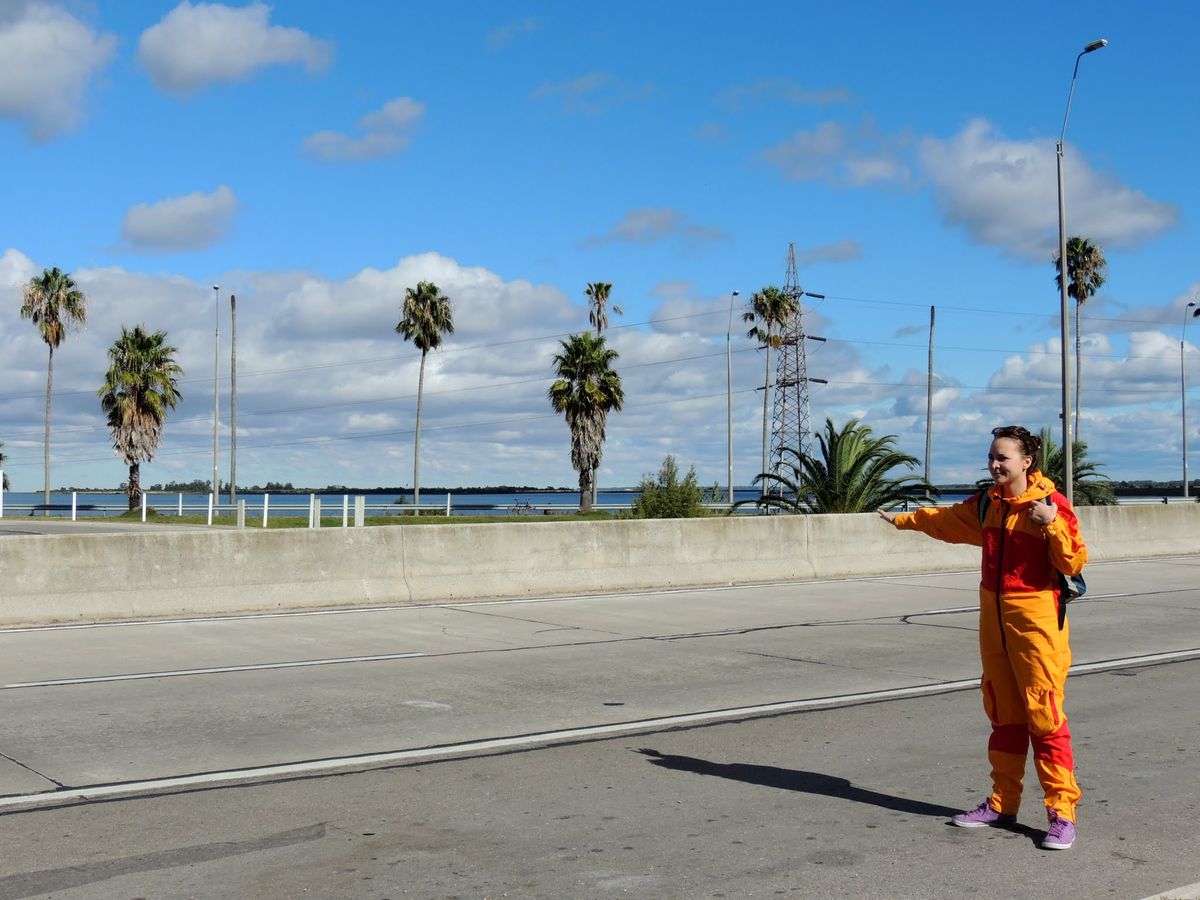
Competitive Autostop is a (new) form of the orienteering sport, combining hiking, orienteering and exploration with autostop as a means of transport. Competitions and varying expeditions are organized on a regular base by clubs in Russia, Lithuania, Ukraine and Germany. Elements of sport orienteering & navigation in (un)known territory off and on the road are an inherent part in such competitions, establishing a more adventurous form of autostop.
Next to that, research and lectures are conducted regarding a broad
range of topics, including e.g. training for giving first-aid on the
road, survival training in specific conditions, perfecting night
hitchhiking or strategical autostop. In 2014, the second qualification
round for the World Championships is planned, covering a route through
all of Europe (~16 days). While competitive autostop is
mainly based in Russia, Ukraine and the Baltics, there are attempts to
establish competitive autostop in Western Europe. A first German club
has been founded in November 2011.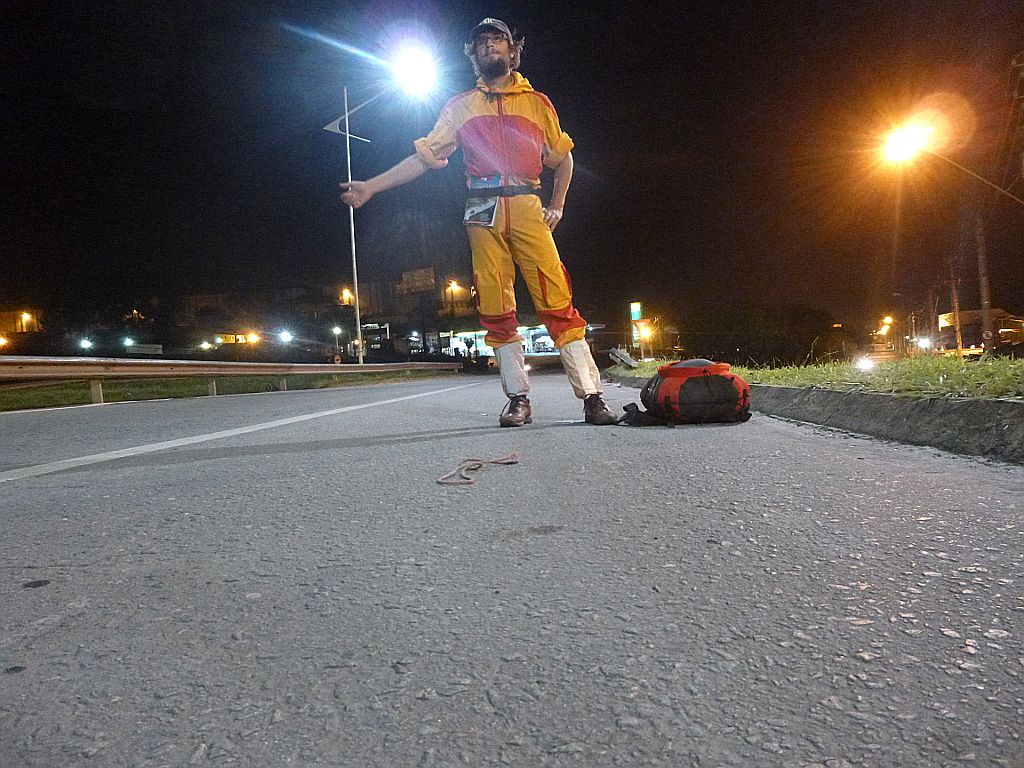
Regulations
In the past PASL created a set of competitive autostop rules & regulations with regard of the TransGlobal Race. The competition rules can be found here. An adapted version is in use of the German club.
Competitive Autostop Union
In order to organize and connect the various international competitive autostop clubs and sports enthousiasts, there are ongoing efforts to form a Union of Competitive Autostop Clubs.
Regional Clubs
- CAT, Клуб Спортивного Автостопа (Competitive Autostop Team)
- PASL, Петербургская Лига Автостопа (St. Petersburg Autostop League, Russia)
- VHHC, Vilnius Hitch-Hiking Club (Lithuania)
- DTSG, Deutsche Trampsport Gemeinschaft (German Competitive Autostop Community, Germany)
- MKCA - Московская Команда Спортивного Автостопа (Moscow Team of Competitive Autostop, Russia)
- (Name unknown) - Minsk (Belarus) has competitive autostop community, too
Events
- 5 November, 2016 - Transglobal 2nd Qualification Round (Europe, approx. 2-3 weeks)
- 25 - 27 November 2016 - DTSG race in the Black Forest, Germany as well as their 5 year anniversary celebration
Links
- TransGlobal Race, Website of the World Championships,
- DTSG, German competitive autostop club
- Alexey Vorov explains the idea of the TransGlobal Austostop Race
- German TV about competitive autostop
- TransGlobal Qualification Round 2012 in Ukraine, a short video summary by a participating team.
- VK group page for announcements of events in Russia
- MKCA group page
- PASL group page
- Minsk Sport Hitchhiking Event for Belarus
Hitchhiking Records
Edit on wikiIntroduction
Please pay attention to this fact – these are (mostly) not officially proven records, but claims of hitchhikers regarding their extremes. This list of records is for us – hitchhikers (we should be happy for our colleagues, not to be envious!), for novices who do not know anything about hitching, but they are proud of their only travel abroad.
Note that this page is a near copy of the Rekordai / Records of Vilniaus Autostopo Klubas. Some of the records, those marked (HGE), were originally published in Ken Welsh' "Hitchhikers Guide to Europe".
Feel free to add your own record(s), but please do not make list longer than five records. If you still want to add a record when there are already five entries, and your record is not in the top-5, you can create a sub-page for the particular record.
The longest distances passed on land during the 24 hours period
- 2777 km (1736 miles), according to Pavel Trcala, from Czech Republic. Time 28 November 1998 07:30 - 29 November 1998 06:30. The route: Miami to Chicago via Jacksonville (Florida), Savannah (Georgia), Columbia (South Carolina), Asheville (North Carolina), Knoxville (Tennessee), Lexington (Kentucky), Toledo (Ohio), South Bend (Indiana), and Harvey (Illinois). The route was done in five lifts.
- 2750 km, according to Vladas Sapranavicius, member of
Vilnius Hitch-hiking Club. Time: 21 August 1996 22:00 – 22 August 1996
22:00 ViaMichelin gives as
expected travel time for Almeria - Potsdam: 24 hours and 51 minutes. The
route: Almeria (E) – Murcia (E) – Barcelona (E) – Montpellier (F) – Lyon
(F) – Frankfurt (D) – Potsdam (D). 4 lifts (Almeria – Montpellier;
Montpellier – Lyon; Lyon – Salzgitter; Salzgitter – Potsdam). The
average speed (including waiting for the ride + a cup of beer in the
restaurant): 115 km/h. The maximum speed: 170 km/h. -
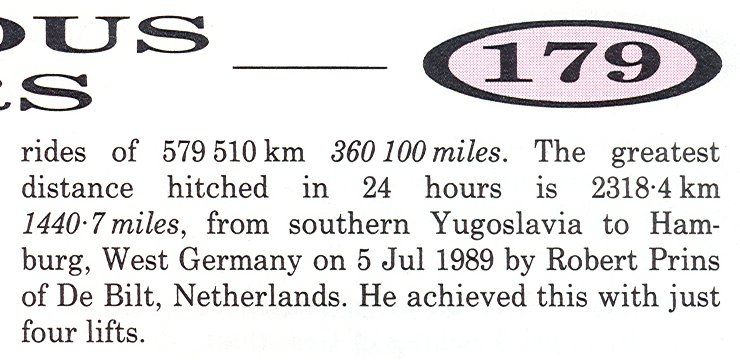 2318.4 km,
according to Robert Prins, hitchhiker from, at the time, the
Netherlands. It was done in 4 lifts through Yugoslavia, Austria and
Germany during 20.47 hours. The record was included on page 179 of the
UK 1991 edition of the Guinness Book of Records. Full
details of the four rides that led to this record can be found here.
2318.4 km,
according to Robert Prins, hitchhiker from, at the time, the
Netherlands. It was done in 4 lifts through Yugoslavia, Austria and
Germany during 20.47 hours. The record was included on page 179 of the
UK 1991 edition of the Guinness Book of Records. Full
details of the four rides that led to this record can be found here. - 1700 km[ Julian Hanowski](User:JulianSaarland ” Julian Hanowski”){.wikilink} in august 2023 lost his Airplane in Madrid Barajas and wanted go get back home to Saarland as fast as possible because it was his grandpas 50 wedding. He walked out of the Barajas Airport going North and arrived in Losheim am See /Saarland near Luxemburg border arround afternoon one day later. He passed some hours from 1 am to 7 am in a random house in the middle of a france village where he got picked up. Unfortunatelly he came latefor the wedding.
Lifetime hitchhiking
- Alexey Vorov, president of the St. Petersburg Autostop League. He has covered about 1,973,650 km (updated: 14th September 2015) by hitchhiking. Hitching experience – from 1977 on. He is still hitchhiking, so it is not the final number.
- Benoit Grieu, French hitchhiker. Started his trip in 1979 and since then all the time on the road. During this trip he has covered about 1,500,000 km. For some years, he hitchhiked more than 100,000 km/year. His current whereabouts are sadly unknown.
- Stephan Schlei. He claims 1,000,000 km.
The longest rides with one car
- In 2015 Aliosha Yazylets, a Belorussian hitchhiker, together with one other person, hitchhiked over 12,000 km in one lift from Tadjikistan, via China, Mongolia, Irkutsk and Moscow in Russia, all the way to Lvov in western Ukraine.
- L.J. Gordon from Western Australia. He started from Whitepark Bay Youth Hostel in Northern Ireland, where four Americans in a Combi Van gave him a lift through Ireland, Scotland, England, Wales, France, Andorra and into Spain. They covered an astonishing 7107 km before parting company. (HGE) Note: This record was copied from Ken Welsh' "Hitchhikers Guide to Europe". L.J. may have recorded the distance as miles in a car with a KM odometer, as the distance seems far too great to be in kilometres.
- Alexey Anofriev from Vladivostok (Russia) hitchhiked from Vladivostok (23 May, 2001) to Shimanovsk (the end of the road) and got a lift to Samara there. From Shimanovsk to Shilka on the railroad platform together with the car and from Shilka to Samara by car (Toyota Celica). Totally it was about 6800 km long lift from 28 May until 4 June! Afterwards, the drivers went to Krasnodar and Alexey hitchhiked on to St. Petersburg. He arrived to St. Petersburg on 7 June, 2001.
- Benoit Grieu, French hitchhiker who hitchhiked about 6000 km in one lift from Anchorage (Alaska) to San Diego (California).
Most rides taken in 24 hours
- The CAT (Competitive Autostop Team) members Dmitrii Ivanov and Anastasia Belka had 57 rides during a CAT-Competition on 17-18 March 2018 in Germany (between 8:05:00 and 1:47:00). It's common for competition to have more than 40 rides in day.
- The DTSG members Koen de Jong and Stefan Korn had 32 rides during a DTSG-Competition on 2 May 2014 in Germany (between 08:00 and 23:30).
One year hitchhiking record
- Benoit Grieu, French hitchhiker during 4 or 5 years (for example 1989, 1993, 1995, 1997) hitchhiked more than 100,000 km per year (in 1995 - 113,000 km).
- Alexey Vorov - 78,800 km in 1991.
- Vilmantas Trumpickas from Vilnius Hitch-hiking Club has covered 56,000 km during the year 2010.
The longest journey
- Benoit Grieu has been hitch-hiking since 1979 and still hitchhiked every day until he disappeared, 1, on his way to Nepal in 2011. During these years he covered about 1,500,000 km not staying more than 3 months in one place.
- Expedition “Autocolumbus” by PASL in 17 February 1992 – July 1993. The trip started 4 hitchhikers: Alexey Vorov, Mikhail Dutkevich, Kiril Baranov and Victor Grigor’ev, but only Alexey and Mikhail finished the complete journey. The route was around the world through 25 countries in Europe, Asia, South and North America. The length of the route ~83,000 km.
- In 2014 Stefan Korn started a circumnavigation expedition. The trip took him 22 months, passing through 58 countries in 5 continents and covering a total distance of 108.895 km. His expedition was documented in his travel blog warmroads.de.
Longest waiting time
- Alexey Vorov. He waited for a lift 3 days in Chucotka, Far North, Russia to move 50km and then waited another 3 days for the second lift in the Komsomol'skij county till got a lift to Majskij (50 km). The minimum temperature on this travel was -55°C in Tyoplyj Kluch county (Chucotka).
Visited Countries
- Benoit Grieu, French hitch-hiker, has hitchhiked in about 170 countries.
- Vladimir Nesin is famous for barefoot walking, and has been in 138 countries. In all of them he hitchhiked at least one time, excepting Mongolia, which he traversed completely on foot. This means he has hitchhiked in 137 countries, although in many of them only a little bit.
- Vladimir Sharlaev from St. Petersburg has hitchhiked in 138 countries, if counting "not officially recognized territories". We are not sure how many officially recognized nation-states that amounts to exactly, but it must be somewhere "'between 120 and 135"' countries.
The largest deviation done by a driver
- Neringa Raulusonyte and Kristina Zukaite from the Vilnius Hitch-hiking Club. They got a ride from a 55 years old German driver with a Toyota Corolla, which was going just 50 km. However, later he offered them to prolong the lift according to their wishes. The driver gave them a ride using the route Berlin - Frankfurt/M - Koblenz - Luxembourg - Paris - Bruxelles - The Netherlands - Hamburg - Berlin - Torun - Kalvarija - Vilnius. From 2001-08-29 until 2001-09-04 the girls covered 4000 km in the same car. The total deviation from driver's route was - 3950 km (drivers way back is not included).
- 600 km (at least) to one side. It was for three hitch-hikers from the VGTU Tourist Club, Lithuania. The lift was given on the Lithuanian – Polish border. The driver should go to Czech Republic, but after he spoke to one of the hitchhikers, he took them until the German border (Szczecin). After the crossing the German border he went back to Poland and after to Czech Republic. Also he gave them 150 EEK (~11 USD). These hitchhikers were: Vladas Sapranavicius, Jovita Garnyte and Asta Ruzgyte.
Most picked up hitchhikers
- Dieter Wesch, the self-styled 'King of Hitchers', who was spending his Sundays patrolling the Autobahn between Stuttgart and Karlsruhe, giving lifts to hitchers stranded at petrol stations. Every hitcher should sign in his guest-book. There was given a number from the guest-book - 9528. It's probably not a final number.
- Jim Sanderson ('Angel'). He has about 5000 photos with the hitchhikers he gave a lift to (mostly in pairs), so he has taken around 7500 people. Mr. Sanderson lives in New Zealand. He has in the 9 years since 1988 filled 7 guest books, 27 address books and dozens of photo albums.
Reaching the farthest point north
- Island of Dunay, north of Tiksi, North Russia, 73°56'. It was done by Konstantin Savva from Moscow Hitchhiking School (Russia) and his girlfriend Polina Kuleshova in September 2002.
- Urung-Haia, North Russia, 73°. It was done by Konstantin Savva from Moscow Hitchhiking School (Russia) on May 2002.
- Tiksi, North Russia, 71° 36'. It was done by Andrey Sapunov and Alexandr Dmitrievskyi from Ukrainian hitchhiking club "Mainroad" (Ukraine) on autumn 2002.
- Phillips Petroleum drilling operations near Prudhoe Bay, Alaska, 71° N was done by Ilmar Island from Pompano Beach, FL as the starting point for a Guinness World Record run from Prudhoe Bay, AK to Key West, FL which was accomplished in 6-days, 17-hours and 22-minutes. However since the route included trespassing for 510-miles on oil company owned roads the record was not honoured and instead Guinness recognized Mr. Island's run from Key West, FL to Fairbanks, AK in 5-days, 20-hours and 52-minutes that he accomplished a few days earlier in June of 1979.
Reaching the farthest point south
- Scott Base, Antarctica, 77° 51'. Hitchhiker from USA Benjaman Bachelder hitched 5 km from McMurdo Station to Scott Base in December 2005. The same month he even held a seminar on hitchhiking in Antarctica and got a ride in a snowmobile.
- Ukrainian research base "Academic Vernadsky" in Antarctica, 65° 15' - reached by Argentinian hitchhikers Juan Villarino and Laura Lazzarino in 16 November 2010. They got a free ride to this base from cruiser "Ushuaia", belonging to cruise company "Antarrply Expeditions" 20 km South from Ushuaia, Argentine, 54° 48'.
- Arndt Writzel from Germany cut a record of the farthest point in the South. He reached Ushuaia town in southern Argentina in 2001 02 03.
The highest point on land
- Kala Patthar in Nepal - 5,644 meters. It was done by Portuguese hitchhiker Luís Terra Pinto as part of a round the world hitchhiking trip leaving from home without any money and only surviving busking with his mandolin. He hitchhiked all the way until the end of the road in Jiri, Nepal and then mostly walked but also got a few rides until base camp, conquering Kala Patthar's peak the following day on the 1st of January 2013.
- Mount Everest base camp in Nepal - 5,400 meters. It was done by Czech hitchhiker Pavel Trcala. He got the ride from Everest base camp two days after climbing Everest on his return to Kathmandu on 1 June 2005. Later the same place was also conquered by several other hitchhikers: Nuutti Palonen (Finland), Radha Krishnan (India) and Tai Häring (Germany). They also hitchhiked to Mt Everest base camp from Shigatse in August 2005 and then hitchhiked to Nepal from Mt Everest.
- Gyatso-La mountain pass in Tibet, on the way from Lhasa to Nepalese border - 5,220 meters. It was done by two Polish hitchhikers Kinga and Chopin on 11 May 2003.
- The mountain pass in the Andes, South Peru – 5,100 meters. It was done bye Alexey Vorov and Mikhail Dutkevich (PASL) in May 1993.
The highest temperature
- +55°C experienced Alexey Vorov, Andrey Kuritsin, Ol’ga Bandurko, Andrey Leipi and Nadezhda Makarova in summer 1981 near Ashchabad, Turkmenistan.
- +52°C. Bertrand hitchhiked from Abu Dhabi airport to the city center. 19th August 2015.
- +50°C according to farben.rausch experienced Stefan Korn and Noah Essl in August 2016 as they entered the Lut Desert in Iran to cross it. They waited 3 hours before they got a ride all the way through.
The lowest temperature
- –63°C. It was for hitchhiker Elena Saturova, member of PASL in January 1992 between Ust’-Nera and Sasuman in East Yakutya, Russia.
- During their expedition to the Nordkapp in January 2018, hitchhikers of the DTSG encountered temperatures down to –30 °C in Finnish Lapland. The hitchhiking nomad Sven Kopf even slept outside during those temperatures.
The highest speed
- 310 km/h, according to Andrius Papickas and Viktorija Aksionova from Lithuania. It has happened on April 14, 2004 in Germany, between Fulda and Dresden, when travellers were returning home from Spain. The car was "BMW 550" ("Alpina").
- 300 km/h, according to Prino, on 25 May 2016 around 20:30, during a ride from MOP Nowostawy on the Polish A2 to a petrol station on the exit Poznan Komorniki (the driver missed MOP Tulce). The car was a Mercedes E63 AMG. The driver made an attempt to break the 310 km/h record mentioned above, but lack of free road made this impossible.
- 300 km/h, according to Linas Migonis from Lithuania. On June 1, 2007, on the route Berlin - Leipzig he had a lift with 4 seated "Maserati". The drive has attended a driving lessons of Formula-1 racer.
- 294 km/h, according to Rebew, on 30 June 2022 on the A9 in a BMW. After a few compliments for the car, the driver made a few attempts to break 300 km/h but got stopped by traffic each time.
- 292 km/h, according to Veit Kuehne from Dresden, Germany. He got a ride with a young driver (car "Audi") on a highway between Dresden and Chemnitz in July 2008.
- At least 280 and more than likely exceeding 290 km per hour, according to Prino on 27 May 2015 from Raststätte Fränkische Schweiz/Pegnitz Ost (departure @ 06:05) to Raststätte Fläming Ost (arrival @ 07:49). The odometer'ed distance was 304.0 km (both Google Maps and Bing Maps give the distance as 308 km) and the ride included a refuelling stop of 11 minutes (06:58 - 07:09). The driver used a Cougar system and didn't pay any attention to speed restrictions, other than slightly slowing down in roadworks. The car was an Audi RS6 Quattro.
Fastest round the world hitchhike trip
15 days +7h21m19s – Cor Goethals (Belgium) hitchhiked from Brussels, Belgium, to Vladivostok, Russia; from Seattle, USA, to Boston, USA; and from Lisbon, Portugal, back to Brussels, Belgium. - Start: 13 September 2025, 09:00:00 - Finish: 28 September 2025, 16:21:19 - Countries crossed: Belgium, Netherlands, Germany, Poland, Lithuania, Latvia, Russia, United States, Portugal, Spain, France.
20 days +1h31m17s - Alexej Vorov (Russia) hitchhiked from St. Petersburg to Vladivostok; from Seattle to Boston; and from Madrid back to St. Petersburg. - Start: 1 October 2014, 00:00:00 - Finish: 21 October 2014, 01:31:17 - Countries crossed: Russia, United States, Spain, France, Germany, Poland, Lithuania, Latvia.
Rules for the Round-the-World Hitchhiking Record
1. Land Travel by Hitchhiking Only – All overland segments must be completed exclusively by hitchhiking. Use of buses, trains, taxis, rideshares are allowed when the hitchhiker does not perform a payment.
2. Ocean Crossings by Plane or Ship – Oceans may be crossed by airplane or ship. The entire duration of such crossings, including waiting times, layovers, and flight time, is counted in the record. For these ocean crossings payments are allowed.
3. No Payment for Transport – Payment for rides is not allowed. Voluntary offers from drivers (e.g., fuel or meals) may be accepted but cannot be solicited.
4. No Pre-Arranged Rides – Rides must be obtained spontaneously (e.g., at roadsides, gas stations, or rest areas). Pre-booked or pre-negotiated transport is not permitted. This rule is based on trust and transparency.
5. Ride Documentation – Each ride should be documented with the following information: - Driver’s first name - Start and end time - Start and end coordinates (or nearest identifiable location) - Preferably, a photo of the driver and/or vehicle with the hitchhiker (with consent)
6. Verification of Route – Continuous GPS tracking, timestamped photos, or publicly available check-ins (e.g., social media, blogs, or live trackers) are recommended for transparency and verification.
7. Legal Border Crossings – All borders must be crossed legally with valid documents. Visa arrangements must be made in advance and may not involve paid transport for overland sections.
8. Ethical Conduct – Hitchhikers must respect local laws, customs, and drivers. Unsafe, coercive, or dishonest practices invalidate an attempt.
9. Solo Achievement – Records are held individually. Companions may join parts of the journey, but each participant must complete the full route independently to qualify.
10. Independent Verification – Where possible, significant stages of the journey should be verified by independent third parties such as observers, journalists, or other travelers.
Highest number of countries within 24 hours
- 10, according to Miran Ipavec from Slovenia. Miran hitched this in 23 hours and 15 minutes, starting on 2018-03-14. In this order he passed these countries: Serbia, Croatia*, Bosnia and Herzegovina**, Slovenia*, Italy**, Austria*, Germany**, Hungary*, Slovakia, Czech Republic. Countries marked * were passed twice and at those marked ** Ipavec retunred into the previous country at the border.
Highest number of countries within 10 days
- 30, according to Miran Ipavec from Slovenia. Miran hitched this in 9 days, 20 hours and 25 minutes, starting on 2015-04-01. In this order he passed these countries: Finland, Estonia, Latvia, Lithuania, Poland, Slovakia, Hungary, Romania*, Ukraine, Serbia, Macedonia*, Bulgaria, Greece, Albania, Montenegro, Bosnia and Herzegovina, Croatia*, Slovenia*, Italy, Austria*, Czech Republic, Germany*, Liechtenstein, Switzerland, France, Luxembourg, Belgium, The Netherlands, Denmark and Sweden. Countries marked * were passed twice. Kosovo, not recognised by the UN, is excluded from this list.
Longest "driving the driver" ride
- Stefan Korn hitchhiked from Fairbanks down to British Colombia and got a 2676km long ride from Tok Alaska to Cache Creek in British Columbia (2014-01-13T). Around 1.600 km he drove by himself.
- 1,179.6 km, by Cor Goethals from Belgium, during a 2000km ride from Billings, USA to Chicago, USA. Cor drove through the night while driver Ramsey was sleeping. Cor started driving in Chamberlain (43.7682598,-99.3128964) around 9pm and drove to Chicago, USA (41.5704109,-87.4765589), arriving around 7am the next morning. This drive happened on his round the world adventure with which he broke the world record for fastest hitchhike around the world.
- 1,113.6 km, by Prino from the Netherlands, a ride from service station Deersels on the A67 near Sevenum, The Netherlands (2018-09-04T14:13) to service station Brwinów on the A2 near Brwinów, Poland (2018-09-05T12:24) - Prino drove the entire distance, driver even paid for a hotel room at night. Possibly around 1,100 km, also by Prino. During his longest ride, a 2,502.9 km monster from a petrol station near Platamonas (1990-08-13T16:32) in Greece to Driebergen (1990-08-15T12:54) in the Netherlands, he drove during five periods, for a total time of 10:06 out of a total driving time of 22:41. The distance is based on the average speed of the ride, and the sections driven.
- 781 km, according to Frank Verhart from the Netherlands. Frank drove from service station Gralla Ost on the A9 near Graz, Austria (2015-05-26T22:19) to service station Medenbach Ost on the A3 near Frankfurt am Main, Germany (2015-05-27T10:28).
Slowest hitchhiking between two points
- William Innes from Scotland, UK. He got a ride on a milk float on 'collection' day and it took 4.5 hours to travel 2 miles from North London to the start of the M1. (HGE) Note: It would take a reasonably fit person about 30 minutes to cover this distance on foot...
- Ruth Cleece from UK. She got a half-mile ride taking 45 minutes on a steam-roller. (HGE)
Youngest driver hitchhiked
- Andrey Sapunov from Kiev, Ukraine and Konstantin Grishin from Tver, Russia. On 21 October 2020 they got a ride on Kaninë - Vlorë road, Vlorë County in Albania from a 10-year-old boy. It was a 4 km ride. His other passenger was an even younger girl.
- Jan Vržina and Zoe Šarlija from Zagreb, Croatia. On 18 July 2024 they got a ride from the edge of Ulcinj to the Sigal Uniqa - Pika Kufitare Muriqan border crossing from a 13-year-old girl. It was a 24 km ride. The other passenger was her mother who said her daughter had been driving for years.
- Robertas Pogorelis from Vilnius, Lithuania. On 23 August 2016 he got a ride from Long Island, Palau, to Koror, Palau (about 2 km) from a 14-year-old girl who was driving to school. Everything was legal: the driver held a temporary licence and was sitting next to her 16-year-old sister who had a full licence.
Oldest driver hitchhiked
In 2022 Julian Hanowski and his friend was picked up by an 94 year old farmer in his 1973, first and only Pickup he had in his life. He took us about 15 kilometers between Cordoba and San Luis Argentina.
Largest hitch-hiking events
- Traditional SOBER hitch-hikers' gathering in Moscow region,150 km from Moscow, organized by Free Travel Academy (hitch-hiking club in Moscow, Russian Federation) on 4-8 June 2021, atracted at least 660 participants (some more arrived after closing of official registration). There were 40 free lectures. 98% of participants were citizens of Russian Federation because of closed borders.
- Traditional SOBER hitch-hikers' gathering in Moscow region on river Dubna, organized by Free Travel Academy (hitch-hiking club in Moscow, Russian Federation) on 4-6 September 2020, atracted at least 640 participants (some more arrived after closing of official registration). They stayed in 350 tents. There were 40 free lectures by famous hitchhikers. Manager of the event was Alexey Kuleshov. This time there were only few foreign participants because of closed borders.
Hitchhiking lap records of famous racing circuits
From a standing start (standing on the start/finish line), thumb a vehicle down, get in it, and complete 1 lap of the circuit in the correct direction. The clock starts when you put your thumb out, and the clock stops when you cross the finish line 1 lap later.
Circuit de Monaco
- 9 minutes, 12 seconds (approx): Sanne and Tom, hitchhiking as a pair, on 10 May 2009.
Guiness Book of Records Hitchhiking Entries
Until the early 1990'ies the UK edition of the Guinness Book of Records (GBOR) used to list a number of hitch-hike world records. They were
- The greatest distance hitched during a hitchhiking career
- The fastest time to get from Land's End to John o'Groats (and the round trip)
- The greatest distance hitched in a 24-hour period
The fastest time to get from Land's End to John o'Groats (and back)
Land's End to John o'Groats is the traversal of the whole length of the island of Great Britain between two extremities.
Land's End to John o'Groats
- Martin Clark and Graham Beynon. Last hitchhikers recorded in the Guinness Book of Records for the Land's End to John O'Groats trip. (17 hours 8 minutes, 1987)
Round-trip
- Alan Carter. Last hitchhiker recorded in the Guinness Book of Records for the Land's End to John O'Groats to Land's End round-trip. (39 hours 28 minutes)
- Earlier entries, according to Bernd Wechner
Single
- 1959-63 39 hrs - Anthony Shepherd
- 1965-69 29 hrs 30 min - Ian Crawford
- 1973-74 29 hrs - Bernard Atkins (1966) and J.F. Hornsey (1971) independently
- 1975-77 23 hrs 50 min - Pam Vere and Georgina Astley (1974)
- 1978 23 hrs 24 min - Miranda Brooks and Margaret Allinson (1977)
- 1980 21 hrs 55 min - John Repton and Rosemary Grounds (1978)
- 1981-88 17 hrs 50 min - Andrew Markham (1979)
Round trip
- 1967-68 100 hrs 30 min - John Stubbs
- 1973-75 77 hrs 20 min - Christine Elvery and Gwendolen Sherwin (1969)
- 1976 57 hrs 8 min - Peter W. Ford (1974)
- 1976 56 hrs - John Frederik Hornsey (1974)
- 1977-78 54 hrs 40 min - Peter W. Ford (1976)
- 1980-83 45 hrs 34 min - Guy Hobbs (1978)
- 1984-85 42 hrs 15 min - Charlotte Allard and Fay Gillanders (1982)
- 1986-91 41 hrs 42 min - Anthony D. Sproson (1984)
The greatest distance hitched in a 24-hour period
This record was only included in the 1991 edition of the GBOR. It was held by Prino. The actual entry on page 179 read:
"The greatest distance in 24 hours is 2318.4 km 1440.7 miles, from Southern Yugoslavia to Hamburg, West Germany on 5 July 1989 by Robert Prins of De Bilt, The Netherlands. He achieved this with just four lifts."
Full details of the four rides that led to this record can be found here.
The US edition of the Guinness Book of Records
Furthermore, the US edition also seemed to have contained a record for the fastest time to hitchhike through the 48 contiguous states (i.e. all excluding Alaska and Hawaii) and in 1979 it has published a record for a trip from Key West in Florida to Fairbanks in Alaska. Details of that trip can be found in Key West to Alaska: not without a hitch - the particular page talks about a distance of about 5,200 mile. Based on the data in said article, this might have been
From Key West, Florida to Fairbanks, Alaska
"A young man named Ilmar Island of Pompano Beach, Florida, Hitchhiked from Key West, Florida, to Fairbanks, Alaska, a distance of about 5200 miles, setting out on June 2, 1979, and arriving at his destination on June 7, just 5 days 20 hours and 52 minutes later."
A few days later after completing his Key West, Florida, to Fairbanks, Alaska run, Mr. Island hitched from Prudhoe Bay, Alaska back to Key West, Florida in 6-days, 17-hours and 22-minutes. However since this route included trespassing for 510-miles on oil company owned roads that record was not honored and instead Guinness recognized Mr. Island's run from Key West, Florida to Fairbanks, Alaska as mentioned above.
Further references to hitchhiking records
Additional articles on hitchhiking records were written in the late 1990's by Bernd Wechner for Suite101:
- World Records: Musings on what makes a record breaking hitch.
- More Records: Record breaking hitches in summary
- Me Hitch-hiker, You Hitch-hikee: Turning the tables
Suggestions for other possible records
If you want to do something that (probably) hasn't been done before, you can try your thumb at any of these. Don't expect to end up in the Guinness Book of Records for it, they no longer seem to have a section with hitchhiking records.
- North Cape to Gibraltar
- Prudhoe Bay (Alaska) to Ushuaia (Argentina)
- Cabo da Roca (Portugal) to Cape Dezhnev (Russia)
It would be great to add additional existing records:
- The biggest hitch-hiking gathering
- The biggest hitch-hiking race by number of participants
- The biggest hitch-hiking event in general
- The longest hitch-hiking race by kilometres
- The largest hitch-hiking club (number of members during some certain year. There should be a clear rules, how a club define membership, for example, yearly membership fee or visiting club's meetings at least once per month)
- The longest boat ride
- The longest train ride
- The longest plane ride
Traces
Edit on wiki Hitchhiking can become slightly less
ephemeral by leaving traces.
Hitchhiking can become slightly less
ephemeral by leaving traces.
Hitchhiking is short time action, usually not leaving anything for future than few nice memories. What will remain after something as ephemeral as a ride? How can we communicate with other people passing by the same place but in different time?
What Traces can we leave?
- Postcards we send to drivers
- Notes we can find on road signs left by other hikers
- Cardboard sign found at a spot with the same direction as yours
Projects/DIYs:
- Hitchhikers Bars
- graffiti and stencils announcing Official Hitchhiking Spot approved by Hitchwiki Community - though this is probably illegal and not a great way to create wider acceptance of hitchhiking
- one driver said that he wants to get a sticker saying that he is HitchhikerFriendly! Let's do it!
What's already happening
- All over Germany and at some spots in the north of France, Hungary Netherlands, Romania and Bulgaria, you can actually already find some "Hitchhikers will never die" stickers printed by the German Autostop Society. Maybe it would be fun to make a list of places where you maybe could find some of those. Other hitchers can then leave a message there, too;) For the sticker, see the image to the right. You can get them here.
Hitch Team USA
Edit on wikiHitch Team USA is the first competitive hitchhiking organization in the United States. It was founded by Keith in the summer of 2014, in hopes of one day competing in the world championships. As of October, 2015, it has three members, spread out over the country.
Are you an American hitchhiker interested in sport hitchhiking? Feel free to join the Facebook group below, or ask Keith for more info.
External links
Liftari @ IRCnet
Edit on wikiThere are some finnish-speaking hitchhikers in the IRC-channel #liftari (IRCnet). If you have anything to ask about hitchhiking in Finland, these are the people.
English channel is #hitchhiking on Libera.chat
AVP Free Encyclopedia
Edit on wiki- AVP Free Encyclopedia - Russia's largest electronic book for travelers. It is a collection of practical information for independent travelers on different places of the planet Earth, largely gather by Russian hitchhikers. The FE is a project of the Academy of Free Travel (Академия Вольных Путешествий, AVP). As of October 2008 there are 1215 articles, 249 comments and 317 categories, 293 authors and 1770 registered users.
- "Free Encyclopedia" - a special book.
- First, only here can be found all under one cover Russia (and all CIS countries - under another). And secondly - and most importantly - the book answers the many questions of "How much?", "Where?" and "How?". How to get to a city (region), with money, and without? Where to eat? Where to spend the night - not only with full, but also with an empty purse? Where to find fellow human beings? How to get out of the city as a hitchhiker? How to go by rail or passing locomotive, aircraft, the motorboat? How much costs a loaf of bread or a lunch in the cafeteria? We have tried to respond to many of these questions.
-
A. Krotov, from the preface to 4th "VE" edition
Links
Mentostop
Edit on wikiMentostop (Russian милиция (police) =>менты + автостоп) is a funny and extreme way of hitchhiking. Mentostop is effective in some poor countries with very strong police and military aspect. Could be extremely effective after terrorist attack and less effective after peaceful period. In fact people in unstable countries tended to help or save another crazy foreigner crossing their land from another terrorist attack. Why should you refuse them? Let the people feel them as a part of helping process.
Dangers
Before ask a policeman be sure that your documents are completely OK.
Former Soviet Countries with effective Mentostop
Better to know at least elementary Russian language.
Uzbekistan
Police in Uzbekistan are most kind and helpful among all Central Asia (2010). After checking your ID always trying to get a comfortable bus for you. Distances up to across all country just wait for proper bus.
Tajikistan
Every policeman is ready to help you on the road. Sometimes they just carry you to the next checkpoint and ask local policemen to get a car for you. Also could offer some food or give some money (up to 5 USD:)).
Kazakhstan
Since campaign against corruption was started policemen became friendly and helpful. Usually trying to get a bus for you. Lifts across the country available. 1000+ km is not a limit. Best way to get a ride for a nighttime.
Other countries
Mauritania
In Mauritania, there's a police checkpoint every 20 kilometers or so. Most policemen are very helpful and very surprised to see hitchhikers, sometimes even too much so. For more information, see the article.
Argentina
There are many police checkpoints (often, but not always in use) at the entrance to major cities. The officers were always helpful, and amongst food and mate, every truck driver passing through was queried on their destination to assist hitch-hikers.
Hitchhiking and Pandemia
Edit on wikiThe Covid 2019 pandemic and the public reaction to it that as of April 2021 are ongoing and don't show any concrete signs of ever ending have affected many parts of public and private life. It could be expected that they would also render hitchhiking a much more difficult and precarious way of travelling, however this is not necessarily the case. In this article we gather some information about hitchhiking in the times of Corona.
Apart from the fact that there are currently numerous rules in place to keep people from travelling, it is fairly difficult to get any reliable information about how the pandemic has affected hitchhiking itself. Only anecdotal evidence is available, and that can be quite contradictory.
Legal Problems
Do you have any information about any laws that have been passed that specifically impact hitchhiking? Post them here.
Possible issues are the obligation to wear masks in public space which exists in multiple areas, and conditions that are imposed on crossing borders. However the extent to which these regulations are enforced vary, eg. in Spain and France there is little control and negotiation is often possible. When crossing borders, hitchhiking can work to your advantage if you catch a ride in a car that has the right license plates.
It's safe to say that rules are changing constantly and every country has their own rules. You may have to show a negative corona test and/or vaccination status at borders. You may be forced to quarantine for any number of days. Wearing a face mask may be compulsory inside and even outside. It's probably good to have some idea of the current rules when going from one country to another.
Respect and Safety
Of course it is everybody's own choice if they feel comfortable hitchhiking or travelling at all in the context of a global pandemic, even if the severity of this pandemic is debated by some people. When hitchhiking in this context, in can be respectful to ask the driver who stops for you if they would prefer you wearing a mask, sitting in the back, driving with the windows open -- the great thing about hitchhiking is that it is possible to personally negotiate the level of comfort and safety needed by everybody involved.
Considering the amount of people you come in contact with during a typical hitchhiking trip, hitchhiking can actually be a safer way of travelling than taking a train or especially a bus. It's possible to focus this fact even more by avoiding short rides and aiming for less, but longer rides.
Personal Experiences
2020
Zenit has been hitchhiking on a weekly basis nearly all through 2020 and 2021. To him, it does not seem that hitchhiking has become more difficult at all, in fact he has even been picked up by some people who suffer from social isolation and needed somebody to talk.
Warlo Has hitchiked sparsely thru the pandemic and noticed no significant difference, particularly in Germany where rides are quick and plenty as usual. Also he is very surprised how up until this writing, no driver (and passengers if any) were interested in his offers to wear a mask, sit in the back, etc.
Platschi hitchhiked in Uruguay during the peak of the pandemic and found it very easy. Short waiting times, 1 out of 3 drivers were wearing masks, nobody asked but out of politeness he wore masks inside the vehicles. Hitchhiked without mask outside but put it on as soon as a vehicle stopped. Absolutely no problem.
July 2021
Rebew hitchhiked from Berlin to Denizli after the vaccines were mostly rolled out, in July 2021. Masks are optional and most drivers do not care. However, if you thumbed with the mask anywhere on your body, it significantly reduced the chance of getting picked up. In Western countries you would sometimes get asked for your vaccination, but mostly because the drivers were scared of infecting you, not the other way around.
September 2021
4Lus hitchhiked through the western balkans (Kosovo, North Macedonia, Albania, Montenegro, Croatia and Bosnia and Hercegovina in August and September 2021. For the most part, there are no notable limitations. Drivers don't care for the most part, the pandemic often was a topic of conversation, a lot of people are very sceptical about the vaccination so it is likely that your drivers will be unvaccinated. When crossing borders, you will be asked to provide either a negative test or a certificate of vaccination.
Countries
Europe
updated 23.5.21
EU Agreed on a common certificate that should allow free movement within EU-States starting 1st of June. Everyone that has been vaccinated, recovered or has a negative test should be able to move freely within most of Europe(link).
EU and Schengen-States highly restrict entry from non member countries. Within the EU travel to some extent is still possible. You can find info about most entry rules and local measures here:
Germany
There will be no more free testing starting from the 11th of October, 2021.
Citizens are able to get free tests (result should be available within 15-30 mins). You get a certificate via email that you can use for border crossing, going into some venues, etc. The procedures vary a lot from place to place, sometimes you have to register online for an appointment with a German address (so it's better bring an ID without an address, like passport, if you don't have a German address). There are a lot of centres, so if one refuses to test you for free, simply try another one. Just ask for "kostenloser Corona-Test" or "free citizen test". Better make sure it is in English as well if you want to use it for entering another country.
Germany requires vaccinations or negative tests for most venues and restaurants. Registration is usually done with either the CovPass app (scanning your EU-GreenPass QR Code) or the Luca app, which anonymously collects contact information but doesn't check for testing or vaccination.
Updated 04.09.2021
Check the Corona-Einreiseverordnung for the latest information.
Upon entering from any foreign country, travellers need to provide either a negative test, proof of recovery or vaccination record. Germany differentiates between high-risk and virus variant regions as follows:
- If entering from a high-risk region, you need to quarantine for ten days. This quarantine can be ended by providing either a vaccination record or proof of recovery before entering.
- If entering from a virus variant region, you need to quarantine for fourteen days. This quarantine is mandatory even if vaccinated.
You need to register online before entering, otherwise you can be sent into quarantine until you've provided the necessary documents.
Germany is a federal republic, so every federal state can have its own rules and even cities can decide on their own rules. As of Sept. 2021, most of the rules are out of effect for you if you're vaccinated.
Sweden
updated 30.4.21
negative test required for:
- every foreign national aged >= 18
accepted test:
Antigen, TMA, PCR and LAMP; max 48h old; language: Swedish, English, Norwegian, Danish or French
quarantine:
- recommended for 7 days, NOT MANDATORY
contact rules:
- "The police has the right to cancel or dissolve an event that has more than eight attendees."
accomodation:
- no restrictions
curfew:
- no
misc info:
- Entry via Denmark (bridge or ferry) should be ok(transit). Probably better find a direct ride from Germany to Sweden. It should be rather easy from Puttgarden (ferry) as the ferry runs pretty much non stop every 30min and is one of the main routes from Germany to Sweden. The ferry goes to Denmark so make sure the car goes further to Sweden afterwards!
Official information
https://visitsweden.com/about-sweden/information-for-travellers-corona-virus/
France
updated 10.6.21
entry requirement:
- vaccinated
- recovered
- tested (PCR or antigen; max 72h; sworn statement about contacts and symptoms; free testing in Germany!)

curfew (23.00-06.00): will be lifted by 30.6.
gatherings/contact: max 6 people
Official information
coronavirus-covid-19-the-situation-in-france
coronavirus-advice-for-foreign-nationals-in-france
Spain
Land borders between Spain and Portugal are supposed to be closed until some point in May 2021. Coming in from France, you need a PCR test in most all cases.
Netherlands
As of some point in May the Netherlands will be forcing people to quarantine for 10 days. This is on top of the requirement of showing a negative test.
Belgium
Quarantine unless you're staying less than 48 hours.
Switzerland
updated May 2021
Switzerland requires testing if a) you arrive by plane, or b) you have spent time in one of the risk countries in the ten days before arriving. In the latter case, you also need to quarantine for ten days. Switzerland does not ban anybody from entering. You are required to fill in a form prior to arrival, but only if you're coming from further than from a border area. It might not be required to fill in the form if you're not travelling by public transport, but this is a bit unclear. More info on the official website.
South America
Uruguay
Update: August 6, 2021
All borders by land to Argentina and Brazil are closed, inbound airline traffic exists. There's a Buquebus ferry to Buenos Aires twice per week, with infrequent schedule and short-notice changes which tend to be not announced. Entry to the country is only permitted for Uruguayan citizens, residents or for travellers with special permits which must be applied for beforehand (family reunion, business).
Update: december 27, 2021
Borders with Brazil are open. You need vaccination and PCR.
Busking
Edit on wikiStreet performance or '''''' is the act of performing in public places for gratuities. In many countries, the rewards are generally in the form of money but other gratuities such as food, drink or gifts may be given. Street performance is practiced all over the world and dates back to antiquity. People engaging in this practice are called street performers or buskers. Buskers is not a term generally used in American English.
See also: Musical instruments
Glossary
Edit on wikiHitchwiki uses some terms, that need to be explained. Feel free to add words, you did not know.
- on-ramp - highway entrance
- off-ramp - highway exit
- shoulder - emergency land on highways
- interchange - highway junction
- slip road - connector road on a highway junction
See also Phrasebook
Part I — Practice
Hitchhiking is the same motion everywhere: stand where a car can stop, look like you want a ride, wait. The pages that follow are that motion in detail — spots, signs, weather, packing, safety, waiting, the first time.
Place-specific notes come after this. If you only read one section before you stick out your thumb, read this one.
Part II — Places
Laws, habits, and roads change at borders. These country chapters are orientation, not a promise that last year’s ramp still works.
A few city chapters sit under the country they belong to, capital and main cities first. Named on-ramps and GPS pins stay on maps.hitchwiki.org. Use the live map when you are actually going.
The order is geographic, not A–Z: Europe first, then North America, the rest of the Americas, Asia, Africa, Oceania.
Europe
West to east: the British Isles, France and the Low Countries, the German-speaking lands, the Nordics, Iberia, Italy, then central Europe, the Baltics, the Balkans, and the east.
United Kingdom
Edit on wikiThe United Kingdom is a country in Nothern Europe which forms the so-called Common Travel area with Ireland and is not part of the Schengen Agreement. It is connected to mainland Europe via the English channel. As of 2020, it is no longer part of the European Union.
Hitchhiking
Hitchhiking in the United Kingdom is feasible although the British are a little surprised (especially in England) to see people still doing it these days since it has become a dying trend largely due to the safety worries, insurance issues and very busy roads, but also extremely cheap coach fares. You will still manage a ride somehow but you really need to be at the right spot. Finding a safe spot where drivers can pull over easily can be crucial here - British people usually don't like to stop in bad places, so make it easy for them to pick you up!
There are people in the UK who hitchhiking to travel, some also hitchhike as a freetime activity. Races are regularly organized mostly by university societies.
Hitching in Scotland or Wales tends to be more easy than in southern England although this depends from county to county. For example, the rural mentality in the South West makes it a lot more easier than trying to hitch in the South East. It seems the closer you are to big cities, especially London, the harder it is. Furthermore, especially in the South of England, people have some kind of you-only-get-what-you-merit-(equals: work for)-attitude, which is why they sometimes react with unfriendliness to the idea of hitching. On the other hand, many students hitched in the 70s and 80s and they often give lifts now that they are older.
When traveling a long distance on the motorways it is best to stick to the service stations as getting a lift on a slip road will take an exceptionally longer time. Don't get dropped at any motorway intersection junctions (M25/M4, M4/M5 etc.) as traffic will be going too fast to stop and you will probably be picked up by the police. In case you do get dropped there your best option is probably to start walking a bit away from the motorway, and if you're a foreigner, attach a sign to your backpack saying e.g. from Holland.
As A-roads, however, are a replacement for motorways in more rural areas, people basically go at the same speed, and it is quite difficult and dangerous to flag somebody down.
If you're hitchhiking long distances and considering making a sign, in general people use the motorway names rather than the city names. For example, from London to Cornwall have a sign saying M4. But if you are hitching on a motorway with multiple cities (i.e. M1) it is an idea to use a sign with the city name (e.g. Nottingham, Sheffield).
As a final note, rides are called lifts and trucks are called lorries:)
Legality of Hitchhiking
Hitchhiking is legal in the United Kingdom and no law forbids asking a stranger for a lift; motorways are the exception. Rule 253 of the Highway Code states that motorways must not be used by pedestrians, citing the Motorways Traffic (England and Wales) Regulations 1982 (regs 3(d), 4 and 11) and, in Scotland, the Motorways Traffic (Scotland) Regulations 1995 — the ban covers the carriageway, the hard shoulder and the slip roads. Rule 271 adds that nobody may stop on a carriageway, emergency area, hard shoulder, slip road, central reservation or verge except in an emergency, so a lift cannot lawfully be picked up on the motorway itself. Motorway service areas are private land reached off the motorway rather than part of it, so asking drivers there is lawful, though the operator can ask you to leave. On A-roads and everything below them, stand safely off the carriageway and thumb: there is no offence in it.
Apart from motorways, you can also hitch on the so-called A-roads, where - legally - you can stand on the side lane.
Like anywhere else, it is illegal to walk on motorways, and so hitchhiking is best done from the bottom of slip roads and at service stations (at discretion of the owner). Highways Agency officials may question you if you hitch from sliproads on motorways as technically you are not allowed to do this, but the police will not pay any interest; the Highways Agency staff are more pedantic than the police regarding that.
Service stations hitchiking method
Stick to motorway services, as lot of traffic is passing, filling up their tanks. Talk with drivers who are filling up their tanks in petrol station. It will help if you will have a sign, or if you don't have one, have some kind of paper map, because you will look more trustable from distance. Thumbing near the motorway services exit also works well.
If there are a lot of traffic coming through petrol station, or in general, don't waste time going to speak to drivers in rest area, they will pass you at some point. Try asking drivers if you are in good place for heading that direction, for example: Strazdas007 was stuck on Maidstone services while trying to get to the North, as all drivers where going South, or just around the corner, so he just went back to Dover port. If you are in bad service station for your direction, don't hesitate going back to last good spot, or possibly good spot. Try to look up service stations on maps or gps. A Collins road map of the UK (+ Ireland) can be found in book stores for ~£5 and is very useful here since you don't want to miss the last possible service sttation. Go for the popular ones if you have a choice, like: Starbucks over Costa, as it is with petrol stations - Shell over BP.
Also, with some luck, you can even get job offers (Strazdas007 got offer from driver to work as roofpainter or smth like that in service station near Leeds).
Climate
The UK is infamous for its rainy weather. The oceanic climate makes the weather changeable from one day to the next and causes comparatively long but light phases of rain. This doesn't mean it's always raining, but it can always rain. Be prepared and always have waterproof clothes with you. The rainiest months are October−January. As a rule of thumb, one could say the further west and the higher the elevation, the greater the rainfall. Contradicting the cliché, some parts of south and west England are surprisingly dry and may even have drought problems in summer.
An advantage of the mild oceanic climate is that it does not get extremely cold or hot.
Hitchhiking a ferry
There is a map of ferry routes on GreenTraveller.co.uk. Roughly, there are ferries
- from Dover to Calais (probably the most common route)
- from East England to Netherlands
- from South England to France
- from Wales/West England/Scotland to Ireland
Some ferries allow extra car passengers to turn up for free at the port (like Dover->Calas). Others demand an extra fee (often making paying a foot passenger ticket the cheapest option). If you get onto the ferry as a foot passenger, you can still ask around on the ferry and hitch a lift out in someone's car. This is often a better idea than trying to wait outside the port when you arrive.
You can read more about hitchiking ferries below, on the Dover page, on the Holyhead page, on List_of_ferries_that_can_be_hitchhiked#Great_Britain, on Portsmouth.
Hitchhiking towards Western Europe
Hitchhiking the English Channel from England to France is
possible. Just hitchhike in direction of Dover along the M20 in
the South East to reach the ferries or The Channel Tunnel. Once you're
there, you could either try to find a lift in Dover or in a more relaxed
atmosphere on one of the services along the M20, e.g. Maidstone Services
(note however that a lot of people on this service station are locals,
so you might be better off with a truck driver, they are parked behind
the restaurant).
Truckers who cross the channel through the Eurotunnel (train) cannot take an extra person, but those who go by ferry in Dover can. If you're lucky you can even eat for free in the truckers' restaurant on the ferry! If you can't get a ride from a service station before Dover, wait by the BP station just over a mile before the ferry port in Dover. See the English channel page.
You can also hitch from the Immingham docks near Grimsby to Zeebrugge on a truck ferry. Hitching from Scotland to Scandinavia is also possible, see Scrabster. Due to fears of terrorism and illegal immigration authorities may ask you not to wait near the docks.
Another option is the various ferry routes from Portsmouth (to Caen, Bilbao, St Malo, Cherbourg, Le Havre). The only regular route is to Caen, and drivers must pay an extra £40-60 for an extra undeclared passenger (first 2 are free) (accurate 2026) (roughly the same price as a foot passenger ticket), so it sounds like it would be difficult to do for free (unless you are alone and find a car with 1 passenger).
Hitchhiking from Western Europe
Hitchiking across the English Channel to Great Britain is possible. When coming from France, make sure you stay on the A26. Loads of truck drivers are heading from Switzerland, Luxembourg and Germany to Great Britain. So if someone offers you a ride to Lille, make sure you stay on the A26 or you might get stuck.
If you're dropped off in Calais, you can start hitchhiking at the bottom of the bridge before the check-in. The price is the same for a car, no matter how many passengers (also in Dunkerque). People who booked in advance indicated how many passengers they would have, so it could be better not to mention at the check-in that you're a hitchhiker (?). A one way ticket as a foot passenger is € 40. On the parking lot where everyone's waiting to board the ferry, you can often find another lift that goes in your direction. Just show your sign to all the waiting truckers/cars.
If coming from Zeebrugge note that the truckers usually can have two passengers on the manifest so if you travel this way you don't need to pay for a ferry ticket. You might be better off hitching with a car, because truck drivers are often more suspicious of people who want to be taken across the channel - their livelihood depends on it, as UK police tend to arrest anybody who knowingly or not help illegal immigrants to enter the UK.
Hitchhiking from or towards Ireland
There are ferries from Wales (Holyhead in the North and Fishguard in the South), from Scotland (Troon, Cairnryan, Stranraer) and from England (around Liverpool). Currently, it might only be possible to get across without paying if you can find a sympathetic driver who allows you to hide in their vehicle, as every passenger pays separately.
From Birkenhead there is a ferry with DFDS seaways that goes either directly to Dublin or Belfast. Two ferries per day, one in the morning and one in the evening. If you can find a driver who has already paid for his car + 1, then it is possible to amend that ticket and check in with the driver for only 10 euros. It would still be paying, but on the ferry you get a dinner buffet and breakfast buffet.
Your driver will also get a cabin with his ticket with four bunkbeds in it, so you will depending on wether your driver wants you in the cabin or not, get a night on real sheets. (Cheapest alternative I have been able to come across if you are still to do it in any legal way. Credit to SamanthaofTarth on the westeros internet forum for this initial info.)
(If you decide to pay, consider getting a Megabus for 25 Pound from London to Rosslare, ferry included, as this is already cheaper then the foot passenger ticket for the ferry only. Alternatively, there sometimes are decent Rail & Sail offers from London to Dublin, via the Holyhead Ferry.)
Links
- Map of Service Stations - Motorway Services Online
- Map of Service Stations - alifeee.net
- Frixo Traffic Reports – Live travel updates for UK roads / motorways
Personal Experiences
Roaming Pencil has hitchhiked over 5000 km in the UK (Mid/North England, Wales and Scotland). She was initially apprehensive due to this page, but has found out that UK is great for hitchhiking, often with low waiting times, people offering rides even before you officially start hitchhiking, and very helpful drivers.
London
Edit on wikiRoadside hitching spots go stale. For current places to hitch in and out of this city, use maps.hitchwiki.org and the live Hitchwiki page linked at the end of this chapter. This book keeps general orientation, not a pin gazetteer.
London is the capital of England and the United Kingdom. It is the third biggest city in Europe.
Greater London
This region is a part of the East of England and accessible through the motorways M1/A1 and M11. These regions are part of the London commuter belt and include in part or totally the following counties:
Bedfordshire: Luton (London Luton Airport)
Cambridgeshire: Cambridge, Peterborough
Essex: Colchester, Southend-on-Sea
Hertfordshire: Stevanage, Bishop's Stortford / London Stansted (Airport)
Airports
London Gatwick / London Stansted / London Heathrow / London Luton
Paid transport to and from airports can be expensive. Hitching can be a good alternative. The exits to the airports can also be good places to get lifts to other places. For example, if you get stuck on the western part of the M25, try to get to Heathrow, from there people are going all over the country. If you are coming from Brighton, and trying to get around London, you may get a ride quicker to where you want to go if you get dropped at Gatwick Airport than at Pease Pottage services.
Transiting Greater London
Since nearly all the motorway networks lead towards London, you probably might have to go through that urban area somehow to reach your destination. The M25 is the ring motorway that surrounds the city and connects with every possible motorway network in all directions. It's recommended to find a lift past London as it's somewhat hard to find somebody going off the M25 in your direction from any of the service stations on the M25. Be careful: there are only 3 service stations, and the entire western section has none at all. It may also be possible to head around the M25 from junction to junction. However, the only problem is that a few of the junctions are really bad in the south, and you can get really stuck as a large part of the traffic is only going round the ring a short distance. If if you do get stuck, try making a sign M25 east or west. So consider waiting for a ride that actually takes you to the road you want to be on, rather than just stopping somewhere at random on the M25.
Clacket Lane Services
Clackett Lane services are located in the south of London and are possibly the best place to get lifts on the M25. There is a bridge here to cross from one side to the other, which can be useful to know if, for example, you are trying to hitch from the M4 to Brighton but get a lift with someone who is going to Dover.
Take the train from Victoria to Bromley South. Then take bus 246 (timetable here) south in the direction of Westerham Green and get off at Pilgrims Way. Walk west along Pilgrims Way and then Pilgrims Lane for ≈1.4km until you reach Clackett Lane. Turn left (south) and walk for ≈1km until you reach the entrance to the service station (heading east). Continue walking along Clackett Lane for another 400m over the motorway M25 bridge to reach the entrance for the services heading west. You can see where you're going on a map here. Where it says "Clacket Wood" is the service station. There is also a street view of this area on google maps.
Clacket Lane is an excellent place to hitch to Brighton (Westbound) or Dover (Eastbound) and also fairly good for most other directions as it's a busy station. Best thing is to stand outside the main doors into the station and ask everyone that comes out if they are going your way ("excuse me, are you by any chance going to Brighton?")
England
Edit on wikiEngland is a country in the United Kingdom. The capital city is London.
Hitchhiking
Hitchhiking can be quite hard; it is not the easiest country of the Kingdom. Especially in the (richer) South, where people tend to be "posher" and more individualistic, there is sometimes little understanding on why you don't just take a train or "get a job".
For more general information about hitchhiking within England, check out the United Kingdom article. For specific cities in England, have a look below.
Legality of Hitchhiking
Hitchhiking is legal in England and no law forbids asking a stranger for a lift; the motorway network is the exception. The Motorways Traffic (England and Wales) Regulations 1982 treat pedestrians as "excluded traffic" (reg. 3(d)) and regulation 15 lets them use a motorway only when an accident, an emergency or a broken-down vehicle makes it necessary — which puts the carriageway, the hard shoulder and the slip roads off limits. Rule 253 of the Highway Code states the ban plainly and rule 271 adds that nobody may stop on a carriageway, emergency area, hard shoulder, slip road, central reservation or verge except in an emergency, so a lift cannot lawfully be picked up on the motorway itself. Motorway service areas are private land reached off the motorway rather than part of it, so asking drivers there is lawful, though the operator may ask you to leave. On A-roads and everything below them, stand safely off the carriageway and thumb — there is no offence in it.
Hitchhiking to/from England
The UK being an island, you will need to cross the English Channel, which is quite possible as a hitchhiker, and can be done as a free car passenger on one of the ferries or by the Channel Tunnel between Dover, England and Calais or Dunkerque, France.
It's possible to hitchhike several ferry lines going to England. Just hitchhike a car or a truck that's going to the ferry and you pay nothing because the car is already paid for.
More information on the English channel page.
Ferry companies
Airports
- London Heathrow
- London Gatwick
- London Stansted
- London Luton
Public transport
England is not a great country for using public transport without paying, pretty much impossible on buses as with very few exceptions you purchase a ticket from the driver, and hard on trams. For short hops on local trains, it's possible, and from stations without a ticket office, where one is expected to buy a ticket on board the train, it's often possible to simply look out of the window or pay attention to a book, and the conductor won't bother you. The same is just as possible from a station with a ticket office, however, if caught the penalty ranges from from being expected to pay a higher fare, to being fined £20 or more, and to having your details taken and risking a criminal record; and you should weigh up the risk against the cost of paying the fare. Be also warned about stations where you need to a ticket to get off the platform, stations such as at Cambridge and at London King's Cross.
Nationalrail website will offer fares at four times discount in advance one or two weeks. It is possible to buy discounted tickets on most lines via nationalrail.co.uk up until 6pm the day before travel. Much cheaper is megabus or nationalexpress - in advance two or three weeks, although cheap tickets can also be bought on day of travel via their websites for many routes.
Personal Experiences
External links
A rather extensive overview on hitching in England is offered on the website of "Bristol Jailbreak"
Scotland
Edit on wikiHitchhiking in Scotland tends to be far easier than England, and can be incredibly easy in the Highlands (specifically towards the west coast and islands), where up to 1 in 5 cars will stop. In Dumfries and Galloway, on the the Scottish islands and on the Kintyre penninsula (south-west), hitching locally is reasonably easy.
Hitchhiking
There aren't many motorways in Scotland. There are, however, some express dual carriage road, such as the A9 or A90. Those are great to hitchhike since it's allowed to hitchhike on the road itself, in bus stations or laybys. Just make sure that you dont stand after a turn and that your sign is large enough.
For more general hitchhiking information, check out the United Kingdom article, which relates to all countries within the Kingdom.
Legality of Hitchhiking
Hitchhiking is legal in Scotland and no law forbids asking a stranger for a lift; the motorways are the exception, and they have their own regulations rather than the English ones. The Motorways Traffic (Scotland) Regulations 1995 class pedestrians as excluded traffic and regulation 13 permits them on a motorway only where an accident, an emergency or a vehicle at rest makes it necessary, which rules out the carriageway, the hard shoulder and the slip roads. Rule 253 of the Highway Code states the prohibition and cites these regulations, and rule 271 stops any driver pulling over for you there except in an emergency. Motorway service areas are reached off the motorway and are not part of it, so asking drivers there is lawful, subject to the operator's wishes. Scotland's trunk network is mostly A-road rather than motorway, and on those roads hitchhiking is unregulated — stand off the carriageway where a driver can stop safely.
Hitching there
There are two main roads to get to Scotland from England.
: The western road to Scotland, connecting Birmingham with Manchester, Liverpool and finally Glasgow. Not easy to get on from London, but recommended from anywhere in the West/Southwest as you can easily hop from service station to service station. To get to Edinburgh, fork off at Abington Services to take the A road east. Hitching with a sign works better than asking at the services.
- /A1: The eastern road to Scotland, connecting London, Leeds and Edinburgh. The M1 only goes up to Leeds where it becomes the A1. Relatively easy to hitch out of London on, but the last services before Edinburgh are near Leeds. Afterwards you can hitchhike along the road though as it's not a motorway anymore.
There's ferries from Ireland and Scandinavia as well as to the islands of Scotland, but those can't be hitchhiked. There's always a chance of asking around in ports to find a small boat, though. Boats from the Faeroe Islands call at Scrabster.
Sleeping
As you can see below, camping is great in Scotland. If you don't have a tent, though, or if you're not cut out for Scottish rain, there are several alternatives. There are a lot of different kinds of shelters if you're a bit creative. In the Highlands, you might even consider sleeping in a bus shelter as the area is safe. The bus shelter in the village of Haroldswick on the island of Unst in the Shetland Islands even has a sofa and a table!
There are many derelict houses which are either empty or transformed into stables. Feel free to move into any of those for a night, but make sure the walls and roof are stable enough. Bear in mind that squatting in buildings is illegal in Scotland and the owner can immediately eject you from the premises.
You can stay at these for a night or two, but remember to respect the bothy code - and check the website for restrictions. For example, some bothies are locked during stag stalking season, when hunters use the area. Bothies are often a long walk from the nearest road, sometimes up advanced hiking routes. Be careful, know your limits, and always carry a tent in case you find the bothy locked or already full. If you do find other people there, or others join you when you're already there, it's customary to make space and share something such as firewood, biscuits, or conversation with them.
Camping
Scotland has a outdoor access code for use of rural spaces, which permists wild camping almost anywhere - except in Loch Lomond and the Trossachs, where wild camping is only possible with a permit during summer months. Here there are plentiful campsites though. Generally, Camping is tolerated and allowed anywhere where public access applies, out of the way on farmland, out of sight of houses and public buildings and out of sight of roads. This includes beaches, you have very little light pollution on the west coast which means you are treated to a vast array of stars at night. One must take care not to damage the natural environment, and in upland and peat areas, open fires are discouraged due to the danger of peat fires and forest fires. Camping near A-Roads is not included under public access provisions, but it is well tolerated, making it easier to travel, as if you become stuck somewhere you can pitch camp as long as you are out of the way.
Asking people where the best camping spot is has often yielded great results - from good spots to being invited to stay with them instead. Just mention that you're not looking for a campsite, but for a patch of grass where you could pitch a tent.
If you're camping in or near a small coastal town, the harbor might have toilets and showers (operated by coins and not very expensive) for the yacht crews. In some places there's an entrance code, but someone might help you and give you the code - just make sure you're leaving things clean so that no one has a reason to complain.
Highlands
The Scottish Highlands are very easy to hitchhike around, however you should be careful to avoid major trunk routes as people drive very quickly, and even when you can be seen they are unwilling to stop.
Locals stop very often, especially in less busy areas such as the islands or in hiking areas. On the NC500 route, especially during the summer, you can get picked up by tourists from all over the world. During the winter, areas like this can be quite empty and you may find yourself waiting for a while before you see a car. Wear warm clothes and try to keep moving.
Camping in the highlands can be uncomfortable in the summer, especially near pine forests and water, due to biting insects - midges, which are almost a match for mosquitoes; if you are not careful they will attack any area of exposed skin and bite repeatedly. Midge nets (particularly the over-head nets) are a valuable asset for any trip to Scotland and will make your experience travelling around the country much more pleasant. Make sure the netting says 'midge-grade', because some nets do not have small enough holes. Unfortunately, Mosquito repellent is mostly ineffective against midges. A secret weapon against them, is to use a skin lotion called "Avon Skin So Soft", which you can find in most camping shops or petrol stations. Its effectiveness is widely known among the locals (only little con: using it, makes you strongly smelling of lemon).
The weather in Scotland is very unpredictable. We say to pack for all 4 seasons. In summer it's advisable to be prepared for both extremely warm and humid conditions but also the cold and very, very wet. Thunderstorms are not uncommon at any time of the year, and unusually for the British isles, some of the mountains will carry a permanent snow cap which gives you an idea of some of the possible conditions. In the winter, it is very cold in the highalnds, and snow is not unusual. In colder winters the peaks are enjoyed by skiers and snowboarders. Some of Scotland's mountains are renowned for their dangers, however with care, preparation, and proper maps, these areas can be enjoyed at any time of the year, and are particularly beautiful in the winter months.
Hitchhiking boats around Scotland and out of Scotland
Scotland has hundreds of islands, of which about 90 are populated, many coastal tows with harbors, lochs (lakes) and the Caledonian canal. As a result, many boats are sailing around. Nina has done minor attempts to hitch boats, and though she hasn't been successful, can definitely say that it's possible. You should leave time for that (sailing depends on winds, which are really moody around Scotland), ask around in harbors (people are very helpful) and maybe even be open to various destinations. Scrabster might be an option. At Wick there was at least one boat going to the Shetland Islands, so it might be possible too.
Cities
- Aberdeen A large city on the north east coast. Has ferry connections to the Orkney and shetland islands.
- Crianlarich Less a city and more a town. A hub in the west coast, this is a great place to catch rides across the western Highlands.
- Dundee A city on the south west coast, an important transit link between fife and the eastern highlands.
- Edinburgh - the capital city, and a magnet for tourists. Hard to hitch out of.
- Fort William the outdoor capital of the country. A meca for climbing, hikers and skiers, and a fantastic location for hitchhiking.
- Glasgow - The largest city in scotland, and a hub of activity. No matter what you are into you can find it here.
- Inverness - the only city in the Highland region, and a starting point for the great glen way.
- Perth (Scotland) An important junction where the path from Glasgow and Edinburgh head north together.
- Stirling A historic town, and a important transit hub for loch Lomond and the Trossachs.
- Dumfries
Islands
- The Outer Hebrides
- Isle of Skye
- Isle of Mull
- The Inner Hebrides
- Orkney Islands
- Shetland Islands
Destinations
Glencoe
Personal Experiences
Wales
Edit on wikiWales (Welsh: Cymru) is a country that is part of the United Kingdom.
Welsh pronunciation guide
Though for some Welsh people, especially in the North West, Welsh is the first language, everyone you meet will speak English. Even so, some knowledge about Welsh pronunciation can help, since some places only have Welsh names. Others will have an English name and a completely different Welsh name (e.g English - Abergavenny, Welsh - Y Fenni) - both will be written, so you can just use the English one.
ll (double L) - sounds like a hissed "tl"
"w" - this is a vowel in Welsh! Something between o and u
c - always k (not s)
f - sounds like v (ff is an f)
dd - sounds like th in "the"
u - sounds like i in hitch
Cities
- Aberystwyth
- Bangor
- Cardiff
- Haverfordwest
- Holyhead
- Swansea
- Wrexham
File:Imgp6041.jpg|Martin hitchhiking in Wales. File:Carl Nai Maroc.jpg|Carl & Naomi hitching out of Cardiff.

Hitchhiking
Hitchhiking in Wales is fun! People are very willing to help and will often take you to your destination, or at least closer to it, even when it's not on their way. Waiting speeds vary, but generally speaking hitchhiking is quite fast, unless you're in the extreme situation of either trying to leave a city or hitching on a very remote road with few cars.
There are not many motorways, but the A-roads are almost the same, except that they are interrupted by roundabouts in every town. This can make perfect places for hitchhiking for you, although it doesn't have to, as hard shoulders aren't too popular in Wales - aim for bus stops. Though signs are not very necessary outside urban areas, they can sometimes help to make people more inclined to stop.
Wales is an important through route from Ireland to England, as two major ferry lines use Welsh harbours. The southern line (Rosslare to Fishguard and Pembroke) is mainly used for traffic going towards Cardiff, Swansea and the South of England, although there is the odd car going to North Wales or Liverpool/Manchester. Try your luck and ask around. For North Wales and Liverpool/Manchester, the second line is more promising, though - the one from Dublin to Holyhead. Neither of these lines is hitchable, prices for a single foot passenger are currently around 33€ (for Rosslare to Fishguard on Stena Lines).
Legality of Hitchhiking
Hitchhiking is legal in Wales and no law forbids asking a stranger for a lift; the motorway network is the exception. The Motorways Traffic (England and Wales) Regulations 1982 treat pedestrians as "excluded traffic" (reg. 3(d)) and regulation 15 lets them use a motorway only when an accident, an emergency or a broken-down vehicle makes it necessary — which puts the carriageway, the hard shoulder and the slip roads off limits. Rule 253 of the Highway Code states the ban plainly and rule 271 adds that nobody may stop on a carriageway, emergency area, hard shoulder, slip road, central reservation or verge except in an emergency, so a lift cannot lawfully be picked up on the motorway itself. Motorway service areas are private land reached off the motorway rather than part of it, so asking drivers there is lawful, though the operator may ask you to leave. On A-roads and everything below them, stand safely off the carriageway and thumb — there is no offence in it.
Personal Experiences
Northern Ireland
Edit on wikiNorthern Ireland is a part of the island of Ireland, but is politically part of the United Kingdom. Unlike the Irish Republic which uses the Euro the currency in Northern Ireland is the British Pound.
Hitchhiking
Hitchhiking is usually quite good, comparable to Ireland. Northern Ireland is connected to Scotland and to England via ferry (not hitchable) to Larne and Belfast.
Hitching along the coast from a little ways north of Belfast up to and around Giant's Causeway is lovely. Be sure to stand where there is room to see you and pull over. People were very wonderful in picking me up, but I'm a woman. Many said they wouldn't stop for men alone, though they very rarely see hitch hikers anymore. Be sure to look nice, dress well, for easier rides.
For more detailed hitchhiking information, you should check the article Ireland.
Legality of Hitchhiking
Hitchhiking is legal in Northern Ireland and no law forbids asking for a lift; only the motorways are closed to you, under regulations of their own rather than the ones covering Great Britain. The Motorways Traffic Regulations (Northern Ireland) 2008 treat pedestrians as excluded traffic and regulation 13(1)(b) allows them on a motorway only where an accident, an emergency or a vehicle at rest makes it necessary — so the carriageway, the hard shoulder and the slip roads of the M1, M2 and the rest are out. Drivers cannot legally stop for you there either, the same regulations restricting stopping to emergencies and the places provided. Northern Ireland has a short motorway network and a long A-road one, and on the A-roads hitchhiking is unregulated. Stand off the carriageway, on the verge, where a driver can see you and pull in safely.
Personal Experiences
Ireland
Edit on wikiIreland (Republic of Ireland) is a member state of the European Union but with only partial participation in the Schengen Agreement.
Hitchhiking
It is a great country for hitchhiking. The recent economic upsurge has changed this situation a little bit though. But the recent and inevitable economic downturn has made the people a bit more accommodating and brotherly again.
Hitchhiking is the easiest and fastest way to travel in the countryside and in the less inhabited regions where public transportation such as train or bus is not available or it is not as frequent as a traveler might expect (one or two buses per day). You can easily get multiple lifts from one village to another for really short distances, and people are very welcoming. You can get a lift virtually anywhere, even on the smallest roads.
Most people are very happy to see backpackers hitchhiking. Even if they don't pick you up, many will motivate you by waving, honking, showing thumbs up, and so on. Drivers are very communicative here!
Long distance traveling can be a little slow, but the country isn't big. It's possible to get from one coast to the other in one day, on the national (N) roads. These roads connect cities or bigger towns in the country. Usually they lead directly into the town centers, so all the long-distance-traffic has to use them. This makes it very easy to hitch a ride at the end of town. Some bigger towns have bypasses which make it more difficult, but it's usually possible to hitch a ride to the bypass.
The easiest place to hitch the motorways is on the roundabouts that precede the entry or exit ramps. Typical wait time is under 5 minutes, as most drivers are going slowly around the roundabouts and have plenty of time to see you. For long distances, simply go as far as the driver's next exit, and have them drop you at the next roundabout.
For medium distances or short distances, stick to national secondary (R) roads, using R and N roads, you could technically get to anywhere in Ireland, but it all depends on the area. These are expanded country roads, with a lot of traffic, getting a lift/ride is, on average, easy.
Good places to hitchhike, would be near bus stops (as there's space to park), a large driveway, but people don't mind stopping for you in the middle of a road.
On rare occasions, if drivers see you walking, they will offer you a lift/ride even if you haven't put your thumb out.
Showing your thumb is the common way to hitchhike, but using a sign (when on a national road) reduces waiting times a lot. It is recommended to put only the name of the next town on a cardboard. You will be much faster with many short rides than by waiting for a long one.
Legality of Hitchhiking
Hitchhiking is legal in Ireland and no law forbids asking for a lift; motorways are the exception and the rule there is unusually blunt. Section 43(4)(a) of the Roads Act 1993 states simply that "pedestrians and pedal cyclists shall not use a motorway", and section 43(5)(b) makes contravening it an offence — that covers the carriageway, the hard shoulder and the slip roads of every M-road. Motorway service areas are reached off the motorway rather than being part of it, so asking drivers there is lawful, though the operator can ask you to leave. National and regional roads — the N and R network, including the dual carriageways that are not motorways — carry no such prohibition, and that is where hitchhiking in Ireland is done. Stand off the carriageway, on the verge, where a driver can see you and pull in safely.
Some national roads have a dual carriageway, so they are similar to motorways, except that it is allowed to stand on the side of the road on dual carriageways – perfect for you, it is however dangerous in certain areas of these roads. It is technically illegal to walk or cycle on these, but the police (called guards or garda in Ireland) won't bother you.
It's illegal to hitch on motorways, but the Irish will still pick you up if you do it, and the police/guards aren't very likely to show up or, if they do, do more than tell you to get away.
Cities
- Dublin, the capital
- Cork, second most populous city
- Galway, on the west coast, often called The party town
- Limerick, halfway point between Cork and Galway
- Waterford
- Kilkenny
See also:
- Belfast, the capital of Northern Ireland (situated on the same island as Republic of Ireland)
Maps
The AA has published a very good nation-wide map. It has a scale of 1:300 000. You can get it on in main street bookshops in Ireland for about EUR 8. The road network is growing very fast at the moment (as of 2008). So make sure you have a map which is not older than a year.
It shows all the maps one could need for traveling and also shows real-life aerial photography if you click in enough times. It also shows various archaeological or historic features such as castles, megalithic tombs, stone circles etc. in your area which you could have otherwise passed by and unfortunately missed.
Ireland is also extremely well signposted, under the EU national development plan, which led to the building of most major motorways, so in the absence of maps, most travellers can find their way as long as they want to go. Locals will usually be more than willign to give you good directions if you are unsure.
Hitchhiking to and from Ireland
user:Tobias: Brittany Ferries (Rosscoff/Santander - Cork) car ticket includes 2 passengers. Info from customer service: "You can either change it online or phone the Cork office. You cannot turn up with an additional passenger if they are not booked as this can cause problems at the port." All other companies charge per person (03/2019). Unverified Information.
- Fruupp proposes on digihitch:
-
One way of doing it is to call some of the Dublin Removals companies who haul household contents to the UK and the continent. If you are going one way and are willing to work to unload one of their jobs they might hire you. They save on the fact that your trip is one way so they aren't paying per hour for the regular labor that would be returning to Ireland. Some of the freight companies might also give you passage and labor in the same way.
- Another way would be to take the DFDS Seaways ferries that leave from Dublin port (not Dun Laoghaire) or Belfast. Two ferries per day, one in the morning and one in the evening. If you can find a driver who has already paid for his car + 1, then it is possible to amend that ticket and check in with the driver for only 10 euros. It would still be paying, but on the ferry you get a dinner buffet and breakfast buffet.
-
Your driver will also get a cabin with his ticket with four bunk-beds in it, so you will depending on whether your driver wants you in the cabin or not, get a night on real sheets. (Cheapest alternative I have been able to come across if you are still to do it in any legal way. Credit to SamanthaofTarth on the westeros internet forum for this initial info.)
- A good way to go about finding a driver would be to start from the toll-booths at the mouth of the port. You would have to hitchhike to the terminal of DFDS anyway as there isn't a pathway for walking all the way as there is a stretch of highway is just before the terminals 1,2 and 3 (with very big ominous signs saying you are not allowed to walk there at the beginning of the highway).
-
The ferry from Dun Laoghaire is more expensive as you will save only 2 euros compared to the price of a foot passenger (31 euros); however, the staff seems to be rather nice with hitchhikers and you probably can catch long rides quite easily.
-
non-hitchhiking alternative: Megabus offers London - Rosslare (ferry ticket incl.) for ~30€ which is cheaper than just the ferry ticket(03/2019). <- Not available in 08/21 maybe due to Brexit/Corona.
bylandandsea.ie'' is a useful website that also references hitchwiki & hitch hiking. Unfortunately (2026) is seems very unlikely you can hitch with any of the Irish ferry companies as they are all pay per passenger. I have heard of people occasionally hiding in vehicles, however obviously this is risky. If you are purchasing a ticket from UK to Ire I recommendsail and rail'' tickets as this also includes your train to the harbour for free basically, and sometimes this way, weirdly, the ferry ticket is actually cheaper than the ferry website.
July 2014: Antoine and Avery successfully hitchhiked a yacht from Holyhead to Dublin, having waited less than 15 minutes by asking sailors at the marina.
Accommodation and Sleeping
All the usual hotels and hostels exist around the big touristy areas and towns, but are still quite expensive and would not be a long term solution. Camping is by far the most reliable for of long term sleeping arrangement as tucked away, empty fields can be found just minutes outside even the biggest towns. The farmers would probably appreciate your asking if you could stay but for the most part they probably wouldn't even care. Just try not to go into fields with crops or livestock and never light a fire that would be visible from a road or house. Forest fires aren't really an issue in Ireland most of the year as it's usually very wet, in recent years they have been happening more during dry summers though, so be careful. Be careful about bogs and wetlands, as the ground is not very solid here. The entire coast is state owned so while wild camping is not technically legal, nobody should bother you sleeping along the coast, outside a field. You could also try Trustroots for accommodation if you're interested in meeting local people. Most showers of rain in Ireland pass quickly but if you're unlucky enough to experience the weeks of drizzle and rain which can sometimes plague the country at any time of year you might need to cash out for a B&B to get a good nights sleep or to get a chance to dry out.
Personal Experiences
Month Year
Ireland is great for hitchhiking, people are very friendly and will pick you up quite quickly. Hitching gets harder when it's raining which is often the case. But it's good! Ireland is so small you'll get most places within a day if you want to.
Dublin
Edit on wikiRoadside hitching spots go stale. For current places to hitch in and out of this city, use maps.hitchwiki.org and the live Hitchwiki page linked at the end of this chapter. This book keeps general orientation, not a pin gazetteer.
'''''' is the capital of Ireland, it consists of the city centre, the suburbs just outside the city, and some rural areas. Its population is 1 million inhabitants. Car licence plates from Dublin have the letter D in them.
To Do
The majority of museums in Dublin are entirely free and definitely worth going to. Busking requires a permit, but no one should bother you if you stay off the big touristy streets.
Food
There are several feedings throughout the week. SAFE is on Grafton Street with food and clothes Monday and Friday nights.
Fruit and veg stalls just off Parnell St have many skips full of food, go during the day and browse like a shopper.
Public Transport
There are buses and trams in Dublin. You have to pay when getting on the bus and they only accept cash and give no change. The trams are being called 'Luas' and there is the red line and the green line. Sometimes there are poeple on the Luas checking for tickets, they are usually wearing all black clothes and are easily recognisable. If you do get caught without a ticket you can usually get away if you just tell them you're getting off the next stop (and then doing so). There are ticket machines for the luas at every luas stop.
Isle of Man
Edit on wikiThe Isle of Man is an island country in the Irish Sea. It's about 50km long, 10km wide. It's got a green, mountainous landscape.
Anyone granted right of passage in the UK or Ireland has the same right of passage on the Isle of Man. You will not need a passport to board any of the ferries, although a passport is needed for entry and exit by air.
The currency is the Manx pound, fixed at 1:1 with UK currency (pound sterling). Both Manx and sterling are accepted on the island, but Manx pounds are not accepted in the UK. You will receive a mixture of currency when on the island. If you need to withdraw only sterling, use the ATM at the Douglas Sea Terminal.
For mobile network data, QueerAmann arrived on the island and had network but no mobile data. I called my mobile network provider (located in France) but they did not know where was the Isle of Man and couldn't find it in their database. I ended up going to the Sure store on the main street of Douglas and paying 5£ (they only accept card payment) for unlimited data for a week on the island.
The population is mostly British (50%) or Manx (45%), with sizeable South African, Irish, Polish and Filipino minorities.
Hitchhiking
Hitchhiking is easy on the Isle of Man and you will never wait long for a ride. There is also a good bus service, and a small train service (very slow, as the trains are over a hundred years old). Douglas has a horse-drawn tram line. If all else fails, walk - wherever you're going, it's not far. The island's length can be walked in a day, and the width in 3 hours.
People living on the island are typically well-travelled (much more than their British relatives) and as a result they are friendly and helpful towards foreign strangers, mostly without fear.
Hitchhiking on the Isle of Man is quick and simple. Hitchhikers are very rare but not completely unknown, but drivers have no fear in picking you up. The only real crime on the island is money laundering; if there is street crime, it's related to alcohol and other drugs. Show that you are clean, and you will get rides out of towns/villages within a couple of minutes.
There are no motorways, and there is less than 1km of dual carriageway (next to the airport). Most roads are narrow country roads, and mountain passes. Stand anywhere on a quiet road out of a town/village with good visibility and a hitchhiking sign, and you'll get fantastic, usually immediate results. The average waiting time seems to be about two or three minutes in the country, and five or ten minutes out of towns/villages.
If a driver isn't going as far as your destination, ask nicely if s/he can make a detour for you. They usually agree. Don't worry if they choose to leave you in the middle of nowhere - the next car will most likely save you. And if that car doesn't pick you up, then the next car will.
Bear in mind the island's critically high road accident rate. This is for four reasons:
- motorbikes rule the roads,
- Manx residents can legally drive cars and ride bikes at the age of 16,
- the island's roads are narrow with many hills and blind corners, and
- out of towns/villages, there is no speed limit.
When you're picked up, your driver may well want to show you the power of the vehicle by hurling it down straights, or by slinging it around corners while straddling the middle of the road. All types of drivers will stop for you, so make sure you find a driver with good eyesight.
Hitchhiking on private boats to England, Scotland or Ireland is possible. The main harbours are Ramsey, Douglas, Castletown, Port Erin and Peel.
Legality of Hitchhiking
The Isle of Man legislates its own road traffic, and neither of its 1985 Acts contains an offence of hitchhiking or of soliciting a lift. It also has no motorway and no restricted-access class of road: nothing in the Road Traffic Regulation Act 1985 creates one, so there is no category of road you are shut out of. Restrictions on Manx roads are made one at a time instead, by traffic regulation order under section 1 of that Act, taking effect through signs placed under section 16 — so the rule binding you at any given spot is whatever the sign there says, with no general provision sitting behind it to look up. The real hazard here is not a legal one: many Manx roads outside the villages carry no speed limit at all, so a car approaching your thumb may perfectly lawfully be doing well over 70 mph. Stand where a driver has the room and the time to stop, and favour the villages and junctions over the open unrestricted stretches.
About
The island has independence from the EU, as well as from any other country. The island has a grand Celtic and Viking history, and a unique cultural heritage. It calls itself the "motorbike capital of the world", with 61km-circuit road races and several large festivals (eg. TT festival, Manx Grand Prix) held in the summer.
Hitchhiking In
It's almost impossible to hitchhike to/from the Isle of Man - the only ways are to crew a private boat, or hitch a plane or helicopter. Swallow your pride and buy a ticket.
By ferry
Ferries dock at the Sea Terminal in the centre of Douglas.
In the summer, you can travel twice daily to/from Liverpool (2½ hours), Heysham (3½ hours), and twice weekly to/from Belfast (2¾ hours), and Dublin (3 hours).
In the winter, there are two weekly sailings to/from Liverpool (Birkenhead), on Saturday and Sunday. Heysham is served 12 times per week. Belfast and Dublin are served during holiday periods. NB!
- in winter, the journey is 4 hours from Liverpool
- during bad weather (60km/h winds or stronger) ferries can be delayed or even cancelled. This happens often in December or January
- if you are on a ferry in December or January, then say hi to your last meal
One-way foot passenger tickets (to/from any destination) cost £17.50 (more like 21£ as of June 2024), if booked in advance. The price rises a few days before travel, and the price is automatically high during the TT festival (first two weeks of June), the Manx Grand Prix (last week of August), and on holidays such as December 24th-26th, Easter Day etc. The Manx Steam Packet Company operates all ferry routes - use their website for all bookings, timetables and travel advice. Don't try hitchhiking onto a ferry - only passengers with tickets (on foot or in vehicles) are permitted on board. But the ferries are great places to meet people and arrange onward rides to many destinations..
Note that if you have big luggage you will be asked to put it on the carousel and won't have access to it until you leave the ferry, so keep a little bag with you containing all you will need for the ferry trip.
By plane
Planes land at Ronaldsway Airport, and from there it's a few kilometres to Douglas by hitchhike or by bus (£2). Do NOT take a taxi (£20).
Several airlines operate flights to/from the Island from airports across the UK and Ireland, as well as the Channel Islands, and Geneva. Plane tickets start at £20 (including taxes) for the close destinations such as Liverpool or Manchester. Although they are more expensive, planes are sometimes a better option when travelling longer distances, and they are usually the best option during winter.
Main towns/villages
- Douglas/Onchan (east, ferry port and the capital)
- Laxey (northeast)
- Ramsey (northeast)
- Kirk Michael (northwest)
- Peel (west)
- Dalby (southwest)
- St. John's (central)
- Port Erin/Port St. Mary (southwest)
- Castletown/Ballasalla (south, airport)
Also, try hitchhiking the TT course!
Personal Experiences
Jersey
Edit on wikiJersey is southernmost and biggest island of the Channel Islands group just offshore Brittany and Normandy in France. Despite its location near the french coast, the Bailiwick of Jersey remains a private property to the British Crown; therefore it holds an independent status inside the United Kingdom. The capital and main harbour is St. Helier.
The longest straight journey you could undertake are some 11 miles (about 17km).
Hitchhiking
The island is big enough for cars to circulate, and a maximal speed of 40mph could facilitate hitchhiking.
Hitchhiking on the island is very easy. Traffic isn't going very fast so it's easy to find a place where people can stop safely. With a very low crime-rate on the island, people are not scared to pick up strangers.
Legality of Hitchhiking
Hitchhiking is not mentioned in Jersey law, and there is no motorway on the island for anyone to be banned from: the Road Traffic (Jersey) Law 1956 has no motorway or expressway class at all, and nothing in it regulates where a pedestrian may stand or forbids asking a driver for a lift. The one article that sounds as though it is about hitchhiking is not — article 54(1) fines you for taking hold of or getting onto a vehicle while in motion on any road for the purpose of being drawn or carried, which is about hanging on to a moving one, so wait until the driver has actually stopped. What does constrain the practice is the driver's side of it: article 55 makes it unlawful to let a vehicle stand on a road in a position causing unnecessary obstruction or likely to cause danger, so pick a spot with room to pull in properly. The waiting and parking restrictions the parishes make by Order under articles 59 and 62 bite the same way, and are signed where they apply.
Hitchhiking in
The Condor ferries to the island are pay per passenger, so it's not hitchable. It may be possible to hitch private ships or fishing boats.
Ferries to the island leave from: Portsmouth, Poole, St Malo, Cherbourg, Granville and Carteret.
If you plan to hitch a ride on the boat to your destination make sure not to check-in any luggage, as you will have to exit with all the foot passengers to collect it.
Personal expierence
In May 2024 I spent 3 days hiking, hitchhiking and riding busses on the island. On the smaller roads I would walk untill I'd hear a car coming my way and give it the thumb. On the bigger A-roads I would find any place where I was reasonable visable and hitch from there. The walking/hitching didn't always work, but that's mainly due to low volumes of trafffic. Standing on the A-roads I never waited more than 10 minutes. Many drivers would take a detour to bring me exactly where I wanted to go.
--Chris9012 (talk) 14:14, 12 May 2024 (CEST)
Personal Experiences
France
Edit on wikiEuropean France is part of the European Union as well as the Schengen Agreement.
Hitchhiking
It is usually a great country for hitchhiking. There are many friendly car and truck drivers. Drivers have to pay toll on motorways (except in Brittany and at some other places), and you can get a ride quite easily at some barrières de péage (toll stations). When hitchhiking on local roads, you might face some difficulties sometimes, though. One of the commonly known barriers for traveling in France (as in many foreign countries) is the language - you might want to learn some basic phrases before you off on the road in France.
Hitchhiking is fairly common in France you can regularly spot people hitchhiking to travel, some also hitchhike as a freetime activity.
In France you can find official hitchhiking spots mostly in rural areas. Most of them are operated by Rezo Pouce.
On Sundays, only trucks with frozen goods are allowed to drive. Keep in mind though that trucks are not allowed to go more than 90 km/h and the driver must stop for a 45 min break every 4 1/2 hours, which can make the trip much longer.
The "Michelin 726 National" map of France is a good choice for a hitchhiker in this country. It shows all the major barrières de péage and service stations. You can get a free map in péage offices.
Legality of Hitchhiking
French law has no offence of hitchhiking; what it restricts is being a pedestrian on the fast roads. Article R421-2 of the code de la route bars pedestrians — along with animals, cycles and mopeds — from the autoroute, and that covers the hard shoulder, the slip roads and the toll plaza, not only the carriageway. Drivers cannot legally stop for you on it either: article R421-7 forbids stopping or parking on an autoroute's carriageways and verges, bandes d'arrêt d'urgence included, except in absolute necessity. The lawful places are therefore the on-ramp before the blue autoroute sign, and the aires de service and aires de repos, where you ask drivers face to face rather than thumb. On routes nationales and départementales hitchhiking is unregulated and legal; article R412-36 tells pedestrians outside built-up areas to keep to the left edge of the road, facing the traffic.
Hitchhiking at the péage next to the barrier is forbidden, but police and highway staff mostly turn a blind eye if you stand there. Moreover some experience shows that French people will more often stop in a place where it is not normally allowed than in other countries.
Asking people
If you want to ask for rides, you can say sentences like: "Excusez-moi, je vais à [name of the city] en stop. Allez-vous dans cette direction?" and if you get a positive answer, just ask "Pourrais-je venir avec vous?". It may be also good not to tell a city but the direction you want to go: "Excusez-moi, je fais du stop vers le sud. Allez-vous dans cette direction?"
Autoroutes, péages and barrières de péage
It is also commonly used as referring to toll stations.
In France, most of the motorways are toll roads (autoroute) which are the fastest way to hitch across the country. There are two types of toll stations on péages. First, there are big ones where all traffic has to stop to pay a fee (or to get a ticket) - these are barrières de péage and usually they are excellent spots to get a long-distance ride and make it really easy to hitchhike during the night. They are often located near big cities on the autoroute. Another type is a side barrier situated on all exits in the toll part of the motorway. On latter ones traffic is much smaller, therefore one can expect a longer waiting time, although sometimes congested toll stations of the first type can be difficult to hitch from due to heavy traffic.
To reach the barrière de péage, you may need to walk along the motorway; with a help of a proper map check if the distance needed to be walked is not too long. It is illegal to walk on a side lane of the motorway (same is valid for some parts of national roads (voie express or voie rapide) in France); if police sees you, you may be driven somewhere safe and may be fined for 11 to 40€. Péage toll stations are considered a part of the motorway, and legally you do not have the right to solicit rides there. You may be asked to wait in the parking area which is after each barrière de péage. In practice, this is rarely enforced (maybe 5% of the time), most toll station employees simply want to make sure you're not endangering yourself or others.
Having a sign with your destination (or the next city) is recommended and will distinguish you as a serious hitchhiker, and not a vagrant. You will definitely need it if the road splits. The fastest way to travel on a péage is from one barrière de péage to another.
Hitchhiking options are:
- You can thumb immediately after the barrière de péage
- If you prefer a direct approach you can dash across the lanes one at a time until you're at a busy lane, stand next to the toll machine and talk to the drivers when they stop to pay (usually it is not allowed to hitch from the toll machines but it is often tolerated). Just say "Bonjour, je vais à [name of the city]".
- You can wait before the barrière de péage, just where the drivers choose their lane - there is often enough of space for cars to pull over to stop for you.
Some barrière de péage are really good, some are not. If you've been waiting for a while using a destination sign, drop it and try thumbing.
While on a toll road, you can always try hitchhiking from one petrol station to another, either asking drivers while they refill, or thumbing at the exit of the service area. The staff usually doesn't mind hitchhikers.
Personal Experiences
In my experience it's pretty much impossible to go hungry in France. While hitching I almost ALWAYS get 10 or 5 euros thrown my way, and once even 60 euro! The key is to imply you have no money (helps the guilt if you actually don't have any like I did). Ask where you can use the internet or a phone, but WITHOUT PAYING, and 90% of the time they'll tell you "I'll drop you off at the station/road/town with 10 euros, alright?" It's not really possible without having a good standard of communication though, so either hope they know English or learn some French! I also wouldn't recommend doing "it" if you have no money or already had access to the internet or a phone, solely because of guilt. Even though I was genuine in my requests I didn't feel happy taking their money, but food is food!
France is great because it has roundabouts, which makes for slow traffic on the smaller roads. Of course, the big highways are off-limits in many cases, but that's alright. Beautiful countryside, good people. For me I enjoyed eating lots of cheese and lots of baguettes, as cliche as that may sound.
Don't be afraid to approach people at service stations just because your French is weak (or, like me, non-existent). After a quick 'bonjour', or 'vous allez ou?', people were happy to help. Many people didn't speak English, with some I got by in Spanish, and with 3 or 4 we had no language in common at all. Nevertheless, people were still kind and willing to help.
My Hitch in France went marvellously! Check this, I was walking along the street in Nimes, minding my own business, and a woman pulled up in a car and asked me if I wanted to hitch to Marseille! She asked me!! When we got there, she showed me around and I slept on her sofa (whenever I tell French men about this they invariably respond 'Did youforkher?'). The next day, I got 5 hitches from Marseille to Limans, and for 3 of them all I had to do was hold up a cardboard sign and the first car that came picked me up. I was going to write that it's like taking the bus,but you have to wait for busses!As a bonus, the people who I hitched with were really nice, so much so that one of them lied and said that my French wasn't so bad! Oh yeah, and the bit about French bakeries is incomplete. They have pastries round the back too!!
I can also said France is very good country for hitchhiking, people are very friendly. Even that they do not speak a lot of English, they will try to help you. One driver also take me in one restaurant near high way even that I did not want that he spend money to by me something to eat. It was nice to cross from Spain to Germany in two days with hitchhiking.
I started my first hitchhike tour in France and found out that most French people are very kind and in most cases they are happy to take you with them. But I think it's really helpful to speak even a little bit French so you can say want you want and where you want to go because most of French people don't like to speak english or maybee they are not able to. Espacally in the south of france it's also possible to travel short distances by train for free, because most of them are not controlled. In case of controlling you can say that you're out of money and in most cases they will not send you a bill because it is to complicated for them to find you in your home country. And even if you are in bad luck and they will find you the price is not even higher than the ticket for the train.
January 2024
hitched several times through France over the years with the latest being January 2024 from Chamonix to Andorra whilst the farmers protests were happening. The protests slowed things down a bit, but still managed to get to Andorra in just over 2 days. Very rarely given any money or bought food. Average waiting time 1.5hrs. Mixture of highways and national roads.
Summer 2022
I crossed the country quite quickly from Germany to Spain and back which was possible quite quickly. Especially getting to Paris from any place should be very convenient. Suprisingly many of my drivers could speak English (there was just 1/10 occasions where we could not communicate properly).
Main cities
License plates show the numbers of the region the car is from. This can help a lot to find longer rides.
- Paris, 75, suburbs: 92 93 94 95
- Marseille, 13
- Lyon, 69
- Lille, 59
- Toulouse, 31
- Bordeaux, 33
- Nice, 06
- Nantes, 44
- Strasbourg, 67
- Rennes, 35
- Grenoble, 38
Links
- Service Stations Network, a pdf file that shows all service station on major routes in southern France.
Paris
Edit on wikiRoadside hitching spots go stale. For current places to hitch in and out of this city, use maps.hitchwiki.org and the live Hitchwiki page linked at the end of this chapter. This book keeps general orientation, not a pin gazetteer.
Paris is the capital of France. It is situated within a ring road called le périphérique, or le périph. The actual city is relatively small, but is surrounded by endless suburbs, which are linked to the urban public transportation system at no extra cost, as since January 2025 the Metro and the RER (suburban trains, not to be confused with Transilien trains) have a unified fare system.
Note that there is an "outer ring road" to the Paris suburb area, motorway A86 (or super-périphérique) and another wider ring even further called "la Francillienne" which isn't completed but still used to connect. If your ride is not going to Paris itself, you might want to clarify which ring they are going to take as it may affect the place where you'd want to be dropped. You may also find them useful if you need to bypass Paris, especially the Francilienne, as it has more gas stations and less complex interchanges.
Good to know if you're starting to stink up in the City of Lights: the Municipality provides free shower facilities in 17 locations around Paris. Note they are BYOT (bring your own toiletry).
Getting around
If you need to use the Metro and don't want to pay for an ever more exorbitantly priced ticket (€2.50 now!): here is a detailed guide on blackriding. It's in French but here are some main takeaways:
- An easy way to get in is to stand in front of an exit gate and reach your arm to the sensor on the other side to trigger its opening (as illustrated in the guide)
- Otherwise, the main types of entrance gates are:
- Turnstile with a half-gate behind it: wait for someone to pass so that the half-gate is open and is slowly closing, jump over the turnstile or sneak under it, go through the space left open (easier if you're skinny)
- Short glass doors: literally just push them forward with a bit of force. Genius move by the RATP who are expanding this type to more and more stations.
- Tall glass doors: these are tricky. Find another type or use an exit gate.
- Be careful to avoid busy stations with 3 lines or more (Châtelet, République, Nation, the main train stations, etc) as ticket inspectors tend to concentrate there, but you can get always get a bad surprise. They congregate at corridor angles where they can't be seen ahead of time, so keep an eye out for foot traffic that is slowing in front of you, or voices saying things like "contrôle des titres de transport, s'il vous plaît".
The same goes for RER trains, with two main differences: ticket inspectors tend to actually get on board of them, and you are supposed to use your ticket in order to go through the exit gates.
Airports
Charles de Gaulle airport / Orly airport / Beauvais airport
Monaco
Edit on wiki
The Principality of Monaco is a wealthy city-state in Western Europe.
Hitchhiking
Hitchhiking inside the city of Monaco is easy. People feel safe there and will easily take you if you want to reach another part of the city or an adjacent one. Moreover, the probability of traveling in a high-standing car is quite high.
Legality of Hitchhiking
The law here has not been checked. Nobody has yet read the road traffic rules in force in Monaco against the official text, so this section cannot tell you what they say, and nothing elsewhere on this page should be read as a statement of the law. What holds almost everywhere is that hitchhiking is not an offence in itself and that what the traffic code regulates is where a pedestrian may stand — off the carriageway, and off motorway-class roads and their slip roads altogether — but whether that is true here is simply unknown. Ask locally before standing on a major road, and treat the rest of this article as what hitchhikers report rather than as a rule you can rely on. If you can read the official text, please replace this paragraph with the provision it turns on and a link to it.
Hitchhiking out
Instead of hitchhiking from the city itself, one typically takes a public transportation out to a hitchhiking point.
West towards Nice
Option 1
See the route on Hitchwiki Maps
You can get a train to Nice or Saint Laurent du Var.
If you dont want to take a train to Nice, you can go by walk to the gas station on A8. From Monaco center it took 2.5 walking but it definitely worth it, I got a ride to Barcelona in 30 min. Its hard to describe how to got there, and you definitelly will need a map for that. I was using MapsMe app. This is the of that gas station. First you need to get to the village La Turbie. Take bus 11, leaving from the tourism office close to the casino, once in an hour, in the direction La Turbie and get out at the bus stop "Mont Angel". Then walk up the street "Route de Mont-Angel" for 600 meters, then to the left into "Chemin du Col de Guerre", in maybe 30 min you will reach the bridge above the highway, after 5 min more walking you will reach the gate to the gas station, when I came, almost midnight, it was closed, so I just jump over it. But, I guess, you can ring the bell and someone will open. Take in mind that all way from Monaco to this gas station requeries to go UP. So think about whether you need it.
East towards Italy
Option 1
Take bus 11, leaving from the tourism office close to the casino, once in an hour, in the direction La Turbie and get out at the bus stop "D 2564/RD 63". From there it's around a 10-minute walk to a service station on the highway towards Italy. Follow the street Route de Menton eastwards and take the second road left going up the hill, be careful about the cars, the road is narrow and cars are going fast. The bus costs 1.50 € (June 2017).
Another possibility for leaving in the direction of Italy is bus TAM 100, which goes from Nice to Menton on the Italian border. The fare is 1.50 € regardless of the distance. It stops in Monaco at the Place des Armes.
When you want to go further to italy *DO NOT* Stay at the peage there, it’s almost everytime Full of italian border-Police and they will fine or warn you and they will tell you, Thats illegal in Italian to Autostop. The best solution is to use the petrol station right behind Monaco and ask to Drive further than Sanremo because it could be hard before. ( we waited more than 6 Hours and still got nothing, we had to walk there.. ) maybe you will be luckier but its your risk:/.
Circuit de Monaco
Option 1
It is possible to hitchhike the Monaco street circuit, by standing on the start/finish line and sticking your thumb out.
See how fast you can complete one lap (timed from the moment you start waiting on the side of the road, until the moment the car you're in crosses the line). Sanne and Tom, hitchhiking as a pair, completed 1 lap in about 9 minutes (we forgot to time exactly) on 10 May 2009. If you are in Monaco, give it a go, time yourself and let the world know how you did! Elise, Joséphine and Nico, as a group of 3 (challenging) completed it in an hour, in 2023, enjoying 2 rides in gorgeous electric and luxurious cars. Welcome to Monaco.
Better try it during evenings or weekends, the amount of cars during the days makes you going too slow to reach less than 9 minutes.
Sleep
Ofcourse it's better to find a place to sleep in a nearby cities, because it's hard to find a good place for a tent in Monaco. I can recommend you one place in Italy, before the French border. If you age going from Italy, it's a really only one good place on the way from Ventimiglia to Monaco. Trust me, i made all this way on foot and check everything along the road. Two kilometres before the border there is a tunnel Galleria Mortola, after you pass this tunnel, turn left and you will see railway and the small bridge for pedestrians that cross this raillway. Cross it and you'll see nice green area on the rock with amazing view on a night Monaco.
You can also walk from Monaco toward France, near the Route de la Plage Marquet is the beach it situated near Le Lampar restaurant. I slept there, without using a tent, just in sleeping bag and noone bothered me. At the morning you will got just amazing view.
Personal Experiences
Belgium
Edit on wikiBelgium is a small country between, clockwise from the North, the Netherlands, Germany, Luxembourg and France. It is a member state of the European Union as well as the Schengen Agreement. The country is divided into a Dutch speaking part in the North (Flanders), and a French speaking part in the South (Wallonie) and a tiny German speaking part in the East. Brussels, the country and European capital, has a bilingual status. In Flanders most people will be able to help you out easily in English. In French speaking Belgium English is quite a bit less commonly spoken, but on the whole people will be able to help you out (especially younger people).
Hitchhiking
Hitch-hiking in the country is in general fairly easy, and, due to the high number of foreigners working in the country, getting a ride out of the country is usually just as easy. The country has one of the most dense road and motorway networks in Europe which can make it slightly complex when trying to find a direct route to a destination. Still, hitching out of a city or moving from on-ramp to on-ramp is usually fairly simple.
The best places to start are the roundabouts near the entrance of the main highways (such spots can be found very easily in Oostende, Liège, Louvain-la-Neuve and Namur).
Belgium has a very high density of petrol stations and service areas on the motorways. This makes it easier to find one, but also leads to less traffic on a single service area. Because of its bilingual status, it could be helpful to approach drivers in their native language. Although there is no specific way to be sure of telling what language a driver speaks, some solutions are:
- quickly say 'Hi' in both Dutch (dag) or French (bonjour)
- check up the sticker of the car retailer to notice in what part of the country it has been bought
- introduce yourself as a foreigner
Useful tip: Free use of Internet PC's in many city libraries. Useful tip: Most petrol stations in Belgium are open 24/7, the staff is friendly and you can have a nap during the night, if you end up on the road. However, be careful since the traffic is high all night long, many people stop and some can be drunk.
It is common practice to use the E-numbers for motorways, instead of A-numbers like in most countries. Even on road signs you will only find E-numbers.
Legality of Hitchhiking
Belgian law does not prohibit hitchhiking; it prohibits pedestrians on the fast roads. Under article 21.1 of the code de la route / wegcode, access to an autoroute (autosnelweg) is forbidden to pedestrians, cyclists, mopeds and animals, and vehicles may enter or leave it only at the places built for that — so the carriageway, the hard shoulder and the slip road are all out. Article 21.4.4° lets drivers stop or park only on the parking areas signposted E9a, which is where a hitchhiker asks for the next ride, and article 22.1 reserves routes pour automobiles (autowegen) for motor vehicles too. Everywhere else hitchhiking is unregulated and legal: thumb from the verge before the motorway sign, or at the last service area before it. On 1 September 2026 the 1975 code gives way to the new Code de la voie publique, whose article 24 §1 carries exactly the same ban on pedestrians.
Main Cities
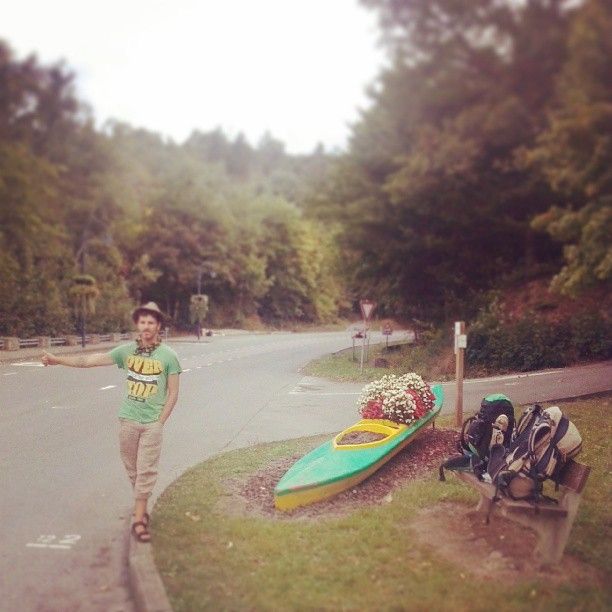
- Brussels (French: Bruxelles, Dutch: Brussel, German: Brüssel)
- Antwerpen (French: Anvers, Dutch: Antwerpen, German: Anwerpen)
- Brugge (French: Bruges, Dutch: Brugge, German: Brügge)
- Gent (French: Gand, Dutch: Gent, German: Gent)
- Hasselt (idem)
- Leuven (French: Louvain, Dutch: Leuven, German: Löwen)
- Oostende (French: Ostende, Dutch: Oostende, German: Ostende)
- Liège (French: Liège, Dutch: Luik, German: Lüttich)
- Charleroi (idem)
- Namur (French: Namur, Dutch: Namen, German: Namur)
- Mons (French: Mons, Dutch: Bergen, German: Mons)
- Arlon (French: Arlon, Dutch: Aarlen, German: Arlon)
- Louvain-la-Neuve (idem)
Food & Toilets
The price of food on motorway services is very high, so try to stock up before leaving and note that very few motorway services have free toilets. The price (usually between EUR 0.30 and 0.70) sometimes includes a voucher that can be used in the restaurant. However, it is easy to jump over the barrier and use the toilet for free. The cheapest supermarkets in the country are Lidl, Aldi and Colruyt, and food bought in them will be significantly cheaper than on motorway services. Carrefour and Delhaize are more expensive options, but are extensively located downtown with longer opening hours (Often 20:00, but not all of them!) which will offer better prices than the convenience stores. Note that in Belgium most shops close at 18:00 and very few shops are open on Sundays.
There are few free public toilets around, and you might even be charged in places like McD's. It is best to avoid the tourist areas when looking for a free toilet and aim at the less obvious places such as big chain hotels (Radisson...), public buildings (libraries and schools) and some cafés where you can use the toilet without being spotted by the staff who might request you to pay a fee up to 50 cents, although many will allow you to use the toilet if you ask them in English!
Belgium is famous for its frietkoten. These are small restaurants or stands that sell French fries (a Belgian dish mind you! Protip: Make sure you don't call them French fries, but just fries. Because some will lecture you about fries not being French.) and all sorts of snacks for relatively low prices. It's not very healthy, but for EUR 5 you can have quite a big meal which is bigger & cheaper then McD's. Every village has a frietkot, and every city has at least one in every neighborhood.
Also make sure you try out the beer. Belgians have the most and best types of beer in the world, and often it'll be cheaper then water or soda.
Personal Experiences
Links
Facebook group Hitchhiking in Belgium and the Netherlands
Netherlands
Edit on wikiThe Netherlands are a member state of the European Union as well as the Schengen Agreement.
Hitchhiking
Asking the Dutch people at a service station is faster than waiting while using the thumb for hitchhiking.
Hitchhiking is fairly common in the Netherlands you can regularly spot people hitchhiking to travel, some also hitchhike as a freetime activity.
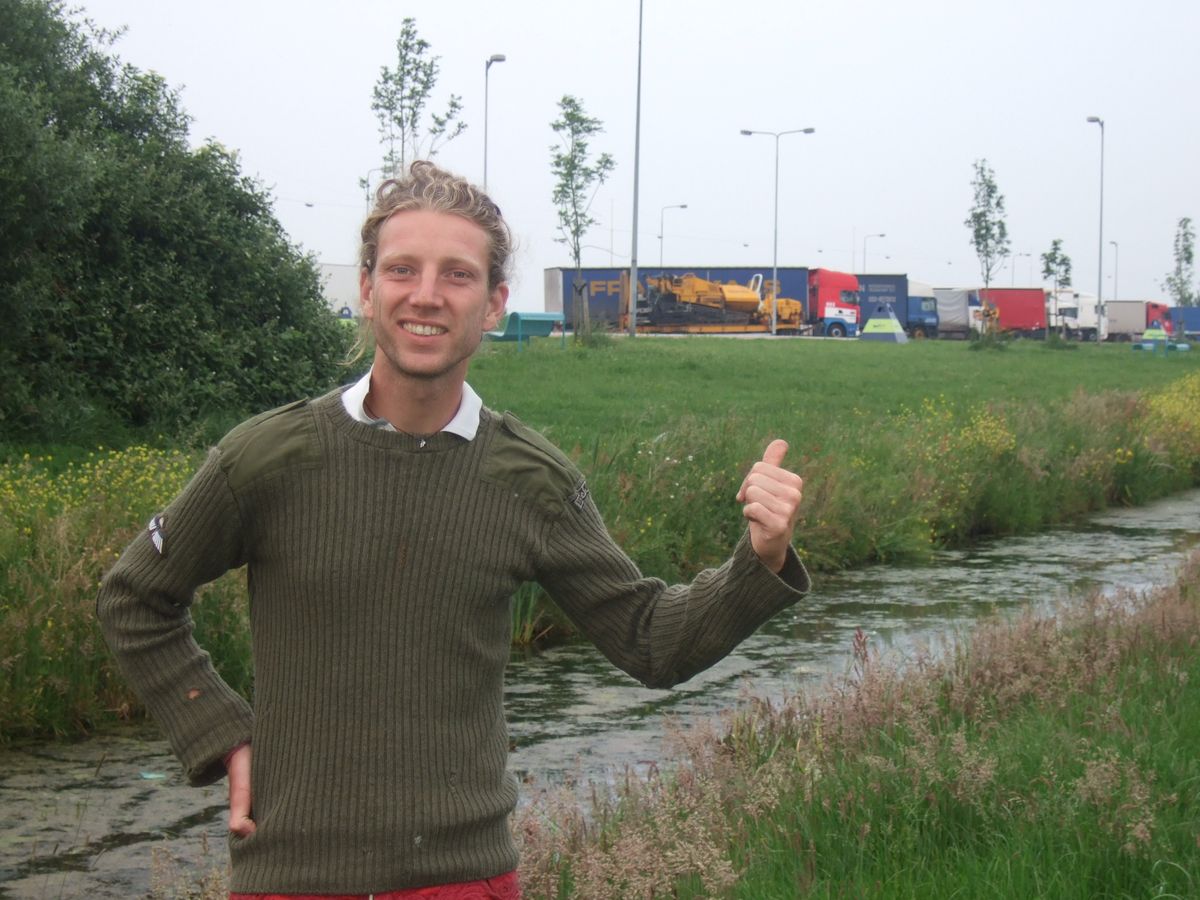 Since 1991 Dutch students have a card providing them with free public
transport (either on weekends or during the week), so hitchhiking is not
as popular as it used to be. In some university towns there are still
liftershaltes, which are official hitchhiking spots.
Since 1991 Dutch students have a card providing them with free public
transport (either on weekends or during the week), so hitchhiking is not
as popular as it used to be. In some university towns there are still
liftershaltes, which are official hitchhiking spots.
Other good places are petrol stations along the motorways and the entrances to the motorway from larger cities (when there is a stopping space such as an emergency lane). On such a place the usual waiting time is 5–45 minutes (same as Germany). A major difference with Germany is that many lifts are not longer than 50 km.
At petrol stations you should definitely try to talk to people, which will probably work out fine if you don't dress up like a hippie. Many people will not stop their cars if you stand with the board but will take you if you ask them in person (which is a general hitchhiking principle). Try to speak in Dutch or English. French and German often work too, but not as effectively. Most likely the Dutch people will avoid you while speaking in German. In the Netherlands, there are as well a lot of seasonal workers and immigrants. There are particularly a lot of people from Poland and Bulgaria. Thus, it is fairly easy to get a lift for instance straight to Poland if you know the language or are communicative enough to sway Polish people to take you.
Sometimes the petrol stations workers tell you to not ask people in front of the shop directly. You can then hitch at the exit of the station which is mostly just as good but as its disadvantages of course.
Legality of Hitchhiking
Dutch law says nothing about hitchhiking, so it is legal wherever you may lawfully be on foot. Article 42 of the Reglement verkeersregels en verkeerstekens (RVV 1990) permits use of an autosnelweg only to drivers of motor vehicles that may and can travel at least 60 km/h — 50 km/h on an autoweg — which keeps pedestrians off the carriageway, the hard shoulder and the slip road past the blue sign. The useful part is in the definitions: article 1 states that parking places, petrol stations and bus stops lying alongside a motorway are not part of it, so standing at a motorway tankstation or verzorgingsplaats and asking drivers is straightforwardly legal. Article 43 also forbids drivers to turn round or reverse on a motorway, so nobody can come back for you once they have passed. On every other road, stand where a pedestrian may stand — off the carriageway, on the shoulder or the verge — and thumb.
The basic idea is that when you're allowed to walk somewhere, you can stand there for hitching too. Standing on a motorway entrance just in front of the motorway sign is allowed as well as standing on a petrol station along the motorway.
Useful tips
- Download and print 42 ready made hitchhiking signs for easy hitchhiking all across the Netherlands!
- Use of Internet PCs in every city library, for a small price. Also you can find lots of public wi-fi networks that you can connect your laptop with for using the internet.
- The system to pay for public transport is called OVpay. You can check in with either an OV-chipcard wich you can buy at a ticketmachines, or a contactless debit or credit card, or a mobile phone linked to a contactless payment system. All expenses of one travel day are taken of your account on the next day. If you've checked in but not checked out 20 euro will be taken out.
- Banks and supermarkets often have free coffee and sometimes even cookies.
- 'Lefier' (or local job-centres) have free coffee and sometimes jars of free chocolates and mints.
- Some employees of petrol stations may tell you not to hitch in front of the station, where the pumps are. Finding a ride at the parking lot, or thumbing where the back of the station starts is not a problem. Keep petrol station employees for friends and avoid starting unnecessary discussions.
- Shell has internal guidelines to only allow customers on their property. A hitchhiker may therefore be asked not to talk with drivers in the forecourt of the station, but this rarely happens. If this happens, buy a coffee or inexpensive whatever-bar, and ask for the receipt. This will formally make you a customer!
- :
-
Dutch Hall of Shame of petrol stations where hitch-hikers have been asked not to talk with costumers on the forecourt
-
Service station Kloosters (Shell), A59, Tilburg --> Eindhoven (Fverhart was asked once out of 4 times), other hitch-hikers have also been asked not to talk with costumers Winner of Most Unfriendly Petrol Station Award in the Netherlands
-
Service station Swentibold (Shell), A2, Maastricht --> Eindhoven (Fverhart was asked once out of 6 times)
-
Service station Haarrijn (Shell), A2, Amsterdam --> Utrecht (Fverhart was asked once out of 7 times)
Links
- Facebook group Hitchhiking in Belgium and the Netherlands
- Hitchhiking in the Netherlands, by Frank Verhart.
- Nederland Lift, campaign to promote hitchhiking as a daily means of transport.
- Survey about hitchhiking in the Netherlands
Personal Experiences
I hitch hike a huge amount in the Netherlands and it is almost always successful. As stated above, managers in petrol stations sometimes ask you to leave the main forecourt. This has been happening with increasing frequency to me at Shell stations in particular, but I have not experienced this at any other petrol company (they are usually more than happy if I politely ask where I could stand without being a nuisance)
Having had 307 rides from Dutch motorway petrol stations, I have been asked not to talk with drivers on the forecourt three times (at stations operated by Shell). Much more often I have gotten positive gestures from employees and occasionally they offered me a drink, a snack, a ride (!) or cardboard. Staff in Germany is definitely friendlier though.… Respect and politeness are keywords.
I hitchhiked from Amsterdam across the German border to Osnabrück in one day, meeting a lot of incredible Dutch people. Sometimes I waited less than one minute, others I waited for two hours. I had better luck on shoulders of ramps and on local roads than at petrol stations, many people at petrol stations did not want to hear it. Many people bought/offered food. I was also hitchhiking on a holiday (King's Day) which may have made my luck worse.
Amsterdam
Edit on wikiRoadside hitching spots go stale. For current places to hitch in and out of this city, use maps.hitchwiki.org and the live Hitchwiki page linked at the end of this chapter. This book keeps general orientation, not a pin gazetteer.
'''''' is the capital of the Netherlands.
Boats
It is very possible to hitchhiking a boat around the Amsterdam canals. Just sit next to the water and thumb and eventually someone will stop. This is more aimed at sight seeing than getting somewhere specific, but more worth it than paying for the touristy ones.
Public transport
Public transport in Amsterdam is very expensive. Most people use a card called OV-Chipkaart which works with all public transportation in the country, but that you won't have if you don't live in the Netherlands. Thus if you just want to get across the city you're better off using a 1-hour ticket which costs a whopping €3.20. If you don't want to pay that much, here's a little guide to Amsterdam public transportation:
- Trams are for the most part a no-go, since you have to climb in the front or in the middle, thus in the sightline of the driver/controller who will look if you're validating your ticket/card. Lines 5, 19 and 24 have newer trams, which don't have an office thingy in the middle like the older ones, so you can just board way in the back and you should be fine.
- The metro is very easy to blackride: just go behind someone at the gates (preferably asking them first). Controllers are quite rare. The metro system is quite limited in its coverage but can easily get you to some main spots like Sloterdijk and Amstel Station.
- If you're using the train, then use the exact same tactic as with the metro (though you might have more eyes on you...). The train sees more ticket control than the metro though it's still not very frequent, especially not on the Sprinter trains (the single-decker ones).
Luxembourg
Edit on wikiLuxembourg (in Luxembourgish: Lëtzebuerg) is a small country in Western Europe, bordered by Belgium, Germany and France. It is a member state of the European Union as well as the Schengen Agreement.
Most people speak not only the local language, Luxembourgish, but also French, German and English fluently.
Hitchhiking
Luxembourg is a great country to catch a long distance ride, due to its central location in Europe. Many drivers stop here to take advantage of the low duties on fuel, alcohol, and chocolate. Most motorways leaving Luxembourg have a large service area which are the best places to get ongoing lifts. However, much of the traffic are drivers coming from just a few kilometres over the border in order to get cheaper fuel. Therefore, for a long distance ride, it may be wise to have a sign specifying your direction and destination or simply to preselect the drivers according to the registration of their car in order to have a less frustrating experience.
Especially Aire de Capellen Sud is great. guaka (talk) has found direct rides to Avignon, Valencia and even Morocco, with waiting times of less than 1 hour.
Local hitchhiking in the countryside of Luxembourg is somewhat less straightforward as hitchhiking is not so common by local inhabitants.
Public transportation (busses, trains and the Luxembourg (City) tram is entirely free in Luxembourg, except for first class seats on trains. The free public transport and the low chances of locals stopping for you makes it best to simply take a bus towards one of the petrol stations on the motorway when going further away out of the country.
Legality of Hitchhiking
The law here has not been checked. Nobody has yet read the road traffic rules in force in Luxembourg against the official text, so this section cannot tell you what they say, and nothing elsewhere on this page should be read as a statement of the law. What holds almost everywhere is that hitchhiking is not an offence in itself and that what the traffic code regulates is where a pedestrian may stand — off the carriageway, and off motorway-class roads and their slip roads altogether — but whether that is true here is simply unknown. Ask locally before standing on a major road, and treat the rest of this article as what hitchhikers report rather than as a rule you can rely on. If you can read the official text, please replace this paragraph with the provision it turns on and a link to it.
Living
Luxembourg is a very expensive country. Restaurants and accommodation are expensive. The cheapest youth hostel in Luxembourg City will be EUR 20 per night. Luxembourg has a huge financial sector - many banks, insurance companies etc. As an anti-capitalist you may feel a little cold there;)
Personal experience
August 2016
We (a couple - man and woman) traveled for more than a week in Luxembourg, almost all by thumb. No difference between TO the capital Luxembourg_(City) or OUT of it. We got a lift always in less than 15 minutes, even after sunset. Twice, even when we were three. Lovely green country with many beautiful landscapes and very nice people.
Germany
Edit on wikiGermany is a member state of the European Union as well as the Schengen Agreement.
Hitchhiking
It is a great country for hitchhiking, both on motorways (via on-ramps, service stations, more seldom - parking lots) and local roads. Germans are a little bit suspicious, but nice if you get to know them. Thumbing makes it easier for them to say "no", because they do not even have to look at you. Those who will stop are often people who hitchhiked themselves when they were younger. Many of them have families, jobs and fast cars now. Because of the absence of speed limits on many motorways it's a good country to hitchhike long distances in short time.
Hitchhiking is fairly common in Germany you can regularly spot people hitchhiking to travel, some also hitchhike as a freetime activity. Germany has the most active landscape of open-to-all and free hitchhiking races and some of the longest standing and biggest races such as Tramprennen and Tramprally.
In Germany you can find official hitchhiking spots mostly in the form of benches ("Mitfahrbank") in rural areas.
Legality of Hitchhiking
Hitchhiking as such is not regulated by German law and is legal on ordinary roads; what the law restricts is where you may stand. § 18(9) of the Straßenverkehrs-Ordnung (StVO) forbids pedestrians to set foot on an Autobahn at all, and lets them cross a Kraftfahrstraße only at junctions or other places provided for it — that covers the carriageway, the hard shoulder and the on-ramp beyond the blue motorway sign. Drivers cannot legally pick you up there either, because § 18(8) StVO bans stopping on the Autobahn, hard shoulder included. So thumb on the on-ramp before the blue sign, or ask people face to face at a Raststätte, Autohof or Rastplatz, which is where hitchhiking on the motorway network actually happens. Service stations are leased businesses and the operator has Hausrecht over the forecourt, so they may send you off it — the parking area is then the place to stand.
Just like other people, police may or may not be friendly towards hitchhikers. It is said that police controls are more frequent in the southern states of Bavaria and Baden-Württemberg. As a foreigner you have to carry your passport at all times; a national ID card is sufficient if you are from another EU country. If you are being checked, be friendly, show it to them and they will leave you alone.
Road types
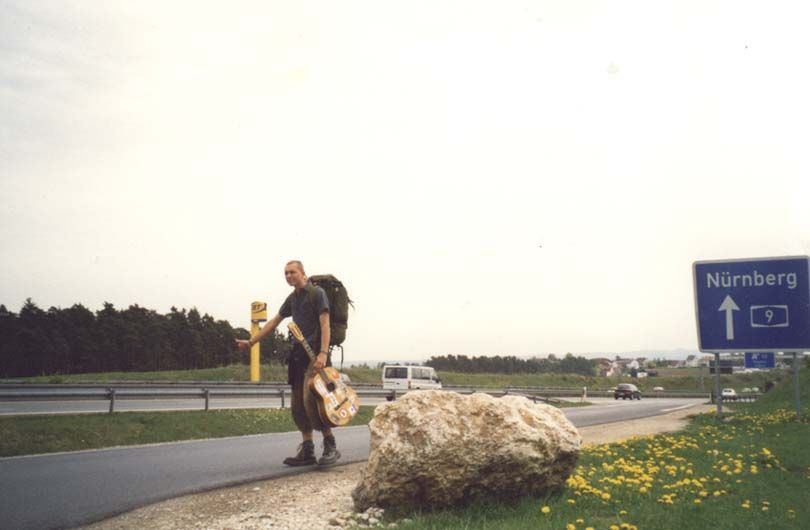 To hitchhike
efficiently in Germany it is good to know the three different kinds of
roads between cities and towns. By descending speed these are:
To hitchhike
efficiently in Germany it is good to know the three different kinds of
roads between cities and towns. By descending speed these are:
- motorways or expressways called Autobahn with no general speed limit (there can still be signs with speed limits)
- federal roads called Bundesstraße
- country roads called Landstraße
Their use in hitchhiking is different and explained below.
Autobahn
For more information, see the article Autobahn.
The autobahns in Germany are the fastest links between cities. Their numbers consist of an A and the number of the highway. On traffic signs the A is not mentioned but they can be distinguished by the blue colour of the sign. The autobahns in Germany are the fastest links between cities. Their numbers consist of an A and the number of the highway. On traffic signs the A is not mentioned but they can be distinguished by the blue colour of the sign.
The lack of a general speed limit is something most Germans are proud of demonstrating to you and what makes them the best choice for longer distances. Subsequently walking and hitchhiking is illegal on the autobahn and the emergency lane.
As a general rule, you should always stick to the Autobahn as long as possible and try to change between major autobahns as little as possible, even if this means some detours. As soon as you are on the Autobahn and travel between service stations, you are hitching fast and reliable. For more information about this kind of hitchhiking, see the article on petrol station hitchhiking.
As trucks do not travel faster than 90 km/h you might want first try to get a ride hitching a personal car before asking truck drivers. Trucks are great for a night-ride; however, there are restrictions, like in France, of when trucks are allowed on an autobahn. In Germany most trucks aren't allowed on motorways on Sundays or public holidays before 22:00. As most truck drivers stop earlier truck traffic already gets less on Saturday afternoons.
If you travel a specific autobahn, have a look at the autobahn page where you can find very specific information and hints about hitchhiking on German motorway ramps, etc. - for example, the route Amsterdam–Berlin along the A2 and A30.
Getting onto the autobahn
To get onto the autobahn either hitch a ride from a city, thumb at the on-ramp before the sign or go to a service station by public transportation and walk there. A good possibility is to look for a street with traffic lights that leads to an autobahn. Wait for the red light, then knock at the windows (do not forget to smile!) and ask for a ride. If you look neither like a homeless nor like a drug dealer, they will be happy to help you.
Service stations and rest areas
You have various possibilities for being dropped off along the autobahn to look for your next ride. As petrol station hitchhiking is faster, try to avoid being dropped at on-ramps where you have to thumb. On the autobahn, it is preferable to be dropped off at a service station instead of a rest area as rest areas have much less cars stopping.
The Raststätte is the usual choice for hitchhiking because most cars tend to refuel there. Make sure your Raststätte has not just a restaurant but also a petrol stations because more people stop there and they leave quicker. Most Raststätten are on both sides of the autobahn and there is often a bridge or tunnel nearby to cross. Therefore you might consider hitchhiking to a Raststätte in the opposite direction first to get onto the highway quicker. At the entrance of the petrol station shop there are usually map stands that show the surrounding area and other service stations in Germany. The Raststätte is the usual choice for hitchhiking because most cars tend to refuel there. Make sure your Raststätte has not just a restaurant but also a petrol stations because more people stop there and they leave quicker. Most Raststätten are on both sides of the autobahn and there is often a bridge or tunnel nearby to cross. Therefore you might consider hitchhiking to a Raststätte in the opposite direction first to get onto the highway quicker. At the entrance of the petrol station shop there are usually map stands that show the surrounding area and other service stations in Germany. With a few exceptions all service stations can be entered by foot from the side and feature an unlocked door in the fence or wall.
The off-autobahn Autohof is a local fuel station that is marked on traffic signs on the autobahn. Food and fuel is cheaper there but most car drivers don't bother and thus mostly trucks stop there. This means that they are okay on weekdays but have to be avoided on Saturday evenings and Sundays at all cost. Another disadvantage for continuing on the autobahn is that local traffic also stops at the Autohof.
Federal Bundesstraße roads
The federal Bundesstraße roads are indicated by yellow signs and carry numbers like B6 or B49. Like in the case of the autobahn the B is not written on traffic signs, but federal roads can be distinguished by the yellow colour of the sign. As they are smaller and carry more local traffic they should only be used to get from and to the autobahn, though there are a few exceptions to the rule. The federal Bundesstraße roads are indicated by yellow signs and carry numbers like B6 or B49. Like in the case of the autobahn the B is not written on traffic signs, but federal roads can be distinguished by the yellow colour of the sign. As they are smaller and carry more local traffic they should only be used to get from and to the autobahn, though there are a few exceptions to the rule.
Their general speed limit is 100 km/h and they usually have no emergency lane so they are difficult to thumb. To get a ride either try petrol stations or choose a place where have a lot of space to see you and stop or where they are going slower, e.g. town exits. Police might consider it illegal to thumb in sites where cars cannot stop without putting the traffic in danger.
To make it more complicated some of the Bundesstraßen are a so called Kraftfahrstraße. For them most of the Autobahn-rules apply (e.g. no pedestrians and bikes allowed). You can recognise a Kraftfahrstraße by the sign of a white car in front of a blue backround. To make it more complicated some of the Bundesstraßen are a so called Kraftfahrstraße. For them most of the Autobahn-rules apply (e.g. no pedestrians and bikes allowed). You can recognise a Kraftfahrstraße by the sign of a white car in front of a blue backround.
Smaller federal Landstraße roads
These roads are not numbered on traffic signs and usually connect minor towns. As most of them have lower speed limits thumbing is likely to work. As they might not have a lot of traffic coming through they should only be used for getting from and to you final destination.
The Ruhr area warning
When hitch hiking towards and from Belgium, be carreful passing the Ruhr area (Dortmund, Essen, Duisburg). Once you get in, it's difficult to get out. Raststättes are rare and passing traffic avoids this region. We tried on several places and had to take the train to pass this area (lost 5 hours). There are sufficient work arounds to avoid this area. See also the hitchwiki page of the Ruhr Area.
Car registration/number plates
You can determine where a car is registered by its number plates. While tehre are certain plates on rented cars. (Europcar has „HH” (Hamburg), Avis – „EU” (Euskirchen), Sixt – „M” (Munich), Hertz „DN-H” (Düren)), other plates are associated with areas - DE, EN. The first letter is usually the district where it is registered. In addition, there is a little patch beside the number which tells you what state that number plate belongs to, which is useful if you do not know the district letters.
License plates
There are between one and three letters on a license plate which show the city or region where the car is registered. For example, look for license plates starting with B if you're hitching to Berlin. Have a look at the articles on Wikipedia for more information: German car number plates (in English) and Liste der Kfz-Kennzeichen in Deutschland (in German).
Note that it is no longer required to change plates if you move, so a HH (Hamburg) car may very well belong to someone living in München (M). At the moment this is not yet a big problem, but in due course it may lead to the situation that license plates become as useless as those in many other countries for determining the direction a car might be going...
Maps
Recommended maps for Germany are listed in this article. You can easily hitch through Germany with just a map that has all service stations along the Autobahn on it. There are maps at many service stations in a little free booklet which are quite misleading, they do not contain all service stations, just the ones belonging to one of the big companies running them. For a good map to print out and bring with you that has all the service stations on it have a look here: Rastekarte. This is the same one you will find at the service stations as big overview maps, more often than not those can be nicked very easily as well.

On the website: www.autobahnatlas-online.de you can find detailed listings of all Autobahnen, with all drive-ups, interchanges, all types of rest stops, tunnels, and bridges along their ways, with exact kilometer allegations. This comes along handy when hopping from station to station.
For those using offline mobile apps CoMaps / Organic Maps / Maps.ME, you may download a.kml file with all the service plazas for viewing on your map offline. Considering Germany is extremely well mapped on OpenStreetMap, these locations can be assumed to be very accurate and up-to-date. You can view the data extract here and click Export > Download as KML and then open the.kml file on your phone to be loaded into your maps app.
Language
Despite German being the major language, (with over 95% of the population speaking it as a first language 1) you will find that many Germans speak English or French as a second language. Other common languages in the country are Turkish, Russian and Arabic.
Learning to speak German
The basic hitchhiker needs can be satisfied by a look at the phrasebook here.
When asking your drivers for help it pays off to know that the German word Straße for street contains the weird letter ß which looks a bit like a B. If you pronounce it like an s Germans will understand you. Contrary to popular belief the diacritics on Ä, ä, Ö, ö, Ü and ü are not metal umlauts and thus they do affect pronunciation. If in doubt try to pronounce the word as if the diacritics didn't exist. For instance, if you pronounce the city Würzburg as Wurzburg you will probably be understood.
Personal Experiences
Summer 2022
I am from this place. Just by living here you can regularly see people on highway on-ramps waiting for a lift and many people know some older people who hitchhiked in the past, be it for travel or for commute in more rural parts of the country. On-ramp and petrol station hitchhiking is fairly simple here and also worked for me in the dark.
Useful links
- Comprehensive guide about hitchhiking in Germany by Korn on https://warmroads.de
- Overview of autobahns in Germany

Berlin
Edit on wikiRoadside hitching spots go stale. For current places to hitch in and out of this city, use maps.hitchwiki.org and the live Hitchwiki page linked at the end of this chapter. This book keeps general orientation, not a pin gazetteer.
'''''' is the capital of Germany. The city has served as a starting point for the Tramprennen in 2024.
For Scandinavia bound hitchhikers
Direction Denmark: The ferries leave 15 km north of Rostock at Warnemünde and from Puttgarden, from Berlin generally people head for the ferry at Rostock but it leaves more seldom, and if you are offered the right ride you could go to the Puttgarden one instead, which is a good option especially if you are only transitting through Denmark to Sweden seeing as on the Rostock - Gedser ferry there is very little Sweden bound traffic.
Direction Hamburg-Stillhorn: If you can get a ride to this gas station you can walk under the highway and hitchhike the other direction towards Lübeck - however, only people living in the southern part of the city are likely to pass by here. Direction Lübeck: It is possible to accept a ride either to Lübeck or to the Neustadt gas station just north of the city (but that is more rare). In case you can get dropped off at the onramp leading out of central Lübeck in direction Neustadt, wait for a ride that will take you at least to the gas station 10 km north.
Direction Århus: You can also accept a ride towards Flensburg and some hitchhikers have even been known to accept such rides and then going to Copenhagen through Kolding and Odense. Also it is possible to reach both South western Norway with the ferries from Hirtshals (Hitchable??) and Göteborg, Sweden with the ferry from Fredrikstad.
Direction Sweden: You can also head for one of the direct ferries to Trelleborg, leaving from either Rostock or Travemünde near Lübeck. The ferry from Sassnitz on Rügen has been discontinued. Stockholm has a direct night ferry from Rostock 3 times a week running since autumn 2021. Currently they charge per vehicle and passengers so you couldn't join a crew, but passenger tickets go for 28€ so might still be worth it.
Highway 10 (Poland - Netherland)
Far from Berlin - Get off at Rasthof Michendorf (after all the ring interchanges). There is a bridge over the Autobahn nearby so if you are coming even from Poland you can jump over and easily find someone going into the city. Alternatively, you can walk into Michendorf itself, which takes about 30 min. Just head north from the petrol stations (you can go under the Autobahn from the southern petrol station From Michendorf, you can take a train for EUR 3.30 to the centre of Berlin (the ABC ticket, which is valid for 2 hours, so you can also use metro, bus etc. when in Berlin). The last train everyday is at 00:21
Walk to metro - get of at "Wildau" town. Look a highway road sign for Wildau and ask driver to drop you at Chausseestrase enter/exit ramp (same road he can drive out) OR to stop at emergency line. Than ask people for s-bahn station
A115 - Spanische Allee
You can get off at the exit Spanische Allee if your driver takes the A115 passing by Potsdam to get into the city which most people do that are coming from the West. From the station Nikolassee right next to it you can take the S-Bahn to Zoologischer Garten, Friedrichstraße or Warschauer Straße from where you can go anywhere. It is usually faster to do so unless your driver really goes directly into your neighbourhood, because you need more or less the same time by public transport to go anywhere in Berlin from this spot as with the car. Also your driver can easily go off the highway and back onto it.
Public transport
Despite its size and unless going from one edge of an outer suburb to one on the opposite side of the city, going from one point to another within Berlin seldom takes more than one hour. Use VBB.de to find out how to get from one location to another within Berlin and also the surrounding state of Brandenburg. Berlin operates on a fairly simple tariff zone system: Zone A is anywhere within the suburban train ring (Ringbahn / S-Bahn lines S41 and S42), zone B from the ring to the administrative borders of the city, and zone C is a defined area of Brandenburg in proximity to the city (somewhat confined by the terminal stops of the S-Bahn).
As of April 2023, the current prices for a single adult, one-way ticket are: €3.20 (tariff zones AB), €3.80 (tariff zones BC) and €4.00 (tariff zones ABC). There is a plethora of concession, daily, group and other discounted tickets too, check the VBB or BVG website for more information.
The Ruhr Area warning
When hitch hiking towards Berlin from Belgium, avoid passing the Ruhr area (Dortmund, Essen, Duisburg). Once you get in, it's difficult to get out. Service stations are rare and passing traffic avoids this region. We tried on several places and had to take the train to pass this area (lost 5 hours). There are sufficient work arounds to avoid this area. See also the Hitchwiki page of the Ruhr Area.
Austria
Edit on wikiAustria is a member state of the European Union as well as of the Schengen Agreement.
People in Austria speak German (in some parts locally also Slovene, Croatian and Hungarian) but if you are not a German speaker you won't be in big trouble since almost every Austrian speaks at least basic English.
Hitchhiking
It is a good country for hitchhiking, with fabulous views of the surrounding Alps and small lakes. While hitchhiking by motorway you can easily “hop” from city to city - ramps are usually easy to get to and easy to hitch from. Good places are service stations, too. In Austria you can find official hitchhiking spots mostly in the form of benches ("Mitfahrbankerl") in rural areas.
Austria is surrounded by Germany, Hungary, Czech Republic, Slovakia, Switzerland, Slovenia, Liechtenstein and Italy - to any of these countries one can get easily by hitchhiking.
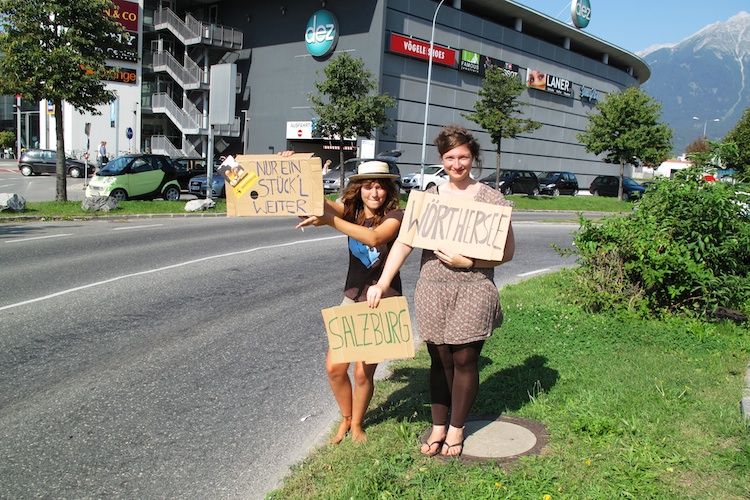
In Austria most motorway service stations serve both directions of the motorway and there is one situated in the junction of the A9 and A1, serving all four directions! This is an overview of features of all motorway service stations along the Austrian motorways.
Legality of Hitchhiking
Hitchhiking is not an offence in Austrian law; where you stand is. § 46(1) of the Straßenverkehrsordnung 1960 reserves the Autobahn for motor vehicles built for more than 60 km/h and states that all other traffic, "in particular pedestrian traffic", is forbidden on it — carriageway, Pannenstreifen and on-ramp alike. The same paragraph makes one narrow exception for going in on foot: at a border crossing or a toll station you may enter the Autobahn for business connected with the crossing. § 46(4)(e) allows vehicles to stop or park only at the places marked by signs, meaning the Rastplätze and Raststationen — which is exactly where you ask drivers for the next ride. On Bundesstraßen and everything smaller hitchhiking is unregulated and legal, so thumb before the motorway sign.
Border crossings
Germany
If you're coming from Germany and plan to come to / pass by Austria, There are two main points to cross the border: Passau and Salzburg
- Most of the traffic going through Passau is heading East to Linz, Vienna, Budapest
- Most of the traffic going through Salzburg is heading South to Trieste, Italy, Slovenia, Balkans
Hungary
- Hegyeshalom-Nickelsdorf border crossing
Regions and Cities
Vienna is by far the country's largest city. Graz is second in size, with 291,007 inhabitants, followed by Linz (206,604), Salzburg (155,031), Innsbruck (131,989), and Klagenfurt (101,303). All other cities have fewer than 100,000 inhabitants.
| Regions | Cities | | |
|---|---|
|
Jumping trains
Hitchhiking in Austria can be very time consuming but blackriding trains often work super good. Check out the train article: https://hitchwiki.org/en/Train#Austria
Links
Austrian Hitchhiking Infoplattform
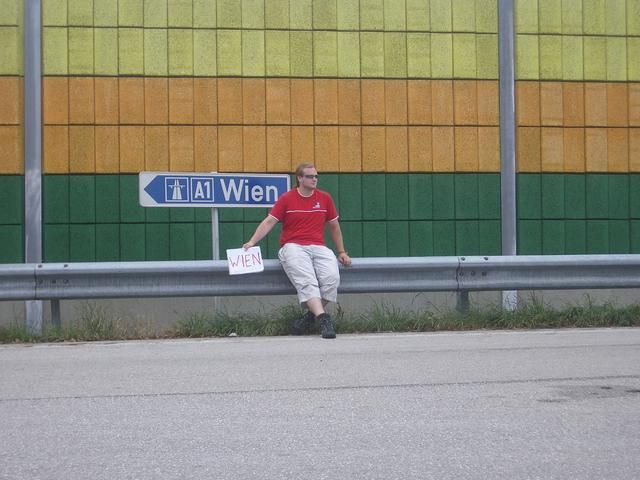
Personal Experiences
july 2026
Austria is, along with Serbia and Denmark, probably the best country in Europe for hitchhiking. I was not optimist that any other country can get close to Ser-Den, but hitching in Austria was true joy! I was getting rides in 5-10 minutes. The only place where I stucked for 2 and a half hours was Graz northern exit as the place is pretty bad. But all over the country - Linz - Wachau - Vienna - Graz - Hallstatt - Salzburg - Werfen - Krimml - Lienz - Villach, it was excellent! I was scared a bit before I went as I heard many negative stories how Austrians are cold and scared and blabla - damn no! Both Austrians and gastarbaiters stop, they are friendly and even take you to city exits many times (extend their own ride). I would give Austria maybe even 5 out of 5, cheers!:)
I was hitchhiking mostly on A1 between Ansfelden and Vienna, with no big difficulties. If you are comfortable talking to the drivers, it's probably the fastest way to approach them at resting areas or gas/petrol stations. After a hike in the mountains or on smaller local roads without public transport your chances of a car stopping for you are very high.
January 2024
hitched from Vienna airport to Kitzbuhel in January 2024, took me 3 days which is a lot slower than expected. Very slow going at the service stations on the highway west of Graz and north of Villach, waited at both for more than 10 hrs even though I was well dressed, clean and had ski gear. Once I got to the mountain area it was much easier with average waiting time of 10 mins.
Vienna
Edit on wikiRoadside hitching spots go stale. For current places to hitch in and out of this city, use maps.hitchwiki.org and the live Hitchwiki page linked at the end of this chapter. This book keeps general orientation, not a pin gazetteer.
Vienna (Wien in German, Bécs in Hungarian, Vídeň in Czech, Viedeň in Slovak, Dunaj in Slovene, Beč in Serbo-Croatian) is the capital of Austria. It is in the east of the country on the river Danube. More than 1.6 million people live there. It is the largest city of Austria and is surrounded by the state of Lower Austria. It is also an administrative district (Bundesland) of its own. The city has served as a starting point for the Tramprennen in 2015, 2023 and 2025.
From Vienna Airport all directions Bratislava, Budapest, Brno, Linz or Graz
Vienna Airport is the largest one in the region and many people who are leaving or landing are being dropped or picked up there by their friends or family members. You can find rides in all of the directions by asking the drivers there according to their license plates. Departing travelers are often dropped at the Abflugstrasse above the ground floor of the terminals, arriving travelers are picked at the Kurzparkplatz in front of the arrival hall. Chance of getting such ride might be better at the Abflugstrasse as the driver going back has free place, but the with the arriving ones you will surely hear fresh travel stories.
Public transport
It is possible to ride the subway, bus, and tram system with no ticket, though at your own risk. Buses and trams are almost never controlled (except night buses and in the first month of each semester, e.g. October and March), but checks on the metro are rather frequent. Also they check trams around center.The fine is EUR 103, but foreigners can give a fake address in their home country and avoid paying.
The Wiener Linien themselves provide information on where their ticket inspectors are riding on any given day (https://www.wienerlinien.at/web/wiener-linien/kontrollen). It is unsure how reliable this information is, so be careful anyway.
Another website where the passengers tell of where and when they have seen controllers is http://schwarzkappler.info/, with information for major Austrian cities and some German cities as well, with Facebook and Twitter pages.
Sleeping
Switzerland
Edit on wikiSwitzerland is a landlocked country in Western Europe it is officially part of the Schengen Area.
In Switzerland people speak four different indigenous languages, depending on the area you are hanging around: German in the north and east, Italian in the south, French in the western part of the country, and Rhaeto-Rumantsch, which is derived from Vulgar Latin, brought by roman soldiers two millenia ago in the mountains of eastern Switzerland.
Hitchhiking
The Verein Autostop Schweiz organizes the Swiss Autostop Championship yearly since 2014 from Fribourg.
There is a large percentage of foreigners, as well as many tourists. Most people will be able to understand some English (most young people speak it well).
Hitchhiking works very well in Switzerland, especially in the mountain regions and small country roads, where it is quite common to pick up hikers and hitchhikers. It is also quite easy to get lifts with truck drivers from Germany to Italy and back. Thre are not that many service stations along the highways, and some are not open 24 hours. In Switzerland you can find official hitchhiking spots mostly in the form of benches ("Mitfahrbänkli") in rural areas.
Legality of Hitchhiking
Swiss law contains no rule against hitchhiking, only against being on foot where the motor traffic is. Article 43(3) of the Strassenverkehrsgesetz (SVG, SR 741.01) provides that on roads reserved for motor vehicles — Autobahnen and Autostrassen — only the vehicle types the Federal Council names may drive, and that "entry is prohibited, access being permitted only at the places provided for it". Going in on foot is therefore out: no thumbing on the carriageway, the hard shoulder or the on-ramp past the green motorway sign, and no walking into a service area from the road behind it. Being dropped at a Raststätte and asking drivers there is the normal and lawful way to move along the motorway network. On every other road hitchhiking is legal and unregulated.
Hitchhiking at the border
Since in not legal to hitch on motorways (petrol stations are allowed though), you should avoid to get dropped at the border. If you're hitchhiking with a truck driver into Italy, he'll maybe need to stop at the border before driving on - but ask him not to say that you're a hitchhiker since the border police might tell you to leave the truck and drive you to the bus station instead.
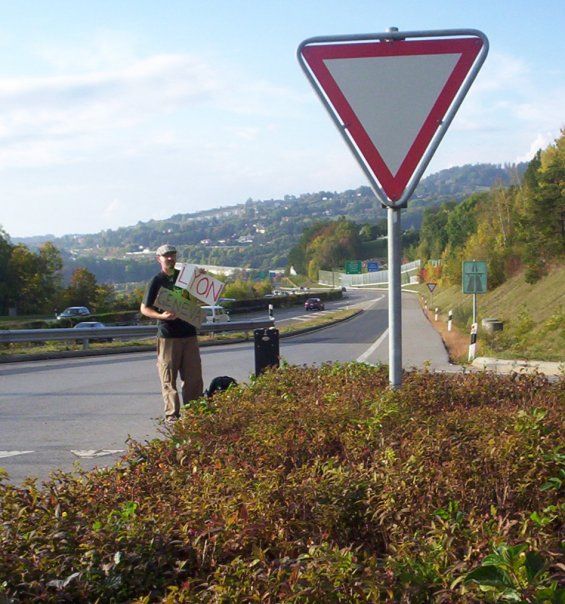
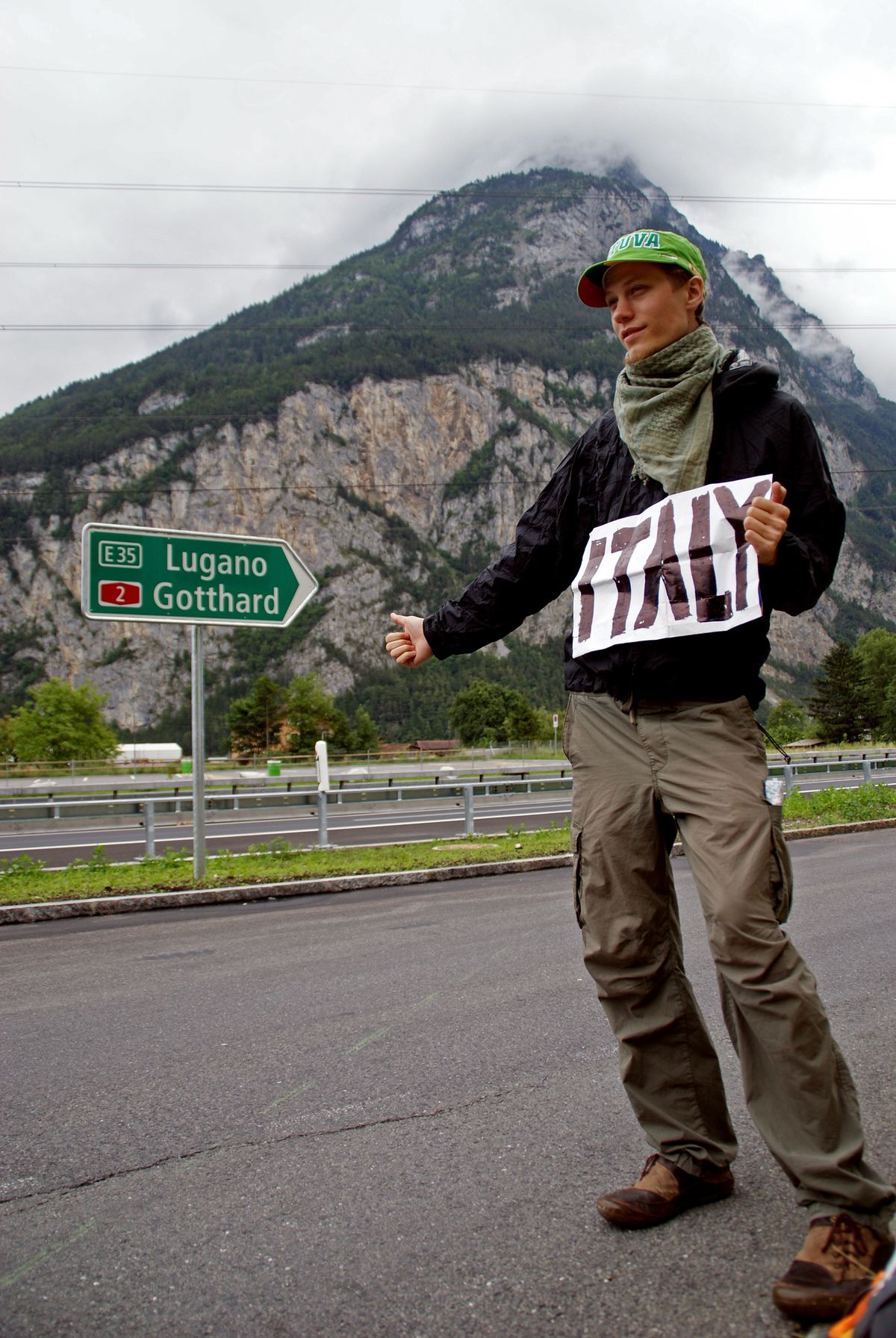
Cities
- Bern - the capital
- Basel
- Bellinzona
- Biel
- Chiasso
- Duedingen
- Fribourg
- Geneve
- Lausanne
- Luzern
- Marly
- Neuchâtel
- Solothurn
- St.Gallen
- Winterthur
- Zürich
Camping
In Switzerland, everybody is legally allowed to use pasture and woods to a certain extent, including camping. The same goes for agriculturally not usable space such as public bodies of water, rock, snow or ice.
Sometimes its good to let locals know that youre camping next to their property. If someone reacts bad, just ask another person or people who are on a walk.
Highway petrol stations
If you type the name of the petrol station in Google Maps you will find where exactly it is. This makes it much more comfortable to hitchhike.
External links
- You can find a nice online map at http://map.search.ch, including zoom, service stations and integration with the Swiss railways.
- Service Stations in Switzerland
- Taxito is a local ridesharing service that exists in some municipalities.
Personal Experiences
January 2024
hitched from Austria/Switzerland border to Zermatt in January 2024. The German swiss area was easy going with waits averaging 10 mins. Once I got to the French side west of Interlaken it got more difficult. What seemed like possible to do in a day turned into 3 as the French-Swiss weren't interested in picking me up, was mostly foreigners, and long waits.
Hitchhiked from Zurich south toward Italy, met an incredible old Swiss man who drove out of his way to show me his village and talk to me of the way he was raised, his relationship with the mountains. He even let me off at a perfect spot, shaded from the rain headed the right direction on the Autobahn, but I was stopped by police under a bridge because it was a "no pedestrian zone." They didn't fine me, but told me where the local train station was. I chickened out and took the train the rest of the way to Italy.
Liechtenstein
Edit on wiki
Liechtenstein is a tiny country in Western Europe, surrounded by Austria and Switzerland. It is a member state of the Schengen Agreement. People speak German.
Hitchhiking
There is no motorway in Liechtenstein, but the A13 in Switzerland is within walking distance from any point in the country. It goes down to Bellinzona and merges into the A2 towards Lugano and Italy.
Liechtenstein was the destination of the Abgefahren Hitchhiking Race 2009.
Legality of Hitchhiking
Liechtenstein has its own Strassenverkehrsgesetz, closely modelled on Switzerland's but not identical to it, and hitchhiking is not an offence under it. The difference that matters to you is that there is no motorway in the country and no motorway chapter in the law — the word Autobahn does not occur anywhere in the SVG of 30 June 1978, so unlike in either neighbour there is no class of road you are shut out of. What governs you is article 45: pedestrians must use the pavements, and where there are none they keep to the edge of the road, walking in single file where particular dangers require it. The same article tells you to keep to the left edge unless special circumstances prevent it, namentlich ausserorts in der Nacht — especially outside built-up areas at night. The real constraint here is geography rather than law: the country is some 25 km end to end, and the motorway you actually want is the Swiss A13 or the Austrian A14, where those countries' rules take over.
Hitchhiking out
South towards Bellinzona, Lugano, Italy
Option 1
If you want to hitch out of Liechtenstein, try to go to to the service station Rheintal between the ramps Buchs and Sevelen. It doesn't matter at which ramp you are, it's possible to walk along the bicycle path along the river to get directly to the service station. The on-ramp Sevelen is also pretty good to hitchhike a short ride to the petrol station.
Eastbound/Northeast Bregenz, Ulm, München
Option 1
Take bus number 11 from Vaduz to Feldkirch (rarely controlled, leaves twice an hour). In Feldkirch get off at Rappenweg (Tisis) and walk back to the Agip service area (everyone who goes to Austria will take petrol here and not on the Liechtenstein side - it's cheaper here). Alternatively get off at the border (custom control) - cars have to get slow there, so perfect to catch a ride to Bregenz and Germany.
Personal Experiences
Denmark
Edit on wikiDenmark is a country in Northern Europe. It is a member state of the European Union as well as the Schengen Agreement.
Hitchhiking
The Hitchgathering/2019 was hold here.
Literally all drivers speak English, but especially in the western and southern part people are often able to speak German as well. Most drivers are very friendly and hospitable. In Denmark you can find official hitchhiking spots.
When hitching on slip roads to the motorway, people rather stop if you are at the top of the slip road than at the bottom of it. This is due to the fact that it is illegal to walk as a pedestrian on the highways (behind the green highway signs). Handily, most ramps in Denmark have plenty of space for cars to stop.
There was a hitchhiking project done in 2006 called The Search for Danish Mentality, and in 2007 there was a follow-up called The Search for the Commons.
Legality of Hitchhiking
Denmark has no law against hitchhiking, and on ordinary roads it is legal. § 44 of the færdselslov restricts traffic on a motorvej — and expressly on its entry and exit roads — to motor vehicles that can and may travel at at least 50 km/h, which leaves a pedestrian nowhere lawful on the motorway, its hard shoulder or its slip roads. § 46(2) forbids stopping or parking anywhere on a motorway other than the signposted parkerings- and rastepladser, excepting only a stop at an emergency telephone, and also bans turning and reversing there. So the rest areas and their petrol stations are where you ask drivers, and they are the only places one may legally stop for you. Thumb from the on-ramp before the motorway sign, and on hovedveje and smaller roads from the shoulder, freely.
Hitchhiking car ferries
Generally, hitchhiking ferries in Denmark is easy and fun, since most people know about this 'paying per vehicle' thing. It is also possible to hitchhike ferries to a lot of smaller Danish islands, which otherwise are not accessible.
Here's a list of easily hitch-able ferry connections:
- Odden <-> Århus
- Odden <-> Ebeltoft
- Gedser <-> Rostock (Germany)
- Rødby <-> Puttgarden (Germany)
- Helsingør <-> Helsingborg (Sweden)
- Esbjerg <-> Fanø
- Kalundborg <-> Ballen (Samsø)
- Als <-> Fyn (Bøjden/Fynshav)
- Ystad (Sweden) <-> Rønne (Bornholm)
- Køge <-> Rønne (Bornholm)
- Sassnitz (Germany) <-> Rønne (Bornholm)
- Spodsbjerg <-> Tårs (Langeland/Lolland)
At other connections you pay per person, however, it might be possible to hitchhike a truck (no experience, anybody else?).
Directions
Århus to Copenhagen - Copenhagen to Århus
When going between the two biggest cities in Denmark, almost all hitchhikers choose to go by the car ferry between Sjællands Odde and Århus. Not only will most people going on this distance go all the way to either Copenhagen or Århus, it is also just as fast as hitchhiking over the bridges and twice as fun! It is very easy to hitchhike the ferry from Århus to Copenhagen, since the ferry docks in the city center of Århus.
Hamburg to Copenhagen
From Hamburg to Copenhagen you can hitch to a ferry at Puttgarden and get a ride straight to Copenhagen. If you ask people after they paid the ticket you can cross for free (and save EUR 7). Tickets are per vehicle, not per person.
You can watch a video of a lovely Danish landscape. It was made by amylin in February 2008 when going on a ferry to Denmark.
From Denmark going South
From Jutland
First, hitch a ride to Padborg which is in the South Jutland - it is located just before the border with Germany. There you'll find Denmark's largest truck-stop. Most trucks leaving from Denmark stop there. With some luck you'll find someone going to most destinations in Europe. Ask the drivers while they are getting ready, filling-up or walking from the diner to their vehicles.
From Zealand
First, get a ride to Gedser which has ferry lines to Rostock (Germany), or go to Rødbyhavn which has a ferry connection with Puttgarden (also in Germany, close to Kiel and Lübeck). Most cars heading to the ferry go to Rødby, from where a ferry sails every half an hour. Gedser might be a lot harder to reach than Rødby, also because it's like at the end of the world, and very few locals drive to and from there. So try to locate a good petrol station on the way and look for the right German plates. There is also a big truck stop with a toll office on Falster, close to Nørre Aslev (see map). You can ask truck drivers there - German truck drivers will say, as usual, that it's forbidden to take people on board, so concentrate on trucks coming from other places.
A ferry ticket for a car includes up to 9 car passengers (incl. the driver) so it should be quite possible to get a free ride over the sea (and maybe even further).
Border crossing
Even though Denmark and its neighboring countries are members of Schengen, there has currently been established temporary border controls on all Danish borders. It differs as to which direction your heading and which country is going to perform the border control and some controls are randomized picks, but you should always bring your passport to and from Denmark.
Sweden
From Denmark to Sweden:
You will be checked by Swedish border control. There differences in document requirements:
Citizens of Nordic countries (Denmark, Finland, Norway and Sweden)can use passport, driver’s license or national ID.
EU/EEA (EU+Iceland, Lichtenstein and Norway) citizens can use passport and national ID.
All othersmust use passport and other relevant documents e.g. visa.
This applies to all border crossings.
From Sweden to Denmark:
At the moment, no border control is being performed when entering Denmark from Sweden. It is, of course, always recommended to have it and other documents readily available.
The Swedish Departmentof Justice has since Nov. 12th, 2015 upheld the temporary border control. The latest extension expires on Nov. 11th, 2018.
Germany
From Denmark to Germany:
There is no official border control crossing in this direction. However, as mentioned before, it is recommended to have your passport readily available, as you can be asked to provide proof of citizenship in any Schengen country.
From Germany to Denmark:
Everybody has to be able to provide proof of identity, passport being the universally accepted document. For non-EU/EEA other documents might be required as well.
Since Jan. 4th, 2016, there been a temporary border control in effect from all German crossings (land and sea). The checks are random, but it is not worth the risk.
The latest extension expires on Nov. 12th 2018 (I personally expect a further extension as that possibility has already been opened by the EU-commission - LordSkateboard).
Sleeping
If you're travelling with a tent, hammock or sleeping bag, you can use a number of shelters and campsites all around the country. They're usually in good condition and most of them consist of a water source, fireplace, sometimes firewood and some sheds to sleep in. Technically you're supposed to book them through a website and pay a small fee in exchange (5 euro-ish), but even among Danes there's an agreement that you can just walk in and stay as long as the place is unoccupied and you leave it clean. There's a map of all of them online.
Links
Personal Experiences
july 2025
Denmark is, along with Serbia, probably the best country in Europe for hitchhiking. I would go with 4 or 4.5 out of 5. So fast, easy, you can stand anywhere (ok, not on the highway:), you never wait more than 10-20 minutes. I went Copenhagen - Helsingor - Hillerod - Roskilde - Slagelse - Vejle - Aaarhus - Kolding - Ribe - Hamburg. Roads are in a very good condition. People are so relaxed and they literally take you wherever you say. I wish every country is like that. Also, people are so relaxed in terms of where to stop. It can be anywhere, no matter there is no space next to the road line or 2 meters space on the side. Very helpful, positive and nice. Definitelly, I did not feel like I was in Western Europe. This description more fits into some Middle East hospitality country.:)
From our experiences, hitchhiking in Denmark is quite easy but most people only drive a few dozens kilometers to the next big city (at least during work days).
Crossing into Denmark from Puttgarden, I ended up drawn in by the sea and forgot to try to get a lift while on the ferry. Once back on land, it seems the train station has been decommissioned and I was the only person exiting the ferry on foot! I had to hike for a mile or so and stealthily cross some highways to near a Circle K. A car or two passed in about ten minutes, there is no through traffic from the ferry here. A bad spot, but I luckily got a ride in about twenty minutes to Koge, right outside Copenhagen. A week later returning from Sweden through Denmark, I had great luck, mostly standing on the shoulder of a ramp or small road with a sign for the next small city. Many Danish people gave me lifts culminating in sleeping in a home-cooked meal and sleep in a tiny house 50 meters from the sea in Gedser, a depressed town but with long stretches of undeveloped land along the coast. I was told while hitchhiking that if you say to the attendants at the ferry that you are trying to travel "using as little money as possible," they will let you on for free; however, I took the first ferry and no attendants were there, just a machine to buy a ticket, so you will likely have to ask for forgiveness vs. permission here.
Sweden
Edit on wiki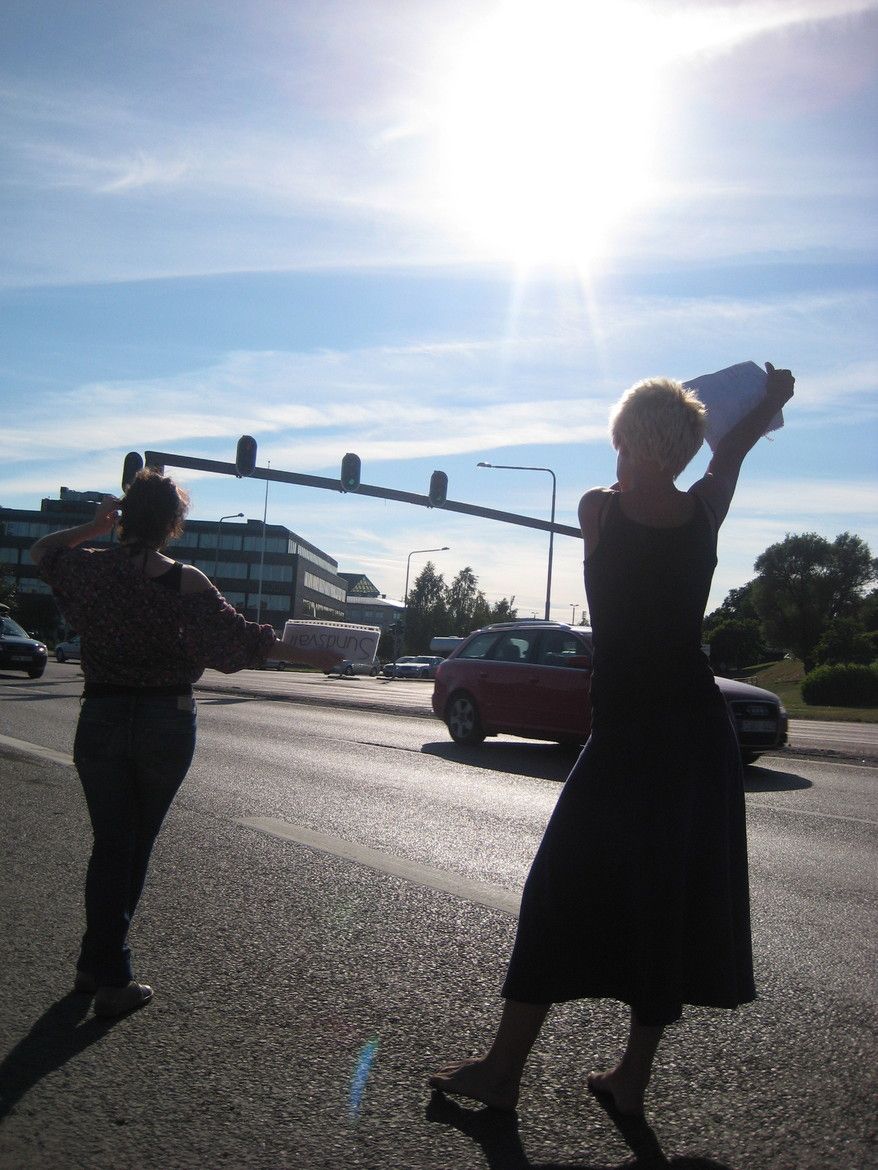 Sweden is a member state of the European Union as well
as the Schengen Agreement. Sweden has a pretty terrible reputation among
hitchhikers, however while it isn’t hitchhiking paradise it really isn’t
as bad as everyone makes it out to be and is perfectly doable.
Sweden is a member state of the European Union as well
as the Schengen Agreement. Sweden has a pretty terrible reputation among
hitchhikers, however while it isn’t hitchhiking paradise it really isn’t
as bad as everyone makes it out to be and is perfectly doable.
Hitchhiking
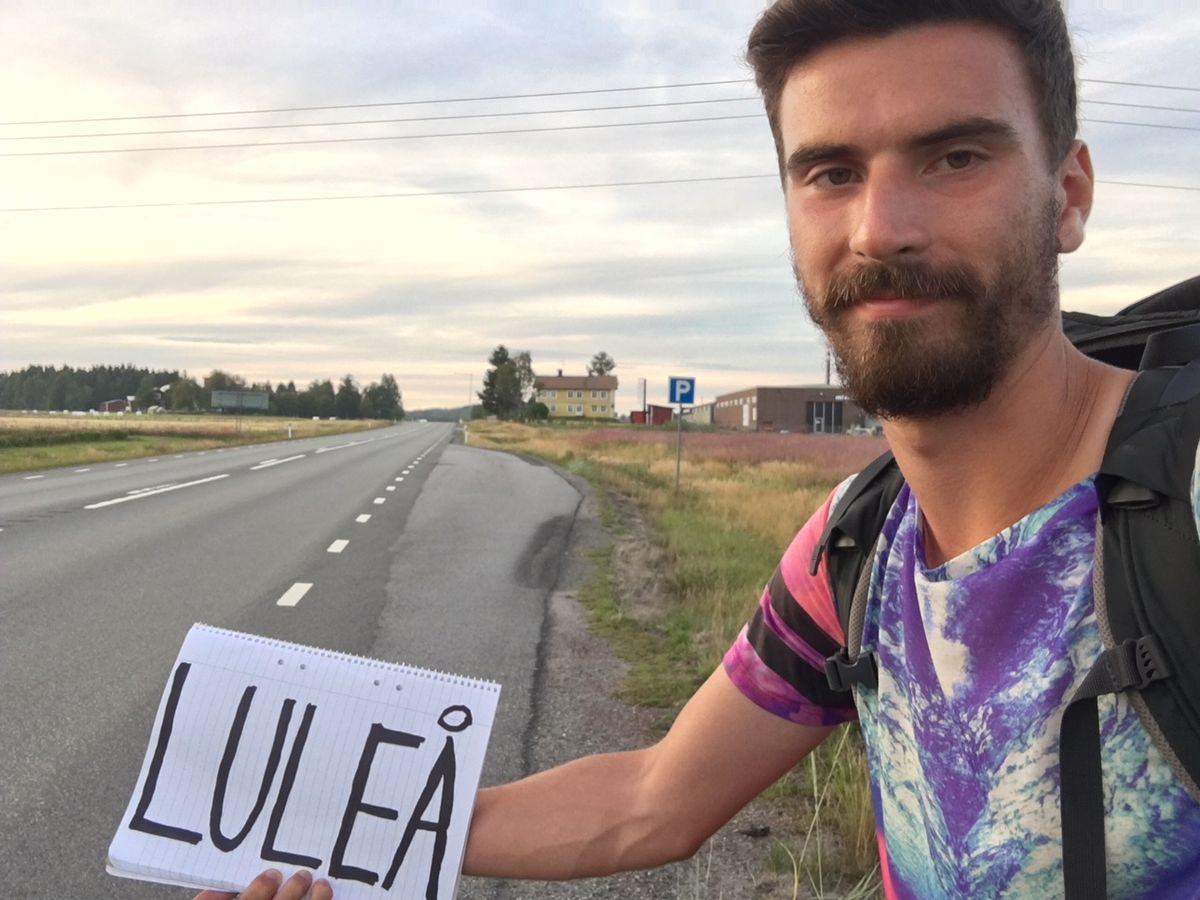
Nearly everyone speaks English which will increase your chances of learning from the meetings along the way. As anywhere in Western Europe, the motorways are the holy temples of car driving religion and someone standing on them is committing blasphemy. But you can hitch on the motorway ramps as well as on local roads. If you travel along the biggest motorway, E4, you will make faster time, but not see that much of Sweden's beautiful landscapes. If your primary aim is to explore the country, you should stay away from E4.
Especially in northern Sweden there are only a few main roads, which means that you might have a shorter time waiting and longer lifts. Be careful to stand somewhere where there is some sign of civilization. As especially in the north the roads are no real motorways and accessible for pedestrians, you can stop all the traffic, especially if you stand on something like a bus stop. When on large motorways you have to take care a little on which petrol station you end up on, as there are too many of them, with sometimes only little traffic on each of them, and as most of the petrol stations are one or two kilometers away from the motorway. You can find a map of some of the bigger service stations (Rasta) online: http://www.rasta.nu/english.htm Furthermore, some of the service stations are only built on one side of the lane, and drivers tend to remain on "their" side. If you do have the choice, you should therefore try and avoid crossing over to the other side, as only around 1/4 of the drivers there will continue in your direction. Trafikverket distributes a map of service stations (rastplatser) in Sweden. The map shows where the service stations are and what services are offered (usually toilets but sometimes food, petrol or playgrounds as well. The more services offered, the busier the service station is). You can download it here or get a paper copy from tourist information centres.
2022: Please note that many if not all Swedish cities are operating a big change on the car accessibility to the center. The highways used to cross the cities and have been rebuilt or are being rebuilt around the city. That can make things tricky as a single highway can duplicate and "hug" a town but the configuration of the two roads' reunion can make it hard or impossible to hitchhike there and get the full trafic. A trick to solve that issue is generally remembering that most drivers use google maps / waze so you should search for the route from you starting point and your destination on these app, then find the city where you are and see which road is indicated. This last update also means that lot of hitchhiking spots mentioned on this wiki might be outdated. Be advised.
Legality of Hitchhiking
Swedish law has no rule against hitchhiking (lifta), so on ordinary roads it is simply legal; only the fast roads are closed to you. Chapter 9 of the trafikförordning (1998:1276) — the whole of the law on motorväg and motortrafikled, two sections long — admits only motor vehicles that are built for and may be driven at at least 40 km/h, which leaves pedestrians with nowhere lawful to stand, and it forbids stopping and parking outside the places marked for it. That reaches the hard shoulder and the slip road past the blue sign, so thumb on the on-ramp before it. Ask for lifts at a rastplats or a motorway petrol station, where drivers have already stopped and you can speak to them. On riksvägar, länsvägar and everything smaller, standing on the verge with your thumb out breaks no rule.
Cities
- Åmål
- Dals-Ed
- Gävle
- Göteborg
- Halmstad
- Jönköping
- Karlskrona
- Kristianstad
- Luleå
- Lund
- Malmö
- Mellerud
- Mora
- Norrköping
- Nyköping
- Örebro
- Stockholm
- Strömstad
- Sundsvall
- Söderhamn
- Trelleborg with ferries to Germany and Poland
- Trollhättan
- Umeå
Landscape
Sweden is a rather large country, with very desolate areas in the northern part. Instead of knowing every little city, especially when hitch hiking in northern Sweden, it is more meaningful to have a sense of the different regions or landscapes:
- Dalarna
- Härjedalen
- Lappland
Language & Communication
There is no special need of practicing your Swedish since almost everyone speaks English there. Although it can still be useful to speak a couple of words of Swedish for the few people who don't speak English – some immigrants for example, who are more likely to pick up hitchhikers even so. Check out the Swedish phrasebook. Hitchhiking means liftar.
Also, when asking for lifts at petrol stations, some people don't understand that you are hitchhiking and start to explain you the way as if you had an own car.
When people talk about the amount of miles they are doing with their car, it's actually Swedish Miles, which equals 10 kilometres.
Useful info
There's a quite useful map ("vägkarta") which you can get at OKQ8 petrol stations for 15 swedish crowns. It's for whole Sweden and has all OKQ8 petrol stations on it, which can be quite handy when hitchhiking and looking for a good place to be dropped off. At Statoil gas stations you get a free map with statoil gas stations. The OKQ8 one might actually also be free now?
It is quite usual to send a thanksaying-message the day after a party or after a meeting − saying something like "Thanks for yesterday". When one enters a flat or an apartment (or go further into a truck cab than the passenger seat), it is a must to take off ones shoes!
It is recommended to bring insect repellent if you hitch during the summer.
For the best chance of getting "lift", go to the petrol stations or were people stop for food along the road. Some Swedes can be quite reserved and for this reason it helps to introduce yourself (with a smile), instead of just being a stranger on the side of the road. Just a thumbs up will work, but might take longer. After 18.00 in the afternoon hitching is difficult here.
Links
- Skjutsgruppen.nu - rideshare network within the social networks. Also on Twitter: twitter.com/skjutsgruppen
- Samåkning.se - rideshare network (for Sweden and Northern Europe in general)
- facebookgroup for for Swedish hitchhikers
- map with the petrol stations of Q8/OK
- trafikverket.se - online map with up to date information on accidents, closed roads and road works
Personal Experiences
2024
I hitchiked from Copenhagen to oslo through Sweden in 2024. Given swedens reputation for bieng a hitchikers Bermuda triangle I was super stressed and expected it to be a disaster. However, in my opinion it's reputation is grossly upfair: the first time I stuck my thumb out, the first car stopped! The second time I waited 40 mins, and then was offered a long distance ride to Stockholm. Over the course of several days of relaxed hitchiking and a string of fairly short rides and sight seeing I did make it to oslo, and never really got stranded.
It was not without its challenges, swedens on ramps often have little or no space to pull over, unlike Denmarks, on a couple of occasions I did have to get a bus out of somewhere which clearly had no hope. That said I was often surprised by swedes happily picking me up from places with no space to stop. Wait times where usually not excessive, and the people who did stop where always kind amazing people.
Everyone spoke English except maybe 3 immigrants who where Swedish only, but still kind and willing to help using Google translate.
Some people had said that only foreigners would pick up a hitchiker, never a swede, however 60% of my rides where Swedish, which considering how much migration and tourism sweden receives, isn't particularly disproportionate.
All my rides are thumbed. Some people told me that thumbing instead of asking for rides would mean I would never be picked up. They where talking out of their asses it seems.
All in all, sweden isn't a total dumpsterfire for hitchiking like some people make it out to be. Definitely don't be arrogant and create too high expectations: don't expect 1 minute waiting times, you still need to put effort into spot finding, body language etc, but equally don't feel too scared to try.
June 2025
Italic text I hitchhiked from Nikkaluokta (Kiruna) to Gavle, Stockholm, Linkoping, Oland island, Kalmar, Karlskrona, Ystad, Lund, Malmo to Copenhagen in 2 weeks. Generally speaking, hitchhiking in the north (Stockholm to Kiruna) is faster and better than south. Same story like Norway and Sweden, very good north and bad to crappy south. The worst experience was from Linköping to Kalmar and Karlskrona, where I got stuck a couple of times, 1-1.30h. In Sweden, people are much more relaxed than those in Finland and southern Norway, in terms of good spot to stop, park the car and pick you up. They do not need 5 meters of asphalt next to the road to park safely. This is what I liked. So basically every spot can be a good spot (unless you wait for a long time haha). I would go with 3 out of 5 grade. Hitchwiki Maps can be helpful to determine where to stop. Another good thing is that I did not see a single cop for 2 weeks. That means you can easily stand at the highway entrance and no one will bother you. Southern Sweden (Blekinge, Östergötland, and Kalmar) is full of crime, so people are really cautious and suspicious. Especially old people. For youngsters, you are kind of an attraction and it is a matter of pride to pick you up:) Those people who give you a ride are great. They even take you inside the city or take you a few kilometers further than where they go.
July 2022
I hitchhiked from Malmö to Nordkapp in july 2022. The hardest part was to get to Stockholm. if you can do it, you'd better do it from the ferry to Helsingborg. I had a rough time getting to the capital city because after a misunderstatement I accepted a lift to 50km away from Helsingborg. Only accept rides of 80km or more, in that area and for that destination. I had to get back and hitchhike at the exit of the ferry. An elder sweddish motor biker and traveller offered to let me in an hotel with his customer card so I could get a free breakfast and just after that and a relatively long wait, a lovely Swedish man drove me to Stockholm, bought me a piece of Princess cake and hugged me for saying goodbye. These are just examples of how kind people have been to me all along the way. Be relaxed, be kind, be open minded, speak a good english and Sweden will open its arms to you. After Stockholm, it's easy street. you can easily accept 50km rides. Some people will sometimes offer you to drive you 30km further to a better spot. Kindly ask if they can let you the time to check you map and accept if that's a good option -it often is. Most drivers who stopped were Swedish. I'd say you shouldn't fear of getting lost in the northen part of the country, as long as you have adapted food and equipment. If you're still on the big roads, even with low traffic it's so easy to get a car that you should wait and walk a bit if you want to have a little dive into the beautiful scenery. My last car to Nordkapp was in the middle of nowhere, on the main road, with 2 or 3 cars every 5 minutes. He drove me for 733km right to Nordkapp. He was a German guy. But 10min before that, I had been dropped by a Swedish father driving his two kids home. He picked me in the most remote place and took me 50km further. So don't think too much about places and nationalities. I actually regretted getting so much big rides after Stockholm as I ended crossing the whole country in 3 days and some extra hours. Making lots of 50 to 100km rides and walking 30min in between is a lot of fun and lets you get a real feel of what Swedish people are like.
Hi there! I had an amazing time hitchiking (and back) to Kiruna from the Netherlands. I went via the east side up and via the west side back. I would definitely say hitching at petrol stations is a lot easier as you get to approach the Swedes, if you are polite most of them are open to listen to what you have to say, some might brush you off but as already mentioned about everyone speaks English so they won't look at you weird for that at least! Yes thumbing also works but expect longer waiting times, I would say maximum 2 hours (eventhough I was stuck in Storuman for 6 hours with the thumb). What worked best for me is to just go from petrol to petrol and sleep in the woods next to the station if it didnt work. The more north you go the more abonded roads tend, expect a lot less traffic the more north you go. Also most petrol stations are going to be around smaller towns instead of on the road when you reach the northern part of Sweden. Especially to the west. Going the west road up is definitely more beautiful in my opinion but will take you a bit longer (a lot less trucks), but it is more chill as you can get just get dropped off at every small town because the road (E45) goes through every town and the traffic needs to slow down. So when going west you can really land in beautiful little towns next to big lake and rivers withouth even compremising your travel time!
Anick-Marie had no chance at all hitching rides on Öland in May 2005. Aurélien hadn't either from Copehnagen to Stockholm in August 2011. On the other hand, Ben had good experiences in 2010, going most of the way across the country up to Finland. In the summer of 2011 Harry Tattersall Smith and Viljami Laurmaa had an incredible time hitchhiking through the north of Sweden. Any memories of the delays have all but been eclipsed by the fantastic charcaters and experiences we had along the way. Their adventures have been documented here In October 2013 six students at Uppsala Unive rsity had a hitch-hiking race to Oslo from Uppsala. Splitting into three teams of two, two of the teams had a really straight forward journey arriving into Oslo after seven hours and three lifts along the E18. The final team took two days, staying overnight half-way thanks to the kindness of a local, but nonetheless they made it!
Norway
Edit on wikiNorway is a country in Europe. It is a member state of the Schengen Agreement, but is not part of the European Union. Its capital is Oslo. Its neighbouring countries are Sweden, Finland and Russia.
The main challenge while travelling in Norway is the rapidly shifting weather, so be prepared for anything, as they say here: There is no such thing as bad weather, just bad clothing.
Practically eveeryone is fluent in English.
Hitchhiking
Sadly People have been told to be wary of foreigners. Recently, it's been all over the news that some gypsies wait on the road with a broken car and steal cars from people stopping to help them, and it doesn't help much, especially if you're not quite white. If you look like a hobo your chances decrease further. Look presentable to increase your chance of getting picked up and be friendly. Ask questions.
Be careful to check the altitude of the places where you wish to go, and through which you travel. A lot of people might be able get you closer to your destination, but they are not willing to drop you where it is cold (there can be freezing temperatures even in the summer).
 Norway has a mixed reputation for hitchiking, some
people will try and convince you Norway is hitchhikers hell. Others will
say it is a paradise. While the truth lies somewhere in between,
hitchiking definitely works, so don't let the naysayers put you off (but
equally don't get cockey and expect 10 second wait times).
Norway has a mixed reputation for hitchiking, some
people will try and convince you Norway is hitchhikers hell. Others will
say it is a paradise. While the truth lies somewhere in between,
hitchiking definitely works, so don't let the naysayers put you off (but
equally don't get cockey and expect 10 second wait times).
Positive
Norway is not an easy country to hitch in, but it can be rewarding! Even though haike is not too common in Norway, people are very likely to pick you up and can be very friendly and helpful. Like in Sweden, foreign tourists and immigrants are more likely to pick up hitchhikers.
According to Francisco1 (also said by Fede Earlyturtle) although he didn't look very Norwegian and had no flag (see here below), just common nice cardboard signs, he always found people, many times locals (some foreigners also), any gender, any age, to pick him up, help him and give good advice. He doesn't agree with the idea that most Norwegians are unwelcoming to strangers, and even less nationalist or racist.
According to Capy, hitchhiking in Norway was easy. They were getting picked up by Norwegians and foreigners alike.
(see also: Norway, a paradise for hitchhikers)
Negative
According to thomasmyrman who hitched with a huge Norwegian flag, many drivers said they only stopped because it made them feel nationalistic pride and that it made the hitcher visible from far away. Consider having at least a small flag (even if you are not Norwegian) which you can buy anywhere in Norway. Grata also had a bad experience.
(see also: No, it is not easy to hitchhike in Norway)
Hitching ferries
As of summer 2024, almost all normal car ferries are free of passengers and pedestrians, you just pay for the car, some are even free for the cars!(List: https://autopassferje.no/en/free-ferries-from-july-1st-2022/). I hitchhiked from Oslo to Norkapp, took many ferries, including the long distance Bodo to Lofoten islands ferry, and all of them where free.
Sometimes your driver will ask you to get out of the car and walk onto the ferry separately, "just in case". If this happens be super careful, as the second the last car is on the ferry it leaves, and pedestrians often get left behind. Thankfully the ferries are pretty frequent.
Occasionally the ferries have queues which can last hours, especially when one of the ferries is broken down. Because of this when your driver arrives at the ferry terminal, even if they are due to drive further it may make more sense to get out, walk onto the ferry alone and then hitchike away the other side without them, rather than waiting with their car in the queue. They can always pick you up again later.
Even though most ferries are now free, in case you come across a paid ferry here is the old info on how to get onto them for free:
When your driver enters a ferry, be sure he or she is not the first or second car in line. As soon as the person who collects the money from the cars, is with the first or second driver, get out of the car, go to the sundeck - or whereever else in the ferry - and back in the car when the boat is on the other side. Nobody will check on you during the ride or when the cars leave the ferry. Thus I would highly recommend you to be in a car while boarding a ferry. If you are not, just ask a few drivers! If you still cannot find a car, there's also a few possibilities to sneak if you time it right and you are not seen by the officials.
More advice
Norwegians have a tendency to always be on the rush on weekdays. Waiting times can be a bit longer around Oslo and in remote areas where traffic is very light. People expect some chatting since distances are long, and seem to have little tolerance for drug or alcohol use while on the road.
A large part of the population lives near the road, which extends from the Swedish border in the South to almost all the way North, so when going North it's pretty hard to get lost, as long as you are headed the right way.
The roads going to Bergen and the West Coast (E16, 7, E134) aren't very big, don't expect motorways. They look more like small mountain roads, and are very nice to hitchhike along, you can stand directly on the road and admire the landscape at the same time. In winter (and fall and spring also) be aware that they might be closed to traffic due to snowstorms or pollution in the tunnels. The information is available for all roads in Norway on the internet.
It's common knowledge that truck drivers are very friendly and that the hitching is great if you go out to the shipping areas around Dyre Halses Gate in Trondheim and North of StrandveienWhich one? Does this question refer to the previous misspelling of Strandveien?, but some hitchhikers have said otherwise. It's also much faster traveling alone considering that trucks and some commercial vehicle can only take 1 passenger. Around four in the afternoon, drivers have loaded incoming goods from that day and are leaving for a late/overnight haul to the next major city.
Do think of the weather, it can get pretty cold and rainy (or snowy) and the distances are very big between the more populated east side of the country and the cities in the West Coast, or the North. Maybe taking a warm tent as I did was the best idea ever, the experience of camping in the woods in those mountains was very nice.
There are usually heated waiting areas at the ferry ports (even if small and remote), as waiting for a ferry can take some time and it can get very cold in winter. They are usually very clean and can be a good spot for sleeping and you will be able to ask for a ride the next morning. Most of them are equipped with toilets as well.
Remember, hichhiking is about patience, so maybe you'll have to wait for a good while (it IS true that there are not that many cars), but just enjoy the beautiful landscapes and you can always walk along the roads, they are not highways properly said.
The Kystruten is a daily shipping and passenger service along Norway's coast, served jointly by the lines Hurtigruten and Havila. It calls in many towns along the way, starting in Bergen and going all the way up to Kirkenes on the Russian border. In many towns it stops for 3 or 4 hours and while it's in port, you can go onboard as a visitor for free. Just have your ID handy. Many ships have saunas and some have hot tubs that you can use for free. If you stay on the ship for less than 24 hours, you don't have to take a cabin, which makes the trip much cheaper. Also, students get a 50 percent discount. Capy hasn't been checked for his student status on his three trips with Hurtigruten.
In Statoil gas stations, you can buy one of their cups for the equivalent of 30 euros and drink as much coffee, tea and hot chocolate as you like for one year.
Legality of Hitchhiking
Norwegian law does not regulate hitchhiking (haiking); it regulates who may be on the motorway. § 4(2) of the trafikkreglene permits only motor vehicles that may lawfully do at least 40 km/h on a motorveg or motortrafikkveg — and, unusually explicitly, on the entry and exit roads to them as well, so the on-ramp is out too, not just the carriageway and the shoulder. § 17(1)(e) forbids stopping anywhere on those roads and their ramps, and § 11(2) forbids reversing and turning, so a driver who has passed you cannot legally come back for you. That leaves the signposted rasteplasser and petrol stations, where you ask people face to face — the normal way to travel the Norwegian motorway network. Everywhere else hitchhiking is legal; stand on the verge where a driver can see you and pull over safely.
Regions & Cities
In the North
- Alta
- Kautokeino
- Lofoten, an archipelago
- Narvik
- Nordkapp, the Northernmost point of Europe
- Svalbard and Jan Mayen Islands
- Trofors
- Tromsø
- Bodø
Other Cities
- Oslo
- Bergen
- Fredrikstad
- Horten
- Kristiansand
- Skien
- Stavanger
- Trondheim
- Voss
- Otta
License plates
There is a coding for areas: the two first letters identify the region in which the vehicle is first registered, but as the plates migrate with the vehicle and Norwegians travel pretty much all around the country, it's not something hitchhikers rely on. See also List of codes on Wikipedia
Vehicles with Norwegian green license plates do not have back seats. So if you are not traveling alone, hitching a ride with such a vehicle is of little use. Some vans have a double bench for passengers in front, but except for those, green plates means seating for one passenger only. Even if it is a vehicle that had back seats when it left the factory, they will have been removed upon importation to Norway. This is done for tax reasons. Vehicles affected by this include almost all pick-up trucks including 4-door models, and some minivans and SUVs. Also some old station wagons.
Highway rest areas with paid showers
Eastern Norway
E6 Svinesundparken, Halden, Østfold
E6 Circle K Øyer
E6 Fugleåsen, Ski, Akershus
E6 Ormlia, Eidsvoll, Akershus
E6 Circle K Minnesund, Eidsvoll, Akershus
E6 Biri travpark, Gjøvik, Oppland
E6 Vinstra vegpark, Nord-Fron, Oppland
E6 Dovreskogen, Dovre, Oppland
E18 Ørje, Marker, Østfold
NR 3 Myklagard, Løten, Hedmark
NR 3 Shell Koppang, Stor-Elvdal, Hedmark
NR 3 Alvdal, Hedmark
Southern Norway
E18 Kjellstad, Lier, Buskerud
E18 Furulund Kro & Motel, Stokke, Vestfold
E18 Horisonten Lillesand, Aust-Agder
E18 YX Lillesand, Aust-Agder
E18 Circle K Lillesand, Aust-Agder
E39 Circle K Livold, Lindesnes, Vest-Agder
Western Norway
E16 Shell Dale, Vaksdal, Hordaland
E16 YX Skulestadmo, Voss, Hordaland
E16 Shell Gudvangen, Aurland, Sogn og Fjordane
E16 Steinklepp, Lærdal, Sogn og Fjordane
E39 Esso Vikeså, Bjerkreim, Rogaland
E39 Søylandskiosken, Gjesdal, Rogaland
E39 Heiane, Stord, Hordaland
E39 Bergen travpark, Vågsbotn, Hordaland
E39 Haugsvær, Masfjorden, Hordaland
E39 Esso Skei, Jølster, Sogn og Fjordane
E134 Best Kyrping, Etne, Hordaland
Central Norway
E6 Oppdalsporten, Oppdal, Trøndelag
E6/E39 Circle K Klett, Trondheim, Trøndelag
E6 Stav Gjestegård, Malvik, Trøndelag
E6 YX Gråmyra, Levanger, Trøndelag
E6 Best Brekkvasselv, Namsskogan, Trøndelag
E39 Digerneset, Skodje, Møre og Romsdal
NR 70 Håsøran, Sunndalsøra, Sunndal, Møre og Romsdal
Northern Norway
E6 Mosjøen, Vefsn, Nordland
E6 Fauske, Nordland
E6 Innhavet, Hamarøy, Nordland
E6 Buktamoen, Målselv, Troms
E6 Circle K Storslett, Nordreisa
E6 Shell Talvik, Alta, Finnmark
E6/E75 Tana bru, Finnmark NR 80 Bodø havn, Nordland
North Norway
Hitchhikers had varying experiences in the beautiful North. Some locals hitch regularly to commute. You can hitch a ride from mostly anywhere as there is not much traffic. Another challenge are the long winter nights, which make the hitchhiking day very short unless you are well equipped for night hitchhiking. In the North, total darkness sets in from around mid-November. Don't forget the specifics of winter hitchhiking.
Hitching rides on ferries
If possible, try to find out the ferry schedule. Hitch on the side where the cars drive into the ferry because in many places it's hard to hitch on the other side. You can maybe knock on people's windows when they wait for the ferry, especially if they come early and have to wait long, it's easy to talk to them. You can maybe try to hitch into cars that have already paid for the ferry but on almost all car ferries, and definitely all the short distance ones, you pay extra for each passenger so that would be sneaking. In a few ferries the driver might have paid for the car not dependent on passengers, but that is a rare case. Blackriding the ferries is also very easy most of times. Just don't show up too much, there is always a queue (long or not) of cars waiting for it, ticket sellers are on board or at the harbour and they go directly, one by one to each car to make the ticket. When the ferry arrives and the ticket sellers (can recognize them easily) are busy making tickets to cars just enter the ferry and nobody will tell you anything, the guys at the entrance of the boat are not supposed to check tickets just to tell cars where to go so they won't stop you nor anything, just think that you have already paid before. Of course if there are other "backpackers" stay away from them cause they are the first to be approached for tickets when the boat arrives. Fede, his brother and a Polish hitchhiker (that makes 3 people together) easily entered in that way every time, from Lofoten Islands to Bodo as around Sognesfjord and Bergen
Popular Ferry routes to Denmark and Germany are Kristiansand-Hirtshals, Larvik-Hirtshals (ColorLine), Oslo-Frederikshavn and Oslo-Göteborg-Kiel (StenaLine). With ColorLine, cars carrying up to 5 people don't pay extra, so it's possible to hitch a ride on the ferry for free (not correct any more as of November 2012: extra passenger is EUR 5. It would be an acceptable price, but since ALL of the drivers buy tickets on-line with 50% discount, it's almost impossible to catch a ride at the ticket office. We had to give up and hitchhike all the way to Oslo, Sweden and then Denmark. So you better don't rely on this possibility) StenaLine operates overnight only, so even if you manage to find a car, they'll still force you to pay for a very expensive berth (500+ kr). If you're heading to Denmark (the ports of Hirtshals and Frederikshavn are quite close to each other) it makes no sense to take the StenaLine from Oslo, because it takes a really long time (12h!!! that's the way to make you spend as much as possible on board) and you can sail from Larvik in about 4h, which is reasonably close to Oslo to reach in about 2 hours.
A note about hitching trucks! Alert, it is no longer possible to hitch trucks on Stena lines and probably Colorline as well. Only drivers allowed. when i asked several trucks in Frederikshaven they all said not possible.
Distances
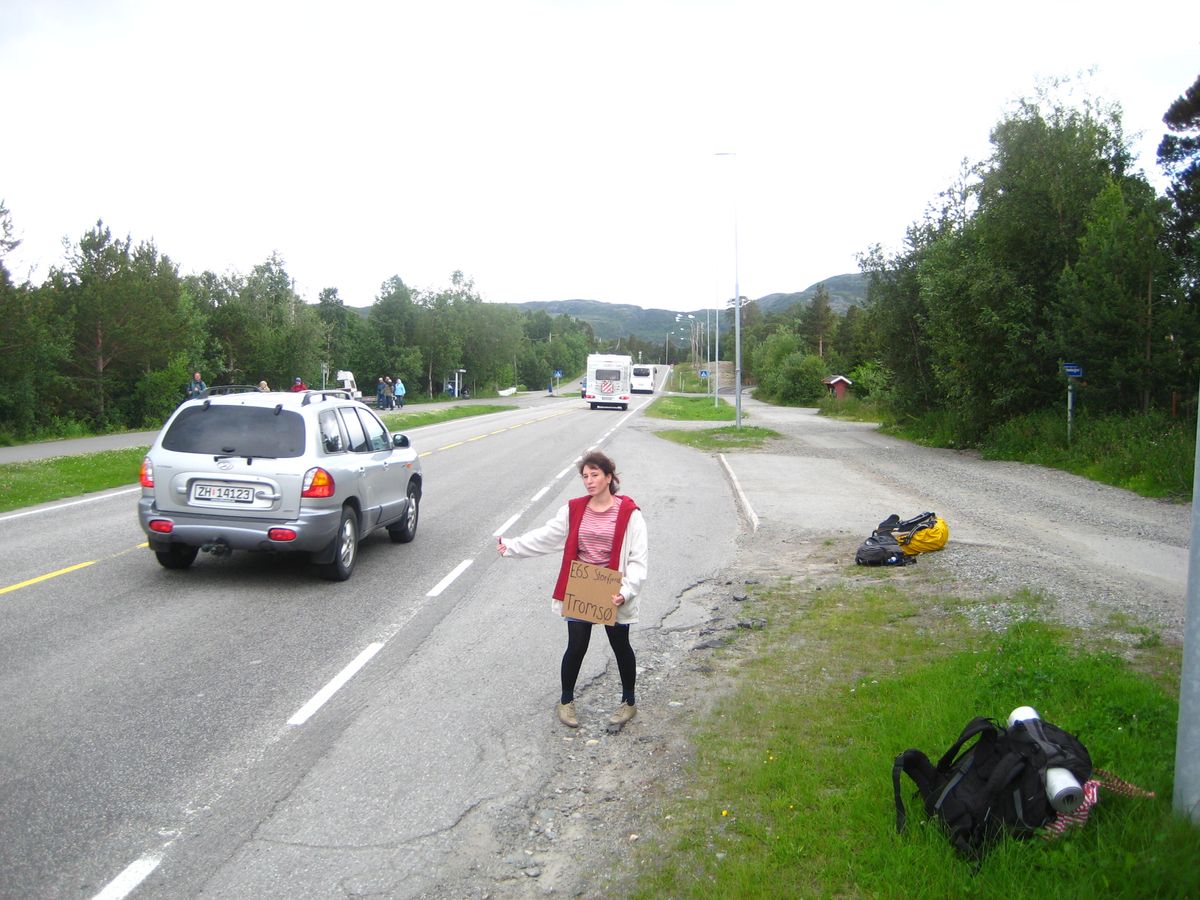 According to markus and abstorz, two
dudes.
According to markus and abstorz, two
dudes.
- Stavanger - Mandal (near Kristiansand) - 1 day
- Mandal - Oslo - 1 day
- Oslo - Trondheim - 1 day
- Trondheim - Mor e Rana - 1 day
- Mo i Rana - Karlsøya - 1 day
- Karlsøya to Tampere, Finland - 2 days or 1 day and 1 night
According to Mila77, female
- A i Lofoten to Tromsö 2 Days on quite low traffic, maybe possible on 1 day in summertime
Note by Mila77: (now Mila.77) Please do calculate more time than usually in Norway. Remember they have a huge land but very few inhabitants. In the areas outside of cities, there are almost no people living. That means especially in the north, you will need much more time for the same distance than in Germany for example. You cannot compare this. Be prepared to wait much longer than you have ever in your life. There are few cars coming. However those who pick you up are very friendly.
- Lofoten - Trondheim - 2 days
According to Thor-Rune, one guy.
- Sortland - Tromsø one shortish day.
- Steigen - Tromsø one longer day.
- Fredrikstad - Nesodden just a few hours.
- Hitchhiking in Meldal is virtually impossible, no ride for 6 hours. (2 guys then) Sørtrønderlag Countriside is heavily sceptical to hitchhikers.
- Berkåk - Oslo easily one day
- Oslo - Molde via E6 one day.
According to J. O'Hannes in 2012, one guy
- Kirkenes (Norwegian/Russian border) - Honningsvåg (Nordkapp) 13 hours, E6
- Nordkapp - Tornio (Baltic Sea, border between Sweden and Finland) 14 hours
According to Peregrine in 2013, one gal
- Stavanger - Mandal - half day (14:00 to 18:00)
- Mandal - Oslo - "1 day" (09:00 to 16:00)
- Mandal - Kristiansund - 30 minutes (10 min wait)
- Kristiansund to Tonsberg - 4 hours (10 min wait)
- Tonsberg to Oslo - not recommended as it was bad to wait on interstate: 1st attempt - 30 min, failed, got something to eat, returned and it was rush hour - the slower traffic helped! 10 min wait, hour ride to Oslo!
- Oslo - Swedish border - a few hours, 20 min wait in the rain, do not use hitch wiki's suggestion for the spot, 2 women took pity on me because they'd seen others standing at the "dangerous spot" and it was raining...
According to Francisco1
- Göteborg(Sweden) - Bergen - two days by road number 7 (camping in Flå, between Honefoss and Gol)
consider a complete day (with as much light hours as possible) for Oslo - Bergen I definitely recommend taking road 7 passing by the Aurlandsfjordet (fjord) at Aurland and Flåm, very beautiful
Distances - Note: By car, not including waiting time and change of rides:
- Oslo - Bergen: ca. 7 hours
- Oslo - Trondheim: ca. 7 hours
- Oslo - Kristiandsand: ca. 4 hours
- Oslo - Stavanger: ca. 7 hours
- Oslo - Tromsø: ca. 22 hours
- Stavanger - Kristiandsand: ca. 3 hours
- Stavanger- Bergen: ca. 3,5 hours (2 ferries)
- Trondheim - Bergen: 10 hours
- Trondheim - Tromsø: 15 hours
- Most southern point of Norway(Lindesnes) - northern point (Nordkapp): ca. 1 day, 8 hours.
Hope that's of any help:)
Useful Language Bits
- Thank you - Tusen takk
- Cheers - Skål
- How are you? - Hvordan går det?
- North - nord
- South - sør
- West - vest
- East - øst
Vowels: Vowels are pronounced very differently in Norwegian as opposed to English
- A pronounced "ah" as in bar
- E pronounced "eh" as in heck
- I pronounced "e" as in here or "i" as in hill
- O pronounced "oo" as in moon and in other times, "aw" as in law
- U pronounced "ou" as in soup
- Y pronounced "ew" as in few (rounded lips)
- Æ pronounced "a" as in bag
- Ø pronounced "er" as in "her" without the R sound
- Å pronounced "aw" as in "law"
Additionally, the consonant J and the combination GJ is pronounced the same way you would pronounce Y (young). For instance, "jobb" (work) would be pronounced "yobb".
Personal Experiences
summer 2024
Hitchhiked all the Norway from far North to South in 20 days (Alta-Stavanger-Oslo). I would divide Norway in two countries - North and South (let's assume Mosjoen is an imaginary border). People in the North are very nice and friendly, you do not wait for a ride much (1-30min), and it is mostly Norwegians who give you a ride. You go south, it is getting more and more difficult, especially around the Oslo-Stavanger-Trondheim triangle. You can get a ride after 5 min, but also after 2 hours (Rjukan was the most terrible experience). Not more than 10% of Norwegians will pick you up in the south - they are afraid, not that happy with the immigrants, and that makes them very untrustworthy towards any foreign face. A bunch of German tourists gave me a ride, Dutch, guest workers, etc. If I have to grade my experience - North 3.5 out of 5, South 2 out of 5. Oh yes, one more important thing. In the North, people could stop anywhere, but better at bus stops. In the South, you MUST be at the designated stop as people really got hectic about it.:)
External Links
Hitchhikers in Norway FB group
Finland
Edit on wikiFinland is a part of the Northern Europe and one of the Nordic countries. It is a member state of the European Union as well as the Schengen Agreement.
Regions
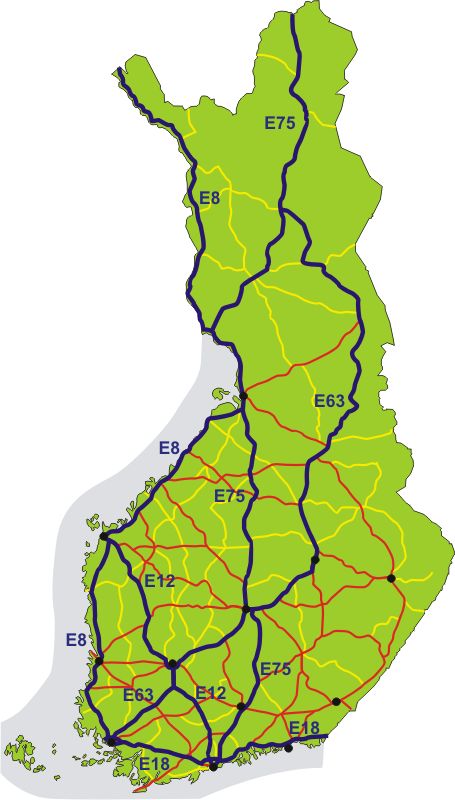
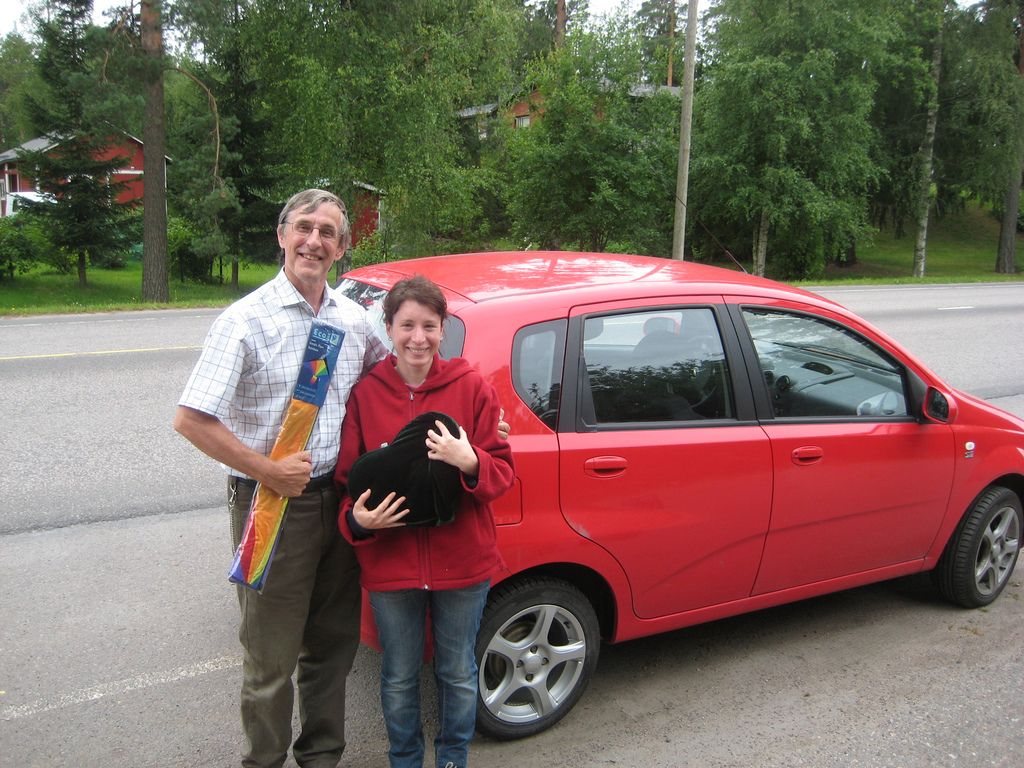 !Find info on
camping on Nomadwiki
!Find info on
camping on Nomadwiki
- Lapland
Hitchhiking
Its neighbouring countries are Sweden, Norway and Russia, but the most probable transit country on your way hitchhiking there from Southern Europe is Estonia as the Via Baltica (E67) road connects Finland with the Baltic States and Poland.
Hitchhiking is fairly common in Finland you can regularly spot people hitchhiking to travel, some also hitchhike as a freetime activity.
In the south, it is a good idea to avoid motorways and opt for smaller local roads. Though there is less traffic, there is more room for cars to stop. Finnish drivers will only stop where they feel it is safe, so try to thumb at bus stops.
Legality of Hitchhiking
Finnish law says nothing about hitchhiking (liftaus), so it is legal wherever a pedestrian may lawfully be. Section 58 of the tieliikennelaki (729/2018) allows only motor-vehicle traffic on a moottoritie or moottoriliikennetie, which keeps you off the carriageway, the shoulder and the slip road. Section 37 forbids stopping on those roads anywhere except a signposted parking place, palvelualue or levähdysalue — and, usefully, at a signposted bus stop, for the purpose of picking up or setting down a passenger. Service areas and rest areas are therefore both where you ask drivers and the only places they may lawfully stop for you. On every other road hitchhiking is unregulated: stand on the verge, facing the traffic.
It is illegal to hitchhike directly on motorways (moottoritie) and some two-land expressways roads (moottoriliikennetie) in Finland. You can recognize these from the green signs. On these roads, you can hitch from on-ramps (which often have bus stops that drivers will stop at) and petrol stations. The cars cannot stop in crossing areas, and some drivers who disobeyed this rule and picked up hitchhikers have been fined.
Safety
Hitchhiking is quite safe in Finland. As always, common sense is your friend.
Culture
Hitchhiking used to be popular in the 70's and 80's, and many drivers will tell the hitchhiker(s) they've hitched themselves back in their days. Nowadays this practice is rather rare among Finns, but there are always some, especially in summer time around music festivals. Hitching in Finland might be difficult during the winter time because lack of daylight. The weather differences in Finland seem to effect greatly how well people pick you up. Sunny weather might help you a great deal because it makes people more happy and open-minded.
Hitchhiking seems to get easier the more North you go in Finland, because towns get smaller and people feel more open to help others. However, the highways are better in the South and there is more traffic.
Language
The language most people in Finland speak is Finnish which isn't a Scandinavian language. The country is officially bilingual as there is a large Swedish-speaking minority on the west coast of Finland. Most people speak English too, so most of the foreign hitchhikers won't have communication problems in Finland.
Some older people, however, might have no English language knowledge at all, so you might as well learn some basic Finnish phrases. Note, that with a knowledge of Swedish, however, you can come pretty far (it is useful all over Scandinavia).
Useful Finnish expressions for hitchhikers
- Hello = Terve
- Hi = Moi or Hei
- Hitchhiking = Liftaaminen
- To hitchhike = Liftata
- A ride = Kyyti
- Thank you very much = Kiitos paljon
- Where are you driving to? = Minne ajat?
- I don't speak Finnish = En puhu suomea
Personal experiences
2024
I hitchhiked around the country in the summer of 2024 (Helsinki-Tampere-Turku-Vaasa-Oulu-Pello-Kilpisjarvi. Good 2000km in 5-6 days with stopping in the mentioned places. I would give Finland 2 out of 5. People do not stop almost at all if there is no designated space for it (for example, bus stops). They are afraid of breaking rules and getting punished. Especially, getting out of Tampere (to the south) was mission impossible. After two hours of waiting, I took a local bus to a village, from where I followed the local road. Finland has a few highways, so expect to spend a lot of time in combination with waiting for a ride and driving from one place to another. And finally - the people! My experience is pretty unfriendly and quiet. But those who help and give you a ride are different dimension, excellent!
Links
- Finnish Hitchwiki
- IRC Channel Liftari @ IRCnet
- Finnish hitchhikers FB group
- Hitchhiker's guide to Europe − a hitchhiking site by a Finn
- Liftausvinkkejä − hitchhiking tips in Finnish
- List of Laavus − a site with all the Laavus (hiking shelters) in Finland. Download the gpx-file.
Iceland
Edit on wikiIceland is an island country in the North Atlantic. It is a member state of the Schengen Agreement.
Hitchhiking
It is a very good country for hitchhiking, as the people (though shy) are nice. Waiting times can sometimes be long since there are not so many cars. In the summer time (June-August), it can be very easy to get a ride. Many Icelanders, and even more tourists in rented cars, are driving around the small country, and are always happy to pick you up. Most of the cities and towns in Iceland are small enough so that you can easily walk out to their edge to hitch.
Beware of the Icelandic climate. While not very icy, it can be very miserable with a cold rain and strong winds, even in August. If you want to hitch through the middle of the country on roads where only SUV can drive, make sure that the lift you get can take you the whole way. You don't want to get stuck in the middle. Even in the summer you can still be caught by a snowstorm. It's made to keep weather/road conditions up-to-date, and is updated every few hours. The emergency number is 112.
The law for camping changed a few years ago. Besides natural reserves, wild camping can now be banned by a municipal edict. This is often the case (e.g. in Hveragerdi) but close to impossible to find out in advance. Campsites are ubiquitous in even small settlements but are notoriously expensive (1300-2000 ISK per person in September 2019). Wild camping is further complicated by an almost complete lack of forests. Also, the locals do not like it.
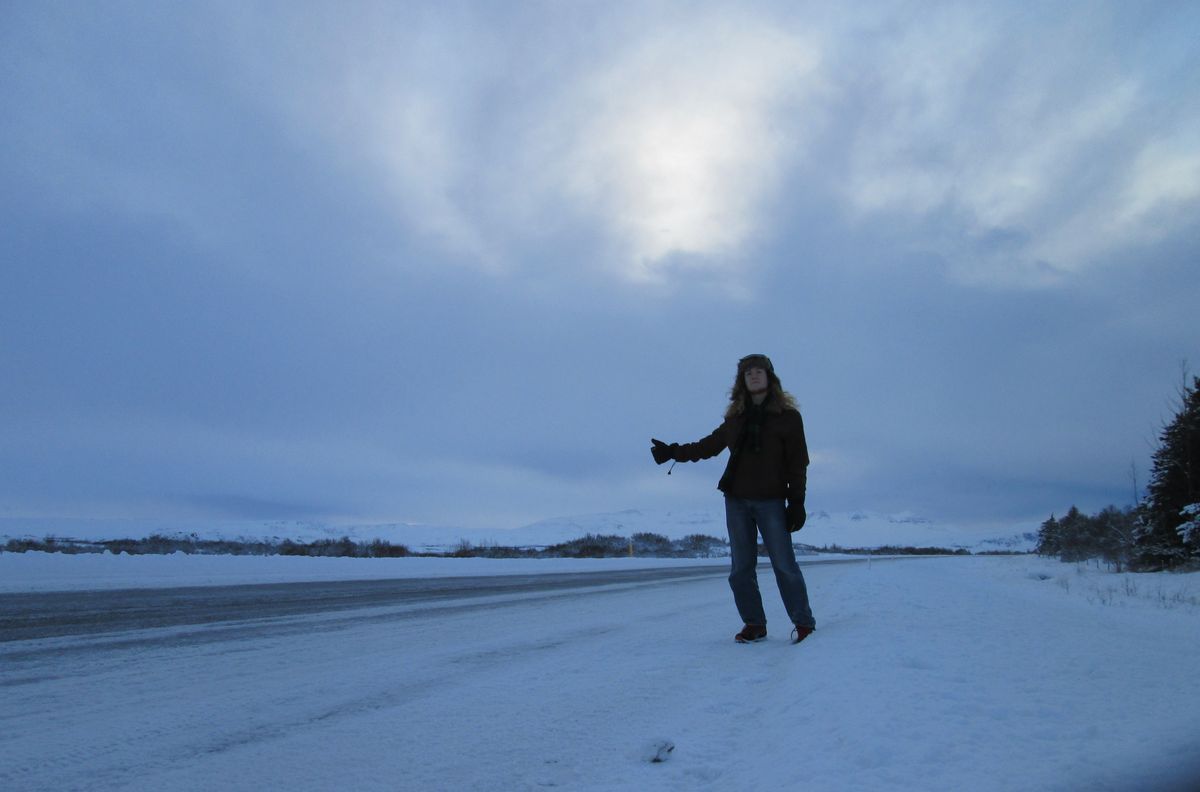
Legality of Hitchhiking
Hitchhiking is legal in Iceland and, unusually in Europe, there is no motorway category to be shut out of: the umferðarlög has no hraðbraut, and the Ring Road is an ordinary road the whole way round. Article 15 of the Traffic Act No. 77/2019 tells pedestrians to use the pavement or footpath, and permits the vegöxl — the shoulder — the cycle path or the carriageway itself where there is none or it is impassable. On the shoulder or carriageway you should as a rule walk on the left edge relative to your direction of travel, no more than two abreast, so that you face the oncoming traffic. That is exactly where a hitchhiker stands, and no provision makes asking for a lift an offence. Signs can still close a particular stretch or tunnel to pedestrians, so read them, and remember that the practical constraints here are weather and traffic volume rather than the law.
Hitchhiking in
Ferry
In Hanstholm (during high season) or Esbjerg (low season) (Denmark), there is a ferry of the Faroese "Smyril Line" that goes every Saturday (Tuesdays during high season) to Seyðisfjörður (in the east of Iceland) via Tórshavn (Faroe Islands).
There hasn't been any account of people who hitched the ferry, but there are tariffs for cars including two or four persons. This should mean that there is at least in theory the possibility to travel with somebody on the ferry for free. The regular fares are quite reasonable for a 48-hour trip though - from eur 55 to eur 107 (as of 2010, plus couchette/berth) depending on the season. There are no trucks on board, they leave containers at the port and they are picked up at the arrival by other trucks. There are many more people going between Denmark and the Faeroe Islands than from there to Iceland. As a single traveller, you can easily find a ride on board, especially on the way back from Iceland. A possibility to pay less is to buy a ticket to the Faeroe Islands only, and do the rest of the trip for free. Once in Tórshavn, you have to get off the ferry for about 8 hours, and then come back. In order to go back on board, you have to show your key card at a desk with an old lady, but if there are people waiting, you can just walk by and nobody will give you trouble. Your key card to the cabin will most likely still work, and in fact, even one from another time! Otherwise you can just hang around the deck, even with your luggage. Food on board is expensive, you should buy enough stuff for 2 days upon leaving. In Denmark, you can try walking directly into the ferry without being noticed, if you are willing to take the risk!
There is a cargo connection from Reykjavík to Halifax, Canada provided by www.eimskip.is. Not sure if it can be hitched, but sometimes it's possible to get one-time jobs on board!
Plane
The cheapest low cost companies flying to Iceland depart from Denmark (Copenhagen) and U.K. (London, Manchester, Edinburgh) and most often if you have to pay for your trip is so much cheaper than the ferry (up to eur 50 one way from/to Scotland!). There is a precedent from a French TV program ("Nus et culottés", search for episode, "Avionstop en Islande" or similar) where the two protagonists try to hitchhike private planes from several Scottish airports and in the end do succeed from the most northern one, Wick. As for any different means of transportation that is not car (e.g. boat hitchhiking) the waiting time are so much longer, but if you are lucky you could find a lift in a couple of days; plus it appears the Scottish locals as the airport staff is nice welcoming and willing to help hitchhikers. Give it a try!
Hitchhhiking around
The Northern Coast: Hitching from Reykjavik to Akureyri
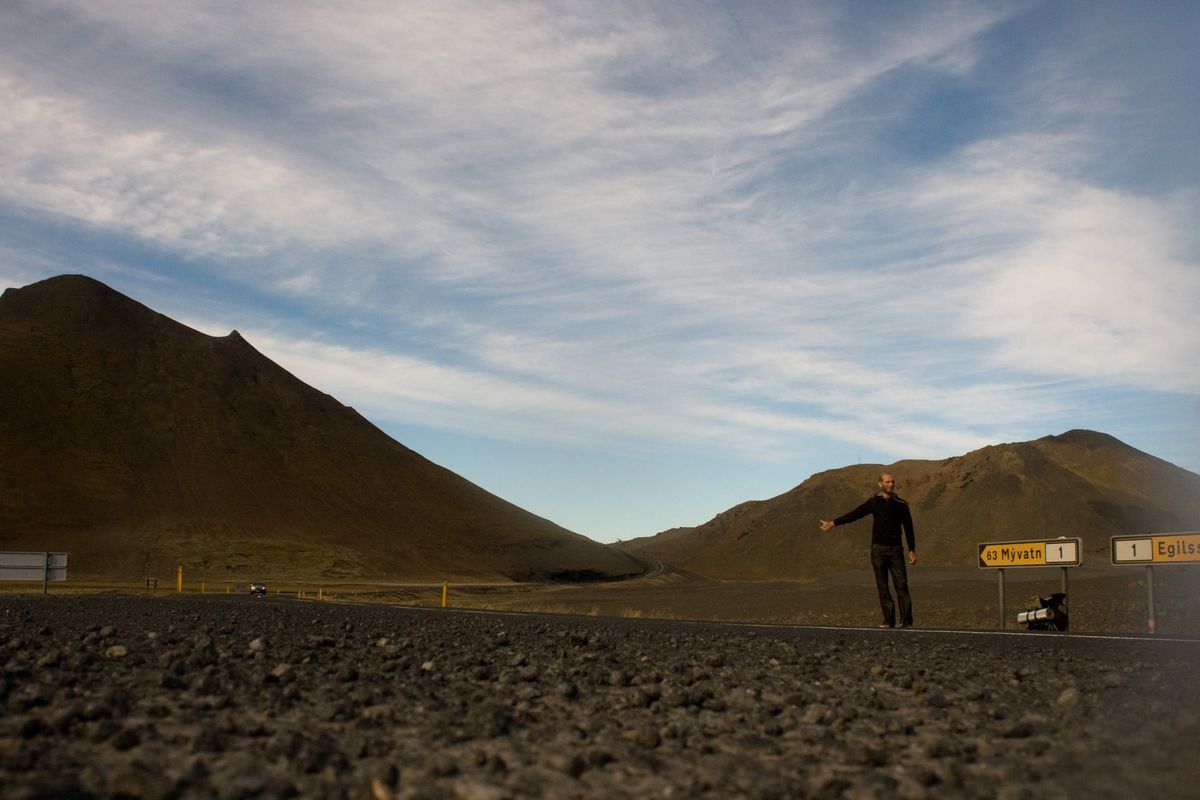 A relatively
easy route, hitching a ride from Reykjavik to Akureyri in the north-east
is easily doable in a day; the journey is less than 400 km, and many
cars are going all the way between the two cities. This is a good route
for beginners, given the safety and relatively short distance. One may,
however, want to allow for two days each way, especially on the return
trip to Reykjavik, since getting a ride from Akureyri is much more
difficult.
A relatively
easy route, hitching a ride from Reykjavik to Akureyri in the north-east
is easily doable in a day; the journey is less than 400 km, and many
cars are going all the way between the two cities. This is a good route
for beginners, given the safety and relatively short distance. One may,
however, want to allow for two days each way, especially on the return
trip to Reykjavik, since getting a ride from Akureyri is much more
difficult.
To leave Reykjavik, check out the spots in the Reykjavik article. Don't stray too far from the villages, in case you can't get a ride or bad weather rolls in, but it is typically easier to flag down cars outside of settlements. Because many places are remote and weather cold and rainy, remember to be well-dressed, and caring plenty of water and food (and preferably a tent). Stick your thumb out, wave to cars, and have fun; it shouldn't take too long to attract a ride. Most Icelanders under 40, and many above, speak excellent English; in fact, they may begin the conversation in that language. Make sure that, if they can't take you all the way, it will at least be possible to drop you off near or in a village.
From Akureyri, it is possible to hike beside Route 1 to the town's edge. Rides are more scarce here, since there are fewer long-distance travellers. There is some traffic between the city and villages down side-roads; if someone can only take you to a motorway intersection, make sure the village is within walking distance. Weather changes rapidly in Iceland, even more so on the north coast. It's no fun to be stuck out in an Arctic blizzard all day, miles from the next town.
A common starting point from Reykjavík onto the ring road is to take Bus 15 to Mosfellsbær and walk along Route 1 until you find a suitable spot (See map).
Hitching from there to Borganes is relatively easy; there are many cars passing, so the wait is not that long. Hitchhiking in the Snaefellsnes peninsula is a very beautiful experience. The road to Stykkisholmur and then to Olafsvík is relatively easy. You might want to spend the night in Grundarfjörður as it is probably the nicest town in the area. From Olafsvik to Hellnar or Arnarstapi, the waiting time can be longer, but with patience it's also doable. You can hitch from there to Borganes and from there it's also easy to hitchhike to the highlands to Husáfell, and back. Elfin would suggest finding a ride in Olafsvik going all around the tip of the peninsula as from Hellissandur the road, Utnesvegur, is very tiny and it's hard work finding a ride in Hellissandur or onwards, especially outside the tourist soon. Locals have no point of driving there.
Hitching to and around the Myvatn area is very easy. Myvatn is a very tourist spot in the summertime. You can easily move around the lake to see the main atractions, and you can also hitch to Krafla volcano and to Namaskard colourful springs (which are a few minutes from the lake). Another famous spot is Askja, but this is very difficult mountain road, and as such there is very little daily traffic. The weather is very dramatic at this place with absolutely no facilities, in hundreds of kms around.
The West Coast: Snæfellsnes peninsula
The west peninsula is a great place to visit with a national park, a glacier, beatiful coast lines and small villages. The fastest way to reach it is from Borganes. The ring road pass through the town so you can try to hitch at bus stops or before the village's center, where you can find a Bonus market, a good place to hitch since many locals and tourists stop there to buy food.
If you hitch in the town many cars go also north (to Akureyri), because the road split down the main road where you can find a traffic circle. Do not go there as there are no good spots.
The Southern Rim: Hitching from Reykjavík to Egilsstaðir
Hitching from Reykjavik to Egilsstaðir, some 700 kilometers, is doable in a week or even less (down to two days) if you're in a hurry. Like anywhere, getting out of a major city (Reykjavík) is difficult (read up on the good spots in the Reykjavik article), but many people on Icelandic roads do drive long distances. People are nice, and Iceland is ridiculously safe, with the exception of some dogs and cows that like to chase hitchers. Getting to Hella is easy and can be done in less than a day, within a couple hours, but the next leg/road from Hella to Höfn is more difficult to hitch, although with some patience you will get your ride, too. You can ask for lifts from Hella to Vík, then to Kirkjubæjarklaustur, Skaftafel, and then to Höfn. The last leg, from Hofn to Egilsstadir, is the hardest route to hitch on motorway One (the motorway that goes all around the Icelandic coast). For the rest of the route, there are generally five cars, or less, per hour. That does not mean it is hopeless to hitchhike on such roads: on the contrary, it is very often the fewer cars there are, more likely the drivers will not ignore a lone hitcher in the middle of nowhere. After Höfn, there are two ways to get to Egilsstaðir: you can hitch from Höfn until you get to the juncture between motorway 1 and a mountain route - this may be faster, but only doable with a 4x4, and there is no way it is anywhere near as scenic as to continue along motorway 1 - the untouched nature between Höfn and Breiddalsvík is magnificent. From Breiddalsvík you take the road that goes through Breiddalur (a wide valley) and eventually gets you to Egilsstaðir.
Hitchhiking is also easy on the road between Selfoss and Gulfoss, it is a popular road in summer, although with less traffic than road N1. You can stop at Geysir and Gullfoss waterfall. From Gulfoss onwards, lies the Kjölur road (F35), hitching here is much harder because only 4W vehicles transit there, and only a few per day. Even in summer weather can be cold at this place.
From Reykjavik to Landmannalaugar
Landmannalaugar is a camping site and the start of the most popular hike in Iceland, Landmannalaugar to Þórsmörk, usually known as Laugavegur trail. Getting to Landmannalaugar demands driving some distance on a dirt road, passable only by 4x4 vehicles (an "F" road), so notice you can't just find random cars going there. However, due to it's immense popularity, it's possible to hitch there (at least in the summer), although patience is important, as always.
Important Note: When coming from the Reykjavik area, do not be tempted to use the shorter route, which is going on Route 1, continuing until Route 26, and taking that to the north until route F225. This is a much longer dirt road going to Landmannalaugar, so practically no drivers will choose it. Instead, get off Route 1 on Route 30, and continue north-east (changing to route 32), until you meet with route F208 heading south. This is the most popular route to get to Landmannalaugar, and you can get picked up. However, this might take a day or two.
Cities
- Reykjavík, the largest city and the capital
- Akureyri the great capital of the north
- Egilsstaðir
- Höfn
External Links
- Hitchhiking in Iceland Photo Gallery
- Tips for Hitchhiking to Iceland at casarobino
Personal experiences
28 October 2015
I traveled all the ring road and the west peninsula between July and August 2015 in 14 days taking it slow. Iceland is a very easy country and i met amazing people, mostly tourists. The weather changes really fast and the wind could be really strong but beautiful sunsets and sunny days are always there if you can wait. Hitchhiking in general was very easy for me, the average waiting time was of 10 minutes (minimum time of waiting was of 5 minutes and maximum of 30 minutes). I reccomend to hitch mostly in the morning when many tourists drive on the main road so you can get a lift to go to the major natural beauty
Åland Islands
Edit on wikiThe Åland Islands (Finnish:Ahvenanmaa) are a huge bunch of sometimes really small islands between Finland and Sweden.
Hitchhiking
As all roads are really small, a good spot for hitchhiking is never difficult to find. The city buses in Mariehamn are for free. The short range ferries (on which you easily can find a lift to the next one) are for free as well for foot passengers.
Legality of Hitchhiking
Åland is autonomous in road traffic and legislates for itself rather than applying Finland's law, and hitchhiking appears nowhere in what it has enacted. The Vägtrafiklag (2023:108) för Åland does not use the concept of a motorway at all — there are none in the islands — so unlike almost everywhere else in Europe there is no class of road you are excluded from. What governs you is § 15: a pedestrian uses the footway or the vägren, the strip outside the carriageway's edge line, and only where neither is passable without difficulty may you use the edge of the cycleway or the carriageway. Anyone on the vägren or the carriageway shall, "if possible", keep furthest to the left in the direction of travel, meaning facing the oncoming traffic — the one point of friction for a hitchhiker, who wants the right-hand verge where the cars going their way can pull in, though the rule is qualified and is addressed to walking rather than standing still. The same section makes a reflector compulsory after dark, which on Åland's unlit country roads in winter matters more than the law behind it.
Cities
- Mariehamn
How to get there
The common way to get to Åland is by ferry. There are big ferries from Sweden (Stockholm, Kapellskär, Grisslehamn) and from Finland (Helsinki, Turku). They usually don't cost more than EUR 20.
Archipelago ferries
From Turku, you can also try to hitch-hike via the archipelago. You can get a map of the archipelago and the ferries at the tourist info in Turku.
- North: Hummelvik − Kumlinge, Brändö − Osnäs
- South: Långnäs − Sottunga − Galtby
Personal Experiences
Faroe Islands
Edit on wikiThe Faroe Islands are situated in Northern Europe, roughly equidistant between Iceland, Scotland, and Norway. They're officially part of Denmark and consist of 18 islands, 17 of which are inhabited. The major islands are Streymoy, Eysturoy, Borðoy, Vágar, Suðuroy and Sandoy. Each island is different and has its own "feel" to it.
Hitchhiking
The Faroe Islands are a great place to hitchhike. The flow of traffic changes during the day and the week, the must busy time is Saturdays around noon and Sunday afternoons. Since many people on the Faroe Islands work as sailors and fishermen thus working one month-shifts, you'll probably come across many single males driving around in mid-day on working days. Tourism has increased in the last years. (Highseason is from May to Sept.) More travellers rent a car to discover the islands and many of them love to pick you up. So chances to find a ride at any daytime are generally quite high - even in remote but scenic villages. (In 2019 I "hitchhiked" with 2 czech tourists in their car for 4 days and ended up as their driver.)
For those times when there aren't any cars, the scenery is so amazing that it's nice to walk. If you decide to walk along the road without hitching for a few hours, be prepared for drivers to stop and offer to give you a ride. Note that it's not recommended to walk through the tunnels, it's even illegal to go by foot through the underwater tunnels.
Nearly everyone speaks English, but you will likely encounter drivers on in the more isolated places who speak only Faroese and Danish. If you speak another Scandinavian language, their Danish is really easy to understand. You really need to leave your worries about safety behind in the Faroes. No one has any ulterior/sinister motive for picking you up − they are just genuinely nice and helpful people. Crime in the Faroes is limited to kids breaking windows, with maybe two or three exceptions in the last 5 years or so.
Legality of Hitchhiking
The law here has not been checked. Nobody has yet read the road traffic rules in force in the Faroe Islands against the official text, so this section cannot tell you what they say, and nothing elsewhere on this page should be read as a statement of the law. What holds almost everywhere is that hitchhiking is not an offence in itself and that what the traffic code regulates is where a pedestrian may stand — off the carriageway, and off motorway-class roads and their slip roads altogether — but whether that is true here is simply unknown. Ask locally before standing on a major road, and treat the rest of this article as what hitchhikers report rather than as a rule you can rely on. If you can read the official text, please replace this paragraph with the provision it turns on and a link to it.
Hitchhiking out
Hitchhiking in
There's ferries from Denmark and from Iceland to Tórshavn; they don't seem to be hitcheable, but buying a ticket to the Faeroes and then just going all way might work (except that then you miss the islands, of course). There is boats calling in at Scrabster, Scotland, on most week-ends, and there's stories of hitchhikers getting a ride.
Transportation in the Faroes
There are cars, buses, and ferries. Buses go to lots of places, their price depends on factor such as going through the underwater tunnels or not etc. Check out timetables at www.ssl.fo. They can come in handy, especially in remote places that may have 2 buses coming and going per day, but maybe not even a single car (see info on Trøllanes below under the Kalsoy section). All red buses in the capital Tórshavn are free of charge. In many other places, you might find out after a long wait at a bus stop that you have to call the bus company several hours before, if you want to take the bus! You can't hitch on the ferries of course − you pay. It's not expensive. There are also many tunnels connecting towns and islands. Except for the newest ones, they are generally one lane and without lights. They are very scary and dangerous to walk through − avoid at all costs!!
.
Islands
Streymoy
Streymoy is the most populated island in the Faroes. The capital, Tórshavn, is in the southeast of the island, and one of two cities (as far as I know) where you can get (free) public internet access − just go to the library or the only mall on Faroes called "SMS" in the north of Tórshavn. I can't remember street names, but because of how small all the towns are, it only takes a little common sense to figure out which road you need to wait by for cars. There is a roundabout outside of Kollafjørður (which still is in the municipality of Tórshavn, the way west leads to Vágar, and the way east leads to Eysturoy and beyond. You're very likely to end up here at some point since there is also a harbour in Kollafjørður, so many company cars go here.
If hitching out from Torshavn, a good place is on the 52 near the intersection with 10 (the road to Hoyvík). Prefer this road to hitch rather than the old road 50 in the north-east of Tórshavn, which is more scenic but very rarely used. Most drivers leaving the city use road 10 towards Hoyvik, as it is the starting point for most of Streymoy and for, well, most other islands, such as Vágar, Eysturoy, and Borðoy (the island where Klaksvík is). Shortly after turning from 10 onto 52 there is a side road that goes to the right, a perfect spot for cars to pull over, so stand about halfway between highway 10 and that little spot, as it gives drivers enough time to see you and pull over after passing you.
Hitching on Streymoy is generally very easy. Saksun, in the north of the island, is beautiful and probably the hardest place to get to/out of on the island. I waited for about 2 hours and several cars, all of them French and Dutch tourists. But doing the thumb and walking through the gorgeous valley called Saksunardalur is a great option to kill time.
Eysturoy
Eysturoy is also very easy to hitch-hike. The area of easter Eysturoy with villages like Runavík, Leirvík, Gøtu and Fuglafjørður lies on/very close to the main road between Tórshavn and Klaksvík. Hitch-hiking anywhere on this road should not render waiting times more than 15 minutes unless you try to get a ride during the night.
Going to the beautiful towns of Eiði, Gjógv, Funningur is recommended, please be aware though that Eiði and Gjógv are connected by a smaller mountain road, and that Gjógv especially is a very small village, getting away from there might take a while. If you look for nice views, a hot tip is to first go to Gjógv from the east, then up to Eiði. The view from Mt. Slættaratindur over Streymoys eastern shore is quite amazing.
Borðoy
I was really just in Klaksvik, the 2nd biggest city in the Faroes. There are 5,000 people, and you can use the internet for free at the library. If you walk to the harbor from the library there are ample places to leave your rucksack if you want to explore the town. When done in Klaksvík and heading back to Torshavn (or, to get back to Eysturoy or Streymoy) I had good luck standing outside Bonus (supermarket) on the main road. It's right before the undersea tunnel and there is space for the cars to pull over.
Kalsoy
Kalsoy is a lonely, emotional island, long and thin with three tunnels linking the only four towns. The only way to get there is the ferry from Klaksvik.
I hitched twice on Kalsoy. Upon arrival, I walked for a few hours and the second vehicle picked me up and took me to the northernmost city Trøllanes. I slept there, and missed the only bus that went out that morning. Advice: take the bus, or you will end up walking through a 2km-long tunnel. There are lots of tunnels in the Faroes and there generally aren't any lights. Long story short, it was VERY hard for me to get to the ferry, because there is hardly any traffic at all on Kalsoy. Finally I got a ride − a trucker who was heading for the ferry himself. Neither of these men spoke English, so be prepared to practice your Danish if you hitch Kalsoy.
Edit Sept.2019: Due to the popular monument of the beautiful seal-woman in the village Mikladalur, Kalsoy is visited quite often by more and more tourists by car. Some of them even spend the night on Kalsoy. So you might have a good chance to face some traffic and find a car. Check the ferry-schedule, so you know, when cars go to/from the harbour.
Kunoy
Kunoy is equally difficult to hitch-hike (as Kalsoy), but again, it's just a question of there being barely a trickle of traffic.
Viðoy
I only went to Viðareiði, and it was really easy to get there from outside Klaksvik. It's a "big" town, of around 300+ people. Getting out of Viðareiði could be a challenge, but I got lucky and met a Norwegian couple on vacation.
Vágar
Vágar is incredibly easy to hitch to and within; there's a lot of traffic. But if it's a nice day have someone let you off before the Streymoy-Vágoy tunnel and walk 5 minutes to the Leynar beach − it's spectacular! Vágar is where the Faroes' only airport is.
Suðuroy
Suðuroy (literally "South Island") is fairly big and different from the other islands (they even speak a different dialect). The traffic is poor, as the transportation of cars to and from the island limited. But people are friendly and like on other islands, chances to be picked up are high in spite of the few cars. The road network is not so good, so you can't really drive around the island.
Hitchwiki user Gutuater was there during the holiday called Jónsøka and the interior of the island seemed to be uninhabited; but he found two 17-years-old schoolgirls that had nothing to do and drove him around. The beach town of Fámjin with the lake up the hill is a spectacular destination (it was very hot and he wanted to take a swim in the lake, but the water was ice cold!!).
Personal Experiences
Greenland
Edit on wikiGreenland is a huge, cold, and sparsely inhabited country.
There are a lot of ties with Denmark, and many people speak Danish.
Hitchhiking
There is no road or rail system on Greenland; so best is to get around by plane. Maybe you can hitch a plane there. There is also a ferry company that goes between the major towns in Greenland.
Legality of Hitchhiking
Greenland has its own traffic act rather than Denmark's — the Bekendtgørelse af færdselslov for Grønland, LBK no. 995 of 26 October 2009 — and it says nothing whatever about hitchhiking. It says nothing about motorways either: the word motorvej does not occur in it once, because no two Greenlandic towns are joined by road and the network is a few dozen kilometres inside each settlement plus the run to its airport. The provision that applies to you is § 42, which requires a pedestrian on a road to keep as far to the side as possible and by preference to the left-hand side of the road. So a lift is legally unproblematic anywhere you are in a position to ask for one, and there is no road class, verge rule or stopping rule standing in the way. What limits hitchhiking in Greenland is not the traffic act but the geography: the long-distance connections are boats, planes and helicopters, and for those the law that matters is maritime rather than this one — see Hitchhiking a boat.
Personal Experiences
Spain
Edit on wikiSpain is a member state of the European Union as well as the Schengen Agreement.
Spain consists of 17 administrative units called Comunidades Autónomas. Some of these administrative units also represent historical nations that vary in traditions, culture, gastronomy and even language. Although all citizens of Spain speak Spanish and are politically recognised as Spaniards, you will be more liked by locals – especially in the nationalistic Basque country and Catalunya – if you learn the basic distinctive features of each region (i.e don't expect sevillanas and bullfighting in Girona, and don't be surprised if you see bagpipes and celtic-like stuff in Santiago de Compostela!).
Hitchhiking
In Spain, hitching isn’t a very common concept and mostly done by foreigners. This might be due shaping periods in Spanish history as the Francoist dictatorship and events as the murder of the Alcàsser Girls. But It's really different depending on the autonomous community: it's easy in Galicia, Asturia and Extrémadura. In these communities it works like in France. It's better to stand with a cardboard. In Euskadi and Catalonia, you will wait a long time just stand with a cardboard. However, the thumb will be understood. In the Pyrenees hitching is easy. An effective best method can be ask people directly whenever possible, e.g. in service stations, even if your Spanish is very poor. The Spanish phrase vas a...? ‘are you going to...?’ is a good starting point. Because Spain is a touristic country, at some large service stations you can find drivers from all over Europe, who are more likely to take you than the local people. However, this strategy is not advised in the far south of Spain (Andalucia), as service stations there tend to be deserted and sometimes off of the main road. Generally, there are petrol stations every 20-30 km, often in a so-called "via de servicio", along with a hotel or a restaurant. This means that each and every one of those petrol stations has less traffic. Most people who travel certain roads regularly will know (or pretend to know!) the good spots where a lot of traffic passes through (e.g. truck stops, or nice restaurants). Try not to get stuck in places off the main road (in a village, or an industrial zone), but ask your driver if s/he knows a place with lots of people. Even if you hitchhike alone or in groups of two, be prepared to make much fewer kilometres per day than in e.g. Germany or France. Waiting times of over an hour are common, and 500–700 km a day may prove a real challenge. The first time you hitchhike in Spain, it might be a good idea to only plan for 300 km a day. If you do master some Spanish, however, and if you carefully stick to service stations asking people, hitching can be easy and fun - even in Spain.
During the "the siesta" (from 14:00 to 17:00), there tends to be less traffic. In the summer, the sun can be very powerful at this time of day, so it may be best to avoid standing on the road during the siesta hours.
As hitch-hiking is not a very common concept in Spain, many Spanish people travel via blablacar. If you want to get out of big cities (Madrid, Barcelona) you might have to pay 3-5 Euros to get to a hitch-hiking spot. In this case, consider finding a short ride just out of the city to a nearby small town, with blablacar. The driver can drop you directly on a service station on the motorway, and you might not have to walk around in the Spanish summer heat.
Pontevedra city has banned cars.
File:CommunidadValenciana.JPG%7Cthumb%7Cright%7CHilde hitchhiking to Valencia. File:2002_Dec_Hitch_hiking_in_Catalonia_SPAIN.jpg%7CHitch-hiking in Catalonia. December 2002. File:Granada.jpg%7CRobino hitching from Valencia to Granada. File:HhPICT1975.jpg%7CStop at Valencia, at the trip from Germany to Portugal. File:2002-03 Trying to hitchhike in Murcia to Sevilla.jpg|2002 trip from Berlin to Cádiz. It took only one day from Berlin to Barcelona but three days to get from Murcia to Cádiz. South of Spain: Very difficult to hitchhike. But the flowers did help! File:P1000787.JPG| Night hithhiking in Murcia


Legality of Hitchhiking
Spain is one of the few countries that bans hitchhiking by name rather than merely banning pedestrians. Article 125 of the Reglamento General de Circulación says pedestrians may not walk on an autopista or autovía and may not "make requests for passage on any stretch of them, including the toll station forecourts" — so on those roads the thumb itself is the offence, service areas and peajes included. Article 94.1.g) separately allows vehicles to stop on an autopista or autovía only in the areas provided for it, and article 38 keeps bicycles, mopeds and animal-drawn vehicles off them entirely. Everywhere else — carreteras nacionales, comarcales and ordinary streets — hitchhiking is not regulated at all and is perfectly legal. So work the carretera nacional network, or ask at the last petrol station before the motorway starts, rather than standing anywhere on the autovía.
Cities
- Algeciras
- Alicante
- Badajoz
- Barcelona, the capital of Catalunya
- Bilbao
- Burgos
- Ceuta
- Cordoba
- Donostia-San Sebastián
- Granada
- Madrid, the capital
- Malaga
- Oviedo
- Salamanca
- Santander
- Santiago de Compostela
- Sevilla
- Valencia
- Vigo
- Zaragoza
Road network
The north of Spain has a well developed system of Autopistas. Autopistas are very similar to French autoroutes, and so similar rules can be applied when hitchhiking. Autopistas have two or more lanes in each direction, accessed after passing through a peaje (tollgate) and have large rest stops along the way.
When hitching at peajes, usually people have great success, and can obtain long distance rides, even at night time. Usually the police and motorway staff do not interfere, but some stricter police may request that you leave. It is important to note that large peaje sections are usually split by a concrete wall; 2 or 3 lanes for cars, on the inside, and another 2 or 3 lanes for buses and trucks on the outside. The concrete walls usually carry on some distance after the peaje, and end once the vehicles are travelling too fast to stop. It is up to the hitchhiker to decide which lanes to take, however sticking to the outside and waiting for a truck may attract less attention from the authorities than standing further inside waiting for a car.
When hitching long distances it is a good idea to stick to large peaje sections or rest stops. Bring water and food, since these áreas de servicio are expensive. It should be noted that hitching at small peaje sections, on motorway exits, is not recommended, as often there is one peaje for both directions, automatically ruling out many vehicles as possible rides.
In the south of Spain, and parts of the center and the North, the motorways are smaller and the petrol stations are usually further away from the road; this system is called autovia. This website shows exits and also service areas for some autovias, as well as autopistas. It is best to be patient at these places. Be careful when people promise you to drop you off at a "very busy" petrol station, as it might turn out to be deserted. It is better in these cases to find direct lifts from one town to another (use a sign when thumbing).
Border crossing
When entering the country from France you should try to get a lift as close to your destination as possible. On the Mediterranean side, a good place for this is La Jonquera, one of the biggest truck stops in Europe. You’ll find plenty of international truck drivers all over the country, because Spain is a centre of the fruit industry, exporting their oranges and tomatoes. On the Atlantic side, there is another huge truck stop near Irun called Oyarzun (accessible in both directions).
If you arrive by the ferry from Africa you should try to get a ride on the ferry or at the port. There are lots of people from Morocco, who went to visit their families and now return. You’ll see number plates from many other European states.
Crossing Spain to get to Portugal
If you just want to get to Portugal, you'll want to to keep your hitch journey in Spain as short and quick as possible. This will happen by sticking to the the main road (AP-1, A-62, mostly "autovia") from Bayonne/San Sebastian to Salamanca / Vilar Formoso (the portuguese border near Guarda). Even if you come from, say, Montpellier, it's recommended to hitch up to Bayonne and cross the basque country.
A good technique is to stay in one of the last service stations on the A63 in France before the spanish border, and wait for someone who can take you all to way to Portugal. Portuguese plates (1/3 of portuguese nationals live outside Portugal) or tourists (20 million invaded Portugal in 2016) will pass there.
Otherwise, don't let your drivers drop you at just any gas station along the way - try your best to stick to busy ones (on the right side and near the highway, Repsol and Galp).
If your ride is only taking you to somewhere near Vilar Formoso border and you want to go further in Portugal, you can stay at the last Cepsa gas station on the right side of the road, 5kms before the border. Gas is cheaper in Spain.
Language(s)
As mentioned above, the Comunidades are not only administrative districts; many of the regions have their own culture, language and some even are reluctant about considering themselves as a part of Spain. For example the dominating language in Catalonia is Catalan, so be aware of that. Nevertheless, everyone speaks castellano (Spanish).
Aside from Spanish, other recognised spoken languages are Galician, Basque, Catalan, Aranese, Astur-leonese and Aragonese. Only the first three are legally official and have a considerable number of speakers. But don't panic! Everybody speaks perfect Spanish and won't feel uncomfortable talking to you. Younger Spaniards will easily understand you in English as well. Obviously, big co-official languages like Basque, Catalan and Galician are widely used in their respective regions, and learning a handful of words or at least showing your interest in local languages may make the driver loosen up.
Also, you will find that some Catalan, Basque and Galician cities can appear in signs and maps with two names: one in its local language form and the other in Spanish. For instance: Donostia (in Basque) is also known as San Sebastián (in Spanish), Lleida (in Catalan) is Lérida (in Spanish), Rianxo (in Galician) is Rianjo (in Spanish) etc. Whatever your map says and whichever language you are speaking —even if you are speaking in Spanish—, hitchwiki encourages you to use the local language form better than the Spanish one if possible, also in your sign, in order to not mess with politics. Spaniards all across Spain understand both forms.
Note: Although the signs on the road and other kinds of key information (i.e: restaurant menus) are translated into Spanish in bilingual territories, you will definitely need help in small towns and non-touristy places in the Basque Country and Catalonia, especially because Basque is an isolated language that does not resemble anything you have heard before. In case of doubt, ask the locals. In Spanish Disculpe, ¿qué signfica... (Excuse me, what does ... mean?) works fine everywhere. Mariam, who does not speak Basque, walked from a small town following a sign in Basque that she thought would guide her to the next town and ended up in a recycling plant.
Spanish for the Hitchhiker
The Spanish phrase ¡Hola! Vas a...? (Hello, are you going to...?) with a wide smile is an excellent starting point. Remember most Spaniards actually meet the stereotype of being loud and friendly, but aren't used to see hitchhikers on the road. Therefore, you'd better be extra familiar and polite by saying things like "¡Gracias, buen viaje!" (Thank you, have a nice trip!) after your driver drops you off or when they make excuses to not pick you up (this way they will think twice the next time they bump into a hitchhiker). Check the Spanish section in the phrasebook for more basic words.
In Spanish there are only five vowel sounds and, conversely to French or English, you should pronounce all the letters that you read as an independent sound. So say phonetically with a clear distinction of each sound "autopista" [ aw to 'pis ta ] (motorway), not ottopista, or otpist. Other difficulties that foreigners usually face:
The letter Ñ as in España and "mañana" (morning or tomorrow), which is the equivalent of the Portuguese digraph NH and Catalan NY. If you struggle with it just pronounce it as an N and an I like when you say "Estonia" — it is not the actual sound, but it will work for a tourist. The digraph "LL" as in "calle" (¨street) and "valle" (valley) is pronounced in most places as a strong "y". You would say "ka-yeh" and "ba-yeh". The digraph "CH" is always pronounced as in church in English.
There are other tricky sounds like the Z and C, the double RR... but you can get away with these brief tips pretty well. Spanish is easy!
Personal Experiences
February 2025
I was wondering why, but then I realized people were right - Spain is by far the worst country for hitchhiking on the planet. Why? I would say there are several reasons. People simply do not trust anybody, and the media did a “good” job in the past with the Alcàsser girls case from the 1990s, so people are still afraid to pick up strangers. Also, the culture of hospitality that exists in the Balkans and the Middle East simply does not exist in the same way here. I tried hitchhiking a couple of times, and every single time the waiting time was so damn long. The first time, I tried from Cuenca to Valencia, and I eventually managed it after 3 hours. Then I also tried around Badajoz and Vigo. After that, I did not want to try again. If there is something I can recommend, it would be to try petrol stations on the highway and approach people directly. This is something I personally hate doing, but in Spain it is almost a must. So, if you decide to try anyway, get ready for long waiting hours. Good luck, guys.
Summer 2022
I was hitchhiking between Bilbao, Barcelona, Madrid, petrol station hitchhiking works very well (I speak some Spanish), thumbing is harder, people rather not stopped for me. Around the Pyrenees hitchhiking is comparativeley easy.
Links
Madrid
Edit on wikiRoadside hitching spots go stale. For current places to hitch in and out of this city, use maps.hitchwiki.org and the live Hitchwiki page linked at the end of this chapter. This book keeps general orientation, not a pin gazetteer.
'''''' is the capital of Spain. It is geographically located in the
centre of the Iberian peninsular, and thus has road connections to all
directions in Spain and also Portugal.
Public transport
Madrid has a very extensive well - connected metro system that can help you get in and out of the city; a single metro journey is 2 Euros, and a ride on the cercanías should be between 2.50 and 4 euros. If the guard is not watching, or if the metro station has two entrances, you can usually jump the turnstiles. Once inside, there are few controls. The cercanías, however, have barriers at the entry AND the exit.
Barcelona
Edit on wikiRoadside hitching spots go stale. For current places to hitch in and out of this city, use maps.hitchwiki.org and the live Hitchwiki page linked at the end of this chapter. This book keeps general orientation, not a pin gazetteer.
'''''' is the capital of Catalonia, a region in Spain (and France).
From France
When on the main motorway from France to Barcelona, some cars are being stopped at the border for identity and luggage check. When going to Spain (Catalunya), there are several big rest areas on that road. You can either ask your driver to let you out next to towns such as Rubí and Sant Cugat where you can go to Bracelona by train, or get out of the car at a rest area and wait for another ride to Barcelona. A train ticket generally cost you around €2,20 (Sant Cugat/Rubí)
If you get dropped on the coast road leading to Barcelona (11) it should be really easy to keep hitching through the towns and villages until the city. I did the last 60km on this road in 4 or 5 short lifts but never waited more than 2/3 mins, just hopped out of each car and thumbed the next one almost instantly wherever I was dropped.
You can also ask the driver to leave you at the junction by the university (Universitat Autonoma de Barcelona). There is a roundabout right by the motorway ramp. The only challenge is that your driver has to be going from the junction of Barbera de valles on the right site of the motorway as it gets split - otherwise you leave the car at Castellbisbal service station.
Ferry to Mallorca, Menorca, Ibiza
Pls add info
Barcelona Public Transport
The Barcelona public transport system consists of an underground metro, trams, area trains, and buses. Day passes are a little more than 5 euro, and cover the whole transport system, buses, trams, metro, and area trains (Rodalies and FGC). Single passes are for the metro only, and cost eur 2.00. The best deal is the T-10, which is 10 rides for 11 eur (1.10 per ride). There is also a pink ticket for older Spanish people 10 rides for 4 eur, but dont show this ticket to gate guards/ticket inspectors. These tickets will also let you into the RENFE system, but you risk getting controlled if you go very far (more than 2 hours or so).
The entrances sometimes have turnstiles and sometimes have sliding electronic gates. It is possible to jump or slide underneath, or climb over the electronic gates. If you get caught your risk is 40-100 euro - if you're not able to talk your way out of it. Control happens sometimes at the exits of stations, very rarely on the trains. Walk out by stairs slowly and look forward for them
On the stations with electronic gates, the best options is to wait for somebody to pass through a gate with a ticket, and walk directly behind them. This way you can across the gate. Sometimes, if you don do it quickly enough, a short buzzing alarm might activate, but this is largely ignored.
Blackriding long distance trains
On train station Barcelona Sants, where most of the long distances trains leave. You need to go threw a control similar like on airports. They check your ticket, they scan your luggage, you even need to put down jacket to go thre scanner. This makes it nearly impossible to get in long distance trains without ticket. The gates for short distance trains are separated so you can't just buy few euro ticket to village near by. To get to the platforms of long distanes trains you would need a ticket at least to Girona or Taragona or something. When you come blackriding TGV from france you need to go out from the platform and then you would need again to go threw the stupid control to get next train so it doesn' t help you anyhow. At least leaving from the TGV is no problem as there are no gates on the exit.
Staying in Barcelona
Free food and shower
There are free showers at beach with cold water. However, they are currently out of service due to the draught (2024).
Food Parròquia de Sant Agusti (Carrer de l'Arc de Sant Agustí, metro Liceu) healty food each day except thursday at 10:15. Come half hour earlier to pick up number. Expect poor and sketchy people here.
Free hot shower and clothes Carrer de Marie Curie 22 (metro Lluckmajor ) or Av. Meridiana 197 (metro Navas)
Hospitality exchange
Hospitality exchange networks have many members in Barcelona, however, you have to plan your stay well ahead since it is quite a popular destination.
Sleeping in public areas
Options include sleeping on the beach, in parks, nearby hills, roofs of buildings and elsewhere. Note that parks in Barcelona close at night, and may not be that easy to get into one.
Ciutadella park is closed at night, but may be accessed by the entrance facing the Arc de Triomf. The bars of the fence near the gate are wide enough to slip through if you're not very big. You're unlikely to be disturbed during the night but the Police might wake you up after 8am and ask you to move on. Another user got inside and pitched a tent. It is safer if you are not alone. Lot of criminals and junkies also sleep there dont talk and dont trust anyone. Attach your bag to tree with rope when you sleep.
Small park just in front of the Cosmo Caixa Museum where you can easy use a tent. By public transport, you can get the L7 to the end Av. Tibidabo, than walk 5 minutes direction top of the hill, turn on the Carrer d'Isaac Newton just before the bridge on the left and continue. You will find this huge building, with a big submarine in front of it. When you have museum on your back, submarine on your right, there is some in front of you, between entrance of museum and submarine, you will see the main door of this park after few stairs, it might be close if its late, so you can go to the top of this stairs, than jump on the left side, go under the stairs to the other side, and there is the spot. 2 options: (1) near the bench, better for the ground, but you might be visible at the morning, and woke up by a guardian; (2) right after geting out from under the stairs, the ground is shitty, you might need good stake to setup your tent, mostly in windy time, from there, the guy who open the door at the morning, can't see you, and he don't go into the park at all, so you can sleep till late!
Take the metro from "Placa de Catalunya" to Canyelles station, walk about 200 yards uphill from the station and find some nice hills to camp/sleep out/hang a hammock. You can meet wild boars
Take a late train to the park in the North-West of Barcelona. For example, you can take the S2 to Sabadell (ticket zone 1) leaving from Plaça de Catalunya and getting off at Baixador de Vallvidrera: there is a big park which is nearly like a forest, and you will find a very good and lonesome place to stay within 500 meters from the station.
Parc de la Pau small and clean park next to the beatch (15 min from metro to station Besos Mar, next to Dechatlon shop, street Career de la Pau)...
Mountains next to Camp De Futbol Canyelles (metro Valldaura and next to Institut Escola artístic Oriol Martorel, street Camí Antic de Sant Llàtzer)
Sleeping in empty or occupied buildings and rooftops
Roofs and similar structures are quite fine sleeping places. Sleeping in abandoned houses is recommendable although it is considered a crime, "trespassing" unless you have a banner with the squatting "N" hanging from a balcony, window etc. The cops are going to put this down and inform the landlord. If they do not want you to stay and if you have been there for less than a week they can evict you right away. So in case you want to stay somewhere for less than a week having a banner is most likely not worth the hassle... You can just stay in a squat that has already gone through the registration process. Most of those houses are in Barcelona.
Thieves
When staying on the beach in Barcelona, you may notice thieves. They walk around and observe people on the beach for hours before stealing anything. Even though they aren't usually hostile or confrontational, they can steal clothes off your back while you're asleep. The only sure way to keep your things safe is to bury it in the sand and sleep on top of it. Sleeping with your head on your bag is just not enough. These thieves are very professional, and they look for people sleeping rough not just on the beach but in the central districts too.
Wild boars
Wild boars are abundant in Barcelona, there are hundreds of them. Stay away from the canes. this is where they live and sometimes they spend the night there. Don't take food to your place. on't provoke wild boars! They unafraid of humans. If something happens, back off slowly. Wild boar usually don't attack unless they feel threatened. They will probably stay away from you but they will come to sniff your tent once you're inside... I did nothing and they went away... It's best if you stay next to a tree that you can climb on if anything happens. If you see a mother and her cubs stay the fuck away. Cutting raw onion around your place may scare them away!
Free internet
Free wireless and Apple demo computers with limited internet access at Apple Store (Plaza Catalunya)
Take care of your bag and money there are alot of brave and fast thieves around!!!
Portugal
Edit on wikiPortugal is a country located in south-western Europe on the Iberian Peninsula. Portugal is the westernmost country of mainland Europe and is bordered by the Atlantic Ocean to the west and south and by Spain to the north and east. The Atlantic archipelagos of the Azores and Madeira are also part of Portugal.
Hitchhiking
People are very friendly in general. During the summer, especially the coastline is overrun with tourists. In Portugal people are easy going and sometimes slow. Everything needs its time, so you will probably have to wait for a little while. Long distance buses are usually a bit late.
Hitching in Portugal is quite easy. However, it is important that you
are protected from the sun. The weather is, especially in summer,
extremely hot. During the autumn or winter season, rain can be constant,
especially in the north and centre of Portugal. Although, you still
might be able to find long periods of beautiful sunshine. Anyway, keep
in mind that Portugal is SO WINDY, especially in coastal areas due to
the oceanic weather. This can be an ease in summer's hot afternoons, but
it's definitely harsh at night, even more if your plan is to wildcamp or
vivac.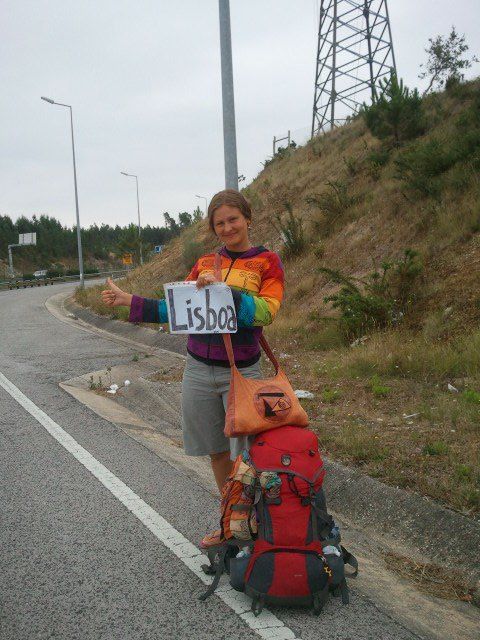 If you hitchhike near
the coastal regions, you will probably have more chances of being picked
up. Most of the people in Portugal live near the coast. Regions around
Lisbon or Porto are generally with more traffic throughout the year. The
Southern coast of Portugal is also very touristic, so you will have
higher chances of being picked also by foreigners.
If you hitchhike near
the coastal regions, you will probably have more chances of being picked
up. Most of the people in Portugal live near the coast. Regions around
Lisbon or Porto are generally with more traffic throughout the year. The
Southern coast of Portugal is also very touristic, so you will have
higher chances of being picked also by foreigners.
As an alternative to hitchhiking you can use the buses from Rede Expresso for overland travels. The railway network is not in a good state, it is slow and there are only two lines. Although, the network is improving a lot during the last years and it's easy to sneak in without paying, especially in short-distance regional trains around Lisbon.
Another important issue is the way you address the drivers (since speaking directly with them gives better result than standing on the exit of the highway, if you´re hitchhiking on one. The Portuguese, even if not very familiar with the idea of hitchhiking, turn out to be very friendly people if approached in the right way. Say hello, excuse for disturbing, explain where you´re going to and ask if by any chance they´re going the same way. Seems like very basic advice but in Portugal it matters more than in central Europe;)
Legality of Hitchhiking
Portuguese law does not mention hitchhiking (pedir boleia), so it is legal on ordinary roads and the restriction is a road-type one. Article 72.º of the Código da Estrada prohibits pedestrian traffic on autoestradas and on their access roads where these are signposted, and article 75.º extends the same rule to vias reservadas a automóveis e motociclos — so the slip road is out as well as the carriageway. Article 72.º(2)(b) forbids stopping or parking "even off the carriageway" other than in places specially designated for it, which rules out the hard shoulder for the driver too; breaking either carries a fine of €120–600, or €250–1250 for stopping on the carriageway itself. That leaves the áreas de serviço as the one place on the motorway where a driver may legally stop and you may legally stand. Thumb from the on-ramp before the signs, and on estradas nacionais hitchhike freely from the verge.
Normally, police won't bother you. Despite is forbidden to hitchhike at the middle of the highway, like mostly everywhere, your chances increase if you ask for a lift at the service stations or even at the tolls. In Portugal highways are payable, and so many of the vehicles stop at the tolls in order to pay.
Although walking along the highway (Autoestrada) can be an effective method in Portugal, you risk being stopped by the highway patrol. If you are friendly enough they might give you a lift to the nearest town or national road where it is legal to walk, but some have been known to call the police, particularly near Lisbon. Note that simply hitchiking in general is perfectly legal, rather it is the act of walking along the highways which is illegal.
A traditional toll plaza usually has an electronic toll lane and one or more lanes for manual payment. Not all the vehicles stop because they have the electronic system which collects their costs with no need to stop. The vehicles which stop will do it at least by two different times. First, they collect a ticket which signs the start of their trip at a certain place. Later, they stop for the manual payment at a lane. Obviously, you will be less noticed when you ask for a lift during the collection of a ticket than during the payment at a lane.
Truck Routes
A common way in Portugal for long distance lorries is to take the Autopista Castilla (E80). There is a huge truck stop at the border where they can get cheap Portuguese food, so many just wait until they get there before going to other areas of Portugal, mostly to Porto and Lisboa.
Fátima
Fátima is a little pilgrimage village. You could try using a sign with this name to increase your chances of being picked up. It's on the road between Lisbon and Porto.
Language
Despite Portuguese being the official language, Spanish is widely understood. However, using a few Portuguese key words goes a long way, as generally people give some value to that. You will find that many Portuguese speak English or French as a second language. According to the International English Proficiency Index 1, Portugal has a high proficiency level in English, proficiency higher than in countries like Italy, France or Greece.
Crossing Spain to get to Portugal
Portugal borders only with Spain. The rest of the country is surrounded by the Atlantic ocean. Portugal has signed the Schengen Agreement which means that borders with Spain are open. At times, there are mobile checks by the police or customs, especially in border regions like Vilar Formoso.
If you just want to get to Portugal from somewhere in Europe (or vice-versa), you'll want to to keep your hitch journey in Spain as short and quick as possible. This will happen by sticking to the the main road (AP-1 and A-62, Autovía de Castilla) from Bayonne/San Sebastian to Salamanca / Vilar Formoso (the portuguese border near Guarda). Even if you come from, say, Montpellier, it's recommended to hitch up to Bayonne and cross the basque country.
A good technique is to stay in one of the last service stations on the A63 in France before the spanish border, and wait for someone who can take you all to way to Portugal. Portuguese plates (1/3 of portuguese nationals live outside Portugal) or tourists (20 million invaded Portugal in 2016) will pass there.
Otherwise, don't let your drivers drop you at just any gas station along the way - try your best to stick to busy ones (on the right side and near the highway, Repsol and Galp).
If your ride is only taking you to somewhere near Vilar Formoso border and you want to go further in Portugal, stay at the last Cepsa gas station on the right side of the road, 5kms before the border. Gas is cheaper in Spain, and many cars fill up their tanks in there before entering Portugal.
Links
- bp Portugal for bp highway petrol stations in Portugal.
- To find local festivities "festas bravas", it's recommended to check this website. EliasExplores had most excellent experiences being in those small villages. As seen on his Youtube Channel
Personal Experiences
February 2025
I hitchhiked in several parts of Portugal: Badajoz to Elvas, Alcobaça – Batalha – Fátima – Tomar, Tomar to Coimbra, Covilhã to Porto, and the worst one ever — Braga to Vigo. In general, hitchhiking is not as bad as in Spain. In some parts, it works quite fast, and you can get a ride within a matter of minutes. But the stretch from Braga to Vigo was a horror movie! I waited 4 hours at the city exit, then changed my plan and went to nearby Barcelos first. After that, I moved around some villages, walked for a while, and finally reached a highway petrol station, from where I got a ride to Porriño. Hospitality in Portugal is practically non-existent. People know what hitchhiking is, but most of them look at you as if you were a serial killer. It seems that smaller roads work better than highway petrol stations or entrances — or maybe that was just my experience. However, I would definitely say Portugal is in my top 3 worst hitchhiking countries so far (Spain and Poland are there too).
Winter 2023
Getting rides around Algarve is very easy due to the many tourists who come from countries like Germany or the Netherlands where hitchhiking might be more common than in Portugal in general.
Lisbon
Edit on wikiRoadside hitching spots go stale. For current places to hitch in and out of this city, use maps.hitchwiki.org and the live Hitchwiki page linked at the end of this chapter. This book keeps general orientation, not a pin gazetteer.
This book does not reprint named ramps, dumpsters, hostels, or other pins. They go out of date. Follow the note above to the live map or wiki.
Andorra
Edit on wikiAndorra is a very small country in the Pyrenees, surrounded by France and Spain.
The official language is Catalan but basically everybody speaks Spanish, a lot of people french and people will likely have a basic english level.The currency used is Euro.
Hitchhiking
There are few roads and no motorways. To hitchhike onward it is
necessary only to go to the end of the town, and passers-by can direct
you. Andorrans are used to hitchhikers, as many of the South American
workers here hitch to work and back. However this means that sometimes
there is a bit of competition for good spots to thumb. That being said,
bus stops and parking bays are plentiful enough that you can simply walk
further down the road.
It is a very safe place. Some pickpocket might exist in the big crowds during winter season but it is very rare.
Andorra La Vella and Escaldes (the main cities) can be difficult to hitchhike from, try to get away from the center and look from bus stops where drivers can easily park. Petrol stations can be useful too, pay attention to the car plates: gas is cheaper in Andorra so a lot of tourist fill their tank before leaving.
To hitch south towards Spain from Andorra La Vella, you can catch the L1 bus south towards Sant Julià de Lòria, the bus stops near a Total petrol/gas station, from which it is VERY easy to catch a ride south.
While Andorrans themselves are sympathetic to hitchhikers, you are much more likely to be picked up by someone of another nationality. Try to look as tidy as possible, nomads and backpackers are not so common and is narrow minded place.
Legality of Hitchhiking
Hitchhiking is not an offence in Andorra and there is no road you are banned from: the Llei 12/2021, del 13 de maig, del Codi de la circulació defines an autopista in article 3(6) but the country has none, so the pedestrian rules apply on every road in the principality, the CG-1 and CG-2 included. Article 49(1) puts you on the pavement where there is one and otherwise as close as possible to the edge of the calçada — and on a road without pavements it puts you on the **left-hand** margin, facing the traffic, which is the side to wait on unless safety plainly argues otherwise. Article 50(1) is the one with teeth for hitchhikers: outside built-up areas, between sunset and sunrise or in poor conditions, anyone on the carriageway or the voral must wear a homologated reflective or luminous item visible at 150 m. Nothing in the Code forbids asking a driver for a lift or a driver from stopping to give one, so the practical limits are the mountain roads themselves — few laybys, tunnels where stopping is banned, and a border post at each end of the country.
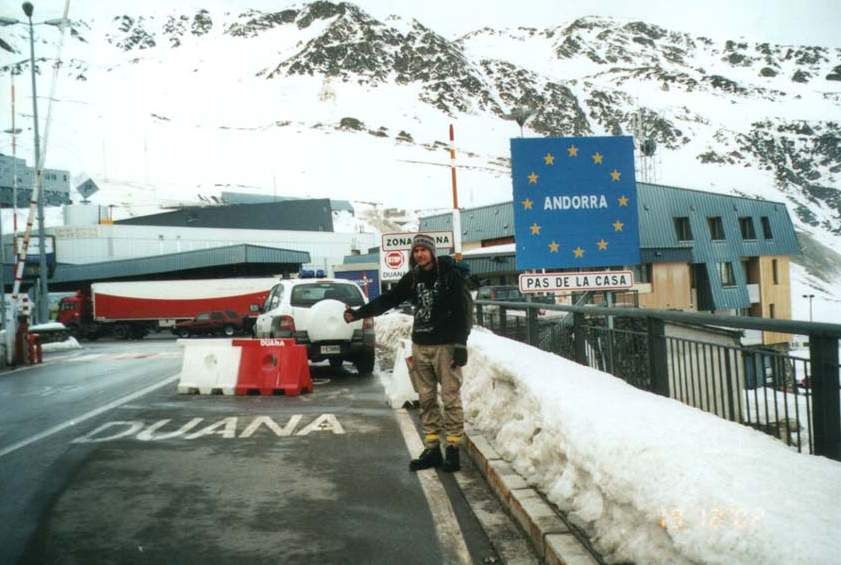
Hitchhiking in
When using the A61 in France it's better to hitch a ride to the Péage gate's just before Toulouse, as there seems to be little trafic from Carcassonne to Andorra.
Hitchhiking out
There is only one main road in Andorra. Depending on which direction you can go to either France (North) or Spain (South). GrooteR found the locals quite helpful for hitchhikers when thumbing, but the cars waited for (long distance towards France) didn't stop.
It's recommended to ask people at the petrol stations, gas is cheaper in Andorra and tourist tend to fill the tanks before leaving. If you are heading to France you can try north of Andorra la Vella but if can get at least to Canillo better because is where most of the french tourist usually stay. If you are heading south, towards Spain, your best chance is get to San Julia de Loria. Once there there is just one route towards Spain. A bit south San Julia there are a couple of malls ( River and Punt de trobada) where a lot of tourism stops. You might get a ride from there.
Personal Experiences
[[ru:Андорра]
Azores
Edit on wikiGeography
The Azores are a group of nine islands in the Atlantic Ocean and form an autonomous region of Portugal located about 1,700 km west of mainland Portugal and are divided into three main groups:
- the Western Azores, consisting of the islands of Flores and Corvo
- the Central Azores, consisting of the islands of Faial, Pico, São Jorge, Graciosa, and Terceira
- the Eastern Azores, consisting of the islands of São Miguel and Santa Maria.
he most populated island is São Miguel with the biggest city Ponta Delgada, while Faial and Terceira also have a comparably dense population.
Climate
Be prepared for extremely unstable weather conditions. Even in summer it rains very often, but quickly stops, too. Locals call their weather "four seasons in one day".
Hitchhiking
Hitchhiking is very easy and safe on the Azores. As there are not too many main roads, it is fairly easy to get a lift to where you want to go. Locals are extremely friendly and will many times bring you directly to your destination just to help you, even if they hadn't planned to go there. Speaking Portuguese obviously helps, but many people also speak English and are happy to "practice English", especially on São Miguel. Most towns are very small, so walking out of a town and waiting at main roads or bus stops (with few or no buses passing by) is a good option. The public transport system is not very well developed, especially when trying to get to natural sites outside of towns (e.g. Mount Pico on Pico island or Lagoa do Fogo on São Miguel). This means people in general are more willing to pick you up, although some might also try to convince you that a taxi is your only choice. It is quite common to get offered rides on the back of pick up trucks, so be prepared to get a little dirty.
Legality of Hitchhiking
The Azores are an autonomous region, but road traffic is national law, so the Portuguese Código da Estrada applies here unchanged and hitchhiking (pedir boleia) is not an offence. There is no autoestrada anywhere in the archipelago, so article 72.º, which bars pedestrians from motorways and from their signposted access roads, has nothing here to apply to. The provision to watch instead is article 75.º, which extends that same ban to any via reservada a automóveis e motociclos: the fast dual-carriageway stretches on São Miguel are the only roads in the islands likely to carry that sign, so check where one begins. Everywhere else — which is very nearly the whole network — you may stand on the verge of a regional or municipal road and thumb. Article 72.º(2)(b) is the driver's half of it, since stopping outside a designated place on a road of either kind costs them €120–600, so on a signed via reservada ask at a filling station rather than flag someone down.
How to get there
If you are really talented and lucky, you might get a ride on a private sailing boat from anywhere on the world, as the Azores are an extremely popular destination for sailors, coming from as far as Australia. If not, there is no other choice than flying in, which is possible from Europe and North America. There used to be a local monopoly for flights from SATA, the Azorean airline, so prices are quite high. The cheapest way to fly in is from mainland Portugal. There are no ferries from mainland Portugal to the Azores. Since 2015, Ryanair offers regular flights to Lisbon, Porto and London Stansted. Prices are considerably lower than with SATA, making the Azores much more affordable by air (~20 euros one way).
Mind you, Sao Miguel is the most populated island, but to find a boat to Europe or North America, your best choice is Faial (Horta) - where most of the sail boats stop while doing the crossing. Everyone is very relaxed in the Azores and it is easy to get into the marinas (they're not even locked during the day.) It is possible to hitch a boat!
Resources
Personal Experiences
Italy
Edit on wikiItaly is a member state of the European Union as well as the Schengen Agreement, and so are France, Austria, Switzerland and Slovenia.
Hitchhiking
Hitchhiking is a bit less common than in France or Germany, but it's very well possible and doable. Just don't expect high speeds (particularly in the north) and be prepared for a night on the road.
In Italy, you will find motorways (autostrada -- A) and state roads (Strada Statale -- SS). Hitchhiking on the autostrada is generally illegal (this includes petrol stations, check the legal section of this article for details); to avoid problems you can try hitchhiking on the strade statale. It takes little bit more time, but you meet more local people and you can see the countryside.
Hitchhiking the motorways still works well. If you stick to petrol stations (Autogrill) and that you try to speak a bit italian, it should be fine. Even if the drivers can't take you, they'll decline politely. As said upper, avoid hitchhiking when the police is around. Try not to be dropped at tolls.
This map has all petrol stations marked in the map. Getting rides on petrol stations is generally easy. Toilets are free at petrol stations in Italy. Make sure to stay on friendly terms with the staff.
If you make a sign, try writing the name of a sensibly chosen city some 200-300km in the right direction. For example, if you're heading from Milano to Napoli, few people will be going that far in one stretch. So try writing first Firenze, then Roma and finally Napoli. You might get there in just those three stops.
Trucks do not drive on either Saturdays or Sundays, so if you prefer to drive with them, a good time to get a ride with them is early morning on a Monday.
Legality of Hitchhiking
Italy bans hitchhiking on its fast roads by name, and unusually the ban reaches the service areas too. Article 175(7)(b) of the Codice della Strada forbids "asking for or granting lifts" on the carriageways, ramps, junctions, service and parking areas and any other appurtenance of an autostrada or strada extraurbana principale. Article 175(6) separately bars pedestrians from those roads except in the aree di servizio and aree di sosta, and lets you walk the hard shoulder only to reach an emergency telephone. Both the hitchhiker and the driver who stops are liable, to an administrative fine of €42 to €173 under article 175(14). Everything below that class of road — strade statali such as the SS9, provincial roads and most tangenziali — is unregulated, and that is where hitchhiking in Italy is legal.
Border crossings shouldn't be a problem, but avoid revealing yourself as a hitchhiker at the border, since it might still be considered as part of the highway and thus illegal.
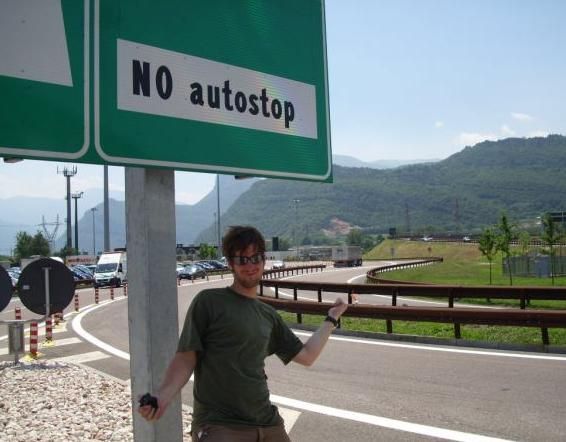
Of course it is still possible to hitch the width and length of Italy on freeways without being fined all the time. On-ramps and exits of petrol stations have big signs saying no autostop; if you stay before those, you should be fine; even if police have a problem, they will mostly just ask you to move further away from the sign. The ban on hitchhiking is not generally enforced in highway gas stations, but all the more when you're in a place where it actually is potentially dangerous to stand. It can happen that they ask you to leave a gas station and continue by train (see public transportation section in NomadWiki for advice on how to travel for free by train). Generally it is smart to lower your thumb and try to look like a straying botanist or something whenever you see coppers approaching near the motorway.
According to this legal article (Italian), this does not apply to tangenziale, bypasses, unless they are autostrade or other high-velocity roads. All in all, it's less likely that you will encounter problems if you're not Italian -- and, if you speak Italian, don't reveal this to police (or the armed forces, carabinieri).
Border crossings that are on the motorways (such as the Grand Saint-Bernard at the Swiss border) might be considered by the police as part of the highway. Nina was hitchhiking with a nice truck driver who was trying to help her get her next ride at the border, but the policeman did not allow her to continue hitchhiking (even not to stay in the truck with the same driver!) and instead drove her to the bus stop and gave her money (much more than required for the bus). Others might not be so generous though.
Edit: (TommytheCommie) We had no success trying to hitchhike from the toll bridges at the entrance to highways (autostrade). Everybody in Italy knows it's illegal to hitchhike on the highway. The police moved us back to the roundabout before the toll bridge, which was fine, but nobody was stopping in either position. So instead we hitchhiked on minor roads (named SS-9/10/etc.) and never waited longer than thirty minutes once we found a good spot. We hitchhiked down from Alessandria to Bologna on the Via Emilia (SS-9), getting short rides of 20 or 50 km at a time, but never waiting long.
Roads
As described above, you'll find in Italy motorways "Autostrada" and state roads "Strada Statale". Motorways look pretty much like French ones: contrary to Germany, there are tollgates where drivers have to get slower.
Roads in Italy, both state roads and motorways especially in the North, are surprisingly heavily arranged: there are lots of barriers or rails on the side of the roads, and lots of (really lots of) tunnels to cross uneven landscapes and ranges. In the North, in the Alps, some roads are only succession of tunnels (like in Aosta valley), and sometimes even tiny roads leading to a small valley will have barriers one both sides. You can then sometimes get stuck because there is absolutely no place to hitchhike and stop a car, on a road between two tunnels and barriers on both sides.
More generally, roads in Italy are quite tight, although really almost all the time very well sealed, and finding a good spot to hitch is maybe a bit difficult in mountains regions. Also because roads are stirring a lot, maybe more than in others countries.
There is one thing that you also have to consider that, even if you see an autogrill or petrol station on the motorway not so far from you, you have to be prepared that it will like a fortress with massive fences.
Safety
The northern part of Italy is quite safe, but take care in the South. When pitching a tent in the wild, make very sure to stay out of sight. Roads are often not laid out for bicyclists and pedestrians which makes it harder to walk towards or find good spots. Some areas, especially on the outskirts of cities such as Rome, can be dodgy for single female travellers for the reason that prostitutes frequent these places. When you get into a car, make sure that the driver's motives are not determined by his meat loaf.
Getting out
North across the Alps
Take the motorway A23 (in the eastern part of Italy) to Austria (don't try to hitchhike through Switzerland, it's very difficult). Follow the A23 to Villach and Salzburg to get through the Alps very easy. On that way, you will also find a lot of people heading to Hungary, Slovakia and Slovenia. You can also try to hitch A22 to Bolzano, Innsbruck over the Brennero, but it's quite difficult to find a hitch from A4 to the A22 except when it is holiday time.
Also, don't go via Milano, it's really difficult to get out of the ring because almost everybody drives into Milano and very few stop at service areas located nearby.
There are a lot of tourists from Austria and Germany, especially in summertime. The new European car plates start with a letter on the left side of the plate, representing the country. Most Austrian (A on a plate) and German (D on a plate) are on the way to the sea or on their way back from holidays, so if you want to go North or South, try to find Germans or Austrians (usually, they speak better English than the Italians, too).
Another option is stay on the A4 and ask trucks on the petrol stations. Many trucks go to Austria, Slovakia, Poland and more north through Slovenia to tank diesel there because there is cheaper diesel and on the roads there aren't so many hills so it saves fuel.
Edit: (TheLoneBaker) Crossing the Alps via Switzerland from the A9 seemed to be extremely easy. Lots of traffic at the service stations. Probably not worth the effort to go a different route if already in Western Italy.
Regions and cities in Italy
| Region | City | | |
|---|---|
|
Ferries between Italy and Greece
It's possible to hitchhike from south-eastern Italy to Greece, but it seems to be quite difficult. Find more information here.
Language
As in any foreign country, learning some of the language is recommended. Aside from Italian and local dialects, French is spoken in some areas of Piedmont and especially the Aosta Valley in which it is a co-official language, as well as German in South Tyrol. A handful of words from a local dialect may make drivers loosen up. Spanish is easy for Italians to understand. English is less widely spread than in more northerly countries.
"Hitchhiking" is autostop or passaggio in Italian. Just say faccio autostop or cerco un passaggio and the name of your your destination or show your thumb, otherwise Italians might think you are asking directions as Italy gets a lot of tourists. A sign can also help to avoid misunderstandings.
Also, service stations and restaurants on highways are commonly referred to as Autogrill.
For detailed information on speaking Italian check the Italian phrasebook on hitchwiki.
Personal Experiences
[[Category:Italy]
Rome
Edit on wikiRoadside hitching spots go stale. For current places to hitch in and out of this city, use maps.hitchwiki.org and the live Hitchwiki page linked at the end of this chapter. This book keeps general orientation, not a pin gazetteer.
This book does not reprint named ramps, dumpsters, hostels, or other pins. They go out of date. Follow the note above to the live map or wiki.
San Marino
Edit on wikiSan Marino is a microstate entirely within Italy.
Hitchiking Out
Add info pls
Legality of Hitchhiking
The law here has not been checked. Nobody has yet read the road traffic rules in force in San Marino against the official text, so this section cannot tell you what they say, and nothing elsewhere on this page should be read as a statement of the law. What holds almost everywhere is that hitchhiking is not an offence in itself and that what the traffic code regulates is where a pedestrian may stand — off the carriageway, and off motorway-class roads and their slip roads altogether — but whether that is true here is simply unknown. Ask locally before standing on a major road, and treat the rest of this article as what hitchhikers report rather than as a rule you can rely on. If you can read the official text, please replace this paragraph with the provision it turns on and a link to it.
Personal Experiences
Vatican
Edit on wikiThe State of the Vatican City (official sovereign territory of the Holy See) is the smallest independent state in the world, located within the city of Rome in Italy.
Number plate
There are less than 500 vehicles registered in Vatican. The number plate is white with black letters beginning with SCV or CV. It might be a hitchhikers challenge to hitchhike with a car registered in Vatican.
Sleeping
(Wild)camping is not possible in Vatican City - every place where you can go as a tourist is full of people, the other places are watched by the swiss guard. There are no hostels or hotels on the Vatican territory.
Links
Hitchhiking
It is very hard to hitch a ride on the vatican territory - the parkings and the streets leading to it are blocked by the swiss guard. It is so small that there is no need to hitchhike.
Legality of Hitchhiking
The law here has not been checked. Nobody has yet read the road traffic rules in force in the Vatican against the official text, so this section cannot tell you what they say, and nothing elsewhere on this page should be read as a statement of the law. What holds almost everywhere is that hitchhiking is not an offence in itself and that what the traffic code regulates is where a pedestrian may stand — off the carriageway, and off motorway-class roads and their slip roads altogether — but whether that is true here is simply unknown. Ask locally before standing on a major road, and treat the rest of this article as what hitchhikers report rather than as a rule you can rely on. If you can read the official text, please replace this paragraph with the provision it turns on and a link to it.
Personal Experiences
Malta
Edit on wikiMalta is a small island nation located in the Mediterranean Sea. It is a member state of the European Union as well as the Schengen Agreement.
Everyone knows English, and many can communicate in Italian and Arabic.
Hitchhiking
It is very densely populated, and there is very little distance between centres. Hitching is very easy though, often you don't even have to leave town. Gozo Island especially is very easy to hitch around.
There's also the little island of Comino where there's a free campground. Camp out here at night and walk to the Blue Lagoon in the early morning before the tourist stampede arrives and swim to the Cominotto rock which has a cool swimming cave. Comino has a few roads, but barely any traffic and all corners are walking distance anyway.
Legality of Hitchhiking
The law here has not been checked. Nobody has yet read the road traffic rules in force in Malta against the official text, so this section cannot tell you what they say, and nothing elsewhere on this page should be read as a statement of the law. What holds almost everywhere is that hitchhiking is not an offence in itself and that what the traffic code regulates is where a pedestrian may stand — off the carriageway, and off motorway-class roads and their slip roads altogether — but whether that is true here is simply unknown. Ask locally before standing on a major road, and treat the rest of this article as what hitchhikers report rather than as a rule you can rely on. If you can read the official text, please replace this paragraph with the provision it turns on and a link to it.
Hitchhiking out
There's also a ferry going to Sicily on a daily basis which costs €140 one-way and €74 day return ticket. You're not being forced to return, so take the return ticket.
Hitchhiking in
As Malta is an island, one has to go boathitching. Mind of a Hitchhiker managed to hitchhike a yacht directly from Corfu in Greece in 2015 after spending six days dockwalking in the Gouvia Marina a few kilometers north of Corfu city. The closest land from Malta are Tunisia and Sicily in Italy, but to the continent of Africa there's not a whole lot going especially after the attacks on hotels in Tunisia. Malta has a buttload of marinas with moored private yachts year round. Go to the captain's office so they know your face and purpose plus you can get access to the often locked docks. You have to have a telephone number to be called by the people with potential offers.
Public Transport
Public transport is very cheap, but can take quite a long time, especially during rush hour. The other annoyance is that almost all public transport is based from the main cities (Valleta in Malta, and Victoria on Gozo), so you have to always go there to make connections.
Cities
- Valletta
Personal Experiences
I really enjoyed hitchhiking around Malta, Gozo and Comino for the three weeks I was there. The population is very international and almost everybody works in the online casinos that Malta is hosting. Couchsurfing was easy, freecamping too on Gozo and Comino. It's bloody hot, but people are friendly and generous for such an expensive place. The Valletta, Sliema and St Julian's area are very densely populated, but people and buses are quite willing to pick you up for free. I even hitchhiked y first airplane here and saw the rock of Filfla from the sky. That's all of the Maltese territory. Hitchhiking a boat out turned out to be too difficult. I tried for seven days, but I would have found something if I wasn't under time pressure. You can find full reports on these events on my website.
Czech Republic
Edit on wikiCzechia, officially Czech Republic (Czech: Česká republika or Česko ) is a country in Europe, bordering on Austria, Germany, Poland and Slovakia. It is a member state of the European Union as well as the Schengen Agreement.
Hitchhiking
Hitchhiking is fairly common in Finland you can regularly spot people hitchhiking to travel, some also hitchhike as a freetime activity. There are also races happening in the Czech Republic.
In most cases hitchhiking there is quite easy. Czech Republic is a transit country with dense traffic on its main roads. Along with the local drivers you can find there many drivers (especially truck drivers) from nearby countries. Older drivers usually speak only Czech, sometimes some Russian and more seldom German. Younger drivers usually have at least a basic level of English.
In past many people used to hitchhike so you get a lift usually quite fast. Hitchhiking on normal roads works very well so if possible try to avoid going by highways. In Czechia there is very many gas stations on the highway which means that there aren't that many cars on any of them which can make gas station hitchhiking bit annoying. If you wanna just pass Prague it is not very easy as most people on the highways go only there and no further so instead of getting stuck on a gas station before Prague it can be faster and less frustrating to get droped in Prague and get to a highway on which you wanna continue. For driving on a highway one needs to have a vignette. Most people have it but some people who don't drive often far don't have one so you can get sometimes a longer lift by those people also on small roads parallel to a highway but as mentioned before most people have it.
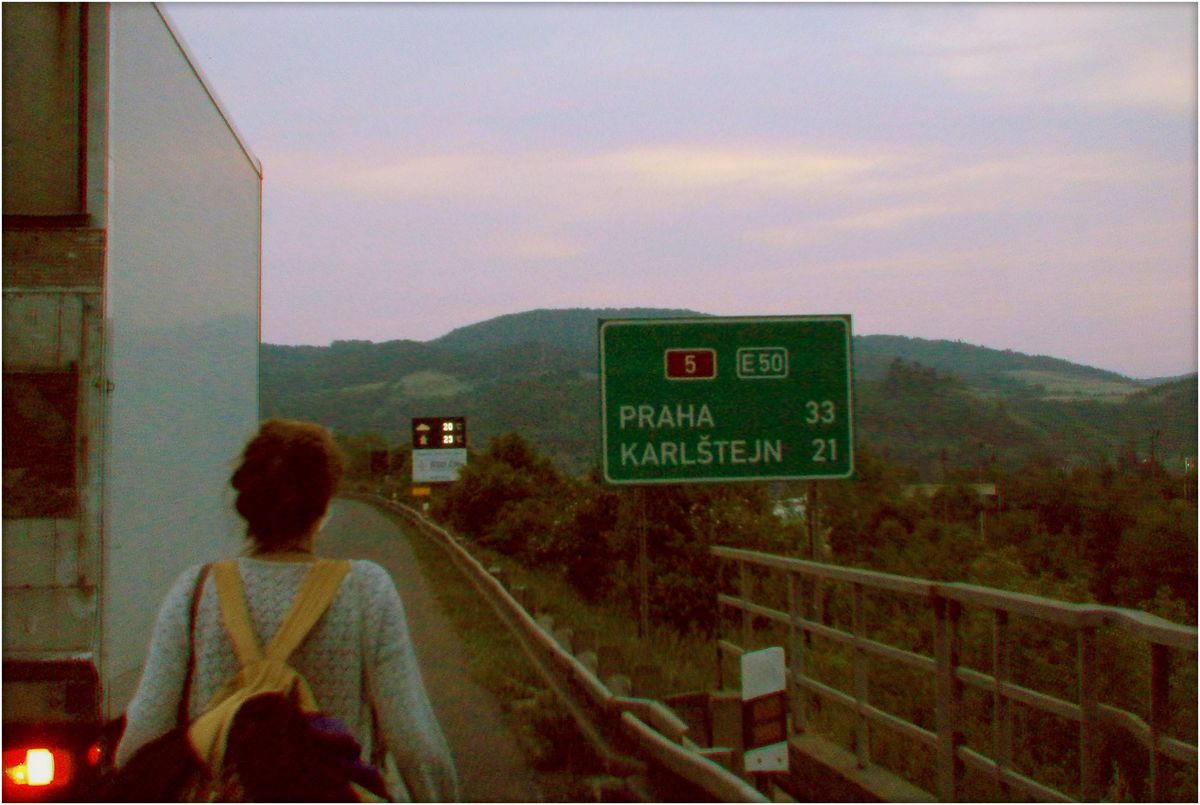
Thus hitchhiking typically involves standing on onramps or at petrol stations on the motorway. While it is not suggested that one hitchhike on highways, actual confrontations with police are rare, and in the unlikely event that a police car does stop, it is best to be polite and feign ignorance of the rules, and they will usually not give you a fine.
When hitchhiking on regional roads make sure you are at a spot that is perfectly visible to the drivers - in summertime there are many speeding motorcycle drivers.
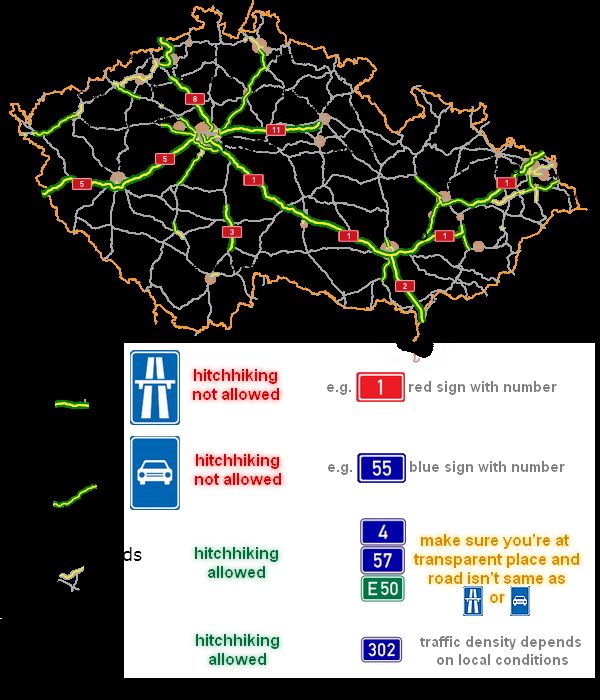
Legality of Hitchhiking
Czech law does not prohibit hitchhiking (stopování), and on ordinary roads it is legal. § 35(1) of Act No. 361/2000 Sb. reserves the dálnice for motor vehicles built for at least 80 km/h and forbids every other road user to enter it, walk on it or ride along it — but it qualifies that ban in so many words: it applies mimo obslužná zařízení dálnice, outside the motorway's service facilities, so being on foot at a motorway service area is explicitly lawful. § 36(1)(a) lets drivers stop or park only at places marked as parking, which makes those same service areas the only spot on the motorway where someone can legally pick you up. So ask people directly at a čerpací stanice or odpočívka, and thumb on the on-ramp before the green motorway sign. On a silnice I. třídy and everything below it, hitchhiking is unregulated.
Border crossing
Czech Republic and all neighbouring countries are Schengen members, so there are no regular border controls any more, though German police often check the documents and backpacks of hitchhikers near the Czech border. Some border crossings remain good places to get an onward lift.
With Poland
- Chotěbuz-Cieszyn-Boguszowice
Public transport
Public transport is generally not too expensive. Use this very convenient search engine for public transport in the entire CR.
Phrasebook
Czech is a Slavic language.
Phrases with trans-scripted pronounciation
- Hello (formal/casual) Dobry den/Ahoj
- Are you going to ...? Jedete do ...?
- Are you please going in direction of ...? Jedete smerem na ...?
- Thank you Dekuji
- Goodbye Nashledanou
- Yes Ano
- No Ne
- Next petrol station Na dalsi benzinku
Links
Personal Experiences
july 2026
Czechia is a great country for hitchhike. I did Breclav - Brno - Olomouc - Snežka - Kolin - Most - Karlove Vary - Prague - Trebič - Telč - Česke Budjeovice - Linz itinerary and the only place where I stucked was around Olomouc, mostly because it was Sunday early morning and 40 degrees outside.:) People stop pretty fast every time, you do not wait more than 5-10 minutes. Every place is a good place for hitching. People are relaxed to stop even in small highway entrances - love them!:) Moreover, they will extend their ride to take you to the right place! Amazing! Overall experience is 4 or 4.5 out of 5.
On normal roads I get usually lift in about ten minutes even though I look male and crusty. On highways entries and gas stations it takes usually more time. For me one of the most hitch-friendly country in Europe.
Prague
Edit on wikiRoadside hitching spots go stale. For current places to hitch in and out of this city, use maps.hitchwiki.org and the live Hitchwiki page linked at the end of this chapter. This book keeps general orientation, not a pin gazetteer.
Prague (Praha) is the capital of the Czech Republic. Writing a sign "PRAHA" clearly informs a driver that you are going to Prague
Public transport
Public transport network in Prague is really good, you can get in reasonable time almost anywhere at any time. Ticket costs: 30 minutes - 24 Kč (eur 1), 90 minutes - 32 Kč (~eur 1.30). If you plan to stay longer, you can buy a ticket for one day - 110 Kč (~eur 4.50) or three days - 310 Kč (~eur 12.60). You have to validate ticket when entering metro station, tram or bus. The fine for fare dodging is 800 Kč (~eur 32) if you pay it at that place or till15 days.
At metro stations you can find maps of Prague with public transport, this can be useful, because the lines are changing (especially bus lines). You can easily find a connection online at IDOS - works for the entire CR or alternatively for Prague only: DPP.
Slovakia
Edit on wikiSlovakia is a member state of the European Union as well as the Schengen Agreement, bordering Austria, Czech Republic, Poland, Ukraine and Hungary.
Hitchhiking
It is most of the time very easy to find a ride, waiting times are usually less than half an hour. Slovak people are incredibly friendly and will do their best to make you feel comfortable. Some will even invite you to have lunch with their family and/or have a drink with friends! Some, but not many drivers speak English or German, especially younger ones. Russian is more widely understood among older people, but not necessarily liked. In some southern areas of the country (where towns and villages are marked by blue signs), there is a substantial Hungarian-speaking minority. It is not common for drivers to ask money for a ride. Hitchhiking in Slovak is called stopovanie, stopovať.
On the country's national roads, you can simply stand wherever cars are going slowly and put out your thumb. Use a card displaying a two-letter code of your destination town (see below in section "Number plates"), if your intended destination cannot be obvious to the drivers. It is not advised to hitch on an older national road which runs parallel to a newer motorway, because all longer-distance traffic uses the motorway (unless of course you only want to get to the nearest village). Hitchhiking in pairs of a man and a woman is the best bet: most successful and also secure.
Legality of Hitchhiking
Slovak law does not name hitchhiking (stopovanie), so on ordinary roads it is legal. § 35(1) of Act No. 8/2009 Z. z. on road traffic puts it the opposite way round from most codes: "only drivers of motor vehicles may use a motorway; for other road users, use of the motorway is prohibited" — a flat ban on pedestrians covering the carriageway and the shoulder, and § 35(2) lets vehicles enter and leave only at the places designated, which takes in the slip road. § 36(1)(a) forbids a driver to stop or stand anywhere on a diaľnica except a place marked as a car park, apart from emergencies, so a parkovisko and its petrol station is the only spot on the motorway where a lift can lawfully begin. § 37 carries both rules over to the cesta pre motorové vozidlá, the expressway. Thumb before the motorway sign, or from the verge of a cesta I. triedy and below, where nothing prohibits it.
Hitchhiking (and indeed all pedestrian access) is not allowed on motorways, but one can hitchhike from entry ramps or ask drivers for a lift at petrol stations.
Phrasebook
Slovak is a Slavic language with many divergent dialects. Even Slovak people from the west do not always understand Slovak people from the east, but the standard language described here is understood by all. In the southern areas drivers speak rather Hungarian, so you might try the Hungarian phrasebook.
- Hello (formal/casual - do not use for older people) Dobrý deň/Ahoj
- Please Prosím
- Thank you Ďakujem
- Direction Smer
- Highway Diaľnica
- Are you going to ...? Idete do ...?
- Are you please going in direction of ...? Idete, prosím, smerom na ...?
- Goodbye Dovidenia
- Yes Áno
- No Nie
- To the next petrol station Na ďalšiu benzínku
- I will get down here Tu vystúpim
West-East travelling
Slovakia is a small country. Because the country is mountainous, there are few major roads across the country. The D1 highway, running along the north of the country, is the main east-west road in Slovakia.
But as the new motorway R1 was finished the streams seperated. Sometimes they are called the northern way and the southern. They split near Trnava and join in Ružomberok. Going both ways there is always a part where there is no highway/motorway (After they will finish the Žilina-Ružomberok part this will no longer be valid. But they are not going to finish it at least the next 5 years.) but just a national road. For the north one it is the road 18, for the south it is the road 59.
Still the north route is the more used because it's a habit. But in the summer it is close to be equal.During the winter the northern route becomes more used by people going at least to Ružomberok, becouse on the south route there are a lot of skiing centres so most of the cars go there and they tend to be full and there is always a traffic jam so the long distance drivers avoid this route.
The parts with no highway make the traveling slower but can be an advantage for you. On many parts there are traffic jams and the roads go through many cities so you can hitchhike on bus stops and traffic lights and you can catch a pretty long ride.
Another small group of cars that go from west to the farest east (Košice and more east) go by the so called big south route. It's a route that start in Bratislava, goes by the D1 highway, continues by the R1 motorway and then gets off the motorway in Zvolen and continues by the national roads and then the big northern way and the big southern way meet in Košice. But this is the least used route. The meaning of mentioning this option is just to be said that some people go that way and it is still possible to hitch there.
North-South travelling
There is a road E77 passing through the middle of Slovakia connecting Krakow and Budapest. It is also the main route used by Turkish trucks driving from Turkey to Poland, Lithuania, Latvia, Estonia, and Finland. It is very hitchhike-friendly and passes through Ružomberok, Banská Bystrica, Zvolen, and Šahy. Even though it is relatively easy to hitchhike along the route, it is best to wait at the border crossings Parassapuszta-Šahy border crossing (south) or Trstená-Chyzne border crossing (north) when looking for long-distance rides.
District codes
Until 2023, the first two letters of a Slovak registration plate were a code referring to the district where the car was registered: BB for Banská Bystrica, PO for Prešov, ZA for Žilina, etc. Almost every significant town in the country has one. District codes are almost universally understood and can be very useful to make signs and signal to drivers where you are going.
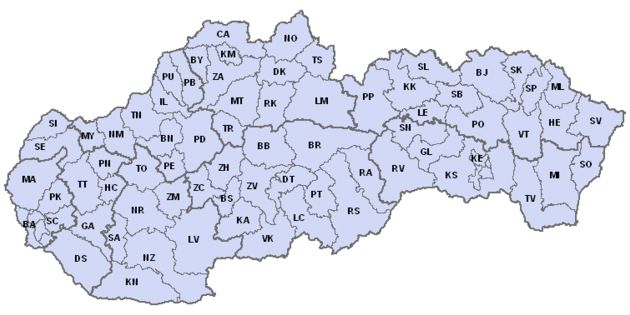
Cities
- Bratislava, the capital
- Košice
- Prešov
- Banská Bystrica
- Žilina
- Nitra
- Trenčín
- Poprad
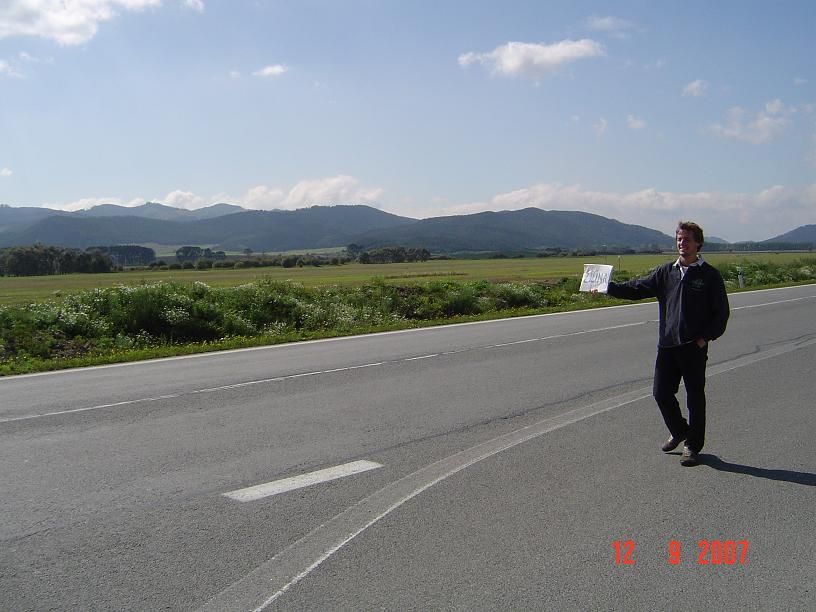
Border crossings
Ukraine
- Vyšné Nemecké-Uzhhorod border crossing
- Ubľa-Malyi Bereznyi border crossing
- Velké Slemence-Mali Selmenci border crossing (pedestrian crossing, EU/EEA & Ukrainian passports only)
Poland
- Barwinek-Vyšný Komárnik border crossing
- Trstená-Chyzne border crossing
Hungary
- Milhosť-Tornyosnémeti border crossing
- Parassapuszta-Šahy border crossing
Austria
- Devínska Nová Ves-Schlosshof border crossing (bicycle and pedestrian bridge) north of Bratislava
Links
FB group for Czech and Slovak hitchhikers
Personal Experiences
Summer 2025
I spent three weeks in Slovakia while volunteering in the High Tatras. Hitchhiking was usually very easy, most of the time I had to wait less than ten minutes to get from town to town. Locals are usually very friendly and able to speak good English, and my Russian and Hungarian also helped tremendously even outside of Hungarian areas. Even monolingual Slovaks will try to converse with you, so learning very basic Slovak (just enough to say where you're from and what you're doing) can be very rewarding. I was given ten euros by a guy in Bardejov, someone went in the opposite direction to where they were going and dropped me off at my hostel "for karma points" and someone invited me to stay at their farm close to Šahy. The High Tatras were a bit more complicated to hitchhike as many cars are Czech, Polish or German tourists who can't be bothered to pick hitchhikers up. Still, it was a lot of fun and a great overall experience hitchhiking in Slovakia and I cannot recommend it enough.
Summer 2022
I really liked hitchhiking in Slovakia, it's easy (20min-1h) and people are friendly. Normally, you don't do a lot of kilometres in one ride, because people are moving from one small town to another. The country is very beautiful despite the fact that in general it consists only of small towns but that's gives you an opportunity of easy camping. There are a lot of green zones and parks where you can camp. Locals tell that there are a lot of wild bears in the big national parks (as the Tatras), so be careful sleeping in the forest.
Winter 2022
one of the worst experience in our hitchhikers life. A girl and a man, from Tatras at the Polish Border to Kosice: relatively easy way, 30 minutes wait (by -7 celsius, snowing and windy) for a 1 hour ride. But the next day, we decided to go to Bratislava from Kosice, taking the unfinished highway linking the 2 cities.. Terrible way. The spot to get out of Kosice were sketchy, on the side of the highway. We were visible from far even though it was foggy and with snow everywhere, there was plenty of space to pull over safely at a bus stop. Not the best spot but definitely doable. We waited 1h15 minutes by -7 celsius, a guy took us to a good gas station in Presov. Thought we were off the hook but there we spent an hour and fifteen minutes asking every car. The girl spoke polish so easily understandable by the slovaks, but every one was harsh, pretending not understanding. We were clean on ourselves, had a shower the day before. Eventually, after 1h15, a couple took us, they were going to Bratislava but they tried to hide it to us, just saying they could drive us somewhere else. After 2 hours ride without talking to us but talking low between them so that my polish friend couldn't understand, they told us to leave the car in Trencin, saying that it is a big city there so it should be easy to reach Bratislava. It never happened to us that drivers are so unfriendly and drop us before the destination! So rude. But well, Trencin seemed to be a big city, we were on the main road to Bratislava, traffic was slow and we were at a bus stop at the exit of the city so plenty of space to pull over. Once again, we waited 1h30 minutes (after 4000km together with my friend, we generally wait 15min in average, and there in slovakia we waited 3 times 1h15 average by -7Celsius...). After a break in the warmth of the gas station shop, a dude took us, drove 220km/h and dropped us at a petrol station in Trnava where the 1st driver we asked took us to Bratislava! It was one of our worst hitchhiking experience. Seeing this hitchwiki page I guess it was a load of bad luck.
Poland
Edit on wikiPoland is a member state of the European Union as well as the Schengen Agreement.
Hitchhiking
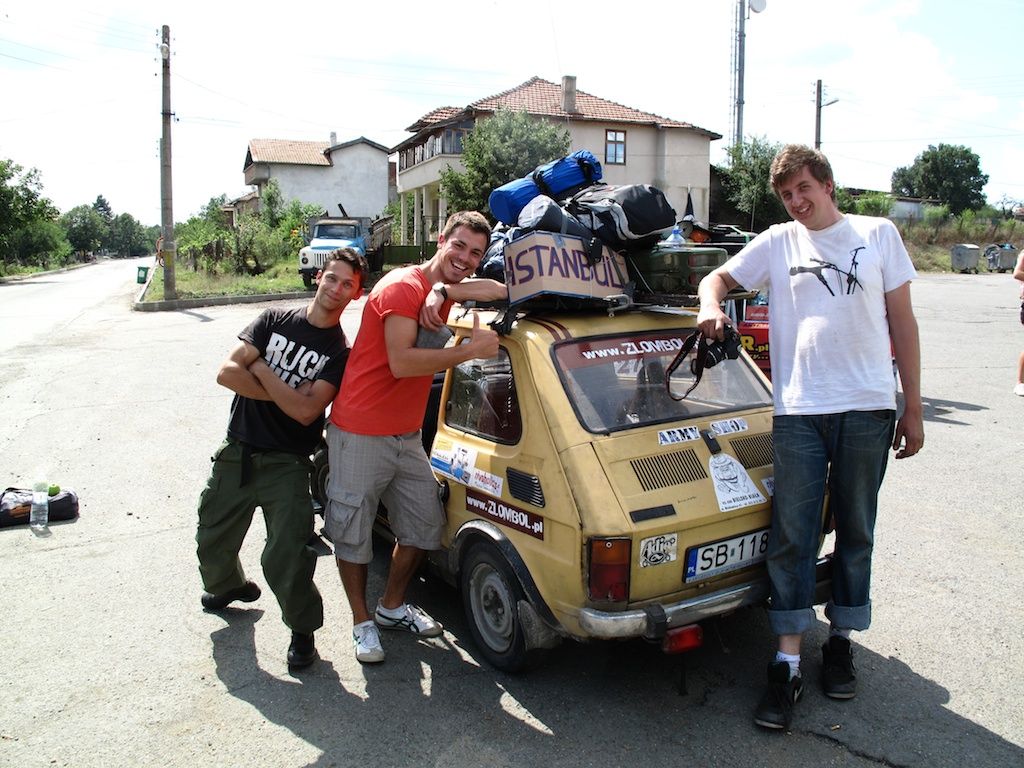
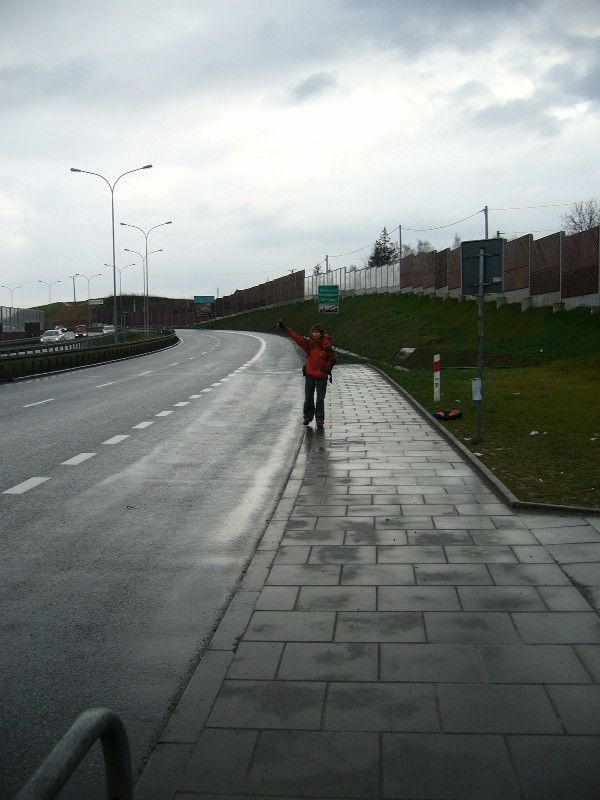
It is an awesome country for hitchhiking and even one of the most hitchhiker friendly countries in whole Europe. The average time of waiting varies from 15 min to 1 hour (rarely 2 hours - if so, you probably have a bad spot) depending on your spot. Many drivers generally believe that others do not stop and that hitchhiking days are over in Poland, which however does not prevent hundreds of them from stopping. Since 1958 till the beginning of 90's hitchhiking in Poland was an official way of traveling organized by National Tourist Board, when hitchhikers had their ID with insurance included and drivers could win prizes every year. Thousands of people were hitchhiking through all these years – and most of them have cars today, so very often do they repay the debt.
Hitchhiking is fairly common in Poland you can regularly spot people hitchhiking to travel, some also hitchhike as a freetime activity or as part of races which are mostly organized by universities in Poland.
Quite common way to hitchhike in Poland is to stand on the side of the road with your hand extended and/or thumb pointing upwards. Some hikers also wave their hands up and down, which is widely understood as "I only need a short ride". This way of hitchhiking is popular between villagers and high school students who look for a lift for a short distance. They very rarely write their destination on a sheet of paper or piece of cardboard. Waving is enough to make a driver stop.
Travellers looking for a longer ride usually make a sign with the name of a city they're going to or through. Some drivers prefer to take travellers than tourists. Because of this it's a good idea to place your backpack in front of you and make a sign which makes you look like a professional hitchhiker.
Legality of Hitchhiking
No Polish law mentions hitchhiking, and on ordinary roads it is simply legal. The motorway ban is structural rather than named: the Prawo o ruchu drogowym defines an autostrada (art. 2(3)) and a droga ekspresowa (art. 2(4)) as roads intended only for motor vehicles, and art. 45(1)(4) forbids using a road or any part of it contrary to its purpose — which is what keeps pedestrians off the carriageway, the shoulder and the slip roads. Art. 49(3) allows stopping or parking on those two road types only where it is marked, so a driver can legally pick you up at a Miejsce Obsługi Podróżnych (MOP) rest area and essentially nowhere else on them. Ask people directly at a MOP, or at the last petrol station before the motorway begins. On a droga krajowa or wojewódzka thumbing from the shoulder is fine.
Tips
On highways you can hitchike next to toll places (polish name bramki). One or other side will have parking place.
CB radio is quite popular in Poland not only among truck drivers, which might help in getting a ride. If you're lucky they can ask other drivers to take you further. You might even ask them gently to do that, especially in bad weather conditions or by night. Hitching by night is possible in Poland but not easy. On national roads try to find bright spot where drivers can see you. Use bright clothes. The best options are petrol stations where you can speak with the drivers while they fill up the tank.
Public transport While staying in bigger cities check jakdojade.pl. It will find for you every single connection between two points within city limits and show ticket price, route on a map, bus stops names and timetables. Just write the name of a street where you are in a form called "A" and the place you want to go to in a form "B". You can also right click on the map to pick points. It will do the rest. If you're planning to stay longer in Poland you may want to download a mobile app and have it always with you (internet connection is necessary).
Hitchhiking as a solo woman At least in Northern Poland there are often prostitutes who are standing by the road in the summer. And if on duty, they mark their regular spots with a piece of clothing and come back again after. This might lead into confusion when you're hitchhiking alone as a woman. It's not really dangerous but hitchhiker friendly people might mistake you for a prostitute when they pass you and not stop. So as a solo woman would be good not to wear clothes that are too revealing, put your backpack in front and not stand very close to the prostitute spots.
Free showers On truck rest stops called MOP (most times petrol station + parking + restaurant) there will most likely be free showers and restrooms. They're in a separate building that's fairly easy to find. The showers are pretty clean and have warm water. As long as you wait for your turn in the queue, no one will have a problem with you using them.
Hitchhiking at night
On small roads it is to be avoided for sure as the traffic is low at night and the light even worse. On a spot with good light you can still try your luck. On the motorways it works perfectly good, maybe better than everywhere else in Europe. On the petrol stations the light is good and people are very helpful and will not be comfortable with the idea to leave you there over night, especially when it rains or it is cold, what is quite often the case in this country.
Borders
As mentioned above Poland joined Schengen Agreement which means there is no more passport control on the borders with Lithuania, Slovakia and Czech Republic. As of 2026, there are frequent random passport checks on the Polish-German border supposedly due to "illegal migration". Border patrol is present on many checkpoints, they paid no attention to Julian (who's polish) when he was catching rides directly from the crossing, but more experiences are needed. In most places there are still speed limits on the borders, there are also parking lots, toilets and currency exchange offices, which makes these places pretty good spots for hitchhiking. On newly built roads however there are no speed limits anymore. To Ukraine you can go by foot in Medyka, but not in Korczowa!!! (there you can wait for 3 hours because there are too many cars.)
Roads
Even though the Polish road network has improved enormously over the last two decades, by Western European standards, Poland has still quite a poorly developed road infrastructure. The road network consists of motorways (autostrada) i.e. A2, expressways (droga ekspresowa) with lower speed limits than motorways i.e. S6, national roads (droga krajowa), which are mostly single lane i.e. 92 and other regional roads. At the moment there is a lot of investment in the road network, especially since Poland hosted the European Football Championship final tournament in 2012.
Except for the motorways and expressways, it is generally acceptable to hitchhike on the side of the road in almost any suitable place. Unlike many European states, the police are generally friendly towards hitchhikers as long as they behave properly. Some of the newly-refurbished national roads have "no pedestrians" signs near major towns, but it's still uncommon. This means that if you plan to go through any major town in your journey, it is usually better to exit the car before arriving in the city - otherwise, you might have to walk till the end of the no-pedestrians area. On motorways and expressways the best place to hitchhike is either a sliproad or, preferably, one of the petrol stations or toll booths.
See also:
Up-to-date info about investments in Polish motorways and expressways
network on Google Maps
Roads
and expressways in Poland
Language
According to a 2009 survey by CBOS 1 (Polish survey office), roughly 46% of Poles declare they can communicate in at least one foreign language. Generally, 24% of Poles speak English, 20% speak Russian, 12% speak German. Other languages spoken are French (2%), Czech, Slovak and other Slavic languages. According to the similar survey in 2006 2, among the youngsters (students and pupils) the percentage to speak at least one foreign language reached 77, as compared to 59% of those under 35 and 40% of those between 35 and 54 years of age. According to a another survey prepared in late 2005 by TNS Opinion & Social for the European Commission, the percentage of people who speak one foreign language decently is 57%. At the same time roughly 32% are bi-lingual and 4% tri-lingual 3. Except for younger people, foreign languages (mostly English) are commonly spoken by businessmen and educated people (87%), urban populations (50%) and small business (48%). However, it is hard to predict the knowledge of languages of a driver by his car as educated people in Poland are generally poorly-paid.
Apart from the people who speak foreign languages, a vast majority of Poles do understand some basic constructions of other Slavic languages and of English. Due to World War II history and the number of war films created afterwards, also some basic words of the German language are commonly known.
Communication & Dictionary
The Polish language is generally hard to learn for most native English speakers. Even the most basic constructions you might need while on the road require the usage of quite complicated grammar and the use of grammatical gender, proper declension and a number of other categories non-existent in modern English. However, contrary to French or German people, Poles are generally friendly towards foreigners who try to speak their language. Because of that do not be afraid to commit mistakes. They might at times sound funny, but most Polish people would be astonished by the fact that you tried. That said some Polish drivers may find local hitchhikers suspicious as they are scared of crime. Foreign hitchhikers are excluded from this fear because nobody might expect a foreigner to have nothing better to do than pretending to be a hitchhiker and steal from their drivers. So when your Polish skills are good enough that people will not recognize you as a foreigner, mention it as well.
Apart from the basic set of words and constructions found in every guidebook, there are some words hitchhikers might find particularly useful. Check also the Wikipedia articles on Polish language and Polish phonology for more info on proper pronunciation. You can buy a decent guidebook or dictionary in any major town in Poland.
- hitchhiking – autostop / stop (“awto-stop] / [stop”)
- hitchhiker – autostopowicz (“awto-stopovich”)
- we're travelling to... – jedziemy do... (“yeh-dzhye-mee doh”)
- Where is the best place to hitchhike to...? – Skąd najlepiej łapać stopa do...? [skont nay-leh-pyey wapach stopa do...”)
- Which way to...? – Którędy do...? (“ktoo-ren-dee doh”)
- Where is the nearest...? – Gdzie jest najbliższy...? (“g'dzhe yest nay-bleezh-shee”)
- motorway exit for... – zjazd na... (“zyazd nah”)
- phone booth – budka telefoniczna (“boot-ka teh-leh-fonn-eech-nah”)
- bus stop – przystanek (“pshee-stah-nek”)
- train station – dworzec (“dvoh-zhets”)
- filling station – stacja benzynowa (“stats-yah behn-zee-nova”)
- ATM – bankomat (“bankomat”)
- dictionary – słownik (“swoh-v-nick”)
- guidebook/guide – przewodnik (“psheh-vod-nick”)
- map / plan – mapa / plan (“mah-pah] [pla-n”)
- road shoulder – pobocze (“poh-boh-cheh”)
- lane – pas (“pass”)
- Good morning - Dzien dobry ("dzhehn dobri")
- Good bye - Do widzenia ("do veedzehnah")
- See you later - Do zobaczenia ("do zobahchehnah")
- It's nice to meet you - Milo mi ("meewo mee")
- Excuse me - Przepraszam ("pshehprahshahm")
- Yes - Tak ("tahk")
- No - Nie ("neh")
- Please - Prosze ("prosheh")
- Thank you - Dziekuje ("dzhehnkooyeh")
- Hello - Dzien dobry ("dzhehn dobri")
- I'm sick - Jestem chory ("yehstehm hori")
See also the Polish dictionary in Hitchwiki's Eastern Europe phrasebook.
Border crossings
Belarus
The most exhausting border crossing with long waiting queues. Be sure to arrive with a visa if you need one. The police have the reputation of being quite rude, but this is not the case every time.
Border crossings from south to north:
- (bel. Дамачава, rus. Домачево) – vehicular crossing located 120 km to the north-east from Lublin, 70 km to the east from Radzyn Podlaski on the way to Brest.
- (bel. Брэст (Варшаўскі мост), rus. Брест (Варшавский мост)) – the biggest crossing point located on E30 near Brest. Crossing is possible only in a vehicle. Be prepared for a long waiting time. If there is a lot of traffic, even very long waiting time. Even when there are just two or three cars in front of you, you can find yourself waiting for several hours.
- (bel. Казловічы, rus. Козловичи) – for trucks only. Located at the north-western edge of Brest.
- (bel. Пясчатка, rus. Песчатка) – located 40 km to the south-east from Bielsk Podlaski on the way to Brest.
- (bel. Перароў, rus. Переров) – small, pedestrian-only crossing in the middle of the beautiful Bialowieza Forest. EU citizens can visit (for 72 hours) the Belorussian part of the forest, as well as the village of Kamianiuki without a visa (check requirements for visa-free entrance). Since the crossing is for pedestrians/cyclists only, you are likely to be the only person there. There aren't many parked cars, but just enough to get you picked up to the nearest village on the Polish side (it's not very far, so you can walk, as well). On the Belarusian side, you can either try hitch-hiking towards the nearest village of Biely Liasok (bel. Белы Лясок) (there'll be plenty of tourists and only a single road for cars) or you can walk through the forest to Kamianiuki (about 16 km, it's the official "entry" village to the forest on the Belarusian side). From Kamianiuki, you can either hitch-hike, or if you don't have time, take maršrutka (mini-bus) to the bus terminal in Brest. If you're lucky, you can also hitch a ride with one of the park's employees.
- (bel. Бераставіца, rus. Берестовица) – located 50 km to the east from Białystok on the way to Vaŭkavysk, Hrodna.
- (bel. Брузгі, rus. Брузги) – 60 km to the north-east from Białystok on the way to Hrodna.
If you want to avoid long waiting times at the Brest (Varšaŭski most (Warsaw Bridge)) / Terespol border crossing you can take a train from Terespol to Brest. It goes 3 times a day and costs 17 złoty. You can pay in złotys only but there is an exchange office at the train station. (August 2018)
Czech Republic
- Chotěbuz-Cieszyn-Boguszowice border crossing
Germany
- Jędrzychowice border crossing
- Świecko border crossing
Lithuania
- Budzisko-Kalvarija border crossing
Russia
- Bagrationovsk-Bezledy border crossing with Russia's Kaliningrad Oblast
Slovakia
- Zwardoń border crossing
- Barwinek-Vyšný Komárnik border crossing
Ukraine
- Dorohusk-Jahodin border crossing
- Dołhobyczów-Uhryniv border crossing
- Hrebenne-Rava Ruska border crossing
- Shegyni-Medyka border crossing
- Korczowa-Krakovets border crossing
Links
- Polish hitchhikers on FB
- Roads and expressways in Poland
- Public transport of many Polish cities
- Polish people offering free rides across the country and Europe
Personal Experiences
Summer 2018 & 2022
It's good hitchhiking experience but sometimes you need to wait a bit (15min to 90min). In 2018 hitchhiking was not hard as it still in 2022. Polish style of driving is somewhere near "respectable citizen" and "crazy driver". So, basically they don't brake the law (stop in the forbidden area) but they can do it if needed. The only problem are autobahns which are not "hitchhiker friendly", it's hard to get there and hard to find a car stopping there. In the autobahn (on the good spot) I was waiting nearly 2h and no one stoped due to a too big traffic. They have good gas stations, where you can almost take an "small improvised shower". Two times I was picked up by one driver who called his friend to get me further, so the "local radio" is working well.
Summer 2023
I transited through Poland in 2011, and it was ok, even though roads were not that great back then. I traveled and hitchhiked around country summer 2023, roads are excellent, but hitchhiking was very very bad for my standards (70 countries and 239.000 km so far). Poles do not stop at non-designated area (for examples: bus stops), very rare to see it. Even once I had a problem with cops in a small village for the reason I was on the open village road, haha. There was roundabout, and I was standing right after it, where people ride 30km per hour. I had to move otherwise fine. Waiting times are pretty high, from 30 min to 3 hours. I rarely waited even one hour in last 15 hitching years. Even highway petrol stations are not that great places, which was strange to me. Poland is the country where people know very well what hh-ing is, but for some reason, very few of them do it these days. Could be Ukraine war affected that, who knows.
Warsaw
Edit on wikiRoadside hitching spots go stale. For current places to hitch in and out of this city, use maps.hitchwiki.org and the live Hitchwiki page linked at the end of this chapter. This book keeps general orientation, not a pin gazetteer.
' (Polish:Warszawa') is the capital and largest city of Poland. You can cross city very fast by using public transport. Check public transport lines at bus and tram stations.
Wild Camping
Vysla river Wild camping with tents not far from Central bus station/railway - go to Świętokrzyski Bridge cross it and turn left on the first road Wybrzeże Szczecińskie. Walk one minute and you will spot downhill to side of river with the flat land and small hill with big tree camp on opposite side of the tree. Thats nice place noone see you from the road above. Also its on the other side of bus station Most Świętokrzyski 03 (buses 102, 162, N14, N64 stops here). Also a riverbank there looks promising for tent camping
There are several large squats in Warsaw. You will find the Skłot Przychodnia on Skorupki 6. There's another one called Serena.
You can swim in Lake Czerniakowskie, Dziekanowskie Lake, Zegrzyńskie Lake
Hungary
Edit on wikiHungary is a member state of the European Union as well as the Schengen Agreement. Hitchhiking usually (but not without exceptions) is relatively easy in Hungary, especially in rural areas where people are more friendly and helpful. There, even on the roads with almost no traffic you can get a ride in a reasonable time.
Hitchhiking
You can drink tap water.
In Hungary fewer people speak foreign languages than in other Central European countries. In cities, often one can speak English with younger people. Some older people might speak a bit of German or Russian. Once you get to rural areas, however, expect a language barrier. A Hungarian phrasebook may be useful.
Legality of Hitchhiking
Hungarian law contains no offence of hitchhiking (stoppolás), which is legal on ordinary roads; what it defines precisely is where a pedestrian may not be. § 21(9) of the KRESZ (Decree 1/1975. (II. 5.) KPM–BM) forbids pedestrians to walk along or cross an autópálya — "a leállósávon is", the hard shoulder included — and, for an autóút, bans walking on the hard shoulder and the verge too and crossing anywhere but a junction. So neither motorway class leaves a hitchhiker anywhere lawful to stand, slip roads included. Use the last roundabout or petrol station before the motorway, or ask drivers at a service area, where they have stopped anyway. On főútvonalak and lesser roads, § 21(1) puts pedestrians on the hard shoulder or verge and thumbing there breaks no rule.
Phrasebook
For useful phrases while hitchhiking in Hungary see Hungarian phrasebook.
Crossable petrol stations
Border crossings
- Austria
- Hegyeshalom-Nickelsdorf
- Croatia
- Goričan-Letenye
- Udvar
- Romania
- Ártánd-Borş
- Nădlac-Nagylak
- Serbia
- Horgos-Röszke
- Slovakia
- Milhosť-Tornyosnémeti
- Parassapuszta-Šahy
- Balassagyarmat-Slovenské Darmoty border crossing- WRONG WAY
- Slovenia
- Ukraine
- Chop-Záhony
Practical links
- Hungarian hitchhiking community website (in hungarian)
Personal Experiences
15 August 2022
Hitchhiking in Hungary worked well for us. We have tried both with and without a sign, but in the end realized that the sign was necessary. It seems that many people here don't understand the thumb, especially (richer) tourists around Balaton. Speaking German proved useful, as almost no one in rural regions speaks English. Try to learn basic phrases in Hungarian to approach at service stations.
Summer 2022
Hitchhiking was not hard there, you rarely wait more than 90min. I was hitchhiking without a sign and it worked for me, however because locals dont't really speak English and sometimes you don't understand them, you can finish off your trip in a different city from the planned one.
Coming from Vienna, it took only two or three rides to get to Budapest. We had luck at petrol stations. Going west from Budapest to Slovenia (bound for Ljubljana) on my own, I used a sign with just "SLO" once outside the city, and ended up just over the border in Pince, home to a desolate petrol station/hotel, and nothing else. I switched to small roads and ended up in a slightly larger petrol station in Lendava, but it seems before Murska Subota, there is very little traffic for hitching. I thumbed for two hours before sunset, slept in the local graveyard, then again at the same spot for two hours at sunrise. Plenty of traffic, mostly Romanian plates, apparently often headed west for Italy, but no rides. I ended up thumbing on the roads of the smallest villages to get to Murska then a petrol station right before Maribor where I got a ride all the way to Ljubljana. I heard from one container truck driver that Rédics is a better petrol station to get a ride from a truck, although my entire three months hitching in Europe, I never got a ride from a truck (seemingly due to insurance reasons).
Autumn 2025
I (27M) and a friend (25F) passed trough Hungary to go to Romania. Austria was hard, but since we got the first lift from an Hungarian, everything was so easy inside the country! Average waiting time was actually way better than in Romania; it was like 10 minutes (except one time at a gas station around Budapest). The Hungarian have a poker face but they are incredibly generous and helpful. On my way back alone I also got a civil engineer coming at me and sharing food with me lol. Most of the people were speaking good english except one old man that gave us a lift from Vienna to Sopron.
Budapest
Edit on wikiRoadside hitching spots go stale. For current places to hitch in and out of this city, use maps.hitchwiki.org and the live Hitchwiki page linked at the end of this chapter. This book keeps general orientation, not a pin gazetteer.
Budapest is the capital of Hungary.
Public Transport
Budapest has an extensive public transportation system consisting of a metro, buses and trams. A single ticket is about 1.15 (a set of 10 tickets is about EUR 9.90). After you buy your ticket, you have to validate it. There are red machines on buses and trams that punch a hole in a different place on your ticket each day, which is how they determine if you validated your ticket that day (or at least not the day before...).
Inspections on buses and trams are rare except for the most popular lines (e.g. buses 7, 7E, 173 and 173E and trams 2 (very frequent), 4 and 6). Rush hours are usually safe when the trams/buses are too crowded for the inspectors to walk through the vehicles. If you want to be safe, hang around the machine and if you see an inspector coming, punch your ticket immediately. You can usually also get off the carriage when you see inspectors getting on as usually at least some of them will wear uniforms.
Be careful: the system has changed, and the controllers are often escorted with a public area inspector who has the right to stop you and demand for your ID cards.'
In the metro there are inspectors posted at the entrance to the platforms during all operational hours who will demand to see your ticket. Most of the time they check those who are entering and don't bother with people who are leaving the platform (Keleti railway station is one notable exception), so if you see no conductors at the entrance then you are fine. Either you take your chance that there will be no checking at the exit, or take the bus/tram, you can get pretty much everywhere without the metro. Oftentimes you can also just walk past these inspectors at the entrance or flash them a used ticket without stopping. Be careful changing lines at Deák Ferenc tér, usually there are controllers on stations of Line 2 and 3.
If you get caught without a valid ticket, the official fine on the spot is HUF 8,000, which is about EUR 27. Do not let yourself be fooled with another amount, it is HUF 8,000, and the received paper is valid for travelling that day. But if you are cool enough you can get away without paying at all. On the trams and buses the inspectors legally aren't allowed to touch you. Avoid speaking English or German to the controllers. Instead, pick the most obscure language you know and keep them busy until the next stop. When the doors open, simply exit the tram and walk away. Never give the controllers your ID or passport. Maybe try searching for it or your ticket until the next stop, then get off the tram/bus then. Some of the controllers will try to take you to a cash machine if you say you have no money. Same system applies - simply walk away from the controller. I've also heard of people stalling the controller for so long that the controller gets bored and walks away.
At around 20:30 or later, the ticket inspectors that stand at the entrance to the metro go home, meaning you can get on the metro for free. Be aware also that if they have controls while you exit the station, they announce it as you get off the train and again every 2 minutes or so ("Please have your tickets ready for inspection as you leave the station.") If this happens, simply get back on the next train and get off a stop before or after your chosen stop. Do not try and run past any inspectors if they have a control -- they are notoriously aggressive and will have no problem chasing you.
On the green line there are security guards stationed on the platforms, but don't worry, they won't check your tickets. They're just a security precaution. The same thing applies on tram 4 or 6 at night (they run 24 hours). They will stand at some entrances to the tram and check peoples' tickets as they enter the tram (They'll be wearing either a yellow vest or a green armband.) Choose a different entrance and you'll be fine, because the controllers stand at one door and don't move through the tram.
For finding connections between two points in the city, there's a very good route planner available also in English: <http://www.bkk.hu/en>
There is a very good Hungarian movie about the controllers on Budapest's public transportation. Finding English subtitles is easy, too.
Sleeping
If you want to sleep outside in summer, you can do so anywhere in Buda hills. These places are abandoned after dark, far from people, and sometimes used by homeless people.
In case the weather outside is not very warm nor welcoming, the mall Duna Plaza, in the northern part of the city XIII district, metro stop Gyongyosi utza offer great opportunities to find a shelter and not being discovered by security guards. In a cold night of november I found a perfect spot to lay down on his mat and sleep, behind the high bar of a closed (but open..) pub on the 2nd floor, next to the restaurants, emergency exit stairs on the back, at the highest floors are also a good option. Toilets are closed at night and security go around to check when they close the building around 02:00.
Another safe option for the winter time would be the airport - unfortunately you can’t blackride the bus that goes there since the driver checks everyone, but the combined ticket for the Metro and the bus is 530 HUF (~1,15€). If you buy the ticket from the driver instad of the vending machine, it’s 600 HUF. The staff doesn’t care about the people sleeping there and no one checks if you have a flight ticket. Might also be a good option if you’re planning on hitchhiking from there in the morning.
Food
At Allee shopping centre (metro stop Újbuda Központ, green line. Tram 4 and 6 too) on the top floor there is a large food court where it's possible to table dive. Also at Kőbánya Kispest (last stop on the M3 blue line) there is a large shopping centre beside the train station. There's a large food court on the top floor also where you can table dive. Also in the Corvin Plaza there's a food court on the top floor to table dive.
Try the market at Újbuda Központ (Vásárlócsarnok) and you can maybe get some free vegetables from the sellers there.
At Örs vezér tere, there's an IKEA with a great food court. Just take a left after you come up the stairs to avoid all the showrooms unless you enjoy playing there to raise your appetite:-)
On the top floor of the central market at Fovam ter, there are many food stalls, popular among tourists, most of whom are ignorant fuckers who order what they want but not what they need, i.e. A LOT of leftovers on the table. There are public tables where these fuckers eat and they are not frequently cleaned by workers, thus easy opportunity for table diving. Please do this, even just once or twice. I have seen big sandwiches and baked potatoes and such being left after a single bite. We should make wasting food a crime.
Slovenia
Edit on wikiSlovenia is a country in Central Europe according to wikipedia, alternatively part of Southern Europe. It is a member state of the European Union as well as the Schengen Agreement. Hitchhiking used to be more common here in the past, but it is still very doable and safe. Drivers are happy to see a hitchhiker and will tell you stories about hitchhiking when they were young. People in Slovenia usually speak English (at least the basics) but German and Italian (on the cost) can also come in handy.
Slovenia can offer you a lot to see on its small territory. Geographic landscapes change fast and you can get from the foot of the Alps to the Adriatic sea or the Pannonian basin in about 3h ride.
Hitchhiking
Hitchiking close to highways will take you far and fast, but if you have enough time, use it to hitchhike on the small roads.
From the capital city Ljubljana, it is easy to hitchhike to the north-east (Maribor, Celje, Murska Sobota, Vienna, Graz (Austria), Hungary), north-west (Jesenice, Bled, Villach, Salzburg (Austria), Germany), south-east (Zagreb (Croatia)) and south-west (Postojna, Koper, Italy). Your best choice would be to use highway entrances, and to hold a sign marking your destination. For more info, check out the page Hitchwiki Ljubljana. Hitchhiking in the rural areas is even easier, and it is possible to get a pick even on the smallest roads. Highways are always in a good condition, there are also service areas on the motorway.
The highway rest stops, standing with a sign seems to work better than asking people, especially if you don't speak Slovenian.
Legality of Hitchhiking
Slovenian law contains no offence of hitchhiking (avtoštop), and on ordinary roads it is legal. Article 30 of the Zakon o pravilih cestnega prometa (ZPrCP), published in Uradni list RS 109/2010, is the motorway article: paragraph 1 admits only drivers of motor vehicles that can exceed 60 km/h onto an avtocesta or hitra cesta, paragraph 2 allows joining and leaving only at the marked junctions, and paragraph 15 states flatly that "pedestrians must not step onto a motorway or expressway or walk along it". The exceptions in paragraph 16 are police, accident investigators, medics and firefighters, road inspectors and the like — not travellers. So the carriageway, the hard shoulder and the slip road are all closed, and what is left on the motorway is the počivališče rest areas and their petrol stations, where drivers have stopped anyway. On glavne and regionalne ceste hitchhiking is unregulated: stand on the verge where a driver can see you and pull over safely.
Important roads in Slovenia
- Ljubljana to eastern Austria
- Italy and western croatia to western Austria passing Ljubljana
- Eastern Croatia to eastern Austria
- costline
- Ljubljana to eastern Croatia
- Maribor to Hungary
International airports
- Ljubljana Jože Pučnik Airport - locals call it by its old name Brnik
- Maribor Edvard Rusjan Airport
- Portorož Airport
Border Crossings
Since Slovenia is a part of the Schengen area, borders are not a problem. Usually you just pass them without stopping, but sometimes the police would stop the vehicles and ask for documents (ID is enough for EU citizens). Border crossing often get jammed, especially on the borders with Croatia in summer and the Austrian border, before the Karavanke (Karawanken) tunnel.
When leaving the country, don't forget that Hungary doesn't use € as their currencies, but Hungarian Forint. You can exchange Euros in Slovenian banks or post offices. Croatia uses euro since jan 2023.
If you want to pass the border, but get a pick to towns or villages close by, you can take trains or busses to pass it. It is not very expensive, especially at the weekend.
https://www.slo-zeleznice.si/en/passenger-transport/travelling-abroad
The link above takes you to the Slovenian Railways page. There you can find all about the train connections with neighbour countries (usually departing from Ljubljana and skipping small stations), as well as local lines, many of which can take you over the border as well. It is also the last way out, if you get stuck somewhere. (stay strong<3)
For intercity busses check out Arriva, Nomago or Flixbus websites and https://www.ap-ljubljana.si/ if your starting point is Ljubljana. Different bus companies cover different lines.
Border towns/ villages that might help: AUSTRIA (Jesenice, Kranjska gora, Dravograd, Slovenj Gradec, Maribor), CROATIA (Brežice, Krško, Dobova, Piran, Črnomelj, Ptuj), HUNGARY (Murska Sobota, Lendava, Hodoš) and ITALY (Nova Gorica, Sežana, Koper, Bovec, Vipava)
Crossing from Slovenia to Austria: Border crossing is a very luxurious hitching spot, as the traffic slows down to about 10km/h (because of the pay toll for Karavanke tunnel, when the road is busy) so the whole highway sees you clearly. There is also plenty of space for drivers to pick you up.
Useful information
As everywhere in Europe, it it not allowed and very dangerous to cross the highway in Slovenia. Also be careful about crossing the red lights in Slovenian cities, you'll get a 20-40€ fine, if you get caught.
Wildcamping in Slovenia is officially not allowed, but the law is usually not enforced. As long as you don't make fires and follow basic camping rules, people won't mind you. You can also go from house to house and ask for a place to set up the tent in the garden. Couchsurfing, especially in Ljubljana, works fine as well.
Tips are not mandatory or expected in restaurants, but it is always nice to tip, if you're happy with the service. Slovenians often tip in bars.
There are 2 main words for "hi" in Slovenian. Živjo (Ž is pronouced /ˈʒeː/) is used in Ljubljana and surrondings, and Zdravo is dominant around Maribor. You can make a good impression by knowing the difference between the two;)
Personal Experiences
Tales july 2026
I hitchhiked in Slovenia in 2011, and now again in 2026. July, Sunday, petrol station 20km north of Ljubljana, I was waiting 2h for the God damn ride to Ljubljana! After that some 30-40min at Barje petrol station to Postojna, and then additional 30min to Rijeka. Pretty horrible experience. I do not know what happened with the Slovenese, but they simply do not give a s... to pick up hitchhikers. They were even mocking me. Crazy.
2023
Hitchhiked east to west in winter 2023. Waiting times where usually less than 15 minutes and everyone was happy to see a hitchiker. Wildcamped without problems
2023
Hitchhiked east to west in summer 2023, everything and everybody was great except when crossing from Hungary. The area near Pince was quite unpopulated (stuck for about twelve hours at Lendava petrol station, thumbing at sunset and sunrise in the same spot after a nap in the local graveyard) and instead ended up stringing together a few local rides of a few minutes to get to Murska Subota, then got to Ljubljana in two rides. On one ride, a Hungarian told me that "hitchhiking is part of Slovenian culture" and that they aren't of hitchhikers as much as other countries.
Estonia
Edit on wikiEstonia is a small country that is a member of the European Union and is a Schengen Agreement country.
Hitchhiking
Thumbing and waving a sign with your destination town are both understandable to the drivers ways of hitchhiking in this country. In case of a bad weather it is recommended to use a sign since it is better seen from a car.
Hitchhiking is fairly common in Estonia you can regularly spot people hitchhiking to travel, some also hitchhike as a freetime activity.
Estonia is relatively a good country for hitchhiking. The cars (can) stop easily both on the highways and small roads. You can hitch trucks, old Soviet cars, new neat personal cars - and even tractors! Officially there is no difference if a truck driver or a car driver offers you a ride – everyone (except tractors) is allowed to go up to 90km/h, although during the summer period the speed limit on some main roads is lifted up to 110 km/h. However, over-speeding is usual in this country, and so getting a personal car usually is a better choice than traveling with a truck in case you value your time a lot.
Hitchhiking at night can be much less successful due to the usually low night traffic on the roads in Estonia. Since Estonia is not a very good transit country one shouldn't hope for a truck either. Be aware that if you happen to stand on a dark road at night you must (by law) wear a light reflector so that the drivers can see you. Or better yet - reflector vest - too many people have left their lives on the roads during dark autumn evenings! (Be careful with wearing a vest though as many drivers might think that you are a police officer measuring the speed of cars and will not stop.)
Legality of Hitchhiking
Estonian law says nothing about hitchhiking (hääletamine), so on ordinary roads it is legal. Section 66 of the Liiklusseadus sets out what a kiirtee forbids, and the first item is pedestrians: no walking, no animals, no bicycles or mopeds, and no vehicle whose design speed is under 40 km/h. The second item forbids stopping or parking outside a designated area, and the rest rule out U-turns and reversing, so nobody can lawfully pull over for you or come back. That leaves the signposted rest areas and their petrol stations as the one place on a kiirtee where a lift can begin. Estonia has very little kiirtee and a great deal of ordinary trunk road, and on those hitchhiking is unregulated — stand on the verge where a driver can see you and stop safely.
Weather
Weather is not the biggest deal in comparison with low car traffic on more local roads (which are very bumpy, too!). Winters, however, are cold, with usually a lot of snow that makes you harder to walk to a good hitchhiking spot. It darkens early during the cold season, and there are rainy weather conditions for long periods once in a while otherwise.
Eating on the road
Although Estonia is quite a small country, you might get stuck on its roads for the night since the traffic is usually low on smaller roads, and for that reason it would be smart to have some food with you - there is hardly any service area on the roads and you won't be able to buy food unless you are in some town.
You can drink water from the tap and wells almost anywhere in Estonia. Some say that even lakes contain pure enough water to drink.
People
You can get a ride from almost anyone in Estonia - from any 18+ person of any social group, age, nationality (both Estonian and Russian), or sex. Taxi drivers might drive you for free on their way home. You can expect a driver to start a conversation in either Estonian or Russian. English is widely spoken amongst young and middle aged people, although some might have a better knowledge of German and/or other Western languages. Experiences show that Russian-speaking drivers understand well Estonian even if they don't speak it. Estonian drivers understand Russian pretty much in the same way, too.
Generally, Estonians love foreign visitors and are very helpful with providing the right directions or any other instructions. Don't forget to thank them for that and/or show your gratitude!
Public transport
Not much money can be saved trying to hitch-hike instead of using public transport although prices for the latter one lately go up (as prices for the petrol get higher). There are places that have lousy bus connections, though, so hitch-hiking comes in handy then.
Some useful links are:
In Tallinn you will most likely need to take a public transport to get out of the city, see info here.
Carpooling
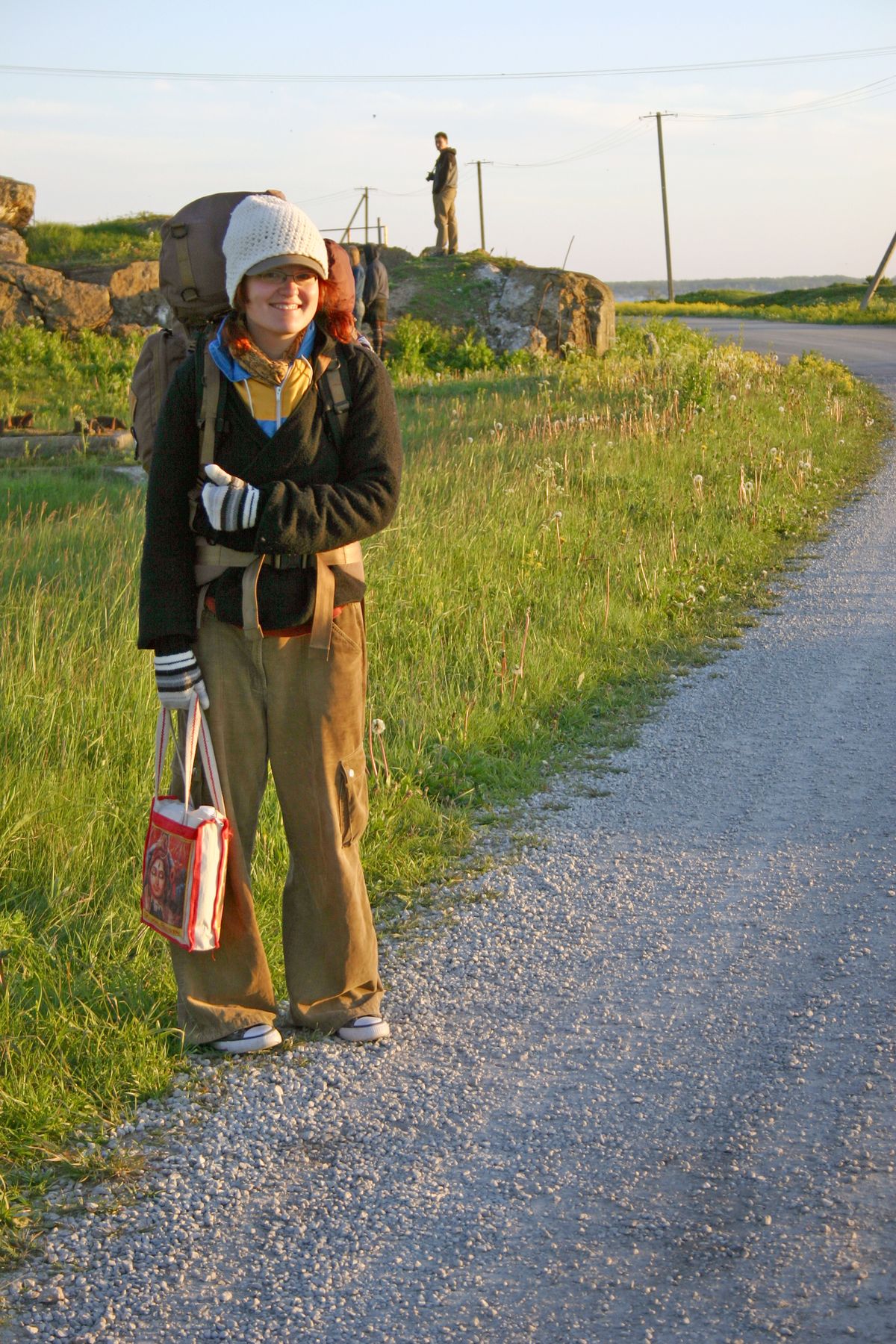 There is a
national carpooling website in Estonia that gives a driver the
opportunity to search for passengers who would be able to share the cost
of a planned ride; and vice versus. Using it is quite possible for
foreign travelers, too: you can scroll-search from your departure point
(kust) to a destination (kuhu) with a date and # of
passengers. On a main page you can see most recent offers. The page
isn't very popular, though, since many practice hitchhiking in Estonia
anyway.
There is a
national carpooling website in Estonia that gives a driver the
opportunity to search for passengers who would be able to share the cost
of a planned ride; and vice versus. Using it is quite possible for
foreign travelers, too: you can scroll-search from your departure point
(kust) to a destination (kuhu) with a date and # of
passengers. On a main page you can see most recent offers. The page
isn't very popular, though, since many practice hitchhiking in Estonia
anyway.
Similar systems exists also in Germany, Belgium and some other countries.
Cities and towns
- Over 100.000 inhabitants:
- Tallinn
- Tartu
- 30.000-100.000 inhabitants:
- Narva
- Pärnu
- Kohtla-Järve
- 10.000-30.000 inhabitants:
- Viljandi
- Sillamäe
- Rakvere
- Maardu
- Valga
- Kuressaare
- Võru
- Jõhvi
- Haapsalu
Border crossings
- towards Latvia
- Ainaži-Ikla on Tallinn-Pärnu-Riga road
- Valka-Valga on Tartu-Valga-Valka-Riga road
- and several smaller ones
- towards Russia
- Narva-Ivangorod on Tallinn-Narva-Ivangorod-St. Petersburg road.
- Koidula-Pechory on a smaller road between Värska and Pechory (Печоры, Petseri).
- Luhamaa-Kashino on the Riga-Pskov-St. Petersburg road which passes through a small corner of South-East Estonia.
For crossing the border to Russia from Estonia (not the other way around), drivers can register on estonianborder.eu and pay a small fee to reserve a time at any border crossing. The system significantly decreases queues and waiting times.
Crimes
Crimes related to hitch-hiking are not common in Estonia. However, it is recommended to be completely sober and careful when hitchhiking, and avoid cars with (slightly) drunk driver and/or passenger(s) which might, unfortunately, occur in this country.
There are some known stories regarding crime and hitchhiking in Estonia:
- In 2005, a drunk guy who asked for a ride got beaten, and then robbed. Before that, in 2001, same thing happened to a sober hitch-hiker.
- In November 2007, a hitch-hiker with a gun demanded that the driver would make a stop for smoking. Luckily, everything went well eventually.
- There are known several stories when hitch-hikers stole valuables from a back seat.
Basically, be careful and avoid situations when you feel that it can bring you troubles. No matter if you're a driver or a traveler – safety first. Better sleep on a mother Earth than get into untrustworthy vehicle.
Please also be (more or less) aware of where are you going and where you are, especially if you are a female hitchhiker. Trust your intuition when it comes to "shortcuts".
Useful phrases
- Tere – Hello!
- Palun – Please
- Tänan! – Thank you!
- Kas ma saaksin... [town name]? – Could I get a ride to...[town name]?
- Kui kaugele te lähete? – How far are you going?
- Kui kaugel see on (jala)? - How far is it (on foot)?
- Palun näidake kaardil – Please show on a map
- Palun peatuge siin – Please, stop here
- Aitäh sõidu eest – Thanks for the ride
- Vabandust – Excuse me
- Kas sõit on tasuta? Ma ei saa maksta. - Is the lift free? I can't pay.
- Jah\Ei\Võib-olla\Ei tänan - Yes\No\Maybe\No thanks
- Kas te räägite... \teisi keeli? (inglise keelt, vene keelt, saksa keelt) - Do you speak... \other languages? (english, russian, german)
- Kas te võiksite palun aeglasemalt rääkida? - Could you speak slower please?
- Ma ei tea\ Ma ei saa aru - I don't know\ I don't understand
- Ära puuduta mind! Lase mind välja! Stop! Appi! - Don't touch me! Let me out! Stop! Help!
- null\üks\kaks\kolm\neli\viis\kuus\seitse\kaheksa\üheksa\kümme\üksteist\kaksteist - zero\one\two... so on until twelwe
- parem\vasak\paremale\vasakule\otse edasi - right\left\to right\to left\straight on
Personal Experiences
Summer 2018 & 2022
It was my starting location and final one, so it's my home country. Some people say that Estonians are mistrustful and I can agree with that by an example of woman who, before taking us (couple), took a forth & back drive on the same road twice in order to better consider if she's taking us. The time of waiting is not long (30-90min) and normally the drivers are very kind. There are different types of drivers you can get (estonian or russian speakers) but it doesn't really affect the trip. Once I was been taken by the drunk diver, so be aware.
Summer 2023
I hitchhiked around Estonia for seven days (Riga-Parnu-Kuressaare-Talin-Narva-Tartu-Voru-Riga). Grade 3.5 out of 5. People are educated and polite, not the most friendly on the planet, but pretty good. Waiting time was not longer than 20-30min, but usually 5 to 10. It is not one of those countries where you must stand at thegoodand wide spot in order for people to stop. I was standing literally everywhere and did not have some major problems - people stop. I enjoyed traveling around, even though it was in the middle of the Rus-Ukr war. Locals did not bother me much with it like in Lithuania and Latvia..
Latvia
Edit on wikiLatvia is a Baltic country. It is a member state of the European Union as well as the Schengen Agreement. It borders Estonia, Lithuania, Russia and Belarus.
Legality
Latvian law says nothing about hitchhiking, so on ordinary roads it is legal — and Latvia has no automaģistrāle category at all, only the ātrgaitas ceļš. Paragraph 159.¹ of the Ceļu satiksmes noteikumi, a chapter added in January 2024, forbids the use of an ātrgaitas ceļš — crossing it included — to pedestrians, to animals outside a vehicle, and to cyclists, e-scooters, mopeds, tractors, carts and anything unable to exceed 60 km/h. Paragraph 159.³ bans stopping and standing on it, together with U-turns and reversing, so no driver can lawfully pull over for you. A forced stop belongs on the nomale or a designated stopping place under 159.², and that is also where asking makes sense. Everywhere else — the A and P roads that carry most Latvian traffic — hitchhiking is unregulated, so stand on the shoulder and thumb.
It is allowed to hitchhike in Latvia (at least there are no laws which forbid that), but of course in places where you do not danger road safety. It is a common practice here to use signs of the cities or countries where you want to get a ride to, but thumb also works fine.
Language
The Latvian population is divided into Latvian speakers and Russian speakers. Most of adult Latvians will know both languages. If you know some Russian, feel free to use it here. Most of young people will speak English as well. If they don't, they will at least try to communicate in it if they see you are a foreigner who needs help. Some people might speak German as well.
To catch some phrases you can also check Eastern Europe phrasebook.
Border crossings
Towards Russia
Terehova-Zasitino, for direction Moscow
Grebnova-Gavry, for direction Pskov, St. Petersburg
Towards Belarus
(bel. Урбаны, rus. Урбаны) – located on P68 some 35 km to the south-east from Daugavpils on the way to Braslaŭ.
(bel. Рыгораўшчына, rus. Григоровщина) – located on A6 some 75 km to the east from Daugavpils and 35 km from Krāslava on the way to Vierchniadzvinsk, Polack, Navapolack, Viciebsk.
Because of Schengen agreement, there are are no border control points between Latvia and Lithuania / Estonia.
Roads
Roads are getting better but don't expect European standards, especially in winter and early spring when temperature fluctuations destroy asphalt pretty easily. Be careful on dirt roads in countryside regions. Not only you get dust in your face from vehicles, but sometimes you can be hit by stones. On the other hand, traveling those roads usually offer the most beautiful and authentic scenery.
Gallery
Image:DSCF5026-1.jpg|Jason thumbing in Northern Latvia Image:IMG 7303.JPG|Tiziano hitching in Latvia
Useful things
Free internet is available in public and university libraries. Also almost all of Latvian cities and even villages will have free internet in the town's center - it is now a prestige thing.
There exist Facebook groups for ridesharing where you can often get a ride from Riga to other parts of Latvia for little money.. Group names are in form "Riga - (city/town name) - Riga". Use Facebook search to find them. For example, for Liepaja direction use https://www.facebook.com/groups/840988475937147/ These groups are mostly used by young people and they are very likely to speak good English. http://www.blablacar.com is also popular.
Weather in Latvia can change pretty fast so don't lose hope if rain comes. Hide and wait. Sometimes it's over in 15-20 minutes.
Hitchhiking
There are a lot of young people just hitchhiking around the country, to their hometowns, festivals, etc., especially during summer, so you'll probably meet someone on the road as well. People are used to hitchhikers and it is fairly easy to get a lift, whether along important routes such as the E67 (Via Baltica) or in the middle of nowhere.
Personal Experiences
Summer 2018 & 2022
Good and easy hitchhiking experience. You rarely wait a long time and you have a big chance to pass by Latvia, or get into the capital by one or two cars. I did nearly 200km in one drive with a guy going from Lithuania to Riga. Afterwards took A3 to Tartu (est). Because there are a lot of people going directly to Tallinn from Riga you have a good chances make all that trip in one car. I was going to Tartu, so it was harder but anyway I was there in the same day. The majority of drivers spoke English.
Lithuania
Edit on wikiLithuania is a member state of the European Union as well as the Schengen Agreement. It has borders to Latvia, Belarus, Poland and Kaliningrad (Russia).
Hitchhiking
Like the other Baltics it is a nice country to hitchhike. There are many active hitchhikers. Hitchhiking is fairly common in Lithuania you can regularly spot people hitchhiking to travel, some also hitchhike as a freetime activity. There are also people active in clubs like Vilnius Hitchhiking Club and organizing races.
But when going from Latvia to Poland try to get a direct hitch to the Polish border − it's rather hard getting a car on this motorway − it's built for quickly crossing Lithuania!
Often there are bus stops where many hitchhikers try to get rides. Don't be scared to walk next to a motorway, especially if it's next to a city. The locals and even schoolkids do it, so drivers are used to it, and you are more likely to stop someone.
The only problem when hitchhiking in Lithuania is Kaunas, because of its infrastructure, if you're dropped of there on a motorway, you're likely to walk for a couple of miles.
Get yourself a SIM card for your mobile phone if you want to stay in touch with Lithuanians. The cheapest start at the equivalent of EUR 0,30 at most kiosks.
Legality of Hitchhiking
Lithuanian law contains no offence of hitchhiking (autostopas), and on ordinary roads it is legal. Item 174 of the Kelių eismo taisyklės lists what is forbidden on a road signed Automagistralė or Automobilių kelias, and 174.1 begins with pedestrians — no walking, no animals, no bicycles or mopeds, nothing but cars, motorcycles and the like capable of at least 60 km/h. Item 174.2 forbids stopping or standing except in the specially designated areas, 174.3 bans U-turns and reversing, and 174.4 allows joining and leaving only at the places provided, so the slip road is closed to you as well as the carriageway. The designated aikštelės and their petrol stations are therefore the only spot on those roads where a lift can lawfully begin. Everywhere else — the krašto and rajoniniai keliai that carry most of the traffic — thumbing from the verge breaks no rule.
Like many countries in Eastern Europe hitchhiking on the motorways isn't really forbidden (it's forbidden to walk on motorway), so the advice would be not to hitchhike from petrol stations.
Cities
- Alytus
- Kaunas
- Klaipėda
- Kretinga
- Marijampolė
- Panevėžys
- Šiauliai
- Vilnius
Other regions
Curonian Spit
Border crossing
- Budzisko-Kalvarija border crossing with Poland
- Chernyshevskoye-Kybartai border crossing with Russia's Kaliningrad region
- Border crossing into Belarus. See Belarus's page for more info.
Links
- Lithuanian hitchhikers FB group
- http://www.maps.lt/ - this is useful when you look for a bus stop. Enter an adress and you can see all bus stops around. Also, this is very useful to look where exactly is the right house with it's number.
- Vilnius Hitch-hiking Club was one of the leading hitchhiking organizations in Europe. They have often organized the International Hitch-hiking Conference and have a prominent web presence at autostop.lt (Lith/Eng)
- Važiuojam.lt - rideshare network
Personal Experiences
Summer 2018 & 2022
Hitchhiking was nice. Waiting time is not long (30min-90min). It's easy to find someone who are going to another country (Latvia or Poland) so you can pass by Lithuania easily. The people don't always speak English but they are quite friendly. A lot of worker vans are ready to get you to another city. The highways are good, but sometimes there are no safety pocket or place to stand, so you need to walk untill another smote (up to 5-10km).
2024-2026
Lithuania is a great country for hitchhiking. Not many people are doing it nowadays, but Lithuanians still understand hitchhiking very well and are open towards it. Especially since the release of the popular "Pietinia kronikas" movie in 2024, which depicts life in Lithuania during the chaotic 90s and includes scenes of hitchhiking. Pretty much everyone in Lithuania is familiar with that one!
Lithuania is the kind of country where you will get picked up by the whole spectrum of society - young, old, poor, rich, Lithuanians, Ukrainian refugees, central asian immigrants, tourists and everything in between. Younger people speak English well, older people only Lithuanian and Russian (pro tip: do NOT compare Lithuania with Russia in any way, especially the language). The language is very strange, but even just learning a few basic words and phrases of Lithuanian will get you very positive reactions. You will find the most interesting rides along the E67, where it is not too difficult to get a lift all the way to Latvia, Estonia or Poland. On the countryside, hitchhiking from one village to the next is trivial, often the first car that finds you will pick you up.
Croatia
Edit on wikiCroatia is a country in Southern Europe. It is a member state of the European Union and as of 2023 is a part of the Schengen Agreement.
Aside from Croatian, Italian is widely known in some areas. Croatians are also extremely open, friendly, and hospitable, although there are known accidents of nationalistic hatred being directed onto foreign travelers. It is nonetheless definitely a must-see country with beautiful landscape, islands, and warm sea.
Hitchhiking
Croatia can be great for hitchhiking in summer. It is quite easy to
hitch along the coast, and waiting time rarely exceeds 20 minutes.
However, in the winter months many of the coastal towns become ghost
towns and you may find that hitching wait times exceed an hour, often
with very short rides once you do get them.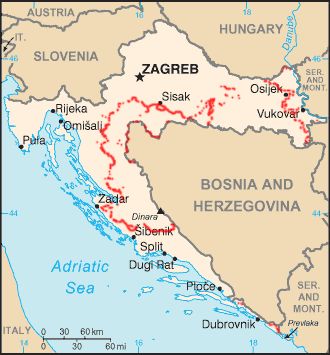
Some routes, however, might appear to be more difficult to hitch but with some portion of patience one can get a ride almost anywhere in this Balkan country.
When going out of the country you can choose either to go out at the weekend or not. When choosing the weekend, on one hand it is absolutely one of the best ways to hitchhike. The columns sometimes are more than 10 km long and the cars barely go, the most of the time they stand. So it is easy when you have a ride to get out of the car and walk between the cars in the lines and ask maybe directly for your destination. There are at least columns before every toll and before some tunnels that go only one way and before the border. [ Amines](User:Amines ” Amines”){.wikilink} was hitchhiking at Saturday towards the coast at the A1 highway on a petrol station after Zagreb but gave up after 4 hours, walked across the road where there was a column and got a ride directly to Bratislava within 5 minutes. On the other hand it takes time to get out of the country because you will wait in this columns for hours and hours.
The coastal road is beautiful, however be careful of where you are dropped off. You may find yourself with a mountain on one side and sudden drop on the other.
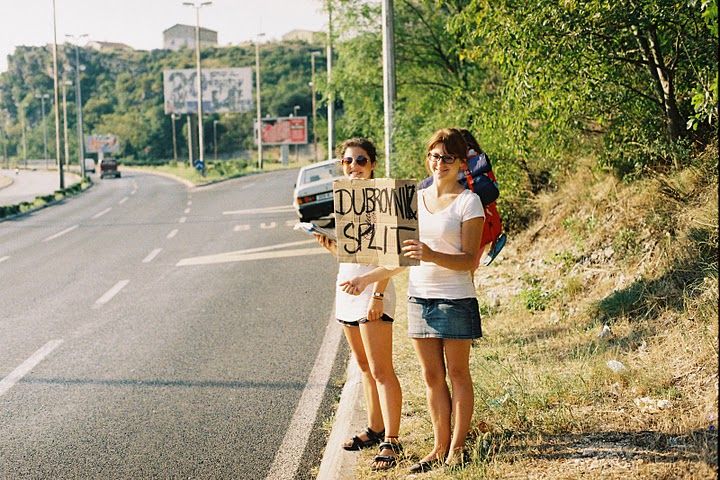
Legality of Hitchhiking
Croatian law does not mention hitchhiking (autostop), so on ordinary roads it is legal. Article 139(1) of the Zakon o sigurnosti prometa na cestama bars pedestrians — with horse-drawn vehicles, bicycles, animals and anything unable to exceed 60 km/h — from an autocesta, a brza cesta and any road reserved for motor vehicles, which takes in the carriageway, the hard shoulder and the slip road. Article 140(1) lets a driver stop or park on an autocesta only on areas off the carriageway specially built and marked for it, and 140(3) forbids U-turns and reversing, so a driver who passes you cannot come back. That leaves the odmorišta and their petrol stations as the one place on the motorway where a lift can lawfully begin. On državne and županijske ceste thumbing from the verge breaks no rule.
Dangers
There are some landmines left in Croatia. Jason and Kelsey stumbled across signs in the middle of the night in central Croatia. Ask locals about this if you're sleeping out. It is advised to ask to stay in people's gardens or in the truck. However with the exception of some areas outside of- specifically just south of- Zadar, the coastline is completely clear. Please be aware of this and be careful! Map of marked minefields
Phrasebook
- Hello Dobar dan
- Good bye Doviđenja/Bok (casual)
- Please Molim
- Thank you Hvala
- Direction Smjer
- Highway Autocesta
- Are you going to...? Idete li do...?
- I'm going to... Idem do...
- Could I get a lift to...? Mogu li dobiti prijevoz do...?
- Yes Da
- No Ne
- To the next petrol station Do slijedeće (slijedeche) benzinske stanice
- I will get down here Ovdje ću izaći
- Could you stop here? Možete li ovdje stati?
- Do you speak... (english)? Govorite li... (engleski)?
- My name is... Moje ime je...
- What is your name? Kako se zovete?
Cities
- Dubrovnik
- Osijek
- Pula
- Rijeka
- Split
- Zadar
- Zagreb
- Šibenik
Border Crossings
- Hungary
- Goričan-Letenye
- Montenegro
- Montenegro-Croatian border crossing.
To Slovenia
It can be difficult to get a ride from Zagreb to Slovenia. Some hitchhikers chose to go to Zagreb train station, buy a ticket till Sutla (1.5 Euro), and stay on-board after the train passes Sutla up until the Slovene village of Dobova (these are 5 minutes of a voyage with no ticket check) - from there it's easy to hitch further towards Maribor or Ljubljana.
- ChrisHitTheRoad Had many problems getting out the country in the direction of Slovenia with a very long waiting time twice at petrol stations on the highway. (over 4 hours each). It seems that people are scared to take you to the border as you are entering the Schengen area again.
- Hitchhiked from Zagreb to Ljubljana and I had to wait for about 3h for the car to stop me. It was a holliday and the gas pump was quite empty, but I didn't have a feeling that hitchhiking would be hard on normal days. After 3h I got a direct pick.
To Bosnia and Herzegovina
From Županja exit (off of A3 / E70) toward Tuzla. Bosnian driver offered ride at beginning of ramp, insisted on trying border crossing in car. Ca. 400m between checkpoints. Traffic is good.
Near the Croatian city of Imotski there are two border crossings into Bosnia. The southern one (at the village of Gorica and Grude) sees quite a lot of traffic and walking across is allowed, just walk to the same booth for which the cars are waiting. When going from Croatia into Bosnia and carrying an EU passport/ ID card you will be able to cross this border very smoothly. Border guards are relaxed and nice. Once in the Bosnian side, walk to the outskirts of the border town and it won't be hard to catch a ride further.
Personal Experiences
Pls add info
More information
- When travelling to the islands, you can use the katamaran. It is a faster and cheaper passenger ferry than the car ferry.
Bosnia and Herzegovina
Edit on wikiHitchhiking
Bosnia and Herzegovina is generally good for hitchhiking as the people here are very warm and friendly. If you are from a western country, chances are good that the people you meet in the street will have friends or relatives living in your country (due to refugees who left Bosnia during the war). This makes for an easy conversation with locals (if you can communicate with them).
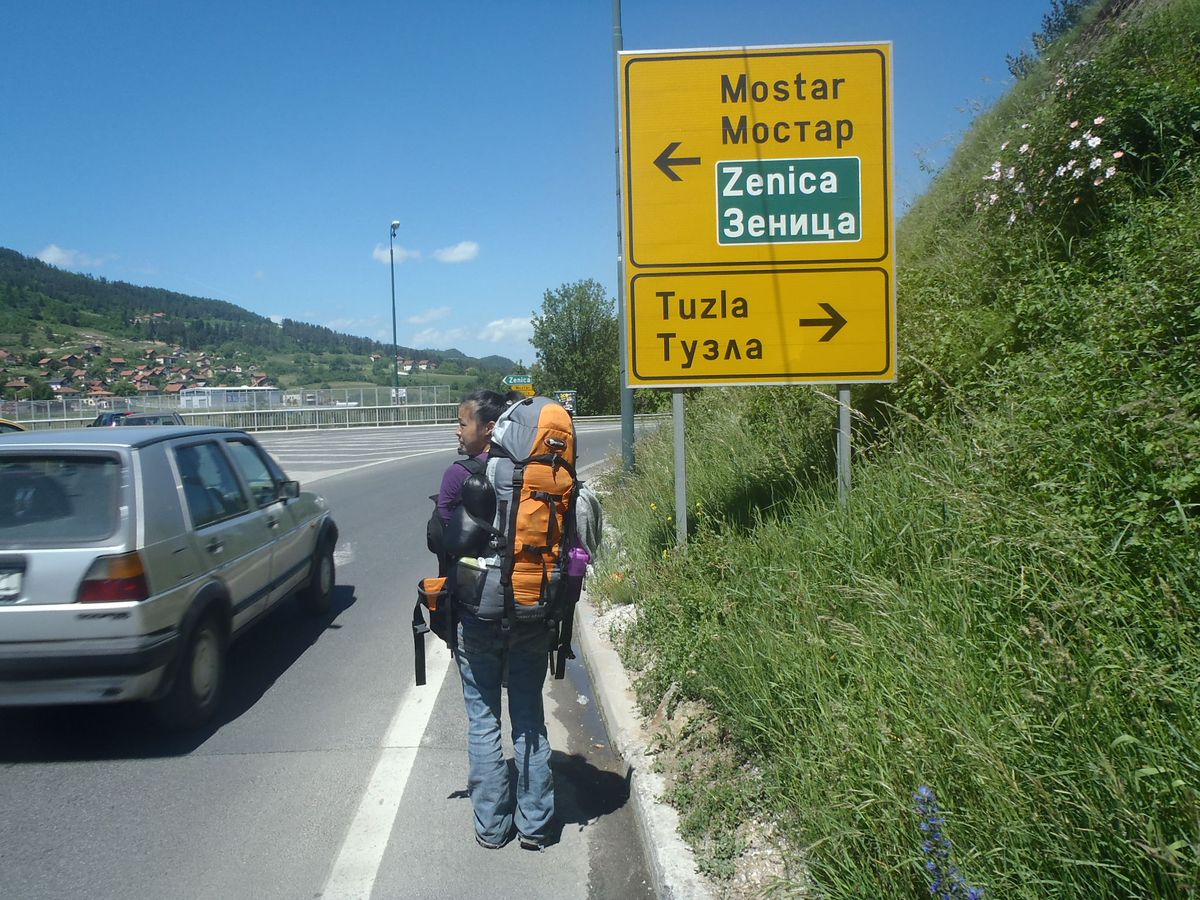
Police won't give you any trouble here. In some places you may have to wait for quite some time, though. Indeed, Bosnia is quite poor and not so many people can afford traveling far away by car.
The roads are not in such a good quality (you will notice some small wood bridges, and your speed average may not excess 60 km/hour on most of the roads...), there is just one short highway in Bosnia and Herzegovina. But Bosnia is a beautiful country, so get in a truck and enjoy the landscape.:)
Some car drivers will not understand the concept of hitchhiking, and private taxi is a major form of public transport. Therefore, make sure before you board a vehicle that the driver is not an informal taxi. Also make sure to keep an eye on the road - if the driver makes sudden turns or there are any other uncommon for usual driving changes in his behavior, it is likely that he is either a taxi driver or that he thinks he is doing good by bringing you to the local bus station. You therefore will have to be reiterative on stating that you travel exclusively by autostop.
Note that signs like "20km" could be misunderstood, as "km" is not interpreted as kilometers but as their currency (marka).
If you will go from Gradiska, Banja Luka to Sarajevo, in this part of Bosnia people are a little bit afraid to pick you up. They said things like some people that was hitchhiking robe some drivers and they are afraid to pick up hitchhikers but truck drivers are not so afraid so try more with them, you do not have anything to lose just ask every car if you will hitchhike on petrol stations or anywhere else. Area around Sarajevo and toward Tuzla are better for hitchhiking, people are more friendly in this area. Area around Mostar, people also have stories about accidents with hitchhikers. They only have this accidents with local people that were hitchhiking, there were not problems with foreigners. Even that you could heard all this stories, it is possible to always catch rides and you will always find some good people to help you. Sometimes you will wait few minutes, sometimes one hour or more but you will find your way. From Banja Luka to Sarajevo it is not so easy to catch ride in Travnik. You can really stuck in Travnik, at end of city is a big bus station and it is very good place to hitchhike. A lot of cars will go to Sarajevo but they do not like to stop. You can move to different place at entrance of city. In Travnik you have at beginning of city one petrol station and it is good place to hitchhike but very small number of cars are stopping there on petrol station but also a lot of drivers are going toward Sarajevo and if they want they have a lot of space to stop on this petrol station. Bus station at end of city is better place but you need to have luck on both places.
Legality of Hitchhiking
Nothing in Bosnian law forbids hitchhiking (autostop), and on ordinary roads it is legal. Article 116(1) of the Zakon o osnovama sigurnosti saobraćaja na putevima u BiH keeps pedestrians, livestock and anything not counted as a motor vehicle off the autoput, and 116(2) adds motor vehicles that cannot exceed 40 km/h. Article 117(1) lets a driver stop on a motorway only on the areas off the carriageway that are specially built and marked for it, and 117(3) forbids U-turns and reversing, so a driver who passes you cannot come back. That leaves the marked rest areas and their petrol stations as the one place on the motorway where a lift can lawfully begin. Off the motorway, article 107(1) puts a pedestrian outside a settlement on the left edge of the carriageway facing the traffic, lit or in a reflective vest after dark — which is where you stand and thumb.
Dangers
Country has one of the most severe land mine problems in the world and accidents happen every year. Be aware that serious flooding in May 2014, shifted some land mines, and also shifted some notices marking unsafe or cleared areas. Walking off the road into the bushes on a spot you are not familiar with is not a good idea. Stick to paths, tire tracks and well grazed fields.
In the war houses were often rigged with mines as their owners fled during the war. If something looks "too abandoned", stay away from it. In general, any area which seems visited recently is safe to go, but any area which is all overgrown, and clearly not visited by anyone for a decade is not to be trusted until locals confirm it's safe.
There is an app which you can download called BH Mine Suspected Areas, which is a useful tool to check when you're considering getting off the beaten path.
Try to avoid hitching within cities as you will most likely attract a taxi.
Personal Experiences
I always reference Bosnia as being one of the easiest countries I ever hitchhiked through and a small country with plenty of character. I came in from Dubrovnik, Croatia to Mostar, onward to Sarajevo and then I continued towards Belgrade, Serbia. I found Bosnians very friendly and proud to see tourists in their country. Some people speak English because of the emigration during the war but even if they have no English they understand the concept of hitchhiking as many people here have hitchhiked before. Most towns like Mostar don't require any special spots or petrol stations just walk out of the town towards your next destination and find anywhere with space for cars to stop and stick your thumb out. Old Volkswagons make up most of the traffic in the countryside and I got collected by a taxi and public bus both for free. I also shared a back seat with a goat.
See also
Principle cities:
- Sarajevo
- Mostar
- Tuzla
- Banja Luka
- Zenica
Serbia
Edit on wikiSerbia (Serbian: Србија / Srbija), is a country in Southern Europe, located in former Yugoslavia. It contains two autonomous provinces: Vojvodina and Kosovo & Metohija. However, Kosovo declared independence in 2008.
Hitchhiking
The avarage time of waiting in Serbia is big (2-3h+).It is not easy to hitchhike during the night. Street lights are rare outside of the cities, and even the smaller cities are not so easy to hitch beside.
In Serbia most of the main roads have junctions off towards the cities, so you could be dropped 4 or 5 km away from the nearest place and find yourself having to walk to the next decent junction.
Roads are generally of excellent quality compared to other countries in the region (e.g. Romania or Bulgaria).
If you hitchhike on the motorway, it is better to get out at the toll stations, where it is considered normal to hitchhike.
The driving skills of Serbs let you wait almost everywhere, even there where it is pretty dangerous to be picked up (p.e. at the intersection of roads, at the corners, at the very road with no safety spot). They also doesn't see any problem stoping anywhere is possible to drop you. So, basically there is no "bad spot" for hitchhiking in Serbia, however Serbs themselves doesn't really take you easily.
- According to Rozwal's experience (October 2011) it is very hard to get a ride in the Serbian countryside of Vojvodina. The waiting time is long and the distance covered very little. However, when people are approached directly at small fuel stations at the end of a village they take hitchhikers very eagerly. When hitchhiking in Serbia, according to my experience - it is even more important to try to talk to the drivers than in other countries. Unfortunately, not always is there a place where drivers can be approached personally
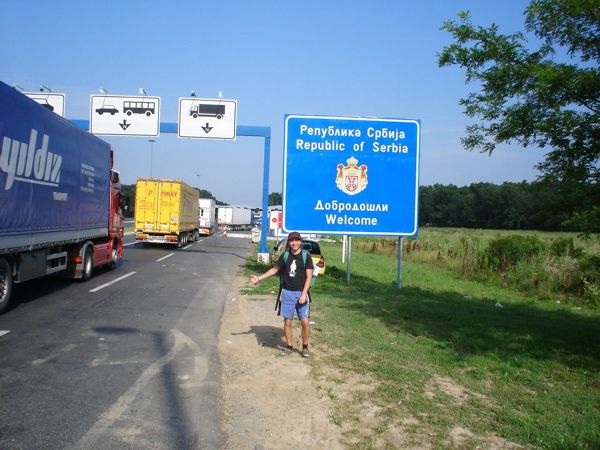
Legality of Hitchhiking
Serbian law contains no offence of hitchhiking (autostop), and on ordinary roads it is legal. Article 98 of the Zakon o bezbednosti saobraćaja na putevima is blunt about where it is not: a pedestrian "must not step onto or move along an autoput or a motoput" — the motorway and the expressway — excepting only people such as accident investigators and road workers. That covers the carriageway, the hard shoulder and the slip roads of both, so on those roads there is nowhere a hitchhiker may lawfully stand. What is left is the signposted rest areas and petrol stations, where drivers have stopped anyway and you can ask them face to face. On state roads of the second order and everything below them, thumbing from the verge breaks no rule.
Hitchhiking on the motorway is frowned upon, but you won't get into any trouble. Police will only ask you to go off at the next ramp.
Safety
Hitchhiking along the motorways seems to be no problem during the day. Serbian drivers tend to be friendly. When it's getting dark it is recommended to search for a safe place to stay. While riding through the night, vicious attacks to cars and people on parking areas or along the road seem to happen from time to time. Make sure that you get out at a 24h petrol station or motel along the way.
Border crossing
- Bulgaria
- Kalotina-Dimitrovgrad border crossing
- Hungary
- Horgos-Röszke_border_crossing
- Kelebia-Tompa
- Kosovo
- Merdare
- Romania
- Iron Gates
- Stamora Moravița
Money
When only hitchhiking through Serbia to get to Hungary, Bulgaria or wherever, you can pay at most service stations along the motorway with euro notes or bank card. Sometimes they also offer cash machines to withdraw euro notes. The country itself is quite cheap compared to Hungary or other Western European countries. Drivers will not ask you to pay for the ride.
Phrasebook
Personal Experiences
Long waiting time, don't think that you will pass Serbia by rapidly. Summer 2022
Long waiting time, don't think that you will pass Serbia by rapidly. I was crossing Serbia from the North Makedonia going to Slovakia. I did not plan to stay in Serbia, just to pass it by.I was lucky 2 times: I was picked up by a guy in Makedonia with whom we passed some distance in Serbia, after I was picked up by Spanish woman only because her GPS was not working and I should use mine to help her find the way to Italy. She took me when I was just walking forward the highway desperate waiting in vain for 2h. Afterwards, I was stopping cars for 2h in the gas station - no one stoped. Overthinking that gas station could be a "bad spot" I found another one in a highway where I was waiting for 2h more in vain. It seems that neither stopping with sing, nor without has the same effect. It was getting dark, so I thought that in the morning will be better. Mistake: I waited for 3h more in the morning, and some guy took me for 10(!) km! It's a joke, right? After waiting another 1h I was taken and this time for 100+ km. Afterwards, 2h of waiting in vain, breakfast, 2h more. 2 guys stopped during that time, but they were going other direction. So, I decided to take a short bus ride between the small cities to change the spot. Was taken till another border-city, and final 15km I did due to taxi-driver who took me "because I look like a stranger", I was not even asking him to stop. So, I did not like hitchhiking in Serbia, and I measure it as a 2nd worse hitchhiking experience in Europe after Turkey.
18 August 2022
I hitchhiked through the entirety of Serbia (North to South) in a single summer day, but had some trouble too. There was fairly low traffic on the highway and even at the border on that day, so stopping at service stations meant that I could approach at most thirty cars an hour and they were rarely going the right direction. I could see that traffic was much higher towards the other direction, so it was probably seasonal. It is probably advisable to stop at the toll stations instead. In the end I got lucky and found a direct ride to Skopje just short of Belgrad.
Sprimg 2026
27 years old man: I went from Croatia to Macedonia trough Serbia. My experience was so good. I've been told it's really difficult country and that Serbian don't like foreigners. Personally every Serb I talked to was very nice to me when I asked politely, sometimes with few serbian words/phrases. I have been invited several times. I had very fast ride, when it was 30/40mn it was just because all the cars were full at the border with Croatia and Serbia. I think it's a bit like Italy and other countries where maybe it's easier if you look like a clean european guy.
Links
Lana in Serbia (hitchhiking through the Balkans)
Montenegro
Edit on wikiMontenegro, officially the Republic of Montenegro, is a country located in the southeast of Europe. In the Montenegran and other Slavic languages the country is called Crna Gora.
The official currency in Montenegro is the Euro. That's why it is slightly more expensive than one might expect. Still cheaper than Western Europe though. It is generally a safe country. Unlike many of its Balkan neighbours, it pretty much managed to avoid the conflicts of the 1990s, so there are few landmines or other unpleasant surprises strewn about.
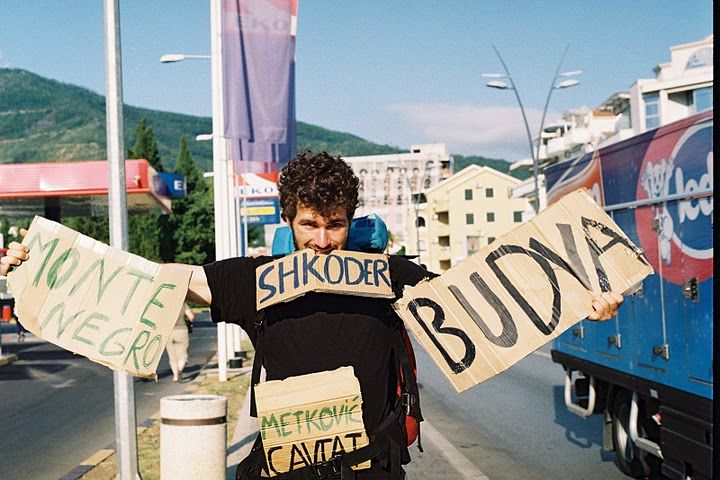
Hitchhiking
Roads in Montenegro are mostly below European standards1.
People are friendly here but some of the roads are really terrible and/or treacherously mountainous which means it will take a long long time to cross from south to north. Almost all the roads are 2 lanes with speeds limits at 80km/h or below. Unsurprisingly, there are many mountains (mont-e-negro meaning - black mountains) which can result in 20km taking 5 hours in a truck. But they are spectacular and well worth going through slowly.
Hitchhiking is fairly uncommon for locals, and so many drivers will assume you need a taxi and will stop to offer you a ride for a fee.
Hitching the Montenegro coast
Towards Croatia
It can be done, but the terrain poses some issues is some areas. Particularly when hitching the coast from Kotor through Herceg-Novi toward Croatia, you'll mostly be on a 2 lane road bounded by steep mountains and with little or no shoulder - so your ability to easily and safely walk roadside will be compromised, as will the ability for drivers to find a place to pull over.
The border crossing from Montenegro to Croatia is on the outskirts of Herceg-Novi. You might find that people are hesitant to drive you over the border. If you find yourself on foot at the crossing, it's approximately 1.2km (moderately uphill) from the border station exiting Montenegro to the border station to enter Croatia. Once on the Croatia side of the crossing, it's easy to catch a ride. Keep in mind, though that it's much easier done in the morning/early afternoon since traffic gets sparse in the evenings.
Towards Albania
When heading this direction, particularly from Croatia through Kotor, instead of a steep mountain right on the side of the road and little or no shoulder, you've got the sea and little or no shoulder. As you approach Albania people may ask for money more often.
Legality of Hitchhiking
Montenegro's Zakon o bezbjednosti saobraćaja na putevima does not mention hitchhiking, so on ordinary roads it is simply legal. Its motorway ban is drafted the other way round from most countries': article 101 lists exhaustively what may use an autoput or a put rezervisan za saobraćaj motornih vozila — motorcycles, tricycles, quadricycles, cars, buses and lorries — so a pedestrian is excluded by not appearing on the list, and the penalty provision reaches any učesnik u saobraćaju who is there contrary to article 101, not merely a driver. There is very little of either kind of road in the country, the Smokovac–Mateševo section of the A1 being the only true autoput, so in practice almost the whole network is open to you. Article 91 is what governs you on it: outside a settlement a pedestrian on the carriageway must keep as close as possible to the left edge, moving against the direction of the vehicles. The same article allows the right-hand edge only where that is genuinely safer — a blind bend, a ravine, a cutting, a rockfall — wording that Kosovo's law repeats almost verbatim, both of them descending from the old Yugoslav code.
Cities
- Budva, the expensive, over-crowded, tacky favorite coastal destination of Eastern European tourists
- Herceg Novi, coastal gateway to Dubrovnik, Croatia
- Jaz, nice hotel/beach area near Budva
- Kotor, the still-expensive, but more "alternative" destination of Western European tourists
- Podgorica, the inland capital
- Bar, nice old town, a big harbor with international connections and in case you are fed up with thumbing, there is train to Podgorica and Belgrade
- Ulcinj, the gateway from the coast to Albania
Bay of Kotor
When crossing the country in north-south-direction, note that the ferry in the Bay of Kotor is free for pedestrians.
Border crossings
Montenegro-Albanian border crossing between Ulcinj (Montenegro) and Shkodër (Albania). Montenegro-Croatian border crossing between Herceg-Novi (Montenegro) and near Gruda (Croatia). Montenegro-Bosnian border crossing between Nikšić and Trebinje in Bosnia.
- User Jungma reports very scarce traffic during peak season on the road from Nikšić to Trebinje, crossed this border on his way to Mostar however. From Podgorica, this might therfore turn out the faster route to Bosnia than hithching along the coast.
Hitchhiker experiences
Indrit In 27 July 2017 i was hitchhiking from Kotor to Duborvnik. After waiting a while i got a ride from Dobrota (4 km from Kotor) to Dubrovnik. The border was a pain in the a**. They saw my passport and i they checked my backpack and also the same in the Croatian border. (i made a mistake because i wanted to pass the border by walking. P.S dont do this if you are in a car in the border). By the way Montenegrins dont like to take hitchhikers in their cars.
Li In May 2012 hitchhiked Ulcinj - Bar. Generally it is quite difficult to hitchhike in Montenegro. I was going from Ulcinj to Budva after crossing the border from Shkoder in Albania, but the bus was quite late in the evening. Was really lucky as I only waited for 10 minutes and he was going to Bar. By the way he was an Albanian descendant which probably explained his generosity. Had no such luck in Bar after trying for about an hour. Saw lots of Montenegrins tried and failed as well.
Stewgreen August 2010 Found a different experience whilst hitching inland, from Kosovo to Podgorica and Niksik to Trebinje (Hertzogovina). Only one successful ride. Seemed people were a little scared. Usually more than 100 cars would pass and then the bus would come. Saw 3 times local women quickly get rides. Was told since local people pay, they don't like to stop for people with large backpacks who are seen as freeloaders.
MrTweek hitchhiked Dubrovnik - Herceg Novi - Kotor - Budva - Podgorica - Shkoder in June 2010. He always got lifts quite quickly and was never asked for money. Definitely a good hitchhiking country. Even a lot of locals do it. The only downside: roads are bad and lifts are rather short, so not a place for fast traveling.
T Hitched around Budva area June 2009 - and even with a tall scary looking male companion with me, it took only minutes before being picked up. We also hitched up coast from Budva to Croatia in September 2009. Had some difficulties around Herceg-Novi. Hitched a taxi returning to the taxi lot at the end of the day, then paid him 5euro to pass the lot and take us all the way to the border crossing. Walked the crossing and was immediately picked up once on the Croatia side.
Jason and Kelsey hitched here in May 2008 without problem and waiting very little time between rides. It helps to be out of big towns when thumbing as people realize that public transport in the middle of nowhere is almost non-existent.
Stan hitched there in December 2008. Came in from Dubrovnik, Croatia. There are very little cars at the border and I had to hike for 3 hours through Herzeg Novi to find a decent spot to hitchhike. It seemed to be a very uncommon thing to do, but the rides I got were such extremely friendly people! One ride bought me a good lunch, another ride invited me to his family's house, treated me on dinner and I could sleep at his place!
Experience learns that it is best to ASK people directly! Also, if you are headed to the capital Podgorica, take the ferry near Kotor, it's faster and you can ask people in their cars. Since I was in a hurry I took the bus from Podgorica to Pristina, Kosovo (with connection to Skopje), it was 16,50 euro for a 7 hour ride through an epic mountain area.
Quarim hitched there in may 2008, coming from Croatia. It seems to be difficult to find someone who is willing to take you over the border. I guess that driving habits are also sometimes horrible. Two drivers stopped for me and wanted to have money, then i decided to take the Bus to Shkodër, Albania. Since the bus was not departing like it was shown in the schedule, I was on the way with two Albanian workers who stopped cars with Albanian number plates and than haggled for a price with the driver (10 Euros for 3 persons).
Banzai faced mayor problems when trying to hitchhike in Montenegro in January 2007. He tried to hitch from Podgorica to Budva (passing to Cetinhe) together with a friend. There weren't too many cars to begin with, the very few that stopped asked money (more then it would take to go with the bus) and - most striking - had three cases of cars driving on all of a sudden after they stopped and opened the doors. When we were getting our backpacks, they drove on - even with open doors!. We spend an entire day trying to get a ride, no luck. In the end we decided to take the bus to the border town, called Herceg-Novi. We pitched the tent near the outskirts of town, and tried to hitchhike to Croatia next day. Again no luck, and since it was close to the border, we got numerous passport controls by different patrols (about 6 controls in 4 hours). After 5 hours, the police wanted to get rid of us so desperately, that they drove us up to the border, and kicked us out of Montenegro.
Kutikuti hitch-hiked from Shkoder (Albania) to Ulqin as well as all the way back in September 2011. There were not many cars passing by, and he was offered a ride by only 2 drivers total. On the way from Ulqin to Shkoder, he eventually ended up walking across the Montenegro - Albania border after catching one ride and walking for about 2 hours. It is a good idea to take every ride that you can catch even for short distances.
Gallar hitch hiked from Lepetane to Tivat and Kotor (and the road back) and it works pretty well. People seems to be really opened and if you will know a few words in their language they are really impressed and they are starting to be even more nice. Hitch-hiking out from Tivat to the Croatia border wasn't easy at all. Keep in mind that if you came to Montenegro through Albania (if u have got stamp in your passport) and you are going to cross Montenegro-Croatia borders, it will be kind if you will cross them by foot. Most likely you will be searched for drugs (and then if you are inside the car, the driver and car will be searched as well). As it has been already said, the traffic is really low during evening/night. The road between borders is really winding so in case of going there at night, wear your Vest!
Personal Experiences
Kosovo
Edit on wikiKosovo is a new independent republic in southeastern Europe, which has been under United Nations administration since 1999.
Hitchhiking
Hitch-hiking in Kosovo is very easy as people are very eager to take foreigners. Your appearance and look will most likely play in your success, western people will certainly be more successful on waiting along the road and many people with Kosovo will be glad to meet and help you if possible. People from the US are generally extremely appreciated and should bring more help than for some other nation as locals appreciate the effort given by the US government but also wish to avoid any trouble that might come by causing harm to such foreign citizen. Sometimes the drivers would even stop without you signaling that you need a drive and offer you help. They often want to share with you their personal histories and to tell you about history of Kosovo.
Make sure to keep an eye on the road you are going, if the driver make a sudden turn around, changes his natural path or take another direction, it is likely that he thinks he is doing good by bringing you to the local bus or train station. You therefore will have to be reiterative on stating that you do 'autostop' all the way. (This part is most probably redundant at least as of late-2011.)
In Kosovo, and in Serbia near the border, you may be propositioned by jitney cab drivers - regardless of how typical-hitchhiker you think you look. Some will tell you before you get in, others will wait until you're already in, all will, recognizing you as a foreigner, probably ask for amounts of 10-25 euros which is exponentially above what any local would pay.
Legality of Hitchhiking
Kosovo replaced its road traffic law in 2024, and the one to read is Law No. 08/L-186 on Road Traffic Rules, in force since 3 April 2024 — not the 05/L-088 that most sites still link to. Hitchhiking is not an offence under it, but article 157(1) prohibits pedestrians on an autostradë and on a motoudhë, and article 157(4) sets the fine at €100 payable by the këmbësori — the pedestrian — and not only by the driver. Outside built-up areas article 142(1) requires you to walk on the left side of the road in the direction of travel and, in reduced visibility, to carry something reflective or a light — a hi-vis vest, reflective clothing, a torch — on pain of a further €20. Article 142(2) lets you move to the right-hand edge where that is genuinely safer, at a blind bend, a ravine, a cutting or a rockfall, and that exception is the one a hitchhiker will actually be relying on. So the M- and R-roads are yours to hitchhike from; the R7 and the rest of the motorway network are not, and there the fine is aimed squarely at you.
Number plates
Nowadays, most of cars have new RKS number plates. They look like EU number plates, with 'RKS' on the blue strip on the left side. They are followed by a single number which can tell you about city which the car is from.
| Code Di | stricts |
|---|---|
| 01 [Pri | shtina](Prishtina “Prishtina”){.wikilink} |
| 02 [Mit | rovica](Mitrovica “Mitrovica”){.wikilink} |
| 03 [Pej | a](Peja “Peja”){.wikilink} |
| 04 [Pri | zren](Prizren “Prizren”){.wikilink} |
| 05 [Fer | izaj](Ferizaj “Ferizaj”){.wikilink} |
| 06 [Gji | lan](Gjilan “Gjilan”){.wikilink} |
| 07 [Gja | kova](Gjakova “Gjakova”){.wikilink} |
Border crossing
Serbia
- Merdare border crossing
As of August 2011, several sources in the Prizren and Peja regions told Zenit that the border between Kosovo and Serbia is closed due to protests (street blockades, occasionally riots) by the Serbian minority. He didn't go to enquire as the "illegal entry" issues (see below) would have rendered entry into Serbia via this border unlikely for him, anyway.
At checkpoints your passport will be examined by Serbian officers and again, after a few metres, by Kosovar officials, just like any international border crossing.
Crossing from Kosovo back into Serbia is generally a longer process. Most importantly, if you enter Kosovo directly (i.e. from Albania, North Macedonia, Montenegro, or by flying) without first entering Serbia you are quite likely to be denied entry to Serbia for having "illegally entered Serbia" (officially Serbia still considers Kosovo to be Serbian territory). The border guards will know because you do not have a Serbian visa stamp in your passport. In this case, the Serbian officers will insist you enter through Montenegro or North Macedonia instead.
For all EU-passport holders keep in mind that you can travel with your ID in Serbia as well as Kosovo. Therefore to avoid problems just use your IDs for both countries and you will be save anyway.
Kral vsech mori- april 2017: I've entered Kosovo from Albania and from Kosovo I wanted go to Sebia. I have two passports(EU passports) so I used one for Kosovo control and hoped that if I will use another one for Serbian control, they will not see my Kosovo stamp and will not know from where I entered Kosovo but it didn' t worked and I have to go through North Macedonia. But they told me that if I would have ID card with me, that they would alowed me to go without any problems.
"Kurdun Burdun - June 2019" I am a citizen of Russia, studying in Poland. I have national Polish visa valid for every country of EU (except for Great Britain and Ireland), so I tried to go to Kosovo through Albania. However, it was not possible, the officers said that I need multi Shengen visa and with my national Polish visa I can't enter. So beware, this is the exception of national EU visa permission area, they accept multi Shengen visa only.
North Macedonia
- Hani i Elezit-Dolno Blace border crossing
Crossing this border is not a big problem. However, it is quite difficult to get out from Skopje to this border crossing. Kosovo is not the most welcomed destination for North Macedonians so you need to stand somewhere on E65 to catch Kosovar drivers going back to country. Fortuntiely, it is very easy to catch Kosovar drivers because they welcome tourists who are quite rare and they like to help you. Therefore, taking a taxi to E65 or to Kachanik Road can be considered as well. The border can be crossed both on foot or in the car. They are many people carrying drags through this border, so if you are not sure about driver, it can be better to cross on foot. The crossing is smooth. Both officers are kind and welcome to help you. As written above, it is strongly not recommended to cross Kosovar-Serbian border after entering to Kosovo from North Macedonia.
Montenegro
- Kula border crossing
Kula border crossing is one of places you will pass to avoid problems in Kosovar-Serbian border when you have entered Kosovo from North Macedonia, Albania or Montenegro and going to Serbia. The border crossing is located around 1700m above the sea level and the no man's land is very big. Both border crossing points have no problem. However there are not many cars going on this way so it is better to find someone going directly to Rozaje from Kosovo and cross in the car. Cebula and Damkota14 were crossing this border and had no problem. However, they camped on the Montenegro side and the police caught to check passports, so camping in the woods near by the border is not recommended.
- I crossed here in Aug. 2022 and highly recommend it. There is a small waterfall and cave on the road leading towards the crossing, when you get back there is a nice hitchhiking spot. It is a long ride both up and down the mountain. Just walk across the border to skip the (short) wait, there are some radiation warning signs and the post is tiny. Some people go there just for renewing their insurance. It's fun. -Rebew (talk)
Language
Albanian is the most commonly spoken language. Older people usually speak Serbian, so if you know Serbian and English you should understand with almost everyone.
Flash Lingua
- Si jeni? (See Yani) = How are you?
- Mire (Mir) = I'm fine.
- Me Fal (Mah Fal) = Sorry
- Ju lutem (You Loo-tam) = Please
- Faleminderit = Thank you
- Qifsha nonen (Chifsha nonen) = Fuck your mother
Personal Experiences
North Macedonia
Edit on wikiNorth Macedonia is a landlocked country in Eastern Europe, surrounded, clock-wise from the north, by Kosovo, Serbia, Bulgaria, Greece and Albania. People are extremely friendly here and particularly fascinated by travelers due to the difficulty in obtaining visas into the EU.
Hitchhiking
Just thumbing a direction will produce quick results with people eager to help. There are many truck drivers headed to the border of Greece but may be reluctant to take you through. This appears to be the same for most borders within the Balkan area. Most of the time they will drive with you to the border, ask you to get out and walk through the border and enter the truck again once both of you are through.
People are usually friendly and ready to help, although most car drivers will not understand the concept of hitch-hiking and private taxi is a major form of public transport due to high level of unemployment. Therefore, make sure before you board a vehicle that the driver is not an informal taxi. Also make sure to keep an eye on the road you are going, if the driver makes a sudden turn around, changes his natural path or takes another direction, it is likely that he is either a taxi driver or that he thinks he is doing good by bringing you to the local bus station. You therefore will have to say, if necessary again and again, that you do 'autostop' all the way.
- According to Rozwal's experience (November-December 2011) after hitchhiking in North Macedonia in all directions, the above problems seemed redundant. He has never come across any hidden taxi nor have had any issues with people not understanding the concept of hitch-hiking. No-one asked for money too. In general, North Macedonia was hitch-friendly and the use of signs with number plates' symbols of cities worked just fine (instead of writing Skopje you can write SK, Prilep: PP, Veles: VE, Bitola: BT, Ohrid: OH, etc.).
- ChrisHitTheRoad had exactly the same experience in July 2014 as Rozwal. He has even been invited to stay for 3 nights with a family in Skopje and gave him a tour through the city.
- For me North Macedonia is one of the best european countries for hitchiking. Usually I waited only short time, people were very nice and no one wanted to pay for a lift. (August 2016)
- November 2018 - We hitchhiked about 260 km in one day from Orchid to Strumica by both, car and truck drivers. People where really nice. They invited us for food & drinks and also no one asked us for money
- May 2024 - Meeson We hitchhiked from Delchevo to Kocani in less then 3h with four different drivers. Everyone was very helpful and interested in our travel. Waiting time less than 20min. No one asked us for money
Legality of Hitchhiking
Nothing in Macedonian law makes hitchhiking (автостоп) an offence, and on ordinary roads it is legal. Article 129(1) of the Закон за безбедност на сообраќајот на патиштата keeps pedestrians off an автопат, an експресен пат and any road reserved for motor vehicles, together with bicycles, tractors, horse-drawn vehicles and livestock. Article 130(1) lets a driver stop or park on those roads only on the areas off the carriageway that are specially arranged and marked, and 130(3) forbids U-turns and reversing, so a driver who has passed you cannot come back. The marked rest areas and their petrol stations are therefore the one place on the motorway network where a lift can lawfully begin. On the магистрални and регионални патишта that carry most of the country's traffic, thumbing from the verge breaks no rule.
Border crossing
Bulgaria
- Kriva Palanka-Kyustendil border crossing
- Delchevo-Blagoevgrad border crossing
Albania
- Qafë-Thanës-Struga border crossing
Greece
- Bitola-Niki border crossing
Kosovo
- Hani i Elezit border crossing
Personal Experiences
Albania
Edit on wikiAlbania is a country in the Balkans in Southern Europe. The capital is Tirana. It has borders to Montenegro, Kosovo, North Macedonia and Greece.
Hitchhiking
The road network is not very complicated, and getting out from and past towns is usually just a matter of walking in the right direction. Roads do tend to go through the towns, but keep an eye out for signs for shortcuts to avoid tedious walking when transiting. In Albania there are lots of round-abouts, even on some motorways, these are perfect places to hitchhike.
Hitchhiking in Albania can go surprisingly well. Even though Albania is still one of the poorest countries in Europe, the country's living conditions have improved greatly in the past years.
People are usually friendly and ready to help. Be aware some drivers expect money, since private taxi is a major form of public transport. A very easy way to avoid misunderstandings (if you are strict about hitchhiking) is to say "autostop, jo lek" - "hitchhiking, no money" while showing the thumb up sign ("jo" is pronounced "yo"). This is very clear to drivers and they will either drive away or pick you up anyway.
Hitchhiking with a sign can be useful to differentiate yourself from the other people using public transportation, but on smaller roads a thumb is enough (and might actually make things easier since people might not be going far and it's hard to know what to put on your sign). The only place a sign is really useful is to get out of Tirana
 Many private
minibuses join the main cities via the main roads. There are no bus
stops, so they may stop when they see you hitchhiking. They are quite
cheap, for example a ride from Tirana - Shkodër (120 km) costs 500 Lek
(about EUR 3.5). Thus, it may happen that they pick you for free if you
say that you don't have money.
Many private
minibuses join the main cities via the main roads. There are no bus
stops, so they may stop when they see you hitchhiking. They are quite
cheap, for example a ride from Tirana - Shkodër (120 km) costs 500 Lek
(about EUR 3.5). Thus, it may happen that they pick you for free if you
say that you don't have money.
Also, make sure to keep an eye on the road -- if the driver makes sudden turns and other similar actions while driving it is likely that he is either a taxi driver or that he thinks he is doing good by bringing you to the local bus station, and would expect some money from you. You therefore will have to be reiterative on stating that you travel by autostop. This kind of driver behaviour usually is not valid for the company car or truck drivers': they are already salaried and won't be offering a taxi service to you.
Women hitchhiking alone do not encounter more issues than the average European country.
Legality of Hitchhiking
Albanian law makes no offence of hitchhiking as such, and on ordinary roads it is legal. The Kodi Rrugor is modelled closely on the Italian code: article 173(6) of Law 8378/1998 forbids pedestrians, carts and animals on an autostradë except in the service and rest areas, and allows the emergency lane only for reaching a help point. Article 173(7)(b) then forbids, on the carriageways, ramps, interchanges, service and parking areas and every other appurtenance of the motorway, stopping a vehicle in order to pick up passengers — so standing at a service area is lawful while the lift itself is not. The practical answer is the same as in Italy: work the rrugë interurbane network, where none of this applies, and ask at the last petrol station before the motorway rather than on it. Elsewhere nothing prohibits thumbing from the verge.
Safety
Albania has a good hitchhiking reputation. The government financial trust in police force has lifted up the safety level in most areas of the country; however, it is paramount to remain cautious, and hitching by night as well as in some areas might not be too wise. Beware of the poorest area and hitching next to slums since you will be quickly dragging the attention of dozens of children lurking at your bags, and would make almost impossible for you to get out of there, so if you find yourself around such place just walk away and ignore the people until you are in a better area.
Places
- Theth (village & national park)
- Borsh (village with a wonderful beach)
Eating & Drinking
In Tirana (and probably in other cities, too) you can find very cheap local food markets with really good and fresh vegetables, such as tomatoes, cucumbers, green peppers, olives, etc. Local olive oil and freshly baked bread is something everyone has to taste!
Accomodation & Sleeping
In Tirana one can easily get accommodated in so called private sector: these are people who have their apartments arranged to accepts occasional tourists. It is safe, quite cheap (you can talk about how much you can pay), you get friendly company (if needed) and tips how and where. To find these kind of places just ask some more tidily looking folks on the street, or in Internet cafes and other similar places. There is a nice and individual hostel in the center of Tirana. Tirana Backpacker Hostel, Rruga Elbasanit 85, Tirana. For free you can stay at Couchsurfer house. Albanians are very good hosts and they can help you by showing the city you will stay or giving directions.
Mind of a Hitchhiker had an awesome time freecamping and squatting in Albania. There's lots of building going on in Albania, especially at the coast in Sarandë there's a whole rise of ugly concrete structures, presumably to launder money. There's not enough people who actually buy those apartments, so squatting is really doable for the night if you manage to sneak in unnoticed. There's empty buildings in the whole country. If you walk about 4km north of Dürres centre there's a few beaches and hills excellent for pitching a tent.
Personal Experiences
July 2022, 2017
Albania is a great country for hitchhiking. Although beware there is some kind of taxi 'mafia' on the Albanian side of the border when entering Albania from Greece between Ioannina and Gjirokastër. Twice now taxi drivers there have prevented me from hitching further into Albania.
In July 2022 (and back in ~2017 a similar situation occurred) we walked across the border and stopped a ride going to Sarandë between the border and the taxi stands. The taxi drivers rushed over and told us and the driver that its illegal to hitchhike there. I guess the taxi guys threatened the driver with something, and he was afraid to take us after that.
Best to not try and stop a car until you're past the taxi stands and out of sight of them. keep walking to the gas station around the corner and if they ask where your going tell them you're meeting someone. Keep walking further down the road if they hassle you at the gas station.
Links
Albanian Phrasebook on Wikivoyage
Albania on Wikivoyage
Greece
Edit on wikiGreece is a country in Southern Europe, bordering Albania, North Macedonia, Bulgaria, and Turkey. It is a member state of the European Union as well as the Schengen Agreement.
Hitchhiking
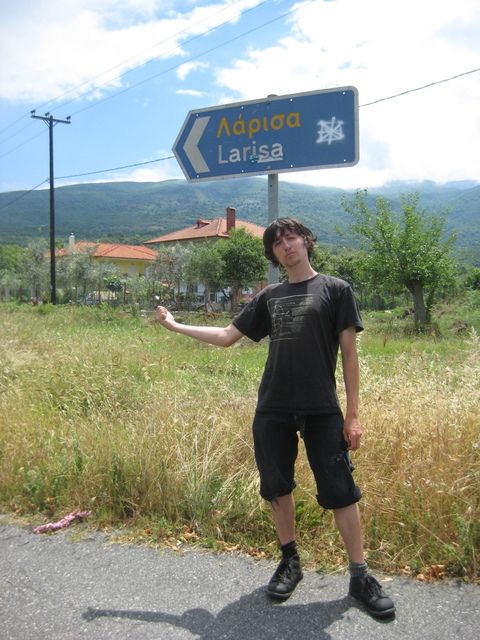
Hitchhiking in Greece can vary between very slow and very fast.
A few useful Greece-particular tips to make it faster:
1. Signs are usually very helpful. Write the closest reasonably big town - not road numbers and not a faraway destination. The Greeks generally will take your sign very literally and won't stop if they're not going that far, even if it's the same direction. Write the signs in both Greek and English.
2. Local roads during daytime can be very fast and hitched without a sign. After dark people won't be going far and many of them won't stop.
3. Motorways - Sliproads, ramps etc generally don't work well (unless you're in a big city and many cars are taking the road you need). If there's a motorway, the best (though not safest) option will be to stand on it. Officially it's illegal, and some hitchhikers have been asked to move by the police, while others have had no problems at all. It's better to stay away from tollbooths, bridges and tunnels, since you might be seen by people or by cameras. Safety-wise, there is usually room to stop, and sometimes you can walk on the external side of the fence until you get to a good point.
- Petrol stations are very small and rare on motorways, so hitchhiking from one to another is not a good option. Better stay on the motorway itself.
4. Locals can give very good hitchhiking advice (locations, routes, and sometimes they'll even find the next ride for you). Make sure they understand that you're hitchhiking all the way (not just to a bus station) and tell them where you want to be today. They might be able to help!
Many Greeks seem to be afraid of immigrants. It's best not to ask too much about it as something close to racism and prejudice comes out. Greeks who have lived abroad or have travelled around seem to be much more open to picking up hitch-hikers, as are foreign tourists.
Because there are few motorways in Greece, the national roads become great havens of locals and long distance drivers pouring in from the south east to west and vice versa, up into the north. Also, tolls have increased as of recently, making motorways less attractive for long distance drivers. Greek drivers will never directly ask for money. In very few cases, some might say they don't have enough to pay the tolls, or that they have not enough petrol to arrive to their destination and no money to buy more.
It would be smart not to mention "Macedonia" as a country. Greeks call "Macedonia" the northern part of Greece. If you're going to North Macedonia, and want to avoid the political conversation, just say that you're going to North Macedonia or Skopje
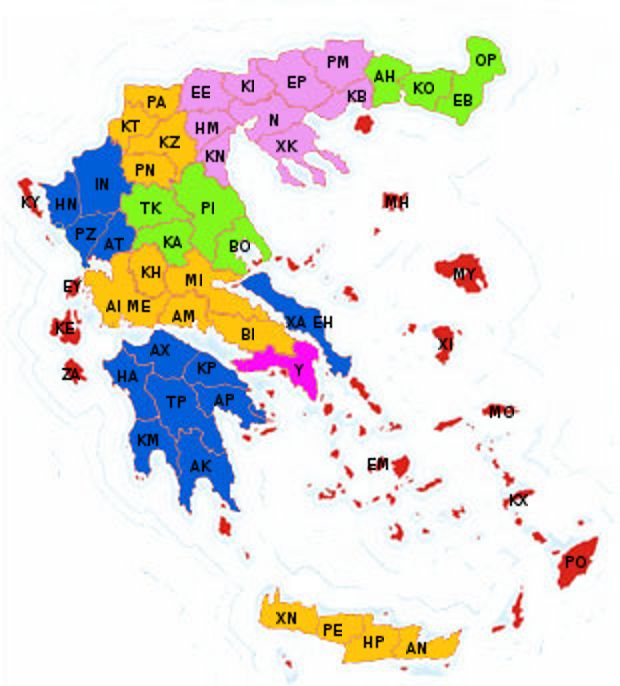 In summer it can get very hot in Greece,
so be careful that you don't get sunburned and carry plenty of water
with you. It is also wise to have a large cardboard sign which you can
use as makeshift umbrella while you're waiting for cars.
In summer it can get very hot in Greece,
so be careful that you don't get sunburned and carry plenty of water
with you. It is also wise to have a large cardboard sign which you can
use as makeshift umbrella while you're waiting for cars.
Legality of Hitchhiking
Greek law says nothing about hitchhiking (οτοστόπ), so on ordinary roads it is legal. Article 33(1) of the Road Traffic Code — law 5209/2025, ΦΕΚ Α΄ 100 of 13 June 2025, which replaced the 1999 code — forbids pedestrians on αυτοκινητόδρομοι and οδοί ταχείας κυκλοφορίας and on the entry and exit roads to them, so the slip road is as much out of bounds as the carriageway and the hard shoulder. The same article bans U-turns and reversing there, so a driver who has passed you cannot come back. That leaves the service areas, and the last junction or petrol station before the motorway, as the places to ask for a ride. Everywhere else article 42 simply requires pedestrians to use the pavement or the shoulder, and thumbing from there is unregulated.
You can cross the border by foot! (If youre crossing border to Turkey between Alexandroupoli and Tekirdag it´s not possible to go by foot. Between greek and turkish border there is a bridge and soldiers will tell you that you have to go by car on this bridge of course because of national security).
Wild camping
Wild camping in Greece is forbidden by law, however a lot of people (even locals) do it. It's very easy. If you camp next to hotels, organized campgrounds or other kind of tourist accommodation, their owner can call the police. Police may fine you (150 euro) during the summer months (July and August especially), so it's best to ask other wild campers when you arrive at a beach. But generally, if you are good in hiding yourself from other's eyes there will be no problems.
However Greece has corrupted and lazy police (and a whole system in general) so don't be really scared if someone threatens you calling a police. Even if he do so, normally police is very slow and will arrive to the place in 1-3 hours, so you will have your time to change your location avoiding the problems. The same trick works with every random greek person who is threatening you - they will do nothing, so just ignore them. NB! That trick doesn't work with firefighters who are really fast due to the frequent forest fires in Greece. Campfires are strictly forbidden in Greece (so better to have a burner with you; gas bottles are cheap there) and they can fine you. Canonically greek firefighters don't speak English, so if you pretend to be a foreigner it can save you from fine.
Compared with the other Mediterranean EU countries, there are still a lot of of beaches where you can camp for free and without police problems. You can camp freely anywhere in the mountains, valleys, hills, river beds etc. Nobody is going to chase you off.
Getting away
- To Italy
You can get a ferries from Igoumenitsa or Patra. A lot of trucks going through Igoumenitsa. Ferries are expensive and time consuming, but there is a shower and you can sleep on the deck. Crossing in the truck cab - dangerous and illegal. There are discounts for students. If you are under 25 - ask for a discount!
Personal Experiences
August 2016
I was just crossing Greece from Bulgaria to Turkey and I expected easy way but it was totally different. I spent there about 4 days hitch-hiking full of depressions. Greeks just didn't stop and waiting time about 3 hours wasn't anything special. For me it was the worst hitch-hiking country ever. For me Greece was even worse than Italy or Spain! (Local's answer: There's a big wave of refugees since the war in Syria and people are scared. A driver could be detained for trafficking, if he's carrying passengers who entered Greece illegally. If you try NOT to look like a refugee and speak to people in gas stations, East Macedonia + Thraki could be crossed in less than 48h).
Early September 2018
Hitchhiking to Athens seems to be extremely easy. In fact we only needed one car all the way from Thessaloniki and even on the way back people were offering us rides to Athens on gas stations and certain points. Hitchhiking north however is an absolute nightmare! Barely anyone outside the bigger cities speaks even elementary English and it seems some pretend not to as to avoid conflict. The national road not only has an exit to every village (which means people go 5km ahead like on local roads) but it's also illegal to be on it. We got displaced by the yellow inquisition multiple times for walking or hitchhiking on it so if you're not the entrance you've got high chances you'll get to meet them too. The police doesn't seem to care but these guys are ruthless. Local roads are sometimes way easier to hitchhike (From Kastro to Tragana you have a good chance to ride in the back of a pick up truck) often with nicer people but their layout is a bit nonsensical, and drinkable water isn't a standard in a big part of Greece. Overall it's not an easy journey (at least in the southern and central parts) but definitely a fun challenge! SO if you're looking to test your willpower and strength, this is the way to go! If you're looking for speed on the other hand and are going north of Athens I recommend not settling for cars that will take you to villages/smaller towns. It might seem like it's taking longer but a single truck driver is way better than spending 2 days on some national road entrances in the middle of nowhere.
November 2018
hitched from Kulata (Bulgaria-Greece border) to Thessaloniki then to Evia (Island E of Athens) solo male. Hard getting lifts, parent generation of Greeks very friendly once you've had a conversation with them; one family gave me a cornucopian meal, bought me a pack of cigarettes gave me some wine and paid for my ferry ticket. But was after 3 days of being stuck trying to hitch out of Larissa. Hitchiking from Meteora to Albanian border very hard. Getting rides on islands is easier.
Bulgaria
Edit on wikiBulgaria is a country in Eastern Europe bordering Romania, Serbia, North Macedonia, Greece and Turkey, a member of the European Union but not yet the Schengen zone.
Hitchhiking
It's a good country for hitchhikers since this was a common way of traveling in socialist times when few people had cars.
Hitching is slightly easier from the east to the west or vice versa because the motorway Sofia-Plovdiv is a part of the main route from Western and Central Europe to Turkey. Hitchhiking between the north and south is somewhat slower
Quite a few drivers who would pick up hitchhikers are those who used to hitchhike themselves back in the socialist regime days. They will often feel nostalgic about the time they spent on the road, and will be happy to share their adventure stories with you, or let you tell them about your trip(s). Hitchhiking is highly popular in the summer and is so common along the seaside that you can find yourself competing with other hitchhikers. Hitchhiking is also practiced and known in Bulgarian mountainous areas, especially around the Rhodope Mountains (Rodopi, or Rodopa) where there are very few cars but the ones that drive by usually stop.
There are usually many truck drivers on this road who are willing to have some company. Do not be surprised if some of them – driving long distances between Western Europe and Turkey – ask you to take off your shoes when you are in a driver's cabin, or show you photos of their family, etc. Note that in summer, on days when the temperature goes above 35 ℃, trucks must remain at a parking place between 1300 and 2100 (to avoid damaging the asphalt). So, in July and August it is best to start hitchhiking early in the morning if you want to depend on truck traffic.
Legality of Hitchhiking
Bulgarian law contains no offence of hitchhiking (автостоп), and on ordinary roads it is legal. Article 55(1) of the Закон за движението по пътищата allows onto a road signed as an автомагистрала or скоростен път only motor vehicles whose design speed exceeds 70 km/h, and forbids in the same sentence the movement of pedestrians, the leading of animals and the other categories barred by article 21 — a wording tightened by the amendment in force from 7 September 2025. Article 58(1) forbids a driver on a motorway to stop or park anywhere but the specially marked places, and to halt on the emergency lane except for a breakdown or a health problem. So the marked rest areas and their petrol stations are the only spot on the motorway where a lift can lawfully begin, and the carriageway, the shoulder and the slip road are closed to you. On first- and second-class roads and everything below, thumbing from the verge breaks no rule.
There are hardly any roads where hitchhiking would be prohibited. Except for a few stretches of true motorway, it is possible to thumb directly on the road and stop passing cars.
Safety
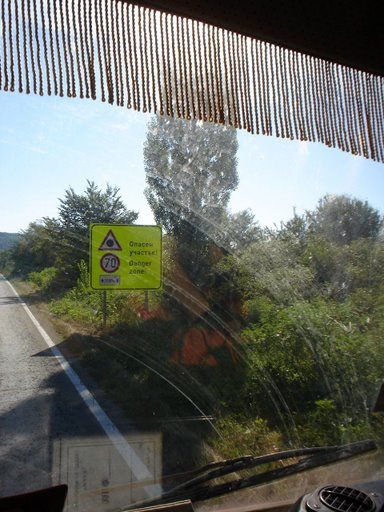 As friendly as they can be,
Bulgarian drivers usually don't consider small violations of existing
road regulations and speed limits in Bulgaria a big deal. Be careful and
avoid standing in areas with a yellow triangle sign, with a filled black
circle in the middle - these indicate places with increased
concentration of road accidents and are a part of a governmental
campaign to improve driving safety.
As friendly as they can be,
Bulgarian drivers usually don't consider small violations of existing
road regulations and speed limits in Bulgaria a big deal. Be careful and
avoid standing in areas with a yellow triangle sign, with a filled black
circle in the middle - these indicate places with increased
concentration of road accidents and are a part of a governmental
campaign to improve driving safety.
Be wary of thieves - particularly in rural areas, there are many people who see a lone hitchhiker as an opportunity to gain by foul means.
Border crossing
Bulgaria is probably the most corrupt country in the EU, and you are most likely to notice this at the border crossings. However, if you carry a Western passport it is quite unlikely they will bother you.
Turkey
- When going towards Turkey, the most used border checkpoint is the Kapitan Andreevo-Kapıkule border crossing.
- The checkpoint near Malko Tarnovo can also be used if you're coming from Burgas, although there is significantly less traffic there, either on the Turkish and on the Bulgarian side. The border checkpoint lies in a mountainous area so be sure you either have a direct ride to a city on the other side of the border or arrive early, because it could also be hard to find a spot to put up a tent. Traffic is very scarse, but when the border police goes to or from their shift at the border they might take you. It is recommended to cross the border in a personal car, since the truck queue is usually slow, and the Turks might not like you walking around looking for another ride - especially if you do it at night. When coming from the Turkish side however, it is very easy and accepted to walk across this border - show your passport to the Turkish guards, they stamp it and you're allowed to walk into Bulgaria. On the Bulgarian side the passport controls tend to be very quickly if you're from a EU-country - they just take a look at your passport and you can go.
Tip: when taking this bordercrossing when entering Bulgaria, it might be a good idea to start walking after you've crossed it, because many people won't stop for you when you're standing just behind the border office buildings. Even a few hundred meters will enlarge your changes of getting a ride to at least the next town, which is Malko Tarnovo.There are enough options to set up a tent near this village, and there is a cheap but good hotel too, in the north-western part of the town.
Romania
- Ruse-Giurgiu border crossing, the main border crossing and the route used by trucks.
- Calafat-Vidin border crossing, a lesser-used border crossing.
- Durankulak-Vama Veche, along the Black Sea, the least-used border crossing where waiting times can be long.
Serbia
- Kalotina-Dimitrovgrad border crossing, the main border crossing.
North Macedonia
- Kriva Palanka-Kyustendil, in the north
- Delchevo-Blagoevgrad, in the south.
Greece
Phrasebook
Vocabulary
- Hitchhiking - автостоп [av-to-stop]
- Motorway - магистрала [ma-gee-stra-la]
- Petrol station - бензиностанция [ben-zee-no-stan-tsee-ya]
- Ring road - околовръстно (шосе) [o-ko-lo-vrast-no (sho-sse)]
- Map - карта [kar-ta]
- Bus stop - (автобусна) спирка [(av-to-bus-na) speer-ka]
Greetings
- Hello - Здравейте [Zdra-vey-te]
- Good day - Добър ден [Do-bar den]
- Good morning - Добро утро [Do-bro oot-ro]
- Good evening - Добър вечер [Do-bar ve-cher]
- Goodbye - Довиждане [Do-vizh-da-ne]
- Bye - Чао - ciao (as in Italian)
- Thank you - Благодаря [Bla-go-da-rya]
- Thanks - Мерси - merci (as in French)
Directions
- From - от [ot]
- Towards - към [kam]
- Through - през [prez]
- (To the) left - (На) ляво [(Nah) lya-vo]
- (To the) right - (На) дясно [(Nah) dyass-no]
- Straignt on - Направо (Nah-pra-vo)
- Where are you going to? - На къде отивате? [Na kade o-tee-va-te?]
- I´m travelling to ... - Пътувам към ... [Pa-too-vam kam ...]
- Please stop here - Моля, спрете тук [Mo-lya spre-te tuk]
- A bit further - Малко по-напред [Mal-ko po na-pred]
Reading or writing signs in Cyrillic
- Благоевград - Blagoevgrad
- Бургас - Bourgas
- Варна - Varna
- Велико Търново - Veliko Tarnovo
- Видин - Vidin
- София - Sofia
- Пловдив - Plovdiv
- Русе - Russe
External links
- The site of BG hitch-hikers (forum, tips, etc.)
Personal Experiences
Pls add info
Romania
Edit on wikiRomania a country in southeastern Europe, a member of the European Union but not yet a member of the Schengen zone. It shares a border with Hungary and Serbia to the west, Ukraine and the Republic of Moldova to the northeast, and Bulgaria to the south.
Hitchhiking
Hitchhiking in Romania is usually very easy. Payment for the ride is often expected, however. Make sure to tell the driver that you are travelling without money (fără bani ‘without money’ or nu am bani ‘I have no money’) before you get in the car. Most drivers will agree to take you anyway, but if you don't tell them beforehand, they can aggressively demand payment when you get out later. If you wish to pay drivers like local hitchhikers do, it is still cheaper than trains and buses though, about 5 lei (€1.25) for every 100 km.
Sometimes it's possible to find some drivers that will ask you for a lot of money, maybe even €100 for a short trip. Some people are trying to work as illegal drivers taking people from one place to another, due to the high unemployment. When they see foreigners they will try to convince them to go with them and ask for lots of money, even if local travellers just pay 5 lei.
At the exits of most cities, there are established places to hitchhike and you may find yourself competing with local people who will pay drivers. In some cases, it is better to walk a little bit down the road and hitchhike where you can stand alone. The common practice is to hold a sign with the name of the place you want to go; Romanian usually write the two-letter code of the county seat they are going to (e.g. "CJ" for Cluj).
Romania has just a couple of hundred kilometers of real motorway, in the south of the country. Elsewhere, long-distance traffic is going on national roads with E numbers. You can stand directly on the national roads and thumb, though junctions are always best because cars go more slowly there.
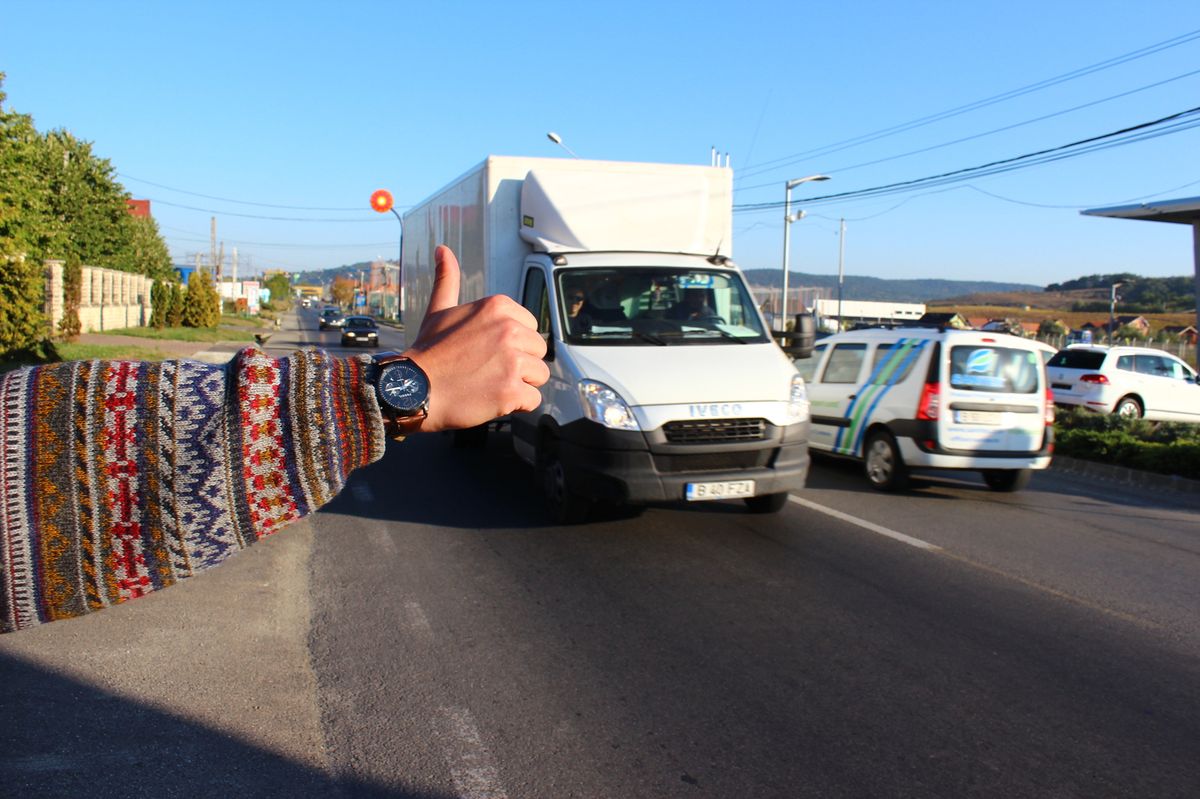
Legality of Hitchhiking
Romanian law does not name hitchhiking (autostopul), so on ordinary roads it is legal; the motorway is where it is not. Article 74(1) of Government Emergency Ordinance 195/2002 prohibits pedestrians on an autostradă outright, in the same breath as animals, hand-drawn vehicles, bicycles, mopeds and anything unable to exceed 50 km/h. Article 74(3) forbids driving, stopping or standing on the bandă de urgenţă — the hard shoulder — other than in justified cases, so no driver can lawfully pull over for you there either. What is left on the motorway network is the signposted service areas, where cars have stopped anyway and you can ask people face to face. On drumuri naţionale, drumuri judeţene and everything below them, thumbing from the verge breaks no rule, and that is where hitchhiking in Romania actually happens.
Recently, the Romanian government has forbidden asking for money when taking hitchhikers, but not hitchhiking itself.
Language
Romanian is one of the few non-Slavic languages of Eastern Europe. It uses the Latin alphabet and is related to French, Italian, Spanish etc. Speakers of one of these languages will find it easier to understand Romanian though speakers of Slavic languages will find it easier to pronounce as its sounds have been influenced by its neighbours.
- Romanian phrasebook
Roads
There is an excellent Wikipedia article about the roads in Romania. A lot of money is put into building roads as of 2023, so the roadnetwork is under constant change. Summing it up, these are some important Motorways or Autostrada:
- The A1 going 580 km from Bucureşti to the border with Hungary at Nădlac-Nagylak_border_crossing – partly finished
- The A2 or Sun's motorway, going 204 km from Bucureşti to Constanţa - completed.
- The A3 or Transylvania motorway, going 588 km from Bucureşti to the border with Hungary at Ártánd-Borş_border_crossing – partly finished.
Most of the other roads are in poor condition, the European routes being the best. Even so, hitching a ride is quite easy, especially on the major European roads that get a lot of traffic.
Number plates
The first two letters of the number plates show you in which of the 42 [sic] counties the car was registered, which might be useful when talking to people at gas stations or resting areas. Red letters mean it's a temporally registered vehicle, green means electric. Further information can be found in the excellent wikipedia article.
Border crossings
- Bulgaria:
- Ruse-Giurgiu, the major international route
- Calafat-Vidin
- Durankulak-Vama Veche
- Hungary
- Ártánd-Borş
- Nădlac-Nagylak
- Moldova
- Galaţi-Giugiuleşti
- Serbia
- The Iron Gates
- Stamora Moravița-Vatin
- Ukraine:
- Dyakove-Halmeu
- Sighetu Marmației-Solotvyno border crossing
- Siret-Porubnoe
- There is no border crossing between Ukraine and the Danube Delta region of Romania. Travelers going between eastern Romania and southern Ukraine must pass through Moldova. There are privately owned boats that may takes travelers, but they ask up to hundreds of euro for the service.
Personal Experiences
In total I spent around three months in Romania. I hitchhiked from Bucharest to Timisoara, Brasov and Iasi and also spent a few weeks camping in Transylvania. I hitchhiked to many landmarks such as Dracula's Castle, Rasnov Castle and the National Park in Zarnesti. Romanian people are incredibly friendly and happy to see travelers. I never found safety to be a problem and camped out at night in the national park in special spherical huts built for shepherds (I think they are for protection from bears). There are maps of the park which indicate the location of these huts and the best trails. Romania was the first country where I traveled for more than two days with the one truck driver. You should be OK to get around speaking English although if you have Italian that's a huge bonus and maybe learn a few basic Romanian words to be polite with any elderly farmers who pick you up in the country (Hungarian instead in many parts of Transylvania). Some drivers are quite lethal here too, so be prepared to take bends while overtaking gypsy carts at worrying speeds! Twice I was asked to contribute to the gas expenditure (out of maybe 30 lifts). I found hitchhiking at the side of the road with thumb out to be more time effective than petrol stations, many towns have hitchhiking spots where locals can be seen with their thumbs out. This country can't be skipped on a Europe trip if you like sheep's cheese, nature and castles
Autumn 2025
I (27M) did hitchhiking with a friend (25F) in Romania for more than two weeks. Everyone said it's a very easy and cheap country, almost a hitchhiker's paradise in Europe but I personnally had a very average experience there. It is totally doable to hitchhike everywhere in Romania but the waiting time was really not that good, we struggled several times waiting more than a hour (average waiting time was around 40 minutes). Romania has increasead its standard of living in the past decades, hitchhiking is less and less part of their culture even though you still find locals doing it. The prices are also not that cheap. People have really nice cars nowaydays and it's not that different from the surrounding countries. That said, the Romanian are nice, I never felt unsafe and it's a really beautiful country. Beware of the bears and don't do anything stupid, search for advices.
Moldova
Edit on wikiHitchhiking is very easy in Moldova. You'll see many locals hitching rides between towns, who usually pay for it. Nevertheless, most travelers were never asked to pay.
Hitchhiking
Even within the capital Chişinău it's possible to hitch rides.
Hitchhiking while standing on the side of the road and raising your hand (so that the hand is parallel with the ground) is used as the sign for locals hitching rides, mostly just some kilometres to the next village. Most drivers understand raising the thumb as autostop and barely ever ask for money, if you're a foreign traveler it could be more common that drivers will buy you food or drinks.
Legality of Hitchhiking
The law here has not been checked. Nobody has yet read the road traffic rules in force in Moldova against the official text, so this section cannot tell you what they say, and nothing elsewhere on this page should be read as a statement of the law. What holds almost everywhere is that hitchhiking is not an offence in itself and that what the traffic code regulates is where a pedestrian may stand — off the carriageway, and off motorway-class roads and their slip roads altogether — but whether that is true here is simply unknown. Ask locally before standing on a major road, and treat the rest of this article as what hitchhikers report rather than as a rule you can rely on. If you can read the official text, please replace this paragraph with the provision it turns on and a link to it.
To hitchhike in Moldova is not prohibited or outlawed, so you can freely hitchhike everywhere without any restrictions.
Language controversy
Though the official language of Moldova is called Moldovan, it is really Romanian, identical to the Romanian spoken in Romania. Romanian language origins can be traced from the Latin language, so if you get to know any romanic language like French, Italian or Spanish you can communicate with people at a basic level. Also the majority of people understand and speak Russian as well - for some it's their only language.
Border Crossing
They are allowed to stay up to 90 days without visa and registration.
While entering Moldova, you could face some problems when you entered from Ukraine via the autonomous Transnistria region. The Transnistrian border is not controlled by Moldovan authorities, which means you won't automatically get an entry stamp when entering Moldova here. This can cause a lot of problems when leaving Moldova via other border checkpoint than Transnistrian. For more information see the Transnistria page. At least on some border crossings (like Pervomaisk-Kuchurhan border crossing) it's possible to ask for a Moldovan entry stamp.
From/Into Ukraine
- South-East: If you are traveling e.g. from Odesa into Moldova, best option is to take the Ukrainian M-15 motorway south-west and cross borders at the Palanca-Maiaky border crossing. From the border, you could already try to get rides directly to Chişinău or further. Walking over the border checkpoint is no problem, just keep in mind that you have to walk 3 km from the Ukrainian to the Moldovan side, so best is to hitch a ride just after the first checkpoint towards the next. Another option is the Pervomaisk-Kuchurhan border crossing. This is a route used by many locals. It's also possible to cross on foot.
- North-West: When traveling from Moldova towards Ivano-Frankivsk or Lviv, you have two border crossings to choose. The best option could be to hitchhike via Edineț, Briceni towards Lipcani to take the Criva-Mamalyha border crossing and go on via Chernovtsy. Walking over by foot is no problem there, but you might have to wait for a lift some time.
From/Into Romania
- Galaţi-Giugiuleşti border crossing is the southernmost border-crossing, located in the Danube Delta. It is only three kilometers from the nearest crossing into Ukraine.
- Leușeni-Albița border crossing is one of the most used to enter into/exit Moldova. Is located in the center of Moldova, and it is located close to Chișinău. You can't walk across this border crossing, but the border guards will usually help you to find a lift.
Autonomous regions
- Găgăuzia
- Transnistria
Personal Experiences
Transnistria
Edit on wikiTransnistria (a.k.a Priednistrova, Pridnestrovian Moldavian Republic (PMR); Приднестрóвская Молдáвская Респýблика in Russian) is a disputed region in Eastern Europe. It declared independency in 1990, but it was never recognized as a sovereign country. Transnistria is located mostly in a strip between the Dniester River and Ukraine; some few villages and the city of Bender are on the Moldovan side of Dniester but still belong to Transistria. Moldova is on the other side of the river Dniester but considers Transnistria as their own territory.
Hitchhiking
Hitchhiking is common in Transnistria, it has similar conditions as in other places of former USSR. On the main roads, there is a lot of buses (marshrutkas) which are usually kind of cheap (as in Moldova) so that many drivers won't understand why you hitchhike or may expect for a payment, if you say you travel with no money (ask before enter the car: "Bezplatna?"; which means "for free" in Russian and works as well for Moldova and Ukraine..), they usually understand and take you for free with no problem.
Legality of Hitchhiking
The law here has not been checked. Nobody has yet read the road traffic rules in force in Transnistria against the official text, so this section cannot tell you what they say, and nothing elsewhere on this page should be read as a statement of the law. What holds almost everywhere is that hitchhiking is not an offence in itself and that what the traffic code regulates is where a pedestrian may stand — off the carriageway, and off motorway-class roads and their slip roads altogether — but whether that is true here is simply unknown. Ask locally before standing on a major road, and treat the rest of this article as what hitchhikers report rather than as a rule you can rely on. If you can read the official text, please replace this paragraph with the provision it turns on and a link to it.
Also, keep in mind that according to Transnistrian rules you have to register at the police section if you stay for more than 24 hours.
Personal Experiences
Yugoslavia
Edit on wikiYugoslavia was a country in Southern Europe, bordering, clockwise from the north-west, Italy, Austria, Hungary, Romania, Bulgaria, Greece and Albania.
Starting in 1991, the country broke up in Slovenia, Croatia, Serbia, Montenegro, Bosnia and Herzegovina, Macedonia and, in 2008, Kosovo.
Legality of Hitchhiking
The law here has not been checked. Nobody has yet read the road traffic rules in force in Yugoslavia against the official text, so this section cannot tell you what they say, and nothing elsewhere on this page should be read as a statement of the law. What holds almost everywhere is that hitchhiking is not an offence in itself and that what the traffic code regulates is where a pedestrian may stand — off the carriageway, and off motorway-class roads and their slip roads altogether — but whether that is true here is simply unknown. Ask locally before standing on a major road, and treat the rest of this article as what hitchhikers report rather than as a rule you can rely on. If you can read the official text, please replace this paragraph with the provision it turns on and a link to it.
Personal Experiences
Ukraine
Edit on wiki: As of February 24th Ukraine is under attack. Can we help Ukrainian refugees?
Ukraine is one of the biggest countries in Europe. It borders Moldavia, Romania, Russia, Belarus, Poland, Slovakia, Hungary and the Black Sea.
It has been at war with Russia since 2014 and since the start of the full-scale invasion in 2022, a large part of the country remains under military occupation. However, traveling to the country is still possible and can be a valuable experience.
Hitchhiking
Some safety measures are described below.
Ukrainians understand the concept of hitchhiking very well, although it seems to have become more difficult since the war with Russia began in 2014.
There are significant regional differences, as in the countryside many people still regularly travel between villages. In recent years, the expectation to share the fuel costs has become more rare, however it is still useful to let your driver know that you are an international hitchhiker and traveling for free. Like other European countries, truck drivers always recognize hitchhikers and know they are travelling for free.
You can hitchhike anywhere along the roadside, even on real motorway like the Kyiv-Odessa road. The first two letters of the Ukrainian number plates indicate the region which can be helpful for finding a ride in the right direction.
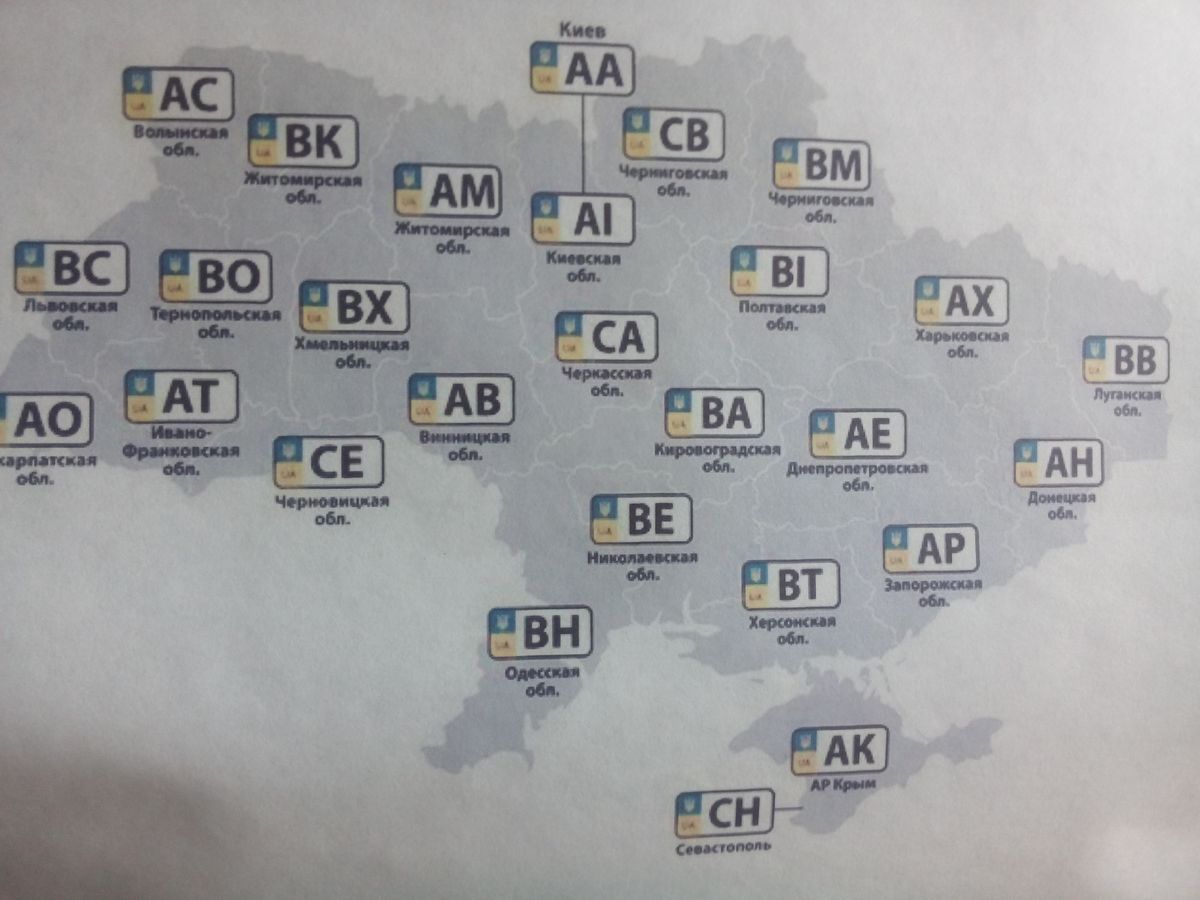
The state of the roads is pretty dire in general, and the distances involved are usually pretty big (for example Lviv to Kyiv is around 550 km, 8 hours of driving). Getting an early start is essential.
Legality of Hitchhiking
Ukrainian law contains no offence of hitchhiking (автостоп), and on ordinary roads it is legal. Clause 4.14(d) of the Правила дорожнього руху forbids a pedestrian to move along an автомагістраль or a дорога для автомобілів — but it names the exceptions in the same breath: footpaths, parking places and rest areas. That concedes more than most European codes do, because it means the майданчик для відпочинку and the motorway petrol station are places where you may lawfully stand and ask a driver. The carriageway, the hard shoulder and the slip road are not, so arrange to be dropped at a rest area rather than at the ramp. On every other road hitchhiking is unregulated: stand on the verge where a driver can see you and pull over safely.
Language
The biggest problem you could encounter is that few people speak English or other foreign languages. Polish is widely understood.
Since the beginning of the full-scale invasion, many Ukrainians have shifted away from speaking Russian. Especially in the West, you might get unpleasant reactions when speaking Russian.
Dialects or Surzhyk (a mixed form of Ukrainian and Russian) are common.
When the language barrier is overcome, Ukrainians are generally hospitable and open people.
Safety
Air Raid Alerts
As Ukraine suffers missile and drone attacks regularly, it is paramount to recognize alerts and seek shelter immediately.
Siren sounds differ from region to region and might not always be available at all. Many Ukrainians have alerts set up on their phone through apps (Android, iOS) and as long as you are in a crowd, you will hear the sound go off on phones around you. In addition, various Telegram channels and some websites offer more information about the type of attack and allow people to react accordingly.
Most of the attacks happen at night. If you hear a siren at night, it is important to assess the situation and determine whether or not you need to seek shelter.
Shelter
Shelters are marked as "укриття" ("ukryttya" – Ukrainian) or "убежище" ("ubezhyzhzhye" – Russian, in the East). Some cities offer maps of the shelters available to the public.
Usually marked with graffiti on the walls or floor, most shelters are situated in the basements of public or residential buildings. There are also suitable alternatives such as metro stations, underpasses or underground supermarkets available. In the East, many cities equipped public transport stations with mobile concrete shelters that are quite small but will still save your life in an emergency.
Do not let the locals' behavior misguide you. Many people will ignore the siren because it is their daily life. As a visitor, you do not have the experience to make such a judgement for yourself.
Telegram Channels
- Air Force of the Armed Forces of Ukraine (Official Military Information)
- єТривога – Volunteers monitoring and reporting alarms and other threats (usually quickest)
- Kyiv City Channel – PSAs from the mayor, city council and administration in Kyiv
- monitor – Updates and alerts about the war with more technical focus
Climate and Weather
In winter Ukraine can get very cold, for example in January 2006, it hit −35 °C, which makes hitchhiking very dangerous. The cost of train travel is very cheap – usually around one Euro for every 100 km (for overnight sleeping carriages), so bear that in mind when going from city to city.
It might be hot in summer (up to +35 °C), so don't forget to take a hat with you to protect yourself from lots of sunbathing.
Areas like the Crimean peninsula (which you can now only access via Russia as a foreigner) can be quite uncomfortable to hitch during the summer due to the heat.
Public Transport
Train
Ukrzaliznycia is the state rail transport company. It is beloved by most Ukrainians and for good reason – low prices, good availability and almost every train is a sleeping carriage. With their new website and app, booking a ticket is easily done online. Bed sheets are optional (80 UAH) but should be booked out of respect unless you plan to sit for the entire duration.
If you want to enter Ukraine without a car, you would usually do so by train through Przemyśl. It is significantly faster by train than by car.
Marschrutka
Marschrutkas are widely available in Ukraine and will stop anywhere. These are quite affordable even on longer routes (ca. 3 € / 100km).
Every city and village will have a line running through them, but it can be hard to find out when or where they go. Do not hesitate to ask the locals or going to the ticket counter. Google Translate will be your friend. Otherwise, they are comparable to the Turkish "Dolmuş," as you can stop them anywhere on their route and pay your ride in cash.
Oftentimes, when no train is available, a short Marschrutka will be your cheapest and quickest way to travel.
Food
Of course you can get stuck easily on the motorway next to a turn-off from the main road because of nightfall. But there is also nice night-traffic of trucks caused by warm weather from May to September. Usually, there are some gas stations near to such places and there some favorite and famous places for stops known by drivers – something like unofficial rest-stations (there are no official but a lot of unofficial ones). You can easily find something to eat and to drink there and at almost all gas stations there are 24 hour shops. You can eat in some restaurants on the road, which are significantly cheaper than in the EU - a nice meal for around $5, or a baguette and cheese for much less.
Puzata Hata is a good place to eat quick and cheap. A full meal will rarely cost you more than 5 euros and usually consist of quite traditional food. Ukrainians will sometimes call it the "Ukrainian McDonalds" but this doesn't do the place justice – the food is really good and nutritious!
Crime
Crimes related to hitch-hiking are not common in Ukraine. But a hitchhiker should avoid cars with drunken drivers or passengers. When you are a single girl it's better to find truck or a car with family for your safety. Avoid night rides with “funny” drivers. Keep your money (carry a bank card instead of a lot of cash) and phone in a safe place.
Personal Experiences
August, 2024, 2 September 2024
I hitchhiked from Khust to Ivano-Frankivsk in just two rides in August, 2024 (as well as between some villages). It is advisable to speak a fairly good level of Ukrainian, but doesn't seem necessary at all. Drivers were quite nice, but women will not stop for single men. People seemed to know exactly where I wanted to go, what I was doing and had a good attitude. In the Carpathians, there are many military checkpoints which might discourage people from picking up men, in my case, usually soldiers would stop and take me across.
Regions and Cities
- Kyiv
- Lviv
- Kharkiv
- Odesa
- Izmail
- Kamianets-Podilskyi
- Zakarpattia Oblast
- Uzhhorod
- Khust
- Mukachevo
- Ivano-Frankivsk Oblast
- Ivano-Frankivsk
Under occupation
The following regions and cities are under military occupation by the russian federation and aren't adequate for touristic travel.
- Donezk Oblast
- Kramatorsk
- Kherson Oblast
- Luhansk Oblast
- Zaporizhzhia Oblast
- Kharkiv Oblast (partially occupied, still highly dangerous)
- Autonomous Republic of Crimea (fully occupied and unable to travel
from Ukraine)
- Simferopol
A current map of war updates is available at liveuamap.com.
Border crossing
- Belarus
- Skytok-Novaja Huta
- Hungary
- Chop-Záhony
- Poland
- Dorohusk-Jahodin
- Dołhobyczów-Uhryniv border crossing
- Hrebenne-Rava Ruska
- Korczowa-Krakovets
- Shegyni-Medyka
- Romania
- Dyakove-Halmeu
- Sighetu Marmației-Solotvyno
- Siret-Porubnoe
- Slovakia
- Vyšné Nemecké-Uzhhorod border crossing
- Ubľa-Malyi Bereznyi border crossing
- Velké Slemence-Mali Selmenci border crossing (pedestrian crossing, EU/EEA & Ukrainian passports only)
Further Information
- Ukrainian hitchhiking community, but you can ask questions and get replies in
- Short video summary of the Ukrainian World Championship qualifiers in 2012 giving an idea of the roads travellers will encounter there.
- Public transport in Ukraine
Belarus
Edit on wikiBelarus is an ex-USSR country in Eastern Europe.
Hitchhiking
The European route E30 passes through it entering at Brest on the border with Poland and leaving at the Russian border between Orša and Smolensk. It is a fantastic and easy-going place for hitchhiking and the police or the political system generally will not bother you at all, so once you have your visa (if needed) you can just relax and go for it. You will enjoy!
Hitchhiking in Belarus is very easy and rarely your waiting time will exceed 15 minutes, at least on the main road M1 from Brest via Minsk to Moscow. As it is very common in Belarus, often drivers may pick you up without being curious about you or what you are doing, sometimes no communication at all. Belarusian people can seem gloomy at first sight, but in the end they are mostly very nice and helpful and drop you on a good spot. In rare cases a small number of older drivers might ask for some money when giving you a ride – to avoid that, tell the driver about your intention to travel for free before you sit into the car ("Ja puteshestvuju avtostopom, bez deneg" ["u" is pronounced as "oo" in English] – "I travel by hitch-hiking, not paying any money"). Usually, just saying 'no money' works just fine too. It might be more difficult if you are more than 2 persons travelling together – in such case it would be smart to split up for some time.
When hitchhiking in Belarus, it is very likely to find some other people standing next to the road, waiting for a car to pick them up. Although most people do not speak English well, it is nice to try to make some contact. Most of them might look angry, but it's just on the outside and once you start talking to them they're just very friendly and warm people. Some Belarusians will even wait for an hour with you in a snowstorm, waiting for another car to stop:)
Russian and Baltic truck drivers are reluctant to stop for hitchhikers in Belarus while Belarusian and Polish trucks are happy to have a company of some traveller(s). Hitchhiking at night is difficult but if you make yourself very visible you can get a ride even at two o'clock at night (some cars might stop just because a driver thinks you are police – light reflectors might give such an impression).
The average waiting time is about 20 minutes. It’s better to travel using main roads as road traffic on local roads is pretty poor. In Belarus there are no roads with limitations for hitchhikers, you can start stopping a car wherever you like, the only exception is bridges. Roadsides are usually wide enough to stop even a truck. Main roads are in a good condition while roads in rural areas might unpleasantly surprise you.
Note: In Belarus you have to wear a flicker (light-returning element or reflective band) when you are on the road after sunset. The police have a plan to get some amount of violators each month, so the possibility of penalty (about € 10) is quite high. It's better to buy a flicker (it costs from € 1), and it's not a problem – now they are sold in any shop in Belarus. And it's a good idea to use them anyway when hitchhiking at night.
Legality of Hitchhiking
Hitchhiking itself is not an offence in Belarus and the road rules never mention it; what they regulate is where a pedestrian may be. Point 131.1 of the Правила дорожного движения, approved by Presidential Decree No. 551 of 28 November 2005, forbids pedestrians on an автомагистраль outright, and point 132 extends every motorway rule to roads signed Дорога для автомобилей — so the carriageway, the shoulder and the slip road past the sign are all closed to you. Point 131.2 lets a driver stop only on a signed Место стоянки or Место отдыха, which makes those parking and rest areas the one place on the M1 where a lift can legally begin. On every other road point 17.1 puts you on the pavement or the shoulder, and only where there is neither may you walk along the edge of the carriageway, facing the oncoming traffic. That same point is where the well-known flicker requirement comes from: after dark, on the shoulder or the carriageway edge, a reflective element is compulsory.
General information
72% of the population live in towns and cities, and virtually all the population speaks Russian as their first language. In rural areas a mix of Russian and Belarusian may be spoken. It is therefore better to make destination signs in Russian when hitchhiking.
Also, there are two versions of the Belarusian flag – the official one is the red-green flag (also jokingly known as “dusk over a swamp”), whereas the one used by the opposition is a three-striped white-red-white flag. For your own safety, it is not advised to demonstrate the latter one in public.
Freedom of speech is very restricted in Belarus, try not to ask too many questions about mr. Lukashenko, people might get in trouble when saying something bad about their politics.
Language
In big cities, especially Minsk, you can expect young people to speak at least a basic level of English. If you are hitch-hiking to Russia along E30/M1, expect some truck drivers to speak Polish as well as Russian.
Language barrier can cause some troubles since many drivers speak almost exclusively only Russian or Trasianka, the mishmash of Belarusian and Russian, therefore learn some basic phrases in Russian before you go there. If you do understand some Russian but you are not familiar with Belarusian culture don't get scared or disappointed hearing many swearing words when drivers talk to you – these words aren't directed to you but are rather a simple hearty expression.
Maps
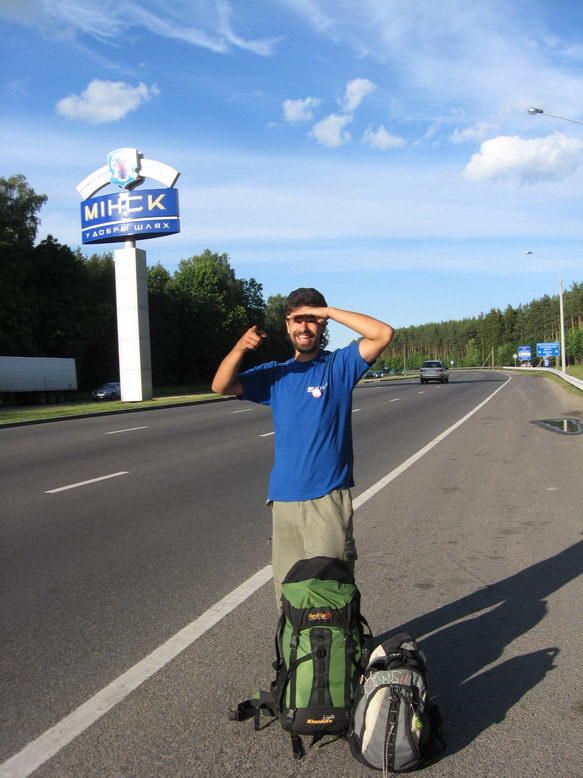 There are only about
fifteen main roads in Belarus, so if you are not staying in Belarus for
long you can hitch through having just a print from any Internet source
(for example, this 1).
More detailed maps can be bought in any kiosk of "Bielsajuzdruk"
("Белсаюздрук"), where newspapers are sold.
There are only about
fifteen main roads in Belarus, so if you are not staying in Belarus for
long you can hitch through having just a print from any Internet source
(for example, this 1).
More detailed maps can be bought in any kiosk of "Bielsajuzdruk"
("Белсаюздрук"), where newspapers are sold.
Eating
In Belarus the road service is very poor, and restaurants in normal amount (for every 30-40 km) exists only on main roads, like E30/M1. But on the way there are usually a lot of small towns and villages, where in the shops you can find anything what you need (and 2-3 times cheaper than in a cafe). And of course, if you want to find some ready dishes, you can go to a students canteen or something like that.
Visa
Foreign citizens of 74 countries, who both enter and leave via Minsk International Airport, can enter Belarus for up to 30 days without visa (since July 27, 2018). This does not extend to persons coming to Belarus by plane from Russia, as well as to those who would fly out via Russia (such flights are considered as internal ones and do not have border control).
Nevertheless you have to fulfil several requirements to be able to enter the country without visa. For more information check web-pages of the Belorussian MFA and State Border Committee of the Republic of Belarus:
Additionally, you can also enter some parts of the country overland without a visa for up to 15 days. In order to visit Brest and Hrodna regions for 15 days without visas you need to get visa-free travel documents at least 72 hours before your journey to Belarus.
For an old-fashioned visa, follow this procedure: Try to find someone on BeWelcome/TrustRoots who'd be willing to "invite" you to Belarus (thus you could apply for a "private visit" visa), as this would save you money in the visa application process - the only way to get a regular tourist visa is through an overpriced agency, which would be eager to book hotels on your behalf. Some embassies may be satisfied with a confirmed hotel booking, without an agency letter, but that would be up to their discretion. However, most Belarusian embassies will issue a "private visit" visa without a letter of invitation or other supporting documents where only the personal info of the inviting person would suffice if the visa duration is less than 30 days. In some cases, they may however ask for a copy of the inviting person's passport but again that would be up to the discretion of the embassy personnel.
uncle_sam01 applied for a private visit visa at the embassy in Warsaw in July 2016 and was asked to provide a copy of the inviting person's passport. Other than that the process was a mere formality.
Registration
UPDATE (2019): As from 2nd January 2019, foreigners can register online and for free. See 2 for more details on how to register online. Important caveat: online registration is NOT possible if you entered Belarus from Russia. In this case, you must register at a Department for Citizenship and Migration.
The old-fashioned way:
When travelling to Belarus, you have to be registered with the authorities as a "temporary resident" if you stay in the country for longer than 5 business days (including Saturday!). Registration consists of a Soviet-style blue stamp on the back of your "Migration Card" (you'll get this at the border).How this is done will vary depending on where you stay:
1. Hotels only Easiest option - they'll do it for you automatically and you won't have to worry about it. In some rare instances, they may charge extra for registration.
2. Couchsurfing/squatting/camping You'll have to visit the local "Migration Department" within 5 business days(including Saturday!) with your as well as your host's passport(they don't have to be there in person, but if you don't speak Russian, it's best that they are). You'll fill out a form and pay a fee(around EUR 10). It might sound scary, but it's relatively straightforward. You should register with your first host upon arrival to Belarus for the entire duration of your stay(until your visa expires) - you won't have to worry about/pay for registration again. Legally, you should re-register if you stay somewhere else for more than 5 days, but no one will bother you about this...
3. Couchsurfing+hotels This is the most complicated option. Hotels will only register you for the duration of your booking. Once you check out, you're no longer considered registered. Therefore, if you then stay with someone through couchsurfing, you'd need to register immediately, in person, as in option 2. If you register with a host first (regardless for how long) and then stay at a hotel, your previous registration becomes void and the hotel registration applies, so the moment you check out you need to re-register somewhere else (either stay in another hotel or register with a host - again the 5 day period won't apply). You could ask the hotel to not stamp your card, so that your previous registration is still valid during and after your hotel stay but this is technically illegal and up to the receptionist's discretion. (uncle_sam01 got his hotel stamp on a sticky note with a "you-naughty-boy" gesture from the receptionist...)
Lack of and/or incorrect registration will lead to fines for you and your host, sometimes even deportation!!! (if your host had a previous guest who also screwed up their registration, they'd be considered a repeat offender and would face a higher fine)
Basically, plan your first night in Belarus with a CS host and register with them until your visa expires. If you stay at a hotel afterwards, make sure they don't stamp your migration card any more. Registration sounds way scarier than it is and shouldn't deter you from visiting Belarus.
Border crossing
Belarus is neither in the European Union nor in the Schengen Common Travel Area, and most non-CIS nationals would require a visa to enter the country. However, since July 2018 there is a possibility to enter the country without visa for citizens of about 80 foreign countries. See "Visa" section.
With Latvia (from east to west)
- Urbany (BLR) / Silene (LV) (bel. Урбаны, rus. Урбаны) – located on P3 some 20 km to the north-west from Braslaŭ on the way to Daugavpils.
- Ryhoraŭščyna (BLR) / Paternieki (LV) (bel. Рыгораўшчына, rus. Григоровщина) – located on P20 some 25 km to the west from Vierchniadzvinsk or 95 km to the north-west from Polack on the way to Krāslava - Daugavpils.
With Lithuania
You can walk across this border and it's probably best to do so as the lines of trucks and cars are really long. The border police is actually pretty nice! After you crossed the border to Lithuania it's only 33 kms to the capital Vilnius. After the border crossing the main road goes straight to Vilnius but, as the border takes some time for cars, and even more for trucks, you'll probably won't see that much moving traffic while hitchhiking. Your bag might be searched at this bordercrossing.
UPDATE (2015) It is not allowded to cross the border on foot anymore!!!
With Poland (from south to north)
- (bel. Дамачава, rus. Домачево) – vehicular crossing located some 40 kilometres south of Brest.
- (bel. Брэст (Варшаўскі мост), rus. Брест (Варшавский мост)) – the biggest crossing point located on E30 near Brest. Crossing is possible only in a vehicle. Be prepared for a long waiting time. If there is a lot of traffic, even very long waiting time. Even when there are just two or three cars in front of you, you can find yourself waiting for several hours.
- (bel. Казловічы, rus. Козловичи) – for trucks only. Located at the north-western edge of Brest.
- Piasčatka (BLR) / Połowce (PL) (bel. Пясчатка, rus. Песчатка) – located on P16 60 km to the north-west from Brest on the way to Bielsk Podlaski - Białystok.
- Pieraroŭ (BLR) / Białowieża (PL) (bel. Перароў, rus. Переров) – small, pedestrian-only crossing in the middle of the beautiful Bialowieza Forest. EU citizens can visit (for 72 hours) the Belorussian part of the forest, as well as the village of Kamianiuki without a visa (check requirements for visa-free entrance). Since the crossing is for pedestrians/cyclists only, you are likely to be the only person there. There aren't many parked cars, but just enough to get you picked up to the nearest village on the Polish side (it's not very far, so you can walk, as well). On the Belarusian side, you can either try hitch-hiking towards the nearest village of Biely Liasok (bel. Белы Лясок) (there'll be plenty of tourists and only a single road for cars) or you can walk through the forest to Kamianiuki (about 16 km, it's the official "entry" village to the forest on the Belarusian side). From Kamianiuki, you can either hitch-hike, or if you don't have time, take maršrutka (mini-bus) to the bus terminal in Brest. If you're lucky, you can also hitch a ride with one of the park's employees.
- Bierastavica (BLR) / Bobrowniki (PL) (bel. Бераставіца, rus. Берестовица) – located on P99 80 km to the south from Hrodna or 40 km to the west from Vaŭkavysk on the way to Białystok.
- Bruzhi (BLR) / Kuźnica (PL) (bel. Брузгі, rus. Брузги) – 20 km to the south-west from Hrodna on the way to Białystok.
If you want to avoid long waiting times at the Brest (Varšaŭski most (Warsaw Bridge)) / Terespol border crossing you can take a train from Terespol to Brest. It goes 3 times a day and costs 17 złoty. You can pay in złotys only but there is an exchange office at the train station. (August 2018)
With Russia
Please note that while there is no border control between Belarus and Russia Belarusian transit visa is still required for foreigners when transiting through the country from Russia to Poland, or vice versa. You can't get a visa at the border. If you go from Belarus to Russia make sure that you always keep your Belarusian migration card. The border is open, there is most likely no control and this means, that you will not recieve a Immigration card or an Entry stamp from Russia. Due to the Customs union between the countries, your card from Belarus also counts in Russia and in case you lose it you will find yourself in unfriendly situation.
UPDATE (2017): Third country nationals (ie. not CIS) are no longer allowed to cross the Belarus/Russia border even with a valid visa for both countries, due to reciprocity measures undertaken by the Russian Government because of EU sanctions. Non-CIS travelers are redirected to cross from Lithuania or Ukraine. There are checks at all major transit points. "Sneaking in" at a random village is not advised.
With Ukraine:
- Skytok-Novaja Huta border crossing, near Gomel
Cities
- Brest (bel: Брэст, rus: Брест, pl: Brześć, lt: Brestas)
- Homiel (bel: Гомель, rus: Гомель, pl: Homel, lt: Gomelis)
- Hrodna (bel: Гродна, rus: Гродно, pl: Grodno, lt: Gardinas)
- Mahilioŭ (bel: Магiлёў, rus: Могилёв, pl: Mohylew, lt: Mogiliavas)
- Minsk (bel: Мiнск, rus: Минск, pl: Mińsk, lt: Minskas)
- Viciebsk (bel: Вiцебск, rus: Витебск, pl: Witebsk, lt: Vitebskas)
Personal Experiences
Pls add info
Cyprus
Edit on wikiCyprus is a Eurasian island country in the Mediterranean Sea. It is divided into Greek (Republic of Cyprus) and Turkish (Turkish Republic of Northern Cyprus) parts. The UN still treats the North of the island as a militarily occupied area. The Republic of Cyprus is part of the European Union.
In the South costs are higher than most of Europe except for when taxes are lower like for alcohol & cigarettes. Southern Cyprus like many places has become 2 cultures on top of each other native and immigrant i.e. a village square has a store and opposite a Bulgarian/Romanian/Philipina place with cheaper stuff. The North is usually about half price for many things, but alcohol is a little more expensive.
Hitchhiking
In the North buses are a little expensive, but frequent and fast, and hitching is quite easy. In the South you can move around a single region for one or two euro, and for this reason most people will be confused as to why you're hitch-hiking. Never the less, it's quite easy to find a ride, even within the city, but be sure that they take you to a good location if not going to your destination. Police will not be understanding if you are standing right on the motorway. In rural areas and in Troodos mountains it's easy to hitchhike, even with little traffic, everyone stops for you, even without asking. The locals simply put out their hand with the palm to the ground, but all seem to understand the thumb, and this is probably good for you as a sign that you're a traveller.
Legality of Hitchhiking
Cypriot law does not mention hitchhiking, so on ordinary roads it is simply legal; what is regulated is the motorway. Section 18Β(1) of the Road Safety Law of 1986 (174/1986) prohibits, "notwithstanding the provisions of any other law or regulation", the movement of a pedestrian, an animal, a bicycle or a moped on an αυτοκινητόδρομος or a δρόμος ταχείας κυκλοφορίας — so the A1 to A9 and the signed expressways are closed to you, carriageway, hard shoulder and slip road alike. Section 18Β(2) leaves the Chief of Police a power to authorise exceptions, which is not something a hitchhiker is going to be granted. What that leaves is the older B-roads, which shadow almost the whole motorway network and carry the local traffic — the B1 beside the A1 between Nicosia and Limassol is the standard example — and on those nothing forbids waiting on the verge with your thumb out. Remember that Cyprus drives on the left, so the side to stand on is the left-hand verge, the opposite of everywhere else in the EU.
Cities
(Turkish names of cities in brackets)
- Famagusta (Gazimağusa)
- Kyrenia (Girne)
- Larnaca (Larnaka or İskele; not to confuse with İskele in the north),
- Limassol (Limasol, Leymosun)
- Nicosia (Lefkoşa)
- Paphos (Turkish: Baf/Kasaba)
Border crossing
The EU doesn't recognise the Turkish right to put a border, so if you have a passport/visa valid for the EU you can cross it without limitation. It makes no difference if you entered from Turkey and have a stamp. (Note all native born Northern Cypriots can enter the south, but most Turkish immigrants and other guest workers from the north cannot, because they don't have EU visas)
Personal Experiences
Russia
Edit on wikiHitchhiking
Russia is the largest country on Earth, and is a fantastic country for hitch hiking. It is well ingrained within the country's culture, and it is a much more comfortable way to see the country, compared to taking the train. Despite the popularity of hitch hiking compared to other countries, people will still be surprised by what you are doing. Especially if you are (and look like) a foreigner.
It is possible to cover vast distances per day when hitching, greater than 1000 km if you are lucky, but generally only when using major M roads in Western Russia or Siberia through Trans-siberian railway mainline.
There are people in Russia who hitchhiking to travel, some also hitchhike as a freetime activity. The hitchhiking club Academy of Free Travel is very active. Its members organizes regular gatherings, House for everyone and House of Free Travelers.
Also, there is a possibility to get a lift by talking to drivers on gas stations. You will not be misunderstood but since there are almost no highways and you can point your thumb anywhere, wasting time on a gas station waiting for cars is not preferred unless there is heavy raining, or the spot is bad etc. If there are two of you one can hitch on the road and the other one ask people on nearby gas station; that really might bring you a lift faster. But the “default” method of hitchhiking in Russia is still thumbing on the roadside. If you don't speak the language, thumbing is better - as people will just drive towards your direction and you can join them.
Do not write places names on cardboards – nobody in this country cares to read them. Or, if you still want to use the paper, write a region number instead of the name (see below for a list of reg numbers). Because you can get dropped off and immediately hitch onwards on nearly all roads in Russia, using a sign is never necessary and in fact the community recommends against it. Again, in spite of the country's size, there are very few roads, there is little ambiguity in where you could be going, when hitching from a given location.
You must take a raincoat (it sometimes rains in summer and very often in autumn), good shoes, a warm jumper for summer (the winter starts in October), some cash (and not credit cards or cheques), perhaps a tent with a sleeping bag.
Trains, Boats, etc
Taken from a post on squattheplanet forum:
"In Siberia, it is apparently common and easy (and ALLOWED) to hitch-hiking on cargo ships and freight trains, in the unit. Trains are not manifested ahead of time, but instead are done on a day-to-day basis (CHAOS?!). This means that you show up at the 'yard' (really only a load/unload with a siding or two), and ask the workers or security for the engineer/brakeman lounge. Sometmes the security will hassle you, but if you simply explain that you are a traveler, it's totally allowed! So, ask around, find a train going your way, find out when it leaves, and ask if you can hop on. You ride in the unit, which while heated (Siberia is fucking cold), has no toilet, so don't drink too much, and take a pregame dump. Ride to where you're going, simple as that! Also, every yard has a cafe for the workers, and food is apparently wicked cheap. Boat-hitching is apparently similar. Ask around, get permission, get on, and go! The only significant problem would be the language barrier, but people are absolutely THRILLED to meet travelers, especially ones from foreign lands (remember, Russia is HUGE). Additionally, it's possible to stay for a night at monasteries all over Russia. If you want to stay longer, they will usually ask you to help out with chores. I REALLY want to try this!"
Legality of Hitchhiking
Russian law contains no offence of hitchhiking (автостоп), and on ordinary roads it is legal. Clause 16.1 of the Правила дорожного движения, made by Government Decree No. 1090 of 23 October 1993, prohibits on an автомагистраль the movement of pedestrians, personal mobility devices, animals, bicycles, mopeds, tractors and anything that cannot manage 40 km/h, together with stopping outside the special parking areas marked by sign 6.4 or 7.11, U-turns and reversing. That exception is the operative part for a hitchhiker: a signposted parking area is the one place on the motorway where a driver may lawfully stop, and so the one place worth asking. Clause 16.3 applies the whole section to roads marked with sign 5.3 — the дорога для автомобилей — so expressways are covered on the same terms. Everywhere else, thumbing from the verge of a federal or regional road breaks no rule.
Roads
Do not expect all M roads to be dual carriageways – sometimes even a major road is a narrow, unpaved muddy patch. Generally speaking, the further East you go, the worse the road condition gets. But even on main connections in less remote areas, for example from Moscow to Kazan, the road is not always in good shape in connection with the huge traffic, travelling will take much more time than in Western Europe. There are real motorways, though, marked with a green sign of an autobahn same as in Europe. Standards are improving too; there is an ongoing policy of funding the rebuilding many roads in Russia, which will bring standards to a much higher level.
In spite of the country's size, there are very few roads, there is little ambiguity in where you could be going, when hitching from a given location. In areas about 50 km from cities you may just stay on the road and you will get rides with high success which other cities the roads go to.
Visa and hitchhiking through Russia in 2026 (MUST READ)
So many people do this error so I (CavalierRustique) want to clarify the situation for people that want to join Kazakhstan from Georgia through Russia. DONT'T GET A E-VISA. You cannot cross the border from Russia to Kazakhstan with a e-visa. There is a list of available checkpoint to leave Russia with an e-visa and Kazakhstan border is not part of it. If I'm not mistaken, it is the same for China because Sofiane Sehili, french biker, has encountered this problem and has been arrested because he tried to cross the border illegally. What you can do is: 1- still get a e-visa and travel from Georgia to Mongolia but it is a very long way. Also a cool route, but I am unsure it's gonna be fun because the visa will expire very fast for that route. 2- get a transit visa. Problem is that it's only for three days which is impossible to have when hitchhiking. However, you can try to ask some people at the russian visa center in Tbilissi if they van take you all the way to Kazakhstan. I think it's a good alternative. Otherwise just take a train honestly. 3- get a tourisic visa. It is however impossible to get one in Georgia (and Kazakhstan actually) and in most of the countries where you're not resident. Personally I asked my visa back in France before starting the trip. I had one momth in Russia and took the time to visit it properly.
Maps
Including gas stations, DPS stations, even traffic lights along main roads. The atlas also includes city maps and maps of Ukraine, Belarus, Moldova and the Baltic states as well. Price is 377 RUB (July 2009).
November, 1st 2009 there were 22 cities: Астрахань, Барнаул, Бийск, Екатеринбург, Иркутск, Казань, Кемерово,Красноярск,Курган, Нижневартовск, Нижний Новгород, Новокузнецк, Новосибирск, Одесса, Омск, Пермь, Самара, Тольятти, Томск, Тюмень, Уфа, Челябинск. U can use on-line version or download installer and use maps off-line.
A popular alternative is CoMaps (or Organic Maps, or Maps.ME) as they work offline. The map data is from OpenStreetMap project and is especially detailed in regards to smaller paths (think hiking).
Another alternative is Yandex Maps. It's like Russian Google maps. You can download offline maps there and find every address or public transport. (July 2019)
Language
Hitchhiking in Russian is called автостоп (avtostop). It literally means “car stopping”, and is basically the only word understood as hitching (i.e. travelling by getting lifts for free). A more colloquial word for it is "попутка" (poputka). When people ask you anywhere in Russia: "куда ты едешь?" (Kuda TjIE edesh?)[where are you going to?] you should answer: "я еду автостопом" (ya yedu avtostopom), then they will ask you another question and this time you say the name of the city. It might be better and more polite to ask "Вы могли бы подкинуть меня в направлении ..." (Vy mogli by podkinut menya v napravlenii ...), which means "Could you give me a lift in the direction of ...".
Level of speaking English is rather low especially among people older than 40 and even not all young people speak it with a sufficient level. You might ought to learn Cyrillic script for your own convenience. It is quite simple for a person familiar with English or Greek alphabet and is learnable in 2-3 days. People, their friendliness and mentality differ much from part of Russia they are from (there are many national republics and indigenous nations), and also from the type of town (for example, notorious "monogorod" - monotowns) and by their social status.
Safety
In spite of popular belief about the dangers of Russia, and perceived
problems with the police, as a hitch hiker you will more than likely
have no problems in the country. Police will usually not bother you at
all, especially when they know you are a foreigner (except at the border
- that is another matter). You should also avoid drunk people and people
who look aпgressive or look like "gopniks". and as long as you take the
usual precautions, you will not find yourself in danger from any person
- the cold however, in winter time, is a much bigger issue. Being
offered copious amounts of alcohol can also be a problem!
Some consider Russian roads are not among the safest on Earth; this might or might not be true. The concentrartion of dashing driving is higher than in Europe. Many drivers and their passengers do not fasten their belts outside cities, but you always may do it for yourself.
Its common knowledge Russians like to drink vodka, but you will unlikely meet a drunken driver unless you go deep into some village area; driving drunk is heavily penalized in Russia so majority of people don't want to run the risk if there is at least a single police checkpoint on the road (on all the major roads, there are many). But, just in case you encounter a car with a drunken driver inside – wave him away and wait for a sober one.
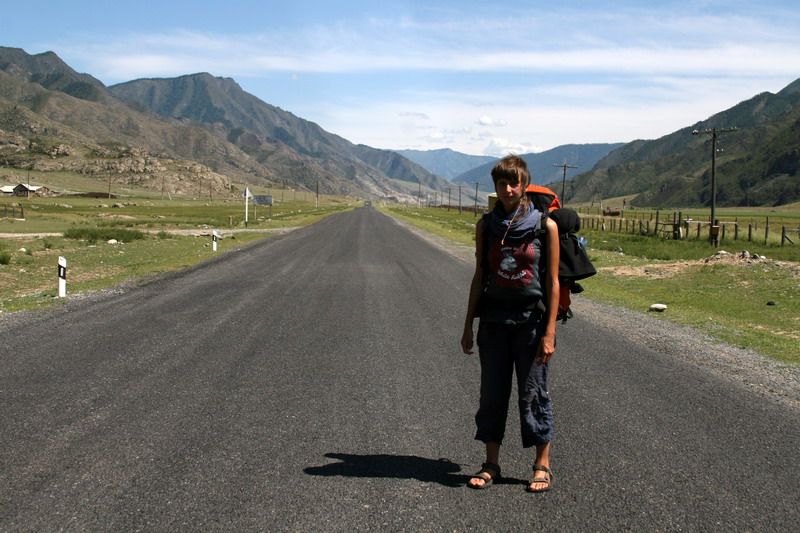 If the area feels unsafe you might
want to hitchhike from police post to police post. The police posts
situated on all highways with intervals of about 100 km. These posts,
commonly called "ДПС" (Post DPS), are good places to hitchhike since
cars will drive by slowly, and police is always close. Local hitchhikers
swear on these police posts. You can also ask the police officers to
help you get a ride which really might work. Be prepared to be asked for
your ID or even run a cell-phone check (verification that your cell is
not in the stolen cells database), though.
If the area feels unsafe you might
want to hitchhike from police post to police post. The police posts
situated on all highways with intervals of about 100 km. These posts,
commonly called "ДПС" (Post DPS), are good places to hitchhike since
cars will drive by slowly, and police is always close. Local hitchhikers
swear on these police posts. You can also ask the police officers to
help you get a ride which really might work. Be prepared to be asked for
your ID or even run a cell-phone check (verification that your cell is
not in the stolen cells database), though.
The southern provinces of Russian Caucasus like Dagestan, Chechnya (worldwide most victims), Ingushetia, North Ossetia and Kabardino-Balkaria have problems with terrorists and land-mines and it could be very dangerous for travelling there for both foreigner and for Russian from Central Russia. These areas better be avoided.
Small towns might have a small chance of being a little dangerous if the person differs much from locals, especially in the night. Villages and big town are completely safe.
Girls and solo-hitching
Many Russian girls do hitch alone, and still scary stories seldom hit the news lines. It does not at all mean that the country is free of perverts, and almost all of the solo-travelers (not necessarily girls) will tell you accounts of some sexual harassment they have encountered while hitching. 99% of such encounters end OK with nothing more serious then words but if you do not want to be asked for sex – or to hold a camera while somebody is masturbating – consider finding a travel buddy. Somehow, Russians are still very amused by foreigners, and many report that solo traveling even extremely long distances, like Central and Eastern Russia, for a foreign girl who speaks some Russian is absolutely safe since she is treated like someone ‘from the outside’ by virtually everyone. Keep in mind that being a foreigner you are somewhat protected from some issues that Russian hitchhikers face on the roads.
Post-2022 hitchhiking
Since February of 2022 conflict between Ukraine and Russia emerged, and many travelers are afraid of visiting Russia. There's a few things to consider before traveling:
- Political discussions, best to avoid, especially at the beginning if you don't know what side the other person is. There's a lot of people supporting the government, as well as people who are strongly against.
- If you're a European, people will ask you about politics, and about life in Europe. Sometimes these questions might be absurd.
- There's over 1 million Ukrainians in Russia itself.
- Most Russians know that what your government is doing is separate from what you may believe and who you are. Therefore things such as unfriendly countries list are mostly irrelevant.
- E-Visa can be obtained just like before 2022. Normal tourist visa for up to 90 days can also be obtained easily.
- Better to avoid cars with "Z" or "V" signs.
- Country flags are fine, but do not wear red & black combination of colors, as they're the symbol of Ukrainian Nationalists.
- The closer you are to the regions of Donetsk or Lugansk/Luhansk the harder it's going to be to hitch a ride.
- Rostov-on-Don is a place where a lot of soldiers are visiting once they get a pass. People suggest being more careful there if you're from the West.
- High chance that VPN that works in China or Iran is not going to work in Russia, as they actively block VPNs.
- Russia can be called the United States of the East. A lot of things they don't care about - the English language, foreign politics, and European geography. Yet, they're educated and knowledgeable people.
Nevertheless if you take the precautions it's most likely going to be completely fine to hitchhike there.
Gregory.baranski in Summer 2024 hitchhiked all the way from Poland through St. Petersburg, Moscow, Kazan, Chelyabinsk, Novosibirsk, Krasnoyarsk, Irkutsk, Ulan-Ude and then continued South to Vietnam. In Summer 2025 he went on a similar trip, however from Moscow he headed South to Volgograd, and to Rostov-on-Don where on the way he was threatened by the soldier of Uzbek origin, to be taken to Russian Army for a prize of 1000$. He ran away on a gas station.
The Ultimate Guide to a €35 Russian Visa without an Agency for Most EU Citizens (except UK, Ireland and Croatia, among others)
Most Russian embassies in the EU don't require you to submit an application through a visa center/travel agent or to complete any additional steps, but it's very important to check the respective embassy's website for their particular requirements.
1. Get an appointment at the respective embassy of your choice. This is the biggest hassle of the entire process as appointments are usually booked out for at least two months ahead... You'll find a link to the online appointment booking system on the embassy's website - it'll look something like http://paris.kdmid.ru/queue-en/. Record the appointment details.
2. Two weeks or so before your appointment, book accommodation through this website's affiliate link to Booking.com. They give free tourist invitations to anyone who books using their affiliate link - it's important to follow the link to Booking.com from their website. As it's Booking.com, you can give them a fake credit card (using a fake CC number generator of course) and you don't actually have to stay at the places or pay for them in advance. But you do need the reservations. Alternatively, you could also get an invitation through the many websites which offer it for as low as €10 (look up Fortuna Travel) - but the steps above will get you one for free. Recent reports seem to suggest that the agency is getting wary of suspicious free visa support request, so if you're going to Russia for longer than a week, you're probably better off coughing up the €10.
3. They should send you scans of the invitation to your e-mail. Print those out.
3a. If you need a visa for over 30 days, then you have to get a "Business" visa instead of a tourist visa. It's Russia, so white lies are not out of the ordinary here... To get a business visa, you'll need a more expensive invitation (usually between €45-80), but the visa fee remains the same and the same visa support companies issue these. For visas up to 180 days, a simple stamped letter over email is enough, but this really depends on the embassy. For a 1-year visa(although it's valid for a year, one entry can only be 90 days), you'd need a formal invitation initiated by the company via the Russian Migration Service, which is much more expensive and can take up to a month.
4. Fill out this form exactly as you've filled out the previous form. This is the official Russian form which you'll submit to the embassy. Print it. Sign it. Glue a passport photo onto it (3.5x4.5cm size).
5. Get travel insurance which has at least €30,000 cover. Print a confirmation. If you're good enough with photoshop you can give them something legit looking. You'll also probably need this at the Russian border.
6. Go to the embassy for your appointment with all the paperwork (printout of the invitation, the official Russian form with your signature and photos and confirmation of insurance). Pay them €35. Wait for the visa.
7. Have fun in Russia!
IMPORTANT: Every embassy and every nationality is different! Check the embassy website before following these steps as there may be extra requirements not covered here!
E-Visa
Starting from July 1, 2019 people from many countries can get electronic visa to enter the Far Eastern Federal District and the Kaliningrad Oblast. The e-visa is free and lasts only for eight days. Rules for these visas can be found on the official website 1.
Cities
- Moscow
- St. Petersburg
- Cheboksary
- Samara
- Irkutsk
- Murmansk
- Novosibirsk
- Omsk
- Petrozavodsk
- Rostov-on-Don
- Sochi
- Ufa
- Ulan-Ude
- Voronezh
- Yekaterinburg
Count about 5 days from Moscow to Novosibirsk, and about 18 days from Moscow to Vladivostok.
Number plates
Russian number plates contain a region code, that indicates the origin of the car and possibly the drivers destination. You can write it on a cardboard instead of a place name and use while thumbing. See Russian plate numbers for a list.
Personal Experiences
July 2026
I entered Russia during war with Ukraine and drone attacks. I entered with a touristic visa which allowed me one month in the country. However I broke my arm and lost one week so had just three weeks to explore the country.
I entered at the border between Georgia and Russia, just before Vladikavkaz. I was kind of stressed about how it is going to be. Everything was perfect. Russian soldiers laughed with me and even took a picture all together. My backpack was not even checked, same for phone, and I had no questions at all except where I wanted to go. Italian guy entered the same border two weeks after me and had all the opposite so I guess it depends of the day lol.
Hitchhiking during the war is very changeable experience. In Ossetia and more generally in the Caucasus, it is very easy to get rides. Really. People are just so nice! I hitchhiked all the way from the border to Rostov-on-Don. I was taken by a police officer, I crossed several military checkpoints with no problems (I was clear on my intentions, I ask them if I can do this). I literally asked a military officer in a checkpoint if they could find a car for me and he accepted. In Rostov, howeve, I waited the longest time since I am travelling by hitchhiking: 8 hours. There are some important gas problems especially close to Ukraine.. Of course it is not your problem as hitchhiker but I can assure you ir changes so much the psychology of the people. It means people wait maybe one hour just to fill car with gas, and when they go they don't want to stop again. I also tried asking for rides directly when cars were waiing in the queue but literally mo one wanted to take me. Kind of weird situation. Maybe I wasn't lucky. Because I was stretch on the visa and my priority was seeing friends in Moscow and Saint Petersbourg, I ended up taking a night ttain (please do it, it is a great experience!).
January 2017
was there for 12 days in January 2017. Started off from Mongolian border and got a lift after half an hour to Ulan-Ude. from there I had to walk a while to get to other end of town where i jogged on the spot on/off for four hours, as it was below -15, to stay barely warm. Some kind church people told me too dangerously cold and I stayed with them for a night where i had chicken and soup...they literally eat everything off the bone, even the fat. From there it took a few rides mixtures of cars and trucks (mostly cars) to get to Mt Elbrus. From there I went to Moscow then Latvia.
I stayed at a church, someones house, in a truck, behind a bench at elbrus ski area, in cheap hostels in Moscow and Elbrus, a service station where i was kicked out after 2 hours by armed security guard at 4am...it was below -15 but managed to get a ride within 30 mins. I saw a few females catching rides throughout the country, i guess for the other reason. Average waiting time was 2 hours but got some great distance rides. i created a Union Jack to show I was foreign after waiting 4 hours in the cold dark, one evening, and it worked. the driver informed me he picked me up due to the Jack 😁.
Got into difficult situation when driver went to service station to get breakfast, persuaded me to have breakfast and he would pay, as i had no money at the time. we ate and then continued on our way. after a short while, my stomach turned and i asked if he could let me out, but he said i had to repay him. i then began yelling hysterically at him, pointing at my ass, and he dropped me off at a rest stop where i would remain for 30+ mins, stuck to the toilet, with explosive diarrhea, bad stomach pain, dizziness and strong nausea.
I got a ride through the night to moscow from Chechnya, by chechnians, in severe winter conditions, weaving in and out of cars at 100mph, with snow drifts on the highway. i witnessed a lada spinout on a snowy highway between moscow and latvia. i regularly saw wolf-skin being sold at stalls on side of highway. Russia really is a wild place 🤪
i obtained my visa in Hong Kong (UK nationals can get it here due to 6 months visitor visa waiver arrangement-need to be greater than 90 days to be classed as a resident in Russia's eyes, at the time mine was issued), and got it processed same-day for 100£ (50£ for next day), but i needed it urgently as it was christmas holidays the next day. didnt require accomodation, insurance or onwards travel proof. i could only speak two words, Spasibo and Nazdrovya (sic)!!!
External links
- Story about hitchhiking from Rotterdam to Vladivostok
- Stories about hitchhiking around remote Siberian regions
- Russian backpacker & hitchhiker's forum
- Academy of Free Travel, Moscow based hitchhiking club
- Livejournal 'Vpiska' community, mostly but speakers are also welcome
- Russian hitchhiking communities., but you can ask questions and get replies in
- Hitchhiking in the Russian far east
Moscow
Edit on wikiRoadside hitching spots go stale. For current places to hitch in and out of this city, use maps.hitchwiki.org and the live Hitchwiki page linked at the end of this chapter. This book keeps general orientation, not a pin gazetteer.
This book does not reprint named ramps, dumpsters, hostels, or other pins. They go out of date. Follow the note above to the live map or wiki.
Tatarstan
Edit on wikiThe Republic of Tatarstan (Russian: Респу́блика Татарста́н; Tatar Cyrillic: Татарстан Республикасы, Latin: Tatarstan Respublikası) is a federal subject of the Russian Federation (a republic). Its capital is Kazan.
Cities and towns in Tatarstan
- Almetyevsk (Альметьевск)
- Aznakayevo (Азнакаево)
- Bavly (Бавлы)
- Bugulma (Бугульма)
- Buinsk (Буинск)
- Chistopol (Чистополь)
- Kazan (Казань) (capital)
- Leninogorsk (Лениногорск)
- Naberezhnye Chelny (Набережные Челны)
- Nizhnekamsk (Нижнекамск)
- Nurlat (Нурлат)
- Yelabuga (Елабуга)
- Zainsk (Заинск)
- Zelenodolsk (Зеленодольск)
Hitchhiking
Hitchhiking within Tatarstan can be considered as pretty easy.
Legality of Hitchhiking
Tatarstan is a federal subject of Russia and road traffic is federal competence, so the law here is exactly the law described under Russia, and hitchhiking (автостоп) is not an offence. Clause 16.1 of the Правила дорожного движения, made by Government Decree No. 1090 of 23 October 1993, bans pedestrians from an автомагистраль and forbids a driver to stop outside the parking areas marked by sign 6.4 or 7.11; clause 16.3 extends the section to roads signed 5.3. This matters more in Tatarstan than in most of Russia, because the M12 toll road to Kazan is built and signed to motorway standard — on that one, both the walking and the stopping are prohibited, and the signed service areas are the only lawful place to ask. The M7 and the older federal routes are not uniformly signed that way, so read the sign at the point you are standing rather than assuming from the road number. Off a signed motorway, waiting on the verge and thumbing breaks no rule.
Personal Experiences
Bashkortostan
Edit on wikiThe Republic of Bashkortostan (Russian: Респу́блика Башкортоста́н; Bashkir: Башҡортостан Республикаһы) or Bashkiria (Башки́рия) is a federal subject of Russia (a republic). It is located between the Volga River and the Ural Mountains. Its capital is Ufa.
There are over 13,000 rivers and 2,700 lakes in the Republic.
Cities and towns in Bashkortostan
- Agidel (Агидель)
- Baymak (Баймак)
- Belebey (Белебей)
- Beloretsk (Белорецк)
- Birsk (Бирск)
- Blagoveshchensk (Благовещенск)
- Davlekanovo (Давлеканово)
- Dyurtyuli (Дюртюли)
- Ishimbay (Ишимбай)
- Kumertau (Кумертау)
- Meleuz (Мелеуз)
- Mezhgorye (Межгорье) (under federal government management)
- Neftekamsk (Нефтекамск)
- Oktyabrsky (Октябрьский)
- Salavat (Салават)
- Sibay (Сибай)
- Sterlitamak (Стерлитамак)
- Tuymazy (Туймазы)
- Uchaly (Учалы)
- Ufa (Уфа) (capital)
- Yanaul (Янаул)
Personal Experiences
July 2009
Platschi hitchhiked through Bashkortostan in July 2009 and found it extremely difficult to catch rides, incl. 7 hours waiting (2 people, from 7am-2pm) near Ufa. Also police seemed to be pretty weird there.
Legality of Hitchhiking
Bashkortostan is a federal subject of Russia and road traffic is federal competence, so the law here is exactly the law described under Russia, and there is no offence of hitchhiking (автостоп). Clause 16.1 of the Правила дорожного движения, made by Government Decree No. 1090 of 23 October 1993, bans pedestrians from an автомагистраль and forbids a driver to stop anywhere but the parking areas marked by sign 6.4 or 7.11; clause 16.3 applies the whole section to roads signed 5.3. Those clauses turn on the signs, not on a road's number — so what decides whether you may stand on the M5 or the M7 across the republic is whether the blue motorway sign is up, not that the road is federal. Away from such a stretch nothing prohibits waiting on the verge and thumbing. There is no republican traffic code adding to any of this: a roadside check in Bashkortostan is the federal ГИБДД applying the federal rules.
North America
Canada, the United States, Mexico.
Canada
Edit on wikiFor specific information about provinces and territories, see the bottom of the page.
Canada is the northernmost country of North America and is comprised of ten provinces and three territories. English and French are the two official languages of the country. English, being spoken by 3/4 of the population, is the majority language in most provinces. French is the main official language in the province of Quebec, but also widely spoken in New Brunswick and some areas of Ontario, Prince Edward Island, Nova Scotia, and Manitoba. Inuktitut is the main language in Nunavut and has official status there but English is still widely spoken.
Car Number Plate
Just like its southern neighbour, the United States, every provinces are issuing their own specific car plates. For example, a car from Manitoba will have a specific Car licenses tagged as such.
Local attitude
Even if the country bears some similitude with its southern (and only) neighbour, the United States, the cultural and life outlook of the population is markedly unique.
The majority of the Canadian population lives in harmony within their vast country. The size of the country has allowed people to live using their own beliefs, languages or religion without being bothered by anybody else, in a 'Live and let live' motto. Therefore, hate crimes are mostly absent and major difference clashes even rarer, but may exist. It might be useful for a traveler to be aware of the current political situation to avoid getting into a discussion which may offend more than anything else. Sometimes, during such situations, it might not be helpful to hitchhike as a white in a First Nation reserve, or sound French in an English area, or visa versa. That said, Canadians are generally friendly and forget their stereotypes once they meet you in person.
The rural population will usually be keen to help if the traveler is making the first steps into breaking the 'stranger in the locality' image, as the split between country- and city-folk is also existent. The rural community feeling is usually pretty strong and when people believe you belong there and act more altruistic. However, some rural regions have large populations of urban commuters which has the tendency to bring a more individualistic mentality.
It is worth noting that in Quebec, the carshare website "AmigoExpress" is extremely popular. Worth checking out if a bit pressed for time and have a bit of cash to spare. There are more than 50 rides a day between Quebec and Montreal at costs of 15-30 CAD.
Hitchhiking
For the convenience of the common hitchhiker the provinces and territories are discussed in detail, along with their capitals, in separate pages.
For a journey across the country, the Trans-Canada Highway is the main road crossing the country east to west. However, the highway system numbering system is specific to every province.
Legality of Hitchhiking
Canada has no federal offence of hitchhiking — the Criminal Code says nothing about it and roads are a provincial matter, so the rule you are actually under is your province's. British Columbia is the most clearly drafted example: section 182(3) of the Motor Vehicle Act provides that "a person must not be on a roadway to solicit a ride, employment or business from an occupant of a vehicle", and section 182(4) makes contravening the section an offence except where the ride was solicited in an emergency. The word doing the work is roadway: section 182(2) tells a pedestrian with no sidewalk to use "the extreme left side of the roadway or the shoulder of the highway", so the Act plainly treats the shoulder as something other than the roadway — and thumbing from the shoulder is accordingly outside the prohibition. That same subsection also puts you on the left, facing the oncoming traffic, which is where a hitchhiker in British Columbia should expect to stand. Every province has its own version of this section, so read the wording of yours rather than assuming BC's, and expect any controlled-access highway to exclude pedestrians by its own posted signs whatever the provincial code says.
Winter hitchhiking
Be careful!
Canada is a vast country (the second biggest in the world) and many visitors do not realize its size or extremes in temperature prior to arrival. Certain northern rural regions are inhabited by few or even no permanent population, so it might not always be bright to adventure by yourself into some wild or less inhabited part of the country without the proper equipment or having registered yourself to some local authorities prior to such a journey. As a simple reminder, the density of population is about 3.2 habitants/km², and about 75 % of that population lives in the south, nestled by the US border. It is normal in some parts of the country to drive a hundred kilometres without any living soul.
With temperature often dropping beneath −30 Celsius, you should not stand outside more than 15 minutes. It's VERY important to make sure you wear the appropriate gear and take precautions to never be stuck anywhere outside without shelter.
In winter the roads can be icy or narrowed by the snowbank, so it will often be hard for cars to stop by and pull over safely. Drivers won't do it if they don't feel safe as the risk of causing an accident might be too high, and the driver would have to bear entire responsibility of it towards their insurance. It's even more important in icy conditions to make sure you find a hitching spot where there is good visibility and a safe place to pull over.
In some areas, especially in the northern territories, every citizen is bound by law to provide help and safety to every citizen in need from the hazards of temperature and nature. The reaction towards that will often differ, going from immediate support to a 'where have you left your brain!?!? being out by this weather!'. Your actions may be perceived as quite stupid and irresponsible to have dared outside without being prepared for the weather, as most locals prefer to enjoy the cosiness of their home in winter storms. For that reason, shops, restaurants, or gas stations usually won't kick you off their property in extreme weather. In the summer it's different, and you may be asked to leave if there is no danger from the outside elements.
Personal Experiences
5 June 2013
I have hitchhiked many thousands of miles through most of the provinces. Getting rides is usually slightly easier than the United States, but harder in some places. The cost of food makes travel here very expensive. Border crossing as an American citizen is incredibly frustrating! It usually takes four to six hours of intense interrogation of myself and violation of the privacy of other people in my life. The first time I was held and interrogated for over six hours and eventually turned away because I couldn't provide documentation proving that I had a reason to return to the states; they wanted me to buy a return bus ticket to prove I was only staying a short while, sorry, not happening! Well I got a little crafty with their requirements and subsequent attempts to enter have been easier, heh. You may have to get creative, but where there's a will, there's a way. Don't give up! This is a beautiful country!
I have hitched across the country twice from west to east and been up to Alaska 3 times. Generally hitching is pretty reasonable though there can be tough spots like I experienced on the north side of lake superior, west coast north of Kitwanga on highway 37, Dempster highway to Inuvik (crazy Japanese guy pulling a cart whilst walking from whitehorse to Tuk and saw two grizzlies straight out of hibernation 10 miles beyond him next to the road) and road to Yellowknife. Nearly got stuck south of Calgary where temps were about to drop to -40, but managed to convince a truck driver to drive me to Montana, so be well prepared for cold. Never had issues getting into Canada being a Brit and most overland borders into USA have been easy going though the border between Seattle and Vancouver can be a little more strict at times. Average waiting time 3hrs. Most of my hitching has been around BC and it's pretty good there, it's technically illegal but I have never had any issues with cops about this. Be a little careful around Thunder Bay area as few methheads and one driver I got a lift with was windscreen punching loopy.
5 July 2021
Canada is pretty easy to hitch in the whole country except maybe for Wawa aka hitchhiker hell as a lot for stuck there, Did most of my hitch in Quebec and BC, yeah true Quebec is easier if you know French but simple bonjour and merci will go a long way usually about 15 minutes waiting as I grew there started hitch at 14 and since then did not change much still easy to hitch Regarding BC I had lot of people's inviting in there home giving me weed or cash and good tips where to find free shower and good spot to pitch a tent if it was not on their yard for a night, Once a lady pick me up, offer me a place for three days,she offere to use her car to go check out some spot at the condition I would her teenager to school and pick him up, on the last day there she ask me to get some smokes for her and to grab a pack for my self and gave me her car keys and credit card, was like wow, for sure would not have stole from her but that was a lot of trust to some one she met 3days before, later that month she wired me 100$ because she was worried I would not eat enough, got me some food and a pack of smokes.
Toronto
Edit on wikiRoadside hitching spots go stale. For current places to hitch in and out of this city, use maps.hitchwiki.org and the live Hitchwiki page linked at the end of this chapter. This book keeps general orientation, not a pin gazetteer.
Toronto is the largest city in Canada with over 5
million inhabitants in the Greater Toronto Area. It is also the
capital city of Ontario. It is a fabulous city worth visiting, with a
vibrant musical and cultural scene.
Montreal
Edit on wikiRoadside hitching spots go stale. For current places to hitch in and out of this city, use maps.hitchwiki.org and the live Hitchwiki page linked at the end of this chapter. This book keeps general orientation, not a pin gazetteer.
Montreal is the biggest city in Quebec, and being the
second metropolis of Canada in term of population. It is also a well
sprawled city with suburbs sprawling on about 100km in several direction
from its Downtown.
Montreal is also an incontrovertible city for every travellers as all the highways and main routes goes through its urban centre, which is an island and one of the rare crossing point of the St-Lawrence. With a population over 3 millions and only few bridges, traffic jam are pretty common. It usually takes up to about an hour to cross the city from one point to another when the traffic flow is smooth and obviously certain industrial spots (especially along 'Boulevard Metropolitain' in Dorval Airport Area and along the A-40 in 'Montreal-Est') are to avoid being stuck.
Certain specific spots in the urban area, mainly nearby the metro station are well known for car-sharer and would be a perfect starts to leave the city. A sign marking the city you are heading to will always lower your waiting time, and will more surely help you getting a lift out of the island by a commuter faster.
Border Crossing: Champlain-Lacolle (New York)
A note about the main crossing at A-15 known as "Champlain-Lacolle". It's technically illegal to hitch south from the main crossing as it is an Interstate highway on which pedestrians (including, er, especially hitchhikers) are forbidden. So unless you get a through ride across the border, there are some alternative border crossings to consider other than the main Champlain-Lacolle crossing on A-15 (I-87 on the U.S. side).
Alternatives to Champlain-Lacolle (A15/I-87)
Overton Corners (US), 6 km south of the village of Lacolle, is a small crossing mostly used by locals and by those in the know. It connects the Quebec route 221 with NY-276 and is about 2 miles east of the main Champlain-Lacolle border crossing that connects A-15 and I-87. Obviously, it's only useful if you can get a lift near there, but is sometimes worth saving the hassle as border guards from both countries are generally more laid-back here.
Other alternatives include Rouses Point, N.Y. and a crossing that links Hemmingford, Quebec and Mooers, N.Y. Both are a bit off the beaten path, but you can get a lift on US-11 back to I-87 pretty easily and you're well on your way. All of these places can easily be found on a map.
Vancouver
Edit on wikiRoadside hitching spots go stale. For current places to hitch in and out of this city, use maps.hitchwiki.org and the live Hitchwiki page linked at the end of this chapter. This book keeps general orientation, not a pin gazetteer.
Vancouver is the biggest city in British Columbia and the third biggest city in Canada.
It is illegal to hitchhike in some spots westwards of Golden. Watch for signs. This is due to the proximity of prisons, but unlikely to be an issue. Thumbers are issued a fine and drivers are issued a bigger fine. Hitchhiking is not illegal along the Sea-to-Sky Highway (Hwy99 - Vancouver to Whistler). Where it is illegal or cannot be conducted in a safe manner, signs are clearly posted that indicated that picking up hitchhikers is prohibited. (From a September 14th, 2006 letter from Kevin Falcon - BC Transportation Minister reference: #149730).
To leave the city heading east, the best option is to take the Sky-Train to Surrey and then get on a local bus that will take you to Langley - along the main highway 1. From there you can get a ride further east towards Hope.
To Vancouver Island
Hitchhikers frequently pass through the city of Vancouver when going to or from Vancouver Island. The ferry to and from Victoria docks at Tswassen, southwest of the city, and the ferry to and from Nanaimo docks at Horseshoe Bay, northwest of the city. The ferry cannot be hitchhiked, but they don't really check tickets when you board -- you're supposed to drop your ticket in a big bin while staff look on. Pick up a receipt by the self-service terminals and use it to cover a random bit of paper to drop into the bin. When arriving in the city en-route to the island, it's easy to take a local bus to one of the ferries if you're not able to get a ride straight there. But arriving on the mainland and heading farther east by thumb can be a bit more difficult. If possible, you should try to find a ride from someone while on the ferry boat. Talk with people and/or carry a sign. If you're heading towards Nelson, the Okanagan valley, or the Rockies, try to find a ride with someone going at least as far as Hope.
To go North
If you want to go North out of Vancouver towards Squamish and Whistler, catch the #257 Express heading to Horseshoe Bay (2 minute walk from the Granville Street Skytrain Station). The ride takes 25 minutes or more, and can be very full of people with luggage near ferry departure times. Try to leave yourself time as drivers with full buses must sometimes pass you by. Get off at the last stop, which is the Horseshoe Bay Ferry terminal. Cost (2019) is 2.57CAD. Catch the community shuttle C12 Brunswick (also called 262, leaves every hour) just next to where the 257 last stop leaves you and ask the bus driver to let you off near the end of his route at the good hitch hiking spot; they all know where it is. Cost is the same fare. From there you face all the traffic headed north up the Sea to Sky corridor.
Another spot easily accessed is near the mall Park Royal. To reach Park Royal take any of the 250 or 257 buses from downtown off West Georgia St and get off at the Park Royal North stop. Walk back in the direction the bus came from to Taylor Way. If you walk up Taylor way on the right side there is a great spot about 75-100 metres up. Stand behind the rail on the sidewalk and hitch from there. It has a great pullout for cars and you catch all the traffic coming from downtown going up to Squamish, Whistler, and beyond.
Border Crossing to Washington
It is strongly reccommended that you go to the border and clear customs by yourself before trying to hitch a ride, because asking drivers to take you across poses a much higher risk for them. It is not hard to get there by public transport. From the skytrain station Bridgeport, take bus number 351 to White Rock Centre (the bus route goes along the Vancouver-Blaine Hwy, so if you really hate walking, you can get off at Mathew Exchange or South Surrey Park & Ride and try to hitch a ride to the border). From White Rock, take bus C51 to Marine Dr/Stevens St. Cross the street and turn left. You will see a wooden walking bridge on your right side. Cross it, ignoring the No Trespassing sign (it existis because you are entering an Indian Reservation, but the people there are generally not at all fussed about it). Turn left when you get to the paved road, and simply keep going (when in doubt, the sea should be on your right side). The road will lead you straight to the border. From where you exit the bus to the border is about a 3km walk. After you've gone through, there is a little roundabout right next to the toll station where you can easily hitch a ride South. (The toll station man wouldn't let me hitch on that roundabout. He told me I had to be out of his sight. So I walked down highway 5 to look for a spot. the cars were going too fast and no pull over space. Blaine is not a very good place for trying to get south. if you keep walking highway 5 for like 100 meters, you'll see a Subway down on your right. And a Chevron gas station, that's where I went and asked people if they were driving south, not long till I got a ride to Everett. From there I took $2.50 public bus to downtown Seattle.)
Public Transport in Vancouver
Vancouver has three SkyTrain lines with one more set to open in 2016, and one of the biggest trolley bus networks.
To get all info on public transport in Vancouver, go to www.translink.ca. You can plan your trips, find the times, prices, location of stops, everything.
As of October, 2015, all bus tickets for all zones are $2.75. If you are taking the SkyTrain or SeaBus the pricing is $2.75 for 1 zone, $4.00 for 2 zones, and $5.50 for 3 zones. After 18:30 on weekdays and all day on weekends and holidays it is always $2.75 for all zones on buses, SkyTrain, and Seabus. One ticket lasts for 1hr 30min, and permits unlimited transfers within that time frame. If you tell a bus driver your ticket just expired, they may let you get on with an expired ticket.
Buses are easy to ride for free, drivers don't generally care. It's polite to be up front with the driver and ask if you may ride their bus without a ticket. As of 2024, there are supposedly controls (also on the Skytrain). They are rare, but the consequences of getting caught, while negligible for travelers, might be problematic if you're trying to immigrate. Inform yourself!
Sleep
A great central and accessible spot to wild camp is Stanley Park.
Wild camping on the beach (Spanish Banks, Locarno or Jericho Beach) or on the grass nearby is possible, although Jericho Beach Park closes at night. Wonderful view of downtown Vancouver at night. You might see some tents already pitched there! Mosquitoes (tons of them) are a possibility, but it depends on the day: Vancouver is actually known for not having a lot of mosquitoes but we got unlucky.
The North Shore (suburbs of North Vancouver and West Vancouver) is another great option for wild camping. These suburbs have very low crime and a lot of green space. There's a lot of great hiking/exploring to be done on the North Shore as well, so it's a great place to chill if you're visiting Vancouver. Try the neighbourhoods, of Horseshoe Bay, Lighthouse Park, Lonsdale Quay, Lynn Valley, or Deep Cove
United States of America
Edit on wikiThe United States of America, commonly called The U.S.A., or simply America is a country consisting of 50 states. For the convenience of the common hitchhiker, these states are discussed in detail along with their capitals in their individual pages (see below). The US is bordered by Canada to the north and Mexico to the south.
Hitchhiking
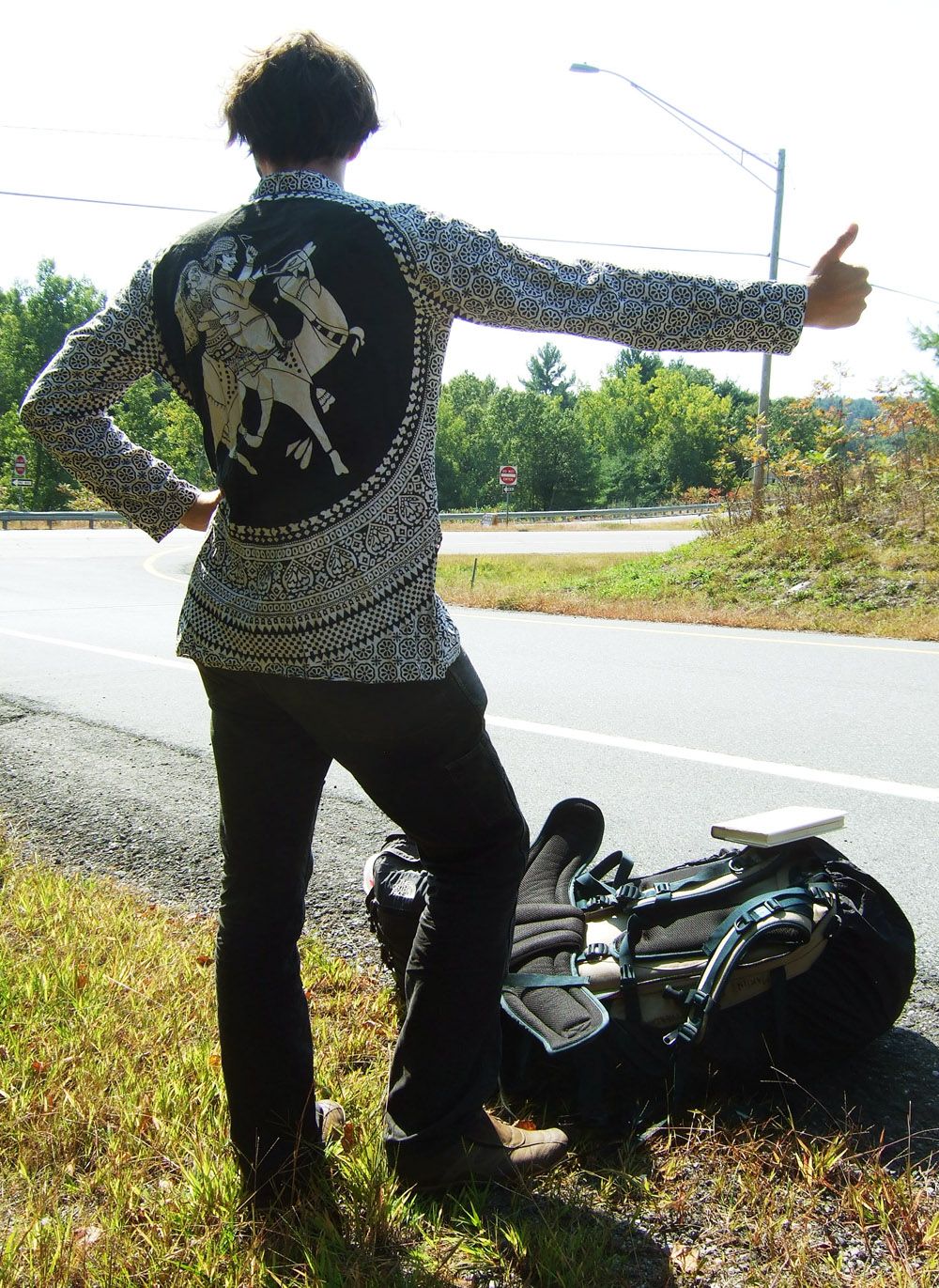
Hitching, like everything else in America, varies greatly depending on what type of area and what part of the country you are passing through. In general you can get rides fairly easily if you hitchhike the right way; in fact, often you can find more than just rides, such as offers for free meals, invitations to homes and parties, etc.
Legality of Hitchhiking
There is no federal offence of hitchhiking in the United States; roads are policed under state vehicle codes, which is why the answer changes with the map above. Two quite different things get regulated, and confusing them is the usual source of trouble: soliciting a ride, and being a pedestrian on a controlled-access highway. California is the clearest statement of the first — [https://leginfo.legislature.ca.gov/faces/codes_displaySection.xhtml?lawCode=VEH§ionNum=21957. Vehicle Code § 21957] says only that "no person shall stand in a roadway for the purpose of soliciting a ride from the driver of any vehicle", and [https://leginfo.legislature.ca.gov/faces/codes_displaySection.xhtml?lawCode=VEH§ionNum=530. § 530] defines a roadway as the part of the highway used for vehicular travel, so the shoulder is not the roadway; that distinction is precisely what the map's "legal on the shoulder" states rest on. The second is a power rather than a prohibition: [https://leginfo.legislature.ca.gov/faces/codes_displaySection.xhtml?lawCode=VEH§ionNum=21960. § 21960(a)] lets the Department of Transportation and local authorities bar pedestrians from freeways and expressways, but § 21960(b) makes any such ban effective only where signs giving notice of it have actually been erected. Most states build on these two patterns, taken from the Uniform Vehicle Code, so when an officer tells you hitchhiking is illegal the questions worth being able to answer are which of the two rules he means, whether you are standing on the roadway or on the shoulder, and whether a sign is actually posted.
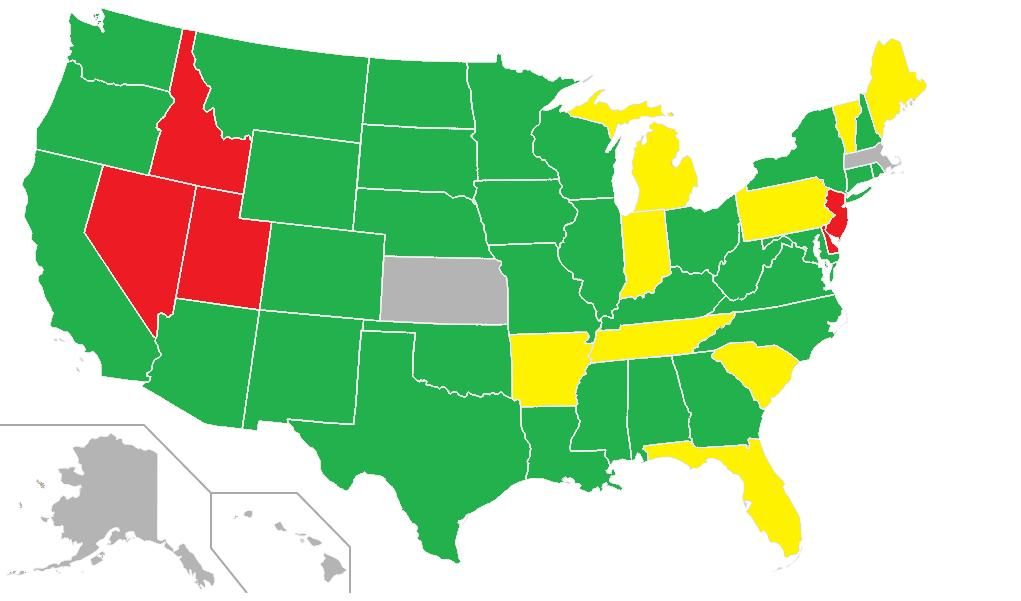
The legal status of hitchhiking in the United States is a bit of a difficult topic; laws and their enforcement differ greatly from state to state as does the information available online and in general knowledge. Many people (including police officers) mistakenly believe hitchhiking is illegal anywhere in the US; sometimes you'll get away with holding a cardboard sign but not with holding out your thumb, and sometimes nobody will hassle you even if you stand or walk right on the interstate. The specific articles on states will give you more information on this topic.
Police
Many police in this country have arrest quotas, not to mention many police (not all!) are assholes. That being said, you may encounter an officer of the law who is a rather enthusiastic about giving you a hard time. Keep in mind that even foreigners have rights, such as the right to refuse being searched. For good information about dealing with the police, check out https://www.flexyourrights.org/
Being in a state which permits hitchhiking does not guarantee that the police will not harass you. Most police don't know the laws and will tell you it is illegal to hitchhike in that state. Thewindandrain argues with cops on a regular basis and refuses to stop hitchhiking where it is legal. He has been innocently arrested for this twice, but has remained confident and never been taken to jail even after being cuffed and in the car and continuing to stand up for his rights. They are usually bluffing right to the very end. If you know the law in that state, don't be afraid to tell the police they are wrong!
Frequently when confronted with your response, law enforcement officers will react unprofessionally and occasionally aggressively and even in a discriminatory way if you are not their race (sad but true: white people will have an easier time than blacks or latinos). They may curse, call you names, and/or threaten to arrest you if they see you hitchhiking again and then leave the scene. This is usually a bluff. They may even cuff you then give you a ride out of their jurisdiction. Occasionally they may admit to their mistake and leave you alone. If you are uncomfortable and feel threatened by the officer, you may request to speak to his/her supervisor. Supervisors will show up to talk with you about the law openly and professionally.
National laws
The only nationwide law (Code of Federal Regulations) that prohibits hitchhiking is 36 CFR 4.31 which states that hitchhiking is illegal on any property under jurisdiction of the Department of the Interior: National Park Service. This includes but is not limited to National Parks, National Scenic Byways, and National Recreation Areas. This law is often amended to allow hitchhiking at the discretion of each park. Check with the park's respective state article for information
State and local laws
Look to the map pictured above which indicates each state's laws. Most often, the laws state that the hitchhiker may not "solicit a ride" "on a roadway". The word roadway is usually defined in state statute books as "exclusive of a shoulder" or "the traveled portion of the highway", making these statutes easy to circumvent.
In most states it's illegal to hitch from the interstates (motorways) themselves (though enforcement of this rule varies), but you can typically stand at on-ramps (highway entries). That being said, understand that the ramps are still technically considered interstate property and are illegal for pedestrians to be on, although it is almost without exception permitted if you stand in front of the "no pedestrians" sign.
In some areas (such as certain towns or municipal areas) hitching is illegal everywhere, however, it is still allowed de facto. In most cases, hitchhiking is legal or tolerated. There are also many limited-access highways (i.e. with on-ramps and off-ramps) that are not part of the interstate system which prohibit pedestrians as well. California is notorious for prohibiting pedestrians on many of its controlled access highways.
Even in states where hitchhiking is illegal, the law is rarely enforced. Wyoming Highway Patrol reports that in 2010, they approached 524 hitchhikers but only cited eight of them (note that hitchhiking is no longer illegal in Wyoming as of 2013!)
If the police pass you walking or sitting by the side of the road without soliciting in any way, they may still stop to check IDs, but you are not required to identify yourself unless there is suspicion that you could have committed a crime. You may wish to hide your thumb or sign when a police car is approaching to avoid being hassled.
Often, particularly close to major cities, the police will ask you for photo ID, but as long as you have one with you (such as a passport) there shouldn't be a problem. Most of the time they will be polite when you come up clean, and not too rarely they'll give you a lift out of their area to get rid of you.
Especially in smaller towns and in the countryside, the officer stopping you is likely to never have seen a passport before. If that's your form of ID, bear with the delay caused, help the poor guy out by point out which is your name and your birth date and enjoy the confusion and the hilarious misconceptions that arise.
Tourists who intend to cross into the USA by hitchhiking should note that the US immigration department will log that you have been hitchhiking, should they discover that you are. This log will be visible to any guard who subsequently checks your immigration status. If you decide to leave and enter the USA again, it may make your entry back into the USA more difficult if it is not a hitchhiker friendly state.
Culture
Many Americans have a limited worldview. (I can say this because I am one.) We think there are two places in the world: America and other places. Don't waste your time explaining that "American" is an incorrect demonym. And get used to our senseless system of measurement. It's a part of our culture.
Despite a large number of immigrants all across the country, most Americans are still curious about people from different parts of the world, fascinated by foreign accents, and eager to introduce visitors to American culture. Despite an undercurrent of xenophobia and racism in rural parts of the country, Americans tend to have a pragmatic view towards foreigners: Americans might profoundly dislike your country of origin, but they will rarely hold that against you as an individual.
Relative to other Western countries, people in the rural United States are profoundly religious. People who pick you up might inquire about your religion. If you're not religious, try to deal with it in a positive way and accept the difference. Despite a level of religious intolerance much higher than in Europe, Americans tend to have a pragmatic approach to people of unfamiliar religious backgrounds: Americans tend not to judge you badly even if they might be suspicious of your religion.
More often you will be picked up by really cool people, and often dropped off exactly at the point of your destination, as hitchhiker Guaka's experience shows, for example.
Cars
Driving in the United States is similar to driving in Canada, but very different from driving in Europe. It is not uncommon for Americans to drive more than an hour each way to work, and 77 percent of Americans drive alone to their jobs... Most states allow people to drive unaccompanied once they have reached the age of 16. -Wikipedia: Driving in the United States
There are more than 250 million registered vehicles in the USA, the most of any country. Everyone has a car, and gas is so cheap that people drive everywhere. As a result there are a lot of roads and highways. Sometimes you may need to change your technique to accommodate unfamiliar infrastructure. Sometimes it can be hard to find a place with slow traffic! Although traffic is heavy, hitchhiking is also hard because nobody trusts somebody with no car. (Why don't you have a car? There must be something wrong with you.) It would help to look like a foreigner, but don't go so far as to wave a foreign flag around. Hitchhiking is not as common as in Europe and Latin America, so expect to have to explain yourself, possibly to the police. (See the section on police below).
Transportation system
Interstates
An 'interstate', also known as an expressway, freeway, or (confusingly) highway, is a large, multilane road that covers vast distances, and passes through major cities. If you aren't planning on going to the countryside, you probably won't need to stray far from the interstate system.
Interstates are designated on maps by "I-..." and have road signs like this. Even-numbered routes run from west to east and are numbered from south to north. For example, I-10 runs across the south from L.A. to Jacksonville, FL, and I-90 across the North from Seattle to Boston. Likewise, odd-numbered expressways start with I-5 along the west coast (Seattle to L.A.) and I-95 along the east coast (Maine to Miami).

The main interstates have two or three numbers, as in I-8 or I-76. Offshoots or ring roads will have a preceeding digit, for example, I-295, which runs along I-95.
Methods for catching rides
If you're going for speed over a long distance (3+ hours), then the best bet is to stay on the interstates. Highways are better for shorter or more senic trips.
Interstates
Thumbing it on on-ramps is sometimes the best way to hitchhike the interstates. Standing along the shoulder with a thumb or sign can take a few hours so bring something to read. Try to stick to exits that large towns, truck stops, rest stops or any other reason for drivers to stop there (restaurants, gas stations, hotels, etc.). Ask a driver to drop you off at on on-ramp with plenty of traffic.
For this same reason, be prepared to turn down a ride with someone who's "just going to the next exit". Getting dropped off on a low-traffic exit is the gravest danger when hitching on interstates. It can easily lead to long, long delays of a car every ten minutes and none of them stopping. Eventually you may give up and stand on the highway or walk a few miles to the next exit. Since pedestrians are not allowed along interstates in most states, you are likely to be picked up by a state trooper. In the best case, your ID will be check and you may will be given a lift to the next exit. See the section on police.
When making signs in the states, it best to use the two-letter state abbreviations, which are universally understood, notable exceptions being OK, HI, and LA. The first two could be confused for words, the last (Louisiana) could be confused with (Los Angeles). Additionally:
- "Philly" = Philadelphia
- "D.C." = Washington, D.C.
- "N.Y.C." = New York City
- "S.F" = San Francisco
- "L.A." = Los Angeles
- "NOLA" = New Orleans (not universally understood, but in the South at least)
Asking for rides at rest areas or gas stations, is often one of the quickest ways to get a very long distance ride, but soliciting and loitering is might be prohibited there and sometimes you will be kicked out before finding a ride. A good way to avoid being kicked out is to greet everyone entering the building with a friendly smile and give them a friendly nod, then ask them for a ride as they leave the building. This gives them time to become comfortable with your presence and prevents them from having the opportunity to complain about your solicitation to the employees.
Asking for rides at truck stops is the same way. As a rule, Love's, Petro, and TA will be the quickest to kick you out. Pilot/Flying J truck stops and smaller locally owned truck stops are generally a lot more lenient. You may even find signs that prohibit you from soliciting a ride, so caution is necessary like asking instead of showing them a sign to your destination.
US/State Highways
If you are only going a hundred miles or less, you can often make better time on US highways, state highways, or even local roads. Even if you are going long distances, if you aren't concerned about making good time, getting off the interstates can be a very rewarding experience. Local highways will grant you a better picture of what local life is like in that area, and typically offer a greater variety of drivers and scenery. To hitchhike on these highways, it is best to stand at the edge of town right before the speed limit picks up, even walking on the highways also helps as shoulders most of the way are pretty wide. Standing at stop lights outside of towns along these highways is also a great way to catch a ride, even if the speed limit is quite high.
Urban and Suburban Short Distance
If you are hitchhiking within a large metropolitan area and trying to get to another part of the city, it is best to stay on the interstate on-ramps unless you want to do a lot of walking. Most larger cities have interstates passing through them and often have one or more spur or circumferential interstates surrounding them. These spur and circumferential interstates are designated by a three-digit highway number with signs that look just like normal blue interstate signs. When hitchhiking on these roads, it is best to accept every ride, even if they are only going a mile, as each exit you get to is closer to your destination and you are unlikely to get stranded on any of these ramps due to the amount of traffic.
An alternate method to hitchhiking within urban areas is to walk up to cars stuck at red lights and ask them in person if you can have a ride in the direction they are going. This works best if they already have their window down, but usually people will roll their window down to talk to you if you stand in front of their car trying to get their attention.
Another way is to pay a small amount for public transportation to drop you off outside the city(check your map/GPS).
You may also wish to try asking for rides at smaller local gas stations, but you are unlikely to make as much progress doing this.
Getting out of big cities
You may find yourself in very sprawled out cities like LA or Phoenix, then try your luck on Craigslist! I (http://hitchwiki.org/en/User:Nora) crossed the US and found a few rides on Craiglist, messaging people who offer rides and asking if they would take me for free. Probably works best as a foreigner and a girl, but is worth a try. And maybe you can 'pay' in stories or music!
Personal Experiences
Green: Easy
Yellow: Average
Red: Difficult
Haven't hitched extensively there, but where I have, the experiences have been unique. I've hitched Oregon to Mexico along the famous highway 101. I also hitched from Oregon to Chicago on i90 in the dead of winter. Lots of clothes for that one, and a warm place to retreat to at every stop. The most remarkable thing about hitching in the States is that you get picked up by REALLY interesting people. Not all the time. But our beloved weirdos are more common in the US than anywhere else I've hitched. Regardless of what you think about the States, it's easily one of the most interesting places to hitchhike, especially if you LIKE adventure.
Have hitchhiked moderately in US, about 9,000 miles(including ferries and train hopping). Its a diverse country so generalizing a state or even a county(as I have been picked up in the most conservative counties) would not be right. I have been picked up by really awesome people(some of them are now my friends), Friendly cops(who offered me water and money) to discriminatory cops(who just wanted to get rid of me), people who turned out to be gay(asked sexual favors), bored people looking for a good conversation(what you have to do is just listen and and ask question to acknowledge that you are listening), people who saw me as a curious and tired foreigner etc. It was a great experience and helped me learn a lot about the culture here. One thing I learned is that if you are having fun then you get picked up easily as compared to when you are not. My personal favorite states are Alaska and Missouri.
I hitchhiked over 200,000 miles in 50 states of the US, 19 states of Mexico, and 8 provinces of Canada I would say in general that it is easy to hitchhike in all those countries but some of the most difficult places are in America. Each state varies greatly in geography and ease of hitchhiking. In the south, for example it is easier to hop freight trains since the hitching is so difficult. My favorite states for travelers are Colorado, California, New Mexico, Oregon, and Arkansas. I have hitched alone, and with numbers of other people. Hitchhiking with two people or large equipment like a bicycle or kayak seems to give shortest waits. I would rank hitchhiking as a slightly more risky activity than cycle touring on windy highways with no shoulder. These days I prefer to ride freight trains and motorized bicycles, and I recommend you do the same.
2014
I hitchhiked from Panama to the US, intending to go through the whole of the US by hitchhiking with my little brother. I cannot recommend to hitchhike in pairs. It takes _days_ to find rides. We looked like regular guys, did 20k+ miles in more than 10 countries. If you do it, do it alone.
I crossed the US from Boston to San Francisco the southern way. The north east is tough, prepare for some waits and looks as if you were not worth anyone's attention. Luckily it gets better soon! Texas was the best state for me, lots of rides even from women, and basically no waites. Also California is pretty good to hitchhike, though more tourists. To all girls - it's definitely safe enough in my opinion, though I was asked for sex a few times by people not understanding hitchhiking much. And in general - for me waites for longer than in Europe (when alone I have to hardly wait longer than 10 minutes ever), but still the longest wait during the whole trip were ~2 hours at a bad spot.
2023
These experiences are from a voyage undertaken during Autumn of 2023. Approximately 6 weeks in length, 41 rides, 3000 miles. Los Angeles to New Orleans with lots of detours. For context, I am young, male, Asian, clean shaven and have short hair. I travelled with only a backpack. It was difficult to get rides, whether I was standing on an onramp, walking on the interstate, asking at gas stations, waiting after traffic lights, standing on the shoulder etc. I tried pretty much every method of hitching, and would like to say none of them have good chances of getting a ride quickly. For me, it was an even split between getting rides easily (matter of minutes) and waiting HOURS for rides. There is no State that was particularly easy, not even California along the 1 and 101 was easy, in fact some of my longest waits were in California. But of course, no one goes to the US and expects hitching to be smooth sailing. Public opinion towards hitchhikers is terrible, the vast majority don't give a damn who you are, where you're from and where you're trying to get to. Expect to be given ugly looks and get used to being ignored, since people see you as just another homeless person, which you are. Asking at gas stations is arduous, people are often scared and a lot simply won't take you no matter how nicely you ask. Mexicans will save you time and time again, they are often the only people who will pick you up on the side of the interstate or will actually hear you out at a gas station. Asking Mexicans or other Latinos in Spanish works beautifully, even a couple phrases will get you a vastly more positive response than using English. I often freedom camped in towns and rural areas, never in cities though. No bad experiences from that, but it does get cold. I preferred hitching at on ramps over gas stations just because I didn't want to run the goddamn gauntlet everytime I approached someone. Walking along the Interstate is an act of desperation, I don't recommend it (but have done it many times) because it is FUCKING DANGEROUS, and loud. Now the good parts: The people who do give you rides will be fucking AMAZING. Food, weed, beer, work, money, parties, couches to surf, fishing invites, intriguing conversations, crazy people, funny people, random people. WOW. The US has got it all, a kaleidescope of humanity in overflowing abundance. When that ride finally comes, it will be awesome so HANG IN THERE. Cops didn't care if they were driving past and I was on an onramp but State troopers will give you a hard time if you're on an interstate, I got two rides from cops to their county border and also had the police called on me thanks to some Karen in Texas. Racism is to be expected in the South if you're a person of colour, but the blacks will be so much more friendlier if you aren't white. I was never threatened or harmed, but most of my drivers were terrible at driving, some drank, some were high. Be wary of that. In conclusion, this country is NOT a walk in the park to hitch. It's hard. You'll need determination, the patience of a saint and a little courage, but it'll pay off. Trust me.
Update Feb 2024, Feb 2014
I have hitched around the US many times, only 3 short of doing every state 3 times 😁. WOW what can I say, definitely the most generous nation. I have been given money and bought food so many times without asking, several times being 100$ bills😁. I'm actually there now on a skiing trip (Feb 2024) and same thing has happened on this trip. Waiting times have been from instant pickups where I haven't had time to put my bag down to waiting 2 days consecutively (highway 6 Nevada in Feb 2014). Never spend my own money and always leave with some money left over 😁. Average waiting time about 3.5hrs, though a lot less around ski areas. Definitely the only nation where I get checked by the cops, though many times they have proven to be helpful. Some times I have had to walk up the onramp but never got into trouble for doing so, if cops arrived they would generally give me a ride to a better spot, never been given a ticket. Definitely some of the greatest experiences too...drinking and partying with the natives in Monument valley, hitching and winging a ticket into Burning Man, crusing on a boat around Kachemak Bay and hiking to the magic bus in Alaska, camping and hiking around the Grand Canyon, Sedona and Yosemite, skiing all big ski resorts, experiencing city life and experiencing life with the homeless to name a few...!!! You could spend a lifetime experiencing, travelling and tasting the USA 😉. *UPDATE* I should also point out some of the downsides of hitching america, to paint a more accurate picture. On quite a few occasions, drivers would deliberately give me smoke clouds when they went past. There has been some real grumpy/bible obsessed/guilt tripping drivers. Not every police officer was so pleasant, telling me i couldn't hitchhike or that it was illegal (Idaho in particular). Waiting times could be brutal on some occasions. Temperatures can be extreme on both ends, you must be prepared, especially when you are familiar with long waiting times. And last but not least, the repetitive questions...thats what i love about countries I cant speak the language (not always avoidable even if foreign language). One last point, that i must add, though not directly related to hitchhiking, is Tipping...this has become out of control in the US. Once i had a tough day hitching so i wanted to make it better with a cheap can of beer. I went to a liqure store, found reduced price section and got a damaged can of beer for 1 usd. When I got to the checkout to pay, the checkout girl asked how much i would like to tip. i gave her a dollar note and said that is all i have. she then put it in a brown paper bag in a rather surly manner. its getting ridiculous and not good for budget concious travellers like hitchhikers. Nowhere else in the world, that I have visited, is so reliant/entitled on tipping like the US. On the whole though, I have found the USA hitchhiking good and happily do it again...many times😁.
Links
Analyses of hitchhiking in the USA by Korn on warmroads.de - Hitchhiking in the USA.
New York City
Edit on wikiRoadside hitching spots go stale. For current places to hitch in and out of this city, use maps.hitchwiki.org and the live Hitchwiki page linked at the end of this chapter. This book keeps general orientation, not a pin gazetteer.
New York City is the largest city in New York State. Generally, when travellers say they are from or going toward "New York", they are referring to this city, which is made up of five boroughs: Manhattan (an island), Brooklyn, Queens (both located on the western end of Long Island), Staten Island, and The Bronx (on the North American mainland).
Hitchhiking is illegal in New York City as well as in the neighboring state of New Jersey; enforcement varies see New_York_State.
Heading North (I-87, toward Albany, upstate New York, and Montreal)
Advice: Don't get stuck in Albany. There is a fairly large service area (New Baltimore Travel Plaza) on the Thruway just before Albany, so getting off there is preferable (technically illegal to hitch on a rest area connected to the Thruway, but you can ask around).
Ask the rides in EV Connect Charging Station petrol station / rest stop on I-287 highway next to Rte 119 & White Plains Rd bus stop.
Ride the subway to Fordham Rd on the B/D, where if you have a Metrocard you can transfer for free from the subway to the Bee-Line #61 bus which runs to the suburb of Rye (and beyond). From Rye you can start hitching on the onramp to I-287.
Ride the subway to Woodlawn in the northern Bronx, last stop on the 4 train, and hitch at the ramps just north of there where Jerome Ave joins I-87. You're still within New York City so hitchhiking is technically illegal but this far out enforcement seems lax. There's also a Dunkin' Donuts and a gas station nearby where you can ask around for rides up I-87 or the partially-parallel Taconic State Parkway.
Heading Northeast (I-95, toward New Haven, Providence, and Boston)
EV Connect Charging Station petrol station / rest stop on I-287 highway next to Rte 119 & White Plains Rd bus stop. Ask for drives direction to I-95 (next rest stop is place bellow next to Greenwich train stop)
Small highway I-95 rest stop next to Greenwich train stop. Google Maps look for Homestead Inn and place is next to it at the end of Augustus Ln
The #2 subway train out to the last stop, Wakefield-241st St and walking about a mile from there to the, where you can take a local train a bit farther afield. To hitchhike to Providence, Rhode Island on a cold winter's day, she took the $5.50 train to in Darien, CT, usually with changing trains in Stamford, and officially started from there. She recommends this route for hitchhiking North, especially if you don't want to spend a lot of money getting out of the city or time waiting outside. In Noroton Heights. There is a steady flow of cars who mostly have to stop before entering the on-ramp, and the area is suitable for low-key camping out. A local police patrol car passed her while she stood with her thumb out but did not harass her. (Whereas, if you take the Metro-North train from Grand Central Station in Midtown Manhattan, you'll pay more than double for the ticket, plus the $2.75 subway fare to get to the station. So, if you're already on the subway, you might as well get the most of your $2.75 (or free swipe, see below) and take it as far out as possible.) Zenit followed these instructions in July 2010 and highly recommends them as well. Also on the train his ticket was never checked. Got a ride within 5-10 minutes at night using this around May 2018.
Taking the "B" or "D" subway to Fordham, and walking the six blocks south ("right") on Fordham Rd to Metro North. This requires less walking, and the New Haven Line trains stop here more frequently on their way north. Fares from Fordham to Noroton Heights are the same as from Mount Vernon East, and it is much easier/quicker to access.
Hitching along Bruckner Blvd near Brook Ave in the Bronx, reachable via the 6 subway train. (This section of Bruckner Blvd is used heavily by cars trying to get from Manhattan to the northeast-bound Bruckner Expressway without paying a toll.) Drivers may be less likely to stop in such urban surroundings, and you should exercise caution as the levels of both crime and police presence in this neighborhood are relatively high, but this is at least one option that does not require a commuter train.
There is a bus stop at the New Jersey end of the George Washington Bridge (below Lemoine Ave) where drivers pick up passengers to try to qualify for the carpool discount on the bridge toll, and hitchhiking at this location is reportedly considered legal. The vast majority of drivers will just be crossing the bridge to reach Manhattan, but as this is the main freeway route for traffic from the south crossing New York City towards Connecticut and beyond, looking for longer rides here may be worth a shot. It's about a 3km walk from 175 St on the A subway train to the New Jersey end of the bridge.
If heading towards Vermont, take the Metro North all the way to Danbury, CT (Change in E. Norwalk). The fare is $8 from Mount Vernon East ($9 from Fordham). This puts one right on Rt 7, which winds through the hills of Massachusetts and Vermont all the way to the Canadian border.
Heading West (I-80)
If you are trying to get to Pennsylvania or points West, your best bet is to take NJ Transit to Mt. Olive, New Jersey ($14.75 from New York Penn Station, or $9 (plus $2.75 for PATH) if you take PATH to Newark, walk to Broad St Station and catch NJT there). This will get you out of the suburbs, and thus increase the likelihood of getting a long-distance ride. From the Mt. Olive train station, you can walk to the on-ramp of I-80. Be advised that hitchhiking is illegal just about everywhere in New Jersey, including shoulders and on-ramps, so use caution.
It may also be possible to get a ride from the westbound Lemoine Ave bus stop at the end of the GWB (opposite the eastbound one described under "Northeast" above).
Heading West/Southwest (I-78)
Interstate I-78 is a road that more or less comes from NYC, passes through New Jersey and leads towards Harrisburg. Since New Jersey might be a little bit tricky and hitchhiking is kind of outlawed there, it might be best to take a bus ride. For $25.80 you can get to Allentown in Pennsylvania, hence bypassing New Jersey. The bus leaves New York at the Port Authority bus terminal. In Allentown you can walk or hitchhike (within the city) to the entrance of the I-78. (Of course, if you can book in advance then for that price you can get a Megabus all the way to Pittsburgh or beyond.) You can also take the Bieber Bus for about $27 to one of several towns (Hellertown, Wescosville) along the highway and thus avoid the long walk from the Allentown bus terminal to the highway. You may need to buy your ticket online in advance. If you do take the Bieber bus to Wescosville, don't bother with the Wescosville travel plaza if you're headed west - i know it looks promising but all traffic out of there is headed south to philadelphia. Ask at gas stations or thumb it on the ramps.
Another option is to take a NJ Transit train to Annandale ($15 from Penn Station, $11 from Newark) and hitch the on-ramp.
Heading Southwest (I-95, toward Philadelphia and Washington D.C.)
Ask the rides in Thomas Edison Service Area on Highway I-95. Thats next the Woodbridge train station
Subway
You're likely to need a subway ride at the start of any attempt to hitchhike out of NYC (and probably to get around while there as well). Many subway riders have unlimited-ride Metrocards, and since a card is only required to enter the subway system (not to exit), it's possible to get people with unlimited-ride cards who are leaving the system to swipe you in for free (as there is no additional cost to them). At busier stations, just stand outside the turnstiles and politely ask exiting riders if they'll swipe you in. It's also possible to swipe in for free by waiting in the emergency door and ask someone from the other side to open it. Many people use the emergency door to jump in for free, specially families with kids, only the parents have card and once they are inside they open the emergency door for their children. See this article for a discussion of the "free swipes" phenomenon.
Los Angeles
Edit on wikiRoadside hitching spots go stale. For current places to hitch in and out of this city, use maps.hitchwiki.org and the live Hitchwiki page linked at the end of this chapter. This book keeps general orientation, not a pin gazetteer.
'''''', is the largest city of the southwestern U.S state of
California.
Hitching in the LA area can be difficult, as in any major city where drivers are wary of shady individuals/drug addicts. One should make a decent attempt to look like a "non risky" person such as by smiling, or wearing bright clothing, or displaying alert or confident body language; this will lead to greater success in getting picked up. Stick to on-ramps, making sure to not proceed past the "no pedestrians" sign so as to avoid being hassled by the police. If you are a male and alone, you are likely to wait longer for a ride than you might elsewhere in California (Bay Area excluded), but with patience you'll be picked up. Another factor to consider is the area of the city you are in; a middle class area or suburb might yield more success than hitchhiking out of inner city or upper crust areas.
LA is a notoriously sprawling metropolis, and if you are trying to hitchhike out of the city from anywhere other than the edge, you will almost certainly need to change cars at least once. There are many on-ramps, and often you can easily walk from one to the next. It's good to ask locals about where you can find most traffic.
From Hollywood
Within 15 minutes guaka hitched a ride straight to San Diego on the Hollywood Blvd on ramp to South. It was around Christmas time though, with a guy driving down to his family.
From Norwalk
The on-ramp at San Antonio Drive is fairly close to the Metro station Norwalk (Green Line) and the Metrolink station Norwalk/Santa Fe Springs (line 91 or Orange County Line). Zenit hitched from here in December 2017 and caught a ride to Buena Park after about 30 minutes.
From Buena Park, Artesia Boulevard
Entrance #117 from Artesia Boulevard is close to Buena Park Metrolink station.
From Anaheim
Entrance 1E of (West Orangewood Avenue, just before merging with and 107C of (Chapman Avenue) are close to Anaheim Metrolink station.
From Tustin
Entrance 99 on Culver Drive is close to Tustin Metrolink station.
From Irvine
Entrance 94 on Alton Parkway is close to Irvine Transport Center.
Chicago
Edit on wikiRoadside hitching spots go stale. For current places to hitch in and out of this city, use maps.hitchwiki.org and the live Hitchwiki page linked at the end of this chapter. This book keeps general orientation, not a pin gazetteer.
'''''' is a city in Illinois. It is the third largest metropolitan area
in the United States of America with a population of over 8 million
people. Trying to get through Chicago can be a challenge, but with a
little bit of luck and research, you may find yourself in a great
hitchhiking spot.
Bay Area
Edit on wikiRoadside hitching spots go stale. For current places to hitch in and out of this city, use maps.hitchwiki.org and the live Hitchwiki page linked at the end of this chapter. This book keeps general orientation, not a pin gazetteer.
The '''''' is an area in California, containing San Francisco, Oakland,
San Jose and other urban centres. It's fairly extended, with millions of
inhabitants. There's a plethora of highways, and it's probably better to
see the Area as one huge city, with "The City" (San Francisco) as its
cultural centre.
Going North
From San Francisco, the best place to hitch in this direction is on approach to Golden Gate Bridge from Lombard Street. Just before it reaches the Presidio, it makes an angular turn toward the bridge, and a couple blocks down that angular street (at Richardson and Lyon) is a large rarely-used bus stop area which makes a perfect hitching spot.
Immediately across the bridge is Marin County, which is mostly a rich suburban area where getting a ride is difficult, so if you're going up it's best if you can get a ride from SF at least as far as Novato, and preferably beyond Santa Rosa. Between Novato and Petaluma is a stretch of non-freeway where you could hitch on the road, which is probably better than hitching on a ramp if you want a long ride north towards Humboldt/Oregon. (check the map for this spot) Alternately you can take Highway 1 from Marin County up the coast, but while very scenic this road has little traffic so be prepared for long waits.
Going Northeast
Mexico
Edit on wikiMexico is a country in North and Central America.
Hitchhiking
Despite its notoriety, hitchhiking in Mexico is not only possible but it can be a rather enjoyable experience. Due to its sheer size it's impossible to give a general hitchability rating for this country: the experiences vary from state to state. As anywhere, you can go fast on highways and very slow on small less used roads.
Legality of Hitchhiking
Mexican federal law does not mention hitchhiking (pedir aventón), and on the federal highway network it gives pedestrians a lawful place to stand. Article 178 of the Reglamento de Tránsito en Carreteras y Puentes de Jurisdicción Federal forbids walking on the superficie de rodamiento where a sidewalk exists, and where there is none it directs pedestrians onto the acotamiento — the shoulder — or failing that the edge of the road, facing the oncoming traffic in both cases. So thumbing from the shoulder of a carretera federal is what the rule contemplates rather than something it forbids. Article 177 bans games and sport on the roadway, shoulder and pavements, and article 176 makes signage and Federal Police instructions binding, so a posted prohibition or an officer's order overrides the general permission. States and municipalities have their own reglamentos for their own roads, and in practice the toll-free libres rather than the autopistas de cuota are where hitchhiking is done.
Avoid disappointment and unnecessary loss of money by keeping your proof of payment of the tourist fee when you enter the country! They will want to see it again when you leave.
License plates
Mexican license plates are very easy to interpret: The name of the issuing federal state is written on them (as you will easily notice once in the country). When traveling longer distances or in central Mexico with its many small states it can therefore be useful knowing which state your destination is in (if you have one).
Hitchability and General Advice
Hitchability in Mexico varies wildly depending on the region and on the setting. by the touristic coast of Oaxaca, for example, it's extremely easy to find rides, while you might wait a few hours on low-traffic rural roads or by the overwhelmingly crowded casetas de cobro near Mexico City.
A peculiarity of Mexican hitchhiking are the ubiquitous pick-up trucks where you just jump in the back, hold onto your hat, kiss the wind and forget about communicating with the driver. Many people will offer you food and drinks, especially Coca Cola! On routes with poor public transportation, payment is sometimes expected and ordinary pickups magically turn into collectivos (shared taxis).
On the small roads, however, hitchhiking can sometimes be time-consuming – waiting times of 2–3 hours are not unheard of. Be prepared with patience, water and sun cream. Although in many places locals hitch to get home from the grocery store for instance, hitchhiking as a lifestyle or as a means of long-distance travel is not so common in Mexico and not everybody might immediately understand what you want. So, on the mountain roads for instance, your brain should be wired more to enjoy the magnificent views and eating the abundance of fruit nature has on offer rather than making a lot of progress.
As for security, most hitchhikers never encounter any major problems. Mexico is an enormous country and experiences vary a lot from state to state. If you want to avoid risks, you can avoid the states close to the border with USA - Tamaulipas, Coahuila, Chihuahua and Durango, i.e. take buses and collectivos when traveling north of the line between Tampico, San Luis Potosi and Mazatlan (the map). Apparently also the states of Guerrero and Michoacán (mostly by the coast), Sinaloa and Veracruz can be risky.
If you go hitchhiking in Mexico, being able to speak and understand at least a bit of Spanish is nearly mandatory. Apart from touristic areas, most people you encounter do not speak English, unless they have lived in the US which isn't all that infrequent. Still, if you know Spanish you can communicate way better with people and get a closer connection with them. Useful Spanish words are "ride" and "aventón", both meaning a lift. Near the Guatemalan border the word "jalón" is used. No one understands what hitchhiking or autostop means so say “busco/buscamos un ride” instead when looking for a ride.
Signs
Signs are almost always unnecessary in Mexico. However they really seem to help when you're hitching at a caseta de cobro, especially when the highway splits soon after.
If you're in an area with a lot of local traffic, it might be useful to make a sign that says "Siguiente Gasolinera" (next gas station). Then you can get a ride to a better hitchhiking spot. Similarly, signs that say "reten" (checkpoint) or "caseta" (tollbooth) can be really useful, especially when cars are passing quickly and the checkpoint or tollbooth is only 10 or 20 km away.
Where to hitchhike?
You can hitchhike pretty much everywhere, even on the highway (although pretty much no one stops at such high speeds). In general, asking at gas stations (gasolinera) or even traffic lights (semáforo), especially on bus stops and the like, can get you far pretty easily. According to Zenit, Mexicans are much more likely to stop if you can try to hitch them at low speeds; speed bumps offer themselves for this purpose. Sometimes it is better to be among the cars, in the traffic lights, and directly ask rides from people who have open windows. Sometimes you can just jump in the back of a pick-up without even telling where you are going and just tap on the window when you want to get off.
Other good places include exits from shopping centers, in truck stops or at the restaurants where truckers eat. Some petrol stations in the north don't allow people to do that, but you can try to speak with the manager. It works sometimes. Otherwise, just stay by the cashier of the petrol station or at the door (they can't forbid you that) and ask.
Mexico also has many border control and military and police checkpoints (retén) in the middle of the highways throughout the country. These can be great for hitchhiking. It's usually good practice to ask the personnel for permission beforehand, and oftentimes they'll be asking all the drivers where they're going, so they can even let you know if someone's going to your destination.
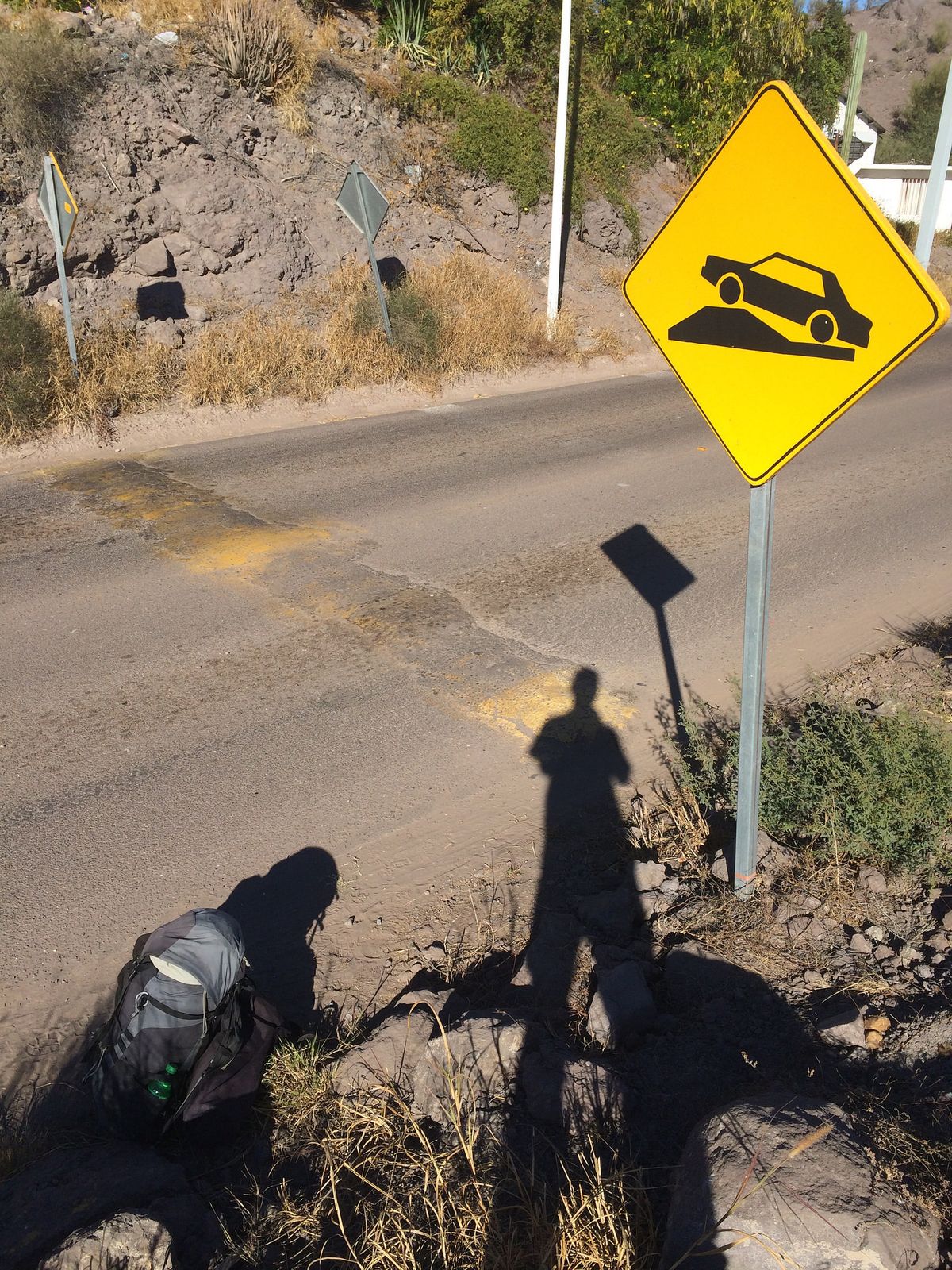
You can also catch long rides at the exits of the cities when you travel on the highways. Many cities have speed bumps (tope) where the highway begins at the edge of town. Where there are police posts at the entrance or exits to towns, there are usually topes too. On smaller highways in more rural areas, there are often speed bumps at every little town, making it easy to move quickly with a number of shorter rides.
Many of the larger, faster highways operate on a toll system. It's common for there to be a free road (libre) parallel to the paid one (cuota), the former being slower and easier to catch rides, but the latter much more likely for getting longer rides. The tollbooths (caseta) can be good places too, and the ones near the cities can usually be reached by local transport. However, sometimes you might be told to stand about 100m past the tollbooth itself, so traffic has often already picked up speed by the time they get to you and it can be difficult for cars to pull over. Fortunately, there are often restrooms, gas stations and stores just past the caseta, so you can talk to drivers that stop there. Signs can come in really handy at tollbooths.
In some mid-sized cities like Tampico, Oaxaca, and Pachuca there are no transit roads and you have to cross the city. Taking a bus makes things easier.
Safety
It is even less recommendable than in other countries to take drugs or weapons with you, especially since after 2010 the Mexican government, backed by the US DEA who are actually present in Mexico (!!), have decided to crack down on drug and weapon trafficking. This has declined again since the following government of Peña Nieto seems to be more friendly towards the narcos. There still are numerous checkpoints all around the country, but in general it doesn't seem very likely that you will be checked and the soldiers hardly ever search all the way through a large back-pack, unless you answer their questions really bad. If the vehicle you're riding in does get stopped just stay calm, show your passport, say the magic words "turista" ("tourist") and "de paseo nada más" ("just passing"), and if they ask to see your stuff open you bag and show them that it's all clothes and stuff. Small quantities of marijuana are decriminalized and police officers can probably be convinced to overlook them with a small payment, although of course the Hitchwiki community endorses neither drug possession nor bribery.;-) Be aware that knives are illegal as they are considered "lethal weapons" according to Mexican law and can theoretically be punished by up to five years of prison.
In the south, your drivers might ask you about your immigration status and advise you of immigration check points.
Single Women
![my girl Ave ride beggin' in San Isidro Mazatepec, Jalisco- a pueblo harboring my favorite taco stand with the most toppings you'll ever want [two_string_sally]](images/20180310-123251jpg.jpg "my girl Ave ride beggin' in San Isidro Mazatepec, Jalisco- a pueblo harboring my favorite taco stand with the most toppings you'll ever want [two_string_sally]")
One of the great things of hitchhiking in Mexico is that even if you travel alone, you rarely have to hitch-hike alone, because hitchhiking is such a common activity among locals - joining locals hitching will not only add to the fun, but also your safety. This is especially handy as in certain areas - like in the North, around Chihuahua - men might take you for a prostitute (even if you have a large bag and totally look like a foreigner).
Zenit seriously disagrees with the statement that "you rarely have to hitch-hike alone" in Mexico. In three months, between Baja California and Cancún, he only saw other hitchhikers two or three times.
two_string_sally thinks the day she hitched from San Isidro Mazatepec, Jalisco to the airport (50 km) was a fun ole time! prior to that she'd hitched 2,600 km with her male friend and received the usual creepiness of the world. she will say, however, that mexican men (and turkish, indian etc) seem to perceive us western women as free lovin' (which, relative to their culture, we are), and had the usual, 'do you want to have sex with me?,' leg touching drama you just have to deal with. nothin' dangerous, she might add. FUN TIMES!
[[Image:31723347 1762829300429691 117312268571508736 n.jpg|thumb|240px|right|the perils of female hitching. nothing dangerous, but annoying when the guys start touching your hair, trying to sleep on your shoulder, or making a grab for your no no zones ha! strange times but super fun hanging at the aguascalientes with them. pictured is Avery warding off a sleepy kid.
[two_string_sally]
]]
Border crossings
To/From Belize
As to 2024 Hitchhiking to the border from Mexico is quite easy.
Although most of the road is highway and most people go to Chetumal. It is still easy to stop rides and ask them to stop for you on the junction to Belize. The border crossing itself is a bit confusing. There are two different customs in different locations for entering and exiting Mexico. The locals tend to not know so well the rules because they don't apply on them the same as tourist.
Exiting Mexico was super easy. There is a white room in the middle of the road where a lady just stumped my passport with barely any questions. She did tell me that if I wish to go back to Mexico in this border crossing it will cost me 750 Mexican pesos and a flight ticket as a proof that I am leaving Mexico.
The Belizean customs are not so close to the Mexican customs. Luckily I had locals helping me, driving me around. In the Belizean customs you need to fill a standard paper stating your name, passport number etc... I was told to fill that I will stay only 30 days in Belize. They inform you that you can ask for 30 days more later and it will cost 100 US dollars. You have to state to which hotel are you going. I just filled a name I found online and no questions were asked. Later they might check your bags to see if you are smuggling anything ilegal, like fruit and veggies from Mexico.
There is a bus stop just after the customs and even the police told me I can hitchhike there. Everyone in the Belizean side seem to prefer speaking English.
To/From Guatemala
Guatemala and Mexico had 10 formal border crossings in 2004:
Ciudad Hidalgo, Chiapas – Ciudad Tecún Umán, San Marcos
Hitchhiking in Chiapas to the border is not so easy. Many Mistakes hitchhikers with Illegal immigrants and tend not to stop. Hitchhiking on the Guatemalan side is Much easier.
Mini buses go from Tapachula Termial De Cortos Recorridos to Ciudad hidalgo For 40 Pesos (March 2025)
The Crossing in Ciudad Hidalgo is quite close to the central park. As you enter the Immigration offices area many people will offer you to Exchange money. Careful! You will need 5 Pesos to cross the border, and if you overstayed your time the immigration will want to charge you in Mexican Pesos. There are People who will change your money on the Guatemalan side also, So don’t worry.
In the Big white building you will be asked to leave you bag while entering. It is safe to leave you stuff because there are being heavily guarded.
The Immigration workers ask if you coming or leaving Mexico. Leaving Mexico is Easier than entering. They stamp you and let you go. Without checking your bags.
Entering Mexico might be harder. Depends on your luck. Some get checked quite a lot and might get denied while others might cross with no problem.
As you continue towards Guatemala, you will face a Turn gate with a guard. Crossing costs 5 Mexican Pesos or 5 US Dollars I have no clue why. Better to keep with you a 5 Peso Coin before you start crossing because you pay the gate and not the guard through a machine coin slot.
You cross the gate and start to cross the bridge towards Guatemala. You will probably be swarmed by different type of taxis wishing to take you to the other side. The walk to the other side is about a 2 minute easy walk, So it is not really a must to take a taxi.
On the other side many people will offer you to exchange Money from Pesos to Quetzales. They Don’t offer the best ratio. The Immigration office it self is very small. It will be quite of a long wait if there are many people at the crossing when you arrive. But beside that the workers barely ask any questions and give you passage to Guatemala and 90 days with No questions at all. They Don’t check you bags either.
Talismán, Chiapas – El Carmen, San Marcos Please add information if you crossed this border.
Union Juárez, Chiapas – Toquían Grande, San Marcos Please add information if you crossed this border.
Mazapa de Madero, Chiapas – Sibinal, San Marcos Please add information if you crossed this border.
Ciudad Cuahtemoc, Chiapas – La Mesilla, Huehuetenango
This crossing is considered one of the more forgiving crossings. People who work in tourism for the last 20 years in Guatemala say that the likelihood of a person to get denied access to Mexico in La Mesilla is much lower than other crossings between Guatemala and Mexico. That being said, Many locals considered this crossing dangerous because some incidents that happen with the Mafia.
Coming from Guatemala hitchhiking to the border is relatively easy. Towards the final part it gets a little bit harder. There are many Mini-buses you can take if it takes you too long. A lot of them pass all the time on the main road.
In La mesilla the mini bus drops you a bit far for the border crossing. You can take a taxi or walk down hill on the main road for about 8 minutes.
The immigration office in Guatemala is quite ok. They just check your passport and immediately stamped it. No questions. They didn't check my bags when I crossed there.
After crossing you are in a buffer zone between Mexico and Guatemala.
And the distance is a little bit far. About 5 minutes by car. People said it is dangerous to walk it. If you prefer not to walk there are taxis waiting at the buffer zone.
They bring you straight to the Mexican immigration office.
The Mexican immigration is a bit tougher. They asked me what's my plan for Mexico and for how long. I asked for 180 days And they said they can only give me 90 days and it will cost 861 Mexican pesos (January 2025). I think they keep it always at 50 Us dollars.
All the conversation was in Spanish, and the workers seemed a little bit angry. Eventually they sent me to the building next door to pay.
In the next building there was no one. And after 10 minutes someone came to the toll booth. After paying he gave me a large paper and told me to go to where I was before.
They stamped my passport and the large paper I brought and told me to guard it well. This paper was checked many times while I was in Mexico. And they took it from me when I left Mexico. So i think it is important.
Carmen Xhán, Chiapas – Gracias a Dios, Huehuetenango Please add information if you crossed this border.
Nuevo Orizaba, Chiapas – Ingenieros, El Quiché Please add information if you crossed this border.
Frontera Corozal, Chiapas - Bethel, El Petén Please add information if you crossed this border.
El Ceibo, Tabasco – El Ceibo, El Petén Please add information if you crossed this border.
El Martillo, Tabasco – El Naranjo, El Petén Please add information if you crossed this border.
Food
Vegetarians/vegans: if you ask food carts or taco places if they have anything vegetarian, and they say no, look at the ingredients they've got in their work area and get creative! One vegetarian traveller's favourite is tomato and avocado taco.
Personal experiences
Image:Katja and Augustas in Mexico.JPG|Hitchhikers Katja and Augustas barely fit with all their stuff in the front of this pickup. Image:Katja hitchhiking in Mexico.JPG|Katja is ready to get a ride! Image:Katja on a pickup in Mexico.JPG|A usual ride on a back of a pickup. Image:Augustas is helping to push the truck in Mexico.JPG|Sometimes hitchhikers can be of help to a driver - here Lithuanian hitchhiker Augustas helping to push a truck somewhere in Mexico.
April 2008
It may be extremely easy to hitch in mainland Mexico, but in the Baja California peninsula, it's a completely different story! In Baja California, there is only one road, the HWY 1, which isn't hell to hitchhike on but requires a lot of patience: there are often large distances in between cities (which are barely even cities, rather a few ranches and cactus farms) and even larger distances between petrol stations (example: El Rosario is the last one before Guerrero Negro, about 360 km further down in Baja California Sur). Getting stuck in the middle of the desert is NOT fun, and many people can only take you from town to town as it is local traffic or gringos doing one of the many races down in the Baja. Also, unless you are planning on staying in Baja and going back up towards the USA-Mexico border, you should hitchhike from Mexicali south. If you plan on heading to mainland Mexico from the Baja, you must take a ferry in either La Paz or Cabo San Lucas towards Mazatlán, which costs about 80$ USD
The Yucatan Peninsula(Campeche, Yucatán, Quintana Roo), on the other hand, outshines all Mexico for its ease and amiability of hitchhiking. You might not even fall victim to Moctezuma revenge eating old papaya slushies and bean burritos out of the trash in some of those tourist strips. Hey
July 2010
In 10 months and tens of thousands of km covered by thumb, my only "bad" experience was between Pto. Angel and Oaxaca City (a notorious drug route, as I later learned). The driver asked me to drive and once I was behind the wheel informed me that the van was full of Colombia's finest. I nearly shat myself, but the experience turned out to be quite interesting, as we were forced to make several detours to avoid police checkpoints, taking me through beautiful and remote parts of the Oaxacan mountains I otherwise never would have discovered. Be careful not to get set up. A very, very, rare occurance, but one that can happen.
August 2011
I traveled for 8 months in Mexico, all by thumb. I came down Baja California, hitched a sailboat from La Paz to Mazatlán, steamed over to Veracruz for the carnival, went up and around the Yucatán, then down into Chiapas, Guatemala, and then back to Veracruz, across to all the big central cities, and down the Pacific coast to Oaxaca and Guatemala once more. I got picked up by plenty of self-proclaimed drug dealers. Whatever. Lovely country.
March 2012
I hitched at exits and on-ramps and speed bumps (topes) and made excellent time from Matamoros to Catemaco. As long as cars are going somewhat slow any place is really a good place to hitchhike. I rarely waited more than fifteen minutes. People were very hospitable. I was treated to lots of delicious food and given places to stay by those who picked me up. This is my favorite country to hitchhike thus far
4 June 2013
The small less trafficky roads, in the mountains and in Chiapas for instance, can test your patience. If you are coming from south (Guatemala) people might be afraid to pick you up because there are so many checkpoints. Even the ones who do stop ask if you have problems with authorities, if you are smuggling drugs or if you have a passport.
I hitchhiked for two months through the mainland and had a great experience. People are very friendly and willing to help. The biggest thing is getting outside the city. The good thing about the big highways is you are more likely to get a long ride, the bad thing it can be rough to have someone pull over. The small villages are easier to get rides but tend to be short.
april 2018
ANDALE! México remains my favorite place to catch a ride- starting in san diego, cali and winding up in ciudad de guatemala a month later was a breeze. forget about that one 24 hour wait in Tonalà (7eleven outside Guadalajara, you were cruel to me), and hear me out when i say that topés (speed rumps) are your besties and camionetas (pick ups) are the most splendid way -and most common ride- to view méxico, especially with a cold Modelo in your hand and Chalino Sanchez serenading your ears from the front seat. got our shit checkpoint-searched HARD in southern baja, witnessed bribes in guate, were taken to unknown aguascalientes in jalisco, had too much tequlia in Tequila, got robbed in jocotepec, hitched a ride with turkeys, bread, candy and piñatas, drank the waters of canyon aguacero in chiapas. oh what a wonderful world. thumbed it solo as a chick and with a male and later female road dawg. ¡buen viaje! signing off.
Mexico City
Edit on wikiRoadside hitching spots go stale. For current places to hitch in and out of this city, use maps.hitchwiki.org and the live Hitchwiki page linked at the end of this chapter. This book keeps general orientation, not a pin gazetteer.
Mexico City is the capital of Mexico. About 9,000,000
people live in the Federal District, making it the most densely
populated area of Mexico. Locally, Mexico City is known as Ciudad de
México, Distrito Federal, D.F. or simply
México (not to be confused with the country).
The metro of Mexico is a great way to get around for small money open until midnight. Minibuses (combis) are 2.50 for the first 5km, 3 Pesos 5-12km and 4 Pesos above.
Bermuda
Edit on wiki'''''' is the oldest and most populous remaining British overseas territory, in the North Atlantic Ocean, 1,030 kilometres from North Carolina.
Legality of Hitchhiking
The law here has not been checked. Nobody has yet read the road traffic rules in force in Bermuda against the official text, so this section cannot tell you what they say, and nothing elsewhere on this page should be read as a statement of the law. What holds almost everywhere is that hitchhiking is not an offence in itself and that what the traffic code regulates is where a pedestrian may stand — off the carriageway, and off motorway-class roads and their slip roads altogether — but whether that is true here is simply unknown. Ask locally before standing on a major road, and treat the rest of this article as what hitchhikers report rather than as a rule you can rely on. If you can read the official text, please replace this paragraph with the provision it turns on and a link to it.
Personal Experiences
Central America and the Caribbean
The isthmus, then the Caribbean.
Guatemala
Edit on wikiGuatemala is a country in Central America.
Hitchhiking
Hitchhiking in Guatemala these days is relatively doable — not too hard, though there are a few tricky areas. Most Guatemalans are familiar with the concept and refer to it as “pedir un jalón.”
Near border crossings, it’s usually easy to get a ride with large trucks, which can take you quite far — even to the border of the next country, if that’s your destination.
The most common rides you'll get are in the back of pickup trucks.
Just like elsewhere, it's harder to get rides near major cities, on fast highways, or on remote roads with little traffic.
Most roads in Guatemala have only one lane in each direction, and drivers often behave carelessly. The government reports over 1,000 accidents every month. Because of this, drivers may hesitate to stop on the roadside if they fear getting hit by other cars while picking someone up.
For that reason, your best option is to stand near speed bumps, where vehicles are forced to slow down.
It’s also helpful to recognize the different types of public transportation in Guatemala so you can avoid unexpected expenses. You can find more about that in the Low-Cost Rides section.
Legality of Hitchhiking
The law here has not been checked. Nobody has yet read the road traffic rules in force in Guatemala against the official text, so this section cannot tell you what they say, and nothing elsewhere on this page should be read as a statement of the law. What holds almost everywhere is that hitchhiking is not an offence in itself and that what the traffic code regulates is where a pedestrian may stand — off the carriageway, and off motorway-class roads and their slip roads altogether — but whether that is true here is simply unknown. Ask locally before standing on a major road, and treat the rest of this article as what hitchhikers report rather than as a rule you can rely on. If you can read the official text, please replace this paragraph with the provision it turns on and a link to it.
Public Transportation in Central America
Central America has many types of public transportation. If you plan to hitchhike, it's helpful to recognize them. If drivers see you with your hand raised and thumb out, they’ll likely stop. However, you might need to be a bit assertive—either to get them to continue driving (in the best case) or to avoid accidentally boarding a ride that expects payment without you realizing it (in the worst case). Here’s a short guide:
Mototaxi / Mini The classic three-wheeled vehicle. These go by many names: tuk-tuk, rickshaw, motocar, etc. Some have enclosed walls; others are completely open. They are very small and almost always operate as taxis. Minis are very similar but have four wheels and also very very small
Colectivos These are probably the hardest to recognize from a distance. Essentially, they are large vans with many seats. (See photo.)
Chicken Bus The easiest to spot—these are old U.S. yellow school buses that have been transformed for local transport. They usually feature wild paint jobs and are known for their reckless driving.
Pickups/Camioneta Pickup trucks with metal frames built onto the back are often used for short-distance transport. However, not all pickups with a rear structure are. Those with large metal frameworks are more likely to serve as buses.
City Taxi These are usually easy to identify. They look like typical taxis, often with a plastic sign on top and large “TAXI” lettering. They are typically white or yellow, sometimes with a checkered stripe on the sides.
Illegal Taxi Almost any private car can act as a taxi. Sometimes, someone just decides they’re a taxi driver. This is why it’s best to ask before getting into a car if it's a registered taxi. Fortunately, these are not very common. they are ilegal because they don't have taxi license.
Some private drivers who pick you up may also ask you to contribute toward fuel costs. To avoid misunderstandings, it’s a good idea to ask before getting into the vehicle: “¿Es un ride, o eres taxi?” (“This is a free ride or are you a taxi?”)
If you don’t clearly agree on whether the ride is free (or negotiate a price) beforehand, drivers might later demand an inflated fare when you want to get out—by then, it's usually too late to say "No." This applies not just to hitchhiking, but also to local taxis and other informal transport options.
The good news is that fares are typically very low—almost always under $2 USD. Many hitchhikers choose to ride in one of these pick-ups or buses and pay the small fee. This is common practice among locals, many of whom are very poor. As a foreign traveler, it's normal to be expected to contribute a little—these small payments help local drivers offset the cost of owning and operating a vehicle.
So if you plan to hitchhike in Guatemala, expect a mix of free rides and low-cost contributions.
Additional Tip: As of 2024, the standard bus fare in Guatemala is Q10 per hour. You can use this as a rough guideline for calculating a fair contribution when riding with someone.
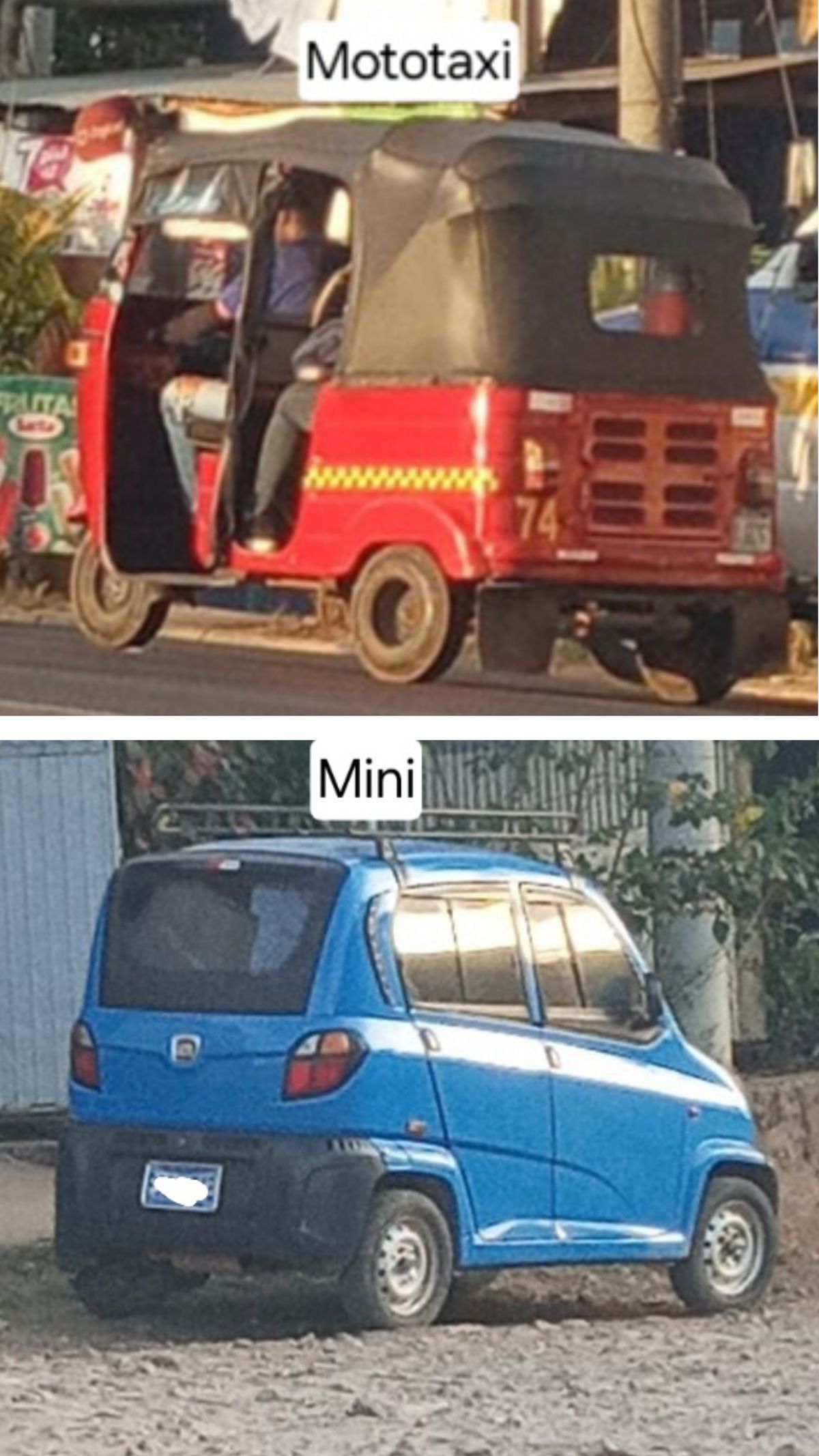
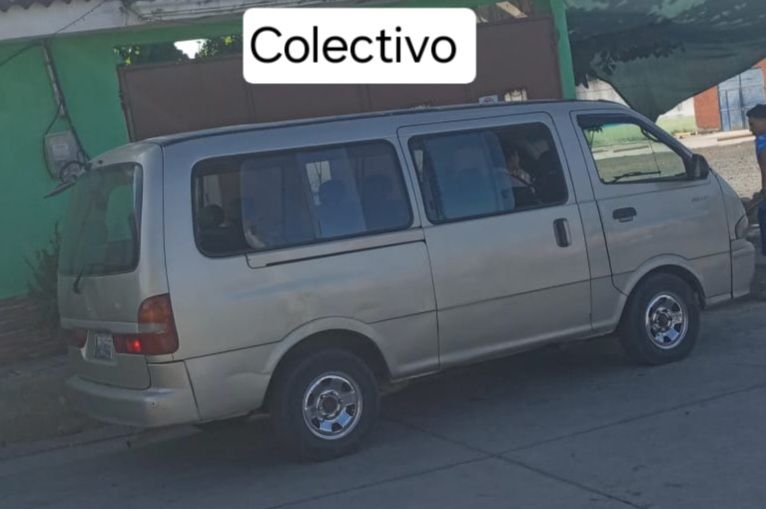
Cities
- Antigua
- Cuatro Caminos
- Guatemala City (capital)
- Quetzaltenango AKA Xela
Border crossings
To/From Belize
There are 3 Borders crossing between Guatemala and Belize. One of the border is currently close. And one of the the two left requires a boat.
Melchor de Mencos if you Crossed this border please add information to this section
Punta Gorda to Livingstone On the south most point of Belize you can get boats that go to Livingstone. Boats go Monday to Friday leaving 9:30 from Punta Gorda to Livingstone and leaving from Puerto Barrios in Honduras passing in Livingstone To Belize at 14:00 with a company called Requena and cost 80 Belizean Dollars (June 2024). the ride takes about 40 minutes.
You need to purchase a ticket before at Requena’s office a little bit norther than the immigration office in Punta gorda. If you are coming from Livingstone to Belize tickets can be bought at docks when the boat arrives around 14:00. make sure you passed in the Guatemalan Immigration office before.
At the entrance of Punta Gorda Immigration office guards will want to see your boat ticket and maybe passport. Inside you will have to pay 40 Belizean dollars for leaving. I know, Crazy.
After paying you get stamped in the next stand and you are free to go to the docks. Come much before 9:30 else you might miss your boat. The Boat company recommends you to get there latest by 9 Am, But 9 Am might be too Late.
Entering Belize doesn’t cost anything for most nationalities, but you only receive 30 days, for another 30 days you’ll have to pay 100 US Dollars. On Entrance you will have to state on a paper how long you are going to stay in Belize. Just fill 30 Days, you want get more. And you’ll need to put a name of a Hostel/Hotel where you are planing to stay. Don’t worry you can later after crossing choose to go to another Hostel/Hotel if you wish.
In Livingstone the immigration office is not so close to the docks. About 6 minutes walk up hill. If you are leaving Guatemala you should get stamped before trying to buy a ticket from the boats at the docks. If you just arrived in Guatemala you should go to soon as you get to Livingstone to Immigration office to get stamped.
Immigration office is located here: 15.826657451562127, -88.74908321548322, Google maps
Leaving is quite easy. Entering requires you to fill a form online. You can get very Weak Slow WIFI at the immigration office. The Problem is that Livingstone tends to have a lot of outbreaks where the whole city don’t have electricity sometimes for days which will make it impossible to fill this form using the immigration WIFI. In that case you might need to wait for the electricity to come back to get stamped.
After they give you the password for WIFI you can Scan the QR code they have on the entrance of the building which will lead you to a website to fill all your personal data. After succeeding to fill the form they stamp you passport and you are free to go.
Jalacte Border Crossing (Illegal by this moment)
December 2016 experience: El Chulito and Shamcore tried to legally cross the border with Guatemala via Jalacte in December 2016. They hitchhiked from Punta Gorda to Jalacte without any real difficulties. The traffic is poor, but they got rides from one village to a next one and reached the destination point in about 3 hours, which is not a bad timing. The road was completely paved and in great condition. Seems like the works are almost finished. About 5kms before Jalacte there's customs where the guards first ask where you go. El Chulito and Shamcore asked about a legal way to exit Belize and enter Guatemala and got bad news. The only way to leave the country legally is to find the only police officer in Jalacte who owns an exit stamp. Actually he's only authorized to put exit stamps only in guatemalan passports, but it seems like he can be convinced to help travelers as well. Now it's impossible to enter Guatemala legally, because there's no kind of customs or control when entering the country. This means that it's impossible to get an entry stamp and stay in the country on a legal basis. People say that Guatemala doesn't really participate in making a legal border crossing point because of a territorial conflict between two countries. Let's hope that in 2017 travelers will be able to cross the border legally. At the moment you can only enter Guatemala at your own risk, which is never advisable by HitchWiki community.
To/From Mexico
Guatemala and Mexico had 10 formal border crossings in 2004:
Ciudad Hidalgo, Chiapas – Ciudad Tecún Umán, San Marcos
Hitchhiking in Chiapas to the border is not so easy. Many Mistakes hitchhikers with Illegal immigrants and tend not to stop. Hitchhiking on the Guatemalan side is Much easier.
Mini buses go from Tapachula Termial De Cortos Recorridos to Ciudad hidalgo For 40 Pesos (March 2025)
The Crossing in Ciudad Hidalgo is quite close to the central park. As you enter the Immigration offices area many people will offer you to Exchange money. Careful! You will need 5 Pesos to cross the border, and if you overstayed your time the immigration will want to charge you in Mexican Pesos. There are People who will change your money on the Guatemalan side also, So don’t worry.
In the Big white building you will be asked to leave you bag while entering. It is safe to leave you stuff because there are being heavily guarded.
The Immigration workers ask if you coming or leaving Mexico. Leaving Mexico is Easier than entering. They stamp you and let you go. Without checking your bags.
Entering Mexico might be harder. Depends on your luck. Some get checked quite a lot and might get denied while others might cross with no problem.
As you continue towards Guatemala, you will face a Turn gate with a guard. Crossing costs 5 Mexican Pesos or 5 US Dollars I have no clue why. Better to keep with you a 5 Peso Coin before you start crossing because you pay the gate and not the guard through a machine coin slot.
You cross the gate and start to cross the bridge towards Guatemala. You will probably be swarmed by different type of taxis wishing to take you to the other side. The walk to the other side is about a 2 minute easy walk, So it is not really a must to take a taxi.
On the other side many people will offer you to exchange Money from Pesos to Quetzales. They Don’t offer the best ratio. The Immigration office it self is very small. It will be quite of a long wait if there are many people at the crossing when you arrive. But beside that the workers barely ask any questions and give you passage to Guatemala and 90 days with No questions at all. They Don’t check you bags either.
Talismán, Chiapas – El Carmen, San Marcos Please add information if you crossed this border.
Union Juárez, Chiapas – Toquían Grande, San Marcos Please add information if you crossed this border.
Mazapa de Madero, Chiapas – Sibinal, San Marcos Please add information if you crossed this border.
Ciudad Cuahtemoc, Chiapas – La Mesilla, Huehuetenango
This crossing is considered one of the more forgiving crossings. People who work in tourism for the last 20 years in Guatemala say that the likelihood of a person to get denied access to Mexico in La Mesilla is much lower than other crossings between Guatemala and Mexico. That being said, Many locals considered this crossing dangerous because some incidents that happen with the Mafia.
Coming from Guatemala hitchhiking to the border is relatively easy. Towards the final part it gets a little bit harder. There are many Mini-buses you can take if it takes you too long. A lot of them pass all the time on the main road.
In La mesilla the mini bus drops you a bit far for the border crossing. You can take a taxi or walk down hill on the main road for about 8 minutes.
The immigration office in Guatemala is quite ok. They just check your passport and immediately stamped it. No questions. They didn't check my bags when I crossed there.
After crossing you are in a buffer zone between Mexico and Guatemala.
And the distance is a little bit far. About 5 minutes by car. People said it is dangerous to walk it. If you prefer not to walk there are taxis waiting at the buffer zone.
They bring you straight to the Mexican immigration office.
The Mexican immigration is a bit tougher. They asked me what's my plan for Mexico and for how long. I asked for 180 days And they said they can only give me 90 days and it will cost 861 Mexican pesos (January 2025). I think they keep it always at 50 Us dollars.
All the conversation was in Spanish, and the workers seemed a little bit angry. Eventually they sent me to the building next door to pay.
In the next building there was no one. And after 10 minutes someone came to the toll booth. After paying he gave me a large paper and told me to go to where I was before.
They stamped my passport and the large paper I brought and told me to guard it well. This paper was checked many times while I was in Mexico. And they took it from me when I left Mexico. So i think it is important.
Carmen Xhán, Chiapas – Gracias a Dios, Huehuetenango Please add information if you crossed this border.
Nuevo Orizaba, Chiapas – Ingenieros, El Quiché Please add information if you crossed this border.
Frontera Corozal, Chiapas - Bethel, El Petén Please add information if you crossed this border.
El Ceibo, Tabasco – El Ceibo, El Petén Please add information if you crossed this border.
El Martillo, Tabasco – El Naranjo, El Petén Please add information if you crossed this border.
Sleeping
Camping is not a very common practice for Guatemalans. Most Guatemalans will tell you that camping in a place remote with no guards is not safe. Many think that dangerous people are roaming in the middle of nowhere at the middle of night.
Practically Camping in Guatemala is generally safe and easy. I do recommend asking locals where you can camp, many times they will be very helpful and give you a good spot.
In many wonderful spots in nature where you are hidden you can camp and have a really chill night.
The exception is when you are close to big cities or borders. In places like Esquintla robbers might approach a tent if they see one.
Beside that Guatemala suffers from a large alcoholic population which tend to come an harass a tent if they see one.
Therefore, totally hidden spots, or guarded spots like someone’s garden or a gas station if you get permission are where you should aim camping.
Personal Experiences
I have been hitchhing as my primary means of inter-city/village transport for the last year in Guatemala. It's been a great experience so far; its the best way to take in the country. I've updated a bit of the info above drawing from my personal history.
I hitched on two different occasions in Guatemala. The first time I made it through the tourist belt, to Semuc Champey at Lanquin. The second time through I hitched with a trucker who brought me to the Salvadoran border, letting me sleep in the bunk the whole 9 hour nighttime ride. Just watch out for mudslides.
Zenit seriously enjoyed hitchhiking in Guatemala. Waiting times were short, people were friendly, the country felt much safer than Mexico. In three or four days it only happened once or twice that somebody wanted money, and they were easily spotted right away.
October 2017, April 2018
two weeks romping around the carreteras of guate: 15 minute max waits, staying in people's homes when they incredulously protest your plan to sleep in the bushes somewhere tonight, and only a 200 Quetzal fine (dear French driver - and Guate resident-, don't forget your passport at home!), and plenty of curious passers-by. guate is as colorful as it is great for hitching! myself and a male friend rocked it this past october (2017). signing off
2019
Only good experiences - please give a few quetzales for gas if/where you can. Hitched all around the greater antigua area, to/from atitlan, to flores, 16 hours in a van with students - got to watch shaw and hobbes in spanish on that one. so common and easy, it felt very strange/cumbersome to actually take the bus. Hitched just me (sola female), with two girlfriends, with three people, paid only once 10Q ($1.25) because they saved our asses (2019)
Getting to Guatemala
There are of course many ways to get to Guatemala. The way you choose to go depends on where you want to travel. One of the most thrilling ways is by sailboat. You can find many sailing vessels in the Rio Dulce area. The more experience you have the cheaper your fare is. My ride was free and the experience was beyond what I ever expected.
Belize
Edit on wiki Belize
is a small country in Central America. It borders to Mexico in the north
and Guatemala in the west.
Belize
is a small country in Central America. It borders to Mexico in the north
and Guatemala in the west.
Hitchhiking
Hitchhiking in Belize is very logical and appears to be very good and easy, even locals do it. There are plenty of speedbumps (just called bumps), so each time you walk out of a town it's better to thumb at one of these. Some hitchhikers say that a small token payment may be exchanged. Others have not experienced this at all. Public transport is inexpensive but quite slow considering the size of the country. Cars with green license plates are taxis. Small smart mini cars tend to be taxis for short distances.
People in Belize are very friendly and many of them are proud of their country. Try to show respect to Belize and it's citizens and you'll find out that this tiny country has a lot of things to offer.
Safety wise Belize is generally safe but have some serious dangers. One of those is police brutality.
People in the past have been robbed and abused by the Belizean police. Human rights basically don't exist, and you will not have anywhere to complain if the police violates your rights.
It is recommended to keep distance and avoid any small behavior that might give the police an excuse to pick on you.
SonOfHitch spent a night in jail just for accepting an invitation to someone's home in Punta Gorda. More info in experiences.
Legality of Hitchhiking
The law here has not been checked. Nobody has yet read the road traffic rules in force in Belize against the official text, so this section cannot tell you what they say, and nothing elsewhere on this page should be read as a statement of the law. What holds almost everywhere is that hitchhiking is not an offence in itself and that what the traffic code regulates is where a pedestrian may stand — off the carriageway, and off motorway-class roads and their slip roads altogether — but whether that is true here is simply unknown. Ask locally before standing on a major road, and treat the rest of this article as what hitchhikers report rather than as a rule you can rely on. If you can read the official text, please replace this paragraph with the provision it turns on and a link to it.
Cities
- Corozal
- Belize City
- Belmopan
- Punta Gorda aka "PG"
- San Ignacio aka Cayo
Islands
- Caye Caulker
- San Pedro
Border crossings
To/From Mexico
As to 2024 Hitchhiking to the border from Mexico is quite easy.
Although most of the road is highway and most people go to Chetumal. It is still easy to stop rides and ask them to stop for you on the junction to Belize. The border crossing itself is a bit confusing. There are two different customs in different locations for entering and exiting Mexico. The locals tend to not know so well the rules because they don't apply on them the same as tourist.
Exiting Mexico was super easy. There is a white room in the middle of the road where a lady just stumped my passport with barely any questions. She did tell me that if I wish to go back to Mexico in this border crossing it will cost me 750 mexican pesos and a flight ticket as a proof that I am leaving Mexico.
The Belizean customs are not so close to the mexican customs. Luckily I had locals helping me, driving me around. In the Belizean customs you need to fill a standard paper stating your name, passport number etc... I was told to fill that I will stay only 30 days in Belize. They inform you that you can ask for 30 days more later and it will cost 100 US dollars. You have to state to which hotel are you going. I just filled a name I found online and no questions were asked. Later they might check your bags to see if you are smuggling anything ilegal, like fruit and veggies from Mexico.
There is a bus stop just after the customs and even the police told me I can hitchhike there. Everyone in the Belizean side seem to prefer speaking English.
To/From Guatemala
There are 3 Borders crossing between Guatemala and Belize. One of the border is currently close. And one of the the two left requires a boat.
Melchor de Mencos if you Crossed this border please add information to this section
Punta Gorda to Livingstone On the south most point of Belize you can get boats that go to Livingstone. Boats go Monday to Friday leaving 9:30 from Punta Gorda to Livingstone and leaving from Puerto Barrios in Honduras passing in Livingstone To Belize at 14:00 with a company called Requena and cost 80 Belizean Dollars (June 2024). the ride takes about 40 minutes.
You need to purchase a ticket before at Requena’s office a little bit norther than the immigration office in Punta gorda. If you are coming from Livingstone to Belize tickets can be bought at docks when the boat arrives around 14:00. make sure you passed in the Guatemalan Immigration office before.
At the entrance of Punta Gorda Immigration office guards will want to see your boat ticket and maybe passport. Inside you will have to pay 40 Belizean dollars for leaving. I know, Crazy.
After paying you get stamped in the next stand and you are free to go to the docks. Come much before 9:30 else you might miss your boat. The Boat company recommends you to get there latest by 9 Am, But 9 Am might be too Late.
Entering Belize doesn’t cost anything for most nationalities, but you only receive 30 days, for another 30 days you’ll have to pay 100 US Dollars. On Entrance you will have to state on a paper how long you are going to stay in Belize. Just fill 30 Days, you want get more. And you’ll need to put a name of a Hostel/Hotel where you are planing to stay. Don’t worry you can later after crossing choose to go to another Hostel/Hotel if you wish.
In Livingstone the immigration office is not so close to the docks. About 6 minutes walk up hill. If you are leaving Guatemala you should get stamped before trying to buy a ticket from the boats at the docks. If you just arrived in Guatemala you should go to soon as you get to Livingstone to Immigration office to get stamped.
Immigration office is located here: 15.826657451562127, -88.74908321548322, Google maps
Leaving is quite easy. Entering requires you to fill a form online. You can get very Weak Slow WIFI at the immigration office. The Problem is that Livingstone tends to have a lot of outbreaks where the whole city don’t have electricity sometimes for days which will make it impossible to fill this form using the immigration WIFI. In that case you might need to wait for the electricity to come back to get stamped.
After they give you the password for WIFI you can Scan the QR code they have on the entrance of the building which will lead you to a website to fill all your personal data. After succeeding to fill the form they stamp you passport and you are free to go.
Jalacte Border Crossing (Illegal by this moment)
December 2016 experience: El Chulito and Shamcore tried to legally cross the border with Guatemala via Jalacte in December 2016. They hitchhiked from Punta Gorda to Jalacte without any real difficulties. The traffic is poor, but they got rides from one village to a next one and reached the destination point in about 3 hours, which is not a bad timing. The road was completely paved and in great condition. Seems like the works are almost finished. About 5kms before Jalacte there's customs where the guards first ask where you go. El Chulito and Shamcore asked about a legal way to exit Belize and enter Guatemala and got bad news. The only way to leave the country legally is to find the only police officer in Jalacte who owns an exit stamp. Actually he's only authorized to put exit stamps only in guatemalan passports, but it seems like he can be convinced to help travelers as well. Now it's impossible to enter Guatemala legally, because there's no kind of customs or control when entering the country. This means that it's impossible to get an entry stamp and stay in the country on a legal basis. People say that Guatemala doesn't really participate in making a legal border crossing point because of a territorial conflict between two countries. Let's hope that in 2017 travelers will be able to cross the border legally. At the moment you can only enter Guatemala at your own risk, which is never advisable by HitchWiki community.
Gallery
Image:Katja and Augustas' ride in Belize.JPG|Katja and Augustas on a free pickup ride in Belize. Image:Katja hitchhiking in Belize2.JPG|On the road in Belize. Image:Katja and Augustas hitch a tractor in Belize.JPG|Sometimes you might be "lucky" to hitch a tractor. Image:Katja hitchhiking in Belize3.JPG|Hitchhiker Katja waiting for a ride.
Personal Experiences
March 2018
Zenit hitched from the western border to the northern border in just a day in March 2018. The ease and the friendliness of people made him quite upset at already having to leave again, but the unexpected 40B$ (20US$!) exit fee quickly put his feelings back in perspective.
Levon had an extremely good experience across all the country. Roads and vehicles are scarce in many parts of the country (one in 20 minutes max); however, they almost always stop, especially if this is not a busy road. Sometimes they would expect a small treat (like a bottle of beer) but never more than that. Many locals hitchhike in the back of the pickups too. The atmosphere is very safe (didn't hitchhike in Belize City, though). Again, a very positive experience in general. No signs/cardboards are needed. Just to underscore the level of "hitchability" - we hitched from and back to the airport right on time to fly back to Canada:)
June 2024
SonOfaHitch I hitchhiked Belize in June 2024 for almost a month, Exploring all it’s parts. Hitchhiking was quite easy. And people were friendly. I felt safe most of the time.
That being said, Most people I met had a quite serious relation with alcohol and or other substances. And the country was very Expensive. Beside that, law and Human rights don’t really exist, and it seems money can get you out of anything here.
I met people that there house was just destroyed by the neighbor coming with a Bulldozer just because he felt like it. To say the least he didn’t pay anything to the old lady he destroyed her house and the law never prosecuted him. Situation like this are apparently according to the locals common in Belize.
Towards my last days I was arrested by the police. For what you might ask? I was invited to stay at someones house by a guy that I met in Punta Gorda. While I was in his place I offered to cook for us. He got Drunk and started acting weird. And short after the police to the house and asked me if anyone broke into the house.
To this I replayed no, but speak to the house owner who is in the next room. Apparently the guy changed his mind about inviting me over. But instead of asking me to leave he chose to call the police. I was in Shock to say the least.
The police told me “listen we know he is Drunk, don’t worry, just come and tell us what happen and we let you go”
On the way to the station one Police-woman was asking me why do I go to someone’s house, and telling me she will teach me not to trust people.
At the station they didn’t ask anything about what happened. They asked me if I do drugs if I have a criminal record, did I stole in my life etc. police man start playing with my equipment. And it seemed to clear that they are searching if they can frame me on anything.
Eventually they decided to arrest me for having two nationalities, and told me they need to contact both ambassadors before I get release.
They started to ask how much money I have, and told me that I should know that by heart. If I have more than what I say the rest is theirs. The made whole in all of my bills. And gave me some cake that apparently have Laxatives in them to give you Diarrhea.
They put me in a room full of poop all over the floor. The other inmates were shouting all night. Soon I had to go to toilet which was in the middle of the room. Needless to say that there is no door for privacy or anything. While I was sitting they decided to release the other inmates into my room, just so they can stretch their bones.
I quickly pulled my pants up and had to confront them while they were checking me.
I had to ask for the guard later to give me water to wash down the toilet. After doing so I realized the toilet just pours your feces all other the room’s floor.
They kept me there for a day. And eventually let me go with out saying what did even happen all this time I was locked and why it took so long.
As I was leaving The police-woman from yesterday asked me if I learned not to trust anyone. I said yes, and you can guess what I was wishing her at my heart.
El Salvador
Edit on wikiEl Salvador is a state in Central America, bordering Guatemala and Honduras. It is the smallest and most densly populated country in Central America. The currency is US dollars.
Hitchhiking
El Salvador is one of the easiest countries in the world to hitchhike. Getting a ride in a city is difficult as usual, but in rural areas, the first car will usually stop for a gringo. However, the buses in Salvador are so cheap (the country can be crossed for a few dollars), that the only reason to hitchhike is for the sake of meeting locals (who are very friendly).
It is possible to pick up rides from people at petrol stations, and most of the time - like in the rest countries of Central America - you will end up sitting in a back of a pick-up truck.
Legality of Hitchhiking
The law here has not been checked. Nobody has yet read the road traffic rules in force in El Salvador against the official text, so this section cannot tell you what they say, and nothing elsewhere on this page should be read as a statement of the law. What holds almost everywhere is that hitchhiking is not an offence in itself and that what the traffic code regulates is where a pedestrian may stand — off the carriageway, and off motorway-class roads and their slip roads altogether — but whether that is true here is simply unknown. Ask locally before standing on a major road, and treat the rest of this article as what hitchhikers report rather than as a rule you can rely on. If you can read the official text, please replace this paragraph with the provision it turns on and a link to it.
Getting In
El Salvador borders Guatemala and Honduras. Honduran border of El Amatilio (towards Tegucigalpa & Nicaragua) is rather difficult to leave or reach on long distance vehicles but easy on short lifts. So go for the shorties. At El Amatilio on the Salvadoran side hitchhiker Craig recommends to get at least a lift to a gas station at a junction five kilometers into the country. The gas station is a good place to get long distance lifts!
There is another big border to Honduras at Ocotepeque.
A good border option for Guatemala is Las Chinamas.
Mind of a Hitchhiker crossed the "Frontera Hachadura" from Guatemala to El Salvador 2014 in the night with a small pineapple truck and three male drivers (one of whom was deported from the USA after doing 10 years in an east coast prison for murder). The border crossing was fine after realizing that the countries Guatemala, El Salvador, Honduras and Nicaragua have a 90 day visa free policy for all of them combined. This means that if you stay one month in Guatemala, you'll have 60 days left for the three other countries unless you do a visa run towards Belize, Mexico or Costa Rica (the neighboring countries of this visa block). If you stamped in in Guatemala, you won't get a passport stamp in El Salvador. Somehow Honduras did give a stamp again while Nicaragua didn't. If you hitchhike a pineapple truck across this border at night expect it to be a long process as the truck needs to be fumigated. Iris from Mind of a Hitchhiker decided to stay with her drivers as finding a new ride would have been exceptionally shit and frankly quite dangerous at that time. Pupusas are sold in little comedores directly on the Salvadorian side.
Random advices
- Take some sunscreen though because you can get burnt quickly.
- Taste pupusas! The most wonderful food in the world! The bean version is peculiarly similar to lobiani (bean khachapuri) in Georgia.
Personal Experiences
2010
I traveled around El Salvador sometime in 2010 by thumb. It was incredibly easy to get rides, and I found Salvadorans to be particularly friendly. The coast is steamy hot, and the black sands are remarkable. I was even able to hitch to the more remote location of El Mozote. Good hitchin
2014
I hitchhiked from Guatemala to San Salvador to Honduras in 2014. Never waited more than 5 minutes for a ride. However, I had trouble asking the locals for directions... everyone was telling me which bus to get on. I just wanted to know how to get to the highway!
february and march 2016
I spent one month in El Salvador between february and march 2016 using mostly my thumb and some buses.I never had to raise my hand more than 5 minutes. Note that some roads are really quiet
Cities
- San Salvador
- Santa Anna
- San Miguel
Honduras
Edit on wikiHonduras is a country in Central America.
It borders Nicaragua to the south, Guatemala to the north and El Salvador to the north-west and west.
Hitchhiking
Hitchhiking is generally easy in Honduras. It is a quite poor country and a lot of people don't have cars. Rides come readily from people with pick-up trucks and it is not rare to see locals hitch-hiking.
Like in most of Central-America, there are lots of minibusses and not so easy to spot taxis on the road, be sure you know if you're paying or hitching free when you climb in any type of vehicle. Here people refer to hitch-hiking as jalón or ride, pedir jalón and buscar un ride are common expressions.
Legality of Hitchhiking
The law here has not been checked. Nobody has yet read the road traffic rules in force in Honduras against the official text, so this section cannot tell you what they say, and nothing elsewhere on this page should be read as a statement of the law. What holds almost everywhere is that hitchhiking is not an offence in itself and that what the traffic code regulates is where a pedestrian may stand — off the carriageway, and off motorway-class roads and their slip roads altogether — but whether that is true here is simply unknown. Ask locally before standing on a major road, and treat the rest of this article as what hitchhikers report rather than as a rule you can rely on. If you can read the official text, please replace this paragraph with the provision it turns on and a link to it.
Personal Experiences
Honduras offered a unique experience, since the country is not frequented by many thumbers, especially on the northern roads to the coast. I hitched the long dirt road to La Union from the north to just above Tegucigalpa. It's a rough ride that's worth the butt ache.
Started hitching in Honduras. Awesome experience! Really easy on all vehicles. Use thumb as usual.
march to mid april 2016
hichhiked between march to mid april 2016(as well as using buses). The public transportation is significantly more exspensive than guatemala, el salvador and nicaragua. You can end up paying 6-8 US for 3 hour ride whence in the other countries it will carry you a way longer way. It is especially easy to hich hike on the main road (No5) that connect san pedro sula and tegucigalpa. Unlike El Salvador you might need to raise your hand for a short while
Nicaragua
Edit on wikiNicaragua is a country in Central America.
It borders Honduras to the north and Costa Rica to the south.
Hitchhiking
Hitchhiking is generally easy in Nicaragua. Most people don't have cars, so if you are in a rural area, the few with cars or trucks tend to stop for lots of people. They get a kick out of foreigners.
Like in most of Central-America, there are lots of minibusses and it's not so easy to spot taxis on the road, be sure you know if you're paying or hitching free when you climb in any type of vehicle. Here people refer to hitch-hiking as ride, hacer ride or buscar un ride are common expressions.
The border between Costa Rica and Nicaragua has one particularity: the border authorities make it close to hell for any vehicle to cross from Costa Rica to Nicaragua, and trucks bearing a load often have to wait 3 days at the Peñas Blancas border before the paper work gets through to allow them passage. The cue of vehicles in Peñas Blancas is at best several miles long. Entering Costa Rica from Nicaragua takes about 1 minute on the other hand.
Legality of Hitchhiking
The law here has not been checked. Nobody has yet read the road traffic rules in force in Nicaragua against the official text, so this section cannot tell you what they say, and nothing elsewhere on this page should be read as a statement of the law. What holds almost everywhere is that hitchhiking is not an offence in itself and that what the traffic code regulates is where a pedestrian may stand — off the carriageway, and off motorway-class roads and their slip roads altogether — but whether that is true here is simply unknown. Ask locally before standing on a major road, and treat the rest of this article as what hitchhikers report rather than as a rule you can rely on. If you can read the official text, please replace this paragraph with the provision it turns on and a link to it.
Personal Experiences
Nicaragua was my favorite Central American country to hitch. I was even able to negotiate work to get the boat from El Rama to Bluefields. Ometepe island and the Laguna de Apoyo lookout at Catarina are both superb places for some free camping.
april to june 2016, july to august
Traveled between mid april to end of june 2016, generally was easy to hich yet on some occasions nobody stop, might be because of awful placing.. Anyway im about to go back july to august, will try to hich much more.
Hitching Leon to Las Penitas was super easy and much more comfortable than the bus. We would normally flag down a truck then hop in the back when they pull over. When you want to get out tap the side of the truck for them to pull over. They never even roll down their windows. We wave and yell Gracias!
March 2026
Had an easy time hitchiking from beach destinations (eg, Popoyo) - never had to wait long for a ride!
Gallery
Image:Pickup. Nicaragua.jpg|The usual way of traveling in Nicaragua Image:A hitch-hiker in Nicaragua.jpg|A hitchhiker picked up by a pickup driver
Costa Rica
Edit on wikiCosta Rica is a country in Central America. It borders Panama in the South and Nicaragua in the North.
Hitchhiking
While hitchhiking isn't customary for long distance rides among the local population, it works pretty well in fact, especially close to beaches and in remote areas where there is almost no public transport. Nevertheless it might appear more difficult here than in other neighbouring countries, although it depends where.
Your lifts will come with other sorts of vehicles.
Here people refer to hitch-hiking as ride, hacer ride and buscar un ride are common expressions.
Like in all of Central America, the dirty-hippy look is not appreciated at all! People here wash every day, wear clean clothes and change them as often as possible. Not doing so is seen as a sign of the utmost disrespect and bad education, and is not recommended if you hope to get anywhere hitch-hiking, however hard it might be to find a shower and some place to dry clothes every day!
Compared to the rest of Central America, life in Costa Rica is very, very expensive! This is due to the fact that Costa Ricans pay very high taxes on all purchased goods, and in exchange have good social services and pay hardly no taxes on anything else, including their salaries. Of course, it's a pain for the tourist who never uses anything else than purchased goods...
Legality of Hitchhiking
The law here has not been checked. Nobody has yet read the road traffic rules in force in Costa Rica against the official text, so this section cannot tell you what they say, and nothing elsewhere on this page should be read as a statement of the law. What holds almost everywhere is that hitchhiking is not an offence in itself and that what the traffic code regulates is where a pedestrian may stand — off the carriageway, and off motorway-class roads and their slip roads altogether — but whether that is true here is simply unknown. Ask locally before standing on a major road, and treat the rest of this article as what hitchhikers report rather than as a rule you can rely on. If you can read the official text, please replace this paragraph with the provision it turns on and a link to it.
Except in remote places, hitchhiking on the back of pick-up trucks like in other Central American countries doesn't work in Costa Rica as it is illegal − the police give high fines for violations of this particular law.
Borders
The border between Costa Rica and Nicaragua has one particularity: the border authorities make it close to hell for any vehicle to cross from Costa Rica to Nicaragua, and trucks bearing a load often have to wait 3 days at the Peñas Blancas border before the paper work get's through to allow them passage. The cue of vehicles in Peñas Blancas is at best several miles long. Entering Costa Rica from Nicaragua takes about 1 minute on the other hand.
Pan-american Highway
For hitchhiking the Panamerican highway, waiting times may be longer than on the beaches but are still not bad. Trucks are definitely the best and fastest way to cross the country on the Panamerican, as they travel this road a lot and are almost always going long distances.
Alternative Route
If you are hitch-hiking through Cost Rica on the North-south or South-north route, it is well worth while not going down the Panamerican (highway 2) all the way and instead taking the 34 along the pacific coast. A lot of truckers go that way anyhow as it is less hassle and not so mountainous, so if you are lucky enough to find a ride that is crossing the country you might just go that way without having to ask.
Maps
You can get simple roadmaps with gas stations for free in the tourist information in San José. Other recommended maps: Reise Know-How "Costa Rica/Panama" scale: 1:550.000 (world mapping project). There are various maps in the Libreria Lehman in the pedestrian zone (Calle Central, in San José).
Gallery
Image:Fabzgy_costarica.JPG|Fabzgy hitchhiking on the Pacific coast of Costa Rica Image:Augustas hitchhiking in Costa Rica with a sign.jpg|Augustas from Lithuania hitchhiking with a sign in Costa Rica Image:Katja in Costa Rica.jpg|Hitchhiker Katja, from Germany, enjoying her free ride
Regions
- Plains of the North
- Guanacaste
- Nicoya Peninsula
- Central Valley
- Central Pacific
- Caribbean Costa Rica
- South Costa Rica
- Cocos Island National Park
Personal experiences
"Man, I had a blast hitching Costa Rica. Easy as blackberry-crumble. If you're lucky enough to cross mount Cerro de la Muerte without too much fog, you can see both the Atlantic and the Pacific oceans at once (or so they say). Don't get leichmaniasis!"
"You really feel the brunt shift in luck when you can no longer get in the bed of pick ups in Costa Rica and Panama. But hitching here worked well enough, although I got picked up by more expatriots than Costa Ricans! However, one Costa Rican truck driver who picked me up became a very good friend."
"In two months here i hitch hiked more than any other country, but mainly because i was more determain, as transportation is rediculesly high priced. Getting rides was slightly harder than other countries in the area, and probably about 50% to 60% were forgniers. I was picked up by pick up trucks a lot in the rural areas, they didnt mind there."
Panama
Edit on wikiPanama has borders with Costa Rica to the North and Colombia to the South. However, there are no roads to Colombia.
Hitchhiking
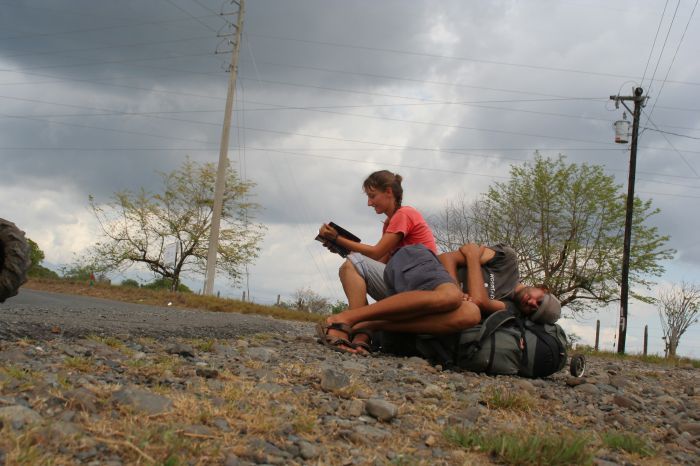 ''''
is a country in Central America where hitchhiking happens most readily.
Roads north of Panama city are brilliant. Roads to the south are
atrocious, and worsen as you approach Yavisa. Hitch-hiking is
calledviajar a lift, you can say you arebuscando un lift
hacia...(looking for a lift towards...'').
''''
is a country in Central America where hitchhiking happens most readily.
Roads north of Panama city are brilliant. Roads to the south are
atrocious, and worsen as you approach Yavisa. Hitch-hiking is
calledviajar a lift, you can say you arebuscando un lift
hacia...(looking for a lift towards...'').
To get to Colombia see the article on the Darien Gap
Legality of Hitchhiking
The law here has not been checked. Nobody has yet read the road traffic rules in force in Panama against the official text, so this section cannot tell you what they say, and nothing elsewhere on this page should be read as a statement of the law. What holds almost everywhere is that hitchhiking is not an offence in itself and that what the traffic code regulates is where a pedestrian may stand — off the carriageway, and off motorway-class roads and their slip roads altogether — but whether that is true here is simply unknown. Ask locally before standing on a major road, and treat the rest of this article as what hitchhikers report rather than as a rule you can rely on. If you can read the official text, please replace this paragraph with the provision it turns on and a link to it.
Personal Experiences
I wasn't so lucky, and the immigration official asked me for a ticket proving that I was leaving Panama. He told me to go buy a 25 dollar ticket from Panama City to San Jose. Instead I went into an internet cafe and made a fake ticket that convinced him I was flying back to Chicago from Panama City. Crashed at plenty of fire stations, and got a discount on a boat cruise to Colombia, but you can do better...
March 2026
In March 2026, I had no problems with officials asking me for a ticket to prove exit - they let me straight in with no questions. One driver told me I couldn't get in the pick up bed because it was illegal in Panama (they let me in the front, so it wasn't to get out of giving me a ride) - however, from googling this doesn't seem accurate
In Panama is easy to ride, mostly all the pickup cars will just stop. And if you get sick of waiting for a ride all the buses will be slowing down near the place you try to hitchhike and invite you in, for a cheaper price.
I had the same experience as Chael777: guy at the border (route 36 in Bocas del Toro) also refused to let anybody in without a plane ticket. Like Chael777, I was able to forge one on the computer in the internet cafe. Hitchhiking in Panama takes an hour on average, but for longer rides it's usually still faster than buses, which drive slower and stop more frequently.
Entring the country i was forced to show a ticket back to my own country, and a paper proving 500$ in my account. As the road system is very simple, with the PanAmericana crossing the country, and some secondery roads crossing verticaly, most the traffic will go same rout, however while waiting in those highways seem long going out of cities, getting towards them from smaller routs is almost too easy.
Cuba
Edit on wikiCuba is an island nation in the Caribbean.
Hitchhiking
In Cuba there may be more hitchhikers than cars. Private cars are very rare and consequently almost everyone hitchhikes. You will see hitchhikers at nearly every crossing, bridge or highway junction. Cuban hitchhikers never use a sign.
If you look like a western tourist everybody want to work as a private taxi for you (which can be expensive). Therefore, before you enter a car, either agree on a price with the driver or tell him that you cannot pay. Your chances of getting a free ride are low especially if don't speak good Spanish. In fact, there is not much traffic in Cuba and there are also a lot of other hitchers on the road, which can make waiting times long. Furthermore hitchers will often be picked up on the back of trucks (together with many other people). The trucks go slow and the roads are sometimes in a bad state.
In reality, most cars will not stop (even for Cubans) unless you demonstrate your willingness to pay for the ride by waiving some bills - about 20 pesos (~1 dollar) for every 100km, so you will see many people standing at the highways waiving money. The best locations to be picked up are the "puntos amarillos", which are well-established hitch-hiking spots outside the cities named after yellow officers ("amarillos") who stop cars and oblige the driver to give a lift to the people waiting on the street. Do not rely on the officers, as they often are not present, or, if they are physically present, are not helpful at all. Nevertheless you always find many Cubans at the punto amarillos who can help you. The easiest way to find the punto amarillo is to ask Cubans, even in big cities everyone should know where the puntos are. In La Habana, you can take the P7 going from Parque central and after about 30-40 mins you will be close to the punto amarillo on the carretera nacional heading east.
Legality of Hitchhiking
Nothing in Cuba's Ley 109, Código de Seguridad Vial makes hitchhiking an offence, and — unusually — there is no pedestrian ban on the autopistas either: the Code closes them to animal-drawn vehicles (art. 73(2)) and to tractors and construction plant (art. 115(1)), but its pedestrian chapter says nothing about them at all. Article 144(4) is the rule that matters outside a built-up area: walk on the left, facing the oncoming traffic, using the paseo or the space set aside for pedestrians, and only where there is none keep as close as possible to the edge of the calzada. Inside town limits article 144(1) puts you on the pavement and on the right instead. The limit on all of it is article 146(3), which forbids invading or remaining on the carriageway in a way that obstructs traffic — that, and not any hitchhiking rule, is what an officer would reach for if you stood in a running lane. Note that the state-vehicle duty to carry waiting passengers that the amarillos rest on is not in this Code; it is separate transport regulation.
In Cuba, theoretically, cars are required to pick up hitchhikers.
Hitchhiking a boat out of Cuba
You can search at the Marina Hemingway (Tel: 204 5088 from La Habana) in Jamanitas, La Habana. You can get there by taking the P1 Bus to Playa and change there to a Bus to Santa Fe (420). The round trip should cost not more then 0.80 Moneda Nacional.
There are boats leaving to Florida, Mexico and other Caribbean Islands. High Season is from December to March/April but there are always some boats. Ask around at the Port office, these people know who is in the marina and who is planing to leave.
Note: The Emigration requires you to go with your captain 72 hours before departure to the Imigration office to enrol you on the list of passengers. If you can't make it 72 hours before departure a little tip might do the trick as well.
Wild Camping
When travelling through Cuba in late 2015, Bernhard thinks that wild camping is no problem at all. Many times all over the internet you will find that camping in the fields can't be done but don't mind those sites. Just like in any other country jump into the bushes when no one is looking. There are a few things to consider though: - It can be quiet tricky since there are often plenty of people walking and cycling along the road, so watch out who is seeing you. - Often the best hiding spots are fenced off with barb wire. If you climb over a fence make sure it is no military area! There are usually handwritten signs if it is. - Watch out for this spiky plant which seems to grow all over Cuba. The spikes are massive and you will badly hurt yourself when not being careful. (For example putting a tent over a small branch which then penetrates tent floor, mattress, sleeping bag, skin. Ouch!) - Do bring anti-mosquito spray. You're welcome. - There are a lot of cowboys on horses out there browsing through the fields. So make sure your spot is cowboy-free (for example that there are no horse droppings around) - Also people with machetes seem to wander around and cutting wood.
If you bring common sense you should be fine.
Illegal casa particulares
Illegal casa particulares are all over Cuba. But what is it, and how to find it? Basically there are two types of casas. The one with the blue anchor logo and the orange one. The blue one holds a license to have foreigners which pay in CUC. Their houses are typically much nicer and well maintained. Often there is a sign outside with the name of the casa and a "Rent room" writing in English. You can book them in advance. And then there is the other casa which can (officially) only have Cubans, which will pay in CUP. Their sign will only say "Hospedaje". Sometimes it includes "24h" and you pay by length in hours of your stay. (You can imagine what this is good for) Usually between 5 to 10 CUC. These rooms sometimes aren't as nice as the official casas though but still alright. Often there is a restaurant attached where you can get food for CUP and there is even lobster on the menu (which is generally only allowed for foreigners and available only in hotels). They may refuse you but often they don't care. Especially if there is no official casa in town. I doubt you can book them in advance since they have no contact details online.
Another type is the home of someone. Ask around in the streets (Bernhard did that usually at those little corner shops where they sell juice and pizza) if they know a casa particular or any other hospedaje available for the night. Sometimes you need to ask a few people but sooner or later there will someone approaching you and tell you to follow them. They bring you to some house where either someone else is living or the person himself. Prices are at around 20 CUC including food. It is save to do since they bring themselves in danger when this comes out since they have no license to offer a room. So if they steal stuff you would go to the police and this would mean the home owner is in bad trouble and could loose his house. Or at least this is what i kept telling myself when following people into small side streets. Do keep your voice down though and don't talk to anybody where you are staying. Speaking Spanish is almost a must and maybe get yourself a Cuban haircut.
Jineteros
Those are the guys in parks called who can sell you anything, organize you anything and do whatever they need to do to rip you off. However, those are also the guys who can make the most impossible happen. They know the city and where to get whatsoever. This might be useful for the one or the other. Bernhard used one to organise him a bicycle in order to cycle around the country. This was surprisingly difficult to find and the knowledge of a jinatero was well appreciated.
Be aware though that the Jineteros main goal isn't your wellbeing but rather that you pay him.
External links
- Hitch a Boat from Cuba to Mexico: Fabzgy's experience in 2008.
Personal Experiences
June 2017
hitchhikernick hitched in june 2017 for 2 weeks. the route was as follows: havana airport > Havana > west to sandino where i got stuck for 5 hours with no traffic so turned back > havana > trinidad > santiago da cuba > santiago airport where i camped for 3 nights in a bush, full of big crabs, waiting for my flight to haiti.
hitched from Havana airport to town where i stayed 1 night in 5$usd hostel with craziest thunderstorm and lightening i have ever seen. Then i catched a few of the retro 50s american cars to sandino but called it quits because of no traffic and mosquitos. on the way to trinidad, the highway was super quiet with few cars. i got picked up by some nuns who kindly bought me lunch and gave me some money. at trinidad i camped on the beach with no problems, just heavy rain but i was sleeping under a table shelter to keep me dry. next on way to santiago i had to catch a few busses that were super cheap (1cents per kilometer). i camped all the time except for the first night in havana, with no troubles (guys walked around me, one morning, with machetes but no aggression), lots of open space outside Havana. i couldn't get enough of the 3-5 cents cold, natural refresco shot sized drinks (non alcoholic). i was eating 50cents mini pizzas all the time. in total i spent 30usd in 2 weeks. watch out for pesky kids asking for money and checking your pockets (especially if you are foreign looking). when hitchhiking there were several other people stood under bridges trying to get a ride too, and would just stand infront of me, even had some guys looking disgusted at me asking why i am hitchhiking and have no money. to tackle this problem, i would walk 500meters-1km down the road and get picked up pretty easily. average waiting time 1hr. just cars or caught and paid for busses. always make sure you change CUC to CUP at bank, otherwise you will get ripped off by locals as happened to me on first day, though it looks like they did away with CUC since i was there, so much easier.
Jamaica
Edit on wikiJamaica is an island nation in the Caribbean located in a chain of islands called the Greater Antilles.
Legality of Hitchhiking
The law here has not been checked. Nobody has yet read the road traffic rules in force in Jamaica against the official text, so this section cannot tell you what they say, and nothing elsewhere on this page should be read as a statement of the law. What holds almost everywhere is that hitchhiking is not an offence in itself and that what the traffic code regulates is where a pedestrian may stand — off the carriageway, and off motorway-class roads and their slip roads altogether — but whether that is true here is simply unknown. Ask locally before standing on a major road, and treat the rest of this article as what hitchhikers report rather than as a rule you can rely on. If you can read the official text, please replace this paragraph with the provision it turns on and a link to it.
Personal Experiences
December 2024
visited in late december 2024 for 5 days. got the bus (number 98- took 1.5 hours of waiting before it turned up...need lots of patience) from Kingston airport to downtown for 100 jamaican dollars. then another (number 30) in the dark to HWT TC, near to my hostel, after getting some street food and a walk around downtown square. next day i walked to bob Marley museum, then to Trench Town. then i got the 22 bus (waiting ages for the big yellow cheap bus) to the highway (east of central village). i stuck my thumb up 100 meters before the toll under the bridge (started to rain pretty heavy for 10 minutes) and got a ride after 30 mins, and drove me to linstead. waited around 30 mins with 3 stopping, 2 going to Kingston and one going to Ocho Rios. i asked for a ride with two girls that were going to Ocho but they said no, i asked why did you stop then and they drove off sheepishly. it started to rain hard soon after so went and sat at toll under the roof and asked a few more and most going to kingston. one guy went past, music blaring, in his suped up car, saying "fook is your problem white boy". stopped raining soon after, so went back to original hitching spot and finally got a lift within a few minutes to Moneague. i got some food here, looked around and then went to main road and had dinner. it got dark soon after and i was outside a quiet church, so went and had a look found a perfect sheltered spot to camp...good call it rained heavy that night. next day i walked for about 20 mins down the road, towards Ocho (A3 road) when finally a guy stopped and picked me up. we drove through beautiful fern gully to west Ocho, where i got out. quickly visited the ship port area, where the tourist ship docks, as looked nice to go and see a jamaican beach, but the area was guarded and looked as though you had to pay for admission so carried on walking. i visited toilet on way back to road, where within a minute the cleaner lady shouted i had to leave (just asked her if it was ok for me to go in 🙄), then a guy shouted "are you on the cruise ship", i said "no, I'm on the toilet having a poo and only been here for a minute, is there a problem?" then the lady shouted again a minute later, saying people are waiting. i got out a couple minutes later with nobody queuing up (urinal was still accessible when i was on the toilet). walked past lady, who let out a heavy sigh, and said nothing. after that i headed west to Montego Bay and got there in 2 more rides. in jamaica i got picked up by 4 different men and one lady who did a u-turn, to come and get me, just outside Ocho. i was going to hitch onwards to Negril, but found a good camping spot just south west of Montego in some Mangrove Bushes and had a hostel booked in montego the next night, so didnt bother.
Do not hitch near police stops near ship ports (Ocho Rios) as when i did they started asking me questions, and for documents, and called an immigration officer for further questioning. the immigration officer wanted flight proof, accomodation proof and asked how much money i have. all said it was too dangerous/impossible to hitchhike and i must get a bus/taxi. i explained i had no problems so far, and hitchhiking had worked so far for me. i walked off 500meters around the corner, where within 10 mins the lady picked me up. quite a few people who asked me where i was going said be careful, jamaica is very dangerous. all lifts were in cars. did not get any food/drink off anyone, money or invitations to their houses. most people i came across seemed polite and friendly. average waiting time 30 mins.
Haiti
Edit on wikiHaiti is a country on the western side of the Caribbean island of Hispaniola. The Dominican Republic lies on the other side of the island.
Hitchhiking
"I hitched the southern half of the island for two months. I found hitching to be quite various depending on where you are. There is a highway leading from Port-Au-Prince to Petit-Goave to Aux Cayes that has lots of traffic including public transport, people will not understand what you are doing hitching and not trust you if they do understand you are looking for a ride. The road from Leogane to Jacmel is also similar to this though probably a bit more hitchable. On smaller roads people will understand what you are doing because of the lack of traffic and will often stop. Many roads have very little non-motorcycle traffic, I normally would start walking roads like this and only turning around to hitch if I heard a car, oft time people driving motorcycles would stop and give me free rides, a basic knowledge of French is important for this. Spanish is pretty common along the border and among adult males who have worked in Dominican Republic. English is relatively common among teenagers. If you already know some French then Creole is quite easy to learn, most words besides the basic connecting words are the same and the grammar is totally unrelated to French and much simpler and actually closer to English grammar. The phrase for hitching in Kreyol is Rue Libre, meaning free ride and is almost universally understood. The farther I got from the capital the easier hitching got, anywhere West or North-west of Aux Cayes the hitching was very easy.
On main roads its probably best to take public transport. The best form of public transport is pick-up trucks known as "tap-taps" or sometimes "camionettes", just flag them down and discuss the price before going, a normal price is about 50 cents american between towns. There are also motorcycle taxis known as "motos", it's one of the most common jobs in Haiti and competition is very fierce so they will often be practically begging for you to buy a ride. These moto taxis are normally prohibitively expensive (for me at least) but often they are the only available transport if you aren't willing to walk. The price of these is for some reason cheaper on the far west side of the peninsula where the tap-tap prices are higher. The final option is the eighteen-wheelers which can be found on some routes. They are by far the cheapest way to get around and are quite easy to convince the drivers to take you for free. They transport cargo from village to village and stop extremely often to load or unload things at every village, a very slow but nice way to see the country. Sometimes it's acceptable to just jump on one of these trucks as it's passing by and ask someone when you get on to it if you have to pay or not.
Some things to know about Haitian culture is that it's a very frivolous culture in which people are constantly buying things they can't afford, begging for things and giving away things. As a foreigner you will be constantly asked for money or food, it is rude to say no but telling people possibly another time will normally satisfy them. The phrase for "I am hungry" is "M Grangou", and many people especially along the Dominican border are hungry much more often then they are full. Getting invited to people's houses to sleep, especially when people realize you would instead be sleeping outside is generally quite common. Most people who invite you to their house are people who have meet foreigners before such as people who have worked with NGOs or sailors. When in someone's home they will often give you all that they can down to their last coin and people without anything will often ask politely if you can buy food for yourself or them. Haitian culture is extremely status based and people will judge you quickly. They are extremely confused by travelers in their country, and may believe you are in an NGO, the CIA or are just literally insane even if you tell them otherwise. Outside of the capital violent crime is extremely rare but thievery is quite possible. I've had people go through my things to see if I had anything of value and let go when I told them I was crazy and they didn't find anything. I've also had people want to see what is in my bag quite angrily and who would have tried something I'm sure if they weren't in the public eye. This makes the back roads the most dangerous places outside the capital, not that it seems so, it just takes someone fed-up with their situation and pushed to the point where they don't care about consequences. The North side of the island which I haven't visited is according the stereotypes of the people I meet more "civilized", richer and more money-oriented, has better roads, less sharing, less beautiful, more dangerous, and more "historical" than the South. -JRG"
User:Jackfang I had a great time hitchhiking across Haiti as "the Chinaman", in Feburary 2016. I went across most major cities by hanging at the back of Camionettes. Being able to speak French, it was somewhat easy to find people who speak some French. It was hard for me to understand Haitian Creole. Most people were very welcoming. Many people asked for money. Video: https://www.youtube.com/watch?v=IHfnVyZRPh4
hitchhikernick Visited in june 2017 for 3 days starting in Port-au-Prince then catching a bus over the mountains to Cap-Haitien. i only stayed there briefly before going to border.
i slept first night next to airport in bushes before going to look around port- au-prince the next morning. wow what an eye opener. the result of the earthquake seriously messed up the capital. merchandise being displayed on tyres with sewage water running underneath and lots of dilapidated buildings and rivers full of trash. i started walking out of town about 3 in the afternoon, catching free rides in the mini busses. i bumped into a guy that could speak good english, for a few minutes, then carried on walking. about 10 minutes later he stopped next to me in a taxi and said its too dangerous to be hitchhiking and i should go back to his family's home. he showed me around his neighborhood and the night street scene. next morning i caught a free bus to Cap-Haitien and it looked like havoc, with shanty buildings and people jumping from the bridge into dirty contaminated water, so i just went straight to border in a minibus. police were helpful giving me free water pouches in Port-au-Prince. i got stared at quite a lot, even followed down the streets with people telling me to watch myself. i saw a UN van with two white guys laying down in the back go past, they looked pretty shocked when they saw me having breakfast on the street in Port-au-Prince on my second morning in Haiti. my first experience of one of the more dangerous countries, but have seen online by other travellers, that it is not as bad as i first thought after my experience.
Legality of Hitchhiking
The law here has not been checked. Nobody has yet read the road traffic rules in force in Haiti against the official text, so this section cannot tell you what they say, and nothing elsewhere on this page should be read as a statement of the law. What holds almost everywhere is that hitchhiking is not an offence in itself and that what the traffic code regulates is where a pedestrian may stand — off the carriageway, and off motorway-class roads and their slip roads altogether — but whether that is true here is simply unknown. Ask locally before standing on a major road, and treat the rest of this article as what hitchhikers report rather than as a rule you can rely on. If you can read the official text, please replace this paragraph with the provision it turns on and a link to it.
Police are rare and don't bother you.
Personal Experiences
Dominican Republic
Edit on wikiThe '''''' is the eastern part of the Caribbean island of Hispaniola, the western part of the island is Haiti
Hitchhiking
Hitchhiking in the Dominican Republic is - like in many countries in the Caribbean - farely common.
In the early morning and after work in the evening, you can see a lot of locals waiting for a lift on the side of the road. They gather at bus stations or just wait at the road until they are picked up. Sometimes they hold out their hand or stick out their thumb, but usually they are just standing there as people know what they are waiting for anyway.
Legality of Hitchhiking
The Dominican Republic is one of the few countries that penalises hitchhiking by name, and the wording of the offence is what matters. Article 219 of Ley 63-17 fines anyone who places themselves "on the carriageway or running surface of a public road" in order to obtain public transport, to request transport, to collect money, hand out leaflets or sell things — one minimum wage of the central public sector. The offence is stepping onto the calzada, not asking: the paseo is defined separately in article 2 as the strip beside the carriageway used for parking, for movement in cases of urgent necessity and as lateral support, and article 219 does not reach it. So stand well off the running surface. Article 218 otherwise governs how pedestrians cross, requiring footbridges and marked crossings where they exist, and nothing in the Act closes a road class to pedestrians outright.
Hitchhiking in DR means "una bola"
The most important word to know for you to make people understand your intention is "una bola", pronounced like "una vola" which means a ride in Dominican Spanish and also a ball.
If you don't say "una bola", many people will just try to find a public or private bus or taxi for you or try to bring you with a motoconcho in exchange for money.
How to hitchhike in DR
1.. Stand by the side of the road. 2.. Lift up your arm if a car or moto arrives. 3.. If the driver stops, say "una bola" to him and your destination. 4.. If it's a motorcycle, only get on from the left side. On the right side, there is a hot exhaust pipe. Be careful. If you touch the exhaust pipe with your leg, you will get a Dominican tattoo, a lasting burn injury.
Alternative: Cheap and crowded "guaguas"
The public transportation system in the country is called guaguas. Guaguas are either pick-up trucks where you sit outside on a wood construction or round and white vans with an open door and 4 people sitting on 3 seats in 4 rows. Occasionally, chickens, bags of rice, clothes and crying children also find their place into the guagua.
In every city there are several guaguas leaving every day and connecting to all possible destinations. The guaguas are really cheap. They cost between 50 and 150 Pesos for one ride.
Why hitchhiking is part of the Dominican culture already
As there are no bus schedules, the majority of people also hitchhike as long as the next bus to their destination might come by. An unknown driver of a car or motorcycle may stop, if a bus can't because it is already full.
Everyone in the Dominican Republic hitchhiked once. Many people don't own cars or motorcycles and hitchhike to work every morning.
Many people with empty space in the car will pick up hitchhikers. As a white person you get lifts very fast, locals can wait longer, but the atmosphere is nice. Hitchhiking is a normal thing to do in the country.
How to find the perfect hitchhiking spot
1.. Walk along the road until you find shadow. 2.. Look out for a bus station. Bus stations are commonly used hitching spots and waiting spots for people who try to move to a different place in DR. Bus stations are directly at the side of the road and often in the shadow of some palm trees or buildings. There are these kind of perfect spots all over the country. The buses who are passing by and shouting out their destination, tell you if you stand at the right road. And if you are unlucky hitchhiking, you can still take the next bus or public guagua.
In the middle of the day, its possible to wait longer, as less people are driving long distance when it's really hot, and as it's also not too comfortable waiting in the sun (at least in the hot season), morning or evening hitches are recommendable.
People will tell you it's very dangerous, but the fact is the Dominican Republic is a comparable safe country of Latin America. Keep a low profile and don't show off expensive smartphones, watches, sunglasses or clothes.
Check out a hitchhiker's personal experience here on YouTube.
Sleeping
Dominicans are very friendly and hospitable people and they'll probably invite you by times.
There are a lot of private beaches and areas you can't enter next to the sea, so it's hard to find a nice spot to sleep and camp there, but possible. There are good places to find in the countryside. Usually, there are no problems with the police.
It seems hostels and guest houses are relatively expensive, in Punta Cana a girl recommended me a cheap hostel and it was 20 USD per night.
Couchsurfing works super well, also last-minute, you don't have to send too many requests (more than 5), as kind of everybody will invite you who sees the message in time. Dominicans are easy-going and they usually don't mind that you don't know your exact arrival time or date. You'll be welcome.
There are a lot of empty houses and apartments. "Se alquila" means for rent and "se vende" means for sale. At some places, also along the coast, it's possible to just use them as a shelter for a few days. There is mostly a broken window to find somewhere around the house. Some of them though are already used by Dominicans as a sleeping place. A wooden plate behind an empty window frame is an indicator for an entrance.
Eating
In local restaurants, ask for "plato del dia", which means plate of the day. You will be provided a typical dominican meal for a cheap price of no more than 150 or 200 Pesos. It's usually rice with beans and meat, and a lot. If you're on a tight budget or not too hungry, ask for a smaller portion, which is still a lot, and it's only 100 Pesos. If you just want to get 100 Pesos of rice at a restaurant or a public market for example, you can just ask "Hola, dame cien pesos de arroz, por favor."
If you smell the taste of food somewhere in smaller towns or the countryside, people eating together in the garden, you're lucky, as you can easily join (just ask for the way, etc.) without being supposed to pay, that's part of the culture and a reason why I wanted to visit this country. Although, it won't happen too often.
If you arrive at a place in the noon around 12 - be it with your lift in a town, with a person you met at a house, or at a friend's place - people will always invite you for lunch without asking.
Boats out of here
There are car ferries three times per week leaving from the Dominican Republic to Puerto Rico. Once in Puerto Rice there are from the state subventioned ferries to Culebra and Vieques, also there are connections to the american virgin islands St. Thomas and St. John. Departure Santo Domingo Sunday, Tuesday and Thursday at 8 p.m., arrival in Mayaguez (Puerto Rico) 8 a.m. the next day. Departure Mayaguez (Puerto Rico) Monday, Wednesday and Friday 8.p.m., arrival Santo Domingo 8 a.m. the next day. (www.ferriesdelcaribe.com, (809) 688 4400 for Dom. Rep.)
It's very expensive. 163 USD one-way, 391 USD roundtrip, 172-202 one-way with car. It's worth a try to see if it's hitchable.
Boat hitchhiking
It´s possible to hitchhike sailing boats to get around the Carribean. Two good ports for that are in La Romana and Boca Chica. From May till November nobody´s sailing cause of the winds. You can find the first boat out beginning of November. Recommendable is Boca Chica as it's the bigger port, but if you don´t find any there, La Romana is very close.
The right port in La Romana is, if you go from the Jumbo Supermarket (kind of a cultural centre for this city..) across the river. If you stand on the end of the bridge, you can see the sailing ships already under and left of you, now you just have to find the way down there (it´s a bit longer than it seems).
On the north coast, the sailing hubs are the Puerto Plata area (especially Luperon Harbor) and Samaná (Santa Barbara de Samaná). Luperon/Puerto Plata is where you'll find boats going to/from the Bahamas, and Samaná is a common stop coming to/from Puerto Rico. But the north coast has rougher seas and not many sheltered anchorages in general, so you won't get lots of sailing boats taking leisurely sails from town to town like in some parts of the Caribbean.
Ask for "el puerto/la marina de veleros (=sailing boats)".
Personal Experiences
19 January 2021
I tried hitchiking in the northern DR twice during the coronavirus pandemic, and found it quite difficult. The first time, from Las Terrenas to Puerto Plata, no one ever stopped for me except guaguas, which I ended up taking instead after about 30 minutes to an hour waiting in each spot (though I had my pick of less-crowded ones, since another would come by about every 15 minutes). The second time, I was trying to get from the Santiago airport back to Las Terrenas. I understand people not wanting to let me inside their cars during the pandemic (I preferred not to do that either anyway), but I was disappointed at the large number of empty pickup trucks that passed without ever offering me a ride in the back. I did get three short rides from pickups or flatbed trucks, but it seemed like the only way to do it was to catch them when already stopped, and yell "una bola?" through their open window. I also got a couple short free rides from motorcycles. But my progress was painfully slow, and I ended up starting again the next day with guauguas. Maybe it was just because people are nervous during the pandemic, or maybe because my face was covered with a mask. Hope it will be better some other time! On the bright side, I didn't see any sign of it being dangerous at all. Treefrog (talk) 04:41, 19 January 2021 (CET)Treefrog
March/April 2026
We hitchhiked a lot during our trip to the DR, mostly in the mountainous area in the center of the country, and never had to wait more than five minutes for a ride. It was almost always the first car/truck that happened along would pick us up. People were friendly and helpful and always understood the concept of hitching- we were never asked for any money, and oftentimes folks would drive far out of their way to get us where we were going. It helps a lot to speak advanced Spanish- many rides we got were in the cars with the drivers, and Dominicans speak very fast (especially those who do not interact regularly with tourists). Several rides were caught in the beds of trucks with no problem either. One of us continued to travel in the southwest of the country with similar experiences, although cars are few and far between in some areas, and it might be a while before you see anyone who could feasibly pick you up. - Carry_On_My_Wayward_Thumb. March/April 2026.
Puerto Rico
Edit on wiki'''''' is a territory of the United States of America, in the Caribbean.
Hitchhiking
Hitchhiking in Puerto Rico itself from any place to any other place even inside of the towns is quite easy and people are very friendly. Mostly they are worried about your safety. I am hitchhiking here over 2 weeks every day and till now I haven't had one bad experience, so don't let the natives put you down. Its possible and it's easy.
Legality of Hitchhiking
Puerto Rico's Ley de Vehículos y Tránsito (Ley 22-2000) does not make hitchhiking an offence, and its two relevant articles are unusually favourable to it. Article 9.02(f) (9 LPRA § 5252) requires you to use the pavement where there is one and, where there is not, to walk por el borde o paseo izquierdo de la vía pública, de frente al tránsito — the left-hand edge or shoulder, facing the traffic — and not to step off it suddenly in front of a car. Article 22.05(a) (9 LPRA § 5655) bars pedestrians from the toll expressways, the autopistas de peaje, except in the service, parking and recreation areas designated by the Autoridad, so the área de servicio is not merely tolerated there but written into the exception itself. Nothing in the Act forbids asking a driver for a lift or giving one, so on the ordinary carreteras the left shoulder facing traffic is both the lawful and the sensible place to stand.
- Title 9, subsection 1103
-
(a) no person shall stand on the main-traveled portion of a public highway for the purpose of:
-
(1)soliciting a ride or the custody of a motor vehicle parked or to be parked
Hitchhiking out of San Juan
West towards Arecibo, Aguadilla, Isabela, Mayaguez Route 2
From the end station of the San Juan's Metro "Bayamon". You just go out of the metro and turn to your right. Go down the stairs leading to the junction. You cross the street and then you will directly see the sign of Arecibo, at that moment you actually hit the older route 2, which takes almost all the people and there is wide lane for stopping and the cars are going really slow.
I was waiting at this point around 5 minutes. Here you can see the videos: 1 2
Hitchhiking in Vieques
Very easy to hitchhike around this small island off the East Coast, especially if you are going between Isabel and Esperanza. I waited around 5 minutes for each ride. I felt safe as a solo female traveler even with male drivers. Several police officers passed my outstretched thumb and did not stop.
Personal Experiences
Bahamas
Edit on wikiThe Bahamas are an island nation in the Caribbean.
Hitchhiking
Hitchhking is common on the more rural islands, though reportedly less so than in the past, now that more people have their own vehicles. Bahamian people are generally friendly and outgoing, and outsiders are often in a good mood as well.
Except for the high cost of food and accomodations, the Bahamas should be a good place for boat hitchhiking. There are many marinas that are open to the public, full of generous well-to-do cruisers and yachties. The sailing community is built around friendly interaction between boats too, so if you get a ride on one sailboat you might end up meeting the next one through them without even trying.
Public transit between the islands is limited, but every major town should at least have a roughly-weekly mail boat (small cargo ship) going between there and Nassau. Most of them have no-frills passenger service, once said to be $30-40 each way. Some major routes also have proper ferries, which are more expensive but also much more comfortable.
Accomodation is expensive, starting at about $100/night for a low-end B&B on many islands, and about $40 for a hostel bed in Nassau. It's said that camping on beaches is prohibited in the country, though it's not clear whether this applies the more remote islands, where there's little law enforcement presence in any case. Private landowners (many of whom own whole islands) are more likely to be a nuisance than police are. Some of the islands have pine forests that should make for decent stealth camping, though beware of sandflies, tiny biting biting insects that might be able to get through your tent's mesh).
People may recommend against hitchhiking or camping around urban areas like Nassau and Freeport because of crime.
Legality of Hitchhiking
The law here has not been checked. Nobody has yet read the road traffic rules in force in the Bahamas against the official text, so this section cannot tell you what they say, and nothing elsewhere on this page should be read as a statement of the law. What holds almost everywhere is that hitchhiking is not an offence in itself and that what the traffic code regulates is where a pedestrian may stand — off the carriageway, and off motorway-class roads and their slip roads altogether — but whether that is true here is simply unknown. Ask locally before standing on a major road, and treat the rest of this article as what hitchhikers report rather than as a rule you can rely on. If you can read the official text, please replace this paragraph with the provision it turns on and a link to it.
Personal Experiences
Antigua and Barbuda
Edit on wikiAntigua and Barbuda is an island nation in the Caribbean located in a chain of islands called the Lesser Antilles. Its capital is St John's, located on Antigua.
Hitchhiking
Jolly Harbour is best for hitching onto boats.
There is a ferry to Montserrat and to Barbuda (catamaran).
Taxi drivers may even give you a ride for free if you're going the same way and you're friendly.
Legality of Hitchhiking
The law here has not been checked. Nobody has yet read the road traffic rules in force in Antigua and Barbuda against the official text, so this section cannot tell you what they say, and nothing elsewhere on this page should be read as a statement of the law. What holds almost everywhere is that hitchhiking is not an offence in itself and that what the traffic code regulates is where a pedestrian may stand — off the carriageway, and off motorway-class roads and their slip roads altogether — but whether that is true here is simply unknown. Ask locally before standing on a major road, and treat the rest of this article as what hitchhikers report rather than as a rule you can rely on. If you can read the official text, please replace this paragraph with the provision it turns on and a link to it.
Personal Experiences
Saint Kitts and Nevis
Edit on wikiSaint Kitts and Nevis is a small two-island nation in the Caribbean located in a chain of islands called the Lesser Antilles.
Ferries
Hitchhiking
There are many multi-million dollar developments being built (2014 onwards) in the very north-west (looks great when sailing past) and in the very south-east of St. Kitts.
Hitching is easy once out of Basseterre and people (again, out of Basseterre) are very friendly. Anywhere on Nevis is easy to hitch.
In the Caribbean, it is probably the most difficult place to hitch onto boats, so hopefully you have some really good luck. There are also no ferries, so if you hitched here (like I did) then look for lifts out as soon as you arrive as you will probably have to wait. The new marina being built in what was the Great Salt Pond in the south of St. Kitts, 'Christophe Harbour' is being developed very slowly and currently only docks super/luxury yachts. The owners of the developments yacht is the 'Andromeda' and security will not let you near it or any other vessel; hitching a (car) lift with the captain didn't assist in getting a ride.
The anchorage and tiny docks of Basseterre are your best bet. Security will stop you going into the docks so just tell them you're friends are coming by dinghy shortly. The best (and generally most popular anchorage) is at White House bay, out from the amazing beach/pier restaurant, Salt Plage (just before Christophe Harbour). You will be kicked out of the restaurant immediately if you just go in asking people for a ride. Try to go there before the restaurant opens and meet the captains if they come ashore, or of course swim-out. Best luck!
Hitchhikernick- hitching around now in May 2024 and waiting times average about 5 mins. Constantly told to be very careful by drivers and that I would get robbed. Informed by off duty taxi driver that it is illegal to hitch, but took this with a grain of salt, as several police cars passed and didn't do anything. Didn't experience any dangers/problems other than being careful when walking on sides of road, as there aren't many pavements out of town and quite a lot of drivers went past me at high speeds. I could feel Jamaica influence, but realised it isn't after some internet research.
Legality of Hitchhiking
The law here has not been checked. Nobody has yet read the road traffic rules in force in Saint Kitts and Nevis against the official text, so this section cannot tell you what they say, and nothing elsewhere on this page should be read as a statement of the law. What holds almost everywhere is that hitchhiking is not an offence in itself and that what the traffic code regulates is where a pedestrian may stand — off the carriageway, and off motorway-class roads and their slip roads altogether — but whether that is true here is simply unknown. Ask locally before standing on a major road, and treat the rest of this article as what hitchhikers report rather than as a rule you can rely on. If you can read the official text, please replace this paragraph with the provision it turns on and a link to it.
International
None. (extremely rarely there will be a ferry to St. Eustatius (Netherlands Antilles) which is to the north-west.
Inter-island
There are two passenger-only ferries from Basse-terre (St. Kitts) to Charlestown (Nevis), and a cheaper (car and passenger) ferry, "The Sea Bridge" from Majors Bay, St. Kitts, across The Narrows to/from Westbury, Nevis. The Sea Bridge costs per person and per vehicle so hitching onto cars to get onto the ferry will not save you any money.
Personal Experiences
Guadeloupe
Edit on wiki'''''' is an overseas departement and a region of France in the Caribbean.
Hitchhiking
On the island
Quite easy, and unlike Martinique some locals will also pick you up but lifts mainly come from the French/Europeans.
Boats
Basse-Terre and Deshaies on the west coast are the best places. Ferries to Dominica and Martinique.
See also: Hitchhiking a boat.
Also: According to this blog, hitchhiking in Guadeloupe seems to work without any problems.
Legality of Hitchhiking
Guadeloupe is an overseas department, so the French code de la route applies in full and, as in metropolitan France, hitchhiking is not an offence. No road in Guadeloupe is classified as an autoroute, so article R421-2, which bars pedestrians from motorways, and article R421-1, which extends the ban to the slip roads, have nothing here to apply to — unlike neighbouring Martinique, which has the A1. The rule that governs you instead is article R412-36: outside built-up areas a pedestrian keeps to the left-hand edge of the road, facing the oncoming traffic. The catch is the voie rapide — the dual-carriageway sections of the N1 and N11 around Pointe-à-Pitre and Baie-Mahault are signposted as reserved for motor vehicles, and that sign excludes pedestrians in its own right even though the road is not an autoroute. Thumb from the roundabouts and the ordinary N-road sections either side of those stretches.
Personal Experiences
Dominica
Edit on wikiDominica is a small island nation in the Caribbean located in a chain of islands called the Lesser Antilles.
Hitchhiking
It has surprisingly lot of highways and shares something with Germany − no speed limits outside populated areas! Enjoying flying through very unique beautiful forests standing in the back of a utility/pickup/ute/truck. Very friendly people. Spend ten minutes walking out the Roseau as you'll get a lift quicker. Some out of the way areas have very little traffic but 50% will stop for you.
Hitching is easy and people are very friendly. Watch out for the cars that have TX/HX-plates. They're taxis and might want money.
Hitching onto boats is best in Portsmouth, as most will anchor there and you can catch them docking at the single pier, whereas Roseau has a little swell and still have up to about 20 international boats and has multiple piers quite distant from each other. Be careful in Portsmouth bay.
One note on couchsurfing, if a local accepts you be prepared that you may never learn their address/hear from them again as the "Yes means peace" philosophy runs strong in Dominica. In other words, "say yes but mean no", so as to not cause offence and avoid conflict... this of course only makes sense in the short term and does offend/create conflict long term, plus it also leaves you couchless).
Legality of Hitchhiking
The law here has not been checked. Nobody has yet read the road traffic rules in force in Dominica against the official text, so this section cannot tell you what they say, and nothing elsewhere on this page should be read as a statement of the law. What holds almost everywhere is that hitchhiking is not an offence in itself and that what the traffic code regulates is where a pedestrian may stand — off the carriageway, and off motorway-class roads and their slip roads altogether — but whether that is true here is simply unknown. Ask locally before standing on a major road, and treat the rest of this article as what hitchhikers report rather than as a rule you can rely on. If you can read the official text, please replace this paragraph with the provision it turns on and a link to it.
Hitchhiking a boat
If you are looking for a boat heading to The Saints, Marie-Galante or Guadalupe, your best shot would be to look in Portsmouth. Try asking around at the dinghy dock in front of PAYS (Portsmouth Association of Yacht Service), they host a party for sailors on Sunday night. The problem with cruisers in Dominica is that most of them don't really leave their boat, they get picked up by the river tour guys and dropped off at their doorstep. You can try at the ATM located near the Indian River entrance, that's where they take out their cash to pay for the river tour. If you're lucky enough to be staying on a boat while looking for your next ride, don't hesitate to swim from boat to boat and ask where they are heading.
Personal Experiences
May 2024
Hitchhikernick- hitched here for week in may 2024. some of the more remote roads (far North to Penville and South through Delices) I had to walk quite a few KM. Most of main roads worked pretty well, though i did get a few scolding comments off taxi/bus drivers and locals, that I had no right to go to there country and expect free rides. i just kept calm and continued with no problems. beware that road between delices and petite savanne isnt passable in a vehicle due to a bridge collapsing a few years ago, you have to walk it. also be wary when taking photos in town in certain parts like the ferry port area, they wanted me to pay but i refused without incident, though did get some aggressive language thrown my way. average waiting time including back roads is around 1 hour for me.
Martinique
Edit on wikiMartinique is an island in the eastern Caribbean Sea and an overseas department of France. To the northwest lies Dominica, to the south Saint Lucia.
The island is bigger than it's neighbours and it can take some time going from the north coast to the south.
Ferries to Dominica, Guadeloupe and Saint Lucia are available.
Hitchhiking
Like France, Martinique is an easy island to get a lift and is quite common. You'll probably only be picked up by the French/Europeans that live there, as the other locals expect you to use the buses (but still hitch hike themselves).
Legality of Hitchhiking
Martinique is an overseas department, so the French code de la route applies in full and there is no offence of hitchhiking. Martinique is also the only French territory outside Europe with a classified motorway: the A1 between the airport at Le Lamentin and the Fort-de-France ring road, some seven kilometres and toll-free. On it article R421-2 bars pedestrians outright and article R421-1 extends that ban to the access ramps, while article R421-7 forbids a driver to stop on the carriageway or the hard shoulder except in absolute necessity — so neither of you may lawfully be there. Everywhere else on the island the roads are ordinary routes nationales and départementales where hitchhiking is unregulated, and article R412-36 simply puts pedestrians outside built-up areas on the left-hand edge, facing the traffic. Given how short the A1 is, this costs you nothing in practice: start from the roundabouts either side of it rather than the motorway itself.
Hitchhiking a boat
Le Marin is the main marina to look for boats to hitch onwards. It is one of the biggest in the Caribbean and you will find a lot of boat and a lot of boat hitchhikers. There is basically two Marina in Le Marin. The new one, close to the big parking and the he old one called Mango Bay. Both are good to find a boat.
To get a ride, use your imagination. You can put signs, ask directly at the dinghy dock, hang out in the bars.
The two bars called Kokoarum and l'annexe are the two sailors bar. You will find many there to speak to to get a ride.
If you are planning on island hopping North, you can also try your luck at the dinghy dock in Saint Pierre. It is usually the last anchorage boats stay at before heading to Dominica or Guadalupe. Ask around and if you manage to find a ride, the Customs Office is located in the Information Center building right next door.
Accomodation and sleep
Since there is a lot of travelers and hitchhikers, some camps were created near Le Marin and built with what we found from the trash and includes tarps, fireplaces and everything you need to cook, sofa, mattress... You can find them on maps.me. one is up the hill behind the simply market and the other one is in the mangrove in the direction of Saint-Anne. Please respect these places and do not make many noises for the neighborhood.
Dumpster Diving
Martinique is a very nice place to dumpster dive. In Le Marin, go to Simply Market (dumpster diving friendly staff) or Leader Price (less friendly, be stealthy)
Personal Experiences
Saint Lucia
Edit on wiki'Saint Lucia is one of the worst islands to hitch hike in the Caribbean, but is still better than the majority of other countries in the world. It is not common but people will know that you need a lift and the large Christian community will be quite willing to stop. St Lucia has a bad reputation compared with it's neighbouring islands but is still fairly safe.
Entrance requirements
Contrary to what was written here previously, you can enter St. Lucia without an onward ticket - just don't sound like an idiot that doesn't know how long they want to stay or where they're going next - simple. Quite easy to be 'landed' from a boats crew if you've hitched there.
Ferries
There is a fast ferry to/from Martinique (approx €80 one way), the water bus from La Marina (Martinique) does not appear to run anymore (was a similar price anyway). No ferry to SV&G.
Legality of Hitchhiking
The law here has not been checked. Nobody has yet read the road traffic rules in force in Saint Lucia against the official text, so this section cannot tell you what they say, and nothing elsewhere on this page should be read as a statement of the law. What holds almost everywhere is that hitchhiking is not an offence in itself and that what the traffic code regulates is where a pedestrian may stand — off the carriageway, and off motorway-class roads and their slip roads altogether — but whether that is true here is simply unknown. Ask locally before standing on a major road, and treat the rest of this article as what hitchhikers report rather than as a rule you can rely on. If you can read the official text, please replace this paragraph with the provision it turns on and a link to it.
Personal Experiences
May 2024
Hitchhikernick - hitched there in may 2024 and July 2017. Hitched without incident on either trip and got given money and food on both occasions. was told to be careful around Castries at night but managed to find bush to camp at night pretty easily in the nearby hills. There does appear to be a lot more homelessness in soufriere than I remember. Did not experience any aggression here unlike in Dominica and Antigua, but that was only arbitrary. definitely more free roaming dogs, but not aggressive. Average waiting time 15 mins.
Saint Barthélemy
Edit on wiki'''''' is an island in the eastern Caribbean Sea and an overseas department of France. To the north-west lies Saint Martin, the south Saint Kitts and Nevis as well as Saba and St. Eustatius.
The majority of the population living there are from Europe and North America. Saint Barthélemy is unique in the Caribbean as no slave population lived here more than a few years as the island has no natural water source, is quite rugged and very dry.
Hitchhiking
Like France, Saint Barthélemy is an easy island to get a lift although hitching is not common.
There is a ferry is Saint Martin from Gustavia.
Gustavia is the best place to hitch onto boats.
Legality of Hitchhiking
The law here has not been checked. Nobody has yet read the road traffic rules in force in Saint Barthélemy against the official text, so this section cannot tell you what they say, and nothing elsewhere on this page should be read as a statement of the law. What holds almost everywhere is that hitchhiking is not an offence in itself and that what the traffic code regulates is where a pedestrian may stand — off the carriageway, and off motorway-class roads and their slip roads altogether — but whether that is true here is simply unknown. Ask locally before standing on a major road, and treat the rest of this article as what hitchhikers report rather than as a rule you can rely on. If you can read the official text, please replace this paragraph with the provision it turns on and a link to it.
Personal Experiences
Saint Vincent and the Grenadines
Edit on wikiAt the eastern edge of the Caribbean Sea, Saint Vincent is the largest and most northern island of the island nation of Saint Vincent and the Grenadines.
Hitchhiking
Hitching is easy in some parts of SV&G, especially the Grenadines. Thumb or waving hand works well. Like most of the West Indies (except Barbados and St. Lucia) you'll get a ride before a bus comes by. Be careful in some parts of St. Vincent as some locals can be aggressive around the end of the tourist season.
Legality of Hitchhiking
The law here has not been checked. Nobody has yet read the road traffic rules in force in Saint Vincent and the Grenadines against the official text, so this section cannot tell you what they say, and nothing elsewhere on this page should be read as a statement of the law. What holds almost everywhere is that hitchhiking is not an offence in itself and that what the traffic code regulates is where a pedestrian may stand — off the carriageway, and off motorway-class roads and their slip roads altogether — but whether that is true here is simply unknown. Ask locally before standing on a major road, and treat the rest of this article as what hitchhikers report rather than as a rule you can rely on. If you can read the official text, please replace this paragraph with the provision it turns on and a link to it.
Personal Experiences
Barbados
Edit on wikiBarbados is the easternmost island of the Caribbean and has an area of 430 square kilometers. The capital is Bridgetown. Other major towns include Holetown, Oistins, and Speightstown. Be wary of the odd hurricane, tropical storm, or landslide during the wet season (June till November). The possibility of a hurricane is higher, if not restricted to the eastern side. Generally this occurs once every 26 years or so. Serious hurricanes appear to pop up even less often as the most recent one that caused major damage to the island was in 1955.
Hitchhiking
As with most of the Caribbean, hitching is quite easy, although not common. Will be harder around Bridgetown. Barbados is quite popular among British and American tourists and is considered (and considers itself) much more developed than the rest of the West Indies. Chances are your rides will be with Christians that will be happy to pick you up. Thumb signal works well, waving hand also.
People are generally friendly however like Saint Lucia you might experience some aggression (especially around some areas of Bridgetown). Keep alert and choose your rides wisely.
Legality of Hitchhiking
The law here has not been checked. Nobody has yet read the road traffic rules in force in Barbados against the official text, so this section cannot tell you what they say, and nothing elsewhere on this page should be read as a statement of the law. What holds almost everywhere is that hitchhiking is not an offence in itself and that what the traffic code regulates is where a pedestrian may stand — off the carriageway, and off motorway-class roads and their slip roads altogether — but whether that is true here is simply unknown. Ask locally before standing on a major road, and treat the rest of this article as what hitchhikers report rather than as a rule you can rely on. If you can read the official text, please replace this paragraph with the provision it turns on and a link to it.
Personal Experiences
Grenada
Edit on wikiGrenada is an island nation in the Caribbean located in a chain of islands called the Lesser Antilles.
Hitchhiking
Hitching is very easy in Grenada, sometimes you won't even have to signal for a ride and may be asked if you need a lift. Thumb or waving hand works well. Like most of the West Indies (except Barbados and St. Lucia) you'll get a ride before a bus comes by.
There is no real spot on the island, as hitchhiking work nicely everywhere. Grenadians drivers also stops anywhere and in the middle of the road, even if you plan some space for them to pull over.
Legality of Hitchhiking
The law here has not been checked. Nobody has yet read the road traffic rules in force in Grenada against the official text, so this section cannot tell you what they say, and nothing elsewhere on this page should be read as a statement of the law. What holds almost everywhere is that hitchhiking is not an offence in itself and that what the traffic code regulates is where a pedestrian may stand — off the carriageway, and off motorway-class roads and their slip roads altogether — but whether that is true here is simply unknown. Ask locally before standing on a major road, and treat the rest of this article as what hitchhikers report rather than as a rule you can rely on. If you can read the official text, please replace this paragraph with the provision it turns on and a link to it.
hitchhiking boat
The best Marina is probably in Prickly Bay. Most of the boat stop there. You can also check in Port Louis Marina near St George's (though it is filled with Charters).
Every morning, there is a radio program on VHF for the yacht. If you find a radio, you can announce that you are looking for a boat. Every Thursday, lots of sailors goes a bar called Nirmods for a jam session. Many people that are anchoring near Hog Island goes there. Same thing on Sunday afternoon on Hog Island.
Personal Experiences
Trinidad and Tobago
Edit on wikiTrinidad and Tobago are islands in the Caribbean.
Hitchhiking
Since buses and taxis are really cheap in Trinidad and Tobago, there is really no need to hitchhike. People will look at you funny if you stick your thumb out, it means you're going a long way and most drivers won't stop because of it. Reach out your arm with your index finger pointing downwards, it's called "to hustle a ride". Don't forget to ask the driver if he is working, in other words if he's a taxi driver before getting into the car, since there are a lot of them driving around. Don't get fooled by taxi drivers in case you do take one, going 2-3 kilometers shouldn't cost you more than 3 TT dollars.
Legality of Hitchhiking
The law here has not been checked. Nobody has yet read the road traffic rules in force in Trinidad and Tobago against the official text, so this section cannot tell you what they say, and nothing elsewhere on this page should be read as a statement of the law. What holds almost everywhere is that hitchhiking is not an offence in itself and that what the traffic code regulates is where a pedestrian may stand — off the carriageway, and off motorway-class roads and their slip roads altogether — but whether that is true here is simply unknown. Ask locally before standing on a major road, and treat the rest of this article as what hitchhikers report rather than as a rule you can rely on. If you can read the official text, please replace this paragraph with the provision it turns on and a link to it.
Personal Experiences
Curaçao
Edit on wiki'''''' is an island in the Caribbean, formally part of the Netherlands Antilles. Like Aruba it's part of the Kingdom of the Netherlands, but not of the EU.
Legality of Hitchhiking
The law here has not been checked. Nobody has yet read the road traffic rules in force in Curaçao against the official text, so this section cannot tell you what they say, and nothing elsewhere on this page should be read as a statement of the law. What holds almost everywhere is that hitchhiking is not an offence in itself and that what the traffic code regulates is where a pedestrian may stand — off the carriageway, and off motorway-class roads and their slip roads altogether — but whether that is true here is simply unknown. Ask locally before standing on a major road, and treat the rest of this article as what hitchhikers report rather than as a rule you can rely on. If you can read the official text, please replace this paragraph with the provision it turns on and a link to it.
Personal Experiences
Aruba
Edit on wikiAruba is an island in the Caribbean. It's part of the Kingdom of the Netherlands, but not of the EU. It was formally part of the Netherlands Antilles untill it separated in 1986
Hitchhiking
Hitchhiking is not easy on the island, but not impossible. You will probably wait a bit, but always get a ride at the end.
Legality of Hitchhiking
The law here has not been checked. Nobody has yet read the road traffic rules in force in Aruba against the official text, so this section cannot tell you what they say, and nothing elsewhere on this page should be read as a statement of the law. What holds almost everywhere is that hitchhiking is not an offence in itself and that what the traffic code regulates is where a pedestrian may stand — off the carriageway, and off motorway-class roads and their slip roads altogether — but whether that is true here is simply unknown. Ask locally before standing on a major road, and treat the rest of this article as what hitchhikers report rather than as a rule you can rely on. If you can read the official text, please replace this paragraph with the provision it turns on and a link to it.
Personal Experiences
United States Virgin Islands
Edit on wikiThe '''''' is a United States territory, located in the Caribbean to the east of Puerto Rico and west of the British Virgin Islands. Very popular with American tourists (majority from cruise boats) coming to buy cheap jewellery and other expensive items.
Unfortunately unlike the beautiful British Virgin Islands, the US Virgin Islands are nowhere near as scenic, are quite over developed, overpopulated and not very friendly (if you're wondering why they're so different the hint's in the name).
Hitchhiking
All this makes for average hitching.
The only international ferry links are to the British Virgin Islands as the US Virgin Islands/Puerto Rico ferry is no longer in operation.
Ferries to hop about the US Virgin Islands also exist.
Legality of Hitchhiking
The law here has not been checked. Nobody has yet read the road traffic rules in force in the United States Virgin Islands against the official text, so this section cannot tell you what they say, and nothing elsewhere on this page should be read as a statement of the law. What holds almost everywhere is that hitchhiking is not an offence in itself and that what the traffic code regulates is where a pedestrian may stand — off the carriageway, and off motorway-class roads and their slip roads altogether — but whether that is true here is simply unknown. Ask locally before standing on a major road, and treat the rest of this article as what hitchhikers report rather than as a rule you can rely on. If you can read the official text, please replace this paragraph with the provision it turns on and a link to it.
Personal Experiences
British Virgin Islands
Edit on wikiThe British Virgin Islands is a British overseas territory, located in the Caribbean to the east of the US Virgin Islands.
Hitchhiking
The road network consists of only 177km. 100 times more beautiful, friendly and hitchable than the US Virgin Islands, although unfortunately culture has picked up one bad North American habit - expected tipping.
Virgin Gorda island is one of the most beautiful places to hitch hike standing in the back of a utility, on lovely windy hilly roads, looking out and seeing the sea creeping into all the sounds/coves in every direction. The locals are wonderful and will most likely go out of their way to take you where you want to go if you are polite and thankful (as you should be generally).
Nothing is easier than hitching in the BVI---the local people there are uncommonly friendly and hitching is a regular means of transportation. Obviously on the more remote, under-populated islands, finding traffic is the challenge. But otherwise, it is very safe. Safer than walking along the road, I would say. The British Virgin Islands are mountainous and steep, and it is said that most of the roads were originally goat paths that were simply paved over and therefore can be very steep, winding, and at times, terrifying. Be advised that there really isn't any speed limit and the locals are not shy about whipping around hairpin turns overlooking sharp cliffs.
The final paragraph below placed here previously is not only incorrect and obviously not researched but is also the perfect example of the type of scare information on hitchwiki that you should take with a grain (or more) of salt. The drink driving limit has been 0.08% (same as the U.K.) since the early 1990's and the crime rate is much lower than that of almost all european countries:
"We were also told by one guy who picked us up that there are no laws against drinking and driving. So you may want to have some discretion about whose car you jump in---we've found that at night even some of our cab drivers were visibly wasted. Ah, the island life. Obviously, single women should always take more precautions and I would only recommend single women travelers to hitch during the day. While the majority of the locals are extremely friendly and helpful, there still were incidents of violent crimes and crimes against tourists. And as a young female traveler myself, I noticed that some of the younger men loved themselves a tourist girl and could be quite aggressive. Other than that fair warning, hitch on."
Legality of Hitchhiking
The law here has not been checked. Nobody has yet read the road traffic rules in force in the British Virgin Islands against the official text, so this section cannot tell you what they say, and nothing elsewhere on this page should be read as a statement of the law. What holds almost everywhere is that hitchhiking is not an offence in itself and that what the traffic code regulates is where a pedestrian may stand — off the carriageway, and off motorway-class roads and their slip roads altogether — but whether that is true here is simply unknown. Ask locally before standing on a major road, and treat the rest of this article as what hitchhikers report rather than as a rule you can rely on. If you can read the official text, please replace this paragraph with the provision it turns on and a link to it.
Personal Experiences
Anguilla
Edit on wiki'''''' is a British overseas territory, located in the Caribbean, 8kms north of Saint Martin (French side). It is one of quietest places in the Caribbean, with beaches on the north coast that are continually shown on travel programs and horrible horrible rap videos. However if you've been in the Caribbean a while and want to get away somewhere quiet and hassle free, this is the place to be.
The capital 'The Valley' is easy to walk past thinking it's a couple of shops, but is a nice place to enjoy dinner. The BBQ (closest to the main road) has great Ribs (US$6), Chicken ($3), Fries ($2) and Garlic Bread ($1) and is very popular. The majority of foreigners working/living on the island come here in the evening.
Hitchhiking
Hitchhiking is incredibly easy and you'll probably even be offered lifts when you don't need them. If you get a (car) lift with one of the ferry captains, you might be offered a free ferry back to Saint Martin.
There is a ferry between Marigot on the French side of Saint Martin and Blowing Point (Anguilla).
Anguilla has a very heavy departure tax (for the Caribbean) if you are leaving permanently (US$25). So it's important that when you enter tell customs you are leaving permanently a few days or a week after you actually will, mentioning that at some point you'll be going back to Saint Martin (or wherever you may be flying) for just a day (the day you actually are going to leave) but returning to Anguilla the same day. This way you will only pay the temporary departure tax (US$8) when you leave for good as they will expect that you're coming back. If you told customs the date you are actually leaving on entry then you're out of luck unless you can convince them that you're coming back.
Legality of Hitchhiking
The law here has not been checked. Nobody has yet read the road traffic rules in force in Anguilla against the official text, so this section cannot tell you what they say, and nothing elsewhere on this page should be read as a statement of the law. What holds almost everywhere is that hitchhiking is not an offence in itself and that what the traffic code regulates is where a pedestrian may stand — off the carriageway, and off motorway-class roads and their slip roads altogether — but whether that is true here is simply unknown. Ask locally before standing on a major road, and treat the rest of this article as what hitchhikers report rather than as a rule you can rely on. If you can read the official text, please replace this paragraph with the provision it turns on and a link to it.
Personal Experiences
Montserrat
Edit on wiki'''''' is a wonderful small island nation in the Caribbean located in a chain of islands called the Lesser Antilles.
has Irish and African roots and celebrate the whole week leading up to St. Patrick's day. Wonderful time of year to visit.
Hitchhiking
The bottom half of the island including the capital Plymouth was designated an exclusion zone following the volcanic eruptions of 1995 through 2010. Only the northern 2/3 of the island is generally inhabited, only a small number remained in some areas of the south. People are now slowly moving back into the exclusion zone.
The north of the island has one main road around it and hitching is generally very easy and the drivers extremely friendly.
The following information left here previously should be taken with a grain of salt: Hitching on Sundays can be tricky as many drivers won't pick up passengers for religious reasons.
There is a daily ferry to/from Antigua and very rarely to Saint Kitts and Nevis.
Hitching onto boats: It's easy to watch seafarers dock at the port and then wait for them once they come out of the security area. Better even is to just everyone at Little Bay if they are sailing or know of sailors. Everyone knows of everyone on this island.
Legality of Hitchhiking
The law here has not been checked. Nobody has yet read the road traffic rules in force in Montserrat against the official text, so this section cannot tell you what they say, and nothing elsewhere on this page should be read as a statement of the law. What holds almost everywhere is that hitchhiking is not an offence in itself and that what the traffic code regulates is where a pedestrian may stand — off the carriageway, and off motorway-class roads and their slip roads altogether — but whether that is true here is simply unknown. Ask locally before standing on a major road, and treat the rest of this article as what hitchhikers report rather than as a rule you can rely on. If you can read the official text, please replace this paragraph with the provision it turns on and a link to it.
Personal Experiences
South America
The Caribbean coast south to the Southern Cone, and Brazil.
Colombia
Edit on wikiColombia is a country in South America. It borders Panama to the north, Venezuela to the east, Brazil to the southeast, and Ecuador and Peru to the south.
Hitchhiking
Although it's not an easy country to hitchhike, it is not as bad as they say. There is a lot of paranoia about the security situation in the country. And some areas are outright dangerous due to fights between government and FARC rebels. However, the conflict is very predictable and usually limited to certain areas in the countryside. Check with your foreign ministry or recent guidebook.
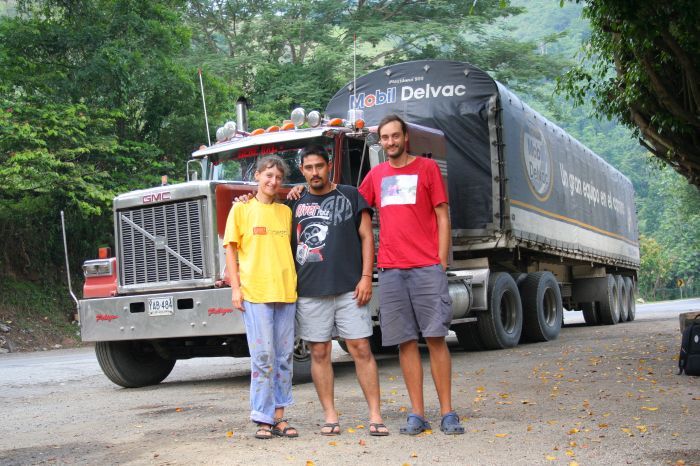
Like anywhere in Latin America, the biggest danger is to be robbed, which may happen if you travel alone. Bus transport is decent and reasonably priced, although not as cheap as countries like Bolivia or Venezuela.
As mentioned, the security situation makes hitching difficult, but certainly not as bad as you would think. To know which areas are outright no-go zones, ask around and check the newspapers. People tend to tell you that the whole country is muy peligroso, only take information seriously if there is something concrete going on (example: the FARC have attacked a military outpost on the road to Turbo...) Thumbs up hitch-hiking might get you a ride, but isn't the best approach. Much easier is talking to people at gas stations and peajes (toll booths), or asking soldiers at check-points and explaining where you are going, either they should let you talk to cars that slow for the check-point, or they may even ask people for you...
To cross from Colombia to Panama you've got to travel around the the Darién Gap somehow. See the article on the gap itself for details on that.
Legality of Hitchhiking
Colombian law does not mention hitchhiking, and it has no motorway category that shuts pedestrians out. Article 58 of Ley 769 de 2002, the Código Nacional de Tránsito Terrestre, lists what a pedestrian may not do and the operative one is first: not to invade the zone set aside for vehicle traffic, nor move along it on skates, a skateboard or the like. The berm is not that zone, so standing clear of the carriageway with your thumb out breaks no rule — the penalty for getting it wrong is one day of the legal minimum wage. Article 77 requires vehicles on autopistas and in rural areas to park entirely off the road with warning signals displayed, which is where a driver can legally pull in for you. Peajes and estaciones de servicio are the practical places to ask, and nothing in the Code forbids asking there.
Personal Experiences
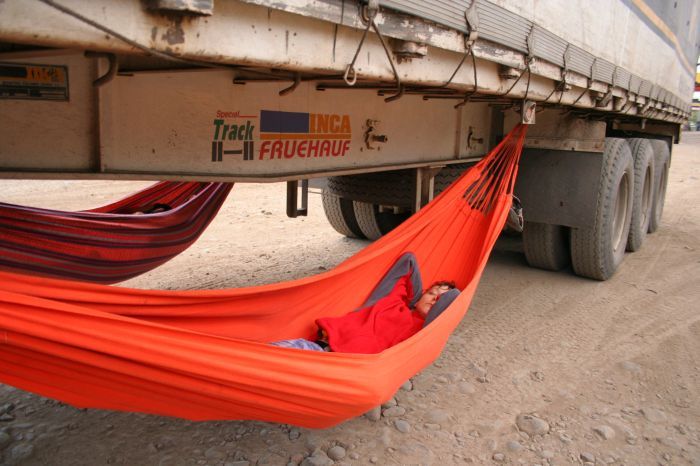
February 2022 to May 2022
Hitchhiking from febraury 2022 to May 2022 around Colombia. Hitchhiking is working, it is a bit hard because normal drivers don´t trust in others. There are some migrants around and they feel insecure. Although we completed our rides from Bogotá to Ibagué, Ibagué to Armenia, Armenia to Salento and Filandia, Armenia to Pereira, Pereira to Chinchiná, Chinchiná to Manizales, Manizales to Medellín, Atlantic coast and the way down by Eje Cafetero to Cali, Popayán, Pasto and border with Ecuador.
2008
In the spring of 2008 me and a Colombian female friend went for some hikes in the countryside around Bogotá. We went to the village of, where a 7 km dirt road leads up to the 'Laguna Sagrada'. On the way a milk truck picked us up. A great experience, standing on the back of a truck driving up a bumpy road, the wind in our hair. On the way back we easily scored a ride back to Bogotá, in a car with a bank employee who liked talking about football. The dirt roads in the countryside are not busy, but everybody seems willing to pick you up. Same experience in Puente Nacional late one evening, where we got a ride from a farmer for a few pesos.
2007
In 2007 I hitched from Cartagena to Ipiales in a few days. Stayed on the main roads. No troubles. Rode trucks & personal cars. God Colombia is beautiful.
2010
I hitchhiked through Colombia in 2010. After making it across the Darién Gap by hitchhiking on speedboats, I went through most of the Colombian Andean territory. It is a fantastic country, and the only place where the truckers let me ride in the little space between the cab and the trailer!
I arrived in Cartagena, and walked all the way to Turbaco with no luck whatsoever. Eventually rides came. My experience was that thumbing took a heck of a lot longer, but that if you spoke with someone when they were stopped, you were taken almost every single time. Hitched to Medellin, back up to Barranquilla, down to Bogota, to San Agustin, Popayan, and to Ipiales. Spectacular country.
April 2012
Hitched from Ipiales north in April 2012. The difference between talking face to face and thumb-out hitching can't be understated. The people are extremely nice to you when you talk to them but are definitely not trusting when they look at you from their driver's seat. Even if it might be slow in this country, it's the least of your worries.
March 2014
March 2014, for about a month- much, much better than I had anticipated. I hitched from the very north to the very south of Colombia, with nerry an issue. Hitching around the Darien proved frustrating and impossible for me, but when I was in country, things got much better. It is more difficult than say Ecuador, but I rarely waited longer than an hour. The far north is easy to hitch, but getting around big cities can be a real bitch, as there are very few bypasses and you get sucked in. Public transport costs are very high relatively. Police are always nice, and gas station attendants. Do direct hitchhike and ask people at petrol stations, they are always super nice and honest. Was given money for food a number of time, despite refusing weakly. I got offered my longest hitch ever here outside of Neiva, as far as Ushushia in Patagonia which I took as far as Ecuador border. Also had three drivers on cocaine which were great, fast rides, very entertaining and obvious!
September to December 2014
Very easy to hitch hike, including with a bicycle. I was offered a lift quite often (especialy when going uphills) without asking for it. Colombians are the most generous".
Very easy to hitchhike if you do it right, talk to peoplo at a gas station is a sure ride and if you want to thumb-out it is also very good in the right place many people dont stop thinking you wont like to get a short ride so make a sign it helps a lot. Hitchhiked all the coast from Cartagena to Guajira, in towns like Barranquilla,Cienaga, Santa Marta, Taganga, Tayrona park, Palomino, Mendihuaca, Quebrada de Valencia, Buritaca, Camarones and Rioacha. Everybody is very nice yust get a little out of the city its easy by moto taxi or bus that way people will know you are going out.
2015
I hitchhiked from Medellin to Ipiales Colombia in 2015. Around Cartagena and Santa Marta proved very difficult. Spanish is extremely helpful. Some basic words are needed without a doubt. Have patience when thumbing as some places have little traffic. Truck drivers are the best to get and will often buy you lunch. Girls will find it easier of course, try not to be too dirty guys and keep clean clothes. Wild camping here is super, bring a jungle hammock. Most of all smile and enjoy the wild roads, I loved Colombia and got plenty of material to write about on my blog here. Also be prepared for bikes, I hitchhiked a motorbike and a moped in Colombia. It gets easier in Ecuador
Dec 2017
hitched through from Ecuador border to turbo in 7 days in Dec 2017. Visited Cali, Bogota and Medellin en-route.
In Honda I got a ride after 20 mins at petrol station, on the back of a truck. after 15 mins of driving we came to small town with speed bumps at begining and end. when going over the first speed bump, two bandits ran from behind a building and tried to climb on back of truck, but only one made it, and sat down 2 meters infront of me. a few mins later he got on his knees and pulled out a knife and looked at me. i patted my pockets to show i had nothing and did the bro fist to diffuse the situation. he put the knife back in his pants and sat next to me against the wall that separates the drivers area from the rest of the truck. i kept up my guard by never looking away from him. a few minutes later he started putting a bandana around his face saying stuff in spanish to me that i couldn't understand, and constantly looking around the separation wall to the drivers area. a few minutes later the driver pulls up into a petrol station, gets out with his colleague with metal crowbars in their hands and tell him to get down and see what's in his pants. they shook their heads and told him to scram. my hands were shaking uncontrollably. we drive off and pass the bandit who looks at me and give him the thumbs up for not doing anything to me. when we came to another small town the same thing happened with a single guy, but thankfully he didn't make it onto the truck. a few minutes later the driver pulls over and picks up a group of colombian hitchhikers which seriously put my mind at ease. Every ride before and after this one had no problems, i guess wrong place at the wrong time but thankfully nothing turned south. The crazy thing is, they have a line of military guards in groups of 10 spaced along the both sides of the highway two meters apart, giving you the thumbs up when you drive past, yet the bandits know how to get around this easily as in my scenario. i saw these guards doing this same thing several times when i was hitching through Colombia...the thing is, it is absolutely useless as proven in my situation.
Average waiting time was about 2 hours. Mostly cars picked me up. i saw single guys walking along the highways with small backpacks on their backs on several occasions.
Bogotá
Edit on wikiRoadside hitching spots go stale. For current places to hitch in and out of this city, use maps.hitchwiki.org and the live Hitchwiki page linked at the end of this chapter. This book keeps general orientation, not a pin gazetteer.
Bogotá is the capital and largest city in Colombia.
Public transport
The 'Transmilenio is an extensive and confusing rapid transit metrobus service. There are no ticket controls on the buses, fares are paid when entering the stations. You will need to buy a 3,000 COP card which is not returnable. Some zones require the use of different cards. You can vault the turnstyle when the blue-clothed security guard isn't looking. Kids often run accross the street and jump on the bus between the platform and bus to avoid fares.
There are regular buses as well which are sometimes easier and don't require a card. They can't be blackridden though.
Venezuela
Edit on wikiVenezuela is a country in South America.
Currency issues, super corrupt police, distrust, political unrest, and insecurity make Venezuela an intimidating and dificult destination, but your road-hardy persistence and travel smarts will reward you with incredible experiences in a unique, dynamic, and nearly untouristed gem of a country.
Hitchhiking
Buy your money on the black market, talk to people, observe but don't opine upon the political situation, have a nice glass of Cacique rum or a couple of comically small Polar beers, and let the rumba begin.
In Venezuela a ride is called "la cola" and hitching is called "agarrando la cola", a linguistic survivor from the bygone days of grabbing a horse's tail during an exhausting trek. Pretty cool, no? Even cooler is that hitching is ten times easier than in neighboring Colombia and twice as easy as in Brasil. Classic thumbs up hitching works, but asking for "una cola" at gas stations, in congested city traffic, or at scenic lookouts never hurts. Toss some soldiers a few bolivares and you can have an interesting ride in a military vehicle. It's even possible to hitch on yachts to the postcard perfect archipelago Los Roques. Rich people from Caracas pay a captain to navegate their yacht from the mainland to the islands then fly to the islands, play with their expensive boat and fly home, meaning that empty luxury vessels are making the journey to the islands every Thursday/Friday and returing every Sunday/Monday. Ask around at the ports nearest Caracas, buy the capitan and crew some food and maybe some rum and enjoy jetset vagabonding.
Legality of Hitchhiking
The law here has not been checked. Nobody has yet read the road traffic rules in force in Venezuela against the official text, so this section cannot tell you what they say, and nothing elsewhere on this page should be read as a statement of the law. What holds almost everywhere is that hitchhiking is not an offence in itself and that what the traffic code regulates is where a pedestrian may stand — off the carriageway, and off motorway-class roads and their slip roads altogether — but whether that is true here is simply unknown. Ask locally before standing on a major road, and treat the rest of this article as what hitchhikers report rather than as a rule you can rely on. If you can read the official text, please replace this paragraph with the provision it turns on and a link to it.
Geography
Venezuela's territory encompasses every imaginable climate. In the south, you can find snow capped mountains, charmingly anachronistic Andean villages, and the bizzare dreamscapes of "el paramo". In the northwest, you have the desert peninsulas of La Guajira and Coro. The caribean coast can suprise you with paradise beaches that you'll have to yourself, rowdy fishing villages, and beautiful beach spots where tranquility is unknown to hordes of rich kids in SUVs, each one blasting the ubiquitous reggaeton on gigantic speakers, and rumbeando all night long. The center of the country is the plains, a popular area for viewing wildlife. The Orinoco and Amazon river basins are straight up rainforest. People live in houses built on stilts and commute in canoes in the area around Maracaibo. The southeast, known as the Gran Sabana, is an undescribably amazing landscape like nowhere else on earth. Don't listen to what the news says about Venezuela; go experience its amazing natural beauty, taste it, smell it, let it charm you and then spread the word.
Going to Brazil
It is quite possible to hitch all the way on this route (from Ciudad Guayana to Manaus), although it might take some time (~4 days). Although it is common in Venezuela to take passengers on the back of pick-ups, in Brazil such practice is not allowed.
I hitched from Ciudad Guayana to Manaus in 3 days in April 2014. The road was paved and in great condition! The Gran Sabana was very beautiful. Longest wait was two hours at the last town before entering the Amazon. -Keith
Going North from Brazil
TowellessTraveler hitchhiked all the way to the entrance of Roraima in August 2022. Between the border and Santa Elena de Uairen it is not so hard to find someone. It gets much much harder after. Very few cars pass and are full or only want money. Same for trucks (full, money or women). Be ready to wait for very long hours or even days. Some buses can accept to pick you up for free (especially if you're walking in the middle of nowhere) but only for a short distance (until San Francisco de Yurani for example, the entrance of Roraima). Going further up is even harder and truck drivers said that it does not get easier once you're in the North (still not a lot of people and higher insecurity). This region was completely safe at that moment despite the crisis in the country.
Currency
Everyone pay in Reals near Brazil and seem to be paying in USD further North. You might not have to exchange money.
Don't change your money at an exchange office or bank and don't take any money from an ATM! You will get the official (government-set) rate of about 11BsF per USD. Better change your money on the black market.
In January 2015 the Dollar-Bolivar rate is around 180 BsF per USD but it goes up quickly. The daily parallel dollar (Dolar paralelo, as it is called in Venezuela) can be followed on the twitter page of Dolar Today. The Euro-Bolivar rate is also indicated.
In Santa-Elena de Uairen, near the Brazilian border it is very easy and safe to change Brazilian Reals on the street. Look for people wearing red shirts, they will change your Reals, Euros or Dollars.
In Caracas it is much harder to change Reals and you will get a bad rate. Euros and Dollars are easier. The change agents can be found on the North side of the Asamblea Nacional near Plaza Bolivar. They don't give you the rate that is announced on Twitter and they try to rip you off every time. Locals are afraid of them and recommend you to find other ways to change your money, for example through acquaintances. (For Venezuelans it is a way of saving money, because the BsF loses its value quickly.)
One trick the change agents try to pull is take your Dollar bill, start counting your Bolivars, change the Dollar bill for a fake one (without you seeing it) and then cancel the transaction and give you the fake Dollar bill. Make clear to them that you are not stupid. Don't be intimidated by them and ask different agents for their best deal.
Most tour agencies, hotels, and hostels allow you to transfer money from a European or American bank account and they will give you the equivalent in Bolivars. (Although it can be a lot more difficult for accounts in the UK.)
Personal Experiences
7th of April, 2010
When in the Venezuelan Andes 3 mates and I once hitched the 50km or so back to the city of Merida as we had no idea when the next bus was. We got a lift in the back of a pickup truck in around 15 minutes and got a lift straight to Merida no problem. Scenery was amazing and the back of a pick up is a far better way to experience the place than an overcrowded bus.
The Península de Macanao in Isla de Margarita is incredibly easy to hitch. There's only one bus route going out of Boca de Río towards the towns on the NW coastline. Folk will pick you up quickly cos they're aware of the lack of transport, make sure you ask for water though cos it's a scorching desert! I recommend the fishing beaches up by Punta Arenas: El Tunal, La Pared, etc. If you ask the villagers nicely, they'll let you sleep on their beach undisturbed.
I also hitched from Puerto Ordaz down to Santa Elena in Edo Bolívar. In the first day, I got as far as Tumeremo, including an amazing ride with some firemen who kept feeding me beer! The second day, I managed to get into La Gran Sabana, including catching the bus (Expreso Los Llanos) at Km 88 without paying. Once in La Sabana, it was trickier, but I think that was partially cos of the long, straight roads which invite speeding and also cos it was during the Carnavales (mid Feb) so all the transport was families with 4x4s full of camping gear. In the end, a Colombian guy took pity on me and gave me a ride in order to lecture me on personal hygiene.
2011
In 2011 two friends and I crossed all of Venezuela hitch-hiking from Boa Vista in Brazil to Cucuta in Colombia. We got quite a few rides in trucks (sometimes all three of us and the trucker on two seats at the front of a small truck cabin!), and a lot in the back of pick-up trucks. If it hadn't been for the incredibly poor roads and the awkward positions we were forced to endure them in it would really have been perfect hitch-hiking conditions!
August 2017
I was there for 10 days in August 2017. I started off in Tucupita, after getting speed boat from Trinidad in Bonasse/Cedros (100usd for awesome 4 hour high-speed ride, dont know whether still operating). Then I went to ciudad bolivar, then guyana city, then gran sabana, then Venezuela/brazil border. Hitching was mostly in the boot of vehicles and the checkpoint military wanted money for assistance for a ride, so didn't bother hanging around with them. Average waiting time was around 1 hour. I swapped 10usd equivalent of Trinidad dollars for a brick size bundle of Venezuelan notes, literally cost me a dollar a day to live including 4 nights in a hostel in Ciudad Bolivar 😁
Gallery
Image:Changing hitched trucks in Venezuela.jpg|Hitchhiker Augustas changing hitched trucks in Venezuela. Image:Katja in Venezuela.JPG|Hitchhiker Katja in the back of a hitched pickup. Image:Katja and Augustas in a pickup in Venezuela heading to Puerto Paez.jpg|Katja and Augustas in a pickup heading to Puerto Paez. Image:Toll road in Venezuela.JPG|A toll road in Venezuela.
Guyana
Edit on wikiGuyana is an English speaking country in South America.
Hitchhiking
Hitching in Guyana is very easy, it is a country where few people own cars, and a lot get around by bus or by hiking. The road system is poorly developed so if you travel any distance, especially away from the coast, you will probably get to see it's remarkable dirt tracks. A lot of buses (small, Volkswagen combi-size buses) travel all around the country, and they are used to stopping anywhere for anyone if they drive past. So this means that is you are on the side of the road somewhere all the buses are bound to stop and try to convince you to come on board (note how fast prices drop if you keep saying no, and to get them to understand you really have to say no a few times!) and it also means that if you are having problems hiking from where you are, a bus will probably be along soon to take you a bit farther down to a better spot (and they are pretty cheep).
The country didn't have excellent diplomatic relations with Venezuela in the past and as the main point of discord was a large amount of territory ceded to Guyana and later disputed by Venezuela - no road exists between the two countries. To go from one country to the other by road you have to make a 340km journey through Brazil via Boa Vista. This might mean that you need to get a visa for Brazil. Guyanese/Brazilian border - Guyanaese town is Lethem (pronounced Latham) / Brazilian town is Bonfim. Brazilian/Venezuelan border - Brazilian town is Pacaraima / Venezuelan town is?
Google / Openstreetmaps both show the roads
Legality of Hitchhiking
The law here has not been checked. Nobody has yet read the road traffic rules in force in Guyana against the official text, so this section cannot tell you what they say, and nothing elsewhere on this page should be read as a statement of the law. What holds almost everywhere is that hitchhiking is not an offence in itself and that what the traffic code regulates is where a pedestrian may stand — off the carriageway, and off motorway-class roads and their slip roads altogether — but whether that is true here is simply unknown. Ask locally before standing on a major road, and treat the rest of this article as what hitchhikers report rather than as a rule you can rely on. If you can read the official text, please replace this paragraph with the provision it turns on and a link to it.
Personal Experience
June 2024, august 2024
I visited in June 2024. Tried hitching from airport (OGL) but during ride the driver informed me he was a taxi and wanted 30usd, i said i had no money and he said there is no hitching in Guyana, you will get robbed and assaulted. he then let me out of the car when i told him i literally had no money on me. i walked from the conference centre to town via the main highway then the seawall. to head to Suriname, I got a bus from Stabroek market to Mahaica for 300GYD, then started hitching from there. i got all the way to the border in 4 lifts over 2 chilled days (easily 1 day if i started in the morning). be wary of mosquitos if you venture off road to camp like i did, mosquito repellent highly recommended. i camped near OGL airport, in fields outside Vreed en Hoop, opposite National Park in Georgetown behind some bushes, Port Mourant near the river 200 meters from the road on the coast side, Springlands opposite side from coast in bushes and in Molsen creek just south of the ferry terminal. Never felt nervous/threatened, but did get warnings from locals when in Port Mourant trying to hitch at night.
Got given some curry, a Guinness and some cash. asked a few places if i could pitch tent but they said no (security guards everywhere) so that is why i went to the bushes. if you need tent go to Chinese shop in Vreed en Hoop (opposite KFC) and get one for 25usd, worth it for the mosquitoes and rain showers. Average waiting time 30mins.
in august 2024 for 10 days, i hitched from lethem to Mabura, after waiting 7 hours from 4am, after a night camping in the security checkpoint outpost. then i waited another 7 hours trying to get to Mahdia and started walking to the river crossing (25km away) where i camped and got a lift with tanker next morning. then i started walking to pamela landing from Mahdia, where i was picked up by first car, and the passenger was getting picked up by boat to Amatuk and gave me a free boat ride. then i got super lucky and managed to bump into two guys in Amatuk, going up to tukeit and hitched a ride with them, where afterwards i hiked to kaieteur falls. i could not get a flight from here, but managed to hitch another boat, the next day, to Chenapowu village, where i successfully hitched a free cargo flight to Mahdia. from there a couple of easy rides on quadbikes to river crossing where i camped, then next morning on back of landcruiser to Mabura, followed by 5 hour wait for a truck to take me to Lethem (the china town of guyana). i got food, drink and money offered to me on this trip. what i thought would easily cost me over 100usd (to see Kaieteur Falls), ended up costing 30usd 😁
Suriname
Edit on wikiSuriname is a country in South America. Since it's a former colony of the Netherlands, Dutch is the official language.
Access
From Europe you will have to fly from Schiphol airport (Amsterdam); there is also flight coming from Miami. By land you can come from French Guiana (part of France) or Guyana. In both cases there is a river to cross, the French side has a bridge, the British side doesn't and to cross you have to chose between the big boat (the official, legal ferry, this is for people with passports) or the little boats (home-owned, illegal boats that take locals back and forth across the border; only use this option if you don't have the correct paperwork and remember you will be a legal alien once on the other side...)
Visas
As of 2025, Suriname is the only country in South America that requires a Visa/Entry fee voucher for Europeans to enter the country. The cost in 2025 was 52US$ or 52euros. Application can be made online via the Vfsglobal website. Alternatively, if you are coming from French Guiana, (or are having problems with the online application), you can get it from the Surinamese consulate in the border town of San Laurent-du-Maroni. (Card only, no cash accepted). Customs declarations using paper forms on arrival were officially phased out on Jan 15th 2025 and now have to be completed online at most 3 days before arrival and departure.
Road network
The road network is concentrated on the coast. Thus most hitchhiking happens East to West, although the dirt tracks in the interior of the country can also be hiked on. In that case you will travel with miners and loggers going down into the forest for the job.
Boat and Plane Hitchhiking
Suriname is organized largely around its waterways, some villages just a few kilometers away from the capital are only accessible by boat, and the taxi-like motorized boats are everywhere on the rivers. It may be possible to get a lift in a boat, perhaps by offering to help with the landing procedure (although you would have to know how to line-handle at least a little), or by making friends with a boat owner. Otherwise be aware most people do pay to travel by boat.
Not many sailing boats come to Suriname, although it is technically the landing point if you want to make the shortest crossing possible of the atlantic from the Cape Verde islands. There is a place called Domburg, on the west coast of the Suriname river, just a half hour down south of Paramaribo, where a private owner lets out a few moorings and some yachts have even had their owners living permanently for about 3 or 4 years (in 2011). The people who do own yachts and come to Suriname will most probably come to Domburg at some point in their visit, and they will almost always be Dutch-speakers (it's the number one reason that people come to Suriname because it is the sole Dutch-speaking country on the continent!). If you are lucky enough and have patience, you may find somebody there who would take you on their boat, and their destination from there in 99% of the cases will be Trinidad.
If also seems possible to travel inland by hitchhiking a small propeller plane like a small Cesna or Piper machine, which go to bumpy airfields somewhere in the jungle.
Legality of Hitchhiking
The law here has not been checked. Nobody has yet read the road traffic rules in force in Suriname against the official text, so this section cannot tell you what they say, and nothing elsewhere on this page should be read as a statement of the law. What holds almost everywhere is that hitchhiking is not an offence in itself and that what the traffic code regulates is where a pedestrian may stand — off the carriageway, and off motorway-class roads and their slip roads altogether — but whether that is true here is simply unknown. Ask locally before standing on a major road, and treat the rest of this article as what hitchhikers report rather than as a rule you can rely on. If you can read the official text, please replace this paragraph with the provision it turns on and a link to it.
Personal Experiences
June 2024
Visited for three days on a transit visa coming from Guyana going to French Guiana in June 2024. I struggled to get a lift from the ferry crossing until i went to where the snack shop is and the guard there bought me some beers and gave me a lift, just south of Nickerie. From there i had to walk a while until i got to edge of town where I camped and got a lift the next morning. From there I got mixture of cars and buses to Paramaribo. From there I got a bus out to Tamanredjo where i walked for a while then set up camp in abondoned house (boy oh boy did it rain that night). from there it took 2 rides to the border town, where i was inundated by boat owners to take me to french guiana, but i just went to immigration office and waited until other passengers turned up and shared boat with them for 5€pp. it proved almost impossible to get lifts at night for me. Average waiting time 2.5 hrs. Two foreigners obtained visas at border (30day tourist for 50usd) and immigration officer asked if i required one, but got mine online with VFS global beforehand.
French Guiana
Edit on wikiFrench Guiana is an overseas region of France in South America.
There are borders with Suriname and Brazil.
It is generally a safe country (technically an overseas department of France).''
Cities
Cayenne
Hitchhiking
Even the Lonely Planet says that hitchhiking is doable, so unlike the former British colony Guyana (which is considered rather unsafe), you can stick out your thumb without too much worries. Naturally, it helps if you can speak French.
''Wisdomseeker has hitchhiked in French Guiana - it is certainly 'doable'.
Nveselinov has hitchhiked in French Guiana - it is very good. The most of the peoples are very good. I traveled from Kouru to St. George (the border town with Brasil). There were not many cars in the area near the border, but every 3-4th car takes you. I went form Kouru to St. George for 4,5 hours.
''Carry_On_My_Wayward_Thumb has hitchhiked in French Guiana - One of the best places to hitch in all of the mainland Americas. On par with Ecuador and Nicaragua as far as ease and friendliness of your rides. Some cars stopped for me before I even put my thumb out! Only issue is the remoteness east of Cayenne. If you get stranded you will be very far from everything. Definitely bring plenty of water, some snacks and sun protection because even though people are willing to pick you up, there aren't many cars going east to the border with Brazil. From St Laurent to Kourou took me three hours, Kourou to St George took me four.
Legality of Hitchhiking
French Guiana is an overseas department, so the French code de la route applies here in full and, as in metropolitan France, it contains no offence of hitchhiking. What usually restricts a hitchhiker there does not bite here: the department has no autoroute, so article R421-2, which bars pedestrians from motorways, and article R421-1, which extends that ban to the slip roads, have nothing to apply to. The RN1 towards Saint-Laurent-du-Maroni and the RN2 towards Saint-Georges are ordinary roads, so you may stand on the verge of either. What does apply everywhere is article R412-36: outside built-up areas a pedestrian keeps to the left-hand edge of the road and walks facing the oncoming traffic. On the dual-carriageway stretches around Cayenne, check the entry signs — a road signposted as reserved for motor vehicles excludes pedestrians by that sign alone, autoroute or not.
Personal Experiences
Ecuador
Edit on wikiEcuador is a country in South America. It borders Colombia and Peru.
Hitchhiking
It is great for hitchhiking, just be careful in some places, especially at the coast. Many pick-up trucks are there. Many locals,especially far from cities, hitchhike their way to school, work and such. But! In Ecuador it's kind of common to pay for rides. After a month of hitchhiking some ride asked me for money, and I realized that many of the people who gave me a ride this last month were actually expecting money, but I left the car and they were too shy to ask. it's good to say before you go on the ride, "No tengo Dinero, esta bien?" or "Sin plata, esta bien?" If the say yes than you are good. if you don't ask before you might be asked a specific amount that is too large for you in the end of the ride. Many Ecuadorians are happy to pick up a foreigner. It's not the safest country to hitchhike though.
Along the Panamericana there are several toll booths ("peaje"). Take an overland bus in direction of your destination and get out at the first toll booth (normally $0.25 - $0.50). You have a couple of seconds to ask the other drivers until you get kicked out by the police, but that's normally enough time to find a ride. If you are able to explain your situation in Spanish, you might be able to stay longer. If you want to avoid this kind of "trouble" you can as well try to stop cars along the Panamericana. Along this road normally you won't get asked for money.
In general beside some tourist areas, Most of Ecuador is not used to see foregniers. And might find it hard to understand what's your situation, and why are you hitchhiking. Many might assume that you are very poor if you have to hitchhike and not take the bus.
Therefore Hitching in groups almost works better than solo or in pairs. Anything that might indicate to the locals that you are actually travelling and not a poor person in need might shorter your waiting time. Don Nadie once left Quito in a group of eight, all drunk, at 3am and no problems catching a ride. Incredible. The best country for hitching in the Western Hemisphere.
Buses in Ecuador are quite cheap (usually $2.5/hr), and will usually stop anywhere. Now days there is buses or shuttles on even really small roads and they are quite frequent. There is usually two workers on every bus, a driver and a guy that helps with putting bags in the trunk, boarding the bus and collecting the money. Many busses expect you to run and board as fast as possible while the bus is still moving. Many times while I hitchhikied busses stopped thinking I am waiting for them, and when I said: "no tengo dinero" they told me to board the bus anyway. Many people also stop and try to give you money for the bus.
Legality of Hitchhiking
Ecuadorian law does not mention hitchhiking, and it gives pedestrians the shoulder in as many words. Article 164 of the Reglamento a la Ley Orgánica de Transporte Terrestre, Tránsito y Seguridad Vial says the bermas may be used by vehicles only for emergency movement and emergency stops, and that pedestrians may use them to walk facing the direction of traffic where there is no safer place to walk. Outside towns there usually is no safer place, so standing on the berma of a inter-city road is what the rule contemplates. Article 165 lets the Agencia Nacional de Tránsito and local authorities restrict pedestrian movement on particular stretches, so a posted prohibition overrides the general permission. Nothing in the Reglamento makes asking a driver for a lift an offence, and the peajes and gasolineras where traffic already stops are the practical places to do it.
How locals hitchhike
In Ecuador the locals hitchhike by doing the clasical fist with a thumb pointing out but they point the thumb towards the road and move their hand back and forth when cars pass to show they want to go to the direction their thumb is pointing. you can also hitchikie the classical way, but many will not be sure what you mean. I found out that cars stop much faster if you are hitchhiking like the locals, but also most of them will go if you are not willing to pay for the ride.
Regions
Ecuador is roughly divided into 3 regions. La Sierra in the middle. Which is mainly high mountains. and it can rain here quite a lot.
La costa to the west. Which includes the coast line but also all the land and forest after you come down from the mountains but still very far from the coast. here it's very humid and hot most the year.
and El Oriente to the east. which is a big lands of changing forest. it's climate is something between La Costa and La Sierra.
In El Oriente and in La Sierra in general hitchhikng is good. Getting rides is usually easier the further you are from big cities. But sometimes, on spesific days or hours very few cars pass by.
In La Costa hitchiking is a little bit harder. In the last years many refugees from neighbouring countries are coming to Ecuador especially to La Costa. Many refugees tend to walk around with big backpacks. And because of that, many locals will mistake backpacker as refugees, even if you look like you are from totally different part of the world. Which might cause people to try to help you with giving you money and such, But also might make people be more hesitant to give you a lift. Many truck drivers which are used to refugees hitchhiking stop and mark you to go in the cargo bed if you wish. many times if you come to the window and speak with them a word or two, they invite you to the front.
Camping
If you wish opening a tent for the night it's kind of common to do so in Gas stations or at the fireman station. Just go and ask. Mostly they'll say yes. You might get free access for bathroom and shower a roof and maybe even a meal. plus there is always people working there guarding so it's relateviley very safe.
Safety
It should be said that Ecuador is not the safest country in the world. In some places it's better to walk only if you are with locals. If you don't pay attention to your stuff you might end up loosing them.
There is also a higher chance in some areas for getting mugged. It's better not to go to very isolated parts far from the big roads, or wonder around at nights if you are new to the region.
Many part of the country are very safe and you can totally relax. But other parts are a little bit more tense. So it's always good to talk with the locals and ask for advice. Most of the times you can feel the atmosphere from they're responses about the area that you are in.
Police in general are very helpful, especially if they understand you are from a different country. They might offer you to camp next to them and such for protection. or help to find a bus and sometimes rides.
License plates
This section contains text from the Wikipedia article on Vehicle registration plates of Ecuador.
The first letter indicates the province of issue. The second letter, also called the "key letter", identifies the type of license plate.
| Province Letter Province Letter Province Letter | |||||
|---|---|---|---|---|---|
| Azuay A [Galápagos](Gal | ápagos_Pr | ovince,_Ecuador “Galápagos”){.wikilink} W [Pastaza](Pastaza_Province,_Ecuad | or “Pasta | za”){.wikilink} S | |
| Bolívar B [Guayas]( | Guayas_Pr | ovince,_Ecuador “Guayas”){.wikilink} G [Pichincha](Pichincha_Province “Pich | incha”){. | wikilink} P | |
| Cañar U [Imbabura](Imba | bura_Prov | ince,_Ecuador “Imbabura”){.wikilink} I [Orellana](Orellana_Province “Orella | na”){.wik | ilink} Q | |
| Carchi C [Loja](Loja_ | Province, | _Ecuador “Loja”){.wikilink} L Sucumbíos{. | wikilink} | K | |
| Cotopaxi X [Los R | íos](Los_ | Ríos_Province,_Ecuador “Los Ríos”){.wikilink} R [Tungurahua](Tungurahua_Pro | vince “Tu | ngurahua”){.wikilink} T | |
| Chimborazo H | [Manabí]( | Manabí_Province “Manabí”){.wikilink} M [Zamora-Chinchipe](Zamora-Chinchipe_ | Province | “Zamora-Chinchipe”){.wikilink} Z | |
| El Oro O [Morona Santiago](Mor | ona-Santi | ago_Province “Morona Santiago”){.wikilink} V [Santa Elena](Santa_Elena_Prov | ince “San | ta Elena”){.wikilink} Y | |
| Esmeraldas E | [Napo](Na | po_Province “Napo”){.wikilink} N [Santo Domingo de los Tsáchilas](Santo_Dom | ingo_de_l | os_Tsáchilas_Province “Santo Domingo de los Tsáchilas”){.wikilink} J |
The background color of the license plate varies according the key letter and identifies the type of service of the vehicle.
- If the key letter is A, Z or Q, the background color is orange and the vehicle is a bus or a taxi.
- If the key letter is E, the background color is gold and the vehicle is property of the government.
- If the key letter is M, the background color is light green and the vehicle is property of a municipality.
- If the key letter is W, the background color is white-silver and the vehicle is property of the police.
The rest of letters are for private, or particular, vehicles. Their background color is white-silver.
Personal Experiences
Easily the easiest country to hitch. Spent about a month hitchin around. I recommend the walk from the highway to Misahualli to see the monkeys in the square and to camp along the banks of the jungly river fork.
I never had to wait more then half and hour, at any place in Ecuador. Hitchhiking through the coast is probably the easiest. Hitchhiking around the Andes is the best. I recommend visiting cities like Loja and Cuenca.
Loved Ecuador, I hitchhiked from the Colombia border to Quito, over to Pernables, down to Montanita, over to Guayaquil and onwards to Peru. Never waited long, could easily sleep in the country in my hammock and got given money for lunch once, bought lunch once and given a place to stay twice. The coast is a little trickier but very doable, just aim for the pickup trucks, some might ask for money (one did) but just say you have none and it's all cool. The water in Quito is drinkable too and there is a lively couchsurfing scene, just be careful because its not as cheap as Peru or Colombia. Managed to hitchhike urban buses twice, I recommend always walking with your bag on your bag and turning around when a car approaches, especially on the coast, this type of hitchhiking works better than petrol stations and signs because Ecuadorian will pity you fast and want to help out
December 2017
visited in december 2017 for 3 days in the following route: lalamor, where i was introduced with 3 juicy mangos > macala > ambato > quito > tulcan/ipiales border crossing.
the waiting times were pretty good averaging 30mins. with the us dollar it felt americanized, especially quito. entering was a doddle, however leaving was a pain with a huge que, and a 3hr wait, to get stamped out. felt chilled the whole time with no safety concerns. mostly cars picked me up.
Border Crossings
Ecuador only borders two countries: Peru to the South and East and Colombia to the North and East. In the Amazon region of Ecuador, there's some border crossings by river boat that aren't really good for hitchhiking, but might provide a great challenge.
Ecuador has one of the most chill visa policies in the world, therefore many people with "difficult" passports can also come and enjoy the country for 90 days.
Peru
All border crossings are ordered roughly from West to East. Ecuador and Perú had a border dispute as recent as 1999, so perhaps be sensitive on the issue. This is not a comprehensive list of border crossings, as there are many more, but most of these will have immigration offices to process international visitors.
Huaquillas to Aguas Verdes ¡DON´T GO THERE! Only if you want to do sightseeing, you can cross walking, nobody cares, but if you need to stamp your passport is imposible! From Huaquillas you must go 5km in "Transversal Sur" to a place that is called CEBAF, the first one is only to entry in Ecuador so don´t go there, 2km more in south direction you will find a second CEBAF there you can stamp your exit from Ecuador and finally entry in Perú (June 2022).
Is probably a local border crossing between the two countries, not suitable for foreign passports. The border is the bridge over the Zarumilla river. The location of immigration offices is unknown. Please add information if you've hitched this. Perhaps take the next border crossing instead:
Puente Internacional Zarumilla is a major border crossing between roughly Ciudad Astral in Ecuador and Zarumilla in Perú. The location of the Ecuadorian customs and immigration is about 2 km from the actual border. The location of the border control on the Peruvian side is unknown. Please add info if you've hitched this!
El Alamor between Zapotillo in Ecuador on the E25 and Lancones in Perú on the 1NN. The immigration offices are about 600 meters apart across a small bridge over the Rio Alamor. Please add info if you hitchhiked this!
Puente Internacional Macará from Macará in Ecuador on the E35 to Suyo in Perú on the 1NL. It seems to be the "real" Panamerican Highway border crossing between the two countries. The immigration offices are about 500 meters apart. Please add info if you hitched this!
Rio Canchis/La Balza from Zumba, Ecuador on the E682, to Namballe, Perú on the 5N. Immigration offices are 400 meters apart over a bridge. SonOfaHitch crossed this border on March 2022. The Immigration points are on both sides of the River Canchis and crossing is possible only between 6:00 A.M to 6:00 P.M. Hitchhiking to the border from Loja was the nicest and easiest exprience I had in all of Ecuador. never waited more than 10 minutes. There are many small towns on the way and the view is beutiful. very relaxed country side. The locals were very friendly and many times will try to help me or offer me where to stay for the night even if I didn't ask. There aren't many cars, but usually the first one will take you. The end of this road is not paved until the border crossing. After the small village of pucabamba there are really few cars or motorcycles coming by. Eventually got offered a bus ride for free with the shuttle that goes to the border. On the peruvian side althought there is a road there isn't much going on until the town Namballe. Got offered a ride eventually with a Motocar while I was walking on the road. Both sides asked me for my Covid Vaccination papers, but didn't looked at them so well because they were in a foreign language.
Río Santiago perhaps there is a river boat from Jempekat/Soldado Monge in Ecuador via the Rio Santiago and the Rio Marañon to Saramiriza in Perú. There seems to be both a Peruvian and an Ecuadorian settlement at the border, which is perhaps a military base or an immigration office. Let us know if you crossed the border here!
Río Pastaza perhaps there is a river boat from between Puyo and Macas in Ecuador down the Río Pastaza (border town named Andoas), to San Lorenzo/Yurimaguas in Perú. Let us know if you're aware this route exists!
Río Napo between Nuevo Rocafuerte/El Coca in Ecuador and Cabo Pantoja/Iquitos in Perú. Mind of a Hitchhiker crossed this border in May 2017 in opposite direction and wrote extensively about this trip and made a video here! Immigration offices are in Nuevo Rocafuerte and Cabo Pantoja. IMPORTANT: when trying to leave Ecuador to Colombia via Tulcán border crossing, it turned out Mind of a Hitchhiker's entry stamp from Nuevo Rocafuerte was not entered in the electronic system - guess what, the connection in the jungle isn't that great! She was turned away to make copies of her passport (three of the main page, three of the entry stamp page) and return. The lady who copies your passport is in a little booth 40 meters from the immigration office. The six pages will cost you $0.60 and then the officer is happy. Realize when crossing the Nuevo Rocafuerte border, you'll need to take a little more time to exit Ecuador because of your silly (but great) stamp!
Güeppi is the (northernmost) Peruvian town on the tri-border with Ecuador and Colombia on the banks of the river Putumayo. There is a Peruvian military base here. To enter via Ecuador, enter the Putumayo river from the town Puerto El Carmen de Putumayo, or another village at the river connected by road. Getting here via any of the Ecuadorian or Colombian rivers would be both an incredible adventure and a hassle. One can follow the Río Putumayo downstream until Tarapaca in Colombia on the border with Brazil. Eventually, the river will enter the majestic Amazon river. Let us know if you did it!
Colombia
All border crossings are ordered roughly from West to East. Ecuador was formed from the former country Gran Colombia and the flags of Ecuador, Colombia and Venezuela are nearly the same design, indicating their common history. The following list of border crossings isn't comprehensive.
Mataje roughtly from San Lorenzo in Ecuador on the E10 to Espriella/Tumaco in Colombia on the ruta 10. WARNING! This border crossing is rather new, and at the time of research (June 2017) it wasn't clear yet if the border crossing had been opened yet. It was announced in 2014 and the project would take two years to finish, so ideally it should be done already. It crosses the Río Mataje. Let us know if this fresh border crossing has been opened to international travelers already and how it was to hitchhike it!
Tufiño - Chiles from Tufiño in Ecuador on the E182, to Chiles in Colombia. There is a bridge across the Carchi river, which forms the border. It is unknown if and where the immigration offices are located and if it's possible to cross on a foreign passport. Let us know if you hitched this border!
Puente Internacional Rumichaca between Tulcán in Ecuador and Ipiales in Colombia. This is the "official" Panamerican Highway border crossing between the two countries, and the one most certainly accepting foreign passports. The distance between immigration offices is 400 meters. There's a bridge crossing the Carchi river. Please add information if you hitched this!
Urbina a few kilometers from the Rumichaca border crossing is the smaller border crossing in the Ecuadorian town of Urbina at the river of the same name. The nearest town on the Colombian side is again Ipiales. It is unknown where the Colombian stamp-in immigration office is at. Let us know if you hitched this!
Puente Internacional San Miguel between Nueva Loja (also known as Lago Agrio) in Ecuador on the E45, and La Hormiga in Colombia on the Ruta 45. The immigration offices are at the San Miguel river bridge and are 200 meters apart. Please add information if you hitched this border!
Puerto Asís isn't a real border, but it is a town located at the Putumayo river that forms part of the border with Ecuador. It is likely possible that there are river boats from here to Puerto El Carmen de Putumayo in Ecuador, the tri-border with Perú called Güeppi, and far away places in Colombia like Tarapaca (near Leticia). Eventually, the Putumayo river will become part of the Amazon river in Brazil and end in the Atlantic Ocean, if you're looking at the big picture. Please add any information you have if you have taken a river boat border crossing in this area!
Covid
In March 2022 you can still see people a little bit affraid because of the covid. Some places will totally expect you to put on a mask, even in the street. And some will totally not mind. Especially close to the capital, Quito, people tend to be more nervous becuase of the Covid-19, and might be more hesitant to aprroach or stop for giving you a ride. Some people claim that to stop for hitchhikers is ilegal because of the pandemic, but many policeman confirmed that hitchhiking is ok. Proof of Vaccination is required at the entrance.
Resources
Gallery
Image:Katja and Augustas in Ecuador.JPG|Hitchhikers Katja and Augustas traveling in the back of a pick-up in Ecuador. Image:Ecuador.JPG|A hitchhiker having a ride with... a cow! Image:Ecuador Katja and Augustas.jpg|Free ride in the back of a a pick-up - very usual for this country. Image:Hitchinecuador.jpg|themodernnomad hitchhiking in the rain in the jungle near Macaus, trusty tarp in hand File:Eric pics 131.jpg|Eripson (right) with friend Gaston hitching from Baños to Quito.
Peru
Edit on wiki Peru is a country in South America located at the Andes mountains and the Pacific Ocean. Perú borders Bolivia, Chile, Brazil, Ecuador and Colombia.
Hitchhiking
Hitchhiking is quite good, depends on the region you are in. Some Peruvians might expect you to contribute to fuel cost, but if you make your intentions clear you should be alright.
In general in peru in many areas private cars are not so common, And it's much more common to see Motocars, and coombis (small shuttle busses). Also a lot of people use their normal private cars as taxis. So it can get a bit tricky to hitchhike. Many times if people understand your situation they will offer you a free ride, even on a motocar or a motorcycle.
Legality of Hitchhiking
Peru comes closer than almost any other Latin American code to naming hitchhiking. Article 81 of the Texto Único Ordenado del Reglamento Nacional de Tránsito (DS 016-2009-MTC) forbids pedestrians to walk along the calzada or "to step down or enter it in order to try to stop a vehicle, with the aim of requesting its service, or for any other situation or circumstance" — a description of precisely the act of stepping into the road to flag a lift. What saves the practice is that one word, calzada: article 78 requires you, on a road without pavements, to walk on the bermas or the strips beside the carriageway, so the shoulder is not merely permitted but prescribed, and standing there falls outside article 81 entirely. On a two-way road article 78(1) puts you on the shoulder facing the oncoming traffic; on a one-way road article 78(2) puts you on the one beside the right-hand lane. Thumb from the berma, then, and never step onto the calzada to do it — the distinction between those two words is very nearly the whole of Peruvian hitchhiking law.
The Coast
That would be all of the Sechura Desert, and the Pan-American highway. Hitchhiking is easier on this highway, and works well around the clock. This is where you will get the longest, smoothest rides of Peru. You will rarely be charged for rides on this sector of the highway. Not to mention the endless swathes of campable desert.
The easiest part is Panamericana - the motorway connecting Piura in the north, through Chiclayo, Trujillo and Lima along the coast with Nazca in the south. So many lorries, you won´t have any problems there. Most of them go long distance, so you`ll easily do 400+ km in a day.
In the deep south of Perú there's the towns of Ilo and Boca del Rio between the bigger inland cities of Moquegua and Tacna. Hitchhiking here is so easy you wonder why there's still people taking the bus. Mind of a Hitchhiker got invited for some spontaneous couchsurfing, then freecamped next to the Jesus Christ statue in Boca del Rio with the blessing of the guys fixing the telephone towers and finally went to Tacna and stayed at the bomberos (firefighters) for a while. The people here are utter relaxed, though be sensitive with talking about Chile as the next cities in Chile (Arica and Iquique) used to be Peruvian territory and Tacna used to be Chile for a while. There's many Chileans in town for shopping, so one might find a direct ride to the border from the city centre. Tacna is also the only place in Perú with a big mosque due to Pakistani immigration in the '90s because right-steering-wheeled cars were allowed in Perú then. The mosque is possibly a place to sleep in too if you ask the Imam nicely and respect Islamic customs (no shoes inside and both men and women cover up, try to be clean). If you go to one of the Pakistani restaurants they might invite you to their home too.
It gets more difficult once you´re heading to the jungle or the andes - roads are much worse, with much less traffic, and worse, majority of which are public buses, combis and the like, so not many options to hitchhike, but if you´re patient, still doable.
Mountains
Expect very slow, long rides in old trucks, similar to the mountains in Bolivia. Many of the roads are kind of curvy which makes rides slow. There is less cars movement in general but more buses and minibuses pass by in comparison to the jungle. They sometimes offer you a free ride if you say you don’t have money. Hitchhiking is ok, depends which part of the mountains you are in. It seems generally that the norther parts it is easier compared to southern parts of the mountains.
There is a train from Puno to Cusco, but it is very expensive. And there are also quite a lot of buses which are much cheaper than the train. However, there is also a very hoppable freight train that runs during nights and is an exhilarating ride. themodernnomad rode this freight train out of Cusco and then turned right around and rode it back.
Mind of a Hitchhiker didn't catch any slow, long rides in old trucks in the mountains at all on her way from Puno to Moquegua/the Pacific Coast (370km). From Puno to Moquegua is the Ruta PE-36B and the best way to get out of town is with micro number 33 which stops at the end of the city next to a speed bump ("tope"). As a lot of people moved from Puno to Tacna for economic reasons, there's many big buses passing through and if you ask nicely you can go for free for a bit. Try to hitch from one of the peajes (toll stops) where there's usually policemen checking papers who are willing to stop cars for you. It gets really cold and rainy here and between Puno and Moquegua there's no roadside accomodation so carry a tent. Once you pass Titire, the mining area starts with its heavy trucks full of ore. There's plenty of Toyota Hilux on the road too for faster transportation and they're more likely to stop than any other kind. This is a popular route for Bolivian trucks too and all Peruvian drivers seem scared of them as they tend to treat curves as straight lines. The landscape here is some of the most changing you can witness in one day of hitchhiking as it goes from Titicaca mountain lake, to altiplano, rocky peaks, snow (in summer too), sand mountains, Dakar-worthy dunes, desert and finally oasis and the Pacific. You're allowed to cry.
The Jungle
Hitchhiking here is kind of good, but it's tiny problematic. Many areas don't have so many cars passing by, Especially private cars. And many areas have problematic road that make the car flow even lower. But even without asking a lot of people stop and offer a ride or help from any sort. Like any other part of Peru it's better to say you can't pay for this ride before you go on.
Mototaxi
MotoTaxi (also known as Motocar, Motor, Tooktook or Riksha) is a 3 wheeled vehicle That have somewhat of a motorcycle in the front and passenger’s sits on the back. Some times the vehicle has walls and sometimes it doesn’t. Many people use them as a small Taxi for short distances. In many areas it can be a little bit difficult to hitchhike because those are very common, And if they will see you hitchhiking they will assume that you want them to stop as a paid taxi. So you might find yourself moving your thumb in and out a lot. In some of the regions 90% of the traffic will be Mototaxis. In case you are walking on the road some of them will stop and might offer you a free ride.
Border Crossings
How long can I stay in Perú?
Without asking or being asked for how long, hitchhiker MOAH just got 90 days in Perú, which probably applies to all EU citizens. There's stories that if you ask the migration officer nicely, you can get 180 days just like that. Bingo!
Some nationalities can get 90 days on entrance and apply for another 90 days in the migration offices towards the end of their first 90 days.
If you overstay for some reason it is not a big problem (if you don't stay some more months). Crazyrik stayed a month longer than the 90 days visa and just had to pay 5 soles per day he stayed to long.
What to do with your coca leafs?
Coca leaves, the ground product for cocaine, are legal in Perú and you'll probably hitch with some drivers with a big ball in their cheek chewing constantly. Though it's from the Andes region, helpful for combating altitude sickness and makes a pretty mean tea, it's not "legal" in all countries to carry with and one must be careful with border crossings and it might be wise to give it to another traveler/local or plain dump it (in the trash). As it's both legal (and growing) in Perú and Bolivia, it wasn't an issue to take a full bag of leafs over the border, as experienced by MOAH from Bolivia's Copacabana to Perú's Puno at the Titicaca Lake, so that could also apply the other way around. They didn't check any luggage at all on either side to be honest.
Fruit and Vegetable restrictions
When you enter Peru you might be asked if you have any fruit or vegetables with you. If you do have any they might make you throw it to the trash or you might get a fine. EVEN WITHIN PERÚ there are special protected subregions though where Peruvian fruit and seeds can't be imported from one district to another and if you take a freaking apple from Puno and take it to Moquegua (where they have a super valley full of avocados (palta) and begins the "Ruta de Pisco"), you might be fined. Didn't apply to coca leafs though.
To/From Bolivia
Puno - Copacabana WARNING: avoid Copacabana at all costs during any public holiday, especially if you're dependent on hostels and can't go camping. All of La Paz flocks to the lake on (long) weekends especially around Christmas and NYE. There's about 50 "hostales" and they manage to get all of them full. Even fast food takes an hour during holidays. The following originally appeared on the page for Bolivia From the occasionally extortionately priced town of Copacabana (which is actually the "original" Copacabana if you have a Trivia night) you have to get to the border town of Kasani 12 km south, which passes the Copacabana airport. You can hitch there or say fuck it and take the 3 Boliviano micro (which is 2 for locals/non gringos). The Migración office is on your right hand now and you have to have your passport and green paper (sucks if you lost it, I don't know the consequences of this but it probably involves a bribe) ready for the angry men. Should take one minute to check out of Bolivia if you manage to answer questions correctly and not piss off anyone in the process. Hurrah! Now you have to walk 300 meters past the church the Perú statue and you'll find the Peruvian office on your right hand too. Again, you'll have to fill in a form that you have to carry with you during your entire stay like upon entering Bolivia. These guys were friendly, which probably has something to do with the fact that they have a nicer building to perform their job in. The first town on the Peruvian side is named Yunguyo and you're about 2 km away from it. You can get a 2 Soles micro there or walk to the end of it to get to hitch to Puno, which is really easy though it's still 120 km away! As experienced by MOAH, hitchhiking in Perú is a fucking breeze compared to Bolivia.
Puno - Desaguadero The region in this area both in Peru and Bolivia is called the Alto Plano, It basically means that it is very high and more or less flat. We are talking about more than 4000 meters high, so basically there isn’t so much oxygen Which can lead to a constant headache, and doing simple tasks can feel tiring. After awhile you get use to it but it’s important to mention. It is also relatively very cold all year long, and in the rainy season you can find your tent sitting all of a sudden in a paddle. So be careful not to camp in flat areas that rain drains to. Hitchhiking by it self is not so hard, but it’s also not super good. You’ll need to cross two big cities, Puno and Juliaca, which is always not so easy for hitchhikers. Some parts of the road don’t have much movement especially on Sunday’s and especially close to the border. In overall it is not super easy but certainly doable. The crossing in Desaguadero is not too difficult. There are few bridges that cross the river, some of them are closed for civilians. The most northern one is the normal crossing. If you go by the river people with small boats will offer you to take you the other side for a small payment. Don’t do it if you wish to stay legal. The immigration office is close to the crossing of the bridge in both sides. You’ll have to enter the buildings and wait in a line sometimes. For SonOfaHitch it went really smooth. Few questions like how long you are going to stay, Do you have Covid Vaccination which they barely checked. And that’s it No luggage check or anything in both sides.
To/From Chile
Mind of a Hitchhiker hitchhiked over the border from Tacna in Perú (complejo fronteriza Santa Rosa) to Arica (complejo fronteriza de Chacalluta) in Chile in 2016 and describes the process as following. The 40km road from the outskirts of Tacna passes by the airport, which is an OK place to start hitchhiking even though there's no speed bump ("tope") and the cars drive pretty fast. One can walk 5km from Tacna's plaza here or take bus 35 leaving from the centre. There's also a village called Ciudad de Dios 2km further on this road where the cars go slower and 5 km after that the train line crosses the street and slows cars down as it functions as a speed bump. At the train rails all traffic officially goes to the border but the bus doesn't go farther than the village mentioned previously. People get a little nervous around this border so it might be hard to convince people to take you all the way to Arica through customs. At the Peruvian side all people get out of the car to pass through immigration without their luggage. Keep your piece of stamped paper you got upon entering Perú ready. Your driver carries a form with details of the passengers in the car that they need to show on both borders. You can't leave the car between borders as the number has to be the same. Your driver will need your name, document number and a few other details like whether you're married or not. The Peruvian side should be relatively easy to get through. One kilometer further is the Chilean border where everyone has to get out of the car with their luggage which goes through a scanner. After getting your entrance stamp, the Chilean side requires you to fill in a form declaring you don't carry seeds and other plant products or have more than one laptop, two phones and some other random rules applying to your luggage. Two packs of cheaper Peruvian cigarettes should be fine, but more can be tricky. Only your luggage goes through the machine and your body doesn't go through a metal detector, so what's in your pockets probably remains your own business. Occasionally they have dogs here. After passing both borders with your driver you can find another ride or just carry on with your drivers to Arica as that's only 15 km away and everybody is going there anyway. Welcome to Chile!
To/From Ecuador
Tumbes is a town located in the north of Peru. It is not a big town but really messy, therefore there is no need to waste time there. If you come from Ecuador (Aguas Verdes – Huaquillas), it is necessary to pass through tumbles if you want to get to the north of the Peruvian coast (Mancora, Punta Sal, Zorritos..). I hitchhiked Guayaquil – Santa Rosa – Huaquillas (EC) to Tumbes (PE) in 12h. Everyone knows how easy is to hitchhike in Ecuador 🙂 From Tumbes, if you wanna go south, I recommend to cross the town until Rio Tumbes. After crossing the bridge in about 150mts you will find a gas station and small restaurants with many trucks and cars. You can ask the people there, they are nice. I waited about 30 min (sunbathing at 35 °C) and got a 200km ride straight to the beach. If you come from Aguas Verdes you can easily get a ride to Tumbes walking on the main street (Panamericana Norte), as well as from the customs (Aduana) at the border crossing in the highway 1N-Auxiliar Panamericana Norte. People are nice, especially ecuatorian drivers. One of them left me in the center of Tumbes, from there in 10 minutes I reached the bridge to the south. Pay attention, as Tumbes is not the safest town in Peru
Buenas rutas! User: nachoxsur
To/From Brazil
Puerto Maldonado – Assis Brazil
Hitchhiking in this area towards Brazil is very easy. Many people offer rides and try to help even if you don’t ask. Of course there is always the chance to fall on a bad spot where nobody stops. But in general it is easy to hitchhike.
The Peruvian side is a classical jungle. Tends to be hot and humid. Many parts of the road is not shaded so you should be prepared in case of a hot day. Many people come to work in the mines here, which some times brings shady people that came just for finding gold. The locals warn SonOfaHitch from the town Pampas, which is on the way. Puerto Maldonado is quite a big city, but once you are close to the exist points of it it is quite easy to get rides, But also inside the city sometimes people offer rides if they see you walking.
On the Brazilian side you should know that there is barely any jungle left next to the road. It is all flat grass. It is also less populated and there are big distances between villages, with some houses along side the road.
The crossing itself is kind of weird. The two cities Iñapari and Asiss are kind of a buffer zone between Peru and Brazil. You can move between those little towns like you are not really crossing a border. In the entrance to both towns from both sides there is immigration police. But they are not the official Immigration offices. They might check you to see if you are legal, but also many times they don’t.
The immigration office in Iñapari is open 24 hours they told me, but I wouldn’t recommend coming really late or early. It is located inside the town (-10.955238,-69.577738 Google Maps). If you don’t manage to find it ask the mototaxis, most of them know where it is. You will probably won’t notice it if you just walk through the town. The process is kind of normal. They ask you questions if you want to leave or enter Peru, And if you are vaccinated to which they only want to see some papers but barely check them. Not very friendly and speaks mainly Spanish but in general not too difficult.
On the Brazilian side the immigration office is on the road towards the rest of Brazil. It is the first window to your left when you try to walk towards Brazil crossing the big gate. They are open from 8:00 – 12:00 and from 14:00 – 18:00 but maybe better not coming towards the end or begging of shifts. Also kind of normal crossing process, They were really kind and gave 90 days like nothing. They might even give you access to Brazil before you officially left Peru. So if you don’t want to have a fine when you come back don’t forget to visit the Peruvian office first. They didn’t ask for any Covid papers.
Personal Experiences
November 2012
I hitchhiked from Chiclayo to Casma, then to Huaraz. Chiclayo to Casma was easy-peasy, I walked from the center where I couchsurfed all the way out of the town, along the Panamericana Sur, with my thumb up. You only get good traffic once a bit further out of the city, with less local traffic. You should get a lorry within 30 min, for me it was that, a lorry with local guys transporting mangoes. They dropped me off at Trujillo, where I got another lorry within 5 minutes. All the way to Casma, where I stayed overnight. This is where it got harder, as you´re off the main route, there´s hardly any traffic and the best I could do within 2 hours was a 40km ride by a very friendly local family. After they dropped me off (and during the ride), there was virtually no other car on the way to Huaraz, but public transport (combis). So I called it a day and took the combi. But if you have more time and patience, you can still do it, just expect to spend a lot of time waiting and walking.
(hitchhiking is cultural imperialism sometimes? we'll see!) Yeah! you can hitch Peru! Man, I got picked up by this amazing troupe of singing girls and their piano player who took me in and out and fed me fruit and trussed me up real nice. I was awful dirty, an what gorgeous girls. I found the south more difficult, cause no one had cars. don't take that $80 45minute train to Machu Picchu: the money goes to big-wigs in Chile, to whom Peru's ancient corrupt president sold the rail two decades ago. or so they say in Aguacalientes.
I found hitchhiking quite hard in Peru, mainly cos of the lack of private vehicles. i managed to get from Chiclayo to Tumbes up by the Ecuadorian border hitching - staying overnight in Piura and Máncora. Most cars will wanna charge you, but the odd lorry will pick you up. Don't be surprised if they make you hide when going through the toll booths, it's a legal thing.
I've hitched through Peru on a couple different adventures through nearly every region. Hitchhiking in Peru varies from great to all right, depending on the place. Just expect to walk a lot. There are some very enjoyable places off the side of remote desert roads by the coast and in the south, and the jungles are some of the coolest of South America! I only sometimes got asked to pay, and if I made it clear I wasn't out to pay for rides then there were no problems whatsoever.
Hitchhiking in Peru is rather easy. After having hitched nearly 2000 km in Peru I have not been asked to contribute any money for the ride. Most rides are in private vehicles and the people are very generous. They like to buy you meals and invite you to their homes.
I spent around 5 months hitching in Peru. I found that hitching worked well, but markedly less so than its northern neighbor Ecuador. I spent many a long night hour huddled in the back of open-air rig trailers slicing through the cold mountain air. Don't forget that winter gear.
3 weeks thumbing and bumming about May 2014
I found Peru a brilliant place to hitchhike, and met a raft of wonderful characters. There seemed to be alot of fear being spread from the locals about delinquency in the larger coastal cities, stark warnings in particular about Tumbes, Truijillo, Chimbote and Pisco. This could be paranoia, but violent crime is in the rise, so it might be wise to try and hitch 'past' these cities. I had no problems in all my time, and didn't even feel unsafe. Churches, tolls and police stations were all happy to let me camp nearby. Food is cheap and filling, truckers spirited. People warmer in the south. Sneaking into Machu P is very difficult, and I gave up and paid a ticket. Gulp. For me, not worth it at all. Most of the other sites, e.g. Ollantaytambo, are easy to sneak into. Present yourself in the right manner and you'll get many free lifts from taxi drivers and tourist minibuses
September 2015
I spent about 3 weeks in Peru in September 2015. Along the Pan American highway makes for fantastic hitchhiking, and safe too. I spent days and nights continuously hitchhiking by the coast, even hitchhiking inside the cities and stopping now and then to sleep in the deserts wrapped up in my tarp. Some of the Peruvian truck drivers I meet were great guys, often wanting to buy lunch and chat (having Spanish is extremely useful). Lima has an active Couchsurfing scene too and is a nice city, my favorite part of Peru was hitching the road from Lima to Arequipa, the cliffs were stunning. I lost a bit of love for the country however when I hitchhiked up to Cusco and then on towards the Bolivia border. The hitchhiking was far more difficult away from the coast and the locals often demanded money unless they were truck drivers. Be prepared to chip in with gas around Cusco and Puno but don't let anyone rip you off. Lake Ticitaca is worth a visit if you can swing it but to be honest if you miss Cusco I wouldnt be too upset, its not the highlight. I need to return someday and explore Peru's Amazon
April 2022
“I spent around 5 months in Peru, Going from Jaen – Tarapoto – Tingo Maria – Lima – Nasca -Cusco – Puerto Maldonado – Brazil and again from Bolivia – Desaguadero – Puno – Sicuani – Cusco – Quillabamba – Arequipa – Chile In general it was a great experience. Many people offered me help. I stayed in many houses and made many friends. I will divide Peru to 6 regions. Jungle which tends to be very friendly and hot. Mountains which are super high with slow roads. People are a bit more shy but still friendly. Coast/Desert Much bigger and faster road. People are a little bit more suspicious about travelers. After short conversation they tend to open up. Big cities, they tend to be more tense and the people are more modern and less innocent, still very friendly. And Plano Alto next to Bolivia. I found the culture to be a mix between Peru and Bolivia. People come and talk to you, and might gift you some soda, but less invitation to homes and things like that. Talk will also tend to be shorter. After awhile I decided I don’t want to put my thumb out anymore, and just started to walk instead, people tend to stop to ask why am I walking and then they usually offer food, shelter and rides even without thumbing”
2017, dec 2024
here in 2017 twice. 1st time (5 days + 4 days on boats) Delta > Iquitos > Yurimaguas (started hitchhiking here) > Huancayo > Peru/Chile border. 2nd time (5 weeks due to dog bite-got 5 rabies shots, over 4 weeks, that was free at the public hospitals) Boliva border at lake titicaca > Cusco > Machu Picchu via walking the railway track > ausangate and rainbow mountain > nascar lines > lima > lake 69 > colca canyon and mt chachani summit > Equador border (El Alamor/Lalamor).
Be very careful around dogs, many were insanely aggressive/territorial when i walked past, constantly trying to bite the back of my legs. Craziest country for mad dogs i have ever been.
pickups were mostly by truck drivers, 60%. Cars 35% and bikes/busses 5%. average waiting time 45 minutes. Got bought meals a few times. camping was easy outside of towns or in the mountains, just make sure you have barrier between you and dogs (tent). Never got invited to drivers house.
Here again in dec 2024 for 9 days, entering from Arica Chile to Lima airport. No way near as many maddogs as last time (though only there for 1/4 of the time and covered only 1/10 of the area i covered in 2017), most were chilled or just barked a bit. either they culled the mad ones or i smelt/looked less deserving of a dog attack. one crazy thing i did witness 100km south of lima, was a man walking down the highway hard shoulder naked🧐
2024
Hitchhiking in Peru is great. You get incredible landscapes, meet super nice people and will have some of the coldest nights you ever had (if you are travelling as we were in 2024 and hitchhiking over night). One of the most beautiful countries in the world!
Lima
Edit on wikiRoadside hitching spots go stale. For current places to hitch in and out of this city, use maps.hitchwiki.org and the live Hitchwiki page linked at the end of this chapter. This book keeps general orientation, not a pin gazetteer.
This book does not reprint named ramps, dumpsters, hostels, or other pins. They go out of date. Follow the note above to the live map or wiki.
Bolivia
Edit on wikiBolivia is a landlocked country in South America. It is bordered by Brazil to the north and northeast, Paraguay to the southeast, Argentina to the south, and Chile and Peru to the west.
Hitchhiking
Although it is not uncommon to see a family on the side of the road waiting for a truck to pick them up for local travelling, overall the hitching isn't very good. The roads are in very bad condition (something like 10–20% of roads in Bolivia are paved, which can be very scary in the rainy season!), they wind up and down the Andes into hairpin bends at 4,000m, are wide enough for one truck or bus (so you want to be sure the person you've just gotten a ride with knows how to drive!) and are generally pretty frightening. If just going for a few kilometres, it is advisable, but often you are picked up in a truck with many people and sometimes even livestock, are asked to pay maybe 5 Bolivianos (0.50€) for 100 km and in the long run, you're better off taking the bus (which is extremely cheap, but not quite as cheap). Sometimes hitching will work in Bolivia, but not many people have private cars and often the only wheels around are colectivos or buses (remember: it's not impossible to hitch buses. Good-humouredness, quick making friends etc).
You can hitchhike in Bolivia from the tranca, the place where they want toll from the vehicles, it's always cheaper than the bus and sometimes you might go for free. Just negotiate. It's great to see the countryside from the back of a truck; you should have a warm blanket or a sleeping bag on you when you travel like that.
Many toll boots offer to find you a ride if you arrive to them by foot. There are many of them, and after a short conversation there is good chance they will offer to get you a ride.
When you're in Bolivia, it really depends on the region when you're hitchhiking.
However, stickbugg hitchhiked from La Paz to Cochabamba in July of
2014, in two days, and offers the following general advice, perhaps
applicable to most of Bolivia:
-There is no cultural notion of hitchhike which is easy to work with,
save for that of poor countryside peasants looking to get into the city.
Prepare to explain in Spanish why you do not want to take a bus, for
example. Bolivians will try to help you in a number of ways, but usually
by setting you up with a paid bus. Be honest about having no money and
wanting to ride with people for adventure.
-Agree on cost or no cost of fare (pasaje) ahead of time, since is it
normal in Bolivia for fare to be charged upon getting off of transit,
and what seems like a free ride for many hours may not be upon getting
out. This is not a scam, it is just a cultural thing you have to be
aware of. Others may find it unthinkable for you to pay, since they are
going that way anyway.
-In Spanish, the word for "to camp" (campar), can apply to staying
overnight in any sort of accommodation. If you're looking for a place to
camp in a tent, you should not ask to camp, but ask for a place to pitch
your tent (carpa).
-Speak about the route you are taking in terms of which buses travel on
them. Knowledge of highway numbers and names marks the privilege of
relatively few Bolivians who own personal vehicles and travel long
distances requiring a map. For example, ask city transit to drop you off
at the furthest tranca on the route to Cochabamba, don't bother talking
about the #1 or the Panamericana.
-To that end, know your maps and locations well, because you're on your
own with knowing where you want to get. Unlike in North America, you
have to do 99% of the navigational work of getting to where you want to
do, and convincing someone to take you.
-Be conversational in Spanish if expect to arrange any rides.
Legality of Hitchhiking
Bolivian law does not mention hitchhiking, and the rule that matters is about the shoulder rather than any motorway class. Article 163 of the Reglamento del Código de Tránsito says that on rural roads and highways a pedestrian is forbidden to walk on the bermas — but adds that where there is nowhere else to walk they may do so, keeping to the left side of the road, facing the oncoming traffic. On most Bolivian inter-city roads there is nowhere else, so that exception is the ordinary case rather than a rarity. Crossing must be perpendicular to the axis and only after checking that nothing is coming. Nothing in the Code makes asking a driver for a lift an offence, and the trancas, surtidores and control posts where traffic already stops are the sensible places to do it.
Western Bolivia
Including all parts of the the Andes and the altiplano, and the cities of La Paz, Oruro, Uyuni, and Sucre.
The tiny dirt roads winding in and out of the Andes are in western Bolivia, and the hitching can actually be quite good on them... if you know where to stand. Don't try to stand at the crossings of two roads. Start walking in the direction you're headed, until you're pretty far from anything. Some Bolivians who maybe wouldn't have stopped for you at the crossing may stop for you out in the boonies of the Bolivian mountains. The Bolivian truckers will oftentimes toss you into the back of their cattle truck; make sure you've got something soft to lie on, because the mountain roads are consistently terrible and the trucks almost never have anything even closely resembling shocks. If you're leaving the mountains, be prepared for a very long ride. themodernnomad spent about 3 days getting from Sucre to Vallegrande (roughly 400 kilometres), in a forty year old semi truck that got four flat tires en route.
Areas between Oruro, Potosí and Sucre are pretty good and you can make quick time usually for free.
Heading from Uyuni to the Chilean border is difficult to nearly impossible. People who do stop tend to ask for more money than the bus costs and there are not many private cars. It is probably better to take a bus.
-Trancas (transit parking lots/stopovers) and gas stations are the best places to hitch from -- using a sign won't make sense, so you have to approach people.
Southeastern Bolivia
Including Santa Cruz de la Sierra and surrounding areas to the border of Paraguay.
Southeastern Bolivia usually means easier and less miserable rides; the climate is subtropical and warm, and if you've been spending a lot of time in the altiplano, will be an extremely welcome break from the cold. The roads are a little better, and parts of Santa Cruz are nicer than some Chilean and Argentine cities. Free rides are a little more difficult, but if you wait long enough, someone will give you a free lift. The situation is usually this: Out of ten public transportation vehicles that stop for you, one will take you for free. Fortunately, there are loads of public transportation vehicles in Bolivia, and it takes about 45 minutes for ten to stop for you. Santa Cruz is the richest city in Bolivia and its roads are full of 4x4s and flashy imported cars. Most of those don't seem to venture out of the city, though, and a good percentage has been purchased with drug money. Use your judgment.
Northern Bolivia
Amazonas, including Trinidad, Guayaramerín, Riberalta, and Rurrenabaque.
Perhaps the easiest area to hitchhike, the tropical Bolivian Amazon is crawling with tiny 2-stroke motorcycles and mopeds. They will usually pick you up if they're not loaded down with 4 or 5 people already. Don't bother with the thumb; just wave them down. There are many 'mototaxis' who will want to charge you, but if you find a private citizen, you can get a free lift. A mototaxi may even take you for free if you ask nicely. The climate is sweltering and humid all year around. Bring sunscreen and lots of water.
The roads in northern Bolivia are almost always made of red Amazonian dirt, and are hell in the rainy season. This is why it can sometimes be preferable to travel by river. The easiest route to take by river is Trinidad to Guayaramerín, along the river Mamoré. You will have a hard time finding free passage, but what you can do is work for your trip; gasoline barges and river freighters are always in need of a few extra hands, and many of the capitans will take you in exchange for a little manual labour.
The type of work you do will vary depending on the season; themodernnomad worked for a few weeks in the dry season as a 'human depth finder' with a large stick. The task was to make sure the river was deep enough for the boat to pass since sophisticated equipment such as depth finders are few and far between in Bolivia. You also may have to hose down gas barges to keep them cool, fish, refill 55 gallon drums of diesel fuel, and cook.
Borders
Entering Bolivia
Entering Bolivia can be a little bit more difficult than usual. Bolivian migration officers are almost guaranteed Angry, so make a careful cost/benefit analysis on whether it's worth the risk not entering the country at all. They tend to insist that you have an exist stamp in your passport from the country you are coming from. If you have the stamp in another passport they will probably not let you in. Even if you can show them the other passport. Most immigration offices will ask you to have a paper copy of your passport details, a paper copy of your exist stamp from another country, and lately also a paper copy of your Covid-19 vaccination or PCR. Those copies will stay with them. They don’t accept you showing them on your phone. Many immigration offices have next to them a copying machine where you can make copies for about 1 boliviano a page. They also ask you for Email and Phone number, and where are you heading.
Later on after you entered, as a foreigner you should fill the information online on where are you spending the night during your stay in Bolivia. Some immigration offices will tell you about it, others don’t. Some police and immigration police will care about it and might even fine you if you didn’t fill the paper others will not care the slightest. To fill the information you need to enter to Migracion Bolivia web page. You need to press “SISTEMA DE GESTION MIGRATORIA”
Which will lead you to your page. Put your password and user name, which are both your passport number. On the left press the tab “Declaracion” Fill the details on where you are staying and dates. Press “Registrar”. Then you need to see that the information was registered in the tab “Historial de Declaracion” and to press confirm. You need to see the button turns green. You can put later on different information that contradicts what you originally wrote. It is normal and can be explained as a change of plan. (according to immigration police) If you are asked why are you not staying at the information you put online, tell them that your plan changed.
How long can I stay in Bolivia?
Upon entering the country, most nationalities (like EU passports) get 30 days. You can try to ask for more, but you won't get more than thirty days. The Law in Bolivia is messy, and many different immigration offices will act differently according to what they believe is the law.
People who are citizen of countries in the Mercosur are officially allowed to stay 90 days. It doesn’t necessarily mean they will get 90 days visa because as said earlier there is a big confusion in the immigracion offices.
Other nationalities are divided to 3 different groups. You should check before arrival in which group your country is.
National of countries in group 3 cannot obtain a visa on arrival and are required to obtain further authorization from a Bolivian embassy or consulate. In some cases visa on arrival is possible for a higher price.
National of countries in Group 2 must obtain a visa prior to arrival, obtained at any Bolivian embassy or consulate free of charge, or on arrival for a fee.
Group 1 gets 30 days without a fee.
If you whish to extent your stay you need to visit towards the end of the 30 days another immigration office to apply for 30 days more. Each day that you arrive after your 30 days will cost you 28 Bolivianos per day fine (true to August 2022) Insist in the office to get a another 30 days stamp, if you don’t they might charge you for over staying. Immigration offices are set around the country in big cities. Most nationalities can apply for 30 more days twice, 90 days total.
Important to know that many of the people working in the immigration are corrupt and will try to charge you money for something you don’t really owe them. Locals advice to say I only have 20 -50 Bolivianos on me, many times the will just accept it and you can continue like nothing.
They give you a green paper to fill in, of which you get the bottom half and you have to carry this with you until you show up at an exit border. Don't. Lose. It.
- Important change.
True to August 2022 there is no green paper. Didn’t got one myself and asked many travelers and none of them ever got it. Also left the country without anybody asking for it.
What to do with your coca leafs?
Coca leaves, the ground product for cocaine, are legal in Bolivia and you'll probably hitch with some drivers with a big ball in their cheek chewing constantly. Though it's from the Andes region, helpful for combating altitude sickness and makes a pretty mean tea, it's not "legal" in all countries to carry with and one must be careful with border crossings and it might be wise to give it to another traveler/local or plain dump it (in the trash). As it's both legal (and growing) in Perú and Bolivia, it wasn't an issue to take a full bag of leafs over the border, as experienced by MOAH from Bolivia's Copacabana to Perú's Puno at the Titicaca Lake. They didn't check any luggage at all on either side to be honest, so if you really feel the need to smuggle actual contraband like that gram of leftover pot... well... there's still this thing called *common sense*.
U.S. Citizens
If you're anything but a U.S. citizen, entry and exit to Bolivia will be no problem whatsoever (even though some officials still try and extort bribes from travellers). However, if you are a U.S. citizen, you must pay US$135 (2013) to enter the country for 3 months. They are serious about this; in 2010, themodernnomad was almost deported for entering the country without first getting a visa.
To/From Paraguay
[This originally appeared on the page of Paraguay with the directions from Asuncion to Villa Montes, just follow these steps but in opposite order!] The Gran Chaco area in Paraguay is the most direct route to go to Bolivia, but many people take the route through Argentina due to bad road conditions. If you're hitching the "Ruta Transchaco" from the capital Asuncion, it's best to get out of the city with a short distance bus (~2.500 Guaranies = €0.30) called "La Chaqueña" which ends in the town Benjamin Aceval/Cerrito where there's a toll port with some shadow and a few shops to buy water, cigarettes and snacks. You're currently more than 700km from the border to Bolivia and it will be a minimum of three days hitchhiking through sparsely populated areas that get really hot. You can still turn back and go straight before the bridge to Asuncion to cross the border to Argentina.
User MOAH hitchhiked in December over the Transchaco from Cerrito to Filadelfia - the biggest hamlet of Gran Chaco, about 400km - in one day and rested between Filadelfia and Cruce de los Pioneros. Already before sundown the darkness comes in the form of threatening mosquito clouds. About 40km of this road is pretty bad, but if you continue north-west you'll soon ask yourself why you thought this was bad. From Filadelfia to Mariscal Estigarribia is about 90 kilometers that can be done fairly smoothly, but here you need to find the Migración office to get your passport stamp to leave Paraguay! The migration office is close to the start of town, so tell your driver you need to get out there. Opening times are variable, so prepare to stay there another night if they're closed. Before you're even thinking of reaching Bolivia, plan this trip carefully so you won't ever have to cross one of these borders on a Sunday (you're royally fucked). There's no ATM's here.
From Mariscal Estigarribia the road gets even emptier than before. At the end of town is a military base with a shelter on the correct side of the road for shadow and a seat. The next places you can get stuff at have no names on the map, except for La Patria, which is 100km away. The first 10km of road are still like the rest in Paraguay, until suddenly you can deal with a remaining 90km stretch of undodgeable potholes of a road that's only 15 years old. The average speed for trucks is about 15km/h and pick-ups do it with 20 or 25 km/h. The bus (Asuncion - Santa Cruz de la Sierra. No airconditioning) covers this distance in about seven hours, so you'll be happier hitchhiking. On average the third pick-up would stop. Places to get water at ar scarce, so take at the very least three litres with you before you go and fill that up whenever you can.
La Patria has shops and (shitty) accomodation and from here the road will be fine again till inside Bolivia. Its 116km to the border, which has a 6km no man's land in between you honestly don't want to walk. From La Patria there's nothing till the border besides some ranches, and truck drivers were very reluctant to pick up hitchhikers in this direction, probably because they're scared - something with drugs or whatever. It's very likely that your average pick-up driver has a shotgun or other hunting rifle - whether that's for protection or assault is up for discussion. Pick-ups drive about 90km/h here so you'll be fast!
At the border there's nothing except for men with guns in fancy uniforms being braindead bored. You don't get your Bolivian stamp here either, that's in the next town 50km away called Ibibobo. At the border you can get drinkable ground water from a little tap outside the "Aduana" building on the Bolivian side. It's warm, but it will help you survive. Find a tree and wait until a truck moves in the right direction or go around and ask. You might wait three hours before you see something moving as there is 1) very little traffic 2) a lot of bureaucracy for truck drivers to finally pass. If you're lucky, there might be a pick-up from Bolivia driving back to civilization 100km away to a town called Villa Montes (ATMs, hostels, WiFi!!!), but don't forget to get your stamp at the perpetually angry guys in Ibibobo, well-indicated as another "Migracion".
Now you have to deal with the fact that your exit stamp from Paraguay is already a few days old and where you've been in the meantime? User MOAH said that from Mariscal Estigarribia the bus wouldn't take her because it was too crowded all the time, so she was "forced" to hitchhike - it worked! In the daytime there's people exchanging Guaraní, Dollars, Euros, Reaís and what not at Ibibobo and one can get soup, cookies and soft drinks here, but that's really it. There's a military check point about 500 meters from the Migracion where folks in uniform might ask you to show your passport but other than that, hitchhiking shouldn't be a big deal here, except for very low traffic. It's still more than 50km to Villa Montes, but at least now you've legally entered the Plurinational State of Bolivia!
Moral of the story: for hitchhiking Gran Chaco, bring a hat, enough, food, water, cash, sunscreen and mosquito repellant and a healthy dose of skepticism. Never do anything important on a Sunday.
User Spokojna Woda: as of 2025 the info above is out of date. The border control is done on the border, and you don't need to get your stamp in Ibibobo. The road between Villamontes and La Patria in Paraguay is 100% paved and in good shape. Remember, that foot passengers and cars can cross the border only until 6 pm and not on Sundays.
To/From Peru
- Copacabana - Puno*
WARNING: avoid Copacabana at all costs during any public holiday, especially if you're dependent on hostels and can't go camping. All of La Paz flocks to the lake on (long) weekends especially around Christmas and NYE. There's about 50 "hostales" and they manage to get all of them full. Even fast food takes an hour during holidays. From the occasionally extortionately priced town of Copacabana (which is actually the "original" Copacabana if you have a Trivia night) you have to get to the border town of Kasani 12 km south, which passes the Copacabana airport. You can hitch there or say fuck it and take the 3 Boliviano micro (which is 2 for locals/non gringos). The Migración office is on your right hand now and you have to have your passport and green paper (sucks if you lost it, I don't know the consequences of this but it probably involves a bribe) ready for the angry men. Should take one minute to check out of Bolivia if you manage to answer questions correctly and not piss off anyone in the process. Hurrah! Now you have to walk 300 meters past the church the Perú statue and you'll find the Peruvian office on your right hand too. Again, you'll have to fill in a form that you have to carry with you during your entire stay like upon entering Bolivia. These guys were friendly, which probably has something to do with the fact that they have a nicer building to perform their job in. The first town on the Peruvian side is named Yunguyo and you're about 2 km away from it. You can get a 2 Soles micro there or walk to the end of it to get to hitch to Puno, which is really easy though it's still 120 km away! As experienced by MOAH, hitchhiking in Perú is a fucking breeze compared to Bolivia.
- Puno – Desaguadero – La Paz
The region in this area both in Peru and Bolivia is called the Alto Plano, It basically means that it is very high and more or less flat. We are talking about more than 4000 meters high, so basically there isn’t so much oxygen Which can lead to a constant headache, and doing simple tasks can feel tiring. After awhile you get use to it but it’s important to mention. It is also relatively very cold all year long, and in the rainy season you can find your tent sitting all of a sudden in a paddle. So be careful not to camp in flat areas that rain drains to. Hitchhiking by it self is not so hard, but it’s also not super good. You’ll need to cross two big cities, Puno and La Paz, which is always not so easy for hitchhikers. Some parts of the road don’t have much movement especially on Sunday’s and especially close to the border. In overall it is not super easy but certainly doable. The crossing in Desaguadero is not too difficult. There are few bridges that cross the river, some of them are closed for civilians. The most northern one is the normal crossing. If you go by the river people with small boats will offer you to take you the other side for a small payment. Don’t do it if you wish to stay legal. The immigration office is close to the crossing of the bridge in both sides. You’ll have to enter the buildings and wait in a line sometimes. For SonOfaHitch it went really smooth. Few questions like how long you are going to stay, Do you have Covid Vaccination which they barely checked. And that’s it No luggage check or anything in both sides.
To/From Chile
- Colchane - Pisica
From Iquique, in Chile, you have to reach Huara on the road 5 in the direction of Arica. In Huara, there's a paved road that goes directly in Bolivia in Oruro. The border is between Coclchane (Chile) and Pisica (Bolivia). To leave Chile or Bolivia you need the paper they gave you while entering the country. There are many trucks on this road that goes from the harbor in Iquique to Oruro in Bolivia. When going from Chile to Bolivia the PDI and Policia boliviana are in the same house, rigth at the border between the city of Colchane and Pisica. Checking out and checking in are in the same room. You can change Euros, Dollars, Bolivianos or Pesos Chilenos and buy food. Be warned from the cold, if the days may be sunny and quite hot, the nights there (at 3700m) may be very cold.
To/From Argentina
- Villazon - La Quiaca
You can reach Villazon from Uyuni or Potosí by the road. The border crossing is right between the two cities, near the bridge that crosses the river. While leaving Bolivia you will be asked the paper they gave you entering the country. Entering Argentina a police officer may open your backpack and ask a few questions. You are allowed to enter Jujuy the northerner state of Argentina with 500g of coca leaves. They are legal in the two states of Jujuy and Salta in Argentina. Villazon is quite a big city you'll find anything in the market there. The city of La Quiaca is much smaller and you can cross it walking, leaving towards the south with the road nine that crosses the country till Buenos Aires.
- Yacuiba - Salvador Mazza
Hitchhiking from Bolivia to Yacuiba to the border is kind of easy. On the Argentinian side it is a little bit emptier and harder. Yacuiba is quite large, So if you don't wish to walk a lot you can take a bus that gets close to the border. The Bolivian Side might ask for Covid papers and so on. They might make some problems. Keep calm, know your rights and you’ll probably cross very fast to the other side. On the Argentinian side they scan your bag, and you don't get a stamp because it is online this days. They might ask you if you have hotel reservations. after few Kilometers into Argentina there is a Police roadblock.
To/From Brazil
- Cobija – Brasileia
Hitchhiking in Bolivia to the border is quite easy. Just be careful from muddy roads. If it gets rainy many vehicles will struggle to cross the way. Hitchhiking in Brazil to the border is a bit more difficult but possible. If you came from Peru hitchhiking usually takes a very short time. But if you coming from other places it can be a bit more challenging, but certainly possible.
The crossing between this two cities is very easy. They are separated by a river that have many bridge crossings. You will almost never be asked anything when you cross. You can go from Brazil to Bolivia with barely anybody talking to you. As the rumors say, You can spend the day in the other side for the day, But at the evening legally you should go back to the side where you are stamped. Usually nobody will check either way.
If you wish to cross the border and get stamped you should search for the Immigration on both side. There are set in Brazil at -11.029337,-68.740088 (Google Maps) and in Bolivia at -11.026769,-68.752186 (Google Maps). It’s important to get stamped also in the country that you are leaving in order to avoid fines in case you ever come back. Theoretically if you leave a country without getting stamped they consider it like you never left. And when you wish to enter again the country in the future they will charge you for any other day pass your visa time until the date you re-entered. The fine in Bolivia for example is 28 Bolivianos (about 4 US Dollars 2022) a day of over staying. If you came back to the country before your visa expired you shouldn’t have any problem.
- Guaraja-mirim – Guayaramerin
Hitchhiking in Bolivia to the border is quite easy. Just be careful from muddy roads. If it gets rainy many vehicles will struggle to cross the way. Hitchhiking in Brazil to the border is a bit more difficult but possible.
You can freely cross between the two cities, Guaraja mirim and Guayaramerin. The crossing costs 13 Brazilian reals or 20 Bolivian Bolivianos (true for July 2022). It takes only few short minutes to cross when the boat leaves. People say that there is some boats on the river that will charge even less.
If you wish to continue your travels legally beyond the city in the other country you crossed to you should get your passport stamped.
For exiting Brazil you should go to the immigration office which is located not so close to the port, In "Justiça Federal Subsecção De Guajará Mirim" (-10.783061,-65.317563 Google maps). They are open from 8:00 -18:00 but not every day. I came on a sunday and had to wait for another day. I'm not sure if it's every sunday or that I just had bad luck. The proccess over there was quite easy. No papers or documents were asked beside my passport. In about 15 minutes got my exit stamp and continued.
For entering Brazil I'm assuming you'll have to go the same place, but maybe good you ask the people in the Brazilian port. The taxi drivers usually know.
In Bolivia the immigration office is just where the boat drops you. They ask for photo copies of your passport and the stamp of leaving Brazil. They also want your covid vaccination passport two dosages or a negative Covid test from the last days in paper (on your phone does not count). You need just one of the two. (Again true for July 2022) There is a photo copy in the coffee place next by. It costs 1 Boliviano per page. But they don't have a printer, in case you want to print some documents from your phone. I paid a motor taxi to take me to a place with a printer. Passed them the Covid passport with Bluetooth and came back. Cost me 11 Bolivianos in total, 10 for the taxi 1 for the paper. Later they asked me for my phone and where do i go. Told "La Paz" and my number and got 30 days visa which i can extend in other migration offices when time comes.
Personal Experiences
Here is a short anlysing of hitchhiking in Bolivia by Korn on - warmroads.
October–November 2014
"Bolivia is a rapidly changing country, and with Evo's third term as president about to begin, one can expect the trend to continue. One of the big focuses of the current government is a massive expansion of infrastructure and this includes the widening and paving of highways. So people's stories from Bolivia will likely quite rapidly grow outdated. At present, most highways alternate between asphalt and dirt or cobblestone, so be prepared for a smooth ride to turn bumpy, especially when in the back of a truck. In our experience, Bolivia was not particularly difficult to hitch, even when exiting cities, though inside cities it proved virtually impossible much of the time (as is the case in most places). Wait times were usually only long in low-traffic rural areas where very few vehicles would pass, but in those scenarios, when one came they stopped more than 50% of the time. An ability to speak in Spanish and a map or knowledge of your route seems crucial for hitching in Bolivia, because as described in the beginning of this page, most people speak only Spanish and are generally terrible with directions. We began every exchange by saying up front that we had no money (No tenemos plata... ¿está bien?) and never paid for a single ride. This was almost always fine with every driver (except most taxis, though even some taxis would still help us out) and avoided any awkward scenarios down the road. As explained above, it is customary, especially with trucks, to pay the driver a small amount - 3 to 10 Bolivianos - upon disembarking, so it's important to work that out ahead of time, especially if you can't pay. [I'll add more info later when I have time.]" - jhoule, hitching in October-November 2014
Altough I found the hitching difficult, I crossed Bolivia for a total of about $10, which I made playing the harmonica on the streets. Bolivians are certain collaborators, but haven't always the means.
"I hitchhiked in Bolivia for three weeks from Villa Montes to Copacabana and it got increasingly more difficult, even to a big city like La Paz. I didn't enjoy the rides as much as in Paraguay or Peru as the situation in the vehicles was tense on occasion, maybe because they were wondering why on earth I would not pay. Other travelers set the expectations of how nice Bolivia is quite damn high and I didn't see much of that reflected in my own experiences. I'll give it ten years probably before I'll give it another shot.'One star out of five.
I hitchhiked around Bolivia for 3 months; I entered the country with $400 chilean pesos (about US $0.70) and left it with three Bolivianos and a sunburn. The hitchhiking is medium to good, depending on the region, the people are extremely friendly, and the country is easily the cheapest in South America
May/August 2014
May/ August 2014 - I hitchhiked in both parts of Bolivia, i.e. Occidental and Oriental, and it really is like chalk and cheese, or campa e colla as the locals say. On the mountainous West, a bus really is probably a more wise option. The locals tend not to be warm, receptive or curious about hitchhikers, with some exceptions. A bus out of La Paz, and then hitching on the main highways would work. Truckers will pick you up, as they often come from more friendly states. I got rides out of Titicaca and a few others, but with white lies about thefts, which I never feel easy using.
3 months later, a little scarred, I entered the Oriental lowlands, which was vastly easier. Most of the times I was picked up by the very ride. Easy peasey! I took a route up through the Jesuit Ruins, for a dash of culture, very easy to hitch, and a few taxi drivers will take you for free if you blether away and entertain them with stories. You wont make the same grade of connections with your hitches on the whole, like in Argentina and Chile, but it was much easier than I anticipated. To crown it, getting free passage on a petrol barge to Brazil was a piece of cake, not even having to work for it. Slept in many shop fronts, and sometimes near police stations. But in the country, it is quite safe
I´m hitchhiking at the moment in Bolivia, and just discover that it exist a map of all the spots of the toll in the country.
After a tough few days hitchhiking around Cusco and Puno I got robbed by the border police on the Bolivian side of the border. They took my bag for a quick search found 20 dollars among the dirty clothes and tarp (pretty much all I had valuable was the 20 dollars) and pocketed it. Unimpressed I walked on along the dirt road and caught a lift soon enough with a local guy to La Paz. Be careful with the food and water in Bolivia, I spent a day or two sick on the toilet after taking some tap water (unintentionally, I think it was the lemonade at a restaurant), I opted to get a bus for very cheap to Tarija then since I was a bit weak for hitchhiking. After the day on the bus though I felt better and hit the road for a bit around Tarija and found it doable to get lifts, truck drivers being the best as there is little traffic and many unmarked taxi cars, and then hitchhiked on to Argentina. I would consider my attempt to hitchhike across Bolivia failed if I'm honest mainly because I wasn't careful enough with the police and the food, people are nice there though.
July–August 2022
“I traveled Bolivia from July to August 2022. In general it was a good experience but also kind of weird.
I actually didn’t officially hitchhike for the whole route I’ve done from Guayamerin to Desaguadero Peru. But I also didn’t pay anything. While I was in the north of the country I started walking towards my destination. And a police stopped me and said “hey, don’t walk! Where are you going? I’ll get you a ride” like that I just continued my travel. And almost always somebody shortly stopped me and offered me a ride or at least offered me to find me one. I went with truck drivers, motorcycles, a traveling circus, a free ride on the bus, and on the back of tiny 3 wheeled kind of bike. Many locals were really kind to me, but on the same time there was also a bit of a weird energy. For example I got many requests to stay and spend more time with people I met. But quite often they will offer me to put my tent in sketchy places and didn’t offer me to put it in their place or invite me in. In the whole time I stayed I got invited to one house which is relatively a little for me.
I also got a lot of guys asking me for sex. (I’m a guy). People shouting at me hippie and asking if I’m selling bracelets. Set one night at jail because the policeman thought I was a rapist because I have beard and a pony tail. Many people random people on the street asking me to play music. And bunch of bunch and kids that wanted to know whats my story when I spending time at the different main squares. And many many many amazing wild animals crossing my path. I don’t know if it was just my luck, or was it Bolivia. Anyway I recommend you to try for yourself”
November 2017, September 2024
i visited bolivia in Novevember 2017 and September 2024, both times for about 10 days.
in 2017 I came from Paraguay where I slept at the border where someone left me a bottle of water whilst sleeping. Next day I got lift to bolivian civilisation by first car. I then visited Sucre > Potosi > Uyuni > Salt Flats > La Paz > Chacaltaya > death rd (where I camped at begining of rd, and got lift on back of small truck next day) > Lake Titicaca. waiting times averaged 1 hour except for when heading north from Salt Flats where i waited 9 hours, then started walking, within minutes a van picked me up and asked me for money when we got to Oruro, but had no money on me and got let off. I climbed down one side of la Paz and up the other side, heading to death rd, then back again in 2017 because I thought the gondola was expensive. In 2024 I used gondola as I found out one way ticket was 3 bolivianos (30 US cents)
in 2024 i started off in Cobija, where i camped the night next to a military base, right next to the border. big mistake as they played full blast heavy base music until 4am. Next day i went to cambio and changed at rate of 9 bolivianos to 1 usd. Afterwards, i hitched to El Triangulo same day, pretty good going considering majority is rough dirt road. then over the next 2 days i hitched to La Paz spotting many cayman and beaver looking animals beside the highway. i only got asked for money once, but i refused as i was sitting in the boot and got quite dusty. I visited and hiked Huayna Potosi. Then I hitched to Cochabamba easily. Between there and Santa Cruz it got very slow going so had to take several cheap buses. When I got to Mataral, i took the highway 22 as a shortcut to Ipita (very rough unpaved road), but that was a big mistake as i ended up negotiating a taxi to take me half way (20 bolivianos), followed by a 30km walk, where i was picked up by couple to a small village and they gave me 100 bolivianos (maybe wasn't so bad route after all). i then waited 5 hours for a single car to go past and they thankfully stopped, took me to Ipita and treated me to dinner. Then i got picked up within 20 minutes by 3 argentinan looking middle aged women who wanted me to come and party with them for 2 days, but i had to make ground, so they dropped me off at Morevita, where within minutes a bus came and stopped and offered to take me to Yacuiba for 70 bolivianos. i took it and when i arrived i camped in bushes behind a gas station. Next morning i walked to border visiting several cambio on-route and exchanged at rate of 1280 argentina pesos for 1 usd. i saw no cambio on argentina side. Getting through border was easy with no problems except for accomodation requirement by Argentinian officer who eventually let me through without as booking.com was taking forever to load. Also both immigration offices are next to each other which confused me at first. transport was mixture of cars trucks and buses and motorbike. Bolivian immigration officers i had no problems with and everything done within 5 minutes.
Brazil
Edit on wikiBrazil is a country in South America. It has a border with every country on the continent except Chile and Ecuador. Brazil is a huge country and hitchhiking depends a lot on the area as to how receptive people will be and your chances in getting rides. Some Brazilians consider their country violent and dangerous, in part due to the media's love of seizing stories and exaggerating them.
Hitchhiking
In Brazil, hitchhiking is referred to as pegar uma carona, which means taking a ride. On roadsides, care must be taken because of the erratic ways of Brazilian motorists. Many use the slip lanes to overtake traffic or swerve to allow others past. Hitchhiking on motorways is not illegal, but if you just follow the common rules, like hitchhiking in a place where the cars can stop, you'll be fine.
Having a sign with the city that you are heading is a great idea and will definitely increase your chances of getting a ride.
Tax offices
One of the best things about Brazil are the truck tax offices (Postos fiscais). These are buildings along a highway, usually in a city or town which is a border with another Brazilian state, but sometimes along the route. Truckers who use that route generally have to stop and get their papers stamped at a window. The staff are generally hitchhiker-friendly, so you can stand outside the window with a sign or ask the drivers for rides.
Gas Stations
You can get rides easily by asking drivers at Gas stations (Postos de gasolina). Attendants are usually friendly and let you sleep behind them. In the north, they tend to have free coffee, cold water, and free showers too! Many of them will have restaurants that might gift food if you ask.
Police Stations
Some cities have federal police stations alongside with the road, they are called PRF (Polícia Rodoviária Federal). Every car that passes by those stations (which are always yellow and blue) reduce the speed, so it's a great place to hitchhike. You can also talk with the police officers, which are usually friendly and help you getting a ride. (warning: it is not advisable to talk to cops, in any country)
Legality of Hitchhiking
Brazilian law does not mention hitchhiking (carona), and unlike most European codes it does not shut pedestrians out of the fast roads. Article 68 of the Código de Trânsito Brasileiro (Law 9.503/1997) guarantees pedestrians the use of the acostamento — the hard shoulder — of rural roads, and § 3º provides that where there is no usable shoulder they may walk along the edge of the carriageway facing the traffic, with priority over vehicles. What is forbidden is the carriageway itself: article 254(I) bars a pedestrian from remaining or walking on the pistas de rolamento except to cross where crossing is permitted, which is a leve infraction. So standing on the acostamento of a rodovia with your thumb out is lawful, and hitchhiking here is done on the open road as much as at junctions — the postos and pedágios being where drivers already stop. Signage overrides all of this, and access roads and urban vias de trânsito rápido can be posted against pedestrians, so read the signs.
Regions
Brazil needs to be taken with caution but hitchhiking is doable in every area except within greater São Paulo, as you are overshadowed by the volumes of traffic.
In the south (Rio Grande Do Sul) drivers hardly stop on the roadside if you are only using your thumb (even if it seems to be a perfect hitching spot). Balazs would suggest to always use a sign on roadsides (but generally, don't hitch there, try as hard as possible to get to the petrol stations.). At the stations, he was almost always taken if the driver was going in his direction and the car was not full.
In general Brazil is a huge country and hitchhiking in on region can be totally different from another. if you have some exprience in a specific region please feel welcome to add your thoughts about this region.
Acre
In general hitchhiking in Acre is not so easy, but it’s possible. You should be ready for the possibility of waiting long in one place. The roads are breaking apart and many people drive really wildly.
Most locals think that people with big bags that hitchhike are refugees. Which might lead for people offering food and money, But will also make many people fear that you might want to steal something.
Around the big city of Rio Branco they are gas station a bit out site of the city which are quite good for hitchhiking. Inside the city hitchhiking can be difficult.
Signing for trucks that you want to ride in the back can work. But also many trucks have cameras from the company in them, and they are afraid to get in trouble.
Camping in the region varies. If you are in the country side you’ll probably be good to camp anywhere, just be careful not to camp too close to the road because some cars drive on the side of the roads. In the fields you should pay attention to cows and ants, because both of them can destroy your tent. If you see a house in the country side you can ask them in Portuguese if you can pitch your tent next to their house or in the back, many people are very kind and might even offer you a meal.
Inside little towns or cities it’s better to ask the locals where they think it’s best to camp. They might offer you a place at their homes, or will tell you of some park, bus terminal or a gas station that will be quite decent for camping.
Rondônia
Rondônia is a little bit harder to hitchhike than Acre, and Acre is already not so easy. In general many perceive Rodonia as dangerous, with guns in the street and so on. Which makes the tasks of getting rides even harder.
Still it is possible to hitchhike in Rondônia. But you might get stuck for awhile.
Gas stations will usually allow you to camp behind them if you ask nicely. You can also get cold water in most gas station.
License plates
Note that vehicles license plates are different, depending on where the car was issued. It starts with the state abbreviation and follows with numbers. This way you can also somehow figure out where the vehicle is going to. Usually the name of the state is written in small letters at the top, but this is harder to see.
| Abbr St | ate Abbr State Abbr State | ||||
|---|---|---|---|---|---|
| AC [Acr | e](Acre “Acre”){.wikilink} MA Maranhão{.wikili | nk} RJ | Rio de Janeiro | ||
| AL [Ala | goas](Alagoas “Alagoas”){.wikilink} MG [Minas Gerais](Minas_Gerais “M | inas Ge | rais”){.wikilink} RN [Rio Grande do Norte](Rio_Grande_do_Norte “Rio Grande | do Nort | e”){.wikilink} |
| AM [Ama | zonas](Amazonas “Amazonas”){.wikilink} MS [Mato Grosso do Sul](Mato_G | rosso_d | o_Sul “Mato Grosso do Sul”){.wikilink} RO Rondônia{. | wikilin | k} |
| AP [Ama | pá](Amapá “Amapá”){.wikilink} MT [Mato Grosso](Mato_Grosso “Mato Gros | so”){.w | ikilink} RR Roraima | ||
| BA [Bah | ia](Bahia “Bahia”){.wikilink} PA Pará RS [R | io Gran | de do Sul](Rio_Grande_do_Sul “Rio Grande do Sul”){.wikilink} | ||
| CE [Cea | rá](Ceará “Ceará”){.wikilink} PB Paraíba{.wikili | nk} SC | Santa Catarina | ||
| DF [Dis | trito Federal](Distrito_Federal “Distrito Federal”){.wikilink} PE [Pe | rnambuc | o](Pernambuco “Pernambuco”){.wikilink} SE Sergipe{.wik | ilink} | |
| ES [Esp | írito Santo](Espírito_Santo “Espírito Santo”){.wikilink} PI [Piauí](P | iauí “P | iauí”){.wikilink} SP São Paolo | ||
| GO [Goi | ás](Goiás “Goiás”){.wikilink} PR Paraná | TO [To | cantins](Tocantins “Tocantins”){.wikilink} |
Border Crossings
To Paraguay
User MOAH hitchhiked over the Guaíra/Salto del Guaíra border to Paraguay, but as it is a major shopping area for Brazilians to buy cheap Chinese products in the noman's land, you won't get a stamp at the actual border. Instead, you have to go to the office of the Brazilian Policia Federal in Guaíra town, at the roundabout (Address: Praça Castelo Branco, s/n - Centro, Guaíra - PR, 85980-000, Brazil. Telephone: +55 44 3642-9100), which has super irregular opening times. If you press the bell, someone might open the gate and you can start the check-out process. The people here speak good English (!!!). From there it's a short walk to the 3600m bridge crossing from Paraná state to Mato Grosso state, where there's a semi-functional police control from where one can hitch the 12km to the actual Paraguayan border. A sign saying "PY" will do the trick. The noman's land is about 6km long, but you can catch a ride in between with friendly Paraguayans to Salto del Guaíra, where you again have to find some office to get your check-in stamp. This is a tiny shitty office with a well-hidden "Migracion" sign located on Avenida Bernardino Caballero c/ La Paz, Ciudad de Salto del Guairá (Telephone: (595) 046 - 243 536) with a permanently bored employee who will ask you how long you'll stay. Again, there's very irregular opening times, so you might have to stay the night to get your stamp. Don't cross this border on a Sunday. Enjoy the amazing kebab-like streetfood (about €0.90) on the Paraguayan side!
Foz de iguacu/Ciudad del este is a very easy crossing stamp out stamp in barely any questions. Although hitchhiking in Parana the Brazillian side can be quite slow. and getting a ride until the border crossings in both sides is not a easy task.
To/From Bolivia
- Cobija – Brasileia
Hitchhiking in Bolivia to the border is quite easy. Just be careful from muddy roads. If it gets rainy many vehicles will struggle to cross the way. Hitchhiking in Brazil to the border is a bit more difficult but possible. If you came from Peru hitchhiking usually takes a very short time. But if you coming from other places it can be a bit more challenging, but certainly possible.
The crossing between this two cities is very easy. They are separated by a river that have many bridge crossings. You will almost never be asked anything when you cross. You can go from Brazil to Bolivia with barely anybody talking to you. As the rumors say, You can spend the day in the other side for the day, But at the evening legally you should go back to the side where you are stamped. Usually nobody will check either way.
If you wish to cross the border and get stamped you should search for the Immigration on both side. There are set in Brazil at -11.029337,-68.740088 (Google Maps) and in Bolivia at -11.026769,-68.752186 (Google Maps). It’s important to get stamped also in the country that you are leaving in order to avoid fines in case you ever come back. Theoretically if you leave a country without getting stamped they consider it like you never left. And when you wish to enter again the country in the future they will charge you for any other day pass your visa time until the date you re-entered. The fine in Bolivia for example is 28 Bolivianos (about 4 US Dollars 2022) a day of over staying. If you came back to the country before your visa expired you shouldn’t have any problem.
- Guaraja-mirim – Guayaramerin
Hitchhiking in Bolivia to the border is quite easy. Just be careful from muddy roads. If it gets rainy many vehicles will struggle to cross the way. Hitchhiking in Brazil to the border is a bit more difficult but possible.
You can freely cross between the two cities, Guaraja mirim and Guayaramerin. The crossing costs 13 Brazilian reals or 20 Bolivian Bolivianos (true for July 2022). It takes only few short minutes to cross when the boat leaves. People say that there is some boats on the river that will charge even less.
If you wish to continue your travels legally beyond the city in the other country you crossed to you should get your passport stamped.
For exiting Brazil you should go to the immigration office which is located not so close to the port, In "Justiça Federal Subsecção De Guajará Mirim" (-10.783061,-65.317563 Google maps). They are open from 8:00 -18:00 but not every day. I came on a sunday and had to wait for another day. I'm not sure if it's every sunday or that I just had bad luck. The proccess over there was quite easy. No papers or documents were asked beside my passport. In about 15 minutes got my exit stamp and continued.
For entering Brazil I'm assuming you'll have to go the same place, but maybe good you ask the people in the Brazilian port. The taxi drivers usually know.
In Bolivia the immigration office is just where the boat drops you. They ask for photo copies of your passport and the stamp of leaving Brazil. They also want your covid vaccination passport two dosages or a negative Covid test from the last days in paper (on your phone does not count). You need just one of the two. (Again true for July 2022) There is a photo copy in the coffee place next by. It costs 1 Boliviano per page. But they don't have a printer, in case you want to print some documents from your phone. I paid a motor taxi to take me to a place with a printer. Passed them the Covid passport with Bluetooth and came back. Cost me 11 Bolivianos in total, 10 for the taxi 1 for the paper. Later they asked me for my phone and where do i go. Told "La Paz" and my number and got 30 days visa which i can extend in other migration offices when time comes.
- important: it is recommended to check the entering process to Bolivia in the Bolivia page
To/From Peru
- Puerto Maldonado – Assis Brazil
Hitchhiking in this area towards Brazil is very easy. Many people offer rides and try to help even if you don’t ask. Of course there is always the chance to fall on a bad spot where nobody stops. But in general it is easy to hitchhike.
The Peruvian side is a classical jungle. Tends to be hot and humid. Many parts of the road is not shaded so you should be prepared in case of a hot day. Many people come to work in the mines here, which some times brings shady people that came just for finding gold. The locals warn SonOfaHitch from the town Pampas, which is on the way. Puerto Maldonado is quite a big city, but once you are close to the exist points of it it is quite easy to get rides, But also inside the city sometimes people offer rides if they see you walking.
On the Brazilian side you should know that there is barely any jungle left next to the road. It is all flat grass. It is also less populated and there are big distances between villages, with some houses along side the road.
The crossing itself is kind of weird. The two cities Iñapari and Asiss are kind of a buffer zone between Peru and Brazil. You can move between those little towns like you are not really crossing a border. In the entrance to both towns from both sides there is immigration police. But they are not the official Immigration offices. They might check you to see if you are legal, but also many times they don’t.
The immigration office in Iñapari is open 24 hours they told me, but I wouldn’t recommend coming really late or early. It is located inside the town (-10.955238,-69.577738 Google Maps). If you don’t manage to find it ask the mototaxis, most of them know where it is. You will probably won’t notice it if you just walk through the town. The process is kind of normal. They ask you questions if you want to leave or enter Peru, And if you are vaccinated to which they only want to see some papers but barely check them. Not very friendly and speaks mainly Spanish but in general not too difficult.
On the Brazilian side the immigration office is on the road towards the rest of Brazil. It is the first window to your left when you try to walk towards Brazil crossing the big gate. They are open from 8:00 – 12:00 and from 14:00 – 18:00 but maybe better not coming towards the end or begging of shifts. Also kind of normal crossing process, They were really kind and gave 90 days like nothing. They might even give you access to Brazil before you officially left Peru. So if you don’t want to have a fine when you come back don’t forget to visit the Peruvian office first. They didn’t ask for any Covid papers.
Roadways
Backcountry
Areas like the Amazon and Pantanal backlands are much easier when asking on road sides and at petrol stations. Areas with just one national highway are much easier for reaching your destination. Put your mind to it and it's very possible to cover a little over 300 kilometer daily or more depending on area. North East may be trickier as there are less cars and peoples fear of bandidos but when you get someone they will be talkative and friendly.
The transamazonian highway (transamazônica) - a long stretch of potholes and mud through the amazon jungle - is one of the most incredible hitchhiking experiences and highly recommendable!
Highways
Hitchhiking on the interstate highway is even easier. Interstates highway have different names, depending on the state you are in. For example, if you are in the state of Santa Catarina, the interstate highways are read as SC-###. They are called "Rodovia do Estado" (state highways) in Portugese. There is less traffic on these highways, so hitchhiking is easier. You get more rides on private vehicles, rather then trucks.
The national highways are shown as BR-###. Hitchhiking here is pretty hard according to some, fairly easy according to others (guaka (talk) on BR-101 in RJ and ES). The best way to get rides, is to talk to truck drivers at the Petrol Station or the Posto BR as locals would call them.
Maps
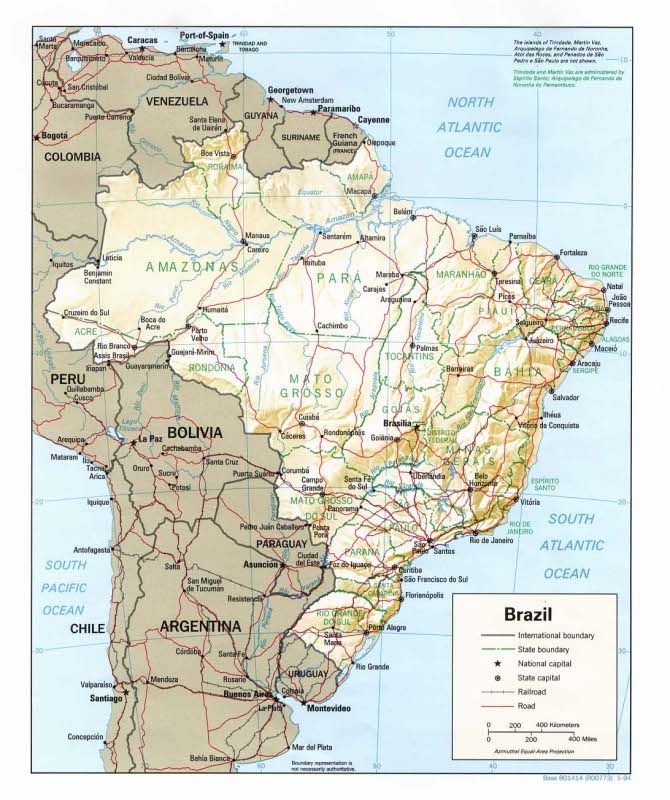 Hitchwiki
Maps for hitchhiking spots
Hitchwiki
Maps for hitchhiking spots
As of 2012 Google maps is pretty decent for Brazil. (One should know that many things that marked on Google maps in Brazil simply don’t exist. From parks, restaurants to even gas station that are simple not anywhere close to where there are marked)
Guia Quatro Rodas publishes a great road map of Brazil. Available at some gas stations for R$13.
Sleep
If you look like a foreigner you might consider going to a hostel or stay with a local host. There are lots of homeless crackheads in major cities these days. In rural areas, if you say you have nowhere to stay they will often offer you a spot in their house and good hearty Brazilian food (which is often rice, beans and corn porridge in some areas, or roasted cassava flour to eat with the beans, very energetic and delicious, and sometimes chicken or meat - if you are a vegetarian say you don't like meat, if you just say you don't want they will think you're shy and put on your plate anyways, and if you don't want the food say you are very full and they will stop insisting). Small villages are great for camping and police will rarely bother you, unless it is a touristic area. Avoid setting up a tent in big cities; if you have no money and don't know a concealed spot, sleep in bus stations or in the open air.
Gas stations can be good places to sleep. In the north, truckers usually set up their hammocks behind the station and you can sleep next to them (there are usually free showers too). Further to the south, people are not using hammocks much, and Sebastienhh and his travel companion often found themselves the only ones sleeping there, but security would ask if they intended on spending the night and then regularly come to check that they were OK.
As in many countries in Latin America, firemen (bombeiros) will often put you up on a bunk or sofa for a night if you ask nicely.
On the road you might see many signs for motels, but a motel doesn't have the same meaning as in other countries, as they are strictly used for pre-marital sex/cheating. They are rented per x hours, which is an indicator that this is a sketchy place. When you're hitchhiking alone as a woman and your driver asks you if you want to stay at a motel, he's propositioning you for sex so its better to get the hell out of there. There's also plenty of roadside hotels that function more like a regular motel and are paid per full night. If you're hitchhiking as a male-female duo, the receptionist might ask you if you two are married and if you say no they will probably push separate rooms on you, as experienced by MOAH
Personal experiences
If you are friendly and avoid drunk drives, along with avoid showing that you have valuable things you will be fine. Once it got dark with me on the roadside with nothing close by, and people took some time to give me a ride. When the car stopped it was with 4 somewhat drunk guys with loud music. I felt it was going to be okay so I went with them (keep in mind it is a tiny city!) and nothing happened, not even sex proposals. In a couple of occasions there was unauthorized groping, but a firm yet polite response kept them from trying anything else. In some days there was a lot of sex proposals, some even offering money. They insist once or twice but when they see there is no chance they will (at least in my experience) respect you. Twice truck drivers that kept insisting heard from me a "so let me get down anywhere, I am not hitchhiking for that". Well, they said "ok, sorry, no need to get down, I am not going to insist anymore". With one of them we even changed subject and got quite a nice conversation. Most, a least for Portuguese speakers, just start talking about themselves and their personal life. One of them even let me sleep on his truck while he went home. They often offer to buy meals at barbecue diners in roadsites, with rice, bean, meat, salad and possible other options (I often just drink an orange juice, since I am a raw foodist and take food with me all the time, like nuts and specially bananas - this one is a good idea for cheap energetic food, which often you can get for free in small markets if they are overripe, if you ask the price it will often be half or free. I lived on bananas and avocados for several days once before I was raw, not very fun but with a stronger kick than fast food...).
March 2014
I was hitchhiking during 3 months in Brazil both alone and with friends, it was easy in the tourist states of Rio de Janeiro and Minas Gerais, in Parana I never waited more than 15 min...the only time I got stuck was 40 km from Sao Paulo in not so nice area with prostitutes, it was gettting dark and the drivers scared so close to the city but finally one car brought me to the bus station in few km from where I took the bus. The people are quite friendly and helpful despite the paranoia around and the main difficulty in the beginning was my poor Portuguese and being guided many times towards the bus station instead the road I needed to hh:)
Something I learned as a woman hitchhiking through Brazil alone is that certain highways (I heard it was mostly on the BR 116, Rio-Salvador, for example) have women that are highway prostitutes that wait to be picked up on the side of the road. Traveling with truck drivers alone I also learned that many of them pick up hitchhikers that also become lovers, mostly locals from smaller towns who wait on the highways to leave town and go on an adventure. But it is usually easier to tell the difference between hitchhikers and women wanting rides for sex, and of course communication is important. I think it's important to know that these incidents are common because you understand where people are coming from when the subject arises. I never had problems with males drivers and truck drivers but I have definitely had them ask for sex, the program ("not even with a condom?" yuck...), what not. I think being clear with drivers before is important and making sure you feel safe is important too. But again, I hitched almost 5000 km alone in Brazil, no problem, it is incredibly liberating and easy! Go adventure!:)
2017
User "Miriam hitched around the south of Brazil for several weeks on her own in 2017 without running into major problems, met only super nice and friendly people, got rides easily and was never confused for a prostitute or treated without respect, as the above contributors sadly experienced. Two minor problems were: 1.) People automatically assuming hitchhikers are Argentinian and staying clear because of the rivalry between both countries (sadly). If you're a non-argentinian foreigner, consider carrying your country's flag! 2.) Lots and lots of traffic on giant, unstoppable highways. If possible, stick to nice and cozy interior roads which makes for amazing experiences on it's own!:)"
July 2022
“I was hitchhiking for a month in Brazil July 2022. I had a problem to enter from Peru to Bolivia and managed to solve it by entering Brazil. I had a plan to do a route in Brazil around Bolivia and enter it from the east. In general the experience was quite rough and I decided to cut the route shorter and enter Bolivia from the north. Although I had many good experiences with people in Brazil, The overall feeling in many places I was in The regions of Rodonia and Acre was quite tense. A lot of people warned me from robbers and hitmans. Hitchhiking was also very slow. Which eventually made me make my decision to cut the trip short. I would also like to mention that although it was hard, many times people offered me places to stay, free food, and were very friendly. Once a guy saw me hitchhiking for many hours in the same spot, so he went with his motorbike and got me a meal and a cold coke. I still plan to check other regions of Brazil in the future.”
June 2024, August 2017
in brazil in june 2024 and in August 2017. both times very difficult to get rides. in 2017 i came from venezuela border and had to get help from police. when i reached boa vista i got a lift after waiting 4hrs to a town 100km south of Boa to a petrol station. i waited 12 hours and many drivers wanting money. as a result i started walking (30km) and camped overnight along the highway and walked the remaining distance (20km) the next morning to the next town. there was supposed to be an ATM, but it was out of order, so i went to community hall and they gave me food, shower and place to sleep, and next day got me police assistance where i got instant pickup. in 2024 i waited 2days in Oiapoque trying to get lift to Macapa, where after a long hot wait a really nice guy got me a bus ticket. it is definitely the hardest place to hitch so far for me on my travels...
My 2017 route: Venezuela border > Boa Vista > Manaus > Ferry/barge to Tabatinga (The Delta)
My 2024 route: Oiapoque > Macaba> Belem (reached by ferry/barge)> Picos > Quixada (Very nice view from hill in centre, beware of snakes) > Barragem do Acude Castanhao (huge lake and dam) > Joao Pessoa (most eastern point) > Recife > Salvador > Rio > Sao Paulo > Brasilia (capital) > Luis Eduardo Magalhaes > Alvorada > Goiania > Cuiaba > Vilhena > Porta Velho > TransAmazonica to Manaus (Br-319, very dusty and bumpy) > Boa Vista > Lethem (Guyana)
2nd leg 2024 Lethem > Boa Vista > Manaus > Porto Vuelo via Br-319 > Cobija
3rd leg 2024 Jaguarao > Pelotas > Santa Maria > Cascavel > Foz do Iguazu
Average waiting time: 4.5 hours. I had so many long waits, many exceeding 10 hours, but I would also get a few lucky runs where I don't have to wait more than 15 mins. Gas station worked for me a few times but not often, Tax office and tolls I didn't luck out. Most were from me standing/walking on the road or entrance ramps. I averaged 250km a day. Pickups were 60% cars, 35% trucks, 4% Busses, 1% motorcycles.
Longest ride: Standing at north side of Cacoal (Rondonia state), where i had been waiting for 2.5 hours and was ready to start walking to edge of town, when i looked up from sorting out my bag, and a truck had pulled up outside the gasoline 200m south from where i was hitching. I watched as a lady got out with her bags, closed the door and the truck pulled away. I thought this is my last attempt before I start walking, and stuck out my thumb. Unbelievably, the truck pulled up next to me. I hopped in, chatted about location he was going to in broken English and Google translator. I couldn't believe it, he was going to Boa Vista 2500km away. We travelled together for 5 days via the Br-319, eating barbeques, restaurant meals and drinking beers. I got very lucky with this ride. on way back i got i only waited 1/2 hour to get lift from Boa Vista to Manaus. The ferry ticket man did not charge me at Manaus, and i got a lift to Careiro within minutes after walking down street from ferry at Ponto da Banana. At Careiro i waited over 20 hours to get a ride, so started walking, and first car picked me up.
Most difficult places to hitch for me were: - in the far north. I was forewarned when coming from the border by drivers/locals, both in 2017 and 2024, that hitching in Brazil is very difficult and I should get a bus - 101 between Rio and Sao Paulo - north of Sao Paulo going towards Brazilia where i had 4 consecutive days of 40 km with majority of that walking. - South side of Vilhena (Rondonia) where I waited at a truck tax office for 12 hours using both sign at office door and thumbing at exit methods. I gave up and went to road where I finally got picked up by car in 1 hour that took me 10km to town. I then walked another 20km, through bushfire smoke several times, before I got picked up for a descent ride the next day. So I got 10km lift in 20hrs of attempted hitching.
Observations to note: - got bought meals a few times when I had been waiting for a while/the driver went to eat. Given small amounts of money on 20+ occasions. -truck drivers love aliens as quite a few have them on their windscreen - hardened sweetcorn on gravel on side of highway in some areas, so much it seems they have used it as a gravel mix - Proibido carona (or similar) sign on quite a few trucks and busses (around 4+ in every 10) - Uber sign on passenger side of quite a few trucks (around 2 in every 10) - beware of hitching around 50-100m from some tolls, very strong urine smell. Tolls didn't work for me. - not all gasoline have free showers or coffee (30% don't I found) majority did have cold free drinking water - majority of police road station (prf) didn't assist with lift, only a few offered me breakfast and coffee. Most were ok with me camping behind building. - internet is a pain in some areas as CPF number is required for WiFi access - saw quite a few men walking solo along the highways especially between Sao Paulo and Brasilia. Lots of homeless people in many towns along this corridor. May be the reason I struggled here. - some roads that appear as main roads on googlemaps are actually dirt back roads with hardly any traffic (Sao Bento to Serra Negra do Norte is prime example) - beware of walking down back roads where trucks go as you will get coated in dust (happened to me 3 times) - Hitching in the south was not that bad unlike others have mentioned, average waiting time 1 hour. 10 min wait in Jaguarao. Got harder in Parana state. Most gay guys hitting on me, 4 in 4 days. - saw 15 hitchhikers between Boa Vista and Lethem (more than all of my travels around brazil combined). All local hitchhikers just pushed infront of me (no etiquette or it works differently here) I had to get assertive after the first woman pushed infront of me and ignored my hand sign to get in line. Women regularly pushed infront in supermarkets too. - i was asked for sex on 7 occasions by men
Gestures i got instead of pickup, from most to least:-
1) money hand gesture 2) turning left/ride/other way gesture 3) thumbs down back at me 4) thumbs up back at me 5) tutting hand gesture 6) sock puppet talking hand gesture - no idea what this means...anyone know? 7) very rarely the 'get off the road/highway hard-shoulder' hand gesture and the 'shrug', which is very common in western countries.
So many drivers would pip the horn right when they get next to me. I am ignored a lot at gas stations exit but 90%+ would look at me whilst hitching on road/highway.
i will update again in one month when i go through amazonica and iguazu/remaining states.
Links
Rio de Janeiro
Edit on wikiRoadside hitching spots go stale. For current places to hitch in and out of this city, use maps.hitchwiki.org and the live Hitchwiki page linked at the end of this chapter. This book keeps general orientation, not a pin gazetteer.
Rio de Janeiro is a city in the Southeast of Brazil, a capital of the state bearing the same name.
BR-116
Pedágio Viúva Graça. From Terminal Rodoviário Coronel Américo Fontenelle which is behind the Central do Brasil (Central Train Station) and close to Metro station Central take bus 193C to Paracambi. It starts from platform D bay 07, is run by a company called Transportes Blanco and costs 8.50 reais. Get off at the first bus stop behind pedágio (toll plaza). The stop is located around 300m behind the toll booths and it's a perfect lay-by to pull in a car or truck. The bus ride to this spot takes around two hours, but you're well behind the metropolitan area of Rio, practically in the countryside. Next to the bus stop there's a restaurant and supermarket. In case of bad luck you can walk to Posto Big Dutra with Petrobras petrol station located two kilometres up the road. BR-116 is also called Presidente Dutra and is the main road connecting Rio with São Paulo. All trucks go this way, not by the coastal BR-101.
BR-101
Take the bus (he took it very close to Lapa, 2.75 reals, 30min+-) to Santa Cruz (just ask some people where to take the bus, easy as bonjour), get off at the last stop of BR-101 where there is a very big supermarket called Extra, walk 200 meters down the road where there is a petrol station.
Another opinion: it is easier to get bus to Itaguay and get off in BR-101 before entering the town, it is less tricky than Santa Cruz where if you don't speak good Portuguese you can easily get lost.
In Itataia
Hitching in the Itataia region in the northwest part of the state is very easy, it's got a community of Europeans that will pull up even if you don't ask.
São Paulo
Edit on wikiRoadside hitching spots go stale. For current places to hitch in and out of this city, use maps.hitchwiki.org and the live Hitchwiki page linked at the end of this chapter. This book keeps general orientation, not a pin gazetteer.
São Paulo is the capital of the state which bears the
same name. It is the largest city in Brazil with over 20 million people
inhabiting the metropolitan area. Partly because of this, the city
presents difficulties in gaining rides to the place you want to go.
Paulistas aren't the most open people to hitchhikers, indeed in Brazil
it's not too common. Truck drivers are generally a better bunch to ask
and will be usually going further in terms of distance. The state of São
Paulo has over 40 million inhabitants and statistically responsible for
around 40% of the country's GDP.
Paraguay
Edit on wikiParaguay is a country in South America.
Hitchhiking
Hichhiking is a concept known in Paraguay and fairly common in rural areas. It's harder to hitchhike on main roads as bus companies serve those; there are fewer private cars than in Argentina or Chile. In the western Gran Chaco, waiting times can be very long as there is little traffic; especially between Filadelfia and the Bolivian border. Between Filadelfia and Asunción, there's more traffic, but still not very much.
The western and the eastern parts are also very different if it comes to the population and their reaction to foreigners. In the East, where 95% of the people live, mainly descendants of the Guarani people with a bit of typical Latin American influences, as a foreigner or "gringo", you're likely to arouse a good bit of curiosity, and if you speak Spanish or even a few bits of Guarani, you'll quickly get a good rapport with the people who are among the friendliest and most hospitable in South America. In the West, however, there is a mix from poor workers from the East, and rich German Mennonites, who could be compared to rural US Americans - friendly, but quite conservative.
Legality of Hitchhiking
Paraguayan law does not mention hitchhiking, and it gives the shoulder to pedestrians outright. Article 2 of Ley 5016/2014, the national traffic and road safety act, defines the banquina as the strip beside a paved carriageway, up to three metres wide, set aside for vehicles stopping in an emergency and for the circulation of pedestrians and bicycles where there is no special place for them. Outside towns there is no such special place, so standing on the banquina of a ruta is what the law contemplates. The same Act guarantees pedestrians the pavements in urban areas and the shoulders on rural roads, and asks that in rural zones you walk against the direction of the adjacent lane. Nothing in it forbids asking a driver for a lift, and the peajes and estaciones de servicio on Rutas 1, 2 and 7 are where drivers have already stopped.
Border Crossings
To/From Brazil
Experience from 2015: User MOAH hitchhiked over the Guaíra/Salto del Guaíra border to Paraguay, but as it is a major shopping area for Brazilians to buy cheap Chinese products in the noman's land, you won't get a stamp at the actual border. Instead, you have to go to the office of the Brazilian Policia Federal in Guaíra town, at the roundabout (Address: Praça Castelo Branco, s/n - Centro, Guaíra - PR, 85980-000, Brazil. Telephone: +55 44 3642-9100), which has super irregular opening times. If you press the bell, someone might open the gate and you can start the check-out process. The people here speak good English (!!!). From there it's a short walk to the 3600m bridge crossing from Paraná state to Mato Grosso state, where there's a semi-functional police control from where one can hitch the 12km to the actual Paraguayan border. A sign saying "PY" will do the trick. The noman's land is about 6km long, but you can catch a ride in between with friendly Paraguayans to Salto del Guaíra, where you again have to find some office to get your check-in stamp. This is a tiny shitty office with a well-hidden "Migracion" sign located on Avenida Bernardino Caballero c/ La Paz, Ciudad de Salto del Guairá (Telephone: (595) 046 - 243 536) with a permanently bored employee who will ask you how long you'll stay. Again, there's very irregular opening times, so you might have to stay the night to get your stamp. Don't cross this border on a Sunday. Enjoy the amazing kebab-like streetfood (about €0.90) on the Paraguayan side!
The Ponta Porã/ Pedro Juan Caballero crossing is a similar mess and nobody in town really knows where to get the stamp, how ever much they want to help. It took Miriam more two and a half hours to cross, even with lots of nice people's help and rides within the city. The brazilian stamp is issued at the police post in the airport, but only for pedestrians - if you cross with a vehicle it's somewhere else. You get the paraguayan stamp NOT in Aduana but instead at a smallish, unimportant looking building on Avenida Brasil, across the street from the way leading to the airport. Lots of walking involved. To hitchhike into Brazil you can just walk towards the town exit and position yourself behind the roundabout with chimarrão/tereré monument.
Foz de Iguacu/Ciudad del este is a very easy crossing stamp out stamp in barely any questions. Although hitchhiking in Parana the Brazillian side can be quite slow. and getting a ride until the border crossings in both sides is not a easy task.
To/From Bolivia
Experience from 2015:
The Gran Chaco area in Paraguay is the most direct route to go to Bolivia, but many people take the route through Argentina due to bad road conditions. If you're hitching the "Ruta Transchaco" from the capital Asuncion, it's best to get out of the city with a short distance bus (~2.500 Guaranies = €0.30) called "La Chaqueña" which ends in the town Benjamin Aceval/Cerrito where there's a toll port with some shadow and a few shops to buy water, cigarettes and snacks. You're currently more than 700km from the border to Bolivia and it will be a minimum of three days hitchhiking through sparsely populated areas that get really hot. You can still turn back and go straight before the bridge to Asuncion to cross the border to Argentina.
User MOAH hitchhiked in December over the Transchaco from Cerrito to Filadelfia - the biggest hamlet of Gran Chaco, about 400km - in one day and rested between Filadelfia and Cruce de los Pioneros. Already before sundown the darkness comes in the form of threatening mosquito clouds. About 40km of this road is pretty bad, but if you continue north-west you'll soon ask yourself why you thought this was bad. From Filadelfia to Mariscal Estigarribia is about 90 kilometers that can be done fairly smoothly! The migration office is on the border of Bolivia, Mariscal Estigarribia has custom only for trucks. Before you're even thinking of reaching Bolivia, plan this trip carefully so you won't ever have to cross one of these borders on a Sunday (you're royally fucked). There's no ATM's here.
From Mariscal Estigarribia the road gets even emptier than before. At the end of town is a military base with a shelter on the correct side of the road for shadow and a seat. The next places you can get stuff at have no names on the map, except for La Patria, which is 100km away. The first 10km of road are still like the rest in Paraguay, until suddenly you can deal with a remaining 90km stretch of undodgeable potholes of a road that's only 15 years old. The average speed for trucks is about 15km/h and pick-ups do it with 20 or 25 km/h. The bus (Asuncion - Santa Cruz de la Sierra. No airconditioning) covers this distance in about seven hours, so you'll be happier hitchhiking. On average the third pick-up would stop. Places to get water at ar scarce, so take at the very least three litres with you before you go and fill that up whenever you can.
La Patria has shops and (shitty) accomodation and from here the road will be fine again till inside Bolivia. Its 116km to the border, which has a 6km no man's land in between you honestly don't want to walk. From La Patria there's nothing till the border besides some ranches, and truck drivers were very reluctant to pick up hitchhikers in this direction, probably because they're scared - something with drugs or whatever. It's very likely that your average pick-up driver has a shotgun or other hunting rifle - whether that's for protection or assault is up for discussion. Pick-ups drive about 90km/h here so you'll be fast!
At the border there are both migration offives of Paraguay and Bolivia. You will get your Bolivian stamp here. At the border you can get drinkable ground water from a little tap outside the "Aduana" building on the Bolivian side. It's warm, but it will help you survive. Find a tree and wait until a truck moves in the right direction or go around and ask. You might wait three hours before you see something moving as there is 1) very little traffic 2) a lot of bureaucracy for truck drivers to finally pass. If you're lucky, there might be a pick-up from Bolivia driving back to civilization 100km away to a town called Villa Montes (ATMs, hostels, WiFi!!!).
User MOAH said that from Mariscal Estigarribia the bus wouldn't take her because it was too crowded all the time, so she was "forced" to hitchhike - it worked! In the daytime there's people exchanging Guaraní, Dollars, Euros, Reaís at the border. There's a military check point about 500 meters from the Migracion where folkuniform might ask you to show your passport but other than that, hitchhiking shouldn't be a big deal here, except for very low traffic. It's still more than 50km to Villa Montes, but at least now you've legally entered the Plurinational State of Bolivia!
Moral of the story: for hitchhiking Gran Chaco, bring a hat, enough, food, water, cash, sunscreen and mosquito repellant and a healthy dose of skepticism. Never do anything important on a Sunday.
Update 2025:
User Spokojna Woda: the info about a bad road between La Patria and the border is out of date. There's relatively new, asphalted road that goes all the way to Villamontes. The border control is done right on the border and it can be crossed on foot. Remember, that the crossing is open for foot passengers and cars only until 6 pm and closed on Sundays, while it serves trucks 24/7.
- US Citizens* need a visa before arrival in Bolivia of $135. Deportation awaits if you don't have this.
Guaraní Language
Impress your driver with the phrases you know in the indigenous language Guaraní!
- Hello - mba'eteko/mba'eichapa/mba'e la porte
- Yes - hee
- No - nahaniri
- Thank you - aguyie
- Please -
- Cheers -
- Good - iporã (oiporã = i'ts alright)
- Goodbye - ahama
- Water - Y (pronounced as Russian letter/sound ы )
- See you later - ahata aju
- I love you Paraguay - rohayhu Paraguay
- Husband - mena
- Wife - Tembireko
- Delicious - he
- Food - tembilu
- Home/house - oga
- I/me/my - che (pronounce as "sjeh")
- You/your - nde
- He/she/it - ha'e
- Where are you going? - Moo reho?
- My name... - Mba'eichapa...
- What is your name? - Mba'eichapa nde rera?
- Can you bring me to ...? - ikatupio che gueraha?
Personal Experience
Out of five South American countries I've been to (Peru, Bolivia, Chile, Argentina and Paraguay), Paraguay is definitely the best one to hitchhike. It felt just like Europe, only without highways. People are very hospitable and never ask you to pay for a lift. Waiting time was usually around 20 minutes. The only thing, that can be challenging, is the heat.
Chile
Edit on wikiChile borders in the north to Peru, Bolivia to the north-east and Argentina in the east. The country is divided into 15 regions, which can be pooled in four main zones.
Hitchhiking
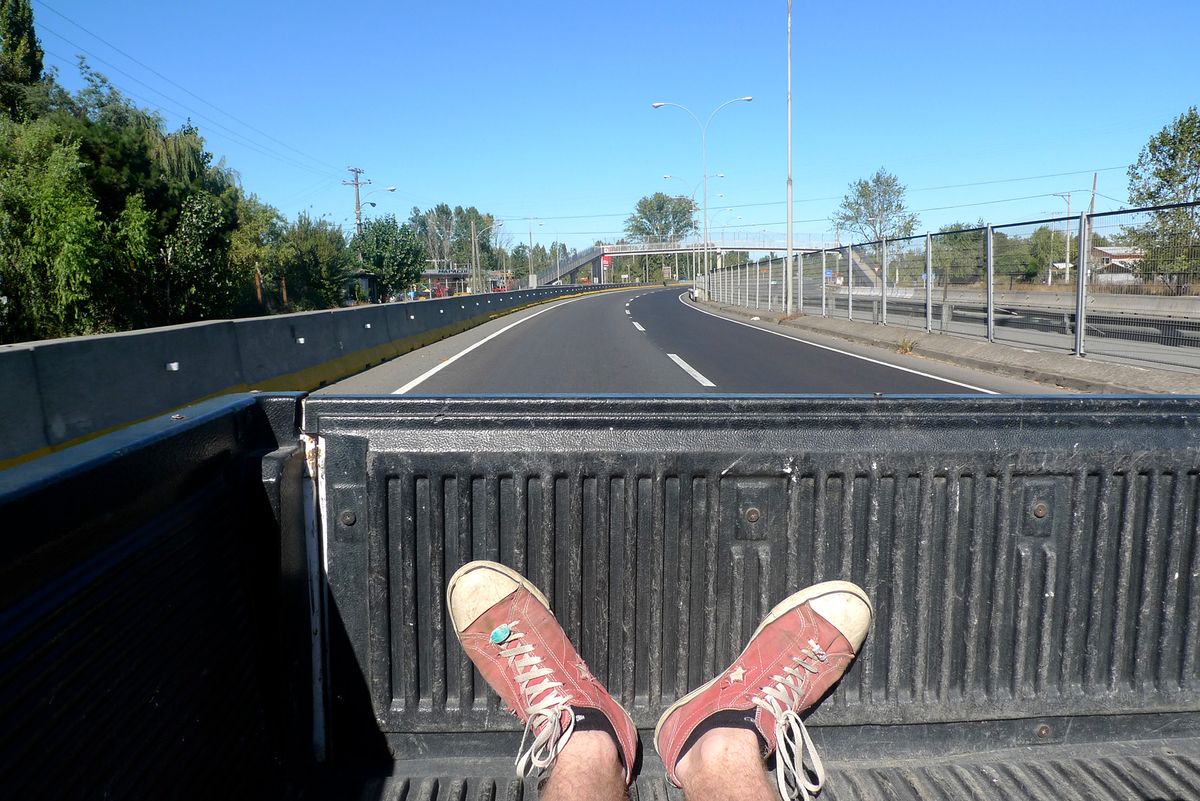
Chile is a great country to hitchhike. Especially compared to the South of Argentina, it's really good.
If you tell people you're a foreigner when you ask for a ride, they might ask to see your passport. Just swallow your pride and take the ride.
If you travel longer distances, you probably want to hitch the panamericana, called Ruta 5 here, which goes from north all the way to the south. Around larger cities, it's developed as a motorway. It's very common to walk or cycle on the emergency lane, so you can also stand there and put your thumb out. Cops won't bother either (I was standing right next to them holding my thumb out (to try out the hard way if it is legal) and they didn't care). Maximum Speed is 120 km/h, so if you are in a visible place, everyone can stop fast enough. Using a sign can prevent taxis, micros and buses to stop for you.
The traffic is not very dense in general. In rural areas, there might be one car in 5 or 10 minutes, so prepare for longer waiting times if you can't stay on the main roads (e.g. check some games you can play). To get to towns and out of there take a Micro or a collectivo, it is not worth it hitchhiking within a city (although sometimes possible).
If you are a tourist be sure to show it with your backpack, flags attached to your backpack, etc. The locals love chatting with foreign travellers. However, many people don't like U.S. Americans.
The best places in Chile for hitchhiking are easily in the extreme south, in the Region of Magallanes. From Punta Arenas, one can easily find a semi truck all the way to Santiago; while in Punta Arenas, themodernnomad was offered a ride all the way to Arica (on the border of Peru), but, sadly, had to turn it down due to the fact that he was trying to lose himself in Isla Riesco.
Maybe the only big problem of hitchhiking in Chile is the highway system. Hitchhiking is really good, but the roads don't make it super easy. On ruta 5 the cars go really fast, and many of them can't stop for you even if they want. And in some places there is very little traffic that comes from the near by town. So it might take sometime to find a ride.
It might be better not to take a ride that would leave you next to a very small town and stick with the bigger places. if you are stuck in a small town, consider hitchhiking on the highway, so the cars that go really fast can see you, they might stop.
Legality of Hitchhiking
The law here has not been checked. Nobody has yet read the road traffic rules in force in Chile against the official text, so this section cannot tell you what they say, and nothing elsewhere on this page should be read as a statement of the law. What holds almost everywhere is that hitchhiking is not an offence in itself and that what the traffic code regulates is where a pedestrian may stand — off the carriageway, and off motorway-class roads and their slip roads altogether — but whether that is true here is simply unknown. Ask locally before standing on a major road, and treat the rest of this article as what hitchhikers report rather than as a rule you can rely on. If you can read the official text, please replace this paragraph with the provision it turns on and a link to it.
Border Crossings
Crossing the Andes can be a little trickier than in most countries due to the high altitude. The Chilean police are also stricter about what can be brought into the country than in any other place in the continent: it is forbidden to enter with any kind of organic stuff such as fruits, veggies, beans, seeds, cheese, etc. You can try to pass them in your pockets. Just be sure to declare that you are passing with some organic stuff (rice, mate, polenta) so they can't charge you for lying and play dumb if you get caught. Worked for one hitchhiker with one bag of pine nuts (piñones) and one bag of seeds. You can also only bring 2 packs of cigarettes, since they are much more expensive in Chile.
To enter Chile there is first a stop where they give the driver a piece of paper saying how many people are in the vehicle. If you are not going to go all the way with the same driver don't forget to ask for a specific piece that say you are crossing on foot or something. Also drivers can be reluctant to pick you up all the way through the border so a sign saying "Frontera" or "Aduana" might help (then you can speak with them in the car)
In the north, most of the trucks will not pick you up because are afraid that Gendarmes can complains, eazy took a lift from a local truck and asked the driver to stop a Paraguayan truck for him.
Argentina
This is a list of all (presumably) hitchable border crossings between Chile and Argentina. It first appeared on the page of Argentina, that's why they sound like going from Argentina to Chile and not the other way around. Follow steps in opposite order if you are coming from Chile and going to Argentina. Not all of them have information yet, so if you hitched one, please add info!
Some crossings may be closed due to weather conditions, so before you go you can check the chilean border police twitter @UPFronterizos (https://twitter.com/upfronterizos).
Argentinian Border Crossings North to South
The following is a list of all the major border crossings between Argentina and Chile, sorted out by Mind of a Hitchhiker and ordered from north to south. Not all of these have been hitchhiked by HitchWiki contributors. As most of them cross the Andes mountain range, not all of them stay open year round. Some might be hitchable in summer during the tourist season, but not outside that. Do your research before you cross! This was the disclaimer.
Paso Jama is the northernmost pass across the andes from San Pedro, CL to Juyjuy, AR. Coming from Chile, Keith had to have his pack x-rayed. There are lots of Paraguayan trucks passing through here and few civillians. Keith waited 1.5 hours in San Pedro and 2 hours at the border. The border is at 4200m and can be extremely windy and cold, especially at night - be prepared! The immigration building on the Argentinian side is at the end of town. Crossing from Jujuy province into Region II de Antofagasta.
Paso Sico on the Argentinian Ruta 51, nearest Argentinian hamlet is named Catua. From Jujuy province into Region II de Antofagasta. Let us know if you hitchhiked this.
Paso Socompa on the Argentinian Ruta 163. From Salta province to Region II de Antofagasta, next to an active volcano. Let us know if you hitchhiked this.
Paso San Francisco is between Copiapo, Chile and San Miguel, Argentina. There is little traffic along this route and you could wait for days at 3800m. Not recommended. Located on the Ruta 60. Crosses from Catamarca province into Region III de Atacama.
Paso Pircas Negras on the Ruta 76. From La Rioja province to Region III de Atacama. Let us know if you hitchhiked this.
Paso de Aguas Negras on the Ruta 150. The customs office is near Las Flores 90km away. Crosses from San Juan province into Region IV de Coquimbo. Mind of a Hitchhiker got offered a ride from Rodeo and took it. This is the highest border crossing between the two countries, with a maximum altitude of 4.780 meters. A large chunk of the 180 km between border checks is unpaved, but with all the glaciers, it's one of the most spectacular routes across the Andes out there. The Chilean side is called Juntas del Toro and the nearest town city is La Serena. It's only open from December to April, and might close on other days as well due to bad weather. Read Las Flores on how to do it. Miriam tried to cross from Chile to Argentina in April but there was so little traffic that it proved impossible and gave up after 24 hours. Of the approx. 10 cars crossing each day, most had no space because as of 2017 many everyday products are so much cheaper in Chile that everyone fills their cars to the max. Apparently in summer there is more traffic. The chilean border posts are nice and bored, might let you use their kitchen, living room and wifi if you ask nicely and chat with them. There is a nice place to camp by the river but bring enough food.
Paso Internacional Los Libertadores between Mendoza and Santiago de Chile is probably the best option with lots of truck and civilian traffic. You will also pass Mt. Aconcagua, the tallest mountain in the Southern and Western hemispheres. There's a tunnel between the two countries. Goes between Mendoza province and Region V de Valparaiso. To hitch, you can start at the road leaving Los Andes north (on how to get there from Santiago, check Santiago page). Careful, every once in a while it closes due to weather conditions for some 2 or 3 days - check twitter @UPFronterizos before going!
Paso Vergara on the Ruta 226. Crosses from Mendoza province to Region VII del Maule. Argentinian customs is 8km from the actual border. Let us know if you hitched this.
Paso Pehuenche on the Ruta 145. Crosses from Mendoza province to Region VII del Maule. Migration is in Las Loicas, 40 km from the actual border. Let us know if you hitched this.
Paso Pichachen on the Ruta 6. Crosses from Neuquen province to Region VIII del Bio Bio. Let us know if you hitched this.
Paso Pino Hachado on the Ruta 242. Crosses from Neuquen province to Region IX de la Araucania. Argentinian immigration is 2,5km from the actual border. Let us know if you hitched this.
Paso Icalma on the Ruta 13. Crosses from Neuquen province to Region IX de la Araucania. Argentinian immigration is 6km from the actual border. Let us know if you hitched this border.
Paso Mamuil Malal on the Ruta 60. Crosses from Neuquen province to Region IX de la Araucania. Argentinian immigration is 1,5km from the actual border. Let us know if you hitched this border.
Paso Carirriñe on the Ruta 62. Crosses from Neuquen province to Region XIV los Rios. Argentinian immigration is 47km from the actual border. Let us know if you hitched here.
Paso Hua Hum on the Ruta 48. Crosses from Neuquen province to Region XIV los Rios. In Chile, once you reach the town of Puerto Fuy, you need to take a ferry (it's called 'Barcaza Hua Hum'. See fares here https://barcazahuahum.com/es/horarios-tarifas/) and cross lake Pirehueico. Pirehueico is also the name of the last settlement one finds before reaching the border with Argentina. From Pirehueico, Chilean customs is at a distance of 11 km. The best option available is to ask passengers going to Argentina for a ride to the border before disembarking. Chilean customs is on the actual border. Argentinian customs is 1,5 km from Chilean's, so it's within easy walking distance from the border. The nearest city from Argentinian customs is San Martín de los Andes, which is 43 km away and it's only reachable through a completely unpaved road. Despite this fact, there are campsites nearby in case you need a place to stay the night, or in case you're looking for drivers. Also, the last bus going to San Martín departs from customs at about 20.00 in summer (you can just ask for information in there, schedules might change throughout the year).[ Christianmn](User:christianmn ” Christianmn”){.wikilink} was picked up in Pirehueico and crossed the border through Chilean customs. After this, he crossed Argentinian customs and waited at a crossroad some meters ahead. He was lucky enough to be picked up by four guys going back to Junín de los Andes, so they dropped him in San Martín which was on the way.
Paso Fronterizo Cardenal Antonio Samoré on the Ruta 231. Crosses from Neuquen province to Region X de Los Lagos. The Argentinian customs is 17km from the actual border. Miriam found it very easy to hitch, there is a constant flow of traffic and even under the worst climatic circumstances they usually don't close for more than a couple of hours. You can start right on the intersection where the road to Puyehue and Cardinal Samoré leaves Ruta 5 close to Osorno. Be aware of the opening schedule (usually from 8 am to 6 pm, meaning the last car is allowed to start chilean customs at 6 while the argentinians wait until the last car has passed and vice versa). On weekends you might have to wait several hours in customs.
Paso Pérez Rosales on a Ruta with no number, from Puerto Frías in Argentina in Rio Negro province. Nearest Argentinian town of size is called Llao Llao, near Bariloche. You'll have to take several seasonal ferries in both Argentina and Chile to get here. The nearest town of size on the Chilean side is called Peulla in Region X de Los Lagos. This border is not visible on Google Maps, only on Open Street Maps. Please let us know if you accomplished this masterpiece.
Paso Futaleufú on the Ruta 259. Crosses from Chubut province to Region X de Los Lagos. The distance between the two immigration offices is less than 1km. This is a major tourist hot spot, so if the border isn't closed, it should be fairly hitchable. To get out futaleufu, you need to be patient: there is not a lot of trafic. Walk out of the town until a bridge: cross it. Just after it there is a bus station: good place to wait espacially if it's raining.
Paso Rio Encuentro on the Ruta 44. Crosses from Chubut province to Region X de Los Lagos. The Argentinian side has a town named Carrenleufú and the Chilean has one named Alto Palena. Let us know if you crossed here.
Paso Coyhaique/Coiaique on the Ruta 74. Crosses from Chubut province to Region XI Aisén del General Carlos Ibáñez del Campo. The Argentinian customs is 2km from the border and the nearest Argentinian town is named Aldea Beleiro. Let us know if you crossed here.
Paso Huemules on the Ruta 260. Crosses from Chubut province to Region XI Aisén del General Carlos Ibáñez del Campo. The Argentinian immigration office is less than 300m from the actual border and the nearest village is Lago Blanco. On the Chilean side it is 5km till the first town named Balmaceda. Let us know if you crossed this border.
Paso Palavicini on the Ruta 72 (Ruta 45 on Google Maps). Crosses from Santa Cruz province to Region XI Aisén del General Carlos Ibáñez del Campo. The Argentinian customs office is 2km from the actual border. The Chilean customs is on the limit of Puerto Ingeniero Ibáñez town as spotted by [[User:MOAH|Mind of a Hitchhiker. She took the next border. Let us know if you crossed this border.
Paso de Chile Chico on the Ruta 43. Crosses from Santa Cruz province to Region XI Aisén del General Carlos Ibáñez del Campo. The Argentinian customs office is in Los Antiguos and the Chilean one in Chile Chico. This border is perfectly hitchable, as recorded by [[User:MOAH|Mind of a Hitchhiker in a vlog. No man's land is about 8km long.
Paso Roballos on the Ruta SN near the Ruta 41. Crosses from Santa Cruz province to Region XI Aisén del General Carlos Ibáñez del Campo. The Argentinian customs office is 300 m from the actual border. The nearest village with facilities is Bajo Caracoles and oh boy, you don't want to get stuck here. Perhaps it's crossable in summer, but definitely not in winter. The nearest town in Chile is Cochrane. Let us know if you hitched this border.
Villa O'Higgins/El Chalten Foot border crossings This area is sort of the hiking capital of the continent. There's many multi-day hikes advertized in both towns. Villa O'Higgins is the last town reachable by road from the "mainland" of Chile, via the Carretera Austral/Ruta 7. You could hitchhike all the way from Arica to Santiago de Chile to Villa O'Higgins without leaving Chile - that's 4.300km. South of Villa O'Higgins, Chile splits up in a million fjords, this is where Region XII de Magallanes (y la Antarctica Chilena) begins. Chile and Argentina have disputes over what land is owned by which country. If you want to visit the southernmost region of Chile without crossing to Argentina, there's a cruise from Puerto Montt all the way to Puerto Natales and even Punta Arenas, but this won't come cheap. In El Chalten or Tres Lagos in Argentina, there's buses taking you to and from these hiking trails. One is named Paso Fronterizo Entrada Mayer on the Ruta 81. Crosses from Santa Cruz province to Region XI Aisén del General Carlos Ibáñez del Campo. Border check points are as the bird flies 12km. Rides may only be hitched from each respective main road. Permits may be needed to hike in this reserve. If you've done any border crossing in this region, please add more information.
Paso Don Guillermo on the Ruta Provincial 7. Crosses from Santa Cruz province into Region XII de Magallanes. The Argentinian customs office is 3km from the border and the Chilean one 9km, so that's 12km of no man's land. Let us know if you hitched this border crossing.
Paso Fronterizo Dorotea on the Ruta Provicial 20. Crosses from Santa Cruz province into Region XII de Magallanes. The Argentinian customs office is at a ski centre 2km from the actual border and the nearest town with facilities is Rio Turbio. Villa Dorotea is on the Chilean side with the customs office 4km from the border. Puerto Natales in Chile is nearby. Let us know if you hitched this border crossing.
Paso Laurita Casas Viejas on the Ruta 293. Crosses from Santa Cruz province into Region XII de Magallanes. The Argentinian customs office is 100m from the actual border, the Chilean one is 4km away. This is the main direct border crossing from Argentina to Puerto Natales. Let us know if you hitched this border.
Paso de Integracion Austral on the Ruta Nacional 3. Crosses from Santa Cruz province into Region XII de Magallanes. There's two buildings, but both Chilean and Argentinian customs are present in both buildings. From whichever direction you come, you always drive by the first building and get out at the second. Don't panic! At this border you can possibly expect a needlessly complicated and long process once you arrive to Argentine customs if their X-Ray machine is broken (which it often is).They must do a manual search of your bags and tend to find silly, irrelevant things like tin foil that are apparently a matter of National Security. themodernnomad was once delayed leaving Argentina at the Paso Austral to Chile for several hours because of a 'suspicion' that turned out to be baseless. Fortunately, the Gendarmeria have poorly trained attack dogs who care more about playing with towels than sniffing for contraband. The Argentinian drivers of Mind of a Hitchhiker who came driving all the way from Cordoba province to visit Ushuaia had all their apples stolen by Chilean customs, even though they crossed back into Argentina a few hours after! This was really tragic. Warn your Argentinian drivers!
Paso San Sebastián on the Ruta Nacional 3 (which casually continues on Isla Grande de Tierra del Fuego regardless of the fact that it's broken up!). Crosses from Tierra del Fuego province into Region XII de Magallanes. The Argentinian customs office is at the roundabout of the town San Sebastián, some 11km from the actual border. The Chilean customs office is 3.5km from the actual border. Use the border crossings to find direct rides to where you want to go. Argentinian plates driving into Chile will most likely drive all the way to Rio Gallegos, while Chilean plates going into Chile will likely go to Punta Arenas via the Punta Delgada ferry crossing (hitchable). To find a ride to Porvenir in Chile, Mind of a Hitchhiker asked at the Chilean customs office if anyone was going there, and got offered a ride from a guy named "El Gordo" (TheFat One) by his colleagues. His real name is Sergio, as vaguely remembered, and he drives a red Toyota Hilux. This hitchhiker gave up on trying to find an earlier ride and did crossword puzzles instead until Sergio appeared and drove her the 140km to Porvenir in no time. With excellent suspension, the ride was smooth and glorious, while driving past the Bahía Inutil (Useless Bay) chasing the imminent sunset.
Other Border Crossings on Tierra del Fuego One example may be the ferry from Ushuaia to Puerto Navarino or Puerto Williams in Chile. This little boat may only need to cross less than 10km of water in the Beagle Channel, yet costs a magical US$200 or more. There's a cruise between Puerto Williams and Punta Arenas, if you really want to visit The World's Southernmost Village, but it will probably cost you a kidney, too. Other land borders may exist between Estancia San José (Argentina) and Camerón (Chile), but as if hitchhiking isn't hard enough on the main roads of Tierra del Fuego. Kudos if you did hitch another border crossing, and again, please add information here if you did!
Bolivia
The border area between Chile and Bolivia is spectacular and terrifying. It's at very high altitudes in the Andes mountains. There's a stark contrast between the living standards between Chile and Bolivia. Bolivia is one of the poorest countries in the region and not many people own cars. There's loads of shared cars/taxis roaming between the villages. It's a best practice to stick to major routes if one is adamant to hitchhike all of Bolivia without ever paying for a ride. Know how to ask for a free ride. While the border between the two countries is long, many of the crossings are designated as "solo referencia" - only for reference - and not to be used as an official border with immigration and customs and passport stamps. There's some risks to crossing borders "illegally".
Bolivian border crossings north to south
Tripartito Triple Frontier is the northernmost point of Chile and a triple border between Chile, Perú and Bolivia. There's no town on the Chilean side, just the A93 road and a marker at the triple border. The town in Perú is called Tripartito and the town in Bolivia is called Ladislao Cabrera in La Paz Department. It doesn't look like there's any customs here to get any entry/exit stamps. The Chilean region is called Region XV Arica y Parinacota. Let us know what is up with this place and how hitchhiking is here.
Paso Visviri is 10 km south of the Tripartito border and is (probably) an actual functional border. The Chilean town on the A93 is called Visviri in Region XV Arica y Parinacota and the customs are about 2 km from the actual border. The Bolivian town is called Charaña, La Paz Department and there is no information about customs. Let us know if you've been here.
Paso Chungará - Tambo Quemado on the CH11 between (very roughly) Putre in Region XV Arica y Parinacota and (very roughly) Oruro in Oruro Department. This is quite a popular border crossing for trucks and lies at 4680 meters above sea level. Mind of a Hitchhiker was here in early 2016 on the Chilean side to visit the volcano and lake and not to cross the border. She camped at the Chilean forest guard CONAF Guarderia de Chungará at Parque Nacional Lauca. There's a guy who is stationed there permanently, and if you ask nicely, he'll let you sit inside for a while to warm up and make yourself a cup of hot something. This area sees four seasons in one day, so camp next to the building or one of the little walls for wind protection, use your storm lines and hope the wind direction doesn't change. Amazingly beautiful area.
Paso Colchane - Pisiga on the CH15 between Colchane in Region I Tarapacá and Pisiga Bolivar in the Oruro Department. It's at 3700 meters above sea level and the border is open from 08:00 till 20:00 (at least in the summer; we don't know if it's open year-round). The immigration offices are about 100 meters apart and the total distance from town to town is about 2 km. On the Bolivian side is a gas station at the end of town in direction Oruro. Let us know if you hitchhiked this border!
There are 2 buildings which both have Bolivian and Chilean customs. You'll want to head straight for the second building. This crossing seems to be primarily used by buses and when TheLoneBaker came through in January 2017, the line took roughly 2 hours and then had to wait several hours for a ride on the other end.
The customs here appears to be very lax despite all the posted warnings of bringing plant and animal products as they didn't actually ask me if I had anything when they went to X-ray my luggage. I gave up my honey but I'm quite certain had I left it in my pocket they would never have known. Just be sure to tick the box on the form saying you have something to declare so you can feign innocence if you do get caught. I also had a bag of cocoa leaves which they let me keep without issue.
Additionally, it appeared to TheLoneBaker that many people were bypassing customs completely and there were even people with carts who would load luggage and push it to the other end by going around the fence.
Paso Salar de Ollagüe between Ollagüe in Region II Antofagasta and Avaroa in the Potosí Department in Bolivia. Both villages have a gas station and the distance between immigration offices is 6 km. It's open from 08:00 till 20:00 year-round (lunch break from 12:00 to 14:00 on the Bolivian side, unknown for the Chilean side). The road is made of gravel and there's parallel train tracks. The nearest Chilean city is Calama and in Bolivia it's the city of Uyuni. This road can be tricky to hitchhike. TowellessTraveler did it in november 2022 from Uyuni to Calama. Almost only bolivian trucks transporting Diesel from the Chilean port Mejillones north of Antofagasta are using that road. They can take you until the border but then refuse to continue: there is a police checkpoint in Ascotan, 75km from the border, and the truckers believe they're not allowed to take passengers in Chile (not sure if it's really the case). You can negociate to be dropped before, walk through it and hitchhike after but if you have a good contact with the driver he may let you hide behind, where his bed is. You will be rewarded with spectacular views all along the road but do not stay around at night, it gets really cold.
Paso Portezuelo del Cajón between San Pedro de Atacama, Region II Antofagasta and... well... nothing in particular in the Potosí department of Bolivia. The Chilean immigration is on the Ruta B-241 inside San Pedro de Atacama, so don't miss it. The road then turns into the CH27 and has to be followed for 47 km until there's the actual border. The Bolivian immigration is on the actual border. There's the Laguna Verde, the Laguna Blanca and the famous Salar de Uyuni on the way to Uyuni in Bolivia. Perhaps there are a few villages, but nothing noteworthy. Uyuni is the nearest city, which is nearly 400 km from this border, so don't underestimate it! There's loads of tour offices in the touristy San Pedro de Atacama to organize a trip to Bolivia's Salar de Uyuni and to go to the city of Uyuni and not much non-tourism traffic. Best hopes are to hitch a ride with people who own a 4WD and are traveling the whole distance. The immigration office in San Pedro de Atacama is also used for crossing the Paso de Jama into Argentina towards Jujuy. Let us know if you crossed from Chile into Bolivia via this border!
Peru
Chile and Perú have a bunch of territorial disputes but are otherwise friendly to each other. Compared to Chile's other borders, this is a very short stretch and there's only one border crossing that people are actually using.
Peruvian border crossings west to east
The only official border to/from Perú is Paso Chacalluta where Mind of a Hitchhiker hitchhiked over the border from Tacna in Perú (complejo fronteriza Santa Rosa) to Arica (complejo fronteriza de Chacalluta) in Chile in 2016 and in the other direction in February 2017. People get a little nervous around this border so it might be hard to convince people to take you all the way through customs, which is mandatory with the form that says the number of people in the vehicle which they need to show at both sides and needs to be stamped everywhere. Your driver will need your name, document number and a few other details like whether you're married or not. After getting your entrance stamp to Chile, the Chilean side requires you to fill in a form declaring you don't carry seeds and other plant products or have more than one laptop, two phones and some other random rules applying to your luggage. Only your luggage goes through the x-ray machine and your body doesn't go through a metal detector, so what's in your pockets probably remains your own business. Occasionally they have dogs here. Upon leaving Chile for Perú your luggage might be checked too but there's not information on how to pass in the opposite direction. At the Peruvian side all people get out of the car to pass through immigration without their luggage.You'll get to fill in a form of which you get a stamped piece of paper which you need to carry around until you leave Perú. The Peruvian side should be relatively easy to get through. The distance between both offices is less than one km if you do everything by foot. After passing both borders with your driver you can find another ride or just carry on with your driver as everybody drives through the big cities of Tacna and Arica either way.
In February 2017 Mind of a Hitchhiker crossed this border on foot. The Chilean side asked 1000 CLP (about €1.40) for some forms, which was strange as the year before, crossing the border was for free. Both borders were hugely understaffed as it was the summer holidays. Bring a hat and enough water. Everywhere they kept asking for vehicle information and everywhere that answer was met with "on foot" ("a pie" in Spanish) and being sent to the "taxi" line. With so many people crossing the border, it took more than three hours to complete the process to enter Perú. After the final vehicle check outside the border area, the Peruvian officer from that checkpoint tried to talk her out of hitchhiking to Arequipa and the dude kept stopping taxis to Tacna for her even after repeatedly saying no thanks. She had to leave the excellent shoulder there to walk 200 meters not to be bothered anymore. There she stopped a car and wizarded herself to Arequipa like she fucking said she would.
Tripartito Triple Frontier mentioned before under border crossings with Bolivia is the northernmost point of Chile and a triple border between Chile, Perú and Bolivia. There's no town on the Chilean side, just the A93 road and a marker at the triple border. The town in Perú is called Tripartito and the town in Bolivia is called Ladislao Cabrera in La Paz Department. It doesn't look like there's any customs here to get any entry/exit stamps, so maybe stick to the border mentioned previously if you want to get to Perú. The Chilean region is called Region XV Arica y Parinacota. Let us know what is up with this place and how hitchhiking is here.
Sleeping
Chile is a very safe and easy country to camp or squat. Hostels are rather expensive, so camping is a better method. The local gas stations (usually COPEC) are almost always hitchhiker friendly, and will be happy to let you crash behind the place for the night, as are police stations and truckers service areas. The cities to exert special caution in when crashing out are Valparaíso (known for a somewhat dodgy center) and the capital Santiago -- those two make for the lion's share of crime in Chile. Couchsurfing is quite popular!
[ Mind of a Hitchhiker](user:MOAH ” Mind of a Hitchhiker”){.wikilink} made a little YouTube video of a day hitchhiking and freecamping around the Puerto Montt area.
Healthcare
"In Chile, the posta rurales operate on a no-pay basis, which is very different form the way proper hospitals do things in this country. In the postas, anyone, from anywhere, in entitled to free medical treatment and any medicines that are available, similar to the way they do things in Bolivia. The sacrifice is that the postas are not usually equipped with proper doctors (only paramedics), or operating facilities. " - from http://hitchtheworld.com
I wish I had known this! The "public" hospital in Copiapo asked for 24000 CLP just to see a doctor! -Keith
Toll Booths
These are only on the Ruta 5 (or Panamericana Sur), but, as usual, are a very good place to hitch rides. There are a lot between Santiago and La Serena, but your first ride from Santiago will probably take you all the way anyway. From La Serena to Antofogasta, there are only a few.
Rural Routes
Be aware that many roads in Chile are very remote and made of dirt; any road that starts with a 'Y' classifies as a rural route, (known locally as a reten). Some of these roads do not recieve any traffic for days, sometimes weeks at a time. Use caution when hitchhiking on one of these. You may think you can hike it for fifteen or twenty kilometres and then hitch a ride, but sometimes the cars won't pass until it's too late. themodernnomad once nearly died of thirst in the Altiplano near the northern border of Argentina and Bolivia because he started walking towards Salta from a Chilean iron mine and went almost three days without seeing a car.
Regions and their Cities
Ordered in direction north to south. There's 15 regions (regiónes) and they're not numbered in logical order. They use Roman numerals.
XV Región de Arica y Parinacota ⇒ Arica
I Región de Tarapacá ⇒ Iquique — Pisagua
II Región de Antofagasta ⇒ Antofagasta
III Región de Atacama ⇒ Copiapo — Caldera
IV Región de Coquimbo ⇒ La Serena — Coquimbo
V Región de Valparaíso ⇒ Valparaíso — Viña del Mar — * Los Andes
RM Región Metropolitana de Santiago ⇒ Santiago
VI Región del Libertador General Bernardo O'Higgins ⇒ Rancagua
VII Región del Maule ⇒ Talca
VIII Región del Bío Bío ⇒ Concepcion — Chillan
IX Región de La Araucanía ⇒ Temuco — Victoria — Puerto Saavedra
XIV Región de Los Ríos ⇒ Valdivia
X Región de Los Lagos ⇒ Puerto Montt — Puerto Varas — Osorno. Inside Chiloé Archipelago ⇒ Castro
XI Región Aisén del General Carlos Ibañez del Campo ⇒ Coihaique
XII Región de Magallanes y de la Antárctica Chilena ⇒ Punta Arenas — Puerto Natales
Personal Experiences
2016, 2017
Hitchhiking Chile is coming home. Over the course of 2016 and 2017, I've hitchhiked in all regions of Chile for more than three months in total - and I'm currently here again. It's really easy to become friends with your drivers and my sketch-o-meter when driving with guys didn't move much. Freecamping is ingrained in their culture and no one tried sending me to a paid camping or hostel when I asked to get out at a beautiful spot. Hitchhiking over the summer holidays can be annoying when you're at the beaches. The police picked me up, the guy from customs drove me to his village and the mayor of Vallenar gave me a lift. I hitched to one of the world's most famous telescopes at Paranal Observatory and managed to stop a truck in the dense fog around Punta Arenas. All major roads have nicknames, like "Ruta de las Estrellas" and "Ruta de Madera" to keep things entertaining. If I ever had to hitch about one country forever, it would be Chile.
Of all the countries I've traveled in the Americas, Chile was noticeably the easiest to hitch in (perhaps tied with México). Though unlike México, there is an abundance of personal vehicles in Chile. All of my hitching there was done in a pair (one male, one female). Waits were hardly ever longer than ten minutes, regardless of the setting, even in the middle of the night on the side of a high-speed freeway.
Chile is a wonderful hitch. I made my way for three months from Arica to Puerto Montt and onward down the Carretera Austral all the way to Cochrane (in summer months). After the jaunt in Argentina, I reentered Chile near Puerto Natales and the hitching was superb there as well.
I hitched around Chile for about two and a half months and found it to be very easy. The only problems you might run into is in the summer it seems like everyone is hitching and you might have competition with thirty other people in some obscure desert stop off. I've found the farther you are from Santiago the easier it is, the northern and southern third being great."
June/July 2014
I hitched from Santiago to San Pedro in June/July 2014. Contrary to the above, I found it easier to get rides near Valparaíso and Santiago. North of La Serena I was met with longer waiting times.
I decided to hitch almost the entire length of Chile as a young, solo, female gringo with horrible Spanish skills... It was great! Quick wait times, camping spots were easy to find, and the camion drivers were great hosts. I'm always looking for information of the experience of solo females, so I thought I'd share. The most relevant difference between latino and north american (my home) culture is how forward latino men can be. In North America, if I get in a car and the driver tells me I'm beautiful, I ask to be let out right away because of some bad experiences, but in Chile I'm figuring out that's a lot more accepted in their culture. You will probably get told you are "bonita" or "linda" pretty often, but I don't think you have to be scared.
Here is a short anlysing of hitchhiking in Chile by Korn on - warmroads.de
2017, 2024
hitched here in 2017 and 2024. in 2017 my route was santa rosa border crossing (peru) > Arica > Calama > Santiago (had to get bus here after being robbed in Calama) > Valle Nevado (3 times) > Portillo > valaparaiso > Santiago > Nevados de Chillen > Pucon > Pargua > Paso cerdenal antonio samore (border crossing with argentina); 2) Rio Turbio border > Puerto Natales > Torres Del Paine > San Sebastian border. in 2024 my routes 1) portillo border crossing > Santiago > Valle Nevado (attempted 4 times but only succeeded 3 times) > portillo (successfully climbed and skied the 'Super C' after sleeping in old disused train tunnel for 2 nights) > santiago > porto Montt > Chile Chico (via Carrera Austral); 2) Rio Turbio border > Punta Arenas > San Sebastian border; 3) Jama > San Pedro de Atacama > Calama (made sure i avoided entering the town and camping in the desert on the outskirts after last time event) > Arica/Peru border
the hitching varied from really difficult in the north (5 hours at Arica, where i started walking and got picked up after 4km, only due to driver knowing there was nothing and i would get into trouble, he said he wouldn't have if i was still at Arica. 2 guys i bumped into on the way to start hitching, gave up after waiting 2 days in Arica. the driver dropped me off in Calama and warned me it was a very dangerous town. i got jumped and robbed half an hour later when looking for hostel. every shop had shutters down and stray dogs roamed the streets. there used to be a forum on lonely planet warning of Calama, and a guy i bumped into in Puerto montt (2024) got a bag robbed whilst there). it was ridiculously easy hitching in the Carrera Austral highway. i struggled a bit getting out of santiago on the south side in 2024 where as in 2017 it seemed pretty reasonable. i bumped into four other hitchhikers at a gas station in Valaparaiso (2017), heading direction of Santiago. A girl pushed her way in at the front, but was told by the two guys behind me to get in line. never got to stay at anyone's house and rarely got bought food or given money. often asked for money in big towns and security is ridiculous in big towns, even in supermarkets. always got security following me in supermarkets for some strange reason, that i have only noticed in one other place, south brazil. average waiting time 1.5 hours. Mostly cars.
2024 i waited 2 hours at Jama border crossing and got a ride to Calama edge of town. next day, i didn't wait more than 5 minutes to get a ride to cross roads near Maria Elena, then i averaged 1.5 hours over 3 more lifts to arica. police picked me up next day, within a minute, and took me to border.
Chile was lovely. Almost no waiting time, a lot of people how offered me food/drinks, got a ton of phone numbers and the request to call them if I ever needed help, got offered a place to sleep twice. Almost everyone I talked to warned me about northern Chile though, so maybe keep that in mind if you want to go to Chile.
Santiago
Edit on wikiRoadside hitching spots go stale. For current places to hitch in and out of this city, use maps.hitchwiki.org and the live Hitchwiki page linked at the end of this chapter. This book keeps general orientation, not a pin gazetteer.
Santiago is Spanish and Portuguese name for Saint James, son of Zebedee, one of the Twelve Apostles of Jesus.
Santiago may refer to the following places:
Places
In Argentina:
- Santiago del Estero Province
- Santiago del Estero, capital of the province
In Brazil:
- Santiago, Rio Grande do Sul
In Cape Verde:
- Santiago, Cape Verde
In Chile:
- Santiago de Chile, the capital
In Colombia:
- Santiago, Norte de Santander
- Santiago, Putumayo
- Santiago de Cali
In Costa Rica:
- Santiago de Palmares, Palmares Canton
- Santiago de Paraíso, Paraíso Canton
- Santiago de Puriscal
- Santiago de San Rafael, San Rafael Canton
- Santiago de San Ramón, San Ramón Canton
In Cuba:
- Santiago de Cuba Province
- Santiago de Cuba, capital of the province
In Dominican Republic:
- Santiago Province (Dominican Republic)
- Santiago de los Caballeros, capital of the province
In Ecuador:
- Santiago de Guayaquil
- Santiago Island (Galápagos)
In Mexico:
- Santiago, Nuevo León
- Santiago, Baja California Sur
In Panama:
- Santiago de Veraguas, Veraguas
In Paraguay:
- Santiago, Paraguay, a town and district in Misiones Department
In the Philippines:
- Santiago, Agusan del Norte
- Santiago, Ilocos Sur
- Santiago City, Isabela province
In Portugal:
- Santiago (Lisbon), a parish in the municipality of Lisbon
- Santiago (Tavira), a parish in the municipality of Tavira
- Santiago do Cacém, a parish and a municipality in the Setúbal
- Santiago de Piães, a parish in the municipality of Cinfães
- Vale de Santiago, a parish in the municipality of Odemira
In Spain:
- Santiago de Compostela, Galicia
- Santiago (Valdés), a parish in the municipality of Valdés
- Santiago (Sariego), a parish in the municipality of Sariego
- Santiago (comarca), a comarca in the province of A Coruña
- Santiago del Teide, Canary Islands
In the United States:
- Santiago (Iowa), a city in Iowa
Argentina
Edit on wikiArgentina is a country in South America. The capital is Buenos Aires. It has borders to Chile, Bolivia, Brazil, Uruguay and Paraguay. It is the eighth-largest country in the world, so there's lots of distance to cover.
Hitchhiking
For hitchhikers Argentina can be divided into two parts. The North, which is pretty okay to hitchhike, and the South on which opinions vary a lot. it may be difficult to hitchhike if you get into the lonely dirt roads of the Patagonia, because population is scarce. But if you travel southward to the end of Argentina, rides may be a little bit hard, but they take you a long way along.
Argentina has a reputation for variable to long waiting times. Several hours isn't unusual overall.
The advantage maybe in Argentina in compared to many other countries in South America is that they are not foreign to hitchhiking. People know what you are doing when your thumb is out. So generally people will not ask for money and will understand what you are doing when they see you. Argentinians are the most common traveler you meet in South America, and although most people in Argentina didn't do a big travel, many did and the ones who did tend to help hitchhikers. Also it's quite common to meet people who can help you do a long distance.
It seems to be much safer, faster, and informative to ask drivers at roadside stops such as gas stations and truckstops. Standing on the road with a thumb out can last for hours, and is really a last resort. If you want to go far, go with the truckers. They will carry you sometimes over 1000 km, and leave you at a good place to continue. Just keep asking. When you're looking for a ride at truck stops, keep an eye out for Brazilian and Chilean plates. Truckers from these neighboring countries are usually much more willing to give you a ride than the Argies, who will bullshit you about the transport company having sensors in the seats and harsh fines for taking riders.
It's considered normal to ask the people working filling tanks at gas stations to ask people for you. If you're a foreigner, do mention it! A Dutch guy mentioned that it seems to be a lot easier to get rides.
Note that hitchhiking is usually much faster when keeping clean and when you mind your personal hygiene. YPF service stations in Argentina oftentimes have very cheap, or even free, shower facilities. A few of them even have low-price laundry services that are an excellent resource for any type of traveler.
An Important advice
Argentina has some really deserted roads. Those roads get very few cars passing them. It is recommended to check the roads on the map before you start hitchhiking. If the roads have very few villages along them, you should consider taking a longer more populated route. In fact, like in Australia, what looks like a village on the map may in fact only be a cattle station (ranch house). Even if the shortest route saves you a few hundred kilometers, that will not help you if you are stuck on it for a day or two.
Legality of Hitchhiking
Argentine law contains no offence of hitchhiking (hacer dedo), and on ordinary roads it is legal. Article 46 of Ley 24.449 closes the autopistas in two steps: paragraph (b) bars pedestrians, human-propelled and animal-drawn vehicles, mopeds and special machinery, and paragraph (c) forbids stopping or parking to pick up or set down passengers at all, except in the dársenas built for the purpose where any exist. The article applies paragraphs (b), (c) and (d) to semiautopistas as well. So on those roads neither standing nor being picked up is lawful, and what remains is the estaciones de servicio and toll plazas reached from the ordinary network. On rutas nacionales and provinciales — which is most of the country and most of its hitchhiking — thumbing from the verge breaks no rule.
Provinces and Cities
Argentina is made up of 22 provinces (provincias) and one
autonomous city, Buenos Aires.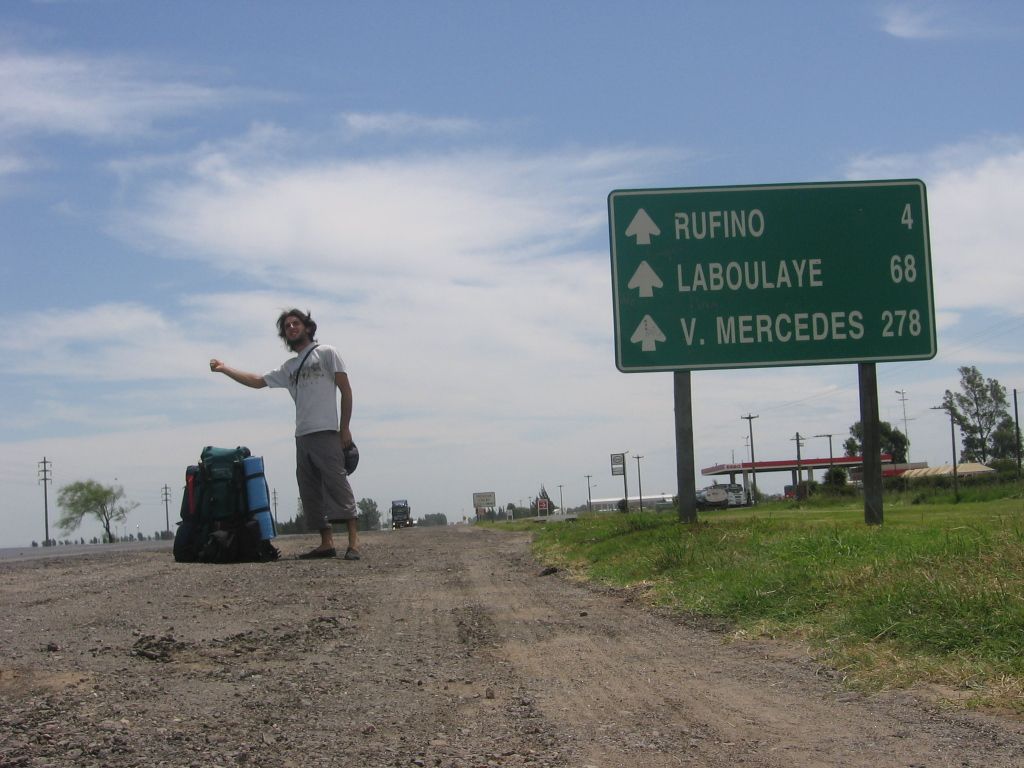
- Ciudad de Buenos Aires (Distrito Federal) ⇒ Buenos Aires
- Buenos Aires ⇒ Bahia Blanca — La Plata — Sierra de la Ventana — Carmen de Patagones
- Catamarca Province ⇒ Catamarca
- Chaco ⇒ Resistencia
- Chubut ⇒ Puerto Madryn — Trelew — Comodoro Rivadavia — Rawson — Esquel
- Cordoba Province ⇒ Cordoba — Alta Gracia — Carlos Paz — San Marcos Sierras — Villa Maria
- Corrientes Province ⇒ Corrientes
- Entre Rios ⇒ Gualeguay — Gualeguaychu — Victoria — Colon — Larroque
- Formosa Province ⇒ Formosa
- Jujuy Province ⇒ San Salvador de Jujuy
- La Pampa ⇒ Santa Rosa
- La Rioja Province ⇒ La Rioja
- Mendoza ⇒ Mendoza — Uspallata
- Misiones ⇒ Posadas
- Neuquen ⇒ Neuquen — Zapala
- Rio Negro ⇒ Bariloche — Cipolletti — El Bolsón — Viedma
- Salta ⇒ Salta
- San Juan Province ⇒ San Juan — Barreal — Calingasta — Rodeo — Las Flores — Jachal — Encon
- San Luis ⇒ Quines — San Luis
- Santa Cruz ⇒ El Calafate — El Chaltén — Rio Gallegos — Caleta Olivia — Bajo Caracoles
- Santa Fe Province ⇒ Rosario — Santa Fe
- Santiago del Estero Province ⇒ Santiago del Estero
- Tierra del Fuego ⇒ Ushuaia
- Tucuman ⇒ San Miguel de Tucuman
Northern Argentina
Even if northern Argentina has recently seen several cases of crime for both the hitchhiker and the driver, it's still easy to hitch there (unlike in Bs As). In 2011 two french female around Salta, Argentina, raped and killed by a local. And personal experiences of Chilean Truck Drivers, being drugged by an old lady he picked up, whom invites him to a Mate Drink. Unfortunately, 900 dollars was robbed. Since these problems are from the last 2 years, local Argentine drivers are scared of picking up people. Travelling by 2 or more is even harder. But once you get rides, it will be one of your most smoothest rides. And people are very friendly. They like to invite you to (not drugged) mate´s and even some of there local foods, like the empanadas.
- Jujuy: Great landscapes and full colored mountains, you might wait up to 2 hours but you can be sure somebody will pick you up.
Don't bother about Gendarmes and checkpoints, I hitched right next to them. A friendly policeman even helped me find a ride at the Juyjuy/Salta border checkpoint -Dr.Keith Take the 34. The 52 takes you across to the Chilean border and is great hitching as it is a major truck route and they are very helpful as a rule.
- Salta: Really easy to hitch here, I got picked up in about 30 minutes. Greener than Jujuy
- Tucumán: Harder than Jujuy or Salta, besides out of all northern provinces is the most dangerous... If you're heading to Bs As, you have the option of taking the train, it's from 770 pesos (17usd) for a seat, to 2700 pesos (60usd) for a two bed cabin, even if their incredibly bad designed website says tickets are sold out arrive a couple of minutes before departure and tell them you must get there. CARRY YOUR OWN FOOD AND DRINKS and prepare for the heat and the really
disgusting toilets hehehe...
- Formosa: People are not used to tourist and will be asking really weird questions, cause they don't understand what are you doing
there.. there's not a lot of traffic in the 81. But I never got stuck anywhere.. Beware of the extreme hot temperatures!!!!
- Misiones: Platschi hitchhiked in a team of two through this area up from Uruguaiana to Iguazu and back and found its inhabitants extremely friendly and willingly to stop for hitchhikers. Except for night time and non-existing traffic at times, waiting times barely exceeded a few minutes. Be aware of the humidity and heat there, though, thus you need to drink a lot of water.
Roads
Patagonia has a single very crowded road, which is the Ruta Nacional 3 (RN3) that goes along the coast. It is your better bet when heading South. Although there are often many kilometers in between villages, it is a well travelled road.
There are also some East-West roads, some of them being dirt, some being pavement. It is easy to get a ride on the paved road but dirt roads, however, are much harder because of the lack of vehicles.
- The Ruta Nacional 40 (RN40) goes from San Carlos de Bariloche (South) is a road that gets frequently closed off because of the bad weather and is reputed to be hellish to hitch on - fewer cars, unpaved sections and some people have said they have gone days without seeing anyone. Winding, remote mountain roads and bad weather conditions in any season but summer make it less travelled by truckers and therefore is not recommended. Gas stations are generally your best bet, although roadside hitching is possible.
-
In my experience, Ruta 40 is a moderate/difficult but possible hitch during tourist season. You'd be insane to try any other time. Your best bet on Route 40 (at least the southern bit) would be Chilean truckers. From Perito Moreno to Punto Gallegos, the Chileans use the Argentine roads for lack of similar infrastructure in their own country. Also Chilean truckers are way nicer than their Argentine counterparts.
For us (father, mother and two kids) hitchhiking in the so-called "Linea Sur" was great. There is indeed a hitch culture in Junin de los Andes, San Martin de los Andes, Bariloche, El Bolson, and Esquel. Local people do it and expect drivers to pick them up. You don't need to look a London City businessman to catch private cars, tourists, workers, farmers, and truck drivers both from Argentina and Chile. Our last pitch was from El Bolson to Rio Villegas, and there to the border at Paso El Leon (a.k.a. Manso Inferior), from where we walked up to Cochamo, Chile.
Toll Roads
There are quite some peajes (toll passages). In the South however, these are not so good and you will just be sent away after a while.
Currency
Argentina have a very unstable economy so. the value of the coins changes fast. The official rate for your money is almost half of what the value is actually is. For example in April 2023 1$ = 217 Argentinian pesos. and real rate (a.k.a dollar azul) 1$ = 398 Argentinian pesos. Almost double.
So don´t change your money at a bank or casa de cambio- they will give you the official rate set by the government. Better do it on the black market where the rate is much better. You can see the exact unofficial rate at http://dolarblue.net/, or search for "Blue Dollar" in google, so you don´t get ripped off. In Buenos Aires you can change your money by going up to anyone yelling "cambio" on the street La Florida. Check the money carefully to be sure you aren´t buying counterfeits! In other major cities, walk down the main pedestrian road in the center and maybe you will find an "arbolito" ("little tree") who will change it. Otherwise, ask your host or friends if they want to buy your dollars.
Public Transport
(This information is from 2017, can somebody confirm it please)
(20th October 2025: Coins are not really used anymore in Argentina. Their value has declined significantly with the (official) value of the 25 Peso coin being only worth 0.015€. Someone would need to confirm how/if the vending machines still work though.)
Buses are expensive but unbelievable nice. Fully reclining seat and food provided. If you take a bus, treat it as a hotel and save a night's hotel fees.
Trains are super cheap but only serve limited routes. They are an excellent way to see the countryside and come in contact with a different segment of the population than you'd encounter on a 1st class bus. Highly recommendable.
In cities, buses usually require the use of cards (tarjetas)- you cannot pay the driver directly. Some, like in Rosario, have vending machines on the bus, but only accept coins (save your peso coins!). But usually you can ask nicely to use someone else´s card, either waiting for the bus or once you get on. Offer them 5pesoes, though they will often flash you on without accepting your money.
Safety
One word of advice is that although traffic is much heavier in the north, the routes do cross major cities, and hitchhiking is much more dangerous near urban centers. It is advisable, if possible, to get off at the nearest pueblo and take a bus into cities such as Cordoba, Santa Fe, Rosario, etc. The same can be said for leaving. In the south there are really no big cities, and the highways all have gas stations, and the people are much more helpful. No danger there.
Border Crossings
Argentina has open land/sea borders with its surrounding nations clockwise: Chile, Bolivia, Paraguay, Brazil and Uruguay. Some of the borders might not have their immigration (immigracion) at the border itself, but in the nearest town before the official line. Therefore, the no man's land might be walkable or not, depending on the location. Check on a map where you need to stamp in/out before you go to avoid backtracking.
Argentinian border crossings are pretty laid back. guaka crossed 4 times in 2006 and doesn't have clear memories about it (meaning it's not that a big deal). You better avoid changing money at the border crossings though. See the currency section above.
United States citizens must pay a $160 recipricocity fee to enter the country from any border. They are quite strict about this. Pay it here: http://www.migraciones.gov.ar/accesible/ As of March 2016, Americans no longer have to pay if staying less than 90 days and visiting for tourism.
Canadian citizens need to pay a US$92 reciprocity fee as well. Can be paid on the same website as US citizens.
Chile
To exit to Chile there is a first stop where they give the driver a piece of paper saying how many people are in the vehicule. If you are not going to go all the way with the same driver don't forget to ask for a specific piece that say you are crossing on foot or something. Also drivers can be reluctant to pick you up all the way through the border so a sign sayin' Frontera or Aduana might help (then you can speak with them in the car).
If you are going to Chile: it is forbidden to enter with any kind of organic stuff such as fruits, veggies, beans, seeds, cheese, etc you can try to pass them in your pockets. Just be sure to declare that you are passing with some organic stuff (rice, mate, polenta) so they can't charge you for lying and play dumb if you get caught. Worked for me with one bag of pine nuts (piñones) and one bag of seeds.
You can also only bring 2 packs of cigarettes, since they are much more expensive in Chile, or smuggle more.
In the north, most of the trucks will not pick you up because are afraid that Gendarmes can complains, eazy took a lift from a local truck and asked the driver to stop a Paraguayan truck for him.
Chilean Border Crossings North to South
The following is a list of all the major border crossings between Argentina and Chile, sorted out by Mind of a Hitchhiker and ordered from north to south. Not all of these have been hitchhiked by HitchWiki contributors. As most of them cross the Andes mountain range, not all of them stay open year round. Some might be hitchable in summer during the tourist season, but not outside that. Do your research before you cross! This was the disclaimer.
Paso Jama is the northernmost pass across the andes from San Pedro, CL to Juyjuy, AR. Coming from Chile, Keith had to have his pack x-rayed. There are lots of Paraguayan trucks passing through here and few civillians. Keith waited 1.5 hours in San Pedro and 2 hours at the border. The border is at 4200m and can be extremely windy and cold, especially at night - be prepared! The immigration building on the Argentinian side is at the end of town. Crossing from Jujuy province into Region II de Antofagasta.
Paso Sico on the Argentinian Ruta 51, nearest Argentinian hamlet is named Catua. From Jujuy province into Region II de Antofagasta. Let us know if you hitchhiked this.
Paso Socompa on the Argentinian Ruta 163. From Salta province to Region II de Antofagasta, next to an active volcano. Let us know if you hitchhiked this.
Paso San Francisco is between Copiapo, Chile and San Miguel, Argentina. There is little traffic along this route and you could wait for days at 3800m. Not recommended. Located on the Ruta 60. Crosses from Catamarca province into Region III de Atacama.
Paso Pircas Negras on the Ruta 76. From La Rioja province to Region III de Atacama. Let us know if you hitchhiked this.
Paso de Agua Negra on the Ruta 150. The customs office is near Las Flores 90km away. Crosses from San Juan province into Region IV de Coquimbo. Mind of a Hitchhiker got offered a ride from Rodeo and took it. This is the highest border crossing between the two countries, with a maximum altitude of 4.780 meters. A large chunk of the 180 km between border checks is unpaved, but with all the glaciers, it's one of the most spectacular routes across the Andes out there. The Chilean side is called Juntas del Toro and the nearest town city is La Serena. It's only open from December to April, and might close on other days as well due to bad weather. Read Las Flores on how to do it.
Paso Internacional Los Libertadores between Mendoza and Santiago de Chile is probably the best option with lots of truck and civilian traffic. You will also pass Mt. Aconcagua, the tallest mountain in the Southern and Western hemispheres. There's a tunnel between the two countries. Goes between Mendoza province and Region V de Valparaiso.
Paso Vergara on the Ruta 226. Crosses from Mendoza province to Region VII del Maule. Argentinian customs is 8km from the actual border. Let us know if you hitched this.
Paso Pehuenche on the Ruta 145. Crosses from Mendoza province to Region VII del Maule. Migration is in Las Loicas, 40 km from the actual border. Let us know if you hitched this.
Paso Pichachen on the Ruta 6. Crosses from Neuquen province to Region VIII del Bio Bio. Let us know if you hitched this.
Paso Pino Hachado on the Ruta 242. Crosses from Neuquen province to Region IX de la Araucania. Argentinian immigration is 2,5km from the actual border. Let us know if you hitched this.
Paso Icalma on the Ruta 13. Crosses from Neuquen province to Region IX de la Araucania. Argentinian immigration is 6km from the actual border. Let us know if you hitched this border.
Paso Mamuil Malal on the Ruta 60. Crosses from Neuquen province to Region IX de la Araucania. Argentinian immigration is 1,5km from the actual border. Let us know if you hitched this border.
Paso Carirriñe on the Ruta 62. Crosses from Neuquen province to Region XIV los Rios. Argentinian immigration is 47km from the actual border. Let us know if you hitched here.
Paso Hua Hum on the Ruta 48. Crosses from Neuquen province to Region XIV los Rios. Argentinian customs is 3km from the actual border. The Chilean one is on the actual border. In Chile you need to take a ferry to get connected to the other roads. Let us know if you hitched here.
Paso Fronterizo Cardenal Antonio Samoré on the Ruta 231. Crosses from Neuquen province to Region X de Los Lagos. The Argentinian customs is 17km from the actual border. Son Of a Hitch crossed this border going from Argentina to Chile on February 2023. Hitchhiking was not super easy in both sides of the border, but not super hard either. Not so many cars passing, and also the road is only open I think between 8:00 to 18:00, maybe it's closed if there is some heavy snow. Had to wait until the border re-opened the next day camping next to the Argentinian customs. Camping as far as I know was not legal. It wasn’t very hard to hide. Getting out of Argentina was simple, but it was much harder getting into Chile. Between the customs there is a large distance, which will take you awhile to walk. So I chose to hitchhike, which took awhile. And then on the Chilean side you should ask for a personal crossing paper from the person in the boot on the entrance. Sometime they will only give the car driver a paper and not you, So you should ask for a personal one. The first two step are kind of easy, they might even talk in English with you, basically just checking your passport. before step 3 your should fill a paper that says if you have anything to declare. basically everything organic can get you in trouble. So if there is any doubt if you should declare or not, just declare. Because if you don't they might fine you. on step 3 they get a dog to sniff your bag. In my case the dogs sniffed and "found" something. So they asked me nicely to open the bag. And I showed them what maybe would be a problem, and they said it's OK. From there it was a smooth ride to Chile.
Paso Pérez Rosales on a Ruta with no number, from Puerto Frías in Argentina in Rio Negro province. Nearest Argentinian town of size is called Llao Llao, near Bariloche. You'll have to take several seasonal ferries in both Argentina and Chile to get here. The nearest town of size on the Chilean side is called Peulla in Region X de Los Lagos. This border is not visible on Google Maps, only on Open Street Maps. Please let us know if you accomplished this masterpiece.
Paso Futaleufú on the Ruta 259. Crosses from Chubut province to Region X de Los Lagos. The distance between the two immigration offices is less than 1km. This is a major tourist hot spot, so if the border isn't closed, it should be fairly hitchable. Please verify the hitchability once you've crossed here.
Paso Rio Encuentro on the Ruta 44. Crosses from Chubut province to Region X de Los Lagos. The Argentinian side has a town named Carrenleufú and the Chilean has one named Alto Palena. Let us know if you crossed here.
Paso Coyhaique/Coiaique on the Ruta 74. Crosses from Chubut province to Region XI Aisén del General Carlos Ibáñez del Campo. The Argentinian customs is 2km from the border and the nearest Argentinian town is named Aldea Beleiro. Let us know if you crossed here.
Paso Huemules on the Ruta 260. Crosses from Chubut province to Region XI Aisén del General Carlos Ibáñez del Campo. The Argentinian immigration office is less than 300m from the actual border and the nearest village is Lago Blanco. On the Chilean side it is 5km till the first town named Balmaceda. Let us know if you crossed this border.
Paso Palavicini on the Ruta 72 (Ruta 45 on Google Maps). Crosses from Santa Cruz province to Region XI Aisén del General Carlos Ibáñez del Campo. The Argentinian customs office is 2km from the actual border. The Chilean customs is on the limit of Puerto Ingeniero Ibáñez town as spotted by [[User:MOAH|Mind of a Hitchhiker. She took the next border. Let us know if you crossed this border.
Paso de Chile Chico on the Ruta 43. Crosses from Santa Cruz province to Region XI Aisén del General Carlos Ibáñez del Campo. The Argentinian customs office is in Los Antiguos and the Chilean one in Chile Chico. This border is perfectly hitchable, as recorded by [[User:MOAH|Mind of a Hitchhiker in a vlog. No man's land is about 8km long.
Paso Roballos on the Ruta SN near the Ruta 41. Crosses from Santa Cruz province to Region XI Aisén del General Carlos Ibáñez del Campo. The Argentinian customs office is 300 m from the actual border. The nearest village with facilities is Bajo Caracoles and oh boy, you don't want to get stuck here. Perhaps it's crossable in summer, but definitely not in winter. The nearest town in Chile is Cochrane. Let us know if you hitched this border.
Villa O'Higgins/El Chalten Foot border crossings This area is sort of the hiking capital of the continent. There's many multi-day hikes advertized in both towns. Villa O'Higgins is the last town reachable by road from the "mainland" of Chile, via the Carretera Austral/Ruta 7. You could hitchhike all the way from Arica to Santiago de Chile to Villa O'Higgins without leaving Chile - that's 4.300km. South of Villa O'Higgins, Chile splits up in a million fjords, this is where Region XII de Magallanes (y la Antarctica Chilena) begins. Chile and Argentina have disputes over what land is owned by which country. If you want to visit the southernmost region of Chile without crossing to Argentina, there's a cruise from Puerto Montt all the way to Puerto Natales and even Punta Arenas, but this won't come cheap. In El Chalten or Tres Lagos in Argentina, there's buses taking you to and from these hiking trails. One is named Paso Fronterizo Entrada Mayer on the Ruta 81. Crosses from Santa Cruz province to Region XI Aisén del General Carlos Ibáñez del Campo. Border check points are as the bird flies 12km. Rides may only be hitched from each respective main road. Permits may be needed to hike in this reserve. If you've done any border crossing in this region, please add more information.
Paso Don Guillermo on the Ruta Provincial 7. Crosses from Santa Cruz province into Region XII de Magallanes. The Argentinian customs office is 3km from the border and the Chilean one 9km, so that's 12km of no man's land. Let us know if you hitched this border crossing.
Paso Fronterizo Dorotea on the Ruta Provicial 20. Crosses from Santa Cruz province into Region XII de Magallanes. The Argentinian customs office is at a ski centre 2km from the actual border and the nearest town with facilities is Rio Turbio. Villa Dorotea is on the Chilean side with the customs office 4km from the border. Puerto Natales in Chile is nearby. Let us know if you hitched this border crossing.
Paso Laurita Casas Viejas on the Ruta 293. Crosses from Santa Cruz province into Region XII de Magallanes. The Argentinian customs office is 100m from the actual border, the Chilean one is 4km away. This is the main direct border crossing from Argentina to Puerto Natales. Let us know if you hitched this border.
Paso de Integracion Austral on the Ruta Nacional 3. Crosses from Santa Cruz province into Region XII de Magallanes. There's two buildings, but both Chilean and Argentinian customs are present in both buildings. From whichever direction you come, you always drive by the first building and get out at the second. Don't panic! At this border you can possibly expect a needlessly complicated and long process once you arrive to Argentine customs if their X-Ray machine is broken (which it often is).They must do a manual search of your bags and tend to find silly, irrelevant things like tin foil that are apparently a matter of National Security. themodernnomad was once delayed leaving Argentina at the Paso Austral to Chile for several hours because of a 'suspicion' that turned out to be baseless. Fortunately, the Gendarmeria have poorly trained attack dogs who care more about playing with towels than sniffing for contraband. The Argentinian drivers of Mind of a Hitchhiker who came driving all the way from Cordoba province to visit Ushuaia had all their apples stolen by Chilean customs, even though they crossed back into Argentina a few hours after! This was really tragic. Warn your Argentinian drivers!
Paso San Sebastián on the Ruta Nacional 3 (which casually continues on Isla Grande de Tierra del Fuego regardless of the fact that it's broken up!). Crosses from Tierra del Fuego province into Region XII de Magallanes. The Argentinian customs office is at the roundabout of the town San Sebastián, some 11km from the actual border. The Chilean customs office is 3.5km from the actual border. Use the border crossings to find direct rides to where you want to go. Argentinian plates driving into Chile will most likely drive all the way to Rio Gallegos, while Chilean plates going into Chile will likely go to Punta Arenas via the Punta Delgada ferry crossing (hitchable). To find a ride to Porvenir in Chile, Mind of a Hitchhiker asked at the Chilean customs office if anyone was going there, and got offered a ride from a guy named "El Gordo" (TheFat One) by his colleagues. His real name is Sergio, as vaguely remembered, and he drives a red Toyota Hilux. This hitchhiker gave up on trying to find an earlier ride and did crossword puzzles instead until Sergio appeared and drove her the 140km to Porvenir in no time. With excellent suspension, the ride was smooth and glorious, while driving past the Bahía Inutil (Useless Bay) chasing the imminent sunset.
Other Border Crossings on Tierra del Fuego One example may be the ferry from Ushuaia to Puerto Navarino or Puerto Williams in Chile. This little boat may only need to cross less than 10km of water in the Beagle Channel, yet costs a magical US$200 or more. There's a cruise between Puerto Williams and Punta Arenas, if you really want to visit The World's Southernmost Village, but it will probably cost you a kidney, too. Other land borders may exist between Estancia San José (Argentina) and Camerón (Chile), but as if hitchhiking isn't hard enough on the main roads of Tierra del Fuego. Kudos if you did hitch another border crossing, and again, please add information here if you did!
Bolivia
Some of you might need to apply for a visa or pay a reciprocity fee when entering Bolivia. It's surprisingly strict to get in. The immigration officers are not very good at making you feel welcome into their country. After filling in a form at the border, Mind of a Hitchhiker got shouted at and her form destroyed and tossed by the Bolivian immigration officer because he deemed her handwriting unreadable.
Bolivian Border Crossings West to East
Here's a list of all major border crossings between Argentina and Bolivia. One can enter Bolivia from Argentina from either the province of Salta or Jujuy. This border region has a lot of poverty, so most of them don't have fancy border complexes and paved roads, and one may have to find their entry/exit stamp very far away. Most of these border crossings are also at high altitude and some of them are not open year round. Be careful with bringing coca leafs into or from the countries. The list is not comprehensive and you are welcome to add more information.
Paso Fronterizo Villazon on the Ruta 9. The Argentinian town is called La Quiaca in Jujuy Province and the Bolivian one Villazón in Potosi Department. Immigration offices are 100m apart and the two towns are stuck together. East of this border are a few minor roads also crossing, but they don't have immigration offices, so only pursue those at your own risk. Let us know if you hitched this border.
Mecoya/Rio Santa Rosa on a side road of the Ruta 7 in Salta province. This one is not findable on Google Maps, but visible on Open Street Maps. The immigration office seems to be in the village called Santa Victoria in Argentina. You'll pass a town named Pucara de San Bernardo. Mecoya, the town on the Bolivian side, is 100km from the city of Tajira, Tajira Department, Bolivia. Let us know if you hitched this border.
Condado/La Mamora on the Ruta provincial 19 in Salta province, leading into Tajira department. Again, not findable yet on Google Maps, while Open Street Maps is pretty confident about this one. Let us know if you hitched this border.
Aguas Blancas on the Ruta provincial 50 in Salta province, leading into Tajira department. This one is bigger. Argentinian customs is 2km from the actual border. The Argentinian town of Aguas Blancas is really small, while Bermejo on the Bolivian side is rather large and has many amenities. Let us know if you hitched this border.
Paso Internacional Salvador Mazza - Yacuiba on the Ruta 34 in Salta province, leading into Tajira department. It's very big. Argentinian customs is 100m from the bridge crossing the border. The town on the Argentinian side is called Profesor Salvador Mazza and the city on the Bolivian side Yacuiba. Son Of a Hitch crossed this border on December 2022. Getting to Yacuiba was kind of easy. Nice places on the way and the people were friendly. On the Argentinian side it was a little bit rougher but still OK. When you get to the border crossing it can be a little bit confusing. Both customs are basically at the same place. If you are leaving Bolivia you should go to where the Bolivian flag first and vice versa if you are coming from Argentina. The Bolivian customs were kind of problematic, Trying to tell me I overstayed in Bolivia but I wanted an explanation and they literally counted my days and saw that I didn't. So I got the Stamp and moved to the Argentinian side. The lady in the entrance asked me if I have hotel reservation and for how long I'm going to stay in Argentina. I just told her with a smile "I'm sleeping in my tent and I'm going to Patagonia, I wish to stay 90 days in Argentina". She was a bit shocked, went to talk to the manager I think. She came back and let me through. I think they are worried from people that come for work. I noticed they didn't stamp me, which later they explained that everything is online this days and if I want a proof I entered I can print it from the internet. It was not a problem when I left. They scanned my bag and sent me on my way. Few Kilometers into Argentina there is a police roadblock. They stopped me and asked me why I am hitchhiking and not taking buses and sleeping in hotels. I told them I prefer to travel this way because like that I can really see the country. they smiled and let me through.
Paraguay
Paraguay is a really nice country, but immigration checkpoints are usually very far away from the border in the nearest town of size. This doesn't follow any particular logic, and sometimes one has to hitchhike more than 100km between borders on crappy roads to get the next stamp. This might result in having your exit and entry stamps not done on the same day, which might lead to nasty questions by immigration officials.
Paraguayan Border Crossings Roughly West to East
Paso Internacional Mision La Paz on a Ruta 54 in Salta province leading to Boqueron department. The nearest town of size is Santa Victoria Este/Oeste (really, they're the same town) in Argentina. On the Paraguayan side there's Pozo Hondo, but the nearest town of size is Mariscal Estigarribia some 200km away, which might be your stamp in/out point. Let us know if you hitched this border crossing.
Fortin General José Bruguez on a side road of the Ruta 86 in Formosa province, leading to Presidente Hayes department. The nearest town of size in Argentina is Villa General Manuel Belgrano. The immigration offices of both countries are 100m apart and crosses a bridge over the Rio Pilcomayo. On Google Maps, the town is abbreviated to "Fortin Gral Bruguez, Paraguay". Let us know if you hitched this border.
Puente Internacional San Ignacio de Loyola on the Ruta 11 in Formosa province, leading to Presidente Hayes department. This one is close to Asuncion, but not from the city. The Argentinian town is called Clorinda and the Paraguayan town Puerto Falcon. The nearby Paraguayan town Nanawa crosses multiple times into Clorinda, too, but lacks official exits for international passport holders. Immigration offices for both countries are 300m apart. Let us know if you hitched this border.
Puerto Pilcomayo Ferry Crossing to Ita Enramada on the Ruta Nacional A011. From Formosa province to Districto Capital department. This is a border crossing by boat into a neighborhood of Asuncion called Ita Enramada. Passport control should be 100m from the pier on the Argentinian side. Please add information about prices if you crossed borders this way.
Formosa City Ferry Crossing to Alberdi on the Ruta Nacional 11. From Formosa province to Ñeembucú department. This 600m ferry ride across the Rio Paraguay should have their respective passport controls on either side at the port at the prefectura naval. Please let us know and add information about prices if you crossed between countries here.
Colonia Cano Ferry Crossing to Pilar on Ruta 9. From Formosa province to Ñeembucú department. The nearest Argentinian town is General Lico V. Mansilla, some 40km away from the actual ferry crossing. Pilar in Paraguay is directly on the other side. Let us know about the location of the passport controls and the prices of the ferry if you take this crossing.
Ituzaingo - Ayolas Hydroelectric Dam on the Ruta 120. Passport control is about 1km before the bridge/dam starts. It's a total distance of 40km from the town of Ituzaingo in Corrientes province till Ayolas in Misiones department. Let us know if you hitched this border.
Puente Internacional San Roque González de Santa Cruz on the Ruta 105. From the Argentinian Posadas in Misiones province to the Paraguayan town Encarnacion in Itapúa Department. There's a bridge for cars, a ferry (Lancha) and even a train crossing. The passport control are on their respective sides of the bridge. Did you hitch across here? Please add more info!
San Ignacio Ferry Crossing to La Alborada near the Ruta Nacional 12 near San Ignacio, Misiones province. The ferry (Lancha) leaves from a place at the Paraná river called Puerto Nuevo, which has a camp site. This crossing is not on Google Maps, but is clearly visible on Open Street Maps. The nearest towns in Paraguay are La Alborada, Nueva Alborada and the German-sounding Hohenau in Itapúa department. Let us know if you crossed here.
Corpus Ferry Crossing to Puerto Obligado on the Ruta Provincial 6. Goes from Corpus, Misiones province, to Puerto Obligado, Itapúa department, near Bella Vista and Hohenau. Let us know if you crossed here.
Puerto Rico Ferry Crossing to Puerto Triunfo near the Ruta Nacional 12. Goes from Puerto Rico, Misiones province, to Puerto Triunfo, Itapúa department. Let us know if you crossed here.
Puerto Montecarlo Ferry Crossing to Puerto Ape Aime near the Ruta Nacional 12. Goes from Montecarlo, Misiones province, to Puerto Ape Aime, Itapúa department. Let us know if you crossed here.
Puerto Libertad Ferry Crossing to Domingo Martínez de Irala near the Ruta Nacional 12. Goes from Puerto Libertad, Misiones province, to Doningo Martínez de Irala, Alto Paraná department. Let us know if you crossed here.
Triple Frontera/Tríplice Fronteira at the end of the Ruta Nacional 12 in Puerto Iguazu, Misiones province, Argentina. From here you can cross by ferry to Paraguay, to a village named San Francisco, that is near to Ciudad del Este, Alto Paraná department. If not by ferry, one has to cross the international bridge to Brazil and then enter Paraguay. Let us know what you did around this border!
Brazil
All major border crossings from Argentina to Brazil. Check whether you need a visa or not. Don't get too comfortable with your Spanish; they speak Portuguese in Brazil. Just stating the obvious here. Customs are called Alfândega in Portuguese.
Brazilian Border Crossings Roughly West to East
Triple Frontera/Tríplice Fronteira at the end of the Ruta Nacional 12 in Puerto Iguazu, Misiones province, Argentina. The town on the Brazilian side is called Foz do Iguaçu, in State of Paraná. The passport control in Argentina is 2km away from the actual border on a bridge in the Rio Iguazú/ Rio Iguaçu. The Brazilian customs is another 2km away on the other side. If you've hitchhiked across this border, please add information!
Puente Internacional Comandante Andresito on the Ruta Provincial 19. Goes from the Argentinian town Comandante Andresito in Misiones province, to Capanema, State of Paraná. The Argentinian passport control is 800m from the actual border and the Brazilian one 300m. The distance between the two nearest settlements is 38km. Let us know if you hitched this border.
San Antonio Bridge on the Ruta 101 in the town of San Antonio, Misiones province. The Brazilian town is named Santo Antônio do Sudoeste, in State of Paraná. The border crossings are in an urban area a mere 150m apart. Let us know if you hitched this border.
Bernardo de Irigoyen - Barracão on the Ruta 101/14 in the town of Bernardo de Irigoyen, Misiones province. The brazilian town is called Barracão in Paraná State, and there's almost no physical border between the two towns, with multiple crossings. You can get your entrance/exit stamps at the bridge close to the Plaza San Martin on the Argentinian side. Customs offices are within 100m of each other. Let us know if you hitched this border.
Puente Internacional Paraje Rosales on the Ruta 27, the nearest locality being Cruce Caballero, Misiones province. The Brazilian town is called Paraíso, State of Santa Catarina. Argentinian customs is 2km from the actual border and the Brazilian ones 100m. The distance between the two nearest towns is 40km. Let us know if you hitched this border.
El Soberbio Ferry to Porto Soberbo on the Ruta provincial 2, inside the town of El Soberbio, Misiones province. The Brazilian town is Porto Soberbo, State of Rio Grande do Sul, and significantly smaller than its Argentine counterpart. Customs of both countries are directly on the shores of the Rio Uruguay. Let us know if you hitched this border.
Alba Posse Ferry to Porto Mauá on the Ruta provincial 8, in the village of Alba Posse, Misiones province. The Brazilian town is Porto Mauá, State of Rio Grande do Sul. The Brazilian customs is directly on the shore. Let us know if you hitched this border.
Panambí Ferry to Porto Vera Cruz on the Ruta provincial 5, village of Panambí, Misiones province. The Brazilian town is Porto Vera Cruz, State of Rio Grande do Sul. Argentinian customs are on the shore next to the municipal camping. Let us know if you hitched this border.
San Javier Ferry to Porto Xavier on the Ruta provincial 2, town of San Javier, Misiones province. The Brazilian town is Porto Xavier, State of Rio Grande do Sul. Customs of both countries are directly on the shores of the Rio Uruguay. Let us know if you hitched this border.
Garruchos Ferry on the Ruta provincial 37, town of Garruchos, Corrientes province. The Brazilian town is also calles Garruchos, State of Rio Grande do Sul. Location of customs currently unknown - might be a border only for locals - but the ferry definitely exists. Let us know if you crossed here.
Puente Internacional de la Integracion/Ponte Internacional da Integraçao on the Ruta 121 between Santo Tomé, Corrientes province and the Brazilian São Borja, State of Rio Grande do Sul. The Argentinian customs is 3km from the middle of the bridge in the Uruguay river. The location of the Brazilian passport control is unknown, but there's a fair chance the in/out stamps are done in the same building at the Argentinian side (speculation, yes). Enlighten us if you crossed this border.
Alvear - Itaqui ferry on the Ruta Nacional 14 between Alvear and, Corrientes province and the Brazilian Itaqui, State of Rio Grande do Sul. The Argentinian customs is right on the shore and the Brazilian one presumably as well. Please add info if you crossed this border.
Puente Internacional Getúlio Vargas-Agustín Pedro Justo on the Ruta 14 from Paso de los Libres, Corrientes province, to the Brazilian city of Uruguaiana, State of Rio Grande do Sul. This is a big one. Argentinian customs is 1 km before the bridge and Brazilian customs 1 km after. It's doubtful you can walk the 2 km over the bridge. Let us know if you hitched this border.
Uruguay
Uruguay is a super lovely country where hitchhiking and freecamping are fairly easy. Many Argentinians look at Uruguay as a province, not a country, because of its size. All border crossings between Argentina and Uruguay cross a river, either by bridge or by ferry. By all means try to avoid taking Argentinian currency to Uruguay and vice versa as you are going to lose a lot of value when changing (like user Miriam experienced kind of annoyed). If necessary, change to Dollars in between.
Uruguayan border crossing north to south
Puente Internacional Salto Grande roughly on the Ruta Nacional 14 between Concordia, Entre Rios province and Salto in the Salto Department. The bridge is actually 15 km north of both cities, so it's quite the detour. The bridge is also a hydroelectric dam on the Uruguay River and it's one of the biggest border crossings in Uruguay. Argentinian customs is 4 km from the center of the bridge (the actual border) and might do both the Argentinian and the Uruguayan entry/exit stamps.
As Concordia and Salto are only separated by 1 km of river, it is possible to cross from city to city on a foot passenger ferry. However the ferry only goes if 4 or more people want to use it because the border officials wont come for less people. December 2025, the sailing times from Salto were 8:45 and 12:30. Chris9012 tried to use the morning ferry but there was only one other passenger. They were told that the 12:30 would definitly go but decided to hitchhike instead and got a ride to Salto after a 45min walk.
Puente Internacional General Artigas on a side road of the Ruta Nacional 14 between Colón, Entre Rios province and Paysandú, Paysandú Department. Mind of a Hitchhiker hitched this border from Uruguay to Argentina in 2016 and found out that both the Argentinian and the Uruguayan customs are on the Uruguayan side, about 1 km from the center of the bridge. She didn't get an Uruguayan exit stamp, the reason being "We're both MERCOSUR, we share resources. You can go now". Okay... She got a ride to Colón from a guy who lives there. If you're traveling the other direction, there's an YPF gas station on the Argentinian side that leads to the bridge, about 5 km from the center of the bridge. The distance between the center of Colón and the center of Paysandú is 20 km. There's a bus going from Paysandú center to a neighborhood called Nuevo Paysandú, which is at the road to the border. It's not the busiest border outside the holiday season.
Puente Libertador General San Martín off the Ruta Nacional 14 roughly between Gualeguaychu, Entre Rios province and Fray Bentos, Rio Negro Department. The nearest city of size in Uruguay is Mercedes, Soriano Department. Argentinian customs is 5 km from the center of the bridge. Uruguayan customs is 1.5 km from the center of the brige. The distance between Gualeguaychú and Mercedes is 68 km. User Miriam hitched this border in 2017 to get around expensive ferry rides and went from Buenos Aires to Montevideo in one day. It is forbidden to cross the bridge by foot, so you need a ride across which the border posts were willing to give. You only need one stamp, at the Uruguayan side, because both countries have some kind of treaty. Border police were more than bored and literally painting their nails. Everything tranquilo.
Ferry Cacciola Tigre - Carmelo possibly via Isla Martin Garcia! Tigre is a village next to Buenos Aires capital, inside Buenos Aires province. It's a train ride away and can't really be hitched to from the city. Carmelo is in Carmelo department, Uruguay. The ferry crosses the Rio de la Plata. Info on prices and times have to be Googled by oneself. This is a very interesting way to cross borders. One might get a glimpse or even moor at Isla Martin Garcia.
Isla Martín Garcia is a great mystery. The island is Argentinian territory in Uruguayan waters and has a brother island north of it called Isla Timoteo Dominguez. By now they've grown together and are one, so there's an actual border on these islands. It's a really tiny island with not many people living there. One gets to the island either via Tigre or via the Puerto Madero ferry pier. Google is thy friend. Whether it is possible to go here to Uruguay legally is unknown. The nearest landfall from the island to Uruguay is 4 km and there's a pier over there called "Martin Chico". If you've never done this, it's a great opportunity to give boathitching a try. Let us know if you went to this island and what your next move was!
Ferry Tigre - Colonia del Sacramento. Ticket prices vary. Google before you go. Let us know if you took this ferry to cross the border.
Ferry Buenos Aires - Colonia del Sacramento is by far the most popular way to get to Uruguay. There's three companies that operate on this crossing and there's a ferry leaving every 2 hours. The companies are Buquebus, Seacat Colonia and Colonia express. Seacat is usually the cheapest. You can book your tickets online and if you don't have a credit card, ask an Argentinian CS host to buy it and pay it back to them in cash. Mind of a Hitchhiker took this ferry in 2016 (and 2011) and found out that (somehow) tickets were half price if you paid them in Uruguayan pesos. No guarantee that this is still the case, but it's worth to play around with it. She paid €20 for a one-way ticket. The ferry terminal is in the neighborhood of Puerto Madero in Buenos Aires and can be rather busy on weekends when people do the shopping in Uruguay. In summer, there's more ferries per day and more people taking them. You get the Argentinian exit and Uruguayan entry stamp both on the Argentinian side when you travel in this direction. People are very pushy to go on board. Loads of competition to get a window seat.
Ferry Buenos Aires - Montevideo is a seasonal (summer) ferry that goes directly between the ports of Buenos Aires and the capital of Uruguay: Montevideo. Since the distance to cross is way longer, it might not be financially interesting for a hitchhiker to take. Let us know about pricing if you took this ferry.
Camping
In general camping is really easy. Gas stations are a good option. But there is also so much space, that if you hide a bit your tent nobody will bother you. In some parts wild camping is illegal. Especially when there is a lot of paid camping sites all around.
you can still sneak and put your tent somewhere in nature and probably nobody will notice it. But be careful. Especially with fire. If you are going to make fire, rangers will come. Some places in Argentina had crazy bushfires and because of it the country is really harsh on that topic.
Recycling
Reciclar (Recycling), which is basically taking the food supermarkets throw away, is very common in Argentina. when you enter shops looking like a traveler (not a tourist) the seller might ask you if you want the "recicle", Which means the things that they are going to throw. Banana with some spots, some tired carrots and etc. You can also ask if there is somethings they are going to throw if they don't ask you. In fruit and vegetable shops it's very common, but also possible in small supermarkets and restaurants towards the end of the day.
Personal Experiences
2016, 2017
There's a stark difference between Patagonia and everything that's north of it. My waiting times have been between one second and one complete day. Hitchhiking in Patagonia in autumn was quite terrible, especially when headed south. Once I was going north on the Ruta Nacional 3, rides started to come easier. It's still best to find rides on YPF and Petrobras gas stations, to secure rides, but I've also managed to get by with just a thumb and/or sign. Getting out of the bigger cities ranges from easy peasy to complete hell. Argentinians are super friendly - especially in the north - and always offer to share their mate with you. I hitchhiked in all seasons over the course of about 6 months in 2016 and some in 2017. Preparation for the weather is key to how you're going to experience this vast land.
I find that hitching on the road less traveled means quicker rides with the one or two cars that pass within the hour. YPF gas stations are great. Camped all over without any hassles. Hitching in the north should be done via gas stations. Yeah, it's less interesting, but that's how you're going to get the rides you want.
Hitchhiking at the Ruta 81 that crosses the entire Formosa Province, is hell. The heat is incredible, and people dont really know why they have to pick you up. Me and Patrick almost got shot from a local farmer, as we tried to get aid on water. A Truck intentionally tried to kill us at night while we walked. But out of that people are just lovely. Formosan chicks are really beautiful. Id recommend getting your rides at YPF gas stations.
Here is a short analysis of hitchhiking in Argentina by Korn on - warmroads.
2023
I hitchhiked Argentina in the begging of 2023 for almost 90 days. In general I felt the hitchhiking was really good. Before that in Bolivia I was mainly hoping for trucks, Becuase normal cars asked me for money, which i didn't have. But in Argentina I got rides from everyone, including many invatiations from people to their houses and meals. It did start a bit slow. Average waiting time of more than an hour. But I would also get rides that take me really far, so I would do a really good distance everyday. I did do a mistake once. Which was to trust some drivers that offered me a ride to the middle of nowhere. They told me many people cross their village going to my destination, I guess for them many is really different from my definition of many, because barely any cars past. 15 cars an hour (I counted). So I was stuck there for a whole day.
Sept/Oct 2017, 2024
visited in Sept/Oct 2017 for 1 month and 3 times in 2024 for 6 weeks combined.
2017 route:Paso cerdenal antonio samore border crossing (started walking the huge nomans land, but got picked up less than 1km of walking) > bariloche> las lenas > Buenos Aires > bariloche > Perito Merino Glacier > Ushuaia > Up the east coast to formosa/Paraguay
2024 route: 1) Yacuiba > Mendoza > las lenas > Portillo/Chile border; 2) Chile Chico > perito Merino > Bahia blanca > Rosario > Uruguay border/libretador san martin; 3) Puerto Iguazu > General Villegas > las lenas > Zapala (10+ hr wait) > Bariloche > El Chalten > Rio Turbio border crossing > Ushuaia > Cordoba > Route 40 to Cafayate > Salta (more pushing infront hitchhikers) > Purmumarca > Jama/chile border crossing
hitching times varied but were generally the longest in the far north and especially sections of ruta 40 (some over 10 hour waits). Like brazil, on several occasions in different towns, people would stand and hitch 10-100 meters ahead of me, even though they knew i was there before them (no etiquette). police proved to be helpful on several occasions in getting a lift/giving me food and drink. my leg got humped by a horny dog, repeatedly, at one police checkpoint and it would not stop when i tried pushing it away and shouted at it, so i walked down the road. Got bought sandwiches and snacks and 1 slightly juicy steak meal in 2024, got cooked juicy steaks 3 times in 2017. never got invited to stay at anyones home in 2024 but did once in 2017. Never got given any money on either occasions. make sure you get good blue dollar as some shops charge you up to an extra dollar to pay by card and exchange rate is lower. you get around 1280 pesos to 1usd by blue dollar and 1100 pesos to 1usd by card (best rates i got at bolivia border) Average waiting time 2 hours. Mixture of cars 70%, bikes/buses 5% and trucks 25 %. Surprisingly patagonia was really good waiting times. got good long rides of 1500km+, twice, going north in patagonia on route 3. Never got rides at YPF or bothered asking drivers, just used thumb.
November/December 2024
I’m a young blonde girl and I’m very sure that helped me in at least some situations so take what I say with a grain of salt if you’re not. So I hitchhiked pretty much only in Patagonia during November/December of 2024 and it was insanely easy almost all of the time. Even in bad spots I never waited more than 10 minutes, I had a lot of people offer me food and mate, people insisted on bringing me to the hostel I planned to stay at even though they lived in a completely different part of town. Genuinely one of the best experiences in my life. Then, because it was sooo easy, I decided to use Ruta 40 to get from El Chaltén to Bariloche. Couldn’t be as hard as everyone said right? Especially because I already used the Ruta to get from Rio Galleos to El Calafate. Yeah nah, that was a stupid thought. I still had a ton of luck but it took one and a half days to get a ride (which blessedly brought me all the way to Bariloche!) because there were about three cars an hour. Don’t do Ruta 40 if you don’t absolutely have to.
Resources
Buenos Aires
Edit on wikiRoadside hitching spots go stale. For current places to hitch in and out of this city, use maps.hitchwiki.org and the live Hitchwiki page linked at the end of this chapter. This book keeps general orientation, not a pin gazetteer.
Buenos Aires is the capital and largest city of Argentina.
The city itself, with around 3 million inhabitants, is also known as Capital Federal, and is sometimes referred to a CABA, the acronym for its full official name Ciudad Autónoma de Buenoes Aires, which is more than a municipal government but not quite the same as a province. Surrounding it to the north, west, and south are the partidos in the province of Buenos Aires, in which live the majority of the metro's population. Buenos Aires refers to both city and province, though something or one from the city is porteño, while from the province is bonarense. The terms Gran Buenos Aires (also GBA) and conurbano are used to differentiate when referring to the periphery or the centre (Capital Federal, CABA). While the urban fabric is unbroken, the border between the two is clearly demarcated by Avenida General Paz, a 6-12 lane highway (counting frontage roads) to the north and west, and the Matanza River (there referred to as the Riachuelo) to the south.
CABA is very densely built and populated, and (with a few exceptions detailed below) you will without question have better luck hitchhiking on some far edge of the conurbano.
Any direction. General hitchhiking points
There are places in Buenos Aires where many trucks pass by or stop. You could go to the road that goes around Retiro (or the Puerto Madero area). On the other side of the park, in front of the train station, there is a crowded intersection. Trucks leave from there to all directions. Or from the Mercado Central. Most trucks from there go north, since fruits come from the north.
The ferry to Uruguay
The easiest way to get from Buenos Aires to Uruguay is by ferry to Colonia del Sacramento. From the port in Puerto Madero/Retiro leave the main ferries by the companies Seacat Colonia, Colonia Express and Buquebus. Seacat Colonia is part of Buquebus and is usually the cheapest. Booking on their website is the easiest way to get a ticket. Check their website in both the Argentinian and the Uruguayan version. Found out that booking from the Uruguayan site was 50% cheaper: US$20 instead of USD$40 one way. If you don't have a credit card, ask an Argentinian to buy it for you and pay them back in cash.
There's also a ferry leaving from Tigre to Carmelo in Uruguay that apparently goes via Isla Martín Garcia, an Argentinian island that's actually closer to Uruguay in the Rio de la Plata.
Uruguay
Edit on wikiThe Oriental Republic of Uruguay is a country in South America.
More than half of Uruguay's population is concentrated in the capital of Montevideo, meaning a very low population density in the country's interior.
Hitchhiking
In the Uruguayan countryside you will doubtlessly encounter some of the most laid back, friendly folks you could imagine. Humble, generous and curious about anyone passing through, it is the people rather than the geography that make travel memorable in this overlooked corner of the continent. The tranquility of the countryside and the openness of the people will leave an impression on any traveler. Uruguay is a relatively small country, so traveling from the top Northern city to Montevideo would not take much time. From Rivera (a border town with Brazil) to Montevideo it is about 520 km.
Even the president is picking up hitchhikers in this country (January 2015).
Regarding hitchhiking and vagabonding, Uruguay's a pretty easy place to hang out. Many Uruguayan locals have hitchhiked through their country, and have had great experiences and good rides. Probably about 1 in 4 cars will give you a lift (outside of Montevideo). There are many stretches of desolate (but pretty) highway where you'll be lucky to see 4 cars pass in an hour. Expect long waits. Next to that, in the countryside much traffic just goes to the next farm or ranch, thus local traffic is prevalent and short rides more likely than somebody travelling longer distances. The coast, from Chuy to Colonia del Sacramento, is more trafficked and therefore an easier place to get a lift. Along the Interbalnearia some cool towns, sand dunes, and even sea lions can be seen.
Legality of Hitchhiking
Uruguayan law does not mention hitchhiking, and it has no motorway category that shuts pedestrians out. Article 22 of Ley 18.191, the traffic and road safety act, says pedestrians must use the pavements and not the carriageway — and then, at paragraph 3, that on public roads where there is no pavement they are to walk on the bermas or banquinas, the shoulders, facing the oncoming traffic. That is a positive permission to be on the shoulder of an inter-city route, which is exactly where hitchhiking happens. Paragraph 4 asks you to cross quickly and perpendicular to the axis, so treat crossing to the right side as the risk rather than standing. Nothing in the Act forbids asking a driver for a lift, and the peajes and estaciones de servicio on Rutas 1, 5, 8 and 9 are where drivers have already stopped.
Sleeping out
Montevideo is the only city in the country where it's not recommended to sleep on the street, in the rest of the country you can sleep rough without a care. In the countryside, when camping out or walking through fields, be aware of (toxic) snakes. Football stadiums are recommended. Another option in the countryside is to do a visit to the local police office. They most likely might be bored and in many cases invite you for dinner and to sleep in the station, or to put your tent nearby.
Personal Experience
There is very few traffic on the Uruguayan highways, hence the fact that the entire country only has 3.5 million inhabitants. We could not hitch a single ride on that day, and so we called it a night after it started getting dark. The next day we walked and hitched, and walked and hitched...until a truck picked us up, and took us all the way to Montevideo. Which was some 490 kilometers from where we were standing. Hitchhiking in Uruguay is definitely better then Argentina.
21 December 2013
Traffic can be very low at times, as described above. Hitchhiking around the Ciudad de la Costa east of (next to) Montevideo seems to be very difficult, several times failed in hitchhiking between Carrasco airport and Atlantida. All other roads are fine, just be aware that anywhere outside of the cities traffic gets rare fastly, mostly locals driving to the next estancia. When waiting to get a straight ride to a next, bigger city, e.g. between Melo and Tacuarembo, one can wait ages. Hopping between estancias works fine, but even seemingly short-distance trips in the countryside can take their time. Notable, though, is that night hitchhiking works pretty awesome so far, from Paysandu to Montevideo it was no problem at all, and also from Rocha to Maldonado once it took me less than a couple of minutes to score a ride (given that traffic exists at that time of day).
Here is a short analyze of hitchhiking in Uruguay from Korn on - warmroads.
Other Links
Falkland Islands
Edit on wikiThe Falkland Islands are a British overseas territory in South America. Stanley, the biggest town there, is not counting more than 2,000 inhabitants.
Hitchhiking
The hitchhiking conditions for this part of the world seem to be rather bad, but there are chances to get around for free. Don't hesitate to try it!
Legality of Hitchhiking
The law here has not been checked. Nobody has yet read the road traffic rules in force in the Falkland Islands against the official text, so this section cannot tell you what they say, and nothing elsewhere on this page should be read as a statement of the law. What holds almost everywhere is that hitchhiking is not an offence in itself and that what the traffic code regulates is where a pedestrian may stand — off the carriageway, and off motorway-class roads and their slip roads altogether — but whether that is true here is simply unknown. Ask locally before standing on a major road, and treat the rest of this article as what hitchhikers report rather than as a rule you can rely on. If you can read the official text, please replace this paragraph with the provision it turns on and a link to it.
Get in
When entering, you have to show that you have a return ticket, accommodation and enough money to cover your expenses. You need to pay a departure tax of £20 when you are leaving the islands from Mount Pleasant Airport. You don't need a visa if you are citizen of Britain, North America, the Mercosur countries, Chile, and most Commonwealth countries and the European Community.
By plane
Mount Pleasant airport (MPN) is the airport where most international flights arrive. It is also a military base at the same time. There's a weekly flight from Santiago de Chile also stopping in Punta Arenas (CL) and Rio Gallegos (AR) by LanChile. Flights from Europe for commercial passengers are operated by the UK Royal Air Force. These flights last 18 hours, start in RAF Brize Norton, in the south east of England and have a stop on Ascension Island.
The airport is 56km (35 miles) from Stanley. Tourists arriving at the airport usually either take a shuttle bus or a taxi to Stanley.
By boat
Large cruise ships are coming to the Port of Stanley in summer. Some of them also stop at other islands where landing will be done using small inflatable boats.
Get around
There's a regular ferry between New Haven to Port Howard.
You can expect only the roads in Stanley to be paved. The other roads are not paved and can be in a shape that requires an off-road vehicle.
Between the islands
Public planes for travelling between islands are operated by Falkland Islands Government Air Service (FIGAS). They can take eight passengers and the pilot. Reservations are required for normal passengers. Fares can be ~£50 for the longest distance and baggage limit is 14kg (you need to pay £0.60 per additional kilogram).
There is no regular boat service between the islands. An island's owner can charge per-person landing fees.
Else
There are bed and breakfasts in Stanley. Camping needs permission of the landowner.
Not all the mines from the 1982 Falkland War have been cleared. It is absolutely not likely that a usual visitor will encounter one. There were no harmful landmine incidents with civilians since the end of the conflict. Maps can be obtained at the EOD (Explosive Ordnance Disposal) office in Stanley.
Personal Experiences
Asia
From the land bridge at Turkey through the Middle East, the Indian subcontinent, Central Asia, then east and southeast to the Pacific.
Turkey
Edit on wikiHitchhiking
Turkey is an extremely hitchhiking-friendly country. Your waiting times will rarely exceed 15 minutes on reasonably used roads, even off the main roads. On smaller roads, the first vehicle passing you is likely to stop for you. Also you're very likely to be invited for tea and food, and often also to home stays. Very few people speak English, while German might be a little bit more useful, especially in the east. However, it's essential to learn at least a few words of basic Turkish, also for your safety. Turkey has a very distinct reputation, especially when it comes to female hitchhikers, but once you get on terms with the dynamics of interacting with Turks (likely only after you make your first mistake, though) you'll usually be fine. See the Safety Chapter below.
It's not very likely that drivers will ask for money, but it happens occasionally. If you feel your status as a free hitchhiker is unclear, make sure to say para(m) yok before you get into the car. On the other hand, this might offend drivers who genuinely want to help you and do not expect money.
Hitchhiking at night works well as long as you stand in a somewhat visible spot.
Legality of Hitchhiking
Turkish law contains no offence of hitchhiking (otostop), and on ordinary roads it is legal. The ban on the fast roads is built into the definition: article 3 of the Karayolları Trafik Kanunu (Law 2918) defines an erişme kontrollü karayolu — the otoyol and ekspresyol — as a road set aside for through traffic, where entry and exit are forbidden except at set places and which "pedestrians, animals and non-motorised vehicles may not enter". So the carriageway, the shoulder and the slip roads of an otoyol are closed to you, and the toll plaza and service areas are reached from them. On every other road hitchhiking is unregulated, and article 68(a) puts pedestrians on the pavement or verge where there is one. Where a two-way road has no usable pavement or verge on either side, article 68(a)(3) requires you to keep to the left edge of the carriageway, facing the oncoming traffic — which is where you stand and thumb.
Safety
Turkey has been getting a bad reputation for female hitchhikers following the murder of Pippa in April 2008 and many discouraging stories, ranging from minor harassment (see Personal Experiences below) to near-miss murder/rape cases like the one Zenit and the girl he was travelling with experienced in November 2011. While these things shouldn't deter anybody from travelling in Turkey, they certainly prove that there is a specific code of conduct different from any other country that needs to be respected in order to avoid unnecessary problems. It will take a little bit of travelling in the country first to get used to this different dynamic, so this will be the time to be extra cautious. Further reading for female hitchhikers – and anybody travelling in Turkey – is this blog. Safety is always important while hitchhiking, so check the Safety article before hitting the road!
What follows is a list of general guidelines for hitchhiking in Turkey. Remember, however, that you cannot fully master the different dynamics of social interaction, especially between members of opposite sexes, until you've been exposed to the inital special attention you'll receive as a foreigner and possibly made some beginning's mistakes.
- First of all, keep in mind that in Turkey there is widespread prejudice concerning the willingness of Western girls to engage in casual sex with random strangers.
- Having said that, the biggest part of problems arise from the different conceptions of flirting in the West and in Turkey. In Turkey, making eye conctact, smiling and accepting compliments can all easily be interpreted as outright flirtateous behaviour. Another thing to watch out for is that Turkish men will test males travelling with a female to see how protective they are of their female companion. This will always be in a somewhat playful manner, and hardly ever in a threatening way. One very important thing is that a man travelling with a woman should never let her sit next to a man other than himself. This cannot be stressed enough, as drivers will read from this behaviour that a) the guy has no claims on the girl and don't really care what happens to her from this point and b) that the girl might be interested/easy.
- Another important point, if one that goes somewhat without saying, is about clothing. Turkey is definitely not the place to hitchhike in hotpants and a tanktop, the least should be long trousers and a unrevealing t-shirt with sleeves down to your elbows. Anyone wearing less than this (apart from the Western coastal regions maybe) will usually be seen as a prostitute, and without the necessary language skills to explain women's rights over their own body you might get yourself into hassle you don't really need. If you want to be extra safe, you can also hitchhike with a headscarf and/or a long ("Iranian style") gown going down to your thighs and hiding your shape.
- There is different things you can say about your marital status. If travelling with a guy, the classical story of the married couple can work well enough, but won't necessarily stop a determined guy from trying his chances. Also keep in mind that many truck drivers (but generally not drivers of private cars) know that foreign hitchhikers tend to lie about their status as married couples. This might actually encourage some truck drivers to try his luck even if in the first point they never intended anything at all. If travelling alone as a girl, it seems to be safer to say that you are unmarried - meaning, for most people, a virgin. The purity of virginity is widely respected and can provide protection. You can usefully combine both of these strategies (if travelling in a couple) by saying that you're cousins because a) you will be seen as a unmarried virgin, b) male relatives traditionally protect unmarried female family members and c) a cousin might at some point also have been picked by the family to be a future husband to the girl.
- Something that plays into the dynamics of hitchhiking in Turkey as well are the mostly Russian/Eastern European prostitutes that can be found practicing their trade all over Turkey. As a girl hitchhiking, be it alone or in company, you will at some point likely be confused with one of the working ladies. As an effect of many of those girls being Russian, the words "rus" or "natasha" have come to mean "foreign prostitute". If your driver says any of those words, he's most likely asking if you're a prostitute. Make very very clear that you have nothing to do with this, say yok very clearly without hesitating, smiling, laughing, or any other even remotely flirtateous reaction. Be insulted. Likewise it's not a very good idea to say that you're Russian or even from any Eastern European country that could be associated with Russia, especially Ukraine. If the driver has understood that you're not a prostitute, he'll usually not bother you about it any more.
- There is one main Turkish hand gesture that leads to confusion among foreigners. It is indeed extremely ambiguous, used in very different situations and complicated to understand in its context. It consists of the index fingers of both hands rubbed against each other back and forth. Some important meanings of it include casual sex, friendship, physical contact, geographical closeness of objects or places, money, etc. You see that the meaning can range from explaining how to get somewhere or explaining that driver is going close to your destination to asking for casual sex. Nothing more can be said than to use your common sense and not to be overly paranoid.
- When it comes to accepting rides, listen to your intuition and don't worry about being picky. Remember that even if you say no to several cars you'll still not wait very long.
- To finish, a brief list of useful vocabulary in difficult situations. Check out the pronounication guide in the Turkish phrasebook.
:* çok ayıp - lit. "big shame", the most useful thing to say if somebody is harrassing you (sexual or not.)
:* Allah aşkına - lit. "for Allah's love", i.e. for God's sake
:* kuzen - "cousin", biz kuzen - "we are cousins"
:* evli - "married"
As a brief summary: As a girl, be aware of your body language - smiling, eye contact, being flattered by compliments are all bad ideas. As a guy hitchhiking with a girl, stand your ground, show presence; always make sure to sit next to the driver. If the driver talks mostly to the girl, it's a bad sign. Girls should dress modestly and make sure not to be confused with Russian prostitutes ("rus", "natasha"). Be picky about your rides. Most importantly though, keep in mind that in 99% of the cases all will be fine, especially if you pay attention to those guidelines!
As a guy travelling with a girl it is rare that you will be hit on with the notable exception of the far Eastern part of the country. However travelling alone as a guy you will/might be asked for sex depending not so much on your attractiveness in the Western sense as on how exotic you are (i.e. being big and blond will most likely increase the level of attention). Keep in mind that just even if a guy asks you to have sex with him it does not necessarily mean he's gay. Especially in Eastern Turkey it's very common among unmarried straight men to engage in casual sex among each other as an effect of an extremely conservative society and sometimes horrible ramifications for girls having pre-maritial sex. However other than the nuisance of being asked for sex you're unlikely to run into any problems.
Police and Terrorists
From 2019 I can account for a great and likely growing suspicion of anyone strange on the road, specifically in Eastern Turkey, where the police are sure there are terrorists everywhere. Knowing the Kurds having gone through this area and Iraqi Kurdistan before, I doubt more than a fraction of a percent of them, if any, are hostile, however times in turkey are edgy to say the least.
Do NOT let this stop you, but be advised you might be wayleighed a number of times if hitching through the mountainous regions, especially if you look kürdi, have military gear like mine, or for whatever other reason look suspicious.
Here are some serious-business police and military forces, and if you're stopped they might just scare the life out of you. But don't worry. If you aren't doing anything wrong, the worst you'll get is a proper shakedown and lots of questions.
I have sat next to some of the finest names in terrorism, as well as the finest police and military forces, and they all (they all) offer you tea and treat you well. Stay uninvolved, and never use a term like Kurdistan around the Turks.
Just be aware that the Turks are petrified of the PKK and other groups and might either suspect you OR (and more likely for you more civilian types) insist you take a bus or camp near their checkpoint, citing the dangers of terrorism in the region.
This should be considered a significant headache at times, leading to slowdowns, but no effective trouble in the long run and no reason at all to avoid these areas.
It's just a damn shame when people are pitted against each other and this is the reality in heavily Kurdish regions of Turkey.
Answer their questions, stand your ground about hitching and camping, don't fear the armoured cars and AKs ...and enjoy the tea.
Climate
During the summer temperatures tend to rise above 35 °C, especially in the South, so it is recommended to secure yourself with sufficient supplies of water, and to plan travelling in a way that most of the actual hitchhiking would be earlier in the morning or in very late afternoon, to avoid a burning sun.
In winter, though, it can be quite cold in Turkey.
As long as you stick to the south coast, you'll be able to have a swim in the Aegean any sunny winter day. On some places it's just hitching 100km north into the mountains and you'll see snow too!
Hitchhiking buses
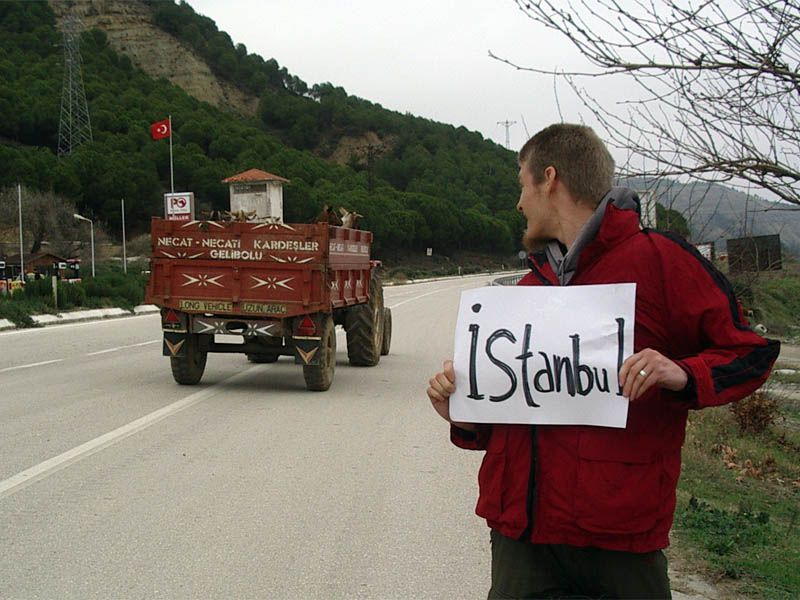 While waiting beside the road,
town-to-town minibus drivers (which can be recognized by banners
proclaiming town names all over) and intercity buses will flash their
headlights or honk at you — to ask whether you'd like a ride (for a fee,
of course). Don't be afraid to stop them and say "Param yok
(which literally translates "I don't have money"), it's ok?". A couple
of hitchhikers did this when a bus stopped beside them to drop a
passenger, and then they kept doing this everytime, and about 30% of the
buses gave them a ride. Sirrdc also had great success hitchhiking on
intercity buses. Inside the cities, it's even easier; ask them politely
and they will take you a bit further ahead.
While waiting beside the road,
town-to-town minibus drivers (which can be recognized by banners
proclaiming town names all over) and intercity buses will flash their
headlights or honk at you — to ask whether you'd like a ride (for a fee,
of course). Don't be afraid to stop them and say "Param yok
(which literally translates "I don't have money"), it's ok?". A couple
of hitchhikers did this when a bus stopped beside them to drop a
passenger, and then they kept doing this everytime, and about 30% of the
buses gave them a ride. Sirrdc also had great success hitchhiking on
intercity buses. Inside the cities, it's even easier; ask them politely
and they will take you a bit further ahead.
Regions and Their Hitchability
- While in general it is fairly easy to attract a lift in Turkey, locals' view of hitchhikers vary across the country. In general, people in northern and inland regions of the country are friendlier towards hitchhikers. If put systematically, the level of ease to get a lift in various regions of the country is as follows in general, from easiest to hardest:
-
Southeastern Anatolia (usually the first car passing by offering a lift) > North coast (Black Sea Region) (one in every ten cars offering a lift) > Northwest/European Turkey (Thrace) (most waits not exceeding 5 mins) > Inland steppes (Central Anatolia, longest waits likely ~20 mins) > Northwest/Asian Marmara (South Marmara) > Aegean Region > Southwest coast (Lycia) > Rest of Mediterranean coast (expect waits up to two hours!), with eastern mountains (Eastern Anatolia) perhaps falling somewhere between Central Anatolia and South Marmara.
As can be clearly seen, less touristy somewhere is, easier to attract a lift there. That being said, however, there are of course helpful drivers on the highways of the south, too, although they seem to be exceptions rather than the rule.
- Antalya Province
- Çanakkale Province
- Cappadocia
- Muğla Province
- Southeastern Anatolia
Personal Experiences
May 2026
Turkey remains an extremely hitchhiking-friendly country for men, although, as is the case everywhere else, it is probably harder than it was 10 years ago. My longest waiting time was probably around 30 minutes, but many times I got a lift within a few minutes, or the first car I asked took me. I hitchhiked from the Georgian border to the Bulgarian border, stopping in Istanbul for a few days. It's not difficult to leave Istanbul, but it takes some time. You will probably need 4–5 short rides before finding some long-range ones. Although I didn't ask for it, I was offered accommodation twice during my few days on the road. Expect to be offered food and tea, inviting is part of their culture.
- Some recent thoughts and reflections about hitchhiking Turkey as a solo female at an aimless hitchhiker
February 2020
i hitchiked from Batumi border to Istanbul and 1200 km i did in 2.5 days (with sleeping in nights). Just stick to main highways and make text with big city 300 km away. On the paid highway i got ride in 5 minutes.. Also i seen alot of local youth hitchiking around
Hitchhiking out was really a hassle. It is easy to get a lift, but people do not understand that you need to follow the highway. They think you want to take a bus, and thus it gets complicated. In other parts of Turkey I had a recorded message by Turkish friends explaining what I was actually doing and what I needed from drivers. I didn't have it when leaving IST, and it was a mistake. Get a Turkish friend to record a message on your phone which you can play to the drivers who give you a lift. It should say something like: "I'm from COUNTRY, and right now I'm hitchhiking from PLACE to PLACE. Can you help me with ride please??"
2 times I hitchhiked from Istanbul to Asia and once back to Europe. I didn´t have any map of the city and I haven´t use any bus because hitchhiking from Istanbul is very easy. There are a lot of cars and turkish drivers will not let you wait. If you are goning to Asia and you´re still in european part so the best spot is probably on the start of Bosphorus bridge. To get out from Istanbul you always need to take more cars(about 3-5 cars). In this city you can use hitchhiking as a public transport, just raise you´re tumb and there is a big chance that you´ll come forexample to city center faster than by metro.
My friend and I (both female) hitched through Turkey from the Greek border to Cappadocia and it was quite stressful. We never waited long for a ride and most of the people we rode with insisted on buying us chai (just tea) and meals. However, I would say that with about 90 percent of our rides we got our butts, boobs, or crotches grabbed, or at least asked for sex. We had to make our driver leave us on the side of the road a lot in the middle of nowhere so that was kinda dangerous. And it took us about 10 hours to make it 25 miles from just before Istanbul to just past the city. People kept trying to take us into the city or someplace we didn't want to go. We were so glad when we finally made it out of Turkey at the Bulgarian border. It was an adventure though and I would recommend traveling through Turkey, just be aware that all of the other women standing on the side of the road are prostitutes. It was all just a giant misunderstanding and a lack of respect, to some extent, on our part, for the local culture. When hitching here maybe you can learn how to say "we are just traveling and we aren't looking for sex may we still have a ride" before getting in a vehicle. For the record, our drivers always let us out when we told them too and nothing dramatic happened beyond the daily grabbings.
I have just finished my second two-week trip alone through Turkey just hitchhiking, and my experience has not been at all like the above. I was quite shocked when I read it! I was traveling for long distances almost every day and I must have hitched with over fifty drivers – and only one of those drivers touched me apart from to shake my hand, and I was asked for sex twice, relatively politely, and both accepted no as an answer. I was treated with courtesy, respect, generosity, kindness, invites home to meet their families, and yes, tea and oranges. Also people kept buying me bus tickets rather than 'letting' me hitchhike on, which was horribly embarrassing! I think people who picked me up probably did consider that I might be a prostitute, but easily accepted that I wasn't judging on behavior. I suspect that experiences like the above depend on inappropriate behaviour or dress, or horribly bad luck. I don't speak Turkish, so sometimes it was a bit boring, which was probably the worst thing about hitchhiking. I would recommend not understanding the questions about whether you're alone or married- not speaking Turkish can actually help! And also be aware that Turkish women hitchhiking sit in the back seat of cars, same as in taxis.
I hitch-hiked with a male friend for 3.5 weeks in Turkey. We started from Istanbul, to Safranbolu, Yozgat, Malatya, Nemrut Daig, Cappadocia, Kalkan and back to Istanbul. I was asked to have sex with the bus conductor after one of the bus conductor invited us to take us and he found out that my friend and I are just friends traveling together. Well, that's just a minor issue. We got picked up by an old man when we were hitch-hiking from Cappadocia to Nemrut Dagi. The old man had only 2 fingers on his right hand, and he was driving at the speed of 150 km/h, drinking tea and talking over the phone while my friend and I were sitting at the back! He drove us to a town nearby to do some sight-seeing and invited us to stay with his daughter's family! We ended up staying there for 3 nights. My fiend joined her husband to work while i stayed at home with the wife doing some traditional stuff! The hardest route to get a ride was probably from Antalya to Kalkan. It was late and no one wanted to pick us up! In the end, two guys who worked in a restaurant picked us up and sent us to our friend's doorstep!
Summer 2012
we spent hitch-hiking around Turkey. Me (male) and my girlfriend have experienced a lot of hospitality from Turkish drivers and hosts. Many times they stopped on the road and they offered us lunch/dinner. Turkish men never hardly spoke to my girlfriend (they fully respect fact that woman is in relationship with other man). Once whilst hitch-hiking the bus pull-over. We explained that we don't have money for payment - it was any problem. Another fantastic thing about hhiking in Turkey is you rarely have to wait more than 10 minutes, drivers pull-over their car on the highway and sometimes you just have to walk alongside the road and they will stop the car. Great experience, but I really recommend to go there as a mixed pair!
A female friend and I hitchhiked from the Georgian border to Istanbul. Turkey is one of the easiest countries in the world to hitch rides. Wait times, even in bad locations, rarely exceed ten minutes. The hitchhiking is so good that it pays to be picky about who you ride with: in Turkey you will have the privilege to turn down truck drivers in favor of faster vehicles. Although slower, most trucks will stop to offer rides. While hitchhiking at night, we were allowed to nap in the sleeping berths that long-haul trucks have. Be polite, respectful, and learn a few words of Turkish and you will have great experiences (free food, impromptu tour guides, beds to sleep in, etc.). However, you should be cautious if you are a solo female traveler, as even mild friendliness towards unrelated males will be misconstrued as flirtation.
Hitchhiked along the Black Sea Coast from Georgia to Bulgaria. Turkey was easy enough for me even for such a huge country. There was no issue sleeping on beaches or sleeping in fields on the outskirts of towns (I always asked for permission off of security guards etc. which most private property had). The cities are really big though due to the big populations, walking out of them can take ages, especially Istanbul which is very difficult to hitchhike out of. Turks are super proud too for the most part so don't offend them and also don't urinate on the side of the road unless you are certain no-one will see (its definitely not acceptable)
Links
- Turkish hitchhikers FB group
- Hitchhiking Guide to Turkey for girls
- User Craig hitched along the Silk Road and wrote about his experiences here: Thumbing Asia From West to East Turkey was big fun to hitch-hike. People are really hospitable everywhere - from Istanbul to Capaddocia, from Antep to Kurdistan!
Istanbul
Edit on wikiRoadside hitching spots go stale. For current places to hitch in and out of this city, use maps.hitchwiki.org and the live Hitchwiki page linked at the end of this chapter. This book keeps general orientation, not a pin gazetteer.
Istanbul is the biggest city of Turkey, partly in
Europe and partly in Asia.
Test option - Ispartakule Park Area North
Ispartakule Park Area North is a fuel station on E80 highway (See Google maps for getting there and update how its. There is bus 76E going to Sehit Serife Bacı Lisesi bus stop not far place)
Out of city option
You can get out of city bus 303 from Yenibosna Metro to last bus stop Silivri Halk Otobüsü Bekleme Garajı (or bus 303B from Otogar Metro till bus stop Mimarsinan Mah). Ticket cost 11 TL and you can pay only with Istanbulcard.
A) 4 km walk away is E8O highway emergency line, 5 km walk away is Karbey Dinlenme Tesisi rest stop.
B) 5 km walk away is D-7 higway toll place Kınalı Gişeleri
If you want to be at E8O highway emergency line faster get out from bus at Kamiloba stop and walk 1.6 at Çakılyolu Sk street.
A good middle option seems to be taking bus 303 to station Selimpaşa from where it's about a 30 minute walk to the E80 or about a 40 minute walk to the first gas station on the E80 and catching a ride is easy. The first few cars will go to Silivri but you are bound to catch a ride going towards Edirne relatively quickly.
Getting to suburbans of Istanbul
Another way to get to city's western outskirts is to take the metro from Aksaray close to Sultanahmet in the old city centre, and ride it till Yenibosna station (2.0 TL pp, roughly €0.80). Then, take the public bus #448 (Yenibosna Metro-Mimarsinan; an extra 2.00 TL pp), which departs from the stops right next to metro station. You will ride this bus for a long time, roughly an hour, until where it quits the motorway west and turns to right in a cloverleaf interchange near the village of Mimarsinan, where the bus eventually heads. Get off at the stop right at the very location bus turns right, this is where as much west as you can get on Istanbul's public transportation. Then walk a bit further from the junction, and start thumbing.
Trains out of city
For those who rather not try hitchhiking through the overgrown western suburbs of the city, a slightly more expensive but a lot easier way to follow this westbound route to Greece may be to take the morning train to Muratlı from Sirkeci station in central Istanbul, and then hitch your way forward to Greece via Tekirdağ from there. See Muratlı article for full details.
Once you have passed the border, try to stay in the car which took you through, as the first 20-30 km on the Greek and Bulgarian side are one of the worst places to hitchhike in Europe. Local people there are afraid of stories about immigrants from Iran and Afghanistan etc. so it's especially hard to get a ride.
Check the article on Kapikule-Kapitan Andreevo border crossing if you're going towards Bulgaria as it can be difficult.
From Şekerpınar close to Gebze
Get on the 111, 112 or 200 and stay on the bus almost all the way to the last stop (get off approximately two or three stops before).
You are now located a little bit south of the O4 (E80) heading East towards Ankara. You will need to walk a little bit northwards in order to reach a ramp. There is a bus stop on the on-ramp. You can hitch out from there unto the O4 (E80) going East.
Most people who will take you might just drive for another 10km or so. There are lots of petrol station on the way in this giant suburban maze but chances are only local people stop there. You will have to go for about nearly 20 or 30 km until you will actually be out of the Istanbul metropolis.
If you want to avoid 30 km of urban hitch hiking, from the last stop of 112 take bus 134BK (other 134 buses may work as well) which leaves across the road from where 112 ends. Ride until the end and transfer onto 133Ş and ride it until the last stop. You are then in Şekerpınar and can walk the 2km to the main motorway Anadolu Otoyolu E8O
There is no rest stop but the lane of the enterance becomes a shoulder lane in like 50 meters.Move a bit away from the lane so the cars from that enterance can see you and thumb all the highway cars and you'll have a ride in no time. As the police in Turkey are completely ambivalent towards thumbing on the highway catching a ride is pretty easy as long as you don't mind super-fast cars flying by you.
From Bostancı Köprüsü (Bostancı Bridge)
From Taksim Square take bus 129T (Taksim - Üst Bostancı line), which, like the other transcontinental bus lines, requires two tickets (3.50 TL). Get off at the leaf-clover interchange called in Turkish Bostancı Köprüsü (literally Bostancı Bridge), close to its last stop. You can recognize the interchange by big signs saying Bostancı and İçerenköy (besides the usual İzmit and Ankara signs) there. Then, after getting off the bus, walk past the interchange until you see a safe shoulder down the road a couple hundred metres away. Start hitching there ready with a sign saying at least ‘Gebze'/'Izmit’, it’ll make you more visible
There is a petrol station exactly 9km before Izmit where you can be dropped off. It is recognizable for its BP petrol station and Burger King restaurant. Trucks are regularly parked here and bound for all points in Turkey, while sometimes one can even find a lift all the way to neighbouring countries.
For Mediterranean cities such as Antalya, you should also take this eastwards route till Adapazari, then head south via motorway D650 from there.
The free walking option
While most people would find it more comfortable to take a bus to the outskirts and then start hitchiking there is another, slightly more challenging, option. Generally it is actually faster to just find a good piece of highway somewhere close to where you stay (even if it's in the centre of Istanbul), get ON the highway and put your thumb up. You are unlikely to wait more than 3-5 minute before a car pulls over (many people don't really mind stopping on the highway) and the police is very unlikely to give you any trouble
From Taksim: Walk down Cumhüriyet Caddesi for about 40-50 minutes. It's a big avenue which is easy to find (alternatively just follow the signs on Taxim for Şisli). After 40-50 minutes you'll see Cevahir shopping center on your right side and that's about 200 meters from where you'll start hitching. If you manage to get lost (hard as it's a big avenue without any real tricky intersection or anything) you should just ask your way to Cevahir shopping center. After the 40-50 minute walk (about the time when you pass Cevahir shopping center on your right side) you'll see the highway. This is th spot where the Mercidiköy bridge starts and about 70-80 % of the traffic is bound for the Asian side. When you get to the highway (which is actually about 10 meters over you as you are under the bridge) you'll see the Mercidiköy bustation to your left. Turn left,walk 20 meters until you see a small footpath leading up to the highway, climb up, thumb up, and smile at your audience (often about 50-60 people) who are waiting for the Metrobus to come. They might even give you an applause if you just put up a show.
Important: BE PATIENT AND DON'T JUST ACCEPT ANY RIDE. Wait for someone who's going at least past the main intersection in Atesehir (say that you want to go direction Gebze/Izmit on the autoyol). Even though almost no traffic is going far from here it is important that your first ride is gonna take you to the O4 highway after the two highways merges and that may mean declining 1, 2 or 4 rides. Ask to get dropped of at the highway and not at some on-ramp or something even more silly (this is Turkey remember). You may have to repeat it one or two more times before you get out of Istanbul just because of the city's enourmous size.
Alternatively you could wait for a ride to take you across the bridge and get dropped off at the paytolls on the Asian side and find a ride onto the E8O from there.
Wild camping
Hacı Osman Korusu park wild camping - ride metro line 2 to Darussafaka station and next to it on the circle corner of streets Buyukder and Ulu streets you can climb over the fance to Hacı Osman Korusu park https://ibb.co/RHmd9jb Get only a bit inside but be carefull there ar some sharp plants
You will find many beaches on Prince islands, but many of them are privatised. You should walk away from the towns to find some wild beach.
Büyükada island wild camping - you can get by paid ferry there (Kadıköy, Bostancı or Kartal). Be aware that the forests are sometimes closed due to wild fires and the police might be even more strict if you're caught camping (not to mention the danger to yourself if there ever was a fire). You can camp on the top of the island between Aya Yorgi Manastırı and the communication tower. You will have some shade from the trees and a nice wind (at least during summer). You can take one of the small buses to get closer from the ferry. BA-2 is the one that will get you the closest but is stops at 9 pm, otherwise you can take the BA-5 that runs until 11-12 pm. Be aware that you should not drink water tape on the islands. OGM (nature protection) may bother if you stay late in the morning, but you should not get fined, turkish or foreigner.
Georgia
Edit on wikiThis article is about country in the Caucasus region. Georgia may also refer to Georgia, a state in the USA among other places.
Georgia is a country in Western Asia, that borders Turkey, Armenia, Azerbaijan and Russia. Two part of Georgia in the North, Abkhazia and South Ossetia are de facto independent countries though few nations recognize their independence.
Hitchhiking
{width=“250”}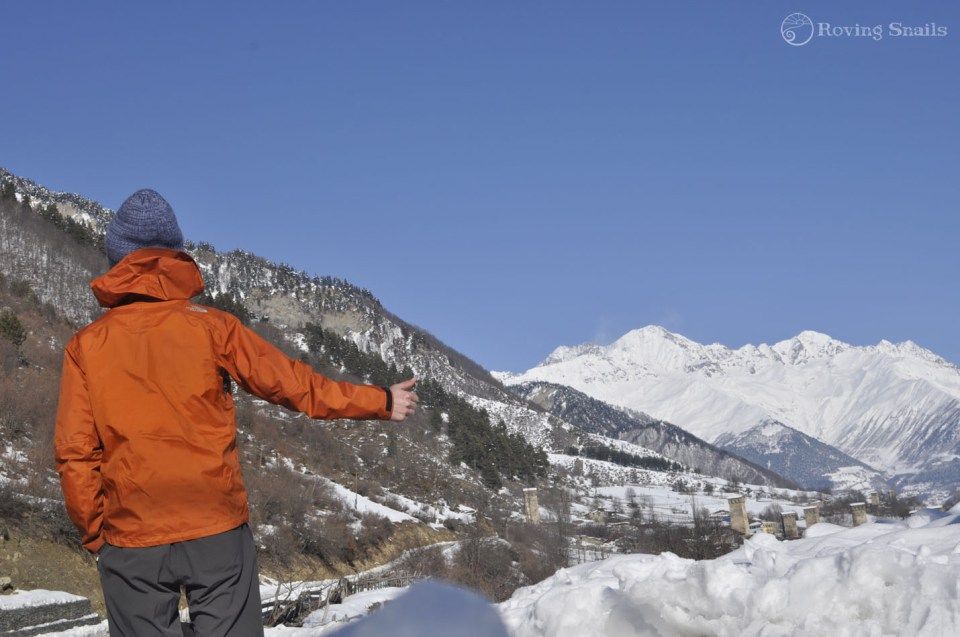
Hitching in Georgia is easy most of the time! Short waits and very friendly people. Road conditions in some places are quite bad so it can take some time but in most of cases there are renovated roads. Spots are very easy to find, just head in the right direction and you will find a suitable place to stand. Sometimes if luck isn't on your side though and you may have to wait for a while and the only cars who will stop for you are marshrutkas (microbuses) which expect payment. But remain patient! Eventually someone will stop for you.
Unlike most European countries, usually no one cares if you hitchhike directly on highways, so it's not a problem to find a spot.
Older generations speak Russian as a foreign language, but people in their twenties and younger are able to speak more English, at least in the bigger cities. In villages even youngsters might only speak Georgian but in the last couple of years many young people from English-speaking countries have been sent to the villages to teach English. A few phrases of Russian will be handy or with a little extra effort people will be amazed if you know some Georgian.
The Georgian hospitality is incredible and the most remarkable experience in this country but sometimes also a small risk as it can become a little bit pushing from time to time. Refusing alcohol can be offending for some people (if there is another person next to the driver in the car the chances are very high that the famous national drink chacha is offered to you) and if you are vegetarian, there could be a similar problem. If you're traveling as a couple, try not to be too affectionate in public places, as some people are extremely conservative and can be offended by this, and drunk guys may try to fight you (this happened to one hitchhiker after kissing his girlfriend on a marshrutka).
Legality of Hitchhiking
Georgian law does not mention hitchhiking; what it regulates is where a pedestrian may be. Article 38.1(a) of the Law on Road Traffic bans pedestrians from a motorway and from its entry and exit slip roads — stricter than most of the region, because the ramp is out too, not only the carriageway — and Article 38.5 applies the same rules to roads signed 5.3. Article 38.1(c.a) lets a driver stop or stand only in the specially marked parking places, so on those roads a lift can lawfully begin only at a signed parking area or filling station. On every other road Article 24.2 puts you on the ქვეითთა ბილიკი, the pavement or the გზისპირი wherever one is usable. Outside built-up areas, on a two-way road with neither a central reservation nor a pavement, Article 24.5 requires you to take the verge on the left and walk against the direction of travel, unless in the circumstances the right-hand side is genuinely safer.
Cities
- Tbilisi, the capital, also known as Tiflis
- Batumi
- Borjomi
- Bakuriani
- Gori
- Kobuleti
- Kutaisi
- Mestia
- Poti
- Telavi
- Vale
- Zugdidi
Border Crossings
To Turkey
There are three open border crossings between turkey and Georgia. The faster and easier for hitchhike is the one close to Batumi. It can be very convenient for you even if you are going or coming from south east of Turkey.
Using police cars
In Georgia it is possible to "hitchhike" with police cars. Due to the country's desire to become more European, a major reform of the police was undertaken, affecting also the way the police work and deal with people. You should not be afraid of asking policeman for information or help. Most probably they will help you and even more. You may not even need to ask, as it's not uncommon for police cars in Georgia to pick up hitchhikers, and then pull over other cars or trucks on the road to find a ride going straight to your destination.
The police also provide a special type of service - they can deliver you to the address you are asking - for people who are in a position to be harmed or injured, for example when you are a foreigner and traveling alone in Georgia. They can bring you to the address you name or to a hotel. Keep in mind that you will have to fill out and sign a form. It is recommended to use this service in the evenings and nights.
Personal Experience
July 2018
hitchhiked here for 10 days in July 2018. Entered from Turkey and camped at Batumi as was getting late and started drizzling. only problem was there were so many bats flying around under bridge, i had to leave and go and luy on beach to avoid getting bitten. i then hitched up to Mestia to see the beautiful brick towers. from there onwards to Kutaisi where upon leaving the town to hitch to Tibilisi, i was set on by 4 dogs and the little one bit the back of my leg. i turned around and went to dodgy old hospital where i got rabies shot for 20usd, and got my next a week later in tibilisi for 5usd. From there i hitched to Armenia border. average waiting time 30 minutes. most vehicles were cars
5 July 2024
Georgia is one the easiest place to hitch a ride just got to be ready for some crazy driving and no working seatbelt, do like the local and pray each time you pass a church who knows maybe that why I made it, Hitch almost the whole country with friend Cocoline, on the way to Mestia not on the highway, many ride never wait more than 10 min, got a police escort of 4 different car from department to department, last officer stopped a car for us, that driver don't know where he wanted to go but sure wanted to get there fast, was doing 100-120km/h in 30 km/h zone in the mountains breaking last second before turns, ofcours no seat belt was keeping my teeth clench just in case, but eh made alive, the Cigi was real good when we got off.
Tbilisi
Edit on wikiRoadside hitching spots go stale. For current places to hitch in and out of this city, use maps.hitchwiki.org and the live Hitchwiki page linked at the end of this chapter. This book keeps general orientation, not a pin gazetteer.
This book does not reprint named ramps, dumpsters, hostels, or other pins. They go out of date. Follow the note above to the live map or wiki.
Abkhazia
Edit on wikiAbkhazia is a de facto independent state on the eastern coast of the Black Sea and the south-western flank of the Caucasus. The country is recognised only by a few states, including Russia. Western governments declared it as occupied by Russia, but you barely will see any of the Russian peacekeepers at all.
Abkhazia was part of the Georgian SSR during Soviet times and most countries and the United Nations still consider it as a part of Georgia.
Hitchhiking
Hitchhiking in Abkhazia is definitely easy. It is recommended to read the E97 article for specific information on hitchhiking in Abkhazia. Be aware that off the main road, especially in the southern districts, traffic can get very sparse.
Abkhaz drivers love to drive very fast, be aware of that and get out whenever you're afraid of crashing into roaming cows or horses along the way. Abkhaz police is very friendly in general, don't be afraid to hitchhike next to their police posts. Nevertheless, hitchhiking is possible everywhere, even inside the capital, and you won't wait long at all (most times, platschi had no chance to even put his backpack off his shoulders).
Redjo27: I went to Abkhazia in summer 2015 (which is tourist season) and I can say, that I had my worst hitchhiking experiences with locals there. They were shouting bad things, showing the middle finger and of course this had happened in other parts of the world as well, but not as often as in Abkhazia. Nearly everyone who stopped wanted money and one guy even a blow-job. I don't want to advice against going to Abkhazia, but I can just disagree about hitchhiking being easy in Abkhazia.
Cities
- Gagra (Abkhaz and Russian: Гагра; Georgian: გაგრა)
- New Athos (Abkhaz: Афон Ҿыц, Afon Ch'yts; Georgian: ახალი ათონი, Akhali Atoni; Russian: Новый Афон, Novy Afon)
- Pitsunda (Abkhaz: Пиҵунда, Georgian: ბიჭვინთა, Bichvinta; Russian: Пицунда)
- Sukhum (Abkhaz: Аҟəа Aqwa, Georgian: სოხუმი, Russian: Сухуми)
- Gali
Entry Permit
Holders of CIS passports can enter Abkhazia without any obligations, whereas each other traveller has to get an entry permit and a visa on the spot in Sukhum. Platschi got his entry permit within two working days in June 2011. Afterwards, you have to get your visa at the Ministry of Foreign Affairs in Sukhum. Note, that guards won't let you into the building if you are wearing shorts. Price in 2011 was 20 USD (1 month tourist visa), to be payed beforehand in Rouble at a local bank or from 2012 you can pay in the ministry building. They don't stick the visa into your passport, but if you do so yourself, you won't be able to visit Georgia another time.
Sleeping
Abkhazians are in general extremely hospitable, so you won't have a hard time finding places to sleep there. Anyway, you can pitch your tent everywhere you want, just make sure not to be visible from the roads if you don't want to have plenty of friendly visitors caring about your safety. Next to that, in the Northern districts many people rent their rooms to tourists for about 200-300 Rouble.
Transit
towards Georgia
Traveling from Russia towards Georgia is currently (April 2012) not possible. Georgians will not let you in, if they let you in it would mean that have entered Georgia illegaly, according to Georgian law (Georgians did not check your passport on the border with Russia).
towards Russia
According to the Ministry of Foreign Affairs of Abkhazia "transit from Georgia through Abkhazia to Russia is forbidden. You can only enter and back" (December 2010). Keep in mind though that you won't get an exit stamp by the Georgians in case of leaving to Russia, thus when entering Georgia another time, you'll most likely be not able to enter the country due to a missing exit stamp from the last time.
Nevertheless, as of April 2012 it was still possible to enter to Russia after coming from Georgia. User Rozwal asked at the Ministry of Foreign Affairs whether he could go to Russia and was informed that Abkhazia is not a transit country and that it was not allowed. He tried anyway and without any problem and any questions asked he entered to Adler in Russia.
- ''Rozwal: I really could not understand the whole deal with crossing to Russia. Literally every person in Abkhazia told me that it was not possible but on LonelyPlanet I found a lot of relations from people that did it. I went and I did it. However, maybe if they asked me if I came from Georgia and I confirmed they would not let me out? In my passport it is not possible to see whether I came from Russia or Georgia since neither of them give you stamps (Georgians do not give you stamps when you go to Abkhazia, Abkhazians do not give you stamps at all, and Russians do not give stamps at border with Abkhazia). So maybe they just assumed that I came from Russia and that's it? It is hard to say though. Anyway, after you cross to Russia after coming from Georgia, next time you come to Georgia, you are going to go to court and possibly to jail. As of July 2013, they are still working on changing the law to make it just a fine. But this is still not done. Good luck!
Money
There are only few ATMs in Abkhazia (mostly in the capital), so make sure to bring some cash with you. The official currency is the Russian Rouble, but you can exchange US Dollars and Euros in most towns.
Legality of Hitchhiking
The law here has not been checked. Nobody has yet read the road traffic rules in force in Abkhazia against the official text, so this section cannot tell you what they say, and nothing elsewhere on this page should be read as a statement of the law. What holds almost everywhere is that hitchhiking is not an offence in itself and that what the traffic code regulates is where a pedestrian may stand — off the carriageway, and off motorway-class roads and their slip roads altogether — but whether that is true here is simply unknown. Ask locally before standing on a major road, and treat the rest of this article as what hitchhikers report rather than as a rule you can rely on. If you can read the official text, please replace this paragraph with the provision it turns on and a link to it.
Entering Abkhazia is illegal according to Georgian law. That's why travelling from Russia via Abkhazia to Georgia is curently not possible or connected with quite some difficulties for holders of non CIS-passports (July 2011).
Personal Experiences
Links
- Visa and travel information
Armenia
Edit on wikiArmenia is a country in Western Asia, as the whole of the Caucasus sometimes also called a part of Europe or the unofficial cultural border between the Western world and the Orient.
Hitchhiking
Hitchhiking here is very easy. Hitchhiking here is done by waving your hand to the ground to an oncoming car, but sticking out your thumb works just fine as well. Some drivers might want to charge some money and sometimes you might get picked up by unmarked taxis without knowing - however, if before you get into the car you make clear you are not going to pay you can avoid misunderstandings at the end of the ride.
Hitchhiking in Armenia is also for locals one of the best ways to get around. Public transport is not very good and only goes to bigger cities, and the mini-vans are usually overcrowded. That is why people hitchhike a lot. The fun thing about this is that you can find yourself hitchhiking with, for example, an elderly couple of around 80 years old. The other side of this is that people usually give a small amount of money to thank the driver. When you're not planning on paying, tell the driver beforehand. Prices are usually around 500 dram (<1 euro) per 50 km.
The main point of consideration is the poor road conditions, altitude changing and cars that brake down quite often. This means despite the fact that the country is small (so no extreme huge distances) and the people will pick you up fast, you should not calculate with traveling very fast by hitching.
Legality of Hitchhiking
Armenian law does not mention hitchhiking; what it regulates is where a pedestrian may walk and where a driver may stop. Point 116(1) of the Traffic Rules, approved by Government Decision No. 955-Ն of 28 June 2007, bans pedestrians from a motorway outright, and point 117 extends the whole section to roads signed 5.3 «Ճանապարհ ավտոմոբիլների համար». Point 116(4) permits stopping only on the special parking areas signed 6.4 «Կայանման տեղ» or 7.11 «Հանգստի վայր», which makes those the one lawful place on such a road for a lift to begin. Everywhere else Article 25 of the Law on Road Traffic Safety puts you on the pavement or footpath, failing that on the կողնակ (the verge), and failing both on the edge of the carriageway in single file. Article 25(3) then requires you to walk facing the oncoming traffic — which is where a hitchhiker wants to stand in any case.
Sleeping
In most of Armenia one can put up a tent and sleep comfortably. But in October it starts to be cold. Do be cautious however about pitching a tent near the Azeri border especially in the North East, where a section of the road is technically the border! It is sometimes possible to stay with Armenians, but they are often unwilling hosts. The nation's Kurdish population, on the other hand, is extremely hospitable.
Accommodation is significantly more expensive than in neighboring countries (also applies to groceries).
Monasteries are more often than not mere cultural monuments, and not permanently inhabited by monks. At night, guards makes sure everyone leaves.
Border Crossings
There are three border crossings with Georgia, through the towns of Ninotsminda (Georgia), Dmanisi (Georgia) and Bagratashen (Armenia). There is frequent traffic between these countries, especially between Yerevan and Tbilisi. Both Bagratashen and Ninotsminda won't give you much trouble – border guards are OK and it will most probably take you less than 10 minutes to cross it by foot.
It is not possible to cross the border to Turkey or Azerbaijan. There are unsecured fields of land mines near the border and the conflict has recently escalated with the annexation of Nagorno-Karabakh by Azerbaijan.
Armenia has one border crossing with Iran, Meghri. You have to be a bit careful on this border, if you are hitchhiking from Iran, as there is 5 kilometers of forbidden zone, which means that it's only possible to move there by transport. Border guards might force you to take a taxi if you try to walk across.
Getting in
Citizens of EU states and USA do not need a visa to enter Armenia and can stay in the country for up to 180 days per year.
Armenian visa is cheap and can be easily obtained on the border. You do not have to have one in advance but you can get it at the border. The border guards will give you a form to fill out. The visa itself will cost 3000 AMD (EUR 6) for 21 days. 5 minutes after you gave the form and the money you will get a nice visa.
One can be subject to more attention and interrogation with an Azerbaijani visa in the passport. Turkish stamps are in general no problem.
Language
As in majority of Caucasus, but even more, vehicular language is Russian. You really hardly will find people speak English, but if you speak Russian you won't have any problem to make yourself understood by people, of any age.
Armenian language is quite hard, both in pronunciation and vocabulary. As Fedecicco didn't speak Russian, he had to learn it a bit, as for Georgian. Here some useful words:
- Barev - Hello (informal)
- Barev dzez - Hello (formal)
- Our ek gnum? (oor aik gainoom?) - Where do you go?
- Pokh - money
- Anvchar? (anvaichar?) - For free?
- Anooned incheh? (anoonait eenchaih?) - What's your name? (informal)
- Inch e dzer anuny? (eenchaih dzer anoonaih?) - What's your name? (formal; or when asking someone older than you)
- Vortegh e ...? (vortaigh ai..?) - Where is..?
- ...ka/chka? - Is/isn't there .…?
- joor - water
- hats - bread
- meerk - fruit
- hesht - easy
- dehjvar - difficult
- yerp? - when?
- inchpes? - How?
- inchoo? - Why?
- araj - before
- heema - now
- heto - later
- kareek - need
- Aysor - today
- yerek - yesterday
- vagheh - tomorrow
- or - day
- geeshair - night
Placing "che" before the verb works as negation. For example, gheedaim - I know -> che gheedaim - I don't know.
- oozoom em ... - I want ...
- asel - to tell
- knel - to sleep
- khmel - to drink
- ootel - to eat
- oknel - to help
- tsoort - cold
- shok - hot
- haskanal - to understand
- haskanoomem - I understand
- chem haskanoom - I don't understand
- dandagh (dundugh) - slow
- arag - fast
Personal Experiences
People are friendly and we didn't have to pay for any rides so far, but the country is extremely expensive for the region. Not so comfortable with the amount of Russian military presence. As much as Armenia is getting praised here, it is on par with Georgia but certainly not better than Turkey. Russian language is essential outside of Yerevan.
"Turkey gets a lot of attention as being a hitchhiker's paradise, but Armenia is even better. Although Turkey is delightful, you will get even faster rides, be forced to eat even greater amounts of free food, and meet even more people than in Turkey. I have hitchhiked in dozens of countries, and Armenia was the best."
September 2016
" I hitchhiked around whole country and I have to say that Armenia is hitchhiking paradise. No one asked me for money. I also hitchhiked few taxis and they took me for free. I´ve never wait long time, usually few minutes. Country is very beautiful and people are very hospitable. They invited me few times for a dinner or for a night to their house. But for sure it´s much better if you speak Russian(or any other slavonic language, it´s similar). In this moment I hitchhiked in 26 countries and Armenia was the best. "
May 2017
"Hitchiking in Armenia is easy, even if my first experience wasn't that good. I left from Tbilisi to Yerevan in an armenian car and, being on "georgian mood" I forgot to ask about paying so the situation was a bit tricky and paid 1000 Drams (2$). But after that I was hitchiking without any problem, even taxi cars for free (35km) with an old man in Lada. People were happy to meet and talk. Russian helps a lot, or at least google translate. Get a SIM card, is 1000 Drams for 1GB. Big Advice: DON'T hitchhike from Yerevan to Batumi via Gyumri. It takes much time, the roads aren't good (on both sides) or some roads are closed. It took 17h without big waiting times. Going via Tbilisi is easier and much faster (5h to Tbilisi + 5h to Batumi, and lets say one hour in Tbilisi to cross the city)."
May 2017
"I never had to wait long and only once the driver said he would take me for money. I had some problems with men in southern Armenia, in the more isolated areas (I'm a solo, female hitch hiker). I travelled from Borjomi to Yerevan, via Gyumri, without any problems, just that the road isn't very smooth. Returning to Georgia from Armenia, I had difficulties getting a ride to Tbilisi from the border town on the Georgian side."
Azerbaijan
Edit on wikiAzerbaijan is an Asian country in the Caucasia. It has borders with Russia, Georgia,Armenia, Iran and via the enclave Nakhchivan to Turkey. English is not very widespread, but many people have at least a basic command of Russian, and almost anybody will be able to understand you if you speak Turkish.
Hitchhiking
The concept of hitchhiking (more likely: Avtostop or Otostop in Russian resp. Turkish) is -- depending on the definition -- either very well-known or not so well-known at all. People stop quite easily as locals also very commonly wait by the side of the road for a ride. On the other side, drivers often expect money. (Zenit had a Porsche driver stop for him who asked for money). This seems to become less likely the smaller the road gets. Local hitchhikers have reported to just accept rides and not talk about these topics, preferring to deal with potential expectations of the drivers at the end (but insisting that they never pay). If you'd like to avoid that (at the danger of losing some lifts), the following vocabulary can come in handy:
- Russian: bezplatno mozhna? (Is it okay to go for free?) / dingi nyet (I don't have money)
- Turkish: parasiz (gitmek) mumkun? (Is it okay to go for free?) / param jok (I don't have money)
It can help if people can readily identify you as a foreigner, especially a western foreigner. Avoid hitchhiking in Baku and Ganja − and in smaller cities don't hitchhike near the taxi stand. Hitchhiking is really great in remote mountain areas − but only in those with solid roads.
UPDATE: Actually hitchhiking its perfect all over Azerbaijan. Even in Baku or Ganja. You just have to be clear about not paying and that's all. Probably you will spend your travel explaining how do you do to travel without money (Azeri people don't know so much about hitchhiking) but it will be funny most of the times.(Simimoch Two spanish guys, with no Russian or Azeri managed to travel across Azerbaijan without paying any cent, hitchhiking even from the main cities. "Manat niet" and the direction we were going was the only thing we were saying to the drivers at the beginning at it was always fine. They don't use to know the Russian or Turkish word of Avtostop or Otostop with us. Drivers where mostly friendly, offering always tea and sometimes even food or accommodation. We never waited more than 10 minutes.
Hitchhiking in Azerbaijan is not more or less dangerous than elsewhere on the world. But be aware of regions in the southwest, the border to Armenia and the region Nagorno-Karabakh where sometimes local conflicts escalate. In the border region to Armenia there is the additional danger of landmines.
Legality of Hitchhiking
Azerbaijani law does not mention hitchhiking anywhere; what it regulates is where a pedestrian may be. Article 43.II.1 of the Law Yol hərəkəti haqqında (No. 517-IQ of 3 July 1998) bans pedestrians from an avtomagistral outright, and Article 43.IV extends the same rules to any road signed 5.3, so the carriageway, the yol çiyini and the slip road past the sign are all closed to you. Article 43.II.3 lets a driver stop only on the special parking areas marked by signs 5.15 or 6.11, which makes those laybys and service areas the one lawful place on a motorway for a lift to begin. On every other road Article 40.I.1 puts you on the pavement, the verge, or the outer edge of the carriageway where there is neither, and Article 40.I.3 requires you outside built-up areas to walk facing the oncoming traffic. Article 40.I.6 forbids lingering or standing on the carriageway without necessity, so thumb from the verge and step onto the road only once a driver has stopped.
License plates
Azerbaijan has a system in which you can recognize from the license plate which of the country's many rayons a car is from. Baku, for example, is 10, 90, and 99, Ganja is 20 and Sheki is 55. See here for a complete list.
Border crossing
Kazakhstan
- You can take the ferry from Baku to Aktau, Kazakhstan (go to the Baku page for more information).
It is possible to get Kazakh visa in Baku in a day or two. The Embassy of Kazakhstan Republic is on Gandjlik m.st., 82 Hasan Aliyev st., phone: (+99412)4656248/4652121
Armenia
- The border to Armenia is closed and there are also landmines and border conflicts.
Russia
The border used to be closed for non CIS passport holders. The situation has changed in late 2012, now it is possible to cross with valid visas. Pite went through the border in August 2013, border police were surprised to see Europeans here, but they let him go.
Iran
- You will need a valid visa to cross the border to Iran, but it is a regular, not impossible to hitchhike border.
Turkmenistan
- You can take the ferry from Baku to Türkmenbaşy, Turkmenistan.
Georgia
- There are two borders with Georgia opened for travelers and good for hitchhiking. It is a relatively easy to hitchhike here; Azeri people are quite friendly with foreigners, and there are big truck parking areas in both sides of the border where you should be able to hitch a ride easily.
From the "Red Bridge" border the next main city is Ganja (very easy to reach in one hour or less), and from the Lagodekhi/Balakan border, close to the mountains, the closest main city in Sheki.
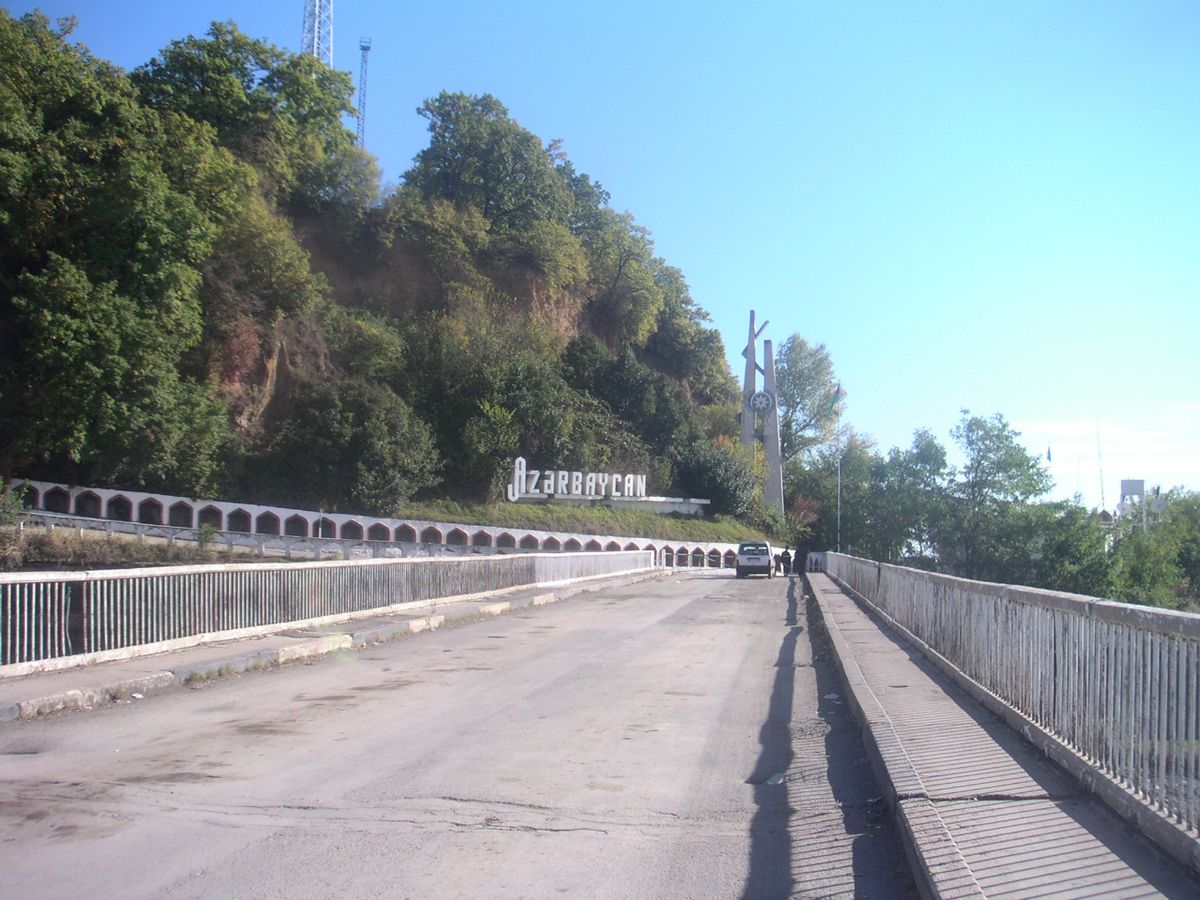
Cities
- Baku
- Sheki
- Ganja
- add more
Personal Experiences
Links
https://www.facebook.com/groups/256467861393520/?ref=aymt_homepage_panel Azerbaijani hitchhikers's facebook group.
Iran
Edit on wikiIran is a very friendly country.
Hitchhiking
Some hitchhikers on their way to India even decide to stay in Iran instead.
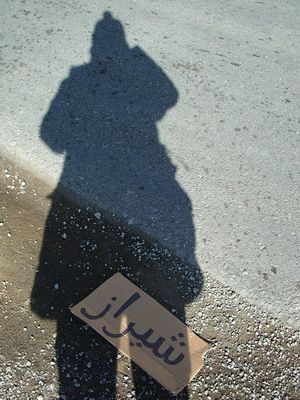
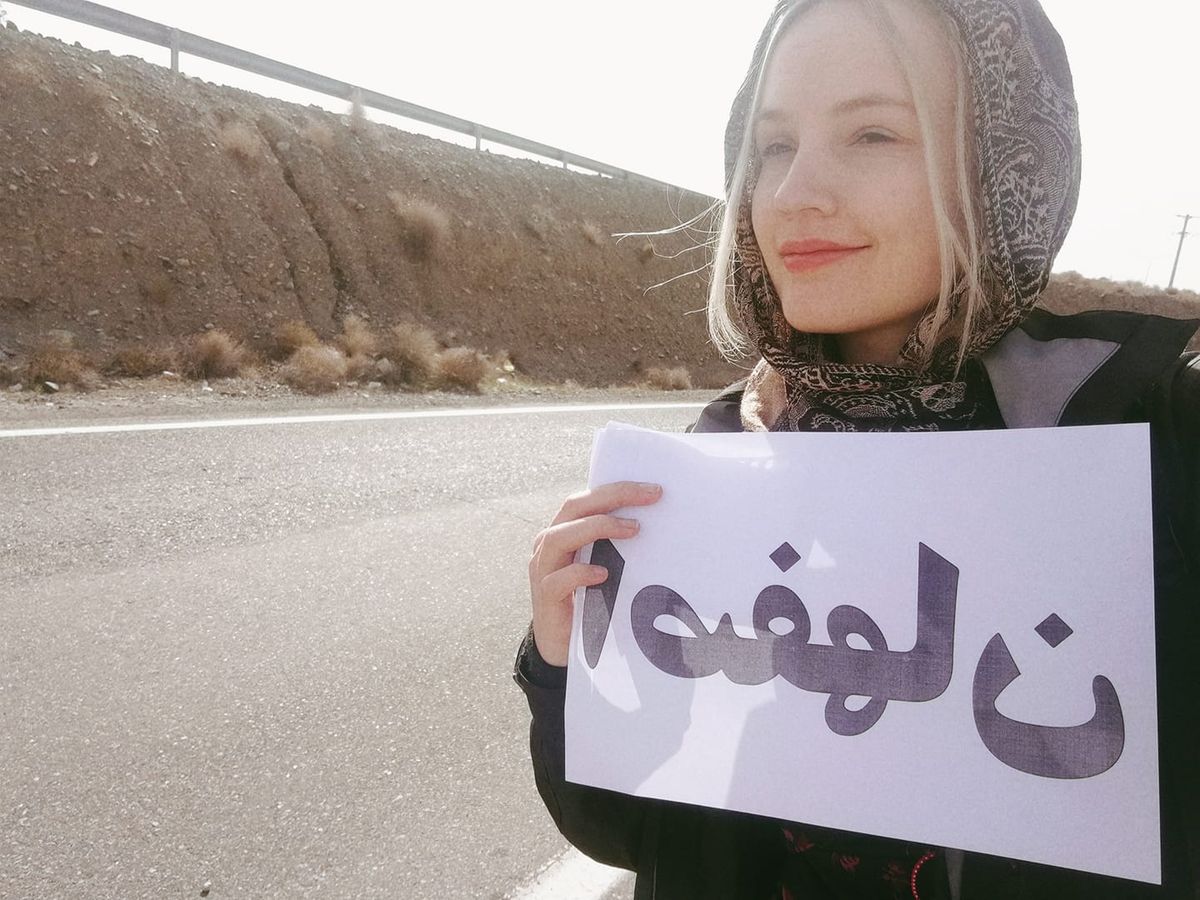
Hitchhiking is done in Iran by waving one's arm at an oncoming car,
or by dribbling one of your hands. Do not gesture with your thumb up as
in the West, because this is an obscene gesture in Persian
culture.
NOTE: In 2017 I hitched with the thumb, because several
iranian hitchers told me to do so, they were doing the same. Also I
noticed many times that locals gave me the thumb as a positive gesture,
for example when taking selfies.
Waiting for a ride can be a frustrating experience sometimes, but it is generally relatively easy to hitchhike here. Frustration comes when there is a driver stopping for you every few minutes and suggesting taking you to a bus terminal, and sometimes you may find it hard to explain that you travel at low budget and that you actually want to hitchhike.
When hitchhiking in the north of the country, it might occur that people stop just to ask if you need assistance unrelated to transportation. In fact, you don't stand longer than 10 minutes without some car stopping for you. It can be even a police/army vehicle (they are in every corner of Iran): they will pick you up and even stop a car for you and convince a driver to take you further.
"Hitchhiking" in exchange for some money is quite popular in Iran, so always emphasize that you are not going to pay for a ride. An exception to this are trucks, which will usually not ask for money.
Language
In Farsi language (official language in Iran spoken as a first or second language by most citizens) the word "hitchhiking" doesn't exist. The translation of this word found in English-Farsi dictionaries seem to have a confusing effect on locals of Iran since they hear it for the first time in their lives. Though some people (especially couchsurfers or young Tehranians) know about it, call it "autostop" or English "hitchhiking". The Farsi majani savar shodan seems to be the closest (means driving for free) and it is the literal translation of the dictionary though doesn't seem very widely understood also because "savar shodan" means take a lift and most often refer to shared taxis (savari) so that it may sound as "taking a shared taxi for free" (fact that can actually happen kind of often though is not very fair and respectful for the other passengers who however most probably will smile and welcome you).
A very easy way to hitch a lift and make cheater run away is clarify since the beginning that you are not going to pay anything asking before entering the car "bee doone pool?" (without money?) asking for confirm several times in case the driver doesn't seem nice "mutmaeen? sad dar sad?" (are you sure? 100%?) otherwise you can also use the magic word salavaati which works quite good. (this word has originally a religious background from the war time between Iran and Iraq. some people would do some favours for soldiers and asking them for salavaat which is kind of good pray instead of money.) as soon as you say this word, everyone understand what exactly you mean. (and nobody expect you to really pray.)
I found just "majani" / "majane" simple enough and efficient.
It's farsi and means that something is for free or without payment.
"Koja mirin" means "Where do you go/ drive?" but people would if at all
answer only after I ask the fourth or fifth time.
An offline farsi dictionary and Arabic Alpha app (free for iPhone
and Android) helped me get by and sped up aquiring some basic farsi.
Farsi has 3 more letters than arab script but once you know arabic
letters, you can guesstimate the farsi ones.
Useful phrases are: Do you go to ...? - shoma be ... mirin? Can you do me a favour please? - Mishe ie lotfi be man bokonin? Can you give me a ride to ...? please - mishe man ro be ... beresounin? lotfan I don't want to pay - Man nemikham pul bedam
In the North West of Iran (Tabriz area, until Qazvin), Turkish will work equally well.
Tarof
Watch out when somebody says a ride is for free: it might in fact not be. Tarof is an Iranian custom of saying a white lie, which is understood by both parties. This enables everyone to keep face. For example, at the end of a taxi ride, the driver will say it's free, because tradition dictates you should be extremely hospitable to guests. If you reply with "na" (no), he will quote the real price. While you could ignore this, it can cause offense, as it is an integral part of Iranian culture, whether you like it or not. One of the more useful phrases is "Tarof nist?" (it's not Tarof?) with a rising intonation at the end. When the answer is no, you can probably expect the offer to be genuine. Maybe the answer is another instance of tarof, but you can probably stop playing the game at this point.
Iran has borders to Iraq, Turkey, Armenia, Azerbaijan, Turkmenistan, Pakistan and Afghanistan. By sea to United Arab Emirates and Oman (and maybe others of the gulf states).
Legality of Hitchhiking
The law here has not been checked. Nobody has yet read the road traffic rules in force in Iran against the official text, so this section cannot tell you what they say, and nothing elsewhere on this page should be read as a statement of the law. What holds almost everywhere is that hitchhiking is not an offence in itself and that what the traffic code regulates is where a pedestrian may stand — off the carriageway, and off motorway-class roads and their slip roads altogether — but whether that is true here is simply unknown. Ask locally before standing on a major road, and treat the rest of this article as what hitchhikers report rather than as a rule you can rely on. If you can read the official text, please replace this paragraph with the provision it turns on and a link to it.
Getting in
There are three main border crossings with Turkey, including Esendere and Bazargan. The crossing with Armenia is at Nordooz. At least one with Azerbaijan and one with Pakistan at Taftan/ Mirjaveh, Bandar Abbas and Bandar Lengeh are sea ports if coming by ferry from United Arab Emirates. Chabahar is port if taking the boat from Muscat.
Some entered Iran at the Yuksekova-Esendere border. People coming from Turkey don't get frustrated! It's amazing if you know that a hundred meters back on the Turkish side most people would understand 'autostop'. Other than the young and modern Iranian generally won't know what is hitching. Tell them you have no money. You can explain everything later in the car. Iran is the best country I have ever hitched. Even in the hottest desert on earth (you feel dying after 10 minutes) the first car stopped. Roads are in good condition. Some days I my average hitch-hiking speed topped 100 km/h!''
Stay safe
Iran has almost the worst death toll due to traffic in the world. Be prepared to have a week or more adjustment time, even if you come from neighbouring countries. This applies mostly to crossing the road in cities, but be vigilant at all times. When on the back of a motorcycle, make sure to keep your knees tucked in next to the vehicle, as they pass very close to cars, and you might get hurt.
Opium is commonly consumed, so if you are not interested, make sure to not accept dodgy looking waterpipes (hooka/nargile/"hubble bubble") at people home's, especially in the countryside, unless you ask for the contents before.
Police
Taking photographs is prohibited in many circumstances, especially of buildings related to policing and military use, as well as people in uniform. Surprisingly, it is also forbidden to take pictures of license plates, and is considered a quite serious offence. Playing dumb tourist is still the best way to get out of this situation.
Unmarked police vehicles prowl the streets of Tehran at night-time. While they don't check for hashish/opium, they do have breath analysers. After a party, it might be wise to consider staying there rather than going home.
Not all military installations and no go zones are marked on maps, so make sure you get advice from a local before you head out or stay on the road. An example would be the Maranjab desert.
These rules might seem conservative, especially as locals violate them all the time. On the other hand, as a foreigner, you run the risk of being made an example of, so you need to make your own judgement calls rather than follow what people around you do.
In any case, foreigners are rarely troubled, and are easily forgiven transgression of "islamic" laws on ground of ignorance. Violating the dress code, talking to woman in the street is no problem at all. Premarital sex is probably not ok, if you get caught. Stay away from demonstrations, you might be considered a journalist travelling on a tourist visa.
Personal experiences
Hitchhiking as a girl
Problem 1: not being able to hitchhike In Iran, everybody stops to take passengers on the road, especially if you're a girl. You should not forget to say you're traveling with no money as most of the cars become taxis when they stop for you. (but people might offer you to pay your ride by bus). If this is too difficult, you can also say you're traveling by truck and that's easy to understand, even if hitchhiking is not a common thing at all and most of the people don't understand it. When somebody stops for you and understand that you travel by hitchhiking, as soon as he/her takes you, you become her/his host. As a girl, it often means that they feel responsible for you. Responsible also means they won't let you in a situation they judge dangerous. So leaving me on the road was something that a lot of people couldn't do and they just drove me in city centers, bus stations, hotels, homes, etc even if I disagreed.
Problem 2: physical harassment In the Iranian society, boys and girls are -in most of the families- separated: they go to different schools and can't have much contact, especially physical contact until they marry. So it often happened that they felt more free with me because I was a foreigner and just started touching me everywhere they could until I left the car. It often started with my hands that in a lot of cases where considered as a very sensual part of the body. However, if the situation was really uncomfortable, I never felt in danger in such a situation as it was really clear and they didn't want to have something else than just touch my arms, legs, hands or any part that they could reach. After getting out of the car, it was over.
Problem 3: cultural differences I put myself in difficult situations not understanding custom. For example, many couples or groups of young people like to drive around to just spend time together. So it happened that people who picked me up actually didn't want to drive me anywhere but just drive me around to spend time with me. Another problematic situation was when I accepted to go to my drivers's house to use internet. They didn't let me leave the house when I wanted to because they said the neighbors would call the police if they saw a girl going out of a boys's house and that would be a bad situation as they could think I'm a prostitute- which is one of the worse punished crime in Iran. About shaking hands: with some people, it was pretty normal, with some other considered as a very sensual thing. In the second case, it happened that religious people refused to shake my hands or that guys trying to hit on me refused to give me back my hand. I shocked a girl saying that I had no problem checking the hand of her friend.
Advantage: In addition to advantages you can have as a hitchhiking girl (people trust you more, you can be faster, etc), traveling as a girl in Iran, where genders are often separated, has the advantage that you can have a better access to intimacy and to women's world. It is very easy to meet a lot of men in the street but being invited in a house, sleep there or having an access to the women's world is probably easier for a girl, especially outside Tehran. I had the opportunity, for example, to spend 2 days in a girls' dormitory where I could speak with a lot of different women about their lives and got invited in many houses to spend the night with the family.
==> I met some Iranian girls who use to hitchhike and they said it was a great experience. I had also really good experiences as a girl alone hitchhiking in Iran. You should be aware that the custom is really different from Europe and even Turkey and that the law protects men better than women.
The hitchhiking concept in Iran is unknown and people mostly don't speak english so some basic farsi vocabulary can be very practical. In Iran people share rides by picking others up and getting some money for it so if you hitchhike you will have to explain a bit what you do.
1. Are you going towards (city name)? Aya shoma be (city name) mirid?
2. But no taxi, I dont have money. Ama na taxi, pul nadaram.
3. I'll get out on the road. Jote piode misham. (Important to stress because drivers will automatically drive to center to the bus or taxi terminal)
Do not use signs while hitchhiking, it's useless. People don't understand it is your desired destination, they will look at you strangely thinking you are showing them in which direction the city is. And of course, they already know that. In 90% of cases drivers will pick you up after you stress you have no money just because they are such hospitable and curious people. Generally, the more touristy and evidently western you look, you will be greeted more warmly. Having blue eyes and blond beard made my traveling in Iran so easy and enjoyable. Drivers tend to stop and detour for various reasons, sometimes to visit somebody, to pick somebody up, to talk to somebody and more often than not you'll be confused at what is it now this time?!. If you know your location at all times and you're not in a hurry just let it be and enjoy, it might be a beginning of something really cool - meeting interesting friends, going on a trip, staying with family for lunch or staying overnight at your drivers'. There aren't so many roads in Iran so it was easy to orientate but nevertheless I found having Google maps with GPS very helpful especially since Google maps have cities in both persian and latin letters. At the same time MAPS.ME was almost useless. Iranians are incredibly hospitable and friendly and I found it important to give something back for all the kindness I would receive. Particularly while hitchhiking... Apart from showing interest in their language I would always have some cookies or nuts or something simple like that as a small sign of appreciation. It makes them really happy and proud plus it often results in Iranians giving even more. You will have to exchange phone numbers and take loads of selfies. But Iranians are not aggressive in trying to get your attention the sell something or get money from you, they are just plain nice and politely curious. It's a very safe country to travel around, hitchhiking works perfectly well, wild camping super easy. Just enjoy! Careful on the Caspian coastline, it is very touristy and thieves tend to brake into tents and steal so make sure you hide well. That's how I was robbed and I heard the same story from others too. Also, the Caspian coastline is very urban and cities are connected so it was difficult to get a longer ride and people expect money for rides a lot more than in the rest of the country. Anyway, one of the best hitchhiking countries for sure.
2014
I hitchhiked for one month around Iran in 2014 and generally felt very safe. It's true that right across the border nobody knows what hitchhiking is anymore, so I wrote signs in Farsi for everywhere I went, but occasionally cars would stop for me on their own initiative to ask me why I'm in the middle of nowhere. I crossed the Meghri border from Armenia when coming in to Tabriz and left from Orumiyeh to the Esendere border with Turkey. Hospitality was really great and if you're invited to someone's home, there's a fair chance you'll be "temporarily adopted" by a nice Iranian family. It's not seen as a positive thing if a woman travels by herself, let alone by hitchhiking, so it might be tiring to try to explain why you're doing it. Stopping cars was generally really easy and often I could just choose rides that had at least one woman present. Lots of women also just stopped for me with no other drivers in the car and they were often the ones that spoke the best English.
Hitchhiking/ Travelling in Iran is simply amazing! Be prepared for
many taxis though, even if thumbing they'll stop, thinking this person's
western and doesn't know how to stop a taxi. I'd thumb western-style and
not eastern-style (holding the hand at waistheight level to the ground)
- showing a thumb is meanwhile understood as a positive thing and local
hitchers use the thumb too. After some days you'll get a feeling for
who's taxi and who's not. Unfortunately my second lift turned out to be
a 'shared taxi', but still today I'm not sure if he just wanted to rip
us off or indeed was a cab driver.
Now I'll spare you hundreds of wonderful stories because you'll make
your own and only share the one that went semishizzle, hoping it can
safe you from repetition. Both me and my friends are still very very
happy to have been to Iran! I'm sure the guy who picked us up and 24h
later groped the female of us thinks badly about what he did, I saw his
eyes when he left us.
I do see some things to improve on in our behaviour, given the cultural
differences middle east and west:
First thing I found a little odd was when my friend followed his
offering to have a cigarette, the driver lit the cig in his mouth and
passed it to her on the back seat! I don't smoke so I'm not an expert on
customs but I found it somewhat intimate. Later, being invited to eat,
he would push most of his veggies to her plate, not once to me or the
other male hitcher. Okay, he's got only one daughter, in my friend's
age and she's abroad studying, maybe he's suffering some sort of
daughter-syndrome...
Later we followed his invitation home, he wants to show us the town.
Which turns out to be a shopping tour across all floors of a mall and we
enter many (female clothing) shops, he searches clothes for her, asking
do you like this do you like that. She declines the questions, but
wanting not to be too impolite she gives in after three or four times.
Half an hour later she carries a number of plastic bags with various
garments. (To me it seems she has also proven as many times that if
he insists long enough, he'll have it his way.) Something in me was
screaming that this is going in the wrong direction, but I understood
that she didn't want me to interfere and the other hitcher seemed to not
be bothered by all this. I tried to push our host aside and had a quiet
word with him, he just said okay last one and carried on. At this point
I left the party to wait outside, because I didn't want to take part in
this drama play anymore. And since there was another male hitcher I
could go without leaving the girl unaccompanied.
Back at host's house I went to sleep and male friend sat down infront of
the PC, female friend and host engage in conversation and teach songs to
each other. Now there's nothing wrong with that, but he's been
interested in mostly the female among us and now she's showing interest
in his culture (my, who isn't, for why else are we hitching around
in Iran!) while all male company has retreated. Nothing
extraordinary for us and I bet manageable for most persians, yet keep in
mind that boys and girls in middle eastern places are or have been
separated in school and social life, singing and smiling in public is
illegal for irani women (hard to imagine that it'd go punished tho). I'm
telling my observations and thoughts here, don't ask me for a solution
to this situation.
Then we figured there are four matresses, but only three guests. Turns
out our host prefers to sleep on the ground with us! At least here
we made sure to have gender separation.
The next morning, when my friend was alone having a smoke infront of the
house, our host groped her and lured her behind the house to "show
something". This time he gave in to her no.
East of the bosphorus men are socially implicated to be protecters of
and providers for women (especially their "own", which is defined by
marriage and family relations), who have a societal status of being weak
and dependent. I'm using severe language here because this to me is the
key point. We have been fed the same sexist soup, but with western
seasoning. That is that a guy gotta accept when his friend doesn't want
him to behave like he was her big brother, without insisting several
times. And that she says no and means no, whereas traditional
iranian/persian/turkish/arabian she says no and means okay, maybe
or no. Pretending you and your travel companion are married
will probably help. However then you won't be making an example of
what's possible in western society. In a different house a different
host though that he needs to put us into separate rooms for sleeping
when we said that we're not married! But his friend convinced him, since
we have a tent we might aswell share a room.
Not many people are "stuck in old conventions" anymore, after some time
you'll be able to tell traditional folk from city people. For instance,
being new in Iran I was very cautious of tarof, but then I figured it's
very few iranians still doing this.
The best place ever to hitch-hike in Iran are pay-tolls. Right after every pay-toll, there is a large bay where drivers going a long distance often stop to put money in boxes to bless their journey. As you can talk without hurry to the drivers, and explain you are a hitch-hiker, it is very easy to catch a long-distance ride.
Example: direct ride Mashhad to Tehran (900km) in less than 10 minutes!
I have only experiences with hitchhiking in Northern Iran, Tehran Airport towards Turkey. However, this was quite easy and I assume that it is the same in the rest of the country. Many people do not know the idea of hitchhiking (you start a "conversation" with an explanation that you do not want to go to the bus terminal) but they are very helpful and hospitable. With the first drivers who gave me a lift I couldn't really communicate as we didn't have a language in common (most people I met spoke Farsi only) -- just hand, feet and PointIt. However, at a later stage many lifts I've got have been from people that spoke to some extend English. It is beneficial when you can read Arabic writing as Farsi uses an extended version of it even though many road signs are in Farsi and English. Many people say you are expected to pay drivers in Iran. Generally, I personally found it easy to notice if a driver is willing to give a free ride, or he expects money, - noticing this in time, it is easier to reject a ride if it is a latter case. Furthermore, I had some rides from couples and families, too. PS: As with in Turkey it is wise to have you own mug along as you are offered tea all the time.
The Persian weekend trick
Every weekend, thousands of students from Tehran climb into their jeeps, and head out into the country side. It's difficult to catch them as they leave the city, but in the remote places, it's easy to pick them out. And in every car you will find at least one who speaks passable English. The downside is that Iranian weekends tend to make these places fuller, but as I was traveling in November, this was not an issue for me. This way, Harveypekar managed to hitch inside Alamout valley (but got trucks and motorbikes too), and also inside of the Maranjab desert. With that last one, he stayed with them two days, seeing nearby attractions and camping out with them. Because cars tend to be full, it might not work so well when you are more than one person.
Note from a traveler: weekends in Iran are Thursdays and Fridays!!
Iran is definitely the best country I ever visited for hitchhiking as for travel in general. Though the concept itself of hitching doesn't exist at all, people are always extremely kind, friendly and try to help you as much as they can. Very few people speak English, though learn a bit of Farsi is not very difficult and the body language, smiles and kindness supply any other misunderstanding.
Holding a panel with clear signs ("No taxi") and being always strict in refusing offers (though keeping calm and kind) I avoided "cheaters" most of times and I've had the best encounters of my whole life, from the most remote rural area to the suburbs of Tehran. You can hitch extremely easily wherever, from the motorways pay tolls for long distances, to the sidewalk of a desolate road, every time having in mind that you have to talk with the driver and explain what hitchhiking means as why you are doing it (more than almost the whole story of your life..). Said so, it reveals itself really supereasy.
The only bad experiences I had (hitchhiking at night and being hosted by a couchsurfer with empty profile) were definitely not enough to change my feelings and give me either the smallest negative impression of this amazing country (though made me acknowledge it was still part of the Earth and not the paradise, but still remaining among some the closest reality to my idea of it..!)
Even if the cost of transportation is extremely cheap (my host in Tabriz told me, "why don't you take the bus? it costs less than 2E!") this is not a reason at all not to hitch, as most of times, it is not matter of money..!
I noticed some different things while hitchhiking in Iran. Firstly, (as a guy), i was groped/asked for sex/had-people-talking-about-how-beautiful-i-am-to-the-point-of-discomfort, more times in iran than my entire previous hitchhiking experience in other countries. Young blond kids with no beard and long hair should bear this in mind. Secondly, much has been made of how kind and generous iranian people are. This is absolutely true and it is wonderful. However there are glaring downsides to this, chiefly that your rides begin to care too much about you, and refuse to let you continue hitchhiking, instead, they invite you to their home, or quite literally force you onto a bus, despite constant protest. I even had a driver that decided that my cs host was going to hurt me somehow, and wouldn't allow me to get out when my destination came. it took many phone calls and constant pleading to finally negotiate with my driver to let me out. Thirdly, while saying that you have no money (pul nadarim) is the easiest way to hitchhike, it is also a lie/half-truth that can lead to frustrating consequences, especially when they take you to the tourist police or regular police because they are worried about your situation, or force you onto a bus and try to pay for it for you (i usually end up pulling out my cash-stash at that point), or they give you money from their own pocket (in western countries this is not an issue for me, but here, people are hurting very badly from an awful financial situation, and generally have a hard enough time keeping their family afloat. here you can take a 500km+ bus for the price of a berlin u-bahn ticket). Finally, hitchhike during the day if you can. during the night, it is easy enough to find your first ride, but it is difficult to convince that first ride to let you continue hitchhiking, whereas during the day they will usually give up after a couple of minutes. Despite these quirks Iran remains in its deserved place on every hitchhikers bucket-list. Astonishingly beautiful, superlatively kind and generous people, great food, and fascinating culture. Just keep these things and the other issues already written about in mind and you will have an amazing time. One more thing - try to hitch where there aren't too many passerbys or people sitting around, as they will invariably come up to you and not leave, crowding you out and making it hard for you to hitchhike. It can be very hard to make them understand hitchhiking, and that it is a *choice*.
Links
- Iran general safety overview
- The female blogger of The Tourist has been to Iran several times and hitchhiked on small and big roads, from city to city, and through tiny mountain villages. She also has hitchhiking tips for the Middle East.
- User Craig hitched along the Silk Road and wrote about his experiences here: Thumbing Asia From West to East Iran is my favorite place to hitch-hike!
- User RovingSnails tells about hitchhiking in Iran from a woman's perspective, with experiences,thoughts and talks on "hitchhiking with hijab"
- Three women hitchhiking in Iran by an aimless hitchhiker
- User TheNomadFamily wrote a guide in English about Hitchhiking in Iran; sharing experiences, tips and info he gathered after hitching 3 months around the country: Hitchhiking in Iran
Tehran
Edit on wikiRoadside hitching spots go stale. For current places to hitch in and out of this city, use maps.hitchwiki.org and the live Hitchwiki page linked at the end of this chapter. This book keeps general orientation, not a pin gazetteer.
This book does not reprint named ramps, dumpsters, hostels, or other pins. They go out of date. Follow the note above to the live map or wiki.
Iraq
Edit on wikiIraq is a country in the Middle East.
Except for the autonomous Kurdistan region, Iraq is a instable place and saftey situation can change very fast.
Note that the Kurdistan Region (KRG) currently includes the provinces of Duhok, Erbil, Sulaymaniyah, and Halabja.
Hitchhiking
It is important to make inform yourself very good about the current safety situation and about the risks. However Iraq is not as dangerous as it was in the past and it is absolutely possible to Hitchhike there.
There are Risks connected with Hitchhiking in Iraq and there is no guarantee for the thruth of the Informations on this site, evaluate the risks on your own before you make a decision!
There are Whatsapp groups with locals and travelers that respond to questions and try to help each other. Most Couchsurfing Hosts or other travelers you meet in Iraq can add you to this groups.
Bring cash in USD or Euro with you as the Exchange Offices do have a better exchange rate than the oficial exchange rate. If you need to withdrawl money, Trade Bank of Iraq ATMs have no fee for foreign cards. But still the exchange rate is worse than the one of the exchange offices. In the country you can almoast never pay with card, carry enough cash.
Legality of Hitchhiking
The law here has not been checked. Nobody has yet read the road traffic rules in force in Iraq against the official text, so this section cannot tell you what they say, and nothing elsewhere on this page should be read as a statement of the law. What holds almost everywhere is that hitchhiking is not an offence in itself and that what the traffic code regulates is where a pedestrian may stand — off the carriageway, and off motorway-class roads and their slip roads altogether — but whether that is true here is simply unknown. Ask locally before standing on a major road, and treat the rest of this article as what hitchhikers report rather than as a rule you can rely on. If you can read the official text, please replace this paragraph with the provision it turns on and a link to it.
Iraqi Kurdistan
This region is autonomous from the rest of Iraq and is completely safe for hitchhikers. People are warm, hospitable and very western friendly.
However, avoid going to the disputed city of Kirkuk. In the whole country there are plenty of checkpoints which are one of the reasons why the country is so safe. It is easy to avoid going into the cities if you make it clear to the driver. Its also a good idea to avoid remote mountainous areas near the Turkish and Iranian border because of the ongoing conflicts with Turkey and Iran. They used to drop Bombs in the Border regions.
Safety
As said above, the KRG (Kurdistan Regional Government) is largely safe, and will probably continue to be so. The situation doesn't appear to be likely to change any time soon, however a people surrounded by enemies get their fair share of trouble from time-to-time. Monitor news reports while you are in Kurdistan.
Entry
You can get a 30 Day E-Visa for around 75 USD on the oficial KRG website. A Visa on Arrival is no longer available even though many people don't know this yet. However you get your E-Visa Instantly after applying so you can do it at the Border, but it is necessary to have a credit card to pay the fee in IQD online. It is possible to extend the Visa maximal 2 times in government offices in different citys for another fee of 75 USD. This Visa is oficialy only valid for Kurdistan but in most cases they let travellers from Europe and America pass to Mosul and from there they always accept a Kurdish Visa at the checkpoints. In rare cases they send you back but then you can always try at a different checkpoint and they will let you in. You can even fly from Baghdad with a Kurdish visa whitout any problems.
From Turkey There is an agreement between the two countries that individuals cannot cross the border on foot. Therefore, there are a lot of taxis. However, if you wait for a while at the border and explain that you want to otostop the Turkish guards may pay for your taxi (if they like you). This happened to hitchwiki member Vlad. There are also a lot of people buying a lot of cigarettes in the Duty free shop but there is a limit how much one person can buy, therefore there are many people interested in having a second person that can buy cigarettes for them.
If you decide to take a taxi, you might as well take it from Cizre (50 km from the border) instead of Silopi (10 km from the border) as the taxi prices are the same (20 TL). When I arrived in Iraq my Taxi driver dropped me off just after the border, he told me I would have to take another taxi to get to Zakho but the price would only be 1 TL - that was not true, the taxi was 4000 Iraqi Dinaar (about 6,5 TL). Anyway, don't take another taxi, it's just 10 kilometers to the town, you can walk or hitch it. --Jakobwithk 19:29, 12 January 2012 (CET)
''In April 2014 we got to the border by truck. There are many mini-van smuggling goods into Iraqi Kurdistan, and the policeman on the turkish side was happy to show us into one of his friends'. They did not ask for money and neither looked interested in payment, but rather in having us as passengers in their list. On the Iraqi side a policeman asked the cars if anybody was going directly to Erbil.--Rovingsnails
June 2019: Uncle_sam01 was approached by a very friendly Turkish customs officer, who understood the whole car issue immediately and half-forced him into an Iraqi car. The Iraqis had some sort of list to which his name and details were added, probably unnecessarily. Rest of the crossing (incl. the Kurdish part) was a breeze with only a few questions. The whole taxi thing here seems a bit unnecessary.
From Iran At the Pervez Khan boarder to the west of Kermanshah you can freely enter by foot. Border guards will look surprised to meet somebody who is not smuggling goods from Iran into Iraq, especially if you're not from the Middle East. Luggage will be fully checked twice, but when they notice you are there to visit their beautiful country they will give you a big smile and let you through in no time. Last verified on 22nd of October 2016.
Exit
Iraqi Kurdistan- Turkey
On the way back, the Iraq side is walkable by foot, but when you reach the Turkish side they expect that you have a taxi. When they see you're clearly a backpacker type, they might be more lenient and arrange for a passing truck to take you through. In short, easier to cross the Turkish side without a taxi on the way back from Iraq. You may also find mini vans (dolmuses) willing to take you for free on the Iraqi side, you can normally find them in petrol stations filling up their tanks before they head over to the more expensive Turkey. However, be warned that they offer you a free ride because they want to use you to smuggle cigarettes, tea and other goods across to Turkey. The consequences of getting caught is not known but checks are usually fairly strict because of the P.K.K conflict in the Sirnak district and checks could take upto 5 hours or more. These mini-vans are usually happy to take you upto Silopi or Cizre at least for free.
December 2011: I managed to get a free ride back to Turkey by a friendly taxi driver who was going there anyway. I generally got the feeling that you can easily pass the border without paying for a taxi, there are a few private cars passing by that might pick you up. I walked into the border from Iraq and all the taxi drivers told me that hitchhiking/otostopping was not possible. Just ignore them, go and get your exit stamp, shortly after there's a checkpoint where you can ask people to give you a ride --Jakobwithk 19:29, 12 January 2012 (CET)
February 2012: After thumbing for 5 seconds in Silopi city center I got a ride to Zakho in a private car. There were more private cars crossing the border so I have to say that from what I have seen I do not understand this overall cry about the taxis. Just do not come there with the idea of taking a taxi, and hitch you way as you always do! Be persistent, have some time, and open mind:) --rozwal
Iraqi Kurdistan - Iran
There are two main border crossings between Iraqi Kurdistan and Iran: Piranshahr (the more popular of both) and Penjwin-Marivan. A third point exists between Tawela and Nowsud, but some locals say it is only for trucks and not specially safe - although this has not been not confirmed.
Penjwin-Marivan - the immigration office is somewhat randomly located on the right side (as you arrive) - walk towards the big gate with Iraqi/Kurdish flags and then take a right along the Duty Free shop. Once you get inside (it looks like a waiting room at the dentist's), locate the "exit" window, put your passport on top of the stack of passports there, sit down and wait for the officer to mispronounce your name.
April 2014: Rovingsnails crossed this border without any problems. From Said Sadq a policeman stopped a bus for them, directly to Marivan (Iran).
July 2019: Uncle_sam01 crossed fairly quickly, but finding the Kurdish immigration office was quite a scavenger hunt. The Iranian side was fairly quick and without searches. He was asked a bunch of "friendly" questions by the very-not-obvious secret police, incl. "What's your religion?" ...
Hitching
Iraqi Kurdistan is probably one of the easiest places in the world to hitchhike. Almost every car will stop for you, often it is not even necessary to signal for a ride. People are very interested in meeting foreigners, so it might help to show that you are a tourist. Many people will want to take you to bus stations or taxi stands. Many people don't understand the principles of hitchhiking and don't understand that it helps you if they take you only half the distance. They will all offer you to take you to your destination for money and when you say no they will want to go. You will have to make clear that they should take you only where they go anyway and everyone will be very happy to help you. Also people don't understand that someone has money but can't afford a Taxi. When you say you don't have money they will offer you to give you money for food etc.
Kurdish people are very friendly and will go out of their way to help you. Its very normal to be picked up and invited to stay at the family home of the driver or at least get invited for food. Expect people that don't speak English to call their friends to translate. Many people there have relatives in Europe. If you use google translate choose Kurdish (sorani).
Women
It is fully possible for a solo woman to hitchhike alone in Kurdistan, but staying safe might require a little more care than in other countries. Claiming to be married doesnt seem to help much here. Taxi drivers may stop and tell you they will take you for free, and seem completely well-intentioned, indicating they are going that way anyway, until you get into the car at which point they will let you know they are looking for another form of payment. As to other rides, try to signal cars carrying women, children, or two or more business-type men - they keep each other honest. This post is not meant to discourage women from hitching here, just to pay more attention than in other places - dont be afraid to turn down rides if you have any sense of a bad feeling. In my experience ( alyssa ), every time I got into a car with a single man in Kurdistan he ended up hitting on me, usually in a very direct way. However despite this I did not feel unsafe, and when I asked the drivers to stop and let me out they did so. It must be remembered that in this culture it is quite bizaare for a respectable women to be traveling alone, let alone standing on this side of the road asking for a free ride. You just have to make your intentions known early on.
Checkpoints
One of the reasons Kurdistan is safe at the moment is the huge amounts of Kurdish military checkpoints around the country. They're mostly looking out for Arab and Shia Iraqis entering the area, but they'll take an interest in foreign hitchers for sure. They'll check your passport and sometimes take you into a the chiefs office for questioning. It's not an interrogation, they just want to know why your here and where you want to go. Assure them that you are a tourist that wants to see the country and that you're not going south of Kurdistan, or to Mosul or Kirkuk. They'll usually let you go with no fuss. Sometimes they'll even make you a chai and give you food or give you some cold water.
Checkpoint stops are pretty regular and there's no communication between each one, so be prepared to be stopped a lot in Kurdistan. It's usually not for longer than five to ten minutes at a time and often they don't stop you at all. The guards are likely to smile at you and say, "welcome to our country"
You should also note that the main road between Erbil and Zakho actually passes very close to the non-Kurdish city of Mosul.
Blue license plates belong to Kurdish and government officials respectively.
Camping
Camping is possible in Kurdistan and safe but you should make sure nobody sees you. People in Kurdistan don't understand that someone wants to camp voluntary. User:Hitchboy asked a police officer wheter it is legal to camp and they took him to the Police headquarter and Interogated him for hours. They asked what he was doing here etc. However the officers are always friendly and offer food and tea and even appologize for what they have to do.
Personal Experience
2018: blanky has found the Kurds to be extremely hospitable; here's a whole blog post about a couple days of hitchhiking.
August/September 2015 - "I hitched around iraqi kurdistan most of the time and never had problem getting rides. People were as expected very friendly and hospitable. The only thing making hitching less smooth were the numerous checkpoints and the Asayish (some kind of secret police). While most of the time I could pass trough the checkpoints easily I was stopped and interogated a few times. Most of the times these interrogations were just a few questions (where to, where from and why) and after 5 minutes I was back on the road. But on a few occasions I was kept for a longer amount of time. The longest of these encounters were while I tried to hitch to Amedi taking the big road in the east (trough Barzan). I was stopped halfway there and then brought to a local chief of the Peshmerga. During the whole time my poor driver had to stay as a translator, being the only krudish english speaker around. After a few hours of waiting and answering questions I was let go but was strongly advised by the official not to take this road any further but return to Erbil. According to them the Checkpoints wouldn't get any more relaxed from this point and cars would become more and more sparse anyway. Might have been just a lie to make me change course but in the end I did return to Erbil since the better part of the day was gone anyway. From my overall experience I can say that at the beginning of these interrogations the officials can be unfriendly and might even make some amusingly exaggarated claims about you ( Faked papers or Israeli in disguise are my favorites). I didn't exactly help that I have a full somewhat longer grown beard as well. But just keep your cool, stay friendly and try not to tell them lies. They're just trying to keep the area safe and as soon as they realized that Im not a spy or came to join Daesh they became friendly and often even apologize for their behaviour. During the month I stayed and hitched around iraqi Kurdistan I never felt unsave and I can only agree with what people say about the kurdish hospitality." Wu Kong
January 2015 -As a woman the people of Iraqi Kurdistan have always been very welcoming, but I also used to have quite a lot of problems with sexual harassment there. I started feeling much safer in Iraqi Kurdistan since I started learning more Kurdish. People are really astonished by this and immediately try to show your the best side of their region. I have almost had no one acting indecently since then. This applies to hitchhiking as much as to any other situation. Irsin
June 2013 (Only relevant for Kurdish quarter of Iraq) I hitched in without any issues from Turkey, as there is alot of traffic at this border, and the process is straightforward to get your free visa. Alot of traffic heads to Duhok, which is pretty enough, but wait for traffic going directly to the capital, as it is a hard city to hitchhike out off, with large highways. Hitchhiking in this country is probably not quite as gushingly easy as earlier stated, although you will have someone stop out of curiosity eventually. They go to great measures to help, flagging down other drivers, putting you in taxis. All sorts. The road networks are a NIGHTMARE, and all being rebuilt. There are few definitive maps, and Google Maps is pish and out of date. Ask frequently to ensure you don't go astray, or even ashtray (if you slipped into Arabic territory). Peshmerga (bad spelling, but the elite police and army unit), keep the place very safe, and can be really friendly. I spent two nights at their roadstops, and got great hospitality. Much easier out of the big cities, and the Kurdish people deserve high praise for delightful hospitality, warmth and gentleness, a true asset - lukeyboy95
July 2014: I hitchhiked around Iraqi Kurdistan for about a week. I found it fantastically easy to find a ride. I hitched in from Turkey and got my free visa. When I was leaving the Kurdish border control office, a Peshmerga soldier flagged down a bus to take me all the way to Erbil (Hêwler) for free. After staying a couple nights with the deaf community in Erbil, I hitchhiked north and was offered a place to sleep in Akre by the Syrian family who gave me a ride. Afterwards, I hitched up to Amedi, where I stayed with some friends of the Kurdish border control officer I met a few days before. On my way back to Turkey, I was given a hotel room in Zakho for the night. I have nothing but good things to say about Kurdistan and the Kurdish people. - Sirrdc
External links
The female blogger from The Tourist went to Iraqi Kurdistan several times from 2007 to 2015 and has quite some stories to tell.
Federal Iraq
Under the name Federal Iraq is meant all the rest of Iraq.
Safety
At the moment Federal Iraq is quite safe. There where no Terrorist attacks on civilians and Kidnapping cases for years. However there is a very small risk to get into a clash between individuals or between individuals and security forces. But this happens very rarely and the chance to be at exactly at the wrong place in exactly the wrong moment is very small. In the desert and especially along the syrian border cells of daesh (ISIS) and other militias are still operating but the cities are largely safe.
Entry
If you enter through a federal Iraq Border like Baghdad Airport you will have to apply for a Iraq E-Visa in advance. This Visa is valid for Iraq and Kurdistan, however you have to enter into federal Iraq first and then you can go to Kurdistan from there. If you enter Kurdistan first with an federal Iraq E-Visa you will still only get the Kurdish Visa in your Passport and therefore it is a waste of money. This happens for example when you try to enter Kurdistan from Turkey or through Erbil Airport. In this case you need a Kurdish Visa only. If you enter from Turkey or from Kurdistan you will most probably have a Kurdish Visa. This Visa is oficialy only valid for Kurdistan but in most cases they let travelers pass to Mosul and from there they always accept a Kurdish Visa at the checkpoints. In rare cases they send you back but then you can always try at a different checkpoint and they will let you in. You can even fly from Baghdad with a Kurdish visa whitout any problems.
Hitching
Iraq is very easy to Hitchhike. People are very interested in meeting foreigners, so it might help to show that you are a tourist. Many people don't understand the principles of hitchhiking and don't understand that it helps you if they take you only part of the distance. They will all offer you to take you to your destination for money and when you say no they will want to leave you. You will have to make clear that they should take you only where they go anyway and everyone will be very happy to help you. Also people don't understand that someone has money but can't afford a Taxi. When you say you don't have money they will often offer you to give you money for food etc.
Iraqis are very friendly and will go out of their way to help you. Its very normal to be picked up and invited to stay at the family home of the driver or at least get invited for food and drinks. Expect people that don't speak English to call their friends to translate. Most people don't speak english so google Translate is very helpfull.
Personal Experience
I entered Kurdistan from Turkey at Ibrahim Khalil and hitchhiked around Kurdistan and made great experiences. After that I took a shared taxi from Erbil to Mosul and they sent me back because I only had Kurdish Visa. Two days later I hitchhiked from Dohuk to Mosul via shekan and they let me through without questions. From Mosul I hitchhiked to Bagdhad with a american friend and we moved very fast and in the evening we where invited into the House of our driver. Surprisingly the people there have a very good feeling about America and they like Americans visiting their country. We visited Baghdad, Karbala, Najaf and Babylon and after that I flew home from Baghdad. Don't visit Babylon, they charge 25000IQD (16 Euros) Only to see a bunch of ruins, its not worth it. Overall we had great experience with the Iraqi people and their hospitality is incredible.
Syria
Edit on wikiSyria is a country in Western Asia, also known as the Middle East.
Border Crossing
As of Aug 2025 visa rules have been updated. Most western tourists can get their visa directly at the border, but of course check your local embassy for country-specific visa requirements. The prices are in US$, and must be paid only in cash.
Hitchhiking in rural parts is easier like coming to Damascus from Palmyra. It's generally easy, but there's a risk of kidnappings for foreigners.
AS OF 2025 BORDER WITH TURKEY IS CLOSED TO ALL TOURISTS AND FOREIGNERS
Turkey
- Hatay checkpoint: This checkpoint is easy to reach via Reyhanlı (Turkey). Passing the border by foot is no problem, but it might be wise to hitch a ride after crossing the Turkish checkpoint, the distance to the Syrian checkpoint is around 4 km. Behind Syrian controls, hitch your way towards Aleppo (~65 km). Don't wait for trucks to pass the border and give you a ride, you can be much faster with walking to the next village and catching a ride with some motorbikes or pickups.
- Kilis checkpoint: The northern checkpoint with Turkey, easy to reach from Aleppo (~70km). The different checkpoints are not far from each other, so you can go by walking distance. Be aware of street dogs. When traveling from Aleppo, also be careful in the city of Azaz and surrounding area near the border. More about it at the specific Azaz city article.
- Kasab checkpoint: Westernmost border transition to Turkey, close to Lattakia. The checkpoints are right next to each other, walking across the border is no problem. It's straight forward to catch rides to Antakya. Enjoy the amazing landscape.
- Nusaybin checkpoint: Easternmost border transition to Turkey. The border is between Al-Qamishli (Syria) and Nusaybin (Turkey). This border is open from 9am in the morning until 3pm in the afternoon. It's easy to walk across, as it is rather quiet here. When arriving too late, Al-Qamishli has several hotels, in which you should always try to bargain for the price.
Lebanon
- Masnaa checkpoint: The only open checkpoint with Lebanon on it's western border. It is located directly on the highway Damascus-Beirut and is very easy to hitch. Get a ride to the border, where many cars will wait to get over the controls. Just talk to people who have an empty car and get a ride to Beirut, where nearly everyone here goes. Exit cards can be bought in a little supermarket just before the controls. Be aware of Jordanian taxi drivers. Check for Lebanese visa stuff the Lebanon article.
- Aaboudiye checkpoint: Checkpoint in the north of Lebanon and north-west of Syria, might be a choice if you come from Tartous or Aleppo going to Tripoli or Beirut. Small border checkpoint, very bad condition of the roads, mostly taxi's and buses around here. Not much traffic at all. Take care! Platschi recommends to take the Masnaa checkpoint, which in fact is much further away (if coming from Hama/Homs or Aleppo), but also possible to hitch in one day if your destination is Beirut.
Jordan
MAY 2025 - CANNOT WALK ACROSS THE BORDER. Jordan side was extremely rude and unhelpful and wanted me to pay for a taxi and sent me away. Taxis cost about 30jd to cross to Damascus. They won't pick up hitchhikers because they have a list of passengers. Ended up paying 10jd for taxi through miscommunication. Alternatively there's a bus from Amman to Jordan for 10jd. Hitchhiking was harder at this time because Jordanian locals were forbidden from driving across. As of Aug 2025 they are allowed to cross by land.
- Daraa checkpoint: guaka didn't experience any troubles heading to Jordan in October 2008 and in December 2010. CRCulver experienced that it was not permitted to walk across the border, and any cars going across must have a formal manifest of all passengers. The guards on the Syrian side are generally not willing to allow a hitchhiker to stand at the border gate to wait for a car, and any car willing to drive back into the city to add your name to the manifest at the transportation office will want money. Gekko crossed the border at this point in March 2011 and didn't experience problems concerning a formal passenger manifest. Walking across the border is not allowed. Border officials enjoy telling travellers that pedestrians would be shot by sharpshooters. However, finding a ride seems to be easy, generally.
On February 24th 2012, LordOfTheCheese reached the first checkpoint via camion and was told the truck will be in quarantine for one or two days. They then had him wait for a taxi to cross. Outside the taxi, the driver seemed all right with a free ride, but then tried to charge 300 Syrian pound just to cross to the Jordanian side. He was then left before the final check, but the guards were friendly and got him a ride over the border.
Iraq
As of 2025 only al bukamal is open (near Deir ezor). It goes through Isis territory so hitchhiking is not recommended. There's a bus for 30$ usd from Damascus to Baghdad. Risk of kidnappings on Iraqi side for foreigners. An American was escorted out of the country because of a kidnaping risk along the way.
Iraq has three border checkpoints with Syria. One near the town of Abu Kamal, another near Attanf. For these two there are good roads to travel on. If you want to enter Iraq you have to take the visa in advance, you will not get it at the border. The third crossing is in the north-eastern corner of the country.
No border with Israel is open to civilians. Syria is in a state of war with Israel. If you have any evidence of a visit to Israel in your passport you're not allowed to enter Syria. This includes stamps from the Jordanian or Egyptian side of border crossings with Israel. Israeli and Jordanian officials are usually okay with providing a separate paper so it remains possible to travel to Syria and other countries strict on Israeli stamps - Egyptians however tend to stamp your passport all the time. Your only way out is to go through Jordan, and take the ferry from Aqaba to Taba, Egypt.
Regions
- The Golan Heights
Hitchhiking
Hitchhiking is possible and easy in Syria. However, many people will think that you missed a bus, and want to bring you to the next bus station.
The concept of hitchhiking itself is understood differently in this country. While in the more rural areas (the mountains and the desert) hitching a pickup is extremely normal (because of the absence of public transport), in the more urban areas of the country people often can not understand why somebody is not taking a bus, especially because the prices for those are extremely low and nearly everybody uses them. Because of this, locals often think you might need help, and stop for that reason.
Nevertheless, people will in most cases be glad to give you a ride and as an conclusion, hitchhiking is extremely easy in this country.
 It might be wise to learn at least some
basic Arabic to communicate with locals. Not many people speak more
English than the phrase "Welcome to Syria". Sometimes you can find old
people speaking French. Some people also, from the older and middle
generation, speak Russian due to the fact that they studied or worked in
Eastern Europe. Especially for explaining your hitchhiking intention
(and to ask for the way the driver goes), it is an absolute advantage to
know some Arabic.
It might be wise to learn at least some
basic Arabic to communicate with locals. Not many people speak more
English than the phrase "Welcome to Syria". Sometimes you can find old
people speaking French. Some people also, from the older and middle
generation, speak Russian due to the fact that they studied or worked in
Eastern Europe. Especially for explaining your hitchhiking intention
(and to ask for the way the driver goes), it is an absolute advantage to
know some Arabic.
When hitchhiking out of a city, try to stand by the road where there are no people around. When CRCulver tried hitching out of Jisrash Shugur, he accepted an invitation to tea from employees of a nearby garage.
Legality of Hitchhiking
The law here has not been checked. Nobody has yet read the road traffic rules in force in Syria against the official text, so this section cannot tell you what they say, and nothing elsewhere on this page should be read as a statement of the law. What holds almost everywhere is that hitchhiking is not an offence in itself and that what the traffic code regulates is where a pedestrian may stand — off the carriageway, and off motorway-class roads and their slip roads altogether — but whether that is true here is simply unknown. Ask locally before standing on a major road, and treat the rest of this article as what hitchhikers report rather than as a rule you can rely on. If you can read the official text, please replace this paragraph with the provision it turns on and a link to it.
They thought he was lost and called the police, who sent him to a military base where he was interrogated for several hours and told hitchhiking was illegal before being forced onto a bus bound for Damascus.
Personal Experiences
Links
- Interview about hitchhiking in Syria
- Reminiscences of Syria before the war by a hitchhiker
Lebanon
Edit on wikiLebanon is a small country in the Middle East. It borders to Syria in the north and east and with Israel to the south.
Border Crossing
As of 2010 passport holders of many countries enjoy visa free entry. There are three border checkpoints with Syria. One in the west of the country (towards Damascus) and two in the north.
- Aaboudiye checkpoint: Checkpoint in the north of Lebanon and north-west of Syria, might be a choice if you come from Tripoli going towards Tartus, Homs or Aleppo. The bus from Beirut to Aleppo goes this way. Small border checkpoint, very bad condition of the roads, mostly taxi's and buses around here. Not much traffic at all. Take care!
Platschi recommends to take the Masnaa checkpoint, which in fact is much further away (if going to Hama/Homs or Aleppo), but also possible to hitch in one day from Beirut. If you're lucky (as many tourists are, as there are in fact not many traveling this checkpoint), officers might give you even a 30 days visa for Lebanon for free.
- Masnaa checkpoint: The only open checkpoint with Syria on the eastern border. It is located directly on the highway Beirut-Damascus and is very easy to hitch. Get a ride to the border, where many cars will wait to get over the controls. Just talk to people who have an empty car and get a ride to Damascus, where nearly everyone here goes. The passport checks are in a nearly collapsing building on the right side (if coming from Lebanon). There is no bank around, so make sure you have some Lebanese Pound with you in advance, or at least to know the latest exchange course to change your money with the strange guys on the street in the no-man's-land between the two countries.
There is also a checkpoint to Israel, but it's not open. And considering the tense situation between the countries it doesn't like like it's going to be open to travelers any time soon.
Note that the border with Israel is closed - and will be for a while to come. Make sure you don't have any evidence of a past visit in Israel (e.g. stamp in your passport or books in Hebrew). When hitchhiking in Lebanon chances are high you will be picked up by someone from the Hezbollah. It's highly recommended to avoid mentioning any plans of visiting Israel.
Personal Experience
Hitchhiking in Lebanon is tricky and uncommon but doable. I was Hitchhiking with two other friends (all foreigners) from Saida to Jezzine and back. Many taxi cars so try to avoid those. Overall was nice, we got a very nice and english speaker driver and he took us to Jezzine. While waiting and trying to catch a car, many people were smiling or they made the "O.K." hand sign to us... I think most of them are like "Oh look, hitchhikers! So nice, they're so beautiful! Let's not take them".
As said before, lebanese are not used to see people hitchhike. They will often think that you're trying to stop a taxi or a minibus, even with a sign. However, me (F) and my friend (M) had no problem beeing picked up everywhere we hitchikked, even in remote areas, we never waited more than half and hour:) One day, a minibus even stopped for us in Beirut, and took us to our destination (Jbeil) for free. Lebanese are all very welcoming and they generally speak good english. Lebanon is small as well, so it's quite easy to find a car that will cross almost the all country;) Be careful with the taxis, some of them (very few) don't have this red plate. We got a ride to Chtoura from Beirut and understood half way that our driver was working for a travel agency... When we asked him to stop, he dropped us in the middle of the highway and asked for money. After that, we were always asking people, even if they had a normal white plate... Except for that, the overall experience was very nice!
Hitchhiking
Hitchhiking in the mountains and near/towards the beach might be quite easy, while hitchhiking inside cities (like in Syria) is definitely not possible. Avoid the taxi cars which are everywhere and most of them doesn't have a TAXI sign but all number plates designated for public transportation (taxi, buses, vans, etc) are red. Normal number plates are white.
Legality of Hitchhiking
The law here has not been checked. Nobody has yet read the road traffic rules in force in Lebanon against the official text, so this section cannot tell you what they say, and nothing elsewhere on this page should be read as a statement of the law. What holds almost everywhere is that hitchhiking is not an offence in itself and that what the traffic code regulates is where a pedestrian may stand — off the carriageway, and off motorway-class roads and their slip roads altogether — but whether that is true here is simply unknown. Ask locally before standing on a major road, and treat the rest of this article as what hitchhikers report rather than as a rule you can rely on. If you can read the official text, please replace this paragraph with the provision it turns on and a link to it.
Israel
Edit on wiki: "Explore Human Rights Insights": Interested in understanding the places you travel to beyond the surface? We encourage you to visit B'Tselem's website for important insights into the human rights situation in the occupied Palestinian territories. It's a step towards more informed and conscious travel.
Hitchhiking
Hitchhiking is very common in Israel. Hitchhiking is often done by pointing to the ground with the pointing finger far from the body, instead of raising a thumb. If you raise a thumb, people might not understand.
Variations exists such as pointing straight down while bobbing the hand up and down to indicate a short distance hitch, or point]ng right or left to indicate a desire to turn right or left at the next major junction.
In border areas, and in the occupied Golan Heights you should watch out for land mines, see also Wikipedia.
Hitchhiking in Israel varies. In some areas it's very common, you'll often see locals hitchhiking and cars stop quickly wherever you try. In others, it can take ages, especially if you don't have a sign. If you're getting out of a large city, make sure you have a sign - preferably in Hebrew.
Stopping at most junctions is possible. An exception for this consists of the few highways in which stopping is only possible at on-ramps and petrol station hitchhiking|petrol stations. The highways are:
- Highway no. 1 between Jerusalem and Tel-Aviv and the Dead Sea.
- Highway no. 2 between Tel Aviv to Haifa ("Kvish HaHof")
- Highway no. 5 between Tel-Aviv and the West bank.
- Highway no. 6 that crosses the country from north (Yokne'am) to south (Be'er Sheva)
- Highway no. 20 ("Netivay Ayalon") in Tel-Aviv.
- Highway no. 50 ("Begin Highway") in Jerusalem.
Some roads like 85, 70, are partly highway which mean you better ask or check before whether there is but station/ place you can stop due there are a lot of interchanges. In Israel is really common to use maps navigators apps (as Wase, google maps). So often drivers don't really know if they exctly goes through your destination. If you have smartphone, and you have specific destination- you better should check and even download the map, than you can see whats your hitch hike possibilities, sometime if it close enough in rural areas drivers will make detour for you as well. If in general the driver way is on your way (for exmple if you need to go to Kiryat Shmona from jerusalem and the driver go to Tiberias) you can get up to the car, and than ask politely if you can check by the driver Wase, or your google maps, where is the best junction for you to get down. Remember, always better not stand inside a city. For example- if the driver go through 90 road- I will get down in Zemach junction, becouse it's big rural junction. If he goes through 6 road I will get down in Tishbi Junction, just after Yokneam, from the same reason.It's also good to download the map becouse it's reduce stress, you feel that you know where you go..
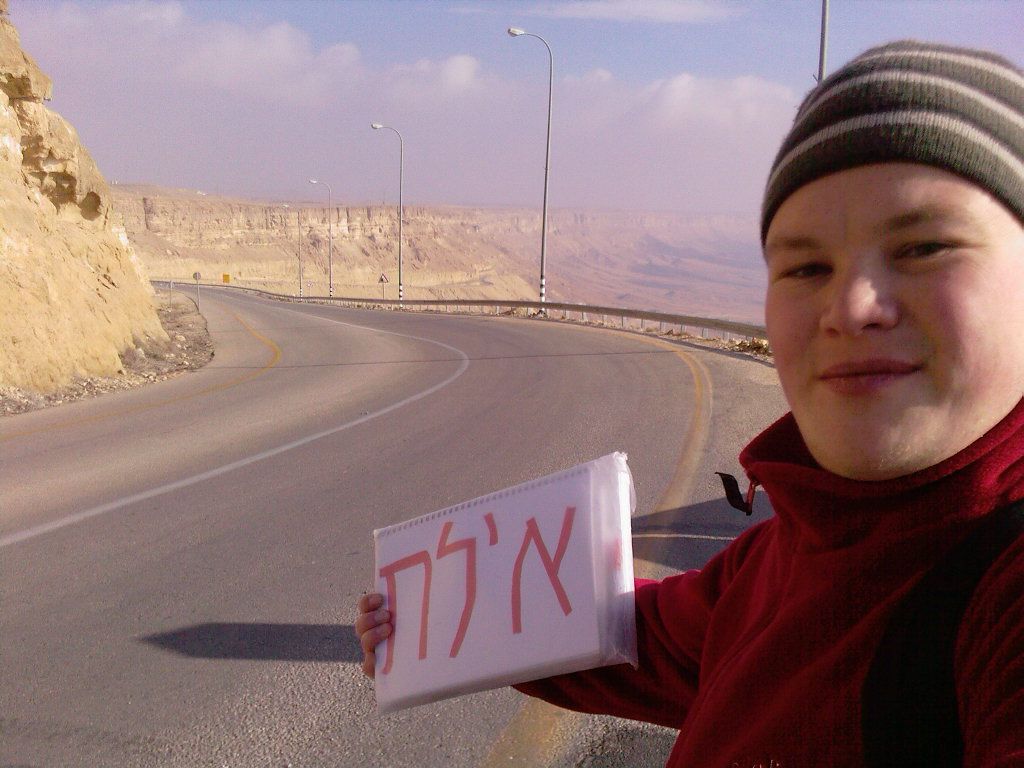
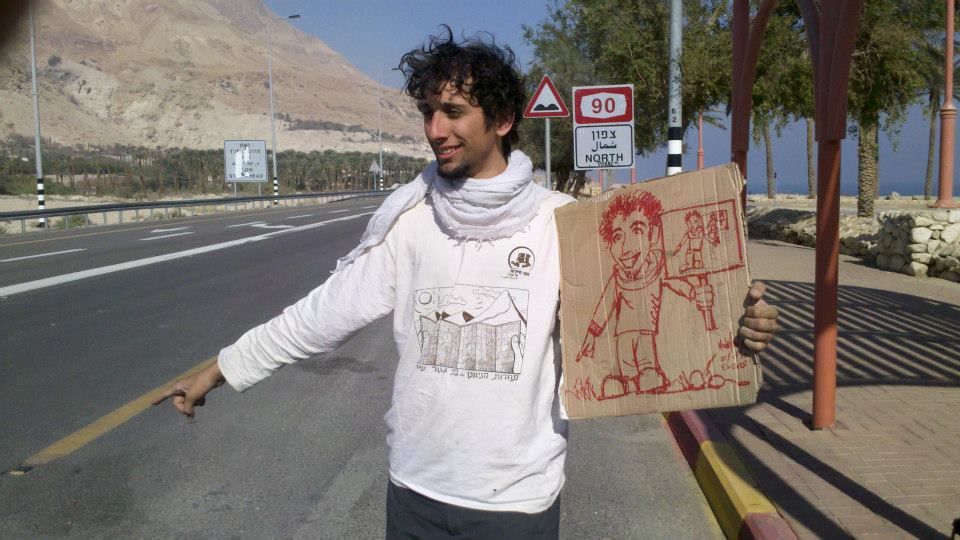
The most usual way to start an hitchhiking journey is to take a bus out of town, to a junction in your direction. Almost every junction has a hitchhiking spot (the famous Trempiyada), or at least a bus station where drivers can stop. Many drivers stop in such a place simply to drop or pick up people, not for picking you up - approaching them can still pay off well though, as often they will pick you up anyway. guaka's wild guesstimate is about 20% of the time, definitely worth the walk, the gesture and the smile.
In some places, like Tel Aviv, it's very hard to hitchhike from the city, and inter-urban buses are relatively cheap and can get you to the nearest junction. you can hitchhike in Tel Aviv at Aluf Sade junction (near Ramat Efal, Shafrirm interchage, near Bar Ilan uni). sometime it's easyer even to take a train to the airport and than walk to the bus station and hitch-hike there to jerusalem. Jerusalem is really friendly to hich hikers, and you can hitch hike even in the nighbourhoods. There is 6 exists from the city, to different directions, and you have Trempiyadas in all of them. ask locals where is the best spot to hitch hike to ypour next destination.
The longest road in Israel is 90 road, that go from the northest point in Metula, to Eilat. it's NOT an high-way so it's not a crowded one but quite usefull when you hitch-hiking becouse you can stop basicly everywhere and it's will take you to the north, south, dead sea, jerusalem, Tiberias, Sea of Gallile, Rosh pina..and cet. it's also goes near the Jordanian border.
In the rural areas, hitch-hiking is extremly common and people will help you and sometime will take you especially to the place you need. People in Israel are direct, so don't be shy, you can share your destinations and they will help you to get there.
Road 6: It's a highway road the intent to cross the country from North to South. it's a paying road, and it's the faster road in Israel. therefor its impossible to hitchhike on it, but you can join it always in the interchange before.. for example- from center to north, get to Kesem junction, (train go there, and also easy to hitch hike from west bank) and walk on the sidewalk until you find trempiyada to north. Near Modiin there is Shoam junction, and from the south you can stand at the outside for Kiryat Gat. in the north, the soutern trempiyada in Yokneam it's gooD spot. MIND THAT once you on road 6 peoople usually don't get dowwn so if for example you need to go to Tel Aviv, don't take a lift to Jerusalem becouse they don't have place to stop. there are 2 gas stations in road 6, and you can try to stop there..
Legality of Hitchhiking
Israeli law addresses hitchhiking more directly than almost any other: regulation 112 of the תקנות התעבורה (Traffic Regulations), 5721-1961, headed שהיה בכביש, provides that a person shall not stand on the כביש — the carriageway — "whether in order to stop a vehicle for the purpose of a ride, or for any other purpose", except in an official capacity. The word carrying the weight is כביש: regulation 108(a) tells a pedestrian to keep to the pavement or the שוליים, the shoulder, wherever there is a usable one, so standing on the shoulder rather than in the carriageway is both what the law requires of you and what puts you outside regulation 112. Regulation 69(a) then forbids a driver on a non-urban road signed as a main or regional road to stop, stand or park on the carriageway or the shoulder — but 69(b)(1) excepts "picking up or setting down passengers on the shoulder", which is precisely the manoeuvre a lift consists of. On a דרך מהירה that exception disappears: regulation 69(c) bans picking up or setting down passengers, and stopping, standing or parking, anywhere between the fences bounding the road unless signed otherwise, so Route 6 and the fenced stretches of Route 1 are closed at both ends. If you do end up on the carriageway, regulation 109(a) puts you close to its left edge with your face to the oncoming traffic.
Safety
Like always, precaution is needed when hitchhiking, although in Israel hitchhiking is a way of life. You will find hitchhikers everywhere. Even still, caution is necessary.
You should remember that as a country in a sub-tropical region, it can get very hot in Israel, sometimes as early as March and as late as September. If you can, before hitchhiking check the predicted weather in the region of your travel, and if it's going to be hot, don't ignore it. Exposing yourself to heat without caution can be dangerous. In hot days, wear a hat and drink a lot of fluids, especially if hitchhiking in the desert. Suncream and sunglasses are also recommended.
Due the fact that Israel is also in a problematic security situations, I think you just need to be bit more carefull that your usual, especially if you hitch-hike west bank, and if your intuition alert you from the driver, don't jump in.
Cities and locations
- Jerusalem
- Tel Aviv
- Haifa
- Be'er Sheva
- Dead Sea
- Eilat
- Ben Gurion International Airport
- Rosh Pina
- Tiberias
- Netanya
- Modi'in
- Rehovot
- The Golan Heights
- Mitzpe Ramon
Politics of hitchhiking in Israel
It's common to get rides from Palestinians with Israeli citizenship ("Arab Israeli" is a problematic term) and from religious Jews. So it's wise to avoid talking politics unless you really know your ways and who you're talking to. Remembers a ride where the driver was listening to Arabic music, not speaking English, but indicating he "hates all Arabs", he just loves Arabic music. Tricky.
Vulla: "All the people will ask you why did you choose to travel in Israel. Most of the people want to talk about the politic situation, don't be afraid to ask questions...people want to show their point of view and just demonstrating that Israel is really a great country and not just a country war which it seems from outside, they will not have problems to say what they real think. That's my experience hitchhiking in Israel, is a real way to understand this complex but great land".
A lot of Palestinians don't speak English, and if you are in Israel "proper" it can actually be okay to approach Palestinians in Hebrew (especially if you're not a native speaker). It is another story inside the Isreali occupied West Bank. And you can easily find yourself there when hitchhiking, if you're not aware. And in the West Bank it can be dangerous to approach Palestinians in Hebrew.
Hitchhiking inside the West Bank comes with its own special intricacies.
Some Orthodox Jews prefer to speak only Yiddish, so it may be helpful to learn a few basic phrases in this language (hint: it's mutually intelligible with German).
Inside Israel (not in the West Bank) it's significantly harder to hitchhike at junctions close to Palestinian villages. Somehow cars coming out of the village are less likely to pick up hitchhikers. This could be because their wife is sitting next to them or someone of the closely knit network of the village is driving behind them. In such cases it makes a lot of sense to try to find out of the previous or next junction has different traffic (e.g. predominantly Jewish or further away from Palestinian villages) and to move on or back there.
Shabbat
In Israel people work on Sundays so you'll be fine, but Shabbat is a fairly bad 24 hours for hitchhiking there since religious people are not driving at all (and they're usually quite skilled at picking up hitchhikers) and there's generally less traffic, but particularly on smaller roads there will be a lot of people out with their families and people pickup hitchhikers more because there is no public transport. Note that Shabbat starts on Friday when the Sun sets and ends at sunset on Saturday. Friday night, a few hours before sunset and Saturday night, immediately after sunset, are both EXCELLENT times to hitchhike! Many people drive from rural areas to the "center" of the country, urban Tel Aviv or Jerusalem due to visiting family for the Shabbat (Jewish sabbath) - beware of the traffic jams!
Crossing borders
Note: Israel shares borders with these countries; however, due to hostile relations between the states, it is impossible to legally cross over to Syria or Lebanon; Getting to Gaza should requires special circumstances (being a journalist or an aid worker etc.). Getting to Egypt and Jordan can be easily done through the border crossings with those countries.
Getting into Palestinian autonomy in the West Bank is hassle free, as that is not a border. Sometimes on the way out of the autonomy you would need to present your passport with a valid visa (a slip of paper you get upon arrival to the country) in the checkpoint.
To Egypt
Taba is the only border crossing for passengers from Israel to Egypt. It is situated 5km south of Eilat, and is accessible by public transport from both directions. There are almost no cars passing the border, everyone does it by foot. Notice that if you plan to continue after Sinai, to Cairo for instance, you most likely need an Egyptian visa which is obtainable in the Egyptian embassy in Tel Aviv or the Egyptian consulate in Eilat. Bring with you 4 passport photos, 100 NIS and a photocopy of your passport. It takes around 4 hours for Western citizens. Since 2017, you can also obtain a visa online.
Before 2002, Rafah border crossing was also a way. After Israeli forces closed down the Rafah border crossing in Gaza in 2002 and after the disengagement from Gaza in 2005, Taba is the only border crossing for passengers from Israel to Egypt.
To Syria and Lebanon
Not possible. You can't enter Syria or Lebanon coming from Israel.
Stamps issue: These two countries, along with a just a few others Arab states (all in all, less than 10 Arab states) will deny entry of visitors with evidence of visit to Israel. This means: passport that shows that you've been in Israel, even with just a stamp from a border crossing to Egypt or Jordan (see next section for more details).
Avoiding an Israeli stamp
Since 2013, Israeli immigration officers no longer stamp passports but issue visa paper-slips instead. You should keep the slip until you exit Israel.
At the Jordan crossings officials on both sides generally seem to not stamp your passport if you ask them to.
Egyptians generally always stamp. Your only way to avoid a stamp when going to Egypt from Israel is to go through Jordan, and take the ferry from Aqaba to Taba, Egypt.
To Jordan
Israel currently run 3 border terminals with Jordan:
1# In northern Israel, next to Beit She'an, you can cross in the "Jordan River"/"Sheikh Hussein" border crossing, from which it is quite straight forward if you continue onwards to Amman.
My partner and I (French and Chilean) hitchhiked across this border in April 2019. It is not allowed to walk across the border! So you have 2 options: - you can take the shuttle bus across the noman's land (its costs 5 shekels/person) - you can hitchhike a car just before the border but be aware that there are not so many cars going through. We saw only 2 cars driving from Israel to Jordan in 3 hours on a monday afternoon! Cars must stop at the border entrance so it was easy to ask directly the driver to give us a ride. It looked like there was a bit more traffic on the other way from Jordan to Israel. Normally we should have pay 107 shekels (102+5) to leave the country but it appeared to be a bit cheaper as a group: we paid 311 for 3 persons (104 shekels/person). The Israeli custom officers did not ask any questions and did not open our backpacks. On the Jordan side, we did not pay nothing for the visa as we already paid online our Jordanian Pass and showed it printed. #lemondesurlepouce
2# In central Israel, in the West Bank, "Allenby"/"King Hussein" border crossing, separating Jordan from the Israel/West Bank. The border crossing is jointly operated by Israel (for international or Israeli passengers) and the Palestinian Authority (for Palestinian passengers). This is also the most direct border crossing from Amman to Jerusalem. Crossing into Israel/West Bank require no special visa. Crossing into Jordan requires obtaining a Jordanian visa in advance, as such are not issued in the border crossing.
3# In the south, 3km north of Eilat, you can cross at the Arava crossing (Yitzchak Rabin terminal) which separates Eilat from Aqaba.
This is only landborder Israel/Jordan that you can cross by walking! At this landborder, the Jordanian visa is free of charge! You will just have to pay the exit fees of Israel (107 shekels)..at least for French and Chilean citizens So if you are in a budget, you should consider crossing in Eilat as it is the cheapest option! #lemondesurlepouce
Personal Experiences
Jordan
Edit on wikiJordan is a country in the Middle East.
Hitchhiking
The country is not too big and if you are really in hurry you can cross it - even with hitchhiking - from North to South on one day. The roads are not the best, but usually the mainroads between the big cities and the main sights are quite fine. In general it is very easy to hitchhike in Jordan. The people are very friendly, they always try to help out foreigners.
If you are standing next to the street and show some attention to a coming driver most of the times he will already stop for you. You can also just wave to him or point with your forefinger down to the earth. Try to avoid stoping cars with your thumb - it is more sign for sex workers. But I think the people will understand you anyway. Some drivers stop for you even if they don't go your direction just to say 'welcome' or to get to know your name, origin and destination. The best way is to stand at a junction outside of the city and point into the direction you want to go.
Once you have a ride, some drivers won't even let you out until they have stopped another car which is going your direction. More and more Jordanians speak at least a bit English, of course, but not everybody. Some Arabic is never bad - but with the name of a city most of the people understand you. In the worst - or funniest - case they will give you their phone with some relatives or friends on the other side who have a little more idea of English, French or German.
In a lot of parts of the country, especially in the south there are not even buses or any other public transport (p.e. from the main road to Wadi Rum). So hitchhiking is sometimes even for the local people to get around. Most of the times the drivers expect you to pay. In the cities there are also a lot of private people trying to make taxi business with you. If you really don't want to spend money for your ride - and it is possible! - stay strong. "No money" or "No taxi" understands everybody. Just make it sure when you get into the car. Your best bet is to try to stop lorries - they are usually going far and they don't seem to care about money. If it is too hard to get out of the town walk it, a taxi driver will try to bring you all the way to your destination; it is very common to go by taxi long distance - but not necessary in this paradise of hitchhiking!
Legality of Hitchhiking
The law here has not been checked. Nobody has yet read the road traffic rules in force in Jordan against the official text, so this section cannot tell you what they say, and nothing elsewhere on this page should be read as a statement of the law. What holds almost everywhere is that hitchhiking is not an offence in itself and that what the traffic code regulates is where a pedestrian may stand — off the carriageway, and off motorway-class roads and their slip roads altogether — but whether that is true here is simply unknown. Ask locally before standing on a major road, and treat the rest of this article as what hitchhikers report rather than as a rule you can rely on. If you can read the official text, please replace this paragraph with the provision it turns on and a link to it.
Safety
In general the Jordanians are very friendly, helpful and respectful to male foreigners. Just make sure it is clear where you want to go and what they can expect from you. But I had never bad experiences. Most of the time they even offer you money or invite you to their family for dinner. There are many checkpoints where sometimes your ID will be checked. If you only hold an Israeli passport it's probably not a good idea to hitchhike at night.
A lot of locals are not repectful to female foreigners and behave like perverts (expect to be kissed and touched by sellers in shops, car drivers, couchsurfing hosts even if your boyfriend is standing next to you). See more details in Personal experiences section
Get in
Visas are obtainable at land borders. Usually you get a visa for one months. You will have to say, what are you planning to do and what is the first place where you are staying. If you want to stay longer you can extend it in any police station. For more information contact your embassy or research in the internet. People from Arab countries don't need a visa.
Aqaba has free special economic zone visa. If you arrived by plane in Amman you can get free visa, like in Aqaba, if you tell border officer that you are going to Aqaba and want ASEZA visa, but you must register in Aqaba Special Economic Zone Authority office (29.55884047696434, 35.02046203276475) in 48 hours. Go to window #18: "Residency permit renewal". When you will leave country they may ask you registration paper. If you do not have it you might be fined - every day in Jordan might be counted as overstay.
Locations
- Dead Sea (Jordan)
Border crossings
There are 2 border crossings to Israel and one to occupied Palestine. There are also land crossings to Syria, Saudi Arabia and Iraq. However, as of January 2015, the Syria and Iraq borders are closed indefinitely.
Aqaba Border Crossing to and from Israel To get to the Border Crossing in Aqaba it is quite hard. Either you have a map and try to find it walking. It is at least 5 km from the mainroad. Best way is to take a taxi from downtown. Don't pay more than 3-5 dinar. On the Israeli side it is just 2 km to the mainroad between Eilat (another 5 km) and Jerusalem (300 km) and the Dead Sea (250 km)
Jordan River Border Crossing to and from Israel You won't be allowed to cross this border crossing on foot. Maybe you are lucky and you can discuss with the soldiers but I wouldn't be sure. Usually there are busses just for crossing the river which marks the border between Jordan and Israel. On both sides it is just 2.5 km to the mainroad (Jordanien side) or the next village (Israeli side) from where you will be able to get a ride.
Allenby/King Hussein Bridge Border Crossing to and from Israel/Palestinian Authority This border crossing is significantly more difficult and tedious than the other two crossings, as this crossing serves Palestinians who go to/from the Palestinian Autonomy areas. It is common for travelers to be subjected to several-hour waits, intense interrogation (including searches of journals, phones, and computers). From Amman, a taxi may be taken to the crossing for 10 dinar. It also may be possible to hitchhike to the border, but the taxi is a much more certain option. To get from the Jordanian border control point to the Israeli one, travelers are required to pay 10 dinar for a spot on a bus, with luggage costing an additional fee. If you are lucky enough to be allowed entry into Israel/Palestinian Autonomy, you will need to pay to board another bus from the border to either Jerusalem (and from there to the rest of Israel) or to Jericho (a Palestinian city).
Personal experiences
June 2022
We (F+M couple) successfully hitched around Jordan (Amman, Petra, Tafila, Dead Sea, Madaba) in June 2022. Unlike the previous experiences expressed below, our experience was of very welcoming and respectful people, who were very generous and keen to help. Most people were happy and curious to meet travellers from Australia.
We suspect the unfortunate experiences expressed below may have been a rare exception, as our experiences were quite the opposite. No one tried any inappropriate touching, kissing or hugging!
From what we saw, foreign hitch-hikers are not so common in Jordan and people often assumed we wanted a bus or an informal taxi service ("I'll take you for 5JD"), or perhaps simply that we were lost and needed help. Still, we got rides from a wide variety of folks, including truck drivers, farmers (complete with goats in the back of the pickup), students, a tour guide, a security guard, foreign workers, and foreign tourists. We did not expect to get picked up much by cars with muslim women, but did get a ride from a young family with a baby on board.
Following common advice to travellers in middle eastern countries, he did most of the talking and sat next to the driver when appropriate. She felt a bit invisible with some of the more conservative folks, but that was rare.
We experienced no disrespectful or inappropriate behaviour. Throughout our travels, we found people incredibly polite (even hawkers accepted the first 'No thanks' and wished us 'Welcome to Jordan' with a smile). People were keen to know we were having a good time in Jordan, they often drove us a bit out of their way, and they often offered us additional help, food and drink.
February 2022
I hitch-hiked with my girlfriend, in general people are friendly and speak English, but there are a lot of perverts. Our couchsurfing host tried to kiss my girlfriend into lips in front of his friends and I was just 3 meters away, then he asked me if he can have sex with my girlfriend or watch how me and my girlfriend have sex.
During hitch-hiking drivers ask me if we are married, I confirm that, then as soon as I go out of car drivers tried to kiss my girlfriend and used force to hug and touch. Some driver quickly kissed my girlfriend into neck when we started walking away, I was 1 meter away from them.
Same thing happens in shops, sellers try to touch and kiss while I stand in 0.5 meters from my girlfriend. She was wearing regular traveller clothes - winter pants, jacket, she had big backpack with attached mattress.
Now I understand why in their culture they do not allow anyone to see their sisters and daughters. Houses are divided in male and female parts with separate toilets and showers, so nobody can't see even shadow of girls. These meausures are necessary in society where almost everyone will try to kiss/touch girl.
Saudi Arabia
Edit on wikiThe Kingdom of Saudi Arabia is a country in Western Asia. It's generally hard to get visas for people who are not Muslim and not from Muslim countries.
Hitchhiking
Hitchhikers are known for their determination though, so if it is truly your desire to visit, the easiest way is to gain a position as an English teacher in a private academy. There are many jobs in this industry. The TEFL certificate to each is easy to obtain, and can be got over the internet with a minmum of a month to complete. When you find a job, the company will pay for your visa and flights into the country. The contracts generally state a trial period. You can then do as you please when in the country. There are no barriers to internal travel, except within holy cities. To get out the country, it is quite easy to be sacked by a company, and they are obliged to pay your airfare back home.
Other ways to enter the country are as visiting family to current numbers living out there, and this is difficult to obtain.
It has been whispered that within the next 2-3 years, KSA will begin issuing tourist visas. Which probably means 20-30 years at the speed Saudis work. (Edit 2020: This was written back in 2014 and the Saudis managed to introduce the tourist visa in September 2019, so it "only" took 5 years:P )
When you are in, hitchhiking is quite feasible. Saudis are generally well educated, as fascinated by the West. The highways are built on the USA system, and are difficult to hitch on. However, stand at an exit, and a Saudi will soon stop to ask if you need help, and will run you out to a good place. The ferry to the Farsan Islands is free from Abha, and hitchhiking in the islands is very easy, as is wild camping.
Saudi hospitality is golden (if you dont happen to be from India, Pakistan, Sudan, or any of the pool of poor countries it indentures as modern slave labour). Saudis have a warm heart, and are keen to cut through misunderstandings about their society. You will often be offered bread, food, tea, soft drinks... especially during religous holidays. A trip to the desert, or a Saudi wedding, are priceless cultural events.
Legality of Hitchhiking
The law here has not been checked. Nobody has yet read the road traffic rules in force in Saudi Arabia against the official text, so this section cannot tell you what they say, and nothing elsewhere on this page should be read as a statement of the law. What holds almost everywhere is that hitchhiking is not an offence in itself and that what the traffic code regulates is where a pedestrian may stand — off the carriageway, and off motorway-class roads and their slip roads altogether — but whether that is true here is simply unknown. Ask locally before standing on a major road, and treat the rest of this article as what hitchhikers report rather than as a rule you can rely on. If you can read the official text, please replace this paragraph with the provision it turns on and a link to it.
Visa
The mythical Saudi tourist visa has apparently become a reality, although it is fairly expensive. Saudi Arabia has begun issuing online visas for attendees of certain international events (the first one being the Formula E race in Riyadh on December 15, 2018). You'll obviously have to buy a ticket for the event, pay the visa fee and insurance. The total for the Formula event was around €240. According to the website, the visa is valid for 30 days, however those who got the visa reported only 14-day validity. You may arrange the dates as you like, however they must include the date of the event. It is unclear whether you actually have to attend the event, likely not.
Update 2019: The Saudis have finally introduced an actual independent e-visa in September 2019, so going there is now easier than Iran. It costs around SAR470 (around EUR110) incl. mandatory insurance. Offical website. It's a multi-entry visa valid for a year, with 90 days per individual stay. It is unclear whether it is valid for overland entry (the usual rule in Saudi Arabia is that your first entry should be via an airport). It is definitely not valid for overland entry from Bahrain.
Language Barrier
It’s very unlikely you’ll meet someone who speaks English, especially in rural areas. Be ready to use offline Arabic translators — though they aren’t always reliable. The best option is a voice translator: just hand your phone to the driver so they can speak directly into it while they're driving.
Also keep in mind that city names are often pronounced differently than they’re written. Double-check pronunciations, or be ready to point to the city on a map when giving directions. And most importantly, learn at least a few basic Arabic words.
Heat
Try to avoid hitchhiking in Saudi Arabia during the summer. Temperatures can rise past a brutal 50°C, while in winter they stay around a much milder 20°C. Keep this in mind and avoid spending too much time outside. It’s best to hitchhike in the evenings.
During the day, find shade under highways, at mosques, or near gas stations to catch your breath. Drivers often stop their cars to prevent overheating, which can slow down travel. Always carry enough water with you — dehydration here is no joke. Fortunately, most drivers keep plenty of spare water in their cars and are usually happy to share.
Food
Most drivers will offer you food—not just snacks, but full, hearty meals of rice, chicken or mutton, and vegetables, either at their homes with their families or in local restaurants. It’s a deeply rooted cultural tradition. Meals are typically shared while sitting on the floor and eating with your hands, making the experience communal and welcoming. Sharing food often turns into an opportunity to meet families, exchange stories, and build new friendships. Most probably you'll never have to buy food yourself due to hospitality of Saudi Arabia people.
Places to sleep
Finding a place to stay while hitchhiking in Saudi Arabia is relatively easy. A significant number of drivers, excluding truck drivers — may invite travelers to their homes, either to rest or to meet their families.
When private accommodation is not offered, mosques provide a reliable alternative. In Saudi Arabia, mosques function as public spaces that are open 24/7. It's usually only for Muslim people, but nobody controls it and if someone asks you and you'll explain your situation - most probably it will be ok. Visitors are generally free to enter any time, pray, rest, drink water, use the bathroom, sleep on the carpet, and charge their phones.
This accessibility makes mosques an important and welcoming resource for drivers and travelers in the region.
Things to be aware of
Suspicion of drivers: Saudi Arabia has strict laws and truck drivers are often reluctant to pick up hitchhikers. Large backpacks may raise suspicion of drug smuggling or other illegal activity. Some drivers will refuse outright, while others may require reassurance, such as showing the contents of your bag, passport, or visas, before agreeing to take you.
Cultural restrictions: Saudi culture and religion differ greatly from Europe. Hitchhiking as a woman is considered unsafe due to strict gender norms and female hitchhikers often report being harrassed in Saudi Arabia. Also discussions about religion can also be sensitive. Travelers of other beliefs may face pushback, particularly from older people, so it is often best to keep such conversations vague. Tattoos and piercings are frowned upon, especially in mosques, and should be covered if possible.
Police may occasionally stop hitchhikers, usually out of curiosity rather than hostility. They may ask questions or check luggage, but generally remain friendly once reassured. This is less strict in Saudi Arabia compared to neighboring countries such as Egypt or Jordan, where police and military checks can be much more difficult.
Curiosity and hospitality: Saudi Arabia is very hospitable toward foreigners. Travelers are often invited to family gatherings, shown around, and offered food or even money. Since few people visit the country outside of the capital — and even fewer by hitchhiking — locals are usually curious and will ask many questions.
Crossing borders by land Crossing borders with neighboring countries can be challenging. It is generally not permitted to cross on foot, so finding a vehicle is necessary. Drivers are sometimes hesitant to take hitchhikers across due to concerns about illegal activity. At border stations, some people offer rides through the border for payment. In rare cases, border officials may assist by placing travelers on a bus or other vehicle crossing the border.
Cities
- Riyadh
The most conservative of the countries cities, it is a joyless, bland and totalitarian city, full of religious police. For cheap food and a more real atmosphere, head down town on cheap local buses *2SAR and go to Little Manila, the Philipino district, which is a breath of fresh air.
- Jeddah Port city on the Red Sea. Much more relaxed, and the with a beautiful old town.
- Mecca
Here, and Medina, are off limit to non-Muslims. Your visa on your passport will stipulate that whether you are or are not a Muslim.
- Medina
- Dammam
- Taif
- Buraydah
Personal Experience
2012
In 2012, lukeyboy95 did a 4 month stint in the country as an ESL teacher. It is a great place to save money for travels. It is tax-free, you are paid in dollars, and the companies pay all living costs. Work is easy, and gives plenty of scope for planning other trips. I travelled 2 years with the money earned. Just be very VERY weary of Visa conditions. You need permission from your company to leave the country. In Saudi, it is not uncommon to be picked up without even putting your thumb out. It is a HIGHLY safe society, as you would expect with all the chopping (exagerated) that goes on... you can go anywhere, at any time. Exercise more caution in conservative zones, where zenophobia could be higher. Highways are great, with alot of private cars. I hitchhiked on the Red Sea coast, and a bit in Dammam. Very easy. The Farasan Islands are absolutely beautiful and deserted, and there are many interesting sights, including the mountains. Alot of cultural sensitivity is required.
2015
In 2015 I was able to get a 3 day transit visa at the vfs Tasheel office in Amman, Jordan (the address is: First Floor, Amman Gate Building, 7th Circle, Near Abu Aishah Mosque P.O.Box: 850445, Amman 11185, Amman, Jordan) There I convinced the guy I needed to get through overland to get a flight from Dubai (even though I had no proof), and they let me submit an application. It took 5 business days to process, and when I got it they let me hitchhike into the country from the border south of Ma'an. From there I went to Madein Saleh, and then to Hail. The police eventually caught on and told me (as I was on my 3rd day at this point) that I had to leave, so they bought me a flight to Dubai. They were always very courteous, and even with only 3 days it was a fascinating experience. Knowing arabic helped immensely as many people only spoke that.
Yemen
Edit on wikiYemen is a country in Western Asia with borders to Saudi Arabia and Oman.
Hitchhiking
Legality of Hitchhiking
The law here has not been checked. Nobody has yet read the road traffic rules in force in Yemen against the official text, so this section cannot tell you what they say, and nothing elsewhere on this page should be read as a statement of the law. What holds almost everywhere is that hitchhiking is not an offence in itself and that what the traffic code regulates is where a pedestrian may stand — off the carriageway, and off motorway-class roads and their slip roads altogether — but whether that is true here is simply unknown. Ask locally before standing on a major road, and treat the rest of this article as what hitchhikers report rather than as a rule you can rely on. If you can read the official text, please replace this paragraph with the provision it turns on and a link to it.
alex: I found it very easy to hitchhike in Yemen, however, there are special permits needed when people want to move on the countryside. It seemed to me that those are not only for the safety of tourists, but also for more control of the government about what foreigners are allowed to see. (There are some tribes that do not accept the government, but the government isn't very nice to them either -- it is better not to get in between, check the current situation when you get there about which areas are no-go). Army check points that control for guns and your permits could be seen as the metro stations of Yemen (as service stations are on German highways, you jump from one to the other). The guys there have been very friendly to me and also helped me to organised lifts for my onward journey. However, sometimes I found it personally to much of a hassle as they are not very used to this, so I recommend just to organise your lift at other places and cross those points in a car (when the situations allows it). It is helpful to have some knowledge of Arabic, but I think it is not obligatory for getting around. Payment for the lift is generally expected, but this will be agreed on in the beginning of the journey (when you decide to use this car). On the main routes I turned those lifts down as there is enough traffic on the streets. Ah, yes, I have been told to better avoid cars with white number plates, those are from the government and rich oil companies and together with white people it might make them/you to a target to kidnapping.
Cities
Sana'a capital
Personal Experiences
Links
Oman
Edit on wiki'''''' is a country in the Middle East, bordering the United Arab Emirates, Saudi Arabia and Yemen. Iran by sea through the ferries in the Persian Gulf.
Hitchhiking
Hitchhiking in Oman (especially in the more populated north) is quite
easy.
- In fact I found it loads more easy in the south. The north and its
people feel a bit more european.. Nevertheless north and south it's been
the best hitching experience I had anywhere in the world! Some moments a
car went by not stopping for me and I was actually stunned that it
didn't stop, I had forgotten that some people don't stop for
hitchers!;-)
Locals are curious about people standing in the middle of nowhere and
give you a lift because they want to know what you are doing here. Food
is sometimes "included". Most of the petrol stations (as well other
places; from embassies to reataurants) have free filtered water on an
outside wall, which you can use to refill supplies. Hitching in the
remote areas of Oman is incredibly easy — as soon as a car comes along.
If you have to wait more than a few minutes for a car, then the chances
that it will stop are very good. Waiting in a spot and then starting to
walk when a car comes helps greatly, the Omani are extraordinarily kind
people, and will feel obliged to stop and help you out.
It's also possible to hitch the taxi's that roam the roads. If you do it right, you can get about 20% of your lifts in free taxis. If you are walking besides the road, turning around and thumbing when a car passes, but not thumbing for a taxi, often they stop anyway. They drive up besides you, and ask you where you are going. Tell them "maafi fluce"(I have no money), and tell them that you are walking to your destination. Often they will let you in for a free ride, it happens quiet often if your walking on the side of the road. And don't worry, once your in, they will not then turn around and ask you for money at the end of the ride - Oman's taxi drivers are the nicest I've ever found in the world.
Although english is spoken by virtually everyone and most signs are
in both languages, learning how to read and pronounce arab letters can
be a good idea. People will open up even more at foreigners showing the
smallest effort to learn their language.
Many locals were surprised when they noticed me reading arab
letters! Sometimes I found it helpful to know pronunciation of letters
when trying to say a city's name, as with english spellings don't tell
me the difference between "t" and "T" (and there is one). Arabic Alpha
is a free app for iPhone an Android and I found it most helpful of all
things I tried.
It's not mine and neither get I paid for saying this.;-)
--Marcel
Legality of Hitchhiking
The law here has not been checked. Nobody has yet read the road traffic rules in force in Oman against the official text, so this section cannot tell you what they say, and nothing elsewhere on this page should be read as a statement of the law. What holds almost everywhere is that hitchhiking is not an offence in itself and that what the traffic code regulates is where a pedestrian may stand — off the carriageway, and off motorway-class roads and their slip roads altogether — but whether that is true here is simply unknown. Ask locally before standing on a major road, and treat the rest of this article as what hitchhikers report rather than as a rule you can rely on. If you can read the official text, please replace this paragraph with the provision it turns on and a link to it.
Muscat
Hitching in and around the area of Muscat is more difficult, making up for the ease of the rest of the country. Too much traffic, too many taxis, and the people see too many tourists. They are curious, but often by the time they decide to make a decision they have been swept away by the rest of the traffic. Using the micro-buses inside the city might be a viable option as they only cost 500 baizas (1.25$). Most of them go to the central terminal in the Ruwi area, which is also the terminal for long-distance buses.
Travelling as a couple or two couples I made a different experience in the capital: Many a times we'd wait less than 5 minutes and someone curious stops and literally turns into a free taxi, abandoning their own business and driving us where we wanted to go (within Muscat, which still can take more than half an hour) out of hospitality and curiousity.
Muscat is a pain to get out of, it is an incredibly long, stretched and highly dense city, as all the people live along the coastal strip. One thing to try is finding a small entrance to the main road, and try waving to cars about to enter the highway, tell them you have no money for a taxi, if they could take you to where they are going. Or tell them that and why you don't spend it on transportation, instead of lying. Omanis speak a decent english. Often times they will take you all the way to where you need to go in the city. As they hardly never see a backpacker, you are more of a novelty than the hordes of retired tourists and ex-pats that crowd the place.
Hitchhiking out
Towards Sohar and the North West
Option 1
That is very good place on the intercity highway without taxis You can
get here using bus #6 from here: or. Get off the bus here and follow
path which will lead you to the mentioned good place on highway.
Option 2
Take a bus(A1 or 1) or taxi to Mabelah. Taxi cost almost same as bus along the main city road, 0.5 Rials from Gubra to Mabelah in 2024. The taxi will stop at this location and will not go any further. Now you can take another taxi (0.2 Rials in 2024) to this location. Here you can start hitchhiking, this roads has plenty of cars and taxis and leads to UAE border, but most of cars are not going far, so be ready for short lifts.
Towards Nizwa and Southwest
Take Bus #9 and get out in Falaj Al Sham or further. It's end of city with very little amount of taxis here and hitchhiking here is very easy.
Southern Oman Dhofar
The Dhofar region around Salalah in the south is quite hitchable.
Many guest workers (mostly Pakistani and Indians) hitchhike to work
there so it is nothing unheard of.
Marcel, 2017: I disagree. In 3 weeks and 3000km I haven't seen a
single local hitchhiking. Autostop seems to be more known than in Iran,
yet also in the south people seemed to wonder how I got to the place
where they picked me up.
It is recommended to clarify if your lift can take you into the next town, or drop you at a gas station close to the road. The heat is not as bad as in most other places in the Arabic Peninsula, but bad enough. You will still need good sun protection and water as you will sweat a lot. Inside towns or on gas stations though you can usually cool down as most bars, supermarkets and shops offer air conditioning. Due to a special climate the weather is moderate and extremely humid between June and September. It is said that there is a lot of tourism coming to Dhofar in this time to see (well, or not) the supposedly neverending thick mist covering all Salalah area.
There are free public toilets, sometimes also including showers, on the beaches west of Salalah. As of April 2010 they were reasonably clean. Al Fasayah is the secret spot in this area and for sure without amenities, given it's remoteness. After some 40 or 50km from Salalah towards Yemen there's a sign for Fasayah or Fazajah to the left. From there it's 10km of hiking down to the beach, enjoy! A skilled and adventurous driver could do it with a 2WD but many locals wouldn't even dare in a rented 4x4! Hitch the Salalah-Yemen street in a pickup or jeep and chances are the driver's gonna bring you down to the beach, but be prepared to walk back up on yourself! The mountain panorama is gorgeous and ten times worth it, even if you turn around without going the long way down to the beach.
Musandam
If you find yourself in the incredible region of Musandam, hitching on boats between the coastal villages is possible. You may have to pay a fisherman to get you out of Khasab; ask at the long row of moored boats between the castle and the main road. 10 OMR (25$) is a fair price for a ride to the Telegraph Island area, but you can haggle for less, especially if the fisherman is going out anyway. Then with a little sign language you can hitch a ride for free or cheap between the many villages which are only accessible by boat. There is a large population of Pakistani expats who are truly hospitable.
I didn't hitch on the roads in Musandam but it's probably the same as the mainland, if not easier thanks to the large numbers of Pakistanis and western tourists in 4x4s.
The castle in Khasab gives away free maps of Musandam with decent detail.
Visa info
Oman has a common visa facility with UAE. If you obtained your UAE visa in Dubai airport (probably also when coming by ferry to Dubai, not Sharjah) and it is still valid for at least 3 weeks; then you can get a 3-weeks free visa for Oman. ONLY if you asked for an extra stamp at the airport/ harbor where you enter the emirate of Dubai! I entered UAE by ferry in 2017 and at the Omani border an officer told me free Omani visa gets only who declared upon entering Dubai that he or she wants to go to Oman and got an extra stamp from Dubai's officer.
It's only the countries mentioned on this site that are benefiting from this: 1. What that website does not mention though, is that this is ONLY possible if you go through the Hatta border (I hitched from Dubai down to Al Ain border, only to get the information that I had to go through Hatta). You still need the exit-stamp from UAE, even though you want the 3-weeks free visa.
The price of the "normal" visa has increased and there are many
websites that provide the old (cheaper) price. Check this website for
the correct prices: 2
In 2017 it was 5 Omani Rials (12.5$) for ten days, extendable by ten
days in police offices dealing with immigration and visa. 30 day visa
costs 20 Rials (50$) and is extendable as well. Extensions are only
possible for the same amount of time and same price as
original visa and time probably starts counting the day you're extending
it. So going to immigration offices two days after you entered Oman is a
waste of money.
In Salalah the process took 3 hours including waiting time and one
hour spent at a copyshop not far from the immigration office where we
needed to get an official letter stating our wanting to get a visa
extension. This letter was required by police, along with payment only
possible by credit card. (But they quickly found a local who payed with
his card and I gave him the cash.)
Find the location of Salalah immigration police at openstreetmaps.org -
at least in Muscat the extension can be done as well, not sure about
other cities.
Border posts
Khatmat Milaha border post (UAE)
In October 2024 it was allowed to cross it by walking. Foreigners can
use that border.
Khatm Al Shikla border crossing post (UAE)
As of October 2024, crossing was only permitted by vehicle. Foreigners
can use that border.
Hamasa Border post (UAE)
Foreigners are not allowed to use it.
Hafeet - Mezyad Border post (UAE)
As of November 2024, crossing was only permitted by vehicle. Foreigners can use that border.
User experiences
alex:
- I found it easy to hitchhike in Oman, however, hitchhiking as such is not known and many people want to drop you of at the bus station or give you money that you can use the bus. When they grasped the idea, some wanted to make an additional way of 300 km just to bring me closer to my destination. Many people also just stopped for me out of curiosity. I had sometimes a hard time to find out where they go to and often ended up to have lift just for a couple of kilometres (being dropped at a bad spot). Further, I never used public transport in the cities as I found it easy to hitchhike there as well. Many people speak English. There are petrol stations along the motorways. No payment was expected for lifts. Great hospitality.
Marcel
I hitched a hundred thousand kilometers on this planet and Oman beats
it all. Yes, part of it may be since I like arabian culture, but there's
more to it. People, especially in the southern half, are so warm and
hospitable, simply want to help where they can and satisfy their genuine
curiousity, while actually remaining respectful. In some other
places on earth I've met a massive hospitality, that however was bigger
than freedom of both host and guest. In Oman I (male...) felt accepted
and tolerated and no one seemed to try to force their
culture/mind/thought-of-what's-right-and-wrong on me.
The country's safe and clean (even kinda proper and made up here and
there), wildcamping wasn't a deal at all. Weather will be
very hot in summer, best time temperaturewise is
November through February/ March.
Martin
I landed in Dubai and got a stamp for free since they now have an agreement with Schengen citizens. I then hitchhiked from there to the Hatta border in Oman and I got a free 21-days visa on the border. However, you first have to get out of UAE and cross the border checkpoint where you'll have to pay something like 7 euros. I think they give it back to you if you keep the paper and go back to the UAE but I'm not sure since I then took a plane from Oman. That was in January 2018 and it was really easy. The border officers were interested in my trip from France to India hitchhiking. There are a few kilometers between the UAE border and the Omani border. Try to get a car before the UAE border or just catch a truck in between! Enjoy Oman, really nice place to travel and meet local people. Nature is also amazing!
Cities
- Muscat
- Salalah
- Ibri
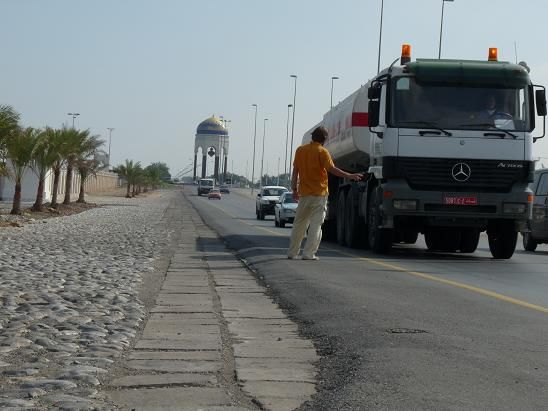
Personal Experiences
Links
United Arab Emirates
Edit on wikiThe United Arab Emirates is a Middle Eastern federation of seven emirates (states), situated on the Arabian Gulf. It has land borders with Saudi Arabia in the south and Oman to the east, while Iran is across the Strait of Hormuz to the north. Its capital is Abu Dhabi, though the most prominent city is Dubai.
Legality of Hitchhiking
The law here has not been checked. Nobody has yet read the road traffic rules in force in the United Arab Emirates against the official text, so this section cannot tell you what they say, and nothing elsewhere on this page should be read as a statement of the law. What holds almost everywhere is that hitchhiking is not an offence in itself and that what the traffic code regulates is where a pedestrian may stand — off the carriageway, and off motorway-class roads and their slip roads altogether — but whether that is true here is simply unknown. Ask locally before standing on a major road, and treat the rest of this article as what hitchhikers report rather than as a rule you can rely on. If you can read the official text, please replace this paragraph with the provision it turns on and a link to it.
In 2024 hitchhiking is illegal in the UAE, because:
- Drivers are prohibited from stopping on the road, there is some fine for that.
- Drivers can't drive strangers in his car. The fine for stranger in the car is about 700 USD.
- If police will find drugs with some of car passengers, every person in this car will be equally guilty. In some cases it can be punished by death.
Common visa facility with Oman
UAE has a common visa facility with Oman, if you obtained your UAE visa in Dubai airport and it is still valid for at least 3 weeks; then you can get a 3-weeks free visa for Oman. It's only the countries mentioned on the Royal Oman Police - Directorates - Passport & Residence website site that are benefiting from this. What that website does not mention though, is that this is only possible if you go through the Hatta border. You still need the exit-stamp from UAE even though you want the 3-weeks free visa.
User experiences
z-z-z88
I hitchhiked from Abu-Dhabi do Al Ain and Oman in 2024. I was staying at several good places and it was extremely hard, because only taxis were stopping. I waited for hours and eventually some Indian people picked me up twice and later local person, who explained me why hitchhiking is difficult here. Actually hitchhiking is illegal now in UAE, because:
- Driver can't stop on the road, it's prohibited and he will pay fine.
- Driver can't drive strangers in his car. The fine for stranger in the car is about 700 USD.
- If police will find drugs with some of car passengers, every person in this car will be equally guilty.
WildWill
I grew up in Dubai and love it for its culture (which might surprise you). It's a mix of all the worlds cultures with an overall Arabian feel... and with history. Outside the city, there is pure Arabia to explore and I wish I could take you to all of it. Hitchhiking is super easy once out of the city, to the extent that I choose which cars to hitchhike. I will say that if you came this far, you must go to Oman as well - it's what you've come to see (and be sure to go all the way to Salalah).
My recommendations:
- In Dubai, go to the Creek (Al Ras metro stop), this is where Dubai started as a port town. The traditional wooden dhows coming from Iran, Kuwait, India and Somalia still line the quayside. Definitely a cultural experience! Find the Spice Souk and breathe in the frankincense and spices. The Gold Souk nearby is worthwhile to see such a heap of gold in one place, then take an Abra ("Open" boat) across the Creek (1 Dirham/$0.27). Find an Indian restaurant hidden in an alley and get some cheap food (shawarma!! or biriyani etc) and a fruit smoothie or chai (also 1dhs).
- The Hajar Mountains in the east are full of oases (wadi), ask your drivers for a good wadi to camp/swim in. Some wadis are dry and barren, some are lush Edens.
- In the very north is an enclave of Oman called Musandam. This is one of my favourite places on Earth, an unknown gem of Arabian fjords. Get to Khasab and pay for a dhow cruise (~150 Dhs, w/ lunch), that will take you into the fjords. You always see dolphins, and they'll probably ride the bow wave. The fjords are peaceful and you'll stop for a swim.
- 3 hours south of Dubai is the epic desert of Liwa, near the Saudi border and the start of the Empty Quarter [closer to Dubai, the desert of Badayer is beautiful]. Huge dunes. Bring water. It's quite quiet but even just a drive through here will be a lasting memory. Hopefully you'll find someone to take you off-road. If this tickles your fancy, the Wahiba Sands in Oman are also epic, and more cultural. Make your way to Falaj Al Mashayikh, NW of Jalan Bani Bu Hassan. This is a Bedouin village and any ride here will likely result in you being welcomed to their Majalis, and inshallah, a desert drive too. Wadi Bani Khalid starting ~30km N of here is another gem, follow the road through the mountain oasis.
Update: I see others are curious about the ferry from Bandar Abbas to Sharjah. I took this route completing my journey from the UK to the UAE. Originally I wanted to hitchhike a dhow, but the port I went to had security gates preventing me from reaching the dhows (Bandar Lengeh - "Dhow Port"!) [this isn't the case in Dubai or Sharjah]. I could have persevered by trying another port, but with home so close and the ferry leaving that day, I took it. I didn't have enough cash left for the ticket, so they agreed to take my passport as collateral and in Sharjah the friendly police escorted me to the ATM, I bought back my passport from the captain and they fast tracked me through security. Ferry took 13 hours, through the night. Not much to report except that it is possible. I don't know how reliable the schedule is. PS. Iran is an incredible country, the friendliest I've been to. Please see for yourself:)
alex:
- I have no experiences with hitchhiking long distances in the UAE as I got a lift directly from somewhere in Oman to Dubai. However, it seemed to me that there are enough half empty cars and people that drive for fun. In Dubai itself I did get some rides from Asian foreigners when I tried to get rides at traffic lights, however, in quite some cases I left cars quite often again at the next traffic light as they suddenly seemed to function as a taxi. North of Dubai in Sharjah leaves the ferry to Bandar Abbas, Iran. I am curious if somebody has experiences in hitchhiking a boat there.
Felix
- I hitchhiked from Dubai to Muscat, Oman and some days later back to Dubai Airport. It was very easy to get back to Dubai, but leaving Dubai was quite hard. After spending hours in Dubai I took a cab into the desert (for about 10 US$) and then tried hitchhiking along the highway towards Oman. Most people that stopped wanted some money and all those who did not want money dropped me off at the next bus station. In Oman it was easier, but I was still dropped off at bus stations all the time. I got my entire three day stay organized by some people that gave me rides and they offered me everything from food, place to sleep and tourist tours. Hitchhiking in Oman is the best way to meet locals.
- I'm also curious if somebody made it with the ferry from Iran to Sharjah (or the other way around). I tried it, but the ferry was almost a week delayed (and twice as expensive for Europeans), so I had to fly to Dubai since my Iranian visa was about to expire.
Jakobwithk
- In January 2012 I spent about a week in Dubai before I hitched into Oman. I successfully managed to hitchhike inside the city. Especially the people from India and Pakistan was very happy to help me. The big E11 highway inside Dubai city would be insane to try and hitchhike on though, unless you find a good on-ramp. Combining the (quite cheap) metro and hitchhiking worked pretty well in the city. I also found it very easy to hitchhike to Oman, I never waited more than 10 minutes, usually one of the first cars passing by picked me up. Only 1 guy asked how much I would pay. But as Felix writes, you might want to get a taxi out of the city center. I stayed with a host outside the center, so I managed without a taxi. --Jakobwithk 10:12, 16 January 2012 (CET)
Emirates
- Abu Dhabi (emirate)
- Ajman
- Dubai
- Fujairah
- Ras al-Khaimah
- Sharjah
- Umm al-Quwain
Personal Experiences
Links
Qatar
Edit on wikiQatar is a peninsulan country in Western Asia.
Cities
- Doha
Legality of Hitchhiking
The law here has not been checked. Nobody has yet read the road traffic rules in force in Qatar against the official text, so this section cannot tell you what they say, and nothing elsewhere on this page should be read as a statement of the law. What holds almost everywhere is that hitchhiking is not an offence in itself and that what the traffic code regulates is where a pedestrian may stand — off the carriageway, and off motorway-class roads and their slip roads altogether — but whether that is true here is simply unknown. Ask locally before standing on a major road, and treat the rest of this article as what hitchhikers report rather than as a rule you can rely on. If you can read the official text, please replace this paragraph with the provision it turns on and a link to it.
Personal Experiences
Bahrain
Edit on wikiBahrain is an island nation in Western Asia. The island is connected to the mainland of Saudi Arabia via the King Fahd Causeway.
Legality of Hitchhiking
The law here has not been checked. Nobody has yet read the road traffic rules in force in Bahrain against the official text, so this section cannot tell you what they say, and nothing elsewhere on this page should be read as a statement of the law. What holds almost everywhere is that hitchhiking is not an offence in itself and that what the traffic code regulates is where a pedestrian may stand — off the carriageway, and off motorway-class roads and their slip roads altogether — but whether that is true here is simply unknown. Ask locally before standing on a major road, and treat the rest of this article as what hitchhikers report rather than as a rule you can rely on. If you can read the official text, please replace this paragraph with the provision it turns on and a link to it.
Personal Experiences
Kuwait
Edit on wikiThe State of Kuwait is a small country in Western Asia.
Hitchhiking
This article is based on the experiences of Kriechstrom as of early 2010. If you know something changed, feel free to correct.
Before you start thinking about hitchhiking in Kuwait read the safety remarks about the country. Extreme outdoor situations will be life-threatening if you're not well prepared!
Kuwait is an artificial desert city that thrives because of rich oil resources in the country. There are few tourist attractions in the country so it's only worth it for 2 to 4 days if you have a stopover. You don't need to know any Arabic to get around as everybody knows English and all signs are bilingual. Women are supposed to cover their legs and shoulders but do not need to cover their heads. Men should wear long trousers.
Hitchhiking is not recommended in Kuwait. There is nobody doing it because of its hazards and because fuel and public transportation are dirt cheap. If you still insist to do it, think about where you want to hitchhike.
Kuwait City
This agglomeration area is the only place where a lot of people are living. Lots and lots of cars are going around but the traffic situation and that hitchhiking is unknown might make it difficult to get a ride. If you still want to try you should position yourselves at the on-ramps in the living areas or on the bus stations along the highway. In general it will be much easier to visit Kuwait by a hospitality exchange service. Couchsurfing hosts might be eager to pick you up from the airport and even show you around since so few couchsurfers come to Kuwait.
All companies run buses along the same lines. Taxi rides within Kuwait city are about 2 KD to 5 KD.
Kuwait city is connected via big motorways. The ring roads numbered from 1 to 6 (7th and 8th ring road are under construction) form rings around the city center where the 1st ring road is closest to the center. The 2-digit roads like 30, 35, 40 etc. lead into and out of the city.
Desert and small towns
Going to the desert or the smaller towns like Wafrah or Al-Ahmadi is interesting if you've never been to a desert but that's it. Do not hitchhike there if in doubt how to get back, if you get stranded you're not just screwed, you might die.
If you can get into touch with any Kuwaitis in winter, they might invite you to join them to their desert camps. Almost all Kuwaitis follow this old tradition of putting up tents and celebrating with family and friends. And these are not the European style of smallish tents, they are huge and might even include toilets and TV. Of course your Kuwaiti friends will insist to take you there, so you won't need hitchhiking.
Other countries
Though there are roads to Iraq you should not try hitchhiking there. South Iraq is still too dangerous to travel. From October 2019, you can get visa to Saudi Arabia.
Legality of Hitchhiking
The law here has not been checked. Nobody has yet read the road traffic rules in force in Kuwait against the official text, so this section cannot tell you what they say, and nothing elsewhere on this page should be read as a statement of the law. What holds almost everywhere is that hitchhiking is not an offence in itself and that what the traffic code regulates is where a pedestrian may stand — off the carriageway, and off motorway-class roads and their slip roads altogether — but whether that is true here is simply unknown. Ask locally before standing on a major road, and treat the rest of this article as what hitchhikers report rather than as a rule you can rely on. If you can read the official text, please replace this paragraph with the provision it turns on and a link to it.
Safety
Be informed about where you are going in Kuwait. Carry a cell phone and the number of the emergency services at all time. Cell phone reception is usually good even in the middle of the desert.
Crime and traffic
Crime is not a problem inside Kuwait, traffic safety is. Though not the worst in the Arabic region, driving is much more recklessly than in Europe. This situation is made even worse by the fact that Kuwaitis love big cars (big as in GMC Yukon big). Car wrecks are often just left beside the road but don't seem to serve as an example. If you get into the possibility of driving yourself, think about it twice and then leave it to somebody else. In accidents involving Kuwaiti usually the non-Kuwaiti is found guilty.
You will notice that there are No Photography signs on refineries and official buildings. Obey them. Doing otherwise will probably not get you into prison but foreigners have been detained by Kuwaiti secret service for days for that.
Weather
The weather and the extreme temperatures are a permanent danger in Kuwait. Temperatures range between -5 ºC (23 F) and 55 ºC (131 F) and change rapidly between night and day. So, bring warm clothes, sun shelter, sun glasses, sunscreen and before all, lots of water. Even when you're barely outdoors you will have to drink 2 liters per day. If you're stuck outdoor in summer you will have to drink 10 liters or more per day. So, DON'T get stuck outdoors. Stay near places where there is air conditioning and water supply, e.g. shopping malls and small supermarkets (co-op societies) that are spread all over Kuwait city.
Sandstorms often occur in Kuwait. They probably won't be life-threatening but they are no fun either if you don't have any shelter.
Landmines
During the Iraqi invasion lots of landmines have been laid in Kuwait. Though most have been cleared there is still a small danger. Don't step into any place that looks fishy or carries warning signs.
Cities
- Kuwait City
Personal Experiences
Afghanistan
Edit on wikiAfghanistan is a country in Asia. The capital is Kabul. It has borders to Iran, Turkmenistan, Uzbekistan, Tajikistan, China and Pakistan. Part of the Silk road and formerly part of the so-called Hippie trail, it has since been invaded by the Soviets, ruled by the Taliban and attacked by the United States.
Few people speak English or Russian, and there is an anti-Western feeling throughout the country, but the hospitality to individual travellers is immense.
Hitchhiking
Afghanistan has the lowest rate of cars per inhabitant in the world. Travelling by public transport or staying in hotels is rather expensive compared to Central Asia.
Warning: Information about hitchhiking in Afghanistan is hard to get, and usually a little old (2-5 years). The country is rapidly changing and some areas deemed safer by previous hitchhikers might now be more at risk. Make sure to check the local news and to ask around what the current reality is; and come back to update this page!
Afghanistan has no tradition of hitchhiking for free. Those who flag down cars usually pay something for the transportation. Some Afghans might let you hitch a ride out of curiosity, but even if the hitchhiker makes it clear at the beginning of the ride that he cannot pay, the driver may still insist on payment when dropping the hitchhiker off. In some regions resp. seasons, hitching on trucks is the only way to travel. Most NGOs are forbidden to pick up hitchhikers, more specifically UN-based of large humanitarian organizations (nonetheless, in practice it's mainly NGOs who pick hitchhikers up). If you choose to hitchhike, be prepared to be questioned by the police over and over again. Low literacy rates mean that using a sign is not necessary.
In the central part of Afghanistan hitching is most common on Russian "Kamaz" trucks, but can be extremely slow (100 km can takes up to 5h) because the roads there are more for the donkey caravans, not for the four wheel transport. Traffic is very low as well, it's possible to wait up to 6 hours for the first truck to appear. About half of the times, the drivers want some money from you, but the other half of the drivers can be really funny and hospitable.
Justas hitched successfully only in the central part of Afghanistan (Hazarajat) in 2007 and in northern Badakshan province (Ishkoshim to Faizabad) in 2010. From Bamyan to the incredible Band i Amir lakes and on to Chagcharan, although he took the wrong way, got lost and had to trek in the isolated mountain valley for two days. He hitched back from Chagcharan to Bamyan and the north of the country. He intended to hitch all the way to Mazar e Sharif, but while sitting in a jeep and crossing over the Solang tunnel, he was dragged out of the car by the northern alliance soldiers (on suspect of being a Taliban), held up for the evening in ruined military barracks in the mountains and then taken to the police station in the city to sleep (they said sorry afterwards). He also tried to hitch out of Mazar and out of Kunduz, but both times unsuccessfully and just took public transport after hours of waiting.
Taylor tried to hitch in Afghanistan in 2009, dressed as a local. He was confused for one several times and it might not have helped him because showing yourself as a foreigner will attract attention to you, especially from people trying to protect you. The downside is that it makes you also easier to spot for Talibans or other radicals. He got his ride on buses paid by kind people as he didn't manage to really hitch.
Maps
Legality of Hitchhiking
The law here has not been checked. Nobody has yet read the road traffic rules in force in Afghanistan against the official text, so this section cannot tell you what they say, and nothing elsewhere on this page should be read as a statement of the law. What holds almost everywhere is that hitchhiking is not an offence in itself and that what the traffic code regulates is where a pedestrian may stand — off the carriageway, and off motorway-class roads and their slip roads altogether — but whether that is true here is simply unknown. Ask locally before standing on a major road, and treat the rest of this article as what hitchhikers report rather than as a rule you can rely on. If you can read the official text, please replace this paragraph with the provision it turns on and a link to it.
Public Transport
Collective taxis with fixed fares travel between cities once they are filled with passengers. Travelling with a backpack there means extra cost, but that's where you can bargain. There are also minibuses, a bit cheaper but much more crowded.
Safety
It's probably quite an unsafe country to travel to let alone to hitchhike even though Muslim hospitality might make up for that. Be aware that land mines are widespread in the country. Known fields are marked with cobblestones painted red (towards the field) and white (safer zone). They are identified MF (Mine Field) and LM (Land Mines). Another concern is around the opium traffic route - through the Panj river.
In 2006, a Russian hitchhiker travelling in Afghanistan went missing. However, the feeling in the Russian community is that this hitchhiker perished while trying to ford a river or negotiate a cliff, and not from violence.
Women
Woman have hitchhiked in Afghanistan in the company of one or more male hitchhikers. It goes without saying that women are advised to cover as much hair and skin as possible when travelling in Afghanistan. This is not only a matter of safety, but of respect as well. Consider a salwar kameez dress with proper headgear. Afghan women do not chat up men in public, or make eye contact with them, or smile to them. Keep in mind that your behaviour and body language might send strong messages to men. Avoid all physical contact in public. It is generally advised to travel with a male companion.
Women travelling alone in group taxis generally have to pay for two seats at the front rather than be allowed to sit next to a man.
Border Crossing
Hitchhikers have crossed to Afghanistan:
- from Iran via Eslam Qal'eh. Advice given by locals is to reach Kabul using the ring road via Kandahar in the South since it is a main road used by international peace keeping forces.
- from Pakistan, via Torkham. The trip from Peshawar to Kabul takes about 7 hours.You must obtain a free permit the morning of the departure and a have a bodyguard accompanying you to the border. There is also a checkpoint via Chaman.
- from Tajikistan, via Panji Poyon.
- from Turkmenistan
- from Uzbekistan, via Termez on the Afghanistan–Uzbekistan Friendship Bridge, it used to be off-limits but I personally crossed this border 4 years ago.
Eating & Drinking
Food should be approached with a discerning eye, hygiene standards can often be lacking. Hot, freshly cooked food is generally safer. Bottled water is also advised, unless you have your own purification system.1
Accommodation & Sleeping
While hotels in Kabul can be extremely expensive, attempting to camp in the street will attract local people, who will then insist you stay in their homes.
In the centre of Afghanistan you can sleep in road side restaurants (mostly just mud buildings) for free as long as you eat dinner and breakfast there.
Personal Experiences
July 2025
Visited in mid July 2025 for two weeks. My route was as follows: Torkham > Jalalabad > Kabul > Kandahar > Herat > Band-E-Amir > Banyam > Mazar-i-sharif > Hairatan.
Hitchhiking was pretty good most of the time with average waiting times around 10 minutes. I hitchhiked literally everywhere, except between kandahar and herat, as a tour guide I bumped into outside the red mosque didn't want me to hitchhike out of kandahar at 6pm, so bought me an overnight bus ticket. I only got stopped and told to get out of vehicle once by a taliban officer in Maidan Shahr, so he could do some checks and get an interpreter. Got bought meals quite a lot of times, and got bought a lot of energy drinks, that are way more popular than coca cola/Pepsi, which surprised me. There are many car washes too dotted along the highways. I hardly ever got ill, from the food, unlike in pakistan. You need to obtain a permit for many places that you intend to visit in afghanistan (taliban requirement and I was asked for it many times) and this can be obtained at The ministry of Information and Culture in Kabul. Mine only took 10mins to get sorted but read and heard others have taken 2hours or greater. It is free to obtain. In total I spent 45usd in Afghanistan over the 2 weeks, with 25usd of that for 2 nights in a hostel, in Kabul, with 2 hearty breakfasts 😁
Beware of male kids 6-16, that were regularly asking me for money, some in Kabul were lobbing small stones at me, and in Kandahar, they were punching and kung-fu kicking my backpack in-front of red mosque. They will regularly swarm you when trying to get a ride...I didn't find them aggressive most of the time, just frustrating due to being asked the same questions repeatedly and for money. Several times I had to start walking due to the frustration and to stand a chance of getting a lift.
When i arrived at Kanadahar at 2am in the morning, when the truck driver giving me a lift dropped me off, and i was making my way to the red mosque, the taliban arrested me that night for safety reasons (3am). They said tourists aren't allowed out after dark in kandahar for safety reasons (strict rule only applies to Kandahar the Taliban informed me). The process of the arrest was not like in other countries where you get in the policeman's car and they take you to the station. Instead they were dressed in normal afghanistan clothes, told me and motorbike driver, that was giving me lift to mosque, to switch off the motorbike and to get in an unmarked car, then told us to put blindfold on when we were inside. I tried to get out car, but they became aggressive and showed gun. They then took us to container, somewhere in central kandahar city. After several minutes, they separated me and the motorbike driver, and only I remained in the container. When the taliban guards left the container I checked the GPS on google maps and it showed i was still in central kandahar. Afterwards they handcuffed my hands and tied my feet together as they had to leave the container door open, because it was too hot to leave it closed, and didnt want me to try and escape. The next day they took me to proper prison (blindfolded and hands tied behind my back) and I no longer worried about being kidnapped once i got there. After another 3 days they let me out and all was good. They fed me bread, fruit and one big rice & meat meal a day. I asked and got given plenty of tea (chai). They also offered big ice cubes, but I didn't take it as had upset stomach (due to eating scrambled eggs and tomatoes drenched in excessive oil whilst in the container) didn't want to drink any potential contaminated fluids.
Be careful where you take photos as i got a Taliban guard shining a green laser at my head when trying to take photo of river and mosque when in Kabul (it was right in front of ministry of defence compound, but I didn't take any photos of compound)
I even managed to hitchhike everywhere I went in Kabul, waiting no longer than 5 minutes every time 😁 I camped several times, slept in trucks 3 times, in a hostel 2 nights, in prison 3.5 nights, at someone's home in Torkham after crossing the border at 8pm and on an overnight bus once.
I obtained my visa in islamabad for 80usd (4-5days to process. You can also get same/next day for 130usd). There is an application service right across the road from the embassy that fills in application, provides photos and scans necessary docs for 2000 pakistan rupees (7usd) or 10usd note (what i paid).
I was dressed in jogging bottoms, a t-shirt, baseball cap and sunglasses. Some locals said I should dress like them, but it looked too much in 40degeee July temperatures. I think standing out made it easier to get rides. I think it also helped me when I got arrested, as dressing like a local might have made the Taliban suspicious, if they arrested me, that I could possibly be a spy...guaranteed long prison sentence/execution 😲
I just said no money and 75% of drivers who stopped understood and were fine with giving me free ride. I never experienced the awkward situation where the driver demanded money at end of journey, unlike in other countries. Many tried to take me to bus stations/taxis but I just kept saying no bus/taxi and they soon understood.
I even managed to take some photos with the taliban 😁. This may come across as ignorant, because of the extreme rules/laws that don't get forced upon tourists, like locals. But many locals i asked, said that the taliban was good.
Other Useful Info
- Across Afghanistan by Thumb, by Juan Villarino
- Afghanistan on Wikivoyage
English News Websites
Pakistan
Edit on wikiPakistan is a country in Southern Asia.
Hitchhiking
Police have a terrible reputation in Pakistan. In nicer states like Punjab they try to force you onto a bus but when you strongly say no, they stop a truck for you. If it seems that police in Balochistan are very much against hitchhiking and will force you onto busses, this is because foreigners regularly get abducted there. In 2011 a Swiss tourist couple was abducted, and in 2013 two Czech travellers.
As of 2015, not only do Baluchistan and NWFP continue to be areas of high risk, most of the Sindh province is also not stable, and neither is southern Punjab. Taliban have taken over some villages there, so be careful with hitchhiking cross-country.
Nonetheless, in the areas that are safe it's amazing to hitchhike in Pakistan. Pakistani trucks are beautiful (even though they sometimes go as slowly as 10 km/h) and the truck drivers are very hospitable.
EDIT 2020: All locals say that Punjab, Gilgit and most parts of Sindh are relatively safe for traveling. Actually, the current government is making quite an effort to make Pakistan more accesible for tourists. Only in Baluchistan and some parts of KPK (especially close to the border with Afghanistan) there seems to be some trouble. It is not possible to travel Baluchistan without being escorted by the police who will force you on a bus or train. Also, when you travel through Baluchistan, you need to obtain a so-called NOC (no-objection certificate) once you get to Quetta. This process requires a couple of days while you are not allowed to leave the hotel that you are forced to stay at. That being said, Punjab is great for hitchhiking as there are perfectly modern highways with toll stations and people are incredibly hospitable (like in the whole country). Sometimes, the road police will even help you find rides. The magic word for hitchhiking is "lift/lifting/lifter".
Legality of Hitchhiking
Pakistan's National Highways Safety Ordinance 2000 does not mention hitchhiking, and none of its sections bans a pedestrian from a motorway outright — access is controlled by signing instead, section 49(1) putting a pedestrian, alongside drivers and cyclists, under a duty to use a national highway in conformity with any mandatory or regulatory sign. Section 2(lv) defines the shoulder as the strip at the edge of the road set aside as passage for pedestrians, or reserved for the stopping of motor vehicles, where no side-walk exists: that is both where to stand and where a driver may legally pull in for you. Section 48(2) forbids placing an obstruction in any form on a national highway, so keep yourself and your bags off the running surface. The detailed rules of the road are delegated to the Ordinance's Eighth Schedule, which is not in the text published online, so a motorway prohibition may yet be written there — the M-series motorways are in any case patrolled by the National Highways and Motorway Police, who move people off them, and it is the N-series national highways that hitchhiking works on.
In the North-West Frontier Province (NWFP) the police are on high alert and a foreigner hitchhiking is to be treated with extreme caution! In 2009 User:Taylor was illegally detained, beaten, harassed and accused of being CIA spy or being Afghan and having a fake passport. Similar occurences happen every year: here an example from 2011; for two Germans being detained and interrogated in 2014 read this.
Karakoram Highway
The KKH connects Pakistan with China. Great hitchhiking in the Northern Areas province. Waiting times vary and depend on your location. There are a lot of blind curves. Be careful for landslides and rockfall. The last or first major town in Pakistan is Sost. There is a dry port where you can find all the truckdrivers to China or south into Pakistan. Close to the border is a national park where you have to pay a fee of 800 PKR to pass through. The northern part of the KKH is smooth hiking. Police will help you to find rides. Be prepared for snow in winter. Camping spots can be found in villages but rarely along the mountain part of the KKH. There is some couchsurfing in Gilgit. November 2016
Borders
Pakistan has borders with Iran, Afghanistan, China and India.
From Pakistan to China, July 2017
I hitchhiked from Islamabad North through Abbottabad, Naran, Babusa Top. Till there getting picked up was very easy, however, to explain hitchhiking was not that easy. But people were nice and helpful. From Babusa Top I hitchhiked down and at some point police stoped the car I was in and told me I have to go with them, as I didn't register at the top and I was illegal now and have to go back. As it was already pretty late in the afternoon it would have taken too long to get up again to register me and then to go back, so they decided (or rather the tribes, that stopped the police) decided that I should go to Chilas. In Chilas I was not allowed to stay in my tent, but had to go to a hotel and the police or one policeman would always be next to me and stay in front of my hotel room. Explaining that I do not want this would not help. (Chilas is considered a dangerous area, there were fights between the tribes and different shiites and sunnis happening. soon the Area around Chilas will be flood, they are building the Diamer-Bash-Damm there at the moment.) Later in that evening in Chilas a policeman would come and interview me (similar like in Quetta). And I had to sign some papers, do some selfies. From Chilas police would not allow me to hitchhike and they had actually no idea how to deal with me. (being a woman and alone, they seem to have never seen something like this) they kept on asking me where my brother or my husband would are. There would have been a bus, but they would not allow me to get on the bus, later one of the policemen would escort me in the police car and we would go (similar like through Baluchistan) from one police stop to the next, changing cars. One police stop would not have a car, hence they stopped any car which would go to Gilgit and the police escort and me would go with him. After some time, the police escort got out of the car and I went on alone. Gilgit was cold, and there was only one hotel which would allow a foreigner to stay in. I forgot the name, but it was the one that was on the edge of the city. From Gilgit to Sost I could again hitchhike on my own. In Sost I had to go to the migration office and there they would already stamp my passport, interview me again, go through all my lagguage, etc. etc. It makes sense to be early in Sost! I was there around 10am and the whole procedure took more than one hour. Again, they would net allow me to hitchhike, but I had to take the bus. there seem to be busses leaving when they are full (but honestly, I didn't get the concept), but there are frequent busses. From there the beautiful journey up the karakorum starts. there are several police stops where I had to register on the way and foreigners have to pay for the national park to be allowed to go through. Many, many pakistani tourists also go along that way to see karakorum and make pictures in front of the "gate" to china. Up at the very top of Khunjerab pass the whole year it's super cold and snowy! The bus was waiting in front of the gate for about half an hour, then the chinese guards would open. No pictures are allowed on the chinese side - and they took it seriously! There is a huge center on the chinese side, many armed chinese. After an hour in the bus waiting in front of the border-center one chinese army man came out and asked us in, one by one. They went through all my lagguage again, everything! and checked my usb flash, my phone etc. asking loads of questions again. They kept my pasport and told me I would get it at the next station. No way to get it. But the other passengers at the bus would calm me down and explain me that I would really get it back. A lot of waiting and again, in the hall of the center and later in the bus. then we went to tashkergan. From -5°C to +30°C in a few hours! In Tashkergan again the bus brought us to the migration office. Again waiting, interviews, ... I got back my pasport finaly. Also, there are several "naked scanners", face detection, finger print scanners, etc. get used to it! all over Xinjiang are loads of face detection stops! When I got out of the migration office in Tashkergan it was 8.30pm. There were no "food-stops" inbetween, so bring food and drinks, etc. From Tashkergan it's easy to hitchhike to further to Kashgar. - however, again, the concept of hitchhiking is not known there.
From Iran to Pakistan:
I left Bam, Iran on a Wednesday from Akbar Guest House at 07h00. I chose not to hitchhike for security and timing reasons. Informing myself about the bus to Zaheden, I found out it was maximum 300.000 IRR. So I went to the bus terminal only to find out the next bus was within 2 hours. As I did not want to wait for that, I took a shared taxi to Zahedan for 300.000 IRR. Same price and a lot faster. The ride was about 3 hours and 15 minutes. Once in Zahedan, I asked the driver to drop me of at Meydan & Mirjaveh where I changed taxis. From Zahedan to the Iran-Pakistan border is not even 2 hours and it should cost 140.000 IRR. I had some discussion with the taxi driver since he wanted 400.000 which did not make sence at all (300.000 IRR from Bam to Zahedan for 350 kms compared to 400.000 IRR from Zahedan to the border for 150 kms). I tried to explain him he was overcharging, paid him 140.000 and left him yelling at me. Once at the border you will get stamped out of Iran and walk easily into Pakistan. As soon as you enter, the Levies will notice you and take you toTaftan station. Get your picture taken for their records, fill in the registration leaflet and welcome in Pakistan. Both borderside formalities take less than an hour. When you walk out immigration you can change money. I changed my remaining IRR and 50 USD. The rates are crap. Bargain hard and try to get at least 100 rupees for one dollar. After this, the Levies took me to their office where I slept. I settled at 15h00 Pakistani time (notice there is 90 minutes difference with Iran). A lot of officers from different ranks came to say hi and checked my passport. All of them were very friendly. They invited me for tea and dinner. You will sleep on the ground/carpet so make sure to bring a camping mat and a sleeping bag. They told me they would wake me up at 7h30 which turned out to be 7h00 giving me no time to pack my stuff. Basicly as soon as you hear the mosque, it is time to get up and pack. The toilet is extremely basic and there is no shower. We left their compounds at 7h15 and the Levies offered me simple but welcomed breakfast. At the day when I left Taftan, there was a convoy of 37 busses with pilgrims from Iran and Iraq. This convoy was escorted all the way to Quetta by several Levies, army and regular police. I was not allowed to join them on any of these busses. Instead I was with the Levies in all kinds of vehicles. Sitting in dusty pick ups in the back to comfy seats in brand new air-conditioned rovers. It took me 16 car changes and as many passport controls. All the time, I was surrounded by AK 47's. Sometimes we were ahaed of the convoy, at other times all the way in the back. The escort was very exciting, but tiring. I arrived safe and sound in Quetta at 00h30. On the way you will meet different officers from all ages and all ranks. They are very friendly and curious. Some of them speak good English, others speak no word at all. The whole trip was for free. A couple of Levies asked me for a gift. Make sure to bring some cookies. Once in Quetta, ask the police to drop you off at Bloomstar Hotel. This is were all overlanders hang out. A night there should cost 25 USD, however I could pitch my tent in the garden for 8 USD. The hotel itself is nice, with decent internet, shower and restaurant. Do bargain hard as the owner knows his place is popular and he is not keen on giving discounts. So I left Bam on Wednesday, was escorted a whole day on Thursday, and on Friday morning I went to the police station to get the 'No Objection Certificate' to leave Quetta. Friday is praying day. This means the police station is closed in the afternoon and also in the weekend. So make sure to get up early or you will be stuck in Bloomstar Hotel for the weekend. The NOC took me three hours to get. It comes for free but there is quit some bureaucracy you will have to deal with as in shaking hands with 20 different officers from different ranks. In the end, all it needs is just one signature from the chief commander stating you are free to go. Once you have the NOC, make your plan to leave Quetta. In my case that meant to take the train to Karachi. You will be escorted to the train station and you can buy a ticket as you like. The ticket for Karachi was 905 Rupees. Next day I left. Also on this train you will be escorted by several officers carrying AK 47's. Once in Karachi, the last officer will take you to the police station where you will need to register that you arrived safely and from there the duty of the officers is over and you are free to go.
Some general tips: - Don't wait for the bus in Bam. Get a shared taxi. Make sure you agree on the price before getting in. Ask the driver to drop you of at Meydan & Mirjaveh in Zahedan to win time and avoid one taxi less. Leave Bam early to arrive on time in Taftan. - Bring plenty of water and food. Taftan to Quetta can take up to 16 hours. Some travellers do it in two days. I was lucky there was a straight convoy. This might change from day to day. - Bring cookies/gifts for the Levies - Bargain hard for changing money at the border. Try to get rid of your Rials in Iran. You will need max 50 USD. You can also change money in Bloomstar Hotel. - Prepare for a dusty road, bring a hat, sunglasses etc. - Have some pictures of your home/family/friends in your country. The Levies will love it and this will enlighten your conversation even without English.
Personal Experience
July 2025
I visited for 3 weeks in July 2025. My route: islamabad > Abbotabad > Thakot (got sent back after crossing thakot bridge due to security reasons) > New Balakot (to N15 highway) > Babusar top > Gunar (where i camped at police station) > Sost > Khunjarap park checkpoint (wanted 30 usd as park entry fee to get to China border so gave up and turned back) > Ali abad > fairy meadows (managed to hitchhike this thanks to Chinese tourist, but had to walk gruelling 20km return leg) > police station 2km from chilas where I camped on roof > islamabad > lahore > karachi > islamabad > peshawar > Torkham
I managed to camp out majority of time, 3 of them being at the Shah Faisal mosque. I got 2 nights at hotel paid for me when first got there, after leaving Afghanistan embassy, by a kind local, also took me to nice restaurant.
Police proved to be helpful on several occasions, giving me food, drink and a place to stay on 3 occasions. They personally escorted me to the torkham border, for safety reasons and walked me through the border crossing before it was about to close.
I got sick from the food 30-40% of the time, due to the hot weather and too much oil in their foods. I drank lots of tea similar to indias.
Waiting times were good averaging 15 mins and getting rides in islamabad was ridiculously easy waiting less than 5 mins every time. Managed to hitchhike around karachi and lahore easily too. I never got public transport, except when the police forced me to turn around at thakot, though the bus ride was free thankfully.
Got bought meals and tea on many occasions. I spent 50usd in those 3 weeks. Stayed at someone's house and finally got to see a flute dancing king cobra.
Not officially allowed to walk on motorway, but I did it a few times, with no problems. I also managed to sleep at the roadside restaurants a few times and at islamabad airport.
See also
A Video about crossing Pakistan from Iran to India, partially by hitchhiking: vimeo.com/84466726
A video about crossing Baluchistan from Iran, pretty much entirely by hitch-hiking(English subs available): 1
A blog about the stories of a hitchhiker with many stories about Pakistan from several visits
The road from Pakistan to China in detail (August 2017)
India
Edit on wikiIndia is a country in Asia that borders Pakistan, China, Nepal, Bhutan, Myanmar and Bangladesh.
India is a land of diverse cultures, faiths, languages and people. For all practical purposes though, English is widely understood throughout the country. However, throughout the northern regions Hindi is also widely spoken apart from the regional languages.
Hitchhiking
The condition of road surfaces, driving habits, vehicles and driver profiles varies greatly from region to region even in the same state. Sikh drivers are generally friendly and can be generally trusted - hospitality is part of their religion after all. Although hitchhiking is allowed as in it is not illegal, it is not something which is common, except in the western states. A ride may be sometimes difficult to get as some local hitchhikers actually turn out to be robbers and dacoits who flag down vehicles and loot them.
However, hitchhiking is possible. The Academy of Free Travel organized an expedition in India in 1998 where nine participants hitchhiked the entire length of the country north to south. There is a growing Indian hitchhiking community, and the rise of the car-owning middle class means that hitchhiking from cities to popular excursion sites is increasingly simple.
Legality of Hitchhiking
The law here has not been checked. Nobody has yet read the road traffic rules in force in India against the official text, so this section cannot tell you what they say, and nothing elsewhere on this page should be read as a statement of the law. What holds almost everywhere is that hitchhiking is not an offence in itself and that what the traffic code regulates is where a pedestrian may stand — off the carriageway, and off motorway-class roads and their slip roads altogether — but whether that is true here is simply unknown. Ask locally before standing on a major road, and treat the rest of this article as what hitchhikers report rather than as a rule you can rely on. If you can read the official text, please replace this paragraph with the provision it turns on and a link to it.
Paid Vehicles
Gesturing for a ride will inevitably attract a taxi, bus or the three wheeler auto rickshaw or cycle rickshaw. Rates will vary from region to region.
In the adjoining Punjab and Haryana states in the north and in the western provinces of Rajasthan and Gujarat, particularly on the road from Jaipur and Agra and in rural areas, it will be possible to hitch a ride on the back of a Jugaad or another home-made vehicle. Jugaads are constructed by fitting locally available 10-14 horsepower diesel pump sets, normally used to draw up water from underground wells for irrigation. These are connected to steering wheels taken from abandoned jeeps or trucks using other similarly cannibalised parts. The entire contraption is then mounted on a long wooden, trailer-like chassis on four wheels. If you ever decide to hitch-hike to and from a rural village in these areas, chances are you will get a ride on a home-made vehicle - it is a way of life for the driver and the locals. Usually, a payment of up to 10 rupees per journey is expected.
In Sikkim in the Northwest it is common for drivers to pick up locals as well as hitchhikers and charge them the same price for the ride as the scarce official jeeps would.
Rides on Trucks
In some regions, the only vehicles which may bother to stop and pick up hikers would be long distance trucks. They generally ply between cities or villages. Speeding is common and trucks are often involved in accidents. Drunk driving is also fairly common. If offered a ride on the truck, it is best to humor the driver and helper by engaging in small talk as far as possible. Silence may lead to sullen behavior and even hostility. On the good side, truck drivers may press food upon you and you can sleep on rope beds at the truck stops. There’s also water in the trucks for you to wash in your underwear (men only)!
Motorbikes
It is very easy to hitch short distances in India on the back of someones motorbike. Even in the big cities, short lifts can easily be had. A foreigner flagging down a motobike is not a very common sight, so often the first bike to see you will enthusiastically stop. Most bikes travel only short distances, a few km. Long journeys will involve changing bikes very often. Works perfectly for example if you can't be bothered to walk half a km to the train station. Just flag down a bike, point in the right direction and off you go!
Trains
Even passionate hitchhikers often resort to train travel in India, as it offers its own kind of adventure. Most trains in India, with the exception of the Rajdhani, Shatabdi, Jan Shatabdi and Garib Rath express trains, have four carriages marked General class (two at the front of the train, two at the rear). Riding in these carriages requires only that you buy a ticket just before boarding or paying the conductor, while other classes require reservations days or weeks in advance. General Class carriages do not guarantee a place to sit. You might encounter carriages where people are packed together as tightly as cattle, while at other times the carriage might be half-empty and you can lie down and sleep. An overnight journey in a General Class compartment costs only around 100Rs, making them a good alternative to hitchhiking. Drinking water is available at train stations.
A few tickets on each train are reserved for foreigners ("Foreign Tourist Quota") and can often be purchased just before boarding or a day or two before. These tickets are available at major stations and must usually be bought from a special office at the station. You will be asked to show your passport.
Sleeping
Sleeping outside is accepted in India, and millions of urban poor do it. Theft is rarely a concern if you are sleeping among a large crowd, though you ought to secure your bag in some small way. If you need a place to overnight, head for the nearest train station, where you can spread out your sleeping bag and no one will bother you. Often there is a waiting room for those with train reservations (called "Upper Class Waiting Room" or similar), and foreigners can usually enter those and sleep without being asked to show a ticket. Earplugs are useful. In the Golden Temple in Amritsar foreigners get free accommodation. The rooms are located next to the train ticket counter on the south-eastern side of the Golden Temple. Sometimes, Buddhist temples will also be able to provide free accommodation. Just ask for it:)
Eating
The Sikh religion of India emphasizes hospitality and at any Sikh temple (gurdwara) you can find meals. Don't be ashamed to ask anyone standing around there where you can find the dining room (langar), as many Sikhs voice regret that few foreigners come and accept what they offer. There is no religious proselytizing, and because everyone eats sitting in a row on the floor, it's a great way to strike up conversations with everyday Indians.
Cities
- New Delhi
- Mumbai (Bombay)
- Kolkata (Calcutta)
- Agra
- Lucknow
- Chennai
- Bangalore
- Hyderabad
- Ahmedabad
- Surat
- Pune
- Jaipur
- Kerala is not a city, but a continuum of heavily urbanized 'villages' with Kochi, Thiruvananthapuram, Kozhikode, Thrissur, Kollam and a dozen more places as cities in their own might.)
Personal Experiences
Iran turned out to be the best country to thumb up lifts. Even the other countries were far easier to hitchhike than Germany. With one exception… India. We had an awesome time hitching Indian tractors etc. but hitching there is exhausting: Sometimes it takes you more than half an hour to simply explain what you do. Other reasons: Extreme cheap public transport and scarce long distance traffic on roads. Can you imagine that one of the four principal highways leaving 20-million-Mumbai is a two-lane (!!!) road? Anyways. If you can stand long waits go for it! It is possible! 1
I have just finished my hitchhiking trip through India. So here are some tips to share which I hope will be helpful. But keep in mind, that they are based on my experience so there can be some variables. 1. Hitchhiking in India IS possible. Be self-confident and never give up, even if everybody tells you that it's impossible. 2. HH here is easy, but a little bit complicated. First of all, it's not possible to catch a ride inside of the city because of thousands of rikshaws, motor rikshaws, cabs and other vehicles. The suburbs are endless and hardly walkable. The only way to get out of the city is by bus or train. But the thing is that bus drivers don't speak English, so it's quite challenging to explain them what you need. However, when I was walking throughout the city I was given a lift by couple of bikers without hitchhiking. 3. NOBODY actually knows what hh is. The best answer is: "I'm walking". If they keep on questioning continue by saying that you're walking along the road, stopping cars and asking for a free LIFT". The key word is a LIFT. 4. If you say that you don't have money for transport, Indians will offer you some money, food, bus and train tickets, accommodation and even alcohol. Sometimes it's really difficult to refuse. 5. Be prepared for being picked up by trucks and motobikes. Normal cars are rare here. 6. Truck drivers don't speak English, and sometimes they do not speak Hindi. Illiteracy level is quite high here. 7. ALWAYS stress that you will not pay for a ride. There are lots of types of public transport with the fixed fees. After a while you will be able to distinguish them. 8. White people are privileged. 9. If you are not extremely lucky, you will not cover more than 400 km a day. 10. There are often ring-roads in bigger cities, so once you leave one, you risk not to get inside of the big city again. 11. Although HH in India is safe, it's better not to trust Indians too much. 12. NEVER EVER say that you support Pakistan National Cricket Team. Once I did it for fun to check the reaction. Driver stopped the car and asked me to get off. 13. FOR NOMADS: It's a good idea to stay overnight in temples. They are very clean and monks won't disturb your rest." [www.rumunskojetravels.wordpress.com]
May 2016
I hitched around Kashmir in May 2016 and found it quite easy. Traffic is much more scarce, so people understand the concept better. Lots of trucks will stopped, and didn't expect payment. Knowing hindi was a huge asset, as most people don't speak English in remote areas. Also be careful of the altitude, as it can mess with you.
Me an my friend hitched from Dharamshala to Srinagar via Jammu. As PhysicalHipster wrote, its quite easy if you know how to wave. Additional Infos about hitching in Kashmir: You may find some locals trying to get a lift from trucks. We also sat in tracks together with Kasmiris going home after sunset. Be aware that the road condition of the Jammu-Srinagar Highway it quite bad and it takes long time. Hitching in Leh/Ladakh: It was a blast and worked okay, since many regions are quite remote. Be prepared to freeze on a pickup at -temperatures. Also, be aware of high passes/streets (f.ex. Kardung La). You may also like to hitch without destination and see what will happen.. Some guy took us to a REAL bad road leading to some workers midst of a National Park, and it was beautiful.
Craig hitched along the Silk Road and wrote about his experiences here: 2
2018
hitchhiked almost the entire length of India in the summer of 2018 and this is a short recap of her experiences: Hitchhiking in India is easy, although people do not understand what the heck you are up to. If you're white, they'll think you're very very rich and they won't understand what you are doing outside an air-conditioned taxi or bus or train. Almost all my rides brought me to a busstation rather than allowing me to stay on the highway. Apart from that, hitchhiking in India is amazing! People are curious and kind and inclined towards helping you. I have to add here that I am a blond, white female solo traveler, not extremely unappealing. If you're not, your experiences might slightly differ from mine. Remember; everything in India moves slow; busses, trains, but cars as well. You won't be covering the distances you're used to in other countries maybe. 250 km is a good distance for a day. Trucks offer great long-distance rides and high views, but they mover extremely slow. Sometimes the truck drivers got a bit sexual, but not on a dangerous level.. just slightly uncomfortable. The Roadhouses next to the highways offer the greatest food I had in India so far. I started in Madurai and Hitched all the way up to new Delhi. In the south, people are generally more friendly and less money-driven than the people in the north (Rajasthan and Delhi). The hitchhiking itself became easier further up north, as the private cars slowly appeared. In the southern states (Tamil Nadu, Kerala, Karnataka) I hopped on every vehicle I flagged down, but the greater variety of available cars in the north (Maharashtra, Rajasthan, Delhi) allowed me to be picky and to stop thumbing up so many trucks. If you are alone, motorcycles offer great rides, although some of them were slightly uncomfortable in a physical sense. The roads were surprisingly alright, apart from the occasional dead cow or dog! The highways are the best for hitchhikers, since you can just stand on the actual highway, and people just stop for you. It's very normal to park your car on the middle of the highway to chat you up or let you in (love it). In short: hitchhiking is easy and safe, although people don't understand it. It is slow, but remember that everything moves slow in India.. hitchhiking is probably one of the fastest options to reach your destination. Please make sure for yourself to be comfortable with what you are doing. It is simply not for everyone.
sept-oct 2018
Visited for 5 weeks in sept-oct 2018. hitching via motorcycles were very easy in the cities. Hitching in busy areas like New Delhi and surrounding cities/towns just isnt worth the effort (took me 8 hrs to get from southern New Delhi to Agra with lots of walking between rides). Best thing to do is go general class on train as no ticket inspectors check this carriage (lowest class) as it is so packed with people, i did this 75% of my time in India. i visited all over and the best area for hitching was in kashmere, followed by the far south. i entered first time via plane (as evisa requirement) and re-entered overland from Nepal in Darjeeling region. beware of kid/opportunist pickpockets if you sleep on the train. this is definitely the most challenging country for a hitchhiking traveller as it isnt easy to find camping spots in a lot of areas, the roads infrastructure is very messy and there is so many people and rubbish/human waste everywhere. definitely one of the smelliest/dirtiest countries i have visited, though the Indian people seemed very clean themselves. food was very cheap and very tasty, lots of dal bhat and one driver took me to a restaurant where i had some delicious tandoori chicken 😋. when i did get lifts is was a mixture of truck drivers, private cars and motorbikes. one ride was on the back of a harley like royal enfield with a turban wearing driver doing 70mph, with no helmet or eye protection, weaving between traffic on the highway, definitely tested my mettle/foolishness. India is definitely an eye opener!!!
Border crossings
Unfortunately, Indian eVisas don't currently allow entry into the country at land borders, even for permitted re-entries (only by air, or at certain seaports where you would presumably have to be arriving on a private vessel). This restriction may not apply if you have another kind of visa (for example, one you applied for in person at an embassy), or if you have a passport from India or certain other countries.
Bangladesh: Most borders are open.
Bhutan: The main border is Pheuntsholing, with a number of smaller ones to the east. In theory, all are open, however Bhutan's strict visa process requires a guided tour that costs 250 USD a day. There is word that border guards will sometimes let tourists explore the Pheuntsholing border town without a visa - some say this is no longer allowed except for Indians, though stories online suggest that may not be enforced (but also be careful of any situation where your passport would get stamped out of India in the process, since even many multiple-entry Indian visitor visas don't allow re-entry by land). In any case, all onward travel will require police and visa checks. A better option could be going to nearby Sikkim, a state of India, which is very similar in terms of culture and geography.
China: There are no land borders open to foreigners. Going through Nepal is also generally not an option, as Tibet is heavily controlled and not open to independent travel.
Nepal: Most borders are open.
Myanmar: The only border crossing open is Moreh - Tamu in Manipur. Moreh is around 100 km away from Imphal (capital of Manipur state) through a mountain road. A special border permit is needed to enter Myanmar through this border, and it can be obtained via email through a travel agency in Myanmar, provided one has already a Myanmar visa in his/her passport.
EDIT 2017: Obtaining a cross border permit from Myanmar's government is no longer possible without booking an all-inclusive tour with a state-approved Myanmar travel agent (we're talking several thousand USDs). Also there is a stupid Myanmar regulation that says that, unless you are coming in the country with your own vehicle, you can only exit Myanmar through the same border you used for entering. The rule does seem to be enforced at major airports (they will not let you check out immigration if your entry stamp was at Tamu, but there have been reports that it is relaxed at land border crossings with Thailand and people have been able to cross the country in that direction (back when you did not need a tour to get the border crossing permit...)
Pakistan: Wagah is the only road border crossing between Pakistan and India that is open to foreigners, and lies between Amritsar and Lahore, on the Grand Trunk Road.
New Delhi
Edit on wikiRoadside hitching spots go stale. For current places to hitch in and out of this city, use maps.hitchwiki.org and the live Hitchwiki page linked at the end of this chapter. This book keeps general orientation, not a pin gazetteer.
'''''' is the capital of India.
Hitchiking Out
Public transport
Delhi has very good public transport with many metro lines and modern buses. Moving around the city is easy and cheap. Google Maps works perfectly fine for public transport connections, so no other apps are really needed.
Nepal
Edit on wikiNepal is a country in Southern Asia.
Hitchhiking
Nepali people only hitchhike for short distances. They try to get a lift from trucks only. The tradition of hitchhiking for longer distances is unknown to the Nepali people. They mostly don't understand what a tourist is doing while trying to get a lift. Many times they will come to you and try to explain how can you get a bus. Truckdrivers know very well what a hitchhiking person is doing. In practice hitchhiking works the same as in most third world countries: rides can be had if you clearly explain "No money" before entering the car. Truckdrivers and also normal cars might stop. Some of the car owners are very kind and nice, but always mention "No money" before entering their vehicles.
On major highways it is easy to get a lift. All the roads between Kathmandu, Pokhara, cities of Chitwan, Lumbini, Bhairahawa or hitchhiking to India through Sonauli work well. Always is better to have a board with your destination city. For short distances in or between the villages the very small trucks are a good target. If they stop, no talk is needed just jump up to the back side of the truck and make a signal (knock) later when you wish to get off. Waiting times can be long in remote areas due to lack of traffic, and in fact on some roads the only vehicles that will pass by are buses. Truck drivers are unlikely to speak English. Bring a Nepali phrasebook and -- because many truck drivers are coming from India -- a Hindi phrasebook as well.
Legality of Hitchhiking
The law here has not been checked. Nobody has yet read the road traffic rules in force in Nepal against the official text, so this section cannot tell you what they say, and nothing elsewhere on this page should be read as a statement of the law. What holds almost everywhere is that hitchhiking is not an offence in itself and that what the traffic code regulates is where a pedestrian may stand — off the carriageway, and off motorway-class roads and their slip roads altogether — but whether that is true here is simply unknown. Ask locally before standing on a major road, and treat the rest of this article as what hitchhikers report rather than as a rule you can rely on. If you can read the official text, please replace this paragraph with the provision it turns on and a link to it.
Personal Experiences
Pls add info
Kathmandu
Edit on wikiRoadside hitching spots go stale. For current places to hitch in and out of this city, use maps.hitchwiki.org and the live Hitchwiki page linked at the end of this chapter. This book keeps general orientation, not a pin gazetteer.
Kathmandu is the capital of Nepal and the largest city in that country.
Buying gear
Most of the stuff on not official stores are fake with lower quality. Dont risk with your life choosing a winter traking gear!!! You can trust more to second-hand stuff
Camping
Thamel is full of trekking shops, but you'll find better prices and often nicer gear if you head south towards the local market place named Ason. Tarps can be found (as well as cheap roll mats) on the street named "Jagatsundar Marg", just north of Ason bazar. If you're willing to compromise and get a used sleeping bag, you can find one for as low as 1,500 NPR (12USD).
Boots
Check around Ason market for good boots. Look for full leather with a stitched sole. Don't buy any boots where you can't see the stitches as they're likely cheap fakes which are glued together. Buy leather over synthetic. A good pair of boots should be available for around 2,500 - 3,000 NPR.
Bhutan
Edit on wikiThe Kingdom of Bhutan is an isolated country in Southern Asia. In the North it is bordered by the huge Himalaya mountains with a not exactly clear border to the region of Tibet, China. In the South it borders India.
It difficult for foreigners to get in. For individual travellers it seems to be very hard to get in, because you need to have an organised trip by an agency, you must pay high travelling taxes and you will need a guide, otherwise you won't get a visa.
Since 2008, Bhutan has a new young king who might change the situation a bit. So keep updated.
Hitchhiking
There are no highways in Bhutan. Most roads are going through the mountains and they are hardly straight. There ist not much private traffic in Bhutan because most people do not own vehicles. But thats may be a reason why hitchhiking is very common there. But because of the low traffic, the roads through the mountains and an opinion that everything has to be done slow, you will need some time, even for small distances.
Legality of Hitchhiking
The law here has not been checked. Nobody has yet read the road traffic rules in force in Bhutan against the official text, so this section cannot tell you what they say, and nothing elsewhere on this page should be read as a statement of the law. What holds almost everywhere is that hitchhiking is not an offence in itself and that what the traffic code regulates is where a pedestrian may stand — off the carriageway, and off motorway-class roads and their slip roads altogether — but whether that is true here is simply unknown. Ask locally before standing on a major road, and treat the rest of this article as what hitchhikers report rather than as a rule you can rely on. If you can read the official text, please replace this paragraph with the provision it turns on and a link to it.
Movie
There is a nice film called "Travellers & Magicians" which gives you a feeling how hitchhiking in Bhutan might feel. Travellers & Magicians
Personal Experiences
Bangladesh
Edit on wikiBangladesh is a country in Southern Asia.
Hitchhiking
Hitching is not really understood here. However, if you are a foreigner, your mere presence will attract interest.
Especially outside of Dhaka. Bangladeshis are generally very helpful to foreigners, so whilst they may be amazed that you choose not to use the (very cheap) public transport, you may succeed in receiving offers of lifts.
Legality of Hitchhiking
The law here has not been checked. Nobody has yet read the road traffic rules in force in Bangladesh against the official text, so this section cannot tell you what they say, and nothing elsewhere on this page should be read as a statement of the law. What holds almost everywhere is that hitchhiking is not an offence in itself and that what the traffic code regulates is where a pedestrian may stand — off the carriageway, and off motorway-class roads and their slip roads altogether — but whether that is true here is simply unknown. Ask locally before standing on a major road, and treat the rest of this article as what hitchhikers report rather than as a rule you can rely on. If you can read the official text, please replace this paragraph with the provision it turns on and a link to it.
Risi hasn't had success simply standing by the roadside. Actually, the number of private cars is very few, compared to the number of buses. It's more recommended to show a cheery smile at a roadside cafe or petrol station.
Personal Experience
June 2025
Visited in early June 2025 for 7 days. Visited in following order: Benapole > Jashore > Lohagora > Dhaka > Mashakhali (train surfing) > Sreepur (train surfing back south) > Mawna > Kaliakair > Rajshahi > Sonamsjid Land port (border crossing where I got turned back as only locals allowed to use it) > Benapole
Hitching rides was pretty easy once out of the city sprawl. I managed to hitchhike all the way from benapole to Dhaka in same day (12 hrs) that included being held at police station for 4 hours as they didn't know what to do with me hitchhiking, in the end they gave me a nice meal and a lift to Jashore. The first guy who picked me up and took me to the police station, as well as the police were concerned for my safety. Hitching was easy when out of town but had to keep saying i had little money and wanted free ride and no buses or taxis.
Only once got asked for money at end, by a cart driver that took me 5km, but I already said I wanted free ride at beginning, so said no money and sorry (bow gesture) and then walked away.
I didnt experience any aggresion, just women and kid beggars at nighttime in Dhaka following me, asking for money (only in shady area, mohakali, where my hostel was...security guards were everywhere and so many at the excessive number of banks). First night i got there, my hostel was shut, so had to go and sit on the street in the safe district (gulshan, mosquitoes are present) and at 3am a local guy, picked me up and took me back to his house near the airport. He is a young politician and managed to get hold of some beer and i had some homemade vodka and tasty meals with him and his friends 😁
Train surfing i wasn't sure would be easy so went to airport station and watched some locals get on front and hopped on. The driver kicked only me off, but the locals at the station just said jump back on when it started moving again, so I did and the driver didn't stop this time but had a word with me. I rode for an hour, as the train wouldn't stop for ages, and luckily the train next to us, when we stopped, was going the other way and had lots of locals on the roof, so I switched trains and finally got on the roof to surf. Never got asked for ticket and never came across any security/police, thankfully.
Average waiting times was around 30 mins. I got bought some snacks and meals when hitchhiking, though only did it for 2 of the 7 days I was there.
Be aware that all border crossings, except for Benapole, are closed to foreigners. Only bangladesh, indian and nepalese can cross at these border posts...or so I was told when I got sent back at Sonamsjid. I obtained the visa on arrival at Benapole, when entering bangladesh from India, and the process was simple and took 15mins. I paid 51usd to enter and 960 Taka (8usd) at the departure tax kiosk, right next to immigration, when leaving back to India.
In total I spent 35usd, including 3 nights in hostel within that amount.
Borders
- The border to Myanmar is closed (information from Sep 2023)
Sri Lanka
Edit on wikiSri Lanka (formerly known as Ceylon) is an island nation in Southern Asia.
Hitchhiking
Hitchhiking is nearly an unknown concept in Sri Lanka and that's why it's super-easy, especially if you are a "suddha" (a white person). You get a lot of short rides but that's fine because you never need to wait for more than few minutes.
Legality of Hitchhiking
The law here has not been checked. Nobody has yet read the road traffic rules in force in Sri Lanka against the official text, so this section cannot tell you what they say, and nothing elsewhere on this page should be read as a statement of the law. What holds almost everywhere is that hitchhiking is not an offence in itself and that what the traffic code regulates is where a pedestrian may stand — off the carriageway, and off motorway-class roads and their slip roads altogether — but whether that is true here is simply unknown. Ask locally before standing on a major road, and treat the rest of this article as what hitchhikers report rather than as a rule you can rely on. If you can read the official text, please replace this paragraph with the provision it turns on and a link to it.
Weather
The climate really hits you in the face (ca 35 degrees celsius, humidity 85%). Seasons are monsoon and little rain.
People
People are hospitable, generous, happy and laid back. Get to know them. Speaking a few words of Sinhala (or Tamil when applicable) helps.
Sinhalese language (with tuk-tuk drivers and street merchants)
- Salli naha - No money
- Pissu suddha - Crazy white person
- Mage nama (your name) - My name is
- Sinhala kathakaranna naha- I don't speak Sinhalese
- Ingrise kathakarannaduh? - Do you speak English?
- istuhthee - Thank you (in Tamil: Nandri)
- Epa! - Don't! (or "Stop!", "I don't want!)
Most Colombians speak English. If you learn these few words and use them you can cut off two thirds of your travel budget. Please note: Don't expect Tamils to speak Sinhalese.
Cities
- Anuradhapura - ancient city with ruins
- Polonnaruwa - ancient city also with ruins
- Colombo - not many attractions, but has some cool stuff
- Jaffna
- Kurunegala
- Ratnapura
- Kandy - Old capital in the hill country, biggest tourist attraction temple of the tooth
- Nuwara Eliya - Beautiful English-style pearl of the hill country (nice 15-25 degrees celsius)
The good stuff
Pointless to go the cities. See the nature instead. Go to the hill country and visit tea factories. Hit the best beaches in the world (Beruwala for water sports, Arugam Bay for surfing, etc). Visit rain forests or go and see the amazing bio-diversity of the "middle belt" - between low country and hill country (e.g. Belihuloya). Climb up to Horton Plains. Check out the water falls. Go to Adam's Peak after Christmas and climb 5000 steps to the top before sunrise. Check African-like savannahs in Yala National Park with a wide variety of wildlife.
Personal Experiences
Maldives
Edit on wikiThe Republic of Maldives is an island nation in Southern Asia.
Cities
- Malé
Legality of Hitchhiking
The law here has not been checked. Nobody has yet read the road traffic rules in force in the Maldives against the official text, so this section cannot tell you what they say, and nothing elsewhere on this page should be read as a statement of the law. What holds almost everywhere is that hitchhiking is not an offence in itself and that what the traffic code regulates is where a pedestrian may stand — off the carriageway, and off motorway-class roads and their slip roads altogether — but whether that is true here is simply unknown. Ask locally before standing on a major road, and treat the rest of this article as what hitchhikers report rather than as a rule you can rely on. If you can read the official text, please replace this paragraph with the provision it turns on and a link to it.
Personal Experiences
Kazakhstan
Edit on wikiKazakhstan (also spelled Kazakstan) is a country in Central Asia.
Hitchhiking
Hitchhiking in Kazakstan isn't predictable. You can get 4-day rides with trucks or just rides of a few kilometres to the next village. People often offer rides out of cities when they see you walking. The road between Aktobe and Aralsk is terrible, with little asphalt. Vehicles get stuck in the mud all the time and crossing the country this way can take days.
Some drivers of small cars, typically only going a short distance out of cities, will demand money. However, long-distance lifts are typically free. Inside of cities, especially in Almaty it is very common to stop cars and use them as private taxi. This means that you have to leave the city to start hitching, inside it will cause a lot of headache. Experiences in Kazakhstan are different, some people had problems with drivers asking for money again and again, while for others it was no issue at all. For sure whereever you hitch, drivers will stop fast and the ironic fact is that somebody might wants to charge you for a 3 km lift, while the next driver takes you 1200 km from Almaty to Astana and this will be for free.
Average 600 km/day in south west, more from north west to north est (hitchhiking only in daylight). This depends also if you are hitchhiking alone or two people because some truck driver don't want more than a passenger at a time. Only Kamaz truck are legally allowed to take three people. Never bothered by police while hitchhiking or standing along the road just a lot of speed radars for the drivers. If you are hitchhiking cars for short distances always explain to the driver you will not pay for the ride because a few normal cars are working as a taxi.
Nevertheless a very good country for hitching, especially to cover long distances.
The Russian word used to explain Hitchhiking is "Avto stopem" And the local slang for no money is "Kapusta Pusta!" (Literally means "the cabbage is empty") and it's a good way to make those grumpy west Kazakh smile. Witch helps.
Legality of Hitchhiking
The law here has not been checked. Nobody has yet read the road traffic rules in force in Kazakhstan against the official text, so this section cannot tell you what they say, and nothing elsewhere on this page should be read as a statement of the law. What holds almost everywhere is that hitchhiking is not an offence in itself and that what the traffic code regulates is where a pedestrian may stand — off the carriageway, and off motorway-class roads and their slip roads altogether — but whether that is true here is simply unknown. Ask locally before standing on a major road, and treat the rest of this article as what hitchhikers report rather than as a rule you can rely on. If you can read the official text, please replace this paragraph with the provision it turns on and a link to it.
From Aktobe most of the traffic is going to Shymkent less traffic to Kostanay and Astana. Longest ride offered 2000 km. Truck brand: 70% European like Scania, Volvo, Daf (average speed 70-80 km/h). 30% Kamaz soviet trucks (average speed 40-60 km/h). Very easy to hitchhike if alone, sometimes trucks was stopping for me even without tumbing while a was walking in the highway. They will stop even more if you are stuck in the middle of nowhere anyways most of the time expect to hitchhike from a truck restaurant to the other. In the desert in south west cars was stopping to provide me water sometimes or just to ask if i had enought water.
Cities
- Almaty (the former capital, called Alma-Ata in the Soviet era, and the country's largest city)
- Karaganda (second largest population)
- Shymkent (trird larget population)
- Astana (capital)
- Korday
- Pavlodar
- Petropavlovsk
- Semey
- Taraz
- Turkestan
Border Crossing
Azerbaijan
- The boat from Baku, Azerbaijan arrives at the port of Aktau. It costs 80 Tenge (110 USD) as of March 2014. The journey itself takes around 25-30 hours but the boat can wait for a few days offshore depending on weather and dock conditions in Aktau.
Kyrgyzstan
- Multi-border points are Aisha-Bibi, Sypatay Batyr, Korday, Kegen, Karasu (2010).
Russia
- Multi-border points are Kurmangazy, Taskala, Syrym, Aksai, Alimbet, Zhaysan, Kayrak, Akbalshyk, Zhana Zhol, Karakoga, Urlitobe, Sulu Agash, Kosak, Sharbakty, Auyl, Ube, Zhezkent (2010).
Uzbekistan
- Multi-border points are Tazhen, Zhibek Zholy, B.Konysbaeva, Shardara, Kaplanbek, Syrdarya, Celinny (2010).
Turkmenistan
- Multi-border point is Temirbaba (2010)
China
- Multi-border points are Khorgos, Dostyk, Kolzhart, Bakhty, Maykapchagay (2010).
Khorgos border crosing: the only allowed way to cross border is by bus. Border is very serious: dogs, watchtowers, barbed wire, walls, soldiers, about 4 checkpoints between countries, scanners, walls, walls... Crossing border takes about 2-3 hours. It looks like border between worlds and it really feels like that from the cultural point of view. Buses are paid, but z-z-z88 (talk) managed to get a free ride without seat from China to Kazakhstan in 2016. In China without bus ticket you are not allowed even approach border, but bus leader can take you through these pre-border checkpoints. Korn managed to find a ride at the border with a wedding society. It is just a couple of kilometers to the Kazakh side. From there you can walk, once you pass the gate to the customs.
SIM-cards
Some Beeline SIM-cards a bit expensive but no need any ID(2010). SMS 0,05USD. Most Kazakh people use either Aktiv or Kcell. It's extremely cheap to make phone calls to other Kcell/Activ users (they are the same company). Passport is needed for this sim card.
Personal Experiences
- Analyses on - Hitchhiking in Kazakhztan. by Korn on https://warmroads.de
- Lot of information, tips and personal experiences of hitch-hiking in Central Asia (Kazakhstan, Kyrgyzstan, Tajikistan and Uzbekistan). Only in spanish
Kyrgyzstan
Edit on wikiKyrgyzstan (also Kirgizia or Kirghizia) is a country in Central Asia.
Hitchhiking
Opposite to the general impression hitch-hiking is very well possible in this beautiful place of earth. To realize this, the most important fact you have to keep in mind is, that it is absolutely common here to wave down cars and pay for the ride, basically every car can work as a shared taxi, especially on the main roads like from Osh to Bishkek. So it is very important that you always say in advance that you have no money to pay for the ride. It will be very helpful if you learn simple sentences like this in Russian language, otherwise the language barrier will be a problem. Even when a truck stops or the driver seems to be very helpful, always mention the money issue to avoide unpleasent surprises in the end of the ride. Despite the fact that it is expected to pay, a lot of people will be willing to take you for free if you can explain them your story. Especially older people are more interested in helping young people on the road and are proud that foreigners only have good words about the beauty of Kyrgyzstan.
Waiting time for a lift is very short, in some more remote regions nearly everyone will stop.
As soon as somebody agrees to take you for free, you can be sure it is really like this. The concept of hitching rides for free is just unknown and strange for the people, be prepared to be asked a lot of questions like how you can survive without money, where will you sleep, where are your children.
Despite the fact that some locals and travellers who actually never tried it by themselves, will tell you that hitching is a pain in the ass or even impossible in Kyrgyztan, it is absolute recommended and a positive experience.
Taxi drivers can be very pushing and indiscrete from time to time.
It's not unusual to hitch rides with horses.
Note that all of the Daewoo Tico cars are shared taxis.
The Kyrgyz slang for no money is "Ach Che Jook" and it makes them laugh.
Legality of Hitchhiking
The law here has not been checked. Nobody has yet read the road traffic rules in force in Kyrgyzstan against the official text, so this section cannot tell you what they say, and nothing elsewhere on this page should be read as a statement of the law. What holds almost everywhere is that hitchhiking is not an offence in itself and that what the traffic code regulates is where a pedestrian may stand — off the carriageway, and off motorway-class roads and their slip roads altogether — but whether that is true here is simply unknown. Ask locally before standing on a major road, and treat the rest of this article as what hitchhikers report rather than as a rule you can rely on. If you can read the official text, please replace this paragraph with the provision it turns on and a link to it.
Border Crossing
To China
You'll need a valid visa to cross.
- Irkeshtam Pass
- Torugart Pass
To Kazakhstan
- Korday is the best place to cross border cause crowds of people crossing border, so customs pay less attention to your person.
- Also there is Aisha-bibi check point between Talas and Taraz and another one between Merke and Biskek.
To Tajikistan
- Only Bor-Dobo and Batken border controls are available for foreigners. The most fast road with Karamyk is still only for locals.
To Uzbekistan
There is still no clear info about Uzbek-Kyrgyz border. After riots in Osh region in 2010 border was closed. Only Dostlyk checkpoint near Andijan is working now and pass only foreingners to Kyrgyz direction. Strange but still.
Number Plate
Kyrgyz cars have Rooms with a red stripe on the left, which depicts Kirghiz emblem. The first number indicates the letters Region - see table below
| Letter Pr | ovince |
|---|---|
| A [Batken | ](Batken “Batken”){.wikilink} |
| B, E [Bis | hkek](Bishkek “Bishkek”){.wikilink} (City Bishkek) |
| C, S Chyi | region (around Bishkek) |
| D [Jalal- | abad](Jalal-abad “Jalal-abad”){.wikilink} |
| I [Issyk- | kul](Issyk-kul_lake “Issyk-kul”){.wikilink} |
| N [Naryn] | (Naryn “Naryn”){.wikilink} |
| O, Z [Osh | ](Osh “Osh”){.wikilink} |
| T [Talas] | (Talas “Talas”){.wikilink} |
MDV - Ministry of Internal Affairs, yellow numberplate KGS (and letter of region) - cars of foreign companies. Sometimes others are old Soviet numbers.
Dangers
Some parts of the borders to Tajikistan and to Uzbekistan have landmines.
In order to avoid problems with drivers, be very clear before entering the car that you will not be able to pay. The Russian phrase Bez deneg firmly and loudly stated will generally suffice. Some parts of Kyrgyzstan frequented by trekkers have seen incidents of robbery, and contact with police should be avoided because they have a reputation of extorting money from tourists -- look to general travel forums for non-hitchhiking advice. However, hitchhiking on the main roads is generally safe and the Russian hitchhiking community passes through the area very frequently without experiencing any danger.
Credit cards
After 2nd revolution Kyrgyzstan experiencing anarchy and luck of trust from banking system (2010). Many banks and cashpoints were closed. There is just one(!) definite cashpoint for MasterCard for all country located in Central Supermarket of Bishkek in Kazkommersbank. VISA cashpoints are more common.
As of 2023 it is easy to find cashpoints, they all had cash, every single one works with mastercard, including in smaller towns like Sary Tash.
Resources
- This is an excellent guide for all CIS countries in general, but unfortunately in Russian.
Personal Experiences
"I hitched from Osh-Arslanbob-Song Kol-Issyk Kul- Karakol and based on my experience, here are my tips: learn how to say 'no money' (nyet tienge) 'how much/many' (skolka) and other basic words you'll use to explain where you're going and basic conversation, like if they say 'Kuta' they're asking where you're from. My travel buddy spoke a good bit of Russian so she managed well for us. We went through Karzaman-Aktul-Song kol- Kochkor which was very scenic and VERY remote. I recommend it as almost everyone invited us for tea and food, took pictures with us and if you find yourself in the middle of nowhere, ask a yurt family for a bed, they probably won't accept your money and it's a great experience. When truck drivers are passing and looking, indicate that you are going their direction and they will usually stop due to the extra effort, but they never charge and are reliable rides, especially through mountain passes where cars usually don't go and the roads are dirt. We payed twice when we were desperate but it was very easy to find rides! Definitely go here and do the mountain passes, it's incredible to experience in the back of a truck!"
Personally I had a great time hitch hiking in KGZ all around the country with cool people, short waiting times and offered places to sleep (for free) all the time. Worth to mention my girlfriend speaks Russian and we could explain our situation, that made it much easier of course. Because of hitch hiking I had the chance to get interesting contact to people. I didn't like the fact that in KGZ everything and everyone gets labeled with "Hospitality". Taxi drivers, homestays, guides, CBT...they all want your best, your money, so of course they are friendly, but if this is the definition of hospitality, also workers from my local Mc Donalds are hospitable. This honest hospitality, like getting into houses of people not used to strangers and without money as highest value, I witnessed because of hitching and it was cool!
5 August 2024
Kyrgyzstan is super easy to get every where with your thumb as yeah public transportation are not so great, locals does it all the time, to work my way around payment as it is expected for ride, I learned the Russian sentence to say I don't have money than the driver could say yes or no to take me but they knew I would not pay if they took me, only time I had to pay in like 80 rides in 2and half weeks doing the whole country was maybe twice because I had forgotten to mention about no money. Yes I got a folk once drop me off to his family guesthouse and paid for that but not gonna be bitchy about it as he had gave me a huge ride and was super late. Like a lot of place in central Asia never any working seatbelt for some reason. Once I was about to do a huge detour to start getting towards Osh, picked up by highway workers telling me there was that new highway they had just builted and was cutting my road by like 400km and maybe 6 hours because of the mountains, plot twist this highway was so new that it was not on any maps yet and so after I got stuck for 4hours waiting I walk for 3 hours untill just when i was ready to call it for the night, a van, the only vehicle I had seen in maybe 6hours, stop for me, was quite happy to see that guy popping out of nowhere.
Tajikistan
Edit on wikiTajikistan is a country in Central Asia.
Hitchhiking
Hitchhiking is quite possible there, and Anton Krotov has called it "the most hospitable country in Central Asia". That opinion is generally shared by travelers.
As in other countries in the area, it's sometimes advisable to walk as traffic is scarce and waiting times can be very long. If you hear a car coming, you can stop walking and hitch from where you stand.
Most smaller cars are taxis, which is usually not evident until the car has already stopped for you. If it looks like the people in the car don't know each other, then be sure to ask if it is a taxi before getting in.
Truck drivers will happily drive you for free, but a lot of them will kick you out before one of the many police checkpoints. If they don't, the police make them pay a bribe for carrying a foreigner.
However, if you reach a police roadblock, you can often politely ask police to stop a car for you (mentostop).
Legality of Hitchhiking
The law here has not been checked. Nobody has yet read the road traffic rules in force in Tajikistan against the official text, so this section cannot tell you what they say, and nothing elsewhere on this page should be read as a statement of the law. What holds almost everywhere is that hitchhiking is not an offence in itself and that what the traffic code regulates is where a pedestrian may stand — off the carriageway, and off motorway-class roads and their slip roads altogether — but whether that is true here is simply unknown. Ask locally before standing on a major road, and treat the rest of this article as what hitchhikers report rather than as a rule you can rely on. If you can read the official text, please replace this paragraph with the provision it turns on and a link to it.
Roads
- Dushanbe-Ayni-Istaravshan-Khujand. This is a privately managed toll road with generally excellent asphalt. There is a section of 20 km between Ayni and Istaravshan that has no asphalt and may take up to 3 hours to cross, but this section is due to be replaced by a tunnel in September 2011.
- Dushanbe-Qurgonteppa. This road has average asphalt and can be traversed in a little over an hour.
- The Pamir Highway runs between Khorug through Murgab to the border crossing with Kyrgyzstan near Sary Tash. There is almost no traffic, but for that reason nearly everybody stops. Most of the vehicles are taxis, and there are very few trucks. A small payment can be expected, make it clear before you enter. Russian language is common. There are multiple roadblocks to check that you have a GBAO permit to travel in this area.
Sleeping
If there is not an official hotel in a community, you can ask at houses if you may sleep there. (If there is a hotel, they will direct you there). In smaller communities, invitations may come before you even have a chance to ask. If a family gives you a place to sleep, they will almost always feed you, but because of the poverty of the country, try to at least bring some biscuits/sweets for the kids (unlike money or other gifts, these are never refused).
Along major roads, the cafes (choyxona) and restaurants (oshxona) often allow you to sleep for free or a modest sum of e.g. US$1 if you eat dinner there.
Pitching a tent is possible almost everywhere outside city centres.
Dangers
There are landmines on both sides of the main connection road from Dushanbe to Khorug between Rogun and Kalaikum. There are further landmines in the border regions to Uzbekistan, Kyrgyzstan and to Afghanistan. Watch for red painted boulders on the ground, as almost all mine fields already surrounded by them.
Border Crossing
The situation at the borders changes frequently in this part of the world. Check e.g. the Caravanistan Website for more up to date information regarding bordes crossings.
- Bor Doba-Markansu on the border with Kyrgyzstan, at the beginning of the Pamir Highway is well developed with opportunities for eating.
- Foreigners can cross between Tajikistan and Kyrgyzstan only at Batken-Isfara and Sary-Tash-Murgab.
- The border crossing at Karamyk is only for local people.
- The only crossing between Tajikistan and China open to foreigners is Quolma pass.
Personal Experiences
Turkmenistan
Edit on wikiTurkmenistan (also Turkmenia) is a country in Central Asia.
Hitchhiking
Due to most people do not own a vehicle, hitchhiking seems to be a common way to get around. But the Turkmen hitchhiking is like taking a taxi, so payment is expected. Therefore one must always make it clear before entering the car, that there is no payment involved. Inside Ashgabat it is hard, but the rest of the country is not to difficult. Don't be botherd mentioning that you are hitch-hiking, as they won't understand what it means, just say that you have no money/very little.
When asking for directions (to the highway etc), the easiest is to say that you want to walk. Otherwise they'll just guide you to the next taxi or busstop.
Infrastructure: The big roads are mostly tarred, with big holes here and there. Straight with no noticeable elevation.
Legality of Hitchhiking
The law here has not been checked. Nobody has yet read the road traffic rules in force in Turkmenistan against the official text, so this section cannot tell you what they say, and nothing elsewhere on this page should be read as a statement of the law. What holds almost everywhere is that hitchhiking is not an offence in itself and that what the traffic code regulates is where a pedestrian may stand — off the carriageway, and off motorway-class roads and their slip roads altogether — but whether that is true here is simply unknown. Ask locally before standing on a major road, and treat the rest of this article as what hitchhikers report rather than as a rule you can rely on. If you can read the official text, please replace this paragraph with the provision it turns on and a link to it.
Visa
The only way to visit Turkmenistan independently is on a transit visa limited to 4 or 5 days. Most travelers get a transit visa traveling between Iran and Uzbekistan (and vice-versa) or Azerbaijan and Uzbekistan (and vice-versa), although other combinations are theoretically possible (between Kazakhstan and Afghanistan for example).
Transit visas are pretty straightforward to obtain provided you already have the visas for both the countries before and after Turkmenistan, and take 10 to 20 days to be issued. Dates and entry point are fixed but you can leave the country at any exit point, even if a specific border post is written.
Coming from Iran, the best place to apply is Tehran (visa collection possible at the consulate in Mashad). Coming the other way, getting a visa in Tashkent is possible but not the best place in Central Asia as the embassy can be very busy (better arrive early), process takes more than 20 days and you will have to travel back to Tashkent to collect your visa. Dushanbe is a rather better option as process can take as little as a week and employees are more friendly.
Note than in theory it is possible to apply in Dushanbe and collect the visa in Tashkent a few days later.
It is also possible to apply by mail at a Turkmen embassy in an European country. It takes around 10 days for the embassy to send you by email an invitation that, according to them, allow to get the transit visa upon arrival. This option is particularly interesting for travelers arriving in Turkmenbashi by ferry from Baku, as arrival date is never certain (ferries do not make the crossing everyday). However, it may not be a guaranteed service at land crossings. To be on the safe side, collect your visa in any Turkmen embassy (Tashkent for example) in one day by presenting the invitation. Transit visa costs 55$ and invitation is free.
On arrival you will also have to pay an extra fee depending on your nationality (12$ for EU citizens)
Sleeping
Couchsurfing is almost nonexistent in Turkmenistan, and you really don't want to get stuck in a city at night! The cheapest hotels are $ 20. There is a night curfew for toursists after 11, and not many places to hide, due to the architecture. Also the citys have a lot of police night and day. If you are so unlucky to get stuck in a city at night, you can be lucky to find fountains with no water in, which are ideal places to sleep hidden. See Mary
Note: March 2013: I have information from a person living in Ashgabat that the curfew part is not true anymore. He doesn't advise to sleep outside in Ashgabat though but this may only be his opinion.
Border crossing
All border controls operate from 08:00 to 17:00.
Personal Experiences
September 2018
In September 2018 we hitchhiked through the country. From Sarakhs to Farap it took us 4 cars to achieve.
A few kilometres after Sarakhs there is a police control. If you are hitchhiking they will probably take you of the car but since they don't know what to do with you, you will probably get into another car.
As always in Asia ensure that people understand that you want to travel without money before stepping in the car.
Understanding basics of russian is a plus. Most of people will understand "автостор".
Uzbekistan
Edit on wikiUzbekistan is a country in Central Asia. There are borders to Kazakhstan, Kyrgyzstan, Tajikistan, Afghanistan and Turkmenistan.
Hitchhiking
It's probably a good idea to learn Russian, or at least the Cyrillic alphabet. Especially older people speak Russian. Also knowing some Turkish helps.
Due to most people do not own a vehicle, hitchhiking seems to be a common way to get around. But for the Uzbeks hitchhiking is like taking a taxi, so payment is expected. Anyway there might be a chance to get a free lift if you make it clear before you enter. Tell the driver that you are traveling without money and you are doing autostop (автостоп (pronounced like avtostop)) all the way.
Legality of Hitchhiking
The law here has not been checked. Nobody has yet read the road traffic rules in force in Uzbekistan against the official text, so this section cannot tell you what they say, and nothing elsewhere on this page should be read as a statement of the law. What holds almost everywhere is that hitchhiking is not an offence in itself and that what the traffic code regulates is where a pedestrian may stand — off the carriageway, and off motorway-class roads and their slip roads altogether — but whether that is true here is simply unknown. Ask locally before standing on a major road, and treat the rest of this article as what hitchhikers report rather than as a rule you can rely on. If you can read the official text, please replace this paragraph with the provision it turns on and a link to it.
Police
It seems that there are a lot of checks. Carry copies of your passport and visa with you. Don't give your passport away and if they want to see the original, try to do it in the police station. Sometimes some guys in fake police uniforms try to steal passports. Often local police officers try to get some money from travelers. If you are not sure, call your embassy and ask if the police is right. Don't give them money for flimsy reasons, if you are not sure discuss and make a phone call to somebody who knows. Don't take photos of strategical buildings such as bridges, border checks or the subway of Tashkent.
Border crossing
The border checks are very strict. Corruption is common. Stay cool, and better call your embassy and ask there if you think they are trying to fool you. Road checkpoints are opened from 9 o'clock in the morning to 6 o'clock in the evening. At night the borders are closed.
I didn't experiance the border checks as very strickt. They all asked me to play violin when entering, and didn't check my registration. When I told them, that I was bringing more money out of the country than I took in with me, they just asked me to rewrite my paper where I had written how much I was bringing out, so it formally looked like I wasn't bringing out to much money. - Very friendly police!
Registration
You need to register at UVViOG if you stay longer than 3 days. If you stay in a hostel or hotel they will do it for you. If you stay in a home, they can go to the police station and register you for one month at the cost of $ 20. Otherwise it cost around 5 dollar pr night if you do it cheap. Officially you need your registration when you leave the country again. But reports from many travellers say that they didn't check. For a safy case get atleast one or two registrations. Apparently if you get caught without registration, the fine can be more than €700. If you want to play it safe, get one every day. A little less lafe, one every 3 days (one can misunderstand the 72 hour thing, understanding that you only have to register every 72 hours). And to play it messy and unstrucktured just get a few here and there.
Edit by Hitch-hiker Nalddo: registration is automatic and free when you stay at any licensed hotel / guesthouse and consists of a small piece of paper with your name, passport number, dates of check-in and check-out and stamp of the hotel. Theoretically you may have to show a registration slip for every night spent in Uzbekistan when you leave the country (possibly) or at road checkpoints (unlikely). However it appears than the procedure is now fairly relax for foreigners on a tourist visa and registration slips are almost never checked (in 2011-2012).
Danger
There can be landmines in the border regions to Tajikistan and Kyrgyzstan.
Number Plates
The Uzbek number plate is white and begins with two numbers, which gives you a clue about the region the car is registered in.
| Number Pr | ovince |
|---|---|
| 01-09 [Ta | shkent](Tashkent “Tashkent”){.wikilink} (City Toshkent) |
| 10-19 [Ta | shkent](Tashkent “Tashkent”){.wikilink} (Province Tashkent) |
| 20-24 [Si | rdaryo](Sirdaryo “Sirdaryo”){.wikilink} |
| 25-29 [Ji | zzax](Jizzax “Jizzax”){.wikilink} |
| 30-39 [Sa | marqand](Samarkand “Samarqand”){.wikilink} |
| 40-49 [Fe | rgana](Fergana “Fergana”){.wikilink} |
| 50-59 [Pr | ovinz Namangan](Provinz_Namangan “Provinz Namangan”){.wikilink} |
| 60-69 [An | dijon](Andijon “Andijon”){.wikilink} |
| 70-74 [Qa | rshi](Qarshi “Qarshi”){.wikilink} |
| 75-79 [Te | rmez](Termez “Termez”){.wikilink} |
| 80-84 [Bu | khara](Bukhara “Bukhara”){.wikilink} |
| 85-89 [Na | voiy](Navoiy “Navoiy”){.wikilink} |
| 90-94 [Ur | gench](Urgench “Urgench”){.wikilink} |
| 95-99 [Nu | kus](Nukus “Nukus”){.wikilink} |
Border Crossing
- With Afghanistan: at Termiz. They search people thoroughly.
- It is compulsory to fill in two declarations (printed in Russian!) two times when entering and leaving country. Precisely enter all information about money you got. The bad side of this, is that you need to carry your declaration with you all the time so any policeman can quickly find out how much money you have. Also when leaving country be ready to prove your expenses with receipts from hotels, supermarkets etc. If you will have more money than you declared on entering show the receipts from cashpoints or they will confiscate your money since they consider it to be illegal. There is no need to carry out Uzbek money because the exchange rate outside of Uzbekistan is extremely low.
Credit cards
Uzbekistan has a very closed economy. It's not easy to find cashpoints. There are only 2 cashpoints accepting MasterCard in the entire country (2010). Both are in Tashkent. First one is in hotel "Uzbekistan" (also accepts VISA) near metro "Amir Temur hieboni" and the second one in hotel "Russia". Cashpoint only give out bills of 100USD. The exchange rate in the bazaar can be 200% from the official rate, but it's illegal.
Update 2024: I went to Uzbekistan in 2022. Not only this is irrelevant, but it can't be more than that. There are Mastercard and Visa ATMs everywhere possible, even in non-large cities. It's always better to have SOME cash around but progress made its way there too.
Russian/Uzbek Phrases
Salam - Hello (uzbek)
Kuda ti idyosh? - Where are you going (russian)
Ya Hachu payti v... - I want to go to...
Dengi njet, Problema? - No money, problem?
Spasiba/Rakhmat - Thank you (russian/Uzbek)
Kak ti? - how are you?
Kharasho - good
Personal Experiences
Mongolia
Edit on wikiHitchhiking
Mongolia in Asia is good for hitchhiking in terms of the rate of people stopping for you; it is bad in terms of the actual number of drivers (some roads are very isolated) and road conditions. Like in Iran, there is a culture of using private cars like taxis (especially in the capital, Ulaanbaatar), so most drivers will expect to be paid at first. Before entering the car make it clear that you have no money, unless you don't mind shelling out a few bucks for every ride. Some will just turn forward and continue driving, leaving you in the dust, but most will say or gesture not to worry about it and tell you to get in anyway. Also expect a jam-packed car, packed with amazingly friendly people, food and house invitations!
In Mongolia, half of the population lives in Ulaanbataar and the other half has a very good reason to go to Ulaanbataar. Therefore, it is common to find direct rides to Ulaanbataar from all parts of the country. From Ulaanbataar to elsewhere however you will have to put up with village to village hitchhing.
Due to the economic situation in the country, everyone with a car in Mongolia is a taxi driver. Always ask if the ride is free before getting in! I assumed one of my rides was free and had a rather large Mongolian woman tugging on my left arm refusing to let me go at a toll booth when I got out.
Expect flat tires, overheating cars not much more than a couple of hundred kilometres per day, due to the lack of traffic, and extremely poor condition of the roads. The easiest place to find rides in small towns is in the local markets, where locals look for shared rides and trucks are picking up and delivering supplies, though there, you will probably have to pay. Otherwise just stand by the road anywhere (even in the middle of absolute desolation) and stick out your thumb when a vehicle comes by. The classical hitchhiking method works just fine, though they don't always know that you mean you want a free ride, so before you get in the car you should make it clear that you are looking for a free ride by saying "monk bahgui" (sounds like "munk bachko, "ch" is very sharp, "no money" in Mongolian). However, if you get too bored, or worried that you might not get a ride before dark, you can always just madly wave down whoever is passing. They will stop (no need for a sign), though they will probably expect money when you do it like that. Asking the locals is also a good way to get information on rides and routes, if you can find a local that speaks English. Be warned you probably won't be able to leave before endless cups of tea and milk cookies.
Hitchhiking in the far west: Bayan-Ölgii, is very hard to hitch. It took Worldhitch 2 weeks from the Russian border in Bayan-Ölgii to Ulaanbaatar. Getting a Chinese visa is easy in Ulaanbaatar, Russian is not so easy – like in any other place.
In september 2019 Worldhitchhiker hitchhiked from the border in the West (near Ölgii) to Ulaanbaatar. But with a big detour to the Gobi desert. It took me 9 days (2400km). My experience: basically I took this route: over the main road from Russia > Ölgii > Bayankhongor > leaving the main road southwards to Sevrei (you can hike up the Gobi desert sand dunes around here) and from Dalanzadgad via a main road northwards to Ulaanbataar. My experience: if you stay on the main roads it's pretty doable (I did 1000km in 2 days). Main roads are often unpaved, but there is some traffic, not much. People are friendly and interested, they often didn't understand me and/or the idea of hitchhiking, but eventually they were often happy to take me (for a short ride). Once you leave the main road it gets super quiet. After the first car that brought me to a small village, I waited for 9 hours divided over two days, to get a car. I had to pay a bit to bring me to the next small village instead of the middle of nowhere (230km in 2 days). There I waited 7 hours again. Then I got lucky because two tourists took me in their rented car for a few days. The best impression from this trip you might get from my Mongolia hitchhike video.
Hitchhiking in the east: Similarly, the further you are from the capital, the harder things get. It is very very difficult to hitch after Khentii, where the paved road ends and random parallel dirt roads begin. It took a few days for User:Canaydemir to reach Choibalsan and it was impossible to go to the Russian border at Erentsav by means of hitchhiking.
Hitching up north to the Russian border: A great place to hitch from UB was the Dragon Center bus station. It took me a while but eventually I got a ride with on a bus to Darkhan. I also tried hitching on the street for nearly two hours before that but didn't find anyone who was going that far north, most of the street traffic is still local.
Hitching trains: I was able to hitch a train from Darkhan to Sukhbaatar (about 20km from the Russian border) in November 2015.
Ask people Talking to people trying to fill up their cars works but Mongolians will have trouble understanding that you want to go for free. However, they usually accept you in the end. Not as common as in Iran but even the taxis may take you without charging. In some cases though, your success might depend on whether somebody is willing to pay for your ride. This is likely to succeed in villages for short distances (<200 km).
Money In the countryside, money is very strongly expected whereas in more "densely" populated areas it is not. When hitching in the countryside, you should prepare yourself for a discussion and a series of explanations that you really don't have money, no tugriks, no dollars, no whatever. They might ask you an insane amount of times. It can get tiring but even though some people will look like they will only take you for money, do not give up until they actually ride away. Mongolians are kind and helpful people, if you do not have money, they will take you for free.
There is an effective way how to get rides in Mongolia. However it is not a way anyone should recommend. In Mongolia, it is very easy to put yourself into danger. If you really want a ride, especially a free long one, walk to the middle of nowhere and wait for someone to drive by. It is very easy to stage your suicide in Mongolia, be careful to make it make-believe only. There are thousands of Yurts spread across the countryside, especially by the main roads. Position yourself somewhere a few kilometers from such yurt and wait. If someone drives by, you will appear as an irresponsible stupid tourist who will die if not save. And the Mongolian people will save you. Be careful with this tactic, you should always consider the risks when you play with your life. Unexpected weather conditions may occur, temperature can drop very fast, what you thought to be make-believe may become reality very fast. So be very careful!
Be even more careful if you try these stunts when approaching the Chinese border. While you can almost be sure that Mongolians will help you, the Chinese will not. The same stunt performed in a Chinese-influenced region may just leave you to freeze in the desert with nobody caring. Also, do not mistake Inner-Mongolia inhabitants for Mongolians, they are not! Inner Mongolia is more China than Mongolia and such a mistake would be a fatal one.
An aimless hitchhiker wrote about her experiences of hitching in Mongolia here.
Transport
Jeeps are the preferred, comfortable and only transport means that is adapted to the Mongolian terrain. However the Mongolian drivers are skilled and can drive pretty much anything through pretty much any terrain. Do not ignore that small car that wouldn't dare to take a dirt road, would it have been in Europe. The Mongolian will successfully take it through the worst of mountain passes. The speed you can expect is 60 km/h, this is a good average. Jeeps should be able to hold that average but also some classic cars.
Roads
There are many paved roads in Mongolia. When there are no paved roads, there are also very good dirt roads. You should not be worried about road quality if you are going from UB to Teserleg (North-West), Bayankhongor (South-West) and Zamiin-Uud (South). Further west, the quality of road varies from "OK" to "just disastrous or inexistant". Sometimes you just drive through snow tracks. However vehicles do not get stuck in snow that often. Expect a flat tire every 400 kilometers, even on paved roads. From Ölgii (in the West) to the direction South-East there was a pretty new paved road in 2019 for the first bit.
There are just a couple hundred km of paved road from Ulaanbaatar in every geographical directions (exactly one per direction) and that's it. No roads, no signs. The trunk roads out of Ulaanbaatar are paved and reasonably trafficked. Be careful if you walk out of the cities, along the roads so you don't get lost, and take water with you. Confusingly, names of cities equal names of states, so make sure city and state match.
There is next to no traffic on the major thoroughfare across the southern part of the country. People are mostly, quite willing to pick you up, but there just aren't that many people. Walking sometimes staves off the boredom of just sitting and waiting.
The road to Ulaanbaatar after the Chinese border is to the left of the first fork in the road. GPS apps like MapsMe get this wrong, you should not be going through Zamiid-Uud to get there.
Source and detailed information for this section: here and here
The main highway from the Chinese border to Ulaanbaatar is a rather modern, two lane road. Driving with a guy in a Toyota Prius we completed it in around 7 hours during a snow storm.
Alcohol
Nothing to be alarmed from this side. Mongolians drink occasionally; however they are peaceful drinkers at least compared to their neighbors. It is difficult to refuse a drink though as most Mongolians will insist and think you are being rude or wussy if you don't accept.
Hitchhikernick - Hitched around Mongolia in January 2017 for 2 weeks. Visited Gobi desert (Yolyn Am), UlaanBataar, kharkhorin, Chinngis Khan silver statue and Terelj national park. Entered from China and exited via Russia. Easiest place ever to get a ride in UlaanBataar, however many wanted money, but just said i didn't have any and it worked without any problems. Managed to stay in yurts by knocking on door and showing I was cold (literally gets below -20 in many parts of Mongolia in Jan at night). Had a drinking session in a yurt in Terelj NP (airag and dumplings), very nice especially in the winter. I was approached many times for money when in UlaanBataar, probably because of my European appearance. average waiting time around 2hrs as more desolate outside of UlaanBataarm. On the way back from Gobi a minivan wanted to take me to the capital but after a while waiting for the van to fill, I realised they wanted money so went to road and within an hour got a ride all the way for free. I had no problems getting from China to the capital and then onwards to Russia 2 weeks later, even managed to cross borders with no problem, though you must be in a car to cross borders, or so the kind drivers informed me. On most occasions outside of UlaanBataar I wasn't asked for money.
Legality of Hitchhiking
Mongolian law does not mention hitchhiking, and unusually for the region the Замын хөдөлгөөний дүрэм contains no motorway chapter at all — its nineteen chapters run from drivers' duties to residential areas without ever reserving a class of road for vehicles, so there is no road a pedestrian is banned from outright. What it does regulate is where you walk: rule 5.1 puts you on the footway, failing that on the хөвөө (the verge), and failing both on the edge of the carriageway in single file, facing the oncoming traffic. Rule 5.12(b) forbids standing or lingering on the carriageway for any reason other than your own safety, so wait on the verge and step out only once a driver has actually stopped. Rule 5.2 asks you to wear light-coloured or reflective clothing on an unlit road after dark, which on the long dark stretches between aimag centres is worth doing whatever the law says. The real constraint on hitchhiking in Mongolia is the road network and the distances, not the traffic code.
Climate
Due to the extreme weather differences between summer and winter, hitchhiking in Mongolia seems to be a completely different experience depending on the season. Instead of talking about hitchhiking in Mongolia, it would make more sense to talk about hitchhiking in Mongolia in the summer or in winter as if it were two different countries.
Summer
Winter
Expect also flat tires and very occasional overheating. The distances covered are considerably higher since vehicles don't get stuck in mud, the frozen ground provides a good riding platform. It is common to hitch 1000 kilometer rides, especially if you are going to the capital.
Language
Most Mongolians, in the south, don't speak English, and only have the slightest understanding of Russian, but you can get along with hand gestures and correct pronunciation of the name of the place you are trying to get to (if you know how to pronounce it correctly). However not so few Mongolians speak either English, German or Russian so if you know those languages you should find common speakers quite often.
Resources
Personal Experiences
China
Edit on wiki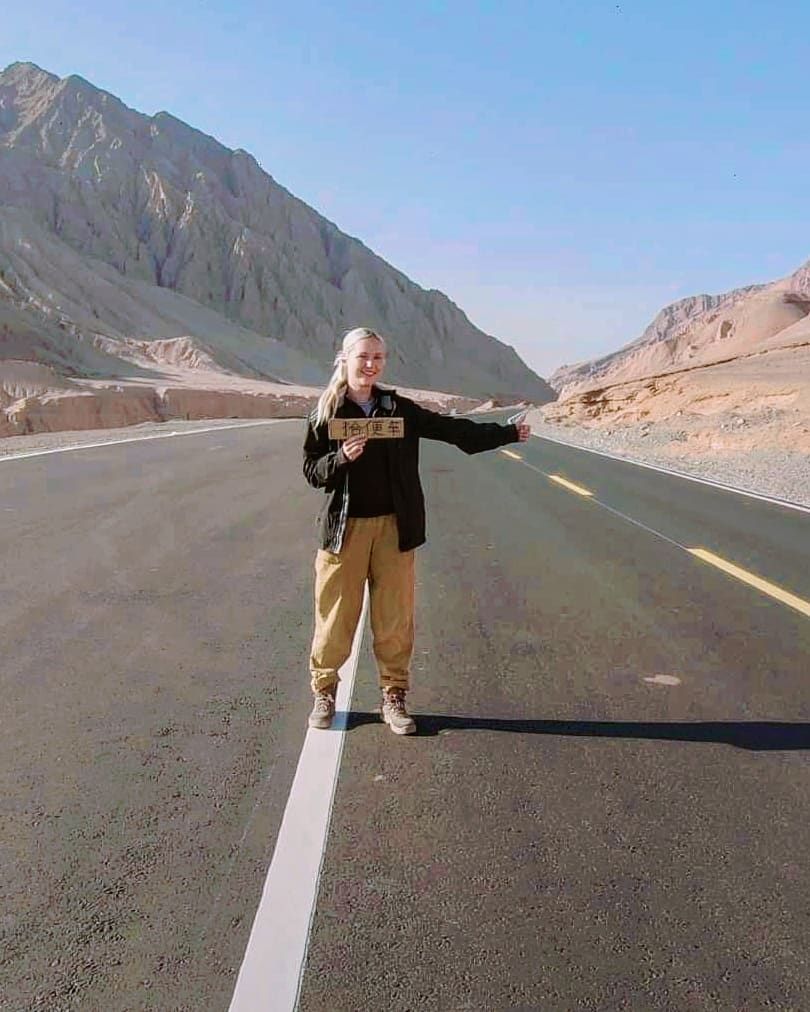
Hitchhiking
China is the most populated country in the world and tourism is booming with its rapidly expanding economy, but hitchhiking is only practised sporadically. If you follow the advice in this page you will most likely have a wonderful time hitchhiking in China. Although it's not really common, more and more people understand the concept of hitchhiking (if you use the word da-bian-che).
Because of it's size, among other factors, it's hard so talk about China with general info. hitchhiking in the west of the country, as in Tibet, is different than in the east. hitchhiking in rural areas is different than on highways. the difficulty also varies. Generally speaking it's possible to categorize it like this: the more developed the road is, the less chance people will ask you for money, the faster you will get and more likely you should stop drivers by sign or by talking with them while they are stationary. the more rural the roads are the more hand waving you will have to do and more explaining beforehand that you do not pay for the trip. also, on rural roads it's easier to find camping spots.
Safety is an issue as traffic regulation is practised half-heartedly. Expect people to honk rather than brake, to drive while holding a phone, drive on the hard shoulder, overtake in unsafe places, and more. Buckle up if you can. Some travellers report that the driving in China is way safer than in Russia and neighbouring countries. Chinese usually don't exceed the speed limit much (130km/hr on expressways).
Legality of Hitchhiking
The law here has not been checked. Nobody has yet read the road traffic rules in force in China against the official text, so this section cannot tell you what they say, and nothing elsewhere on this page should be read as a statement of the law. What holds almost everywhere is that hitchhiking is not an offence in itself and that what the traffic code regulates is where a pedestrian may stand — off the carriageway, and off motorway-class roads and their slip roads altogether — but whether that is true here is simply unknown. Ask locally before standing on a major road, and treat the rest of this article as what hitchhikers report rather than as a rule you can rely on. If you can read the official text, please replace this paragraph with the provision it turns on and a link to it.
How-to
Hitchhiking is not really known by everybody, so the famous Thumb gesture used in most countries to indicate you want a lift is not fully understood in China, and although it will still work, will probably wont be very effective. For Chinese this gesture Is more readily understood as meaning "good" or "OK" so drivers will probably not think of stopping. The most common signal to ask a vehicle to stop is to outstretch your arm and gently wave the hand up and down, but this isn't the most recommended way to hitchhike.
Also, taxis are really common in the country. If you hitchhike without a sign, you will probably have a lot of taxi stopping by to take you. What I would recommend is to have a sign with writing 搭便车 (Dabianche - Hitchhiking) on it. The translation literally mean "free-ride", so you will not have any problem with money. Also, this will save you from some awkward situations if your chinese accent is bad: When you pronounce it slightly differently, "Hitchhiking" become "eating shit" which can be understood as an insult or the fact that you are looking for the toilet. By writing it, there is no misunderstanding. You can also write the name of the place where you want to go under it.
As in many countries, on major roads try to hitchhike from a service station, toll area or some other place where traffic has to stop or slow. Standing on the hard shoulder or the motorway works fine as well though. To get to the toll area/service station use a map, GPS or Google map to show you where the road begins. there is also a Chinese website the shows the actual toll stations. On arrival to the road, use the outstretched arm and hand wave described above.
The first alternative is to use the "sign system", preferably in Chinese not Pinyin (the Romanist script) showing where you want to go. Both hand and sign approaches is used locals in some areas (eg Guangzhou). When you are standing by the roadside, having a sign indication where you are going can be very useful. If you don't speak Chinese, a sign can also help avoid misunderstandings as many people will not know what hitchhiking is and won't understand what you are doing. a sign is the most common way to hitchhike on the highways of China, but because the concept of Hitchhiking is not well known in China, it means that only people going to this actual place will stop you for a ride, and never people who go on the road to this place. Some might suggest you write a destination that is closer than to where you are actually going - perhaps a sign with a city 500 km away is better than one that is 1000 km away. This is complex though. If you have a sign for the closer city, a driver who is going to the further city may pick you up and leave you at the closer one, not understanding your futile attempts to inform them that you want the further city. That's why another good way to hitchhike on Chinese high-ways is to talk with drivers.
The "talking" system generally means getting to a place where the drivers are stationary (gas stations, toll stations etc.) and ask them where are they going or hand them with a small letter indicating what are you doing. most people will politely tell the truth about their destination and if this is in your direction, show in simple sentences and hand questers that you want to join the ride. saying "thank you" in advance can also be of help.
The hitchhiker's appearance is important: dressing fairly smartly and having a clean appearance will help you greatly. Students in China tend to dress more conservatively and males usually have short hair. It is a good idea not to wear sunglasses as they are not as commonly worn and might make you look sinister.
It is important to note that on highways most drivers will not expect to be paid for a ride, even though they probably do not understand the concept of hitchhiking. However, you will find that some drivers, particularly on side roads, will ask for payment before you get in. This is no problem as you can make your decision whether or not to get in. However, some drivers may ask for payment once you have reached your destination. If in doubt, try to signal that you do not want to pay before you get in the vehicle. Generally speaking, you will find in China that most people who pick you up are extremely generous, occasionally overly so. On highways many drivers will let you off their car only if they are sure you know where you are going and is in good situation.
At any case you need to bring a map with you, either download from the net buy one at the first opportunity. The Gao su gong lu network is very complex, and you may get lost very quickly, or end up stuck in a city for a day. You should have a map in Chinese, so that other people can understand where you are going. You may be able to pick up some Chinese characters and understand the names. However if you are struggling, consider getting a Pinyin for yourself as well, if you can find one (they are not very common). Maps can easily be found in service stations, supermarkets and book stores, city maps cost around 10Y while road atlas costs around 30Y (2012) - if you find a Pinyin one expect it to cost much more - only foreigners would buy them.
It is always a good practice in China to have someone write a polite letter in Chinese about who are you and where you want to go. A short "destination note" is important for showing immediately to the driver. After entering a car it is also highly recommended to include some more letters of information about you, especially if heading for a long drive. you can explain practical things about your doings, what hitchhiking is, and go on telling about yourself and you travels, you thoughts and hobbies and other fun stuff. this opens up the driver to you and if your letter has pinyin as well it can also help the driver with his English (many Chinese want to learn English but are shy to practice).
The first character of a vehicle's number plate is in Chinese and indicates the home province and then there is a roman letter indicating the city in the province (A is always the capital). If you are in Anhui and see a 川 (chuan, standing for Sichuan) with an A and some numbers, that's from Chengdu. If one is heading in the direction of home you can use it as a criteria to select a car to stop.
If you want to sleep while on the road, you will have no problem pitching a tent. People will usually not bother you. However do make sure your belongings are not on show and therefore do not pitch a tent directly on the road (which is also a bit dangerous). You will find there is plenty of traffic at night also. You can try to pick a slow and comfortable truck, you might only make 400 km in 8 hours but if that's at night and avoids an accommodation cost, who cares? The lack of malice (at an individual level at least!) of the Chinese makes most of China easy to hitchhike day and night without fear. There is little fear of being attacked or robbed though of course such activities exist everywhere, and as always girls should take extra care.
There are Service areas on highways, it have gas station, big public toilets, shops, coffeshops. Drivers usually will drop you off there. It is very convenient to sleep there. Sometimes you even can take shower if some of shop sellers offer you (sellers live in service areas in dormitory)
Cities
- Beijing
- Tianjin
- Chengdu, Chongqing
- Guangzhou
- Guiyang
- Hong Kong
- Kunming
- Qingdao
- Shanghai
- Xi'an
- Kashgar
- Turpan
- Shenzhen
- Changsha
Public Transport
You will most likely need public transport to get to the express ways. Fortunately in every city there are express ways running close to the city centre, and often toll areas also, which are excellent for hitching from. If you are lost, try to find a younger Chinese person, and ask them which bus number goes to somewhere near the gao su gong lu. Make sure not to point at the road itself, they will inform you that you cannot take a bus there. Then you can take a bus and walk to the road.
Referring back to the occasionally overly generous Chinese folk, you may encounter an awkward situation in which your driver will take you to a train station and inflict upon you a train ticket to where you are going. This is very counter productive in almost all situations. You will waste many hours waiting for the train. You will then arrive at a city you may not have wanted to visit, perhaps at night when there are no buses, sleep deprived, hungry and lost. Above all this if it's not a fast train, it is likely much slower than by car, so you will be many hundreds of kilometres behind where you would have been on the road. So, if your driver leaves the motorway, you have to insist, sometimes very strongly to leave the car. Some people might not want to let you out because they are totally sure that you will get lost there, but if you really insist they will not force you to stay in the car.
Another option to avoid this situation, have your polite Chinese letter state very clearly that you do not want to go to the train/bus station or the airport, and that you only want to hitch hike in the country, perhaps as a cultural investigation, to save money for tourists sites, to learn Chinese or as a challenge.
Expressways
The expressways are often new and fast (100-130 km/h), where as the second level roads may be really bad and a fatal error, where there are a lot less cars and other rules for hitchhiking. Stick to highways if you want to travel fast. Most of the entrance to the highways from the cities in China, have a toll. Using the "talking system", go there and talk straight to the drivers, pointing at the letter or map. be earnest. Say something like: "Nihao! Qing wen, ni qu nali? Wo qu zheli, ni ne? Ni qu zheli ma?" (Hello! Excuse me, where are you going? I go here, and you? Do you go here?), etc. Keep saying "Oh hao hao, xiexie a!" (Oh good good, thanks, ah!) Like mentioned above, Chinese people will typically tell you the truth about where are they going, and once they do so, if you ask them to go with them and they have free space, they will hardly say "no", either because they are just too naive or because they don't want to lose face.
At the tolls, if you talk to the booth workers and the guards and tell them where are you going and what is your purpose, they will often offer you to ask the drivers for you as they keep passing with their cars through the booths to pay the fee, but sometimes they will not know who to ask and will try to ask only specific cars, and so it is recommended to also continue relaying on yourself. Sometimes some guard may look like they frown at you or even come to you and ask you some questions. most of the time smiling and showing them the cards or letters with the information on you will satisfy them to let you continue ask drivers for a lift.
When no tolls around, go to the rest areas where you can talk to people easily, or look for a jiayou zhan, a gas station. Without a big sign, I never got picked up there with the passing cars (of most don't stop); with the sign, it took from a few minutes to seconds.
Language
English in rural or even urban areas are rarely used. Get yourself 1. a phrasebook, easier to acquire when you're outside of China, were not easy to find in bookstores in China, and 2. a pocket dictionary, which generally available in China for 10 RMB in 2007. Baidoo, the chinese google, has a free translator, also for pictures. Here are some helpful phrases:
Chinese language use lots of tons. So if you don't speak chinese at all, it's probably better to write it (in character) because chinese people will not understand you. Also, the differents province have different accent (and sometimes differents dialect), which make it more difficult.
If you go to big city, most people know pinyin. But if you go to rural area, people only know character and can't read any pinyin.
Basic Vocab
搭便车 da bian-che: Hitchhike literally "free-ride". That's
probably what you want to write on a big card board, although it's a
rare word in Chinese and many people do not know what it means.
公路 gong-lu: literally public roads, which means either
highway or national road
高速公路 gao su gong lu: means expressway (expway)
国道 guo-dao: national road
谢谢 Xie xie: Thank you
这里 zhe-li: Here
那里/哪里 Na-li: There / Where? (only different in tone)
服务区/服务站 "Fu-wu-qu/Fu-wu-zhan": Service Area
收费站 “shou-fei-zhan” Tollgate
Conversations
我要去..."wo yao qu .…" ( I/want/go to) means "I need/want to go
to…"
你要去哪里? "ni yao qu nali?" (you/ go to / where) means "Where are you
going?"
在这里停就行 "zai zheli ting jiu xing" (at/here/stop/okay) means "please
stop here"
Chinese, like many Asian languages, is a tonal language which means a
change in a pitch will drive to different meanings. Without basic
training, most westerners will find it hard to pronounce Chinese well at
an understandable level. If you plan to learn a bit, Pleco is a
must-have dictionary app. But if you just print the Chinese characters
out and show them to the driver, things will work pretty smooth. Hong
Kong and Macao use traditional, more complicated characters, but they
can read either way for the most part.
Police
Police will usually not care about you and will more likely try to be helpful than make trouble. However, this can also mean taking you away from the motorway to a bus or train station. Sometimes (closer to official areas like Beijing and Shanghai) the police will insist you will go away to some other place, but if you insist they will most of the time let you stand with your sign/continue to ask drivers around. It also happens when a police officer will treat you like a privileged person, will take photos with you and will stop cars for you or even get you on the bus for free.You may also get free food and assistance with signwriting. nobody will say anything but this is an awkward experience when everybody around you pay lot's of money for the drive and you sit there after the police officer stopped the bus for you. Usually when dealing with the police in China, it is best to just smile and be naive but firm with your goal, and be independent about it. you are doing fine, not disturbing and in love with China.
Personal experiences
August 2017
Hitchhiked from Kashgar to HongKong. through: Urumqi, Kumul, Xining, Chengdu, Kunming, Nanning, Guangzhou. Spent most of the time in Xinjiang and Tibetian Areas. No mayor problems. I figured out that having a drawn map with me, with the main roads and cities on it (written in chinese) and a small letter explaining in chinese would help the most. However, in the tibetian areas I figured out that many people cannot read chinese, hence it makes sense to write the map in tibetian and chinese. Sometimes people would ask for money in advance, in tibetian areas seem to be some shared taxis also. Further I was once picked by the police in Amdo Tibet, they told me, I am not allowed to be there... Hence, in the next city I had to register, make a lot of selfies, they brought me to a hotel where I had to stay and they told me I have to take a bus the next day. the next day I hitchhiked further without problems;) Tip: having an offline translator is the most useful thing for china! I travelled many parts of the world without speaking common languages with the people living there and always found a way of communication. But in China, it was even hard for me to explain the map where I want to go and where they want to go... sign/body language works so different to mine there... Still - awesome peopel and experience!
In the South the police was unaware, or friendly but very confused, to Guaka and amylin. Most of the time the police didn't do anything while walking along the highway or trying to hitch. Once, at the highway entry of Kaili in Guizhou, they started talking, found someone who spoke English, and brought the hitchers to a bus station, where the police paid for a bus ticket! Another time the highway police was very confused again, and it took 2 1/2 hours to find a translator and be left alone at a highway entrance again.
hitchhiked through Xinjiang, Gansu, Shaanxi, Henan without being bothered by police. In Xinjiang police even helped him to get a ride. Problems started to occur in Zhejiang (Eastern China, near Shanghai). Several times police didn't let him onto the expressway through the toll gate and took him off the expressway while passing by.
somehow always gets helped by police. Especially when it's getting dark or at night it's sometimes very useful to rely on them. Not only next to pay tolls but also on service areas (there are almost always some police officers). Sometimes they will give you something to eat, take pictures with you, the usual stuff. In Jiangxi or Anhui they caught her a ride, took pictures of her and the driver's passports, which was for safety reasons and actually OK, but also of other visas she had in her passport. Probably only out of curiousity and to test their apparently new camera.
March 2013
lukeyboy95 had a fantastic time hitchhiking in March 2013. Not without its dramas, but no adventure is. I kept to the Western fringe, avoiding most cities. I had a sign that read de-bien-che, in characters, and this was mildly understood by some. Roads are excellent, fast and new, and distances can be very large. I beat my record, at 1200km in one day in the North West region. Big cities are a total horror, try and get trains out where possible. Have your little list of phrases ready to point at, it isnt rude. The Chinese are spirited people, and connecting with them wasnt a problem. If they look like taxi drivers, or a little hard up, reiterate that you cant pay money for the ride. One thing of note was that at the border with Krygyzstan, the immigration police wouldn't let me past unless I was in a taxi. A little overnight protest outside their spanking new offices brough results, and the next day they put me in a pick-up. An interesting border, and be careful with this. In general I found the police enormously helpful, kind and well meaning. On two times, they put paid for a train for me, drove me out to the highway, even gave me money and invited me into their homes. China holds many adventures for the the hitchhiker!
October 2016, Jan 2017
was there in October 2016 for 2 weeks and Jan 2017 for 10 days. Hitched all of the eastern half of China with ease. At many highway tolls the staff would help me get a ride, only one had an issue, but luckily a driver pulled up when the staff were warning me they were going to call police. Police did help me on a few occasions as well. Waiting time was about 10 minutes in most cases, though there were odd occasions where I had to wait a while. Visited most of impressive National Parks in this time frame and Huashan 3 times to get a good photo of the famous plank walk. Camped out discreetly and publicly very easily as everything is orderly and compacted into the cities with open spaces inbetween, totally opposite to india. Border crossings were straight forward but crossed both from Vietnam and into Mongolia by transport. Hardly ever got asked for money and managed to communicate with apple maps and sign language/images/gestures. Even managed to hitch out of Beijing twice without difficulty.
Maps
Sometimes the indication used for roads aren't very accurate, so you might be thinking you'll be on a nice highway for a while, when it suddenly becomes a 1 lane road going through villages. This is also goes while hitching, on a highway, sometimes a sign might be indicated for a big city, but if you pursuit this, you can find yourself on a dirt road in no time.
Very good is the Tourist Atlas of China. It is in English and Chinese, a small book with all the provinces. But it's hard to find though, Worldhitch got it in Beijing at one of the biggest bookstores. The province maps in Chinese are pretty good, if you have the tourist atlas, you also have the bigger cities in English as a reference point, and hitch on the small roads with the province map.
Note: Be aware of Chinese maps - sometimes they are developed for the (often quickly changing) future! They show highways which are not yet existing, or they having wrong distances between cities. Its always good to have two or three maps (the province maps as well) and then search for the truth in the middle.
Maps.me may have wrong distances( for e.g. chengdu/kunming). There is a free map programm from chinese google(baidoo), its only in chinese, but helpful.
Links
- Comprehensive guide about - Hitchhiking in China. by Korn on https://warmroads.de
- "Peking Express": Travelogue of a great hitch-hiking journey from the Vietnam border to Beijing. 2830 km in 13 days to get to the Argentinean Embassy on time to have my passport renewed! (only in spanish), by Marcando el Polo.
- Information, tips and personal experiences of hitch-hiking in China (East and West). A 7645 km journey on 50 vehicles (only in spanish)
- Hitchhiking 15.000 km through China. A little exploration tour by Korn.
Beijing
Edit on wikiRoadside hitching spots go stale. For current places to hitch in and out of this city, use maps.hitchwiki.org and the live Hitchwiki page linked at the end of this chapter. This book keeps general orientation, not a pin gazetteer.
This book does not reprint named ramps, dumpsters, hostels, or other pins. They go out of date. Follow the note above to the live map or wiki.
Shanghai
Edit on wikiRoadside hitching spots go stale. For current places to hitch in and out of this city, use maps.hitchwiki.org and the live Hitchwiki page linked at the end of this chapter. This book keeps general orientation, not a pin gazetteer.
This book does not reprint named ramps, dumpsters, hostels, or other pins. They go out of date. Follow the note above to the live map or wiki.
Tibet
Edit on wikiNeedless to say Tibet is a wonderful place to travel around and most definitely worth a little perseverance.
Legality of Hitchhiking
The law here has not been checked. Nobody has yet read the road traffic rules in force in Tibet against the official text, so this section cannot tell you what they say, and nothing elsewhere on this page should be read as a statement of the law. What holds almost everywhere is that hitchhiking is not an offence in itself and that what the traffic code regulates is where a pedestrian may stand — off the carriageway, and off motorway-class roads and their slip roads altogether — but whether that is true here is simply unknown. Ask locally before standing on a major road, and treat the rest of this article as what hitchhikers report rather than as a rule you can rely on. If you can read the official text, please replace this paragraph with the provision it turns on and a link to it.
Hitching in Tibet can be somewhat challenging to say the least, besides being a limited number of roads and motor vehicles it's illegal and most major routes across the country are manned at checkpoints by Chinese military police.
Tourism and Transport in Tibet
The majority of vehicles in Tibet are the luxury 4x4 Jeeps trekking back and forth along the road between Lhasa and Kathmandu. Travel in Tibet autonomous region is limited by the Chinese government, they like to know who is in the region, where they are and what they are up to. Just getting up to the Tibetan plateau requires a permit which is only given to tour operators for their customers. It is these tour groups that run the main road through the region sticking to their tight itineraries. For these reasons trying to stop a tour company Jeep while on the plateau at the roadside is near impossible, if the company would get caught carrying foreign travelers without having permits for them they would face hefty consequences. This is similar for any company found letting their customers 'leave' the tour while still in the Tibet region.
It is important to remember however that often these tour operators couldn't care less who you are or where you're going... often the smell of a quick dollar can make the difference between the night in the dust at freezing temperatures along a deserted quarry track and an air con ride to the nearest bunk.
Accessing Tibet
The Nepal side: Access into Tibet from the Nepal border is impossible, it is a strict border post high in the mountains leaving very few options from this side as to getting into Tibet. Paying a package tour to get you across the border is an expensive option but may be worth a try, and you still face the problem then of leaving the tour group for independent travel. Nevertheless this is quite possible for the determined.
The Chinese side: Similarly, up until recently the situation from the Chinese side was limited to a flight into Lhasa under supervision of a tour group. All road access into the region was and still is well out of bounds for foreign travelers and roads are constantly dotted with checkpoints, as well as military police carrying out random stop and search.
This seems more than a minor glitch in any plans of traveling in the region. However, it was not impossible to find one of many of the 'tour' companies selling guided tours, consisting of nothing more than a permit stamp in the passport and a taxi to the airport. Once on the plane it was up to you to talk your way off the other side.
These days the Chinese are slightly more relaxed with people visiting the Tibetan capital, Lhasa. The Xinghua railway provides access to the area yet visitors are still supposed to be under the supervision of tour operators and still require permits to enter. Permits can often be purchased from 'tour' operators with no interest in actually providing a tour. Don't be fooled, the Chinese government are aware of this but remain happy with visitors being contained to Lhasa. Food, accommodation, and attractions are easy to find in the capital and it has become very much a tourist hub.
Once in Tibet
 The next and hardest
problem of Tibet is getting out of Lhasa itself. It is here the clamp
has come down, there are few local buses running out of the city and
travel on these is illegal, most will refuse you the ticket! Travel by
private car is very limited, checkpoints out of the city put hold to any
unsupervised travel.
The next and hardest
problem of Tibet is getting out of Lhasa itself. It is here the clamp
has come down, there are few local buses running out of the city and
travel on these is illegal, most will refuse you the ticket! Travel by
private car is very limited, checkpoints out of the city put hold to any
unsupervised travel.
The best option is the 'pilgrim buses' often free of charge. These buses that trek out of the capital at ridiculous hours of the morning towards the surrounding monasteries with hoards of local monks, pilgrims and traders. It is here you meet the real people of Tibet, often the Tibetans are happy to see you exploring their country and welcome you with open arms, getting off these buses at one of the monasteries is often the start of a great adventure. It is from these places, or from being dropped at your request in a passing hamlet, that you can find tractors traveling up to mountain top monasteries rarely visited by tourists, quarry trucks of miners heading deep into the mountains for weeks of work at a time or boats setting along the river bringing in and out fresh veg from surrounding villages. Be warned, the big monasteries all contain police outposts that do check you out!! Keep your head down and think about where you're heading. Once on the road it becomes a glorious freedom... you begin to depend on the one truck a day/s that drives the routes between hamlets. Time becomes a concept of light and dark and you find yourself living the life of a sworn monk in the remotest of temples high in the mountains.
Personal Experiences
Hong Kong
Edit on wikiHong Kong is a huge city in China. Unlike China, you probably don't need a visa to enter, but coming from China your one-entry visa will expire.
Hitchhiking to Macau
Add info pls
Legality of Hitchhiking
The law here has not been checked. Nobody has yet read the road traffic rules in force in Hong Kong against the official text, so this section cannot tell you what they say, and nothing elsewhere on this page should be read as a statement of the law. What holds almost everywhere is that hitchhiking is not an offence in itself and that what the traffic code regulates is where a pedestrian may stand — off the carriageway, and off motorway-class roads and their slip roads altogether — but whether that is true here is simply unknown. Ask locally before standing on a major road, and treat the rest of this article as what hitchhikers report rather than as a rule you can rely on. If you can read the official text, please replace this paragraph with the provision it turns on and a link to it.
Personal Experiences
Macau
Edit on wikiThe Macau Special Administrative Region, commonly known as Macau or Macao (Chinese: 澳門), is one of the two special administrative regions of the People's Republic of China.
Hitchhiking out to Hong Kong
You can hitch at the entrance of the bridge going to the Immigration building on Artificial Island (Avenida Doutor Ma Man Kei). If you are lucky enough, you'll stop a car going to Hong Kong through the Bridge. But many cars will just stop to the Arrivals Hall to pick-up relatives. In all cases, you need to pass through immigration on the first floor of the building: ignore the bus ticket machines, and go directly to the immigration offices. On your way out, meet your driver on the drop-off area or find another car by hitchhiking on the road (left side when you exit the building) - experience by SerialHikers, September 2019.
Legality of Hitchhiking
The law here has not been checked. Nobody has yet read the road traffic rules in force in Macau against the official text, so this section cannot tell you what they say, and nothing elsewhere on this page should be read as a statement of the law. What holds almost everywhere is that hitchhiking is not an offence in itself and that what the traffic code regulates is where a pedestrian may stand — off the carriageway, and off motorway-class roads and their slip roads altogether — but whether that is true here is simply unknown. Ask locally before standing on a major road, and treat the rest of this article as what hitchhikers report rather than as a rule you can rely on. If you can read the official text, please replace this paragraph with the provision it turns on and a link to it.
Personal Experiences
Taiwan
Edit on wikiThe UN considers Taiwan part of China, but its government is completely separate from the Mainland, and almost all Taiwanese people proudly consider it an independent country. The culture has Chinese roots but with heavy Japanese and American influences.
People are fond of calling Taiwan a "small island", but don't be fooled into thinking distances are shorter than they are. It takes about 8 hours to drive from one end to the other.
Hitchhiking
Taiwan is an island off the coast of China, and an excellent place to hitchhike.
Legality of Hitchhiking
The law here has not been checked. Nobody has yet read the road traffic rules in force in Taiwan against the official text, so this section cannot tell you what they say, and nothing elsewhere on this page should be read as a statement of the law. What holds almost everywhere is that hitchhiking is not an offence in itself and that what the traffic code regulates is where a pedestrian may stand — off the carriageway, and off motorway-class roads and their slip roads altogether — but whether that is true here is simply unknown. Ask locally before standing on a major road, and treat the rest of this article as what hitchhikers report rather than as a rule you can rely on. If you can read the official text, please replace this paragraph with the provision it turns on and a link to it.
Attitudes Toward Hitchhiking
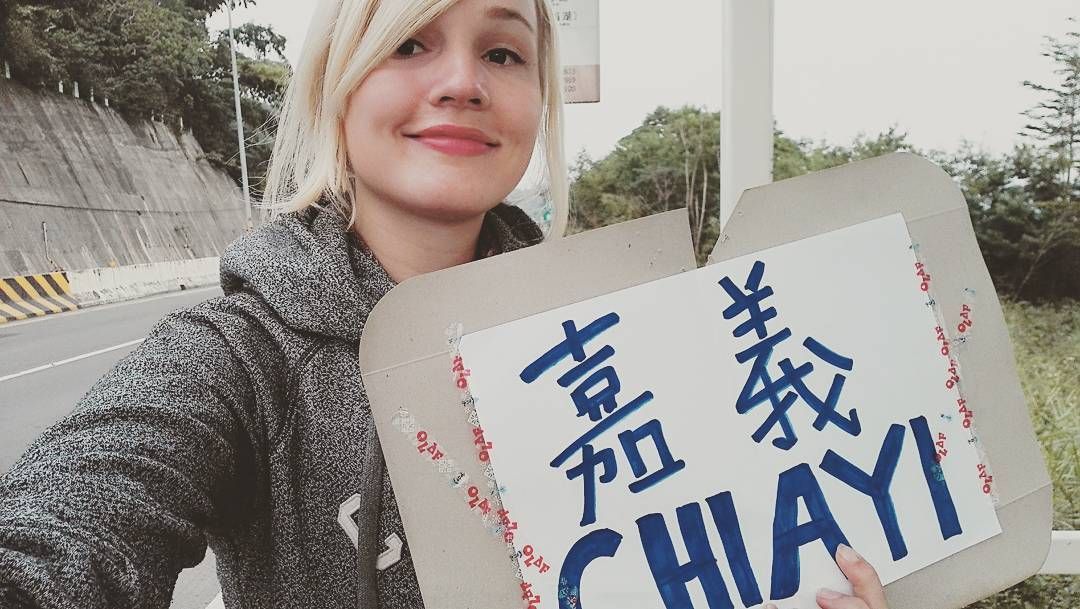
Taiwan is a very easy place to hitchhike. Hitchhiking is not a common way for locals to travel except when returning to town from the mountains, but there's almost zero fear of hitchhikers, and many locals are happy to help. There is a common perception that hitchhiking is only easy for women and "foreigners" (White people), but it appears not to be true.
Taiwanese people are very friendly and usually very honest. Waiting times to hitch are short and people often don't mind driving a bit further than the place where they needed to be. Very often, the drivers will also offer you a drink or even food. No matter how deep into the countryside you are, hitching is possible absolutely everywhere! You might find Taiwan to be the easiest place to hitch in the world.
Taiwanese people sometimes don't believe hitchhiking will work for longer distances (or they are maybe not familiar with the concept), so they might try to drive you to a train- or bus-station.
It might be useful to have a motorcycle helmet with you, when hitchhiking, as it is possible get lifts from motorcyclists.
Language
Taiwan's official language is Mandarin Chinese, and everyone under about 70 speaks it fluently (Taiwanese, a related language, is widespread but declining in use among young people, especially in the north and major cities). English is mandatory in schools, and most Taiwanese people under 40 will know some, but only a minority of them speak it confidently and well.
If you are an English speaker you will find that many people are eager to practice while they drive you around. On the other hand, many others are unable or reluctant to try speaking it, so knowing some Mandarin helps a lot.
Very often people will make an effort to communicate with the few English words they know, or even call an English-speaking friend to talk with you on the phone. Nonetheless, it's a good idea learn some basic Chinese or ask a Chinese-speaking friend to create a hitchhiking letter for you. This is a tremendously good method.
The next best thing is to have a smartphone on you to translate whatever you search into chinese characters and for the use of google maps. You can buy a SIM card (fareastone e.g.) for NT$350 giving you a credit of 150 for calling plus 1GB of mobile internet. The whole country offers excellent wifi services (restaurants, 7-11, Metro and bus stations). Free registration is often required. Search help for that.
Sleeping
Informal camping is very easy and safe in Taiwan. Occasionally you can be scolded for choosing a bad spot, but threatening or violent behaviour is unheard of. It is generally okay to pitch a tent on the grounds of public schools, even in some larger towns. Just make sure to be gone before children arrive in the morning, and if there's a night guard posted, ask for permission first. Temple custodians may be willing to let you camp on their grounds or terraces as well, and you're unlikely to have any trouble camping next to an unstaffed shrine (certain ones may be considered undesirable because of evil spirits, but any objections will stem from concern for your well-being, not anger). Empty lots are of course fair game as well.
In national parks, there may be a rule against pitching tents outside of designated camping areas (which may or may not be present, and sometimes have a fee). However, it is considered normal to camp in parking areas or lawns anyway once the staff have gone home for the night. But do note that starting fires outside of designated fire pits is generally not considered appropriate in Taiwan (except on some beaches), and you should respect this. Taiwanese mountaineers cook and boil water using tiny portable gas stoves, which you can buy at outdoor sporting supply stores in major cities.
Couchsurfing also comes recommended. You will find possibilities in most counties, and major cities like Taipei and Kaohsiung have weekly meetups and other events that you can show up to and ask around.
Major cities have backpacker hostels for around NT$400 to $600 per bed, and a double at a low-end hotel runs up toward NT$1000. In areas frequented by domestic tourists, there are also many "minsu" (sometimes translated as "homestays" but really more like B&Bs or mini hotels). Rates vary, but expect it to cost more than a hostel.
Health and Safety
Taiwan has amazingly little street crime, and you can live there for years without ever hearing even a second-hand story of a mugging, pickpocketing, or robbery. Political and religious terrorism are completely unheard of. Sexual assault by strangers is almost never heard of either, though many women in the cities eventually experience a scary incident of some creepy guy following them down a dark street. Locals may tell you about mob-on-mob violence and a recent series of recent random knife attacks in public places, but these are so astoundingly rare as to not be worth worrying about. Gun ownership is forbidden with very few exceptions, and property owners rarely guard against trespassing, much less enforce it threateningly.
The biggest causes of accidental death in Taiwan are motor scooter accidents and drowning (most locals are not strong swimmers, but also watch out for rip currents and submerged rocks at beaches, which kill both locals and visitors every year). Snakebites can be treated at most medical facilities, and deaths are very rare. Barking and aggressive dogs can be a major annoyance, but just avoid them as best you can. They don't usually bite.
The emergency phone number in Taiwan is 119. Don't hesitate to call it if you or someone else's life is in danger. Even if you're lost in the mountains and need to be airlifted out, it's likely that you will be rescued free of charge.
Taiwan has a highly-developed healthcare system, and prices are low enough that it's often worthwhile going to the doctor or emergency room even without insurance. Mosquito-borne dengue fever is rare, but a possibility in certain areas during the summer. A bigger health hazard is air pollution, which reaches moderate to high levels especially during winter months in the south (and year-round on busy streetsides island-wide, due to heavy traffic and unfiltered exhaust from motor scooters). Taiwan can be very hot and humid in the summer months, so make sure to stay hydrated. However, you're unlikely to find yourself out of range of a place to buy water except in serious wilderness areas.
Cities
- Taipei (台北)
- Kaohsiung (高雄)
- Taichung (台中)
- Hualien (花蓮)
- Tainan (台南)
- Taitung (台東)
Public transport
For e.g., Taipei to Taichung the lowest bus fares are about NT$250, and about NT$450 to Kaohsiung depending on the time of week. The Highspeed train (HSR) finishes its 350km track from Taipei to Kaohsiung in only 2 hours. Fare is about NT$1600. Slow trains are sometimes cheaper than buses but don't travel long distances. In the East, trains may be the only form of intercity public transportation.
Taipei offers a 30-minute for free bike at almost every station (get the app!). Every 30 minutes after the first 30 minutes cost you NT$10. Get the smart card for the metro and bikes to save money. You will pay a hundred for it, but get 80 back when handing in again.
General costs
Taiwan is quite a developed country, as you will see when first entering Taipei. The cost of living is generally much less than in Western Europe, North America, Japan, or Korea, but can be a bit expensive compared to Southeast Asia and other "low-cost travel" parts of the world. From one author's experience you can stay in Taiwan for a month for about 300€ and see almost everything. Food is generally cheap everywhere (NT$40 to NT$100), hostels cost 400 to 600 NT$, transportation is mentioned above. Save some money in Taipei by oftenly using the Ubikes.
Personal Experiences
North Korea
Edit on wikiTravels to North Korea will only be approved if somebody from the government shows you around and guides you.
Hitchhiking
Until a revolution or some form of perestrojka, North Korea is probably the last country on the face of the planet Earth where you cannot go put up your thumb on the side of the road. You cannot travel freely in North Korea and the roads are empty. You'll probably have more luck in South Korea.
Legality of Hitchhiking
The law here has not been checked. Nobody has yet read the road traffic rules in force in North Korea against the official text, so this section cannot tell you what they say, and nothing elsewhere on this page should be read as a statement of the law. What holds almost everywhere is that hitchhiking is not an offence in itself and that what the traffic code regulates is where a pedestrian may stand — off the carriageway, and off motorway-class roads and their slip roads altogether — but whether that is true here is simply unknown. Ask locally before standing on a major road, and treat the rest of this article as what hitchhikers report rather than as a rule you can rely on. If you can read the official text, please replace this paragraph with the provision it turns on and a link to it.
Local people will be punished if you (as a foreigner) talk to them.
Personal Experiences
South Korea
Edit on wikiSouth Korea is a country in East Asia. It has a land border with North Korea, but travel there is restricted. There are ferry services from Busan to Japan, from Seoul to China, and from Donghae and Sokcho to Russia.
Hitchhiking
Koreans are generally friendly, honest, and generous people who often drive big cars which are usually empty. Hitchhiking is easy here for foreigners, extremely easy if you are reasonably well dressed and clean shaven, but this is not essential. According to some hitchhikers, waiting times are minimal and there is less need to worry about position.
The motorway service stations (휴게소, hyu-ge-so) are easy to get lifts from, they often have tourist information centres with free roadmaps, free internet access and excellent cheap food. Tollgates are also good places to hitch. Technically a hitchhiker shouldn't stand on the motorway side of a tollgate, but cars often pull up here anyway, and the tollgate staff rarely object to you standing on the motorway side of the tollgate. Sometimes tollgate staff may even help you by asking drivers their destination, and asking them to give you lifts if they are going your way!
Write hitchiking signs in Hangul (Korean alphabet); place names on road signs are generally in Hangul and English, so you can copy the Hangul from road signs. A map in Hangul is useful, and one in English if you can't read Korean.
Korean drivers may try to take you to bus or train stations (they mean well). Also many of them are completely incapable of reading paper maps, relying instead on satellite navigation.
South Korea is also the first country the couples from the Dutch/Belgian tv-show Peking Express 2012 start hitchhiking in.
Legality of Hitchhiking
The law here has not been checked. Nobody has yet read the road traffic rules in force in South Korea against the official text, so this section cannot tell you what they say, and nothing elsewhere on this page should be read as a statement of the law. What holds almost everywhere is that hitchhiking is not an offence in itself and that what the traffic code regulates is where a pedestrian may stand — off the carriageway, and off motorway-class roads and their slip roads altogether — but whether that is true here is simply unknown. Ask locally before standing on a major road, and treat the rest of this article as what hitchhikers report rather than as a rule you can rely on. If you can read the official text, please replace this paragraph with the provision it turns on and a link to it.
Language
Few Koreans speak a lot of English. Many may understand some very basic words.
The Korean language is heavily steeped in formality and politeness. When speaking Korean, it is generally best to end every sentence with -yo. This is the 'polite' level of speaking. If you don't, you may be forgiven as an unknowing foreigner, but a little politeness goes a long way! Most Koreans are thrilled that a foreigner has taken a little time to learn some of their language.
Some important phrases
| Hello An-nyong haseyo = Be | healthy/peaceful |
| Good bye! An-nyong-hi ka-se | yo! = Go in health/peace |
| Good bye! An-nyong-hi gyeh- | seyo! = Stay in health/peace |
| Thank you Kamsa hamnida/Gom | ap sumnida |
| Where are you going? Odi ga | -yo? (lit. where go?) |-) |
| No Ani-o | |
| here Yogi-eh-yo (lit. here- | at (polite ending)) |
| Please juseyo | |
| Motorway service station hy | u-ge-so |
| Gas station ju-yu-so | |
| Interchange IC pronounced \ | “ee shee", most Koreans seem to understand the word "tollgate" |
Hitchhiking for females
If you are a girl, you should be careful hitchiking in South Korea. People may think you are a Russian prostitute (there is apparently a large number of them in the country). You will probably have to explain to your driver why you are standing on the side of the highway, and because of the shortage of English speakers, it may be extremely hard for you to do this.
Maps
Google Map doesn't work much here. Just install KAKO map and to start hitchhiking just point out of city in the map, it gives you the best way to go by bus or metro and then you can enjoy hitchhiking. Toll gates are very good:)
Naver Maps and Daum Maps are the most detailed maps of Korea, but an offline map like CoMaps / Organic Maps / Maps.ME can really help out as well.
Personal Experiences
Summer 2018
experience summer 2018: Apart from Daegu which was impossible to get out of (trying to go to Gyeongju and the tollgate staff kicked me out of the tollgate and threatened to call the cops) all other areas were easy to hitchhike around, waiting time was around 10 minutes on average (solo man) when the spot was good. Most drivers who picked me up spoke a bit of english and were very excited to meet a foreigner. Most were single men but once a woman stopped as well. Overall easy country to hitchhike through but being white definitely helped. Appearance matters A LOT in Korea. I always had a sign in Hangeul (the staff at petrol stations helped me write it everytime). Koreans are very friendly although many do not understand the concept of hitchhiking and people looking at you will not understand what you are doing. Best advice here is to have a sign in hangeul, look clean and make sure the spot is safe for them to pull over. contrary to what this page says I did not find that Koreans were very risk-taking, I had to change spots a lot because no one would stop if it was bad.
Summer 2024
Experience summer 2024
Hitchhiking was extremely easy for us as a couple. Even when the spot wasn't really good, we were always taken within 30 minutes, invited for drinks/snacks/one dinner & even a hotel night. Most people just knew only a few English words but were very friendly.
Winter 2025
Experience Winter 2025: Hitchiking Jeju Island was easy as a couple. There is limited public transportation on the island to reach tourist attractions, and we found that most people that picked us up were other South Korean tourists from the mainland. We did not have to wait more than 15 mins. Many tourist spots were close to each other and people had similar itineraries, so we found it easy to get going once we arrived at the first location and were able to hitchike from carparks. A sign in hangul helped us reach our destination, but we didn't find it necessary to return to the city.
Seoul
Edit on wikiRoadside hitching spots go stale. For current places to hitch in and out of this city, use maps.hitchwiki.org and the live Hitchwiki page linked at the end of this chapter. This book keeps general orientation, not a pin gazetteer.
'''''' (pronounced /soʊl/; Korean pronunciation: [sʌ.ul]) is the capital
of South Korea.
Going east to Wonju, Gangneung, Sokcho, Odae San and Seorak San national parks
Take the subway to Daeyami on the south side of Seoul (blue line Oido direction). Walk out of Daeyami station and turn left. Keep going until you get to the busy main road with a garden centre housed in polytunnels opposite. Cross over at the pedestrian crossing and follow the main road to the right, walking under the bridge. Turn left and keep going until you reach the Gunpo tollgate. Traffic from here goes east to Wonju and Gangneung and west to Incheon.
Or, go to Deokso Station on the Jungang line and get out at exit 2. Head east on that main road you are on and turn right at the alleyway right before the Cafe Amo-te (in yellow, with "Cozy Live" on the floor above), and turn left at that first large street. Turn left where the street ends and go straight, under the highway (make sure you have a flashlight to indicate to cars that you are there), and turn right on the first bridge, going back under the same highway. walk up to the Namyangju Tollgate at [37.597N, 127.2414E] (by either climbing the hill immediately or following the road east.
Alternatively, go to Moran Station either on line 8 or the Bundang line, get out at exit 9. Turn 180° and turn right on the main road (following the bridge) until you see the highway on another bridge in front of you. Just before the bridge, there is a small road to your right. Follow it and you'll eventually see the Seongnam Tollgate at [37.4356N, 127.1237E].
Going south to Daejeon, Daegu, Gwangju, Busan and all the rest of the country
New tip (Sinbundang Line; for an option that will save you 900 won, see below): Take the Sinbundang Line (dark red) to Yangjae Citizen's Forest (D09) station and go for exit 5. Follow Maeheon St (매헌로) across a park, dive beneath the highway you're after, and continue until you see a very wide avenue (there's a very visible E-mart mall nearby, might be good for stocking up on supplies before a long journey). You have to cross this wide avenue, there is a pedestrian crossing if you go up a bit on the right. After crossing the road turn left (cross another pedestrian crossing) and then right, following a road that takes you to the expressway in the direction of Busan. You'll pass close to an helipad and the rest area should already be visible by that time just after it. GPS Coordinates of the rest area is [37.4601N, 127.0419E]. There's also a place to pitch a tent (for those who came late in the evening, plan to set out next morning, and don't mind the traffic noise). The rest area itself has toilets for the disabled (with running warm water!), free hot water, free wifi, and all sorts of amenities. This paragraph has been updated the 21/11/2017) See the hitchhiking spot on map. I got almost immediate rides out of there on two separate occasions.
experience summer 2018 (updated November 2018): my friend and myself went there. The staff helped us write a sign in hangeul and we got a ride in 10 minutes. There were many cars offering us rides as the traffic is high and half of the people passing offered to take us. Note: the spot is so good that I suggest you refuse rides not going far enough, many people go through this station and you can probably find a ride going directly to the city of your choice on this way. We went into a car that didn't go far enough and ended up on a tollgate less conveniently located to catch good rides. Regretted not being more selective. See the hitchhiking spot on map.
- Old / economy (saves you 900 won) tip: You will be charged 900 won for riding the Sinbundang Line. That can be avoided at the cost of about half an hour's walk. Take the subway/metro line number 3 to Yangjae (342) station (take care to avoid the dark red line, or the whole thing loses its economic sense!) and leave on exit number 7. When you come out, there is a big road south so keep walking on it for ~30min till you reach the big crossroad with the Korean highway Nr.1 and the Yangjae IC (intersection) on your right. The spot on the ramp itself is not very good, but a few hundred meters south along the highway there is a big GS25 service station, with a lot of cars, information center and free internet access:) So stand here, make your sign (in Hangeul) and GOOD LUCK:)
-
after waiting here for about 20 minutes, I stopped a BMW series 7 with some famous Korean DJ inside, giving me lift all the way to Daejeon:)
experience June 2025: I started on my own (30yr old Italian man) from the service area mentioned above, [37.4601N, 127.0419E]. It was raining slightly which was not too great but I managed ok with my cardboard signs under an umbrella. Waited for about 1h before a Korean man approached me and apologised for not being able to offer a ride, but bought me lunch at the rest area. After that I waited for another 1h before a super-sweet Korean couple stopped and offered to take me all the way to Busan, my final destination. They stopped to get some food for me along the way, offered me dinner once we arrived in Busan and even took me around the city the following day. Probably my best experience hitchhiking ever!:)
Japan
Edit on wikiHitchhiking
Hitchhiking in Japan is quite easy, and the key to true budget travel in the country and the way to escape the country's ruinously expensive domestic transport costs, where an hour on the Shinkansen can set you back ¥10,000. Coupled with camping, you can effectively cut down your daily budget to food and admission fees alone — although it is wise to allow for the occasional (literal) rainy day.
Except for the occasional impoverished student in the wide expanses of Hokkaido, there is very little tradition of hitchhiking in Japan, and you will more likely than not be the first hitchhiker that your driver has ever even seen, much less picked up. The key to hitchhiking is thus to assuage these fears and look as harmless and friendly as possible.
- Update 2018: I think times may have changed. It is true that hitch-hiking is still something most Japanese would not do, but I'm not sure if hitch-hiking is something people have never seen before. Some of the rides I took told me they've seen hitch-hikers before. The ones I have personally seen with my own eyes, coincidentally, were all Japanese, male, and seemed to be below 35 years old. Some alone, some in pairs. I live near a huge kokudo road, maybe that's why I spot some. But I have also talked to hitch hikers on normal occasions unrelated to travel. I've yet to chance upon a "foreign-looking" hitch hiker though. snowballsakura
I agree, in the spring of 2018 I hitched all the way from Tokyo to Kyusu and found it very easy, eventhough I'm a very tall strange looking European. Most people seem to know what hitching is, and their hospitality once in their vehicle is astounding. You will be offered food, candy, drinks. Even a place to stay at times. I also bet several other hitchhikers with similar experiences. By far one of the easiest countries to hitch in as long as you stay in the expressway system. yogibear
The top worries of a Japanese driver when they see a hitchhiking gaijin are: Can he communicate? Does he know how to behave? The quick way to answer those questions is with a sign: 日本語できる! (Nihongo dekiru!), literally "Japanese can!", is just six characters and works like a charm. And you don't really need to know Japanese all that well to use such a sign, as long as you can communicate... somehow... Most people have smartphones now that are connected to the internet all the time and love to use translation apps on them. So it is pretty common to have entire conversations over a smart phone. Rdoc101 had a deep conversation about getting married to my travel partner entirely through a smartphone.
Second on the agenda is appearance. This is not the place for a mop of unruly hair, ripped jeans and sunglasses — foreigners are by default scary, and you need to do your best to look like you stepped out of an L.L. Bean catalog. Neat trousers, clean shirt, a hat to protect you from the sun instead of sunglasses. If you have a huge rucksack, hide it off to the side.
- Comment: Not true, at least if you obviously look like a foreigner. That qualifies you as "special person", that should be forgiven if a) doesn't speak Japanese at looks at you like an amoeba b) look weird, but you know, it's the new fashion from the West! haven't heard of it yet?! c) doesn't know how to behave (concept encompassing various implications; strangely enough though, everybody will be astonished at the sight of you eating a) Japanese food and seem to like it, b) you're skilfully eating it with chopsticks!). That doesn't mean that communication is irrelevant though, although you might be able to get rides just as easily; but it does mean that everything coming from the West is "cool", so people are more likely to accept weird appearance/outfit of a Westerner rather than a local. gutuater
- Agreed, I sported a hefty beard and unkempt hair, wearing shorts and whatever t-shirt with a massive 40lb wilderness camping backpack. I often would lay my pack beside me and sit on it while I waited for traffic. I never once used a sign. traceoftoxin
- Japanese don't think that foreigners will misbehave. Maybe this is the case 30 years ago but not anymore. They are worried that their English isn't good enough and they might do you more harm than help e.g. get you lost or take you to the wrong place. As long as you can communicate with them somehow about important stuff like destination etc. it'll be okay.
- Clothes - Wear whatever you are comfortable with. For practical reasons, really, dress for comfort. I've talked to Japanese hitch-hikers, they wear normal clothes, may or may not have oddly sized baggage with them, they get their rides. I'm an Asian woman, black hair black eyes same skin tone as the Japanese. I wear a pair of bright shocking pink pants and always have my big backpack close enough for all to know it belongs to me. I get my rides.
- I think the most important is a genuine smile, being polite and having a positive attitude. I feel like a person who'd pick up a hitch-hiker would do so because they're interested in helping a person in need. Nationality is secondary, but seeming foreign helps because of Japanese 'omotenashi' where they feel like they want to provide some form of hospitality to a foreigner, in hopes that visitors will have a good time and good impression of Japan. snowballsakura
With these down pat, it's time to assume the pose and hitch. Hitchhiking being an unusual phenomenon, the best-recognized pose will be the classic Western style: left hand extended straight, thumb up, and a winning smile on your face. Try to look drivers in the eye as they approach and perhaps even make a small bow of appreciation, especially if they slow down to take a better look at you or, better yet, loop back for a second look. And persevere: you may get picked up by the first car, or you may have to wait a while, but you will be picked up sooner or later.
If you are going to use a sign at all, then it is enough to stick with the four directions: 北 (kita) for north, 南 (minami) for south, 西 (nishi) for west and 東 (higashi) for east. You can use these anywhere in the country and people always understand what you mean. On top of this, it makes them think you know some Japanese, which will make them more likely to pull over for you.
- comment. The directions works well. I also found the kanji 方面 (direction) very useful
Once the car does stop, a window will roll down and you will almost always be asked a simple question: Doko made? ("To where?") Do not make the mistake of giving your final destination, as the driver may assume that you will insist on going all the way. (This is also why it's usually not wise to use a destination sign.) Instead, pick the nearest major waypoint and state X no hō ("In the direction of X").
Having a map in Japanese to point to is very helpful. Especially if you can't pronounce names of towns correctly.
- Comment: I always went with "Doko demo kono dōro-jō", or, anywhere on this road. That often got me in the car, and as we talked we'd sort out where exactly they were willing to take me. I only got turned down once, and turned down a ride offer once. traceoftoxin
- Comment: Just assuming the pose was rarely enough in my experience. You have to be slightly aggressive and bluntly ask people where they are going - while making sure they've seen your pose. People that seem reluctant to take you with them can turn out to be very welcoming when they're simply asked, preferably in Japanese. Matsumoto Joe
- Comment: I wrote the previous comment, and writing again in 2023, I have to take back my words. Being 'aggressive' is not necessary - the best thing I find is just holding up a sign and friendly greet the people who make eye contact with you. I just came back from a week of hitchhiking in Japan and barely raised my thumb.Matsumoto Joe
- Comment 2018: Not sure how well the pose works, because when I'm not travelling, I've spoken to some Japanese that think that the pose is used to call a cab. That kind of explains why an actual taxi pulled over once while I did the pose without a sign. I almost always use a sign, and the locals seem to always use signs. One guy said that in a busy city, sticking your thumb out is the best way, but I think I'll stick to either signs only or pose+sign.
- For Japanese hitch-hikers, their signs are really specific. They get a ring notebook and write down every city they need to pass through on their route page by page. I've yet to try this and I'm not sure if I ever will. The North-South-East-West mentioned above worked really well for me. In addition I would also like to recommend two more things you can write on your sign: 上り (nobori, towards Tokyo) and 下り (kudari, away from Tokyo). Before going on the road, I ask someone at the hostel or any random person, "(destination) houmen wa, nobori desu ka? kudari desu ka?" (If I'm going towards (destination), is it the Nobori or Kudari route?). Their answer will be what I write on my sign. I also use these two words even when I'm on a toll-free road, because it helps give people a good idea of which route you want to get on. It's less vague than "east" or "west" without them worrying that they can't take you to your final destination. Another good question to ask is: "(destination) houmen wa, kaisoku doro desuka?" (Do most people take the expressway to get to (destination)?) - this gives you an idea of what kind of route you have better luck on.
- To add, I've yet to go up to people and ask for a ride. It feels unnecessary for me. I've made it clear I'm looking for a ride, in a specific direction without a specific destination. I stand in spots with the most optimal exposure to being seen by traffic. And I wear bright pink pants and have a huge backpack with me. Sometimes, random kind people who can't take me on their vehicles actually go around asking everyone and their dog at the PA/Michi-no-eki to take me on...and it's futile. A ride will come, I stand and wait with my sign patiently. Personally, I dislike asking around. If someone wants to take me, they will, if they can't, they can't. In fact, I've had people turn back after passing by because they were worried or curious or had second thoughts and decided to let me hitch. I never had to approach anyone. In Japanese culture they often say 'no' in vague/confusing ways, plus, constant rejection might be a blow to your mood or attitude for the day. Hitch-hiking works a little differently for everyone. What I read on this guide is useful before I started, but I think it's alright to change your ways and means as you like. snowballsakura
Legality of Hitchhiking
Hitchhiking (ヒッチハイク) is not named anywhere in Japanese law and asking a driver for a lift is not an offence; two provisions decide where you may do it. Article 10(1) of the 道路交通法 (Road Traffic Act, Act No. 105 of 1960) puts a pedestrian on a road with no pavement at the right-hand edge (道路の右側端), facing the oncoming traffic — Japan drives on the left, so this is the far verge from the one that feels natural — and lets you use the left edge only where the right is dangerous. The expressway ban is not in the traffic act at all but in article 48-11(1) of the 道路法 (Road Act, Act No. 180 of 1952): nobody may enter an 自動車専用道路 without good reason or travel along one other than by motor vehicle, and 48-11(2) requires the prohibition to be signed at every entrance, which covers the 高速自動車国道 network and the urban expressways alike. Article 75-8 of the Road Traffic Act closes the other half: on those roads a vehicle may not stop or park at all except in a marked parking area, at a toll booth, or from breakdown or necessity on a shoulder wide enough for it. So the lawful way onto an expressway is to ask inside a サービスエリア or パーキングエリア, which is where Japanese hitchhiking is done in practice, and to thumb from ordinary national routes everywhere else.
Where to hitch
It is almost impossible to hitch out of Tokyo or any large Japanese city by waving your thumb on the Ginza. Thus, to get out, you have to find the places where drivers going out congregate, which in practice means service areas (サービスエリア sābisu eria, SA) or parking areas (パーキングエリア pākingu eria, PA) on the large toll expressways (高速道路 kōsokudōro) connecting Japan's major cities. As you might guess, service areas are larger and better equipped than parking areas, but surprisingly few Japanese are familiar with the difference so it's easier to label them all service areas. Japan has left-hand traffic, keep that in mind when looking for your first spot.
- Update 2010: I mostly hitched Japan hopping from Convenience Store (Lawson/7-Eleven) to the next one, and I absolutely think it's the best, especially for short-distance hitching or for getting started at the edge of a city (yes, even large ones). There is always enough space for cars to pull over next to Konbinis, and a decent parking lot; and there is always a trademark sign, meaning that Konbinis are meant to be easily spotted while people are driving, so be smart and use them to draw their attention to you too. The Japanese stop an insane number of times during a trip, and it's always at a Konbini, to buy food, drinks, take a leak (nearly all road Konbinis have a toilet), making a call, or even for nothing! If your driver is going to buy drink/food for himself, it's absolutely certain that you'll get some too. gutuater
- Update 2012: I can 100% confirm the above. I almost always got a ride, regardless of time, when standing in front of a 7-11. traceoftoxin
- Update 2018: Disagree on big cities being impossible. Tokyo might be impossible but everywhere else is plausible. Have hitched out of cities by waving my thumb, there's a longer wait though. Agree on the use of convenience stores. Alternatives, if necessary, include McDonald's with drive-throughs, restaurants with parking lots... You want a place where a driver can legally stop their car long enough for both of you to decide if you're going on their vehicle. snowballsakura
- Update 2024: We ONLY got picked up at Service/Parking Areas. Really nowhere else. We were most successful when people could see us for a very long time, so not at the exit but in the middle of the area. Also, we weren't taken anymore after leaving the main highway between Tokyo & Kyoto. Waited for hours on parallel highways, unsuccessfully. People who might take you are not a hurry. So take the time to exactly discuss where they'll drop you off (preferably at a SA/PA with 1000+ Google reviews).
A useful rule of the thumb (pun intended) is that if you can get somewhere on a train for less than 2000 yen, hitchhiking the distance is unlikely to be worth the trouble. For destinations around Tokyo, such as for Mount Fuji, Hakone, Nikko, hitchhiking is unlikely to be worth the trouble... until you actually get there, that is. All three regions have expensive local transport but plenty of unhurried tourists driving about, always a good combination for the hitchhiker.
Getting on the expressway
Some SA/PAs can be accessed by cheap public transportation and then on foot. Select one of the 3 mains areas on the top right of the website. Most Areas are also visible on Google Maps so you can easily try to get an itinerary to these. You can see on the map is there are stairs to access them.
Aside from SA/PAs, the second way to get on the expressway is to hitch outside an interchange. ICs do tend to be a bit closer to town, but in Tokyo they are usually in the middle of very heavy traffic and with few, if any, places where hitching is even remotely possible, so getting rides also takes considerably longer. It is generally preferably to sit on a local for an extra half an hour and maybe even pay a few yen for the privilege of not having to choke on exhaust for an hour.
<videoflash>muTPOZ2uths</videoflash>
The third method would be take a long-distance bus that uses the expressway and stops at a parking area along the way. However, cataloguing which routes go where on which roads and which service areas they stop at would be a fairly difficult enterprise, you'll also need to buy a rather expensive bus ticket just to get on the thing, and you'll probably freak out the bus attendants who will certainly notice if the only gaijin on the bus doesn't come back from the break.
Hitching on the expressway
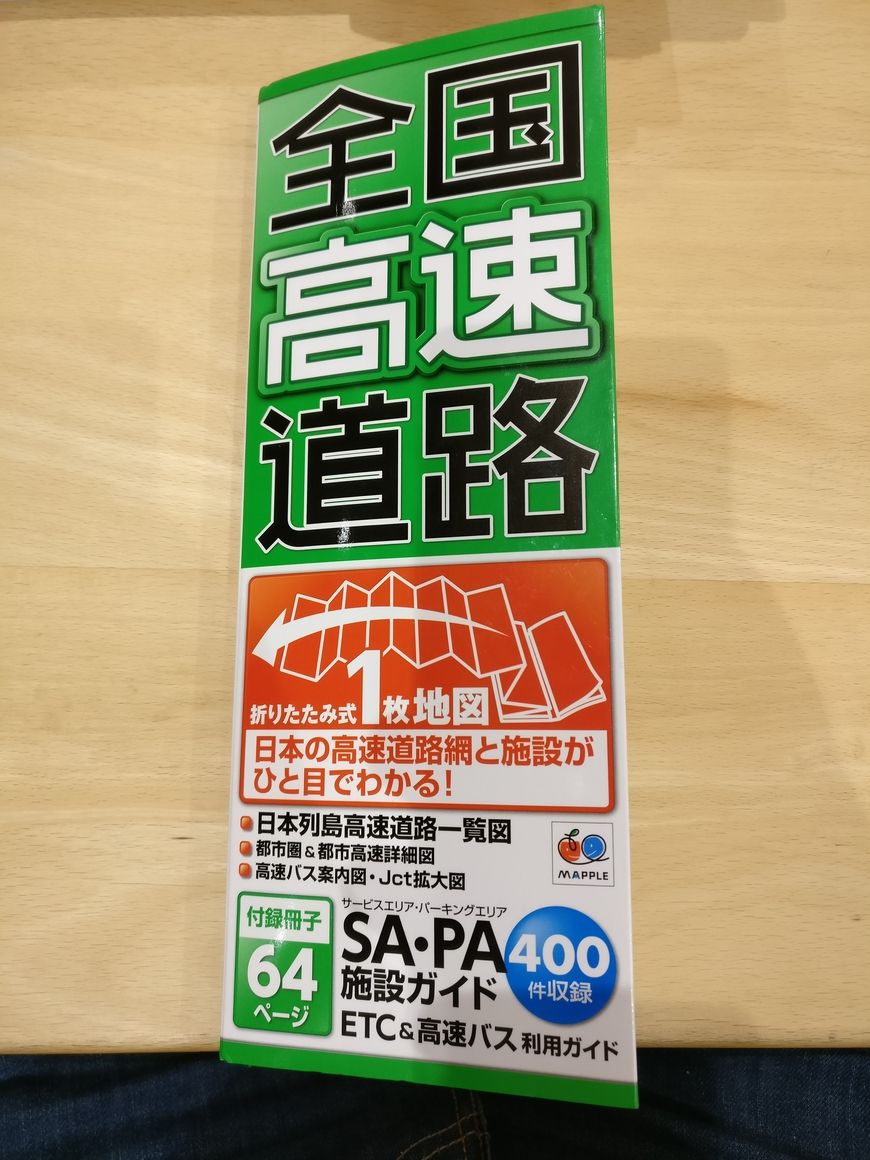 At the SA/PA itself, the best place to hitch is near the offramp to the
expressway, ideally so that you've visible from the buildings — this way
drivers can see you as they go in and think about picking you up before
they get in their car and make the choice. From a service area with
decent traffic, you are very likely to get a ride within minutes.
At the SA/PA itself, the best place to hitch is near the offramp to the
expressway, ideally so that you've visible from the buildings — this way
drivers can see you as they go in and think about picking you up before
they get in their car and make the choice. From a service area with
decent traffic, you are very likely to get a ride within minutes.
- update 2018: There are now free, great quality maps available at most service areas. You can either find them in the nexco magazine or at the tourist information booths at larger service areas.
Once you've made it onto the expressway, it's easy to keep bouncing from one SA/PA to the next one, but a decent highway map is imperative so you know the best place to get off if your destination and your driver's path diverge. It's entirely possible to cover 500 kilometers or more in a single day by using expressways.
Note that it is illegal to stop a car or walk on foot anywhere on the expressway itself, including tollbooths, and you will be rapidly picked up by the highway police if you try. Do not allow your driver to drop you off outside a service area.
- Update 2018: Agree - expressways are excellent for covering long-distance in a single day. In August 2017 I left Aomori at 7am, got lost twice because I chose rides where the drivers were as clueless as I was, and I still arrived in Tochigi after 11pm on the same day. snowballsakura
Hitching elsewhere
Outside the expressway system on ordinary toll-free national highways (国道 kokudō), there are also occasional service areas of a sort, known as Michi-no-Eki (道の駅), lit. "Road stations". These are excellent places to get dropped off, fuel up, consult maps and grab rides.
- Update 2018: There are lots of drivers who take regular, toll-free roads. These kokudo roads take a longer time. For example I hitched from Hakodate to Sapporo and back, and never got on the expressway. Kokudo roads can sometimes be easier to grab rides on than trying to get on the expressways. The first time I ever hitched in Japan actually, I was stranded in a situation where I had to move homes within the same city in the same day, but had no means of conveying my belongings over. I stood along a regular road with a sign in broken Japanese explaining my situation, waited an hour, and a pair of siblings came to help. snowballsakura
Other traditional favourites include the offramps of roadside gas stations and convenience stores. The keys are visibility and accessibility: drivers have to be able to spot you in advance, and they have to be able to stop and pick you up without endangering themselves or others.
Note that it is illegal to hitchhike near road crossings or from bus stops, although in rural areas where buses drop by just 2-3 times a day the latter is often tolerated. The very end of a merging lane after a crossing is also OK, as long as you are more than 5 meters away from the crossing itself. In general, hitchhiking is legal and Japanese police don't hassle hitchhikers, but they do have fairly wide-ranging powers to act on anything that disturbs or distracts traffic, so use common sense.
When to hitch
Like other tourism in Japan, the best times of year are spring and fall, when it's not too hot and not too cold. Hitching in the summer risks sunburn and dehydration, while winter is simply too cold.
- Comment: I am not sure what "too cold" means. Even in Southern/Western Japan, it can be freaking cold in the winter, but that's mainly because people don't really heat their homes, and most of the times you'll find it warmer outdoors than indoors... cars are definitely warm and comfortable, so unless you're standing in the middle of nowhere, you'll get your ride and a hot drink from your driver before you'll reach hypothermia.gutuater
Distasteful as it may be to get up at 06:00 on vacation, as a hitchhiker you must get an early start. Many of the longest rides are available early in the morning, and your hitchhiking day will come to an end when the sun goes down.
- Comment: The biggest thing I found wrong with the hitchhikers guide to Japan. I rarely got good rides in the morning, in fact, my ride/wait ratio was much worse with 20 minute waits for 20 minute rides in the mornings vs 30-40 minute waits at night for 2 hour rides. I would always use morning to walk around, explore my locale, then start hitching after noon. I got most of my best rides in the early afternoon and right around 17:00-18:00. Hitching after 20:00 takes a lot longer, but often you get really good rides out of it. I would not suggest waking up early for rides. traceoftoxin
- Comment: In Japan, I've never hitchhiked in the early morning - always in the afternoon, and occassionally at night. Still I've never waited for more than an hour (usually 10-30 minutes) and I got some long rides, too: from Fukuoka to Kagoshima, or once (at night!) from Tokyo to Kyoto. MatsumotoJoe
- Comment 2024: We were never taken after 4/5 pm, despite good spots & waiting for hours. Same place in the morning we were usually taken within 15 minutes.
If the weather is bad, it's best to give up hitchhiking for the day and figure out something else to do. A sodden figure standing forlornly in the rain with his thumb out is not a pitiful figure in Japan, he's a dangerous lunatic.
- Comment 2024: Pouring rain may be a problem, but we hitchhiked quite succesfully during rainy season as long as we sticked to Service/Parking Areas & mornings/midday.
If hitching out of a tourist spot (Nikko for example where I hitched to Utsunomiya) you can still catch rides a little later on with the day tourists heading home. As long as it is still light you still have a fair chance of getting a lift later on in the day. The early morning rides I found were in a rush going to work etc so didn't have time to stop for me whereas the tourists are in no hurry.
Who to hitch with
In Japan, as everywhere else, your gender matters when hitchhiking. On an ascending scale of difficulty, the best combinations are:
- Girl alone (but see below)
- Two girls
- Boy and girl couple
- Boy alone
- Two boys
- Three or more people
While a single girl (or woman) is likely to get picked up very fast, this has its risks: Japan has its fair share of perverts and predators and a lone hitchhiker in a foreign country is a vulnerable target.
As for who will pick you up, the range of humanity you will encounter is surprising and, once you've crossed the threshold into their car, the generosity and trust will amaze you. You will be picked up by young couples, grizzled old farmers, families with small children, travelling salesmen, single women, yakuza mobsters, Buddhist monks... and, almost without exception, you will be offered drinks and snacks, bought lunch and quite possibly offered a tatami (floor) for the night. But try to distinguish between offers of genuine goodwill and interest and offers out of duty or perceived obligation, as your driver is likely to feel that he is a host and he must treat you as an honoured guest, despite any inconvenience or even financial expense that this might cause.
As a guest, you will not be expected (or allowed) to pay any expenses. Be thankful for this, as Japan's expressway tolls are extremely high: for example, the trip from Tokyo to Osaka costs around ¥8000 in tolls alone.
- Comment: I'm a lone girl hitch hiker. The longest I've waited to get picked up was 4 hours, shortest 5 minutes, and average/median feels like 30 to 45 minutes. If the others who wrote on this page, and the other first few results on google claim that they average at 15-20minutes, I'm not sure if lone girls should still top the list. I suspect that single, foreign-looking men may take the spot instead? Agree on quantity though - have had a few drivers tell me they've always wanted to let someone hitch a ride, but couldn't fit them because 2 was too many.
- I have taken only about 30+ different rides in total so far, most of them were really nice! Polite, friendly, showered me lots of care and concern. Two mediocre experienes: a guy that tried to emotionally possess me while I was around, and two guys who tricked me into signing up for some cult religion.
- Despite that, I still continue to hitch hike! I have taken rides with male drivers that had no other companions, and they were very respectful, polite, and didn't try to make me feel uncomfortable. Being friendly and sticking to 'safe' topics (Japanese culture, language-related talk, food and weather, places, questions about how Japanese feel about politics/culture) are a good way to be cautious but still offer good conversation. Additionally, don't always give your full real name, and if they offer to drive you all the way to your destination, pick some where a little far off. When I hitch my way home I tell them the name of a station 2 stops from my real place. If they ask for contact information, I usually give them an e-mail address I have that is unassociated with my other social media. I've yet to try this but a friend recommends wearing a ring on your ring finger to look "unavailable". The only time I'm super lax and off-guard are when I get picked up by families, with their kids in tow. snowballsakura
Personal Experiences
Here is a anlysing of hitchhiking in Japan by Korn on - warmroads.
Anaimlesshitchhiker has written some tips on hitchhiking Japan on -an aimless hitchhiker
LoJoKlaar's experiences and tips for Japan here.
September 2024
Oddly, the opinions on this particular HW page are very polarized, so I want to add some of my own experiences. For the record, I am a 27-year-old, tall, thin, white, American male. I hitchhiked here for two months from mid-September 2024, with a 48 L rucksack and a sleeping pad tied to the top, and enjoyed it immensely. Fall is a very nice time in this country, the weather is not too hot, tho there were some cloudy and rainy days, (which made organizing some longer treks difficult); seeing koyo, Japanese word for autumnal changing leaves, makes for beautiful drives anywhere.
In all, it was some of the best hitchhiking I’ve done. I went from Tokyo to Niigata, down through Kyoto, Okayama and Hiroshima, circled Kyushu to Aso, Miyazaki and Fukuoka, then rode back north to Kyoto along the Sea of Japan for some incredibly scenic hitchhiking and camping. It’s ridiculously safe in Japan and I often left my 20kg backpack (minus valuables) near the start of mountain trails I hiked between rides with zero problems. The hiking in Japan (where mountainous terrain makes up ~70% of the country) is as good as the hitchhiking and you can successfully get lifts on national park routes with fellow nature-loving Japanese people, despite the roads a times feeling abandoned. Couchsurfs are possible in larger cities, but in smaller ones there are usually few hosts. And on that topic, I wasn’t offered a floor from any drivers. On highways, I found people drive about half the speed that they do in Europe, so covering distances is a bit slower here.
Wait times varied drastically, from three seconds to three hours. Usually, if it was a long wait, I was aware conditions were not in my favor (e.g. in the rain, trying to reach the highway from a random road, in a very remote area). Just as much, I also hitched at sunset from near trailheads, on the side of a prefectural road in the rain at dusk, and from a small PA in pitch black, all rapidly and for great rides. The best times are around commutes (7-10AM and 5-8PM), and I think hitchhiking into the darkness is something you need to do to be successful, strange as it may feel. (There’s no DST in Japan, so in general sun set early for me.) More than a few times, people were bored and just drove me for an hour before heading back home — I felt guilty, but they insisted. In Kyusyu I was lucky for days in a row: once catching five rides with a total of forty minutes of waiting; another getting a ride from Beppu to Miyazaki in a few minutes in a truck cot; a generous phone-line-layer took me to a campsite and called the groundskeeper to clarify there was space for me; and one last driver actually got me a job teaching English at an elementary school in Fukuoka. All this, paired with the best food in Japan. Elsewhere, outside Izumo a woman called six of her friends to be my next ride, so that, at the end, my next ride was actually waiting for me in a parking lot — brilliant.
Highways are certainly the most efficient, but I found the most memorable drives elsewhere. I saw four other hitchhikers on my trip, all japanese students. Two of them (who’d hitchhiked from Hakata station in Fukuoka to Kyoto station in one day; what’s up Miki!) and I had our last ride one evening from an SA outside Osaka together.
Michi no eki, PAs and SAs are your friend: exiting any city, I would search around the metropolitan area or along my ideal route for one. Oftentimes, 250¥ or a few hours on foot gets you there. They are much closer to civilization than in Europe or America, and michi no eki especially are frequented by local people as fresh markets or delicious restaurants. Camping there is probably not legal but many people sleep in their cars there on long trips, so in practice it is fine. Campsites are actually kinda expensive, maybe 3000-5000¥, and sometimes don’t even have showers. You get the same experience at michi no eki, but with probably eight vending machines, a cleaner toilet, and fresh local produce available from around 9AM, for nothing. Once, a friendly michi no eki manager offered me to sleep on the tatami there, I was given food by the street vendors there, and then a third employee drove me with his wife from Tottori to Himeji out of only kindness. All the while, an old man performed beautiful music on his lap steel guitar.
Friendly construction workers, truck drivers, carpenters, security guards, scaffolders, and other working class people made up most of my rides; but also young couples, mothers with infants, countless awesome old men. Japanese people are the most friendly and generous I’ve met in the world, and I found as the trip progressed and the kilometers I’d covered grew, people were more and more excited and often drove me even further than they were going. I was treated to meals more times than I can count, despite protest. Japanese people are often reserved — I found this changes as soon as you’re in their car — and, knowing their country is unbelievably safe, they seem to appreciate the sense of adventure, maybe one that they themselves are hesitant to embrace.
I studied the language only a few weeks before traveling and hitchhiking with a notebook proved an excellent way to learn the language. I recommend it. Some 95% of my rides didn’t speak english, some people say they cannot but are actually quite capable but shy. As such, learning a small amount (I find translators aren’t great, especially with rural dialects) will prove beneficial. I don’t think it’s nearly as difficult as the world makes it out to be, just a bit of getting used to. Overall, great hitchhiking here.
October-December 2016, December 2023
On the whole hitching is ok in Japan for a 40 year old white male. Some challenges between Osaka and Akita going up the west coast in December 2023, did only give myself just over 4.5 days to get to Niseko, so if i had more time it would have been more enjoyable and less waiting time as would not have bothered trying to hitch in the dark. My most frequent pickups were in the morning and between 7-9pm, struggling between lunch and dinner time. Waited at expressway service station near Osaka and within an hour police arrived and escorted me to another road away from the expressway informing me it was illegal.
Once I got past Akita it was much easier and even had a guy offering me a lift to Aomori from 10k north of Akita. He also wanted to pay for my ferry ticket and train ticket to Sapporo, but didn't want to take advantage so only took up ride offer. 10 minute wait 20km north of Hakodate next morning and got a lift direct to Sapporo 😁
Definitely more difficult than 2016 when I was there for 2 months (oct-dec), maybe because of COVID, lots of people wearing facemasks and drivers may be more paranoid/fearful. Waited at a service station (second one on this trip) for 5 hours with sign for first hour, then no sign, until finally a young lady picked me up and drove 5 miles to the town she was going to. Got train after that to make up some ground, pleased police didn't come to escort me again. Cleaner of service station spoke broken English and asked me if I was hitchhiking. I was clean and kempt.
In 2016 I managed to hitch out of Tokyo with ease, 10 minute wait on hard shoulder to expressway on-ramp. Could of just been right time at right place.
All types of people picked me up, except truck drivers. Many business men and truck drivers on 2023 trip had very stern faces when trying to hitch and gain their attention. Maybe my age is making it more difficult, there could be age limitations/expectations in some Asian countries and the reasons for the difficulty and attitude a lot of the drivers had towards me hitching...
Average waiting time 2023, for me, 3 hours.
Update
Wow don't things change!!! Managed to hitch from Niseko down to Joetsu in 2 and a half days, retracing my steps. Meals bought for me, received money three times and an onsen experience😁. Didn't wait longer than an hour and average waiting time was 20 mins, that included hitching in dark and moderate snow with ski equipment. Finally a truck stopped for me, but wasn't going my direction. From Joetsu I hitched to Osaka on the same day (9 hours and 4 lifts) and offered lift direct to airport. Waited at service stations on expressway for 15mins average, no police showed up...relief. No public transport was used on return leg to Osaka from Niseko, except for ferry. No signs were used after Niseko, for whole trip signs were not used 95% of time, just the thumb. I only know three words in Japanese and hitched all over country twice with no problems. I used convenience stores, expressway service stations, expressway on-ramp/entrances, petrol stations and bus stops to hitch as well as shoulder lanes (not many) and never asked for a lift, just left it to the good ol' thumb😁
I used manga cafe when in towns as they are cheap and do good night rates (1800 Yen for 8 hours in a cubicle where you can lie down, use internet, free shower and free soft drinks). Brought back memories of 2016 trip 😁. Camped out in some towns behind buildings in quiet areas, even when snowing, with no problems.
After Niseko, I was dishevelled, smelled funky due to shoes and had more gear, yet I had much more luck hitching even though theoretically it should have been the other way around...go figure!!!
Update 2024
Had our personally worst hitchhiking experience in Japan. Waited long hours & were then often taken for just a few km or to the wrong place. It worked very well though after we developed some rules for ourselves: Only hitching at SA/PA with at least 1000 Google reviews, being extremely visible to people who stopped (not exiting cars), discussing our exact destination before entering a car, not even trying after 4 pm, and always staying on the main route between the biggest cities. We then met very nice people & had a lot of fun. Still mixed feelings about the experience: It usually took 3h to get to a SA/PA, which made hitchhiking very long.
How to get in and out of cities
See instructions on wikitravel.
Cities
- Honshu - Kanto: Tokyo (東京), Shizuoka (静岡), Matsumoto (松本), Nagano (長野), Nagoya (名古屋市)
- Honshu - Kansai: Kyoto (京都), Osaka (大阪), Kobe (神戸), Hiroshima (広島)
- Honshu - Tohoku: Akita (秋田), Aomori (青森)
- Kyushu: Nagasaki (長崎), Kagoshima (鹿児島), Fukuoka (福岡市), Beppu (別府)
- Shikoku: Takamatsu (高松), Tokushima (徳島), Kochi (高知), Matsuyama (松山)
- Hokkaido: Hakodate (函館), Sapporo (札幌), Wakkanai (稚内)
- Okinawa: Naha (那覇)
Links
- Nexco take care of the highways and SA/PAs, they have multiple websites depending of the part of Japan you are in. But you can find the same maps which you can get inside the SA/PAs on the corresponding website. Nexco West Nexco Central
- Travelstory on Randomroads by gutuater about hitching Japan. Photo gallery here.
- Information, tips and personal experiences of hitch-hiking in Japan. A 2717 km journey on 58 vehicles (only in spanish)
- Tips for hitchhiking in Japan on Warmroads blog (2016).
- "While Preparing For Rain, All We Found Was Sunshine" blog post by Kerem (2016)
Atlases
- Road Atlas Japan (ISBN 4-398-20104-1) — a hitchhiker's invaluable companion, listing pretty much every major road in the country in both English and Japanese. Difficult to find overseas but available in any larger Japanese bookstore (including Amazon.co.jp); look for the lurid orange cover.
- Bilingual Map of Japan (ISBN 978-4-398-83014-2) by Mapple - Perfect, compact, high quality map for just 1000 Yen. List all major routes and city names in phonetic English. Ideal when you are packing light and perfect for showing the driver if verbal communication proves difficult.
Books
Will Ferguson has written a number of informative and entertaining books about hitchhiking in Japan. These include:
- Hitchhiker's Guide to Japan (ISBN 0-8048-2068-6) — practical guide to hitchhiking with a number of tested itineraries
- Hokkaido Highway Blues (ISBN 1-56947-234-3) — the story of an epic hitchhiking trip across the entire country
Tokyo
Edit on wikiRoadside hitching spots go stale. For current places to hitch in and out of this city, use maps.hitchwiki.org and the live Hitchwiki page linked at the end of this chapter. This book keeps general orientation, not a pin gazetteer.
'''''' is the capital of Japan.
Hitchiking Out
To get out, you have to find the places where drivers going out congregate, which in practice means service areas (サービスエリア sābisu eria, SA) or parking areas (PA) on the large toll expressways (高速道路 kōsokudōro) connecting Japan's major cities. As you might guess, service areas are larger and better equipped than parking areas, but surprisingly few Japanese are familiar with the difference so it's easier to label them all service areas.
It's convenient to get maps of SA and PA in Japan because these are major hitchhiking locations on the highways. You can find them on the web for each region (maybe you will have to google in Japanese: サービスエリア地図) or get them for free at many SA/PAs.
Lots of expressways radiate off Tokyo's local highway system (首都 shuto). So what you want to do is pick a destination, match it to an expressway, and get to the closest PA/SA. Here's the list in clockwise order from west to east, you will probably find it useful to consult a 1:10000 Japanese map to get your bearings. Most English highway signs will not distinguish short and long vowels, but your driver will, so pronounce it right!
A preliminary notes about buses: in general, Tokyo's commuter bus system sucks. They run very infrequently (typically 1/hr in the boonies), have a lunch break of several hours, and stop running early. Try to get to the bus station before 11 in the morning, or you'll probably have to wait until 2 in the afternoon for the next one!
Tōmei Expressway (東名)
For: Fuji/Gotemba, Hakone, Nagoya, western
Japan
Where: Kōhoku PA (港北)
Alternative: Yōga IC (用賀), near Tokyu Den-en-toshi
line (東急田園都市線) Yōga station
Last verified: March 2017
Directions: Go to Tōkaichiba (十日市場) station on the JR Yokohama line through any one of a number of connections (Shibuya to Nagatsuta via Tokyu Den-en-toshi, Shibuya to Shin-Yokohama via Tokyu Toyoko, Shinjuku to Machida via Odakyu, etc.) The train trip is only 30 minutes, but it's a couple hilly kilometers to the PA, so consult an area map before you set off. You must head EAST along the expressway, expect to take 30-40 minutes from the station. First you underpass the expressway, cross the river, and than follow back towards Tokyo until you find over-fly bridge over express way again which takes you to your PA South.
Alternatively, if you have a map you can get the JR to Fujigaoka station and walk south aiming for kittahassaka park which is directly next to it. This route takes about 20 minutes from the station
Lazy Alternative: Get to Aobadai Station (Tōkyū Den-en-toshi continues on from Hanzomon at Shibuya). Take bus #82 until Kitahassaku Kouen Tomei entrance (北八朔公園東名口). Tell the driver you want that, but the bus displays every stop name. You'll drive across the Tomei, walk back just a bit from the bus stop and straight down to the Kohoku PA (NOT ACROSS BRIDGE).
EXPASA ashigara (EXPASA足柄) is a huge rest area and thus is extremely good for hitching to and from Tokyo. It is a bit far from Tokyo though and you should only use it as an intermediate hitchhiking location and not as a location to get out of the city.
Chūō Expressway (中央)
For: Fujiyoshida, Lake Kawaguchi, Nagano, Gifu,
Nagoya & western Japan (slow route)
Where: Ishikawa SA (石川)
Where not: Takaido IC (高井戸, near Keio
Inokashira/Takaido stn.) or Eifuku IC (永福, near Keio/Meidaimae stn.),
both way too busy
Cost from Yamanote line: ~800 yen
Last verified: August 2000
Directions: Get to Kichijoji (吉祥寺) via Keio Inokashira from Shibuya or JR Chuo from Shinjuku, switch to JR Chuo (preferably a kaisoku commuter express to Takao, otherwise you'll have to change trains a few times) and go to either Toyoda (豊田) or Hino (日野). From Toyoda station (north exit), take Keio bus 日04 from platform 2 to Ishikawacho-higashi (石川町東). They run from 7:35 to 18:15, usually at 35 past the hour, but there is no 12:35 bus. The same bus runs to Hino station so you can catch it from there too. The distance is about 3 km and the bus route is reasonably straightforward, so it is also walkable if you're in the mood.
Once at Ishikawachō-higashi, backtrack to the lights (I'm assuming you're coming from Toyoda), you'll see the highway on your left. Go to the highway, but not under it -- turn left, up the hill, then open the gate that you are not supposed to open, walk up to the SA fence and jump over the one-meter gate if it is locked. You're in!
Note: Chuo branches a few times, be sure you know what branch you want to go to and what branch your driver will go to. The first is Ootsuki Junction (大月), where the road splits between the Nagano and Fujiyoshida branches; the last SA before the junction is Dangōzaka (談合坂).
Kan'etsu Expressway (関越)
For: Niigata, Sado Island, Japan Sea coast
Where: Miyoshi PA (三芳)
Alternative: Nerima IC (練馬), approx 1 km from Seibu
Ikebukuro line (西武池袋線) Shakujii-kouen (石神井公園) station
Cost from Yamanote line: ~500 yen
Directions: Take the Tōbu Tōjō (東武東上) line from Ikebukuro to Tsuruse
station. From the station, take Raifu Basu #4 to the Sentoraru Byōin
(センとラル病院) stop, as usual it runs once per hour except during
lunchtime. The bus will deposit you on the wrong side of the parking
area, cross the bridge to get to the side going away from Tokyo.
Alternatively, you can walk the 3 km or so from Fujimino station; there
should also be a bus from Fujimino, but it didn't seem to exist...
Tōhoku Expressway (東北)
For: Utsunomiya, Sendai, Miyagi-Iwate coast,
northern Japan, Hokkaido
Where: Hasuda PA (蓮田)
Last verified: July 2005
Directions: Go to Hasuda station on the JR Utsunomiya (宇都宮) line, starting from Shinjuku or Tokyo. Take the east exit and locate platform #3, take Tōbu (東武) bus #4 to Shiyakusho-mae (市役所前). Right before the stop the bus actually goes under the expressway, return to the bridge (don't go under it!) and head a few hundred meters up the hill/to the north along the expressway until you reach the PA. The gate may be locked, but the fence is low and jumping over it is no problem.
Jōban Expressway (常磐)
For: Mito, Iwaki, Sendai (slow route)
Where maybe: Mukōjima IC (向島) up the riverside and
across the bridge from Asakusa or Kahei PA (加平) from Kita-Ayase
(北綾瀬) on Eidan Chiyoda subway, both on Shuto 6 connecting to
Jōban
Where not: Moriya SA (守谷)
This highway is the bane of the hitchhiker, as there appears to be no decent way of getting onto it. The nearest real service area, Moriya SA (守谷), is way out of town, at least 3 transfers plus a bus ride from the Yamanote. The IC and PA listed above are unexplored possibilities. One sure way: take a ¥2000 train to Mito and start there...
Warning: If you get on at Mukōjima IC, the road soon joins Shuto C2, after which C2 branches off again towards the Tōhoku Expressway. Make sure you know where your driver is going!
Higashi-Kantō Expressway (東関東)
For: Narita, Boso Peninsula
What, you're going to hitchhike to catch your flight!? Do yourself a favor and take the train, Keisei'll get you there for 1000 yen. If you insist, you could try to catch the Expressway Bayshore Line (高速湾岸線) from Odaiba or Shin-Kiba, which transforms into the Higashi-Kantō.
Hitchiking In
95% of the time, once on the expressway, getting back to Tokyo is a piece of cake: your driver is also going to Tokyo, so he'll drop you off at the nearest train or subway station, and you can find your way home. Problems arise the other 5% of the time, when your driver is going either through Tokyo or to a part of Tokyo extremely far from your part of Tokyo. What to do?
Your driver may exit the expressway just so you can get off, but this is a waste of time and money for him, as he has to fight his way back and pay an extra toll, so don't count on it. The driver may also try to drop you off at a toll booth or at an interchange, which will either get you in hot water from the authorities or dead from being hit by a car. The least of three evils is thus getting dropped off at a service area.
Moral of the story: when near a big city, feel free to reject rides that aren't going close enough. There will be more.
Shuto Service Areas
If the service area is one of those listed above, you know how to get back. If not, you have been left at a service area not listed for a good reason. Almost all the 15+ parking areas on the Shuto are tiny (space for around 20 cars max), suspended multiple stories above the earth with entrance/exit possible only through staff quarters, and inconviniently located to boot. However, as getting out is a lesser crime, you may be able to sweet-talk somebody into unlocking those staff-only doors and letting you out, as long as you promise not to come back in.
The Shuto network is an indecipherable tangle that looks vaguely similar to the Tokyo subway system, except that most stations are accessible only when going in one direction and you have 5 seconds to decide whether to exit. The parking areas are omitted from most maps, only specialty maps will usually show them. One convention worth learning quickly: all routes and lanes going towards the center are nobori (上り, going up), whereas routes and lanes exiting Tokyo are kudari (下り, going down). The majority of Shuto parking areas are nobori-only, a small saving grace for the hitchhiker coming in, but yet another reason why they're useless for exiting Tokyo.
At any rate, I've only ended up in this situation once so far, so here's the beginning of a new list, sorted by route number.
Shuto 3 (高速3号)
Connecting to: Tōmei
Shuto 4 (高速4号)
Connecting to: Chūō
Eifuku PA (永福)
Access: Nobori only
Small. Somewhat oddly located right next to a row of tollbooths and an
exit (which thus cannot be used even illegally, since they'll spot you
if you try to walk it!). If you do find your way out, Meidaimae station
at the crossing of both Keio lines is nearby (ask for directions).
Yoyogi PA (代々木)
Access: Nobori only
A pathetic one-lane excuse for a parking area quite literally suspended
three stories above the earth. Climbing over the fence would be easy if
the drop weren't likely to kill you; there's also an expressway entrance
nearby, but as noted earlier, walking on it is highly illegal and
dangerous to boot. The third option was shown to me by a janitor to whom
I pleaded my distress: at the furthestmost tip (from your arrival point)
of the building is a door, which leads to a staircase, which leads
outside. The doors along the route may, or may not, be locked. Once you
do get out, one block straight and a few to the right will get you to
Yoyogi station on the Yamanote/O-Edo lines. (Odakyu line Minami-Shinjuku
station is also nearby.)
Note that it might theoretically even be possible to get into the PA this way, literally through the back door, but I wouldn't recommend it -- if the doors are locked you're out of luck, westbound is towards Tokyo, not out of it, the Shuto splits into about 17 different directions soon after the PA, and the PA deservedly gets little enough traffic as it is. And you'll annoy the friendly janitor.
Shuto 6 (高速6号)
Connecting to: Jōban
Kahei PA (加平)
Access: Kudari only
Located inside a highway entrance spiral, this one may actually be
accessible from the ground. Kita-Ayase (北綾瀬) station on the Eidan
Chiyoda subway line is about half a kilometer to the east along the
large road that crosses under the highway between the entrances.
Shuto S1/C2
Connecting to: Tōhoku, Jōban
Shuto S1 becomes C2 and merges briefly with 6 before splitting off again and heading off to Tokyo Bay. Confused? You will be.
Kawaguchi PA (川口)
The PA is only on the side that goes back to Tokyo. If you're trying to go to Tōhoku, you need to get on the Tōhoku-dō.
Tokyo Gaikan Expressway (東京外環自動車道)
Connecting to: Kan'etsu, Tōhoku, Jōban
Niikura PA (新倉)
Access: Both directions
Small. Close to Wakō-shi. Often omitted even from highway maps since it
doesn't belong to either the kousokudouro or the shuto systems!
Food
Sekai Kobayashi runs an eatery called Mirai Shokudō which offers a free meal in exchange for 50 minutes of labor. Address: Japan, 〒101-0003 Tōkyō-to, Chiyoda-ku, Hitotsubashi, 2 Chōme−6−2 Nihon Kyōiku Kaikan [35.69436N, 139.75624E]
Food Eating Challanges
Kentas Steak House (by reservation only) offers rewards for eating sets of 200g steaks with vegetables above a certain quantity. After eating 14 sets, the meal is free; the 15th set yields a 200 yen prize, and the 20th set yields a 4,200 yen prize. Address: Japan, 〒162-0825 Tōkyō-to, Shinjuku-ku, Kagurazaka, 1 Chōme−14 Tōhō-biru 1F [35.70092N, 139.7428E]
Aburasoba Kasugatei Ikebukuro offers a 5,000 yen prize for consuming 3 of their extra large portions of aburasoba in 30 minutes. In order to participate, you must buy 2 extra large portion meal tickets. They also offer a 10,000 yen prize for consuming 4 of their extra large portions in 40 minutes. In order to participate, you must buy 3 extra large portion meal tickets. Address: Japan, 171-0021 Tōkyō-to, Toshima-ku, Nishiikebukuro, 1 Chōme-5-4 [35.72786N, 139.7084E]
Etc https://www.tsunagujapan.com/o-gui-eating-challenges-in-tokyo/
Myanmar
Edit on wikiMyanmar, or Burma, is a country in South-Eastern Asia. Although most people (and especially the stupid "Loney Planet Myanmar" book) connect Myanmar only with its bad government, this is not the whole story and should not be the only fact to focus on. Rather it is much more worth seeing Myanmar how it really is: A beautiful country, with hospitable and friendly people and an incredible rich culture. This country has so much to give, it is awesome.
Hitchhiking
(Hitchhiking in Myanmar might be technically illegal for foreigners, someone please confirm or debunk this.) Hitch-hiking in Myanmar is not that difficult, if you know how to do it. First of all, forget about the European way raising your thumb. As in almost all non-Western countries, raising your thumb will not be understood as anything but an odd gesture. Try other ways using body language for instance by waving at the drivers and signalling them to stop, or by waving and pointing in the direction you're going. You need to communicate with the driver in the few seconds you have while he sees you. Once you learn this, you will get rides in no time.
The potential for a great country for hitchhiking is definitely there. The people are very interested in foreigners, the roads are big and provide plenty of space to stand, traffic is very slow, there are a lot of pick-up trucks which are perfect for hitchhikers (there is always some free space) and there are so many different old, funny and exciting vehicles on the road, that it could be great fun for a hitchhiker to get all these different lifts. It is very easy to get attention as a foreigner and you will get a lot of reactions, most of the time very friendly ones. You might also get lifts with people that just come around and talk to you and decide to give you a ride after you told them where you are going.
Hitch-hiking in Myanmar might seem difficult at first. You will face some trouble that can make it seem completely impossible. Here is a list of things you should be prepared for:
- People won't understand what you are doing: If you are white, you should be rich and for sure you have enough money for the bus or a taxi.
- Holding up a hitchhiking sign (in Myanma script) helps tremendously with communicating what it is you're doing. Even without knowing the concept of hitchhiking, people understand you're asking to travel to the place on your sign.
- This is usually not the case, but some people might be afraid about getting in trouble with the government, when they pick you up. I does not mean that the Burmese people are afraid of getting in contact with foreigners, but some will tell you this reason if you ask them about difficulties with hitchhiking.
- Many pick-up trucks are considered to be short-distance buses. Of course they will be delighted to pick you up, but make sure about the payment first.
- Cars with red number plates are taxies. Don't get on one by mistake, since many taxies are otherwise unmarked, and drivers are often very nice and may not even mention a price until the end of your trip.
- The people are too friendly. Some of you might know this situations where you are somewhere in a fucked up place, nobody is stopping, which is bad and after a while people gather around you because they want to know where you are from and what are you doing. This is also the situation in Myanmar, but here you can add that despite all this things the people also try to help you, which makes the whole situation even worse, because they don't understand hitchhiking. With 10 people around you it is hard to stop a car and there you might have the situation that a car finally stops, you jump on and just want to leave and the driver starts to talk to the people on the street about you. They just want to help, but in the end the driver is so confused, that he refuses you and you are again with your buddies on the street. To avoid this, make sure to travel from one town/city to another, but always start hitch-hiking a little outside the cities.
Brand New Myanmar Express Highway
Myanmar hitchhiking is like heaven and hell. Here comes the heaven. Between Mandalay and Yangon is a brand new express-way since December 2010. They put much effort in this project. It was the third time after the fifties and the seventies, that they tried to build this road and finally it worked with Chinese support. Now they did it and it is one of the the greatest an easiest roads you can hitchhike. It is not really a challenge, good for beginners and a nice trip. A lot of cars drive the whole route between the two biggest cities, so you can jump on and off where ever you want. There is no confusion about what you do, because there are no taxis on this highway, only express buses in the night so the understand quickly, that you are looking for a ride in a car on the highway. Also the feeling is very special. It might be like Germany in the early fifties. You have a very new, big and fast road, but there are almost no cars on it. Maybe 10 cars per hour, which is not much for a toll road (the drivers pay about USD 7 from Mandalay to Yangon). At the moment there are still people around the highway planting trees, or fixing some road borders and sometimes you might see some kids which are flying a kite in the middle of the road. Awesome. This would never be possible on the crammed European highways.
Useful Vocabulary
MIN-ga-la-baa = Hello CHAY-zu-baa = Thank you Myoot = City/Township Toe gate = Tollgate
Legality of Hitchhiking
The law here has not been checked. Nobody has yet read the road traffic rules in force in Myanmar against the official text, so this section cannot tell you what they say, and nothing elsewhere on this page should be read as a statement of the law. What holds almost everywhere is that hitchhiking is not an offence in itself and that what the traffic code regulates is where a pedestrian may stand — off the carriageway, and off motorway-class roads and their slip roads altogether — but whether that is true here is simply unknown. Ask locally before standing on a major road, and treat the rest of this article as what hitchhikers report rather than as a rule you can rely on. If you can read the official text, please replace this paragraph with the provision it turns on and a link to it.
General information
Some things that might be important before entering the country:
- There's an e-visa you can apply for online (January 2020). You'll get a maximum stay of 28 days and it costs US$50. [ Mind of a Hitchhiker](user:_MOAH ” Mind of a Hitchhiker”){.wikilink} and partner got their e-visas within 2 working days. You'll need to print this out.
- There are now ATMs in Myanmar. All major cities have them and all accept visa/MasterCard. Money is given is local currency not USD and you are charged anything from USD 2 to USD 15 for using the machine. Paying by card is possible in high end hotels (with a 3% surcharge), but not on the street so make sure that you have enough cash on you for daily spending. Also make sure to spend/exchange all your Kyat before you leave Myanmar as it's not a currency that's easy to exchange.
- In general you should know that a lot of information about travelling in Myanmar is wrong, because things are changing so fast. This addresses the USD 300 you have to show at the airport (wrong!), the USD 10 airport tax (included in AirAsia tickets since August 2011), the interview in the visa process (getting a visa in Bangkok is straightforward, fast and very easy) and many other information you will find. As a tourist they will not make your life difficult with absurd rules.
- If you take much money with you, be relaxed. Myanmar is a pretty safe country. Although every tourist is carrying a lot of money around with them, only few people get ripped of. It might be because the people are so nice (see below "people") or because you will not be allowed to enter assumed dangerous areas (see below "travel restrictions").
- Generally the people won't cheat you. Cheating is a new thing to them, but this is changing as well, especially when it comes to changing money in the street. Never do it! Not even if it's Sunday, the banks are closed and you need money for the hostel. Find another solution, because the guys in the street are only there to cheat you. They won't change your money!
- Cars and buses are very old (because of the embargo), stinky and slow. The traffic is not so much, but in the cities the air might be more polluted as in Bangkok during the rush hours. Sometimes you find yourself while hitchhiking beside the street surrounded by a black smoke cloud, or you sit in the back of a truck and it is a bit annoying to breath the delicious exhaust fumes that pass through you. You can wear a facemask in cities and in the back of pickup trucks to prevent yourself inhaling that stuff. It's totally normal to wear a facemask in public.
Living
Update February 2013: Still same price range of the 'licensed hotels', BUT! In rural areas the locals are usually so confused and surprised to see you that they obviously don't care about any license and check you into any guest-house for a local price (2000 kyats), although they will try to show you the fancier rooms first. They also get freaked out when you try to camp on the beach or outside of the village.
Some places that are popular pilgrimage sites (Kyaiktiyo - the Golden Rock Pagoda) have free accommodation. Check out Sea Sar restaurant/hotel. They allow you to sleep on bamboo mats in the restaurant hall for free. Showers are available for 200 kyats across the road. Their food is lovely too.
Myanmar is one of the cheapest countries in SEA. If you go for street food, you can get a full dinner (several dishes + soup) for less than 1 USD. The cheapest rooms in a guest house cost about 8 USD. Be careful with money exchange, don't make a deal with people that offer you exchange on the street. In Yangon the gem market is a good place with fair and stable exchange rates.
You will need Dollars for accommodation if you are staying in high end hotels; small local places will accept Just at the rate of 1000 to 1USD (in 2015). Kyat is the currency for the street. So take with you both currencies and don't exchange everything (otherwise you will become a real money trader, without making profit, but loosing a lot). Also most of the people will not accept your dollars if there is something written on, if they have a wrinkle, or let's say if they don't look brand new (I didn't get this). Also the local prices for accommodation are about USD 3 (2000 Kyat), but foreigners are only allowed to stay in guest-houses that have permission and those are often much more expensive.
Travel restrictions
In Myanmar are a lot of black zones where nobody (even the locals) is allowed to go, then there are some areas where you need a special permission, and the rest of the country. It is not possible to enter these areas by accident. There are control points, often at bridges and if you don't have permission, they will send you back. The centre of the country is free to move around. At the border states are a lot of conflicts (north, south-east and west are rebels, there is some oil and gem production and in the east [Shan state] they also grow a lot of heroin for export to India).
It is very obvious that the government is keeping track about your travels. Every guest-house has to report which guests they had and even if you stay in a small village you need to register with the local police guy. It is almost impossible to stay with locals, because they need a permit. A few years ago it might have been allowed to stay one night in a monastery, but also that is not possible any more since the protests in Yangon in 2008. Some locals say that there are many new (unclear) rules and nobody wants to get in trouble. Be careful that you don't push people to help you and put them in danger. Also don't be surprised if you stay during the day with some monks somewhere and the local police officer is coming around to ask some question. As the locals told me, it is just their job nothing important, they have to report what are you doing, but in general there will be no problem, if you don't stay overnight.
EDIT 2019: It seems to be really difficult to stay with locals overnight. Even though most of them are super friendly, the restrictions from the government still seem to be a big thing. Also keep in mind that in the worst case not only could you end up being questioned by the police or local authorities but also you might put the locals in danger. Same holds for temples. That being said, if you can make sure to not be caught, you'll have a great time!
Political situation
I don't want to write much about this point, because you can find a lot of information about this but I think it is almost impossible to get an objective overview about what is going on politically in this country. Also I don't think it is worth focussing too much on political issues, because they are not as important as people (mostly from outside) make them.
The politics in Myanmar are changing like the exchange rate. Since the old general is retired (April 2011) the whole situation became a bit more "relaxed" (like the Burmese would say). Aung San Suu Kyi (she won the elections 1990 and called the tourist boycott) is released and in dialogue with the new government. Some say this is just propaganda. We don't know. You will not come in contact with the government, only if some policemen want to shake your hand and say hello. Most of the locals are willing to share their thoughts about the political situation but often there is a language barrier so they just can express that they think their government is bad.
People
Visit Myanmar, go there, and don't do it not because of the political situation, but rather do it because of the people! They are very welcome to every foreigner and they are very happy to get opportunities to practise English. At the moment there is a big lack of English teachers and everyone wants to learn English and practise. Also be aware that the people are honestly interested in you. It is completely different to India, Thailand, or Cambodia. If they start talking to you it happens rarely that they also want to sell you something. In Myanmar some kind of giving culture. For example: If you ask for a card they might take you around and search the right shop and at the moment when they order the card (and usually you will think now he wants some money for his service) they will not allow you to pay, but give the card to you as a present. Also when you are hitchhiking and you explain to them that you don't have money, there will be a lot of people that offer you to pay for the bus for you. It is much easier to get around with paid buses than with cars that stop, haha. In general this is very nice, but also be aware. They give what they have even if they have nothing. Be prepared to make people understand not to pay for your transport and carry some small and useful things with you to make presents to nice people also. Sharing is caring!
Meditation
For all that are interested in meditation, Myanmar has a lot of meditation centres and a lot of high teachings of meditation techniques. If you want to stay for a longer time you need a meditation visa. If you don't have this kind of visa, it might be hard to find centres where you can stay. Dhamma Joti (Vipassana meditation taught by Goenka) in Yangon can take foreigners for 10 day retreats (with English lectures) without meditation visa, also in Sagaing you might find a place where you can practise. in Pa-Auk forest and in another city in the north are centres where you can learn Pa Auk techniques, which is (like the Burmese say) the highest teaching in their country. Don't go to places where you have to pay a shitload of money, those are not real. If you go deeper in this business you will find out how incredibly rich this country is.
Personal Experiences
January 2020
traveled from Mandalay to Kawthaung over 28 days in January 2020 with partner. The waits were usually not very long because we always got out of the zones with lots of foot traffic. We always used hitchhiking signs written in Myanma script to tell people where we were going. It was very easy and no one ever expected payment—not even on the toll roads. The people were amazing and super friendly, but the police were often confused as to why there were foreigners riding along with locals. The cops sometimes made a fuss, but they always let us travel on. I blogged about every single hitchhiking day and added our hitchhiking spots to the maps. We did: Nyaung-U (Old Bagan) to Naypyitaw, Naypyitaw to Yangon, Mawlamyine to Dawei, Dawei to Myeik, and Myeik to Bokpyin to Kawthaung.
External links
- Experiences hitchhiking in Myanmar in January 2020 with other Myanmar-related articles in English. Iris and Jonas stayed in Myanmar for 28 days and hitchhiked 1585 kilometers north to south with 9 vehicles, while also working online from the hotels.
- Information, tips and personal experiences of hitch-hiking in Myanmar. A 1545 km journey on 33 vehicles (only in Spanish), by Marcando el Polo.
- How to cross from Myanmar to India overland at Tamu - Moreh Bureaucracy and tips by [ RovingSnails](User:_Rovingsnails ” RovingSnails”){.wikilink}
Laos
Edit on wikiLaos is a country in South East Asia surrounded by China, Vietnam, Cambodia, Thailand and Burma.
Hitchhiking
Hitchhiking is fairly uncommon, and sometimes people will expect money. Check out the Thai-Lao phrasebook for language pointers.
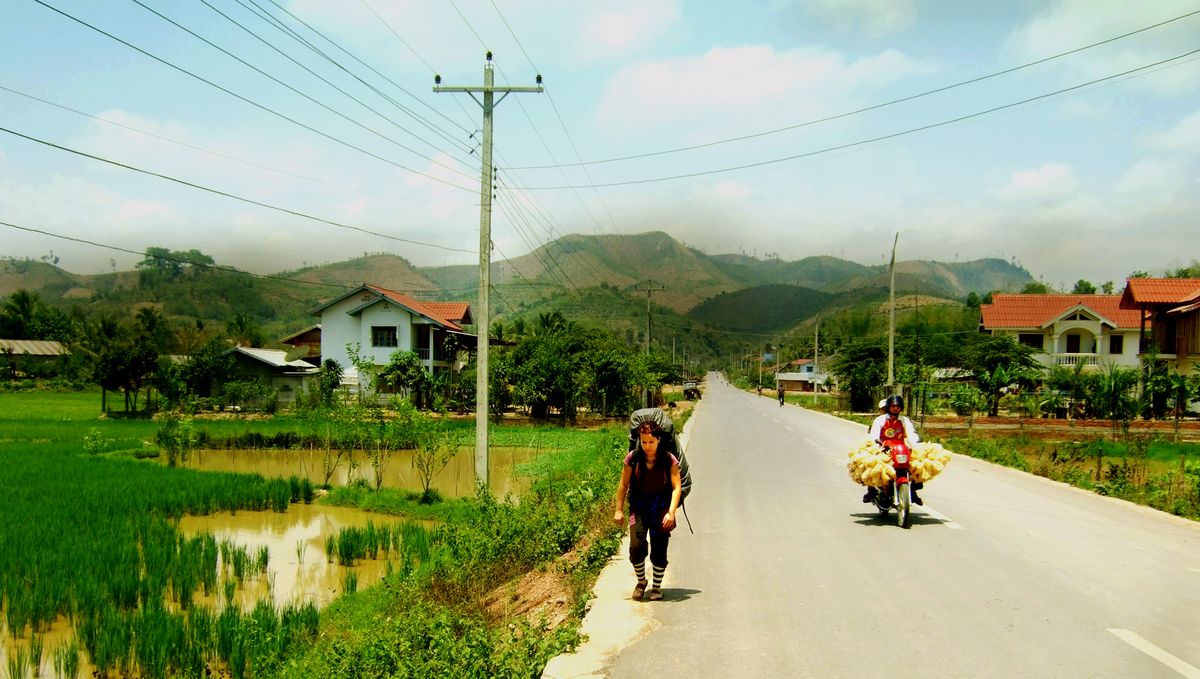
If you raise your thumb people will think you just doing 'like' and dont understand it's mean to stop. for hitch-hike take your hand and 'hit' the air
Hitching in Laos shall most likely be done via local toll-free roads, which this article will predominantly focus on. There is a small section at the end about the new Chinese-built expressway and the high-speed railway.
Hitching in Laos is very different between the north and south part of the country. While in the south it is relatively easy to hitchhike 300 kilometers a day and people don't commonly expect money, in the north it's hard to go more than 150 a day. People are very friendly and glad to meet people visiting areas of the country which aren't commonly frequented by tourists.
M13 Main Road The main road going from the north to the south of the country is the M13 which stretches from the Cambodian border to the Chinese border: - The northern section (Vientiane to the Chinese border) is in decent condition, though mountainous terrain makes some sections slow and winding - in the spring, you're very likely to be in the middle of forest fires. - The southern section (Vientiane to Cambodian border) is generally in better shape, but some areas remain poorly maintained and prone to flooding during the rainy season. Most of this road has been paved and upgraded with international aid, but some sections are still rough, especially in rural areas.
Most of the northern section of the M13 is quite easy to hitchhike through. The only major exception is between Vang Vieng and Luang Prabang, the are between the 2 cities is very mountainous and rural - and could easily take you 6 hours to do the 185km journey. The nature is breathtaking though, and you'll absorb much more of it than from the high-speed railway.
Hitchhiking solo is the easiest way to hitchhike in laos. Solo hitchhikers can get a ride between villages with one of the many motor bikes that roam all over the country - this is very likely to be your most common form of travel when hitchhiking. Expect to do multiple trips of 5-10km with multiple drivers. While going through small villages, you will see poverty - but in general every village is safe to stop in and walk around. Children will often play on the road, and people usually drive slower in villages for that reason. Even when on the back of the motorbike - if you look like a foreigner, children of the village will often wave at you with big smiles on their faces.
There are Western and Chinese tourist motorbike riders that ride long distances and are likely to pick you up. There are many shops near the Chinese border where you can buy electronics tax-free in Chinese Yuan and USD.
Road 7 Near the border with Vietnam, on the road 7 (meeting route 13), there are many logging trucks, coming from China. They speak no English most of the time. Try the pickup trucks and point that you want to sit in the back. It helps to say in advance that you have no money and it can also be a good idea to have a local person write down a few sentences like "have no money", "short distance is ok" etc. Chinese cars in general are a good idea to wave your hand at. They stop much more often. Chinese license plates are blue (for private vehicles) and yellow (for commercial vehicles like trucks).
There are more than a few improvised pickups that will give you a ride for less money than the organized busses. Sometimes it seems cheaper to go with these pickups as out of 10 hitches, you need to pay 3 of them if you don't make clear in advance that you're looking to travel for free. [rule of thumb: 30-40,000 kip per 100 km for a "hitch", or 10,000 per person (per 30km) for a bus-truck.
Since almost nobody can speak English, and many of them will expect a payment for the rides, it is essential that you make yourself understood: a hitchhiking letter may help a lot with that, and will also help you to be helped by the locals in order to find free rides to your destination. Traffic lights are not common, since towns are relatively small.
Another way that works well in Laos to make cars stop is to prepare a universal sign that only says "5km". As soon as the car has stopped you can still ask them where exactly they go. It's a great way to get outside of the city or just to get going when you are stuck. People understand spoken "kilomet" and the written shortage "km".
You should be aware that some maps of Laos (Google Maps in particular is one) are not accurate in rural areas - but if you stick to the main roads, you should be fine.
Hitchhikers are not allowed on the Chinese-built Vientiane–Boten Expressway parallel to Route 13. However, if you manage to get a lift from a driver before you reach the tolls (usually by Chinese drivers, locals still take the Route 13) - it should be a very fast way to go between cities. However, if time is your top priority over the adventure of hitchhiking - consider taking a high-speed train.
Golden Triangle Special Economic Zone If you are planning to go to the Golden Triangle Special Economic Zone (GTSEZ), be aware that locals face heavy restrictions on entering the borders of the city. When hitchhiking, even if locals are allowed to enter the zone - they will often not want to take you across the border. The GTSEZ acts as a semi-autonomous zone on their borders, security and financial arenas. You are unable to use the Lao Kip within the borders of the city due to the Chinese Yuan being the predominant currency. - If you enter the GTSEZ from Tonpheung (Laos) will need to cross a short border checkpoint in order to enter the city. People with passports from most Western and developed Asian countries can easily enter and leave the GTSEZ without getting a stamp on one's passport. - If you enter the GTSEZ from Chiang Saen in Thailand, you do not need a Lao visa if you do not leave the city - making it a popular location for Thai visa runs. You shall get a departure stamp leaving Thailand and a GTSEZ Lao entry/exit stamp. Be very careful if buying souvenirs/jewelery in the GTSEZ, as there are many items available on sale which are strictly illegal outside of the GTSEZ (Necklaces made with elephant tusk, clothes including tiger pelt etc). There are many cases of human trafficking, endangered animal trafficking, prostitution and gambling - be aware of this before deciding if you want to go to this city. However, there are many police officers walking around.
As a foreigner, the GTSEZ is the only border crossing open between Laos and Thailand for foreigners north of Huay Xai. The only way to cross the border is by paying for the boat crossing the Mekong river. It costs roughly 3USD per person, they accept Thai Baht, Lao Kip, Chinese Yuan and USD. The Tonpheung border crossing is only open to Lao and Thai citizens.
If you decide to take a high-speed train instead of hitchhiking, the train stations are deliberately made in the middle of nowhere to ensure business for the local Tuk-Tuk drivers. If you get out of a train station and want to get a free lift to the town - it is quite easy, but walk about 5 minutes down the road before sticking your thumb out to avoid getting bothered by the Tuk-Tuk drivers. The train stations have very peculiar opening times, and are closed when there is no train running. You can be stuck outside in the blazing heat for hours in the middle of nowhere if you show up to the train station if you're a few hours early for the train. Trainhopping is practically impossible - and attempting it would get you into a lot of trouble, expect airport-level security on your way into the station.
Legality of Hitchhiking
The law here has not been checked. Nobody has yet read the road traffic rules in force in Laos against the official text, so this section cannot tell you what they say, and nothing elsewhere on this page should be read as a statement of the law. What holds almost everywhere is that hitchhiking is not an offence in itself and that what the traffic code regulates is where a pedestrian may stand — off the carriageway, and off motorway-class roads and their slip roads altogether — but whether that is true here is simply unknown. Ask locally before standing on a major road, and treat the rest of this article as what hitchhikers report rather than as a rule you can rely on. If you can read the official text, please replace this paragraph with the provision it turns on and a link to it.
Language
In the '80s a lot of people went to Russia for their studies, and these are often people who have cars these days, so you might be able to use your Russian skills. English is not very common outside of cities and tourist destinations. Chinese can be used with the Chinese cars/trucks that take hitchhikers more often.
Download the Lao and Mandarin languages for offline use, though it can save the sentences when using wifi. It is very common to be picked up by Chinese cars/trucks - and most of the drivers do not speak Lao. Thai can also be downloaded and used offline and most people can understand it without major difficulties.
In the North of Laos near the Chinese border and the GTSEZ (Boten, Luang Namtha, Tonpheung and Oudomxay) many signs will be bilingual in both Chinese/Lao - and there is a very large Chinese speaking community.
In the GTSEZ, there are many guest workers from Myanmar and speak Mandarin limited to what they need for their job. Downloading Burmese on Google Translate can be handy for to communicate with them.
Personal experiences
My personal experience
This article is very accurate in that it is possible to hitch hike from north to south, but be prepared for long waits and dusty walks. The road leading from the Chinese boarder to Luang Prabang is currently undergoing upgrades since 2014 and apparently will be completed by August 2015, however when I passed through in November 2014 it looked a long way off with a majority of the road still dirt. It is possible to stay in Wats even in the north of Lao and I had no problem camping, however in Lao there is a law in which any foreigner staying with or in a local Lao person house must be registered with the local village elder, different person from the police so don't worry. This is to protect both you and your host, all the elder will want is to see your passport and if this doesn't happen you may receive a visit from the police next morning as happened to me on my first night in the north of Lao staying in a Wat, yes even in a Wat they must register you. Apart from that Lao is an amazing country with some very very friendly people.
July 2015
While being slightly put off by the above comments, I persisted in giving Laos a go. Managed to travel all the way from Huay Xai to Vientiane via hitch hiking (apart from one bus journey from Oudomxay to Pak Mong). Do be prepared to wait at least a couple of hours in some places though! A top tip would be keeping your eyes peeled for Chinese number plates (if you see a rather fancy car coming towards you, it's probably Chinese) - about 80% of my rides were with incredibly helpful Chinese visitors, many of whom also shared food, drinks & ciggies:)GO FOR IT!!!
November 2015
Hitch-hiked from Pakse to Attapeu through Paksong and Sekong (about 200 km). It is was easy to get a car to Paksong, but from Paksong to Sekong was a very few amount of cars and most of them drive short distance 2-40 km. I managed to get to Attapeu, but changed 8 cars. From Attapeu towards Vietnam border (Phou Keua, 2 km away from Cambodia) was extremely small amount of cars. For two hours (morning of working day about 10:00-11:00) I saw only one truck (Vietnamese) going towards Vietnam and few cars. But there is very cheap bus for 6.5 USD which going deep into Vietnam and sent me to Pleiku (6.5 USD for ride about 250 km). On the mountain road from Laos (Attapeu) - Vietnam (Phou Keua) from 11:00 to 14:00 I saw about 10 trucks driving from Vietnam to Laos. So I do not advise to hitch-hike to Vietnam from Attapeu. By the way, local people to the east from Attapeu may speak only Vietnamese.
April 2016
Crossed Thai-Lao border at Huai Kon - Muang Nguen. Road to Sayabory (Xayaboury) have extremely low traffic. Something like 1 car per 20-30 minutes. Be ready to spend 1 day to make 50 km. Getting to Hongsa (Ban Phonsai) is relatively easy, but after this village was about 2-3 cars in 4 hours. But it is easy to go from Sayabory to Luang Prabang, plenty of cars and trucks.
November 2016
I entered Laos in Na Meo at the Lao-Vietnamese border. After I hitchhiked from there to Vientiane and Pakse I wouldn't say this article is very accurate. During my time I didn't have a single lift who wanted to charge me anything. Yeah in remote areas it can be hard to get a life since there is less traffic, but I don't know about the car/calculations above. Laos is an awesome country and hitchhiking is definitely possible!
October 2017
Entered via Boten border from china, hitched to Vientiane to go to thailand straightaway. Maximum of kilometres per day were 200 something, lots of hills and curves. Road is in good to very good shape(Kunming - bangkok highway, payed by china and thailand and some other). As described above, few cars. Chinese cars normally mean long distance rides, cigarettes and good food. Can also always stop motorcycles, just do some eyecontact and wave them down smiling. Most people dont wear helmets. When approaching pick ups, try signalling them that you want to go in the back when the car is full- lots of them think they cannot offer this to you. Hitching Laos-Totally possible! I always sad "Bo KIP"(no money) before entering, nobody refused to take me. Enjoyed the awesome nature between rides. Dont forget to get rid of your kip before exiting lao-they are shit. All three citys in the nortern part of Lao are tourist shit. Avoid them. Go for it!''
September 2019
I've entered Laos in Na Meo, Vietnam. No problems with getting the visa on the crossing, got charged 40$ though. First 10 or so kilometers on Laos side is dirt/mud/clay road, almost 0 traffic BUT there was a dude on a bike and when he saw me we both knew and he gave me a ride. Later on I couldn't complain. I had no letter, no translator, no sign, just my smile #1 and hand signs. I've hitchhiked from VN border down to 4k islands and back to Thai border close to Pakse. Usually I'd walk along the road and wave everyone down - cars, single riders, trucks. Got rides from all of mentioned. No one asked me for money. Waiting time from 15 minutes to 3 hours, you know the drill. Took bike riders by surprise - when they stopped I'd point at the road, at the bike and sit on the bike before they'd shake the shock off, hahaha. They never protested, took some selfies etc. Average speed for pickups was 60 km/h, 30-40 for bikes and trucks. I had one strange incident, nothing dangerous though - an American dude driving a pickup stopped just to tell me "it's a poor country, you don't hitchhike here" wished me good time and splitted. Besides that hitching in Laos was very uplifting and allowed hours of staring at beautiful Asian mountains, go for it guys.
April 2023
I hitchiked from Vientiane to the Golden Triange Special Economic Zone. I entered Laos from the Non Khai - Thanaleng border, then hitchhiked to Vientiane in the back of a pickup truck at night without any issues. Getting to Vang Vieng was pretty easy, but I had many on and off stops with motorbikes. Spending 2 days in Vang Vieng, I got to all the waterfalls and cool locations while hitchhiking very easily by some friendly tourists. As the Vang Vieng - Luang Prabang route is known to be tough, I decided to take the train before continuing hitchhiking. North of Luang Prabang, as many tourists take the slow boat to get to Huay Xai - you shall see far less tourism any north of Luang Prabang. I got picked up by quite a few long distance motorcyclists who brought me far distances - as well as Chinese truck drivers. Otherwise, I got many lifts from locals on motorbikes. I was doing this in forest fire season (March-April) but in general the air was still pretty okay. I paid a couple times for the makeshift busses, but in general the hitchhiking was quite smooth. I got invited into people's houses and offered food multiple times. I loved my time in Laos hitchhiking as an adventurous person, but if you are relying on timing - take a train/bus. I never booked my accomodation beforehand and there was always a private room available for about 10USD a night. The adventure of hitchhiking in Laos is absolutely phenomenal - but in hindsight, I should've offered money a bit more often. The people are so lovely, and being a cheapskate in a country as amazing as Laos wasn't my proudest moment. Nevertheless, I'm eternally grateful for the experience Laos has given me.
Getting in
From China
There is only one border crossing at Mohan - Boten. It is possible to walk from the Chinese to the Lao side. If you get stuck in Mohan and need to spend the night, accomodation costs 40-60 yuan but there are some empty shops, open building entrances with space to hide under the stairs, and RovingSnails walked to the top of an apartment building and slept on the rooftop without any complains.
From Thailand. There are 8 land border crossings.
Border crossing at Chiang Khong - Huay Xai. Walking or cycling across the friendship bridge joining Thailand with Laos is not allowed, but it is possible to hitchhike if one ignores the comments from the bus service (20 baht). From Thailand to Laos, the border police kindly stopped a car for RovingSnails and even gave them water for the way under the sun.
Border Huai Kon (Thai, nearest town is Nan) - Muang Nguen (Lao) is international and you can walk between countries. On Laotian side no one ask for money as it often happens on popular border crossings. Traffic is very low.
The Golden Triangle Special Economic zone border forces you to pay for the boat. It is impossible to cross the Mekong without paying for the boat.
The border crossing at Tonpheung is only open for locals.
External links
Information, tips and personal experiences of hitch-hiking in Laos. A 1707 km journey on 26 vehicles (only in spanish), by Marcando el Polo
Vietnam
Edit on wikiVietnam is a country in South-Eastern Asia, with borders with Cambodia, Laos and China.
Hitchhiking
Hitchhiking in Vietnam is generally easy, especially if sticking to the QL.1 road that runs from the Chinese border in Lào Cai to Ho Chi Minh City (Saigon). QL.1 forms the Vietnamese part of AH1 (Asian Highway 1) so some maps show it as AH1. The hitching method is to use the flat palm sign, like in China or using a sign. Using the thumb alone is less likely to work. On the sign it's best to write "đi nhờ xe đến" followed by the name of the city (đi - to go, nhờ - ask for a favor, xe - car, đến - to arrive). This could be translated as hitchhiking to.
Vietnamese people will often tell you that hitchhiking is impossible, but in almost any road in the country pedestrians are offered to hop in various vehicles. Generally people are expected to pay, but the concept of a free ride is accepted if you are a foreigner. Inside of the cities or when in a bad spot, a universal "2km" sign works very well.
On countryside roads you will not see a lot of cars, but you do see a lot of motorcycle. So a good idea is to buy a helmet once (costs like 5 dollars) and than hitchhike with it everywhere. The Vietnamese will be happy to stop for you, they just don't want to be cought by police, becouse riding without a helmet is forbidden. It also means that your bag should be light enough, because it's going to be on your back for many kilometres.
Using a sign with "Xin Xe" ("please drive me to") followed by your destination works well. Expect every bus and van to stop as well, even if you don't have your hand stretched out. Most of the time they will charge, but you may get a free ride. Ask before entering by saying "Miễn Phí?" ("free?"). The Vietnamese can be very generous. If you want to be clear you want a free ride, make a sign that says "Cho tôi đi nhờ" in the north or "Cho tôi quá giang" in the south, it means "give me a ride". Some minibuses will still stop and ask for money though.
In cities traffic lights are common, so you can approach cars directly when they are standing and asking them where they go. That makes it more likely to be taken by (faster) cars than by trucks. Generally approaching them, when they are entering their cars, increases the chances immensely to be taken by a car of choice.
There are also toll gates on the QL.1 called "Tram Thu Phi" (say tram too phee), ideal places especially at night.
Legality of Hitchhiking
Vietnam replaced its road traffic law on 1 January 2025, so the one to read is the Luật Trật tự, an toàn giao thông đường bộ No. 36/2024/QH15, not the Luật Giao thông đường bộ of 2008 that most sources still quote. Hitchhiking is not named anywhere in it, and on ordinary roads nothing stops you asking for a lift. What is closed is the đường cao tốc: article 25(3) provides that pedestrians, motorcycles, mopeds and rudimentary vehicles may not travel on an expressway at all, the only exception being the people and equipment serving its management and maintenance. Article 25(2) is the driver's half — stopping and parking only where designated, with the emergency lane kept for a breakdown or other force majeure — and 25(1)(c) bars driving on the emergency lane or the lề đường too, so no lift can lawfully begin on one. On every other road article 30(1)(a) puts you on the pavement or the lề đường, and where there is neither, close to the right-hand edge in your own direction of travel: with the traffic rather than facing it, the opposite of the European rule.
Speed
If you can ride around 50km/hr you can consider it a good average in Vietnam. If you want to visits some places and hitchhike at the same time try to not ride more than 300km a day as the roads are slow and streets are dark at 6pm. Highway QL.1 is very busy, getting a ride is easy with a sign and a good spot but riding is slow.
Secondary roads can be quite empty but if you get a car you can go quite fast (like on Ho Chi Minh highway). On some small roads, you can have to wait a while before seeing any car or truck. An option is then to be light enough to be able to hitchhike with moto.. Unintentionally ending up in cities should be avoided since there are very few trucks in them and very many buses and motorbikes.
Links
Information, tips and personal experiences of hitch-hiking in Vietnam. A 1433 km journey on 27 vehicles (only in spanish), by Marcando el Polo
Personal Experiences
has successfully hitchhiked from Nha Trang to Hanoi without any inconvenient, the expression Xin đi nhờ is clear for everyone, is recommended to 'use it every time a car or motorbike stops. The waiting time for motorbikes were between one or three minutes (a sing saying 2KM helps), for cars the waiting time was around 20 minutes. The cities in Vietnam stretch for many kilometers before reaching the countryside so it is better to hitchhike motorbikes rather than walking. It can be tough to ride on a bike with a heavy backpack, if that is the case be sure to let you backpack loose so the seat will hold it instead of your back. He found only friendly and helpful people, definitely a good country to hitchhike in.
September 2016
hitched from border of Cambodia to china in 2 weeks (1week in Hanoi to get china visa) in September 2016. Hitching was pretty easy, but 90% of the time it was a motorbike (you must wear a helmet in Vietnam-biker gave me his spare one). Only difficulty I found was when stuck in big cities, otherwise easy. Hardly ever asked for money, if at all. Average waiting time 10 mins. Be very careful where you camp as a local cut open bottom of my tent and stole my GoPro, tried to comeback and get my wallet, but i shouted like a mad man at him and he didn't come back, that was in a temple grounds of all places in Ha-Long bay.
February 2024
I hitchhiked from HO chi Minh to Hanoi February 2024 and it was super easy! never waiting more than 30 minutes! A big advice is to use a sing ( Xin Di Dho ) it will help you to avoid taxis and people who want money
Hanoi
Edit on wikiRoadside hitching spots go stale. For current places to hitch in and out of this city, use maps.hitchwiki.org and the live Hitchwiki page linked at the end of this chapter. This book keeps general orientation, not a pin gazetteer.
This book does not reprint named ramps, dumpsters, hostels, or other pins. They go out of date. Follow the note above to the live map or wiki.
Ho Chi Minh City
Edit on wikiRoadside hitching spots go stale. For current places to hitch in and out of this city, use maps.hitchwiki.org and the live Hitchwiki page linked at the end of this chapter. This book keeps general orientation, not a pin gazetteer.
Ho Chi Minh City is the largest city in Vietnam. Until
1976 it was called Saigon and locals still use this
name when they refer to the city centre. Ho Chi Minh City is abbreviated
as TP.HCM in Vietnamese and this is the best way to write its name on a
hitchhiking sign.
Public Transport
Saigon is covered by an extensive bus network, which reaches well into the suburbs. Most of the bus lines at least the ones closer to the city centre are available on Google Maps. You can get a paper map for free at Ben Thanh market.
Cambodia
Edit on wikiCambodia is a country in South East Asia.
Hitchhiking
On the national roads, it is pretty easy to hitch. On some remote roads things may be harder though. People are very friendly, but most don't really know what hitchhiking is if you just use your thumb. Many will assume you are trying to flag down a taxi - so they won't stop. Taxis will stop of course, that's why it's important to make it very clear that you have no money. It's better to hit the air with your palm, that's more understood. The easiest way to get a ride is to make a sign in Khmer script, it might take some time to copy those symbols with your marker on a piece of cardboard, but there's no better way to impress Cambodians. You can copy paste names of the cities below to Word or Google Docs, enlarge them and then redraw them. Or on you phone simply zoom in this page!
Phnom Penh - ភ្នំពេញ
Sihanoukville - ព្រះសីហនុ
Battambang - បាត់ដំបង
Siem Reap - សៀមរាប
Kampot - កំពត
Bavet - បាវិត
Koh Kong - កោះកុង
Kep - កែប
Poipet - ប៉ោយប៉ែត
Trucks and lorries are most likely to give you a free lift. You will
probably spend more time on the back of vehicles then inside. This can
be a pleasant way to enjoy sun, wind and the beautiful landscape. Make
sure you bring water, sunscreen and a hat though, as you might get a
4-hour-lift without a single minute of shade.
Most people speak at least some basic English and will understand at least something like "no money". In Khmer you can say k'nyom ot mean loy - "I no have money" is the literal translation. The level of English in Cambodia is definitely higher than in Vietnam, Laos or non-touristy parts of Thailand.
All the main roads lead to Phnom Penh. From there it's easy to make it in less than a day to Siem Reap, Sihanoukville, Battambang or the Vietnamese border.
Legality of Hitchhiking
The law here has not been checked. Nobody has yet read the road traffic rules in force in Cambodia against the official text, so this section cannot tell you what they say, and nothing elsewhere on this page should be read as a statement of the law. What holds almost everywhere is that hitchhiking is not an offence in itself and that what the traffic code regulates is where a pedestrian may stand — off the carriageway, and off motorway-class roads and their slip roads altogether — but whether that is true here is simply unknown. Ask locally before standing on a major road, and treat the rest of this article as what hitchhikers report rather than as a rule you can rely on. If you can read the official text, please replace this paragraph with the provision it turns on and a link to it.
Public transport
Cambodia has only one proper city so there's only one city with public buses and it's obviously Phnom Penh. Before covid there were 17 bus lines bringing people to the farthest outskirts. For two years during the pandemic they were all suspended and as of March 2023 only 5 lines are back and running. The vehicles are modern with AC onboard and they run between 5.30am and 8.30pm with an interval of 10-20 minutes depending on the line. One ride costs 1500 riel, cash only, no change given (late 2022).
Lines 1, 2 and 3 have all the stops added and directions will work on these lines in Osmand app in the same way as in Google, showing connections and walking time between stops. Other lines don't work this way. There's also an app provided by the PP City Bus Authority that shows all the 17 lines and most stops as well as live position of the buses from their GPS.
Besides buses there's plenty of three wheeler tuk tuks not only in Phnom Penh but all around the country. There are two apps used by locals to order a tuk tuk: Passapp and Grab. With these apps you will know the price to your destination before ordering, so you don't need to worry about being ripped off. These apps don't work in every town. Prices start at 4000 riel (USD 1) for the shortest ride up to 1km and a distance of 10km should cost around 10,000 riel, or 2.5 dollars (late 2022).
Maps
Google Maps works pretty well in Cambodia, especially in Phnom Penh. The same can be said about the satellite view which is updated quite regularly, though not as often as in Europe. However if you decide to use Street View you should treat it as a time machine into the past. The latest Street View images are from 2014 and Cambodia developed tremendously over the last decade. What on Street View looks like a countryside road with tons of potholes today can be a dual carriageway surrounded by banks and shopping malls. In such case looking for a good hitchhiking spot using the Street View is definitely not recommended.
Personal Experiences
Pls add info
Links
Information, tips and personal experiences of hitch-hiking in Cambodia. A 2103 km journey on 40 vehicles and 1 boat! (only in spanish), by Marcando el Polo
Thailand
Edit on wikiThailand is a wonderful hitchhiking country - but you have to be persistent. People are not familiar with the concept of hitchhiking and they always want to drop you off at a bus station. The Thai phrasebook can give you a few starting words, please add more if you learn more!
Hitchhiking
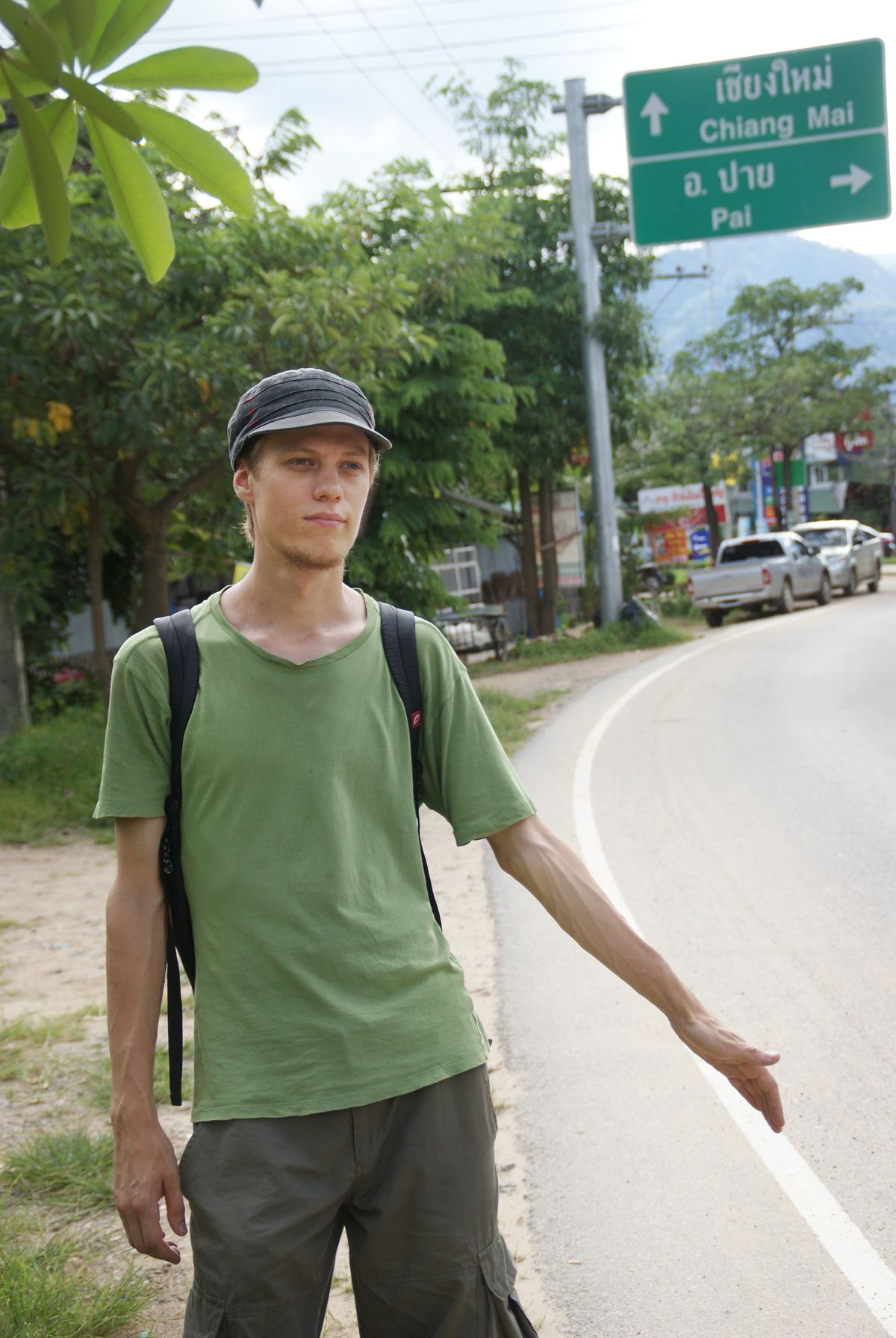
Hitchhiking in Thailand is relatively simple and safe, contrary to what some people might tell you. Using the usual protocol of standing with your thumb out, where traffic is slow and leaving enough room for drivers to pull over is all you need to do. Prepare to spend a lot of time in the back of pick up trucks. By this I mean; bring a rain coat, some warm clothes (especially if hitching at night), a waterproof cover for your rucksack, even in the summer! There are wonderful experiences to be had hitchhiking in Thailand. In several cases, user haggismn was asked if he wanted a ride when simply walking on the path to a place to hitch from. Some people will also invite you to stay at their homes. Whilst people do not recommend it, sleeping outdoors is safe, especially where people do not often walk. Another way of spending the night and sampling authentic Thai culture is by stopping at a temple (which are plentiful everywhere except maybe in the Muslim provinces in the far south) for the night where you will usually be at the very least received with a bit of floor space to sleep on and a place to wash.
There are lots of motorbikes in Thailand, who are happy to pick up hitchikers. Remember it can be difficult if you're wearing a backpack and always ask/signal/mime if they have a spare helmet. Hitching you don't have to freeze in the buses and you can get acquainted with locals and some foreigners too. They don't ask money for the rides but if a someone not so rich offers you a long ride, it would be polite to offer him a lunch if you can afford it.
Many Thai people do not know that hitchhiking exists, but many others understand very well the concept and call it bow in Thai, meaning "wave". These people will always drop you at a petrol station or another proper place to continue hitchhiking.
The nature of the Thai people makes Thailand a really good country to use a hitchhiking letter if you can't speak Thai. You will often find yourself surrounded by locals who are willing to help you, but who are not familiarized with hitchhiking and cannot speak any English, which may lead to you being dropped at police offices or bus stations. The letter makes these situations much easier, and the hitchhiking in Thailand drastically faster.
z-z-z88 (talk) used a hitchhiking letter and it helped him a lot. Others report that they are being constantly driven to the bus stations. Although spoken Thai is understood in Laos, Lao people had a lot of difficulties reading Thai.
| ผมเดินทางด้วยเงินจำนวนเล็กน้อยเพื่อเป็นค่าอาหารและที่พักราคาถูก ผมจึงโบกรถเพื่อเดินทาง ขอผมติดรถไปทางเดียวกับคุณด้วยได้ไหมครับ คุณจะส่งผมข้างหน้าที่ไหนก็ได้ที่สะดวก แล้วผมจะโบกรถต่อไปเอง I | am hitchhiking. I travel with small money only for food and cheap hostel. When your car turn off the road, drop me off and I find another car. |
| ไม่เป็นไรครับ ผมไม่ต้องการความช่วยเหลืออะไรตอนนี้ ขอบคุณครับ I'm fine, do not need help, thank you. | |
| ไปใกล้ๆ ก็ได้ครับ ระยะทางสั้นๆ ก็จะช่วยได้มาก Small ride for few kilometers is ok | |
| ส่งผมลงตรงนี้ด้วยครับ Drop me off here please. | |
| ผมขอตั้งเต้นท์พักค้างคืนที่นี่ได้ไหม Can I put my tent here? |
Thai people may not understand the meaning of a hitchhiker with their thumb out. An American ex-pat told MolotovMocktail to use the motion that Thais use to hail taxis when hitchhiking. To do this, hold your hand out with your palm facing the ground and make a downward-patting motion.
Legality of Hitchhiking
The law here has not been checked. Nobody has yet read the road traffic rules in force in Thailand against the official text, so this section cannot tell you what they say, and nothing elsewhere on this page should be read as a statement of the law. What holds almost everywhere is that hitchhiking is not an offence in itself and that what the traffic code regulates is where a pedestrian may stand — off the carriageway, and off motorway-class roads and their slip roads altogether — but whether that is true here is simply unknown. Ask locally before standing on a major road, and treat the rest of this article as what hitchhikers report rather than as a rule you can rely on. If you can read the official text, please replace this paragraph with the provision it turns on and a link to it.

The taxi mafia in the tourist areas such as Phuket
In some tourist areas like Phuket the taxi mafia is in charge. You have to specify at least three times that you are not going to pay. "No money", "no taxi", "free ride"; rinse and repeat. guaka had a nasty experience with a guy who suddenly wanted 500 baht for a short ride. He then actually called the police. The corrupt police was actually ready to go to the police station so guaka settled with paying 400 baht (100 baht was not enough). (This was after 4 very nice rides across the island, including a free veggie dinner in a restaurant.)
National Parks
- Khai Yai NP
Islands
- Koh Lanta
- Koh Samui
Public transportation
In Thailand, 1st & second class buses often have air conditioning - way too cold and you have to watch B-class movies on the video screen. On the other hand, local buses are often great value in order to exit big cities - and exciting if you're packed in with animals, bags & anything that will fit. In some instances, you may as a white person be denied access to local transit when there are more tourist-oriented buses available.
Another good option are 3rd class trains, which are really cheap (48 THB from Bangkok to Aranyaprathet, which is 6 km from the Cambodian border). They might also be convenient to get to a good hitching spot when you're leaving Bangkok.
In addition, there are certain trains in Thailand that are free for Thai passengers (for example, the trains going from Udon Thani to Bangkok, and from Surat Thani to Hat Yai), and it is also possible to get onto them for free as a tourist. If you attract the attention of the train station officers, they might insist that you pay the tourist price for the ticket, but if you just get into the train no-one should bother you there. The hardest part is finding out which are these trains exactly and when they come without asking the train station officers, but the locals can probably help you with that.
Language
Thai is a language with 6 tones. Check out the Thai phrasebook
Personal Experiences
Pls add info
Links
- User Craig hitched along the Silk Road from Istanbul to Malaysia and wrote about his experiences here: Thumbing Asia From West to East getting out of Bangkok isn't easy ... but the rest of Thailand is endless fun to hitch-hike. Sometimes you'll get a lift with a police car yay!
- Information, tips and personal experiences of hitch-hiking in Thailand. A 3437 km journey in 96 vehicles (only in Spanish), by Marcando el Polo
Bangkok
Edit on wikiRoadside hitching spots go stale. For current places to hitch in and out of this city, use maps.hitchwiki.org and the live Hitchwiki page linked at the end of this chapter. This book keeps general orientation, not a pin gazetteer.
Bangkok (กรุงเทพมหานคร, Krung
Thep Maha Nakhon) is the capital of Thailand. It's a pretty big
sprawling city yet it's quite easily managed once you get your head
around it.
To the South, Prachuap Khiri Khan, Phuket, Krabi, Malaysia
Near by skytrain's station "Wongwian yai" there is a rail road station. From this station you can take a train to the last stop "Maha Chai". Look for Rama 2 Road
To the North, Chiang Rai, Myanmar, Laos
Two bus lines will take you to good spot 39 and 510. Get off at the last stop Thamassat University, Rangsit Campus ( มหาวิทยาลัยธรรมศาสตร์ รังสิต ). Road 32 starts there
To the East direction to Pattaya, Cambodia
Hitchike from the front of Lat Krabang Bus Terminal (bus 517AC goes there) direction to highway 7 with sign Chon Buri. If you walk forward 2 km you will get at same highway upramp. Also there is a motorway rest stop after Miltitary base seems like you can walk there JUST BY GRASS NEXT TO THE BASE (looking from VVP4x4center shop side) and cars will drive towards you
Eating and Sleeping
There's a near Sukhumvit MRT station where you can get free food between 9am and 11.30am and 6/6.30pm to 9/9.30pm. To find it, locate the exit of the station that is in the North along Thanon Montri Rd., turn right and walk some hundred meters. The temple is on your right, you can recognise it by the Indians dressed in white that are hanging out on the square before it. Keep in mind that you should cover your head (also as a male) and also show your reverence by going into the room on your right and bowing to all the spiritual men and all the pictures of spiritual men in this room. When you leave it, you'll be rewarded with a sweet:-) afterwards just hang out in the main hall until somebody notices you; they'll know you're there for the food. After the meal you're expected to wash your dishes. In this temple, there's always people sleeping as well, so if you charm them they might let you crash with them for a couple of nights as well There is also another Sikh temple which is on the edge of Chinatown, which serves free food from 8.30 a.m Head coverings are provided, the only other rule is washing of hands before eating
Public Transportation
Bangkok has an extensive system of buses and metro lines (not to mention the countless taxis, mototaxis and tuk-tuks that plow the streets). The metro lines are pretty cheap if you're used to European standards, and at least the MRT can be blackridden. For every journey you buy a black plastic electronic coin that you hold against the entrance gate to open it for you and that you drop into the exit gate when you leave the system again. Note that the coin will notice if you travel for more stops than you paid for. Now for travelling free (a bit harder to do with a big backpack) you just slide yourself through the entrance/exit gates with another person. Ideally this will be somebody you know because you have to follow a person quite closely and unless it's rush hour the random Thai person unwittingly helping you might be freaked out by your sudden presence so closely behind them. The entrance gate will also notice when two people pass through it at once and will beep loudly, but if you just pretend nothing happened, you'll most likely be fine as according to actual experience:-) After all, you're a tourist and if anybody should stop you just talk to them confusedly in English. The exit gate doesn't make any special sounds when two people leave it at once.
There are SOME red buses throughout the city which are free. Before boarding a red bus, make sure you see the word 'free' (ฟรี) written somewhere on the front of the bus (sometimes there is a blue circle with the word in white; other times it is at the end of a sentence). Just hop on and hop off wherever you please. Bus 15 is good to see Khao San Rd, Siam Shopping district, Ratchadamri Road, Asiatique Market and everything in between.
Malaysia
Edit on wikiMalaysia is a country in South Eastern Asia. It has borders with Thailand to the north, Singapore to the south, and Indonesia to the west and south. Its Capital city is Kuala Lumpur. The country is separated in two parts: the Malay Peninsula, and the north of Borneo Island.
Hitchhiking
Malaysia is a really great country for hitchhiking. People know what hitchhiking is and they are interested in foreign visitors, so make sure you look like a tourist. On busy roads, waiting times of less than 5 minutes are very common.
There is a real expressway running on the north-south axis from the Thai border, via Kuala Lumpur, towards Singapore. It is pretty easy to get a ride there. In rural areas it's even easier, but lifts will be shorter. On the on-ramps of the highway after the toll booth you can usually hitchhike as well, staff are unlikely to bother you. Unlike in other countries in Asia, it's not advisable to hitchhike right on the motorway. Police won't bother, but cars are much more unlikely to stop, if they are too fast or there is no safe place to stop. Having a sign with Tumpang written on it can help especially if you choose to walk on the Epressway. Dropped in the middle of a 100km zone central KL with no hard shoulder my Tumpang sign got me rescued because as it blew in the wind it looked to a passing motorcyclist like "Empang"- a city district! Expressways vary in amount of shoulder and some portions have patrols (police who help with accidents and breakdowns) who will gladyly give you a ride to get your butt off the expressway.
Drivers usually speak English and stop easily. Cars are modern and fast. Local roads are often in good condition, and are enjoyable to hitch.
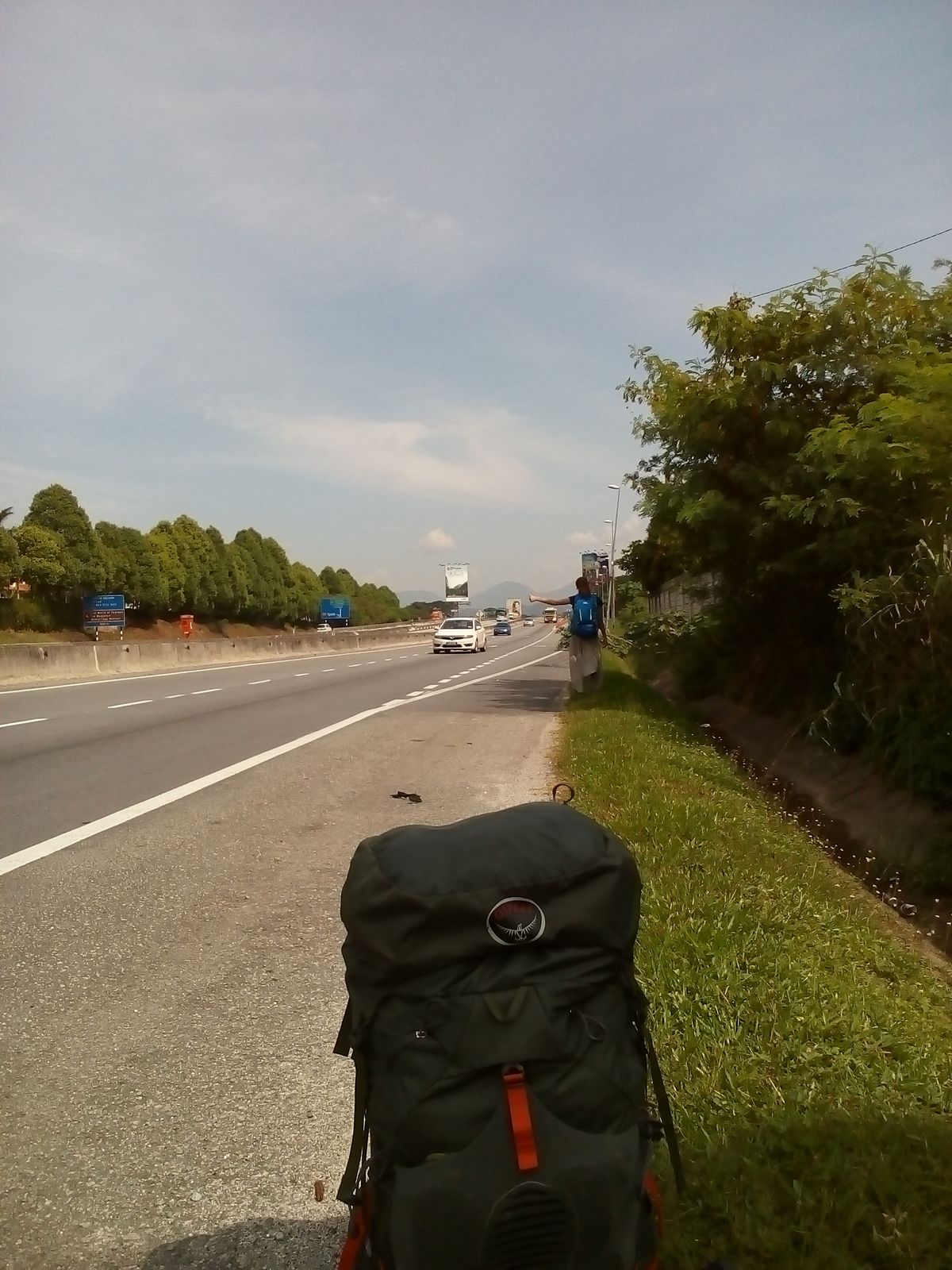
Gas stations
You can usually find tasty cheap meals there. Cold showers, a real treat in the hot climate, are often available free of charge.
Legality of Hitchhiking
The law here has not been checked. Nobody has yet read the road traffic rules in force in Malaysia against the official text, so this section cannot tell you what they say, and nothing elsewhere on this page should be read as a statement of the law. What holds almost everywhere is that hitchhiking is not an offence in itself and that what the traffic code regulates is where a pedestrian may stand — off the carriageway, and off motorway-class roads and their slip roads altogether — but whether that is true here is simply unknown. Ask locally before standing on a major road, and treat the rest of this article as what hitchhikers report rather than as a rule you can rely on. If you can read the official text, please replace this paragraph with the provision it turns on and a link to it.
Main Cities
- Kuala Lumpur
- George Town (Penang)
- Melaka
- Johor Bahru
- Ipoh
- Kota Kinabalu
Boathitchhiking
One of the best places to find boats on the West coast is Langkawi. There are two marinas and a bay where a lot of boats are anchored. A lot of boats come here to provision or to get things for their boats as the island has a tax free status.
Languages
The official language of Malaysia is Malay. It is quite easy to learn the basics as it is a very easy language. The country has a fair amount of ethnic Chinese and Indians who speak Mandarin or Hokkien (Cantonese in Kuala Lumpur) in the case of the former, and Tamil for the latter. But usually everybody knows Malay (Bahasa Melayu in Malay). As for English, it is spoken at every level, from zero to fluent, but generally you won't encounter trouble communicating at least for the basics.
Some useful phrases:
- Hello = Selamat pagi (am) / petang (pm) OR Hi
- Good bye = Selamat jalan OR Bye
- Where are you going? = Mana anda pergi?
- I am going to (City) = Saya pergi (City)
- I don't have money = Saya tidak wang
- Can you help me? = Anda boleh tolong saya?
- Please = Tolong
- Thank you = Terimah kasih
- My name is Tourto = Nama saya Turto
- Have you eaten already? = Sudah makan?
- Yes/No = Ya / Tidak
- I don't understand = Tidak faham
- I don't know = Tidak tau
- Do you speak english? = Cakap bahasa Inggris?
- I know a bit of Malay = Saya tau sikit bahasa Melayu
- Saya = I / me / mine; Anda = You / yours
- Hitchhiking = Tumpang (meaning exactly "have a lift" as Hitchhiking is not known in Malaysia)
Bahasa means language, hence bahasa Melayu
= Malay language, or bahasa Inggris = English
language.
Tidak / Tak is the negative like English Not.
- g is always pronounced as in goat and never as germany
- ny is pronounced as the Spanish ñ
- k at the end of a word is replaced by a throat sound, marking the stop.
- c is always pronounced as the English ch
- j is always pronounced as the English j (like in journey)
- The rest is more or less as the Spanish pronunciation.
Personal Experiences
User Craig hitched along the Silk Road from Istanbul to Malaysia and wrote about his experiences here: Thumbing Asia From West to East Don't hitch-hike at night! You'd need the luck to get dropped at well lit places. Otherwise people won't stop! Besides that, Malaysia is really comfortable to hitch-hike. I topped 120 km/h average hitching speed!
MrTweek even hitchhiked in a group of 4 people and even though it was slightly slower than alone, they still made it to their destination without any problems and in 7 lifts.
- Information, tips and personal experiences of hitch-hiking in Malaysia. A 2021 km journey on 40 vehicles (only in spanish), by Marcando el Polo
- An aimless hitchhiker thinks Malaysia is a really easy country to hitchhike! Read about her experiences here
Kuala Lumpur
Edit on wikiRoadside hitching spots go stale. For current places to hitch in and out of this city, use maps.hitchwiki.org and the live Hitchwiki page linked at the end of this chapter. This book keeps general orientation, not a pin gazetteer.
Kuala Lumpur is the capital of Malaysia.
Sleep
Sleeping on the streets, while not necessarily suggested, is entirely possible with no problems. Find a closed business or Monorel station and lay down for the night. This might not work in areas such as the Golden Triangle, but is viable in other areas. Simply be aware of the traffic. Choose a good area and you should be safe. Good places include near the river in Chinatown behind some buildings, which is a rather secluded area, the large area of parks (Deer Park, Hibiscus Park, Orchid Park - also good for stashing your things) close to the National Mosque west of Chinatown for being close to downtown. Outside the gates of the Batu Caves looking at the highway, turn right. You are heading toward the Monorel station. Once you reach a T-intersection, to your right are a series of benches with cover perfect for sleeping if you are on your way out of the city.
At KL Sentral, not tested:
Head from KL Sentral to KL Central Monorail. There is an escalator going up to a pedestrian bridge. Left of the escalator is an exit sign with an auxiliary police booth. Walk through the exit. On your right there should be a concrete, not fancy looking stairway going up, positioned at a 90° degree angle to the escalators. Walk up, it's a dead end with an electrical box. It's dry and sheltered. Only disturbance might be some people mistaking it for an alternative way to the pedestrian bridge.
Getting around
Kuala Lumpur is a relatively small city and is perfectly walkable. Just make sure to not get lost.
Kuala Lumpur has a fairly decent public transportation system comprised of trains and buses. You can get from KL Sentral to any major area of the city. The trains run from around 5AM to midnight.
There is a system of (formerly free) buses known as GoKL (1). These purple buses go to various malls and tourist attractions, but can successfully be used to traverse the majority of the city. Update 31.Jan 24: GOKL-busses are not free anymore, a contactless credit card is needed for touch n go. 1RM for the ticket.
Stashing
At KL Sentral there are many lockers available for use. There are two different kinds - the ones near the escalator toward the exit, close to the bathrooms and those on the way to the departure gate for the KL Ekspres to the airport near the escalator heading toward the mall. The lockers toward KL Ekspres are MYR 2 for 24 hours, including overnight, and MYR 2 for every hour over 24 hours. The lockers near the bathroom range in price from MYR 5 to 20 and do not allow overnight storage. Update 29.Jan.24: locker near bathroom: 12 hrs max.; small: 10 RM, Medium: 30 RM, large: 50 RM
Singapore
Edit on wiki
Singapore is a city-state in South-Eastern Asia] It has a road border with Malaysia to the north and a sea border with Indonesia to the south and west. The currency is the Singapore Dollar.
Most Singaporeans speak an almost perfect English, often as their first language. Don't be surprised when you walk in and you might find folks speaking better English than their western counterparts.
Hitchhiking
Hitchhiking is very rare within Singapore, mainly because it is a city and public transport is very good. So most folks here would have only seen it in movies and books. You'll get surprised faces.
For those who are crossing borders to Malaysia, there is a checkpoint in the North called "Woodlands checkpoint" and another checkpoint in the West called "Tuas checkpoint".
If you arrive by flight to SIN, and plan to cross the border overland, check the "Airport" section!
Legality of Hitchhiking
Singapore has no offence of hitchhiking, but it is one of the few places where being on the fast road on foot is spelled out as a rule of its own rather than left to a general pedestrian provision. Rule 14A(1) of the Road Traffic (Expressway Traffic) Rules provides that no person shall at any time while on foot go or remain on any part of an expressway that is not a footway, the only exceptions being maintenance work and an authorisation from a Deputy Commissioner of Police; rule 14A(3) adds that you may cross an expressway only by an overhead bridge or a subway. Rule 6(1) is the driver's half — no vehicle may stop or remain at rest on a carriageway — and rules 6(2) and 8 open the shoulder or verge only for a breakdown, illness, accident or emergency, and then only for as long as is necessary. Between them the PIE, the AYE, the BKE and the rest of the network are closed from both ends: there is no lawful way for a lift to begin on a Singapore expressway. That leaves the ordinary roads, where nothing forbids standing on the pavement and asking — which in a city-state where everywhere is a bus or an MRT ride away is the only place it would make sense anyway.
About
Singapore's in the divide between east and west, so folks aren't very concerned about race at all and both eastern and western traditions exist within the webbing of this society - you'll find Singapore the most multi-cultural city in the world, and the easiest to co-exist as well. That being said, if you're a westerner, you'll still be assumed to be a tourist.
Also, there's a law that's stricter than 99% of countries in the world - cars here can't be owned past 20 years. And every 10 years you pay 40,000 USD to renew your license. So every car is generally worth about upwards of 100,000 USD (even the cheapest toyotas) ... which leads to people being really careful with their vehicles. Not sure if this would affect hitchability because I've never tried. But yeah it's interesting because everyone who drives past you with anything above a Camry is likely a millionare in assets.
Hitchhiking In
I've only known of two people who've hitchhiked into Singapore - Yahn Adam and Artur Nitbritt. It's hard, and taking the bus is incredibly cheap (around $3 SGD or $2 USD) from the Johor Bahru side.
But if you've managed to hitchhike in good on you. Once you get into Singapore there are public toilets galore and malls for wifi just about everywhere.
Hitchhiking out
You can either take public transportation to Malaysia, hitch from the border or hitch a boat to leave the city / country.
Bus or Metro
From the Airport, take the "JB Shuttle Bus" which takes you to JB, Johor Bahru in Malaysia, just over the border. Cost: $10 SGD (feb 2020)
Or take the MRT (Mass Rapid Transport = Metro): Red Line to "Marsiling station" (Attention: the border checkpoint is called Woodlands, don't get out at Woodlands station but in Marsiling which is closer). From there take the bus 950 that takes you to JB. Then you can hitch out of customs just walking up the road. It is definitely illegal, but it is rare to be harassed by police for standing right on the freeway in Malaysia.
Take the MRT from the airport (Changi Airport) from the Green Line and transfer to the Red Line, to woodlands station. You can take multiple buses to JB, just type into google maps "JB Sentral Mall" and you'll see a number of buses come up, they're pretty reasonable.
It's more likely that you're to be questioned by police in Singapore for hitchhiking, and get lots of curious stares, than if you do it in Singapore. Singaporeans have only heard of the concept of hitchhiking through movies and books, because the country takes literally 30 minutes to traverse from one end to the other, and due to the dense road usage, it's generally not heard of.
Hitchhiking from Singapore
Option 1: (Woodlands checkpoint)
Take the metro red line to Marsiling station and walk 15 minutes to Woodlands Immigration Checkpoint. After passport and customs control, you will come out at the bus station for buses to the Malaysian immigration checkpoint across the causeway separating Singapore from Malaysia. From here, you can either take the bus or try to walk there. Walking will take about 25 minutes: walk to the end of the bus platform and follow the "walking man" sign, down to the bottom of the spiral stairway, and through a small tunnel to the bridge across the causeway. There is a narrow pavement where it is possible to walk safely on the bridge until the road climbs and splits into various lanes. At this point, carefully cross over to the lane for cars and then later the one for buses (it can feel somewhat scary to walk this part without the pavement but usually the traffic is backed up from the checkpoint and going slow) and you will arrive at the point where the buses off-load their passengers for Malaysian immigration and customs control. Just follow the people up the escalators to the immigration hall. Once past immigration, you will arrive at the bus station. Just follow the road out a short while… this road eventually leads onto the highway to KL. You can start hitching here (1.46640°N 103.76821°E) although there isn’t much room for cars to pull over, or you can walk down the road 500m to where the trucks coming out from immigration and customs control and heading in the direction of KL join this main road to the highway (1°28'05.6"N 103°46'07.1"E).
It could be possible to hitch from the centre of the bridge where there is a small lay-by but often this is full of scooters and it’s not possible for cars to pull over. Also, the fact that this is a border area makes drivers nervous about picking up hitchhikers and there is also a ‘no-pedestrian’ sign on the bridge. Better to get past immigration and start hitching on the Malaysian side.
Option 2: (Tuas Checkpoint)
If you don't want to pass through Johon Bahru and want to get easier and direct rides north, this is the best place for hitching out. Take bus CW3 from Jurong East station (there is one every 20-30 min, 5$) and this will bring you past the border. Just get off at the Malaysian border, walk 5 minutes and you have a good toll heading north. If this is not working too much, a couple of km away there is a rest station. Waited 2 minutes for a direct ride to KL.
By boat
There is one ferry to an Indonesian island. Forget about entering the Singaporean port, I think the only way might be to get a ride on a yacht from a marina. There is one marina that might let you also enter without being member right next to Tuas checkpoint.
Airport
If you arrive by flight to SIN, and plan to cross the border overland, make sure you made a fake return e-ticket from SIN (to anywhere). There is a high chance that they ask you for your return itinerary at the check-in counter of the departure airport. It's a new regulation in Singapore Customs. While in some cases if you explain you go overland they may let you in, they also can be annoying. While leaving CDG to SIN with Singapore Airlines they accepted my explanations, but when I left MEL to SIN with Jetstar they just didn't accept any explanation and I had to buy a ticket I would never use departing from SIN, at last minute leaving me no choice (toortoth). So make a fake, with a frame from another airline (in case they want to check in their own system, but they never do, it would be too long to check itineraries of all passengers, especially calling other companies). Cheapest ticket out of the country is most likely the Singapore-Batam ferry
Sleeping
There are 67 species of snakes that can be found in Singapore and some are venomous!!!
The Gardens by the Bay is a huge park close to the Marina Bay Sands hotel. At night there are not many people and you can find a somewhat hidden place to sleep. You'll usually see some local crashing somewhere in the grass as well. At the south end, there is a building with a meadow on the roof. Downstairs, there are very clean public toilets with showers and drinking water fountains, open 24 hours.
Wildcamping here requires a permit if you want to stay by the sea, and the police are known to be quite stringent in this. At night the mosquitos are relentless as well, and it can be sweltering to camp out in Singapore. Many many many places such as Macdonalds and countless other chains are open 24hours to cater to the Singaporean lifestyle, so you can just find an airconditioned seat and nap there. Folks aren't adverse to it.
If you reaaaally want to wildcamp ... you can try lower pierce resevoir or upper pierce resevoir, two of the more deserted resevoirs at night. There isn't usually crime in Singapore so ... you'll be mostly safe.
Food
Singapore Buddhist Lodge. The Kim Yan Road temple serves free vegetarian breakfast (07:00-09:00), lunch (11:30-14:00) and dinner (17:00-19:00). All are welcome regardless of their race or religion. In the queue one can find all sorts of people, from the homeless, unemployed, foreign students, foreign construction workers and of course some freeloaders who work nearby.
The Central Sikh Temple. The temple in Jalan Bukit Merah provides free vegetarian Indian lunches every day.
Nativity Church. This Catholic church at the end of Upper Serangoon Road provides free breakfast and lunch every day.
The Lutheran King of Glory Church in Norris Road, serves free meals every Sunday to ndian workers dring its Taml service.
Buddha Tooth Relic Temple. This Buddhist temple at South Bridge Road provides free meal from 12.30pm to 6.30pm every day.
Tian Tao Temple at Sengkang invites foreign workes to its Sunday breakfast buffet.
Thye Hua Kwan Moral Society. They have meal centres in Toa Payoh (Blk 31 #01-663 Lor 5), Telok Blangah (Blk 3, #01-504, Telok Blangah Crescent) and MacPherson (Blk 90, #01-103, Pipit Road).
Sri Krisna Mandir. The Hindu religious group at No 9, Lor 29, Geylang. serves free vegetarian food from 11am to 10 pm daily. All are welcome.
Care Corner Seniors Activities Centre. The Centre at Toa Payoh, Lor 7 Blk 5 #01-131 serves free breakfast, lunch and afternoon tea for senior citizens. (http://www.carecorner.org.sg)
Free Hawker Meal Program. If you are a needy resident living in Tanglin-Cairnhill area, you can apply for help at the Tanjong Pagar GRC. The GRC, under the free Hawker meal Program provides $36 worth of meal vouchers every month to needy recipients for a year. You can exchange the $3 voucher for a free meal at selected food staff at some of the coffee shops in Bukit Merah View and Henderson Road.
Sutha Restaurant. This restaurant at Cuff Road provides free breakfast (from 7am to 9am) and dinner on weekdays only and lunch on Sundays. This is for stranded Indian workers in Singapore whose beds are the concrete walkways along Cuff Road. These distressed migrants are abandoned by their employees after their work injury or they are duped by the agents. To qualify for the free food, participants are asked to show a Special Pass (a govt-issued document, which means they do not have a work permit) or evidence that they are injured / have a case pending (a letter from a doctor/lawyer plus a work permit). It is funded by the Transient Workers Count Too (TWC2) together with One Singapore.
Lamea Restaurant. The TWC2 provides free dinner for Bangladeshi at Lamea restaurant at Desker Road. (http://www.twc2.org.sg)
ACMI. A Catholic humanitarian group called the Archdiocesan Commission for the Pastoral Care of Migrants and Itinerant People or ACMI, feeds migrant workers three times a week at its premise in No 2, Highland Road. The site is beside the Church of the Immaculate heart of Mary (http://www.catholic.org.sg/acmi/soupkitchen.htm).
The Migrant Workers Centre in Rangoon road provides free lunches once a month in parntership wth neigbouring restaurants. The center is a joint effort betweeen the NUTC and the Singapore national Employers Federation.
YWCA. Their meals-on-wheels for Elderly distributes free lunches to needy, frail and homebound senior citizens in Banda Street, Bukit Merah View, Cantonment Road, Holland Road, Lengkok Bahru, and Mei Ling Street.
Their Meals-on-wheels for Children program provides free dinner for children from Low-income families who are schooling in Zhangde Primary School, New Town Primary School, Queenstown Primary School, Gan Eng Seng Primary School and Beyong Social Services. For more information on the meals-on-wheels program, please contact Ms Celest Ling at 6223 1227.
The Willing Hearts, a secular group, distributes free food in 10 areas, among them Ang o Kio, Bukit merah and Hougang. Call 9690-2086 for more information.
Other
The Marina Bay Sands Casino offers unlimited free drinks. Coffee, soda, juice, etc. Also if you sign up for the free rewards program you get a complimentary 5 dollars to use anywhere in the mall. There is no minimum purchase to use the 5 dollars which means one can treat themselves to a free meal or very cheap meal depending on how hard you look around.
Personal Experiences
Indonesia
Edit on wikiIf you want to cross the whole country and get a full picture of Indonesia, it is not convenient to take a mere 1 month visa. There's a two months visa that can be applied for outside of the country and that can be extended four times for one month each. Also you can buy a visa on arrival (30days, ~35$) and you can extend it another 30 days. Some countrys are visafree, but this option is limited to 30 days and is not extendable.
Hitchhiking
Hitchhiking in Indonesia is usually very easy for foreigners (Bule) while it gets harder for locals, unless they are taken on the dumping bed of a truck. It might be hard to get a free ride at times if you can't communicate in Bahasa Indonesia that you actually do want to hitchhike. And even if you can speak some basic Indonesian, the concept of hitchhiking is not always understood. You will be welcomed with the standard sentence "Mau ke mana" (where are you going) as a greeting, that can lead to a lot of confusion - check Asia_phrasebook#Indonesian. Once you get the gist, hitchhiking can go very smoothly on all the islands and often one of the first cars will pick you up. Cars are not many though and traffic is very slow: in particular in Java it's not uncommon to be blocked in traffic jams for hours.
The thumb isn't used here for hitching and a sign isnt really necessary. Instead of sticking out a thumb, wave down each car with your right hand as if you were signalling for them to slow down. It is important to use you right hand to signal drivers to stop as the left hand is considered dirty/offensive and would take longer for someone to stop. It might also happen that drivers don't understand that they are being addressed by your waving hand just because many people are not familiar with the concept of hitchhiking. In that case, it might be helpful to wave at them somewhat vigorously so they will stop and you can explain your situation. Once you waved a car to stop, the driver will want to know what's the matter. Hitchhiking in Indonesian is said "Menggonceng" and free is "Gratis" like in latin languages. If you don't speak indonesian, it might be helpful also to have a sign saying "Nebeng". Nebeng is a javanese slang term that is used to ask fo a free lift - there are a lot of javanese people all over indonesia, so its a usefull term also outside of java. Alternativly you can use "Numpang" or "Tumpang" which means to be a passenger, but not necessarily free( just write "Numpang gratis and things will be clear, at least on sumatra). Another good way to ask for a free lift is "Bisa ikut gratis?" that means "Can I/We join for free?" Pick ups and trucks are generally fine though, motorcycles are hitchable but the most likely to ask for money. If the car is decorated with plush, it's definitly a taxi and even if they offer you a free ride, bear in mind that everyone else in the car is paying!
Getting a free ferry ride is also possible at least through a practice of hiding behind the truck seat. In fact, trucks are allowed to take 2 (3?) people for free onto a ferry - so you might be either one of the guys going for free, or one of the extra-passengers; in latter case you should rather hide behind the seat, and once you are on a ferry, relax - no one wants to see the ticket later on.
Most used harbors on Java island are Jakarta's Tanjung Priok and Surabaja's (goes to Borneo, 20h). The passenger ticket for the ferry Java-Bali is half a dollar a price, so you might as well skip hitchhiking there.
It's possible to get free ferry rides between Bali and Lombok, Lombok and Sumbawa, Sumbawa and Flores, hitchhiking with a car or a motorbike, since the price of the ticket is independent from the number of passengers.
Legality of Hitchhiking
The law here has not been checked. Nobody has yet read the road traffic rules in force in Indonesia against the official text, so this section cannot tell you what they say, and nothing elsewhere on this page should be read as a statement of the law. What holds almost everywhere is that hitchhiking is not an offence in itself and that what the traffic code regulates is where a pedestrian may stand — off the carriageway, and off motorway-class roads and their slip roads altogether — but whether that is true here is simply unknown. Ask locally before standing on a major road, and treat the rest of this article as what hitchhikers report rather than as a rule you can rely on. If you can read the official text, please replace this paragraph with the provision it turns on and a link to it.
Islands
- Sumatra
- Java
- Bali
- Lombok
- Sulawesi
External links
- Facebook group of Indonesian hitchhiking club
- 444km.blogspot.com - Blog entries about hitching Indonesia by Swedish hitchhiker
- Information, tips and personal experiences of hitch-hiking in Indonesia. A 5229 km journey on 145 vehicles (only in spanish), by Marcando el Polo
- One month hitching in Sumatra and Aceh at an aimless hitchhiker
Personal Experiences
August/September 2016
hitched for a month in August/September 2016
I started off in Bali. Then I went to Lombok and climbed Mt Rinjani (unbelievable stunning sunrise and view of surrounding sea and islands, some monkeys too). Then I headed to Flores to see the Komodo dragon on Rinca island (budget option instead of Komodo). From there I hitched onwards to Kelimitu (stunning multi colour lake volcanoes) then I continued onwards to Larantuka, where i caught a 12+ hour ferry to Kupang (Timor Island). From there I hitched to Timor-leste, then back to Kupang and caught a 16+ hr ferry to Ende (Flores Island). From there I hitched back to Bali and then on to java (Buddhist temple and Bromo volcano), followed by Sumatra, where i caught a cheap flight to Malaysia from Medan.
I got picked up by cars, trucks, bikes, and some strange looking cart/tractors. I only used my thumb to get lifts and hardly ever got asked for money. Average waiting time was about 30mins. Often I would have a load of young people, gathering around me and staring at me, wondering what I was doing. I got help off police a few times when I walked past check points/in the dark. I didn't manage to hitch the ferries or get rides with drivers crossing on them, but they were pretty cheap, so wasn't an issue. Often I got bought food and given black coffee. I got invited to a few homes, and one showed me a sacrifice of a cow. I camped out in fields where it wasn't too populated, and stayed in hostels in Bali (way too populated on the east to camp). Beware of some materials of clothing. I bought denim shorts in Flores, and the dye ran and gave me huge cysts in my bum crack that were excruciating, so I went to hospital and told I will need surgery, but I had a flight two days later. I went to hospital in Malaysia (Kuala Lumpur) and the doctor said they gave me the wrong medicine and that surgery wasn't necessary, they were just trying to make money to pay for the new hospital in Medan. That is a scary situation that luckily worked out for me. After I went to hospital in Medan, I tried hitching to lake Toba, and someone picked me up and took me back to there house for 2 days, where we went to Toba, the Orangutan park and the perfect place for my butt, some hot sulphur baths. All worked out good and managed to see most of southern Indonesia in 30 days 😀
Jakarta
Edit on wikiRoadside hitching spots go stale. For current places to hitch in and out of this city, use maps.hitchwiki.org and the live Hitchwiki page linked at the end of this chapter. This book keeps general orientation, not a pin gazetteer.
Jakarta is the capital of Indonesia.
Sleeping
Jalan Jaksa is a tourist avenue (close to the city center) with lots of cheap hostels situated on it (price around 3 USD). Note that it might be really hard to find free places in the cheapest accomodations and dorms during certain seasons, because the area gets really crowded by tourists.
By the way, if you go to Jalan Jaksa you should note that the nearest mc donalds (about 500 meters) from there has free internet, with computers that you can use (not just wifi, but actual computers for free use) even without buying anything and for as long as you wish.
Brunei
Edit on wikiBrunei Darussalam is a small island nation located on the island of Borneo in South-Eastern Asia.
Hitchhiking
It's easy to hitch in Brunei, even in Bandar Seri Begawan.
If heading from Bandar Seri Begawan to Miri choose the coastal highway if you want to travel fast and get longer rides.
Legality of Hitchhiking
The law here has not been checked. Nobody has yet read the road traffic rules in force in Brunei against the official text, so this section cannot tell you what they say, and nothing elsewhere on this page should be read as a statement of the law. What holds almost everywhere is that hitchhiking is not an offence in itself and that what the traffic code regulates is where a pedestrian may stand — off the carriageway, and off motorway-class roads and their slip roads altogether — but whether that is true here is simply unknown. Ask locally before standing on a major road, and treat the rest of this article as what hitchhikers report rather than as a rule you can rely on. If you can read the official text, please replace this paragraph with the provision it turns on and a link to it.
Personal Experience
Pls add info
Philippines
Edit on wikiThe Republic of the Philippines is an island nation located in South-Eastern Asia.
Hitchhiking
The Philippines is possibly the easiest of all Southeast Asian countries to hitchhike in. You can cover 200-300 km a day, maybe a bit more, depending on the route. Near toll gates and on the NLEX/SLEX (North/South Luzon Expressway) you will probably get in trouble with the police. Nevertheless they are friendly at many checkpoints. Ferries are frustrating though.
Filipinos are well known for being very hospitable and friendly, and are a very social people. Hitching a ride is often very easy because of this trait, and in the provinces and rural areas out of the cities it is especially easy to get a lift, whilst in the city you may not be as lucky because of the chaotic schedules of the drivers, especially around the bustling traffic, however Filipinos are known to go out of their way to help people and you will be surprised how many people will try and help you. Often drivers will stop to see if you need a lift in the provinces, especially if you look like a foreigner. Many people hitchhike all over the Philippines, and drivers rarely if ever ask for money.
If you travel within the island provinces out of urban centers it is a great experience for hitchhiking as many locals will always stop to see if you need a lift (especially if you give the thumbs up or wave your hand in a downwards manner, commonly used to hail a Jeepney, a type of local Filipino bus), this is much more easily done if you look like a foreigner, as many locals consider you exotic and are interested in you, you often find yourself making new friends this way.
It often can be harder to hitch a ride if you are travelling in some of the isolated islands, which often do not have very good road infrastructures in the first place. You will find out about this especially if you are wishing to hitch a ride in a mountainous area, where there is often a lack of flowing traffic, and often fewer vehicles because fewer people actually have them in more rural areas. Again, public transportation is common even in these areas and you can often get yourself on a local jeep or trike.
In crowded town areas near Manila, hitchhiking is also difficult. You will find yourself sticking your thumb out and trying to avoid flagging down trikes or jeepneys. In these areas with dense traffic, it is frustrating trying to get noticed by a private car that is surrounded by an army of trikes.
The usual method of hitchhiking amongst Filipinos is to flag down a truck. If it stops then it is prepared to give you a lift, and it is OK to get on the back. Drivers usually prefer this to a lot of negotiating beforehand "can we get a ride, where are you going etc." Details can be sorted out through the window afterwards. Riding on the back of trucks is the most normal, and you should only climb into the cab if the driver invites you. If you are a foreigner it is quite likely you will be invited, though.
The word for hitchhiking in Tagalog is "makasakay" which also works in the Visayan language spoken in the south, although on Mindanao "hitch na lang" (just hitching) is widely used. In the places in the North where Ilocano is spoken (including the Cordillera mountains), you could try using the Ilocano word "makilugan". The verb "angkas" is also easy to remember and is widely understood by the locals.
There is a widespread practice of hitchhiking amongst the punk community of the Philippines. For some, hitchhiking every day and asking for leftover food is a positive way of dealing with poverty, running away from unpleasant family situations and finding adventure. They also hitchhike buses, climbing on the buses and then negotiating with the drivers to go a few kilometres for free, which often helps getting past the tricky bits to a place where the traffic is heavier, or getting out of cities. If you are a foreigner you will find bus conductors very reluctant to help you out this way, because they are also taking a risk themselves (there are also controllers employed by the bus company to check their work), and people expect that foreigners have some money. However, foreigners often get taken by private cars, which almost never happens for Filipino hitchhikers.
Number plates are colour-coded - white for private cars, red for government, yellow for public transport, which can be very useful if you are trying to spot whether an approaching vehicle is a minibus or a van, and therefore if you are going to be asked for money or not. Of course, there are plenty of buses that didn't pay for the public transport license and so have white plates, but you'll still get some idea.
Legality of Hitchhiking
Philippine law has no offence of hitchhiking, and the section whose title suggests otherwise is not about it: section 51 of the Land Transportation and Traffic Code (RA 4136), "Hitching to a vehicle", forbids hanging on to or riding the outside or rear end of a vehicle, which catches the sabit rider rather than anyone asking for a lift. The Code says nothing whatever about expressways — it is older than they are — and it gives pedestrians no walking-side rule either; section 42(c) does no more than make a pedestrian crossing outside a crosswalk give way to vehicles. What closes NLEX, SLEX and the rest is delegated rather than enacted: section 4 of the Limited Access Highway Act (RA 2000) empowers the public works department to "regulate, restrict, or prohibit access" to a limited access facility, and pedestrians and motorcycles are kept off by departmental order and posted signs, not by any section of a statute. The practical consequence is that the rule you can actually be fined under is the one on the sign at the entrance, so read that rather than hunting for a section number. Everywhere else — the national highways where hitchhiking in the Philippines actually happens — nothing in the Code stands in your way.
Island Hopping
The Philippines is the world's second largest island nation, with over 7,000 different islands. Because of this unique geography it may be harder to get very far without boarding a ferry (we assume you're not flying if you're hitching a ride), often you could get dropped off at a port area and find yourself on the ferry, but once you are at your destination you may run out of luck if you wish to hitch a ride, especially since many of the ferries arrive in the early hours or in the evening. However public transportation at the ports is plentiful at every hour of the day, and if all else fails it really isn't much money to pay for a local jeepney or bus.
On the main north-south route (Maharlika Highway), there are plenty of boats between Bicol and Samar, and a Bridge between Samar and Leyte. But if crossing between Leyte and Mindanao there are only 1-2 ferries each day. From Leyte to Mindanao a boat travels at 5.30pm each day and possibly early morning, I'm afraid I didn't check the other direction. Trucks can take 3 people on the ticket, so you might get a lift for free.
Safety
Hitchhiking in the Philippines generally feels safe, although truck drivers often tell horror stories of carjacking and so on. But remember the Philippines is home to several ongoing armed conflicts and a reasonably high level of violent crime. It's not a reason not to hitch there, but it's good to be knowledgeable about the situation in each place and choose how cautious you want to be.
Across the whole archipelago there is a conflict between the armed forces of the Philippines and the communist New People's Army. Neither side has a particular interest in causing problems for foreigners, but there is a chance you might wander into a zone of active conflict. For this reason you can also expect some suspicion. There are few foreign travellers away from the main tourist attractions, and local people often guess that foreigners are missionaries, and if not, spies for the CIA. This suspicion is understandable in the context of decades of conflict, where many people are percieved to have hidden agendas. Local people will tend to warn you if there is conflict on the road ahead.
Filipino, or other Asian hitchhikers should be more cautious before heading into troublespots. A few years ago, a group of 11 people, mostly teenagers, were hitchhiking together to Sagada, a popular relaxed town in the mountains, after a punk show in Baguio. They happened to pass through a spot where, a few days before, 3 soldiers had been killed in clashes with the NPA. The military thought their behaviour unusual, and arrested them on suspicion of having carried out the attacks. Despite no evidence whatsoever linking them to the attacks, the 11 people were tortured and held in prison for 9 months.
In Mindanao, there is also ongoing conflict with a range of Muslim separatist groups, and because of this long history some of those groups have turned to kidnap-for-ransom, not always clearly linked to their political objectives. This is a problem in Western Mindanao, and also the fighting tends to be much heavier here than in the conflict with the NPA. There are also conflicts with paramilitaries, usually in areas where plantation or mining companies are trying to expand. Most local people who have knowledge of the conflict advise that foreigners avoid certain areas, particularly the Zamboanga Peninsula, Sulu archipelago and most of North Cotabato / Magindanao. The east of Mindanao is really fine, the road from Surigao to General Santos, or from Davao to Cagayan de Oro is as safe as anywhere in the Philippines. The north coast as far as Iligan is also usually fine. Further west there is some risk, but foreigners do go there.
For people who want to travel overland to the Philippines, Zamboanga is the only place you can catch a boat to. Zamboanga city is perceived as safer than the areas around it, but many people still advise being a little cautious in this city, and leaving by boat to Cebu or Davao.
Personal Experiences
I have hitchhiked around many of the rural island provinces of the Philippines, especially southern Luzon/Tagalog region and the Visayas and found it incredibly easy and enjoyable, Filipinos are a very hospitable and fun people who genuinely wish to help out. A couple of times I have prefered to actually walk the distance of an island on foot, rather than hitchhike so I could see the various villages and sights, however in my 2-3 hour walk two vehicles actually stopped to ask if I wanted a lift, without me even asking or showing any intentions. I found the people's genuine happiness to help very good for hitching a ride, however public transportation is so cheap in the Philippines that often you really don't need to hitch a ride unless you really want to, or if that route has no public transporation servicing it. Many of the people who picked me up in the provinces where relatively poor, so I sometimes paid for my lift, but other times when offered they refused my money. I found many did not want my money, and often many locals jump on for a free ride going through each village, I assume they knew the driver however and it's not uncommon to see a private person's vehicle all of a sudden seem like a taxi or bus. Safety is not a big concern in the Philippines, maybe in the bigger cities, but in the provinces generally the road rules are very laid back, and it is not uncommon to be seated in unsafe places (by western standards) such as the back of a ute, or on the roof of a jeep. Keep in mind this is normal, and often they drive fairly slow (or their vehicle actually cannot go any faster), remember to hold on. Normal procedures in hitchhiking and safety, of course apply all around the world. Take care.
November 2023
I visited in November 2023 for 3 weeks. I didn't have too much luck and had to wait long times for lifts. On several occasions I had motorcycle riders pick me up and then demand money at end, one of them literally wouldn't accept my hitching situation and even said he would drive me back to town 20km away to go to an ATM and a lecture that rides arnt free in Philippines. Of the few that I did get, one was a trucker and the rest private cars.
I managed to hitch a short distance in Manila but not recommended as is more effort than it's worth. I hitched around Taal Lake region and around Batangas and Mabini on Luzon, then Malay to Iloilo city on Panay island and around Bohol and Panglao islands. Most rides were good but the heat, the rain and the difficulty hitching in towns/cities made it not worth while, especially as there are cheap overnight busses that you can get that included ferry ticket. Managed to ride a few jeepneys for free, by saying I didn't have much money after asking price. Most people speak some English, that made it easy to communicate. Average waiting time around 2.5 hrs
Cities
- Manila
- Quezón City
- Cebu
- Davao
- Angeles City
- Baguio
- Zamboanga
Transport is found everywhere in the Philippines, there often is a ferry or boat leaving port every hour depending on the port, and often not following the schedule to exact times, so it is a gamble sometimes. Flights are cheap to the Philippines thanks to a number of low cost airlines servicing the nation, the premier Filipino Low Cost airline is Cebu Pacific, which also serves international flights around the region.
Be careful on Mindanao island, especially in the city Zamboanga. Getting a free boat (there is only one regular one: Zamboanga to Sabah state in Malaysia) from Indonesia to Malaysia is very very hard, Malaysia immigration is pretty tough though.
Air Asia has discount flights to Malaysia.
Islands
- Luzon
- Mindanao
- Visayas
Other Useful Info
- Information, tips and personal experiences of hitchhiking in The Philippines. A 3244 km journey on 72 vehicles (only in spanish), by Marcando el Polo
- Facebook group "Hitchhikers Pilipinas"
Manila
Edit on wikiRoadside hitching spots go stale. For current places to hitch in and out of this city, use maps.hitchwiki.org and the live Hitchwiki page linked at the end of this chapter. This book keeps general orientation, not a pin gazetteer.
'''''' is the capital of the Philippines.
Sleep
The local tourist area is malate. Get to remedio circle (close to MRT/LRT stop pedro gil). There you have lots of hostels. A very cheap quiet and clean one is the following: At remedios circle ask for malate pension (well known, very nice but not so cheap (around 8$)). Right at the pension there is a small back street - right before the pension if you come from remedio c. Take this street and 30m on the right side there are two small nice pensions for 5$.
Timor-Leste
Edit on wikiEast Timor (officially the Democratic Republic of Timor-Leste) is a country in South-Eastern Asia, considered a part of Melanesia.
Hitchhiking
According to Lonely Planet it seems to be a known concept among locals and is used for short distances. You should give a tip, which should be like how much you would pay in a microlet (minibus). In the rain season some remote village can be not reachable because of flooded roads.
Hitchhiking is very easy and usual in Timor-Leste. The yellow trucks gave free rides to Timorese people and any hitchhikers. Just tell your destination and climb to the back. People who own a car usually speak portuguese or english, so you should manage to communicate more easily. Drivers are very curious and will always stop to ask you what you are doing and where you want to go. Most cars are pick-up trucks. So just swing your pack in the back, and if lucky and there's no space in the car, you'll be riding with the wind in your hair. Some taxis don't look like taxis. Better to make clear that you want to travel for free to avoid misunderstandings (but most of the time, they will answer "yes, of course"). In July 2017, the roads were in very bad conditions (not paved, holes, not large, curved) but in constructions... so it should be paved in the next years and be better. Be happy if you manage to do 150km in a whole day (it has been my maximum). Along less used roads (for me the last 20km to Com and the Southern coast) it is quite easy to flag down motorbikes. They are very keen to pick you up, about half the motorbikes that past me would give me a ride. (5/2018) Easy to hitchhike for 2 girls together, also for 1 guy alone.
Legality of Hitchhiking
The law here has not been checked. Nobody has yet read the road traffic rules in force in Timor-Leste against the official text, so this section cannot tell you what they say, and nothing elsewhere on this page should be read as a statement of the law. What holds almost everywhere is that hitchhiking is not an offence in itself and that what the traffic code regulates is where a pedestrian may stand — off the carriageway, and off motorway-class roads and their slip roads altogether — but whether that is true here is simply unknown. Ask locally before standing on a major road, and treat the rest of this article as what hitchhikers report rather than as a rule you can rely on. If you can read the official text, please replace this paragraph with the provision it turns on and a link to it.
Border crossing
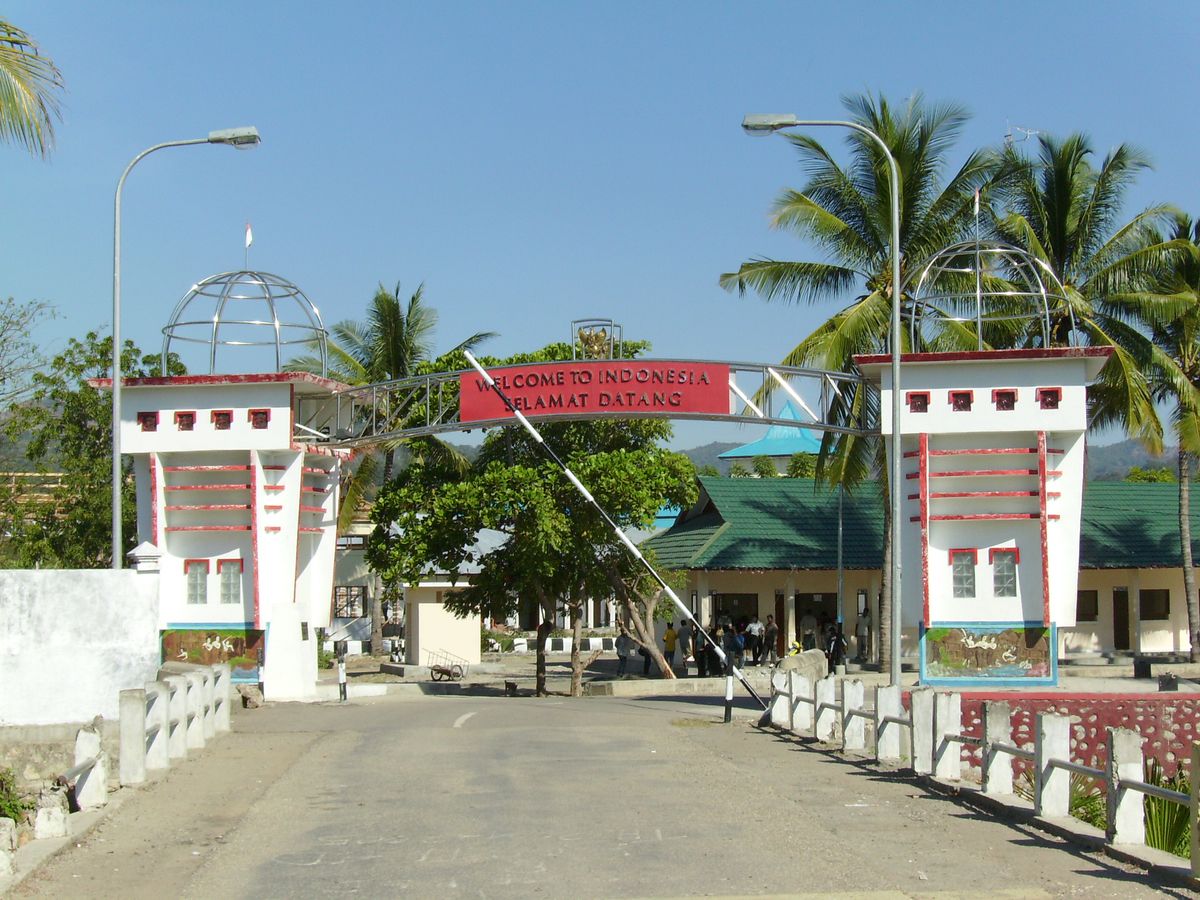
There is a open border crossing to Indonesia.
Cities
- Dili (the capital)
In July 2017, a microlet cost 50 cents. To go from Dili to Baucau, take a microlet to the bus terminal. From there, walk few meters away and start hitchhiking. It's not a good spot (because of all the people who would insist you to take a bus), but someone will stop quickly for you, no worries.
To Vale Beach (Jaco) or Hato-Builico... Be ready to hike because there is not much traffic. I walked 2:30 hours from Tutuala to Vale Beach, but some turists gave me a ride on the way back. From the highway to Hato-Builico, there are 18 km and it's going up. I got shorts rides and hike, it took me few hours.
From Timor-Leste to Indonesia When you arrive at the border, if you are European, they will stamp your passport with "one month visa exemption, not extendable". if you want to stay more than one month in Indonesia, ask to pay for a visa. They won't understand because you can have a free visa exemption. But explain that you want to pay a one month visa to be able later to extend your visa. A visa exemption can not be extended, only a visa!
Personal Experiences
British Indian Ocean Territory
Edit on wikiThe British Indian Ocean Territory is an overseas territory of the United Kingdom (UK) situated in the Indian Ocean. The territory comprises the six atolls of the Chagos Archipelago with over 1,000 individual islands.
The largest island is the site of a joint military facility of the UK and USA. The only people living there are soldiers or civilians working for the army.
Legality of Hitchhiking
The law here has not been checked. Nobody has yet read the road traffic rules in force in the British Indian Ocean Territory against the official text, so this section cannot tell you what they say, and nothing elsewhere on this page should be read as a statement of the law. What holds almost everywhere is that hitchhiking is not an offence in itself and that what the traffic code regulates is where a pedestrian may stand — off the carriageway, and off motorway-class roads and their slip roads altogether — but whether that is true here is simply unknown. Ask locally before standing on a major road, and treat the rest of this article as what hitchhikers report rather than as a rule you can rely on. If you can read the official text, please replace this paragraph with the provision it turns on and a link to it.
Personal Experiences
Africa
The Maghreb and Egypt first, then west, the centre, the east, and the south.
Morocco
Edit on wikiHitching in Morocco is good despite the scarcity of vehicles on some routes. If you're doing it in hot seasons bring a big bottle of water, a hat, and maybe a book to read. In winter consider staying short-sleeved during the day. Expect to freeze at night though (especially above 800 m of altitude), so plan some "onion layers" clothes.
Hitchhiking
Most people will not want payment, but it can be hard to avoid the interest of grand taxis (who will definitely want payment). Hitchhiking is done by waving one's index finger, but the thumb will often be understood as well.
Compared to the hassle of the cities, hitching in Morocco is a very pleasant experience and a good opportunity to meet some genuine friendly people who don't want to sell you a carpet. The people for the most part are incredibly generous, intelligent and curious and hitchhikers are able to experience the country’s cultural richness and diversity in a way unavailable to tourists who travel by more conventional means.
Moroccan car license plates tell where a car is from. Find a complete list here.
Far from the big cities you won't need any special spot: everywhere looking like a safe place (ie: cars not going to fast/can see you from far/can stop almost safely) will be fine. The traffic in the countryside is never too big and they can really stop everywhere, sometimes even in spite of the most basic driving rules. You can experience a large variety of lifts: slow drivers and crazy drivers, brand new luxury cars and (especially) 30 years old car, sometimes you can find yourself very packed with many people, or on the back of a van/pick-up.
Sometimes is not easy to understand if the incoming van is a local bus or just a normal van. The first time you see one you'll probably stop it not understand its a bus.. they're anyway nice and if you explain you don't have money (something like "makeneis fluss" in Arabic) they'll either go away without any complaints or maybe give you a free ride.
European-style gas station hitchhiking is possible on the motorways, which are quite busy and in very good shape. They are a good way to cover long distances in a short time, especially between the big cities. The employees might not allow you to approach drivers at gas stations, but will usually offer to find a ride for you, which might seem weird at first, and also seems to take longer than asking people yourself, but definitely works. Otherwise, the rest area and restaurant are often separate from the gas station and there are no employees there, so they are also a good spot to ask drivers.
For shower look for hammam simple bath should be around 10 MAD.
Legality of Hitchhiking
The law here has not been checked. Nobody has yet read the road traffic rules in force in Morocco against the official text, so this section cannot tell you what they say, and nothing elsewhere on this page should be read as a statement of the law. What holds almost everywhere is that hitchhiking is not an offence in itself and that what the traffic code regulates is where a pedestrian may stand — off the carriageway, and off motorway-class roads and their slip roads altogether — but whether that is true here is simply unknown. Ask locally before standing on a major road, and treat the rest of this article as what hitchhikers report rather than as a rule you can rely on. If you can read the official text, please replace this paragraph with the provision it turns on and a link to it.
Language
The official language is Arabic though the dialects spoken in Morocco and Algeria are significantly different from Modern Standard Arabic and dialects found in the Middle East and other parts of Africa. French is a common language of business and among educated people and in major cities will be almost universally understood. Many people in the north speak Spanish, and you will likely also find it useful in Western Sahara. The major Berber languages are fascinating but the effort required to learn them is probably too great for a casual tourist.
While spoken by some educated people and those who work in tourism, English is of little use. Be very careful if approached by someone speaking English, they are often looking to make a profit, legitimate or not.
At a minimum you should have basic competence in French as most drivers will understand it even if in rural areas they might speak just local languages. It's not anyway too hard to make yourself understood (especially with a map) but expect they to drop you off nearby some bus or taxi station because they might not understand you want to go all the way by thumb. A few words of Arabic will surprise most Moroccans, gain their respect and differentiate you from common tourists.
Police
Police in Morocco can be a great asset to a hitchhiker. Police roadblocks are quite common especially when the King is nearby. Approach them respectfully and make conversation and they will probably help you get a ride.
In small towns where it is sometimes difficult to find people who speak French, police officers (who always speak French) are invaluable aides for finding hotels, hammams, roads out of town etc.
In some most touristic areas (ie: on the route from Rissani to Merzouga) police might think your driver is an unauthorized guide illegally getting money from you, so be ready to explain them (in French!) you're just hitchhiking and your driver was just very kind in helping you. Having some picture of your hitchhiking experience will help convincing them, otherwise your driver might get a fine, and of course you'll offer to pay for it.
Sleeping
Cheap hotels are available in the medinas of most cities for 20–40 dirham. Expect an uncomfortable mattress, cold communal shower and don’t be surprised if you wake up with bug bites. Hotels are required to see your passport and most will want to hold it until they make a photocopy. There is little danger of a hotel worker stealing your passport but it is a good idea to keep several photocopies with you for peace-of-mind. Inside cities but also small villages if not invited at home, a very good option is ask for the nocturnal guardian, almost any quarter and village have one, they will show you the place to put your tent or mat and will take care of you in the night.
The night can get extremely cold for most of the year, especially around mountains. As they seldom have heating, be sure to carry a sleeping bag even if you plan to stay in hotels, as the blanket they give you might not be enough.
Under the Stars
Outside most cities and towns are places one can sleep discretely without a tent. Just make sure you get up before dawn. Also be aware that out-of-the-way spots that look like good places to sleep are often used as public toilets. Public parks, where they exist, tend to be “cruising areas” where men meet to have sex.
In some places, especially near trucking routes, there are semi-permanent tents made of plastic sheeting wrapped around a timber frames. These are usually empty though you may want to ask first.
If the night is coming close and you're in a rural area, you will often find groups of women sitting outside and talking. If you ask them for a place to set up your tent, you will usually be shown a corner somewhere close to peoples' houses where you can then camp with some "protection".
Getting invited into people's homes
If you are humble and kind, you will easily receive invitations. Sometimes the hospitality is exhausting and you may want to take a cheap hotel for some privacy and space to breathe.
Hospitality
Morocco is famous for its hospitality and if you spend some time hitchhiking around the country, someone will sooner or later invite you for tea, food, or a place to sleep. To be polite, and to find out whether the invitation is genuine, it is wise to refuse at least once. If people really want to invite you they will insist, and you can accept in good conscience after the second or third time. Sometimes, people might offer you to stay with them if you ever come to their town, but only do so out of politeness, in which case it might not be very nice to respond with something like "yeah, definitely, what's your number, so I can call you when I get there?". But many people also genuinely want to help you out and will offer you to take down their phone number in case you need a place to stay or any help at all, and if you feel like they are serious about it, it is definitely not rude to accept and call them later if you want to take them up on it.
It might be a good idea to make yourself aware of the overall social / economic situation of people who invite you, as you might meet both very rich and very poor people, and even a very poor person might offer to pay for food, transport or other expenses, even if they cannot really afford it. In these cases, if someone invites you to spend the night at their home, if you can afford it, why not pay for groceries, or at least bring a small gift, like a pack of tea, sugar or some fruits... A little extra food every once in a while will most probably not put a dent in your budget.
Safety
Because of the importance of tourism to the economy, anyone found physically harming a foreigner is punished severely. Attacks and terrorism against foreigners is extremely rare but due caution is advised. Far more common are a wide range of scams and hustles.
If you get lost in a city (and you will), people will jump to offer to show you the way. They will always expect a tip. This is fair, but make sure that they have actually lead you to your destination, and not intentionally gotten you more lost. It is better to buy something from a shop, and then ask the shopkeeper for directions.
All the money that is involved in tourism has unfortunately made the cities slightly dodgy. But outside urban areas, the people are almost universally polite, welcoming, and honest.
Cigarette Scam
Travelers including hitchhikers going to Mauritania are likely to encounter a cigarette scam in southern cities such as Tiznit and especially Guilmeme. Typically the traveler is engaged by a local who inquires about his or her plans for traveling further and after some discussion is told that to avoid delays and harassment at the Mauritanian frontier he should bring a gift of cigarettes. He may also be told that cigarettes are very expensive in Mauritania and/or Western Sahara and with a pack of cigarettes he can buy everything from a fish to a room in a hotel.
The local will then offer to ‘help’ the traveler buy several cartons of cigarettes for a “very good price” of anywhere from 12 to 20 dirham per pack (120-200 MAD per carton). The cigarettes he proposes are brands only available on the black market.
These are smuggled from the Canary Islands and come in several brands-the most common being American Legend. The price varies from 6 to 10 MAD per pack depending on the city and the dealer. These are lower quality cigarettes and smoking more than a few tend to give the smoker a sore throat.
The scam artist is paying probably no more than 50 MAD per carton (200 cigarettes) and pocketing the rest. The reality is that cigarettes are easily available in Mauritania (in fact usually less than half the price of in Morocco; ranging from 100-400 Ugyia per pack of 20)
Locals driving cars usually bring a gift of some sort to help ease the passage into Mauritania but hitchhikers should not expect problems.
Religion and Politics
Religion
Always be careful about discussing religion and politics while hitchhiking. This is especially true in Morocco. Nearly everyone in Morocco is a Muslim and the religion permeates every part of the culture. Moroccans love to discuss God and a hitchhiker will certainly be asked about his religious beliefs. Muslims recognize Christians and Jews as “people of the book” and are respected — especially if they are knowledgeable about the Bible and can intelligently discuss religion. Claiming to be an atheist, agnostic, Buddhist, Taoist, Hindu or member of some other non-monotheistic religion is not advised. There is little danger of being beheaded as an infidel but being a believer may mean the difference between being merely tolerated and being welcomed into peoples’ homes. And of course, keep any negative opinions about Islam, Muhammad, etc. to yourself.
Western Sahara
Western Sahara is recognized by most countries as occupied territory. The Kingdom of Morocco and most Moroccans consider it part of Morocco. It is technically illegal in Morocco to assert anything else. From 1976 until 1991 the Polisario waged a civil war for independence. In 1991 the United Nations brokered a cease-fire and an agreement was reached to hold a referendum for independence. The referendum has yet to take place and 60 percent of the Moroccan army is still stationed in the territory. The history and current situation is very complex but a hitchhiker there should be very careful about what he says and to whom. Under no circumstances should you claim or admit to being a journalist or writer. Doing so is asking for trouble, possible arrest and will endanger any Saharawis you are seen with.
Border crossing
The border to Algeria is closed.
Hitchhiking to Mauritania is surprisingly easy at the Mauritanian consulate in Rabat. Anyone going to Mauritania must stop there first to get the visa (no longer available at the Mauritanian border or in Rabat), and you will have many long hours of waiting for your visa in which you can talk to the various drivers going south. Also, just hitchhiking towards south conventionally will be quite easy as there is always overlanders and car salespeople going south.
Hitchhiking Events
The Hitch is LCD’s largest fundraising event and hitching the 1600km or 1000 miles is a true feat of achievement. All the Hitchers have now safely returned to the UK, but the money is still rolling in.
Personal Experiences
5 March 2024
Surprisingly I the first one to wright about a past experience about hitchhiking in Morocco here,surprising as it is so easy, if you got a backpack clean cut or not, locals will pick you up for sure, usually about 5 minutes waiting time At the end of my very first day in the country a man invited me for dinner and to sleep at his house for the night. If you see the police on the road you can ask them to help you catch a ride, if the police stop a driver they are oblige to take you, if they going the right way ofcours, me and Lyzard got an empty coach bus all to our self from Casablanca to Rabat thanks to the police, Also got a lady pick me and Lyzard from Agadir to Casablanca about 500km,waiting 5min,cool lady at some point she was lighting a cigarette making a videocall to family driving with her knee and doing 170km/h on the highway, wow good times
Western Sahara
Edit on wikiWestern Sahara is a mostly Moroccan-controlled territory in Northern Africa. Western Sahara has been on the United Nations list of non-self-governing territories since the 1960s when it was a Spanish colony.
Parts of the east (behind the berm) are controlled by the Polisario Front.
Hitchhiking
Hitchhiking in Western Sahara is very easy along the coastal road N1, where traffic is plentiful as far down south as Dakhla but sometimes sparely as well. All over the territory, from big cities to the most sparsely location, people pop up to hitchhike as well, so the concept is well known and understood. It will be easy for you to catch rides all the way to Mauritania. Locals hitch rides with pointing the forefinger into the driving direction instead of using the thumb.
Hitchhiking the N14 to Smara shouldn't be a problem as well, but the other two main roads N3 and N5 can bring problems with them, due to the berm and partly Polisario-controlled areas. Traveling these roads should be taken with a lot of care and it's always best to collect information about the current situation. It can happen that Moroccan police will send you back and not let you through.
Also the whole territory is still covered partly with undiscovered landmines, so be extremely careful when leaving the main roads and walking into the desert.
Finding long rides can be especially easy with Westerners heading southwards towards Nouakchott and Senegal or Mali and can be done at Camping Moussafir in Dakhla and also Hotel Barbosa about 60 km from the border, where a lot of Moroccans and Westerners stop so that they can reach the border nice and early the next day. If you have made it to that spot chances are good that you have already come there with a Westerner; from Tiznit on resp. Nouakchott in the South, chances are really good to get a lift from an European.
Western Saharan border with Mauritania closes at 6 in the evening and is a good time for finding northbound rides. In the mornings, especially the cars lined up before 9, when the border opens, will have drivers out of the cars walking about, a good chance to ask for rides. Look for Senegalese people (Senegalese cars have blue license plates with two letters and some numbers and more letters) as they are usually familiar with Mauritania and know the fun places to visit, while at the same time you'll have a ride all the way to Senegal. (Nanga def? How are you? In Wolof, great way to start off your request.)
Another Option is to just walk out of the city you want to hitchhike from, until you reach the police checkpoint (usually 0,5-1,5km). There are checkpoints before and after every city in WS. Police is usually very friendly and open to hitchhiking just behind the checkpoint. Cars and trucks go very slow there, plus your passport has already been checked by the police, so also "careful" drivers will pick you up.
Cities
- Ad-Dakhla (Villa Cisneros)
- Boujdour (Cape Bojador)
- El Aaiún (Laâyoune), El Marsa
- Lagouira
- Smara (Semara)
Border Crossing
- Morocco: There actually is no border, just a handful of police checkpoints along the road.
- Mauritania: Many land mines around the border area, take care! Visa are not issued anymore at the border, you have to get them beforehand at the Mauritanian embassy in Rabat (Morocco) or elsewhere they have one (Banjul, Dakar...). (Edit. Lachance; Visa can actually be issued at the border of Mauritania. Border open at 9 and visa office at 11h)
- Algeria: The border to Algeria is closed, though it could be possible to get into via Polisario-controlled areas, though this is absolutely not advised if you want to travel safely.
Hitchhiking
Speaking a little bit of French, Spanish or Arabic will bring you through without problems, though more and more people speak good English due to the presence of the UN.
Legality of Hitchhiking
The law here has not been checked. Nobody has yet read the road traffic rules in force in Western Sahara against the official text, so this section cannot tell you what they say, and nothing elsewhere on this page should be read as a statement of the law. What holds almost everywhere is that hitchhiking is not an offence in itself and that what the traffic code regulates is where a pedestrian may stand — off the carriageway, and off motorway-class roads and their slip roads altogether — but whether that is true here is simply unknown. Ask locally before standing on a major road, and treat the rest of this article as what hitchhikers report rather than as a rule you can rely on. If you can read the official text, please replace this paragraph with the provision it turns on and a link to it.
When traveling here, you are de-facto traveling on the territory of the kingdom of Morocco, so all visa-issues, police control checkpoints etc. are mostly applying to Morocco.
Personal Experience
Pls add info
Algeria
Edit on wikiAlgeria is a country in Northern Africa. Hitchhiking in Algeria is common and legal especially outside of the big cities. The Algerian-Moroccan border is closed, as well as the Algerian-Mali-border. In the north most people speak French, in the desert it's mainly Arabic and Berber.
Hitchhiking
French or Arabic is a HUGE asset in the country. Hitching without either would probably be fairly difficult.
Legality of Hitchhiking
The law here has not been checked. Nobody has yet read the road traffic rules in force in Algeria against the official text, so this section cannot tell you what they say, and nothing elsewhere on this page should be read as a statement of the law. What holds almost everywhere is that hitchhiking is not an offence in itself and that what the traffic code regulates is where a pedestrian may stand — off the carriageway, and off motorway-class roads and their slip roads altogether — but whether that is true here is simply unknown. Ask locally before standing on a major road, and treat the rest of this article as what hitchhikers report rather than as a rule you can rely on. If you can read the official text, please replace this paragraph with the provision it turns on and a link to it.
Getting In
The best option is probably taking a boat from Almeria, Spain. The
only company is Transmediterranea, which runs two boats a week to Oran
for between 50 and 100 euros (depending on the time of year). Other
options are flying into Algiers or Oran from Europe, however flights are
usually cheaper into Tunis, Tunisia, from which you can get in overland.
Hitchhiking in from Tunisia will not pose a problem at the border,
though it is not a bad idea to communicate with your driver that you can
both pretend he is a taxi driver as to hide the fact you are getting
into a police state by hitchhiking.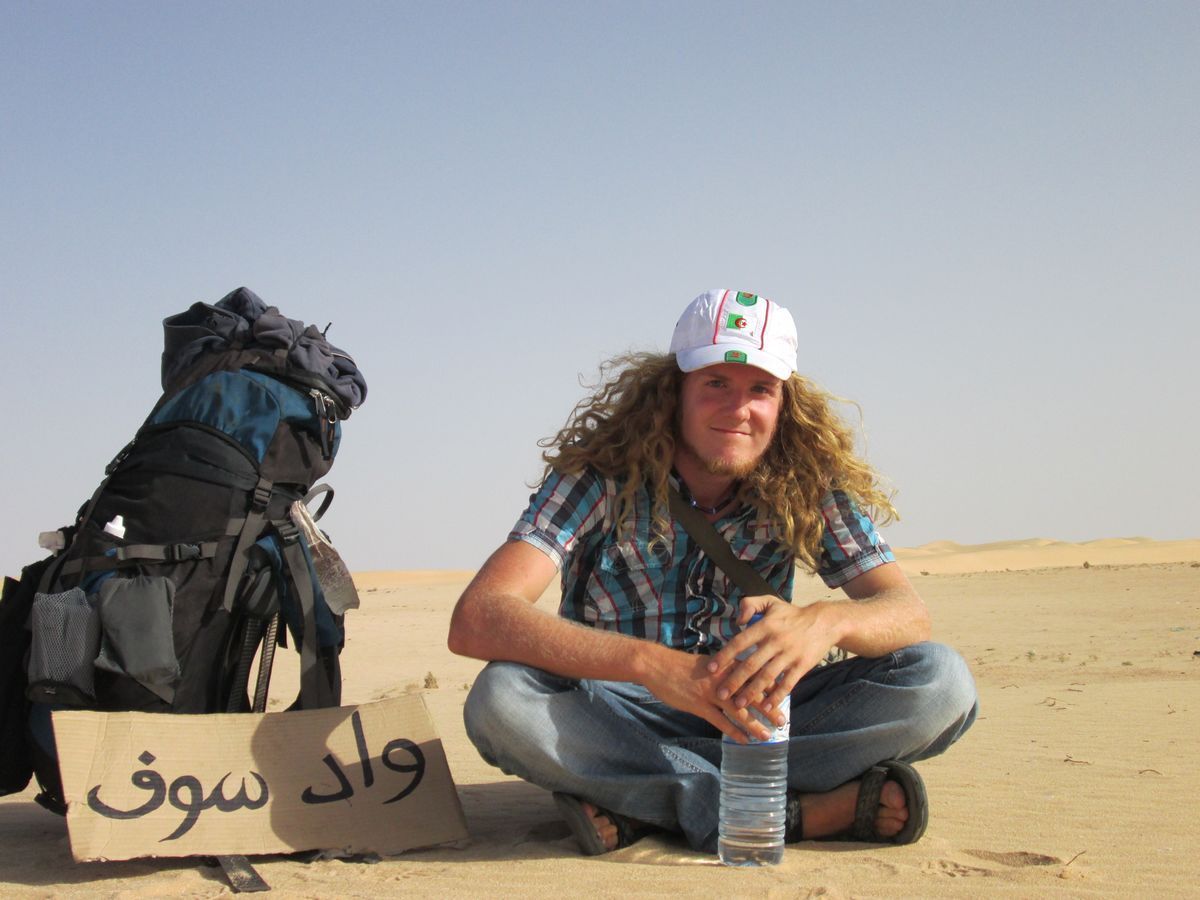
Safety
The country is quite calm and safe, and has been largely stigmatized by the media. The civil war of the 90s and 00s is long finished. That being said, it is best to avoid the area around Bouira in the north, where there have been a few travelers taken hostage in the last few years. Also avoid the Libya-Algeria border, and ESPECIALLY the Niger-Algeria border, where there has been a fair bit of violence and terrorism in the past. Tourists are also not allowed south of El Oued without being accompanied by an Algerian guide, although this may not be enforced. There are regular police checkpoints along all roads so be sure to have your travel documents with you at all times.
That being said if you are a female traveler keep in mind the more south you go the more conservative it gets so some places don't really feel to safe. Having a male traveler with you or wearing a hijab is not a bad idea for deterring potential harassment.
Visa Procedure
Most nationalities will need a visa to get into Algeria. The procedure can be somewhat daunting. You will most likely need:
- Proof of transportation in/out
- Hotel reservation
- Travel insurance
However, there is some leeway. The proof of transportation in can be your boat/plane ticket (They may let you get around this if you explain you expect to book the boat later on), and then you can just explain you will leave via Tunisia. The Hotel you can buy and then when you have your visa you can cancel it all for 100% refund (Expedia gives full refunds, but perhaps call them to make sure). The travel insurance is probably worth it, as it is only around 2 or 3$ each day, but if you want you could theoretically also cancel that as well. Even if you only have proof you have a hotel for a few nights, the minimum visa length they will issue is 30-days, starting from the first day of your hotel reservation, so you can reserve just a few nights and still travel the country for a month but make sure that you have your reservations for the full length of your "official" stay meaning if you have proof of getting into the country on date X and getting out of it on date Y have a hotel booked from X to Y.
For any information about visa procedure contact this guy here 1. He will explain you better how it works the visa.
I hitched Algeria September 2014 for a week from Oran to the Tunisian border near El Oued, and it was by far the easist hitching I have ever done. It even beat out other hitchhiking heavyweights like Morocco, Japan, and New Zealand. Wait times were usually a minute or two. I think the longest I waited was 10 minutes. People were incredibly generous and often gave me food, money, or even a place to stay. Even getting out of big cities like Algiers I had no trouble. I just took the metro east as far east as I could go and then just found a spot with some shoulder and the 2nd car that passed picked me up! Knowing French and a decent amount of Arabic helped immensely. Probably one of the most fun weeks of my hitchhiking life. -Physicshipster
Getting a visa for Algeria as a Croatian citizen wasn't too difficult, but this article was misleading by telling us you can reserve your hotel only for the first few nights. After going to the embassy they told us they absolutely need information of where we are staying for the duration of the trip as a formality so most certainly just book a hotel for the entirety of your stay and then cancel it once you have the visa. Other than starting the procedure three weeks before we got the visa the rest is pretty easy!
Borders
The border to Morocco is closed. The only open borders actually are with Tunisia, there is some fake news about Mauritania borders but nothing sure, for more informations contact local people in Tindouf.
Money, internet and accommodation
Never change your money in the bank or exchange offices as the official rate is much lower than the black market rate. Instead ask around touristic places or the bazaar about exchanging money with someone and they will most certainly direct you to someone who's willing to do it. At the time of writing (September 2023) the black market exchange rate is 227DZD for 1 Euro but you will most likely get offers of 220DZD for 1 Euro which is completely fine as Algeria is super cheap.
Wi-fi is not widely available in Algeria, most bars and cheap hotels don't have it and people that host you often won't. Mobilis is the best network to get internet from as it is not only cheap but covers most of Algeria well, including the south. Expect to pay 400DZD for a SIM card and 1000 DZD for 30 gigabytes (all together 7 euro) which should be enough for the duration of your stay.
Since tourism is largely nonexistent in Algeria you will not find backpacker hostels or cheap accommodation on booking or other online websites. Instead you should go directly to Google maps and type in "hotel", "Dar", "Dortoire", "مرقد", "نزل", "مرقد في تونس", "مرقد في بنزت" in the city you want to go to, although hotel usually works fine. In the reviews people often leave the price which you should expect to be about 1500DZD (7 euro) for a night. Double rooms are usually 2000-2500 so if you have a travel buddy paying 5 euro per person a night is the expected price. Even if you find nothing online you should be able to find an area in which there are plenty of hotels and can then go to that area in person and find some cheap places, or just ask around. Mind the fact that if you do end up sleeping in a hotel most of them close at midnight so you are not fully free to do as you want.
Personal experiences
September 2023
it feels a bit stupid writing about Algeria on hitchwiki since we barely did any hitchhiking but nonetheless this information will probably be helpful to someone. First of all Algerians are fantastic people, they will host you and help you every step of the way and their hospitality and generosity is one of a kind and rarely not genuine since they are not used to tourists. Once you connect with someone you are their guest and you will be fed, have a place to sleep, get gifts etcetc to the point where it's hard to escape and go to your next destination. That being said most of them will tell you Algeria is completely safe which I never fully bought. Since it is a poor country you will see a lot of shady places and shady looks, police sirens, fights etc. Nothing bad ever happened to us nor were we ever close to a negative situation but I would advise you to keep your eyes open, especially in Algiers and some less touristic places and especially if you are a woman. The more south you go the more conservative it gets and my partner got more than a few odd looks because she wasn't wearing a hijab and once, while walking alone in Ouargla, got followed by someone on a motorcycle for five minutes or so. I am not at all writing this to deter anyone from visiting this wonderful country, on the contrary Algeria is a site to behold and Algerians are amazing, but to remind people to keep their focus even though everyone is so good to you and maybe opt for accommodation instead of wildcamping. Other good advice is to know a bit of French, but keep in mind a lot of Algerians don't speak French fluently, and definitely don't just stick to the coast as the south is like a completely different country that is absolutely fascinating. A fantastic place with some of the most genuine people you will ever meet, and almost no scams. Algeria is an absolute adventure.
Tunisia
Edit on wikiTunisia is a country in Northern Africa. It is bordered by Algeria to the west and southwest, Libya to the southeast, and the Mediterranean Sea to the north and east.
Hitchhiking
Hitchhiking in Tunisia is easy, especially in remote areas. Maximum expected waiting time is usually around 10-15 minutes. A small contribution can be expected so make it clear before getting on board. Also there can be the possibility to hitch with tourists driving with rental cars. There are many private taxis and shared minibuses called louage. Drivers are very helpful and they usually drive extra to take you to a good sport or a sightseeing place. It's common that the drivers want to gave money to take a louage (shared minibus).
In bigger cities like Tataouine or Medenine you have to walk a lot to find a good spot, it's worth to take a louage, especially if it's hot because it's difficult to find shades along the road.
Speaking French is a huge asset.
As a single woman you may have to think of some extra safety measures.
Legality of Hitchhiking
The law here has not been checked. Nobody has yet read the road traffic rules in force in Tunisia against the official text, so this section cannot tell you what they say, and nothing elsewhere on this page should be read as a statement of the law. What holds almost everywhere is that hitchhiking is not an offence in itself and that what the traffic code regulates is where a pedestrian may stand — off the carriageway, and off motorway-class roads and their slip roads altogether — but whether that is true here is simply unknown. Ask locally before standing on a major road, and treat the rest of this article as what hitchhikers report rather than as a rule you can rely on. If you can read the official text, please replace this paragraph with the provision it turns on and a link to it.
Getting in
From Europe you can get to Tunisia via plane or via a ferry. The borders from Algeria and Lybia are open.
By Boat
There are ferries to Tunisia from Napoli, Trapani (Sicily), Genova, Cagliari (Sardinia), Marseille and only in summer from La Spezia. It is not sure if these ferries are hitchable because especially in summer a reservation can be needed. The other possibility is to hitch a private yacht which is going to Tunisia.
Getting out
Both Algeria and Libya are not the easiest countries to get visas for. If you manage to get a visa for Algeria the border control will not make problems for you if you hitchhike into the country. That being said it is not a bad idea to communicate with your driver that you'd like to pretend he's a taxi and you are not in fact a hitchhiker.
Climate
Tunisia is arid and hot, especially during the summer. Be sure to not get stuck somewhere in the dessert and to have enough water with you and protect your head from the sun.
The south of the country is desert and merges into the Sahara. The terrain in the north is mountainous. A series of salt lakes, known as chotts or shatts, lie in an east-west line at the northern edge of the Sahara, extending from the Gulf of Gabes into Algeria.
Health
Generally the health system in Tunisia is in a good condition. To avoid diarrhoea wash your hands before eating and only drink bottled water. Most towns have a pharmacy and bigger towns have hospitals but these are sometimes overcrowded. Doctors mostly speak French because it is likely that they did their studies in France or Belgium. English is rarely spoken.
Be aware of wild animals and dogs because rabies (always deadly) is common. Make sure to have rabies vaccine before traveling to Africa. Don't get bitten of snakes or scorpions.
Internet
Though some bars and hostels/hotels do have wifi, it's not a rule even in the centre of the capital. Thankfully internet is not too expensive with the best provider probably being Orange. As soon as you get into Tunis it is recommended to change your money into dinar at the STB bank since they have the best rates and do not take provisions, and afterwards get to the nearest Orange office for a SIM card. At the moment a SIM card with two gigabytes is around 10 euro.
Literature
- "The rough guide to Tunisia" - Peter Morris and Daniel Jacobs
Personal experiences
September 2023
Out of the thirty countries JanV has hitchhiked Tunisia might be the easiest. We only hitchhiked in the north from Tunis to Bizerte and from Bizerte to Algeria, but the south should be just as easy. We never waited for longer than 2-3 minutes and unlike some Asian or African countries such as Iran where hitchhiking is super easy but people don't understand the concept of hitchhiking so you run the risk of miscommunicating and having to pay at the end of the ride, hitchhiking in Tunisia is a well known method of travel. You will most certainly see hitchhikers on the road and everyone is willing to help, even if they don't necessarily want to talk or anything in return. Pretty much sit back and enjoy the ride, but don't expect drivers to know English. Some young people speak it but the main language is still very much French. Google translate voice detection works decent for Arabic and is a nice crutch.
Libya
Edit on wikiLibya is a country in Northern Africa. As of September 2011, it's very bad news but getting better.
You need an invitation for a visa.
Hitchhiking
Unfortunately, single foreigners traveling the country might be looked at very suspiciously both by Libyan officials and citizens, therefore Western hitchhikers in this country might get a local person who has invited them there into troubles.
Legality of Hitchhiking
The law here has not been checked. Nobody has yet read the road traffic rules in force in Libya against the official text, so this section cannot tell you what they say, and nothing elsewhere on this page should be read as a statement of the law. What holds almost everywhere is that hitchhiking is not an offence in itself and that what the traffic code regulates is where a pedestrian may stand — off the carriageway, and off motorway-class roads and their slip roads altogether — but whether that is true here is simply unknown. Ask locally before standing on a major road, and treat the rest of this article as what hitchhikers report rather than as a rule you can rely on. If you can read the official text, please replace this paragraph with the provision it turns on and a link to it.
- There are checkpoints when entering and leaving most of the cities. Furthermore it seems that travelling in Libya is only allowed if you travel with professional, organisated, and from the libyan government certified traveling organisations.
-
Information not verified, see Talk:Libya for more.
Border crossings
- Sudan: The border is closed since 29th June 2010
- Egypt: Border is open.
- Tunesia: Border is open.
- Algeria: Border is probably closed.
Cities
- Tripoli
Personal Experiences
External links
Egypt
Edit on wikiHitchhiking
Hitchhiking in Egypt is actually quite easy. When visiting areas outside of Cairo, it may be easier to hitchhike than to search for a taxi. In places such as St. Catherine's (Mt. Sinai), Siwa Oasis, and the Sinai Peninsula there are numerous opportunities to hitchhike. These are great places to hitchhike since the taxi drivers there have a pseudo-monopoly on transportation, a steady flow of unsuspecting tourists, and are often times difficult to deal with. The people, on the other hand, are often times very friendly to foreigners and willing to help in any way – although very little of them own a private car.
- Alex:
-
On one occasion a taxi driver refused to drive me a half kilometer to the hospital for 5 LE. I simply walked up to a local, told them that I needed to go to the hospital, and they took me for free. Nonetheless, it may be better to catch a bus, a minibus, or take a taxi on long trips since they are relatively inexpensive and do not require the use of Arabic.
If you do not speak Arabic, the opportunity to hitchhike may be limited. Most people in Egypt do not speak English. The people that do speak English often times are not quite as excited by the prospect of giving a ride to a foreigner because much of the time they were educated in the British or American school systems.
 If you have ever been to Egypt, you understand that many people might
expect money from you in exchange for them giving you a ride (especially
if you look like a foreigner). Let the driver know before leaving that
you either do not have money or tell them a price. There have been
occasions in which Alex had people refuse to give me a ride because they
expected me to give them ridiculous amounts of money. Around Sinai, many
people with normal cars consider themselves as taxi drivers even though
they obviously are not.
If you have ever been to Egypt, you understand that many people might
expect money from you in exchange for them giving you a ride (especially
if you look like a foreigner). Let the driver know before leaving that
you either do not have money or tell them a price. There have been
occasions in which Alex had people refuse to give me a ride because they
expected me to give them ridiculous amounts of money. Around Sinai, many
people with normal cars consider themselves as taxi drivers even though
they obviously are not.
Experiences
TheLoneBaker hitchhiked through Egypt and found it quite easy. Almost nobody expected payment after clarifying beforehand. However, while it was very easy to stop cars, the police themselves made hitchhiking difficult and kept claiming the road wasn't safe. TheLoneBaker was delayed for 2 hours in Qena before being given a police escort to Luxor. And again delayed for 3 hours leaving Luxor before the police ended up paying for a bus ticket to Aswan. TheLoneBaker was also denied entry to the Sinai region and told the only way would be if an expensive bus ticket was bought.
Basically, if possible and you wan't to minimize delays, find a lift where you are sitting inside a vehicle to cross a police checkpoint and get out afterwards when you are out of sight. Or pay for a cheap local bus ride or taxi to take you past. (riding on the back of a motorbike is unlikely to help.) Look up "GoBus" for cheap fares.
Legality of Hitchhiking
The law here has not been checked. Nobody has yet read the road traffic rules in force in Egypt against the official text, so this section cannot tell you what they say, and nothing elsewhere on this page should be read as a statement of the law. What holds almost everywhere is that hitchhiking is not an offence in itself and that what the traffic code regulates is where a pedestrian may stand — off the carriageway, and off motorway-class roads and their slip roads altogether — but whether that is true here is simply unknown. Ask locally before standing on a major road, and treat the rest of this article as what hitchhikers report rather than as a rule you can rely on. If you can read the official text, please replace this paragraph with the provision it turns on and a link to it.
Language
- Here are some helpful phrases for people that do not speak any Arabic.
- Hello: ahlan
- I am going to [location]: ana harooh [location]
- Where are you going?: hatrooh fein?
- No Money: mafeesh filoos
- yes: aiwa
- I have [amount of money]: ma'aya [amount of money]
- I don't have money: mesh ma'aya filoos
- Thank You: Shukran
-
goodbye: m'a alasalama
Hospitality
Good luck and have fun. The people in Egypt are some of the most welcoming and interesting people in the world. Try to relax. There is no such thing as being in a hurry here. Don't be surprised if the driver stops to have tea. The rule of thumb for Egyptians is that hospitality is more important than all other obligations. If someone is treating you in a way that makes you feel uncomfortable, just let it go. Unless you are a woman, they are not hitting on you. The people are just very touchy-feely.
Safety
Due to Egypt being a very man-dominated country women should take extra precaution.
Border crossing
To Israel
Hitchhiking can work out fine if you hitchhike from Sharem Al-Sheikh direction, but not many private cars arrive at Taba (the border crossing) nonetheless. If you arrive by bus, than the bus will take you to Taba bus station, and than the conductor might demand 5 LE (a person!) to bring you 600 meter forward to the border crossing. Unless you are very tired, it's better to walk to the border and get yourself a nice can of beer for the same price. The last police checkpoint before entering Taba (on the crossroads between the road to Taba and Nekhel) is by far the meanest on the Sinai. If possible, try to avoid by either taking a bus or taxi across - if in a private car, ask your the driver to drop you off the Taba Fjord Bay (the last turn before the cross roads), otherwise they'll get yelled at by the cops. If you try to walk across this checkpoint, you'll be detained and not allowed to hitch further to Taba. Ideally walk along the beach out of sight of the cops and then get back on the road and hitch to Taba.
From the Israeli side, either hitchhike 150m after the border crossing (after the enormous parking lot), or take bus line 15 to Eilat main bus station, and hitchhike north..
From Israel
The only open border crossing is from Eilat to Taba and it's directly on the coast. Make sure to not take road 12 in Israel.
- You will have to pay an exit fee of 100 shekels in the Israeli border terminal. You are entitled to be exempted of this fee, given you stay only in the Taba area during your entire stay in Egypt - this can be accounted for by showing a reservation to Movenpick, Hilton Taba, Taba Sands or Radisson Blu hotel in Taba. The reservation will be checked with the hotel. There could be a case in which you will be asked to pay the exit fee, and you'll get refunded upon return to Israel showing the check-out receipt with the date of the same day. Alternatively, if you got the exemption but later stayed further into Egypt than Taba, upon re-entry to Israel you'd be asked to pay the full exit fee.
- The Egyptians issue East-Sinai-only stamps at this crossing, free of charge, so if you want to go to Cairo (actually, any further than Sharm al-Sheikh), they'll make you pay $25 for a visa and anywhere from $100 for "visa support"(handwritten note from a "travel agent" without which they won't give you the full visa... You can avoid the whole visa nightmare by getting an Egyptian visa in advance (from an embassy/consulate) - either in Eilat (100 shekels, 2014, located on Efroni st.) or in your home country - prices: in London (GBP20, November 2017), Schengen countries (EUR38, November 2017). You can now also get an Egyptian visa onlinefor $25.
To Sudan
From Aswan you'll want to make your way to the last turn before the airport. There is a police checkpoint here and they make things difficult for hitchhikers. TheLoneBaker ended up not being allowed to hitchhike and was told to come back for the 5 am convoy the following morning. Doing so she was then told it still wasn't possible and was forced to take a minibus at her own expense. Though because it was last minute she was allowed to ride for the price of a local instead of the typical foreigner price. However, the 5 am convoy is still probably your best bet for finding a lift. Get there maybe 10 minutes early and ask as you make your way towards the front of the line. If you get there too early the police might not let you approach the drivers yourself.
Once you reach Abu Simbel, there is a ferry terminal very close to the temple. The ferry runs at least every 2 hours or possibly more often and is free for passengers to simply walk on. The first one of the day leaves around 9 am. It is a small ferry but you should be able to talk to a truck driver while on the ferry and arrange a lift before getting off. Otherwise you might have a long wait for the next set of vehicles to hitchhike.
Once at the border you will need to go to the first window on the left of the gate and pay 100 EGP for an exit paper. Then you need to visit window #3? and pay 2 EGP for a small stamp that you will affix to a small exit card. You might be able to get it here as well or you might have to wait until you are inside at the passport office.
To enter the border you will need to be inside a vehicle as they will not let you walk in. Additionally, you will probably have to wait a considerable amount of time for them to even open the gate and allow the vehicle you are in to enter. Once inside you can exit the vehicle again with your stuff and take it to be security screened. You will then visit the passport window and get your exit stamp.
After getting the exit stamp, you need to board a vehicle once again as they will not let you walk the few hundred meters to Sudan. But once the vehicle joins the queue for Sudan you can hop out once again and simply walk up to the gate where you will once again probably have to wait. Though not as long as the Egypt side. Again, find the correct office, and obtain your entry stamp. And then this time you will be free to walk on foot and exit the border. Here you can hitchhike right at the exit gate or walk down the road a little and hitchhike from there if you find yourself surrounded by too many people.
Personal Experiences
Cairo
Edit on wikiRoadside hitching spots go stale. For current places to hitch in and out of this city, use maps.hitchwiki.org and the live Hitchwiki page linked at the end of this chapter. This book keeps general orientation, not a pin gazetteer.
Cairo is a the capital of Egypt. It is a very large and constantly congested city.
When the Academy of Free Travel established a hitchhiking base in Cairo in Winter 2008/09, they did not hitchhike from the city itself, as it is too sprawling. Equipped with a schedule of cheap trains (for which one must go directly to the train, for ticket booths will not sell to foreigners), they traveled by rail to nearby locales and hitched from there.
Mauritania
Edit on wikiMauritania is a very dry country on the west coast of West Africa, south from Western Sahara, north from Senegal and Mali.
Border crossing
Be aware of mines in the border region to Western Sahara. Don't leave the road there. Do not accept guides offering to take you across for a small fee, the road is clearly visible, walkable and you will only get ripped off.
For crossing to Senegal, the rosso border crossing has a notorious reputation for hustlers and scammers (even though they mainly target people in cars).
As of 2024 rosso wasn't that bad as a backpacker in the evening, a few people hissed at me but I walked straight past them, one guy insisted he was my friend but then demanded commision at the end, which he did not recieve. Still, be wary, do not give your passport to anyone unless they are in full uniform with ID, do not pay for anything, the stamp, the ferry, its all free, and anyone approaching you to offer you help randomly will definitely want payment. It is easier early morning to late evening.
When you arrive at the big green gate, a soldier/policeman milling around will ask to see your passport. Make sure you're talking to the real police before showing it. After that you'll be directed to go to the booth on the building to the left for your exit stamp. It's not visible from that gate and actually quite far around, facing the river. Once stamped out, wait for the car ferry. It is definitely free for foot passengers, and has a sim card seller on it for senegal. An orange simcard with 1gb of data is 1000 cfa, or 100 new ougia. A money changer was also there, although he didn't have much cfa.
On the senegal side, a policeman will probably greet you on the off ramp and demand your passport, try and make sure he is real, he will take you to some booths where you are stamped in and fingerprints are taken, thats it, crossing over!
Be alert, but it really isn't impossible unless you have the IQ of a potato and believe gullible is written on the ceiling.
You should also have your vaccination certificate ready (they can check for yellow fever, although I was not checked in Jan 2024), or be prepared to shed some money or a lot of time, possibly both.
The alternative to Rosso is to cross the Senegal River at Diama. The border post over there has a reputation for bieng more relaxed, (as of 2024 I was told some scammers where present there) but the traffic is quite sparse aswell. Additionally, the route briefly crosses a national park. At a police checkpoint there a ranger demands a 200ug "entrance fee" from all tourists for the park, even if you're going direct to the border. A lot of backpackers try and get out of paying it, so he gets annoyed very quickly.
To Mali you have to go to Ayoun first and then south to Gogui. It's probably the only not-a-dirt road, there are no problems at the crossing.
Hitchhiking
Mauritania is definitely hitchable, although there are issues as the majority of vehicles are shared taxis and many private vehicles which stop will try and charge the same rates, and in the desert wait times can be long due to lack of traffic.
Still, the main roads (Nouakchott-Nouadhibou, Nouakchott-Nema and Nouakchott-Rosso, Nouakchott-Atar, are certainly hitchable, be it with overlanders, Euro-African car traders who bring vehicles to West Africa, or just nice Mauritanians curious about meeting Europeans.
In southern Mauritania on the road to Mali, around Kiffa and Ayoun el-Atrous hitchhiking is much harder than in other parts of the country. People there really don't understand hitchhiking and even after long explaining of what you're doing they'll take you to the bus station. Even the police/army/gendarmerie checkpoints are somewhat harder there. Officers are able to wait for bribes for hours, force you out of the car for "safety" reasons and next day force another driver to take you. It doesn't feel very comfortable but it's certainly possible to hitch through.
It should be possible to hitch to Mauritania from the consulate in Rabat, Morocco, with overlanders calling in to get their visas, or from southern Morocco. You can also get into Mauritania with Mauritanian traders, who can be found opposite the first police checkpoint north of Dakhla. The price for a journey to Nouadhibou is currently 250-380Dhs (negotiable). Another option are Moroccan vegetable trucks leaving from Agadir or Marrakech.
- The train from Nouadhibou to Choum and Zouerate is free if you ride in an ore hopper - most passengers do anyway.
-
I've found it very easy to hitch over short distances, maybe up to 10 km further than that payment is expected. However I did hitch with a general from the Mauritanian Army from Atar to Nouakchott, he even insisted on paying a hotel for us halfway.
But then I noticed that is not too hard to hitchhike in Mauretania, even inside the city. Just let the taxis pass. That are more or less all the old cars. I took my hands on my heart and shaked my head when they arrived (explaining takes more time). And I concentrated on the new cars. That made it quite easy then:)
Legality of Hitchhiking
The law here has not been checked. Nobody has yet read the road traffic rules in force in Mauritania against the official text, so this section cannot tell you what they say, and nothing elsewhere on this page should be read as a statement of the law. What holds almost everywhere is that hitchhiking is not an offence in itself and that what the traffic code regulates is where a pedestrian may stand — off the carriageway, and off motorway-class roads and their slip roads altogether — but whether that is true here is simply unknown. Ask locally before standing on a major road, and treat the rest of this article as what hitchhikers report rather than as a rule you can rely on. If you can read the official text, please replace this paragraph with the provision it turns on and a link to it.
There are loads of police checkpoints on every road in mauritainia. Every time they will stop you and demand to have a fiche (photocopy of the ID page of your passport and to know where you are going. Carry about 30 print outs. I'm not exaggerating, you'll need them.
In the past people had problems with checkpoints really messing with hitchhikers, however as of 2024 I had no problems with any checkpoints at all, nor did anyone I travelled with. They just all want to be given a printed photocopy of your passport, and once asked me to show them the original. It was a bit of a pain and sometimes caused a couple of minutes delay, but nothing insane.
Personal Experience
Experience from User:DeepGroove in 2023: At the beginning I was quite discouraged at the border, when the police only wanted to let me go if they have the numbers plate of my driver. And then even didn't let me go when I had one, because my driver wouldn't bring me all the way to Nouakchott and the police said: it was too hot...
5 January 2024
Not too bad to hitch a ride in Mauritania all taught I still think I got lucky, as people are friendly but country can still feel a bit sketchy, Border crossing from Morocco was nuts a lot of money exchange in the hope of passing faster, keep your cash it won't change anything, take the opportunity to ask the cluster of people, waiting to get their passports back, for a ride to Nouakchott the capital
Got a Spanish surfer guy to give a ride, all was good until he wanted to go see the wave on a beach, when we got there, the army was on the spot with big gun and machine gun attache on some pickup truck,when we said oh sorry we gonna go, army people was like nope your not supposed to have seen this, show me your paper, fortunately I speak French and was able to get us out of that Pickel not without arguing on not wanting to give them a bribe. Got to destination All good
On my way back to the north,leaving from the capital Nouakchott, about an hour and a half waiting, a man from Morocco pick me up me and my friend Lyzard all the way to Agadir about 1900km, 3 days driving, could've gone faster but driver kept getting slower at night time on the third day he told me he did not have his glasses and could not see at night, was wondering why he was doing such sketchy manoeuvre later in the day,had to drive on the last day,because I wanted to get to Agadir alive.
South of Nouakchott been recommended to take a cheap bus as I was told lot more people would ask me payment for a ride in the south of the country
Senegal
Edit on wiki
Senegal is a country in Western Africa. It is the most developed country in West Africa and has the best road network; most major roads are now paved.
Cities connected by major roads
- Dakar
- Kaolack
- Kedougou
- Kolda
- Mbour
- St Louis
- Thies
- Tambacounda
- Velingara
- Ziguinchor
Border Crossings
Towards Mali
Towards Mauritania
The main border crossing between Senegal and Mauritania is Rosso, which is famous for its hustlers. After making it to Rosso (possibly you'll have to walk the short way from the road to Richard Toll because there's not that much at Rosso) you'll get your exit stamp, exchange money and then cross on the ferry to the Mauritanian side (free for foot passengers). If you want to hitch, ignore the numerous offers for taxis you will receive and walk out of town (around 1km) where (as of March 2011) there is a rotting donkey next to which hitching seems sensible. There is a second road further to the West going through the Diama national park. This is a dirt road with little traffic, most of which is coming from Mauritania anyway (overlanders wanting to avoid the hassle of Rosso). The Diama border is quick and painless. The dirt road might be challenging in the rainy season but The-nomaddicts had no problem hitching through it in January 2020.
Towards Guinea-Bissau
If you have time and a bit of luck, hitching towards the border at Mpack from Ziguinchor is possible. Walk out of Ziguinchor towards the border and stick out your thumb to see what happens.
Towards Guinea
Hitching towards Guinea is a very hard task. From Kedgougou, only 4x4s with very determined drivers are able to make it to Mali-ville (usually one every couple of days), and even though there is a new paved road being built from Upper Casamance to Koundara, it will be some time until it will be viable for most cars. As of February 2020, the road from Upper Casamance to Koundara is paved, in good shape and had a good amount of traffic on it. The-nomaddicts had no problem hitching from Tambacounda to Koundara.
Towards The Gambia
It's very easy to hitchhike towards/into The Gambia from the north due to the high traffic of Europeans going to sell their cars down there.
Personal Experiences
Jun 2018
I'll talk about my only experience hitchhiking in Senegal. I made the route from Thiès to St. Louis: 200 km in approximately 7 hours of travel. The conditions of the N2 road is good, many cars stop but most are private taxis, you have to have patience. I was waiting 3 hours at a police checkpoint until a truck took me to Louga. There are many police controls on the outskirts of the city, it is a good place to stop cars, sometimes the police ask drivers for your trip. I was 5 minutes at a police checkpoint and a driver took me to St. Louis. (Video of the trip: https://www.youtube.com/watch?v=f8Vv4kmAjS8)
"HJitchhiking is very easily doable" to be extremely optimistic. I spent 5 hours on the main road outside Kedougou with no luck, even though lots of private, half-empty vehicles passed me. Plus the locals had no qualms about queue-jumping, standing in front of me to flag rides for themselves. Then I faced another problem: I gave up and decided to flag down public transport, but buses and sept-place taxis fill up before leaving the towns, so if you are waiting on the edge of a city, they will always be full
Jan 2020-Feb 2020
Hitched Senegal throughout Jan 2020-Feb 2020. We hitchhiked all over the country starting in Diama, going into Dakar, around The Gambia through Tambacounda, down into and around Casamance, and back east all around the Kedougou region. We had to be patient, especially when hitching in remote areas outside of Kedougou but never had to wait more than 3 hours for a ride. Learning the Wolof phrase for hitchhiking and a few others was definitely helpful!
Hitchhiking
On those major roads, hitchhiking is very easily doable - there is a high number of private vehicles and the Senegalese are sympathetic towards the cause. Drivers are usually very friendly and often you might find yourself invited to spend the night if evening is coming close. If you leave the main roads, things get a lot harder - be prepared to either wait or walk lots; most of your lifts will be short hops and most traffic will be taxies. Speaking a little bit of Wolof, which is the unofficial national language, will increase your popularity and your chances greatly. The-nomaddicts found that a helpful phrase to learn is "Doma yo balay? Amuma halis", which is Wolof and roughly translates to "Will you take us with you for free? We have no money." There is no direct translation for "hitchhiking" in Wolof, but this got the job done. To leave the towns, there is only one way (with the possible exception of Dakar): Get to the end of the city by foot or mototaxi and hitch from there. As in all of Westafrica, a big part of the traffic is public minibuses, taxis and sept-plus who will charge you for a ride. Private vehicles will often ask you for a fare aswell and you will most likely find yourself mixing payed rides and hitchhiking to get forward. Prices are very reasonable and usually the same for foreigners, apart from obvious tourist destinations. Even if you have a tight budget, you'll be able to pay or give back and it's your personal decision what to make of it. Still, in case you are completely without money, you can still hitchhike and find people who give you food and shelter. It will require more patience and a lot of asking, but it's possible.
When hitchhiking in Lower Casamance, be aware of the ongoing armed conflict there, it might be unwise to walk between towns on your own or even to accept ride offers of strangers. Check the situation before you set out. Finding rides at the many police checkpoints is also a great and easy way to hitch. Tell the officers where you are going and they will stop all vehicles and organise a free and safe ride for you.
Legality of Hitchhiking
The law here has not been checked. Nobody has yet read the road traffic rules in force in Senegal against the official text, so this section cannot tell you what they say, and nothing elsewhere on this page should be read as a statement of the law. What holds almost everywhere is that hitchhiking is not an offence in itself and that what the traffic code regulates is where a pedestrian may stand — off the carriageway, and off motorway-class roads and their slip roads altogether — but whether that is true here is simply unknown. Ask locally before standing on a major road, and treat the rest of this article as what hitchhikers report rather than as a rule you can rely on. If you can read the official text, please replace this paragraph with the provision it turns on and a link to it.
Dakar
Edit on wikiRoadside hitching spots go stale. For current places to hitch in and out of this city, use maps.hitchwiki.org and the live Hitchwiki page linked at the end of this chapter. This book keeps general orientation, not a pin gazetteer.
Dakar is the capital of Senegal.
Although the city can seem quite chaotic at times, as most big cities do, Dakar actually has a very well-connected bus network. There are several different bus companies, the major ones seem to be the public bus company "Dakar Dem Dikk" and the smaller "Tata" buses. There is even a website/app, which allows you to calculate the best connection to your destination.
Sleep
It should be possible to camp somewhere up on the hill on the island of Goree, where there are quite a few tourists during the day, but the atmosphere is otherwise very relaxed with enough space in the bushes for a tent, friendly locals and it is definitely not crowded. The cost of the ferry (5200 FCFA return trip for non-African non-residents) would make it quite the expensive night if you're just looking for a place to sleep (you could pay for a room with that amount), but if you're planning to visit the island anyway, which is definitely worth it, it could be a good option. The people are generally very friendly and there are a lot of artists and small galleries.
The Gambia
Edit on wikiThe Gambia is a small country in Western Africa. It is completely bordered by the Senegal. Gambia is small, it is as wide as a English artillery battery can shoot from a boot on the Gambia river, because the Gambia was British territory, Senegal was French territory.
Hitchhiking
 Hitching is common in
The Gambia and especially near the relatively developed western region
locals hitch regularly. The two main highways along the south and north
bank of the river see lots of traffic with a high proportion of personal
vehicles. Getting rides with the police or military is also relatively
easy.
Hitching is common in
The Gambia and especially near the relatively developed western region
locals hitch regularly. The two main highways along the south and north
bank of the river see lots of traffic with a high proportion of personal
vehicles. Getting rides with the police or military is also relatively
easy.
The number of vehicles significantly decreases as one travels upcountry to the east, but the occasional truck, motorcycle, pick-up or NGO vehicle will offer a lift, especially if you are walking along the side of the road in the bush.
Traversing the country to travel between northern Senegal and Casamance is not too difficult because many truckers and Senegalese with personal vehicles make the journey, although expect to wait a long time to cross the river. Especially at Yelitenda, where crossings are very irregular and rides can be tricky to find as a lot of the traffic is already full buses and bushtaxis. Barra is a better option, with more personal vehicles crossing, and its proximity to Banjul.
Camping Sukuta (in between Serekunda and Senegambia), close to Banjul, hosts most European drivers who have a car for sale, and is a good place for finding longer rides southwards to Guinea-Bissau or eastwards. (Signs from Sukuta can be seen all the way to Western Sahara), and it is also a good place to mention as a 'place of residence' to give to the border guards from Senegal to Gambia if they decide to give you trouble.
Something that works in most of West Africa; if someone is hesistant about taking you along just ask them to take you to the next gendarmerie stop. If you have all your papers in order they will be friendly (albeit very curious on whether you have any 'cadeaus' for them), and can many times very authoritatively ask cars they stop to take you along if they are going your way.
Legality of Hitchhiking
The law here has not been checked. Nobody has yet read the road traffic rules in force in The Gambia against the official text, so this section cannot tell you what they say, and nothing elsewhere on this page should be read as a statement of the law. What holds almost everywhere is that hitchhiking is not an offence in itself and that what the traffic code regulates is where a pedestrian may stand — off the carriageway, and off motorway-class roads and their slip roads altogether — but whether that is true here is simply unknown. Ask locally before standing on a major road, and treat the rest of this article as what hitchhikers report rather than as a rule you can rely on. If you can read the official text, please replace this paragraph with the provision it turns on and a link to it.
Personal Experiences
Guinea-Bissau
Edit on wiki Guinea-Bissau
is a country in Western Africa. The official language is Portuguese, but
most people speak Criolu, a mix of Portuguese, indigenous languages and
some French. It is a small, poor country wedged between Senegal to the
north, Guinea to the south and the Atlantic to the west. The capital is
Bissau, by the mouth of the river Gêba. A small city with a lively
fisherman's market by the water. European bank cards rarely work (and if
so, only Visa) so make sure you make a withdrawal with what you need in
Senegal before crossing the border to Guinea-Bissau. People in
Guinea-Bissau are poor, but very friendly and welcoming of strangers.
Guinea-Bissau is a country in Western Africa. The
official language is Portuguese, but most people speak Criolu, a mix of
Portuguese, indigenous languages and some French. It is a small, poor
country wedged between Senegal to the north, Guinea to the south and the
Atlantic to the west. The capital is Bissau, by the mouth of the river
Gêba. A small city with a lively fisherman's market by the water.
Guinea-Bissau
is a country in Western Africa. The official language is Portuguese, but
most people speak Criolu, a mix of Portuguese, indigenous languages and
some French. It is a small, poor country wedged between Senegal to the
north, Guinea to the south and the Atlantic to the west. The capital is
Bissau, by the mouth of the river Gêba. A small city with a lively
fisherman's market by the water. European bank cards rarely work (and if
so, only Visa) so make sure you make a withdrawal with what you need in
Senegal before crossing the border to Guinea-Bissau. People in
Guinea-Bissau are poor, but very friendly and welcoming of strangers.
Guinea-Bissau is a country in Western Africa. The
official language is Portuguese, but most people speak Criolu, a mix of
Portuguese, indigenous languages and some French. It is a small, poor
country wedged between Senegal to the north, Guinea to the south and the
Atlantic to the west. The capital is Bissau, by the mouth of the river
Gêba. A small city with a lively fisherman's market by the water.
Hitchhiking
European bank cards rarely work (and if so, only Visa) so make sure you make a withdrawal with what you need in Senegal before crossing the border to Guinea-Bissau. People in Guinea-Bissau are poor, but very friendly and welcoming of strangers.
For finding rides in Bissau, Pensão Creol is the best place. Many European drivers with cars to sell stop there before heading further south or towards the eastern part of the country. Outside of the capital, some roads are easily hitcheable and some are not at all. The main roads between the capital and Ziguinchor in Senegal, Buba in the South and Gabú in the East are great to hitch on as there is lots of NGO jeeps with aircon which will willingly pick you up - just get out of town to find the traffic that is actually going somewhere. Other roads like between Enxude (across the Rio Gêba from the Bissau) and Buba or east from Gabú towards the Guinean border are pretty much impossible to hitch for the lack of traffic that is not public transportation. On the border road, there is quite a lot of Guinean trucks; if you have enough time, the thing to do is to get to the preliminary customs check point about 7km after Gabú. Trucks have to stop there and you have a chance to talk to the drivers. Try to make friends with the customs officers who might persuade (read force) drivers to pick you up. Zenit was promised by the officer to be put on the next truck, but after about 15 hours without truck he decided to go back to Gabú and take public transportation (which in turn took another 6 hours to arrive and leave).
Legality of Hitchhiking
The law here has not been checked. Nobody has yet read the road traffic rules in force in Guinea-Bissau against the official text, so this section cannot tell you what they say, and nothing elsewhere on this page should be read as a statement of the law. What holds almost everywhere is that hitchhiking is not an offence in itself and that what the traffic code regulates is where a pedestrian may stand — off the carriageway, and off motorway-class roads and their slip roads altogether — but whether that is true here is simply unknown. Ask locally before standing on a major road, and treat the rest of this article as what hitchhikers report rather than as a rule you can rely on. If you can read the official text, please replace this paragraph with the provision it turns on and a link to it.
Personal Experiences
Guinea
Edit on wikiThis article refers to Guinea-Conakry. See also Guinea-Bissau and Equatorial Guinea.
Personal experience
2019
DUring an early 2019 travel, h2g2 got a lot of easy rides in Fouta
Djalon (moutains in the northern part of the country), where the general
lack of vehicles in the country seems to be balanced by the universal
hitchhiker-friendly moutainmen spirit. In the major part of the country
most roads (dirt or covered) are still very bad, and no big decision
seems to be taken in the direction of improving them. To travel a 100km,
be it with a taxi or hithhiking, can easily take 3 to 4 hours, and
mechanical problems are to be feared.
February 2020
During February 2020, The-nomaddicts were denied entry to the province of Labé due to security concerns. Guinea is a relatively unstable country so it is best to check with your embassy about any road closures. The rest of the country finding rides was pretty easy and they got rides on all manner of free transport, from company cars and trucks to taxis and pickups. Rides from trucks were especially frequent. Some roads get very little traffic and are in bad shape, such as the road from Gueckedou to Macenta, (between Gueckedou and Gozombou is completely unpaved as of 2020), but with patience you will eventually find a long-distance truck.
Hitchhiking
In Guinea, the main roads are theoretically hitcheable, secondary roads only exceptionally. Your luck will always depend on timing as due to the state of the Guinean economy few people have personal vehicles, and even the ones that do often charge the same prices as taxis. Trucks will hardly ever pick you up for free as they are the public transport for people who can't afford taxis - except the ancient pickup trucks without windshield that don't go very far. However, if you are feeling daring, you can hitch on top of a truck just like many of the locals do for such long distances just like Kimmie did in 2013. This will take much longer than riding in a car, but you will get a good and unique view of Guinea. People might offer rides without being asked simply due to the rarity of seeing a backpack-ladden traveller strolling along the side of the road. Your best chances for hitching significant distances for free are with NGO jeeps (which also are much, much more comfortable than ordinary public transport) and the odd company car or private car that is sympathetic to your cause. The places to hitch from are the exits of town, sometimes stopping at customs and asking for help there will help, sometimes however they won't understand what you're doing and tell you that you need to pay as does everybody else. The secondary dirt roads that lead to smaller places are almost invariably in terrible condition and are rarely used by anything but motorcycles and the occasional taxi (except if there is a market day in the region when there is a lot of commerical traffic and you stand good chances finding a free lift - check out the trucks carrying dozens of people). That said, if you are traveling solo most motorcycles that aren't packed with stuff or a second (or fourth) person will offer a ride.
Legality of Hitchhiking
The law here has not been checked. Nobody has yet read the road traffic rules in force in Guinea against the official text, so this section cannot tell you what they say, and nothing elsewhere on this page should be read as a statement of the law. What holds almost everywhere is that hitchhiking is not an offence in itself and that what the traffic code regulates is where a pedestrian may stand — off the carriageway, and off motorway-class roads and their slip roads altogether — but whether that is true here is simply unknown. Ask locally before standing on a major road, and treat the rest of this article as what hitchhikers report rather than as a rule you can rely on. If you can read the official text, please replace this paragraph with the provision it turns on and a link to it.
Sierra Leone
Edit on wikiSierra Leone is bordered by Guinea and Liberia.
Hitchhiking
Since the end of the civil war in 2002 the situation has drastically improved and is now a great place to hitchhike. Since 2008, the European Union have put a lot of money into developing the road system in Sierra Leone. From the border of Guinea (coming from Conakry), to Freetown, and continuing to the East, the roads are as well kept as in Europe. From Bo to the border of Liberia, the roads are very bad; made from mud and sand and often cause breakdowns and vehicles to get stuck. Because these roads are only just wide enough for one vehicle, you can often have to wait for hours behind a vehicle which is stuck. Rainy season will bring LOTS of problems for anyone travelling overland.
Sleeping If hitchhiking, locals will almost always offer you a place to stay for the night in their homes. Also, if stopping in small villages and towns along your route, try asking a local for a place to sleep for the night. 100% of the time that Kimmie did this, she was offered a place by all without any hesitation.
Legality of Hitchhiking
The law here has not been checked. Nobody has yet read the road traffic rules in force in Sierra Leone against the official text, so this section cannot tell you what they say, and nothing elsewhere on this page should be read as a statement of the law. What holds almost everywhere is that hitchhiking is not an offence in itself and that what the traffic code regulates is where a pedestrian may stand — off the carriageway, and off motorway-class roads and their slip roads altogether — but whether that is true here is simply unknown. Ask locally before standing on a major road, and treat the rest of this article as what hitchhikers report rather than as a rule you can rely on. If you can read the official text, please replace this paragraph with the provision it turns on and a link to it.
Personal Experiences
Liberia
Edit on wikiLiberia is a country in Western Africa, bordered by Sierra Leone, Guinea, and Côte d'Ivoire. As of 2011 it seems to be relatively calm in Liberia.
Cities
Monrovia, Robertsport, Greenville, Harper, Paynesville
Just the same as most other West African countries, Liberia's roads are mostly made of dirt and sand and full of potholes. This makes travelling take a very long time and be pretty uncomfortable. Rainy season is a BIG problem when trying to get anywhere overland in Liberia. The road from the border of Sierra Leone towards Monrovia is fully developed, but the rest of Liberia's roads aren't. They are currently (as of 2013) developing the road from Monrovia towards Ganta in the north. To get from Monrovia to Ivory Coast, you must first go to Ganta in the north, then take the south-east direction road to Harper, as there is no coastal road. Harper is the only current border which is open to Ivory Coast. If you do not go this way, then you will have to re-enter Guinea in order to reach Ivory Coast.
Due to the simple direction of roads in Liberia, hitching here is uncomplicated. Stand on the road just outside of any town and wait for a ride here. If you do not want to pay, make sure you tell them you have no money. Some will leave, some will take you. Taxis will already be filled at the taxi parks in the closest big town, so don't expect to be able to get a ride with one if you are outside the town or in a small village. Due to the small amount of traffic in some areas, sometimes you will wait up to an hour or so before you see any vehicle. Likelihood is that the first one you see will stop for you if they have space.
Sleeping
If hitchhiking, locals will almost always offer you a place to stay for the night in their homes. Also, if stopping in small villages and towns along your route, try asking a local for a place to sleep for the night. 100% of the time that we did this, she was offered a place by all without any hesitation.
Legality of Hitchhiking
The law here has not been checked. Nobody has yet read the road traffic rules in force in Liberia against the official text, so this section cannot tell you what they say, and nothing elsewhere on this page should be read as a statement of the law. What holds almost everywhere is that hitchhiking is not an offence in itself and that what the traffic code regulates is where a pedestrian may stand — off the carriageway, and off motorway-class roads and their slip roads altogether — but whether that is true here is simply unknown. Ask locally before standing on a major road, and treat the rest of this article as what hitchhikers report rather than as a rule you can rely on. If you can read the official text, please replace this paragraph with the provision it turns on and a link to it.
Personal Experiences
Côte d’Ivoire
Edit on wikiCote d'Ivoire is a country in south West Africa and borders the countries of Liberia, Guinea, Mali, Burkina Faso and Ghana. The official language is French but other languages are commonly used as well, e.g. Dioula.
Warning: as of 2011 a severe crisis is going on in the country, with civil unrest and widespread violence.
Hitchhiking
Possibly not a good idea to hitch around until this is settled.
Legality of Hitchhiking
The law here has not been checked. Nobody has yet read the road traffic rules in force in Côte d'Ivoire against the official text, so this section cannot tell you what they say, and nothing elsewhere on this page should be read as a statement of the law. What holds almost everywhere is that hitchhiking is not an offence in itself and that what the traffic code regulates is where a pedestrian may stand — off the carriageway, and off motorway-class roads and their slip roads altogether — but whether that is true here is simply unknown. Ask locally before standing on a major road, and treat the rest of this article as what hitchhikers report rather than as a rule you can rely on. If you can read the official text, please replace this paragraph with the provision it turns on and a link to it.
Personal Experiences
Ghana
Edit on wikiGhana is a country on the coast of Western Africa. A former British colony, the official language is English. It's considered to be one of the safer countries of Western Africa.
Cities
- Accra
Additional information
Like many countries in Africa, Ghana has a lot of police barriers and at times (like when you are 3 people in a 2 seater truck) your being in the vehicle will mean the driver will have pay a fine. It's good to be aware of this, and offer some money if you think you are part of the alleged problem.
Legality of Hitchhiking
The law here has not been checked. Nobody has yet read the road traffic rules in force in Ghana against the official text, so this section cannot tell you what they say, and nothing elsewhere on this page should be read as a statement of the law. What holds almost everywhere is that hitchhiking is not an offence in itself and that what the traffic code regulates is where a pedestrian may stand — off the carriageway, and off motorway-class roads and their slip roads altogether — but whether that is true here is simply unknown. Ask locally before standing on a major road, and treat the rest of this article as what hitchhikers report rather than as a rule you can rely on. If you can read the official text, please replace this paragraph with the provision it turns on and a link to it.
Personal Experiences
Accra
Edit on wikiRoadside hitching spots go stale. For current places to hitch in and out of this city, use maps.hitchwiki.org and the live Hitchwiki page linked at the end of this chapter. This book keeps general orientation, not a pin gazetteer.
This book does not reprint named ramps, dumpsters, hostels, or other pins. They go out of date. Follow the note above to the live map or wiki.
Togo
Edit on wikiTogo is a country in Western Africa, with borders to Ghana, Benin and Burkina Faso. The official language is French.
Hitchhiking
Hitching Togo is very easy if you are on a road that has any traffic. By at least one statistic Togo has the least vehicles per capita of any country on earth so be prepared to walk when not on main highways. It is quite often that people will offer you free motorcycle rides in the backwoods. Many vehicles are taxis so make sure the ride is free before you get in, speaking basic French is important. White plates are private cars and yellow plates are all other non-governmental vehicles. Police are rare and have little power. The Togolese are generally friendly and may invite you to stay at their house.
Legality of Hitchhiking
The law here has not been checked. Nobody has yet read the road traffic rules in force in Togo against the official text, so this section cannot tell you what they say, and nothing elsewhere on this page should be read as a statement of the law. What holds almost everywhere is that hitchhiking is not an offence in itself and that what the traffic code regulates is where a pedestrian may stand — off the carriageway, and off motorway-class roads and their slip roads altogether — but whether that is true here is simply unknown. Ask locally before standing on a major road, and treat the rest of this article as what hitchhikers report rather than as a rule you can rely on. If you can read the official text, please replace this paragraph with the provision it turns on and a link to it.
Personal Experiences
Benin
Edit on wikiBenin is a country in Western Africa and borders Togo to the west, Nigeria to the east and Burkina Faso and Niger to the north.
Hitchhiking
Hitching in Benin is very easy, just stick out your thumb or wave down a car any way you want. Many vehicles are taxis so make sure the ride is free before you get in, speaking basic French is important. White plates are private cars and orange plates are company plates. All cars with orange plates are taxis and so are pick-up trucks with a canvas frame over the back, all other trucks should be hitchable. Green, Blue, Black and Red plates are all government plates and are good for rides in the middle of nowhere but will pass you on main roads. There are very few vehicles outside of the South and the main highways. Sometimes if you get yourself really stuck in the backwoods someone will offer you a free ride on a motorcycle. Police shouldn't be a problem, if they ask for a bribe they won't insist. Getting invited to people's houses to sleep isn't very common in Benin. North Benin has spicier food and kinder and quieter people, the South has the Vodun religion and most of the little tourism the country gets. Hitching within cities is more difficult than many parts of West Africa, probably because people expect you to take motorcycle taxi within a city. The motorcycle taxis are called Zims, Zimidjans or Zeds and the drivers are really obnoxious and annoying to deal with. The highway from Cotonou to Malanville often has large convoys of cars driven by Nigerian drivers, you can spot them by lack of licence plates and insane driving, they speak broken English and might be a little rude at first finding out you want a "lift", but they usually take you any way.
Legality of Hitchhiking
The law here has not been checked. Nobody has yet read the road traffic rules in force in Benin against the official text, so this section cannot tell you what they say, and nothing elsewhere on this page should be read as a statement of the law. What holds almost everywhere is that hitchhiking is not an offence in itself and that what the traffic code regulates is where a pedestrian may stand — off the carriageway, and off motorway-class roads and their slip roads altogether — but whether that is true here is simply unknown. Ask locally before standing on a major road, and treat the rest of this article as what hitchhikers report rather than as a rule you can rely on. If you can read the official text, please replace this paragraph with the provision it turns on and a link to it.
Personal Experiences
Nigeria
Edit on wiki
Nigeria is a country in Africa. It is bordered by Benin to the west, Niger to the north, Chad (via Lake Chad) to the extreme east, and Cameroon to the south. With a population of 167 million, approximately one in five Africans is Nigerian. This also means that one in five African criminals is Nigerian, a fact that has given them a fairly bad reputation for high crime and low safety in their country. The fact that Nigeria is often in the world news for negative reasons - whether the Biafra conflict, the struggle for oil in the Niger Delta (and the routine kidnapping of foreigners that resulted), government corruption, the current Boko Haram terrorist threat in Kano and other northern areas, or the worldwide Nigerian email scams - has extended the country's bad reputation worldwide.
Hitchhiking
However if you are aware of the risks and a vigilant traveller, it is possible to have a wonderfully rewarding experience hitchhiking Nigeria.
Legality of Hitchhiking
The law here has not been checked. Nobody has yet read the road traffic rules in force in Nigeria against the official text, so this section cannot tell you what they say, and nothing elsewhere on this page should be read as a statement of the law. What holds almost everywhere is that hitchhiking is not an offence in itself and that what the traffic code regulates is where a pedestrian may stand — off the carriageway, and off motorway-class roads and their slip roads altogether — but whether that is true here is simply unknown. Ask locally before standing on a major road, and treat the rest of this article as what hitchhikers report rather than as a rule you can rely on. If you can read the official text, please replace this paragraph with the provision it turns on and a link to it.
Finding Rides
In Nigeria, as is common throughout Africa, the long distance public travel system is a choice between big buses, or smaller vans or cars. Some collect passengers only at the bus stations in towns, but many will stop wherever there are passengers waiting for a ride. Thus unless you are willing to pay for a ride you must learn to distinguish these vehicles from personal ones, and not flag them down. Personal vehicles may also ask for money (sometimes more than at the station).
It is best to try to find rides once outside the cities. Inside there are far too many taxis/moto-taxis/vans/buses hungrily searching for passengers. You can easily recognize them by typical green color with yellow strip in the middle. Not to mention hitching in plain view of hard working locals may instigate negative feelings from those looking desperately to make their $1 profit for the day. Get to the end of town and signal vehicles by holding out your arm horizontally, palm face down, and waving up and down.
That said, Nigeria is a very friendly country and many people will go far out of their way to help you. They are proud citizens and weary of the negative view that the rest of Africa and the world has of their country, so they will likely go out of their way to show you wonderful hospitality and help you experience their vibrant culture.
Finding a place to pass the night is also as easy as asking to speak with a village chief or community leader. All the better if you have a tent. Even national parks (i.e. Yankari) or other tourist establishments (although these are admittedly very limited) may take you in if you approach in the right way. In the cities Couchsurfing and the like are becoming popular.
Safety
It is important to know which areas are safe and which are risky, as this can change rapidly. Locals will usually give reliable advice and contrary to popular belief, Nigerian police can be very helpful. As in many parts of Africa they will find it strange that a foreigner is travelling by hitchiking (most locals would not do it as they see it as begging and therefore below them, particularly on main roads where public transit is readily available). With all the political coups that reign throughout Nigeria's 50 years of independence, the police have learned to be somewhat suspicious and they may question your motives, so give them no reason to suspect you of being a spy. They are inherently suspicious of cameras, so keep them hidden around police and do not take pictures of government buildings. Otherwise police will generally not hinder you or ask for bribes. As is the case in most African countries, requesting bribes is reserved for rich people in shiny SUVs flashing fancy cameras and iPhones, not for slightly grubby looking foreigners 'begging' for free rides. In some areas, particularly farther north and east, the police may prove happy to assist with helping you find rides, or even offering a place to sleep.
If you are riding in a car altogether with locals during the night, you can be asked by the police if everything is OK. This is mostly because they want to make sure you are not kidnapped. Don't be surprised and/or blindsided.
It is also important to note that there is Islamic Sharia law in effect in the northern states. This issue has become more serious in recent years due to the increased activity of Al Qaeda affiliated group Boko Haram. Again, make sure to look into the current situation in the area you plan to travel through, and always ask for advice. Despite the Sharia law and its tendency to restrict women, it is possible for a solo woman to hitch solo throughout the country without issue (as Alyssa did in 2010), however being highly assertive is important.
Lastly, watch out for bad drivers. You will see a lot of wrecks on the side of the road. It is all the time handy to have some "first aid kit", for instance an old one from a car, with gloves.
Language
English is the official language, and thanks to British colonialism and the structure of the country there is a relatively high level of education among the general population - most people speak at least conversational English. Most Nollywood films are in English or its relative creole/pidgin (which is almost an entirely unique language with its own grammar structure - difficult, but possible, to understand for the untrained English-speaker's ear). There are also over 500 local languages spoken throughout the country, some regional dialects, some completely unique. Every Nigerian will likely speak one or more of the three national languages: Hausa (north), Yoruba (southwest) or Igbo (south east). It can be helpful and a sign of respect to learn greetings and basic phrases in the language of the region you are traveling through. Even giving a shot at 'hello' will get smiles from anyone listening.
Towns and Cities
Lagos
Mighty Lagos with its population of 8 million and all the congestion that goes along with any third-world megopolis. This city is huge and sprawls onwards for many kilometers. Getting from one end to the other can take many hours at any time of day. To hitch out the most practical way would be taking a cheap combi out of the main city to somewhere less populated and wait on the road there. Traffic can be backed to a crawl for hundreds of kilometers surrounding Lagos if construction is being done.
Abuja
Nigeria's capital Abuja is a huge, modern expat city that was planned from the ground up, and it shows. Building are new, roads are nicely paved, there are parks and open spaces, and walking around the city is a pain because everything is so far apart. This can be a benefit to hitchers because as long as you are away from the main downtown core it main be possible to get a lift out though taking a combi to the outskirts and waiting there would still be faster.
Borders
Niger
All borders with Niger should be quite easy to cross, although the further east one goes the less vehicles one will see. An interesting idea is getting a ride with the used car smugglers who pick up cars in the Benin port and drive them north to Niger and then smuggle them across the unmanned desert borders (apparently the thousands of kms of extra gas and import fees for both Benin and Niger are still cheaper than dealing with corruption at Nigeria's ports).
Cameroon
Either from a boat leaving from Calabar, through the jungle where during the rainy season mud will be piled as high as the car on either side of the road, or the road further northeast. All are feasible. The jungle is fun.
Benin
Likely the shortest route for many overland travellers, but like the car smugglers, corruption and shear volumes of people may create hassles in the south. Seldom used border crossings further north would likely avoid this.
Personal Experiences
Lagos
Edit on wikiRoadside hitching spots go stale. For current places to hitch in and out of this city, use maps.hitchwiki.org and the live Hitchwiki page linked at the end of this chapter. This book keeps general orientation, not a pin gazetteer.
The name Lagos leads to different places on planet earth:
- Lagos (Portugal), a city at the coast in Portugal.
- Lagos (Nigeria), the former capital of Nigeria.
Burkina Faso
Edit on wikiBurkina Faso, formerly Upper Volta, is a landlocked country in West Africa. It is surrounded by six countries: Mali to the north, Niger to the east, Benin to the south east, Togo and Ghana to the south, and Côte d'Ivoire to the south west. Many experienced travellers consider Burkina Faso to be one of the most friendly and inviting countries in Africa. However Burkina Faso is also a very poor country. The official language is French but other languages are spoken more widely, knowledge of Bambara can be useful.
Hitchhiking
It is by all means possible to hitchhike in Burkina Faso, but naturally the experience is pretty different from the one you might have in Europe, North Africa or the Middle East. In Burkina Faso the majority of people who travel do so by bus and there are few cars on the road. However, it won't take to many of the sparse cars passing before someone will stop, usually curious as to why you are standing by the road with your thumb or finger out. When the situation is explained, more often than not, the driver will be happy to help out a traveller and will probably be excited to meet you!
 As with hitching in general, it is
better to be outside of the bigger cities, mainly because you will
attract a lot of taxis. Getting out of the two sprawling bigger cities
(Bobo Dialasso and Ouagadougou) can be a bit of a mission on foot, so it
might be worth taking a shared taxi or bus (in Ouaga) a little
way along the road. As a traveller, you may be in for some hassle if you
stroll past the 10 or 20 bus companies and stations that line the exits
of the cities, as they'll wonder why you are walking (and saying "I
fancy hitching", even in French) probably won't satisfy them.
As with hitching in general, it is
better to be outside of the bigger cities, mainly because you will
attract a lot of taxis. Getting out of the two sprawling bigger cities
(Bobo Dialasso and Ouagadougou) can be a bit of a mission on foot, so it
might be worth taking a shared taxi or bus (in Ouaga) a little
way along the road. As a traveller, you may be in for some hassle if you
stroll past the 10 or 20 bus companies and stations that line the exits
of the cities, as they'll wonder why you are walking (and saying "I
fancy hitching", even in French) probably won't satisfy them.
A word of warning. Whilst hitching in many countries is a great way to get to the underbelly of a culture and experience some hospitality, in Burkina Faso car drivers tend to be businessmen with a business reason for their trip or or other travellers. (Not to say that both of those won't be wonderful, interesting, generous people but rather that you might not get the random cross section of society that you're used to).
The biggest roads in Burkina are generally pretty well maintained, promptly repaired after the rainy season, particularly the route between Bobo-Dialaso and Ouagadougou.
Most Burkinabe you encounter will speak at least some French and some people will speak English.
Legality of Hitchhiking
The law here has not been checked. Nobody has yet read the road traffic rules in force in Burkina Faso against the official text, so this section cannot tell you what they say, and nothing elsewhere on this page should be read as a statement of the law. What holds almost everywhere is that hitchhiking is not an offence in itself and that what the traffic code regulates is where a pedestrian may stand — off the carriageway, and off motorway-class roads and their slip roads altogether — but whether that is true here is simply unknown. Ask locally before standing on a major road, and treat the rest of this article as what hitchhikers report rather than as a rule you can rely on. If you can read the official text, please replace this paragraph with the provision it turns on and a link to it.
Hospitality
While hitching in Burkina, hitchwiki user jim_e99 did not receive any offers of a place to stay, in about 6 lifts. It is probably worth asking people, because hospitality is pretty engrained in Burkinabe culture. Alternatively, several great Couchsurfers exist in Ouagadougou and a handful in Bobo. On the other hand, during one month of moving through various parts of the country, Alyssa was often offered a place to sleep, both by drivers of hitched rides and while walking through villages. In all cases the people were well intentioned and happy to help out a foreigner.
Visas
In 2010 the price for buying the Burkinabe visa at the border went from 10,000 CFA to 100,000 CFA, so best to get it before hand - it is a straightforward 24-hour process at the embassy in Bamako, and they will likely grant you three months for the price of one.
If you plan on traveling to other West African countries, Ouagadougou is a good place to pick up the 5-country Visa Touristique Entente, good for a single entry into each of Burkina, Cote D'Ivoire, Togo, Benin and Niger. The visa starts on the day you use it and lasts two months, for a price of 25,000 CFA (a one-month visa to Cote D'Ivoire is a bureaucratic pain to get and costs 8,000 CFA more). You must go to the Direction du Controle de la Migration, as most embassies will deny its existence (for example the Ivorienne embassy claims it no longer works). This information is from late 2010, play around on Google to get the latest.
Safety
Similar situation for most West African countries. Rides come quickly and most people are well intentioned. Single women, keep your wits about you, but definitely possible to hitch without problem. The only potential issue is the recent activity of Al Qaeda in Islamic Magreb in the north-eastern parts of the country, notably near the Mali and Burkina borders. Stay informed about the situation.
Personal Experiences
Mali
Edit on wikiMali is a landlocked country in West Africa. It is one of the poorest countries in the world. French will be very useful, but Bambara is the most spoken language. It's very common to mix the two though, but starting with some words in Bambara is highly appreciated.
Hitchhiking
Inside the capital Bamako hitchhiking is fairly accepted – if you look like you have enough money (i.e. white skin) – and it's a reasonable alternative if you can't find a taxi at night.
Apparently it's also possible to get rides with NGO 4WDs at the police check stations.
Mali's borders to Cote d'Ivoire in the south and Algeria in the north are probably a bad idea.
Hitching in Mali is well accepted. Some drivers might ask for money to share the petrol costs, but you can also find someone who will take you for free. Usually white people will not take you, they are mainly the typical tourists and will never take any hitchhikers. You might ask them in their hotel, when they realize that you are not a monster they might consider giving you a lift. It is also difficult to get a lift with charity organizations. Be aware that there is not much traffic and you will have to wait for quite a while.
Make sure to have enough water with you and something to cover you head. The advantage of hitchhiking is that you will usually have more space in the car as the buses are always heavily overloaded. But public transport is also cheap. Best places to hitch are outside the cities at the police post. Local people are friendly and might offer you a seat in the shadow and tea while you wait for a lift. Make sure to have something to share with them like candy.
Legality of Hitchhiking
The law here has not been checked. Nobody has yet read the road traffic rules in force in Mali against the official text, so this section cannot tell you what they say, and nothing elsewhere on this page should be read as a statement of the law. What holds almost everywhere is that hitchhiking is not an offence in itself and that what the traffic code regulates is where a pedestrian may stand — off the carriageway, and off motorway-class roads and their slip roads altogether — but whether that is true here is simply unknown. Ask locally before standing on a major road, and treat the rest of this article as what hitchhikers report rather than as a rule you can rely on. If you can read the official text, please replace this paragraph with the provision it turns on and a link to it.
Personal Experiences
Niger
Edit on wiki
Niger is a landlocked country in Western Africa, most of it is covered by the Sahara desert. It is bordered by Algeria, Libya, Chad, Nigeria, Benin, Burkina Faso and Mali.
Safety
The region close to Mali is not very safe. Read up on safety before you go. Crime rate is high, landmines in some regions, check out carefully before you go.
Legality of Hitchhiking
The law here has not been checked. Nobody has yet read the road traffic rules in force in Niger against the official text, so this section cannot tell you what they say, and nothing elsewhere on this page should be read as a statement of the law. What holds almost everywhere is that hitchhiking is not an offence in itself and that what the traffic code regulates is where a pedestrian may stand — off the carriageway, and off motorway-class roads and their slip roads altogether — but whether that is true here is simply unknown. Ask locally before standing on a major road, and treat the rest of this article as what hitchhikers report rather than as a rule you can rely on. If you can read the official text, please replace this paragraph with the provision it turns on and a link to it.
Personal Experiences
Cape Verde
Edit on wikiCape Verde is an island in the Atlantic Ocean, off the coast of Western Africa. People speak Portuguese Creole, which is similar enough to Portuguese to understand, but different enough to be its own language. Many people speak Portuguese, and consider Spanish to be workable. People working in tourism often speak French (their biggest tourist influx), then English, then Italian, German, and Dutch.
Hitchhiking
Speaking a few phrases of Kriolu (Creole) will help you get along quite well.
It might be a good place to hitch a sailboat across the Atlantic.
Legality of Hitchhiking
The law here has not been checked. Nobody has yet read the road traffic rules in force in Cape Verde against the official text, so this section cannot tell you what they say, and nothing elsewhere on this page should be read as a statement of the law. What holds almost everywhere is that hitchhiking is not an offence in itself and that what the traffic code regulates is where a pedestrian may stand — off the carriageway, and off motorway-class roads and their slip roads altogether — but whether that is true here is simply unknown. Ask locally before standing on a major road, and treat the rest of this article as what hitchhikers report rather than as a rule you can rely on. If you can read the official text, please replace this paragraph with the provision it turns on and a link to it.
The Archipelago
The archipelago of Cabo Verde consists of 10 major islands, of which 10 are inhabited. The inhabited islands are clockwise from Santo Antão: Santo Antão, São Vicente, São Nicolau, Sal, Boa Vista, Maio, Santiago, Fogo, and Brava. The uninhabited island is Santa Luiza, with two large islets nearby. It's not allowed to visit Santa Luiza without a permit, as it's a protected region, mostly for birds.
The islands are connected by ferries and other boats. One company that does most of them is called Cabo Verde Fast Ferry. They have a fleet of three catamaran-style ferries that operate a top speed of about 40km/h. Mind of a Hitchhiker took a ferry from São Nicolau to São Vicente for €20 in 2019. If you're sensitive to seasickness, it's maybe best to not do this. About 10-20% of the ferry's users was vomiting on board. You can buy seasickness pills at every farmacy.
Travel on the Land
Hitchhiking
Hitchhiking isn't very easy in Cabo Verde, because of the private/public vehicle divide. All the vehicles that have a sign saying 'Aluguer' or 'Taxi' are by definition not private and therefore less hitchable, unless intentions are made clear beforehand. If a private car stops, it's good to make your intentions clear. Most people who are European immigrants to Cabo Verde know hitchhiking, and won't expect payment. Rides tend to be short, as maximum distances on each island can't be that long. On very touristy islands, like Sal, Boa Vista, São Vicente, and Santiago, it's possible to hitchhike with fellow visistors who are renting a vehicle.
Public Transit
There are not many people that own private cars in Cabo Verde. That's why it's likely you'll have to pay for rides at some point during your stay in the country. In the bigger cities there are city buses to get around. Between cities and villages, and villages and hamlets there are 'Yasi's' (named after the car model 'Hiace') and 'Hiluxes' (named after the Toyota Hilux). Yasi's are closed vehicles where the passengers are facing forward. If you have a tendency to get car sick, maybe take a Yasi instead of a Hilux. Hiluxes are pickup trucks of various qualities, shapes, and sizes. There are usually benches in the back, facing sideways. Due to the terrain and twisty roads, you might get motion sickness more quickly in these vehicles. Even though some Hiluxes have a tent-like cover around them to protect you from the wind, sun, and maybe even rain, it's best to not count on this and bring your own hat and dry bag.
Etiquette: please be careful with closing the doors of your Yasi's, as some of them are very new. You'll score good social points by not slamming the doors too hard when departing vehicles. This also applies to vehicles you hitchhike!
Personal Experiences
Mind of a Hitchhiker I have so far managed to hitch a ride on Sal and São Nicolau. On Sal, it was with a Portuguese man who immigrated to Cabo Verde after a holiday (a common story). It was only a short ride form Espargos to Palmeira. On São Nicolau, I hitched from Estância de Bras to the main road (just a few kilometers) with the local youth football team that was going to either practice or a match elsewhere on the island. In the latter case, it was in a Yasi (Hiace) vehicle, so I offered to pay, which the driver refused, which made it technically a hitch.
Neotpusk managed to thumb about 100 kilometers across three islands: Sal, São Vicente and Santo Antão. Almost every driver who stopped to pick us up was a local, with the exception of one Ukrainian couple and one Italian family. We only once had to wait more than half an hour; most of the rides came within ten minutes or less. The majority of our hitchhiking adventures took place over two weeks on the mountainous island of Santo Antão.
Cameroon
Edit on wikiCameroon is a country in Central Africa with borders to Nigeria, Chad, the Central African Republic, Equatorial Guinea, Gabon, and the Republic of the Congo.
Hitchhiking
Compared to some of its neighboring countries it's relatively calm, so hitchhiking during the day might be fairly safe.
Legality of Hitchhiking
The law here has not been checked. Nobody has yet read the road traffic rules in force in Cameroon against the official text, so this section cannot tell you what they say, and nothing elsewhere on this page should be read as a statement of the law. What holds almost everywhere is that hitchhiking is not an offence in itself and that what the traffic code regulates is where a pedestrian may stand — off the carriageway, and off motorway-class roads and their slip roads altogether — but whether that is true here is simply unknown. Ask locally before standing on a major road, and treat the rest of this article as what hitchhikers report rather than as a rule you can rely on. If you can read the official text, please replace this paragraph with the provision it turns on and a link to it.
Personal Experiences
Chad
Edit on wikiChad is a country in the Sahel, south of Libya, east of Niger and Cameroon, north of the Central African Republic, and west of Sudan. It shares a short border with Nigeria.
Borders
If you came over land via Libya, Niger or Nigeria and you haven't been checked and did't get a stamp in your passport, register yourself in the next prefecture to avoid troubles. You need a travel permit for each prefecture you travel in and a visa before you enter the country.
Dangers
There are landmines in the Tibesti mountains in the north of Chad. There is a high crime rate with road blocks, robbery and kidnapping. If you want to go hitchhiking in Chad, check out additional safety measures. Be careful when you take photos, you need a permission to do this.
Legality of Hitchhiking
The law here has not been checked. Nobody has yet read the road traffic rules in force in Chad against the official text, so this section cannot tell you what they say, and nothing elsewhere on this page should be read as a statement of the law. What holds almost everywhere is that hitchhiking is not an offence in itself and that what the traffic code regulates is where a pedestrian may stand — off the carriageway, and off motorway-class roads and their slip roads altogether — but whether that is true here is simply unknown. Ask locally before standing on a major road, and treat the rest of this article as what hitchhikers report rather than as a rule you can rely on. If you can read the official text, please replace this paragraph with the provision it turns on and a link to it.
Personal Experiences
Central African Republic
Edit on wikiThe Central African Republic (CAR) is called after it's location, right in the in the geographic center of Africa. It has borders with Cameroon, Chad, Sudan, South Sudan, the Democratic Republic of the Congo and Republic of the Congo.
Apparently the CAR is the most lawless country after Somalia. Expect police to demand bribes often.
Hitchhiking
On top of that, armed gangs are common. Hitchhiking is not recommended here.
Legality of Hitchhiking
The law here has not been checked. Nobody has yet read the road traffic rules in force in the Central African Republic against the official text, so this section cannot tell you what they say, and nothing elsewhere on this page should be read as a statement of the law. What holds almost everywhere is that hitchhiking is not an offence in itself and that what the traffic code regulates is where a pedestrian may stand — off the carriageway, and off motorway-class roads and their slip roads altogether — but whether that is true here is simply unknown. Ask locally before standing on a major road, and treat the rest of this article as what hitchhikers report rather than as a rule you can rely on. If you can read the official text, please replace this paragraph with the provision it turns on and a link to it.
Personal Experiences
Republic of the Congo
Edit on wikiThe Republic of the Congo is in Central Africa. Sometimes it's called Congo-Brazzaville to distinguish with Democratic Republic of the Congo (Congo-Kinshasa). The other neighboring countries are Gabon, Cameroon, the Central African Republic and Angola (the exclave of Cabinda).
Legality of Hitchhiking
The law here has not been checked. Nobody has yet read the road traffic rules in force in the Republic of the Congo against the official text, so this section cannot tell you what they say, and nothing elsewhere on this page should be read as a statement of the law. What holds almost everywhere is that hitchhiking is not an offence in itself and that what the traffic code regulates is where a pedestrian may stand — off the carriageway, and off motorway-class roads and their slip roads altogether — but whether that is true here is simply unknown. Ask locally before standing on a major road, and treat the rest of this article as what hitchhikers report rather than as a rule you can rely on. If you can read the official text, please replace this paragraph with the provision it turns on and a link to it.
Personal Experiences
Democratic Republic of the Congo
Edit on wikiThe Democratic Republic of the Congo is a country in central Africa bordering Angola, the Republic of Congo, the Central African Republic, South Sudan, Uganda, Rwanda, Burundi, Tanzania and Zambia.
The Democratic Republic of the Congo, often called DR Congo, RDC or Congo-Kinshasa is not to be confused with its neighbour to the north the Republic of the Congo (often called Congo-Brazzaville).
Background
The second Congo war, known as The African World War in the countries involved, officially came to and end in 2003. In five years of combat, more than 5,4 million people died making in the deadliest war since world war 2. The aftermath of that war is not over yet. The UN and the armies of several neighboring countries (although most deny it) are heavily represented in DR Congo harvesting the natural resources. The areas of the country not under the control of foreign forces are mostly run by local militias (Mai-Mai, Hutu etc.), terrorist forces (Lord's Resistance army etc.), European/Zimbabwean mercenaries, or the Congolese Army, of which whole brigades has disbanded forming their own Colonel Kurz style parallel societies.
Congo is widely recognized as the richest country in the world in terms of natural resources, but it currently has the second lowest GDP per capita in the world.
It's needless to say, that traveling solo in Congo can be ridiculously dangerous, and is not recommended for anyone.
Safe Areas
There are currently only three relatively small areas safe for tourists, backpackers and hitchhikers. Those are the capital Kinshasa in western Congo, the town of Goma on the border to Rwanda in eastern Congo and the bush land of the easternmost part of the Orientale province in north-eastern Congo. There are few roads and plenty of militias between these areas, and trying to get from one to another overland will cost you months of traveling and most likely your life. It's not worth trying!
Experience in 2012 from member Thumbingmyway goes to show that the above paragraph is not up to date, with all due respect. One can hitch-hike across the DRC from Lubumbashi to Kinshasa in 2 or 3 weeks, weather, road conditions, and vehicle reliability taken into account. The drivers of vehicles will expect payment. The mere presence of a westerner makes instantly far wealthier than more than 80% of the population, which is incredibly impoverished. However, hitch-hiking long distances is more than possible.
As of 2013, the statement on the top is indeed flase with fighting raging in Goma and the Kivu provinces. This only goes to show how essential it is to check the current security status before hitting the road in DRC.
Hitchhiking in Kinshasa
Kinshasa is a huge city a population of more than 10 million. It is considered on the same level as high risk African capitals as Lagos or Nairobi.
"Hitchhiking" is the main way anyone without a car gets around in Kinshasa, as there is no public transit system. When waving at the cars you will get a ride in a matter of seconds, although at busy time there will be 15 other people on every corner, also waiving at cars. If you are travelling within Kinshasa, it helps if you ask for the hand signal for your destination neighbourhood. Drivers will look for people signalling for the same destination as them and may not waste their time stopping otherwise. You will be expected to pay for your ride.
Experience in 2012 from member Thumbingmyway goes to show that the above paragraph is not up to date, with all due respect. There is public transport in Kinshasa, in the form of motorcycle taxis, shared minibuses, buses, and shared car taxis. It may not be "publi transport" in the truest sense as it's mostly privately owned and not government provided, but in that respect it conforms with the rest of Africa in transport forms. The writer of this post found that the majority of the Kinshasa public uses one of these forms of transport, and also used it many times himself, finding it safe and reliable. Hitching within the city is possible.
Hitchhiking in the West
Many Congolese will tell you that the road shown on maps connecting Kinshasa in the west to Lumbumbashi in the south does not exist or is impassable. In 2011 Hitchwiki member Alyssa hitched the route. It took about 25 days of being on the road every day (or sometimes being stuck in the mud, but still on the road). There were very few vehicles passing - maybe 5 a day, all bug trucks in terrible condition that were extremely overloaded. At one point a hitched ride in a truck took 6 days to go 200 km due to mechanical problems and mud. There were few security issues and contrary to popular belief about African police, they did not insist on bribes, instead generally offering food and help hitching onwards.
Experience in 2012 from member Thumbingmyway confirms that the above paragraph is accurate in the description of hitching long distances in the DRC.
Hitchhiking in the East
In early 2010 Hitchwiki member JeppeRobert tried hitching in the region. Feel free to send my any questions you might have considering Congo.
The town of Goma is controlled by the UN. It lies on the border to Rwanda, and is divided from the Rwandan city of Gisenyi by a wall. Because of the huge amount of UN personnel in the town, it is quite easy to get a free ride around town or a few kilometers out of it. If you plan to visit the mountain gorillas in the nearby Volcanos National park, you might get lucky hitching a ride with fellow backpackers. Ask around in the bars or hotels in town. Going more than 15-20 kilometers away from the town is very dangerous. There is plenty of rebel activity in the area, and the local warlords will do anything to make the UN look bad. Hence attacks on foreigners is quite common.
Further to the north. The part of the Oriantale province bordering the West-Nile region of Uganda is safe. Day trips from Nebbi or Arua in Uganda are okay. Any further and things become difficult. Hitchhiking is the same as in Uganda. Every single vehicle passing by will pick you up, but only the ones driven by NGO's or the UN will be free. Everyone else will expect a payment.
Hitch-hiking in the South
Experience in 2012 from member Thumbingmyway hitching in the south, coming in from Kitwe, Zambia, is as follows: Kasumbalesa to Lubumbashi, DRC: As you get to the border town, the human & vehicular chaos is intense. There are many scammers and touts offering to escort you through the border, get you a taxi to Lum'bashi etc, be firm and politely ignore them. I found most of them to be Congolese, and that's no judgement on the people or country, just the facts. Don't listen to the lies that you can't change Zambian Kwacha in Lum'bashi, you can. If you want, you can also change at the border at a bureau, or from a private person, if the rate is better. Leaving Kasumbalesa, Zambia, is easy. Stamp out at the immigration counter (walk around to the back of the building) and that's it. Walk through no-man's land to the the DRC border post. you will be greeted by sentries at the boom-gate. One will will out your details in a register and another will escort you inside where the bribery will begin. They will take you to a room full of men and ask for a fictitious "entry fee" of $20. I refused, and after a while they let me go, but they tried every trick. They then tried to make me pay for injections I didn't need, like Cholera and Typhoid innoculations. I have my Yellow-Fever one so that was fine, but they tried to bribe me there too, even saying I must just pay for the stamps to say that I've had them. I refused and didn't pay. When I eventually got to the immigration counter so the guy could stamp me in to the country, he asked me directly to give him money and I refused. Eventually he stamped me in, but I dug my heels in and left the compound. The sentry whom I first met at the boom-gate then tried to get me a taxi as I was leaving but I declined saying I was hitching. I was in the compound for 45min to an hour, it was tough going, but I refused to be robbed of myn money. Side note: I got my visa for the DRC in South Africa, from the embassy in Pretoria. It was about $148 for a 1-month tourist visa. Sent photos, completed application, invitation letters, proof of payment. They rejected my first application as they said I wasn't allowed to hitch in the country. My second stated road transport via cars, and then some flights and they granted me the visa.
Leaving the border post and heading to Lubumbashi: Walk out the border compound past all the trucks on your right hand side to the boom-gate and you are in the DRC. The trucks are waiting for their papers to clear and as they come past hitch a ride to Lubumbashi. Some may have to wait at a customs clearing station a few km up the road for a day or two, so if there is space for you and you are happy to sleep in a truck for a few days, go for it. Of course you can also hitch rides with all the cars and pickups, and 4x4's headed to the city. I got a lift with 3 Americans in a Land Cruiser, and they gave me the front seat, so that was nice of them, and a relaxing trip for me. Leave Kitwe early when heading to this border, you don't want to be stranded here looking for a place to sleep at night because you arrived too late!
From Lubumbashi to Kolwezi: Hitching out of this city may be a problem, it was my first time to Kolwezi, so I had to find out a lot of information etc, and the local concept of hitch-hiking is to take a truck (camion) that is packed with loads of goods, with a but of space for peopple in the front of back, or on top. They pay for their place beforehand, and sometimes the truck only leaves in a few days. Best to head north out of Lubumbashi to the peage (toll-gate) area and hitch rides from people in cars, 4x4's, trucks going north to Likasi, Kolwezi, etc from there. As there is an army base nearby, the security at the toll-gate consists of soldiers and not police. They are chilled and polite. It's a better bet to hitch from the toll-gate, as you may find space on a truck that has come straight from the border that morning and you can ride in the passenger seat. There is a lay-by just before the toll-gate on the left, so you can approach drivers if they stop there. As for me, a soldier with an AK-47 said I must let him find me a ride after he saw me speaking to a few truck drivers. He asked three businessmen in the mining industry to take me to Likasi, which they did willingly.
From Likasi to Kolwezi: I was dropped near the main bus/taxi station in town. From there, ask locals about the road to Kolwezi and they will show you. I got a ride in a small truck. It was mostly a dirt road, and quite bad in some places, but otherwise ok.
General Tips
The Ugandan Shilling and Rwandan franc are the standard currencies in the areas of Congo bordering these places.
If you get "arrested" by local militias US dollars can buy you out of any trouble. Always have a 10 or 20 dollar note in an easily accessible pocket and at least 50 dollars hidden in your shoes or underwear.
Get the phone number of someone who can help you.
Don't be seen hitching a ride with white people in none-NGO cars. They are most likely mercenaries and are hated by the locals.
Give your country's embassy in Uganda or DR Congo your contact details. It is the fastest way to get info on a sudden chance in the security situation.
Check, double check and triple check the security situation in any area of the Congo you want to go. Humanitarian NGO's are good for this.
Legality of Hitchhiking
The law here has not been checked. Nobody has yet read the road traffic rules in force in the Democratic Republic of the Congo against the official text, so this section cannot tell you what they say, and nothing elsewhere on this page should be read as a statement of the law. What holds almost everywhere is that hitchhiking is not an offence in itself and that what the traffic code regulates is where a pedestrian may stand — off the carriageway, and off motorway-class roads and their slip roads altogether — but whether that is true here is simply unknown. Ask locally before standing on a major road, and treat the rest of this article as what hitchhikers report rather than as a rule you can rely on. If you can read the official text, please replace this paragraph with the provision it turns on and a link to it.
Personal Experiences
Gabon
Edit on wikiGabon is a country in Central Africa. It has borders with Republic of the Congo, Equatorial Guinea and Cameroon.
Legality of Hitchhiking
The law here has not been checked. Nobody has yet read the road traffic rules in force in Gabon against the official text, so this section cannot tell you what they say, and nothing elsewhere on this page should be read as a statement of the law. What holds almost everywhere is that hitchhiking is not an offence in itself and that what the traffic code regulates is where a pedestrian may stand — off the carriageway, and off motorway-class roads and their slip roads altogether — but whether that is true here is simply unknown. Ask locally before standing on a major road, and treat the rest of this article as what hitchhikers report rather than as a rule you can rely on. If you can read the official text, please replace this paragraph with the provision it turns on and a link to it.
Personal Experiences
Equatorial Guinea
Edit on wikiEquatorial Guinea is a country in Africa at the coast, with borders to Cameroon in the North and Gabon in the South. It is the only Spanish speaking African country south from the Sahara.
Legality of Hitchhiking
The law here has not been checked. Nobody has yet read the road traffic rules in force in Equatorial Guinea against the official text, so this section cannot tell you what they say, and nothing elsewhere on this page should be read as a statement of the law. What holds almost everywhere is that hitchhiking is not an offence in itself and that what the traffic code regulates is where a pedestrian may stand — off the carriageway, and off motorway-class roads and their slip roads altogether — but whether that is true here is simply unknown. Ask locally before standing on a major road, and treat the rest of this article as what hitchhikers report rather than as a rule you can rely on. If you can read the official text, please replace this paragraph with the provision it turns on and a link to it.
Personal Experiences
São Tomé and Príncipe
Edit on wikiSão Tomé and Príncipe is a small island nation off the Atlantic coast of Central Africa. It is a former Portuguese colony, the official language is Portuguese.
Legality of Hitchhiking
The law here has not been checked. Nobody has yet read the road traffic rules in force in São Tomé and Príncipe against the official text, so this section cannot tell you what they say, and nothing elsewhere on this page should be read as a statement of the law. What holds almost everywhere is that hitchhiking is not an offence in itself and that what the traffic code regulates is where a pedestrian may stand — off the carriageway, and off motorway-class roads and their slip roads altogether — but whether that is true here is simply unknown. Ask locally before standing on a major road, and treat the rest of this article as what hitchhikers report rather than as a rule you can rely on. If you can read the official text, please replace this paragraph with the provision it turns on and a link to it.
Personal Experiences
Sudan
Edit on wikiSudan (Arabic: السودان, as-Sūdān), officially the Republic of the Sudan, is a country in Northern Africa. It was the largest state of Africa before South Sudan became independent in 2011.
It is bordered by Egypt to the north, the Red Sea to the northeast, Eritrea and Ethiopia to the east, South Sudan to the south, the Central African Republic to the southwest, Chad to the west and Libya to the northwest. The famous river Nile divides the country into eastern and western halves. The majority of the Sudanese people are Muslim.
Hitchhiking
Hitchhiking is very common in Sudan, especially outside Khartoum,
where public transport tends to be scarce. Often a symbolic payment is
typically expected, except for the region around Khartoum. You need a
travel permit from the Ministry of Tourism (which will be issued for
free) to travel outside the capital. You will be asked to show a copy of
the permit at every police checkpoint you pass. Some sources claim that
the permit is not required anymore for tourists travelling in the North,
but this information did not arrive at the police at the checkpoints, so
it's best to have a permit to show. Make copies of your travel permit to
hand them to police, so that you don't need to give the original
away.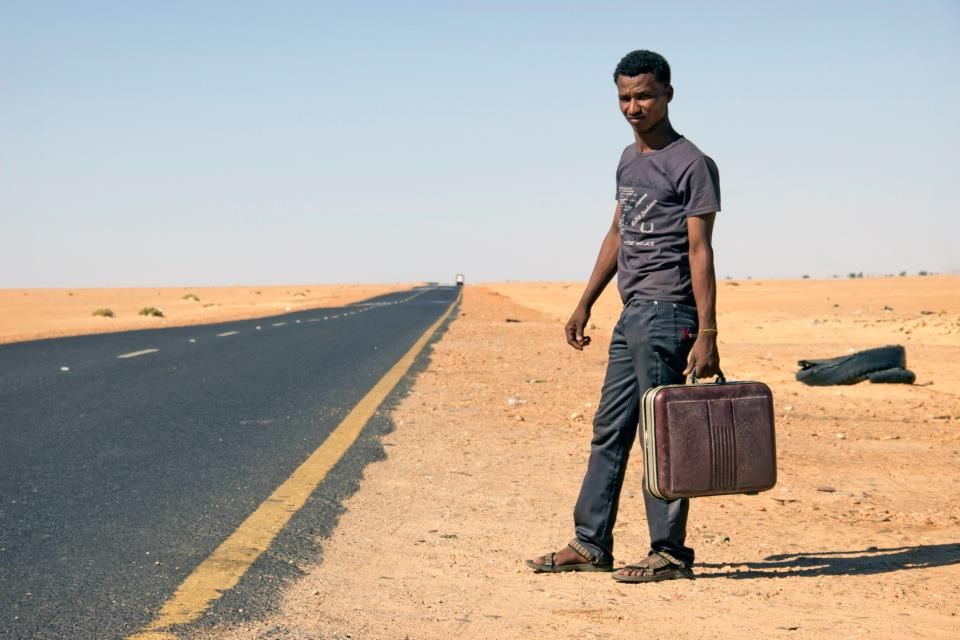
Hitching is generally easy, although many of the citizens do not understand the concept of hitching, so it is best to say you are having money problems. On roads with trade and freight, you should easily be able to pick up a lorry. On minor roads, such as those heading north, often the only traffic will be with minibuses. These are modern, air conditioned and pretty reasonable.
Police checkpoints are very common in Sudan. Every town and city has a police check-point on the outskirts and they are especially around Khartoum and in the border regions. These checkpoints act as road blocks and can cause problems to the plucky hitcher. It was often the case that the police would just put you on a passing bus for no charge. The police are very helpful and warm, so long as all your permits are in order.
Legality of Hitchhiking
The law here has not been checked. Nobody has yet read the road traffic rules in force in Sudan against the official text, so this section cannot tell you what they say, and nothing elsewhere on this page should be read as a statement of the law. What holds almost everywhere is that hitchhiking is not an offence in itself and that what the traffic code regulates is where a pedestrian may stand — off the carriageway, and off motorway-class roads and their slip roads altogether — but whether that is true here is simply unknown. Ask locally before standing on a major road, and treat the rest of this article as what hitchhikers report rather than as a rule you can rely on. If you can read the official text, please replace this paragraph with the provision it turns on and a link to it.
Border crossing
- The border to Chad is closed (July 13th, 2009).
- The border to Eritrea is closed (July 13th, 2009) except for Sudanese citizens.
- The border to Libya is closed (June 29th, 2010).
- The border to Egypt is open, but only on one single checkpoint (Wadi Halfa border crossing) or by boat via the Aswan Lake.
- The border to Ethiopia is open at the checkpoint near Gedaref
Danger
There are a lot of unsolved conflicts in Sudan, also there are landmines in almost every border region. Due to high crime rates and escalating conflicts hitchhiking in Sudan can be dangerous, especially in the western region of Darfur. Don't cross borders illegally because of landmines and the risk of being imprisoned for a long time.
Be careful when taking photos of official buildings you may be arrested as a spy. Getting arrested in Sudan is relatively commonplace, so don't be alarmed if it happens to you. They will take your details and release you shortly with matters such as photographs.
The rest of the country, especially the north, is much safer and the biggest danger here will be the extraordinary midday heat. Stay sheltered and well hydrated. Always carry plenty of water and snacks on you.
Almost everywhere in Sudan you will find terracotta water vessels in the cool shade of big trees, with a communal cup. These are great in emergency situations or, if your stomach is hardy, for general drinking water.
A lot of coffee stands or shops will have threadbare beds which you will be invited to rest on during the heat of the day.
Visa
It is possible to get a Sudanese visa in only one day at the Sudanese Embassy in Cairo, Egypt, for 100 US-$, or from Aswan, for 50 US Dollar. The visa will take one day in Cairo and between four days and a week in Aswan.
Update 2018: It seems the Sudan visa in Cairo is now 150 USD. Still available in one day though.
It is also possible to attain a Transit Visa in Kampala, Uganda from the Sudanese Embassy. It is valid for 2 weeks (in three months), is about 60 US-$, takes 3 days and is surprisingly straightforward to apply for.
When in Khartoum, is is possible to get a visa for Ethiopia in one day. However, they only issue 70 visas a day so you need to get in line by around 6 am. However, if you do get there a bit too late, you will be given a paper with a number and will be prioritized the next day.
Personal Experiences
2018
TheLoneBaker: I hitchhiked through Sudan in 2018 and found it extremely easy. Most of the time the police didn't pay any attention and most of the rest of the time they just wanted to see my visa and didn't even bother to check the identification. Most nights I was invited to peoples homes to sleep on outside beds. I didn't encounter a single driver who expected payment even in the Khartoum area. Also, permits are no longer needed to travel in Sudan though you do still need to register with the police for a fee within 72 hours.
South Sudan
Edit on wikiSouth Sudan is a very young country in Northern Africa that split off Sudan on July 8th, 2011. It is bordered by Sudan to the north, the Central African Republic to the west, the Democratic Republic of the Congo to the south west, Uganda to the south, Kenya to the south east and Ethiopia to the east.
Danger
The independence was unbloody, but it's very possible that the old conflict with the North might flare up again.
Cities
- Juba (capital)
Legality of Hitchhiking
The law here has not been checked. Nobody has yet read the road traffic rules in force in South Sudan against the official text, so this section cannot tell you what they say, and nothing elsewhere on this page should be read as a statement of the law. What holds almost everywhere is that hitchhiking is not an offence in itself and that what the traffic code regulates is where a pedestrian may stand — off the carriageway, and off motorway-class roads and their slip roads altogether — but whether that is true here is simply unknown. Ask locally before standing on a major road, and treat the rest of this article as what hitchhikers report rather than as a rule you can rely on. If you can read the official text, please replace this paragraph with the provision it turns on and a link to it.
Personal Experiences
Eritrea
Edit on wikiEritrea is a country in Eastern Africa, with borders with Sudan, Ethiopia and Djibouti. You will need a permit to travel around in the country.
Borders
The border to Sudan is currently closed (Nov. 18)
There are landmines in all border regions of Eritrea, avoid crossing illegal!
Legality of Hitchhiking
The law here has not been checked. Nobody has yet read the road traffic rules in force in Eritrea against the official text, so this section cannot tell you what they say, and nothing elsewhere on this page should be read as a statement of the law. What holds almost everywhere is that hitchhiking is not an offence in itself and that what the traffic code regulates is where a pedestrian may stand — off the carriageway, and off motorway-class roads and their slip roads altogether — but whether that is true here is simply unknown. Ask locally before standing on a major road, and treat the rest of this article as what hitchhikers report rather than as a rule you can rely on. If you can read the official text, please replace this paragraph with the provision it turns on and a link to it.
Personal Experiences
Ethiopia
Edit on wiki Ethiopia is listed as one of the world poorest
countries, and very few people have cars there.
Ethiopia is listed as one of the world poorest
countries, and very few people have cars there.
Hitchhiking
Hitchhiking is really easy in Ethiopia. Any type of arm motion are use of the thumb will get you a ride. Make sure you know that the ride is free. In Amharic, the most widespread language used by most people to some degree "Birr nuhtzuh" means free, in Afan Oromo the word is something like "Gahtee-malee". English use is pretty uncommon outside of the cities, and the truckers who provide so many of the rides or not often English speakers. The roads are pretty good in Ethiopia and combined with the ease of hitching almost everywhere in the country is accessible. Hitching within the city of Addis Ababa is very easy and a great way to meet people. The train around Addis is also very cheap.
Ethiopia is a fairly safe country, however the faranji frenzy will definitely quickly become an annoyance as you travel throughout the country. Theft is pretty unheard of even in the cities. The children in much of Ethiopia are totally insane and will just start screaming upon seeing a foreigner. Children in the rural areas on West Amhara being the worst and will often just start throwing rocks at people and/or following in a large crowd.
One of the hardest parts about traveling Ethiopia is finding a place to sleep. Much of the country is densely populated. In Amhara and Tigray people are extremely suspicious of people walking on to their land or forests toward night time and may call the village to intervene. Hotels are about 50-60 birr (2.50$-3.00) for a single person and 70-80 for two people. The prices are higher in Addis Ababa and the eastern cities. Maybe fifty percent of the hotel rooms have bedbugs so I'd learn the signs and check before buying a room. The Ethiopian Orthodox Church traditionally keeps forested space near their churches and these can sometimes be slept in.
The police don't have much of a corruption problem and only seem to intrude heavily on the traveler's life in much of Benishangul-Gumuz.
Ethiopian culture in many of the regions can be quite abrasive. People yell often and catcall at women. In the Amhara region litigation is the "national sport" and people love to argue. Make sure you know a price firmly before handing someone money. House-ups are relatively uncommon but it is less uncommon for a rich person to buy you a hotel. Food is cheap and most people who like it really like it. Eating vegan is really easy. Water quality is low.
Legality of Hitchhiking
The law here has not been checked. Nobody has yet read the road traffic rules in force in Ethiopia against the official text, so this section cannot tell you what they say, and nothing elsewhere on this page should be read as a statement of the law. What holds almost everywhere is that hitchhiking is not an offence in itself and that what the traffic code regulates is where a pedestrian may stand — off the carriageway, and off motorway-class roads and their slip roads altogether — but whether that is true here is simply unknown. Ask locally before standing on a major road, and treat the rest of this article as what hitchhikers report rather than as a rule you can rely on. If you can read the official text, please replace this paragraph with the provision it turns on and a link to it.
Number plates
The country's car license plate system is very specific: the colour states the status of the ownership (Blue for Private Ownership/ Black for Government / Orange for Businesses or NGOs / Red for Taxis). The NGOs plate always starts with a number (generally 35, other numbers simply specify the origins of the local organisation) while 'CD ' (in White/Yellow/Black) represents embassies and diplomatic cars with the first number specifying the country of origin. The 2 letters of the region of registration also appears on the license plate, both in Latin alphabet and local Amharic; As example, AA stands for Addis Ababa.
Update 2018: The license plate has changed a bit. First off, it is the letters and numbers that are colored and not the plates themselves. Secondly, a new green color has been introduced and it wasn’t clear what it meant. A number of types of vehicles seemed to have it from private cars to buses. And taxis didn’t seem to be exclusively red.
Borders
According to the Lonely Planet, the border with Djibouti through Galafi is accessible only by hitching for its last length with the load of truckers doing the road between Djibouti Harbour and Awash where a payment of about 150-200Birr (from Logiya) can be expected.
Note that hitching along that road could reveal extremely harsh and dangerous due to local banditry and more especially due to the harshness of this desertic environment (along the Awash-Djibouti Road).
There are borders with:
- Eritrea: Border crossing is currently closed since the 1998 war
- Djibouti: via Logiya and Galafi
or via Dire Dawa and Gelille
- Somalia/Somaliland: via Jijiga (to Somaliland)
- Kenya: via Moyale
- Sudan: via Metemat, note that visa is required in advance which takes up to one month to obtain.
- South Sudan
Caution
- Beware of Landmines at the border regions to Somalia, Sudan, Eritrea and Kenya!
- Some Regions are simply closed for Foreigner, either due to the risk of attack, local tension or banditry. These usually includes the Ethiopian Somali Region (Werder) and the border with Eritrea. Other region such as the southwestern border with Sudan and Kenya as well as the Afar region can be volatile, so inquire before you go.
- Refrain from giving to beggars or children, be it small changes, pencils or any goods whatsoever as these raises their dependency and expectation on tourist.
Personal Experiences
Summer of 2010
In the summer of 2010, Gerben hitchhiked through Ethiopia, from the Sudanese border crossing near Gonder to the Kenyan border at Moyale. His experience was very positive, and even though little children and also adults were very curious whenever he passed through a village, he experienced none of the rock throwing mentioned in other reports. Waiting time was generally short.
February 2012
In February 2012, KiwiAoraki hitchhiked in some areas of Ethiopia. Locals, especially away from tourist areas can either be very curious or a real annoyance. It can be difficult to get a lift if you have a mob of 8 children following you. When he hitched from Harar to Addis Ababa he was picked up by an NGO vehicle and given a lift for 70 km without charge. A ute then picked him up going all the way to Addis, but the driver got angry upon dropping him off due to not having any birr. Drivers usually expect payment from hitchhikers, especially foreigners.
October 2018
in October 2018, TheLoneBaker hitchhiked from the Sudan border to the Kenya border. He only encounter a single child who threw rocks and it wasn't directed at him as a foreigner. He was on a minibus that had offered him a free lift and the child threw the rock at the bus. SO perhaps this supposed rock throwing is not actually directed at foreigners so much as just bored children throwing rocks at moving targets. Hitchhiking itself was quite easy especially inside the city limits of Addis Ababa. He was also offered a hotel room almost every single night as opposed to being invited inside peoples homes. Again though, none of the drivers expected payment when asked beforehand.
Links
- My time in Ethiopia, August 19, 2005 by Hologram
- [http://en.wikivoyage.org/wiki/EthiopiaEthiopia at Wikivoyage]
Addis Ababa
Edit on wikiRoadside hitching spots go stale. For current places to hitch in and out of this city, use maps.hitchwiki.org and the live Hitchwiki page linked at the end of this chapter. This book keeps general orientation, not a pin gazetteer.
This book does not reprint named ramps, dumpsters, hostels, or other pins. They go out of date. Follow the note above to the live map or wiki.
Djibouti
Edit on wikiDjibouti is a tiny country in the horn of Africa tucked between Somaliland, Ethiopia and Eritrea. An old French colony, the French Somaliland still include a certain amount of French citizens within its border of mainly French Legionnaire and some scientists all concentrated in Djibouti City capital area, which is the main East Africa Sea Port with possibilities to cross over to Yemen.
The climate of Djibouti is dry, arid and extremely hot.
Hitchhiking
Hitching toward Ethiopia through the Logiya Road could reveal harsh due to the extreme heat during the day and the fact that not many cars ventures far from Djibouti City.
Legality of Hitchhiking
The law here has not been checked. Nobody has yet read the road traffic rules in force in Djibouti against the official text, so this section cannot tell you what they say, and nothing elsewhere on this page should be read as a statement of the law. What holds almost everywhere is that hitchhiking is not an offence in itself and that what the traffic code regulates is where a pedestrian may stand — off the carriageway, and off motorway-class roads and their slip roads altogether — but whether that is true here is simply unknown. Ask locally before standing on a major road, and treat the rest of this article as what hitchhikers report rather than as a rule you can rely on. If you can read the official text, please replace this paragraph with the provision it turns on and a link to it.
Borders
- Ethiopia
- Eritrea
- Somaliland
- Sea Crossing to Yemen
Cities
- Djibouti City
- Arta/Ouea
- Ali Sabieh
- Dikhil
Personal Experiences
Somalia
Edit on wikiSomalia is an unstable civil war-torn country in the Horn of Africa.
Hitchhiking
It's not a very good place to hitchhike. Check out Puntland and especially Somaliland, though.
Legality of Hitchhiking
The law here has not been checked. Nobody has yet read the road traffic rules in force in Somalia against the official text, so this section cannot tell you what they say, and nothing elsewhere on this page should be read as a statement of the law. What holds almost everywhere is that hitchhiking is not an offence in itself and that what the traffic code regulates is where a pedestrian may stand — off the carriageway, and off motorway-class roads and their slip roads altogether — but whether that is true here is simply unknown. Ask locally before standing on a major road, and treat the rest of this article as what hitchhikers report rather than as a rule you can rely on. If you can read the official text, please replace this paragraph with the provision it turns on and a link to it.
Personal Experiences
Somaliland
Edit on wikiSomaliland is a breakaway state of Somalia constituting the former British Somaliland. Internationally Non-Recognised as a formal State, Somaliland yet has all democratic ad governing institutions (parliementary system, judiciary, banking, police and army) being de facto entirely separated from Somalia. As such, a Somaliland Visa issued by a 'Somaliland Foreign Diplomatic Representative Office' is compulsory for any visitors.
Hitchhiking
Police checkpoints are common. Police may be highly suspicious of independent travelers and prevent you from hitchhiking.
UPD: Oct 2013. As a solo female traveller I felt surprisingly safe hitchhiking between Berbera and Sheekh and Berbera and Hargeisa. Before leaving Hargeisa go to the police station and get a phone number of the chief officer so that you could call him if you're having troubles at checkpoints. Somaliland has quite a big wealthy community from foreign diasporas and they may actually give you a lift for free. But most of the time you are supposed to pay for a ride in a truck and most certainly for a ride in a minivan, so getting someone to give you a free ride might take a while... and it's hot. On the other hand, if you buy some khat (leaves that everyone chews here) and share it with locals, you can always talk your way through checkpoints and get free rides.
Legality of Hitchhiking
The law here has not been checked. Nobody has yet read the road traffic rules in force in Somaliland against the official text, so this section cannot tell you what they say, and nothing elsewhere on this page should be read as a statement of the law. What holds almost everywhere is that hitchhiking is not an offence in itself and that what the traffic code regulates is where a pedestrian may stand — off the carriageway, and off motorway-class roads and their slip roads altogether — but whether that is true here is simply unknown. Ask locally before standing on a major road, and treat the rest of this article as what hitchhikers report rather than as a rule you can rely on. If you can read the official text, please replace this paragraph with the provision it turns on and a link to it.
Because of the police checkpoints, drivers are reluctant to take hitchhikers. However, some police can be helpful and even stop trucks for you. If you are allowed to pass by a police checkpoint, it is best to ask the station chief to give you a stamped paper that attests to later police that you are a trustworthy tourist.
Visas
'Somalia' issued visa are not valid for Somaliland Republic.
Visas can be easily obtained at the Somaliland Liaison office in the neighbouring Addis Ababa or Djibouti for $40. Waiting time - 10 minutes.
Borders
- Ethiopia
- Djibouti
- Puntland
- Seacrossing to Yemen
Personal Experiences
Puntland
Edit on wikiPuntland is an Autonomous Republic situated in the northernmost corner of Somalia literally at the 'Horn' tip of Eastern Africa.
Puntland has its own government and manage its own institutions separately from Mogadishu since 1998, its capital is Garowe in the centre of the region while Boosaaso is the largest city located by the Gulf of Aden. A Puntland Visa is required to visit this tiny region which also remain torn and unstable by the Civil War afflicting the region.
Boosaaso (eng: Bosaso/Bosasso) has an international airport and actually act as the only 'city' for the whole region.
Situation and Advices
As of 2008-2009, the Republic of Puntland is also in conflictual tension with neighbour Somaliland regarding border dispute regarding the 'Sool' region. As well as the eastern coastal villages are abounding with piracy shelter despite Puntland government's effort to acquiesce the International Requests in that matter.
As of 2009, travelling throughout the Puntland countryside would be non-advisable as the situation remains dangerous due to the risk of kidnapping and clashes at the border area or with rival clans within the country. Foreigners to the area are to know that no foreign diplomatic representation are existing in neither Puntland, Somalia or neighbouring Somaliland, visitors to the region are usually made or representatives of various NGO's or International Institutions and travels under armed escort. Therefore, hitch-hiking would not be possible nor really authorised.
Legality of Hitchhiking
The law here has not been checked. Nobody has yet read the road traffic rules in force in Puntland against the official text, so this section cannot tell you what they say, and nothing elsewhere on this page should be read as a statement of the law. What holds almost everywhere is that hitchhiking is not an offence in itself and that what the traffic code regulates is where a pedestrian may stand — off the carriageway, and off motorway-class roads and their slip roads altogether — but whether that is true here is simply unknown. Ask locally before standing on a major road, and treat the rest of this article as what hitchhikers report rather than as a rule you can rely on. If you can read the official text, please replace this paragraph with the provision it turns on and a link to it.
Personal Experiences
Kenya
Edit on wikiKenya is a country in East Africa. It has a large variety of tribes living in different areas of the country, with the Kikuyu tribe being the biggest. The famous Maasai tribe lives near the border with Tanzania.
Trans-African Highway
This road, going from Cairo, Egypt, to Cape Town, South Africa, leads through Kenya as well. In the north of the country, it is little more than a dust track through the desert, and this used to be a dangerous part of the road to travel on, with several hold-ups reported. Gerben travelled here in the summer of 2010, and he was told the banditry had drastically decreased after negotiations on illegal weapons possession in the region had been conducted by local authorities.
Take care with the rainy season in this part of the country as well, as the dusty roads quickly turn into slippery mud roads once the rain starts pouring down. An asphalt (or tarmac, as it is called here) road to the border at Moyale is under construction, but will take at least until 2015 to complete.
Update 2018: The tarmac road is complete and in perfect condition. However, there are tons of speed bumps which makes hitchhiking quite easy despite the high speeds cars can travel on it.
Cities
- Nairobi
Legality of Hitchhiking
The law here has not been checked. Nobody has yet read the road traffic rules in force in Kenya against the official text, so this section cannot tell you what they say, and nothing elsewhere on this page should be read as a statement of the law. What holds almost everywhere is that hitchhiking is not an offence in itself and that what the traffic code regulates is where a pedestrian may stand — off the carriageway, and off motorway-class roads and their slip roads altogether — but whether that is true here is simply unknown. Ask locally before standing on a major road, and treat the rest of this article as what hitchhikers report rather than as a rule you can rely on. If you can read the official text, please replace this paragraph with the provision it turns on and a link to it.
Personal Experiences
Uganda
Edit on wikiThe Republic of Uganda is a landlocked country in Eastern Africa. It is bordered on the east by Kenya, on the north by South Sudan, on the west by the Democratic Republic of the Congo, on the southwest by Rwanda, and on the south by Tanzania.
Hitchhiking
Hitching is the main way of transportation for many Ugandans. But not for free. You are expected to pay approximately half of the bus fare for the same trip when being picked up by a truck or pickup. At little more if you want to sit inside the cabin. Taxis (the local matatu's: small 13-seater minibusses) are little more expensive, and are usually packed with people, goats, chicken and luggage to the point where it gets hard to breath. All the tarmac roads in the country are quite heavily traveled, except on sundays and at night. Every single vehicle that passes you with room for an extra passenger will pick you up. In three months of hitching in Uganda I never saw a car drive past me (JeppeRobert.
Sieve agrees to most things JeppeRobert mentioned and he also hitched around the country for 3 months covering every paved long-distance road and countless kilometers on unpaved roads in rural areas. Still, there are some disagreements. First, hitching is not the main way of transport for most Ugandans as they use matatus even in the most rural areas. Of course pick ups and trucks function as public transport as well as usual sedan cars (packed with 8 people) but that's not hitching. It's possible to hitchhike Uganda for free on the main roads with dense traffic, in the rural parts this is very challenging and you probably want to pay your share (what's in africa imo fair anyway) until you wait for another hour for the next car passing by. It's not generally half the bus fare now - it's usually the bus fare, and the bus fare now is approximately 700-1000UGX for each 10km, a little less if you have a rather long lift, a little more if the road is in very bad condition. Cars do pass by and don't stop for you even though they have space for extra people and it happens quite often, both in the countryside and on the major roads. Many cars will stop to offer you their "special hire" services, which is very expensive and can be annoying. Don't signal anything to cars you suspect to function as public transport and try to get lifts with private cars, you'll learn to distinct them easily, but again, it can take a while until a private car passes by, really most of the cars function as public transport, so be prepared for longer waits in the equatorial sun. I'd say Uganda is not a good country for hitching compared to other East African countries if hitchhiking is interpretated in a western way. Especially in the north of the country you either have to bring plenty plenty plenty of time to wait for a free lift or use the trucks and pickups that will come along your way - but you'll have to pay. In conclusion it's possible to travel the entire country without using matatus, special hires or other public means but bring time!
The thumbs up sign is not used in Uganda. They will think you are complimenting the awesomeness of their ride. The most used gestures to stop a vehicle is waving at the driving, pointing on the road with you index finger or (this is my favorite) clapping your hands twice, then put your hand in the air.
From Kampala there is four main roads. One going west towards Masindi. One north-west towards Packwach-Arua-Koboko-Sudan, one south towards Mbarara-Rwanda/Tanzania and one east towards Jinja-kenya splitting with a road going to mbale-moroto-sudan. All are very trafficked, and hitching a ride is no problem.
Legality of Hitchhiking
The law here has not been checked. Nobody has yet read the road traffic rules in force in Uganda against the official text, so this section cannot tell you what they say, and nothing elsewhere on this page should be read as a statement of the law. What holds almost everywhere is that hitchhiking is not an offence in itself and that what the traffic code regulates is where a pedestrian may stand — off the carriageway, and off motorway-class roads and their slip roads altogether — but whether that is true here is simply unknown. Ask locally before standing on a major road, and treat the rest of this article as what hitchhikers report rather than as a rule you can rely on. If you can read the official text, please replace this paragraph with the provision it turns on and a link to it.
Mzungu hitching (a.k.a. white man's hitching)
Many roads, especially around the UN depot in Entebbe and close to the borders of DR Congo and Sudan, are used by NGO's and UN agencies. They drive in big SUV's or pick up trucks, often with a huge antenna on the front. Most of them are white (UN, DED etc.) or red (ActionAid, MSF, Save the children etc.). They are usually driven by educated locals or foreign aid workers, and they are not allowed to act like a bus service, meaning they don't pick up locals wanting a ride. But they do pick up backpackers, and they dont charge for the service. On top of this, they are often covering huge distances. JeppeRobert once got a ride from Kampala all the way to Yei in Sudan by a UN worker met on a bar the night before. This can be called mzungu hitching because drivers know all white people standing alone on the side of the road are not locals. JeppeRobert's black friend, who was also a backpacker from Europe, didn't get the same cars to stop.
Personal Experiences
Rwanda
Edit on wikiThe Republic of Rwanda is a unitary republic of central and Eastern Africa. It borders Uganda to the north; Tanzania to the east; Burundi to the south; and the Democratic Republic of the Congo to the west.
Rwanda is a relatively small and extremely densely populated country in the Great Lakes region of East Africa.
Language"' Rwanda is one of the few countries in Africa unified by a single national language. Everyone in the country speaks Kinyarwanda, though most will also have some amount of English or French. As the education system officially removed French as an option in 2009, younger Rwandans are much more likely to speak English, and older Rwandans are more likely to speak French. However, be aware that the level of English or French will bemuch' lower than in other countries in the region, such as Uganda and Kenya, where English is often thelingua franca.''
Hitchhiking
It's worth noting that inter-city bus travel is (generally) very reliable and cheap. As of January 1, 2018, travel to any major city from Kigali costs 6,000 RWF ($7.50 US) or less. Via Ritco buses, Kigali-Giseyni is 3,000 RWF, Kigali-Butare is 2,000 RWF, etc., and they leave 6+ times per day. In other words, hitching is rarely a necessity in Rwanda. In fact, many people will be confused as to why you are not taking a bus and offer to take you to the nearest bus station. It can be difficult to explain what you're doing, but if you say you don't have money, they might understand. Regardless, Rwanda is a surprisingly friendly country for hitchhikers.
City Names One confusing thing in Rwanda is that the major towns were renamed after the genocide. Official references to these cities (i.e. bus tickets, many street signs) will use the new names, while maps seem to use the old or new name randomly, as do Rwandans. Fortunately, Rwandans will know both names, in case of confusion. Here are some examples:
Gisenyi - Rubavu
Rusizi - Cyangugu
Butare - Huye
Musanze - Ruhengeri
Roads Highways are almost all in excellent condition - better than many western countries. Most tarmacked roads were paved quite recently, so potholes are rare. However, if you are traveling through a rural area away from the main roads, you are likely to encounter somewhat questionable dirt roads.
Further, since all main roads pass through numerous small towns, there are plenty of good places to find rides (typically, immediately outside of a town towards your destination). There are very few major junctions, which means that it is easy to find traffic going towards your destination.
Safety Rwanda is an extremely safe country, with remarkably low violent crime rates. The chances of a foreigner being attacked or robbed while hitchhiking (or at any other time, quite honestly) are very small. You're likely to get many stares, and lots of children asking for money, but nothing worse than that.
Finding a Ride Please note that the following is based on a single trip by HitchThruRwanda, and so should not be taken as universal advice! This trip was from Kigali to Butare, beginning on a weekday morning.
Long-distance hitchhiking is not a common phenomenon in Rwanda, though locals will often hitch rides for a few kilometers. The "thumbs-up" gesture, while not offensive, is unknown in Rwanda. Instead, extend your arm straight out towards the road, with your palm up (though drivers will likely pull over for you if you make any kind of gesture towards the road).
A few factors make Rwanda an interesting place to hitch hike. First, there is very little private traffic (i.e. cars other than buses, commercial trucks, taxis, or safari vans) traveling between cities. However, the private traffic that does exist is very inclined to pull over for hitch hikers, at least if they are visibly foreigners (in other words, not African. I cannot comment on how hitchhiking would be for someone of African descent). Those with private vehicles are likely to be upper-class and English speakers (or, less likely, French speakers). In my single experience, nobody asked for money or seemed to expect it. I suspect that they would have been offended if I had offered it.
However, as there is often little private traffic, it is a very real possibility to spend hours waiting for a ride, particularly on less frequented routes (especially highways not connected to Kigali). For example, I expect that hitchiking on the roads between Rusizi and Butare and, to a lesser extent, Gisenyi and Musanze could entail long delays. If you are on a more remote dirt road, it's best to assume that you will not find a ride.
Secondly, many professional workers leave Kigali on weekday mornings for contracts in smaller towns. Of the 4 rides I took from Kigali to Butare, 3 were day contractors from Kigali. Therefore, it seems that weekday mornings are excellent times to hitch a ride leaving Kigali. I would guess that weekday afternoons (14:00-17:00) are equally good for finding rides to Kigali from nearby towns, but I cannot confirm that through personal experience.
Anecdotally, on the road immediately east of Nyungwe National Park, I did not see a single private car in between 13:45 and 15:00 on Umuganda. I would highly discourage anyone from trying to hitchhike on Umuganda!
A few useful phrases:
Muraho - Hello.
Mugiye he? - Where are you going?
"Ngiye i [city]" - I am going to [city].
"Mvuye muri [country]'' - I am from [country].
Muvuga icyongereza? Muvuga igifaransa? - Do you speak English? Do you speak French?
Simfite amafaranga - I do not have money.
Murakoze - Thank you.
Legality of Hitchhiking
The law here has not been checked. Nobody has yet read the road traffic rules in force in Rwanda against the official text, so this section cannot tell you what they say, and nothing elsewhere on this page should be read as a statement of the law. What holds almost everywhere is that hitchhiking is not an offence in itself and that what the traffic code regulates is where a pedestrian may stand — off the carriageway, and off motorway-class roads and their slip roads altogether — but whether that is true here is simply unknown. Ask locally before standing on a major road, and treat the rest of this article as what hitchhikers report rather than as a rule you can rely on. If you can read the official text, please replace this paragraph with the provision it turns on and a link to it.
AN EXTREMELY IMPORTANT NOTE: the last Saturday of every month is Umuganda, a mandatory(ish) public work day. Cars are not allowed on the road between 8 AM and 12 PM, and the roads are fairly empty in the afternoon as well.
Personal Experiences
Burundi
Edit on wikiBurundi, officially the Republic of Burundi, is a landlocked country in the Great Lakes region of Eastern Africa bordered by Rwanda to the north, Tanzania to the east and south, and the Democratic Republic of the Congo to the west.
Hitchhiking
Pls add info.
Legality of Hitchhiking
The law here has not been checked. Nobody has yet read the road traffic rules in force in Burundi against the official text, so this section cannot tell you what they say, and nothing elsewhere on this page should be read as a statement of the law. What holds almost everywhere is that hitchhiking is not an offence in itself and that what the traffic code regulates is where a pedestrian may stand — off the carriageway, and off motorway-class roads and their slip roads altogether — but whether that is true here is simply unknown. Ask locally before standing on a major road, and treat the rest of this article as what hitchhikers report rather than as a rule you can rely on. If you can read the official text, please replace this paragraph with the provision it turns on and a link to it.
Personal Experiences
Tanzania
Edit on wikiTanzania is a country in Eastern Africa.
Hitchhiking
Hitching on long routes is not common because of sufficient and cheap bus services. There are not a lot of private cars covering long distances but most of them will stop for white people as they consider them not dangerous. Only the major cities are connected by paved routes, the majority of the roadnetwork is unpaved. In more remote areas (or less visited) you must be exceptionally lucky to get a free lift as the only mean of transport is a shared taxi.
You do get very cheap buses travelling long distances, however be very aware of "swahili time" if you do end up booking a bus. Instead of midnight, the swahili time starts at sunrise (Western 6am) and ends at sunset (Western 6pm). Therefore 11 in the morning might mean 5am.
The thumbs is not used in Tanzania to stop the rides. Instead, wave your hand with your palm facing upwards. (Palm facing downwards means that you want to pay and is usually used to stop busses)
Food is amazingly cheap and most people very hospitable, especially if you're quite obviously a traveller from a different country. It's worth learning some Swahili as aside from the largest cities, you won't find very much English. You will also probably encounter a million greetings a day and it's lovely to be able to reply with the correct answer! In rural areas, most people's first language is their tribal language, and Swahili is the language which unites everyone.
Be careful of travelling by yourself as a woman. Normally you may just get chatted up for your exotic look, but keep your own safety in mind.
Tanzania outside of the big cities is quite conservative, and often old school Christian or Islamic. It makes sense to cover up reasonably, which is helpful anyway for the heat!
The paved roadnetwork includes: Nairobi-Arusha-Dar-es Salaam; Arusha- Mwanza; Mwanza-Dar es Salaam, Dar es Salaam- Dodoma, Dar-es Salaam-Mbeya-Sambia; Mbeya-Malawi;
Legality of Hitchhiking
The law here has not been checked. Nobody has yet read the road traffic rules in force in Tanzania against the official text, so this section cannot tell you what they say, and nothing elsewhere on this page should be read as a statement of the law. What holds almost everywhere is that hitchhiking is not an offence in itself and that what the traffic code regulates is where a pedestrian may stand — off the carriageway, and off motorway-class roads and their slip roads altogether — but whether that is true here is simply unknown. Ask locally before standing on a major road, and treat the rest of this article as what hitchhikers report rather than as a rule you can rely on. If you can read the official text, please replace this paragraph with the provision it turns on and a link to it.
Personal Experiences
Angola
Edit on wikiAngola is a country in Central Africa with borders to Namibia, Zambia, the Republic of Congo and the Democratic Republic of the Congo.
Hitchhiking
Hitchhiking in Angola is very common among locals traveling short or long distances, and some drivers might expect to be paid. However, if you clarify beforehand, most of them will be happy to give you a free lift, as locals are very friendly to foreign visitors. Most of locals don't speak English, so basic Portuguese would be big advantage. Word for hitchhiking is "boleia".
The best places to hitch out of cities are gas stations along the main road and police posts. Policemen are usually willing to help foreigners with asking the drivers, but you have to explain them the way you travel. Otherwise, a signaling by the main road will also work. Outside the big cities its way much easier, and since the fuel is cheap, it happens often that drivers can bring you much further than they are going as they are willing to help.
Legality of Hitchhiking
The law here has not been checked. Nobody has yet read the road traffic rules in force in Angola against the official text, so this section cannot tell you what they say, and nothing elsewhere on this page should be read as a statement of the law. What holds almost everywhere is that hitchhiking is not an offence in itself and that what the traffic code regulates is where a pedestrian may stand — off the carriageway, and off motorway-class roads and their slip roads altogether — but whether that is true here is simply unknown. Ask locally before standing on a major road, and treat the rest of this article as what hitchhikers report rather than as a rule you can rely on. If you can read the official text, please replace this paragraph with the provision it turns on and a link to it.
Personal Experiences
Zambia
Edit on wikiHitchhiking
Hitchhiking is common in Zambia. The people of Zambia are wonderful, friendly, and incredibly inquisitive about foreigners. With a lot of patience and kindness, Zambia is a great and relatively safe place to hitchhike. However, as a white foreigner you might be expected to pay for rides. Hitchhiking for locals works along the following unwritten rules. Touts stand around truck lay-bys finding passengers for passing trucks and cars. It's an unofficial job for them, and they can get a little rowdy and disagreeable when looking for passengers and negotiating the fees. They negotiate a fee with the passenger based on the destination, and then the truck / car driver who stops pays the tout the fee he agreed with the passenger. The driver will then charge the passenger a fee which will cover what he paid the tout and add on an extra amount for himself.
If you are kind to the 'Touts', you can explain to them that you don't really want help, as being a 'misungu' gives you better luck. This strategy works well, so long as you are still willing to pay them a little, and help other passengers (local Zambians) to get rides as well, when (if) passing cars stop. Another trick is to stop at police stops, and speak with them. If they like you, and you are willing to spend some time chatting, they will help you get rides (and maybe even offer you some delicious Nshima).
Note that in Zambia, cars and trucks are flagged using an up-and-down waving of the arm (like we all did as kids when we put our hand out of a moving car and let the wind lift our hand up and down). In general, there are three classes of vehicles: private/government transportation (nice cars), public transportation (usually minibuses or canter (flatbed) trucks), and semis.
Private and government vehicles will sometimes stop for foreigners (especially white people - 'Misungus'). You may or may not be expected to pay, and usually this is best negotiated at the beginning. Unlike many other places, a car stopping does NOT mean that you will get a ride, and usually a little bit of local language (Muli Shani Mukwai - How are you, sir/madam in Icibemba, the most widely spoken language in Zambia) can go a long way. In general, these vehicles are the fastest and safest method of travel.
Public transportation will stop for you, but you will ALWAYS be expected to pay - regardless of what the conductor tells you when you get on. Also, recognize that unless you are the absolute last passenger that could possibly fit in the transport, you are likely to wait and/or stop many, many times until the vehicle is full. If you are stuck in this situation, it is best to ask other passengers or people you are waiting with what a fair price is, as you will certainly be pegged as a foreigner and get the 'misungu price'.
From the conversations Thumbingmyway had with truck drivers in Zambia, they earn roughly between $150 to $180 per month. Sometimes their wages are even less than $150 per month, as they get paid more when carrying a load i.e. busy transporting and not waiting at the depot. I'm not sure whether this is the general way truckers are paid, or if it was just the norm for the companies that employed the drivers that gave me lifts. At any rate, this is what they must support their families on, and as one confided to me, this is why they all supplement their income by charging hitchhiking passengers. A lot of this money gets taken away from them by the police who extract a "fee" at check-points along the road, knowing that the truckers are carrying these extra passengers, and therefore extra cash too.
If your personal hitch-hiking philosophy means not paying the truckers this fee, be prepared to stand on the side of the road and wait, sometimes up to 3 hours or more for a ride that will accept you. The companies the truckers work for already pay the fuel costs, so in theory it doesn't cost them to give you a ride. They will try to get $10 out you on average for distances greater or less than 500km.
Legality of Hitchhiking
The law here has not been checked. Nobody has yet read the road traffic rules in force in Zambia against the official text, so this section cannot tell you what they say, and nothing elsewhere on this page should be read as a statement of the law. What holds almost everywhere is that hitchhiking is not an offence in itself and that what the traffic code regulates is where a pedestrian may stand — off the carriageway, and off motorway-class roads and their slip roads altogether — but whether that is true here is simply unknown. Ask locally before standing on a major road, and treat the rest of this article as what hitchhikers report rather than as a rule you can rely on. If you can read the official text, please replace this paragraph with the provision it turns on and a link to it.
Borders
- Angola
- Botswana
- Democratic Republic of the Congo
- Malawi
- Mozambique
- Namibia
- Tanzania
- Zimbabwe
Personal Experiences
Malawi
Edit on wikiMalawi is a country in the southeast of Africa. It has borders with Tanzania, Mozambique and Zambia. Malawi is one of the poorest countrys in the world, nearly 50% of the population have less than $1 per day.
Hitchhiking
Expect, that the road conditions are far below standard except the main roads, which sometimes have pavement. People in Malawi often travel onboard of pickup trucks or lorrys, minibusses and busses. Most families do not own a vehicle. Busses and minibusses usually go heavily overloaded before they start. The condition of this vehicles is mostly pretty bad. Minibusses seems to be a quite unsecure traveloption because they tend to go fast on the bumpy roads.
Because of the bad condition of public transport, hitchhiking in private cars seems to be the most secure transport option. Arrange a ride via hitchhiking in the south of Malawi seems to be easy, in the north the distances between the citys are bigger and there is not so much traffic. Consider the common safety rules while hitchhiking.
When Sieve hitchhiked Malawi in 2013 he had no big problems. People are friendly and will stop for you, either though in more rural areas it really can take a while until a car actually passes by that is not public transport. People often expect you to pay for the lift, usually they try to get more out of you than it would be usual for locals because there's the stereotype white = rich (and the fact you made it to Malawi probably proves it right compared to the living standard the local population enjoys) and people often think that you have no idea what you're doing and that you're kind of stranded but you can negotiate them down to public transport prices easily if you're hitching ethics allow you to pay for lifts (what my ethics do in Africa!). Hitching for free is also possible, and anyway if you only stop cars that are clearly private vehicles 50-60% of the drivers don't want any contribution. Especially on the main north-south route along Lake Malawi you have many foreigners (tourists, expats, lodge owners, investors, NGO workers etc.) that often will pick you up. If not, opt for the fancier cars, like 4x4's and definitely only hitch and don't even indicate that you want transport if you have the slightest suspicion that the car that's passing you functions as a public transport vehicle, which often is the case with sedan cars as well. However, you will probably learn how to differentiate public transport cars from private cars after a while. A hassle I experienced were the pick up trucks that function as public transport. They are moving slow and will stop for you to pick you up. When you deny, whatever explanation you use, you often will overtake them again with the ride you get a few minutes later and the same pick up will see you again at another spot on the road. It happened to me up to four times with the same pickup that I overtook it and later it overtook me again when I was waiting for a lift. However, the conductors in this pick ups, latest at the 2nd or 3rd time don't find it funny and will curse and shout at you, for me somehow understandable, i would feel tricked as well if I'd see the same Muzungu standing on the side of the street every 10km, too. Beside shouting nothing will happen, Malawi is a very safe and good country to travel.
Legality of Hitchhiking
The law here has not been checked. Nobody has yet read the road traffic rules in force in Malawi against the official text, so this section cannot tell you what they say, and nothing elsewhere on this page should be read as a statement of the law. What holds almost everywhere is that hitchhiking is not an offence in itself and that what the traffic code regulates is where a pedestrian may stand — off the carriageway, and off motorway-class roads and their slip roads altogether — but whether that is true here is simply unknown. Ask locally before standing on a major road, and treat the rest of this article as what hitchhikers report rather than as a rule you can rely on. If you can read the official text, please replace this paragraph with the provision it turns on and a link to it.
Climate
There are four seasons in Malawi. A cool season between may and august, a hot season between august and november, a rainy season between november and april (with a humidity of almost 100%), and a post-rainseason between april and may. In the mountains in the north it is colder, the hottest region is the malawilake. In average the temperatures are between 19 °C and 32 °C in the rainy season and between 14 °C and 24 °C rest of the year.
Health
If you cross the border from the neighbour countrys an immunization against yellow fever can be wanted. Recommended are immunizations against tetanus, diphtheria, pertussis, poliomyelitis and hepatitis A. For a longer stay also hepatitis B, rabies, typhoid fever and neisseria meningitidis are recommended. Also think about cholera which occur under bad hygienic circumstances. Take care of your personal hygiene and food and water hygiene. During the whole year there is a high risk of malaria, you may think about a prophylaxis. In Malawi about 10-15% of the locals are infected by HIV (AIDS), so protect yourself. Meningitis seems to be a problem too, so think about an immunization and talk to your doctor in advance. Human African trypanosomiasis (sleeping sickness) is transmitted by the tsetse fly, think about protection against insects. Don't go swim in the malawi-lake you may be infected by schistosomiasis.
In every case consult a physician before your journey starts.
The medical supply is far below western standards, stay clean and healthy!
Personal Experiences
Weblinks
<http://www.friendsofmalawi.org/>
Mozambique
Edit on wikiMozambique is a country in southern Africa.
Hitching
A lot of people expect monetary compensation for the ride. Best thing is to clear things up before entering a car.
The main north - south highway has less and less traffic the further north you go.
Hitchhiking
Outside of major cities, mostly Maputo, it is very hitchhiker friendly! Hitching is a common way to get around in Mozambique. Most often along the main North/South thorough-fare from Maputo, you can catch a ride on the back of trucks or bakkies. Pick-ups and minibuses specialized in carrying people are known as chapas, whereas the big trucks often go by the name Freight Liner. Drivers generally ask for some money to contribute to petrol or the like, but some are happy for you to hop on the back. Mozambicans drive on the left side of the road.
Few people speak English, so communication may be minimal unless you know Portuguese or one of the local languages. Just beware the wicked sun on the back of trucks for long stretches and hold on during parts of the highway where the roads are not so good. Landmines leftover from the long civil war are no longer a problem in most areas but don't be silly enough to ignore warning signs unless locals assure you that its ok.
Legality of Hitchhiking
The law here has not been checked. Nobody has yet read the road traffic rules in force in Mozambique against the official text, so this section cannot tell you what they say, and nothing elsewhere on this page should be read as a statement of the law. What holds almost everywhere is that hitchhiking is not an offence in itself and that what the traffic code regulates is where a pedestrian may stand — off the carriageway, and off motorway-class roads and their slip roads altogether — but whether that is true here is simply unknown. Ask locally before standing on a major road, and treat the rest of this article as what hitchhikers report rather than as a rule you can rely on. If you can read the official text, please replace this paragraph with the provision it turns on and a link to it.
Cities
- Maputo
Personal Experiences
Zimbabwe
Edit on wiki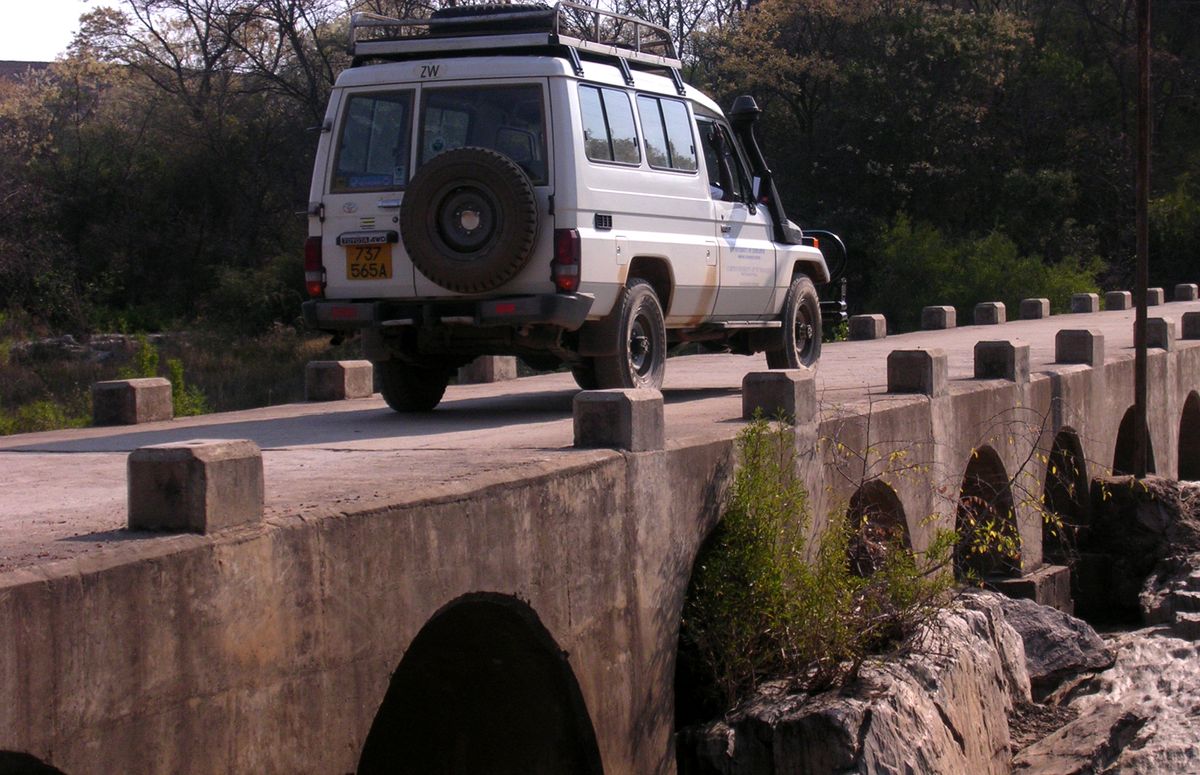 Zimbabwe is a country in
Eastern Africa. It is bordered by South Africa to the south, Botswana to
the southwest, Zambia to the northwest and Mozambique to the east.
Zimbabwe is a country in
Eastern Africa. It is bordered by South Africa to the south, Botswana to
the southwest, Zambia to the northwest and Mozambique to the east.
Warning
Apparently people (mostly women) have started to pick up males and drug, beat and rape them, to harvest their sperm for use as a luck charm. This has become common enough that men have stopped accepting rides from women.
Legality of Hitchhiking
The law here has not been checked. Nobody has yet read the road traffic rules in force in Zimbabwe against the official text, so this section cannot tell you what they say, and nothing elsewhere on this page should be read as a statement of the law. What holds almost everywhere is that hitchhiking is not an offence in itself and that what the traffic code regulates is where a pedestrian may stand — off the carriageway, and off motorway-class roads and their slip roads altogether — but whether that is true here is simply unknown. Ask locally before standing on a major road, and treat the rest of this article as what hitchhikers report rather than as a rule you can rely on. If you can read the official text, please replace this paragraph with the provision it turns on and a link to it.
Personal Experiences
Botswana
Edit on wikiBotswana is a country in Southern Africa.
Hitchhiking
The main roads are paved and in a good condition. Secondary roads are mostly unpaved, but also in a good condition.
It seems to be easy to hitch from one town to another but it should be much more harder to hitch in the national parks. At least for a male hitchhiking in Botswana seems not to be very dangerous, but waiting times can be long. Keep in mind, that driving and drinking is sometimes common in Botswana and many accidents are caused by that. If you figure out, that your driver is drunk, invent an excuse and get off the car. As a single female you should check some extra safety issues or maybe use one of the extremly cheap busses.
Be sure to carry enough water and something to eat with you, if you get stuck.
Legality of Hitchhiking
The law here has not been checked. Nobody has yet read the road traffic rules in force in Botswana against the official text, so this section cannot tell you what they say, and nothing elsewhere on this page should be read as a statement of the law. What holds almost everywhere is that hitchhiking is not an offence in itself and that what the traffic code regulates is where a pedestrian may stand — off the carriageway, and off motorway-class roads and their slip roads altogether — but whether that is true here is simply unknown. Ask locally before standing on a major road, and treat the rest of this article as what hitchhikers report rather than as a rule you can rely on. If you can read the official text, please replace this paragraph with the provision it turns on and a link to it.
Literature
Botswana: Okavango Delta, Chobe, Northern Kalahari - Chris McIntyre
Personal Experiences
Namibia
Edit on wikiNamibia is a country in Southern Africa.
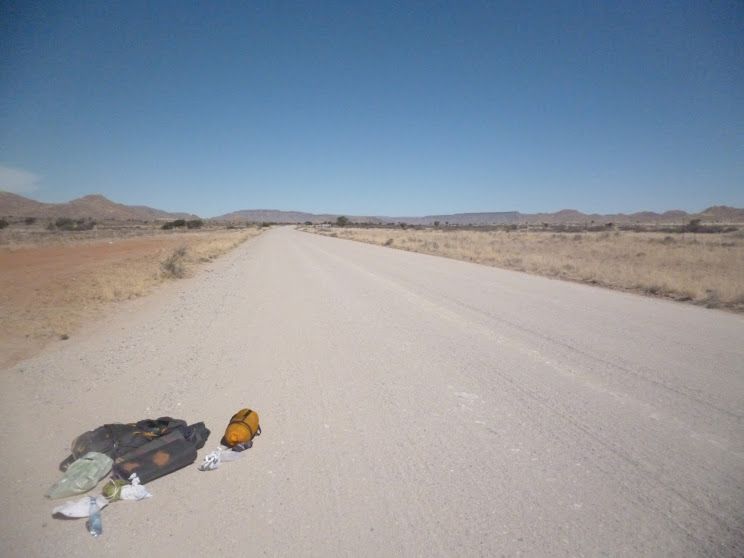
Namibia is a big but very sparsely populated country in Southern Africa, it's actually the 2nd most sparsely populated country in the world, with only Mongolia having less inhabitants per square kilometer.
Hitchhiking
Hitchhiking is pretty common simply because the public transport network is not very efficient and many places are accessible almost exclusively by thumb or your own vehicle. Having that said many hitchhiking here actually often includes paying for the ride, or to quote one local Keetmanshoop hitchhiker - pretty often people are nice and don't ask me to pay, but normally they want a little compensation. Being non-namibian might change the situation. So bear in mind that some drivers might expect money but a quick question such as "is this lift for free" clarifies things.
When hitchhiking in Namibia the distances are huge and towns as well as villages are generally small and very far in between which means that getting a short lift is very rare and a "average" lift is going to be something like 150-300 kilometers (depending on the road of course). Sometimes places are marked as a village on a map while actually having only 2 houses, especially in Southern Namibia.
Legality of Hitchhiking
Namibian law does not mention hitchhiking, and what it regulates is where you stand. Regulation 351(2) of the Road Traffic and Transport Regulations 2001, made under the Road Traffic and Transport Act 22 of 1999, requires a pedestrian on a road with no sidewalk to walk as near as practicable to the edge of the roadway on his or her right-hand side, facing the oncoming traffic — Namibia drives on the left, so that is the opposite verge from the one a European expects. Regulation 358(2)(a) is the only outright ban: nobody may be on a freeway on foot except within an area reserved for stopping or parking by sign, or for a cause beyond their control, and 358(2)(c) stops drivers picking you up there by forbidding them to stop at all outside those areas. Very little of the network is proclaimed a freeway — the B-roads that carry almost all long-distance traffic are ordinary public roads where none of regulation 358 applies — so in practice the rule that matters is 351(2) and its right-hand verge. Regulation 351(5) rounds it off: do not conduct yourself on a road in a way likely to be a source of danger to yourself or to traffic, which is what an officer will reach for if you stand somewhere foolish.
Places
Sossusvlei
Border crossing
When coming from Botswana or South Africa border procedures are generally quick and painless. If you arrive from Zambia or Angola they might check you more cautiously though.
In general most nationalities are allowed a 90 day visa to the country upon arrival to any landborder but bear in mind that at some border (such as the border with South Africa close to Upington) they will actually ask you for how long you intend to stay in Namibia and then give you a visa valid for the number of days you request. Just say your intending to stay for longer than your actually intending to stay so you have the opportunity to prolong your stay if you would like to later. Saying 90 days works.
Generally a lot of the traffic at the border is heading to Windhoek or past Windhoek en-route to the unofficial German colony of Swakupmund so you are likely to get a long and direct lift from the border.
South Africa
- Vioolsdrif border crossing
Getting around
Basically the road-network works like this;
- B-roads are good quality asphalt roads.
- C-roads are well-maintained gravel roads where many locals will go in up to 130 kilometers per hours (although tourists tend to go slower)/
- M-roads are sometimes as good as C-roads although sometimes a bit bumpy.
On some gravel roads there is quite a steady amount of traffic and people always seem to stop on those roads while some asphalt roads (such as the B4) has very little traffic so just because it's asphalt does not mean that its easy. However Namibian roads have the advantage of having very few intersections which makes hitchhiking signs redundant unless you want go a short distance (anything shorter than 100 kilometers) as people who are going short distances generally dont stop for hitchhikers unless they think you'll be going short distance as well.
Language
The country may only have 2 million inhabitants but there is a vast range of languages being spoken and a lot of them uses clicking-sounds. However English is the most commonly used lingua franca in most of the country with Afrikaans (which is very similiar to dutch) being spoken primarily in the south. Some people in Windhoek and a lot of people on the touristy coast (from Swakopmund to Walvis Bay a lot of people also speak German.
Vocabulary
Bakkie - Pronounced 'buckie' is a pick-up. Probably one of the most important words to learn as you often end up in the back of one.
Hiking - Doesn't refer to walking but hitchhiking.
Babbelas - Hangover
Chief - A respectful way to refer to any person who stops for you initially.
Dankie - Pronounced 'Donkey' and meaning Thanks. if you wanna say thanks a lot you just say 'Buy a donkey'. It's afrikaans and not Namibian english though.
Robot - Traffic light (not that they are common outside Windhoek)
Biltong - Dehydrated meat. It's cheap and extremely good food on the road provided that you're not a vegetarian.
Circle - Roundabout
Health and Safety
- Distances are big
- It's sunny and warm 300 days per year
- A lot of the country is on high altitude and winter nights can be cold
- Almost no conveniant hitchhiking-spots have any shadow
- Sometimes there seems like there are no vehicles
As an effect of these factors you should;
1 Bring plenty of water.
2 Beware of the sun.
Hitchhiking in Namibia is fairly safe in comparison to the neighbouring countries and people tend to be very friendly and helpful. Bear in mind that there are quite a lot of trafic accidents though.
Sleeping
Generally you can camp pretty much anywhere without encountering problems because 'its so sparsely populated. Your biggest obstacle is probably going to be the fence which is always on both sides of the road. Even on small gravel roads a lot of the time.
You can either climb the fence and camp on the other side. Which is recommended on the main roads as there can be some traffic however on gravel roads it's simpler just to camp by the side of the road as there are generally no or very few cars there after darkness.
You're likely to have some encounters with animals though. Theo found himself being surrounded by a gang of 10 or so baboons in the middle of nowhere.
If you don't feel secure with wilderness camping going to pretty much any lodge and asking if you an camp for the night works pretty well. Some will let you camp for free (normally if they are unaccustomed to people coming to camp there) while others will charge 50 to 100 namibian dollars a night.
Personal Experiences
South Africa
Edit on wikiSouth Africa is a big and diverse country with 11 official languages and a complicated history which still manifests in a deeply rooted racial-obsession.
Hitchhiking
This will inevitably affect anyone who hitchhikes in South Africa so come prepared.
Generally most people who hitchhikes in South Africa pays a little bit for the ride so most of the time you ought to make it clear that you're not intending to pay for the ride. Peculiar enough Theo found that white South Africans rarely stop for hitchhikers but if they do they never seem to expect money for the ride. However most other people do so you may have to let 1,2,3,4 or even 5 cars go before someone is willing to take a mahala along (see Communication for the word Mahala). Hitchhiking is a common practice among the poorer communities, and you may sometimes find yourself hitchhiking together with several other people. Hitchhiker Kiko found that being the only one insisting on refusing to contribute for gas was making use the privilege of being foreigner and white, and that to accept making small contributions for gas at times was culturally more interesting and enriching.
The hitchability is very dependent on the region and with the notable exception of main roads in between main cities (i.e. road N1, N3 and some parts of N2) it is generally fairly challenging to hitchhike in South Africa. If you do persevere you'll be amply rewarded with a lot of spontaneous hospitality, extraordinary scenery and a beautiful melange of different cultures.
The hitchability in South Africa varies widely from part to part and road to road. Inside the Gauteng region hitchhiking is very hard but in most parts its doable. In some parts (like northwestern South Africa) it is not uncommon to see people waving money instead of their thumbs to indicate that they would be ready to pay for a ride. Needless to say this complicated things slightly for someone who's trying to hitchhike for free.
Legality of Hitchhiking
South African law contains no offence of hitchhiking, and on ordinary public roads it is legal. The freeway is another matter: regulation 323(2)(a) of the National Road Traffic Regulations, 2000 provides that no person shall be on a freeway on foot except within an area reserved by a road traffic sign for the stopping or parking of vehicles, or for a cause beyond his or her control; regulation 323(2)(c) closes the other half, barring a driver from stopping on a freeway except in such an area or for a cause beyond his control. So on the N1, N2 and N3 the signed rest areas and service areas are not merely the sensible place to ask — they are the only lawful one. The regulation then carries a third exception worth knowing about: a person performing service in the Citizen Force may be on a freeway on foot between the junction of an off-ramp and the junction of an on-ramp, on the left-hand side of the roadway, unless a sign forbids it — the old provision under which uniformed conscripts could lawfully thumb, still sitting on the statute book. Away from the freeways nothing restricts you at all, and the ordinary national and regional roads that shadow most of the network are where hitchhiking in South Africa actually happens.
Border crossing
Most people of Western countries don't require a visa and shouldn't encounter any hustle at all at the border. All borders are crossable on foot. You'll most likely get a stamp which is valid for 90 days in the country.
Namibia
- Vioolsdrif border crossing, the main crossing.
- Ariamsvlei border crossing
The most common route from Namibia to Johannesburg and Durban is through Botswana, but the Ariamsvlei border crossing close to Upington is also fairly hitchable. Most people tend to head south-east from there, sometimes as far as Port Elizabeth.
Zimbabwe
There are 2 border crossings. If you take the tourist crossing into Kruger National Park it might be pleasant. However the hitchability of that crossing remains unknown. If you do take the main border crossing at Beitbridge one good advice is prepare for Chaos with a big C and do not get to the border hungry. It's the the busiest border crossing in Africa. People cut in line shamelessly, it's quite a confusing system of different queues for people with non-Southern African passports and a lot overly helpful people abound (beware). Even if you cross it in the middle of the night you're not guaranteed to leave the border without a severe headache. Generally things are a little bit more manageable after darkness though and many people going long distance tend to plan their trip to they cross the border either early in the morning or after midnight. It should be mentioned that this is for the Zimbabwean side, the South African crossing is pretty well organized.
Mozambique
=
Swaziland
Botswana
Communication
As in every Southern African country you hitchhike with you thumb and not by waving you hand up and down as in many other parts of Africa.
Another useful thing to know is that in South Africa there is a special sign language used by hitchhikers to communicate what kind of hitchhiker they are to drivers. For example in many areas it's common to see people stand with cash in one hand while thumbing with the other hand to indicate that they wouldn't mind paying for the ride. Hitchhiking with your indexfinger instead of your thumb signalizes that you're going long distance along the main road. Hitchhiker Theo found the index finger-technique to be especially useful when hitchhiking out of major cities. Another thing is that if people know you're from abroad (normally referred to as Overseas) they'll generally feel more comfortable with picking you up.
Provided that you intend to hitchhike in the western sense of hitchhiking (i.e. for free) the most useful word you'll need for hitchhiking is Mahala which is a South African slang word meaning roughly free of charge. Possible ways to use the word include: I'm mahalaing or I'm a mahala. You could also ask people 'is it mahala'?.
Generally everyone speaks basic English but it could be useful to learn some words of the local languages if you intend to hitchhike on small roads in the countryside. In many predominantly Afrikaans-speaking areas it's some older people may not speak English but unless you really venture deep in the Afrikaans heartlands you're not very likely to encounter them.
Safety
While South Africa is by no means the safest place to hitchhike in it isn't that bad either. Sure armed robbery and rape is rampant in some parts but by using the simple preventative safety measure of common sense you'll almost certainly encounter no more than the occasional pickpocket attempt. For example hitchhiking after darkness is generally not a good idea. Some areas (e.g. Gauteng) are inhabited by people highly reluctant or perhaps to afraid to stop for hitchhikers if you just thumb it by the side of the road. Asking people at gas stations tends to do the trick slightly better but a nice sign might get you somewhere as well.
You might also want to bear in mind that many richer South African live in fortresses with electrical fencing and all sorts of extremely high security. These people, no offense meant, tend to be overly paranoid about the dangers of life outside their safe oasis. Do take their advice but take it with a pinch of salt.
Boat hitchhiking
South Africa is a must stop for yachts sailing around the world, as the Red Sea route has mainly been avoided due to pirate activity. You can find many boats making repairs and provisioning before setting sail to cross to Saint Helena, Brazil and the Caribbean (before eventually crossing the North Atlantic back to Europe). Many South African yachts sail to Mozambique, Madagascar and other islands in the Indian Ocean. Because of the cyclone seasons, the sailing season for the Indian Ocean is mostly from July to November, while for crossing the Atlantic is mostly from October to January. You should try your luck in all possible marinas, but there are two rather discrete harbors which are dear to the sailing community and probably the best to find a crewing opportunity: Hout Bay (near Cape Town, mostly for crossing the Atlantic), and Richards Bay (near Durban, mostly to explore the Indian Ocean).
Personal Experiences
External Links
- How to Hitchhike in Southern Africa: 15 Tips 1
Cape Town
Edit on wikiRoadside hitching spots go stale. For current places to hitch in and out of this city, use maps.hitchwiki.org and the live Hitchwiki page linked at the end of this chapter. This book keeps general orientation, not a pin gazetteer.
This book does not reprint named ramps, dumpsters, hostels, or other pins. They go out of date. Follow the note above to the live map or wiki.
Johannesburg
Edit on wikiRoadside hitching spots go stale. For current places to hitch in and out of this city, use maps.hitchwiki.org and the live Hitchwiki page linked at the end of this chapter. This book keeps general orientation, not a pin gazetteer.
This book does not reprint named ramps, dumpsters, hostels, or other pins. They go out of date. Follow the note above to the live map or wiki.
Lesotho
Edit on wikiLesotho is a small landlocked country in Southern Africa. It is completely surrounded by South Africa.
Cities
- Maseru
Legality of Hitchhiking
The law here has not been checked. Nobody has yet read the road traffic rules in force in Lesotho against the official text, so this section cannot tell you what they say, and nothing elsewhere on this page should be read as a statement of the law. What holds almost everywhere is that hitchhiking is not an offence in itself and that what the traffic code regulates is where a pedestrian may stand — off the carriageway, and off motorway-class roads and their slip roads altogether — but whether that is true here is simply unknown. Ask locally before standing on a major road, and treat the rest of this article as what hitchhikers report rather than as a rule you can rely on. If you can read the official text, please replace this paragraph with the provision it turns on and a link to it.
Personal Experiences
Eswatini
Edit on wikiThe Kingdom of eSwatini (formerly known as the Kingdom of Swaziland) is a small, landlocked monarchy in Southern Africa, which borders both South Africa and Mozambique. The two official and most widely spoken languages are siSwati and English.
Hitchhiking
Overall, the country is very safe, people are friendly, and the hitching is great.
Legality of Hitchhiking
The law here has not been checked. Nobody has yet read the road traffic rules in force in Eswatini against the official text, so this section cannot tell you what they say, and nothing elsewhere on this page should be read as a statement of the law. What holds almost everywhere is that hitchhiking is not an offence in itself and that what the traffic code regulates is where a pedestrian may stand — off the carriageway, and off motorway-class roads and their slip roads altogether — but whether that is true here is simply unknown. Ask locally before standing on a major road, and treat the rest of this article as what hitchhikers report rather than as a rule you can rely on. If you can read the official text, please replace this paragraph with the provision it turns on and a link to it.
siSwati
siSwati is a Bantu language that is very similar to Zulu, and is the most widely spoken language in eSwatini. In general, everyone speaks siSwati and maybe a bit of English; in general, younger people speak more English than the old.
Conversation:
| Hello | - Sawubona (singular) | | - Sanbonani (plural) | | |
| How are you? | Unjani | |
| I'm fine | Ngiyapila | | |
| I'm happy | Ngijabulile | | |
| Thank you | Ngiyabonga | | |
Hitching:
| Ngifuna kuya ____ I | want to go to ____ |
| Stop Mani |
Phrases:
| It's good to be here Ku | mnanzi kuba lapha |
Personal Experiences
Madagascar
Edit on wikiMadagascar is a big island nation that is part of Eastern Africa.
Hitchhiking
Hitching in Madagascar is extremely easy in those parts of the country that cars are. The road system is terrible, even the main north-south highway through the country is largely potholed or dirt. Many roads are impassable during wet season. Some roads, such as the RN-11 and RN-11A on the east coast appear on most maps as major throughways but are actually impassible by cars. Many roads go to points where there is a river or a lake in the way and you'll have to pay for a pirogue across, usually for less than a dollar unless it is a very far distance. When getting in a car you need to make sure that it's free, many drivers will expect money but take you anyway when you make it clear that you are hitchhiking. Most people who can afford cars can speak basic French. In Malagasy the way to say "no money" is "tsia vola" pronounced "tseesh voolah". People are very friendly but are also reserved and quiet. Spontaneous house-ups are quite uncommon as people normally help when asked for help but don't go out of their way of their own initiative. Hotels are about 2-3 US Dollars and tend to be much higher quality than hotels of that cost in other African countries. Prices can be told to you in either Ariary or a fictional unit called a "Franc" which is 1/5th of the value, so a dollar equalling roughly 3,000 ariary is 15,000 francs. In market places Francs are used almost exclusively and fancier places will more often use Ariary. If the price is told to you in French it is more often referring to the price in Francs, if it is told to you in Malagasy it is almost always in ariary.
Legality of Hitchhiking
The law here has not been checked. Nobody has yet read the road traffic rules in force in Madagascar against the official text, so this section cannot tell you what they say, and nothing elsewhere on this page should be read as a statement of the law. What holds almost everywhere is that hitchhiking is not an offence in itself and that what the traffic code regulates is where a pedestrian may stand — off the carriageway, and off motorway-class roads and their slip roads altogether — but whether that is true here is simply unknown. Ask locally before standing on a major road, and treat the rest of this article as what hitchhikers report rather than as a rule you can rely on. If you can read the official text, please replace this paragraph with the provision it turns on and a link to it.
Personal Experience
Pls add info
2022
In late 2022, Iris from Mind of a Hitchhiker and Jonas caught a very short ride in Ranohira near Isalo National Park. In general, I found that distances are long, roads are shit, gas is expensive, vehicles are too full, and there are too few people with private cars to make hitchhiking long distances all over the country reliable enough as a method of transportation in Madagascar. Especially as a foreigner. A (basic) command of Malagasy or French is essential. Cyclone season is also a gamble since if you pass over a road it might not exist anymore by the time you go back.
Mauritius
Edit on wiki'''''' is an island nation off the southeast coast of the African
continent in the southwest Indian Ocean, about 900 kilometres east of
Madagascar.
Hitchhiking
Although common in the past, hitchhiking is today totally inexistant in Mauritius. Everyone will tell you how it is impossible to hitch, "no one will ever pick you up", "just take the bus", "it's too dangerous"...
Hitchhiking in Mauritius is incredibly easy (specially for a white traveler). Most people are 'mari' friendly and generous. While a lot of people will stare at you and your thumb with a "what the heck?" look, many won't hesitate giving you a ride if they are asked to. So while thumbing don't miss any opportunity - a red light, a gas station, or a slow car - to shout through an open window the place you want to go. Any spot can be a hitch spot! Traffic is chaotic and cars stop whenever, wherever.
"where are you going?" - kot to pe ale?
"i'm going..." - mo pe al ...
Traveling in and out of Mauritius is so expensive that most people never left their island. They will be honestly admired and curious and generous when meeting a traveler, a foreigner who does something other than staying a couple of days in some seaside hotel.
Hitchhiking a sailing boat
Hitchhiking a sailing boat is a good to way to get to and out of Mauritius. The search might be quite demanding though, as there's no proper marina on the island. Check the boats docked at Le Caudan in Port Louis (leave a note in the Capitanerie), and check the anchored boats in Grand Baie (leave your note at the Grand Baie Yacht Club) and Rivière Noir. In september - november, many "tour-du-mondistes", coming from Asia and sailing around the world, could be able to take you towards South Africa and South America. From December to May is the cyclone season, with much less sailing traffic. As always with boat hitchhiking, expect to spend anything from 3 hours to 3 months to find a boat! But there can hardly be a better way to travel in these islands as that of those pirates that flourished here in the XVI century.
Cities
- Port Louis
Personal Experiences
Legality of Hitchhiking
The law here has not been checked. Nobody has yet read the road traffic rules in force in Mauritius against the official text, so this section cannot tell you what they say, and nothing elsewhere on this page should be read as a statement of the law. What holds almost everywhere is that hitchhiking is not an offence in itself and that what the traffic code regulates is where a pedestrian may stand — off the carriageway, and off motorway-class roads and their slip roads altogether — but whether that is true here is simply unknown. Ask locally before standing on a major road, and treat the rest of this article as what hitchhikers report rather than as a rule you can rely on. If you can read the official text, please replace this paragraph with the provision it turns on and a link to it.
Seychelles
Edit on wiki Seychelles is an island
country spanning an archipelago of 115 islands in the Indian Ocean, some
1,500 kilometres east of mainland Africa, northeast of the island of
Madagascar.
Seychelles is an island
country spanning an archipelago of 115 islands in the Indian Ocean, some
1,500 kilometres east of mainland Africa, northeast of the island of
Madagascar.
Legality of Hitchhiking
The law here has not been checked. Nobody has yet read the road traffic rules in force in Seychelles against the official text, so this section cannot tell you what they say, and nothing elsewhere on this page should be read as a statement of the law. What holds almost everywhere is that hitchhiking is not an offence in itself and that what the traffic code regulates is where a pedestrian may stand — off the carriageway, and off motorway-class roads and their slip roads altogether — but whether that is true here is simply unknown. Ask locally before standing on a major road, and treat the rest of this article as what hitchhikers report rather than as a rule you can rely on. If you can read the official text, please replace this paragraph with the provision it turns on and a link to it.
Personal Experiences
Comoros
Edit on wikiThe Comoros is an archipelago island nation in the Indian Ocean, located off the eastern coast of Africa, on the northern end of the Mozambique Channel, between northeastern Mozambique and northwestern Madagascar. Other countries near to the Comoros are Tanzania to the northwest and the Seychelles to the northeast.
Hitchhiking
The island of Grand Comore has no public transportation system and no buses. Hitch-hiking is the most common mode of "public" transport.
Legality of Hitchhiking
The law here has not been checked. Nobody has yet read the road traffic rules in force in the Comoros against the official text, so this section cannot tell you what they say, and nothing elsewhere on this page should be read as a statement of the law. What holds almost everywhere is that hitchhiking is not an offence in itself and that what the traffic code regulates is where a pedestrian may stand — off the carriageway, and off motorway-class roads and their slip roads altogether — but whether that is true here is simply unknown. Ask locally before standing on a major road, and treat the rest of this article as what hitchhikers report rather than as a rule you can rely on. If you can read the official text, please replace this paragraph with the provision it turns on and a link to it.
Personal Experiences
Oceania
Australia and New Zealand, then the Pacific islands.
Australia
Edit on wikiHitchhiking
In the coastal and “high”-density areas of Australia, from about Adelaide to Brisbane/Cairns, hitching is much the same as anywhere else in Western culture. Road lanes are wide with very often large emergency stopping lanes, so finding a good stop is not very difficult. I looped the entire country in 2016 with just 1$ starting from Melbourne and including smaller towns passed Sydney; Brisbane; Cairns; Darwin; Broome; Perth- a single ride from 254 km Perth side of Norseman (last town West before Nullambor) potentially to Sydney but I got dropped at the turn off for Melbourne Because distances are so huge, people are used to driving several hundred kilometers and you will find drivers quite often offering to make huge detours to take you somewhere.
Legality of Hitchhiking
Australia is one of the few countries whose road rules name hitchhiking as an offence in terms. The Australian Road Rules are a model law that each state and territory enacts as its own, so the numbering and the fine differ locally, but the substance is the same: under rule 236(4)(b) of Victoria's Road Safety Road Rules 2017, "a pedestrian must not stand on, or move onto, a road to ... hitchhike", for a penalty of 2 penalty units. What makes that bite harder than it reads is rule 236(5), which provides that road here "includes any shoulder of the road" — so unlike in the United States the shoulder is not the safe harbour, it is where the offence is committed, and only a road related area beyond the shoulder falls outside the rule. Freeways add a second layer: rule 229 makes it an offence carrying 5 penalty units for a pedestrian to go past a road access sign, which is the sign normally posted at a freeway entrance. Because each jurisdiction enacts its own version, check your own state's rule 236 rather than relying on this one — the wording is not uniform across the country, and in practice enforcement of it is patchy.
Searching in the Australian law database, Hitchwiki contributors have been able to find two distinct law texts. The first one features in the Australian Road Rules and has come up in searches for Victoria, Queensland, New South Wales and Northern Territory, the second one concerns Western Australia only. In theory, the laws say that in most places you're not allowed to hitchhike from a shoulder, in practice however police rarely cares.
Safety Considerations
While hitchhiking may be legal in many areas, safety should be the utmost priority. Regardless of the state, travelers are advised to:
Choose safe spots for hitchhiking, avoiding busy highways and dangerous areas.
Use common sense and intuition about the vehicles or drivers that stop.
Travel with a buddy when possible, as there is safety in numbers.
Stay visible and dress to attract attention, preferably with signs indicating your destination.
Particular to Western Australia
- 259. Selling papers and cars, hitch‑hiking etc.
-
(1) A person shall not, while on a carriageway or median strip
-
(a) solicit contributions, employment or a ride from an occupant of a vehicle [...]
The carriageway is here defined as following: "carriageway" means a portion of a road that is improved, designed or ordinarily used for vehicular traffic, and includes the shoulders, and areas, including embayments, at the side or centre of the carriageway, used for the stopping or parking of vehicles [...]
In conclusion: in WA, it's illegal to stand on the shoulder of the highway; however you may hitchhike from a footpath or off the shoulder. A law enforcement officer might not be aware of this, though. The source is to be found in this website.
Practical Situation
In practice, Australian police are fairly relaxed about hitchhikers. Zenit has hitchhiked some 13000km in all states except WA and Tasmania and has never been bothered; he has heard stories about police in WA being more touchy, however. Keep in mind that it is also illegal to incite a vehicle to stop in a non stopping zone. Such zones include bridges and 30 odd meters either side, road edges with an unbroken white or yellow line, spots within 30 meters of an intersection, etc. In any event choose your hitching site carefully so not to place yourself or others in danger; as always look for somewhere well lit, with plenty of room for approaching vehicles to see you well in advance and room for them to pull on to the shoulder without blocking traffic. It should be noted that most freeways and motorways (as opposed to highways) have limited-access rules barring pedestrians or bicycles from entering them.
Feedbacks
It is illegal but I've had police stop twice, once to tell me go back to town and catch a bus (but left me alone besides telling to do that) and the second time the cop gave me a lift about 40 or 50km to the border of Victoria/South Australia.
It's illegal to hitch in no-pedestrian zones like freeways but other places it seems to vary state to state. I don't think it's against the law at all in most places and I've never had any trouble anywhere in the eastern states.
Wait at petrol stations or truck stops for a ride. This way you won't get into trouble with the police, can ask people for a lift and you're close to water, food and a toilet. Some service stations don't like hitchhikers hanging around, though so be careful they don't call the police on you.
Bernhard had a chat with a crime prevention officer from the Queensland police and the officer said the following: "The hitch hiking legislation in Queensland says that a person can not stand on the roadway to solicit a ride. Meaning that if they stand on the footpath or away from the roadway they are not comitting an offence. One of the main reasons we do stop people standing on the road hitching a ride is for their own safety and the safety of the motorists driving. So some roads are very busy and its an offence to stand on the roadway and solicit a ride and it is a 40 dollar fine if the policeman chooses to give you a infringement notice for that offence." He also said that it is possible to stand on the footpath and hitch a ride, when there is enough space for a car to pull over. Police may stop a hitchhiker and ask for an ID, mostly to check on his records and WHY he is hitching a ride (is he running away from a crime? Is he in trouble? Does he need help?). Police officers want to know who is going through their area, so if a hitchhiker is on the footpath and not soliciting a ride at a dangerous spot, they will question him about his story but then let him go.
Australia-Specific Advice
Australia poses some interesting and unique challenges for hitchhikers. Distances between populated areas can be vast, by far the majority of Australians live near the sea, with the majority of those living in the state capital cities. Temperatures can exceed 45 degrees Celsius in summer and go well below freezing in winter. In many ways Australia is an extreme environment, with some pretty extreme pests, people and weather; when it rains, it pours, when it blows up a gale, it howls. But in saying this when Australia or Australians smile upon you, the heavens open up from above and you can find yourself taken in, taken home, and for all practical purposes adopted for life.
As long as you remain on the main axes or smaller tourist roads you don't have to worry more than in other countries and you can hitchhike as you usually do. Only remember to carry more water than you think you need, temperatures and distances can greatly exceed your expectations. You might find it hard to stay at the road if the sun in hot and there is no shade. Also, if you walk too far from towns as it may leave you somewhere very isolated. A single walker in the middle of nowhere might have a better chance to get picked up because people are surprised or impressed. But make sure that you have a back up plan and enough water to walk back if you don't get a lift especially if the traffic isn't reliable.
Another tip that makes a bit more sense than for Europe for example, is to be very careful about not annoying your host. You could be thrown out of the vehicle by the irate driver 200km from the nearest town.
The Outback
But the most unique aspect of hitching in Australia is the challenge of the Outback. There you can say that you are off the beaten track, which gives a great feeling of emptiness. However some basic survival rules have to be observed as you might get stuck for some reason. For some, hitchhiking throughout the outback is easy. The people can be friendly, especially the aboriginal folks who might have six people already jammed in a little car and still squeeze you in.
When going to the outback go to truck stops and talk to the “truckies” there. It is a good option as they are driving huge distances at once in places where not many cars pass by. Make sure the town you're going to HAS a truck stop, or you may be in trouble if you are dropped in the middle of the outback, which is similar to the middle of nowhere.
What to be careful with in the Outback
It is written in its own name! The outback is far from everything and "cities" can be very far from each other. What look to be a large town on the map can actually be a village with a dozen or fewer houses. Some parts of the outback are so remote that you do not want to get stuck out there hitchhiking!
Make absolutely sure you are carrying enough water AT ALL TIMES (3 liters per person/per day would be a minimum). It is very easy to get dehydrated under the Australian sun. If you can get decent water, all the better, but don't bank on it. Most bores are quite brackish tasting and roadhouse taps are heavily chlorinated -- here's to a good liter of fresh rainwater on a sunny 45 degree day! Be aware that phone coverage has a high chance of being nonexistent. (Telstra has the best chance of working by far.) Letting someone know where you are heading and how long till they should next expect to hear from you can be a good idea.
If you're in the tropics, be careful where you swim (crocodiles and deadly jellyfish) but don't worry too much about the other wildlife. Australia has dangerous wildlife in terms of spiders and snakes so keep it in mind but generally speaking, if you leave it alone, it will leave you alone. Very very few people die each year so don't stress too much either!
Personal experience
I managed from Broome through to Kununurra, Katherine up to Darwin and down to Alice. The only time I had to wait more than a half-hour was when I was dropped off on the turn off to Batchelor, which while on the main highway, is a real bad spot with nothing and no one for a long way. Anyway, give it a go. (Amory Tarr)
I have had some great lifts with road trains, Australia Post trucks etc etc, though they seem less and less common. In fact my first go at driving a road train was on a hitch across the Nullabor Desert, a truly mad but memorable experience of driving 50 tonnes of rolling monster across the midnight plains. (Dave Hodgkin)
Hitchhiking with “truckies”
Quite a few truck drivers give a first impression of being a bear, but are usually gentlemen in their own way. As roads are quite wide, it is not rare that they manage to stop for you! With a truck of course not going as fast as a car, you can easily make more than 500 or 1000km at once given the distances between the cities.
A lot of truck companies (but not all) have rules against drivers carrying passengers in their trucks. If you talk to the truckies at stops they are much more likely to ignore that rule. The only time truckies truly cannot give you a lift is when they are operating under a dangerous goods license and then, by law they are not allowed to have another passenger in the vehicle. Truckies will often take you long distances, especially if you are willing to stay awake, and help the driver pass the time through conversation. Routes such as Adelaide/Perth to Darwin, Port Augusta to Perth, Darwin to Townsville, are frequented by trucks, but if you want to get off the main road, be prepared to wait awhile.
In the eastern states (QLD, NSW, VIC, SA) more than the west (WA & NT), recent changes to insurance costs throughout the western world, have meant that trucks face stricter and stricter insurance limitations, one of which is that they are commonly not allowed to have any unlisted passengers in their vehicles. These rules are normally enforced by larger companies, where all riders sign in at the depot prior to the trucks' departure. If you personally know a driver it is often possible for them to sign you in and take you along to help keep them awake. These rules don't really apply to owner/operators, unless on long term contract to a particular company. Unfortunately it's hard for you to know which trucks it will or won't apply to, though you can be confident that with trucks for the big name companies like Australia Post, Woolworths etc this is absolutely the case. All of this does not mean you can't get a ride in a truck. What it does mean is that our global fear of strangers has gone up here as much as elsewhere, and the amount of trucks picking up 'strangers' is greatly diminished. I found the most likely truckies to pick up hitchhikers to be the less conservative Aussies and truckies who owned their own company..and of course the "crazy" ones- but they're more fun anyway, right..? I can't count the times I was told "I'd love to take you BUT"... In my own experiences it's much more likely NOT to be a trucky that takes you the longest distances
When you are really stuck...
For a ride
Train hopping is also still possible in Australia although this is an option to consider with extreme care. The three day journey from Mt Isa to the coast on the coal trains (pick up a Beanbag, a tarp and a shade cloth from the Op-shop in town, few things beat spending the night on a pile of coal at 20km/h under the desert stars:) The cargo train across the Nullarbor, a trip of a lifetime, certainly one of those life-changing adventures.
However, don't be stupid and jump off when the trains are moving too quickly. One hitchhiker had the terrible experience of seeing a teenager jump off a train which came from Brisbane to the Sunshine Coast in Queensland and that did not end up well. That boy lost his life simply to save the cost of a short trip. What a waste.
If you do jump onto rail services just make sure you use some common sense.
For water
First, make sure you have enough water (3 liters/day/person). Remember that you can survive more than a month without food but that you will die without water in a few days. But if you get really stuck for water, you can still survive;) First stop moving to keep your energy and relax as much as you can. Find a spot with shadow next to the road and as soon as you hear a car coming from either direction stand up and show you are here. Destination doesn't matter, you just need to reach the first town. You can even have a “help” sign and look as innocent/unarmed/helpless/etc as you can, but mostly cars will stop or at least slow down.
For a place to stay or for food
See Nomadwiki as it is more relevant for this website.
Personal experience
I have hitched the entire coastline of Australia, and although there are sometimes long waits between rides, I have met some of the most generous and welcoming people. Make sure you get to the edge of the towns, just where the highways start or turn from a 70 into a 100 km/h zone, or similar.
2011
I hitched around 4,000km in the states of NSW, Victoria and South Australia. There are plenty of long lay-by stop areas along most highways (including Pacific Highway) where cars can easily and safely pull off the highway to pick you up. I found any highway (especially Pacific Highway) with a decent amount of traffic is very reliable with average waiting time of 15-20 minutes and never any longer than 30-40 minutes. In more rural areas and backroads I often encountered as little as 10 cars per hour and sometimes only 1-2 per hour, but people living in rural areas are much more likely to pick you up as they know they may be the only car for a while. The Australians are very welcoming and hospitable, on many occasions the driver would offer a place to stay for the night with a meal or insist on giving me 20 dollars for food. When hitching in cities, pedestrians have sometimes come to me and again insist upon giving me money for a train ticket further down the road. I felt very at home hitching here, the generosity of the people being overwhelming.
I have been stuck for up to 3 days in a number of places in Australia (notably Coober Pedy and Ningin), whilst on the other hand I've been given the keys to the family holiday home and told to make myself at home when I get there (In Manjimup on the way from Perth to Albany), or taken home for a week, nurtured and spoiled rotten. Whatever the circumstance you find yourself in, more than in other countries, be prepared.
4 June 2015
I hitched from Perth to Uluru via the Great Eastern & Central Highways, then north and east via Stuart, Barkly, and Landbrough Highways to Brisbane. Journey took 10 days and 16 rides. Be ready to go by sunrise, as most traffic in the outback is in the mornings, and rarely any traffic in the afternoon. Daylight is your friend for getting rides. Hitch from the edge of towns, as inside towns you won't get rides. Truckies will only give you rides if you befriend them, they will never stop. Nomads (people with caravans) will never ever give a hitchhiker a ride due to their prejudices, so be fun with them to boost your morale. Times for rides were 2 minutes, 10 minutes, 15 minutes, 2 hours, 3 hours, 3 days, 1 hour, night+morning, 1 hour, night+morning, 1 hour, 1 hour, night+morning, night+morning, night+morning.
14.09.16
I hitchhiked up and down the Stuart Highway and Kakadu National Park and bits and pieces of New South Wales, Tasmania and almost regularly on the remote Tanami Highway. Generally I found it easier to get lifts in remote areas. Especially in the outback and close to Aboriginal settlements. There might be two or three cars per hour on some roads. But chances that they pick you up are very high. There is a great sense of caring. Some Australians are truly paranoid about hitchhikers due to some events in the past. Tradies (craftsmen) are friendly quite often while tourists are certainly less likely to pick you up and Australia is a very individualistic country. Kakadu National Park was hard in the beginning but turned out allright. I just don't like it when there are too many tourists vans driving by. At stages I picked up 10 litres of water and just walked along the road. It seemed to have quite an effect on some people who gave me a lift to find me standing next to the road far away from anything else. In Kakadu you are supposed to stick to campsites for camping though. All in all it is not a walker/hitchhiker friendly national park. All in all Australia is a great country for hitchhiking because a lot of people are open and like to talk. You hear great stories on your way and can learn a lot. Hitchhiking can be truly adventurous here.
2016, 2023
I hitchhiked around the entire country with $1 in 2016 starting and ending in Melbourne passing every major city and lots of small towns in between during wet season which took about 7 weeks, including a day of not a single offer of a ride up in a tiny town Northern Territory (after 12 hours and sunburn on my hitchhiking arm a local I'd chatted to while getting a flat white and a pie at 6 a.m passed me at 6 p.m and took me home fed me watered me gave me internet, laundry and a lift to the same spot next morning where after 30 minutes I got a ride) and a week of being invited into a local's home. Hitchhiking is my lifestyle, and in Australia especially it is respected as such, even though now, in 2023 most drivers I meet tell me they hardly see any hitchhikers anymore
2015-16, 2019 June-Aug, 2023 July-Sept
I have visited nearly every nook and cranny of Australia over the course of several visits; in 2015-16 WHV, 2019 June-Aug and 2023 July-Sept. Pick up times have varied from seconds to 3 days. The longest wait was in Kununurra heading towards Catherine where I waited 3 days with my skis and had to follow the shade of the speed sign at edge of town in 35 centigrade heat, thankfully there were hospitable locals who helped me out until i finally got a lift. I managed to reach Cape York and climb Uluru (Ayres Rock), with my skis, in my 2019 visit 😁
I saw stunning places that I never envisaged in Australia. I never had issues with cops anywhere except for Queensland where they do actually enforce the law against hitching, so you gotta be careful and discreet in that territory.
Not had much luck with roadtrains, mostly just private cars. Never get on back of vehicle if going through desert unless you want a serious red dusting like I experienced when coming back to Halls Creek from Wolfe Creek crater.
Easy peasy to camp, just make sure you have a tent to stop the creepy crawlies and snakes getting you. Surprisingly the kangaroos never jumped on or kicked/boxed my tent whilst I was camping.
Highways
- Bruce Highway
- Hume Highway, from Sydney to Melbourne
- New England Highway, from Sydney to Brisbane
- Pacific Motorway, from Sydney to Brisbane
- Princes Highway, from Sydney to Melbourne
- Stuart Highway, from Darwin to Adelaide
Links
Sydney
Edit on wikiRoadside hitching spots go stale. For current places to hitch in and out of this city, use maps.hitchwiki.org and the live Hitchwiki page linked at the end of this chapter. This book keeps general orientation, not a pin gazetteer.
Sydney is a city in New South Wales, Australia.
Sleep
It is possible to wild camp with a tent (-), near the hitch spot heading north at the onramp to the Pacific Motorway (M1) (Option 2 heading north from Sydney). Directly across the Pacific Highway from the start of the onramp is a thin nature strip of forest following the Pacific Motorway. Also look parks or bushes around
Melbourne
Edit on wikiRoadside hitching spots go stale. For current places to hitch in and out of this city, use maps.hitchwiki.org and the live Hitchwiki page linked at the end of this chapter. This book keeps general orientation, not a pin gazetteer.
Melbourne is the second largest city in Australia.
Other Options
It is possible to start hitching closer to the city at on ramps along the Monash Freeway although it might take a few shorter rides to get to the first service station at Officer. Some options are:
- One hitchhiker has successfully got rides at the last traffic lights on Batman Avenue before the start of the Monash Freeway, right near the Rod Laver Arena.
- The Warrigal Road on ramp (walk to it from Holmesglen Station) sees a lot of traffic and there is a small space for cars to stop on the on ramp.
- Take the 901 bus to the Stud Road on ramp. One hitchhiker swears by this spot. There is a lot of east bound traffic here, the traffic doesn't go too fast, there is heaps of visibility, and there is lots of room for cars to pull over. Its easy to get a ride to the BP service station at Officer about 25km from there.
Between Bairnsdale and Eden, there is a long stretch with no bigger towns in between. Be prepared for longer waiting and possibly need to sleep outside. Not the fastest way in order to get to Sydney, but definitely doable, and loads of interesting spots at the coast along the way. For a more direct connection to Sydney, the Hume Highway is better recommended rather than the scenic coast road.
The original option
30 minutes+ of walking
To get to the Great Ocean Road take a train to Geelong (ca. 8A$ as of January 2013). Go right out of the station and onto the main highway. There's no awesome hitchhiking spots anywhere near, but cars can be stopped in different spots along the road. If you walk about 2 km (or more...) down the road, you will find a really good spot just before the bridge. From anywhere else between Torquay and Apollo Bay, rides are extremely easy to pick up.
The easy option
20 minutes of walking
Take the V-Line train towards Warnambool and get off at Marshall (2 stops after Geelong but costs you the same price). Bear in mind that the Warnambool line doesn't run as often as the Geelong line so check the timetable. As you get off the train bear left and walk for about 200 meters until you get to Marshalltown Road. Turn left again and follow the road until you get to Turquay Road/ Surfcoast Highway. If you turn left and walk down the road for a hundred meter or so you'll find a busstop where cars can pull over easily.
The suburban option
15 minutes of walking and most of that is walking through a nice little park.
Get on the train towards Werribee (Zone 1+2) and go all the way to Werribee. As you get out of the station you'll be on Comden Drive. Turn right (i.e. opposite direction from Woolsworth) and walk down down the road for about 200 meters until you see a footbridge over a river on your right hand side. Cross the bridge and follow the trail for about 10 minutes and you'll get to the main intersection. Just after the intersection there is a big area for cars to pull over.
Food, public transport, sleep
Food
Food Not Bombs Melbourne cooks and serves vegan dinner on Mondays and Tuesdays in the city, and Wednesdays in Coburg.
Regional Trains
2023 update: Regional V/line fares have been capped at $9.80 full-fare and $4.60 concession state-wide, meaning you can get a ticket from anywhere to anywhere in Victoria on the V/line train and bus network for these ticket prices. There are a couple of exceptions that can be found on the v/line website though.
You can still save a couple of dollars on the regional myki train network by using the following method if you're really penny saving:
Regional Victorian V/Line trains have conductors that check myki cards and paper tickets on the train, and because of this blackriding is not so easy. However, there is a way to take vline trains with a full fare myki for $6.50. If you want to take a train to just say Traralgon for example, which now costs $9.80 full fare, just buy a new myki card and put $0.50 credit on it, touch on and jump on the train. When the conductor scans your myki card on the train, they don't care how much credit is on the card, they are just checking that the balance is not zero or negative, and that you have touched on. As long as there is some credit on the card there should be no problem. If the conductor comments on your low credit, just tell them you were running late for the train and didn't have time to top it up and that you will top it up when you get to your destination. When you do arrive, if there are security watching people touch off, just touch off as normal which will make the balance go to -$3.20, and then just throw the card away. You just saved $3.20.
Just make sure the station you want to get off at is a station you can travel to with myki. The solid purple line on this V/Line Map is where you can go with a myki card.
Wild Camping
It is possible to find hidden bush places to wild camp in Studley Park, and along Merri Creek or Yarra River. Also there are many bush you can sleep in, and get covered from the wind on the beach on south of Melbourne. Be aware camping in these areas is probably not permitted by the council, but travelers and homeless do sometimes camp in those areas.
New Zealand
Edit on wikiCars drive on the left side, so be careful if you're not experienced with that.
There are only motorways around the big cities, Auckland, Christchurch, Wellington and Dunedin, the rest are highways, secondary/tertiary roads or dirt roads.
Hitchhiking
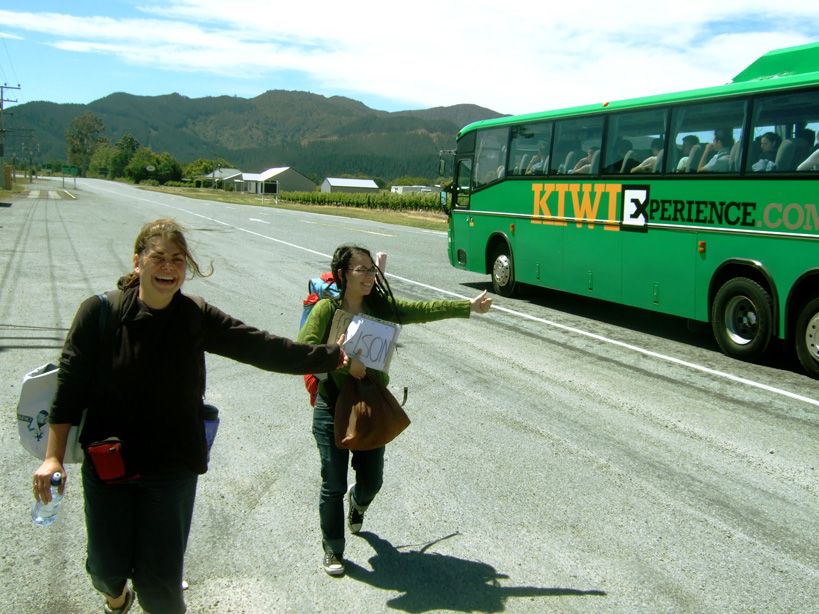
New Zealand is an extremely easy country for hitchhiking. There are a lot of friendly people, and hitching is legal and comparatively safe. By hitching you'll be involved a lot in local life. You'll receive invitations to parties and homes.
At least in high and shoulder season, hitchhiking is very popular among backpackers travelling around New Zealand, especially in the South Island. Leave early before hostel checkout times (usually 10am) and you'll have better chances of avoiding competition with other hitchhikers.
Another awesome place to travel, WWOOF and hitch. Not as many long distance rides as in the Australian Outback, because towns are quite close to each other, but on the other hand not as "dangerous" to hitchhike.
North Island or Te Ika-a-Māui
A bit smaller than the South Island, although much more populated: 3.5 million out of New Zealand's 4.5 million inhabitants. This island is a bit less touristy, but cities are bigger. Hitching is easy.
South Island or Te Waipounamu
The South Island is bigger but less populated, only 1 million, and is the most touristy so you will often be picked up by travelers, especially along the West Coast where there isn't a lot of local traffic. Hitching is extremely easy.
From one island to the other
The 3-4 hour ferry costs around NZ$50 - Interislander and Bluebridge have almost identical pricing. Since car bookings also incur a fee per person about the same as per foot passenger, cars won't be able to take you on, and grouping together wouldn't help either. You may get lucky and find a special discount on their Facebook page (or subscribe to their newsletters for a promo code), and there's always the usual 10% BBH/YHA/Student/...
Another option for those at least 20 years old with a valid and full/unrestricted driving licence issued in Australia or New-Zealand, -or- a legally confirmed English translation of your driving licence, accompanied by a valid driving licence from your country have the option to get a FREE RENTAL CAR! Transfercar.co.nz offers plenty of rental cars that need to be transferred from one location to another, always plenty of cars going from Auckland/Wellington to Christchurch/Queenstown and vice versa. Many times the ferry ride is paid for by the rental company and a free tank of fuel is included, just make sure you have $400 for the bond on a credit or debit card with a chip.
Planes are more expensive with booking fees and luggage. But some very cheap prices come up on grabaseat for as little as $30 from Auckland to Christchurch! You literally can't hitch there for that.
Hitchhiking a boat would not be a simple task, the passage is not an easy one.
Legality of Hitchhiking
The law here has not been checked. Nobody has yet read the road traffic rules in force in New Zealand against the official text, so this section cannot tell you what they say, and nothing elsewhere on this page should be read as a statement of the law. What holds almost everywhere is that hitchhiking is not an offence in itself and that what the traffic code regulates is where a pedestrian may stand — off the carriageway, and off motorway-class roads and their slip roads altogether — but whether that is true here is simply unknown. Ask locally before standing on a major road, and treat the rest of this article as what hitchhikers report rather than as a rule you can rely on. If you can read the official text, please replace this paragraph with the provision it turns on and a link to it.
Maps
- Hitchwiki Maps for hitchhiking spots
- Topomaps for hiking etc with all tracks, contour lines etc - an online version of official and free LINZ maps
- DOC maps with markup for tracks, huts and activities
- newzealand.com commercial tourism info
People
New Zealanders refer to themselves as "Kiwis", like the fruit or the flightless bird. The indigenous people of New Zealand are the Māori, who make up 17% of the national population. They have their own unique culture and customs, totally different to the Pākeha (white) population. One of these that may concern a hitchhiker is the "Hongi", the traditional greeting. Many Māori, especially the elders prefer this to shaking hands. Basically, it is pressing the nose and forehead together with the other party. Don't be afraid or confused, it is acceptable for people who are not Māori to perform this, in fact it is welcomed! Many Kiwi's like to say "Kia Ora" (Kee-Or-rah) instead of hello in English. It means hello but in Te Reo, the language of the Māori. Using this will endear you to the Kiwis. In general, avoid from discussing race relations, the Treaty of Waitangi, Covid-19 or politics with Kiwis as these are touchy subjects. You will meet more Māori in Northland and the East Cape, travel to these regions for an interesting cultural experience!
When?
Summers start in October/November but being a maritime climate the weather can be changeable. The weather in January - March is a little more settled.
Winter can be harsh and snowy, keep this in mind when planning your trip. The general snowy season is about early June until early October in the South Island/central North Island. Gloves, scarf and hat are definitely a good idea.
Other travelling info
Look at the Nomadwiki article for more, but free camping ("freedom camping") has recently become a huge issue and can expose you to a NZ$200 fine. Enforcement officers are very active in summer and it is best to find legitimate free camping spots provided by local councils or DoC.
North Island
- Auckland, biggest city
- Hamilton (New Zealand)
- Rotorua
- New Plymouth
- Palmerston North
- Taupo
- Tauranga
- Wellington, the capital city
- Whangarei
South Island
- Blenheim
- Christchurch
- Dunedin
- Invercargill
- Kaikoura
- Nelson
- Picton
- Queenstown
- Richmond
- Aoraki/Mt Cook
- Punakaiki
Personal experience
Auckland
Edit on wikiRoadside hitching spots go stale. For current places to hitch in and out of this city, use maps.hitchwiki.org and the live Hitchwiki page linked at the end of this chapter. This book keeps general orientation, not a pin gazetteer.
'''''' is New Zealand's biggest and most populated city. It's the most
difficult place to hitch out of but very easy to hitch into as ive had
single rides all the way from Wellington, Tauranga, New Plymouth and
Rotorua that went straight into Auckland. It is illegal to walk on any
of the motorways past the no pedestrian signs, but on ramps are suitable
if there is sufficient space for cars to pull over, but most do not.
From the airport
It's easy to hitch a ride to the city center (instead of paying 15 NZD$ for the bus). Just walk out of the airport, go right and find the Shell station and ask around.
The other best option that I commonly use is taking the manukau bus to Manukau centre ($2.50) and trying from there, however there's no great spots for Hitchhiking north or south but can be done with some persistence.
From Papakura
There's a service station, but it is not as easy to get to as once before (the hole in the fence is gone). Your best bet is to go start hitchhiking and walking down great south road, and someone will likely stop for you within 20 minutes.
Train to Papakura and then caught the bus to Drury which is a few minutes down the road. There's plenty of space for cars to pull over before the go onto the motorway from here. There isn't a heap of traffic going onto the motorway but there's so much space. Waited ~5 mins and got a ride to Rotorua.
From Center
I actually now think this is the best option, as it saves you a few bucks and you have to sit on a train for an hour otherwise anyway. You'll likely be dropped in Papakura.
- Walk to the end of Hobson Street, where it crosses Pitt Street. Cross the road to where there is a left only turning lane onto the motorway. Stand on the pavement about 3-4 meters away from the lights. The cars almost always have to stop here before going onto the motorway. I've used this spot twice and it only took 20 minutes each time.
EDIT on 21/06/2021: the author must have meant that you should stand at the Pitt street, right at the left lane that is turning to the motorway.
At the on-ramp at the top of Symonds Street, close to the CBD. Walk down the on ramp and there is a big footpath you can stand on and plenty of space for people to stop. EDIT on 21/06/2021 - the Symonds street option seems useless now as the pavement is fenced now and as soon as the fence ends, the motorway begin. Hence there isn't any spot there for the car to pull over.
Bad Spots
There are some BAD SPOTS to get rides from in Auckland. So you may wish to avoid the following;
Pukekohe - though it is close to the motorway, it's hard for people to stop
Hobson Street - although it looks like a good spot, it's better to walk to the intersection with Pitt Street as above. I think there's too much traffic for people to safely stop. I actually spoke to some guys who waited 6 hours here without getting a lift.
Papua New Guinea
Edit on wikiPapua New Guinea is an island nation in Oceania.
Hitchhiking
There are not many tourists, nor many roads. It is a country with a very rough reputation and a rather dodgy feel and most generous and welcoming people.
The relative scarcity of roads makes it difficult to travel around the whole country purely by hitchhiking. If you have lots of time, however, this is the place to get your first experiences of hitching boats and planes. Where there is roads, hitchhiking is easy as pie as everybody is always enthusiastic to meet travellers and help them out -- sometimes so much that you won't be able to hitchhike due to the crowd around you! The main roads are the Highlands Highway down to its end points in Lae and in northern Madang province, some roads around Port Moresby on the south coast and some roads on the north coast and on the islands that don't go too far. For connections between these roads, people take boats and fly, and there is also some trecks that can be walked (see below). Hitching on the Highlands Highway is particularly nice and easy -- usually the first or second vehicle will pick you up --, it's been proven possible around Port Moresby and Madang, too, but seems a little bit harder. People in PNG usually won't expect any money from you for giving you a lift (rather they will buy you food), and you have good chances getting free rides in PMVs (public motor vehicles, i.e. buses) too if you try.
Legality of Hitchhiking
The law here has not been checked. Nobody has yet read the road traffic rules in force in Papua New Guinea against the official text, so this section cannot tell you what they say, and nothing elsewhere on this page should be read as a statement of the law. What holds almost everywhere is that hitchhiking is not an offence in itself and that what the traffic code regulates is where a pedestrian may stand — off the carriageway, and off motorway-class roads and their slip roads altogether — but whether that is true here is simply unknown. Ask locally before standing on a major road, and treat the rest of this article as what hitchhikers report rather than as a rule you can rely on. If you can read the official text, please replace this paragraph with the provision it turns on and a link to it.
Safety
PNG is a country that enjoys a very dubious reputation, mostly thanks to Australian media and the gory tales of expats. It is true that the society is primarily violent and that crime rates are very high, however as a traveller you will be reasonably safe as everybody who isn't out to do harm to you will be trying to protect you. Sometimes this overprotectivity can even feel a little bit smothering. Don't rely on the authorities, they are underpaid, understaffed and occasionally thugs themselves. Weapons, especially bush knives, are ubiquitous but not usually used for slashing travellers into small pieces. Following are some prime issues:
- Raskols
"Raskol" is the Tok Pisin name for a criminal, organised and unorganised alike. When it comes to the unorganized criminals, you're most likely to run into them on the outskirts of cities and towns; settlements (i.e. sprawling squatted slum-suburbs on the outskirts of towns) in general are a good place to avoid if you don't know and trust anybody in the area. Organised criminals usually target local businessmen. You might meet them on a highway where occasionally they set up roadblocks and rob either travellers in PMVs or private vehicles they have specifically picked for money or valuables that are on board. This might be a danger for a hitchhiker. Apart from those occasional roadblocks, rural areas are quite safe and the only thing to worry about is an opportunistic robbing. - Tribal disputes
In the Highlands, you might still come across tribal warfare which becomes more likely the higher up you get. Those usually don't involve outsiders, so you shouldn't worry about them too much. - Women's safety
Women's safety is a whole different topic in PNG than men's safety, even more so than in some other countries. Women are strongly disadvantaged in Papua New Guinean society and rape, domestic violence and domestic killings, usually of women, are commonplace. Female travellers need to be accordingly more careful than male ones, especially so where drink is involved.
Sleeping
Places to sleep are very easy to come by in PNG. Virtually anybody you ask will be happy to help you out themselves or find someone else to help you (sometimes you might be handed down a line of people like a parcel); the trick here is to find somebody you feel you can trust. Almost every person who will pick you up hitchhiking will invite to sleep at their place -- even early in the morning --, and if you find yourself stuck, you can always ask at police stations or churches.
Seasons and Connecting North and South
Travelling in PNG outside of the rainy season will make things much easier, especially if you're trying to piece together Port Moresby and the North together without flying as the rainy season disrupts dinghy traffic and makes trecks harder to get through. Your two prime options (as long as the Southern Gulf Highway won't be completed which might be years and years) are walking the Kokoda track and going through Alotau. The Kokoda track is arguably the only touristy area of PNG and probably not cheap when it comes to food, permit fees and campsites even if you go without a guide which should be possible after March when you can just follow the tourists' tracks. Before March, rivers are flooded and the tracks overgrow because they're not maintained. This probably also goes for most other trecks in PNG. Getting from Port Moresby to Alotau without flying is only possible if you hitch to the Kupiano area and catch a dinghy from there -- dinghies also don't usually operate during the wet season due to westerly winds and rough seas.
Personal Experiences
March 2013
I spent three weeks hitching around PNG in March 2013 and was absolutely blown away by the hospitality of the people. I was adopted twice, hitched a ride on a 36h ferry just by meeting the right people, was given a place to sleep every night, was fed and watered whenever hungry and sometimes when not hungry at all. The hospitality of people here actually beats both Iran and Albania which were on top of my list before. The country feels pretty dodgy, however, and there is bush kniveseverywhere''. Up in the highlands, I also got to witness some pretty unique cultural things such as tribal warfare and a compensation ceremony. All in all a pretty wild place to travel in that you'll never forget either way -- and don't forget that the red stains on the ground are betel nut juice, not blood.
- This country does not compare to any other place on this planet. It stole a bit of my heart, it gave me a new brother and taught me more in the month and a bit that I spent there than I've ever learnt anywhere. Its dodgy yes. But if you know the right people its safer than your average western city. Tribal laws can sometimes apply when the police only really have the responsibility of securing main roads, this poses no problems but needs adaptation for young travelers from a society where tribal laws are not even a distant memory anymore.
- I saw warfare and I saw people tattooing themselves with machetes. I was given food, housed every night of my stay in png by a wide range of people, given a more adequate name and lovingly cared for. I've never been so welcomed in any other place. Such instant acceptance and such genuine care. An amazing lesson of human kindness.
-
Its a country with endless possibilities yet trusting one's instinct is important here, its one of the few places in the world I consider fulfilling the criteria of being of potentially dangerous. I'd definitely return.
Weblinks
- Zenit's blog including entries on PNG.
Solomon Islands
Edit on wikiThe Solomon Islands are an archipelago nation in Oceania.
Personal experience
September 2023
Hitchhikernick visited Guadalcanal in September 2023 for a couple of days. Hitched to Honiara from airport and waited 10 mins max, took 2 lifts and received money off both drivers. Then hitched to shipwreck 20km to the west and got a few rides with ease and last lift offered me to stay at theirs for the night in Honiara. After that walked around town with no issues and hitched to Tenaru waterfalls and camped in parangiju lodge with beautiful views.
Overall people seemed really friendly and kind in Honiara/Guadalcanal. Average waiting time 10 minutes.
Legality of Hitchhiking
The law here has not been checked. Nobody has yet read the road traffic rules in force in the Solomon Islands against the official text, so this section cannot tell you what they say, and nothing elsewhere on this page should be read as a statement of the law. What holds almost everywhere is that hitchhiking is not an offence in itself and that what the traffic code regulates is where a pedestrian may stand — off the carriageway, and off motorway-class roads and their slip roads altogether — but whether that is true here is simply unknown. Ask locally before standing on a major road, and treat the rest of this article as what hitchhikers report rather than as a rule you can rely on. If you can read the official text, please replace this paragraph with the provision it turns on and a link to it.
Vanuatu
Edit on wikiVanuatu is an archipelago nation in Oceania. It belongs to region of Melanesia and consists of about 82 relatively small, geologically newer islands of volcanic origin (65 of them inhabited), with about 1300 km (810 mi) between the most northern and southern islands. In addition, the islands is a tourist destionation for their coral reefs and active volcano Mt. Yasur in Tanna island. With 113 indigenous languages, Vanuatu is a country with the highest density of languages per capita. However, English is widely spoken.
Hitchhiking
Hitch-hiking is relatively easy, however some problems might occur. Despite the fact that hich-hiking is not really common for locals, they are very generous and helpful. The first car would probably pick you up, nevertheless you may still wait for hours because of low traffic. Other foreigners, especially tourists, might give you a lift as well. Outside of Effate or Espiritu Santo it is not common to own a car. It can easily happen that there is no car for an entire day. If there is any, it may be police or other officials which is a good opportunity to get advanced knowledge about the place. In Tanna island, you can get across the island by hitch-hiking or by taking a public bus (a ute) much cheaper than using the shuttles from lodges.
Hitchhikernick - visited Effate in late June for 4 days and found a mixture of locals and tourists picking me up. Not the easiest of places to find camping spots as land is all privately owned, but with help of locals I managed it. Managed to go all way around the island and blue lagoon is fabulous. Average waiting time for lifts was 45 mins for me.
Legality of Hitchhiking
The law here has not been checked. Nobody has yet read the road traffic rules in force in Vanuatu against the official text, so this section cannot tell you what they say, and nothing elsewhere on this page should be read as a statement of the law. What holds almost everywhere is that hitchhiking is not an offence in itself and that what the traffic code regulates is where a pedestrian may stand — off the carriageway, and off motorway-class roads and their slip roads altogether — but whether that is true here is simply unknown. Ask locally before standing on a major road, and treat the rest of this article as what hitchhikers report rather than as a rule you can rely on. If you can read the official text, please replace this paragraph with the provision it turns on and a link to it.
Getting around
There is not many options how to get around. In cities like Port Vila or Luganville you can choose between taxis or public buses. There is a standard ticket price to get around the island, no matter if you take a ride for a mile or across the island. In Effate island, the public buses depart from central market in when they are full. There is limited or no service in week-ends and public holidays. Outside Effate or Espiritu Santo, the service is generally very limited. Remote villages may not be attended at all. The mini buses are used in Effate or Espiritu Santo, but the utes are used in smaller islands. To get form island to another, only an airplane or cargo ship is a possibility. The airplane-tickets are not really cheap for domestic flights. Discounts apply for booking in advance or if you have an outward international ticket.
Risks
The country is generally very safe. You should be prepared for tropical diseases, such as malaria or dengue fever. Other natural risks are: earthquakes and tsunami, tropical cyclones, volcanic activity. For example, the cyclone Pam damaged the islands considerably in March 2015.
Personal Experiences
New Caledonia
Edit on wikiNew Caledonia is a French overseas territory in the Pacific Ocean. It comprises a main island (Grande Terre), the Loyalty Islands (Lifou, Mare, Ouvea, Tiga), the Ile des Pins and several smaller islands. It is approximately half the size of Taiwan. It is located roughly 2000km to the north of New Zealand, and 1500 km to the north-east of Australia.
Hitchhiking
Hitching in New Caledonia is pretty easy. Knowing French is very helpful though.
Keep the time in mind and the public holidays. Most people leave Noumea for the weekend and there is plenty of traffic going out of town on Friday afternoon/evening and Saturday morning. Logically Sunday evening is the busy return traffic. But no need to wait for the weekend to hitchhike, there is plenty of traffic all the time.
However, many people have their cars packed up with their camping and diving gear, several eskis, kids, dogs, etc. So there might be a lot of traffic but sometimes there is no space left for a hitch-hiker. Traveling light is a good advice.
There are quite a few hitch-hikers along the road, typically one every 100km. Mostly locals who just sit lazy on the side of the road with their thumb out. With a bit of effort, like a sign, a travellers backpack, etc. people are more likely to stop for you. There are only a few "travellers" on the island and people are usually interested in their story.
Also it happens that one person (usually locals) is standing on the road and several others are hiding behind the bushes and then they suddenly jump out when a car stops. If you look a bit around where you stick your thumb out, so there are no obvious hiding places, it is again more likely that people will stop.
The further you hitch out of Nouméa, the less traffic you will encounter. On a Saturday noon, when there should be peak traffic up in the North, Bernhard counted only about one car every five minutes (mostly local short-distance traffic). However, you will wait no longer than 5 or 10 cars and someone will stop.
Hitchhikernick - I agree with Bernhard for the more remote locations (west coast). I however did not see any other hitchikers when I was there for a week in July 2023. Easy place to find camping spots.
Noumea not the most pleasant looking of towns with security issues. Average waiting time for me was 45 minutes.
Legality of Hitchhiking
The law here has not been checked. Nobody has yet read the road traffic rules in force in New Caledonia against the official text, so this section cannot tell you what they say, and nothing elsewhere on this page should be read as a statement of the law. What holds almost everywhere is that hitchhiking is not an offence in itself and that what the traffic code regulates is where a pedestrian may stand — off the carriageway, and off motorway-class roads and their slip roads altogether — but whether that is true here is simply unknown. Ask locally before standing on a major road, and treat the rest of this article as what hitchhikers report rather than as a rule you can rely on. If you can read the official text, please replace this paragraph with the provision it turns on and a link to it.
Geography
Most likely you will arrive by plane or by boat in Nouméa. Everything is in Noumea, most people live there and it is the main city. Nouméa city has about 100.000 people wheras the second biggest city Koné has only about 5.000.
Cities, towns
- Noumea
- Boulouparis
- Bourai
Personal Experiences
Fiji
Edit on wikiFiji is a country in Oceania; it belongs to Melanesia, it consists of 332 islands, 110 of which are inhabited. The biggest islands are Viti Levu and Vanua Levu. The population consists of two main ethnic group: Fijians of Melanesian origin and Indo-Fijians.
Hitchhiking
Hitch-hiking is easy in Fiji. However, lack of transport might be a complication. The traffic is strong on Viti Levu’s coast. The intensity falls down in direction to the centre of island. Its not common to own a car for people in rural area. In small and remote areas, the car might be completely absent. What concerns safety, the Fiji is generally safe country, Fijians are very hospitable and helpful. Mobile service is probably absent in highlands and remote islands.
Legality of Hitchhiking
The law here has not been checked. Nobody has yet read the road traffic rules in force in Fiji against the official text, so this section cannot tell you what they say, and nothing elsewhere on this page should be read as a statement of the law. What holds almost everywhere is that hitchhiking is not an offence in itself and that what the traffic code regulates is where a pedestrian may stand — off the carriageway, and off motorway-class roads and their slip roads altogether — but whether that is true here is simply unknown. Ask locally before standing on a major road, and treat the rest of this article as what hitchhikers report rather than as a rule you can rely on. If you can read the official text, please replace this paragraph with the provision it turns on and a link to it.
Transport
Viti Levu is well attended by public transport. Cities as Suva, Nadi, Lautoka are interconnected by buses that go multiple times per day. The interior of Viti Levu is attended by mini-buses. It goes usually in early mornings. Islands are interconnected by ferries and airplanes. However, the connection might exist only once a week or less frequently.
Personal Experiences
Tonga
Edit on wikiTonga is a small archipelago state in Polynesia, Oceania.
Hitchhiking
Hitchhikernick - Visited in June 2023 for 3 weeks. Average waiting time around 20 mins. Camped out in remote areas, left no trace and all worked out. The trash on the outskirts of main city and is ridiculous and stinks so you don't want to camp/saty there. Vavau is much nicer and wilder with the free roaming pigs.
Supermarkets are available and the Chinese ones (quite a few) have all you need at affordable prices.
Catching the 24hr ferry from Tongatapo to Vavau was a real pleasant experience as there was literally no other tourists. Was much cheaper than flying and may take time to hitch a boat, so didn't bother as ferry price was reasonable.
Be prepared for some rain showers.
Legality of Hitchhiking
The law here has not been checked. Nobody has yet read the road traffic rules in force in Tonga against the official text, so this section cannot tell you what they say, and nothing elsewhere on this page should be read as a statement of the law. What holds almost everywhere is that hitchhiking is not an offence in itself and that what the traffic code regulates is where a pedestrian may stand — off the carriageway, and off motorway-class roads and their slip roads altogether — but whether that is true here is simply unknown. Ask locally before standing on a major road, and treat the rest of this article as what hitchhikers report rather than as a rule you can rely on. If you can read the official text, please replace this paragraph with the provision it turns on and a link to it.
Personal Experiences
Samoa
Edit on wikiSamoa is a small archipelago country in Polynesia, Oceania.
Legality of Hitchhiking
The law here has not been checked. Nobody has yet read the road traffic rules in force in Samoa against the official text, so this section cannot tell you what they say, and nothing elsewhere on this page should be read as a statement of the law. What holds almost everywhere is that hitchhiking is not an offence in itself and that what the traffic code regulates is where a pedestrian may stand — off the carriageway, and off motorway-class roads and their slip roads altogether — but whether that is true here is simply unknown. Ask locally before standing on a major road, and treat the rest of this article as what hitchhikers report rather than as a rule you can rely on. If you can read the official text, please replace this paragraph with the provision it turns on and a link to it.
Personal Experiences
Tuvalu
Edit on wikiTuvalu is a small archipelago state in Polynesia, Oceania.
Legality of Hitchhiking
The law here has not been checked. Nobody has yet read the road traffic rules in force in Tuvalu against the official text, so this section cannot tell you what they say, and nothing elsewhere on this page should be read as a statement of the law. What holds almost everywhere is that hitchhiking is not an offence in itself and that what the traffic code regulates is where a pedestrian may stand — off the carriageway, and off motorway-class roads and their slip roads altogether — but whether that is true here is simply unknown. Ask locally before standing on a major road, and treat the rest of this article as what hitchhikers report rather than as a rule you can rely on. If you can read the official text, please replace this paragraph with the provision it turns on and a link to it.
Personal Experiences
Kiribati
Edit on wikiKiribati is an archipelago nation in Micronesia, Oceania.
Hitchhiking
Hitchhikernick - visited in early october 2023 for 5 days. Transportation between pacific islands was via united and nauru airlines. Walking between islands was easy when tide was out and that is how i crossed between the islands of tarawa. Once on north island, i hitchhiked motorbikes, easily, all the way to the northern tip (Naa) where i camped (very hot and dripping sweat in the tent, though cooled down through the night). I am not sure if you need special permission to visit the north tarawa island, but the teacher, with her young students hinted that i did, though let me continue onwards with no issues. I slept on beach on the north east side (Betio), for 2 nights, of the main island of tarawa, but it made the base of my tent smell very strongly of urine due to the pollution. I spent the last night at a church, where i had free food, free laundry, a shower, fanned room with bed, and free food, all thanks to the tourist office (Bonriki) when asking them about camp sites around main town. The church minister then drove me to airport the next morning, buying me a meal, several drinks and givnig me some money 😁. No crazy dogs on this island. Bumped into two youngbuck american missionaries, before going to tourist info office, that i never thought i would see in a place like this.
Legality of Hitchhiking
The law here has not been checked. Nobody has yet read the road traffic rules in force in Kiribati against the official text, so this section cannot tell you what they say, and nothing elsewhere on this page should be read as a statement of the law. What holds almost everywhere is that hitchhiking is not an offence in itself and that what the traffic code regulates is where a pedestrian may stand — off the carriageway, and off motorway-class roads and their slip roads altogether — but whether that is true here is simply unknown. Ask locally before standing on a major road, and treat the rest of this article as what hitchhikers report rather than as a rule you can rely on. If you can read the official text, please replace this paragraph with the provision it turns on and a link to it.
Personal Experiences
Nauru
Edit on wikiNauru is an island nation in Micronesia, Oceania. It consists of one island and is the third smallest country in the world both by area and population.
Can get very hot and regular downpours.
Hitchhiking
Hitchhikernick - Visited for one week in late September 2023. Hitching seemed pretty easy with average waiting time around 10 - 15 mins. Dogs are aggressive here but are leashed/chained by owners due to past problems.
Legality of Hitchhiking
The law here has not been checked. Nobody has yet read the road traffic rules in force in Nauru against the official text, so this section cannot tell you what they say, and nothing elsewhere on this page should be read as a statement of the law. What holds almost everywhere is that hitchhiking is not an offence in itself and that what the traffic code regulates is where a pedestrian may stand — off the carriageway, and off motorway-class roads and their slip roads altogether — but whether that is true here is simply unknown. Ask locally before standing on a major road, and treat the rest of this article as what hitchhikers report rather than as a rule you can rely on. If you can read the official text, please replace this paragraph with the provision it turns on and a link to it.
Personal Experiences
Marshall Islands
Edit on wikiThe Marshall Islands are an archipelago nation in Micronesia, Oceania.
Hitchhiking
Hitchhikernick - Visited Majuro in October 2023 for a week. Average waiting time was 10-15 minutes. Is possible to walk between islands of Majuro Atoll when the tide goes out. There is some designated picnic spots (one at far tip of Laura for 1$ entry fee, don't think your supposed to sleep there for the night, but i did with no issues and the charge improved security). I camped out on several islands on their rugged perimeter (not many beaches and tide comes in) and in fields. Dogs seemed real chilled here compared to Pohnpei.
Legality of Hitchhiking
The law here has not been checked. Nobody has yet read the road traffic rules in force in the Marshall Islands against the official text, so this section cannot tell you what they say, and nothing elsewhere on this page should be read as a statement of the law. What holds almost everywhere is that hitchhiking is not an offence in itself and that what the traffic code regulates is where a pedestrian may stand — off the carriageway, and off motorway-class roads and their slip roads altogether — but whether that is true here is simply unknown. Ask locally before standing on a major road, and treat the rest of this article as what hitchhikers report rather than as a rule you can rely on. If you can read the official text, please replace this paragraph with the provision it turns on and a link to it.
Personal Experiences
Federated States of Micronesia
Edit on wikiThe Federated States of Micronesia are an archipelago nation in Micronesia, Oceania.
Hitchhiking
Hitchhikernick - I hitched around Pohnpei for 10 days October 2023. Waiting times were around 10-15 mins on average, went all over island on ring road and some back roads.
Be very careful around Kolonia at night as there are a lot of aggressive dogs and i had to fend off packs in over 5 occasions in the space of 500meters, quite a few all over island so be prepared with stick/rock whilst walking. Got bitten on first night when walking from airport, went to hospital and informed that most A&E cases were dog bite related.
Camping not the easiest as familys own most of the land and people everywhere, though is possible if you ask drivers for good quiet spots, be well prepared for rain as it rains so much that abandoned cars are covered in moss.
Legality of Hitchhiking
The law here has not been checked. Nobody has yet read the road traffic rules in force in Federated States of Micronesia against the official text, so this section cannot tell you what they say, and nothing elsewhere on this page should be read as a statement of the law. What holds almost everywhere is that hitchhiking is not an offence in itself and that what the traffic code regulates is where a pedestrian may stand — off the carriageway, and off motorway-class roads and their slip roads altogether — but whether that is true here is simply unknown. Ask locally before standing on a major road, and treat the rest of this article as what hitchhikers report rather than as a rule you can rely on. If you can read the official text, please replace this paragraph with the provision it turns on and a link to it.
Personal Experiences
Palau
Edit on wikiPalau is an archipelago nation in Micronesia, Oceania.
Hitchhiking
Hitchhikernick - visited in October 2023 for a week. Average waiting time was 10-15 mins on average like other Pacific islands. Camping is difficult around Koror as people/developments everywhere, much easier outside the city. Dogs a little more aggressive than Majuro but no way near as bad as Pohnpei.
Legality of Hitchhiking
The law here has not been checked. Nobody has yet read the road traffic rules in force in Palau against the official text, so this section cannot tell you what they say, and nothing elsewhere on this page should be read as a statement of the law. What holds almost everywhere is that hitchhiking is not an offence in itself and that what the traffic code regulates is where a pedestrian may stand — off the carriageway, and off motorway-class roads and their slip roads altogether — but whether that is true here is simply unknown. Ask locally before standing on a major road, and treat the rest of this article as what hitchhikers report rather than as a rule you can rely on. If you can read the official text, please replace this paragraph with the provision it turns on and a link to it.
Personal Experiences
Niue
Edit on wikiNiue is a small country in Oceania, in free association with New Zealand.
Hitchhiking
Hitching is very easy on Niue; almost anyone will pick you up. Traffic is generally light, but very light on the eastern half of the island. Bring some extra water with you as a wait could be awhile. Locals are very likely to invite you into their homes for a delicious meal, as I experienced
Legality of Hitchhiking
The law here has not been checked. Nobody has yet read the road traffic rules in force in Niue against the official text, so this section cannot tell you what they say, and nothing elsewhere on this page should be read as a statement of the law. What holds almost everywhere is that hitchhiking is not an offence in itself and that what the traffic code regulates is where a pedestrian may stand — off the carriageway, and off motorway-class roads and their slip roads altogether — but whether that is true here is simply unknown. Ask locally before standing on a major road, and treat the rest of this article as what hitchhikers report rather than as a rule you can rely on. If you can read the official text, please replace this paragraph with the provision it turns on and a link to it.
Personal Experiences
Online Resources
Edit on wikiThe idea of this page is to make a format where can select some of the Hitchhiking websites web-pages on hitchhiking, and add a description for each in about 200 words. Three categories: hitchhiking, organised ride-sharing and Finding accommodation#Hospitality exchange networks hospitality exchange. This page can be added to each issue on the back-page (or one before)
Hitchhiking
- Hitchwiki - http://www.hitchwiki.org/
- Digihitch - http://www.digihitch.com/
Ride-sharing
- hitchhikers.org
Hospitality Exchange
Hospitality exchange networks require a bit more planning, but are very valuable tools for traveling. Sometimes there are meetings and gatherings of tens, or even hundreds of hospitality exchange members. If you go there you'll surely get a place to sleep!
The road ahead
Hitchhiking is supposed to be finished, and has been supposed to be finished for decades. In some rich countries it got rarer. In a lot of the world it never left: a normal way to move when the bus is empty or expensive. Petrol still costs money. Seats still sit empty. People still like company.
What changed is the phone. You can summon a paid ride. You can be mapped. You can read last year’s spot that is now a no-stopping zone. Use the live tools. Hitchwiki and maps.hitchwiki.org are the current book. This file is a snapshot.
The other change is the reason. Sharing a car is still one of the cheapest climate tricks that does not require a new gadget. An empty seat is waste, same as food in a bin.
Hitchgathering, the clubs, and the meetings in the practice pages are how this culture finds itself. They are not a membership card. Show up if you want faces with the usernames.
The future of this is not an app that replaces the roadside. It is more people who know how to stand, more pages that are not stale, more drivers who remember they have room. If a chapter here is wrong, fix it on hitchwiki.org. If a ramp died, say so on the map. If you got a ride, write the waiting time.
This book ends. The road does not. Someone else’s first time is tomorrow. Leave them a page.
Your turn
You have enough. The first ride is not a round-the-world expedition. It is a stretch of road, a place a car can stop, and a hand in the air.
The practice pages exist so you waste less time on a bad shoulder. The country and city pages exist so a border or a ring road does not surprise you. The resource pages exist so you can find the live map and the rest of the network. None of that replaces the five minutes of standing there looking slightly ridiculous.
People will pass. That is the job. Someone will stop. That is also the job. You get in, say where you are going, and the day turns into a conversation you could not have bought.
If you were waiting for permission, this is it. Water, a spot from this book or from maps.hitchwiki.org, the next town. Then you decide whether you want the one after that.
You do not have to call yourself a hitchhiker. You have to stand where the cars are.
Part III — Resources and the road ahead
The practice pages are how to stand. The country pages are where. This final section is the rest of the network: Hitchwiki, maps, hospitality, the sites that were current when this edition was compiled — and what to do with all of it.
URLs rot. If a link here is a husk, the live Hitchwiki page at the end of the chapter is current.
Attribution
Contributors
The wiki-derived chapters include work by these registered contributors, listed alphabetically:
1Snail, 245tmatt, 2fish, 35liters, 43bluedoors, 4Lus, 60N102W, A.jeremias, A6326263, Aaaarrrggghhh…, Aamrun, Aaronishappy, Abreycierra, Abstorz, Abysse, Achkiy, Adamlaugesen, Adi, Adiliron, AdminXY, Adriaalins, AdrianB, Adventuress42, Adán, Aeroglifo, Agirlandherthumb, Aik, Airyk, Ajeremias, AJtheGunn, Aka, Akbar23, Akbinni, Alan Liefting, Alarikthehun, Albaniaelb, Aldentim, Alegasi, Alex, Alexa, Alexan, Alexmaue, Alexxy, Alice in the land o f plants, Alifeee, Alistril, Alnair, Aloyfletch, AloysiusDente, Alwaysmoving08, Alx00000, Alyssahcanada, Amines, Amitevron, Amos, Amylin, Anacist, Anaimlesshitchhiker, Andriej, Andrusiak, Anettlee17, Angelobraam, Angli4anochka, Anicic, Anka0, Ankii, Anne-laure, Annfoo, Anoukvera, ANR, Ans, Ant, Antik, Antonio Turin, Antonopa, Anttipop, Apollo, Apothecary, Apprentis-Vagabonds, Arcsaber, Arczi, Arkady, Arn, Aron285, Arphile, Arthuronwa, Artti, Arved, Asdaw, AsFloridaSinks, Ashecorven, Astikain, Astronaut, Ataqlibert, Atopia, Aubaneyang, Augustris, Aurelh, Ausfahrt, Autostop is life, Avocette, Avodrok, Avril, Awillame, Babakslt, BadWolf, Balazs, Balkasus, Ballenuk, Baltaback, Balupton, Bananich, Banboo, Bandbaz, Banzai, Barashon, Barbo, Barceloca, Barie, Barlagar, Bastak, Batu23, Bea, Beakman, Beatnickgr, Bedfordbasin, Beermaniac, Beladresden, Belladonna88, Belzas, Ben.lawson.merhaba, Benjamin, Benny ron2000, Bernhard, Besnik19, Bhnmam, Bigworldsmallsarah, Bikepunk, Bird, Biunil, Bjihampton, Blackratsplo, Blanky, Blink0, BlondeIndo, Bluebackpack, Blumea, Blåbär, BMartin20, Boatymcboatface, Bob-, Bobdk, Bobsnuggel, Bocia, Bodhin, Bodzioslaw, Boenne, Bogdanx, Bojslo, Bonkers1990, Bono, Boribariii, Borig, Borisp, Boserup, Boudewijn, Boyan, Brackers, Brainac, Brenontheroad, Breughel, Brkwashere, Brown.gordon, Brut, Budy, Bumby, BummitHitchhike, Butterbeard, Byronmurgatroyd, Cali, Calime, Caminosdelmundo, Camoverride, Campodegelo, Camro23, Canaydemir, Caorarua, Capriciousy, Capy, Carl, Carlos, Caro Schattengeweachs, Caroneiro, Carpool Guy, Carry On My Wayward Thumb, Carstenr, Cartinal, Casperin, CavalierRustique, Cazzamaphone, Cdauth, Cebula, Cee, Chael777, Chansley, Chaomianpian, Charliepl, Che.apelsin, Chen, Chillion, China-cat-sunflower, Chinahitch, Chinaski13, Chmac, ChocoPouce, Cholopacker, Chris1337, Chris9012, ChrisHitTheRoad, Christianmn, Christopherdrifter, Churnewzealand, Cigarettesbum, Circusonfoot, Clara kilara, Clem, Clicks, Clint.hotvedt, Cmm002, Colinc, Colinecoline, Components, Contributedgoodstuff, Conwayconnolly, Cooking reno, Cor.goethals, Cornelia, Corrod3, Coseats.com, Countrypainter, Crassinacar, Crazydre95, CrazyEX, Crazyrik, Crazytexan182, CRCulver, Cro gavran, Csp, Curly Joe, Cursive, Custarddoughnut, Cyclebear, D P, D36csr, Dadu12, Daemmi, Dakkus, Damaniacle, Damkota14, DamnthatTelevision, Daniel, Daniel Siegmund, Daniel85i, Danielziom, Danishguy94, Danitarrino, Dante, Dante1919, Dargeron, Dario, Darkhawk, David12scht, Davistravel, Dcht00, Deathgecko, DeepGroove, Degoiabeira, Deleea, Dennis Prooi, DerKurze, DerOle, DerSchnecke, Dersunny, Det-random, Detourdumonde, Dhippy, Diaktoros, Diane 18, Dianndita, Diegopkr, Diesel jenny, Divpadsmit, Dj-bobr, Djdirect, Dlhitch, Doc, Doctormatt, Dodgermargol, Don Nadie, Don Quiroad, Donkeycompost, Dorfdisco, DorianGay, DouglasAdams, Douwe, Dr.Keith, Dradovic, Dragunoff, DreadDog, Drtreebare, Drumroots, Dsg202, Dsirutis, Dsnetgo, Duckbilled-platypus, Dudiona, Duffajfka, Dulcecondena, Dws49, Dxc, Earlyturtle, Easnadh1, Eazy, Ecasalicchio, EDsteve, Edvard, EDWARD1012, Edward101277, Eegrul, Eelke, Eetu, EggDestroyer, Eiserner bursche, El Chulito, Elephantson, Elf-pavlik, Elfin, Eli, EliasExplores, Elisa P, Elliottd, Elsacados, Elwood Gustav, Eman.am, Emanuele19956, Emileetunvoyages, Endemonida, Endrju88, Enedil, Enomad, Enricus, Enunmot, ErikStoppol, Eripson, Eshcar, ESko, Etsike, Eveleen, Evnikita2, Ewelinalucy, Exchange, Exelent, Fabian rudolf, Fabian.ausserhofer, Fabien, Fabregasowa, Fabzgy, Falcor, Farben.rausch, Farshnuke, Fastforward, Fat64, Fatidik, Fedcas, Fedcba098, Fedecicco, Ferran, Fgobert, Fidradikoj, Fijau, Filbert, Filip, FilipQQQ, Fillemo, Finoboss, Fireveined, Firmanito, Flaflapoms, Flasher702, Flavio garlet, Flavourdave, Flo, Flo123456789, Flohfish, Flov, Flowashere, Flykangaroo, Fmotya, Foerno, Forastero, Fran, Francesc4052, Francisco1, Franciscout, Fraughtwithsounds, Freayd, Free-bird, FreePat, Frida life, Friedmunkey, FrSeixas, Fruupp, Frösili, FSM, FunkyParrot, Fverhart, Fye, Fyrexia, Gagou282, Gallar, Gardner, Garept, Garm, Garthelgard, Garymcq, Gatdim6, Gbr8, Gekko, GeorgDerReisende, Georgestravelsasia, Georgii, Gerard, Gerbennap, Geroj, Gesa, Ghisle, Ghostish, Gingergiantg, Gizah, Gjemmott, Global vegan, Globestoppeuse, Goggi, Gonzalobonini, Gonzoluke98, Gopher, Grae adler, Grata, Greenie, Greenish, Gregory.baranski, GriL, GrooteR, Grégoire, GSB, Guaka, GuakaTest, Guidoz, Guish, Gutuater, Guyr100, Gyorev, H2g2, Haggismn, Hajder, Hakimouze, Halibutt, Halmd, Halt, Stop! Reudnitz kommt., Hamburglar, Hamddan4, Haoeg, Hapiel, Happy life generator, Harebeat, Harpocrates, Harrytsmith, Harvestmouse, Harveypekar, Hawklx, Heard, Helekhith, Helios, Hennaemilia, Henridv, Herog, Herrmann, HerrRaccoon, HHer-Vert, Hi jacker, Hijavata, Hikeee, Hiker, HiperGuiri, Hippietrail, Hitchboy, Hitchhbm, Hitchhikernick, Hitchhikingmaptest, Hitchhikingpakeha, Hitching Canuck, Hitchleo, Hitchr adam, HitchThomi, HitchThruRwanda, Hitchtrotter, Hnrkgard, HoboSpirit, Hopsu, Houssi27, Hprager, HrSteffen, Huldar, Hundertsieben, Hw42, I3ok3n, Iamdanj, Ianmenendez, IBI.winston, Icke, IdoSet, Iklesch, Ilmarsaar, ImWeird, In a fishbowl, InaMarie, Incogitatus, Index, Indogerm, Infisterra, Innomind, Interfides, International Bob, IreneSid, Irisn, Irmako, Irningston, Irvthom, Isashach, Islandija, Itsagerston, Itsjules, Ivan Äogić, Ivan91, Ivy, Ix, J. O’Hannes, J.N, Jackfang, Jackstriderbrew, Jaggana, JaJo, Jakobjjk, Jakobwithk, Jalal, Jalanjalan, Jamesvagabond, Jana, Janb, JaneRobinson, Janexx, Janik, Janpa, Jans, JanV, Japanangka, Jason, Jasonridesabike, Jasonstraussman, Jay aye see kay, JDlafontaine, Jdmateychuk, Jean voyou, Jeensg, Jen.chitty, Jenny Nelson, Jenseb, JeppeRobert, Jeremie, Jernoldson, Jeroenfm, Jessica10, Jesus, Jhoule, Jidanni, Jihan nyhn, Jim e99, Jimmycarr, Jimmyp, JJarv, Jjtk, Jk02, JLG, Jo hannaaah, JodiMcJodson, JoePortagee, Joeri, Joesla, Joghurt, Johann von Elszt, Jojonouvo, Jonahfree, Jonas.m, Jonathaneo, Jonathannxm, Jools, Joris, Jugglehitch, Juglar de extraradio, JuJu, Julianjumps, JulianSaarland, Jungma, Jurarafal, Jurekjerem, Jurgen, Jurichezzbmx, Jurifi, Justgettingaround, Justunein, Jéronomade, Kacheksja, Kalan, Kalmageddon, Kamil Hasenfeller, Kangaru, Kapabel, Kardan, Karl PeterPan Schilling, KaroBIT, Karol Yohan, Karotulo, Karri, Kartenhouse, Kasc, Kaskaev, KaSpermMeiTil, Kate traveler, Kathi.kuerbis, Kb, Kecugks, Keep trying, Kempo, KennethSime, Kenni, KilianMalu, Kimdime69, Kimmietaylor28, Kinga, Kingarthur, Kiste11, KiwiAoraki, Kiwihunter, Klaudyna, Kleo, Kleskool, Klodreamer, KnyttesBot, Kochanski, Kodo, Koendev, Komeilsoheili, Konik, Korben262, Korn, Kornexl9, Koshma, Kossabossa, Kotlet1500, Kotyk, Koudur, Kovacspetyesz, Kras, Kriechstrom, Kristian, Kundrt, Kurdun Burdun, Kutikuti, Kwasi, LaanaaLee, Lachance, Laluvulu, Lamerica, Lampen12, Lamram, Lanigiro, Laonikoss, Lapage, Lapulevel, Laslep, Latindane, Latitef, Laura, Laura13, Laurieking101, Leimac, Lemjok, Lemondesurlepouce, Lene, Leniwacisza, Lenka, LeoCarona, Leofagan, Lepoucedalex, Les pikey, LetheSoda, Lev-amatuni, Lex404, Lexande, Leyan, Lhmlhm, Liftaditt, Liftarkungen, Liftegreven, Lillyelese, Lilo lies, Lilylove, Linforcer, Lissajousorbit, Liva, Livediverse, LJIsTooShort, Llatpic, Lnx, Lobsterboy, Lois, LoJoKlaar, Lola brq, Longhaul, Looking for Stu, Lookingup, LordOfTheCheese, Lordskateboard, Lorien, Louipikeypunk, Louisa, Louise.aspin, Loulal, Louloui, Loverofpeace, Lubotron, Lucanos, Lucasz, LuckyTime164, Lucoprt, Lucreciomonzon, Ludmil, LuisTerraPinto, Luka85, Lukasc, Lukestodola, Lukeyboy95, Luna1, Luunatick, Maceochi, Machomasha, Macvouty, Madde, Mads.bahrt, Magecz, Magpie, Magpiefaerie, Mahy, Maike He, Maintenance script, Mairead, Maitiú, Maka, Makezzila, Makuc, Malte, Manx1979, Maplefanta, Marcandoelpolo, Marcel Duchamp, Marcel from germany, Marco, Marcoavila, Marcool, Mariam, Mariegab, Mario199, Mario90cn, Marioboros, Marissa, MarkIJbema, Mars42, Martinbenes1996, Marvinfarthing, Marvmarv, Marymary, Maryna Ravioli, Marysia, Mateo, Mateusz909, Matsumoto Joe, Matsvm, Matt&camy, Mattandclem, Mattchasintheroad, Matthiroux, Maxandnina, MaxHermens, Maxijazz, Maximus rasmus, Maymay, Mazi, MbarnesaU, Mboschm, Mdsmendes, Median, Meenzer, Meeson, Megedeh, Meggieliz, MeinerHeld, Meinhard, Meniks, Merito, Messlo, Metabugsdream, Mette, Mexicatl, Mexicocamboya, Micha, Michialbi, Mid, Miisiicka, Mik013, Mikael, Mikeeg555, Mila.77, Milamilo, Mileagainst, Millerbernal, Milloum, Mimicracra, Mindegy26, Mino.ilmagico, Mipplor, Miriam, Mirko, Mirrorworld, Mirto, Mita, Mivasair, Mjexplorer, Mmjs, MOAH, Mohikanac8, Mohit, Mojito, Mojo Gamble, MolotovMocktail, Monodico, MontanaHitchhiker, Moriegres, Moriya, Morkovkin, Moskewskaja, Mossenmoons, Motorracer, Movethathoof, Mozart, Mrail, Mrben, Mrkvon, Mrm1985, Mrmagicmax, Mrpink22, MrTinchuri, MrTweek, Mrw.witteveen, Msafiri, Msierak, Muhtriangles, Muninn, Mxnnz, MxNNZ2, Myshkin, Márton, N0id, N67, Nachoxsur, Nachteis, Nadita, Nalddo, Nalmyth, Narfette, Narnua, Nauti, Navad, Ndesmoit, Neclovek, Needtoknow, Negr-o, Negro, Nelsonst, Neotpusk, Neptunerising, Ni, Niaoren, Nike160, Nikkou, Niko Zo, Nikolaki, NikoOnTheRoad, Nina Unexia, NixyJungle, NomadicHobbit, Nomadicman, NoNations, Nora, Northamericannord, Notapalooka, Notimetoulouse, Nuclearphyllis, NuriaCarmen, Nut, Nveselinov, Nykstukas9, Oblak, Oboogie, Occasionalhitchhiker, OCCASVS, Odolany, Oeth, Ofercarmon, OlcheMaith, Olivier N, OlivierS, Olmomp, Omelnyk, On.surfaces, Onmyown, Ools, OpenFavorable, Orange sopp, Oregev11, Oriolfs, Orzechbrazylijski, Oscypek, Oskiiiiii, Ostkreuz, Ottus, Owenvenes, Ozymandias, P40fA, P60p60, Pakalla, Paluch, PaoloCaracol, Parga, Parsa, Pastk, Patagonia.almundo2018, Patata, Pathofdhamma, Patlati, Patonki, Paul Smits, Paultrotter, Pauluskeizer, PavietranySzar, Paxhillian93, Paxus, Peanutbalaclavas, Peder Østring, Pedro Aguiar, PELLE THE BLACK, Peraht, Perdidos, Peregrine, Peridromofil, Perilisk, Pete the Temp, Peterg, PeterOB, Petr, Phalanxs, Phidias81, Philipp, Phillchill, Phlyming, PhoebeOverusesParentheses, PhysicsHipster, Pidgintoe, Piedrasyarena, Pietshah, Pignut, Pijussau, Pite, Platschi, Playschool, Pnadapand, Podz, Poebbels, Pollnow, Pony, Postfrosch, Powh, Preitsma, Prestonhamren007, Primadonna, Prino, Profinder uae, Puckman, Pundo, Qbek93, Quarim, Quasipodo, QueerAmann, Quitelost, QuéSéYo2, R k, R3353, Radiko, Raducu, Rampampam, Ramzes, Random, Rarade, Rasbalha, Raspberrysoda, RastaLaVistaBaby, Rate4d, Ratmir, Ratodoporao, Raureif, Razanur, Razdwatrzy, RazorSK, Rconnard, Rdoc101, Rebew, Rectangles, RedFox, Redjo27, Remigr, Rentapanda, Rese, Retromatrose, Riazor, Richmc, Riddergraniet, Riffoman, Rince, Risenagain, Risi, Rivette, Rlcvandam, Roastbeef94, Robbel, Robin des Toits, Robino, Robiukas, Robyt, Rockner, Rofivi, Rolfdakar, Romecek30, Ronaldsnb, Ronstuart, Rovingsnails, Rozwal, Ruebezahl, Ruhestoerung, Rumunskoje, Rwescott, Ryancomet, RyanSA, Salman, Samleon, Samlind, Samsa, Samsi, Samuelnan, Samuelsincera, Sander, Sanja spit, Santa klaus, Sapunov, Saraedum, Sarahriane, Sark, Savvyhitcher, Sawel, Scandinaïve, Scarwood, Schwebflieg, Seageometry, Sean Gallagher, Seanking123, Sebastienhh, Seee, Self, Semiferalkedi, Sepha, Sergio7.r, SerialHikers, Sevetse, Shkaad, Shuang, Siberian explorer, Sieb, Sierak, Sieve, Sigurdas, Siinvincible, Silkroader, Simimoch, Sinoda, Sipmester, Sirrdc, Sitarane, Sitarane.mp, Siwy Królik, Skatael, Sketch, Skyr3x, Skyvince, Slaniex, Smasma, Smaua, Smor, Snaporaxx, Snowballsakura, Sol, Somewhatofftheway, Somewhere, Somi, SonOfaHitch, Soshial, Sovereign, Sovietsleepover, Spaak, SPaans, SpaceCadet, SpamBucket, Spartaci, Speckmade, Speedcat, Spliffpolitix, Spokojna Woda, Springfield, Stadas, Stan, Stefanbcn, Stewgreen, Stickbugg, Storyofalife, Stove, Strazdas007, Strider1977, Stuer, STuff, Stupidfrog, Subaculture, Succat, Suman Mircea, Superexpertking, Superjaz Mingom, Supermanu, Supermooshman, Sweatybuttcheeks, System.Exception, T0ma5, Taaner242, Tajavit, Takivagyok, Tales, TallNomad, Tapiroblu, Tarika, Tatose, Tawax, TBF, Tchardon, Tchib, Teaspoononthemoon, Terouk, Terrehappy, Testing, Tevolving, Thaddl, The-nomaddicts, Thefries, Theinefficienthitchhiker, TheKylling, Thelonebaker, Themodernnomad, TheNomadFamily, Theo, Theoooood, Theroadwarrior, Therobohobo, Thestevenooi, Thewindandrain, Thomasmyrman, ThorRune, ThumbingBeard, Thumbingmyway, ThumbsUp, Thumbsup, Thyven, Tigerlili, Tigermaedchen, TillWenke, TimH, Timker9, Timmy tofu, Timo2, Timo2012, Timwenzel, Tiona, Tiziano, Tkachynskyi, Tmoon, Tobias, Tobytottle, Tofu2, Tognut86, TommytheCommie, Tomocici, Tonipeperoni, Tonypro, Tooal, Toortoth, Torpas, Tortoise, Tosya, Toukotolpo, TowellessTraveler, Traceoftoxin, Trailmaiden, Traumschule, Treatbone, Treefrog, Tritonia, TruckThor, Trust, Tszajko, Tudka, Turkishturkish, Turo, Tweedledee, Twijtvliet1, Two string sally, Ugocrazy, Uiaenrdt, Ultrapikaciu, UltrasonicNXT, Ulysses, Uncle sam01, UncleA, Unforgettableid, Unrooted, UnSimpleVagabond, Uptojoe, Use less, Uyku.tulumu, Uzifix, Uziqyjahiq, Vaddim, Val, Valderrama, Valentin, ValNerd, Vapaakulkuri, Vardi, Vdavid, Vealeigh, Verde mar, Veronikis, Veska, Vesp., Veteran, ViajaZero, Victorzeng97, Vidhiraj, Vidimian, Viktorjones, Viliusdidit, Vincentvincent, Vinteuil, Viswaprabha, Vivelecarton, Vladas, Vmpfc1, Volland, Voralterego, Voxy-lady, Vozer, Vrana, Vru45, Vulla, Walkabout, Wallpaper, Wanda659, WanderingSaul, Warlo, Wavydavy, Waymarks, Wel444wel, West, Wgreenow, Whereisnenad, Whisperingofthestars, Wiki Wikardo, WildWill, Willwatts, Wilsonemj, Wincak, Windsohn, Wisdomseeker, Wmollers, Worldhitch, Worldhitchhiker, Worship Sailing, Wrench-breaker, Wrv1983, Wu Kong, Wukk, Xkomczax, Xo, Xomus, Xsuzann, Xtrmr, Yak, Yangus, Yasio90, Yayael, Yeetthatfuckingmeat, Yeguaerrante, Yescanary, Yogi, Yogibear, Yojaco, Yuliya, Z-z-z88, Zac Stewart, ZacNFNP, Zenit, Zevlj, Zioninblue, É, Å iÅ¡miÅ¡
Anonymous contributors are credited through the revision histories linked in the chapter-source list below.
Sources and licence
This edition was compiled from hitchwiki.org. Source pages and revision histories for imported chapters are listed below.
The book metadata records the content licence as CC-BY-SA-4.0.
Photograph and illustration credits appear with their images and are consolidated below.
Chapter sources
Abkhazia (revision history) · Accra (revision history) · Addis Ababa (revision history) · Afghanistan (revision history) · Åland Islands (revision history) · Albania (revision history) · Algeria (revision history) · Amsterdam (revision history) · Andorra (revision history) · Angola (revision history) · Anguilla (revision history) · Antigua and Barbuda (revision history) · Appearance (revision history) · Argentina (revision history) · Armenia (revision history) · Aruba (revision history) · Auckland (revision history) · Australia (revision history) · Austria (revision history) · AVP Free Encyclopedia (revision history) · Azerbaijan (revision history) · Azores (revision history) · Bahamas (revision history) · Bahrain (revision history) · Bangkok (revision history) · Bangladesh (revision history) · Barbados (revision history) · Barcelona (revision history) · Bashkortostan (revision history) · Bay Area (revision history) · Beijing (revision history) · Belarus (revision history) · Belgium (revision history) · Belize (revision history) · Benin (revision history) · Berlin (revision history) · Bermuda (revision history) · Bhutan (revision history) · Bogotá (revision history) · Bolivia (revision history) · Border crossing (revision history) · Bosnia and Herzegovina (revision history) · Botswana (revision history) · Brazil (revision history) · British Indian Ocean Territory (revision history) · British Virgin Islands (revision history) · Brunei (revision history) · Budapest (revision history) · Buenos Aires (revision history) · Bulgaria (revision history) · Burkina Faso (revision history) · Burundi (revision history) · Busking (revision history) · Cab (revision history) · Cairo (revision history) · Cambodia (revision history) · Cameroon (revision history) · Canada (revision history) · Cape Town (revision history) · Cape Verde (revision history) · Central African Republic (revision history) · Chad (revision history) · Chicago (revision history) · Chile (revision history) · China (revision history) · Colombia (revision history) · Comoros (revision history) · Competitive autostop (revision history) · Costa Rica (revision history) · Côte d’Ivoire (revision history) · Croatia (revision history) · Cuba (revision history) · Curaçao (revision history) · Cyprus (revision history) · Czech Republic (revision history) · Dakar (revision history) · Democratic Republic of the Congo (revision history) · Denmark (revision history) · Djibouti (revision history) · Dog Hitchhiking (revision history) · Dominica (revision history) · Dominican Republic (revision history) · Dublin (revision history) · Ecuador (revision history) · Egypt (revision history) · El Salvador (revision history) · Embassy (revision history) · England (revision history) · Equatorial Guinea (revision history) · Eritrea (revision history) · Estonia (revision history) · Eswatini (revision history) · Ethiopia (revision history) · Etiquette (revision history) · Expressway (revision history) · Falkland Islands (revision history) · Faroe Islands (revision history) · Federated States of Micronesia (revision history) · Fiji (revision history) · Finland (revision history) · First time hitchhiking (revision history) · Four-ramp interchange (revision history) · France (revision history) · French Guiana (revision history) · Gabon (revision history) · Georgia (revision history) · Germany (revision history) · Ghana (revision history) · Glossary (revision history) · Good times to hitchhike (revision history) · Greece (revision history) · Greenland (revision history) · Grenada (revision history) · Guadeloupe (revision history) · Guatemala (revision history) · Guinea (revision history) · Guinea-Bissau (revision history) · Guyana (revision history) · Haiti (revision history) · Hanoi (revision history) · Health (revision history) · High-tech hitchhiking (revision history) · Highway (revision history) · Hitchable vehicles (revision history) · Hitchhikers (revision history) · Hitchhiker’s safety (revision history) · Hitchhiking (revision history) · Hitchhiking and Pandemia (revision history) · Hitchhiking clubs (revision history) · Hitchhiking in a wheelchair (revision history) · Hitchhiking races (revision history) · Hitchhiking Records (revision history) · Hitchhiking with a baby (revision history) · Hitchhiking with children (revision history) · Hitch Team USA (revision history) · Ho Chi Minh City (revision history) · Honduras (revision history) · Hong Kong (revision history) · Hungary (revision history) · Iceland (revision history) · India (revision history) · Indonesia (revision history) · Insurance (revision history) · Interchange (revision history) · Iran (revision history) · Iraq (revision history) · Ireland (revision history) · Isle of Man (revision history) · Israel (revision history) · Istanbul (revision history) · Italy (revision history) · Jakarta (revision history) · Jamaica (revision history) · Japan (revision history) · Jersey (revision history) · Johannesburg (revision history) · Jordan (revision history) · Kathmandu (revision history) · Kazakhstan (revision history) · Kenya (revision history) · Kiribati (revision history) · Kosovo (revision history) · Kuala Lumpur (revision history) · Kuwait (revision history) · Kyrgyzstan (revision history) · Lagos (revision history) · Laos (revision history) · Latvia (revision history) · Laws (revision history) · Lay-by (revision history) · Lebanon (revision history) · Lesotho (revision history) · Liberia (revision history) · Libya (revision history) · Liechtenstein (revision history) · Liftari @ IRCnet (revision history) · Lima (revision history) · Lisbon (revision history) · Lithuania (revision history) · London (revision history) · Long distance hitchhiking (revision history) · Los Angeles (revision history) · Luxembourg (revision history) · Macau (revision history) · Madagascar (revision history) · Madrid (revision history) · Malawi (revision history) · Malaysia (revision history) · Maldives (revision history) · Mali (revision history) · Malta (revision history) · Manila (revision history) · Maps (revision history) · Marshall Islands (revision history) · Martinique (revision history) · Mauritania (revision history) · Mauritius (revision history) · Meetings (revision history) · Melbourne (revision history) · Mentostop (revision history) · Mexico (revision history) · Mexico City (revision history) · Moldova (revision history) · Monaco (revision history) · Money (revision history) · Mongolia (revision history) · Montenegro (revision history) · Montreal (revision history) · Montserrat (revision history) · Morocco (revision history) · Moscow (revision history) · Mozambique (revision history) · Musical instruments (revision history) · Myanmar (revision history) · Namibia (revision history) · Nauru (revision history) · Nepal (revision history) · Netherlands (revision history) · New Caledonia (revision history) · New Delhi (revision history) · New York City (revision history) · New Zealand (revision history) · Nicaragua (revision history) · Niger (revision history) · Nigeria (revision history) · Niue (revision history) · North America Hitch Gathering (revision history) · Northern Ireland (revision history) · North Korea (revision history) · North Macedonia (revision history) · Norway (revision history) · Off-ramp (revision history) · Oman (revision history) · Online Resources (revision history) · On-ramp (revision history) · Pakistan (revision history) · Palau (revision history) · Panama (revision history) · Papua New Guinea (revision history) · Paraguay (revision history) · Paris (revision history) · Péage (revision history) · Peru (revision history) · Philippines (revision history) · Poland (revision history) · Police (revision history) · Portugal (revision history) · Prague (revision history) · Puerto Rico (revision history) · Puntland (revision history) · Qatar (revision history) · Republic of the Congo (revision history) · Rest areas (revision history) · Rio de Janeiro (revision history) · Romania (revision history) · Rome (revision history) · Russia (revision history) · Rwanda (revision history) · Saint Barthélemy (revision history) · Saint Kitts and Nevis (revision history) · Saint Lucia (revision history) · Saint Vincent and the Grenadines (revision history) · Samoa (revision history) · San Marino (revision history) · Santiago (revision history) · São Paulo (revision history) · São Tomé and Príncipe (revision history) · Saudi Arabia (revision history) · Scotland (revision history) · Senegal (revision history) · Seoul (revision history) · Serbia (revision history) · Seychelles (revision history) · Shanghai (revision history) · Shoulder (revision history) · Sierra Leone (revision history) · Signs (revision history) · Singapore (revision history) · Slip road (revision history) · Slovakia (revision history) · Slovenia (revision history) · Solomon Islands (revision history) · Somalia (revision history) · Somaliland (revision history) · South Africa (revision history) · South Korea (revision history) · South Sudan (revision history) · Spain (revision history) · Sri Lanka (revision history) · Sudan (revision history) · Suriname (revision history) · Sweden (revision history) · Switzerland (revision history) · Sydney (revision history) · Syria (revision history) · Taiwan (revision history) · Tajikistan (revision history) · Tanzania (revision history) · Tatarstan (revision history) · Taxi (revision history) · Tbilisi (revision history) · Tehran (revision history) · Thailand (revision history) · The Gambia (revision history) · The Pros and Cons of Hitch Hiking (revision history) · Tibet (revision history) · Timor-Leste (revision history) · TIR (revision history) · Togo (revision history) · Tokyo (revision history) · Toll road (revision history) · Toll station (revision history) · Tonga (revision history) · Toronto (revision history) · Traces (revision history) · Train (revision history) · Transnistria (revision history) · Trinidad and Tobago (revision history) · Tunisia (revision history) · Turkey (revision history) · Turkmenistan (revision history) · Tuvalu (revision history) · Uganda (revision history) · Ukraine (revision history) · United Arab Emirates (revision history) · United Kingdom (revision history) · United States of America (revision history) · United States Virgin Islands (revision history) · Uruguay (revision history) · Uzbekistan (revision history) · Vancouver (revision history) · Vanuatu (revision history) · Vatican (revision history) · Venezuela (revision history) · Vienna (revision history) · Vietnam (revision history) · Wales (revision history) · Warsaw (revision history) · Weather (revision history) · Western Sahara (revision history) · Where to hitchhike (revision history) · Winter (revision history) · Women hitchhiking (revision history) · Yemen (revision history) · Yugoslavia (revision history) · Zambia (revision history) · Zimbabwe (revision history)
Image credits
- Cover photograph: Hitchhiker in Luxembourg, August 1977 — also used on hitchhiking.org — Roger McLassus · CC BY-SA 3.0
- Dtsguruguay.jpeg — Platschi · licence not recorded
- Dtsg_sticker.jpg — TillWenke · licence not recorded
- P1010832.JPG — Korn · licence not recorded
- 2003_pankai05aa2.jpg — 127.0.0.1 · licence not recorded
- Australias_indonesian_embassy.jpg — wikimediacommons>Fir0002 · GFDL 1.2
- Carl_Nai_Maroc.jpg — 127.0.0.1 · licence not recorded
- Amylin-luoping-china-2.jpg — 127.0.0.1 · licence not recorded
- Hitchhiking_worldwide_2024.png — Tillwenke · Public domain
- Img_l_1306483.jpg — 127.0.0.1 · licence not recorded
- Gbor-cut.jpg — Prino · licence not recorded
- Interchange.jpg — 127.0.0.1 · licence not recorded
- Hitchhiking_at_interchange.png — TillWenke · licence not recorded
- Off_ramp_in_pennsylvania.jpg — 127.0.0.1 · licence not recorded
- Turnpike_on_ramp_pennsylvania.jpg — 127.0.0.1 · licence not recorded
- Peage.jpg — 127.0.0.1 · licence not recorded
- 2008_sibenik_to_rijeka_croatia_claree.png — 127.0.0.1 · licence not recorded
- Shoulder.jpg — 127.0.0.1 · licence not recorded
- Toll_road_in_Venezuela.JPG — 127.0.0.1 · licence not recorded
- Dulles_Toll_Road_Plaza.jpg — 127.0.0.1 · licence not recorded
- Hitchhikerneverdie.JPG — 127.0.0.1 · licence not recorded
- Trainaschaffenburgtonürnberg.jpg — 127.0.0.1 · licence not recorded
- Dumpingsnow.jpg — 127.0.0.1 · licence not recorded
- Hitching_in_the_rain.jpg — Sitarane · licence not recorded
- 2001_Hitch-hiking_in_Russia.jpg — 127.0.0.1 · licence not recorded
- Parnu-riga.jpg — 127.0.0.1 · licence not recorded
- Agne-from-vilnius-to-radviliskis.jpg — 127.0.0.1 · licence not recorded
- Hitchmonk.jpg — 127.0.0.1 · licence not recorded
- Spot-sharing.jpg — 127.0.0.1 · licence not recorded
- Sheffieldbedroomwall.jpg — 127.0.0.1 · licence not recorded
- HitchhikingSignIrun.png — EliasExplores · licence not recorded
- Eurizons_hitchhikerneverdie_clown.jpg — 127.0.0.1 · licence not recorded
- Moose_hitchiking.jpg — 127.0.0.1 · licence not recorded
- Hitchhiking_worldwide.png — TillWenke · licence not recorded
- Hitchwiki_maps_june_2026.png — TillWenke · licence not recorded
- OsmAnd_with_hitchmap_und_campwild.jpg — Tobias · licence not recorded
- Abkhazia_detail_map2.png — wikimediacommons>Bestalex · Public domain
- Albania_hh_truck.jpg — Mikael · licence not recorded
- Tirana.jpg — 127.0.0.1 · licence not recorded
- AlgeriaSahara.JPG — PhysicsHipster · licence not recorded
- Street_in_Andorra.jpg — Ian Mackenzie · CC BY 2.0
- 2002_hitch_hiking_in_Andorra.jpg — 127.0.0.1 · licence not recorded
- Lukeyboy95_arrives_in_Ushuaia.jpg — Lukeyboy95 · licence not recorded
- Img0080ow5.jpg — 127.0.0.1 · licence not recorded
- Hitchhiking_australia.png — TillWenke · licence not recorded
- Tramprennen_austria.jpg — TillWenke · licence not recorded
- MrTweek.jpg — 127.0.0.1 · licence not recorded
- Azeri-GeorgiaBorderZaqatala.jpg — Friejose · CC BY-SA 3.0
- IMG_20170717_154059.jpg — Mario199 · licence not recorded
- Ratmir_autostop_Minsk.jpg — 127.0.0.1 · licence not recorded
- Hitchhiking-without-canoe-belgium-2013.jpg — Guaka · CC BY-SA 3.0
- Katja_hitchhiking_in_Belize.JPG — 127.0.0.1 · licence not recorded
- BhutanHitching.jpg — PhysicsHipster · licence not recorded
- Hitchhiking_from_Sarajevo_to_Tuzla_and_Zenica.JPG.jpg — Mohikanac8 · licence not recorded
- Brazil_highways.jpg — 127.0.0.1 · licence not recorded
- Dangerzone.JPG — 127.0.0.1 · licence not recorded
- Ouagadougou_city_centre_day.JPG — Wegmann · CC BY-SA 3.0
- Intheback.jpg — Bernhard · licence not recorded
- Taklamakan_Desert,_China.jpg — Gwen - TravelComic · licence not recorded
- Hitching-luoping-china.jpg — 127.0.0.1 · licence not recorded
- Hitching_a_huge_truck_in_Colombia.jpg — 127.0.0.1 · licence not recorded
- Hammock_under_the_truck_in_Colombia.JPG — 127.0.0.1 · licence not recorded
- Moroni_Mosque_Photo_by_Sascha_Grabow.jpg — Sascha Grabow www.saschagrabow.com · CC BY-SA 3.0
- Croatia_minefields.png — wikimediacommons>Electionworld · Public domain
- Tramprennen_split_dubrovnik.jpg — TillWenke · licence not recorded
- Amarillo.jpg — 127.0.0.1 · licence not recorded
- Katja_and_Augustas_in_Cuba.JPG — 127.0.0.1 · licence not recorded
- P6070042_copy.jpg — Naconxypan · licence not recorded
- Highways_motorways_CZ.png — Kundrt · licence not recorded
- PB170245.JPG — 127.0.0.1 · licence not recorded
- El_Salvador_traffic_jam.jpg — 127.0.0.1 · licence not recorded
- Paldiski_liftausta_2007-06-03.jpg — 127.0.0.1 · licence not recorded
- Ethopia_alex.jpg — 127.0.0.1 · licence not recorded
- Ethopia2_alex.jpg — 127.0.0.1 · licence not recorded
- Finland_european_roads.png — 127.0.0.1 · licence not recorded
- Erga-and-a-friendly-finnish-man.jpg — 127.0.0.1 · licence not recorded
- Georgia.jpeg — Ludmil · licence not recorded
- RSHitchhiking.jpg — Rovingsnails · licence not recorded
- 2003_Hitch-hiking_in_Germany.jpg — 127.0.0.1 · licence not recorded
- IMG_2349.jpg — Saraedum · licence not recorded
- Greece-map-license-plates.jpg — Patata · licence not recorded
- MototaxiMiniCentralamerica.jpeg — SonOfaHitch · licence not recorded
- ColectivoCentralamerica.jpeg — SonOfaHitch · licence not recorded
- Bissau4.jpg — Colleen Taugher from Lewiston Idaho, USA · CC BY 2.0
- Arczi.jpg — 127.0.0.1 · licence not recorded
- IcelandHitchhiking.JPG — PhysicsHipster · licence not recorded
- HH_Iceland_-_Martin_2010_-_2.jpg — Maintenance script · licence not recorded
- Shiraz.jpg — 127.0.0.1 · licence not recorded
- Hitchhiking_in_Iran.jpg — Gwen - TravelComic · licence not recorded
- Israel_338.jpg — 127.0.0.1 · licence not recorded
- 11321_499048026803109_1658388395_n.jpg — Moriki · licence not recorded
- No_autostop_en_italia.JPG — 127.0.0.1 · licence not recorded
- WhatsApp_Image_2024-06-11_at_10.39.40_(1)_(1).jpg — Jurichezzbmx · licence not recorded
- Japan_National_Expressway_Map.jpg — Uncle sam01 · licence not recorded
- Polizei_in_Kasachstan.jpg — Korn · licence not recorded
- RS_Marta_Kazakhstan.jpg — Rovingsnails · licence not recorded
- Mule-laos.jpg — 127.0.0.1 · licence not recorded
- Lebanon-Chaqra-village-Dubai-fortress.jpg — El-Amin Kamal · CC BY-SA 3.0
- Liechtenstein.jpg — 127.0.0.1 · licence not recorded
- Mada03-0032.jpg — Moongateclimber · CC BY-SA 3.0
- Towards_KL.jpg — Cholopacker · CC BY-SA 4.0
- Train_ndb-choûm_(27).JPG — 127.0.0.1 · licence not recorded
- Mauritius_Ostküste.jpg — Oke · CC BY-SA 3.0
- Tope-mexico.jpg — Drumroots · licence not recorded
- 20180310_123251.jpg — Two string sally · licence not recorded
- Tramprennen_montenegro.jpg — TillWenke · licence not recorded
- Namibia_road2.jpg — Theo · licence not recorded
- Hitchhiking_across_the_creek.jpg — 127.0.0.1 · licence not recorded
- Elsa_amylin_kiwi_experience.jpg — 127.0.0.1 · licence not recorded
- Niamey_night.jpg — Roland · CC BY-SA 2.0
- Zuma_rock.jpg — Andy Waite · CC BY-SA 1.0
- Alofi.jpg — vuorikari · CC BY-SA 2.0
- 2002_hitch_hiking_in_Norway.jpg — 127.0.0.1 · licence not recorded
- Erga_trying_to_hitch_from_Alta_to_Tromso.jpg — 127.0.0.1 · licence not recorded
- Oman.JPG — 127.0.0.1 · licence not recorded
- Katja_and_Augustas_hitchiking_in_Panama.jpg — 127.0.0.1 · licence not recorded
- P6293416.JPG — 127.0.0.1 · licence not recorded
- Tramprennen_polish_car.jpg — TillWenke · licence not recorded
- Krakow_to_ukraine.JPG — 127.0.0.1 · licence not recorded
- Hhlisboa.jpg — Powh · licence not recorded
- Tramprennen_romania.JPG — TillWenke · licence not recorded
- IMG_9652.JPG — 127.0.0.1 · licence not recorded
- SenegalStreet.jpg — Bernard bill5 · CC BY-SA 3.0
- Serbia_platschi.jpg — 127.0.0.1 · licence not recorded
- Seychelles_054.JPG — Hansueli Krapf · CC BY-SA 3.0
- OkresySKECV.png — Vladimír Tóth · CC BY 3.0
- Hugo.JPG — 127.0.0.1 · licence not recorded
- 292771_3792629380742_753177269_n.jpg — BlondeIndo · licence not recorded
- Hitchhiking-in-sweden.jpg — Guaka · CC BY-SA 4.0
- ZacNFNP.jpeg — ZacNFNP · licence not recorded
- Lausanneswitzerland.jpg — 127.0.0.1 · licence not recorded
- Hitchhiking_to_Italy_in_Switzerland_06-2010.jpg — Mikael · licence not recorded
- Roads_Syria.jpg — 127.0.0.1 · licence not recorded
- Road-South-from-Aleppo.jpg — 127.0.0.1 · licence not recorded
- Hitchhiking_in_Taiwain.jpg — Gwen - TravelComic · licence not recorded
- Mikael_hh_in_Thailand.jpg — Smila · licence not recorded
- Amylin-thai-pickup.jpg — 127.0.0.1 · licence not recorded
- Gambia_122_from_KG.jpg — uploader Atamari has eMail-contact with the photograph „KG“ · CC BY-SA 2.5
- IMG_1565_Yamdrok_Tso.jpg — Luca Galuzzi (Lucag) · CC BY-SA 2.5
- Indo-timor_border.jpg — Popo le Chien · Public domain
- Erzurum.JPG — 127.0.0.1 · licence not recorded
- Mikeeg555_hitching_in_Turkey.jpg — 127.0.0.1 · licence not recorded
- Ukrainian_number_plates.jpg — N0id · licence not recorded
- Kasper-hitch-nh.jpg — 127.0.0.1 · licence not recorded
- Unitedstateslaws.jpg — Thewindandrain · licence not recorded
- Moskvich-412_(Izh)_with_Uzbek_license_plate_(captured_2001).jpg — Henrik Moltke from Copenhagen, Denmark · CC BY 2.0
- Westernsaharamap.png — Kmusser · CC BY-SA 2.5
- Yemen.jpg — 127.0.0.1 · licence not recorded
- Freda_access.jpg — Babakathy at en.wikipedia · Public domain