Cover photograph: Torrmal · CC BY-SA 4.0 — A shared meal at the former Couchsurfing headquarters in San Francisco

Hospitality Exchange
Compiled from Trustroots Wiki (formerly Couchwiki) and related projects: Casa Robino, ideas.trustroots.org, hospitalityguide.net (CC-BY), and — with permission — OpenCouchSurfing.
About 30 named people have edited the wiki chapters in this edition, plus anonymous edits. Trustroots Wiki as a whole has several hundred accounts with edits; this book only reprints a slice. Other sources in the volume have their own authors.
License of this book: CC-BY-SA-4.0. Software discussed later remains AGPL (Trustroots), GPL-2.0 (BeWelcome/rox), and MIT (Couchers code, not branding).
This edition starts with practice (how to host and visit on any network), then the networks themselves. Network-specific guidance, history, and governance are grouped with BeWelcome, Trustroots, Couchers, Servas, Hospitality Club, CouchSurfing, or the project they describe. Part III collects country, regional, city, and rural hospitality pages. Part IV looks forward: experiments people can try themselves, related projects, shared software, research, and peer-to-peer proposals. This is not a scrape of CouchSurfing.com. A 2005 Hospitality Club mailing (WikiLeaks file name 2009) is discussed under Hospitality Club; the leaked text itself is not copied into this book.
Part I — Practice
Hospitality exchange is the same motion on every network: say who you are, ask clearly, host when you can, leave the place better than you found it. The pages that follow are that motion without a logo attached — profiles, requests, safety, camps, rural stays.
Which site you use comes after this. If you only read one section before you send a first request, read this one.
How to write a hosting request
Edit on wikiHospitality exchange is more than a "free" bed. It's an exchange, it's about the experience of meeting and spending time with similar minded people. "What can you bring and what can the host offer in the time you share". You should be looking for a host to stay with and not just a couch to use. Hosts in popular cities get so many requests, they have to be selective about whom they choose. But even the single host at a place far away from the touristic hot spot may be picky. All these potential hosts are using the networks for their own reasons, mostly because they want to meet new people and bring the world to their place, but they may also have limited time and space. So: How to make your request standing out and increase your chance to get accepted? Read on!
Some hosts ask that you write requests with a lot of personalized comments about them and their profile. Some even include a codeword that you have to find to prove that you read their profile. Others don't mind that you copy and paste a request to all selected hosts so you can spend more time travelling than writing requests without even knowing which couches are available when you need one. It is important to read the hosts' profiles carefully to determine how personalized they want requests to be.
Before posting a public request to local groups or forums, make sure to check the guidelines and that there is not another sub-forum specifically for that purpose. Some popular cities name such a sub-forum as "Last minute Requests".
Official tips for writing a request on hospitality exchange networks
Most networks have their own FAQ, make sure to read them they may contain some useful tips and special requirements. Examples can be found at:
- Writing your host at BeWelcome Wiki
- CouchRequest tips at Couchsurfing
- add more... (alphabetical order)
How to write a couchsurfing request in other Languages
(Note: This is a wiki, so all pages can be edited at any time, so don't expect word-by-word translations!)
- Comment rédiger une requête de canapé
-
Comment rédiger une requête de canapé
- Come scrivere una richiesta di
ospitalità -
Come scrivere una richiesta di
ospitalità - Wie man einen Host anschreibt
http://oldcswiki.couchwiki.org/en/Wie_man_eine_CouchAnfrage_schreibt.html
Wie man einen Host anschreibt
http://oldcswiki.couchwiki.org/en/Wie_man_eine_CouchAnfrage_schreibt.html
Saying hello
- Read their profiles!: This will help you better predict the quality of your experience. Also read to see if they have special rules/requirements, e.g. bringing a sleeping bag, no smoking, dates when they are unavailable, limits on numbers of people they can host, needs a donation towards food, or for electricity, or internet, or help in home and family, or is it a shared house or a flat.
- See if you are compatible. Look for a host with similar interests. If you only like museums and your host only likes drinking, there could be a personality clash:).
- Some hosts want to know why you want to surf their couch and not just any couch. When you try to answer this question in your request, you should realize that you are interested in the host more than just their couch. Each host is different. So until there's a field to specify request personalization requirements, just read the profiles carefully.
- Try to contact newer & less busy hosts to increase your chances. Busy hosts in popular cities can get up to 10 or more requests every day
- Realize that some hosts get fewer couch requests simply because they live outside of their main city limits "proper", but they still happen to live very close to the main attractions. Be sure to use the "Within ___ kilometers/miles" of a city when you do a couch search. Often, these hosts are more willing to take surfers simply because they get less requests. You can also just search the region instead of the city, when traveling in more sparse areas.
- If you're traveling with friends, make sure they all have profiles. Your profiles should be linked to each other (as friends or with comments/references) and the single links provided in your request, because this makes it easier for hosts to look at all your profiles. (Group/couple profiles are a bad idea, as all references will be for the group/couple after a split up each of you will loose the history record. So better have all individual profiles, and reference each other.)
Say my name...
- Start with a good impression and say the person's name. Don't start with, "hey man/hi there/hello you/hi" unless you already know them. Sometimes people have a username on CS that is not their real name, but their real name can often be found in their CS references - why not use that and show that you've read that section of their profile, at least. People of Asian background might be uncomfortable with addressing someone by their name the first time they write to you, since, in many cultures, addressing a person by first name is considered rude and too forward. You can work around this by specifically referring to something from their profile to communicate that you read it. A "Hello Mr. or Ms. Surname" will most likely not offend anyone.
- Introduce yourself. Don't tell your whole life story, but try a little harder than just saying, "Hi! I want to surf your couch." Don't copy/paste your request emails to try to get a couch. Hosts have already caught on to this, and your chances of being successful are much greater if you make it clear to the host that you've actually read their profile and want to stay with them, not just stay on their couch.
Timing is everything
- Be as precise as possible about arrival and departure dates/times. If you are hitch-hiking, let your host know and tell them not to wait for you at home because it's impossible to know when you will exactly be there.
- Be aware that people may write dates in different formats. The dates "8/9 to 8/11" could mean 2 days or 2 months, depending on the culture. Instead, use expanded, clear date formats such as: "9-August to 11-August" to avoid confusion. This will make it easy for the host to decide quickly if they can have you surf or not.
- Don't rush. If you need a couch by tomorrow, you are making it hard for yourself. Try to send requests 1-4 weeks before.
- Realize that many hosts will have a hard time accepting couch requests more than a few weeks in advance, due to unpredictable schedules. Many hosts have a "sweet spot" of about 1-2 weeks beforehand. Asking to be hosted months in advance can make a host feel more like a hotel reservation system than a personal residence.
- Don't feel bad about asking more than one host at the same time -- this is not a dating game anyway and also you are not even sure all hosts will respond or even get your request. Mention the range of days you will be in their town and perhaps that you hope to only stay one day per host. Then narrow it down from any positive responses you receive after all.
- In the Arrival and Departure fields of the request form, enter the approximate or exact dates of your whole visit to a place, even though you only intend to stay with a single host for part of that time. Then in the body of your request, ask the host to let you know which dates within that range are available.
Are you for real?
- Make sure you have a complete and detailed profile. Upload more than one picture of yourself - possibly doing fun activities that you enjoy, or places you've already visited. Describe yourself in details, not generalities. This takes some time, but it is worthwhile, especially for those who have few (or no) references.
- Write about what you want to do in the place you are wanting to visit.
- Don't make any demands, but don't be obsequious or give fake compliments either. You will get the most from a visit by adapting to and experiencing what's different about the place. Share what you can and accept what is offered.
- Some networks have specific features that allow member verification
that you might want to consider.
- The verification on Couchsurfing is a bit tricky as it merely means that someone's credit card was used and that there's an address where someone was able to receive a postcard. Being a level 3 fully verified member might help increase your chance of the host accepting you, but it might also decrease your chances with other hosts who are sceptical of the verification process.
- A better attempt is the member based verification at BeWelcome, which is only done in person. Members can verify each other's ID cards or passports.
Traveling with friends
- If you are surfing together with other people: mention them, introduce them, link to pictures, and try to make them sign up at the network with their own profile. Some people will not host you if your travel partner is not a member as well.
Conclusion
Your success at receiving invitations from hosts depends on a lot of things... Are you smiling or scowling in your photos? Are you pictured doing something fun or sitting in the dark in front of your computer? How did you fill out your profile description? Do you have connections, verification and references within the use network or can link to others?
No prior references/comments? Try to go to in touch with other local members before you start your trip. The bigger networks have local meetings, where you can learn more about Hospitality exchange and harvest some references/comments from real life persons. (Besides: It's fun meeting local members of your network and very often their travelling guests are taking part as well.) Another option is to offer members travelling to your place company, tours or meetings. This is especially usefull if you're completely new or your current living situation prevents you from hosting.
It's OK if you contact several hosts to "increase your chances", but please don't spam everyone in a particular city. Every network has several spamfilters in place and when you send a certain number of messages within a small amount of time you may be automatically identified as a possible spammer and NONE of your messages might go out until they are reviewed by a volunteer to make sure you are not spamming people. How many requests is the right number depends on a lot of things, but 10 requests to an average place with a decent profile and a few days advanced notice is usually more than enough to get one invitation.
Also, it's just polite to write back to everyone who replied to you, to thank them and say you already have a couch if you have already found one. Even if they say "no", reply with a "Thanks anyways" - they will remember your politeness... and who knows, maybe one of their friends may be able to host you.
Remember, read the host profiles carefully and follow any instructions they include when writing your request.
How to write a request
Edit on wikiAlthough most content of this guide seems to be obvious, experienced users of hospitality exchange networks still report they get a lot requests like this:
HI, I'm a cool guy and will crash your couch next week? CU
Probably for most hosts a request like this won't do it. So for those, who have difficulties to imagine how the perfect request looks like, here are some hints.
General information
- Take care about YOUR profile - besides your request that's the only information your host gets to make up his mind about you.
- Read profiles of potential hosts carefully (for your security, for your host, to avoid missunderstandings). A lot of people have a lot to say in their profiles and maybe they contain important hints.
- If your hospex network provides a special way to request a couch use this tool and not regular mail (or explain why not).
Specifics about your stay
- Make your request as specific as possible, i. e. provide dates and length of stay (or at least explain, if you can't). Unlike the travelling guest hosts live there usual allday lifes and are busy with their regular schedule and social life. So accepting a guest means planing around the daily routine, this is much more easy if hosts know what to plan for.
- Special needs (handicaps, special diet, allegies)? Be clear about this. Also check out your potential hosts profile about this.
- What are your interests? It's a difference, to get wasted in the most fancy techno clubs, to have at tight schedule to visit all the historical museums, to be in town for a research, to whatever...
Choice of host
- Do a clever search. The first ten of a list for town do get a lot of request already.Use keywords, age, groups - whatever. You'll find the more interesting people and they're more likely to host you.
- Write personal requests. Noone would blame you for copying and pasting the technical part about dates and specifics, your general travel plan and so on, but always make sure to add some specific to the request. And no, just adding the real name to the "Hi" at the beginning of your request won't do it.
- Read profiles carefully, but don't believe everything you read. If you decide to ignore things in them, a lot of people don't mind as long as you provide a reason for it in your request.
Exchange
- It's not just about a place to crash. But what's than? What do you want to provide, what do you want to learn?
Searching and requesting a couch
Edit on wikiSearching for a couch is one of CouchSurfing's most important functionalities.
In advance: Hosts are naturally concerned about security, and the more that they know about you, the more likely that they will be willing to host you; accordingly, the more detailed your profile is, the better. So fill in your own profile page with interesting (true!) information about yourself, and be sure to upload a photograph of yourself - again, that helps the host to decide yes or no.
Searching for a couch
- If the profile says "Coffee or a drink", that means the surfer cannot host anyone at the moment. But it does mean that they would love to chill with you during the day, show you around, etc, but you just can't crash there.
- Don't just contact the top five hosts in any city - they are probably inundated with requests. Explore the other pages in your search results too.
- Especially with big and popular CS cities, try searching couches further away from the main city area. These people get less requests and are thus more likely to host.
- Be sure to read a potential host's profile thoroughly to understand any conditions they might have set, e.g. only one guest at a time, maximum three nights, vegetarians only, etc.
- Women: choose women's couches, if you feel safer with them. See also the Tips for solo women.
Requesting a couch
- Be specific about your intended arrival and departure dates and times - that helps the host to decide yes or no. (And they don't want to wait for you all day!)
- If possible, send a request well in advance
- In some cases, you will have to plan a month in advance. Others do not require that much time. Remember: some hosts in popular places receive more than ten requests each week!
- If requesting a last minute couch:
- Check the last login time and place (potential host who just logged in from the other side of the world is very unlikely to host you)
- Still read the profile carefully - being in a hurry is no excuse to be ignorant
- A few days before you get there, remind your host you'll be arriving soon.
- If you have special needs or request (i. e. allergies) mention them in advance.
- Try to identify interests between you and your hosts. Many hosts are willing to basically provide a free hotel, but it is more interesting for the host if they know something about your background or can learn something even when you are just stopping in to rest at night.
- Be specific if you have special plans for the city or region.
- Ask about the couch: air-mattress, couch, bed of your own
- Ask about the location of the couch (separate room or couch in a 1-room-apartment/loft).
- Ask if sleeping bag is needed or if sheets are provided.
- Ask if there will be other CouchSurfers or guests at that time.
- Ask about public transportation options. Can you get to the city center without riding with your host? Is there a good train or bus system near their home? Is there a reliable taxi service you can use? (If you are uncomfortable staying somewhere that has no public transport available, you may want to rethink your destination.)
- Ask for needed information (phone number, adress,...)
- If possible, you could ask your host to meet you in advance at any certain place.
- Also look at tips about Keeping in touch cheaply when travelling
Changing plans
- If you change your plans and don't plan to arrive after all, tell your host as soon as possible. Hosts are generously providing their couches for you! Be respectful of their lives and plans!
- DECLINE A HOST IF YOU DO NOT FEEL COMFORTABLE. It is OK to do this! You are allowed to change your mind, but be respectful and let them know in advance of your decision.
- Have a back-up plan! Have addresses and phone numbers of a hostel in the surrounding area, just in case.
Asking more than one host at the same time
Asking more than one member for a couch increases your chances to finally get a couch when/as you want it. This is quite ok, especially when you're in a hurry or your dates are fixed. But please keep in mind: When hosts agree to host you then they will definitely have made changes in their schedule - just for you. So
- Don't flood the community with requests. Try to filter out only a few hosts-to-be by carefully reading profiles.
- Decide as soon as possible for one host.
- Tell any other immediately that you will not make use of their offer. Don't let somebody prepare your stay in vain. Remember: you had time enough to ask, they invested their time to think about it and to give you a positive response. So whatever hurry you are in, you must have the time to write at least a short message.
- Maybe you can „meet them for a coffee or a drink” instead.
(couchsurfing.com/groups.html?group_category=1 Groups related to the city, region or country are not recommended to search couches. But in case of emergency [budget traveling is not an emergency] it's an option to ask around there if people are interested in hosting you.)
Travelling from one couch to the next
- If you are leaving your host, make sure you have planned the next segment of your trip properly (by rideshare, bus, train, etc.)
- Consider having a plan to contact your former host upon arrival at your new destination. Before you leave, set a latest possible time with them by which you should have got into contact to let them know you're ok. That way, if there is no sign of you by the decided upon time, your former host can probably act immediately in case something has happened.
- Contact your new host in advance: fix dates, set time of arrival, tell them about the method of arrival, etc
- Always get the address of a hostel in the surroundings, just in case.
- Find out who the ambassadors in the area are. Even if you're not surfing with them, they can be a valuable resource to you.
No host or other accommodation is available?
Stay at a hostel or look for a camping site. I. e. check out these sites:
- http://www.hostelworld.com/
- http://www.hostelworld.com/en/index.html
- http://www.itravelnet.com/ directories/camping.html
How To Create A Good Profile
Edit on wikiHaving a filled out profile can drastically increase your chances of finding a host. It also makes it easier for potential guests to see what kind of person you are. Ideally it should show a bit of your personality, and what kind of guest and or host you will be.
Though much of this advice can be used on any hospitality exchange platform this wiki will use the Trustroots profile as an outline for what should be included in a profile.
About me
You can put anything you want here, what you get up to in your daily life, what kind of trip you are on, what you find most important when meeting other people, anything as all as long as it's a reflection of who you are as a person. Some people like long detailed profiles, other people like to share succinct information, there is no wrong or right. You can update your profile is often or as little as you like.
Accommodation
Write what kind of place you can offer your guest. - how is the accommodation, a bed or a place where your guest can roll out their sleeping bag, a separate room, a place in the living room or a shared room? - What can you offer in a practical sense, can people do their laundry, is there wifi, do you expect to share food or will your guest have to provide their own food? - Is your accommodation wheelchair accessible, are there any other issues that could impede a person with a disability? - How can your place be reached, is there public transport, if so what kinds?
Hospitality exchange is always a two-way street. You receive and you give. If you can't host at the moment, please make sure you explain why so it's clear you're making an effort. When you can't host it's always possible to create a meet-up. This way you can still offer to guide someone in your city, have a drink and hang out.
Meet Up
Another way to participate on Trustroots is to create a meet up. This can be while you're traveling but also when you're at home. It's a good way to show other members you're active. If you can't host, creating a meet up will make sure you do show up on the map so members can contact you. A meet up can be offering to guide someone, have a drink, share a meal, organise a weekly boardgames night or simple to hang out. A meet up will stay visible max one month. You can create more than one meet up. Convenient when you're traveling to different places.
Circles
Circles are a way to find other users with similar intrests. By joining a few circles other people will get an indication of what your interests are.
Experiences
After having met another Trustrooter you can describe your experience. The experiences on your profile will give an indication of what kind of guest or host you are, and what other people could expect when meeting you. For more information on the uses of experiences and how you can write them see experiences
Contacts
Once you have stayed with a person, or met another trustrooter in some other way you can add them as a contact. It will make it easier to stay in touch.
Safety
Edit on wikiTrust is one of the pilars of our community. We encourage our members to travel, meet, share, learn and connect with eachother. It’s always exciting to meet new people and through our platform true friendships have been formed. The world of hospex is unique in the travel scene. You’re part of a community which believes that helping out/meeting a stranger, can be the best thing you ever did. Our community is full of travellers of all shapes and sizes. Our circles are fields of interests where you can easily find like minded people. Our meet up function is created so besides hosting, you can actively create local events or meet up with travellers around. Your profile and activity is a reflection of what you have to offer so if you can’t host (temporarily), be sure to use our meet up function to connect with members nearby. Although we prefer to trust the good in people, our platform is open to everyone to join so we can’t guarantee safety. There’re however a few simple steps you can go through in order to make this platform -and keep yourself- safe.
Hosting & Being Hosted
Before reaching out:
1. Make sure your profile has enough information about who you are, what you prefer and in case you have a specific lifestyle, make sure this is mentioned on your profile. Trust goes both ways so your profile should reflect you.
2. Read all information on someone’s profile. If there’s a lot of information that means someone made a big effort which means it’s important for them, so be sure you make an effort in going through all of it.
3. See what other members wrote about their experience with the member you want to get in touch with. Keep in mind though, experiences have two sides, there’s no right or wrong, it’s simple someone’s opinion.
4. You can see on someone’s profile who they have as contacts and read those people’s profile too. Contacts could be members who have met eachother, know eachother through the platform and even close friends.
5. Check the date when the person joined and when their contacts joined. Sadly some members make fake profiles to increase their contacts and make it seem like they’re active in the community.
When reaching out:
1. Remember if you use another way of communication outside the platform, our safety team isn’t able to help out in case of emergency.
2. Be sure you’re clear about why you reach out and don’t be afraid to ask specific questions to make sure you’re on the same page.
3. You can always suggest a videocall using meet.jit.si/(add anything here to make a new meeting). This way you have a better idea of the member you’re about to meet and a call can be a good way to get eachother a little bit better upfront.
4. So many people, so many personalities; simple because we’re all on the same platform, doesn’t mean we all have to get along. If you don’t feel comfortable at any moment, am in doubt, there’s no harm in cancelling. We do prefer our members to leave their comfortzone somewhat since it mostly results in the amazing experiences, however be sure you know your own bounderies and don’t be afraid to act. On the platfrom there’s always the option to block a member or if needed: report them.
When meeting
1. Always be respectfull and aware of possible (cultural) differences. Communicate when in doubt to avoid confussion.
2. Like trust, respect goes both ways. Remember when you’re a host, in what position your guest is in and visa versa.
3. Be sure you communicate your bounderies but remember that a difference in values doesn’t mean one person is right and the other is wrong.
4. Have a back-up plan. It might give you more comfort knowing there’s always a solution in case of emergency.
5. Always look up how to get in touch with authorities when visiting a foreign land.
After meeting
1. Always write and share your experience on the platform. The same experience can be different for both parties. By sharing them, we can learn from eachother and therefore make the platform as safe as possible.
2. If you didn’t have a positive experience, but you don’t need the Safety Team to step in, please do share this with the person in question before writing your experience on the platform. Misundertanding can happen and it would be unfortunate if someone didn’t get the chance to explain and instead would read about it online. Bare in mind your norms might be different from the member you just met. Realise there's no right norm so if you for example find it messy, that might be saying more about you than about the other person. Realise someone did you a favour by hosting/meeting you and be respectful when writing about your experience.
3. If you have an unpleasend experience where someone crossed your bounderies, you didn’t feel save and want to talk about it, you can always reach out to our Safety Team and report a member. IF YOU OR SOMEONE YOU KNOW HAVE WITNESSED OR BEEN VICTIM OF A CRIME, PLEASE REPORT IT TO THE POLICE IMMEDIATELY!
Tips for women travelers
Especially women have to take care of safety, read more here.
What could possibly go wrong?
Unpleasant experience
Unpleasant experiences vary not a big deal (e.g. staying in a dirty place or loud guests or hosts at night) to much worse. We want to build features that allow people to rate their experience and later use that rating information so that similar (based on tagging) people will not have unpleasant experiences again with that person. E.g. very clean people will automatically avoid very dirty people, and party people will not easily be connected to people who prefer tranquility over Dionysian celebrations. Unless they choose otherwise of course, a conscious decision.
Violence
Violence is an extremely unpleasant experience (for most people).
We expect that most inherently violent people will cause unpleasant experiences before actual violence occurs. And that our system to prevent unpleasant experiences will also prevent violence.
There are some interesting cases, such as the famous Venetian wrestling contests - enforced by the host among various guests. A lot of people will consider this violence. We agree. But if it's obvious to potential guests that this is going to be their experience they should be free to go ahead.
Sexual abuse and harassment
This mainly affects solo traveling women, please read more here.
Safety team
Back in 2014 we didn't think building an extended dedicated safety team is the solution. Prevention is key. As soon as there is sign of a person showing violent behavior their trust rating should go down which leads to some kind of seclusion.
In 2018 we thought it's good to start building a team of people working on this (see also https://meta.trustroots.org/c/safety). Since 2019, our support / safety team consists of two people. More volunteers are welcome. Especially having a female point of view would be great in this team! If you are interested, join the volunteer chat.
In 2020, the safety team grew to four people and they started having regular meetings:
2023 the safety team currently exists of three people.
More safety advices
There is a very good article about safety on BeWelcome, http://www.bewelcome.org/safety.
Host
Edit on wikiA host is a member of a hospitality exchange network who is willing to offer another member of the network a place to stay or sleep in their home. The sleeping arrangements and accommodation provided by a host is often refered to a couch, even if it not in actuality. Hosts are typically willing to host other members under the pretext of cultural exchange, sharing, and mutual respect but freeloading is frowned upon. Hosts should not expect money or payment for their services. However, they may be reimbursed by their guests for any expenses, such as food.
See Also
How to be a good host
Profiles
Edit on wikiProfiles are the main point of information about each other. So it's an important task to fill out "YOUR" profile.
General
- Tell something. People make up there mind about you from your profile as they don't have any other information untill you meet in real life.
- If you have habits or needs, that could cause trouble mention them (or note them in your request / reply to a request).
- If you're a member of a hospex network most people would already guess you're openminded, want to meet people and like to travel. Writing this down is redundant information (although it tells something about you).
Privacy
- It's the internet. So be careful.
- Explore the privacy settings of the hospex site. Some may allow you to show your profile only to other logged in users. Very often mandatory fields from the registration can be set to hidden as well.
- Sensible information does not belong on a public page. (It's your decision what's sensible and what not.)
Pictures
- Some people have a simple rule: no real picture, no couch.
- Some networks allow to block profiles without a picture (or you simply need to upload one).
- People definetly look at the pictures, so choose wisely.
- Pictures tell different stories than (profile) text and a lot of people prefer them.
- It's the internet. Once released, you can't get it back. Some networks protect pictures from searchengines, but you'll never know.
- Unfortunately pictures of blond females tend to generate a specific kind of unwanted mails. ("Hiding" your real picture in your gallery and using a non-blond image for your profile helps in most cases.)
- If a picture offends you, click on too another profile. Don't cry for the authorities and start a flame war.
Empty profiles
If you stumble upon a member with an empty profile, i.e. no pictures, no description, ask him or her to fill in some more info into their profiles. If the person has problems filling in the profile, you could offer some help if you're geographically close. At couchsurfing you can pre-emptively block couch requests from members with empty profiles ("Edit my profile" page, "Privacy" tab: choose "Yes" for "Contact by complete users only?" Members with empty profiles will then be unable to get "Couchsurf with.." or "Contact" links when they reach your page.) Additionally, a note on your own profile explaining that only members with completed profiles will be able to contact you, may (one hopes!) encourage people to fill theirs in.
Copyrights
The networks claim very different rights for the stuff you upoad or create on the pages. Usually you agree by accepting the terms of use to this. From plain stealing to open licences you could find everything. So it's a good idea to inform yourself about the actual status. In anycase think twice before giving away valuable pictures, text an other stuff.
Also see
- Freeloaders
- Brand New Members
Hospitality exchange
Edit on wikiThe concept of Hospitality Exchange, also known as “accommodation sharing”, “hospitality services” (short “hospex”), and “home stay networks”, refers to centrally organized social networks of individuals, generally travelers, who offer or seek accommodation without monetary exchange. Generally, these services connect users via the internet.
History
In 1949, Bob Luitweiler founded the first hospitality service called Servas Open Doors as a cross national, non-profit, volunteer run organization advocating interracial and international peace. In 1965, John Wilcock set up the Traveler's Directory as a listing of his friends willing to host each other when traveling. In 1988, Joy Lily rescued the organization from imminent shutdown, forming Hospitality Exchange. In 2000, Veit Kuhne founded Hospitality Club, the first widely known Internet-based service (many others existed since the late 90s but never reached the high number of users that HC reached). In 2004, Casey Fenton started CouchSurfing, now the largest hospitality exchange organization.
How they work
Generally, after registering, members have the option of providing very detailed information and pictures of themselves and of the sleeping accommodation being offered, if any. The more information provided by a member improves the chances that someone will find the member trustworthy enough to be their host or guest. Names and addresses may be verified by volunteers. Members looking for accommodation can search for hosts using several parameters such as age, location, gender, and activity level. Home stays are entirely consensual between the host and guest, and the duration, nature, and terms of the guest's stay are generally worked out in advance to the convenience of both parties. No monetary exchange takes place except under certain circumstances (e.g. the guest may compensate the host for food). After using the service, members can leave a noticeable reference about their host or guest.
Instead of or in addition to accommodation, members also offer to provide guide services or travel-related advice. The websites of the networks also provide editable travel guides and forums where members may seek travel partners or advice. Many such organizations are also focused on "social networking" and members organize activities such as camping trips, bar crawls, meetings, and sporting events.
Some networks cater to specific niche markets such as students, activists, religious pilgrims, and even occupational groups like police officers.
Benefits
Monetary savings
As these networks provide accommodation at no charge, monetary savings can be significant.
Local contact
Hospitality exchange gives travelers the chance to experience what life is like for people living in other places. In addition, making interpersonal connections and fostering understanding of different cultures may in the long run also be important to international relations. During hospitality exchanges, hosts may show off their local knowledge and exciting places “off the tourist map”. Not only may travelers get a distinct experience, but they will also get a feel for the everyday lives of local residents.
Reciprocity
These systems foster richer and more convenient travel experiences not so much on the premise of altruism, but on the basis of social exchange theory. Implicit in the agreement to host travelers is the ability to ask to be hosted by them in the future. If one enjoys having interesting guests in their home, this works out well for both parties. It works comparatively better if you are visited by travelers from a locale you find particularly attractive. Thus, hosting someone from New York City in Gainesville, Florida seems to be an unbelievable opportunity. Moreover, if you are a Westerner visiting someone in a developing country, your stay might be the only way that this individual or family could afford a trip to a rich nation. This may mean more than just a relaxing vacation for such disadvantaged parties.
Ecological sustainability
Accommodation sharing reduces the demand for hotels, which, depending on the location can be detrimental for the environment.
Drawbacks
Lack of guarantee
There is no contractual agreement between users in these systems. Reservations are made, but if they are for some reason broken, there is no higher authority to which one could plead for a refund or other compensation. The only repercussion will be the poor rating you give that user and your only consolation will be that your warning will deter others from visiting or hosting them. For those who feel insecure unless their travel arrangements are written in stone before departure, this system will not be comforting.
Potential interpersonal conflict or awkwardness
There is a chance that guest and host will not get along. Perhaps there will be scheduling or ideological conflicts. Maybe you will find that hosts or visitors have misrepresented themselves. Perhaps the experience will not live up to your expectations. Intense interpersonal communications in advance and a flexibility once you have arrived is your best bet. These experiences require additional planning and courtesy towards the demands of your host. Thus, your living conditions, length of stay, and overall experience will be circumscribed by the living conditions you enter into.
Digital divide and demographic segregation
As use of these services generally requires access to the internet and knowledge of the English language, the sample population found in searches of these databases is really much less diverse than a geographical representation of worldwide users might suggest.
Security
Staying in someone's house, or inviting people into your house leaves open the possibility of being taken advantage of.
Example networks
There are countless websites that serve the idea of hospitality service, with new ones appearing as this phenomenon becomes more popular. While this page is not intended to be a directory listing, here is a small sample of the well-established and long-standing networks:
- CouchSurfing - A very active network with over 14 million members in more than 200 countries
- BeWelcome - An active network with over 115.000 members in more than 200 countries
- Trustroots - An active network with over 34.000 members
- Hospitality Club - An out-dated network with over 790.000 members, but most of them not active any more
- Servas International - Human rights and global peace oriented since 1949. A relatively small network now with over 15.000 members(?) with a very long history
Specialized networks
Some networks offer specialised hospitality services. There are at least 15 (specialised) hospitality services.1, here are some examples:
- The Affordable Travel Club 1 Hospitality Exchange Club with 2000 members worldwide for people 40+
- Lesbian and Gay Hospitality Exchange International 2;
- Warm Showers - Hospitality network towards touring cyclists;
- Dachgeber3 - Hospitality network towards touring cyclists in Germany with about 3000 members. (See our German article Dachgeber.)
- Pasporta Servo4 - for Esperanto speakers;
- WWOOF5 - "Worldwide Opportunities on Organic Farms", help on the property is exchanged for food, accommodation, education and cultural interaction;
- HelpX6 - "Help Exchange", help is exchanged for food, accommodation, experience and cultural interaction;
- Homeshare International 7 - charity organisation providing exchange of housing for help in the home.
- Ridester8 -- ride sharing for travelers.
References
External links
How to handle freeloaders
Edit on wikiUnfortunately there seem to be some people who are trying to abuse the system. First of all: If you suspect someone is trying to freeload, feel free to say "No!" But, "the only way to solve problems is to first voice them." (Kate L.) Try to find out the reasons for a special way of behavior and decide case by case how to handle freeloaders on CouchSurfing.
What is a freeloader?
Freeloaders are people who only use CouchSurfing as a way to stay for free at someone's house. These kind of people do not care that much about the people hosting them. The most important thing to them is saving money, rather then to respect were the couchsurf community stands for.
Freeloaders spend their money only for their own pleasure, without sharing or at least as little as possible. Telling you they run out of cash, have been robbed, or other sad/ interesting stories, making you feel sorry for them or willing to support them.
As well there are Freeloaders traveling without money or just a little, for real. Those freeloaders know that there is always somebody (mostly starters or naif people) willing to host them. Some Freeloaders, but other guests as well, don't interact with their hosts, don't even try to, known as the Couch-Potatoes. As a matter of fact they might leave your house without a word of thanks.
Another excuse is that they hate money telling you that money is not important to them at all. They want you to believe they really hate it and there should be a way different system according them. Think again!! Taking them in they do not care about money as long as you pay for them. People living on you! You will recognize them soon enough!
Finally there are the experienced freeloaders, using all the techniques above, with their best smile and a helping hand. They are the best actors. It is hard to recognize them but one thing is for sure.…. They try to safe money were ever they can, starting being your guest!
Most freeloaders do not have a confirmed account (Green Lock) Their Profile tells you just a little or a lot of made-up stuff. It is wise to Google you guest before taking him in by using the information mentioned on his profile.
Like by Name, Nickname in combination with EMAIL, Town hobby other profile's etc. If nothing shows up, and you are not sure about, you better refuse the person. and tell him first to update his profile. The profile pictures of course has to correspond with the person asking for a couch, once you meet him in real life time. Otherwise meet in public first.
Now remember this! If you go for a vacation you always know how to contact home/ family, how to contact your bank, how to use money-transfer-services, how to contact your embassy. You always have the responsibility to have an extra budget in case a host is not able to host you for what reason. If you have no possibilities to travel or do not know how to coop with changing, you should never lean on other people's goodness, and delay your plans until you can!
Then there are COUCHSCROOGERS ( See How to handle Couchscroogers
A couchscrooger is someone taking in guests, but not willing to be involved otherwise, not sharing their culture, not trying to give the guest a feel like home feeling. Complaining on everything, offering nothing! Creating very complicated rules and demanding too much. They are couchpotatoes on their own couch.
CouchSurfers report requests for couches that just annoy them. CouchSurfing is a homelessness site so be patient and try to find out more. You can't lose very much by being friendly to a person you don't know (yet?).
Warnings in the profile
Putting aggressive warnings against copy-paste messages seems to be a rather negative way of dealing with the issue of bulk requests.
It is understandable that people get extremely annoyed, specially in popular destination cities, by getting messages from members that just want free accommodation.
But this shouldn't be the solution. The profile is a precious space for communication with other members and for making nice contacts.
It seems best to deal with the messages one by one, without exteriorizing anger in the profile.
Moneyless doesn't mean freeloading
There are quite a few people who live completely without money, or with very little. They are not necessarily freeloaders. A lot of people "give back" in other ways such as bringing in food through dumpster diving, helping out with tasks or fixing your computer. It's good to be considerate of moneyless people. They shouldn't be confused with freeloaders, also, most moneyless people manage to survive because they are nice and do NOT behave like freeloaders. There's a whole website about living this way: Moneyless.org
Also See:
- Brand New Members
- Empty Profiles
How to handle Couchscroogers
Edit on wikiWhat is a Couchscrooger?
- A couchscrooger is someone taking in guests, but not willing to be involved otherwise,
- not sharing their culture, not trying to give the guest a feel like home feeling.
- Complaining on everything, offering nothing!
- Creating very complicated rules and demanding too much.
- They are couchpotatoes on their own couch.
How to deal with Couchscroogers?
- Always be polite
- You never know why people react that way.
- Maybe you are way different as the person they had expected.
- Other things came up and they do not know how to handle that cooping with you being there.
- Some Couchscrooge are the kind of Homey freeloaders.
- They consider themselves as the generous host offering you a place to sleep.
- Now, according them, it is your time to show your generosity, by paying all the food,
- spending's at a night out etc.
Other people do not realize they are acting that way. As well their mood might change and your visit ends up into a wonderful friendship.
Knowing that you are not going on a vacation spending your time with a scrooge, it is not always that easy to find yourself another place.
No matter what, stay calm and be correct. Make the best of it yourself. Unless they are really unfair, in that case you are able to give a negative advice. If the host is rude you are able to complain with the community.
How to organize a camp
Edit on wikiOrganizing a meeting or camp for hospitality exchange people is not too difficult, but some things should be taken care of.
Types
There are different types of camps/meetings. Depending on the time you have and the amount of people.
- Regular Meeting / One day
- The best ones are the spontaneous ones when you have a guest over, just SMS to several people in your town if they would like to meet up the same evening..
- Camp / Several days
- Camp -Style Several (organized) activities
- Look for a big place to where people can camp & be
- Camp -Style Several (organized) activities
- 'Home'-Style
- People from your town take several guests
- Central meeting place
- Several (organized) activities
- 'Home'-Style
Structure
There are different Types of meetings. Interesting is to split those ones up and think about different structure they could have.
- 'Party'-Style
- 'Workshop'-Style
- 'Lectures'
- 'Open Space Technology'
Preparation
Before you announce, pick a good date. Make sure people will be able to come, e.g. choose a date during holidays. Once the date is chosen some travellers might have planned to change their itinerary, or even booked flights, so it's definitely not a good idea to change the date later on.
Also find some people close to you to work on the camp together.
Activities
When you organize meetings/camps over several days with a large number of participants is it excellent when you organize different activities where people can participate in. The normally big party crowd gets split up. Throughout different activities and interaction in smaller groups people will to get to know each other easier.
- Workshops
- Citytours
- Games
Jigsaw Set Ups are especially recommendable and to aspire.
Announcements
- announce your meeting on many sites
- the Hospitality Club forum
- couchsurfing.com/meetings.html the CouchSurfing meet functionality
- to make your life easier you can have your message sent to all members of a specific group
- you can use the space on this wiki
- contact some, or all, active members in the region where you organize your meeting
- try to contact some active members in other regions, such as other people who are organizing large meetings, this way people who attend that meeting can be informed about your meeting
Budget
- try to make sure it won´t be too expensive
- many people will come on a very low budget
Camping
- when there is outside camping involved
- try to arrange some spare tents or a place inside where people can sleep, not everyone brings his or her own tent
For a big camp you can set up a seperate website, where people (independent from the networks), can register.
Successful camps
| Year | Date | Location | Title | Organizer / Main Network | Categorie | Size | Pictures | Other notes | | ||||||||
|---|---|---|---|---|---|---|---|---|
| 2006 | | | | | | | |
|||||||
| 2005 | | | Latvia / Riga | WinterCamp | / HC&CS | Camp | | | | +—————+————————-+——————————————————————————————————————————————————————-+——————————————————-+———–+——–+——————————————————-+———————————————————————————————————————————————+ | | | Germany / Freiburg | Freiburg Party | / HC | Party | | | | +—————+————————-+——————————————————————————————————————————————————————-+——————————————————-+———–+——–+——————————————————-+———————————————————————————————————————————————+ | | | Germany / Berlin | Berlin Beach Camp | / HC&CS | Camp | | | | +—————+————————-+——————————————————————————————————————————————————————-+——————————————————-+———–+——–+——————————————————-+———————————————————————————————————————————————+ | | France / Monnai | Spring Camp - 5th Birthday of HospitalityClub | pietshah / HC | Camp | 350ppl | http://hospitality.andib.net/gallery/Monnai2005 | | +—————+————————-+——————————————————————————————————————————————————————-+——————————————————-+———–+——–+——————————————————-+———————————————————————————————————————————————+ | 04/28 - 05/01 | Netherlands / The Hague | Dutch Spring Camp - Hospitality Queens Day Tour | hc netherland / HC&CS | Camp | 100ppl | http://hospitality.andib.net/gallery/SpringCamp2005 | http://dutchspring.notlong.com/ | +—————+————————-+——————————————————————————————————————————————————————-+——————————————————-+———–+——–+——————————————————-+———————————————————————————————————————————————+ | 03/18 - 03/20 | Polen / Poznan | Spring Camp | natuchela / HC | Camp | 100ppl | http://hospitality.andib.net/gallery/SpringCamp2005 | http://hospitality.andib.net/gallery/album91 | +—————+————————-+——————————————————————————————————————————————————————-+——————————————————-+———–+——–+——————————————————-+———————————————————————————————————————————————+ | 12/27 - 01/04 | Lithuania / Vilnius | HC WINTER CAMP & NEW YEAR'S PARTY | jone, augustas, vladas, adia.info, salvo, justee / HC | Camp | 250ppl | http://hospitality.andib.net/gallery/WinterCamp2004 | the meeting point was a club in the city center, the visitors stayed at hospitalityclub member places http://vilnius.hospitalityclub.org/ | | ||||||||
| Germany / Berlin | Berlin
Party | hc berlin / HC | Party | 70ppl | | | |
||||||||
| 2004 | 09/03 - 09/05 | Germany / Dresden | Summer Camp | Veit / HC | Camp | 150ppl | http://hospitality.andib.net/gallery/summercamp2004 | Veit's garden | | ||||||
| | | | | | | | |
||||||||
How to add my place
Edit on wiki- If the desired page is already a "red" link somewhere, just klick it with your mouse and you're in the process of creating a new page. Yes, it's that easy;)
- If your page isn't linked so far, go to an existing page from where you want to link your new page and add a link like [[your link]]. After saving the page your new link will appear in read color.
- Using Templates
Templates are nice as they save a lot of work and make similar pages look the same. In general it's just using within your page, additional info can be found on the template pages:
- For Countries you can use template for country headers
- For Cities you can use template for city headers
- A suggested structure for regional guides is:
- World Regions (more a structure)
- If suitable: Country Groups (Like Oceania, Baltica, Arabic Emirates?)
- Countries
- If suitable: Areas (USA -> California, Germany -> Bavaria)
- City
- If suitable: City Parts (Hamburg ->Altona, New York ->Brooklyn, Cairo ->Giza)
- World Regions (more a structure)
A brief history of hospitality exchange networks
Edit on wikiHospitality exchange networks have been around for a while.
Non-profit networks
- Servas is the oldest hospitality exchange organization. Setup in 1948 by Bob Luitweiler, it was originally called 'PeaceBuilders'. read more - Servas
- Hospex was the first Internet based hospitality club, established back in 1992. Not active anymore.
- BeWelcome was started in 2007. read more
- Global Free Loaders
- Trustroots.org, started in Dec 2014. Non-profit and open source.
Commercial general networks
- CouchSurfing was started by Casey Fenton in 2003 and is currently the largest hospitality exchange network. Also the term "couch surf" has been around for decades, it used to mean staying on friends' couches. CouchSurfing is credited with changing the meaning to include international hospitality exchange. read more
- Hospitality Club is the successor to Hospex and Travelhoo, founded in 2000 by Veit Kühne and grown after merging with the Hitch Hikers Database, a global site based in Lithuania which originally had a dispute with Veit who copied parts of their website. read more - Hospitality Club
- BeLodged
- Stay 4 Free
- Tripping
- Horizon 1 - Hospitality Exchange within your own networks (friends, friends of friends, and people in your communities)
Specialized networks
- Dachgeber (a still paper based, mostly german network for cyclists)
- Gig Swap
- Warm Showers (hospitality network for cyclists)
- Organic Farmingwiki
- HelpX.net (help exchange network)
- Workaway (work in exchange for hospitality)
- Volunteersbase (non-profit work exchange for hospitality)
References
- More about hospitality networks.
- Graham, G. Scott (2015). Work Exchange: A Handbook for Hosts (Kindle ed.). Amazon Digital Services, Inc.
- Academic research about Hospitality Exchange
Organisational critique
- on CouchSurfing
Comparison lists
Anarchists
Edit on wiki}}
This page has been started for the Anarchist Couchsurfing Requests group needs.
Here you’ll find and add inforations about anarchist hosts, worldwide.
Organise for Anarchy!
{| align=“right” | TOC |} == Worldwide == Even if the [http://ayp.subvert.info/ Anarchist Yellow Pages] are not directly meant to find an anarchist host, you might be interested to check it out. == Africa == == North America == === United States === ==== New York ==== My name is Dave, and this here is my profile: couchsurfing.org/profile.html?id=JUNI0U I live in ALBANY, not New York City. Check out my profile for more info.
== South America == == Asia == == Europe == === Denmark === ==== Copenhagen ====
Im Steph, not a native dane but I will live here until november 2010 I think. I am vegan, involved in different projects here- including an antifa cafe and a new social centre.
I live in someone elses apartment, we have room for probably 2 people. Its a small place. We like interesting visitors. We like to dumpster dive, see bands, talk, drink…
I speak english and hmm questionable danish:) I can read some swedish. Jens speaks danish, english and some swedish and german.
=== Portugal === ==== Lisbon ====
[http://escotilha8.hipercubo.net escotilha8] is an anarchist hosting house. Me and some others run this place, we have an average of about 4 people every day, maximum 15. check my profile for a description of what’s available.
=== Sweden === ==== Stockholm ====
Anarchist Couch available in Stockholm, Sweden periodically: Johannes Genberg
I’m a 30 year old anarchist living in the cold capital of Sweden. So if you are passing by here I might be able to host you. I work as a subway driver on odd days and hours so it’s sadly not a done deal (and I’m also active in the Swedish syndicalist union SAC which sometimes occupy my spare time). And my place is a one-roomer. But I love a philosophical-political discussion any day so if you like talking about what an anarchist society could look like I’m always up for it!
I’m not vegan or vegetarian. I speak Swedish, English and Japanese (日本語). I live close to the subway (only 25 minutes to down town).
=== Slovenia === ==== Celje ====
Hey there, people of good will! I’m 33 year old deadbeat, out for freedom, social justice and good old fun. revolution without dancing is a revolution not worth having, i say. Actually i say it in a somewhat more vulgar manner. Oh, and here’s my profile. I’m 188, 120kg and they call me grizzly. We grow anarchists big in our country, it seems, as i have a similarily sized friend from Maribor, and he may well host some of you travelling anarchists out there. Actually, i can pretty much link you up with folks all over our small country, if you wish. But i can only speak for myself, hence no other profiles, right?
So, i can offer a couch, a vegetarian (well, i do eat fish…) meal, fun with my doggie, a wild night out, and lung cancer, possibly, as i’m a chain smoker. There’s more info with my profile, so check it out, if you’re travelling through our so-called subalpine paradise.
=== Germany ===
==== North ==== ===== Bremen ===== AC availabe in Bremen. My name is Martin. Maybe I can show you some interesting places here. Feel free to contact me: couchsurfing.org/profile.html?id=2QGVSQP
==== South ==== ===== Bavaria ===== ====== Allgovia Region near Munich ====== Hey it’s Arne from Germany…please feel free2ask -> http://tinyurl.com/CS-anarchist-locator
==== East ====
==== West ====
== Oceania ==
How to be a good guest
Edit on wikiHospitality exchange works because people somehow know how to be a good guest.
You don't need to stay with someone to use hospitality networks! You can always email people just to offer a coffee or beer, or ask if they can show you around their hometown. It is very important to remember that the whole idea of hospitality exchange is new to many people. It is up to you to build up trust. Different people warm up to others at different rates. Please be respectful of this.
Tips from single networks "how to be a good guest"
- Bewelcome: Being a good guest
- Couchsurfing: Tips to be a Great Couchsurfer!
- ...
Languages
- Ova stranica je dostupna i na srpskom, kliknite ovde! - Traduction en français: Cliquez ici!
- Questa pagina è disponibile
anche nella versione italiana Come essere un buon ospite - Эта страница
также доступна и на русском языке, жмите сюда!.
General Tips
- If you haven't yet read how to write a couch request, please do so before you start search for a host or someone to meet.
- Hospitality exchange is not the same as a hotel. You should be looking for a host to stay with, and not just a couch to use. Hospitality exchange is also about the experience of meeting and spending time with people, so try to choose compatible hosts. Don't forget that while you are traveling, your hosts have their own work, school, and daily schedules to keep.
- "Spread the love around": Less days with more hosts is better than more days with less hosts. You get to meet more hosts, see more places, and don't become a burden or bore returning night after night to the same host. Try 'one night max per host' on your next trip and see if it makes your travel more lively.
- Appreciate the hospitality, time, and effort spent on your behalf.
- Communicate clearly. Be clear about the dates you are arriving and leaving. Use formats like "9 August", instead of "9/8" or "8/9". If possible, share chat accounts, personal e-mail addresses, Skype, additional phone numbers, as backups for the network message system. If you can, confirm your arrival the day before. Don't overstay; leave when you said you would.
- Plan to be self-sufficient for meals: either bring food with you (e.g. sandwich fixings, cereal for breakfast), or be prepared to eat out. Your hosts may invite you to share their meals, but are under no obligation to do so. (Hosts themselves may be on limited budgets, or have different dietary preferences.) If you're invited to join them for a meal, offer to help in some way: with the preparation, washing-up, or by buying some of the groceries for the meal.
- Be flexible. You may have to hang out for a few hours at a cafe until your host gets off work. Your host may not be able to give you a spare key, so you might have to be out of the house while they're at work or school. Arrange your schedule around theirs. Being flexible and having good communication with your host is critical for a positive experience.
- Gifts. The entire idea of hospitality exchange is that you can stay, for free, as a guest in a person's home. That being said, however, gifts from home are generally welcome and may even be culturally required. But try to do better than cheap, dollar-store souvenir trinkets. And be sensitive to individual and cultural differences: for example, some hosts don't drink (so don't bring them a bottle of wine); or certain flowers in some cultures are associated with mourning. Read your hosts' profiles to get a sense of what they may like; chocolates, fruit, pastries, or baked goods from a local bakery, are often good standbys. If you have the skill and time (and your hosts agree), you could even offer to cook a meal for them (see section below). MP3's shared, books left behind or lent, can cost you nothing to leave behind, but leave a nice lasting impression.
- Money. You should have funds to pay for travel-related expenses: budget for food, local transportation and other costs (museum entries, etc.). Hosts should not be expected to provide anything except a place to stay for the night. If your host provides you with meals, entertainment, or transportation, offer to compensate them: offer to buy groceries, pay for your share of the tickets, or re-imburse them for fuel costs. If your host will not accept payment, then a "thank you" in some other form - whether a gift, a cooked meal, a chore done (e.g. shovelling snow from the sidewalk) or shared skill (e.g. fixing their bicycle) - would be nice. Don't take advantage of the generosity of your hosts; don't be a freeloader.
- Local Information - Your host is a valuable source of information. You can find out how to get around (cheaply!), where the nightlife is, how to meet other local people, how to deal with the authorities, and what you should see in the area. Ask! However, be aware that your host is not a free tour guide or travel agent, and may be busy with work and other commitments, so don't bombard them with constant questions.
- That said, try to have some idea of what you want to do in the area if possible by checking out a guidebook or the city's tourism site before you arrive. While hosts usually have many ideas, you shouldn't expect them to provide you with an itinerary.
- If a host is unable to offer you a couch at the time that you need it, please acknowledge their response with a "thanks anyway..." or something along those lines. You never know... maybe they will host you in the future.
- If a host offers you a couch, and you choose not to accept it, you have to let them know. At least send a polite note saying "thanks, but I've found another place to stay...". You might like to add, "..maybe we can meet for coffee or a drink?" - but do so only if you genuinely have the time and desire to meet.
Along the way
- Don't pick the fruit. It may seem to grow wild to you but it may very well be the hard work of your host's neighboring farmers. One or two such incidents is all it might take to get guests banned from the whole area.
During your stay
- Appearances & Cleanliness: A whole division of the backpacker world seems to think looking dirty and being stinky is cool, but it does not make strangers want to share their living spaces with you. So shower: but also check with your host as to when it would be a good time to do so. Some hosts may live in areas with water-use restrictions; or have limited hot water; or have only one shared bathroom and several people who all need it at the same time in the morning.
- Toilets: Some sewage systems are not designed to take tampons; others may not take toilet paper (for example, you may be expected to clean yourself with water, or to put toilet paper in a special bin for other disposal). If in doubt, ask beforehand. (In some cultures, it may be polite to talk about such subjects only with a member of the same sex. Or not raise the topic at all. But it may be better to risk being rude, than to clog the only household toilet.)
- Keep your footprint small: Remember to be as tidy and use the least space possible - perhaps try to fit all your belongings in one square meter! Some couchsurfers suggest not leaving accessories in the bathroom. But, if you do so, keep them (makeup, shampoo, soaps) neatly bagged. This is especially important if your host's place is small (one-room 20 square meters flats are common in main European cities such as Paris or London)
- Adapt to your host's rhythm at home: Is the "couch" in a "high traffic" area for the household? If so, do people tend to stay up late, or wake up early? Be sensitive to your host's style, preferences, and schedule, and everyone will enjoy the experience. If you go to a party host, then sure, party on! (Only at their invitation, of course.) If you go to a family, take it easy.
- Schedules: Your hosts probably have fixed work or school schedules. Before or at the beginning of your stay, ask what schedule they keep. Allow time in your schedule to spend time with them. Even if you have a separate room, don't sleep all morning unless it is compatible with the household schedule. If you are badly jet-lagged, let your hosts know, and check if it's okay if you sleep in.
- Bringing guests back: It is never acceptable to bring back guests to the host's house without getting explicit permission first. You should not ask to bring back a guest that you have just met as the host may feel uneasy about having to refuse. Expecting to bring back a guest "to spend the night with you" is nearly always considered extremely inappropriate.
- Door keys: Hosts decide whether or not to lend a spare house key to their guests. Some do. Others prefer that guests be in the house only when someone else is at home. Yet others lend a house key, but request that guests be back by a certain hour (to avoid waking the household upon return). Respect your host's wishes. If he/she is gracious enough to lend you a spare door key, it is not a free ticket to stay out as long as you want, especially if you plan to go out at night without them. Check to see what would be a reasonable and convenient time for you to return. Call them if you are unexpectedly delayed.
- Door locks: Ask about the host's door-locking policy, and how the door lock works. You don't want to accidentally lock your host (or yourself) out of the apartment! (In some countries and communities, people don't lock the doors from inside, because it is not needed. In some rural areas, some houses might not even have doors.) Be sure to confirm with you host how you can leave early without him/her available to unlock an exit door!
- Cooking: If you have the skill and inclination, and the host would like enjoy it, offer to cook for your host. Making dinner is usually appreciated, but hard to pull off if you are only stopping for a night. If you are staying for a few nights, those later in your vist may be better ones for you to cook: by then, you'll have a chance to check if your host has the necessary spices, condiments and other ingredients; and if not, for you to buy them. Your hosts will also know at least a bit about you, and be comfortable with you in their space (since some people are very particular and picky in their own kitchens).
- Helping out: When you eat together, offer to wash dishes. Nothing is better for a couch surfer than doing the dishes. This is especially appreciated when you are staying at a shared house and you only know one of the renters, or if you have been hooked up with this couch by a 3rd party. Everyone likes to have a clean kitchen, even if they are too lazy to deal with it. And cleaning the kitchen is usually "safe": people are unlikely to be offended by your help there, and you can usually figure out where things go.
- If borrowing something from your host (with permission beforehand, of course), try to return it in better condition than you found it: e.g. re-fill the fuel tank of a motorbike, oil the chain and pump up the tire of a bicycle. At least return what you've used clean and in good condition.
- PC and Telephone: Don't use your host's computer or telephone unless he/she gives you explicit permission. Offer to pay for all phone calls. Don't download any programmes onto their computer. Check to see if they prefer the computer logged off, shut-down, or left on when you finish using it.
- Electrics: Check your host's preferences about having things like lights, fans, and air-conditioning left on or off.
- Leave the house: It is expected that you are traveling to see the area you are visiting. Do venture outside, and be prepared for temperature extremes of the region you are in. Have an idea of what you can do in the area and don't expect to be in your host's home for most of the day or every day.
- Staying on longer: You should always ask permission, as far in advance as possible, if you want to stay on longer than initially agreed and not just assume it will be okay. If no agreement is made initially, try to let the host know as soon as possible when you are intending to leave and check that it is okay. Do not outstay your welcome, be conscious of signals that you may be staying too long even if your host doesn't explicitly say so. Never question or try to overturn a request by your host that you need to leave or that they can't host you for any longer.
- Clean up after yourself: If you bought food please take it with you when leaving, unless your hosts would like it.
- '''Say "thank you" when you're with your host, but also after you leave.
'''
After leaving
- Hospitality exchange works works because people can trust others. That's why it's important to leave comments (=references in CS talk:). If you have a bad experience, this is even more important, though might be more difficult. Just remember that other CouchSurfers depend on you leaving comments.
- Say "thank you". Either the old fashioned way, with a card, postcard, or letter from a later destination, or from back home. Or, if you're not into sending "snail mail" anymore, at least e-mail a "thank you" note.
Cultural Differences
Violating customs can cause offense. Read ahead of time and find what is appropriate, and what are considered "local sensitivities". Ask your host what is expected, or assume the most conservative scenario. Be well-informed in advance, so that you do not inadvertently find yourself embarrassed. For instance:
- Remove your shoes outside the door in Japan, and you eat with your right hand only in some parts of the Middle East.
- Avoid conversation topics that are taboo or poor taste to discuss. These subjects are things like: (homo) sexuality, religion, politics, war, genocide, minorities. These are probably not the best topics to discuss in casual or public environments. Save these conversations for your close friends, and not for people you have just met. This is a good social relation tip in general, actually.
- Hindus don't eat beef, as cows are considered sacred. Muslims generally do not eat pig related food products (as do some Jews).
- Sometimes, romantic couples may need to sleep separately.
More info:
- India
- Netherlands
See also
- How To Write A Couch Request
- How To Be A Good Host
- How to handle Couchscroogers
- How to handle freeloaders
- Tips on starting a conversation with a stranger
- How to Be a Good House Guest at wikiHow
How to be a good host
Edit on wikiHow to be a good host.
For many travelers, the first priorities are finding somewhere safe, welcoming, and clean. (Or at least reasonably clean!) As part of the Couchsurfing community, your guests will probably also hope to learn something about your country or hometown; not just seeing the “tourist sights”, but also learning about your life and culture.
Languages
- Questa pagina è disponibile
anche nella versione italiana Come essere un buon ospitante. - traduction français ici. - Topik ini
tersedia dalam terjemahan Bahasa Indonesia pada artikel berjudul Tuan
Rumah.
Before your guests arrive
- Check with the other people in your residence. Well before your guests arrive, clear their visit with the other people sharing your place: housemates, spouse, family. Make sure there are no date conflicts; show them the guest profile; Before you finalize any plans, be sure their visit won’t present any problems - you don’t want your guests to be in the awkward position of arriving to find an unwelcoming household. Depending on your situation, you may also need to inform your concierge or landlord.
- Exchange alternative means of contact: Share your, MSN messenger, personal e-mail addresses, Skype, additional phone numbers, as backups to the CouchSurfing message system -- which could very likely become a single point of failure (a well known risk of computers), and tangle guests' plans waiting for your reconfirmation, (and even lead to negative references about your perceived lack of response). Note that you need to do this in your very first reply to a couchsurfing request! Seasoned hosts and surfers leave permanent mention of an alternate contact method right there on their profiles, lest they forget to append it to messages, or -- just in case anyway. Also we've seen members who for some reason or another or through their own choice had their profile disappear. Upon which their friends realized they now could find absolutely no other way to contact them! So it is always a good idea to have the "My Website" etc. items on ones profile filled in, so your pals will already be familiar with alternative channels just in case this single point of failure fails! P.S., OK, you did all the above, now also don't forget to fix and test your doorbell -- your guests might not have brought a tent!
- Arranging to meet: If they know when they’re
arriving (e.g plane/train/bus on a fixed schedule), email your guests
clear instructions for how they can meet up with you: day, date, time,
place (with both street address and intersections). Remember that
visitors may not know prominent landmarks and main streets. If you
regularly use one mode of transportation and your guests are using
another, remember to allow for different travel times or routes. Be
there to meet them, when and where you’ve said you’d be. As a backup, in
case of delays or emergencies, get their mobile phone number if
available, and give them yours.
- Have an alternative strategy if you can’t be home to meet them when they arrive in your city. Propose a specific meeting time/place (e.g. your workplace). Keep in mind that they may be carrying a heavy backpack or luggage. It would be unfair and perhaps painful to ask them to walk a very long distance to meet with you.
- Be flexible: Some people, especially in the Couchsurfing community, don't have a fixed travel plan. They don't know what time or even date they will arrive. If you’re flexible and willing to host them, tell them to at least call you again one or two days before they will be arriving. Bear in mind that it is impossible for hitch-hikers to guarantee their arrival time. A good strategy may be to give them your mobile phone number and get them to call or SMS/text message you when they arrive in your city.
- Clarify the duration of their stay: if they’re staying "until Monday", what exactly do they mean: Monday morning? Or are they including a Monday overnight stay?
- Discuss schedules: Will guests have to be out of the house while you’re at work or school? Is the "couch" in a "high traffic" area for the household? If so, do people tend to stay up late, or wake up early? Are there only certain days when you’ll be around to meet them?
- Accurately describe the accommodation you can offer, the people sharing your house, any restrictions or preferences; for example regarding: smoking, drugs, alcohol, gender of guest, numbers of guests at a time, presence of pets. Also note any other special points: Will your guests have to bring sleeping bags or towels? Will they be able to use your kitchen to prepare meals, or will they have to eat out?
- Describe your neighborhood, particularly its distance from the city center, and traveling time by public transit. A great way to offer peace of mind to your incoming surfer would be to have photos of local landmarks in a gallery in your CS profile.
Make your guests feel at home:
- Make time for your guests. For many hosts and guests, the best part of CouchSurfing is the chance to meet people and learn about their lives and cultures; if you’ll be busy with work and other commitments, let your guests know that ahead of time. Perhaps, if appropriate, you could invite your guests to join you in some of your daily activities. Maybe they can come and sit in your academic class. Maybe you can get another ticket to that concert you're going to. Even if they aren’t interested in the offer, they’ll appreciate the gesture. Try to allow for at least some time together. Value and celebrate the opportunity to meet fellow travelers.
- Be considerate. Consider what your guests might
need, or even ask them directly and respond accordingly.
- For the travel-weary or jet-lagged: a cup of tea, warm shower, quiet spot for a nap.
- For the budget-traveler: tips on local markets and access to your kitchen.
- For many travelers: a brief orientation to your hometown (see #Preparing an information package for your guests).
- Be welcoming. Small gestures can go a long way: a
cleared shelf for their belongings; a small garden-picked bouquet near
their couch; learning a few words in their language. You’re delighted to
have them visit you, so find ways to show it!
- CouchSurfing guests are expected to be responsible for their own food, but an offer of a home-cooked meal will rarely go amiss. If you go out to eat, and are feeling generous, offer to pay for their meal... traveling is hard on the wallet! If - for budgetary, scheduling, or culinary reasons - you don’t share a meal, at least offer them tea, coffee, etc.
- Communicate. Even if there’s a language barrier, do what you can to include your guests in the general conversation. Speak in their language if you can. If they don’t speak your language fluently, speak more slowly (don’t drag the syllables out so the words get distorted; pause more frequently so they can mentally translate the words you’ve said). People will usually be able to understand much more than they can say. In any case, smiles and a welcoming attitude speak volumes.
- Learn from your guests. Have a healthy, respectful curiosity about their lives and homes. If you speak different languages, learn a few words in theirs. Listen to stories about their travels. Find out about their favorite books or films. Ask them to tell you about writers, musicians, and artists from their culture or hometown. Practice active listening.
- Be a resource for them. You have "insider's knowledge" of your hometown; let them know you'd be happy to share it with them: favorite non-tourist spots, good cheap restaurants, how much to pay for a local item (or taxi fare).
- Share laughter.
Avoid miscommunication and misunderstandings
- Be culturally aware.A small sample of practices that may vary from culture to culture: table customs and manners; gift-giving customs and taboos (some flowers may be associated with mourning, for example); greeting etiquette (handshakes, kisses, hugs, no physical contact at all?); attitudes towards punctuality; acceptable topics of conversation; personal space; degree of physical contact; degree of eye contact during conversation; acceptable levels of loudness when talking; the role of women in society; attitudes towards hospitality (e.g. your guests may be from a culture where guests are given the best room in the house, etc.); frankness and directness in personal conversation; who pays for the bill after a shared meal; attitudes towards alcohol use; attitudes towards pets; food taboos and restrictions; modesty in clothing or behaviour; expressing disagreement in discussions.
- You can do some homework ahead of time: research your guests’ home countries and cultures. Try these subject headings in your public library’s catalog: “Etiquette - [name of country]”, “Business etiquette - [name of country]”, “Intercultural communication”. Go online, and see what cultural differences strike expatriates and visitors.
- Be clear. In forestalling major misunderstandings,
the best place to begin is with a thorough, accurate profile, and
through your preliminary e-mails with your guests. See above "Before
your guests arrive" section.
- Besides an exact address, have an e.g., Google™ Maps link ready to give to guests. You must admit e.g., http://maps.google.com/maps?q=loc:24.18170,120.86604 pinpoints one's spot rather exactly. See all the http://mapki.com/wiki/Google_Map_Parameters.
- During the visit, you can continue to avoid misunderstandings by staying clear and polite: if phone calls are expensive and you’d like to be reimbursed, let your guests know that beforehand. If you aren’t comfortable letting them use your computer, give them directions to a local internet cafe or library. If they’re welcome to share certain edibles/potables only, make that clear: “For breakfast, you’re welcome to try these cereals; but I’m saving the eggs for later”; Or suggest what they can use: “There’s bread and cheese on this shelf if you’d like to make a sandwich”.
- Guests should expect to be responsible for their own food/meals, but there may be occasions when you share a restaurant meal. You are not obliged as a Couchsurfing host to pay for your guests. But be aware that - as mentioned above - different cultures may have different expectations and etiquette regarding who pays for a shared dinner. For example, in some cultures, the person who issues the invitation is expected to pay. If you’re asking your guests to join you, but expect them to pay their share - tactfully clarify it at the time of the invitation. If you’ve already arranged to go to a specific restaurant (say, with friends), give your guests an estimate of the meal costs. Your guests may be traveling very frugally and prefer to cook their own food; or - if you haven’t chosen a restaurant yet - they may prefer a more modestly priced one. (Of course, if you can afford it and wish to treat your guests, they'll probably be delighted!)
- Hosts decide whether or not to lend a spare house key to their guests. Some do. Others prefer that guests be in the house only when someone else is at home. Yet others lend a house key, but request that guests be back by a certain hour (to avoid waking the household upon return). As a host, it's your call - decide what you are comfortable with; and let your guests know.
Pointers on safety
- Couchsurfing should be a safe experience for guests and hosts; please read the section Decide how open your home will be at Safety for hosts.
Help to build a global community
- Syracuse Cultural Workers’ poster How to Build a Global Community
Think about it. Embrace its spirit. - Let it inform and enrich your Couchsurfing experiences!
Preparing an information package for your guests
If you include any - or even all, if appropriate - of the following, your guests will appreciate it. If you’re really organized, file it in a binder, as many hotels/motels do. Business cards, brochures, or website printouts can be a quick way to get an info package together. Whatever storage or filing method you choose, keep it handy so you can easily find pieces, remove outdated items, or add more stuff.
If your guests are there only at times when you're at home, some of these sections won't be relevant.
You can include:
- A local tourist/guidebook for them to borrow and consult while staying with you.
- Maps of your hometown for them to borrow: transit maps, tourist maps, cycling maps, your immediate neighborhood.
- A list of emergency phone numbers: fire, police, ambulance. Your own address and phone number. Other safety tips as necessary: are there areas (in town or near your home) that visitors should exercise caution when visiting - or even avoid altogether?
- A list of nearby shops and services: laundromats /launderettes, groceries, or markets, pharmacies, gas/petrol stations. Places of worship, for different faiths and denominations. Nearest walk-in clinics, both medical and dental. Nearest photographic outlet for processing either film or digital images. Try a Google Maps printout of your neighborhood.
- Neighborhood eateries, coffee houses, tea shops, pubs: Whether in a typed list, collection of business cards. or sample (takeout) menus. Again, try a Google Maps printout. Recommendations and comments are always appreciated too.
- Transit information. How much is bus fare? How do you get to and from downtown? Remember that landmarks (main intersections, etc.) that seem obvious to you, are not necessarily so to visitors.
- Tourist information. Brochures from museums and art galleries. Fliers from the local tourist center. Local history books, nature guides to native trees, plants, animals, photography books of the region.
- Event information. Is there a free street festival coming up? A special concert that your musically-inclined guest may want to know about? An annual parade that will tie up traffic for the whole day?
- Internet use: If they don’t have use of your computer or Internet service, where is the closest Internet cafe? Or library with free Internet? Or free WiFi zone?
- Telephone use: Let your guests know whether they can use your phone, and any related restrictions. Is there a charge for each local call? Is it per-minute or per-call? Will they be able to make long-distance/trunk calls from your phone? If not, where is the nearest pay phone that will make international calls? What do the dial tones, busy, and ringtones sound like? (These aren't the same everywhere; it may be obvious to you, but not to your guests, especially if they're traveling across continents.)
- Idiosyncrasies of your house: if your smoke alarm is particularly sensitive, can they switch it off if they burn the toast? Can guests use particular appliances (microwave, washer/dryer, dishwasher, kettle), and if so, are there particular instructions? What goes in the recycling bin(s)? What gets composted?
- Fitness/recreation: Is there a nearby swimming pool/ fitness center that offers day rates (or is even free)? Brochure with the gym schedule? What’s a safe jogging route in your neighborhood? Is there a bike-rental facility?
- "Early checkout": If they have to leave unexpectedly (ongoing flight is earlier than anticipated; the offer of a ride suddenly comes through), what should they do? Is there a neighbor who can take the key? A locked mailbox into which they can slip it? Can they drop it off at your workplace? (Note: Hosts are not obliged to lend their guests a spare key. Some hosts ask that guests leave the house when they themselves are at work/school. It's the host's call, and can vary with his/her own comfort levels and the situation.)
- Your own contact numbers: cellphone, work phone, personal messaging/digital device. Your full name, if they need to call you through a switchboard at work.
- Specialized interests: do you have particular area of interest you'd like to share? Include it for like-minded guests: second-hand bookstores, Belgian chocolate shops, quirky museums. Or just somewhere that makes your hometown special, but which won't appear in the tourist guides: a lovely park, favorite bike route, local art installation.
One host, two locations
- Let's say you are a host with two residences. Half of each week you are in one, and the other half at the other?
-
Official answer (discuss).
See also
- How to be a good guest
- How to handle Couchscroogers
- How to handle freeloaders
- Safety for hosts
Part II — Networks
The practice is shared. The clubs are not. Each network has its own history, software, and habits — BeWelcome’s membership democracy, Trustroots’ circles and map, Couchers’ newer non-profit stack, Servas on paper, Hospitality Club as a founder’s site.
Chapters sit under the network they belong to. A list of projects and a short note on how the free networks are built come last. This book is not a scrape of CouchSurfing.com.
BeWelcome
Edit on wikiBe Welcome is a project aiming to connect people from all over the world through hospitality exchange and to allow them to learn about other cultures, countries and traditions. It was founded in 2006 by volunteers of Hospitality Club who experienced the limits of decision making, transparency and legal structure within the management of HC. Thus an official NGO was founded in July 2006. First called HCvol it's final name is BeVolunteer.org.
The first beta website of the project BeWelcome was launched in February 2007. A second upgrade was carried through at the end of June 2007, the third and actual Version was introduced in the beginning of December 2007. In 2007 various volunteers of CouchSurfing, spreading "Open CS" also joined the volunteers network.
Check http://www.bewelcome.org
Why use BeWelcome?
BeWelcome has a few nice things to point out:
- A good reply rate to accomodation requests (afaik)
- A quite responsive community of volunteers
- Openness for ideas from the community.
- If you like the interface, that's one more point. If you don't, well, then not.
Why would someone not use BeWelcome?
- not as many members as some other networks. You don't get that many requests, and you don't have that much choice in small places.
History
See History of BeWelcome
Philosophy
See Philosophy of BeWelcome
Forum moderation
BeWelcome is quite an open and transparent organization compared to CouchSurfing and Hospitality Club but there have been some alleged cases of censorship in BeWelcome, in ocasions where the moderation team aplied the forum rules and this decision was disputed by the ofenders. Read more here.
Promotion kit
- an A4-BeWelcome poster to put to the walls (pdf)
References
The Software which runs BeWelcome1
Article on BeWelcome 2
Wikivoyage about BeWelcome 3
Canvi article about BeWelcome (Catalan) 4
Indymedia article about Media and BeWelcome 5
more?
: From http://www.hospitalityguide.net/hg/wiki/index.php?title=BeWelcome&action=edit&oldid=5616
History of BeWelcome
Edit on wikiThe beginnings of BeWelcome and BeVolunteer can only be told alongside a history of Hospitality Club, since this is where all the founders started and learned to love the idea of hospitality exchange. More detailed history can be found on https://www.bevolunteer.org/about-bevolunteer/history/
July 2000
Together with his brother Kjell, Veit Kühne founded the Hospitality Club, inspired by other hospitality exchange networks like SERVAS.
2002-2005
The later founders of the future "HCvol"/"BeVolunteer" started volunteering for Hospitality Club, covering all areas of Hospitality Clubs volunteering from programming, spam checking, accepting members, forum moderation, translation to service for Hospitality Club members.
in 2005
Some of the core volunteers from the Hospitality Club - the ones who had been working so closely with Veit for years - started to question Veit about some processes which were obviously missing in the Hospitality Club. These special topics were the following:
- the absence of any legal status for the Hospitality Club
- the absence of any democratic system in the way of taking decisions, at any level
- the absence of any transparency in the management of finances, at any level
Other aspects were pointed out too: feeling of manipulation of volunteers, lack of transparency on Hospitality Club policies for members...
Those shortcomings became even more problematic to the founders of HCvol since the Hospitality Club could not be considered a baby anymore but a real project that was actually growing very fast. Concerned volunteers felt the responsibility to work on these topics so they could evolve and, with some time and efforts, be implemented in Hospitality Club.
However, Veit never focused on these problems but tried to make volunteers stick to concrete work instead. He refused to debate and chose neither to involve nor to inform even the most committed volunteers on those issues.
December 2005
After many futile and highly frustrating attempts to push the above mentioned issues further in personal conversations, the time was there for more concerted action. A "manifest" was sent to Veit Kühne requesting him to work with the concerned volunteers on the mentioned points, or those volunteers would stop all their work for Hospitality Club. Regardless of that action, those volunteers were - and still are - totally in love with Hospitality Club, and never stopped working, but motivation was decreasing.
February 2006
Finally after 2 months of silence, Veit disclosed his position: NO WAY would he accept that manifest. It was clear for him: never would Hospitality Club offer transparency about money management, never would Hospitality Club be managed by a democratic structure, and for the legal status he suggested a company status or even worse, something based in the shady tax heaven St Kitts & Nieves.
25th of february 2006
A meeting in Dresden was arranged, to discuss problems and find a new way of structuring Hospitality Club volunteer teams and rework procedures. Only an inner circle of Hospitality Club core volunteers was invited. Many attended, some coming from 1000 km of distance, to help solving these ever growing problems in Hospitality Club and the big lack of motivation after the manifest was turned down. Two later HCVOL founders, Matthias and Marco, took part in the meeting. Two and a half days of heated debate revealed that there was no room for compromise from Veit Kühne´s side, as he did not give in on any topic. At the end of the meeting, Veit Kühne finally accepted to consider an external audit for finances inspection; he set a board of 5 persons chosen by him, and in which he would keep a veto right, to take strategical decisions - but explicitly NOT empowered to discuss finances and the possibilities of creating a legal organization - anything discussed in that board was to keep secret; he considered establishing a legal team to work on defining, what would be the best statutes for Hospitality Club and he talked about creating a page explaining his point of view on Hospitality Club policy.
For some of the concerned volunteers this was still not enough, and so unacceptable.
For others it was already a good evolution, even if not enough.
The problem, however, was that none of the good intentions have ever been implemented. The board had one or two skype conferences, where nothing was achieved. Afer six months, the board was officially dissolved. Two later HCVOL founders, Pierre-Charles and Marco, were members of that board.
But there was still the hope that Hospitality Club could evolve to become the organization that is worth its incredible members!
March-April 2006
A group of highly involved Hospitality Club volunteers decided to set up HCvol, in order to build a space of communications for volunteers, independent from Veit Kühne´s control. The underlying main point of criticism of Veit Kühne was that he wanted to prevent real communication between volunteers, in order to prevent them from discussing what he decided - be it good or bad. The founders of HCvol considered it unacceptable that Veit Kühne´s had blocked many issues for so long even though whole teams didn't agree with his position.
Is HC Veit Kühne´s thing?
The underlying idea of HCvol is the question whether the Hospitality Club was `Veit Kühne´s´ thing'. The conclusion that Hospitality Club was rather the volunteers' thing, if not the members' thing, was quite obvious. Consequently the Hospitality Club should be owned by a legal non-profit organization composed of the ones who build Hospitality Club everyday: the volunteers. It is true that Veit invented the Hospitality Club and there is no denying of him having done enormously great things for it. But great inventions transcend their inventor...
The mere thought of all the volunteer work being used in the future for one man's interest was unbearable for the founders of HCvol. Trusting Veit Kühne was not enough. Building a future for HC was ensuring that the possibility of Hospitality Club being sold or used in a commercial way could never come true. This seemed more important than improving HC website or accepting more members.
July 2006
HCvol being set more or less it was introduced to Veit Kühne. There were many hopes that Veit Kühne would accept that proposal of a new organization, or at least evolve in that direction. Veit Kühne´s radical answer soon destroyed those new hopes: NEVER.
Never democracy, never transparency.
Some of the HCvol founders, who had given so much of these last years for HC were even threatened to be kicked from Hospitality Club 1, and told that their only aim was to gain personal power.
September 2006
Since nothing was moving in Hospitality Club, it was felt that a real counter-power had to be built. It was evident that having a place for the volunteers to work out of Veit's control can only be a very productive thing. Only by word of mouth many volunteers had found their way to HCvol and started to use the forum extensively for all kinds of discussions.
October 2006
Since October, HCvol is an official organization, and so submitted to democracy and transparency. A group of 9 worked a lot to set an organization as basis of work in HCvol. They (minus one founder) constitute the first "Board of Directors" (which we call the BoD), whose role is to meet weekly in order to take any needed decision, to organize HCvol so volunteers can work well, and to make sure no abuse takes place. As soon as HCvol will contain a bigger group of volunteers, there will be a General Assembly and a BoD will be elected by HCvol members.
In the middle of the month, there was a (last?) big hesitation. Wasn't the whole project a huge waste? Wasn't there any way to work on a really new project with HCvol, but including HC members? So the BoD suggested to Veit that HCvol start developing a project on a new site (new website) but that the Hospitality Club database be shared. In exchange HCvol members would help maintaning the [http://www.hospitalityclub.org| Hospitality Club site] for a limited period of time. So the HCvol site would have been like a test site, a new site, which Hospitality Club members could have used if they wanted. It would have been difficult technically, but possible. After lots of hours of discussions one of the HCvol BoD members told Veit about that idea. Well, we understand why he refuses, but for the members, however, we would have liked that compromise.
January 2007
HCvol is renamed BeVolunteer and is totally dedicated to its project, BeWelcome2.
The majority of the topics touching the creation of that new platform are being discussed among the volunteers, decisions are taken and all the teams and routines are set.
CouchSurfing volunteer exodus
During mid-2007 many former Couchsurfing volunteers began volunteering for BeWelcome instead, including 3 of the 4 former Couchsurfing core developers active during the short-lived CS 2.0 experiment. Begun following the termination in July, 2006 of the [http://www.couchsurfing.com| CouchSurfing website] by its owner, Casey Fenton, following a major loss of data, the main emphasis of CS 2.0 was to be decentralized volunteer participation -- Couchsurfing was no longer to be dominated by one person. But during the following year, when many selfless volunteers answered the call and helped take Couchsurfing from the edge of ruin and marginal financial stability to thriving success with a budgetary surplus, Casey Fenton and his hand-picked associates, mostly in secret, organized a top-down pyramidal corporate structure with paid employees, all of whom are close associates of Casey Fenton. Independent-minded volunteers who raised questions about the integrity of the managerial processes, or questioned Casey Fenton´s unaccountable and privileged position within the community, were blacklisted and encouraged to leave. Casey Fenton turned out to be much like Veit Kühne. Some of the major issues prompting the exodus were secrecy, unaccountability, unfair treatment of volunteers, unkept promises and an extremely oppressive, one-sided non-disclosure agreement.
Thus, many former Couchsurfing volunteers share common values with the founders of BeVolunteer, and appreciate the work they did in establishing a new home for those in the hospitality community who support the enlightened principles upon which BeWelcome is founded.
October 2007
BeWelcome.org becomes the first Open Source Software 3 hospitality website, by unanimous vote of its developers. See the Press Release (PDF)
Here we are, now.
BeWelcome has been around for a couple of years and thanks to an ongoing range of missteps at the currently biggest hospitality exchange network it's growing faster. See http://www.bewelcome.org/statistics for a detailed overview. As of December 2012 there are more than 28,000 members.
''' Full of motivation to BUILD something, our minds free of conflicts from the past, and full of our experiences and hopes.
Go through all this information about BeVolunteer to discover its projects and how it all works! '''
References
The Software which runs BeWelcome4
Article on BeWelcome 5
Wikivoyage about BeWelcome 6
Canvi article about BeWelcome (Catalan) 7
Indymedia article about Media and BeWelcome 8
more?
: From http://www.hospitalityguide.net/hg/wiki/index.php?title=BeWelcome&action=edit&oldid=5616
Philosophy of BeWelcome
Edit on wikiGoodwill
Goodwill is the precondition for any cooperative work. It enables us to face some minor/medium problems between us without getting under pressure or questioning our common goals. We are all here with the same aim, isn't it? However, this should not be misunderstood as a free ticket for the refusal to learn and improve. Things done with a good intention might still be bad for others. So we should see goodwill as a necessary condition, but not a sufficient one.
Altruism
We are not working in BeVolunteer for personal glory or enrichment, but to spread the words of hospitality as a great idea, and to provide the tools to help this idea come true all around the world. Our highest goal is the welfare of the whole community, not personal benefits. And the other way round, according to our statutes, money can never give any priviledge in BeVolunteer. Still, it is up to us to enjoy our own-enrichment we gain through the network...
Trust and courage
Trust starts within ourselves. We believe in ourselves, our values, our community and our goals. We are not afraid of other people and communities but curious to get to know them. We trust our future because it is us who create it! The trust in ourselves is the basis for courage. There is no reason to hide or to be afraid, we are here to bring light into our lives.
Ambition and excellence
Ambition is mainly not a negative thing. We have big goals and are impatient to turn them into reality. We are not dreaming as if we would live forever, and do not live as if we would die today. We are here to live our dreams! This is our ambition, we are not afraid of big ideas, but greedy to make them come true.
Voluntariness
In contrast to businesses, we do not require commitments. Our enthusiasm for hospitality is a higher guarantor than any commitment. We work voluntarily, that is why we love it so much.
Transparency
Trust and transparency condition each other. No trust without transparency, no transparency without trust. Transparency is a joy for the sincere, and the ruin for the malicious.
Diversity
We are here to reduce distances, to cross borders and to unify people who share our values. However, we are not here to equalize and standardize people and cultures. We appreciate the precious value of variety, the right of being different and how diversity is able to freshen up and open our minds.
Participative, well-fortified democracy
As an organization, we have a democratic structure. Democracy guarantees many of our values, and in particular prevents the abuse by a few mighty individuals. At the same time, we are not naive but aware of the drawbacks of an exaggerated interpretation of democracy that undermines the functioning of its elements. A democracy deserves its name only as long as it is capable of acting for the welfare of its individuals. A good way of keeping a democracy working well is to enforce the principle of subsidiarity: Discussions, decisions and actions are done on organizational levels only as high as necessary but as low as possible, i.e. individuals first, then teams, then Board of Directors (BoD), then General Assembly (GA). So the best way to describe our structure is neither a representative nor a basic democracy, but a participative one.
Friendship
Friendship is not something that obeys to any rules or statutes: friendship results from the delight you have while spending time with other people. We hope you find a lot of them in BeVolunteer!
Couchers
Edit on wikiCouchers.org is a relatively recent hospitality exchange network. It is open source, non-profit and free.
CouchSurfing
CouchSurfing.com is the large commercial hospitality site most people have heard of. This book does not reprint that site, member profiles, or its branding.
What belongs here is history and a how-to that still applies on other networks: searching for a place, writing to a host. OpenCouchSurfing (2007) argued for a more open organisation; the campaign’s full essays are not copied until authors grant a free license. BeWelcome, Trustroots, and Couchers.org sit downstream of that fight.
How to search for a couch on CouchSurfing
Edit on wikiThis is a step-by-step guide aimed at beginners and first-time users of CouchSurfing. In this guide we will show you how to search for a couch, or a place to stay with a host on the CouchSurfing hospitality exchange network.
Step 1: Fill out your Profile.
Fill out your Couchsurfing profile. Tell your potential host who you are, and what you are about! Write about your interests, your experiences, and your motivations. It doesn't have to be an essay - the important thing is to give it a try. Upload a profile picture, preferably one which shows your face. You are unlikely to find a place to stay without a fully filled in profile page. If you need more information, see How to fill out your profile.
Step 2: Where would you like to go?
- At the top of every page you will should find a search bar with the words "Where would you like to go?".
- Type your destination into the search bar, then click Surf or hit Enter.
- In this example we have used Paris, France as an example.
Step 3: Find a place to stay
The CORRECT way ✔
- Searching for your destination takes you to the place page associated with your destination. In this example, we are taken to the place page for the Paris area.
- At the top of the place page for your destination you will find a box with the text Find a place to stay for [ ] traveler(s)
- Select the number of people that require a place to stay and click Go! or hit Enter.
- You will be taken to the Couch search results page.
The WRONG way ✘
- The place page also acts as a hub for the local community. To the bottom of the Find a place to stay section is the conversations section.
- The conversations section is a public forum where locals and travellers can discuss the local area, for example, to arrange meetups or discuss events that may be happening.
- Do not post a request for a couch in this section.
- For more details see community guidelines.
- Why? Safety: by posting in a public forum, you are inviting strangers to contact you.
- Why? Simple courtesy: it is more polite to ask people directly for their hospitality. You will be more successful finding a place to stay through personalized messages.
- Why? Spam: Thousands of people are looking for hosts. Filling up the conversations forum prevents the local community from using the forum for legitimate uses.
- If you still decide to go ahead: your post will most likely be flagged and then deleted.
Step 4:
- You now arrive at the Couch search page. Here you can browse the available hosts, and click through to visit their profiles.
- This is the most important part of your search. Look through the list of available hosts and decide who you would like to stay with.
- A brown couch (right of the username) symbolises that the member has a couch available.
- You can use the filters (bottom left corner) and the sort these people by: menu (top) to further refine your search.
- Visit the profile of a potential host and read their profile thoroughly.
Step 5: Read a profile!
Step 6: Send a Couch Request
Step 7:
OpenCouchSurfing
OpenCouchSurfing.org was
a 2007 campaign for a more open CouchSurfing organisation. The site was
archived in 2012. Full essays from that campaign are
not copied here until individual authors give
permission (preferably CC-BY or CC-BY-SA). Grants are logged in the
repository SOURCES.md.
Meanwhile: the campaign concluded that openness would not come from inside CouchSurfing core, and pointed people toward more open alternatives such as BeWelcome.
Hospitality Club
Edit on wikiThe Hospitality Club was an international,
Internet-based hospitality service of appr. 553,000 members in 226
countries2 Its members use the website
HospitalityClub.org to coordinate accommodation and other
services, such as guiding or regaling travelers. Hospitality Club is
currently the second largest such hospitality network, after
CouchSurfing.
In terms of development the site has been pretty stagnant for many years now.
History
Hospitality Club was founded by Veit Kühne in 20003 with the help of friends and family4 as a general-purpose Internet-based hospitality exchange organization. The organization, open to anybody, followed from a similar network organized by Veit Kühne exclusively for members of the student exchange organization AFS. The concept for Hospitality Club was inspired by the SIGHT hospitality network of Mensa and it is the successor of Hospex, the first Internet based hospitality exchange network, established in 1992 and with which it joined forces in 2005.5 Membership has since increased dramatically.
Functioning
Membership in the organization is free and is obtained simply by registering on the website. The core activity of the organization is exchange of accommodation. Acting as a host, a member offers the possibility of accommodation at his leisure. As a guest, a traveler may find possible hosts and contact them through the website. No money is involved — guests and hosts do not pay each other. The duration of the stay, whether food is provided for free, for a fee or not at all, and all other conditions are agreed on beforehand to the convenience of both parties.
After meeting, the host and guest may comment about each other. This provides a means to establish reputation which is the main security measure. Users have to provide their real identity, which is screened by volunteers, and protected against changes.
Apart from accommodation, members exchange other forms of hospitality, such as guiding visitors or providing travel-related advice. There are also wiki-like Travel Guide sections and forums where members may seek partners for travels, hitchhiking etc.
Volunteers within the club often arrange meetings or camps which are events that last several days that bring people together.
Organization and policies
The club is based on the work of hundreds of volunteers around the world. The motivation behind it is the idea that bringing people together and fostering international friendships will increase inter cultural understanding and strengthen peace. It is one of the largest hospitality networks, and there is a mission to find 1,000,000 friendly people.
There is no registered organization behind the website in Germany or other countries, and the domain name is directly registered to the founder of the site, Veit Kühne.6, who is working full time on Hospitality Club.7 Veit has acknowledged that there will be no official structure for decision taking and that final decisions will always be with him.8
As for financial sustainability, the site contains advertising in the form of Google's AdSense.
The policy of the organization explicitly forbids alternative uses, such as dating, job-seeking, commercial use, and website promotions.9 In order to protect members' mailboxes from spam and to keep trust in the network at high levels a volunteer team scans the messages being sent across the site. Members may also opt-out of this service and receive all messages directly. The website includes a Forum with certain rules - for example it is forbidden to post personal data of other members, and volunteers prefer not to discuss the organization's strategy on the forum, but encourage members to contact them directly.10
As a result of a disagreement between Veit Kühne and active Hospitality Club volunteers on various club policies, another hospitality exchange network, BeWelcome, was created in 2007.
External links
- Hospitality Club website
- Hospitality exchange organisation grows to 100,000 members at Wikinews
References
Hospitality Club censorship
Edit on wikiSee also CouchSurfing censorship
Hospitality Club has been managed like a proper dictatorship since its inception. This includes the practice censorship.
Removal of profiles
guaka (talk)'s profile was removed in February 2008. He received a message "you seriously abused our rules as outlined on rules.hospitalityclub.org, therefore we had to terminate your membership to protect other members and our network Greetings, the Hospitality Club Abuse Team". And that's it. The profile deletion was probably for a link to BeWelcome on his profile. Several other BeWelcome volunteers saw their profiles on HC blocked.
Removal of messages
As of August 2006 Hospitality Club was still
censoring its users. Messages containing the word
"CouchSurfing" are considered "website promotion", which is considered
spam, and thus deleted. Here's what Guaka got when he sent a message,
only containing "Check out CouchSurfing my dear!", to
amylin, who has her spamfilter turned off. Note
that this is a big improvement from before, since members are actually
informed about this censorship.
Hospitality Club Spamfilter: your message to amylin has been rejected
this is a semi-automatically generated message from the Hospitality Club spamfilter. If you believe that it is an error, please DO NOT reply to this message, rather contact the Hospitality Club Administrators who will take care of your issue by clicking here: http://secure.hospitalityclub.org/hc/contactmember.php?to=22777. However, since we volunteers all have a huge workload, please make sure to read the spam info at http://secure.hospitalityclub.org/hc/stopspam.php first which might already answer your question.
Thanks a lot for your cooperation!
The Hospitality Club http://www.hospitalityclub.org ...bringing people together!
==================
We contact you because of the following issue: you sent one or more messages through the Hospitality Club which promoted websites (see your original message below). As is marked clearly on every message form and in the Rules (http://rules.hospitalityclub.org/) we consider these messages spam. Because of this our spam checkers stopped them, they were not sent out. If you want to promote your site a bit you can post in the Forum Topic "Links, Links, Links" (http://secure.hospitalityclub.org/hc/forum.php?SelectedCategory=21) or use other more appropriate channels on the net. Thanks a lot for your cooperation!
Greetings from the Hospitality Club Spam Checkers
Example of your original messages:
Date & Time: 2006-08-24 03:42:28
Check out CouchSurfing my dear!
-- The Hospitality Club ... bringing people together!
More to find out
It doesn't need an Internet-aware person to realize there is something wrong when a message with another web site in it gets censored. Possibly 30% of normal messages by normal people contain a link or a mention to some other website.
Let's see what happens with messages mentioning other websites such as:
- "Do you think I can buy a sleeping bag on Ebay while I'm here?"
: Safely arrived.
- "You can use Google Maps for understanding which cities are closer"
: Safely arrived.
- "Have you ever used hitchhiking.wikia.com?"
: Safely arrived.
- "Have you seen globalfreeloaders.com?"
: Safely arrived.
- "This is where I live (with link to Google Maps)"
- "I often use Flickr, I'll upload my photo there (link to your page on flickr)"
- "I bookmark my links on del.icio.us, see (link to your del.icio.us page)"
- "Do you use skype? You can download it for free at www.skype.com"
- "Do you use yahoo messenger?"
- "Have you seen servas.org?"
- [paradoxical]
- Q: "What is you blog address?"
- A: "I would like to tell you but in this case my message will be considered spam and hence deleted, don't you know that web addresses cannot be comunicated on the web?"
Links
CS groups
- couchsurfing.org/group_read.html?gid=10&post=1013924 Warning about systematic censorship on the HC forum, May 14, 2008
- couchsurfing.org/group_read.html?gid=10&post=542120 HC/CS meeting censorship... November 30th, 2007
Hospitality Club: power and strategy
This chapter is original commentary for this book. It is
not a reprint of a leaked email. The primary source is
a Hospitality Club internal mailing that WikiLeaks published as veit-hospitality-power-strategy-2009.txt.
The file name says 2009; the message itself is dated 19 January
2005, from Veit Kühne, founder of Hospitality Club. Contact
details that appear in that mailing are left out here.
What the mailing is
Hospitality Club (HC) grew in the early 2000s as a large internet hospitality exchange, after Hospex and in parallel with the rise of CouchSurfing. Volunteers were arguing about whether the club needed a committee, more “structure,” and something like democracy — comparisons to Servas (1948) came up in the thread.
Veit’s reply is the strategy document people still point to. He treats HC as his club: an internet platform to bring people together, not a members’ association with elected officers. He says there will be no official decision-taking committee while he is involved, and that on “debatable” decisions the last word stays with him. He presents that as a way to avoid power struggles and delay, and as the opposite of what he calls Servas’s “pseudo-democratic setup.” If you want a democratic hospitality network, he writes, join Servas.
He does not argue that volunteers should do nothing. The plan in the mail is to hand off operational slices — translations, accepting members, message checking, specialised technical work — to people he trusts, while keeping responsibility for HC as a whole “for many decades.” A non-profit, he agrees with another volunteer, does not have to be democratic in order to take new members and keep people contributing.
Why it still matters
Later fights in hospitality exchange are the same argument with different logos.
- Who decides? A founder with a veto, a board, a members’ assembly, or the people who write the software.
- Is the network “just a website”? The 2005 mail says yes, in so many words: no committee is needed no matter whether there are a thousand members or a million.
- How do you get labour without a vote? HC’s answer was: listen widely, then decide; give volunteers a piece of the work; do not put the founder’s private planning (a mind map is mentioned) on the public site.
CouchSurfing’s later incorporation, the OpenCouchSurfing campaign (see the chapter in this book), and the founding of BeWelcome (2007) as a democratic GPL network all sit downstream of that question. Trustroots and Couchers.org are later non-profit attempts that still have to pick a governance story: foundation board, volunteer democracy, or “the code is the club.”
This book’s other chapters describe those free-software networks. They do not relicense Hospitality Club’s site, member data, or this mailing. Read the WikiLeaks file if you need the full wording; do not treat it as Creative Commons.
Source
- Veit Kühne, “HC democracy and strategy,” 19 January 2005, published at file.wikileaks.org/file/veit-hospitality-power-strategy-2009.txt
- Context: Trustroots Wiki, A brief history of hospitality exchange networks (CC-BY-SA)
HospitalityGuide.net
Edit on wikiHospitalityGuide.net is a website with info about hospitality exchange networks.
Hospitality exchange networks (from hospitalityguide.net)
From hospitalityguide.net, licensed CC-BY. Attribution: hospitalityguide.net, 2005–. Random Flickr photos on that site are not included here.
Hospitality exchange networks help travellers meet locals: a place to stay, a meal, help with plans, a chance to meet people. They are also called homestay networks. They differ in goals and culture. The aim of HospitalityGuide was not to rank them, but to help people find their way: present the networks, tips, safety, and experience.
The site invited veterans to talk about futures, safety, ideas, and beliefs on an independent platform. BeWelcome was added to its overview in the 2000s. A magazine about hospitality exchange networks was discussed. HospEx Ne>t was the branding for that overview.
Join more than one network if you cannot decide. Think, ask, exchange.
List of hospitality exchange networks
Edit on wiki| Network Founder Date created Number of members Legal form Income Software | ||||||
|---|---|---|---|---|---|---|
| Amigost??? 2006????????? Proprietary | ||||||
| Belodged??? 2007 8100 Corporation (PanUnique AG)??? Proprietary | ||||||
| BeWelcome BeVolunteer 2007 115,000 Non Profit Donations GPL | ||||||
| Comitas Inter Gentes Sascha Bretag 2007????????? Joomla | ||||||
| CouchSurfing Casey Fenton 2004 14,000,000 C corporation (with "B Lab certificati | on") "verification" money Proprietary | |||||
| Couchsurfing.net?????????????????? | ||||||
| Friendship Force?????????????????? | ||||||
| GlobalFreeLoaders?????????????????? | ||||||
| Hospitality Club Veit Kühne 2000 790,000 Sole proprietorship Google Ads Proprietary | ||||||
| HOSPEX?????????????????? | ||||||
| Lesbian & Gay Hospitality Exchange International??? | ??????????????? | |||||
| MeetURplanet?????????????????? | ||||||
| Pasporta Servo?????????????????? | ||||||
| Place2Stay?????????????????? | ||||||
| Schlafbuch der Erdenbürger?????????????????? | ||||||
| Servas Bob Luitweiler 1949 15,000 NGO Annual fee Paper based | ||||||
| Stay4Free?????????????????? | ||||||
| Teachers Travel Web???????????? Annual fee??? | ||||||
| Tripping Jen O'Neal 2009 700 social entrepreneurship company / profit reinvested into site?? | ???? | |||||
| Trustroots Trustroots Foundation 2014 34,000 Non Profit?????? | ||||||
| WarmShowers Randy Fay 2005 119,000 501c3 organization, board kicked out founder and started charging people Donations Drupal | ||||||
| Welcome Traveller Network?????????????????? | ||||||
| Women Welcome Women World Wide?????????????????? |
See also
Servas
Edit on wikiServas Open Doors is an international, non-governmental, interracial peace association running in over 100 countries by volunteers. Founded in 1949 by Bob Luitweiler as a peace movement, Servas International is a non-profit organisation working to build understanding, tolerance and world peace.
Servas means "we serve", in the sense of "we serve peace", in the language Esperanto.
It operates through a network of Servas hosts around the world who are interested in opening their doors to travellers, and, 'on the other side of the coin', many open-minded travellers who want to get to know the heart of the countries they visit.
Servas International has consultative status as a non-governmental organization with the United Nations Economic and Social Council, currently with representation at many of the UN's hubs of activity.
There are over 13,000 Servas 'open doors' scattered throughout almost every country in the world.
Programs
Unlike other hospitality exchange networks, Servas makes a clear distinction between travellers and hosts. Participation in the different programs costs, in the United States 85 US$ per year for "international travellers" and 50 US$ per year for "domestic travellers".
External links
(Each National Servas Country can have its own website, usually reachable from the main international site.)
Trustroots
Trustroots is a volunteer hospitality exchange network run by Trustroots Foundation, a UK non-profit. This wiki — and this book — grew out of that project. The site is free to use. Members have profiles, can offer a place, send messages, and filter people by circles (shared interests). A map shows who is around.
The chapters under this heading are the wiki history, the onboarding guide, circles, volunteering, and a 2020 note on whether Trustroots could “replace CouchSurfing.” How the software is built is in the last chapter of this part. This book does not use the Trustroots tree mark (CC BY-NC-SA) as cover branding.
Circles
Edit on wikiCircles are collections of people who share an interest. Joining them helps you to find like minded people. It also adds to the picture people get out of you when viewing your profile.
Joining a circle is easy. Just go the [circles] page, see which ones you feel are right for you and click join. If there are any circles you think are missing you can send the volunteers a suggestions.
History of Trustroots
Edit on wikiHistory
Here's some ideas for names and descriptions that were floating around before Trustroots was launched.
Name for a new Hospex network
We sent out to a bunch of people and asked them to suggest names for the new project. Initially the codebase was just called "Bikeshed".
Initial description
- Community site about sharing (rides, meals, info and whatnot) with hospitality exchange in core. Aims to be little bit hippie and for nomads at the beginning, but also has long term goals to reach more mainstream audiences. Wants to change how people behave by encouraging them to "share".
- Something along lines hitchwiki/nomadwiki BW/CS/FB
- Trust in the core of the site.
- Hospex
History
- Started to collect names: February 18, 2014
- Initially name was suggested on June 10, 2014 by Kasper.
- We finally decided on it on Dec 10, 2014 together with Kasper, Mikael, Callum, Natalia and Carlos.
Mikael did most of the tech and design work. Amazing job. At some point in 2022 or 2023 he dropped out. Kasper was the only person with server access at that point. Since 2024 there is a serious effort to move towards nostr and significantly reduce the dependency on specific people running specific servers.
Name ideas
abunding, abundice, abundness, abundly, abundeous, axessible, axess, trusteous, truestarred, abundhood, bravurance, bravout, yobravo, cobravo, hopbravo, bravohop, bravohopping, Crobbu - "Globe" in Sicilian - all domains available, Something from Tribe?, Something from Share, Bravo variants aren't bad either - sounds a bit tacky - reminds some telly stuff, NomadLink, Nomadity, NomadX, NowMad, NowMads, Roadfriend, Roadie, TrustRoots (suggested by Guaka), Trusty, Mondohop, TrustNomad, NomadicTrust, NomadTrust, NomadRoots
Slogans
- Tribal connection
- Tribal community
- Welcome home
Replace CouchSurfing
Edit on wikiCould Trustroots ever replace CouchSurfing?
Maybe it's not really required or wanted. As of 2022 Couchers.org looks like a good candidate to properly replace CouchSurfing. Trustroots has good potential to innovate in other directions such as decentralization and a wider forms of sharing.
There are tons of things to be done that needs people to make actual time for it.
The question starts with: what was the activity level of couchsurfing pre covid? 1M active monthly? To replace CS TR needs at least 1M members.
Quantitatively
As of July 2020 there are 46k members. So insignificant. If we want to reach 1M in 5 years we need to get to an average growth of 200k per year, or 4k per week. Currently we're at 350 per week. So we need to grow roughly 10x faster.
Qualitatively
This means we'll have to grow massively. For this we need to have the right features, especially references and translations. For this we need developers.
For the growth to be healthy we need to have a good group of people who are able to handle the surge in support requests and related safety issues.
- Release references
- Release translations
- Many happy, productive volunteers who are into do-ocracy
- More coders, higher code pulse and more commit activity
- Outreach on social media (Facebook) and to classic media
Start Rooting
Edit on wikiA guide to help you (get started)
New to Trustroots, did you just sign up but is this your first time using a hospex site or do you want an easy way to get familiarised with all functions: this guide is your to go! Go through all information one by one, select the chapter you need or go back an forth, there's no right or wrong.
New to Hospex/Trustroots
The concept of Hospitality Exchange, also known as “accommodation sharing”, “hospitality services” (short “hospex”), and “home stay networks”, refers to centrally organized social networks of individuals, generally travelers, who offer or seek accommodation without monetary exchange. Generally, these services connect users via the internet. Read more about it on this page 'Hospitality exchange'.
When joining you agreed to abide to our rules1 that include standards of behavior that apply to everyone. Be sure you're familiar with our privacy policy 2 and our manifesto:
We want a world that encourages trust, adventure and intercultural connections.
Our willingness to help each other is universal. Trustroots is completely free to use and will remain so forever.
We believe in beauty, simplicity and transparency.
We emphasize community.
Your Profile
Your profile is the first impression members get about you when opening it. Having a filled out profile can drastically increase your chances of finding a host. It also makes it easier for potential guests to see what kind of person you are. Ideally it should show a bit of your personality, and what kind of guest and or host you will be.
Check out our wikipage 'How To Create A Good Profile' what you can write on/add your profile.
Editing your profile has five tabs:
- Edit profile (here you can write information and add details about yourself);
- Locations (here you can add info about your location and edit your host/meet up options);
- Photo (here you can add a photo with different tools to choose from);
- Networks (here you can connect other (hospitality)networks to your profile);
- Account (here you'll find all kinds of settings for your profile).
When signing up, the conformation email sometimes might take some time. Please wait 24hours from the moment you registered. Be sure to also check your spam folder and be sure the email address you entered when signing up is correct.
The Circles
Circles3 are unique to Trustroots. They reflect our current community. They say something about a preferred way of travelling, lifestyles or things members are very passionate about. Feel free to join as many as you want. If you feel there's a circle missing, you can send a suggestion to the team. Every year a couple of volunteers go through the list and see which circles could be implemented.
When using the map you can also select circles to find likeminded members more easily. One of our volunteers made a very convenient video about it, which you can check out here 4.
We encourage our members to keep an open mind towards members from circles they aren't member of themselves. We can only expand our horizons if we keep an open mind. Nevertheless we must also realise that some circles that say something about someones lifestyle are a serious indication of what to expect, so be sure you feel comfortable with this or look for another option.
Search
The search option will lead to our map5. This is the feature that is used to find hosts or members that would like to meet up. There're different way to use the map:
There're different filter functions that you can use at the map: circles, hosts/meet ups, online past 6 months and languages. Be sure when you select filters and want to start over, you use the 'clear filter' option. Else there might be one filter still be active which will effect your search results.
How to select members in the map is shown in the video's mentioned above.
Messages
When opening someones profile you'll see the option of 'send a message'. With this option you can privately send a member a message and start a conversation. With each conversation you start you'll see a tip like 'tell your host why you're on a trip'. How you start a conversation is the first impression you'll leave with the other member. If you're new to hospex, be sure to read How to write a hosting request. Above the text box you'll see three automatic responses you can use in the conversation. It always great if you answer quickly so please use them when needed. When you have time you can reply more extensive.
For each message you receive, you should get an email notification. However some accounts flag messages from Trustroots automatically as spam. If you log in and see you received a message but not got an email notifications, still is probably the case. Be sure to mark Trustroots as safe to avoid this in the future. When your browser supports it, you can also allow notifications through your browser. When going to your profile, you can see if your current browser supports this option.
Host
Hosting is what makes this platform possible of course. Without hosts, no options to stay with local while traveling. Since it's called hospitably exchange, make sure you want to offer hosting as much as you want to be a guest somewhere. Start with hosting is also a good way to get some experiences before you hit the road yourself.
If you can't host when joining, be sure to write down why. It's always good for other members to read your reasons because again: it represents you as a person. Your chances to get hosted while don't offer it yourself can also increase if you write down why. Know that if you don't host, you won't be visible on the map so other members can't see you. If you are willing to host: be sure to write down any form of hosting you're willing to offer. Some have a garden and allow their guests to pitch up their end, others can only literally offer a couch and we have members who can't host themselves but have family who is willing to. The better your hosting description is, the better your chances of avoiding miscommunication.
To highlight all that's important when hosting, we would like to refer to our page how to be a good host.
Guest
We have page devoted to how to be a good guest. It seems so logic maybe to most, but it can never hurt to read through the page and see if you read anything you haven't thought of.
Meet
Our meet-up function is a great one to use when you want to meet up with other members that are local, passing by or when you're travelling yourself of course but couldn't find a host. If you're not hosting yourself but you do want to be an active member, this feature is a great tool. A meet up can be offering to guide someone, have a drink, share a meal, organise a weekly boardgames night or simple to hang out. A meet up will stay visible max one month. You can create more than one meet up and can decide for each one the location (in case of a longer trip). One of our colleagues made this great video 8 about how to make a meet up itself.
Contacts
If you've met members and/or stayed with them, adding them as a contact is a convenient way to easily find them again. It also shows with whom you're connected which gives an idea about yourself. You might be going on a trip and see your friend has a friend in the area you're going to. That's great because since you have a common friend, you might have common interests too! We sometimes get reports about unknown members who add contacts randomly. There're different reasons for it. If you want to avoid misunderstanding, be sure to have contact with the member you want to add, before you add them.
Find People
You can find people through Trustroots by name or username. Some members only use aliases so that might make it more difficult to find them. The tool is selected in the menu on the right.
Experiences
Experiences is the feature we have build in to share your experience with another member. This feature isn't available on the mobile app yet so be sure to open the platform on a desk/laptop to see what it's about. Since it was only released in 2021, most members won't have much experiences collected yet. The longer term users most of the times have more contacts, since that was used before to stay in touch and to show who you know. There's a blog writing about the release of the experiences which explains how it works 9
When writing an experience try to stay respectful of others. Be sure your experience is written in the spirit of wanting to help other travellers to get an idea about this host and what they can offer. Try to describe things, not state them. A good standard is: would you understand it if someone wrote this about you? If you had a bad experience, it will also show the option to report a member. This very important in serious cases! Also do reach out if you're not sure how to describe your experience so we can help you out how to deal with the situation.
Experiences can't be changed or removed. Be sure you have given it some thought.
Safety
We like to prefer to invest in "trust features" instead of "safety features". We never claim safety, we encourage trust and we have developed some features and tools to help you to "measure" someone's trustworthiness. Of course you can always encounter someone who was very nice when messaging, but in real life, you don't really connect. No worries! Just as in life, you can be honest, talk about it and decide what to do next. Make sure you're prepared, have a back up plan or even have been in contact with other members around who might be able to help.
Check our page about safety to read more about examples you can encounter which demand taking action and possibly get in touch with our support team10.
Volunteers
This whole platform is designed and maintained by volunteers. You can be a part of it! We have a small team and work by the principle of do-ocracy. Therefore no one is told what to do and everyone works on the projects/tasks they like. This also means that sometimes it can take a while before we can fix things, get back to you or be active through social channels for example. Be patient, stay positive but even better: think about what you could do to push things forward yourself. Our team is open for everyone and even the smallest task or temporarily help is greatly appreciated. You can get in touch with support11 to get an invite to our slack channel.
Volunteer
Edit on wikiTrustroots is completely based on volunteers. You can find [//team.trustroots.org/Volunteering.html more information here].
See
Part III — Places
Hospitality exchange happens somewhere. These country, regional, city, and rural pages collect local context: how hospitality networks are used in a place, how travellers meet hosts, and what a guest should know before arriving.
Some details come from older community pages and may have changed. Follow the source link at the end of a chapter for the live wiki version.
Eastern Europe
Edit on wikiEastern Europe is:
- Belarus
- Bulgaria
- Czech Republic
- Hungary
- Republic of Moldova
- Poland
- Romania
- Russian Federation
- Slovakia
- Ukraine
Northern Europe
Edit on wikiCountries of Northern Europe:
- Denmark
- Estonia
- Finland
- Iceland
- Ireland
- Latvia
- Lithuania
- Norway
- Sweden
- United Kingdom of Great Britain and Northern Ireland
Autonomic Islands or Regions:
- Åland Islands
- Channel Islands
- Guernsey
- Alderney
- Herm
- Sark
- Jersey
- Guernsey
- Faeroe Islands
- Isle of Man
- Svalbard and Jan Mayen Islands
Southern Europe
Edit on wikiSouthern Europe is:
- Albania
- Andorra
- Bosnia and Herzegovina
- Croatia
- Greece
- Italy
- Kosovo
- Macedonia
- Malta
- Montenegro
- Portugal
- San Marino
- Serbia
- Slovenia
- Spain
- Turkey
Autonomic Regions:
- Gibraltar
- Vatican
Belarus
Edit on wikiBelarus is a country in Central Eastern Europe with Minsk as the capital.
Transport
Getting there and away
One gets to Belarus as to any other country with no harbour towns by train, car, bus or plane. Unfortunately most border crossings are closed for pedestrians and bicycles. Two important towns, Minsk and Brest, are on the railway line Berlin-Moscow, so there are many trains one can take to get there.
When travelling by train from Berlin to Moscow Brest is the place where the gauge conversion takes place. Sometimes it is possible to use this break to leave the train and go for walk into the city. You have to talk to the sleeping car attendant to get to know whether you may leave and when and where to get back on the train. The "Brest Broadway", the ul. Sovetskaya is not far from the train station, after crossing the pedestrians bridge turn left and after some 50 meters right. The pedestrian zone starts after some 300 meters.
Travelling inside the country
Trains and buses are cheap, but slow and not very comfortable. It happens that there are no train tickets available and it's not possible to get on a train without a ticket. Therefore it is clever to buy tickets in advance.
Hitch-hiking is possible, but usually the driver would get a small amount of money. To avoid that and stupid situations at the end of the journey one should make clear when getting into the car that she or he is hitch hiking.
Bureaucracy
Visa
Most foreigners need a visa to come to Belarus. The exact conditions are to be found on the websites of the Belarusian embassies in the countries you are a citizen of. Travellers from the European Community do not need an invitation to get a visa (usually only for one entrance, multi-visas are hard to obtain) for a maximum of 30 days (costs 60 €). Usually one should get the visa within a week, if you pay more for a express visa it takes much less - in some cases only 5 minutes! One can't get the visa on the borders, neither can one on the airports!
In theory one has to register at every place one stays. In practice this is not necessary (nobody asks to proof how long one is in town) and hardly possible (the registration is made on the migration card where is place only for one entry - and it is made only for the one address given in the card).
Getting in
When entering Belarus the traveller has to fill in a migration card. Here it is important to know the name and exact address of the place she or he will be living at! This is important for the next step, the
Registration
Foreigners have to register on the OVIR of the rayon they live in within five working days after arrival. To get that registration one needs:
- Passport with visa.
- Health insurance from Belgosstrakh (no others are excepted!). Offices of this company are to be found at many places, even in supermarkets.
- A registration application (usually the is a "mashinopisnyj byuro" (typewriting office) near the OVIR where they type the application with your data for you).
- A document that proofs that one has paid the registration fee. The nearest bank will know everything what is necessary, including the sum (some 2 $).
- Your host with passport and registration (!!!).
The registration is stamped on the migration card, when leaving the country it is taken away from the traveller.
The registration process is much easier when the traveller lives in a hotel, because all the paperwork is done by the hotel in this case.
Brest (Belarus)
Edit on wikiBrest (Belarus) (Брест) is a city on the Belarusian-Polish border, formerly also known as Brest-Litowsk and Brześć nad Bugiem. The city is located on the Bug and Mukhavets rivers and famous for its „Hero-Fortress”, a big Soviet propaganda complex with a gigantic concrete monument in the form of a Red army soldier's head. Brest is inhabitated by more than 300.000 people.
Places to visit
There are several museums in town worth visiting, the most famous is the “Museum of the heroic defense of the Brest fortress” on the western outskirts of the town. On the islands of the fortress territory one will find also the Art museum of the Oblast and Bereste, an archaeological museum. It is constructed around a digging site, where streets and houses from the middle-age beginning of the city were discovered. From the city centre the marshrutki 5 and 10 are going to the fortress (крепость), but only on request. From the centre it takes some 30 minutes by foot to reach the site.
Between fortress and centre on the prospekt Masherova an open air museum displays railway technology.
Another museum that is dedicated to rail-way history is located on the train station Brest Tsentral'nyj: The station's museum, consisting of one and a half rooms, tells the history of the famous station, but is hardly known and not easy to access. To get there you have to ask the "dezhurnyj" of the station, who than will call the museum's chief and guide. Entrance is free of charge. It's a perfect place to visit while the gauge conversion is being done (see below).
In the central part of the city are some more museums to be found: The Homeland museum (ul. Karla Marksa 60), the historical museum of the city (ul. Levanevskogo 3) and the museum of the saved art objects - the exhibition consists art objects that were found by the border guards in the luggage of people leaving Belarus and illegally taking them abroad.
Excursions
Not far away from Brest are the Beloveska primeval forests. A good area for rambling, biking and canoeing.
Administration
Brest is divided into two rayony, the Leninskij and the Moskovskij. This is important for those foreigner who want to stay more than five working days: You have to register on the Ovir of the rayon you are living in.
Food
Markets
Between ul. Pushkinskaya and Kujbysheva a big marked, the so called Kolkhoznyj rynok, is located. Inside the round building with its dome all kinds of food, despite of fresh vegetables and fruits, are sold. Outside, but still under a roof, one gets the fresh stuff. On the other side of the fence kind of black traders, often elderly women, sell fresh fruits and vegetables, sometimes also milk products an meat or fish from their own gardens or kitchens.
Restaurants, Pubs, and the like
One of the most famous and best restaurants is the Jules Verne (Russian: Жюль Верн) on ul. Gogolya 29. In a very pleasant, somewhat maritime atmosphere very different kinds of food are offered, mainly Indian, so also vegetarians will be happy there. Jules Verne is considered to be one of the more pricey restaurants in town.
Good food in a serious atmosphere can be found in the Café na Voznesenskoj (Кафе на Вознесенской) in the ulitsa Komsomolskaya 34. They offer business lunch from 12.00 h to 15.00 h and are opened from 12.00 h until 01.00 h in the night. If you never thought pizza could be made with flaky pastry, this Café, that looks more like a restaurant, will teach you something new! The biggest minus is the big TV-set in one of the rooms, but sitting in the second one you hardly will notice it.
On the ul. Gogolya the Pub-House (Russian Паб–Хаус) offered drinks and very meaty food in a rustic ambience. The place was much darker than usual pubs or cafés and there is no O.P. feeling - wooden chairs and so on. In summer one could visit the beer garden. Past tense? Yes, unfortunately the entire building was destroyed after a conflict with the owner in June 2012.
A big pizzeria with quite good food is the Venetsiya in ul. Internatsyonal'naya. One can sit inside and outside.
The pedestrian zone of Brest, the Sovietskaya street (ул. советская) is dotted with several cafés, pizzerias, bars, clubs and other places where one can get something to eat and drink. Some other places like the Magellan café are located in the side streets.
Internet
On the Ulitsa Sovietskaya you'll find the Beltelekom with a big and modern computer pool. They offer WiFi, one just has to buy a card to access the net. Another Beltelekom is near the crossing of Sovetskaya and prospekt Masherova, but it is much smaller. As it seems, open WiFi networks are not allowed in Belarus', because the Beltelekom has got a monopoly on this. But ones you've bought an access card (one hour costs about two US-Dollar, but you have to show your passport, internet is state controlled!) you can use it day and night near any Beltelekom building and many hotels in Belarus'.
Hospitality
As in most CIS countries Hospitality Club still is much more popular than CouchSurfing or BeWelcome. Especially in smaller towns it would be much easier to find a place to stay when you Geroičeskaja Oborona HC.
Transportation
The best way to get to Brest is by train. The city is located on the railway Berlin-Moscow. A ticket from Berlin costs about 120 Euro. The Main Station is called Brest Tsentralnyj (Brest Central).
When travelling by train from Berlin to Moscow Brest is the place where the gauge conversion takes place. Sometimes it is possible to use this break to leave the train and go for walk into the city. You have to talk to the sleeping car attendant to get to know whether you may leave and when and where to get back on the train. The ul. Sovetskaya is near by, after crossing the pedestrians bridge turn left and after some 50 meters right. The pedestrian zone starts after some 300 meters.
One also can get to Brest by bus from many European countries. The central bus station is located in ulitsa Mitskevicha in the central part of the city. From here buses to many towns and villages in the Brest oblast' are departing.
Public transport in Brest is cheap. There are buses, trolleybuses and so called “marshrutki”, minibuses, that are going on a certain route, one can stopp at bus-stops to get in or off. Tickets for buses are called "talony" and can be baught for some 20 Euro cents in kiosks near the bus-stops or from the driver. The marshrutka costs about 35 Cents. Of course there are taxis in Brest, too. If there is no counter in the cab one should agree on the price in advance to avoid stupid surprises. A trip from Central station to the city centre should cost not more than four Dollars.
Consulates
You'll find a Polish consulate in the ulitsa Kujbysheva 34 (+375-162/222071), a Russian one in Pushkinskaya 10 (+375-162/237842), and an Ukrainian in Vorovskogo 19 (+375-162-220455).
Foreigners
Usually one or two teachers for German language (native speakers) are in town via the DAAD or the Robert-Bosch-Stiftung, who work in the local universities.
Sofia
Edit on wikiSofia (София) is the capital of Bulgaria.
For information about travelling to Sofia see also the Lonely Planet Tips about Sofia.
Couchsurfing community
Sofia has the biggest Couchsurfing community in Bulgaria. As of August 2009 there are 1,753 members. The monthly meeting is held on the 13th of every month and is announced in the couchsurfing.org/group.html?gid=1325 Sofia Group.
Check the Sofia CS Google Calendar for more events.
Getting there and away
By plane
- Information about the Sofia Airport (SOF) on Wikipedia.
From the old airport (Terminal 1) take Bus 84 to the City Center. From the new airport (Terminal 2) Take Bus 284 to the City Center.
By train
- Information about the Central Train Station on Wikipedia.
- Timetable information of Bulgarian Railways
By Bus
- Information about the Central Bus Station on Wikipedia
- Official english website of the the Central Bus Station with Timetable.
- Many international Buses leave from the Bus Station Serdika, which is located between the train station and the central bus station.
Popular Destinations
Istanbul
There is one train leaving Sofia at 19h, but it takes 13 hours. Buses are much faster and more flexible. Bus ticket is between 40 and 50lv for a oneway trip, 75-95lv for a round trip.
Bus Companies serving Istanbul:
- Metro Plus 1 Going at 09:00, 12:00,17.00, 20:30, 23:00 from Central Bus Station
- Has Turizm 2 Going at 10:30, 22:30 from Bus Station Serdika (You can buy Tickets from Air Kona Office]
- Alpar Turizm 3 Going at 22:30? from Serdika Bus Station (Buy Tickets from MATPU-96 Office, they also have the exact timetable)
- Materik Going at 9:00, 21:00 from Central Bus Station
More Companies see Turkey Travel Planner
Wien
Possibilities i tried:
- By Bus with Air Kona. The Bus goes daily from Vienna-VIB/Erdberg to Sofia "Trafik Market" (The old bus stations between the rail station and the new bus station). The tickets can be bought via Eurolines.at or at the Air Konu office at Trafik Market (Attention Eurolines.bg is a different company, of which i have heard not so good reviews).
A two-way ticket is 98EUR/190lv, a one-way ticket is 61EUR/120lv.
- If you for some reasons can't take the Air Konu bus, there is the Union Ivkoni Bus. It starts daily in the Netherlands and goes via various german cities to Vienna. It arrives in Vienna at around 4.00am at the touris bus stop "Belvedere" at Landstrasser Guertel on the opposite site of Südbahnhof. One way ticket is 56EUR and in my case included a free lunch sandvich at a serbian restaurant (huge white bread with lots of hot, fat, spicy meat).
- Bulgaria Air. The flight goes to and from the new Airport in Sofia (Terminal 2). The included food is very basic, but you can get bulgarian wine if you like it. When i was there the bus stop at Terminal 2 was not where the signs say but in front of the entrance.
Possibilities i have not tried:
- Train. It is slower than the bus, 20hour versus approx 13hours.
Hitchhiking
- Information about Hitchhiking can be found in the Hitchwiki.
- A useful Bulgarian Site about hitchhiking in Bulgaria is http://www.stopbg.com/
Getting around in Sofia
- The Sofia Public Transport Company operates one metro line, ca. 20 Tramway lines, ca. 10 Trolleybuslines and ca. 100 buslines. Tickets can be bought on the vehicle and at kiosks near the stops.
Staying in Sofia
- If you don't find a couch, Hostelworld lists currently 17 Hostels in Sofia with Hostel Mostel being the most popular.
Sights
- Parliament
- Presidential Palace
- Sofia University
- National Palace of Culture (NDK)
- Ivan Vazov Theater
- National Library
- Mineral Baths
Religious Buildings
- Alexander Nevski Cathedral
- Hagia Sophia Church
- Sv. Nedelya
- Sv. Georgi
- Russian Church
- Boyana Church
- Banya Bashi Mosque
- Sofia Synagogue
Parks
- Borisova Gardina
- City Garden
- Vitosha
Eating
Typical Bulgarian food includes:
- Banitsa often consumed with Ayran
- Shopska salad
- Tarator soup
- Kebapche
Copenhagen
Edit on wikiCopenhagen is the capital of Denmark, and the most populous city in Denmark, with approximately 1.96 million people in the greater Copenhagen area (of approximately 5.63 million people in total in Denmark).
Copenhagen has a lot to offer a visitor. This page attempts to provide general information relevant to a couchsurfer visiting the city - for more in-depth tourism-related information, please refer to other sources, such as the Wikivoyage-page on Copenhagen. Or contribute an article yourself!
Hospitality Exchange
Check the How to write a couch request page before sending requests.
Couchsurfing
Ambassadors: Kirstine Desian, Rocain
There are now over 1000 people listed as being in Copenhagen - covering all areas of the capital. Be open to where you want to stay - not many people live in the centre! Most locations outside the center are only 30-40 minute train og bus ride into the City Centre or by Metro and most areas are covered overnight by the extensive Night Bus Network. Please remember, Couchsurfing is not intended to be a free Hostel Service! Find someone you think you will connect with and enjoy spending time with so that everyone benefits!
If you are unlucky and cant find a host - check the links at the end of this article for Hostels and Cheap Hotels - if you have stayed in a good one and would recommend it - add it to the list - if you would like to warn others against one - again add it in! In emergencies (last minute fall throughs and no hostel availability) try posting to a group. Although be warned that most Copenhagen Hosts do not tend to respond to generic post type requests.
Getting To Copenhagen
By plane
All major carriers and low cost airlines fly into Copenhagen to Copenhagen Airport, a few fly into Malmö Sturup Airport, some may even land in Roskilde Airport (although rarely).
Check out Momondo.com, Dohop.com or Travellink.dk to find the cheapest airline tickets to come.
The airport is located approximately 15 minutes by train or metro from the city.
Getting To and From the Airport
The easiest way of from the airport is the newly opened Metro, it takes 15 minutes to Nørreport station, You pass through 3 zones from the Airport to Central Copenhagen, a single ticket costs 30 DKK (4 €) or get a ten-trip discount card. See the chapter on getting around the city for more information on public transport
By bus
Long-distance busses also stop in Copenhagen, many stop near DGI-byen, just a few minutes walk from the central station.
- Eurolines operate bus services to most of Europe
- Swebus offers transport to many cities in Sweden and Norway. Please note that Swebus refers to Copenhagen with the Swedish spelling: Köbenhamn.
Hitchhiking
It should be possible to hitch a ride down Europe from Grønttorvet just where Holbækmotorvejen begins. Grønttorvet (the Vegetable Square) is where most fruit and vegetables are being sold to Supermarkets in Denmark so there are a lot of Trucks going in and out of there to all of Europe. (Do not confuse with the similarly named Grønttorvet near Nørreport station on Israels plads)
Getting Around Once you are Here
Driving a car in Copenhagen is an option, but as public transport is excellent and covers all parts of Copenhagen, try it out: See Rejseplanen to plan your trip.
Currency
In Denmark we're so romantic we couldn't let go of our beloved "krone" it's tied to the € and the exchange is so that you get around 750 DKK for 100 € depending on your exchange rate. There are yellow exchange places scattered around the inner city.
Only a few big shops on the main street take €, but virtually everyone including even the smallest little grocery shop accepts Visa(not electron, look for the Electron sign before you step into the store) some accept Mastercard too, a few bigger shops may accept American Express/Diners Club/Discover/JCB/EuroCard but you shouldn't rely on those cards alone. Føtex accepts almost all cards and nearly all Føtex have an ATM inside. Netto accepts €, SEK and NOK but only in notes and sometimesit it may seem impossible 2 pay with €, SEK and NOK in notes as the cashiers have little exåerience with this. Netto does accapt Electron.
Zoning system and Travelcards
Copenhagen is divided into zones. Zone 1 is central Copenhagen, zone 2 is the outer parts of the city, zone 3 is most of Amager, zone 4 is outer Amager including the Airport. All higher zones are in the suburbs. Tickets cost 10,5 DKK per zone with a minimum purchase of two zones. A much cheaper option is getting a Discount Card with 10 trips on it. They come in several different versions, 2, 3, 4, 5, 6, 7, 8 or all zones. Purchasing a 2 zone and a 3 zone 10 trip discount card, covers all possible combinations of zones(2 + 3 = 5, 3 + 3 = 6, etc). They are sold in vendor machines on all stations (therefore also at Copenhagen Airport Kastrup). Paying with any major credit card directly in the vendor machine is an easy possibility.
If you're only staying in the Copenhagen-area for a few days, buying a Citypass is an option. It's valid for zone 1-4 (that includes the airport and the city center), and 24 or 72-hour tickets are available. Current price for an adult is 190 DKK. The ticket is valid for one person only.
Read more on the Movia Tourist page about Zones and Discount Cards
All tickets are good for all forms of public transportation, metro, train, bus, ferrybus(but using this option costs dobbel ticket), and two zones is good for one hour (more zones longer time).
It is also possible for two people to share zones, so one stamp of a 4 zone card equals two 2-zone tickets. Note that you need at least two zones regardless whether you're only traveling in one zone.
Another option that at first hand may seem expensive is to get a monthly card or pendler card(you need a normal passport photo in order 2 purchase it) at any manned station therefore also at Copenhagen Airport Kastrup. As with the tickets, the min. purchase is for 2 zones and it should have a validity of min. 1 month. A zone 1+2(covers almost all the center and most suburbs in Copenhagen)month card for 1 month is 310kr(1/4-09)aprox 41 Euro.
With this month card or pendler card you also avoid to have to pay double in the night busses. Once you have purchased it, it is free rides, all day, all night(within the picked zones).
Metro
The Metro will take you from Vanløse, through Frederiksberg passing Nørreport (busiest station in Copenhagen) to Kongens Nytorv and Christianshavn and all the way through Amager to the Kastup Airport or to west Amager.
Opening hours The Metro runs all day from around 5 in the morning to about 1 at night, it also run every 15 minutes Thursday, Friday and Saturday nights. Google has the metro (mostly) plotted into their maps.
Bus
Copenhagen buses are yellow, with a red, blue stripe on the front, or lacking it. Normal busses are all yellow and don´t go very often(aprox every 20. min). The "A" buses are very frequent(aprox. 3. - 7. min.) and have a red stripe on the front. "S" buses are fast because they stop at fewer stops, they have a blue stripe on thr front. "N" buses are night buses and cost double the daytime fare. You enter all buses in the front and exit in the middle or behind, remember to go all the way to the back of the bus to allow others in (no fun standing in the rain all day watching half empty busses drive by). You can only buy normal tickets in the bus, and they only take coins and smaller notes, no credit card and no Euros.
S-trains
S-trains take you out to the greater Copenhagen area and all the suburbs, you cannot buy a ticket in the train and if you get caught as a foreigner, you will be asked to pay cash or you will be escorted to a ATM. If you refuse this, the police will be called and a report will be made (in other words arrested).
See the city pulse to see where the trains are in real time!
Not paying with public transport
The fee is 750.- DKK approx. 100 Euro (2013.12.30).
If you get caught as a foreigner, you will be asked to pay cash or you will be escorted to a ATM. If you refuse this, the police will be called and a report will be made (in other words arrested).
Now you may think you can spot they controllers but the new action is to have civilian controllers and also civilian police that escort the controllers.
Taxis
Taxi is also an option in Copenhagen, and it it very safe due 2 video cameras onboard and they accept all cards(even thougt there is a small fee for foreign cards) and the ride is always fixed price and not a bargain, like in some foreign countries. The tip is included in th ride as it is in all services in Denmark.
Richshaws
Rickshaws or Bike taxis are great for sightseeing they are the same price as taxis
Bikes!
Copenhagen is one of the most bike friendly cities in the world with green bike paths on most streets and even some dedicated bike paths, and from August it is possible to drive your bike by the lakes giving you a beautiful view and a fast way to get all the way from Østerbro through Nørrebro and Frederiksberg to Vesterbro
Warning watch out for those right turning trucks, assume that you're invisible to them and stay back until they passed even though you have the right to go first. You also have a right to be squished under a 20 ton truck but that doesn't mean you want to.
Bike rental There are several bike rental places scattered around Copenhagen.
- Luca's Cykler have bikes from 50 DKK per day.
- Cykelbørsen have bikes from 60 DKK per day and 270 DKK per week and 645 per month. Deposit from 200 DKK
- Baisikeli have bikes from 80 DKK per day and 270 per Week and 625 DKK per month. Helmets can also be rented.
- Copenhagen Bikes and Østerport Cykler have, apart from normal bikes, also Tandems (100DKK/day or 450DKK/week) and Christiania bikes (200DKK/day or 900DKK/week). Christiania bikes are great for transporting children and can carry up to 4 smaller kids plus driver or two small adults plus driver
- Rent a Bike Copenhagen has bikes available from 95 DK (+20 DKK for insurance, +10 DKK for lights/helmet). Has two very central shops.
Walk!
Most of the main sight are located fairly close together and can easily be visited on foot - and you get to see more of the city. If you are only going a couple of tube stops - walk (or get a bus). By the time you have got to the platform, waited for the train, gone the distance and come back up - you could have been there!
Neighbourhoods
Neighbourhood and their sights
- Inner city - Museums, Shops, Restaurants, the pedestrian street,
Tivoli, Nyhavn, The Little Mermaid(only until 2010, then The Little
Mermaid is going for some exposition abroad), Gefion, The Marble Chruch,
The Queens Palace
- Christianshavn - Christiania, Peder Skram(a museum frigate), Sælen(the uboat that participated in Operation Desert Storm - also a museum))
- Østerbro - Fælledparken a big busy park in the summer, also home for Parken(FCK)
- Nørrebro - Falafel and Kebab, green grocers, halal, second hand stores, the former place of Ungdomshuset and Assistens Kirkegård(Hans Christian Andersen)
- Vesterbro/Kongens Enghave - Carlsberg Breweries, many foreign restaurants and ethnical special stores
- Valby - Carlsberg Breweries and Spinderiet(Shopping mall, opened sept 2008)
- Vanløse - Damhussøen
- Brønshøj-Husum -
- Bispebjerg - Grundvigs Kirke(cathedal),
- Amager - beaches, skinny dipping at Helgoland
- Kastrup - The airport, some beaches
- Frederiksberg - The Zoo
- Klampenborg - Bakken(the eldest amusementpark in the world, opened 1583)
Looking for a room/apartment
Be advised that it is very difficult to find a room in Copenhagen and you will most likely have to look for something outside the city.
It is important to notice that according to danish legislation, it´s not permitted to take a large fee for apartment rental like 500 - 1.000 Kr as many online organisations do. It is permitted to take around 125 - 200 Kr pr year for this service.
Check out the Room & Apartment Rental group
Some places to look for apartments
- ledige-lejligheder.dk
- DBA Danish only use Gramtrans to translate
- 1 - you must pay to get access to contact details on Boligportalen. Very active page, though.
CS Guides and Organised Guided Tours
If you want to guide people, add a link to your profile and add some things you want to show to people Check the Couch Search for people willing to show you around the city. Some CS may add their profiles here for you to get in touch with them for a tour. If you cant secure a CS there are a number of options for organised tours - one that I know if is free and my surfers have recommended it.
Meetings
Meetings are held every 8th day to give everyone a chance to attend, check out Meeting page for details
If you are arranging a meet - add it to the meeting pages - this makes it a lot easier to keep in touch with everybody and makes your event easy to find for all.
Nightlife
- Vega is one of Copenhagens most popular concert venues, and you'll find Ideal Bar in the same building.
- Pumpehuset is another popular concert venue.
- Culture Box is a good place to go for electronic music.
- The Rock is a hard rock/heavy metal concert venue and night club.
- Stengade 30 is a popular place that caters to many different genres. RubA'Dub Sunday every Sunday is one of the places where you can usually find a party on a Sunday.
Eating and Drinking
City Centre
La Vecchia Signora on Grønnegade serves Pizza from the traditional Italian stone oven heated by real fire, as well as other Italian classics. A bit pricey (Pizzas 115 to 130 DKK, other main courses 200 to 230 DKK)
O's American Breakfast & Dinner on Gothersgade, close to Kongens Nytorv. Good if you're into heavy American-style brunch and for many locals the place to go the morning after a night of heavy drinking. Usually crowded. Less well known and less crowded is their restaurant on Øster Farimagsgade where you can also sit outside if the weather is good.
Christianshavn
Café Kejzer on Strandgade has won the Copenhagen "Sandwich of the Year" award two times, and of course both winning sandwiches are on their menu. The menu also includes other light to moderate meals, and a good brunch in the weekend. Strangely, the place is usually not crowded even though you get good food at reasonable (for Copenhagen) prices.
The bakery on the square is one of Copenhagens best, and they have tables by the window where you can sit and eat your breakfast or lunch - or go outside and sit by the canal.
Eating and Drinking on a Budget
There are several places where you can eat a buffet, try a search on AOK the price will probably go up to around 120 DKK per person as most restaurants who offer buffets require you to order something to drink too.
Picnic on Fælledvej, next to Skt Hans Torv, offers decent food at reasonable prices. Main courses from 65-85 DKK, or try the Mezes (salads, mix any one to five), even cheaper. Reasonable prices on soft drinks and beer too.
Blue House on Torvegade, right next to Christianshavn Metro Station, makes affordable sandwiches, and they have a couple of vegetarian choices on the menu. Eat in or take out and sit by the canal.
Also on Torvegade you'll find Spicy Kitchen Café - decent Indian food at reasonable prices.
There is a folk/peoples kitchen every week at the following places and times, A full plate full of food usually costs 20 kroner and there are usually many nice people to meet.
Tuesdays - 7pm Kfax - This is on Korsgade, near the lakes. Really freindly people and you can also help out there by turning up a couple of hours early
Thursdays at Den ´Økologiske Produktions Skole at 8pm on ravnsborggade Every last Friday of the month there is a feminist folk kitchen at The folk house on Stengade
On sunday there is brunch at the folk house at 11am Usually at the folk/people kitchens all food is vegetarian or vegan if you have any spare food to bring too add to the meal it is usually appreciated (eg lots of pastys your shop was going to throw out!)
For a really nice organic vegetable meal however, you should go to Christiania and try out Grønsagen (the Vegetable) or Morgenstedet (The morning place)
Also for excellent vegi and vegan food (some are also gluten and nut free) try Estin at Lille Strandstræde 13, just off Nyhavn (the harbour). 12 freshly made dishes to choose from and prices start at 45 DKK. Not open weekends.
Nørrebrogade is the street most packed with cheap Sharwarma places you can get a falaffel or Sharwarma for 20-50 DKK.
Dumpster diving
Check Trashwiki if you're on a really low budget or if you simply enjoy pro-active recycling.
Day Trips
It is possible to get all around Denmark in a day, it is also advisable to visit Sweden since it's very near.
Helsingør and Helsingborg is some nice cities to visit, Helsingør with Kronborg castle, the setting of Shakespeares Hamlet, and a very cheap ferry to Helsingborg.
Malmö in southern Sweden is about 30 minutes from Copenhagen by train. Train leaves every 20 minutes.
Roskilde with the Viking ship museum and cathedral is also about half an hour from Copenhagen by train, with several trains every hour.
Useful Links
Hostels and Cheap Hotels
- Sleep-in-green (opens around June) an organic hostel with three dorms with 8, 20 and 38 beds, 85-120 DKK per night.
- Sleep in Heaven 120-130 DKK per night
- Danhostel 130-165 DKK per night
Working
- Jobs in Copenhagen - English speaking employment opportunities in Copenhagen and the rest of Denmark.
Helsinki
Edit on wikiIntroduction
Helsinki is the capital and biggest city of Finland, situated on the coast of the Baltic Sea in the southern part of the country. It is the northernmost capital city in the world. Finns often advise that the best time to visit Helsinki is in summer: when the weather is warmest and the sun shines at night, when outdoor bars, cafes, and terraces spring up, and when Helsinki's many public parks are filled with picnics, festivals, sunbathers, and revellers. (See Summer in Helsinki). However, an adventurous traveller is encourage to visit in Winter to get a taste of the real "Finnish experience".
CouchSurfing in Helsinki
The CouchSurfing situation in Helsinki is generally pretty good. There are a decent ratio of hosts to surfers, especially in the winter months; which means it is relatively easier to find a couch in Helsinki when compared to larger capital cities such as Paris or Berlin. Helsinki has a large and active community for it's size; with regular weekly events such as the Weekly Meeting, in addition various weekday and weekend meetups, multicultural dinners, large multi-day events, parties and excursions.
Other Hospitality Exchange Networks
Memberships of alternative hospitality networks such as BeWelcome are increasing, however there are still very few BeWelcome hosts in the Helsinki region.
Tips for Finding a Host in Helsinki
- You don't neccesarily need to find your host in the 'center' of the city. Many people, including hosts, live outside the city center. The 'city center' itself is rather small and the bulk of the residential buildings lie to the North, East, and West. Public transport in Helsinki is excellent and will likely be the main way your host travels around the city.
- Consider searching for hosts in the two other cities in the Helsinki metropolitan region: Espoo and Vantaa. In fact, many districts of Espoo (Otaniemi, Tapiola, Leppävaara) are actually closer to Helsinki city center that the furthermost districts in Helsinki itself.
Overview of the City
Where to Go
What to Do
Events and Meetups in Helsinki
Helsinki on a Budget
FAQ (Frequently Asked Questions)
- I want the real Finnish sauna experince. Where do I go and what do I do?
- Where can I book a sauna in the Helsinki region?
- Where can I go camping in the Helsinki region?
- What's the coolest/hippest place to hang out?
- I've come for the legendary Finnish metal scene. What bars and clubs should I go to?
- Where can I find an apartment or room-mate?
- What's the cheapest way to get to Helsinki?
- How do I get to St. Petersburg from Helsinki?
- When is the best time to visit Helsinki?
- What is there to do in Summer?
- What is there to do in Winter?
France
Edit on wikiAs of March 2011, France is the 3rd biggest CS country, with 223 000 French CouchSurfers. French is also the 2nd most spoken language on CS, though far less spoken than English.
The France CouchSurfing group offers links to sub-groups about several French regions plus to its capital - Paris the so-called "City of Lights." Paris has the most CouchSurfers, which shouldn't be surprising if you consider that out of 65 millions French inhabitants, 11 millions live in Paris and its suburbs. That's more than 1 French person out of 6!
Other major French cities are (by decreasing size of population): Lyon, Marseille, Toulouse, Lille, Bordeaux, Nantes.
Check also Angers, Besançon, Strasbourg, Grenoble, Metz, Annecy, Cannes, Chambery, Beauvais, Rouen, Rennes, Le Mans, Orléans, Nice, Montpellier, Limoges, Caen, Reims, Mulhouse, Nancy, aix-en-provence, Avignon, Carcassonne..
MAP OF FRANCE
France is constituted of 22 different regions. Each region has its own culture, history and tradition. Here are below the followings french regions as shown on the map (from north to south), click on each region or city to show its CS local activity:
| | Nord-Pas-de-Calais The Main Cities of this region are Lille, Dunkerque, Valenciennes, Boulogne, Calais, Arras and Douai. | |
| | Picardie (Picardy) The Main Cities of this region are Amiens, Beauvais, Saint-Quentin, Compiègne, Laon and Soissons. | |
| | Champagne-Ardenne The Main Cities of this region are Reims, Troyes and Charleville-Mézières. | |
| | Ile-de-France It is the region of the Main City of France, Paris, constituated of his suburb with the main cities like Versailles, Melun, Evry, Puteaux... | |
| | Haute Normandie (Upper Normandy) The Main Cities of this region are Rouen and Le Havre. | |
| | Basse Normandie (Lower Normandy) The Main Cities of this region are Caen, Cherbourg and Alençon. | |
| | Bretagne (Brittany) The Main Cities of this region are Rennes, Brest, Quimper, Saint-Malo, Lorient, Fougères, Saint-Brieuc and Vannes. | |
| | Lorraine The Main Cities of this region are Metz, Nancy, Epinal and Verdun | |
| | Alsace The Main Cities of this region are Strasbourg, Colmar and Mulhouse. | |
| | Pays-de-la-Loire The Main Cities of this region are Nantes, Cholet, Angers, Saint-Nazaire, Laval and Le Mans. | |
| | '''''' The Main Cities of this region are Tours, Chartres, Chateauroux, Bourges, Orléans and Blois. | |
| | Bourgogne (Burgundy) The Main Cities of this region are Dijon, Auxerre, Nevers and Chalon-sur-Saone. | |
| | Franche-Comté The Main Cities of this region are Besançon and Belfort. | |
| | Poitou-Charentes The Main Cities of this region are Poitiers, La Rochelle, Niort, Angoulême and Cognac. | |
| | Limousin The Main Cities of this region are Limoges, Gueret and Brive-la-Gaillarde. | |
| | Auvergne The Main Cities of this region are Clermont-Ferrand, Aurillac, Le Puy-en-Velay and Vichy. | |
| | Rhone-Alpes The Main Cities of this region are Lyon, Saint-Etienne, Grenoble, Valence, Chambery, Aix-les-Bains and Annecy. | |
| | Aquitaine The Main Cities of this region are Bordeaux, Arcachon, Perigueux, Biarritz, Agen, Bayonne, Hendaye and Pau. | |
| | Midi-Pyrenées The Main Cities of this region are Toulouse, Auch, Montauban, Rodez, Millau, Tarbes and Albi. | |
| | Languedoc-Roussillon The Main Cities of this region are Montpellier, Nimes, Narbonne, Beziers, Carcassonne and Perpignan. | |
| | Provence-Alpes-Côte-d'Azur (PACA) The Main Cities of this region are Marseille, Aix-en-provence, Arles, Salon de Provence, Avignon, Gap, Cannes, Antibes and Nice. | |
| | Corse (Corsica) The Main Cities of this Island are Bastia and Ajaccio. | |
French Departments and Territories overseas
Islands of the West Indies
- Martinique
- Guadeloupe
Territory in South America
- French Guiana
Territory in North America
- Saint-Pierre-et-Miquelon
Islands of the Indian Ocean
- La Reunion
- Mayotte
Islands of the Pacific Ocean
- French Polynesia
- New Caledonia
- Wallis and Futuna
- Clipperton
INSIDE OF FRANCE
French People
Before you go to a country it's good to know what its people are like. The purpose of this section is not to make generalizations or "cliches" about the people, but simply give a few general ideas which the traveler might find useful. If as a foreign person you'd like to add your views, they'll be more than welcome.
As a French person, when you've been living abroad for several years, you meet lots of people from different countries who have been visiting France. The first questions you ask them are: how they felt in France and if they have been warmly welcomed. Most of the time they liked the country very much, but some of them complain about some French people being rude to them because those foreigners didn't speak French! Also, they make these complaints when they have been to Paris. This kind of behavior might happen in some touristy places (restaurants/shops/cafes, etc.) like any other country in the world. If that's the case, just leave and find somewhere else to go. Just because you are a tourist who doesn't speak French doesn't give the right to a French person to treat you badly! In Paris or other French cities, you have many restaurants/bars/cafes and shops, so you won't have any problems finding a place where people respect you. Note that not all French people behave that way and lots of them are very nice to you! It is true as well that if you try to speak some French words, French people will appreciate and be very grateful to you. Indeed, not so many people can speak this language when they visit France. And not so many French people can speak English as well!;-). If you can learn some simple words & phrases before you go to France it will be very helpful to you.
Depending on the part of France you'll go, French people's behavior will be different. In general, in the south, the French are more communicative so you'll have less problems going to people, but relationships are more superficial. In the north, they are more reserved, but it doesn't mean they are less welcoming, in contrary, the people of the north of France "have in the heart the sun they don't have in the sky". What about the middle part?! Well again, this is a kind of generalization! People are different in each region you go! And somebody from the north can live in the south and vice versa... (hope you didn't get confused there...). Enjoy your trip in France that's all!
Oh and also: in France you don't have only Paris! All the other cities are nice and interesting as well... Be curious, travel around France! Just for information, the limit between North and South of France is the river "Loire". In the north of this limit, the regional culturs are more germanic and in the south, the culturs are more latin.
Tips
In France the service is ALWAYS included in the price of drinks/meals, etc. Which is why the French may forget to tip when traveling abroad. Unless the server is especially nice and helpful or fun, there is no reason why you would leave a tip if all you've had is an espresso. If you want to leave a little something, you are more than welcome to do so! For more expensive items/meals, the most common is to leave a few Euros, e.g. up to 10% of the price as a maximum. Now, if you go to a restaurant where you'll have "grande cuisine", it is part of the habit to leave minimum 10% from the bill.
Saying HI
The French way to greet people is usually to shake hands between guys; but when a guy and a girl or two girls meet, they usually kiss on the cheeks. The number of kisses varies from one region of France to another: from one on the Belgian border as an example, to two in Paris and in most places... and even three in Southern France or four in some cities of Northern and West France. (some of you guys might think it's too much, but that's the way to say hello to people in France. You'll get used to it and love it!) Ask people and they will tell you which is appropriate... and never be afraid to tell if this makes you uneasy, people will probably simply go back to shaking hands with you then! - One last thing: in the South, guys often kiss as well when they know each other well. It is spreading in the whole country, and you can see more and more guys doing it in Paris or any region as well. It probably started amongst artists but it is spreading fast amongst trendy people. So if you are a guy and another guy greats you with a kiss, don't recoil in horror...;-) ( it is a good idea not to initiate it yourself, though).
Money
In France, you'll pay with "euros", the european money (not accepted in all of Europe be careful!). Then, it's difficult to find some exchange office now. So I think it's easier to go to a bank and ask them for change. In France, I advise you not to have "big" bank-notes up to 100 euros because it's not really used. Creditcards as Mastercard, Visa or American Express are accepted (and ATMs are everywhere), but sometimes you can't pay with it when your bill is under 15 euros, so when you change money you should ask for smaller bills. Payment by check is possible maybe with your passport to verify your identity, no minimum demanding.
COUCHSURFING IN FRANCE
CS Meetings and Groups
Rural Couchsurfing
In France you have the chance to have the possibility to couchsurf everywhere, even in the countryside! The Rural CS concept in France is the first one in the world. Check the map of the Rural CSers in France, you can find them easilier on this way! There is also a couchsurfing.com/group.html?gid=15039 CS group called "Rural CS France" where you can talk with all Rural CSers in France.
But not all Rural CSers appears on the map or are members of the group "Rural CS France". To find the others, join the Regional CS group where you are travelling through.
Family Welcome
In France, there is a very nice, active and developped CS Families network. If you travel with your children, if you would like to be hosted by a family, if you are searching for a host who accept a family, meeting other families making to your children more different cultural friendship, you are welcome to join the couchsurfing.com/group.html?gid=16134 French Family's group!
A tool exists to localise easily where you can find the CS families in France, please check the Family Welcome Map for France.
CS Volunteering in France
We have in France one of the strongest CS volunteers team in the world, called simply the "France CS Organisation". If you want to have a complete introduction to this France CS Organisation, It's compose of about 80 CS Ambassadors, 60 greeters, plenty of active group moderators, location fixers, meeting organisers and CS Wiki contributors. If you are ready to help us to our mission to contribute to a better world and build this wonderful CS website, you have all the details here (in french).
Twice a year, the France CS Organisation organise its own collective somewhere in France..
TRANSPORTATIONS
The Motorways and roads
Taking the train
Usually in France you are expected to always buy your tickets before you get on board - even on smaller or suburban trains. If you forget and you tell the controller as soon as you see him he would usually sell you the tickets on board but he will charge some extra 10 to 20% of the price - if he is in bad mood you might as well get fined! You MUST not forget either to make sure you punch your tickets before getting on board - there are dedicated machines (orange colored for the elder ones otherwise bright yellow) that are usually located at the beginning of every platform - otherwise you might once again get fined.
If you are planning to take the TGV (French bullet-train) you will probably have to buy your ticket several days / weeks before departure and the sooner, the cheaper. However for smaller distances like regional trains (TER) you can buy your ticket directly at the train station just before leaving.
A useful website to find timetables, fares and buy tickets online is SNCF.com. For complete timetables for all Europe, look at Bahn.de.
The Airports
Hitchhiking in France
The Harbours
CULTURE
Museums
Every first Sunday of the month, the entrance to public sector owned museums is for free everywhere in France. The Louvre museum entrance is for free for people under 26 (ID required as a proof) every Friday evening between 6.30 and 9.30pm. The Louvre can always be free.. all you need is to ask ticket to the visitors leaving and get back in!! seriously it works out fine... cheap access to culture!
Music
The French government has agreed in the 80s that every year on the 21st of June - maybe so as to celebrate summer and the shortest night of the year? - EVERYONE has a right to freely come and play music in the streets all throughout the night. The event is called Fête de la Musique. So bands, chores, etc. usually blossom everywhere around cities, from unexperienced to sometimes pretty famous ones and you can just hang out, walk along the streets and pick up any music you want to listen to - all for free. Since nobody can't properly sleep in city centres, whole families and kids, the younger and the elder mix and celebrate altogether. The atmosphere on that day is pretty unique especially in bigger cities or those concentrating a lot of students and young people - a 'must-see'!
Festival
WORKS IN FRANCE
There is a specific CS group, where employer pst some job offers, check couchsurfing.com/group.html?gid=10296 The Job Propositions in France Group! For paid and exclusively English Jobs in Paris region, check Jobs in Paris
CS MEDIA MENTIONS IN FRANCE
Aix-en-provence
Edit on wikiUpdated: 25st August 2010
Updated: 25st August 2010
Aix-en-Provence is part of the French region of Provence Alpes-Côte d'Azur. It is often simply referred to as Aix. There are 300 members from couchsurfing living there and we would like you to come and visit us while you are passing through our region.
History
Aix en Provence was founded as Aquae Sextiae in the year 122 NC, by Sextius Calvanius, after first destroying the Ligurian oppidium at Entremont. In 102 BC, Marius, who defeated the Teutons on the plain of Pourrières (20km east), embellished the town with monuments. In 45 BC, Cesar declared Aix a colony. The thermal baths were developed around 15 BC from local mineral hot springs. When the Roman Empire was recognized at the end of the 3rd Century AD, Aix became the capital of the second Narbonnaise. Aix is on the Roman road Aurelian Way.
An archbishop was installed here from around 400 AD,, although the archbishopric was established definitely in the 8th century. The Roman colony was abandoned in 574, and the early Middle Ages became a time of invasion, principally by the Barbarians and the Saracens. During this period, regional power evolved to Arles.
From the 11th to 15th centuries, Aix came back to life in stature. In 1182, the Counts of Provence took Aix as their home, and the city was known for its refined and literate court. In 1409, a university was founded by Louis II.
In 1481, following the Anjou-Provence alliance, Provence was leagued to the crown by Charles III of Maine, Provence's last ruler. Good King René (Bon Roi René) (1409-80), who was one of the most literate and enlightened men of his time, ruled during Aixe's golden age, bringing art, theatre, literature and the Muscat grape to Aix and Provence. Aix became the seat of the new parliament in 1501.
Early in the 16th century, Aix was ravaged repeatedly by the Imperials. Aix sided with the Reform, against Richelieu and Mazarin, and lost.
Aix declined even further during the revolution, and was eventually supplanted politically by Marseille.
Arrival and departure
By Plane
En: Aéroport Marseille Provence (Mo-Su dép every 30min, journey time 30min, 7,00€). shuttle buses
The nearest airport is Marseille-Provence Airport near Marignane. Since late 2006, they also opened the MP2 LowCost terminal. It links Aix en Provence with all the major cities in Europe and North Africa (Agadir, Biarritz, Brest, Bruxelles Charleroi, Casablanca, Beauvais (Paris=80kms), Brest, Brussels, Cagliari, Casablanca, Cologne, Dublin, Edimbourg, Eindhoven, Fès, Göteborg, Lille, London, Madrid, Malaga, Marrakech, Nador, Nantes, Oslo, Porto, Stockholm, Tanger, Tours).
These companies offer good deals to get in Aix: Ryanair, Easy Jet, Jet4You, Germanwings, Atlas-blue.
By Train
En:You've got 2 train stations in Aix en Provence: ‘Aix en Provence (CENTER)’ et ‘Aix en Provence TGV’.
If you come from Paris, Lyon, Avignon or Europe (Brussel, London, Geneva, Amsterdam,...) with the TGV, you'll arrive at ‘Aix en Provence TGV’, 15km far from the down town, shuttles bring you in the down town (journey time 15 min, 3,60€)
REDUCTION CARD: if you are under 26, you can buy a reduction card for 15€/year which allow you to have a 50% reduction 7 days / 7 in all the TER in the PACA Region(Express Regional Train) and most of the regional LER (Express Regional Line), TER in PACA betsson poker
I would recommend you to buy online IDTGV or Prem's tickets.SNCF reservation
By Bus
En: Many lines exist in the area, (fr) lepilote.com is the website for your bus journey in the area. Map of buses in the area in pdf format
Arles (line 18, Mo-Sa 6 dep/d, Su 3 dep/d, Journey time 1:30, 9,00€)
Avignon (LER-line 23, Mo-Sa 4 dep/d, Su 1 dep/d, journey time 1:15, 13,3€)
Marseille (line car 50 or 51, Mo-Sa dep every 20min, Su dep every 30min, journey time 30min, 4,90€). Departure from porte d'Aix, take the boulevard Charles Nedelec (follow the signs in the station of Marseille St Charles, 5min walk),follow the map just after.
REDUCTION CARD: the 'Conseil Générale des Bouches du Rhône' offers for the young under 25 a card for 5€ (identity card is necessary) allows you to buy tickets for 1€ valid for all the lines around Aix and Marseille every weekend.
You have some bus companies like Eurolines which can get you to Aix easily. Or check this website which provides some information about bus to reach Aix Regional buses. Bus station's phone number is 08.91.024.025 (Watch out! Expensive number!!!)
By Car
Motorways A7 - A46 et A8 Paris (780 km) Lyon (300 km) Nice (175 km) Exits: Aix North Aix Ouest, Aix South - et Aix Center
Motorways A54 et A9 Montpellier (150 km) - Nîmes (120 km) - Arles (80 km) Exits: Aix Ouest et Aix Sud
Guidance
Free maps of the town are available in the Tourism office
You can also take a look at this map
Se déplacer dans Aix / Transfert in Aix
Bus: AIXENBUS (pages in French). The office is into the tourism office. 1€/Ticket, 7€/10 Tickets
Taxi: ATRA (04 42 27 71 11) are able to provide you an English speaking driver.
Location de voiture / Rent a car: ADA LOCATION (04 42 52 36 36), AVIS (04 42 21 64 16), EUROPCAR (08 25 89 69 76), HERTZ (04 42 27 91 32)
Location de vélo / Bicycle rent: the city provides you bicycles for 1€/hour (the first 30min are free), this service is called v’hello (pages in French).
Informations pratiques / Convenient information
Most of the websites I quote here are translated in English, just click on British flag for English
Office du tourisme / Tourism office website
Mairie d'Aix / Aix city Hall Website
Banques / Banks: Societe Generale, LCL, BNP... ont des bureaux de change et vous y trouverez de nombreux distributeurs sur le cours Mirabeau / have many change desk and you will find ATM on the cours Mirabeau.
Phone: Public phones do not use coins. Instead, you must buy a card from a newspaper vendor or shop vendor. They cost about €7. Keep this in mind when attempting to contact your host.
Internet: you've got several cybercafé in Aix (3€/hour)
Urgence / Emergency: 18, 17, 15 or 112
Location d'appartement / rent an apartment: Adele or Mairie
Préparer votre voyage / Prepare your Journey: Check these website Le voyageur; National Geographic; Travel guide
Meetings
There are regular meetings. Regular small local meet ups take place a few times a week (going for drinks, picnics and various events). Check out the Aix-En-Provence group for more info! The group is mainly used for you to find couches, get in touch with local hosts, organising meeting around the region.
Tips
When looking for a couch don't hesitate to request it from CSers that live in the suburbs!
CouchSurfers
You can reach the couchsurfers of Aix en Provence on the CS group, Aix en Provence
Emergency couches available
For an emergency, post in the Aix-en-Provence EMERGENCY group
What to do?
You will find here:Schedule of what to do in Aix.
In Case of Emergency
- Police Station: 04 42 93 97 00
- Health Urgency: 04 42 96 66 00
- Hospital: 04 42 33 50 00 website
- Fireman Station: 18 or 04 42 99 18 18
- Emergency Doctor: 04 42 26 24 00
- Other numbers: website
Gallery
Image:Cathedrale.JPG|The cathedral of Aix en Provence by night Image:Espariatjour.JPG|The Albertas square Image:Espariatnight.JPG|The Albertas square with moonlight Image:Mairie.JPG|The City Hall Image:Etatdeprovence.JPG|the Etat de Provence room into the city hall Image:Fontaine.JPG|One the hundred foutain of Aix Image:Marche.JPG|On the weekly market Image:Ruelle.JPG|A Medieval street Image:Vendome.JPG|The MOST beautiful House in Aix: Pavillon Vendome
Local Media Mentions
Ajaccio
Edit on wikiAjaccio is a city in France. It is the capital of the region of Corsica and the prefecture of the department of Corse-du-Sud. The geopolitical arrangements of the commune are slightly different from those typical of Corsica and France. Usually an arrondissement includes cantons and a canton includes one to several communes including the chef-lieu, "chief place", from which the canton takes its name. The city of Ajaccio is one commune, but it contains six cantons, Cantons 1-6, and a fraction of Canton 7. The latter contains five other communes: Bastelicaccia, Alata, Afa, Appietto and Villanova, making a total of six communes for the seven cantons of Ajaccio. Ajaccio is located on the west coast of the island of Corsica, 210 nautical miles (390 km) southeast of Marseille. It occupies a sheltered position at the foot of wooded hills on the northern shore of the Gulf of Ajaccio. The harbour lies to the east of the foundation site at the original citadel on a hill overlooking a peninsula protecting the harbor on the south, where now are located the Quai de la Citadelle and the Jettée de la Citadelle. The modern city not only encloses the entire harbor but takes up the better part of the Gulf of Ajaccio and in suburban form extends for some miles up the valley of the Gravona River. The flow from that river is nearly entirely consumed as the city's water supply.
HISTORY OF AJACCIO
The first route is a historical walk which takes us back to the origins of the town. The starting point is in front of the citadel watchtower. Ajaccio works its magic on the visitor through its magnificent gulf, often compared with the bay of Naples. One can easily imagine that it was these harmonious curves which encouraged the first ancient inhabitants to settle here. In fact, in the Saint-Jean quarter, to the East of the modern-day town, there are remains dating from the third century AD which suggest Roman occupation, and the remains of a Paleochristian basilica have been also uncovered there. Moreover, the Bishop of Ajaccio is mentioned in the letters of Gregory the Great around the year 600.
The establishment of a Genoese colony in the 12th century brought properity to the town. The aim of the Genoese was to set up a new port providing protection on the sea route between Calvi and Bonifacio. Hence they chose Ajaccio as the site for a small strong hold, Castel Lombardo, of which nothing today remains. Because the site proved malarial, it was abandoned during the 15th century and, in 1492, the rocky promontary of Capo di Bollo on the tip of the Leccia was chosen as the site for a new town. About a hundred Genoese and Ligurian families, the Bonapartes among them, were sent there to colonise it. The broad outline of the plan of this old town can still be seen around the citadel. It was arranged around three roads spread out like a fan: the strada del Domo (rue Forcioli-Conti), the strada San Carlo (rue du roi de Rome) and the strada dritta (rue Bonaparte) on which stood the town gate.
The Citadel was built when the town was founded in 1492. At the time, ther citadel itself was merely a castello, in other words a keep and a lower precinct. In 1502, strong defensive walls were built around Ajaccio. The citadel was modified and extended during the occupation of the French between 1553 and 1559. In the latter year, in accordance with the Treaty of Cateau-Cambrésis, Corsica was returned to Genoa. The engineer Jacopo Frattini was sent to Ajaccio to fortify the citadel: he erected a solid bastion on the seaward side and dug a wide moat separating the citadel from the town on the landward side. It was not until the first quarter of the 18th century that the island tried to free itself from the yoke of its occupants. The nationalists tried four times to seize Ajaccio, namely in 1729, 1739 and 1763, but without success, and the town which one traveller of the time called the "prettiest little town in the Mediterranean" passed directly under French jurisdiction when Corsica was ceded by Genoa in 1768. And as the fortified part of Ajaccio, the citadel must have played a major role in these events. It certainly was an object of fascination for the young Napoleon. Many historians have recounted how Napoleon used to go to watch the changing of the guard there. And even though this has never been verified, it is not entirely surprising given that the Bonaparte family house was not far away. On the other had, much more than conjecture were Napoleon's repeated attempts in 1792 and 1793 to seize the castle. Having chosen to side with France and having been nominated Lieutenant-Colonel in the Corsican National Guard, he fought Paoli's forces several times, but never managed to take the citadel. It was on the final failed attempt in June 1793 that Napoleon and his family was forced into exile. Today it is unfortunately not possible to visit the citadel since it is occupied by the armed forces, but by taking a walk down the Boulevard Danielle Casanova and the Quai Napoléon the plan of the whole can be imagined.
More informations about the History of Ajaccio on the!
WHAT TO VISIT?
|
|
|
|
|
|
|
|
More informations about the places to visit in Ajaccio on the and even the Official Website of the Office of Tourism!
TIPS
Free Internet/Wifi Access
Here is a list of places where you can get some Internet/Wifi Access:
- PIJ Borgou - Adress: 52, rue Fech - Tel: 04 95 50 13 44
- EM@ Les Cannes - Adress: EM@ Les Cannes rue Simongiovanni
- CRIJ AJACCIO - Adress: 71 cours Napoléon - Tel: 0495226842
- ASSOCIATION INFORMATIQUE - Adress: 3, rue Ange moretti, Ajaccio - Tel: 04 95 10 74 65
- EM@ Les Jardins de l'empereur - Adress: EM@ Les Jardins de l'empereur (réouverture prochaine) Maison de quartier Tour Napoléon
- collectivite territoriale de corse - Adress: 22 Cours Grandval - Hôtel de Région 20000 AJACCIO - Tel: 04.95.10.50.83
- Ajaccio MDE - Adress: Quartier St Joseph Immeuble Castellani - Tel: 0495501476
- EM@ Les Salines - Adress: EM@ Les Salines 2 rue Andria Fazi - Tel: 04 95 21 11 49
- EM@ Saint Jean - Adress: EM@ Saint Jean (ouverture prochaine) Groupe scolaire St Jean II Avenue Kennedy
- P@M FALEP PREVENTION - Adress: P@m FALEP PREVENTION 6,Résidence Constellation Rue P.Poggionovo - BP 27 - Tel: 0495223534
Nice & Cheap Places to Eat
Nighlife
COUCHSURFERS
There are about 30 Couchsurfers in Ajaccio and its area. You can check the Regional CS Group of Corsica or simply a couchsearch to find and contact them.
Meetings
There are sometimes some meetings organised in Ajaccio, just check the Regional CS Group of Corsica to see if there is any event in the area.
Coffee or a Drink
Here is a list of persons who are ready to have a drink with you and/or show you the city:
TRANSPORTATIONS
How to get to Ajaccio
- By Car:
- By Train:
- By boot:
- By Plane:
Bus
Bicycles
IN CASE OF EMERGENCY
- Police Station:
Tel: 17
- Health Urgency:
Tel: 15
- Hospital:
- Fireman Station:
Tel: 18
- Embassy:
- Emergency Doctor:
LOCAL MEDIA MENTIONS
INTERESTED LINKS
- Regional CS Group: Corse/Corsica
_____________________________________________________________________________________________
Alsace
Edit on wiki
== CS-Groups and Meetings ==
Couch Surfing in the Region
The CS Activity in the Region
Family Welcome
In the region, there is a very nice, active and developped CS Families network. If you travel with your children, if you would like to be hosted by a family, if you are searching for a host who accept a family, meeting other families making to your children more different cultural friendship, you are welcome to join the French Family's group!
A tool exists to localise easily where you can find the CS families' in the region, please check the Family Welcome Map of the area.
Rural Couchsurfing
In Alsace you have the chance to have the possibility to couchsurf a bit everywhere, even in the countryside! Check the map of the Rural CSers in Alsace, you can find them easilier on this way! There is also a CS group called "Rural CS France" where you can talk with all Rural CSers in France.
But not all Rural CSers appears on the map or are members of the group "Rural CS France". To find the others, join the Regional CS group of Alsace!
Regional Contacts on CS
What to visit in the Region
Places to see
- The cathedral of Strasbourg
- Cité de l'Automobile National Museum, the most prestigious car collection in the world Mulhouse
- The road of wines (Colmar-Marlenheim-Thann)
- Colmar,Unterlieden Museum (Isenheim Altarpiece)
- Big archaeological enigmae of the Mont St Odile
- Obernai
- Riquewihr
- Eguisheim
- The Castel of the Haut-Koenigsbourg
- Humanist library of Sélestat
- Kaysersberg (where was born Albert Schweitzer)
- Turkheim (Houses of the revival)
- Parc of Orangerie in Strasbourg
- "Petite France" in Strasbourg
- Must go in a typical restaurant, there are many food specialities in Alsace!!!!
The Main Events
- Market of Christmas of Strasbourg
- Market of Christmas of Colmar
- International festival of classical music of Colmar (July)
- Jazzdor in Strasbourg (November)
- International festival of music of Strasbourg (June)
- Musica in Strasbourg (September-October)
- Wines fests in Summer
SUMMER 10' EVENTS
AUGUST
7 to 15, Foire aux vins, Colmar http://www.foire-colmar.com/
Map of the Region
Regional Media Mentions
Amiens
Edit on wikiAmiens is the capital of Picardy. With pratically 136 600 inhabitants, the main city of Picardy (a region situated in the north of France) is historically and culturally rich and attractive regroups many students as well. The couchsurfing community is increasing and being developed. Today, we could count around 70 actives couchsurfers in the city the metropole of Amiens count even more Couchsurfers (Cs) around. Consequently, it is usually simple to find a couchsurfer who to host you,to show you the city around or for a drink or an event!
Meetings
There is a regular meeting between CS members and friends on Mondays, 8.30 p.m., at the Bissap, rue St Leu, a student neighbourhood. Furthermore, it is possible to participate to some special events or meetings. The meeting list is only accessible to the cs members or to the people registered in the Amiens' group.
Check couchsurfing.com/meetings.html the List of the CS Meetings.
CS group in Amiens
The CS members in Amiens have an active group where the CS can subscribe to see any news or inform the other Cs from Amiens about anything. It can be informations relating some events, organisations, or to help a couchsurfer finding a couch in the city. Link to the CS Group of Amiens
The Cs members are also active around the city.
CouchSurfers
There are many couchsurfers who can host you. There is even a special Kitchen Party group for the ones fond of cooking and eating! Some others Cs members located in Amiens, can join you for a drink, a chat, or a visit around the city. To contact couchsurfers, it is needed to join the couchsurfing project. Then, it is possible to see the list of Csers living in Amiens on http://www.couchsurfing.org/ check couchsurfing.com/mapsurf.html
Meeting Organisers
Any one, even you, your journey is one of the reasons for a CS meeting, as talking foreign languages, sharing food, going out, watching a movie...
Coffee or a drink
Cs members who would be glad to join you for a coffee or a drink in Amiens if the city is on your way. In order to be part of this family, you need to become a member, then you'll be able to search for couchsurfers! (the registration will take about a week) chose your options, select: France- Picardy- Amiens, and click on "list surfers on next page".
The CS travel guide of Amiens
Presentation of Amiens
If you are interested about the history of Amiens or what to see, you can find a page on wikipedia here.
What to do in the Main City of the Picardie?
To have a simple look on what to visit in Amiens, just check the Map of the City of Amiens.
Amiens and Picardy's spirit
Travelling an area will never show you the complete face of it. The photo on the right gives an idea of one of the face: Couchsurfing, Hitch Hiking, Meeting people help, but details can help:
1- In the stats, Northern France (Picardy + Nord) is the higher rate of alcoholism, within it Amiens is just at the national average for medium student city. Alcoholism follows the line of unemployment, Picardy's economy is mainly about agriculture: Beetroot (for sugar), potatoes. Cattles are in the west (Bay the Somme). Large industries are still in but, as elsewhere, they tend to go away.
2- Health: Amiens, main city of Picardy got everything needed. The first complete face transplant some years ago happened here. But for a larger population: as Alcoholism follows unemployment, cancers follow alcohol.
3- Education: Worst results of France at the A Level are shared between Corsica and... Picardy but at Uni the level is good: as many places Medical, economy and Law are a priority, but Sociology is getting reknown as well.
4- Sport: Amiens is mainly about Ice-Hockey with its team called " Les Gothiques". Usually one of the best team of France with Rouen and Grenoble, in 2011-2012 the team didn't do what was expected from her. But in 2011 two of the Amiens' swimmers became world champions. In rowing Picardy is usually good. But far from all those entertainments, the first sport in Picardy is hunting. If wild boars and deers have better to hide themselves the main targets of Picardy hunters are birds. Here that's the hunters who hide themselves in huts around pounds and rivers (from Peronne to Baie de Somme via Amiens and Abbeville).
5-environment: Amiens has developped a large pedestrian area and tracks for bikes. there are 2 mains park: La Hotoie and St Pierre where birds like to live. Both park are irrigated by natural rivers. Amiens has dedelopped on either banks of the Somme River. So it results that you can cross the city from west to East along the river and mostly with no car to interfere. East Side, the hortillonages are specifics to Amiens. They are "floating gardens", created by roman they used to, in Middle Age, to feed, roughly, the northern part of Europe. These days there are mainly private garden while four allotment still sell their vegetables at the St Leu Market on saturday mornings. To visit the area a boat is most needed, following which CS members will host you, you may have a more or less nice sightseeing. Natural zones are getting more protection these days around Amiens
How to come to Amiens
- By Car: 1h30from Paris, 1h15 from Lille, 1h20 from Rouen, 40 min from Beauvais and its airport (it's Paris airport for many cheap fly), 15 min from Villers-Bretonneux and its Australian and New-Zealand memorial for WWI (ANZAC day on 25th April).
- By Carpooling: You can find a driver or passenger to share the ride and cut on travel cost. In France carpooling is very popular and is called "covoiturage". Try Covoiturage.fr to get to Amiens.
- By Train: The main train in Picardy is Paris-Amiens = 1h05 (if stop at Longeau) or 1h30 if more stops (Creil, St Just, Clermont) (no TGV, fast trains, only trains called "TER" or "Intercités"), you will arrive in Amiens' city center. But WARNING if you take the TGV (fast train in France), you won't stop in Amiens but in a train station 45 min away called "Gare TGV Haute-Picardie" where coaches are available for Amiens.
In case of Emergency
- Police Station: 03 22 71 53 00 or 17
- Health Urgency: 15 or 112
- Hospital: 03 22 66 80 00 or 15
- Fireman Station:03 22 71 34 34 or 18
- Emergency Doctor: 03 22 52 00 00 or 15
Local Media Mentions
Angers
Edit on wikiAngers is a city in France, on the Maine river, an affluent of the Loire. The city has 150 000 inhabitants and offers a very mild and quiet setting to its visitors. Things to see in Angers include the medieval castle, some museums (Musée des beaux-arts, Galérie David d'Angers, Jean Lurçat,...), the enjoyable pedestrian "centre ville", and the surroundings (beautiful landscapes, vineyards, etc.). The Angers CS group enconters 260 members of which the majority are very active. You will most likely have no trouble having your questions answered. For travelers who are tired of making the same old trip (Paris-Provence), Angers is a good place to stop on the way to the Atlantic coast.
History of Angers
More informations about the History of Angers on the!
What to visit?
More informations about the places to visit in Angers on the!
Meetings
For the moment, no regular meeting is organized in Angers. The CS group is used to meeting randomly, so you have to check the group page to learn about the forthcoming meetings. A sub-group named "agenda culturel" also provides information about cultural events programmed in the city and the nearby area. Once a member of the Angers group posts a message in this agenda, you will probably be able to meet him / her at the point of interest.
Mailing List
Tips
When making a CS search about Angers don't forget to ask for a search within 15 or 20 miles around the city because a lot of CS are located in several villages around Angers (but often well connected to the city)
CouchSurfers
City ambassador: couchsurfing.com/people/el_baz el_baz
Hélène: couchsurfing.com/people/alexel Alexel
Pauline: couchsurfing.com/profile.html?id=1I4IEJF *pOp*
Alex: couchsurfing.com/profile.html?id=3GLMGW0 *Alex*
Meeting Organisers
Coffee or a drink
Romain couchsurfing.com/profile.html *Kormin*
In Case of Emergency
- Police Station:***
call 17
- Health Urgency: ***
Samu - Centre 15
en appelant du Maine et Loire / when calling from inside the county maine et Loire
tél. 15
à partir d'un autre département/ from any other county
tel./dial 02 41 42 26 78
pour les urgences non immédiatement vitales (week-end et nuit)/ For non life-threatening emergencies (week end and night)
tel./dial 02 41 33 16 33
centre anti-poison régional/regional anti poisoning centre
tel./dial 02 41 48 21 21
- Hospital: ***
A link to the university hospital website: http://www.chu-angers.fr/urgences/
- Fireman Station: ***
call 18
- Emergency Doctor: ***
Pour connaître le médecin de garde quand vous en avez besoin, appelez le centre départemental de référence à ce numéro: 02 41 33 16 33 To ask for the name of the Emergency doctor on duty when you need one, call the county center of reference at this number: 02 41 33 16 33
- Other Emergency ***
Pour n'importe quelle autre urgence, visitez cette page: http://www.angersloiremetropole.fr/index.php?id=5921
For any other emergency, check this webpage: http://www.angersloiremetropole.fr/index.php?id=5921
Local Media Mentions
Annecy
Edit on wikiAnnecy is a city in France- région Rhônes-Alpes- département Haute-Savoie.
Close to Geneva, Lyon and Grenoble, the town is located between its lake and mountains.
Annecy has a preserved medieval old town often known as the Venice of Alps. It's a quiet and peacefull city with 52000 inhabitants during most of the year (140 000 inhabitants in the metropolitan area). However, in summer and winter, population is growing a lot because of the tourism.
Annecy's interactive map for couchsurfers (Open it in a new window)
Image:annecyvieux3.jpg|Old town Image:annecylac.jpg|Annecy's lake Image:annecybynight.jpg|by night
History of Annecy
More informations about the History of Annecy on the!
How to come
- Hitch Hiking
Hitch Hiking is pretty easy on every main ways. Just don't forget that the weather could be bad during the autumn and winter.
- By car
Road Network is quite important in the region. You can use the Motorway A41 but it's quite ewpensive. Check it on Viamichelin.com
- By plane
There is a little airport in Annecy (Meythet). The only available route is Annecy/Paris-Orly with Air France.
Geneva's airoport is the closest international airport (40 km)
- By bus
Sibra is the city bus company
Voyages Frossard and Voyages Crolard have routes from/to Geneva and main cities around Annecy
- By train
Annecy's station could be the easiest way to come (especially from Lyon, Grenoble and Geneva). You can book on www.voyages-sncf.com
- By monkey
Never seen it yet. But why not???
Best places to have a drink or a meal
Of course it is very subjective. But here are places we like... and why
- Pubs
- Le Comptoir de la Folie Ordinaire is a small pub with casual atmosphere, art exhibitions and sometimes free concerts. It opens everyday from 6pm to 2:30am
- Le Munich is one of the biggest pub in Annecy.
- Restaurants
- Fast foods
- Quick is the only burger restaurant in the city center
- There are a lot of kebabs restaurants in town. Best are Ali Baba and Istambul Doner Kebab
- You can buy sandwiches in most of bakeries and many sandwich shops are open during the summer in the old town
Entertainment, sports and activities
- Cinemas
- Concerts
- Ski resorts
- Mountain biking
- Kite surfing and kite skiing (Check out the Semnoz ski resort website)
Cultural places to go
- Theatres
- Libraries
More informations about the places to visit in Annecy on the!
Tips
CouchSurfers
There are about 30 active couchsurfers in the City.
Here is a list couchsurfers who are and/or want to get involved.
couchsurfing.com/people/zoobab2 Baptiste
In Case of Emergency
- Police Station: 04 50 52 32 00
- Gendarmerie (another kind of police, better): 04 50 09 47 47
- Hospital: 04 50 63 63 63
- Fireman Station: 18 or 112
- Emergency Doctor: 0 800 21 17 76
- Youth hostel 1 (nearby the city center): 04 50 45 34 81
- Youth hostel 2 (in the mountain over the old town): 04 50 45 33 19
Media Mentions
Liens externes
Annecy's city official website
Website of Annecy's lake tourism office
Official website of International Animation Film Festival
Weather forecast www.annecy-meteo.com
Aquitaine
Edit on wiki
Map of the Region
The Main CS Cities of the Region
How to get there?
Couch Surfing in the Region
The CS Activity in the Region
Family Welcome
In the region, there is a very nice, active and developped CS Families network. If you travel with your children, if you would like to be hosted by a family, if you are searching for a host who accept a family, meeting other families making to your children more different cultural friendship, you are welcome to join the French Family's group!
A tool exists to localise easily where you can find the CS families' in the region, please check the Family Welcome Map of the area.
Rural Couchsurfing
In Aquitaine you have the chance to have the possibility to couchsurf a bit everywhere, even in the countryside! Check the map of the Rural CSers in Aquitaine, you can find them easilier on this way! There is also a CS group called "Rural CS France" where you can talk with all Rural CSers in France.
But not all Rural CSers appears on the map or are members of the group "Rural CS France". To find the others, join the Regional CS group of Aquitaine!
Regional Contacts on CS
What to visit in the Region
Regional Media Mentions
Links
Auvergne
Edit on wikiWelcome to Auvergne!
Auvergne is situated right in the middle of France: 350 km south of Paris, 350 km north of Montpellier, 300 km east of Bordeaux, 200km west of Lyon. It is quite easy to get to Clermont-Ferrand, the capital of Auvergne, by car as two major highways (north-south and east-west) cross there. It takes more time to get there by train, except from Paris (3h30). But Auvergne is really worth the trip! It is a country of very open spaces, of volcanoes and lakes where you can hike for days. A country of marvelous romanesc churches and castles. A country of old traditions and good food (try the local cheeses, like saint-nectaire, the ham, the "truffade" a mixture of potatoes and melted cheese).
Map of the Region
The Main CS Cities of the Region
Clermont Ferrand
The Main City of the Auvergne is the most active CS community of the Region.
To have more information about Clermont-Ferrand, you can check CS group of Clermont.
Le Puy
Vichy
How to get there?
You can easily come to Clermont by train from Lyon or Paris.
Couch Surfing in the Region
The CS Activity in the Region
Family Welcome
In the region, there is a very nice, active and developped CS Families network. If you travel with your children, if you would like to be hosted by a family, if you are searching for a host who accept a family, meeting other families making to your children more different cultural friendship, you are welcome to join the French Family's group!
A tool exists to localise easily where you can find the CS families' in the region, please check the Family Welcome Map of the area.
Rural Couchsurfing
In Auvergne you have the chance to have the possibility to couchsurf a bit everywhere, even in the countryside! Check the map of the Rural CSers in Auvergne, you can find them easilier on this way! There is also a CS group called "Rural CS France" where you can talk with all Rural CSers in France.
But not all Rural CSers appears on the map or are members of the group "Rural CS France". To find the others, join the Regional CS group of Auvergne!
Regional Contacts on CS
Clermont: couchsurfing.com/people/hervo Maxime
What to visit in the Region
Old city of Clermont-Ferrand with the cathedral (see picture above) and Notre Dame du port.
If you are courageaous you can climb the Puy de dome, The biggest volcano Around Clermont Ferrand.
Links
What to do in Clermont tonight: Agenda Cyberbougnat Programme oukonva63 CE week end a clermont
Avignon
Edit on wikiAvignon is a commune in the Vaucluse department in southeastern France in the Region Provence-Alpes-Côte-d'Azur with an estimated mid-2005 population of 90,800 in the city itself and a population of 290,466 in the metropolitan area at the 1999 census. The city is well known for its Palais des Papes (Palace of the Popes), where several popes and antipopes lived from the early 14th to early 15th centuries. Avignon is situated on the left bank of the Rhône, a few miles above its confluence with the Durance, about 580 km (360.4 mi) south-south-east of Paris, 229 km (142.3 mi) south of Lyon and 85 km (52.8 mi) north-north-west of Marseille. Avignon occupies a large oval-shaped area, not fully populated and covered in great part by parks and gardens.
HISTORY OF AVIGNON
The era of the Popes somewhat eclipses other events in what is a long and tumultuous history. At the crossroads of the big trade and migratory routes between northern and southern Europe and between Italy and Spain, the city played a major role in European history. A Phoenician trading post during the High Antiquity, Avignon then became a flourishing Roman town. It suffered greatly from the barbarian invasions, followed by those of the Moors and the Francs in the High Middle Ages. With the expansion of trade, and benefiting from its strategic position and its bridge over the Rhône, it had the status of a free town, strong and arrogant enough to defy the King of France. The presence of the Popes made Avignon the capital of the Medieval western world in the 15th century. A papal territory up until the French Revolution, the city actually benefited little from the first Industrial Revolution. It entered into relative anonymity in the 19th century only to come back as a cultural capital in the 20th century. Avignon is the cradle of the Félibrige, a revival of Provençal literature and its Theatre Festival, started in 1946 by Jean Vilar, gives it international prestige.
More informations about the History of Avignon on the!
WHAT TO VISIT?
Main Sights
|
|
|
|
|
|
|
|
People in Avignon also have the chance to have plenty of theaters nearby, and an excellent independent cinema called Utopia. There can be sometimes rock concerts on the place Pie, next to les Halles.
More informations about the places to visit in Avignon: Tourism office (fr/en) and
Orientation
The orientation is not so complicated in the city center. The center is delimited by city walls all around. Just beside the city walls on the North and at the West lies the river Rhône on which is the famous Ile de la Barthelasse island. South of the city walls lies the train station Avignon centre. Inside the walls, the main orientation marks are the huge building of Palais des papes, which is just next to the place de l'horloge square which is quite easy to recognize, with all its cafés on terrace. The street going straight from this square to the train station is also a good mark for orientation, it's called la rue de la république. On this street you will find the tourist office. After the tourist office the street changes its name to Cours Jean Jaurès, named after a famous early XXth French politician.
Another mark to know is les Halles and the place Pie square just next to it. Les Halles is a covered market with a car parking on higher levels. You can follow the street rue de la bonneterie to go from the place de l'horloge to les Halles. Continuing on this street after les Halles, you will reach the paved street rue des teinturiers which is very active and refreshing in summer because of the cool river Sorgue running next to it, but also a bit dead and cold in winter.
TIPS
Free Internet/Wifi Access
- Maison pour Tous Montclar - Adress: 1 place Jean-Philippe Rameau - Tel: 04 90 88 45 07
- MJC Croix-des-Oiseaux - Adress: Rue du Tambour d Arcole - Tel: 04 90 87 56 46
- Agence de développement social urbain - Adress: 30 avenue Monclar - Tel: 04 90 82 60 89
- formatic - Adress: 14 rue Bancasse 84000 AVIGNON - Tel: 04 32 74 08 36
- Association Repères - Adress: 10 rue de rateau - Tel: 04 90 16 08 55
- Ecole d Art d Avignon - Adress: 7 rue Violette - Tel: 04 90 27 04 23
- Maison pour Tous Champfleury - Adress: 2 rue Marie Madeleine - Tel: 04 90 82 62 07
- Atelier Multimedia du Centre Social Villemarie - Adress: 7 allée des Acacias - Tel: 04 90 60 44 50
- Centre social de la Reine-Jeanne - Adress: 3 rue Péniscola - Tel: 04 90 89 17 19
- Foyer 77 - Adress: 77 et 81 rue Guillaume Puy - Tel: 04 90 16 77 77
- Avenir 84 - Adress: 27 bis avenue de la Trillade - Tel: 04 90 86 59 91
- Grenier à Sel - Adress: 2 rue du Rempart Saint-Lazare - Tel: 04 90 16 05 31
- Centre social la fenêtre - Adress: 6 avenue François Mauriac - Tel: 04 90 87 31 27
- Vie Associative - Adress: 66 Boulevard Jules Ferry - Tel: 04 90 85 22 58
- ATELIER WOUEB - Adress: 6 avenue françois mauriac 84000 Avignon - Tel: 04 90 87 31 27
Nice & Cheap Places to eat and have a drink
- Pub Z ---> 58 Rue de la Bonneterie, MAP
- Gambrinus ---> 62, Rue Carreterie, MAP
- Red sky ---> rue Saint-Jean le Vieux, MAP
- AOC ---> 5, Rue de Trémoulet, MAP
- La Vache à Carreaux ---> 14, rue Peyrolerie, MAP
- Les filles au piano ---> 10,Rue Galante, MAP
- Le fenouil à vapeur ---> 4, rue du portail Magnanen, MAP
Nightlife
soon
COUCHSURFERS
There are about 300 Couchsurfers in Avignon and its area. You can check the CS Group of Avignon or simply a couchsearch to find and contact them.
Meetings
There are sometimes some meetings organised in Avignon, just check the CS Group of Avignon to see what happen in the city and/or the Regional CS Group of Provence-Alpes-Cote d'Azur to see if there is any event in the area.
Coffee or a Drink
Here is a list of persons who are ready to have a drink with you and/or show you the city:
TRANSPORTATIONS
How to get to Avignon
- By train: 1. Avignon is at the crossroad of Paris-Marseilles/Nice and Spain/Montpellier-Marseilles or Spain-Montpellier/Lyon ways. In other words, there are plenty of trains stopping in Avignon. Note that there are two big train stations in Avignon: the first and old one is called "Avignon Centre" and is really next to the historical city center. The second one is newer and farther, called "Avignon TGV" and as its name suggests it is mainly used by french fast trains TGV. A shuttle links the two stations. timetable/shuttle pdf
- By coach: The regional coach station is just next to the train station "Avignon centre", a few steps from the historical city thus.
- By car: There are 2 highway. The first one the highway A7 (Paris-Marseilles) has two exits to Avignon. n°23 Avignon-Nord and n°24 Avignon-Sud. The second the highway A9 (Orange-le Perthus close to spain) Remoulins exits n°23 about 25 min of Avignon.
- By carpooling: You can find a driver or passenger to share the ride and cut on travel cost. In France carpooling is very popular and is called "covoiturage". Try Envoiture.fr to get to Avignon.
Bus / Transports inside the city
Buses are the main public transports in the city. They are convenient when you have to go outside the city center, however all the distances inside the center are easily done walking. There is also a free shuttle-boat which crosses the river Rhône, on the north side, to reach the island de la Barthelasse.
Bicycles
Shuttle between cities
- Timetables / shuttles (pdf):
Avignon-->l'Isle sur la Sorgue
- More information and other Shuttles:
Bus station
Boulevard Saint-Roch
84000 Avignon
tél: 04 90 27 81 83
IN CASEOF EMERGENCY
- Police Station:
Tel: 17 or 04 90 16 81 00
Gendarmerie: 04 90 80 50 00
- Health Urgency:
SAMU Tel: 15
- Hospital:
Hôpital Henri Duffaut: 04 32 75 33 33
- Fireman Station:
Tel: 18 or 04 90 88 33 18
- Emergency Doctor:
SOS Médecins (24h/24): 04 90 82 65 00
WEBSITES
- official
- Festival D'avignon
- News paper
INTERESTED LINKS
- Regional CS Group: Provence-Alpes-Côte-d'Azur
- City CS Group: Avignon
_____________________________________________________________________________________________
Besançon
Edit on wikiBesançon est une ville aussi sympathique que méconnue située dans l'est de la France. C'est la préfecture du département du Doubs (25) et de la région Franche-Comté. Une fois à Besançon, on n'est plus très loin de la Suisse et de l'Allemagne!
La ville est surnommée "Besac", et ses habitant sont des Bisontin(e)s.
Les Canapeurs locaux sont proches de leurs camarades de Belfort, Neuchatel (Suisse) et de Bourgogne.
Besançon is a nice city in the East of France (département: Doubs - 25; région: Franche-Comté). It's close to Switzerland and Germany.
Its nickname is "Besac"; the inhabitants are called "Bisontin(e)s".
The CouchSurfers are strongly connected with fellows from Belfort, Neuchatel and Bourgogne.
History of Besançon
More informations about the History of Besançon on the!
What to visit?
More informations about the places to visit in Besançon on the!
Groupe CS Franche-Comté
Pour être au courant de ce qui se trame à Besançon et en Franche-Comté, inscrivez-vous sur le groupe Franche-Comté.
Vous pouvez également consulter le calendrier.
Vous pouvez enfin nous contacter par courriel à l'adresse suivante: Cancoillotte.Superstar<at>gmail.com.
To know what is going on in Franche-Comté, please feel free to register in the Franche-Comté group.
You can also check out our calendar.
And you can contact us by mail with this adress: Cancoillotte.Superstar<at>gmail.com.
Meetings
Les Canapeurs Bisontins ont l'habitude de se réunir relativement régulièrement le jeudi soir.
Les lieux de RV, thèmes et modalités sont discutées sur le groupe Franche-Comté.
Ce groupe regroupe aussi d'autres RV festifs, notamment à Belfort.
CouchSurfers fellows from Besançon usually meet on Thursday evenings.
All issues about these meetings are discussed in the Franche-Comté group.
You can also find the events taking place in other places of the région Franche-Comté (Jura, Territoire de Belfort, Haute-Saône... ah non pas la Haute-Saône!;-) Most of the messages in this group are in French, as a convenience for usual members, but don't hesitate to ask for informations/translations!!! We are lazy, but could type in English! =)
Next meetings:
- couchsurfing.com/meetings.html?mid=15702 Happy birthday CS Franche-Comté! One year of great adventure! Pontarlier, 29-30/11/2008
- couchsurfing.com/meetings.html?mid=16618 Stockholm invasion Departure from Geneva, 3-7/12/2008
Tips
How could I reach Besançon?
Hitch-hikking
Good spots available under the Citadelle, close from the "tunnel".
N57 (East): to Pontarlier, Switzerland (Lausanne, Geneva)...
N83 (West): to Lons-le-Saunier, Lyon...
Carsharing
A nice carsharing databaseavailable on the town's official website - in French only I guess!
Related topic in the Franche-Comté group: couchsurfing.com/group_read.html?gid=186&post=879709 here.
Train
Besançon-Viotte is the main railway station. It's close to the city center (10 mn by foot).
Besançon-Mouillère is a small station in the eastern part of Besançon, on the road to Morteau and Switzerland. It's also 10 mn by foot from the city center.
Check out the timetables on die Bahn (better than the French website, even for French trains! =)
You can book your ticket in advance (often cheaper) on SNCF website.
CouchSurfers
Account of the CouchSurfing group "Franche-Comté": Cancoillotte.Superstar@gmail.com
Here are some nice people around Besançon... but no doubt, others are great, too!
couchsurfing.com/people/artmicia Claire
couchsurfing.com/people/virrginie Virginie
couchsurfing.com/profile.html?id=4YGUITA Julie
couchsurfing.com/people/constant Constant
couchsurfing.com/people/yeca Yannick & Stéphanie
couchsurfing.com/people/erwanl Erwan
couchsurfing.com/people/litchi_et_pacotille Marie
couchsurfing.com/people/Jé Jérémie
couchsurfing.com/profile.html?id=4MXPIFP Céline
couchsurfing.com/people/pedrobis Pierre
couchsurfing.com/profile.html?id=3MTU415 Ely et Eric
couchsurfing.com/people/jgrammont Julie
In Case of Emergency
- Police Station:
- Health Urgency:
- Hospital:
- Fireman Station:
- Embassy:
- Emergency Doctor:
Local Media Mentions
Links
Le site officiel de la ville (in French )
Un site général pour découvrir la Franche-Comté (in French)
PageWikivoyage (in French)
Bordeaux
Edit on wikiBordeaux is one of the most famous cities in France (region: Aquitaine, department: Gironde).
Known also to be one of the best wine regions of the world The city will, for sure, make you appreciate the french way of life.
With more than 235 200 inhabitants intra muros (over 809 000 with suburbs), Bordeaux is the sixth biggest french city with a dynamic student life, tonnes of nice places and well-preserved architectures amongst which the Port de la Lune (Harbor of the Moon) classifed World Heritage Site of UNESCO in the 28th june 2007.
There are more than 1200 (July 2010)Couchsurfers in Bordeaux. Bordeaux is the 5th busiest CS city in France!. couchsurfing.org/statistics.html?show_all=1&country_id=84" Here are the French statistics
You’ll find more information here(available in english, italian, spanish, german, chinese and japanese).
We wish you a nice reading and a great time in Bordeaux!
History of Bordeaux
More informations about the History of Bordeaux on the!
What to visit
Image:250px-MiroirBourse.jpg|Place de la Bourse Image:250px-Palaisgalien.jpg|Palais Gallien Image:250px-Bordeaux_Saint_Pierre.jpg|The church of Saint Pierre Image:250px-Bordeaux_Pont_de_Pierre.jpg|Pont de pierre
More informations about the places to visit in Bordeaux on the!
Our neighbours
Bordeaux is right between Paris and Spain. A lot of travellers stop by to have a break and visit the Atlantic coast near by and vineyards of course. The city is perfect for a short break as well as a great base for exploring the beautiful surrounding regions like:
| | | |
|---|---|
| Arcachon | The Arcachon Bay area will amaze you. Discover its oysters, beaches and the highest sand dune in Europe (105 meters by 7km), the Pyla’s Dune Arcachon tourism office | | | | Image:dunepyla1.jpg|Pyla's Dune Image:dunepyla2.jpg|With or without stairs? Image:casinoarcachon.jpg|Arcachon's Casino | | | | ———————————————————————— | | |
| Saint-Emilion | UNESCO World Heritage Medieval Town and its most famous wines 1 | | | | Image:stemilion1.jpg Image:stemilion2.jpg Image:stemilion3.jpg | | | | ———————————————————————— | | |
| Medoc | Vineyards and castles 2 | | |
| Dordogne | Prehistoric remains and famous castles 3 | | |
| Basque Country | 4 and 5 | |
COUCHSURFERS
We are 1200 Cs in Bordeaux. Our ambassadors are couchsurfing.org/people/jerome_cnc/ Jéröme (Jerome_CNC) and couchsurfing.org/people/kittye33/ Farah (Kitty Space).
'VERY IMPORTANT':
Please use the "EMERGENCY COUCH IN BORDEAUX" sub-group on the "Bordeaux" group. You'll be welcome!
However, if you are not lucky try the "Auberge de jeunesse" (22 cours Barbey, Tél: 05 56 33 00 70) One night costs 22 € including package for night and breakfast.
- Monthly meeting:
There’s a monthly meeting each first Thursday of the month. Look at the group for the location.
- Spontaneous meetings:
The Bordeaux couchsurfing community is getting bigger and bigger (300 in 2007 and 1200 in 2010). One meeting a month not being enough to party together, we very regularly organize special nights, events, outdoor activities etc. We invite you to check out the Bordeaux couchsurfing groupto know if something is planned during your stay here. And if there is nothing planned, you could let us know about your arrival and propose a meeting.
Here you are some pictures of our parties:
Rally Photo
Image:rallyphoto1.JPG|The Departure Image:rallyphoto2.jpg|Mission Pyramid Image:rallyphoto3.jpg Image:rallyphoto5.jpg Image:Rally7.jpg|The biggest friendship link
Wine Festival
Image:fêteduvin4.jpg Image:fêteduvin2.jpg Image:fêteduvin3.jpg Image:fêteduvin5.jpg Image:feuduvin.jpg
Chinese New Year
Image:HNYC2.JPG|Happy New Year Image:HNYC3.JPG|Origami Image:HNYC5.JPG Image:HNYC1.JPG Image:HNYC6.JPG|Chinese fondue
Disco Party
Image:disco1.jpg Image:disco2.jpg Image:disco3.jpg Image:disco4.jpg Image:disco5.jpg
Halloween
Image:hallo1.jpg Image:Hallo5.jpg Image:hallo3.jpg Image:hallo2.jpg Image:hallo4.jpg
TRANSPORT
- How to get to Bordeaux
Amsterdam | Athens |
Barcelona | Belgrad |
Berlin | Bern |
Brussels | Copenhagen |
Dublin | | | | | | | | | | 1 099 km |
3 333 km | 638 km | 2 222 km |
1 632 km | 889 km | 888 km |
1 805 km | 1 425 km | |
||||||||
Helsinki | Lisbon |
London | Luxembourg |
Madrid | Oslo | Rome
| Stockholm | Vienna | | | | | | | | |
| 2 601 km | 1 394 km | 994 km |
956 km | 744 km | 2 393 km |
1 557 km | 2 436 km | 1 793 km
| |
Agen | Angoulême |
Bayonne | Biarritz |
Bourges | Brest |
Caen | Dijon | La
Rochelle | | | | | | | | | | 140 km |
120 km | 192 km | 204 km |
443 km | 651 km | 644 km |
765 km | 183 km | |
||||||||
Lille | Limoges |
Lyon | Marseille |
Metz | Montpellier |
Nantes | Nice | Paris
| | | | | | | | | | 805 km | 225 km |
574 km | 647 km | 907 km |
482 km | 347 km | 803 km |
585 km | |
||||||||
Perpignan | Poitiers |
Reims | Rennes |
Rouen | Strasbourg |
Toulon | Toulouse | | | | | | | | | |
| 447 km | 251 km | 719 km |
461 km | 707 km | 1 085 km |
708 km | 244 km | | |
By Carpooling
You can find a driver or passenger to share the ride and cut on travel cost. In France carpooling is very popular and is called "covoiturage". Try envoiture.fr to get to BordeauxEnvoiture.fr.
By Car
Bordeaux is at 2 h 30 from Toulouse. 2 h from Biarritz and La Rochelle. 1 h 30 from Angoulême and Agen.
Although you might need a car to tour around Bordeaux, it is not a good idea at all for the city centre. Bordeaux is one of the few cities in France to have free parking bays. But, like in most cities, it's not easy to have one. Generally, if you're lucky, you could find a parking spot near the centre for free in a small street.
Instead, we advise you to leave your car at one of the many "Parc relai" and use the tram and bus system. You will be charged 3 euros (2010) to leave your car at the car park and get a daily tram tickets for each and every person in the car! That's 3 euros for the car parking and up to 5 people to travel! You can not get a better deal (a regular one way ticket valid for one hour is 1€40).
By Train
The main railway station, "Gare St-Jean" near the centre of the city, has 4 million passengers a year. It is served by the French national (SNCF) railway's high speed train, the TGV. It gets to Paris within 3 hours (about 50 € for a one way trip). You can connect to major European cities such as Lille direct, Brussels, Amsterdam, Cologne, Geneva and London. The TGV also serves Toulouse (about 30€ for a one way trip)and Irun. A regular train service is provided to Nantes, Nice, Marseille and Lyon. The Gare St-Jean is the major hub for regional trains (TER)to Arcachon, Limoges, Agen, Périgueux, Pau, Sarlat and Bayonne. The Sarlat line stop at Saint-Emilion.
By Plane
Bordeaux is served by an international airport, Aéroport de Bordeaux Mérignac, 8 km away from the city centre in the suburban city of Mérignac.
A private shuttle bus takes you to the main train station close to the city center within 45 min for an 8euro fee.
However, regular bus Liane 1 will also take you to the very centre of Bordeaux within the same time...for 1€40!
By Hitch-hiking
In France, hitch-hiking is a great experience. Althoug it is illegal on motorways, French drivers generally accept hitch-hikers. Getting to Bordeaux is easy. Gettin out is a little bit more tricky: you first have to get passed the ring road. Towards Paris: Go by foot until Aquitaine bridge or take tram A eastbound towards La Gardette or Floirac and stop at "buttinière"
http://membres.lycos.fr/bpierret/hitchike.htm
- Transports inside Bordeaux
Tramway & Bus The city is very accessible thanks to its very easy tram and bus system. - Ticket of 1 trip = 1€40 (valid for up to an hour after validation) - Ticket of 5 trips = 5€05 (can be used by several people at a time) - Ticket of 10 trips = 10€10 (idem)
More details: TBC network
TIPS - Each trip is valid 1hour (Unlimited access to the whole tram and bus network during 1 hour). - It's the same ticket for tram and bus. - You can use one a 5 or 10 trip ticket for several people and save money! - If you do not use all your tickets, leave them in your "left items box" for the next couchsurfer to use;-)
Bicycles
There are many beautiful biking paths around Bordeaux and we now (2009) have a great daily rental system available at each street corner: V3 (pronounce V cube - CUB=Communauté urbaine de Bordeaux). Using your credit card, you can use a bike and pay by the hour (first 30 mins are free of charge). Grab one somewhere, leave it at another V3 spot. More info here
If you need a bike for a long period (months) get one for free!
| Cycles Urbain 13 Cours Pasteur 05 56 44 23 24 Mon.-Sat.: 9am-1pm; 2:30pm-7pm ** | Pierre qui Roule** 32 Place Gambetta 05 57 85 80 87 Mon.: 2pm-7pm; Tue.-Sat.: 10am-7pm Prices |
TIPS: Every first Sunday of the month is car-free day in the centre of Bordeaux. Bicycles can be borrowed for free at Allées de Tourny (ID card and caution required). You can take your bike in most local and regional trains (on the timetables, look for the bike symbol).
MAILING LIST
You can be informed of local events by registering to the Bordeaux group (mailing). Regularly, activities are been proposed by local couchsurfers such as: photographic rally, jogging, world diner, happening, disco or super hero parties... everybody can propose something to do.
If you want informations on concerts and happenings in Bordeaux don't forget to check out this website
TIPS
FREE WIFI
You can get a wifi spot in most streets. The warehouses by the docks were the first ones to get equipped.
END YOUR NIGHT
After the party, let's go to "the Marché des Capucins" (market) for a glass of crisp white wine and oysters by the dozen.
Open from 6 am (5.30 on Saturdays).
Coffee and drink
PUBS & BARS
Nightlife: be aware that most bars close at 2.00 am and that nightclubs open at 11.00 pm and close at 5.00 am... but if you are lucky, you might be able to stay all night in a nice bar with good music.
"Place de la Victoire" is the student district: a lot of partying on Thursday nights and a lot of live rugby and football games are been shot on large screens.
EL CHE (Cuban spirit and rhums) 34, cours de l’Argonne BYRON BAY (Australian Bar) 11, cours de l’Argonne
If you fancy a cosier atmosphere, with live music and wooden furniture, then L’AVANT-SCENE (42 cours de l’Yser) might be attractive.
If you are a “beer-lover”, you may find it worth walking to LE LUCIFER, 35 rue de Pessac (where you can taste more than 250 different beers from all over the world) TITI TWISTER, 76 rue Leyteire (a lot of Belgian beers).
"Saint-Pierre" is the tourist and yuppies district: terrace cafes and wine bars… but not only. For a drink before dinner (l’apéro!) or after dinner:
LA COMTESSE (cosy) 25, rue du Parlement Saint-Pierre LE MILO’S 21, rue du Parlement Saint-Pierre
Around the majestic "Grosse Cloche", enjoy a drink in typicall old-stones houses:
L’APOLLO 19, place Fernand Laffargue L’INCA (live music almost every night) 28, rue Sainte Colombe (Ask to meet Martin. He's couchsurfer) LA PETITE CLOCHE (salsa classes and live music) 3, rue Bouquière
At "Saint-Michel", the picturesque and colourful district of the old city, you will discover a more popular Bordeaux with a lot of Mediterranean accents. This is the realm of home-made mint teas and tapas.
LE CAFE DES JOURS HEUREUX (come and play the guitar!) 54, rue Camille Sauvageau LE BLUEBERRY'S (live jazz & blues sessions) 61, rue Camille Sauvageau EL CHUCHUMBE (salsa dancing bar) 6, rue Causserouge
North Bordeaux and its wet docks & old maritime warehouses is the new trendy area, with nightclubs such as THE DAME DE SHANGAI (Bassins à Flots N1, 1 quai Armand Lalan).
But it is in South Bordeaux, quai de Paludate, that you will find most of the nightclubs and a very good place for live jazz, swing & blues sessions:
LE COMPTOIR DU JAZZ 59 quai de Paludate.
ENGLISH/ IRISH PUBS
THE FROG AND ROSBIF (the only pub brewing its own beers) 23, rue Ausone THE HOUSE OF PARLIAMENT (quizz on Sunday night) 11, rue du Parlement Sainte Catherine THE O’ROWLANDS (live Irish music) 50, rue de Pessac
WINE BARS
LE PETIT BOIS (to drink wine in a magical grove decor) 18, rue du Chai des Farines LE CHABROT (so typically French / with good food also) 32, rue du Chai des Farines LE WINE BAR 19, rue des Bahutiers LE BO BAR (so small!) 8, place Saint-Pierre
FOR LIVE MUSIC SESSIONS
LA DIBITERI (jam sessions on Tues., slam on Wed. and open funk on Thur.) 27, rue Arnaud Miqueu
MORE TRENDY
ABSOLUT LOUNGE 14, rue de la Devise AZULI (electro, house) 55, cours Alsace Lorraine
WANNA DANCE?
LA CALLE OCHO (“THE” cuban/latino bar) 24, rue des Piliers de Tutelle BODEGA BODEGA (Spanish ambiance) 4, rue des Piliers de Tutelle
IN CASE OF EMERGENCY
- Police Station:
Tél: 05 57 85 77 77
23 rue François de Sourdis
- Health Urgency:
SAMU (French Health Urgency Service Tel: 15
European Tel number for Urgency: 112
Urgency number for the homeless: 115
- Hospital:
Tél: 05 56 79 56 79
www.chu-bordeaux.fr
- Fireman Station:
Urgency number: 18
- Embassy:
Click here to have the list of the differents Consulats and Embassies in Bordeaux
http://www.lepressbook.fr/bordeaux/consulats-de-bordeaux/consulat.html
- Emergency Doctor:
SOS Médecins
45 rue Pelouse de Douet
Tel: 05 56 44 74 74 (24h/24)
MEDIA MENTIONS
Brest (France)
Edit on wikiBrest is a city in France, a city in the Finistère department in Bretagne (Brittany) in northwestern France. Located in a sheltered position not far from the western tip of the Breton peninsula, Brest is an important seaport and naval base. The 1999 census recorded 303,484 inhabitants of the Brest metropolitan area, while the population of the city itself was estimated in 2004 to number some 146,000. Although Brest is by far the largest city in Finistère, the préfecture (capital) of the department is the much smaller commune of Quimper.
HISTORY OF BREST
Nothing definite is known of Brest before about 1240, when a count of Léon ceded it to John I, duke of Brittany. In 1342 John de Montfort surrendered it to the English, in whose hands it was to remain until 1397. The importance of Brest in medieval times was great enough to give rise to the saying, "He is not duke of Brittany who is not lord of Brest". With the marriage of Francis I to Claude, daughter of Anne of Brittany, the definitive overlordship of Brest – together with the rest of the duchy – passed to the French crown.
The advantages of Brest's situation as a seaport town were first recognized by Richelieu, who in 1631 constructed a wooden-wharved harbour, which soon became a base for the French navy. Colbert rebuilt the wharves in masonry and otherwise improved the base, and fortifications by Vauban (1633–1707) followed in 1680-1688. These fortifications, and with them the naval importance of the town, were to continue to develop throughout the 18th century.
In 1694 an English squadron under John Berkeley, 3rd Baron Berkeley of Stratton, was miserably defeated in the Attack on Brest; but in 1794, during the revolutionary war, the French fleet, under Villaret de Joyeuse, was equally thoroughly beaten in the same place by the English admiral Howe.
In World War II, the Germans maintained a large submarine base in Brest. Almost totally destroyed during the Battle for Brest (barely more than three buildings were left standing), the city has since been rebuilt. After the war, the West German government paid several billion dollars' worth of reparations to the homeless and destitute civilians of Brest in compensation for the destruction of, or damage to, their homes and property during the course of the war. Large parts of today's rebuilt city consist of the utilitarian granite and concrete buildings erected in the war's aftermath. The naval base now also houses the Brest Naval Training Centre.
In 1972, France opened its submarine nuclear deterrence base at Île Longue in the Rade de Brest (Brest roadstead).
More informations about the History of Brest on the!
PLACES TO VISIT!
|
|
|
|
|
|
|
|
Great beaches (from the closest to the farest one):
- Moulin-Blanc (interêt pour centre nautique, piscine, et bars/restos du port de plaisance, baignade pas top)
- Maison Blanche (pittoresque, cabanes de pêcheurs et vieux brestois, donc bar)
- St Anne du Portzic (mi-sable surtout galet, restaurant)
- Le Petit Minou (mi-sable mi-galt, vagues, cadre exceptionnel)
- Plougonvelin - le Trez-hir (station banéaire de brest, restos, piscine, bars)
- Treganna (mi sable mi galets, qq restos, un peu de vagues, joli)
- Blancs Sablons (superbe cadre, sable, vagues, bonasses... bars/restos du conquet)
MUSEE/CULTURE
- musée de la marine, chateau de brest (attention, on visite qu'une toute pêtite parte du chateau!!!)
- musée de la tour tanguy, (histoire de brest, maquettes de brest avant-guerre assez saisissantes)
- musée de la maison de la fontaine à Recouvrance (connait pas)
- musée des beaux-arts d brest (à chier)
- Le fort Montbarrey (avant le technopôle) (brest durant la lbération, véhicule et équipements militaires exposées, témoignages, vidéos... assez émouvant)
LOISIR et PARCS
- Océanopolis (panoramas actifs de la vie marine à travers tous les climats, spectacle assuré)
- Piscine du Moulin-Blanc (ludique, face à la mer)
- Centre nautique du moulin-Blanc (grand pannel d'activités)
- Vallon du Stangalar (grande variétés de plantes, conservatoire botanique, parcours sportifs, créperie... belle ballade)
- Jardin des explorateurs > Recouvrance (beaux panoramas sur le chatau et la rade)
- Sentiers côtiers à partir de maison blanche (ou recouvrance en longeant arsenal)
- Bois de Kéroual (ballade, crêperie)
- Rives de la Penfeld
Want to discover more?
Wiki-Brest in French, (in english), Official Website of the Office of Tourism.
EVENTS
FESTIVAL DU FILM COURT DE BREST
MUSICAL EVENTS IN BREST AND AROUND
FESTIVAL LES PERCUSSIONS DU MONDE
TIPS
Free Wifi Access
Here is a list of places where you can get some free Internet and/or Wifi Access (map of free access):
- MAISON DE QUARTIER DE BELLEVUE - Adress: 1 RUE DU QUERCY 29200 BREST - Tel: 02 98 03 37 37
- GRETA DE BREST-LANDERNEAU - Adress - RUE PRINCE DE JOINVILLE 29200 BREST - Tel: 02 98 80 41 51
- PATRONAGE LAIQUE MUNICIPAL DE RECOUVRANCE - Adress: 2 RUE LEGENDRE 29200 BREST - Tel: 02 98 45 06 90
- VIVRE LA RUE - Adress 17 RUE DE SAINT MALO 29200 BREST - Tel: 02 98 05 04 40
- Mairie de Betton - Adress: Place charles de Gaulle - Tel: 02 99 55 81 01
- C.C.A.S. - LOCAL SOCIAL - Adress: 10 RUE DE MAISSIN 29200 BREST - Tel: 02 98 05 43 22
- CULTURE ET LIBERTE - Adress: 25 RUE DU DOCTEUR POULIQUEN 29200 BREST - Tel: 02 98 46 24 15
- MAISON POUR TOUS DE PEN AR CREAC'H - Adress: RUE DU PROFESSEUR CHRETIEN 29200 BREST - Tel: 02 98 02 29 75
- BIBLIOTHEQUE NEPTUNE - Adress: 16 BIS RUE TRAVERSE 29200 BREST - Tel: 02 98 00 88 31
- PATRONAGE LAIQUE MUNICIPAL GUERIN - Adress: 1 RUE ALEXANDRE RIBOT 29200 BREST - Tel: 02 98 80 08 42
- INFINI - Adress: 25 RUE FAUTRAS 29200 BREST - Tel: 02 98 80 47 51
- CENTRE SOCIAL DE KEROURIEN - Adress: RUE PERE RICARD 29200 BREST - Tel: 02 98 34 16 40
- AR STYVEL - Adress: 7 RUE COMMANDANT DROGOU 29200 BREST
- MAISON DE QUARTIER DE LAMBEZELLEC - Adress: 12 RUE CLAUDE GOASDOUE 29200 BREST - Tel: 02 98 01 18 13
- AMIB - Adress: 28 RUE FRANCHEY D'ESPEREY 29200 BREST - Tel: 02 98 49 74 41
- LE FOURNEAU - Adress: 11 QUAI DE LA DOUANE 29200 BREST - Tel: 02 98 46 19 46
- BIBLIOTHEQUE MUNICIPALE DES QUATRE MOULINS - Adress: 186 RUE ANATOLE France 29200 BREST - Tel: 02 98 45 96 35
- CONSOMMATION, LOGEMENT ET CADRE DE VIE (CLCV) - Adress: 27 RUE DE SAINT BRIEUC 29200 BREST - Tel: 02 98 01 08 51
- ENER'GENCE (AGENCE DE MAÎTRISE DE L'ENERGIE DE BREST ET SA RÉGION) - Adress: 78 RUE JEAN JAURES 29200 BREST - Tel: 02 98 33 15 14
- TI AR BED - Adress: 17 RUE DANTON 29200 BREST - Tel: 02 98 44 31 16
- BUREAU INFORMATION JEUNESSE - Adress: 4 RUE AUGUSTIN MORVAN 29200 BREST - Tel: 02 98 43 01 08
- BIBLIOTHEQUE MUNICIPALE DE PONTANEZEN - Adress: 5 RUE SISLEY 29200 BREST - Tel: 02 98 02 52 40
- MAISON DE L'EUROPE - Adress: 16 RUE DE L'HARTELOIRE 29200 BREST - Tel: 02 98 46 60 09
- RIEN SANS ELLES - Adress: 16 RUE DE LA REPUBLIQUE 29200 BREST - Tel: 02 98 46 60 53
- ASSOCIATION DES PARALYSES DE FRANCE - Adress: 87 ROUTE DE GOUESNOU 29200 BREST - Tel: 02 98 42 07 70
- RESIDENCE LOUISE ROUX - Adress: 20 RUE DE MAISSIN 29200 BREST - Tel: 02 98 05 64 00
- CENTRE SOCIOCULTUREL DE PONTANEZEN - Adress: 5 RUE SISLEY 29200 BREST - Tel: 02 98 02 22 00
- CFDT DU PAYS DE BREST - Adress: 9 RUE DE L'OBSERVATOIRE 29200 BREST - Tel: 02 98 33 29 29
- MAISON POUR TOUS DU VALY HIR - Adress: 1 RUE DES FRERES GONCOURT 29200 BREST - Tel: 02 98 45 10 95
- AILE, FOYER DES JEUNES TRAVAILLEURS MICHELET - Adress: 8, RUE MICHELET 29200 BREST - Tel: 02 98 44 45 18
- MAIRIE DE SAINT-PIERRE - Adress: 200 RUE ANATOLE France 29200 BREST - Tel: 02 98 34 83 00
- BIBLIOTHEQUE MUNICIPALE DE SAINT-MARC - Adress: PLACE VINET 29200 BREST - Tel: 02 98 02 87 20
- DIVERS CITE - Adress: 2 RUE DES ARCHIVES 29287 BREST CEDEX
- FOYER LAIQUE DE SAINT MARC - Adress: 12 RUE DU DOCTEUR FLOCH 29200 BREST - Tel: 02 98 02 14 80
- DISCOTHEQUE ARPEGE - Adress: 11 RUE NEPTUNE 29200 BREST - Tel: 02 98 00 87 77
- MAISON POUR TOUS DE L'HARTELOIRE - Adress: 39 AVENUE CLEMENCEAU 29200 BREST - Tel: 02 98 46 07 46
- AGEHB, LE PHARE - Adress: 20 RUE GASTON RAMON 29200 BREST - Tel: 02 98 05 10 91
- OFFICE DE RETRAITES BRESTOIS - Adress: 12-14 RUE FAUTRAS 29200 BREST - Tel: 02 98 80 30 03
- Point Inter Net du Centre Ville - Adress: 2 Bd Joffre, Parvis de Cinéville - Tel: 02 97 35 11 91
- BIBLIOTHEQUE MUNICIPALE DE BELLEVUE - Adress: PLACE NAPOLEON III 29200 BREST - Tel: 02 98 03 85 20
- SKED - Adress: 18 RUE DUGUAY TROUIN 29200 BREST - Tel: 02 98 80 26 71
- PATRONAGE LAIQUE MUNICIPAL DU PILIER ROUGE - Adress: 2 RUE FLEURUS 29200 BREST - Tel: 02 98 41 89 76
- BIBLIOTHEQUE D'ETUDE - Adress: 22 RUE TRAVERSE 29200 BREST - Tel: 02 98 00 87 60
- CONFEDERATION SYNDICALE DES FAMILLES - Adress: 44 AVENUE DE TARENTE 29200 BREST - Tel: 02 98 47 38 72
- CENTRE D'INFORMATION DES DROITS DES FEMMES - Adress: 26 RUE FAUTRAS 29200 BREST - Tel: 02 98 44 97 47
- MAIRIE DE LAMBEZELLEC - Adress: 25 RUE ROBESPIERRE 29200 BREST - Tel: 02 98 03 84 60
- BIBLIOTHEQUEMUNICIPALE DE LAMBEZELLEC - Adress: 8 RUE PIERRE CORRE 29200 BREST - Tel: 02 98 03 84 90
- METAL ARMOR - Adress: 142 RUE ANATOLE FRANCE 29200 BREST - Tel: 06 80 61 93 40
- FEDERATION SPORTIVE ET GYMNIQUE DU TRAVAIL (FSGT) - Adress: 31 RUE DU COMMANDANT DROGOU 29200 BREST - Tel: 02 98 47 07 07
- BIBLIOTHEQUE MUNICIPALE DE LA CAVALE BLANCHE - Adress: PLACE JACK LONDON 29200 BREST - Tel: 02 98 05 54 00
- OFFICE DES SPORTS - Adress: AVENUE FOCH 29200 BREST - Tel: 02 98 44 31 05
- AILE, FOYER DES JEUNES TRAVAILLEURS KERABECAM - Adress: 7 RUE KERABECAM 29200 BREST - Tel: 02 98 43 14 06
- PATRONAGE LAIQUE MUNICIPAL DE LA CAVALE BLANCHE - Adress: 10 RUE HEGEL 29200 BREST - Tel: 02 98 45 86 43
- CENTRE DE CREATION MUSICALE - Adress: AVANCEE DE LA PORTE DE LANDERNEAU, PLACE DE LA LIBERTE 29200 BREST - Tel: 02 98 44 07 97
- MAIRIE DE BELLEVUE - Adress: 25 PLACE NAPOLEON III 29200 BREST - Tel: 02 98 03 85 00
- BIBLIOTHEQUE MUNICIPALE DE SAINT-MARTIN - Adress: 1 PLACE GUERIN 29200 BREST - Tel: 02 98 44 95 66
- CONFEDERATION SYNDICALE DES FAMILLES - Adress: 19 RUE BRUAT 29200 BREST - Tel: 02 98 80 46 77
Where to drink a beer or eat something?
Centre-ville
- Le Dubliners - 28 rue Mathieu-Donnart
- La Gentil'Hommiere- 33 avenue Georges-Clemenceau
- Le Tom Café - 8, rue Augustin-Morvan
- L'Happy Café - 193 rue Jean-Jaurès
- Le Hemingway - 11 avenue Georges-Clemenceau
- Le Mix-up Café - 29 rue Brossolette
- Le Baikal - 54 rue de Glasgow
- Le X-TREME - 8 rue Louis-Pasteur
- La Maison Blanche - 2840 route Sainte-Anne-du-Portzic
- Le Hamilton - 2 rue de la 2e-D.B
- Le Baobab - 2 rue du Château
Siam
- Au bureau - 10, Rue Siam
- La flibuste - 14 Rue de Siam
- Le blind Piper - 95, Rue Siam
- Le Tir Na Nog - 21 Rue de Siam
- La Sampdoria - 19 Rue de Siam
- Le Thalassa - 6, Rue Siam
- Le Mary Stuart - 11, Rue de Siam
- Le Locus Solus - 5 rue de Siam
- La QV - 3 rue de Siam
- Le Casa Havana - 2 rue de Siam
Port de commerce / Commercial port
- Taverne Mc Guigan's - Pub - Bar à bières - 9, Rue Jean Marie Le Bris
- Les Quatre Vents Bar - 18, Quai Douane
- Le crabe-marteau (restaurant de fruits de mer où l'on mange sans manières)
- Le Tara Inn ( Pub - Bar à bières - 1, Rue Blaveau
Port de plaisance
- Le tour du monde - Port de Plaisance, du Moulin Blanc
- A L'Aise Breizh Café - Port de Plaisance du Moulin Blanc
St Martin
- le Comics
- le Café de la Plage - 32 Rue Massillon
- Chez Kim-l'Horizon - 21 Rue Danton -(avec participation musicale de kim tous les soirs)
- marché St Martin >> quasi tous les jours
- Les Fauvettes - Pub - Bar à bières - 27, Rue Conseil
Salles de concerts et spectacles
- Le fourneau - 11 quai de la Douane, 29200 Brest- http://www.lefourneau.com/
- La Carène - 30, Rue Jea n-Marie Le Bris 29200 Brest- http://www.lacarene.fr/
- Le quartz - 60, rue du Château - 29200 Brest http://www.lequartz.com/
- Le parc des expositions de Penfeld - http://www.penfeld.com/
- La salle de conférence de la Mairie - 2 Rue Frézier - 29200 Brest
- Le soul food café - 77 rue Auguste Kervern 29200 Brest
Bar de nuit
- Le Cube à ressort -7 Rue de l'Harteloire
- Le Red Dragon - 26 Rue Magenta
- L'Arizona - 228 Rue Jean Jaurès
- Le Black Label - 40 Quai de la Douane
To understand Brest spirit!
Music to listen before to come!
- Les Goristes, "800 Kg" of Brest Spirit genuine singers, spokesman of Brest spirit and accent
- Territoires Sonores (sur Wiki-Brest) (ballades sonores, guides audios en libre service sur internet)
- Bagad Plougastell (
- Electric Bazar Cie (Brest c'est byzance)
To read before to come!
- L'ancre de Miséricorde, les Clients du bon chien jaune, Brest
PIERRE MAC ORLAN
- Remorques: ROGER VERCEL
COUCHSURFERS
There are about 200 Couchsurfers in Brest and the area, feel free to contact them by searching them on a couchsurf or by posting some messages on the CS Group of Brest.
Meetings
There are some meetings organised in Brest, you can check on the CS Group of Brest if there is something happened or check on the Regional CS Group of Brittany (Bretagne) to see if there is an event organised in the area.
Coffee or a Drink
Here is a list of local couchsurfers who could be ready to show you the city or/and have a drink with you:
TRANSPORTATIONS
How to get to Brest
- By Car:
-http://www.viamichelin.fr/ -http://fr.mappy.com/
- By Train:
-http://www.voyages-sncf.com/
- By Ferry:
-http://www.brittany-ferries.fr/
- By Covoiturage:
-http://www.covoiturage.fr/ -http://www.covoiturage.com/ -http://www.easycovoiturage.com/ -http://www.envoiture.fr/ -http://www.tribu-covoiturage.com/
Bus
Brest est l'une des villes de France le mieux desservie niveau bus. Hé oui, quand on y vit ça parait dur à croire! Et pourtant! Et tout ça grace a qui?? ==> http://www.bibus.fr/
Bicycles
IN CASE OF EMERGENCY
- Police Station: 17
- Health Urgency: 15
- Hospital: La Cavale Blanche(CHU) Standard: 02 98 22 33 33
- Fireman Station: 18
- Embassy:
Denmark Embassy: 38 quai de la Douane 29283 Brest
Tél: 02.98.44.49.95 Fax: 02.98.43.30.20
Spain Vice-Embassy: 34, quai du Commandant Malbert 29000 Brest
Tél: 02.98.80.33.46 Fax: 02.98.46.28.15
Sweden Embassy: 38 quai de la Douane 29283 Brest
Tél: 02.98.44.49.95 Fax: 02.98.43.30.20
Holland Embassy: 6, cours d'Ajot - B.P 117 29268 Brest
Tél: 02.98.80.32.70 Fax: 02.98.80.74.00
LOCAL MEDIA MENTIONS
INTERESTED LINKS
- Regional CS Group: Bretagne (Brittany)
- Local CS Group: Brest
_____________________________________________________________________________________________
Brittany
Edit on wikiCarte de la région - Map of the region - Kartenn ar vro
Les principales villes CS de la région - The main CS cities of the region - Kêrioù CS ar vro
La Bretagne (historique et touristique) est constituée de 5 départements: les Côtes d'Armor (22), le Finistère (29), l'Ile et Vilaine (35), la Loire-Atlantique (44) et le Morbihan (56). Les principales villes CS sont Brest (29), Quimper (29), Rennes (35), Nantes (44), Saint-Nazaire (44), Lorient (56), Vannes (56). Pour plus de détails sur ces villes et leurs régions, consultez la rubrique "A voir, à visiter, à faire". Mais n'oubliez pas qu'il y a des membres de CS en dehors des villes, dans de jolis coins de campagne bretonne.
Brittany (historical and touristic) is made up of 5 "departments": the Côtes d'Armor (22), Finistère (29), Ile et Vilaine (35), the Loire-Atlantique (44) and the Morbihan (56). The main CS cities are Brest (29), Quimper (29), Rennes (35), Nantes (44), Saint-Nazaire (44), Lorient(56), Vannes (56). For more details on those cities and the surrounding areas, have a look at the "what to see, what to do, what to visit in the region" section. But don't forget that there are CS members out of cities, in stunning areas thoughout the Breton countryside!
Comment venir - How to get there - Penaos dont
En voiture / By car: Avec votre voiture ou en covoiturage.
With your own car or carsharing.
Pour trouver votre chemin / To find your way: ViaMichelin 1
Covoiturage / Carsharing: Covoiturage 2 and Roadsharing 3
En train / By train: La Bretagne est bien desservie par le train.
Brittany is well served by rail.
SNCF 4
En avion / By plane: Il y a différents aéroports en Bretagne, au moins un pour chaque point cardinal.
There are a number of airports in Brittany, on all points of the compass.
Nord / North: Aéroport de Saint-Malo 5, Aéroport de Lannion 6
Sud / South: Aéroport de Lorient 7, Aéroport de Nantes 8
Est / East: Aéroport de Rennes 9
Ouest / West: Aéroport de Brest 10
En bateau / By boat: Depuis le Royaume Uni, l'Irlande et l'Espagne vers la Bretagne Nord.
From the United Kingdom, Ireland and Spain to northern Brittany.
Brittany Ferries 11
Un fois en Bretagne, vous pouvez aussi voyager en bus.
Once in Brittany you can also travel by bus.
Côtes d'Armor (22): Ti'Bus 12
Finistère (29): Penn-Ar-Bed 13
Ille-Et-Vilaine (35): Illenoo 14
Loire-Atlantique (44): Lila 15
Morbihan (56): TIM 16
Les principales villes ont également leurs propres réseaux de bus. Trouvez le lien ici: 17
The major cities also have their own networks. Find the links here: 18 (select the department then the city).
CouchSurfing in the region - CS e Breizh
The CS activity in the Region - Abadennoù CS er vro
Family Welcome
In the region, there is a very nice, active and developped CS Families network. If you travel with your children, if you would like to be hosted by a family, if you are searching for a host who accept a family, meeting other families making to your children more different cultural friendship, you are welcome to join the French Family's group!
A tool exists to localise easily where you can find the CS families' in the region, please check the Family Welcome Map of the area.
Rural Couchsurfing
In Brittany you have the chance to have the possibility to couchsurf a bit everywhere, even in the countryside! Check the map of the Rural CSers in Brittany, you can find them easilier on this way! There is also a CS group called "Rural CS France" where you can talk with all Rural CSers in France.
But not all Rural CSers appears on the map or are members of the group "Rural CS France". To find the others, join the Regional CS group of Brittany!
Regional contacts on CS - Dont e darempred gant CSerien ar vro
En Bretagne
Image:Img l 1020288.jpg|couchsurfing.com/profile.html?id=1P7QEKA Eric, Ambassadeur de Nantes Image:Img l 546952.jpg|couchsurfing.com/profile.html?id=1KGXGLK Pierrick, Ambassadeur de Guérande
- Moderateurs du groupe Bretagne: couchsurfing.com/people/enorad/ Enora, couchsurfing.com/people/ocbd/ Olivier,couchsurfing.com/profile.html?id=1C55KUU Baptou
Saint Brieuc - 22
- Moderateur du groupe de St Brieuc: couchsurfing.com/people/klx Nicolas
Brest - 29
- Moderateur du groupe de Brest: couchsurfing.com/people/christounet Christophe
- Contributeur au Wiki CS: Guillaume Danteur
Quimper - 29
- Moderatrice du groupe de Quimper: couchsurfing.com/profile.html?id=22A0K6U Fanny,couchsurfing.com/profile.html?id=2YD5S05 Nicolas
Rennes - 35
- Moderateur du groupe de Rennes: couchsurfing.com/people/gdcondor Florian,couchsurfing.com/profile.html?id=287XKFU Vincent
- Contributeurs au Wiki CS: Arnaud, Pierre, Lucien
Saint Malo - 35
- Moderateur du groupe de Saint Malo: couchsurfing.com/people/supergalette Supergalette,couchsurfing.com/profile.html?id=O64QF5 Yohann,couchsurfing.com/profile.html?id=5QEYOI5 Benoit
Guérande - 44
- City Ambassadeur: couchsurfing.com/profile.html?id=1KGXGLK Pierrick
Nantes - 44
- City Ambassadeur: couchsurfing.com/profile.html?id=1P7QEKA Eric, couchsurfing.com/people/moshika Cyril
- Moderateurs du groupe de Nantes: couchsurfing.com/profile.html?id=1P7QEKA Eric,couchsurfing.com/people/moshika Cyril,couchsurfing.com/profile.html?id=1C55KUU Baptou
- Contributeur au Wiki CS: Sebastien Marin, Baptou
- Location fixer: couchsurfing.com/profile.html?id=1C55KUU Baptou
Saint-Nazaire - 44
- Moderateurs du groupe de St nazaire: couchsurfing.com/profile.html?id=1KGXGLK Pierrick, couchsurfing.com/profile.html?id=20D7UJK Emeline, couchsurfing.com/profile.html?id=21R8WQP Dan
Lorient - 56
- Moderateur du groupe de Lorient: couchsurfing.com/people/klx Nicolas
- Greeter: couchsurfing.com/profile.html?id=20RBXMA Xavier
Vannes - 56
- Moderateur du groupe de Vannes: couchsurfing.com/profile.html?id=4YITCD0 Alienor et Thomas,couchsurfing.com/profile.html?id=5G8AW4U Aurelien
Fougères- 35
- Moderateur du groupe de Fougères: couchsurfing.org/profile.html?id=2LV5395 Sammyman / Samuel
A voir, à visiter, à faire - What to see, what to visit, what to do in the region - Petra gwelet, gweladenniñ pe ober
Partout en Bretagne, il y a quelque chose à voir, un joli coin pour se reposer, des choses à faire et une culture à découvrir.
Throughout Brittany, there is always something to see, a great place to stay, hundreds of things to do and a unique culture to discover.
E pep lec'h e Breizh ez eus un dra bennak d'ober, ul lec'hig brav evit diskuizhañ, a bep seurt lec'hioù da weladenniñ hag ur sevenadur da zizoleiñ.
|
Cotes-d'Armor - 22 Wiki Saint-Brieuc: Saint-Brieuc |
Finistère - 29 Wiki Brest: Brest (France) Wiki Quimper: Quimper |
Ille-et-Vilaine - 35 Wiki Rennes: Rennes Wiki Saint-Malo: Saint-Malo |
Loire-Atlantique - 44 Wiki Nantes: Nantes Wiki Saint-Nazaire: Saint-Nazaire |
Morbihan - 56 Wiki Lorient: Lorient Wiki Vannes: Vannes |
Carantec - Pointe du Raz - Chapelle Saint Herbot - Huelgoat - Menhir à Plouharnel
Santec - Morlaix - Marais salants de Guérande - Beg Ar Fri - Le Dourduff-en-Mer Locmariaquer - Monts d'Arrée
Links - Liammoù
Regional Media Mentions
Burgundy
Edit on wikiMap of the Region
The Main CS Cities of the Region
How to get there?
Couch Surfing in the Region
The CS Activity in the Region
Family Welcome
In the region, there is a very nice, active and developped CS Families network. If you travel with your children, if you would like to be hosted by a family, if you are searching for a host who accept a family, meeting other families making to your children more different cultural friendship, you are welcome to join the couchsurfing.com/group.html?gid=16134 French Family's group!
A tool exists to localise easily where you can find the CS families' in the region, please check the Family Welcome Map of the area.
Rural Couchsurfing
In Burgundy you have the chance to have the possibility to couchsurf a bit everywhere, even in the countryside! Check the map of the Rural CSers in Burgundy, you can find them easilier on this way! There is also a couchsurfing.com/group.html?gid=15039 CS group called "Rural CS France" where you can talk with all Rural CSers in France.
But not all Rural CSers appears on the map or are members of the group "Rural CS France". To find the others, join couchsurfing.com/group.html?gid=181 the Regional CS group of Burgundy!
Regional Contacts on CS
What to visit in the Region
Regional Media Mentions
Links
Caen
Edit on wikiCaen is a city in France. It is the prefecture of the Calvados department and the capital of the Basse-Normandie (Lower-Normandy) region. It is located 15 km (6 mi) inland from the English Channel. Caen is known for its historical buildings built during the reign of William the Conqueror, who was buried here, and for the Battle for Caen—heavy fighting that took place in and around Caen during the Battle of Normandy in 1944, destroying much of the town. Situated between land and sea, with beaches just 10 minutes away and 2 hours from Paris, on the Mont Saint-Michel road, Caen is a thriving and dynamic city offering a rare wealth of heritage and culture.
HISTORY OF CAEN
A ducal estate founded by William the Conqueror in the 11th century, the city has retained through the ages the splendour and radiance desired by the Duke-King. On 26 July 1346 his English troops stormed the town and sacked it, killing 3,000 of its citizens and burning much of the merchant's quarter. Whilst sacking the town, English officials searching the archives of the city, found a copy of the 1339 Franco-Norman plan to invade England, made between Philip VI of France and Normandy. This was subsequently sent back to England and used for propaganda purposes to justify the continuation of the war, and also the supplying/financing of the conflict. Only the castle of Caen held out, despite attempts at besieging it by the English soldiers. A few days later the English left, marching to the east and to their victory at the Battle of Crécy.
Abbeys, a château then private houses, universities and other academies bear witness to the city's development over the centuries and following the terrible bombings of l944. Rising from its ashes like a phoenix, the symbol of its university, Caen has also been able to preserve its magnificent architectural heritage, which emerged unscathed from World War II.
Enriched with 1000 years of history, the soul of the city is today found nestled in the ancient quarters of its centre and reveals itself to those who take the time to pause there. Narrow streets lined with lively shops, a marina right in the heart of the city and an array of parks and gardens that have long charmed experts are waiting to welcome you today.
Let Caen conquer you!
More informations about the History of Caen on the!
WHAT TO VISIT?
|
|
|
|
|
|
|
|
|
|
|
|
More informations about the places to visit in Caen on the and/or check the Official Website of the Office of Tourism.
TIPS
Free Internet/Wifi Access
Here are some places where you can get some free Internet/Wifi access:
- Bibliothèque de Caen - Adress: place Louis-Guillouard - Tel: 02 31 30 47 00
- CyberTandem - Adress: 8 rue Nicolas Oresme - Tel: 02 31 29 54 54
- EPN de la Pierre Heuzé - AMVD - Adress: 1, rue Montcalm - Tel: 02 31 93 23 91
- MJC Venoix - Adress: Allée de Livermead 19 bis, rue Galliéni - Tel: 02 31 73 72 51
- Centre d'animation de La Prairie - Adress: 11, avenue Albert Sorel - Tel: 02 31 85 25 16
Nice & Cheap Places to Eat
Very Nice & cheap restaurants
- La part du colibri: it is a bio-restaurant, very good and healthy near the river "Orne", 51 quai Juillet
- Comme Un Dimanche: it is a small restaurant where you can buy the furnitures: chairs, the tables, and even somme books. Rue guillaume le conquérant
Very Cheap restaurants
- La corne d'or: good kebab, boulevard alliés, near the "Tour Leroy"
- Le Belem: good and cheap restaurant, near the river "Orne", 11 rd-pt Orne
Nightlife
For Nightlife, you have following areas of interest: -- Port (harbour) with: Pubs (O'Donnels, London Café), Restaurants (bois & charbon, bistrot basque).
...It's nice to start there or in the rue écuyère.
-- Rue écuyère: Vertigo
Some nightclubs or bars nice to go in the Center of Caen:
- Ché (close to the castle)
- L'excuse near place saint sauveur
- Farniente
- What's café
- L'îcône
Pools: -- L'Orient-Express (close to the canal/channel)
COUCHSURFERS
There are about 250 Couchsurfers in Caen and its area. You can check the couchsurfing.org/group.html?gid=4390 CS Group of Caen or simply a couchsearch to find and contact them.
Meetings
There are sometimes some meetings organised in Caen, just check the couchsurfing.org/group.html?gid=4390 CS Group of Caen to see what happen in the city and/or the couchsurfing.com/group.html?gid=180 Regional CS Group of Basse Normandie (Lower Normandy) to see if there is any event in the area.
Coffee or a Drink
Here is a list of persons who are ready to have a drink with you and/or show you the city:
TRANSPORTATIONS
How to get to Caen
- By Car: 2h30 from Paris, 1h15 from Cherbourg, 1h30 from Rouen, 1h15 from Rennes, 15 min from the nearest beaches (Luc-sur-Mer and Ouistreham), 30 min from the D-Day's beaches, 45mn from Deauville-Trouville, 45 min from Lisieux, 1h30 from Evreux, 1h30 from the Mont-Saint-Michel, 30mn from the "Norman Switzerland".
- By Carpooling: You can find a driver or passenger to share the ride and cut on travel cost. In France carpooling is very popular and is called "covoiturage". Try Envoiture.fr to get to Caen.
- By Train: The main train in Lower-Normandy is Paris-Evreux-Lisieux-Caen-Cherbourg. Paris-Caen = 1h45 without stops (no TGV, fast trains, only trains called "Corail").
- By Boat: Caen-Portsmouth = 4h, from the Harbour of Ouistreham (the nearest coast from Caen) with the company Brittany Ferries. Here is the Official Website of the Company.
- By Plane:
- 3 flights Air France by Britair per day from Monday to Friday and 2 flights per day on saturday and sunday. These flights go to Lyon with some correpodances to France, Europe and the Maghreb.
- Flight to Brighton/UK, 3 flight a week with Skysouth
Here is the Website of the Airport of Caen with a list of all cities desserved from Caen.
Bus and Tramway
There is a good bus' and tramway's network inside the city. You can check on the Official Website of Twisto, the company which share the common transportations, to have more informations. There are some bus called "Bus Verts" (Green Bus) which help you to reach the countryside around Caen and the nearest coast. Check the Official Website of "Les Bus Verts" if you need more informations about that.
Bicycles
There are many bicycles everywhere to rent in the city, called the "Veol". It's with the same system of bicycles as in Paris or Lyon. You can check the Official Website of the "Veol" if you need some more informations.
IN CASE OF EMERGENCY
- Police Station:
Police Secours: 17 or 112
Hotel de Police: 02 31 29 22 22
Gendarmerie: 02 31 35 53 53
Police Municipale de Caen: 02 31 30 45 00
- Health Urgency:
Samu: 15 or 112
Hospital Urgency: 02 31 06 48 39 or 02 31 06 48 25
- Hospital:
Hospital of the City: 02 31 06 31 06
Regional Hospital: 02 31 27 27 27
- Fireman Station:
Pompiers: 18 or 112
- Embassy:
- Emergency Doctor:
SOS Médecins: 08 20 33 24 24
LOCAL MEDIA MENTIONS
INTERESTED LINKS
- couchsurfing.com/group.html?gid=180 Regional CS Group: Basse-Normandie (Lower Normandie)
- couchsurfing.org/group.html?gid=4390 City CS Group: Caen
_____________________________________________________________________________________________
Cannes
Edit on wikiCannes is a city in the Alpes-Maritimes department in the region of Provence-Alpes-Côte-d'Azur in southeastern France is one of the best-known cities of the French Riviera, a busy tourist destination and host of the annual Cannes Film Festival. The population was 70,400 as of the 2007 census. Cannes is the home of numerous luxurious houses and mansions as well as many high-end gated communities. The city is also famous for its various luxury stores, fancy restaurants, and prestigious hotels.
HISTORY OF CANNES
A former Lord Chancellor of England, Lord Brougham, is credited with having "invented" Cannes when he was detained there while on a trip to Italy in 1834, because a quarantine order prevented him from crossing the River Var into Nice. Milord Brougham, a former Chancellor of all England, so liked the place that he built himself an Italianate villa on a hill just outside the town and persuaded those friends who would listen to live there too, especially during the winters as the climate was so mild. Others also built themselves palatial homes, and the village became a town and prospered. Lord Brougham placed it on record when he wrote that he had "been enjoying the delightful climate of Provence, its clear skies and refreshing breezes, while the deep blue of the The Mediterranean stretched before us. The orange groves perfumed the air while the forest behind, ending in the Alps, protected us from the cold winds of the north."
Forty-five years later, such was his influence on his friends and others, that Cannes had acquired many spacious villas, almost fifty hotels and a thriving market in house-and-estate-building. On the centenary of his birth the citizens of Cannes unveiled a statue of him and celebrated with a week of festivities including flower shows and regattas. Fashionable gentry from Queen Victoria's court visited for holidays, and not wishing to offend them, the citizens discontinued some of their long- established customs, such as carrying the dead, uncovered, through the streets before burial. Thus the formerly poor fishing village of Cannes, happy at the resulting prosperity, and needing a symbol of its new fame as a resort for aristos, adopted Lord Brougham, and built their statue of him in bronze. By this time, people were coming to the Côte d'Azur for their health because the climate was so friendly all the year round. But as the word got out people started to arrive purely for pleasure - and as their numbers grew, so the local builders and entrepreneurs saw their opportunity and built fabulous hotels that were very ornate with palm courts and an endless menu. For those who could afford it, opulent villas were built in the style of Russian Trianons and Indian palaces. Plants were introduced which seemed appropriate for the area. From Africa came eucalyptus, from Australia mimosa, and in 1864 the Phoenix Canariensis was introduced better known as the palm tree - without which any Film Festival interview would not be complete.
More informations about the History of Cannes on the!
WHAT TO VISIT?
|
|
|
|
|
|
|
|
'''A General Overview of the Cannes area
(couchsurfing.org/group_read.html?gid=7191&post=12211247#post12230474 Thanks to this post)
- The Suquet: known as old town, is the historic area of Cannes, it is where the bus station is and also has many restaurants, which most are not cheap. It has one street near the bus station that goes up the hill, no cars allowed with restaurant after restaurant. Also the Forville outdoor Fresh Fruit and Vegetable Market is open most mornings. Be advised the prices even here are not cheap. The best place in the Suquet to shop is Rue Meynadier. The best Italian Restaurant in Cannes is in the Suquet and is called La Piazza.
- The Croisette: Is along the beach and has The Palais where most of the Festivals take place. It also has very expensive shops and restaurants, some in luxury hotels whose menus do not have prices, because if you saw them you would faint. Also many of the beaches in this area are private, owned by the hotels and often there are private parties held on these beaches.
- Cannes Centre: Where the Rue d'Antibes, the main shopping boulevard of Cannes is located. This street has more shops, stores and restaurants than almost any shopping boulevard I know. Many of them are not cheap, but it is nowheres as expensive as the Croisette and can't compete for the bargains you find on Meynadier. Gambetta Square near the train station has some good prices at its morning fresh fruit and vegetable market, but the better prices are in the flea market next to it that sells everything from clothing to flowers and cheeses. The best deal as far a restaurant food in Cannes can be found at Saveurs du Chef at the end of the Rue d'Antibes.
- The Californie: Is a beautiful hilly region just after the Fountain separating the Banane region from the expensive villas in the northest of Cannes.
- The Palm Beach: Area is a Pennisula jutting out south at the end of the Banane and has some very nice views and a large Casino which holds late night events during some of the festivals.
- La Bocca: Is west of Suguet and has a lot of public beaches, including volleyball courts and other recreation. La Bocca is an area that is cheaper to live, but does not have the feel and influence of Cannes Centre.
- Le Cannet: North of Cannes Centre and the Banane has the Boulevard Carnot as its main street which moves north into a very highly populated part of Cannes. This is where most of the people live and where most of the schools and other facilities for the public are. Like in La Bocca things are cheaper in Le Cannet.
More informations about the places to visit in Cannes on the and even the Official Website of the Office of Tourism!
TIPS
Free Internet/Wifi Access
Here are some places where you can get some Internet/Wifi Access:
- Association Cannes Jeunesse-BIJ - Adress: 5 quai Saint-Pierre - Tel: 04 93 06 31 21
- espace mimont - Adress: 5 rue mimont - Tel: 04.92.99.77.77
- Association Logis des Jeunes de Provence - Adress: 5 rue Mimont 06400 Cannes - Tel: 04.92.99.77.77
Nice & Cheap Places to Eat
Nightlife
COUCHSURFERS
There are about 250 Couchsurfers in Cannes and its area. You can check the couchsurfing.org/group.html?gid=7191 CS Group of Cannes or simply a couchsearch to find and contact them.
Meetings
There are sometimes some meetings organised in Cannes, just check the couchsurfing.org/group.html?gid=7191 CS Group of Cannes to see what happen in the city and/or the couchsurfing.org/group.html?gid=197 Regional CS Group of Provence-Alpes-Cote d'Azur to see if there is any event in the area.
In the summer (actually May onwards until September) keep a lookout for weekly Beach Volley/Picnic meetings. These are generally held on Fridays evenings at the Boulevard du Midi. (Map link)
Coffee or a Drink
Here is a list of persons who are ready to have a drink with you and/or show you the city:
TRANSPORTATIONS
How to get to Cannes
- By Car:
- By carpooling: You can find a driver or passenger to share the ride and cut on travel cost. In France carpooling is very popular and is called "covoiturage". Try Envoiture.fr''' to get to Cannes.
- By Train:
- By Plane:
- By boot:
Bus
Bicycles
IN CASE OF EMERGENCY
- Police Station:
Tel: 17
- Health Urgency:
Tel: 15
- Hospital:
Urgences Hôpital - Tel:+33 (0)4 93 69 71 50
- Fireman Station:
Tel: 18
- Embassy:
- Emergency Doctor:
SOS médecins / Emergency medical service - Tel:+33 (0)8 25 00 50 04
LOCAL MEDIA MENTIONS
INTERESTED LINKS
- couchsurfing.org/group.html?gid=197 Regional CS Group: Provence-Alpes-Côte-d'Azur
- couchsurfing.org/group.html?gid=7191 City CS Group: Cannes
_____________________________________________________________________________________________
Carcassonne
Edit on wikiCarcassonne is a city in the South of France. It is in the centre of the AUDE department (Languedoc Roussillon). It is close to the Mediterranean coast (under 1hrs by car), to the skiing slops (1h15) and the large city of Toulouse (1hrs by train or by car). It also benefits of the "international" airport with the Ryanair flights.
Mainly known for its fortified castle called “The Cité”, it also has many attractions all around the area.
We are 53 couchsurfers (on the 20th of Decembre 2008) for about 45000 habitants.
HISTORY OF CARCASSONNE
First signs of settlement in this region have been dated to about 3500 BC, but the hill site of Carsac – a Celtic place-name that has been retained at other sites in the south – became an important trading place in the 6th century BC. The Volcae Tectosages fortified the oppidum.
Carcassonne became strategically identified when Romans fortified the hilltop around 100 BC and eventually made it the colonia of Julia Carsaco, later Carcasum (the process of swapping consonant is a metathesis). The main part of the lower courses of the northern ramparts dates from Gallo-Roman times. In 462 the Romans officially ceded Septimania to the Visigothic king Theodoric II who had held Carcassonne since 453; he built more fortifications at Carcassonne, which was a frontier post on the northern marches: traces of them still stand. Theodoric is thought to have begun the predecessor of the basilica that is now dedicated to Saint Nazaire. In 508 the Visigoths successfully foiled attacks by the Frankish king Clovis. Saracens from Barcelona took Carcassonne in 725, but King Pippin the Younger drove them away in 759-60; though he took most of the south of France, he was unable to penetrate the impregnable fortress of Carcassonne. Main article: County of Carcassonne
A medieval fiefdom, the county of Carcassonne, controlled the city and its environs. It was often united with the County of Razès. The origins of Carcassonne as a county probably lie in local representatives of the Visigoths, but the first count known by name is Bello of the time of Charlemagne. Bello founded a dynasty, the Bellonids, which would rule many honores in Septimania and Catalonia for three centuries. In 1067 Carcassonne became the property of Raimond Bernard Trencavel, viscount of Albi and Nîmes, through his marriage with Ermengard, sister of the last count of Carcassonne. In the following centuries the Trencavel family allied in succession either with the counts of Barcelona or of Toulouse. They built the Château Comtal and the Basilica of Saint-Nazaire. In 1096 Pope Urban II blessed the foundation stones of the new cathedral, a Catholic bastion against the Cathars.
Carcassonne became famous in its role in the Albigensian Crusades, when the city was a stronghold of occitan cathars. In August 1209 the crusading army of Simon de Montfort forced its citizens to surrender. After capturing Raymond-Roger de Trencavel and imprisoning and allowing him to die, Montfort made himself the new viscount. He added to the fortifications. Carcassonne became a border citadel between France and the kingdom of Aragon (Spain). In 1240 Trencavel's son tried to reconquer his old domain but in vain. The city submitted to the rule of kingdom of France in 1247, and King Louis IX founded the new part of the town across the river. He and his successor Philip III built the outer ramparts. Contemporary opinion still considered the fortress impregnable. During the Hundred Years' War, Edward the Black Prince failed to take the city in 1355, although his troops destroyed the Lower Town.
In 1659, the Treaty of Pyrenees transferred the border province of Roussillon to France, and Carcassonne's military significance was reduced. Fortifications were abandoned, and the city became mainly an economic center that concentrated on the woollen textile industry, for which a 1723 source quoted by Fernand Braudel found it “the manufacturing center of Languedoc”.
More informations about the History of Carcassonne on the!
WHAT TO VISIT?
Carcassonne is small enough to walk around, but if you wish to visit the area you will need a car. A 15 minute walk is needed to get from the bottom part of Carcassonne (The Bastide St Louis) to the Cité. In summer there is a bus service. You are planning to come to Carcassonne... Of course the main thing to visit is "The Cité". I do recommend that you visit it during the day, but don't forget to there one the night has fallen. At that time, most tourists have gone (ok, not in summer) the lights have come on and there is that special night feeling...!!! With a little imagination you will be able to attack the old wall and pretend to be a "night". Have fun, the castle is a great play ground;)
You also have the new part of town: The Bastide Saint Louis. Pass by the tourist office situated "Rue de Verdun", they will be able to give you all the details of things to see. THE CANAL DU MIDI passes through Carcassonne. You can go to the lock to watch boats go through or go for a long walk along the Canals banks in the shade of the old trees. To find the Canal, you must go towards the train station. It is just in front of the station. You can also take a boat ride up the canal. I have never done it but it must be nice:).
|
|
|
|
|
|
|
|
More informations about the places to visit in Carcassonne on the and even the Official Website of the Office of Tourism!
TIPS
Free Internet/Wifi Access
Internet access is possible at the cyber café called ALERTE ROUGE at 73 Rue de Verdun - Carcassonne. There is also a Wifi spot there. You also have a place near the Cité de Carcassonne, at the video club Univers Vidéo at 103 av Gén Leclerc - CARCASSONNE. Speaks English and very friendly. A good place to have a coffee or a drink is Place Carnot, the main square where there is the market on Saturday mornings. It is great to sit there and soak up the sun.
Here are some places where you can get some Internet/wifi Access:
- Centre d'Information et d'Initiatives des Jeunes Audois (CIJA) - Adress: 48 rue Antoine MARTY BP 855 - Tel: 04 68 25 12 25
- Espace Culturel Multimédia - Adress: La Roseraie - 25,avenue du Général Leclerc - Tel: 04.68.77.71.99
Nice & Cheap Places to Eat
You are in Carcassonne but have not yet meet up with your host, you are hungry. A nice place to go is "Place Carnot" in the Bastide. You have a few Coffees shops:
- Le Ptit Moka for a drink; coffee, coke, or beer.
- Arpin (next to the Petit Moka, to the right) for a croissant, pain au chocolate or sandwich.
- Le Florian, nice restaurant if you want good quality for a good price. They serve between 12 and 13H30. Afterwards it’s too late, so Be on time.;)
AVOID: La Mie Calin; rip off and unfriendly. The use pre prepared croissant and food. Not good quality and not traditional.
Nightlife
In the Cité:
- Bar à vin (6, rue du Plô): Wine and tapas in a warm and friendly atmosphere, with a garden! Open 11 am – 2 am.
In the city center (Bastide):
- Café de nuit (31 boulevard Omer Sarraut): Drink upstairs, dance downstairs; if you’re lucky, you’ll see the transformist show on Monday, or why not, some Chippendales. Open 9 pm – 4 am
- The Celt (5 rue Armagnac): Irish pub, concerts mostly on Thursdays (lively music) and Sundays (more relaxed and english-speaking atmosphere –free mike on last Sunday of the month); free internet, darts, air conditioning, outdoor seating. Open until 2 am
- O’Sheridan (13 rue Victor Hugo): The other irish pub, darts too, concerts too, a bit smaller, different atmosphere. Anyway both are not very far so you can try both in the evening. Open 5 pm – 2 am
- Métronome (3 avenue du Maréchal Foch): Near the train station (where you see the lights and all the people outside). There, you can eat till 11 pm, sing on karaoke nights (Thursdays), drink, and even dance; lovely warm owners and atmosphere (maybe slightly too warm in the summer though…). Open until 2 am.
- Carpe Diem (29 rue du pont Vieux): Between the city center and the Cité, in fact. This bar, opened on two different streets, offers wine and tapas, open mike on Fridays, and 2 concerts per month. Feels like family, there…
- Opera bouffe (7 place Davilla): Half of it is a restaurant, the other half is a bar with dance music (tango, salsa, jazz, or more recent rythms), and salsa dancing groups every week from september to june.
What to do with your bags?
It is often a problem when you arrive in a town early, and your host can't pick you up immediately. How can you avoid dragging your luggage around all day? Before, there used to be "consigns" in the train stations. Since the terrorist attacks, these consigns have been taken away. In Carcassonne you can:
- leave your bags at some hotels in exchange of about 3 Euros; ask the tourist office for the hotel name.
- be brave, buy a baguette and explain your situation to the "baker" and ask if you can leave your bags at his place. Of course it does not always have to be a baker, try the shoe shop or any other place... It does work!!!
Tourist Office
The main one is situated "Rue de Verdun" in the bottom part of Carcassonne. you will also find a small office after the main entrance of the Cité and another office towards the train station just before the Canal du Midi.
Buying a plane ticket
The best travel agency I have found to buy a plane ticket from is "NOUVELLES FRONTIÈRES":72 rue de Verdun, Tel 04 68 71 23 01 in the "Bastide" part of Carcassonne. They have good prices (often better than on internet), speak English and are very helpful. The also sell trips with hotels, car rental etc...
COUCHSURFERS IN CARCASSONNE
There are about 100 Couchsurfers in Carcassonne and its area. You can check the couchsurfing.org/group.html?gid=11506 CS Group of Carcassonne or simply a couchsearch to find and contact them.
Meetings
There are sometimes some meetings organised in Carcassonne, just check the couchsurfing.org/group.html?gid=11506 CS Group of Carcassonne to see what happen in the city and/or the couchsurfing.org/group.html?gid=189 Regional CS Group of Languedoc-Roussillon to see if there is any event in the area.
Coffee or a Drink
Here is a list of persons who are ready to have a drink with you and/or show you the city:
couchsurfing.com/owen Owen, couchsurfing.com/people/chalp Chalp, couchsurfing.com/coco & dewi Coco & Dewi, couchsurfing.com/profile.html?id=49FSKCA
TRANSPORTATIONS
How to get to Carcassonne
By Train
From Paris, the fastest train is from the Gare de Lyon to Montpellier. You change at Montpellier and take another train to Carcassonne. Sometimes, you might have to change again at Narbonne. Of course, the fastest is when you only change at Montpellier, and then the trip lasts about 5h06. If you want to save a day, why not take the Night Train from Paris Austerlitz to Carcassonne. The train leaves just after 9pm and arrives in the morning before 6am. From Montpellier, the trip lasts about 1,5 hours. Toulouse is under an hour away, there is a train almost every hour.
By Plane
Carcassonne has an International Airport. 466 305 passengers passed through Carcassonne's airport in 2007. Ryanair is the only company landing in Carcassonne. Do not look for a flight to Paris, it does not exist!!! You can fly to or from the following destinations: - London Stansted - Charleroi - Dublin - Liverpool - East Midland - Shannon (will start again on the 1st of April 2008) - Cork (New flight from 28/05/2008) The prices are really affordable, from about 10 euros onwards.
By bicycle
Either you are mad, crazy or just full of lots of courage. The best way is to peddle hard and fast. The nicest and safest is to peddle along the Canal du Midi. The Canal du Midi joins the 2 seas; the Mediterranean and Atlantic. It starts in Sète to finish near Bordeaux. If you follow the Canal, you will be protected from the hot summer sun by the trees that are over 100 years old for some of them. You will be able to enjoy the tranquillity and calm along the Canal. The good thing is that the canal is almost flat so easy to peddle long distances.
Bus
Bicycles
IN CASE OF EMERGENCY
- '''The European general emergency phone n° is 112 This number can normally be used even on a mobile phone that has no more credit. So if you need the police, firemen or an emergency doctor, dial the 112.
- Police Station:
Tel: 17 or 04.68.26.11.00
- Health Urgency:
- Hospital:
Tel: 04.68.24.24.24 or in emergency 04.68.24.27.73
- Fireman Station:
Tel: 18
- Embassy:
- Emergency Doctor(SAMU):
Tel: 115
LOCAL MEDIA MENTIONS
INTERESTED LINKS
- couchsurfing.org/group.html?gid=189 Regional CS Group: Languedoc-Roussillon
- couchsurfing.org/group.html?gid=11506 City CS Group: Carcassonne
_____________________________________________________________________________________________
Clermont-Ferrand
Edit on wikiClermont-Ferrand is a city of France, in the Auvergne region. Its suburban area has more than 400,000 inhabitants. The local CS group has been settled recently, and counts around 300 members. The city is situated in the middle of nowhere, because it's in the middle of a wonderful green and mountained area called the "Massif-Central".
This CS Wiki page will show you what to do in this wonderful city, and gives you some tips.
HISTORY OF CLERMONT-FERRAND
Clermont ranks among the oldest cities of France. The first known mention was by the Greek geographer Strabo. The city was at that time called Nemessos—a Gaulish word for a sacred forest. It witnessed the famous Battle of Gergovia won by the Gauls led by Vercingetorix over the Romans led by Julius Caesar, in 52 BC. After the Roman conquest, the city was called Augustonemetum, a name which combined its original Gallic name with that of the Emperor Augustus. Its population was estimated at 15000–30000 inhabitants in the 2nd century, making it one of the largest cities of Roman Gaul.
In 848, the city was renamed Clairmont, after the castle Clarus Mons. During this era, it was an episcopal city ruled by its bishop, and it was the starting point of the First Crusade from the Christian world to free Jerusalem from Muslim domination—Pope Urban II preached the crusade there in 1095 at the Council of Clermont. In 1120, to counteract the power of the clergy, the counts of Auvergne founded the city of Montferrand on the model of the new cities of the Midi. In 1551, Clermont became a royal city, and in 1610, the inseparable property of the Crown.
On 15 April, 1630, the Edict of Troyes (the First Edict of Union) forcibly joined the two cities of Clermont and Ferrand. This union was confirmed in 1731 by Louis XV with the Second Edict of Union. At this time Montferrand was no more than a satellite city of Clermont, in which condition it remained until the beginning of the 20th century. Wishing to retain its independence, Montferrand made three demands for independence, in 1789, 1848, and 1863.
In the 20th century, the construction of the Michelin factories and city gardens, which shaped the modern Clermont-Ferrand, definitively reunited Clermont and Montferrand. Today, although the two cities are amalgamated, one may find in Clermont-Ferrand two distinct downtowns, and Montferrand retains a strong identity.
More informations about the History of Clermont-Ferrand on the!
WHAT TO VISIT?
|
|
|
|
|
|
|
|
|
|
|
|
More informations about the places to visit in Clermont-Ferrand on the!
TIPS
Free Internet/Wifi Access
You can go to the Jardin Lecoq, situated in the very center and always wonderful. There's a bar in the middle, but you can get the wifi for free almost everywhere in the Park. Near the universities (Gergovia, la Rotonde) you also can log on for free.
Other places where you can get some free Internet Access:
- Espace Info Jeunes - Adresse: 5 rue Saint Genès - Tel: 04 73 92 30 50
- GRETA Clermont-Ferrand - Adress: Lycée Lafayette, 21 Boulevard Robert Schuman - Tel: 04 73 26 35 06
- PRATIC - Adress: 14 rue Jean Claret - Tel: 04 73 15 06 10
- ADMIRA As des Ass - Adress: 8 allée Evariste Galois - Tel: 04 73 44 50 80
- Association Vidéoformes - Adress: 64 rue Lamartine
- Cyber-base Home Dôme - Adress: 12 Place de Régensburg - Tel: 04 73 29 40 77
- ADMIRA CARTIC - Adress: 8 allée Evariste Galois - Tel: 04 73 44 50 80
Nice & Cheap Places to Eat
Some of the restaurants that Couch surfers will recommend:
- Los Dos Hermanos, tapas restaurant and bar, 21 rue Georges Clemenceau (see here).
Nightlife
COUCHSURFERS
There are about 350 Couchsurfers in Clermont-Ferrand and the area, feel free to contact them by searching them on a couchsurf or by posting some messages on couchsurfing.org/group.html?gid=9973 the CS Group of Clermont-Ferrand.
Meeting Organisers
Some organisers of the meetings in Clermont-Ferrand:
couchsurfing.com/people/tsunamivinz Vincent
couchsurfing.org/people/laukko Clément
couchsurfing.org/people/innervisionary Alexandre
Meetings
There are some meetings organised in Clermont-Ferrand, you can check on couchsurfing.org/group.html?gid=9973 the CS Group of Clermont-Ferrand if there is something happened or check on the couchsurfing.org/group.html?gid=179 Regional CS Group of Auvergne to see if there is an event organised in the area.
Coffee or a drink
Here is a list of local couchsurfers who could be ready to show you the city or/and have a drink with you:
See some places to have drinkk:
- The Still Irish bar, Irish bar, 7 boulevard Léon Malfreyt (see here)
- The Baker Street, 1 place Louis Aragon (see here)
TRANSPORTATIONS
How to get to Clermont-Ferrand
- By Car:
- By Bus:
- By Train:
Bus and Tramway
Bicycles
IN CASE OF EMERGENCY
- Police Station:
Tel: 17
- Health Urgency:
SAMU Tél. 15
- Hospital:
SAMU Tél. 15
Accueil des urgences:
- Children, à l'Hôtel Dieu - Tél. 04 73 75 00 50
- Adults, à l'hôpital Gabriel Montpied, St. Jacques - Tél. 04 73 75 07 50
- Fireman Station:
Tel: 18
- Embassy:
Consulat du Portugal: 1 rue Phillippe Glangeaud - 63007 Clermont-Ferrand - Tel: 04.73.93.81.92
- Emergency Doctor:
Médecine de garde AMUAC (24h/24), Tél. 04 73 44 10 00 (pour Clermont-Ferrand, Chamalières, Durtol et Royat)
S.O.S Médecins (24h/24), Tél. 04 73 42 22 22 Pharmacie DUCHER, 1 Place Delille à Clermont-Ferrand - Tél. 04 73 91 31 77 (24h/24)
LOCAL MEDIA MENTIONS
INTERESTED LINKS
- couchsurfing.org/group.html?gid=179 Regional CS Group: Auvergne
- couchsurfing.org/group.html?gid=9973 Local CS Group: Clermont-Ferrand
_____________________________________________________________________________________________
Corsica
Edit on wikiCorsica is an island in the Mediterranean Sea. It is located west of Italy, southeast of France, and north of the island of Sardinia. Corsica is one a the 26 regions of France with the special status of "territorial collectivity". The island can be seen as a mountain in the sea, and it is well known for is diversity in terms of landscape, nature and ecology. It offers around 1,000km of coastline and more than 200 beaches, beside a very mountainous area (with an highest peak at 2706m) with various paths and trails. With the mountains providing plenty of fresh water, Corsica is a green and foresty island despite is long exposition to the sun all over the year.
Cosica was named « Kallisté » (the most beautiful) by Ancient Greece, and nowaday she is commonly named « L´île de Beauté » (the beauty island).
Map of the Region
Transport
How to get to Corsica
By Boat
Night boats are the most common. They are leaving from France or Italy at around 6 or 7 PM and are arriving in Corsica at 6 or 7 AM the next day. Sometimes, and especially during summer, you can find a day cruise. In all cases, It is better to reserve your tickets long before, in order to get the cheapest prices. The main advantage of the boat compared to the plane is that you can bring your own vehicle in Corsica.
There is two main Ferry companies to go in and out of Corsica:
- Corsica Ferries: departing from Nice (FR), Toulon (FR), Livorno(IT) or Savone (IT) and arriving in Ajaccio, Bastia, Calvi or Ile Rousse.
- SNCM: departing from Marseille (FR), Toulon (FR) or Nice (FR), and arriving in Ajaccio, Bastia, Propriano, Porto-Vecchio or Ile Rousse. SNCM also provide the NGV service (High speed boat), from April to October, departing from Nice and reaching Corsica in less than 3 hours.
By Plane
Obvioulsy the quickest way to go in Corsica. Air Corsica and Air France are the two main airlines, and you can take a plane from some major cities in France (Clermont-Ferrand, Lyon, Marseille, Montpellier, Nice, and Paris). Prices are more (to much more) expansive compared to the boat, especially during the high season (Mid-June to Mid-September).
You can book your tickets online and try to get discount prices here: Air Corsica.
Important: Starting the 28th of May 2008, for the first time, a low cost company will open a connection between Paris and Figari (3 flights per week: Monday, Wednesday and Friday). You can check on: XL airways or call them.
Some other low cost companies are now available on the island. Have a look at German Wings or Ryanair (from Belgium mainly)
Moving in Corsica
Public transport is very poor in Corsica. So, except if you're planning a lazy holiday on a beach or beat some Corsica's long-distance trail, it is essential to bring or to rent (at the airport or harbor) your own vehicle. If you can't afford it, hitchhiking is a good option. On the road, be very careful, except for few main routes, Corsica's roads are narrow and full of hairpin bends, watch out also for wild and domestic animals... In addition be also ready for parking problems and traffic jams in majors towns, especially in high season. Travelling is a slow process and can be uncomfortable.
About the Train: The corsican train is named the U trinighellu (the trembler). It can be considered as a tourist attraction (because it offers stunning views hidden to road travellers) as well as a slow and unconvenient transport to link few cities: Ajaccio, Corte, Bastia, Ille rousse and Calvi. Here for the Timeables and prices: U trinighellu.
About buses: There are many bus companies that operate routes between the main towns, but the timeables and the directions are not always easy to find out... Fortunately there is this unofficial website, which provide accurate information: Corsican Buses. Be aware, by using the bus, you loose a lot of flexibility and miss the wild part of Corsica.
About boat renting: If you want to avoid the mountains, another way to discover Corsica, is to rent a boat and go along the coastline. Note that this become an expansive trip and it's not given to everyone!
The Main CS Cities of the Region
With around 280,000 unhabitants and less than 30 couches available, we can say that the CS community is so far close to unexistant in Corsica... There is few people who can offer you a couch in the main cities: Ajaccio and Bastia and Corte. Apart of this, we live in the hope that the community will grow in the near future.
Couch Surfing in the Region
The CS Activity in the Region
Family Welcome
In the region, there is a very nice, active and developped CS Families network. If you travel with your children, if you would like to be hosted by a family, if you are searching for a host who accept a family, meeting other families making to your children more different cultural friendship, you are welcome to join the couchsurfing.com/group.html?gid=16134 French Family's group!
A tool exists to localise easily where you can find the CS families' in the region, please check the Family Welcome Map of the area.
Rural Couchsurfing
In Corsica you have the chance to have the possibility to couchsurf a bit everywhere, even in the countryside! Check the map of the Rural CSers in Corsica, you can find them easilier on this way! There is also a couchsurfing.com/group.html?gid=15039 CS group called "Rural CS France" where you can talk with all Rural CSers in France.
But not all Rural CSers appears on the map or are members of the group "Rural CS France". To find the others, join couchsurfing.com/group.html?gid=185 the Regional CS group of Corsica!
Regional Contacts on CS
What to visit in the Region
Corsica offers a large diversity of landscape and generally you cannot be wrong wherever you go even if you move only with the wind. It's the island where you enjoy nature and small towns all around it.
Outdoor activities include: Beaches activities, coastal sailing, diving, kayaking, trekking, biking, horse riding, climbing, canyoning, skiing, hunting and fishing...
The GR20 (or fra li monte) is the famous GR footpath of Corsica, reputed to be the most diffcult in Europe (but some parts are accesible to everyone).
Links
Dijon
Edit on wikiDijon is a city in France.
When you look up Dijon in the encyclopedia, you’ll find; Dijon, city in France, “capital” of the Burgundy region, 150.000 citizens, 18th most populated city in France......, well known for it’s mustard and wine! Yes, this is the mustard city, come and discover all the varieties. And yes, our region is also world famous for our burgundy wine, and talking about drinks, don’t forget to taste the speciality of Dijon, the Kir, a drink of white wine mixed with créme de cassis (a blackcurrant liquor).
Dijon is not just a gastronomical city, the city also has beautiful monuments and a historical center with charming houses, churches, museums, squares, gardens, cafes, restaurants, shops.….
History of Dijon
More informations about the History of Dijon on the!
What to visit?
More informations about the places to visit in Dijon on the!
Meetings
We meet up for a drink or other on Wednesday's evening mainly, at the Flannery's (4 Place Saint-Bénigne, in Dijon). Meeting will be announced on the local couchsurfing.com/group.html?gid=7508 group of Dijon If you're not a member of the group, but you want to participate in a meeting, don't hesitate to contact one of us.
Mailing List
Tips
The museums in Dijon has FREE ENTRANCE!!!!
Here is a list of some interesting museums:
- Musée des Beaux-Arts - Art museum
- Musée de la Vie Bourguignonne
- Musée archéologique - museum of archaeology
- Muséum Jardin des sciences - Botanical garden and science museum
- Musée Magnin - Art museum in an old house
CouchSurfers
Meeting Organisers
See the site of the group couchsurfing.com/group.html?gid=7508 groupe Dijon
Coffee or a drink
Look up the profiles on the counchsearch list.
Transport
How to get there
All roads leads to Dijon, or almost!
By train Dijon is easily accessible by train; TGV or TER. For example Dijon is 1 hour and 42 minutes from Paris (by TGV, 3 hours by TER), 3 hours from Lille (TGV), 1 hour and 45 minutes from Lyon (by TGV, 2 hours by TER), 3,5 – 5 hours from Marseille. For more information and reservation of tickets go to SNCF(for language options see the buttom of the page to the left)
By bus You can go to Dijon by bus as well, many of Eurolines buses passes by Dijon.
By plane There is an airport in Dijon, but it is very small The best deal is probably to fly to Paris or Lyon and then jump on the train to Dijon
Getting around in Dijon
In the center of Dijon, most things can be done by feet. But the city has a great bus system, easy and cheap. If you want to go further away, there are other buses, tranco, that takes you outside Dijon, and the train.
You can rent a bike at the tourist office.
In Case of Emergency
- Police Station:
- Health Urgency:
- Hospital:
- Fireman Station:
- Embassy:
- Emergency Doctor:
Local Media Mentions
Franche-Comté
Edit on wikiFranche-Comté is a French region including 4 départements: Doubs (25), Jura (39), Haute-Saône (70), Territoire de Belfort (90).
Map of the Region
The Main CS Cities of the Region
Besançon
Belfort
Montbéliard, Lons-le-Saunier, Pontarlier, Vesoul
How to get there?
Couch Surfing in the Region
The CS Activity in the Region
The tribe is strongly connected with our neighbours from Bourgogne and Neuchatel (CH).
All the informations are to be found on the couchsurfing.com/group.html?gid=186 regional CS group of Franche-Comté!
CS Meetings
Please check out the couchsurfing.com/group.html?gid=186 Franche-Comté group.
You can also check out the events calendar.
You can find some pics there.
Drafts:
- invasion à Mâcon
- invasion à Auxerre avec soirée à thème "serial killers" ^^
- invasion à Cork
- invasion à Dijon
- tournoi de foot avec les voisins
- session à Tournus
- percée du vin jaune 2010
- festival musiques de rue
- tournoi "blind test"
- visite de caves (Jura, Bugey, Bourgogne...)
- sports d'extérieur (canoë, raft, via ferrata...) - Constant
- shiatsu (Mouthe?)- Claire
- découvertes des plantes & de leurs utilisations - Claire
- visite de tourbièèèèère! - Jérémie
- rando-refuge - Jérémie
- création du logo/ t-shirt CS Franche-Comté
- invasion à Bourg
- pêche à la ligne
Regional Contacts on CS
The Franche-Comté group can be mailed by using the following adresse: cancoillotte.superstar<at>gmail.com.
You can also contact these fellows directly through CouchSurfing:
Besançon: check out the Wiki.
Belfort: couchsurfing.com/people/fabienv Fabien, couchsurfing.com/profile.html?id=3KUB8HA Jérémy, couchsurfing.com/profile.html?id=3OIDPSA Ianis
Montbéliard: couchsurfing.com/profile.html?id=5J3CPB0 Pierre, couchsurfing.com/profile.html?id=4YGXYQU Elsa, couchsurfing.com/profile.html?id=31KJCIF Virginie
Pontarlier: couchsurfing.com/profile.html?id=4S6P8HA François, couchsurfing.com/profile.html?id=25I5GQF Mike
Fougerolles: couchsurfing.com/profile.html?id=2WW31H5 Thomas
What to visit in the Region
Besançon: Citadelle, old city center... check out the town's website
Belfort: Citadelle, the Lion, old city, music festivals: "Eurockéennes" and "FIMU"
Montbéliard: castle
Franche-Comté remains a green countryside with amazing landscapes, especially in the eastern (and higher) part: Haut-Doubs and Haut-Jura.
Lot of stuff for those who like hikking, fishing, cycling...
Annual events
January
February
- "Percée du vin jaune", yellow wine opening (Jura - 39)
March
April
May
- Transhumance, the herds are moved up to the Ballon d’Alsace (Giromagny - 90)
June
- Pentecost WE: FIMU “Festival International de Musique Universitaire” (Belfort -90)
- annual music festival organized on June 21st throughout France (everywhere)
July
- 1st WE: Eurockéennes de Belfort (Belfort - 90)
- 14 july: national day, fireworks (everywhere)
September
- Semi-marathon du Lion (Belfort 90, Montbéliard 25)
October
- Livres 90: biggest book fair in the east of France (Belfort - 90)
- Transhumance, the herds are moved down (Giromagny - 90)
November
- Entrevues: Belfort movie festival (Belfort - 90)
December
- Christmas market of Montbéliard (Montbéliard - 25)
Next Festivals
Regional Media Mentions
Links
France
Franche-Comté sur Wikipédia en français
Franche-Comté on Wikipédia in english
Grenoble
Edit on wikiGENERAL INFORMATION
Grenoble is in the Rhone-Alpes region, and is the prefecture of the Isère departement.
WELCOME KIT
Finding a couch in Grenoble
Make sure to read this simple HOW-TO find a couch!
- Fill in your profile,
- Make a couch search couchsurfing.org/search/in/city/6181936/mode/H by clicking HERE (use the filters for better results),
- Send personalized couch requests to the persons that you've selected.
In Grenoble, there are more than 4500 CSers (couchsurfing.org/statistics.html?show_all=1&country_id= statistics), including 1 city ambassador (couchsurfing.org/profile.html?id=2X3L2VU Gil Cantinelli).
By searching people who say "yes or definitely" have a couch and have been logged-in during the last 2 weeks, you can find couchsurfing.org/search#location={%22city_id%22%3A%226181936%22%2C%22city%22%3A%22Grenoble%22%2C%22latitude%22%3A%2245.194279%22%2C%22longitude%22%3A%225.731634%22%2C%22type%22%3A%22city%22%2C%22state_id%22%3A%22949%22%2C%22state%22%3A%22Rhone-Alpes%22%2C%22country_id%22%3A%2284%22%2C%22country%22%3A%22France%22%2C%22region_id%22%3A%226%22%2C%22region%22%3A%22Europe%22}&order_by=default&map_edges={%22northEast%22%3A{%22lat%22%3A45.31029232246915%2C%22lng%22%3A5.8950556308593605}%2C%22southWest%22%3A{%22lat%22%3A45.078028690575096%2C%22lng%22%3A5.5682123691406105}}&couchstatus_all=1&max_surfers=0&last_login_days=14&male=1&female=1&several_people=1&which_groups=A&username=Name%20%28or%20Username%29&keyword=Keyword around 500 potential active hosts (information accurate as of June 2011).
Please make personal requests before using the couchsurfing.org/group.html?gid=10055 Grenoble Emergency Requests sub-group. This group is for emergency in time only.
Safety Tips
- couchsurfing.org/safety.html Safety features on CS
- couchsurfing.org/read_profile_tips.html How to read a profile
- Writing a good couchrequest
- Being a good guest
- Tips for solo women
- couchsurfing.org/family_tips.html Family couchsurfing
- couchsurfing.org/references.html Writing and reading references
couchsurfing.org/tips.html All basic infos to know
CS Guidelines
What's acceptable to do on CS? Read our couchsurfing.org/guidelines.html guidelines and couchsurfing.org/terms.html terms of use.
COUCHSURFING GROUPS OF GRENOBLE
Main group
couchsurfing.org/group.html?gid=2796 Grenoble CS group has about 185 active members, but the ~1400 subscriptions put this city to the couchsurfing.org/statistics.html?show_all=1&country_id=84 11th rank in France for number of members.
The Grenoble CS Group is very active, about one local meeting per week with very original themes each time... (See the list below)
You can join this amazing band on: couchsurfing.com/group.html?gid=2796 GRENOBLE
Sub-groups
couchsurfing.org/group.html?gid=10428 Sports & mountains couchsurfing.com/group.html?gid=9382 Gastronomy couchsurfing.com/group.html?gid=9807 Concerts, Spectacles, Expos, Ciné couchsurfing.org/group.html?gid=9213 Photography couchsurfing.org/group.html?gid=15276 Language exchange, couchsurfing.org/group.html?gid=63437 Paragliding, couchsurfing.org/group.html?gid=62794 Vegeta*ians in Grenoble...
COUCHSURFING ACTIVITIES
Next meetings
Picnic, or bar meeting, every wednesday night!
Grenoble weekly meetings happen on wednesday, 8pm in park Mistral (summer) or in a bar (winter). Check out the couchsurfing.org/group.html?gid=2796 Grenoble group about next one.

Check out our collaborative Grenoble Calendar!
- To embed it into your own Google Calendar: <http://www.google.com/calendar/render?cid=cs38grenoble@gmail.com>
- To be able to add/edit events from your very own calendar, log on <https://www.google.com/calendar/> with "cs38grenoble" / "couchsurfing", and add your email in Settings / Calendars / Shared: Edit settings / Share this calendar.
NB: when you create an event, make sure to include a link to the dedicated CS thread, and the precise location.
More help on the Google Help center.
Previous meetings
15 March 2008 - 14:00 A COUCH IN THE CITY, SEVERAL
COUCHSURFERS AND A GOOD DOSE OF FUN! The CS group of Grenoble propose a
"sofa promenade " through the city and to take pictures in typical
places of Grenoble... Before concluding with a regional Couchsurfing big
fiesta! During this day, also the realization of a video film, a photo
essay and plenty of other surprises! Subscribe quickly on this meeting
by clicking on the link and "Join the meeting"!
A COUCH IN THE CITY, SEVERAL
COUCHSURFERS AND A GOOD DOSE OF FUN! The CS group of Grenoble propose a
"sofa promenade " through the city and to take pictures in typical
places of Grenoble... Before concluding with a regional Couchsurfing big
fiesta! During this day, also the realization of a video film, a photo
essay and plenty of other surprises! Subscribe quickly on this meeting
by clicking on the link and "Join the meeting"!
UN CANAPE DANS LA VILLE, DES COUCHSURFERS SURVOLTES ET UNE BONNE DOSE DE FUN! Le CS group de Grenoble vous propose une "promenade de canapé" à travers la ville et de se prendre en photo dans des lieux pittoresques de Grenoble... avant de terminer avec une grosse fiesta Couchsurfing régionale! Lors de cette journée, réalisation aussi d'un film video, d'un reportage photo et plein d'autres surprises! Inscrivez vous vite sur ce meeting en cliquant sur le lien proposé et "Join the meeting"!
LINK: couchsurfing.com/meetings.html?mid=8159 couchsurfing.com/meetings.html?mid=8159
Since 1st of January 2008:
Open House, Open minded 31st of December - 1st January 2008
For all the people who wanted to take part of the new year's eve in a different way, a couchsurfer opened his flat for all Cs during all eve, for 5 min or all night...
O'Callaghan night 5th of January 2008
First meeting of the year in the famous bar...
Ideas to suggest future meetings
- Photo rally, picnic, BBQ, concert, movie, impro theater, debate on a theme at home, ephemeral photo exhibition in a bar...
- Pimp my CS profile, contribute to this Wiki...
- Hike, via-ferrata, rock-climbing, geocaching walk, accrobranche...
- Wine & cheese dinner, beer tasting, foreign cuisine, cooking lesson, clothe exchanges...
- Give-blood meeting, free hug session, free hugs disguised for Haloween, photo shooting to make a calendar, pillow fight, water fight, giant bubble battle, cardboard boat making, dahu hunting...
- Invade another city
- "Couch crawl" at Grenoble CSers, hitchhiking race
- International book exchanges
- ...
How to create a meeting
A meeting page (couchsurfing.org/meetings.html?mid=109629 example) makes it possible for the interested people to subscribe to the meeting, without spamming the whole group (numerous messages like "I'll be in!"). And it allows everybody to know at a glance who'll participate in that meeting. So:
1. Start on couchsurfing.org/meetings.html?new=1 "Community" / "Create event"
Warning: for a sub-meeting of an existing meeting, see the next paragraph.
2. Set a maximum of information, especially the times and location.
4. Validate with the button "Save event"
5. You can send invitations:
5.1 On the page of you rnew meeting, click on "Send out meeting invitations"
5.2 Select the appropriate group(s) that you want to inform,
5.3 And/or select a recent couch search that you previously did, in order to invite those resulting people.
5.4 Send invitations by clicking "Save and send Message ASAP"
6. Go to couchsurfing.org/meetings.html?show_my_meetings=1 "Community" / "My events" and copy the link to your meeting
7. Then don't forget to post that meeting link on the appropriate groups!
For a sub-meeting of an existing parent meeting:
a. In the web adress of the existing meeting, find the "meeting ID" (e.g: couchsurfing.org/meetings.html?mid=94807...meetings.html?mid=94807 -> 94807)
b. Start on couchsurfing.org/meetings.html?newsubmeeting=94807 meetings.html?newsubmeeting=94807 with the parent meeting ID (94807). The form is then auto-filled with the parent meeting data.
c. The rest is all the same: see step 2 above.
More information here (fr).
To find a date/time which fits most people: you can use Doodle polling tool, very easy to use.
Weekly meetings: example of description for the meeting page, and to post on the group:
Hi!
Next wednesday, our Grenoble CS meeting will take place at......
Here are the address and directions:.....
The weekly theme is:...You can choose an original theme...
Meeting link: couchsurfing.org/meetings.html?mid=....
Please, do subscribe before coming! It is not mandatory but very handy to keep in touch afterwards.
Hope to find you there next Wedensday;-)
NEW CSers: If you just arrived on CS, do not hesitate to join us for questions about CS, to meet the community of Grenoble, and above all,
to spend some good time:-)
ORIGIN OF THIS MEETING: This meeting was originally on tuesdays (based on answers to a survey in September 2010), it then moved to wednesday picnics
in Park Mistral, to take advantage of the free open-air movies in that park.
WHAT TO DO?
Check out the following spots (and much more!) on that map
Tourism
The Bastille: It's a nice good walk (45 minutes), and there are beautiful forests and mountains surrounding the city. The mountains never look the same one day to another!
Look at this map of different acess routes and opening times of the doors.

.
Around Grenoble:
More information about the places to visit in Grenoble on the!
Sports
About all sports at Grenoble
- Office Municipal des Sports à Grenoble
- Grenoble Université Club (GUC)
Hiking
- Get lots of advices and rent maps at the Maison de la Montagne, 3 rue Raoul Blanchard, Grenoble (04.76.44.67.03). And search for hikes by criterias: public transportations, duration, etc
- With "Transisère" coach network (PDF map), you can go to a lot of mountains around Grenoble, starting from the coach station (next to the train station: see map).
- The Sipavag lists some hikes and bike rides, accessible by public transportations.
- Map of parks and easy hikes in or near Grenoble, accessible via public transportations (PDF, 5 Mo) (from the Sipavag)
- Bivouak.net: community about all mountain sports
- Isere.rando.free.fr: good lists of hikes in the different mountains
- GeoPportail: online IGN maps
- Refuges.info: all refuges in France, with IGN maps
- Trace de Trail: very handy map search, with technical characteristics of hikes in France
- CampToCamp: a community with topos (and much more) about mountaineering, trekking, climbing, etc.
Roller
- Grenoble-roller organizes some free rides downtown on every friday night, from April to December.
Skiing
- Communications are on couchsurfing.org/group.html?gid=10428 "sports and moutains" CS sub-group.
- List of skiing resorts around Grenoble (closest ones: Chamrousse and Les 7 laux)
- To drive to a station, share a car: coriding.com
- Standard coaches to get to the resorts: Trans'Isère
- Coach + skipass are sometimes cheaper than skipass alone:
- Transaltitude coaches (departure from "Grenoble road station")
- SkiMania
- Where skis can be rented? some examples:
- snowrental.net (possibly 50% off!)
- Ski Service, 84 rue Nicolas Chorier
- La Boite à Skis, 18 rue Marceau Leyssieux SMH
- Espace Montagne, avenue Gabriel Péri, SMH
- Adrénaline, 1-3 Cours Jean Jaurès, Grenoble
Snow-shoeing
- You can rent some for 6€ at Borel Sport.
- List of shops to rent snow-shoes, recommended by Grenoble-Montagne.
- Suggestions of itinerary for snow-shoeing on Grenoble-Montagne's website
Rock climbing
- Check out our couchsurfing.com/groups/42924 "Grenoble climbing" CS sub-group
- collaborative map of spots and shops around the city
- Camp-to-camp: descriptions of all spots
Slacklining
- Very often some slackers in Parc Mistral
- "C’est Slack…er Bon", slackline club at Grenoble. Weekly trainings on thursdays, Parc Mistral. Based at 4 bis, rue Augereau, Grenoble.
Via-ferratas
- Where to rent equipment at Grenoble (~7€/day): Clavel Sport, Adrenaline, or Espace Montagne
- List of via-ferratas in Isère
- couchsurfing.org/group_read.html?gid=10428&post=10547818 CS thread about different via-ferratas done.
- About the via-ferrata of La Bastille:
- location: 22 route de Lyon
- 2 parts: 1h (OK for beginners) + 1h (more difficult).
- Read this full description.
- Look at this map of different acess routes and opening times of the doors.
Volley-ball
- Grenoble Volley University Club
Swimming
- List of Grenoble pools, namely "Le Clos d'Or"
- Larger list of pools in Isère
- couchsurfing.org/group_read.html?gid=2796&post=9638149 Lessons in pools at Grenoble (CS thread)
Lakes:
- Lac de la Taillat (free, unsupervised, bikeable distance)
- Lac du Bois Français (bikeable distance)
- Lac de Laffrey (33 minutes driving, see location)
- Lake of Paladru (40 minutes driving, see location)
- Lake of Monteynard (1h driving)
A bit further away:
- List of waterbodies (by car)
Running
- Check out our couchsurfing.org/group.html?gid=32490 "Grenoble Running" CS sub-group.
Cycling
- Check out our couchsurfing.org/n/o/group/35803 "Grenoble Bike" CS sub-group.
- Opening dates of the passes in the Alps: cols-cyclisme.com
- Where to buy a cheap bike: Vivravelo (map), "Un P'tit Velo dans la Tete" (associations, 2 places), Repérages (association), or Le Bon Coin (online classifieds)
Paragliding
- Check our couchsurfing.org/group.html?gid=63437 dedicated "CS Grenoble Paragliding" sub-group
- Prevol at Saint Hilaire du Touvet (good comment from a CSer couchsurfing.org/group_read.html?gid=10428&post=13307593#post13457390 here),
- Corol at Chamrousse,
- Obiou at St Jean d'Hérans,
- Alto at Lans en Vercors
And couchsurfing.org/people/damien.mien/ Damien is a CS expert-paraglider!
Read couchsurfing.org/n/threads/grenoble-rhone-alpes-france-salut-je-viens-de-revenir-sur-grenoble-apres-un-long-voyage-qui-m-a-amene-en-bolivie-ou-j-ai-appris-a-faire-du-parap this thread by local paragliders and next sessions.
Yoga / pilates
- Check our couchsurfing.org/group.html?gid=78077 dedicated "CS Grenoble Yoga" sub-group
- Some classes recommended by CSers couchsurfing.org/group_read.html?gid=2796&post=11082650 in this thread and couchsurfing.org/group_read.html?gid=2796&post=11534803#post11540845 in that one:
- Pila'Fit
- PhilippeFrequelin-Yoga: more kundalini yoga than purely hatha yoga
- CSer couchsurfing.org/people/b.escamez/ Benjamin E. is a kundalini yoga teacher: couchsurfing.org/group_read.html?gid=2796&post=11130213 his post on CS
Culture
Where can I play music with my small band?
- At the association "Le 102" (concerts, experimental movies, exhibitions, theatre, debates...)
- At the Café
Bayard: live bands every night (except sundays), see the usual
planning
(couchsurfing.org/group_read.html?gid=26288&post=13294080#post13296302
source):
- Monday: free Jamp (the owner often plays the guitar because not many musicians)
- Tuesday: Irish Jam (how it works? <http://sessionsgrenoble.free.fr> (FR)")
- Wednesday: Ukulele Jam
- Thursday: Theatre / impro / gipsy jazz
- Friday: Jam rock / jazz / songs / blues / world /... depending on the musicians who are there
- Saturday: A bit like on friday but with less poeple.
- at the couchsurfing.org/group_read.html?gid=26288&post=14034371 Family's Pub,
- at the O'brothers Kfé,
- at "Le Grenier" (above the 'Café de la table ronde", place Saint André),
- at l'Art Scène,
- at "the Druid's" pub on Sundays,
- at La Passoire on Fridays
And contact couchsurfing.org/profile.html?id=HBX8MT0 Arthur or couchsurfing.org/profile.html?id=4CGY12F Miguel for weekly live concerts at their homes.
Grenoble music: the very best of This CS local project aims to create a music compilation of the most famous (or the best-but-not-famous) music bands from Grenoble. (Started on 16/06/11)
For all cultural events, check out the Petit Bulletin (free weekly newspaper).
Games:
- Jeux en Societe: association to play games every tuesday night (~free)
- Joute et Jeux: shop which organizes game tournaments (it also sells games)
- Le Kfée des Jeux: bar/restaurant where you can rent games there (commercial).
Museums:
- Grenoble Museum: Fine Arts and antiques
- Museum of WW2 resistance and deportation: specificity of the French Resistance in the Isère department
- Musée Dauphinois: ethnographic, archaeological and historical museum, covering the territory of the former province of "Dauphiné".
- Contemporary Art Museum
- Museum of the old bishopric: heritage of the Isere department, through the history of its bishopric
- Natural History Museum: the alpîne botanic, zoologic, geologic and ethnologic heritage
- Archaeological museum of Saint-Laurent church: the old church of Saint-Laurent, built on the remains of a Gallo-Roman necropolis, has become an archaeological site and museum.
- Museum "Hébert" (paintings): paintings and sculptures by Ernest Hébert or his friends
- ...
Cinema: "Le Méliès" screens lots of independant, alternative or arthouse movies, from all over the world. Map | Program of this week
Yearly festivals in/near Grenoble:
- Music (check out all the dates and details for 2011 on this pdf program):
- Rocktambule (Grenoble)
- Cabaret Frappé (Grenoble)
- Jazz Grenoble (Grenoble)
- Les 38e Rugissants (Grenoble)
- Les Détours de Babel (Grenoble)
- Fête de la bastille (Grenoble)
- Fort en son (fanfare music) (Grenoble)
- Festival de la cour du Vieux Temple (Grenoble)
- Rencontres Brel (Saint Pierre de Chartreuse)
- Jazz à Vienne (Vienne)
- Musiques en Stock (Cluses)
- Col des 1000 (Miribel les Echelles)
- Guitare en scene (Saint Julien en Genevois)
- Démon d'Or (Poleymieux au Mont d’Or)
- Musilac (Aix les Bains)
- Musique au Parc (Bourg de Péage)
-...
- Movies:
- Mountain movie festival (Grenoble)
- Outdoor short movie festival (Grenoble)
Culinary specialties from the area (dauphiné):
- Chartreuse liqueur
- Nuts from Grenoble
- Gratin dauphinois
- Ravioles from the dauphiné
- Tasty cheeses (Saint Marcellin, Bleu de Sassenage,...)
- (and much more...)
Nightlife
For the following places, see the Grenoble Google Map!
Bars-Concerts:
- Le 1900: Place Notre Dame, Grenoble.
- La Bifurk: 2, rue Gustave-Flaubert, Grenoble. Open monday-friday 9.00-12.00, 14.00-18.00 (and 20.00-... on saturdays)/
- Le Subway: 2, rue Lakanal, Grenoble. Tél: 04.76.87.31.67. Open monday-friday 8.00am-1.00am, saturday 14.00-1.00am, sunday 16.00-1.00am.
- Loco Mosquito: 56, rue Thiers, Grenoble. Tél: 04.76.85.03.16. Open monday-saturday 18.00-1.00am.
- London Pub: 11, rue Brocherie, Grenoble. Tél: 04.76.44.41.90. Open monday-saturday 18.00-1.00am.
- Tago Mago Salsa: 61, cours Jean-Jaurès, Grenoble. Tél: 04.76.46.39.74. Open thursday-saturday 20.30-2.00am.
- No Name: 35, rue Antoine-Polotti, Saint-Martin-d'Hères. Tél: 04.76.01.19.82. Open monday 9.00-15.00, tuesday-friday 9.00-1.00am, saturday 10.00-15.00 and 19.00-1.00am.
- Bar MC2: 4, rue Paul-Claudel, Grenoble. Tél: 04.76.00.79.54. Open tuesday-saturday 19.00-1.00am, after the last show.
- l'Amperage: concerts, etc. 163 cours Berriat, 38000 Grenoble
- Mark XIII: electro/dark bar. 8 Rue Lakanal, 38000 Grenoble
Dancing:
DoTheDance is a community of dancers listing local events, lessons, etc, for all dances. (Startup by 2 Grenoble persons)
- Salsa:
- in short: "Le Théatro" on tuesdays; "Ambiance Café" on wednesdays; "Da Vinci Club" on thursdays; "Ambiance Café" and "No Name" on fridays.
- All salsa nights at Grenoble
- couchsurfing.org/group_read.html?gid=2796&post=11809004#post11892433 CS message about bars for salsa, bachata, merengue, reggaeton, kuduro...
- Forum about salsa bars and free lessons
- Read couchsurfing.org/group_read.html?gid=2796&post=11640187#post11640597 this CS thread and couchsurfing.org/group_read.html?gid=2796&post=11640187#post11640597 that other one for advises.
- Lindy Hop:
- The Youth Hostel of Echirolles, on thursdays 8:30 pm for free training (but no live band)
- The Shag Café (Seyssinet) on tuesday nights, often with live bands (5€ + a drink).
- Folk, traditional dances, balleti:
- Association Terre A Pied (thursday nights, outdoors at the campus if the weather is fine)
- Calendar of folk bals and activities near Grenoble
Original Fast food
Fed up with chips, sponge bread, and dripping ketchup? If the smell of fat makes you sick, try the new shops which propose quickly-made fresh products, vegetables and cracking round loaf.
Pastas
Mezzo di Pasta: 3, avenue d'Alsace Lorraine 09.62.50.46.86 / 7, rue Saint-Jacques Tél. 09.77.80.17.81.
Pasta Via: 3, rue Philis de la Charce 04 76 41 86 79 / Centre commercial Grand'Place Tél. 04 76 41 86 79.
Soups
Naturel Délice: 4 rue Lafayette Tél. 04 76 03 28 13
Wok
Le Buffet de l'Etoile: place de l'Etoile Tél.04 76 43 05 04
Le Wok Bar: place Notre Dame Tél.04 76 15 23 02.
Nems
Thaï Express: Centre Commercial, 55, Grand'Place Tél.04 76 22 00 00.
Le ChinaMoon: 52 avenue Alsace-Lorraine Tél. 04 76 43 14 15.
Sandwiches
Naturel Délice: 4 rue Lafayette Tél. 04 76 03 28 13
Le Subway: 5, rue de Sault / Place Notre-Dame / 1 rue Président Carnot Tél. 04 76 86 28 84.
HOW TO SETTLE
Accomodation
Short term: Youth hostel
Check out this main website for students who need to find a flat in Grenoble: neutral and sincere advices (not a commercial agency).
- LC-Mobility searches flats for students, PhDs, researchers, teachers and their families.
thumb|right|upright=1.0|[WikiMapia](http://wikimapia.org/#lat=45.1912772&lon=5.7229543&z=16&l=2&m=s&v=9): interactive map of districts and places of interest. Online ads:
- CRIJ 16, bd Agutte Sembat: paper ads from owners (june / september).
- FNAIM: adds from agencies
- Le bon Coin'''
- VivaStreet'''
- IntEGre forum (association of students)
- Appartager (shared flat)
- Colocation.fr (shared flat)
- Intergenerational housing: free accomodation at an elderly or handicaped person's.
Check out our ads and offers on the couchsurfing.org/group.html?gid=12012 CS sub-group dedicated to flat search and share-rentings.
Roommate dating: in "the Subway" bar, 2 rue Lakanal, Grenoble (04.76.87.31.67), on tuesdays and thursdays, 6.30pm-8pm, from 16/08 to 20/10. More info on their Facebook page.
Advices:
- New flats may be taken quickly, so check very often on those sites.
- Call the landlord by phone (insist until he replies).
- Always try to book a visit for the same day.
Average prices:
- 350€ for a studio,
- 250€ for a share-renting (roughly speaking)
Need money for the bail, or miss a guarantor? Actionlogement.fr can help you! thumb|right|upright=1.0|Map of Grenoble districts. Grenoble districts:
City life mainly happens around the "hyper-center": "Victor Hugo", "Notre-Dame", etc. (But very expensive.) Not so far but more quiet is "Europole" (near the station).
- Saint Bruno: a "village" atmosphere, with its own identity. Lots of different populations (maghrebi, chinese, students, families, associations, lots of small groceries...).
- Grand Boulevards: high buildings, lots of flats to rent, but not really lively identity. 10-15 minutes walking from the city-center.
- Saint Martin d'Hères: one of the "suburbs", with big (and sad) buildings
- Villeneuve-Village olympique, Fontaine...: hem, not recommended if you wanna walk by night safely.
- ...
More info about Grenoble districts on Wikipedia
And check WikiMapia Grenoble for interactive info about districts and places of interstes.
Transportation:
- Full details in the paragraph below
- Is this flat near a tram station? Check out on this Google Map of the trams network.
Keep in mind that bicycling is easy in Grenoble (flattest city in France), so you can afford living a bit further away (and it will obviously be less expensive).
Need to leave your stuff for a few days or months?
You can rent a 1-2 m² box:
- Homebox at St Egrève (~35€/month)
- Boxmax: 35 rue des allies, Grenoble (students -10%)
- Boxland: 96 avenue leon blum, Grenoble
Boot fairs / flea markets for cheap products:
Check this updated list on vide-greniers.org.
Administration
Financial helps:
3, rue des Alliés
38051 Grenoble Cedex 9
Tél: 0820 25 38 10
- Loca-Pass: free advance of the security deposit (usually 1 or 2 month rents), and/or to be your "guarantor".
28 Galerie Arlequin
38100 Grenoble
Tél: 04 76 69 45 00
Jobs
First off: informations about working in France for a "non EU resident".
And ADATE is a local association which helps immigrants, it can give you tips. E.g. it's easier for immigrants to work in the countryside (fruit picking,...). French law is more "liberal" with illegal immigrants in the case of farming.
Online ads:
- ADIIJ-CRIJ (association for Information and Initiatives for the Youth)
- Pole-emploi (official national agency)
- JobAviz.fr (student jobs)
Jobs about environment (from couchsurfing.org/group_read.html?gid=2796&post=11527222 this CS thread):
- Paper ads at the Institut de Géographie Alpine
- CapRural.org: regional platform of rural development
- Maison de la Nature et de l'Environnement de l'Isère (MNEI): group of associations about nature
Integration help
1025, avenue Centrale
38400 St Martin d'Hères
Tél: 04 56 52 85 22
- IntEGre: an association of students that organizes activities, outings, etc, to help students with integrating Grenoble.
TRANSPORT
Airports
- Lyon Saint-Exupéry: 100km, accessible by the coach "Navette aéroport" (Faure Vercors), 22€.
- Saint Geoirs: the nearest one, but little traffic.
Train and Railway
SNCF: French train company
NB: there's no official left-luggage at Grenoble, but you can ask the Bar Continental (just at the corner in front of the station) to leave your bag there for the day (for a couple of €).
Railway stations around Grenoble:
- Gare de Grenoble (Tram A / B, bus 34, "Transisère" coaches)
- Gare Universités-Gières (Tram B, bus 6051, 6010, 6070. Park & Ride)
- Gare de Pont de Claix (Buses 1, 18, 17. Park & Ride)
- Gare de Saint Egrève (Bus 30)
- Gare d'Echirolles (Tram A, bus 18. Park & Ride)
Seat61: tips for traveling worldwide from France.
Car and Parking
- The 15 "Park and Ride" (parking relais) allow you to park your car and use the buses/trams during the whole day, for a few euros.
- Alpes-AutoPartage.fr: vehicle sharing.
- Check out this map of all covered parking lots in the city, and this map of paid parking lot zones downtown.
- Car-sharing:
- couchsurfing.org/group.html?gid=8181 CS Grenoble dedicated sub-group (or in couchsurfing.org/group.html?gid=2891 France and other cities)
- covoiturage-libre (open, and no fees)
- vadrouille-covoiturage (open, and no fees)
- Student car-sharing: from/to the campus
- Comove
- Covoiturage.fr: online payment, with fees for every passenger. (Forget this site.)
Hitchhiking
- Information on hitchwiki.org: English; Français
- Best hitchhiking spots from Grenoble: see the Grenoble Google Map
Buses and Tramways
- "Tag" company: see full map of buses & trams (pdf, 3.7Mo), or trams on a Google Map
- Interactive tools to build your itinerary
- Schedule: last trams around 01:30 a.m. See all schedules
- Mobile app: tag.mobitrans.fr
- "TransIsère" coaches network: to get to any surrounding mountain in the department.
Bicycle
Grenoble is flat, and full of specific ways for bicycle!
Where are nice paths to ride?
- This OpenCycleMap shows all the bikable routes and related shops at Grenoble.
- "Les voies vertes" are beautiful FLAT tracks for bicylcles along the rivers: see this map for north-west Grenoble (36 km), and that one for the west (14 km).
Looking for a bicycle in Grenoble? Check the following links and organisations:
- You can rent a bike at Metrovélo (long or short rentals): see the 2 places on this map (station and campus).
- Try the TrocsAthlon, organized by the Decathlon shop in the Espace Comboire, in the south of Grenoble. It takes place twice a year, in March and October. Check that page for more information
- Suscribe to the association Le p'tit vélo dans la tête and visit one of their workshops in Grenoble. The subscription is about 13 € for students and jobless, 20 € for other people. In that way, you'll have access to spare parts and to workshops to repair your own bicycle. They can provide you with an old bicycle to repair for a few euros.
- Try Trocsport, 96 Avenue Gabriel Peri in Saint Martin D'hères (phone: 04 76 54 00 89)
- Try the Association Repérages: buy second hand bikes, or have yours repaired. If you give it back, they'll send it to Africa.
- Where to buy a cheap bike: Vivravelo (map), "Un P'tit Velo dans la Tete" (associations, 2 places), Repérages (association), or Le Bon Coin (online classifieds)
- At least, try the "Marché aux puces" on the Esplanade, close to the Porte de France (sunday mornings).
- If you surf during a couple of days, try couchsurfing.org/group.html?gid=35803 our Bike-surfing CS sub-group.
- Other platforms to borrow/lend bikes: borrowmybike.org or bike-sharing.org.
You want to give an old one? Contact the association Repérages, they collect bicycles to send them to Africa
Find all the adresses on that map!
IN CASE OF EMERGENCY
| Health Emergency: 15 | |
| Police Emergency: 17 | - Report a crime online on pre-plainte-en-ligne.gouv.fr; they will then contact you to sign the document still at the police station (but that should save you the long waiting time). |
| Fireman Emergency: 18 | |
| Hospital: 04.76.76.75 | .75 ("Grenoble C.H.U" - map) |
| Embassy: [See on this | map, for different countries](http://maps.google.com/maps?f=q&source=s_q&hl=en&geocode=&q=consulat,+grenoble&sll=45.199326,5.737992&sspn=0.008543,0.01929&ie=UTF8&hq=consulat,&hnear=Grenoble,+Isere,+Rh%C3%B4ne-Alpes,+France&z=15) |
| Emergency Doctor: 04. | 38.701.701 |
LOCAL MEDIA MENTIONS
TIPS
Wifi
There are at least 5 places where you can get Wifi access for free downtown: check them on that map.
Alternative ways of living
- Free food / Dumpster Diving:
Go to the end of the markets (~13:00), you'll get lots of fruits and vegetables. (Map of the markets)
Read here for good ways to get free food: bakeries, the sandwich-shops at the university, supermarkets (namely Lidl (SMH)), organic veggies from Satoriz (their bin is inside the parking garage), and from Chez Coco, etc. A few coordinates of some interesting bins are couchsurfing.org/group_read.html?gid=2439&post=14868675#post15132666 given here (just copy-paste them into Google Maps).
This CS Group couchsurfing.org/group_read.html?gid=2439&post=14868675 "Dumpster Diving" will bring you some advice.
- Squats:
There are several political squats in town... but its best to find contact through other people. Or if you are involved in other political projects it should be possible for you to get free accomodation there! also there is an 'espace local autogéré' (local self-run and organised space) where there are often events, food included! There is another 'ancient' squat that's called '102' but I have never been there! I know that they have cool events and stuff too!
- Mini guide of local alternatives:
Les-renseignements-genereux.org publishes this guide for local alternatives (pdf) in Grenoble: places and self-managed groups for mutual support, re-usage, cultural activities, etc.
- Community-Supported Agriculture (or "AMAP" in French)
You can subscribe to a farmer and get a basket of fresh local vegetables/fruits/etc regularly: see on AlliancePEC of Isère the map of all distribution points.
- Vegetable gardens (association):
The "Jardin des Cairns" is an association that has grown trees and organic vegetables near the Musée Dauphinois since 2011. The location is ideal: great view on Grenoble, sunshine, with an enthusiastic and welcoming team. They even have some concerts on their terasse sometimes!
Add information to this page
1. Create an account by clicking on "Log in / create account" in the upper right corner of this page.
2. Then come back to this page and click "edit" on top of this page or for any specific paragraph.
More info about the Wiki syntax
And read this Guide Wiki CS (Fr)
Customize your CS profile
Read here.
Ile-de-France
Edit on wikiMap of the Region
The Main CS Cities of the Region
Paris
How to get there?
Couch Surfing in the Region
The CS Activity in the Region
Family Welcome
In the region, there is a very nice, active and developped CS Families network. If you travel with your children, if you would like to be hosted by a family, if you are searching for a host who accept a family, meeting other families making to your children more different cultural friendship, you are welcome to join the couchsurfing.com/group.html?gid=16134 French Family's group!
A tool exists to localise easily where you can find the CS families' in the region, please check the Family Welcome Map of the area.
Rural Couchsurfing
In Ile-de-France you have the chance to have the possibility to couchsurf a bit everywhere, even in the countryside! Check the map of the Rural CSers in Ile-de-France, you can find them easilier on this way! There is also a couchsurfing.com/group.html?gid=15039 CS group called "Rural CS France" where you can talk with all Rural CSers in France.
But not all Rural CSers appears on the map or are members of the group "Rural CS France". To find the others, join couchsurfing.com/group.html?gid=188 the Regional CS group of Ile-de-France!
Regional Contacts on CS
What to visit in the Region
Links
Languedoc-Roussillon
Edit on wikiMap of the Region
The Main CS Cities of the Region
How to get there?
Couch Surfing in the Region
The CS Activity in the Region
Family Welcome
In the region, there is a very nice, active and developped CS Families network. If you travel with your children, if you would like to be hosted by a family, if you are searching for a host who accept a family, meeting other families making to your children more different cultural friendship, you are welcome to join the couchsurfing.com/group.html?gid=16134 French Family's group!
A tool exists to localise easily where you can find the CS families' in the region, please check the Family Welcome Map of the area.
Rural Couchsurfing
In Languedoc-Roussillon you have the chance to have the possibility to couchsurf a bit everywhere, even in the countryside! Check the map of the Rural CSers in Languedoc-Roussillon, you can find them easilier on this way! There is also a couchsurfing.com/group.html?gid=15039 CS group called "Rural CS France" where you can talk with all Rural CSers in France.
But not all Rural CSers appears on the map or are members of the group "Rural CS France". To find the others, join couchsurfing.com/group.html?gid=189 the Regional CS group of Languedoc-Roussillon!
Regional Contacts on CS
What to visit in the Region (Villages and Natural/Historic Sites)
Aude
Gard
- Aigues-Mortes: This medieval town, meaning "Dead Waters", is surrounded by well-preserved city walls. Aigues-Mortes, located in the Petite Camargue, is about 35 km (22 mi) from Nîmes and 30 km (19 mi) from Montpellier by road.
- Gorges de la Vis:
- Gorges du Gardon:
- Nimes:
- Pont du Gard:
- Uzès:
Hérault
- Cirque de Mourèze:
- Cirque de Navacelles:
- Curiosité de Lauriole:
- Gorges de Colombières:
- Gorges de l'Hérault:
- Gorges de l'Orb:
- Gorges d'Héric:
- Gorges du Brian:
- Gorges du Lamalou / Ravin des Arcs:
- Lac du Crès:
- Lac du Salagou:
- Minerve:
- Pic St. Loup:
- St. Guilhem le Désert:
- Villeneuve-lès-Maguelone:
Lozere
Pyrenees-Orientales
Links
Le Havre
Edit on wikiLe Havre is a city in France, at the mouth of the Seine River. It is a commune in the Seine-Maritime department and the Upper-Normandy region.
There are 183,900 inhabitants in Le Havre, named the Havrais and Havraise (s) and 258,514 inhabitants in its agglomeration.
See all localisations of this wiki article on Google Maps
Page disponible en français
History of Le Havre
More informations about the History of Le Havre on the!
Transport
To get to le Havre
Train
The train costs 28€ for one way from Paris (Saint-Lazare Station) if you have no reductions. You can save money if you take a return and spend the night of Saturday before returning (around 36-42 € with the return).
The station is close to the town center.
All trains go by Rouen, so you can make a stop at that beautiful city.
If you are in Lower-Normandy, it's very difficult to go by train because you must go to Rouen or Paris before arriving to Le Havre. Prefer the coach (see down)
Boat
Ferries from Portsmouth (25€ - one way) and Newhaven (25€ - one way)
Shuttle to the station
Plane
Le Havre-Octeveille Airport (Airport website)
Flights from Lyon, Toulouse and Brighton
Bus to the town center
Car
- From Paris: motorways A13 then A131 (via the Bridge of Tancarville - 2 hours)
- From Western France: motorways A84 then A13 and A131 (via the Bridge of Normandy - 1 hour from Caen / 2 hours from Mont Saint Michel)
- From Nothern and Eastern France: motorway A29
Hitchhiking
Good spots to leave Le Havre:
- traffic lights near the station (Quai Colbert / Cours de la République)
- gas stations (Esso - BP) on Boulevard Winston Churchill
- toll booths of Bridge of Normandy (to Western France, you must go by bus #20 and #50) or Bridge of Tancarville (to Rouen and Paris. But there are no bus!)
Coach
From Caen, Lisieux and the Lower-Normandy: Bus Verts (14€ - one way)
The bus station is near the station.
How to circulate in the City?
Bus
- In Le Havre and its agglomeration (website of the agglomeration), Bus Océane is in charge of the bus. But it's very difficult to have a bus after 10:00 PM!
Prefer the "1-week ticket" (a day to the Sunday of the same week - 11,50€) or the "1-day ticket" (3,30€): if you buy your ticket on the bus, it costs 1,50€ for 1 hour.
- It's possible to go to cities like Fécamp or Étretat with CNA or Autocars Gris (ACG)
No website for Autocars Gris (?)
Train
There is an urbain train called LER. It's between Le Havre Station and Harfleur, Montivilliers and Rolleville. Bus Océane is in charge of this train too. So it's the same prices.
Bicycle
You can rent a bicycle or a twin with Vélocéane
Bicycle: 2€ for 2 hours, 3€ for half a day, 5€ for a day
Twin: 3€ for 2 hours, 4€ for half a day, 7€ for a day
'''Informations about segregated cycle facilities in Le Havre
Foot
The best for seeing the city! Only one car-free zone (arround rue Victor Hugo) but large sidewalks and walk on the seefront.
What to see / to do?
In Le Havre
- The city center that was rebuilt between 1945 and 1964 by Auguste Perret after being destroyed at the end of World War II. Since 2005, it is registered on the list of world inheritance of humanity by UNESCO.
- Town Hall, designed by Auguste Perret - 20th century
- Cultural Centre (Le Volcan), designed by Oscar Niemeyer - 20th century
- St Joseph's Church, designed by Auguste Perret - 20th century
- Notre Dame Cathedral, 15th century
- Priory of Graville, 13th century
- Pasino - Casino, old "Palais de la Bourse", designed by Otello Zavaroni - 20th century
- Villa Maritime, old house of the French dramaturge Armand Salacrou - 19th century
- Château des Gadelles, also named "Porte de Burgos", désigned by Pierre-Édouard Dumont, Henri Toutain and Gustave Eiffel - 19th century
- University Library, designed by René and Phine Weeke Dottelonde - 21th century
- Chamber of Commerce and Industry of Le Havre, designed by René and Phine Weeke Dottelonde - 21th century - Novotel, designed by Jean-Paul Viguier - 21th century
- Japanese Garden, created thanks to the link between the harbours of Le Havre and Osaka
- Les Jardins Suspendus, gardens in an old fort, from where you have a nice point of view on the city
- Go to the beach: between April and October, bars and restaurants are open on the sea front, very pleasant to see the sunset!
- Walk to the "End of the World" from the beach to the cliffs
Museums
- Musée Malraux: large Impressionist painting collection (5€ - free the first Saturday of the month - website)
- Museum d'Histoire Naturelle: natural history museum and its large collection of French naturalist Charles Alexandre Lesueur's pictures (free - website)
- Appartement témoin (showflat) shows how was an apartment in the 50's (reservation at the Tourism Office)
- Maison de l'Armateur 18th century house shows haw was life in Le Havre at this century (3€ - free the first Saturday of the month - website)
- Prieuré de Graville: Christian art collection (2€ - free the first Saturday of the month - website)
Near Le Havre
- Sainte-Adresse Belgian capital during WWI (Nice Havrais - 20th century): close to Le Havre by car - you can go by bus #1 and #9
- Montivilliers and its abbey (13th century): close to Le Havre by car - you can go by bus #1 and #9 and the LER
- Harfleur and its medieval streets: close to Le Havre by car - you can go by bus #9 and the LER
- Étretat and its famous cliffs: 20 min from Le Havre by car - you can go by bus #24
- Pont de Normandie - Bridge of Normandy, famous cable-stayed road bridge: 20 min by car or by bus #20 and #50
- Honfleur and its medieval village and old harbour: 30 min by car or by bus #20 and #50 (Wikivoyage)
- Marais Vernier, this old meander of the Seine River is a very beautiful place to walk and see animals (birds...): 30 min by car or by bus #20
- Deauville and its famous casino and American Film Festival: 40 min by car or by bus #20
More informations about the places to visit in Le Havre on the!
2010-2009-2008 Events
2010
Eté: spectacles les Zestivales 1
27 juillet: départ de la course du Figaro en solitaire à la voile
1er-30 octobre: Biennale d'art contemporain 2
2009
- May 8-10: "week end de la glisse", au Skate Park (competition de skate, bike, roller, wakeboard,freestyle..)
- May 16th: La Nuit des Musées, - free museums
- May 20 - Septembre 30: exhibition at the beach "visitors at le Havre" about personalities that came here: Salvador Dali, Jean-Paul Belmondo, Bourvil, David Niven, Alfred Hitchock, Jane Fonda, André Malraux..
- May 23-24: fêtes bretonne, at St François (http://www.saintyves-gouelerwan.com/?q=node/211)
- May 29-31: Dixie Days, jazz festival
- June 14-16: Festival Polar à la Plage (www.lesancresnoires.com), about detective novels
- June 20-21: National Music Day- music free in different places
- June 27 --> August 9: les Z'estivales - music, theatre..at the beach every saturdays and sundays
- August 16: Corso fleuri, procession of tanks flowered in the streets of the centre town of Le Havre
2008
- March 8th - May 18th: Double Jeu, Hervé Robbe exhibition in Musée Malraux
- March 15th - August 31th: Tableaux Kuna. Les molas, un art d’Amérique, Panamanian Indian art exhibition in Prieuré de Graville
- March 15th - August 31th: L’art des Amériques à la Maison de l’Armateur, Pre-Columbian art exhibition in Maison de l'Armateur
- March 21th - June 15th: The Other: Natives through the eyes of the Western civilization (1800-1804), exhibition in Museum d'Histoire Naturelle
- April 25th - April 27th: Festival du Livre Jeunesse, children's book festival (website)
- May 8th - May 11th: Ouest Park Festival, music festival in Harfleur. Groups coming: Loic Lantoine - BB Brunes - Hush Puppies - Hightone - Fancy - Les Fils de Teuhpu - Beat Assailant... (MySpace page)
- May 12th - May 27th: Météores, danse festival (website)
- May 30th - June 1st: Dixies Days, jazz music festival in Sainte-Adresse (website)
- June 3th - June 30th: Arts Le Havre, contemporaneous art biennal (website)
- June 12th - June 15th: Les Ancres Noires, detective's book festival (website)
- June 21 - June 22th: Festival Couleurs d’Ailleurs, quebecian traditions festival in Montivilliers
- June 28th - August 10th: Z'Estivales, street theatre festival
- August: Corso Fleuri, flower machine's parade
- September: Mer en Fête, sea's and fisherman's tradition festival
- Autumn: Automne en Normandie, classical music festival (website)
- December 17th: Saint Nicholas Parade
Meetings
First Le Havre Meeting: April 23th couchsurfing.com/meetings.html?mid=10070 meeting link
couchsurfing.com/group.html?gid=9934 Le Havre CS Group link
Mailing List
Tips
CouchSurfers
Meeting Organisers
couchsurfing.com/profile.html?id=3GQ38UF Julien: often in Lyon till June but ready to organise something!
Coffee or a drink
In Case of Emergency
- Police Station:17
- Health Urgency:112
- Hospital:
- Fireman Station:18
- Emergency Doctor:
Local Media Mentions
Links
Touristic informations (in French, English, German, Italian, Spannish, Deutch, Chinese and Japanese)
The site of a photographer from Le Havre: 1 new picture everyday
Media Mentions
Lille
Edit on wikiToday, with its 220.000 inhabitants, the main city of the region Nord-Pas-de-Calais Lille is integrated in an urban community of 87 smaller cities, which makes more than one million inhabitants, ranked at the 4th biggest city in France. The great cultural diversity of this so dynamic metropolis, contributed to the nomination of Lille, “European Capital of the Culture” and “Town of Art and History” in 2004. There are many students who make it lively and vibrant. Moreover, Lille is very well situated and at reasonable distance from the main cities in europe like Paris (1h by train), Brussels(30 minutes) and London (1h30 minutes). On November 2007 there were approximately 620 actives couchsurfers.
So in this page you can find any information about Lille, the city, the CS Activities, the History, the cultural life and its night life. If one day you get to Lille, this page will help you to know Lille more than others!
CS ACTIVITIES IN LILLE
CS Meetings in Lille
The CS Communauty in Lille is very active. There is sometimes some special events, like a hiking tour to make discover the Region of Lille called Nord-Pas-de-Calais, some parties or even some trip to go together to some CS Meetings in Belgium, Netherlands, Germany, England or in Paris.
There are also 3 regular meetings a month:
| | The monthly CS meeting is scheduled the first Tuesday of each month in a different bar to make discover a new place each time. | | |
| | The CS Quizz is scheduled each Thursday in the middle of the month. It happens in the bar Le Puzzle (formerly Le Mécanisme Dubitatif), rue Meurein, the Headquarter of the CS Community of Lille. | | |
| | The Lille Breakfast meeting( Brunch ) is on Sunday almost every week from 11 a.m. to 3 p.m. To be sure that a Breakfast meeting will happen this Sunday, please check on couchsurfing.org/group.html?gid=3421 the group of Lille. | |
To know when and where is programmed the next one: check couchsurfing.com/group.html?gid=3421 CS Group of Lille for more information. The CS Calendar for Lille is a great way to keep informed of all recent events.
If you want to have some view on what happen on these CS Meetings in Lille, just check the Numeric Library of CS in Lille!
Mailing List
You can be informed by some events taking place in Lille and in the area by mail. But your profil has to be registered in Lille as city of residence or by joining the couchsurfing.com/group.html?gid=3421 CS Group of Lille.
How to find a Couch in Lille
The number of active couchsurfers is growing in Lille. It should be easy to find a couch. There is many Couch Surfers in Lille ready to host someone, and even sometime to cook to you something. It can happen that you receive some invitation to surf some couch in Lille in the case if you are travelling close for here. You don't know why? Because...
"The People in the North of France have in the Heart the Sun they don't have in the Sky"
Otherwise it could be a good idea to ask people in suburbs instead (because the city is very popular), like in Lambersart, Lomme, Roubaix, Tourcoing, Hellemmes, Villeneuve d'Ascq, Marquette, Mouvaux, Marcq en Baroeuil, La Madeleine, Ronchin, Faches Thumenil or Englos.
CouchSurfers in Lille
Meeting Organisers
[couchsurfing.org/people/tomcatescmt/ ] CS City Ambassadors of Lille
[ couchsurfing.org/people/tomcatescmt/]couchsurfing.org/people/gardelesprit/[couchsurfing.org/people/zkay4/ ] CS Lille Group Moderator
[couchsurfing.org/people/lucil/ ] Organiser of the Concert Meetings
couchsurfing.com/profile.html?id=4N3O57F Celine Breakfast Club Meeting organiser
It is only a little list of members in a city where many others Couch Surfers are activ. Anybody is able to organise a CS Meeting, everybody is welcomed to do it, especially if it is to suggest a great idea! So if you have an idea, couchsurfing.com/meetings.html?new=1 create your own meeting by clicking couchsurfing.com/meetings.html?new=1 here, and make an announce for this meeting on the couchsurfing.com/group.html?gid=3421 CS Group of Lille!
Coffee or a drink
Here is a list of couchsurfers who are willing to show their city if they have time:
couchsurfing.com/profile.html?id=5W7NF5 Jéjé couchsurfing.com/profile.html?id=2BLC6H5 Antoine couchsurfing.com/people/mandrake1976 Jeremy couchsurfing.com/queen-li Delphine couchsurfing.com/people/novlis Sylvain couchsurfing.com/profile.html?id=59S1SMA Ugo
TRANSPORT
How to get to Lille
By Plane
Lille has his own Airport called "Lille-Lesquin", you can get then by bus to the city center, but there is not to much flight companies who get in this Airport. Now, there is a plane between lille and marseille by Ryanair. So it can be interesting about the price. From the airport to the center you have a bus each hour 5h30am to 10h30 pm: monday to friday; 5h30am to 6H30pm: Saturday; 10h30 am to 10h30 pm: sunday and legal holidays. more informations
Here are the other possibilities: from the Airport Paris-Roissy Charles de Gaulle, and take the Train (TGV) until Lille. From the Airport Bruxelles-Zaventem or Bruxelles-Charleroi, you have then some train to get to Lille. from Charleroi you have also a shuttle front of the airport have a look there: more informations
By Train
Lille Flandres train station is the busiest outside Paris, with 61000 travellers per day. From Brussels-Midi, you have some train who go directly to Lille (1h). From Paris, you will find some train direct to Lille in the train station "Gare du Nord" (1h). From London, you will find some Eurostar which go to Lille directly (1h30).
There is also another train station called "Lille Europe" which is 5 minutes walking from "Lille Flandres".
By Bus
You have some bus companies like Eurolines which can get you to Lille easily.
By Car
Lille is at the centre of 6 motorways: From Paris, take the A1, direction Lille, exit of the Paris ring "Porte de Clignancourt". From Brussels, A27 take the direction "Doornik". From England, take the Shuttle or the Ferry direction Calais, take direction Dunkerque and then direction Lille A25. From Reims and Lyon: A5 and A31. From Gent, Antwerp and Amsterdam take the A22. From Valenciennes, Mons and Liege, take the A23.
Important: If you come from Belgium by car, don't forget that the Flamish Name of Lille is "Rijsel".
By Carpooling
You can find a driver or passenger to share the ride and cut on travel cost. In France carpooling is very popular and is called "covoiturage". Among others, covoiturage.fr is the most used carpooling website in France.
How to circulate in the City
Transpole is the society who is in charge of the Tramway, the bus and the subway in Lille and in the area.
The Subways and the Tramways are working from 5.30 a.m to 12.30 a.m from Monday to Saturday and from 7.00 a.m to 12.30 a.m on Sunday. There is 2 differents Tramway Lille, both start from the Lille Flandres Train Station, one goes to Roubaix, and the other to Tourcoing. The Bus are working from 5.30 a.m to 10.30 p.m from Monday to Saturday and from 8.00 a.m to 10.30 p.m on Sunday.
It is easy to walk through the city, and it is necessary to precise that you don't have any hill to climb around, so it is easy to cross the City in bicycle. If you want to have some information to know how to buy some cheap bicycle in Lille, just check this page.
THE CS TRAVEL GUIDE OF LILLE
Presentation of Lille
If you are interested about the History of Lille, you can find a special page here. You will know how Lille has been an influenced city and will be for centuries...
Lille (Rijsel en néerlandais) est une ville du nord de la France. C'est la préfecture du département du Nord et de la région Nord-Pas-de-Calais.
Lille est, avec ses 224 900 habitants, la principale ville, aux côtés de Roubaix, Tourcoing et Villeneuve-d'Ascq, de Lille Métropole Communauté urbaine, intercommunalité qui regroupe 85 communes et compte 1,2 million d'habitants. Lille est aussi au centre d'une agglomération internationale regroupant environ 1,37 million d'habitants et s'étendant sur la Belgique. Plus largement, elle appartient à une vaste conurbation formée avec les villes de Mouscron, Courtrai, Tournai et Menin, totalisant au moins 1,9 million d’habitants[1].
Son nom en ancien français (L’Isle), comme en flamand occidental (Ryssel, Rijsel en néerlandais moderne), provient d’une île des marécages de la vallée de la Deûle sur laquelle elle a été fondée.
Lille et ses environs appartiennent à la région historique de la Flandre romane, anciens territoires du Comté de Flandre mais ne faisant pas partie de l'aire linguistique du néerlandais. Lille a ainsi toujours été une ville de langue romane[2].
Du moyen-âge à la révolution française, Lille a connu une histoire mouvementée. Ville la plus assiégée de France, elle a appartenu successivement au comté de Flandre, au royaume de France, à l'État bourguignon, au Saint empire romain germanique et aux Pays-Bas espagnols avant d'être prise par les armées françaises menées par Vauban et melée à la guerre de Succession d'Espagne et aux combats avec les autrichiens en marche vers Paris pour libérer Louis XVI.
Cité marchande depuis ses origines, manufacturière depuis le XVIème siècle, la révolution industrielle en fera une grande capitale industrielle principalement autour des industries textiles et mécaniques. Leur déclin, à partir des années 1960, ouvrira une longue période de crise et ce n'est qu'à partir des années 1990 que la reconversion vers le secteur tertiaire et la réhabilitation des quartiers sinistrés donneront un autre visage à la ville.
Lille, en tant que ville principale de l'une des principales aires urbaines de France dispose d'une vie culturelle riche et diversifiée: de nombreuses salles de concerts, une vie associative riche et de nombreux événements (Lille 2004, Lille 3000, Braderie de Lille etc.
What to do in the Main City of the Nord Pas de Calais?
You can find the many nice place to visit here on the page called Cultural Patrimony of Lille, where the historical monuments, the differents museums and the differents gardens or parks are described. The ideas won't miss you when you will be in Lille! To have a simple look on what to visit in Lille, just check the Map of the City of Lille.
Otherwise, if you are interested about local specialities like the typical local foods or drinks, restaurant (you will find the complete list of the restaurants in Lille, with opinions from Couch Surfers), shops and markets are exposed on this page (TO BE COME).
You are interested about parties, place for some concerts, night gathering, meetings in Lille, you can find all the informations in this page called Pubs, Bars and Nightlife in Lille. You will find on this page the only complete list of all Bars & Clubs in Lille available in english on the Web, with opinions from Couch Surfers on each of it (TO BE COME)! You will see how dynamic is the City of Lille even during the nights!
Informations for Students and Workers who arrive to Lille
Dear Students and Workers, you have chose the City of Lille to stay, so you find here all the informations required for your installation! (TO BE COME)
IN CASE OF EMERGENCY
- Police Station:
Tel: 03.20.17.28.40
Adress: 3 PLACE PHILIPPE DE GIRARD - F-59800 Lille
- Health Urgency:
SAMU (French Health Urgency Service): Tel: 15
European Tel number for Urgency: 112
Urgency number for the homeless: 115
- Hospital:
Click here to have the list of the Hospital in Lille.
- Fireman Station:
Urgency number: 18
- Embassy and Consulat:
Click here to have the list of the differents Consulats and Embassies in Lille
- Emergency Doctor:
SOS Médecins 3 av. Louise Michel - F-59 000 Lille
Tel: 03 20 29 91 91 (24h/24)
LOCAL MEDIA MENTIONS
LINKS
- lille-oldcity.com if you need global informations about the city. There is some informations about bars, shops and what to do.
- lillelanuit.com to know more about nightlife and events.
| | CS Group of Lille | | | | - couchsurfing.com/group.html?gid=3421 Local Group: Lille | | |
| | CS Group and CS Wiki Page of the Region: | | | | - couchsurfing.com/group.html?gid=193 Regional Group: Nord-Pas-de-Calais | | - Regional CS Wiki Page: Nord-Pas-de-Calais | | |
| | CS Group and CS Wiki Page of the Country: | | | | - couchsurfing.com/group.html?gid=176 Country Group: France | | - Country CS Wiki Page: France | |
_________________________________________________________________________________________
Limoges
Edit on wikiLimoges is a city in France. Capital city of region Limousin, Limoges is the third biggest city of the Great South West (after Bordeaux and Toulouse).With 137 000 inhabitants, it ranks 24th among all french cities.
Geographically, it is 220 km far from Bordeaux, 290 km from Toulouse, 390 km from Paris and 100 km from Poitiers.
It is crossed by a river, the Vienne, the borders of which are really charming. Limoges is also known as "the ceramics capital" due to its expertise in the manufacturing of porcelain, but also to its craft industry in fields such as enamel, ceramic and stained-glass windows.
HISTORY OF LIMOGES
The city was founded in the 1st century before Christ. In those days, it was an important economic route.
Until the Middle Ages, Limoges was plagued by barbarian then frankish invasions. St Martial and St Eloi counted amongst the most charismatic characters of the city. In the Middle Ages, the city was very prosperous and became a large cultural centre in the world. However, it was divided in two parts: on one side, "La Cité", the working classes neighbourhood and on the other side, "Le Chateau" (The Castle). This division is still visible nowadays.
In the 18th century, Turgot gave a boost to the economy by textiles industry and porcelain activities.
In the 19th century, Limoges was nicknamed the "Red City" because of its frequent workers movements. In 1895, Limoges witnessed the birth of the CGT (one of the most famous French trade unions). The dynamic and activist freemasonry grew more and more among these workers movements and reached their peak in 1905.
During the Second World War, Limoges made a part free zone and admir Georges Guingouin by his act of getting free the town. He was the first maquis.
Today, Limoges keeps up this socialist spirit. All mayors were and are from the left wing.
More informations about the History of Limoges on the!
WHAT TO VISIT?
|
|
|
|
|
|
|
|
|
|
|
|
More informations about the places to visit in Limoges on the and/or visit the Official Website of the City!
TRANSPORTATIONS
Getting Here?
By Car There is one main axe and four secondary axes to come to Limoges.
The Main Axe: The highway A20 from Paris to Toulouse is the easiest way to arrive. Also, this highway is free between Tulle and Vierzon.
Secondary Axes: The main road from Angouleme is a dual carriageway for almost the whole distance. Coming from Poitiers can be a little boring and and the road is very winding. If you arrive from Perigueux, the time can be very long and the Clermont Ferrant's road (i know a little)) is very beautiful.
By Airport
Five companies fly from Limoges airport. Three are relatively expensive but you can arrive from anywhere and the other two companies are low cost airlines (Ryanair, Flybe) and some of the most interesting destinations are London, Glasgow and Brussels.
With the famous Ryanair you have just one flight every second day and with Flybe there are flights to Scotland daily.
Upon arrival, if you want to go the city centre by bus, you have to walk a little and go behind the airport and join the Avenue of Landouge and find a bus station (the church, if possible because it's easy to find). It's the number 16 bus (there are no buses on a Sunday) and you have to go in the direction of Winston Churchill.
By Train
Limoges has a beautiful railway station: "La gare des bénédictins". It's a historical monument dating from the beginning of 20th century. Look at the picture (<--)! Limoges has another less important railway station (Gare des Charentes) and it's interesting if your are going to La Charente (Angouleme).
Bus
Bicycles
TIPS
Free Internet/Wifi Access
There are a lot of wifi spots in the town: the railways station, the public libraries, the McDonald's restaurants.
- BFM: The big library close to the city hall. You can bring your computer and connect to the internet. Inside, on Wednesday and Saturday you can also book a free computer.
- University: All universities (four districts in Limoges) provide Wifi. You can set up your computer in the table outside and have internet. <--is this free though?-->
- McDonalds: Through my knowledge, there are two McDonalds in Limoges. The fast food outlet Quick has more importance in Limoges. These two McDonalds are far from the town centre. One is in the Cora shopping centre (Line 10 with the bus) and the other is close to the stadium Beaublanc.
- Teddy Beer: It's a bar in the town centre where you can consult free internet. You just have to pay for a coffee or a beer in the bar. The address is: 22, Rue Delescluze
- Association Varlin Pont Neuf, Bourri-Multimedia - Adress: 32,rue de Fontbonne - Tel: 05 55 06 45 72
- Association Culture et Patrimoine en Limousin - Adress: 6 rue François Chénieux - Tel: 05 55 10 90 44
- Point-Libre - Adress: CRDP 39, rue Camille Guérin - Tel: 05 55 43 43 58
- Centre Régional Information Jeunesse - Adress: 27, bd de la Corderie 87031 LIMOGES CEDEX - Tel: 05 55 45 18 70
- Cafe l'Interval - Adress: Rue du Maréchal Juin, BP 1204 - Tel: 05 55 01 23 90
- Bibliothèque francophone multimedia - Adress: 2 rue Louis Longequeue - Tel: 05 55 45 96 00
- Boutique Club Emploi de Limoges - Adress: 16, place Jourdan - Tel: 05.55.45.15.90
- Cyber-base Secours populaire - Adress: 6 rue Fulton ZI nord 87 280 Limoges - Tel: 05 55 04 20 00
Nice & Cheap Places to Eat
Nichtlife
COUCHSURFERS
There are about 100 Couchsurfers who live in Limoges and some others in the area. Feel free to contact them by finding them on the couchsurfing.org/mapsurf.html Couchsearch Page or by letting a post or a message on the couchsurfing.org/group.html?gid=10145 City Group Limoges or on the couchsurfing.org/group.html?gid=190 Limousin CS Group (regional group).
Meetings
There is no CS meetings in Limoges for the moment, but check the couchsurfing.org/group.html?gid=10145 City Group Limoges to see and be kept informed about what happen in the area.
Coffee or a Drink
IN CASE OF EMERGENCY
- Police Station: 17
Police station: 4 rue Jean Pierre Timbault, Tel: 05 55 45 4949
Commissariat: 84 av Emile Labussière, Tel: 05 55 14 31 70
- Health Urgency:
Tel: 15 or 05 55 05 5555 or 05 55 14 3000
- Hospital:
Tel: 05 55 05 55 55
- Fireman Station:
Tel: 18 or 05 55 12 8000
- Emergency Doctor:
Tel: 05 55 33 2000
LOCAL MEDIA MENTIONS
INTERESTED LINKS
- couchsurfing.org/group.html?gid=190 Regional CS Group: Limousin
- couchsurfing.org/group.html?gid=10145 City CS Group: Limoges
_____________________________________________________________________________________________
Limousin
Edit on wikiMap of the Region
The Main CS Cities of the Region
How to get there?
Couch Surfing in the Region
The CS Activity in the Region
Family Welcome
In the region, there is a very nice, active and developped CS Families network. If you travel with your children, if you would like to be hosted by a family, if you are searching for a host who accept a family, meeting other families making to your children more different cultural friendship, you are welcome to join the couchsurfing.com/group.html?gid=16134 French Family's group!
A tool exists to localise easily where you can find the CS families' in the region, please check the Family Welcome Map of the area.
Rural Couchsurfing
In Limousin you have the chance to have the possibility to couchsurf a bit everywhere, even in the countryside! Check the map of the Rural CSers in Limousin, you can find them easilier on this way! There is also a couchsurfing.com/group.html?gid=15039 CS group called "Rural CS France" where you can talk with all Rural CSers in France.
But not all Rural CSers appears on the map or are members of the group "Rural CS France". To find the others, join couchsurfing.com/group.html?gid=190 the Regional CS group of Limousin!
Regional Contacts on CS
What to visit in the Region
Links
Lorraine
Edit on wikiMap of the Region
The Main CS Cities of the Region
Metz
Metz is the administrative and historic capitale of Lorraine. The CS community is fairly active and has more than 300 couch surfers registered. To have more information about Metz, you can check the CS wiki page of Metz and the couchsurfing.com/group.html?gid=12276 CS group of Metz.
How to get there?
Couch Surfing in the Region
The CS Activity in the Region
Family Welcome
In the region, there is a very nice, active and developped CS Families network. If you travel with your children, if you would like to be hosted by a family, if you are searching for a host who accept a family, meeting other families making to your children more different cultural friendship, you are welcome to join the couchsurfing.com/group.html?gid=16134 French Family's group!
A tool exists to localise easily where you can find the CS families' in the region, please check the Family Welcome Map of the area.
Rural Couchsurfing
In Lorraine you have the chance to have the possibility to couchsurf a bit everywhere, even in the countryside! Check the map of the Rural CSers in Lorraine, you can find them easilier on this way! There is also a couchsurfing.com/group.html?gid=15039 CS group called "Rural CS France" where you can talk with all Rural CSers in France.
But not all Rural CSers appears on the map or are members of the group "Rural CS France". To find the others, join couchsurfing.com/group.html?gid=191 the Regional CS group of Lorraine!
Regional Contacts on CS
What to visit in the Region
Links
Lower Normandy
Edit on wikiMap and main cities of the Region
How to get there?
By boat:
- From England with Brittany Ferries 1
- From Ireland with Irish Ferries 2
By plane:
- From England with Ryanair via Dinard (near Saint Malo, Brittany) 3
The most important airports in the region: Caen-Carpiquet airport 4 and Deauville airport 5 are located on the north of the department of Calvados
By train with SNCF 6:
- From Paris to Lisieux, Mezidon-Canon, Caen, Bayeux, Lison, Carentan, Valognes and Cherbourg: line Paris-Cherbourg More informations about the line Paris-Cherbourg: 7
- From Paris to l'Aigle, Surdon, Argentan, Briouze, Flers, Vire, Villedieu-les-Poëles, Folligny and Granville: line Paris-Granville More informations about the line Paris-Granville: 8
- From Tours to Alençon, Argentan, Mézidon-Canon, Caen: line Tours-Caen More informations about this line: 9
- From Rennes to Folligny, Saint-Lô, Coutances, Lison, Caen: line Rennes-Caen More informations about this line: 10
Here are the names of nodes which connect these lines: Surdon, Lison, Folligny
Link of the french railway network: 11

Network map train in Lower Normandy (TER: Train Express Régional):
By bus:
- into the department of Calvados: 12
- into the department of Manche: 13
- into the department of Orne: 14
By tramway: The capital of the region: the city of Caen has a tram line and also several bus lines 15
To travel by train, bus and tram in Lower Normandy you can use this website: commentjyvais.fr 16
The CS Activity in the Region
Here are dynamics groups
The CS activity is nowadays concentrated mostly in Caen where there are often some CS events.
Lots of CS meetings have been organized with differents forms: drink or coffee meeting, concerts, "loup-garou" party...
Look at the Lower Normandy group and, of course, the group of Caen
couchsurfing.com/group.html?gid=4390 Caen
couchsurfing.com/group.html?gid=9935 Cherbourg
couchsurfing.com/group.html?gid=9936 Alençon
couchsurfing.org/group.html?gid=20645 Mont saint michel
Family Welcome
In the region, there is a very nice, active and developped CS Families network. If you travel with your children, if you would like to be hosted by a family, if you are searching for a host who accept a family, meeting other families making to your children more different cultural friendship, you are welcome to join the couchsurfing.com/group.html?gid=16134 French Family's group!
A tool exists to localise easily where you can find the CS families' in the region, please check the Family Welcome Map of the area.
Rural Couchsurfing
In Lower-Normandy you have the chance to have the possibility to couchsurf a bit everywhere, even in the countryside! Check the map of the Rural CSers in Lower-Normandy, you can find them easilier on this way! There is also a couchsurfing.com/group.html?gid=15039 CS group called "Rural CS France" where you can talk with all Rural CSers in France.
But not all Rural CSers appears on the map or are members of the group "Rural CS France". To find the others, join couchsurfing.com/group.html?gid=180 the Regional CS group of Lower-Normandy!
Regional CS Contacts
Here are the most dynamics couchsurfers from each following cities:
Caen
| couchsurfing.com/profile.html?id=2PMFQ1U&all_friends=1 Patrice | couchsurfing.com/people/cassouletnormand/ Nicolas | couchsurfing.com/profile.html?id=4WECPAK Hanitra&Samuel |
| couchsurfing.com/profile.html?id=45F64IU Sarah | couchsurfing.com/profile.html?id=3IX0O1P Jean | couchsurfing.com/profile.html?id=3AK5XDK Laurence | | ||
| couchsurfing.com/people/mlenee/ Marie-Laure | couchsurfing.com/people/idiomea/ Guillaume | couchsurfing.com/profile.html?id=5VXHDNK Stef | | ||
| couchsurfing.com/people/oskyldig/ Dale | couchsurfing.com/people/namkev/ Nam | couchsurfing.com/people/zefab007/ Fabien | | ||
| couchsurfing.com/people/davidonoff/ Davidoff | | | | ||
Cherbourg
| couchsurfing.com/people/richbutch/ Rick | couchsurfing.com/people/sixela69/ Alexis | |
| | |
||
Alençon
| couchsurfing.com/people/sixela69/ Alexis | couchsurfing.com/people/nanzelle/ Angélique | |
| | |
||
Saint-Lô
| couchsurfing.com/people/cayamaier/ Catherine | ||
| | |
||
Avranches
| couchsurfing.com/people/carribou/ Antoine | couchsurfing.com/people/mamatt/ Matthieu | |
| | |
||
Granville
| couchsurfing.com/people/delphinegranville/ Delphine | ||
| | |
||
Bayeux
| couchsurfing.com/people/juniorontheworld/ Julien | ||
| | |
||
Vire
| couchsurfing.com/people/benj007/ Benjamin | couchsurfing.com/people/ellemra7/ Armelle | couchsurfing.com/people/jujudiv/ Julien |
| | |
||
Lisieux
| couchsurfing.com/people/arapei/ Francisco | couchsurfing.com/profile.html?id=3V9N32K Jennifer | couchsurfing.com/people/ninie_14/ Virginie |
| | |
||
Flers
| couchsurfing.com/profile.html?id=1HRT9CF Maud | couchsurfing.com/people/flouflou/ Florence | |
| | |
||
Coutances
| couchsurfing.com/people/edithroger/ Edith&Roger | ||
| | |
||
In the real countryside
| couchsurfing.com/profile.html?id=2P8THRF Kim&Marcelo | couchsurfing.com/profile.html?id=2VF0PNF Chris&Phil | |
| | |
||
What to visit in the Region
Lower-Normandy is a very beautiful region, one of the most beautiful part of France when it's sunny.
Depending on what you want to visit, the Lower Normandy offers to tourists lost of marvelous sights to visit:
Mont Saint Michel
Obviously, the most famous sight of Lower Normandy is Le Mont Saint-Michel:
There are different ways to enjoy the Mont Saint Michel, the first one is obviously to visit the village on the rock. It's free except the parking fee if you come by car. Try to visit the Mont during the night. You'll get the privilege to own it practically for yourself. It's really worth it.
If you are courageous, you can climb all the stairs to reach the "Merveille", this is the nickname of the abbey build at the top. To visit this part of the mont you have to pay. Different option for the visit are available. (all the details here: 17).
The best period to get there is during the mid season otherwise it's so crowded during summer or the time may be awful during winter. To visit the Mont plan to spend half a day.
An original way to enjoy the Mont Saint Michel is to cross the bay by foot. This walk allow you to enjoy the landscape with lot of birds, sandbanks, sea and even if you are very lucky observe some seals. This walk lenght is around 6km one way and need two hours and half. Be careful, because of the tides and the drifts (the gap between lowest tides and highest can reach up to 13 meters, and the drift up to 10km/h) you should not go by yourself. Guides drive you across the bay. the start of the walk is located at Genêts 18
Finally if you have more time, you can use a path that follows the seaside. The path is marked all its way long. If you follow the GR223 19 in its all, it will bring from Mont Saint Michel to Honfleur.
how to get there:
- By public transport: reach the station of Pontorson from Rennes or Caen (Rennes-Caen line timetable20) and after catch the bus that leads you to the Mont (timetable21)
- By car: from Rennes or Caen drive along the A84 highway and then use the exit number 33 and follow the signposts "Mont-Saint-Michel"
Bayeux and the "D-Day" beaches
- in Bayeux, the town center, the "tapisserie" (museum about the story of William the Conqueror which owns one of the most beautiful tapestry of the world) and the cathedral. Informations about Bayeux: 22
- The "D-Day" Beaches: Les Plages du Débarquement 23
Caen, the capital of the region
Caen it's the city of William the Conqueror. With Romanesque abbeys, 11th Century castle and the Memorial, a Museum for Peace. Following the terrible bombings in 1944, Caen has been able to preserve it's magnificent architectural heritage. Caen it's aslo the town of "100 clock towers" (Saint Etienne Church, The Church of the Trinity, Saint Pierre Church, Saint Jean Church, Saint Sauveur Church...)
- The Men's Abbey (Abbaye aux Hommes)
- The Ladie's Abbey (Abbaye aux Dames)
- The Castle: the largest fortress in Europe (Le château ducal) with the Museum of Normandy
- The Memorial: With 400 000 visitors per year it's the leading national museum of the region. The Caen Memorial thus invites all visitors to think of the Peace. 24
- Wiki CS Caen: Caen
Granville and the west coast of the region
- in Granville, the port, the casino, the Vieux Granville (Old center)... 25
Chausey Islands
Chausey are islands 20 km in the west of Granville. To get there you need to take a boat from Granville 26 or Saint-Malo27. The boat drop you on the main island. Here you can walk all around the island ( Takes 2 hours or so) and envoy the beaches located into small coves.
If you can go there during the equinox tides, you can try to catch some shrimps or sea foods in the small flaques around the rocks left by the low tide.
The center of La Manche department
(Coutances, Saint-Lô...)
- in Coutances, the Cathedral and the streets of the city
The north of La Manche department
(Le Cotentin, Cherbourg...)
- the Cotentin 28
On the east coast: Saint-Vaast and the tatihou island, Barfleur, lovely typical fisherman harbour
On the west coast: Vauville, with its exotic park, la Hague, "port racine", the most little harbour of France
The center of the region
Suisse Normande, Bocage Virois, (South of Calvados and Orne)...
- theSuisse Normande: Pont d'Ouilly, Clécy...
La chapelle Saint Clair, un des points culminants de la suisse Normande, 306 d'altitude:
- the ''Bocage Virois
- Vire (The church "Notre-Dame", the church "Sainte-Anne", the Dungeon and the "Porte Horloge"
- The Church of Malloué
- La Chapelle sur Vire
- The Lake of "La Dathée"
- The Forest of Saint Sever
- the ''Bocage Flérien
- Flers (The Castle, The Churh "Saint-Germain")
- the Bocage Domfrontais
The abbey of Lonlay l'Abbaye:
The south of the La Manche department:
Mortain
Mortain is a nice spot for climbing. There you will find also some nice pathway that lead you to waterfalls, the small one and th big one. If you are coureagous you can go up to the small chappel to enjoy the lookout. If your are lucky you may see the Mont Saint michel which is more than 40 km away
Abbaye d'Hambye
Le Pays d'Auge, Deauville, Honfleur...
- The Pays d'Auge: Lisieux, Beaumont en Auge, Livarot, Camembert...
- The Côte "Fleurie": Deauville, Cabourg, Honfleur... Côte Fleurie, it's the Normandy coast of the Pays d'Auge (east of the department of Calvados). With famous resorts: Honfleur, Trouville sur Mer, Villers sur Mer, Houlgate, Cabourg, Deauville.
Deauville is a famous city for many festivals (Asian and American film), it's also one of the beaches closest to Paris, therefore, with great crowds on weekends and shops and restaurants are often very "chic ". Deauville is also famous for its horse racing, and the casino on the face of the beach and the famous Planches Deauville.
Honfleur'is located on the southern bank of the estuary of the Seine, very close to the exit of the Pont de Normandie. It's beautiful picturesque port, characterized by its houses with slate-covered frontages, painted many times by artists, including in particular Gustave Courbet, Claude Monet...
etc...
The Cotentin
Located at the top north of the Manche department. In my opinion it's one of most the beautiful landscape of Normandy. Envoy the cliffs, the look-out on the channel islands...
Here the famous French poet Jacques PREVERT choose to finish his live. You can visit his former house and its nice gardeen.
The biggest city of this area is Cherbourg. There is a very interesting museum about the abyss29.
Museums and Attractions in the Region
The main museums in the region:
- The Memorial in Caen: museum "for peace" (museum on the Second World War and the major conflicts in the world) - Very interesting, comprehensive and very moving 30
- The "Cité de la Mer" in Cherbourg. Devoted to underwater exploration. Built in the old station Transatlantic of Cherbourg city. 31
- The "Tapisserie de Bayeux" in Bayeux (see information > Bayeux) 32
The main parks (zoo and others) in the region:
- The "Zoo de Jurques" near Caen (20 minuts with A.84) 33
- The "Zoo de Champrépus" near Villedieu les Poêles (50) 34
- The "Parc Festyland" near Caen 35
Local Gastronomy
- Some typical dishes and meals.
- Andouille from Vire. It's a kind of sausage.
- Various cheeses: Camenbert, Livarot, Pont l'Evêque...
- With one of the longest sea side of france, Normandy provides various seafood as oyster, crabs, shrimps, mussels...
- Caramels d'Isigny, from Isigny sur Mer: it's good but it sticks to teeth!
- Tripes de Caen, from Caen
- Biscuit of Abbey, from Lonlay l'Abbaye (Bisctuiterie de l'Abbaye)
- The typcal dessert is teurgoule. It is made with rice cooked during hours in milk with sugar and cinnamon
- Drinks:
-Cider a drink with low level of alcohol made with apples
- Poiré, it's like the cider but made with pears.
- Calvados, the strongest drink of normandy,also made with apples.
- Pommeau, also made with apples but stronger in alcohol than cider; in fact pommeau is made of apple juice and calvados
Festivals and Events in the Region
- Carnaval de Granville in Granville (Winter), One of the biggest carnivals in France 36
- Festival international du Cirque in Bayeux (Winter) 37
- Festival du film Asiatique in Deauville (Winter) 38
- Jazz sous les Pommiers in Coutances (Spring), One of the biggest jazz festivals in France 39
- Papillons de Nuit in Saint Laurent de Cuves (Spring), Music festival with national and international artists 40
- Fête de la Musique in major cities in the region (June, 21)
- Les vendredis de l'été in Bagnoles de l'Orne
- Caen soirs d'été in Caen (Festival in the streets, free)
- Festival Beauregard in Hérouville near Caen (Summer), Music festival with national and international artists
- Les Virevoltés in Vire (Summer), Festival in the streets (free)
- Sorties de Bain in Granville (Summer), Festival in the streets (free) 41
- Les Médiévales in Bayeux (Summer), Medieval festival in the streets (free)
- National Day in major cities in the region (July, 14)
- Calvadose de Rock in Bayeux (Summer), Music festival
- Foire internationale de Caen (September)
- American Film Festival in Deauville (September) 42
- Autumn fairs (very typical in Normandy) in: Lessay, Etouvy, Saint Hilaire du Harcouet, Gavray...
- Nordik Impakt in Caen, Electronic music festival 43
Sports in the region
- Bungy: There is a spot created by the inventor of bungy jumping A.J. Hackett located in a former viaduc. A 61 hight meter jump.44
- Kite and wind surfing: Colleville, COurseulles, Sallenelle in Calvados or siouville, urville and Bréhal in Manche
- Surf: Siouville
- Sand Sailing: Granville, Ouistreham, Dives sur Mer, Cherbourg 45
- Canoe Kayak: Pont Farcy (14) 46, Pont d'Ouilly (14) 47
- Paragliding: Villers-sur-mer (Falaise des vaches noires) (14), Clecy (14)
Regional Media Mentions
Useful websites
- Normandy Tourism 48
- Calvados Tourism Tourist Board 49
- La Manche Tourism Tourist Board 50
- Orne Tourism Tourist Board 51
Links
Lyon
Edit on wikiGeneral Information
Lyon is the capital of the region Rhône-Alpes, the préfecture of the Rhône département, with a total population of about 1,8 million (city + suburbs). It's the second biggest city in France (when including the suburbs) after Paris. Lyon is a major centre of business and has a big student population. Situated between Paris and Marseille, the city is perfectly located 2 hours from the French Alps ski resorts and 3 hours from the Mediterranean sea. Lyon is also well known as the French capital of gastronomy and has a significant role in the history of cinema.
History of Lyon
More informations about the History of Lyon on the!
What to visit?
More informations about the places to visit in Lyon on the!
Lyon Couchsurfing Groups
couchsurfing.org/group.html?gid=472 Lyon couchsurfing.org/group.html?gid=6021 Lyon Emergency Request couchsurfing.org/group.html?gid=10607 Petites Annonces couchsurfing.org/group.html?gid=7903 Sports et activités de plein air couchsurfing.org/group.html?gid=7941 Lyon Language Practising
Getting a couch in Lyon
In Lyon, there are more than 12 000 surfers couchsurfing.org/statistics.html?show_all=1&country_id= statistiques, including 3 city ambassadors couchsurfing.com/people/rafinette Rafaèle BONDAZ, couchsurfing.com/people/vtt01 Van TRUONG and couchsurfing.org/profile.html?id=2RBELWU Matchêu DECAGNY.
By searching people who say "yes or definitely" have a couch and have been logged-in during the last 2 weeks, you can find around 500 potential active hosts (information accurate as of September 2010).
Please make personnal requests before using the couchsurfing.org/group.html?gid=6021 Lyon Emergency Requests group. This group is for emergency in time only.
A good way to be sure to find a host during busy periods (summer and winter) is to search for people outside of the city. Public transportation is good and there are plenty of people living within a 10-15 minute bus ride to the city center.
For your information, the Lyon couchsurfers receive a lot of requests each year for the festival of light
Meetings and Gathering
One of the best things to do when you're couchsurfing in Lyon, is to meet the very active Lyon's CS community. For this, we usually have several "traditional" meetings planned:
The Monday Meeting at The Antidote Pub
Every monday, the Lyon couchsurfing people meet at The Antidote Pub, 108 Rue Saint Georges ( Metro stop Vieux Lyon ). The Antidote has became one of our local headquarters. Bartenders are great and beers is good We start our meetings every monday around 8:30 pm with some of our new couchsurfers to have happy hour. couchsurfing.org/meetings.html?mid=16035 Couchsurfing Lyon Official weekly Meetings
The Newbies Apero
Every month we organise an apero for new members at someone place. Everybody bring something to eat or drink. This is a perfect occasion to be introduced in the community and meet volonteers and other members. Volonteers can help to use the website and give informations. Also a good meaning to share experiences. Just look at the Lyon Group to know when the next Newbie Apero will happen.
The Festival of Lights
This is the biggest event in Lyon and one of the biggest in Europe. Each year in December The Lyon community host more than 300 surfers from everywhere. During four days the city is illuminated in an artistic way. The most popular party of the city. Do not miss! couchsurfing.org/meetings.html?mid=85054 Festibal of Light 2010
Going Out
The boardgames night
In the pentes de la Croix-Rousse, there are some bar games. All kinds of boardgames, but mostly alternative ones. Some boardgames addicted couchsurfers meet there almost every weeks.
- "Moi j'men fous, je triche!": The fee is only 6€ for the whole year. You can play any number of games, and invite (only once) one person of your choice. There you can also have some soft drinks and beers.
Openings: Tuesday to Friday from 7:00 pm to 1:00 am, Saturday from 3.00 pm to 1:00 am. Sunday from 3:00 pm to 7:00 pm. 8, Rue René Leynaud, 69001 Lyon
- Les épinards: More than 1700 games, 350 games books and a bar
Openings: wednesday to Saturday from 7.00 pm to 1.00 am. Full moon night from 7.00 pm until the morning. Sunday from 3.00pm to 1.00 am. 19 rue Sergent Blandan 69001 Lyon.
Partying
Usually we like partying a lot during friday and saturday nights. Here is a short list of some of our favourite places:
- The Cavern club is a pub situated in a cave, in Saint Jean (Vieux Lyon). It's very large for a pub, and features quite often live music. One of our favorite ones. There is also mainy pubs in Saint Jean ( Smoking dog, The saint James,... )
- A great pub on the week end is the Wallace, located in Saint Jean. It is a huge pub on two floors, great for soccer match, Live music, 100 hundred different whiskies,...
- The Eden Rock Cafe: Another pub which features live music, but this one every week!
- The boats: On the Rhône banks, we are used to hang out in some bar-converted river boats which also feature live music sometimes: The Sirius and The Marquise are two of the most notable ones.
- L'Atmosphere: The best bar in lyon to party, meet people and have lots of fun, Montée des carmélites.
But, to be sure to meet us, either go to the Red house ( Boulevard de la croix rousse ) meeting on monday night, or check the Lyon group posts to see what events have been planned for each day!
You can also check our Google Agenda!
Getting informations
Check this following websites to find something to do in Lyon area:
PETIT BULLETIN LYON CULTURE CITYVOX INFOS CONCERT LYON ON VA SORTIR LYON 69 MY LITTLE LYON LYON CAMPUS LYON SORTIR LYON POCHE PETIT PAUME HEURE BLEUE LYON
Things to do
Lyon holds the 2nd place among French cities for its nightlife! Vieux Lyon, the quays along the Saône, Presqu’île, Croix Rousse and many other districts are overflowing with sometimes surprising but always fascinating, magical places.
Any ideas? You could start your apéro (french traditionnal drink about 18H PM) at Le Dahut des Pentes, and then get to Café Lecture, listenning to erotic poetry or surrealistic philosophy (?), then continue to La Belle Equipe (and taste their wonderful gratin dauphinois)... but it's still early, so you decide to visit the famous Atmosphère's free dance floor and make new friends bringing you to Le Bec de Jazz, meet the boss, Tchango Dei, great pianist... it's about 5 AM and you're hungry, hopefully, your trip goes on to La Catole and it's inimitable "tablier sapeur"... Oh! Sun is rising! don't worry, other nightclubbing places are waiting for you...
Food
Lyon’s inhabitants’ love of good food and wine combined with the region’s delicious and varied cuisine based on local products have helped shape its special culinary culture, both gourmand and exacting. In Lyon, it is easy to find a place serving good food and very rare to find bad cooking. There are two famous places in Lyon to have a good dinner or to eat specialties: just take a walk in Vieux Lyon or on Rue Mercière (1°) and you will start to feel hungry! These are best known places, but there are so many others you can't discover all in a year!
Be careful, the true typical "Bouchons Lyonnais" is quite hard to find and some imitations will disappoint exigent gourmets. Don't worry if you go to Café des Fédérations (1°), Chez Abel (2°), Le Pailleron (3°), Comptoir du Vin (4°), L'amphytrion (5°)... Few examples, and each lyonnais has got his own favourite cooks. A local association labels some "authentic bouchons"; the list can be found in this Wikipedia article.
Lyon is a cosmopolitan city and you can find a huge diversity of restaurants: traditional food (like "Bouchons Lyonnais"; 1st and 5th arrondissements), Chinese (7th), Kebab (everywhere, but several around Les Terreaux), Exotic food, Mexican food, Russian food, Indian food, Italian food, etc. Since many students are living there, you can find an abundance of cheap restaurants, but also sophisticated (and expensive) ones. You can also enjoy dinner watching a show or singing karaoke in places like Le Papagayo or Viva Bodega!
The website lyonresto.com lists most restaurants in Lyon and features many customer reviews; unfortunately it only exists in French.
===Vegan, Vegetarian & Organic Food===
Lyon has 4 fully vegetarian restaurants that are also vegan-friendly and organic. For a gourmet experience, try out Toutes les Couleurs or Couleurs Des Mets. If you're on a budget, head over to Soline which features a more cafeteria-style menu. For soups and smoothies, try PlanBio. For veg-friendly snacks with your afternoon tea or coffee, try out Boutique Confidences. They also sell organic and fair-trade packaged coffees, teas and cosmetics. For a late-night veg snack, hit up any of the many kebab places mentioned above. Some of them feature falafel, such as Adonys (rue Puits Gaillot), but if not, most of them will offer some sort of vegetarian option.
L'eau Vive and La Vie Claire are popular natural food store chains in France with many locations in Lyon. There are also several farmers' markets, some of which are organic. You can find a listing of the days and locations on the Lyon Tourism website.
Tip: The word for "organic" in French is "bio".
Nightlife in Lyon
Since Lyon hosts very different kinds of people, you will find a variety of places to have fun! From the numerous Irish pubs to the Australian ones, you will meet people always ready to party, especially the CS team! To make the night last longer, there are a lot of clubs offering a diversity of atmospheres: electronic music, exotic, gay, gigs, for young or less young, etc.
For people fond of music, Lyon boasts several venues for concerts (e.g., Transbordeur, Bourse du travail, Halle Tony Garnier, Marche Gare, Ninkasi Kao, CCO Villeurbanne). There are also several pubs regularly featuring live music (e.g., KraspeK MyziK, Trokson, Bistroy, Eden Rock Café, K-barré) and many boats on the Rhône (e.g., Sirius, Marquise, Passagère). You can even find places to discuss more or less serious subjects or enjoy the theatre (e.g., Espace Tonkin, La Mi-Graine, le Fou Fieffé).
Lyon also offers many cinema complexes, both commercial and independent art houses. For different kinds of shows or to watch a play, there are several theatres in Lyon (e.g., Theatre de la Renaissance, de Vénissieux, Les Ateliers, Les Clochards Célèstes, Espace 44)and also the Opera of Lyon, the "Guignol de Lyon" (i.e., the famous puppets of Lyon) or many smaller places such as "Le Boui-Boui" or "Le Complexe du rire". For classical music, there are auditoriums and the "Piano à Lyon".
Cyberspaces
- Raconte-moi la terre: 38, rue Thomassin - 69002 Lyon, Tel.: 04 78 92 60 23
This space is a travel library but also an internet Café
- OpenSource Café: 126, rue sébastien Gryphe - 69007 Lyon, Tel.: 04-72-73-45-76
The first internet space dedicated to the free linux system. More than 32 artisanal sirups and 15 fruit juices.
- Le Lavoir des pentes: 5 rue des capucins, 69001 Lyon, Tel: 04 78 28 88 60
More than a laundry service, Le Lavoir des Pentes is also a cyberspace and a non alcoholic bar.
Transportation
Public Transportation
Lyon has several methods of public transportation:
- Metro: 4 lines, one of them (line D) is automatic with a high rate of passage
- Bus and trolley (100+ lines)
- Tramway (3 lines)
- Funicular (2 lines)
- Bike: Velo'v, low cost bike hire service with a lot of stations throughout the city (1€ per week)
You will find general information on Wikipedia. On this page, we only put tips and details that are useful for couchsurfers.
You can find a map of the TCL (Transports en Commun Lyonnais) public transportation network here (TCL).
Tickets & Fares
There are a lot of ways to utilize transportation tickets in Lyon. Firstly, Lyon is not huge and if you're young and healthy you can easily walk to all of the touristic and party spots. If you prefer to use the public transportation, it is probably best to buy a pack of 10 tickets. Your host may also keep tickets for his/her guests.
- A single ticket is 1€60 and is valid for 1 hour without return.
- A pack of 10 tickets is 12€80, and 11€10 for students under 28 years old with a current student card.
- A 2-hour-freedom ticket is 2€20, but it can't be used before 9am.
- A daily ticket is 4€40. During July and August, people younger than 21 years old can get a special ticket for 3€10.
- A night-freedom ticket is 2€20, valid after 7pm until the end of service.
- A special return ticket for the funicular (useful for visiting fourviere) is 2€20.
If you have a MasterCard or Visa with a chip (it doesn't work all the time, but you can try), you can rent a bike with Velo'v. There are 340 self-service kiosks in operation 24 hours a day, 7 days a week, to pick up and drop off the bicycles throughout Lyon and its suburbs. Ask locals for assistance or check out the English version of the website ahead of time (Vélo'v); it may help since everything is in French!
Trains
Lyon has two SNCF train stations (Lyon-Perrache and Lyon-Part-Dieu), linking the city by TGV to Paris and the Mediterranean (about 2 hours each).
Lyon Airport
The Airport can be reached from the train station Part Dieu and the tram stations Vaulx-en-Velin La Soie or Meyzieu Z.I. with the Rhônexpress train Rhônexpress every 15 minutes between 6.00 am and 9.00 pm and every 30 minutes from 5.00am to 6.00 am and 9.00 pm to midnight.The price is about 13€ one way and 23 € go/return.
Carpooling
You can find a driver or passenger to share the ride and cut on travel cost. In France carpooling is very popular and is called "covoiturage".
Try Envoiture.fr to get to Lyon.
Hitchiking
You can find spots hitchiking on this page:
In Case of Emergency
From fixed telephones:
- Medical help/Ambulance - 15
- Police - 17
- Fire - 18
****If calling from a cell/mobile telephone, dial "112" for any emergency sit==General Information==uation.****
Local Media Mentions
External links
- Maps of Lyon
- Official Website of the townhall
- Official website of the touriste office
- Roommate finder service for Lyon
Marseille
Edit on wikiMarseille is the second largest city in France and the largest in Provence Alpes-Côte d'Azur. CouchSearch finds more than 3327 active members in the city (2012, december, 1st).
THIS PAGE IS ALSO AVAILABLE IN FRENCH (Marseille2)
Click on the blue words to see more informations.
GENERAL INFORMATION
Marseilles with more than 1 million inhabitants is a city impossible to miss in France. It bathes in the sun more than 280 days per year and has a magnificent panoramic view of the Mediterranean Sea.
Of the many sights to be visited - the famous basilica of "Notre Dame de la Garde" which looks over the people of Marseilles and her visitors. But the “Bonne Mère” is not the only highlight spot of Marseilles.…
The 'Vieux Port" (antique Port) where you can walk around and install yourself in one of the many terraces, cafés, bars or restaurants and visit the famous fish market (“my fresh fish is still moving!”).
From the oldest neighbourhood in Marseilles “Le Panier”(which translated means basket) to the Docks of the Joliette while passing by “Belle-de-Mai” and Estaque, you will discover an urban paradise swarming with sunny discoveries.
For the amateurs of idleness, cicadas, “pastaga”, “petanque” will be on your agenda as you discover the specialities of Marseilles and its people.
And, of course so many other places are to be discovered like the beaches along the coast, the creeks “les Calanques” authentic natural paradises and the beautiful parks and museums of Marseilles.
What more to say?...
Come to discover this city,
a truly diverse cultural and social universe…
striving since more than 2600 years ago with her arms
open towards the sea,
and the world.
Tourist information:
CS ACTIVITES IN MARSEILLE
{width=“250”}
{width=“250”}
You can reach the couchsurfers of Marseille on the couchsurfing.com/group.html?gid=3508 CS group You could see that regular meetings and small local meet-ups take place a few times a week (drink - cinema - theatre - concert - excursion and various activities).
Every friday, from October to May, the couchsurfing people of Marseille meet at the bar called "le champ de Mars" Very easy to find: downtown, between Cours Julien and Place Jean Jaurès So come and join us: we'll wait for you with conversation, travel tips and of course, fabulous company! Renting a bike (until midnight!!): http://www.levelo-mpm.fr/
BEST THINGS TO DO IN MARSEILLES:
From the members of the main group of Marseilles:
couchsurfing.org/group_read.html?gid=3508&post=3377934
MARSEILLE CS CALENDAR:
here is the CS agenda of events in Marseille, all following events organised by Cs members in one click, and also links to festivals, exhibition and many cultural events.
NEXT MAIN MEETING / MAIN EVENT IN DECEMBER:
- saturday, 15th: Xmas dinner meeting!!!
LAST MEETINGS/EVENTS in 2012:
- couchsurfing.org/meetings.html?mid=162609 tuesday, 14th of august: Kitchen and BBQ party with Ali
- couchsurfing.org/meetings.html?mid=1598942 15th, 16th and 17th of june: La fête du panier!!!
LAST MEETINGS/EVENTS in 2011:
- couchsurfing.org/meetings.html?mid=112996 10th-11th of june: fête du Panier
- couchsurfing.org/meetings.html?mid=100787 La Mer-Veilleuse - INVASION du groupe de NICE january, 21-22-23th Comments from Quentin from Nice: "Quel beau week-end! C'était super sympa!! Merci à toute l'équipe de Marseille et surtout à ceux qui ont pris le temps de nous faire visiter la ville, de nous héberger et d'organiser la soirée de vendredi et samedi!"
LAST MEETINGS/EVENTS in 2010:
- couchsurfing.org/meetings.html?mid=69146 FETE DU PANIER - BIG INVASION!!! june,18-19-20th Comments from Outang from Versailles: "Thank to all the Massillia crew!! J'ai adoré les calanques (jeudi&vendredi) et la fête du Panier a déchiré (je me suis bien fait plaisir sur la bouffe + les qqs scènes sympas, de la balle).Pour l'année prochaine, faudra demander au mec là haut de débrancher le ventilo quand même!"
LAST MEETINGS/EVENTS in 2009:
- couchsurfing.org/meetings.html?mid=52788 LUCKY MEETING (Monthly meeting of the group) november, friday 13th
- couchsurfing.org/meetings.html?mid=42292 Visit/picnic in Carry le Rouet: august, 28th
EMERGENCY COUCHES plus Hostels/Hotels and Camping websites
For an emergency, post in the couchsurfing.com/group.html?gid=9396 Emergency couch search group
If you couldn't find a couch with Couchsurfing here's a list of Hostels and Hotels.
- There are 2 official hostels in Marseilles (Auberges de Jeunesse, http://www.fuaj.org):
- Bonneveine impasse du Docteur Bonfils Tel: +33 491 17 63-30
- Bois-Luzy Château de Bois Luzy - allée des Primevères Tel: +33 491 49 06 18
- Three unofficial hostels:
- Hello Marseille Hostel 2 rue de Breteuil (downtown) Tel: +33 954 80 75 05
- London Connection Hostel 45 Rue Flegier (downtown) Tel: +33 672 80 13 52
38 rue Fort Notre Dame (next to the Vieux Port) Tel: +33 491 91 07 11
42 rue des petites Maries (next to the train station) Tel: +33 491 91 07 11
This last place is to avoid, tested by some travellers passing by and using couchsurfing...
- And we know two nice Bed & Breakfast:
- Maison du petit canard 48, impasse Sainte-Françoise (in the district of "le Panier") Tel: +33 491 91 40 31 or +33 617 80 45 43
- Chez Marie 17 place Alexandre Labadie (downtown) Tel: +33 663 456 018
- Then, for (regular) cheap hotels, have a look at:
[http://www.hostels.com, http://www.hostelbookers.com hostels] hostels in the world
Plus a great little hotel, with the perfect location (right above the water):
- Hôtel Le Richelieu 52 promenade Corniche John Kennedy next to the catalans beach) Tel: +33 491 31 01 92
- Camping websites
There are no camping places in Marseilles. There are a couple nearby.
And for all the area, you can have a look at the HPA Guide for Provence.
TRANSPORTATION
WELCOME TO MARSEILLES!
By plane:
The International Airport of Marseille-Provence is located at 25 kms from Marseilles city center. [http://www.navettemarseilleaeroport.com/index.php?PHPSESSID=934f0d16fb5868aba7100ca6402a46d1. shuttles] are avalaible on a regular basis (25 min. one single trip - 8.00€/voucher) from 4:30 AM to 11:30PM every day.
A new train station opened in January 2009, it's called Vitrolles-Aéroport and it is next (and not at) the airport. There are free buses to take you to the station. The trip to Marseille-Saint Charles takes 20 minutes. It is cheaper than the bus but less regular: 4,30 euros!!
On another hand, trains (from there) go to Montpellier (in 1.30 hour)... so no need to Marseille to carry on straight to the West of France. Check out the time tables on the SNCF web site.
Taxis costs around 40€ and it is a 20 min. trip to downtown Marseilles (without any traffic jam).
Frequent daily flights are available to Paris and other European major cities such as Madrid - London - Munich - Eindoven - Stockholm... from the MP2 terminal!
By train:
The Train Station Marseille - St Charles is at the inner center of Marseilles. To Paris by TGV (high speed train): 3h15 / Lyon: 1h40 / Nice: 2h20 It is recommanded to buy online IDTGV or Prem's tickets (see SNCF bookings)
To go to other parts of Southern France other train network is also available:
TER (Express Regional Train) in the *PACA Region (and most of the regional LER (Express Regional Line). *Provence, the Alps, & the French riviera TER en PACA Since 14th of december 2008 a new line with the TER: Aix-en-Provence, Simiane, Gardanne, Pertuis... TER Marseille - Aix
By bus: You have some bus companies like Eurolines which can get you to Marseilles easily.
By carpooling: You can find a driver or passenger to share the ride and cut on travel cost. In France carpooling is very popular and is called "covoiturage".
Try Envoiture.fr or covoiturage.fr (there are others, you may want to try) to get to Marseille.
How to move around downtown: map of Marseille
by bus/subway/tramway: 1.50€/hour with the local transport company Régie des Transports de Marseille-RTM
by bicycle: (for rent: payment only by bank card) le velo
TIPS
Free Internet/Wifi Access
Here are some places where you can get some Internet/Wifi connexion:
- HYPER COPY - Adress: 15 rue du Théâtre Français - Tel: 04.95.08.24.03
- CYBER BUG'S CAFE - Adress: 80 cours Julien - Tel: 04.96.12.53.43
- CYBER CAFOUCH - Adress: 36 place Jean Jaurès - Tel: 04.91.
- INFO CAFE - Adress: 1 quai de Rive Neuve - Tel: 04.91.
- CYBER HORS LIMITES - Adress: 35 rue de la paix - Tel: 04.91.33.15.50
- CYBER MAGIC CAFE - Adress: 20 rue du Docteur Escat - Tel: 04.91.13.75.76
- CYBERCAFE DM - Adress: 12 rue Saitn Savournin - Tel: 04.91.42.31.44
- CYBER CONCEPT - Adress: 16 rue Julia - Tel: 04.91.78.08.78
- NETFIGHTERS - Adress: 8 rue du bosquet - Tel: 04.91.
- CYBERQUEST - Adress: 36 cours Lieutaud - Tel: 04.91.54.06.81
- Olympic Bar - Adress: 2 place de la préfecture / Métro estrangin - Tel: 04.91.33.26.28
- BMVR ALCAZAR - Adress: 58 cours belsunce -
You can also find internet access in Mac Donald and Starbucks
- Mac Donald - Adress: 79 Boulevard La Blancarde 13004 Marseille
- Mac Donald - Adress: 122 Avenue de Hambourg 13008 Marseille
- Mac Donald - Adress: 79 La Canebière 13001 Marseille
- Mac Donald - Adress: 13 rue Madon 13005 Marseille
- Mac Donald - Adress: Centre Commercial Grand Littoral 13015 Marseille
- Mac Donald - Adress: Avenue de Chardigny 13011 Marseille
- Mac Donald - Adress: 211 213 Rue de Rome 13006 Marseille
- Mac Donald - Adress: Rue des Electriciens 13012 Marseille
- Mac Donald - Adress: 213 Chemin de Sainte Marthe 13014 Marseille
- Mac Donald - Adress: 53 rue St Ferreol 13001 Marseille
- Mac Donald - Adress: 59 rue d'Aix 13001 Marseille
- Mac Donald - Adress: 37/39 Boulevard Teisseire 13009 Marseille
- Mac Donald - Adress: 15 Quai des Belges 13001 Marseille
- Starbucks Café - Adress: 17 Rue de la Republique, 13002 Marseille
Nice and Cheap Places to Eat: (UPDATE February, 1st, 2012)
- La bouillabaisse
It's the typical dish of Marseilles: an excellent fish-based soup served with "la rouille" (a garlic-saffron sauce) and bread similar to crostini. La bouillabaisse cannot be enjoyed at any budgetary level. If you are invited to the home of someone making bouillabaisse, then you are in the clear. Never eat cheap bouillabaisse at a resto unless it's not called bouillabaisse; only eat it out if YOU HAVE TO RESERVE IN ADVANCE in the following restaurants. The members of Couchsurfing tasted them: so don't go into the restaurant near the place Cours Estienne d'Orves (except "Chez Loury" see above), they are cheap and only for tourists not for members of Couchsurfing!! Bouillabaisse is a meal...first the soup, then the fish.
- Chez Michel (in front of the "plage des Catalans") around 60 euros by person 6 Rue des Catalans Tel: 04.91.52.64.22
http://www.restaurant-michel-13.fr/
- Chez Fonfon, Vallon des Auffes: around 45 euros by person 140 Rue du Vallon des Auffes Tel: 04.91.52.14.38
- Restaurant Miramar 12 Quai du Port (not far away from the city Hall) Tel: 04.91.91.10.40 website of the restaurant where it's possible to allot a table:
- Chez Loury, Vieux Port 3, rue Fortia (near the Cours Estienne d'orves) Tel: 04.91.33.09.73 The cheapest and good one (around 35 euros)
- Restaurant Le Camors (open only for lunch on the week): around 44 euros by person 82-84 Plage de l'Estaque Tel: 04.91.46.58.21 From monday to Sunday (11:30AM -2:00PM), Friday and Saturday from 8:00PM to 10:00PM)
- Restaurant Le Poisson qui Marche, Chemin du Littoral quartier de l'Estaque Tel: 04.91.46.06.67
http://www.le-poisson-qui-marche.com
- Le grand bar des goudes, les goudes
Tel: 04 91 73 43 69 http://grandbardesgoudes.com/ menu at 55€ for boullabaisse including soup, desert, wine and cofee
- to eat very good fish:
- La boite à sardine, 7 boulevard de la Libération (around 15-17 euros) Tel: 04.91.50.95.95 Restaurant open from tuesday to friday, closed on evenings! Tested and approved by a lot of members of Couchsurfing and their guests!
http://www.laboiteasardine.com/
- cheap place to eat:
- O'Stop - Opened every day until 6:30AM 16 Rue Saint-Saëns: with hot or cold sandwiches french fries unclude for 3,50 euros, beer: 2,50 euros.
Nice and Cheap Places to have a drink: (UPDATE 1st of february, 2012)
- to drink good wine:
- Le Mesopotamia 15, rue des trois mages (on la Plaine aera): winebar with diffrents plates that change with seasons and arrivals: around 15 euros.
- Les buvards 34, Grand Rue (behind the Main CityHall on Vieux Port): winebar opened from monday o saturday, from 10:00AM to 1:00AM
http://www.myspace.com/les_buvards
- La part des anges 33, rue Sainte: a good choice of glasses of wine and dishes around 15 euros.
http://www.lapartdesanges.com/
- to have a drink:
- L'équitable café, 54 cours julien, associative and alternatif bar. Minimum one euro for one year. Opened from tuesday to saturday from 3:00PM to 11:00PM (except if concerts) Closed on monday and sunday Biologic wine: 1,50 euros, artisanal beer: 2,50 euros, fruit juice between 2 and 2,50 euros. A lot of concerts, conferences, possibility to come with children...
- La Kaza Kuzka, 120 rue de Lodi, associative and alternatif bar. Minimum one euro for one year. Opened every day until midnight (except if concerts) biologic wine: 1,50 euros, artisanal beer: 2 euros, fruit juice 2 euros. A lot of concerts, conferences, possibility to come with children...
http://www.kuzca.org/web/52-la-kaza.php
- Le Barberousse, 7 rue Glandève (near the old hearbor) with a lot of "rhum arrangés" and "shooters" house made!!
http://www.barberousse.com/ville/marseille
- Le champ de mars, 12 rue André Poggioli (La Plaine area)
- Le petit Nice (Place Jean Jaurès). This bar is the chepeast donwtown: beer from 2 euros, pastis 1,50 euors and great "rhum arrangés" house made!!
- L'alimentation générale, 34 Plan Fourmiguier (not far away from Vieux port): very popular.
- Le Débouché 3, boulevard National), wine bar where you could eat for lunch and opened only on friday evenings. Good wine, charcuteries for less than 15 euros.
- Le Longchamp Palace, 22 Boulevard Longchamp. Opened from monday to thursday from 8:30AM to 10:00 PM (no dinner include), on fridays from 8/30AM to 1/00AM (breakfast and lunch) and saturdays from 9:30AM to 3:30PM (closed from september to april)
- Le Polikarpov, Cours Estienne d'Orves: vodkas bar. opened evry day from 9:00AM to 1:O0AM A big terrace and concerts, exhibitions...
- Le bar des 13 coins, 45 rue Sainte Françoise (on le Panier area): a friendly bar with nice little terrace on summer.
- Le Teavora, 65 boulevard Longchamp: tea house with foot on sand, zen athmosphere, with a lot of teas and little cakes (3-6 euros).
- le chichacho 2 rue Pastoret (not far away from Cours Julien): to drink a tea and smoke hookah (water pipe) for less than 10 euros.
- Le Paulaner 8 avenue du Prado (not far away from Place Castelanne): a very good place with a heated terrace outside and a nice romm for groups inside. Normal prices.
Nightlife:
- to have a drink with a very opened minded spirit:
- L'Unic - Opened from monday to saturday until 5:00 AM. 11 Cours Jean Ballard
to listen music Some bars, and music bars are around La Plaine (Place Jean Jaures) and Le Cours Julien.
For example:
- Le Paradox 127, rue d'Aubagne: restaurant, bar, with very eclectic concerts: funk, hiphop, reggae, dancehall, electro rock... tel: 04 91 63 14 65
There are many places with Live Music: l'Intermédiaire, Baby's, Dan Racing, Mundo KFE, Bicok, Cubaïla cafe, Ache de Cuba...
Also quite a lot of bars and tiny clubs around Le Vieux Port (mainly on Quai de Rive Neuve side). And of course, the world famous "Trolley Bus": a club under the arcade of an old boat warehouse.
Further away from the centre, there are the restaurants and bars of L'Escale Borely (on the beach and next to the Prado). You will find a few places to dance too: Sports Beach, La Voile, L'Hippodrome (across the street). This area is a bit more upmarket and up-nose (dress smart to get in).
Also a tiny bit further south along the sea, there are the bars of La Vieille Chapelle and even further the restaurants of La Pointe Rouge... where you can eat on the sand!!
WHAT TO DO AND SEE
Free maps of the town are available in the Tourism Office
TO SEE DOWN TOWN:
- Vieux Port, on the City Hall side and Quai de Rive Neuve
- Panier district
- Vieille Charité
- City Hall
- Canebière
- Cathedrals
- Abbey of Saint Victor and le " Four des Navettes "
- forts St Nicolas & St Jean
- Palais du Pharo
- Palais de la Bourse
- Opéra
- Cours Belsunce and cours Saint Louis
- Rue de la République
- Palais Longchamp
NEAR BY
- Stade Velodrome,football informations
- Cité Radieuse (of the architect Le Corbusier)
- Docks
- Estaque
If you wish to discover nature wonders and landscapes:
- creeks - les Calanques (Attention! Access is often limited in summer. Check the current state at bouches-du-rhone.gouv.fr)
- islands near Marseilles
- beaches
- Château d'If and Frioul islands information about islands
WHAT TO DO
CULTURAL ACTIVITIES:
A great number of activities are proposed such as theatre plays, operas, exhibitions in various museums, conferences, concerts, etc. Marseille will be «European Capital of Culture» in 2013, a few projects are in the making.
In the mean time, here are the "Classics":
Web Sites about the Culture in Marseilles: - The City Hall website - Espace Culture - Newspaper Libération Agenda
find a job - Pôle Emploi - 1 - 2 - 3
- "offres emploi marseille" on google...
Some links, just in french, sorry, we try to fix it later.
- A good website with list of the beach, transport's indications and pictures.
- the Marseille city hall website's about security on the beaches.
SPORTS ACTIVITIES:
For the amateurs of sports, Marseilles and its surroundings offer a great variety of landscapes (sea, hills, mountains, countrysides).
- SPORTS EVENTS
the bowl international skatepark
Activités proposées par l'office du tourisme
- HIKING
- BICYCLING in MARSEILLES All in French: The Bicycles available in the streets Vélos en Ville - Collectif Marseillais (Marseilles organisation for cycling) Vélo Utile (another organisation for cycling)
OTHER INFORMATIONS:
Official roommate finder service for Marseille
NEIGHBOURHOODS
If you want to see lavenders fields:
- you can find informations in this website (in english or french)
- you can go to Valensole, good place for it with an english or french website too
- Often, it's complicated to go to see lavenders fields by public transports. About it,, couchsurfing.org/group_read.html?gid=7863&post=6103006#post6150884 the adventure of a CS from Malaysia
- So, we suggest you two solutions. Rent a car (one of the cheaper for us is it) or book some tours with Aix-en-Provence toursim office
You can see lavenders fiels from end of june to middle of july, after, it's cut.
Around Marseilles:
- provencal towns: Aix en Provence, Arles, Avignon, Toulon, Nimes, Aubagne...
- typical cities or villages: Cassis, Gémenos, le Castellet, Allauch, les Pennes Mirabau...
You may also follow the coast, by feet, (many footpaths), by car or by boat...
- in the countryside of Saint-Rémy de Provence and The Alpilles:
It's the traditional back-country, the land of famous writers such as Alphonse Daudet and Frederic Mistral. Near places are to visit such as the trendy Saint-Rémy de provence and les Baux de Provence, Fontvieille, Maussane, Eygalières, Tarascon, etc...
- in the countryside of Arles, Camargues and Crau: places surrounded by rivers, swamps and plains. Nature is wild there and in the area fauna is exceptional: birds watching, bulls, horses, sheeps... In the area, there is the city of Arles, classified as the world heritage of humanity by the worldwide organization UNESCO. In the city there are strong prints of traditions from Provence and from Camargues.
- in the country of Martigues and the Blue Coast (summer touristic places): the maritime coast is very important and are fulfilled with harbours and beaches.
INTERESTING WEBSITES
- Visit Provence: infos about the area,
- ObturateurCentral: Pictures as of from a webcam,
- Marseille Information Center (Office du Tourisme),
- Jobs in the Area
IN CASE OF EMERGENCY
- Police Station and pound: telephone number: 17
- Health Urgency: telephone number: 15 or 115
- Hopitals
- Fireman Station: telephone number: 18 or 112
- Embassy
- Emergency Doctor
- mistreated childhood: telephone number: 119
LOCAL MEDIA MENTIONS
Metz
Edit on wikiMetz, France. Metz, a European destination!
History of Metz
EN - Aged more than 3000 years, the city of METZ has a rich history and culture. It was ranked as the 39th city to visit in the world by the New York Times. Located in the Lorraine region, in the center of Europe, next to Luxembourg and Germany, it can be easily reached by high speed train (TGV) in 1.2 hours only from Paris. Main buildings are made of yellow stone called Jaumont stone.
First invaded by the Romans, the city of Metz then becomes the capital town of the Austrasian kingdom. In the Middle Age, Metz becomes an oligarchic republic and it was repetedly invaded afterwards. During its history, Metz was often considered as a strategic military place.
FR - Vieille de plus de 3000 ans, la ville de METZ est riche d’histoire et de culture. Elle a été classée 39e ville à voir dans le monde par le New York Times. Située en Lorraine, au centre de l'Europe (à proximité du Luxembourg et de l’Allemagne), elle est accessible en TGV depuis Paris en moins de 1h20. Une grande majorité des bâtiments sont construits en pierre jaune, la pierre de Jaumont.
D’abord occupée par les Romains, la ville de Metz devient ensuite la capitale du royaume d’Austrasie. C’est à Metz que naît la dynastie des Carolingiens. Au Moyen Age, Metz devient une république oligarchique et la ville est de nombreuses fois assiégée. Au cours de son histoire, Metz a été souvent considérée comme un centre militaire stratégique.
More information about the History of Metz on the!
What to visit?
- The Cathedral (Cathédrale Saint-Etienne) is a truly impressive structure, overlooking the river and the city. Inside, both its height (the third-tallest nave in France) and its stained glass windows (reportedly the largest surface area in France, with several painted by Chagall) will impress visitors. Advice: have a look at it by daylight and also by night!
- Place d'Armes, the square next to the cathedral, is notable for the four buildings that surround it. They were specifically designed to show the balance between the various local powers: religion (the cathedral), the military (now converted to the tourist office), civil government (the town hall) and justice (the court building).
- The Covered Market (Marché Couvert), opposite the cathedral, was historically the bishop's palace. Today it hosts stalls selling meats, cheeses, and other regional specialities. On Saturdays (9h - 12h) it takes place a market where you can find local products.
- The Opera-Théâtre, not far from the Cathedral, is a theatre and opera house, built between 1732 and 1752 - the oldest in France still acting.
- The houses of St Louis Square (Place Saint-Louis) were built in the 13th century on the old city walls by Italian bankers to look like Italian lord castles.
- The Railway Station (built in 1908) and its imperial area built during German occupation.
[PHOTO]
- Botanical Garden (closing at night fall).
- Pompidou museum (free entrance under 26 yo and over 60 yo, 7 euros otherwise)
More information: http://www.centrepompidou-metz.fr/
- The German gate is one of the Medieval gates of the city. It was built between the 13th and 15th century.
- The Serpenoise gate is one of the old city gates. It was built in the 19th century at the same place as the original one that was destroyed in the 15th century. Next to it you can find a WWII memorial.
More information about places to visit in Metz on the!
Transport
Distance between Metz and: Paris: 333 km - Luxembourg: 60 km - Germany: 60 km - Belgium: 80 km.
Metz has the advantage of having major communications links that reinforce its European vocation:
Motorway interchange: the A31 linking Northern Europe to the Mediterranean crosses the A4 which provides the link between the Atlantic and Eastern Europe.
Airport facilities: the airports of Metz/Nancy/Lorraine, Luxembourg and Saarbrucken International rail links to Germany, Luxembourg, Belgium and Italy and soon the European TGV-Est, whose 1st stretch will put Metz within 1,5 hours of Paris as well as making the interconnection with the German network much easier.
Waterways: the Moselle canal part is linked to the North Sea via the river Rhine. The city attracts Europeans from within a radius of 300 km, all less than half a day away, which represents a market of 75 million people with high purchasing power.
Useful links
TOURIST OFFICE NEAR CATHEDRALE -----
2, Place d'Armes B.P. 80367 Metz 57007 Metz Cedex 1 Tel. 0033387555376
E mail: tourisme@ot.mairie-metz.fr
Meetings
Mailing List
Tips
CouchSurfers
Meeting Organisers
Coffee or a drink
Media Mentions
http://cleo57.spaces.live.com/photos/cns!F99E89D7A4298463!2207/
Practical Informations
- Luggage locker: As in many French railstations there's no luggage locker in Metz's, but there's a tobacco shop ("bureau de tabac" in French) that proposes to keep your luggage, it's call La Civette and is located just in front of the station
- Metz bus website: http://www.tcrm-metz.fr/
Midi-Pyrénées
Edit on wikiMap of the Region
The Main CS Cities of the Region
How to get there?
Couch Surfing in the Region
The CS Activity in the Region
Family Welcome
In the region, there is a very nice, active and developped CS Families network. If you travel with your children, if you would like to be hosted by a family, if you are searching for a host who accept a family, meeting other families making to your children more different cultural friendship, you are welcome to join the couchsurfing.com/group.html?gid=16134 French Family's group!
A tool exists to localise easily where you can find the CS families' in the region, please check the Family Welcome Map of the area.
Rural Couchsurfing
In Midi-Pyrenées you have the chance to have the possibility to couchsurf a bit everywhere, even in the countryside! Check the map of the Rural CSers in Midi-Pyrenées, you can find them easilier on this way! There is also a couchsurfing.com/group.html?gid=15039 CS group called "Rural CS France" where you can talk with all Rural CSers in France.
But not all Rural CSers appears on the map or are members of the group "Rural CS France". To find the others, join couchsurfing.com/group.html?gid=192 the Regional CS group of Midi-Pyrenées!
Regional Contacts on CS
What to visit in the Region
Links
Montpellier
Edit on wikiMontpellier is a nice Mediterranean city of France, the Main City of the Region Languedoc-Roussillon, with 300 members (in June 2008). Since it's a big leg in any journey from Europe to popular Barcelona by train, people here receive a lot of couch surfing requests. The population of the commune of Montpellier at the 2006 census was 251,392, whereas the whole metropolitan area had a population of 600,000 in 2006. In 2005, it was estimated that the population of the city of Montpellier had reached 248,000[1]. In 2008, the estimated population of the metropolitan area was 533,000. The city is situated on hilly ground 10 km (6 miles) inland from the Mediterranean coast on the River Lez. The name of the city, which was originally Monspessulanus, is said to have stood for mont pelé (the naked hill, because the vegetation was poor), or le mont de la colline (the mount of the hill). Montpellier is located 52 km from Nimes, 168 km from Marseille, 248 km from Toulouse. It is at a distance of 750 km from the capital of France, Paris. Montpellier's highest point is the Place du Peyrou, at an altitude of 57 m. The city is built on two hills, Montpellier and Montpellieret, thus some of its streets have great differences of altitude. Some of its streets are also very narrow and old, which gives it a more intimate feel.
HISTORY OF MONTPELLIER
Montpellier is one of the few large cities in France without a (Gallo-)Roman background.
In the Early Middle Ages, the nearby episcopal town of Maguelone was the major settlement in the area, but raids by pirates encouraged settlement a little further inland. Montpellier, first mentioned in a document of 985, was founded under a local feudal dynasty, the Guillem counts of Toulouse, who joined together two hamlets and built a castle and walls around the united settlement. The two surviving towers of the city walls, the Tour des Pins and the Tour de la Babotte are later in date, however. Montpellier came to prominence in the 10th century as a trading centre, with trading links across the Mediterranean world and a rich Jewish cultural life and traditions of tolerance of its Muslims, Jews and Cathars—and later of its Protestants. William VII of Montpellier established a faculty of medicine in 1180, recognised by Pope Nicholas IV; the city's university was established in 1220 and was one of the chief centers for the teaching of medicine. This marked the high point of Montpellier's prominence. The city became a possession of the kings of Aragon in 1213 by the marriage of Peter II of Aragon with Marie of Montpellier, who brought the city as her dowry. Montpellier gained a charter in 1204 when Peter and Marie confirmed the city's traditional freedoms and granted the city the right to choose twelve governing consuls annually. Montpellier remained a possession of the crown of Aragon until it passed to James III of Majorca, who sold the city to the French king Philip VI in 1349, to raise funds for his ongoing struggle with Peter IV of Aragon. In the 14th century, Montpellier gained a church (not yet a cathedral) dedicated to Saint Peter, noteworthy for its very unusual porch supported by two high, somewhat rocket-like towers. With its importance steadily increasing, the city finally gained a bishop, who moved from Maguelone in 1536 and sat in the neighbouring community of Montpelliéret (eventually absorbed into Montpellier proper). In 1432, Jacques Cœur established himself in the city and it became an important economic centre, until 1481 when Marseille took over this role.
At the time of the Reformation in the sixteenth century, many of the inhabitants of Montpellier became Protestants (or Huguenots as they were known in France) and the city became a stronghold of Protestant resistance to the Catholic French crown. In 1622, King Louis XIII besieged the city and took it after eight months, building the Citadel of Montpellier to secure it. Louis XIV made Montpellier capital of Bas Languedoc, and the town started to embellish itself, by building the Promenade du Peyrou, the Esplanade and a large number of houses in the historic centre. After the French Revolution, the city became the capital of the much smaller Hérault. Rue Foch with its typical 19th century architecture.
During the 19th century the city developed into an industrial centre. In the 1960s, its population grew dramatically after French settlers in Algeria were resettled in the city following Algeria's independence from France. In the 1980s and 1990s, the city drew attention with a number of major redevelopment projects, such as the Corum and especially the Antigone District.
More informations about the History of Montpellier on the!
WHAT TO VISIT?
Inside Montpellier
|
|
|
|
|
|
|
|
|
|
|
|
Locals pick: Pomme de Reinette (toy shop, 33 rue de L'aiguillerie, downtown), Zoo du Lunaret, Aquarium "Mare Nostrum" (Tram 1, Odyseum), Domaine de Meric, Lac du Cres (tram 2)..
More informations about the places to visit in Montpellier on the and even the Official Website of the Office of Tourism]!
Outside Montpellier
In the area of Montpellier, you can also visit: St Guillem le désert (by bus), le pont du diable, la grotte de Clamousse, Le ravin des Arcs (car needed), La Cathédrale de Villeneuve-les-Maguelone at Villeneuve-les-Maguelone (bus and bike), many surrounding cities easily accessible by train (Sete, Agde, Nimes, Avignon, Orange...), Cirque de Mourèze, Cirque de Navacelles and countless great river spots..
TIPS
Free Wifi/Internet Access
Many Internet café can be found around the train station.
Here are some places where you can have some Wifi/Internet Access:
- Bibliothèque Municipale Centrale - Adress: Quartier Antigone - 218, bd de l'Aéroport international - Tel: 04 67 34 87 09
- CRIJ - Adress: 3, avenue Charles Flahault - Tel: 04 67 04 36 66
- Maison Pour Tous Georges Brassens - Adress: Quartier La Paillade - Place Jacques Brel - Tel: 04 67 40 40 11
- Point Cyb Association La Gerbe - Adress: 19 rue Chaptal - Tel: 04 99 74 24 34
- e3jd Espace Echange Entraide Jeune Diplômé - Adress: 6 Boulevard Louis Blanc 34 000 Montpellier - Tel: 04 67 54 31 98
- ECM Kawenga - Adress: 21, boulevard Louis Blanc - Tel: 04 67 06 51 66
- Cyber base de Montpellier Agglomération - Adress: Cyber Base Immeuble La Coupole Sud 275 rue Léon Blum - Tel: 04 67 99 61 37
- Maison Pour Tous François Villon - Adress: Quartier Les Cévennes - Tel: 04 67 45 04 57
- espacepro_cci - Adress: Accueil Info Service Saint-Côme Montpellier Centre 32 Grand'rue Jean Moulin 34944 Montpellier Cedex 9 - Tel: 0499515400
- Lieu d'accès multimédia/association lieu ressources - Adress: 15 rue Jacques Draparnaud 34000 Montpellier - Tel: 04.67.92.43.33
- Maison Pour Tous Léo Lagrange - Adress: Quartier La Paillade - 155, avenue de Bologne - Tel: 04 67 40 33 57
- LAM Cévennes Association Aclé - Adress: Maison de Quartier Jean-Pierre Chabrol 921, Avenue Louis Ravas 34080 - Montpellier - Tel: 04 67 63 05 13
- Point Cyb Nouas Alco - Adress: 925 rue d'Alco - Tel: 04 67 10 02 17
- PIJ - Adress: 136 rue de Bari - Tel: 04 67 45 51 10
- Lieu d Accès Multimédia Paillade - Adress: Centre Social CAF 410 Avenue de Barcelone 34080 Montpellier - Tel: 04 67 72 82 82
- Pôle centre ville - Association des Lieux Ressources de Montpellier - Adress: 38 rue Proudhon 34090 Montpellier - Tel: 04.67.79.95.95
Nice & Cheap Places to Eat
- Saigon Fast food: Cheap and great Vietnamese food, 6 av George Clemenceau
- Le petit Tokyo: Best Japanese food in town, expensive, 11 rue A. Olivier
- La Pizzéria du Palais: Italian nice pizzas, 22 rue du Palais-des-Guilhem
- Fleur de Jade: Neo Vietnamese dishes, cheap, 16 rue Boussairolles
- Nuni Ki: Japanese specialties, expensive (min 14 euros), 26 rue Terral
- Les 3 Brasseurs: Flammkuech and beer, a bit industrial, Odysséum
- Canaille: Nice Italian restaurant, 7 place du Petit Scel
Nightlife
Places for concerts/gigs
Places for drinking
- The Up And Down: 5, Rue du Pila Saint Gély (a street near the Corum and the Musée Fabre)
- The Rebuffy Pub: 2 Rue Rebuffy (going to the Arc de Triomphe on your left-hand side)
- The Shakespeare: 12, Rue de la Petite Loge (in a little street behind Place Jean Jaurès)
- The O'Carolans Irish Pub: 5, Rue du Petit-Scel (next to the St Anne Church)
- Couleurs de bières: 48, rue du Faubourg St Jaumes (next to the Philippidès Stadium)
- The Circus: 3, Rue Collot (next to Place Jean Jaurès)
- The Charlie's Beer and The Temple Bar: 22, Rue Aristide Ollivier
- Kaboum: 18 rue du Saint Sépulcre
- Fitzpatrick's Irish Pub: 5, Place Saint-Côme
Places for dancing
- The Cargo: 5, Rue du Grand Saint-Jean (next to the train station) // Salsa and Merengue free class is organised every Tuesday from 8pm to 10pm
- The Australian: 108, Rue de Rhodes (next to Place de l'Europe)
- The Huit: 8, Rue de l'Aiguillerie (next to Place Jean Jaurès)
- The Macadam Pub: 1, Rue des deux-ponts (next to the train station)
- The Apollo Jazz Café: 129, Avenue de Palavas (next to Rond-point Près d'Arènes) // Swing free class every Thursday from 7pm to 10pm
- The O'liver Irish Pub: Odysseum Montpellier // Swing free class every Tuesday from 8:30pm to 10pm
- Salsa dancers can find weekly events here
Places for DISCO DANCING!!!
- La Villa Rouge: Route de Palavas (great gay/lesbian nightclub, you can't miss it if you like good electro sound, it's all red...)
- L'O Bar: 63, Chemin du Mas de Gau (cool nightclub too; the pool opens in summer!)
COUCHSURFERS OF MONTPELLIER
Urgency Couch request
Montpellier group has a dedicated sub group for finding a couch by sending mass request couchsurfing.com/group.html?gid=12345 HERE. Reminder: asking for a couch on groups is considered very impolite unless it is on specifically dedicated groups!
Meetings
Meetings are held by the local group every first week of the month. More gatherings irregularly happen, whether it's for theater, coffee, beach or restaurant. Just check out what's up on the group (couchsurfing.com/group.html?gid=2480 "couchsurfers of Montpellier").
Meetings organiser
Every people can organise a meeting but generaly for the monthly meeting, it's:
couchsurfing.com/profile.html?id=2JD89JA Jeff or couchsurfing.com/people/heyhay5/ Michael
Coffee or a drink
FINDING A PLACE TO LIVE
Montpellier's population growth is among the greatest in France, and many CS users contact the locals to find a place to rent for studies... Here is some tips when looking for a place to rent:
Finding free classifieds (appartments and house sharing):
Accueil en France - Homestay accommodation in Montpellier
colocation montpellier - roommates montpellier
Locations de vacances - Vacation rental
There is no use for paying sites such as colocation.fr, appartager.com...
If in town you can consult ads at La Boutique Logement (1 bis, rue de la Vieille) and Espace Montpellier Jeunesse (6 rue Maguelone ).
If you want to use real estate professional you may want to avoid Immobis or Foncia.
Finally there's also the Youth hostel (but many people are not very satisfied with it) and family stay.
FINDING A SCHOOL TO LEARN FRENCH
For short term (weeks, months), there's many private schools, people have been satisfied with:
http://www.accentfrancais.com/ around 800€/month
http://www.alliance-montpellier.org/index.htm around 400€/month
http://www.odyssea-mtp.com/ around 800€/month
For longer term (1 semester and more), best pick is IEFE. They also do summer sessions of four weeks, in July and August.
FINDING A JOB
Try le CROUS, Espace Montpellier Jeunesse or ANPE.
TRANSPORTATIONS
Montpellier has a very enjoyable carfree center. It is thus a good pick to visit it using anything but a car. Train station is located right in the center of the town and from there you can visit the whole downwtown just by walking.
Beach is 15km away from Montpellier. Roads, cycle lanes and buses can get you there. This site (in French) has info on getting to the beach from Montpellier with no car.
How to get to Montpellier
- By carpooling:
You can find a driver or passenger to share the ride and cut on travel cost. In France carpooling is very popular and is called "covoiturage".
Try Envoiture.fr to get to Montpellier.
- By car:
From the A9 motorway, take either of the 5 exits that serve Montpellier:
- Vendargues - Montpellier Est - Montpellier Sud - Montpellier Ouest - Saint Jean de Vedas
The A75 is free of charge between Clermont-Ferrand and Montpellier.
It's easy to park at a tramway station (eg Occitanie, Jacou) and take a tram. Parking in the town centre can be hard and expensive (it's free from 6pm to 9am): http://www.montpellier-agglo.com/tam/fr/stationnement/index.php?
- By train:
Montpellier's main train station is Montpellier St. Roch. It is serviced by a TGV connection from Paris, 3hr 15m, Lille, 4hr 50m and Lyon, 1hr 40m, Valence 1hr 45m, Nice 4 to 5 hrs. It is also serviced by the Talgo service to Barcelona. Most destinations in Southern France are also easily accessible by rail from Montpellier.
- By plane:
Montpellier Méditerranée Airport, formerly Fréjorgues Airport, is situated on the outskirts, a bus service called Navette operates to the centre of Montpellier - although the driver does not feel bound to the schedule (10 minutes off the time is usual; driving time around 20 minutes). Cost is 5 euro.
The airport is fairly well connected by way of Air France's central hub in Paris. Ryanair [2] flys from Brussels-Charleroi - (CRL), Frankfurt-Hahn (HHN), London-Stansted (STN), although on a reduced timetable over the winter months. There are also regular flights to Copenhagen with Sterling. From May 1st 2008 EasyJet will run a service from London Gatwick. Transavia.com is also offering direct flights Amsterdam - Montpellier.
- By boat:
The nearest sea port, situated in Sète has ferry crossings to the Balearic Islands, Maghreb and Corsica.
Bus
You'll find all kind of informations (bus lines, prices, pass, special tarifications) on the website of the transportation company TAM (Transport de l'Agglomération de Montpellier). c
Bicycles
The Biking service is organized by the same company, it's easy and cheap to rent a bike for one day there (Vélomagg'). It's also possible to rent a bike for one year for the ridiculous price of 25€ if you're less than 26 (50€ to 85€ if you're older), see brochure.
Hitchhiking and carsharing
Hitchhiking is fairly easy from Montpellier see hitchwiki and carsharing is very common and cheaper than the train, French use this site to find rides.
IN CASE OF EMERGENCY
- Police Station: 17
- Health Emergency (SAMU): 15
- Fireman Station: 18
- Emergency Doctor (SOS médecin 24h/24): 3624
- Homeless Emergency: 115
LOCAL MEDIA MENTIONS
INTERESTED LINKS
- couchsurfing.org/group.html?gid=189 Regional CS Group: Languedoc-Roussillon
- couchsurfing.org/group.html?gid=2480 City CS Group: Montpellier
_____________________________________________________________________________________________
Nancy
Edit on wikiNancy is a city in France about 410 000 inhabitants in metropolitan area (1999), Eastern couchsurfing.com/wiki/france France. Nancy is a famous place about Art Nouveau (US) / Art Nouveau (FR).
History of Nancy
More informations about the History of Nancy on the!
What to visit?
More informations about the places to visit in Nancy on the!
How to find a host in Nancy?
There is a group about 5/7 couchsurfers in Nancy: we know each other... Thanks to CS:-)... and when couchsurfers want to and/or come in Nancy:
- First: we help to find a couch for them in finding an available couch or share help if a CSer host have a problem at the last moment to host his guest(s), for example,,
- Second: we organize lunch, visits, etc.
So, don't hesitate to contact one of the very active CS members in Nancy:
couchsurfing.com/profile.html?id=1SEII9A Xavnancy, couchsurfing.com/profile.html?id=1JNBQSK Samuel, couchsurfing.com/people/losbarones Arnaud, couchsurfing.com/profile.html?id=1DNN06U Steff
You can use the local group too couchsurfing.com/group.html?gid=191 Lorraine to expand you search.
Sometimes, we organized official meetings:
Meeting organizer: couchsurfing.com/profile.html?id=1SEII9A Xavnancy
- N°1 - Saturday, 14th April, 2007 (4.00 pm - 6.30 pm): CS Meeting - couchsurfing.com/meetings.html?mid=1994 Et si les Lorrains se rencontraient? (Nancy - Lorraine - France):couchsurfing.com/profile.html?id=1DNN06U Steff, couchsurfing.com/profile.html?id=1SEII9A Xav and couchsurfing.com/people/delsa Sam
- next one: to be organized;-)
Tips
When looking for a couch don't hesitate: post a message in couchsurfing.com/group.html?gid=191 CS Lorraine group
Youth Hostel / Camping:
--> Youth Hostel
--> Camping of Nancy-Brabois but it's difficult to go with public transportation.
Links
- Rollerskate hiking: Rollver website, a 10/15 km hike around Nancy every friday evening, 8.30 pm to around 11.00 pm (website in french language only)
- Wikivoyage: Nancy,
Public transportation
Nancy has a public transport system offering several bus lines and a first tramway line allows to cross the city from West to East, more information about timetables (FR: "Horaires"), maps (FR: "Plans"), etc.: Stan (french language only)
Festivals in Nancy & around
- Every year, end of october: Nancy Jazz Pulsation, International Jazz week in Nancy,
- May 2007, 16th to 20th: Festival International De Chant Choral, International Choral song festival in Nancy ...
Restaurants
Here are a few nice place to eat in Nancy. You have a famous street in Nancy, in the Old City, "Rue des Maréchaux" or "Rue Gourmande" where you can find plenty of restaurants:
- Cuba Feliz cubean restaurant
- La Boucherie, meat restaurant
- L'Epicerie, local food
- La Gentilhommière, french food, fish & seafood
- Le Vivier, fish & seafood
- Les Druides,Asterix style restaurant
- Bella Vista, italian & meditteranean food, pizzeria
- L'Escale
- La Petite Venise Ristorante, italian & meditteranean food
- La Table de Bacchus, terroir
- L'os a Moëlle meat restaurant
- Chez Hans, alsacian food
- La Chamade
- La Table Gourmande
- Le Bistrot de Gilles
In other parts of the city you can find other interesting restaurants, here are a few ones:
- Le Bouche à Oreille 42, rue des Carmes cheese & cheap restaurant
- L'arrosoir 21, rue Héré (near Place Stanislas) French food & pizzas
- Les Moulins Bleus South of France cuisine
- Le Capri 26, rue Stanislas pizzeria
- Le P'tit Cuny 97-99 Grande Rue French & alsacian food
- La Mama Julia 16, place des Vosges pizzeria
- Zhong Pin 90, rue Jeanne D'arc japanese food
- Les Césars pizzeria on Place Stanislas
- La Taverne de Maïtre Kanter 61, rue Pierre Semard alsacian food
- Le Melkim Pot3, rue l'Ile de corse restaurant, bar, tea room, massage institute,...
- Chez Manola 133, Avenue Général Leclerc Spanish food
- Crep' Show 4, grande rue Crêpes!
- Pasta Mano quick italian food one at Kinépolis cinema, one near Macdonald's downtown (rue Saint dizier)
Quick food:
- Made in France 1, rue Saint Epvre French burgers
- Pain Vanille 6, avenue foch (near railstation) burgers, salads, paninis,...
- Asia Wok 27, rue du Pont Mouja asiatik tak away
Night life
First, here are a few bars
- L'Hemingway 5, rue Maurice Barrès (between the cathedral & Place Stanislas) cocktail bar in a latino athmosphere
- Les Artistes Café 36, rue Stanislas lounge
- Pub Mac Carthy 6, rue Guerrier de Dumast, near Law Faculty open untill 5:00 on the week ends, pool
- La Place Place Stanislas night bar with a dance floor (gay friendly)
- Café des Anges22, rue Saint dizier bar with a dance floor
- Le Varadéro 27, Grande Rue latino bar
- N°5 Place Stanislas
- Le Vertigo 29, rue de la Visitaion café/théâtre (theatre & shows)
- Les Frères Berthom 5, rue Stanislas Beer bar
- Le Phénix 19, rue Stanislas Irish pub
Then, if you wanna dance all night long, here are a few clubs:
- Le Chat Noir Rue Jeanne D'arc All styles of music, from latino to rock, from RnB to house, from zouk to disco, etc...
- ARQ 13, rue Héré (near Place Stanislas) dico, funk, dance
- Les Caves du Roy Place Stanislas all kinds of music
- L'envers 1ter du Général Hoche Pop Rock
- L'O Quai Sainte Catherine (Nancy's harbor) On a boat! House & techno
- Le Blue Note 3, rue des Michottes All kinds of music
- Le Circus 42, Rue Jean Mermoz 54500 Vandoeuvre-Les-Nancy techno/house
- Solitaire's club - Le Platinium Complex Parc d'Activité Lafayette, 54320 Maxéville all kind of musics but mainly retro
In Case of Emergency
Here are numbers to call in case of emergency
- Police: 17
- Firemen: 18
- Hospitals: 15
- European emergency number: 112
- Consulates in Lorraine:
- Consulate of Algeria in Metz
1 bis, avenue du Général Leclerc-de-Hautecloque 57000 Metz Tél: 03.87.66.41.61 Fax: 03.87.66.17.97
- Consulate of Belgium in Metz:
2 bis, rue Winston Churchill 57000 Metz Tél: 03.87.74.91.11 Fax: 03.83.81.87.48 consulbelmetz@wanadoo.fr-scierie@ruptdemad.fr
- Consulate of Côte d'Ivoire in Nancy:
41 bis cours Léopold - 54000 Nancy Tél: 03.83.30.44.92 Fax: 03.83.93.58.39
- Consulate of Spain in Metz:
1, place du Pont A Seille - BP 14124 57040 Metz cedex 01 Tél: 03.87.74.16.13/03.87.74.89.29 Fax: 03.87.74.03.66
- Consulate of Estonia in Nancy:
9 rue du Général Fabvier BP 3864 54029 Nancy cedex Tél: 03.83.40.24.00 Fax: 03.83.90.36.12 l.charbonnier@avocatline.com
- Consulate of Finland in Nancy:
102 rue de la Côte 54000 Nancy Tél: 03.83.98.04.04/06.07.67.70.03 rg.r@free.fr
- Consulate of hungary in Nancy:
16 rue de Bitche 54000 Nancy Tél: 03.83.32.64.98 Fax: 03.83.37.04.94 consulathongrienancy@yahoo.fr
- Consulate of Italy in Metz:
7, boulevard Georges Clemenceau 57000 Metz Tél: 03.87.38.58.70 Fax: 03.87.50.49.51 http://www.consmetz.esteri.it consolato.metz@esteri.it
- Consulate of Latvia in Nancy:
Place de l'Alliance 2bis, rue Girardet 54000 Nancy Tél: 03.83.19.20.44 Fax: 03.83.19.20.49 claire@fiscaudit.com
- Consulate of Luxemburg in Metz:
Résidence Le Ruisseau Impasse du Ruisseau de la Tannerie B.P. 30081 Saint-Julien-lès-Metz 57072 Metz Cedex 03 Tél: 03.87.18.45.25 Fax: 03.87.18.45.50
consulat@comigel.fr
- Consulate of San Marino in Metz
18, place du Forum - 57000 Metz Tél: 03.87.67.08.49 / 75.15.31 Fax: 03.87.58.22.78
- Consulate of Senegal in Nancy
23, rue du Sergent Bobillot - 54000 Nancy Tél: 03.83.23.25.25/06.09.44.45.44 Fax: 03.83.27.57.39 consulat.senegal.nancy@wanadoo.fr
- Consulate of Czech Republic in Nancy:
523, avenue André Malraux
B.P. 1 54600 Villiers-Les-Nancy Tél: 03.83.92.71.09 Fax: 03.83.92.70.68 nancy@honorary.mzv.cz
- Consulate of Ukrain in Metz:
26, route de Metz 57050 Lorry-Les-Metz Tél: 03.87.77.95.19 Fax: 03.87.77.95.19
Contacts of all ambassies & consulates in France are listed here
Local Media Mentions
Nantes
Edit on wikiAncient capital of Brittany, now capital of the "Pays de la Loire", Nantes is located at the center of an agglomeration of almost 580.000 people (280.000 downtown, 6th bigger city in France) which constitutes,with Saint-Nazaire, the largest metropolis in the West of France.
There are loads of reasons to love living here, or to enjoy visiting: historical background, monument, museums, theatre, parks, quality of life (environment, entertainment, sports,..). Moreover Nantes is nearby the atlantic ocean (50km, 30 min by car, 50 min by train...), so it's easy to enjoy all pleasures the ocean can provide us. Each time the sun shines you just call some CS friends, pick up your car, drive for a bit listening to music, and then you can swim, rent a boat, windsurf, kitesurf, surf (BEWARE: we don't guarantee the wind or the waves!) or do whatever you want with the ocean (unless it doesn't agree with you..).
Presentation of Nantes
Inside of Nantes
Nantes is a pedestrian and cycle-friendly city.:
Check out this biker association's website1 and the official website of the city2. (I know you're going to tell me "it's a french website", first of all.. yes you're right, you know this is France so pretty much everything is written in this strange language, you'd better get used to it. Or you find CS friends talking english or whatever languages you prefer to use!)
The History of Nantes
Here you'll find a short description of Nantes' history
More to learn on the wikipedia: Nantes! and here
Events in Nantes
Events' calendar for cité des congrès" and for zénith".
Couchsurfers
CS population is not very developped here (yet!): almost 220 couchsurfers, but a minority is active. About 50 couchsurfers really completed their profile and were connected since last month. We're working on developing CS down here and spread the message all over the city like an epidemic!
Among the 5 biggest CS populations, Nantes comes right after Lille with its 1452 members (number on October, 5th, 2009). The network is not very developped here (yet!): But a minority keeps working on developing CS down here and spread the message all over the city like an epidemic! An exemple of this, is the beginning of regular meetings since October, 2009.
Meetings
Since recently a regular meeting was born in Nantes CS group. its name is "The Dromedary" and takes place every day of the month finishing in "0", so that the meeting may happen on different days of the week, corresponding to different members' availabilities... But this regular meeting does not mean that random initiaves will disappear! Not at all! Any couchsurfer of the group CS Nantes can decide it's time to wake everyone up and he can create a meeting (sending a post to the rest of the group, or calling them (not that second case is kind of unusual)) and a brand new kind of party is up. Nantes' CS party is ready to host you CS travelers.. but are you ready to overcome it?
About "The Dromedary" Why the Dromedary? Words of our embassador: << 'The Dromedary is called like that thanks to its ability to run (drome), which makes him a good traveler! (and also a good drinker...) >>
When? "The Dromedary" takes place every day of the month finishing in "0" (the 10th, the 20th and the 30th)
Where? - it would take place in a different bar every time, at a bar with aname associated to a day of the week!
Example:
Lundi -> Le Graslin, Le Labo? Mardi -> Le Buck Mulligans? Mercredi -> Le Marlowe? Le Masque? Jeudi -> John Mc Byrne? Vendredi -> Le Vestiaire? Samedi -> Sacré Baroudeur! Dimanche -> Le Dix? Le Vilon Dingue?
Next meeting Inauguration of the Dromedary! date: Saturday, 10 th October place: Le Baroudeur, 43 rue Marechal Joffre time: 8:30 pm
To look for meetings the Dromedary couchsurfing.org/group_read.html?gid=2455&post=3999145 Dromedary post
To look for meetings, check the group couchsurfing.com/group.html?gid=2455 Nantes
We frequently meet at the pub Buck Mulligans(We're French, we're nearly britains but hell yeah we know how to enjoy an irish beer!). Always in a good mood, lot of evenings, funny quizz, free entrance... Nantes is the home of the CS gaming experiment. Almost every month there's a boardgame evening at couchsurfing.com/people/moshika Cyril's, moreover you can find boardgames' evenings or card games (trying new ones etc..) at Abayak's shop 3.
Nantes' first meetings' history:
- November 2006
First big meeting in Nantes, 40 people for a tea's afternoon at Baptou's (that's so British!). Most of the people were from hospitality club actually! (but don't tell anybody!)
- 12/06/2007
Shy meeting in Nantes, 1rst for most of the actual active CSers here thank you Mickael & Pierrick
- 18/08/2007
Wonderful meeting in Guérande, thank you Pierrick.
- 22/08/2007
Chocolate meeting at Rico's place.
- 01/09/2007
BBQ & welcome back to Florine in La Baule thank you Florine and Alain
There have been many more meetings since, just check the couchsurfing.com/group.html?gid=2455 group to see what's going on, and feel free to join us!
Students usefull tips
- "CROUS":
web: http://www.crous-nantes.fr mail: crous.logementnantes@ac-nantes.fr
- "CRIJ": tramway station "Place du cirque". Ask for the guide "copilote" (free):
Tips about the places to see, to hang out, to eat, to work, etc...
- Usefull contacts:
- Hostel (6 nights in a row max.): http://www.fuaj.org
- Camping: http://www.nge-nantes.fr
- Foyer Jeunes travailleurs: http://www.anfjt.asso.fr
- HLM: http://www.nantes-habitat.fr
- ADIL: http://www.anil.org
- CAF: http://www.nantes.caf.fr
- Appartment renting and/or co-renting:
Who to contact - Where to ask a question?
If you need any information about Nantes don't hesitate to post a message on couchsurfing.com/group.html?gid=2455 the group
If you have to find an accomodation, post a message in the sub group "Emergency couch request" couchsurfing.org/group.html?gid=13021 the sub-group
You can also contact the couchsurfing ambassador for Nantes: couchsurfing.org/people/cha-no-yu Emmanuel
Tips
- Hotel & hostel (there's 1 hostel in Nantes, nearby the tram station, called "Manufacture")
- Buck Mulligans Almost a headquarter! (nice pub with wifi and good beer!)
- couchsurfing.com/group.html?gid=8969 Sharing cars in Brittany
- couchsurfing.com/group.html?gid=658 General sharing cars
- Public transports
- How to go to the airport from Nantes' center?
- shuttle from "Commerce" station, 20 min directly to the airport: 6€ for 1 ticket, 4€ if you buy 4
- OR tramway line 3 to "Neustrie" station, (alsmost 20 min too) and then take a bus to airport from there (10 min more): it will cost you only 1 normal ticket (1,20€).
In Case of Emergency
- Police Station: 17
- European Emergency Number: 112
- Fireman Station: 18
- Health Urgency: 15
- Emergency Doctor: 02-40-50-30-30 ("SOS Médecins")
- Hospital: 02-40-08-33-33 (Downtown's hospital)
- Consulates:
- Brasil: 3 Place Graslin, 44000 Nantes
02-40-69-30-07
- Belgium: 2 avenue J.C Bonduelle, 44000 Nantes
02-40-12-96-77
- Danemark: 12 rue Chene Lassé - 44800 Saint-Herblain
02-40-92-16-05
- Greece: 8 rue de la Caillette - 44100 Nantes
02-40-73-02-36
- Portugal: 4 rue Gresset - 44000 Nantes
02-40-73-05-04
- Great Britain:"L'Aumariére" - 44220 Coueron
02-40-63-16-02
- Sweden: 70 quai de la Fosse B.P 779 - 44029 Nantes
02-40-73-68-98
- Netherlands: Le Croisy - 44700 Orvault
02-51-78-84-45 '''
What to visit in Nantes?
Check the wikivoyage: Nantes
Here's some examples of interesting spots in Nantes (that you'd better visit!)
|
"Cathédrale" |
|
|
"Passage Pommeray" |
|
Nice
Edit on wikiNice is located in south east of France in the region Provence-Alpes-Côte-d'Azur, on the French Riviera. Nissa La Bella is ranked as the 5th largest city in France. There's "about" 500 000 people living here and in Nice and it's surrounding cities.
It's a sunny place, with beaches, mountains and landscapes all around. The best time to come is definitely spring and fall, since it won't be as overcrowded as it is in summer. But for people who don't care about summer and warm weather, don't hesitate to come in winter (it rarely gets below 8°C/45°F) and you'll see how quiet, pretty, pleasant and nice it is to live here. Plus you're only about an hour away from the snowy southern Alps!
There's a lot of surfers here but not a lot of hosts, so if you plan to come during summer when hosts get a LOT of couch requests, be sure to have enough money to spend a night in hotel / hostel just in case.
HISTORY OF NICE
Prehistoric period and ancient history
The history of the Beautiful Nice goes back to around 350 BC, when the Greeks founded a settlement on the shore of the Mediterranean Sea, and called it Nikaia, after Nike, the Greek goddess of victory. However, in order to make a proper image of the historical background of Nice, one should also learn the site on which nowadays Nice stretches has been inhabited since prehistoric times. Certain archeological findings prove the place was populated even 400,000 years ago. The traces of a rudimentary prehistoric civilization> have also been discovered, which is explainable by force of the fact the region features wholesome geographical and climatic conditions.
The center of the Roman dominion in the region was the former Cemenelum, the present Cimiez, which back then was a settlement distinct from Nice, but currently part of the city of Nice.
Middle Ages and modernity
For several centuries, Nice swung between the French and the Italian dominion. It was only in 1861 that Nice ultimately became part of France once and for all, but until then, Nice grew as military force under the rule of Provence, of the Counts of Savoy and of Napoleon III. However, during all these centuries, Nice also underwent periods of famine and plague, pillage and destruction owed to either natural calamities or enemies’ attacks.
The Saracens and the Ottomans were the main non-European forces who attempted to enforce their rule in Nice. In fact, one of the most picturesque and anecdotal accounts in relation to the Ottoman episode refers to a story about the salutary “contribution” of a local laundress who displayed her generous and ill-favored behind to the invading forces that, repulsed by the sight, decided to retreat. In honoring the valuable input of the laundress (Catherine Segurane), Nice made her the patron saint of the city.
Contemporary Nice
The French and the Italians were not the only ones who, one way or another, shaped the historical trajectory of Nice. The Englishmen too have left their mark on Nice. Their contribution to the landscape architecture of nowadays Nice is summarized by the famed Promenade des Anglais, built with financial sponsorship from the part of the English aristocracy. Indeed, the rich Englishmen discovered, somewhere around the mid 18th century, that Nice was an ideal winter retreat. They suggested and initiated the construction of the promenade on the former derelict stretch of sand which delineated the seashore. The project was rapidly embraced by the city of Nice.
Until the second half of the 20th century, Nice earned the reputation of an exclusive vacation destination affordable only to the rich. Subsequently to World War Two, however, the tourist profile of Nice changed dramatically, the resort becoming accessible to a miscellaneous flow of visitors, budget travelers included. However, the concessions made in this respect did not affect the high quality standards of the tourist scene of Nice, the city being one of the top-of-the-range vacation destinations at international level.
For more information about the History of Nice check out it's Wikipedia page!
WHAT TO VISIT?
Museums
Check out the site of the Nice tourism office To see a list of all of the museums in Nice. A lot of them are free and most close on Tuesday but look at the site to have up to date info. Don't forget that they are other greats museums outside of Nice such as the Picasso Museum in Antibes, the Renoir museum in Cagnes sur Mer or the Cocteau museum in Menton.
Monuments and churches
so many monuments and churches, yet so little time! Over the centuries of it's somewhat turbulent history, Nice has retained the imprint of each age... What we now refer to as the Old City represented until the 18th century the entire urban area. With its Baroque-style palaces and churches, colorful facades and narrow streets, the old city is now a big playground full of a preserved heritage.
Parks and gardens
There's more parks than you could imagine! While Nice might be know for it's beaches and closed by mountains, it is filled with all kind of different parks and gardens. So if you're looking to spend a nice afternoon or stay in the shade under a palm tree or olive tree, check out the site. (Don't forget Nice most's favorite park, "le parc de la colline du chateau", you'll love the view!)
and of course, the beach!!:)
|
|
|
|
|
|
|
|
|
|
|
|
|
|
|
|
COUCHSURFERS
There are about 1.100 Couchsurfers in Nice and it's surroundings. You can check the couchsurfing.org/group.html?gid=4609 CS Group of Nice or simply do a couchsearch to find and contact them.
Meetings
There are a lot of meetings organized in Nice and it's surrounding area, just check the couchsurfing.org/group.html?gid=4609 CS Group of Nice to see what is happening or other cities such as couchsurfing.org/group.html?gid=15001 Antibes, couchsurfing.org/group.html?gid=7191 Cannes and the couchsurfing.org/group.html?gid=197 Regional CS Group of Provence-Alpes-Cote d'Azur
Pictures of some former meetings:
- The First Monthly CS Meeting, August 6th 2008
- Pic Nic on the Beach, August 7th 2008
Coffee or a drink
If you are not able to host anyone (for example if parents or flatmates feel uncomfortable with the concept), but would still like to meet up with people traveling through the city put your couch status as coffee or a drink! People who's host are busy will probably then send you a message (don't forget to fill in your profile completely!!) to sightseeing or have a drink.
You can of course send a message yourself to people you think you would get along with! And feel free to ask the ambassadors or moderators of Nice, or "contact us" (in the help & about tab on the upper right of your screen) if you have any questions.
Nice Ambassadors and Moderators
<GALLERY perrow="2 widths="130" heights="100"> Image: Guillaume.jpg|couchsurfing.com/pecanio Guillaume Image: QuentinP.jpg |couchsurfing.org/profile.html?id=8G9I7CP Quentin
TIPS FOR FINDING A COUCH
Nice and the French Riviera is a very popular place all year long but especially during summer. Nice has the 2nd busiest airport of France after Paris, so during summer it would be a good idea to expend your couch search for nearby towns such as couchsurfing.org/group.html?gid=15001 Antibes and couchsurfing.org/group.html?gid=7191 Cannes. You can also use couchsurfing.org/mapsurf.html?form=basic the old way of looking for a couch and "Expand your search to include CouchSurfers within 5 to 50km) since a lot of CouchSurfers live outsides cities. There's a lot of cheap trains and bus between cities so don't worry about moving around.
Hostels/Hotels
Considering the large number of tourists (and CouchSurfers) who visit the city, it is likely that you might not get a couch and you might have to look for a hostel/hotel instead. In that case, remember what the HitchHiker's Guide to the Galaxy says: "Don't Panic!"
If you are arriving in Nice within the next 72 hours (we love spontaneous decisions too!), you may try the couchsurfing.org/group.html?gid=3049 Emergency Couchsearch group. Of course, just posting in this group at the last minute does not guarantee you'll find a couch!
Here's some website with a list of hostels in Nice (links goes straight to Nice, in English!);
and of course you'll find plenty more with a quick google.
The hostel Villa St. Exupery 'beach' is a rather well know hostel 6 Rue Sacha Guitry Nice tel: +33 (0)4 93 16 13 45 and so is the one above Nice in a large villa the Villa st. Exupery 22 Avenue Gravier, 06100 Nice. tel: +33 (0)4 93 84 42 83
Free Internet/Wifi Access
Here is a list of places where you can get some Internet / Wifi Access:
- Cyber Coeur de Ville - Adress: 6, rue d'Italie 06000 Nice - Tel: 04 97 13 42 80
- Point Cyb Association La Semeuse - Centre Social La Ruche - Adress: 5 rue Trachel 06000 Nice - Tel: 04 93 82 40 42
- Nice - Adress: 5 rue de l'Hôtel de Ville 06364 Nice Cedex 4 - Tel: 04 97 13 49 60
- CRIJ-CIJ - Adress: 19 rue Gioffredo - Tel: 04 93 80 93 93
- GAADE - Adress: 7 Rue Saussure 06000 Nice - Tel: 0493979600
- Espace Magnan - Adress: 31 rue Louis de Coppet - Tel: 04 97 11 41 38
- Cyber-emploi - Adress: Place Yves Klein - Tel: 04 97 13 42 80
- QUALIMEDIA PLUS - Adress: 1 rue Parmentier 06100 NICE - Tel: 04 92 09 13 73
- axiome multimedia - Adress: 39 chemin terron sud bureaux - Tel: 04 93 97 10 10
- Cyber-Espace La Madeleine - Adress: 150, boulevard de la Madeleine 06200 Nice - Tel: 04 97 13 42 80
- Infa mediterranée - Adress: 62 boulevard paul montel - Tel: 04 93 71 16 08
- Le Hublot - Adress: Le Hublot 16 rue de roquebilière 06300 Nice - Tel: 04 93 31 33 72
- Cyber Rives du Paillon - Adress: 157, route de Turin 06300 Nice - Tel: 04 97 08 22 81
- D'CLIC - Adress: Fondation PSP Actes Service D'CLIC 71, rue Barbéris 06300 Nice - Tel: 04 93 56 09 99
- source001 - Adress: 2, Rue Georges Ville 06300 NICE - Tel: 04 93 26 75 20
- Cyber café l Arobas - Adress: 22 rue Benoît Bunico - Tel: 04 93 62 64 59
- Ds Délices - Cours Saleya
- Manolan's - ' 2 rue Saint François de Paule, 4 quai des deux emmanuel
- Mc Donalds
- 47 bis Avenue Jean Médecin 06000 Nice
- 20 Avenue Jean Médecin 06000 NICE
- 1 Promenade des Anglais 06000 NICE
- Centre commercial Carrefour TNL 06300 NICE
- Anywhere really, you can get internet access in MOST OF THE BARS IN THE OLD TOWN.…
Nice & Cheap Places to Eat
You can find local specialities like "socca", "pissaladière" and "petits farcies" in the old town in places like the very touristic "rené socca" ou encore "lu pilha leva", but for the socca, you'll definitely prefer to go to "Chez Pipo" mentioned below, and pissaladière might be much better from a bakery. "Chez Thérésa" is also a famous place for socca and pissaladère, you can find this lady on the market place (Cours Saleya)
You will find one of the best Pan Bagnat and salade niçoise at "Le Spuntino", a little snack bar on Rue de la Prefecture, and very cheap too, i've never finished the "normal" size salad yet! The small one costs about 6€ and it's definitely enough for one! The owner has another snack bar right next to the cathedral and it's the same quality, pretty much everything is home-made.
The classical ice creams home made: fenocchio with nearly 100 flavours!
French Restaurants
(compiled thanks to everyone who contributed to couchsurfing.org/group_read.html?gid=4609&post=7679177 this thread)
- l'Univers: Website Ph: +33 4.93.62.32.22.
- l'Authentic: 18bis rue Biscarra (just behind Nice Etoile).
- Le Petit Gari: Place Garibladi
- Chez Pipo: rue Bavastro (the best Socca place in Nice) Website
- la Pierre Bise: 5 rue de la Barillerie
- Lu Fran Calin: 5 rue Francis Gallo Ph: +334.93.80.81.81 Website
- Union Restaurant: Website
- La maison de marie: Website
- Chez Palmyr: (~For 14 euros for a 3-course menu)
- Pourquoi Pas
- Cafe Bianco
- La Gargamelle: 47 Rue Gioffredo, 06000 Nice. Ph: +33 4 93 62 24 38
Nightlife
There are some clubs but Nice is most known for its bars and pubs. Most of them open around 6 or 7pm (except Manolan's and Wayne's, open all day long 7/7 )and mostly close at 2 or 2.30pm.
The "Wayne's", an australian pub located in the old town ( as maaaany other pubs) is certainly one the most popular but definitely the less local. There's mostly foreigners in there, from 18 to 30, girls love it because they can dance on tables and honestly its usually great fun in waynes. No french staff. Beverage and food.
The "Manolan's", the most popular Irish pub in Nice(the biggest too) is also definitely not filled local people, but I'd say kinda close of what a typical Irish bar can be. Beverage and food. Pub quiz on Monday night at 8pm.
After 2-2.30pm, 2 situations:
1. If you want to keep partying in the old town
the most popular is the "Pompeï", closing time 4am, (also called "Bull dog") - its basically the same than in Waynes, but later in Pompei:) - fun!
Another very popular is the "Blue Whales" (the one I like less), closing time 5am
and the only one you'll find mostly locals in, actually almost only locals, and of course my favorite, the "Oxford", closing time 4.30, same street than "Blue Whales" (rue Mascoïnat), Caution!! Be ready, its a very small pub and it's very very packed from 1am, lots of fun though if you're in the mood for it, forget about dancing on tables, you can't and they'll make you stop, but honestly, had some fu****g crazy parties there, and bottles are very very cheap, live music almost every night.
2. You want to go to a club
you have got some discos in Nice on the Promenade des Anglais or on the port, but in summer you'll definitely prefer to go to Cannes and Juan Les Pins or Monaco where theres many clubs. The only thing, is that you need a ride back, and as you gonna be safe you not gonna drink and drive, you'll have to wait for the morning train;) around 6 I guess, maybe a bit earlier. A good one in summer would be "La Siesta", in Villenueve Loubet, which is open air.
TRANSPORTATIONS
How to get to Nice
By plane
Nice airport is the second biggest one in France, with daily international and national flights. There's a few low cost company like Easyjet or Ryanair. It takes about 1 hour 20 minutes from/to Paris. There's buses and shuttles or cabs of course to reach the town. Nice Côte d'Azur Airport
By train
the train station is located in the center of Nice on "Avenue Thiers", it's simply called "Gare SNCF (Nice Ville)", and there's many international and national trains from and to Nice. Here's the local time schedules which goes from vintimiglia (Italy) To Cannes or Grasse.
There's luggage lockers in the train station:
- Automatic ones from Monday to Sunday from 7am to 9.45pm
- Manual ones from Monday to Saturday from 8.45am to 12am and from 2pm to 3.45pm
The tramway is less than 5 minutes by foot when you exit and turn left and the main road.
By bus
Most bus quite easy to use and only cost one Euro (you can pay directly at the driver). There's many local bus and bus going to other towns like Monaco, Cannes, Antibes, Grasse and most other touristic place.
- here is 'touristic' map
- here's a regular map the whole city of Nice
- here's the few bus running at night (keep in mind the bus going to Cannes N200, Grasse N600 and Monaco/Menton N100 ONLY run on Thursdays, Fridays, Saturdays and holiday's eve!!!)
- and of course the schedules for all bus lines

Tramway
The Tramway is a nice and comfortable way (when it's not over crowded) to reach the center of town if your host or hotel is far away. During the day there is one every 5 minutes and less as the night approach You'll have to pay 1 Euro at the machines at each stop before boarding and validating your ticket once inside. here's the plan and the time schedule
By Car
One of the most convenient way to get around is by car. If you need to rent a car then there are many companies where you can hire a car. Nice airport has desks where all the major car hire companies are based such as Avis, Europcar and Enterprise. You can also pickup rent a car in Nice city centre or train station by companies such as babaCar.
By Carpooling
In France carpooling is very popular and is called "covoiturage", you can almost always find a driver to share a ride and cut on travel cost..
Try Envoiture.fr or covoiturage.fr
IN CASE OF EMERGENCY
- Police:
17 or 112 from a cellphone
- Firefighter:
18 or 112 from a cellphone
- Ambulance:
15 or 112 from a cellphone
- Emergency Doctor: (SOS medecin, they will come to your house/hostel if you're very sick)
Tel: +33 (0)4 93 83 01 01
- Main Police Station Commissariat central de police:
1 Avenue Maréchal Foch, Tel: +33 (0)4 92 17 22 22
- Central Hospital Hopital St Roch, 5 rue Pierre Dévoluy 06006 Nice
Tel: +33 (0)4 92 03 33 33
- Permanent pharmacy:
Pharmacie de l'Aéroport open from 9 h 00 to 19 h 00
Aéroport (Terminal 2) - 06200 Tel: +33 (0)4 93 21 39 92
Pharmacie Santamaria Ouverte 24 h / 24 - 7 j / 7
7 rue Masséna - 06000 Tel: +33 (0)4 93 87 78 94
Pharmacie Riviera Ouverte 24 h / 24 - 7 j / 7
66 avenue Jean Médecin - 06000 Tel: +33 (0)4 93 62 54 44
- Embassy:
Allemagne - 34, av. H. Matisse - tél.: 04 93 83 55 25
Angleterre - 8, rue A Karr - tél.: 04 93 62 13 56
Autriche - 6, av. de Verdun - tél.: 04 93 87 01 31
Belgique - 5, rue G. Fauré -tél.: 04 93 87 79 56
Canada - 10, rue Lamartine - tél.: 04 93 92 93 22
Danemark - 30, av. J. Médecin - tél.: 04 93 85 35 49
Etats-Unis - 7, avenue Gustave V - tél.: 04 93 88 89 55
Italie - 72, bd Gambetta -tél.: 04 92 14 40 90
Pays Bas - 14, rue Rossini - tél.: 04 93 87 52 94
Suède - 7, avenue Gustave V - tél.: 04 97 03 06 15
Enjoy your stay in Nice!
Here's some nice panoramas of the whole city and of course the king of the carnival!!!
Nimes
Edit on wikiNimes is a city in France situated in the Region Languedoc-Roussillon, near Montpellier and Arles. Roman and Hispanic and with contributions from the Camargue and the Cévennes, the Languedoc and Provence, Nîmes is a city of all accents! It has been fashioned for over 2000 years by southern sunshine, wind and various influences. Set at the crossroads of history and human relations' (Christian Liger), it has lived the history of Europe intensely. And although it has many influences and paradoxes, its personality is unique. Welcome. Secretive Nîmes will open its heart to you.
HISTORY OF NÎMES
The city derives its name from that of a spring, Nemausus, in the Roman village. The contemporary symbol and shield of the city of Nîmes includes a crocodile chained to a palm tree with the inscription 'COLNEM', an abbreviation of 'Colonia Nemausus', meaning the 'colony' or 'settlement' of Nemausus. Veterans of the Roman legions who had served Julius Caesar in his Nile campaigns, at the end of fifteen years of soldiering, were given plots of land to cultivate on the plain of Nîmes. Nîmes was located on the Via Domitia, a Roman road constructed in 118 BC which connected Italy to Spain. The site on which the built-up area of Nîmes has become established in the course of centuries is part of the edge of the alluvial plain of the Vistrenque River which butts up against low hills: to the northeast, the Mt. Duplan; to the southwest, Montaury; to the west, Mt. Cavalier and the knoll of Canteduc.
The site known as Serre Paradis belongs to the New Stone Age (Neolithic). It reveals the presence of semi-nomadic cultivators in the period 4000 to 3500 BC on the future site of Nîmes. The population of the site increased during the thousand-year period of the Bronze Age. The menhir of Courbessac (or La Poudriere) stands in a field, near the airstrip. This limestone monolith of over two metres in height dates to about 2500 BC, and must be considered the oldest monument of Nîmes. The Warrior of Grezan is considered to be the most ancient indigenous sculpture in southern Gaul.[citation needed] The hill named Mt. Cavalier was the site of the early oppidum, which gave birth to the city. During the third and second centuries BC a surrounding wall was built, closed at the summit by a dry-stone tower, which was later incorporated into the masonry of The Tour Magne. The Wars of Gaul and the fall of Marseille (49 BC) allowed Nîmes to regain its autonomy under Rome.
Nîmes became a Roman colony sometime before 28 BC, as witness the earliest coins which bear the abbreviation NEM. COL, "Colony of Nemausus". Some years later a sanctuary and other constructions connected with the fountain were raised on the site. Nîmes was already under Roman influence, though it was Augustus who made the city the capital of Narbonne province, and gave it all its glory. Augustus gave the town a ring of ramparts six kilometres long, reinforced by fourteen towers, with gates of which two remain today, the Porta Augusta and the Porte de France. The city had an estimated population of 60,000. He had the Forum built. An aqueduct was built to bring water from the hills to the north. Where this crossed the River Gard between Uzes and Remoulins the spectacular Pont du Gard was built. This is 20km north east of the city. Nothing remains of certain monuments, the existence of which is known from inscriptions or architectural fragments found in the course of excavations. It is known that the town had a civil basilica, a curia, a gymnasium and perhaps a circus. The amphitheatre dates from the end of the 2nd century AD. The family of Roman Emperor Antoninus Pius came from Nemausus. The town was prosperous until the end of the third century. During the fourth and fifth centuries the nearby town of Arles enjoyed more prosperity. Emperor Constantine endowed the city with baths. It became the seat of the Diocesan Vicar, the chief administrative officer of southern Gaul. In the early fifth century the Praetoritan Prefecture was moved from Trier in northeast Gaul to Arles. The city was finally captured from the Romans by the Visigoths in 473 A.D.
After the Gallo-Roman period, in the days of invasion and decadence, the Christian Church, already established in Gaul since the 1st century AD, appeared be the last refuge open to civilization. Remarkably organized and directed by men of great worth, it took an increasingly important place in the march of time. After the barbarian invasions the population had to face incursions by Moors from Spain (AD 710). The occupation came to an end in 754 under Pepin the Short. The town, ruined by so many troubles and invasions was now only a shadow of the opulent Gallo-Roman city. The local powers installed themselves in the amphitheatre. Carolingian rule brought relative peace, but feudal times in the twelfth century brought local troubles which lasted until the days of St. Louis. During this period Nîmes was jointly administered by a lay power resident in the old amphitheatre, where lived the Viguier and the Knights of the Arena, and the religious power based in the Bishop's palace complex, around the cathedral, its chapter and the Bishop's house; meanwhile the city was represented by four Consuls who sat in the Maison Carrée.
Despite incessant feudal squabbling, Nîmes saw a certain progress both in commerce and industry as well as in stockbreeding and associated activities. After the last effort by Raymond VII of Toulouse, St. Louis managed to base Royal power in the region which became Languedoc. Nîmes thus entered finally into the hands of the King of France. Nemausus, Nismes Civitas Narbonensis surrounded by its walls, after Sebastian Münster (1569), 1572. During the fourteenth and fifteenth centuries the Rhone Valley underwent an uninterrupted series of invasions which ruined the economy and caused famine. Customs were forgotten, religious troubles developed (see French Wars of Religion) and epidemics, all of which affected the city. Nîmes, which was one of the Protestant strongholds, felt the full force of repression and fratricidal confrontations (including the Michelade massacre) which continued until the middle of the seventeenth century, adding to the misery of periodic outbreaks of plague. In the middle of the seventeenth century Nîmes experienced a period of prosperity. Population growth caused the town to expand, and slum housing to be replaced. Also to this period dates the reconstruction of Notre-Dame-Saint-Castor, the Bishop's palace and numerous mansions (Hotels). This 'renaissance' strengthened the manufacturing and industrial vocation of the city, the population rising from 21,000 to 50,000 inhabitants. Les Quais de la Fontaine, the embankments of the spring that provided water for the city, the first civic gardens of France, were laid out in 1738–55.
Also in this period the Fountain gardens, the Quais de la Fontaine, were laid out, the areas surrounding the Maison Carrée and the Amphitheatre were cleared of encroachments, whilst the entire population benefited from the atmosphere of prosperity. Following a European economic crisis which hit Nîmes with full force, the Revolutionary period awoke slumbering demons of political and religious antagonism. The White Terror added to natural calamities and economic recession, produced murder, pillage and arson until 1815. Order was however restored in the course of the century, and Nîmes became the metropolis of Bas-Languedoc, diversifying its industry towards new kinds of activity. At the same time the surrounding countryside adapted to market needs and shared in the general increase of wealth.
More informations about the History of Nimes on the!
WHAT TO VISIT?
|
|
|
|
|
|
|
|
More informations about the places to visit in Nîmes on the and even on the Official Website of the Office of Tourism!
TIPS
Free Internet/Wifi Access
Here are some places where you can get some Internet/Wifi Access:
- Medi@forum, Peuple et Culture du Gard - Adress: 1, rue Raymond Marc 30000 NIMES - Tel: 04 66 28 79 79
- Maison de l'Emploi de Nîmes Métropole / Cyber Base Emploi - Adress: Maison de l'Emploi de Nîmes Métropole 8 rue de l'Horloge 30020 Nîmes Cedex - Tel: 0466369860
- Médiathèque Carré d'Art - Adress: Place de la maison carrée - Tel: 04.66.76.35.16
- Place d'Information Jeunesse-BIJ - Adress: 8 rue de l'Horloge- NIMES CEDEX 9 - Tel: 04 66 27 76 86
- Espace Multimédia-espace Numérique AJRONAA - Adress: 26 Promenade Newton 30900 nimes - Tel: 0466640334
Nice & Cheap Places to Eat
Nightlife
COUCHSURFERS
There are about 60 Couchsurfers in Nîmes and its area. You can check the couchsurfing.org/group.html?gid=5749 CS Group of Nîmes or simply a couchsearch to find and contact them.
Meetings
There are sometimes some meetings organised in Nîmes, just check the couchsurfing.org/group.html?gid=5749 CS Group of Nîmes to see what happen in the city and/or the couchsurfing.org/group.html?gid=189 Regional CS Group of Languedoc-Roussillon to see if there is any event in the area.
Coffee or a Drink
Here is a list of persons who are ready to have a drink with you and/or show you the city:
TRANSPORTATIONS
How to get to Nîmes
By Air Low cost airline fly from London Luton, EastMidland, Liverpool or Charleroi.
Check out Skyscanner to find the cheapest time to come. Otherwise try the airline direct:
By Train
- IDTGV low fares between Paris and Nîmes.
- [http://www..voyages-sncf.com French National Railway Company] - From any locations
By Bus Various couch companies operate services from other parts of France, Europe.
By Road A9 and A54 are two highways from many locations in France, Spain and Italy. Many CS have successfully hitch-hiked to Nîmes from various locations some have even cycled!
- My Ride Board - Hitch Search
- HitchHikers.org
By Car
Bus
Bicycles
IN CASE OF EMERGENCY
- Police Station:
Tel: 17
- Health Urgency:
Tel: 15 or 112
- Hospital:
- Fireman Station:
Tel: 18
- Embassy:
- Emergency Doctor:
Tel: 04 66 76 11 11 (from 8 a.m to 8 p.m, including the saturdays, sundays and days off)
Tel: 3624 (24h/24)
LOCAL MEDIA MENTIONS
INTERESTED LINKS
- couchsurfing.org/group.html?gid=189 Regional CS Group: Languedoc-Roussillon
- couchsurfing.org/group.html?gid=5749 City CS Group: Nîmes
_____________________________________________________________________________________________
Nord-Pas-de-Calais
Edit on wikiThe Nord-Pas-de-Calais is the nordest region of France, constitued by the French Flanders, the Artois, the French Hainaut and the Opale Coast. Nowadays, the Nord-Pas-de-Calais is an attractive area in Europe, making a crossroad between Paris, London, Brussels and even Amsterdam and Cologne. If you come firstly in the region, you will mainly see that:
"The People of the North of France have in the Heart the Sun they don't have in the Sky..."
Map of the Region
The Main CS Cities of the Region
Lille
The Main City of the Nord-Pas-de-Calais is the most active CS community of the Region, constituated by more than 650 couch surfers, always ready to host someone. In this city, you will enjoy the ambiance of the second biggest student city in France after Paris, with his street full of people, full of bars, pubs and dancing clubs. You will enjoy the nice classical and modern architecture of the different parts of the city.
To have more information about Lille, you can check the CS wiki page of Lille and the couchsurfing.com/group.html?gid=3421 CS group of Lille.
Dunkerque
Dunkerque is one of the nordest french city, situated in the corner between the Belgian Border and the North Sea. Dunkerque is an active CS city especially its annual events like the Carnaval which happen during 3 months from January to March. You will enjoy this harbour-city, doing harmonious the mix between its classical city-center and its front of the sea.
To have more information about Dunkerque, you can check the CS wiki page of Dunkerque and the couchsurfing.com/group.html?gid=8487 CS group of Dunkerque.
Arras
Arras is not a big city (about 50000 people live there), but it seems to be the most beautiful city of the Nord-Pas-de-Calais. It city-center is a mix of the flamish and the classical style. You will enjoy the beauty of its two big squares and its City Hall. There are some CS meetings in Arras, especially during its annual events like the Main Square Festival on beginning of July, with the concerts of some of the most famous bands in the World.
To have more information about Arras, you can check the CS wiki page of Arras and the couchsurfing.com/group.html?gid=8490 CS group of Arras.
Valenciennes
Valenciennes is a nice city, with its new tramway, it makes the city much better with less cars in the city-center. You will enjoy the modern and the classical city-center. There are some CS meetings in this city.
To have more information about Valenciennes, you can check the CS wiki page of Valenciennes and the couchsurfing.com/group.html?gid=8489 CS group of Valenciennes.
Boulogne
Boulogne is one of the most biggest habour in France, a former industrial area, changing to a very nice touristical area. You will enjoy the old city, in the top of a hill, the beach, the nautical center called "Nausicaa" and its nice CS community which organise sometime some CS meetings.
To have more information about Boulogne, you can check the CS wiki page of Boulogne and the couchsurfing.com/group.html?gid=8528 CS group of Boulogne.
Calais
Calais is nowadays known as the city of the Eurotunnel which can reach you England by car or by train from France. The city is situated almost on the corner, making the border between the North Sea and the Channel. The CS community is increasing in this city and some CS events has to be come in the near future.
To have more information about Calais, you can check the CS wiki page of Calais and the couchsurfing.com/group.html?gid=8488 CS group of Calais.
Couch Surfing in the Region
The CS Activity in the Region
The CS activity is nowadays concentrated mostly in Lille where there are often some CS events like the CS Monthly meetings happening the first Tuesday of each months, and other kind of meetings like some Quizz, concerts... There were already some CS meetings in Valenciennes, Dunkerque (for the Carnaval), Arras and Boulogne.
If you don't want to miss a CS meetings in the Nord-Pas-de-Calais, check at the CS Calendar!
Rural Couchsurfing
In Nord-Pas-de-Calais you have the chance to have the possibility to couchsurf a bit everywhere, even in the countryside! Check the map of the Rural CSers in Nord-Pas-de-Calais, you can find them easilier on this way! There is also a couchsurfing.com/group.html?gid=15039 CS group called "Rural CS France" where you can talk with all Rural CSers in France.
But not all Rural CSers appears on the map or are members of the group "Rural CS France". To find the others, join couchsurfing.com/group.html?gid=193 the Regional CS group of Nord-Pas-de-Calais!
Family Welcome
In the region, there is a very nice, active and developped CS Families network. If you travel with your children, if you would like to be hosted by a family, if you are searching for a host who accept a family, meeting other families making to your children more different cultural friendship, you are welcome to join the couchsurfing.com/group.html?gid=16134 French Family's group!
A tool exists to localise easily where you can find the CS families' in the region, please check the Family Welcome Map of the area.
How to get there?
Regional Contacts on CS
Here are some active Couchsurfers in each cities of the Region Nord-Pas-de-Calais, just contact them if you need urgently a couch, some informations about their city or if you would like to have a meet for a coffee or a drink:
Lille
couchsurfing.com/profile.html?id=2BLC6H5 Antoine CS City Ambassador of Lille
couchsurfing.com/profile.html?id=2F9BS10 Jeremy CS City Ambassador of Lille
couchsurfing.com/profile.html?id=2LBT160 Delphine CS Volunteer
couchsurfing.com/people/jeje Jerome Moderator of the couchsurfing.com/group.html?gid=3421 CS Group of Lille
couchsurfing.com/profile.html?id=2TOQCIK Julie
In the suburb of Lille, couchsurfing.com/people/gregwah Gregoire is always ready to host some people in Lambersart.
Dunkerque
couchsurfing.com/group.html?gid=8487 Caroline Moderator of the couchsurfing.com/group.html?gid=8487 CS Group of Dunkerque
couchsurfing.com/profile.html?id=3JC2GHP Xavier
Valenciennes
couchsurfing.com/profile.html?id=27T4A0F Manu Moderator of the couchsurfing.com/group.html?gid=8489 CS Group of Valenciennes
couchsurfing.com/profile.html?id=1EYKI5P Julien
couchsurfing.com/profile.html?id=2VN3QVK Romain
In the Suburb of Valenciennes, in Aniche, couchsurfing.com/profile.html?id=3BV4LNA Franck and Adeline are always ready to host some people.
Arras
couchsurfing.com/profile.html?id=2EWEUPP Lu & Lo
Boulogne
couchsurfing.com/profile.html?id=TSG1K Christine
couchsurfing.com/profile.html?id=2G2VHA Celine
couchsurfing.com/profile.html?id=1GNKJCK Gonzague
couchsurfing.com/profile.html?id=35YQB5 Sophie Moderator of the couchsurfing.com/group.html?gid=8528 CS Group of Boulogne (currently live in London, but she can inform you about the city!)
Calais
couchsurfing.com/profile.html?id=2AEM380 Jonathan Moderator of the couchsurfing.com/group.html?gid=8488 CS Groups of Calais
couchsurfing.com/profile.html?id=BNP7XU Benoit
Douai
couchsurfing.com/profile.html?id=2ISHSKF Niss Moderator of the couchsurfing.com/group.html?gid=8486 CS Group of Douai
couchsurfing.com/profile.html?id=2UYL5BU Audrey Moderator of the couchsurfing.com/group.html?gid=8486 CS Group of Douai
What to visit in the Region
Places to see
The Belffry of each cities
The 2 Cap National Park
Lewarde, the historical-industrial museum
Nausicaa
Les Marées de Saint Omer
The Main Events
The Braderie de Lille
The Main Square Festival of Arras
The Carnaval of Dunkerque
Fête de Gayant in Douai
The Ambiance of the Stade Bollaert in Lens
Regional Media Mentions
Links
Paris
Edit on wikiParis is the capital of France and (by far) the country's largest city. It is situated on the river Seine, in northern France, at the heart of the Ile-de-France region (also known as the "Paris Region"; French: Région parisienne). The city of Paris within its administrative limits (largely unchanged since 1860) has an estimated population of 2,215,197 (January 2010). The Paris unite urbaine (or urban area) extends well beyond the administrative city limits and has an estimated population of 10.4 million (in 2009). The Paris aire urbaine (or metropolitan area) has a population of nearly 12 million, and is one of the most populated metropolitan areas in Europe.
Paris a big city with more than 58,000 CouchSurfers which makes it the biggest city on CouchSurfing Worldwide!
HISTORY OF PARIS
Paris is more than 2,000 years old. Gauls of the Parisii tribe settled there between 250 and 200 BC and founded a fishing village on an island in the river that is the present-day "Ile de la Cité", the center around which Paris developed. But now it is supposed that the initial settlement was west of present Paris where the Nanterre municipality is nowadays.
Known as Lutetia (Lutece) in ancient times, Paris was conquered by Julius Caesar in 52 BC, and existed as a regional center under the Romans and in the early Middle Ages. In 987, HUGHES CAPET, Count of Paris, became king of France, and under his successors, the CAPETIANS, the city's position as the nation's capital became was established. Often characterized as spirited and rebellious, the people of Paris first declared themselves an independent commune under the leadership of Etienne Marcel in 1355-58. The storming of the Bastille in 1789 was the first of a series of key actions by the Parisian people during the FRENCH REVOLUTION. Paris also played a major role in the revolutions of 1830 and 1848. In 1871, during the FRANCO-PRUSSIAN WAR, the city was besieged for four months until it surrendered. After German troops withdrew, French radicals briefly established the COMMUNE OF PARIS. During World War I the Germans were prevented from reaching Paris, but they occupied the city during World War II from 1940 to 1944. Paris was again the scene of violence during the student riots of 1968.
Paris today maintains its importance, character, and charm, though its appearance is being transformed by structures such as the CENTRE POMPIDOU and by the ambitious Grands Projets building program carried out under the presidency of François Mitterrand. In addition to the arch of La Défense and the Bastille Opéra, Mitterrand's projects include the renovation of the Louvre by architect I. M. Pei and the famous and controvertial pyramid, the complex of La Villette on the northeastern edge of the city, and, in the southeast, the Bibliothèque de France, the new computer-age national library.
Planning for Paris and the Paris Basin regions includes consideration of large land areas in the Seine River valley all the way to the mouth of the river. New towns, parks, industrial locations, and expanded functions of existing towns are contemplated for this corridor on both sides of the Seine.
More informations about the History of Paris on the!
==WHAT TO VISIT? / TIPS / EMERGENCY CONTACTS== Paris is administratively divided into 20 districts, called "arrondissements". Each district has his own deputy townhall. You can find bellow a webpage for each district which shows youwhat to visit in each of them, the tips to know about each district(freeInternet/Wifi access, nice & cheap places to eat, the nightlife''').
To have a first view of Paris, have a look (preferably full screen) to this beautiful video "Paris vu du Ciel" (Paris seen from the sky) by Yann Arthus-Bertrand, which is displayed on City of Paris website: www.paris.fr. This website (also available in English and in Spanish) is worth visiting: it is full of useful tips about Paris.
- What about the 1st District
- What about the 2nd District?
- What about the 3rd District?
- What about the 4th District?
- What about the 5th District?
- What about the 6th District?
- What about the 7th District?
- What about the 8th District?
- What about the 9th District?
- What about the 10th District?
- What about the 11th District?
- What about the 12th District?
- What about the 13th District?
- What about the 14th District?
- What about the 15th District?
- What about the 16th District?
- What about the 17th District?
- What about the 18th District?
- What about the 19th District?
- What about the 20th District?
Cheap restaurants in Paris
Chez Gladines http://gladines.com Restaurant basque (south of France), 5 addresses in Paris (44 Boulevard Saint Germain), cheap and without fuss, you could en up sharing a table with strangers.
Le P'ti restaurant, 42 rue de la Montagne Sainte Geneviève, 3 courses menu + drink at 15 €.
Bouillon-Chartier, 7 rue du Faubourg Montmartre, a big room, you could en up sharing a table with strangers.
Oroyona, 36 rue Mouffetard, before 20:00 you can have 2 crepes and 1 drink for 5.50 €.
Au P'tit Grec, 68 rue Mouffetard, a very well known crepes place, very big crepes around 4-6 €.
Lots of cheap (15 € menu) restaurants from all countries rue Descartes and rue Mouffetard.
Free museums
Some museums are free every day, some on the first Sunday of every month, and some at other times. Municipality run museums are free for visiting their permanent exhibitions, national museums (Louvre, Orsay, etc.) are free for long term residents of the UE under 26 years old. This includes all students with a valid student card in a European country, with photo and date of birth: no need to be European, living currently in Europe is enough. Many reductions for students, jobless, senior citizens... Check the tourism office list (French) for details.
More information
TRANSPORTS
Airports
The main Charles de Gaulle international airport1 in Paris has three terminals. Terminals 1 and 3 are located close to eachother and the free "CDG-VAL" shuttle train connects travellers between Terminal 1, 2 and the "RER" (commuter train) station. How to get from Paris-CDG to Paris center. The secondary Paris-Orly airport is also very well connected to Paris center (Orly-Val + RER and bus). How to get from Paris-Orly to Paris center.
The third airport used to reach Paris is Beauvais airport (60 km from Paris center). Used only by low-cost companies. You will find information about how to get to Paris center from the airport on Beauvais airport shuttle webpage
Metro / Bus / Tramway / Local Train
Most public transportation (regional train RER / Tramway / Metro / Bus) are managed by RATP (Paris transport authority). Some RER and suburban trains (called Transilien) are managed by SNCF (national French railway company).
Here are the tips
- Always better to get a pass on Mondays as Paris weekly passes are valid for a calendar week (from Monday to Sunday). Thus this will make you save some money if you can plan your arrival a bit before the weekend.
- Plan RER (map of the RER (express metro = commuter train) which give you access to the Surburban Members), Zone 1 to 4: Starting from one of the city in those zone, it takes maximum 40 mn to reach Paris.CLICK HERE FOR THE MAP.
- Last Metro: the last trains leave from both terminals around 0:30am. Depending where you want to take it on the line you have to calculate at what time the last train will start from your station. Fridays and Saturdays night last trains leave one hour later (i.e. 1:30am).
- Night buses: there is a night buses service called "Noctilien". They start from teh center of Paris (mainly from the Châtelet area) and have routes that go well into the various subburbs.
Passes
There are some public transport passes in Paris: Weekly, Monthly and yearly:
- Weekly: Good idea if you stay from 3 days. (or 2 days and if you took the subway a lot).
- Monthly: Think about it if you re planning to stay over 2 weeks.
- Yearly::D
There is also a pass for 3 days for three zones. When travelling between UK and Paris the international train usually costs less and is friendly to the environment. Never take a pass at the Airport! (Only "Zone 1" to "zone 5" pass). Instead, take a single way to the station of your host (don't use automat, ask the kiosk for a ticket), and from there, take a pass. Ask your host in which zone he is living and ask for a pass "zone 1 - Zone X (of your host)"
BE AWARE THAT PARIS IS SMALL AND THAT MOST OF THE TIME YOU WILL BE WALKING AND NOT USING MUCH OF PUBLIC TRANSPORTATION. FOR THAT REASON AND IF YOU ONLY STAY IN PARIS FOR A SHORT PERIOD (UNDER A WEEK) JUST BUY A BUNCH OF 10 TICKETS CALLED "CARNET" (CHEAPER THAN BUYING THEM ONE BY ONE) AND THAT SHOULD BE QUITE ENOUGH AND CHEAPER THAN PASSES.
Map of the Local Train's (RER) & Metro's and Tramway's Network
Metro are lines 1 to 14. RER are lines A to E. Tramways are lines T1 to T3.
You can also see a comprehensive map of RER network.
Le Velib (The Bicycle)
Vélib is a "free" bike system that anyone can use in Paris, provided one has a credit card with a chip. BUT if you do not understand the rules, it may be very expensive instead of being almost free. Here's what you should know in order not to get trapped by the Vélib' system:
In order to use Vélib' bikes, you have to allow the Velib system to debit your bank account with the cost of your subscription AND of each travel you'll do with a Velib bike during your subscription time. The subscription fee is cheap: 1,7€ for 24h, 8€ for 1 week, or 29€ for 1 year, and during your subscription time, you can use a bike as many times as you want (but only one at a time, of course). Each travel will be charged to you according to its duration: it can be free, for a short travel, or outrageously expensive for longer travels.
By "travel", you should understand the time spent between the moment you pick up a bike from a Velib' service point and the moment you drop it off at another Velib' service point. (There are hundreds of Velib service points, everywhere in Paris Watch the Map)
Each time you pick up a bike, the central computer of the Vélib' system starts metering the time you keep the bike with you, until you drop it off at any Vélib service point. Here's how the cost of your travel will be worked out: - the first 30 minutes are free - the second half hour costs 1€ (even if it's not entirely used: for instance, a 31 min travel will cost 1€, exactly like a 59 min travel) - the 3rd half hour costs 2€ - the 4th half hour costs 4€ - each of the following half hours costs 4€
- '''For example, if you pick up a bike at 7:02 am, and ride it all around Paris, fastening it to trees whenever you take a stop in order to visit a monument or have a drink, and then drop your bike off at a Velib service point at 22:35 at night, here's what will be charged to you: the travel time will be 32 half hours (real time included between 15h1/2 and 16h), which will cost
-
0 + 1 + 2 + 4 + 4 + 4 + 4.… = 119 €!'''
BUT if you only use Velib bikes to go from a place to another, and drop them off at Velib service points each time you stop somewhere, and provided each trip lasts less than 30 minutes, you can use as many bikes as you want, for free (except for the 1€ or 5€ of subscription).
- Geovelo.fr: Itinerary calculator
- Parisavelo.net: All velib stations on Google Maps, with colored icons indicating their status
- Le Velib expliqué en français
- Il Velib in italiano
- Der Velib auf deutsch erklärt
See also Cheap travel from Paris
PHONES
Public phones in Paris streets do not use coins, even if you can still find some in bars or hotels. Instead, you must buy a card from a newspaper agent or shop. They cost about €7. Keep this in mind if you need to contact your host.
COUCHSURFERS
There are 8 city CS ambassadors in Paris: Annick et Jérôme, Anaïs, Julien, Marianne, Florine, Karim, Freddy and Pierre
Meetings
There are regular meetings. A weekly meeting is held every Monday from 8pm at the Lions Bar, 120 rue Montmartre, metro Chatelet (line 1) or Bourse (line 3). You can find a location map 2.
Regular other local meetings take place a few times a week (going for drinks, picnics and various events) - go check the couchsurfing.org/group.html?gid=199 Paris group to find out! This group is popular amongst Parisian members so it might be a good option to get in touch with the Parisian CS community, get any information/tips you need and plan ahead for a trip in the beautiful "City of Lights". You can find the whole schedule here
CS Paris big annual event is the Paris Rendez-Vous which takes place on the third week-end of July. The 5th edition was a blast and we're impatiently waiting for you for the 6th one (July 20th-24th, 2012)!
Couchsearch Tips
- == Paris is one of the smallest capital in the world ==
London: 1,600 km2 / Roma: 1,300 km2 / Berlin: 900 km2 and Paris.… 105 km2! And it is probably the first destination in the world for tourists.
That's because we, Parisians, make a strong distinction between "Paris" (105 km2 and 2.2 million inhabitants) and "la banlieue" (the suburbs, 2,700 km2 and 8.2 million inhabitants). The suburbs extends over 7 "departements", which are often refered to: it is common to hear "I live in the 93...". Departements 92, 93, and 94 constitute the "Petite couronne" (inner circle) and surround Paris itself (departement 75). Departements 77, 78, 91 and 95 constitute the "Grande couronne" (outer circle) and are made of both a part of suburbs and also a big deal of countryside. These 8 departements (Paris, Petite couronne and Grande couronne) together are the region Ile-de-France (12,000 km2 and 11,7 million inhabitants). See more (and a map) on the Ile-de-France Region website.
CS members living in the heart of the city receive every day tons of requests.
When looking for a couch don't hesitate to ask CSers living in the suburbs!! The Parisian public transport system is one of the most efficient in Europe which means you can stay 50kms away from Paris and still make it to downtown in half an hour. Metro lines go as far as zone 2 i.e. cities bordering Paris (Saint Mandé, Vincennes, Boulogne, Courbevoie, Montreuil, etc.). Suburban members getting far less requests than central ones your chances to get positive answers will rise dramatically. Flats are bigger, there are houses, gardens, forests, woods, castles, all this 20' from the centre! Its cool! And it's Parisian life too (2 million inside, 9 millions in suburb: we live together!). Many CS profiles indicate precisely how long it takes to downtown.
To give a rather quick example, you should search for members in Ile de France and by latest login dates. Those two criteria combined will offer you a big choice of nice members outside of Paris.
As the new couchsearch engine still doesn't work really well, we advise you to keep using the old one: couchsurfing.org/mapsurf.html?form=advanced
BASED ON EXPERIENCE TIPS (using the old couchsearch engine)
Select the advanced mode of the couchsearch
Select Maybe, yes or definitely has couch ( if the city is big, the case for Paris, try first Yes definitely )
Select Member with picture
LAST LOGIN: 3-7 days is plenty for Paris as it is a big community
Results per page: 100 (25 is selected by default)
Order by:NEWEST ACCOUNTS ( Newly joined members are always more eager to host )
dont mention the city in the field, rather select it via the menu. continent / country / region / city!
LAST AND IMPORTANT TIP:
If the city is small sized, expand your research around it.
For Paris you can easily look up for a couch 30-50 kilometers around it. Just make sure if you are unsure to have the public transportation map close by in an open tab. Here is the map ( 3 )
Emergency Couches Available
LAST MINUTE COUCH REQUEST IN PARIS
couchsurfing.org/group.html?gid=12652 CHECK THE GROUP HERE
IN CASE OF EMERGENCY
- Police Station:
Police-secours: 17
• 1st district: 01 47 03 60 00 • 11th district: 01 53 36 25 00
• 2nd district: 01 44 88 18 00 • 12th district: 01 44 87 50 12
• 3rd district: 01 42 76 13 00 • 13th district: 01 40 79 05 05
• 4th district: 01 40 29 22 00 • 14th district: 01 53 74 14 06
• 5th district: 01 44 41 51 00 • 15th district: 01 53 68 81 00
• 6th district: 01 40 46 38 30 • 16th district: 01 55 74 50 00
• 7th district: 01 44 18 69 07 • 17th district: 01 44 90 37 17
• 8th district: 01 53 76 60 00 • 18th district: 01 53 41 50 00
• 9th district: 01 44 83 80 80 • 19th district: 01 55 56 58 00
• 10th district: 01 53 19 43 10 • 20th district: 01 40 33 34 00
- Health Urgency:
SAMU: 15
- Hospital:
ARMAND-TROUSSEAU - 26, avenue du Docteur Arnold-Netter - 75571 PARIS Cedex 12 - Tel.: 01 44 73 74 75
BICHAT - CLAUDE-BERNARD - 46, rue Henri-Huchard - 75018 PARIS - Tel.: 01 40 25 80 80
BRETONNEAU - 23, rue Joseph-de Maistre - 75885 PARIS Cedex 18 - Tel.: 01 53 11 18 00
BROCA - 54-56, rue Pascal - 75013 PARIS - Tel.: 01 44 08 30 00
BROUSSAIS - 96, rue Didot - 75674 PARIS Cedex 14 - Tel.: 01 43 95 95 95
COCHIN - 27, rue du Faubourg Saint-Jacques - 75679 PARIS Cedex 14 - Tel.: 01 58 41 41 41
FERNAND-WIDAL - 200, rue du Faubourg Saint-Denis - 75010 PARIS - Tel.: 01 40 05 45 45
HOPITAL EUROPEEN GEORGES-POMPIDOU - 20, rue Leblanc - 75908 PARIS Cedex 15 - Tel.: 01 56 09 20 00
HOSPITALISATION A DOMICILE - 14, rue Vésale - 75005 PARIS - Tel.: 01 55 43 68 00
HOTEL-DIEU - 1, place du Parvis Notre-Dame - 75181 PARIS Cedex 4 - Tel.: 01 42 34 82 34
LA COLLEGIALE - 33, rue du Fer à Moulin - 75005 PARIS - Tel.: 01 44 08 30 00
LA ROCHEFOUCAULD - 15, avenue du Général Leclerc - 75674 PARIS Cedex 14 - Tel.: 01 44 08 30 00
LARIBOISIERE - 2, rue Ambroise - Paré - 75475 PARIS Cedex 10 - Tel.: 01 49 95 65 65
NECKER - ENFANTS MALADES - 149, rue de Sèvres - 75743 PARIS Cedex 15 - Tel.: 01 44 49 40 00
PITIE-SALPETRIERE - 47-83, boulevard de l'Hôpital - 75651 PARIS Cedex 13 - Tel.: 01 42 16 00 00
ROBERT-DEBRE - 48, boulevard Sérurier - 75935 PARIS CEDEX 19 - Tel.: 01 40 03 20 00
ROTHSCHILD - 33, boulevard de Picpus - 75571 PARIS Cedex 12 - Tel.: 01 40 19 30 00
SAINT-ANTOINE - 184, rue du Faubourg Saint-Antoine - 75571 PARIS Cedex 12 - Tel.: 01 49 28 20 00
SAINTE-PERINE - ROSSINI - CHARDON-LAGACHE - 11, rue Chardon-Lagache - 75781 PARIS Cedex 16 - Tel.: 01 44 96 31 31
SAINT-LOUIS - 1, avenue Claude-Vellefaux - 75475 PARIS Cedex 10 - Tel.: 01 42 49 49 49
SAINT-VINCENT DE PAUL - 82, avenue Denfert-Rochereau - 75674 PARIS Cedex 14 - Tel.: 01 58 41 41 41
TENON - 4, rue de la Chine - 75970 PARIS Cedex 20 - Tel.: 01 56 01 70 00
VAUGIRARD - GABRIEL-PALLEZ - 10, rue Vaugelas - 75730 PARIS Cedex 15 - Tel.: 01 40 45 80 00
- Fireman Station:
Sapeurs-pompiers: 18
- Embassy:
- Emergency Doctor:
SOS médecins (24h/24): 36 24
Urgences médicales de Paris (24h/24): 01 53 94 94 94
Garde médicale de Paris: 01 42 72 88 88
Pharmacie 24h/24:
84, av des Champs-Elysées 75008 - Tel: 01 45 62 02 41
6, place Clichy 75009 - Tel: 01 48 74 65 18
You can know the local pharmacie open during the night by calling the local district Police Station.
WORK IN PARIS
For English speaking jobs and work in Paris, check out JobsinParis
LOCAL MEDIA MENTIONS
INTERESTING LINKS
- couchsurfing.org/group.html?gid=199 City CS Group: Paris
- couchsurfing.org/group.html?gid=188 Regional CS Group: Ile de France
- Paris Virtual Tour - 360 panoramas of sights and attractions linked to interactive map.
MY PARIS
Index here at the places you like the most and where you are sure you will absolutely have a great time would it be for just hanging out with your guests or partying it up paris style till dawn.
- WHERE TO EAT
1/ Le Bambou, Vietnamese Cuisine The best place in China Town (the 13th district) to eat Pho. To go there check the map. The only restaurant i saw people waiting outside when it was raining!
2/ El'Picaflor, Peruvian cuisine, check the map here. 3 course meal at 19.80€. try the pisco cocktail as an appetizer and you wont regret it.
- WHERE TO EAT VEGAN & VEGETARIAN
1/ Le Potager du Marais, A very small, rustic, cozy Paris vegetarian restaurant. Serves traditional French cuisine in vegetarian, with 1 page of vegan selections. Open Mon-Fri 6-10pm, Sat-Sun lunch and dinner. Directions: From metro station Rambuteau, you see Rue Rambuteau from the exit, restaurant is on 50 meters on the left. 22, Rue Rambuteau, Metro: Rambuteau, near Centre Georges Pompidou and Picasso Museum).link & map
2/ Maoz Vegetarian, Maoz is part of a mostly vegan, falafel fast food chain. Has self-service salad and toppings bar. Location is south of the River Gauche. Wheelchair accessible. Open daily. 8, Rue Xavier Privas. (at Metro: Saint-Michel towards Notre Dame, 2nd street to the right).map
3/ Saveurs VegetHalles, Paris veg restaurant Saveurs Végét'Halles. Has an Oriental feel, and food is well presented. 95% vegan food, and 70% organic. Gluten-free available. Wheelchair accessible. Open 10.00-15.00 and 18.00-23.00. 41, Rue des Bourdonnais.link & map
4/ Tien Hiang, Small Buddhist vegetarian restaurant. Menu is in English and includes mockmeat options. No eggs or alcohol used. Average price per dish is around 5.5-7 euro, or around 7.5-10 euros for a 3-course. Accepts credit cards. Open Tue-Sun 11.30am-3pm, 6.30-10.30pm, closed Mon. 92 Rue du Chemin Vert, (75011) Metro Père Lachaise. link
5/ Green Garden, Small and cozy Asian vegetarian restaurant serving Chinese cuisine including some mockmeats. Operated by a meditation group who are strict vegetarians. 20, Rue Nationale, Paris 75013. link & map
6/ Loving Hut, Paris vegan restaurant opened in 2009. Part of international chain of veggie food restaurants opened by followers of Supreme Master Ching Hai, an advocate for vegetarian living. Serving Asian and French food, coffee, non-alcoholic beverages, and more. Open M-Sa 11:30am-3pm and 6-11pm. Accepts credit card. 92, Boulevard de Beaumarchais, Paris 75011. link & map
7/ Maoz Vegetarian 2, Maoz is part of a mostly vegan, falafel fast food chain. Has self-service salad and toppings bar. Location is south of the River Gauche. 36 rue saint andré-des arts 75006 map
for more veg/vegetarian options: Happycow
- WHERE TO DRINK
1/ L'Objectif Lune, Quartier Bastille (Metro Line 1,5,8). If not the best Mojito and really cheap (3.80 euros during happy hours for all cocktails and 3 euros for a pint of lager). The bar opens at 6pm and the happy hours are over at 9pm. check out the location map
- WHERE TO PARTY
1/ La Fléche d'Or, To enter this really cool place, you will be ask on opening day to pay 6 euros (against a voucher for a drink of the same price). To check the programmation, go Here and the closest metro is either Porte de Bagnolet or Alexandre Dumas. MAP HERE
- WHERE TO SLEEP
1/ HostelWorld.com (search engine)
4/ St Christopher's Paris Hostel
6/ BVJ Hotel
7/ Auberge de Jeunesse D'Artagnan
8/ find a roommate to rent a flat in paris for a week
___________________________________________________________________________________________
Pays-de-la-Loire
Edit on wiki la page wiki pays de loire en francais
MAP OF THE REGION
THE MAIN CS CITIES Of THE REGION
Nantes
- couchsurfing.com/group.html?gid=2455 Nantes group
- the wiki page Nantes
the main city of the pays-de-la-loire is the most active CS community of the Region, constituated by more than 559 couchsurfers. In this city, you will enjoy the ambiance of the sixth biggest student city in France, Nantes, modern and contemporary. Industrial architecture as the factory of the famous or Batignolles plant Lefèvre-Utile (LU) today houses the national stage in Nantes, religious buildings like the Sainte-Thérèse, habitats or modern offices ( Delamarre building by Le Corbusier) for the reconstruction of post-war, Art Nouveau (the villa Jeannette), to Art Deco (building CGA), Nantes full of architectural, aesthetic and contemporary urban formed largely during the post-war.
Angers
- couchsurfing.com/group.html?gid=5382 angers group
- the wiki page angers
Angers is the 17th city of France, on the Maine river, an affluent of the Loire. The city has 150 000 inhabitants and offers a very mild and quiet setting to its visitors. Things to see in Angers include the medieval castle, some museums (Musée des beaux-arts, Galérie David d'Angers, Jean Lurçat,...), the enjoyable pedestrian "centre ville", and the surroundings (beautiful landscapes, vineyards, etc.). The Angers CS group boasts 165 members of which the majority are very active. You will most likely have no trouble having your questions answered. For travelers who are tired of making the same old trip (Paris-Provence), Angers is a good place to stop on the way to the Atlantic coast.
St nazaire and its area
- couchsurfing.com/group.html?gid=11433 saint-nazaire group
- the wiki page st nazaire
The town is situated near the swamp of Brière, an important natural reserve, the second biggest damp area in France after the Camargue (South of France). It is also located just a few minutes away from the salt pan of Guérande, ancestral salt production. Both of these areas include a great fauna and flora.
Saint-Nazaire has a few beaches, like, for example, Villès-Martin, or, a bit further, Porcé, from which you can reach creeks if you follow the pathway along the beach (« chemin des douaniers »).
The urban area of Saint-Nazaire stretches on the right bank of the river Loire's estuary to its end in Batz-sur-Mer, Le Croisic and Guérande.
Image:1236881705_27animation3lent.gif|st nazaire Image:1236882450_17animation3lent.gif|pays guerandais Image:1236882116_34animation3lent.gif |pays de briere File:1236882701_24animation3lent.gif%7Cpays de retz

HOW TO GET THERE
COUCH SURFING IN THE REGION
Family Welcome
In the region, there is a very nice, active and developped CS Families network. If you travel with your children, if you would like to be hosted by a family, if you are searching for a host who accept a family, meeting other families making to your children more different cultural friendship, you are welcome to join the couchsurfing.com/group.html?gid=16134 French Family's group!
A tool exists to localise easily where you can find the CS families' in the region, please check the Family Welcome Map of the area.
Rural Couchsurfing
In Pays-de-la-Loire you have the chance to have the possibility to couchsurf a bit everywhere, even in the countryside! Check the map of the Rural CSers in Pays-de-la-Loire, you can find them easilier on this way! There is also a couchsurfing.com/group.html?gid=15039 CS group called "Rural CS France" where you can talk with all Rural CSers in France.
But not all Rural CSers appears on the map or are members of the group "Rural CS France". To find the others, join couchsurfing.com/group.html?gid=194 the Regional CS group of Pays-de-la-Loire!
Pays de loire' first meetings' history:
- November 2006
First big meeting in Nantes, 40 people for a tea's afternoon at Baptou's (that's so British!). Most of the people were from hospitality club actually! (but don't tell anybody!) couchsurfing.com/image_gallery.html?id=1C55KUU&folder=75286 Pics
- 12/06/2007
Shy meeting in Nantes, 1rst for most of the actual active CSers here thank you Mickael & Pierrick
- 18/08/2007
Wonderful meeting in Guérande, thank you Pierrick. couchsurfing.com/image_gallery.html?id=1P7QEKA&folder=52969 Pics
- 22/08/2007
Chocolate meeting at Rico's place. couchsurfing.com/image_gallery.html?id=BXVDVF&folder=53607 Pics
- 01/09/2007
BBQ & welcome back to Florine in La Baule thank you Florine and Alain
There have been many more meetings since, just check the group to see what's going on, and feel free to join us!
Regional contacts cs
En Pays de la Loire
Image:Img l 2290981.jpg|couchsurfing.org/people/cha-no-yu Emmanuel, Ambassadeur de Nantes Image:Img l 546952.jpg|couchsurfing.com/profile.html?id=1KGXGLK Pierrick, Ambassadeur de Guérande Image:Img l 1532491.jpg|couchsurfing.com/profile.html?id=22K24V0 Seb "El Baz", Ambassadeur d'Angers
- Moderateurs du couchsurfing.com/group.html?gid=194 groupe des pays de loire: couchsurfing.com/profile.html?id=1KGXGLK Pierrick, couchsurfing.com/profile.html?id=1C55KUU Baptou,couchsurfing.com/profile.html?id=3WX9AJ5 Thomas,couchsurfing.com/profile.html?id=1RPMX7F Anne,couchsurfing.com/profile.html?id=3GLMGW0 Alexandre
Nantes
- City Ambassadeur: couchsurfing.org/people/cha-no-yu Emmanuel
- Moderateurs du couchsurfing.com/group.html?gid=2455 groupe de Nantes: couchsurfing.org/meurwinn Seb & Tiphaine,couchsurfing.org/people/cha-no-yu Emmanuel, couchsurfing.org/people/david5944 David
- Contributeur au Wiki CS: couchsurfing.org/meurwinn Seb & Tiphaine
Guérande
- City Ambassadeur: couchsurfing.com/profile.html?id=1KGXGLK Pierrick
St nazaire
- Moderateurs du couchsurfing.com/group.html?gid=11433 groupe de St nazaire: couchsurfing.com/profile.html?id=1KGXGLK Pierrick, couchsurfing.com/profile.html?id=20D7UJK Emeline, couchsurfing.com/profile.html?id=21R8WQP Dan
Angers
- City Ambassadeur: couchsurfing.com/profile.html?id=22K24V0 Seb "El Baz"
- Moderateurs du couchsurfing.com/group.html?gid=5382 groupe d'angers: couchsurfing.com/profile.html?id=22K24V0 Seb "El Baz", couchsurfing.com/profile.html?id=3GLMGW0 Alexandre
- Contributeurs au Wiki CS: Adam Gouge, Helene, La Pop
Le Mans
- Moderateur du couchsurfing.com/group.html?gid=9612 groupe du Mans: couchsurfing.com/people/xavitrotter Xavier
Département (85) Vendée
- Moderateur du couchsurfing.com/group.html?gid=6834 groupe de la vendée: couchsurfing.com/people/ianandkillian/ Ian,couchsurfing.com/people/danvalt/ Daniel,couchsurfing.com/profile.html?id=32KKCPU Guy
Departement (53) La Mayenne
- Moderateur du couchsurfing.com/group.html?gid=4107 groupe de la Mayenne: couchsurfing.com/profile.html?id=M3J24A Celine
Departement (72) La Sarthe
- Moderateur du couchsurfing.com/group.html?gid=12618 groupe de la Sarthe: couchsurfing.com/people/fmiaa/ Fabien
WHAT TO VISIT IN THE REGION
LINKS
- couchsurfing.com/group.html?gid=2455 Nantes group
- couchsurfing.com/group.html?gid=5382 angers group
- couchsurfing.com/group.html?gid=11433 saint-nazaire group
- the wiki page Nantes
- the wiki page angers
- the wiki page st nazaire
Perpignan
Edit on wikiPerpignan is a city in France situated in the Region Languedoc-Roussillon.Perpignan was the capital of the former province and county of Roussillon (Rosselló in Catalan), and continental capital of the Kingdom of Mallorca back in the 13th and 14th centuries. Population (2006): 117,500 (Perpignanais, Perpinyanencs) in the city proper. The metropolitan area had a total population of 249,016 in 1999 and about 300,000 in 2008. Traditional commerce was in wine and olive oil, corks (the cork oak Quercus suber grows in Perpignan's mild climate), wool and leather, and iron. In May 1907 it was a seat of agitation by southern producers for government enforcement of wine quality following a collapse in prices.
HISTORY OF PERPIGNAN
Identity
« Perpignan la Catalane » or « Fidelissima Vila de Perpinyà », here is the way the city is officially introduced. These phrases refer to history, identity, heritage, but they also express a geographical and cultural reality, the richness and specificity of the city. “La Catalane” because Perpignan, capital of North Catalonia, has been part of the Catalan Principality for five centuries (from end of 12th to middle 17th), then linked to the Aragon Kingdom, after Roman and Mediterranean cultures. Capital City of the Kingdom of Majorca (1276/1344), the city became partly integrated to the Kingdom of France in the XVth century. Perpignan is officially French since 1659. Add to this its attachment to some values.
Geographical Situation
Nevertheless, Perpignan offers many other faces. “Big little city” or “Little big city” is the core of an old province, the Roussillon, surrounded by a vast plain much privileged by its environment: a Mediterranean rocky and sandy coastline on the one hand, and on the other hand mountains, among which the Canigou - one of the highest peaks of the French Pyrenees (2785m), and a sacred mountain both to Southern and Northern Catalans. The Tramontane wind clears the sky into a deep blue with a very special light, which was a source of inspiration for “Fauvist art”, Perpignan has 2 500 sunny hours a year and is the last big city before the Spanish border, so as a city-bridge between Barcelona and the rest of France.
Numerous Treasures
Perpignan lived its Golden Age during the Kingdom of Majorca, which lasted from 1276 to 1344, a period when Perpignan was its capital city. While gothic churches and collegiate churches were built in the royal city, commercial and textile prosperity was to be exported into the whole Mediterranean basin. As a cosmopolitan capital, Perpignan hosted lots of artists. This blazing vision is enforced in different monuments such as the Campo Santo (referring to the same monument as Pisa, Italy)… and of course, the “Palais des Rois de Majorque”. There are several museums in the city and more in the surroundings: classic and modern art, traditions, history...
Today
City of 120 000 dwellings (250 000 for the Great Perpignan), the city has a university (11 000 students) linked to renewable energies, economic poles (Saint Charles, Tecnosud…), bars & nightclubs (especially on la colline des loisirs in Canet-en-Roussillon (10 kms/5'), close to the sea), several festivals: Visa pour l'Image (Photojournalism), Jazzèbre, Confrontation (cinema), Festival de Musique sacrée (Holy music), Ida y Vuelta (world music), Les Estivales (theatre, dance, music) and some others
In Perpignan, you can find any kind of cuisine. Nice small restaurants in the old town (french tradition, world - vietnamese, japanese, indian, italian, moroccan -, fast food, grande cuisine, catalan recipes (boles de picolat, pa amb tomàquet). Perpignan area produces also good wines, sweet wines, fruits (cherry, peach, apricot), vegetables, and in some of the restaurants you will hear now & then some gipsy musicians playing serenade around.
If you like sports, you will find everything in Parc des Sports, close to the University Perpignan Via Domitia (tennis, soccer, baseball, ping pong, rugby, skateboard, a swimming pool). For sea emotions (Collioure, pearl of the Côte vermeille...), the very close coast offers windsurfing, skin diving, sailing, volley & beach volley-ball. From the ridge, the Neiges catalanes (olympic Font-Romeu...) are up there (skiing, snow-shoeing, clifthanger, 4x4 riding on the rocks or simply hiking).
More informations about the History of Perpignan on the!
WHAT TO VISIT?
|
|
|
|
|
|
|
|
More informations about the places to visit in Perpignan on the and even the Official Website of the Office of Tourism!
TIPS
Internet/Wifi Access
Here are some places where you can get:
Free Internet:
- El Mediator - Adress: Elmediator Av Général Leclerc 66000 Perpignan - Tel: 04 68 51 64 40
- '''BIJ (Bureau Information Jeunesse)- Adress: 16 bis rue Emile Zola
- FDFR - Adress: 10, rue du Marché de Gros - Tel: 0468350065
- Médiathèque de Perpignan - Adress: 15, rue Emile Zola - BP 931 - Tel: 04 68 66 30 22
- Cyber-Base Emploi - Adress: Maison de l'Emploi du bassin de Perpignan 12 Rue Pierre Cartelet 66000 Perpignan - Tel: 04 68 35 20 00
Cybercafés:
- Hôtel Méditerranée Cybercafé - Adress: 62 avenue Gal de Gaulle (the street to the station) - 66000 PERPIGNAN - Tel: 04 68 34 87 48
- Games Bond - 36 place Rigaud
- Net & Games- Adress: 45 avenue Général Leclerc - Tel: 04 68 35 36 29.
Free wifi:
- University (student account needed)
- Airport
- to be continued...
Library / Newspapers / International magazines
- Médiathèque de Perpignan - Address: 15, rue Emile Zola - BP 931 - Tel: 04 68 66 30 22
Nice & Cheap Places to Eat
- most restaurants in the city centre, at lunchtime on weekdays: menus or plats du jour (daily special)
Cheap places:
- around the train station
- in St-Jacques (gipsy/arab district near the city centre), rue Llucia (good & cheap couscous and tajines, to eat on site or to take away)
Nice places:
- Le Lisboa, place Rigaud, Portuguese specialities.
- le Figuier, rue du figuier, on a charming little square without a fig tree but with an olive tree
- le Napoli, place de Catalogne (Californian palmtrees, design, la FNAC, monument à la Résistance)
- L'Arago', place Arago (the man who abolished slavery in the French colonies) (palm trees, fountain)
- Le Bistrot Saint Jean next to the Cathedral, great shady terrasse, Catalan specialties and great wines
- Aux reflets du Liban, rue Rameil, Lebanese specialties
- Naniwa, Japanese restaurant on the 'place de la République', nice terrasse
- Chez Luigi, Pizzeria Restaurant, Italian specialities, Welcoming staff (11 Quai Batllo, 66000 Perpignan).
- La Sardane, Cuisine typique catalane. Carmen et Paul are the best. 16, avenue de la Grande Bretagne.
- Crêperie Bretonne 8 rue Maréchal Foch
- La cuisine, 2, rue Colbert, 66190 Collioure
Fast foods:
- Subway - Adress: 37 boulevard Clemenceau
- Quick - Adress: le Palmarium, place Arago
- Kebabs - Very much choice on avenue Général de Gaulle (street to the railway station)
Bars and Pubs
- Bar and Britz, Place de la république
Nightlife
Perpignan Cafés/Bars/Pubs
- L'Ascot (piano bar) 12 impasse des Cardeurs
- Le Calle Hot cho (gay friendly), 8 bis, avenue du Palais des Expositions
- Le Che, 1 rue Fabriques d'en Nadal
- Le Market (pub/restaurant), avenue du Général Leclerc
- Les Petits frères (wine cellar/bar), rue de la poissonnerie
- Le Rép' (bar & terrace), place de La République
Night clubs
- Disco 421, 2609 avenue de Prades
- Le Madison (80s mood), avenue Julien Panchot
- Le Napoli, place de Catalogne
Canet-en-Roussillon Cafés/Bars:Pubs
- Le Caraïbes (karaoke bar)close to the beach
- La K.Bane (music bar), close to the beach
- Le Kactus (pub), colline des Loisirs
- Le Purple (pub), colline des Loisirs
Night clubs
- Dark side, colline des Loisirs
- New love (Djs, techno), close to the beach
- Paradisko, close to the beach
COUCHSURFERS
There are about 200 Couchsurfers in Perpignan and its area. You can check the couchsurfing.org/group.html?gid=10396 CS Group of Perpignan or simply a couchsearch to find and contact them.
Meetings
About once a week, there are meetings and activities organised via CS-Perpignan, just check the couchsurfing.org/group.html?gid=10396 CS Group of Perpignan to see what happens in the city and/or the couchsurfing.org/group.html?gid=189 Regional CS Group of Languedoc-Roussillon to see if there is any event in the area.
Coffee or a Drink
Here is a list of persons who are ready to have a drink with you and/or show you the city:
TRANSPORTATIONS
How to get to Perpignan
- By Car:
The easiest way to get there is the French motorway A9, passing next to Perpignan. You can take the exit n°41 to enter from the North or n°42 to enter from the South.
- From Toulouse: Take the motorway A61 heading to Montpellier then join the A9 at Narbonne, heading to Barcelona. You'll approach Perpignan by the North. (total distance: 210km) - From Montpellier: Take the motorway A9 via Narbonne(total distance 163 kms) - From Barcelona: Take the AP-7 heading to France (França in Catalan). The AP-7 becomes the A9 after the border. You'll approach Perpignan by the South. (total distance: 180km)
- By Plane:
Perpignan has an international airport named Perpignan-Rivesaltes.
- from Paris Orly (5 flights per day) with Air France 1,
- from London, Bristol, Manchester and Brussels-South (Charleroi) with Ryanair),
- from Birmingham & Southampton with htttp://www.flybe.com
- from Manchester with htttp//:www.bmibaby.com
There is a shuttle bus from the bus and the train station to the airport, and return. Tél. 04.68.55.68.00
Perpignan is also close to other international airports, as Carcassonne (train to Perpignan, www.sncf.com) and Girona in Spain (more than 60 destinations). There are two shuttle services between Girona and Perpignan: 2 and 3 With Frogbus (Perpignan railway station/Girona airport, platform 10), it takes 1h30 long, it costs 14€ (one way) & if you're lucky = 5€
Barcelona airport is about 200km away, can be reached by train or by shuttle bus (same as Girona airport)
- By Train:
There are three railways stopping in Perpignan: one to the South and to Spain; one to the West and the mountain; one to the North linking Perpignan to the rest of France.
- TER network (regional train network): links to Toulouse, Narbonne, Montpellier, Port Bou, Carcassonne (a discount card can be bought for TER train, called Via-Liberté (4) (you need a picture) --- Lunéa (night train): from Paris-Austerlitz and Metz/Nancy --- TGV (high-speed train): from Paris, Lille, Lyon, Brussels
There are links with Spain via Cerbere or Port-Bou. There are also Talgo trains (night trains) coming from Milano, Zurich & Barcelona.
The scenic yellow train (le petit train jaune) leaves from the station of Villefranche-de-Conflent and has its terminus at Latour-de-Caroll, border with Spain in the mountain. The most impressive stretch is the first one, from Villefranche to Mont-Louis, with great bridges and tunnels. It runs all year long. Timetables 5
Bus
Main bus company in Perpignan: CTPM with buses to all parts of the city, and many villages around Perpignan. Good bus line (line 1) to the beach (Canet-Sud). Pretty good service during the day, but they all stop around 7 or 8pm, except for line 1 to Canet in July and August, from Thursday to Saturday, CTPM6. Single ticket 1,10€; return ticket 2€; card for 10 single journeys (sold at newsagents') 7,80€ (fares July 2009)
There's a free bus called 'le p'tit bus gratuit'. It does so many circles in the centre of Perpignan that you might think you're in a big city - don't be fooled!
Other bus companies go to further villages like Argelès, Saint-Cyprien, Collioure, Prades, Villefranche-de-Conflent, even Mont-Louis in the mountain, for a very cheap rate (1€). They are a bit less frequent, and you'd better call for the timetables, CG667.
Les Transports A la Demande (TAD) are also available. Call 0 800 800 370 one day before to reserve your bus.
Courriers catalans: +33 (0)4 68 55 68 00.
Autocar Ponsaty: +33 (0)4 68 22 68 68
Bicycles
If you speak French, then 8 will tell you all you need to know.
If not...
- if your journeys will not exceed 1/2 hour, then you can use BIP, with the 'formule liberté', 1€ a day 9 15 BIP stations in Perpignan: downtown (Railway station, place de la Victoire/Castillet... or elsewhere (University, Hospital...)
- if they do, the )Vélostation Perpignan Arago, next to the courts hours, is for you, renting bicycles per day, month... (3€ a day) Tél. 04 68 35 45 82
Maps of (easy) bicycle routes in the area: 10
IN CASE OF EMERGENCY
- Police Station: 04 68 35 70 00 - Avenue de Grande-Bretagne
- Health Urgency: 15 (SAMU);
- Hospital: 04 68 61 66 33 - 20 avenue du Languedoc
- Fireman Station: 18 or 04 68 63 78 18
- '''Consulats:
Germany: 04 68 35 60 84;
Belgium: 04 68 35 46 65;
Spain: 04 68 34 33 76;
Denmark: 04 68 35 07 08;
Sweden: 04 68 51 00 19;
Generalitat de Catalunya: 09 79 71 32 92'''
- Emergency Doctor: 0820 204 142 (SOS Médecins)
- Loss of CB: 0892 705 705
LOCAL MEDIA MENTIONS
Thanks to Labeau9 for the text and the pictures.
Quoi de Neuf Perpignan >11
Quoi de Neuf Weekend >12
CataCult > 13
INTERESTED LINKS
- couchsurfing.org/group.html?gid=189 Regional CS Group: Languedoc-Roussillon
- couchsurfing.org/group.html?gid=10396 City CS Group: Perpignan
_____________________________________________________________________________________________
Picardie
Edit on wikiMap of the Region
The Main CS Cities of the Region
How to get there?
Couch Surfing in the Region
The CS Activity in the Region
Family Welcome
In the region, there is a very nice, active and developped CS Families network. If you travel with your children, if you would like to be hosted by a family, if you are searching for a host who accept a family, meeting other families making to your children more different cultural friendship, you are welcome to join the couchsurfing.com/group.html?gid=16134 French Family's group!
A tool exists to localise easily where you can find the CS families' in the region, please check the Family Welcome Map of the area.
Rural Couchsurfing
In Picardie you have the chance to have the possibility to couchsurf a bit everywhere, even in the countryside! Check the map of the Rural CSers in Picardie, you can find them easilier on this way! There is also a couchsurfing.com/group.html?gid=15039 CS group called "Rural CS France" where you can talk with all Rural CSers in France.
But not all Rural CSers appears on the map or are members of the group "Rural CS France". To find the others, join couchsurfing.com/group.html?gid=195 the Regional CS group of Picardie!
Regional Contacts on CS
What to visit in the Region
Links
Poitiers
Edit on wikiPoitiers is a city in France, the capital (préfecture) of the Vienne département and of the Poitou-Charentes région. The town is picturesque; and its streets are interesting for their remains of ancient architecture, especially of the Romanesque period, and the memories of great historical events. Poitiers is strategically situated on the Seuil du Poitou, a shallow zone joining the Armorican to the Central Massif and connecting the Aquitaine Basin to the Paris Basin. The site of Poitiers is a vast promontory between the valleys of Boivre and Clain. The old town occupies the slopes and summit of a plateau which rises 130 feet (40 m) above the level of the streams by which it is surrounded on three sides.
People in Poitiers are called Pictaviens (masculine) and Pictaviennes (feminine). One of every 3 people in Poitiers is under the age of 30, and 1 of every 4 people in Poitiers is a student.
HISTORY OF POITIERS
The city was the capital of the Pictons, a Gallic people, and under the Romans was called Limonum. Christianized early in Roman times, it was a stronghold of orthodoxy under its first bishop, St. Hilary of Poitiers (4th cent.), and, because of its important monasteries, was a great religious center of Gaul. A residence of Visigoth kings, the city was captured (507) by the Franks under Clovis I. In 732, Charles Martel turned the Muslim tide by defeating the Saracens between Poitiers and Tours. Poitiers was often sacked by the Normans in the 9th cent. It was twice under English rule (1152-1204, 1360-72) and was the location of the brilliant court of Eleanor of Aquitaine. At Poitiers in 1356, Edward the Black Prince defeated and captured John II of France and his son, Philip the Bold of Burgundy. Charles VII had his court in Poitiers from 1423 to 1436 and founded a university there in 1432. In the Wars of Religion (1562-98) the city was unsuccessfully besieged (1568) by the Huguenots; in 1577 the Peace of Bergerac (also known as the Edict of Poitiers) was signed there granting religious freedom. Architecturally, Poitiers is one of the most interesting cities in Europe. There are Roman amphitheaters and baths, the baptistery of St. John (4th-12th cent.), the Cathedral of St. Pierre (12th-14th cent.), the courthouse (12th-15th cent., formerly a royal residence), as well as numerous other churches and late medieval and Renaissance residences. The ancient capital of Poitou, it is now an industrial, agricultural, and communications center. Poitiers's industries include metallurgy, machine building, printing, and the manufacture of chemicals and electrical equipment.
More informations about the History of Poitiers on the!
WHAT TO VISIT?
|
|
|
|
|
|
|
|
|
|
|
|
More informations about the places to visit in Poitiers on the and/or visit the Official Website of the Office of Tourism!
TIPS
Free Internet/Wifi Access
Here are some places where you can find Internet and/or Wifi access for free:
- Centre Socio-Culturel des Trois Cités -Address: Place de France - Tel: 05 49 30 04 75
- M3Q Le Maillon -Address: 20-22 rue de la Chaîne - Tel: 05 49 88 05 55
- Cyber Corner -Address: 18bis rue Charles Gide - Tel: 05 49 41 37 06
- Espace Mendès France - Address: 1 place de la Cathédrale - BP 80964 - Tel: 05 49 50 33 08
- CRIJ POITOU CHARENTES -Address: 64 rue Gambetta BP 176 86004 Poitiers - Tel: 05 49 60 68 67
Nice & Cheap Places to Eat
Nightlife
COUCHSURFERS
There are about 60 Couchsurfers who live in Poitiers and some others in the area. Feel free to contact them by finding them on the couchsurfing.org/mapsurf.html Couchsearch Page or by leaving a post or a message on the couchsurfing.org/group.html?gid=5379 CS Group of Poitiers or the couchsurfing.org/group.html?gid=196 Poitou-Charentes CS Group (regional group).
Meetings
There are often CS meetings in Poitiers. Check the couchsurfing.org/group.html?gid=5379 CS Group of Poitiers or the couchsurfing.org/group.html?gid=196 Poitou-Charentes CS Group (the regional group) to see and stay informed about what is happening in the area.
Coffee or a Drink
TRANSPORTATIONS
How to get to Poitiers
- By Car:
- By Train:
- By Plane:
Bus
Bicycles
IN CASE OF EMERGENCY
- Police Station:
Police/Police Nationale 17
- Health Urgency:
Medical help/SAMU 15
- Hospital:
CHRU de Poitiers - La Miletrie
Tel: 05 49 44 44 44
Fax: 05 49 44 39 80
Adress: 2 rue de la Miletrie 86021 Poitiers
CHRU de Poitiers - La Miletrie
2 / 8 CENTRE HOSPITALIER HENRI LABORIT
Tel: 05 49 44 57 57 Fax: 05 49 44 57 33
Adress: 370 AVENUE JACQUES COEUR 86021 POITIERS
- Fire Station:
Fire & accident/Sapeurs Pompiers 18
- Embassy:
- Emergency Doctor:
SOS Médecins France: After hours medical advice and help from qualified doctors Tel: 36 24
LOCAL MEDIA MENTIONS
INTERESTING LINKS
- couchsurfing.org/group.html?gid=196 Regional Group: Poitou-Charentes
- couchsurfing.org/group.html?gid=6814 Departemental Group: "(86) Vienne
- couchsurfing.org/group.html?gid=5379 Local CS Group: Poitiers and/or * couchsurfing.org/group.html?gid=6816 Local CS Group: "(86) Poitiers"
_____________________________________________________________________________________________
Poitou-Charentes
Edit on wikiMap of the Region
The Main CS Cities of the Region
- couchsurfing.com/group.html?gid=6810 (16) Charente
- couchsurfing.org/group.html?gid=12168 Angoulemes
- couchsurfing.org/group.html?gid=6812&guidelines=1#2 Cognac
- couchsurfing.com/group.html?gid=6808 (17) Charente-Maritime
- couchsurfing.com/group.html?gid=6809 La Rochelle
- couchsurfing.com/group.html?gid=6817 Rochefort
- couchsurfing.com/group.html?gid=6819 Royan
- couchsurfing.com/group.html?gid=6813 (79) Deux-Sèvres
- couchsurfing.com/group.html?gid=6815 Niort
- couchsurfing.com/group.html?gid=6814 (86) Vienne
- couchsurfing.com/group.html?gid=5379 Poitiers
- couchsurfing.com/group.html?gid=15380 Châtellerault
How to get there?
How to get there and visit the region
Couch Surfing in the Region
The CS Activity in the Region
Family Welcome
In the region, there is a very nice, active and developped CS Families network. If you travel with your children, if you would like to be hosted by a family, if you are searching for a host who accept a family, meeting other families making to your children more different cultural friendship, you are welcome to join the couchsurfing.com/group.html?gid=16134 French Family's group!
A tool exists to localise easily where you can find the CS families' in the region, please check the Family Welcome Map of the area.
Rural Couchsurfing
In Poitou-Charentes you have the chance to have the possibility to couchsurf a bit everywhere, even in the countryside! Check the map of the Rural CSers in Poitou-Charentes, you can find them easilier on this way! There is also a couchsurfing.com/group.html?gid=15039 CS group called "Rural CS France" where you can talk with all Rural CSers in France.
But not all Rural CSers appears on the map or are members of the group "Rural CS France". To find the others, join couchsurfing.com/group.html?gid=196 the Regional CS group of Poitou-Charentes!
- couchsurfing.com/group.html?gid=6810 (16) Charente
- couchsurfing.com/group.html?gid=6808 (17) Charente-Maritime
- couchsurfing.com/group.html?gid=6813 (79) Deux-Sèvres
- couchsurfing.com/group.html?gid=6814 (86) Vienne
Regional Contacts on CS
- couchsurfing.com/group.html?gid=6810 (16) Charente
- couchsurfing.com/group.html?gid=6808 (17) Charente-Maritime
- couchsurfing.com/group.html?gid=6813 (79) Deux-Sèvres
- couchsurfing.com/group.html?gid=6814 (86) Vienne
What to visit in the Region
Regional Media Mentions
Links
Provence-Alpes-Côte d’Azur
Edit on wikiMap of the Region
The Main CS Cities of the Region
How to get there?
Couch Surfing in the Region
The CS Activity in the Region
Family Welcome
In the region, there is a very nice, active and developped CS Families network. If you travel with your children, if you would like to be hosted by a family, if you are searching for a host who accept a family, meeting other families making to your children more different cultural friendship, you are welcome to join the couchsurfing.com/group.html?gid=16134 French Family's group!
A tool exists to localise easily where you can find the CS families' in the region, please check the Family Welcome Map of the area.
Rural Couchsurfing
In Provence-Alpes-Côte-d'Azur you have the chance to have the possibility to couchsurf a bit everywhere, even in the countryside! Check the map of the Rural CSers in Provence-Alpes-Côte-d'Azur, you can find them easilier on this way! There is also a couchsurfing.com/group.html?gid=15039 CS group called "Rural CS France" where you can talk with all Rural CSers in France.
But not all Rural CSers appears on the map or are members of the group "Rural CS France". To find the others, join couchsurfing.com/group.html?gid=197 the Regional CS group of Provence-Alpes-Côte-d'Azur!
Regional Contacts on CS
What to visit in the Region
Regional Media Mentions
Links
Reims
Edit on wikiReims is a city located in Northern France, in Champagne-Ardenne region, and Marne département. It lies about 130 kilometers north-east of Paris. The city has around 185,000 inhabitants, and is considered as the "champagne capital". Millions of bottles of the most celebrated wine in the world lie in caves beneath the city. Some of these caves were dug by the Romans; they extracted stones to build the city.
Short history
Reims was founded by the Gauls over 2,000 years ago and played a major role at times in French history. It is a landmark mainly because most kings were coronated in its cathedral, one of the masterpieces of Gothic architecture. You will find more historical information on Wikipedia. The city suffered severe damage during WWI as fighting went on on its outskirts for four years. The reconstruction turned the city into a landmark for Art deco, the architectural style that developed in the 1930s. However, the city retains many interesting monuments from the past:
From Roman times:
- part of the forum
- a former arch of triumph called "porte Mars", one of the few preserved in the Roman world
From the Middle Ages:
- Notre Dame cathedral, masterpiece of gothic architecture
- Saint-Remi basilica
- Saint-Jacques church
From later periods:
- Hôtel Le Vergeur, house of a rich seed merchant in the 1500s
- Palais du Tau, former archbishop residence, partly built in the 13th and 14th centuries
- Place Royale, an example of classic architecture of the 1700s
- Former Jesuit college, built in the 1600s
- City hall (1600s)
- War room where the end of WWII was signed for the first time on May 7, 1945
- Carnegie library
The famous Champagne vineyard is only a few kilometers away, mainly south of the city. The "route du Champagne" will lead you across rolling hills, through nice villages and gorgeous landscapes. The area has also collected numerous national awards in flower contests; some nearby villages, Baconnes and Coulommes-la-Montagne are famous landmarks. You might want to have a taste of champagne and buy a couple of bottles at a producer's home; many signs will invite you over. If you drive, be careful not to break the.5 gram alcohol limit for your own safety. Besides, police controls are not uncommon!
You might consider spending 2 or 3 days visiting the city and the vineyard. You might want to check the visitor center to hjelp you plan your trip.
What to visit?
More informations about the places to visit in Reims on the Reims is also a many-time award winner in national flower contests; you will enjoy its parks, gardens and flowerbeds.
{width=“350”}
Couchsurfing in Reims
On February 7, 2009, there were 239 couchsurfers in the city, The couchsurfing.com/group.html?gid=8010 Reims group had over 300 members from all over the world, most of them are located in or around the city and are among the most active. They will be happy to welcome you.
Meetings
At present, there are no regular meeting scheduled for Reims couchsurfers. However, members meet for informal gatherings every once in a while. People interested in taking part should join the couchsurfing.com/group.html?gid=8010 Reims group where events are posted.
Here are some pictures of some past meetings:
- Meeting at the Gin Pamp, February 7th 2008
- Wine and Chease Party, March 18th 2008
Tips
Surfing couches in the city should not be a problem. However, if you enjoy the countryside, there are very few members located around Reims. So you'll have to widen your search somewhat. At night, the area around Place Drouet-d'Erlon, facing the railway station, is the most lively spot in town.
Currency change
There are few places where you can change currencies. The most central one is a particular post office:
La Poste
2, Rue Cérès
51100 Reims
Phone: +33 3 26 77 64 80
Fax: +33 3 26 77 64 90
If you are close to a bank, you might check with them as they may provide this service.
Get to / turn in / run out from Reims
General information about traffic
Please note: Extensive road works are under way until 2010, as the city is building a new streetcar line through the center. For that matter, the information provided by GPS, internet mapping system road maps and older bus route maps may be obsolete. Please follow the road signs or ask your host if the area you are planning to drive through has specific traffic regulations. You must expect to run into unusual traffic jams, especially on rush hours (weekdays,7:30-9:00, 12:00-12:30, 13:30-14:00 and 16:30-18:30). Parking may also be difficult.
Hitchhikers and backpackers
Advice:
- There no luggage service of any kind in any of the two train stations.
- If you want to hitch-hike in 1:30 hours to Paris, you can get to the bridge "Pont de Venise", a hitchhiker launch ramp with the highway entry. The interchange #23, facing the police station on boulevard Roederer, is closer to the center and also used for that purpose. But make sure you hitch hike ahead of the interchange, many policemen come in and out the station!
Bus companies
TUR / Transports Urbains de Reims http://www.tur.fr (partial translation into English)
This is the city bus company.
Bus network spreads across the whole city. Daytime lines are identified with letters (from A through Z); Evening routes are different and run from around 8pm to 12:30 am. They are numbered 1 to 5
You can buy day tickets (€ 3), single tickets to the bus driver (€ 1, with one connection allowed) or 10-ticket booklets (€ 8.60, 14% cheaper than singles) in shops like tobacco and newspapers shop, train station...
If you want to visit typical small Champagne wine villages in the surroundings, you can reach Rilly-la-Montagne, Avenay-Val-d'Or or Ay by train from central train station, or board a regional bus from the central train station.
STDM / Société de Transports de la Marne http://www.stdmarne.fr/ (in French only)
STDM is the regional bus company. It offers transportation to local cities and villages around Reims like Châlons-en-Champagne, Épernay, Troyes, Charleville-Mézières. Timetable is on a 2x daily basis. You can buy the tickets at the office in central train station
Phone:

Eurolines buses also stop in the avenue facing the central train station (more details in a next update)
Railway stations
Usually, you can book railway tickets online on the SNCF Website
Well, usually, because the site experiences problems every one in a while. You might also try tgv.com and tgv-europe.com if you are interested in booking only high speed line tickets. Tag prices are higher on high speed lines, but if you book early, you may easily board a high speed train for much cheaper than local trains. In this case, the earlier, the better.
Reims-Centre This station is central, very close to downtown city. Here you can get board fast lines (TGV) and regular lines. Be careful: Most TGV trains to/from Paris Gare de l'Est stop at/leave from this station. Check your booking.
Don't worry, there is a bus line and a local train to/from the other station: Champagne-Ardenne TGV. map
Champagne-Ardenne TGV This station is on the outskirts of the city, 15 min. by bus or 4 min. by local train from central station. Only high speed trains (TGV) will stop here. This is the station you should book to/from if you want to travel to/from Strasbourg, Disneyland Paris, Roissy-Charles de Gaulle airport, Lille, Bordeaux, Poitiers, Nantes... Some trains will also take you to Paris Gare de l'Est, but most of these leave from the central station. map
Communicate
Cyber bars
- Clique et croque 19 rue Chanzy, close to the cathedral
- Cybergames 52 place Drouet-d'Erlon, the area where most of cafés/shops/restaurants are located.
- Internet Café, 3 rue Lesage, close to the place de la République, sometimes called '"place de l'Œuf "("Egg square") and avenue de Laon. Open until 11 pm.
Free wifi access
McDonalds retaurants provides free internet wireless access. There is one facing the theater at the angle of rue de Vesle and rue de Talleyrand
Free phone
Many people in France have Internet+Phone+TV from DSL lines. Most ISP will allow you to phone home for free to more than 90 countries and territories (landbased lines) and maybe GSM, to USA & Canada. Please check with your host as conditions may differ.
A few active CouchSurfers
couchsurfing.com/people/binary Tristan "Binary"
couchsurfing.com/people/patch051 Patrick offers to help you plan your trip/stay in the area, even if you dont surf his couch
To get in touch with the Reims CS community, just join the couchsurfing.com/group.html?gid=8010 Reims CS group.
Emergency phone numbers
- Police Station: 17
- Health Urgency: 15
- Hospital: 03 26 78 78 78
- Fire Station: 18
- Consulate: there is no consulate in the city
- Doctor on duty 24/7/365: 0821 21 15 15
Local Media Mentions
Rennes
Edit on wiki|
|
|
Rennes (Roazhon in Breton), with its 210 000 inhabitants, is the regional capital of Bretagne (Brittany in English), which is located in west of France.
There are more than 300 CouchSurfers in Rennes, and 322 members in the couchsurfing.com/group.html?gid=8158 Rennes CS group.
History of Rennes
More informations about the History of Rennes on the!
RENNES COUCHSURFING
Meetings
There is a regular CS meeting, once a month:
It is scheduled every first Tuesday in a bar. The first edition was the 2nd Sept 2008, was held in the Ty Anna bar.
Different events (bars, restaurants, billiard, BBQ, kayak, concerts,...) are also organized on an approximately monthly basis.
Have a look on the couchsurfing.com/group.html?gid=8158 Rennes CS group for the latest news and don't hesitate to propose if you're planning to come around!
Mailing List
Suscribe to the couchsurfing.com/group.html?gid=8158 Rennes CS group to have the latest news on Rennes CS activities.
Tips
Free wifi internet hotspots:
- Every Mcdonald's™ fast food restaurant offer a free wifi hotspot.
- In the center, there is a free wifi hotspot at the SubWay™ fast food restaurant (1 place sainte Anne) and at the Brioche Dorée (in the Le Bastard street, you even don't need to buy food).
- some of the ISP also provide community networks for its clients. All you need is a login and a password to connect to one of these (FreeWifi, Neuf Wifi, SFR Wifi Public). Don't hesitate to send a mail to the Rennes CS Group to ask for some login/pass, it will be effective in the whole France! These community access point are almost everywhere, here is a map for the downtown area: http://www.click2map.com/v2/Artesi/RESEAUX_COMMUNAUTAIRES/
If you are looking for a place more quiet, you can go to the cultural centre called Les Champs Libres (close to the station Charles de Gaulle), and sit in the library to enjoy the wifi hotspot, or, if you don't have any laptop, computers are available on free access (15mn) or on reservation (but for that you need a member card). Near to Les champs libres is the 4bis where you can have a free daily wifi access or a 30mn free access on a computer, by asking for a login in the "Espace services". Here is also a list of bars that offer a wifi access:
- Le Royal, 3 place du Calvaire
- Le St Melaine, 33 rue St Melaine
- Le Funky Munky, 37 rue St Melaine
- Le St Georges, 37 rue St Georges (10 first minutes free... then you have to pay!)
CouchSurfers
Meeting Organisers
Coffee or a drink
Media Mentions
PLACES TO SEE
Here are some good informations on what to see in Rennes, made by couchsurfing.com/people/luthaja Luth Luth.
|
|
|
|
More informations about the places to visit in Rennes on the!
EATING, DRINKING AND GOING OUT
For eating
Among good adresses:
La janata (5 places des Lices), pizzeria
India restaurant (41, rue Saint-georges)
El Popoca (14, rue Nantaise), mexican food
Les Baguettes d'Or (2, rue de Saint-Malo), asian food
La Cantina Mia (7, Place St Germain), Italian food
Fest-Noz
Traditionnal music and dance for all ages.
Bars, pubs
Bars in Rennes close at 1 am, night bars at 3 am, and discos at 5 am.
Many places for drinking in Rennes, because... "there are more bars in Rennes than days in a year!" The most famous place is rue Saint-Michel, in the old town, known for its many bars and noisy thursday evening.
- Barantic (4, rue Saint-Michel) is the pub with the biggest choice of draft beers in town.
- Couleur Cafés (27, rue Legraverend) is famous for its more than 2000 different cocktails and arranged rhums.
- Le Béniguet (15, rue Saint-Michel) or Le Memestra (18, Quai Emile Zola) are the places to listen Breton music, they have also sometimes live music.
- Tiffany's Pub (19, rue Paul Bert) for billiards players.
- Le Haricot Rouge (10, rue Baudrairie) If you enjoy playing parlour games and custom chocolate beverage
- Le Troll Farceur (44, rue Legraverend) You can spend some time there if you like role game atmosphere.
- A couple of Irish pubs in town, the most famous one is the O'Connell's (7, Place du Parlement), another one is The Westport'Inn (35, rue de Dinan) with live music every tuesday night.
- You might get charmed by the La cité d'Ys (31 Rue Vasselot) for its celtic atmosphere and britain beers.
- the Ty Ana (place st anne) is one of the oldest pub in town and one of the few bar where you can taste the "XI.I" britain brown beer (be careful, XI.I is strong, 11.1°). Concert every thursday as well.
- Le chantier (near place des lys) is well known for its electronic live performance.
Live music
Rennes is a very good place in order to listen to live music. You can see the list of all the concert will happen on the Canal B website
But there are some place where music happen every day!
- French Rock / Folk live music at Le Sablier (70, rue Jean Guéhenno).
- Punk / Rock / Electronic live music at Mondo Bizaro (264 avenue du Général George's PATTON)
- Rock / Electronic / Reggae live music at ubu (1, rue saint hélier)
Music, festival (in Rennes or around)
Rock'n Solex, May 1st to 4th
Art Rock in Saint-Brieuc (1h/100kms from Rennes), May 8th to 11th
Les Vieilles Charrues in Carhaix (2h/150 kms from Rennes), July 17th to 20th
Les Tombées de la nuit, July 1st to 6th
La Route du Rock in Saint-Malo (1h/75kms from rennes, by the sea), August 14th to 16th
Astropolis in Brest (2h30, 250kms from Rennes), August 14th to 17th
Le Grand Soufflet, October 9th to 18th
Les Transmusicales, December 4th to 6th
Other/Misc
Rennes Metropole Agenda/Schedule You will find here all the events scheduled in Rennes (music, theater, festival, exposition, sport, conference, local culture, etc.)
TRAVEL INFORMATION
IN CASE OF EMERGENCY
- Police Station: 17 or 02 99 65 00 22
- Health Urgency: 15 or 112
- Hospital:
Hôpital de Pontchaillou: 2, rue Henri Le Guilloux, 02 99 28 43 21
Hôpital Sud: 16, bd de Bulgarie, 02 99 28 43 21
Hôtel Dieu: 2, rue de l'Hôtel Dieu, 02 99 28 43 21
- Fireman Station: 18 or 112
- Embassy: A link to find the contact of your Consulat and Embassy
- Emergency Doctor:
SOS Médecins - 19 rue Leguen de Kerangal 35200 RENNES - Tel: 02 99 53 06 06
Rhone-Alpes
Edit on wikiMap of the Region
The Main CS Cities of the Region
Lyon
thumbs|250px|right|Pentes de la Croix Rousse Lyon is the capital of the region Rhône-Alpes, the préfecture of the Rhône département, with a total population of about 1,8 million (city + suburbs). It's the second biggest city in France (when including the suburbs) after Paris. Lyon is a major centre of business and has a big student population. Situated between Paris and Marseille, the city is perfectly located 2 hours from the French Alps ski resorts and 3 hours from the Mediterranean sea. Lyon is also well known as the French capital of gastronomy and has a significant role in the history of cinema. For more general information about Lyon, you can check out the Lyon Wikipedia page 1.
Grenoble
thumbs|250px|left|Bulles de la Bastille
Grenoble is surrounded by mountains. This is the the préfecture of the Isère département, witch 560,222 inhabitants at the 2007 estimate. This is a big student's city.
Chambéry
thumbs|250px|right|Fontaine des éléphants Chambéryis a middle town, the préfecture of the département of Savoie. The metropolitan area has more than 125,000 inhabitants.
Saint-Etienne
thumbs|250px|left|Cathédrale Saint Charles
Saint-Etienne is a city of about 180 000 inhabitants 45 minutes from Lyon by train and we love to pretend there is a war-like atmosphere between the two cities. This is the préfecture of the département Loire.
Annecy
thumbs|250px|right|Annecy
Annecyis the préfecture of the département Haute-Savoie. Close to Geneva, Lyon and Grenoble, the town is located between its lake and mountains. Annecy has a preserved medieval old town often known as the Venice of Alps. It's a quiet and peacefull city with 52000 inhabitants during most of the year (140 000 inhabitants in the metropolitan area). However, in summer and winter, population is growing a lot because of the tourism.
Valence
thumbs|250px|left|Valence
Valence is the préfecture of the département Drôme, situated on the left bank of the Rhône, 65 miles south of Lyon on the railway to Marseille.
Aix-les-Bains
thumbs|250px|right|Aix-les-bains
Aix-les-Bains
How to get there?
Getting to The Rhône-Alps - By Road
There are a lot of motorways in Rhône-Alpes, so it's quite easy to come by car.
Getting to The Rhône-Alps - By rail
Main train stations in Rhône-Alpes, with TGV (High speed train)
Lyon Part Dieu,
Lyon Perrache,
Lyon Saint Exupéry airport,
Saint Etienne,
Chambéry,
Annecy,
Grenoble,
Valence TGV,
Montélimar,
All info, schedules and bookings on voyage SNCF
Getting to The Rhône-Alps - By air
- Lyon-Saint-Exupéry international airport (25 km from Lyon ): 2
- Geneva Cointrin international airport (in Switzerland): 3
- Grenoble airport (35 km from Grenoble and 80 km from Lyon). The closest option to LES 2 ALPES and ALPES D'HUEZ ski resorts 4
- Chambéry airport (10 km from Chambéry) The closest option to Savoy world's top ski resorts (3 VALLEYS, ESPACE KILLY, etc.) 5
Getting to The Rhône-Alps - By bus
Main cities are served by coach: Eurolines
Couch Surfing in the Region
Look at the groups to see what are the differents CS activities: couchsurfing.com/group.html?gid=198 Rhône-Alpes group
couchsurfing.com/group.html?gid=2796 Grenoble's group
couchsurfing.com/group.html?gid=8991 Chambéry and Aix-les-Bains's group
couchsurfing.com/group.html?gid=1432 Annecy's group
couchsurfing.com/group.html?gid=472 Lyon's group
couchsurfing.com/group.html?gid=8712 Saint-Etienne's group
couchsurfing.com/group.html?gid=13274 Valence, Drôme Ardèche group
The CS Activity in the Region
If you don't want to miss a CS meetings in Rhône-Alpes, check at the CS Calendar!
Family Welcome
In the region, there is a very nice, active and developped CS Families network. If you travel with your children, if you would like to be hosted by a family, if you are searching for a host who accept a family, meeting other families making to your children more different cultural friendship, you are welcome to join the couchsurfing.com/group.html?gid=16134 French Family's group!
A tool exists to localise easily where you can find the CS families' in the region, please check the Family Welcome Map of the area.
Rural Couchsurfing
In Rhône-Alpes you have the chance to have the possibility to couchsurf a bit everywhere, even in the countryside! Check the map of the Rural CSers in Rhône-Alpes, you can find them easilier on this way! There is also a couchsurfing.com/group.html?gid=15039 CS group called "Rural CS France" where you can talk with all Rural CSers in France.
But not all Rural CSers appears on the map or are members of the group "Rural CS France". To find the others, join couchsurfing.com/group.html?gid=198 the Regional CS group of Rhône-Alpes!
Regional Contacts on CS
What to visit in the Region
Regional Media Mentions
Links
Rhône-Alpes tourist informations in many languages: Informations
Rouen
Edit on wikiRouen is a city in France, the historical capital city of Normandy, in northwestern France on the River Seine, and currently the capital of the Haute-Normandie (Upper-Normandy) region. Once one of the largest and most prosperous cities of medieval Europe, Rouen was the seat of the Exchequer of Normandy in the Middle Ages. It was one of the capitals of the Anglo-Norman dynasties, which ruled both England and large parts of modern France from the 11th century to the 15th century. It was in Rouen where Joan of Arc was burnt in 1431. People from Rouen are called Rouennais.
The population of the metropolitan area (in French: aire urbaine) at the 1999 census was 518,316 inhabitants and 541,410 inhabitants at the 2007 estimate. The city proper has an estimated population of 109,000 in 2007.
HISTORY OF ROUEN
Rouen was founded by the Gaulish tribe of the Veliocassi, who controlled a large area in the lower Seine valley. They called it Ratumacos, the Romans called it Rotomagus. Roman Rotomagus was the second city of Gallia Lugdunensis after Lugdunum (Lyon) itself. Under the reorganization of Diocletian, Rouen was the chief city of the divided province Gallia Lugdunensis II and reached the apogee of its Roman development, with an amphitheatre and thermae of which foundations remain. In the fifth century it became the seat of a bishopric, though the names of early bishops are purely legendary and later a capital of Merovingian Neustria.
From their first incursion in the lower valley of the Seine in 841, the Normans overran Rouen; from 912 Rouen was the capital of the Duchy of Normandy and residence of the duke of Normandy until William the Conqueror established his castle at Caen.
In 1150 Rouen received its founding charter, permitting self-government. During the twelfth century Rouen was the site of a yeshiva; at that time, about 6,000 Jews lived in the town, comprising about 20% of the population, in addition to a large number of Jews scattered about another 100 communities in Normandy. The well-preserved remains of the yeshiva were discovered in the 1970s under the Rouen Law Courts, and the community has begun a project to restore them.
In 1200 a fire destroyed a part of the old cathedral and the present Gothic mainworks for the Cathedral of Rouen were begun. On June 24, 1204 Philippe Auguste entered Rouen and definitively annexed Normandy to the France in the Middle Ages. He demolished the Norman castle and replaced it with his own, the Château Bouvreuil, built on the site of the Gallo-Roman amphitheatre. A textile industry developed, based on wool imported from England, for which the cities of Flanders and Brabant were constantly competitors, and finding its market in the Champagne fairs. Rouen depended for its prosperity also on the river traffic of the Seine, of which it enjoyed a monopoly that reached as far upstream as Paris. Wine and wheat were exported to England, as tin and wool received in return. In the fourteenth century urban strife threatened the city: in 1291 the mayor was assassinated and noble residences in the city were pillaged. Philip IV of France reimposed order and suppressed the city's charter and the lucrative monopoly on river traffic; but he was quite willing for the Rouennais to repurchase their old liberties in 1294. In 1306 he decided to expel the Jewish community of Rouen, then numbering some five or six thousands. In 1389 another urban revolt of the underclass occurred, the Harelle; it was part of widespread rebellion in France that year and was suppressed with the withdrawal of Rouen's charter and river-traffic privileges once more.
During the Hundred Years' War, on January 19, 1419, Rouen surrendered to Henry V of England, who annexed Normandy once again to the Plantagenet domains. But Rouen did not go quietly: Alan Blanchard hung English prisoners from the walls, for which he was summarily executed; Canon of Rouen Robert de Livet became a hero for excommunicating the English king, resulting in de Livet's imprisonment for five years in England. Joan of Arc was burned at the stake in Rouen on May 30, 1431 in this city, where most inhabitants supported the duke of Burgundy, Joan of Arc's king enemy. The king of France Charles VII of France recaptured the town in 1449.
The city was heavily damaged during World War II on D-day and its famed cathedral was almost destroyed by Allied bombs. During the Nazi occupation, the German Navy had its headquarters located in a chateau on the ESC Rouen (École Supérieure de Commerce de Rouen) campus.
More informations about the History of Rouen on the!
WHAT TO VISIT?
|
|
|
|
|
|
|
|
|
|
|
|
More informations about the places to visit in Rouen on the or you can visit the Official Webiste of the Office of Tourism!
TIPS
Free Internet/Wifi Access
Here are some places where you can get a free Internet/Wifi Access:
- Maison de quartier - MJC Grieu - Adress: 3 rue de Genève - 76000 ROUEN - Tel: 02 35 71 94 76
- CRIJ de Haute-Normandie - Cyber-Infos - Adress: 84 rue Beauvoisine - 76000 Rouen - Tel: 02.32.10.49.49
- Espace Créations Numériques - MJC Rive Gauche - Adress: Association Rouen Cité Jeunes Maison des Jeunes et de la Culture Rouen Gauche Place des Faïenciers 76100 ROUEN - Tel: 0232815360
- Cyber-base Région Haute-Normandie - Adress: 5 rue Robert Schuman BP 1126 - Tel: 02 35 52 22 65
Nice & Cheap Places to Eat
Nightlife
COUCHSURFERS
There are about 150 Couchsurfers in Rouen and its area. You can check the couchsurfing.org/group.html?gid=4357 CS Group of Rouen or simply a couchsearch to find and contact them.
The CS City Ambassador of Rouen is couchsurfing.org/profile.html?id=1NJ4W10 Bob.
Meetings
There are sometimes some meetings organised in Rouen, just check the couchsurfing.org/group.html?gid=4357 CS Group of Rouen to see what happen in the city and/or the couchsurfing.org/group.html?gid=187 Regional CS Group of Haute Normandie (Upper Normandy) to see if there is any event in the area.
Coffee or a Drink
Here is a list of persons who are ready to have a drink with you and/or show you the city:
couchsurfing.org/profile.html?id=1NJ4W10 Bob,
TRANSPORTATIONS
How to get to Rouen
- By Carpooling:
You can find a driver or passenger to share the ride and cut on travel cost. In France carpooling is very popular and is called "covoiturage".
Try Envoiture.fr to get to Rouen.
- By Car:
- By Plane:
- By Train:
Bus
Here is the Official Website of the Common Transportation's Network in Rouen.
Bicycles
On this Website, they propose to rent a bicycle for 1€ a day!
IN CASE OF EMERGENCY
- Police Station: 17
- Health Urgency: 15
- Fireman Station: 18
- European number for all kind of emergencies: 112
- Anti-poison center: 02 35 88 44 00 (+33 2 35 88 44 00)
- Emergency Doctor (SOS Médecins 76): 02 35 03 03 30 or 0 810 635 910 (+33 2 35 03 03 30 or +33 8 10 635 910)
- Hospital:
Hopital Charles Nicole See localisation on Google Maps
1, rue Germont
76000 Rouen
Adult Emergencies: 02 32 88 82 84 (+33 2 32 88 82 84)
Kid Emergencies: 02 32 88 80 29 (+33 2 32 88 80 29)
Hopital Saint Julien See localisation on Google Maps
2, Rue Danton
76140 Petit Quevilly
Adult Emergencies: 02 32 88 65 65 (+33 2 32 88 65 65)
Clinique de l'Europe See localisation on Google Maps
73 Boulevard de l'Europe
76100 Rouen
Adult Emergencies: 02 32 18 11 69 (+33 2 32 18 11 69)
Clinique Saint-Hilaire See localisation on Google Maps
2, Place St Hilaire
76000 Rouen
Heart problems Emergencies: 02 35 08 66 10 (+33 2 35 08 66 10)
- Embassy:
LOCAL MEDIA MENTIONS
|
|
INTERESTED LINKS
- couchsurfing.org/group.html?gid=187 Regional CS Group: Haute-Normandie (Upper Normandie)
- couchsurfing.org/group.html?gid=4357 City CS Group: Rouen
_____________________________________________________________________________________________
Saint-Malo
Edit on wikiSaint-Malo is a city in France, a walled port city in Brittany (Bretagne) in northwestern France on the English Channel. It is a sub-prefecture of the Ille-et-Vilaine department. The population can increase to up to 200,000 in the summer tourist season. With the suburbs included, the population is about 135,000. The population of the commune more than doubled in 1968 with the merging of three communes: Saint-Malo, Saint-Servan (population 14,963 in 1962), and Paramé (population 8811 in 1962). Inhabitants of Saint-Malo are called Malouins.
HISTORY OF SAINT-MALO
Saint-Malo during the Middle Ages was a fortified island at the mouth of the Rance River, controlling not only the estuary but the open sea beyond. The promontory fort of Aleth, south of the modern centre in what is now the Saint-Servan district, commanded approaches to the Rance even before the Romans, but modern Saint-Malo traces its origins to a monastic settlement founded by Saint Aaron and Saint Brendan early in the 6th century. Its name is derived from a man said to have been a follower of Brendan, Saint Maclow.
Saint-Malo had a tradition of asserting its autonomy in dealings with the French authorities and even with the local Breton authorities. From 1490–1493, Saint-Malo declared itself to be an independent republic, taking the motto "not French, not Breton, but Malouins".
Saint-Malo became notorious as the home of the corsairs, French privateers and sometimes pirates. (In the nineteenth century the city's "piratical" notoriety was portrayed in Jean Richepin's play Le flibustier and in César Cui's like-named opera derived therefrom.) The corsairs of Saint-Malo not only forced English ships passing up the Channel to pay tribute, but also brought wealth from further afield. Jacques Cartier, who sailed the Saint Lawrence River and visited the sites of Quebec City and Montreal — and is thus credited as the discoverer of Canada, lived in and sailed from Saint-Malo, as did the first colonists to settle the Falklands – hence the islands' French name Îles Malouines, which gave rise to the Spanish name Islas Malvinas.
The commune of Saint-Servan was merged, together with Paramé, and became the commune of Saint-Malo in 1967.
Saint Malo was the site of an Anglo-French summit in 1998 which lead to a significant agreement regarding European defence policy. British Prime Minister Tony Blair and French President Jacques Chirac stated that "the [European] Union must have the capacity for autonomous action, backed up by credible military forces, the means to decide to use them, and a readiness to do so, in order to respond to international crises".
More informations about the History of Saint-Malo on the!
WHAT TO VISIT?
|
|
|
|
|
|
|
|
|
|
|
|
More informations about the places to visit in Saint-Malo on the and/or visit the Official Website of the Office of Tourism.
TIPS
Free Internet/Wifi Access
- '''Gare Maritime du Naye
Free Wi-fi spot in the "boat station" outside of the closed city.
- '''Bar la passerelle, aux thermes de Saint malo.
Free wi-fi spot ( a drink here is cosy but expensive)
- '''Bar Le Cancalais, 1 quai Solidor.
Free wi-fi, just ask for the code at the bar (and a very nice view over the Solidor bay and Dinard!)
Cheap & Nice Places to Eat
- Cafe de Saint-Malo, just inside Grande Porte. The restaurant here is unspectacular, but what makes this the best deal in Intramuros is the window selling fresh seafood to go. For €5, you can get a dozen large oysters, preshelled, on ice and with a quartered lemon.
- Petit Crêpier, Rue Ste Barbe, tel. +33-299409319. True to the name, this restaurant is small and has crepes, but their daily selection of seafood galettes is a cut above the pack. €10.
Nightlife
- '''During the summer (May 1st until the end of September), some bars can stay open until 2:00 am.
- Bar Le Cunningham, 9 Place Monseigneur Duchesne in Solidor (St Servan), open until 3:00 am and a nice view over Intra-Muros. Drinks quite expensive, and the prices rise after 11:00 pm, but sometimes late in the night there are real parties there.
- Le 109, a club/bar at Intra-Muros open until 3:00am, for those who like that kind of place Le-109.com.
Free toilet
- '''Gare Maritime du Naye (for the map see above)
- '''Gare maritime de la bourse (near the first one)
COUCHSURFERS
There are about 50 Couchsurfers in Saint-Malo and the area, feel free to contact them by searching them on a couchsurf or by posting some messages on couchsurfing.org/group.html?gid=7495 the CS Group of Saint-Malo.
Meetings
There are some meetings organised in Saint-Malo, you can check on couchsurfing.org/group.html?gid=7495 the CS Group of Saint-Malo if there is something happened or check on the couchsurfing.org/group.html?gid=182 Regional CS Group of Brittany (Bretagne) to see if there is an event organised in the area.
Coffee or a Drink
Here is a list of local couchsurfers who could be ready to show you the city or/and have a drink with you:
TRANSPORTATIONS
How to get to Saint-Malo
- By Car:
- By Carpooling:
You can find a driver or passenger to share the ride and cut on travel cost. In France carpooling is very popular and is called "covoiturage".
Try Envoiture.fr or Covoiturage.frto get to Saint-Malo.
- By Train: Saint-Malo's train station is located over a kilometer south of the intramuros area, but it's an easy 20-min walk straight down Avenue Louis Martin. There are a few direct TGV services daily from Paris (Gare de Montparnasse), which take about three hours. Most travellers, however, will end up connecting in Rennes, from where there are hourly commuter services (50 min, €12) to Saint-Malo.
- By Ferry: From the UK you can arrive from Poole and Weymouth on Condor Ferries. Leaving from Portsmouth with Brittany Ferries. From Jersey & Guernsey you can take HD Ferries. Leaving from Jersey, it takes about 1 hour, Guernsey sailings go via Jersey, or Condor Ferries which offers direct routes from both islands.
- By Plane: The airport is at Pleurtuit, about 15km from Saint malo. Directions from East Midlands and London (stansted).
Bus
Bus départemental
- '''illenoo: http://illenoo-services.fr
lignes:
17: Fougères - Saint malo
8: Rennes - Saint malo
7a: Rennes -Dinard
16: Saint Briac - Saint malo
- '''tibus: http://www.tibus.fr
11: Dinan -Dinard
10: Dinan - Saint malo
14: Saint malo - Saint Cast le guildo
Bus urbain et Interurbain ( city bus and around)
- '''Saint -malo: http://www.ksma.fr
Bicycles
Rando breizh is a websie very interresting about bycicle tracks in brittany. I recommend the "green ways" (voies vertes)!
http://www.randobreizh.com/VeloroutesVoiesVertesBretagne_index.php
IN CASE OF EMERGENCY
- Police Station:
Tel: 17 or 112
Police municipale: 02 23 18 18 18
Commissariat de Police
Adress: 3, place des Frères Lamennais I-M - 35402 Saint-Malo cedex
Tel. 02 99 20 69 40 Fax 02 99 40 70 04
Gendarmerie
Adress: 6, avenue Franklin Roosevelt - 35400 Saint-Malo
Tel: 02 99 40 02 06
- Baywatch:
Sauvetage en Mer - CROSS
Adress: Centre Régional Opérationnel de Surveillance et de Sauvetage
Tel: 02 98 89 31 31
- Health Urgency:
Samu 35: 15 or 112
- Hospital:
Centre Hospitalier
1, rue de la Marne - 35403 Saint-Malo Cedex
Tel: 02 99 21 21 21
- Fireman Station:
- Embassy:
- Emergency Doctor:
Samu 35: 15 or 112
LOCAL MEDIA MENTIONS
INTERESTED LINKS
- couchsurfing.org/group.html?gid=182 Regional CS Group: Bretagne (Brittany)
- couchsurfing.org/group.html?gid=7495 Local CS Group: Saint-Malo
_____________________________________________________________________________________________
Strasbourg
Edit on wikiStrasbourg is the capital and main city of Alsace region in north-eastern France. Located close to the border with Germany, it is the capital of the Bas-Rhin department. With 638,670 inhabitants in 2006, Strasbourg's metropolitan area is the 9th largest in France.
Strasbourg is the seat of several European institutions such as the Council of Europe (with its European Court of Human Rights, its European Directorate for the Quality of Medicines and its European Audiovisual Observatory) and the Eurocorps as well as the European Parliament and the European Ombudsman of the European Union. The city is the seat of the Central Commission for Navigation on the Rhine.
Strasbourg's historic city centre, theGrande Île ("Grand Island"), was classified a World Heritage site by UNESCO in 1988, the first time such an honor was placed on an entire city centre.
Strasbourg is fused into the Franco-German culture and although violently disputed throughout history, has been a bridge of unity between France and Germany for centuries, specially through the University of Strasbourg, currently the largest in France, and the co-existence of Catholic and Protestant culture.
Economically, Strasbourg is an important centre of manufacturing and engineering, as well as of road, rail, and river communications. The port of Strasbourg is the second largest on the Rhine after Duisburg, Germany. In terms of city rankings, Strasbourg has been ranked 3rd in France and 18th globally for innovation. The city has been largely omitted from top rankings based on quality of living.
You can find more information about Strasbourg on this article on WikiPedia (or here in french).
History of Strasbourg
Strasbourg was once german, then (1681) french, then (1871) german, then (1919) french, then german again during World War II, then eventually french.
The city reflects the inheritage of both cultures.
More informations on http://en.wikipedia.org/wiki/Strasbourg#History Wikipedia!
Main geography of Strasbourg
How to come to Strasbourg
By train
Strasbourg Central Station is located not far from the town center (10 minutes walk or two tram stops). Tickets may be purchased from the SNCF website.
The closest german railway (DB) station is Kehl Bahnhof, only 5 km away from Strasbourg center. You may easily reach it by train (most train stopping at Kehl will go further to Strasbourg), car, bicycle or with the bus n°21. A good tip to reach Strasbourg from Germany is to buy a Schönes Wochenende Ticket.
By plane
Strasbourg Entzheim Airport may be reached by regional train in only 9 minutes. There are flights from Air France.
The following airports may be reached from Strasbourg railway station with shuttles from different travel companies (Strasbourg navette, Alsace navette or Lufthansa):
- Baden airport FKB is one hour away from Strasbourg. You may find flights from Ryanair or Air Berlin.
- Euro-airport Basel-Mulhouse BSL is one hour and a half away. You can fly with Easyjet or Swiss.
- Frankfurt Hahn HHN is 2 hours and 45 minutes away. There you'll find Ryanair.
By car or carsharing
There's a couchsurfing.org/group.html?gid=2891 CS group for carsharing from/to Strasbourg. You can also try this website: Covoiturage.fr
A big part of Strasbourg downtown is reserved for pedestrians; streets are narrow, often full of tourists, and all parking places require a payment, else you could be fined. Parking is free on sunday and from 7PM to 8AM but finding a place is truly a challenge!
If you wish to reach the center just for a few hours, you can find a public parking. The closest they are to the center, to more expensive they are.

Our advice is that you should let you car outside the town and get in a tram. Some parkings located near a tram stop are called "P+R" for "Parking and Relay". There you can park your vehicule and get a return ticket for every passenger up to 7 people for 2,90 € (except the closest one, Rotonde, costing 3,60 €). P+R are open from Monday to Saturday from 7AM to 8PM but don't worry, if you come back later, you can always get out of the parking.
By hitchhiking
You can get tips from Hitchbase or Hitchwiki.Good spots to the motorway are Place de Haguenau and Place de l'Etoile (A35 to both north and south) or Kehl (motorways to Germany).
By bus
There's a Eurolines bus stop at the Place de l'Étoile with connections to the whole Europe. From Romania, you may also use Atlassib.
By bike
Strasbourg is at the crossing of three main european cycling route: the Euroveloroute n°5, from London to Italy through Brussels and Luxembourg, the wonderful EVR n°6, from Nantes to Budapest and the Rheinradweg, from Rotterdam to Swiss.
Get around Strasbourg
By foot
The center of the town is located in the inner island, but the railroad station neighborhood and the Krutenau area are also very popular places to be. If you couchsurf in the center, or railroad station area, or Krutenau, you won't need any transportation.
Bus and tramway
Strasbourg has a nice and complete public transportation network working up to 0PM30 with buses and tramways. In the evening, you'll find a tram every 15 minutes and during the week-end, a special night bus drives through the whole city from 11PM30 to 5AM30.
You'll find a detailled transportation map here.
A ticket costs 1,40 € and is valid one hour in both tramways and urban buses. A day tickets costs 4 € and a day ticket for up to 3 people costs 5,50 €.
All detailled prices are on the Strasbourg Transportation Company (CTS) website.
By bicycle
Strasbourg town center isn't that big. However, a bike rent might be a good idea when it comes to going back home late or getting fast from one point to another. Some independent bike shops may also propose bike rental.
Over 3 or 6 months, buying a bike may be a cheapest option. You may check the couchsurfing.org/group.html?gid=19164 "Jobs and services" CS forum to see if someone's got one available, or try at L'affaire à faire.
What to see
As in every town, there are in Strasbourg a few unavoidable spots and many hidden things to discover. Most of the city center is reserved for pedestrians, so go for a walk in the old center, keep your eyes in the air and enjoy the architecture!
The essential
- Notre-Dame de Strasbourg is a both Roman and Gothic Cathedral and one of the main symbols of Strasbourg.
At 142 metres, it was the world's tallest building from 1647 to 1874, when it was surpassed by St. Nikolai's Church in Hamburg. Today, it's the sixth-tallest church in the world. Inside, you can see an 18-metre astronomical clock with animated characters launch into movement at different hours of the day. You can also climb up to the plateform at 66 meters (4,6 € full price, 2,3 € for children under 18 and students, free on the first sunday of the month) from where you have a beautiful view on Strasbourg, the "Plaine d'Alsace", the Vosges and Black Forest.More info about the cathedral and visits: Strasbourg Cathedral Website
- La Petite France, a lovely quarter of the city with beautiful old and traditional alsatian houses, typical restaurants, "Souvenirs" shops... As the quarter is crossed by several channels, watching boats crossing locks or moving along the water is a peaceful and every moment entertainment.
- The European institutions are a bit far from the city center. The European Parliament ad the European Court of Human Rights can be easily reached with the tramway, but as they usually can't be visited, a simple sight from a boat tour may be a sufficient option.
The churches
- Protestant Church of St Pierre le Jeune, rue de la Nuée Bleue. The church is fully painted inside and has a beautiful and recently restored convent. A very quiet, secret and beautiful place.
- Saint Thomas Church, with sculptures from Pigalle, Silbermann organ. It's on the way to the Petite France, and worth a look.
- Saint Guillaume Church (bell tower and Silbermann organ)
- Saint Paul Church (two stone bell towers)
- Saint Nicolas Church
Tips from the CSers
- Zorn Hostel, 120 grand'rue (yard and spiral stair),
- The Cour du Corbeau (crow yard, former hostel, recently - and sadly - restored as a four star luxe hostel. Nice 16th century yard),
- The sculpted doors in the Rue de l'Epine,
- The botanical garden,
- The Lycée des Pontonniers, with its fantastic architecture, rue des Pontonniers,
- The Palais Universitaire, place de l'univesité, with its wonderful entrance hall,
- The Pourtalès palace and itshuge gardens can be reached by bicycle. A perfect place for a picnic, a walk or a bike ride in the Roberstau Forest.
- The Civil Hospital (Place de l'Hopital), with its 1537 pharmacy and Wine cellar, which owns the oldest wine in the world, as old as 1472. You can visit the cellar and buy quality wines.
- After spending the whole day touring, go for a walk along the Ill river, sit on a bench and drink a beer!
Museums
In Strasbourg, you'll find town and university museums, those ones beeing more science-oriented. Public museums are free on the 1st Sunday of the month!
Town museums
Town museums are closed on tuesday, except the Modern Art Museum, closed on Monday.
- The Musée Alsacien presents folkloric stuffs, costumes and popular objects in a nice ensemble of old alsatian houses.
- The Musée Archéologique, in the Rohan Palace's basement, presents the oldest details concerning Alsatian history, from Prehistory (-600,000 years) to the dawn of the Middle Ages (800A.D.).
- Museum of Modern art (MAMCS)
- Musée des Arts décoratifs, also in the Rohan's palace, is divided into two sections: on one hand the sumptuous apartments of the Cardinals of Rohan and on the other hand the collection of Decorative Arts covering the period from 1681 to the mid-19th century featuring ceramics, furnishings, sculpture and paintings, metalwork and goldsmith's art. The museum is also showing a selection of mechanical toys from the Tomi Ungerer Foundation.
- Musée des Beaux-Arts present a selection of European paintings from its debut to 1870. The museum's reserves are open to the public every 1stSaturday of the month.
- Cabinet des Estampes et des Dessins (print room), only open on demand.
- The Musée Historique is located in the city's old slaughterhouse. Its intent is to evoke the city's urban, as well as its political, economic, social and cultural history. Nice relief plan of the town, and you can try old helmets: get you camera ready for a nice profile pic!
- The Musée de l'Œuvre Notre-Dame presents the works of those who have been, for centuries, taking care of the fragile pink sandstone Cathedral.
- The Musée Tomi Ungerer presents works from the famous alsatian illustrator.
- The Aubette dancing rooms are a cathedral of modern art, puting the public inside the painting rather than in front of it. The have been recently restored and are an absolute must-see! The entrance is free but the opening hours are a bit tricky: Thursdays and Saturdays from 2pm to 5pm.
University museums
On the Unistra website, you'll find a complete information about the following museums:
- The Musée Zoologique is currently one of France's richest natural history museums. Stuffed animals and pinned insects. Very calm and nicely old fashioned!
- The botanical garden, with its exotic tropical greenhouse.
- The planetarium has a theatre that will show you the stars and planets. Magic and entertaining! You can also watch the observatory, the 3rd biggest in France, old instruments, and a fascinating film about the Cathedral astronomical clock, this film being much more interesting than the one showed every day at 12 in the cathedral. Some night openings, check the website!
- Also, a mineralogy and a sismology museum. Some collections (anatomy, egyptology, gypsotheque...) are only open for special occasion (nuit des musées, journées du patrimoine).
Others
In the southern suburb of Strasbourg, you can visit the Chocolate museum, a bit expensive and commercial. For cocoa addicts!
In the north, the former Jewish ritual bath of Bischheim is worth a look with its beautiful Renaissance spiral stairs. The museum is free and open on demand (ask at the library, they have the key). The way from Strasbourg is nice and may be a good occasion for a bike ride.
Time for a break?
Internet
A complete list of hotspots is available on L'internaute but travellers may prefer to surf in bars (where you should be supposed to drink something while you surf) or on free hotspots.
Bars and more
Le Bartholdi, rue du vieux marché au vins
Café Brandt, 11 Place de l'Université
Le Cyrano, 12 Rue des Halles
L'Exil, rue de l'ail
Le Mosquito, 2 rue de l'Arc en Ciel
Jimmy's Bar, 30 quai des Bateliers
Le Phonographe, 5 place d'Austerlitz
Le Tapas Toro, rue du Faubourg National
Le Zanzibar, 1 place Saint Etienne
Mac Donald's, place des Halles or Place Kléber
Cyber cafés
Where to drink?
Some of the followings open early and may offer breakfast, likeLe Troc café (7AM).
- L'artichaut, jam sessions every thursday. Beers and nice little meals.
- Kitsch'n bar, 8 quai Charles Altorfer. Nice place, nice decoration!
- Troc café, 8, Rue du Faubourg de Saverne, cheap beers and coffee, full of old and used objects. Closes early, around 10pm, depending on the day.
- Jeannette et les cycleux, 30 rue des tonneliers, drinks and tartines, 60's style, for mofa addicts!
- L'épicerie, 6 rue du Vieux Seigle, old countryside french style. Just like at granny's, and quite successful.
- La Java, 6 rue du Faisan
- La Lanterne, 5 rue de la Lanterne, with its home made beers! CS meetings every Wednesday (a special day: every beer at 1,60 €!)
- Le Korrigan, 20 rue du Vieux Marché aux Grains, an underground bar formerly known as the "Catacombes". “The Quizz” at the bar Korrigan, starts at 8 pm and finishes around 10.30. A good way to finish the week and a good place to work on your english!! The quizz is in both French and English, the best team wins a bottle, and there are free shots for outsiders and best joke!!
- L'Atlantico, 19 quai des Pêcheurs, have a drink on a peniche!
- Le Chariot, 5 rue de l'abreuvoir
- La Mandragore, 1 rue de la Grange (behind the FNAC, something like a natural history bar)
- Le Marché Bar, 62 rue de Zurich
- La Marseillaise, 13 place Broglie. Day Meal.
- Le Café Michel, 20 avenue de la Marseillaise
- La Taverne Française, 12 avenue de la Marseillaise, cheap beers and easy-going style
- La Taverne des Serruriers, 25 rue des Serruriers. Day dish for lunch, cheap beer.
- Le Trou, 5 rue des Couples. A little bar in a cellar.
- Le Nelson, 20 rue des Couples. The very last place for endless nights. Opened until 4am, Guinness on tap!
Live music and Theatres
What to do during the evenings? You may find something to do on Strasbourg Curieux or at La Boutique culture, 2pm to 7pm, 10 place de la Cathédrale. You can find everything there and submit your own events.
- Molodoi, 19 rue du Ban-de-la-Roche. A self managed concert place. Electro, rock, noise, ska, reggae and dub concerts almost everynighy, except on july and august. Cheap beers, entrance about 5€, a greaaat place for sure!
- La Laiterie, 13 rue du Hohwald. A former milk factory, now "actual music" concert place. Concerts from 12 to 25 €.
- Le Kafteur, 3 rue Thiergarten. A small theatre near the station.
- La Choucrouterie, 16 rue SAint Louis. An alsatian theatre, some of the shows being in french, some in alsatian, some both.
- Camionneur, 14 rue Wodli, a restaurant offering theatre, concerts, karaoke. Nice, refined and cosy decoration! Not so expensive.
- Théâtre National de Strasbourg (National Theatre), place de la Republique. One of the higher level of theatre schools in France.
- Théâtre Jeune Public, 7 rue des Balayeurs.
- Le Maillon, place du Wacken - aka Place Adrien Zeller. Municipal Theatre.
- Pôle Sud. Dance and music in south Strasbourg!
- Centre culturel Django Reinhardt 4 impasse Kieffer in Neuhof, southern Strasbourg. World culture.
- L'Illiade, cultural center in Illkirch (south of Strasbourg)
- Le Point d'Eau, 17 allée René Cassin, a theatre in Oswald,
- Le Cheval Blanc, 25 rue principale in Schiltigheim. French songs and jazz. A nice little place.
Where to eat?
Alsatian:
- Gurtlerhoft, place de la Cathédrale. A nice place, great location. I recommend the munster cheese rösti!
- Fischerstub, 5 route de Bischwiller, at the very beginning of Schiltigheim, north of Strasbourg, in the former Fischer brewery. Huge choice of alsatian speciality (if not ALL specialities!), and big plates.
- S'Kaechele, 8 rue de l'Argile, a very small, intimate restaurant.
- le Strissel
- Au Coin des Pucelles, 12 rue des Pucelles. Awesome food, small place, you need to book before going there to be sure there's room for you. Prices are ok (you get out with roughly 40€ per person wine included). If you're really hungry, ask for the entrecote with bones. Open till 1am.
- A La Tête De Lard, 3 rue Hannong, 03 88 32 13 56. Good local food and reasonnable prices.
- La Victoire, quai des Pêcheurs. Middle class, open till late!
Asian:
- Mekang, 17 route du Polygone.
- Le Beijing, 8 quai des Pêcheurs.
- Le Cosy, 17 rue des Couples.
- Tong Yuen, 2 rue du Faubourg de Pierre.
Vegan and organic:
- La Fleur des Champs, (organic restaurant).
- Poêles de Carottes ( vegan), not so expensive. You can have a good menu for 17€.Personal recommendation: le gratin trois légumes à la crème!
- Au potiron, 24, rue Sainte Madeleine - 03 88 35 49 86.
Others:
- Les Plaisirs Gourmands, 35 avenue Général de Gaulle in Schiltigheim.
- Acérola (brasilian),8 rue du Renard Prêchant.
- Rio's (brasilian), 17 rue des Veaux.
CS Meetings
Since September 2010, CS also gather on Sunday nights at the bar The Irish, to participate to a quizz. The quizz is in english and french, and includes 30 questions (general culture), 10 "blind-test", and 10 pictures. The best team wins a bottle, and the outsiders and best joke both win free shots.
There are also Regular CS Meeting every 1st and 16th of each monthS.
Check couchsurfing.org/group.html?gid=5615 Strasbourg CS forum to learn more about those meetings and to be sure something is happening on Wednesday or Sunday nights.
Some CS from Strasbourg usually go to the bar La Lanterne on Wednesday evenings, as it is Happy Hours all night long. It used to be a regular meeting but not anymore. Anywau, You can still meet a lot of Cs there... La Lanterne is a micro-brewery, so they brew their own beers: blond, amber and white beers. On Wednesday, you will get a normal 25 cl beer for 1,60 € and a 50 cl for 3,20 €. You can also get some local dishes: tarte flambées and knacks. People go there around 8~8.30 and generally till the bar closes, which means 1.30 am.
In case of emergency
- Police Station: 17 or check local police stations telephone numbers.
- Health Urgency: 15
- Fireman Station: 18
Local Media Mentions
Toulouse
Edit on wikiToulouse, or the so-called "Pink City", is the 4th biggest city in France with an average population of 500 000 people into town - 1 million if you consider its suburbs. As of September 10, 2010 Toulouse is the French city having the third largest CS community with 7289 CouchSurfers.
As for the surrounding region, named 'Midi-Pyrénées' after the nearby Pyrenees mountains (1 hour drive from Toulouse) it gathers around 7,000 CS members.
History of Toulouse
More informations about the History of Toulouse on the!
CS meetings in Toulouse
Meetings take place every second Tuesday at the bar Kalimera located 15 Rue Toul near the place Arnaud Bernard. Metro: line B, station "Compans Cafarelli". Check couchsurfing.com/group.html?gid=3200 Toulouse main group or search the couchsurfing.org/meetings.html meetings page: select Europe/France/Midi-Pyrenees/Toulouse.
Besides 'regular' meetings, quite a few members know one another and organize things together. You can contact and offer them to organize a meet-up for you while you will be around. Best is to use the local group in that purpose.
There is a sub-group dedicated to couchsurfing.com/group.html?gid=3200 Toulouse within the couchsurfing.com/group.html?gid=192 Midi-Pyrénées regional group. It should noted though that people tend to post and organize things on the Toulouse group rather than on the regional one.
Tips
Youth Hostel / Camping
A youth hostel has been closed for long and reopened. Here are the contact details. No online booking is possible yet. It seems that a 2 days stay is a minimum. Hotels in the centre might prove expensive and the only camp site is on the edge of the city (Sesquières) and not so easily reachable with public transport. In the summer one option if you get stuck last minute without a host might be to camp along the 'Garonne' river that crosses the city - South of the centre its banks offer nice pieces of grass, a bit of a shadow and the police usually don't mind.
Carpool
Besides some national websites as covoiturage and 123envoiture, there's a covoiturage section on toulouseweb.
You can also try Europe-wide carpooling websites such as envoiture.fr.
Free resources
A project consisting in listing free or cheap resources has been started here. You'll find free parkings, free or cheap food, free places where you can put your tent, free showers and... free pee! Good to know for travelers on a budget...
Public transportation
Toulouse has a public transport system offering several bus lines and since 1993 the first metro line allows to cross the city from West to East. A second line going North to South opened June 2007. There are no zones and tickets are valid one hour after their first use on any means of transport (train, bus, metro, tram). Check the map here. The website is in French only - though you can check the map of the network at least!
To/From the Airport
A tramway line is due to open within a few months. In the meantime, a shuttle bus links the airport and the city center, via the train station. The shuttle bus is quite expensive (5€), there is also the bus line 66 which is StCyprien-Airport at a normal bus ticket price.
Some lowcost companies do not land at Toulouse airport. For example, if travaling with RyanAir, check the planes arriving at Carcassonne, Pau, Perpignan and Béziers. Then you can go by train.
Cycling - rentals
Maps of the network can be found at the City Hall Planning Department, located place des Carmes and are handed for free if you ask. Some would also be available at the Tourist Office. PDF files are downloadable here:
VélôToulouse
Since November 2007, you can rent a bike from one of the 242 stations. First, you've got to pay 1 euro for a day, or 5 euros for a week, then the first 30 minutes are free, extra time costs up to 2 euros/hour. Stations do not allow you to take a bike from 2am till 5:30am. You can return it at any time. You'll need a visa card. Read more on VélôToulouse webiste
Note about the spelling: VélôToulouse is the concatenation of vélo (bike) and Toulouse (no need to translate). So far, nothing tricky. So, why this circumflex? 'ô', preceding a proper name or a noun, is used to formulate an emphasis when interpellating so or sth.
ô Toulouse reminds everybody of the famous song from Claude Nougaro simply called 'Toulouse' (Ô mon pays, ô Toulouse).
Maison du Velo
You can rent better bikes for less money at the "Maison du Velo" (House of bike). They give you a proper decent bike, a lock, then you're responsible for the bike. You can also rent an helmet and some fancy accessories. You got the choice between 6 models of bikes (3 folding-bike models) It cost 5 euros for a week, 10 euros for a month, and 100 euros for a year (you can use it all night long;) ).
12, boulevard Bonrepos (exactly in front of the train station, on the opposite side of the canal)
Open from Monday to Friday, from 8:15 a.m. to 1:30 p.m and 3 p.m. to 6:30 p.m.
All the info at maisonduvelotoulouse.com
Cycling and rollerskating - free tours
Every first Sunday of the month (that is the same Sunday when entrance to public sector owned museums is for free everywhere in France), the centre of the city is totally forbidden to cars and free 15 kilometers biking tours are offered by the City Hall, departing in front of it around 10.00am. And every Friday night, free tours depart from the St Sernin basilica at 8.30pm (lasting around 1 hour 1/2) whereas rollerskating tours depart from the City Hall at the same hour.
Guides
For free cycling and rollerskating tours organised by the City Hall Environmental Department, check the Public Transport section above.
More informations about the places to visit in Toulouse on the!
Markets
Victor Hugo, Carmes and Saint Cyprien markets: Tuesday to Sunday from 6 till 13. Expensive but high-quality food.
Saint Aubin market: Sunday morning. Food, handcraft, bookstalls, secondhand vinyl records. Music bands.
Cristal market: along the Boulevard de Strasbourg, Tuesday to Sunday morning. (Cheap) food.
Saint Sernin market: Saturday and Sunday mornings. Flea market.
Coffee or a drink
Since January 2008, smoking in public areas (including pubs and restaurants) is not allowed anymore.
For sure you will be told to go to Place St Pierre and Place du Capitole. Nevertheless, try to walk a bit further and you will discover a lot a very nice and cosy places. Keep in mind that some of the following pubs are closed during given periods in summer.
Coffee and tea:
- Le Saveurs des Tropiques, place Rouaix, near the intersection of rue de Metz and Alsace-Lorraine, incredibly nice staff, used to CSers. There you can buy freshly brewed coffee beans and many different teas also. Ask for the coffee you would like to taste or, during the summer try the "café frappé avec un peu sirop d'orgeat', a delicious and beautiful drink to cool you down. Drinks are served no later than 18:30 though.
Bars:
- The Petit London, rue Riquet. Cheap drinks, welcoming staff. You can go there after Saint Aubin Market for example. Open from Monday to Friday afternoons and evenings, and Sunday mornings. Some concerts may occur and special events are organized by cultural associations.
- La Loupiote, rue Réclusane. Nice local pub in Saint Cyprien. Some free concerts.
- La Tireuse, rue Pargamminière. A lot of draught beers, jazz and salsa music.
- Le Filochard, place du Pont-Neuf (at the corner of rue de Metz and quais de Tounis). Nice place to have a drink and watch the sunset. VERY busy at night
- Le Nain Jaune, rue Valade. Tiny pub where you can eat tapas as well. Free concerts.
- La Cale Sèche, rue Gambetta. Crowded pub where you can find a wide range of homemade rhums.
- Le Café Populaire (insiders use to say café pop), rue de la Colombette. Eclectic people. Cheap (and not tasty) beers.
- L'ancienne Belgique, rue de la Trinité. Cool and relaxed place where you can enjoy really tasty Belgian beers and laid back people.
- Le Champagne 4, Rue Peyras. Another great bar, not so much for champagne (the old owner) but rather for the ambiance: don't miss out on Friday's quizz contest (musical knowledge).
- L'Estanquet de la Portièra, 42, rue des blanchers. Real Occitan wine bar with cheap and great wines.
English and Irish pubs:
- The Dubliners, avenue Marcel Langer
- The Mulligan's, grande rue St Michel
- The Frog and Rosbif, rue de l'Industrie
- The Killarney, rue Alfred Dumeril
- London Town, rue Prêtres
- De Danú, rue du Pont Guilheméry
Reasonable priced Cabarets/Theaters/Auditoriums/Concert Halls
- Le Bijou, 123 avenue de Muret. Pub with a separate auditorium.
- Le Mandala, 23 rue des Amidonniers. Jazz club.
- L'ambassade, 22 Boulevard de la Gare. Pub with a garden. Concerts.
- Théatre du Grand Rond, 23 rue des Potiers. Before the main session, les apéros du Grand Rond consist on a shorter performance. You decide at the end of the show how much you want to give to the artist(s).
- Théatre du Pont Neuf, 8 place Arzac.
- La cave poésie, 71, rue du Taur: theater, music, poetry... Each full moon night: open stage (free entrance).
Cinema
Art house cinema
- Le cratère, 95 grande rue St Michel.
- Utopia, 24 rue Montardy (city center) and Impasse du Château in Tournefeuille.
- ABC, 13 rue Saint-Bernard.
- La cinémathèque, 69 rue du Taur. Film archive and projetction room.
You will find original version movies in the above-mentioned cinemas.
Classical mainstream cinemas
- Gaumont: place Wilson
- UGC: Allée Franklin Roosevelt
Tickets are more expensive and movies are almost always dubbed.
Natural and leisure parks
- La Prairie des Filtres: along the Garonne, a nice place for a picnic or to walk around.
- Le Jardin des Plantes: botanical garden surrounded by Jules-Guesde Alley, Frederic-Mistral Alley, Alfred-Duméril Alley and Lamarck Alley
- Japanese garden, Compans-Caffarelli
- Square Boulingrin: Grand Rond
- Raymon VI garden: allées Charles de Fitte
Gastronomy
Food |
|
|
Strictly speaking, Toulouse has very few gastronomic specialities: the saucisses de Toulouse (sausages), violet based products (candys, syrups...). We won't debate if the Cassoulet originates from Toulouse or Castelnaudary. In fact, both towns have their own recipe. Nevertheless, you will find everywhere in Toulouse restaurants cooking specialities from southwestern France (basically 'duck-centered'). |
Wine
As for the food, Toulouse does not produce any wine, but there are some wine growing areas in the neighbourhoods: Cahors (aforementioned), Jurançon (article in French): sweet white wine located next to Pau, Madiran (Hautes-Pyrénées Department) and Gaillac (Tarn Department). You will probably be suggested to taste the Tariquet as well. Very few people knew this set of wines (red, rose and white wines, Bas-Armagnac) some years ago. This winery (not an AOC) has now flooded Toulouse.
Settling in
Accomodation
As in many other big towns in France, finding an accomodation is not easy. Having money is not enough, you have to prove it! In most cases you'll be required to provide:
- a deposit (two month-rent)
- one month prepaid rent
- a garantor
Both estate agencies and private owners expect you to have:
- a permanent work contract
- a salary greater or equal to three times the rent amount. You are supposed to prove you earnt this salary for at least 3 months
After reading this, you may feel desperate. It maybe won't comfort you but keep in mind a lot of people are unable to satisfy these requirements (students, artists, unemployes, freelance jobs and so on). Some tips following:
- First start with private owners classifieds (no agency fee). You'll find classifieds in two specialized free papers Le 31 and Bonjour, both located rue Rivals. These papers are not published during some weeks in August.
- Consider house-sharing.
- Ask to everybody! Ask your favorite baker, ask to pub staff...
- Read ads hanging in laundries, universities...
- Students will find ads at CROUS (regional university institution, located 58 rue du Taur)
- Check out the CRIJ (organization for youth information, located 17 rue de Metz)
- You can ask help to other CouchSurfers. Post a message in couchsurfing.com/group.html?gid=11704 Moving in Toulouse and settling here. NB: Please avoid posting in Toulouse main group.
Over the web
During rush periods (June to September), you have to answer very quickly when an ad is published. Best way is to glue to the web:
A last thing... Sad to admit it, but if you're not a native French and you know one, better ask him/her to help you: let him/her give a call, ask him/her to come with you when you are visiting a flat. For some reason, some flat owner may give you a negative answer over the phone if he/she detects your accent, even if the flat is still available. Once he/she have met you and you look nice to him/her, he/she may change his/her mind. You can meet open-minded people, but that's not always the case.
Speaking French in Toulouse
You may find that some inhabitants in Toulouse have a strong funny accent. Beyond this point, there is no real distinctiveness between French spoken in Toulouse and regular French (but what is regular French?). It's all the more true that a lot of inhabitants are not native from Toulouse. Nevertheless, some words may confuse you:
- chocolatine stands for pain au chocolat
- poche (pocket) means also sac plastique (plastic bag)
- adieu (farewell), usually used to mean a definitive goodbye (see you in Heaven) is used in different places in the southern France as hello (when you meet someone)
These words are not only used in Toulouse. Both may be used in southwestern France.
Don't feel upset if someone uses the words putain or con. There's a big chance the talker did not use it in an agressive way. One uses to say that these words are pontcuation marks in Toulouse;o)
Occitan
Occitan, also called langue d'Oc has been spoken in the whole southern France. There is a disagreement about the number of speakers. Anyway, don't be afraid: each Occitan speaker is a native French speaker too. Just don't be surprised if you find two geographical names in signboards indicating the name of the streets in the city center. Maps and roadsigns are only written in French.
Info more at its place at Wikivoyage
Toulouse is the great rival of Bordeaux for the "title" of being the capital of South-Western France. It is renowned for its gastronomy (try cassoulet, foie gras, confit...) and its brick walls that give the city a particular architecture and everchanging colours. It goes from orange to yellow to red or even pink - thus making it the "Pink City" indeed - as seasons or hours of the day go by.
Its history is rich and extends over thousands of years - the earliest inhabitants dating from prehistorical times, it also was for a short while the capital of the wisigoth empire and 'Tolosa' was a major city in the area under Roman times. Its chore still bears some marks of it - if you pay enough attention you might figure which were the two ancient Roman 'cardus' and 'decumanus' axis that organised the whole division of lands and street pattern (rue St Rome/rue des Filatiers and rue de Metz). Downtown, the chore of Toulouse offers a grid of crooked, tiny labyrinthical one-way streets with the sewage system right in the middle - typical from Middle Ages!
But the most glorious hours of the city were during the 16th - 17th century. This is when most of the major historical buildings date from. What made Toulouse so wealthy is a plant called 'pastel'. It was cultivated in the surroundings then treated so it would give out a particular blue colour used to dye clothes and much appreciated during Renaissance. Later on, India was discovered which lead to trading and using indigo - this being much cheaper than cultivating pastel Toulouse was left ruined, having lost its main source of income.
Nowadays the economy of the city is mostly about tertiary and white collar industry e.g. electronics, space and aeronautics. It hosts an important part of the main European aircraft factory Airbus inc. the assembly lines of the newest A380 and some of the major French space research centres - the Ariane sky-rocket is launched and controlled from both Toulouse and Kourou in French Guyana (South America).
It is also one of the major cities for students in France - it claims to host the most after Paris with an average population of 120 000 students. This 'title' is disputed though by Grenoble (South-East of France, close to the Alps) that is well known as another 'academic' city.
Neighbourhoods
If you have some extra time after visiting Toulouse there are plenty of places to visit around Toulouse:
- Carcassonne is a well preserved fortified town. There is a direct train from Toulouse. See the official website of the city of Carcassonne and the Wikipedia article.
- Albi is a town with a beautiful historic area, notably the Cathedral. This town is also known for its old bridges and the museum dedicated to Toulouse Lautrec (the famous painter). Direct train from Toulouse. See the Tourist Office website and the Wikipedia article.
- Cordes sur Ciel is a fortified medieval town. No railway station. If you go there by car, don't expect to park for free, you will have to pay in any case. See the Tourist Office website and the Wikipedia article.
- Sidobre (site in French), granite rocks located 150km east from Toulouse (you need a car to visit from a place to another). See also a description in English.
- Cathar castles: ruins of citadels. Even if the word Cathar is employed in an erroneous way, due to a trend serving tourism industry, it's worth visiting these sites. You need a car.
- Cahors (see the official website and the Wikipedia article) capital of the Lot département, in the center of the wine country of the same name, is a potential entry point of the Vallée du Lot (see website and Wikipedia article). There is a railway station in Cahors.
- Saint Antonin Noble Val: well known by climbers, Saint Antonin is a nice old village. See official website and the Wikipedia article. - Pyrénées: paradise of mountain lovers, you'll find in French, Spanish and Andorran Pyrénées a lot of beautiful places for hiking, climbing, canoeing, skiing, paragliding and so much more. Too many relevant websites to mention any. Just type Pyrénées in your favourite search engine and you'll get loads of results. Everybody will find a suitable place to practise various activities: from experienced alpinists to kids who are offered the opportunity to ride a donkey and visit the Cirque de Gavarnie. Just don't forget the elementary safety rules (weather checking, difficulty level, equipment). In case of doubt, ask to a guides office.
In Case of Emergency
- Police Station: Commissariat Central
23 boulevard de l'Embouchure. Phone number: +33 (0)5 61 12 77 77
- Health Urgency:
S.O.S Doctors. Phone number: +33 (0)5 61 33 00 00
- Hospital:
Hospital Purpan. Phone number: +33 (0)5 61 77 22 33 (telephone department)
- Night pharmacy:
13 rue du sénéchal (near pl. du Capitole). Phone number during days: +33 (0)5 61 21 26 74. Phone number during nights (from 8 p.m. to 8 a.m.): +33 (0)5 61 21 81 20.
70-76 allées Jean-Jaurès (entrance in the street Arnaud-Vidal). Phone number: +33 (0)5 61 62 38 05
- Fireman Station:
Caserne Jacques - Vion Phone number: +33 (0)5 62 13 18 00
- Embassy:
Canadian Consulate: 30 boulevard de Strasbourg - 31000 Toulouse Phone number: +33 (0)5.61.99.30.16
Mexican Consulate: 35 rue Ozenne - 31000 Toulouse Phone number: +33 (0)5.61.25.45.17 Fax: +33 (0)5.61.55.01.55
Brazilian Consulate: 6, Allée François Verdier - 31000 Toulouse Phone number: +33 (0)5.61.25.21.10
Belgian Consulate: 3, rue Mage - 31000 Toulouse Phone number: +33 (0)5.61.52.67.93
Danish Consulate: 6 place Saintes Scarbes - 31000 Toulouse Phone number: +33 (0)5.62.26.44.16 Fax: +33 (0)5.62.26.03.82
Spanish Consulate General: 16, rue Sainte Anne - 31000 Toulouse Phone number: +33 (0)5.61.52.05.50 Fax: +33 (0)5.61.25.42.52
Italian Consulate: 2 Allée François Verdier - 31000 Toulouse Phone number: +33 (0)5.61.62.82.90
Portuguese Consulate General: 33 avenue Camille Pujol - 31500 Toulouse Phone number: +33 (0)5.61.80.43.45
Great Britain Consulate: Lucas Aerospace, Victoria Center, bat.Daurat, 20 ch. Laporte - 31300 Toulouse Phone number: +33 (0)5.61.15.02.02 Fax: +33 (0)5.61.15.08.92
Swiss Consular Agency: c/o T.D Informatique - 36 allée de Bellefontaine - 31081 Toulouse Phone number: +33 (0)5.61.40.45.33 Fax: +33 (0)5.61.41.07.15
Netherlands Consulate: 54bis, rue Alsace-Lorraine - 31000 Toulouse Phone number: +33 (0)5.61.13.64.94 Fax: +33 (0)5.61.12.04.05
- Emergency Doctor:
Local Media Mentions
External links
- Official Website of the townhall, in French.
- Official website of the tourist office, in English.
- Toulouseweb informations about concerts, cinemas, theaters, art exhibitions, classifieds...
- Let's motiv cultural events agenda
A few intersite links one might find of use:
- World wikia: http://world.wikia.com/wiki/Toulouse
Tours
Edit on wikiVille d'Art et d'Histoire, ancienne cité Gallo-Romaine, puis capitale du royaume de France, Tours bénéficie d'une situation exceptionnelle au centre de la célèbre Vallée de la Loire, au cœur du Jardin de la France.
Riche d'un patrimoine historique et architectural bien préservé, Tours est une ville au charme captivant.
Tours est une ville dynamique où il fait bon vivre et s'y promener.
Le charme des paysages qui entourent la ville, ainsi que la douceur du climat de la région, ont amené les Rois de France et la Cour (à partir de Louis XI) à séjourner fréquemment en Touraine. Cette présence royale est à l’origine de la construction de nombreux et splendides châteaux, les châteaux de la Loire.'
''Tours is a city of Art and History. It was formerly a Gallic-Roman city and then the capital of the French Kingdom.
Tours benefits from an exceptional economic situation at the centre of the famous Loire Valley, at the heart of the Garden of France.
It whose historical and architectural heritage is rich and well-preserved, is a city of captivating charm.
Tours is a dynamic city in which it is pleasant to live and stroll around.
The charm of the surrounding landscape aswell as the mildness of the climate
attracted the Kings of France (after Louis XI) who frequently came to stay in the Touraine region.
This royal presence is the origin of the construction of its numerous splendid castles and the castles of the Loire.
Tours, capitale du Jardin de la France
Tours: Capital of the Garden of France
L'Hôtel de Ville est situé dans le cœur de Tours, place Jean-Jaures.
Il fut construit entre 1896 et 1904 par l'architecte tourangeau Victor Laloux.
The "Hôtel de Ville" is located in the heart of Tours at the Place Jean-Jaures.
It was built between 1896 and 1904 by the architect Victor Laloux.
La cathédrale St Gatien fut construite entre 1170 et 1547.
It is classified Historic building since 1862.
The Cathedral St Gatien was built between 1170 and 1547.
It has been classified an historical building since 1862.
Cette basilique a été édifiée entre 1886 et 1924 par Victor Laloux dans un style néo-byzantin en l'honneur de l'évêque Saint Martin (de 371 à 397), connu dans le monde entier pour avoir partagé son manteau avec un pauvre. Son geste est le symbole universel du partage. La crypte abrite encore le tombeau du Saint.
This basilica was built between 1886 and 1924 by Victor Laloux in a neo-byzantin style in honour of the Bishop Saint Martin (371-397), known the world over to have shared his coat with a poor person. His gesture is the universal symbol of sharing. The crypt still shelters the Saint's tomb.
Une autre Basilique fut construite en hommage à St Martin, évêque de la ville de 371 à 397, du XIième au XIIIième siècle.
Elle fut saccagée pendant les guerres de religion. Il n'en reste plus que la tour Charlemagne.
''Another Basilica was built between the 11th and 13th centuries in honor of St Martin, Bishop of the city between 371 and 397.
It was destroyed during the wars of religion. All that remains of the cathedral today is the Charlemagne tower.
Le Château de Tours borde la Loire, il a été construit par les Comtes de Blois qui sont devenus également Vicomtes puis Comtes de Tours à partir du Xème siècle. Il a été reconstruit par les Comtes d'Anjou à partir du milieu du XIème siècle à l'issue de leur prise le contrôle de la Touraine aux dépens des Comtes de Blois. Le château est renforcé par Henri II Plantagenet vers 1160. Il a été endommagé lors des luttes entre le roi de France Philippe Auguste et les Plantagenets à la fin du XIIème siècle. Après la conquête française en 1204 par Philippe Auguste, le roi de France Philippe III le Hardi le restaure à la fin du XIIIème siècle. Aujourd'hui, le château abrite des expositions contemporaines (Joan Miró, Daniel Buren...) et l'atelier d'histoire de Touraine y présente des documents archéologiques, historiques, des maquettes, des montages audio-visuels concernant l'histoire de la ville de Tours.
The Château de Tours (castle of Tours) stands on the banks of the Loire. It was built by the Earls of Blois who became the Viscounts and then the Earls of Tours from the 5th century. It was reconstructed by the Earls of Anjou from the middle of the 6th century following their gain of the control of the Touraine region at the expense of the Earls of Blois. The castle was fortified by Henri II Plantagenet around 1160. It was damaged during the battles between Philippe Auguste, the King of France and the Plantagenets at the end of the 7th century. In 1204, after the French conquest by Philippe Auguste, the castle was restaured by King Philippe III le Hardi at the end of the 8th century. Today the castle is home to contemporary exhibitions (Joan Miró, Daniel Buren etc) aswell as the history workshop of Touraine where archeological and historical documents, blueprints, and audio-visual montages concerning the history of Tours can be visited.
La Place Plum' est LE lieu incontournable. C'est le rendez-vous des tourangeaux. Ce quartier est toujours animé.
Ses maisons en colombages font le charme de cet endroit. Vous y trouverez des bons restaurants et bars. Idéal pour sortir!
The Place Plum' should not be missed. It is the meeting point of the inhabitants of Tours and is always full of life.
The half-timbered houses give the Place Plum its charm. You can find good bars and restaurants there. Ideal for going out!
La Vallée de la Loire et ses châteaux
Loire Valley and its Castles
Chambord, Chenonceau, Amboise, Blois, Cheverny, Clos Lucé, Chaumont, Azay-le-Rideau, Villandry, Chinon, Saumur, Angers…
Plus d'info sur le site "Les châteaux de la Loire" ChateauxTourisme.com ou sur la page Wikipedia.
More information on the website "Les châteaux de la Loire" (the castles of the Loire) visit ChateauxTourisme.com or on the Wikipedia page.
In Case of Emergency
- European Tel number for Urgency:
Tel: 112
- Police Station:
Urgency national number: 17
Police station: +332 47 33 80 69 - 70 rue Marceau 37000 Tours
- Health Urgency:
SAMU (French Health Urgency Service): Tel: 15
Urgency number for the homeless: Tel: 115
- Hospital:
- Fireman Station:
Urgency national number: 18
- Emergency Doctor:
On night or on weekend, when doctors are cosed
=> Call to this number: 15 or go to the "SOS MEDECINS" 299 rue Victor Hugo 37000 Tours - +332 47 38 33 33
- Embassy:
soon;)
Media Mentions
Cette page est en construction. Elle n'est pas terminée. Vous trouverez la suite bientôt.
Merci de votre compréhension...
This page is under construction. It is not finished. You could find the continuation soon. Thanks for your comprehension...
A très bientôt à Tours!
See you very soon in Tours!
Germany
Edit on wikiGermany is a country in Europe
Typically German?!
- The German Office of Foreign Affairs "Auswärtiges Amt" issued a Handbook for Germany (pdf download) with helpful information about German all-day life, organizational structure, history, almost everything you might wonder, available in 7 languages
- A Deutschland online magazine in 11 languages
- facts about Germany in 10 languages
- and the Young Germany online magazine in English. Definitely check this out!
- YG also offers free German Lessons in text and video/podcasts, and even with correction service!
- The German Phrasebook from Wikivoyage provides German basics (grammar, pronounciation, important words/phrases)
- Weatherforecast for Germany. You can click around and it will show your more about local weather situations.
States
Germany is divided into 16 States (See Map), capital is Berlin.
State, Capital (writing in german if different)
01 Baden-Württemberg, Stuttgart
02 Bavaria (Free State), Munich ((Freistaat) Bayern, München)
03 Berlin, Berlin
04 Brandenburg, Potsdam
05 Bremen (Free Hanseatic City), Bremen ((Freie Hansestadt) Bremen, Bremen)
06 Hamburg (Free Hanseatic City), Hamburg ((Freie und Hansestadt) Hamburg, Hamburg)
07 Hesse, Wiesbaden (Hessen, Wiesbaden)
08 Mecklenburg-Western Pomerania, Schwerin (Mecklenburg-Vorpommern, Schwerin)
09 Lower Saxony, Hanover (Niedersachsen, Hannover)
10 North Rhine-Westphalia, Düsseldorf (Nordrhein-Westfalen, Düsseldorf)
11 Rhineland-Palatinate, Mainz (Rheinland-Pfalz, Mainz)
12 Saarland, Saarbrücken
13 Saxony (Free State), Dresden ((Freistaat) Sachsen, Dresden)
14 Saxony-Anhalt, Magdeburg (Sachsen-Anhalt, Magdeburg)
15 Schleswig-Holstein, Kiel
16 Thuringia (Free State), Erfurt ((Freistaat) Thüringen,Erfurt)
Hospitality Exchange networks
In Germany there are many hosts or people willing to meet you in nearly all of the hospitality networks. Usually there are also German groups / boards / forums to get in contact, find informations and so on (links to some groups see above in the "other links" section). For links to regional or city groups look at the subpages here.
Maps
Transportation
Taking the train
You can find all information about departure and arrivals, fares, timetables and buy tickets online at the website of Deutsche Bahn.
Train for Free/Less: There several regional and (for weekends) germanwide group tickets for 5 Persons only for the lokal (means small, stops everywhere) trains. There are often groups with less than 5 Persons who have them and it's easy - at least on common routes - to find people who have a place left on there group ticket. Often it's for free but sometimes they'll ask you if you can spend about 5,- €. If you take the risk, you can just go into the trains and ask the people there. If you want to be more careful (and you are not at a very small station) you can ask people on the train platform. You can also ask people who are leaving the train if they don't need there group tickets anymore, but since last year officially you have to write a name on the tickets and very few controllers also asking for passport to check. (At big stations there are also very often people who try to sell there tickets after use. Check the date carefully, occasionally it's a rip off.)
Hitchhiking
It is very easy to hitchhike in Germany. There are big motorways, called Autobahn in German, which connect the big cities. If you get on these, you can use the stations on the road to change the hosting car. (It is against the law to hike directly on the Autobahn. Often there is no speed limit and you would risk your life.) You have more success if you ask the drivers directly where they go and if they can give you a ride then putting you thumb up. (Best is to have a cardboard sign with your your destination.) A very good site in the Internet is Hitchbase. There are useful experiences from other hitchhikers.
Ride Shares
Ride sharing known als Mitfahrgelegenheit is common in Germany especially amongst younger people. The existing systems are also (ab)used for sharing group tickets for Deutsche Bahn. Most pages are available in several languages. Due to the changes at Mitfahrgelegenheit, so far the most important/useful page, a lot of people checking out alternative / new pages right now. So, in the moment, it can't harm to use several pages at once.
- The most popular website to place and search add was for a long time Mitfahrgelegenheit 1. Unfortunately they recently decided to make lot's of money with the page, made registration obligatory and the system pretty useless for sharing group train tickets. A
- Mitfahrzentrale
- flinc - service for neal-time ridesharing
- Fahrgemeinschaft
- Bessermitfahren
- Drive2Day
Public Transport
- Detailed Information on Public Transport in Germany (German)
- detailed information for people with or without disabilities (German)
- regular Buses in Germany or abroad (German)
Flights
Especially if you're going long distance within Germany flying might be an option. Very famous for it's prices is Ryanair 2 - but they have only a few routes within Germany, often fly from suburban airports (Berlin and Bremen are an exception). Also be aware that it easily might happen they rip you off by extra fees - so be aware of their luggage limits... Other low cost airlines are:
Emergencies
Health and security
Germany is known for being one of the safest countries in the Euro- pean Union, and while you could possibly find yourself on some of Earth's safest terrain in Germany's smaller towns and villages, travel- ing in larger cities can be dangerous. The most serious threat for visitors or tourists are pickpockets, who are known for frequenting crowded places like airports, train stations, busy train wagons or buses, and tourist attractions. For this reason, it is best to leave valu- able items and documents in a hotel safe.
Medical emergencies
You should obtain medical insurance that is valid in Germany before leaving your home country; otherwise, you will be charged for doctor or hospital visits abroad. For less serious illnesses, you can seek advice in one of Germany's many pharmacies (Apotheke).
Pharmacies (Apotheke)
German pharmacies are abundant, even in smaller towns, and are easy to find. Just look for a red stylized "A" or the word "Apotheke" (www.apotheken.de). Pharmacies are usually open from 8 AM – 6 PM and are generally closed evenings, Saturday afternoons, Sundays and holidays. Each of them, typically, has a list on the door of pharmacies in the area that remain open to handle emergencies. Most pharmacists can offer advice on minor illnesses and recommend over-the-counter remedies. Be aware, however, that all medicines (even aspirin) are behind the counter, and must be asked for, even if you do not need a prescription to purchase them. It is also a good idea to bring any prescription drugs from your home country with you for the duration of your stay abroad. While you will probably be able to find equivalent drugs in Germany, you will need a doctor's prescription, which will not be free of charge. Prescription drugs cannot be sent legally through the postal service if you are planning on having them sent from home.
Doctors
Finding a doctor in Germany can be an intimidating process because of the language difference, but it should not be. You can refer to the yellow pages (Gelbe Seiten: www.gelbeseiten.de) or a local tele- phone book (www.dasoertliche.de) in which doctors are listed by their specialization. For a general physician look under "Allgemein- medizin", or, simply ask a colleague or friend; the best references are often by word of mouth. Other good sources of medical care are university clinics, which can usually be found in major cities or univer- sity towns. These clinics are staffed by highly skilled doctors who often speak English. Making an appointment When making a doctor's appointment by telephone or in person, the person you will speak to is the Arzthelferin or doctors assistant. She may not speak English, but do not worry, you will not be asked many questions, you simply need to set up a day and a time for an ap- pointment.
Some helpful phrases for an appointment are:
"Ich möchte einen Termin machen." "I would like to make an appointment." "Es ist dringend. Haben Sie keinen früheren Termin?" "It is urgent. Don't you have an earlier appointment?" "Wo befindet sich Ihre Praxis?" "Where is your practice located?"
Urgent situations
If you have an urgent medical situation during evenings, weekends or holidays you can always find an available doctor who will provide after hours medical assistance. You can find an "on call" emergency physician by:
• Calling a general physician listed in the telephone book. If he or she is not available, you will most likely hear a recorded message with the telephone number of an emergency doctor.
• In large hotels medical care is usually provided on the premises. If not, ask the receptionist to contact a doctor for you.
• Calling the "Ärztlichen Notdienst" (19292 in some parts of Germany) for the name of a doctor in your area, see also: www.aerztlichepraxis.de/Bereitschaft and www.aerzte-notdienst.de.
• Going directly to the hospital or emergency room.
• Taking yourself or the patient to the nearest hospital or out-patient clinic.
• Checking a local newspaper. Look through a local newspaper for the heading "Notdienst Kalender" (“Emergency Calendar”) to find an emergency doctor in your area.
• In immediate life-threatning situations (i.e, motor vehicle accident, chest pain, severe injury etc.) dial 112(toll-free, no area code necessary)! This call will be answered by an expirienced rescue professional (most likely a Fire-Fighter) who will send appropriate help to your location (i.e., Paramedics, Ambulance). See below.
Advice on calling in an emergency:
How to correctly report an accident/incident. In an emergency, a few seconds can be a matter of life and death. When calling for help, you need to concentrate on relaying essentials without forgetting important facts when calling the country-wide Emergency Numbers
112 (Fire, Ambulance, Emergency Physician) and 110 (Police).
When reporting an accident in Germany, keep the 4-W’s in mind:
• Where? Where did the accident/incident happen? (be as precise as possible! i.e., city/town, street name and house number, intersection, on a highway state the direction you are headed and the last exit you have passed or a mile marker - blue signs on the side of the highway that will read "123,5 KM")
• What? What happened? (i.e., car accident, fire, person with chest pain, injured person etc.)
• Who? Who is injured or sick and/or how many are affected. (Gender, approx. age)
• WAIT! Wait for further questions and provide a (mobile-) phone number where you can be reached for further questions. (Never hang up until the calltaker tells you it's ok to do so!)
When calling in an emergency try to stay calm and listen to the questions you are asked. A calltaker will guide you through the process and will ask all the relevant questions he/she needs to dispatch the appropriate emergency personnel.
Police
The German police can be identified by their predominantly navy blue uniforms, and blue and white (or nowaydays more commonly, silver) signs and auto- mobiles. Motorized police units, known as the "Vekehrspolizei" (traffic police), look after safety on the streets, roads and motorways, and can be identified by their white hats. Uniformed policemen patrolling city streets have a hat that is the same color as their uniform. Those policemen who are responsible for criminal offences, known as the "Kriminalpolizei" (criminal police), are usually dressed in plain clothes, and show their identification only when necessary. Many of the German police personnel speak English and are approachable and easy to find in busy areas like airports and train stations. The number 110 can be used to contact the police throughout Germany. Car accidents If you or someone else has an accident or a serious breakdown on the German motorway, you can use one of the special orange telephones that are set every 2 kilometers along the shoulder of the road. These telephones contact an operator who will inform the appropriate emergency services. The emergency numbers 110 and 112 can be accessed by every telephone, including mobile phones, free of charge.
German automobile clubs
If you are staying in Germany for a longer period of time, membership in a German automobile club has several advantages. The largest automobile club in Germany is the ADAC (Allgemeine Deutsche Automobil-Club: www.adac.de). This organization offers information in English, sells insurance, publishes detailed maps and provides emergency roadside assistance. Most cities have an ADAC office. In addition, the ADAC has partnership agreements with some foreign automobile clubs, including AAA in the United States (www.AAA.com).
Lost and stolen property
Thefts and burglaries must be reported immediately to the police (www.polizei.de). If an insurance claim is to be made, a certificate must be obtained to show that the stolen property has been reported. If you have lost a valuable item, try contacting the city's "Fundgrube" (Lost and Found). These exist in every German city and are often in the city hall or "Rathaus". See www.fundbuero24.de. The German Railway has its own lost property office known as the "Fundbüro der Deutschen Bahn AG". The same applies for most airports.
List of Emergency Numbers
Accidents
- Fire Department, Rescue and Ambulance ("Feuerwehr und Rettungsdienst")
-
112 (toll-free, no area-code required)
- Police ("Polizei")
-
110 (toll-free, no area-code required)
- On-call Doctor (after hours, "Ärztlicher Bereitschaftdienst")
-
19292 (local numbers and availability may vary)
- Emergency Poison Hotline
-
(0761) 192 40
Lost & Found ("Fundbüro")
- Fundbüro der Deutschen Bahn AG (German Railroad Lost and Found)
-
(01805) 99 05 99
- Zentrales Fundbüro Berlin (Central Lost and Found of Berlin)
-
(030) 69 95
Lost Credit Cards
- Central number for all bank cards (EC), credit cards and cellular phones (with a German contract)
-
116116 (toll free within Germany); from abroad: 0049/116116
- American Express
-
(069) 97 97 10 00
- Diner's Club
-
(05921) 86 12 34
- Euro-MasterCard
-
(069) 79 33 19 10
- VISA
-
(0800) 81 49 100
German Automobile Clubs offering roadside assistance
- ADAC (Allg. Deutscher Automobil-Club)
-
(089) 76760
- AvD (Automobilclub von Deutschland)
-
(069) 66060
Useful Telephone Numbers
- Directory enquiries, national numbers
-
11842 or 11833
- Directory enquiries, international numbers
-
11834
Embassies
Embassies and consulates can provide a number of useful services for their citizens while they are traveling or living abroad. If your passport is lost or stolen, officials in a consulate can issue you a replacement. The consulate will also renew passports, help you obtain legal advice, hire a translator if necessary, and assist you in contacting your family. If you think that your passport has been stolen, report it to the local police and obtain a police declaration. It is recommended that you make a copy of your passport and other important papers and keep them in a safe place to expedite replacement of lost or stolen documents. Should you lose all of your money and other financial resources, consular officers can help you contact a bank, employer, or family member and arrange for them to send you funds. In extreme circumstances, they may be able to arrange for financial loans to finance the purchase of a ticket home.
A list of foreign embassies in Germany and of German representatives abroad can be found at www.auswaertiges-amt.de.
Germany Subcategories, Pages and Media
Related Links:
Bamberg
Edit on wikiBamberg is a beautiful German city located in the norther part of Bavaria, named Upper Franconia (important: not in Bavaria, please refer to a native Franconian for more information). The old city is part of the UNESCO world heritage and Bamberg is famous for its Beer Culture (but also much more) - and a great and growing CS community. Well - and LP states "It’s difficult not to be impressed by Bamberg, clearly one of Germany’s most beautiful cities. With a majestic centre, wonderful cathedral and superb palaces, this Unesco-listed place was built by archbishops on seven hills, earning it the sobriquet of ‘Franconian Rome’. Miraculously, Bamberg emerged from WWII with hardly a scratch, and most of the city’s finest buildings are originals. Pristine examples of architecture from the Romanesque era onwards have survived, and a genuine charm and romance pervade the city. Bamberg is also justly famous for its beer; there are 10 breweries in town and another 80 or so in the vicinity." Enough said?
Local CS community
Regular Activities
There are regular meetings (in 2013, every 13th of the month!) in which local and foreign members discover the city, so check on the Bamberg BW group for other and more events. Feel free to join! (Join the local group to know what is going on at the time of your travels here.)
Who to contact
If you intend to come to Bamberg or have questions during your stay the Bamberg BW forum plus the (sorrounding) Upper Franconia CS forum are good points to start from.
If you are looking for a host, do not post in the group but try a couchsearch and write to individual members! Read the advice on 1 to be successful.
Getting to Bamberg
By Train
Bamberg has a big train station right in the city. For tickets have a look at Deutsche Bahn.
By Plane
Closest airports are either Frankfurt (FRA), Munich (MUC) or (very close) Nuremberg (NUE).
By Car
Bamberg is actually located very close to the center of Germany. It is easy to reach for travellers especially when they travel by car. There are two important motorways going by:
- A3 (Dutch border - Cologne - Frankfurt - Würzburg - Nuremberg - Regensburg - Austrian border)
- A9 (Berlin - Leipzig - Hof - Nuremberg - Munich - Austria)
- Both motorways connect to A70 and A73 - which again cross directly close to Bamberg.
Getting along in Bamberg
Hotels / Motels / B&Bs
If you look for a more economical way of staying in Bamberg you definitely should consider CouchSurfing. In the case that no couch is available throughout Bamberg you can still refer to the youth hostel. The most famous is the Jugendherberge. Motels are not very common in Germany but you also should keep your eyes open for "Pensionen" which are basically the same.
Eating and Drinking
This is a special one. We have made it a little tradition to meet frequently at different places in and around Bamberg. Check out at the noted Bamberg BW forum to find out more! You can spend a whole lifetime visiting the breweries in the region. OK, they´re not like Paul Bocuse restaurants, but that´s why everybody can afford to go there and you sometimes find whole families (from grandma to grandson) going there together. Plus another specialty - this area is very reasonable! You can enjoy half a litre or delicious beer for €2 or less and a decent meal for under €5!
Public Transport
In Bamberg, public transport consists of a bus system that enables you to get around in the town centre during weekdays. There are some evening and night lines in the town centre and of course plenty of taxis. However, if you stay in the centre, the best way to get around is on foot. If you intend to visit the region around Bamberg, you should have a rental car or at least know somebody (host?) who owns one. If you live in one of the villages around Bamberg, it is sometimes difficult to get to town by bus.
In Case of Trouble
Bamberg is a pretty safe city (Hey, we have our own bishop!), but you never know. In the case of a fire break-out or general emergencies call 112, call 110 if you need police assistance. (If someone gets hurt call an ambulance by dialing 19222.)
These numbers should work from every cellular phone - even without SIM card. If you don't have one look out for a phone booth or ask passers-by for help. Emergency calls are FREE! If you confuse the numbers it also shouldn't be a problem, you will be routed through. Please make sure to remember at least one of these numbers.
Entertainment
Outdoor Activities
Hiking, cycling, climbing in "Fränkische Schweiz", the beautiful region around Bamberg. Checking out scenic beer gardens and local breweries, there are about 150 breweries still existing in the region. In Bamberg: Relaxing in its beautiful parks like "Hain" and green areas like "Bruderwald". Going to beer gardens (again:-) like the wonderful Spezial Keller (http://www.spezial-keller.de/Spezial-Keller_Bamberg/Willkommen.html), and of course sightseeing in the centre that some people consider an open-air museum as it wasn´t destroyed in WWII.
Bars and Clubs
Have to admit, that the 'night life' here is rather scarce. But I guess, that's not what people come her for anyway?:) Though a stroll along Sandstrasse and Austrasse will show you are busy student night life.
Shopping
Well, we have here a few factories on the outskirts (i.e. Bosch for spark plugs and windshield wiper motors and Michelin for tyres) but they do not bother for factory sales obviously. On the other hand, there is everything here one needs including of course anything that a traveller needs. (Check with your host for details.) Looking for a distinctive souvenir, one should take along some of the special beer noted below...
Culture
History
Check Wikivoyage and Wikipedia for details. http://en.wikipedia.org/wiki/Bamberg As a Bamberg resident, I must say that this place is so full of history that you don´t know where to start presenting it. However, always remember, if you stay with a true Bamberger, you are not in Bavaria, but in Franconia. It is one of the hapless misfortunes of history that Napoleon made Franconia part of Bavaria at the beginning of the 19th century.
Sightseeing
Bamberg, an old archdiocese, naturally has many great churches you can visit, the most important one being the cathedral started in 1007, meaning it´s more than 1000 years old. In it, you can find renowned statues like the "Bamberger Reiter" or "Ecclesia and Synagogue" dating back to the 13th century. Additionally, there are great altars and the tomb (made by Tilman Riemenschneider) of Emperor Heinrich and his wife Kunigunde who founded the diocese of Bamberg. But if you read http://en.wikipedia.org/wiki/Bamberg_Cathedral - you realize that it takes weeks just to explore this one monument!
The church of St Michael used to be a monastery and is now a home for the elderly. The church has a wonderful painted ceiling and in it, there is the tomb of St Otto, bishop of Bamberg and missionary of Pomerania at the beginning of the 11th century. It is said to help cure backaches, so ask a local how to do that:-) On Michaelsberg, you´ll also find a very interesting beer museum. The old town hall was built right in the middle of the river Regnitz and is famous for its 3D-painted facades. With the cathedral, it is the most famous monument in Bamberg. From the upper bridge, you have a beautiful view of "Little Venice", old fishermens´ houses along the river Regnitz. This is by the way not the only point why Bamberg is sometimes compared to Italy. Bamberg is built on seven hills like Rome and the region around is sometimes referred to as "Franconian Tuscany". Don´t forget to go to one of the brewery pubs like "Schlenkerla", "Spezial", "Keesmann", "Mahr´s Bräu". This is Franconia at its best. Have a stroll around the old town and a break at one of the beautiful students´ cafés. And if possible, go see a basketball match in this so-called "Freak City" of basketball in Germany or enjoy a performance of the renowned Symphonic orchestra.
There is much more to be found and experienced. Link:
Web Links
- Public Transport: http://www.verkehrsbetriebe.de/page.php?page=bamberg/opnv/opnv.html
- Tourist Information: http://www.germany-tourism.de/ENG/culture_and_events/unesco_south_bamberg.htm
Berlin
Edit on wikiGeneral information
Berlin is the capital of Germany. Berlin has a population of around 3,5 million people. It is estimated that annually 100 million people visit Berlin, of which roughly 10 million stay in a hotel, hostel, guesthouse, etc. Tourism is one of the pillars of the economy of the city.
Berlin has a relatively high unemployment rate. Around 8% of the people in Berlin is officially unemployed and almost 19% of the Berliner lives on social security benefits.
Berlin's Couch Situation
To find the right host for you, please look on couchsurfing.org/n/locals/in/place/69 Couchsurfing or BeWelcome
Berlin is a major Couchsurfing and BeWelcome city where there are events happening almost every day. Berlin is a favourite city to surf, especially around New Year's Eve and in summer. Since many people try to surf in Berlin, it can be hard to find a host. Make sure you have a filled out profile and a profile picture. Write personal requests. Hosts in Berlin are getting many copy-paste requests, so a personal one could make a difference. It's recommended to write your requests between 3 weeks and 5 days before arrival. Your chances increase if you have some references (from your local community, for example).
If you haven't found any host and still want to surf in Berlin, you can try the Last Minute Couchsearch Group or the Berlin Emergency Host Group in BeWelcome
Stay in Berlin
Berlin Hostels and Guesthouses
Hostels cost of €5 to €65 a night, depending on the season, location and type of room.
To find hostels and reviews, try these links:
- list of hostels (non-commercial)
- Hostelworld (commercial)
- Hostelbookers (commercial)
- Hostelz (commercial)
- Hostels.com (commercial)
Hostels and Hotels per district
Charlottenburg
Friedrichshain
Kreuzberg
Lichtenberg
Marzahn-Hellersdorf
Mitte
- Cityhostel Berlin
- One80 Hostel Berlin
- Holiday Inn Hotel Alexanderplatz
- Indigo Hotel Berlin Alexanderplatz
- PangeaPeople Hostel & Hotel Berlin
Neukölln
Pankow (incl. Prenzlauer Berg)
Reinickendorf
Spandau
Steglitz-Zehlendorf
Tempelhof-Schöneberg
Treptow-Köpenick
Wedding
If you want to stay for a longer period of time, read the information on settling at the bottom of this article.
Getting Around
Public transportation generally goes almost everywhere in whole Berlin. Read more and plan a journey at the BVG Website.
Tickets
Tickets for public transport can be bought at every S- and U-Bahn station from machines, at ticket offices on the main stations. Daily tickets or tickets for short rides can be bought in buses and trams as well (vending machines in trams only accept coins, also often at stations). Tickets are valid for all ways of public transport within the chosen area (A, B and C), including interchanges between different transports.
Zones
- Zone A is central Berlin (inside circle line), Zone B everything else inside Berlin's city borders, Zone C is everything outside of Berlin (eg. Schönefeld Airport and Potsdam)
- There are no tickets for single zones, but for combinations AB, BC and ABC. For most trips inside Berlin, you'll need a Zone AB ticket, but ABC when arriving at Schönefeld Airport or planning to visit Potsdam.
Short term tickets
- Short trip fare (Kurzstrecke) is valid for either 3 stops with U- or S-Bahn (changes allowed), or 6 stops with tram or bus (changes not allowed). Costs €1.70
- Single tickets (Einzelfahrschein) is valid for 2 hours. Officially you can not travel back towards the station you started, so it's a one-way ticket. Costs €2.70 (AB), €3.00 (BC) or €3.30 (ABC).
- 4-Trip-ticket (4-Fahrten-Karte) is the same as 4 single tickets, but slightly cheaper when bought in this way.
- Day ticket (Tageskarte) can be used for an entire calendar day, until 3:00am next day (note that day tickets in Berlin are not valid for 24 hours as in some other places, so don't buy in the evening!). Costs €7.00 (AB), €7.30 (BC) or €7.60 (ABC).
- Small group day ticket (Kleingruppen-Tageskarte) is a daily ticket for group of up to 5 persons. It pays itself back when traveling with 3 or more persons. Costs €17.30 (AB), €17.50 (BC) and €17.80 (ABC)
Long term tickets
- 7-Day-ticket (7-Tage-Karte VBB-Umweltkarte) is valid for an entire week. With this ticket you can travel with an additional adult or 3 children between 8:00pm end 3:00am on weekdays, all day on Saturdays, Sundays and public holidays. Costs €30.00 (AB), €31.10 (BC) or €37.20 (ABC).
- Monthly ticket (Monatskarte VBB-Umweltkarte) is valid for an entire month. With this ticket you can travel with an additional adult or 3 children between 8:00pm end 3:00am on weekdays, all day on Saturdays, Sundays and public holidays. The ticket is transferable and some people offer their monthly ticket (or the part that's left) on the internet. Costs €81.00 (AB), €82.50 (BC) or €99.90 (ABC).
- 10am Monthly ticket (10-Uhr-Karte) is a limited version of the monthly ticket. You can not take other people on the same ticket. Furthermore, you're only allowed to travel after 10:00am. Therefore the price is cheaper than the regular monthly ticket: €59.10 (AB), €60.20 (BC) or €62.50 (ABC).
Special tourist tickets
- Berlin WelcomeCard 24/48 hours, 4/5/6 days - Next to travelling, you can use this card to get discounts at touristic attractions, in restaurants and free entrance at some museums (with 3/5-day ticket). Can not be bought at ticket vending machines. Read more
- Berlin CityTourCard 48/72 hours, 4/5/6 days - Next to travelling, this card provides some discount on some touristic attractions. This ticket can also be bought at ticket vending machines. Read more
For more information on tickets and pricing: BVG Tickets
Important information on public transportation tickets
- Most of the tickets have to be validated (stamped) before use. If you forget, the fine is 60 Euro (same if you have no ticket)
- Except for Friday and Saturday night, all S-Bahn trains stop driving after approximately 1 o'clock
- Except for Friday and Saturday night, all U-Bahn trains are replaced by night buses (U1->N1; U2->N2; etc.)
- At some stations, people are selling tickets. Although they don't all look that bonafide, they resell tickets other people used. They should be still valid. If you are planning to buy those tickets, check if they are still valid. Also, it's officially forbidden to resell tickets, so you might be involved in a small crime by doing it.
From Airport to City
For the time being, Berlin has 2 major airports, 'Tegel' in the northwest and 'Schönefeld' in the southeast. They are well connected with public transport. Always make sure to check at which one you're arriving and leaving.
Schönefeld Airport (SXF)
- Schönefeld Airport is directly connected with S-Bahn. Line S9 connects the airport with the eastern and northern part of the city (for the center, change at Ostkreuz). Line S45 connects the airport with the southern part of the inner-city. Both lines pass stations located on the S-Bahn circular railway (Ringbahn), which makes it easy to travel to other parts of the city, changing trains just once.
- Express trains RE7 and RB14 bring you quickly into central locations (stopping at Ostbahnhof, Alexanderplatz, Friedrichstraße, Hauptbahnhof and Zoologischer Garten), the ticket and price is the same as S-Bahn.
- There are also buses X7 and 107 that connect you to U7 stop Rudow, which will be easier to get to some locations.
- If you are stuck there late at night or have to be there extremely early, there's bus N7 from Schönefeld and then following the U7 line all the way to Spandau.
Ticket: from Schönefeld Airport, you'll need a "Zone ABC" ticket to get to anywhere in Berlin (the ticket is valid also when changing to other S-Bahn trains, U-Bahn, Trams or Buses)
Tegel Airport (TXL)
Tegel Airport is accessible by bus. There are 2 express buses:
- Bus X9 between Tegel and 'S+U Zoologischer Garten' (for western Berlin), or change at 'S+U Jungfernheide' to S-Bahn circle line or U7.
- Bus TXL between Tegel and 'Hauptbahnhof' (main train station) and 'S+U Alexanderplatz' (for central and eastern Berlin). Best change at Hauptbahnhof to S-Bahn, the route to Alexanderplatz is slow.
- There are also 2 normal bus lines: 128 in the direction of 'U Osloer Straße' and 109 in the direction of 'S+U Zoologischer Garten'.
Ticket: from Tegel Airport, you'll need a "Zone AB" ticket to get to anywhere in Berlin (ticket is valid for the Bus and changes to S-Bahn trains, U-Bahn, Trams)
Taxi
Expected price for a taxi-ride from/to the airports is between €20,00 and €35,00, depending on the start/destination location.
Public Transportation network
Underground / U-Bahn
The subway/underground in Berlin is called the U-Bahn. The U-Bahn is efficient and reliable and it covers the major areas of the city.
Most U-Bahn trains drive frequent, every 5 or 10 minutes. In the late evening and night the frequency can be reduced to one train every 15 or 20 minutes. Except for Friday- and Saturday night, the U-Bahn stops working after approximately 1:00h. All lines are then replaced by night buses, which drive every 30 minutes and follow the same route as the U-Bahn (some minor exceptions).
Stadtbahn / S-Bahn
The suburban "rapid transit" network is the S-Bahn. The main lines in the center consist of a circle line (Ringbahn, S41 clockwise, S42 counterclockwise) and the central branches from east (Ostkreuz) to west (Westkreuz) and from north (Gesundbrunnen) to south (Südkreuz), going through all the imporant central train stations (Zoologischer Garten, Hauptbahnof, Friedrichstraße, Alexanderplatz, Ostbahnhof). It connects with the U-Bahn network in many locations. The basic differences to U-Bahn (which won't matter for you in most situations) is that it's run by the German Railway company (DB) and not by the city of Berlin (BVG), and that it goes to some more remote places outside of Berlin. Tickets are always valid for both networks including Trams/Buses
Tram (Straßenbahn/Metro)
The tram in Berlin is called Straßenbahn (street train), or sometimes Metrotram. The tram network especially is big in the eastern part of town. The trams drive in the 'gaps' of the U- and S-Bahn net, while crossing many of their stations on the way.
Buses
Buses normally drive in the 'gaps' of the U- and S-Bahn net. Most people only take buses if they have to go to area's that are on the outskirts of town. The exceptions are bus lines 100 and 200. These bus lines are well known for the touristic route they are following. It crosses several points of interest, and therefore used by many tourists as a cheap alternative for the sightseeing buses.
Taxi
There are fixed prices for taxi's in Berlin. There's no difference between day- and night prices. The prices are calculated as follows:
- Basic price: €3,20
- Per kilometre (first 7): €1,65
- Per kilometre (after 7): €1,28
You'll pay additional if:
- you're travelling more than 4 persons: €1,50 per extra person
- the taxi has to wait for you: €25,00 per hour
- you have big luggage: €1,00
- you are paying with credit card: €1,50
- you are coming from Tegel Airport: €0,50
The common taxi companies:
- Taxi Berlin (+49 30) 20 20 20
- Taxi Funk Berlin (+49 30) 44 33 22
- Funk Taxi Berlin (+49 30)26 10 26
Bicycle
Berlin is relatively easy for cycling and visiting Berlin by bicycle is a great option in Summer, especially for not-so-central locations like Tempelhofer Feld, Sowjetisches Ehrenmal etc. Advantages are that Berlin is 99% flat and there are many roads with separate bike paths. Disadvantages are that you can be surprised by the distances, very cold winters (cycling when there is snow gets to hardly possible as mostly bicycle paths are not cleared well), sometimes strong winds, and you should always be very careful to watch for cars and traffic even if you have the way of right (most accidents happen with cars/trucks turning right and not seeing you approaching on the bike lane).
If you're lucky, you can borrow a bike for free through BikeSurfBerlin and BikeSurfBerlin Group in Bewelcome.
Otherwise there are a lot of places to rent bicycles. The rental prices are unfortunately quite steep, often around 10€ per day (cheaper when renting for several days). Here's a list of all known bike-renting places, sorted alphabetically or by district
Nightlife, Dining and Entertainment
Main Nightlife Areas
The main nightlife areas of Berlin are:
- Warschauer Straße and Simon Dach Straße - pubs and clubs
- Oranienburger Tor/Oranienburger Straße - pubs and restuarants
- Kreuzberg aroundKottbusser Tor,Görlitzer Bahnhof andSchlesisches Tor - pubs, restaurants, music stages
- Schönhauser Allee and direct surrounding - pubs, restaurants, clubs
Magazines and Event listings
The following websites can help bring you up to speed on the local club scene, nightlife, concerts, festivals and shows:
- Blitzgigs (English)
- Exberliner (English)
- Zitty (German)
- Top 10 Berlin (German)
- BLN FM (German)
- Nachtagenten (German)
- Tip Berlin (German)
- (030) MAGAZINE (German)
- Squats, Punk, Hardocre, Voküs (German)
- Livegigs Berlin (German)
- Resident Advisor listings (English)
Bars
Some favourite local haunts include:
Breweries and Beer
Breweries
- Eschenbräu Craft brewery with 3 differnt beers on tap. Usually one is seasonal. They also distill their own Schnaps and Whiskey. You can bring your own food. Nice beergarden in summer
- Lemke Hackescher Markt A bit touristy place. Decent German food. Good beer. Not the cheapest. There are three "Lemkes" all over the city.
- Schoppe Bräu/Brauhaus Südstern Big and with a nice beer garden. They claim to have the strongest beer in Berlin.
- Vagabund Brauerei Small brewery run by 3 Americans, mostly American style craft brews and bottled beers.
- Heidepeters Stand in the Markthalle9 in Kreuzberg, very good, very special beers on tap.
- Hops&Barley Located in the a cool party area in Friedrichshain.
- Brauhaus Rixdorf Neukolln-based brewery.
- Beershops
- Of course you can get beer at every Späti, but there some nice litte shops in the city where you can get the quality stuff.…
- Hopfen und Malz Huge Selection of beers. Mostly from Frankonia. But also American IPAs or Belgian brews.
- Weiss Blau Bavarian Beers and specalities.
- Ambrosetti Huge verty of beers.
- Berlin Beer Shop Mostly IPA and Belgium beers but also A LOT of good wine.
- Absinth Depoth Some Bavarian beers and the BEST collection of Absinth in Berlin.
- Getränkefeinkost Good selection of German craft beers, IPAs, Belgian beers etc. in the heart of Friedrichshain
Beergardens A selection of some more central located beergardens:
- Prater Garten - The oldest 'Biergarten' of Berlin, located in Prenzlauer Berg
- Schoenbrunn in Friedrichshain
- Bierhof Rüdersdorf - in Friedrichshain, next to Berghain
- Burg am See - in Kreuzberg
- Brachvogel - in Kreuzberg
- Cafe am neuen See - in Charlottenburg, next to Tiergarten
- Der Schleusenkrug - in Charlottenburg, also close to Tiergarten
- Restaurant Schönbrunn - in Friedrichshain, Volkspark
- Dolden Mädel - Kreuzberg, next to Bergmannstr. - expensive, but they have a huge selection of craft beers (usually 15-20 different ones on tap + many more in bottles)
Clubs
Berlin is well known for its clubs. There are numerous of them, with a wide range of music style, atmosphere and exclusivity. Some of the most famous ones:
- Berghain - on the border of Kreuzberg and Friedrichshain, hence the name. Known for rejecting people, long waiting cues and crazy parties.
- Cassiopaia
- Kater Holzig
- Yaam
- White Trash
- Matrix
- Watergate
You can find many, many more clubs.
Restaurants
There are hundreds of restaurants in Berlin. In most districts you'll find typical restaurants with foreign food, mostly Turkish, Asian and Arabic. Meals that are often consumed are Döner and Falafel. Both meals cost between €2,00 and €4,00 depending on district and quality.
On several places you can find the typical Berlin Currywurst (curry sausage)
Restaurants in Berlin
Seasonal events
The following events are reoccurring every year. They are listed chronologically:
Berlinale
In the first weeks of February, every movie loving person in the world is looking at Berlin. During the Berlinale, movies are awarded, celebrities are visiting the city and all cinemas in the city are showing quality movies. Official website of the Berlinale.
Karneval der Kulturen
During the weekend of Ascension Day (end of May, beginning of June), the city explodes and everyone can be found on the streets to celebrate the carnival of cultures. Main event is the parade where different cultural groups perform, show dances or make music. Around it, everyone enjoys the spring weather and party until morning. Official website of Karnaval der Kulturen.
Fête de la Musique
The worldwide international music day, initiated by the French minister of culture in 1981 and since 1995 a yearly day where music is celebrated. Concerts all over town. Official website of Fête de la Musique.
Sports, Activities and the Great Outdoors
Parks
Berlin is said to be the greenest capital of Europe. There are many big parks, and many more small green areas. All parks have their own charms and every season they look different. In spring and summer, when the temperatures reach 20 degrees Celsius or more, you will see many people visiting parks to walk, run, cycle, play outdoor games and most of all sunbathing with a beer!
Lakes
In and around Berlin one can find many lakes. In most of them you could swim at your own risk, but it may not always be allowed.
- Wannsee (South West)
- Tegeler See (North West)
- Weißensee (North East)
- Müggelsee (South East)
Outdoor sports
Tempelhofer Feld is a great place to practice outdoor sports like kiting, rollerskating, biking or running. The former airport is the biggest open flat area of Berlin, located centrally, and provided with good asphalt roads through and around the field.
Climbing
- Magic Mountain - Gesundbrunnen
- Berta Block - Pankow
- Ostbloc - Ostkreuz
- Der Kegel - Warschauer Straße
- T-Hall Berlin - Neukölln
Other sports
Ping pong map - hundreds of locations to play ping pong, both indoors and outdoors.
Learning German
There are lots of language exchange options available in Berlin from one on one meetups to clubs that meet regularly in person to social networks available online at your convenience. Here are some of your options:
Free online courses
- Deutsche Welle is actually a news website, but offers some courses and tests online. The best feature: slowly spoken news in German with transcript.
- App for iPhone or Android from Goethe Institut
- Website with all background information on the German language
- Exercises from the Goethe Institut
- Exercises from Deutsch Perfekt
- Test from Deutsch Akademie
- Links from the Goethe Institut to very useful websites
- Nachrichten Leicht German news written in easy German. Includes audio read in slow German.
For one on one / tandem
- Tandem program of the Freie Universität
- Language exchange market of the Humbolt University
Groups that meet regularly
200px|thumb|left|Gaudy ExchangeSt. Gaudy Cafe weekly language exchange
- http://www.gaudycafe.com/
- Gaudystraße 1 -Schönhauser Allee
Language exchange social networks
- Live Mocha - community of language learners that help each other
Paid language courses
- Volkshochschule (probably the cheapest one, with bigger classes)
- https://www.das-akademie.de/en/
- http://www.cosmopolilingua.de (Private one to one and small group classes, individual and intense)
- http://www.speakeasy-sprachzeug.com/en/
- http://www.hartnackschule-berlin.de
- http://www.transmitter-berlin.de
- http://www.die-deutschule.de
- http://www.sprachenatelier-berlin.de
- http://www.deutschakademie.de
- http://kapitel-zwei.de/en
- http://www.deutsch-in-berlin.de
- http://www.goethe.de/lrn/enindex.htm
- https://smartergerman.com/ - Private intense lessons, including an option to get to b1 level (Goethe Institute) in 45 - 60 days
Sightseeing
Berlin is extremely easy to get around by public transport. You can easily visit several locations on one day.
Typical touristic attractions
Brandenburger Tor
The Brandenburger Tor (Brandenburger gate) is one of the most famous buildings of both Berlin and Germany. It has been build as a city gate, but is now known as a symbol of the reunion of Germany.
Reichstagsgebäude
The Reichstag building is the former and present building for the German parliament. The burning of the building in 1933 was the direct cause of Hitler taking over all power. The building was not in use as a parliament between 1933 and 1999.
Fernsehturm
The 368 metres high TV-tower near Alexanderplatz that can be seen everywhere in the city. You can go up in the tower and look back at the city. Entrance fee is €12 for adults. There is a possibility to have diner in the rotating restaurant, but you have to make reservations. For more info, visit 1.
Museuminsel
Island in the city center with many museums, mostly classical and historical art and artifacts.
Eastside Gallery
1,5 kilometre long gallery of painted pieces of the Berlin Wall.
Checkpoint Charlie
The famous checkpoint where diplomats could cross the border with the DDR.
Gedenkstätte Berliner Mauer
History of the Berlin Wall, with a real life simulation of the Berlin Wall and a watchtower.
Gendarmenmarkt
Square with 2 symmetrical churches (French and German) facing each other.
Berliner Dom
Protestant cathedral
Nikolaiviertel
Origin of Berlin. Lots of old buildings, including the Nikolai-church, mixed with renovated buildings and typical DDR/communistic architecture.
Siegessäule
Victory column, built after the victories in the wars against Denmark, Austria and France in the late 19th century.
Less touristic attractions
Sowjetisches Ehrenmal
Huge and impressive memorial for the Soviet soldiers that died during World War II. Year round impressive, but extra special are the 23rd of February (day of the Red Army), 9th of May (Capitulation of Germany) and in autumn when the trees around the memorial turn red.
Tempelhof
Huge former airfield. Built in the 1920's, extended by Nazi-Germany and used to provide West-Berlin during the Cold War. The airport closed in 2008 and was opened as a park in 2010. Over the last years, people started to fill parts of the area with small gardens.
A new video published April 2014 that really shows the vibe of Templehof! https://www.youtube.com/watch?v=Zuh1v5qwjNU#t=53
Teufelsberg
In south-western Berlin you can find an old American listening station, built upon a man made 'mountain' out of rubbish from World War II. From the station, there's a great view over the city and the dome/ball on top of the station provides a great acoustic. Since 2012, all holes in the fences are repaired and a security guy asks €7 as an entree fee. In the weekends a guided tour is possible for €15.
Waterfall in Viktoriapark
Eisfabrik
Pfaueninsel
Spreepark
Abandoned theme park in Plänterwald. Main attractions are a big ferry wheel, decorative dinosaurs and a roller coaster. Please note that entering the park is officially not allowed.
Olympic Stadium
Built in the 30's under Nazi-regime, it hosted the famous Olympic Summer Games of 1936 and was subject of Leni Riefenstahl's movie 'Olympia'. You can either walk around it, or get a guided tour. If you are more interested, a visit to the Olympic Village could be a nice addition.
Berliner Unterwelten
Visit an underground peoples bunker or the anti-aircraft towers in Volkspark Humboldthain. Tours organized by Berliner Unterwelten e.V.. Entrance at U-bahnhof Gesundbrunnen. The plateau of the 'Flakturmen' with a nice view of northern Berlin can be accessed for free via the park (also accessible for wheelchairs).
Museums
If you're planning to visit many museums during your stay in Berlin, you might want to buy the Museum pass. It costs €19, can be bought at any participating museum and is valid for 3 days.
If you want to see both city and museums, and you're not sure how many museums you'll be visiting, you might be interested in the Berlin Welcome Card which gives you discount on museums and free use of public transport.
- Deutsches Historisches Museum - German history
- Altes Museum - Ancient and classical art and artifacts
- Pergamommuseum - Ancient art and artifacts
- Haus am Checkpoint Charlie - Berlin Wall
- Alte Nationalgalerie - 19th century sculptures and paintings
- Neues Museum - Prehistory, early history, Egyptian and other classical artifacts
- Bode-Museum Byzantine art and sculptures
- Museum für Naturkunde
- Hamburger Bahnhof Museum
- Jüdisches Museum
- Gedenkstätte Berliner Mauer
- Topographie des Terrors
- DDR-Museum
- Story of Berlin
Religious buildings
Flea markets and other famous markets
Berlin is well known for its flea markets. There are several weekly flea markets. The most famous ones:
Mauerpark
The most famous flea market of Berlin, close toEberswalderstraße. Has a lot of 2nd hand stalls, mixed with creative people that make jewelry, paintings, photos/cards, wallets and other stuff themselves. When the weather is right, there's a huge karaoke in the park next to the flea market. Can be very crowded, especially in spring and summer.
- Website
- Bernauer Straße 63
- Sunday 7:00-17:00h
Boxhagener Platz
Easy to oversee, since all stands are built around the Boxhagener square. You can take a rest on the square itself, or make a round in approximately an hour. Especially known for its records, books and posters. Other stands sell furniture and objects, but not so many clothes.
- Boxhagener Platz 1
- Sunday 10:00-18:00h
Schöneberg
Arkonaplatz
Straße des 17. Juni
Ostbahnhof
OBI Neukölln
Vegetable and Food Markets
Türkischer Markt am Maybachufer
Twice weekly (Tuesdays and Fridays) from 11am. This is one of the biggest weekly markets in Berlin. Fruit and vegetables are considerably cheaper than most supermarkets, including Aldi and Lidl. Also you can find many other foods items and a mixed range of household items.
Boxhagener Platz
Food market on Saturdays 10:00-18:00h on Boxhagener Platz
Markthalle Neun
Food market in a historic market hall:
- Tuesdays 12:00-20:00h (small)
- Fridays 12:00-20:00h (big)
- Saturdays 10:00-18:00h (big)
- International Street Food Thursdays 17:00-22:00h (popular, often extremely crowded)
Travelling from Berlin
Apart from the 2 airports, several (international) trains and busses arrive at and leave from Berlin.
Trains
Most international trains arrive at and depart from Berlin Hauptbahnhof (main railway station).
- to the Netherlands (Berlin-Schiphol)
- to Poland (Berlin-Warsaw/Gdansk/Wrocław Główny)
- to Switzerland (Berlin-Basel)
- to Denmark (Berlin-Copenhagen/Arhus)
- to the Czech Republic (Berlin-Prague)
To find the best connections, or for booking tickets, you can check out the website of the http://www.bahn.de/i/view/GBR/en/index.shtml German Railway. Booking tickets on forehand can make a huge difference in price.
(inter)regional trains depart from every major station, such as Alexanderplatz, Ostbahnhof, Spandau and Sudkreuz. There's a difference between regional trains (RB (Regionalbahn) andRE (Regionalexpress)) and inter-regional trains (IC (Intercity) and ICE (Intercity Express)). The IC's and ICE's drive much faster and over a long distance, mostly to other big cities in Germany. The RB and RE only drive short distances and stop at many smaller stations on the way.
Buses
The main bus station for international and inter-regional bus lines is ZOB ("Zentraler Omnibus-Bahnhof") in western Berlin. It is near S-Bahn station "Messe Nord/ICC" (Circle lines S41/S42) and station "Kaiserdamm". Depending on the line and destination, some international/inter-regional buses may also stop at one of these places:
- Ostbahnhof Bus Station (eastern side of the city, at S-Bahn Ostbahnhof)
- Südkreuz station - many buses to/from Poland and Czech Republic stop here (S2, S25, S41, S42, S45, S46, and some mainline trains)
- Hauptbahnhof (main train station) - buses run by DB (German railway) stop here
- Schönefeld Airport (near the terminals) - some buses to/from Poland and Czech Republic stop here
Try BusLinienSuche for finding buses to various places.
International Buses
Some major bus lines that will bring you abroad are:
- Eurolines - to almost any place in Europe
- Ecolines - Poland, Russia, Lithuania, Estonia, Latvia, Belarus, Ukraine
- Eclubreisen - to Ukraine
- Flixbus
Inter-regional buses
Car
Car sharing
It's easy to find car sharing online. Cars travel from every city to every city. You can find rides or travellers at Blablacar and on CouchSurfing
Hitchhiking
Naturally, Hitchwiki has the best and most up-to-date resources about thumbing your way out of Berlin.
Settling in Berlin
If you are planning to stay in Berlin for a longer time, the main concerns will be housing, visa (if necessary), work, health insurance and the necessary bureaucracy. Please note that all information written here are rough guidelines and tips and might be outdated or incomplete. Be aware that you might get trapped in a vicious circle: to register yourself in Berlin you need an address, to find housing you need work and for work you need to be registered.
Housing
Some websites that can be used if you're looking for flat-share(WG)/renting a flat in Berlin:
- WG-Gesucht.de (German/English) The most used website to search for accomodation/house mates
- Studenten-wg.de (German) Another website to find WG's
- Immobilo.de (German) Searches multiple websites that lists accomodations.
- Immobilienscout24 (German) For apartments, less used for flatsharing.
- WGcompany (English) Has a glossary in english with all important terms. Used for flatsharing.
- E-bay Kleinanzeigen (German) Germans offer everything on E-bay.
- Craigslist (English) Not all very reliable, but sometimes it contains a hidden treasure.
- [/ CouchSurfing Group 1 (English)] Find local CSers looking for flatmates, available sublets, etc.
- [/ CouchSurfing Group 2 (English)] Find local CSers looking for flatmates, available sublets, etc.
- ToyTown (English) Expat community.
- A Facebook Group (English/German) A good group to find housing.
- BW Accommodation group or CS Accommodation group.
- Berlin Apartment Corporations (German)
- Flat Search of Studentenwerk (German)
- WBM another corporation that builds flats
- Dreamflat
- WG-Cast
- AirBnB Apartments, Flats and Rooms for rent
Buying used items
Berlin is a hot spot for exchanging/selling/buying used items. You can find many things for sale or even for free:
- E-bay Kleinanzeigen (German) Germans offer everything on E-bay.
- Craigslist (English) Good place for all sorts of items, including bikes.
- A Facebook Group (English) People offering things for FREE only.
VISA
General information on getting a visa for Germany can be found here
VISA Office
Schedule an appointment ahead of time. The waiting times are not that bad, but it's always best to have an appointment.
They really don't speak English consistently so just be prepared. Bring someone with you if at all possible. Have everything you need when you go. They don't answer emails for nearly 1 month so don't bother there. You can call and ask questions, but have someone call for you who speaks German and then you might get answers.
Freelance VISA and Artist VISA
(This is written from a US citizen. Different rules may apply to you, although they may be similar). These are 2 different things. I obtained my Artist's visa while I was waiting for my Freelance visa to be approved (this will take 6-10 weeks). The Artist's visa does not allow you to work. The Freelance one does (you can list more than one profession on this visa).
List of things that you need
- Completed Form (http://www.berlin.de/formularserver/formular.php?72301)
- Letter stating your intentions, how you plan to support yourself, everthing you can think of
- CV
- Passport Copy
- 2 Biometric Photo (not smiling... these can be done in the bottom level of the office... leave an extra 10 minutes for this).
- Bank Statement (proving that you can support yourself without working)
- All Certificates
- All Diplomas
- All Transcripts
- Health Insurance (GERMAN) Proof and all documents
- German Address Registration (do NOT show up without this. You will be turned away. You must register your address)
- References
- €50 in cash (sometimes this is more)
- Artist portfolio (this must be hard copies of your work)
- Letter from 2 prospective employers (I fought this, but it's technically required and you should have it)
Registering in Germany/Berlin - Bürgeramt
Registering your address Fill out page 3 of this form and then go to register.
You must register your address within 2 weeks of coming to Germany and before you can do anything really.
You need to either have a rental agreement or have the main renter to sign the paper or write a letter for you.
A list of all the places you can go to register. You don't need to register in your own district.
Health insurance
In Germany you need to have a health insurance by law. It can be very expensive. The easiest way to become insured is to have a job. If you're an employee, the insurance is withhold from your loan (15,5%) automatically, and you can enter the 'Gesetzliche Krankenkasse' (insurance by law), where a broad variety of treatments is covered. If you earn more than €52.200 a year, or you are not an employee, you'd have to sign up for a private health insurance, which have a fixed price per month (starting at €130).
A list with 'Gesetzliche' insurances.
Some private health insurances can be found at:
Note that you need to go to an agency office to sign up. You would probably also need to be checked by a doctor before the insurance company will take you in.
If you want to apply to KSK (you must be an artist legally here, they will help you with the price of your insurance, but there are a lot of rules you must follow), you can contact this woman: Ilka Lacherbauer Medien und Künstler Beratung Ltd. Tucholskystr. 35 10117 Berlin - Mitte Fon.: +49 30 - 75 00 86 00 e-mail: info@bmkb.de or lacherbauer@bmkb.de
SIM Cards
(this information was gathered from forums)
- http://www.callmobile.de/
- http://www.fonic.de
- http://www.blau.de
- You can get great deals on SIM's at any Saturn store. They have T-Mobile SIM cards for only 5 euro and they come with 10 euro worth of call minutes for free.
- some Turkish phone shops, they sell Vodafone cards with credit for half-price (usually a card with 10 EUR credit for about 6 EUR, and one with 1 EUR credit for 60 cents), and what's best these are pre-activated and work right away, no need to fill out any stupid forms online.
- new SIM. For instance if you take an O2 one for 28.50E, you get 21E credit plus two months of freecalls to O2 (has a good subscrirption in Germany) numbers and to any landline. I think it is a great offer but something that you cannot renew; just comes with the new number.
- Aldi or Penny (yes, the discount stores) have easy prepaid cards for 15euro or something with the same amount of credit on it so you basically pay nothing for it. I don't know if they offer data as well, but the Aldi card uses ePlus networks so you can also charge your credit with ePlus prepaid cards if there is no Aldi around to buy new credit. adli 300mb 300 minutes = less 10 euro;)
Bank account
At some point you would probably need a German bank account. You would need to find the bank of your choice, apply, and identify yourself at a post office (unless you open an account in a bank physically). Choosing your bank is not the easiest thing, since there are many banks to choose from. Criteria can be:
- Monthly fee
- Interest
- Costs of credit card
- Physical/online bank
- ATM-fee (sometimes you have to pay an extra fee if you use another bank's ATM)
- Welcoming bonus
- Ethics of the bank
There's a wikipedia page listing the banks in Germany. To compare banks, visit this and this site. If you're looking for more ethical (social-ecological) banks, check this German blog.
Luggage Storage
Train stations Berlin Hbf, Alexanderplatz, Ostbahnhof, Friedrichstraße, Potsdamer Platz, Gesundbrunnen, Zoologischer Garten, Südkreuz, Spandau
Other Central Bus Staion ZOB, Tegel Airport, Schönefeld Airport,
Cost of living
In Berlin you have many choices on how to spend your money. Berlin is a relatively cheap city, although the prices raised over the years.
Below is a list of estimations of prices. The prices can differ a lot, depending on district, location, season, etc.
Renting a room: €150-€600 per month
Renting apartment: €200-€1000 per month
Restaurant: €2 - €15 for a main dish
Beer: €0,70 - €4,00 for 0,5 liter
FAQs
Cologne
Edit on wikiGeneral information
Cologne is the 4th biggest city of Germany with nearly one million inhabitans. Located 51°N, 6°E, at the Rhine River. Founded by the Romans. Cologne's famous Cathedral is one of the most visited sights in Germany. Also famous is the Carnival and the local beer called Kölsch. Touristy map of the inner city Cologne has an International Airport For more general information, view Cologne on Wikipedia, available in Dutch, in English, in French, in German, in Italian, in Polish, in Portoguese, in Spanish, and in Swedish. Check also the Google Map of Cologne
Tips
Contents
[hide] 1 General information 2 Tips 3 CouchSurfing Community 4 Meetings 5 Public Transportation 6 In Case of Emergency 7 Hosts only 8 Frequently Asked Questions 8.1 VISITING COLOGNE 8.1.1 useful links for people who visit cologne 8.1.2 How to transit from/to the airport at night 8.1.3 How to book a Cologne area public transportation ticket in advance 8.1.4 Where to store luggage over the day? 8.1.5 where to get a vegan breakfast? 8.1.6 What are the must-see's for Cologne? Which places to visit at daytime? 8.1.7 Have you got any ideas about visiting breweries? 8.1.8 Which cafes/bars/clubs to visit? Where to go out? 8.1.9 cool music venues in Koln? 8.1.10 Where to sleep in Cologne if not couchsurfing? 8.2 JAUNTING AROUND COLOGNE 8.2.1 Where to hike near Cologne? 8.2.2 Where to get a temporary/permanent bicycle? 8.2.3 How to plan a bicycle tour? 8.2.4 Where to play basketball? 8.2.5 places to show our theatre performance, maybe in (free) theatre projectsplaces? 8.3 SETTLING IN / LIVING IN COLOGNE 8.3.1 how to find a place to stay and live / flat? 8.3.2 where can I unlock my mobile phone? 8.3.3 Where to get a cheap haircut? 8.3.4 Fitness studio in Rodenkirchen? 8.3.5 Which dentist to see? 8.3.6 If one wants to buy/hire a Tail Suit, dinner suit where does one go in this city? 8.4 TRAVEL AWAY 8.4.1 How to get out of town by plane? 8.4.2 How to get out of town by train? 8.4.3 How to get out of town by street/car? 8.5 MOVING OUT 8.5.1 how to rent out my flat? 8.5.2 how to get a job in UK/US/AUS? 8.5.3 studying in an English speaking country, are there alternatives to Erasmus? study fees? alternatives? 8.6 COUCHSURFING RELATED 8.6.1 How to get a colorful profile on Couchsurfing? 8.6.2 FAQ maintenance 8.7 BONUS 9 annual events in the Cologne/Bonn area 9.1 in Cologne 9.2 in Bonn 9.2.1 RhEINKULTUR -- RHINE CULTURE 9.3 in Hürth 10 See Also Finding Hosts
Cologne seems to be a very wanted spot for couchsurfers. Local public transportation connects Cologne quite well with the outskirts. So it could be a good idea to broaden your couchsearch to a 10-20km circle in order to find hosts in the surrounding suburbs who are not so overrun with requests, even if their cities are called Leverkusen, Bergisch Gladbach, Brühl, Frechen or Wesseling, they're really not far from Cologne. Info about door-to-door connections, timetables and ticket tariffs can be found at http://www.vrsinfo.de Travelers who like to think a bit more complicated in order to slowly build up something simple can try and learn about how to contribute and eventually profit from a beta-stage local couchpooling network here. Wifi Spots
This is a list of wireless hotspots. Cheap food
There is always a variety of cheap food at the university cafeteria
CouchSurfing Community
2008-12-21 the couchsearch found 1901 Couchsurfers in Cologne. A good way to meet couchsurfers in Cologne are the meetings. Visit and join the Cologne Group to get to know us! Meetings
Monthly Meetups (We are currenty establishing monthly meetups on the 15th of each month.)
January 15th 2009 February 15th 2009 March 15th 2009 ... Upcoming Events (by date)
3rd Jan: Meat and Great Come "meat" some new friends at the Wurst Crawl! We will be making our way around Cologne, sampling the wurst of Germany. I'll put a schedule of places once the date's a little closer. No vegetarians allowed! Unless you're the kind of vegetarian who enjoys watching people eat a lot of mystery meat.
19th-24th Feb: Cologne Carnival 2009 Dozens of different things to do at a hundred different places (pubs mainly...) - and yet it's always exactly the same: dress up, * go to a pub (maybe watch a parade first to collect a bag full of the candies they throw!) and then start drinking so that you can * endure the typical Colognean Carnival music that you'll be exposed non-stop to for up to 5 days in a row... Also it seems to increase chances to get laid or at least find somebody to make out with ;-D Which doesn't concern us at all, of course, since CS is not dating site (he noted with utmost indignation)!!!
Additionally to announcements in the Cologne Group, the very latest info is now always available at one glance in a google calendar. You can contribute or modify it follow these instructions.
Got any other helpful links? Tell us here!
Past Meetings
Christmas-Market-Crawl 2008 5th-7th Dec 2008 Xmas Market Crawl
Carneval 2007: 14th - 20th Feb 2007 Carnival in Cologne There's a Carnival Guide for visitors on the official homepage of Cologne, also available in French, Dutch, and certainly German... get smart about the festival its places and habits a little ahead so you can smoothly mingle with the party folks right when you arrive.
Christmas party meeting 2006: 8th - 10th December 2006 Christmas party meeting
Who wants to help organize CS meetings in and around Cologne?
Please send a CSmail to one or more of the persons listed below or post in the Cologne group if you are interested in meetings or have a suggestion.
Ulf Kleinings -- frequently organizes meetings, moderator (or animator) of the Cologne group. Finn Kölzer -- motivated host and surfer,city ambassador, organizing meetups and events. YOU? -- got a hot tip? an idea? a good location? or just curious? Click here and join us!
Public Transportation
Cologne has a tight-knit web of tram/underground stations (map) and bus lines (map). You can plan your route by address, point of interest, or by station at the timetable information: Tariff tips: Tickets within the city area (including even the airport) are called Zone 1b. At Bundesbahn ticket machines type the direction code 2000 to get them. Buy bulk to save: If you are a group of 2-5, consider saving money with a 1b group daypass for 9,50 Euros. Single daypasses are 6,40 Euro, single rides 2,30 Euro. For trips beyond the city borders view the tariff info and the complete tariff table (pdf).
Other Transport Discounts The Welcome Ticket available for 24, 48 or 72 hrs, offers free inner city rides as above plus discounts on many sights and activities.
Regular tickets of theaters, philharmony, opera, zoo, sport events and trade fair usually include the bus/tram ticket for the date of their validity, so watch out for the vrs logo on event tickets:
see also the #VISITING COLOGNE section of the FAQ
In Case of Emergency
EMERGENCY NUMBERS Emergency operator: 112 Police : 110 Emergency Doctor/Ambulance: 19222
HOSPITALS Again, should you need to get yourself medical attention,...TO BE COMPLETED...
EMBASSIES & CONSULATES There are however several country consulates in the city, should you need any help or information. The countries represented are currently: Bangladesh, Switzerland, China, Italy, Monaco, France, Germany, Netherlands, Spain, Norway & Pakistan.…TO BE COMPLETED...
LAST MINUTE HOSTEL ...TO BE COPLETED... until then, see the FAQ section below: #Where to sleep in Cologne if not couchsurfing?
YOUR LOCAL CS AMBASSADORS If you have any questions that are not asnwered through this list, nor this wiki page for Manchester, you may want to ask the nearest CS ambassador. Current Köln's resident CS ambassadors are:
Ulf Kleinnings Global Ambassador Finn Kölzer City Ambassador Cori Carl Nomadic Ambassador You can also seek advice to the Bonn ambassador, Tom Asten
Hosts only
In der Hot Hosts Cologne Gruppe gibt es die Möglichkeit, wie an einem schwarzen Brett die Couch-Anfragen, die wir ablehnen mußten, zu posten, um dem Anfrager trotzdem weiter zu helfen und manchem Gastgeber im Kölner Umland, der vielleicht gerne öfter Gäste hätte, auch noch einen Gefallen zu tun. Hier können wir ein lokales Gastgebernetzwerk bilden. Schreibt Euch also ein, wenn Ihr zuviel oder zu wenig Anfragen bekommt.
This group is ONLY for hosts from Cologne and nearby, to forward untaken couch requests on an internal message board. Travellers don't post here, but in the Cologne group, if ever. As a traveller looking for a couch can, however, ask the people you contact to forward your request to the Hot Hosts in case they cannot host you. Remember to provide them the group link, as they might not necessarily know about it yet. Information is power!
Frequently Asked Questions
(per mid-07/2009)
This little FAQ is mostly made of quotes taken from the forum posts of the quoted pages. Here and there I added a hint of my own. All the links start with http:// so every one should be clickable immediately.
Despite I am not out for keeping it current, I hope this first collection will be useful. It's intersected into:
VISITING COLOGNE JAUNTING AROUND COLOGNE SETTLING IN / LIVING IN COLOGNE TRAVEL AWAY MOVING OUT COUCHSURFING RELATED Additionally, there is a Couchsurfing wiki, including a Cologne page: http://couchwiki.org/en/Cologne
VISITING COLOGNE
useful links for people who visit cologne
source: couchsurfing.org/group_read.html?gid=1224&post=348208
http://en.wikipedia.org/wiki/Cologne http://www.vrsinfo.de/eng/index.php useful timetable for public transport http://www.youtube.com/results?search_query=Stadtteilportrait&search=tag gives "you videos from the local tv station, each making a picture portrait of the different parts of the city. this should give you a good non presskit picture idea on how the city really looks"
How to transit from/to the airport at night
source: couchsurfing.org/group_read.html?gid=1224&post=3029609
"one way to make it to the city from the airport at 2am -- by train: http://www.bahn.de/international/view/en/index.shtml" "maybe it would be a good idea if you took 1day ticket, so you can enjoy the city better."
How to book a Cologne area public transportation ticket in advance
source: couchsurfing.org/group_read.html?gid=1224&post=3029609
"you can't book them probably because it's a very short trip, 4 stops. You're best off buying them at one of the ticket machines at the airport. They are either on the platforms itself or before you walk down the stairs to the platforms, I don't quite remember. It should cost 2,40 or 2,60€." see also: useful links for people who visit cologne
Where to store luggage over the day?
source: couchsurfing.org/group_read.html?gid=1224&post=3029609
"There are lockers at the train station, close to the main doors and the info point. Can't tell you how much they charge, though. But I think they are quite secure because it's a sort of underground system." " there are lockers on each railway station. If your luggage is big, you will find some big lockers at the Cologne main station (Köln Hbf)."
where to get a vegan breakfast?
source: couchsurfing.org/group_read.html?gid=1224&post=1351713
"Osho's Place (www.oshos-place.de) at Friesenplatz is a vegetarian restaurant, so I am sure they'll have some vegan food too :)" "Osho's is *sometimes* vegan but doesn't offer much. If you want a German style brunch (i.e. bread with spreads) you can check out either Morio in Nippes or Cafe Schmitz on Hansaring... Schmitz usually has a vegan soup and salad listed too. / All 3 of those places serve coffees with soymilk [...]. If lunch is better, the Stadt Raum in Belgisches Viertel offers a vegan option every day, too. Hope you find something."
What are the must-see's for Cologne? Which places to visit at daytime?
sources: couchsurfing.org/group_read.html?gid=1224&post=128071 + couchsurfing.org/group_read.html?gid=1224&post=1494508 + couchsurfing.org/group_read.html?gid=1224&post=3164828
"'Zweitausendeins', a stunningly cheap, cultivated modern antiquarian" bookshop http://www.zweitausendeins.de/unsereLaeden/?d=382 "My three favorit places in cologne are the cathedral (you can go up there an see the hole city!), the chocolate museum and the zoo." "there is a nice 'zoo' in [GYANDA's] part of the town with geese and sheeps and other not so exotic animals..." "I can definitely recommend the museum Ludwig right next to the Römisch-Germanisch-museum (thats close to the dome). / They have a very interesting collection of contemporary art." http://www.museenkoeln.de/museum-ludwig/ "my sister loved the Flora, when she came here and she also was travelling on a ship of the K-D (dinner and music)..." "Cologne is not so much a city to sightsee but a city to do things. [...] a good place to start is the city of Cologne website" http://www.koeln.de/ "hang out at Aachener Weiher" "the Ropeway across the rhine for a nice view of the city" "Visit the BIERMUSEUM (you´ll find it on google), a Pub offering almost 300 different sorts of beer." "For History: There's bits and pieces of the old roman city wall everywhere at the center. you should be able to get a map of the exact locations at the tourism office (inside central train station)" "If you like old buildings you might want to take a look at some of the churches. There's at least three of them on every corner, and although they're not as big and impressive as the dome many of them are worth a look." "if you are interested in architecture, you'd probably go to the new 'Rheinauhafen'. It's an old harbor-area [...] the old harbor buildings which have been renovated now are much prettier." "When I had some visitors from Japan, they enjoyed a cruise on the River Rhine." "If it's your first time in cologne, you should of course visit the cathedral. [...] And it's fun to climb up the cathedral as well" "for a nice city view including the cathedral I can recommend the KölnTriangle-building in Deutz. It has an observation deck on the top, where you can get by the elevator." http://www.koelntriangle.de/index_eng.html "If the weather is fine check out Bruesseler Platz.Very nice to hang out."
Have you got any ideas about visiting breweries?
sources: couchsurfing.org/group_read.html?gid=1224&post=989637 + couchsurfing.org/group_read.html?gid=1224&post=128071 + couchsurfing.org/group_read.html?gid=1224&post=1075710 + couchsurfing.org/group_read.html?gid=1224&post=1344493
"you can visit e.g. the brauhäuser http://www.cologneweb.com/brauerei.htm http://www.koeln-magazin.info/brauhaeuser0.html and get to knwo the typical 'kölsche gemütlichkeit'" "You can search for example at google for guided tours to some breweries (koelntourismus for example) in the old town... that would be enough for one afternoon,)" "There are more breweries in Cologne than you could visit on one evening [...] a lot of smaller ones" Malzmühle Gaffel Früh Weißbräu "There you can see the difference between Kölsch, Whitebeer and others." -- http://www.weissbraeu.com/index.htm Früh am Dom Haus Sion, "Sion (initially and now the Colognean Breweries Association) offer the "Brauhaus Wanderweg" (Brewery House Hiking Trail) - http://www.sion.de/html/kultur/brauhaus/index.html"; "brewerey tour for example a the Sion Brewery. It costs 8 € per Person [...] They accept 25 people at maximum."; "Guided tours are only during the week from Monday to Friday."; "tour is in GERMAN" Em goldenen Kappes Walfisch Päffgen in der Altstadt Päffgen Brewery near Friesenplatz. "[T]he somewhat bullying behaviour of the beer waiters towards the guests is an integral part of the show which lost its authenticity in other local breweries." http://www.paeffgen-koelsch.de/ "Gaffel, Gilden, Malzmühle, Päffgen & Sion, (to my knowledge) don't offer" a "brewery tour" "And then there are a few free-lance city guides offering brewery tours: http://www.koelsch-ede.de/ http://www.nicecity.de/touren.htm http://www.spurenlese.de/html/kolsch-kunde.html " Braustelle in Ehrenfeld: "home brew according to German beer purity plus monthly special fancy beers" http://www.braustelle.com/big/index.html -- "Cologne's smallest brewery is the 'Braustelle' in Ehrenfeld at least that's waht they say: http://www.braustelle.com/ "
Which cafes/bars/clubs to visit? Where to go out?
sources: couchsurfing.org/group_read.html?gid=1224&post=128071 + couchsurfing.org/group_read.html?gid=1224&post=857693 + couchsurfing.org/group_read.html?gid=1224&post=1025122 + couchsurfing.org/group_read.html?gid=1224&post=1344493 + couchsurfing.org/group_read.html?gid=1224&post=2444952 + couchsurfing.org/group_read.html?gid=1224&post=3164828 + couchsurfing.org/group_read.html?gid=1224&post=3120845
"check out stadtrevue.de, there you can find everything whats going on in our lovely city" Engelbat's, a cafe/bar "where everything is made of wood", taste their crepes. http://www.mytravelguide.com/restaurants/profile-78628405-Germany_Cologne_Engelbat.html Päffgen Brewery near Friesenplatz. "[T]he somewhat bullying behaviour of the beer waiters towards the guests is an integral part of the show which lost its authenticity in other local breweries." http://www.paeffgen-koelsch.de/ Braustelle in Ehrenfeld: "home brew according to German beer purity plus monthly special fancy beers" http://www.braustelle.com/big/index.html "Em Goldene Kappes, Nippes. Best Köbeses,Muscheln, Kölsch" "apropos: you like beer, thats good. but do you like schnitzel, too? if yes, you must visit "bei oma kleinmann" at zülpicher strasse 9. colossal portions of fried potatoes and giant schnitzel! definitely a must-visit!!" "best cocktail bar in town is the "Rosebud", close to Zülpicher Straße. I can also recommend my favorite pub, the Jameson." "Nice Cocktails in the Scheinbar too. Brüsselerstr. 10" "for cocktails I can recommend you the Bar two-orange at the zülpicher street, its quite new but really cool... or MAX, also at the zülpicher..." "For Village People Roonburg" "Best Clubs: Subway, Artteater" "Beehive (casual, student oriented but with a great 'Austin Powers' kind of look :-)" "DeLite (nice and quiet, nice cocktails)" "Ivory Club (bit more trendy, but nice dancing floor downstairs)" "the bar by the West Bahn Hof (sorry, I forgot the name), it is a quiet lounge but the lighting and environment are charming" "Underground is pretty big and free entrance, it has i think 4 dance areas, and a beergarten" "'zwoeins' (Roonstr.), the 'Boogaloo' and the 'radioone' (great strawberry daiquiri!- Zülpicher)" "in Ehrenfeld: Simrockstraße a small Cocktailbar, sorry forgot the name" "in Ehrenfeld 'die Küche'" "Gottes grüne Wiese (Antwerpener Str.)" "früh pub, right near to the dome, Am Hof 12-18, yeah its a bit touristic, but 'kölsch', too." "the area around zülpicherstr./Rudolphplatz/Friesenplatz is cool, nice bars and clubs." "as there are in the town lots of pubs (in the südstadt, student-quarter around zülpicher strasse, etc), you wont die of thirst." "Zuellpicher Strass is full of nice cafes, bars and resturants... many of them are original and have good prices / there u can find Habibi resturant, they have nice falafel" "La Lic (Naehe Zueplicher Platz) / Art Theater in Ehrenfeld / Herbrands in Ehrenfeld" (Rock) http://www.dark-cologne.de/2009/2009-02.html "A really nice place to go - especially at night - is the Osman 30 in the highest tower of the Mediapark (very close to Cinedom [...]). [...] The Osman 30 is a very good and definitely not a budget restaurant, but many people go there and just have drinks - inside or on their great rooftop terrace where you have an amazing view all over Cologne." "for partying check night portals such as nachtagenten.de ; stylecharts.de tillate.com & morgengrau.net while i recommend morgengrau.net totally." "for party-dates i usualy check out morgengrau.net or subscribe to partyspam.de and you will always get a newletter with all partys arround" "sensorclub also got some nice partys from time to time." cool music venues in Koln?
sources: couchsurfing.org/group_read.html?gid=1224&post=128071 + couchsurfing.org/group_read.html?gid=1224&post=857693 + couchsurfing.org/group_read.html?gid=1224&post=1025122 + couchsurfing.org/group_read.html?gid=1224&post=1344493 + couchsurfing.org/group_read.html?gid=1224&post=2444952 + couchsurfing.org/group_read.html?gid=1224&post=3164828 + couchsurfing.org/group_read.html?gid=1224&post=3120845
"if you are interested in electronic music you will find a 'timetable' with all valuable infos here: http://morgengrau.net/" "before visiting an'honest punk-, hardcore-, underground-, etc. concerts you should glance at : http://punkstelle.de/kalender.htm" "for classical music: http://www.koelnklassik.de/" "for sacred music: http://www.kirchenmusik-koeln.de/" "we have Hard Rock Cafe and sometimes they have live bands which are very good. We also have a very good Jazz club in alt markt. It is free u just pay for drinks." "I recommend a look on bartime.de where you can search for events and happy hours - also for Aachen! I also suggest to take a walk around the Zülpicher Straße and Kyffhäuser Straße. You may find some live music there." "for music events i check this site out.. maybe it can help you too http://www.koeln.de/koeln/was_ist_los/konzerte?SDBVIEW=GROUPDATA&SDBORDERBY=Datum1&SDBOFFSET=5&SDBGROUP=Kategorie&SDBFILTER=&SDBSEARCH= hopefully u can cope with german" "i usualy check out morgengrau.net or subscribe to partyspam.de [...] electronic music every week." "check www.morgengrau.net - The Köln electronic music portal for events." "http://funky-high.rautemusik.fm/listen.asx online funky house music for anyone that is interested !" "try gewölbe 9 / westpol @ trainstation west. Hans-Böckler Platz 2, 50676 Köln" "Bogen 2 at the main trainstation is pretty cool http://www.bogen2.de/ " "there is the electrokitchen in köln deutz, they usualy play more forwardpushing minimal sound ;-) http://www.elektrokueche.com/ " "for breakbeat / drum&bass check out gebäude 9 or also bogen 2 http://www.gebaeude9.de/programm.html " "I would recommend to check out 'Gebaeude 9', 'Odonien', sometimes 'Stadtgarten'" Where to sleep in Cologne if not couchsurfing?
source: couchsurfing.org/group_read.html?gid=1224&post=1605967
"I think this page should help you: http://www.hostelscentral.com/city-754.html " "meininger-hostel: http://www.meininger-hostels.com/meininger-hostels/ho-s-tel/staedtehaeuser/koeln/ " "I can recommand:" http://www.hotel-colette.de/ "in Sülz, which is a nice and green part of the town, in 20 minutes with the tram you are directly in the center of all shoppingmiles if you would want to and Sülz has many nice cafes and restaurant/bars, without being a very loud part of the town... additional park and forest are nearby... / costs are - if i resume it rightly - 39 Euro for a single room..." "I am working in 404 Hostel in Cologne I can recommend it :-) Double Private room costs 40 Euro and 6 or 4bed dorms are 16 euro a night! It is a really small Hostel with a nice atmosphere :-) Coffee Tea Wifi free all day and a small breakfast is also included! Here is the Homepgae : http://www.404-hostel.de/html/start_eng.html " JAUNTING AROUND COLOGNE
Where to hike near Cologne?
sources: couchsurfing.org/group_read.html?gid=1224&post=457364 + couchsurfing.org/group_read.html?gid=1224&post=989637
"nordeifel to the east of cologne" "nordeifel around nideggen" "Siebengebirge [...] is wonderful, esp. in wintertime when there are less paople around!" Königswinter -- http://en.wikipedia.org/wiki/Drachenfels_(Siebengebirge) -- http://de.wikipedia.org/wiki/L%C3%B6wenburg_(Siebengebirge) (no english link) / http://en.wikivoyage.org/wiki/Bad_Honnef "from 'schöllerhof' near altenberger dom to a vantage point 230m high, then to the dhünntalsperre and zigzag back to the starting point, passing this http://de.wikipedia.org/wiki/Schloss_Haniel old industrial magnates villa that is within the forest", "a circular hut with a roof and a fireplace somewhere along the way" and a lake; Altenberger Dom http://is.gd/yFN5 + next bus stop http://is.gd/yFO2 "Sion (initially and now the Colognean Breweries Association) offer the "Brauhaus Wanderweg" (Brewery House Hiking Trail) - http://www.sion.de/html/kultur/brauhaus/index.html"
Where to get a temporary/permanent bicycle?
sources: couchsurfing.org/group_read.html?gid=1224&post=650586 + couchsurfing.org/group_read.html?gid=1224&post=3126198
"Radstation" sells "used bicycles from 30€ to 55€". http://www.mobil-im-rheinland.de/t-systems/opencms/de/html/01_Bereich/Weiteres/Fahrrad/Radstationen/Radstation_Koeln.html + http://www.radstation.de/ Check Muskelkater, if I remember correctly they do have second-hand bicycles. muskelkater köln
How to plan a bicycle tour?
source: couchsurfing.org/group_read.html?gid=1224&post=1210935
"there are lots of biking tracks ('Radverkehrsnetz NRW')" "For North Rhine-Westphalia there's [...] an online planer" with "the ability to export the track to your GPS device" http://www.radroutenplaner.nrw.de/"
Where to play basketball?
source: couchsurfing.org/group_read.html?gid=1224&post=2928538
"I sometime play at 'Hansaring'. Right next to the school is a little park and it has a Bball court. And there is also one at 'Hans-Boeckler-Platz'." "Near the trainstation Deutzer Freiheit is a nice court in front of the Rhein." "at Kierberger St is another streetball court, here: http://is.gd/zAG5 4 baskets in place"
places to show our theatre performance, maybe in (free) theatre projectsplaces?
source: couchsurfing.org/group_read.html?gid=1224&post=3253114
try this: http://www.kulturbunker-muelheim.de/ maybe check out www.stadtrevue.de, and have a look for some events which will fit to yours so you will find good locations. f.e.: http://www.stadtrevue.de/index_service_tageskalender.php3?rubrikid=11 SETTLING IN / LIVING IN COLOGNE
how to find a place to stay and live / flat?
sources: couchsurfing.org/group_read.html?gid=1224&post=1304577 + couchsurfing.org/group_read.html?gid=1224&post=1517027 + couchsurfing.org/group_read.html?gid=1224&post=1873447 + couchsurfing.org/group_read.html?gid=1224&post=2284308
"try your luck in this list, my Professor gave to me: http://www.studenten-wg.de/ / http://www.wg-gesucht.de/ / http://www.immobilienscout.de (Markler Provision!!)/ / http://www.ohneprovision.de/ / http://www.wohnung-jetzt.de/ / http://www.immowelt.de/ / http://www.onlinemarkt-koeln.de/ / http://www.studenten-wohnung.de/ / http://www.wgfuerdich.de http://www.wg-welt.de/ " http://www.studenten-wg.de/angebote_lesen.html?stadt=K%F6ln http://www.studenten-wg.de/angebote_lesen.html?fuer=1-Zimmer-Wohnung http://www.quoka.de/ http://www.kalaydo.de/ "I believe you should take [...] Bonn, plus is super close with the train. Why? Coz is super hard to find anything in Cologne... [...] you can search in all those websites they gave you here... the process its quite exhausting, veeery exausting..." "come by the Mensa in the university and there are alway many students looking for roomates (EG, that is the ground floor). The Mensa is located on Zulpicherstr 60, something like that, and [...] you can reach it with line 9 train. M-F 11 to 21 hrs, or Sat 11-14 hrs.Also look for any [gender-specific] club, or in your work organization. (The interview process will be a pain in the ass... so get ready!)" "That one was VERY useful too" http://verwaltung.uni-koeln.de/international/content/e138/e1536/living_eng.pdf "Wo man wohnen will: Belgisches Viertel / Ehrenfeld / Köln Süd / Deutz" "Kann mir jemand erklären was genau ne Genossenschaftswohnung ist, bzw. wie das ganze mit den genossenschaften und berechtigugnsscheinen funktioniert?" -- "Einen Wohnberechtigungsschein bekommt man in der Regel, wenn man ein so geringes Einkommen hat, dass man sich die 'normal teuren' Wohnungen nicht leisten kann (was bei den meisten Studenten der Fall sein dürfte). Kann man bei der Stadt beantragen und hat dann damit die Berechtigung, in Wohnungen einzuziehen, in die man nur mit WBS kommt. Die, die ich bisher gesehen habe sind ganz schön, hat mit dem klassischen Bild einer 'Sozialwohung' wenig zu tun. Also ruhig mal ausprobieren." http://www.wg1896.de/
where can I unlock my mobile phone?
source: couchsurfing.org/group_read.html?gid=1224&post=1290678
"i unlocked it 4 days ago, just go 2 the Turkish :)" "i think you will not find such place easily in germany. i did the lock/brand removal during a trip to poland, its no problem there." "There is a website which offer this kind of service: http://www.smartmod.de/catalog/handy-entsperren-unlock-c-60.html?osCsid=b2737ff241fb650059af59f6fed0509b " "This site is also interesting: http://davinciteam.de/index.php?lang=DE "
Where to get a cheap haircut?
source: couchsurfing.org/group_read.html?gid=1224&post=1150803
Junge Michaelis academy / Ehrenstr. 41 / 50672 Köln / Tel.: (0221) 4 99 43 59
Fitness studio in Rodenkirchen?
source: couchsurfing.org/group_read.html?gid=1224&post=3308013
"Ulfs basement is a gym-kind-of-place. In Rodenkirchen." "there's the obligatory 'Kieser Training' ( http://www.kieser-training.com/ ) opposite the post office which is not really cheap but really high class and unlike most the others they stress the health factor much more than 'looks' [...] but they don't have a SPA or anything like that" "From Moselstr. you're can quickly get to www.basicsports.de where I used to go to for a couple of months - they are pretty cheap but [...] they don't have a SPA or anything like that either." "The ASV ( www.ciao.de/ASV_Bonner_Strasse_Fitness_Koln__126873 ) has at least saunas, if I remember correctly, and it's also a place where you won't see [...] but people who rather care about their fitness and health" "McFit ( http://www.ciao.de/Mc_Fit_Koln__Test_3139086 ) - some kind of fitness discounter since they offer very reasonable quality for top prices..."
Which dentist to see?
source: couchsurfing.org/group_read.html?gid=1224&post=1186050
"Lute Smink on Luxemburger Str, super nice and competent." "Dr. Blau, Ebertplatz 1. Also super nice and competent."
If one wants to buy/hire a Tail Suit, dinner suit where does one go in this city?
source: couchsurfing.org/group_read.html?gid=1224&post=1910783
"either you start at kvb-tram stop Neumarkt and go to the 'SCHILDERGASSE' or you start at Dom/Hbf (cathedral/main station) and start your shopping trip via 'HOHE STRAßE' / extremely easy to find something there! / dont ask for shop names, youll find out yourself immediately!" "I would suggest ANSON'S, Peek & Cloppenburg or HANSEN. You will find all of them on the SCHILDERGASSE."
TRAVEL AWAY
How to get out of town by plane?
source: couchsurfing.org/group_read.html?gid=1224&post=1260739
http://www.skyscanner.net/ http://www.whichbudget.com/ http://de.momondo.com/Default.aspx http://www.swoodoo.de/ http://www.wegolow.de/ http://www.billiger-reisen.de/ http://www.expedia.de/ How to get out of town by train?
source: couchsurfing.org/group_read.html?gid=1224&post=1533995
http://www.raileurope.com/ http://www.raileurope.com/ http://www.bahn.de/international/view/en/index.shtml "The website seat61.com has a huge amount of info on travelling internationally by rail." additional options:
ticket sharing ("hitch-hiking by train") http://www.bahnticket.de/html/mitfaher.html http://www.autofrei-wohnen.de/mitfahren-bahn.html How to get out of town by street/car?
source: couchsurfing.org/group_read.html?gid=1224&post=1533995
http://www.mitfahrgelegenheit.de/ - drivers often post their mobile numbers http://www.mitfahrzentrale.com/ - mitfahrzentrale gets in the way between you and the driver, phone numbers rarely available additional option:
http://www.raumobil.de/ see also within this wiki:
hitchhiking rideshares Survey of CarPooling services MOVING OUT
how to rent out my flat?
Special travel info about Cologne look at Wikivoyage and the Hitchhiking Wikia. cf. how to find a place to stay and live / flat?
how to get a job in UK/US/AUS?
source: couchsurfing.org/group_read.html?gid=1224&post=3143116
"I would recommend him to move to the uk and look for a job once he's there. [...] At the beginning you normally can't expect to find a good job on your field (with your ba studies and so) but work like waitress, barista, customer assistant in shops ect.. Depending on your english level you can try to apply directly for a job in a big bookstore, cinema,.. Here it is usually required an advance level as you must interact a lot with customers. [...]" "Oxford, Cambridge are the [cities] that offer more [jobs], as every single college needs catering staff. It's generally easy to find a job in one of the colleges. Also there're agencies that offer a lot of work-hours from one week to another, usually in colleges/private schools and hotels. The best time to move to these cities is last week of august / first week of september." "cities that could offer a good posibility could be Edinburg and Manchester.. or even Liverpool. In London there's always a job to find, but you must be prepared to live VERY far away from your workplace and pay expensive rents so.. depends on him really." "It's not gonna be easy to find a job from here" "normally you can expect to find a job in a couple of weeks (that was the average in Oxford while I live there)."
studying in an English speaking country, are there alternatives to Erasmus? study fees? alternatives?
source: couchsurfing.org/group_read.html?gid=1224&post=3143116
"I did a subsidized course for EU students, which was very cheap at the time. It does not exist any more but somewhere else some of those courses still take place. [...] you can find the locations here: http://www.globusidiomas.com/ingles/course_adults.htm [...] However I would recommend you to try to find out the name of the colleges/schools and book directly yourself. It's gonna be a lot cheaper" "For tips on working this book is pretty good: 'Work Your Way Around the World' http://www.amazon.co.uk/Work-Your-Way-Around-World/dp/1854582747 " "He could [...] apply to internships with companies located in English speaking countries. Most internships are for about 3 months, so the country doesn't have to deal with the paperwork surrounding visas." "this is where a list of stipendium programms whether for studying or for working/practising can be found: http://europa.eu/pol/educ/index_en.htm" COUCHSURFING RELATED
How to get a colorful profile on Couchsurfing?
source: couchsurfing.org/group_read.html?gid=1224&post=1775776
"Youl'll find a guide at couchsurfing.com/wiki/Customize_Your_Profile "
FAQ maintenance
I (dagobart) subdivided the FAQ in a manner that reflected a process of coming to Cologne, staying here, leaving Cologne.
The questions and answers are taken from the Cologne CS forum, scissored down as much as possible without hurting the meaning, as people want quick answers instead of tons of text to dig through. Otherwise they could use Google directly, couldn't they?
I avoid as much work as possible by simply copypasting. I avoid verbalizing questions/answers myself as doing so tends to affect a FAQ to become the maintainer's toy hobby to the extend of getting angry if anyone only touches it...
To get the questions/answers, I don't monitor the forum, but after a few months I dig back through it until the moment in time the FAQ was edited latest. I don't read all that stuff written in the meantime. Instead, I only skim threads that likely have questions/answers inside. I read the thread and pick only questions, and answers to these questions, I omit side-issues ("noise"). This applies especially for only temporarily valid data or not confirmed guesses.
Here, I put the gathered content in a simple format:
the questions as a headline, stripped short then the source thread(s) I took the question/answers from, i.e. the URLs one empty line then a bullet list of all the answers (I put into quotation marks) BONUS
self-introductions of well-known people from the Cologne CS group: couchsurfing.org/group_read.html?gid=1224&post=869646#gpid869646 on "Ulf's" ARCHE: couchsurfing.org/group_read.html?gid=1224&post=879777 annual events in the Cologne/Bonn area
Likely, Cologne local CSers will attend any of these events. Feel free to join.
in Cologne
in spring: lit.cologne -- literature festival Museums Night -- Nacht der Museen -- visit all museums in Cologne with only one ticket in Bonn
end of September: Pützchen market -- Pützchens Markt RhEINKULTUR -- RHINE CULTURE
is a huge music festival takes place at the end of June/early of July takes place outdoors, in the Rheinaue (rhine meadows park) can be visited free of charge, though you are not allowed to bring your own drinks got discussed 2009 in the Cologne group at: couchsurfing.org/group_read.html?gid=1224&post=3229095 couchsurfing.org/group_read.html?gid=1224&post=3274345 in Hürth
in November: Jazz Night See Also
Hamburg
Edit on wikiHamburg, the second largest city of Germany, names itself a Gate to the World - usually this is only mentioned in an economic view, but otherwise this is exactly what hospitality networks are about... It's full of nice places to go out! St.Pauli is the quarter with all the nice bars, clubs, table dance and concerts!
Hospitality Networks
There is a big hospex community in Hamburg. Like elsewhere the most active Hosts/Surfers are usually members of more than one network. There are countless meetings and very different activities of the hospex crowd, to take part check the BW group Hamburg or CS group Hamburg.
General Advice for finding hosts: As the public transport in Hamburg is very well - also late at night (at least at weekends) - don't hesitate to contact people from the outer parts of the city. Especially in high season (summer, public holidays, weekends...) people living in the city center get a lot of requests (make sure you've read How to write a Request).
BeWelcome
BeWelcome is still a small project, but there is already a big group of group potential hosts (login to see them all) in Hamburg - just give it a try, probably some of them are eager to use this alternative. Also the BW group Hamburg provides advice, company and suggestions for all kinds of activities, started bw meetings and more to come.
Couchsurfing
The CS group Hamburg is probably the most active hospex group in Hamburg. All kind of meetings, partys, exhibitions, concerts, hiking trips and other events are announced there on a regular basis. Furthermore it's a marketplace for all kind of needs, ideas and questions.
Hospitality Club
There is a yahoo group/mailinglist but it's not really active anymore.
Hosting Emergencies
Lost? You're host cancelled your stay on short notice? An unexpected change in travel plans? Before searching for a bridge (there are a lot of them though;), try the following options:
- CS Emergency Couch Group
- Friendly couchsurfing.com/profile.html?id=3Q7DR05 Santa Claus (CS profile to contact emergencies hosts)
- List of hostels at Wikivoyage.
FAQ Frequently asked Questions
In the related groups some questions come up again and again, so it seems usefull to collect answers to this questions for easy access.
- What shall I do / see in Hamburg: 100 things to do in Hamburg
- Finding long term accomodation (list of nearly every everything)
- Finding Cheap Eats
- Finding Cultural Events
General Tips
Check Wikivoyage for more infos and more places to see.
- General and "official" cityinfos can be found in English and several other languages at international.hamburg.de
- A list of museums and exhibitions can be found at www.hamburg-tourism.de
Maps
- Definetly the best existing map of hamburg from the OpenStreetMap project.
- An official map of Hamburg in several languages.
- Marcus Venzke created a nice inner city map with lots of infos, a CC-Licence and different downloadable formats.
- More maps at worldmapfinder
Located in the city center you'll find Dr. Götze Land & Karte one of the biggest german shops for maps, guidebooks and so on. Not only for Hamburg off course, the have got or are able to order everything.
Public Transport
Hamburger Verkehrs Verbund (HVV) / (English page) provides all kind of useful information about connections, prices, apps and more on the webpage. In general they offer service mostly every 5-10 minutes during daytime (8:00-20:00) and 20-30 minutes in early morning/late night hours. Most U-/S-Bahn trains run on friday, saturday and day before public holidays every 30 minutes all night long. In addition there are special night busses (Nachtbus). The system is safe and reliable.
The ticket system is a bit tricky (but controls are also very common)... First of all: usually you never leave the area "Großraum Hamburg", if you're not planning to leave the town, tickets for "Großraum Hamburg" will be ok. There regular, near (Nahbereich) & shorttrip (Kurzstrecke) options, but even locals can't say for sure, which one is right. In busses you can ask the driver, who also sells tickets; for U-/S-Bahn you need to use the ticket machines. To save money (and get rid of worrying) you should have a look for day passes (1 or 3 days), after 9.00 am they are cheaper than for early birds. Also tickets for small- or medium sized groups can save money.
(Day-)Tickets are valid for all kind of transportation (S-/U-Bahn/Bus) including the ferries on river Elbe - your Chance of cheap boat cruise!
Heidelberg
Edit on wikiHeidelberg is a German city with many touristic attractions. It is in the German state Baden-Württemberg and is in the Rhein-Neckar-Kreis, a region about 60 km around Heidelberg.
Near bigger cities in the circle of 60 km are Mannheim, Ludwigshafen, Schwetzingen, Speyer, Weinheim, Mosbach and Bruchsal. The next big cities are Frankfurt, Karlsruhe and Stuttgart. They are all reachable in an hour by car.
Hospitality Networks
- Heidelberg has quite active couchsurfing.org/group.html?gid=3090 CouchSurfing Group.
- There is a BeWelcome-Group.
Sight Seeing
You can do the Heidelberg Walk which covers almost everything important sight-seeing wise in one day, but which can be extended to last a bit longer.
In short for your favorite routing program:
- Hauptbahnhof
- Uferstraße
- Ladenburger Straße
- Philosophenweg
- Schlangenweg
- Alte Brücke
- Altstadt (including Untere Straße)
- kurzer Buckel (steps up to the Schloss)
- Himmelsleiter (up to the Königsstuhl)
- and back to the Hauptbahnhof
in google-maps: http://g.co/maps/hbygj
Extensions
You could walk through Handschusheim and visit the Tiefburg. From there you could walk up the Heiligen Berg and maybe find the Thingstädte and some ruins of a former monestary. Then make your way back down to Philosophenweg visiting the Bismarck Tower and enjoy the view over the Altstadt. Within the Altstadt you can explore the small alleys and spend a few hours doing touristy stuff. Once up on the Schloss, you can visit the Great Barrell and maybe join a guided tour around the castle. If you don't feel like sweating or hiking at that point, just leave the Königsstuhl out. But if you do, do it, you will find the nicest view over Heidelberg up there:)
Do
See: 100 things to do in Heidelberg
Getting to Heidelberg
By Train
Heidelberg's main station is a little bit outside of the city center (3 km) but well connected by trams and busses (check VRN for local public transport). The station "Heidelberg Karlstor" is closer to the center and can be reached by the S-Bahn (commuter train). For tickets have a look at Deutsche Bahn.
By Plane
Mannheim is about 15 Kilometers far away from Heidelberg and has its own small City-Airport. Please lookup the Website of the Mannheim-Airport or lookup the Article in the Wikipedia (German). The Tram named OEG or number 5 is driving there regularly. Please check theVRN-Website for a detailed timetable.
The following airports are in reasonable distance to Heidelberg:
- Frankfurt (FRA) - has good connection by train (Deutsche Bahn) and also a shuttle bus by Lufthansa
- Frankfurt Hahn (HHN) - from there you can take a shuttle bus (18 €) offered by Hahn Express
- Karlsruhe/Baden-Baden (FKB)
- Stuttgart (STR)
By Car
You can reach Heidelberg via the German Highways (Autobahn) A5, A656 and A6. The highways have direct exits or connections to Heidelberg. Please keep our speedlimits in mind when you see the signs. In Germany we use Kilometer per hour (km/h). Conversions of speed units
Public Transport in the city
You're reaching Heidelberg via train from the Deutsche Bahn. At Mannheim you can use the Taxi or take the Bus/Tram to reach your targed addess. To get a timetable (Fahrplanauskunft) you can use the Website of the RNV or the VRN
The Tram with no. 5 (OEG) is driving through the whole region. It's driving in a circle to Mannheim, Viernheim, Weinheim, Heidelberg, Edingen-Neckarhausen and Mannheim.
Bus/Tram
(To be continued: General information on busses, trams, VRN, VRN-Website: http://www.vrn.de, http://www.rnv-online.de, VRN-App and other Apps)
Special Tickets: BeWelcome Card
Bikes: You can take the bike with you into the tram/bus. It is free and only possible if there is enough space in the vehicle. You can take it at the following times: Monday to Fridy before 6 am and after 9 am. On saturday, sunday and holydays you can take it the whole day with the bus/tram.
Funicular (Bergbahn) It is driving from the bus-station Bergbahn/Rathaus to the castle, to the Molkenkur and to the top of the hill Königsstuhl. More information you'll get on the website 1.
Nightbusses: on Friday, Saturday and the night before a Holyday there are Nightbusses driving in every suburp of Heidelberg. They'll start at Bismarkplatz at 01:00, 02:00, 03:00 and 04:00 am.
Taxi
(missing: Taxiphonenumbers)
Carsharing
Bike
You can reach every part of the city easy by bike. If you're on a vacation you can rent them.
- near the old Bridge.
- Eldorado
- Perbike
- The Deutsche Bahn bike rental system: At the Mainstation there are the red-silver bikes you can rent. The system has the name "Call a Bike". After a registration you are able to use this system at Mainsations in every bigger city. More information you'll get at [www.callabike.de].
- To buy a bike see Used Bikes
Maps of Heidelberg
- Map of Heidelberg from the city council
- Heidelberg in OpenStreetMap
- Heidelberg in Google Maps
- Heidelberg in Microsoft Live Maps
Weather in Heidelberg
Getting along in Heidelberg
City Information
Things to do/see beside the Altstadt
Heidelberg is an amazing place to visit but too often people restrict their travel to the Altstadt and Castle. If you are feeling ambitious, I highly recommend a hike up the Heiligenberg. On this mountain you will find both monastery ruins and amazing views of the Altstadt.
Directions: Take the Old Bridge in the direction away from the Altstadt. Directly at the end of the old Bridge you will find directions to get to the Philosophenweg. Walk up to the Philosophenweg and from there, take any of the trails leading up the Heiligenberg.
Cheap sleeping beside the Hospitality Networks
- Steffis Hostel (close to mainstation)
- Lotte's Backpacker Hostel (city centre, near Bergbahn/Rathaus)
- Hostel/Restaurant Supfanne (city centre)
- Hostel/Restaurant Hemmingways (city centre)
- Youth Hostel Heidelberg (near zoo, a bit outside, very close to public transport)
- Pension Dufke (a bit outside in the Suburb Kirchheim, very close to trainstation and public transport)
- Hotel Kranich (a bit outside in the Suburb Pfaffengrund)
- Gästehaus Kerle (in Dossenheim, close to Heidelberg)
Bar Specials
Monday
Eckstein has Rock / Metal Music, tap beer 0.5l for 2.5€ and shots for 1.5€
Thursday
Coyote had once two drinks for the price of one on thursdays. (Doppeldecker) Not sure if still true
Every Day Specials
Cafe Villa (Hauptstraße near the Marktplatz) has Cocktail Special for 4€ everyday after 18.00 and Lounge-Music.
Vater Rhein has a warm kitchen open till 2am and a plate of spaghettis for 1.9€
Eating- and Drinking-Tipps
- The Bierhelderhof Here you will find delicious beef; in the beer garden you can enjoy the nature and the cattle around you!
- Falafel Delicious arabic cooking, cheap and good products. Asks the "Spezial Teller" and you'll maybe get a smiley in your plate!
Where can I get vegetarian or vegan food
- Übersicht und Bewertung veganer Küche in HD
- Konomi, japanese
- Falafel
- Red, die grüne Küche
- Vollwertküche at Kaufhof
- Bistro at Füllhorn
- Moschmosch
- Waves
- Masala
- Kilimanjaro
Going out at night
Discos/Dancing
- Havana Salsa Club in Heidelberg's Old Town on the backside of the Stadthalle/Kongresszentrum in the cellar of the Bar/Restaurant Havana
- The Cave54 in Heidelberg's Old Town near Heiliggeist-Kirche, one of the places you can go to after 3am. Also interesting on Tuesday evenings (starts at 8:30pm): Jazz-Jam-Sessions
- Tangente, t-club in the center of Heidelberg, at Kettengasse 23
- Club 1900 in the center of Heidelberg, at Hauptstraße 117
- Jinx in the center of Heidelberg, at Untere Straße 20
- Schwimmbad-Club at Neuenheimer Feld near Tiergarten-Swimmingpool
- Halle 01, Halle 02 and Halle 03 near Heidelberg Mainstation
- Deep Club in the City Centre near Bismarkplatz
- Nachtschicht close to Mainstation
- Acht Grad close to Mainstation
- Kosmodrom Siemensstraße 40
- Villa Nachttanz Your can drive there with the RNV Tram No. 5 (OEG) '(2 or 3 stations from Mainstation, direction: Mannheim)
- klub k at Karlstorbahnhof There is a Train- and a Busstation with the same name. Endo of Citycentre at Karlstor 1.
Find a room to rent
(German: Immobilien > Vermietung)
- Zimmer69
- Sperrmüll/Quoka
- Rhein-Neckar-Zeitung
- WG-Welt.de
- WG-Gesucht.de
- Studenten-WG.de
- Studenten-Wohnung.de
- Studentenwohnungsmarkt.de
- Mannheimer Morgen
- Meier-online.de
- Immobilienscout24.de
- Immowelt.de
- Kellner-Immo.de
- Onlinemarkt-Heidelberg.de
- WG-cast.de
Used Bikes
- Altavelo Bergheim, Bergheimer Str. 101
- radhof Bergheim Bergheim, Bergheimer Str. 101, im Hinterhof, also organizes two times a year a bike-fleamarket, (at first saturday of May and October, 10:00am to 1:00pm)
- Das Schaltwerk Handschuhsheim, Handschuhsheimer Landstr. 45a
- Madame Vélo Bergheim, near Mainstation, Alte Eppelheimer Str. 31a
- Radpoint Altstadt, Untere Neckarstraße 64
- Bikeservice Ziegler Neuenheim, Ladenburgerstr. 24
- Erni Zweirad Pfaffengrund, Im Schaffner 38
- Sezai Çiftçi Altstadt, Marstall Str. 3
- used bikes on other sites*
- Ebay Kleinanzeigen
- Sperrmüll/Quoka
- repar bikes*
- URRmEL RadReparaturwerkstatt mit EigenLeistung, Help you with Bike Repairs, Im Neuenheimer Feld
- Fahrrad schmidt Rohrbach, Heinrich-Fuchs-Straße 6, fast and cheap repairs
Learning German
- Alpha Aktiv Privates Bildungsinstitut, Altstadt, Hauptstraße 90
- Berlitz, Bergheim, Poststraße 28
- Collegium Palatinum, Altstadt, Friedrich-Ebert-Anlage 4
- F+U Academy of Languages, Altstadt, Hauptstraße 1
- Heidelberger Pädagogium, Neuenheim, Schröderstr. 22a
- HSF Heidelberger Sprachinstitut, Bergheim, Bergheimer Str. 25
- Institut Einfeldt, Altstadt, Hauptstr. 104
- Internationales Studienzentrum (ISZ), Kolleg für deutsche Sprache und Kultur (Max-Weber-Haus), Neuenheim, Ziegelhäuser Landstraße 17
- OISE Sprachtraining, Bergheim, Poststr. 48
- SinaLingua, Weststadt, Rohrbacher Str. 18
- SK Sprachkurse, Altstadt, Schiffgasse 15
- Studienverband Heidelberg, Bergheim, Ringstr. 19, Eingang A
- Volkshochschule Heidelberg, Bergheim, Bergheimer Str. 76
In Case of Trouble
Heidelberg is a pretty safe city but you never know. In the case of a fire break-out or general emergencies call 112, call 110 if you need police assistance. If someone gets hurt call an ambulance by dialing 19222.
These numbers should work from every cellular phone. If you don't have one look out for a phone booth or ask passers-by for help. Emergency calls don't cost anything. If you confuse the numbers it also shouldn't be a problem, you will be routed through. Please make sure to remember at least one of these numbers.
More Information
Munich
Edit on wikiMunich (or München in German) is the capital of Bavaria, Germany. It is located on the Isar river, north of the Bavarian Alps. Munich is the third largest city of Germany just after Hamburg with Berlin leading in population. Approximately 1.5 million people live within the city limits.
Originally settled by Benedictine monks, Munich offically became a city in 1158 by rule of the Imperial Diet in Augsburg. It's first ruler being that of Heinrich der Löwe, or Henry the Lion.
Meetings & Events
CS Meetings:
The community in Munich is growing and there is always something happening:
- Weekly Meeting: Every tuesday Munich's CouchSurfers meet up in a bar, a cafe or a beergarden to mingle and have fun. Check the couchsurfing.org/meetings.html Meeting Page or the couchsurfing.org/n/places/munich-bayern-germany Munich Place Page for more info on the next meeting.
- Munich Group: In late 2012, CouchSurfing replaced the Munich Group by the couchsurfing.org/n/places/munich-bayern-germany Munich Place Page, widening its area coverage to include neighbouring cities like Augsburg. Due to initial handling issues with the "Place", a new couchsurfing.org/group.html?gid=59756 old-style Munich City Group was founded. It remains to be seen whether this group will develop enough dynamic to draw discussion from the place page. At the moment (January 2013), announcements of meetings will be posted in both.
Getting There
By Plane
Munich Airport (MUC) is one of Germany's biggest airports, second only to Frankfurt. It is also a major hub for Lufthansa. There are non-stop flights to/from Munich from/to almost anywhere in the world.
Airlines flying to/from Munich include Air France, British Airways, Delta Airlines, easyJet, Germanwings, Lufthansa, and Scandinavian Airlines.
Other "nearby" airports are Frankfurt am Main (FRA), the other major hub in Germany, approx. 300 km; Nuremberg (Nürnberg) (NUE), approx. 170 km; Stuttgart (STR), approx. 200 km; Allgäu Airport Memmingen (FMM) sometimes called "Munich West" by budget airlines, approx. 110 km; and Salzburg, Austria (SZG), approx. 130 km.
From Airport to City
Munich Airport is located about 30km North-North-East from Munich, between Erding and Freising.
There are two S-Bahn lines connecting the airport with the city: S1 and S8. They depart every 20 minutes each and both go to the city center but on different routes, so depending on your destination within Munich it may be quicker to let one train from the "wrong" line pass and take the next. E.g. travelling to Ostbahnhof (Munich East) station, skip S1 and wait for the S8. For the central destinations Marienplatz and Hauptbahnhof (Munich Central station), whichever departs first is the best.
A day ticket for the whole MVV network is usually the best option to use, it costs 11,20 EUR for one person ("Single-Tageskarte Gesamtnetz" also sold as "Airport-City Day Ticket 1 person"), or 20,40 EUR for up to 5 people ("Partner-Tageskarte Gesamtnetz" also sold as "Airport-City Day Ticket 5 persons"). It also allows you to travel on to destinations in the Munich region and use the different types of public transport as described below.
There are also Airport Shuttle Buses (Coaches) into different places in the city, typically they are more expensive than the S-Bahn trains.
By Train
Munich's Main Train Station (Hauptbahnhof) is easily reachable through the extensive ICE and Regional bahn trains. There are also sleeper trains from and to a number of German and European destinations, e.g. Hannover/Hamburg, Berlin, Vienna/Budapest, Venice, Paris, Amsterdam
Other major stations in Munich are the Munich East Station (Ostbahnhof) and Munich Pasing.
Timetables and Ticket Prices can be found at the Deutsche Bahn website.
Rail travel in Germany has additional information, also on special offers.
The S-Bahn is operated by Deutsche Bahn, so regular (non-MVV) train tickets are valid for the S-Bahn but not for other public transport. If the ticket is marked out to "München" this gives you the choice of train station within Munich where you are going, so e.g. to go to Ostbahnhof (Munich East) by S-Bahn having arrived at Hauptbahnhof (Munich central station), you need not get an additional ticket. When headed to a regional S-Bahn destination from elsewhere, it will usually be cheaper to buy your (non-MVV) train ticket to your final S-Bahn destination, instead of e.g. to Hauptbahnhof and buying an MVV ticket for the S-Bahn part of your journey.
The tickets "Bayernticket" (for off-peak travel of 1-5 persons in local trains all over Bavaria) and "Schönes Wochenend Ticket" (for travel of 1-5 persons on a weekend day with local trains nationwide) are also valid on all MVV transport.
If you have a BahnCard, your ticket may be marked with "München+City", this allows you to continue your journey with all MVV transport inside the "Innenraum".
Getting Around
Getting around in Munich is as extremely simple and as easy using any of the public Buses, Trams, S-Bahns (fast suburban trains) or U-Bahns (underground). It is nearly impossible to find a place in Munich where there is no public transport nearby.
The public transport carriers in the Munich area operate a joint fare system, called MVV (Münchner Verkehrs- und Tarifverbund, Munich transport and ticketing alliance). It does not matter if you buy your MVV ticket at a train station, underground, or in a bus or tram vehicle, they are all valid based on geographic zones and maximum travel time for all vehicles: S-Bahn, underground, tram, city buses and regional buses, as well as regional trains within the MVV area. You are allowed to change between vehicles as much as you need for your complete journey using one ticket.
If you are found to travel without a valid ticket, this costs 40 Euro, so please make sure you have a ticket that is valid for travel. This includes validating the ticket by stamping it unless it was already sold validated (sold in the vehicle with tram and bus, or sold by a DB machine that asked you for the date of travel before printing it). For S-Bahn and U-Bahn, the stamping machines are at the platform, or in underground stations in the intermediate underground level. In tram (streetcar) and bus, the stamping machines are inside the vehicle near each door. Ticket inspections are usually inside the vehicle but can also be above the stairs when you leave an underground station, so please keep your ticket until leaving the station.
A oneway ticket for one Zone (Einzelfahrt, 1 Zonen) is 2,60 Euro'
- The inner district is one zone and covers the Munich city area entirely plus some neighbouring locations - see 1 "Inner District"/"Innenraum" for the range
- you are allowed to change between lines and break your journey and continue, as long as you continue away from your starting point - up to 3 hours from the stamped date&time -! you have to validate the ticket, unless the vending machine asked you for the date!
A Daily ticket is available for one person (single Tageskarte - 5,80 Euro) or up to 5 people (Partner Tageskarte - 10,60)
-! you have to validate the ticket, unless the vending machine asked you for the date! - The ticket is valid from the date printed/moment of validation until 6 a.m. the following day - you can use S-Bahn, regional trains, U-Bahn (underground trains), buses and trams within the "Inner District"/"Innenraum"
A three day ticket is available for one person (single 3-Tageskarte - 14,30 Euro) or up to 5 people (Partner 3-Tageskarte - 24,60)
-! you have to validate the ticket, unless the vending machine asked you for the date! - The ticket is valid from the moment of validation until 6 a.m. the fourth day - you can use S-Bahn, regional trains, U-Bahn (underground trains), buses and trams, as long as you stay in the "Innenraum"
There is also a combination between day or multiday tickets and discounts for sightseeing venues, called the CityTourCard
- whether this is a better deal for you, depends on how many sights you are planning to visit quickly. Check http://www.citytourcard-muenchen.com/ and compare for yourself.
If you stay for a longer period of time, consider getting a weekly or monthly ticket ("IsarCard"). They are only available at calendar week (Monday to Sunday, still valid until 12:00 on the next Monday) or calendar month (1st of month to 12:00 on first weekday of next month) boundaries unfortunately. The area of validity can be chosen more specifically by means of "rings".
- Example: a weekly ticket for "Innenraum" rings 1-4 costs 18,90 Euro.
For monthly tickets, if you need not travel before 09:00 on weekdays, the "IsarCard 9Uhr" (off-peak monthly travelcard, there is no evening restriction) is a particularly good deal.
- Example: IsarCard 9Uhr for a month off-peak for Innenraum costs 51,50 Euro, for the whole MVV region 69,90 Euro.
Current timetables and prices can be found at the transportation network's website.
If you're arriving by plane and are staying for three days, the best deal is a 3-day ticket for "Innenraum" and two day tickets outer district (Außenraum) - this currently adds up to 25,90€.
If you're a group of two or more, one or more Partner Tickets is ideal.
Orientation
...
Necessities
Please note that in Bavaria, by law shops must close at 20:00 Monday to Saturday and stay closed Sunday. Exceptions apply for bakeries and for travel suppliers, e.g. shops at petrol stations, in railway stations and at the airport.
Maps
Free maps of the city are avaliable from the Starbucks inside the Main Train Station (Hauptbahnhof) and in most hostels and hotels attached to a tour flyer. For more detailed maps check the Hugendubel bookstore at Marienplatz or the Tourist Information office at the front of the Town Hall (Rathaus).
Another option: Go to the MVG ticket offices/counter at subway-station basement "Marienplatz" or "Sendlinger Tor". They sell excellent city maps for 3 Euros, including all public transportation.
Internet
Shops
There is a reputable internet and call shop located directly across the street from the Burger King attached to the Main Train Station (Hauptbahnhof).
WIFI
Free WIFI hotspots can be found by going to this website. Since autumn 2013, "M-WLAN Free Wi-Fi" is a public service provided by the city in the locations Marienplatz, Odeonsplatz, Karlsplatz and Sendlinger Tor. In addition, there are many businesses providing free WiFi which are also listed on that website.
Help
See Emergency Contacts.
Food
Some of the best food in the world can be found in Munich. Be sure to check Viktualienmarkt for fresh Fruit, Vegetables, Spices, etc. The butcher shops between Marienplatz and Viktualienmarkt carry some of the tastiest meat around.
Organic
- Viktualienmarkt / Map
-
The best place in town to go for the freshest ingredients. Huge selection of exotic fruits with a wide variety. Be sure to 'shop around' a bit before buying to find the best deals.
Supermarkets
The main supermarkets you will find throughout the city are ALDI Süd, Lidl, Penny Markt, Netto, Norma, REWE, Tengelmann and EDEKA, a cooperative of independent supermarket owners. Locations closest to the city centre are listed below. Visit each market's website for a list of more locations.
- Schwanthalerstraße 14 80336 München / Mon - Sat, 8am - 8pm / Map
- Westendstr. 100 80339 München / Mon - Sat, 8am - 8pm / Map
- Pfeuferstr. 33 81373 München / Mon - Sat, 7am - 8pm / Map
- Tal 13 80331 München / Mon - Fri 8am - 8pm, Sat 7:30am - 8pm/ Map
- Theatinerstraße 14 80333 München / Mon - Sat, 8am - 8pm / Map
- Reichenbachstr. 19 80469 München / Mon - Fri 8am - 8pm, Sat 9am - 8pm / [http://admin.mappingservice.de/mapping.asp?ID=UNKNOWN&LNG=D&UC=YES&RAD=50000&SPCENTER=&SOCENTER=total&STOCENTER=&SSCENTER=&RADCENTER=50000&SXCENTER=1115016&SYCENTER=6660832&SIZXCENTER=350&SIZYCENTER=350&CENTER=&SOK=D80331%7CM%FCnchen%7C%7C%7C%7C1287003%7C6122532%7CD80331%7CM%FCnchen%7C%7C%7C&SP=&SO=&STO=&SS=&SESS=%7B0E99E9BF-D678-4F22-9949-42DEDF9F2766%7D&CUST=&MAPVIEW=FIRST&MAP=Karte+anzeigen...&VOLLINFOID=%7BA20CEC9D%2D4924%2D410C%2D9535%2D0FB9872205F0%7D&MAPVIEW2=FIRST Map]
Restaurants
- Augustiner Bräustuben / Landsbergerstrasse 19 80339 München / Map
-
Tradional Bavarian food and beer restaurant located in the Augustiner brewery. Excellent prices and delicous food.
- Hofbräuhaus / Platzl 9 80331 München / Map
-
World Famous. Tradional Bavarian food and beer in the royal brewery. Can be a bit touristy but is always a good time.
Accomodation
There is a wide variety of accomodation avaliable (in case you don't find a couch) in Munich.
Hostels
In addition to DJH Youth Hostels (affiliated with the German Youth Hostel Association), there is a large number of independent hostels. Google for "Munich Hostel" and you find many results. Some are listed in hostel booking portals, but others can only be booked individually, so don't rely on a booking portal alone.
- Wombat's / Senefelderstraße 1 80336 Munich / Map
-
Fall Rates: 10 Bed Dorm €14 / 6 - 8 Bed Dorm €21 / Double €34 / Breakfast €3,50
- A&O Hostel Arnulfstr. 102, 80639 Munich
-
6 and 8 bed dorms, claimed rate "from 9 Euro" is hard to find, rates differ from day to day based on demand
- The Tent
-
Cheapest place to stay during the summer. Open from June 6th to October 12th. Bunk €10,50
Hotels
...
Permanent Accommodation
For apartment/room/house listings check the English speaking ToyTownGermany's Accommodation Offered forum.
Other Sources
- Kurz & Fündig
-
Classifieds newspaper avaliable in most grocery stores and booksellers.
- Süddeutsche Zeitung
-
German newspaper with apartments/house listings in Thursday's paper. Buy it Wednesday night and start calling asap.
Nightlife
Munich is a city that never sleeps; even on weekdays. There are hundreds of Bars, Clubs and Movie Theatres spread throughout the city. Add to that the Concerts, Operas and Football games and your certain to find something to suit your tastes on any day of the week.
Bars
- Klenze 17 / Klenzestr. 17 80469 München / Map
-
Local's bar with excellent prices and Augustiner beer. They even serve American style Nachos.
Concerts
...
Cinema
now in cinemas: cinema programm (engl.)
The "Cinema" is a program cinema (showing many different titles only a few times) which shows a lot of movies in their original (mostly English) version.
Clubbing
The most condensed area to go out clubbing is near the East Train Station (Ostbahnhof). Here you can find two clubbing "villages" totaling 40 or so clubs in one area. The main village Kultfabrik caters to a younger crowd, while the smaller village Optimolwerke caters mostly to the 30+.
For a really great time, take the Club and Line bus from the city centre out to the club district. A double length bus with a full bar and DJ on board will escort you from the main areas of the city to some of the hottest clubs in the area. Cover for the bus is €3.
Popular Clubs
- The Atomic Cafe / Neuturmstr. 5 80331 München / Map
-
Live club and cocktail bar playing independent and vintage music.
- Muffatwerk / Zellstr. 4 / Map
-
Nice club for live music, disco + beergarden.
- Backstage / Reitknechtstr. 6 / Map
-
Nice area with clubs and live venues for alternative music.
- Americanos
- Apartment 11
- Kord
- P1
- Q Club
Sights and Activities
...
Monuments
...
Shopping
The main shopping area of the city centre is located on Kaufingerstrasse and Neuhauserstrasse. For upscale and luxury shopping try Maximillianstrasse. There are also shopping malls:
- in the North, located at the U-Bahn stop OEZ: Olympia Einkaufs-Zentrum
- in the South-East, located at the U-Bahn stop Neuperlach Zentrum: PEP (Perlach Einkaufs-Passagen)
- in the West, located at Munich Pasing station: Pasing-Arcaden
- in the East, located at the U-Bahn stop Messestadt West: Riem-Arcaden
- the airport also has a large shopping area, including luxury goods
Electronics
- Saturn
-
Sells everything electronic from Apple Computers to Zenith vacuum cleaners. Don't miss the wide selection of DVDs and CDs in the basement.
- Conrad Electronics
-
Sells electronic and computer components, electrical devices, model aircraft etc.
Clothes
- H&M
-
Sells a wide selection of fashionable clothes which are a little more flashier than those avaliable at C&A. Expect the prices to reflect that, but it's still not that expensive.
- C&A
-
Sells a wide selection of clothes at resonable prices. Check the basement level for the best deals and be on the lookout for red mark-down signs.
- Hirmer
-
one of Munich's traditional men's outfitters.
- '''Konen
-
another traditional Munich clothing store, with 140 years of history.
Books
- Hugendubel
-
With a huge location right on Marienplatz this bookstore sells books on every subject in the German language. There is a fair selection of English books to be found at the English Hugendubel near Odeonsplatz. Coming from Odeonsplatz turn right on the street in front of the entrance to the indoor shopping area. The English store is on the right hand side of the next corner.
- GEOBUCH
-
The best travel bookstore in town with every guidebook and map imaginable. Be sure to check the tables outside for marked-down guidebooks. English titles avaliable.
Museums
- Residenz / 9am - 6pm Apr - Mid Oct, 9am - 8pm Thu, 10am - 4pm Mid Oct - Mar; Adult €7 / Concession €6 for museum OR treasury, Adult €11 / Concession €9 for both
-
There are two museums in one: the treasury exhibiting various crowns and religious insignia, and the Residence Museum, a reconstruction of the Wittelsbach Palace with over hundred richly decorated rooms. This often overlooked palace and now museum dates back to 1385, and was home to the ruling Wittelbach's Family until 1918. Well worth the entry fee which includes a free audio tour. Don't forget to check out the holy relics room which includes mummies of babies dating back to the time of christ. Allow at least one hour for the treasury and two hours for the palace museum.
- Nymphenburg Palace
-
While the surrounding park is beautiful and extensive, the palace itself is rather small and can be seen in around 30mins without the audio guide. If you have seen or plan to see the Residenz, then skip the palace and see King Ludwig's golden horse carriage at the Marstall next door.
- Toy Museum (Spielzeugmuseum): 10am - 5:30pm; Adult €3 / Concession €1
- City Museum (Stadtmuseum): 10am - 6pm, closed Mon; Adult €4 / Concession €2
- Munich Jewish Museum (Münchner Jüdisches Museum): 10am - 6pm, closed Mon; Adult €6 / Concession €3
- Bier & Oktoberfestmuseum: 1pm - 5pm, Tue - Sat; Adult €4 / Concession €2.50
- Residency Treasury: 9am - 6pm, 9am - 8pm Thu; Adult €6 / Concession €5 / Under 18 w/ parents Free
- Eqyptian Art Museum: 9am - 5pm Tue - Fri, 7 - 9pm Tue, 10am - 5pm Sat & Sun; Adult €5 / Concession €4
- Alte Pinakotehk: 10am - 5pm, ext 8pm Tue, closed Mon; Adult €5 / Child €3.50 / Sun €1
Sporting Activities
Aquatics
Munich maintains a number of well-equipped public indoor swimming pools with extensive opening hours and separate sauna areas. In summer, there are also several outdoor pools.
- Müller´sches Volksbad / Rosenheimer Straße 1 81667 München / Map
- This unique bathing temple built in Art Nouveau style opened in 1901 as a bath for the common people (who at that time didn't have a bathroom at home), and is one of Europe's most beautiful swimming pools.
- Swimming: Daily 7:30am - 11pm, Sauna: Daily 9am - 11pm, Swiss Baths: Mon 5:30pm - 8:30pm / Wed - Fri 8am - 1:30pm
-
Admission for Pool: €4.00 (no time limit), Swiss Bath w/ Sauna: €14.90 (4 Hrs)
- Therme Erding / S2 to Erding, then Bus 550 or 560
- Europe's biggest thermal spa.
-
Water Park: 2hrs €12, 4hrs €16, Day €22 w/ Thermal Bath: 2hrs €15, 4hrs €19, Day €25 w/ Sauna: 3hrs €22.50, 5hrs €26.50, Day €31
Bowling
- Isar Bowling / Martin Luther Strasse 22 81539 München / Map
-
Disco and Moonlight bowling nights. Daily Special 11:00 - 14:00, €1.60 per game(each person).
Background
...
History
...
Industrialisation
...
Modernism and post-modernism
...
Future
...
Work & Employment
Websites
- ToyTownGermany's Employment Offered forum
Emergency Contacts
Ambulance: Call 112
Emergency Doctor: Call 112
Fire: Call 112
Police: Call 110
Ärztlicher Notdienst (Doctor on call): Call 01805 191212
Nürnberg
Edit on wikiNuremberg is a German city located in Middle Franconia (important: not in Bavaria, please refer to a native Franconian for more information). It is renowned for its tasty beer, crazy dialect and great CS community.
Local CS community
Regular Activities
Every monday we have a regular meeting. Feel free to join! We normally start around 7pm with an open-end. The reservation will be on "Couchsurfing". We pick a different location every week so check out the couchsurfing.org/group.html?gid=3146 local group or search events near Nuremberg for more information.
Look here for all the locations where we've already been.
Local couchsurfers also organise smaller meetings several times a week. Join the local group to know what is going on at the time of your travels there.
Every August we celebrate the couchsurfing.org/meetings.html?mid=125712 | "Big franconian meeting" - our city-meeting once a year.
Who to contact
If you intend to come to Nuremberg or have questions during your stay the couchsurfing.com/group.html?gid=3146 Nuremberg / Erlangen / Fürth CS forum is a good point to start from.
If you are looking for a host, try a couchsearch and write to individual members. Read the advice on How to write a good request to be successful. You can also try Erlangen or Fürth. Especailly Fürth is only a 10-minute metro-ride from downtown Nuremberg. In case of emergency join our couchsurfing.org/group.html?gid=18330 | last-minute-group.
Getting to Nuremberg
By Train
Nuremberg has a big train station right next to the old city. For tickets have a look at Deutsche Bahn.
By Plane
Cheap flights to and from Nuremberg can be made with Air Berlin. Nuremberg airport is a destination for both domestic and European flights. The airport is fairly small and can be reached easily by metro (U2) within 20 minutes from the city centre/main train station.
By Car
Nuremberg used to be an important trade city in the Middle Ages due to its central position in Europe. Today it is still like a hub for travellers especially when they travel by car. There are three important motorways going by:
- A3 (Dutch border - Cologne - Frankfurt - Würzburg - Nuremberg - Regensburg - Austrian border)
- A6 (also called "Via Carolina", from Sarrebruck to the German-Czech border)
- A9 (Salzburg - Munich - Nuremberg - Berlin)
By Ride-Share
The cheapest way to hop from city to city is to find a private rideshare at | Mitfahrgelegenheit or | Mitfahrzentrale.
Getting along in Nuremberg
Hotels / Motels / B&Bs
Nuremberg is home of the famous Toy Fair so most big hotel chains are present here. Especially during the fairs (the most important apart from the Toy Fair being the BioFach), hotels are really expensive and booked out months in advance.
If you look for a more economical way of staying in Nuremberg you definitely should consider CouchSurfing. In the case that no couch is available throughout Nuremberg the city offers plenty of hostels. The most famous ones are the Jugendherberge next to the Nuremberg Castle and the A&O. In Nuremberg | Motel-One is very in common. Also keep your eyes open for "Pensionen" which are basically the same.
Eating and Drinking
Nuremberg offers a great variety of food and beverage. You can have traditional Frankonian food like Schäufele (baked pork shoulder) and small Nürnberger Bratwürste (grilled sausages), international food (Chinese, Thai, American, Italian etc.) and of course fast food. In summer all the people also use to go to Nuremberg's many beergardens to lead in the evening. Here are some recommendations (of course subjective):
- Restaurant Kaiserburg (Bohemian): situated beneath the castle, this is still not your typical touristy restaurant. Bohemian cuisine with huge (and yummy) servings. Great value for money.
- Bratwursthäusle (Franconian): The best grilled sausages in town! Right next to the Sebaldus church, near the Hauptmarkt. Eating at the restaurant is not cheap but you can also buy a sausage sandwich (ask for "3 im Weggla") to go which also tastes great and is only 2€. By the way, the building might look ancient but it was built in the 1960ies. Waitresses wear traditional clothes called Dirndl. A touristy spot with mainly elderly patrons. Mid-range prices.
- Ristorante Del Centro (Italian): Opposite the Arabella-Sheraton hotel, near the main train station. Very good italian food.
- Thai Food 1 (Thai): Best Thai food in town. Do not confuse it with Thai 3 or Thai 4.
- Kopernikusbiergarten (Franconian/Polish): Biggest and yummiest Schnitzel in town. Good selection of local beer from micro-breweries (Krug, Meister, Hetzelsdorfer, Lindenbräu) for little money (2,90€ for 0,5l). The place gets quite busy when the weather is nice. Patrons from all backgrounds, age ranging from 0 - 80.
- Zeit und Raum: Best place for lunch with a weekly menu. Business lunch is around 5,30€. Dinner Specials called Punk Cuisine with a themed eveing once a month (reservation recommended). There is also a cocktail bar called Rote Bar next to the café. Mainly young people, especially in the evening.
- Café Wanderer: Right next to the castle, this spot is really beautiful when it is sunny. Good selection of local beer from micro-breweries (Lindenbräu, Schanzenbräu, Meister) for a fair price (2,90€ for 0,5l).
- EKU Inn: the best steak house in town. The decor is dreadful, very ninties but the meat is delicious. Prices are not budget-friendly but if you are looking for a great meal, it is recommended to eat there.
- [cafeklatsch.wordpress.com | Café Klatsch]: If you prefer vegan food, this is your place to be.
- [www.landbierparadies.com/wirtshaeuser/sterzingerstrasse/index.php | Landbierparadies]: A fantastic place with a beergarden during the summer, bavarian food and franconian beer.
Look in the list of the weekly-meeting-locations to find more restaurants
Most of the restaurants are quite affordable. Main courses normally are between 7€ and 12€ (tax and service included). Watch out for special deals like a lunch special. It says on the menu that service is included but it is common to leave a tip of between 5 and 10%, depending how satisified you are with the service and the food.
If you order a beer, a "Halbe" (Half) is not a small beer but half a litre. If you want more, order a "Maß" (1 litre).
Public Transport
Public transportation in Nuremberg is pretty good. There is a metro/underground with 2 lines (soon 3 lines), a tramway system (Straßenbahn), buses and rapid trains into the suburbs (S-Bahn). They are run by the VGN and VAG. Tickets can be bought directly at the stops or the main train station. Some smaller shops also sell them (watch out for the VGN logo). Nuremberg and Fürth are connected by the bus system and the metro. There is a frequent train to Erlangen and Fürth. Public transport runs from around 5:30 am until about half past midnight.
Nightliner Friday and Saturday there are special night buses called Nightliner. Those buses run throughout the region around the city. They leave at 1am, 2am, 3am and 4am at the main train station in Nuremberg, Erlangen and Fürth. If you have bought a day ticket, you can use it on those buses.
If you would like the area around Nuremberg, the best option is to buy a Tagesticket Plus Verbundweit/Gesamtraum. This allows you to travel the entire VGN network. You can go anywhere, from Amberg to Forchheim, a distance of about 60 kilometres. This is the perfect option for the weekend because the ticket is valid Saturday and Sunday if bought on Saturday, for up to 6 people (max 2 adults), including your bikes.
If you would like to explore farther cities you should choose bayern-Ticket sigle for one person or bayern-Ticket plus up to 5 people. For whole Germany on a weekend they offer Schönes-Wochenende-Ticket which allows 5 people to travel around whole germany for one day.
explore the city by bike
Noris Bike offers a rent a bike system. You take a bike from on of the 66 stations which are spread at the inner city and return at every station you want to. You have to register yourself by phone or internet and immediatelly start riding a bike.
In Case of Trouble
Nuremberg is a pretty safe city but you never know. In the case of a fire break-out or general emergencies call 112, call 110 if you need police assistance. If someone gets hurt call an ambulance by dialing 19222.
These numbers should work from every cellular phone. If you don't have one look out for a phone booth or ask passers-by for help. Emergency calls don't cost anything. If you confuse the numbers it also shouldn't be a problem, you will be routed through. Please make sure to remember at least one of these numbers.
Entertainment
Outdoor Activities
Only a thirty minute ride by car, bus or train from Nuremberg, the Franconian Swiss (Fränkische Schweiz) offers fantastic opportunities for hiking, biking, climbing, cave seeking.
- The 5-Seidla-Steig (5-pint-trail) offers a truly franconian experience. At a 10/20 km trail you pass fantastic landscape and minimum 5 typical restaurants with delicious homemade food and self-brewed beer. Don´t miss to grap a beer-passport at the first beergarden to collect a stamp at every restaurant. This is your chance to recieve a colorfull pint.
- Erfahrungsfeld der Sinne: is another type of funpark. Come and explore your senses for example at the dark-restaurant. The outdoor-part is just open during the summer!
- Tiergarten: the zoo of nuremberg offers not only a big number of exotic animals (exotic in matter of Germany!) it also owns a dolphinarium.
- Lakes: there is a quite big number of lakes around nuremberg which offer a lot of different activities like sailing, swimming, fishing, canoeing, paddle. For example Rothsee, Brombachsee, Birkensee, Langsee Bad
Bars and Clubs
There are many bars especially in the city center. Most bars and clubs can be reached easily on foot or public transport. Bigger night clubs are outside the old city. The list is endless and includes our personal opinion.
Bars
- Salon Regina: this place is phenomenal. With the first sunbeam of the year the guests use the sunny place in front of the bar. The former grandma-café turned to a stylish place with good beer and traditional food. Daily changing lunch offers.
- Café & Bar Ludwigs: chilly atmosphere, great owner, fine drinks. Every tuesday you can listen to live music. They also offer a free W-lan access. Come, see and stay! Or come again;)
- Weinerei (Prinzregentenufer 5, Friday & Saturday 9pm - 1am): A winebar/gallery. You pay 1€ deposit on your glass and then sample the wine they put up in bottles on the bar. At the end you pay as much as you think you should. Has become a regular spot for local CS people before hitting the clubs. Relaxed atmosphere with friendly staff.
Nightclubs
- Club Stereo: Downtown location (Klaragasse). The club is located downstairs. It gets quite crowded for certain events.
- DESI: Not a nightclub in the strict sense. Basically it is a cultural centre with concerts but they also have DJ nights. Very mixed crowd, more on the "alternative" side. Not so bad beergarden where they also show films in an open-air cinema.
- K4: Great place for concerts. No air condition though which means it gets really hot in there. For events like "Bucovina", the queue is really long. Not so bad beergarden.
For more informations about events, parties and concerts have a look at curt.de or prinz.de
Shopping
There are five streets in Nuremberg suitable for shopping activities. They are called Karolinenstraße, Königstraße, Adlerstraße, Breite Gasse and Kaiserstraße and can be found directly in the old town district between main railway station and Hauptmarkt. All the major clothing lines can be found in the Breite Gasse and Karolinenstraße: H&M (2 stores), Zara, Mango, Esprit, United Colours of Benetton, Hallhuber, S. Oliver etc. Müller and DM are drugstores though Müller also carries CDs and DVDs. Karstadt carries everything, they even have a supermarket at metro level. Wöhrl might look quite conservative from the outside but the concept store U1 at metro level caters to the taste of young and trendy people. You also find a hairdresser and a sushi bar between all the clothes racks. In the Königstraße you can find some luxury store like Louis Vuitton and Hèrmes.
Culture
History
Nuremberg used to be a central point for traders during the Middle ages due to its central position. It also was the city where the German emperors were crowned.
Sightseeing
Nuremberg has several churches, the most important ones being St. Sebald and St. Lorenz. The castle overlooking the old town cannot be missed. The inner city was severely bombed during WWII. If you want to know how it used to look before the war, take a walk through the pitoresque Weissgerbergasse where most houses were spared from destruction. For more info have a look at the English Wikipedia. If you want to grap a city map or need special informations have a look at the tourist information at the other side of the main trainstation or at the main market.
Nearby Cities
Due to its central position, you can use Nürnberg as a starting point for daytrips. There a quite a few interesting cities within a short distance (1 - 1,5 hours by train or car).
- Würzburg
- Bamberg
- Rothenburg ob der Tauber
- Regensburg
Web Links
- Public Transport: vgn.de
- Tourist Information: TourismusNürnberg
Rail travel in Germany
Edit on wikiHere are some hints for rail travel in Germany.
Timetables and Ticket Prices can be found at the Deutsche Bahn website.
Regular train tickets can be somewhat expensive, but there are several ways of getting around by train more cheaply.
Passes
... (InterRail for young people from other European countries, Eurail for travellers from outside Europe - not my speciality)
saver tickets "Sparpreis"
For train journeys including a long-distance element (ICE, IC, EC), Sparpreis tickets can offer substantial discounts on the regular fare.
- they are only bookable from 90 days to 3 days ahead of the day of travel
- you are committed to the particular train you have chosen, and cannot simply take an earlier or later one
- they can be further discounted by 25% if you hold a "BahnCard 25"
regional train offers
The following offers and prices refer to second class. First class is available with some of the offers at a higher price. They encourage especially group travel by train.
Laender-Tickets
These are valid for off-peak travel (starting at 09:00 on a weekday, or at 0:00 on a weekend or public holiday) until 03:00 the following day.
They are named after the region of validity, and allow unlimited use of regional trains, as well as transport alliance networks in most cities, within an individual German "Bundesland" (in some cases: set of Bundesländer). Currently, these tickets are offered:
- Schleswig-Holstein-Ticket including Hamburg and Mecklenburg-Vorpommern
- Niedersachsen-Ticket includes Bremen
- ...
- Bayern-Ticket
When buying the ticket, you can choose whether it should be valid for 1 up to 5 people, with a base price around 22 Euro for the first traveller and only 4 Euro more per Person. Beware of outdated information that suggests that they have a flat price for up to 5 people, and therefore you are likely to find people with a "not fully used" ticket you can join in. The pricing structure has changed and now this is unlikely to happen, so you have to join a group for sharing before buying the ticket.
To avoid resale or passing on of the ticket, it is required that one person in the group writes their name on the ticket. Ticket inspectors will ask for ID to verify it matches.
Schönes-Wochenend-Ticket
Valid nationwide on regional trains, only on the weekend. 42 Euro for up to 5 people.
Quer-durchs-Land-Ticket
(Across-the-country ticket) Valid nationwide on regional trains, on weekdays from 09:00. Costs 44 Euro for 1 person and 6 Euro each for up to 4 additional travellers.
Würzburg
Edit on wikiWürzburg is a German city located in Lower Franconia (important: not in Bavaria, please refer to a native Franconian for more information). It is renowned for its Franconian wine (also named "Bocksbeutel") and a great and growing CS community.
Local CS community
Regular Activities
There are no regular meetings yet, but check on the Würzburg CS group for other events. Feel free to join! (Join the local group to know what is going on at the time of your travels here.)
Who to contact
If you intend to come to Würzburg or have questions during your stay the couchsurfing.com/group.html?gid=4906 Würzburg CS forum plus the couchsurfing.com/group.html?gid=8903 (sorrounding) Lower Franconia CS forum are good points to start from.
If you are looking for a host, do not post in the group but try a couchsearch and write to individual members! Read the advice on How to write a good request to be successful.
Getting to Würzburg
By Train
Würzburg has a big train station right in the city. For tickets have a look at Deutsche Bahn.
By Plane
Closest airports are either Frankfurt (FRA) or Nuremberg (NUE).
By Car
Würzburg is actually located very close to the center of Germany. It is easy to reach for travellers especially when they travel by car - or hitchhiking. There are two important motorways going by:
- A3 (Dutch border - Cologne - Frankfurt - Würzburg - Nuremberg - Regensburg - Austrian border)
- A7 (Danish border - Hamburg - Kassel - Würzburg - Ulm - Austria)
Getting along in Würzburg
Hotels / Motels / B&Bs
If you look for a more economical way of staying in Würzburg you definitely should consider CouchSurfing. In the case that no couch is available throughout Würzburg you can still refer to the youth hostel. The most famous ones are the Jugendherberge next to the river Main. Motels are not very common in Germany but you also should keep your eyes open for "Pensionen" which are basically the same.
Eating and Drinking
...
Public Transport
...
In Case of Trouble
Würzburg is a pretty safe city but you never know. In the case of a fire break-out or general emergencies call 112, call 110 if you need police assistance. If someone gets hurt call an ambulance by dialing 19222.
These numbers should work from every cellular phone. If you don't have one look out for a phone booth or ask passers-by for help. Emergency calls don't cost anything. If you confuse the numbers it also shouldn't be a problem, you will be routed through. Please make sure to remember at least one of these numbers.
Entertainment
Outdoor Activities
...
Bars and Clubs
...
Shopping
...
Culture
History
Check above Wikivoyage and Wikipedia for details.
Sightseeing
Würzburg, an old bishop town has several churches, the most important ones being the cathedral (Dom) and nearby Neumünster. The fortress overlooking the town cannot be missed and forms actually a good starting point for a good overview. One should not miss the Residence, regarded as one of the finest palaces in Europe and a high point of Baroque art (also UNESCO cultural world heritage!). The residence also contains a beautiful staircase with ceiling paintings be the venetian painter Tiepolo, the largest of its kind.
Web Links
- Public Transport: WVV
- Tourist Information: Tourismus Würzburg
- A recent radio report on the 'city of 3 world religions' (only in German): 1 contains many links on local details!
Budapest
Edit on wikiBudapest is the capital of Hungary.
Welcome to Budapest, dear CouchSurfers!
Emergency Numbers:
104 (Ambulance),
107 (Police),
105 (Fire Service),
112 (Central help number).
CouchSurfing groups in Budapest:
couchsurfing.com/groups/budapest-group-official Budapest Group Official
couchsurfing.com/groups/last-minute-couch-requests-budapest Last Minute Couch Requests Budapest
couchsurfing.com/groups/budapest-couches-parties Budapest Couches & Parties
What to see in Budapest?
- Heroes' Square
- House of Terror
- Fisherman's Bastion
What to do in Budapest?
- Eat lavender ice cream at Levendula Ice Cream Manufacture,
- Eat the rose ice cream at Gelarto Rosa,
- Take a look at Szimpla Kert bar,
- Take a look at the yellow line of metro.
Public transportation in Budapest:
How to get to Budapest Airport - Kezdőlap?
Museums in Budapest:
Useful phrases in Hungarian:
Rome
Edit on wikiRome is the capital of Italy and part of the Lazio regon. It is home to over 2500 CouchSurfing members.
Tips
CouchSurfing hosts in Rome are in constant demand. The city has an average of more than 20 million tourists per year.
- The easiest way to get a couch would be to look at possible hosts outside of the center, even in the little towns outside such as Ciampino, Guidonia, Palestrina and Tivoli (we have 3 neglected members out there!). Tivoli is a gorgeous hill town with a good train connection into the Tiburtina Station.
- Remember that the couches that come up on the first page are usually bombarded with requests, so try looking through the whole search, not just the first 10-20 people.
- Also, make yourself seem interesting. It is usually easy to tell which requests are copy and pasted and which ones are sincere.
Please remember, CouchSurfing is not intended to be just a free place to stay! Find someone you think you will connect with and enjoy spending time with so that everyone benefits!
Check the couchsurfing.com/wiki/How_to_write_a_CouchRequest How to Write a Couch Request page for ideas.
Meetings
We are having a weekly aperitif every Tuesday starting at 8 pm at the Pepato Wine Bar, in Via del Politeama 8 (Trastevere) - map. First drink and abundant buffet food: € 8.
Current Events
Annual Events
Rome is home to many great events that happen every year. See what's going on during your visit here!
Rome's events, happenings, festivals, shows during the summer season are here: http://www.estateromana.comune.roma.it
Eating, Drinking and Gelato!
Rome is full of great places to eat and drink, but there are some places that are simply there to rip you off-and possibly give you a stomach ache! Here are recommendations of good places to get your eat on!
Restaurants and Pizzerias
Chagat at 66th Take Away
Via Santa Maria del Pianto, 66
Roma
(Behind the Synagogue)
This is one of the best place you can find to eat Shawerma, Pitta & Co. as well as salads, sandwiches and pizza. It’s Kosher.
Very friendly atmosphere and... it’s cheap!
Cafe's
P.zza Sant'Eustachio n. 82
Roma - Italia
(Near the Pantheon)
This cafe is one of the most famous in Rome. They have been producing roasted coffee beans since the 1930's. The house specialty is the GranCaffè, a shot of espresso mixed with sugar and cream, but the exact recipe is said to be a guarded secret. They sell ground coffee in the bar to take home, as well as chocolate covered espresso beans and other candies. There is always a good mix of Italians and tourists inside.
Gelato
Il Gelato di Claudio Torcé
Viale dell'Aeronautica 105
(near Laurentina metro stop, closed on Mondays - always open during summer)
The shop is simple but you'll find they have some of the best gelato ever! The 'Gelataio', Claudio Torcé, has the ambition to transform everything edible on earth into gelato. You'll find 100 different types of gelato varying from 20 fruit, 60 cream, and 20 cremolato and semifreddi flavours. All are made without artificial colouring and preservatives.
To give you an idea of different combinations available here are some CouchSurfers suggestions:
- Chocolate with Paprika
- Pear, Chianti and Raisins
- Zabaione with Passito di Pantelleria or Marsala
- Peperonata (sliced peppers cooked with oil, tomatoes and onions), soft cheese with walnuts, strong cheese with pepper, mortadella with pistachio nuts.
Don't twist your mouth - get creative and try them first!
CouchSurfers
Trivia
Places To Stay In Rome
Rome is a very big city and hosts a lot of CouchSurfers. Sometimes in the high tourist season you may need to stay in a hostel or other facility. Here are some recommendations from CouchSurfers in Rome:
Via Palestro 44
00185 Rome, Italy
Phone +39 0649382682
The Yellow Hostel is definitely geared for a younger crowd that likes to party. They recently did a complete remodel and the facilities are really hip looking and trendy. If you want a nice, peaceful place, this probably isn't your hostel. They also offer free internet access and free wifi for guests. The hostel also has their own bar. The rooms are cleaned everyday and the staff is really young, friendly and are encouraged to party with guests. The six bed dorms with a private bathroom cost 32 euro per night and the 7 bed dorms with a shared bathroom are 28 euro per night.
Via Boezio, 31
(near the Vatican)
Phone: +39 06 6874030
Fax: + 39 06 6867947
This Hostel/Budget Hotel has recently opened. It’s located North of the Vatican and has native English-speakers staff. All rooms are provided with linens. For those wishing to cook for themselves, there is a fully equipped kitchen, and the staff is ready to point out the nearby markets. All rooms are air-conditioned (service available from June 1st through September 15th). There is no curfew/lockout. Very clear instructions about how to reach the hostel are on the website.
Largo S. Alfonso, 5
(near S. Maria Maggiore)
Phone: +39 06 4461778 (or 4461563) or +39 3290694444
Very good location. 30 € per person in double room with good breakfast included. Rooms have private bathrooms. The place is clean, nice, quiet and close to Termini and the Colosseo. The staff is friendly.
- Termini Station has a lot of hotels around it. It is the most central location in Rome.
If you exit on the north side and try hotels there you can find double economic rooms with shared bathroom from €50 (found quite easily June 2011 including the €2 pp hotel tax)
Book Recommendations
Wanting to learn more about Rome? Perhaps travel vicariously through a book? Here are the Rome CouchSurfers' favorite books about their city!
Special Tips
Vatican Museum massive morning queues
You don't need to pay to beat the wait. There are 2 simple options. - The key thing is that everyone has the same idea.."I must get there first thing in the morning"
1. You can turn up in the afternoon..(it now closes at 6pm.
Or 2. Walk across to the far side of St Peters's Square to the info desk at the Vatican post office and you can buy an advance ticket for later the same day or say 10am the next day quite easily. Then at the museum you just walk past the lines straight to the entance. The cost is €18. (the normal ticket price is €15, but most agencies charge €26)
In the summer except August there are Friday night tours at 7pm and 8pm until 11pm €26.)
External Links
- Wikivoyage - General city guide and tourist information.
- Rome File - General city guide and tourist information.
- Expats in Rome - A site and forum for expatriates in Rome.
- Wanted in Rome - Expatriate info and news.
- [http://www.guesthouseinitaly.com/guesthouse-hotel-hostel-b&b/rome%28section_name%29/rome_-_more_info_about.../ Rome Travel Info] - Usefull info and travel tips of Rome.
- In Rome Now - Entertainment listings.
- VanItaly - Rents camping vans for tourists.
- Rome Panorama Map - 360° panoramas from Rome linked to a Google map with local information.
- Rome accommodation - Nozio travel portal direct links to hotel official web sites.
- Ministero dei Trasporti - Info on public transportation strikes in Italy.
- Carpooling per Roma- Carpooling and Hitchhiking to get to Rome.
Work
Jobs in Rome - Job site for English speaking professionals seeking employment in Rome.
Kosovo
Edit on wikiKosovo is located in the heart of South East Europe. Kosovo is situated between the 42° and 44° parallels of northern hemisphere and between the 20° and 22° meridians. Positioned in the centre of the Balkan Peninsula, it presents an important junction of the Median and Southern Europe, and the Adriatic and Black Sea. Kosovo's area is 10,908 km2 and is populated by over 2 million people.
The main axis of the junction of northern and southern Balkan regions is comprised of the Ibër, Sitnica and Lepenc river valleys. This axis divides several roundabout valleys: near Mitrovica along the Ibër river passes the Adriatic highway which connects the Montenegrin coast, near Besiana (Podujeva) town; the Llapi and Toplica roads connect Kosovo with the Serbian city of Nish and with the interior part of Balkan Peninsula; nearby is the city of Prishtina and the Drenica valley which connects Drini i Bardhë (White Drini) with the shortest way to the Albanian coast. In the city of Ferizaj, the Morava e Binçës pathway is divided, which is then connected to the main river axes of the Morava and Vardar Rivers.
Kosovo borders Montenegro, Serbia, Albania, and Macedonia. It has a population of over two million people, predominantly ethnic Albanians, with smaller minorities of Serbs, Turks, Bosniacs and other ethnic groups. Prishtina is the capital and largest city.
The largest cities are Prishtina (500,000+), Prizren (165,000+) Peja (154,000+) and Mitrovica (168.000+) Five other towns have populations in excess of 97,000.
The climate in Kosovo is continental, with warm summers and cold and snowy winters.
There are two main plains in Kosovo; Dukagjini (west) Plain of Kosovo occupies the eastern part.
Much of Kosovo's terrain is rugged. The Sharr Mountains are located in the south and south-east, bordering Macedonia. This is one of the region's most popular tourist and skiing resorts, with Brezovica and Prevalla as the main tourist centres. Kosovo's mountainous area, including the highest peak Gjeravica, at 2656 m above sea level, is located in the south-west, bordering Albania and Montenegro.
The Kopaonik mountain is located in the north. The central region of Drenica, Carraleva and the eastern part of Kosovo, known as Golak, are mainly hilly areas.
There are several notable rivers and lakes in Kosovo. The main rivers are the White Drin, running towards the Adriatic Sea, with the Erenik among its tributaries), the Sitnica, the Morava in the Golak area, and Ibar in the north. The main lakes are Gazivoda (380 million m³) in the north-western part, Radonic (113 million m³) in the south-west part, Batlava (40 million m³) and Badovac (26 million m³) in the north-east part
Events
Rock për Rock - contains rock and metal music Polifest - contains all kinds of genres (usually hip hop, commercial pop, unusually rock and never metal) Showfest - contains all kinds of genres (usually hip hop, commercial pop, unusually rock and never metal) Videofest - contains all kinds of genres Kush Këndon Lutet Dy Herë - contains christian music North City Jazz & Blues festival, an international music festival held annually in Zvečan (Albanian: Zveçani), near Mitrovica.
There are 3 National TV: RTK (Radio Television of Kosova), KTV (Kohavision) and RTV21 (TV21) All 3 channels can be viewed also on Satellite EutelsatW2
Travel Tips
To come to Kosova you need to have a passport (you do not need a visa)
Entry Points
Air: Prishtina International Airport is located 15 km southwest of Prishtina.
Ground ways:
From Albania: Vërmica, Morina and Qafë Prushi
From Macedonia: Hani i Elezit and Glloboçica (near Tetovo)
From Montenegro: Gryka e Çakorit (Kulla) and Zhlebi
From Serbia: Merdare, Dheu i Bardhë, Muqibaba, Jarinje, Gazivoda
Before you pass border gate, make sure your passport is stamped or you can request a Border Visit Card. In case you've missed both options, you might be consider a 'illegal visitor' by police authorities. To avoid such unpleasant situations, visit alien police, border police or nearest police station.
Flash Info
- Currency: Euro (€) EURO - Area Total 10,887 km² - Density 220/km² 500/sq mi - Population 2.2 Milion - Time zone (UTC+1)
Ethnic groups (2007) 92% Albanians 5.3% Serbs 2.7% others (bosnian, turks, roma)
Official Languages: Albanian, Serbian and English
Religions: Muslim, Orthodox, Christian, Other
Mobile Operator VALA (MC, 212 01) IPKO (SI Mobitel)
President: FATMIR SEJDIU (LDK) Primeminister: HASHIM THACI (PDK)
International Presence UN, NATO-KFOR, OSCE, EU
Practical
- Mobile Roaming availability:
- Vala, 212 01 --> as in monaco
- IPKO, Mobitel --> as in slovenia
- Emergency Call [mob]--> 112 nearest police station (free)
Landline (free) --> 92 Police, 93 Fire Department, 94 Medical Assistance. This call service is available for free at every phone booth of PTK (Telecom Kosova)
Bank ATM's available: ProCredit, Raiffeisen, NLB...
Other: Western Union, MoneyGram, Fedex, TNT,
Bus Ticket from: SKOPJE to PRISHTINA = 5 € (daily train available)
PRISHTINA - PODGRORICA = 15 €
PRISHTINA - TIRANA = 20 €
PRISHTINA - SARAJEVO= 25 €
PRISHTINA - THESALONIKI = 35 €
PRISHTINA - ZURICH = 70 €+
PRISHTINA - MILANO = 100 €
PRISHTINA - STUTGART / FRANKFURT = 110 €
Direct flights from Airport Prishtina european cities: Budapest*, Berlin, Copenhagen, Düsseldorf, Frankfurt, Koln, London, Ljubljana*, Milano, Munchen, Rome, Stutgart*, Tirana*, Zürich*, Vienna*, New York (seasonal)
*daily flights
national airline: Kosova Airlines www.flyksa.com
Embassies / Diplomatic
ALBANIA St. M.Ulqinaku - Qyteza Pejton tel: 038 548 368
AUSTRIA St. Ahmet Krasniqi no.22 Arbëria 1 tel: 038 549 284
BELGIUM St. Taslixhe I 23 A tel:038 518 838
BULGARIA n/a
CHINA n/a
CROATIA St. Fehmi Agani no.68-B-1/A tel: 038 243 399
FINLAND St. Eduard Liri Arbëri tel: 038 549 741
FRANCE St. Ismail Qemajli no.67 Arbëri tel: 038 549 612
GERMANY1 St. Azem Jashanica no.17 Arbëri tel: 038 254 600
GREECE St. Ismail Qemajli no.68 Arbëri tel: 038 243 013
HUNGARY n/a
ITALY St. Azem Jashanica no.5 Arbëri tel: 038 549 715
JAPAN Grand Hotel no.348 tel: 038 249 433
LUXEMBURG St. Metush Krasniqi no.14 Arbëri tel: 038 226 787
MACEDONIA (FYROM) St.Arberia n/a
MALAYSIA St. M.Ulqinaku no.12 Q.Pejton tel: 038 243 467
NETHERLANDS St. Ekrem Rexha no. 17 Arbëri tel: 038 224 610
NORWAY Fidanishte n.o Arbëri tel: 038 248 203
RUSSIA n/a
SAUDI ARABIA n/a
SWEEDEN St. Ekrem Rexha no. 6 Arbëri tel: 038 245 795
SLOVAK REPUBLIC n/a
SWITZERLAND2 St. Adrian Krasniqi no.11 tel: 038 248 088
TURKEY Ulpiana no.22 tel: 038 550 100
GREAT BRITAIN3 St. Ismajl Qemajli Arbëri 1 tel: 038 249 559
USA4 St. Nazim Hikmet no.30 Arbëri tel: 038 549 516
Visit Kosova
http://www.visitkosova.org/ -- This link is broken.
Join Kosovo Group™on--CS/Europe
Open Streetmap Kosova
We are working on making streetmaps of kosovo. you can help out! couchsurfing.org/group_read.html?gid=8608&post=3510507
CS
couchsurfing.com/group.html?gid=8608
Vilnius
Edit on wikiVilnius is the capital city of Lithuania and the largest city in the country with the population of over 550.000 and all major political, economic, social and cultural centres.
Vilnius on CouchSurfing
couchsurfing.com/group.html?gid=1351 The Vilnius group currently consists of approximately 2000 members, who are locals, expats and travellers from all over the world. It is an active and constantly growing group with lots of events, meetings and activities - just follow posts in the forum.
Take a look at some photos of our meetings in the CS Lithuania Gallery and CS Vilnius Gallery
Emergency couch in Vilnius
couchsurfing.com/group.html?gid=13026 Emergency couch in Vilnius is a group of CS'ers from Vilnius who are able to offer a couch at a short notice for guests who are coming in 3-4 days or less and do not have a couch yet. Therefore, use this group to find a couch only if it is emergency situation so if you know you are coming in 1 month, please use couchsearch and send individual couch requests.
Vilnius CS Musicians
couchsurfing.org/group.html?gid=33375 Vilnius CS Musicians is a new fresh group of local and traveling musicians for sharing great music. If you want to organise a concert, gig, jam-session or just meet CS'ers who love music, this is a group for you. There is a list of some useful live music spots and festivals held in all Lithuania. Let the music play!
City Attractions
Vilnius is one of the most frequently visited cities of Eastern Europe. It draws attention, not only because of its unique architectural character, but also by its cultural events and attractions.
Parts of the town you should definitely visit are first of all the Old Town (Senamiestis) which is one of the largest old town centres in Eastern Europe and is included in UNESCO World Heritage List. However, before starting your meanderings around the streets of the Old Town it is worth getting a bird’s eye view of Vilnius and taking in a panoramic view of the city. There are some high buildings suitable for this purpose namely the TV tower, Skybar of the Reval Hotel Lietuva and the top floor of the shopping mall Europa near the northern bank of the Neris River, on the edge of the Old Town. You can get the best open air view of the Old Town at the top of the Gediminas’ Hill, Hill of Three Crosses, Bastille Hill or Bekešo Hill.
Top attractions in the old town would include Gediminas’ Tower and upper castle; The cathedral with a Belfry by the side; Pilies & Didžioji streets with lots of luxurious boutiques, coffee shops, cultural centres, embassies, night clubs, souvenir sellers and the happy hubbub of the city; late Gothic architectural masterpiece that impressed Napoléon Bonaparte a lot - St. Anne’s Church; Townhall and Vokiečių street where many bars, clubs and restaurants are located; an area known as the “Jewish Ghetto” centred on Stiklių, Gaono, Antokolskio and Žydų streets; Presidential Palace and one of the oldest universities in Eastern Europe - Vilnius University which campus consists of Gothic, Renaissance, Baroque, and Classical buildings arranged around twelve closed courtyards and the tallest Church of St John; the Bastion which is an original Renaissance fortification; the only surviving gate of the first original five gates in the city wall named the Gates of Dawn and of course the main street of Vilnius - Gediminas’ Avenue, where you can find some important national institutions such as the Parliament or the National Library, as well as banks, hotels, shops, casinos, restaurants and cafés. Some small things also worth experiencing is Frank Zappa monument and a "magical" tyle with the word "Stebuklas" (Miracle) in the Cathedral square where one can make his wish come true by simply stepping on it and turning around with the eyes closed.
The Republic of Užupis is worth a separate notice and is a must while visiting Vilnius. Užupis is a recognised district for artists and won the name of the most bohemic, mysterious and romantic district of Vilnius which has its own constitution, national anthem, calendar, map, its own holidays, "main institutions" and so on. If you walk along the banks of the Vilnia River, you will be sure to come across artists working there who will invited to have a try at the various kinds of art, like photography and painting, or to take part in an evening of summer cinema or exhibitions.
Take a look at our album of Vilnius Sights in order to get a better view what the city looks like.
Museums and Galleries
There are a lot of museumsand [http://www.vilnius- tourism.lt/topic.php?tid=64&sid=97 galleries] in Vilnius however, not all of them are worth visiting. Here is the list of the most recommended ones:
Museum of Genocide Victims (KGB)is located in the former headquarters of the KGB and has the former execution chamber open to visitors.
Contemporary Art Centreis the largest art centre in the Baltic States presenting the latest international art tendencies of the contemporary art.
National Gallery of Art presents a collection of Lithuanian art of the 20th and 21st century and is a good space for active communication where the audience can see the permanent exposition and temporary exhibitions as well as participate in cultural events, lectures and educational programmes.
Užupis Galera is an alternative gallery in Užupis where the expositions are pretty unique and you can witness the creatinion of it's masterpieces.
Kultflux is a gallery - platform on the river Neris next to Mindaugas bridge where various exhibitions and other cultural events take place.
Sightseeing outside Vilnius
If you are staying in Vilnius for few days, you might want to make some day trips and see few places outside Vilnius:
Trakai is a historical capital of Lithuania where one can find the only castle in Eastern Europe built on the island on the lake, Karaite national minority and it's unique cuisine. There are a lot of buses and trainsgoing there and it takes only about half an hour to get there. If the weather is good, you should take a chance to see it!
Open air museum of the center of Europe signifies the geographical centre of Europe in the language of contemporary art and is a place where nature and art are combined.
Belmontas park is very close to Vilnius center and is a complex of restaurants serving traditional meals arranged around little lakes, watermills, river and waterfalls and is a very nice place to spend a relaxing afternoon.
Tourist information
If your host cannot show you around or you like exploring the city by yourself, you might still find it helpful to get city maps and some additional information about the city, things to see&do, events etc. There are a few tourist information centres in the Old Town: one is inside the Townhall and another one is located in Vilniaus street.
You also have a superb possibility to go for Vilnius free tour and see the hiden side of Vilnius through the eyes of the people who live here. All you need to do is to appear at 12PM any day of the week in front of the Townhall and look for a person with a yellow suitcase. Enjoy!
You can get some more information about Vilnius prior to your arrival in [http://www.inyourpocket.com/lithuania/ city/vilnius.html?more=1 Vilnius in your pocket] guide or browse [http://www.vilnius-tourism.lt/topic.php?tid=63 Vilnius tourist information center website].
Map of Vilnius old town - quite a nice map with the routes you can explore either by bike or on foot.
Lithuanian routes is a really great website where Lithuanian routes are coherently presented with the help of textual, photo and video material for those who want to travel around Lithuania.
Vilnius from above - some nice pictures of Vilnius and other cities of Lithuania made from an air ballon.
Events
Apart from Couchsurfing events there are plenty of things to do in Vilnius and around. Vilnius is European Capital of Culture 2009 and therefore there are a lot of cultural, artistic and social activities every month. Check out what's happening in Vilnius during your stay:
couchsurfing.org/group_read.html?gid=1351&post=4162900 Cultural events in Vilnius about interesting events in Vilnius provided by Couchsurfers of Vilnius group;
Entertainment bank - the biggest database of all kinds of events in Vilnius and the rest of Lithuania;
Vilnius life - a very handy website with a lot of useful information about Vilnius;
Vilnius tourist information center;
Club.lt - and some more clubbing events
Ore.lt - one more event calendor. Please note that the website is only in Lithuanian;
some information
- some clubbing events in Vilnius;
Events in Lithuania - if it's still not enough;)
Cinema news. The website is in Lithuanian, but they have titles in original language as well, so it's easy to get it;)
Vilnius Jazz festival - takes place every October and invites lots of great jazz musicians from all over the world. Jazz lovers - don't miss a chance!
Cinemas
All non-hollywood movies fans should check out two cinemas in Vilnius (both of them are major venues for cinematic events – festivals, meetings with filmmakers, retrospectives, special screenings etc.):
- Cinema Pasaka - (Šv.Ignoto St. 4/3) is a very cozy little cinema in the heart of the
old town, same building as La Boheme wine bar.
- Skalvija - (A. Goštauto St. 2/15) is another cinema center
that focuses on non-commercial European and World cinema, both classics and recent film.
Other cinemas with more recent/Hollywood movie repertoire are:
- Forum Cinemas Vingis - Savanorių St. 7;
- Forum Cinemas Akropolis - Ozo St. 25 - the one in a shopping mall
Shopping
Although Vilnius is not the capital of shopping, there are several places to do that:
- There are a lot of souvenir shops and little street market in the Old town. The typical Lithuanian souvenirs would
be amber, linen and mead, but the latter is available only in the shops where they sell alcohol.
- Shopping centers: the biggest in the city center are Europa (Konstitucijos 7a) and Gedimino 9 (Gedimino
Av.9) and VCUP (Konstitucijos St. 16); a bit out of the city center, but still in Vilnius - Akropolis (Ozo St. 25) and Panorama (Saltoniškių St. 9)
- The biggest grocery chain stores are Rimi, Maxima and Iki - you'll see them everywhere.
- There are a lot of proprietary brand clothing shops in the Old town, especially in the area round the Town hall;)
Accommodation
Hopefully you will be able to find a host and will not need to look for accommodation, but in case you do, here are some useful websites:
Inexpensive hostels, guesthouses and hotels
Campsites across Lithuania - in case you feel like going to the nature;)
Restaurants, cafés, bars, pubs & clubs
Restaurants & cafés
No doubt you will find McDonald's yourself, but in case you want to experience lithuanian cuisine, here are the most popular restaurants serving traditional lithuanian meals:
Čili Kaimas - a chain restaurant, located in Vokiečių St. 8 and Gedimino Ave. 14;
Forto dvaras - also a good one and is right in the center - Pilies St. 16;
Žemaičiai - a bit more expensive place in Vokiečių St. 24 and sometimes it takes ages to get your meal, but the result is usually rewarding.
Pilies menė in Pilies St. 8 or Amatininkų užeiga in Didžioji St. 19/2 might be also an option for traditional meals.
What shall you order there to get real lithuanian experience? A distinctive trait of Lithuanian cuisine is the preponderance of potato dishes, so try one of those:
- Cepelinai (‘Zeppelins’) - the most typical dish, large boiled potato dumplings (made from grated raw potato)
with fillings of minced meat or cottage cheese. Be careful - they are really filling;
- Kugelis (potato pie);
- Potato pancakes made from grated raw potato or boiled potato (sometimes – with a meat filling);
- Vėdarai (potato sausages) – a pretty creepy meal, made of pork intestines stuffed with grated raw potato,
baked in a wood stove or electric oven.
For a snack you should definitely try fried bread with cheese, marinated herring with boiled potatoes, various kinds of cottage cheese or fermented cheeses, and hot-smoked or cold-smoked hams and sausages. Lithuanians also know many recipes for mushroom dishes which are used in sauces, as fillings, or served as an accompaniment to meat dishes.
Soup is very popular in Lithuania and there are lots of kinds of it, but the most interesting Lithuanian soup is šaltibarščiai (cold beetroot soup), which is made from beetroot, kefir (a fermented milk product), greens and boiled eggs, is served chilled and is very refreshing on a hot summer day. Just don't get scared of a pink colour!
And finally, beer goes with pretty much everything, so go ahead! (ok, maybe not for breakfast;)
If you're done with typical lithuanian cuisine, there's plenty of other choices to eat out that match all tastes and budgets (in most restaurants approximately LTL 20-40 should be enough for lunch or dinner for one person):
- European cuisine is predominant in Vilnius restaurants, with a few Lithuanian dishes included in the menu - check
out Užupio cafe (Užupio 2) - a super place and a heart of Užupis Republic during the summer time; [http:// www.avilys.lt Avilys] - really nice beer brewery & restaurant (Gedimino Ave. 5); Cozy - a restaurant and a cozy club downstairs (Dominikonų St. 10); Steak House Helios (Didžioji St. 28, 2 floor, Helios Entertainment Centre).
- Restaurant with amazing view - Šventaragio sodas restaurant in Vilnius can accommodate more than 100 people inside and the same amount on the outdoor terrace. Where the the golden sun-shaded Vilnius Cathedral stands before the eyes and right where every hour the bell tower tolls you back to the present.
- Italian cuisine - Da Antonio I (Vilniaus St. 23) and ''Da Antonio
Tratoria(Pilies St. 20);St. Valentino(Vilniaus St. 47/Trakų St. 18);Pomodoro(Jogailos g. 4) andFiorentino'' (Universiteto g. 4) with a nice inside yard during spring/summer. Note that pizzerias now outnumber Lithuanian restaurants, so do not be surprised to find a wide range of pizzas available at most restaurants (especially medium price range restaurants). The people of Vilnius are starting to jokingly say that pizza is becoming Lithuania’s national dish.
- French cuisine - Les Amis (Savičiaus St. 9) and Saint Germain (Literatų g. 9), also La Provence
(Vokiečių St. 22), but this one is a bit expensive.
- Czech cuisine - Pas Rudolfą II (Gedimino Ave. 46-2) - not very cozy place, but they have some quite nice
beers.
- Argentine cuisine - El Gaucho Sano (Pilies St. 10) - meat lovers, please enjoy;)
- Chinese cuisine - there is a big and always growing number of chinese restaurants in the Old town, so you will see
them at once.
- Vegetarian - Balti drambliai (White Elephants) is a purely vegetarian restaurant and very cozy bar (Vilniaus
St. 41) although you might have to wait about an hour for a beer, so better don't go there if you are in a hurry. Vegetarians should be also able to find a suitable dish on the menu of almost any restaurant.
- Night time Restaurant with amazing food and relaxing atmosphere "Vanille Lounge" – is a business class restaurant-bar in the center of Vilnius, in Vilnius street. Its a placewhere business class customers can enjoy the quality of meal, relax and spend pleasant time till late.
In terms of numbers of cafés, Vilnius is not far behind the traditional ‘café culture’ cities of Europe and they can be found in almost every street of the Old Town, mostly in Trakų, Pilies, Didžioji, Vokiečių, Domininkonų, Savičiaus streets and Gedimino Prospect. Most popular chain cafés are Double Coffee and Coffee Inn, but don't expect to find Starbucks Coffee here;)
Going out
There are few more mellow capitals than Vilnius - a hectic metropolis it ain't. But when night falls, there's no shortage of revellers who are up for a party. What's more, the local beers make for a tasty tipple really worth giving a try...again and again;)
Note that many Vilnius bars function as restaurants during the day, and in terms of subtlety of interior décor and quality of cuisine, they compete with the best restaurants. Some of the bars could also be appropriately included in the list of intimate-sized clubs, because in the evenings they have live music or a DJ. List of suggested bars & pubs, which might have a dance-floor as well is the following:
- Cafe de Paris (Didžioji St. 1) - a small place in one of the main streets of the old
town, which has an incredible capacity to surprise with its wide range of events and installations, always vivid and full of interesting people,live music every Saturday, local and international DJ’s any other day, visual arts, alternative foods and international staff.
- Balti drambliai (Vilniaus St. 41) - cozy and extremely relaxed
atmosphere, very reasonable prices and live music once in a while.
- In Vino (Aušros Vartų St. 7) - is the kind of laid back haunt, especially recommended
during summertime when you can sit in outside in the inner yard, but note that it's not easy to get a table as this place is always crowded. But give it a try.
- Mohito Naktys (Didžioji St. 33/2)- cocktail bar famous for their Mojitos (the best
in town), currently one of Vilnius’ hottest night spots. Drinks are pricey enough here (so not the best place to get drunk;) therefore it tends to attract a bit more sophisticated but fun crowd rather than a beer-swilling rabble.
- La Boheme (Šv.Ignoto St. 4/3) - cozy and very beautiful wine place + nice atmosphere,
very recommended.
- Tappo d'oro ( l.Stuokos-Gucevičiaus St. 7) - cozy wine places
that has lots of inexpensive wines to offer;)
- Vasaros terasa (Vilniaus St. 39) - a very nice outdoor terrace located in the yard of the historic Teacher's
House, opened during spring/summer/early autumn, there are usually live concerts on weekends, as well as other cultural events during the week, like cinema, theatre, dance, market etc. Really nice place.
- Absento Fėjos (Aušros Vartų St. 11) - if you manage to get in (the queue at the door
is usually pretty long and the face control is trick enough as well) you will probably like it, though it's pretty expensive. No kids running around though:)
- Briusly (Islandijos St. 4.) - a very nice and cozy place, reasonably priced and very
popular + it also offers nice asian food.
- Cozy (Dominikonų St. 10) - combination of bar, cafe, restaurant and nightclub, where from
morning till nighttime, people can come to eat, drink and relax and later go downstairs for more lively activities.
- Šnekutis (Polocko St. 7A and Šv.Stepono St. 8) - if you want to try some awsome
home-brewed "live beer" without any ripoff, that's the place to be.
- Būsi trečias (Totoriu st.) 18 - mini brewery, offering a big range of
flavoured beers and hearty food.
The most recommended nightclubs would be the following:
- Tamsta (Subačiaus St. 11A) - probably the best club with live music (unfortunately
closed for summer holidays..).
- Pabo Latino (Trakų St. 3/2)- if you like salsa, then that's the place to be. Beautiful
interior, nice cocktails, if you come a bit earlier, the entrance fee is not too bad + you get a free drink.
- Cozy (Dominikonų St. 10) - a really cozy place to chill out and the entry is always free of
charge.
- Pacha club (Gynėjų St. 14) - the name already speaks for itself, and people say it is
one of best clubs in Vilnius, posh and expensive though, but pretty worth it.
- Tarantino club (Trakų g. 2) - quite cozy and nice club, sometimes have live
concerts, sometimes the entrance is free, so might be worth checking it out.
- Artistai (Šv. Kazimiero St. 3) - pretty simple and relaxed place, especially popular
among students, so expect to be surrounded by a very young crowd and a possibility to get drinks in a plastic cup. Has a nice inside yard and there is karaoke night on Tuesday.
- Havana Social Club (Šermukšnių St. 4a) - pretty nice place with friendly
atmosphere, not too posh, but nice interrior, has some good cocktails as well;)
- Brodvėjus pub (Mesiniu St. 4) is mostly attended by foreigners and students and the
music is mostly 90's pop, however, the place is still quite popular.
- Gravity Club is a good place for electronic music lovers, located in a former bunker,
usually crowded and always lacks oxygen.
- Play Club(Pamenkalnio St. 17/3) - you either love it or hate it: it's very small, very
alternative and simple, drinks usually come in plastic cups, but it has some charm for sure. And a football table.
- Bix baras(Etmonų St. 6) - rock club, pretty laid back and very popular among students.
Getting in & around
Transportation to/from Vilnius
Choose the best way to get to Vilnius city:
- If you are coming by plane to Vilnius international airport you can take
a train to the central railway station (it only takes 7 minutes to get there, it goes twice an hour and costs less than EUR 1) or take a bus Nr.1 going to the bus station or bus Nr. 2 going to the center of the city. There are lockers in the railway station if you need to leave your luggage before heading to the city, it is very close to the bus station (just across the street) and they both are close to the Old town even if you are going on foot (but note that almost every trolleybus goes to the city center). You can always take a taxi, but it if you catch the ones standing in front of the airport, they will charge you much more than you would if you call one. The journey should cost you about EUR 7.
If you are landing in Kaunas airport, there is a bus going to Vilnius (the bus schedule is in accordance with operating flights).
- Lithuanian railways - for those who are travelling by train. Note that
unfortunatelly Interrail, Eurorail and similar tickets are not valid in Lithuania:(
- Vilnius bus station website might be useful if you are travelling by bus.
Eurolines coach company offers probably the cheapest and the most popular international bus routes in the Baltics and the rest of Europe.
- Hitch-hiking is pretty popular way to travel in Lithuania as well as to the other countries and is safe
enough as long as you are staying rational yourself. Hitch-hiking Club's members can help you a lot with tips on the best hitch-hiking-routes both in Lithuania and to nearby countries, what are the best spots to hitch-hike etc. so definitely check out the website if you choose to travele this way.
- It is also possible to take a ferry to Klaipeda and then come to Vilnius by bus, car or train. Check out the
website of Klaipeda seaport for the ferry lines.
Transportation in Vilnius
A good thing about Vilnius is that it's small enough for you to easily get around on foot, by bike or by public transport.
- If you are staying in the Old town, the best way to explore it is on foot. Most sights are within the walking
distance and don't be afraid to get lost, as it is the best way to discover the wonders of the city;)
- Public transport is neither the worse nor the best: there are quite
enough of buses and trolleybuses during the day, but they stop at 11:30 P.M. and there are no more night buses available:( You can buy a ticket either in a kiosk (LTL 2) or from the driver (LTL 2.5) There are also tickets valid for 1 day (LTL 13), 3 days (LTL 23) or 10 days (LTL 46), but see if it's worth it. [http://www.marsrutai.lt/ vilnius/?a=p.routes&transport_id=bus&t=xhtml&l=en Traffic schedules and route planning]might be handy as well. Note that the public transport starts running at 5:30 AM and stops around 11:30 PM, so if you happen to fall in this gap, choose taxi, walking, friends car or killing a night in a club;)
- Taxi...uh, if you need to get a cab, there are two things you should bear in mind:
1)it is way cheaper to call a cab than to catch one on the street and 2)most likely they will try to rip you off anyway, so ask some local how much your journey should cost in advance (the rate varies from LTL 2.2 to LTL 4 per km). You may try calling one of those taxi companies
- Bike can also be an option so if you or your host doesn't have one, you can try to rent. Some places hiring bikes
in the city center are Velo-City (Bernadinų St. 10, in front of St. Anns Church) or Kelrodis(T.Ševčenkos g. 15/14).
- If you're coming by car, well, be careful:) but if you wish to rent a car, you can do it in the centre of the
city as well as at the airport. Note that you will be asked for your identification card and a valid international credit card. Check out the list of car rental companies
Other useful information
- There are many Wi-fi places in Vilnius, but if you need an Internet cafe, here are some of them (click for
the map):
[http://www.travel.lt/turizmas/map.do?addresscaseid=780BEC7DC51211D8AC97746164617373 [http://www.travel.lt/turizmas/map.do?addresscaseid=112C5A2E7C2E11DA8602746164617373 [http://www.travel.lt/turizmas/map.do?addresscaseid=70651542C51411D8AC97746164617373 [http://www.travel.lt/turizmas/map.do?addresscaseid=5064990FC51311D8AC97746164617373 [http://www.travel.lt/turizmas/map.do?addresscaseid=A37A73BA7C2B11DA8602746164617373 [http://www.travel.lt/turizmas/map.do?addresscaseid=7113DE227C3111DA8602746164617373
- Weather forecast if you want to check what the weather is like during
your stay.
- You can exchange money in any bank, which may also be located in bigger shopping centers, there is an
exchange booth at the airport (arrivals hall) and outside railway/bus station as well. Note that Parex bank is the only bank that accepts coins for exchange.
- Smoking is prohibited inside all restaurants, cafes, bars etc. unless there are tables outside.
- If you you can use your phone with other SIM cards, it would be cheaper to buy local sim card in a kiosk or in any
mobile phone shop. The most popular ones are Pildyk, Labas, Ezys, Extra. The SIM card costs from 5 to 10 lt (1,5-2,5 euros) and you can top it up.
- Free Wifi internet spots are available at many cafes in the whole city. Please ask the staff or watch for a Wifi-
sign at the door.
- Emergency number is the same as for the rest of Europe - 112.
Some websites to give you an idea about the costs in Vilnius, but note that the prices are rising all the time, so the information can really be not accurate enough:
International City Cost Guide] - update the prices by doubling the given ones;)
Foreigners about Vilnius, LT & CS
Colleqium] - Pilies St. 22-1; Avineta] - Naugarduko St. 76; Bazė] - A. Rotundo St. 2; Fantazija] - Naugarduko St. 34; Liumineta] - Antakalnio St. 40; Netcafe]- Antakalnio St. 36
- couchsurfing.com/group_read.html?gid=1351&post=2680237 Vilnius. What it's like in foreign eyes? - CS
thread on foreigners' impression about Vilnius.
- Expat Lithuania - short introduction about life in LT
- ExpatExchange - website
where expats share their experience in LT. Can't promise all the information is correct, but might be useful.
CS in the Press
There are several articles about CS in the media in Lithuanian:
http://www.zebra.lt/lt/laisvalaikis/keliones/Couch-surfing-kitoks-keliavimo-budas-2009-10-12.html http://whatson.delfi.lt/news/travel/article.php?id=16689368 http://whatson.delfi.lt/news/travel/article.php?id=16695835 http://whatson.delfi.lt/news/travel/article.php?id=17138568 http://whatson.delfi.lt/news/travel/article.php?id=17188256 http://whatson.delfi.lt/news/travel/article.php?id=17203292 http://whatson.delfi.lt/news/travel/article.php?id=17285172 http://www.alfa.lt/straipsnis/157702 http://www.universitetozurnalistas.lt/uz/skotija/pub4.html
[UPDATE] and in english:
Netherlands
Edit on wikiWelcome to the Netherlands! The Netherlands is a tiny country located between Germany and Belgium. Despite its size, it still houses a population of over 16 million people. Most of the people live in the "Randstad" metropolitan area, located in the West of the country around the region called Holland. In contrast to the mainly protestant north, the south people of the south has a largely catholic heritage which give them trong ties to for instance Belgium. In the North life is less hectic since there are less big cities. The province of Friesland has their own history and language. Most people of the Netherlands speak Dutch although most people are also proficient in English and one or more other European language(s).
Most Dutch people don't feel very connected to the traditional touristic stereotypes of wooden shoes, tulips and windmills. Still they are a unmistakable part of the Dutch history and heritage. No single country has been so active in creating their own land from the water. The culture of the Netherlands is for a big part shaped by a open and tolerant society. The Dutch became famous for being tolerant on Drugs (especially socalled 'softdrugs' and XTC), were the first to allow gay people to marry and are quite progressive in medical issues as abortion. From the 17th century Amsterdam was a multi-cultural society, nowaydays most cities in the west have a mixed population with people from our former colonies (Indonesia, Suriname, the Dutch caribic islands), immigrant workers from Morocco and Turkey, refugees and lately more and more western expats.
A lot more info about the Netherlands can be found on Writing Travellers, Wikivoyage and Wikipedia.
Meetings
There are a lot of meetings all around the Netherlands. Due to the small size of both the Netherlands and the hospex community, people from all over the country usually attend these meetings. Cities near to the border (like Maastricht, Groningen and Enschede) even tend to coorporate with nearby cities across the border. Netherlands meetings often take up a full evening, day or even weekend, can be attached to cultural events (the celebration of Sinterklaas, Christmas King's day, New Year's Eve or personal events (birthdays, going away parties), and often involve a few hosts opening their homes to large groups of people. Larger events also attract travellers from France, England and Germany.
All over the country:
- Kingsnight: April 26th
- Kingsday: April 27th
- Liberation day: May 5th
Main attractions
Most tourists stay in Holland (the provinces North and South Holland). This area is very densely populated and has most famous tourist spots.
- the the tourist enclave and cultural capital Amsterdam.
- the gouvernmental city of The Hague with the beach of Scheveningen
- modern multicultural city life and architecture in Rotterdam.
- Polders and Windmills, Beemster, Kinderdijk and the Zaanse Schans
- Tulips, near the coast north of Leiden and of course in the Tulipgarden 'keukenhof
Tips
Advise from couchsurfers for everyone who wants to leave the ´beaten track´:
Active Couchsurfing-comunities
The cities below are cities that don't recive a lot of tourists but have an active Cs-community, so it's always easy to have a good time in there.
- Utrecht
- Groningen
- Leiden
- Maastricht
- Rotterdam
- Amersfoort
- Tilburg
Beautiful spots
All the big cities in the west together form a horseshoe, therefore the name 'Randstad'. In between this horseshoe there is a quiet rural part called the green hart, perfect to bike around in and to cool down from the busy citylife.
Plenty of pretty small historic cities can be found in these regions:
- Rivierenland: near the big rivers (Between Rotterdam, Utrecht, Nijmegen and 's Hertogenbosch). The first cityrights were granted in this region to cities like Dordrecht, Gorinchem, Wijk bij Duurstede, Tiel, Zutphen & Deventer.
- Zeeland: the Islands in the southwest. A lot of Germans go to the beaches in here in the summer, but the Island around Zeeland also have a lot of nice old cities that look like cities in Flandres (Middelburg, Sluis, Brielle, Domburg).
- Friesland: the northern province with it's own culture, language, flag and national sport and nice historic cities like Leeuwarden, Franeker, Hindeloopen, Sneek, Harlingen, Sloten, etc)
- kop van Noord-Holland: Holland north of Amsterdam, also known as west-Friesland. In the Dutch golden age this area was very rich, you can still see traces of this in cities like Enkhuizen, Hoorn, Alkmaar and Edam). There are also a lot of old and interesting polders in this area.
- the South of Limburg: because of the hilly landscapes and distinct, bourgondic culture this region feels like a foreign country to a lot of Dutch people.
- The Islands in the North (Waddeneilanden): Texel, Vlieland, Terschelling, Ameland and Schiermonnikoog
Exotic couches and people who would like to get more guests
If you would like to get more guests or tell about a beautifull (exotic) couch you know, you can put your profile name in here.
- couchsurfing.com/GERALD_ROTTERDAM Gerard Bosman lives in a small town near Rotterdam, on a central spot in the Randstad. He loves to show the people, also young backpackers, around and explain them about how the Dutch manage to live so far below the sealevel.
- If you're into WWOOFing or would like to find out about squatted farms, check out couchsurfing.com/spruit Spruit's profile. He lives in a beautiful place in the middle of the Randstad.
The Dutch
Advise on how to be a good guest in the Netherlands:
This one is from an integration course and doesn't apply to overnight visitors, but more to coffeetime guests. It probably only applies to the older generation of Dutchies. It definitely doesn't apply to CouchSurfers, for neither guests nor hosts,
- If the host says he will start preparing dinner, this isn't an invitation to join dinner (unless explicitly said), but a sign for you to leave.
- When visiting a Dutch family at tea time you will likely be offered a biscuit from a large tray or tin full of biscuits. Be considerate and only take one or very few.
- Even though smoking cannabis is depenaltized, this doesn't mean all Dutch people do and that you can smoke where ever you want. That is why most Dutch people smoke at home or somewhere private. Don't assume your host smokes or can get you some.
A good and funny book about the Dutch and dutch customs is the UnDutchables
Get around
Bike
- Traveling by bicycleis easy and very common both within cities and across the country. There are separate paths for bikes linking cities and villages, as well as directional signs (in red) indicating major bicycle routes. If you are bicycling at night, you must have a white light on the front of your bike (or yourself) and a red light on the back. You can find more info on biking in the netherlands (including routes) in here. Renting bikes is possible at most big trainstations (where intercities stop).
Train
- There is a very well-developed internal train network, and the country's small size means that the major destinations are often within 20 - 80 minutes of each other. The train system is privatised. The biggest railroad company is the NS, of which the state is the only shareholder. Regional private companies include Syntus in the east of the country, Arriva which operates mainly in the North and near Dordrecht, Connexxion in the centre and Veolia in the South east. Tickets bought at NS vending machines/desks are valid for all trains in the Netherlands, exept high speed trains. With the introduction of the public transport card (ov chip card) most stations don't have service balies anymore. You can buy your tickets at the machines, even international ones.
- To plan your international train trip, check NSinternational. The further you book in advance, the better the price.
- International high-speed trains stop at the major cities, and there are direct trains to and from such cities as Paris, Brussels and Cologne.
Bus/metro/trams
- If you travel by bus or metro more than once, it is advisable to buy a OV-chipkaart, which is a magnetic card. See this website for more information. The card is usable for all public transport in the Netherlands and can be recharged. Check on the website where the closest service point is near you.
- Eurolines bus service makes daily trips from Belgium, France, Germany and the UK as well as semi-regular service from Poland and other countries.
- Flix bus and Blabla bus operated different routes through the Netherlands all throughout Europe.
- 9292ov is a website where you can plan your trip using public transport in the Netherlands. You can also exclude ways you don't like to use for example the tram and it will adjust your trip. It will also give you the price of you trip.
Boat
- Ferry lines are operated on Hoek van Holland, Rotterdam and IJmuiden.
- The islands in the north are best reachable by this ferryservice
- In the South-West you can get a ferry from Vlissingen to Breskens. This ferry is only for cyclists and people by foot nowadays because of the tunnel that has been developed between Vlissingen and Terneuzen for cars.
Car
- There are a lot of roads of good quality in the Netherlands and no tollways. The speed limit is 100 km/h on freeways during the day (after 19h it's 120), 50 in and 80 outside of cities. The old cities are mostly hard to reach by car, overcrowded and expensive to park in. Don't travel in de Randstad by car in rushhours, there are allways a lot of trafficjams.
- Due to the small size and relative dense population hitchhiking is really easy in the Netherlands. The country is quite friendly to hitchhikers with even special spots in some cities. Lifterhalte is a wiki about hitchhiking with a very usefull map with some good hitchhking spots. Some other good spots can be found in here. Because of the free public transport cards students get, a lot of Dutch are not used to hitchhikers.
Air
- The Netherlands main airport is Amsterdam Airport Schiphol, a busy international airport with a trainstation conveniently located underground. From Schiphol, travel to locations within the Randstad can be accomplished within 1 hour, and major destinations throughout the country can be reached within 3 hours.
- Some low cost carriers such as Easy Jet, Berlin Air, Sky Europe, Wizz Air and Ryan Air also fly into the airports at Maastricht/Aachen, Eindhoven and Rotterdam. Public bus systems connect these airports with the NS stations. Easyjet stopped flying to Maastricht/Aachen but there are several main-carriers flying to Schiphol.
Safety
- The general alarm number is 112.
- If you don't have an emergency but do need the police, you can call this nr: +31 - 34 357 8844
- While biking in the Netherlands is a nice way to get around, be sure to bring good locks for your bike if you bring your own. Bike theft occurs, mostly in metropolitan areas.
Work
Undutchables and Blue Lynx are job agencies that offers jobs to internationals in many languages. If you already speak dutch (or english for some jobs) try Monsterboard. For English speaking jobs, try JobinAmsterdam. Their are also sites like (http://www.maxers.nl Maxers) where you can find your new Job in Netherland.
Backgroud information
Geography
Polders
The country is famous for being below the water level. About half of the country has a state-controlled water level. In the west a lot of parts are reclaimed land; socalled 'polders'. The deepest are a little north of Rotterdam, some parts are more than 6 meters below sea level. Two polders appear on the world heritage list, kinderdijk (east of Rotterdam) and de Beemster (north of Amsterdam).
Delta Works
Randstad
Multi-cultural society
Bible Belt
History
Romans
The Netherlands formed the northern border of the Roman empire for some ages. The north was conquered once, but got independent again short time later. Not much is left of the Romans. The places where they built fortesses are often marked, but most of that is artificial. Some cities evolved from the Romans. Nijmegen is the only city founded by the Romans, Maastricht and Utrecht evolved from Roman fortifications.
Medieval
In the early medival times the west of the Netherlands was mainly a swamp. People only lived on the high parts around the rivers and on hills (terpen) in the North. After the year 1000 people started to make the swamplands into polders with grassfields. Cities appeared around the rivers ('s Hertogenbosch, Utrecht, etc) and in Friesland. Most wealth was in the western provinces of Belgium which also belonged to the low countries (= Netherlands)
Dutch Republic
In the 16th century the all the provinces of the Netherlands (the present Netherlands, Belgium and Luxemburg), by intermarrying, came under the rule of Spain. The cities of Flanders were wealthy tradings cities by that time. At the same time all over Europe, people started to protest again the decadence of the Catholic Church. Protestantism was quite popular in the southwest of the Netherlands. After the icony clash in 1566 the Catholic Spanish intensified repression against protestants. Lower dutch nobility started to protest against this repression, but were not taken serious by the Spanish. The provinces in the North make a coalition in Utrecht in 1567. William of Orange became the unofficial leader of the protestant rebellion. After a failed attempt, the rebellion really started with the takeover of the small coastal city of Brielle. Slowly more and more cities joined the insurge.
After 80 years of war the north became the protestant republic of Dutch provinces, the south remained catholic under rule of the Spanish. The north conquered two catholic provinces, Brabant and Limburg, but also in the north there were lots of catholics left. The catholics were allowed to remain catholic, as long as the leading protestants didn't have to see anything that reminded them to catholicism. The centre of the region moved from Antwerpen (previously a protestant city, but conquered by the Spanish) to Amsterdam. Amsterdam became more wealthy then Antwerpen ever was and became the centre of a strong naval, colonial power. The VOC (Verenigde Oostindische Compagnie) started trading posts in Afrika, India, China and Japan en conquered big parts of Indonesia while the WIC (West Indische Compagnie) started selltements in present day New York, Recife (Brasil) and the carribean islands and got rich by Piratery and slavery.
French Revolution
In the 18th century the Dutch republic was a big example for the formation of the United States but was allready for a long time in decline. After losing wars with England the Dutch lost their role as world power. The Dutch were completely overrun by the enthousiasm of the revolution in France and became a French province aroun 1800. The French totally reformed state organisation drasticly.
Dutch Kingdom
When the French left the other monarchies in Europe upgraded the family of Orange to a royal family. the Netherlands became a kingdom joined with Belgium. Belgium left this union in 1830, but the kingdom remained.
World Wars
The Dutch tried to be neutral in both world wars, but only succeeded in that in the first. In the second the country was invaded by Germany. The war only lasted a few days and stopped after the Germans totally destroyed Rotterdam. It took 5 years untill the country was liberated. The south was allready liberated in 1944, the whole winter lasted with a frontline on the rivers, causing famine in the urban regions in the North. By mistake the allied forces destroyed the city of Nijmegen (they ment to detroy a German city).
Modern History
After the sober fifties, the Dutch became very wealthy in the sixties after finding gas supplies in the North. The cultural revolution of the sixties had a big impact on the Netherlands, making the country known for it's liberal, progressive laws and making Amsterdam one of the hippie capitals of the world. Because of shortage of low education workers, a lot of workers from mediterranian countries were reqruited. Together with the independence of most colonies (and the migration of lots of their inhabitants), this made the Netherland a multicultural society. After being mostly known for the country with liberal laws on drugs, gay-rights and etnical medical matters after the millennium the country was more and more polarised. Right wing politicans criticise the lack of authority and two political murders gave the Netherlands a reputation of a country looking for it's identity and unsure of what the future will bring.
Groningen
Edit on wikiGroningen is the capital city of the province of Groningen in the Netherlands
Groningen has a relatively small population (193,000), but still the 8th biggest city of the country. It is the cultural center of the northern Netherlands. The large number of students living in Groningen (37,000) makes the city the perfect place for going out, partying and for enjoying the almost daily cultural events. With its great nightlife, warm people and not much tourists a great place to CouchSurf! Groningen has two universities: The Rijksuniversiteit Groningen and the Hanzehogeschool (Hanze University).
In 2006, Groningen was elected "de beste binnenstad" (the best city centre) of the Netherlands.
Zwolle and Leeuwarden (the capital of the province of Friesland) are only one hour train ride away respectively!
How to get around
The best way to get around in Groningen is by bicycle, you can rent one at the central station for 5 euro a day. You can reach the center by bicycle within 20 minutes from almost anywhere in the city.
Most places are well reachable by bus, here is a map with the buslines.
When you are already in the city a car isn't very usefull, in the very center of the city cars are prohibited and arround it, its very difficult and fairly expensive to park.
Looking for a place to rent?
Getting a place in Groningen is not quite easy. I tell everyone who wants to live in Groningen to be not too picky. You should be glad when you even find something that's not next to the railroad track or costs like a month wage. It will get easier when you are actually living here. But for now that’s probably not going to help you. Most students share a house with a couple of others. As a newcomer it can be quite hard to get one. A good site is: http://www.easykamer.nl. Easykamer offers their website in 12 languages and has partners all over the world. Another great option is going to local grocery stores. Some people place ads for rooms there, or you can put your own ad there. Be careful though girls, there are some weird people! Ads in local newspapers may also work, but again, be careful with leaving your phone number. Signing in at Lefier (institute for renting rooms for students) is also a good idea. There are a couple of student apartment buildings that often have free rooms. The downside is that most of these apartment buildings are really really ugly and depressing and the rooms are very small, but if you’re really in trouble you can never be too picky. http://www.lefier.nl/ If you’re really desperate, try: http://www.directwonen.nl/. The prices they ask are ridiculously high, but at least they almost always have a room to rent. For foreign exchange students there are special arrangements. I don’t know how that works, but you can check this yourself: http://www.rug.nl/corporate/index Last but not least: The CouchSurfing Groningen Group: Looking for a house couchsurfing.org/group.html?gid=14797
Couchsurfing Meetings
There are regular monthly gatherings attended by a relatively large number of people. Eevery first Friday of the month a meeting is held in bar Vestibule, Oosterstraat 24, Groningen. We also have a Mid-of-the-month-Meet-Up, and a random bar meeting both on 'random' places.
Beside these meetings, there are also special events as Sinterklaas party, picnics, ice skating nights and much more. Have a look at the couchsurfing.com/group.html?gid=4416 CS group of our lovely city
Night Life
Groningen is a University city and the largest center in the northern Netherlands. Its cultural scene is vibrant and remarkable.
At night you can go out to some of the about 160 bars Groningen counts. Most bars are surrounding the 'poelestraat' and the 'kromme elleboog'. The bars surrounding 'the poelestraat' are mostly visited by students and other young people. Because there is no law on the closing time in Groningen it starts to get fun late on the evening. Start your evening for example at jazzcafe de Spieghel, 'de zolder' located above coffeeshop dees where you can smoke your joint, de drie gezusters (with 20 bars the biggest bar of the Netherlands, counting the beer turnover the biggest of Europe) or bars surrounding the 'kromme elleboog' at 22:00 and move on to the dancing bars after 1:00. Best nights to go out are Thursdays (mostly students), Fridays and Saturdays A bit more outside the city center, near the Noorderplantsoen park you can find cafe de Minnaar and a bit closer to the city center cafe Kult more relaxing and not a party cafe.
In the Oosterstraat you can find Vera Club for the international pop underground, every week there are about 3 or 4 concerts, a movie night, a free downstage concert and the weekly Swingavond (every saturday). Outside the citycenter you can find the homebase of the Drum n bass group Noisia. Simplon, where you can find more DnB, techno and pop/rock performances.
Things to see and do
- Het Groninger Museum is a museum where multiple exhibitions of mostly modern art can be seen. The building is a piece of modern art itself.
- Het Noordelijk Scheepvaartmuseum is a museum that shows the history of shipbuilding and shipping of the northern parts of the Netherlands from the Middle Ages until the present day. In two medieval buildings dating from the fifteenth century a wide variety of subjects is covered.
- TheNederlandse Stripmuseum is a museum about dutch cartoons. In the museum you can find unique pieces from history. Children can learn how to draw cartoons themselfs.
- The De AA Kerk is a church from 14th century. It is currently not used as a church anymore but used for exhibitions and other cultural events.
- The Martini tower is built in the 16th century, it's 97 meters high. Curently it is not possible to climb the tower.
- The University of Groningen has its own museum.
- De Grote Markt and De Vismarkt are two large market squares in the center of the city. On 'De Grote Markt' you can relax on a terrace with a view on the martini tower. Tuesday, Friday and Saturday there is a market from 8:00 untill 17:00 where you can buy for example dutch cheese or 'stroopwafels'.
- You can take a canal cruise through the channel that surroundes the center of the city. For groups with 8+ persons you can rent a private boat.
- het Noorderplantsoen is a little park which is loaded with people when the weather is nice.
- The prinsentuin is a nice rose and herb garden. Within the garden there is a little shed where you can buy very good tea which you can drink sitting peacefully between the berry bushes on the gras.
EMERGENCY LIST
POLICE STATION
In case of an emergency: If you are in trouble or if you have witnessed a crime, call 1-1-2 from any telephone. This call is free of charge but should be used only in case of an emergency.
To report a crime: To report a non-emergency minor crime, call the local police station at 0900-8844.
Here's a list of the local police stations:
- Basiseenheid Centrum
- Rademarkt 12
- Basiseenheid Noord
- Korreweg 3
- Basiseenheid Zuid
- Queridolaan 5
- Basiseenheid West
- Diamantlaan 168
- Basiseenheid Oost
- Parkallee 20
HOSPITALS
Note that if you need instant medical help, the nation-wide emergency telephone number, 112, will give you an ambulance very quickly and the doctor on board will contact the hospital on the way there.
- UMCG
- The University Medical Center Groningen (UMCG) is one of the largest hospitals in the Netherlands.
- Hanzeplein 1
- 9713 GZ GRONINGEN
- Netherlands
- +31 50 361 6161
- Martini ziekenhuis
- Van Swietenplein 1
- 9728 NT GRONINGEN
- Netherlands
- +31 50 524 5245
MEDICAL ADVICE HELPLINE
For medical emergencies after office hours, at weekends and on public holidays call 0900 9229 (or +31 50 316 8400) and check this website. As most things will be in Dutch ask some help from your host. Please note that this service is not free.
020 694 8709 gives you the nearest 24hr. pharmacy.
EMBASSIES & CONSULATES
Most Embassies & Consulates are located in Den Haag or Amsterdam. However, there are also the following honorary consulates in Groningen: Belgium, Germany & Denmark.
LAST-MINUTE HOSTEL & TRANSPORT
Always make sure you are aware of ways to get to your host's home, but also out of it as well, should you need to.
To my knowledge, there are two hostels in Groningen:
- Bud Gett Hostels Groningen, Rademarkt 3 (050 5886558)
- Simplon Youth Hostel, Boterdiep 73-2 (050 3135221)
Taxi numbers: 0800 2929032, 050 525422, 050 3180600, 050 8507283
RAPE CRISIS UNIT
Sexual abuse helpline: 0900 899 8411
THE IMMIGRATION ADVISORY SERVICE
EMERGENCY COUCH
On CS: couchsurfing.org/group.html?gid=41688 Last Minute Couch Requests Groningen
On BW:
On HC:
YOUR LOCAL CONTACTS
Local CS Ambassadors
Rotterdam
Edit on wikiWelcome to Rotterdam!
Visit the Rotterdam place page To find a host in our city!
Rotterdam is the second largest city in the Netherlands with 617.347 inhabitants in the city, but the Stadsregio Rotterdam (connected cities Spijkenisse, Schiedam, Vlaardingen, Maassluis, Capelle a/d Ijssel, Krimpen a/d Ijssel, Berkel, Bergschenhoek, Rhoon, Smitshoek, Hoek van Holland, Ridderkerk) it actually has 1.2 million inhabitants. The Metropolian region Rotterdam -The Hague has 2.2 million inhabitants and is the most high-densed area in the Netherlands. Of course Rotterdam is also the biggest port in Europe, the third biggest port in the world. It's the only city in the Netherlands with a real skyline. Rotterdam or 'Manhattan on the Maas' as it is also called, was bombed in the second worldwar. But Rotterdammers have rebuilt it quickly and now it is the capital of modern architecture of the Netherlands! Rotterdam has 173 nationalities and more than 45% of the Rotterdammers immigrated here, which increased diversity of the city.
Rotterdam is also the youngest city in the Netherlands, almost a third of the city's population is under 28 years of age.
Other popular names of Rotterdam are 'Rotjeknor', 010 (referring the dialcode) or Roffa.
City of business
Rotterdam is home to the Erasmus University, a very famous university for Business and Economics. Despite the fact that Rotterdam is not so well known as a university city, the many cultural events and international and multicultural atmosphere good nightlife and very good transport options makes many students choose for Rotterdam as their university city.
City of architecture
Rotterdam is a un-dutch city in a way, because after the world war the historical centre was not restored but room was given to modern architecture. The city is therefore also home to the Dutch Architecture Institute (Nai) and of course many modern buildings and structures. Most famous is of course the Erasmus bridge (the Swan) which completes the futuristic skyline of Rotterdam. Near Blaak station there is another famous architectural site the Cube houses. But there are also new project, like the new central station of Rotterdam. The soon to be built Markthal of Rotterdam. Crowd-funded airbridge de Luchtsingel.
City of sports
Rotterdam is in the Netherlands seen as the capital of sports. First of all there are three professional football clubs in Rotterdam - Feyenoord plays in the Dutch Eredivisie and the best known and the most successfull club of the city and plays in the iconic football stadium 'the Kuip' in Rotterdam south. - Sparta Rotterdam plays in the Eerste Divisie and is the oldest football club of the Netherlands with a great history and a nice stadium located in the west part of the city. - The smallest club of Rotterdam is SBV Excelsior they also play in the Eerste Divisie and their stadium is located in the East part of the city.
Next to that Rotterdam is home to the biggest marathon of the Netherlands and the ABN Amro international tennis tournament. Also there is the indoor cycling event the Zesdaagse, the CHIO (equestrian sports), the world port tournament (baseball), the Roparun, Ladiesrun and many more.
Rotterdam city of art, food and culture
Rotterdam is a ever-changing city renewing itself quickly time after time. It is visible in the many new pop-up clubs, restaurants, galleries, vintage stores that keep popping up here and there, if something was nice and hip this month, next month it is maybe something else. This is all kept together in a sauce of events, art weeks, food fairs, exhibitions and cultural happenings. Keep up to date with this site.
Home of the Kapsalon
The story goes that a hairdresser walked down from his work to local Turkish food store in Schiedamseweg. It must have been one of those finicky days when he was not quite sure what he wanted to eat because he ended up asking �for a bit of everything, bit of that and this� in the takeaway container. Creativity induced by hunger pangs and the Kapsalon was born! With 1800 calories this after drinking food will take all your hunger away!
Lakes & beaches
Rotterdam is the city with the most water in the Netherlands. Of course because of all the ports, but also because there are three rivers in the city the Maas (that divides the North and the South of Rotterdam), the Rotte and the Schie. Next to that there are severals recreational lakes in Rotterdam, the Kralingse plas, the Bergse plassen, the Rottemeren en the Vrijenburger plas.
Also a good thing about Rotterdam is that it is close to the sea. There is a direct train that takes you in less then 30 minutes to the beach of Hoek van Holland with many popular beachclubs. Also the ferries to England go from Hoek van Holland.
A second great beach to visit is Rockanje beach, a bit to the South west of Rotterdam. Very easy to reach by car, by public transport take metroline D till station Spijkenisse Centrum, then take bus 103 to Rockanje Tweede Slag. It's a great and popular beach with nice beachclubs, for instance Havana.
A third option is the newly created beach of the Maasvlakte, this is also a great opportunity to visit Futureland. Here you can learn about the new created land that is taken from the sea to extend the port of Rotterdam.
Things to see
Rotterdam is the home to one of the oldest and nicest zoo's in the Netherlands, Diergaarde Blijdorp
The world famous UNESCO World Heritage Kinderdijk (a lot of dutch windmills in a beautiful landscape) is very near Rotterdam, there are even boat tours available from Rotterdam centre. The local hospitality community in Rotterdam usually organizes a bike tour in the summer or spring to this beautiful site.
Even though most historical parts of Rotterdam have been destroyed, there are some real nice historical parts to visit. For instance Delfshaven is a authentic and beautiful neighourhood where you will find the Pilgrimchurch but also many cozy bars and the only beer brewery in Rotterdam Pelgrim. You can try the beer on the bar of the brewery or take a tour. The name is Pelgrim, because the boat that took the Pilgrim fathers (first settlers in North America) left from Delfhaven and then to York.
Another magnificient building is the Hotel New York, this used to be the terminal for the famous Holland - America line, which transported many dutch that left to North America after the war to start a better life.
Museums
Rotterdam has many museums that are worth visiting, here is a selection:
- Museum Boymans van Beuningen Classic and modern art - the Kunsthal different art expositions - the Maritime Museum - the Wereldmuseum - Nederlands fotomuseum - Natuurhistorisch museum - War resistance museum - Port museum - Museum de Dubbelde Palmboom - Chabot museum - Tax and customs museum - Tram museum - National museum of Education
Festivals
Rotterdam is a real festival city and has many annual events:
- International Film Festival Rotterdam 22 january - 2 february - Art Rotterdam Week 5 february / 10 february - ABN AMRO World Tennis Tournament 11 -17 february - Museumnight Rotterdam 9 march - Motel Mozaique (arts, live bands, theatre) 5, 6 april - Parfum de Boem Boem (buiding sites tour) 5 - 7 april - Circusstad Festival 29 april - 5 may - New skool rules festival 5 - 7 april - Marathon of Rotterdam (biggest in NL) 13,14 april - Red ear festival (classical music, jazz, bands) 19 - 21 april - Queens day festival Rotterdam 30 april - Liberation day festival 5 may - Roparun finish (estafette tour from Paris to Rotterdam) 20 may - Operadays Rotterdam 5 may - 2 june - Zomerzondagen (summer sundays) sunday end may and june - Route du Nord 7-9 june - Ladiesrun Rotterdam 9 june - Poetry International festival Rotterdam 9 - 15 june - Rotterdam Unlimited (former Zomercarnaval and Dunya festival combined, multicultural festval and tropical summercarnaval) 11 - 16 june - CHIO Rotterdam (equestrian sports) 19 - 23 june - De Parade Rotterdam 20 - 30 june - Architecture Day 22 - 23 june - Northsea Jazz festival 28 june / 14 july - Dance House festival on boats and onshore 5 july - World Port Tournament International baseball 30 june / 7 july - Metropolis Festival 7 july - Camping Rotterdam 18 july / 21 july - Wednesdaynight skate wednesdays in july and august - Duizel in het park 9 augustus / 11 august - Boothstock Festival 10 augustus - Pleinbioscoop Rotterdam (open air cinema) 13 august / 2 september - City Racing Rotterdam 25 august - Dag van de Romantische Muziek 25 august - OVG Veerhavenconcert 28 august / 31 august - CuliNESSE 29 august / 31 august - World Port days 6 september / 8 september - De Nacht van de Kaap 7 september - De Wereld van Witte de With 13 september / 15 september - World Food Festival 18 september / 27 october - Baroeg Open Air 21 september
Tips - [http://naturthegreeneryelle..com/ Organic farm] near Rotterdam - Groene passage organic shopping - Burgertrut Art gallery & pop-up restaurant - Railz miniworld Miniature Rotterdam and trains - Vapiano cheap and good italian food (but long lines) - Happy Italy cheap and good italian food (but long lines) - Very Italian Pizza cheap and good italian food (no long lines yet) - Rotown legendary bar/restaurant/club/venue with indie rock/hipsters/concerts - Get Back restaurant/club with 70's 80's 90's music - Blender restaurant/club 30+ crowd - Off corso Big mainstream club - Thalia Club with latin house - Tiki's hawaiian style bar - Sorbonne bar/dancing - Paddy murphy's irish pub live music/sports bar - Skihut dutch apres-ski style partyplace - Maassilo & Factory010 Big dance events in an industrial building - Herr Zimmermann German style techno parties - Baroeg hardrock/metal venue - Frank010 Friday afterwork drink event (see and be seen) in the cruiseterminal - Stalles great bar with a good pizza deal - VIP room mainstream dance parties - Witte aap popular bar - Club vibes little club - Breakway cafe american style bar with pooltables - BED Rotterdam mainly international student parties (afterparty place of CS/BW meeting) - Hollywood music hall great club for ages 16-20 - Club Eclipse Danceclub with themeparties (surinam, hindi, hardcore, latin) - Worm alternative clubbing - Schieblock/dependance/Club BAR popup bar and dance events - BIRD Restaurant/bar/concert venue - RAAF Rotterdam Art Adventure Food - Toffler alternative party place - Le Vagabond legendary bar with jazz concerts - Roffaswing lindyhop and swingdance - Hemingway Social club Creative arty new club - La Maison d'être Music Art Food
Cinema's
Rotterdam is a great city for cinema's, the filmfestival is of course great, but there are a lot of movietheaters, not only blockbuster movieplextype, but also small arthouse cinema's and of course the pleinbioscoop open air cinema:-)
- Pathe - Cinerama - Lantaarnvenster - Kloosterbioscoop - Pleinbioscoop
Markets
Rotterdam has some great markets where you can buys many fresh foods and items. One of the biggest ones of the Netherlands is on tuesdays and saturdays on the Binnenrotte, another famous one is the market on the Afrikaanderplein and even a biological market on Eendrachtplein on tuesdays, check the details here.
Pools
If you like swimming then there is a lot of choice, because Rotterdam has 14 pools to choose from.
Getting around
Cycling Rotterdam is a great city for cycling and there are also many cycling routes around and in the city
Trams There are many tramlines in Rotterdam that will get you to your destination quickly and also to the connecting cities like Schiedam, Vlaardingen en Barendrecht. Plan your trip here.
Metro Rotterdam has the oldest and the biggest metronetwork of the Benelux, there are lines from East-West and North-South, but also it is very easy to reach connecting cities like Schiedam, Spijkenisse, Capelle a/d Ijssel, Rhoon, Hoogvliet, Pijnacker, Leidschendam and even to The Hague centre. Plan your trip here.
Bus There are many buslines in Rotterdam that will get you to your destination quickly and also to cities like Oud-Beijerland, Heerjansdam, Dirksland, Zeeland, Leiden, Utrecht and many more. Plan your trip here or here.
BOB-bus (nightbus) Rotterdam also has many nightbus lines that run in the weekend at night. Check it here.
Watertaxi and waterbus As Rotterdam is a watercity there are also waterbuses and watertaxis to transport you within the city and connecting cities or even to Dordrecht or to UNESCO heritage Kinderdijk.
Trains Rotterdam also has 8 train station if you would need it. There are good connections to Utrecht, The Hague, Eindhoven, Breda and Amsterdam and Intercity trains to Antwerp and Brussels. There is a hispeed connection (25 minutes) with Schiphol airport. There are also highspeed trains directly to Lille and Paris (Thalys) and to Cologne (ICE). Plan your trip here/
Taxi Necessary evil it is, but sometimes you need a taxi, a reliable one is RTC
Airport Even though there is a good connection with Schiphol airport and with the train you can also use Eindhoven airport, Rotterdam also has it's own airport, with mainly flights within Europe.
Meetings & events
Hospitality community
The local hospitality community with many locals, international students and expats makes it supereasy to make friends or attend social events for both travellers and newbies in the city. To get easily in contact with the community the best way is the active Facebook group.
The local hospitality community has a weekly meeting on tuesdays, every other week in couchsurfing.org/meetings.html?mid=173055 Haagse Bluf (near city hall). The meeting has 20-60 people weekly present and starts about 20:00 (but most show up after 21:00)
The Rotterdam local hospitality community organizes several meetings, such as the weekly meetings on Tuesdays. In the summer there are many Barbeque events, usually in Het Park (near the Euromast) in the Kralingse bos or the Vroesenpark (Blijdorp).
Kitchensurfing
For the foodlovers and cooking talents there is also the couchsurfing.org/group.html?gid=17327 Kitchensurfing group in Rotterdam. Organize a kitchensurf to let people try the delicious food from your country of join a potluck or attend a foodfestival.
Winetasting
For winelovers there is the winetasting group Amarotes Rotterdae Veni this is also on a couchsurfing.org/group.html?gid=47157 CS group.
Bookclub Rotterdam
For booklovers there is also a group where you can read and discuss literature called Book club Rotterdam
CSinterklaas event
The local hospitality community in Rotterdam is also famous for the 'annual' CSinterklaas event at the end of November, the largest CS event in the Netherlands.
Besides the weekly meeting, there are often other meetings as well, from roller skating to visit art exhibitions and festivals. More meetings are either shown in the group it self and/or displayed on the event part of this site.
Getting a couch
Obtaining a place to stay in Rotterdam is relatively easy for a city as big (Dutch standards) as Rotterdam, please write locals a personal request first. If you still have problems finding a place, use the group. A last minute couch might be found easily at Tuesday's weekly meeting. If you still cannot find a couch or don't want to there is also the Stay-ok hostel, hostel Room King Kong Hostel (next to the Witte Aap), Ani Haakien and Hostel the Mafkees
Looking for a room
There is a special group on both BW as couchsurfing.org/group.html?gid=31589 CS for people who are looking for accomodation to live in Rotterdam.
Free market & Secondhand stuff for sale
If you want to look for free stuff people give a away or you have something to give away try this couchsurfing.org/group.html?gid=21297 group. If that doesn't work and you want to sell or buy secondhand stuff use this couchsurfing.org/group.html?gid=40803 group. Otherwise there is always Marktplaats.
Language learning
Do you need a language tandem partner or you want to organize or join a conversation evening in a certain language, use this couchsurfing.org/group.html?gid=38930 group.
Expat meetings & parties
For expats & Internationals Engels is regularly organizing parties in the Groothandelsgebouw (near Central Station) on the top floor of the building. More info here.
Also there are expat meetings organized by Expat Republic.
www.internations.org has a monthly barmeet in Rotterdam.
Tilburg
Edit on wikiTilburg
Tilburg is a city located in the south of the Netherlands, near the Belgian border. It is the sixth biggest city with approximately 200,000 inhabitants, including 13,500 students. Tilburg has city rights since 1809 and became famous for its wool industries.
Couch Searching & Surfing
Tilburg has its own couchsurfing.org/group.html?gid=5526 CouchSurf group. There are over 200 CS-members in Tilburg. Since many people decide to just visit the big cities in the Netherlands there are not many CouchSurfers looking for a couch in Tilburg. Therefore it's relatively easy to find a host. However, you should still select the hosts you find most interesting and make an effort in requesting a couch. Please note that during some events, e.g. Roadburn Festival, there is a huge number of visitors. It's recommended to request early (well, not too early).
Since September 2009 there's a 100% CouchSurfing-loving house, called 'Casa Merode'. It has an official couchsurfing.org/group.html?gid=22894 sub-group of the Tilburg CS-group. It's one of the places in Tilburg with a big amount of couches.
Getting there and around
By train
Tilburg is easy to reach by train1 Direct trains from
- Roosendaal - coming from Belgium
- Den Haag, Delft, Rotterdam or Breda
- Eindhoven, Venlo
- Den Bosch, Utrecht
and just 1,5 hours from Amsterdam or Schiphol
By car
- A58 from Eindhoven
- A27-A58 or N282 from Breda
- N65 from 's-Hertogenbosch
There are 7 public car parks in Tilburg, but if your CouchSurfer doesn't live in the middle of the city center there are probably some free parking lots in the direct neighborhood.
The city is also easy to reach for hitchhikers, since Tilburg's ring roads are linked to high ways.
By bus
Busses are easy to use. Just buy a prepaid ticket (a 'strippenkaart') in the kiosk on the station and GO! If you just need one bus ride it might be smart to buy a single ticket in the bus though. To check out routes and timetables check out www.9292ov.nl
Strippenkaart: A paper ticket with strips which gets a stamp every time you travel. The amount of 'stamped off strips' depends on the length of your journey. You can buy a 'strippenkaart' with 15 strips for 7,60. You can use your 'strippenkaart' in busses, trams and metros.
OV Chipkaart: this is the new way to pay in buses and trains. You can get an anonymous card at the railway station
By bike
A bike is great. You can ride it everywhere and you just park it close to other bikes. Remember to bring a strong lock and to lock your bike to something that isn't movable.
If you don't have a bike and still want to cruise around in Tilburg you have two (legal) options:
- Rent a bike at the main train station. It'll cost you €6,50 a day and a €50,- warranty
- Ask your CouchSurfer (maybe in advance) if he/she could burrow you a bike.
There are lots of cycling lanes within Tilburg and even more (beautiful ones) just outside of Tilburg.
By foot
And of course you can.. walk! Tilburg is relatively small, all the cool bars and shops are in walking distance of each other. If you arrive by train you can get a free street map at the blue machine just outside the train station. It can also guide you to your CS-address, since it can print you a route.
Old catholic churches
- Heuvelse Kerk (Heuvelring)
- Broekhovense Kerk (Broekhovense weg)
- Kerk Dionysius (Stadhuisstraat)
Touristic attractions in Tilburg
- Natuurmuseum Brabant (Spoorlaan 434 / 5038 CH Tilburg / 013-5353935 / Natuur museum Brabant)
Over 10 thousand objects collected about nature, so a big museum with a lot of information. Open: Thursday till Friday from 10.00 to 17.00. Saturday and Sunday from 12.00 till 17.00. Entrance: € 6,00
- Museum de Pont (Wilhelminapark 1 / 5041 EA Tilburg / 013 - 543 8300 / Museum De Pont)
De Pont has been named after the attorney and businessman J.H. de Pont (1915-1987), whose estate provided for the establishment of a foundation to stimulate contemporary visual art in 1988.
Opening hours: Tuesday through Sunday 11 am-5 pm Every third Thursday of the month also open from 5-8 pm, with free admission (not in July and August). Closed on Monday, but open on Boxing Day, Easter Monday and Whit Monday. Closed on December 25, January 1 and King's Day (April 27).
- Dierenpark De Oliemeulen (Reitse Hoevenstraat 30 / 5042 EH Tilburg / 013-4630026 / Oliemeulen)
Reptiles, amfibies, predators and falconry (demonstration). You can hold a real snake and a tarantula. Open: daily from 10.00-18.00 hour. / Entrance: adults € 8,00, children 3 till 12 year € 7,00, 65+ € 6,00.
Touristic attractions around Tilburg
- Loonse en Drunense Duinen A unique nature residence within the Netherlands. Sand dunes surrounded by forest and ‘venne’ but without any sea or lake.
- Safaripark Beekse Bergen
Beekse Bergen 31 / 5081 NJ Hilvarenbeek / 0900-2335732 / www.beeksebergen.nl Animal park with over a 1000 animals and 125 different species. You can walk through the park, use the Safaribus or boat, or drive through the park with your own car. Open: January 10.00-16.00 hour, February 10.00-16.30 hour, march till June 10.00-17.00 hour, July and august 10.00-18.00 hour, September en October 10.00-17.00 hour, November 10.00-16.30 hour, December 10.00-16.00 hour. The pay desk and the car safari are closing 30min earlier.
- De Efteling ( A Theme Park about Fairytales. )
- Nationaal Monument Kamp Vught
Lunettenlaan 600 / 5263 NT, Vught / 073-6566764 / www.nmkampvught.nl This was one of the three concentration camps in The Netherlands during WO II. These days are exhibits telling personal stories, but you also can walk through the barracks and the watchtower. The barrack is build again and shows how the prisoners were living. The execution site was a shooting place from the army before the war. Here were 329 men killed. On the model you can see how big the place was and how many buildings there were. On the monument for the children are the names and ages of the 1.269 Jewish children who died in 1943. Entrance: free (but a donation is always welcome) Open: all year from 10:00 till 17:00. Saturday, Sunday and holidays from 12:00 till 18:00
Parks
- Oude Warande
- Het Wandelbos
- Leijpark: Leypark (in the south) is a beautiful transition area between town and country. It is the venue for several special events each year, including the Festival Mundial.
- Reeshofpark
- Stadspark Oudedijk
- Tivolipark
- Wilhelminapark
- Quirijnstokpark
- Midden Brabant Park
- Kromhoutpark
Forest
- Oude Warande
- Dongevallei: info about the Dongevallei ( only Dutch )
- Reeshofbos
- Mussersbos
- Noorderbos
- Drijflanen: This area got a marked route named Reeshofroute (5,8 km) Information and Pictures ( only Dutch )
- Wilmabos
Special Events
February:
- Carnaval (four days of drinking and partying; big parade)
March
- Netherlands Deathfest (The first Metal festival of the year. this even can be in February or in March, it's a death metal festival mosly)
April:
- the Roadburn Festival (underground festival for psychedelic, avant-garde, doom or any other variation of leftfield sonic pleasures that push the boundaries of music)
May:
- Neurotic Deathfest (Biggest indoor Extreme Metal festival)
- Meimarkt (May market: 24 hour flea market all over the city)
June:
- Festival Mundial (world music)
July:
- Whoohaa festival
- T-Parade (intercultural fest with a parade through the city)
- Tilburgse Kermis (biggest carnival/fair of the Benelux and one of the biggest of Europe)
September:
- Incubate (independent culture festival)
- Tilburg Culinair This is a food event for several days in the center of the city.
Others
- Casa Merode
Culture
Arts and museums
- Audax Textiel Museum (textile/wool museum)
- De Pont (modern arts)
- Theaters Tilburg (all sorts of theater)
- De NWE Vorst (independent theater)
(music) Stages
- 013 Tilburg (pop, rock, metal)
- Paradox (independent, jazz, experimental)
- Hall of Fame (independent, urban, electronic, rock, free concerts)
- Cul de Sac (every thursday night live music, rock, free concerts)
Food & Drinks
In August 2009 the University Magazine, Univers, tested a lot of bars and restaurants in Tilburg2.
Food
Food-wise.. Well.. You can go for a nice pub meal in Korte Heuvel, or come to Casa Merode! Or take our advice on these places:
- De Imme (vegetarian & organic)
- Grass Company (ok, it's a coffee shop, but they've got great food!)
- Breexz (location -at the Central Station- is perfect and their food is great)
- Intermezzo (Only ice cream, but the best ice cream shop ever) -.. Whatever you do, do NOT go to MacDonalds/KFC!
Drinks
Typical Tilburg booze
- Schrobbelèr - herb liqueur
- La Trappe - trappist beer
But, to be honest. The best drink in town is plain old BEER. There's a little street in the center, called Korte Heuvel, that has a few cool bars. A small summary.
- Het Buitenbeentje Small pub, cheap beer, dart boards and cool interior design.
- Cul de Sac Live rock music, open late, smoking allowed inside.
- Clancy's Irish pub. Has pool tables, a smoking area and an international crowd.
Not in Korte Heuvel but a very nice place is Kandinsky. They have the largest amount of special beers in Tilburg.
Cities around
- Den Bosch / 's-Hertogenbosch
- Eindhoven
- Breda
Links
- Community of Tilburg: General information about the city Tilburg
Utrecht
Edit on wikiUtrecht is the 4th city of the Netherlands, right in the centre of the country, with close to 300.000 inhabitants, and a big railway-hub.
Utrecht was founded as a roman fortress. In medieval times Utrecht was the biggest city of the country and center of trade and religion. Nowadays this city has a big historic well preserved inner-city with lots of museums, monumental churches and some unique canal wharfs (Old wharfing areas along the canals). Utrecht is also known for modern architecture in both the city centre and university campus 'De Uithof'.
Utrecht has the largest University of the country and houses around 60.000 students, including a lot of international students. The presence of the students is very well felt in the inner-city with a lot of bars, art houses, clubs and festivities all through the summer. The city has a lot of history and modern culture and a lively art galleria / theatre and music scene. It's known for it's contemporary arts, movies, musical and historic festivals.
Outside of the city there is a lot of interesting nature and smaller historic cities. On the east of the city there are hilly-forests and an area with a lot of 19th century fortresses, on the north a few lakes, on the west a big area with polders and on the south some big and some smaller rivers. There are options for water recreation, biking, hiking, and even for bird lovers there are several areas worth while for spotting.
From Utrecht there are good connections with the rest of the country by train or car. Amsterdam, Rotterdam and the Hague take about 40 minutes by train, all other cities in the Randstad (Amsterdam, Rotterdam & Den Haag) are less then 1 hour by train. More remote cities like Maastricht and Groningen take only 2 hours.
A lot more info about travelling to Utrecht, tourist attractions, bars and restaurants can be found at Writing Travellers. Here you find a printable version of its Utrecht guide.
Check out the Utrecht-page on Google Maps
If you are in Utrecht on a saturday, don't forget to do the Utrecht Free Tour
For more info about cool stuff in Utrecht go to U are here magazine
Meetings & events
Hospitality community
The community in Utrecht is active and there are a lot of different meetings:
- the monthly meeting: every last Friday of the month over 40 people meet up in cafe Averechts. The meetings are announced both on BeWelcome and couchsurfing.com/group.html?gid=1348 Couchsurfing.
- Every week there are free Dutch lessons in Utrecht. For more info check the couchsurfing.com/group.html?gid=14572 Dutch lessons in Utrecht group if you sign in for a meeting at least one day in advance the adress will be sent to you.
- (board)gamesmeetings: Utrecht is full of (board)gamefreaks, mostly gamesnights are posted spontaneously on BeWelcome and couchsurfing.com/group.html?gid=1348 Couchsurfing.
- Homediners, are always a succes, it is easy to organise one. For more info check the couchsurfing.com/group.html?gid=18586 Veggie Cooking group.
- In 2008 Utrecht started hosting a big event on Midsummernight which became an annual event.
- Utrecht is the birthplace of the notorious Gigswapping, therefore if you are a musician it is very easy to arrange a gig in Utrecht. Check the couchsurfing.com/group.html?gid=7334 gigswapgroup for more about that.
If you are in Utrecht on a saturday, don't forget to do the Utrecht Free Tour
Other Events
- Cultural sundays, every now and then the municipality fills the sunday with nice free cultural events, check the link for when and where.
- Every friday: skeelering/skating event in summer, from the Lucasbolwerk: u-skateparade.nl/ Skating and skeelering are really good around Utrecht, because of the smooth bikepaths, a lot of them seperate from the main road / car lanes.
- Sundays in summertime: Lazy Sunday relaxed free festivals.
- Every second weekend in summertime: a market with regional products
- Every first sunday of the month: a Camtate from Bach Cantate
- feb. Mooie woorden, literature festival
- feb Stukafest a festival in studentrooms all over the city.
- 3rd weekend of March Cafe theaterfestival, free theaterpreformances in bars all around the city.
- Spring tweetakt festival, an experimental theaterfestival for young theatermakers
- late March, Holland Animation Film Festival
- late March / early April Impakt festival
- April 5, 6, 7 Lentebokfestival
- April 19th and April 20t Utrecht International Comedy Festival
- April 29 and April 30, Queensnight and Queensday: the whole country goes orange in the celebration of the birthday of the Queen. Utrecht is always very crowded in the night before, filled with a 2nd hand market, funfair, a lot of concerts, and people in orange going crazy.
- April City 2 Cities A literature festival connecting 2 cities
- May 5 Liberation day, music and more
- May 11th Utrechts Bierbrouwersfestival
- Early may Latin American Film Festival.
- Spring Springdance festival, a festival of dance-preformance
- late may / early june Spring a festival with dance, theater and live music in the city
- end of may Dag van het Park; festivities in parks all around the city
- June Counter Culture, a free festival with underground culture
- June Midzomergracht, a midsummergayfestival on the canal
- end of June Jazz-a-Palooza, Jazz in Wijk C
- July The Parade, an outside theater-circus
- August Musical Boatparade, a sunday filled with music played from boats in the canals of Utrecht.
- August Summer Darkness, a 3-day festival throughout the whole city about gothic music and lifestyle.
- August De Beschaving, popmusic and more
- August / september Oude muziek, organises a festival but also concerts during the rest of the year on music untill 1750
- Sept Utrecht Uitfeest, the opening of the cultural season
- Autumn The Dutch movie festival
- Autumn Atelierroute, artists who work in a old industrial area in the west of Utrecht open their working space for the public.
- Oktober Popronde, free concerts all around the city
- Oktober Bokbierfestival, tasting 25 different brands of speical bokbier with music.
- Oktober Eastern Neighbours Filmfestival, Eastern European movies
- Autumn Smartlappen festival, a festival full of typical Dutch 'tearjerkers'
- November Le Guess who?, new music!
Getting around
Train
Utrecht is the train hub of the Netherlands, most Dutch cities are reachable within an hour. There are 3 smaller train stations. Check the timetables in [www.ns.nl here].
Bike
THE way to get around in Utrecht. Everyone uses bikes all the time (so be carefull for them!). Most hosts can teach you how to ride along on the back of them.
- A good way to see Utrecht is to rent a bike. All the guarded bikestands around the trainstation also rent bikes for around 7 euro's a day. Outside the trainstation you can rent bikes in here and here.
- Good bikeroutes through the province of Utrecht can be found in knooppuntenplanner, it is in Dutch but not hard to understand.
- Don't forget to lock your bike, stealing of bikes is a big problem throughout the Netherlands.
- All around the center there are guarded parking places for bikes. For some you have to pay after one day, some are totally free. See their locations and rates on this map.
Walking
The historic centre of Utrecht is the ideal size to walk in. If you just want to stroll around and see old buildings, go to the southern part of the medieval city, this has the best unspoiled and small scale size. If you want to go shopping, stay on the north, this is the shopping area, just next to the big shopping streets there are streets with very cool alternative shops.
Bus and Tram
There are a lot of bus lines that cover the whole of the city. Most busses run 'till after midnight. Check the bus lines in here. A routeplanner, combining different forms of public transport can be found at ov9292.
There is just one small tramway in Utrecht. It goes from the station to Kanaleneiland, Nieuwegein and IJsselstein.
Car
Not advisable in the city-centre. The centre has a lot of small and narrow roads and is made very hard to reach by the government. Parking can also be quite expensive in the centre. More environment friendly ways of transport work better in Utrecht. When visiting the centre it’s advised to park at Park and Rides around the city. For more information check this website.
In most of the center you have to pay for parking, check the exact zones and rates on this map.
Hitchhiking
Utrecht is quite friendly to hitchhikers, Utrecht is also a highway hub with good connections to Amsterdam, The Hague, Antwerp, Eindhoven, etc. Liftershalte is a wiki that provides a map with a good overview of places to catch a ride in Utrecht. Some other good spots can be found in here
Necessities
Route
Free maps are easy to find at the tourist information centre but also in stands at Hoog Catharijne.
Internetcafe's
- In the multicultural area's jus outside of the centre there are a lot of phonehouses that also provide cheap internetservice (about 1 euro an hour). Several can be found on the Kanaalstraat, Damstraat and Amsterdamsestraatweg.
- WZZRD: an gaming basement right in the centre
- Wifi: in several bars in the city it is possible to go online with your laptop, some are even for free check this couchsurfing.com/group_read.html?gid=1348&post=2727322#gpid2727322 message, this article and map for more info (in Dutch). The best place is probably the public library (right in the centre opposite to the city hall), they have free wifi in a bar in the library.
Police
the central office Paardenveld:
Food
Organic
- Super EKO markt
Supermarkets:
In the centre you can find them here, here, 1 and here.
Since february 2013 most big shops are open on sunday, though the might open later then on other days.
Restaurants and Fast Food
- De oude Muntkelder: for the typical Dutch pancakes
- Theehuis Rhijauwen, you can eat pancakes in here on a beautifull natural area, close to the university and just next to the youth hostel of stayokay. The restaurant is a perfect option when you go canooing on the 'Kromme Rijn'.
- EKKO has a very well priced vegetarian menu on thursday and friday, reservations are needed
- Olivier: a big Belgian bar in an old Church. Allthough it is big it is also really popular so it can be really crowded. For just drinking a beer it is mostly too crowded.
- De Werfkring, a nice vegetarian restaurant down by the canal.
- Badhu, a Arabic restaurant in a very atmospherical former bathing house
- Sunshine, Ethiopian food and customs in a nice non-formal setting
- The Colour Kitchen, located a little out of town, but the prices are good, the food is delicious an the restaurant's philosophy is heart warming
Accomodation
Utrecht houses quite a lot of hosts while Utrecht is a relatively unknown city to the tourist-crowds. Therefore it is very easy to find a couch in Utrecht. A lot of people will reply to requests within a few hours.
Want more guests?
Like everywhere, also in Utrecht guests are not evenly distributed over hosts. more experienced hosts mostly get the most guests. If you want to have more guests you can put your profile name here:
Let's say you cannot find a couch in Utrecht (we are talking theoretically here), this is the best option to go to: Strowis
For lovers of nature, right outside Utrecht, in a beautiful area with a river and forest there is also a hostel situated in a beautiful countryhouse.
Permanent accommodation
When you've found out Utrecht is so cool that you actually want to live there, watch out; due to the popularity of the city housing is expensive and hard to find. Insane prices are being paid for rent.
- More info about housing for Utrecht University students can be found in here. This site is provided by Utrecht University and it has some practical informations about visas, residence permits, accommodation...whatever you want
- The SSHU is a social housing organisation that provides so called 'short stay solutions'. They own several buildings in the city where they house mostly students. Opions on them change, but they are mostly the only option.
- The couchsurfing.org/group.html?gid=16235 "Looking for a house/room in Utrecht"-group could help finding a room, but there is no guarantee.
- There are several commercial websites that could help like kamertje.nl kamerhulp.nl and kamernet.nl. Most is in Dutch, but that doesn´t have to be hard to understand.
- Despite the ban on squatting in the Netherlands in 2010 the municipality of Utrecht is still pretty relaxed on squatters, the squatting scene is small though. For more information about squatting in Utrecht there is a so-called 'kraakspreekuur'. Which is every wednesday in cafe ACU between 20:00 and 21:00.
Good luck!
Nightlife
Since Utrecht is a city with a lot of cultural and artistic students there are always special things going on. For a actual view of nightlife in Utrecht you should always check the [www.uitloper.nl Uitloper], which is a weekly guide containing the movie schedule, concerts and other nightlife-events. The paper version is available in most bars (check close to the exit or around the toilet area, it's a long folded piece of paper usually in a stand hanging on the wall). It's Of course you could check the [www.uitloper.nl website] in advance (click Podia for nightlife events).
Bars
Bars can be found all around the city centre, some popular bars are in crowded nightlife locations like Neude, Nobelstraat and het Wed, best spots are less easy to find. The bars below are places where you'll have a big chance to meet other people:
- Averechts, outside of the 'official' city centre, but still very close. It is a bar run by volunteers, which means a friendly atmosphere, good beer an fair prices. Every tuesday there is an open mic night. Is since years the place for the monthly meeting.
- Belgie: the biggest collection of Belgian beer ever and a relax, alternative atmosphere
- Ledig Erf: The place to be on the terrace when the sun shines, big collection of Belgian beers
- De Rat: alternative bar full of very obscure special beers
- De Drie Dorstige Herten: was used in the past for couchsurf-meetings, now specialised in Dutch IPA-beer. Localised in a very pretty part of the museum quarter.
- Tilt: a cool place with funky music and a lot of games.
- Oude Pothuis: Live music every night and a small restaurant in a small, old place.
- Oudaen: in a old city caste, with it's own beer brewery, in daytime also a restaurant
Concerts
- Tivoli: a lot of famous bands played here
- Ekko: for the indie-bands
- ACU: the anarchist-club with a lot of punk music
- Vredenburg: a big venue with a lot of classic, but also popular music
- DB's: rehearsal studio's with a small venue for mostly underground music
- RASA: a theaterstage for world music
- Averechts, Every Tuesday open mic and often singer songwriters and folk on fridays or sundays at this volunteers driven bar
- Oude Pothuis: Live music every night and a small restaurant in a small, old place.
- Cees' Place: an old basement for old Blues
- U Rock!: a very small bar that still has place for comedy and live music
- Stairway to heaven: sometimes live music in this Utrecht version of a hardrock cafe
- Stadsschouwburg: the 'official' city theater which also has some 'light' music every now and then
- Werftheater: mostly comedy, but also some music in this cozy basementtheater
Cinema
- 't Hoogt: a small art house with a big bar
- Springhaver: a art house with a cosy bar & restaurant
- Louis Hartloper complex: a big art house in a historic police office
For the program of all the cinema's look here
Clubbing
All the concert halls mentioned above have good nights with dj's in a lot of different, mostly alternative, styles. DJ's with a more popular / commercial style are mentioned below:
- Filemon: Free entrance. Dancing on Wednesday - Saturday till late. Can be crowded and there can be a line outside! Popular music played by a DJ. Student card required on wednesday and thursday.
- Gras van de buren: Free entrance. Dancing on Friday and Saturday till late. Popular music played by a DJ.
- Nieuwe Dikke Dries: Free entrance. Thursday, Friday and Saturday from around 10 o'clock. Mostly party-music, typical Dutch folk, classic oldies and popular house. If you're up for beers, singing (or shouting) along and dancing, this is good for you.
- Hofman Cafe: Right next to Filemon. Grand Cafe during daytime, dancing at night in the weekends. Try the cocktailnight (almost every Wednesday). Several cocktails for 3,50 euros. Check the 'Agenda' section on the site to see if there's a cocktail night and what cocktails are cheap that week.
- Havana: Right across the street from Dikke Dries. Also free entrance, dancing from around 10 o'clock. Try the cocktail bar in the back, Mojito's and Long Island Ice Teas here are pretty good (about 6 euros).
- Heerenplein: DJ's on Thursday, Friday and Saturday. Mondaynight is student night with beers for only 1,25 euro. You'll need some sort of student card to get in!
- De Derrick: 70's, 80's & 90's discotheque. On Thursday free entrance beers for 1,50 euro, on Friday and Saturday the entrance is 2,50 euro. When you want to score on more elder people this is your place.
Very close to Heerenplein are several bars on the Nobelstraat like De Kneus, Het Pandje and De Zotte. They can be pretty crowded and stay open till very late.
Sights and activities
Check 100 things to do in Utrecht
Utrecht Free Tour
If you are in Utrecht on a saturday, don't forget to do the Utrecht Free Tour
Monuments
- The Museumkwartier (the area south of the Dom Church) is the best preserved part of the medieval centre. It has a very friendly, small scale atmosphere and is ideal to wander around in. Most monuments of Utrecht are found in this part:
- Utrecht was (according to some still is) the centre of Catholicism in the Netherlands. Therefore the centre is loaded with churches. Info about these churches can be found in here.
- The Dom Church (official the Saint Martinschurch) is Utrechts landmark. The 112,5 Dom Tower is the highest of the country and can be seen all around the city. 7,50 for climbing it can seem expensive, but it is worth it. You'll get a guided tour with a lot of info and the view from up the tower is unique. The entrance to the church is free (allthough gifts are very welcome). From the inside the church might seem small, this is mainly because half of it collapsed (separating the church and tower and creating the Domsquare). Don't forget the teahouse, you'll have a nice view to the monastry-garden in there.
- The wharfs (lower level of the canals) are unique in the world and might be world heritage in a few years. In the museumkwartier the wharfs are quiet and mostly untouched by modern times, in the centre most warf are filled with bars and restaurants.
- At the campus of the Utrecht-university there is a lot of interesting modern architecture, more about architecture in Utrecht in here
- Some districts outside of the centre are also very worth to stroll around in. The Vogelenbuurt, just north of the centre was the first district outside of the city walls, most of it looks so small scale and friendly you might forget that you left the medieval city. Best part of the district is the walk from across the Gruttersdijk, Bemuurde Weerd to the Windmill de Adelaar on the Adelaarstraat Lombok shows multiculturalism in a positive way, allthough a lot of yuppies moved in recently, the district is still known as small Turkey. The Kanaalstraat is the booming central shoppingstreet of this district. Along the Leidscheweg you'll find 19th century posh-mansions, a working windmill ending up with a great view on the Leidschekade. Wittevrouwen is know as the rich neighbourhood where mostly doctors and lawyers work in beautifull houses. Also a lot of students live in those houses and therefore on nice summerdays the central park, Wilhelminapark is full of activity. Other nice parks are Lepelburg (small but right in the centre), Griftpark (built over the waste of a old factory) and park Oog in al (in a Brittish country-style).
Shopping
A lot of Dutch people know Utrecht as a good city to shop in, for a big deal this is caused by 'Hoog Catharijne'; the big shopping mall around the train station which all people from Utrecht claim never to go to, but is always crowded. Best places for shopping are to be found outside of Hoog Catharijne. Keep an eye out for the small streets just next to the big shopping streets.
- Oudegracht: on the south side of the Oudegracht there are a lot of shops known as geekshops (games, fantasy, comics, etc), but also some secondhandstores like A.R.M. and secondsas On this part of the Oudegracht there is a big shop with professional Hiking gear
- Voorstraat: this street has shown a lot of development in recent years. There are a lot of interesting Vintageshops in the nowadays [www.sussies.eu/ Sussies], Cents Modes, Label Lidwien,.
- Kanaalstraat: The centre of the multicultural district Lombok, in here you can find all the Turkish and Marrokan food you want for excellent prices. Persepolis has a great supply of Iranian products, but is a little bit less cheap than the Turkish shops. In Mortys you'll find some excellent cheeses amongst some organic products.
- Amsterdamsestraatweg was founded by Napoleon as a fast, paved, route directly to Amsterdam. The southern part of the street is now a very multicultiral shoppingstreet. Next to a lot of turkish shopws there is also a big Asian shop, Greek shops and even a Slavic/Russian shop.
- Twijnstraat on the southern end of the Oudegracht is a cosy small-scale shoppingstreet. There are some vintage-stores (like Transit), a iceshop, a cheeseshop, a organic shop, but the most famous shop is Berts Bierhuis, a small place that sells a very big supply of international (and local) Beers.
- Near Neude there is a good shop with Travel books
- The biggest market is on the central square of 'Vredenburg' on Wednesday, Friday and Saturday.
- Once a month there is a market with regional products called De Streekmarkt.
- As written before there are several Vintage-stores can be found in the Voorstraat, Twijnstraat and Oudegracht. Also Springhaver can be interesting for 2nd had shopping. The Vintagestores are not always cheap. Cheapest 2nd hand can be found at A.R.M. on Oudegracht and Verlengde Hoogravense weg and Emmaus on several places all around the city (for locations check the section ´vestigingen´ on their website).
Musea
Utrecht hasn't got the impressive big museums that Amsterdam offers, but still a lot of nice ones that are worth to visit.
- The Centraal Museum offers a lot of modern art (but also the remains of a Viking ship and has very good temporary exhibitions. A combi ticket is for sale with which you can also visit the Nijntjehuis and Rietveldhuis.
- Nijntje is a famous rabbit from Utrecht starring in a lot of childrens books that are very big in Japan as Miffy. Nijntje is still being drawn in Utrecht by Dick Bruna who is in his 80s now. Just next to the central museum Nijntje has it's own museum of house. The Nijntje-house is very suitable for young children and adults in a silly mood (don't forget the crazy amount of merchandise).
- The Rietveld-schroderhuis is one of the most famous creation of the 20ies modernist purist movement 'De Stijl'. The house is on the worldheritagelist and is now a museum for designer Gerrit Rietveld.
- The Aboriginal art museum not a anthropological museum but a museum about the art being created by the native inhabitants of Australia. The museum is a potential eye-opener in the way to look at other cultures.
- Utrecht is THE train hub of the Netherlands so the obvious place for a museum about the Dutch railways
- Utrecht was an important creator of coins, in the building used to make coins there is now a museum about money.
- A lot of scientific stuff is shown on the University museum
- Wijk C is a very small park of the old centre with a very special folk atmosphere, a museum tells about it's history.
- The Moluks are a part of Indonesia, aftewr the indepence-wars in the 40ies, a lot of Molukkans fought on the Dutch side and left for the Netherlands in hope for their future independance (which never came), a museum tells their story.
- Museum Speelklok tot Pierlement, about mechanical musical instruments, is located in a old church.
Tourist Info
- There is a tourism office located in the Domplein: VVV Utrecht - Domplein 9 - UTRECHT VVV Utrecht Here you can get information about Utrecht, walking routes, tickets to climb the Dom tower, cute and nice (but not cheap) souviners, calenders and books - historical, regional, national in dutch and english.
- Utrecht your way In english too.
- Or for more info about tourism in Utrecht here
Around Utrecht
- http://utrechttevoet.nl/ has a nice collection of interesting walking paths in and around Utrecht
- the Gothic fake-castle de Haar and the pittoresque village of Haarzuilens
- Fortresses of the nieuwe Hollandse Waterlinie
- Nature around Utrecht, like Amelisweerd (with an organic farm)
Sporting activities
- Canoeing on the Kromme Rijn
Background
History
Romans
The history of Utrecht goes back to the Romans. In those days the river Rhine was kind of a natural nothern barrier for the roman empire. The place where Utrecht is situated was located at a bend in the Rhine which was relatively easy to cross. Therefore on 47 AD the Romans built a fortress and called it 'Trajectum' (=crossing). The name Trajectum evolved into Utrecht. When the romans left northern Europe hardly anything was left in Utrecht.
Middle ages
In 670 Saint Willibrord arrived in Utrecht. He built a church on the former ground of the Roman castellum, dedicated to Saint Martin. This chuch evolved to the present Dom Church. Utrecht became a centre of Baptisement and got filled with a lot of churches and monestries. The citizens had to protect themselves against invasions of the vikings on several occasions.
Long after the treat of the Vikings, in 1122 Utrecht was granted city rights (among them the right to build a city wall). Utrecht was one of the first Dutch cities who got city rights. The walled city was relatively big because there were a lot of monastries around Utrecht who also wanted to be within the city wall.
At the end of the middle ages Utrecht was one of the biggest cities in the Netherlands. Like all big cities the city tried to impress other with building a big cathedral. In Utrecht people started with it in 1254, and built on till 1517.
At the end of the middle ages the economy of Utrecht started to decline. The water level was more and more controlled in the west of the Netherlands and was lowered to be able to reclaim more land from the sea. In Utrecht this meant the level of the canals lowered to. People in Utrecht had to build warfs at the new water level. Cities in the west had a better position for the more and more internationalising trade and took over the position of Utrecht.
The Dutch republic (1588 - 1794)
One of the starting points of the war with Spain was the treaty of Utrecht where the provinces of the North declared to stick together against the Spanish leaders. The treaty got signed in the 'Kapittelzaal' a room next to the Dom church which is now part of the university. The economic hart of the country came more and more to Holland, especially to Amsterdam. Utrecht became a university city in 1634, the second in the Netherlands, after Leiden.
The role of Utrecht as religieus centre changed quite a lot in this period. Although there was a freedom of thought in the Netherlands, it was not allowed anymore to practice Catholicism. The country was gouverned by protestants, although there were still a lot of Catholics everywhere. Utrecht was a city full of Catholics, but mainly under protestant rule. The Protestants liked to insult the Catholics. They for instance put a monument of sea hero Michiel de Ruijter on the most sacred place of the (very Catholic looking) Dom church.
The Domchurch had a hard time in this period. This already started around 1500 during the rise of the Protestantism. Suddenly building big and expensive churches was not that popular anymore. It got quite hard to gain enough money to finish the church. The builders saved money on the construction. The connection of the chuch and tower was done in aquite poor way. So poor that a storm in 1674 was able to destroy the middle part. The protestant government didn't really care and left the pieces laying on the ground, so a big part of the church became a ruin. A big scandal appeared on this spot in 1730, the authorities found out that the ruins had turned in to a meeting place for gays. After that the ruins were turned into an empty squire. This and other affairs concerning gays were the reason for a big inquisition against gays. Nowadays there is a stone an the Domsquire in which the local government tells that now gay people in Utrecht shouldn't be scared anymore to be persecuted. The city became so famous for this affair that Utrechtenaar (= to be from Utrecht) became synonymous for being gay. Nowadays people from Utrecht still refer themselves not as Utrechtenaar, but as Utrechter.
During the whole period of the Dutch republic Utrecht hardly developed. Around 1800 the cities was hardly bigger than 300 years before. Only around the 'bemuurde weerd' people were living outside of the city walls from the middle ages. Utrecht hardly profited from the huge wheath in the west in the so called 'Golden age of the Netherlands'. The only nearby influence were all the country-houses rich people from Amsterdam built in the period along the Vecht, on the north of Utrecht.
Industrialisation
In the 19th centre Utrecht started to grow again. The old city wall was removed and turned into a big romantic park. Utrecht became a centre of the Dutch railways and therefore interesting for Dutch companies. A lot of people from the poor countryside moved to Utrecht. In this period Utrecht gets divided in rich and poor. In the middle ages the rich people were living along the rich canals and the poor on the alleyways next to them. Now the rich turned east to the higher regions, while most poor people settled on the swamplands in the west. This separation between rich and poor still largely exists.
Utrecht also became a place of military importance. The Dutch way of defending the country was with waterlines, pieces of land that would be flooded during invasions. In the 19th century a new waterline was created just to the east of Utrecht. The waterline was never used but it the reason that no houses were built on the far east of the city in this period. There are still a lot of fortresses on the east of Utrecht, a lot of them have cultural, artistic or touristic uses.
In the first half of the 20th centre Utrecht flourishes culturally. Utrecht was one of the leading cities of the modernist movement 'de stijl'. The Utrechter Gerrit Rietveld became very famous with his designs for, among others, chairs and houses. His 'Rietveld Schroderhouse' in Utrecht-east has entered the world heritage list.
A black page in the history of Utrecht, like most European places, is world war II. Utrecht was home to a lot of fascists. The Dutch Fascist party (NSB) had their headquarters in Utrecht on the Maliebaan.
Modernism and post-modernism
The city grew very fast after WOII. A lot of foreign workers were needed to do the dirty work. Utrecht became a multicultural city with a lot of people from Turkey and Morocco. Modernist architects had a chance to realise a lot of their plans in the late 50s and 60s. In Kanaleneiland and Overvecht huge area's with skyscrapers appeared. These districts weren't very popular and slowly turned into migrant-area's. There were also a lot of plans to 'modernise' the city centre. The only part that was really built was the new train station with a big shopping mall. A lot of the old city was destroyed for this, even a part of the canal surrounding the medieval city. After that there was a ever growing call to preserve what was left of the city centre. A lot of the old buildings where in decay but got renovated.
In the 60s the Dutch became a rich country. A lot of young people suddenly had money to study. The university of Utrecht turned into the biggest of the country. Utrecht became very crowded with students. all the students got a big impact on the city, Utrecht more and more turned into a culturally rich, leftish city. The university got to big for the city centre and most faculties turned to a new campus on the east of the city. After some standard modernist buildings, the university builds now mainly post-modern architectural landmarkt on the campus by famous Dutch architects like Rem Koolhaas.
A lot of ex-students stayed in Utrecht after graduation. The people from Utrecht have a relative high average education. A lot of them moved to the old 19th and early 20th century houses. Those houses were renovated and improved. Best example is the district of Lombok which was mainly inhabited with migrants, but has been Gentrified considerably. The central street of this dirstrict (Kanaalstraat) still houses mostly Turkish and Marokkan shops, but most people around are of Dutch origin.
Future
Utrecht keeps on growing and the popularity of the city makes the houses quite expensive. On the far west a new part of the called ' Leidsche Rijn' is being built. Leidsche Rijn is a combination of a lot of architectural styles and will house around 80.000 people.
Now the city is growing and more and more people from outside of Utrecht use the Utrecht train station, the train station is getting to small. The shopping-mall around it was never popular anyway. It was a political struggle of around 15 years to decide what to do with it but now finally the work has started. It will take quite some years before the area around the train station will be organised again, but when it is finished there will be a new cultural music centre, all water in the canals will be back en there will be a lot of new apartments and offices around. Time will learn is Utrecht will really look better with it.
Norway
Edit on wikiNorway counts 4,6 million habitants on an amazingly large and stretched space. It is the most Northern country of Europe, which makes it cold and dark in winter, but very bright in summer. In many northern cities you can experience the famous midnight sun. In winter the Northern lights (Aurora Borealis) creates a spectacular show up north one out of three days in average.
Places
Norway has 19 counties and 431 municipalities with Oslo as the biggest City and capital.
All links to counties in Norway redirect to Wikipedia pages:
Akershus, Aust-Agder, Buskerud, Finnmark, Hedmark, Hordaland, Møre og Romsdal, Nordland, Nord-Trøndelag, Oppland, Oslo, Østfold, Rogaland, Sogn og Fjordane, Sør Trondelag, Telemark, Troms, Vest Agder and Vestfold.
Biggest cites in Norway are:
- Oslo
- Trondheim
- Bergen
- Stavanger
- Tromsø
- Narvik
- Fredrikstad
- Kristiansand
Easy couches
Tips
Norwegians are very polite, and they think that leaving people alone is very polite. So if you want to have a contact with a Norwegian, just approach him/her first. Show initiative to break the ice!
Distances in Norway are big. There is a lot of nature, be warned. Most tourists find this country to be an easy place for travel, schedules and travel information is ready at hand on the internet. If you book ahead this will save you a lot of money, one way of beating the infamous costs in Norway. Hotels or lodging in general aren't cheap either, experiencing Norwegian CouchSurfing hospitality does help out in this respect too! Remember that things aren't necessarily inexpensive for Norwegians either.
At times CouchSurfers have found it hard to get a place to sleep. This might be due to the fact that last minute requests don't always get too much response at times. As a rule of thumb, requests one or two weeks in advance, should give hosts some needed time to organize things. An open request at the CS groups about Norway about where to go/stay/need hosts can also be helpful some time in advance. Also the common holiday for Norwegians are in July, if possible book accomodation at a youth hostel in advance (like in Oslo). When hosts get back to you and it turns out you get some accomodation, you cancel. Thus one always have a place to sleep. Cheap accomodation is usualy fully booked in summer in all major tourist attractions in Norway. If you bring a tent, this is a marvellous way of beating costs. Camping sites are perhaps a bit out of town. In these cases one can very often ask landowners to camp on their land. Outside cities this is usually no problem at all. Just ask first.
Getting around
Traveling long distances in Norway is best done with the discount airline Norwegian.
Tickets are usually cheapest with Norwegian and can also be changed for a small fee. Student prices are also available with SAS Braathens, but there are fewer options and are more difficult to change.
Another option is by train NSB, the state run rail line, between Oslo and Bergen, Oslo and Stavanger, Oslo - Trondheim and last and also longest Trondheim - Bodø.
If you book early, you can get tickets at "minipris" (kr 199,- or 299,- NOK) regardless of travelled distance (NB!! Only counts ONE WAY).
If you travel in Norway with an Interrail or scanrail ticket you do NOT need to buy local train tickets. They are included in your rail ticket.
There are also several national bus companies like The Low price express, [http://www.nor-way.no Norway buss ekspress] and Konkurrenten that has great prices for travellers starting from 49 NOK.
You can also deliver cars for car rental companies. Transfer Car 4 U is a company that establishes contact between you and a car rental company that needs a car moved (The site is only in norwegian).
CouchSurfers
Norway, being a large area, has couches spread out far an wide, the people offering couches outside the main tourist paths are not too overwhelmed by couch requests.
These places can very often show some very nice scenery and be a true experience of what Norway has to offer.
It is also a great way to get to know Norwegian Couchsurfers just as well as in the larger cities.
You can search for members in all these 19 counties by entering the Couchsearch! section and choose location by selection Europe - Norway and a list appears in the 3rd window containing all 19 counties.
So, f.ex. if it is hard to find hosts in Oslo, search members in Akershus, that is the boardering county. It is a bit outside Oslo downtown BUT you can find that some members live in great places like close to the airport, or close to the sea.
CS Ambassadors in Norway
couchsurfing.com/zalle Rickard Salevik - Country Ambassador
couchsurfing.com/machita75 Marianne H. Evensen - Country Ambassador
couchsurfing.com/jonoslo Jon Vesterøy - Oslo Ambassador
couchsurfing.com/Tedwh Ted W H - Bergen Ambassador
couchsurfing.com/timaroundtheworld Timmy Dassler - Tromsø Ambassador
couchsurfing.com/people/svenryen Sven Berg Ryen - Molde Ambassador
couchsurfing.com/people/ulik Ula Woroniecka - Tromsø Ambassador
couchsurfing.com/people/tedwh Ted - Åkrehamn Ambassador
Media Mentions
Couchsurfing is getting bigger in Norway.
The media has written about it several times and the concept is popular because hotels are quite expensive.
Aftenposten Bli sofasurfer -bo gratis hos andre
Dagbladet Jorden rundt på en sofa
Aftenposten En sofa i hver havn
Portugal
Edit on wikiPortugal is a country in Southwestern Europe, bordered on the South and West by the Atlantic Ocean, and on the North and East by Spain. Occupying about 16 percent of the Iberian Peninsula, Portugal has a total area of 35 672 square miles, and a population of slightly more than ten million people.The Portuguese capital is Lisbon, other major cities include Braga, Coimbra, Évora, Faro, Guimarães, Porto, Setúbal. Besides mainland Portugal, the country also includes the archipelagos of the Azores and Madeira. Despite its small size, the country displays a great diversity of geographic features, creating a contrast between plain areas (mostly in the South) and extremely mountainous zones (in the Northern half). As a member of the European Community and NATO (North Atlantic Treaty Organization), Portugal plays a greater role in both European and world affairs than its size would suggest. Nonetheless, it is one of the poorest countries in Western Europe.
Hospitality Networks
to be added.
Other Accomodations - Outros Alojamentos
Hotels – Hotéis
to be added.
Hostels
[English] Portugal has many quality and affordable hostels. You can find a comprehensive list with reviews here.
[Português] Portugal tem muitos hostels de boa qualidade e baratos. Podes encontrar aqui uma lista abrangente.
Youth Hostels - Pousadas da Juventude
[English] Click here for the list of Portuguese youth hostels.
[Português] Clica aqui para uma lista com todas as pousadas de juventude em Portugal.
Camping – Campismo
to be added.
Emergency List
Portugal uses the general European Emergency Number 112. This number can be dialed from any landline or mobile in order to reach the emergency services (ambulances, fire-fighters and police).
Portugal usa o Número Europeu de Emergência 112. Este número pode ser ligado a partir de qualquer linha fixa ou telemóvel para contactar os serviços de emergência (ambulâncias, bombeiros e polícia).
Forest Fires
Dial 117 to connect to firefighters in case of a Forest Fire.
Foreign Embassies
http://www.mne.gov.pt/mne/pt/ministerio/missoes/
Pharmacy
http://www.farmaciasdeservico.net/localidade/lisboa/lisboa/0
Credit Cards
- American Express: 707 50 40 50 / 21 427 82 05
- Mastercard: 800 811 272
- Visa: 800 811 107
Transportation
Airports
Trains
Bus
Buses Portuguese only.
to be expanded.
Other Practical Information
Currency
Since the 1st of January 1999, the Euro (€) has been the currency of the Eurozone, consisting of most members of the European Union, including Portugal.
Electricity
The local current is 220 AC and the connection is made by a two-pin plug.
Traveller's from the USA will require a voltage converter.
Travellers from the UK will require a plug adapter and this is best bought in the UK as they are hard to find in Lisbon.
History of Portugal
Portugal emerged as a country in 1143, after a 15 year rebellion by Dom Afonso Henriques (Afonso I). Afonso Henriques defeated his mother Countess Teresa of Portugal, regent of the County (Condado) of Portugal and loyal to the Kingdom of Leon, at the battle of Sao Mamede (Batalha de Sao Mamede) near the town of Guimaraes, in June of 1128. Countess Teresa was imprisoned and exiled by her son, and died in 1130. Guimaraes is therefore known as the birthplace city of Portugal.
However the true test of an independent nation did not happened until 1385 when Joao Mestre de Avis (John of Avis) with the help of legendary supreme constable Nuno Alvares Pereira defeated the Castilians at the epic Aljubarrota battle where the Castilians outnumbered the Portuguese 6:1. John I (Dom Joao I) was crowned King of Portugal. John I along with his sons, Duarte (to became the King in succession), Henry The Navigator, and Afonso started the "Golden Decades" of worldwide discoveries (15th and 16th centuries). Following its heyday as a world power during the 15th and 16th centuries, Portugal lost much of its wealth and status with the destruction of Lisbon in a 1755 earthquake, occupation during the Wars, and the independence in 1822 of Brazil as a colony.
In 1974, a left-wing military coup installed broad democratic reforms, which had the opposite effect. Too much freedom too quickly placed the country in total "democratic chaos" with union bosses, corrupt politicians, and left-wing and right-wing extremists taking turns plundering the country, and lead to the implementation of disastrous economic and labor plans.
Food/Gastronomy
The staple diet is one of fish, meat, vegetables and fruit. Although Portugal's waters abound with fresh fish, the dried, salted codfish known as 'bacalhau', often imported, is considered the national dish. In some countries, at Christmas time, people eat turkey, in Portugal people eat boiled 'bacalhau', with olive oil, potatoes, grain and cabbages.
In many areas, meat is seldom eaten, although the Alentejo region is known for its pork and Trás-os Montes for cured meats. Breads and sweets - the latter a legacy of Moorish occupation - take a variety of forms, with many regional specialities.
Wine is the ubiquitous table beverage.
Culture
Portuguese culture is based on a past that dates from prehistoric times into the eras of Roman and Moorish invasion. All have left their traces in a rich legacy of archaeological remains, including prehistoric cave paintings at Escoral, the Roman township of Conimbriga, the Temple of Diana in Évora and the typical Moorish architecture of such southern towns as Olhão and Tavira.
Throughout the centuries, Portugal's arts have been enriched by foreign influences, including Flemish, French and Italian. The voyages of the Portuguese discoverers opened the country to Oriental influences and the revelation of Brazil's wealth of gold and jewels fed the Baroque flame in decoration.
Speaking Portuguese
Once in Portugal, the Portuguese will appreciate that you make an effort to speak their language.
Almost all Portuguese speak English and they also appreciate that you say "please" whenever you’re asking for something.
Economy
Portugal is a country essentially agriculturist, exporting 75 percent of its agricultural and cattle production.
The viniculture dominates the agricultural activities to the North of the Douro (where you can find the generous Porto wine) and, annually, about 15 million litres are produced.
Portugal is the biggest producer, in Europe, of cork oak and has, equally, a big importance in the olive oil production and exportation of canned food. The fishing industry is also important to the national economy.
The construction and steel industries have gradually increased along with the tourist industry, a precious source of foreign currency.
Member of the European Union since 1986, Portugal enjoys a healthy economic growth.
Places to see
North of Portugal
Center
Center / South
Lisboa
South
Guides
Language
Basic Portuguese Phrases - just the basics, knowing these few words will help.
Trivia
Following its heyday as a world power during the 15th and 16th centuries, Portugal lost much of its wealth and status with the destruction of Lisbon in a 1755 earthquake, occupation during the Napoleonic Wars, and the independence in 1822 of Brazil as a colony. A 1910 revolution deposed the monarchy; for most of the next six decades, repressive governments ran the country. In 1974, a left-wing military coup installed broad democratic reforms. The following year, Portugal granted independence to all of its African colonies. Portugal is a founding member of NATO and entered the EC (now the EU) in 1986.
Portugal has become a diversified and increasingly service-based economy since joining the European Community in 1986. Over the past decade, successive governments have privatized many state-controlled firms and liberalized key areas of the economy, including the financial and telecommunications sectors. The country qualified for the European Monetary Union (EMU) in 1998 and began circulating the euro on 1 January 2002 along with 11 other EU member economies. Economic growth had been above the EU average for much of the past decade, but fell back in 2001-05. GDP per capita stands at two-thirds that of the Big Four EU economies. A poor educational system, in particular, has been an obstacle to greater productivity and growth. Portugal has been increasingly overshadowed by lower-cost producers in Central Europe and Asia as a target for foreign direct investment. The government faces tough choices in its attempts to boost Portugal's economic competitiveness while keeping the budget deficit within the eurozone's 3%-of-GDP ceiling.
The most important industries are textiles and footwear; wood pulp, paper, and cork; metals and metalworking; oil refining; chemicals; fish canning; rubber and plastic products; ceramics; electronics and communications equipment; rail transportation equipment; aerospace equipment; ship construction and refurbishment; wine; tourism.
The currency is the EURO since, on 1 January 1999, the European Monetary Union introduced the euro as a common currency to be used by financial institutions of member countries; on 1 January 2002, the euro became the sole currency for everyday transactions within the member countries.
Portugal's telephone system has achieved a state-of-the-art network with broadband, high-speed capabilities and a main line telephone density of 53% domestic: integrated network of coaxial cables, open-wire, microwave radio relay, and domestic satellite earth stations international: country code - 351; 6 submarine cables; satellite earth stations - 3 Intelsat (2 Atlantic Ocean and 1 Indian Ocean), NA Eutelsat; tropospheric scatter to Azores; note - an earth station for Inmarsat (Atlantic Ocean region) is planned.
Portugal does not recognize Spanish sovereignty over the territory of Olivenza based on a difference of interpretation of the 1815 Congress of Vienna and the 1801 Treaty of Badajoz.
This data was collected on https://www.cia.gov/cia/publications/factbook/geos/po.html
Lisbon
Edit on wiki[English] Lisboa, or Lisbon, is the biggest city and capital of Portugal. Lisbon is, amongst other names, known as the white city, thanks to its unique luminosity. The light, the atmosphere and the climate offer marvellous walks all over the city. It has a beauty that extends beyond the monuments, which can be experienced in the streets, that is embraced with all the senses. Although it was at the castle that everything began, historical sites can be found throughout the city. With a thousand years of history, Lisbon is full of monuments of great importance, that reflect some of the key moments in the Portugal’s history. Capital of the Empire, the peak of Lisbon’s wealth was during the Age of Discovery, which guaranteed its heritage of a rare beauty.
[Português] Lisboa é a maior cidade e capital de Portugal. Lisboa é conhecida, entre outras, como a cidade branca, graças à luminosidade única que emana. A luz, o ambiente e o clima proporcionam passeios maravilhosos ao longo de várias zonas da cidade. É uma beleza que se estende para lá dos monumentos, que se vive na rua, que se abraça com todos os sentidos. Se foi no Castelo que tudo começou, a história encontra-se em toda a cidade. Com mil anos de história, Lisboa está repleta de monumentos de grande importância, que traduzem alguns dos momentos mais fundamentais da história nacional. Capital de Império, Lisboa teve o seu expoente máximo de riqueza na época dos Descobrimentos, assegurando um património único de uma beleza rara.
Hospitality Networks – Redes de Hospitalidade
CouchSurfing
[English] There are over 2000 registered CouchSurfers in Lisbon (use the couchsurfing.org/search#location=%7B%22type%22%3A%22city%22%2C%22latitude%22%3A38.716667%2C%22longitude%22%3A-9.133333%2C%22city%22%3A%22Lisbon%22%2C%22city_id%22%3A1238346%2C%22state%22%3A%22Lisbon%22%2C%22state_id%22%3A2405%2C%22country%22%3A%22Portugal%22%2C%22country_id%22%3A192%2C%22region%22%3A%22Europe%22%2C%22region_id%22%3A6%7D&order_by=default&type=user&map_edges=%7B%22northEast%22%3A%7B%22lat%22%3A38.84620186542691%2C%22lng%22%3A-8.971284660156243%7D%2C%22southWest%22%3A%7B%22lat%22%3A38.58904381828535%2C%22lng%22%3A-9.298127921874993%7D%7D&couchstatus_all=1&max_surfers=0&male=1&female=1&several_people=1&which_groups=A&username=Name%20(or%20Username)&keyword=Keyword CouchSearch to find them). While not all are equally active, Lisbon in general still has an active CS community which organizes several regular events. You can have a quick overview of the events that are being organized in Lisbon by checking the Lisbon CS Agenda. Most Lisbon CS communication and event organization takes place in the couchsurfing.org/group.html?gid=1221 Lisbon CS group. Below you'll find a list of other groups and sub-groups that can be of particular interest while in Lisbon:
- [Português] Há mais de 2000 CouchSurfers registados em Lisboa (podes encontrar-los através do couchsurfing.org/search#location=%7B%22type%22%3A%22city%22%2C%22latitude%22%3A38.716667%2C%22longitude%22%3A-9.133333%2C%22city%22%3A%22Lisbon%22%2C%22city_id%22%3A1238346%2C%22state%22%3A%22Lisbon%22%2C%22state_id%22%3A2405%2C%22country%22%3A%22Portugal%22%2C%22country_id%22%3A192%2C%22region%22%3A%22Europe%22%2C%22region_id%22%3A6%7D&order_by=default&type=user&map_edges=%7B%22northEast%22%3A%7B%22lat%22%3A38.84620186542691%2C%22lng%22%3A-8.971284660156243%7D%2C%22southWest%22%3A%7B%22lat%22%3A38.58904381828535%2C%22lng%22%3A-9.298127921874993%7D%7D&couchstatus_all=1&max_surfers=0&male=1&female=1&several_people=1&which_groups=A&username=Name%20(or%20Username)&keyword=Keyword CouchSearch). Se bem que nem todos são muito activos, Lisboa mesmo assim tem um comunidade CS bastante activa que organiza vários acontecimentos regulares. Para ver o que está a acontecer de momento em Lisboa basta consultar o calendário CS Lisboa. A maior parte da comunicação na comunidade CS em Lisboa, como também a organização dos eventos, é feita através do couchsurfing.org/group.html?gid=1221 grupo de Lisboa. Em baixo encontras uma lista de outros grupos e subgrupos que também podem ser de interesse:
- couchsurfing.org/group.html?gid=32215 Lisboa Art & Culture
- couchsurfing.org/group.html?gid=42025 Lisboa Food & Lifestyles
- couchsurfing.com/group.html?gid=14605 Lisboa Language Exchange
- couchsurfing.org/group.html?gid=6000 Lisboa Last Minute Couch
- couchsurfing.org/group.html?gid=17205 Lisboa Rent a Room / Apartment
- couchsurfing.org/group.html?gid=12039 Lisboa Sports & Activities
- couchsurfing.org/group.html?gid=36773 Lisboa Volunteers
-
couchsurfing.com/group.html?gid=13517 Lisboa ERASMUS and Ex-ERASMUS
BeWelcome
[English] There's a small but growing community of BeWelcome members in Lisbon.
[Português] Em Lisboa há uma pequena comunidade de membrose de BeWelcome que está em crescimento.
Requesting a couch – Pedir um sofá
[English] Please look for a couch by sending personal requests to potential hosts, you can find some tips on how to write a good request couchsurfing.org/couchrequest_tips.html here. You can also try an couchsurfing.org/couchmanager?tab=itinerary Open Couch Request.If you haven't had any luck finding a couch AND are within 4 days of needing a couch in Lisbon, you can ask for one in the couchsurfing.org/group.html?gid=6000 Lisboa Last Minute Couch group. Please do not request a couch in any of the other Lisbon groups. Furthermore always try to keep in mind the tips for being a good guest, which you can find couchsurfing.org/surf_tips.html here.
[Português] Ao procurar um sofá onde ficar, por favor envia pedidos personalizados para vários potenciais anfitriões. Podes encontrar couchsurfing.org/couchrequest_tips.html aqui algumas dicas de como encontrar um sofá e escrever um bom pedido. Também podes tentar um couchsurfing.org/couchmanager?tab=itinerary Open Couch Request. Se não conseguiste encontrar um anfitrião E faltam menos de 4 dias até precisares de um sofá em Lisboa, podes pedir um no grupo couchsurfing.org/group.html?gid=6000 Lisboa Last Minute Couch. Por favor não peças um sofá em qualquer outro dos grupos de Lisboa e tem em conta as dicas para ser um bom hóspede, que podes encontrar couchsurfing.org/surf_tips.html aqui.
Hosting – Oferecer um sofá
[English] If you live in Lisbon and would like to host more, consider accepting someone who's looking for a couch in the couchsurfing.org/group.html?gid=6000 Lisboa Last Minute Couch group or check the CouchSurfers looking for a couch through couchsurfing.org/search/in/current/mode/S/ Open Couch Requests. Try to keep couchsurfing.org/host_tips.html these tips for being a good host in mind.
[Português] Se vives em Lisboa e gostarias de hospedar mais, que tal aceitar alguém do grupo couchsurfing.org/group.html?gid=6000 Lisboa Last Minute Couch ou algum dos CouchSurfers à procura de lugar através dos couchsurfing.org/search/in/current/mode/S/ Open Couch Requests. Não te esqueças couchsurfing.org/host_tips.html destas dicas para ser um bom anfitrião.
Other Accomodations - Outros Alojamentos
Hotels – Hotéis
[English] You can find a list of hotels in Lisbon here.
[Português] Podes encontrar aqui uma lista de hotéis em Lisboa.
Hostels
[English] Lisbon has many quality and affordable hostels. You can find a comprehensive list with reviews here.
[Português] Lisboa tem muitos hostels de boa qualidade e baratos. Podes encontrar aqui uma lista abrangente.
Youth Hostels - Pousadas da Juventude
[English] Click here for the list of Portuguese youth hostels.
[Português] Clica aqui para uma lista com todas as pousadas de juventude em Portugal.
Camping – Campismo
[English] Lisbon's only camping is located in a forest park just outside the city. For more information please consult the camping's website.
[Português] O único parque de campismo de Lisboa encontra-se num parque florestal mesmo for a da cidade. Para mais informações, consulta o site do parque de campismo.
Emergency List
Portugal uses the general European Emergency Number 112. This number can be dialed from any landline or mobile in order to reach the emergency services (ambulances, fire-fighters and police).
Portugal usa o Número Europeu de Emergência 112. Este número pode ser ligado a partir de qualquer linha fixa ou telemóvel para contactar os serviços de emergência (ambulâncias, bombeiros e polícia).
Hospitals
Central Lisbon
- São José Hospital (PUBLIC/NATIONAL HEALTH SERVICE)
- Adress: Rua José António Serrano, 1150-199 Lisboa (map)
- Phone: 21 884 10 00
- http://www.chlc.min-saude.pt/
- S. Louis Hospital (PRIVATE)
- Adress: Rua Luz Soriano 182, 1200-249 Lisboa (map)
- Phone: 21 321 65 00
- http://www.hslouis.pt/
- Hospital Particular de Lisboa (PRIVATE)
- Adress: Avenida Luís Bívar 30, 1069-142 Lisboa (map)
- Phone: 21 358 62 00
- http://www.hpl.pt/
Northern Lisbon
- Santa Maria Hospital (PUBLIC/NATIONAL HEALTH SERVICE)
- Adress: Avenida Professor Egas Moniz, 1649-035 Lisboa (map)
- Phone: 21 780 50 00 / 21 780 51 11 / 21 780 52 22 / 96 590 50 00
- http://www.hsm.min-saude.pt/
- British Hospital (PRIVATE)
- Adress: Rua Tomás da Fonseca, Edifícios B e F, Torres de Lisboa, 1600-209 Lisboa (map)
- Phone: 21 394 31 00 / 21 721 34 00
- http://bh.gpsaude.pt/gpsBH
- Cruz Vermelha Portuguesa / Portuguese Red Cross (PRIVATE)
- Adress: Rua Duarte Galvão 54, 1549-008 Lisboa (map)
- Phone: 21 391 39 33 / 21 940 49 90 (Emergency) / 21 771 40 00 (Hospital)
- http://www.cruzvermelha.pt/:
- Hospital da Luz (PRIVATE)
- Adress: Avenida Lusíada 100, 1500-650 Lisboa (map)
- Phone: 21 710 44 00
- http://www.hospitaldaluz.pt/
- Hospital dos Lusiadas (PRIVATE)
- Adress: Rua A e D do Loteamento do Alto dos Moinhos, 1500-473 Lisboa (map)
- Phone: 21 770 40 40
- http://www.hpplusiadas.pt/pt/Paginas/welcome.aspx
Northeastern Lisbon - Oriente
- SAMS Hospital (PRIVATE)
- Adress: Rua Cidade de Gabela 1, Olivais Sul, 1849-017 Lisboa (map)
- Phone: 21 842 20 00
- http://www.sams.pt/sams/sams.asp?temaId=77&root=SAMS&url=/sbsi/english.asp
- CUF Descobertas (PRIVATE)
- Adress: Rua Mário Botas, 1998-018 Lisboa (map)
- Phone: 21 002 52 00
- http://www.josedemellosaude.pt/vPT/Unidades/HospitalCufDescobertas/Paginas/Homepage.aspx
Western Lisbon
- CUF Infante Santo (PRIVATE)
- Adress: Avenida Infante Santo 34, 1350-179 Lisboa (map)
- Phone: 21 392 61 00
- http://www.josedemellosaude.pt/vPT/Unidades/HospitalCufInfanteSanto/Paginas/Homepage.aspx
Amadora
- Amadora Sintra Hospital - Hospital Prof. Dr. Fernando Fonseca (PUBLIC/NATIONAL HEALTH SERVICE)
- Adress: IC 19-Venteira, 2720-276 AMADORA (map)
- Phone: 21 434 82 00 / 21 434 84 44
- http://www.hff.min-saude.pt/
Police
- PSP- Policia de Segurança Pública
- http://www.psp.pt
- PSP/ Lisbon Metropolitan Police Command: 21 765 42 42
- Esquadra de Turismo / Lisbon Tourism Police Station: 21 342 16 23
- Esquadra de Turismo / Cascais Tourism Police Station: 21 486 39 29
- PSP Trânsito / Traffic: 21 750 12 00
- GNR- Guarda Nacional Repúblicana
- http://www.gnr.pt
- GNR de Sintra: 21 924 49 25
- GNR - General Command: 21 321 70 00
Forest Fires
Dial 117 to connect to firefighters in case of a Forest Fire.
Foreign Embassies
http://www.mne.gov.pt/mne/pt/ministerio/missoes/
Pharmacy
http://www.farmaciasdeservico.net/localidade/lisboa/lisboa/0
Credit Cards
- American Express: 707 50 40 50 / 21 427 82 05
- Mastercard: 800 811 272
- Visa: 800 811 107
Dangers & Nuisances
Lisbon is not really a dangerous city and the worst that is likely to happen to you is sunburn or a hangover. The most common crime in Lisbon is theft from hire cars. Should you leave your car overnight in the street, there is every chance that your car will be broken into. Do not leave anything of value in your car (even locked in the boot) or in your hotel room. Use the safe that is on offer to you by your hotel.
Pickpockets and bag snatchers are also a problem and they have got their act together. Beware of people that brush up close to you or jostle you and don't leave bags and camera equipment unattended for even a moment.
Avoid dingy, empty city alleys and back streets or anywhere else for that matter that doesn't feel right at night. If you are the victim of theft, you must report it to the police and get a report copy, if you want to make an insurance claim. If your Passport is taken or gets lost, you must contact the consulate to get a replacement issued. Violence against tourists is very unusual. Common sense at all times should spare you any grief.
Transportation
Getting To And From Lisbon
Lisbon is very easy to get to. It's just a short flight away from most European locations and also easily accessed by road, sea and rail.
Airport
Lisbon Airport is located within the city limits and is Portugal's main gateway. There are direct connections with many European, African, South- and North-American destinations. Approximate flight times to Lisbon: From London is 2 hours 20 minutes; from New York is 6 hours 45 minutes; from Los Angeles is 12 hours (plus transfer); from Toronto is 9 hours 30 minutes (plus transfer); and from Sydney is 22 hours 30 minutes (plus transfers).
There's a special Aerobus running between the Airport and the city center and another between the Airport and the Oriente area. This service runs between 7AM and 11PM. Tickets can be bought on board, check pricing here. This ticket is valid for 24 hours on the whole Carris network and gives 25% discount on certain tourist buses and historical trams.
Buses 22, 44, 83, 705 and 745 connect the Airport with various areas of the city. See the bus + tram section below for more info. These buses are cheaper but officially do not allow any luggage to be taken on them, however if you just have a small bag / hand luggage, you shouldn't have any problem.
There's two taxistands at the airport, one near the Arrivals and one near the Departures. While there can be a queue near the Arrivals, there usually are plenty of free taxis near the Departures. It's also said that you are less likely to be ripped off if you get a taxi at the Departures stand. The fare from the Airport to the city should probably be around €10 to €12. See the Taxi section below for more information.
Train
International trains arrive at / depart from Santa Apolónia train station. There are two international lines:
- Lisbon - Hendaye (French/Spanish border), connecting with the Paris TGV. More info here
- Lisbon - Madrid. More info here
There are several types of trains connecting Lisbon and the rest of Portugal:
- The Interregional trains are the cheapest but also slowest;
- The Intercidades trains are more expensive and require reservation but are considerably faster;
- The Alfa Pendular trains only connect Lisbon to a handful of other cities but are the fastest and consequently also most expensive trains (also requiring reservation).
Trains to and from the North of Portugal generally stop in Santa Apolónia and Oriente stations with the exception of the Alfa Pendular between Faro and Porto which stops at Entrecampos and Oriente stations in Lisbon. Trains to and from the South of Portugal (including the Évora line) stop at Entrecampos and Oriente train stations.
All train stations have good metro and bus connections and also taxi stands.
To check train schedules, prices and buy tickets, go to the CP site.
Bus
Rede Expressos operates a vast network, connecting Lisbon to most of Portugal. You can look for buses and buy tickets here.
EVA operates between Lisbon and the Algarve (Portugal's southernmost region). Click here to proceed to the EVA site.
Both Rede Expressos and Eva operate from the Sete Rios bus terminal in Lisbon.
Eurolines connects Lisbon to various destinations in Europe, operating from the Oriente bus terminal. The Eurolines site can be found here
Car
If you're driving to Lisbon, enjoy the countryside along the way. The A1 Auto-estrada do Norte extends from Porto to Lisbon and the A8 arrives from destinations to the north and west of the city. The A9 bypasses Lisbon, connecting the A1, A8 and the A5, which links Lisbon with Cascais and the beaches. The A2 Auto-estrada do Sul arrives from the Algarve via Almada and the Ponte 25 de Abril. The A12 crosses the Ponte Vasco da Gama, offering a less congested route into the city.
Ship
International cruise ships stop at Alcântara, Rocha do Conde de Óbidos and Santa Apolónia. There are five marinas that receive private boats and provide mooring, Bom Sucesso, Belém, Santo Amaro, Alcântara and Olivais.
Getting Around Once You Are Here
big thanks to Luis Troni for his help with this section
Metro
The Lisbon Metro operates daily from 6:30AM to 1AM. While all stations are open during that time, some stations have certain entrances closed at night and during weekends/holidays but there is always at least one entrance open at each station.
There are four metro lines, covering a substantial part of the city and most areas of interest. You can check the network diagram here or if you prefer displayed against the city map here.
Metro tickets can be bought in the ticket machines or at the booths. Please refer to 7 Colinas - Viva Viagem Cards for more info on tickets and pricing.
The Metro gets very crowded during rush hour, but it's always interesting to get off in almost every metro station and enjoy the Art-deco, amazing panels of tiles, sculptures, and paintings turned into real masterpieces. This is our favourite way to get around Lisbon. It's cheap, cool and fast!
Trams and Buses
Buses and trams within Lisbon are operated by Carris. Besides the normal services, several special services for tourists and handicapped visitors (21 758 56 76 or 21 361 31 61). It's always cheaper if you buy your tickets in advance. The tourist circuits take visitors through Lisbon in open-top panoramic buses or in the 19th century trams. The Carris Tour, goes through down town and the historical site of Belém; the Hills Tour, takes the visitors to the historical city. Also not be missed are the funiculars of Bica and Glória. Try these unusual funiculars to get in touch with some of the most typical quarters of Lisbon.
As for the regular services, tickets can be bought onboard for €1,75 (bus) and €2,85 (tram). Alternatively you can use the cheaper 7 Colinas - Viva Viagem Cards, check out that section for more information about tickets and pricing.
The regular network operates from approx 5:30AM to 1AM, however some lines only run until 9PM. At night (approx 1AM to 5AM), a network of night buses runs across the city.
The Carris network maps can be obtained here.
The timetable for each bus/tram can then be checked here
(Sub)Urban Trains
Trains between Lisbon and neighbouring cities are operated by CP and Fertagus on the following lines:
- Lisbon - Cascais. Operated by CP. More info here
- Lisbon - Sintra. Operated by CP. More info here
- Lisbon - Azambuja. Operated by CP. More info here
- Barreiro - Setúbal. Operated by CP. More info here
- Lisbon - Setúbal. Operated by Fertagus. More info here
The tickets can be purchased at the ticket office of the respective boarding stations and at the automatic ticketing machines. It is important that you do not attempt to travel without a ticket, otherwise you may have to pay a hefty fine. Please refer to 7 Colinas - Viva Viagem Cards for more info on tickets and pricing.
Ferries
Ferry connections between Lisbon and the South Margin of the Tagus river are operated by TRANSTEJO and SOFLUSA. More information about connections, timetable and tickets can be obtained here. This company also has Tagus Cruises, a tourist service that allows you to see Lisbon from the river. This is one of our favourites, specially at the end of the day, when the sunset can make this romantic crossing unforgettable.
7 Colinas / Viva Viagem tickets are also valid on these ferries. Please refer to the 7 Colinas - Viva Viagem Cards for more info.
7 Colinas - Viva Viagem Card
Probably the best option when using public transportation in Lisbon is to buy a rechargeable card (7 Colinas / Viva Viagem) for €0,50. This is an individual card, so you CANNOT use the same card for multiple people at once. This card can be bought at any metro station, at any Carris (bus and tram) ticket office, CP train stations and also at the post offices (including on the airport). You can charge your 7 Colinas or Viva Viagem card with the following options (IMPORTANT: You can only have one kind of ticket on your card at any time and can only change after using all your tickets):
- single tickets for the Metro (€1,25);
- single tickets for Carris - Bus & Tram (€1,25);
- 24 hours ticket valid on the Metro and Carris networks (€5,00 - valid for 24 hours from the moment of first validation)
- single tickets for the CP suburban trains (prices vary depending on the number of zones. You can check the prices here.)
- single tickets for Fertagus suburban trains (prices vary depending on the destination. You can check the prices here
- Zapping. With Zapping you can charge a certain amount (varying between €2 and €15) on your card. Your card is then valid on the Metro, Carris (bus + tram), CP (suburban trains), Soflusa (ferry) and Transtejo (ferry) networks. When you validate your ticket the appropriate amount will be subtracted from your card. Prices per ride are the same as buying single tickets. If you use connecting means of transport, e.g. bus and metro, you get a discount on the second ticket. If you charge your ticket with an amount superior to €2 you get some bonus credit (the higher the amount, the more bonus).
Taxis
Taxis in Lisbon are cheap and abundant, offering a good solution if you're heavily packed. The fare is displayed on a taximeter on the dashboard. The taximeter offers 4 fares:
- valid Monday to Friday from 6 am to 21 pm;
- valid from 21 pm to 6 am, on Saturday, feast days and public holidays. There is an additional cost of 20%;
- valid outside the city Monday to Friday from 6 am to 21 pm;
- valid outside the city from 21 pm to 6 am, on Saturday, feast days and public holidays.
There is a surcharge of €1,60 for luggage, and €0,80 if you ordered a taxi by phone. Taxi drivers in Lisbon are relatively honest, with the exception of some taxi parked outside the airport, who apply some higher fares, or try to hide the taximeter.
Useful numbers (various taxi centrals that you can ring to call a cab):
- Teletáxis: tel. 218 111 100
- Rádio Táxis de Lisboa: tel. 218 119 000
- Autocoop: tel. 217 996 460
- Volancoop: tel. 218 153 513
Make sure you pay the amount that's displayed on the taximeter, if the driver is asking for more say you'll only pay what's on the taximeter. If he keeps insisting, ask for a receipt and write down the taxi number. Use this to file a complaint but it might also convince the driver to lower the price.
Maps
Other Practical Information
When to visit Lisbon
Winter temperatures are considerably better than the UK, Germany and other countries in northern Europe. However, on occasion it does snow in the Lisbon region and the rain is certainly a more prominent feature than during the summer months.
Spring is an time ideal to visit the monuments and the blooming gardens, as the temperatures are always nice for a stroll.
Summer is the beach season 'par excellence' and it's the best time of the year to experience the wonderful beaches along the Lisbon Coast.
Autumn, when the leaves begin to fall, is a wonderful time for you to discover the quiet, romantic, and narrow streets of the old bairros (quarters) like Alfama and Bairro Alto.
What to bring with you
Our best advice to you is 'bring only the bare necessities'. Here you can buy almost anything, and there’s no need to bring your house on your back.
A back pack is surely one of the most useful items and comes in very handy for the day trips, shopping sprees and walks. A 'zippable' backpack is a safe way to carry your belongings but a concealed money belt or shoulder wallet will certainly keep your money and documents safe from pickpockets.
Regardless of the time of the year you choose to visit Lisbon remember to bring a light sweater, as nights are always a bit cooler. Spring and autumn might bring along some rain so make sure you also bring some wet weather gear, and especially during autumn and winter don’t neglect woollen garments, they might be useful!
Money
Since the 1st of January 1999, the Euro (€) has been the currency of the Eurozone, consisting of most members of the European Union, including Portugal.
Electricity
The local current is 220 AC and the connection is made by a two-pin plug.
Traveller's from the USA will require a voltage converter.
Travellers from the UK will require a plug adapter and this is best bought in the UK as they are hard to find in Lisbon.
Internet
You can find a map with WIFI hotspots here
This list contains a few more WIFI spots.
General travelling tips
Check this blog for a list of sites with tips on various aspects of travelling.
Cultural Information
History of Lisbon
Lisbon, also known as the city of the seven hills, is open to the Tagus river and its mild climate, rich fauna and flora helped fast colonisation of the area.
But there was something terrible that changed Lisbon forever - the 1755 earthquake. One often reads that monuments and churches were rebuilt or restored after 1755 earthquake. This was Lisbon's darkest moment in history.
On the morning of the 1st of November 1755 the first tremor was felt and a few minutes later there was a second, far more violent shock, reducing over half the city to rubble. The quake triggered a tsunami, which arrived soon afterwards. As usual the first indication was that the water drew back from the land. Soon, however, the water came back with a wave estimated at 50 feet high crashing through the city. Ships, docks and buildings in the city were battered by the high seas. Thousands of people were swept away. As if that wasn't enough, lamps and cooking fires upset in the tumult ignited a fire storm that proved impossible to control. It burned unchecked for three days, completing the destruction. In all more than 60,000 people died in the disaster in Lisbon alone. Thousands more died in other areas. The quake was felt throughout Western Europe and Northwestern Africa.
But the reconstruction of Lisbon took place rapidly and no sooner had the tremors abated than Pombal Marquis was outlining ideas for rebuilding the city. He started by saying "Bury the dead and feed the living" and then he rolled up his sleeves and began work. Due to his determination and practicality, Lisbon was soon back on its feet and better than ever. The area located between downtown Lisbon and Pombal Marquis Square, specially from Rossio Square to Commerce Square, shows the innovative grid system devised by Sebastião José de Carvalho e Melo - the Marquis himself!
What to visit in Lisbon
MUSEUMS
CASTLES & FORTRESSES
PALACES
HISTORICAL ARCHITECTURE
MODERN ARCHITECTURE
MAIN STREETS & SQUARES
CHURCHES
PARKS & GARDENS
BEACH PLACES
Fado
The traditional music of Portugal grew out of the old quarters of Lisbon. Described as both melancholy and passionate it reflects the soul of the people and the city. You can find some of the best Fado musicians in "Fado Houses" in the Bairro Alto and Alfama areas.
Here's some suggestions of places where you can see Fado (NEEDS UPDATE):
- VAI TU - Rua da Bica de Duarte Belo 6 (Bica) - Sunday 8PM to Midnight - Portuguese typical meal for no more than 10€. Vai Tu fado sessions include at least 10 fado singers and you really need a reservation.
- TASCA DO JAIME - Rua da Graça 91 (Graça) - Weekends 4PM to??? - A very small and cozy venue tavern like that hosts fado sessions. It's a great experience of the traditional fado and cheap as they come, you can just sit outside or drink a simple beer and spend no more than 2€!
- FADO - Rua do Telhal (Avenida da Liberdade) - 2AM to??? - A different club for a totally different experience on fado. Really traditional and a bit expensive but considering the hours you are paying for the singers staying up late. All the guys that sing here come from bairro alto rests - like Café Luso or Adega Machado or O Forcado - after they close. It works on weekends and you can spend around 15€.
- TASCA DO CHICO - Rua do Diario de Noticias 37 (Bairro Alto) - Monday and Wednesday 9PM to 1AM. You don't need to pay anything, just find a seat if you can and enjoy.
- TASCA DO CHICO - Rua dos Remédios 83 (Alfama) - Thursday to Sunday 9PM to 1AM. Similar to the Tasca do Chico in Bairro Alto (same owner).
- BELA VINHOS E PETISCOS - Rua dos Remédios 190 (Alfama) - Sunday 10PM to 1AM.
- PARREIRINHA DE ALFAMA - Beco do Espírito Santo 1 (Alfama) - 9:30PM to??? - Around €30 per person, reservation necessary.
There are many ways to listen to good fado without paying that much and without falling into some absurdly touristic places:) You should also check the Fado Museum, in Alfama.
Major Lisbon Events
Gastronomy
For such a small country, Portugal has a surprisingly large variety of gastronomic delights. Regions like Alentejo, the North of the country, the South and the Centre boast quite marked differences in their typical dishes. Having been a predominately seafaring nation, it is not usual to find a large amount of fresh tasty fish dishes and all sorts of shellfish. In Lisbon, a city of mixed cultures, tastes and spices, you will find everything from international, to regional and prize-winning cuisines. But the charm of Lisbon's cuisine lives in its traditions. Grilled sardine is the queen during the summer and on the Popular Saints celebrations... You just can't avoid smelling it in the small quarters of Alfama, Bairro Alto and many other locals around Lisbon in June, when the Popular Saints celebrations crowd into the streets of the city, bringing along tiny coloured flags, balloons, and popular marches. Restaurants and "tascas" (small taverns) offer an exquisite variety of snacks and appetizers, like boiled snails or deep fried green beans. Also famous for its wines, Portuguese choose national wine as the ubiquitous table beverage.
Bars
Restaurants
Vegetarian: There are plenty of restaurants in Lisbon that cater to vegetarians. You can find many of them on this map.
Shops & Shopping
There are some areas in Lisbon specially devoted to shopping. Clothing, jewellery, shoes, purses, perfumes, ceremony customs, trinkets and almost everything you might need are just some of the things that you can find on those areas.
Downtown – the area frequently called “Baixa” (downtown) comprises the Rossio, the Augusta street and its transversal streets, the recently renewed Chiado and the Liberdade (Freedom) Avenue. This is one of the oldest commercial areas in Lisbon. You will easily find streets named after the business or job that was done there once. Prata (Silver) Street, Ouro (Gold) Street and Ferreiros (Blacksmiths) Street are some of the examples we can quote.
Nowadays, you will be able to find here some of the best shops, restaurants, theatres and many more. This is Lisbon’s heart and the place to find names like Emporio, Augustus, Benetton, Levi’s, etc. Shopping Centres: Shopping centres are almost everywhere in the city. Bigger or smaller, they’ll do their best to suit your needs. We decided to list the bigger surfaces: Colombo, Vasco da Gama, Amoreiras and El Corte Inglés.
These areas include several shops of different branches of business, including restaurants and leisure facilities like movie theatres.
Amoreiras Shopping Centre, located in the centre of Lisbon, was opened in 1985 and counts on 2 floors with 350 shops. It is opened everyday between 10h00 and 23h00.
Vasco da Gama lies on the newest heart of the city – the Parque das Nações (Nations Park), where the Expo 98 was held. Inaugurated in 1999 and counting on 156 shops and 35 restaurants, it opens between 10h00 and 00h00 everyday.
Colombo Shopping Centre is excellently located near the football field of Benfica. Providing services to the public since 1997, it has 3 commercial floors with 437 shops and 69 restaurants operating everyday, from 10h00 to 00h00.
Porto
Edit on wikiPorto is Portugal's second city.
Porto is one of the most ancient European cities, It was born and developed from the northern bank of the Douro river during the Middle Ages. One of the most significant aspects of Porto and its historical centre is its landscape, combining harmony with the urban structure and presenting a frame of rare beauty. The city was classified as World Heritage by UNESCO in 1996.
The City Hall has set an amazing site with loads of info about Porto that I truly advise you to visit Here.
O Porto é uma das cidades mais antigas da Europa. Nasce e desenvolve-se durante a Idade Média, a partir da margem norte do Rio Douro. Um dos aspectos mais significativos do Porto e do centro histórico é o seu enquadramento paisagístico, fruto da harmonia das suas linhas e da sua estrutura urbanística, que constituem um conjunto de rara beleza. A cidade foi classificada como Património da UNESCO em 1996.
A Câmara Municipal do Porto criou um site muito completo, cheio de informação sobre o Porto, cuja visita recomendo vivamente Aqui.
Getting Oriented
Meetings
Tips
- Try searching for members in Vila Nova de Gaia as it is just across the river from Porto, or Matosinhos and Maia.
Guides
What to Eat
Espaço Divinos - a lovely little restaurant.
Trivia
Getting Around
Trains 1
Metro and buses 2
General Transport info 3
Informações Informations
Related links: | Links relacionados:
Subway | Metro: www.metrodoporto.pt
Bus | Autocarro: www.stcp.pt
Railway | Comboio: www.cp.pt
Coach | Camionete: www.rede-expressos.pt www.renex.pt
PT Airports | Aeroportos de PT: www.ana.pt
Car rental / Aluguer de viaturas: www.easycar.com
www.avis.com
Travel guides, travel advice, tours, etc | Guias de viagem, conselhos de viagem, circuitos, etc:
www.justportugal.org/portugal/oporto
www.visitportoenorte.com
www.enterportugal.com/porto.html
www.portotours.com
Wikipedia: English | Português
Maps | Mapas: Google Wikimapia
From Porto to Santiago
There are no direct trains from Porto to Santiago. You have to take a train to Vigo, Spain first and change there to a train to Santiago (this train continues to A Coruna, but stops in Santiago). The trip takes about 5 hours. Check Renfe (the Spanish railways)
Bus company Alsa has two direct busses a day from Porto to Santiago, one at 1:15 am (arriving in Santiago at 5 am), the other at 15:30 (in Santiago at 19:45). One way ticket 24 €. Check the timetables!
Useful phone numbers
Bucharest
Edit on wikiBucharest is the capital city of Romania. It is also the main urban agglomeration of Romania. It's the city where you can find (almost) anything, only that you have to know where to look for it.
Looks like Google-Maps, but also has marked important landmarks in Bucharest; search button is on the right side.
Where to Sleep
CouchSurfers & Couch requests & more info
You can use the couchsurfing.org/mapsurf.html couchsearch method / advanced in order to find the real CS diamonds!
Here are the couchsurfing.org/tips.html Tips that migh help you a lot
couchsurfing.org/make_profile_tips.html How to make a profile
couchsurfing.org/read_profile_tips.html How to read a profile
couchsurfing.org/couchrequest_tips.html Finding and Requesting a Couch
How to write a Couch Request
couchsurfing.org/references.html All tips about references
couchsurfing.org/host_tips.html Tips for hosting
couchsurfing.org/surf_tips.html Tips for surfing
Safety for surfers
Safety for hosts
couchsurfing.org/solo_tips.html Tips for solo travelers
couchsurfing.org/family_tips.html Tips for family traveling
Our advice is to print and have with you the emergency list while you travel in a specific country.
Other alternatives - hostels
- Midland Hostel - < 15 euros / night in a dorm / person
Address: Str. Biserica Amzei no. 22, 010395, sector 1, Bucharest
E-mail: office@themidlandhostel.com; office2@themidlandhostel.com
Phone no.: (0040) 21 314 5323(landline); (0040) 727596084(cell phone)
More directions on the website
Adress: No1 Theodor Stefanescu str, sector 2, Bucharest
Reception Phone: 0040 21 315 1671 & 0040 21 315 1642
E-mail: office@boutiquehostel.ro
- Hostel L'Incontro Adresă: Str. Postavarului Nr. 92, Bucuresti, Romania
Telefon: 021/3452288 / (+40)0732/113702
Web: www.lincontro.ro
- Kiwi Hostel Address: Viilor Street, No 44, Sector 5, Bucharest Phone: 004031.805.68.81; 004031.805.68.82
Tariffs: Single Person Room: 50 (breakfast included) 45 (without breakfast)
- Hostel Helga Address: Str. Salcamilor nr.2, Sector 2, Bucuresti Phone: 0040-21-6102214; 0040-21-2106793 Fax: 0040-21-6102214 e-mail: helga@rotravel.com
Details: capacity of 30 people. Tariffs: 10 Euro, breakfast included.
Details: rooms with double beds. Tariffs: 50 Euro/1 person, 60 Euro/2 persons.
- Butterfly Villa Hostel Address: Str. Dumitru Zosima nr. 82, Bucuresti Phone: 0040 747 032 644, 0040 21 224 19 18
Details: 6 rooms with 30 beds. Tariffs: 8-13 Euro.
- Elvis' Villa Hostel Address: Str. Avram Iancu nr.5, Bucuresti Phone: (0040)21-312-1653, (004)0213133198, (004)0723515088 e-mail: info@elvisvilla.ro
Tariffs: Collective rooms - 8 Euro/person; each room has between 5 and 12 beds. Private rooms - from 14 Euro per person, €8 for each extra-person.
Elvis' Villa is situated in the center of Bucharest: 10 minute walk from Piata Universitatii.
- The Funky Chicken Hostel Address: Str. Gen. Berthelot nr. 63, Sector 1, Bucuresti Phone: 004 021 312 14 25 e-mail: mail@funkychickenhostel.com
Details: 10 min walk from "Gara de Nord", 2 min from "Gradina Cismigiu", 10 min from "Piata Revolutiei" Tariffs: 8 Euro
- Vila Gabriela Address: Str. Margaritarului Vila A nr. 104, Otopeni, Bucuresti Phone: 0040-21-352.20.53; 0040-722-214487; 0040-723-566714 e-mail: pensiuneagabriela@yahoo.com
Details: capacity of 16 people (2 rooms * 2 beds, 1 room double bed, 1 room w 3 beds, 1 room single, 1 room w 4 bed) Tariffs: from 10 Euro/person to 17 Euro/person, depending on the type of room.
Special note: Otopeni is a suburb of Bucharest, you are not going to be hosted in Bucharest actually. The advantage is cleaner air and less noise. The disadvantage is that you have quite a few extra kilometers (or miles if you prefer) and you have to pass congested traffic from 7 to 10 and again from 16 (4PM) to 20 (8PM).
Where to Eat
Cheap Places
Sorry, for the moment the list and the explanations are in Romanian. If a good soul would like to make the translation we are welcoming the effort.
This is a list of student places. It's not about restaurants, it's about getting a decent meal at an extreme price.
List of places with cheap food in Bucharest
- MOXA is probably the best place to eat from all the city. Most probably is cause of hungry students, but a big faculty needs also a big kitchen too. ~ 5 lei for a complete menu.
- Piata Rosetti. fix menu, u have to pay even 1 slice of bread.
- Law Faculty - 1 menu ~ 10-12 lei - closed during the summer -!!!
- SNSPA - satisfies the many also for quality / price report. ~ 8 lei for 3 types of food / not so big portions after all. very crowded place!
- Leu Campus - 2 places to eat:
- First: underground in building A / demisol. ~ 10 lei, double portions.
- Second: behind the complex / it has a terrace too. prices a little bit higher than the first.
- Theology Faculty. Good food, good price but it is respecting fasting periods during the year!
- Also Canteens from Vet. Faculty and also the canteen from Theater and Movie Univ. = UNATC
- Pizza Maxx -> low prices, big portion, food tasty, if you are lucky you can find also something vegetarian. The "big Problem" is that you can find food only until 13:00 - 13:30.
- At the ground floor of the Romtelecom building on Calea Victoriei, not too expensive, not too cheap
- At the Radio Society, open Monday-Friday until 5 PM. You should enter the building using the Temisana street entrance (turn left from Popa Savu, Stirbei Voda area). You don't need an entrance ticket to the radio, just enter the hallway and go up to the middle level. Follow the food smell! Food is really good, they make it there daily, including home-made cakes! Recommended: the carrot and nut cake, they usually make it on Wed and Fri.
Romanian food restaurant is on Brezoianu str, just near Universul Building, La Vatra
Not-so-cheap Places
Qype - Restaurants
Qype - Cafes
Burebista Restaurant -> on 14th Batistei Street across USA Embassy
Vegan Places
Unfortunately, Bucharest is not a vegan friendly city. There are only two vegetarian restaurants and both are quite expensive, especially for Romanian standards. Mandala (http://www.happycow.net/reviews.php?id=19098) is the lesser expensive of the two, but it does not have a very wide range of vegan food, most dishes contain milk, cheese, eggs, etc. The manager says he is going to change the menu to include more vegan food in September 2010. The other more expensive restaurant is Casa Satya (http://www.happycow.net/reviews.php?id=15198)
You will be able to find vegan/vegetarian selections in almost every restaurant. One with a wide choice of recipies is New York Pizza, at Nicolae Grigorescu Metro station. They offer pizza, pasta, traditional food and even sweets, all in vegan variety. A good advice for vegans is to also try the international fast food chains that allow you to create your food (like Spring Time or Gregory's) and also traditional libanese, indian or chinese restaurants. A very good local fast food with traditional turkish food is Alice Kebap at Rosetti Square (Universitate Metro station), that offers the best falafel in town. In any other restaurant, you will be able to find side dishes (rice, potatoes, vegetables) and a variety of salads for you to eat. Some restaurants (City Grill/Cafe) have even included some veggie sandwiches and soups in their menues, although there is not so much to chose from.
Regarding the traditional food, most of "Romania's best" is food that includes meat and cheese, but not exclusively. Mamaliga (polenta) for example, is a sort of corn bread, usualy ate with cheese and sour cream, but can also be eaten with garlic sauce. Sarmale, the traditional excelence, can be found in vegan variety (soy, rice and champignons instead of meat) in many restaurants. In any supermarket you will find vegan products (from the usual fruits and vegetables, canned or raw, to soy products or international delights). Some of the best are Mega Image and Cora. Do read the labels (some might be labeled as vegan although they have gelatine or milk proteine). The usual vegan pastry stuff is that filled with champignons or fruit (Fornetti, Princess), but don't be afraid to ask for more options!
The good way to ask for vegan food is "Ce aveti de post?" (meaning "What lent food is there?"), romanians not being very familiar with vegan/vegetarian lifestyle. Enjoy!
There is a free vegan barbeque in a bar/club called Underworld (http://www.myspace.com/underworldpunkclub) every Sunday. Check with them for the time as it changes.
Transportation
An interactive map of Bucharest
How to get in Bucharest by plane, buses, or travel in the city or outside it... see all below!
Transportation Maps
surface transportation (buses and trams)
Metro lines (in RO: magistrala(sg) / magistrale (pl))
Night transportation
between 23:00 - 01:00 every 30 minute
between 01:00 - 05:00 every 60 minute
between 05:00 - 06:00 every 30 minute
Road Distances
Airports
Address: Bucuresti, DN1 Bucuresti - Ploiesti nr. km 4 Tel: 021 - 232.00.20 Fax: 021 - 232.36.87 E-mail: office@baneasa.aero
Address: Bucuresti, DN1 Bucuresti - Ploiesti nr. km 16 Tel: 021 - 201.40.00; 021 - 201.40.50 Fax: 021 - 201. 49.90 E-mail: otp@otp-airport.ro
From the Airports to the Center
- From Otopeni Airport (end of the line) you can take express bus number 783 to the Victory Square (Piata Victoriei) or Universitatii Square (piata Universitatii) or Unirii Square (Piata Unirii) = end of the line.
Each one of these stations in Bucharest has connection to the Metro network.

- by bus:783 Express Line:
Pta Unirii (5:30, 23:00), N. Balcescu, Lascar Catargiu, Aviatorilor, N. Prezan, Sos. Kiseleff, Sos. Bucuresti/Ploiesti, Aeroport Baneasa, Aeroport Henry Coanda (5:30, 23:00)
last bus is at 23:00 / 11pm ---- first bus is at 05:30am
here is the stations time schedule:
http://www.ratb.ro/download/trasee/783_AEROPORT_OTOPENI.pdf http://www.ratb.ro/download/trasee/783_PIATA_UNIRII.pdf
Tickets (valid for 2 trips or 2 persons) cost 7 Lei.
- From Baneasa Airport you can also take the express line 783, or 780 or tram number5.
- You can take a taxi. Check the tariff before.
From the Airports to the Railway Station
If you wish to connect from Baneasa Airport (normal ticket 1.3 lei) - it will take you to Gara de Nord (Noth Train Station) you can take bus 205
Linia 780
Str. Fluviului(05:15;22:45), Bd. Dinicu Golescu, Piata Garii de Nord, Calea Grivitei, Str. Clabucet, Str. Av. Popisteanu, Bd. Expozitiei, Piata Presei Libere, Sos. Bucuresti-Ploiesti, Aeroportul International Henri Coanda(05:30;23:00)
first bus 5:15, last one: 23:00
here is the stations time schedule:
http://www.ratb.ro/download/trasee/780AEROPORTOTOPENI.pdf http://www.ratb.ro/download/trasee/780FLUVIULUI.pdf
Taxi
All cabs / taxi in Bucharest are yellow! The price per km are written on sides of the car and inside on the counter (taxameter)! Taxis can be summoned by telephone or hailed on the street.
Usually the price per km is around 1.4 to 2 Lei. Check the taxi fares and ask the driver to confirm the approximate cost of the ride, if not sure. Please be aware that some taxi companies are much more expensive than others, so make sure you don't pay more than about 2 lei/km.
You might need to add 0040 (Romania code) + 21 (Bucharest code) in front of the number. These are recommended companies. Call them in this order:
Occident - 9413; Pelicanul - 9665; Taxi 2000 - 9494; Cobalcescu – 9451; Cristaxi – 9461; As - 9435; Sheriff - 9439; Stass - 9498; Tess - 9638; Alfa – 9488; Leone – 9425; Meridian – 9444; Mondial– 9423; Perozzi – 9631; Prof Taxi - 9422; Speed – 9477
Phone numbers of taxi companies
Bus lines
Bus routes in Romanian / Bus routes in English
- Eurolines Romania
Romanian version / English version
- Atlassib
Romanian version / English version
- C&I Romanian version
On the link above you will find contact method, price, schedule, adress, etc.
Connections to: Germany, Spain, Italy, France, England, Belgium, Holland, Portugal, Austria, Greece, Switzerland, Marocco, Finland, Norway, Denmark, Sweden, Czech Republic, Hungary, Croatia, Ireland, Turkey
Bikes
Bicicle park with 100 bicicles in Bucharest.
ADRESS: Bd. Mihail Kogălniceanu Nr. 36-46, Sector 5 Bucureşti
Metrou: Staţia Eroilor / Bus line: 122, 137, 268, 336, 601, 61, 69, 90, 91
T 0755 CENTRU (+40755236878); email: centru@cicloteque.ro
Schedule: monday – friday: 8:00 – 22:00 / saturday & sunday: 10:00 – 22:00
TARIFFS:
Access you Cicloteque services is made by member card. Any person older than 18 years can become a member.
Membership tariffs:
100 LEI / year* - whole tariff / 50 LEI / year*
- with discounts for students or retired people; you need to prove this by student card or talon de pensie)
- 12 months from the subscription time.
A Cicloteque member can rent 1 bicycle along with other accesories: anti-stolen chain, protection helmet. The renting period is from the the moment the bike is rented and till you bring it back (+ accesories).
Renting is by hour(/h), with returnal in 12 hours(/12h) or with returnal 2nd day (/24h).
Renting tariffs:
1h: 2 LEI (whole tariff) / 1 LEU (Discount tariff)
12h: 10 LEI (whole tariff) / 5 LEI (Discount tariff)
24h: 20 LEI (whole tariff) / 10 LEI (Discount tariff)
If the member is in the situation of impossible restitution before the expiring renting time, or simply wish to extend the renting term, he / she can announce this through a call. Members can operate term extendings maximum 72h.
Starting from august, you can park your bicicle in special places:
UniCredit Gheţarilor, Cărturesti Verona, Facultatea de Litere, Facultatea de Drept Politehnica Electronica (Leu), Politehnica Automatica (Rectorat), ASE Moxa ASE Agronomie, Copacul de Hârtie (Str. Domniţa Ruxandra 15)
Car Rentals
Car Rental
Trains
The main railway station of Bucharest is "Gara de Nord" (Bucharest Nord). It is well connected to the public transportation network (metro station "Gara de Nord" + many buses/trolleys). All the international trains come and go from here.
- National(internal) trains - for which you can also see the price of the ticket
- International trains
German Railways site (English)
On the site you can see the route, departure and arrival time, but the ticket price is available only at the railway stations or agencies.
For more information (prices and timetable) you should either go the main "CFR Agency" located in Brezoianu Str. 10, telephone: (004)0213132642 or call them at (004)0213145528. If you want to visit more Balkan countries at once, you can ask about the special train ticket called "Balkan Flexipass".
Informatii suplimentare despre acest serviciu se pot obţine la telefon: (004)0731990129, de luni până vineri in intervalul orar 9.00-15.00 sau la adresa de email: bileteonline@cfrcalatori.ro
You can obtain more suplimentary info calling this number: (0040)0731990129, from Monday till Friday, between 9am - 3pm or by e-mail: bileteonline@cfrcalatori.ro.
rezervare prin telefon a biletelor de tren 15-Feb-2008 Serviciul de rezervare telefonica a biletelor functioneaza demonstrându-si eficienta si utilitatea din anul 2001, în Gara de Nord din Bucuresti – la numarul 9522, iar începând cu data de 01 august 2006, s-a extins astfel:
în gara din Constanta la nr. 0727 999952
în gara din Timisoara Nord la nr. 0256 200457
în gara din Cluj Napoca la nr. 0264 952
în gara din Brasov la nr. 0268 421700
în gara din Iasi la nr. 0232 202777
în gara din Galati la nr. 0236 496000
Caracteristicile serviciului de rezervare prin telefon:
rezervarile de locuri se fac numai în ziua plecarii trenului, la vagoanele clasa din compunerea trenurilor care circula în trafic local cu plecare din statiile sus amintite; serviciul poate fi utilizat si de catre beneficiarii de reduceri din tarifele de transport pe calea ferata, cu conditia ca la ridicarea biletului sa poata dovedi reducerea; biletele se ridica cel mai tarziu cu 30 minute înainte de plecarea trenului, în caz contrar rezervarea se pierde. Fata de contravaloarea biletului de tren se mai achita o taxa de rezervare de 3RON;
tariful pentru apeluri este cel obisnuit si aferent retelei de telefonie în care se efectueaza convorbirea; programul de lucru cu publicul este permanent;
Going Out & Events
Check out Bucharest's Google Calendar
For those of you that have a Google account, just add it to your Google Calendar
Nightlife
Huge List of Clubs and Bars in Bucharest (English)
What follows is just a small part of Bucharest's nightlife, that has been properly tested:-)!
- Club A
Cheap student’s bar in the old center of Bucharest; there's ALWAYS people here, even when all other places are dead. And the music plays until 4-6 every night of the week. Drinks are VERY cheap. Originally filled up by architect students, now all kinds of people come here. Usually there's an entrance of 3-5 RON for guys, not so often for girls.
Strada Blanari, nr. 14
- Expirat/The Other Side
Medium price bar in the center of Bucharest, right across the most beautiful park here, Cismigiu park. They have two bars, connected to each other. Expirat plays party music of all sorts, and in The Other Side the music is more house/disco/breaks. No concert/DJ - no entrance fee.
Strada Brezoianu, nr. 4
- Fabrica
Weird beyond imagination bar (in a former factory), near to the center of Bucharest. Music is OK, mix of the 90’s. No entrance when there are no events.
Strada 11 Iunie, nr. 50
- Fire Club
Medium price bar/club in the middle of Bucharest’s old center, with themed music nights (ex. Wednesday – britpop/indie/new wave music; Friday – VH1 best of, etc.). No entrance if no event or weekend.
Str. Gabroveni, nr. 12
Medium priced bar/terrace near the center - open 24/7 all year with jazz music and theater nights. Entrance only for concerts or theatre (about 10-20 RON).
Calea Victoriei, nr. 120
- Revenge
cheap bar in the old center of the city, if you can bear the mix between latino and heavy metal, all in the same evening! No entrance fee.
Strada Selari, nr. 9
- Studio Bar
medium priced bar in Titan neighborhood (SE of Bucharest) with mix of rock music (starting with 90’s alternative, going through punk and heavy metal). No entrance fee.
Strada Colonel Iosif Albu, nr. 62
medium priced hard & heavy bar, with nice, quiet (!!!) music. No entrance fee.
str. Sg. Ion Marcu 23 (from bd. Timisoara, before Mall Plaza )
General ways to find events
Here you can find some info about places to drink or do something:
English - Top Ten Things to do in Bucharest
List of events in Bucharest - WhatsOnWhen
Things to do in Bucharest - VirtualTourist
Last.fm Musical Events - English
dordeduca [Romanian]: Upcoming Events in Romania Events in Bucharest
Specific Events in 2009
- January
- February
couchsurfing.com/meetings.html?mid=19424 * Songs from the Labyrinth - by Sting, on 10th of February
couchsurfing.com/meetings.html?mid=25625 * FREE HUGS for VALENTINE'S DAY
- March
couchsurfing.com/meetings.html?mid=23372 * [[Romanian Spring Meeting], When: 27 - 29March 2009, Where: Bran, near Brasov, Romania]
- April
couchsurfing.com/meetings.html?mid=30089 Bucharest CS - meeting Flofish - 6th of April
couchsurfing.com/meetings.html?mid=29567 Oadea Meeting - April, 11th
- May
couchsurfing.com/meetings.html?mid=27866 Mountain Trip (1st-8th May)
couchsurfing.com/meetings.html?mid=30802 1st.- 3rd. of May 2009 Vama Veche by tent
couchsurfing.com/meetings.html?mid=30649 Picnic at Snagov - May, 9th
- June
- July
couchsurfing.com/meetings.html?mid=30677 Motorcycle riders invade Romania 2009 (24-26 July)
- August
couchsurfing.com/meetings.html?mid=25982 Transylvania calling 2009 - Gathering of the Tribes
couchsurfing.com/meetings.html?mid=23360 [[Black Sea Summer Camp 2009], Romania - 4th edition, When: 29.08.2009 - 06.09.2009, Location: 2 Mai, Mangalia, Constanta, Romania]
- September
- October
- November
- December
What to see/visit
Free walking tours
A walking tour is always the best solution for getting accustomed with a new city. You can find free guided walking tours of the city center, this beeing an option for budget travellers, youth and backpackers.
Museums
- Romanian Literature Museum (since 1957)
Adress: Bd. Dacia nr.12
Programme: summer daily: 10-18; winter daily: 9-17; Monday - closed
- K.H. Zambaccian Museum (Str. Muzeul Zambaccian nr. 21A; daily: 10-18; monday+ tuesday - closed)
Clădirea care adăposteşte colecţia, construită după planurile arhitectului C.D. Galian, a fost renovată în 1957. În 1978 muzeul a fost închis şi colecţia mutată la Muzeul Colecţiilor de Artă. În 1996, muzeul a fost redeschis în clădirea donată de Zambaccian, dar o parte din ambientul iniţial al colecţiei nu a mai putut fi reconstituit. Colecţia conţine 165 de picturi, 71 de desene, 40 de sculpturi din colecţia particulară de artă românească aparţinând cunoscutului om de afaceri şi colecţionar Krikor H. Zambaccian (1889-1962), oferind o imagine cuprinzătoare a dezvoltării artistice începând de la mijlocul sec. al XIX-lea.
- Theodor Pallady Museum (Str. Spătarului nr.22 / daily: 10-18; monday+ tuesday - closed)
Muzeul care poartă astăzi numele lui Theodor Pallady adăposteşte colecţia Serafina şi Gheorghe Raut, în cadrul careia o importanţă deosebită o ocupă lucrările de pictură şi cele peste 800 de desene şi gravuri din creaţiile lui Pallady, opere de pictură franceză şi spaniolă din sec. XVIII-XIX, piese de mobilier şi artă orientală. Colecţiile sunt adăpostite în fosta casă Melik, ridicată către anul 1760 pentru familia negustorului cu acelaşi nume, fiind una dintre cele mai vechi clădiri din Bucureşti, exemplu reprezentativ al arhitecturii civile româneşti din epoca fanariotă.
- Fr. Storck şi Cecilia Cuţescu Storck Plastic Art Collection (Str. Vasile Alecsandri nr. 16 / daily 9-17; monday + tuesday closed)
Muzeul este adăpostit în fosta locuinţă a sculptorului Frederic Storck şi a soţiei acestuia, pictoriţa Cecilia Cuţescu- Storck. Interiorul se distinge prin mai multe picturi murale în encaustică, purtând semnătura Ceciliei Cuţescu Stoeck. Patrimoniul muzeului cuprinde lucrări de grafică, pictură şi sculptură aparţinând artiştilor familiei- Karl, Carol, Frederic Storck. Karl Stork primul profesor de sculptură al Academiei de Belle Arte din Bucureşti.
- Colecţia "Maria şi Dr. George Severeanu"
Str. Henry Coandă nr. 26 / Atenţie: închis temporar pentru restaurare / since: 1956 Profil: Arheologie daco-romană, Arheologie preistorică, numismatică Colecţia a fost donată Muzeului de Istorie a Municipiului Bucureşti ca urmare a dorinţei exprimate de cunoscutul medic radiolog şi pasionat colecţionar numismat Dr. George Severeanu înainte de dispariţia sa prematură, la 20 septembrie 1939. Prima donaţie a fost facută de Maria Severeanu în 1939.
- Curtea Veche - Palatul Voievodal (Str. Franceză nr. 25-31 / since:1972 / dailt: 9-17, partial closed for restauration)
Profil: Muzee de sit Pot fi vizitate ruinele primei voievodale a domnilor Ţării Româneşti. De asemenea sunt expuse piese ceramice, unelte, teracote smălţuite, dale din piatră şi marmură, vase, conducte de apă
- Muzeul de Artă Populară "Prof.Dr.Nicolae Minovici" (Str. Dr. N. Minovici nr. 1 / Since: 1915)
Profil: etnografie Program: închis pentru restaurare. Clădirea muzeului a fost construită în 1905 de arhitectul Cristofi Cerchez după indicaţiile prof. Minovici. Colecţia - rod al pasiunii prof.dr. Nicolae Minovici (1868-1941) - cuprinde obiecte de artă populară românească din toate zonele etnografice ale ţării: ţesături, obiecte de lemn, mobilier ţărănesc, ceramică, icoane, ouă încondeiate, instrumente muzicale tradiţionale, obiecte utilitare, recreând interioarele caselor ţărăneşti, precum şi un fond documentar legat de activitatea dr. Minovici.
- Muzeul Memorial "C.I si C.C Nottara" (B-dul Dacia nr. 51 / Since: 1956 / daily: 9-17, monday closed)
Profil: istoria teatrului Organizat în clădirea în care au trăit marele actor C.I. Nottara şi fiul său, compozitorul C.C.Nottara având la bază donaţiile făcute de Ana C. Nottara. În apartamentul de la parterul imobilului este ilustrată prin documente şi obiecte viaţa şi activitatea lui C.I.Nottara ca actor, regizor, director de scenă, profesor.
- Muzeul Memorial "Dr.Victor Babeş" (Str. Andrei Mureşanu nr. 14 / Since: 1955 / DAily: 10-16, monday closed)
Profil: Memoriale- Istoria ştiinţei Muzeul a luat fiinţă în anul 1954 pe baza donaţiei făcute de Mircea V. Babeş în frumoasa vilă din str. Andrei Mureşanu. Colecţia evocă personalitatea marelui savant Victor Babeş (1854-1926), ale cărui realizări l-au înscris în istoria universală a medicinii, cu merite speciale în domeniile bacteorologiei şi seroterapiei.
- Muzeul Memorial "Gh.M. Tattarescu" (Str. Domniţa Anastasia nr. 17 / Since: 1953 / closed for restauration)
Profil: memoriale - istoria artei Muzeul este organizat în vechea casă bucureşteană în care a locuit artistul vreme de aproape 40 de ani, între 1855-1894. Colecţia cuprinde un bogat patrimoniu de pictură, grafică (compoziţii, portrete, desene), pictură murală în stil neo-pompeian, mobilier de epocă, obiecte personale precum şi un bogat fond documentar. La etaj a fost reamenajat atelierul artistului.
- Muzeul "Theodor Aman" (Str. C. A. Rosetti nr. 8 / Since; 1908 / closed for resturation)
Profil: Memoriale- Istoria artei Clădirea în stil neoclasic, datează din 1869 şi a fost realizată de către arhitectul Fr. Scheller după planurile artistului. Colecţia cuprinde numeroase uleiuri, desene, acuarele, gravuri, sculptură aparţinând fondului original donat de Ana Aman ( în 1904), la care s-au adăugat lucrări provenite din achiziţii ulterioare. Alături de pânze reprezentative, muzeul posedă o amplă colecţie de gravuri în acuaforte, tehnică pe care Theodor Aman a exprimentat-o către sfârşitul vieţii, plăci originale, precum şi presa de imprimare.
Churches
- Stavropoleos Monastery
- New St. George Church (Sfântul Gheorghe Nou) / St. George Square (Piaţa Sfântul Gheorghe)
Historical Buildings
- Creţulescu Palace - near the Cişmigiu Gardens ( Ştirbei Vodă street nr. 39).
It has been built for the Creţulescu family at the beginning of the 20th century, by Romanian architect Petre Antonescu (1873-1965). Since 1972, it houses the headquarters of UNESCO's European Centre for Higher Education UNESCO-CEPES (known as CEPES after its French name, Centre Europeén pour l'enseignement supérieur).
- Sutu Palace
Parks
- Cişmigiu Gardens & Lake Cişmigiu (small artificial lake)
Gardens were opened in 1847 and based on the plans of German architect Carl F.W. Meyer; more info: 1
- Herăstrău Park (north of the city, close to Village Museum).
- Youth Park / Polivalenta Hall for concerts is very close.
- Carol Park / you can find in the park Arenele Romane - also a space used for concerts.
- Circus Park / situated near Globus National Circus
- Obor Park (close to Obor Subway Station / you can find there the City Hall for 2nd district)
- "Alexandru Ioan Cuza" Park (former I.O.R. Park, or Titan Park, close to Titan subway station)
- Vlăsiei Forest
- The seven hills, in the tradition of the seven hills of Rome. Bucharest's seven hills are: Mihai Vodă, Dealul Mitropoliei, Radu Vodă, Cotroceni, Spirei, Văcăreşti and Sf. Gheorghe Nou.
- Lake Floreasca, Lake Tei and Lake Colentina
- Botanical Garden - is the largest in Romania: over 10,000 species of plants.
- Zoological Garden, near Baneasa Airport
Theaters & Cinemas
Cinemateca (valuable and old movies)
Specialties
- Belu Cemetery: couchsurfing.org/image_gallery.html?id=CSX76P&folder=12020&skip=31#6281806 Belu Map + couchsurfing.org/image_gallery.html?skip=32&id=CSX76P&folder=12020&show=1 Belu Monument Details
Preset Routes
- Arch of Triumph - Kisselleff Boulevard - Calea Victoriei Street - Cantacuzino Palace - Romanian Atheneum - Royal Palace - Military Circle - BNR Museum - CEC Palace - "Caru cu bere" Restaurant - Parliament Palace
- Village Museum - Lupa Capitolina - National Theater - Sutu Palace - Coral Temple - Old Medieval Court - Patriarchate Palace
- Cotroceni Palace - Medicine Univerisity - Romanian Opera - City Hall - "Mihai Viteazu" Statue - National Theater - Agriculture Ministry - Greek Temple - Fire Tower
- Cotroceni Palace - Kretulescu Palace - Firemen Museum
Route: Hotel Hanul MANUC - Union Square - Metropolitan Hill Alley - Alley Patriarchate - June Str.11 - Str. G-ral Candiano Popescu - Route Serban Voda - Str. Bibescu-Prince - Union Square.
Memorial Houses
Places Near Bucharest
If you have a few hours at your disposal (or at most a day), the following list has the most appealing touristic destinations near Bucharest:
Free Wifi/internet spots
Here is a tentative list for all Bucharest:
- Orange Concept Store
- Coffee Shop (ex - Nova Brasilia) - Piaţa Dorobanţi
- ASE
- Politehnică (Faculty of Computer Science, and Rectorate)
- BRD Cafe - Piaţa Dorobanţi
- BT Cafe - Piaţa Dorobanţi
- KFC - Carrefour Orhideea
- City Grill - almost all of them
- Citygrill, Carrefour Orhideea
- City Grill on Lipscani (Historical Area)
- Restaurant Newton
- Grand Cafe Galleon
- Turabo Cafe - Piaţa Romană
- City Cafe
- Universitatea Româno - Americană (lounge)
- Tonka - Piaţa Amzei
- All4U - Piaţa Amzei
- most of the McDonald’s restaurants
- Unirii Blvd., restaurant Vladys
- Club/Bar Underground, Strada Coltei (near Metro Universitate)
- More
- Public Hotspot str.Hatisului, Sect. 2, Bucuresti / operated by Cfree
Electricity Information
The local current is 220V AC and the connection is made by a two-pin plug in.
Travellers from USA / UK will require a voltage convertor & plug adaptor - not so hard to buy one from here.
National Holidays
Telephone
Phone Prefixes
Useful Emergency Numbers
European emergency number: 112 / free.
The following list is bound to be useful only with Romtelecom as the other providers will charge extra.
- Highway Police 0219544
- Fixing elevators 0219231
- TAROM 0219361
- Civil Protection 1282
Telecom Providers
All the following mobile operators sell pre-pay cards.
Currency
Romanian currency is LEU (pl. LEI), fractional coin is BAN (pl. BANI); 1 LEU = 100 BANI.
Approximate official exchange rate (August 2008): 1 EURO = 3,5644 LEI. Of course, expect an exchange rate of around 3,4 LEI per Euro at exchange offices in town, or approx. 2.5-3 LEI per Euro in the airports.
(as of 1 July 2005, Romania's legal tender, previously coded as ROL, has been denominated so that ROL 10,000 are exchanged for 1 new Leu (RON))
Coins and notes in circulation
Information about current official exchange rates - National Bank of Romania
Emergencies
Pharmacies
Pharmacies for all city sectors
Medical emergencies
Personal Security & Police
Police Stations per City Sectors
Anti-corruption free line: 0800.806.806
Traffic disfunctionalities: 0219544 or email: bpr@b.politiaromana.ro
Thefts from dwelling prevention
Embassies
Tips
These above will help you in your traveling through our country and will create a better connection with people will come in your way!
- Romanian Phrase-book
- Do not use private taxis, prices are higher and they can cheat very bad! The averange price for a taxi should be 1.39 RON/km
- Exchange rates are very bad in touristic areas and airports! Pay attention not to pay a huge commission from the amount!
- Inside train stations / buses stations or airports prices for food / drinks are higher than usual! Better buy from markets close to those areas!
- For translating information of web pages from Romanian to English, German, French, you can use automatic translation; for Romanian -> English use [http://translate.google.com/translate_t#ro%7Cen| Google Translate]
CouchSurfers and CouchSurfing
Alternatve tips you can read:
How to be a good guest
How to be a good host
Customize your profile
the CS guide
CouchSurfing Ambassadors
- couchsurfing.org/profile.html/gopo Vera -> country ambsassador
- couchsurfing.com/profile.html?id=37PHXWP Mihai -> city ambassador
- couchsurfing.com/people/sand_man_ro/ Paul -> city ambassador
- couchsurfing.com/people/moreanu/ Micky & Adi Moreanu -> city ambassador
Mailing List
members can be contacted through the CS group, but dont post here couch request : Bucharest Group
CouchSurfing Meetings and Events
- couchsurfing.org/meetings.html?mid=55900 BULGARIAN-ROMANIAN friendship meeting - episode 1
Where: Veliko Turnovo, Bulgaria
When: 19 – 21.03.2010
- Spring Camp from Sacele - March, 2009
- Black Sea Summer Camp - 2mai / August 2009
- Black Sea Summer Camp - Sulina, Romania - 2008 couchsurfing.com/meetings.html?mid=10290 Camp's event
- Sinaia Gathering - March, 2008 (~40 people)
- Sinaia Gathering - March, 2007 (~50 people)
- Black Sea Summer Camp - Romania - August 2007 (~80 people)
- Black Sea Summer Camp - Romania - August 2006 (~50 people)
- Sinaia Gathering - March, 2006 (~30 people)
CouchSurfing in the Mainstream Media
- ProTV interview of CS
- couchsurfing.com/group_read.html?gid=242&post=1423017 Articles about CS
Russia
Edit on wikiRussia is a country in Europe and Asia.
Barcelona
Edit on wikiBarcelona is the capital city of Catalunya - Catalonia - and the second largest city in Spain. There's an active CS community. You can check the Barcelona group on CS to keep up to date with Barcelona CS activities.
Welcome to Barcelona
How can I get to Barcelona? What can I do? What can I see? How is the couchsurfing community here? Well, start reading!: )
Barcelona>Catalunya>Spain>Europe
2º 7’ 42’’ E
41º 24’ 42’’ N
ALT. 12,5m (Pl. Sant Jaume)
POP. 1.593.075 (2005)
Barcelona's short name is BARNA or BCN. If you refer to it as Barça, Barca (btw, it means 'boat' in English) or Barsa, you mean the football team. Arsenal is not London, Juventus is not Torino, Steaua is not Bucharest, CSKA is not Moscow... so Barça is not Barcelona:DDD Keep this in mind when you want to get in touch with locals:P
Climate & Weather
Planning a trip to Barcelona? Here you have the monthly climate average with max and min temperature and monthly rainfall.
Already here in Barcelona? Just want to check the weather report? Several links: Yahoo-Weather | Barcelona's official website | weather at Meteored | Weather @ TV3
Getting here
Barcelona Airport
Many companies fly to El Prat which is connected regularly to the city by a bus and a train service RENFE).
El Prat is about 30 minutes by train to Sants train station. A single ticket is €3.
Updated info new Terminal Terminal names has changed now we have T1(new one), and T2 (A-B-C Old one).
Barcelona airport passengers can easily travel between the two terminals on the shuttle bus service that will be in operation.
There will be two shuttle buses covering the distance between T1 and T2. From the Renfe (Cercanías/Rodalia) suburban train station, situated next to T2B, there will be a shuttle that coincides with train arrivals. At T2B there will be another shuttle service which departs every six or seven minutes. Neither shuttle takes longer than 10 minutes.
Aerobus lines, more info and timetable on Web:
* Aerobus (A1) Airport (T1) - Plaza de Catalunya. T1 (departures and arrivals roadway) bus stop
* Aerobus (A2) Airport (T2) - Plaza de Catalunya. Opposite T2B (opposite the Joan Miró mural) and T2C
Metropolitan bus lines:
* L77 Sant Joan Despí-Airport. The bus stop is situated on arrivals roadway.
* L99 Castelldefels-Airport. The bus stop is situated on arrivals roadway.
* PR1 El Prat-Airport. The bus stop is situated on arrivals roadway.
* 46 Plaza España-Airport.
* N17 Plaza Catalunya-Airport.
Regional bus lines. The bus stops are situated on the arrivals roadway:
* Directbus. Airport-Estación de Sants (railway station)-Andorra-Sant Julià de Lòria.
* Empresa Plana. Airport-La Pineda-Salou-Port Aventura-Cambrils.
* Mon-Bus. Barcelona-El Vendrell.
* Rapid Aeroport (Alsa). Services for Girona, Figueres, Lleida, Reus, Port Aventura and Tarragona.
* Novatel Autocars. Airport-Andorra
Barcelona Airport transport info: Getting there
Girona Airport
Some low-cost carriers, notably Ryanair, use the airport in Girona, nearly 100km to the north, to connect Catalunya with Europe and Morocco. The Barcelona Bus service runs a shuttle bus from Estació del Nord in Barcelona to Girona Airport. A one-way ticket costs €12 and a return ticket costs €21. The journey takes approximately one hour and ten minutes. If you want to know the timetables of the buses from there check this page: Horaris aeroport de Girona / Girona airport bus Timetables searcher Timetables Girona Airport to Barcelona Timetables Barcelona to Girona Airport
Please report broken links, as we try to update as soon as they changed.
Reus Airport
For Reus airport, the easiest way is to take the train from Barcelona Sants station to Reus and then the local bus to the airport. The train costs €6.45 and then the bus costs €2. This takes roughly an hour and a half. Or there's another option: Bus from Barcelona Sants station directly to Reus Airport.
You can also arrive to Barcelona by ferry, bus, train...
Hitch-hiking
Check these websites: Hitchwiki Barcelona | Hitchbase Barcelona Although Spain is not an easy country for hitchhiking, and barcelona is a big city, it's quite easy getting a ride at one of the two gas stations reachable by local trains described at the links above.
Nitbus in Barcelona
- Nitbus Nitbus is the bus that works all night in all Barcelona Metropolitan area (Barcelona city and towns near Barcelona). Perfect for party-lovers who want to make most of the night!
All the night buses stop around Plaça Catalunya (Map | Guide).

Routes and maps for the different buses:
- N0 - (PDF)
- N1 - (PDF)
- N2 - (PDF)
- N3 - (PDF)
- N4 - (PDF)
- N5 - (PDF)
- N6 - (PDF)
- N7 - (PDF)
- N8 - (PDF)
- N9 - (PDF)
* N10 - (PDF) these line doesn't exist at these moment
Public Transport updated 2014 rates
- The Bus Turístic links all of the Barcelona tourist sites you could possibly want to visit. It has three routes, including a northbound and a southbound line which leave from opposite sides of the Plaça de Catalunya. You can buy tickets valid for one day (€27) or two consecutive days (€35), buy it only with discount at here.
- The metro can take you to many places. Stations are marked <M> on most maps; every station has a detailed scheme of exits to the city. A one-journey ticket cost €2.15, so it's probably best to buy a multiperson 10-ride ticket for €10.30 (called a T-10) or a personal 50-ride for 30 consecutive days ticket for €42.50. These tickets are also valid on the Buses, Trams, FGC and Rodalies Renfe. 1. 1- to 5-day public transport tickets are available which allow unlimited travel on the metro and bus networks (€14 for 2 days, €20 for 3 days, €25.50 for 4 days, €30.50 for 5 days,).
- Alternative options: (sharing travels)
Meetings
Barcelona has a growing active community that organizes meetings from time to time, end 2006 on a weekly basis.
You can find many active CS groups just by searching the keyword "Barcelona" in the main couchsurfing.org/groups.html?search=1 community search portal. It is always a good idea to contact one or two active members personally to know if there is anything going on. Also it's available the Barcelona CS Calendar
When to Visit: Festivals and Events
- Sant Jordi 23rd of April. Is like Saint Valentine's in many places. People give roses and books around the streets. Is one of the most popular and interesting celebrations in Catalonia.
- Corpus. Late in May (Corpus Christi day). An egg is put over the fountains (most of them in the churches, and decorated with flowers), and "magically dances" over the water. Most of the churches are in the city centre: Cathedral's cloister, Santa Anna, Casa de l'Ardiaca, Museu Frederic Marés, and over 10 more fountains.
- Revetlla de Sant Joan: for weeks on end, listen to kids shoot off caps and fire crackers. Finish the week with San Juan, head down to the beach for various music stations and all night festivities. The shortest night of the year: 23rd June!
- Festes de la Mercè Around the 24th of September, the main celebrations in the city. Live music during all the day and night, theatre, life in the streets, castellers, and most of it for free!
- Festes de Gràcia - around the 15th of August, the celebrations from the Gràcia quarter. Many streets are decorated by the neighbours, live music, food in the street, party all night long.
- Festes de Sants - similar to Gracia's event, but smaller and a bit later in August. If you can't go to the Gracia's, try this one!
- Festes de la Mercè - Around the 24th of September, the main celebrations in the city. Live music during all the day and night, theatre, life in the streets, castellers, and most of it for free!
- Fira de Santa Llúcia - From December 2nd/3rd to December 23rd, to commemorate Sta Llúcia (December 13th). In front of the Cathedral, is where the Christmas objects are sold. Some places sell Christmas trees, but most of them sell elements for making the pessebres, the representations of the birth of Jesus that people uses to put at home. These include small sculptures, wooden pieces and moss used to simulate grass.
See and Do - Touristic Barcelona
Check the excelent resource Wikivoyage Barcelona
Museu Picasso The Museu Picasso de Barcelona is the chief reference point for knowledge about Pablo Picasso’s formative years, and bears witness to the close relation between the artist and the city. Five Gothic mansions house this museum which, in addition to works from the artist’s youth and later life, such as the Blue Period, also contains the magnificent Las Meninas series, a rich interpretive exercise based on Velázquez’s famous work.
Fundació Caixa de CatalunyaTen years after its inauguration and coinciding with the centenary of the start of the construction of Milà House, the Fundació Caixa Catalunya has reopened the Espai Gaudí. It is a place of reflection, exploration and discovery, inviting the public to participate in an intellectual and sensorial experience which aims to let Gaudí speak for himself in the exceptional setting of La Pedrera attic. In addition to the Espai Gaudí, the visitor can see the courtyards, La Pedrera Apartment, which recreates the ambience of a middle class home of the early 20th century, and the roof, surprising for its artistic and symbolic power.
Fundació Antoni Tapies Fundació Antoni Tàpies, housed in a Modernist building in Barcelona’s Eixample district, was established in 1984 by the artist Antoni Tàpies for the purpose of promoting the study and knowledge of modern and contemporary art. The Foundation organises temporary exhibitions, lectures and film seasons in order to contribute to a better understanding of contemporary art and culture, as well as possessing one of the most complete collections of works by Antoni Tàpies.
MACBA The Museu d’Art Contemporani de Barcelona (MACBA) houses an important collection of artworks from the last fifty years. Besides a selection of works from the permanent collection, the museum also provides a broad programme of temporary exhibitions and organises activities related to contemporary culture and art. The building itself was designed by the American architect Richard Meier.
CCCB The Centre de Cultura Contemporània de Barcelona (CCCB) is a centre that organises exhibitions and activities in such diverse spheres as music, film, dance, performance and anything involving artistic experiment.
MNAC The magnificent collections at the Museu Nacional d’Art de Catalunya (MNAC), covering from the 11th to the 20th century, illustrate, amongst others, two outstanding periods in Catalan art: the Romanesque, with a collection unique in the world; and Modernisme, featuring outstanding works by such artists as Antoni Gaudí, among others. The museum site also commands spectacular views over the city.
Fundació Joan Miró Fundació Joan Miró de Barcelona, housed in a magnificent building by Josep Lluís Sert in the Parc de Montjuïc, contains the finest public collection of the work of Joan Miró, with 300 paintings, 150 sculptures and the complete graphic works. The Foundation also presents a regular programme of temporary exhibitions by 20th century artists.
Modernist Route
The Barcelona Modernisme Route is an itinerary that takes you through the Barcelona of Gaudí, Domènech i Montaner and Puig i Cadafalch, the architects who, together with others, made Barcelona the world capital of Modernisme. This Route enables you to get to know thoroughly impressive palatial residences, amazing houses, the temple that has become a symbol of the city and a huge hospital, but it also includes humbler and more everyday buildings and items such as chemists’, shops, lampposts and benches - 115 works in all which show that Art Nouveau put down strong roots in Barcelona and today Modernisme is still an art that is alive and part of life in the city.
You can follow the route with the aid of signs on the ground that are part of the very urban landscape of the city. These are small red paving stones set into the pavement that mark out the main sections of the Route’s and go past the Modernista works on the rest of the itinerary.
For those of you who prefer to get to know Barcelona’s Modernista masterpieces without following a pre-set route, here is a list of the thirty most recommended monuments:
- Hidroelèctrica (Hydroelectric building)
- Museu de Zoologia (Zoology Museum - Website)
- Palau Güell (Güell Palace)
- Palau de la Música Catalana (Palace of Catalan Music - Website)
- Casa Calvet (Calvet House)
- MNAC (National Museum of Art of Catalonia - Website)
- CaixaForum, Fàbrica Casaramona (Casaramona Factory - Website)
- Casa Lleó Morera (Lleó Morera House)
- Casa Amatller (Amatller House)
- Casa Batlló (Batlló House - Website)
- Editorial Montaner i Simón, Fundació Antoni Tàpies (Montaner i Simón Editor’s – Antoni Tàpies Foundation)
- Conservatori Municipal de Música (Municipal Conservatory of Music)
- Casa Thomas (Thomas House)
- Palau Montaner (Montaner Palace)
- Casa Milà, la Pedrera (Milà House - Website)
- Casa Fuster (Fuster House)
- Palau del Baró de Quadras (Baró de Quadras Palace)
- Casa Comalat (Comalat House)
- Casa Terrades, Casa de les Punxes (Terrades House, House of the Spires)
- Casa Macaya (Macaya House)
- Casa Planells (Planells House)
- Temple Expiatori de la Sagrada Família (Expiatory Temple of Sagrada Família - Website)
- Hospital de la Santa Creu i Sant Pau (Hospital of the holy cross and of Saint Paul)
- Park Güell (Parc Güell - Website)
- Casa Vicens (Vicens House)
- Pavellons Güell (Güell Pavilions)
- Col·legi de les Teresianes (Teresian Nuns’ School)
- Torre Bellesguard
- CosmoCaixa, Museu de la Ciència (Science Museum - Website)
- Observatori Fabra (Fabra Observatory)
- Parc del Tibidabo (Tibidabo Theme Park - Website)
Bars with History - Places with its own style
Locales con historia: He aquí una serie de lugares únicos donde hacer un alto en el camino. Todos ellos se encuentran en edificios o en entornos con mucha historia:
Andy Blue (Segre, 24) map here. Café, restaurante y copas. Este local se encuentra en una antigua fábrica textil del siglo XIX que hoy alberga también una de las mejores bibliotecas de Barcelona. Donde se escuchaba el traqueteo de los telares, hoy se oye el tintineo de platos y copas.
Bar Almirall (Joaquín Costa, 33) map here Situado en una de las calles con más mezcla cultural de Barcelona, el Almirall es un bar muy antiguo (1860). Lugar de ambiente bohemio y decoración modernista, como el bar Muy Buenas (Carme, 63 -1918-) y el London Bar (Nou de la Rambla, 34 -1909-).
Bar Oller (paseo de Sant Joan, 146) Vermut, cervezas y tapas. Un bar tradicional de barrio, que conserva la decoración original de 1928. Se encuentra junto a la fuente de Hércules (1798), también conocida como fuente de los Leones.
Bar Pastís (Santa Mònica, 4) Copas en un diminuto bar de estilo marsellés y ambiente portuario fundado en 1947 en pleno barrio Chino. Para bohemios amantes de la música de Edith Piaf, Jacques Brel, Carlos Gardel, Georges Brassens, etc.
Biblioteca Francesca Bonnemaison (Sant Pere Més Baix, 7) Situada en un señorial edificio del siglo XVI, esta biblioteca, creada en 1909, fue la primera de Europa en especializarse en temas relacionados con la mujer. Se puede acceder gratuitamente, como en el resto de Biblioteques de Barcelona, a libros, revistas, diarios, CD, DVD, Internet, etc.
Biblioteca de Sant Pau-Santa Creu (Hospital, 56 – Carme, 47) Ubicada en una de las salas del que fue el principal hospital de Barcelona durante 500 años, hasta principios del siglo XX, es el lugar idóneo para practicar el arte de la biblioterapia bajo bóvedas de crucería centenarias.
Bodega Saltó (Blesa, 36 – bodegasalto.net) Cenas frías, vinos y copas. Una de esas bodegas, con un siglo de historia, a las que las amas de casa solían ir a buscar vino a granel. Con actuaciones en directo entre grandes toneles de otro tiempo.
Cafè Borrell (Av. Paral•lel, 84) Café y tapas. Situado frente al Molino, este café centenario (1909) es un vestigio del tiempo en que el Paralelo era el corazón del ocio nocturno barcelonés, con sus tabernas, cafés cantantes, teatros, carpas de circo y barracones de feria. Conserva algunos curiosos aparatos antiguos: gramolas, ventiladores, teléfonos, radios...
Cafè del Centre (Girona, 69) Café. El tiempo parece haberse detenido en este café de mesas de mármol, bancos de madera y columnas de fundición, abierto en 1873. Muy cerca del Forn Sarret (Girona, 73) y de Queviures Betlem (Girona, 70), dos establecimientos de finales del siglo XIX. En el portal que está entre Queviures Betlem y el Bar Funicular fue detenido, el 25 de septiembre de 1973, el anarquista Salvador Puig Antich, uno de los últimos condenados a muerte del franquismo.
Cafè de les Delícies (Rambla del Raval, 47) Cafés, tes, cenas frías y copas. Situado en plena Rambla del Raval, este delicioso café de ambiente bohemio ocupa una antigua tienda de mimbres de 1850. Gracias a una máquina de discos rescatada de los Encantes, aquí sigue sonando la música de la década de 1970.
Cafè de l'Òpera (Rambla, 74) Café. Fue abierto en 1876 como restaurante y en 1929 se transformó en café. Al entrar, conviene fijarse en la puerta y también alzar la vista para contemplar los rótulos de un antiguo banco. En el interior, destacan las columnas de fundición y la decoración de los espejos.
Ca l’Estevet (Valldonzella, 46) Cocina de mercado en pleno Raval, no muy lejos del CCCB y el MACBA. Por este restaurante, que lleva más de un siglo sirviendo platos, han pasado celebridades de la talla de Orson Welles.
Can Culleretes (Quintana, 5) Cocina catalana en el restaurante más antiguo de Barcelona, fundado en 1786. En pleno centro de la Barcelona medieval, a un tiro de piedra de la plaza del Pi y el Call judío.
Casa Leopoldo (Sant Rafael, 24) Restaurante fundado en 1929, a escasos metros de donde pocos años antes había sido asesinado Salvador Seguí. En sus orígenes era mesón y bodega a precios populares, pero hoy lo frecuentan intelectuales y personalidades de la política y el espectáculo.
Centre Cívic Torre Llobeta (Santa Fe, 2, bis) Una de las masías más antiguas de Barcelona (siglos XV-XVI), muestra espléndida de arquitectura gótica, con dovelas en las puertas y ventanales esculpidos. Además del centro cívico, alberga una biblioteca pública.
Centre de Cultura Contemporània (CCCB) (Montalegre, 5) Conferencias y exposiciones en lo que fue la Casa de la Caritat, una institución asistencial de origen medieval que se encargaba de personas pobres e incapacitadas para el trabajo. En el Pati de les Dones (siglo XIX), se pueden leer todavía las máximas con que se pretendía “educar” a las mujeres acogidas.
El Cangrejo (Montserrat, 9) Taberna de ambiente bohemio y canalla, vestigio de la época en que el Barrio Chino estaba plagado de locales flamencos (1902). Por aquí han pasado personajes de la talla de Dalí, García Lorca, Joan Miró y Carmen Amaya.
El Gallo Quirico (Avinyó, 19) Cocina paquistaní. Junto a la casa de Hércules (que ocupa el número 17 y es del siglo XVI), tiene la particularidad de que las mesas del fondo están apoyadas sobre la mismísima muralla romana de Barcino.
El Nus (Mirallers, 5) Copas. Un bar con encanto, que conserva algunos vestigios del colmado que fue, en la calle donde en otro tiempo trabajaron los fabricantes de espejos. Si accedemos a la calle Mirallers desde Vigatans pasaremos entre caserones centenarios y junto a una carassa como las que en la edad media anunciaban la proximidad de un prostíbulo.
El Sortidor (plaça del Sortidor, 5) Cocina catalana y mediterránea. Este café restaurante fue inaugurado en 1908, cuando la magnífica fuente de Ceres que dio el nombre a la plaza todavía no había sido trasladada a Montjuïc. Vivió su época más bulliciosa durante la Exposición Internacional de 1929 y todavía hoy conserva su antiguo mobiliario.
Els Quatre Gats (Montsió, 3 bis) Café-restaurante. En la casa Martí, obra modernista neogótica de Puig i Cadafalch. Entre 1897 y 1903 fue lugar de reunión y exposición de artistas como Ramon Casas, Santiago Rusiñol, Picasso y Nonell.
Escribà (Rambla, 83) La antigua Casa Figueres fue una fábrica de pastas alimentarias. De entonces conserva la decoración modernista (1902), obra de Antoni Ros, pintor y escenógrafo, y de todo un equipo de artistas del vidrio, la escultura, el mosaico, la madera, el hierro... Hoy es una las pastelerías más conocidas de Barcelona.
Fonda L’Havana (Lleó, 1) Tapas y cocina casera catalana en un restaurante de los de toda la vida. Situada en una zona del Raval que se urbanizó en la segunda mitad del siglo XIX, L’Havana fue siempre la más frecuentada de las fondas que llenaban la calle Lleó. Tal vez por eso ha pervivido.
Granja Viader (Xuclà, 6) Chocolates, cuajadas, flanes, pasteles, mató con miel… Junto a la iglesia de Betlem, esta granja fue fundada en 1870. Aquí se inventó el Cacaolat en 1931.
La Clandestina (Baixada Viladecols, 2) Zumos, tes, pasteles, narguiles y bocadillos. A un paso de una torre de la muralla romana muy bien conservada (plaza dels Traginers) y muy cerca de algunos palacios medievales (calle Lledó, números 13, 11, 7, 4-6…) comparables a los de la calle Montcada.
La Confitería (Sant Pau, 128) Cafés, tes, cenas frías y copas. A pocos metros de la joya del románico barcelonés, Sant Pau del Camp, esta antigua pastelería conserva la decoración de 1913 (los rótulos de la puerta, los escaparates, el mostrador de mármol, los espejos, las pinturas, las lámparas…).
La Granja (Banys Nous, 4) Cafés, chocolates, tes, infusiones, batidos y bocadillos. En Banys Nous, la calle donde los judíos de la Barcelona medieval realizaban sus baños rituales. La Granja data de 1872, pero el trozo de la muralla romana que hay al fondo, de muchísimo antes...
La Palma (La Palma de Sant Just, 7) Vinos, cavas, vermut, embutidos, quesos... En la Barcelona más antigua, a escasos metros de la plaza de Sant Just (donde se levantan la iglesia gótica dels sants Just i Pastor y una fuente de 1367), esta es una de esas bodegas de toda la vida, de las que ya quedan pocas.
La Paloma (Tigre, 27) Sala de fiestas. Data de 1904. Conserva la decoración de Salvador Alarma (escenógrafo del Liceu) y Manuel Mestre (1915-1919): pinturas con escenas de baile, relieves, dorados, una gran lámpara…
La Tete (Comtessa de Sobradiel, 4) Tes, infusiones, pasteles caseros y platos vegetarianos en un ambiente alternativo. En la edad media estuvo en esta zona el Palau Reial Menor, del cual sólo se conserva en parte la fachada de la capilla (calle Ataülf, 4).
La Vinya del Senyor (plaça de Santa Maria, 5) Vinos y tapas en un lugar privilegiado, frente a la entrada principal de la gran joya del gótico religioso barcelonés: Santa Maria del Mar.
Llibreria la Central del Raval (Elisabets, 6) Libros en la antigua iglesia de la Casa de la Misericòrdia (1693), que acogía niños abandonados y vagabundos sin hogar. Sobre la puerta, dos ángeles sostienen el escudo de la ciudad.
Marsella (calle Sant Pau, esquina con Sant Ramón) Uno de los bares más antiguos de Barcelona. Fundado en 1820 por un marsellés que trajo de Francia la absenta. Los espejos, las mesas de mármol y las botellas cubiertas de polvo recrean el ambiente noctámbulo y bohemio del siglo XIX. Cerca de la Rambla del Raval y del lugar donde cayó abatido Salvador Seguí.
Otman (Cirera, 4) Moda, tes y comida marroquí. En una de las calles más estrechas y ocultas de Barcelona. Si llegamos a ella por Flassaders desde el paseo del Born, pasaremos por delante de la antigua fábrica de moneda de Barcelona (número 40), que permaneció activa hasta 1836, sobre cuya entrada hay un gran escudo borbónico.
Pati Llimona (Regomir, 3) Centro cívico que ofrece conferencias, exposiciones y toda clase de cursos y talleres. Ocupa el palacio de la familia March (siglo XIV), que a su vez se construyó sobre dos vestigios que se pueden visitar libremente: un lienzo de la muralla romana y una de las puertas de Barcino.
Puda de Can Manel (paseo Joan de Borbó, 60-61) Restaurante de cocina marinera situado en una puda. Las pudas, características de la Barceloneta del pasado, eran almacenes de planta baja sobre los que se construyeron, retiradas, viviendas.
Quimet d’Horta (plaza Ibiza, 10) Lugar emblemático de tapeo en el meollo de la Horta más antigua, a un paso de Can Mariner y de la plaza de Santes Creus.
Sala Parés (Petritxol, 5) Sala de arte. Fundada en 1877, ha exhibido la obra de grandes artistas como Picasso y Rusiñol. Situada en una calle de origen medieval (aunque la mayor parte de los edificios actuales es del siglo XIX), llena de pastelerías y granjas.
Salterio (Sant Domènec del Call, 4) Tes, infusiones y comida mediterránea. Cerca de la plaza de Sant Jaume, en el centro de lo que hasta 1391 fue el barrio judío de Barcelona, a unos metros de una sinagoga y de una lápida en hebreo (calle Marlet, números 5 y 1). Se recomienda fijarse en las fachadas, las portadas y las ventanas de los números 3-5, 4 y 6.
Taverna Can Margarit (Concòrdia, 21) Vinos y cenas. Situada en una casa pairal de 1850 que en 1900 se transformó en bodega, esta taberna es un lugar de ambiente casi rural donde cenar entre toneles y objetos de otro tiempo.
Teatreneu (Terol, 26-28) (Website) Gastronomía, copas y teatro en el antiguo local de la Cooperativa de Teixidors a Mà (1876), una buena muestra del asociacionismo obrero de Gracia.
Tèxtil Cafè (Montcada, 12) Cafetería y comida mediterránea. En la calle más aristocrática de la Barcelona medieval y a un tiro de piedra de Santa María del Mar, este café tiene el privilegio de encontrarse en el soberbio palacio del marqués de Llió.
What's on. Hang out - BCN Nightlife
Couchsurfers in Barcelona generally not only like museums and the beach a lot, they also tend to spend a lot of their time in bars and clubs.Here is a selection of some of their favourite places.
Most nightclubs in Barcelona charge entrance fees (with a drink included) but in the following websites you can get free list entrance to some of the trendiest clubs.
[revive la noche http://www.revivelanoche.com] [Golden Designer http://www.goldendesigner.net] [You Barcelona http://www.youbarcelona.com] [Barcelona parties http://www.barcelonaparties.com]
Barcelona Agenda
For suggestions about meetings, events and CS activities in Barcelona, check our calendar.
A live music scene guide: barcelonarocks.com.
A weekly guide with cool, rather hipster ('moderno') concerts, parties, exhibitions, etc: lecool 2. You have to subscribe but it's free.
Barcelona Gratis
Things to do for free in Barcelona: Barcelonagratis.com.
Butxaca, cultural agenda
gigs, festivals and other cultural events Butxaca website
Bars
- McCarthy's Irish Bar: situated on the very central Via Laietana, number 44. Genuine Irish Bar, owned and operated by a friendly Irishman and a team of English speaking staff who make great local guides. Best Guinness in the city. (Website)
- Alt Heidelberg: located in Ronda Universitat, just besides Plaça Universitat. A beer garden, where the black beer is excellent. Don't miss this one! (Review)
- Petit Apolo: located in C/ Vila Vilá 62, corner with Nou de la Rambla. The main different is that you find your own beer tap on every table. 5€/liter of beer, but it is totally worth it! Don't miss this one! (Map)
- Aurora Bar: one of the CS favourites! Cheap beer, good music, tables and chairs in the first floor, free entrance, open until 3 AM. It gets full quickly and the smoke will cover all the place, but you'll have a great time! (Review & Location)
- L'Antiquari: Located in the most beautiful square of Barcelona. Nice terrace with a real Chillida sculpture. Open doors from 17 to 2 AM. Street Veguer, 13; in the Gothic part of the city. (Review)
- Antic Teatre: street Verdaguer i Callís, 12. Here you can find a wide range of theatrical activities. Besides, a large terrace and a variety of juices to choose. Minimalism in all its glory! (Website)
- El Sifón: located in C/Espalter, 8 (very close to the Botero cat statue in Rambla del Raval)
- L'Ovella Negra or Black Sheep. Not very cheap prices for good beer. A central one in Carrer Tallers and another in Poblenou (Website | Review). The one in Carrer Tallers is the favourite place for tourists and you will NOT see locals in there. L'Ovella Negra in Poblenou is near Razzmatazz, where you can continue the party!
- Bar Ramat: located in C/Sant Martí, 15 (very close to Botero cat statue in Rambla del Raval)
- Mirablau: The best view of the city, with IT people there, not especially cheap. Located in Tibidabo area, in Pl. Dr. Andreu s/n. (Map)
- Manchester: another CS classic! In Street Milans, 5, Gothic Area. Indie music for people from 25s to 35s. Good atmosphere, relaxed but crowded. (Website)
- Oviso: located in Gothic, Carrer de n'Aray, 5. Cheap food, international people and lovely walls. Go for a drink! (Review)
- Teatreneu: Terol, 26-28, Gracia. Very nice theatre with restaurant and bar. The restaurant just friday and saturday night. (Website)
- Glaciar Bar: just in Plaça Reial, 3. Very turistic place but cheap and big enough for groups. It is the perfect place to meet up CSers and after head to Karma or Sidecar. (Info | Map)
- Harlem Jazz Club: located in the Gothic, Comtessa de Sobradiel, 8. It has live music almost every night of the week with the first set starting around 22:00 and continuing around 00:30. Music from Brazilian Bossa Nova to African-Caribbean fusions. The concerts are free during the week. (Info | Map)
- Ambar: Ronda San Pau, 77. There is a growing mix of international people inhabiting this area, making of Ambar an attractive place to meet entertaining regulars. The bar is a mixture of art and music in a multicultural environment. (Info)
- Indian Lounge: Street Sant Ramon, 23. Chill-out bar, cheap coctels on a confortable couch. A little hide and not very crowded. Perfect for the first drink and a nice talk before starting the destruction. (Info)
- Marsella: Ronda Sant Pau, 65. If you are looking for the most authentic place to drink absinth then look no further than the Marsella Bar. The interior has a 19th Century design with faded mirrored bar and hanging chandeliers. Miro, Picasso and Hemingway have all been rumored to have hung out here drinking. One glass of this is probably enough to sample for the first time user. Warning: it is strong and you will have a very good feeling. (Info | Map)
- Barroc Café: street Rec, 67, in Born. Designed by Daniel Piniello, Barroc Café is a creative concept with a special atmosphere, a nice cozy interior, dedicated to relax and enjoy the company. (Info)
- La Fíanna: street Banys Vells, 15, in Born. It is a funky, must-see place created to have a Moroccan and Turkish vibe. Trendy bar and restaurant. They also offer food service in the bar. After midnight they open the entire place for the bar crowd and the music starts beating. (Website)
- Le Journal: street Francesc Giner, 36, in Gracia. Walls with newspapers from different parts of the world. Weird objects. A must on friday evenings in Gracia district. (Review)
- Qbar: street Quintana, 6, 1 minute from Plaça Reial, in the Gothic. It is a nice space but very turistic. Dutch and Perugian own this establishment which has an international crowd of waiters that can speak english, spanish and a big number of other languages. Watch out in summer, the temperature can be extremely high! (Review)
- Els Quatre Gats: located in street Montsió, 3. Històric Modernist coffee place in our city, where famous painters, writers and bohemians used to hang out, including Picasso and Miró. Cozy atmosphere to have a chat with friends. The paintings are original from Picasso, so don't miss it! (Website)
- Do you want to meet real locals?: go to 'El Rincón del Doctor' (street Provença between Enric Granados and Aribau) and have your first and cheap drinks there, let's say until 12:00 or 1:00; or move to Ramplax Bar, just in the corner. Then head to 'Línea 6,25', located in Enric Granados, in front of the previous bar, it's free entrance, good music and open until 3:00; at 2:30, be ready to have drinks @ 3€!!!. After that, move yourself to 'Tubo-Bar', 'La Fira' or 'Get Back', all of them in the surroundings.
- Les gens que j'aime Pub: It is more for dates, or you can also take people passing by, not very enlighted with Jazz music. Located in the real center of the city, in Valencia, 286. Map
- Bar Mariachi: Some people say it's Manu Chao's bar, when you get there you will understand why. Tiny little bar well hidden in the Gótico. Nice decoration and if you're lucky you might see some live music in the early evening. Be nice to the bar tenders and you might get the chance to taste one of their secret drinks, very tasty! website Carrer Codols, 14 bx, close to plaza del tripi (george orwell)
- Bar Bamboo: Near Barceloneta Beach, 5 minutes walking from several clubs. C/ Dr. Aiguader s/n. Barceloneta Metro Station (L4 - yellow). Check the map for the exact location.
- Nevermind: Good atmosphere, good music and good prices. Escudellers Blancs, 3, behind Plaça Reial
- Born: Lots of bars there, a very common area for locals. Review
Live Music!
- Big Bang Bar Oldies: Live music almost every night, from 10pm, free entrance or around 5 euros. Rock, folk, pop, punk, electronic...in the Raval, calle botella 7.Big Bang website
Tapas
- La Esquinica: one of the best places for Tapas in Barcelona! Very good price and delicious tapas. The place cannot be booked in advance, so you will have to queue until you get in. If you arrive before 8 PM on Friday or Saturday, or if you go during the weekdays, the wait will be reduced to 5 minutes. (Map | Review)
- Maxi: located in the entrance of Barcelona, in front of the Mall Gran Via 2, C/Carretera del Prat, 30 Bis, Barcelona Tel. (+34) 932968410. You will be surprised for the quantity and quality of their tapas. It is better to book in advance, but you will love this place.
- Bar Emilio: do you want to mix with real locals from the suburbs? Then get the metro until Plaça Espanya, change to the Ferrocarril (FGC) and stop in Gornal. Ask any person there for this bar, located just 2 minutes from the station. No booking, but incredible prices and very good tapas. It would be better to contact a member from CS Barcelona if you plan to try this bar:DDDDDDD (Volunteers to go there: couchsurfing.com/people/chavales Chavales | couchsurfing.com/people/fusion Fusion)
- Bar Tomás: the best Patatas Bravas in the city, located in the area of Sarrià, Carrer Major de Sarrià, 49, Tel. 93 203 10 77. No booking. It would be better to contact a member from CS Barcelona if you plan to try this bar:DDDDDDD (Volunteers to go there: couchsurfing.com/people/chavales Chavales | couchsurfing.com/people/fusion Fusion)
Clubs
- Sidecar: a nice club to end your night, right in the center at Placa Reial. Famous are the Anti-karaoke nights, every monday. (Website | Review)
- The Alfa Club: in Gracia. For some the club to be on a Saturday night, for others a bar with too loud music. Definately a great go when lost at night in Gracia. (Review)
- Razzmatazz: a huge club with 4 dancefloors and concerts. Opens until 7 a.m. Entry 12€ in advance and 15€ at the door. Including consumption. Great night guaranteed. (Website)
- Karma: located in the center of Plaça Reial, N-10. If you like Rock, this is your place. (Website)
- Plataforma: the eternal and classic alternative Disco in Barcelona. Good music, reasonable price for entrance, beers, and cubatas. During the CS Italian Invasion, we filled it up with 90 people, so it became part of the CS History. It is located in Nou de la Rambla, 45, very close to Apolo - L3 / Paral.lel (Map | Review)
- CatWalk: near the Port Olímpic and the Arts Hotel, fashion place, good house music and nice people. (Website | Map)
- Fellini: multispace disco, different kinds of music... kinda laberintic.. specially after some beers;) (Website | Map)
- Línea 6,25: in Enric Granados, 52, Eixample. Perfect after having a few drinks in 'El Rincón del Doctor'. Free entrace, good music (pachanga!!!) and open until 3 AM. At 2:30, long drinks' price is reduced to 3€ each, so do not miss the chance to get inexpensive vodka orange. (Map)
- Opium: one of the most famous clubs in Barcelona. You can get free entrance before 1. Located in Passeig Marítim (La Barceloneta) 34 (Website)
- Shoko: Restaurant, Lounge and Club, all together. Passeig Marítim (La Barceloneta) 36 (Website)
- Sotavento Beach Club: Free access and house/tecno music. Passeig Marítim (La Barceloneta) 38 (Website)
- Don't know where to go???: then check GoldenDesigner and get free access to the main discos in the city.
Restaurants
Cheap eats in Barcelona.…
- Restaurant 'La Fonda': Escudellers, 10. Nice and good restaurant close to the Plaça Reial. Mediterranean cusine. Good service. (Website)
- Restaurant 'The Pink Elephant': Villarroel, 82. Cosy restaurant close to metro Urgell (Eixample izq.), opened december 2008. Mediterranean cuisine. Very good food, service and sound. Lunch menu around 10 EUR. (Website, map)
- Restaurant 'Les Quinze Nits': Pl. Reial, 6. Very good price at midday. Lunch menu around 10 EUR. (Website)
- Restaurant 'La Dolça Hermínia': Magdalenes, 27. Very good, but not for low budgets.(Website)
- Restaurant 'La Crema Canela': Villarroel, 82. Unexpensive and very good.(Website)
- Restaurant 'La Mamasita': Av. Sarrià, 10, corner with Street Buenos Aires. Unexpensive and very good.(Website)
Flamenco Shows
Willing to see and dance some Flamenco? Yes, it is also possible in Barcelona!!!
- El Patio Andaluz: Andalucian Flamenco Dance Show in Eixample area of Barcelona. The Andalucian food is good quality, but like many dinner show combinations, don't expect a gourmet dining experience - the show is the star act of the night. Guests are also invited to try dancing the somewhat easier dance from Andalucia called Las Sevillanas. The live dance shows are twice a night at 20.00 and 22.00. Located in Carrer de Aribau, 242, Barcelona, Spain | Tel. (+34) 932093378 (Website)
- El Tablao de Carmen: live authentic and spectacular Flamenco show in the Spanish village on Montjuic - Poble Espanyol de Montjuïc. The Tablao de Carmen is a tribute to the legendary flamenco dancer Carmen Amaya. Carmen Amaya was a Gypsy and a Catalan and made her debut in 1929 in front of King Alfonso XIII, on the very grounds now occupied by Tablao de Carmen, to commemorate the inauguration of the Pueblo Español, during the Universal Exposition in Barcelona that year. The Tablao de Carmen offers a 75 minute Flamenco show with established flamenco artists and new young talent. Avinguda del Marquès de Comillas, Barcelona, Spain, 08038 - Telephone (+34) 933256895 (Website)
- Tablao Flamenco Cordobes: The Tablau Flamenco Cordobes is a renowned flamenco nightclub on La Rambla in Barcelona. If you want a taste of authentic Spanish Flamenco then you will enjoy an evening of thrilling flamenco dancing and singing by popular and acclaimed artists. There are three shows nightly at 20.15, 22.00, and 23.30. Check the website for details of prices and menus if you want to include the dinner. Address: La Rambla, 35, Barcelona, Spain, 08002 - Telephone (+34) 933175711 (Website)
- Palacio del Flamenco: on Calle Balmes in Barcelona is billed as a "show of the purest flamenco!". The show is made up of original choreography acts including soloist acts. The night begins with the unique and enthusiastic performance of our flamenco group. The guitar and the sound of the palms accompany the "taconeo" and the movement by the “bailaores” that introduce to us in this enthusiastic world. Address: Carrer de Balmes, 139, Barcelona, Spain - Telephone (+34) 932187237 (Website)
- Opera and Flamenco: brings together the melody of lyrical singing, the seduction of the Gitano dance, the magic of Spanish music, in a unique show. It's festival of music and dance from Bizet with his passionate Carmen till De Falla in his Amor Brujo in a Journey through the popular songs and Spanish Zarzuelas. The fourth season of this extraordinary fusion of lyrical singing and flamenco seen already by more then 80.000 persons. Address: La Rambla, 130, Barcelona, Spain, 08002 - Telephone (+34) 933010660. (Website)
- Tarantos: Plaça Reial, 17, Metro: Liceu (Line 3 - green). This is possibly the cheapest one (5€-7€), but better check the schedules on their Website.
- FLAMENCO.CAT: For all lovers of flamenco, Flamenco.cat website offers a full calendar of flamenco concerts ands flamenco festivals in Barcelona and Catalunya. In Spanish and Catalan only. (Website)
Original Version Cinemas
- Verdi in Gracia neighborhood (Website)
- Renoir Floridablanca in the City center (Website)
- Renoir Les Corts in Les Corts neighborhood close to FCBarcelona Stadium (Website)
- Ycaria Yelcmo in Vila Olimpica neighborhood(Website)
- Maldà in the City center (Website)
Accommodation
Suggested hostels in the city center
Barri Gòtic area: Hostal Kabul - Website | Itaca Hostel - Website | Hostal Quartier Gothic - Website | Hostal Levante - Website | Alternative Creative Youth Home Hostel - Website | Ideal Youth Hostel - Website |
Suggested hostels not in the city center but well comunicated
Sant Jordi Hostels Various hostels arround Barcelona- Website |
Barri Clot area near Plaça de les Glòries: Barcelona Urbany Hostel - Website |
Barri Les Corts area, near L'Illa Diagonal Mall, not far from Sants Stació(Sants train station): Youth Hostel Pere Tarres - Website | Alberguinn Youth Hostel - Website |
Barri Sarrià - Sant Gervasi area: Inout Hostel - Website located in nature but very near Barcelona |
Suggested hostels in Barcelona Surrondings
Badalona: Barcelona Dream Hostel - Website very near Barcelona 15 min by metro|
Campings near Barcelona - probably one of the cheapest options you have
Viladecans town (15 km from Barcelona city center - reachable by metropolitan bus): Camping Filipinas - Website with contact info | Camping Ballena Alegre - Website with contact info | Camping Tres estrellas: - Website | Camping Toro Bravo - Website |
Campervan in Barcelona - For live and move with freedom in Barcelona
Vantrip - Website |
Squats - Casas okupa
Sometimes people ask for them as a place to stay, we cannot say if you will be accepted or not, but you can just try!
Usurpa info | Assemblea d'Okupes de Barcelona |
Useful websites to find accommodation in Barcelona
HiHostels Website | Gomio Website | Barcelona30 Website | hostels.com Website | hostelbookers.com Website | hostelworld.com Website | Rooms4rent Website | BarcelonaCheckIn Barcelona Apartments Website |
Useful websites and places to find Long Term accommodation in Barcelona
Websites
'Barcelona rent room or flat' group in CS | Loquo.com Website | Habitatge Jove Website | Borsa d'Habitatge Website | Easypiso.com Website | Pisocompartido.com Website | Rooms4rent Website | Col·legi administradors de Finques Website | Barcelona Metropolitan Magazine Website |
Places
BORSA D'HABITATGE JOVE (Barcelona city hall - Youth acommodation service) Plaça Rius i Taulet, 3 (Gràcia). Monday to friday (9 to 19h) 93 291 43 43 (borsa) habitatgejove@bcn.cat http://www.provivienda.org/sjh_menu.php
Moving to BCN. What do I need to do?
General information
Related CS group: Moving to Barcelona
NIE
Número de Identificación de Extranjero
- Which forms are required to apply for the NIE?
- What documents do you need to bring?
- Passport
- Empadronado (see further down).
- (Stefan): They did check for my empadronado, but I've read on other websites, that this is not necessary to have any more. Can anyone confirm that?
- How does the process work?
- You have to go to Oficina de Extranjeros in Calle Balmes 192 with your forms and papers. Once you're inside they will quickly check if everything is correct and give you a tax-payment form with which you have to go to a bank close by, pay €10.-, get it stamped and signed and return to the police station. A few minutes later you hold your NIE in your hands. Very easy process now. It was way more complicated some time ago.
- Some comments on banks: some won't let you pay for the NIE tax unless you're customer at that specific bank. Some won't let you pay for the NIE tax at all (Banco Santander). Caixa Catalunya seems to be the bank that works best. However, due to the huge amount of people coming to pay for their NIE tax and generating long lines, they've decided to distribute it over their different branch offices in Barceloneta. Meaning, depending on which day you're going there you've to look for a sheet of paper hanging somewhere in the lobby, saying which branch will accept NIE-tax payments on that day. Then directly go to that branch office, instead of waiting 15 minutes in the line and then being told that you've to go to another office.
Seguridad Social
Getting a Security social number? Very easy!
Be sure to take with you the following documents to go to Seguridad Social offices:
- Original & copy of your passport
- Original & copy of your NIE
There are several offices in Barcelona were you can get the Security Social number. Check out this link to see where your closest one is situated
Empadronamiento
Basically, to get empadronado is to register with the community where you live. It makes you an official member of the community and benefits both you and the community. The community, because they get funds based on how many people they have registered which goes into health-care, schools, security etc. It benefits you because you are now a member of the community (not to be confused with resident) and can enjoy benefits like your own doctor at the hospital, numerous discounts at leisure centers and other places, gives you the right to vote, put your kids in the local school etc. It is also needed for a variety of administrative procedures.
To get your empadronamiento you will need to go to the Ayuntamiento (city hall) or Junta Municipal de Distrito (neighborhood administrative office) and bring:
- The form required (which you will get once there)
- Your passport
- Proof of where you are living (your contract or if you share a flat bring the person who has signed the contract and is registered already with you.
It is a quick procedure and usually only takes a few minutes if there is not a line. Interesting to know about the Empadronamiento is that it is STRICTLY CONFIDENTIAL.
For those who don’t have their papers in order, they have nothing to fear from registering. It’s in the city’s best interest to have an accurate count of the number of people within their jurisdiction and they will NOT use this list to go after illegal immigrants or those who overstay their visas.
CatSalut
- What is CatSalut? Please have a look in here
- What do you need to get the CatSalut card?
The documents needed are the following:
- Passport
- Stamped NIE application form (Número NIE)
- Registering as a citizen at the local Town hall (Certificado de Empadronamiento)
- E121 (They will give it to you there)
Bank Account
- What do I need to open up a bank account?
Normally when you open a bank account you need some documents ready in order to have not to come back again:
- NIE
- Passport
- Eventually you might need:
- Seguridad Social
- Work contract/salary sheet
- It's always good to bring copies of the documents as well. Sometimes they might want to keep it, sometimes not.
- Which is the best bank to open an account?
There are many different banks, so every bank has its own procedure and can be better than another one. Please have a look at the following banks and look carefully their internet sites:
- BBVA ( Banco Bilbao Vizcaya Argentaria):3
- BSCH ( Banco Santander Central Hispano):4
- La Caixa: 5
- Caixa Catalunya: 6 (very friendly and they don't ask for a minimum amount)
- Banesto: 7
Some banks could be asking you to give them your salary paper because they are strict so be sure you start with a bank where they don't ask for it: La Caixa
Other Information
- Where can I make copies of my passport?
Normally it's not hard to find a shop where to make copies so you don't need anything more than walk some meters and you will always find an internet cafe' or some newspaper shop where you can ask to make a copy of your passport
- Where can I take passport photos?
There are 2 ways to take them:
- 1 - Going to a small kiosk under the metro station or outside where you can pay for the small photos
- 2 - Going to a photo shop where you will be paying some more money and they will take you photos and cut for you in order to be used in the passport
Other links & information
BAR CEL ONA - Personal Names
Hey Couchsurfers, if you haven't seen these places and don't know these names, then you haven't been to Barcelona.:DDDD
Antoni Gaudí i Cornet (1852-1926)
Antoni Gaudí i Cornet was born in 1852 in Reus to a family of coppersmiths from Riudoms. The smallest of five brothers, he moved to Barcelona in 1873 to study architecture, which he finished four years later. It is said that on awarding him his degree, the Director of the School of Architecture, Elies Rogent, muttered “Who knows whether we have given the degree to a madman or a genius: only time will tell”.
His first professional assignment was to design the new buildings of the textile cooperative of Mataró (1878), for which Gaudí conceived unusual catenary arches of wood and a giant bronze bee (symbol of the cooperative). In the same year, he designed a glass and crystal ware cabinet decorated with wrought-iron, mahogany and marquetry for a Catalan glove manufacturer, Esteban Cornellá, to display his products at the Universal Exhibition of Paris. The display cabinet seduced Eusebi Güell, an industrialist, aristocrat and rising politician, who was to become the patron of the young architect. Gaudí’s first commission for Güell was to design the furniture of the pantheon that the Marquis of Comillas, Güell’s all-powerful father-in-law, possessed on the outskirts of Santander. This assignment was followed by another, a pergola decorated with globes and hundreds of glass pieces. From then on his career and his work, which in the course of time became one of the most famous symbols of Barcelona, were intimately linked to the Güell family. In 1883 the Church commissioned him to build the Sagrada Família, which was to become the great work of his life, and in which he invested all the efforts of his last years. This gradual concentration on the great expiatory temple ran parallel to the consolidation of a fervent Catholicism, an aspect which had not been apparent in the young Gaudí. In his maturity, the great Catalan architect was known to be a frugal and solitary man who devoted all his energy to the profession through which he expressed his two great passions: Christianity and Catalan nationalism. His obstinate defense of Catalan identity even led to his arrest by the police in 1924 on Catalan National day (11th September), for refusing to submit to an officer who ordered him to speak in Spanish.
On 7th June 1926, Gaudí was hit by a tram when he was crossing the Gran Via. Initially on his admission the staff of the hospital, who struggled to save his life for three days, took him for a beggar because of his humble attire.
La Rambla
The original Rambla was a wide, rambling path that ran down the southern limits of the city parallel to the medieval wall built by king James 1st in the 13th century. One hundred years later a new wall would surround the Raval and leave the Rambla wall enclosed, without its theoretical defensive function. However, the wall gates (Santa Anna, Portaferrissa, Boqueria, Trentaclaus and Framenors) did not disappear and continued to be meeting points for open air markets, or were “recycled” into new buildings, such as a cannon factory. “Rambla”, in Arabic, means “watercourse” and this is precisely what it was: a torrent, known as the Cagalell, which had become both the sewer and the moat of the city. In the 16th century, the first religious centres (Convent de Sant Josep, 1586), schools (Estudis Generals, 1536) and theatres (Teatro de la Santa Creu, 1597) began to appear on the southern bank. Thus the 17th-century Rambla had the city wall on one side and churches and convents on the other side, in what is now the Raval district. In the late 18th century, military engineers under Juan M. Cermeño transformed this wide ditch into an elegant avenue, channelling the stream under ground and clearing plots for new, aligned buildings.
There is only one Rambla, but each section has been given a different name: going up from the port you will walk along Rambla de Santa Mònica, Rambla dels Caputxins, Rambla de Sant Josep, Rambla dels Estudis and Rambla de Canaletes. These names are not gratuitous but correspond to the monasteries, churches or buildings that stood beside the avenue that began to take shape as the ditch was filled in. In 1768 old king James’s wall was demolished and work began on the construction of some of the most emblematic buildings, such as Palau de la Virreina and Palau Moja, and Casa March de Reus (built by Joan Soler i Faneca in 1780) which is left behind down the Rambla, at number 8. The last great transformation of the Rambla was in the 19th century, when the disentailment of the church’s property as a result of liberal policies led to the disappearance of most monasteries that stood on it. They were replaced by new streets (Carrer Ferran), public spaces (Plaça Reial), markets (La Boqueria) and buildings that have become emblematic (Liceu). The Rambla is currently the best showcase of the city, of its history and of the life of its citizens, as was described by the Catalan writer Josep Plà in one of his works: “The Rambla is a marvel. It is one of the few streets of Barcelona in which I feel fully at ease. There are always enough people to meet someone you know, but there are always enough people to go unnoticed if you wish”.
Sagrada Família
Going up Carrer Sicilia and turning right at Carrer Mallorca we reach the TEMPLE EXPIATORI DE LA SAGRADA FAMÍLIA. (EXPIATORY TEMPLE OF THE HOLY FAMILY). Gaudí was a unique architect in his time, and one of the few in the history of architecture to have had a commission that lasted a lifetime -in fact, a commission that outlived him. The Sagrada Família is a work of great brilliance and ambition and of giant aspirations. The origin of the Expiatory Church of the Holy Family dates back to 1869 when Josep M. Bocabella, founder of the Josephite Association dedicated to fostering devotion to Saint Joseph, had the idea of building a church to honour the Holy Family (Saint Joseph, the Virgin Mary and Jesus Christ). Bocabella bought a site and in 1882 started to build a church in a Neo-Gothic style with the aim of creating a cathedral for the poor, to counteract the anticlerical radicalism that was beginning to spread among the lower classes of Barcelona (the city anarchist leader Mikhail Bakunin had pointed out as the most revolutionary in all of Europe). However, in the course of time the church took on a very different meaning as conservative Catalan nationalists began to identify with the project. The initial design of the church was by Francesc de Paula Villar, but the lack of understanding between the owner and the architect led to a radical change of plans. Villar was dismissed and replaced by Antoni Gaudí, who finished the crypt and presented a new, far more ambitious plan: to build a cathedral with a great, central, 170-metre-high tower dedicated to the Saviour. Pious Mr. Bocabella was thrilled with the idea and Gaudí plunged into the project. Progress, however, was not easy. In 1891 he started work on the Nativity façade: thirty-four years later, in 1925, Gaudí had finished only the first of the four bell towers that crown this façade. The other three were finished after the death of the architect.
The Sagrada Família may be considered a Bible in stone, owing to the great number of Christian symbols that Gaudí placed on its façades. These include, or rather will include once finished, Adam and Eve, the Twelve Apostles, all the episodes of the life of Jesus and all the main symbols of the Old Testament. The Sagrada Família is, indeed, a monument that could be used as an introductory crash-course to Catholic religion. The importance of this building is not, however, exclusively religious. It is also the “book of Gaudí”, the clearest lesson of his way of building, a kind of testament in which Gaudí applied all the structural solutions that he had studied and tested in his different works. The work where he paid his last homage to nature, which he called “the best builder” and which he always strove to imitate. One can see this clearly in the way the church is supported on leaning columns whose branches support small hyperboloid sections of vault, producing the effect of a forest.
The Nativity Façade, on Carrer Marina, is Gaudí’s great work. Almost completed by the architect, it attempts to express and communicate the joy of creation through the birth of Jesus. In the central archivolt, one can see Jesus, Joseph and Mary under the Star of Bethlehem and with the ox and the mule, surrounded by angels, musicians and singers. A careful examination of the façade’s decoration reveals over a hundred plant species and a hundred animals sculpted on the archivolts and ribs. This façade has three doors. The central one is the Door of Charity, inscribed with the names of the genealogy of Christ, from the beginning of the snake with the apple to the baby Jesus with the ox and the mule, and the signs of the Zodiac as they were on the day of Christ’s birth. On the south side is the Door of Hope, representing the marriage of Joseph and Mary, the flight to Egypt, the massacre of the innocents and a representation of the Montserrat mountain with the inscription “Salveu-nos” (“Save us”: Montserrat Mountain is traditionally considered a holy mountain and the Virgin of Montserrat the patron of Catalonia). On the opposite side is the Door of Faith representing the scenes of the Visitation; Jesus among the wise men in the temple and at his carpenter’s bench. The pinnacles of this façade resemble ears of corn and bunches of grapes, presided by the image of Mary as the Immaculate Conception. The façade as a whole celebrates the triumph of life.
The Passion Façade on Carrer Sardenya is the counterpoint to the Nativity Façade. This façade includes over a hundred contemporary sculptures evoking the Passion by the sculptor Josep Maria Subirachs. Desolation, nudity, pain and sacrifice all accompany the death of Christ to announce his resurrection and ascent to heaven. Gaudí often repeated that, had he started with this façade, people would have rejected the Sagrada Família outright. In contrast with the decorated, ornamented and turgid Nativity Façade, the Passion Door is harsh and naked, as if it were made of bones. Through a larger portico supported by six large leaning columns as sequoia tree trunks, an immense pediment rises with 18 smaller columns supporting an inner portico. The lack of decoration concentrates the tragedy in the dramatic main events, presided by the naked figure of Christ at the moment of his death.
The main façade, which will represent the life and destiny of man, is still to be built. According to Gaudí’s plan, it will face the sea looking over Carrer Mallorca, which would be covered by a large plaza reached by a huge staircase rising from what today is the doomed block of houses facing the temple. What is beginning to take shape is totally new forms in the naves of the church, which show unusual geometrical and structural solutions. The naves of the church are the result of years of study and reflection: it wasn’t until 1910 that Gaudí started the study of the naves, incorporating the experience he had acquired in the chapel of the Colònia Güell. However, the discovery of the luminosity of the hyperboloid led Gaudí to use concave-convex domes fitted to columns, walls and windows. At a scale of 1/10, this was the vision of the forest that he often used to explain his design.
The museum of the church conserves the history of its construction in site plans, photographs of different periods of the construction, fragments of models, iconography and wrought iron, wood and metal work designed by Gaudí, in addition to photographs and an audiovisual presentation on other buildings by the same architect. One can also see the models of the central nave and the façades. The most outstanding exhibits are the model that was used to calculate the structure of the church of the Colònia Güell (a solution including slightly helicoidal columns and paraboloid-helicoid arches) and a score of original drawings by the architect. There are also photographs of other buildings by Gaudí and elements that he designed and that were modelled in the workshops of the church. One of the adjoining facilities is the Sagrada Família Schools, a simple curvilinear building with the stamp of Gaudí that dazzled Le Corbusier with its technical boldness. These schools, originally intended for the children of the builders who were working on the site, form an innovative building in which Gaudí did not use iron and made all the structures with brick, thus achieving great plasticity with a very cheap material.
Lluís Domènech i Montaner
The son of a bookbinder, Lluís Domènech i Montaner was born in Barcelona on 27 December 1849. He was a versatile man who combined his passion for drawing with literature, history, deluxe editions, teaching, politics -and of course architecture. Domènech understood the work of an architect as similar to that of an orchestra conductor. He held the baton and all the instruments (the glaziers, the sculptors, the carpenters, the manufacturers of mosaics and paving...) had to sound perfect.
The young Domènech was a brilliant student of physical and natural sciences in Barcelona, and later of engineering in Madrid. This discipline led him finally to study architecture, in which he qualified in 1873. He was a lecturer at the School of Architecture of Barcelona from its foundation in 1875 (so he taught Gaudí and Puig i Cadafalch), and he was director of the School from 1900 to 1920. The publication in 1879 in the journal La Renaixença of the article “En busca de una arquitectura nacional” (“The quest for a national architecture”) gave him, along with other later works, a certain fame as an art theoretician and disseminator of the latest ideas in architecture, especially those of his much admired Viollet-le-Duc.
Considered today by many to be the “most Modernista” of the artists of Catalan Modernisme, Lluís Domènech did indeed travel and he knew what was being done in the rest of Europe by the artists of the Art Nouveau, Secession and the Arts and Crafts movements, with some of whom he established a friendship. He was, in fact, a humanist of his time, who developed himself in a wide range of fields, including botany, publishing and illustration. He was one of the most outstanding heraldists in the country, a journalist of certain renown and on several occasions he was elected president of the Ateneu Barcelonès, the main cultural association of the time. He had a long political career, starting in a Catalan nationalist movement called Jove Catalunya (Young Catalonia) and reaching the presidency of the Lliga de Catalunya and the Unió Catalanista, the first major parties of the Catalan Renaixença (the “Rebirth” of Catalan culture and nationalism, which came to life in the second half of the 19th Century). He was foremost in the drafting of the first declaration of sovereignty for Catalonia, Les Bases de Manresa in 1892, and he was elected member of the Madrid Congress in in 1904 in the so-called “four presidents’ ticket”, considered to be the first political triumph of Catalan nationalism. Soon, however, Domènech came into conflict with the almighty leader of the Lliga Regionalista, Francesc Cambó, and he abandoned conservative Catalan nationalism to found a new left-wing party, Esquerra Catalana, and to become the editor of its newspaper El Poble Català.
General Primo de Rivera in 1923 led to the dismantling of the regional structures of government in Catalonia, the prohibition of Catalan nationalist political activity at all levels, and the suppression of all but the most naive expressions of Catalan culture (even the Barcelona Football Club stadium was closed!). Domènech, always a passionate lover of life and refinement and of the most civilised forms of expression, felt profoundly affected by the brutal repression of a military regime that he could only see as illegitimate and barbaric. He retired to family life and died that winter, on the same day on which he had been born.
In addition to Barcelona, Domènech performed several important works in Canet de Mar, the home town of the family of his mother, Maria Montaner, and in Reus, thanks to his great friendship with the intellectual Pau Font de Rubinat.
Park Güell
Gaudí’s unfinished urbanistic dream, listed UNESCO World Heritage in 1984. The most ambitious urban planning operation of Barcelona in the late 19th century was idea of Gaudí’s main patron, Eusebi Güell, who in 1899 bought an old rural estate of 15 hectares called Can Muntaner de Dalt for conversion into a luxury garden city inspired in Ebenezer Howard’s model (and so the name was -and still is- spelt the English way: “Park”, as opposed to “Parc”, in Catalan).
Predictably, the person entrusted with carrying out Güell’s landscape planning scheme was Antoni Gaudí. Gaudí’s project involved the construction of a housing estate of 60 private plots and large common greens. Gaudí devised the idea of a bucolic retreat for the highest bourgeoisie of Barcelona. Its location on the hillside and far from the city was ideal to symbolise the metaphor of the ascent to paradise, to Eden. The project, however, was a total failure. Development of the estate began between 1900 and 1904 and was definitively halted in 1914. One plot was purchased by the owner of the construction company developing the works, and two more plots were sold to a single purchaser, who had only one villa built. As for the common facilities, three crosses were built to mark the place where the chapel was to be erected, but only the two entrance pavilions, the retaining walls and all the road infrastructure around a large square supported by columns were completed. As a result of this financial disaster, the heirs of Eusebi Güell, who died in 1918, sold the site to the City Council, and it was decided to preserve it as a public park. The prodigious structures raised among the typical Mediterranean vegetation are a curious mixture of fantasy and spirituality, which the staunch patriot Gaudí interspersed with Catalan emblems. A work, in short, where Gaudí gave up his habitual historicism and boldly chose a language of his own ranging from naturally-inspired forms to a surprisingly avant-garde plasticity.
The main gate of Park Güell, featuring a brick wall decorated with mosaics, is protected by a wrought iron railing and flanked by two evocative pavilions that reproduce the story of Hansel and Gretel, which was performed as an opera at the Liceu in late 1900, the same period Gaudí began to design the Park Güell. The smaller one on the left with a double cross on the roof, is the house of the children Hansel and Gretel: it currently has a bookshop and souvenir shop on the ground floor. The house on the right, crowned by a poisonous toadstool-shaped dome, represents the Witch’s dwelling -interestingly, it was meant to be the house of the Park’s guard. It now houses the Interpretation Centre of the Park, part of the Barcelona History Museum. The free-access ground floor has information on Gaudí’s work, but you must pay a fee to go upstairs to see the original house of the guard and the exhibition “Gaudí and Park Güell. Architecture and Nature”. Beyond the two pavilions, on the right one can see a kind of grotto supported by a central column that becomes wider at the top, as if it were a wine glass, meant as a shelter for carriages and horses on rainy days.
The main staircase is parted by a small waterfall featuring the famous multi-coloured dragon of glazed ceramic trencadís. The stairs lead to the hypostyle hall, also known as the Hall of the 100 Columns though it only has 86. This hall, originally intended to be the market of the future housing estate, was decorated by Gaudí’s assistant Josep Maria Jujol, who was given 'carte blanche' to do so. The result was exceptional: an undulating ceiling of mosaic with varied incrustations forming capricious spirals. When this zone was restored in 1992 lights were added at the base of the columns, which create a spectacular resemblance to a Greek church at night. From the hypostyle hall two paths lead to the great circular square, a marvellous belvedere overlooking the city. According to Gaudí’s initial design, this square was to collect rainwater, channelled down inside the columns of the hypostyle hall to be collected in a huge cistern holding up to 12,000 cubic metres (not open to the public).
The square is surrounded by a winding bench of trencadís in which the imagination of Gaudí and Jujol achieved an extraordinary boldness, considered by some specialists a forerunner of abstract art. The bench is a symphony of colours: greens, blues and yellows are used in different combinations, forming moon shapes and stars and abstract flowers. Colour, however, fades away gradually from left to right, and at the far right the bench is mainly white, the symbol of purity. The bench seems to hint that human life is a kaleidoscope of colours that culminate after death in heavenly white. The white of this part of the bench is not, however, a pure white: here Gaudí used materials that had been rejected in other buildings, such as Casa Batlló, precisely because of the “impurity” of this white. The last restoration of the bench (1995) has maintained this imperfection by using up to 21 different hues and shades of white to replace the deteriorated parts.
Other unusual features of the Park Güell are its bridges and viaducts, with twisted, grotto-like columns. The fourth portico that connects the upper part with the lower part is perhaps the most Surrealist structure, with the leaning walls and arches that recall images by Dalí. The summit of the park is crowned by a monumental Calvary formed by three crosses at the place where Gaudí had planned to build the chapel. Even here the feverish architect had symbolic fantasies. If we look toward the east -toward Jerusalem, as it were- the perspective seems to merge all three crosses into one. This is the final point of the ascent: the cross is the ultimate symbol.
- Address: Olot, s/n; ctra. del Carmel, s/n.
- Park opens November through February from 8am to 6pm. March and October, 8am to 7pm. April and September 8am to 8pm. May through August 8am to 9pm.
- More information about the park.
Tramvia Blau
Near La Rotonda, at the beginning of Avinguda del Tibidabo, there is a stop where you can catch the TRAMVIA BLAU. (BLUE TRAM). This tram, which originally dates from the Modernista period, is a pleasant way to approach the mountain, on a relaxed ride between majestic houses and gardens up to the funicular lower station. The six trams on the route cover the distance of 1,276 metres, including a difference in altitude of 93 metres, at an average speed of 10 kph. The Tramvia Blau’s first service on 29 October 1901 was the fulfilment of Doctor Salvador Andreu’s ambition to open up an alternative way to the Tibidabo, direct to his funfair at the summit. At first the fleet consisted of four trams that covered the route between Passeig de Sant Gervasi, the end of the line for Barcelona’s urban trams, and the lower station of the Tibidabo funicular half way up the mountain. In 1981, following a long period of restoration work, two old trams were put back into operation: tram number 2 from 1901, which had been out of service for 30 years, and the model popularly known as “la Jardinera” (“the Flower Box”) which had once run along the sea front. The renewal of the tracks on 1984 and the construction work on the city’s second ring road in 1990 affected the line’s old route. However, advantage was taken of this circumstance to build a new transformer station and refurbish the tracks and the tram sheds.
- Address: Avinguda del Tibidabo, s/n.
- Prices (2008): Single ticket: €2.60. Return ticket: €3.90.
- Open Timetables may vary with the seasons, it is advised to chek them beforehand.
Mercat de la Boqueria
1200 - 1700 (Origin)
The Boqueria Market, as known nowadays, has been through many phases. Throught this document, we'll try to give a faithfull description of facts Where this market comes from is uncertain, what we are sure of is that it was born as a traveling market, placed in Ramblas of Barcelona. La Rambla adquired importance as a pedestrian lane, and the market couldn't be set in a better place, and it's location was many times threatened. Taking into consideration that in Catalunya, towns and cities have been founded around markets, we find that it's origens are as an open air market, infront of one of the gates of the old wall (Pla de la Boqueria) where salesmen and fruit and vegetable vendors from other towns and farms nearby settled to sale their products. Inner spaces where small for the stablishment of a big market and was necesary to set them outside the walls. It seems that some time ago vegetables were sold precisely at Pla de la Boqueria, where farmers of orchards stablished near paseo de la Ronda, known as "huertos de Sant Antoni, Sant Pau and Sant Bertran". Furhter stoped the farmers of the neighbour towns from Corts de Sarriá and Sarriá itself and between the old greengrocers and the new ones there would be fights, that would lead to not leaving tables and other things in the same warehouses. The primitive "marmanyeres" had the wide street of Figuera to rest their products, that went from calle Hospital to la Petxina and which was obstructed to public acces because of the construction of the legendary "casa de la Sileta". The "marmanyeres" of Sarriá left their things on another street, called "Sarrianesses". The market of Pla. de la Boqueria was called Bornet. Until 1794 it was called "Mercado de la Paja" (market of the hei), that's why at that time it was know as Pla del Peso de la Paja (Square of the Weight of the Straw) The market was surrounded by portics intending to be the first market in Europe. Later the Market didn't get built as it was projected. With all that, the market of Pla. de la Boqueria didn't have official caracter and became an extension of "Plaza Nueva" which grew to Plaza del Pi and by the riera with the same name connected with la Rambla.
1701 - 1900
It was believed convinient to take the market out of those two sqares and reorganize ir in Rambla de Sant Josep, and then the fish shops was built and butcher and bird shops were built, which formed streets by the side of the convent and the Virreina. The open air market, in Rambla de Sant José was inaugurated October 18th, 1827. - In 1823 it moved up to "Convento del Carme", but when religious orders went back to convents it went back to la Rambla, from where still wasn't taken out at all. Then it was projected to built a special constructiion for the market in the orchard of Infants Ofres' house, by calle Elisabets. - In 1826 The Marquee of Campo Sagrado, general captain of Catalunya ordered to regulate for the first time the flying market of la Boqueria. In 1835 took place the destruction of the convent of Sant Josep, then a square similar to the Plaza Reial was constructed in its lot, everything surrounded by porches and named Plaza del Treball. It had to had gardens and foutains and a very high column of monumental, allegorical sense of the work. At that time it would've been the the greatest square in Barcelona, since it had to connect with Jerusalem street. When the urbanization was almost ready and while the moment was expected to begin works of the new market in the orchard of the "Orfes", it was believed necessary to temporarily install the market in the lot of the old convent of Sant Josep to be able to remove it from the middle of la Rambla. That's why the houses that surround and frame the market of the Boqueria form porches, that are not like the present market, but to the projected Plaza del Trabajo, in style of the Real. In 1836 when the convent of the Carmelitas dissapeared with it's church of Saint Josep, the city hall projected the construction of the market. The project was in charge of the architect Mas Vilá. That year the market was inaugurated.
St. Joseph's day in 1840 the first stone of the market of la Boqueria was placed. In 1848 was constructed an enclosure for the fishmonger's shop behind the palace of the Virreina. Also was built the pavilion "Repeso" that would later become the office of the Direction and Veterinary Services. The new market was insufficient. - In 1853 the market acquired to official character when 14 florists paid their tables, and they were uniformed. This is the origin of the florists of la Rambla. -In 1861 some fruits and vegetables salesmen wer allowed to settle provisionally at Plaza Sant Agustí and it was then when la Rambla remained exclusively for flower stands. Many salesmen gave out a flower for the purchase of some of their products. The sale of flowers increased. - In 1863, the retail places of fruits and vegetables, settled underneath the porches. - In the 1869 the convent of Jerusalen was demolished, behind the market to extend it in that direction. - In Christmas of 1871, the gas illumination was inaugurated. In 1911 the actual fishmonger's shop was built. In the beginning of the XIX century, la Rambla had from Carme st. to la Petxina, the width that has today the front part of the Palace of the Virreina. In the space between the houses and the trees, was the market divided in differentiated sectors (according to the product that was dealt).
1901 - 2007
In 1914 the market with the metal deck was inaugurated. As from there it began to modernize and to improve, not only at sanitary level, aesthetic, and decorative. These places have been demolished several times. Before in Plaza Galdrich (of the farmers) there were wooden shaks, where gentlemen with a typewriter wrote up what people asked them to. Long lines formed. These services we give them today at the information point.
Today
Throughout the years La Boqueria has become the most emblematic market of all the network. The structure, the situation, and the salesmen turn it into an obligated (must-see) to all the tourists who visit our city. This market has for the Barcelonians, the suggestion of a family memoire, it's entwined with the city history, of all our families, their popular traditions and celebrations. The present salesmen are mostly, of the third and fourth generation of salesmen of the market. They are the union of the past with the present. Inovators, full of projects and renovation ideas of la Boqueria for the new Barcelona. The commercial supply is vary; fresh fish and seafood, salty fish, tinned food, butchery and offal, birds, hunt and eggs, fruits and vegetables, herbes and dietetic, delicatessen, bread furnace, restaurants, frozens, specialities, charcuterie, farmer stops, etc...
Emergency List
Police Stations
If you are really unlucky and manage to land yourself into trouble, here's a list of the local police stations:
- Ambulance, Emergencies, Firemen, Police: 112
- Police Stations in Barcelona: (+34) 93.290.30.00
- Fire Department - Bombers/Bomberos: 080
- Local Police - Guardia Urbana: 092
- Catalan National Police - Mossos d'esquadra: 088 - To make complaint online visit
- Policía Nacional 091
- Guardia Civil 062 borders police, customs
Hospitals
- Ambulance, Emergencies, Firemen, Police: 112
- Medical Emergencies: 061
- Fire Department: 080
- Hospital Vall d'Hebron - Passeig de la Vall d'Hebron, 119-129 Barcelona - (+34) 93.489.30.00 | (+34) 93.274.60.00 - Web
- Hospital Clínic i Provincial - Villarroel nº 170 Barcelona - (+34) 93.227.54.00 - Web
- Hospital de la Santa Creu i Sant Pau - C/Sant Quintí, 89 Barcelona - (+34) 93.291.91.91 - Web
- Hospital del Mar -Passeig Marítim 25-29 Barcelona -(+34) 93.248.30.00 | (+34) 93.248.90.11 - Web
- Hospital de l'Esperança - Sant Josep de la Muntanya, 12 Barcelona - (+34) 93 367 41 00 | (+34) 93.248.90.11 - Web
- Hospital Sant Joan de Deu specialized in children - Passeig Sant Joan de Déu, 2. 08950 Esplugues de Llobregat - (+34) 93.253.21.00 - Web
- Hospital de Nens de Barcelona specialized in children - Carrer Consell de Cent, 437 Barcelona- (+34 ) 93.231.05.12 - Web
- Funeral Services: (+34) 93.484.17.00
Embassies and Consulates
- Foreign Embassies & Consulates in Spain: Embassies | Consulates
- Spanish Embassies & Consulates abroad: Embassies | Consulates
Official and Crisis Unit
- Office Against Discrimination: (+34) 93.304.31.18
- Ajuntament de Bacelona: 010
- Generalitat de Catalunya: 012
- Diputació Provincial: (+34) 93.402.22.22
- Parlament de Catalunya: (+34) 93.221.20.00
- Veterinarian Services - 24 hours-: (+34) 93 205 31 16 | (+34) 93.581.18.94 | (+34) 93.426.87.46
- Information about On-Call Pharmacies: (+34) 93.481.00.60
Fraud Prevention Unit, Banks & Info
(Lost Credit Cards)
- Visa - MasterCard - Servired: (+34) 93.315.25.12 | (+34) 91.519.21.00
- American Express: (+34) 91.572.03.20
- Dinner's Club: 902.401.112
- Red 6000: (+34) 91.596.53.35 | (+34) 91.596.53.00
(Banks)
- Caixa d'Estalvis de Catalunya: (+34) 93.484.50.00
- Caixa d'Estalvis de Girona: 900.300.259
- Caixa d'Estalvis Laietana: (+34) 93.741.75.00
- Caixa d'Estalvis i Pensions de Barcelona: (+34) 93.330.70.09 | 900.300.081
- Caja de Madrid: (+34) 91.519.38.00
- Caja Ahorros de Galicia: 902.432.433
Emergencies and Last Minute Couch Requests
Barcelona LAST Minute COUCH Request <72 HOURS.
Your Local CS Ambassadors
(Guidance Note: Provide a link to your city's/area's nearest ambassador (if there is none in the city, then at least the one who's nearest is just as good, as a poin tof contact through CS. Any further information you put here is optional and down to you (some Ambasadors chose to make their phonenumber pubillc for members to contact them in case of emergency. If you already list that in your profile, then you could list it here as well. But, remember, you don't *have to*. If you don't offer such information, then this is absolutely understandable. Providing links to the Local Ambassador's profile, in this section, is more than enough).
Working
The main site to find a job in Barcelona: Infojobs
For English speaking jobs and work in Barcelona, check out JobsinBarcelona
Pickpockets, Thieves, and Self-Defense
MOST VISITORS TO European and other countries don't encounter pickpockets or thieves regardless of how or where valuables are carried. In one developing North African country with a rap for rip-offs only five percent of visitors are victimized by thievery, according to a British magazine survey. In your travels you will mostly experience waitresses chasing you down with a forgotten camera, taxi drivers taking the best route, other backpackers looking out for your stuff, the correct change in your hand time after time, the shining honesty and kindness of good people.
Nevertheless, if you make it easy there are a few thieves everywhere (including Barcelona) who may steal your property, and the trouble and expense of replacing passports, tickets, travelers checks, and gear can wreak havoc on your tour. Fortunately, with common sense and an awareness of how thieves operate, risks can be reduced.
Dangerous Areas and Local Information
Every major city has an area more dangerous than elsewhere, and a time when this is especially true. It may even be safe during the day, but becomes sinister after nightfall. Such areas are always well-known to locals, so get advice from a hotel, tourist office, or waitress. Most guidebooks include warnings about red light or seedy areas, but conditions may have changed since the information was written.
Another point is that just because other travelers say someplace is perfectly safe, that doesn't make it true. It may only means they didn't encounter problems. I listened to an experienced backpacker swear how the dangers of a particular area were highly exaggerated or non-existent, when the previous day I had encountered three Germans who had been robbed at gunpoint there.
Local authorities and tourist offices cannot always be relied upon, either, as they may have an interest in minimizing problems, so you always need to use your eyes, ears, instincts, and best judgment, along with a few degrees of body lean towards safety, away from recklessness.
Pickpockets
As you wait in line at the crowded Amsterdam tourist office continuously blaring over the loudspeaker is this warning in six languages: "Your attention, please. Watch your wallets, there are pickpockets about!"
That tourist office is tough pickings for any would-be pickpocket, as everyone is continuously fidgeting with pockets or purses, and throwing about a great many suspicious looks.
I have, however, encountered a number of pickpockets in my travels. While queuing in a train station I observed a pickpocket's hand stealthily slip into a purse. For some reason the snatch couldn't be made, so he slithered into another line and attempted to lift a wallet from a back pocket. (I then made his presence known, but he immediately disappeared into the crowd.)
I have also chased hands from my pockets four times--twice while disembarking crowded buses (a very vulnerable situation1); while temporarily blinded as I descended into a dark, sleazy club from a bright street; and in a market. A travel mate had her fanny pack unzipped and wallet removed while pressed against a wall of people in a crowded market. Another backpacker in the same country had been pickpocketed three times in two months, also in markets. Said he, "They're good."
The professional pickpocket in the developed world has a more-or-less standard operating procedure. He chooses a likely target--someone who obviously has money within easy reach, which includes back pockets and purses. If the thief cannot get the money cleanly, he or a partner will create a distraction by bumping the target, violently colliding with the target, or spilling something on the target. The wallet is snatched and within two seconds discreetly handed to a partner who quickly walks away. The money and valuables are removed and the rest dumped within a few more seconds.
Even if you see or feel what is happening, you have no evidence. The scoundrel says someone shoved him into you, you fell into him, or you were trying to rob him.
Another tactic is to create a disturbance with the target's friend or partner, and then pickpocket the real target while he/she is distracted.
These pickpockets look for easy marks. As long as you don't dangle your money in a purse, or dangle it in a back pocket, or otherwise dangle it on a thread ten feet behind you, they will choose an easier target, of which there are many.
In the developing world you are a juicy target because pickpockets know you have ten, a hundred, or a thousand times more money than the average local. You are the target. There is no getting around that. But if you keep most of your money in a hidden money belt against your skin as detailed below, you'll be safe from pickpockets.
Money Belts--Your Best Defense
"Money belt" does not mean the fanny or waist pack many tourists wear outside their clothes. If you wear one of these in some areas you will immediately see "$" signs light up in some eyes. And I'm willing to bet when you see a waist pack on a tourist your first thought will be something like "Big, fat bag of money!" Imagine your thoughts if you were hungry and jobless, or a street urchin with no one to look after you.
You can probably use a waist pack in Europe without incident. Millions of tourists enjoy their convenience, and they are safer than pockets and purses. But they are not nearly as safe as hidden money belts. Criminals know waist packs are "where the money is," and no waist pack is a match for their deft hands and incredibly sharp razors.
Thus the primary achievement of hidden money belts is the "out of sight, out of mind" principle. It's almost a secondary benefit that they are impossible for a thief to snatch without your knowledge.
Other tips
Experience BCN like a local! For tips by Barcelona locals, check out Spotted by Locals Barcelona.
Info for Barcelona hosts
In your profile, you can add the following text to your "Couch Information" so you give people the basic information any CSer needs to know when planning to come to our city.
If you are coming to Barcelona, check this post in Barcelona group, with basic information which is very useful for CSers who come to Barcelona: couchsurfing.com/group_read.html?gid=497&post=951566 Read before posting in 'Barcelona' group - Helpful info inside - Thanks!
Madrid
Edit on wikiWelcome to Madrid... and for sure to the MADRID WIKI!
In this Wiki you will find useful and common information that everybody is asking when they come to our city. Take your time exploring this Wiki, and if you don´t find (or you don´t understand) information about what are you looking for, feel free to ask us at the couchsurfing.org/group.html?gid=494 CS Madrid Group or BW Madrid Group.
We hope to make this Wiki better and complete it with much more information...
Hey, Ho, Let´s GO!!:)
Collection of former cswiki-links
Unfortunately all the links below point to wikipages deleted by Couchsurfing Corp.
Are there any backups?
CS Madrid
- 1.1. Presentation of our group.
- 1.2. Meetings.
- 1.3. CS links - Madrid group and subgroups.
- 1.4. List of ambassadors.
- 1.5. CS safety.
Transports
- 2.1. Tourist Travel Pass.
- 2.2. Metro.
- 2.3. Taxis.
- 2.4. Buses.
- 2.4.1. Local buses (EMT).
- 2.4.2. National buses.
- 2.5. Trains.
- 2.5.1. Local trains (Cercanías).
- 2.5.2. National trains (Renfe).
- 2.6. Airport.
- 2.7. Luggage lockers.
- 2.8. Car and Parking facilities.
- 2.9. Car Sharing.
- 2.10. Bicycle.
What to visit
- 3.1. Museums
- 3.2. Sights
- 3.3. Parks
- 3.4. Markets
- 3.5. Major events during the year
- 3.6. Guided tours
- 3.7. Madrid for families: what to do and visit with children?
- 3.8. Meeting points in Madrid
- 3.9. Brief History of Madrid
- 3.10. Free Museums in Madrid
Entertainment
- 4.1. Cinemas
- 4.2. Sports
- 4.3. Theatres
- 4.4. Thematic Parks
- 4.5. Zoo
- 4.6. Bullfighting
- 4.7. Flamenco shows
- 4.8. Opera
Where to...
- 5.1. Drink, Eat and Party.
- 5.2. Vegetarian food.
- 5.3. Dancing.
- 5.4. A day with nothing to do, and few money?
Around Madrid: one-day excursions
- 6.1 - Alcalá de Henares.
- 6.2 - Aranjuez.
- 6.3 - Ávila.
- 6.4 - Cuenca.
- 6.5 - San Lorenzo del Escorial.
- 6.6 - Segovia.
- 6.7 - Toledo.
- 6.8 - Trekking - hiking.
- 6.9 - Sweet water beaches.
In case of an emergency
- 7.1. Safety in Madrid
- 7.2. Hospitals/Centros de Salud
- 7.3. Pharmacies/Chemists
- 7.4. Police stations
- 7.5. Firemen
- 7.6. Embassies
- 7.7. Lawyers
- 7.8 Cancel your credit card
- 7.9. Other
Communications
- 8.1. Phone: where to buy them, fares
- 8.2. Locutorios
- 8.3. Post offices
- 8.4. Wi-fi bars and places
Living in Madrid
- 9.1. Madrid Districts
- 9.2. Language schools
- 9.3. Work in Madrid
- 9.4. Renting flats and rooms
- 9.5. Visa/immigration information
- 9.6. Cost of living
- 9.7 Shopping Areas
- 9.8 Going Out
- 9.9 Weather
- 9.10 Health Care
Accomodation
- 10.1 Appartments.
- 10.2 Flats.
- 10.3 Hotels.
- 10.4 Hostels.
- 10.5 Houses.
- 10.6 Rooms.
- 10.7 Rural.
Collaboration and Help
- Why this Wiki?.
- Collaborators.
- Help Us.
Stockholm
Edit on wikiHello CouchSurfers and welcome to Stockholm!
CouchSurfing groups in Stockholm:
couchsurfing.com/groups/sweden-couchsurfing Sweden CouchSurfing
couchsurfing.com/groups/stockholm-emergency-couch-requests Stockholm Emergency Couch Requests
couchsurfing.com/groups/ride-share-sweden Ride Share Sweden
couchsurfing.com/groups/accommodation-in-stockholm Accommodation in Stockholm
couchsurfing.com/groups/vegans-and-vegetarians-in-stockholm Vegans and Vegetarians in Stockholm
couchsurfing.com/groups/spanish-language-stockholm Spanish Language Stockholm
CouchSurfing Events in Stockholm:
couchsurfing.com/events/search?utf8=%E2%9C%93&search_type=event&placeid=ChIJywtkGTF2X0YRZnedZ9MnDag&search_query=Stockholm%2C+Sweden Events in Stockholm:
Regular Fridays beer the oldest one in town
Regular Sunday Fika
Regular Wednesday Beers
Monthly CouchSurfing Dinner
CouchSurfing Viking Event
Emergency numbers:
112 (for emergencies)
1177 (for medical advice)
11 414 (for non-emergency incidents)
113 13 (for information about none acute accidents and emergencies)
Things to do in Stockholm:
- Have a picnic in Djurgården. Grab smth to eat and go to the green oasis of Djurgården - this island has many picnic spots. You can enjoy a tranquil walk, or take bicycle tour around it, enjoying some of the best views in the city.
- Rent a bicycle and see Stockholm by bike! they are situated in many places and all you need is to get a special card which unlocks bikes. Cards can be valid for a few days or a few months, if needed. You can buy a season (April-October) Bike Card for 250 SEK.
- Catch a ferry to the Stockholm Archipelago. It is a popular destination in the summer months. Archipelago begins just a few miles east of the capital and covers about 140 kilometres from north to south. Only very small part of the islands are inhabited, although many Stockholmers have summerhouses on islands. Some islands are pieces of forest in the sea, some are simply bare rocks. Ferries depart from the Blasieholmen peninsula.
- Catch a ferry from Nybroviken or Slussen to Djurgården and Hammarby Sjöstad - you can use your SL ticket
- Make a grill and feed touristic swans and ducks at Sätrastrandsbadet. It's the local beach with outdoor gym and beautiful lake. The swans are friendly and can get very close to you (especially if you have food to share) but don't try to catch them or make movements that could make them feel unsafe when you're right next to them.
- Take free guided tours and see the main City area, Södermalm, Old Town and Subway art with a free guide but don't forget to give them a tip.
- Explore the art of Stockholm's Subway - Stockholm is known of its Underground Gallery and some of the stations are really impressive. So buy SL ticket and enjoy it by yourself or join in the free Subway Art guided tour!
- Check out CouchSurfing Events in Stockholm. There are a lot of events organized by local people in Stockholm.
- See beautiful cherry blossoms. The cherry blossoms are expected to peak between mid to late April. You can find them at Kungsträdgården (you will know why do they call this place The King's Garden) and Sickla Kaj.
- Join Hangouts on CouchSurfing and explore the area with other travellers or local people.
- Try different kind of flavours of meads and beers at Aifur Krog&Bar. Feel like a true Viking.
- Visit the Tiki Room's bar. The drinks are expensive but at the same time very exotic and delicious.
- Take Ocean Bus
- Have a drink at Ice Bar - feel the swedish winter even in the summer!
- Check out flea market at Karlaplan - outdoor market with free admission (Saturdays, 11-3pm).
- Take the antique tram no. 7N to Djurgården.
What to see in Stockholm?
- Gamla Stan - old town located on Stadsholmen island is the most touristic place in Stockholm, full of souvenir shops and beautiful alleys. During the rush hours, especially in the summer time there are a lot of people but if you come in the early morning you'll find it empty.
- Stortorget is the main square at Gamla Stan known from The Stockholm's Bloodbath. There you can find those famous, old, colorful buildings so often presented on Stockholm's postcards. While wandering around Gamla Stan it’s good to know about secret places and hidden things which the most of tourists will miss:
Järnpojke – in the small courtyard at Slottsbacken behind the Finnish Church (Finska Kyrkan) lives ‘Iron Boy’ called by some ‘Little Boy who looks at the Moon’. During the winter time local people bring him scarfs and hats to not let him get sick. If you leave him a coin he’ll bring you luck. Järnpojke is the smallest monument in Sweden.
Upplands runinskrifter 53 – this runestone is built into a wall in the intersection between the thoroughfares Prästgatan and Kåkbrinken.
Cannonball in the corner of Skomakargatan – according to the legend the cannon ball was fired at the Danish kind Christian Tyrant, back to the Stockholm Bloodbath in 1520.
Mårten Trotzigs Gränd – the narrowest alley in Stockholm leading from Västerlånggatan and Järntorget up to Tyska Stallplan and Prästgatan. In the narrowest place it has only 90cm.
Aifur Krog&Bar is a restaurant/bar named after the legendary Viking ship Aifur. Feel the viking atmosphere by listening to hurdy-gurdy, eating viking food, drinking mead/beer. One of the most authentic places in Stockholm. Try different flavors of mead and beer, eat that what Vikings used to eat – Reindeer sausage, elk sausage, flat-smoked pork, reindeer heart, lamb steak, cheddar cheese. Does it sound yummy already? It is indeed.
Science-Fiction Bokhandeln – Great inside decoration, big collection of books (also in English), movies, board-games and gadgets.
Stockholms Stadsbibliotek - the largest public library in Sweden with very interesting interior design and the collection of more than half a million books in over 100 languages.
Djurgården – is an island located in central Stockholm known of its parks, monuments, historical buildings, galleries and museums. You'll find there places such as:
- Gröna Lund – is an amusement park with many attractions. It’s a cool place to hang out with friends and have some fun but also quite expensive. A lot of concerts and events are taking place there.
- Skansen – it’s an open-air museum and zoo. You can discover Sweden’s history, see how Swedes lived according to the changing seasons, through the customs and traditions, work, celebrations and everyday life. During the summer the program is fulfilled with activities such as singing, dancing, concerts. During the winter you can enjoy Christmas markets.
Jordbro Gravfält (Jordbro Grave Field; Gullringsvägen, 137 63 Haninge) - the largest grave field in the Nordic Countries from the Iron Age.
Tyresta Nationalpark - if you have time and willing to spend a lot of time in the nature Tyresta is a very good choice. A lot of nice camping spots and trails. The map of Tyresta costs 30SEK but in fact you don't need it.
Sigtuna is the oldest town in Sweden, very quiet and adorable. You can get there with SL ticket (the one you use for transport in Stockholm). There are many runes, ruins and old swedish houses.
Nice panoramic views:
- Katarinahissen (Statsgården 1, 116 45 Stockholm).
- Skinnarviksberget (Skinnarviksberget, 118 23 Södermalm).
- Mariaberget (Monteliusvägen, 118 25 Stockholm).
- The City Hall (Hantverkargatan 1, 111 52 Stockholm), the view from the garden.
- View from Skansen
Museums in Stockholm:
(Last update: April 2019)
- Abba The Museum (250 SEK/Adult, 175 SEK/Student)
- Accelerator - a meeting place for art, research and societal issues.
- Almgrens Sidenväveri & Museum - Almgren Silk-Weaving Mill & Museum (75 SEK/Adult)
- Arkdes - Swedish Centre for Architecture and Design (Architecture in Sweden: Free admission; The Future Starts Here: 150 SEK/Adult; 120 SEK/student)
- Armémuseum (eng. Army Museum) - Swedish history since 16th century to the present focusing on how people have been affected by war and conflicts (FREE ADMISSION)
- Artipelag Konsthall (eng. Artipelag Art Gallery, 185 SEK/Adult, 130 SEK/Student)
- Bergianska Trädgården (eng. Bergius Botanic Garden, 80 SEK/Adult)
- Birka Vikingstaden (eng. Birka - The Viking City) - A visit includes a guided tour, a visit to the museum and a walk through the reconstucted urban quarter. (price depends on the place you're taking the boat from)
- Bonniers Konsthall - Contemporary Swedish and international art (Youths under 26 Free admission, 100 SEK/Adult; 80 SEK/Student).
- Carl Eldhs Ateljémuseum (eng. Carl Eldh Studio Museum) - collection of Carl's Eldh works (100 SEK/Adult, 80 SEK/Student)
- Dansmuseet (eng. Museum of Dance and Movement) - collection of costumes, objects associated with dance and theatre from around the world nad paintings (120SEK/Adult, 80 SEK/Student)
- Drottningsholms Slott (eng. Drottningsholm Palace with The Chinese Pavilon) - the official home of the Swedish royal family (200SEK/Adult, 100 SEK/Student:Kina & Drottningholm)
- Drottningsholms Slottsteater (eng. Court Theatre at Drottningholm, 110 SEK/Adult, 70 SEK/Student)
- Edsvik Konsthall (eng. Edsvik Art Gallery, 100 SEK/Adult, 80 SEK/Student)
- Etnografiska Museet - Museum of Etnography (FREE ADMISSION)
- Fjärilshuset Haga Ocean (eng. Butterfly House Haga Ocean, 175 SEK/Adult)
- Forum För Levande Historia (eng. Living History Forum) - a forum for democracy, human rights, tolerance with lessons to be learned from the history of Holocaust, crimes against humanity of communist regimes (FREE ADMISSION).
- Fotografiska - Swedish Museum of Photography, 165 SEK/Adult, 135 SEK/Student)
- Färgfabriken (eng. Contemporary Art and Architecture, 70 SEK/Adult, 60 SEK/Student)
- Gripsholms Slott (eng. Gripsholm Castle) - one of Sweden's eleven royal palaces, built by king Gustav Vasa (130 SEK/Adult, 65 SEK/Student)
- Gustav III:s Paviljong - Gustav III's Pavilion (100 SEK/Adult, 50 SEK/Student)
- H M Konungens Hovstall (eng. Royal Stables) - collection of 19th century carriages. Guided tours only. (100 SEK/Adult, 50 SEK/Student)
- Haga Parkmuseum - English park in Sweden
- Hallwylska Museet - The museum features preserved rooms from the late Victorian period (FREE ADMISSION)
- Hamn Museum - relieve the Battle of Stäket when Swedish forces repelled a Russian invasion in 1719 (80 SEK/Adult, 50 SEK/Student)
- Hemvärnsmuseet - National Home Guard Museum - military museum with numerous artefacts and hands-on exhibits (FREE ADMISSION).
- Historiska Museet (FREE ADMISSION)
- Junibacken - activity for children, the world of Astrid Lindgren. (185 SEK/Adult)
- Konstakademien (eng. Royal Academy of Fine Arts)
- Kungliga Slottet (eng. The Royal Palace with The State Regalia and Riddarholmen Church, 180 SEK/Adult, 90 SEK/Student)
- Medelhavsmuseet - Museum of Mediterranean and Near Eastern Antiquities (FREE ADMISSION)
- Medeltidsmuseet - Museum of Medieval Stockholm (FREE ADMISSION)
- Millesgården is an art museum and sculpture garden (150 SEK/Adult, 120 SEK/Student)
- Moderna Museet (the Museum of Modern Art) - Museum for modern and contemporary art (FREE ADMISSION)
- Mångkulturellt Centrum - Multicultural Centre (FREE ADMISSION)
- Nationalmuseum - Swedish museum for art and design (150 SEK/Adult, 120 SEK/Student)
- Naturhistoriska Riksmuseet - Swedish Royal Museum of Natural History and Cosmonova (FREE ADMISSION)
- Nobelmuseet (eng. Nobel Museum, 120 SEK/Adult, 80 SEK/Student, Fridays between September-May between 5-8pm FREE ADMISSION)
- Nordiska Museet (eng. Nordic Museum) - get to know how people have lived in the Noric countries. (140SEK/Adult, 120 SEK/Student, Tuesdays between September-Maybetween 1–5pm FREE ADMISSION)
- Norrtälje Museum & Konsthall - Norrtälje Museum & Art Gallery (FREE ADMISSION)
- Olle Olsson Hagalund-Museet (eng. Olle Olsson Hagalund Museum) - collection of Olle's Olsson paintings, drawings, art prints and designs for the theatre. (50 SEK/Adult, 40SEK/Student)
- Polismuseet - Swedish Police Museum (60 SEK/Adult, 40 SEK/Student)
- Postmuseum (80 SEK/Adult, 50 SEK/Student)
- Prins Eugens Waldemarsudde (eng. Prince Eugen's Waldemarsudde, 150 SEK/Adult, 130 SEK/Student) - art museum and former home of Prince Eugen.
- Pythagoras Industrimuseum (eng. Pythagoras Industrial Museum) - living workshop with motors and machine, worker's home and garden. (80 SEK/Adult)
- Riksidrottsmuseet - Swedish Sports Museum (FREE ADMISSION)
- Resendals Slott - Rosendal Palace (100 SEK/Adult, 50 SEK/Student)
- Scenkonstmuseet (eng. Swedish Museum of Performing Arts, 140 SEK/Adult, 70 SEK/<26, Wednesdays FREE ADMISSION)
- Scoutmuseet - Museum of Guiding and Scouting (FREE ADMISSION)
- Sigtuna Museum - the history of the oldest swedish town, Sigtuna (70 SEK/Adult, October-April FREE ADMISSION)
- Sjöhistoriska Museet - Maritime Museum (FREE ADMISSION)
- Skansen (eng. Skansen Open-Air Museum, 140 SEK/Adult, 120 SEK/Student)
- Skoklosters Slott (eng. Skoklosters Slott, 80 SEK/Adult) - baroque castle, collection of crafts, paintings and armoury
- Snus- & Tändsticksmuseum (eng. Snus & Match Museum) - tobacco cultivation, manufacture and design. Matchboxes and labels (Free Admission for Skansen visitors)
- Spritmuseum (eng. Museum of Spirits and The Absolut Art Collection) - exibitions about art and distilled drinks. (130 SEK/Adult, 90 SEK/Student)
- Stadshuset - Stockholm City Hall (April-October: 120 SEK/Adult, 100 SEK/Studnet; November-March: 90 SEK/Adult, 80 SEK/Student)
- Stockholms Läns Museum (eng. Stockholm Country Museum)
- Storkyrkan - Stockholm Cathedral
- Strindbergsmuseet (eng. Strindberg Museum and Home) - August Strindberg's last home (75 SEK/Adult, 50 SEK/Student)
- Sven-Harrys Konstmuseum (eng. Sven-Harry's Art Museum, 120 SEK-170 SEK/Adult, 90 SEK-140 SEK/Student)
- Tekniska Museet - Museum of Science and Technology (150 SEK, Wednesday 5-8pm Free FREE ADMISSION)
- Tensta Konsthall (eng. Tensta Art Gallery) - contemporary art, including lectures, camps and guided-tours.(FREE ADMISSION)
- Thielska Galleriet (eng. Thiel Gallery) - Nordic art (130 SEK/Adult, 100 SEK/Student)
- Tom Tits Experiment (190SEK-225SEK)
- Torekällberget (eng. Torekällberget Open-Air Museum)
- Tumba Bruksmuseum (eng. Tumba Paper Mill Museum) - daily demonstrations of paper making by hand. The history of banknote papermaking and the lives of the people living and working at the mill (FREE ADMISSION)
- Ulriksdals Slott (eng. Ulriksdals Palace, 120 SEK/Adult, 60 SEK/Student)
- Vasamuseet - Vasa Museum (150 SEK/Adult).
- Vaxholms Fästnings Museum (eng. Vaxholm Fortress Museum) - history of the fortress and coastal defences.(80 SEK/Adult)
- Vikingaliv is The Viking Musuem (159 SEK/Adults and 139 SEK/Students)
- Åbergs museum (eng. Åberg's museum, 100 SEK/Adult) - display of Disney items, collection of art.
- Östasiatiska Museet - Museum of Far Eastern Antiquities (FREE ADMISSION)
There are a lot of free museums in Stockholm. You can check them out here: https://www.visitstockholm.com/guides/museums-with-free-entry/.
Some museums have free admission hours between September and May:
- Nordiska museet (tuesdays, 1pm-5pm),
- Tekniska museet (wednesdays, 5pm-8pm),
- Nobel museum (fridays, 5pm-8pm).
Public Transportation (SL Ticket)
Arriving to Stockholm to move around need to buy SL Ticket. It works for bus, metro, light rail, rail, tram and ferry. Use sl.se to find your way or SL app (app is more useful and you can buy tickets through it but it costs more). SL-Access Card costs 20 kronor. You can load it with tickets over and over again and the card should last for 6 years. With the card the single tickets will cost 32 kronor instead of 45 kronor. A single ticket loaded on an SL Access card is valid for 75 minutes from the time you start using it.
Normal prices: (last update: April 2019):
- Single ticket (75min) - 45 SEK; 32 SEK with SL Card (you have to put at least 100kr on your card)
- 24 hours: 130 SEK
- 72 hours: 260 SEK
- 7 days: 335 SEK
Where can you buy the tickets? You can buy the tickets at each Tunnelbana station (metro station) and Pendeltågstation (train station). There are ticket machines or you can buy it at the gates. You can also buy tickets at SL Center (at the central station) and Pressbyrån. Another option is to buy a ticket through SL app.
With a single ticket you have 75 minutes to get to your destination. So, if you pass the gates at the last minute of ticket's validity, you can still get a fine. The ticket inspectors check randomly the subways and sometimes stand by the exit from the station.
To get a student discount, you need to study in Sweden. Otherwise you don't get the discount. Student identity cards from other countries do not work. Neither ISIC does.
SL (Stockholm Lokaltrafik) is not UL (Upplands Lokaltrafik). For example for the train to Uppsala you need to pay extra. During the night metro doesn't work. You need to take a bus then what is not the easiest, fastest and most comfortable way.
How to get to Stockholm from Arlanda Airport?
(Last update: April 2019)
There are three ways to get to Stockholm from Arlanda airport:
- Take the bus no. 583 (Buss) from one of the terminals to Märsta station. From Märsta station take Pendeltåg (the commuter train) no. 41 or 42X (all of them go to Stockholm City). This way takes 1h and SL ticket is valid for this transportation.
- Take Flygbuss (possible destinations: Stockholm City, Liljeholmen, Kista/Sundbyberg/Bromma). Buy your tickets through their page (https://www.flygbussarna.se/) as it's much cheaper! Tickets are valid for 3 months from the time of purchase. The ticket is not personal and can be used in any direction on a selected route.
Prices for Flygbuss: Arlanda - Stockholm City (99 kronor, 45 min) Arlanda - Liljeholmen (119 kronor, 46 min) Arlanda - Kista/Sundbyberg/Bromma (119 kronor).
Take Arlanda Express it's the fastest and most expensive way. It takes about 20 minutes to Stockholm City.
Prices: Adult (>26 years): 295 kronor Youth (8-25 years): 165 kronor
How to get to Stockholm from Skavsta Airport?
(Last update: April 2019)
There are three ways to gets to Stockholm from Skavsta Airport:
- Take Flygbuss Tickets are valid for 3 months from the time of purchase. The ticket is not personal and can be used in any direction on a selected route. It takes 80 minutes to get to Stockholm City. Always buy the tickets through their page, as tickets bought at the airport are much more expensive. The ticket costs 139 kronor.
- Take SJ train It is usually the cheapest way to get to the center, but the price varies depending on the time and type of ticket. Youths (<25 years) have discounts. It takes 2 hours to get to Stockholm City.
- Hitchhiking - it works very well, if you try to get to Stockholm, but not the other way. A lot of people going from the airport pass through the city, so you might have the opportunity to get a ride.
Turkey
Edit on wikiTurkey is a country in both Europe and Asia.
Ukraine
Edit on wikiUkraine is a country in Europe with some 46 million inhabitants.
Language
The official language is Ukrainian, but in the eastern, southern and central part of the country most people speak Russian. Russian should not be a problem in the western parts, but especially younger people often have problems with Russian.
Transport
When travelling between towns and cities inside of the Ukraine one can use the trains and buses (marshrutki). They are not expensive. The timetables for the trains are on-line in English, but one has to remember that they use the Ukrainian version of the town names here (Kyiv for Kiev, Lviv for Lvov etc.). Travelling by plane is useful only between the capital and other cities - everything else would fly via Kiev.
China
Edit on wiki{width=“400”}
Basics
The CS China Wiki is a collective of information contributed by members and volunteers of the CS China group. It is not supposed to be used by non-CSers and does not replace your guidebook/ travel research. It only addresses the questions that are frequently being asked by CSers on the CS China group and contains only the information relevant and useful to CSers.
If you have a general question about travelling in China or a particular city in China, we recommend the website of Wikivoyage for all the basic information: http://en.wikivoyage.org/wiki/China
Note that you are responsible to do your own research, the information contained here is only to assist you as a beginner's guide and may not be up-to-date.
CS China Wiki Editing Guidelines
1) CS Terms and References Please observe the CS Terms and Reference.
2) Factual Guide The Wiki is a neutral and impartial guide that serves as a beginners reference for CSers visiting China for the first time. Please be impartial in your writing and do not favour or dis-favour any Chinese city or town. The content here should be basic facts about China, no personal views or comments.
3) No Promotion No promotion of hostel, travel services, job-hunting agencies, estate agencies, e-shops or any business
4) No discussion of politics Couchsurfing is a website created solely as a platform for travellers to share travel information. No discussion of any political issues here - you should note that wikipedia is blocked in China for various reasons surrounding this and we do not want to see this happen to our dear website.
5) Photos [Please add photos that show the diversity - ethnic, climatic, geographic etc. - of China.]
Photos must be copyleft, public domain etc. or your own personal photos that you are willing to allow others access to via a release to the public domain or via a Share-alike licence. See here for an example of the licence I'm talking about. Wikimedia Commons is a good source of free and share-alike licensed photos.
Do not use any images without permission, clearance etc. Do not just copy and paste photos you like from the web without checking copyright, ownership, authorship etc.
Getting To
Visas and Permits
Note that as of April 2012, it was announced that authorities would be focussing on fining and deporting foreigners in the country without the proper credentials. This would include people who have overstayed their visa as well as those using incorrect visas, such as teachers using tourist visas, and teaching is one of the areas they are focussing on. There have also been previous announcements that government departments would improve collection and storage of data related to visas and enhance the tracking of arrivals to and departures from the country by foreigners and Chinese citizens. See post couchsurfing.org/group_read.html?gid=111&post=11904635 here.
On June 30, 2012 China enacted a new Exit-Entry Administration Law which comes into effect officially on July 1, 2013. It applies in particular to those who will be working in China. Click here for highlights of the law. Please note that these are preliminary highlights of the law only and that you must do your own further research and due diligence.
Applying For a Visa in Your Home Country
It is strongly advisable that you obtain your Chinese visa in your home country. It is impossible or near impossible to get a visa in some countries: at this time many of the eastern countries of the old USSR are reported to be a problem, as is South Korea. In all case you can usually only get a single entry visa for 30 days outside the country of your passport.
The Chinese Government has a uniform policy on visa application fees, meaning no matter which Chinese embassy consulate or visa issuing office you are applying to for your Chinese visa (be it your home country, Hong Kong, Macau, Thailand or Vietnam), you will pay the same application fee - ie. the only difference is that you are paying a different currency. However, China has established offshoot visa processing services in some countries, which you must use, and you will find that these charge an additional processing fee.
Differences between different types of visa: couchsurfing.org/group_read.html?gid=111&post=9158118 Discussion
Applying For a Visa in Hong Kong/Macau
Hong Kong CS Wiki
Applying For a Visa in Ulaanbaatar, Mongolia
The visa section of the Chinese consulate in Ulaanbatar is open Monday, Wednesday, and Friday from 9:30-12:00. Get there early as people start lining up around 8am, although it's probably not as busy outside of high season (summer). The door for visa services is on the west side of the embassy, not the front (south). There will probably be two lines at the door: One line for people submitting applications and one for those picking up their passport. For applying, most nationalities will need:
- Passport with one blank page.
- Copy of passport.
- One recent photo on a plain, light background.
- Ticket (train or flight) out of Mongolia into China as well as ticket out of China. (Tickets in and out of China are required for each entry you request).
- Accommodation booking for at least the first few nights in China.
- Filled out application which can be done at the embassy or in advance by filling out these forms here.
- Price varies by nationality and express services exist for an extra charge (same day, pay extra $30; 2nd day, pay extra $20). Pay on pick-up in new (post 1996) US dollars that are clean and crisp.
Note: Number of entries and length of stay will depend on nationality, previous trips to China, and flight/train tickets provided. Please check the Chinese embassy in Ulaanbaatar's website for further information.
Visa Renewal Within China
couchsurfing.org/group_read.html?gid=111&post=5880181 Discussion
There is actually no such thing as a 'renewal' or 'extension' - HOWEVER new visass can be obtained on the mainland. They are not renewals or extensions as the new visa can be a different class or have different conditions and if you apply beefore the old one expires you will lose some days. You can get only two such visas, and if yoiu have beeen on a temporary residence permit, that counted as one visa. For tourist visas, the normal duration is 30 days only and it does not permit re-entry should you leave the mainland, another country, HK or Macau. But if you get another visa in one of those you can get two more visas on the mainland.
To get a visa on the mainland visit a PSB Exit and Entry Administration office. Most cities have one. Applying for a visa is much the same as outside the coountry BUT there can be variations. You can be asked to write a letter in Chinese explaining why you want to stay on (!) and in some cases eg Guangzhou, you MUSt obtain your photo from the officialphotographer inside the PSB E&E office - it is bar coded. In all cases you must supply an official residency form for the night of the day of the application, not the night that has just passed. If you are staying at a hotel approved for foreigners, they can give you this. If you are in aa private home, you will need to register with the local police, but you are supposed to do that anyway, and get the form from them on the day you are applying.
There are many visa agencies in the large cities especially near HK and Macau and where there are significant numbers of foreigners. Most appear to be genuine and provide the services they offer but of course they charge fees. They are worth considering if you have probleems or if you want a visa with duration or re-entries, that you cannot get yourself. Some nationaliities will find agents specialising in their needs: Guangzhou has agnts servicing African, Russians...and no doubt many others. If this might apply to you, try looking for communities of your nationality or search on line.
Remember that new legislation starts on 1st July 2013: it probably wwon't bring many changes, at least not quickly, but always remember that any information in here can becomeout of date.
Tibet Permits
Have a look at couchsurfing.org/group_read.html?gid=111&post=7241651 this discussion thread.
Overland Trips
Ferry from Shanghai to Japan - couchsurfing.org/group_read.html?gid=111&post=5311603 Discussion
Overland Trip to Vietnam - couchsurfing.org/group_read.html?gid=111&post=5049226 Discussion 1, couchsurfing.org/group_read.html?gid=111&post=9222879 Discussion 2
Ferry to Korea from 6 cities in China - Link Route Link 2 couchsurfing.org/group_read.html?gid=111&post=10260018 Discussion 1
Train to Mongolia/ Russia - Link
Bus to Kazakhstan - couchsurfing.org/group_read.html?gid=111&post=4921395 Link
Overland to Myanmar - couchsurfing.org/group_read.html?gid=111&post=13995581 Link
Getting Around
Flights and hotels
For booking flights and hotels, there is a very convenient English website: www.ctrip.com. Here you'll find competitive rates for flights and accommodations of your choice. (although this is promoting a specific commercial company, it is a good site widely used by the Chinese themselves!). However, it does not have info on backpacker or youth hostels.
For those who know a little Chinese, also try www.qunar.com to find cheap flights in China. This is just a search website that will direct you to other, independent agencies. Investigate payment methods since foreign credit cards are usually not accepted.
These are some of the hostels recommended by our group members: couchsurfing.org/group_read.html?gid=111&post=7140537 Discussion
Train
{width=“400”}
China has one of the best train networks in the world. Taking the train in China is a convenient way to travel the country. Distances from one big city to another can be quite long. Some provinces are bigger than the state of Texas or France! An expanding network of high speed trains is adding both comfort and speed to the otherwise fairly slow pace of the trains.
Buying a train ticket
Buying yourself a train ticket is not the easiest task. If possible, buy your ticket one or two days in advance. If you go to the train station, the bigger the city, the more you have to be careful of pickpockets, harassers and stalkers who want to sell you all kinds of business (train tickets, hotels, transport, even maybe mei-mei (prostitutes!)). To overcome the problem of train tickets being mass purchased and traded on the black market, when buying tickets you must present a national id card or passport for each person travelling.
At the train station the tickets counters are usually located in a special 'ticket sales hall' or 'center', it is usually just a big hall that's not the departure nor the arrival hall with lots of people queueing. Also you can buy tickets at official train tickets counters in specific shops in the city.
Holiday season: If you are travelling around the month of the Chinese New Year, the week of May 1st or the week of October 1st, do book your tickets as many days in advance as is allowed. That's when the entire population of China seems to be taking the train and public transportation to go on holidays, tourism, go home to visit family...etc
Online ticket purchase?The National Rail Department does not sell train tickets online. There are travel agents who claim that they can assist you to purchase train tickets if you transfer money to them online. However, in our CS-ers experience, there are plenty of online scams that we have heard of - do watch out. We do not recommend that you purchase train ticket through an online agent unless you do not have any other option.
Around China by Train
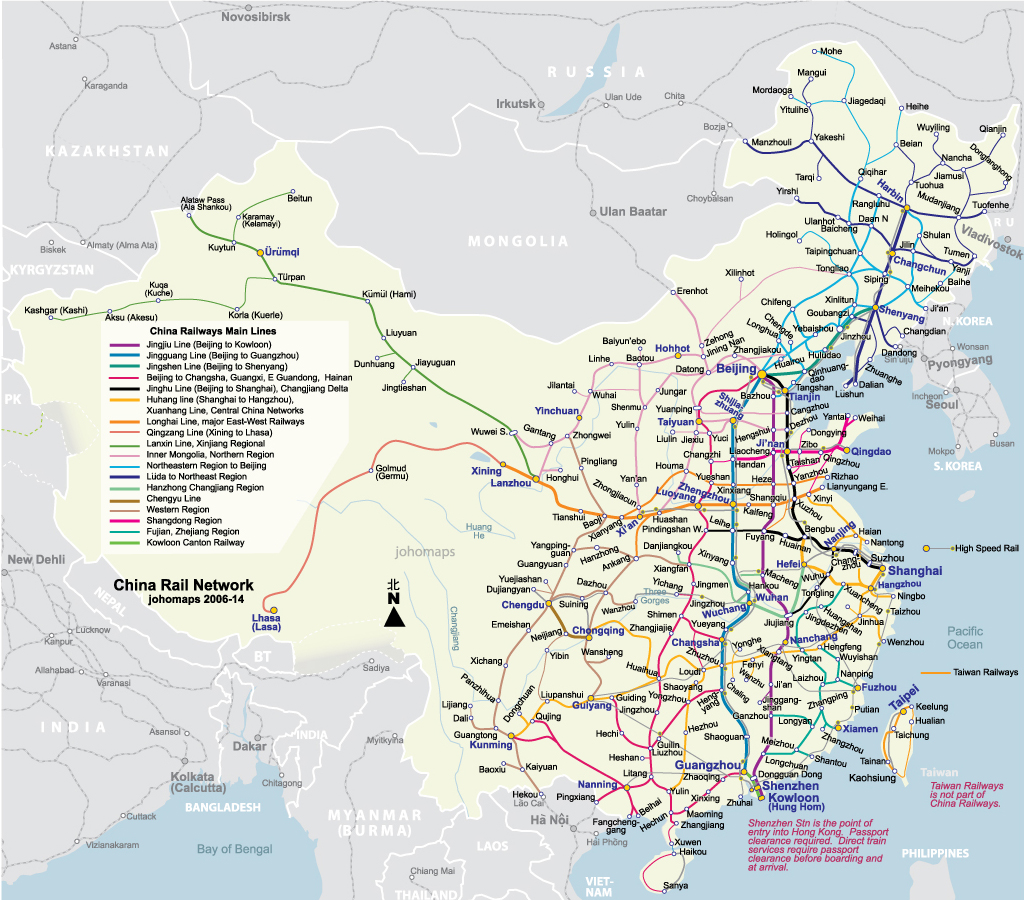
You can search trains schedules and fares on these websites: http://www.tielu.org/
http://www.travelchinaguide.com/china-trains/
More train trip advice: couchsurfing.org/group_read.html?gid=111&post=8863667 Discussion
The 4 train seat options
NOTES: Check your ticket: if there is no seat number on it you will have to stand though you will sometimes be lucky and get an unused seat. If you don't want to stand, the ticket office will refund your money.
If you miss your train, find the special ticket office and get a refund (2 hour limit).
On 'bullet trains' the classifications are first and second class seats which are equivalent to soft and hard seats (se below) in their configuration but of a modern international standard.
Hard Seat (yìngzuò, 硬坐) - the cheapest There are 3 seats on one side of the aisle and two on the other which makes this the most crowded choice. The seats are not truly hard (this a historic name for this class)but the upholstery is not as comfortable as in the soft seats class. They are also not as consistently clean. These days there are not many of these without aircon, but any which are, are by far the cheapest means of travel.
Soft Seat (ruǎnzuò, 软坐) This is a fairly comfortable seat. There are 2 seats on each side of the aisle. Getting a soft seat ticket will usually get you into a “soft seat lounge” at the departure station as well. The soft seat lounges have sofas and are not as crowded as the hard seat lounges.
Hard sleeper (yìngwò, 硬卧) Hard sleepers, (which like the hard seats, are not actually hard) are usually arranged in a triple bunk bed type set up with two triple bunk beds in a berth (a small door-less room). That is, there is one bed on the bottom, one on the middle and one on the top. On each side of the berth there are triple bunk beds arranged across the width of the train, but not into the corridor. Sheets, blankets and pillows are included. Opposite each berth is one or two seats and a very small table.
Soft Sleeper (ruǎnwò, 软卧) - most expensive There are both 2-bed berth and 4-bed berth soft sleepers. 4-bed berths are the standard. Due to the higher price, it is easier to book a ticket for a soft sleeper than it is for a hard sleeper. The beds are more comfortable and it’s a quieter environment inside. The berths are lockable.
couchsurfing.org/group_read.html?gid=111&post=3709942 Group Post
Travelling by Train During The Peak Seasons - Chinese New Year (Jan/Feb) and National Day Holiday (Oct)
couchsurfing.org/group_read.html?gid=111&post=6973246 Discussion 1
couchsurfing.org/group_read.html?gid=111&post=8380092#post8409484 Discussion 2
Phone and communication:
In China, there are 3 mobile phone networks, all of which are owned by the same state-owned entity.
While more than 90% of the SIM cards sold in convenient stores across the country can call/receive calls everywhere in China, in some provinces there are certain SIM cards that you can only call/receive calls from within the same province (at a cheaper rate).
Voice Calls
For the most common type of SIM card, you are charged only for making calls. However, for some SIM cards (which are usually cheaper), you are charged for both making calls and receiving calls. Do check the package or to ask the shop owner when you purchase.
National roaming - Every card has an "issuing province".
- For making calls, the calling rates for intra-province (cheaper) and inter-province are different.
- When you are picking a call on your "province A sim card" when you travel to province B, you are charged an extra inter-province roaming surrcharge.
Data usage
If you are staying in China only for a short time (say, less than 9 months). Your best (and only) option is to get a pay-as-you-go GPRS/3G internet card.
Most GPRS/3G internet data plan require you to sign up for 12 months or more and that you pay a huge deposit.
There is no short-term (10-day or 1-month) data package. The group has been asked many times:- couchsurfing.org/group_read.html?gid=111&post=9998364 couchsurfing.org/group_read.html?gid=111&post=9986918
FAQs:
The following questions are frequently asked on the CS China forum.
The members of the CS China group will be happy to answer any question about travelling in China that you have, however, it will be helpful to both you and us if you read these following "classic" previous posts before making a new post on the same topic. Chances are that your question have been asked and answered by someone already and you will get the info you want by just one click on the following links (and... to be honest, our members are getting bored reading and answering the same questions again and again):
1) Advice on travel itineraries
couchsurfing.org/group_read.html?gid=111&post=4107846 Two Weeks in China
couchsurfing.org/group_read.html?gid=111&post=6931964 Thirty-two Days in China
couchsurfing.org/group_read.html?gid=111&post=2816257 Three to Four weeks between Shanghai and Beijing
1 month in China - couchsurfing.org/group_read.html?gid=111&post=5618819 Discussion 1 couchsurfing.org/group_read.html?gid=111&post=7988197 Discussion 2 couchsurfing.org/group_read.html?gid=111&post=8984334 Discussion 3
2 months in China - couchsurfing.org/group_read.html?gid=111&post=5269849 Discussion 1 couchsurfing.org/group_read.html?gid=111&post=8116682 Discussion 2
couchsurfing.org/group_read.html?gid=111&post=2560356 Destinations between Beijing and Shanghai
couchsurfing.org/group_read.html?gid=111&post=5014802 From Chengdu to Lhasa
2) Budget
Daily expenses couchsurfing.org/group_read.html?gid=111&post=8937320 Discussion
Budget for a month couchsurfing.org/group_read.html?gid=111&post=3832758 Discussion
Hostels/food couchsurfing.org/group_read.html?gid=111&post=1720601 Discussion
3) Getting a job in China
Caution: From the experience of our CSers, we have heard MANY scams from many self-proclaimed "job search agencies" who promised you everything to lure you to sign to them and many of those promises turned out to be untrue and it became very difficult for the person to get out from the situation.
For highlights of China's new Exit-Entry law from July 1, 2013 - click here
couchsurfing.org/group_read.html?gid=111&post=5726514 English teaching jobs 1
couchsurfing.org/group_read.html?gid=111&post=6880246 English teaching jobs 2
couchsurfing.org/group_read.html?gid=111&post=10023411 General work/ intern/ work visa sponsor
4) Chinese Visa
couchsurfing.org/group_read.html?gid=111&post=6355161 Discussion 1
couchsurfing.org/group_read.html?gid=111&post=2270460 Discussion 2
Usually, you do not need to provide an "Invitation Letter" if you are applying for "L" Type Chinese Visa (ie. Tourist Visa), Read discussion couchsurfing.org/group_read.html?gid=111&post=9425553 here.
5) Hostels recommended by our CSers
couchsurfing.org/group_read.html?gid=111&post=6257419 Thread covering recommendations in various locations
6) Police registration system for foreign travellers
If you're an independent traveller at low to mid-range accommodations, beware that you may be turned away or asked to self-register at a nearby police station if the hotel does not have the registration system. This is a bigger concern if you're off the beaten track or it's late and you cannot self-register at a nearby police station. See discussion and examples couchsurfing.org/group_read.html?gid=111&post=11760399 here
Active CS groups in China
(in alphabetical order)
- couchsurfing.org/group.html?gid=1232 Beijing Has 3 regular weekly meetups and other regular weekly events. Check the link for details.
- couchsurfing.org/group.html?gid=2356 Guangzhou
- couchsurfing.org/group.html?gid=2360 Guilin
- couchsurfing.org/group.html?gid=407 Hong Kong Thursday meetups at Le Jardin. couchsurfing.org/group.html?gid=407 Map and directions at the bottom
- couchsurfing.org/group.html?gid=410 Macau
- couchsurfing.org/group.html?gid=1461 Nanjing
- couchsurfing.org/group.html?gid=1464 Qingdao
- couchsurfing.org/group.html?gid=21563 Rural China
- couchsurfing.org/group.html?gid=1233 Shanghai Has several weekly meetups. Check the link for details.
- couchsurfing.org/group.html?gid=2357 Shenzhen Meetups every Thursday at different locations. Check the link for details.
- couchsurfing.org/group.html?gid=1459 Xi'an
And from the island so beautiful that everyone wants to call their own...
- couchsurfing.org/group.html?gid=417 Taiwan
- couchsurfing.org/group.html?gid=1311 Taipei
Culture Shock / Etiquette Issues for CSers to note in China
- Some great tips in this article entitled How to Travel Around China Without Speaking the Language Note that the hand signals for the numbers 7 and 8 on the diagram in the article should be switched.
- Recommended Reading: Factory Girls by Leslie Chang is the best book I've read on modern China in this regard.
{width=“300”}
Culture Shock is a given when you come to China. Read up before you arrive and do your best to know a bit about the place beforehand. Be aware that this is preparation, not a solution or preventative measure. Even up to date reading you do beforehand might be out of date by the time you arrive due to the rapidly changing nature of the country. Also, please try to be sensitive to the fact that even locals may be trying to understand the most recent changes in their lives and may not be able to easily explain them to you.
Although there are some commonalities across the nation, be aware that there may be differences in perceptions / behaviours / customs / habits / traditions from neighbourhood to neighbourhood, city to city, province to province, region to region and differences among the generations.
Keep in mind that many cities in China are centres for migration and people from all over, with their own habits, customs, traditions and dialects, are living and working next to each other. Don't assume that behaviours or attitudes are shared or practiced by all just because you've seen or experienced them from some people.
If you have complaints or need to vent about certain behaviours that you do not understand or that you find frustrating, please do your best to seek advice from other expats in private... and do so sparingly. Please don't voice your complaints around local people or others who may take offense or feel unfairly stereotyped. If you do need to ask a local about a certain issue, please do so calmly and sensitively in order to find an answer or a solution.
Some issues surfers have come up against:
- Foreign Couchsurfers should technically register with the local police when staying with a Host. You can find this information on the arrival card you fill out when reaching China, so nobody can really claim ignorance here. When staying in a hostel/hotel/guesthouse, they will do it for you, but to avoid trouble for your Host, you should spend the time to go to the station. In the city you should register within 24 hours of arrival, but in the countryside you have 72 hours. Usually, it will be necessary to bring a Chinese speaker for translation. Although there are no reports of foreigners being stopped at the border and asked about their whereabouts for "missing days", it is mainly beneficial for your Host. The police might get upset with a Host who has foreign strangers going in and out all the time. Realize that foreigners are very noticeable in China and that the police may have concerns about their presence.
- Be aware of sensitive topics and who you are speaking to. Please don't ask a local person about an issue that may make them feel uncomfortable or 'put on the spot'. Also be aware that although Chinese people discuss and joke about many topics freely among family and friends, they may not want to discuss these same issues with a relative stranger or with a foreigner.
- It may take some local people a long time to 'warm up' and feel that they know you or feel that you are now a friend rather than a passing acquaintance.
- Some people, especially those from outside major cities, may engage in spitting, nose-picking, uncovered sneezing etc. The government has engaged in health campaigns to discourage this and to promote spitting into tissues etc. to prevent the spread of colds and flus but old habits are hard to break.
- Toilet facilities and plumbing may be different from those you are used to back home. Be prepared to be flexible. Pun intended.
- In general, showers or baths are taken in the evening and it may be seen as unhygienic not to bathe before bedtime so please note this and ask your hosts if they prefer that you shower at a certain time of day.
- Be aware that some parts of China have strong 'drinking cultures' when it comes to social events. Men in particular may be expected to drink large amounts of alcohol - often straight hard liquor - in order to bond with locals. If this is not your thing, have a polite excuse on hand about a medical condition or other polite technique at hand to moderate your alcohol intake without offending anyone.
- Please remember that common courtesy never goes astray. A smile, a thank you, a gift or any other appropriate show of gratitude for hospitality received is always appreciated.
China At A Glance
- China in photos in The Atlantic.
- Most populous nation on Earth - over 1,300,000,000 people.
- One of the largest nations on Earth by area along with Russia, Canada, the US and Brazil.
- 55 recognized minority groups.
China CS in the press/blogosphere
- “沙发客”:让世界变得很小"
- 沙发客的多彩旅途
- Philippe's open-door adventure
- CS in The Shanghaiist
- See the world by traveling couch to couch
Books about CS in Chinese language
- 你家沙发借我睡 by 林鸿麟 ISBN: 9787208088368
- 我,睡了,81个人的沙发 by Rose Lien ISBN: 9789573909002
- 22岁走遍世界:我睡沙发去旅行 by Leo Long ISBN: 9787214075567
- 7500元28天游港澳大阪京都-35岁单身女子的沙发客之旅 (赵菊阳) ISBN:9787538455243
- 沙发旅行 by Momo
A movie about CS in Chinese:
- 第三十六个故事 (Taipei Exchanges)
Useful references:
Hong Kong
Edit on wikiHong Kong is part of China, kind of.
Hong Kong's Couch Situation
WARNING - We have reports coming in to our moderators about a Hong Kong CS member. The member is known to long-term HKCS members for his ill treatment of surfers and inappropriate behaviour toward young female surfers. There have been attempts to bring his misdeeds to light in the past but people still wanted to be hosted by him, despite some of his rather creepy negative references. His original profile has numerous detailed negative references which include stealing clothing, cheating surfers out of money, taking photos of female surfers while they are sleeping without their consent... the list goes on. This member has now resorted to making fake profiles. Although the fake ones that were brought to the Safety Team's attention have now been deleted, we suspect that he will simply create more, likely in multiple in order to post self-made references or include some of the fake profiles as 'friends' in order to make his profile look more legitimate.
We encourage you to avoid any members with multiple or disturbing negative references and click friend and reference links to try to establish whether they are real people. Please report any profiles that you suspect to be fake to the local moderator and the safety team. We feel this member is using HK's couch shortage to his advantage to prey on people and it's clear that his preferred targets are young women. Please plan ahead, arrive with enough money for a hostel and immediately get out of any situation which does not feel 'right' to you, even if you can't explain why. Should you need support going to law enforcement, we can provide this.
It may be hard for you to find a couch here. There are far more surfers than couches in our city.
Hong Kong is a densely populated city of small flats and high rents. It's also a business, tourism and travel hub. When searching for a couch in Hong Kong, please keep in mind that many of us can't host due to our living situation (small apartment shared with roommates/family, demanding work schedules) and that those of us who do host get many requests every day that we have to say "No" to or that we have trouble keeping on top of due to their sheer volume. 10-20 requests a day - that's per available couch - is not unusual here and some members have reported as many as 30 requests per day.
Members who have their couch settings set to "Coffee or a drink", "Travelling" or "No" also report getting Couch Requests. Please don't do this.
Members have also reported receiving messages with headings such as "URGENT! HELP NEEDED!" only to find that the requester has failed to a) research, b) plan for and c) budget for their Hong Kong accommodation. Please don't do this. Not only is it annoying and falsely indicative of a true emergency but this kind of behaviour also puts you in a vulnerable position safety-wise (see above). Be street smart and remember that your travel is your own responsibility.
Also remember that when you advertise your Couchsearch by posting on the Hong Kong city message board, your audience consists of an unknown percentage of potential couches (you know, the same people receiving all those Couch Requests they have to say no to), people who are local but don't host and a lot of fellow travellers looking for HK info and activities... who can't host you.
To minimize frustration, manage your expectations and keep our Hong Kong city message board FREE of Couch Requests, we encourage you to:
- Develop a firm plan B and be ready to use it.
- Start clicking that "CouchSearch" button early and be prepared to send out more requests than usual.
- Write personalized couch requests. Make sure your host is aware that you have read their profile and that you are interested not only in surfing their couch but meeting and connecting with them on a personal level.
- Arrange a guesthouse or hostel for your first few nights and then meet with people at our regular Thursday night gathering or by meeting with people for coffee or a drink. Travellers occasionally find a couch after networking once they arrive.
You can also try our
- couchsurfing.org/group.html?gid=13624 Last Minute Couchsearch Group
Hong Kong Hostels and Guesthouses
The Hong Kong Youth Hostel Association has seven youth hostels with curfews located mostly outside the city. Free shuttle bus service is provided by several hostels but the service stops at 10:30pm so you'll need to factor in $100 to $300 for late night and early morning arrivals.
For accomodation in the HK$150-$250 range within the city, the major backpacker's hostel area in Hong Kong include: Mongkok, Tsim Sha Shui and Causeway Bay. Most of Hong Kong's guesthouses and hostels are located in high-rise buildings called... Mansion. Don't expect a European style hostel experience... or a real mansion. They usually offer very small motel style rooms for 1 or 2 people or a simple bedspace. The following places have been recommended by CSers.
- YesInn
- YLoft Youth Square
- Dragon Hostel
- Garden Hostel
- Hop Inn (single rooms here are for a higher budget than the ones listed above)
- Check Inn HK (also slightly higher budget than the ones listed above)
"Most hostels I found online are full, and I have no booking?"
Don't worry. There are more than 700 registered hostels in Hong Kong (according to a survey conducted in August 2011), it is almost impossible for all of them to be full at the same time.
Many of the hostels in Hong Kong (especially the ones in the locations listed out below) do not do online booking and they don't have their own website so you have a good chance of finding rooms there if you visit them in person once you arrive, especially during busy holiday seasons.
The following buildings have plenty of hostels (at least 20) in each of them. The streets listed below also have hostel clusters.
- Kowloon: Tsim Sha Tsui: Chungking Mansions – 36-44 Nathan Road (Tsim Sha Tsui MTR Station, Exit E) (Yes, that's the Chungking in Chungking Express 1) - According to a survey in August 2011, there are more than 160 registered hostels in Chungking Mansion.
- Kowloon: Tsim Sha Tsui:: Mirador Mansion – 54-64B Nathan Road (Tsim Sha Tsui MTR Station, Exit E)
- Kowloon: Mongkok: Sincere House – 83 Argyle Street (Mongkok MTR Station, Exit D2)
- Kowloon: Mongkok: Wing Wah Building – 40 Shantung Street (Mongkok MTR Station, Exit E)
- Kowloon: Mongkok: Fa Yuen Street (between Argyle Street and Soy Street) (Mongkok MTR Station, Exit E)
The following websites can help you to look for reasonably priced guesthouses in Hong Kong.
Mid-range and Higher end Accommodation
These are another option for budget travellers if your couchsearch doesn't work out and hostel reservations are hard to make. Team up with other CSers and you can share costs.
- Lonely Planet's list of mid-range hotel options
- Caritas Lodge $420(single)-$720(triple)/night, $7,500-$11,700/month
- The Anne Black YWCA $600-$1,100/night
- Top 10 budget hotels in Hong Kong Prices are listed in UK pounds.
General info on Hong Kong hotels *Link 1 *Link 2
Short/Long term stay
Some websites that our CS-ers recommend, if you're looking for flatshare/renting a flat in Hong Kong:
Or try our couchsurfing.org/group.html?gid=36058 "Apartment/Flat-Share Hunting" subgroup under the CS Hong Kong group.
Click couchsurfing.org/group_read.html?gid=407&post=9552395 here for a CSers list of reasonably priced serviced apartment providers in HK.
Getting Around
Public transportation is a Hong Kong specialty. It's something this city does very well. Quick and efficient, you can get almost anywhere in town by some kind of combination of the methods listed below. However, don't expect a taxi driver to have either an encyclopedic knowledge of the city's roads or a GPS device. And if you're going somewhere that isn't a landmark, try to copy down the Chinese name for it or the name of a nearby landmark. It's also helpful to have a map, even a hand-drawn one, with you.
From Airport to City
The MTR Airport Express Train is the fastest way to get to the airport from Central. Express trains run every 12 minutes from around 6 a.m. to 12:45 a.m. Journeys from the airport to Hong Kong station take approximately 24 minutes and a round-trip ticket costs HK$180.00. The MTR runs 24 hours on New Year's Eve.
Bus to/from the airport from/to various parts of the city
Transfer to MTR Buses S1 or S56 take you from the airport to the nearest MTR station (Tung Chung Station).
Taxi
- to Hong Kong Island - at least HKD300
- to Kowloon - at least HKD250
- to New Territories (except Lantau Island) - at least HKD180
- to Lantau Island - at least HKD50
MTR
The Mass Transit Railway is efficient and reliable and covers the major areas of the city. It can also be taken across the border to Shenzhen. Note that you'll need a visa to enter Shenzhen.
Octopus Card
If you're staying for more than a few days, consider buying an Octopus stored-value card. It can be used to pay for the MTR, buses, minibuses, trams and ferries and you can also buy things at 7-11 or Welcome grocery stores with them. The cards are available at service counters at any MTR station. The minimum price is HK$100 plus a HK$50 deposit (refundable when you leave Hong Kong, minus a HK$9 service charge). For travel, simply swipe the card on the unmissable yellow Octopus pad, and the fare is automatically deducted. Airport Express travel pass cards are HK$220 for a single Airport Express journey plus three days' unlimited travel on the MTR, or pay HK$300 for two Airport Express trips plus three days' MTR travel.
Buses
Buses in Hong Kong are plentiful. Most are double deckers and are excessively air-conditioned. The air-con feels nice on short trips during the summer but for longer trips or on colder days, you can start to lose the feeling in your extremities. Bring a jacket... or a thermal blanket. Fares are based on distance travelled. Exact change is required. Octopus cards are accepted.
The routes are split between several companies and they go to places all over the territory.
Minibuses
Minibuses are small passenger buses that carry about 16 people. Green minibuses operate on specific routes at fixed prices. Exact payment is required when getting on. Octopus cards are accepted. Red minibuses operate on routes that are not always fixed and passengers can get on and off anywhere along the route except where special prohibitions apply. Pay as you alight. The driver can provide change for small notes.
At a terminus, minibuses often don't depart until they're full. En route, they must be flagged down at a designated stop. They won't stop at your destination unless you tell them to with a "Yau lok mgoi," so you need to know where you're supposed to get off or be a gambling type. If you have something that clearly shows where you want to get off or a clearly written Chinese address, the driver may be helpful but if you're not sure where you're going or have no Chinese references to show the driver, they probably won't have the time or ability to help you. Seatbelt law applies... if you can find them.
Taxi
Taxis are relatively cheap compared with other international cities. Starting at HK$20 for the first 2 km, the fare increases by HK$1.50 per 200 metres. If you cross the harbor tunnels, expect to pay the return tunnel toll charge. There are lots of taxis and flagging them down with a wave is easy, but they don't stop at double yellow lines. Receipts given on request. It's always a good idea to have a map clearly showing your destination or the address written in Chinese as most drivers don't speak much English and may not be familiar with certain streets or areas of town even if they do. Your drivers will appreciate any references to local landmarks or major hotels that you can give them. And there's a seatbelt law so buckle up.
One thing to watch out for
Red taxis legally must take you anywhere in Kowloon or on Hong Kong Island but sometimes they have a preferred destination at shift change times. They usually use a piece of cardboard to cover/uncover their flag light on the dashboard as a signal. Cardboard on means the driver is looking for Kowloon passengers. No cardboard means they're looking for Hong Kong passengers. This isn't much of an issue when you can find the taxis going your way around the corner. It however does become a problem when you have something heavy to carry or you can't find a taxi going your way. Beware that some drivers will refuse to take you or 'get lost' if you insist. If you're in a tight spot, we we suggest you explain to the driver and bug him 'til he sees the light and then keep an eye out to prevent 'getting lost'.
Tram
One of our earliest forms of public transit is still going strong. For HK$2.30 per adult, $1.20 for children under 12 and $1 for seniors 65+, you can ride along the north side of Hong Kong Island from Shau Kei Wan to Kennedy Town. Just get on at the back and pay at the front as you alight. Octopus cards are accepted.
Ferries
The Star Ferry - This operates between the Central/Wan Chai and TST/Hung Hom ferry piers on an ever shrinking channel of water. Once heavily travelled by commuters and tourists alike, it's becoming more of a tourist phenomenon due to the relocation of the pier on the island side some years ago. You can get some great skyline photos from the ferry on a clear day.
Outlying Island ferries - There are several companies which operate ferries to Lantau Island (Discovery Bay and Mui Wo), Lamma Island (Yung Shue Wan and Sok Kwu Wan), Cheung Chau, Peng Chau and other islands around Hong Kong. For schedules and fares, check the links.
- New World First Ferry HK Island/ Kowloon, outlying islands and Macau
- Hong Kong and Kowloon Ferry Holdings Ltd. Hong Kong, Lamma and Peng Chau
- Discovery Bay Transportation Services 24 hour service between Central and Discovery Bay
Hong Kong/Macau/China ferries
Further info
Nightlife, Dining and Entertainment
Main Nightlife Areas
Central - Lan Kwai Fong and Soho / Wan Chai - Lockhart Road / Tsim Sha Tsui - Knutsford Terrace
Magazines and Event listings
The following websites can help bring you up to speed on the local club scene, nightlife, concerts, festivals and shows.
- HK Magazine Free print copies available around town.
- Timeout HK Print copies available at bookstores and some clubs.
- Hong Kong Ticketing Be sure to scroll down the yellow column on the right hand side to see all the listed shows.
- HKClubbing.com
- Hong Kong Hustle
- s-n-s.com Click on "SnS Lifestyle Event Calendar" for a listing of a range of events. The list is Hong Kong-centric but also includes some events for Beijing, Shanghai, Singapore, New York and London.
- Hong Kong Events
- Hong Kong Fringe Club Hong Kong's leading alternative performing/visual arts venue.
- Hip Hong Kong
Bars
Some favourite local haunts include: (Central, Soho and Wanchai.)
- Le Jardin bar, weekly meetup venue
- Yumla bar, dancing, house music
- Club 71 bar, al fresco, chilled
- Makumba African bar, dancing, World music/French influence
- Mes Amis bar, dancing, pop music
The Underground
Events, venues and organizations
- The Fringe Club
- The Wanch
- The Warehouse, Aberdeen
- White Noise Records
Comedy
- Takeout Comedy - live standup and improv shows, local and international performers, most shows in English, Cantonese shows on Mondays and Thursday
- Free Open Mic Night Every Wednesday in Central
Restaurants
- Openrice HK restaurant search engine
- Frommers HK restaurant listings
- EatDrink HK restaurant listings
Vegetarian Restaurants:
- Vegetarian restaurant listings
- Another list of vegetarian restaurants
- couchsurfing.org/group_read.html?gid=407&post=8610921 A group discussion thread
- Website of our CS friend Dan F - who did a vegetarian food tour in HK
- HK Vegetarian blog
Vegan Restaurants:
- Vegan restaurant listing
- Holistic Asia For listings of holistic/alternative/complementary health and healing events.
Karaoke
Sports, Activities and the Great Outdoors
Hiking
Be sure to check these boards for regular hiking activities
- couchsurfing.org/group.html?gid=407 Hong Kong CS Group
- couchsurfing.org/group.html?gid=15546 Hiking in Hong Kong Subgroup
Running and Hiking events
Swimming and Beaches
Camping
Wakeboarding and Waterskiing
Windsurfing and Kayaking
Diving
Rock Climbing
Para-gliding
Snowboarding
- Slope Infinity Indoor snowless snowboarding
Language Exchange
There are lots of language exchange options available in Hong Kong from one on one meetups to clubs that meet regularly in person to social networks available online at your convenience. Mandarin/Cantonese for English seems to be the most popular combination wanted here but there are also many other languages on offer from Japanese to Russian. Here are some of your options:
For one on one exchange:
Groups that meet regularly:
- Meetup.com Mandarin English Language Exchange
- Hong Kong Language and Cultural Exchange Club (this group has social outings just for fun or for language/cultural exchange)
Language exchange social networks:
Hong Kong CS language groups
- couchsurfing.org/group.html?gid=41357 HKCS Language Exchange sub-group
- couchsurfing.org/group_read.html?gid=407&post=10077149 Mandarin English Exchange Group Ruggers Bar
Paid language courses
HKU Space has a variety of language courses available including French, German, Italian, Spanish and Russian.
- Intensive Introductory Putonghua for non-Chinese speakers
- Intermediate Putonghua for non-Chinese speakers
- Cantonese level 1
The Hong Kong YMCA also has courses in Mandarin and Cantonese for non-Chinese speakers.
Sightseeing
Hong Kong is extremely easy to get around by subway, taxi, bus, minibus, walking etc. You can easily design your own itinerary picking the places that you want to visit from below. Most people do not need a tour guide for Hong Kong. For an overview, here are two fun timelapse videos of Hong Kong featuring many of the city's famous landmarks:
- Hong Kong: Funky Time Lapse on youtube.
- timelapse Hong Kong on Vimeo.
Cultural Heritage and Building architecture
- Sample itinerary and walk tour - Central area with a very useful map
- Temples and historic villages
Markets
- Stanley Market Stanley is famous for its relaxed ambience, sea environs and bargain buys in the main street market. Stanley Market is open daily, 10:30 a.m. to 6.30 p.m..
- Temple Street Night Market Temple Street night market opens at 4 pm, but really comes alive after sunset. It offers an amazing range of inexpensive items, especially for men. There are also fortune-tellers and impromptu Chinese opera performances.
- Jade Market and Jade Street The Jade Market, located in Yau Ma Tei at the junction of Kansu and Battery Street, features 400 stalls selling jade of all types, shades, sizes and prices. Open daily, 10 a.m. to 5 p.m.. Nearby is Jade Street, located on Canton Road between Kansu Street and Jordan Road, with shops open 10:30 a.m. to 2:30 p.m. Jade and gemstone testing is available at Jade Plaza.
- Ladies Market The Ladies Market in Tung Choi Street is the place for bags, accessories and inexpensive women's clothing. Men's and children's clothing and toys are also on sale. Open daily from noon to 11:30 p.m.
- Bird garden/ flower market/ goldfish market The charming Chinese-style garden on Yuen Po Street includes some 70 songbird stalls as well as courtyards and moon gates. Look and listen but it’s wise to avoid contact with the birds. The Bird Garden is open from 7am to 8pm, daily. The colourful Flower Market sells everything from Dutch tulips to exotic orchids, open daily from 7am to 7pm. The Goldfish market on nearby Tung Choi Street sells aquariums, corals and exotic fish, open daily from 10:30am to 10pm.
- Western Market This Edwardian-style building features arts and crafts, fabric shops, alfresco dining, and ballroom dancing.
- couchsurfing.org/group_read.html?gid=407&post=9262012 Local neighbourhood street markets discussion
Temples, Monasteries, Nunneries
- Man Mo Temple One of Hong Kong's oldest temples, dedicated to two deities, the ‘civil’ (Man) and the ‘military’ (Mo).
- Chi Lin Nunnery The serene 1930s Chi Lin Nunnery (rebuilt in 1998) is spread across 3.2 hectares and is China’s largest group of hand-crafted timber buildings incorporating traditional Tang dynasty (618-907AD) construction techniques.
- Po Lin Monastery, Giant Buddha and Wisdom Path Located on Lantau, this is one of Hong Kong's largest temples and monasteries, housing the world's tallest outdoor bronze seated Buddha, at 34 m (111ft.) high.
Parks
- Hong Kong Park Overlooked by the towers of Pacific Place and Admiralty on one side and Central on the other, the park features a hot house, a Tai Chi garden, a waterfall and the Museum of Tea Ware.
- Kowloon Park An oasis in the heart of Kowloon next to the Kowloon Mosque. Enjoy a walk among the trees, a bird sanctuary, fountains and a swimming pool.
- Hong Kong Zoological and Botanical Gardens Looking down on the old Government House, the Gardens date back to 1864. Look out for the gibbons and orangutans.
Theme Parks
Other references
- For more ideas check the Hong Kong Sightseeing Wiki
- For a very long alphabetical listing of HK areas and sights to see check here 4
- For Lonely Planet's list of things to do in Hong Kong (based on a recent survey of Lonely Planet readers), see 5
- For a blogger's list of ten things to do in HK check here 6
- You can check out some panoramic photos of popular spots at 360cities.net
- For more tips about what to see/do in Hong Kong, see 7
- For more tourist info about Hong Kong, see I Love Hong Kong
- For a blogger's tips and other HK info, see Journey to Hong Kong
- Welcome to Hong Kong - a guide for visitors and expats 8
Shopping
- couchsurfing.org/group_read.html?gid=407&post=10146718 Info about English bookstores in Hong Kong
- Hong Kong Shopping Wiki
Christmas, New Year and Chinese New Year
Christmas
Christmas Day (Dec. 25th) and Boxing Day (first weekday after Xmas) are holidays in Hong Kong and from late November onwards you'll see the decorations and commercial displays in stores as you do in many other places. You'll also see some elaborate lighting displays go up on tall buildings on both sides of the harbour. It's a local tradition to walk around TST near the waterfront and look at the lights and take photos in front of them on Christmas Day. Some roads are blocked off and traffic diverted to facilitate this. It gets crowded in the evenings so if you're keen to test the limits of your personal space, it's an excellent place and time to go for a stroll.
Hong Kong doesn't come to a standstill for these holidays even though business and government offices are closed. While museums and other venues may close early - usually 5 pm - and other places may be on modified hours, most shops and restaurants are still open as they are normally.
There are various events and displays at local theme parks, shopping malls and special concerts and events such as carolling around town. There are also traditional midnight masses at places like St. John's Cathedral but, here's that phrase again, they can be crowded. They often set up speakers outside the church and people take part in the mass there.
New Year
December 31st is a night to party and January 1st is a public holiday. But if you want to go to one of the big events like the countdown in Times Square or want to stake out a good spot to see the fireworks, head out early and keep your group together. Roads get blocked off, traffic is diverted, there are loooots of people and security measures are in place which can mean that if you and your buddies get separated, you might remain that way and ring in the new year alone.
The MTR runs all night on New Year's Eve and there are extra bus and minibus services but keep in mind that some roads are blocked off and there are traffic measures in place. Ferries to Discovery Bay also run all night but on a modified schedule.
The crowd control measures, barricades, lines and security presence might be a pain and seem excessive but it's for a reason. In 1993, 20 people died when there was a stampede during the new year celebrations in Lan Kwai Fong. Please listen to the police, respect the barricades and do your best to seek out less crowded spots to celebrate.
Chinese New Year
This is the biggie. The dates for the lunar new year change every year according to the lunar calendar and swing between late January and mid-February. In 2012, the dates are Jan 23,24 and 25 and 2012 will be the year of the dragon.
This is about the only time of year that Hong Kong quietens down a bit. Lots of people go on holiday. Those that stay spend time at home with their family and, for about the only time all year, most shops will be closed during this period until Feb 6. The crowds you're used to the rest of the year, disappear. Well, sort of.
There's still lots to do and crowds to be found. Parades, fireworks, flower markets, Chinese New Year fair in Victoria Park, horse racing...
Other major holidays - note that Hong Kong does not have the Golden Weeks that mainland China does.
Crossing the border
- Planes: multiple daily flights leave from Hong Kong International Airport (Chek Lap Kok) to airports in mainland China.
- Trains: The subway of Hong Kong and Shenzhen connect to each other (you'll need to get off the train for transit and custom office crossing)
- The MTR East rail line goes Lo Wu and Lok Ma Chau where you disembark to cross the border into Shenzhen.
- Intercity trains to Dongguan, Foshan, Guangzhou East rail station and Zhaoqing leave from Hung Hom station daily.
- Fares, schedules and online ticketing Note that once you are in China, rail tickets for any destination cannot be purchased online. They must be purchased at the rail station itself.
- Ferries: Ferry services run from Hong Kong to the province of Guangdong in mainland China, departing from both the city centre and the Airport. See the Ferry section above for more information.Hong Kong#Ferries
- Buses: These private companies operate bus services to many locations in Guangdong, Guangxi and Fujian Province:
- Hong Kong airport to Shenzhen airport - see discussion couchsurfing.org/group_read.html?gid=407&post=13289591 here
Visas
Warning: This section is intended to help you understand the basics of Hong Kong and China Visas and give you a foundation from which to move forward and make decisions. However, China has a complicated visa policy that is constantly changing for various reasons. Prices, availability, conditions etc. are all subject to change without notice. Although we try to provide helpful, updated information here to help you navigate the process, you must do your own additional research. If you have updated info for us, please let us know and we'll try to incorporate it as soon as possible.
Visa for Hong Kong
Holders of many passports can travel to Hong Kong visa free.
Visa requirements for holders of different passports, please see this list maintained by the Hong Kong Government:
If you intend to move to Hong Kong or to stay in Hong Kong for a long time, there are various Hong Kong visa options: Hong Kong's Immigration Department website
A list of Hong Kong visa options Note that this links to a business website not a government website and is for reference only.
Hong Kong's Working Holiday Scheme
List of eligible countries and basic regulations for the Working Holiday Scheme
Visa for mainland China (ex HK/Macau/Taiwan)
Most visitors of mainland China require a visa to visit mainland China, except holders of Singaporean and Japanese passports and holders of Hong Kong Permanent Identity card with Chinese ancestry.
There are 8 types of Chinese visa. The popular types are: L Visa (for tourist), F Visa (for business), Z Visa (for work), X Visa (for study) and G Visa (for transit in Guangzhou, Shanghai and Beijing airports).
China has a complicated visa policy that is constantly changing for various reasons. The visa requirements for holders of different passports are different. It is highly advisable that you check with the Chinese Embassy in your home country shortly before you visit China.
Hong Kong is a popular place for foreigners to apply for Chinese visas, because the time required for the granting of visa is relatively short compared to most foreign Chinese embassies.
L Visa: different sub-categories (Note: If you plan to visit the Tibet region of China, you will need to obtain a separate permit in addition to the L Visa.
- Single/double entry in 3 months
- available to all nationalities
- this is the most common visa that most travelers are granted
- application methods:
- via Chinese embassy in your home country (3-10 days)
- via CTS in Hong Kong (4 working days, expect to queue up for 1-2 hours)
- via visa agents in Hong Kong (0.5-1 working day, most agents charge ~HK$80 as handling fee)
- Single/double entry in 6 months
- available to all nationalities
- not a common visa, however, for overseas Chinese visiting relatives in China, it is sometimes granted
- application methods: same as in item (1) above.
- Multiple entries in 6 months/1 year
- only for holders of Hong Kong identity card (permanent or non-permanent), whatever passport the applicant is holding
- application methods
- via Ministry of Foreign Affairs in Hong Kong (about a week)
- via CTS (4 working days)
- Visa on arrival: 5-day visa for visit to Shenzhen only
- for certain nationalities only (as of June 2010 - holders of Australia, Canada, New Zealand, Brazil, Ecudor, Kazakhstan, Uzbekistan, Panama, most EU countries passports) - RMB160 for most nationalities (Note: many exceptions, eg. RMB460 for British)
- the visa only allow the holder to stay in Shenzhen only. Holder of the visa must exit Shenzhen to Hong Kong (by land) or to Macau (by ferry), you may not travel to any other part of China with this visa.
- application methods
- via Luo Hu Border Custom Building (go up 2/F after crossing the HK-Shenzhen bridge at the Lo Wu border point) (30 minutes)
- via Shekou Ferry Terminal (go straight after landing in the Shekou pier) (15 minutes)
- Note (1): Not available in Huanggong, Futian (aka Lok Ma Chau), Man Kam To and Sha Tau Kok custom points
- Note (2): The policy for the 5-day Shenzhen visa changes from time to time and from our past experience there is no announcement of change. If you intend to apply for this visa at the border, it is advisable that you call the Lo Wu border office (see contact number below) before your trip to check whether your passport is qualified under the latest version of the policy.
- Note (3): Further discussion - http://www.evisaasia.com/visa-guide/shenzhen-five-days-visa/
- Visa on arrival: 5-day visa for visit to Zhuhai only
- for certain nationalities only (as of June 2010 - holders of Australia, Canada, New Zealand, Brazil, Ecudor, Kazakhstan, Uzbekistan, Panama, most EU countries passports) - RMB160 for most nationalities (Note: many exceptions, eg. RMB460 for British)
- the visa only allow the holder to stay in Zhuhai only. Holder of the visa must exit Zhuhai to Macau (by land) or to Hong Kong (by ferry), you may not travel to any other part of China with this visa.
- application methods
- via Zhuhai Jiuzhou Ferry Terminal (turn right and walk down the narrow corridor after arriving in the ferry terminal) (15 minutes)
- Note (1): Not available in Gongbei custom points
- Note (2): See Note (2) and (3) for 5-day Shenzhen visa on arrival above.
Contacts details
1. Ministry of Foreign Affairs
- English visa info
- Address: China Resources building, 26Harbor Road, Wanchai, Hong Kong
- Office Hour: Monday to Friday (except public holidays in Hong Kong)
- Morning: 9:00 a.m.-12:00 a. m.
- Afternoon:2:00p.m.-5:00p.m
-
Tel: 852-34132300(according to the website, it's a 24 hour Recorded Visa Information Service but experiences may vary), 852-34132424 (Live Answering Telephone available in office hours )
2. CTS
- (China Travel Service) - the official visa agent of the Chinese government
- Details: http://www.ctshk.com/english/useful/chinesevisa.htm
-
Offices in HK: http://www.ctshk.com/english/aboutus/branch_hkgmac.htm
- ### 3. Visa agents {#visa_agents}
-
These are some visa agents that our CS-ers have had good experience using:
:* Forever Bright Trading Limited
:* Japan Travel Service Ltd (with a list of visa fees for different passports)
:* GuangZhou Guest House, Flat B1/10F Mirador Mansion, 54-64 Nathan Road, Tsim Sha Tsui (phone 2311 3085): cheap and fast, for example: 1 day processing time and HKD430 for 3 months single entry, HKD550 for 2 entries (German passport)
4. Lo Wu Custom
- : Tel: 86-755-82327700 (speaks only mandarin)
- Service hour: 10am - 10pm.
Latest Situation
These are the latest visa conditions we heard from our CS-ers. (last updated: 27 June 2013):
:* China has imposed extra visa requirements for holders of Norwegian, French passports.
:* The Ministry of Foreign Affairs has reduced the application fee for holders of Polish passports (RMB160).
:* [March 2011] There seems to be a quota on the number of Visa On Arrival granted each day - reason: The International University Sports Games is carrying on in Shenzhen
:* [15 July 2011] A headsup for everybody who intends to apply for a Chinese visa. The "International University Games" is going to take place in Shenzhen in the next couple of months and we are seeing that most CSers' Chinese visa applications for more than 30 days (Type L - travel) are being refused (ie. most people are granted only a 30-day visa - one entry)
:* [15 May 2012] Increased scrutiny of visa applications due to a 100 day action against illegal foreigners in China. See link for more info.
:* [27 June 2013] 1) Time required for visa application processing increased from 1 day to 4 days. 2) Multiple entry F visa (6 months - 1 year) no longer granted. 3) Z visa no longer granted in HK. See couchsurfing.org/group_read.html?gid=59854&post=14632805 link for more info.
:* [8 January 2014] Single entry Tourist Visa fee increased to $680 for most EU nationalities (except the UK). It definitely takes 4 days instead of 6 hours at the 3 agents above. Travellers holding French passport can no longer apply for tourist visa in HK (except those who live in HK and holds a HKID Card).
Recently it's been noticed that most people can only get 30 day visas. If you intend to travel in China for more than 30 days, do arrange your visa in the Chinese embassy in your home country prior to coming to HK.
Baggage Storage
If you're just passing through HK for a short time and want to leave your luggage at the airport, there's a baggage storage service. There are also lockers at the Macau and China Ferry Terminals, Sha Tin MTR station, Hong Kong station and the Hung Hom Inter-city train station.
- Hong Kong Airport Baggage Storage information
- Overview of locker services at Hong Kong Station, the airport, the HK/Macau Ferry Terminal and the China Ferry Terminal
- couchsurfing.org/group_read.html?gid=13624&post=10110709 Bag storage in Tung Chung, closest town to the airport
For mid/long term luggage storage:
Wi-Fi/ Internet Access / Mobile Internet
Free + Unlimited Wi-Fi
- HK Airport
- Most government premises (link)
Free but limited Wi-Fi
- first 20 mins free in all McDonalds
- first 20 mins free in all Starbucks
- first 30 mins free in all Dragon Centre, Sham Shui Po (near MTR Exit C)
couchsurfing.org/group_read.html?gid=407&post=7790735 more options listed on this HK Group thread
Paid internet
- i-One - HK's largest chain internet services shop
Computer booth (with free internet access)
- iCentre - in 14 MTR stations
- All Pacific Coffee
Prepaid Mobile Internet
- Check here for details.
Prepaid BlackBerry Plans
- There are no prepaid BlackBerry plans in Hong Kong but inexpensive monthly plans are available. Check here for details.
Prepaid Sim Card for iPad
- Check here for details.
More info
The review on this blog is from 2009 but may still be a helpful reference. Review of mobile data plans in Hong Kong
Money
The currency used in Hong Kong is the Hong Kong dollar (HKD $). It's currently pegged to the US dollar. Foreign currency can be exchanged at the airport, at currency exchange outlets in major tourist areas or at local banks. Beware if your currency is heavily coin based - I'm looking at you Canadians - as coins cannot be exchanged. Your bank cards will also work in local ATMs. You can use Hong Kong dollars in Macau but not vice versa. For an idea of exchange rates, you can try this website. XE.com
The currency used in mainland China is the renminbi (RMB, CNY, ¥), also known as the yuan.
Cost of living
We've had some questions about the cost of living here. Hong Kong can be an expensive city but it can also suit tighter budgets if you play your cards right. Rent/housing will always be your biggest expense here. Here's a link to a thread on the topic to give you some idea.couchsurfing.org/group_read.html?gid=407&post=7577536#gpid7577536
Air quality
Hong Kong suffers from poor air quality. If you have respiratory conditions such as asthma, you'll likely need your inhaler. We have no such thing as Euro or California regulations on emissions and a fleet of diesel buses. One small step in the right direction has been converting taxis to LPG but we have a long way to go.
HK's Air Pollution Index explained
HK's Air Pollution Index at the EPD
The Headley Environmental Index
The Amazing Race
Here are links to the most recent Hong Kong leg of The Amazing Race (US). You get to see and get a sense of several areas of the city.
FAQs
couchsurfing.org/group_read.html?gid=407&post=7117576 1. Where can I take Cantonese classes?
couchsurfing.org/group_read.html?gid=407&post=7475127 2. Where can I get prepaid SIM cards?
couchsurfing.org/group_read.html?gid=111&post=5871216 3. How to renew Chinese visa within China?
couchsurfing.org/group_read.html?gid=407&post=7577536#gpid7577536 4. Moving to HK, Cost of living couchsurfing.org/group_read.html?gid=407&post=7402561#gpid7402561 answer 2
couchsurfing.org/group_read.html?gid=407&post=7848982 5. Going from Shenzhen Airport to HK City at night
couchsurfing.org/group_read.html?gid=407&post=7520022 6. Salsa dancing places in Hong Kong
couchsurfing.org/group_read.html?gid=407&post=8263436 7. Outdoor Cafes in Hong Kong
couchsurfing.org/group_read.html?gid=407&post=8393230 8. Hostels/hotels near the airport
couchsurfing.org/group_read.html?gid=407&post=8530996 9. Useful budget flight/hotel websites in Asia
couchsurfing.org/group_read.html?gid=407&post=8632531 10. Going to Shenzhen by bus via Huang Gang
couchsurfing.org/group_read.html?gid=407&post=8659656 11. Home internet service providers - ISPs
couchsurfing.org/group_read.html?gid=407&post=8862633 12. Alternatives to hotels, hostels and couches for 24-48 hour stopovers
couchsurfing.org/group_read.html?gid=407&post=8840560 13. Ideas for 3-5 hour stopovers
couchsurfing.org/group_read.html?gid=407&post=12445697 14. Sharings of HK CS hosts
HK Travel and Tourism related articles
Rebuttal to Goop's take on HK from CBC blogger Elaine Liu
Engadget feature on Sham Shui Po
CNNGo's 88 Things to do in the summer in Hong Kong
The Washington Post goes camping near Pui O
The New York Times Travel blog finds fireflies in HK
The New York Times checks out some of the newest private kitchens
CNN Go's 45 sightseeing tips for HK
CNN's travel tips for newbies and a slideshow of some of our major attractions
La Stampa via Worldcrunch - Chungking Mansions
CNNGo's guide to the Mid-Autumn Festival 2011
CNNGo's guide to the best live music venues in HK
Yahoo's World's Most Beautiful Ferry Rides
Further info
To find further or more detailed information, please try Hong Kong's wikivoyage.org entry.
Hong Kong's entry at Wikivoyage.org
CS Hong Kong moments
9 June 2012 International CS Day celebration in Hong Kong (Article published in the June 2012 issue of the CS Magazine: couchsurfing.org/news/article/215)
Hong Kong group on BeWelcome
Alternative to CS: non-profit, volunteer-driven, uncensored.
Hong Kong group on CS
If you still can't find the answer you wanted, subscribe to the
- couchsurfing.org/group.html?gid=407 CS Hong Kong group
and ask the friendly folks there!
India
Edit on wikiIndia is a country in Asia.
How to be a good guest
Besides the usual guidelines for How to be a good guest:
- Remove your shoes while entering your hosts house even when not asked.
- Be very patient.
- India is a foodoholic society. Indians love food and if you are offered with food, which you will be many times, be brave and try.
- Eat with your right hand or use a fork and spoon. Eating with the left hand is frowned upon (same as in Muslim countries and many parts of Africa). But once you have started eating with your right hand, please use only your left hand to serve yourself or lift your glass of water. Indians do not eat from plates and bowls touched with a jutha (anything put in your mouth) hand.
- Indians value punctuality, so if you cannot make it do let you host know in advance and email or SMS or phone call would do. This is highly appreciated.
- Indians tend to give extra deference and respect to elders - even if they are not related to each other or even if they disagree with elders. Be mindful of that respect when conversing with anybody older than yourself.
Female, travelling solo
India is generally safe for women (thanks to anti violence philosophies and religions) but sometimes Western women are seen as easy targets. A few tips that might make your life on the road a bit easier:
- CouchSurfers in general are just fine and trustworthy folks, but take care and check references of people you consider as hosts.
- Dress modestly: tank tops, mini skirts and shorts are not your best bet. No need to overdo it though, capris and shirt covering a bit more than your shoulders should be okay. Tank top and long-sleeved shirt in light fabric and in local style would be perfect, also covers from the sun. Dress elegantly like a local in a Shalwar Kameez sample outfits shown here. This is essential especially when you travel down South or conservative places like Rajasthan.
- Learn the art of ignoring people - does not mean you can't talk to anyone at all but the more responsive you seem the more disturbance you get from taxi guys and people trying to sell stuff to you, when just walking down the street.
- Cover story of a boyfriend or husband, wearing a "wedding ring" might be a bit overboard but might come in handy if the conversation needs to end sooner rather than later.
Learning the phrase "leave me alone" or something similar in Hindi or other local language might help (or make the guys more persistent).
Rural India
Edit on wikiAccording to census India 2001 scattered throughout India are approximately 500,000 villages. The Census of India regards most settlements of fewer than 5,000 as a village. These settlements range from tiny hamlets of thatched huts to larger settlements of tile-roofed stone and brick houses. Most Indian villages are small; nearly 80 percent have fewer than 1,000 inhabitants.
1 Illiteracy 2 NAREGA 3 Five Challenges 4 References 5 Also See Illiteracy
CSers in a Primary School
Illiteracy is major problem in rural development. According to a nationwide survey that was carried out by IMRB-SRI of school-going children, aged 6 to 13, almost 6.94% of children in this age group are out of school. Of these, a massive 68.26% are those who never went to school. 31.74% are those who dropped out after one or more years of schooling. That there is a clear urban-rural divide in elementary education in the country becomes apparent, on studyingthese findings. Of the number of school going children in the age group 6-13 years in rural areas, 7.8% are out of school. The comparative percentage is 4.34% in urban areas. Incidentally, more girls than boys are out of school. This is especially so in the age-group of 11-13 years, where approximately 10% of the girls do not go to school, as against 6.5% boys. "This is primarily because families expect girls to help out at home. Also, there is the thought that "ladki paraya dhan hai- iskopara kar kyafaayda. "which is acutely prevalent in rural areas. Finally, there is the distance factor- many children have to walk upto 3-4 kms to reach the school, which again becomes a de-motivator," says A V i Surya, Research Director of IMRB-SRI. Among those children who are attending school, an overwhelming 74.51% are in government schools, 22.95% are i in private recognized schools, 1.85% in private unrecognized schools and.59% in madarsas and Alternative Innovative Education (AIE) Centres, started under the Sarva Siksha Ab-hiyan of the Government. The proportion of out-of-school children is relatively higher in Muslims (9.97%) and Scheduled Tribes (9.54%). The Scheduled Castes follow, with almost 8.17% of the children from this category, not going to school. This is probably attributable to social restrictions within these groups. Also. according to Chanchal Sinha of Child Relief & You (CRY), "The proportion of government-run schools is coming down. The most affected, therefore are children from these marginalised and weaker sections -who have no option but to use government schools." However, the disturbing trend is that even amongst those children who are enrolled in schools, the levels of comprehension arent that great. For example, as per the ASER survey, 35% of all children in the age group 7-14 could not read simple paragraphs and close to 52% could not read a short story Also, 41% of children could do neither two digit subtraction problem nor division problems. Then, there is the problem of drop-outs. The IMRB-SRI survey, however, puts the percentage of drop-outs as being the highest among those, who dropped out after completing class V and class II (20.5% each). Next is the percentage of those who dropped out after class III (17.5%). The silver lining, however, is that the Sarva Siksha Abhiyan that the government had initiated seems to have had some impact, in that the number of out-of-school children have come down, from the time the Abhiyan was launched five years ago. However, according to CRY'S Sinha, we are still far away from the Abhiyans objective of ensuring that all children complete at least eight years of elementary schooling. "We should ensure that all children are in formal schools until the age of 18. The need is to increase the spend on education to at least 6% of the GDP from the current 4.2%. Also, the Common School System should be implemented soon, to ensure access, equality and quality in education," he says.
NAREGA
Workers at NAREGA site
THE National Rural Employment Guarantee Scheme (NREGS) guarantees 100 days of employment at the rate of Rs 60 a day. According to the website of the Union ministry of labour, the minimum wage is pegged at Rs 66 per day. In dollar terms this comes to about $8.5 per week, assuming a six-day week. In America, the minimum wage is roughly $5.5 per hour before deduction of payroll taxes. Assuming a 40-hour week, this amounts to $220 a week. The cost of living is much lower in India, the differences being adjusted through purchasing power parity (PPP). According to the World Bank, the rupee equivalent of a dollar can buy goods and services valued at about five times what a dollar can in America. Therefore a weekly wage of $8.5 in India is equivalent to $42.5 in America. Ceterisparibus, the minimum wage in America is five times higher than what it is in India. Theoretically speaking, since capital is scarce and labour abundant and less productive, wages are relatively lower in India. But minimum wages are not market clearing wages. They are regulatory wages to ensure that market wages do not fall below subsistence. They are expected to cover the essential current costs of accommodation, food and clothing (roti, ka-pada aurmakaan} of a small family. Let us consider the monthly expenses of a family of four living in the American Midwest. The family spends $520 on rent for a two-bedroom apartment, $150 on utilities, $250 on food and clothes, $100 on petrol, and $200 on family health insurance, or $1,220 in all. A minimum wage of $220 a week yields a net monthly income of $820 after tax. Payroll taxes smoothen the consumption curve during spells of unemployment and in old age. This leaves an uncovered monthly shortfall of $400 a month, which could be covered by two hours overtime (at 150% of the minimum wage) five days a week, or by three hours part-time work, possibly by the spouse.therefore, the minimum wage captures the market value of food, accommodation, utilities, transportation, healthcare and social security at subsistence levels for small nuclear families. The rise in single parent families and health insurance costs distort but do not entirely alter this picture, especially since private charities and public support and emergency systems constitute effective back-ups. The Indian minimum wage of Rs 3,500 per month (with the spouse working full time), in comparison, would at best cover the cost of subsistence sourced from informal markets for an equivalent family of four. Whereas the poor in America purchase standardised food products and clothes from discount supermarkets, in India these are purchased from roadside sellers peddling dubious quality. Most daily wagers reside on encroached public land controlled by land mafias. Since slums are adjacent to workplaces, transportation costs are minimal. Utilities such as power and water are also sourced from informal markets, usually controlled by the same land mafias who steal power and water from publicly 'extra-legal' control of assets into capital. Howsoever seductive this argument, the assertion that this would solve the problem of poverty and development in backward societies is moot. Modernisation and globalisation have everywhere spelt the doom of petty production. Destruction of traditional (artisanal) industries and depeasantisation are necessary concomitants of the modernisation process based on economies of scale. The crisis in our small-scale industrial and agricultural sectors is ample proof of this. Viewed from this perspective, the NREGS can be seen as acknowledgement of the crisis and collapse of petty production. There is also a lurking danger in the Soto solution, especially when the underlying governance environment is weak. Often when extra-legal assets are transferred as legal property rights and hence potential collateral for capital, the recipients are either so destitute or more likely so uninformed that they then formally transfer away those rights for a value well under market. This could actually legalise the hold infrastructural mafias have over the marginalised. Under prevailing circumstances raising the regulatory minimum wage may only compound the gap between the minimum wage and the market clearing wage, and also hit the country's cost competitiveness in manufacturing. Big-ticket public and private investment based on their respective comparative advantage (public and private goods respectively), expansion of wage labour, higher incomes through enhanced labour productivity, and improved governance are imperative to address these problems. Such big-ticket investment would also remove supply constraints in the ready availability and affordability of standardised mass produced goods and services. A comprehensive social security net would ease the transition from an informal economy based on petty production and services to a modem one. All NGOs are requested to cotact and decide a way of pressurising government to revise its minimum wage structure. contact
Five Challenges
Prime Minister Man-mohan Singh outlined five challenges, including improving financial system for global integration, for India to become a developed economy while cautioning that the rapid progress should not lead to complacency "It would be wrong to assume, as some do, that the major development challenges had been solved and that the Indian economy can effortlessly coast towards becoming a developed economy," Singh said while releasing "India rural infrastructure report" by economic think-tank NCAER. Despite a high level of public debt, inflation has been contained and "in brief the economic environment facing the private sector has been transformed and the results are evident," he said. Giving polic economy, improved delivery of public services, improved management of urban areas, preparing financial system for greater inclusion and increased global integration besides facilitating private investment in infrastructure, he said "we must not be complacent." He said rapid growth was needed to provide hope and productive employment for millions of young people joining the labour force each year and to accelerate the reduction of extreme poverty. The Prime Minister said it was heartening to note that growth process that began with the external sector and services, has now spread to manufacturing. Reiterating concern over the agriculture sector, Singh said agriculture would have to be redirected to higher-value activities to provide decent income to small farmers. Improved rural connectivity and economic and social infrastructure would be critical in this effort as well as removal of barriers to domestic trade, he said. Prime Minister also called upon the states to "experiment with a range of models" for delivery of basic education and health services considering affect on poor people. Referring to important but "expensive business" of urbanisation, he said, "our competitiveness as a nation will increasingly depend on the efficient functioning of our cities." Our challenge is to modernise the governance of our cities so they can generate the resources for their own growth and attract private financing in a stable environment, Singh remarked. Apparently referring to stiff opposition of Left parties against opening of financial sector. Prime Minister said extending its reach would be crucial for "permitting our small entrepreneurs and producers to realise their potential." "India stands to gain hugely from greater integration of its financial system with that of the • world, in a prudential way," he said. Emphasising on public-private sector partnership in infrastructure sector. Prime Minister called for establishing a credible regulatory regime. Investments will only materialise if there is confidence in the independence and stability of the regulatory regime, he said.
References
http://en.wikipedia.org/wiki/Demographics_of_India http://eserver.org/courses/fall95/76-100g/papers/mekala/ http://nrega.nic.in/ http://pmindia.nic.in/speeches.htm http://en.wikipedia.org/wiki/Dhani http://www.imrbint.com/sector/social_sectors.html http://www.ncaer.org/
Also See
Katar Singh: Rural Development Principles,Policies and Management,Introduction.Sage Publication,London 1986 Douglas Ensminger: Rural India in transition, page 48.All India Panchayat Parishad 1972 --Vipingoyal 13:54, 29 March 2009 (UTC)
Cyprus
Edit on wikiCyprus is a country in Europe.
CS info
- couchsurfing.org/n/geolocations/cyprus The CS Places Page for Cyprus
- couchsurfing.org/group.html?gid=261 Cyprus Discussion Group
- couchsurfing.org/group.html?gid=62361 CS Events group
- Facebook group (For the sake of its 'cyber-security' and quick acceptance, please send an introductory message to CS member Pandelis )
COSTS
In the South costs are higher than most of Europe except for when taxes are lower like for alcohol & cigarettes. Southern Cyprus like many places has become 2 cultures on top of each other native and immigrant i.e. a village square has a store and opposite a Bulgarian/Romanian/Philipina place with cheaper stuff. The North is usually about half price for many things, but alcohol is a little more expensive.
GETTING THERE
Ferries to Cyprus
From Turkey there are ferries to Kyrenia ("Girne") from Taşucu (Mersin Province), Alanya and Antalya.
WINTER: The night (slow) ferry From Taşucu is 72TL, including port taxes.
SUMMER: In summer fast ferries run everyday.
There are also ferries Between Mersin City in Turkey and Famagusta "Gazimagusta" in the East of the North side. However, booking a plane ticket from any major city in the South of Turkey to the Airport in North Cyprus is cheaper. It only requires some pre-planning.
South Cyprus there are no ferries 2012-13, an agent comments
There are 2 2012 discussions about Israel ferries 1, Israel ferries Israel ferries 2. Salamis Lines sometimes have cruises to Israel. It is claimed it's expensive & maybe one way is possible on a last minute standby basis if they have space. 2013 Schedule.
- Salamis office is in Limassol on the sea front road 300m east of the main church and centre here (Google maps was wrong)
- Another option is to cross to Turkey and take the ferry from İskenderun to Haifa.sisadenizcilik.com (April 2013 website functioning)
Ferrylines.com provides info on most ferries in the Mediterranean.
Limited places on Cargo Ships: usually very expensive.
- There is a car ferry coming from Egypt, not clear if it can pick up passengers in Limassol
- There is a ferry from Italy..it costs €3000 for a car and family
- a company operating who can get you on cargo boats to
Greece €240 http://www.varianostravel.com/cruises/Limassol-Cyprus-Rhodes-Greece-ferry-boat-service.htm
Israel €275 http://www.varianostravel.com/Cruises/ferry_service.htm
By Air from Europe
Budget Airlines to Cyprus
TO Larnaka AIRPORT
Easy Jet from London Gatwick. Also from Milan Malpensa beginning 27th March 2013. Monarch from Birmingham, Leeds, London Gatwick and London Luton and Manchester Blue Air from Bucharest Norwegian from Oslo - Gardermoen (all year), Copenhagen and Stockholm - Arlanda (during high season) Wizz Air from Budapest and Sofia during high season. The semi budget Aegean Airlines from Athens, London Heathrow, Thessaloniki. NOTE: All Ryan flights to Larnaca were stopped permanently in November 2012 and transferred to Paphos. [[Larnaca Airport] Getting To/from the airport]
TO Paphos AIRPORT
Easy Jet from Bristol, Edinburgh, London Gatwick, London Luton, Manchester Monarch from Birmingham, London Gatwick, Manchester Ryan Air serves the following 16 destinations: Bologna, Budapest T1, Chania, Charlerois (Brussels), Girona (Barcelona), Kaunas, Krakow, London Stanstead, Manchester, Milan (Bergamo), Oslo (Rygge), Patras, Rome (Ciampino), Stockholm (Skavsta), ThessalonÃki, Weeze (Dusseldorf) The flights that will continue through the low season are the ones from Chania, ThessalonÃki, Milano (Bergamo) and London (Stansted) Thomson Airways serve several destinations in the UK, five during the low season and fifteen during high season.
Flight distances from Larnaca Beirut: 210 Km / 130 miles Damascus: 315 Km / 195 miles Tel Aviv: 340 Km / 210 miles Amman: 390 Km / 245 miles Cairo: 355 miles / 570 Km Athens 930 Km / 580 miles Thessaloniki: 1130 Km / 700 miles Rome: 2010 Km / 1250 miles London: 3280 Km / 2040 miles
TIPS budget places to stay in Cyprus
April 2013 remember if you find some info out of date you can update it
Due to costs being high & budget places not being listen in guidebooks or internet we maintain a standby list of budget accommodation for when you cannot find a CS host.
- Girne: Cyprus Dorms €10 (ask for the workers side it's without AC €offers) prices, Facebook. There is also a WWOOF project on the main road into town called GROL, but the site is earmarked for development in 2014 Facebook
- Larnaka: Youth Hostel next door to old market for €10 (the owner may not always be there, but there is the owner's phone number 0035799810968)
- Nicosia (Lefkosa): On the North side there are workers dorms from 10TL ask around (From the tourist office look south east across the square and there is a rough place for 15TL. On the street behind there is workers hostel run by Kemal He charged me 10TL & in the kitchen the friendly guests kept sharing their dinner & breakfats with me. In the South there is a Youth Hostel near Famagusta gate for €10 (over 35 year olds not allowed)
- Lemassol: The new owner at the Luxor Hostel can only be pushed down as far as €15
- Pafos: the Trianon Hotel is €15 upper town Archiepiskopou Makariou 99 (off SW side of uppertown main square)
- Polis: camping can be bargained to €5
- Pegia near Paphos: There is a rainbow Community (maybe WWOOfing) Facebook. Also worth checking http://www.hostelworld.com or http://www.hostelz.com Hostel type prices may be found through offers
A traveller listed these in April 2013
- Kyrenia: Cyprus Dorms: 10 euro for a dorm. Best to book (egg. hostelbookers) cause there are only four dorms available. Free wifi, kitchen with fridge and lockers. Very nice location. Recommended. Address: Bozoklar Sk
- Famagusta: Golden Set: For 30 TL (13 euro) you have a single with cold shower. 60 for a double with hot shower. Good location and free wifi. No kitchen, but cheap food next door. Address: Yesil Deniz (between Othello Tower and Porta del Mar)
- North Nicosia: Aksaray Pension. Nice place with a courtyard and friendly owner. Excellent located in the old town. Free wifi, but no kitchen and no lockers. 10 euro for a dorm. (workers places are cheaper see above) Address: Mecidiye 63 (Old Town, near Buyuk Hamam) Website: http://www.aksaraypansiyon.com/
- South Nicosia: Youth Board: Free wifi, kitchen, lockers and a fantastic location. Also perfect for doing day-trips from here (Kourion, Paphos,…) to places with more expensive accommodation. Age limit is 35. Dorm is 10 euro. Address: Chrysaliniotissis (North-East Old Town) Website
- Larnaka: Old YHA. 10 euro for a bed in the dorm. Perfect location. Kitchen, but no wifi, no lockers and only cold showers. The least attractive place for me, but a good option for connecting flights. Address: Nikolaou Rossou (opposite Livadhiotis; go through the archway and up the stairs on the right)
Paphos: HI hostel charging 25 euro (book ahead) web-booking
This list is not supposed to be exhaustive and if you have time you will find other places through the regular means like guidebooks and hostel listing sites.
GETTING AROUND
Border Issues
The EU doesn't recognise the Turkish right to put a border, so if you have a passport/visa valid for the EU you can cross it 10 times a day. It makes no difference if you entered from Turkey and have a stamp. (Note all native born Northern Cypriots can enter the south, but most Turkish immigrants and other guest workers from the north cannot, because they don't have EU visas).
FAQ
Is it is part of Turkey or not? No - The government of TRNC (Turkish Republic of Northern Cyprus does control the area of the north. So they choose to let in most tourists who are allowed into the EU plus a second category (some other tourists e.g. Turkish people without EU visas). The first category can enter to the south the second category cannot.
Can I take a hire car to the north? Yes in 2013 it was easy, but your agency probably charges an extra €25 insurance fee which is valid for 1 month.
Can I fly into the south & leave by ferry or flight from the north? People with valid documents often do this without problem.. and vice a versa (Years ago it used to be a problem, but now it seems EU law means countries cannot restrict travel to other EU countries)
In the North
buses are a little expensive, but frequent and fast, and hitching is quite easy.
In the South
you can move around a single region for one or two euro. Hitch-hiking is easy and useful for foreigners trying to reach areas which are not convenient by bus e.g. Aphrodite's Rock from Limassol & other archaelogical sites.
see All Buses
- Inter City Buses Free Phone: 8000 77 89 Tel: +357 24 643493 24 643492
Bus FAQ
- Paphos Airport to Nicosia - best take the bus to Limassol City then change to Nicosia bus. In Paphos the Nicosia bus is up the hill at Paphos Karavella which is only directly connected at at 08:00 or 19:00 (Otherwise you first take the bus to Paphos Harbour & then to Paphos Karavella) http://www.cyprusbybus.com/routes.aspx?sid=8
- Larnaca Airport does have direct buses to Limassol or Nicosia http://www.cyprusbybus.com/routes.aspx?sid=9
PLACES TO STAY
- Free camping is legal! with the land owners permission. It seems OK on beaches and forests.
Due to costs being high & budget places not being listen in guidebooks or internet we maintain a list of TIPS_budget_places_to_stay_in_Cyprus
COMMON MISTAKES
- Not 2 different countries: People think it is, but for most people say EU passport holders, it is easy to cross the Turkish controlled posts. Driving is OK, but by public transport you have to walk over the "borders" and switch to another bus.
- "Famagusta": used by government in the south to refer to the area centred on Paralimni... on bus timetables etc. this is not the city of Famagusta which is under the control of the TRNC
- Supermarkets in the south are all closed on Sundays
SPECIAL INFO FOR THE SOUTH
- Almost everyone born on the island speaks good English. In a few areas you can speak Russian all day
GREEK Phrasebook http://en.wikivoyage.org/wiki/Greek_phrasebook
SPECIAL INFO FOR THE NORTH TRNC
- A lot of people in the north are immigrants from Turkey, so it is useful to know some Turkish phrases http://en.wikivoyage.org/wiki/Turkish_phrasebook
MORE INFO
Lonely Planet thorn Tree Forum http://www.lonelyplanet.com/thorntree/forum.jspa?forumID=15&keywordid=113 is good for latest updates
HITCHWIKI http://hitchwiki.org/en/Cyprus
- Wikivoyage for Southern Cyprus maybe a litle confusing to understand
- Wikivoyage for Northern Cyprus
Larnaka
Edit on wikiBack up to Cyprus
- New Info from Nicolas Nicolaou's FAQ
Larnaca is a small city of around 60,000 people and the third largest in Cyprus the highlights are the Saint Lazarus church, the small medieval fort, the small district archaeological museum, the Saint Joseph Catholic convent and the palm tree sea front area with its many cafes and restaurants.
Location
Nicosia is 45 Km to the north, Limassol 70 Km to the West, the excellent beaches of Agia Napa and Paralimni 50 Km to the east and the famous village of Lefkara about 40 Km north west.
Climate
The maximum normal temperatures in Larnaca during the hottest period from early July to early September are around 34 degrees in the day and fall to around 24 degrees in the night. During the day south coastal area have similar temperatures but the west ie the Paphos region tends to be 3 degrees lower, lowland inland areas like Nicosia tend to be 4 degrees higher while in the higher mountains temperatures reach 28 - 29 degrees.
Summer heat waves can elevate temperatures by 5 or 6 degrees above normal but these usually arrive once, rarely twice, per year and do not last for more than 7 - 10 days. Some years they do not happen at all.
In Larnaca during the coldest period between mid December and late February typical day time temperatures are about 16 - 17 degrees and in the night they fall to about 7 - 9 degrees. There are rarely occurring cold spells that produce temperatures of 7 - 10 in the day and 2 - 5 degrees in the night but rarely last for more than one week.
Beaches
In and near Larnaca are not brilliant since they are made of fine grained, dark coloured sand that tends to stick together so it is not a free flowing kind of sand. On the good side they are virtually free of pebbles, shingles and rocks. The MacKenzie beach is considered to be the best, it is right next to the airport fences and one can observe airplanes at very low height as they are coming in too land. The sea near the beach is shallow.
Transport
To/from Larnaca Airport
The airport intercity shuttle (express) buses leave the airport from outside the arrivals terminal level, after exiting the luggage reclaim and customs areas go left then walk straight on until you leave the building and you will enter their parking area. Tickets to Nicosia cost 8 Euro and to Limassol 9 Euro. There was until recently a shuttle bus to Paphos with a change in Limassol but it has been suspended though unofficially there seems to be some other service going on. Most likely you will need to be picked up or use a taxi or bus once you arrive at the terminus of these buses.
If you arrive at a convenient time and travel light you can go to Paphos with 7 Euro by taking a bus to the city centre then a bus to Limassol and then another one to Paphos. ALL intercity buses leave from Finikoudes which is the name of the sea front promenade. You can go there from the airport with the 440 bus or take any other bus and get off at the Astinomia (Police station) stop and walk to the Finikoudes stop in less than 5 minutes. In Limassol you can take the bus to Paphos from the same place where the Laranaca - Limassol bus stops at the Old Port roundabout. In fact it terminates there unless there are passengers going to the New Port which is rarely the case.
Alternatively take the Limassol shuttle bus to the last stop and then take a service taxi to Paphos, total cost Eu 17.50 (Sundays Eu 19) HOWEVER service taxis operate only between 6 am and 6 or 7 pm.
Taxi drivers at the airport do not like using the taximeter
To the city instead they make a standard charge 12 - 15 Euro during the day and 15 - 18 Euro during the night to the city centre. These prices are higher than what one would expect from the per Km rates. In the day such a 10 Km trip should cost around 11 Euro plus any luggage fees, in the night about 13 Euro plus any luggage fees. With the bus it's only 1 Euro per person.
Paphos
Edit on wikiback up to Cyprus
Transport
To/from Paphos Airport
Paphos Airport Transport the bus connecting the airport to the city is the 612 and it terminates at the Old Harbour, in the summer period, May to October, it departs at 30 minutes past the hour every hour from 7:30 am until 12:30 am except at 11:30 am and 8:30 pm. In the winter period, December to March, the service is much reduced and runs every hour from 11:30 am to 8:30 pm but there is no bus at 3:30 and 4:30 pm.
Note that in Paphos all intercity buses leave from the Karavella bus station about 3 Km north of the Harbour bus station but the two locations are connected by the 618 bus.
The 613 bus also departs daily from the airport, it terminates at the Karavella bus station but is very infrequent and makes only two departures per day at 8 am and 7 pm.
From April 2012 after Ryan started 15 connections from the Paphos Airport, EAL inaugurated a shuttle bus service to Limassol for 9 Euro which terminates at Agios Georgios Havouzas near the Troodos Junction (Roundabout) of the A1 motorway.
Paphos Airport to Limassol shuttle bus
Montreal
Edit on wikiMontreal is the financial capital of Quebec, and is the second largest city in Canada. Welcome to Montreal and happy surfing!
Hospitality Networks
General tips
There is a big hospex community in Montreal. Like elsewhere the most active Hosts/Surfers are usually members of more than one network. There are countless meetings and very different activities of the hospex crowd, to take part check the local/regional groups of the networks
General Advice for finding hosts: Montrealer are friendly and welcoming! Make sure you've read How to write a Request). Please fill your profile with much info as you can as well as pictures to give your prospective host a rough idea of who you are as a person. All hosts would greatly appreciate if you will make an effort to use the search facilities and message your prospective host individually. Please be mindful of their hosting status. Be sure to read a prospective host's profile carefully, and personalise your request. If you follow these tips it will exponentially increase your chance of getting a host.
BeWelcome
BeWelcome is still a small project, but there is already a big group of group potential hosts (login to see them all) in Montreal - just give it a try, probably some of them are eager to use this alternative. Also the Montreal provides advice, company and suggestions for all kinds of activities, started bw meetings and more to come.
Couchsurfing
There are thousands CouchSurfers in Montreal, many of whom meet up regularly.
Find Us!
Check out the couchsurfing.com/groups/montreal-couchsurfing-community CSMO Group for latest activity or for latest meetups. This wiki page can also be used as an emergency bulletin board if the CSMO Group ever goes down.
Meetings
The official meetups are yet to be determined
Tipping in Canadian and North American restaurants and bars is common on food and drinks, even if you are not being waited on. For more information on tipping etiquette in Canada: Tipping in Canada
NOTE: There are also ad hoc meet-ups organized almost every day. Check the different groups for more info.
Hospitality Club
tbd.
Hosting Emergencies
Lost? You're host cancelled your stay on short notice? An unexpected change in travel plans? Before searching for a bridge, try the following options:
- You may also like to post on the couchsurfing.com/groups/montreal-last-minute-couch-request Last Minute Request forum - a dedicated forum that is intended to match up couchsurfers to hosts within Montreal in short notice.
- If you're already in town head to the weekly meetings and you may find a welcoming host there.
- List of hostels below
Travel Tips
couchsurfing.com/group_read.html?gid=437&post=1685665 Tipping in Canada - yes, you MUST tip (Generally 15%).
For car hire, use Orbitz.com to compare prices.
There are many streets with a free permanent wi-fi access in Montreal provided by the city. But also some free wifi from public or private buildings are also accessible here.
Hostels
If you are unable to find a couch to surf on during your stay, here are some hostels located in downtown Montreal:
Refer to Hostel World for other options.
Transportation
Public transit in the City of Montreal is run by the STM (Societé de Transport de Montréal). This includes bus, and subway transport. The main STM home page is 1.
In summer you can also use the bike-sharing system Bixi. Montreal has even been crowed the fifth world’s most bike-friendly city, which increase the experience of moving around
For transit outside the City of Montreal, please consult the websites of the relevant transit regions. And for long distance trips (outside the province of Quebec) check the bus station website or rideshare / carpooling website: AmigoExpress in French and Kangaride in English (they are the same).
If you’re arriving by air at Trudeau International Airport, you can find the shuttle bus information on the STM website.
Fares and passes: 2
You can pay:
• In the bus directly, cash only, exact change - ONLY FOR ONE TRIP
• In the metro, cash only, from a ticket booth attendant
• In the metro, with a debit card, credit card, or cash, from a ticket vending machine
With a ticket you have valid unlimited correspondances for buses within one hour following the validation of your ticket, but you cannot re-enter the metro once you exit the paid area unless if you purchase an extra ticket.
• 1 trip: $3.25
• 2 trips: $6.00
One single user.
• 10 trips: $27.00
- Not valid for departure from Laval and Longueuil.
• Unlimited Evening: $5.00
6 p.m. to 5 a.m. - This pass must be used once before midnight.
• 1-day pass: $10.00
24 hours The following fares are also accepted aboard the Aéroport Mtl-Trudeau (747) : 1-day pass, Unlimited Weekend, 3-day pass, Weekly pass, Monthly pass, 4-month pass.
• Unlimited Weekend: $13.75
From Friday 4 p.m. to Monday 5 a.m. The following fares are also accepted aboard the Aéroport Mtl-Trudeau (747) : 1-day pass, Unlimited Weekend, 3-day pass, Weekly pass, Monthly pass, 4-month pass.
• 3-day pass: $18.00
Consecutive. Until 11:59 p.m. the third day. - The following fares are also accepted aboard the Aéroport Mtl-Trudeau (747) : 1-day pass, Unlimited Weekend, 3-day pass, Weekly pass, Monthly pass, 4-month pass.
• Weekly pass: $25.75
From Monday to Sunday until 11:59 p.m. - Not valid for departure from Laval and Longueuil. The following fares are also accepted aboard the Aéroport Mtl-Trudeau (747) : 1-day pass, Unlimited Weekend, 3-day pass, Weekly pass, Monthly pass, 4-month pass.
• Monthly pass: $83.00
From 1st to last day of the month Not valid for departure from Laval and Longueuil. The following fares are also accepted aboard the Aéroport Mtl-Trudeau (747) : 1-day pass, Unlimited Weekend, 3-day pass, Weekly pass, Monthly pass, 4-month pass.
Special rates: for local students and para-transit (physically disable persons)
Notes:
- The last metro leave between 00:30am and 1:30am depending on the day, line and station - The information about the network of night buses is available on the STM website.On the street, look for stops with a black label.
Travelling from Pearson International Airport
Aéroport Mtl-Trudeau (747) : $10.00
The following fares are also accepted aboard the Aéroport Mtl-Trudeau (747):: 1-day pass, Unlimited Weekend, 3-day pass, Weekly pass, Monthly pass, 4-month pass. Only coins are accepted (no bank bills). When you use cash to pay aboard the 747, you receive a fare-card valid for a 24-hour period.
-Taking a flat-rate taxi or limo. downtown:
For those traveling in a group, or with a lot of luggage, or just with the money to spend, the rates etc. are available through Montreal Airport Website
Taxis: Taxis are also easily found on most of the main streets in the downtown area. They are metered.
Cellphones
Virgin Mobile has the cheapest start up cost if you already have a phone. Their rate plans are quite reasonable too.
Tourist Spots
Musical and theatre
MUST SEE
Pubs / Bars / Restaurants
- Check out:
Here are some regular CSMO hangouts:
TBD
Also worth checking out - T
Montreal Events
Neighborhoods
The city is composed of 19 large boroughs, subdivided into neighbourhoods. Many of these boroughs were independent cities that were forced to be merged with Montreal in January 2002. However, following a referendum some municipalities decided to became independent again in 2006. Nowadays, all those boroughs and municipalities resulting from the 2006 demerger create a metropolis offering a variety of unique neighbourhoods reinforced by a strong multicultural population.
For a comprehensive description check the list of neighbourhoods in Montreal
Downtown
Downtown displays its skycrapers, shops and world renown university between the river and the mountain. And if the temperature is too warm in summer or too cold in winter for you, don't worry! You can still go around using some of the 32 km of underground tunnel and shopping mall that are part of one the largest underground city in the world!
Old Town
Chinatown and Chinatown West
Chinatown is the historical site welcoming the Chinese diaspora. Despite, some historical and Chinese features (Chinese hospital, the gates, etc.), you will find a more discrete but more active Chinese community in Chinatown West near the second English speaking university. The neighborhood is also called Shaughenessy Village or Quartier Concordia after the name of the university.
The Gay Village
The village was once an effervescent neighborhood for the most active Gay community in North America, if not the world. Canada legalized Gay marriage since 2005 and the tolerance of local people help to create an healthy environment for this community. The village suffered from the recent economic crisis but remain a landmark neighborhoud in the city with a pleasant atmosphere.
Quartier Latin - For an evening in a more Latin environment
Le Quartier Latin around one the French speaking univeristy renown for its fin arts or sociology programs among others, is good place to have a local beers on a terrace or in one of the numerous bars.
West Side - For an evening in a more Anglo-Saxon environment
The Main is the limit between West and East (for street numbers and direction, - #1 will be the closest to the south / Saint-Lawrence river) and unofficially divide the city between the English speaking community (West) and French Speaking community (East). It is also on this street that you will find most of the popular night club. For a drink in an Irish pub, or with a more international crowd have a look on Peel street on the West side of downtown. Note that the English community in Montreal generally tends to be wealthier than the French and it is reflected in the price of goods and services.
Pointe-Charles - Saint-Henri or Lachine Canal
Is composed of Pointe-Saint-Charles, the Little Burgundy and Saint-Henri with Market Atwater, one of the two big covered market. Originally, a stronghold of the working-class since its leading role as the most industrially active area during the second industrial revolution,
Griffintown
Hochelaga
Mile End
Mile End famous for the bagels https://en.wikipedia.org/wiki/St-Viateur_Bagel and https://en.wikipedia.org/wiki/Fairmount_Bagel
NDG - CDG
Cote-des-Neiges-Notre-Dame-de-Grace A very multicultural neighborhoud
Little Italy
HOMA
Biodome and Olympic Park
The Mount Royal
Ghetto McGill
Entertainment District
Golden Square Miles
The Islands & amusement park
St-Helen Island, Notre-Dame Island and La Ronde
Le Plateau
Other Resources
Toronto
Edit on wikiToronto is a the capital city of Ontario, and is the largest city in Canada. Welcome to Toronto and happy surfing!
Hospitality Networks
General tips
There is a big hospex community in Toronto. Like elsewhere the most active Hosts/Surfers are usually members of more than one network. There are countless meetings and very different activities of the hospex crowd, to take part check the local/regional groups of the networks
General Advice for finding hosts: Don't hesitate to contact people from the outer parts of the city. Especially in high season (summer, public holidays, weekends...) people living in the city center get a lot of requests (make sure you've read How to write a Request). Please fill your profile with much info as you can as well as pictures to give your prospective host a rough idea of who you are as a person. All hosts would greatly appreciate if you will make an effort to use the search facilities and message your prospective host individually. Please be mindful of their hosting status. Be sure to read a prospective host's profile carefully, and personalise your request. If you follow these tips it will exponentially increase your chance of getting a host.
BeWelcome
BeWelcome is still a small project, but there is already a big group of group potential hosts (login to see them all) in Toronto - just give it a try, probably some of them are eager to use this alternative. Also the BW group Toronto and area provides advice, company and suggestions for all kinds of activities, started bw meetings and more to come.
Couchsurfing
Ambassadors: Azarethroy - Jeanne - Steph
There are thousands CouchSurfers in Toronto, many of whom meet up regularly.
Find Us!
Check out the CSTO Group for latest activity or CSTO Twitter for latest meetups. This wiki page can also be used as an emergency bulletin board if the CSTO Group ever goes down. Or you can also find us on Facebook
Meetings
Come meet some local and traveling CS folk at the CSTO weekly meetups!
As of February 2013, the official meetups happen on Wednesday nights. Visit couchsurfing.org/search/activity/in/city/3152161 the Toronto activities list and click through to the meeting details page.
Tipping in Canadian and North American restaurants and bars is common on food and drinks, even if you are not being waited on. For more information on tipping etiquette in Canada: Tipping in Canada
NOTE: There are also ad hoc meet-ups organized almost every day. Check the Toronto forum for more info.
Hospitality Club
tbd.
Hosting Emergencies
Lost? You're host cancelled your stay on short notice? An unexpected change in travel plans? Before searching for a bridge, try the following options:
- You may also like to post on the couchsurfing.com/group.html?gid=5180 Couch Needed - Toronto forum - a dedicated forum that is intended to match up couchsurfers to hosts within Toronto.
- If you're already in town head to the weekly meetings and you may find a welcoming host there.
- List of hostels below
Travel Tips
couchsurfing.com/group_read.html?gid=437&post=1685665 Tipping in Canada - yes, you MUST tip (Generally 15%).
couchsurfing.com/group_read.html?gid=437&post=1272187 Cheap ways to travel to Niagara Falls.
couchsurfing.com/group_read.html?gid=437&post=1375629 Best sites for purchasing flights to/from Toronto. Use Metafares.com to compare flight prices.
For car hire, use Orbitz.com to compare prices.
There are many free permanent wi-fi hotspots in Toronto provided by Wireless Toronto. couchsurfing.com/group_read.html?gid=437&post=1320108 More here.
Hostels
If you are unable to find a couch to surf on during your stay, here are some hostels located in downtown Toronto:
Global Village Backpackers - spadina/king
College Hostel - augusta/college = kensington market
Neill-Wycik - gerrard/jarvis = ryerson university
Hostelling International Toronto - church/king
1 - for free listings in the toronto area
Refer to Hostel World for other options.
Trivia
The Toronto Star, Toronto's most widely read newspaper, published an article about CouchSurfing in early 2004, and was one of the first major papers to write about CouchSurfing. This publicity led to a huge jump in the membership of CouchSurfing and is the reason why many of the earliest sign-ups on couchsurfing stem from Toronto. Torontonians love CouchSurfing!
07/08/08 Toronto Star article - New era of `trusting' travellers open up doors
Newspapers
There are many free newspapers such as Metro and 24 which are basically just summaries of the top stories from the main newspapers. They can be found at transit points and on street corners. The main newspapers are the Globe and Mail,National Post, The Toronto Star, and The Toronto Sun. For alternative news, events, restaurant reviews, art shows, and other interesting and "off the beaten track" happenings in Toronto, pick up a NOW Magazine (a free weekly that comes out every Thursday) or an EYE magazine(which is also a Thursday weekly with less circulation and less information than NOW magazine. For Queer readers, there is a similar magazine called XTRA, which is published every other week and contains listings and events. EXCLAIM magazine is another free magazine that is focused on the music scene. There are several more independant newspapers in Toronto that cater to various audiences. They can be found in boxes and inside stores and restaurants.
Transportation
TTC: Toronto Transit Commission
Public transit in the City of Toronto is run by the TTC (Toronto Transit Commission). This includes bus, streetcar (tram), and subway tranport. The main TTC home page is www.toronto.ca/ttc/.
(For transit outside the City of Toronto, please consult the websites of the relevant transit regions. If you’re arriving by air at Pearson International Airport, the Greater Toronto Airports Authority site gives links to selected transit sites.)
Fares and passes: www.toronto.ca/ttc/fares.htm
There are several options for fare payment:
- Exact change: $3.00 per adult. The fare covers one continuous, uninterrupted journey (via subway, bus, and streetcar) without backtracking. Be sure to get a transfer slip at the start of your journey, and be prepared to show it to drivers/ticket takers as necessary. With the transfer slip, you can change to connecting routes or modes of transportation to reach your destination, but cannot hop on and off enroute. You cannot walk from your transfer point to a stop further down. You cannot backtrack on surface transportation.
- Buying a daypass. $10. A better choice if you are making more than two trips in one day, or if you wish to jump on and off at different stops. On weekends and public holidays, day passes can be shared by up to two adults and not more than four children 19 years and under (You may need proof of age for your teens) who are travelling as a group. Sold at subway stations or sales outlets (e.g. corner stores) displaying the TTC logo.
- Buying a weekly pass. $36. Unlimited travel from Monday to Sunday of a specific week. This can only be used by one individual at a time. However, it can be used by a second person once the first user has entirely completed his/her TTC journey: that is, exited the subway station, bus, or streetcar. Sold at subway stations.
- Buying several tokens at a time: 5 for $12.50; 10 - $25.00. This saves you a little money (65 cents per trip if you buy ten at a time). Use these the same way you would exact change on a single trip. Sold at subway stations.
Student rates: -Unless you are a high school student living in the Toronto area, you won’t be eligible for student rates. Sorry, your ISIC card or University student card won’t help. See www.toronto.ca/ttc/student_pass.htm
Notes:
- The subway runs until 1:30am. - A PDF file showing the Blue Night Network routes is available at www.toronto.ca/ttc/schedules/index.htm After hours, look for stops with a blue 24 hr label. The Queen St. streetcar line runs 24 hours. - When getting off the streetcars at stops, make sure to look before exiting: cars are supposed to stop behind the last open door of the streetcar; but sadly, it is not uncommon to find drivers speeding past.
Travelling from Pearson International Airport
Ground transportation options from the Greater Toronto Airports Authority website: www.gtaa.com
-By TTC: www.toronto.ca/ttc/service_to_airport.htm. $3 one way.
If going downtown, the fastest route is using the #192 Airport Rocket to Kipling station, then taking the subway into the city from there.
-Taking the airport shuttle:
www.torontoairportexpress.com Approx. $15 one way/ $26 return.
This coach service picks up passengers from all the terminals at Pearson Airport, and drops them off at several major hotels in the downtown core. Prices, schedule, and location available through their website.
Although this option is more expensive than travelling by public transit, it may be faster (depending on your pickup/drop off schedule); and more comfortable and less crowded, especially if travelling during rush hour, which can get very busy (8:00 - 9:30 a.m.; or 4:00 - 6:00 p.m.).
-Taking a flat-rate taxi or limo. downtown:
For those traveling in a group, or with a lot of luggage, or just with the money to spend, the rates etc. are available through the Greater Toronto Airports Authority website. www.gtaa.com
Taxis: Taxis are also easily found on most of the main streets in the downtown area. They are metered.
Cellphones
Telus Mobility has the cheapest start up cost if you already have a phone. Their rate plans are quite reasonable too.
The SIM card costs $10 and can be bought in any Telus store. On top of that, you need to get a minimum of $10 air time card to activate the SIM Card. The air time card can be bought in any supermarket or drug store, or online. Telus does NOT charge an activation fee if the prepaid account is activated online.
The SIM Card (for $10): http://www.telusmobility.com/en/ON/accessories/other_nhdgsim.shtml
The rate plans: http://www.telusmobility.com/en/ON/prepaid/rates.shtml
The SMS plans: http://www.telusmobility.com/en/ON/prepaid/messaging.shtml
Telus Prepaid FAQ: http://www.telusmobility.com/en/ON/prepaid/prepaidfaqs.shtml
Getting Started Guide: http://www.telusmobility.com/en/ON/prepaid/gettingstarted.shtml
Checking your phone's compatibility with the Telus Network: http://www.telusmobility.com/en/ON/phones_and_devices/devicecompatibility.shtml
Other details: http://www.telusmobility.com/en/ON/phones_and_devices/nontelusdevices.shtml
OR =---:
If you would like to use Rogers pre-pay with your existing unlocked GSM phone.
1) Rogers Plus stores sells Rogers SIM Card for $10.
2) Top up $100 (you can only get the $100 vouchers from Rogers stores). This credit only expires after 365 days as opposed to smaller amounts which expire after 30 days. Obviously, this is only useful if you plan to be in Toronto for a while!
3) Choose the right plan for you. There are a few plans to choose from eg. 25 cents anytime or 39 cents peak/1 cent off-peak. Remember that you have to pay for incoming calls too.
4) Pick a Text message add-on. You can get a $10/mth text bundle which gives you 2,500 texts each month (domestic text messages only).
5) Send free sms online: <http://www.rogers.com/sms>
WIRELESS INTERNET -----:
Virgin Mobile offers the best prices in terms of Wireless Internet across Toronto and Canada:
The USB modem will cost $80, and the monthly plan is starts at $45
http://www.virginmobile.ca/vmc/en/phones/broadband2go/ovation760.html
Sights to see in Toronto
- Check out 100 things to do in Toronto
The Tourist Spots
There are many musical and theatre productions in Toronto. These are held at various theatres in the Theatre district. (University to Spadina along King and below Queen St. - Entertainment District.) You can get tickets at the last minute sometimes at a cut rate by checking with the theaatre ticket office directly about 2 hours before the show.Information on what is playing can be found at Mirvish Productions or Dancap Productions. Last minute discount tickets may be picked up at the Dundas Square outlet for T.O. Tix
[http://www.kensington-market.ca/Default.asp?id=1&l=1KENSINGTON MARKET: ] This is a MUST SEE on your Toronto visit. An outdoor Market neighbourhood covering several city blocks just on the West of Downtown. A long history of being the first home to various waves of immigrants is very visible: Jewish, Portugese, Caribean, Latin American stores, restaurants and cafes are great places to explore. You will find clothing stores (old and new), the best and cheapest food in the city, a vibrant street life... and so much more.… Kensington Market is located to the West of Spadina between College and Dundas.
CN Tower(Front St.) - A tall spike tower which you can go up and view the Toronto skyline. It is very expensive. However, it does offer a great view on a clear day.
Royal Ontario Museum (ROM)(Bloor St and University) - This has many different exhibits and it is best to pick up a flyer at a hotel tourist booth to see what is currently showing. If you do want to visit, remember Wednesdays from 4:30 to 5:30 is the only hour during which admission to the ROM is free to all comers. This is now thankfully posted in between the front glass entrance doors, but strangely not at the ticket counter. Also, enjoy discounted admission to the ROM every Friday evening from 4:30 pm to 9:30 pm.
Art Gallery of Ontario (AGO) - Founded in 1900 by a group of private citizens as the Art Museum of Toronto, the Art Gallery of Ontario is one of the largest art museums in North America, with a physical facility of 583,000 square feet, and with an innovative architectural design by world-renowned architect Frank Gehry. The AGO currently has more than 68,000 works in its collection, spanning from 100 AD to the present. FREE Wednesday Evenings from 6 pm to 8:30 pm.
Harbourfront - Has many different festivals and they vary in theme. It has concerts, food festivals, author, theatre etc most weekends in the summer and other specific times of the year. The Music garden is of particular interest.
Ontario Science Centre - For the kids. You have to take the Don Mills 25 from one of the Bloor line subway stations. Ask any ticket counter in the subway and they will be able to give you directions.
Toronto Islands - These are best to visit in the summertime. You take a ferry to three stops. Centre Island has a small children's amusement park and some food kiosks. There are two other ferry rides. One (Wards Island) takes you to the side where there are some residential houses and nice paths to walk. The other (Hanlans) takes you to just below the airport where there is a beach. This Beach is rumoured to have a clothing optional section.
Ontario Place - Water park and amusements is open in the summer. It is from here that the International Fireworks competitions are shot over the lake. If you want to watch the fireworks without paying an admission fee to Ontario Place. Take the Bathurst Street car to the waterfront and get off at Exhibition Place. Walk down to just past Ontario Place along the water and find a place to sit. It fills up fast so, around 6-7 PM is the best time to go to stake your claim on a spot and bring a picnic with you but, NO alcohol as the police monitor the waterfront alot and you could get a ticket.
Distillery District - During the 1800's the Gooderham and Worts Distillery was a huge manufacturing district in the city of Toronto and the largest distillery in the British Empire. Today the Distillery district is not only Toronto's largest heritage district; it is also a centre for arts and culture. There you'll find open air cafes, galleries, chocolate, free beer tasting, and generally outdoor music.
Bata Shoe MuseumAn interesting "niche" museum.
The Toronto Zoo- A large zoo, that takes the better part of a day to see properly. Check the web site for public transit and driving directions.
Nathan Phillips Square - Nathan Phillips Square is a lively public gathering place located immediately in front of Toronto City Hall, on the northwest corner of Queen and Bay Streets. Nathan Phillips Square is the site of many civic activities and special events. Check the website for details on events.
Yonge-Dundas Square - Toronto's mini version of NYC's Times Square. Here you'll find regular festivals and events, particularly in the summer. At night you'll see the square light up with Neon.
Check out Toronto.com for more attractions and visit blogTO to see what else is happening in town.
Pubs / Bars / Restaurants
- Check out the Toronto Cheap Eats
Here are some regular CSTO hangouts:
The Rivoli - 334 Queen St. W. 416-596-1908. Serving up great food and art since 1982, the Rivoli is a landmark restaurant and club on Queen St. West in downtown Toronto, located in the the original Rivoli Theatre, home of 1920's vaudeville and burlesque. Patio area out front for nice summer days and nights. Open Daily 11:30am- 2:00am.
Madison Avenue Pub - 14 Madison Ave (TTC: Spadina). Another popular spot for CS'rs. It's a labyrinth so prepare to careful, you may get lost inside! It all started in 1983 in one room at the bottom of 14 Madison Avenue and today it is built out of 3 Victorian homes at 14, 16, and 18 Madison Avenue. Great outdoor patio section, and 3 giants screen for those sporting nights.
Victory Cafe - 581 Markham Street (TTC: Bathurst), 416-516-5787. Hot Jazz Quartet every Wednesday from 9:30pm. Nice hangout, good spot for brunches on the weekend. Decent veggie menu. Mon-Fri 4pm-2am... Sat-Sun 12pm-2am.
Sneaky Dee's - 431 College St (at Bathurst). Live bands, vegan nachos, and $2.75 beers on Wednesday nights. It's dark, dingy, and the music is LOUD. Love it or hate, it's open late (3am Su-Tu, 4am W-TH, 4:30am F-Sa) and a very popular meeting spot for locals.
Gladstone Hotel - 1214 Queen Street West. 416 531 4635. Popular westend establishment. The Gladstone Hotel is a unique urban hotel providing both travelers and Torontonians with a truly authentic experience of the local creative culture. Eat and drink in the Ballroom Café and Melody Bar (11am - 2am daily) and then step out into the heart of the city's vibrant art and design neighbourhood.
The Rhino - 1249 Queen Street West, Parkdale. 416 535 8089. Another one for the westies. Cool spot for chilling out, having games days, and food and drinks aren't as $ as at the Gladstone.
Also worth checking out - Toronto's top neighbourhood patios.
Toronto Events
- Check out the CSTO Google Calender
(Note: Dates are for 2009)
couchsurfing.com/group_read.html?gid=437&post=1174498#post1174589 Drummers in Exile - drumming circles Trinity Bellwoods Park & Cherry Beach]
Critical Mass Toronto - bike riders take over the city! Last friday of the month, every month. Meet at the corner of Bloor and Spadina, 6 pm - leave at 6:30 pm
January 30 - February 12: WinterCity a 14-day celebration of culture, creativity and cuisine.
January 30 - February 12: Winterlicious the ever popular Prix-Fixe promotion & mouth-watering Culinary Events.
June-August: Free Outdoor Summer Movies at:
- Dundas Square (Tuesdays)
- Harbourfront Centre (Tuesdays)
- couchsurfing.com/group_read.html?gid=437&post=1252705 Downsview Park (Fridays)
June 19 - 28: Toronto Pride Toronto throws a rainbow flag over the city as it comes alive for Pride Week, featuring 10 days of world class arts and cultural programming, community activities, and ends with one of the world’s largest street festivals.
July 3 - 19: Summerlicious! Great opportunity to sample Toronto's finest restaurants at special discounted prices. Bookings are a must. Definitely one for the foodies!
July 17 – 26: Beaches International Jazz Festivalcouchsurfing.com/group_read.html?gid=437&post=1182822 CS Toronto Posting 2008
July 8 - Aug 26: Fresh Wednesdays at Nathan Philips Square couchsurfing.com/group_read.html?gid=437&post=1236642 CS Toronto Posting 2008 Farmers Market runs June 3 - October 14
July 9 - Aug 27: Tasty Thursdays! at Nathan Philips Square couchsurfing.com/group_read.html?gid=437&post=1236649 CS Toronto Posting 2008
July 14 - Aug 2: couchsurfing.com/group_read.html?gid=437&post=1328473 Caribana - an exciting two-week cultural explosion of Caribbean music, cuisine, revelry as well as visual and performing arts. In its 40th year it has become a major international event and the largest cultural festival of its kind in North America.
August 7 - 9: Taste of the Danforth - one of Toronto's signature events, showcasing the best of Hellenic food, culture, and music our multicultural city has to offer - from souvlaki to mezes, authentic Greek music to interactive children's games!
August 7 - 10: Beerlicious! Toronto BeerFest couchsurfing.com/group_read.html?gid=437&post=1328907 CS Toronto Posting 2008 - A celebration of Canada's rich brewing history, hosted by experts of the brewing craft from around the country. Featuring more than 200 brands of beer on-site, this is Canada's premier celebration of the golden beverage.
August 27 - 30: Buskerfest - For four days, every August, a collection of the highest skilled and most entertaining street performers gather in the St. Lawrence market to bring the thrill of world class street theatre to Torontonians.
September 10 - 19: The Toronto International Film Festival (TIFF) - ranks among the most prestigious international film festivals in the world. For ten days, film lovers, filmmakers, industry professionals and media watch the best in new cinema from established masters and new talent.
October 3 - 4: Nuit Blanche For one sleepless night, experience Toronto transformed by artists. The familiar will be discarded as the city becomes the artistic playground for a series of exhilarating contemporary art experiences. One night only. All night long.
December 20 - 23: Kensington Festival of Lights Celebrate winter solstice with colourful lanterns, costumes and music in Kensington Market.
For more events all year round visit TorontoZig.com, the City of Toronto Special Events site, Tourism Toronto, and the couchsurfing.com/group.html?gid=437 Toronto CS Forum.
Neighborhoods
Torontonians take pride in their city as a collection of many vibrant neighbourhoods. Many locals assert the claim that Toronto, with its history of welcoming new immigrants, is the "most diverse" city... anywhere.
Check out this site for a comprehensive list and description of the Toronto neighbourhoods. See also the List of neighbourhoods in Toronto
Little Italy
Little ItalyCollege Street, West of Bathurst
Gerrard Street East
Bazaar aka Little India''' India Bazaar
The Beaches
Queen Street East (Very East) - The Beaches is a neighbourhood and popular tourist destination located in Toronto, Ontario, Canada. It is located on the east side of the "Old" City of Toronto, from Victoria Park on the east to Kingston Road on the north, Eastern Avenue to Leslie on the west, south to the lakeshore of Lake Ontario.
The Toronto International Jazz Festival (aka. "Jazz Fest") was held here recently (Aug 2008).
Parkdale
Other Resources
United States
Edit on wikiThe United States of America is the most populous nation in North America. It is made up of 50 states, 48 of which are adjacent to one another. It is the third largest country in the world both by size and population. Canada is immediately north of the United States and Mexico is immediately south of the United States, and these three nations form the largest part of the continent of North America, with the southern-most portions of the continent (south of Mexico) being considered two recognized regions, Central America, and the Caribbean. The United States is bordered by two oceans on its east and west coasts; the Atlantic and Pacific oceans, respectively.
Top 5 Cities
- New York City, The Big Apple, is the largest city in the US, and the second largest metropolitan area in the continent
- Los Angeles, home of the film industry, Rodeo Drive, the Hollywood sign
- Chicago, the Windy City
- San Francisco, the City by the Bay, home to the Golden Gate Bridge, the Haight/Asbury district, the historical port of the Gold Rush, and the Transamerica Pyramid
- Seattle, Washington is home to coffee, grunge music, Starbucks, Microsoft, the port to Alaska, and the Space Needle
Useful Facts
Most areas of the United States will require an automobile to visit and explore, although several cities such as Chicago, New Orleans, New York City, Portland (Oregon), San Francisco, and Washington, D.C., can often be more easily traveled without one, due to a public transit system that covers more of the metro area than not, or due to their compact nature and ability to get around via alternate forms of transport, such as bicycle riding or walking.
Make sure to look for Couchsurfers in towns nearby where you wish to visit. Sometimes hosts live in a part of the city that you are trying to visit that goes by a unique name, so (using the advance or map function on the CS site) searching within a radius of 25 miles (40km) is recommended.
The US uses miles (1.6km), feet (0.3m), gallons (3.8l) and other unique units of measure.
Laws regarding alcohol, drugs, sex, firearms, and smoking in public vary greatly from state to state. Be aware of the laws in the state that you are visiting. Laws regarding alcohol purchase and consumption can be especially complicated and confusing. The drinking age in all 50 states is 21 years old, and enforcement is very strict. Expect to be required to present proof of age before entering a club or bar and when buying or ordering an alcoholic beverage.
Most people in the US speak only English. Spanish is also spoken widely with public services often available in Spanish especially in the border states of the Southwest and in major metropolitan areas such as New York City, Chicago, and Los Angeles, among others.
People and Culture
When traveling to another country knowing a little bit about its people and culture is vital. The people of the United States usually refer to themselves as Americans though this can be confusing for other peoples of the American continents. Stereotypes of Americans are wide-ranging and will not be discussed here.
When receiving a service in a restaurant, hotel, or taxi you will be expected to include a tip. In restaurants, for example, you should include 15-20% of the cost of your meal. Typically servers are paid reduced wages and are expected to earn more than half their pay from tips or gratuities.
Many citizens of the country may be easily offended by course language and swear words (even if these are frequently on display in popular, mainstream films and television shows produced in the USA) such as "fuck," "dick," and "shit." It may be wise to avoid such terms in public. This is especially true in small towns.
Adults in the USA can seem to display a limited exposure to the history, geography, and current events in other countries, although this can be less true amongst Couchsurfers. This is a rather complex issue and should not be interpreted as an indication of intelligence.
Personal finances are given significant import in the United States. It is even somewhat common for natives to discuss what may seem like private financial issues such as salary or how much they paid for a certain item.
The country has a high rate of association with religion, with Christianity being predominant, and this has historically been an important part of national thought. It is important to understand that the USA is a secular religious society much like countries in Europe, and a diversity of religious beliefs is embraced. The presence of Islam, however, is still somewhat uncomfortable for many, with a growing fear following the attacks of September 11, 2001. If you travel to the US wearing a headscarf or turban, expect to be treated with special attention at airport and government building security check-points. Some people may even point or make confusing comments referring to jihadis, "9/11", or Osama Bin-Laden. Tolerance and freedom of religion are by far the dominant mode, but one may expect occasional prejudice and mild harassment, especially in rural areas. The culture is very diverse. Expect a great mix of religions, races, and nationalities, especially in large, urban areas and metropolitan cities.
While the USA is by certain measures the richest nation in the world, many of its citizens live in great poverty, unable to afford housing, health care, transportation, and sometimes food. The widening gap is especially visible in large cities where one can see people living in dumpsters next to high-rise luxury condominium buildings. Rural areas can also be quite poor.
Do not be afraid to voice agreement with or criticize the actions of the government. Many citizens in this country enjoy talking politics and you can learn a lot about the United States this way. You're sure to get somebody excited no matter which side you take. Visa information for the United States is available at an external website, here:
Austin
Edit on wikiWelcome to AWESOME AUSTIN!
This is our local community message board. It's a place for travelers to meet Austinites, and for local members to meet each other. Post about your cool events, favorite local spots, questions for the experts, or just introduce yourself and KEEP AUSTIN WEIRD!
Austin Couchsurfing Calendar of Events!
Guidelines: Couch Requests: Please ask members individually after reading their profile information. For urgent or unique requests, you should post your request in the main Austin group.
Emergencies: In a real emergency contact couchsurfing.com/people/sassyaustinredhead Marcy, CS Country Ambassador or couchsurfing.com/people/omjoshuaom Joshua, the Austin City Ambassador.
Information about Austin: Austin CitySearch, Wikipedia, or offer a question here.
What to do in Austin:
- The Austin Chronicle
- Austin360
- Austin365 Austin's Online Community
- Austin Live Music
- Austin.com
- Do 512
- Keep Austin Weird
- Austin Small Planet Guide
- Austin Living
Events, Music & Film Festivals:
- Austin Friends of Traditional Music Festival - EARLY JANUARY
- Austin Jewish Film Festival - LATE JANUARY
- SXSW Film Festival- MID MARCH
- Excaliber Fantasy Faire - MARCH-APRIL
- Eeyore’s Birthday Party - APRIL
- Old Settler’s Music Festival - MID APRIL
- The Old Pecan Street Festival – EARLY MAY
- Blues on the Green – JUNE-AUGUST
- Austin Gay & Lesbian International Film Festival - EARLY SEPTEMBER
- Fantastic Fest - MID SEPTEMBER
- The Old Pecan Street Festival – MID SEPTEMBER
- Austin City Limits Festival – LATE SEPTEMBER
- Austin Film Festival - MID OCTOBER
- Austin Celtic Festival - EARLY NOVEMBER
- Armadillo Christmas Bazaar- MID DECEMBER
- Events in Austin
- Austin Film Society
Alternative Accommodations:
Hostelling International- Austin 2200 S. Lakeshore Blvd. Austin, TX, 78741 512.444.2294
Rodeway Inn University Downtown 2900 N. I-35, Austin, TX, 78705-3404 512.477.6395
Getting Here & Getting Around:
BY PLANE Austin-Bergstrom International Airport 3600 Presidential Blvd. Austin, Texas 78719 512.530.2242
BY TRAIN AmTrak 250 North Lamar Boulevard, Austin, TX 78703 800.872.7245
BY BUS Austin Greyhound Station 916 E Koenig Lane, Austin, TX 78751 512.458.4463 Baggage: 512.454.9686
Coach America (Dobie Mall Stop near campus) Funny Papers 2025 Guadalupe Street, Suite 256 Austin, TX 800.474.3352
Austin Cap Metro 2910 East 5th Street, Austin, Texas 78702 800.474.1201
BY BICYCLE Biking in Austin
Boston
Edit on wikiBoston, also known as Beantown or The Hub, is a city in the US state of Massachusetts, and unofficially the capital and biggest metropolitan area of the New England region. Trees line the historic brick sidewalks of the city that was home to the start of the American Revolution. Today, it's the higher education center of America, with over 100 colleges and universities in the region. In many ways, the culture of the city is defined by the approximately 150,000 or so students that call it their home. The city is also home to a thriving high-technology industry, as well as many successful national level sports teams. The Red Sox, Boston's professional baseball team, is particularly important to the Bostonians and those all over the region.
Boston and the surrounding state of Massachusetts are very progressive politically, with an emphasis on tolerance and liberal values. Gay marriage is legal, possession of small amounts of marijuana is a civil offense ($100 penalty ticket - not a criminal offense), and health care is both required and mandated (if your employer does not provide it, the state health care plan in Massachusetts is cheaper than the tax penalty for not maintaining health insurance) The 2010 US "Obamacare" plan was modeled after Massachusetts' health law. For these and other reasons, Massachusetts is considered the "bluest" state, tending to vote for more liberal politicians from the Democratic Party. Perhaps because of this, many Western Europeans find that Boston's sociopolitical atmosphere is more similar to theirs than perhaps in most other American cities. Furthermore, the large number of universities attracts intellectuals and scholars from around the world, which tends to give the city a diverse, tolerant and liberal character.
The spoken Boston Accent (popularly lampooned with the phrase "Pahk yah kah in Hahvahd yahd") is well known world-wide thanks to actors like Matt Damon, who is from Boston, using it in movies like The Departed and Goodwill Hunting. This accent is generally heard in working-class neighborhoods of mostly local-born residents, most famously South Boston and Dorchester. Boston is home to many international and non-local American residents who lack this characteristic accent, so if you are looking to "hee-ah" (hear) it, keep an "ee-ah" (ear) open around construction "wuh-kuz" (workers), in "bah-z" (bars) during "spoahtz" (sports) games, or on the trains and buses "fah-yah" (for your) best chance of "hee-in'" (hearing) the spoken Boston accent. You can also sample some common words for comparison at Boston Sound Comparisons.
This article not comprehensive. Boston's CS ambassadors highly recommend you take time to visit Wikivoyage's page on Boston and to purchase the excellent Lonely Planet Boston guide book before coming to Boston. Also, if you are visiting for more than a few days, absolutely check out the Not For Tourists guide as well.
Transportation
Getting Into Boston
- Logan Airport: Logan Airport serves Boston. Public buses, Logan Express (bus), water transport, taxis, etc can get you from Logan into the city and eventually to your final destination. Shuttle buses take you to connecting stations on the Silver and Blue subway lines. There is no luggage / locker storage here.
- Bus: If you are taking a bus into Boston, chances are you will be arriving at South Station. This station connects you to the Commuter Rail, local and long-distance buses, and the Silver and Red subway lines. Your best chances are to search for a cheap bus ticket to Boston using BusJunction. There are luggage lockers / storage available here.
- Rail/Boat:
- Taxi: Chances are if you are taking a taxi into Boston, you are coming from a fairly close location or have enough money to afford a taxi from a very far location. Either way, taxis are not necessarily the best way to get around the city once you are here. Check out the MBTA website for train and bus schedules. (Taxis are best after midnight when public transportation stops.)
Getting Around Boston
Unlike many newer U.S. cities, many of Boston's roads were not planned as a grid. Instead, many claim that the city's modern roads are simply the paved cow paths of colonial-era Boston. Add to the fact that one of the world's largest public works project, The Big Dig, changed both major and minor roads on a daily basis for over a decade. Despite this attempt to simplify the major roads into and through Boston, driving and parking in the city can be extremely difficult. If you don't believe it, just look at these map examples for proof: 1, 2, 3, 4. Boston area car drivers have a reputation of driving terribly. Metered parking spots, garages, and lots are expensive and hard to find. The city does not consistently post street signs or directions, which often unsurprisingly even confuses the locals. Driving is not recommended for travelers without a GPS (satnav) navigation device. Even these devices can become confused by duplicated street names in different historical neighborhoods of the city. Furthermore, finding a decent parking spot is challenging, as rules for parking can be be different on different parts of the same street. Car-park lots and garages are typically very expensive. If you must, park at one of the lots at the end of the subway line stations, such as Riverside, Alewife, or Oak Grove, and then get on the public transit. Don't drive a car in Boston unless you absolutely have to, as having a car is expensive, stressful, and confusing to deal with as a visitor. Your best bet for finding safe, somewhat cheap parking, is to use the Boston Best Parking Tool.
The good news is that Boston boasts a decent (locals may disagree) network of public transportation, and many sights are walkable in good weather. Buses, boats, trains and taxis are readily available in most of the greater Boston area. This network is run by the Massachusetts Bay Transit Authority (MBTA). In Boston, this is most commonly abbreviated to the "T" in reference to the logo, which is a circled letter T. For fares, schedules, maps and more visit the MBTA website. Please note: The T shuts down at approximately midnight, and starts again around 6am. Most nightlife venues close their doors by 1 or 2am, so you may need to walk or take a taxi home if you choose to stay beyond the last train.
Understanding the region of Greater Boston
Boston "proper" is quite small, but the city is surrounded on all sides by other, smaller cities, which are also divided into distinct neighborhoods. There is a strong chance that your host might not technically live in Boston itself, but in one of the neighboring cities. When searching for a host in Boston, you may wish to use the "within miles/kilometers" option for this reason. Boston-proper's population is approximately.5 million residents, but the Greater Boston Metropolitan Area is home to about 5.3 million residents. You can impress the locals by understanding that visiting Boston means you are also visiting places like Cambridge, Somerville, and Brookline - all independent cities on the subway system. For example, the well-known Harvard University is in Cambridge, with only some of its graduate schools and athletic areas located across the river in Lower Allston (part of Boston, not Cambridge).
Despite its small size, Boston-proper includes neighborhoods that are also referred to as if they were separate cities, such as Allston, Brighton, Southie, Dorchester, etc. - all of which are valid "cities" when used to send post-mail, and within each neighborhood are often one or more special squares. Many of the Boston neighborhoods were independent towns before they were incorporated into Boston. These new sections of the city kept their street names, leading to confusion as several main streets shared the same name. A perfect example is Washington Street - there are at least 4 distinct streets with this name, from Charlestown in the northwest, to Brighton in the southwest, neither of which connect with the "main" Washington Street in the South End. For these reasons, if you are using GPS (satnav) or meeting locals, please try to use the name of the neighborhood, rather than simply "Boston", to reduce confusion.
When visiting Boston, it can be helpful to know a few local abbreviations. Locals love to shorten the names of neighborhoods, major streets, and even common chain-stores. South Boston (not to be confused with the South End) becomes Southie, while East Boston is shortened to Eastie. Jamaica Plain is usually referred to as JP. Conversely, Allston and Brighton, adjacent sections of Boston incorporated around the same time, are often combined to Allston/Brighton. Massachusetts Avenue is almost always called Mass Ave., while Commonwealth Ave becomes Comm Ave. In the morning, locals may ask you if you want DD - local coffee chain Dunkin' Donuts. If you're confused, just ask. Locals are used to getting lost in their own city, and understand when visitors can't navigate the same maze! You might even find someone offering to help you find your destination if you simply open up a map and act as if you are lost.
Finding a Couch in Boston
Here are some general tips to increase your odds for finding a couch in the Boston area:
- As mentioned above, send requests to hosts residing in areas other than Boston "proper". Many CSers live in Brookline, Cambridge, and Somerville. The search by map feature is useful as well. Especially during the summer tourist season (which is preceded by college graduation season starting in mid-May and followed by college move-in season ending in mid-September), hosts in Boston "proper" have been known to receive more than 10 requests PER DAY. Do not get discouraged if your requests are repeatedly declined or not acknowledged in a timely manner. Hosts themselves tend to travel during the summer season as well.
- Consider hosts with proximity to non-subway forms of public transportation. For example, there some bus lines that run as frequently as subway lines and even bus/commuter train/commuter boat schedules that are less frequent may not present too much of an issue. Many hosts will list proximity to public transit in their profiles. Then, you can compare it with your maps and see if its worthwhile. Just remember, though, that public transit tends to end around midnight. Taxi rides from the city center to the suburbs could nearly $30-40 depending on how far away you're staying.
- Plan ahead. Sometimes this is not possible as travel opportunities do come up at the last minute and CouchSurfers in general tend to be more spontaneous than the average folk. If you are able to fix your plans in advance, don't put off sending out requests until the last minute. A good time frame for sending requests is 1-3 weeks prior to arrival. Likewise if you have control over your planning arriving try to avoid arriving in the wee hours, especially on a weeknight. Also, the public transportation system does not run all night so think carefully before buying a cheap bus ticket into the city that arrives in Boston at 2:30am - you'll only end up having to pay for a taxi cab at that point anyways.
- Groups of 3+ people may have better luck splitting up (for sleeping purposes) and using "divide and conquer" to find couches. Even for those willing to sleep on the floor be advised that apartments in this area tend to be on the smaller side. Also, many hosts live with roommates who may be fine sharing a bathroom with one or two extra people, but not six extra people.
- If you are not able to find a couch through the traditional request syste,m consider the emergency request message board. Whining about not being able to find a couch and/or scolding the CS community here for not being responsive/hospitable will NOT help your cause. Even if you are feeling discouraged, try to convey positive energy in your post.
Getting Out of Boston
From Boston to New York City
Many travelers stop in Boston before heading to New York City. There are many ways to reach NYC including: car, train, bus and plane. Pick the method that fits within your travel budget. Time wise, the cheaper the ride, the longer it takes. By bus, the trip to New York usually takes 4 to 4.5 hours, although it can take up to 6 in bad traffic. By train, it usually around 3.5 hours. By flight, 45 minutes, plus 1 or 2 hours of to-and-from-the-airport travel. The most common way is by bus - search for a bus ticket using BusJunction.
- Megabus and BoltBus are two competitors that serve the Boston-NYC route. By booking a few weeks in advance, it is possible to secure a round trip ticket for only $2.50 ($1 each way, with $0.50 fee). Both offer free wifi on board. Boltbus: South Station Bus Terminal, Red and Silver Lines. Megabus: Back Bay station, Orange Line.
- Fung Wah and Lucky Star are two buses that run from South Station to Chinatown in NYC. The tickets are $15 each way and the buses run hourly, with extra buses during busy intervals.
- Peter Pan Bus(cheap) Another inexpensive option is the Peter Pan/Greyhound bus. If you buy your tickets online, the trip is $15 per person each way. South Station Bus Terminal, Red and Silver Lines. There are luggage lockers / storage available here.
- Amtrak/Acela (moderate) There is also a train that leaves from Boston South Station (or Westwood) going to NYC. This service is slightly more expensive ranging from around $50 to over $200. There are two stations in Boston: Back Bay and South Station as well as a station in Westwood. To view fares, schedules and to purchase tickets check out the website. If you have an International Student Identity Card (ISIC), you may be able to save 15%, be sure to check out any specials on the website. South Station Bus Terminal, Red and Silver Lines. There are luggage lockers / storage available here.
- Air Travel: (more expensive) Flights to NYC depart from Boston daily. While the flights are relatively quick (about 45 minutes), the tickets may be more expensive especially if you are buying last minute. Also, note that these flights land on Long Island (La Guardia Airport or JFK) and will not bring you directly into Manhattan. With baggage claim and travel to and from airports, flying could very well take the same travel time as the train or bus, both of which arrive in central Manhattan locations. Airport Station, Blue and Silver Lines. No luggage lockers / storage are available here.
From Boston to Montreal
Montreal is a unique place, with a blend of North American modernity and a very strong Francophone flavor. There is plenty of culture, night life and restaurants. There is no direct train from Boston to Montreal - instead, by train, you need to go to NYC (+4 hrs) or Albany (+3 hrs) first. Most CSers take a direct bus to get to Montreal.
- Driving - If you have an international driver's license, and are traveling with several people, it may make sense to rent a car and drive to Montreal. Check out several of the most popular car rental companies: Hertz, Enterprise, Avis, National Car or others. The drive to Montreal takes approximately 6 hours, and runs through the beautiful Green Mountains of Vermont.
- Greyhound Bus - Cheapest direct route to Montreal from Boston, other than splitting gas costs in a car. 7 hours ride from Boston. This is the most common way to get there. South Station Bus Terminal, Red and Silver Lines. There are luggage lockers / storage available here.
- Amtrak Train - (From Albany or NYC, not direct from Boston) Considered a very scenic route through the Adirondack mountains of upstate New York, if you have the time for this ride, it is a unique experience that not many people take. 10 hours long ride from NYC. South Station Bus Terminal, Red and Silver Lines. There are luggage lockers / storage available here.
- Air Travel - Fastest way to get to Montreal, although a nonstop flight may cost $400-500, and will take about 4 hours total. Because this route is not popular, fares can suddenly rise to absurd levels (over $1200) since it is largely business travelers on expense acounts. On the other hand, look out for online deals that can make the flight affordable for a budget-conscious traveler.
From Boston to Points North East
Many people choose to include a visit to some of the smaller coastal cities along with Boston, New York City, and the other large Eastern seaboard cities. This may include any number of smaller cities and ports in Maine, New Brunswick and Nova Scotia (including Halifax)
- Driving - Interstate 95 serves as the backbone for intercity travel from Miami all the way to the Canadian border in Maine. If heading on to Nova Scotia, the ferry service through Portland or Bar Harbour in Maine can also be used.
- Travel by bus - The bus system of the big US cities only goes so far into Maine until it is required to switch to the Canadian bus network (Acadien bus lines in the Canadian Maritimes).
- Air Travel - A lot of the same pros and cons of air travel to Montreal (as above)
Weather and Climate in Boston
There's a local saying about the weather in Boston that goes, "If you don't like the weather in Boston... wait five minutes."
This means that the weather can frequently change - maybe not in five minutes, but within a single day the weather can swing nearly 15°C (20-25°F) hotter or colder than the day before. For this reason, most Bostonians decide to wear clothing in layers - and chose to remove layers as needed when the day is warmer than they expected.
The most mild weather that a tourist visiting the city would enjoy is during late spring (May through early June) and mid-autumn (September through October).
Summers are typically warm, with a maximum about temperature of 33°C (95°F). Late July and August are the hottest time, usually. The heat may feel hotter than the thermometer though, as the air is usually very humid in the summer.
Winters are usually unpleasant, with January and early February being the coldest part of it. They are cold, windy, and snowy, with minimum temperatures going down to nearly -10°C (15°F) sometimes. Having a good pair of waterproof, insulated boots, as well as a winter jacket, gloves, scarf, and winter hat that covers your ears is important in order to stay warm while outside.
Visit the climate index for Boston on wikipedia for more information on the weather in Boston.
Things to see and do in Boston
Some Boston CSers have compiled a google map of their favorite views, bars, and spots in Boston to help you out during your visit, find good photo spots ("kodak moments") and other things to see. We also keep a list of couchsurfing.com/group_read.html?gid=664&post=1521446 free activities to check out.
History/Culture
- Freedom Trail - Three mile (4.8km) walking tour of 16 historical sites in Boston. Tours are scheduled in the spring, summer and fall, but you can do this walk on your own as well. The sidewalks are painted with a red line, or with a brick path indicating the route, so you don't even necessarily need a map! Plan at least 3-5 hours for this walk. Park Street Station on the Red and Green Line.
- Harvard University - Located in Cambridge (not Boston - did you read the "understanding" section above?), Harvard is one of the oldest and most well known universities in the world. You should also check out "unofficial" free walking tour. The tour guides are students who work for tips, and have good stories and jokes. Be sure to check the tour schedule link, before you head there. No reservations are needed. The Harvard Square area is also home to boutiques, cafes, and other interesting urban interactions. You can find free Wi-Fi here too, in the open area as well as in every coffee shop. Plan at least 3 hours to the tour plus exploring Harvard Square. Harvard Station on the Red Line.
- Boston Common and Public Garden - The oldest city park and garden in the United States, the common and garden are a place for gatherings, protests, concerts, ice skating in the winter and general relaxation. The Common is part of the Emerald Necklace, an 1,100 acre chain of parks in Boston and Brookline designed by Frederick Law Olmstead (who also designed Central Park in NYC and Mont Royal Park in Montreal). Be sure to visit the Swan Boat Ride and the Make Way For Ducklings statues. Plan at most 1 hour to explore the Common and Garden. Boylston Station on the Green Line, and Park Street Station on the Red and Green Line.
- Faneuil Hall- A shopping and dining center, Faneuil Hall is also a 15 minute walk to many of Boston’s attractions. Nearby is also the Holocaust Memorial. It is bordered by the North End, the financial district, Haymarket and Government Center. In the summertime, there are street performers outside the hall itself. Plan at least 2 hours to explore this area. Haymarket Station on the Orange Line.
- Museum of Fine Arts - Fantastic art museum with a top-notch gallery of impressionist paintings by Renoir, Monet, Manet, Picasso, Degas, as well as the rest of the museum with large galleries and more. Great for an all day activity, especially on a bad weather day. Museum of Fine Arts Station on the Green E line.
- Boston Public Library - Be sure to see Bates Hall, the reading room, which is simply stunning. Plan at least 30 minutes to explore inside. Copley Square, Green Line. Free.
- Paul Revere House- Visit the home of Paul Revere, the midnight rider who warned of the British advance in the Revolutionary War. His home, built in 1680 is the oldest building in downtown Boston and is now a national historic landmark. The Freedom Trail takes you past this house. See Freedom Trail above.
- The North End- This section of Boston housed the immigrant Italian enclave. Although many Italians have moved on and out, their legacy lives on in the numerous restaurants in this neighborhood's tiny streets. This is a heavily touristed area, but also a residential area where locals visit for excellent old world cuisine. To eat like a local, step off the busy,touristy Hanover St. and onto the smaller streets. With so many restaurants tucked away, you may discover a gem to pass on to your host! Haymarket Station, Orange Line (walk of 5-10 minutes required).
- Boston Symphony Orchestra - Symphony Hall, the home of the BSO and the Boston Pops, is consistently rated in the top 5 classical halls in the world. Comparable to the Musikverein in Vienna, Symphony Hall was scientifically designed with perfect acoustics in mind. Cheap tickets are available for students, and currently anyone under 40 can purchase tickets for $20. Symphony Station on the Green E Line.
- USS Constitution- "Old Ironsides" is the oldest commissioned warship in the world afloat. This ship was originally launched October 21, 1797. It's now housed at the Charlestown Navy Yard, near the famous Bunker Hill. Charlestown, while not as picturesque as the North and South Ends or Beacon Hill, is distinctly Bostonian, with a mix of Irish and Italian families, newer immigrants, young professionals and transplanted families.
- John F. Kennedy Library - The John F. Kennedy Presidential Library and Museum is the presidential library and museum of the 35th President of the United States, John F. Kennedy. The building is the official repository for original papers and correspondence of the Kennedy Administration. JFK Station on the Red Line (may take some time to reach from downtown).
- Fenway Park- Stadium home of the Red Sox baseball team, this ballpark is almost entirely unchanged since it opened on April 20, 1912. Take in a game or simply take a tour and see a piece of Boston's history. Note that tickets for the Red Sox can be difficult to find. The team has dramatically increased their online presence in the last few years, making it worthwhile to keep an eye on the site if you think you might want to check out a game. Kenmore Station on the Green Line (any line except "E" line, just look for the Fenway Park signs! Note that the "Fenway" station on the is farther from the stadium than Kenmore Station.)
- Old North Church- The Old North Church is officially known as Christ Church in the City of Boston. Built in 1723, it is the oldest standing church in Boston. On April 18, 1775 church sexton Robert Newman climbed the steeple and held two lanterns signaling that the British were marching to Lexington and Concord by sea and not by land (according to the website).
- Old State House- Now dwarfed by the modern buildings surrounding it, the Old State House is the oldest public building in Boston. The Old State House bore witness to the Boston Massacre, a reading of the Declaration of Independence, and a visit from President Washington. State Street Station on the Orange Line.
- King’s Chapel- This Unitarian Universalist church was founded in 1686. It was built on a burying ground since no one would sell land for the construction of a non-Puritan church. Today, it is located on the Freedom Trail and the burying grounds still lay adjacent.
- Boston Harbor Island National Park- Thirty-four islands comprise the BHINP. Within minutes of Boston, you can visit Civil War historical sites, see historic lighthouses, camp, hike, swim, fish, etc. The islands make a great day trip or break from the city.
Activities
Thanks to some Boston locals and their research check out few of the links
- 21 Free Things To Do In Boston - This is a list and guide of Free Things to do in Boston while visiting - the list includes museums, tours, events, entertainment, places to eat and lots more.
- 25 free things to do around Boston - Taken from one of the local Boston sites.
- Boston Duck Tours - Unique ride and tour of Boston on special amphibious vehicles. Tour guides are full of interesting information, jokes and historical oddities. They also encourage "quacking", making this tour perfect for children and adults unafraid to feel slightly silly. A bit pricey (maybe $30), but a "must do" if you only have 1 or 2 days in Boston and want to get a quick feel for the city without walking around or reading a book. Locals also enjoy this ride. Good on a sunny or rainy weather day. Tours start at either the Prudential Center (E branch of the Green Line) or at the Museum of Science (Science Park on the Green line).
- Swan Boats - Summer only. For $2 or $3, you get a nice little ride around the lagoon in the public gardens. Arlington Station on the Green line, and walk eastward into the Public Gardens.
- Skywalk at the Prudential Center - Best view of the city from the top of the tallest building. Cost is approximately $12 to go to the top. Dusk (4pm-7pm) for sunsets is probably the best time to visit. Go to the Prudential Station on the Green Line.
- Hubway Bikesharing - Similar to the Vélib bikesharing program in France and in other cities, you can rent a bicycle at one station and return it at another. The the bikesharing program closes during the winter months, however.
- Photo Walk - Explore Boston on five separate photo walking tours presented with fascinating historic commentary and creative photography tips. Capture amazing pictures in Beacon Hill, Back Bay, the Public Garden, along the Freedom Trail and Boston Harbor. All ages and skill levels welcome. Starting points vary based on walk locations.
- Museum of Science - Highly interactive museum that is absolutely fun for kids and adults. Great for a rainy day. Science Park Station on the Green Line.
- Urban Adventours - Choose from several different bike ride tours of different parts of Boston and the surrounding area.
- Minuteman Bikeway - Off-Street paved bicycle path appx 15km long. Takes you through historic Lexington Center, home of the first battles at start of the American Revolutionary War. Starts at Alewife Station on the Red Line.
- Rent (hire) Bicycles - Bike Tours and other independent rental shops: 1, 2, 3, 4 (various locations).
- Charles River Wheelmen - A group of regular cyclists ride together around the city and surrounding areas. Also visit Mass Bike Association for regional bicycling information.
- Spirit of Boston Cruise-
- Whale Watching-
- Isabella Stewart Gardner Museum - smaller, private art museum - collection of the same namesake. Several high value paintings were stolen from this museum in 1990, including works by Vermeer and Degas. Longwood or Musueum of Fine Arts Station on the Green E. Line.
- New England Aquarium - slightly expensive ($30) and not an all-afternoon activity, Boston CSers recommend you go to the Museum of Science or Museum of Fine Arts first, before you go here. Good on a rainy weather day. The harbor-walk next to it is a nice, free walking activity instead if you are nearby. Aquarium Station on the Blue line.
- Charles River Esplanade - Walk along the Charles river, along the Boston/south side. Share the path with dozens of bicyclists and joggers, as you head westward. Rent canoes, sit on the river, watch sailboats, or maybe even dip your feet in the water. Excellent to visit on a warm, sunny weather day. Charles/MGH Station on the Red Line for the eastern-most end.
- Ice Skating at Frog Pond - Winter season only - Smaller version of NYC's central park rink. Park Street Station, Red and Green lines.
- Samuel Adams Brewery Tours - Take a tour of a popular local beer brewery. All ages welcome, however you must be 21 years old to sample the beer. Good on a rainy day. Stony Brook station, Orange Line.
- Foliage viewing - Fall / Autumn Season only -
Coffee Shops, WiFi and Internet Cafes
Starbucks are numerous and easy to find, and so we won't list them. To use the Wifi at most Starbucks, you must have an AT&T internet account or a registered Starbucks card, which gives you two hours of free Wifi per day. The Starbucks at the Barnes & Nobles in Prudential Center has free wifi without the need of an account. When the weather is good, there is free public wifi in Harvard Square as well as on Newbury Street if you don't want to sit indoors at a coffee shop.
- Massachusetts WiFi Hotspot Listing - Comprehensive listing of WiFi spots around the city and beyond. Also try I love free WiFi.
- Trident Booksellers - Back Bay / Fenway area, Boston, on Newbury Street. Green Line, Hynes Station.
- Diesel Cafe - Hipster/Alternative/Young Professional shop. Lots of seating. West Somerville, Davis Square station, Red Line. (No free wifi)
- Athan's Bakery & Cafe - Euro Bakery and Cafe. Brookline, Green C Line, Washington Square Station.
- Peet's Coffee and Tea - Cambridge, Harvard Square Station, Red Line.
- 1369 Coffeehouse - Cambridge, Inman Square. Central Square station, Red Line. (No free wifi)
Other common chains that have free Wifi are Boloco (a chain of burrito restaurants) and JP Licks (ice cream shops).
Internet cafes do not exist very much in the USA, and Boston isn't so different in this case. If you don't have your own computer and need to use the internet, there are a few options you can check out:
- Boston Public Library - has computers you can use if you wait in line, and free wi-fi too. The BPL is worth visiting as a tourist attraction anyways, as Bates Hall is stunning. Copley Square station, Green Line.
- Apple Store Boston - Biggest Apple Store in the USA. Boylston Street, Copley Square station, Green Line.
- Apple Store Cambridge - Located inside the Cambridgeside Galleria Shopping Mall. Lechemere Station, Green Line.
- Tech Superpowers Lounge - Internet Cafe. Newbury Street, Copley Square, Green Line.
- Super Socks - Internet cafe is located upstairs in a crazy store on Winter Street. Park Street station, Red Line, or Downtown Crossing station, Orange Line.
- Fedex Office / Kinko's - Several locations in Boston: 60 State St, 2 Center Plaza, 211 Congress St, 125 Tremont St.
Shopping
If you are looking for unique souvenirs, check out Boston Coasters (Porter Station, Red Line) for special "Boston" gifts, or visit typical Fanueil Hall (see below) for lots of touristy souvenir carts and shops.
Electronics
- Best Buy - a "big box" electronics chain. Prices here are OK but not great; the customer service is NOT very good. We recommend you figure out what you want to buy ahead of time before going in the store. Otherwise, if you can have something shipped via online shopping, retailers like Newegg or Amazon are far better options. Fenway Station, Green "D" line.
Department Stores, Fashion, etc.
- Newbury Street -Lots of 'European' boutiques, expensive designer brands like Burberry, Prada, Gucci, Puma to Diesel, in addition to FCUK, Zara, as well as fancy cafes and art galleries. Very picturesque area of Boston. Not so good on a rainy or cold day. Accessible by the Arlington, Copley, and Hynes stations (Green Line).
- Shops at the Prudential - Upscale shopping mall, brands like Coach, Tiffany, Louis Vitton, FCUK, A/X, etc. Good on a rainy or cold day. Accessible by Back Bay (Orange Line), Prudential (Green E Line), Hynes (Green B, C, or D Lines).
- Downtown Crossing - Mostly large department stores (Macy's), clothing (H&M, TJ Max, Filene's Basement), and a very large shoe store (DSW). Accessible by Downtown Crossing (Orange Line), or Park Street (Red or Green lines).
- Haymarket and Faneuil Hall Marketplace - open air food market on certain days, souvenirs and other local food geared towards tourists. Accessible by Haymarket (Orange Line)
Used, Vintage, Thrift and Consignment Shops
This is only a partial listing of discount, used, vintage, thrift, and consignment shops around Boston. Be sure to search Yelp for more stores and locations.
- Goodwill - Cambridge, Allston, Roxbury, Somerville
- Salvation Army - Cambridge, Somerville
- Cambridge - Garment District, Christ Church Thrift Shop, Boomerangs Central, Oona's
- Somerville - Artifaktori, Grand, Poor Little Rich Girl
- Jamaica Plain - Boomerangs JP, Dame, 40 South Street
- South End / Back Bay - Bobby From Boston
Boston Nightlife
Like any city, Boston is brimming with clubs and bars. Asking 10 different Bostonians for the best of these will elicit 10 different answers, as tastes vary greatly. Downtown establishments tend to be pricier and dressier, with more mainstream music. The Boston CSers tend to avoid these establishments in favor of smaller venues, where the cover (door fee to enter a club) and drinks tend to be cheaper and the music better. For those interested in catching a live band, Boston has several world-class clubs that are institutions, as well as newer places to catch a big touring band or a small local gig.
A warning to minors
A warning about the legal drinking age restrictions on nightlife in Boston - The legal drinking age in the USA is 21 years old. Depending on what city or bar or part of the country, you might find places where this law is not enforced. However, Boston is not one of those places. You should always bring your international passport with you if you are going out at night. For many places, even a government issued national ID card may not be accepted, but an EU Driver's License may work. An ID not issued by the government, such as a student ID, will never be accepted. In some places, you may be allowed in without proper ID, but the bartender will not sell you an alcoholic drink. The reason for such strict enforcement of this law in Boston is due to the fact that if a bar or club loses its Liquor License temporarily, it may very well have to go out of business, as rent is expensive in Boston, and a loss of the license to serve alcohol can be devastating to their revenues. Add to the fact that Boston is a big college city with many people under the age of 21 looking to get drunk, the bar owners in this city find it better "to be safe than sorry" when it comes to checking your legal drinking age. You have been warned! If you are under the age of 21, we have made a list of [ nightlife possibilities Boston that are 18+.](#Under_21 ” nightlife possibilities Boston that are 18+.”){.wikilink}
Local Event Listing Websites
Several web sites list what is happening in the city, and recommend promising events:
- Boston Phoenix Listings
- Weekly Dig
- Last.Fm Music Event Listings
- Lemmingtrail.com
- Salsa Boston Calendar Listing
- Boston French Conversation Club Events
- Tourfilter Boston Concert List
If you are looking for something special or less common, such as Gay clubs or a Trance night, you should check out Yelp! as your best resource. By reading reviews rather than just ratings, you can decide whether the place will suit you. You could also seek advice on rare nightlife events by asking the Boston CS Group of course, as well.
Boston Couchsurfing Events
The Boston CS group often posts gatherings, meetups, and other events several nights a week, and they are open to everyone (generally, except for bars which are 21+).
Cambridge and Somerville
Much like diverse Cambridge itself, you can find a little bit of everything in the bars and clubs across the Charles River from Boston. Top spots depend on the night of the week and personal taste, as many venues have different themes on different nights.
- Central Square - The Middle East and TT the Bear's, the Phoenix Landing, Brick and Mortar, Middlesex Lounge, ZuZu, and River Gods in Central Square.
- Kendall Square - check out Think Tank, Lord Hobo and CBC.
- Porter Square - further out on the T's Red Line, has Toad.
- Davis Square - close to Tufts University. Check out Orleans, Foundry, Johnny D's, Saloon, The Burren, and Sligo.
- Inman Square - is a section of Cambridge and Somerville with many independent bars, restaurants and cafes, including Ryles Jazz Club (also, salsa), Bukowski's Tavern for beer lovers, and Atwood's Tavern for roots music.
- Union Square - Many laid back bars with live music fill this small area, including the Independent, Backbar, Precinct, PA's Lounge, Sally O'Brien's and Razzy's.
Central Square, Harvard Square and Davis Square stations on the Red Line all are good bets if you simply exit the station and walk around looking for these establishments.
Landsdowne / Fenway Park area
Many, many sports bars and a bowling alley with billiards (Jillian's and Boston Billiards) anchor this mainstream bar scene. In one of Boston's usual incongruities, a leather-and-vinyl Gay/Fetish club (Ramrod, The Machine) and punk-rock/metal venue (Church) are located nearby, along with the recently built House of Blues featuring medium-to-big-name music acts. Cover charges on weekends are likely for clubs and bars. Kenmore Station on the Green Line.
Boylston Street / Back Bay
The actual street "Boylston Street" is a very long street that stretches for many miles. Here, we are just describing the Back Bay neighborhood portion of this road. If you talk about the "Boylston Street Bars" to a local, they'll understand it to be this part of the street. It starts with the hipster-esque Otherside Cafe at the westernmost edge that you can see from Hynes Station (Green Line). It then continues with many "college bars" in the west end, such as the Pour House and Lir, and gradually gets more and more upscale with sleek martini bars, the further eastward as you get closer to downtown. There are a few similar bars on Newbury Street (parallel with Boylston). One notable standout is the tiny, but very popular Wally's Jazz Cafe (Mass Ave, Orange Line, or a 15 minute walk from Hynes). Rattlesnake Bar is notable for its roof deck, and is at the Arlington Station end of the stretch. Hynes, Copley and Arlington Stations on the Green Line.
Faneuil Hall / North Station
Disclosure: The authors of this wiki page are biased, especially about this nightlife area. Home to many sports bars and "Irish" (dubious) establishments, Faneuil Hall and the nearby North Station area have numerous bars to check out. The crowds here could be called the Bostonian equivalent of the NYC Bridge and Tunnel Crowd, and the atmosphere is often gets referred to as a Meat Market. This is the nightlife area of Boston that regional suburbanites, cougars, hapless tourists, docked sailors, fraternity brothers and sorority sisters frequent the most. Sadly, for these crowds, Fanueil Hall is synonymous to them with "Boston Nightlife." The music choice is usually uninspired top 40 hits, although you may find decent real live Irish music at the Black Rose bar. Expect stricter dress codes, unfriendly waitstaff, overpriced drinks, attitude, heavily-groomed women and men (right next to the crude and unrefined), lots perfume and cologne, lines, cover charges, and overly-drunk fellow patrons. As you may have already figured out, this area is at the bottom of the list of CS recommended nightlife areas for a visitor to the city - but perhaps this is exactly the kind of place you enjoy most - we're not stopping you from checking it out anyways. Haymarket Station on the Orange Line, Government Center on the Green Line.
Downtown
Located in the theatre district, and the "The Alley" area, as well as the Downtown Crossing areas, you'll find the larger electronic music venues / nightclubs that aspire to bring a little bit of Miami or NYC to Boston. The more notable venues are Royale, Underbar, Down Ultra Lounge, Felt, Liberty Bar/Hotel, The Estate. A particular club/bar stands apart from the rest, Good Life, which tends to be less upscale and draws in more up-and-coming indie/underground DJ acts to it's downstairs section. In most all of these venues, dress codes are definite, cover charges are always high ($10-$20), you will wait in line 30 minutes to get in, and drinks are expensive and generally weak. Boston CSers generally consider these venues too expensive and "fake posh" to be worth visiting regularly. The truth is that Boston just doesn't have the kind of expensive, exclusive, fashionable and fancy clubs like NYC or Miami, yet the venues in this area do try to pretend that they are (as do their clientele). However, big name top electronic music artists do come through these clubs, so you can't always avoid them. Boylston Station or Park Street Station on the Green Line, or Downtown Crossing on the Orange Line.
Allston / Brighton
Home to mostly smaller, grittier rock venues. Colloquially known as "Allston Rock City", check out Common Ground, Brighton Music Hall (née Harper's Ferry), Great Scott and Wonderbar. Dress codes are unlikely, although cover charges for live music are typically cheap ($5-$15). At the easternmost edge is also Paradise Rock Club that features many good indie bands, although tickets are usually required to be purchased ahead of time. The best place for beer in the city is also here - Sunset Grille sports over 100 beers on draught (tap) and nearly 300 bottles to pick from. Above this is Big City, a large billiards/foosball hall. Harvard Ave Station on the Green B line, and then walk north 5-10 minutes on Harvard Avenue. Warning - this area is not typically covered or included on downtown tourist maps! Finding public parking spaces in this area is very difficult, so look at a map and take a bus route like the #66, or consider taking a taxi from somewhere nearby instead - a cab fare will certainly be cheaper than a parking ticket ($40) or being towed ($150+).
Gay / Lesbian / Bi / Trans / Drag
Rather than listing this as an area, the typical top venues for alternative GLBT nightlife are to be found at Ramrod/Machine (Fenway), RISE, Oberon, and Club Cafe (Back Bay/Bay Village), Midway Cafe and The Milky Way (Jamaica Plain), and Paradise (Cambridge). Note that the "Paradise" bar in Cambridge is not the same as the large rock venue in Allston called Paradise Rock Club. Many other venues have special gay theme nights one or more nights a week. Most of these places are certainly not fully GLBT (except perhaps Ramrod) - "straight" Bostonians frequent these nightspots too, to see musical acts and top DJs, or just to be with their friends. Spend some time on yelp.com to be certain of which nights and venues you choose to visit. Another neat option is Boston Guerrilla Queer Bar, which is a group of people that "crash" a random bar and make it "full of queers" for one night a week. Luckily, searching for a gay night or club in Boston is a choice, as the city is generally open and accepting. You're much more likely to be heckled for wearing a NY Yankees piece of clothing. Worth noting is that the South End neighborhood is known as the most "gay" neighborhood, and Jamaica Plain as the most "lesbian", respectively. While many bars/venues in these areas will generally have an above average amount of LGBT patrons, they are not necessarily "known" as "top" homosexual destinations. In fact, both the South End and JP each are very diverse places with something for everyone, so don't exclude or include these areas just on these facts alone.
Under 21
As an under-21 year old in Boston, you'll find it very frustrating at how few options there are for nightlife. Read "a warning to minors" to understand the situation. We feel bad about this and want to make sure you have some ideas for things to do as an "underage" visitor in Boston! Some of the rock shows are "all ages" (under 18 is okay) - be sure to read the event listings carefully ahead of time. A general tip is that many "rock" (indie) shows are 18+, but nightclubs or bars with dance/djs are 21+.
- Glow Boston Think Tank in Kendall Square hosts an 18+ dance night on Thursday nights called Glow Boston Live.
- Throwed BPM regularly hosts 18+ electronic dance nights around Boston at a variety of venues.
- Oberon Oberon tends to hold LGBT/Burlesque/Alt lifestyle shows and events. Check for specific nights, for example, Junk is an 18+ gay night.
- Boston Couchsurfing Events Check the Boston CS events - we try to pick venues that allow 18+.
- Phoenix Landing - Drum n Bass and other electronic music nights are often 19+ (but never on Friday or Saturday, for sure!). Central Square, Cambridge, Red Line.
- Bill's Bar - Bill's Bar hosts several 18+ rock music and dance nights. Kenmore Square, Green Line. Check their schedule to be sure.
- Jillian's Boston - Billards, Bowling and Sports Bar. Huge venue. Sunday-Thursday before 8pm is all ages, after 8pm, 18+. Friday & Saturdays before 8pm is all ages, after 8pm, 21+. If you enter before 8pm, they are unlikely to tell you to leave after 8pm. Kenmore Square, Green Line.
- Middle East Rock Club - Many of the indie rock shows at the Middle East are 18+. Central Square, Cambridge, Red Line.
- Paradise Rock Club - Paradise and Paradise Lounge often have rock shows or dance nights that are 18+. Many shows sell out, so you may need to purchase tickets ahead of time to ensure entrance. Pleasant or Babcock Street station, Green B Line.
- Great Scott - Some of the live rock shows here are 18+. Harvard Ave Station, Green B Line.
- Cambridge Brewing Company - This is the bar/restaurant that Boston CS often has meetups. Under 21+ are allowed to enter, but may not purchase alcohol from the bar. Don't bother to come here if it is not a CS meetup, though. Kendall Square Station, Red Line.
- Rise Night Club - Because RISE is only open after hours, they do not serve alcohol, and therefore welcome 18+ people into their club. Note that you need to be on their guestlist or go as a guest of a member to enter. Getting on the guest list for a particular event isn't usually hard, as they allow you to do so from facebook.com, however expect to pay more money to enter (nearly $20) as a non-member. Plan ahead of time, as you cannot just "show up" at the door. Arlington Station, Back Bay, Green Line.
Where to Eat in Boston
Boston has a large selection of restaurants, from cheap delis and pizza places to ritzy upscale bistros. Yelp, the online review site, is a great resource for finding a good restaurant for your budget in your area. While there are many fantastic places in the city, it's often worthwhile to get input from locals rather than randomly selecting a restaurant. Pizza especially can be terrible in the wrong place. Ask someone on the street where a good restaurant is, and if you catch someone from the neighborhood they may have very firm views on the best places to grab any food.
- Near your host's apartment - find suggestions using Not For Tourists guide. Select the neighborhood that you're surfing in and use this guide to help you decide on a place, and then read more reviews of the place if you like on Yelp.
- North End - ("Little Italy") with loads of Italian restaurants. Get off the beaten path (Hanover St.) and explore the side streets, where you actually CAN pick a random place. Many are good, and some are hidden gems with cheap, flavorful Italian food.
- Quincy Market (Fanueil Hall) - plenty of restaurants and fast-food. Seek out seafood items such as Boston Clam Chowder, a very distinct local soup recipe (be sure to try it!) and Lobster dishes.
- Chinatown - like many American cities, Boston's Chinatown features numerous Asian restaurants, including some dim sum options. These range from excellent to dirty and cheap.
Vegetarian / Vegan Options
- Peace o' Pie Gourmet Vegan Pizza - Allston ($)
- Dali- Somerville ($$$)
- Grasshopper Restaurant - Allston ($)
- Wheeler's - Vegan Ice Cream - Back Bay ($)
- Veggie Planet - Vegetarian and Pizza - Harvard Square ($)
- Veggie Galaxy - Vegetarian Food - Central Square ($)
- My Thai Vegan Cafe - Chinatown, Boston ($)
- The Otherside Cafe - Boston / Newbury St. ($)
- Life Alive - Urban Oasis - Organic and Vegetarian - Cambridge
- The Middle East Restaurant - Central Square, Cambridge, Ma ($)
- Food not Bombs- delicious and free vegan food (Free)
Some other Boston CS favorite restaurants with good vegan/vegetarian friendly options:
- Tibetan: Martsa's on Elm in Davis Square
- French/Cambodian: The Elephant Walk (Brookline and Porter Square in Cambridge)
- Falafel: Moody's Falafel Palace in Central Square, Cambridge
- Cafe atmosphere: Diesel cafe in Davis Square or Bloc 11 in Union Square, both in Somerville
- Chinese: Mary Chung's in Central Square
Price ($) indications: (Including tax + tip)
$ = easily doable for less than $15 - 20 / person
$$ = $20 - $25 / person
$$$ = $25+ / person
Massachusetts Tax on Food = 7%
TIPPING IS REQUIRED The bartenders and waitresses here depend on tips, as their hourly wage is practically 3rd world. Try to give an additional 20% tip for what you spend, or alternatively, at a bar, adding $1-2 per alcoholic drink ordered is also acceptable. We are aware not all foreign travelers are familiar with this custom here in the US. (more info)
Safety
- For emergencies, dial 911 from any telephone for police, medical, and fire services.
- Crime and other hazards in the Boston area are average for a major American city. Some parts extremely safe, and then there are some relatively dangerous parts of the city. Common precautions should be taken as in any major city, such as keeping your purses and bags in front of yourself, and your iPods and cellphones in your pockets while riding on a crowded train. Women should take care when walking through non-residential areas at night, and avoid doing so alone. Also, avoid crossing through public parks at night.
- Boston area car drivers, bicyclists, and pedestrians have a reputation for being unpredictable, rude, and impatient in their sharing of the road. Pedestrians should use crosswalks and exercise considerable caution when crossing streets. Drivers may often speed up to beat (or even run) a red light. While Boston does not have jaywalking tickets (a penalty for crossing the street outside of crosswalks), it is better to wait for the white "Walk" signal, rather than to assume cars will stop. Boston pedestrians often cross in front of traffic dangerously. Do not attempt to copy their unsafe habit! Don't assume because others are crossing that it is safe to do so, and double check before you cross. As one CSer put it, "Assume the drivers are trying to hit you..." Cycling is increasingly popular in Boston, and like drivers, Boston cyclists have a reputation for rudeness and aggression. The narrow streets of Boston make it difficult for cars, bikes, and pedestrians to coexist. Be aware of your surroundings and all other pedestrians, cyclists, cars, and even trams (the green line of the subway system runs above ground partially).
- Some neighborhoods and nearby areas, such as Roxbury, Mattapan, Chelsea, certain areas of Dorchester, Jamaica Plain, Charlestown, and South Boston all have streets and or sub-neighborhoods, with public housing projects, for example, that are more dangerous than average, and extra care should be taken. These areas are generally far from the main tourist paths, so you're unlikely to have a reason to visit them or end up there accidentally. However, that being said, avoid walking in these areas at night, if possible, and use common "city sense" in areas you're unfamiliar with.
Helpful Websites
The Boston CSers have come up with a couchsurfing.com/group_read.html?gid=664&post=1166283 list of tips to help you find a host in the city, as there are many visitors looking for couches here!
Places to eat, shop, and hang out
- Not For Tourists - Boston - Per-neighborhood based guide to all the great stuff in the city.
- Yelp! - Reviews of restaurants and everything thing else in the city, by real people. Search by neighborhood, food type, business type, etc.
- Boston Citysearch
- Boston Craigslist - Apartment rental listings, sublets, temporary housing, things for sale, community calendars, and more.
Events and things to do
- Boston Hosteling Int'l hosts traveler-friendly events
- Event Listings from the Boston Phoenix
- Boston Events Insider
- Cheap Thrills Boston
- Weekly Dig (alternative weekly/events guide)
- Message board with large listing of local music events
Local links
- Boston Couchsurfing group EDIT: This is the alternative to the PLACES shitty page -> Boston (Old Style) Couchsurfing Group
- Boston CS Facebook Group
- Boston Best Parking Tool
Chicago
Edit on wikiChicago is the largest city in Illinois, but it is not the capital. It is the third largest city in the United States and is often called The Windy City or The Second City.
Chicago has a population of approximately 3 million people, most of those residing in neighborhoods which radiate from an area in the city center called The Loop, so called because the elevated trains (the "El", or "L") create a loop where commuters can transfer between train lines with ease.
Chicago is located on Lake Michigan, which generally lies to the east of the city. The city has a long stretch of beautiful lakefront beaches and parks which can be easily traversed by foot or bicycle. There are bicycle rental places near Millennium Park (just east of any color "El" line stop in the Loop). Touring the lakefront is, of course, best done in good weather, but you can still do so year-round. Beware of forceful, lake-effect wind; she is a cruel mistress.
Getting Around
Public transportation is run by the Chicago Transit Authority, or CTA. It includes bus and train services and further information can be found on their website: http://www.transitchicago.com
The Chicago city trains, affectionately known as the "El" (or "L") for elevated include several lines, designated by color: Red, Blue, Brown, Purple, Yellow, Green, Orange and Pink. The Red and Blue lines run 24 hours; the remaining lines are usually closed between 1:00 a.m.-4:00 a.m. Visitor passes are available in various increments (e.g., 1 - 5 - 7 - 30 days) and can be purchased at the O'Hare Blue Line station; the Midway Orange Line station; CTA Pass Machines located at certain 'L' stations and area attractions (comprehensive list here); currency exchanges; and CVS, Jewel, Walgreens and various convenience stores, especially those located near train stations.
Neighborhoods of Note
Aside from the downtown stretch of Michigan Avenue (aka the "Magnificent Mile") that holds several major tourist attractions that anyone should see on their first time to Chicago - e.g., Millennium Park, Grant Park, Art Institute of Chicago, John Hancock Observatory and Museum of Contemporary Art - Chicago is also famous for its many neighborhoods that offer a distinct local flavor worth exploring.
The most popular (and populous) neighborhoods in the city are arguably Wrigleyville (Red Line ADDISON stop), Wicker Park (Blue Line DAMEN stop) and Lincoln Park (Red/Brown Line FULLERTON stop).
In addition, Logan Square (Blue Line LOGAN SQUARE stop), Andersonville (Red Line BERWYN or BRYN MAWR stop, then walk west to Clark), Lakeview (Red/Brown/Purple Line BELMONT stop) and Lincoln Square (Brown Line WESTERN stop) come highly recommended to any traveler visiting the city.
Last but not least, neighborhoods (just) off the beaten path such as Pilsen (Pink Line 18TH STREET stop, then walk east to Halsted), West Loop (Green/Pink Line MORGAN-LAKE stop), Hyde Park (Red Line JACKSON, then #6 JACKSON PARK EXPRESS bus south to Museum of Science and Industry), Bridgeport (Red Line 35TH STREET station, then #35 31ST/35TH bus west to Halsted) and the suburb of Evanston (any Purple Line stop; DAVIS is fairly central) are rich in character and should not be missed.
Tips
The cheapest beer in town is generally PBR (Pabst Blue Ribbon, can be ordered by saying "PBR"), or Old Style. Both can run from $2-$4. While not brewed in Chicago, Old Style is often considered Chicago's Beer because it is popular at baseball and football games. Other local beers include Goose Island ("312" is most often on tap), Berghoff, and suburban gems: Three Floyd's and Two Brother's Brewing Companies.
Speaking of baseball games, day of game tickets can generally be found at the game for real cheap. $10 sometimes. Chicago has two baseball teams the Cubs (Red Line ADDISON) and the Sox (Red Line SOX/35th). Expect to pay more at for Cubs tickets than for Sox tickets.
Theatre is also something that is always happening in Chicago. There are upwards of 300 different theatre companies, so depending on what you want, you can probably find a play about it. Aside from Chicago's Loop Theatre District, there are a multitude of "Off-Loop" companies for your consideration. Best to consult the Chicago Reader, an alternative local newspaper, for more information on locations, times, and prices. Larger theatres include: Chicago Shakespeare (on Navy Pier), Steppenwolf (Red Line NORTH/CLYBOURN), Northlight (in the suburb of Skokie), Next Theatre (in Evanston, Purple Line NOYES), Court Theatre (Red Line GARFIELD then #55 Bus east), Lookingglass (Red Line CHICAGO), and The Goodman (Red Line LAKE). But definitely consider checking out a storefront production, often times better value (and better quality). The Theatre Building Chicago is a good bet (Red Line BELMONT, then walk west to Racine.)
Chicago is well-known for its contribution to Improv Comedy. Check out Second City (North and Wells in Old Town), Improv Olympic (Clark and Addison in Wrigleyville) and Comedy Sportz (Belmont and Wilson in Boystown). There are also various weekly comedy shows. Please check www.metromix.com/chicago for the calendar.
LGBTQ Tips
Chicago generally is a very safe place for LGBTQ people, having hosted the Gay Games in '06, and a very gay friendly Mayor Richard M. Daley. That being said, the city is made up of people and outside of the gay neighborhoods - even inside the gay neighborhoods - hate crimes have occurred. Like any big city it is friendly, but an ounce of caution is always a good idea.
The neighborhood hangouts for the queers are generally Boystown - guess what, its mostly boys! - (Red Line BELMONT) between Belmont and Addison on Halsted (close to Wrigley Field). It is the neighborhood that hosts Chicago's Gay Pride and also, a smaller happy gay party in August called North Halsted Market Days. Another spot to venture to is Andersonville (aka Girlstown, guess why!), which is at Foster and Clark streets (a little walk west of the BERWYN Red Line stop).
More off the beaten path though, are some very queer/artsy bars in Wicker Park during the week. For example, Chances Dances 1 is every third monday of the month at Subterranean (2011 W. North Ave.; Blue Line DAMEN). A beautiful dance party with beautiful happy queer hipsters. Rodan, just down the street at Milwaukee, while not being outright Gay, has a $3 Lychee Royale (think Lychee mimosa) special on Mondays that is pretty darn good and pretty darn gay friendly if you ask me. Also, in Boystown at LBC (Lakeview Broadcasting Company, located at Addison and Halsted) Thursday nights are girls night with fun DJs and very fun girls.
Chicago also hosts, every Memorial Day weekend, the IML meeting (International Mr. Leather). It's international, it's leather, it's something to see.
Las Vegas
Edit on wikiLas Vegas, also known as Sin City, is a splendid casino town in the middle of the desert of Nevada. It's the biggest casino city in the United States, possibly in the world.
Tips
- Comparitively speaking Las Vegas is a small city, with the Las Vegas Strip being pretty much in the middle. Make sure that if you want to experience the strip you ask your host's location relative to it.
- It is recommended that Bundu Bashers Tours and The Transportation Group NOT be used for any services in this area. There have been reports of abusive staff, misinformation and poor/no service, even after payment has been made.
- Parking is very easy on the Las Vegas strip. There is usually no charge for parking at any of the casinos (if you park yourself - valet tips are expected if they park it for you). If you don't have a car, or even if you do and you don't want the hassle of traffic, take The Deuce. It's a double decker bus that costs $7 for an all day pass. The route goes all the way from the most southern part of the Las Vegas strip to the most northern downtown portion.
- Many people who visit Las Vegas choose to take a trip to Grand Canyon or are on their way to or from there. Grand Canyon is located about 250 miles from Las Vegas. The trip from Vegas takes about 4 1/2 hours and takes you right over Hoover Dam. There are many tour companies that do day bus trips, or helocoptor tours. Not being from Vegas, many people make the mistake of thinking that the Grand Canyon is much closer than it really is. Las Vegas to Grand Canyon suggestions are posted here
- Las Vegas is a very popular destination. It's probably a good idea to contact many people well in advance of your trip. Hosts get booked up quickly.
- The couchsurfing.com/group.html?gid=773 Las Vegas couchsurfing group is fairly active and a good place to ask questions related to your trip.
Finding your way to the Strip
From the Greyhound Station downtown
Exit the bus station and turn left (north). Go 1/2 block to Fremont Street, which is where all the old casinos are. The entire street is covered with a canopy, making it difficult to miss.
Go east down Fremont Street (you can't go west) for 5 blocks or so until you get to Las Vegas Blvd.
Catch the Deuce bus south. This will take you to anywhere on the Strip.
From the airport
Catch the 109 bus at Ground Level Zero. Take it south to the South Strip Transfer Terminal. From there, you can catch the Deuce bus north, which will take you all the way up the Strip.
You can also take the 108 or the 109 bus north, then catch either the 201 bus at Tropicana, the 202 at Flamingo, the 203 at Twain, or the 204 at Sahara. Take any of these buses west for a few stops to get to the Strip.
Things to see
There's also the regular tourist attractions that everyone should check out after dark.
- The Bellagio fountains
- The pirate show at Treasure Island (The Sirens of TI)
- The volcano at The Mirage
- Indoor canals at the Venetian
If you're looking for souvenirs, don't miss The World's Largest Gift Shop.
After you see the Vegas Strip, head downtown to experience old school Las Vegas. It's less crowded, cheaper and there's a pretty cool light show on Fremont street every half an hour or so:
If you're looking for some outdoor activities that don't involve gambling, Mt. Charleston is great in the hot summer months. It's about twenty degrees cooler up there. There's great hiking and is like a different world than the dry, dusty, desert of Vegas. Also, in the winter there's snow sports.
Red Rock Canyon is an amazing place that should not be missed. There's a small conservatory with a gift shop and a 13 mile loop that you can drive around. You can stop of at different points to hike a trail or scramble around on the rocks. It's a truly impressive place that is worth a trip out. Despite its name, the park is not a canyon, but a large valley that includes a great many small canyons.
If you like to wander in the desert, there are plenty of parks and preserves nearby. Here is a good source of info. And Wild Nevada has a big list of hikes and excursions into the Nevada wilderness, including a number of obscure destinations. Local Hikes has another long list of hikes in the Vegas area.
Treasures Gentleman's Club and Steakhouse has free (yes, free) drinks from 4pm-6pm every weekday. They also have free (yes, free) buffet from 5pm-8pm every weekday. There is no cover for those with Nevada ID, if you take care of who ever is at the door and the desk, out of towners can get by without paying the $20 cover. As long as you tip out the servers every time they bring you drinks, they keep them coming as fast as you can down them.
Drink
- Beer: The Freaking Frog. Hundreds of beers. A simple place with a friendly atmosphere, great beer and great food. You'll most likely meet alot of friendly UNLV students at this place.
- Wine: Wine Cellar at the Rio. Thousands of bottles to choose from, plus wine flights.
- Tequila: Isla in Treasure Island - 105 tequilas available. T&T in Luxor - tequila in the pyramid. Taco Yayo by UNLV.
- Vodka: Red Square in Manadalay Bay
- Brewpubs:
- Barley's - a beer-themed casino in a Henderson strip-mall
- Big Dog's - on the north side; also a bar on west Sahara
- BJ's - out near Red Rock, in Summerlin
- Chicago Brewing Company - west side of town on Fort Apache; also a cigar lounge downtown in the 4 Queens casino.
- Ellis Island - behind Ballys casino; very cheap beer and close to the Strip
- Gordan Biersch - on Paradise 1 mile east of the Strip; also in Summerlin
- Sin City - has a bar in Planet Hollywood
- Tenaya Creek - on the north side of town
- Triple 7 - in the Main Street station casino downtown
- The Double Down Saloon: Never a cover and cheap drinks, most always a live band, some awesome, some awesomely terrible.
- Paymon's Hookah Lounge:, The location on Maryland is the closest to the strip. Also close to UNLV. Great Mediterranean food and an amazing atmosphere to hang out and have a few drinks and smoke a hookah in. If you've never tried a hookah, I would suggest it. For all you non smokers out there it's nothing like smoking cigarettes. It's pleasant and mellow, almost like inhaling deliciously smooth flavored vapor.
- 99 cent margaritas: Downtown at the Fremont Casino and Mermaids; on the Strip at Imperial Palace. These are not good but they will keep your buzz on.
Happy Hours
- Big Dog's: 3 - 6 M-F
- Blue Martini: 4 - 8 PM daily, half off food and drinks
- Blondies: In Planet Hollywood, $10 all you can drink, 4-6 PM weekdays
- Chicago Brewing Company: 6 - 8 PM (?) in the upstairs cigar lounge at the Sahara location
- Downtown Cocktail Room: 4 - 8 PM weeknights;
- Firefly: 3-6 PM
- Freakin Frog: 2-for-1 on select bottles midnight - 1AM; 2-for-1 taps late afternoons
- Gordan Biersch: 4 - 6:30 PM M-F, 10 PM to close every night, $1 off beers, $4.95 appetizer specials
- Hennessey's: 4 - 7 M-F
- Hogs and Heifers: Wednesday, ladies night
- McFaddens: 10PM - close Thursdays, $5 pitchers
- Paymons: 5-7 PM daily, hookas and drinks 1/2 price
- Red Room: 3-7 PM, $1 drafts. 3101 W. Sahara.
- Tenaya Creek Brewpub: M-F 3-7 PM, 10 PM - 7 AM; Sat and Sun all day
- Triple 7: M-F 3-6, $2 beers
- Yard House: 3 - 6 PM M-F, 11 PM - 2 AM Su - W
- 3 Tomatos and a Mozzarella: 4-7 PM and 10-12 PM, second drink for $1
Foodsurfing
The following are restaurants in Las Vegas that might be of interest to couchsurfers. Good restaurants are easy to find - this is a list of restaurants that are good in a way that might not be expected, and which most visitors might not know about. If you want to take your couchsurfers out someplace memorable, try one of these:
- Casa Di Amore - 2850 East Tropicana. Semi-expensive Italian food.
- Chicago Joe's - 820 S. 4th Street. An Italian restaurant downtown, in a little brick house.
- Cottage Cafe - 4647 Paradise Rd. Ethiopian food near the Hard Rock Casino.
- Hikari - all you can eat sushi for $21, at Buffalo and Flamingo.
- Hash House A Go Go - 6800 West Sahara. Hearty and very untraditional "twisted farm food". A bit pricey but two meals will feed three people. Americans find this place weird. Foreigners will be bewildered. But happy.
- Himalayan Cuisine - off strip east on Flamingo.
- Hush Puppies - 7185 W. Charleston. Southern cuisine.
- India Oven - 2218 Paradise Rd. Excellent Indian restaurant at way below Strip prices.
- Kobe Sushi Bar: 9340 W. Flamingo, all you can eat sushi for $22 after 5pm.
- La Palapa: 2477 E. Tropicana Ave at Eastern. Veracruz style seafood.
- Lotus of Siam - 953 E. Sahara Ave. Very good Thai food, at reasonable prices. The buffet is from 11:30 am to 2:30 pm.
- Luv-It Frozen Custard - 505 East Oakey Boulevard. Conveniently located near the Olympic Garden strip club. Inconvenient to everything else, but a tasty frozen treat.
- Marnee Thai - Spring Mountain Road, 2 blocks west of Decatur. Couchsurfers agree, Marnee Thai is good Thai.
- Ming - Good Chinese food on the Strip. Hidden in the Imperial Palace. Much cheaper than most sit down places on the Strip.
- M&M Soul Food - 3923 W. Charleston. So when they get home they can say, "I was in Vegas, hooked up with some people and we all went out for soul food." How many people get to say that?
- Naked Fish's - 3945 S. Durango Drive. Japanese/ Sushi bar. For some reason I can't stop going there. It's so damn good I order the same thing most times I go there. When I do order something different, I end up liking it and order that everytime, too. They have, probably, the best sushi I've ever had...a lot of their stuff is on the spicy side, though. It's a very small place. Very limited seating. It's a good idea to make reservations. Johnny Fo.
- Pho Kim Long - 4029 Spring Mountain Rd. Vietnamese food served from 8 AM to 3 AM daily.
- Rosemary's Restaurant - Rosemary wants a lot of money for her food, but you have to love a place that includes a suggested beer pairing with every menu item.
- Sonic - Sure it is only fast food, but its unlike what you will get anywhere else in the world. Try the Ocean Water.
- Souper Salad - On Flamingo and Maryland (also on the north side somewhere). All you can eat soup and salad bar with a few other things as well, $8 plus $2 for a drink.
- Sushi Factory - Tropicana and Jones, also Eastern and Horizon Ridge. All you can eat sushi, $22 lunch, $25 dinner.
- Taco Yayo - Exotic tacos, beers and tequilas. Low-priced student hangout across from UNLV at 4632 Maryland Parkway
- Viva Mercados - Mexican
Buffets
Buffets are a Las Vegas tradition and a part of the complete Las Vegas experience. Most hotels have buffets, for breakfast, lunch, and dinner. For a fixed price you can eat as much as you want, from a usually vast selection of cuisines. Often the food is quite good, and it can be a bargain as well, especially if you skip other meals for that day and just load up at a buffet.
- Arizona Charlie's: On Decatur north of Charleston, way off strip and not a very interesting casino, but the $9 for the dinner buffet makes it a bargain, and the food is enjoyable, if not great.
- Asia: 2380 S. Rainbow, $8 lunch buffet includes sushi, more for dinner, which includes crab legs
- Bellagio: The dinner buffet is $30 or so, but the quality is exceptional.
- Circus Circus: At $14 or so this is in the bargain zone for dinner buffets, but the food is not so good here. It is adequate but better buffets can be found for the same price.
- Excalibur: Their Roundtable Buffet is $17 for dinner, and pretty high quality. 2-for-1 buffet in the afternoon.
- Main Street Station: Around $12 for dinner. This is located downtown just north of Fremont Street. A very popular buffet, with high quality food at a bargain price.
- Palace Station (and the other station casinos): $7 or $8 for dinner with club card; food is ok and at the price it is quite a bargain.
- Paris: An expensive buffet, $30 or so for dinner, but very high quality.
- Riviera: $14 lunch buffet. About average in quality.
- Terrible's: $10 for the dinner buffet, which is reasonably good.
Hostels
You can also sometimes find good deals on hotel rooms, including rooms in some of the less fancy casinos: http://www.hotels.com/dealFinderSearch.do?instanceId=75&allPropertyTypesSelected=true&where=C1325&when=&x=214&y=147
Unusual things to do in Las Vegas
- Segway tours
- Indoor skydiving
- Bootleg Canyon Flightlines
- Ride a horse around the desert
Los Angeles
Edit on wikiLos Angeles, California, the second largest city in the United States, is the largest city west of the Mississipi River. The city of Los Angeles is recognized as a very ethnically diverse and very spread out on a basin, totaling 469 square miles (1,215 km). Founded by the Spanish in 1781, Los Angeles became a part of Mexico in 1821, of the USA in 1848, and was incorporated as a municipality in 1850, the same year California achieved statehood.
It is home to the entertainment industry, with numerous film, television and stage productions being created or produced here, but also video game and music entertainment. Los Angeles also has a significant tourism industry presence, with a large number of tourist attractions in the area or nearby, such as the City of Beverly Hills, the Wall Disney Concert Hall, the beaches of Malibu, Santa Monica and Venice, the Getty Center, the Capital Records building, Hollywood Walk of Fame/Hollywood Boulevard, Graumann's Chinese Theater, the Bradbury Building, Watts Tower, Angels Flight, and the Hollywood Bowl.
Los Angeles also has a significant athletic presence, with major professional football, baseball, basketball, hockey, soccer, and teams in the area, and a significant number of college teams playing at high levels in American Football, Basketball and a number of Olympic sports, in landmark buildings such as the Rose Bowl (used multiple times for the 1994 World Cup) and the Los Angeles Coliseum (used for both the 1932 and 1984 Olympic Games). Additionally, it is the home of other major athletic facilities, some of which are frequently used to host other events, including concerts, such as Dodgers Stadium, the Forum, Staples Center, Weingart Stadium and the Home Depot Center. Los Angeles has also been selected to host the 2028 Olympics, and as such, some construction will be happening, including transit related construction, for the next decade.
Getting Here
Many airline fly into Los Angeles International Airport (LAX). Ground transportation is curb side on the same level as baggage claim and includes private taxis, shared vans, car-rental shuttles, etc.
The Bob Hope/Hollywood - Burbank airport has seven airline carriers operating from it, including two of the largest discount airlines. It serves the east side of the San Fernando Valley, from the City of Burbank. It is the closest airport to the Burbank based studios and the Universal Studios Tour and amusement park.
The city of Long Beach has the other significant airport, serving the South Bay,:it is served by four carriers, the most significant of which is the discount carrier, Jet Blue.
Ground Transportation
All area airports are served by ground transportation: Burbank Airport is accessible via Metrolink, with free Super Shuttle service to the Downtown Burbank Metro Link station, as well as free Super Shuttle service to the Metro Red Line subway station in North Hollywood; public transit from Burbank includes the City of Burbank bus service and MTA buses, both also connect with the Metro Red Line subway in North Hollywood, a direct train with both Hollywood and Downtown Los Angeles. Burbank is also served by shared ride shuttles and taxi service and other other ground transit, including rental cars and long term parking.
Long Beach Airport can also be partially reached by Metro Link, but finishing the trip requires a private taxi trip. The Metro Blue Line terminates at the Downtown Long Beach Transit Mall, where Long Beach Transit buses to the airport can be accessed. Car rental, shared ride shuttles and other options are also available, information accessible via the airport's website.
Los Angeles International Airport: taxi service from LAX to Downtown Los Angeles can cost upwards of $40 and take 30 minutes or longer in good traffic, but can be far slower (and more expensive) in heavy traffic. There are several options for ground transportation, including public transit, from LAX, depending on where you need to go, as well as rental car agencies, and shared ride vans (which can cost about half of what a taxi wil cost you), and all these options can be found in more detail on the LAX website.
The FlyAway shuttle bus is a good alternative to get to Downtown Los Angeles, the City of Long Beach, the Hollywood District of Los Angeles, or Van Nuys in the San Fernando Valley. Depending on destination, cost runs $8-$9.75 (purchasable in advance, on line, or payable - cash only - in person); the shuttle makes the trip in an hour or less, depending on time of day and traffic. Wifi can be sporadic but is available on some of the shuttles/couch buses. NOTE: the Westwood/UCLA Flyaway has been cancelled as of Summer 2019 - these are your best current options for this.
The FlyAway shuttles run on variable schedules, depending on destination. It is best to check the schedule on line, and/or to confirm the schedule in advance. At the lower level of LAX, just look for the green signs indicating "FlyAway, Buses and Long-Distance Vans" and wait for the next shuttle. They are clearly marked, blue colored shuttle buses. All shuttles feature cushioned seats, luggage bays, and wheelchair lifts. As of 2019, they no longer stop at Tom Bradley International but a FREE hop on/hop off LAX airport circuit shuttle will take you from or to the international terminal to all other terminals.
Orientation
Finding A Couch
Los Angeles is fairly large and quite spread out, with numerous districts and neighborhoods, causing confusion and frustration to the first-time visitor. When looking for a host to surf with, you may want to clarify exactly where he/she is located and how easily you can access public transportation during daytime work hours. There are many hosts throughout Los Angeles and you should contact several people directly two weeks before your intended arrival. Mass emailing is not appreciated and may not receive any replies. Try to personalize your request and take some time to read up on your host. If you still cannot find a host, contact the city ambassador or post an emergency couch request on the couchsurfing.com/group.html?gid=11809 Los Angeles Last Minute/Emergency Couchsearch board. As a general rule for Couchsurfers, no matter which country you are in, it is highly recommended that you have a hostel/hotel in mind as a backup plan in case your host cannot accommodate you or a problem arises. Use common sense and be prepared as you would be if on your own.
Getting Around
Public Transit (Bus/Subway System)
Public transportation in Los Angeles is a bit hard to figure out since each district has its own bus system. Metro is the main system for downtown Los Angeles but reaches out into the surrounding neighborhoods. On the Metro website, you can search for public transit routes by entering your current location (i.e main intersection) and your destination. There is a limited subway and light rail system as part of the mass transit options, but most of the Los Angeles area is served by bus service.
Bus drivers do not carry change, so you should have the exact cash fare when you board; exact fare payments will not get you the free transfers, however. Like many other large transit systems in the USA, Metro has now instituted a plastic "TAP" card requirement, they cost a dollar and can easily be purchased at any subway stop, the airport and a few other places including vendors A day pass currently costs $7, a seven day pass is $25 and if you are staying long enough, monthly passes run $100. Discounts are available for students, etc.
Regional Passenger Train
Metro Link is the regional passenger connection system, a train system connecting Los Angeles with adjacent counties which goes as far south as San Diego County, as far east as San Bernadino and Riverside Counties and as far north as Ventura County. A central hub is Union Station and major destinations it would connect you to include Anaheim (Disneyland), San Juan Capistrano and San Clemente in Orange County, just north of the San Diego county line, the Burbank-Bob Hope Airport and the Irvine-John Wayne Airport
Union Station
Union Station is an architecturally significant building that was place of the national historic registrar in 1980, and is featured in a number of films, music videos and television productions, and even the video game, Grand Theft Auto.
In addition to MetroLink, Union Station is also a central hub for the Metro subway system, and a number of Metro and regional connector bus systems, as well as Amtrak for passenger train service to other parts of the USA. Amtrak has service up the west coast to Seattle, and east, to the upper mid-west, Chicago, and the south-east, New Orleans.
The MegaBus express bus passenger network also currently boards and drop off passengers at the Patsaouras Plaza Bus Bay locations (at street level) with service from Los Angeles to San Francisco, Oakland, San Jose, and Sacramento in California, as well as to and from Reno and Las Vegas, Nevada.
Tips For Travelers
Mobile/Cell Phone Information
There are two main GSM providers in the US: AT&T and T-Mobile. Verizon and Sprint do not use SIM cards, so you cannot use your GSM phone with those providers. However, there are also MVNOs (mobile virtual network operators) that buy AT&T and T-Mobile service wholesale and sell it retail on a prepaid basis.
NOTE: not all GSM phones are compatible with US GSM service providers, but if your phone is "tri-band" or "quad-band", it should be compatible for voice and SMS services. Check with your provider to make sure. Also make sure that your phone is "unlocked" so that it can operate with SIM cards that do not belong to your provider. If your phone is locked to your carrier, it may be possible to have it unlocked.
If you plan to use data on your smart phone here in the US, 3G data services in the US are often incompatible with phones not made specifically for the US. Your phone must be compatible with both frequencies of a provider to be compatible with 3G data. If it is not, you can still get data service, just at a slower speed (2G, also known as Edge).
- AT&T uses both the 800 MHz and the 1900 MHz frequency bands for their 3G data network. They use the 700 MHz frequency for their LTE (4G) service.
- T-Mobile uses both the 1700 MHz and the 2100 MHz frequency bands for their 3G data network, which in some cities is as fast as the 4G networks -- with the right phone.
You can input your phone model in this website to find out its specifications and if it supports the frequencies above, or you can input the IMEI of your phone in this website to find out the model and the frequencies. The IMEI is usually located under the battery of most mobile phones.
Here is a listing of GSM prepaid plans. Note that many of these plans include international minutes and/or SMS text messaging. Also note that in the US, the owner of the mobile phone pays for both incoming and outgoing minutes and SMS/text messages, but people do not pay more to call you on your phone or send you an SMS/text message.
- AT&T (2nd largest cell phone service provider in the US): http://www.wireless.att.com/cell-phone-service/cell-phone-plans/pyg-cell-phone-plans.jsp
- T-Mobile (4th largest cell phone service provider in the US): http://prepaid-phones.t-mobile.com/prepaid-plans
If you walk into a T-Mobile or AT&T store and ask for a prepaid SIM and activate it in the store, they will probably charge you $5 or $6 for the SIM.
MVNOs:
Carriers with storefronts aren't the only options. You can also find great deals with MVNOs, Mobile Virtual Network Operators. MVNOs are services that resell other operators' spectrum, and prices go as low as $30 per month without a contract.
TracFone is the largest, and owns StraightTalk, a Wal-Mart exclusive that resells AT&T, Sprint, T-Mobile, and Verizon. Ting and Credo Mobile ride Sprint's network, as do Sprint's own prepaid Virgin Mobile and Boost Mobile brands. PureTalk sells AT&T; Net 10 rides AT&T, T-Mobile, and Sprint; and Simple Mobile resells T-Mobile service.
You can get a SIM card from any of these providers on eBay or at their respective websites for $5 or less, plus shipping (often the seller offers free shipping to addresses in the US, and a small shipping fee outside the US). If you buy the SIM online, you can then have the seller ship it to your host or hostel and then activate it online. It is safe to purchase a SIM card on eBay, but just be careful not to purchase a used SIM (the listings clearly state when the SIM is used), and whether you buy from eBay or directly from the provider's website, purchase far enough in advance so that it is delivered before you arrive.
You can also buy an inexpensive Pay-As-You-Go phone once you arrive in the US with credit already on it (for example: GoPhone, Virgin Mobile, and Boost Mobile), and you can add to that credit if you need to. Plans differ by provider, so you have to ask what the plan is before you buy the phone. Stores where you can buy such phones:
- BestBuy (electronics chain)
- CVS (a drugstore chain)
- Rite Aid (also drugstore chain)
- Target (department store)
- Walgreens (yes, another drugstore chain)
Wireless Internet / Hotspots
These are all free options for internet and wifi access in the Los Angeles. Some are open 24 hours or access is available outside the buildings after hours.
- City of Burbank public libraries 1
- City of Glendale public libraries 2
- City of Los Angeles public libraries 3
- City of Santa Monica public libraries 4
- County of Los Angeles public libraries 5
- Most hotels and hostels, some larger malls/shopping centers
- Vons, Pavillions, Ralph supermarkets (certain locations) and Whole Foods supermarkets
- Coffee Bean & Tea Leaf (may require purchase), most McDonald's (with and without purchase), and all stand-alone Starbucks
- Capital One Cafe in downtown LA and Westwood both offer high speed complimentary internet and will not require a purchase; additionally they have comfortable seating and plenty of electrical outlets
- Many restaurants and coffee shops now offer complimentary wifi, but you may have to check or make a purchase.
Events
Couchsurfing
Check the couchsurfing.com/group.html?gid=565 Los Angeles Area group on Couchsurfing to keep up to date with CS L.A. activities. It's also a good idea to contact one or two active members personally to find out if there is anything going on. Do not look for hosts or ask to be hosted by posting in this group.
Monthly Events
- ArtWalk - second Thursday each month
Festivals and Holidays
February - Chinese New Year
April - Thai New Year
May - Cinco de Mayo
June - LA Pride
July - Independence Day
October - West Hollywood Halloween Carnival
Listings
- LA Weekly - a free newspaper featuring a large listing of cultural events and leisure activities in Los Angeles
- Time Out LA - a free periodical in some major cities worldwide, it is essentially an online-only publication for LA but has a large listing
- Yelp LA
Things to do
L.A. In 24 Hours
When visitors to Southern California only have one or two days to spend, it's usually recommended that they select from the landmarks on this list:
- The Farmers Market at Fairfax and 3rd
- The Getty Center
- Griffith Observatory
- Hollywood and Highland, and the historic Chinese Theater
- Hollywood Forever - cemetery of celebrities, including Mel Blanc who provided the voice for Bugs Bunny and Daffy Duck
- LACMA - Los Angeles County Museum of Art, and the La Brea Tar Pits
- Melrose Avenue for shopping and people watching (daytime).
- Olvera Street (El Pueblo) the oldest part of Los Angeles
- Rodeo Drive in Beverly Hills - famous upscale shopping district
- Santa Monica Pier and Third Street Promenade
- Thai Town
- Venice Beach Boardwalk
- Watts Towers
Hiking
There are lots of hiking trails around Los Angeles. North of Santa Monica near the Pacific Coastal Highway, Topanga State Park (parking $6) has an easy 3.5 mile loop with an outlook at Eagle Rock. Will Rogers State Park and Temescal Canyon are also located nearby. For the best view of the city, Runyon Canyon is an off-leash dog park that is popular amongst screenwriters and actors. It is only a 45-minute hike and the entrance is located two blocks west of the Chinese Theatre in Hollywood. Another place of interest is Catalina Island, which is great for camping or you can visit it for a full-day trip.
Museums
There are a number of interesting and world class museums in the Los Angeles area, in nearly every neighborhood and region including adjacent areas such as Long Beach, Pasadena, and Orange County; many of these museums regularly schedule days or time periods when they can be visited without charge.
Theme Parks
- Six Flags/Magic Mountain is in the Northern part of Los Angeles County, in the city of Clarita, includes an amusement park and a water park, Hurricane Harbor
- Universal Studios Hollywood, Universal City and City Walk a free, open-air shopping area adjacent to the theme park, both in North Hollywood, in the San Fernando portion of Los Angeles County.
- Knotts Berry Farm is in the southeast part of Los Angeles County, in the city of Buena Park, and includes a large variety of amusement and theme park attractions
Please NOTE that Disneyland is NOT in Los Angeles, it's not even in the same geographic area (LA County) but south; while there is public transit that goes to Disneyland, it takes two hours+ to get there and two hours+ back.
Places to Eat
Vegan & Vegetarian Restaurants
Southern California is one of the most veg-friendly areas in the United States. More & more restaurants dedicated to serving only plant-based foods are springing up throughout Los Angeles; cities in the San Fernando Valley (to the north of LA); cities in the South Bay communities; Long Beach (to the south of LA); and cities in Orange County, just south of Long Beach.
One of the best resources for finding veg restaurants is Happy Cow www.happycow.net
Find out whether alcoholic beverages including spirits, wine & beer are vegan-friendly at Barnivore www.barnivore.com
Here are some of the Los Angeles-area Couch Surfers' favorite vegetarian/vegan restaurants...
El Segundo:
- Veggie Grill (vegan) - Plaza El Segundo 720 Allied Way, El Segundo, CA 90245
Veggie Grill is a chain of vegan restaurants with numerous locations throughout southern California.
Los Angeles:
- Pure Luck (vegetarian) - 707 N Heliotrope Dr, Los Angeles, CA 90029
Redondo Beach:
- Happy Veggie (Asian vegetarian) - 709 N. Pacific Coast Highway Redondo Beach, CA 90277
San Fernando Valley:
- Follow Your Heart (vegetarian and vegan) - 21825 Sherman Way, Canoga Park, CA
- Leonor's Restaurant (vegetarian) - 11403 Victory Boulevard, North Hollywood CA
- Madeleine Bistro (organic vegan) - 18621 Ventura Blvd., Tarzana, CA
- Vegetable Delight (vegetarian "mock meat" Chinese) - 17823 Chatsworth St., Granada Hills, CA 91344
Silverlake:
- Cru (vegan and raw food) - 1521 Griffith Park Blvd, Los Angeles, CA 90026
West Hollywood:
- Real Food Daily (organic vegan) - 414 N. La Cienega Boulevard, Los Angeles, CA 90048
- Veggie Grill (vegan) - 8000 W Sunset Blvd, Los Angeles, CA 90046
Westside (West LA):
- Real Food Daily (organic vegan) - 514 Santa Monica Blvd., Santa Monica, CA 90401
Orange County:
Huntington Beach:
- Bodhi Tree Cafe
Downtown Huntington Beach (Easy walk to the Huntington Beach Pier & the beach) All vegan, some raw vegan menu items Family-owned & operated business 501 Main St Huntington Beach CA 92648 Main St x 6th St Closed Tuesdays
- VegiLicious Cafe
Near Huntington Harbor Algonquin St Huntington Beach CA All vegan, Japanese cuisine Small cafe with husband & wife proprietors, Akira & Ana Located at the back of the shopping center, behind Trader Joe’s grocery Algonquin St x Warner Ave Closed Tuesdays
- Vegan Nirvana
Mid-city Huntington Beach Warner Ave x Beach Blvd Huntington Beach CA All vegan
- Loving Hut
Mid-city Huntington Beach Beach Blvd near Talbert Ave Huntington Beach CA All vegan, a few raw vegan options Closed Tuesdays
- The Secret Spot
Pacific Coast Highway x Warner Ave Huntington Beach CA Vegan-friendly menu, but this cafe does serve meat Directly across from the beach, next to a Subway sandwich shop
- Mother’s Cafe inside Mother’s Market HB grocery store
Beach Blvd x Adams Ave Huntington Beach CA 92648 Separate vegan menu, but this cafe does serve meat
Fountain Valley:
- Au Lac Fountain Valley
Brookhurst St at Heil Fountain Valley CA closed Mondays All vegan cafe, extensive raw vegan menu
Late Night Eats: Open All Night or 24 hours
Downtown:
- The Pantry Cafe (diner, always open) - 877 S. Figueroa St. Los Angeles, CA 90017
Hollywood:
- Kitchen 24 (diner, open late) - 1608 N. Cahuenga Blvd, Hollywood, CA 90028
- Fred 62 (diner, always open) - 1850 N. Vermont Ave, Los Angeles, CA 90027
Los Angeles:
- Canter's Delicatessen (deli, always open) - 419 North Fairfax Avenue, Los Angeles, California 90036
Manhattan Beach:
- The Kettle (diner, always open) - 1138 Highland Avenue Manhattan Beach, CA 90266
Silverlake:
- Astro Family Restaurant (diner, open late), 2300 Fletcher Drive, Los Angeles, CA
Getting Away
Transportation
Flights to San Francisco or San Diego can easily be purchased online from various local carriers, most will match whatever bargain flights or discounts are currently being offered, with Southwest Airlines, Jet Blue and Alaska/Horizon Air being among the least expensive options in-state, although United Airlines and the other major carriers will, again, often match sales or prices on advance purchases for any route: use an aggregator site like Kayak, or on-line travel agency site such as Orbitz to compare prices - you can then either book directly from the carrier to avoid fees or get the best availability. Trains and connecting buses on Amtrak or Bus lines such as Greyhound are also options, and for limited destination like San Francisco or Los Vegas Megabus is another option. You can also check the Craigslist Rideshare page or post a request on the couchsurfing.org/group.html?gid=9077 CS California Ride Share Group.
Destinations Near Los Angeles
Los Angeles is a great launch pad for your next destination. Orange County is next to Los Angeles and home of Disneyland, Knotts Berry Farm, and some of the most expensive real estate and coastline in the world. Other places to visit within 200 mile / 350 km is Palm Springs, Coachella Valley and Joshua Tree National Park are east of Los Angeles and can be reached via Highway 10. Towards the northwest, Santa Barbara and Solvang can be reached via Pacific Coastal Highway 1. Also known as Highway 1, it is a famous scenic seaside route that extends into and through The Big Sur. In the southeast, Temecula is a great place to go wine tasting. From there, you can visit the Salton Sea and Anza-Borrego Desert State Park, close to San Diego. To reach San Diego directly from Los Angeles, you can drive south for two hours via Highway 5. Tijuana, a small city on the border of Mexico, is also popular with tourists.
Some of these places can be visited via Amtrak, which gives nice views of the Pacific Highway heading south to San Diego and also heading Northwest towards Santa Barbara. Couch bus service is also available but the train is reasonably and far more pleasant - remember to bring your own food, as the train offers limited, and overpriced options.
Emergency Services
| Info-Line (Information & Assistance) (800) 339-6993 | |
| Fire/Police/Ambulance (Emergency) 911 | |
| Los Angeles County Disaster Hotline (800) 980-4990 | |
| Rape Treatment Center – Santa Monica/UCLA Medical Center ( | 310) 319-4000 |
| Substance Abuse Treatment (800) 564-6600 |
Non-Emergency & Advisory Services
Embassies & Consulates
Use the Department of State's website for full listings of all embassies and consulates in the United States. A commercial website offers information on Consulates and Embassies for Los Angeles here but there is no way of knowing how complete or accurate this information may be.
Last-minute Accommodation
Hostels & Hotels
Web Travel Agencies Unlike small compact cities such as San Francisco, Los Angeles is a large sprawling metropolitan area that blends into surrounding cities and counties. Even by car, it can take two hours to get from one end to the other. When selecting a hostel, check that it's in the area you want to explore.
<http://www.lahostels.org/> They have hostels in three areas of Los Angeles, Santa Monica, South Bay and Fullerton (Orange County). There also have a "Travel Store" with classes for new travelers, Eurorail and Amtrak passes, and shuttles around the southwest.
<http://www.hostels.com/los-angeles/usa>
<http://www.hostelbookers.com/hostels/usa/los-angeles/>
<http://www.usahostels.com/hollywood/>
Many hostels listed with an agency may also have their own website. You may wish to check the individual website to see if the price is any better, one advantage is that direct booking will save the fee charged by the agency websites and may also make cancellation or other issues easier to handle.
Individual Hostels
Hosteling International Santa Monica Good location in Santa Monica and close to Venice Beach. Lots of shops, pubs and is next to the beach. Third Street Promenade is also close.
The LA Adventurer Not in a prime location but have clean and spacious rooms. Living room, small kitchen, bedroom and bathroom. Dorm options available as well. Free 24-hour shuttle from airport, free wireless. Access to pool and restaurant, including free continental breakfast and afternoon tea. Free champagne and appetizers from 5-6 pm.
Orange Manor Hollywood Quiet, great location for Hollywood sightseeing and close to Metro.
Orbit Hotel/Hostel Rooms are not impressive but are typically dorms. Free parking. The staff is friendly and helpful. The location is quite nice, especially for people who travel alone or are more concerned with general safety. Good walk to various destinations. Located at Melrose and Fairfax.
Surf City Hostel Prime location but noisy and busy neighborhood espeically during weekends. Artsy atmosphere and sits above a local bar/club. Right next to the beach and the Hermosa Beach Pier. Live music, DJs in the surrounding area.
Venice Beach Hotel The location is close to the beach and Venice boardwalk.
Vibe Hotel Situated on Hollywood and Vine, close to Hollywood attractions. Very modern and clean.
Emergency/Last Minute Couch Requests
CS has two groups, try: couchsurfing.com/groups/los-angeles-emergency-surf-requests OR couchsurfing.com/groups/cs-los-angeles-last-minute-emergency-couch-search
Miami
Edit on wikiWelcome to the Miami Couchsurfing Wiki Page! Everybody feel free to contribute to help our community grow:-)
We probably should put some stuff in here, I'll get it started with a few sub headings & maybe some people in the know can add some content.….
Not sure how to contribute to the Wiki? Start by going here.
Miami, USA
Miami is a major city in southeastern Florida, in the United States, It is the county seat of Miami-Dade County. Miami is a gamma world city with an estimated population of 404,048. It is the largest city within the South Florida metropolitan area, which is the largest metropolitan area in the Southeastern United States with 5.5 million people. Miami and its surrounding cities make up the fifth largest urban area in the United States. As of 2005, the United Nations estimates that the Miami Urban Agglomeration is the fourth largest in the United States, and the 44th largest in the world. For more detailed info go here to wikipedia:-)
Around Miami - Tourist Tips
Where to party in Miami! Your daily guide.
OK people, I need your help here!! We'll be discussing this on a thread in the Miami group to get your input. People come to Miami to party, so let's not let them down!!!
I'd also suggest browsing the Miami Clubs, Lounges & Bars Listing.
For weekly happenings, visit 1 or 2
- Friday:
- Saturday:
- Sunday:
- Monday:
- Tuesday:
- Wednesday:
- Thursday:
Where to drink (work in progress)
Bars and Hangouts:
South Beach:
- Zeke's (625 Lincoln Road, Miami Beach)
- Abbey Brewing Company (1115 16th St, Miami Beach)
- Abraxas Lounge (407 Meridian Ave, Miami Beach)
- Rooftop at Townhouse Hotel (150 20th St, Miami Beach)
- Jazid (1342 Washington Ave, Miami Beach)
- The Room
- The Office
- Nikki Beach: Resort community Bar/club, 1 Ocean Dr Miami, FL 33139.
- BED: (929 Washington Ave, Miami Beach) expensive, but really good on South Beach. Best night???
North Bay Village/Upper East Side:
- Shuckers: (1819 79th St Cswy, North Bay Village) cheap bar/ restaurant with amazing bayview.
- Boteco: (916 NE 79th St, Miami)
Downtown
- Tobacco Road (626 S Miami Ave, Miami)
- Transit Lounge
- The White Room
- The Vagabond
Design District:
- Circa 28 (best night is Saturday night)
Where to eat
Restaurants:
In South Beach:
- Big Pink: Dinner style food... Service not so good, but food good and portions gigantic.
- Rosinella. (Italian, on Lincoln Road)
- Sushi Samba
- Le Bon: Belgian Food. During the week they have a special from 5:30 to 7:30, where you pay according to the time you get. At 5:30 you pay 5.50 bucks, at 6 pm you pay 6 bucks, etc
- La Sandwicherie: delicious sandwiches. whole in the wall. great and cheap.
- A la Folie: french, affordable.
- Indomania: dutch/indonesian.… delicious Rijstaffel
Downtown/Brickell:
- Tutto Pizza and Tutto Pasta
- Archies
- Taqueria El Mexicano: Super cheap mexican
- Tobacco Road: (restaurant and bar): great burgers and lobster special certain day of the week.
- El Carajo: restaurant/ wine shop inside a gas station. Delicious tapas, incredible wine selection and great prices and atmosphere, despite being on a gas station
Coral Gables:
- Ortanique: expensive but delicious.
- OneBurger: delicious burgers
- Moon: Thai and Japanese
Biscayne/North Beach/Aventura:
- Uva 69
- Boteco: brazilian bar/restaurant
- Shuckers: cheap bar/ restaurant with amazing bayview
- Lula's Russian Kebab: great/cheap russian places
- Michy's: Expensive but delicious
What To Do
There are many things to do in Miami. Attractions on South Beach are within walking/biking distance. Once you leave South Beach, attractions are spread through a vast area and a car will come in handy. If you don't have a car, public transportation is available, but it has limited reach. See Public Transportation Section.
Most people come for the beach and the nightlife.
Beaches
- Start here for some research on South Beach.
Other Beaches:
- Crandon Park in Key Biscayne
- Matheson Hammock Park in Coral Gables
- Sunny Isles Beach
Parks
National Parks
- Everglades National Park
- Biscayne National Park
Kayaking
Rockclimbing
Windsurfing
Snorkeling/Scuba Diving
Museums
- Vizcaya
- Deering Estate
- Miami Art Museum
- Museum of Contemporary Art (MOCA)
- World Erotic Art Museum
- Coral Castle
Surrounding Areas
If you have a way of getting around be sure to check out the Venetian Pool in Coral Gables
Festivals
Most of the festival in South Florida are during "the season", which means during any time of the year, but summer, when people in Miami tend to hibernate. Here are some of the highlights. More info will be added. (please help with dates and links)
Coconut Grove Arts Festival
Langerado
Art Basel Miami Beach
Winter Music Conference: During Spring Break. Techno, trance and other electronic music. Parties all over town during a week, generally closing with the Ultra Music Festival 3
Art Deco Festival.
Last weekend of May: Hip-Hop Festival. Rap, hip-hop, R&B. A lot of "Scarface" devotees and tricked out cars. Safer than you'd expect at night, unless you're a woman who's not wearing much.
Miami International Film Festival 4
Upcoming Meetings
We need a few suggestions for cool locations with nearby parking so travelers coming through can easily setup a meeting without knowing the local area! Again let's have some suggestions, keep in mind parking, and the average price of drinks as many travelers are on a budget!!!
Next Miami Meeting!! Our next meeting is of course the Potluck on April 20th couchsurfing.com/meetings.html?mid=8279 here to register your attendance!
Venetian Pool Meetup We're waiting for the weather to warm up but it's sure to be a great event!! Keep an eye out for the invitation!
Organise your own Miami CS meeting! Whether you are a traveler or local, pick a location and tell us about it in the group or via a meeting request!
Suggested meeting locations
- Zeke's
- Shuckers
- Monty's
- Scotty's
- Abraxas Lounge
Weather
Beautiful from September to April/May and hot, humid, rainy and unpredictable during summer.
Links
- Rough Guides travel information.
- [http://www.lonelyplanet.com/thorntree/tags/miamiLonely Planet Thorn Tree] Miami posts
- NEW PhotoBucket upload your Miami CS Pics here. <=== NEW
Hostels
(Miami visitors, please help with opinions on hostels)
Jazz on South Beach Hostel Started operation during 2008 season, has gotten good reviews as one of the better hostels in SOBE so far: reviews: hostelworld, hostelz
Clay Hotel HI Hostel This is a hotel that also operates as an HI hostel, be sure to specify that you are interested in dorm room when you call
Emergencies
In case of emergency, call 911!
Medical Issues
If you have travel insurance remember to call your insurance provider first or you might not be able to claim back the expenses.
Major hospitals in Miami include: (please help with additional info)
JACKSON MEMORIAL
BAPTIST HOSPITAL
MERCY HOSPITAL
Getting Around
Public Transportation
"it's really not bad at all, if you know the numbers to call"
Visit http://go.miamidade.gov for information on all forms of transportation in Miami-Dade County
Airports
- Miami International Airport
Flights to most US major cities, the Caribbean, the Americas and Europe. Most likely where you will be arriving if flying from abroad.
- Fort Lauderdale International Airport
- Palm Beach International Airport
Trains
There are Two Rail systems in Miami Dade Area. The Main one is the Metrorail(Stations Listed Below.) The Other is the Metromover, Which services the Downtown Miami Area.(Not Miami Beach)
( MetroRail Stations Listed North to South )
Palmetto---7701 NW 79th Ave.
Okeechobee--- 2005 Okeechobee Road
Hialeah---125 E 21st Street
Tri-Rail---1125 E25th Street,Hialeah.
Northside---3150 NW 79th Street
Dr.ML King Jr---6205 NW 27th Ave
Brownsville---5200 NW 27th Ave
Earlington Heights--- 2100 NW 41st Street
Allapattah---3501 NW 12th Ave
Santa Clara---2050 NW 12 Ave
Civic Center---1501 NW 12th Ave
Culmer---701 NW 11th Street
Historic Overtown/Lyric Theatre---100 NW sixth Street.
Government Center---101 NW First Street <---This is the Main Station, Here you can Purchase a 7-Day Visitor Pass for $19.00 (good for all Metro Transport)
Brickell---1001 SW First Ave
Vizcaya---3201 SW First Ave
Coconut Grove---2780 SW 27th Ave
Douglas Road---3100 Douglas Road
University---5400 Ponce de Leon
South Miami---5949 South Dixie Highway
Dadeland North---8300 South Dixie Highway
Dadeland South---9150 Dadeland Boulevard
Both Trains Run From 5am to 12am(Midnight) (also see "Transit Tips" below) --Xain 00:09, 6 March 2008 (UTC)
Buses
The Bus system is Called the Metrobus. The prices are listed Below. Remember if you are visiting you can purchase a 7day Visitor pass at Government Station.
--Xain 00:06, 6 March 2008 (UTC)
Transit Tips & Useful Phone Numbers
305-770-3131 <---This number makes Using the Public Transit in Miami So much Easier, Just tell them Where you are, and Where you Want to go, and they will tell you What Bus/Rail to take in order to get there.
305-375-1647 <--- Call this if you would like info on the Bicycle Lockers in Miami.
[http://sfrtp.cinrtosfl.com/hiwire?.a=iTripPlanning&.s=227d14e6 A link to the Trip Planner page.]
A link to the Miami Area Transit Website.
--Xain 00:08, 6 March 2008 (UTC)
General Transit Info
The Bus is $1.50 for one ride, if you need to Transfer it is $2.00 The Metrorail is $1.50 and the Machines to let you in Only except Coins or passes. (There are Change machines at all the stations. put in a dollar you get a token, put in a token you get four Quarters) Also you can obtain a 7-Day visitor pass that is good for the whole metro system it costs $19.00
--Xain 00:07, 6 March 2008 (UTC)
New York City
Edit on wikiNew York City, also known as The Big Apple, is the biggest city in the United States.
Meetings
After the meetups, be sure to share your photos on our Flickr group.
New Member Welcome Kit
The US New Member Welcome Kit answers a lot of questions and is a great resource for both new members and seasoned CSers.
Important Numbers & Services
Emergency Services
Dial 911 from any phone to contact emergency services when there is an emergency, lives are in danger, serious injury, serious medical condition, crime in progress, or any other situation needing immediate attention.
NYC Information
Dial 311 from any phone for government and non-emergency information or visit their website.
NYC Subway Information
Dial 511 from any phone for information on the subway and bus system or visit their website.
Government Information
Police Stations
If you are really unlucky and manage to land yourself into trouble, here's a list of the local police stations.
Staying Safe
Safety Tips
- Safety
- couchsurfing.org/read_profile_tips.html How to read a profile
- couchsurfing.org/couchrequest_tips.html Finding and requesting a couch
- couchsurfing.org/surf_tips.html Tips for surfing
- couchsurfing.org/host_tips.html Tips for hosting
- couchsurfing.org/solo_tips.html Solo couchsurfing
- couchsurfing.org/family_tips.html Family couchsurfing
- couchsurfing.org/references.html Writing and reading references
- Dating & CS
- couchsurfing.org/scams.html Avoiding scams & dealing with spam
CS Guidelines
What's acceptable to do on CS? Read our couchsurfing.org/guidelines.html guidelines and couchsurfing.org/terms.html terms of use.
References
Honest, accurate references are incredibly important!
You do not have to couchsurf with someone in order to leave a reference. You are encouraged to write a reference whenever you have learned something about a CouchSurfer that will be informative to the community. The couchsurfing.org/references.html CS guide to references gives you more information about when to write a reference and what information to include.
Please remember that reporting a negative experience is not the end of the world. It is normal that not everybody gets along fine and that you are describing your experience for the benefit of others, not judging a person. Negative references aren't just for safety issues. They're to give you a better idea of who the person is. CS will make every effort to remove any unjustified negative references received in retaliation for having left a negative reference. The couchsurfing.org/mdst_faq.html#DeleteRef Member Disputes FAQ has more information about when CS will remove a reference.
Doing the right thing in reporting a negative experience honestly will not create insurmountable problems, and the clean conscience of not sharing responsibility for seriously bad things happening to other members by far outweighs any inconvenience.
Reporting CSers who behave inappropriately, including but not limited to offensive, violent or sexually inappropriate behavior, who steals from you or engages in any other disturbing conduct, is required by our couchsurfing.org/terms.html terms of use. You must immediately report such person to the appropriate authorities and to us by couchsurfing.org/contact.html contacting us and choosing "Problem with Another Member.”
Member Disputes & Safety Team
You are required to report dangerous members to the MDST. You can do this by going to couchsurfing.org/contact.html contact us and choosing "Problem with Another Member." It is important to do this even if you choose not to leave a negative reference or press charges, so the MDST can look out for recurring problems and take action as necessary. If you require assistance with moderating a dispute or filing a police report, please contact MDST and/or a local ambassador.
- couchsurfing.org/mdst_faq.html MDST FAQs
- couchsurfing.org/group_read.html?gid=6220&post=517373 What can or can't the MDST do?
Theft
You are required to report dangerous members to the MDST. You can do this by going to couchsurfing.org/contact.html contact us and choosing "Problem with Another Member." It is important to do this even if you choose not to leave a negative reference or press charges, so that the MDST can look out for recurring problems and take action as necessary. If you require assistance with moderating a dispute or filing a police report, please contact MDST and/or a local ambassador.
It is not advisable to post a public warning about another member. The MDST will take action and warn members under couchsurfing.org/group_read.html?gid=6220&post=828170 specific circumstances.
CouchSurfing Workshops
Please check the couchsurfing.org/group.html?gid=2372 NYCS group and events calendar for our next workshop. Workshops include information on how to set up a profile, what to expect while hosting and surfing, and how to stay safe while CSing.
Self Defense Classes
A number of organizations offer self-defense classes in New York City. Many colleges and non-profit organizations will host free or low-cost classes.
- Center for Anti-Violence Education
- : Free or low-cost self-defense workshops for children, teens, women and trans-folk. Located in Park Slope, Brooklyn.
- 718-788-1775
- http://www.caeny.org/
- - Impact Personal Safety
- Self-defense courses for children, teens, women and men.
- 212-255-0505
- http://www.prepareinc.com/
- - Attackproof
- Unique drills, exercises and principles cover everything from Awareness and avoidance to hand-to-hand and weapons training. Offered in various locations.
-
http://attackproof.com/CLASSES-IN-real-self-defense.html#group%20classes
Finding a Couch
Doing a CouchSearch
Finding a couch in NYC can be difficult because hosts receive many requests and most people live in small apartments. Send out requests early and be prepared to move around during your stay.
Doing a couchsearch of New York will only bring up hosts in Manhattan, so be sure to search in all five boros (Brooklyn, Queens, Bronx and Staten Island). You can do this by doing a specific search or setting a five mile radius.
Keep in mind that New Jersey is just over the river. Hoboken, Jersey City, Weehawken, Fort Lee, are closer to Manhattan than some parts of Brooklyn & Queens, and provide 24 hour access to the city (check hosts profile to see if they say that they live near a 24 hour bus or the PATH train).
Try doing a CouchSearch for:
- Queens: Astoria, NY; Elmhurst, NY; Flushing, NY; Jackson Heights, NY; Long Island City, NY; Ridgewood, NY; Sunnyside, NY
- Bronx, NY
- Brooklyn, NY
- Staten Island, NY
- New Jersey: Hoboken, NJ; Jersey City, NJ; Newark, NJ; Weehawken, NJ; White Plains, NJ; Fort Lee, NJ
- Westchester: Yonkers, NY; Bronxville, NY; White Plains, NY
Public Transportation
The various public transportation systems allow easy, relatively cheap movement around the NYC metro area. Pretty much everything within a 15-20 mile radius allows easy access to Manhattan. You can go as far as 100 miles out but fares and transit time increase. Maps are available online:
- NYC Transit (NYC subway and bus)
- MetroNorth (commuter rail to the north)
- New Jersey Transit (commuter rail and bus)
- PATH (subway to NJ)
- LIRR (commuter rail to the east)
- Long Island Bus (buses to east).
Emergency Couch Group
Post your last-minute couchrequests in the couchsurfing.org/group.html?gid=5845 Last Minute CouchRequest Group
It is always better to find a host by messaging other members directly. Please only use this group for emergencies and last minute couches. For example, you should not post to this group if you're looking for a couch 2 months from now.
Please take some extra time to read potential hosts' profiles, including sleeping arrangements and references, in order to find a good match. Usually you look through many profiles before finding someone to contact. Make sure to take the same care when people are contacting you and offering a last minute couch. We want you to all have good NYCS experiences.
Other Accommodation
New York hosts are often overwhelmed by requests, so it's not always possible to find a host through CouchSurfing.
Map of hostels & affordable hotels: http://bit.ly/hnp0zg
Temporary Apartment Listings
: NOTE: ALWAYS DEAL LOCALLY WITH FOLKS YOU CAN MEET IN PERSON - follow this one rule and avoid 99% of scam attempts on craigslist. (from the craigslist website) - Sublet.com
Hospitality Sites
Hostels
- Cheap, clean rooms can be found at the YMCA
- Hostel World
- Hostels.com
- Hostel Bookers
- Reviews of NYC hostels 1
Inexpensive Hostels (list from C. R. Page as of February 2011)
- Royal Park Hotel and Hostel, 258 West 97th Street, New York, USA - Beds from $19.95
- Lafayette International Hostel, 484 Lafayette Av., Brooklyn, New York, USA - Beds from $20
- Tone on Lex, 179 East 94th, New York, USA - Beds from $15
- Williamsburg HostL, 318 Bedford Ave #2, Brooklyn, New York, USA - Beds from $26
- Columbus Circle Hostel, 120 West 60th Street, New York, USA - Beds from $24
- New York Hostel 99, 30 East 129th Street, New York, USA - Beds from $20.95
- AAE New York Hostel, 13909 89th Ave, JFK AIRPORT, New York, USA - Beds from $20.99
- Chocolat Hostel, 850 West End Avenue, New York, USA - Beds from $18.75
- The Candy Hostel, 315 W. 94th Street., New York, USA - Beds from $18.75
- Hostel 104, 2027 1st Avenue, New York, USA - Beds from $21.95
- New York Empire Hostel, 269 Meserole Street, New York, USA - Beds from $19.99
- The New York Loft Hostel, 249 Varet St., Brooklyn, New York, USA - Beds from $20
- AAE Super Eight Hostel New York, 139-01 Jamaica Ave, Jamaica Van Wyck Subway New York, New York, USA - Beds from $20.99
- The Wanderers Inn West, 257 West 113th Street, New York, USA - Beds from $19.50
- Jazz on Lenox, 104 West 128 Street, New York, USA - Beds from $17
- Jazz on Amsterdam Avenue, 201 West 87th Street, New York, USA - Beds from $22
- Broadway Hotel n Hostel, 230 West 101 Street, New York, USA - Beds from $20
Transportation
See the New York City Wikivoyage page for detailed advice about transportation and attractions.
By Plane
There are three major Airports in the NYC area. JFK and LaGuardia (LGA) are both located in Queens. Newark is located in New Jersey but provides for easy access to the city.
Off Manhattan's Airport Transportation Guide
JFK
The AirTrain costs $5 and runs from JFK and connects to the following subway/train stops • LIRR trains and E/J/Z subways at Jamaica Station • The "A" subway line at Howard Beach Station From these subways and trains most of the 5 boroughs and outlying areas can be reached rather easily.
For trips between (to and from) Manhattan and JFK International Airport, the flat fare is $45.00 plus any tolls using Rate Code 2 on the meter. A NY State Tax Surcharge of $.50 will be added to each trip.
If passengers request multiple stops, the flat rate of $45.00 will be collected at the first stop in either Manhattan or JFK International Airport, and the meter will be activated at Rate Code 1 (standard city rate) for the remainder of the trip. The metered fare should be collected at the last stop, from the last passenger.
Trips between JFK International Airport and New York City destinations other than Manhattan will use that standard metered rate.
If you're looking to cab in don't be afraid to ask people where they're going and see if they're willing to split a cab with you. Various Express buses are also running and range from $15 - $25 for a trip to Manhattan.
Safety notice: Do NOT accept a ride from people inside or near the airport exit offering a taxi service -- those drivers are unlicensed and their cars do not have meters. Best case you will share the ride with strangers while paying the same rates as your own cab. Worst case... well, just don't use an unlicensed taxi service!
LaGuardia (LGA)
Various buses run between LaGuardia and the 5 boroughs. The two most popular buses are the M60 and the Q33. The M60 will take you into Manhattan and travels west along 125th Street, making stops at the 4, 5 and 6 subway lines at Lexington Ave; the MetroNorth station at Park Ave; the 2 and the 3 at Lenox Ave; the A, B, C and D at Saint Nicholas Ave; and the 1 at Broadway. The Q33 drops you off in Jackson Heights near different subway stations depending on where you need to get off. Don't hesitate to ask the bus driver where to get off for your particular subway line if you're unsure.
Cab rides to Manhattan and other areas are metered. During non rush hours the typical cab ride into Manhattan will be at least $30. If you want to take a taxi don't be afraid to ask people where they're going and see if they're willing to share the cost with you.
Safety notice: Do NOT accept a ride from people inside or near the airport exit offering a taxi service -- those drivers are unlicensed and their cars do not have meters. Best case you will share the ride with strangers while paying the same rates as your own cab. Worst case... well, just don't use an unlicensed taxi service!
Newark (EWR)
New Jersey Transit runs their own AirTrain service from Newark to New York Penn Station for around $15. This is usually the fastest method. See http://www.njtransit.com/rg/rg_servlet.srv?hdnPageAction=AirportConnectionsTo for more information. Cab rides to Manhattan and other areas are metered. During non rush hours the typical cab ride into Manhattan will be at least $50. If you're looking to take a taxi don't be afraid to ask people where they're going and see if they're willing to share the cost with you.
The least expensive way is to take the New Jersey Transit #62 bus ($1.50) in front of the terminals to Newark Penn Station (20 minutes), and then the PATH train ($2) to lower Manhattan (25 minutes). They are both very frequent during the day.
Safety notice: Do NOT accept a ride from people inside or near the airport exit offering a taxi service -- those drivers are unlicensed and their cars do not have meters. Best case you will share the ride with strangers while paying the same rates as your own cab. Worst case... well, just don't use an unlicensed taxi service!
By Bus
There are many buses that connect New York with other major cities in the northeast, which are often significantly cheaper and more convenient that Greyhound or even Amtrak. These are the Chinatown buses and will typically run from Chinatown in New York City to the Chinatown area in another city. Often they pick up and drop off passengers on the side of the street, so it is important to know where they are. There are many companies that operate between the major cities, usually running every half hour every day.
The following are a few of the many companies:
New Century Travel
Operates between NYC and Philly ($20 RT), Washington ($35 RT) and Richmond ($60 RT)
Fung Wah Bus
https://www.fungwahbus.com/Default.aspx
Operates Between NYC and Boston ($30 RT)
Apex Bus
Operates between NYC and Philly ($20 RT), Washington ($35 RT), Richmond ($60 RT), Baltimore ($35 RT), Rockville, MD ($45 RT), Norfolk ($60 RT), Albany ($45 RT), Atlanta ($200 RT), Nashville ($70 RT)
Bolt Bus
Operates between NYC and Boston ($16-20 OW), Philly ($13-$15 OW), Baltimore ($18-$20 OW), Washington ($18-$25 OW). However, if you book far enough in advance you can get a ticket for as little as $1 OW. They also offer wifi on board and power outlets.
The best way to find other companies is to google "Chinatown bus New York City'"
By Car
Goethals Bridge connects New Jersey and Staten Island Holland Tunnel connects New Jersey and Manhattan Lincoln Tunnel connects New Jersey and Manhattan George Washington Bridge connects New Jersey and Manhattan More information can be found at: http://www.panynj.gov/bridges-tunnels/
By Foot or bicycle
The George Washington Bridge lets you walk or ride a bike across it when coming from the mainland (New Jersey). It offers quite a stunning view of the Hudson river and NYC skyline.
Mass transit once in the city
New York City arguably has the best developed and easiest public transportation system of all major cities in the United States (http://www.mta.info). It is easily navigable, runs 24 hours a day, 7 days a week, and is safe. It is an aged system, though, and some subway stations can smell bad and be unbearably hot in the summer, and there is a lot of rat poison applied on a regular basis. But the subway cars are generally clean, climate-controlled and well-maintained. Also, note that you are also subject to random "bag checks" by the police at all times (but I've only seen a couple of instances of this in the last few years). As a traveler without a car or bicycle you will heavily rely on NYC's public transportation system and you could wind up taking at least half a dozen rides in the subway/bus on any given day. At $2.25 per ride that can become an expensive proposition. Thus, your best bet is to buy an "Unlimited" Metrocard that provides unlimited rides within on the subway and bus system of NYC (all 5 boroughs) for either 7 days ($29) or 30 days ($104). The 1-day and 14-day unlimited cards have been eliminated. In one of the most expensive cities in the world, the Unlimited ride option is one of the most cost-efficient purchases you can make. To determine if the 7-day card is a good value for you, consider this: if you pay for each ride 13 times, you have already spent more than $29. The Metrocards are available at all times from the vending machines in most subway stations. The pay-per-ride Metrocard will give you a 7% bonus for a purchase of $10 or more (e.g., $10 gets you $10.70). When using a Metrocard (but not the white single-fare cards), you may transfer free from local bus-to-subway, subway-to-local bus or local bus-to-local bus within two hours of the time you paid your fare. So, you could take the subway uptown and then hop on a bus back downtown for $2.25 if you get on the bus within 2 hours of entering the subway station. Again, if you're going to spend a lot of time in the city and/or will be making a lot of trips, then you should buy the unlimited ride Metrocard rather than the pay-per-ride Metrocard.
Bicycling within the city
New York City has become more bike friendly over the last couple of years with the establishment of bike lanes on various streets and avenues in the City. If you have a bike, ask your host if there is a safe place to store it.
NYC bike trails
Visiting New York City
New York City isn't just Manhattan. It's worth at least a visit to each of the outer boroughs to provide yourself with a well-rounded experience. New York City is comprised of Manhattan (New York County), The Bronx (Bronx County), Queens (Queens County), Brooklyn (Kings County), and Staten Island (Richmond County). Some highly recommended places outside Manhattan include: Astoria, Queens (take the N or W subway line from Broadway to Ditmars Bvld or the R line to Steinway) located directly across the East river from Manhattan. Astoria has many great ethnic restaurants from Eastern European and Greek to South American and Asian cuisine. The population is very diverse and mostly young. Jackson Heights, Queens (Roosevelt Ave stop on the E,F,R,V or anywhere on the 7 between about 74th Street and 90th Street) is an incredible multicultural neighborhood primarily populated by various Latino groups (bring your Spanish phrasebook!), and don't forget to stop by the Little India. Williamsburg, Brooklyn (L to Bedford Ave.) is an up-and-coming hipster neighborhood filled with many cute shops, restaurants, bars and clubs. Coney Island (D,N,F,Q to the Coney Island station) is not to be missed at just about any time of year if you don't mind the long subway trip. This is such a tiny offering of the hundreds of fascinating and diverse neighborhoods to explore. When in Manhattan, JUST WALK! You can walk for hours and hours, and almost every street is fascinating. See how places change character over a matter of blocks, how different people live next to one another, etc. This is one of the best cities for just getting lost (although that's a bit difficult given the grid).
Museums & Attractions
Being the big city that it is, New York City is home to many of the world's finest art museums featuring many well-known and famous paintings. Naturally (and unfortunately), you will have to pay for admission to these museums. Of course, these admissions benefit the museums and help them preserve their collections, but there is a once-weekly exception to this. On Fridays from 4:00 to 8:00 PM, one can gain free admission into the Museum of Modern Art (also known by its abbreviation, MoMA, and is commonly referred to as that) through their Target Free Friday Nights (which is sponsored by the American department store chain called Target). Outside of the museum before 4:00, a series of dividers are placed to the side of the museum to create a place for people to stand online while they wait to enter for free. Despite the 4 hour time range, one should arrive at least 45 minutes beforehand (3:15) because the line does becomes very long and full of people interested in free tickets. Tickets are given out first-come first-serve, so be sure to arrive early. Yes, the museum will be much more crowded than normally, but this is a great way to see some of the world's finest collections of modern art yet have money for dinner later on that night as well.
There are a number of museums in the city that are free, offer free hours, various discounts or suggested donations.
Many NYC locals have free passes to museums, through membership, school or work. Be sure to ask around!
List of museums with free or discounted hours
Mobile/cell phone information
There are two main GSM providers in the US: AT&T and T-Mobile. Verizon and Sprint do not use SIM cards, so you cannot use your GSM phone with those providers. However, there are also MVNOs (mobile virtual network operators) that buy AT&T and T-Mobile service wholesale and sell it retail on a prepaid basis.
NOTE: not all GSM phones are compatible with US GSM service providers, but if your phone is "tri-band" or "quad-band", it should be compatible for voice and SMS services. Check with your provider to make sure. Also make sure that your phone is "unlocked" so that it can operate with SIM cards that do not belong to your provider. If your phone is locked to your carrier, it may be possible to have it unlocked for a small fee in the Chinatown area of Manhattan.
If you plan to use data on your smart phone here in the US, 3G data services in the US are often incompatible with phones not made specifically for the US. Your phone must be compatible with both frequencies of a provider to be compatible with 3G data. If it is not, you can still get data service, just at a slower speed (2G, also known as Edge).
- AT&T uses both the 800 MHz and the 1900 MHz frequency bands for their 3G data network. They use the 700 MHz frequency for their LTE (4G) service.
- T-Mobile uses both the 1700 MHz and the 2100 MHz frequency bands for their 3G data network, which in some cities is as fast as the 4G networks -- with the right phone.
You can input your phone model in this website to find out its specifications and if it supports the frequencies above, or you can input the IMEI of your phone in this website to find out the model and the frequencies. The IMEI is usually located under the battery of most mobile phones.
Here is a listing of GSM prepaid plans. Note that many of these plans include international minutes and/or SMS text messaging. Also note that in the US, the owner of the mobile phone pays for both incoming and outgoing minutes and SMS/text messages, but people do not pay more to call you on your phone or send you an SMS/text message.
- AT&T (2nd largest cell phone service provider in the US): http://www.wireless.att.com/cell-phone-service/cell-phone-plans/pyg-cell-phone-plans.jsp
- T-Mobile (4th largest cell phone service provider in the US): http://prepaid-phones.t-mobile.com/prepaid-plans
If you walk into a T-Mobile or AT&T store and ask for a prepaid SIM and activate it in the store, they will probably charge you $5 or $6 for the SIM.
MVNOs:
- Red Pocket buys AT&T service wholesale and sells it retail on a prepaid basis. Their plans are here.
- H2O Wireless also buys AT&T service wholesale and sells it retail on a prepaid basis. Their plans are here.
- SimpleMobile buys T-Mobile service wholesale and sells it retail on a prepaid basis. Their plans are here.
A Red Pocket or SimpleMobile SIM card at a store in NYC will cost you $20 or more. You can buy an H2O Wireless SIM card at BestBuy for $10.
You can get a SIM card from any of these providers on eBay or at their respective websites for $5 or less, plus shipping (often the seller offers free shipping to addresses in the US, and a small shipping fee outside the US). If you buy the SIM online, you can then have the seller ship it to your host or hostel and then activate it online. It is safe to purchase a SIM card on eBay, but just be careful not to purchase a used SIM (the listings clearly state when the SIM is used), and whether you buy from eBay or directly from the provider's website, purchase far enough in advance so that it is delivered before you arrive.
You can also buy an inexpensive phone once you arrive in the US with credit already on it (for example: GoPhone, Virgin Mobile, and Boost Mobile), and you can add to that credit if you need to. Plans differ by provider, so you have to ask what the plan is before you buy the phone. Stores where you can buy such phones:
- Duane Reade (drugstore chain)
- CVS (also a drugstore chain)
- Rite Aid (yes, another drugstore chain)
- BestBuy (electronics chain)
Internet Access
The NY Public Library, Times Square Information Center, Times Square Plaza and Apple Stores have computers with free internet access and wifi.
Many of the parks have free wifi, including several downtown, Madison Square Park, Union Square, and Bryant Park, Starbucks and McDonalds.
Luggage Storage
There are no luggage lockers in New York airports or train stations. The lockers below have been posted to the NYC CS group.
Schwartz Travel Services 212-290-2626 355 W 36th St. Between 8th & 9th Ave. 2F NY NY 10018 Open: 8:30am - 8pm & 43 W 46th St. Between 5th & 6th Ave. 6F NY NY 10036. Open: 8am - 11pm Storage Price: approximately $8 to $10 (depending on size). per 24 hours. Monthly Rate: $3 to $5 a day, per luggage, box or locker.
More information can be found here
Guides
A Google map made by some CSers in New York - bars, cafes and fun places to go
NYC Insider Guide- Lists fun events in New York.
New York Virtual Tour - Loads of 360 panoramas of New York sights linked to Google maps with local and travel information.
New York Walkabouts A NYC blog that's short on commentary, but big on NYC resources as well as quirky NYC history, and off-the-tourist-track info on what to do, see, eat, hear, and lots of links to helpful NYC sites. If you are interested in a free walking tour with the blog's author (me!) get in touch! couchsurfing.org/people/cookiecat/
2 A free guide in which you can add and edit as well. If registered you can create a pdf of the guide via the build a guidebook function.
Local suggestions
Tourist Destinations
- Central Park LOVE the free tours (Wed./Sat./Sun.)(http://www.centralparknyc.org/site/PageNavigator/programs_walkingtours
- Union Square there always seems to be something going on, and if not, you can either shop, or just walk around or people watch.
- Staten Island Ferry cheap and fun to get out on the water (and see the Statue of Liberty).
- Broadway Hit up the TKTS booth at 46th between 8th and Broadway for day-of tickets. Line-up usually starts around 12/1 for the 3 pm sales for shows that night. You can also try the rush tickets for Rent, Avenue Q, and Wicked the day of for 25 dollar tickets.
- St. John the Divine is spectacular, one of the significant architectural spectacles in the city. Check out Sunday Mass. I'm not a believer, but it's pretty.
- Frick The MOMA and the Met are amazing (but the MOMA is $20 a pop, except Friday nights, for free) but the Frick has a lot going on. The Bellini, St. Francis in the Desert, is one of the greatest paintings you'll ever see. The Whistlers, Turners, Goyas, and all kinds of cool stuff, are just terrific. And it's not as crowded as the other two.
- Top of the Rock was magical (still amazed at quality of my pics of Empire State Building from there) as was rest of that area like the ice skating at Rockefeller
Best NYC View
- Take the PATH Train to Hoboken or Jersey City for a great view of the Manhattan skyline while you walk along their waterfront promenade. When you return to the WTC station, you circle through the entire pit and get a good view.
- Take the PATH out to Hoboken, and take NY Waterways back from Hoboken to Pier 11 - you circle the south end of Manhattan, get a good view of the buildings, Governor's island, and you can see Ellis Island and the Statue of Liberty (from a distance). $5.50/person.
- Walk across the Brooklyn Bridge! Perfect views of the city, and awesome pictures. Head over to Grimaldi's for Pizza, or the Brooklyn Ice Cream Factory, both down by the river (under the bridge). Take the train over to Brooklyn and then walk back towards Manhattan. Much better than the other way around and having to turn around to see the skyline.
Shows
- $5 improv show in the UCB theater (26th and 8th Ave).
- Indie performance art show at the Kitchen (19th and 10th Ave)
- Comedy Cellar Pricey but have always had a great time there.
- movies at Angelika http://www.angelikafilmcenter.com/angelika_index.asp?hID=1
- Free David Letterman standby tickets on taping days on West side of Broadway South of Ed Sullivan (heading down into heart of Times Square) Theatre between 12:30 (thereabouts) till about 3pm, people with green clip boards saying "Free David Letterman Tickets!" You have to answer an EASY Question for the ticket... When I went main guest was Alec Baldwin...
- ABC NO RIO has great punk matinees and art shows. The history of ABC is inspiring. Hopefully they have copies of the zine that tells the history. Maybe Blue Stockings will have it. www.abcnorio.org
Hangouts, Bars & Clubs
- Fat Cat! Just by Christopher Street station on Christopher Street. Big basement, live jazz 'til the following morning - table football, ping pong, pool, scrabble and chess. Love it.
- The Revival of course, with its floor of couches and a nice backyard... And so many memories from thursday nights. 15th street bw Irvin Place & 3rd Ave
- The Crocodile Lounge, one free full pizza for every drink! 14th street bw 2nd & 1st Ave
- Hotel QT, free indoor swimming pool/steambath. 45th street bw Broadway and 6th Ave
- Lit every tuesday night, the most horrible live music you can hear in town, and free vodka from 11 to midnight. 2nd Ave at 5th street
- McSoreley's Ale House - 7th st bet 2nd / cooper ave
- if you like hookah, Cozy's on 1st ave and 1st street is wonderful.
- Karaoke- there are SO many great karaoke bars in the city. I especially like the karaoke room idea (share a room with friends) Try Sing Sing on the Lower East Side.
- Xunta (174 1st Ave, cross 11th street), Spanish tapas place with great Flamenco performers on thursdays and saturdays. Their tapas list is just mind blowing (their prices too, alas)
- Swift (308 Spring street), Irish pub with traditional irish music on tuesdays. Makes me really feel like being in Ireland:)
- 'Slate - Great for pool, ping pong in a sort of clubby setting.
- Shade On the corner of W 3rd and Sullivan. Amazing wine bar, great crapes. Very small, trendy, and chill.
- No Malice Palace. E 3rd Street between Avenues A and B. A bar/lounge with a back patio and a DJ on weekends. Gets really crowded, but is really fun.
- If you're willing to venture into Queens a bit...the Beer Garden. Take the N, W to Astoria Blvd. Go E on 31st St towards 24th Rd. Turn left. You can't miss it. A great place to hang out when the weather's nice. A very mixed crowd.
- Best night out- Don't Tell Mama's Piano Bar- 343 West 46th Street. So fun! Slighty pricey drinks but the entertainment is worth it! Get there before 9 for seats for your whole group!
- South Street Sea Port is another favorite spot in NYC- there's shopping, the Bodies exhibit, you can watch the ships go by, sitting out along the East River. Great at sunset surrounded by the bridges.
- Kurve - Restaurant/bar/lounge - corner of 5th st and 2nd Ave. Open LATE. Thursday nights are free live jazz. It's a hip, modern looking place, with couches on one side of the bar and tables on the other. The bar is constantly growing, with many interesting mixed drinks. They just got a brand new set of whiskey. The food is a wonderfully unique modern Thai. The owner, Andy, is a great guy. Tell the bartender's that Al sent you.
- Nu Blu - Live Latin Jazz club - East side of Ave C between 4th St and 5th St. Music every night of the week. Always a cover, from $5 to $10. Gets a little packed on weekends. Hard to find, but always amazing music.
- Spike Hill - Live Jazz and Irish Bar - Corner of Bedford Ave and N 7th St in Wiiliamsburg - Great selection of whiskey and scotch in the irish half, great jazz in the jazz half.
- Tea Lounge at 837 Union Street in Park Slope has really good wine, coffe, cakes and other goodies. The live bands are really good (all bands are from brooklyn) and the area you sit in looks really nice. Total eye candy.
- The Royal at 506 5th Ave in Park Slope: on the 2nd and 4th Saturday of each mounth has a really good dance party that is off the hook. Early in the night you have really upbeat dance music, then in the middle of the night you have some hip hop mixed with soul and some latin music. Then at the end of the night you have a live drummer and the DJ spins some really trippy beats.
Shops
- The Strand bookstore 18 miles of new and used books and really cheap! Corner of Broadway and 12th, near Union Square.
- Midtown Comics 200 W 40th Street (Corner of 7th Avenue)- is a great place to see alternative nyers and load up on comic books...
- The Brooklyn Superhero Supply Company in Brooklyn (372 Fifth Avenye), for when you need to get your hands on a cheap supply of wonderflownium for your freeze ray. They are the exclusive dealers of Aardvark Bros. MFG Co (purveyors of Truth Serum, Invisibility Potions, and other supplies) However, you can only purchase anything as long as you swear that it will only be used for good... (all proceeds go towards 826 NYC)
- McNally Johnson (formerlly McNally Robinson) bookshop in NoLita on Mulberry and Spring Street. I buy books here all the time, even when I get a pretty decent discount at another place. The cafe is lovely and gets pastries from Bathlazar, the staff is friendly, and there's free wi-fi a with purchase. Plus there are plenty of chairs around for browsing purposes.
- Blue Stockings Bookstore puts on low cost or free cultural events. It´s locate in the Lower East Side.
- Brooklyn Based's Guide to Vintage Stores
Free & Cheap Events
Free Tours By Foot Like tours offered in Europe, this company offers free, tip-based New York sightseeing tours that are informative and not aimed at your typical tourist. Fun!
Summer Events
Food
New York Magazine's Cheap List
Local suggestions
- If you like Indian.. check out Panna II 93 1st Ave, (Btwn 5th & 6th St - upstairs on the right). The place is inexpensive, super cramped inside and the decor is not to be missed. It's BYO, they do have soda if you bring liquor and glasses if you bring wine or beer.
- best buffalo wings in NYC: down the hatch in the west village (5 min. walk from the W4th subway station). good cider beer too.
- Dokebi Korean BBQ
- Otafuku try the octopus balls (takoyaki) 9th st bet 3rd/2nd ave
- Decibel sake bar (basement) - 9th st bet 3rd/2nd ave
- Congee Village (for congee) on Allen, Cong Ly for Pho on Hester
- that arepa place on 7th, a mexican diner called Grand Morelos (24 hours!) on Grand & Graham in Brooklyn
- Reben Luncheonette / Delicious Ice Cold for bacon egg & cheese & morir sonando on haevemeyer in BK
- Effy's Cafe Upper East Side (91st and 3rd) for Mediterranean/Israeli food
- Mamoons Awesome shwarmas, lines out the door whenever you go. around Bleeker and McDougal
- Cafe Dante Awesome Cafe Mocha and delicious tiramisu. Cant vouch for anything else. around Bleeker and McDougal
- XUNTA Some of the best tapas I've had outside of barcelona. Delis sangria & the live flamenco is a treat. The space is casual - the people who work there are very sweet. And it wont break your bank.
- S'mac just past the Revival.…Only macaroni and cheese, and every possible combination you can imagine...pretty inexpensive too!
- Criff Dogs on St. Marks between 1st Ave and Ave A, with a huge sausage hanging above the door with the words 'Eat me' 15 different kinds of hot dogs, good price... And a hidden bar inside:)
- Ali Baba 212 E 34th, btw 3rd and 2nd Ave
- Turkish Kitchen 386 3rd Ave, corner 28th
- Sahara 513 2nd Ave, corner 29th
- Cafe Lalo 201 W 83rd St
- Little Senegal (Le Petit Sénégal) for various west african dishes and hair braids:) This in Harlem - neighborhood's main streets are the blocks surrounding W. 116th Street between St. Nicholas Avenue on the east and Morningside Park to the west.
- Ashiya 167 1st Avenue Between 10th and 11th Streets. 30 bucks for all you can eat sushi, which includes special rolls and all you can drink cold/hot saki, wine and beer.
- Moto just off of the Hewes street stop on the JaMeZ, southside, look for a bicycle, which ought to be famous for its charm, tomato soup and date cake. Often has live music during the evenings.
- Sea restaurant 114 N 6th St, Brooklyn. It's a Thai food restaurant and they serve the best mojitos I've had in my life!
- Jackson Diner - Indian Food - excellent food and best Indian deal I know in the city is their weekend all you can eat buffet. It used to be $7, but I think it's up to $10 now. It's out in Jackson Heights, which is a bit out in Queens, but of course you'll be heading out to Shea Stadium, to pay your respects, anyway, right? It's right off the 7 train.
- Also, right next to Jackson Diner (literally the next restaurant over) is a Southern Indian place, for you veggie eaters out there. It's exceptional. [Note: As for good neighborhoods to go to, Queens is the most diverse county in America and worth significant investigation.]
- Pong Sri - my favorite Thai in the city, on the same block as the Baxter Nha Trang
- Joe's Shanghi - Chinese - Chinatown - sadly, the soup dumplings (their specialty) from yesterday were disappointing (first time I'd gone since getting back in the city) and I worry that an era has passed. But typically their soup dumplings are amazing, and I dislike dumplings.
- La Mela - one of last great places in Little Italy (if not the last) - make sure to include the 5th course (dessert) so you can have their frozen zabaglione
- Zabar's - right across the street from H&H, so you get your bagels there and then go to Zabar's to get stuff to put on them.
- Kozar's Bialys - the best Bialys in the city, they sell them to places (Zabar's has them packaged) but if you go down there, they pump em out 24/7 so they always have hot/fresh ones ready to go. Get it from the source.
- Meskerem - best Ethiopian in the city and one of my favorite restaraunts in the city. I suggest the Meskerem Special or the Veggetarian Special - two locations, 47th between 9th and 10th and two blocks down from Wash Sq Park
- Jr.'s - excellent Cheesecake, Brooklyn
- Big Nicks - my favorite diner in the city. Just remember, the place looks...not amazing, but they have a 24 page menue with tiny writing, and there's a lot of terrific stuff. Excellent burgers, and I love the tuna melts myself.
- Rice every kind of rice dish from many different countries that you could think of. It's dim, creative, and flavorful. Try the coconut curry over black rice with edamame.:) Several locations-my favorite is in Murray Hill.
- The Barking Dog Luncheonette- also a few locations in New York, but has hearty, big portions of good American food. Burgers, pot roast, pork chops!
- Liquiteria - Smoothies - Corner of 11th St and 2nd Ave. The healthiest and tastiest smoothies, juices, and elixirs around. Definitely stop here for a pick me up before you get some coffee.
- Spina - Italian Restaurant - Corner of 11th St and Ave B. They make their pasta noodles in the dining room fresh while you eat. The wine selection is phenomenal and the sommelier is wonderful (he's also the owner). Just ask him for a wine recommendation based on your dinner and tastes. Again, mention to Rob, Salvatore, or Jenny that Al sent you.
- Fu Sushi - Sushi - Avenue B between 11th st and 12st - Fu is a wonderful place for sushi. The chefs are detail oriented and creative. The fridge is small so they can't keep a lot of fish on the premises, so what they have is always fresh. It's a cut above any of the sushi places in the whole neighborhood.
Cheap Food
- Korean bbq and soju shots in K-town (32nd and 6th Ave).
- Bubble tea and hand-pulled noodles in a Chinatown closet sized restaurant
- Taim Falafel (meaning "tasty" in hebrew), ridiculously yummy. Its in the West Village.
- Esperanto, for a sunday brunch. Great live bossa nova music while you eat cheap & good food. Ave C at 9th street.
- Don't forget St. Marks Pl for great japanese food! Kenka or Oh Taisho! yakitori
- Blockheads- Several locations, but my favorite nights out are at 34th and 2nd Ave. Great burritos and CHEAP margaritas in all different flavors.
- Cooper 35/Asian Pub- love this place for the cheap mixed drinks, fun, college-y atmosphere, and the outside patio in the warmer weather. Try the Lychetini!
- Kathi Roll - Indian snacks, especially great after a night on the town and cheap. $4.50 a roll. around Bleeker and McDougal
- local flavor burritos at 114th and broadway are CHEAP and employ homeless shelter folks (open tues/thrus lunch)
- Nha Trang - Vietnamese - single best lunch deal in NYC. A bowl of excellent Pho Thai is $4.75. Most of the other stuff is very good too. They have two locations, one on Baxter and one on Centre, same quality. I prefer the Baxter, but the other is just as good.
- Tasty Dumpling in Chinatown http://newyork.citysearch.com/profile/42260266/new_york_ny/tasty_dumpling.html
- Mamoun's Falafal - just south of Wash. Sq. Park - cheap, delicious, 24 hours
- Snack Dragon - Taco shack - 3rd St between Avenue A and Avenue B (closer to B) Open LATE. Great tacos. Fish, steak, pork, quinoa. Try the Nacharito / Johnny Boy. It's cheap, it's good, it's drunk food.
Vegetarian & Vegan
Most places in NYC offer vegetarian options, and vegan options are pretty easy to find, too. Here are some of our favorites.
- vegetarian house of dimsum on pell street
- stricty roots on 123rd has simple vegan carribian/soul food
- Kate's Joint - Vegetarian Restaurant/Bar - Corner of 4th and Ave B. Wonderful place to get vegetarian like no other. It's an unabashed reconstruction of meat foods with only vegetarian and vegan ingredients. Shepherd's Pie, buffalo wings, chimichangas, steak, "chicken" francese, not-meat loaf. It sticks to your ribs without sticking to your conscience.
Pizza
- cafe viva on 96th has HUGE slices of yummy organic piza
- Lombardi's pizzeria AND John's Pizza on Bleeker
- Grimaldi's - Best gourmet pizza in NYC, right by the Brooklyn Bridge, a lovely place for a diner on a warm winter night, so you can walk back over the Brooklyn Bridge afterwards.
- Sal & Carmine's - 102nd Broadway - Pizza - best traditional greasy NYC slice. Don't get toppings, which ain't all that. Just get a plain slice and a Sacilian slice.
- Patsy's Pizza- BEST pizza place! There are many locations in New York City, I think the location in East Harlem is the best, but the Union Square location is a close second.
Bagels
- Bagle Express 93rd and 2nd Ave. Delicious, delicious, delicious. Love bagles? Love cream cheese? Yummy!!!
- H&H Bagels of course
Delis
- 2nd Ave Deli
- Katz's Deli
- Canrnegie Deli - these delis are listed in order of preference, with the caveat, 2nd Ave closed down for over a year and then re-opened with a new lease in a new location, and some folks say it isn't as good. I probably still prefer the hot pastrami sandwich at Katz's, but otherwise 2nd is superior.
Dessert
- Cupcakes! Billy's Bakery on 9th Ave and 21st or Buttercup Bakery
- the city bakery on 18th & 5th is a great local spot for hot chocolate and cookies
- Hungarian pastry on 113th and Manhattan Avenue I believe that's really amazing.
- Cones in The Village for the best ice cream in the city. http://newyork.citysearch.com/profile/11512502/new_york_ny/cones.html
- Beard Papa's for the best cream puff and export the Japanese brought to NYC - 2167 Broadway (believe it's somewhere between 72nd and 83rd)
- Rice To Riches (rice pudding)
- best carrot cake in the world is at a little place called LLoyd's. 6087 Broadway, Bronx, NY 10471
- Viniero's - best Italian pastry shop in the city.
- Hungarian Pastry Shop - 113th, Columbia neighborhood, nice little place to get work done. They just expanded too, so maybe it won't be so damn crowded. It's a good place to meet up, when it's cold outside, nice and toasty inside.
- Sicilian pastry shop on 1st Ave @ 11th street called De Robertis Pasticceria. Still family run and much better than Veniero's.
- Chikalicious- Dessert Bar on the lower east side- so tasty, so tiny, so fun! 203 E 10th St
Dumpster Diving
In Manhattan you can do some great dumpster diving. One spot for that is at the Food Emporium of 83rd Street and 3rd Ave. You might be able to organize a big feast there. But be careful: dumpster diving was criminalized under the so-called quality of life initiatives.
Freegan.info: Events & Resources
Medical Information
Hospitals
Map with a list of all NYC hospitals.
LifeNet Crisis Helpline
- English: 1-800-LIFENET (1-800-543-3638)
- Spanish: 1-877-AYUDESE (1-877-298-3373)
- Mandarin, Cantonese and Korean dialects: 1-877-990-8585
- All other languages: 1-800-LIFENET (1-800-543-3638)
National Suicide Prevention Lifeline
Call the National Suicide Prevention Lifeline at 1-800-273-TALK (8255), a free, 24-hour hotline available to anyone in suicidal crisis or emotional distress. Your call will be routed to the nearest crisis center to you.
- Spanish: 1-888-628-9454
- For Hearing and Speech Impaired with TTY Equipment: 1-800-799-4TTY (4889)
Substance Abuse Hotline
For information on substance abuse treatment, call 1-800-662-HELP.
Poison Hotline
National Poison Hotline 1-800-222-1222
Walk-In Clinics
http://www.yelp.com/search?find_desc=walk+in+clinic&ns=1&find_loc=New+York%2C+NY
Couchsurfing Doctors
Are you a doctor and a member of CS who is interested in helping travelers? Add a link to your profile here.
Free Medical Services
NYC Dept of Health
STD testing and emergency contractraception. http://www.nyc.gov/html/doh/html/std/std2.shtml
Women's Health Free Clinic
STD testing & treatment, emergency contraceptive, gyn exams, pap smears, pregnancy testing, medical abortions. 3
New York City Free Clinic
primary care, women & men's health, vaccinations, STD testing & treatment, lab work, radiology 4
NYC Condoms
Available at bars, colleges, restaurants, medical centers, etc. http://www.nyc.gov/html/doh/html/condoms/condoms.shtml
Sexual Assault
RAINN National Sexual Assault Hotline
Anonymous, confidential counseling from trained volunteers. http://apps.rainn.org/ohl-bridge/ 1-800-656-HOPE
If You Have Been Raped in the Past 96 Hours Emergency Guide
List of hospitals with special training for survivors of sexual assault. http://www.nycagainstrape.org/survivors_emergency.html
Emergency Contraception for Rape Survivors
Information on where to get emergency contraception in several languages. http://www.health.state.ny.us/nysdoh/consumer/women/emergency_contr.htm 1-800-522-5006
NYC Alliance Against Sexual Assault
Legal resources, survivor resources, how to press charges, what to do if you do not want to press charges, fact sheets. http://www.nycagainstrape.org/survivors.html
RAINN Resources
- Information on Sexual Assault
- Ways to Reduce your Risk of Sexual Assault
- Reporting the Crime to the Police
NYC Crime Victims Board
Assistance and compensation for crime victims. http://www.cvb.state.ny.us/helpforcrimevictims/helpforcrimevictims.aspx 1-800-247-8035
Legal Resources for Travelers
Visa Information
http://travel.state.gov/visa/temp/temp_1305.html
Consulates in New York City
http://gonyc.about.com/od/foreignvisitorstonyc/a/foreign_consula.htm
Travelers Aid
JFK International Airport, Terminal 6, Jamaica, NY 11430 http://www.travelersaid.org/ta/jfk.html (718) 656-4870
Fraud Prevention
(Guidance note: This may not be available/applicable for all cities/CS localities, but something to consider. It may require further investigation to dig up any information. If you can find any for your area or even a generic national helpline for your country, then this is the place to list it.)
Immigration Advisory Services
CUNY Citizenship Now! provides free, high quality, and confidential citizenship and immigration law services to help individuals and families on their path to U.S. citizenship. For free immigration assistance, see the website at 5 or call their Manhattan office (212) 650-6620.
Legal Advice
Hopefully one should never need it, but there are resources in NYC for free legal consultation, at least at initial stages.
New York City Bar
Law clinic and legal hotline. http://www.nycbar.org/LRS/ActivitiesandServices.htm
List of free legal aid organizations in New York State
http://www.usattorneylegalservices.com/free-legal-aid-new-york.html
CouchSurfing Lawyers
Are you a lawyer and a CSer interested in assisting travelers? Add a link to your profile here.
Your Local CS Ambassadors
Manhattan
- Anthony, New York City Ambassador: couchsurfing.org/people/ajcut7/
- Barak, New York City Ambassador: http://www.myspace.com/zionist
- Chi Chi, New York City Ambassador: couchsurfing.org/profile.html?id=2IG3VP0
- Juan, New York City Ambassador: couchsurfing.org/people/the_juanderer/
- Katemari, New York City Ambassador: couchsurfing.org/people/katemari/
- Krista, Traveling Ambassador: couchsurfing.org/people/kristasande/
- Michael, New York City Ambassador: couchsurfing.org/people/modirsaghir/
- Nicky, New York City Ambassador: couchsurfing.org/people/nicky.pallas
- Seth, New York City Ambassador: couchsurfing.org/people/sethnick99/
Brooklyn
- Cori, Brooklyn City Ambassador: couchsurfing.org/people/sheepdontswim/
- Joe, New York City Ambassador: couchsurfing.org/people/joe%20che
- Kym, Brooklyn City Ambassador: couchsurfing.org/people/thejazzgurl/
- Courtney, Brooklyn City Ambassador: couchsurfing.org/people/cookiecat/
Queens
- Cris, New York City Ambassador: couchsurfing.org/people/grasshoper/
- JC, New York City Ambassador: couchsurfing.org/people/jtothec/
- Mabel, Woodside City Ambassador: couchsurfing.org/people/koala75/
- Nelson, New York City Ambassador: couchsurfing.org/people/hacn/
Nomadic
- George: couchsurfing.org/people/gc21/
- Krista: couchsurfing.org/people/kristasande/
- Taly and Zohar: couchsurfing.org/people/zoharandtaly/
- Timmy: couchsurfing.org/people/timmy_tofu/
- Timothy: couchsurfing.org/people/tadhg1979/
US Ambassadors
San Francisco
Edit on wikiSan Francisco, California is a small city, for the United States, but there's a large and active CouchSurfing community
Getting Oriented
- Understand the neighborhoods with this excellent locals guide - or even use the MUNI maps!
- Take a trip up to Twin Peaks to really get a good perspective of the city.
- Buena Vista Park on Haight and Strawberry Hill, just up Clayton, gives you some amazing easy to walk to views.
- Treasure Island and right across the Golden Gate Bridge are the spots to get a nice view of the skyline!
Meetings
Tips
- SF is full of great couchsurfers! This is the best town to CS in.
- If you are on a budget and wanna drink. Check out Trax Bar at Haight and Ashbury on Saturday Night...Queer/ Mixed Bar with $1 dollar mixed Drinks from 9-10pm $2 dollar from 10-11 and so on.… And at 10 o clock People's cafe 2 doors down Puts out a bag of bagel and sweets on the street for the taking... Enjoy!
- Yelp is the quickest way to find reviews and restaurants all over the city, and all over USA for that matter. Check out the Events and Talk sections for local events / parties that people are stirring up.
- For cheap thrills, the parks are spectacular. A walk from one end of the Golden Gate Park to the Ocean is a must. Take a bottle of wine and a friend to Buena Vista Park, the Presidio, Mission Dolores, or Twin Peaks at night. It is a great city to walk around. You can actually run from one the bay to the ocean in about an hour.
Guides
- Guide to Visiting or Moving to San Francisco
- HeyLetsGo San Francisco - to meet people and find things to do.
- San Francisco Virtual Tour - 360 panoramas of sights and attractions linked to map with local information.
Trivia
- Which neighborhood of San Francisco lies on top of a landfill?
- What is the common marathon has thousands of runners competing in their birthday suits?
Getting Around
The bus/streetcar line is the MUNI (SF Municipal Railway). It is $1.50 (as of January 2007). It goes all over the city, but it closes at 12, except for a few select routes (known as Owl). When you get on the bus and pay your fare, make sure to grab your transfer ticket from the driver! They're good for two hours on buses and streetcars (lines F, J, K, L, M, N, T - not to be confused with cable cars!).
The subway connecting SF to San Francisco International Airport (SFO), Berkeley, Oakland, and greater East Bay is BART (Bay Area Rapid Transit) 1. Costs $3-4 from SF to the East Bay one-way, and ~$9 to the airport. For Oakland Airport, catch a shuttle bus from the Oakland Coliseum station for an additional $2.00.
If you plan on staying in SF for a full month, you might want to look into getting a monthly pass. It is $45 and includes all SF MUNI lines and BART rides within SF (between Balboa Park Stn. and Embarcadero Stn.)
San Francisco is one of the most bike-friendly cities in the US, with bike lanes on many major streets. The hills can be challenging, but it's often possible to circumvent them: free bike maps and walking guides are available. 2
As the tech capital of the US, there are lots of alternative and affordable modes of transport accessible through apps. Scoot 3 allows you to rent mopeds ($3) and scooters ($1). Ford GoBike 4 is a bike-sharing program with docks all over the city where you can rent bicycles to get around ($2). Lyft Lines can also be very affordable.
Useful phone numbers
311 San Francisco City help desk. They can tell you when the next bus is coming or how to get somewhere. 511 Bay Area Traffic and Transportation information, it is an automated system but during the weekday you can also speak to a real person. 415.455.2000 Golden Gate Transit (real person) They run ground transportation. 415.773.1188 Blue and Gold Fleet (automated system) Cheap ferries across the Bay to Sausalito, Tiburon, Oakland and a few other places.
If you're stuck: Green Tortise Hostel is very friendly 1.800.867.8647
Seattle
Edit on wikiGeneral Information
Seattle is the State of Washington's largest city, with an estimated population of 582,000 and a greater metro population of about 3 million. The city is located at approximately the north-south midway point on the eastern shore of Puget Sound. It is often called The Emerald City
Although it has a reputation for being very wet (an image often propagated by its residents), Seattle typically has warm, dry summers and is in fact beautiful when the sun is out. May and June can be variable: warm and dry one day, cold and wet the next. The summer starts in July. Although it frequently rains on the 4th of July, it is usually warm. The warm dry weather usually lasts through the middle of October. By Halloween, it is cold and wet, and the city will stay that way until April or May, when it turns warm, although still dark and rainy. There is usually a week of glorious weather in February, although that week has been known to occur in early March. It is a false spring, as the crocuses and sun come out, and people are tempted to plant in their garden. But be warned, there are still four months of dark, wet, and cold weather ahead.
From various places within the city, one stumbles upon unexpected views of the Olympic Mountains to the west or the Cascade Range to the east, or both, as well as Mount Rainier to the south.
Welcome to Seattle!! Video spoof
CouchSurfing Information
Seattle is lucky to have an extremely active CS community. There are two weekly meetups, as well as a variety of events and impromptu meetups, and annual functions.
Every Thursday, there is a regular happy hour meetup at a revolving bar or establishment. They are usually very well attended, and frequently last well into the night. In addition, there is a Sunday coffee meetup that used to be at a stationary location, but now also meets at new and revolving locations in and around the Seattle area. For information about events and activities, check the Seattle Group couchsurfing.com/group.html?gid=714 Seattle Group and the couchsurfing.org/meetings.html Events page. Filter to Washington State, Seattle.
Transportation to and from Seattle
By Plane
Seattle-Tacoma International Airport (Sea-Tac) is about 15 miles from downtown Seattle and is served by about 30 airlines. The airport has a local transportation web page, Sea-Tac Ground Transportation. If you are staying in downtown Seattle, the local downtown Shuttle which stops at five or six different hotels usually offers the best value. It's comfortable and fast. Prices are high for all options, and change frequently, so it's best to look them up on the website, rather than cite them here, where they will quickly go out of date, and probably not get updated.
The train is a good hike from the departure area, not bad if you are backpacking, but a hassle if you have much luggage. It takes you through the industrial and low-rent areas of town, and ends in downtown Seattle. Be warned - there are frequent stops, and it is a slow way to travel, important if you are coming in late at night, or have to catch an early-morning departure.
Taxis cost about $40 + tip downtown, closer to $50 or $60 if you are going to a north Seattle residence. There may also be a surcharge. The fares are regulated, and the current regulations will be on the Taxicab section of the airport's public transportation page. There is an Airporter Shuttle to north end residences is $38 each way, and takes quite a while, because they will be picking up or dropping off four or five other people, each stop takes another fifteen or twenty minutes.
Bus service has been significantly reduced, and is mainly used now to get workers to and from their job, rather than passengers to and from their destination. Details are best viewed on-line, as service and prices are changing dramatically
There is also the Sounder train, for travel to cities beyond Seattle. Again, details are best viewed on the webpage.
By Train
Amtrak operates trains and buses to and from Portland, Oregon; San Francisco and Los Angeles, California; Vancouver, British Columbia; Chicago, Illinois; and many cities along these lines. Amtrak operates out of King Street Station near Seattle's International District, about a mile from downtown. Be forewarned, however, that these trains frequently run behind schedule.
By Bus
Greyhound operates bus service to and from downtown Seattle, and these buses are often more convenient (but less comfortable) than the trains.
The Quick Shuttle runs buses between downtown Vancouver, BC and SeaTac airport, with stops in between at the Vancouver airport, Bellingham airport, and downtown Seattle. Typical fare is slightly more than on Greyhound, but they do offer student discounts.
Transportation Around Town
King County Metro provides bus service in and around the Seattle Metropolitan area. With good planning, you can ride public transit all the way to Tacoma. The regular fare is $2.25 (or $2.50 during "peak" hours). Drivers won't give change, so better to pay with exact cash. Ask the driver for a transfer ticket -- it is valid for unlimited rides in a 3 hour period. Keep your transfer if you plan to travel all the way through downtown.
There are parts of town where you might want to walk a few blocks out of your way to take a better bus. #358 to north Aurora, can have sketchy or combative riders when the off-peak fares are in effect. Peak commuter hours are very crowded. To assure a seat, go to the south end of downtown, before the bulk of riders get on. It might be better to take a bus route that runs a few blocks to the east or west, like the #5 or the #16. The ride will be much more comfortable, and north Seattle neighborhoods are fun to walk in.
If you are heading to a neighborhood in the south end of town, be sure to ask your host what the best transit option is, as some are best avoided if possible, and others can be perfectly safe and comfortable.
Before you leave home, you might want to download a system map of Seattle's bus routes - it's easier than trying to work with their Trip Planner. You can use the website to get bus times (not all buses run every day), but they don't do a very good job of present all your options, a map is better for that.
Neighborhoods
According to the Seattle City Clerk's Office, Seattle is made up of about 16 distinct neighborhoods. Seattle is a new city, with distinct waves of movement in and out of the city, creating patterns of development and redevelopment. The local papers have a strong influence on public perception, and they divide the city according to what businesses advertise in their papers. Areas of the city without a lot of advertisers are generally ignored. These are usually the residential neighborhoods that many of the couch surfers will be staying at.
Neighborhoods with lots of bars and restaurants (the mainstay of Seattle papers) include Downtown, Pioneer Square, SoDo (the stadium district) Belltown, the International District (“The I-D”), Capitol Hill, Queen Anne, Ballard, Fremont, Wallingford, the University District, the Admiral District in West Seattle and Alki Beach in West Seattle. These neighborhoods tend to have apartment houses, rather than single-family detached houses, and have better transit service, and are quite interesting to walk.
Another area of Seattle that visitors might find interesting is the waterfront. Seattle has a long waterfront, with many parks, restaurants, a marina, and it's very accessible.
The north end has nice walkable neighborhoods of mostly single-family homes. These neighborhoods are well-landscaped, and it is like walking through a well-maintained park. The older neighborhoods closer in, like Wallingford, Capitol Hill, Queen Anne, Mt Baker, Madrona (along the shores of Lake Washington), View Ridge, Roosevelt, Ballard, etc have older homes, built in the early part of the 20th century, in a style called Craftsman. There are mansions and mini-mansions, many of which fell into disrepair during the Seattle depression of the 70s. They have since become renovated, and are quite beautiful. Since they are on hills, there are dramatic views of the city. There are a number of streets that end in stairs, hidden away in these neighborhoods. There are usually neighborhood cafes and coffee shops every five or ten blocks, and the traffic is usually quiet.
The valleys were built for the lower-paid peons - Rainier Valley, Cascade neighborhood, Ballard, Interbay, and the east side of West Seattle hills. There has been a lot of renovation in these areas in the past ten years, mostly apartments and condos, with mixed effects. But most of the new businesses that are going in are corporate chains, nail salons, gyms, etc. The Cascade neighborhood, especially has changed. I call it the Cascade neighborhood, for those who looked up the city map referenced at the beginning of this article. But it is now commonly referred to as "South Lake Union". It has been purchased by Paul Allen, a local billionaire, and is the location of many new high-rise, expensive condos, and high-tech employers like Amazon, Microsoft, Fred Hutchinson Cancer Research, etc. The businesses cater to high-end customers. It is undergoing dramatic changes, and under heavy construction at the time this article was written (autumn, 2012). There is a street-car that runs from South Lake Union through downtown, to the waterfront. This would be an interesting ride for visitors to the city.
There are a number of quiet residential neighborhoods that were built up in the 40s, 50s and 60s, to support the technical workers at Boeing and their contractors. These are residential neighborhoods further out - Northgate, Shoreline, Renton, Tukwila, the south end of West Seattle. Generally speaking, these neighborhoods are not suitable for walking - few businesses within walking distance, the roads are arterials, with lots of loud traffic, and few businesses for the neighborhood, mediocre landscaping, architecturally tedious housing, no views, etc. This also describes Mercer Island, although it is for rich people, which means that the lots are large, with big trees and the big houses are mostly hidden away. The tract homes are boring, as is the lanscaping, but it's not unpleasant.
Even further out, Federal Way, Bellevue, Kirkland, Redmond, Lynnwood, Sammamish, you get the neighborhoods that may have been settled decades ago, but that has been torn down or completely overshadowed by development in the past twenty or thirty years, where miles of condos and apartments have gone up, with shopping malls and few if any local businesses - all corporate chain. Bus service here is difficult to get to, they assume you will drive to a park-and-ride lot, which are spaced many miles apart.
Events & Activites
Map for CouchSurfers
This Google map was created by Seattle area CouchSurfers for travelers coming through the area.
Music and Culture
For non-CS events & activities, including music, theater, and cinema, I check the area's two free weeklies, The Stranger and Seattle Weekly.
If you'd simply like to listen to some good radio, there's FM 90.3 KEXP for music (especially local and/or indie), and FM 94.9 KUOW (an NPR affiliate) for news and variety.
Eating & Drinking
There are great bars and restaurants in Seattle. Again, the Stranger and Seattle Weekly are good resources.
Coffee and Beer
If you are planning on coming here, you are probably already aware that Seattle is a well-known haven for coffee and beer lovers. Starbucks Store #1 is located right in one of the biggest tourist attractions, the Pike Place Market. In addition, the city boasts quite a few “micro-roasters,” such as Caffe Vita, Victrola, Vivace, Caffe D'arte, Umbria, and Stumptown (recently arrived from Portland).
As far as brewpubs go, Pike Pub & Brewery less than a block from Pike Place Market. Elysian Brewing has three locations: Capitol Hill, Pioneer Square, and Greenlake. In Ballard you can find Maritime Pacific Brewery and Hale's Ales, and in the University District is Big Time Brewery, all crafters and purveyors of delicious beers. And there are more besides!
Emergency Information
Police Stations
If you are really unlucky and manage to land yourself into trouble, a list of the local police stations can be found here. If you have an emergency that requires urgent attention, dial 911. (This should be a free call from all cellphones and public pay phones.) For other inquiries and non-emergencies, you can reach the police at their non-emergency number: 206-625-5011.
Hospitals
Harborview Medical Center Harborview is the only Trauma I care facility in a 4 state region and is located in Downtown Seattle.
Medical Advice Helpline
Many local medical centers have complimentary 24-hour medical helplines. A consulting nurse will listen to your medical concerns and direct you to an appropriate facility to receive care.
Children's Hospital: 206-987-2500 or 1-866-987-2500 (7:00 AM to 11:00 PM)
Evergreen Medical Center: 425-899-3000
Group Health Cooperative: 206-901-2244 or 1-800-297-6877
Harborview Medical Center: 206-731-2500
Providence Medical Center: 1-800-793-3474
Swedish Medical Center: 206-215-2100
Virginia Mason: 206-583-6433
Crisis Helpline
The Crisis Clinic opperates a 24 hour crisis line. If you are having a personal crisis, emotional distress, or need advice or direction for a critical issue, the support staff at the Crisis Clinic can help by offering a caring ear or connecting you to appropriate support services. In Seattle, call 206-461-3222 or toll-free 1-866-427-4747.
Walk-In Health Clinics
Puget Sound Neighborhood Health Clinics provides a list of local non-profit community health clinics offering affordable out-patient medical and dental services. Most clinics accept walk-in patients, but call in advance to be sure.
1629 N 45th St
Seattle, WA 98103
206-633-3350
Carolyn Downs Family Medical Center
2101 E Yesler Way
Seattle, WA 98122
206-299-1900
Country Doctor Community Clinic
500 19th Ave E
Seattle, WA 98112
206-299-1600
Pike Market Medical Clinic
1930 Post Alley
Seattle, WA 98101
206-728-4143
Foreign Consulates
You can find an expanded list of consulates and honorary consulates in the region here.
Canada
1501 4th Ave, #600
Seattle, WA 98101
(206) 443-1372
Japan
601 Union St, #500
Seattle, WA 98101
(206) 682-9107
Korea
2033 6th Ave, #1125
Seattle, WA 98121
(206) 441-1011
Mexico
Consulate of Mexico
2132 3rd Ave
Seattle, WA 98121
(206) 448-3526
Russia
Consulate-General of Russia
2001 6th Ave, #2323
Seattle, WA 98121
(206) 728-1910
Local Hostels
Always make sure you are aware of ways to get to your host's home, but also out of it as well, should you need to. Average hostel dorm/bunk bed rooms currently run between $40/$50 per night. Be mindful that because of their limited number of beds, the hostels may not be able to accommodate you on short notice or during peak seasons:
2317 2nd Ave
Seattle, WA 98121
(206) 706-3255, or toll-free (877) 846-7853
105 1/2 Pike St
Seattle, WA 98101
(206) 340-1222
HI - Seattle at the American Hotel
520 S King St
Seattle WA 98104
(206) 622-5443
12119 SW Cove Rd
Vashon Island, WA 98070
(206) 463-2592
Sexual Assault or Domestic Violence
Sexual Assault Resource Center opperates a 24-hour crisis line, offering crisis intervention, medical support, legal advocacy, and support services for sexual assault victims. The number is 1-888-998-6423.
The Washington State Department of Social and Health Services runs a confidential 24-hour Domestic Violence Hotline for adults & children, offering referrals for medical and legal support, counseling, and local shelter information. 1-800-562-6025.
Catherine Booth House, run by the Salvation Army, is a confidential emergency shelter for women and children escaping domestic abuse. The shelter takes in survivors 24 hours/day. More information about the shelter (including its private unlisted address) can be found by calling 206-324-4943.
Fraud Prevention
The King County Prosecutor’s Office has a website with information on protecting yourself from fraud and identity theft. If you suspect you may be a victim of identity theft, connect with one of the services listed here.
Immigration Advisory Service
Legal Advice
The American Bar Association provides a list of resources for legal help in the area, including free (pro-bono) and reduced-rate legal support for low-income clients.
Emergency Couch
There is a couchsurfing.org/group.html?gid=19249 dedicated group for fielding last-minute or emergency couch requests in Seattle. While you are not guaranteed a couch, members of that group are often on-call and sympathetic to last-minute requests.
Your Local CS Ambassadors
If you find yourself in a bad or unsafe situation, for example if you have a conflict with your host or guest, you can contact one of the local couchsurfing.com/ambassador.html Couchsurfing Ambassadors in the area and they will do their best to help you resolve your issue.
- In Seattle:
- couchsurfing.org/people/barbara9999/ Barbara Elegbede
- couchsurfing.com/profile.html?id=2CNHGOU J.J. Stein
- couchsurfing.com/people/Klaire Klaire Rueckert
-
couchsurfing.org/people/sugarvapors/ Rebecca Swaney
- In Everett:
-
couchsurfing.com/people/northernflights Miles Erickson
Washington D.C.
Edit on wikiThe capitol of the United States, Washington D.C. (District of Columbia) boasts a veritable cornucopia of sites to see, events to attend, and people to meet. The diaspora spans practically every nationality and ethnicity: said diversity evident in the food, sight-seeing destinations, and events available in the D.C. Metropolitan region.
Things To Do
There is a lot to do here. DC is a political powerhouse, with a lot of government history. There is also a vibrant cultural life, including nightlife.
Government Buildings and Museums
Capitol Hill
- The Capitol- The public may tour the Capitol, see a House or Senate Session, observe a Committee hearing. For American citizens, guided tours of the Capitol may be reserved through representatives of Congress, and are conducted by congressional aids. Ticket information
- Supreme Court
- Library of Congress
- National Botanical Gardens
National Mall
The National Mall is an open-area national park in downtown Washington, D.C. Officially termed by the National Park Service the National Mall & Memorial Parks, the term commonly includes the areas that are officially part of West Potomac Park and Constitution Gardens to the west, and often is taken to refer to the entire area between the Lincoln Memorial and the Capitol, with the Washington Monument providing a division slightly west of the center.
Smithsonian Museums
- Postal Museum'- Located across First Street from Union Station, the Postal Museum is one of the most overlooked museums of the Smithsonian. It's more than mere stamp collections; it's an unique lens through which to view American history and technological innovation.
- National Museum of the American Indian- The building is among the newest additions to the National Mall. Its architecture is unlike any other structure in the District, comprised of organic curves and naturally rough surfaces, rather than the smooth columns of Roman style architecture or more modern angular constructions seen throughout downtown D.C.
- National Gallery of Art- The East Wing contains modern art, including works by Andy Warhol.
- Air and Space
- Hirshhorn Museum and Sculpture Garden
- Arts and Industries
- African Art
- Freer and Sakler Galleries
- The Castle
- Natural History
- American History- (Closed for renovation until Summer 2008)
- National Archives
- Navy Memorial
- Holocaust Museum
- Bureau of Engraving and Printing
Potomac River Basin
- Washington Monument
- Jefferson Memorial
- Lincoln Memorial
- WWII Memorial
- Roosevelt Memorial
- Vietnam Memorial
Arlington National Cemetery
- JFK: The Eternal Flame
- Tomb of the Unknown Soldier: The Changing of the Guard
- Kennedy Center for the Performing Arts
- Millennium Stage
- Watergate Complex
- National Zoo
- Pandas
- Embassy Row
- National Cathedral
- Eastern Market
- International Spy Museum
- Rock Creek Park
- Kenilworth Aquatic Gardens
- National Arboretum
- Frederick Douglass House (Anacostia)
Culture
- Dupont Circle
- The intersection of Connecticut, New Hampshire, and Massachusetts
Avenues and P and 19th Streets, Dupont Circle is a hub of activity.
Restaurants, bars, cafes, bookshops, fashion boutiques, galleries and
other places of interest about.
- The Big Hunt
- Kramerbooks and Afterwords
- Teaism
- Soho Tea and Coffee
- Eighteenth Street Lounge - Different live music every night, multi-level lounge with love seats and sofas, no casual dress allowed but still a chill place
- The intersection of Connecticut, New Hampshire, and Massachusetts
Avenues and P and 19th Streets, Dupont Circle is a hub of activity.
Restaurants, bars, cafes, bookshops, fashion boutiques, galleries and
other places of interest about.
- U Street
- Ben's Chili Bowl
- Since 1957, there has been no better place to find for chili burgers and half-smokes than at Ben's Chili Bowl. Bill Cosby said that it's his favorite D.C. eatery.
- Fast Gourmet - This gas station eatery serves up tasty authentic food on U Street
- Coppi's Organic Italian
- Dukem Ethiopian Restaurant - The default recommendation for an Ethiopian restaurant in DC
- Bohemian Caverns - A staple of jazz and poetry on U Street
- 9:30 Club - Where all the medium-sized acts come to play
- DC9 - Dance parties, bands and a patio with a view of the city
- U Street Music Hall / U Hall - Techno, House, Dubstep, Moombahton, and even Indie Rock and Punk
- Nellie's Sports Bar - Relaxed gay sports bar, a CouchSurfing Happy Hour favorite
- Solly's U Street Tavern - Catch a rugby or soccer game downstairs and live music upstairs
- Bistro La Bonne - Authentic french comfort food
- Ben's Chili Bowl
- Columbia Heights
- Red Derby - The hipster mecca of DC; Super casual bar with roof patio
- Pho Viet - Delicious vietnamese food
- Taqueria Distrito Federal - Taco shop
- Gloria's Pupuseria - Great example of a laid-back latin pupuseria
- Sticky Fingers Bakery - Vegan bakery
- Meridian Pint - A polished drinking establishment
- Room 11 - Intimate local bar
- BloomBars - Art, Poetry
- Wonderland Ballroom - A local's bar with dancing and DJs upstairs
- Chinatown
- Adams Morgan
- Tryst Coffeehouse and Bar
- Madam's Organ - Great live music every night
- Pharmacy Bar - A relaxed locals bar
- MiG Bar - A tiny unique local's bar
- Amsterdam Falafelshop - Best falafel in DC
- Black Squirrel
- Dahlak
- Smash Records - Peruse punk rock items and pick up flyers for local punk shows
- Stroga - Yoga and exercise classes
- Angles Bar - Romantic little place, with unofficial Blues Dancing on Wednesday nights
- Mount Pleasant
- Haydees - A latin restaurant with live bands and DJs
- Raven Grill - Casual bar and grill
- Flying Fish Coffee and Tea
- Georgetown
- Capitol Hill
- Atlas District
- Sova Espresso & Wine - Comfy espresso, wine, beer cafe with live music
- Rock and Roll Hotel - Dance parties and live shows
- Red Palace - Live music and burlesque in a former sideshow museum
- Toki Underground - Delicious korean ramen throwback with edgy style
- The Pug - A traditional pub
- Sidamo Coffee & Tea - Ethiopian coffee house
- Dangerously Delicious Pies
- Biergarten Haus - German biergarten with only german beer and food, outdoor and indoor seating
- Little Miss Whiskey's - A great alternative bar with dancing and DJs upstairs
Tips for using public transportation
Metro - MetroBus & MetroRail
The Washington Area Metropolitan Transit Authority (<http://www.wmata.com/>) known locally as "Metro" is a system of inter-connected above ground and underground (subway) heavy gauge rail trains (MetroRail), and above ground buses (MetroBus). Note that many people also use the term "Metro" to mean the MetroRail. The Metro system also interfaces with numerous local and regional bus systems as well as other railroads (Amtrak,VRE, MARC) and the three airports in the Washington, D.C. region. Metro is a great way to get around the city of Washington, DC, especially in the downtown area for much less money than a taxis.
Fares:
Temporary (paper) fare cards, as well as daily and weekly fare passes may be purchased at MetroRail stations and select commuter services retail outlets for use on the MetroRail (subways). If you are going to be in the Washington, D.C. region for more than a couple days you might consider purchasing a Metro SmartTrip card for $5.00 which is a permanent plastic card that can be used on MetroRail, MetroBus, and many connecting local bus services (see below) AT A DISCOUNT over regular farecards and using cash. These cards are permanent, assigned to you, may be "recharged" or fare value added with cash or credit card, and are refundable if lost or stolen (provided you have registered your card online). SmartTrip cards may be purchased at MetroRail stations, consumer commuter outlets, and at many CVS Pharmacies and other retail outlets in the Washington, D.C. metropolitan area. (<http://www.wmata.com/fares/smartrip/>). Although MetroRail required the purchase of either a temporary paper fare card, daily or weekly pass, or SmartTrip card, MetroBuses will accept cash ($2 or $1.70 exact change as of current writing, for non-senior-citizens and non-students on a non-express line). MetroBuses do not accept paper fare cards. See here for more information on passes: http://www.wmata.com/fares/purchase/passes.cfm
MetroRail Courtesy:
An important thing to remember when using Metro is to stand on the right when using escalators (if they are running). It is often "rush-hour" on the Metro, and the left side of escalators is for riders who are on the move. If you are carrying large pieces of luggage, pushing a baby carriage, or bringing a bicycle on Metro, use the elevators. These items are not welcome on escalators. Standing on the left is a sure sign that you are a tourist, and will not only be a hazard but also greatly annoy fellow Metro riders.
Bicycles on Metro:
There is bicycle parking at most MetroRail stations. Bicycles are welcome on the MetroRail any time except weekdays from 7-10 a.m. and 4-7 p.m. There is a 2-bike rack on the front of all MetroBuses which you can use any time. Please consult the Metro (WMATA) website for information see: Getting Around Bike to Bus & Rail
Other Local and Regional Buses
There are several publicly owned and run bus systems interconnected with the Metro System (MetroRail and MetroBus) that provide complimentary transportation service within the City of Washington, D.C. and the surrounding cities and suburbs. These include (but not limited to):
- Washington, DC Dept of Transportation: Circulator Bus (<http://www.dccirculator.com/>)
- Montgomery County, Maryland: Ride-On (Montgomery County Transit)
- Alexandria, Virginia: Dash (<http://www.dashbus.com/>)
- Fairfax County, Virginia: Connector (<http://www.fairfaxcounty.gov/connector/>)
- Arlington County, Virginia: ART (<http://www.arlingtontransit.com/>)
Most (if not all) of these bus systems are integrated into Metro's Trip Planner tool (<http://www.wmata.com/rider_tools/tripplanner/tripplanner_form_solo.cfm>) where you can put an Origin and Destination to see transit options. And all accept the Metro SmartTrip card for fares (at a discount).
Other Rail Services
There are three rail services which also inter-connect with the Metro system to provide rail service to outlying communities and suburbs; as well as to the U.S. national rail system and more distant cities. Amtrak and MARC provide connections to Baltimore, Maryland as well as Baltimore-Washington International Airport.
- Amtrak - the U.S. National Railway company (<http://www.amtrak.com>)
- VRE - Virginia Railway Express (<http://www.vre.org/>)
- MARC - Maryland Area Regional Commuter (<http://mta.maryland.gov/services/marc/>)
All three rail services connect at Union Station, near Capitol Hill in Washington, DC as well as at various other Amtrack and MetroRail stations. Currently, VRE and MARC are "commuter" rail services which do not run late at night or on the weekends.
Taxi Cabs
As of June 1, 2008, Washington DC taxis are required to use time and distance based metered rates and are no longer on zone based rates. For more information, please go to http://dctaxi.dc.gov.
* Tolls & airport charges may not be included.
* $1.00 Gasoline Surcharge
* $1.50 each additional passenger
* $19.00 Maximum fare for trips within District of Columbia
(extra charges include: multiple passengers, rush-hour, gas price increases, and multiple stops), passengers' and drivers' rights, and identification for the driver are required to be displayed prominently in all taxicabs.
Many D.C. taxi drivers are not from America, some having arrived very recently and others having lived in the U.S. for decades. They often talk on the phone while driving, and you may hear dialects from Nigeria, Pakistan, Russia, or any number of other countries. D.C. taxi drivers frequently are politically savvy, and rides often consist of conversations regarding politics and world events.
Seasonal Events
- Cherry Blossom Festival
- Smithsonian Folklife Festival
- Capitol Fringe Festival
Wireless Internet / Hotspots
These are all free. Why pay?
- Crumbs & Coffee (1737 Columbia Rd NW)
- Tryst Coffeehouse (2459 18th Street, NW, no internet sat/sun)
- Java House (1645 Q St. NW)
- Columbia Heights Coffee (11th between Park and Monroe)
- Busboys & Poets [Various locations http://www.busboysandpoets.com/]
- Caribou Coffee (several locations, www.cariboucoffee.com)
- Java Shack (2507 N. Franklin St., in Arlington, Virginia, accessible via the Orange Line)
- St. Elmo's (Alexandria, Virginia, http://www.stelmoscoffeepub.com/)
- McDonald's
- Dunkin' Donuts
Also visit the following for more information:
- http://www.wififreespot.com/dc.html
- http://dcatlas.dcgis.dc.gov/agencyapps/wifi.aspx
- http://indiecoffeeshops.com
Australia
Edit on wikiWhere else in the world will you see an otter-like duck that lays eggs? Yep In Australia! Australia is a popular destination because we have sun, surf and sand, gorgeous weather, lots of space, weird animals, deadly animals and we talk strangely, calling our shoes 'thongs' and our trousers 'pants'.
Australia is a country in Oceania, it is divided into eight states and territories. We are the world's biggest island with many different types of environments to explore such as our beaches, deserts and rainforests. Australia has 6 states and 2 mainland territories: Australian Capital Territory (ACT - capital Canberra); New South Wales (NSW - capital Sydney); Northern Territory (NT - capital Darwin); Queensland (Qld - capital Brisbane); South Australia (SA - capital Adelaide); Tasmania (Tas - capital Hobart); Victoria (Vic - capital Melbourne); Western Australia (WA - capital Perth).
Australia also has 7 external territories: Australian Antarctic Territory; Coral Sea Islands Territory; Norfolk Island; Territory of Ashmore Reef and Cartier Island; Territory of Heard and McDonald Islands; Territory of Cocos (Keeling) Islands; Territory of Christmas Island
The purpose of this page is to give Couchsurfers an overview of Australia and to provide links to more detailed information. For specific information on stuff to do, best places to stay etc contact individual couchsurfers, look in a guide book, surf the net or look at the links below.
Getting Around
Australia is a BIG country, therefore you should consider your transport needs before you come. Are staying mainly in cities? Do you like the structure of bus pass or would you prefer to be a free spirit and do your own thing? Check out the different types of transport in Australia, search the Yellow Pages for bus/coach companies, compare and book shared and private transfer prices from all Australian airports with Jayride, car hire companies or airlines and airline agents (travel agents) throughout Australia.
By Car
There are a few things to be aware of if you want to drive around Australia. Because Australia is such a large country it is important to be prepared when driving long distances. To get an idea of some distances check out a useful trip planner or search Google maps and read this WiKi carefully!
If you are from overseas it is useful to read about driving in Australia with an overseas drivers licence
If you’re a visitor and hold a valid driver’s licence (in English) from your own country, fine, you’re allowed to drive throughout all of Australia. (But an international driver's permit, if you have one, does not by itself give you the right to drive in Australia.)
If you do not choose to obtain an International Driving Permit and your "home" driver's licence aircon service is not in English, a translation may be necessary and you may also need to have an international driver's licence.
If you come from a country where motorists drive on the left-hand side of the road, there’s not much more to know, and you should easily adjust to driving in Australia by following local driving customs and laws.
If you come from the US, or from another country where people ac repair drive on the right-hand side of the road, there’ll be a refrigerator repair bit to get used to, the main thing being that jamu postnatal massage you drive on the left-hand side of the road in Australia; and that if you turn left or right, you must remember to go, as you complete your turn, into the left-hand side of the road you are turning into, instead of to the right as you’re used to.
Buying a Car
The first thing to do when buying a car is to do a REVS check, if you buy a car with money still owing on it, then you become responsible for that debt! A REVS check will tell you if a car you are considering buying carries debt!
All cars require registration & third party insurance(rego) which has to be renewed every six months or yearly. Cars can be registered in any Australian state or territory - however there are different rules and prices accroding to the state (Generally NSW and VIC are more expensive). Try to buy a car with as much rego as massage centres in singapore possible because it's less hassle for you and don't buy a car with expired rego, not only do you have to re-register it, but there may be extra safety checks you will have to get a mechanic to perform if it has been unregistered for a while. Note that in New South Wales, all motor vehicles over 3 years old are required to pass an annual roadworthiness inspection ("pink slip") in order to be re-registered.
Check out the different road, rego and licencing authorities for each state below:
- DIER (TAS)
- Licencing Services (WA)
- NT Transport (NT)
- Rego ACT (ACT)
- Roads and Traffic Authority (NSW)
- Transport QLD (QLD)
- Transport SA (SA)
- Vic Roads (VIC)
Driver safety
Driver fatigue is a major killer in Australia. This is a big flat country, so take breaks every two or three hours and swap drivers if you can. Rest every 2 to 3 hours for 15 or more minutes. You may come across Driver Reviver stations during school holidays. Projects such as this aim to reduce driver fatigue by encouraging frequent breaks. Stop off and get a free coffee and biscuit.
If you are driving in areas likely to have Australian animals nearby, be aware that a lot of activity and feeding happens at dawn, dusk or at night. Animals such as wombats, koalas and possums are very active at night and kangaroos feed around dusk or dawn. If you are not aware then don't drive - you may hit an animal or seriously injure yourself by swerving into a tree at high speed. The RSPCA is a great charity that has useful links about animal first aid. If you kill an animal (that is safe to approach) and if it is safe to do so, drag it off the road and check any pouches for babies. If you find a baby call the RSPCA or try and get it to a vet and keep it warm and dark if you have to move it.
When driving in the outback, be aware of heavy transport road trains. Road trains are trucks that carry two or more trailers. Driving such heavy trucks are only possible over really flat and straight areas. Road trains travel at very high speeds and they can be up to 200 tonnes, driving around or stopping for your car is not possible. It is dangerous to overtake them, if you are unsure, pull over to the side of the road and let the road trains pass you by.

Other people's cars
Hitch-hiking is not commonplace in Australia any more, but still a viable means of transport that can expose you to the (secret) lives of real Australians while getting you around. Moreover it is the automotive equivalent of couch surfing!
There are some things to consider before setting out by thumb cross country, but none would be so crucial as to maintain some sense of independence against the elements: take a good wide brimmed sun hat, warm and cool clothing, rain gear (if only an umbrella), a water bottle and keep some food on you in case you get hungry. That's the basic minimum that ought not be forgotten when waiting by the roadside in Australia.
Hitchhiking is illegal in Victoria and Queensland. It is also illegal to stand on the verge of motorways in all states (even though many are now permitting pedestrians and cyclists on them). If you are going to hitchhike, be careful of main roads and if in a state where it is illegal, be discreet. You are unlikely to draw police attention as long as you're not a danger to traffic (standing in the roadway).
Consider you safety - road safety and being safe around strangers. Like many other activities while traveling, there are indisputable risks involved in meeting new and unknown people in relatively private confines. If that frightens you, you would be ill advised to hitch-hike. If it excites you, then hitch-hiking Australia has a great many rewards to offer.
Google will point you at any number of resources and travel tales about hitch-hiking Australia. Try these for starters:
- Outback Australia Travel Guide
- Australia on Hitchwiki
- The Backpacker's Ultimate Guide
- Jayride Rideshare and Hitchhike
- Anywhere But Here: The Memories of a Hitch-hiker
By Plane
Australian Customs places restrictions on plant and animal goods entering and leaving Australia. You can find a useful list here of things you should be aware of. Australia is an island, it has a fragile ecosystem dich vu seo and needs to be protected. We certainly don't need more rabbits, cane toads, cane beetles and so on! Please leave your native plants, animals and unprocessed foods at home!
Cheap Domestic Flights
Not everyone is aware of the cheap domestic carriers in Australia, see our list below (note there is a rural service which is not listed here. More information will be available soon!)
- Virgin Blue
- JetStar
- Tiger Airways
- WebJet - Use this to find the best deal from the cheap airlines, but book through the airline website (otherwise you will be hit with the WebJet "finders fee")
- CheapFlights - Offers a booking engine where you can search by date and choose the best flights with specific partners.
- AirfaresFlights - Compare domestic flight deals online
If you do not get your flight seats on sale, or you are buying your ticket last minute you should always compare with QANTAS. While QANTAS is often the more expensive carrier, they include food on most flights, offer frequent flyer miles and serve a much larger range of destinations.
By Train
If travelling by train is your thing, find below a list of state train companies. If you prefer to travel in style why not consider The Ghan (Adelaide-Alice Springs-Darwin), Indian Pacific (Sydney-Adelaide-Perth) or The Overland (Melbourne-Adelaide)!
- Queensland Rail (QLD - Brisbane)
- Countrylink (NSW - Interstate or regional train travel)
- Cityrail (NSW - Sydney and meteropolitan train travel)
- V-line (VIC - Interstate and regional train travel)
- Northern Terriory
Working, Studying and Volunteering
Most travelers come here with a one year working visa, if you want to see the options available to you see the Department of Immigration website which is quite useful in describing visa types. If you are interested in studying in Australia take a look at the Complete guide to Australian universities and colleges. If you are interested in volunteering in Australia have a look at the national network Go Volunteer or for specific volunteering like WOOFING just search the internet.
Getting money back when you leave
There is a tourist refund scheme that refunds the Australian Goods and Services Tax (GST) which is included in most products, for more information see the Australian Customs website. You can also claim back your superannuation as a visitor, you can APPLY ONLINE or see the Australian Taxation Office website. For general information about tax for international visitors can be found at the Australian Taxation Office website.
Working in Australia
You will require a Tax File Number (TFN) or you will be taxed a lot of money. You can work without a TFN and when you finally get your TFN you can tell your employer and claim back the extra tax you paid at the end of the financial year. A bank account will also come in handy, you will need your passport or driving licence (not sure if an overseas driver's license is accepted though) and proof of an address in Australia.
Below is quite a comprehensive list of links that will help you look for employment from office jobs to following the fruit-picking trail:
- Seek Australia, search for jobs online
- My Career, search for jobs online
- Careerjet.com.au Australian job search engine
- Australian Job Search
- For work on farms and stations
- Fruit Picking Trail
- Seasonal Work In Australia
Mobile Phones
If you have a GSM phone, you can get a prepaid SIM card in Australia. If you plan on traveling to remote areas please ask your provider about the coverage. You might need a special phone for very remote areas. For safety reasons you might consider to add an "In Case of Emergency" entry to your mobile phone!'''
Animals and Wildlife
Australia has many unique and interesting animals that live in our delicate environment. Tread lightly when you travel Australia, don't leave your rubbish behind, don't touch wild animals or try to feed them and be very careful when using fire in the bush.
Lions and tigers and bears. Oh My!
Contrary to popular belief dangerous Australian animals will not be waiting to get you at the airport, in your bed, in the dunny or lying in wait in other places thought up by your paranoia! Most Australian animals are happy to be left alone and you will find unless you are forcing your finger in an animal's face they are happy to stay out of your way. Of course there are aggressive and poisonous animals out there so research before you get back to nature. Most likely you will find our insects will be your number one irritation.
Most snakes and spiders do their best to stay out of your way. If you come across a snake, you have probably caught it by surprise sunning itself on a rock or a bushtrack. Back away immediately until you are out of sight of the snake, wait a minute or so then carefully peer around the corner and see if it's gone. Chances are it will be so continue on your walk, unless it is a brown snake, in which case run like hell.
What you're most likely to come across as far as dangerous critters are concerned is a Redback spider. These guys will be found in dark places low to the ground. If you're staying in the bush check your shoes each day before putting them on. Redbacks are very dangerous and do live in urban areas - if you see one you should let someone know, and hopefully that person will hit it with their shoe. This doesn't go for most spiders who should be left alone to go about their businesses, but Redbacks you do need to get rid of as they have been responsible for deaths in the past.
- All about Australian Spiders
- Check out Australian Insects
- Check out Australian Snakes
WARNING - DROPBEARS (These mythical creatures will make you look foolish if you believe in them.)
Sun, surf and sand
Australia is famous for it's sun, surf and sand! If you are from Europe you will learn quite quickly that the sun is very strong here, you can begin to burn within 10-15 minutes. In general during summer the high-UV periods are between 10am and 4pm though this varies from day to day so check weather reports.
Our beaches can be dangerous to swim in if you don't know the area. We have rips and undertows which can drag you out to sea, the best advice is to swim between the flags set up by the local Surf Lifesaving Australia club. If you feel afraid you can signal a lifesaver by waving in water. If the distinctive red and yellow lifesaving flags are not on display, this means the beach is not being patrolled by lifesavers and if you get into trouble there may not experienced lifesavers to rescue you.
A menace to the beaches of northern Australia are box jellyfish or 'Portuguese Man of War'. These are seriously dangerous if they sting you. They have very long tentacles which are hair thin, but if they get wrapped around you they can sting you severely enough to kill you. Blue bottles are the other common jellyfish you'll see washed upon the beach all over Australia - these guys are small, and though they'll give you a bit of a sting if they touch you they're not dangerous. Their sting can be treated with vinegar or ice to help stop the stinging. In general read about the beaches you are going to visit to check if there are any dangerous animals in the water, and if you don't know what it is, don't touch it (including shell fish).
Links
- The Australian CS Safety wiki
- Australian CouchSurfing Ambassadors
- Australia New Ambassadors Welcome Kit
- Australian Tips Hints and links to better CouchSurfing
- Aboriginal Australia
- Australia on Wikipedia
- Australia on Wikivoyage
- Share accommodation listings in Australia
- Share accommodation listings in Australia
- Search for Accommodation in Australia
- Australian School holidays. Avoid School Holidays and you may pay the cheaper off-peak prices.
- Department of Immigration and Citizenship
- Tourism Australia (Official tourism website)
- Cairns - gateway to the Great Barrier Reef
Adelaide
Edit on wikiAdelaide is the capital city of the Australian state of South Australia. There are about 1.3 millions inhabitants in the state, out of which 1 million in and around Adelaide. Known as "The Festival State", "City of Churches" and "Gateway to the Outback", it is rather the "City of Cafés" (highest number compared to the local population) Some of the friendliest/hippest cafes include the Vegan Cafe (known as Bliss Cafe), in Compton St off Gouger St, close to the Central Market in Victoria Square;and Wilson's Organic Cafe, in another nearby street.
These are also places with great community notice boards, very few other cafes in Adelaide have these; it's a great way to find out about community events in the city.
It is a wonderful city that has all the commodities of a big city and that still has all the charm and intimacy of a small one. It should be noted that the city centre itself can be a little quiet on Sundays, although the retail shopping Mall in Rundle Mall is open, as is the funky strip on Rundle St further down. If you are on a tight budget, you can usually find good live music happening on Sundays at the Whitmore Hotel on Whitmore Square from 4pm, no door fee. There is a fantastic Farmer's Market at the Wayville Showgrounds each Sunday from 9 til 1pm, just take the tram from Victoria Square for six or seven stops to Wayville, and walk five minutes to Leader St, opposite the Goodwood Hotel. Entry is free, great buskers, good coffee and great vibe. Otherwise, if you are looking for something inexpensive to do, just take a walk along North Terrace and check out the Art Gallery of SA, and SA Museum - both are free and have fantastic collections and bookshops - you can spend hours there! Another great music venue on Sunday afternoons is the Wheatsheaf Hotel; take the tram going west along North Terrace about 1.5 kilometres, get off at George st (the conductor can show you) and ask directions. It's not far and it's worth the walk! Again, no door fee and it starts up around 3 or 4pm depending on the event line-up.
There is a lot to do and see already in the city centre, let alone looking outside of the parklands and starting to explore the beachside (Glenelg, West Beach, Henly, Semaphore, Brighton), the suburbs (Hyde Park, Unley, Prospect etc), the hills (Stirling, Hahndorf, Mount Barker) and the country (the Copper Coast, Flinders Ranges, etc).
Adelaide is a very attaching city, where the multicultural population blends in beautifully, allowing one to hear a multitude of languages even in one single day. Adelaidians are very friendly, helpful and laid back. Transport is extremely well developed for a city this size: buses, trains, trams and O-Bahn are for public daily transport, taxi stations are in several locations in the northern half of the city, pushbikes (for hire for free for the first 2 hours, ask for the Safe Bikes routes map), coaches (for country locations), car and carpooling, etc! Walking is a must in the northern half, which concentrates most of the shopping, business and administration, activities, entertainments, cafés, retail outlets, historical buildings and landmarks. Apart from Rundle St East, some of the funkiest places are gathered together nearer the Central Market, that's where artists, musicians, travellers etc tend to hang out a lot. It's right by China Town and lots of Thai, Cantonese and Vietnamese eateries (most of these have inexpensive menu options and are open on Sunday afternoons).
There is a good variety of retail shopping outlets in the city centre, which allows the chance to find little gems in extraordinary places. Outside of the city centre, shopping malls such as Burnside Village (chic but expensive, closest to the city), Westfield Marion (south-west, one of the biggest ones, 2 storeys high), Westlakes (west of the city, fairly big), Tea Tree Plaza (good excuse to use the O-Bahn!). If you don't like shopping malls much, try King William Road in Hyde Park - it's very close to the city's south parklands, you can walk easily if the weather is good. Or take a bus through North Adelaide to Prospect Road, in Prospect.
Transport
Air:
Adelaide International Airport (ADL) is new, clean and efficient. International and domestic flights are in the same building.
Getting to and from the airport by public transport is cheap. Use bus number J1, J2 or J7 from the upper level of the main terminal (turn left as you exit the upper level). Note: the pick up and drop off point is the same so be sure to look if the bus is going to the city or elsewhere as it is a trough route. The driver can soon tell you if you are on the correct one! The bus uses regular metro tickets. These tickets are the same as all other public transport in metropolitan Adelaide (Train, tram and bus). A normal ticket will last for 2 hours and you can change as many times as you like within this duration.
- Adelaide Airport includes flight information and much more!
- Adelaide airport to-and-from page
- Jet bus information
Long distance bus:
The new central bus station is located between Franklin street and Grote street (opposite the China town lane).
- Bus SA.
- Long distance bus companies and timetables.
- Location map Google map location for Adelaide central bus station (it is actually the large building on number 91).
Long distance train:
The interstate rail terminal is at Keswick. While it is adjacent to the CBD on the outer edge of the park lands it but not particularly convenient to get to via public transport. You can take a metro train from Adelaide central railway station on North Terrace (take a train heading south) and get of at the Keswick station then walk 200 meters to the interstate rail terminal. You can catch a bus (those going to ANZAC highway such as M44,241,167) and get off at stop 1 (south side) of ANZAC highway then walk about 400 meters. It would be best to use the Adelaide Metro website to find timetable and route maps.
- Great Southern Rail: the company running these train services.
- Location map A Google map pin for the exact location of the interstate rail terminal building.
Metropolitan Public Transport:
Adelaide Metro provides an integrated ticketing system covering all public bus, train and trams in the metropolitan area.
- Adelaide Metro public transport information, time tables, routes, journey planner, ticket information. Note: Google maps for Adelaide has public transport information such as bus stops and routes embedded. PLEASE TAKE NOTE: Sunday bus timetables are not the same as weekdays; buses may sometimes be only once an hour. Ditto for some train routes, so you may need to consider this when planning your weekend travels on public transport. If in doubt, ask a local - we know ways around that problem!
What Events/Festivals happen in Adelaide?
Adelaide holds place to some unique world-class festivals and events. The Adelaide Fringe, the largest one of its type in the Southern Hemisphere, only over-shadowed by the Edinburgh Fringe Festival. The only WOMAD event in Australia is annually held in Adelaide, known as WOMADelaide, it coincides with the Adelaide Fringe once every two years also coincides with the Adelaide Festival of Arts.
Adelaide Cabaret Festival
Feast Festival
Adelaide Film Festival
Adelaide Writers' Week
Credit Union Christmas Pageant
Adelaide International Guitar Festival
World Tennis Challenge Adelaide
Australian Mountain Bike Championships
Natuzzi The parade Food, Wine & Music Festival
Links
Official Tourism Website for Adelaide [http://www.adelaidecitycouncil.com/scripts/nc.dll?ADCC:HOMEPAGE::pc=HOME Adelaide City Council] Adelaide Fringe Adelaide Festival of Arts [http://maps.google.com/maps?rls=com.microsoft:*&um=1&ie=UTF-8&q=churches&near=Adelaide+SA,+Australia&fb=1&view=text&sa=X&oi=local_group&resnum=1&ct=more-results&cd=1# Churches]
Brisbane
Edit on wikiKnown as Meean-jin to the local Turrbal people, Brisbane is about halfway along the Eastern Coast of Australia and is the capital city of its state, Queensland. It is the third most populous city in Australia and one of the fastest growing areas.
There are roughly 2000 Couchsurfing members here and this is also growing quickly. We've set this page up to provide a bit of general info about Brisbane things and to provide a 'local knowledge' resource of things that Brissy CSers like to do, see and recommend.
A few things to tell you about are -
- Markets
- Our favourite day trips and adventures in and around Brisbane
- Good places to eat
- Good places to drink, dance, listen to music etc
- Moving to Brisbane type information
- Brisbane Cinema
Also while in Australia here's some info on CS safety
Below is a bit of general info about Brisbane, and the Brissy CS community.
Enjoy and WELCOME!!
Couchsurfing community
The Brisbane CS community is very active and any CS visitors should join the Brisbane group if they are planning to stay in the area for any length of time. People who live here and want to get involved should also consider joining The Great South East Collective.
We will continue to develop this wiki page and also have a google account with photos, maps and a calendar. If you get some good pics of Brissy while you're here feel free to send us a link. We appreciate it. We've made a page to tell our stories too. They're just a selection of some of our favourite things to do and bits of advice from us, the CS locals of Brisbane, Australia. Hope they help.
For any questions you might have, or any contribution you would like to offer, feel free to contact the moderators of the [# Brisbane group].
Here's some other links as well - Welcome to Brisbane!!
General information-
- Our Brisbane
- Queensland Public Transport information, journey planner, timetables etc.
- Wikivoyage
- Wikipedia
Moreton Bay Islands information-
Ride-sharing in Australia-
Weekly live entertainment magazines-
Location
The city is built along the winding Brisbane River which empties into Moreton Bay. The islands of the bay (Bribie Island, Moreton Island and North and South Stradbroke Islands) shelter this bay and beyond these islands begin the surf beaches; the Sunshine Coast (Caloundra to Noosa) to the North of Bribie Island and the Gold Coast (The Spit to Coolangatta) to the South beyond Straddie.
Further North is Fraser Island and the rest of Queensland including the towns of Gympie, Maryborough, Bundaberg, Rockhampton, Townsville, Mackay, Cairns and Mt. Isa as well as countless islands, The Great Barrier Reef, The Gulf of Carpentaria and Cape York Peninsula.
Further South is the border into New South Wales and the Tweed River and beyond that the Northern Rivers region including Byron Bay, Mt. Warning, Nimbin and Lismore.
There are lots of different areas to inner and outer city Brisbane, here are a few Interesting suburbs that we live in/like to hang out in, or just think are interesting.
Climate
Brisbane’s Spring begins in September but really takes off in late October when the Jacarandas, followed closely by the Frangipanis, flower. Summer is December/January/February which means Christmas and New Year's is usually hot, humid and sometimes stormy! Spring and Summer are also the wet season though Brisbane is currently in drought and heavy water restrictions should be respected by all. The months of March, April and May are Autumn and though most trees in Brisbane are evergreen many do lose their leaves. Brisbane's Winter is kind of hard to notice with clear skies and mild temperatures but we get dry, cold Westerly winds towards the end of the season.
CS History so far
This rather selective history is just meant as a way to record our major events, big stories and organisation as a CS community in Brisbane and the greater South East Queensland area - it's not an elaborate diary of events. For that, check out the Brisbane group calendar or some of the archived issues of the monthly Aussie CS Newsletter (started by couchsurfing.com/people/leimondo Leimondo in Feb 2008) here.
2007
- Estonian traveller couchsurfing.com/people/lylian Lylian emails most Brisbane profiles to organise a BBQ at the South Bank Parklands on May 20th.
- First 'official' meeting on the 17th November at couchsurfing.com/profile.html?id=EBOOIF Beni MC's. About 20 members attended.
- December - Beni MC becomes Brisbane's first City Ambassador for CS.
- Brisbane - Toowoomba bilateral gathering on the 12 December at couchsurfing.com/people/adriannqld Adrian's flat in the Valley
2008
- Meeting hosted by couchsurfing.com/people/kourdizo Gayle on January 20th. About 10 members.
- A camping trip to couchsurfing.com/profile.html?id=2HBLTGF Dan's property just West of Brisbane in Marburg on the 23/24th of February. HUGE, brilliant.
- March - couchsurfing.com/people/boymeetsworld Darren becomes a City Ambassador for Surfer's Paradise on the Gold Coast and couchsurfing.com/people/ratandgeoff Geoff becomes a City Ambassador for Toowoomba.
- May - couchsurfing.com/people/dajinjaninja Ninja and couchsurfing.com/profile.html?id=3D13NH0 Skye become Nomadic Ambassadors.
- Meeting at couchsurfing.com/profile.html?id=EBOOIF Beni MC's on 17th May. About 15 of us.
- Meeting at Kangaroo Point cliffs on June 21st before Fete de la Musique. About 10 of us.
- June - couchsurfing.com/people/mustang79 Sally becomes a City Ambassador for Maleny on the Sunshine Coast.
- Meeting at couchsurfing.com/people/nicole604 Nicole's on July 27th. About 15 members and guests in attendance.
- On September 21st Brissy CS had its first attempt at representing CS within the local community by entering a team in the Brisbane City Romp.
- In December, our Aussie CS mascot, Macalla Koala, came to town for a visit. Check out her pics here.
2009
- January - couchsurfing.com/meetings.html?mid=25743 Brissy CS Zone established at the Plough Inn at South Bank every 2nd Thurs from January 22nd.
- On March 1st members of the Brissy CS community get together with the 4ZzZfm mob to help clean the creek around the Northey Street community farm for Clean Up Australia Day.
- April - Beni MC steps down as City Ambassador.
Queensland Wiki index
Pages of Brisbane and the greater South East region
- Brissy Couchsurfer's stories
- Brisbane Suburbs Blurb
- Sunshine Coast
- Toowoomba
Pages of regional Queensland
- Townsville
- Cairns
Cairns
Edit on wikiCairns city and surrounds
Cairns is located about 1,700 km from Brisbane, and about 2,420 km from Sydney by road. It is a popular travel destination for foreign tourists because of its tropical climate and proximity to many attractions. The city is rapidly expanding, with a population of around 147,100 in 2010. Tourism is the largest income producer for the region, followed closely by the sugar industry. Cairns city is nice enough if you just want to eat, drink, party or chill by the lagoon. But the best parts are all in the surrounding areas: the Atherton Tableland, south towards Mission Beach (including Paronella Park), north towards Cape Tribulation and of course out to the Great Barrier Reef. The must-do activities in the city are a walk along the Esplanade and a look at the hundreds of flying foxes (also known as fruit bats) that hang out in the huge fig trees next to the library (corner Abbott and Aplin St).
A notable feature of the Cairns Esplanade is the swimming lagoon with adjoining barbecue areas. This is a free outdoor pool with shade areas, artificial beach, water fountains and shower facilities. A boardwalk along the Esplanade allows pedestrians and cyclists to move north along the foreshore, or south to the Marina, from the lagoon.
The Cairns botanical gardens precinct at Edge Hill (a 35-minute walk or 10-minute bus ride north from city centre) includes: Flecker Botanic Garden; Red, Blue and Green Arrow rainforest walks; Tanks Arts Centre; and wetland boardwalk through to Centenary Lakes.
The nearest beach to Cairns is Machans Beach (15min), but it’s better to go a little further to Holloways or Yorkey's Knob if you want some sand, or Palm Cove (1hr) if you want whiter sand (but more tourists!). Buses are available to all these beaches. Catch buses from the bus terminal on Lake St. If you have wheels then Ellis Beach to the north and Bramston beach to the south are also local favourites.
If you prefer freshwater swimming there are a number of beautiful creeks and rivers close to the city, including Lake Placid, Crystal Cascades and Stoney Creek. Further afield, spectacular water holes include Mossman Gorge to the north, and Behana Gorge, the Boulders and Josephine Falls to the south. Be aware that heavy rains in the mountains can cause flash flooding and please pay attention to any danger signs.
There are many excellent hotels and hostels in Cairns in various locations. As usual, make sure you check the location is close to the city centre or the hotel or hostel offers a free, regular shuttle service.
Aboriginal Culture
The local Aboriginal culture is fascinating and offers something very different for visitors to enjoy. Visit Tjapukai Aboriginal Cultural Park at the base of the Skyrail to Kuranda.
The Mamu Rainforest Canopy walkway (on the Palmerston Highway, near Innisfail) includes elevated walkways, a cantilever and observation tower. It offers visitors an exhilarating experience of being high in the rainforest canopy and provides spectacular panoramic views of World Heritage rainforest landscapes. The Mamu rainforest is the homeland of the Ma:Mu Aboriginal people. Many generations of Ma:Mu people have lived here—they have a strong and enduring connection with their rainforest country.
Sightseeing
Various parks and attractions take advantage of Cairns city's natural surroundings. Among them are Rainforestation Nature Park (a 5 min drive from Kuranda and a 30 min bus from Cairns), Tjapukai Aboriginal Cultural Park, and Kuranda Skyrail Rainforest Cableway, which extends for 7.5 km over World Heritage rainforest.
The best way to see the beautiful areas surrounding Cairns is to hire a car; if you don't have anyone to share the costs with why not put a note up asking for people to join you? Most hostels have a noticeboard. You might even find other people offering lifts down the coast or to Darwin etc.
CSs often post to the Cairns group looking to share hire car costs usually for trips to Cape Tribulation or the Atherton Tableland. This allows you to avoid expensive tours, travel at your own place, and visit some of the areas that are less touristy.
Daintree National Park and Cape Tribulation, about 130 km north of Cairns, are popular areas for experiencing a tropical rainforest. Various tours operate in this area, but it’s recommended that you stay at least overnight to get the full benefit of this beautiful part of Queensland’s far north.
The Great Barrier Reef can be reached in less than an hour by boat. A wide variety of cruises from a range of operators is available, including snorkelling (all), scuba diving (some), lunches (most) and island visits (some). However, consider how many people are taken on each boat, the locations that the boat will visit and try to pick the best day weatherwise to maximize your experience. Couchsurfers often post in the Cairns group looking for diving recommendations so it might be worth checking what others report. For the best deals on Reef trips, walk around Lake St, Shields St and Grafton St and check tour places and specials on signboards; the best offers may be available for trips leaving the next day.
Come Sailing every Wednesday!
Join local yachtsmen and women who volunteer their yachts and time to take all-comers for a social race on picturesque Trinity Inlet each Wednesday afternoon. This is referred to as WAGS or lately as WAGALS - Wednesday Afternoon Gentlemen's and Ladies' Sailing. Sign on in the Cairns Yacht Club Boatshed at the Cairns marina at noon and return for drinks and snacks around 1700 hrs. All welcome. Please note spaces are limited, so be sure you're on time. For more info ph: (07) 4031 2750
Cairns Diving Advice from Allan Woo couchsurfing.org/profile.html?id=4JMXH2K
Cairns is the Gateway to the Great Barrier Reef. Its international airport and its proximity to beautiful reefs, islands and sand cays have spawned a thriving and competitive diving industry in Far North Queensland. Although the Reef is closer to land here than along other parts of the Queensland coast, you will still need to take a boat to see its beauty; and there are dozens of companies that are more than happy to take you. The following is a broad overview of the variety of trips offered in the region.
First of all, when deciding on a trip, be aware that the saying holds true “You get what you pay for”; and there´s nothing wrong with that. There are so many operators in Cairns that there is a trip that best suits the needs of everybody. If you are a snorkeler who would like to also try a first time scuba dive, or a diver with limited time, I would recommend that you choose a day boat (departs in the morning and returns in the evening). From here, you need to decide on the level of service and quality of reef systems you desire. If the excursion is cheaper, one or both of two things probably exist: many people on a small boat and/or the money is saved on the distance travelled. Many companies brag that they visit three sites in one day. In my opinion, this is not always a good thing. I feel that these trips can be quite rushed for customers, especially during high occupancy times.
Generally I would recommend www.tusadive.com.au because they maintain a high level of quality, service, and safety. Certified divers have the freedom to plan and follow their own dive plan independently with a buddy, or they can relax and chose to simply follow a certified dive master. Snorkelers with very little previous experiences in the water, as well as nervous first time divers, will feel secure and receive patient instruction from the crew.
It is also important to check weather conditions. You will be travelling through open sea, so don´t expect a smooth trip to the Reef. If you are somebody who gets motion sickness easily, don´t think about it – take a sea sickness preventative before you board the boat! If you are somebody who is terrified of water but still would like to see the wonder of the Great Barrier Reef, I would recommend that you try one of the floating pontoons. Try www.greatadventures.com.au, where, from their stable pontoon, you have more options of looking at the Reef in glass bottom boats or semi-submersibles. Be prepared for many people, but for those terrified of water, or who succumb to motion sickness easily, this is a more enjoyable option.
For those who would like to learn how to scuba dive, I recommend that you do your Open Water Course. It is the foundation for all recreational diving, allows you to dive independently with a buddy anywhere in the world, and it never expires. In Cairns you have several options. For these courses I would definitely suggest live-aboard vessels. You will have more fun, have the option of going on an exciting night dive, and will finish the adventure with some new friends and lifelong diving buddies.
For high quality and good reef systems, I would recommend www.prodivecairns.com.au or www.diversden.com. They both offer PADI Open Water Courses, offer courses in English and German, and have good boats and equipment. If I had a choice, however, I would lean toward Pro Dive Cairns. The main reason is that you stay with your team for the entire 5 days and you will have an after-party with the whole boat at the end. It really makes for a well rounded trip and allows for some real bonding between fellow passengers and crew. They also have a strong foundation of permanent instructors which facilitates a good learning environment resulting in the development of good competent divers.
For cheaper options, try Cairns Dive Centre. They also offer live-aboard trips at middle-of-the-road prices. The cheapest option for Open Water Course in Cairns is Down Under Dive. It is not a live-aboard trip, but you would do two or three day trips to complete your training and possibly at the same locations. Remember that you get what you pay for, and this is often what people want, but keep in mind that with live-aboard trips, your accommodation and food is included; as well, as you will do more diving as well as a night dive on the live-aboards.
For those serious divers with money and experience, I would recommend that you strongly consider one of the three operators who will take you north to the Coral Sea. The quality of the diving and reefs are far superior to those out of Cairns. These trips will take you through the ribbon reefs up to Lizard Island and to the Cod Hole where you can dive with the giant Potato Cods and grey reef sharks. After you can go to Osprey Reef, a reef that drops down thousands of meters on all sides, you can witness the whirlwind of sharks and groupers during the shark feed. www.mikeball.com and www.spiritoffreedom.com.au are the two more expensive ones and www.takadive.com.au is a little more economical.
Now there is one last recommendation I would like to leave with you couchsurfers. I feel that this trip is what many of you are looking for. It’s a two-day one-night live-aboard boat that is not as widely advertised as some of the other trips, therefore it is often overlooked. There will never be more than 16 passengers so be prepared to know everybody´s life story by time the evening goon gets passed around. On this boat, do not expect luxury cabins, or gourmet food; but what you will get is an intimate environment with others who share similar interests. The boat is called www.rumrunnercairns.com.au and I believe it is the most value for your money out to the Great Barrier Reef. The day is relaxing and it includes a free introductory to scuba dive with the possibility to do four or more dives at the cheapest rates in Cairns. Certified divers have the options of a guide and generally will be in small groups. They also offer three-day open water courses, advanced courses, rescue and Dive Master internships. If you are interested in this one, I recommend visiting the website as they often have web promotions.
Shopping and Logistics
You can buy anything you need from Cairns Central shopping centre, which is at the other end of Shields St from the lagoon, just a few blocks away. Fresh fruit, veg, bread, cheese, coffee etc. is best from Rusty's Market, which is open Friday-Sunday. The closest supermarket to the Esplanade and city centre is Woolworths on Abbott/Lake St. It is probably a little more expensive but convenient if you don’t want to lug shopping around. Supermarkets in the city centre are open until 9pm every day (except public holidays), but banks and post offices are generally open on weekdays only (except public holidays).
Climate
Cairns experiences a warm tropical climate, specifically a Tropical monsoon climate under the Köppen climate classification. A wet season with tropical monsoons runs from November to May, with a relatively dry season from June to October, though showers may be frequent for most of this period. Mean rainfall of Cairns is 1,992.8 millimetres. It has hot, humid summers and milder temperatures in winter. Mean temperatures vary from 25.7 °C (78.3 °F) in July to 31.4 °C (88.5 °F) in January. Monsoonal activity during the wet season occasionally causes major flooding of the Barron and Mulgrave Rivers, cutting off road and rail access to the city.
Like most of North and Far North Queensland, Cairns is prone to tropical cyclones, usually forming between November and May. Notable cyclones that have affected the Cairns region include: Cyclone Yasi, 2011; Cyclone Larry, 2006; Cyclone Abigail, 2001; Cyclone Steve, 2000; Cyclone Rona, 1999; and Cyclone Justin, 1997.
For up-to-date weather and flood information go to www.bom.gov.au
For road conditions, go to the RACQ website: www.racq.com.au
Public Transport
http://www.sunbus.com.au/sit_cairns.htm
Airport Shuttle
http://www.sunpalmtransport.com.au
Cairns Taxis: 131 008
Emergency Information
Emergency number is 000. The hospital is located on the Esplanade, about 15min walk north of the lagoon. The hospital number is (07) 4226 0000.
Short notice doctor’s appointments are available at the 24hr medical centre on corner of Florence and Grafton Streets. The Chemist Warehouse on McLeod St opposite Cairns Central shopping centre is good value.
CAIRNS POLICE: (07) 4030 7000
STATE EMERGENCY SERVICE (SES) for natural disasters such as cyclones: 132 500
(Most of the information for this page is from the Cairns couchsurfing wiki, which has now been deleted.)
Canberra
Edit on wikiCanberra is the capital city of Australia. Home to the Parliament of Australia, The High Court, The War Memorial, several other national institutions as well as to all the Embassies for countries with diplomatic relations with Australia. The city has enough attractions to fill two interesting days for most people, but is a quiet city compared to Sydney or Melbourne.
Situated 3 hrs drive SW from Sydney and 7 hrs NE from Melbourne, its population is around 330,000.
Over 300 'Berrans are registered with CouchSurfing, the active percentage of them ever-rising.
Meetings & upcoming events/ activities
The couchsurfing.com/group.html?gid=1328 Canberra group has recently started to hold come-togethers on a weekly basis. Every Thursday at 7pm we meet up at O'Malley's near Garema place to welcome our newbies, answer questions, get to know each other and have a good time couchsurfing.com/group_read.html?gid=1328&post=2548358.
Other gatherings have taken place at King O'Malley's in Civic All Bar Nun in O'Connor, Edgars Inn in Ainslie and debacle in Braddon.
Getting in and out of Canberra
There is an Interstate bus terminal (Greyhound and Murrays connect to Sydney, Melbourne and other destinations) in the middle of the city. It's located in the 'Jolimont centre' on Northbourne Avenue. A bus to Sydney can cost $15 if booked well ahead or $30 booked close to the date.
Canberra Airport is only a few kilometres from the city centre. There are buses between the city centre and airport each half hour before 7.30pm on weekdays or hourly on weekends. Alternatively, a taxi ride costs you approximately A$25. Qantas and Virgin Blue fly to most destinations from Canberra, while Tiger Airlines offers budget fairs to Melbourne.
There is also a train station in Kingston, but I must admit I've never seen a train arrive or depart from there. There are rumours that the train station actually connects to NSW and that there is a daily train that comes from Sydney, a connection to Goulburn and there have been alleged train journeys from Wagga Wagga.
Getting Around
Compared to big cities like Sydney or Melbourne, Canberra is pretty small. From the centre (Canberra City aka Civic) you can get to basically all the sights by foot though this may take some time.
A bicycle (or roller blades, for that matter), however, might prevent blisters and will prove useful on many occasions. Canberra likes to boast that it's the best Australian city for bikes - this may be true, but don't expect Netherlands-style bike paths/facilities/road rules. It's got a few more hills than Dutch cities, for one thing! However, if you're staying around the Civic/Inner North/Inner South, a bike is definitely a good way to get around, and there are a couple of places available to rent them. There are also "intertown" buses which run between the various town centres, which includes Civic, which have bike racks on the front. You can take your bike on these for no extra charge.
Even if you don't want to use a bike to get around generally, it's worth hiring one for an hour or two to go around the lake - well, around the circuit made by Commonwealth Bridge, Kings Avenue Bridge, and the paths on the south and north shores of the lake. This 'bridge-circuit' is walkable in about an hour and a half.
City buses are ok (as in, they exist) during the day. During nights/ weekends/ public holidays they're very limited though. Timetables under http://www.action.act.gov.au/ Solution: see above (walk or bike). You can buy Fare Saver tickets for 10 rides for A$22 at any newsagents' or pay per ride.
Canberra being a planned city (i.e. somewhat symmetrical) makes it very easy to navigate as long as you remember the axis' that start from Parliament House. A quick look at a map will give you an idea of what we're talking about.
There are sufficient opportunities for parking around the city centre, while on-street parking is possible nearly everywhere, sometimes (after work hours, on weekends) even free!
Taxis are an option due to the compact size of Canberra, but are best avoided if you are on a budget.
What to do? Where to start?
If you have no clue at all, Visit Canberra, Canberra Online and Canberra Citysearch will give you plenty of ideas for you stay! For those who like to 'talk to people' and can't get hold of a the altar of knowledge that we CouchSurfers are, there is a [http://www.visitcanberra.com.au/CA256FCD00181C0A/page/Listing-Utility+menu-Contact+us?OpenDocument&1=10-Listing~&2=0-Utility+menu~&3=31-Contact+us~ Tourist Information Centre] on Northbourne Avenue.
You know you're in for the touristy stuff? Great! Canberra has a small lot of awesome museums and galleries as well as interesting parliamentary buildings to gaze at, roam through, walk on (!), take pictures of or take in any other way you like:
- Old Parliament House
- The Australian War Memorial
- The National Gallery of Australia currently houses the National Indigenous Art Triennial
- The National Museum of Australia gives a thorough insight into Australia's history. The courtyard is phenomenal!
- Questacon a lot of fun for small and not-so-small kids! A good way to spend a rainy day!
You get beautiful (camera) views of 'Greater Canberra' from the top of Black Mountain (the one with the tower/ antenna on it). Sunsets from Mount Ainslie (behind the War Memorial) are stunning. Good opportunity for panorama-pictures of the capital as Mt. Ainslie is on the Parliament House--Lake Burley Griffin--War Memorial axis. If you walk up Mt. Ainslie before sunset you'll see armies of kangaroos, maybe even an echidna if you're lucky, and hear sulphur-crested cockatoos and kookaburras tell their stories.
The above-mentioned Lake-circle is a great way to spend a whole day. Start from Commonwealth Park (or anywhere else, really, it's a circle) and walk anti-clockwise (or clockwise) over Commonwealth Bridge. Take a turn right to wander between embassies of far-away countries or left to visit the National Portrait Gallery in Old Parliament House. Walk up (or down) the lawns on top of Parliament House, have a picnic in the Rose Gardens, admire the really, really strange architectural features of the High Court of Australia, drop off you kids at Questacon before strolling through the National Gallery of Australia, then have a coffee at the restaurant in the Sculpture Garden. Take King's Bridge back to the north side of the Lake, see the National Carillion, Blundell's Cottage and the bottom end of ANZAC parade before you arrive back at your starting point. If you forgot to pick up your kids from Questacon you should do that now! Otherwise decide whether you feel like seeing the War Memorial today or tomorrow and find out where you want to go for dinner as you'll undoubtedly be very hungry!
You may also be interested in Canberra's surroundings as a wine region: the area around Murrumbateman is especially suitable for unannounced cellar-door stops. Just make sure to agree on who holds the honour of being designated driver before you start off!
If you are more of a beer-fan: in Fyshwick there is a German-style brewery called Zierholz that produces delicious, German-style (go, figure) beer. The owner may agree on showing you around, if you give him a call beforehand! An adjacent restaurant (with all his creations on tap) is due to open in March 2008.
For the more outdoor-sy types, the ACT offers a wide range of activities. There is a great variety of walking tracks less than an hour's drive from the city, in Tidbinbilla Nature Reserve and Namadgi National Park. Both places offer guided walks where you are introduced to the Indigenous heritage along the path as well as the flora and fauna. As already mentioned, Canberra is very bike-friendly and you will also find plenty of challenging mountain bike courses, if you're more into up-and-down. Horse-fans will be delighted by the equestrian trails winding through the bushland, while water-rats can take a dip at either one of the many public swimming pools (AIS, Civic, Dickson, Belconnen to name a few) or a billabong (such as Pine Island, Point Hutt Crossing and Kambah Pool).
If you're more of a watcher, you'll certainly enjoy cheering on a local rugby league (the Canberra Raiders) or rugby union team (the Brumbies) at Canberra Stadium, shout your lungs out at an AFL (Australian Rules Football) game at Manuka Oval, have a relaxed day at an international cricket game or lose some money on horses at Canberra's Thoroughbred Park.
When to visit?
Canberra has four distinctive seasons:
 Every Spring, the stunning Floriade festival is a huge event that draws 350,000 people each year to admire pictures consisting of flowers (mainly tulips), following a certain theme. Other festivals during this beautiful season include the Canberra Nara Candle Festival and Wine, Roses and all that Jazz as well as several sporting events.
Summers are warm/ hot (depending on your definition) and can be very dry. In January, car fans get their lot at Summernats Car Festival in Exhibition Park and of course there are big celebrations (including a free concert on Parliament Lawns) on the Australia Day weekend. In February the Canberra Multicultural Festival takes place on and around Garema Place in Civic. There are different acts and events for a period of 10 days and some of them are FREE! Also, it involves what's called 'Food and Dance Spectacular' and is basically a one-day international food fair. Don't miss out on it! The Fringe Festival and Tropfest, a short film festival, take place in February, together with the European Film Festival.
Autumn is lovely but can be damp - The local rugby games (rugby union and rugby league) are fun events. This year, Canberra turns 95 and from 8 March there will be all sorts of activities and events going on under the theme of Celebrate Canberra, with Celebrate in the Park as the next 'big thing'. On 15 March Skyfire, an amazing show of fireworks synchronised to music will be held on the shores of Lake Burley Griffin. In April, the Baloon Fiesta Australia will take place on the front lawns of Parliament House. On the first weekend, the Canberra District Wine Harvest Festival will take place at various venues throughout the wineries and in May the Canberra International Music Festival will rock the capital for a week.
Winters are chilly - by Australian standards! Temperatures will be below zero most nights but will increase quite rapidly to at least 10, 15 degrees during the day, and you will be rewarded by a bright blue, cloudless sky. Events include sporting activities (AFL, Kanga Cup Youth Soccer Tournament, National Capital DanceSport Championships, UCI Mountain Bike World Cup Round) as well as Vivid, Australia's first ever national photography festival, and Fireside Festival, which revolves about firesides, flavours and friends.
For more detailed information, look here or here or here.
Canberra is a good jump-off point for an Aussie skiing experience as regular buses run upto the resorts and hire of all gear needed may be included in the price.
What else?
Kingston and Manuka's cafes usually have wifi and the city (often called Civic) is starting to have some hotspots pop up. Canberra Airport is a wifi hotspot. The National Library is an option if you need internet access. There is also an computer gaming centre on the Sydney Building in Civic which which you could use.
For cheap eats try 'Chinatown' Dickson on the northern side of the lake. In the block betweek Cape St, Wooley St and Badham St you'll find everything your Asian-craving tummy desires: possibly the best laksa in the world at Dickson Asian Noodle House, great vegetarian (Vietnamese) dishes at Au Lac, Turkish pide and baklava at Turk'Oz, and generally plenty of Chinese, Italian, Indian and even Ethiopian!
In Civic you will find that many restaurants/bars have very affordable lunch specials. The Burmese Curry House on the Sydney Building near the Civic bus interchange will fill you with curry and rice for just $7, before 8pm!
Some restaurants/pubs come up with great deals on certain days of the week:
- Edgars Inn in Ainslie has a A$13 burger and beer deal on Mondays
- debacle in Braddon offers 2-for-1 pizza on Mondays and Tuesdays
- Thirst Wine Bar and Eatery in Civic has 2-for-1 Thai mains on Monday and Tuesday
- Babar's Cafe and Bar in the Canberra Centre (Bunda Street) has 2-for-1 pizzas on Wednesdays
For a comprehensive list of restaurants, pubs and cafes try Out in Canberra, YourRestaurants or browse the above-mentioned tourist information pages.
Thursday, Friday & Saturday nights are the biggest night on the town, most clubs have a cover charge on Saturday nights. If you would rather sit and talk over a beer your options in the city include King O'Malley's, PJ O'Reilley's and the Wig & Pen. More fancy cocktails and atmosphere can be found at Muddle Bar or Hippo Bar.
Nightlife hotspots (in no particular order): Kingston's "Green Square", Manuka's "Minque nightclub" and Northbourne Avenue in Civic
Jumping off Commonwealth Bridge is good fun, not even 15m so not too crazy. The only thing: you certainly don't want to swim in Lake Burley Griffin which is unfortunately dirty and smelly! This still leaves the option of jumping onto the concrete path or road but this is generally NOT RECOMMENDED!!!
Watch out for swooping magpies (black and white, crow-sized birds) during their mating season in spring! Especially if you are on a bike!
If we can't host you
- YHA hostel on Akuna St, Canberra City
- City Walk Hotel on 2 Mort St, Canberra City
- Victor Lodge Bed & Breakfast on 29 Dawes St, Kingston
- Kingston Hotel Backpackers on 73 Canberra Ave, Kingston
- Civic Pub Backpackers Hostel on 8 Lonsdale St, Canberra City (no website)
- A new backpackers ('Dickson Backpackers') is about to open on Wooley St, Dickson.
- Share accommodation Canberra - EasyRoommate.com, alternaive source of accommodation listings if you wish to share accommodation
Studying in Canberra
5 major tertiary institutions:
- Australian National University (ANU)
- Royal Military College Duntroon (RMC)
- Australian Defence Force Academy (ADFA)
- University of Canberra (UC)
- Australian Catholic University (ACU)
CS Ambassadors in Canberra
At the moment, couchsurfing.com/people/alice Alice is the only City Ambassador but she will hopefully soon be accompanied by another already very supportive and productive crew member. Application pending...
If all goes wrong...
If you find yourself in a real emergency situation, here are some places where you might find help:
- the general emergency number in Australia is 000. You will be directed to an operator who then connects you to Police, Ambulance or Fire
- from mobile (GSM) phone you can dial the international 112
- for translaters in over 10 languages, call 13 1450 (24/7) or (02) 6205 3333 for healthcare interpreters (during business hours)
- The Canberra Hospital located between Yamba and Hindmarsh Dr in Garran (02) 6244 2222
- The Cavalry Hospital is located on Mary Potter Circuit, on the corner of Belconnen Way and Haydon Drive in Bruce
Melbourne
Edit on wikiThis Wiki page is intended to be specific to the city of Melbourne, Victoria, Australia. If you are seeking general information about traveling to or within Australia, please visit the Australia CS Wiki.
Melbourne is the capital city of the state of Victoria, Australia. Happily, it was founded in 1835 by free settlers and not by convicts as many other Australian cities were, and thank goodness for that. This also helps explain Melbourne's cultural preeminence given a lively art and music scene, unmatched anywhere in Australia, especially Sydney. Also, in Victoria large glasses of beer are called 'Pints' and those half that size "Pots." Don't ask me why. Carlton Draft and Victoria Bitter (owned by Fosters - which no one here actually drinks) are the beers of choice in Victoria, although many prefer locally crafted beers, again don't ask me why, but I will help you drink them!
What do I do in an emergency?
Please look at the Melbourne Victoria Emergency Information wiki page for detailed information to help with most emergencies in Melbourne. One important detail to remember is that the national emergency services phone number is 000.
Now, as it happens, sometimes you might catch yourself out, maybe your wallet was stolen, you've got no money, you're desperate, you're stranded! Never fear, we can help here too. Melbourne has a large support community so check out the Stranded Travellers in Melbourne wiki for more information.
What can I do in Melbourne?
Useful Websites on what to do in Melbourne
Extensive and excellent up-to-date information on things to do in Melbourne & Victoria can be found through one of the many websites listed below, which will have you spoiled for choice on what to do and see during your time here. Official tourism information can be found at Visit Victoria.
You can find out more in person by visiting the following information services:
- Melbourne Visitor Centre at Federation Square
- Melbourne Visitor Booth in the Bourke Street Mall
- Melbourne Mobility Centre at Federation Square
- City Ambassadors who wear hats and red shirts and are usually around Swanston Street
- Free Melbourne City Tourist Shuttle
- Melbourne Greeter Service for free two-hour walking tours
- Free Things to do in Melbourne
- Free guided walks
Want to be in the Know?
Listed in order of the best to, well... the mediocre
- Three Thousand's weekly newsletter (with tons of contests) is a must for hipster-oriented events. They have a so-so iPhone app as well.
- Time Out Melbourne is a venerable publication around the world. In print form as well as having a weekly newsletter (and good iPhone app), it's handy.
- Broadsheet, while catering more to the well-heeled Melburnians, is a good way to get to know the city, and has a newsletter.
- CHUG CHUG is a online directory that lets you search for food & drink specials. Their weekly newsletter highlights new specials around Melbourne.
- That's Melbourne is the official City of Melbourne newsletter that comes out weekly, and shows city-sponsored events. Sign up for the newsletter.
- Milkbar Mag was founded in 2011, and has a weekly newsletter about events, as well as a very active Twitter account.
- Everguide has a more music-focused newsletter, and throws parties every now and then.
- Small Werld has a nice weekly newsletter to sign up for.
- Agenda Daily is similar to Broadsheet, but still worth checking out for events and must-dos.
- Whitehat has a weekly newsletter in text form that has tons of events, but isn't that easy on the eyes since it's in text form.
- My247's weekly newsletter ain't all that great, but they do have contests every now and then.
Top Nine Cheap Suggestions from Local CouchSurfers
(1) The aboriginal art (ground floor) and Australian art (1st floor - Ian Potter Gallery) inside Federation Square. Its all free.
(2) Opposite Federation Square is Hosier Lane, which is full of graffiti- some of it is really great to see.
(3) The Queen Victoria Market - large undercover market with all kinds of goodies, fruit/ vege/ organics, meats/ seafood, a fantastic deli section.
(4) Cheap Eats - Indian Food at 123 Swanson Street, just go upstairs and eat for around $6
(5) Chinatown - good cafes and food.
(6) Shrine of Remembrance - provides good views of the city from the very top.
(7) Fitzroy Gardens has Captain Cook's Cottage and a beautiful conservatory nearby and at night you can see wild possums (just remember to keep your distance).
(8) #96 tram ride to St Kilda, walk out onto pier and see little penguins at night.
(9) Free city circuit tram will take you all around the city centre get on and off it free of charge.
Other suggestions include:
- The Melbourne Aquarium
- A walk along the Yarra river
- A MCG ground tour.
- Brunswick / Smith Streets at night
--- Check the Melbourne group calendar for events. ---
Popular Food & Drink Specials with CouchSurfers
Details in this section are subject to change by venue management, if the offer no longer exists please notify a CS Melbourne group moderator so we can update this information.
Also check out this couchsurfing.org/group_read.html?gid=707&post=13212419 thread for more ideas.
Drinks:
- Discover the best happy hours via CHUG
- Top 5 ladies' nights (researched & written by CSer Theresa!) - also try U Bar on Tuesday from 9pm
- 5 cocktails for $20 @ Bar Nothing: 5 cocktails for $20, 3 cocktails for $12.50!
- $2 pints @ The Tongue and Groove (16 Grey Street, St Kilda): This is the cheapest bar in Melbourne - on a Monday, Thursday and Sunday (9pm-1am) they have $2 pints!
Food:
- Check out Time Out Melbourne's 2012 Cheap Eats info -- totally comprehensive guide (along with the under $20)
- A list of Melbourne's best cheap eats via CHUG.
- Cheap Burgers, Fries and Milkshakes via Burgers of Melbourne
- Broadsheet's Collingwood under $10 list is great if you're on Smith Street
- $5 paella @ Claypots (213 Barkly St, St. Kilda). More info in couchsurfing.org/group_read.html?gid=707&post=8725384 this thread
- $1-$2 pinxtos, aka Basque tapas @ Naked for Satan (285 Brunswick St, Fitzroy): the price varies depending on what time you go
- $4 pizzas @ Bimbos (376 Brunswick St., Fitzroy) & Lucky Coq (179 Chapel St, Windsor): check website for days and times
- $2 tacos on Thurs. @ The Dan O'Connell (225 Canning St, cnr Princes St, Carlton): These are pretty basic (salad, cheese, beans, corn shell). But Melbourne University dweebs bring their own salsa, sour cream etc., the tacos do need jazzing up!
- $10 "all you can eat" @ Shanghai Dumpling House (Chinatown): they keep serving fried rice, greens, dumplings, noodles etc. until you ask them to stop
- free bbq @ [www.exfordhotel.com.au The Exford Hotel] (199 Russell St, CBD): Fridays, weather dependant, the pub serves free barbeque from 6pm
- cheap chicken parmas @ Parma.com, Parmadaze, and The Happiest Hour
- $6 ($5.50 concession) all-you-can-eat lunch @ Crossways (123 Swanston St., CBD): Hare Krishna vegetarian buffet
- $6.50 all-you-can-eat lunch @ Om Vegetarian (1/28 Elizabeth St, CBD): Indian vegetarian buffet
- Pay-as-you-feel vegetarian meals @ Lentil As Anything (Abbotsford, St. Kilda, Footscray): The pay-as-you-feel philosophy is simple – you are invited to pay what you think the food and the experience is worth – and to donate towards a philosophy that places human dignity above profit (it's definitely not the place to go & not pay, they are only just making ends meet each month so consider a standard menu's prices when considering how much to pay).
- Time Out Melbourne has a list of great international restaurants by cuisine
Free Wine Tastings:
- Black Hearts & Sparrows (North Fitzroy, Windsor, East Brunswick): 4:30—6:30pm on Saturdays
Nightlife, Music and Festivals
Melbourne is renowned for its nightlife and pub/ bar scene. Many venues around the City and suburbs have regular live music, including popular Australian and international acts. There are many sources of information, including Beat, also available as a free newspaper from many cafes and music stores around the City. For rave and techno try What's on in Melbourne or Likesofyou for underground. These also include festivals.
The links below will take you to the Region/Suburb page for some of Melbourne's popular nightlife districts.
- Inner South & Bayside
- Inner North
Melbourne is known for its many festivals - there sometimes seems to be a different one every week! They are a good opportunity to experience something a little bit different. Here are some of the better known ones, but for a comprehensive listing, check the festivals listing on whitehat
- Big Day Out - Australia's biggest music festival: January
- Tropfest-short film festival: February
- St.Kilda Festival: February
- Melbourne Fashion Festival: March
- Melbourne Food and Wine Festival: March
- Moomba Festival: March
- Comedy Festival: April
- Flower and Garden Show: April
- Emerging Writer's Festival: late May
- International Film Festival: August
- Melbourne Writer's Festival: late August
- Fringe Festival: September
- International Arts Festival: October
- Spring Fling (biennial): October
- Spring Racing Carnival (dress up, don a big hat, get drunk &, oh yeah, then watch some horse racing): November
Busking/ Street Entertainment
Melbourne is very proactive towards street entertainment however some areas require you to get permits. For the City of Melbourne go to the Street Entertainment site. For other councils you will need to check their local information - Google will help you here.
Confest Festival
Join the couchsurfing.org/groups/29125 Confest CouchSurfing group!
Confest (from CONversation and FESTival) is held over a week twice annually, at New Years, and at Easter. It is popular with Couch Surfers, partly, because it is cheap (tickets are $80 for a week bought at the gate- no limit on tickets sold) and partly because it is a uniquely Australian festival that is quite magical. There is usually a CS camp at Confest with around 30 surfers.
The entry ticket is spent on facilities and to fund events and activities. No one gets paid, so all the money comes back to you as Confestors. Confest is located in a mature and beautiful area of protected river-red gums alongside the Edwards River. This is across the NSW border, approx. five & a half hours drive from Melbourne. Public transport stops about 100 km away in Deniliquin, but hitch-hiking is generally easy, and CSers often post their ride in the Melbourne group forum a few week's before.
You are asked to volunteer for two hours on your ticket. People who do enjoy Confest a lot more too. Bring a tent and food for week, musical instruments and good karma. Please take all rubbish you make with back you. Cook in one of the cooking circles, which are set up with gas cookers and water. All water on site is filtered and safe to drink.
Confest is now over 35 years old. It emerged in part from the mental heath sector and is informed by the work of controversial Scottish psychologist R.D Lange. The idea being, the world is a harsh and crazy place - so that so-called mental illness is simply a normal reaction to an abnormal situation. Therefore, create a genuinely tolerant and supportive environment and people will naturally start to heal themselves, or at least the worst symptoms of mental illness will be alleviated. So, at Confest, you may see a naked man painted blue lying on the ground crying and screaming, and people will smile at him as they walk past and say, how wonderful, he is healing. Confest is also informed, in part, by a bunch of dirty hippies, both influences are currently still in play. In short, it can all be a bit anarchistic, with nothing quite working as you, or anyone else - like the organizers - might expect.
Still, it is a very tolerant place. There are no formal rules other than no dogs and a request to be drug and alcohol free on the ticket. Anything goes are long as other people don't feel aggrieved. Whatever conflict might occur is usually solved by negotiation, and in truth, Australians are a pretty tolerant lot. That said, there are fire wardens (and even an ancient fire engine), 24-hour first aid and duty volunteers. So Confest is pretty well run for a bunch of dirty hippies. There are about 2,500 Confesters at Easter and 1,500 at summer Confest.
Confest has no sound stage or center. There is no amplified music - but there are several acoustic areas and there is silent trance music using head-phones. It's more like a colorful crazy medieval village with lots of centers. All built a few days before hand - and then torn down again - so all very eco, or messy. There is usually Tranquility area with meditation, healing and massage workshops, the Arts village with the steam-tent, drawing, painting, body painting, photography, mud bath etc, the tee-pee village (still no real idea what the hell they do there but they do great free breakfasts and have a sacred fire) communal kitchens, gay village, nudist village (it's clothes optional anyway!?! but I think they just don't want to be left out) and the polyamorous village (although they tend to stick together). Plus the drumming and fire twirling circles, the Chai tent in the market, etc etc etc. Except in the market, which sells meals and some clothing, you cannot use money. No alcohol is sold. Everything else is reciprocal or based on giving. There are about 800 workshops over the five days. These range from juggling and tight-rope walking workshops to karma and meditation, to meet an alien, to be an alien, etc etc. Also Green and alternative issues, bio-stuff, save the hippie, etc. Some are life changing others, are considerably less so. You can leave a workshop any time you like.
But most of all, lots of nice interesting people. So it is really what you make of it yourself. You need to actively join in to make Confest your own or you will be very bored. I think Confest is about the most free you can realistically ever be. Also the most hot you can ever be too as temperatures reach the mid-forties C. in summer, but are much nicer at Easter.
Dancing
This section is about getting your body moving in a fancy-shmancy way but if you're keen for the nightclub style groove-thang check out the Beat magazine.
Salsa Dancing
First off, you can join the couchsurfing.org/groups/42128 Melbourne CS Salsa Sub-group!
- Check out this website/directory:
- Melbourne Latin Dance run structured courses and allow you to try the first class FREE. They also offer HALF PRICE deals for new students.(Facebook page)
- Melbourne Salsa (Facebook page).
- The Salsa Foundation runs many classes, some of which are FREE.
- Other groups include: Latin247, a monthly night in Coburg or Brunswick; Flavoured Rhythm; Salsa in the Park, which meet every Sunday at around 3pm - "I've been once and it was soo much fun," reports a CSer.
- Latin Lover lists a variety of different places to go for lessons and social nights.
The Salsa Foundation have free classes in the CBD Wednesday and Thursday at 600 Little Collins St @ 17:30. However these are more of a place to learn rather than a 'social night'.
Places to go social dancing (without a free class beforehand):
~Thursday @ The Spot
~Friday @ The Conga Room @ Sontano's Hilton or @ Amber Lounge in CBD
~Saturday @ The Spot or @ Copacobana
~Sunday @ The Night Cat
Swing Dancing
- Lindy Hop Melbourne has a calendar of events.
- Swing Patrol offers many classes/social dances throughout the week in various locations.
Tango
- Very Tango has a calendar of events.
Film/ Cinema
Melbourne has a bevvy of cinemas, but films in Australia can break your budget. Try winning tickets through one of the mailing lists listed above in Useful Websites (Time Out and Three Thousand have giveaways almost weekly). You can hit up a discount night, go to a film club at a bar, try out one of the free screenings -- or splash out with an outdoor film.
Cinemas:
- Mondays: Kino in the city for $7; Cinema Nova in Carlton for $9, or $6 before 4pm
- Tuesdays: any Palace cinema (other than Kino) for $7; Hoyts for $11
- Wednesdays: Astor Cinema for $9
- list of deals
Indie Film Nights:
Independent Film Nights in Bars (Bar Open, Loop, Bar 303, Long Play, Kent Street)
Indoor Free Films:
- Celebrate Southgate - upper level Southgate, Southbank
- Outside In Cinema - State Library of Victoria, Swanston Street
- Sunday Night Double Feature - Thousand Pound Bend, Lt. Lonsdale
Outdoor Cinemas:
- Rooftop Cinema - 6/252 Swanston Street, at the Rooftop Bar above Cookie/The Toff in Town
- St. Kilda Open Air Cinema - 10-18 Jacka Blvd, St. Kilda Beach
- Moonlight Cinema - Botanical Gardens
- Gasworks Backyard Cinema - corner of Graham & Pickles Street, Albert Park
- The Shadow Electric - Abbotsford Convent
- Coburg Drive-In - 155 Newlands Rd, Coburg
- Cameo Cinemas - Burwood Highway, Belgrave
- Movies in the Vinyard - Rochford Winery, Yarra Valley
Rentals:
On Tuesdays, Blockbuster have $2 New Release DVDs, Albert Park Movies Now have $1 DVDs, and Video Busters in Collingwood have $1 movies.
[Note: specials were accurate at the time of writing, but may change.]
Shopping
Melbourne has shopping precincts, lanes, factory outlets, charity stores, boutiques and oh so much more!
Shopping Precincts: the Only Melbourne site has provided a full list of precincts and shopping streets, as well as a list of shopping centres. For bargain shopping check out We Love Melbourne's list.
Markets: Whitehat have put together an overview that details a comprehensive list of markets around Melbourne & outer suburbs. They've also done all the hard work listing the farmer's markets too! If you know of one not on their list, contact them with the new info so we can always be up-to-date.
Dumpster Diving: is quietly, slowly growing popularity in Melbourne. There's a relatively new facebook page, and a couchsurfing.org/groups/2439 CS group, as well as a great write-up on Not Quite Nigella. Coles & Woolies may require keys- although many are quite lazy about actually locking up. The markets do not, just be aware of safety if diving while the crew is cleaning up. The suburban supermarkets are definitely better because they're hit less often, Aldi can be good for that reason too. I've not heard of police called but divers should expect to dive late at night to avoid unnecessary attention. Also, be mindful to stay out of the way of the dumpster trucks, they're doing their job. Always dive in pairs for safety reasons.
Op Shopping: you will notice as soon as you hit north of the Yarra river, that the folk there love their op-shop fashion. Charity stores or opportunity stores are a dime a dozen. Here's a list put together by Only Melbourne.
Secondhand Bookshops: books might be thought of as a dying fashion in competition to the Kindles & iPads of the technological world but I for one will always love the feel of an old paperback as I sip my cuppa tea. Check out this list for bookshops around town. Also Rue Bebelons cafe/ bar have just started a new book sharing program. The books are free for you to exchange with your already read books. There's a great selection. Also watch out on the Melbourne group forum for book swapping events that MelbourneExperience likes to put on occasionally.
Sports
Melbourne (okay, who am I kidding, AUSTRALIA) has a huge sports culture!
An extensive list of all things sport's can be found on the Only Melbourne site. To find out what sport is on, check out the City of Melbourne's What's On Sports page. And if you're a mega keen sports enthusiast why not round your fellow CSers up for a Melbourne Sports Tour?
AFL (also known as Aerial Ping Pong by Rugby supporters): this type of football has an elongated ball and they do a lot of bouncing, jumping and running, not a lot of tackling or brute force. Official website.
Rugby: this is the type of football where big beefy boys run, tackle, pound the crap out of each other and attempt to run. Offical website.
Soccer (what the rest of the world - except the US - know as FOOTBALL): this is the one with the round white & black ball, no tackles to be had (although they do fall & trip and crash into each other), a few punches if you're lucky, a lot of speed and skill (guess which football I support?!). Official website. CS Melbourne also has a futsal team CS United.
Cricket: long, hot summer days spent drinking in the sun watching the boys in white hit a ball with a flat stick and run back & forth. Offical website. And, funnily enough, I actually like it.
Basketball: an orange ball, mega tall people who like to swing off the hoop if they get the chance to slam-dunk. See couchsurfing.org/group_read.html?gid=707&post=10895854 this CS post for more on basketball courts, or check out Asphalt All-Stars for more info.
Swimming: whether you're into solo laps or splashing about, this is the ideal sport for keeping fit. Check out couchsurfing.org/group_read.html?gid=707&post=11019523 this CS thread for more information on public swimming pools around the city.
Tennis: Melbourne is widely popular for it's tennis scene. You can find places to play tennis in Melbourne play tennis in Melbourne and, of course, watch the famous 1st Grand Slam of year at the Australian Open
Ultimate frisbee: I'm not sure when the good ol' faithful, picnic in the park, frisbee became it's own sport but it's definitely loads of fun. Check out Ultimate Victoria for more information about where and when you can play!
Yoga: Check out couchsurfing.org/group_read.html?gid=707&post=12364029 this thread on all the places offering free or cheap yoga classes.
Chloe - The Icon of Melbourne
She has graced magazine covers, had wine named after her and poems written to her. She has experienced fame and adoration and has won high acclaim from critics. Chloe has kept company with artists, poets, wharfies, Prime Ministers and drunks, soldiers, sailors, celebrities, bushies, laborers and art connoisseurs. Her history involves transformation, death, intrigue, love, war, depression and passion. And still she smiles down on Melbourne.
Chloe was brought to life in Paris in 1875 by the artist Jules-Joseph Lefebvre, a respected leading academic master of the painted nude figure in the late 1800's. Marie, a young Parisian woman, modeled for Lefebvre's Chloe at around the age of 19. Marie was a model who posed for several artists and, after throwing a party for her friends, spent her last money on poisonous matches, boiled these up, drank the concoction and painfully died. It is thought she was rejected and left destitute her long-term lover. Marie was about 21 years of age and left a small daughter, nothing is known of her fate. And we think of the French as a romantic people.
Chloe's debut at the Paris Salon - a showcase exhibition for the leading French academic masters and their prize works - was a raging success. Chloe won the Gold Medal of Honor, the greatest official award to be bestowed on a French artist and the first of three gold medals Chloe was to win. In 1879 she was the central figure in the French Gallery at the Sydney International Exhibition and at the Melbourne International Exhibition of 1880; Chloe scooped the pool, winning both the highest awards and acclamation.
Chloe was then purchased by Dr Thomas Fitzgerald of Lonsdale Street, Melbourne. However, while Chloe had won the highest of critical acclaim, she had not yet won the hearts of the Melbourne people. With new Sunday opening times in effect and a naked woman at the Gallery, the Presbyterian Assembly worked themselves up into a frenzy of religious protestation. Chloe remained with Dr Fitzgerald for a further 21 years causing scandal until his death in 1908.
In 1908, Messrs Young and Jackson, who had been successful in the gold fields of New Zealand, purchased and hung her above the bar, now named after her, in their hotel. Custom increased dramatically with the cultured viewing and criticism of a wholly new audience.
Chloe has kept soldiers company through two World Wars, the Korean War and the Vietnam War. She has held a special place in the hearts of Australian soldiers, as witnessed each Anzac Day when more than 2,000 people visit Young and Jackson's to have a drink in her company. During the World Wars diggers came to drink with Chloe before being shipped out. Letters were written to her from the trenches of Turkey, France, and Papua New Guinea, swearing their true love and promising to return. Many diggers during both World Wars arranged to meet their mates afterward at Young and Jackson's, if they survived.
American GI's so in love with her during World War II that plans were made to abduct her. Another GI was so besotted with Chloe that he threw a glass of beer at her exclaiming that he would give her something to remember him by.
Having put up with each other for almost 100 years, Chloe and Y&J's have become inextricably linked as part of Melbourne's heritage. The National Trust and Heritage Victoria decreed several years ago that they remain bound together forever. Chloe is now raising money, for Challenge, a cancer support network.
Where To Stay If Not CouchSurfing
Hostels
The following are ALL recommended by CSer's.
- Nomads All Nations on the corner of Spencer and Flinders streets; $20 for a 12 person dorm.
- Home @ The Mansion, is in three locations: City, St Kilda, and near the Great Ocean Road, Torquay. Rooms & rates vary.
- For an affordable long-stay hostel option, Home on Hoddle has two locations and good reviews (and I can personally vouch).
- Hostel Bookers can also recommend other hostels in Melbourne.
Hotels on the Cheap
There are quite a few hotels that run their room rates at well below normal prices when they're low on bookings. If staying with a friend or in a couple these offers can sometimes be cheaper than hostels - but you have to hunt for the bargains, and watch out for the fine print!
Camping/ Caravan Parks
The Only Melbourne site lists profiles of Melbourne caravan parks. And Coastal Camping Victoria lists those camping/ caravan sites around Victoria.
Gypsy Car Camping in Melbourne - by Melbourne CS legend Cassie
- Legality - technically you cannot sleep in public places. So be quiet, polite, do not litter and move on if the police or members of the public ask you.
- Park near a public toilet to avoid police charging you with 'littering.'
- Avoid beaches and other more obvious camping places as these are more patrolled, and the locals are sick of free campers.
- Highly recommend are parks as they have toilets, water and BBQ's to cook on and no neighbors. Google maps is excellent as it identifies these facilities.
- Don't stay more than two nights in a row.
Two excellent Melbourne locations are Edinburgh Gardens, next to the toilets is very quiet and located in walking distance of the CBD; and Darebin Gardens (west, at the end of Separation St.) is a lovely spot with toilets, water, free BBQ and very quiet. Williamstown Beach has free showers.
Squatting
The Melbourne CS group and CS.org do not advocate illegal activities, but we know you want to know so here's a guide packed full of information, and there's been couchsurfing.org/group_read.html?gid=707&post=4728625 a short discussion on CS already. One CSer recommended in Dec. 2012: "Quietly ask around at Loophole Community Centre in Thornbury."
How to get around in Melbourne
Maps and brochures are available for download. Please consider the environment before printing. There are also Smartphone apps available, Metlink, Train Trapper, & Tram Hunter.
Walking
Not only is it an excellent way to also see Melbourne and to explore the famous laneways and coffee shops, it's also the cheapest and easiest method to get around. A series of self-guided walks developed by Federation Square and the City of Melbourne are available, or you can just wander around, getting yourself lost & found.
RACV have a great range of publications called Explore Hide & Seek, the Melbourne - Hit The Streets guide looks especially good!
Public Transport
Melbourne has an excellent integrated public transport system, of trains, trams and buses. You can get pretty much everywhere throughout Melbourne & surrounding suburbs using a combination of all services but the transport system is radial so getting across town is slow and painful; allow plenty of time.
For the time being you can still purchase the metcard to travel on public transport but it is being phased out for the new & highly despised Myki system.
The Myki card needs to be purchased prior to travelling on public transport. It can be purchased online, from any major premium train station (first or last on any route), retail outlets, 7-Eleven convenience stores, at the PTV Hub on the corner of Little Collins & Swanston St's, or by calling 13 6954 (13 myki).
Once you've purchased your card you then need to top up by putting funds on the card, and when travelling tap on the card on the yellow reader on the bus/ tram or at entrance gates of train stations, and then remember to tap off when you leave. They say you don't have to tap off on trams because it automatically calculates the lowest fare. I always tap on & off anyway just so I'm in the habit of doing it for all services.
DO NOT TRY TO RIDE FOR FREE! Melbourne has Ticket Inspectors trained by North Koreans under the guidance of Hannibal Lecter. Being Johnny-Foreigner-I-don't-speak-no-English will not save you! The fines are BIG ($180) and will follow you to the grave so just BUY a ticket. The Age newspaper published an interesting story: Ticket inspectors rated as less than fare that links to the The Revenue Protection Plan that discusses how Metlink raise revenue. Brutal is best, apparently.
On a more positive note, the tourist City Circle Line is free and well worth the ride, so take it!
If you need to plan your route use the Public Transport Victoria Journey Planner, it is recommended that you also cross reference with a Google map of where you're going.
Cycling
Melbourne has a good system of bike paths. This, if the weather is good, is the ideal way (I think) to travel. The city also has a strong bike culture - so that bikes are not so much freedom machines but political statements ridden with ‘attitude’ in approved gear (lycra or t-shirts with political slogans). There is a reasonable network of bike paths Bicycle Victoriais a useful source for cycling related information, and for bike paths and cycling routes. Google Maps now has a very good outline of Melbourne's bike tracks too.
Bikes can be hired from Melbourne Bike Share. The bike share helmets can be purchased at 7-11s for a low $10 price tag - and the label easily scratched off & replaced with a CS sticker!
Helmets, and front and rear lights are compulsory (fines are $320 in total), passing a stationary tram with its light flashing ($360). For ABC Radio Background Briefing on Helmets - http://www.abc.net.au/rn/backgroundbriefing/ Under Victorian cycling laws there are jail terms for cyclists and fines of more than $68,000 as cyclists face the same road rules as motorists should they fail to stop after an accident or are guilty of careless or dangerous riding.
* Hit or run resulting in serious injury or death: 5 years jail or up to a $68,052 fine or both
* Dangerous riding: 12 months jail, or up to a $13,160 fine or both
* Careless riding: $681 for first offense, $1361 for subsequent offenses
* Riding through a RED light: $224 (law now operative)
* $284 or seven days' prison if property is damaged by a cyclist and the rider does not
immediately stop and offer assistance
An experience of one CouchSurfer (Sept 2010): "After just 4 days in Australia; Melbourne, my room mate lent me his bike and his helmet. I didn't want the helmet... Honestly, I lived and ridden my bike in several places around the world without a helmet, I'm simply not used to it and felt weird. I happily left home and (literally) 75 meters after, was stopped by 2 policemen on bike. Tried to explain that I just arrived, that I didn't know that wearing it was "by law", that I was a foreigner... My fine was $150. I've been here 2 months now... Didn't catch the bike anymore. I miss it...But yeah, they do actually fine you for it."
Melbourne has many bike lanes and bike paths and is an excellent city in which to cycle for work or pleasure. However, be warned, drivers may be a hazard as they sometime do not check for bikes before merging or opening car doors. Main roads, such as Sydney Rd. are not for the faint-hearted. There is also a lot of driver-cyclist road rage as drivers are not fond of cyclists, which is made worse when cyclists do not follow road rules and dodge traffic.
Play is safe, and follow the road laws!
The Bike Shed at CERES
The Bike Shed at Ceres is an iconic Melbourne organisation, providing reliable and affordable bikes for over twenty years. It is run by unpaid volunteers, and famous as being somewhat eccentric; bargain, and the price goes up. Be rude or demanding and you will be ignored or even abused (all complaints to the CERES office 100m up the hill). That said, The Bike Shed is also CERES (the Centre for Education and Research in Environmental Strategies) most popular site group, assisting about a thousand people each month. The volunteers may also give one another 'man hugs' for no apparent reason, yell at each other or even possibly invite you for a beer once the Shed closes. People may turn up and play music. They can also be very helpful and are a nexus of the Melbourne bike culture.
The Bike Shed's purpose is to skill you to fix your own bike - not fix it for you. If you need help that is fine, if you want your bike fixed you will just be left to stand there, not matter how cute you think you are. This is probably the source of much confusion and conflict. Also the volunteers don't wear uniforms or identification and usually help several people at once. So, at first, the place appears totally anarchistic when it is (usually) quite structured. Most people come away with good bikes and enjoy the experience as, in its own way, uniquely Australian. Bike Shed Volunteers have a range of skills and training from ultra-expert to novice. Some even work in bike shops, some are university academics and some are just quite odd.
The Bike Shed locationcan be a site to see with its much photographed bike wheel dome.
Driving
Melbourne is not an easy city to drive in because of the trams, their rights on the road, and also simply learning how to do a hook-turn in the CBD. It's important to ensure you check out the VicRoads website before attempting to drive in Australia/ this state, in case there are road rules you're unfamiliar with, like driving on the left. You might also like to participate in the TAC DriveSmart program to gain more confidence or take a safety driving course.
We also have a few toll highways, managed by Citylink and parking can be difficult to work out. Do not get caught without a valid ticket - the 'Grey Ghosts' (parking inspectors) are everywhere at all hours of the day & night! Parking permits are required in most areas/ suburbs of Melbourne whether there is signage or not. Each council manages their own parking permits so you will need to Google what council your home is in to find out where to get your permit.
How do I get to and from Melbourne
Getting to and from the Airports Cheap!
Melbourne is served by two airports. Melbourne (Tullamarine) is the largest and most popular, and is home to Melbourne's International terminal. Melbourne (Avalon) is the base for some JetStar flights, as well as being a Qantas maintainence base and training runway. NOTE: You can follow this thread for more illumination on couchsurfing.org/group_read.html?gid=707&post=8547939#gpid8547939 transport from the airport!
Melbourne (Tullamarine Airport)
Several Couch Surfers have been told at Tullamarine Information there is no public bus. THIS IS INCORRECT!
- BUS ROUTE 901! It's possibly the longest metropolitan bus route in the world but the 901 'smart' bus from Frankston to Melbourne Airport runs frequently every day from 5am to midnight. You will need a Zone 2 met ticket (plus Zone 1 if going to city via train) or sufficient funds on your Myki card. Stops regularly at Broadmeadows/ Epping Station, and starts and finishes near the Tiger Terminal 4. While it will take longer depending on where you're travelling from and may require you to use connecting public transport, it will save you $10-$13 each way by not taking skybus. Here's the Timetable and Route Map.
- Skybus: Approximately 20 min from the city center ($16 one way, $26 return) takes you to Southern Cross Station (on Spencer Street), with free transfers to City hotels & backpackers accommodation. At the Skybus ticket counter you can pick up a free copy of the Melbourne in Spring/ Summer/ Autumn/ Winter magazine that contains a city map, tram & train map and a few vouchers.
- You could catch a taxi, which would usually cost around $40 to $70, depending on the driver, weather, time of day, traffic and other factors.
- There are other bus rotes to consider (478, 479, 500) from the airport. To locate the bus stop: As you leave the airport terminal, go down to the concourse, where all buses leave from and look for the yellow 'VLine' sign indicating both the '477' and the '478' bus numbers. The sign is normal bus sign sized and attached to one of the steel poles holding up the overhead shelter itself. It is furthermost of the two dedicated lanes for buses. The sign itself is about in line with the big blue words that say 'INTERNATIONAL' over the terminal itself. For timetable & route information visit Public Transport Victoria.
Showers
For information about showers at the airport, check couchsurfing.org/group_read.html?gid=707&post=10013328 this thread.
Melbourne (Avalon Airport)
- The Sunbus Shuttle takes approximately 1 hour to get to Melbourne & costs about $19-25 AUD depending on where you want to go on the fixed route, from there you can take public transport to your final destination.
- A taxi from Melbourne - Avalon is way too much to even consider on the average traveler's budget.
- You can also take the train from Spencer Street Station to Lara Station (on Geelong Vline route), then catch a short taxi ride to Avalon.
Hitch-hiking
There is loads of information on hitch hiking in Australia on the Hitchwiki site. And though no one ever seems to be prosecuted for hitch hiking (we even rang the police who just laughed) there are laws in different states, here are some we could find:
Western Australia: A person shall not, while on a carriageway or median strip solicit contributions, employment or a ride from an occupant of a vehicle;
Queensland: Hitch hiking from median strips, traffic islands, painted islands and the road shoulder has been banned. Hitch hiking from one of these areas attracts a fine of $30, consistent with the existing fine for hitch hiking from a road.
Victoria: A person must not stand on, or move onto, a road to hitchhike.
Boat Hitch-hiking
It may be possible to leave Melbourne as crew on a sailing yacht. See the following sites:
- findacrew.net
- floatplan.com
- cruisersforum.com
- 7knots.com
- sailnet.com
- cruisenews.net/forum/index.php
- worldcruising.com
- sailingnetworks.com
However, to quote one CSer, "It's not just about the free ride, in the same way that CS is not just about the free place to sleep, so it's important to have some common ground other than sailing...It is quite repulsive how many of the skippers on Findacrew and 7knots advertise for romantic partners... at least you can walk out the door when you're on land... we don't have that in the crew networks, which makes it very difficult to filter out personal interests such as non-drinkers, vegans, sailors with solar and turbine generators etc... The situation is not helped by the fact that many of the people owning boats are in general much more conservative than those willing to volunteer as crew."
The CS group couchsurfing.org/groups/4534 Boat Hitch-hiking is a gold mine of practical information.
Hiring Vehicles and Vans
To hire vehicles you can try these companies:
From Melbourne, CouchSurfers have found the cheapest cars for rent are:
- Rent a Bomb (old cars, but the less expansive ones), from $35 AUD/day (manual transmission, with automatic transmission cars are more expansive)
- Europcar, from $39 AUD/day if you take a small car about 3 days in advance. We get one just 1 day in advance for 45 AUD.
- We've rent one with Thrifty once, for 2 days, at $139 AUD so that's more expansive.
- VroomVroom will search all the car rental sites for the best deal.
- Car Rental Buddy where you can compare several car rental providers who can offer you the cheapest quote for car hire in Melbourne.
Car Relocations Interstate
There is also the possibility of relocation where companies provide a vehicle to be returned to another city, the petrol and a set number of days for completion. You must be flexible with your travel plans, as very occasionally the cars/ campervans are cancelled last-minute. however, if you are able to get one, it is one of the most economical ways to traverse the large distances of Australia, and a lot of fun to boot!
You DO NOT need a 4WD!!!
Australia has an excellent system of paved/ bitumen roads even in the most remote areas. So that a two wheel drive vehicle is cheaper and will use a lot less fuel, which given the distances in Australia means a huge saving. Furthermore, most hire companies have exclusion clauses so you are not allowed off road - being subject to large financial penalty and are also completely UNINSURED! Given the fine red dust that off-road travel generates, which gets into the interior, air-conditioning and body work, it is obvious that you have been off-road. Don't try it. In general a van is the most convenient form of transport.
For more information see the CS Australia Getting Around wiki.
Buying a Vehicle
When looking to buy a car it is important that you check a few things first. Like, what to do if you want to buy, sell or transfer ownership of a vehicle, and work out how safe your car is or will be. It is also essential that you check the Personal Property Securities Register to see if the car has been previously involved in poor credit management, an accident, or is written-off. You should also confirm the ownership of the vehicle's registration before paying for the vehicle.
There is Pickles Auction every week: for cheap ex-Government or legally repossessed vehicles. There are a few things you have to be aware of like registration and getting a temporary driving license but otherwise there's nothing sinister about it other than making sure you do your homework and know how much you should be paying for the car. make sure you read up on the VicRoads website.
There is also a car yard directly opposite Somerset Road intersection, next to Mitubishi Motors Sydney Road. This sells cheap cars that have hail damage (hail can be the size of goal balls and fatal) some cars are in pretty bad nick with 50 or more dints, which will attract rust quicker if untreated, so choose wisely. However the cars are cheap and mechanically often in very good condition. Stock number will of course depend on recent weather conditions.
Registering a Vehicle Out of State
If you have brought your vehicle out of state. To register in another state usually means you need a roadworthy (expensive mechanical) test. However you can can simply re-register online. For instance, if your vehicle is registered in NSW and you are now in Victoria, use NSW Government. It does not matter if you have NSW plates whilst driving in Victoria or anywhere else in Australia, it just means the car is registered in NSW. For other states you will need to Google search the correct registration authority.
In Victoria, you can register through VicRoads.
Warnings
The distances in Australia are HUGE. Fuel and even people can be 150km to 3250km between stops. Avoid trouble with simple Driving Tipsand General Advice. Don't risk your life and the lives of others!
Flat Tyres
In case you need to use a jack to prop the car up you should back it up with extra support in case it fails/ falls; do not go under the car while it is only supported by the jack and make sure it is completely stable and on firm ground. If you are really stuck use the spare tyre jammed under the vehicle as a support.
Floods and Cars
Half of deaths in Australian floods occur in vehicles as a result of crossing flooded areas, despite public warnings. The average car is 6-8m (2) in surface area and a displacement of only 10-20cm of water above the chassis (the bottom of the vehicle) will cause the car to be washed away. People underestimate the force of water. Four-wheel drives are even more prone to being washed away as they have a larger surface area, despite their greater weight. The next most common cause of drowning is swimming in flooded areas (sourced from Australian Science 'Floods and Cars' June 2010). Watch this phenomenal footage of just how dangerous floods are!
Heat and Dust
Most of Australia seems to need a good clean, as much is covered in a fine red dust. This will pass inevitably through your vehicle air-conditioning unit into the car's interior. It will also get into the fuel filter and air-cleaner. Check that both are clean in any vehicle you purchase, failure to do this may lead to vehicle failure and poor fuel consumption. Additionally, the extreme heat will evaporate the water in the vehicles battery. Check regularly and refill with distilled water.
Dawn/ Dusk Driving & Animals
It is extremely dangerous to drive on wide open highways or poorly lit areas from dusk (from sun down) to dawn (sun rise) because it makes it extremely hard to see wild animals movement. Kangaroos, emus, and other wild animals are active and do not stop to check for vehicles approaching. If you hit an animal (road kill) DO NOT stop as you will be causing a hazard to other vehicles. Hitting an animal WILL cause major damage to your vehicle.
Exploring Melbourne & the State of Victoria?
What are the areas of Melbourne?
Greater Melbourne covers an area in excess of 8,800 square km and is comprised of a number of regions. Each region contains a number of suburbs, each with its own cultural and historical identity.
But be warned it does matter what side of the river you live on, as this rather cheeky Sydney Morning Herald article writes.
CBD (Downtown for the North Americans out there)
- Includes Melbourne, Docklands, Southbank, North Melbourne, East Melbourne, West Melbourne, Central Business District (CBD).
North, East and West Melbourne are on the perimeter of the CDB, which made a lot more sense when the city was first founded and the CBD was the port. Thanks to massive reclamation of the sea it is now some distance from the water. The Old Customs House - now Immigration Museum - in Flinders street was once on the sea front.
A glance at a map and it’s obvious that Melbourne is a planned colonial city: a tidy, balanced grid of neatly angled streets laid out by Robert Hoddle supposedly one afternoon in 1837, however, beneath this sense of everything in its place restraint lies a restless creative energy constantly pushing back at the city’s seeming conservatism. The CBD is made up of precincts – distinct enclaves each with its own flavour and charm. Some are just a lane or two, while others cover the banks of the Yarra River or a busy CBD street.
Melbourne's street names have quite a history to them thanks to Mr Hoddle, which you can read about on Only Melbourne or Whitehat.
Some of Melbourne’s most interesting hidden gems crop up on old industrial land. By the late 19th century, the lower reaches of the Yarra and the Maribyrnong were lined with a number of smelly polluting industries. Perhaps none were as smelly as the glue factories near the abattoirs, where animal carcases were rendered down to make glue. It therefore comes as a shock to round the corner on the cycle path through this semi-derelict area and come face to face with a giant gold statue. Meet the Heavenly Queen – Mazu was a much revered Queen during the Sung Dynasty (10th century) who watched over and protected her people. Had she been constructed in the early days of Melbourne she would from her lofty elevation been able to see not only the Maribyrnong at her feet but the nearby Yarra River before it was filled in and a new channel dug miles away. Apart from the statue, the complex is planned to contain a temple (now well advanced), other buildings and a garden in the Chinese style. Take the pedestrian and bicycle path or Joseph Road. There are workmen from China who probably don’t have any English but plenty of goodwill in the Taoist tradition who are turning an ugly bend in the river into a beautiful place of quiet contemplation. You can see some photographs at Heavenly Queen
Victoria Market on Elizabeth St, just outside of the CBD in North Melbourne is a CouchSurfers food heaven! Bananas are often sold for under $1.00 a kilo and there are bargains galore. Closed Monday and Wednesday. Also good for dumpster diving, but be aware to stay outside the stall boundary lines because it's considered private property, and also stay clear of the forklift drivers who get antsy if you get in their way.
Melbourne lanes and arcades are part of the inner city culture of this city. Two great sites for more information are:
Inner North
- Includes Carlton, Brunswick, Fitzroy, Collingwood, Coburg, Northcote
Considered to be Melbourne's more bohemian, environmentally-conscientious communities, they are firmly rooted in their mediterranean history. From Lygon Street's Italian community, to Northcote's Greek, Lebanese and Turkish, and while Fitzroy is home to the rich hippies of Melbourne, the more ecclectic can now be found alongside African, and meditteranean communities in Brunswick.
Inner South & Bayside
- Includes St Kilda, South Melbourne, Port Melbourne, Albert Park, Elwood
St Kilda is an inner city suburb of Melbourne, 6 km south from the city centre. Shortly after the turn of the 20th century, St Kilda served a similar function for Melburnians as did Coney Island to the residents of New York City and its history draws an interesting parallel. Densely populated postwar St Kilda became Melbourne's red-light district, home to low-cost rooming houses. Since the late 1960s, St Kilda was a bohemian area of Melbourne, home to artists, musicians and many of the city's subcultures, including the punks, Les-Gay-Bi-Trans groups and was the birthplace of Melbourne's Techno scene at The Pure, at the rear of the Palace nightclub. While some of these groups still maintain a presence in St Kilda, in recent years the district has experienced rapid gentrification pushing many lower socio-economic groups out to other areas. St Kilda is home to many of Melbourne's famous visitor attractions including Luna Park, the Esplanade Hotel, Acland Street and Fitzroy Street. It is home to St Kilda Beach, Melbourne's most famous beach, several renowned theatres and several of Melbourne's big events and festivals.
Inner East
- Includes Richmond, Hawthorn, South Yarra, Prahran, Windsor
This region is divided by the river and is remarkably different on both sides. If you're looking for the best Vietnamese restaurants, look no further than Victoria Street, Richmond but for the upper class definitely visit Chapel Street, which runs through South Yarra, Prahan and Windsor. It's home to the most expensive clothing brands in the world and to the Jam Factory, an iconic shopping centre and cinema complex. In the lower end of Chapel Street, you'll find the wonderfully ecclectic Chapel St Bazaar, worth a visit, just for it's randomness.
Inner West
- Includes Kensington, Footscray, Flemington, Yarraville
Footscray, usually said by Melburnian's with an old Greek woman's accent as "Foot-es-cray" from it's Greek history, it is now home to many Asian and African communities. While it used to have a bad reputation for a strong drug dealing and do-not-go-to after dark culture, it is now getting much safer thanks to vamped police patrols and security enhancements from the local council.
North West
- Includes Tullamarine (Melbourne Airport), St Albans, Keilor, Essendon, Sunbury, Broadmeadows, Craigieburn
Ahhh the western suburbs... how they cop a bad rap, perhaps quite deservably, for being a bit rough around the edges, which may only be so because of their proximity to the airport and lower socio-economic areas of Melbourne surrounds, and not actually the people therein (many of whom I know to be lovely).
North East
- Includes Epping, Eltham, Heidelberg, Greensborough, Bundoora, Reservoir, Preston
Bundoora is host to La Trobe university and the area surrounding it is home to many students. Other areas are typical family suburbs, all with their own shopping complexes, schools and limited reasons for actually going to the CBD.
East
- Includes Glen Waverley, Lilydale, Box Hill, Doncaster, Blackburn, Camberwell, Wantirna
Camberwell is quite interesting for its Sunday Market, which has been running since 1976.
Lilydale hosts the $3.10 wine tasting round trip. To go, get a Sunday Saver ticket for $3.10 (or use your myki). Take train to Lilydale Station from Melbourne CBD. Get off at Lilydale Station. Take the 685 Bus from the station to Healesville. Look at McKenzie Bus website to find bus schedule. Tell bus driver to drop you off at Yerring Station Vineyard. They have about 12 wines you can taste, from white to red, for free. Bring a packed lunch and sit out on the deck enjoying magnificent view of the vineyards and valley. There are also some art works to check out too.
West
- Includes Werribee, Hoppers Crossing, Sunshine
Little can be said about these areas, except that if you can find a reason to go, you can find a better reason not to. That said, CSers have cycled from Werribee to Williamstown along the partially completed bike trail, it's a long ride through some smelly but interesting countryside, do not attempt it without a GPS-enabled smartphone.
Dandenong Ranges
- Includes Mt Dandenong, Mount Evelyn, Olinda, Sassafras, Belgrave, Monbulk, Silvan
The William Ricketts Sanctuary is situated in cool a ferny glade, it is a place of beauty and tranquility. William Ricketts (1898–1993) was a self-taught Australian potter and sculptor. From 1934, until his death in 1993, he built a sculpture park as his major artistic work - over some fifty years. In doing so, he expressed his deeply felt connections to the earthly mother and the spirit of the land. The sculptures are mystical in intention, reflecting an eclectic mix of the classical sculpture, medieval Hieronymus Bosch like fantastic imagery, that illustrates moral and religious concepts, the English pre-Raphaelite movement is reflected along with a cloying sentimentality that romanticizes the Aboriginal. Yet, William Ricketts' obvious sincerity leaves the sanctuary as a place for quiet reflection and for contemplation of the essence of his vision. It's free and well worth the visit.
The Annual Tesselaar Tulip Festival is held in October, what should be a great event is in reality a tawdry and over-priced ($18 entry) tourist trap. Overall a great disappointment. Best avoided.
South East
- Includes Clayton, Dandenong, Narre Warren, Cranbourne, Noble Park, Berwick, Hampton Park
The Royal Botanic Gardens Cranbourne is one of Victoria's most precious areas of native bushland and offers nature-lovers the chance to explore 363 hectares of untouched heathland, wetlands and woodlands. These expansive natural gardens are also home to thriving bird and animal life, including several rare endangered species.
The Dandenong Ranges Point website has a lot of information about how to get around this stunning part of Victoria. One of the best (& free), not to forget challenging things to do is the 1000 Steps Kokoda Walk, which commemorates the sacrifices made by Australian soldiers during the Second World War along the Kokoda trail in Papua New Guinea.
Mornington Peninsula
- Includes Frankston, Seaford, Dromana, Portsea, Rosebud, Rye, Cape Schanck
Along the Mornington Peninsula is some of the most beautiful scenery of Victoria. You can take the Queenscliff-Sorrento ferry from Sorrento to Queenscliff on the Bellarine Peninsula (other side of Geelong towards the Great Ocean Road). A great way to start your GOR trip!
Around the State
For cost and environmental reasons, public transport is a good option for traveling around Victoria (and Australia). VLine offers tour packages as well as the usual travel routes. V-line tickets are often cheap, especially for students.
Bendigo is one of Australia's oldest, grandest cities. For a few brief years during the 1850s and 60s, it was one of the world's richest cities. That wealth was reflected in many opulent buildings which now line the main streets. And the gold that created those riches are still visible in reefs under the ground - one mine is literally around 800 metres below the city's main centre. It takes around an hour and 15 minutes to drive to Bendigo, or two hours on the train.
Geelong & the Bellarine Peninsula is about one hour west of Melbourne via the Princes Freeway. The waterfront is worth a walk - gorgeous at sunset. The Bellarine Peninsula has a wealth of hidden secrets to explore, including a tourist railway & some great lighthouses at Queenscliff and Airey's Inlet. There's also really good beaches at Torquay, Anglesea and Lorne. Torquay is the the birth place of Rip Curl, Quicksilver and Billabong surf brands and the home of Bells Beach, the most renown surf town in Australia. There is a definite surf culture down there, with surf lessons available. If this is your very first time and want to get into it quickly try Anglesea, which is the next main town down the coast. The waves are more friendly for beginners so you're more likely to get on your feet, or at least your knees sooner.
You Yangs are some granite hills between Melbourne and Geelong. They provide a good view towards Geelong and Melbourne. "Big Rock" is nice. No 4WD needed - easy roads, which make for a good day trip.
Brisbane Ranges National Park only shares the name with the known city. It is located in the middle of the triangle Melbourne-Geelong-Ballarat. The National park offers some hikes including a three day hike. The Anakie Gorge Walk is easy & nice. 40% of the National Park burned a few years ago, but nature is coming back with all its power. Most of the roads are easy to drive with any 'normal' car. Some parts may be a bit tricky after heavy rain - there are some steeper valleys.
Cathedral Ranges State Park is a small park north of Healesville next to Maroondah Hwy. It features a great hike along a ridge with light rock climbing (no ropes needed; beware: not for people who have claustrophobia - there is a tight rift to squeeze through). The park is the start for an easy 4WD-only track up mountain to 1145m height - good for newbies.
Yarra Ranges National Park/ The Black Spur has breathtaking mountain ash trees with masses of ferns at their feet. Maroondah Hwy curls through these hills with down to 35km/h sections. A dangerous road, so watch out, especially if you are on a motorcycle. Not as long as Great Ocean Road, but definitely worth seeing. You can stop in at the Healesville Sanctuary on the way through. Other sights worth seeing in Healesville include the Judith Eardley Save the Wildlife Bookshop, and the Cherry Tree Fish & Chip Shop which has the best potato cakes in Victoria.
Daylesford & Hepburn Springs is the centre of Victoria's alternative complementary therapies. Massage, counseling, second hand books, rowing a boat on a lake, snazzy restaurants, old convents converted into gallery and restaurant, Tarot readings, natural springs, bath house, cheap accommodation, etc. all set in an old growth forest of gum trees and gentle hills. Getting there: Calder Highway to Woodend, then turn north west. Not far from Daylesford is beautiful Castelmaine, also worth a look.
There is some surprisingly good SCUBA diving on the Victorian coastline. The Portsea Hole is a great boat dive, amongst several options including a beautiful wreck (non penetrative), and the Rye Pier a pleasant enough shore dive for macro life.
Snorkel Dive with Seals in Melbourne Bay ($85 trip and gear hire) has been highly recommended by CouchSurfers. Snorkelling with the attention-loving big brown-eyed seals (actually sea lions) is amazing fun (and much better than scuba diving) as they are attracted to the movement so you really can swim with seals as they come incredibly close. Be warned though, they do not like to be touched. This trip includes two dives, including the array of wonderful Australian fish at Popes Eye sanctuary, which sometimes includes dolphins.
The Great Ocean Road
Firstly, join the official CouchSurfing couchsurfing.org/groups/34923 Great Ocean Road (GOR) group to find people to travel with!
There are several ways to do this trip. Organized tours costing about $150 for two nights/ three days. CouchSurfers have found Wild Wombat Escapes offers small number, good value, one day tours including lunch and hostel pick-up for $95. Chris, who runs it, is apparently very nice, knowledgable and genuine. Self-drive can be for as little as petrol, if camping rough or by V/Line public transport for $31 Melbourne-Warrnambool one way, with a range of tour options including the Grampians for an additional $23.90.
The best time to see the Great Ocean Road is during wet and overcast weather or even storms when the waves create a majestic atmosphere. Wet weather and indirect light bring out the full colors of the limestone. In strong sunlight and blue sky the limestone tends to look flat and rather dull. In summer there are also hordes of flies (and tourists) so insect repellent and mesh face screens are required.
For organized tours, check tourist travel websites such as Great Ocean Road Tours from Melbourne.
For public transport, V/Line Apollo Bay offer a service starting at 9am South Cross Station Melbourne arriving Warrnambool 16.55 h and stopping at all the major Great Ocean Rd sites. Please note, this is NOT a tourist service but a regular bus service. The stops are only for 10 to 20 minutes at each site. Do NOT delay the bus! That said, it is adequate to see the sites if you are rushed or broke. The trip is not guided, although the drivers tend to be pretty helpful. You can also join the bus or leave the bus at these stops.
Self-drive Suggested Itinerary #1
This was provided courtesy of the legendary Mr. Melbournexperience.
- Everyone meets at Southern Cross around 7:30 am. Coffee/ breakfast at Gloria Jeans opposite.
- Fill up at the Todd Road service centre, from here on we split the fuel bill.
- Stop at Aldi on the Princes Fwy, just north of Geelong. I get 2 lunches, 1 breakfast, we divide the bill.
- I then go on the Great Ocean Road. I normally try to see the lighthouse at Aireys Inlet, Erskine Falls, and maybe Beauchamp Falls. See koalas at Kennett River, ask the general store for directions.
- Dinner in Apollo Bay we eat out, that's each individual's cost. I then drive after dark to Johanna Beach and camp there for free.
- If you have the energy you can go further to Melba Gully and see glow-worms in the dark.
- The next morning it's breakfast at the campsite. Then if anyone needs nicer toilets stop at the service station general store at Laver's Hill.
- Then it's the Gibson Steps, 12 Apostles (a collection of eight miocene limestone rock stacks), and Loch Ard Gorge. Then I have lunch at Port Campbell, and I go to Waves restaurant for a fantastic take away coffee.
- There's also a nice souvenir shop opposite if you want something.
- Then back on the Great Ocean Road, seeing all the sights, like the Arch, London Bridge, The Grotto, Bay of Martyrs, Worm Bay - it's hard to see the turn off point, and Bay of Islands, then I turn off towards Colac, I don't normally go to Warrnambool. If you have time to get to Port Fairy it's nice for its old buildings, but there's not much on the scenery side.
- I'm normally back to the Todd Rd Service Station by about 9pm, and we fill up again and divide the fuel there.
- I normally do it in 2 days, but it's better in 3 if you can.
Also, a little after the Great Ocean Road, there is the highly recommended Tower Hill, some 16 km after Warnambool. This is a very large extinct volcanic creator, which you drive down into, in a Jurassic Park-like scenario. There are three shallow lakes, native bush, a circular drive, walks, the inner mound and a profusion of semi-tame wildlife including koala, emu, wallaby, kangaroo, tourists and bird life. Entry is free. There is also whale watching (Southern Right whales) in season, July to October, near Warrnambol itself. This is free, with excellent views from the shore viewing platform as the whales swim just beyond the waves with their young and will breech (surface).
Self-drive Suggested Itinerary #2
By couchsurfing.org/people/global_drifter/ Global Drifter, moderator of the couchsurfing.org/group.html?gid=34923 GOR group
A few of you have email me about travel suggestions and advice so I thought it would be more beneficial to post it up here for others to view also. My advice is to plan for a three-day trip by car. This is a general itinerary most suited to travelers who want to see as much of GOR in a short space of time, but depending on what you want to see and do whilst on your trip, you will have to of course modify accordingly:
Start: My place, the unofficial start of GOR (hehe)
- If you have some spare time then maybe take an hour to walk through Geelong, especially the foreshore, and check out some of the cafes (I recommend GO) and bars (Bev's, Edge, Mr.Hyde's).
- Torquay - awesome little town with nice beaches and cafes to wet your whistle. You can get surf lesions here if you're keen.
- Bells Beach just so you can say you have been there but if your time restricted then maybe give it a miss.
- Anglesea golf course where you can check out the kangaroos most mornings and evenings grazing on the greens.
- Airley's Lighthouse where you can see the table rocks and spectacular coast line. Also amazing bird life and sunsets.
- Teddy's Lookout, Lorne! Make sure you don't miss this.
- Erskin Falls which is within the Otway National Park. Just make sure to check out both the top and bottom of the waterfall. It's about 10km out of Lorne so don't worry if you feels like have been driving for too long and must have passed it because you probably haven't. It's well signposted.
- Cora Lynn Cascade trail - this is one the way to/from Erskin falls. You need to park in the banana leaf (I think it's called) picnic area. It's about a 4-5km hike each way but well worthwhile!!! Once you make it to the cascades, keep following the stream till it opens up into bushland. Stunning is all I can say. Probably a good place to propose to your partner for all you romantics out there.
- Grey river road in Kennett River is a great place to do some koala spotting.
- Apollo Bay harbour.
- Mariners Lookout where you will be greeted by Roger the goat and Patrick the pony.
- If you can spare some time then you can take the scenic drive through the back of town to Mariners Falls. A bit minuscule compared with Erskin so don't expect too much. WARNING: the road leading there is very narrow, tortuous and loose gravel so not for the faint hearted, inexperienced driver or speed demon as we almost got run off the road several times by stupid, inconsiderate, dick drivers who have no concept of other road users! They also have an awesome weekend market on the foreshore where you can pick up awesome local produce and knick knacks.
- Johanna beach! Good place to camp for the night and chill out on the beach. Great sunsets and surf. The waves are pretty hectic so only for really experienced swimmers and surfers and maybe use the buddy system. Drive down red Johanna and back on blue Johanna.
- Princetown picnic area. Just past the town there will be a sign for a campsite and picnic area where you will find a lake with a bridge overpass. Just park near the lake before the bridge as another sleeping alternative to spend the night star gazing. I love just staring at the stars so I found this breathtaking as it's pitch black out there so you can see the the whole Milky Way really clearly. Bring a telescope if you're keen, you won't be disappointed (unless there are clouds of course).
- Gibson's Steps which are just before the 12 Apostles and the place that will give you your first glimpse of what to expect. Takes you all the way down to the beach where the sand is soft, the sun is warm and the water alluring.
- Now what you have all been waiting for, The 12 Apostles (minus a few). Great sunsets, but get there early as there are always crowds from 5am. I suggest just after sunset so you get some sunlight peeking over the cliff face onto the Apostles. Better yet, I think sunset is a better option.
- Loch Ard Gorge and surrounds (Thunder Cave)
- The Grotto
- London Bridge
- The Blowhole
- Bay of Martyrs and the Bay of Islands!!! These were actually the the highlight of my trip. Needless to say, make sure you stop that car and get the hell out for a look and a photo.
- Port Campbell. Great little town where you can stop for lunch and a chat to reflect over the awesome sights you have just witnessed.
- Warrnambool. Quite a big town/city where you can re-stock on supplies, get a feed and relax for a bit. There is a major train station with trains that takes you all the way back to Melbourne. In the winter months you can also see whales.
- Port Fairy. Beautiful town and home of the Folk Festival on Labour Day weekend. Deceptive when you drive through as the real beauty is deep within the heart of the town, so try and make some time to explore the town centre and beaches.
- Port Fairy Lighthouse. Although the lighthouse isn't anything special, the view is great. But even better is the drive there. It's not so much the tree line that's amazing but what's hiding in them. If you keep your eyes sharp, your sure to see koalas!! If you're lucky enough like we were you may even get to see a mum with its baby hanging on for dear life or one might be kind enough to come down and meet you. Truly memorable, even for an Aussie. Hence why I please urge you to drive slowly on the way. Forget the people who instantaneously slam on the breaks when they spot a koala, or the huddle of folks who clammer on the roadway recklessly taking photos without a care in the world, it's the slow-moving koalas who have come down for a forage and stroll you might also run into.…so please take it easy, in both directions!
- OK, onto the home stretch now. Portland, including Cape Nelson and Cape Bridgewater where you can explore the petrified forest, windmill farms and marsh flies. Also check out the port and ships and do a spot of fishing of the pier/breakwater.
Note the rest of the itinerary is if you wish to continue onto Adelaide. I suggest doing it over another two days.
- If you're still keen to explore then i suggest heading west towards SA and the Discovery Bay with its beaches.
- Princess Margarett Limestone Caves which are apparently over 70,000 year old. It's a bit of a pain to get to from the GOR (about 13km over unsealed roads), so I suggest doing this on the way back from Mt. Gambier from the HWY as it's much closer and a more pleasant drive.
- Port McDonnell and Shell Beach where you can get up close with the marine life at low tide which are stuck in rock pools. Also some decent surf but its a (sharp) pebble beach with heaps of reef.
- Mt. Gambier where you can see the sinkhole, the something rather caves and Blue Lake.
- Beachport. Loved this town, especially the seemingly endless jetty and azur blue ocean.
- Encounter bay and the Coorongs. Awesome and worth a nights camp surrounded by nature and the water.
- Victor Harbour. Beautiful town and great surf. Make sure you try the fish and chips.
- From here you can head north to Adelaide (1hr).
Safe travels.
Camping, Animals and Wildlife
ALWAYS GO INTO THE BUSH PREPARED & TELL FRIENDS/ FAMILY WHERE YOU'RE GOING! In March 2011, Melbourne CouchSurfer Rachel Funari was declared missing presumed dead, bush-walking in Tasmania. It is understood she had intended only to go for an evening walk, leaving her walking gear in a backpacker's - we have now learned she fell from a cliff. Exhaustion, exposure, dehydration and disorientation are the real dangers anywhere in Australian wilderness. This section is dedicated to Rachel's memory.
Camping is a great way to experience nature and save on accommodation, some areas are assessable by public transport. Victoria has a range of natural landscapes, from high country wilderness to the desert outback of the west as well as lakes, beaches and rivers across the state. There can be grassed tent sites, camp kitchens and barbecues, toilet and shower amenities, laundry services and electricity or just grassed tent sites, so check first. The Only Melbourne site lists profiles of Melbourne caravan parks. And Coastal Camping Victoria lists those camping/ caravan sites around Victoria.
Bush camping - many state parks and reserves provide camping areas for public use. Car-based (non-4x4) camping is often a good option, while some sites can only be reached on foot.
Permits and bookings campgrounds are busy during peak holiday times. Most parks charge a fee for camping and some of the more popular parks require bookings well in advance. Some parks require campers to obtain camping permits, which can be purchased from Park Visitor Centres or at the campground you are intending to camp in. Restrictions also sometimes apply to camping in public areas such as roadside rest areas and foreshore reserves. Check with local authorities before camping overnight on public land that is not a designated camping area.
Couch Surfers have found the follow books useful Camps Australia Wide and Explore Budget Camps and have recommended reading General Safety Advice.
Victoria has many unique and interesting animals that live in our delicate environment. Tread lightly when you travel Australia, don't leave your rubbish behind, don't touch wild animals or try to feed them and be very very careful when using fire in the bush. Lastly, no matter how inviting never dive or even duck-dive in water. It will be muddy and the eucalyptus trees naturally drop their branches throughout the year. Many end up in rivers and wherever broken form sharp points that can impale, cut or blind. Unless they are very sure, locals will enter the water slowly and move feet first! Take the hint.
* Australian animals http://www.australianfauna.com/
* Australian birds http://birdsinbackyards.net/finder/birdlist.cfm
* Australian marine life http://marinebio.org/Oceans/Creatures.asp
Contrary to popular belief dangerous Australian animals will not be waiting to get you at the airport, in your bed, in the dunny or lying in wait in other places thought up by your own paranoia Most Australian animals are happy to be left alone and you will find unless you are forcing your finger in an animal's face they are happy to stay out of your way. The eastern Brown Snake is one of the most common snakes in Victoria and one of the most deadly in the world. During early summer mornings they can be seen sunning themselves on Melbourne's bike paths. However, as wikipedia notes about the Eastern Brown Snake:
The Eastern Brown snake is diurnal (meaning it is active during the day). When highly agitated, they hold their necks high, appearing in an upright S-shape. Despite their fearsome reputation, brown snakes are reluctant to bite and react only to movement; standing still when in close proximity to one will result in it ignoring you. They are attracted to rural and farming areas, probably due to the large numbers of associated rodents. Such areas also normally provide shelter in the form of rubbish and other cover.
Most snakes and spiders do their best to stay out of your way. If you come across a snake, you have probably caught it by surprise sunning itself on a rock or a bush-track. Back away immediately until you are out of sight of the snake. If you live in a dirty house with rubbish and have a rat / mice problem you will probably attract snakes too. So cleaning rosters have their uses. That said, you will find insects, especially the mosquitos & flies to be the #1 irritation. Go figure.
* All about Australian Spiders http://australianmuseum.net.au/Spiders
* Check out Australian Insects http://australianmuseum.net.au/Insects
* Check out Australian Snakes http://australianmuseum.net.au/Reptiles
Moving to Melbourne
The following information is useful Australia-wide, also see the CS Australia wiki Studying & Volunteering information.
Finding Work
- Join the couchsurfing.org/group.html?gid=12130 Melbourne Job Board group.
- Finding work (loads of great information), your rights and general information about working in Melbourne and Australia is on the Job Surfer wiki page.
- Volunteer farm work: see couchsurfing.org/group_read.html?gid=707&post=6572358 this thread for an enlightening range of comments and experiences. Also check out Travel Jobs, Free Spirit or GN Connections.
- Use employment search sites: Seek, My Career, Careers Online, JobSearch, Career One
- Register for these major recruitment agencies or do a search for your specific industry.
- Print out your cv and walk around doing a cv drop where you introduce yourself to business and apply directly - usually specific to retail or hospitality work.
- Contact some of these agencies directly:
Adecco: multiple industries, multiple locations around Victoria & Australia
Candle ICT: IT
Crewe Sharp: Medical
DFP Recruitment Services
Dixon Appointments
Drake: multiple industries
EBR - Ever Better Recruitment: GIS, IT, Spatial
Ecareer Employment Services: IT
Ethos Corporation: Executive
ETX Consultants: IT, Accounting, Engineering, Administrative, Customer/Call Centre Support
Experis Manpower Group (Australia): Engineering - mechanical, electrical, structural, industrial, aerospace and other related technical markets.
Hays: multiple industries
Hotel Staff: Hospitality
Hudson: multiple industries
Interpro: Software Development, Project Services, CRM / ERP, IT Infrastructure, Telecommunications, RDBMS / Data Warehouse/Business Intelligence
JAV IT Group: IT
Julia Ross: multiple industries
Kelly Services: multiple industries
Manpower Group: multiple industries
McArthur: multiple industries
Michael Page International Australia: multiple industries
Morgan Consulting: Accounting, Business Support, Contact Centre, Financial Services, Healthcare & Medical, Human Resources
Mosaic Recruitment: IT, Government and business support
Murray Recruitment & Consulting: Executive, Senior professional and Technical staff
Octopus: Hospitality, Events
OfficeTeam: Business support, Administration
Paragon Recruitment Services: IT
Perform Recruitment: multiple industries
Pinnacle Hospitality People: Hospitality
PMC Recruitment & Consulting: Engineering, Construction, and Operations, Nursing.
Primex Solutions: IT
QPL Limited: multiple industries
Robert Walters Pty Ltd: multiple industries
Rowben Consulting: IT, Insurance, Superannuation, Administration, Business support
Rusher Rogers Recruiting: IT, Administration, Not-for-profit, Legal
SHK: Senior Management, Executive
SKILLED Group: multiple industries, multiple locations around Victoria & Australia
Staff Aid Services: Technical, IT
Staffing: mX newspaper distribution
Superior People: Business support, Administration
TSS Westaff: Manufacturing, Government, Contact Centre, Business Services, Aviation, Banking and Financial Services, Office & Commercial, Engineering & Technical, Industrial
WellsGray Recruitment: Business support, Administration
Xpand Group: Technology, Media and Communications
Choosing a Superannuation Fund The Australian Securities & Investments Commission has a website called Money Smart which offers a comparison tool that you might find useful in choosing the right superannuation company. You can also read this couchsurfing.org/group_read.html?gid=707&post=12693209 thread for more advice.
Finding a home
You can find others to share a home through the couchsurfing.org/group.html?gid=9766 Looking for a housemate in Melbourne group. There is quite a lot of talk about where the best suburb in Melbourne to live is. This couchsurfing.org/group_read.html?gid=707&post=13183333 thread discusses the pro's & con's of many inner & outer suburbs to help your choices. Also the CityHobo website will give you a more formal overview. Also, to see a breakdown of crime rates throughout Melbourne, check the 2011/2012 figures here.
Other places to find housemates are:
- Gumtree
- Flatmate Finders (they charge a $20 fee if you successfully find a flat through them, which CouchSurfers have been successful doing)
- Flatmates
- Flatmate.com
- Housemates
- EasyRoommate
- Oz Flatmates
- The window of Readings Bookstore on Lygon Street in Carlton
- at the coffeeshop at CERES in East Brunswick
Renting a new property, search:
- Domain
- RealEstate.com
- Rent Find
- Gumtree
- Additionally, you can search the real estate agents directly, but there's usually no point since they list on the search sites.
- And if you want to be extra careful I'd recommend getting renter's insurance.
Here is one CSer's advice for renting an empty/ new property:
If you want to rent a new property, you should go for an inspection first, which is most of the time once per week for 15 minutes, and then fill a detailed form about you, your job, income, pets, friends, and habits, all supported with photocopied passport, driving licence, work badge, the more the better. Afterward you just wait another week or so for response from agency, because agency has to provide an ranking list of possible tenants to the property owner. If you are lucky (a strong candidate with excellent references) you will get the a call from agency that you are eligible for renting and you can go to sign the tenancy agreement. You might be thinking it is over, but it is not, commencement date may be in a week or 3 days or tomorrow, so you should wait until that time. And don't forget that you will need to pay a bond to the Rental Tenant's Bond Authority (RTBA), which is a full month's rent to secure the property against damage, paid to the real estate at the time you sign the lease and pay the first month's rent.
You may also check out Tenants' Union Victoria and [http://www.consumer.vic.gov.au/CA256EB5000644CE/page/Renting?OpenDocument&1=910-Renting~&2=~&3=~ Consumer Affairs Victoria] for help with tenants' rights in case of a landlord dispute.
Buy, Sell or Exchange
- If you want or need something, your first stop should be the couchsurfing.org/group.html?gid=37552 Melbourne 2nd hand Buy/ Sell/ Exchange CS group.
- Check out Gumtree for stuff to sell/ buy (be wary of the spammers, freeloaders, and people who enjoy wasting your time!)
- The Melbourne Freecycle Group is also a great way to find (or get rid of) stuff.
- The Brotherhood of St. Laurence in Brunswick (entrance from Barkly St) has a secondhand computer/ notebook room. All are quite cheap, and already fixed by their IT people, so "guaranteed."
- Every now and again, the CS Melbourne group hosts a clothing exchange event so be sure to look for that on the forum, or post the activity yourself.
Studying in Australia
Universities
- Deakin University
- Monash University
- RMIT University
- Swinburne University of Technology
- University of Ballarat
- University of Melbourne
- La Trobe University
- Victoria University
- Australian Catholic University (ACU)
TAFE
TAFE's offer certificate and diploma level courses that often lead into tertiary study or stronger employment opportunities.
Studying English
- English Australia
- CAE English
- Deakin University English Language Institute
- Swinburne University English courses
- Victoria University
- RMIT English Worldwide
- Monash College English for the Foundation Year
- Hawthorn English
- Hales
- Carrick
- ANCE
- Holmes
- Kangan Institute of TAFE offers a good range of courses, also check other TAFE's with the link above.
- Lyceum English
- English College Melbourne
- Also check out the awesome Road to IELTS program at the City Library.
And there are many many many more!!!
Choosing Bank Accounts
These are comments made by four CouchSurfers in September 2010. Terms and conditions may have be inaccurate or have altered.
- Are you a student? If so, ALL major banks will let you open up a student account, which is free of fees and charges. Some banks will require proof of study (i.e. current student card), but some will just take your word for it.
- ING Direct (it's an online bank) as they have NO FEES and they pay YOU to have an account but I think you have to be an Australian resident for tax purposes.
- ANZ & Commonwealth are all pretty on par. Keep in mind that you will need to provide an address from your home country, as well as an address in Australia. For most accounts, proof of address is not required. If you are applying for a credit card, a verified address and employment history is required (be prepared to be denied). When you are applying to open your account, you will need 2 forms of identification, unless you have entered the country less than 6 weeks before, so get onto it quick! You will be required to give a photocopy of your passport along with the immigration stamp confirming your arrival date. Opening banks in new countries is never fun..
- The BEST BANK isn't a bank, it's the credit unions. They have much better service usually.
- As of 2011, NAB accounts have no monthly fees.
- For the best interest rates (as of Feb. 2012), check out couchsurfing.org/group_read.html?gid=707&post=11391354 this thread in the Melbourne group.
Mobile Phones
The following is compiled from a discussion CSers had in Feb. '12:
- There are three major phone companies in Australia. The best coverage is Telstra, but is often a bit more expensive, and in the middle is Optus, with Vodaphone being the worst.
- There are small companies like TPG, which are cheap, but again, poor coverage. The cheaper companies just use another companies network, usually Optus or Vodafone, so their coverage will depend on which they use. (TPG use Optus, so their coverage should be the same as Optus. I've heard only bad things about TPG's customer service though.)
- Regarding the plan you choose to go on you need to sign up for a year or two, which doesn't suit most backpackers. Most travellers go with pre-paid mobiles and buy credit as needed. If you intend to travel in remote places go with Telstra, if you intend to stay within cities go with Optus. Avoid Vodaphone like you'd avoid that guy on the dance floor that looks hot from a distance but makes you gasp in horror when near! Optus pre-paid info and Telstra pre-paid info.
- There are a number of pay-as-you-go options. Amaysim (also uses the Optus network) is the best I've found, given that I want to be able to use my mobile overseas and most of the super cheapies don't allow that. Also check out Savvytel Lite(pre-paid).
- For international calls only, the cheapest is the Optus International Connect for Less prepaid sim. Others look cheaper but have a higher flagfall.
What is the weather like?
The climate in Melbourne is totally unpredictable, which is unsurprising in a flat place subject to southerly antarctic influences and northerly dry and hot desert winds. Temperatures can vary between 10 degrees celcius and the low 40's on the same day but usually the weather is mild and fresh, never humid, though often cloudy. Check current weather forecast on the Bureau of Meteorology's website or We Love Melbourne.
Newcomers either learn to love it, or never love it - Melburnians seem to deny the existence of weather totally. Large numbers of homes do not have central heating and a surprisingly large number of people continue to dress as if it were summer when it's the middle of winter! You will see a wide range of clothing on any single day; from flip-flops to Ugg boots, from singlets to scarves and from shorts to long-johns. So the choice is yours but the decision is never easy.
Internet / Wi-fi
Free Internet/ WiFi locations The City Library and the State Library of Victoria allow free internet access - once you are a library member. This is easy to become if you have a letter confirming your address and another form of ID, such as a passport. The City Library allows an hour of free usage per day (more if you are a student), while the State Library has free 15-minute sessions, which you can join together providing there are not many other patrons waiting in line.
- Check out the City of Melbourne's free wifi list
- There is free wi-fi in restaurants listed on Urbanspoon
- Check the Wifi Hotspots from OnlyMelbourne
- ANZ-sponsored free wi-fi at various cafes, Cafescreen Cafes
- Hotspots List from the Herald Sun newspaper
- CouchSurfers have found that Mag Nation on Elizabeth Street has free wifi, and are happy to have people stay there all day without buying anything.
- Another recommendation is Big Mouth Cafe in St Kilda. Upstairs during the day it's pretty quiet (well it used to be, I'm assuming it still is). Then you can cross Acland St. to La Rouge and get cheap drinks when you're done studying:-)
Prepaid USB/ Post-paid Connections
Like mobile phones the three main Internet providers are Telstra, Optus & Vodafone. Telstra has the greatest range of services because they're the primary provider around Australia but they're also the most expensive. In cities Optus is quite fine, and Vodafone is just ok but both are often unreliable in the suburbs where they tend to over subscribe their service (too many users per tower).
There is a thread couchsurfing.org/group_read.html?gid=707&post=13219337 here that will offer more insight.
Books about Oz
- Bill Bryson's Down Under (2000) is probably the most widely read book on modern-day Australia, being a blend of wit, folk and sharp observations. That said, the American writer did not spend long in the country and it has the shallow feel of a pre-Olympics quickie.
- Robert Hughes' landmark history The Fatal Shore is superb and particularly good on brutal colonial treatment of Aboriginals. So, too, is Donald Horne's caustic polemic, The Lucky Country (1964). This is arguably post-war Australia's most influential work of non-fiction. It is also the most misappropriated title of any Australian book. He coined "lucky country" ironic and caustic epithet. The full sentence reads, Australia is a lucky country, run by second-rate people who share its luck. Meaning Australia showed less enterprise than almost any other prosperous industrial society and simply based its prosperity on raw material extraction. So no change there.
- Paul Sheehan's 1998 book Among the Barbarians is a critique of Australia - from the stultifying conservatism of the post-war years to the rise of Pauline Hanson, a blue collar Sarah Palin, and the creation of a cruel gulag of Detention Centers. Despite what most travelers think, Australia is a deeply conservative and religious nation and can be quite racist, which this book helps to explain why.
- On the fiction front, there is Tim Winton's much-loved Cloudstreet, Murray Bail's Eucalyptus, and Peter Carey's Booker prize-winning True History of the Kelly Gang. John Birmingham's He Died with a Felafel in his Hand is a firm favourite for all those in share houses (by the way who has my copy?).
- Clive James's Unreliable Memoirs series falls somewhere between fiction and non-fiction - although some of James' best writing about his homeland is in his essays.
- Geoffrey Blainey's A Shorter History of Australia is a useful primer. Given the importance of Gallipoli, the country's oft-quoted foundation story, there is Les Carlyon's stunning history.
- One of the best recent histories is Unknown Nation: Australia after Empire by James Curran and Stuart Ward. For a social history of Australia in the 60s and 70s, look for books by the journalist Craig McGregor.
- Bruce Chatwin's The Songlines is a cult favourite that helped re-enchant Australia and, incidentally, changed the way modern travel writing is being written.
Patrick White was awarded the 1973 Nobel Prize for literature. He greeted the news that he had received the award for Australian of the Year in 1973 with, Something terrible happened to me last week. There is an organisation which chooses an Australian of the Year who has to appear at an official lunch in Melbourne Town Hall on Australia Day. This year I was picked on as they had run through all the swimmers, tennis players, yachtsmen. He was right, as he is largely forgotten today. Sport though? Everywhere.
The BBC discuss Australia's cultural heritage with the prize-winning authors Thomas Keneally and Kate Grenville, and the Aboriginal opera singer and composer Deborah Cheetham. Listen to it here.
CS Ambassadors in Melbourne
For a current list of Ambassadors in Melbourne and surrounds, you will need to do a specialised CouchSearch.
On the couchsurfing.org/search CouchSearch page on the left-hand side is 'Filter By:'. Under 'Advanced Options', below, you can choose to click 'Ambassador'. Provided the city you're searching in is Melbourne, you'll be able to see all the Ambassadors who are in the area.
Perth
Edit on wikiWelcome to one of the most isolated metropolitan areas in the world, Perth, population 1.6 million. Perth is Australia’s 4th largest city and is the capital of the state of Western Australia.
Being so far from the rest of the world means that Perth people love welcoming travellers, and also means that we are big travellers ourselves. We do have a bit of a chip on our shoulder about the perception that ‘nothing happens in Perth.’ In reality – lots happens in Perth, and in a way, our isolation has developed a thriving music scene (Perth has been likened to Seattle in producing a great number of bands, and is the drum and bass hotspot of Australia), a solid arts scene, and some great festivals (Festival of Perth, Fairbridge Festival, Australia Day Fireworks, Fremantle Festival, Northbridge Festival, Southbound music festival). Perth people tend to be really friendly, chatty and down to earth.
Perth has a long and very accessible coastline. We have white sand beaches and clear blue waters – perfect for swimming, and in some places, surfing, body boarding or snorkelling. No matter where you stay in Perth, you are probably no more than a half hour drive from the coast. Top pick beaches are City Beach, Cottosloe, Port Beach, and Trigg Beach.
Almost half of the Perth metro area is natural vegetation (bushland), so there are plenty of opportunities for bushwalking and nature viewing. King’s Park is amazing – an area of over 200 ha of bushland, plus botanic gardens and parks and great views of the river and city, less than 5km from the city centre. Perth and the surrounding region have spectacular wildflowers, and for that reason, spring is a great time to come here (September and October). Spring in the Valley (a festival of food, wine, and local produce in the Swan Valley) and the Kings Park Wildflower Festival are both on in spring. But autumn and summer are also gorgeous times of the year, as the rain mainly falls just in the winter months (May – July).
The Swan River runs through Perth and Fremantle and provides great opportunities for boating, sailing, kayaking, swimming and riverside picnics. You can also spot the iconic black swans at the river, and sometimes even dolphins.
Perth is pretty suburban, so don’t limit yourself to seeing only the city centre – the suburbs have some action too. I’d recommend you also check out Cottosloe (by the beach and on the Fremantle train line), Subiaco (also on the Freo train line, a classy café and shopping precinct), Leederville (on the Joondalup train line, an area of interesting and somewhat kooky small shops and cafes), and Mount Lawley (a fifteen minute walk from the city centre, this area has great cafes and pubs). And of course, visit Fremantle for its seaside vibe and great café strip.
What is On This Week?
There’s always something cool going on here, what did you think this place was boring? See the following links for a pretty complete list of gigs, shows, concerts, etc.
- http://www.artrage.com.au/
- http://www.bocsticketing.com.au
- http://www.heatseeker.com.au
- http://www.xpressmag.com.au/
- http://www.enjoyperth.net
For a more complete list of events in Western Australia check out:
http://www.westernaustralia.com/au/Things_to_See_and_Do/Events/Pages/Events.aspx
Getting Around
Perth CBD has an amazing free bus system called the CAT. These 4 lines pretty much cover most of the city centre and run every 5-10 minutes. If only the rest of the Transperth system were this fabulous. You can download a pdf of the schedule and lines here: http://www.pcec.com.au/library/CAT_map.pdf
Transperth also runs a network of buses and trains that cover most of Perth. Generally clean and very safe (don’t be alarmed by the patrol officers on duty); the system is not the most effective when connections are required, as services run every 30 - 60 mins on most lines in the evening. Best to plan ahead of time and verify schedules to avoid lengthy wait time. Use the Journey Planner to help you plan the best route: http://www.transperth.wa.gov.au/ or use the Public Transport link when getting directions on Google Maps, very friendly and easy to use!
Perth also has 24/7 taxi services, but it is best to be forewarned, there are simply not enough taxis on night and weekends. Expect a 30 min wait for a cab in hot spots. Calling them to book a car is a good idea, but comes with an added fee to the meter. For online bookings: http://www.swantaxis.com.au
For those who like hills and wind on a bike, Perth is a dream city. You can hire a bike and trail around the various bike paths around the city. Click this link for more info: http://perth.citysearch.com.au/E/V/PERTH/0013/35/93/
How Expensive Is Perth?
Very. The mining boom in WA is really taxing supply and demand, which makes it expensive to live here. There are surprising deals to be found though for those in the know. More on that later. Here is a random list of prices to give you an idea of cost:
- Hostels – 25-35$
- Meals – 15-25$
- Transport – 3-5$
- Taxi – 10-20$
- Alcohol – 8-12$/glass
- Internet cafes – 1-2$/15min
Eating
Cheap eats –
- Scotto on Sunday on Beaufort St in Mt Lawley,
- Annalakshmi on the river in the city centre,
- Taka’s Kitchen,
- Moon Café on Monday and Tuesday night on William St in Northbridge,
- Globe Café on Beaufort St in Mt Lawley,
- Alfred Kitchen,
- Han’s Café (various locations, including William St in Northbridge),
- Hare Krishna in the city
Music Scene
Perth has a huge band scene, so it’s a great place to catch a live music show on pretty much any night of the week. The music in Perth varies from blue and roots (especially in Freo), to electro synth, to alt country, to indie rock and pop. Main venues hosting local bands include:
Fremantle:
- Mojos - http://www.mojosbar.com.au
- Swan Basement
- Norfolk Hotel Basement - http://www.norfolkhotel.com.au/
- Little Creatures Loft - http://www.littlecreatures.com.au/creatures-loft
- Clancy’s - http://www.clancysfishpub.com.au
- Fly By Night Club - http://www.flybynight.org.
North Perth/Mt Lawley:
- Hyde Park Hotel - http://www.hydeparkhotel.com.au
- Rosemount Hotel - http://www.rosemounthotel.com.au
- Velvet Room at the Flying Scotsman
City/Northbridge:
- Amplifier Bar - http://www.amplifiercapitol.com.au/
- The Bakery - http://www.artrage.com.au/bakery/
- Shape
Some Perth bands gone national to check out: Big time: Jebediah, The Panics, Karnivool, John Butler Trio, Eskimo Joe, Gyroscope, Institut Polaire
Perth bands that are still local: Punk: The Bloods Blues n Roots/Folk: Kill Devil Hills, Abbe Mae Indie Pop: Bank Holidays, Burton Cool Suit, New Rules for Boats Indie Rock: The Silents, The Preytells, The Colors, Felicity Groom and the Black Black Smoke, Sex Panther, The City Watch
Find the bands’ myspaces and listen online.
Gig guides
- Xpress Magazine – a free street press that’s out every Thursday at CD stores, and online at *http://www.xpressmag.com.au
- http://www.enjoyperth.com.au
- Drum Magazine – a free street press that’s out every Thursday at CD stores
Festivals
Festival season in Western Australia gathers the best of our local talent and sprinkles in some of the best from the Eastern States and Internationally. This is by no means a definitive list, rather a list of the popular WA Festivals... Check out the websites for each of the festivals as they get closer for line-ups and news. You will find that at nearly all the festivals you can also volunteer to work for free tickets.
Blues at Bridgetown
http://www.bluesatbridgetown.com/
The Blues at Bridgetown Festival is an annual blues music event held over three days in the spectacular settings of Bridgetown, 272kms south-east of Perth. The Blues at Bridgetown Festival has been held annually on the second weekend in November since 1993. The program showcases an all-embracing & diverse range of blues music for in excess of 170 hours of music at various venues around the town.
Southbound
https://sunsetevents.com.au/Site/Sunset/
Who would have thought what started as a humble little affair back in 2005 would have grown into the state’s finest Music, Camping and Arts festival. Held each January the first weekend after New Years in Busselton, a few hours drive from Perth.
2009's LineUp is shaping up to be brilliant. Get your ticket early if you want to go, they sell out way before the event
Big Day Out
The Big Day Out (BDO) is an annual music festival that tours Australia and New Zealand which originated in Sydney in 1992. As of 2003, it has featured 7 or 8 stages (depending on the venue) accommodating popular contemporary rock music, electronic music, mainstream international acts and local acts. In Perth, BDO is held at the Claremont show grounds generally in early February.
West Coast Blues Roots
https://sunsetevents.com.au/Site/Sunset/
A not to miss annual event on the Fremantle Esplanade. The West Coast Blues N Roots is a cousin to the massive East Coast Blues N Roots in Byron Bay.
Where to begin? Lets start with 2008, Ray Davies, Don McLean, Galactic, Buddy Guy, Seasick Steve, Sinead O'Connor, John Fogerty, Jeff Martin... The weather maker even paid tribute to the greats in glorious sunshine.
It was the weekend of musical discovery, where the maestros met the newcomers; where the indisputable legends frolicked on the aural plain with some of the greatest new and undiscovered talent on the globe - the ultimate Music Lovers Weekend.
Nannup Music Festival
http://www.nannupmusicfestival.org/welcome.asp
Once a year the beautiful town of Nannup comes alive with performers from across the world and around Australia.
Set in the heart of the beautiful South West's jarrah forest, beside the Blackwood River, come down and enjoy the variety of folk and world music, poetry, dance and street theatre throughout the village.
Held on the Labour Day Long Weekend each year, usually the first weekend in March.
Beware the Nannup Classic Red...
Earth Dance
http://www.earthdance.org.au/mambo/index.php?option=com_wrapper&Itemid=452
In over 340 locations, in over 50 countries for the last 12 years, thousands of people have gathered together to dance as one global community, united with a common vision for peace and humanitarian aims.
Over 3 days and 2 nights mid September, Western Australia will add its voice to this global community at Fairbridge Village, 5 km north of Pinjarra, Western Australia, with a celebration of music, dance, art and culture.
Fairbridge Festival
http://www.fairbridgefestival.com.au/index.htm
Fairbridge Festival - an annual family-friendly celebration of folk, roots, blues, acoustic, Celtic, a Capella and world music in a traffic-free, self-contained bushland site at Fairbridge Village, South West Highway, 5 km north of Pinjarra, Western Australia. This is definitely a festival to make if you are in town. It is 3 days of pure enjoyment and fun with something for everyone. The 2009 Festival is April 17-19.
Dancing
The range of available dancing classes and clubs in Perth is quite impressive, from swing and jive to tango and salsa, with a bit of pole and belly dancing thrown in for good measure. This is the place to be if you want to shake your booty.
Click this link to see the various classes on offering: http://www.streetsofperth.com.au/perth/d/dancing.htm
And if salsa is your drug then you have definitely come to the right den of pleasure, since there is salsa on every day of the week. Beginner? No problem! Some places will give you an intro lesson before the night’s festivities. See http://www.danzaloca.com/ for more info.
If you are looking for a more regular schedule, you may swish to your heart’s content with a class from The Rapture. http://www.therapture.com.au/. For a complete list of available classes, see http://cityguides.salsaweb.com/australia/perth.htm. Also includes a nice weekly schedule of what’s on and where, all you need is Google maps to locate them.
Doofs
Perth has a live and kicking bushdoof scene with plenty of Psychedelic trance for you to get into on a regular basis. You can't hear Psy-trance in any pub or club in the city, so the bushdoofs are your friend. There are doofs on every week or two throughout the summer, produced by a number of local groups. The ones that aren't Psytrance tend to be closer to (or in) the city.
For the uninitiated a doof is essentially a party featuring techno dance music of some variety. The word is the sound of the music - "Doof Doof Doof Doof Doof Doof Doof Doof Doof ". A bush doof is one of these parties held about an hour or two out of the city in the bush. Natural surroundings, mad music and party people all around you. Nice one bruvver.
Go here and introduce yourself to get an idea of what's happening in Perth's local Psytrance world. http://www.perthlings.com
Click here and get on the forums for national Psytrance action: http://www.australiens.net/
Click here for other national doof events: http://www.inthemix.com.au/
Activities
Sailing
Perth is a fantastic place to get into sailing and there are lots of yacht clubs here to prove it. Many will give you tuition or experience on different types of yachts; it’s really just a matter of what the club focuses on.
Here are some neat lists of Perth yacht clubs:
There is also an easier way to take out a little catamaran; you can hire them on the south Perth foreshore all through summer. Costing about $30/hour, these little beauties can get up a decently reckless pace given some 15-20 knot winds. The jibs are furled when you get them, but you can unfurl them and quickly clip them onto the jib sheet. Here's the site if you want to organise tuition: http://www.funcats.com.au/index.html
Bushwalking
Kings Park
About half of Kings Park, or roughly 200 ha, is native bush. That much bush just 5 km away from the city centre! It is full of walking trails. You can find more info at the website of the management agency, go to: http://www.bgpa.wa.gov.au/
Bold Park
Bold Park is also managed by the Botanic Gardens and Parks Authority, and recently had an upgrade in its facilities. It has some walking tracks, including one that takes you to the top of Reabold Hill and gives an amazing view to the city centre to the east, and to the coastline just to the west. You’ll notice how green and full of trees Perth is when you look out from this vantage point. Bold Park is next to Perry Lakes, where you can have a BBQ or picnic and maybe see some turtles in the water. To get to Bold Park, drive from the city towards City Beach, along Oceanic Drive, and you’ll see a sign to turn off into the park. Go check out City Beach afterwards! Info at: http://www.bgpa.wa.gov.au/
Other spots to check out
Trigg Bushland is a bushland near Trigg Beach, with lovely coastal bush and some walking trails. Make sure you also visit Trigg Beach and go snorkelling at Metam’s Pool. Star Swamp bushland is a little north of Trigg, and has coastal and swamp elements of vegetation, and some lovely walking trails.
Herdsman Lake is a natural wetland and lake in Wembley with limestone walking trails around the lake. Lake Monger is an artificial lake in Wembley/Leederville that has been revegetated with wetland species. It is chockers full of black swans and other birds. It has a 3.5km circle bike/walking path around it, so it’s great for outdoor exercise.
Wireless Hill in Booragoon is very nice bushland with some walking trails and good views. Woodman Point is a bushland park on the coast south of Fremantle, with some nice walking trails through it.
Whiteman Park in the northeast of the metro region is a huge bushland reserve, mainly Banksia woodlands, with walking trails.
The Perth Hills
The Perth Hills contain an abundance of bushwalking tracks leading through these hills among the suburbs facing the city. Kalamunda, Lesmurdie, Gooseberry Hill, Walliston and Darlington all contain a number of bush tracks to wander along for a great escape to the outdoors. Perhaps the most accessible and closest to civilisation in the Perth Hills would be the Railway track which runs from the Zig Zag in Gooseberry Hill to central Kalamunda. It is an historical track that follows the path the trains ran a few decades ago.
The top of central Kalamunda is also the beginning of the Bibulmun track which runs nearly 1000 kilometres down to Albany. The Bibulmun track passes through several towns as it heads south and is divided into about 50 sections, each of which are approximately one day’s walk. The first section from Kalamunda runs through to Mundaring Weir and is highly recommended for easy accessibility to and from the track via public transport, not to mention the pubs located near each end of the section.
Other attractions among the Perth Hills that are also easily accessible are Lesmurdie Falls (Lesmurdie) and Piesse Brook which runs through the valley east of Kalamunda and Gooseberry Hill.
Another notable walk is the Cape to Cape walk on the south west coast of WA. It stretches along the full extent of the Leeuwin-Naturaliste Ridge covering a total of 135km of coastline. It starts at the lighthouse of Cape Naturaliste (west of Dunsborough) and finished in Cape Leeuwin (just south of Augusta).
John Forrest National Park is an excellent example of the Jarrah forest vegetation of the area, and the old railway tracks now make excellent trails. It’s 1600 ha in size, and about 26 km from Perth city centre.
The following websites are useful for aspiring bushwalkers:
- http://www.naturebase.org.au
- http://www.bowa.iinet.net.au
- http://www.perthbushwalkers.asn.au/
- http://www.john.chapman.name/wa-w.html
- http://www.perthbushwalkers.asn.au/
Mountain Biking
There are many areas around the Perth Hills that are ideal and open to Mountain Biking. The suburb of Greenmount is best known in the area for its popular downhill tracks and is located by the Great Eastern Highway.
The most notable feature of WA mountain biking is the Munda Bidi Trail which takes a similar path to the Bibulmun Track. It stretches 900 km to Albany; however, it begins at Mundaring rather than Kalamunda which is a little bit harder to access. There are sections of the track that vary in difficulty, but the ranges of age that can be found amongst its many riders attest that most people can achieve it.
There are several Mountain bike clubs throughout Perth that would be helpful for visiting enthusiasts and can be found through the following website:
The Must See/Do List
Margaret River (Margs)
When they say this, most people are actually referring to the whole region between Augusta and the Cape Leeuwin Lighthouse in the south to Yallingup and Busselton in the north. The actual town of Margaret River lies in the middle of this amazing region.
Go to this link and download the PDF of this map: http://www.margaretriver.com/pages.asp?code=112
It provides a great overview of what to do/see and where it all happens. Then, you just need to decide if you'd prefer to head for a swim or surf at one of the spectacular beaches...or perhaps a tour of some of the wineries and breweries in the area (this region produces some of Australia's and the world's greatest wines).… or maybe visiting the caves and some bushwalking is more your style... or perhaps four wheel driving and fishing is your preference.…
The whole region is outstanding; missing it would truly be your loss. For bookings and detailed information on the area go here: http://www.margaretriver.com/pages.asp?code=500
Ningaloo Reef
This place is truly an oasis of sheer natural beauty. The reef runs along the WA coast from just south of Coral Bay to just north of Exmouth. It is the world's largest fringing reef and hosts an astonishing array of beautiful reef fish, turtles, coral and the real showpieces; Manta rays, Humpback whales and Whale Sharks.
Now "What the hell is a fringing reef?" I hear you asking... Essentially this means the reef is just off the beach, rather than being an hour away on a boat like all the Great Barrier Reef. So you can get goggles, snorkel and flippers and swim 5m out from the beach and you really are on the reef itself. Paradise. Every day you can just pick a different spot along the beach and swim out, always something new.
So what's the point of all those tours then? Essentially they will take you to particularly nice spots along the coastline to see it. You can do that in a 4WD, on a quad bike (heaps of fun) or on a number of different boats. From a cruising catamaran to the glass bottomed variety, it's all there.
Since there is always a need for workers, you can get deals to work in exchange for cheap accommodation and money. Meet other locals in the bar and see what other cool spots they can tell you about or take you to.
Do not miss the opportunity to swim with Manta Rays and Whale Sharks. Both of them are harmless to humans (the ray has no sting and the shark eats plankton). No words or video can describe the beauty of these creatures moving in the water right next to you. Both these tours require a boat and a spotter plane to take you to them, so they're not cheap. Thus the question you have to ask yourself is, "Am I really going to be happy to be this close and NOT do this thing?" It's only money and you don’t get a second life. For the location overview and more information, go here: http://www.ningalooreef.net/exmouth/ningalooreef.html
Albany
Albany is the oldest town of Western Australia and is located on the State’s southern coast. It is approximately 400km south-east of Perth and accessible via the aptly named Albany Highway.
With tourism as one of its main industries, Albany is home to many tourist attractions including the Whaling Museum, Albany Convict Gaol, The Princess Royal Fortress. The town also possesses an abundance of natural attractions such as “The Gap”, Natural Bridge (of granite), Blow holes and spectacular views via natural lookouts around King George Sound. It is also renowned for its coastline, attractive beaches and bays including Middleton Beach, Emu Point and Two Peoples Bay.
Albany is located near several other tourist attractions located in the Lower South of WA including Denmark and William Bay, Walpole and the Tree Top Walk, and the Porongurup and Stirling Ranges.
Shell Beach
Shell Beach is a unique stretch of beach situated in the Shark Bay region of Western Australia, about 45 Km south-east of the town of Denham. It is comprised completely of small white shells from 7 to 10 meters in depth. There is only one other beach in the world made entirely of shells.
Some parts of the beach are so densely packed with shells, that locals have actually cut blocks of shells out and used them to build buildings. These include a telegraph station and the Old Pearler restaurant in Denham. Such buildings efforts have been stopped since Shark Bay has been inducted into the world heritage list… so no littering!
Shell beach is just one of many locations offering unique attractions around the Shark Bay Region which is located approximately 800 km north of Perth.
Esperance
Esperance is a short 9 hour drive southeast of Perth, through farm country. Once you arrive, you’ll be so happy; it’s beautiful! Whitest white beaches with sand soooo fine it squeaks underfoot. The beaches are truly lovely, though the water is cold (thanks to the Southern Ocean). Great beaches include West Beach and Twilight Cove. The Recherche Archipelago is a cluster of granite islands just off the town’s coast. You can travel for an hour by boat to Woody Island and camp there, snorkel in its sheltered bay, and even have fun on the water slide in the middle of the bay (www.woodyisland.com.au). Other great camping spots include Lucky Bay and Wilie Bay. The fishing is good in Esperance (head down the jetty, you may even spot Sammy Seal there) and you can give surfing a try at the nice learner sized waves at 4 Mile Beach.
Denmark Dinosaur World
Whilst I was forced to go in for the sheer novelty of a dinosaur world way out in south-west Australia, this place is also a living reptile and bird park. Once you take the obligatory photos of the crazy skeletons in the main area, you must check out the bunch of Australian reptiles and parrots too.…but WAIT, that's not all!! The owners have hand raised some of the parrots so you can have them sitting on your hand or shoulder (or head) and get more photos while you give them a bit of a scratch...
Get in touch with your inner pirate and check it out: http://dinosaurworld.com.au/
Western Australian Wine Guide
Western Australia only produces some 3-5% of the total Australian output, but what it lacks in quantity it makes up for in quality, often producing world leading wines from many small boutique wineries.
The main wine growing region is the South-West focused around the small town of Margaret River which is three hours south of Perth. The second major region is the Swan-River region which is just to the east of Perth and hosts a major festival each year called “Spring in the Valley” which sees many local people going tasting then swaying their way back to home.
Very little of what is on offer in Western Australia reaches the European and USA markets, but this is gradually changing.
Western Australia is blessed with over 150 wineries. The wineries can be grouped by their physical location into different regions which are: Coastal, Great Southern, Margaret River, Pemberton, Perth Hills and the Swan Valley. The regions span from within 30 minutes from Perth to the Southern regions which can be a 3-4 hours drive, but well worth the time.
The Swan Valley
The Swan Valley is a 30 minute drive from Perth. In the region you will find wildlife and historical parks, bushland, arts and crafts, and most importantly, several wineries. Like the wineries in other regions, many of the Swan Valley wineries also offer fine cuisine with restaurants on-site. The Swan Valley is especially known for its fortified wines, produced with help from the hot Perth Summer. The Swan Valley is also breathtakingly beautiful in wild flower season. So make a spring day of it and drift from winery to winery.
Margaret River
The Margaret River region is world renowned for its excellence in viticulture. The region was only discovered as perfect for vine growing about 30 years ago. Today, you can find dozens and dozens of fine wineries within a few kilometres of one another. The Margaret River wineries love to welcome visitors for wine tastings, meals in their first class restaurants, and a stroll around their beautiful grounds. "Margarets" is famous for its prize winning cabernets, but you can sample the full range of wines in most of the wineries.
Margaret River wines include Cabernet Sauvignon, Shiraz, Merlot, Chardonnay, Semillon, Sauvignon Blanc and of course blends from these. In addition, there are a few lesser known varieties that are well worth a try, don’t miss Churchview's Marsanne, a beautiful light white and the more recent production of Zinfandel.
Coastal Region
The Coastal region runs from Wanneroo to Busselton. The wineries are not grouped, so you will need to be prepared to drive a little. However, with wineries like Capel Vale and Peel Estate are certainly worth it. Why not pop in on your way down to Margaret River?
Great Southern Region
The Great Southern region describes the region formed by the Albany/Denmark/Mount Barker triangle. It is less established than Margaret River, but has the advantage of being unspoiled by too much tourism. The region has produced extraordinary Rieslings, and make sure you sample Wignall's award winning Pinot.
Living Here
This section is specifically for people wanting to live here. We get the same questions pretty regularly and in the hopes of providing the most accurate information possible, we’ve created this mini-guide to living in Perth.
Great Suburbs to Live in
We often get asked which areas of Perth are good to live in. Perth is really spread out, and if you don’t have a car, you will want to live somewhere central, or close to a train station or a good bus route. I’ve kept that in mind when listing suburbs below – these are all pretty accessible suburbs. Then, decide whether you want inner city, the beach, the nightlife and maybe go check out the suburbs listed below and see which you like. To find out where these suburbs are, use http://maps.google.com.au/.
Inner city (i.e. walk/cycle to city centre): Northbridge, Highgate, Mt Lawley, North Perth, East Perth, West Perth, Subiaco, West Leederville, South Perth.
If you love the beach: Fremantle, North Fremantle, Cottesloe, Mosman Park, Swanbourne – are all lovely, very close to nice beaches, are along the train line to Freo, and tend to have share accommodation.
City Beach and Scarborough are also great and on the beach, accessible by bus.
University Areas (so probably lots of student share houses): University of WA - Nedlands, Shenton Park; Curtin Uni – Bentley, Como, Victoria Park, East Vic Park; Murdoch Uni – Murdoch (quite a ways from city centre), ECU Mt Lawley – Mt Lawley, Highgate.
Fun areas (i.e. good night life and café strips etc): Fremantle, Northbridge, Highgate, Mt Lawley, North Perth, Maylands, Subiaco, Leederville, Como, Vic Park.
Rental Accommodation
Usually you can only find rental houses/units with six month or one year leases. Affordable housing can be hard to find in Perth, due to the boom. Looking for a flat on your own can be especially difficult and expensive, so most people share a place with 2 or 3 house mates. Rent is quoted per week and ranges from 100-200 for a non-furnished place in most neighbourhoods to 250-500 for furnished flats. Expect to pay 2 weeks deposit as bond, and if you are signing a lease yourself, an additional 4 weeks rent upfront.
You can look in the community newspapers (there are different ones for each area of Perth, see http://www.communitynews.com.au/OurNewspapers/tabid/55/Default.aspx), The West Australian on Wednesdays and Saturdays, and The Sunday Times newspaper.
Look online for rentals or house share options:
- http://www.domain.com.au - has a dedicated Share section
- http://www.realestate.com.au - biggest property portal in Australia, has a dedicated Share section
- http://www.thewest.com.au/property.htm
- http://www.postnewspapers.com.au/classifieds/realo.shtml
- Share Accommodation Perth - EasyRoommate.com, the biggest flatmate site in Australia, might require a paid subscription to see all contact details
- http://www.share-accommodation.net - lots of listings, requires paid subscription
- http://www.gumtree.com.au – check the short term share accommodation on the Perth page.
Walk Around
Another strategy is to find a neighbourhood you like and look for notice boards at supermarkets, the library, community centres. And chat to people - word of mouth is often the best way to find a place.
Noticeboards at Universities
Check the notice boards at the unis and Tafes. And put your own notice up saying you are looking for short term share accommodation.
University of WA: 35 Stirling Highway, Crawley. Take the bus from St Georges Terrace or the busport in the city. Buses to UWA are: 23, 78, 97, 98/99, 102, 103 and 107. Or catch a train to Subiaco Train station and then catch the 97 shuttle bus to UWA. You’ll see the uni and know when to get off! More info: http://www.uwa.edu.au/university/crawley/transport Make your way to the libraries and the cafeteria and you’ll find notice boards. (Go have a look at the lovely Swan River foreshore while you are at the uni! The UWA grounds are also lovely to walk through).
Curtin Uni: Public transport to Curtin - From Wellington St bus station in the city, take buses 34, 940. From Esplanade busport take bus 35. (The 72 & 75 go to Curtin from St Georges Tce or Busport) http://www.about.curtin.edu.au/where/gettingtocurtin.cfm
ECU Mt Lawley: To get there by bus, see http://www.ecu.edu.au/fas/EcoECU/publictransport.php. From Perth City, bus numbers 17, 19, 886, 887, 889, and ECU Special 777.
Employment
Perth is currently in a huge job boom, so there is plenty of work to be had, especially if you are aiming for bottom of the ladder occupations. Plenty of more lucrative opportunities are available in the mining industry for those with work visas and experience. See links:
- Jobsearch - http://www.jobsearch.com.au is an excellent Job search portal that covers the links below and also targets specific industries/categories/age groups.
- Recruit.net - http://australia.recruit.net/
- Seek - http://www.seek.com.au – biggest online job site
- http://www.careerone.com.au
- http://olps.thewest.com.au/olps/employment/home.do
- Temp agencies – there is a number of temp agencies targeting back-packers. You can find a list of them on the stoned crow website http://www.stonedcrow.com/employment/agencies.htm
- Woof – organized farms stays with room/board exchanged for labour. http://www.wwoof.com.au/
- Workstay - an employment agency that arranges jobs for backpackers in Australia, mostly employment in the fruit growing industry http://www.workstay.com.au/
- Orchard Trail – pick apples for money. http://www.applejournal.com/au01.htm
Buying Stuff
There is a host of second hand options for those on a budget. Often picked up for bargain prices (or for free), you can find appliances, furniture, clothing, and electronics by checking out the following:
- Good Sammy – used clothes stores for cheap prices
- St Vinnies – charity shops for second hand goods.
- Quokka – WA’s paper of choice for selling and buying anything.
- Gumtree – online classified ads for Perth. http://perth.gumtree.com.au/
- Trading Post – Same as Gumtree but for all of AU. http://www.tradingpost.com.au
- Hard rubbish disposal – March-April is the time when most neighbourhoods in Perth have hard rubbish disposal (aka chuck out). This is the time to troll the streets looking for appliances and furniture. You are sure to pick up amazing goods for free.
Online:
- http://www.quokka.com.au
- http://www.gumtree.com.au
- http://www.ebay.com.au
- http://www.news.com.au/perthnow/classifieds
- http://www.postnewspapers.com.au/classifieds/search_page.html
Cars: You can try the Travellers Autobarn on Newcastle St in Northbridge (more info at http://travellers-autobarn.com/). Look Online:
- http://www.carsguide.news.com.au/site/
- http://www.drive.com.au
- http://www.carsales.com.au
- http://www.quokka.com.au
- http://www.gumtree.com.au
Bikes, furniture: Op shops (second hand stores). Great ones are in Cannington, along Albany Hwy in Vic Park, and in Osborne Park.
Perth CS Group Guides and Info
Perth CS Camping Etiquette Guide
Misc
Climate
Perth has a Mediterranean climate, with warm to hot summers and cool, wet winters. Summer temperatures average between 25° and 35° during the day and between 15° and 20° at night. The average winter temperature is 15° during the day and around 8° at night.
Shopping
Most of the shopping in CBD happens in the Hay and Murray street malls. Shops are open 9-5 every day with larger stores closing at 6pm. Thursday night is late night shopping in the suburbs, stores stay open until 9pm. Friday is CBD late night shopping. Everything is open on Saturdays, but only shops in CBD and Fremantle are open on Sundays (12-5pm).
Banks
Most banks are open from 9.30am to 4.00pm, and to 5.00pm on Fridays. ANZ’s Murray Street branch is open on Sat and Sundays. You will find an ATM on every corner in Perth and Fremantle.
Alcohol
Alcohol in Perth can be bought at bottle shops. Places like LiquorLand and Vintage Cellars will sell a variety of spirits, beers, and wines. Drive Through Liquor Stores such as Thirsty Camel is a concept unique to Australia. These are usually open until quite late. It is considered polite to park your car outside and walk through if you are intending to browse and take your time.
Tax
Everyone need a Tax File Number (TFN) in order to work in Australia, you should apply for that as soon as you get a bank account. See www.ATO.gov.au for more info.
Sydney
Edit on wiki Got Bridge? Got Opera House? Got Beach? All this and more in Sydney! Sydney is the biggest city in the state of New South Wales (NSW) in Australia, with more than 800 CouchSurfers! It has beaches, shopping, pubs and clubs, interesting tourist attractions, some fabulous festivals and more!
If you want information about stuff to do
... in Sydney
- The Sydney Guide - a fantastic listing of HEAPS of things to do and see!
- Guide to Gay Sydney - also has listings for other states too!
- What's On - the official City of Sydney what's on guide!
- The Blue Mountains
- Map of Sydney! from Google maps.
Don't want to get stuck in Sydney? See the Australia cs wiki to get more information on the state of New South Wales (of which Sydney is the capital city) and more!
Hospitality exchange
Bewelcome
tbd.
Couchsurfing
CS Ambassadors
Shoaib, B, Lynette
Meetings
To keep your finger on the pulse check out the couchsurfing.com/group.html?gid=484 Sydney group or the couchsurfing.com/group.html?gid=484 Australia group. We also have many events happening; see the Sydney Calendar and don't forget the CS Aussie Newsletter which is monthly and keeps you up-to-date with what has been happening in your area, as well as forthcoming CS activities.
Hospitality Club
tbd.
Culture and being a good guest
See the general guide on How to be a good guest and be aware that Sydney is a very multicultural society so there are no hard and fast rules as to what you should do, it's best to follow the lead of your host or just ask!
In general Australia is quite laid back country, in fact we are known to 'take the piss' or make fun of things which can include ourselves, our country, you, our experiences, it's our nature and is not intended to offend! So clarify if they are joking before taking offence!
When travelling be aware the spiritual values of Aboriginal Australians is based upon reverence for the land, Aboriginal people are a part of the land, not owners of the land. If you are in an area of spiritual significance just remember to show respect to the original inhabitants, if you disrespect a site of cultural significance you are disrespecting the Aboriginal inhabitants.
Scams and safety
Sydney is generally a very safe place, but here are some hints and tips about recent scams!
- If you are meeting at Central station be careful - there are multiple entrances and exits, and there are often a group of drunks who can be quite aggressive at the corner of Eddy Avenue and Elizabeth Street.
- The transport scam is a popular one, someone comes up and asks you for a dollar for the bus or train. They can be dressed very nicely in a suit or they can be dressed casually. Once you give them your money, they'll walk away like they are going somewhere, wait until you are gone and then go back and beg some more. If you feel guilty about saying 'no' just watch these scammers from a distance asking other people for money, walking off and then returning to the same place! SCAM!
- It is popular around the city to sit with a cardboard sign, looking dejected with very little money in the tray and avoiding eye-contact. It is difficult to tell who is genuine and who is fake, the decision is up to you.
If you are not sure who is a scammer but want to help people you can:
- Volunteer with Sydney's homeless! See volunteering links in the 'Working in Sydney' section.
- Buy The Big Issue ($4), you will be helping to support the vendor who you bought the magazine off. The Big Issue is sold by homeless people or those experiencing long term unemployment, you are helping to get someone's life back on track!
Working and Studying in Sydney
Extensive information can now be found on the Australia cs wiki, such as how to getting money back when you leave, visa information, useful employment links and more!
Studying in Sydney
- University of Western Sydney
- The University of New South Wales
- The University of Sydney
- Macquarie University
- University of Technology, Sydney
- TAFE (for trades, short courses)
Volunteering
- VolunteeringNSW - the official site of Volunteering NSW - a big volunteering network.
- Conservation Volunteers - do something for the environment
- Australian Red Cross
- Engineers Without Borders, the Australian Branch. They also do international work.
- The Salvation Army - they do a lot, see their website
- Just Enough Faith - working with the homeless in Sydney
Long term accommodation
When considering long term accommodation in Sydney some ideas of where to look are written below. It is important to ALWAYS look around so you get an idea of the market price when renting. Also it helps to be aware of your rights! Find out your rights from the Office of Fair Trading.
There are many ways to find long-term accomodation, you could post a notice under the relevant couchsurfing.com/group.html?gid=9495 Sydney hosts subgroup (Please DO NOT post in the Sydney group) or check out gumtree.com.au which has sections for long term and short term accommodation or look at notice boards around local universities. Newspapers are a great resource as well, check out the local paper which is usually delivered for free and most Sydney newspapers have a section advertising 'for rent'.
One of the most popular way to live in Sydney is share accommodation. It's a great way to lower rental costs and is very popular among young people. The best places to look for share ads are online share accommodation websites e.g.:
- Share Accommodation Sydney - EasyRoommate.com, the biggest flatmate site in Australia, might require a paid subscription to see all contact details
- Flatmates.com.au - free and quite popular
- Flatmate.com - free and with more 14 years in the market.
Getting Around
Sydney Ferries, Sydney Busses and City Rail are all owned and run by the state. This means you can get combination deals for all three modes of transport. You should be aware that student discounts on state transport are only given for New South Wales students that have a concession sticker on their student pass.
Peak times are weekdays around 8am-9.30am and 4.30pm-6.00pm when people are trying to get to and from work.
Quick Links:
- The Transport Info Line has information on train, bus and ferry timetables around Sydney. You can also call 131500.
- Calculate your bus, train or ferry fare - use the Transport Infoline!
- Search lots and lots of Rail and Ferry maps!
- Check Sydney bus routes on PDF based bus maps
- How to get home late at night without paying a taxi with NightRide buses
- Going somewhere? See whereis or google maps to plan your trip, search maps and more!
- Need some information on Sydney tolls if you are driving? Or why not check out LIVE! Traffic! Exciting!
- Do you want to hire a car? You can see the Yellow Pages and search for hire companies OR if you want to buy a car check out the Trading Post Online
- Maybe you need a taxi?
By Car
You can check out the relevant section on the Australia cs wiki otherwise before we embark on the how to do Sydney in a car, we first have to figure out how you will get a car! You can choose to hire a car, search the Yellow Pages for car hire companies. Or if you want to buy a car check out the Trading Post. There are many other ways to buy a car in Sydney, such as searching the local newspapers when you arrive.
The first thing to do when buying a car is to do a REVS check, if you buy a car with money still owing on it, then you become responsible for that debt! A REVS check will tell you if a car you are considering buying carries debt!
If you buy a car, the Roads and Traffic Authority (RTA) have useful information about how to transfer the registration into your name. Registering a new car or a car that has not been registered for a while is a pain, registration is about $1000 to put the price into perspective.
At this point you should be thinking about the cost of petrol, well it varies you should be aware of the Sydney petrol cycle, the price of petrol always jumps significantly on a Wednesday afternoon, funnily enough this is pay day for most people. The best time to buy petrol is Tuesday or early Wednesday morning. A useful website for information on petrol prices is Motormouth.
Parking is difficult in the Sydney CBD and around the beaches. There are parking stations in the city, but to be considered truly a god among men (and women) you want free parking. Free parking is the ultimate goal, if you get good, free parking, you should take a photo of it and brag about your ultimate parking spot for at least a week. If you are couchsurfing, you should inquire about parking availability if you are not an awesome parallel parker.
Other useful things to know when driving, are about Sydney tolls and traffic conditions. The RTA website has lots of useful information.
Finally a few bits and pieces to be aware of:
- Speed cameras in Sydney (and New South Wales) have signs before them to warn you that there is a speed camera ahead. This is not so in other states, we just have a great deal!
- If someone 'flashes' their lights at you, it means slow down, there is either an accident ahead or cops, it could also mean you have not turned your lights on at night.
- If you hit a native animal, what do you do? WIRES have a useful website about animal first aid. If you have killed the animal, and if it is safe to do so, drag the animal off the road. You should then check if it has any babies and if it does call WIRES 1800 641 188 (a free call). WIRES is a New South Wales only organisation.
By Motorcycle
Motorcycling (and "scootering") is very popular throughout all of Australia, and increasingly so in Sydney due to the traffic congestion.
Licence: Some states of Australia permit riding a 50cc scooter on a car licence, but NSW is NOT one of them. You must have a motorcycle licence to ride any form of scooter or motorcycle. If you have held your motorcycle licence for under twelve months you may be restricted to riding a motorcycle of less than 250cc capacity. Check with the RTA to determine your circumstances.
Buying/renting a motorcycle: Two useful resources for buying a used motorcycle are the Trading Post and Bike Sales. For rentals Bikescape is a reputable company, as is Motorbike Hire.com.au. Expect to be required to pay a substantial deposit to hire a motorcycle, although this will be refunded on return of the machine. Bikescape also offer a "guaranteed buyback" sale plan.
Equipment: A motorcycle helmet is required at all times for anyone on a motorcycle, including pillion passengers. Gloves and boots are highly recommended, but not mandatory. Motorcycle Accessory Supermarket has a wide selection and is located in the CBD at 36 Wentworth St.
Road and parking rules: Road rules for motorcycles are often different by state. Here are the NSW rules.
- Motorcycles can use all transit lanes and bus lanes in NSW (bus lanes are marked by having an orange surface). The only time a motorcycle may not use a lane is when it is marked "Bus Only".
- "Lane splitting" (riding between adjacent moving cars) is illegal in all of Australia, including NSW.
- "Lane filtering" (riding between stopped cars at a traffic light in order to get to the front) is not strictly legal, but not strictly illegal either. (A proposal to make it legal is currently being examined by the government). As long as you filter carefully and at a speed no more than a walking pace you are very unlikely to be ticketed for it.
- Parking - Sydney has a number of dedicated motorcycle parking areas. Unlike Victoria it is illegal to park on a footpath in NSW and you will get fined for it. You can, however, park for free in any area where cars are expected to buy a paper ticket. (Strictly speaking you ARE required to pay for parking here, however you will never receive a parking violation because a motorcyclist can legally claim that their ticket simply "blew away".)
By Bus
In Sydney the transport system works on a few different ticketing systems, depending on what you are doing will depend on what is the cheapest option for you!
Bus drivers like you to have change, paying with a $20 or $50 note is annoying, it helps to have change or a $5 note.
You can visit the Transport Infoline website, there are other options than those listed here, but in my opinion those other deals are too expensive!
Around Sydney city
ATTENTION: Sydney CBD (downtown) turned PREPAY only (starting May/June 2009)! This means you can NOT buy your ticket on the bus inside the city, but rather buy it in advance at the many agents (like convenience stores, newspaper stands etc). Check for details here!
If you are only going to be a day or so in Sydney, then you are best to pay as you go. You cannot buy a return ticket on a Sydney bus, you just buy a single ticket to your destination and another one on the way home.
The bus fare is determined by the number of sections you travel. The bus trip is cut up into sections; 1-2 sections will be cheaper than traveling 3-5 sections. You don't need to figure this out, you just tell the bus driver where you are going and they calculate the fare.
Travel Ten
Travel Tens are passes that give you 10 trips. There are machines on the buses that you dip the passes into and it will record on your pass how many trips you've had.
There are different coloured Travel Tens, these colours do not correspond to the colours of the weekly travel passes! A blue Travel Ten does NOT let you travel to the same places a blue Travel Weekly. Confusing I know!
The two that are most likely of interest are the blue Travel Ten or the brown Travel Ten.
- Blue Travel Ten allows you to travel up to 2 sections, which is a very short trip. However you can dip the blue Travel Ten into the machine twice for longer trips.
- Brown Travel Ten allows you to travel up to 5 sections. It is good enough for getting around most places.
If you are unsure which pass to buy, buy a Blue Travel Ten, you can always dip it twice into the machine if you are going longer distances, simply ask the bus driver how many times you have to dip the ticket into the machine.
Travel Tens are useful if you are visiting Sydney for a few days and then coming back later, because the Travel Tens do not expire.
You can buy Travel Ten passes from newsagents and other authorised ticket sellers. You cannot buy them from bus drivers.
Travel Weekly
A Travel Weekly (or Travel Pass) is a good idea if you are staying for 6 or 7 days and planing to use public transport everyday. There are three coloured travel weeklies, a blue, a brown and a purple. For most people a travel weekly 'blue' is the best value, it covers the inner city. They also cover some ferry trips as well! The travel weekly, lasts for seven days, starting from the day you dip it into the machine. You must dip the travel weekly into the machine every time you get on the bus.
Here is a map (PDF) of the areas covered by the different coloured travel passes.
Travel passes are not bought from the bus drivers, they are bought from authorised agents, usually newsagents.
Getting out of the city
You can take tour buses to places like the Hunter Valley or the Blue Mountains. There are many bus companies around Central Train station, go check them out as many tours depart from Central station. Talk to a local travel agent (always compare prices though!) or check out the Yellow Pages - searching 'Bus and coach services' in the 'Sydney CBD' is a good start!
By Plane
Sydney Airport is the only international airport in New South Wales. It is located quite close to the city, you can catch a train via Airport Link into the city, but you should be aware, while this is convenient, it is very overpriced! If you are an international visitor, the closest train station is 'International Airport'. If you are arriving on a domestic flight the closest train station is 'Domestic Airport'. To catch the train you want the Airport and East Hills train line.
Did you know you can catch a bus from Sydney airport? It's a lot cheaper than the train, see the Transport Infoline to search your public transport options. Alternatively, search the Yellow Pages for Airport shuttles - searching 'Bus and coach services' as well as 'Airport shuttles' in the 'Sydney CBD' is a good start!
You can visit the Sydney Airport website, here you will find information on international and domestic arrivals, flight information, security procedures and more!
Finally you should know Australian Customs places restrictions on plant and animal goods entering and leaving Australia. You can find a useful list here of things you should be aware of. Australia is an island, it has a fragile ecosystem and needs to be protected, we do not need more rabbits, cane toads, cane beetles and so on! Please leave your native plants and animals at home!
Tip! Sydney (Kingsford Smith) International Airport has three free internet terminals on the way to gates 24-28 and several more in the airside shopping area on the way to gates 50-63 (just by the open space looking down to the transit screening area) - perfect for last-minute updates to hosts if you have some minutes to spare and the machines are available.
Tip! Our cheap domestic carriers are listed on the Australia cs wiki!
To and from the airport
By car Domestic pick-ups, domestic drop-offs and international drop-offs at the airport via car are easy, they are well sign-posted as well. There are 5 or 10 minute parking bays where you can drop people off, get the luggage out of the car and so on. In the case of domestic pick-ups get your guest to specify if you are picking them up from Terminal 2 (T2) or Terminal 3 (T3).
International pick-ups are more tricky, as the airport tries to funnel everyone into extortionate parking! If you are picking someone up, it is best to go in as a two-man (or woman) team. One person stays in the car and does loops of the airport or parks if they are lucky (note: unless you pay for it, parking is not for you! Just be prepared to move along, just don't wait in a taxi bay, bus zones or the limousine parking, use common sense!). While one drives the other person should go in and wait at the arrivals gate.
For the international airport, follow the signs to arrivals and you will be funneled into a car park, just before the car park on the left is another road, go down there and you'll end up doing a loop around the car park and you can do a quick drop-off and pick up. Prepare yourself by searching Google maps. To pick one person up from here who is unfamiliar with the place is not a great idea as people simply spew out of the airport in all directions.
If this is too complicated, just wear the cost of parking and wait at the gate for the person you are picking up to arrive.
By Train - The Airport Link Using the Airport Link is a very convenient way to get to and from the airport if you are trying to get to or from the international and domestic terminals. The stations (Green Square, Mascot, Domestic Airport and International Airport) are managed by a private company, and therefore catching a train to and from the airport is more expensive than the state run train stations.
You should avoid going from the city into the airport during the afternoon from 4pm-6pm as this is peak time. If you have no choice you can avoid pushing and shoving your way onto the train by getting on the 'Macarthur via Airport and East Hills' train line at Town Hall. Town Hall is where this service starts. See the train timetable for the airport service.
If you are arriving or leaving from a train station that is not on the City Circle, you will need to change at Central Station.
By Train
Peak times are from 8am-9am traveling into the city and from 4pm-6pm traveling out of the city. Any inner city trains - City Circle (Central Station, Circular Quay, Martin Place, Museum, St James, Town Hall and Wynyard) - will be a complete nightmare to travel on. The stations on the other side of the Harbour Bridge are busy in both directions during peak hour. Unless you would like to get to know the armpit of a Sydney sider intimately, AVOID peak hour on the train system!
As a tourist you are most likely going to be interested in the 'Airport Link' and the 'City Circle' stations. However for a general overview, Sydney has quite an extensive train system. See a map of the Sydney train system.
Unlike the bus system, it is possible to buy a return ticket, the return ticket lasts until about 3 or 4am the next day. For short trips you can buy a single ticket which will go one-way to your destination. You ticket is valid on the day you buy it.
If you plan to catch the train more often you can buy a weekly train pass. Weekly train passes also include bus and ferry trips as well. See more information on Travel Passes. You can see all the different types of TravelPasses available from the CityRail website.
Around Sydney City
The City Circle consists of the following stations:
- Central Station (Airport link) is a popular one as the trains go anywhere. A good meeting spot is at the Hungry Jacks (country terminal)
- Circular Quay (Airport link) is near major tourist attractions and the ferries. Good meeting places are at the ferry terminals (A-E).
- Martin Place
- Museum (Airport link) has good meeting points at the corner of David Jones or at the Hyde park fountain
- Town Hall (Airport link)
- St James (Airport link) has a good meeting point is on the steps the ANZAC memorial in Hyde park.
- Wynyard (Airport link)
Getting out of the city
Countrylink trains will take you out of the city to some beautiful destinations. Why not have a look at some of the destinations? Platforms 1 to 12 at Central Station will get you out of the city.
Calculate your fare or check out timetables (most trains outside the city leave once an hour or every half hour)
For serious travel check out the train section on the Australia cs wiki.
Other forms of transport
By Bike
Your best bet is to check out the City of Sydney website on cycling. Some areas in Sydney are cycle friendly, others are not! This website has a list of bicycle associations and maps that cyclists will find useful. A great guide to finding a free or cheap bike is here.
By Ferry
Catching the ferry is a great alternative to the train or bus! The city terminal is located at Circular Quay (Quay is pronounced 'key') and has ferries going to Manly, Taronga Zoo and many other places.
You can buy your tickets individually, or if you have bought a weekly pass, check the zoning because you might be able to catch a ferry as part of your ticket price. See the ferry tickets you can buy - some are special passes such as a ZooPass.
Sydney Harbour offers many great islands to visit as well, check out the island descriptions and day tour suggestions.
Notes for disabled travelers
Sydney's public transport is fine for disabled travelers. For example the train system accommodates disabled travelers by providing elevators or ramps for disabled travellers and there are disabled taxis, though you will have to be more prepared and book a taxi that can take a wheelchair. Unfortunately not all Sydney buses accommodate wheelchairs or the less mobile, but many do in the inner city. Buses that have a ramp facility will indicate their ability to accommodate disabled travelers by making a little footnote on the timetable. All Sydney ferries all use ramps, though it is best to ask someone to assist you when you get there.
Trivia
- Pants and trousers are the same thing. We say pants rather than trousers.
- Undies are underwear (not pants)
- Thongs are footwear (not undies)
- The g-string is underwear (not thong)
More
- Aussie movies
- stuff we say at Aussie slang.com!.
- Australian Broadcasting Corporation - government TV and radio stations
- Special Broadcasting Service (SBS) - Australia's multicultural and multilingual public broadcaster.
New Zealand
Edit on wikiAuckland and Christchurch are the biggest cities. Wellington is the capital. The major International Airports are located in Auckland and Christchurch with smaller international airports in Queenstown, Wellington, Palmerston North, and Dunedin.
The official languages are English, Te Reo Māori and New Zealand Sign Language.
Cheap transport
The cheapest form of transport is of course by thumb.
If the thumb option is too risky or too unreliable for you - New Zealand, like many other countries around the planet is starting to build up a range of different online hitchhiking / rideshare websites. That way you can organise a ride with someone before you leave and share travel costs; or if you are driving but petrol is getting too expensive - offer some rides and save fuel costs yourself that way. It's not only great for the travel cost savings but also for the community aspect. It is much more fun to travel with likeminded people than sit in the back of the bus!:) There's a bunch of rideshare sites to choose from broader international sites like HitchHikers; or more tailored local sites, including a new fusion site Cooreea, that caters not only for rideshare but also for other shared transport for example your sporting gear or extra luggage you'd like to have transferred to another town while hiking/tramping. It also offers a trust system where you can leave feedback for people you have dealt with which makes it an attractive alternative to hitching where you never know what the person is going to be like you're catching a ride with. Another, more traditional rideshare site is Jayride (formerly Hitch.net.nz)..there are others listed here
InterCity Coachlines provide New Zealand's national transport network with over 140 services to more than 600 destinations nationwide. They also offer NZ's most flexible transport pass Flexi-Pass which can be used on the Interislander ferry between the North and south Islands.
Skip Bus operates cheaper express bus service across major cities in the North Island, like Auckland, Whangarei, Hamilton, Tauranga, Rotorua, Wellington and more services are expected to be launched.
The cheapest bus fares may be available through Naked Bus. If you book in advance you can find bus tickets from $1 on many routes through both the north and the south island. HELPFUL HINT: You are more likely to find $1 fares on shorter routes. For example, if you are wanting to travel Christchurch to Picton try two separate bookings: Christchurch - Kaikoura and Kaikoura - Picton rather than Christchurch - Picton.
Loads of companies sell bus passes that can be used to get all over the country, but these aren't always worth the money (they aren't cheap), especially considering how easy it is to hitch here. The bus companies such as Magic, KiwiExperience and Stray, all try to organise your activities and accommodation - they can make you feel like you're on a school trip, and they will ensure that you feel like a tourist.
For cheap internal flights check AirNZ Grab A Seat
Flying into New Zealand
When flying into New Zealand on a one-way ticket with a Working Holiday Visa you need to make sure that you have a printout with information about your visa. It's titled "NEW ZEALAND IMMIGRATION SERVICE - ELECTRONIC VISA", contains your name and information and it states "Outward passage waived." This is for the airline company when checking in. Also print the phone number of the NZ Customs just in case.
The Working Holiday Permit
New Zealand operates a Working Holiday Permit scheme for people under 30 years of age from selected countries. For further info and a list of countries eligible see the NZ Immigration website.
The PickNZ website contains information for anyone seeking seasonal employment in horticulture.
WWOOF New Zealand has information on WWOOFing opportunities in New Zealand
In order to work and to get taxed properly in New Zealand you need to obtain a tax number from the Inland Revenue/Te Tare Taake. You can apply for this whilst in New Zealand or before you leave your home country. Don't worry this isn't as hard as it sounds:
- Download the Tax Number Application Form (IR596) from the Inland Revenue/Te Tari Taake website
- Print out and complete the application form you have downloaded. Please note you need to have a permanent address in New Zealand to get your tax number.
- Get a photocopy of your passport and attach to the application form.
- Either post or fax your application to NZ Inland Revenue. To fax send to (0)3-3536691 or 03-3536649. To post to send to one of the office below:
South Island Inland Revenue Southern Processing Centre PO Box 3752 Christchurch
North Island Inland Revenue Northern Processing Centre PO Box 1454 Hamilton
Your IRD number confirmation will be sent to the address you supply within 8-10 days
Failure to pay tax on income you receive while in New Zealand may result in a heavy fine. IRD takes a very hard line on tax evasion and tax fraud.
Emergency Information
Police
111 is the the emergency phone number for police (also for ambulance and fire) anywhere in New Zealand. All phone calls go to a national call centre.
Embassies
All foreign embassies are located in Wellington, the NZ capital city. Click here to find your country's representation on the up-to-date consular list.
Sexual assault and harassment
Most cities in NZ have Rape Crisis or Sexual Abuse Centres.
Check out the Personal Emergencies section of the Telecom White Pages for your nearest sexual assault agency. Or else the Auckland Rape Crisis website has a list of the Sexual Assault Centres in NZ.
In addition to sexual assault being illegal, Sexual Harassment is also against the law. Under the Human Rights Act two types of sexual harassment are prohibited. They are:
1. A request for sex together with an implied or overt promise of preferential treatment or a threat of detrimental treatment.
2. Sexual behaviour, language or visual material which is unwelcome or offensive and either repeated or significant enough to have a detrimental effect on the person subjected to it.
Sexual harassment of either kind is unlawful when it occurs in any of the following areas of life: · Employment · Access to education · Access to public places, vehicles and facilities · Provision of goods and services · Land, housing and accommodation · Industrial and professional associations, qualifying bodies and vocational training bodies · Partnerships
Visit the Human Rights Commission website for a fact sheet on sexual harassment.
HealthLine
Healthline is a free 24 hour, seven days a week telephone health advice line supported by the Ministry of Health, St John and the Plunket Society. A callers health needs are assessed by nurses to decide on the type of health care they need. This service is available to all areas of New Zealand by land line and mobile phone. 0800 611 116
Other Help Lines
Helpline national numbers:
- Gambling Problem Helpline Service 0800 654 655
- Alcohol Drug Association 0800 787 797
- Alcoholics Anonymous 0800 229 6757
- Alcohol Hotline 0800 787 797
- Lifeline 0800 543 354
- Youthline 0800 376 633 or urge.co.nz
- Samartians 0800 726 666 (free call number for lower North Island)
- Gay Line / Lesbian Line 0800 802 437 (HIV line staffed by Gay Line / Lesbian Line counsellors)
General tips
- Most shops open at 9am and close at 5pm. Shopping malls have late night (9:00pm) closing on Thursday and Friday evenings. Malls are open Saturdays and Sundays but many other shops will be closed Sundays (and possibly Saturdays after 1:00pm.) Most grocery stores are open until 9:00 or 10:00pm and all the major cities have 24 hour convenience stores.
- The NZ BioSecurity checkpoints are very strict: If you have any food/organic product with you be sure to declare it on your BioSecurity declaration card. If it is a prohibited import (and you have declared it) it will be taken off you without any fines, however, if you don't declare food items, etc and they happen to be forbidden you will receive an instant fine of $200. Ensure your boots, bicycle and camping gear is free of mud or soil from another country before you arrive. Be prepared to spend some time at the airport waiting to go through biosecurity and customs upon arrival.
Internet
A lot of pubs and bars offer free wireless internet to patrons. You usually need to obtain the password from the barperson upon buying a drink.
Internet cafes are plentiful in all the big cities and Internet access is available for around $2 - 4 per hour. Public libraries also offer internet access. Hostels and backpackers all over the country usually offer internet access for around $2 per twenty minutes.
Many of the Esquire Coffee Houses throughout NZ offer free wifi for their customers. Store locator guide
Tramping/Hiking
See NZ tramping for locations. Also Mountain Safety for safety tips. The website was recommened by New Zealand Land Search and Rescue.
Tracks
In the summer time, it is essential to book huts in advance. You can check bookings with the Department of Conservation. You should also ask them about camping possibilities. Hut prices will differ depending on the tracks. You can also buy a One Year Hut Pass.
Christchurch
Edit on wikiChristchurch (Ōtautahi (in Maori Ngāi Tahu), is often called the The Garden City. Population: 375,900.
Located on the east coast, Christchurch is the South Island's largest city, and the third largest in New Zealand.
From September 2010 Christchurch endured in excess of 11,000 earthquakes for a period spanning more than 2 years, from September 2010 until late 2012. The city is still in recovery but the rebuild is well underway. Thousands of homes were destroyed and many streets have been damaged.
- On the eastern edge of the city is Pegasus Bay and the Pacific Ocean with safe swimming beaches and good surfing
- Kaikoura is 2 hours to the North
- Dunedin is 4-5 hours drive to the South
- The West Coast is 3 hours drive to the west over Arthurs Pass
Hospitality Networks
BeWelcome
BeWelcome has very few active hosts in Christchurch.
Couchsurfing
There are over 1,100 hosts and Couch Surf locals in Christchurch and a growing community. couchsurfing.org/n/events/weekly-couch-surf-drinks-christchurch--15 Regular meetings are held every Wednesday evening. Other activities and social events are listed on the couchsurfing.com/group.html?gid=1262 Christchurch group.
Budget accomodation
There is a shortage of backpacker hostels in Christchurch following the earthquakes of 2010/2011. - Search HostelWorld for the latest availability.
Safety
- Hitch-hiking - Online safety
History
- Maori people first inhabited the Canterbury area about a thousand years ago.
- These first inhabitants were moa-hunting tribes and these were followed by the Waitaha who are thought to have migrated from the east coast of the North Island in the 16th century. This migration was joined by the Ngati Mamoe and Ngai Tahu and continued until about 1830.
- The first European landed in Canterbury in 1815, 45 years after Captain James Cook sighted what he named "Banks Island", later found to be a peninsula.
- In 1840 the first Europeans settled on the plains and whaling ships were operating out of Lyttelton by 1850.
- During 1850-1851 the first organised groups of English settlers, the founders of Christchurch, arrived on the 'first four ships' into Lyttelton Harbour.
- Christchurch became a city by Royal Charter on July 31, 1856, making it officially the oldest established city in New Zealand.
- In 1893, New Zealand women were the first in the world to win the right to vote. A memorial to Kate Sheppard, who led the Women's Suffrage movement, can been seen on Oxford Terrace, alongside the Avon River at the Worcester Street corner.
- Canterbury's economy was built on dairy and sheep products. Canterbury now has a diversified regional economy with growth across a range of sectors.
Earthquakes
Christchurch has experienced over 11,000 earthquakes and aftershocks since 4th September 2010. The first earthquake of 7.1 magnitude struck at 4:35am on 4th September 2010 and a more devastating 6.3 magnitude quake struck at 12:51pm on 22nd February 2011. The February quake caused serious damage and 185 deaths, mainly in the central business district of the city. There was substantial damage to the eastern areas of the city. Much of the central business district was cordoned off for up to 2 years following the quakes but all streets are now open. More than 900 damaged buildings were demolished or removed. 2015 saw many new developments reaching completion in the CBD with many more to open during 2016. Many former central city businesses and government offices, have relocated to the western suburbs of Christchurch of Addington, Riccarton, Papanui, and Hornby.
Liquefaction in the eastern suburbs caused major damage to infrastructure such as water supply, electricity, sewers and roads. A huge area in the eastern suburbs was designated as 'Residential Red Zone' and all the houses removed - no decision has been made on the future use of this land. Meanwhile it is a huge area of grassland and trees.
Most backpacker hostels located in the CBD are closed or destroyed. Some hostels are open on Bealey Avenue and Barbadoes Avenue. Search HostelWorld for the latest availability.
Keep up to date with the latest quakes on GeoNet or Quake Live.
Christchurch before and after earthquake photos
Attractions
Things to do and see in Christchurch
Check out the page 100 Things to do in Christchurch for some ideas.
- World Buskers' Festival - January each year
Eat
Live Music Venues
- Dux Live, 363 Lincoln Road, Addington, Christchurch
- Wunderbar, 19 London Street, Lyttelton.
- darkroom, 336 St Asaph Street, Christchurch
Keeping Active
- The Roxx Climbing Centre Corner Waltham Road and Byron Street. Over 100 top rope and lead climb routes; dedicated bouldering area with marked problems.
- YMCA climbing wall, 12 Hereford Street, central city.
Internet
- One hour of access is around $2 at most paid internet cafes.
- There are free Wifi hotspots around the city on a number of Telecom telephone street boxes.
Most Christchurch Libraries offer free internet via wifi or bring your computer. Free wifi is also available at Riccarton Hoyts movie theatre, and many cafes, coffee shops and bars.
Getting Around
Bus
- MetroInfo - Bus timetables and routes.
Fares:
Cash Fare - Single Trip $3.50 - Includes one free transfer within 2 hours
Metrocard - Single Trip $2.50 - Includes unlimited free transfers for the first 2 hours
All Day Travel Pass (with Metro Card) - $5.00 is the maximum you pay per day for as many trips as you like
All Metro buses have a bike rack fitted to the front of the bus. Your bike travels for free. At the Metro Bus Interchange in the central city there is a bike storage room where you can leave your bike. There are also lockers available to store your gear. Showers are available in the unisex toilet area.
Cycle
- Cycling is a great way to get around, as the city is flat. There are biking lanes on most of the main arterial roads. There are mountain biking tracks on the nearby Port Hills, McLeans Island near the airport and Bottle Lake Forest, which commences at North Beach. Most city Metro buses, have bike racks to carry cycles. This is handy in inclement weather or to get to Lyttelton, where cycling is not allowed through the tunnel.
Weather
Christchurch has a temperate climate. In summer temperatures range from 15 - 35 degrees Celsius but most commonly between 20 - 25 degrees during the daytime and around 9 - 15 at night. Winter temperatures are above freezing except when there are early morning frosts when it can be down to -5. It snows in Christchurch only once or twice each winter.
Forecasts are available from:
Ski Field Weather and Snow Reports
Bank's Peninsula
Banks Peninsula, or Horomaka, is a large peninsula on the East of Christchurch city. The Peninsula is of volcanic origin - Lyttelton Harbour and Akaroa Harbour are old craters. It features sheltered bays, sandy beaches, bush clad valleys, rocky coastline and high, wild hills. Boating, Maori history, tramping/hiking, wineries, cheese factory, Hector Dolphin cruises and the harbourside French village of Akaroa, are some of the key Peninsula attractions. Akaroa is a beautiful town 1.5 hours drive from Christchurch. The peninsula has some significant Maori history, including the massacre at Akaroa which focused on Onawe Peninsula.
Fiordland
Edit on wikiFiordland is a region in the southwest of the south island of New Zealand. It is very rugged terrain and many areas are largely inaccessible. There are many spectacular fiords however only Milford Sound and Doubtful Sound are readily accessible to tourists.
Te Anau
The small township of Te Anau is the entry point to some of the most spectacular and untouched regions of New Zealand.
Milford Sound
Milford Sound is a tourist gem. The road to Milford passes through some of the most impressive scenery in New Zealand. The road passes through the single-lane Homer Tunnel which was built through granite rock in the 1850's. A boat trip on the Sound leaves a mystical imprint..
Doubtful Sound
.
Keplar Track
.
Routeburn Track
.
Tips
Be aware of unpredictible weather
There is a fine if you get caught camping in your car or tent without a DOC pass. Pick them up from the Department of Conversation in Te Anau. A guided tour bus to Milford Sound is expensive but worthwhile, with a cruise on the sound a must.
Autumn is a fabulous time for colour. Roads may be closed in winter due to snow and ice. Beware of sandflies - they are plentiful and hungry for blood (especially fresh tourist blood!) Be sure to have plenty of strong insect repellent (Dimp works well).
Golden Bay
Edit on wikiGolden Bay is an area in New Zealand located north west of Nelson city on the south island. Two hours drive over Takaka Hill from Motueka.
The main town is Takaka. There are several active Couchsurfing members in Golden Bay.
Attractions
- Harwoods Hole - on top of Takaka Hill
- PuPu Springs
- Tata Beach
- Pohara Beach
- Mussel Inn
- Paynes Ford - rock climbing and swimming hole
- Tribull Drums
- Abel Tasman National Park
- Kahurangi National Park
- Belcara Farm Park
- Farewell Spit
- Wharariki Beach
- Drum Circle Golden Bay.
The Venue is:
Happy Acre,
Puramahoi,
Golden Bay.
03 525 7974
Located on Highway 60, 10 kms west of Takaka (on the road to Collingwood) Every Tuesday night at 7.30pm during the summer months. Cost: $5
There is a 2 hour drumming circle at the studio of master drum-maker & drummer Grant Knowles in Golden Bay. This is for anyone to come to and learn and no matter what your skill level is there will be something to suit everyone.
A legend of 'the Bay', the Mussel Inn is located at Onekaka on Highway 60 - through the township of Takaka drive 17 kms towards Collingwood. Keep your eyes peeled, for the Mussel Inn is very subtly sign posted but can often be recognised by the many cars parked on the roadside - especially on a busy night. Built in 1992 by Jane and Andrew Dixon, the Mussel Inn could be described as ‘Kiwi woolshed’ meets ‘Aussie farmhouse’ in style of construction. A single room with a veranda on three sides, chunky wooden furniture (tables good to dance on) and a large open fire create a space that is rustic and homely. The atmosphere is laid-back and family friendly.
Famous for their fresh steamed mussels and thick mussel chowder. They also produce all their own beers, ales, ciders and occasional wines in a small brewery located adjacent to the Mussel Inn. Live music is a regular feature, usually on a Friday or Saturday night. They tend to have mostly original folky performers, both local and international along with a bit of jazz, blues, reggae, pop, world, ethnic and dance. Mussel Inn Gig Guide The Mussel Inn is open from 11am till late, seven days a week.
Kaikoura
Edit on wikiKaikoura is a town in New Zealand.
The Maori name is Te Ahi-kai-koura-a-Tama-ki-te-rangi
A stunningly beautiful seaside town on the east coast of the south island approx half-way between Blenheim and Christchurch. Beautiful crescent-shaped bay right in town, great for swimming. Fantastic place for beach combing. Just north of town the mountains literally meet the sea.
Things to to see and do
- Beachcombe for interesting pebbles on the beach behind the shops.
- Walk out to the seal colony.
- Walk around the peninsula from the seal colony to South Bay. Huge variety of birdlife.
- Hike up Mount Fyfe - strenuous full day hike.
- There are many commercial tours operating eg ‘Swim with Seals’, ‘Swim with Dolphins’, ‘Whale Watch Tours’, "Kayak with Seals'.
- Highly recommended is a trip with Kaikoura Kayaks - 0800 452 456 for bookings and info.
Some Useful Links
New Zealand West Coast
Edit on wikiThe West Coast or simply 'The Coast' (as it's most commonly called) is the western coast of Te Wai Pounamu, the south island of New Zealand.
The main towns are Westport, Greymouth and Hokitika. All three of these towns were large bustling cities and ports during the Gold Rush period of the late 19th century.
Karamea
Sub-tropical paradise. Southern end of the Heaphy Track walking track to Golden Bay..
Kahurangi National Park
D.O.C. Kahurangi National Park
Westport
Westport is the northern most of the three major towns on the west coast. Located at the mouth of the Buller River..
Punakaiki & Paparoa National Park
Pancake Rocks and blowholes
Greymouth
Greymouth is located in the middle of the West Coast at the mouth of the Grey River. Highlights are the Monteiths brewery and Shanty Town.
Also destination point for the Tranz Alpine train service from Christchurch..
Hokitika
Hokitika is the southern most of the three main towns on the West Coast.
Gateway to South Westland and last major town if you're travelling south through to Wanaka via Franz Josef Glacier, Fox Glacier and the Haast Pass.
Each year in March the Wild Foods Festival takes place - your chance to partake of all manner of bizarre delicacies..
Franz Josef Glacier
D.O.C Westland Tai Poutini National Park.
Fox Glacier
Fox Glacier
Lake Matheson
Gillespies Beach
D.O.C Westland Tai Poutini National Park
Rural hospitality
Edit on wikiRural hospitality stands for rural hospitality exchange. Here is your one stop portal to interacting with the world through internet hospitality websites - whether it’s Couchsurfing, BeWelcome or Warm Showers - all are welcome to participate. Trustroots is a good new place to find rural hospitality, as its built around searching on a map.
How it works: Please read through our guides and once you are familiar with how it works, and how it is different to a normal urban hospitality experience please check out the country pages and maps where you are either going to visit or reside.
‘’Note: This has been created with the [http://www.utoronto.ca/divenv/mts/glossary.html#d developed] world in mind. A draft outline of a model for the [http://en.wiktionary.org/wiki/developing developing] can be found at rural hospitality in the developing world.’’
| { |
|---|
== 30px Basics == New to Rural Hospitality? * Vision Statement * Purpose * Definition * Rural vs Urban * Expectation of Host * Expectation of Surfer * Icon
== 30px [http://maps.google.com/maps/ms?hl=en&ie=UTF8&t=p&msa=0&msid=205252692637269758370.00045ef1142b9b3703c81&ll=28.921631,13.710938&spn=147.464744,68.554687&z=2 Maps] ==
For now we still have our old Google map network seen [http://maps.google.com/maps/ms?hl=en&ie=UTF8&t=p&msa=0&msid=205252692637269758370.00045ef1142b9b3703c81&ll=28.921631,13.710938&spn=147.464744,68.554687&z=2 here].
Check back later this year and hopefully there will be a new map system up and running:) * [http://maps.google.com/maps/ms?ie=UTF8&hl=fr&oe=UTF8&msa=0&msid=116145128319189688118.00047d61977b4f44c7162&ll=57.421294,-90.966797&spn=29.408584,107.138672&t=h&z=4 Canada] * [http://maps.google.com/maps/ms?hl=en&ie=UTF8&msa=0&ll=-28.536275,134.912109&spn=37.943652,79.013672&z=4&msid=116082787856478952868.0004810df9736db58c8fc Australia] * [http://maps.google.com/maps/ms?ie=UTF8&hl=en&oe=UTF8&msa=0&msid=107088168112611112343.0004770e47ed01b366cfb&ll=62.471724,8.876953&spn=21.631913,79.013672&z=4 Scandinavia] * [http://maps.google.com/maps/ms?ie=UTF8&hl=en&msa=0&ll=40.094882,-1.82373&spn=12.766728,19.775391&z=6&msid=113144055528929546446.00046c98a264706e3d140 Iberian Peninsula] * [http://maps.google.com/maps/ms?hl=en&ie=UTF8&t=p&msa=0&ll=46.920255,3.427734&spn=13.657503,28.300781&z=5&msid=113144055528929546446.0004605cd5254b0b0620c France] * [http://maps.google.com/maps/ms?hl=en&ie=UTF8&msa=0&ll=46.717269,8.239746&spn=3.751128,9.876709&z=7&msid=116082787856478952868.0004810e4ee76eec76d64 Switzerland] * [http://maps.google.com/maps/ms?hl=en&ie=UTF8&msa=0&msid=107088168112611112343.000477e16a046f20a4b07&ll=51.862924,7.822266&spn=13.533852,39.506836&z=5 Germany] * [http://maps.google.com/maps/ms?hl=en&ie=UTF8&msa=0&ll=47.754098,13.590088&spn=3.678491,9.876709&z=7&msid=116082787856478952868.0004810e4affcda81c335 Austria] * [http://maps.google.com/maps/ms?ie=UTF8&hl=fr&msa=0&msid=102441544612975733598.0004781fe675a96025b02&ll=54.316523,-4.790039&spn=12.811724,39.506836&t=p&z=5 UK and Ireland]
== 30px Languages == * Le Rural Hospex en Français * Ländliche Hospex in der Deutschen * Hospex Rurale in Italiano * Rural Hospex em Português * Hospex Rurales en Español
== 30px Rural Guides == * Rural Hospitality Serbia * Rural Hospitality Canada
|- |}
== Vision Statement ==
To build an international Rural Hospitality Network:)
== Purpose ==
The purpose behind Rural hospitality is twofold, # To allow travelers to experience rural areas that are often overlooked, letting them experience ways of life completely different to those found in cities. # To allow rural communities to experience culture exchange they otherwise wouldn’t.
== Definition ==
Rural areas (also referred to as “the country”, countryside) are settled places outside towns and cities. Such areas are distinct from more intensively settled urban and suburban areas, and also from unsettled lands such as outback, American Old West, or wilderness. Inhabitants live in villages, hamlets, on farms and in other isolated houses.
=== Population Limitation ===
Since this definition is not clear enough for everyone, generally the maximum population for villages is considered top be 2,500 persons.[http://www.ntia.doc.gov/legacy/ntiahome/fttn99/glossary.html 1][http://en.wikipedia.org/wiki/Rural_area 2]
=== Alternative definition ===
A village can also be defined as:
A village is human scale: it is large enough so that all the needs of its inhabitants can be met, with complete specialisation of tasks, but not so large that there are anonymous people; in a village everybody is known, and strangers are instantly recognised and assessed. Settlements smaller than villages are called “hamlets”. In a hamlet there are not enough people for a diversity of specialisation of tasks, so culture is limited to necessities.
For further clarity please read What Rural Means to make sure that you understand the difference between rural and “out of big cities”.
See the couchsurfing.org/group_read.html?gid=9949&post=853121 discussion.
== Languages ==
This wiki page should be translated into more languages. How many more? The more the merrier. If you can help with translations please contact the couchsurfing.org/group.html?gid=18641 Rural CS Team.
Le Rural Hospex en Français
Ländliche Hospex in der Deutschen
Hospex Rurale in Italiano
Rural Hospex em Português
Hospex Rurales en Español
For this wiki in other languages please click here:)
Flags were removed from the wiki as hospitality exchange isn’t about nationalism couchsurfing.org/group_read.html?gid=9949&post=6011499 1
== What is the difference between a rural and urban Hospitality experience? ==
The principal difference is the location.
Note that there can be some other differences:
- No or few internet access
- Difficulty to reach the place
- Difference of activities to do around
- Difference in lifestyle of host(s)
- In some cases, more help needed or expected than in urban environments(Click the following to read more WWOOF vs Rural Hospex)
== Expectation of Host ==
A rural host can expect from his guest exactly the same things as in an urban area:
- Respect of his place
- Understanding and respect of his way of life
- Sharing time, experiences, conversation, and some daily tasks (dishes, cooking…)
- A great experience in general
A rural host can also sometimes expect:
- A little more help in the garden or the house
== Expectation of Guest ==
A rural guest at the very least is expecting to discover what it is to live in a rural environment in the country they are traveling through.
A guest in a rural area can expect:
- A place to stay (bed, couch, place on the floor, place for a tent…)
- Understanding and respect of his way of life
- Sharing time, experiences, conversation, and some daily tasks (dishes, cooking etc.)
- A quiet place to rest and forget your busy city life
- A great experience in general
Additional things that can be expected:
- Discovering a bit of the daily life if on a farm or an alternative community for example.
- Participating a little to the daily tasks (and then maybe learn and experience new things) (1)
(1)The guest has to make sure that he/she understands what is going to happen during the stay and that he/she is going to be able to give the little help that might be expected.
== Country Guides ==
Rural areas change as the landscape changes. Please check your country page to find out information about anything rural related.
The meaning of rural changes from place to place, and while we have put a general population limitation in place we encourage people to come up with their own definition that suites their area, along with a matching icon. Moderators of the relevant group should maintain a basic wiki page for their respective area, if for nothing else than to explain the process of how to be added to the map.
See a list of the regions by clicking - Rural Hospex Guides.
== Promotion ==
Rural Hospitality has mostly spread through word of mouth and by people reading the groups within the website www.couchsurfing.org. It is hoped that it will transcend couchsurfing and be open for members of all hospitality exchange websites.
=== Groups ===
- couchsurfing.org/group.html?gid=9949 main Rural Couchsurfing group
The French Rural CS group got up and running through the promotion of groups. Read couchsurfing.org/group_read.html?gid=18641&post=2809095 here to follow the steps they took. This is the main way to promote Rural Couchsurfing - by making a Rural Group and then linking it to the main country group, as done in couchsurfing.org/group.html?gid=176 France and couchsurfing.org/group.html?gid=351 Australia.
- [http://www.bewelcome.org/groups/673 Rural Hospitality group on BeWelcome]
This group has just started (August 2012) but it is hoped that will become active and a place for people to interact about their rural experiences.
=== Newsletters/News feed ===
Rural Hospitality has been spread through a variety of Couchsurfing newsletters that are managed by volunteers. Please see examples from Australia123 and France. Rural Couchsurfing has also been mentioned in the official couchsurfing.org/news/alternative-travel/get-away-from-it-all/ News Feedcouchsurfing.org/news/cs-organization/quick-guide-to-cs-groups-3/ 1, it would be great if it could be periodically mentioned here so that new members could find out about it too.
=== Permanent website placements ===
Rural Hospitality has been placed in the Couchsurfing.org couchsurfing.org/rural_surfing.html tips secion!
=== Other Media (Pictures) ===
Pictures are currently stored on the [https://picasaweb.google.com/114554606265727234977 Rural Couchsurfing Picaso account].
== Icon ==
Rural hosts may want to add an icon to their profile as well as a link to this wiki page explaining that they are rural hosts.
Possible ideas for an icon are:
File:rural.gif File:try1.jpg File:RCSIcon2.gif File: Rural_bw.png
To see some icons for Rural couchsurfing.org/group.html?gid=20891 India click the following link.
Rural CS India Icons
To add an icon for Rural CouchSurfing to your couch description, just copy paste the code below:
Note: the last two images appear the same but the second has a white background and the third has a transparent background. The code to put an icon in your couch description is for the third image. You can change the image by substituting the url from one of the other images for it.
More ideas are MOST welcome! There is no reason to only have one icon, the greater the variety the better. More discussion about icons couchsurfing.com/group_read.html?gid=9949&post=1428360 here.
== Examples ==
Listed below are some examples of Rural Couchsurfing hosts all over the world:
In couchsurfing.com/profile.html?id=2HBLTGF Australia
In couchsurfing.com/profile.html?id=1KUH46K France
In couchsurfing.com/profile.html?id=326LQ4P Ireland
In couchsurfing.com/profile.html?id=5VROO2P Mexico Located [http://bosquevillage.com/ here]
In couchsurfing.com/profile.html?id=2XV320A Morocco
In couchsurfing.com/profile.html?id=B5BEJP Norway
In couchsurfing.com/people/freebird28 Portugal
In couchsurfing.org/people/skywalke/ Slovenia
== Background, Past and Future ==
Click here to read more about the Background, Past and Future of Rural Couchsurfing.
== Feedback ==
If you would like to propose a change to Rural Couchsurfing please do so couchsurfing.org/group.html?gid=18641 here or contact us directly at: ruralcouchsurfing@gmail.com
If you want to see an overview you can check out our administration page. Administration
NOTOC
Rural Hospitality Europe
Edit on wikiWelcome to Rural Hopitality in Europe!
Please feel free to join the couchsurfing.org/group.html?gid=32312 Rural Couchsurfing Europe Group.
Intro
Europe is a diverse continent with some of the most industrialized nations within it's boundaries. That said there also an amazing diversity of landscapes, from the Baltic Plains to the Alps to the Mediterranean coast, the Balkans to the Black Sea Coast.
Regions
??Needs to be edited??
Scandinavia
Baltics
Balkans
Central Europe
Eastern Europe
Countries
Rural Hospitality Serbia
Rural Hospitality Romania
Rural Hospitality Bulgaria
Rural Hospitality Moldova
Rural Hospitality Ukraine
Rural Hospitality Bulgaria
Edit on wikiWelcome to Rural Hospitality Bulgaria
Please read through the guide and hopefully by following the links you will be able to have a great experience in the Rural Areas of Bulgaria:)
Introduction
Bulgaria is bordered on the east by the Black Sea and the Danube in the north, by Macedonia and Serbia to the west and by Greece to the south. A country of 7 million people it now has more than 70% of the population living in urban areas, and many villages have become depopulated. Bulgaria has been settled since ancient times and has seen many cultures and people come and go, including Thracians, Ottoman Turks, Mongols, Crusaders and the Byzantine Empire. This chequered history has left behind a diverse culture.
In more recent times collectivization and de-collectivization has had a significant impact on the land and the people in rural areas. The country also has a strong nomadic heritage, and some Bulgarians such as the Karakachan ethnic minority still practise nomadic pastoralism with sheep and goats. Subsistence farming still feeds a significant proportion of the population.
The climate is continental, with hot summers changing sharply into cold winters. Cereals and sunflowers are grown on a large scale on the plains of the Danube valley and the Trakian plains between the Stara Planina, Rila, Pirin and Rodope mountain ranges. Dairy farming is a strong tradition and the yogurt cultured with *Lactobacillus bulgaricus* is justifiably famous. Bulgaria has been famous for its wine since ancient times. Fruit and vegetables, farmed fish, and tobacco are also important products of Bulgarian agriculture. Forests cover a lot of the country and are highly valued for their timber, firewood, mushrooms and wildlife.
Definition
"An establishment is considered rural if the majority of the work force is focused on agriculture, forestry and/or fishing, offers a specific and sustainable lifestyle for its inhabitants. The rural administrative environment is made up by communes. Communes are administrative-territorial units which includes the rural population united in common interests and traditions and are composed by more villages. A village is a small establishment not having more than 1000 inhabitants." Rowe, J. (2012) Matters of perspective: tracing Romania's Agricultural Challenges (Bachelor of Arts). Personally emailed.
Links
If you use Couchsurfing please join the couchsurfing.org/group.html?gid=36496 Rural Couchsurfing Bulgaria Group.
If you want to spend more than a few days in a Rural area please consider joining WWOOF Bulgaria where minimum stays are 1 week.
Rural hospitality Canada
Edit on wikiRural in Canada?
The vast emptiness of the great white north. The shimmering colours of the aurora borealis. The sweeping fields of the prairies. Rural Canada is simply some of the most breathtaking land this world has to offer. At 9,984,670 km2 (3,854,082 mi2), Canada is the second biggest country by landmass but yet it's home to just over 35 million people, most of who live close to the Canadian/American border. With one of the lowest population densities in the world this just means there is that much more untouched beauty and splendor for you to get out there and explore!
This group is here to provide information and give travelers a chance to get out there and experience the rural life of Canada which is nothing short of stunning. In time we hope to develop an excellent network of rural hosts all over Canada in order to give people the chance to witness what many of us get to live everyday.
So what really is rural in Canada? For the purposes of rural hospitality we would generally consider those living in communities of less than 1000 people to be rural, but exceptions can be made for more rural regions of Canada where any villages are a rare sight! Please do not be upset if your slightly larger rural area is not considered "rural enough" to be placed on the map, but these are the guidelines that the rural CS team agreed to follow as a whole.
Rural Couchsurfing Map
You can see the rural map of Canada here.
New Additions
To be added to the map please contact Justin (terra.ist on couchsurfing) or by emailing Justin directly -> animal.liberator@yahoo.ca
In the email, explain why your location is rural, a link to your hospitality profile (Bewelcome, CS, HC, etc) and your address or approximate location to make it easier for us to add you to the map.
Rural Hospitality in France
Edit on wikiTranslations
Cette page est disponible en Français.
Rural CouchSurfing
Rural areas (also referred to as "the country", countryside) are settled places outside towns and cities. Such areas are distinct from more intensively settled urban and suburban areas, and also from unsettled lands such as outback, American Old West, or wilderness. Inhabitants live in villages, hamlets, on farms and in other isolated houses.
For more information, please visit this page.
Rural Hosts Map
The main concern rural hosts have is their lack of visibility within the search tools of the present Couchsurfing website. Newer, integrated search tools are in the process of being developed, but in the meantime, the creators of the Rural Hosts concept offer you the possibility to be registered on this map, enabling you to be easily found by surfers who are looking to travel in your area.
This global map is presently being tested by French Couchsurfers. They are, therefore, the pilot testers for this experiment, and in so doing, they will be improving this system during the following weeks and months.
Link to the Rural French Hosts map.
How to find a Rural Host in France.
It’s very easy. No need to register if you are just searching… all you have to do is consult the map of Rural French Hosts and to click on the points that are in the area you desire visiting. A link will bring you directly to the Couchsurfing member’s profile who is registered on the map. You can then send the member a request to Couchsurf if their profile corresponds to your liking.
Registering as a French Rural Host
A procedure has been put into place which will allow volunteer hosts to be seen on the map. This procedure ensures your motivation and that you are indeed in a rural area. We assure you that this procedure is very simple.
If you wish to be on the map, you should contact an organizer by sending a short message to animateurs.ruraux@gmail.com
The organizer will then explain how to make the CS Rural icon appear on your profile page and the link to the project.
They will also verify the rural aspect of the Couch offered and your availability. The requirements are:
- An available couch (Yes or Definitely)
- Lack of mass transit serving the area (less than 1 bus per day)
Case by case studies will be examined: If you are farmer, for example, even if you are in a city (yes, this does indeed exist), you do have a rural aspect, even if your situation is the exception.
Then the organizer will register you on the map with a point linking to your profile page and the approximate location of the city/town hall of your local community. The organizer will also sign you up to be part of the couchsurfing.com/group.html?gid=18881 Rural French Hosts group, so you can also indicate within this group, the details of the couch you are able to offer. That is it! All what’s left to do now is to get your couch ready and wait for the travelers.
FAQ's
Why must an available couch be offered?
This being a map of Rural Hosts, the main concern of the Couchsurfer that is using it is to find an available couch. The Couchsurfer will most likely not be aware of the different communities surrounding a given region. Once a mode of lodging has been chosen, the user can then easily use the « CouchSearch » function within an area of 5 to 50 km in order to find other Couchsurfers to meet, to share a drink with or to go on a hike and just have a good time.
Why is the map point placed on the city/town hall of the local community?
Placing the point on the city/town hall may seem a bit odd. For example, a member living within the community of Arles, (the most wide-spread community in all of France) but located very far away from the urban zones of the community, is clearly living in a rural area. This member will see their point right in the city center! This is done for security reasons. As this map is a public document, everyone on the internet is able to consult it. We, therefore, strongly recommended not to show one’s place of personal residence (nor that of any other person).
The city/town hall is a public building and very easily identifiable on maps of all sorts all over France. However, upon a member’s written request, we can put a point on the exact place of their residence, although we do not recommend it (The e-mail request, will then be printed out and conserved on file).
Rural Hospitality Moldova
Edit on wikiWelcome to Rural Hospitality Moldova
Please read through the guide and hopefully by following the links you will be able to have a great experience in the Rural Areas of Moldova.
Introduction
Moldova is a small country in the east of Europe between Ukraine and Romania. Despite large numbers of people leaving the coutryside for either cities or to emigrate abroad, there are still people leaving a traditional way of life, sometimes unchanged since before WW2.
In Moldova you can find a variety of landscapes from mountains to the north, rivers (Nistru) and different cultures.
Definition
""An establishment is considered rural if the majority of the work force is focused on agriculture, forestry and/or fishing, offers a specific and sustainable lifestyle for its inhabitants. The rural administrative environment is made up by communes. Communes are administrative-territorial units which includes the rural population united in common interests and traditions and are composed by more villages. A village is a small establishment not having more than 1000 inhabitants."
- add reference
Links
If you use Couchsurfing please join the couchsurfing.org/group.html?gid=58406 Rural Hospitality Moldova Group.
Rural Hospitality Romania
Edit on wikiWelcome to Rural Hospitality Romania
Please read through the guide and hopefully by following the links you will be able to have a great experience in the Rural Areas of Romania.
Introduction
Romania is bordered on the east by the Black Sea and the Danube in the south. A country of nearly 20 million people it now has more than 50% of the population living in Urban areas. There are still lots of beautiful areas in the countryside from low lying plains to villages tucked into the Carpathian Mountains.
Definition
"An establishment is considered rural if the majority of the work force is focused on agriculture, forestry and/or fishing, offers a specific and sustainable lifestyle for its inhabitants. The rural administrative environment is made up by communes. Communes are administrative-territorial units which includes the rural population united in common interests and traditions and are composed by more villages. A village is a small establishment not having more than 1000 inhabitants." Rowe, J. (2012) Matters of perspective: tracing Romania's Agricultural Challenges (Bachelor of Arts). Personally emailed.
Links
If you use Couchsurfing please join the couchsurfing.org/group.html?gid=36497 Rural Couchsurfing Romania Group.
Also please check the map which is under development.
You can check out this Rural Romania Tourism page.
If you want to spend more than a few days in a Rural area please consider joining where minimum stays are 2 weeks.
Rural hospitality Serbia
Edit on wikiWelcome to Rural Hospitality Serbia!
Introduction
Serbia is a great land, with an old history mixed with epic battles, orthdox churches and Turkish invasions.
The colourful history has combined to make lovely villages situated on the flat plains in the north of the country, on the banks of the Danube and tucked away in little mountain villages.
Rural In Serbia
What is considered Rural in Serbia? Obviously there is more to Serbia than just Novi Sad, Nis and Belgrade. And smaller towns like Vrsac, Subotica or Pirot are still simply that - smaller towns.
For the purpose of this project Rural would be.…
Groups
For now there is only a group on Couchsurfing.org - so if you use couchsurfing please consider joining it:
couchsurfing.org/groups/50432
If you are serious about spending more time in rural areas - more than one week - please consider joining WWOOF Serbia.
Contact
The co-ordinator for both Rural Hospitality Serbia and WWOOF Serbia is the lovely couchsurfing.org/profile.html?id=GW601SA Katarina Amritananda
Please get in touch with her either through couchsurfing or the WWOOF website.
Rural Hospitality Ukraine
Edit on wikiWelcome to Rural Hospitality Ukraine
Please read through the guide and hopefully by following the links you will be able to have a great experience in the Rural Areas of Ukraine.
Introduction
Ukraine is the second largest country in Europe after Russia with over 45 million residents. Most people are ethnic Ukrainians followed by Russians. It has a long history of foreign domination. In modern times Ukraine was severely affected by Stalins relocation programs. Land ownership also went through a tumultous change of hands in the 20th century.
Regions
The different regions of Ukraine are quite different, each with their own distinct attributes.
Western Ukraine
to be filled out
Eastern Ukraine
to be filled out
Central Ukraine
to be filled out
Crimea
Located in the south of Ukraine on the shores of the black sea it has some of the most famous forests for hikers as well as lovely beaches which tourists flock to in the summer.
Definition
""An establishment is considered rural if the majority of the work force is focused on agriculture, forestry and/or fishing, offers a specific and sustainable lifestyle for its inhabitants. The rural administrative environment is made up by communes. Communes are administrative-territorial units which includes the rural population united in common interests and traditions and are composed by more villages. A village is a small establishment not having more than 1000 inhabitants." Rowe, J. (2012) Matters of perspective: tracing Romania's Agricultural Challenges (Bachelor of Arts). Personally emailed.
Links
If you use Couchsurfing please join the couchsurfing.org/group.html?gid=37054 Rural Couchsurfing Ukraine Group.
Also please check the couchsurfing.org/group.html?gid=58295 Ukraine Rural Host Group. Eventualy a map will be ceated.
Part IV — Future
Hospitality exchange is unfinished. Its future will not be decided only by the largest platform or the newest software. It will also be shaped by people who host, visit, organize locally, document what they learn, and try small ideas of their own.
Start with an experiment small enough to do. Host once. Visit someone nearby. Organize a meal or a rural weekend. Try two networks and write down what works differently. Improve a wiki page. Help a free network with moderation, translation, design, governance, or code. Share what you learn so the next person does not have to begin from zero.
The chapters that follow offer starting points: practical experiments, academic questions, related projects, the software behind free networks, and proposals for more decentralized hospitality exchange.
Academic research about hospitality exchange
Edit on wikiHospitality exchange networks are increasingly becoming a field of academic research. If you know of any or have conducted research yourself, please add your link to the list.
- Kaefer, F. (2007) Hospitality exchange networks: Their impact on the quality of social exchange within host-guest relationships. Bachelor dissertation: University of Brighton, UK. Download as pdf
- The Polish sociologist Paula Bialski is working on hospitality exchange, probably introducing the term "Intimate Tourism". A list of her work can be found (and in parts downloaded) on her webpage The Sociology of Intimate Tourism
How the free networks are built
This chapter is original description, not a dump of source code. The programs stay under their own licenses. If you want to run or fork them, use the repositories.
Trustroots
Trustroots is a hospitality exchange network run by Trustroots Foundation, a UK non-profit. The site software is github.com/Trustroots/trustroots, AGPL-3.0. Members have profiles, can offer hosting, send messages, and filter people by circles (shared interests: hitchhikers, nomads, vegans, volunteers, and many more). A map shows who is offering a place. The project is volunteer-run and is exploring Nostroots: putting identity and some sharing on Nostr so the network is harder to kill if servers go away. See also ideas.trustroots.org.
Board photographs in the app are mixed: some Creative Commons, some Trustroots-only. This book does not copy the Trustroots-only set.
BeWelcome
BeWelcome is a democratic, volunteer hospitality exchange community. The software, Rox, is github.com/BeWelcome/rox, GPL-2.0. It is a long-lived PHP application: profiles, hosting, groups, forums, activities. Member-uploaded content stays the member’s; BeWelcome only has a hosting license. This book does not copy member profiles or photos.
Couchers
Couchers.org is a newer non-profit couch-surfing platform. Code is github.com/Couchers-org/couchers, MIT, but logos, colour schemes, and long-form essays are not MIT. Reuse of the code for a fork needs rebranding. This book does not use Couchers branding.
What they share
All three are non-profit alternatives to a commercialized CouchSurfing. They implement the same social pattern: public profiles, a way to say you can host, a way to ask, some reputation or references, and geography. Trustroots leans hitchhiker/nomad/circles. BeWelcome leans membership democracy and GPL. Couchers leans a modern stack and MIT code with a protected brand.
Warm Showers (for cycle tourists) and CouchSurfing.com are mentioned in wiki history; they are not compiled here.
List of projects related to Hospitality Exchange
Edit on wikiOur own projects
- Trustroots1
- Hitchwiki
- Trashwiki
- Nomadwiki
Hospex friends
Non-profit projects that focus on free software and real life sharing.
- BeWelcome2
- Warm Showers3
- https://hackercouch.com/
Other projects
might be interesting to check out
- http://thepoosh.org/
- http://www.volunteersbase.com/
- http://www.hitchlog.com/
- http://findanomad.com/
- http://where-my-nomads.at/
- http://www.backpackclub.org/
- https://www.horizonapp.co/
- http://www.wwoof.net/
- https://www.helpx.net/
- https://www.workaway.info/
- http://www.ecobasa.org/en/
- http://www.borrowmybike.org
- http://bike-sharing.org/
- http://www.bikesurf.org/
- http://mumimhere.info/
- https://www.worldpackers.com/
- http://www.pitchplace.org/
- http://www.sustainablecouch.org/
- http://www.staydu.com/
- http://thereiam.org/
- http://nomad.network/
- https://foodsharing.de/
- https://www.yunity.org/
- https://nomadbase.io/
Airbnb'ish projects
P2P Hospitality initiatives and proposals
Edit on wikiThis is a directory to various P2P Hospitality initiatives and proposals. There is a philosophical overview elsewhere.
3M's Brainstorming notes
[ Midsch](User:Midsch ” Midsch”){.wikilink}, Mahouni2000 and [ Matrixpoint](User:matrixpoint ” Matrixpoint”){.wikilink} have been brainstorming about decentralization and privacy solutions for the past 6 months (as of 10/2009). A few more pages may appear here summarizing our explorations, such as this P2P resources page. Our goal was to make use of existing systems, but we haven't yet found a ready-to-deploy solution. Thus, more work needs to be done. (The less, the better.) Very briefly, we see three main areas of technical activity to pursue:
- Customize Noserub (or Drupal or BuddyPress or whatever) for localized or special-interest hospex communities, packaging it so that is very easy to deploy. For example, see the Drupal hospex features page.
- Encourage sub-communities within the big social sites like Facebook, perhaps by developing custom apps for them.
- Develop a decentralized (P2P) trust/search network. A Java-based solution named Nexus is under development.
Some non-technical areas to explore are:
- Universal standards or guidelines for trust, safety, and privacy.
- What constitutes an identity/reputation in the virtual world?
A P2P hospitality proposal by [ Robino](User:Robino ” Robino”){.wikilink} on ShareWiki.org
A Decentralized networks discussion by [ Lemon-head](User:Lemon-Head ” Lemon-head”){.wikilink}
Decentralized networks
Try it yourself
Hospitality exchange becomes real when somebody tries something. You do not need to found a platform or cross a continent. Choose one small experiment, make it safe enough to attempt, and learn from what happens.
Start close to home
- Complete an honest profile and offer exactly what you can provide: a bed, floor space, a garden, a meal, a walk, or local advice.
- Meet a traveller or another member in public before deciding whether hosting is right for you.
- Travel to a nearby town and use hospitality exchange as a guest. A short trip is enough to practise writing requests, communicating plans, and respecting a host’s home.
- Organize a shared meal, picnic, walk, repair session, or small camp. An event can create hospitality without requiring anyone to host overnight.
Change one thing at a time
Try two networks, two styles of request, or two ways of describing what you offer. Do not treat people as test subjects: be honest about what you are doing, ask before publishing anyone else’s experience, and protect private information. Keep the question small enough that the answer might change what you do next.
Useful questions include:
- What information helped a host or guest decide?
- Which expectations needed to be stated earlier?
- What made somebody feel welcome, safe, or able to say no?
- What worked in a rural place that would not work in a city, or the other way around?
- Which parts depended on the network, and which depended on the people?
Leave a trail
Afterward, improve the shared knowledge. Correct a wiki page, add a missing situation, translate a useful guide, report broken software, or write the article you wish you had found. Describe what you actually tried, when and where you tried it, what did not work, and what remains uncertain.
The best next version of hospitality exchange may begin as one host, one guest, and one well-documented experiment.
Attribution
Contributors
The wiki-derived chapters include work by these registered contributors, listed alphabetically:
Alchemist312, Alejandro Nuñez, Amitevron, Amnesiac84, Andersaknielsen, Angelake, Arved, Ashuri, Azarethroy, Bikepunk, Brianjstephensvt, Briansage, Calabrus, Camdebeau, Camperchamp, Carribou, Chalen, Chambert, Chchmike, Chmac, Christian LeopoldR, Cinamonaucafe, Cosmin Rentea, Cosmoberlin, Couchjimmy, Couchsurferka, CStag, Cursive, Dajinjaninja, Dejapu, Desdrata, Doanstafford, Donato, Droomygirl, Eclat, Edward Travels, Elie Dumas, Enricsag, Ernstigdaapje, Feuermelder, Flapic, Franck, FREDEDEVE, Frisianreds, GBraden, Gijsvs, Gintare, Globetrotter tt, Gpikkio, Guaka, Gusgusgus, Guyazn, HDValentin, Headtrip, HeureBleue, Hiren.nz, Holidaypoint, Ibargallo, Iinterval, Ilmer, Iotrj, Jangirke, Jans, Jessrk, Julia, Kamapuaa, KarlEMuc, Kilgoretrout, Konrad, Krischaan, Lemoert, Lemon-head, Lozpinch, Luna1, Mahouni, MarcusR, Mario, Martin.mauritz, Matrixpoint, Meinhard, Metal.lunchbox, MichaelBaden, Midsch, Mikael, Mike Atlas, Mikeatlas, MinaBrown, MrBrightside2016, Mtracht, Nazari, Nicole, Nicopustil, Ninja78, Nomadicman, Norther, OCvegangal, OnTheRoad87, Opspin, Orangejuice, Parg, Pfallmont, Qdii, Recruit.net, ROBERT48, Robino, Robyt, Rumwerfer, Sage Poete, Samleon, Samuelphks, Sarongrainbow, Sigurdas, Simon, Smithrick, Sonderfarbe, Stefan1963, Stewgreen, STLSal, StOHK, The juanderer, Thefriendlyhost, Thoutankarton, Tmc, Torsten, Traumschule, Turneralanna, Unforgettableid, Vcemerk, Velander, Wfurtado, Wiegald, WikiSysop, Xnothingxheldxbackx
Anonymous contributors are credited through the revision histories linked in the chapter-source list below.
Sources and licence
This edition was compiled from wiki.trustroots.org. Source pages and revision histories for imported chapters are listed below.
The book metadata records the content licence as CC-BY-SA-4.0.
Photograph and illustration credits appear with their images and are consolidated below.
Chapter sources
A brief history of hospitality exchange networks (revision history) · Academic research about hospitality exchange (revision history) · Adelaide (revision history) · Aix-en-provence (revision history) · Ajaccio (revision history) · Alsace (revision history) · Amiens (revision history) · Anarchists (revision history) · Angers (revision history) · Annecy (revision history) · Aquitaine (revision history) · Austin (revision history) · Australia (revision history) · Auvergne (revision history) · Avignon (revision history) · Bamberg (revision history) · Barcelona (revision history) · Belarus (revision history) · Berlin (revision history) · Besançon (revision history) · BeWelcome (revision history) · Bordeaux (revision history) · Boston (revision history) · Brest (Belarus) (revision history) · Brest (France) (revision history) · Brisbane (revision history) · Brittany (revision history) · Bucharest (revision history) · Budapest (revision history) · Burgundy (revision history) · Caen (revision history) · Cairns (revision history) · Canberra (revision history) · Cannes (revision history) · Carcassonne (revision history) · Chicago (revision history) · China (revision history) · Christchurch (revision history) · Circles (revision history) · Clermont-Ferrand (revision history) · Cologne (revision history) · Copenhagen (revision history) · Corsica (revision history) · Couchers (revision history) · Cyprus (revision history) · Dijon (revision history) · Eastern Europe (revision history) · Fiordland (revision history) · France (revision history) · Franche-Comté (revision history) · Germany (revision history) · Golden Bay (revision history) · Grenoble (revision history) · Groningen (revision history) · Hamburg (revision history) · Heidelberg (revision history) · Helsinki (revision history) · History of BeWelcome (revision history) · History of Trustroots (revision history) · Hong Kong (revision history) · Hospitality Club (revision history) · Hospitality Club censorship (revision history) · Hospitality exchange (revision history) · HospitalityGuide.net (revision history) · Host (revision history) · How to add my place (revision history) · How to be a good guest (revision history) · How to be a good host (revision history) · How To Create A Good Profile (revision history) · How to handle Couchscroogers (revision history) · How to handle freeloaders (revision history) · How to organize a camp (revision history) · How to search for a couch on CouchSurfing (revision history) · How to write a hosting request (revision history) · How to write a request (revision history) · Ile-de-France (revision history) · India (revision history) · Kaikoura (revision history) · Kosovo (revision history) · Languedoc-Roussillon (revision history) · Larnaka (revision history) · Las Vegas (revision history) · Le Havre (revision history) · Lille (revision history) · Limoges (revision history) · Limousin (revision history) · Lisbon (revision history) · List of hospitality exchange networks (revision history) · List of projects related to Hospitality Exchange (revision history) · Lorraine (revision history) · Los Angeles (revision history) · Lower Normandy (revision history) · Lyon (revision history) · Madrid (revision history) · Marseille (revision history) · Melbourne (revision history) · Metz (revision history) · Miami (revision history) · Midi-Pyrénées (revision history) · Montpellier (revision history) · Montreal (revision history) · Munich (revision history) · Nancy (revision history) · Nantes (revision history) · Netherlands (revision history) · New York City (revision history) · New Zealand (revision history) · New Zealand West Coast (revision history) · Nice (revision history) · Nimes (revision history) · Nord-Pas-de-Calais (revision history) · Northern Europe (revision history) · Norway (revision history) · Nürnberg (revision history) · P2P Hospitality initiatives and proposals (revision history) · Paphos (revision history) · Paris (revision history) · Pays-de-la-Loire (revision history) · Perpignan (revision history) · Perth (revision history) · Philosophy of BeWelcome (revision history) · Picardie (revision history) · Poitiers (revision history) · Poitou-Charentes (revision history) · Porto (revision history) · Portugal (revision history) · Profiles (revision history) · Provence-Alpes-Côte d’Azur (revision history) · Rail travel in Germany (revision history) · Reims (revision history) · Rennes (revision history) · Replace CouchSurfing (revision history) · Rhone-Alpes (revision history) · Rome (revision history) · Rotterdam (revision history) · Rouen (revision history) · Rural hospitality (revision history) · Rural Hospitality Bulgaria (revision history) · Rural hospitality Canada (revision history) · Rural Hospitality Europe (revision history) · Rural Hospitality in France (revision history) · Rural Hospitality Moldova (revision history) · Rural Hospitality Romania (revision history) · Rural hospitality Serbia (revision history) · Rural Hospitality Ukraine (revision history) · Rural India (revision history) · Russia (revision history) · Safety (revision history) · Saint-Malo (revision history) · San Francisco (revision history) · Searching and requesting a couch (revision history) · Seattle (revision history) · Servas (revision history) · Sofia (revision history) · Southern Europe (revision history) · Start Rooting (revision history) · Stockholm (revision history) · Strasbourg (revision history) · Sydney (revision history) · Tilburg (revision history) · Toronto (revision history) · Toulouse (revision history) · Tours (revision history) · Turkey (revision history) · Ukraine (revision history) · United States (revision history) · Utrecht (revision history) · Vilnius (revision history) · Volunteer (revision history) · Washington D.C. (revision history) · Würzburg (revision history)
Image credits
- Cover photograph: A shared meal at the former Couchsurfing headquarters in San Francisco — Torrmal · CC BY-SA 4.0
- 1VQT.jpg — Elie Dumas · licence not recorded
- Flag_of_Italy.png — Dan° · licence not recorded
- Flag_of_Germany.png — Midsch · licence not recorded
- Calendar_1.png — Elie Dumas · licence not recorded
- CS_Gre_meeting_canap_2008.jpeg — Elie Dumas · licence not recorded




Based on statistics from Hospitality Club 'Main Menu' page visible for logged-in members only; retrieved on August 8, 2009.↩︎
The kindness of strangers The Miami Herald, January 31, 2007↩︎
Hospitality Club About us page HospitalityClub.org↩︎
Registration of hospitalityclub.org from WHOIS.↩︎
Christian Science Monitor: Backstory: Extreme vacation (at Christian Science Monitor)↩︎
Veit about HC democracy and strategy, January 2009 from Wikileaks↩︎